As The Current Combs My Curls – Faye Brinsmead

He paints me gliding through spinach soup. Past white picket fences furred with algae. Past fish-flicking mailboxes. Past the coral-encrusted wrecks of our neighbours’ houses. He captures my tippy-toes gait. The golden banner of my hair. My water-distorted smile, its echo on the dugong’s face.

The title curves above my head in bouncy black letters. Drowned Woman with Dugong.

“Your best yet!” I say, kissing his black moustache. We waltz around the studio. The gramophone plays “I Can’t Stop Loving You”.

June 12, 1967. Greek-born artist’s exhibition celebrates Australian alps

My scrapbook, open on the kitchen table, keeps miraculously dry. I leaf through honey-coloured clippings while my hair sets. He loves my corkscrew ’do. “My mermaid,” he murmurs at night as the current combs my curls.

The hydroelectric scheme brought people from all over to the Snowy Mountains. He wandered into Jindabyne not long after my 17th birthday. Worked odd jobs when he had to. Other days, he’d set up his easel at the river bend. I couldn’t keep away. Familiar vistas cancanned across his canvases in fancy dress. Never more themselves.

One day, there I was. Tiara on my head, meat cleaver in hand. Butcher’s Shop Princess.

My parents disapproved.

“He’ll never put meat on the table.”

“I’ll take care of that,” I said.

August 5, 1967. Flooding of Jindabyne valley to begin any day

I wore them down. “Your choice, darl,” Mum said.

“You can work in the shop for a wage. Apart from that, you’re on your own.”

The ring, a hair’s-width gold band from the main street jewellers, emptied his savings sock. We’d live on love, art and T-bone steak.

December 12, 1967. Last wedding at Saint Mary’s

The newspaper photographer was nicknamed “Blur”. He managed to tilt us 45 degrees as well. Our smiles are watery. My eyes ask: “Can you tell I’m wearing a shower curtain?” My brother’s suit, lent for the occasion, is too tight across my husband’s shoulders. Its buttons pincer his belly like tiny black crabs.

We spent our honeymoon in my parents’ squeaky old bed. The lino had just been laid in their new house up the hill. The bedroom suite was their pride and joy: rosewood veneer with real imitation mother-of-pearl inlay.

“You two can squat in the old place till the fish move in,” Dad said.

We whitewashed the walls, hung his paintings everywhere. Pretended we’d lived there forever.

My husband loved painting the creeping lake. “When it’s deep, it’ll be green. Green as spinach soup.”

The day water came snuffling under the front door, we cried. Blew our noses, stowed the paintings in my parents’ shed, pitched a tent on higher ground, near the bridge. Once they blew that up, it’d be curtains for old Jindabyne.

The town council turned it into a gala event. We joked that all we’d need to do was open the tent-flap. Front-row seats. But on the big day I didn’t want to watch. I mooched along the new lake shore, stealing white-faced herons’ eggs.

February 1, 1968. Tragic accident: bridge explosion kills newlywed

That one, a front-page story, isn’t in my scrapbook. Unforgettable, unbelievable, it eddies the lake’s surface. A pilotless motorboat, whizzing round and round.

Down here, where the spinach soup is thickest, the aftershocks are blunted. The fish welcomed me back home. The dugong, which came to me in dreams, never leaves my side. Stroking its knobbly head, I watch my husband work. A self-portrait. His best yet.

Smiling Ghost with Paintbrush.


FAYE BRINSMEAD lives in Canberra, Australia. A lawyer by day, she writes flash in all the snippets of time she can find. Recent work appears or is forthcoming in The Cabinet of Heed, Reflex Fiction, MoonPark Review, r.kv.r.y. quarterly literary journal and The Ekphrastic Review. She tweets @ContesdeFaye.

Cabinet Of Heed Contents Link 23

Image via Pixabay

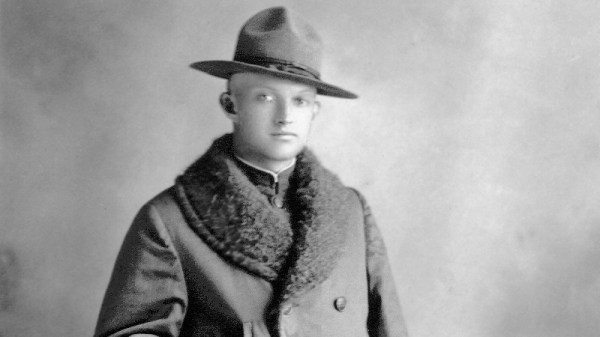
The Doughboy – Nathan Dennis

I find myself here —
All covered in chicken wire
Plumped full of metal:
A bled out, trussed up Christmas roast of a man
Spilled over on no man’s land

I feel the wind on my liver.
I always hated the wind.
In the winter, it felt like it cut me
Like it was going right through me.
Now it is going right through me.

Can anybody see me?
I can’t see well now.
Everything is very grey.
Though it was grey earlier.
Exhaust and snow and gas make the best ash to hide the dead.

They won’t hide me, though.
I am high off the ground.
It will take a mortar to dislodge me.
And I’ll have died by then.
I won’t lie to myself. Snowflakes feel hot.

I should think of my last words —
Something someone may remember me by.
Or something I may remember myself by.
“Mother?” “Father?” “God is great?”
“God damn you sons of bitches who sent us here in your stead?”

The chicken wire seems so soft now.
A brilliant string of lights that decorates my body
Bedecked by pooling jewel ornaments of my blood
I catch a warm snowflake on the tip of my tongue,
A snowflake that tastes of somewhere not here.

The twinkling stars of machine guns blink hello
And sprout maroon goose feathers through my wounds.
I gurgle out through iron-rich froth,
“Happy Christmas.”
I am an angel. My God, How beautiful I am.


Nathan Dennis is a Manhattan based playwright and poet of Floridian extraction. A graduate of NYU Tisch Department of Dramatic Writing, he served as a Rita and Burton Goldberg Fellow, and was awarded Outstanding Writing for the Stage in Spring of 2015. He received the Magnolia Review Ink Award for his poem “Meditations on the Creation,” in January 2019. His most recent play, Circle of Shit, was presented by Dixon Place in March, 2019.

Cabinet Of Heed Contents Link 23

Image via Wikimedia Commons from the private collection of David Ball [Public domain]

Development Hell – Patrick Chapman

INT. CLUSTERFUCK. DAY

The foley artist chops a white cabbage in two. The chhkk will be edited with a fast scrape of iron on steel. Something like that. Cutlery, maybe. I forget how those guys do it, but it’s smart. The sound is because I’m playing Lois XIV. Lois was a cool customer. She liked rock music, even though it didn’t even exist in her century, you know? In our movie, it does. It’s called anachronic or something. Hey, that’d be a great name for me if I started a band.

You know I didn’t really die. You got that. You know this is a movie. There’s a prop head in a prop guillotine. A blade falls but it doesn’t hit anything, not really. The rope holds it up. No way is it going to hit my actual neck. That’s not in my contract. They have a bag of fake blood in there, pig blood, I think, sterilized so no one gets pig-AIDS. That wouldn’t be kosher. I think I knew someone once, a Mexican wrestler, who had pig-AIDS he got from a midget whore in Tijuana.

Jenna Brown’s title on the first draft I saw was Liberté, Egalité, Sororité but no one gives a shit what she says although I think it’s a great name. Terence Morton wanted to call it Lois XIV but Jerry Silverberg figured the audience would take it for a sequel. What does he know? Well a week later he said, ‘It’s a feminist movie, so I know, why not call it Lois XIV?’ Asshole. Morton lets Jerry have the credit for the title so he gets to take the credit for the rest of the flick. ‘Choose your battles, Becs,’ he tells me, ‘choose your fuckin’ battles.’

Morton calls a wrap, and I realize it’s me he’s talking about. I’m done. It’s my last shot. Maybe some pickups later or whatnot. Everyone applauds and I make a short speech and Morton screws up his own little ramble in praise of me. Word is he has the speech written down and just changes the name of the actor each time he has to give it.

I move my behind off the set in my Lois XIV costume and it feels like the walk of shame. But I’m telling you I am so proud of this picture, of what we have achieved together these last nine months. That’s what it says in my speech. Am I glad to be done with this hair.

CUT TO:

INT. TRAILER. DAY

Sheila wipes rouge off my cheeks and powder off my forehead and makes me back into Rebecca Wood from Arkansas. I send her away. Sheila, I mean. When she goes, I sit looking at myself in the mirror. Those lights can give you a migraine but I wouldn’t mind having a headache so hard all I can see is stars, like I’ve been fucked good by a pro. I like my head outside itself. If I could make that a permanent state, I wouldn’t have to listen to other people’s crap. Like that vlogger who wrote I wanted to be blonde but didn’t have the bottle. Was that even supposed to be funny? It’s old, is what it is. Old and not original. I stand up. I don’t need help getting out of this costume, I want to do it on my own, to have one last visit with my character before leaving her forever. Then I just need to be by myself, is all. Isn’t that what Garbo said? ‘I just need to be by myself, is all.’

In the light from the mirror bulbs and the windows, like dusk in the afternoon, my body looks expensive. Nature lights me. I am my own stand-in, Robert told me once. He said my body is ethereal, insubstantial, two-dimensional. I think he was saying I have bulimia. He was just being cheap. He’s right though. My body is very adjective. I turn from the mirror and strip off my dress. It’s harder than I expected to get out of. Whalebone. Real actual whalebone from whales, which Fernando in craft services says is a country but it’s really a fish. I tear the dress off. They won’t need it again. In less than a minute I’m baby-photo-naked before the mirror. I’m so money, I want to fuck myself standing up. So, I do, until I fall over.

CUT TO:

INT. TRAILER. NIGHT

I hear the lights. I hear them pop off. They do that: pop! The hollow coughs of those big drums each time sounds like a cannon shot out of a cannon. I should be gone. I should have left hours ago but I’ve been standing nude, looking at me. I am going dark very slowly. It’s pretty awesome. I am pretty awesome. I go to the closet and open the door and see myself nude in the mirror inside there too, behind the clothes. I am so naked. I like it that there are 18th-century dresses and 21st-century tees, jeans, jackets, skirts, all jumbled together like in a fashion show held across time zones. Behind them all is me and I don’t even need to take a selfie to know that I am fucking hot. I don’t need to share this. This is mine. I don’t want to share this. I am dressed, in a way, you know? I am naked under my clothes. I take out a blouse and a pair of jeans and I put them on. I call the driver. He’ll be here in five. Lois XIV is done. She is done. I am here. Now what do I do with all these fucking flowers?

CUT TO:

EXT. A SQUARE IN PARIS, FRANCE. DAY

Two revolutionaries drag Lois into the square where the crowd calls for her head. And it’s a pretty head. Sean Young in Blade Runner pretty – but period. She’s all serene calmness but you can tell in her eyes there’s turmoil. The revolutionaries are putrid in ragged clothes, tricorn hats, big fat guns. (Did they have guns?) Lois walks fearless to the platform in the center of the square where the guillotine waits; an executioner and a representative from the People’s Commune (check this) stand beside it. One guard shoots a look of remorse at his co-worker. A queen to the end, Lois walks up to the scaffold. The executioner, fat and greasy with a blindfold and cummerbund – think Hamburglar but a prototype – he steps away from the guillotine. Lois takes her place in front of it and removes her Grace Kelly headscarf. Silence. Her locks have been shorn so the blade can get a clean lop at her neck. The executioner nods. Lois kneels and places her head in the frame. She doesn’t close her eyes. She wants them to look into her soul before they separate it from her body. The executioner puts his fat hand on the back of Lois’s delicate neck and pushes it down. He steps back and a guard takes out a scroll. He reads out the list of her crimes. Revolution, bad table manners, fucking burglary – they’re making this shit up and she knows it but Lois doesn’t answer. She’s kinda busy. The executioner tugs on the cord to release the blade. Whop!

CUT TO:

INT. CLUSTERFUCK. DAY – LATER

The rope breaks, the blunt guillotine cracks on her head and everyone stares at Rebecca Wood.

Terence Morton yells. ‘That’s a cut!’

‘What did you call her?’ the DP whispers.

Morton grumbles, waves him away. Then he realizes what has happened. Shit! She’s fridged!

Pandemonium breaks out. It takes a minute for someone to call a doctor, by which time Morton is speeding Rebecca to the hospital in his Ferrari.

They tell him later that he shouldn’t have moved her. He says she was gone already and he hoped they could bring her back. He liked Rebecca. She was going to be something.

CUT TO:

REBECCA WOOD DEAD IN PERIOD ACCIDENT

Lois XIV, Terence Morton’s $253m. post-feminist take on the French Revolution—here Louis XIV is Lois, played by Rebecca Wood (22)—hiatused Wednesday when a prop guillotine impacted Wood’s head. The actor later died in St. Mercy’s, Oakland. Morton’s reported to be disappointed but Fox says the flick will release July 19th next year, right on schedule. TMZ reports Wood is not dead, she’s just had radical work done. read more

DISSOLVE TO:

REBECCA’S DIARY

This endless airport departure lounge. It’s very exclusive, populated entirely by celebrities. That’s what they tell me. I have been here forever. They tell me that, too. At least it turns out I was a celebrity. That’s something. But all I can think of is Robert Hermes fucking Jessica Rand. Well she did win Best Supporting Actress for Stringless. Best Film Ever about a paraplegic cellist’s romantic obsession with an artist’s puppet. Being John Malkovich meets Boxing Helena, that was the pitch. Nurse Sheila tells me nothing. I may be in a coma. I hope it’s only a coma, because I hate the thought of meeting Michael Landon. His hair! Nurse Sheila says I have anger issues. What does she mean? But who cares. Robert Hermes. Jessica Rand. Seriously. This corridor goes on forever.

CUT TO:

THE VERY EXPENSIVE ROOM

As her eyes open she sees what’s going on, so she shuts them tight again. She isn’t ready for this. She isn’t ready. Morton was wrong. Rebecca Wood is not dead. Now in her hospital room a news crew waits; St. Mercy’s probably has a deal with the studio. This could even be going out live. If only she’d known, she would have got up weeks ago when they weren’t looking. Nurse Brown welcomes the crew personnel in as Rebecca decides to go with it. She stirs. An eyelid. She moves her lips but no words come out. Nurse Brown says that someone should have called Doctor Hermes by now so why isn’t he here? He might be watching from his office. ‘I’ve got footsteps in my head,’ Rebecca says, then her lips flatline as she dives naked back inside her coma. At least the coma is real.

DISSOLVE TO:

REBECCA’S DIARY

Everything. Everything happens at once. I’m in stage two now. I rise at an hour that could be dawn or dusk, one of those, or morning or night, who knows? This morning, that night. While Nurse Brown applies my face, I find the talcum powder here is cocaine. I developed a habit and am out of detox, both in the same moment. Simultaneously, I’ve never tried the stuff in my life. Drugs are confusing here, but at least I have the mirror. This enormous mirror in the Academy ratio follows me around on motorized castors. In the mirror, I am more beautiful even than Sean Young as Rachael with her hair down. That was a look. In return for all this wonderment, I only have to let John Hughes film me. He’s making a movie of me, all me, sitting paralyzed on a pink couch in the corridor. An homage to Kubrick, he says. Molly Ringwald isn’t dead yet, so she’s not available, so I get the part. Funny how the casting process works. He says the aliens are fascinated by the activities of humans and enthralled by the trivial. What the hell does that mean? Last week they were turned on by a spot for a body modification studio that ran during a musical special about a famine in Yemen. I guess it’s a pity about Robert and Jess, but life goes on. Just deal with it. I’ve already done the course of TM I’m about to embark on. People are all the same. I once stood a producer up on a date and he sent me a dead rabbit in the mail. I was on a strict diet at the time, so that proved he was the wrong guy for me. I will have my revenge on Robert when he turns up. Which he will. This isn’t any old joint. This is the big place they all talk about when they talk about the big place they all talk about. Boy, is he sure going to be pissed to find out the religions all got it wrong. When Robert gets here, he is mine. I can make him write the most beautiful stories in the world then I’ll reject all his scripts. That’s gotta hurt. Or! I can get someone to give him an infinite bout of herpes. Little blisters everywhere, new ones all the time, blisters on top of blisters. I think he has nerve endings so it should be real crusty painful. Or I can turn him into sushi, actual sushi; he’d have to be transformed into fish, which is great because he’s allergic to seafood. It’s possible to keep him conscious through all of it. After I eat him with wasabi and soy sauce and ginger, I’ll vomit him into a bucket for feeding to the angel sharks. Then who has bulimia, Robert? Here I can do anything. ‘Hey, Robert! Culkin says hi. Nurse, can I get a Pepsi? I am so happy. Can I get a Pepsi?’ Hold on a second. Yeah. If everything here happens at once, how come Molly Ringwald isn’t available? Answer me that, Hughes. You must’ve really wanted me for this part.

CUT TO:

‘That’s all you got?’ Jerry Silverberg flung the treatment back across his mahogany desk at Jenna Brown. She is me.

And that was all I got.

‘You don’t like it?’ I shifted in my seat and stared hard at him.

He looked like what he was, an executive. ‘Listen, Jenna, you’re a good kid. A nice kid. You come in asking for a chance, I give you a chance. And what do you give me back in return for my investment in you? My investment of hope that someone in this town can come up with something better, something more, something purer than the fucking robot movie sequels and the – not robots that are fucking, movies that are sequels that have robots in them – and the teen apocalypse crap and the…

Ah shit, Jenna, you give me this. It’s experimental. Jenna, it’s experimental. I mean, who gives a shit about whoever, and how about this? I don’t think the audience is asking is this feminist. They want Boy-meets-Whatever. Sure, the French Revolution, but didn’t we just have one? Les Miser-fucking-ables. Don’t the French have a revolution every year? Throwing sheep at each other? Can’t you write me something about that? You know, with people in it?’

As he spoke, I wondered what tiny insult might push him into spontaneous human combustion.

‘Jerry, listen.’

He flopped down in his seat and his body seemed to deflate like a pierced space-hopper.

‘Jerry,’ I continued, ‘the French didn’t just have a revolution. The last time they got close was sixty years ago.’

Jerry sighed heavily. ‘Why don’t you write that! Put a love story in it. And why don’t you have an ending at least? It makes me look bad if I greenlight this, and I’m not going to, I can tell you that now, thanks for asking.’

I put two fingers on the treatment. It felt cold to the touch. I dragged it into my lap and felt despair flow through me in full 3D with Smell-O-Vision. The room began to fuzz. Maybe it knew something I didn’t.

Well, screw the room. ‘It has an ending, Jerry,’ I said. ‘It has a good ending. I gave it the ending I did, because it’s Kubrickian.’

‘Who’s Kubrickian?’

‘What?’

Jerry took a serious moment before opening his lips again, as if he had to pay Teamsters to move them. ‘Why did you name a character after me?’

‘This happened,’ I said. ‘This story really happened. You were in it. So was I.’

‘Get out of here!’ The words flew from his mouth, a verbal Heimlich maneuver.

I grabbed my case, stuffed the treatment into it then hightailed it out of the room so I could let Jerry simmer. I didn’t wait to hear the inevitable violence to furniture.

He wouldn’t be asking for a script.

At the front gate, I paused to consider the day. It was noon. The palm trees were swaying and the cars growled by. Every day at every hour it always looks like noon. That’s what it looks like, here.

So. I’d blown it with Jerry. Never mind. Artie Mold might take a look. I’d call Laurie and ask her to set it up.

Something. Something would turn up.

I went to a Starbucks and sat with an espresso and a drink of water and then it hit me.

I felt it in my bones.

An inconvenient truth.

I was not a writer.

Not really.

But if I wished on a star that I could be Tina Fey, maybe I would be. I could be someone good. Tina Fey was good. I could be her.

To distract myself I listened to the yadda-yadda. I heard nothing, despite my ear for dialogue.

This failure to sell my script. It was not really my fault. It was the fault of this town. This town was dead. It was time for me to pack up and head home to Arkansas. I could get a job at the university.

Unless Jerry asked for a new draft.

That could happen.

Then something did.

I was about to raise my coffee but saw a distorted face reflected in the black liquid. Then I saw the face wasn’t distorted. For a big man grown fat on success, for a bear of a guy twice my age, Jerry sure could creep up on a girl. Ninja-like.

I turned to face him.

‘Listen kid,’ he said. ‘You’re young. You’re beautiful. I’m going to give you a second chance. How about it?’

I turned and furrowed my brow, which took no effort at all. ‘What the hell do you want?’

Jerry Silverberg grinned back. ‘Nothing!’

‘I’ll think about it,’ I said.

CUT TO:

INT. CLUSTERFUCK. DAY – A WEEK LATER

I forget which Starbucks we’re in. Jerry is yakking about the movie keeping the feminist angle but could I just kind of make it accessible? Could I give the studio this one and the next one is mine?

‘It’s a French Revolution picture,’ he goes on. ‘Female Louis. Fine. And if Larry can be Lana, what the hell. If Andy can be Lilly too, why not. Hiddleston is perfect for Lois. Come to think of it, Redmayne. Tick. Now, Rebecca. Let’s see. Scarlett? Not Portman. Scarlett. Or Phil Collins’s kid. She can do a British accent, right?’

‘Is this a script talk or a casting talk?’

He smiles. ‘I like to put a face to the character.’

‘Seriously.’

‘It’s all good, kiddo. I myself am a feminist. I marched with Gloria Vanderbilt in the 1970s. Even burnt her bra for her, though she was wearing it at the time.’

‘Seriously?’

‘OK, let’s cut to the chase. Redmayne is Lois. The Collins kid is Rebecca cos I dig the eyebrows.’

‘You said Scarlett.’

‘Careful.’ Jerry’s expression turns icy. ‘Don’t throw it away. You got a nice face and a future. Are you listening to me, Jenna Brown? Don’t throw it all away.’

CUT TO:

JENNA’S DIARY

Dinner doesn’t count. That means it’s our one-year anniversary minus two days, because in two days it’s the one-year anniversary of when I first slept with him. Jer says we can celebrate twice if we like. Rewind the film. Jer always says he’s going to leave his wife any day now, but I don’t want him to. I keep telling him no. I don’t want to ruin her life. I don’t want the static. I like what I have with Jer. They did a great job with the script. Redmayne wouldn’t commit, so Cruise signed on. Too old, I think. The picture is a musical now. It’s called Louis, Louis! Jer says we’re going to the Oscars with this one. Jess hates the Oscars and she’s given him carte blanche to take who he wants. She doesn’t know about us. Or maybe she does. Which is why I think Jer should stay with her. As long as he never owns me, I’ll be OK. This one’s for the studio, the next one is for me. But isn’t it exciting? The movie is in prep but what is almost in post, is our child. Jer says he’ll take care of us whatever happens. If it’s a girl, I’m to call her Rebecca, after his mother.


PATRICK CHAPMAN’s latest books are Open Season on the Moon (Salmon Poetry, Co. Clare, 2019); Anhedonia (stories, BlazeVOX Books, NY, 2018); and So Long, Napoleon Solo (novel, BlazeVOX Books, 2017). With Dimitra Xidous he edits The Pickled Body.

Cabinet Of Heed Contents Link 23

Image via Pixabay

Portrait of a Woman as a Young Mother – Katie Venit

Year 0

In the framed photo, a woman in profile—eyes smudged with dark circles, shoulder adorned with an epaulette of spit-up—hugs a newborn tight and high on her chest, resting her cheek on his head. The baby’s eyelids look like closed pistachios. His ears match the monkey’s on his swaddling blanket. Next to her, a laptop displays Google’s homepage.

● How to increase milk supply

● Fenugreek near me

● Fetal microchimerism*

● How to get baby to sleep in crib

● How to put sleeping baby down without waking

● How to sleep when baby sleeps

● How little sleep do adults need

● Hallucinations

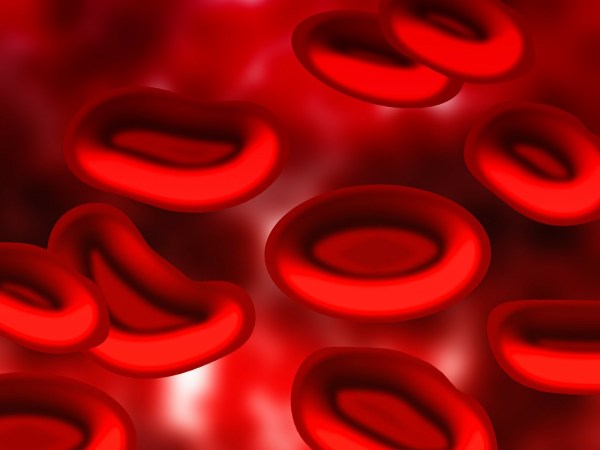
*Examples of fetal microchimerism have been found in every type of placental mammal. Although the process is two-way—cells from a fetus transfer into the mother’s body via the placenta and vice versa—far more fetal cells persist in maternal blood and tissue than maternal cells in a fetus. Fetal cells seem to be both beneficial and deleterious to the mother. At times they act like stem cells and swarm C-section incision sites and other wounds. However, high levels of fetal cells are also associated with increased occurrence of many diseases such as Parkinson, Hashimoto, and Graves Disease.

Year 1

In the photo shared online, a woman wears sensible shorts, shirt, and shoes–nothing flimsy or hard to wash. Behind her, park lawns stretch to a river frothing with spring melt. She grips the wrist of a toddler who wears soaking wet white-and-navy-blue train engineer overalls and matching cap. He carries a stuffed monkey and a Superman sneaker; the other sneaker pokes from the pocket of her water-stained shorts. The woman stares into the distance with an expression of resolution. The boy’s limbs are blurry.

● Hey Siri, how do I unlock a door?

● How do I unlock a door from outside?

● How do I unlock a bathroom door from outside?

● Where can I find eyeglass screwdrivers near me?

● Can a toddler drown in a toilet?

● Call the local fire department

● How do I make a whiskey old fashioned?

Fetal microchimerism may play a role in the resource conflict between mother and child. Fetal cells may concentrate in those areas of the mother’s body that best aid the child postpartum in order to manipulate her into providing more resources to the infant than is in her best interest or the interests of her other children, current or future. Those areas are the thyroid (which regulates body temperature), the breast (which regulates lactation), and the brain (which controls emotional attachment).

Year 5

The live photo is one second long. A boy in front of a red brick elementary school wears sensible shorts, shirt, and shoes. He holds a slate that says “1st Day of Kindergarten.” His smile reveals a missing tooth. A woman’s tanned arm reaches into the photograph with a bedraggled stuffed monkey. We never see her body.

● Alexa, order a reusable lunch box

● Order a pencil case

● Order crayons

● Order all the school supplies

● Order How to Listen so Kids will Really Talk

● Play Time after Time

● Play If I Could Turn Back Time

Most fetal cells in the bloodstream are destroyed after birth by the mother’s immune system, although those embedded in tissue fare better. Fetal cells that survive the postpartum culling establish lines that persist for decades by becoming part of the organs that harbor them. Those in the brain become brain cells. Those in the lungs become lungs cells. Those in the heart become woven into the cardiac fibers, mingling with the mother’s own cells and even those from her mother, genetically distinct, pulsing in unison.


KATIE VENIT lives in Wisconsin. Her work has appeared in Volume One Magazine, Wisconsin Public Radio’s Wisconsin Life, 365 Tomorrows, and Neutrons/Protons. She sits on the advisory board for the Chippewa Valley Writers Guild.

Cabinet Of Heed Contents Link 23

Image via Pixabay

Super Blood Wolf Moon – Danielle Jorgenson-Murray

“I’ll text you if there’s no change,” he said, and there was no text all evening.

The alarm clock wakes us up at half past five with birdsong, a cuckoo and other distinctive voices I always tell myself I’ll look up but never do. It’s minus three outside, the night sky is a faded black sheet and the moon is eclipsing over our balcony.

I roll over to check my phone and see a message: Call me when you get this.

I can’t call now, especially not with the time difference.

The husband is watching me look at my phone from the foot of the bed as he pulls on his dressing gown. I scroll up and see messages from him to Dad, sent when I was asleep, a hushed private conversation. I hope everything goes without stress. And a reply: Thanks for looking after her.

“Are you okay?”

I nod.

He puts his hand on mine.

I have to remind him to put some slippers on before he opens the balcony door, as though we’re still in a place and time where we can have these normal conversations. This is a grace period. A false vacuum. It’s not real.

The moon is already flushed dark red, dim but clear in the sky, and perfectly framed over the roofs of the flats opposite. We could watch it from here.

The cold night spills in through the balcony door, so I pad to the bedroom and read the messages on my phone again, pull on slippers of my own absently, marvel at this proof that the world continues to exist while I’m asleep. Things are somehow still allowed to happen even when I’m not watching.

I’ll phone at seven. I can’t phone now. There’s nothing I can do about it now. It’s happened already. There’s nothing I can do and the moon is eclipsing.

The husband is screwing pieces of the telescope together. It amazes me every time that he remembers how to do it. I remember listening very earnestly to the man we bought the telescope from, standing in his cluttered cellar in some village at the end of a train line, and immediately forgetting all of his advice and instructions. All of this jumble of things, screws, poles, lenses, cardboard boxes, forgotten advice, belong to the same stratum of time in which she was alive. I’m sitting on the cliff edge of that time now, cheating shamelessly, but when you’re a human being stuck in time’s amber all you can do is cheat. You have to cheat.

I don’t need to phone. I already know.

I go outside for the first time when the telescope is finished. There’s a skin of still frost over everything, stretched out over the open doorway, and when I cross the threshold I shatter it into stinging splinters. I pace the balcony and eye up the old pots and stacked fridge trays that we promise ourselves we’ll deal with but never do.

We take turns squinting into the telescope’s eyepiece. The dim, perfect moon becomes even clearer, each crater close enough to stick a curious fingertip into, coat it with coppery dust. Taste it. Every flaw and meteor scar laid bare. A reminder that far away things are as real as we are.

It’s so cold that it hurts, so I retreat back inside again, having seen all of the moon that I can see, and I carry with me a perfect mantle of winter air pressed between skin and dressing gown. Glance at my phone in the bedroom. The same words waiting. The clock reads 5:59. Can’t phone yet.

Back out to the balcony and the moon’s moving even as we watch, sinking and dimming. It’s going to dip behind the roofs just before it hits the full eclipse. There’s still a fingernail paring of silver cupping one edge.

Another look through the telescope and this time I watch it until it drifts out of the eyepiece altogether, touching the icy body of the telescope with my fingertips. The husband readjusts it and gets out the camera to catch it before it goes.

We could watch it from the sofa. We could sit curled up together, wrapped in a blanket and holding steaming mugs of tea, and get just as good a view of that copper coin in the sky, like a new two pence piece. The kind that as children we’d keep a beady eye out for and our grandparents, yielding to our magpie hearts, would point out for us to pick up.

Yes, I think, we could watch it from inside, but neither of us goes to move. Neither of us closes the door. The cold pours in and twines around us.


DANIELLE JORGENSON-MURRAY is a videogame translator based in Frankfurt, Germany, originally from the North East of England, and can often be found wandering around urban wildernesses.

Cabinet Of Heed Contents Link 23

Image via Pixabay

The Drink – Christine Brooks

It was the first time I surfed wearing my little bone surfboard pendant with my mother’s initials carefully carved into the back – MJCCB, the first time I dared enter the cold, fall Rhode Island water alone when the tide roared, and the first time my paddle out didn’t necessarily include a paddle in.

Covered in Neoprene from head to toe; boots, wetsuit and gloves, I made my way over the slippery rocks of my favorite break, Deep Hole, and tried to let the rip currents, the thick fog, and the low bellows of the distant lighthouse, distract me from the fact that my mother was going to die. Surfing had diverted me from the struggles of life before, but this time was different. This time, the water could not wash away my thoughts, cleanse my nightmares, or offer me the peace the waves had brought me before, in happier times.

Belly down on my longboard nicknamed Blue Betty, I made my way through the soupy white froth that tried to push me back to the safety of the shoreline, now just a cloudy, thick gray memory.

Ignoring all the signals of impending danger, I paddled out farther and farther, towards what I knew to exist, the safety of the thin blue line.

Wave after unseen wave would rock me, occasionally dumping me into the blackness of the drink. Resting only briefly, treading water holding onto my board, my mind waged war with the keeper of the tides.

Fuck you. No one would hear me yell. Fuck. You.

Dangling over Deep Hole, clinging to Blue Betty, I thought maybe I could just stay there, or maybe, I could just let go.

I thought of that little pendant tucked safely under my black wetsuit and of Mom, fighting a battle with pancreatic cancer that she would not, that she could not win.

The lighthouse in nearby Snug Harbor now sounded more like Noooo Chris than the groans it had just recently expelled warning sailors of the rocks and surfers of the danger of the thick fog.

My nostrils now filled with gallons of salt water, and my arms noodles from paddling against the incoming tide warned me that it was time to paddle in.

Even though my muscles and lungs begged for rest, my heart still needed time. Time out in the frigid Atlantic Ocean on this late October day to come to terms with what was to be, and my heart knowing it was boss, threw my arms out again and again, over and over, into the liquid darkness.

Farther and farther towards Block Island I went, Blue Betty teetering unsteadily beneath me. I couldn’t see it as I usually could, but I knew it was out there, as well as potentially boats, and other surfers.

If anyone was going to die, I needed to scope out the battlefield first. I needed to know and see, what was already written. Her obituary, carefully worded by her to include everyone, had been written days before, and her new light blue sweat suit from Walmart that she wished to be buried in, was carefully placed in her top drawer, until her death. No doctor could save her, no Whipple surgery to prolong her life was possible, and now, not even chemo was an option.

Cancer was a guest that had come before, but this time it would leave with my mother’s laugh, her smile, and the light in her eyes, and all I could do was paddle harder and farther, not knowing if I could have the strength to paddle back in.

Noooooo Chris. The fog moaned.

Exhaustion had set in. Panic did not.

In the darkness of the heavy fog, I could not see the giant wave building, or have any way to prepare for it, or, let it take me under. Before I could decide, before I even knew, this wave, with a plan and a mind of its own, threw me into the air and left me no choice but to paddle in.

Pmpffff. I landed on my belly and paddled in without the option of breathing. The toss had knocked the wind out of me and left a bump on my head that was already pounding and bleeding profusely.

As I sat on the rocky coast with thoughts of paddling back out, I listened to the lighthouse, to the surf, and the fog that although silent, spoke to me. They whispered what I knew to be true. Four months later she would take her last breath while in my arms, and exhale to the face of God.

It was time to go home.

(Mary Joanne Celina Comeau Brooks February 15, 1941 – February 12, 2011)


http://www.christinebrookswriter.com

Image via Wikimedia Commons, Vicki McKay [CC BY-SA 3.0 (https://creativecommons.org/licenses/by-sa/3.0)%5D

Non-Cardiac Origin – Stephen O’Reilly

Too much coffee?

That night, fear came in through the window and found my open, somnolent mouth. Dusty, alien wings flutter against calcium rods. I watch the duvet vibrate in the watery morning light.

At the hospital, the doctors are delighted and a troupe of clammy-handed students come to grope and question.

A splash of joules across my chest is indicated and a nurse wires me up, the watching cardiologist nudging a female student.

“Ever see this before?”

“Just on TV.”

He winks at her and promises that she can press the red button.

She looks at me lying bare-chested in the bed and giggles into her hand at the prospect.

These strangers are the last humans I will ever see.

Milky peace sliding into a wrist. Darkness seeping into my eyes. After all my bravado, in the end, how meekly I succumbed like some ailing pet.

When I wake, they are gone. A passing nurse glances at the steady stream of spiky, phosphorescent facts above the bed and tells me I am fine.

My tongue is swollen. Bitten.

The metallic aftertaste of blood and drugs.

I am afraid.

*      *      *

The next day.

“I shaved his groin for you Bridget.”

“Ah, thanks.”

I smile at the relief evident in poor Nurse Bridget’s voice. The groin in question vaguely but effectively dodged all morning.

They want to thread a tube through an artery there and go look for the fear.

Poke at it in a darkened room, amid machinery hum and cathode glow.

I can’t care, filled to the hairline with anxicalm.

Afterwards, I am deposited back in a busy hallway, on a trolley with a single sheet of paper no-one can read. Nurses huddle, deciphering in whispers, nervous of the author. He must be an awkward sod.

Non-cardiac origin, they decide eventually.

“Tea? Toast?”

“Coffee,” I tell them, tired of being afraid.


STEPHEN O’REILLY lives in Galway. He has previously been short listed for both a Francis MacManus and a Sean O’Faolain Short Story Award. He is a recipient of a Molly Keane Memorial Award and his work has been published in various collections in the UK and Ireland.

Image via Pixabay

Leetspeak – Sanjeev Sethi

I seal liabilities of loneliness
with maud of meter to create
hygge of vicarious happiness.

I peruse from mavens of mortal play
the trick is to transfer emotions.
Marinating in a bleak headset
is to break within.

The way out is to change the gear.
No one can jockey you out of it.
Chauffeur your car.


SANJEEV SETHI is the author of three books of poetry. He is published in more than 25 countries. Recent credits: The Poetry Village, Amethyst Review, Bonnie’s Crew, Selcouth Station, Picaroon Poetry, Laldy Literary Journal, The Sandy River Review, Packingtown Review, Otoliths, and elsewhere. He lives in Mumbai, India.

Image via Pixabay

How Fairy Tales End – Mileva Anastasiadou

Hypothetically speaking, I’d meet him again the day after tomorrow. He’d offer to buy me coffee and I’d accept the invitation. I’d be comfortable and cozy, sitting gracefully inside the bubble. He’d ask me about the weather and I’d politely reply it’s either too warm or too cold for the season.

Hypothetically speaking, he’d hold my hand, walking me home. He’d then confess his undying love to me. We’d go around exploring that new-found land of bliss, where Icarus never fell, because the sun didn’t burn his wings, Robin Hood didn’t steal, because he didn’t need to, Snow White didn’t get lost, because the Queen wasn’t evil, the wolf didn’t eat Red Riding Hood, because they were friends.

Hypothetically speaking, he’d ask me what sounds I find mostly annoying. ‘Real or imaginary?’ I’d ask. Imaginary he’d say, for imaginary sounds are more disturbing than real ones. You can’t close your ears and avoid them. Ghosts playing guitar, I’d say and he’d understand. He’d laugh, for he also mistook a centipede for a ghost once. Yet bursting bubbles are more annoying, he’d then say and I’d nod.

Hypothetically speaking, we’d never fall from the clouds. It gets tiring, falling from the clouds all the time. He’d never teach me the lesson I don’t want to learn: how fairy tales in real life. I’d be the queen of denial, conveniently sitting still in my fairy tale, high above in the sky, looking down to common sense. It’s not denial after all, if you close your eyes, not being aware of what you deny. He’d caress my hair, my face, my body, until his hand would merge with my skin, his soul inside mine. Until that heavy blow that’d bring awareness. That hit that’d separate us, forcing me to open up my eyes and look ahead. I’d even feign blindness for a while, but not for long.

Hypothetically speaking, reality would never burst my bubble, a shape-shifting enemy invading my pink colored bubble all the time, this time with his words. It’s not you, it’s me, he’d say, the usual combination of words, an arrow straight to the heart. Of the bubble. Or to my heart. Or to the bubble I keep inside my heart. And I’d deflate like a balloon. For breaking up is like falling. Standing up is hard after sitting comfortably in the bubble for too long. Standing up gracefully proves an impossible task.

Practicing reality is a game not easily mastered.


MILEVA ANASTASIADOU is a neurologist. Her work can be found or is forthcoming in many journals, such as the Molotov Cocktail, Jellyfish Review, Sunlight Press (Best Small Fictions 2019 nominee), Ghost Parachute, Gone Lawn, Ellipsis Zine, Queen Mob’s Tea House, Bending Genres and others.

Image via Pixabay

Recycling – Cath Barton

I never liked those garden seats you bought. Anyway they’re rusted now. They clank against other people’s junk as I heave them into the recycling bin.

When I turn away there’s a black Labrador at my feet, looking up at me expectantly.

“No way, old son, oh no,” I say, examining his collar. No tag. I’m laughing, I don’t know why. What kind of bastard abandons a defenceless beast at a municipal tip?

As I drive away I see the dog in my rear view mirror, sitting by the bins, watching me go.

Back home I load the car again, my thoughts spooling. Thoughts of, maybe, getting another dog. A companion. I shake myself and the thoughts scatter, like water drops off the back of a dog after a dip in the river. This won’t do. I’m trying to clear stuff out of my life, leave myself free.

There’s a post-lunch queue of cars at the tip now. I shut my window against the ammonia smell of used cat litter, watch as a couple struggle lifting what looks like a perfectly good table. As the wood splinters I hear him snarl at her. At least there’s no sign of the Labrador.

Finally I get to the head of the line. As the detritus of five years of wasted love crashes into the metal bin I feel a kind of emptying of myself. All done apart from a couple of old radios. There’s a hut in the yard where there’s usually someone to ask about where to put electrical stuff. Feeling the sun on my neck on my way over there, I think about looking on-line for places where it shines more reliably.

There’s no one in the hut. Leaving the radios by the door, I stroll back to the car and slam the boot shut without looking inside.

“Uh oh! And where did you spring from old son?” I say, home again and opening the boot to fetch out my empty bags, thinking about sitting in my sweet-scented garden with a cool glass of wine. The black Labrador is lying there gazing at me and my heart turns over at his panting.

When he’s had his drink I find an old tie to use as a lead and take him to the vets. He has no chip.

“If he isn’t claimed within 48 hours we’ll have to send him to the dog pound,” says the receptionist. “Unless you…”

“No,” I say. “No, no, I can’t.”

But he’s sitting there, my black Labrador, looking at me. You don’t choose your loves. We both deserve a second chance.


Image via Pixabay

Rosner & Rhodes – Alan Swyer

Pulling up in front of a nondescript apartment building in a sketchy part of Hollywood, a guy in his early thirties did a double-take before checking to see that he’d reached the correct address. Puzzled, he climbed out of his dented Toyota and walked toward the front door, then climbed to the third floor.

Finding 3-D, he took a deep breath before knocking.

Footsteps were heard before the door was opened by a sleepy-eyed man in his late 70’s with a goatee and an ancient Brooklyn sweatshirt.

“I’m Barry Pearl,” announced the visitor. “Doing an article for a magazine called ‘Blues & Rhythm’?” When no response was forthcoming, he added, “You and I spoke Monday and set an appointment for today at 10?”

“Right,” said Flip Rosner with an absence of certainty. “C’mon in.”

Leading the way into a living room filled with an eclectic mixture of CDs and vinyl, plus takeout food containers, vintage photos, and a dazzling array of gold and platinum records, Rosner cleared some newspapers off an armchair. “You okay?”

“I-I didn’t expect –”

“To find me living in squalor?”

“To catch you off-guard. Sure this is a good time?”

“As opposed to when my music meant something?”

“The songs you wrote will always mean something.”

“Co-wrote,” Rosner corrected.

“I’m someone who focuses on lyrics.”

“And once-upon-a-time they mattered.”

“To me they always will.”

“To me, too,” acknowledged Rosner. “Get you some coffee, tea, water?”

“I’m fine.”

“Nonsense. Wait till you taste the green tea somebody brought me from China.”

“Okay if I tape our conversation?” asked Pearl, pulling a small tape recorder out of his pocket.”

“As if anything I say matters,” answered Rosner dismissively.

“To me it does.”

“So you’re still trying to reconcile a string of hit records with a dump like this,” Rosner said five minutes later while handing his guest a cup of tea.

“Well –”

“Try four disastrous marriages with painful settlements. Want to know why?”

Pearl nodded.

“I like wedding cake. Add time I spent feeding my nose. Plus some rotten investments and a cockamamie belief the hits would keep coming forever. So, want to talk music? Or simply cut to the chase?”

“Which means?”

“How Flip Rosner and Claudia Rosen of Brooklyn became the team of Rosner & Rhodes before one rose to stardom while the other faded away.”

“I wouldn’t call the song you went on to write for Gladys Knight fading.”

“Co-wrote.”

“Which is no different than Leiber & Stoller, Goffin & King, Mann & Weil, Pomus & Shuman, Barry & Greenwich, Sedaka & Greenfield, even Bacharach & David.”

“Somebody knows his shit.”

Barry Pearl’s response was a shrug.

Driving home after a nearly two-hour session which ended when Flip Rosner grew weary, Pearl ran through his mind the topics the two of them had covered. First was the innocence of the era in which Rosner… then Rosner & Rosen… and finally Rosner & Rhodes carved their niche. It was a world of singles – 45s – played on jukeboxes, at sock hops, and on AM radio, a time in which the aging pioneers of rock & roll – Ike, Chuck, Bo, Fats, Ray, and Jerry Lee – were largely succeeded by the Manhattan-based record biz, with “Maybellene,” “Hey, Bo Diddley,” “I’m Walking,” “What I Say,” and “Breathless” replaced on the charts by “Poison Ivy,” “Will You Love Me Tomorrow,” “Uptown,” and “Save The Last Dance For Me.”

The songs were birthed in a place called the Brill Building (and neighboring 1650 Broadway), where white songwriters – plus the talented Otis Blackwell, who penned “Breathless,” “Fever,” “Handy Man,” and “All Shook Up” – churned out future classics which, unlike their Rhythm & Blues predecessors, were designed for a burgeoning youth market.

Rosner also confirmed what Pearl had always assumed, that there was no sense whatsoever that the records would last, or that one day there would be something known as the Rock & Roll Hall Of Fame.

The genesis of the hits, Pearl learned, varied significantly. Often, with the Drifters, the Shirelles, Chuck Jackson, or someone else scheduled for a recording session, songs would be solicited from writers, or occasionally written on the spur of the moment. Then there was the time Atlantic’s Jerry Wexler spotted Goffin & King walking down the street and yelled, “Give me a song with ‘Natural Woman’,” yielding a smash for Aretha Franklin. Pearl’s favorite tale, however, was how “Save The Last Dance For Me,” was inspired by the emotions stirred within polio survivor Doc Pomus, who wasn’t able to foxtrot with the bride at his own wedding.

“Anyone ever tell you you’re weird?” Pearl’s on-again-off-again girlfriend Libby asked that evening as the two of them were chowing on a Hanoi-inspired dish called Cha Ca.

“I get the feeling you’re about to.”

“Preferring stuff by mainly dead guys? I mean your taste in music and in film –”

“Whoa! Aretha doesn’t outrank Beyonce? Ray Charles and Bobby “Blue” Bland aren’t 100 times better than Jay-Z or Diddy?”

“I didn’t say that –”

“‘The Big Sleep,’ ‘Ninotchka,’ and “Once Upon A Time In America’ don’t put away ‘The Avengers,’ the ‘Harry Potters’, and ‘Fast & Furious 47’?”

“That’s not how I meant it –”

“Pick one you’d rather attend: Coachella or Woodstock?”

“Barry –”

“If I’m weird, I’m proud of it. I’m also happy to prefer food from China, Ethiopia, and Vietnam over kale and quinoa. And not to live in fear of glutens.”

“Finished?” teased Libby.

“Just getting started,” replied Pearl with a chuckle.

“Then you don’t want me to ask when you’re going to start focusing on your career instead of on all the writing you do for free?”

Barry Pearl took a bite of his fish and noodle dish, then frowned. “Exactly.”

“Gonna spend your whole life reading mediocre scripts that’ll make movies you don’t want to see?”

“As opposed to getting indigestion while eating my dinner?”

“I’m only thinking of you,” said Libby.

“And us?”

Libby sighed. “So,” she said, “what do you think of Rosner?”

“Sad, lonely, and talented as hell.”

Tossing and turning that night, Pearl found himself dwelling on the most painful of Libby’s questions. He had arrived from New Jersey with the dream of making a mark first as a screenwriter, then as a director. But the more he learned about the film business, plus the kind of movies that by then were getting made, the more disenchanted he became. It wasn’t “Casablanca,” “Citizen Kane,” or “The Maltese Falcon” that were sought by the agent who signed him, or by the producers and studio execs to whom Herb Klein and his partner Gene Broder introduced him. Nor was it “Petulia,” “McCabe & Mrs. Miller,” or “Annie Hall.” Instead it was what were termed franchises, tent poles, and branding. Cringing at the constant refrain of remakes, re-tools, sequels, and prequels, as well as new spins on superheroes, Pearl segued from writing scripts that earned him pats on the head – but zero offers – to doing what’s called coverage, first for a small agency, then for one of the larger ones.

Free to read scripts and write synopses at home in shorts and a t-shirt, with a work schedule largely of his choosing, Pearl channeled his creative energies into his other great love: music from eras he preferred. To his surprise, the articles he wrote were happily embraced by niche magazines both in the US and Britain, which then clamored for more. His first published piece posited that Rhythm & Blues began on LA’s Central Avenue after World War II. The next dealt with the fact that the term Soul Music was created by Atlantic’s Jerry Wexler because the great Solomon Burke, who was a minister as well as a soulful vocalist, couldn’t have his records in a category – R&B – that was considered by black clergy to be the devil’s music. The third dealt with Ike Turner’s career after his breakup with Tina then a stint in prison.

The fun for Pearl was the rush from seeing his work both in print and online. The downside was that the fees – when there even were fees – did not cover his bills.

“I bet somebody wants to hear about Claudia,” Flip Rosner stated when he opened the door for Barry Pearl three days later.

“Only if you’re up for it.”

“C’mon, admit it.”

“Admit what?”

“That you’re a starfucker like everybody else.”

“Only for lyricists like Frank Loesser –”

“‘Baby, It’s Cold Outside’ and ‘Guys & Dolls’.”

“Willie Dixon –”

“‘My Babe,’ ‘Wang Dang Doodle’, and ‘I Just Wanna Make Love To You’.”

“Jerry Leiber –”

“‘Hound Dog,’ Yakety Yak’, ‘Kansas City’. And me?”

“And you.”

“But,” said Rosner, “it’s Claudia who became the star.”

“Funny how I don’t have any of her records.”

Rosner shrugged, then pointed to a chair before heading into the kitchen to make some tea.

“So whatd’ya want to know?” he asked when he returned with a cup for each of them.

“What do you want to tell me?”

“Not a single bad word about her.”

“I’m not looking for dirt.”

“If there’s dirt it’s about me.”

“So how did you two meet?”

“She was an aspiring songwriter who reached out at a time when I was disenchanted with my writing partner.”

“And?”

“Since I’m about as good at the piano as I am a ballerina, instead of just talking, I put her at the keyboard. Pretty soon, instead of being mentored, she was coming up with the melodies.”

“And then what?”

“One song we wrote found a buyer. Then another. Then another. And when my first wife started getting jealous –”

“Yeah?”

“I suddenly had a new partnership in more ways than one.”

In what proved to be at times a conversation, and at others an interrogation, the two men chatted for a while longer. Then suddenly Rosner stood. “Want to indulge me?” he asked.

“How so?”

“There was a time when I cheated on my wives. Now it’s on my cardiologist. Up for some cholesterol?”

As the two of them were led to a booth at Langer’s Deli, Rosner turned to Pearl. “New York may be the pastrami capital of the world, but it’s nothing next to this place.”

Once their sandwiches arrived, Rosner watched with approval as Pearl took his first bite. “Hand-sliced,” the older man stated with pride. “On double-baked rye.”

“So when did you sense,” Pearl began after taking a sip of iced tea, “that Claudia wanted to be more than a songwriter?”

“I should have known when she announced she was changing her last name. She said Rosner & Rosen sounded like a Jewish funeral home. But that didn’t stop Sammy Cahn & Jule Styne. Or Leiber & Stoller. Or Sedaka & Greenfield. Or Yip Harburg. From Day One I should’ve realized she had her eyes on bigger things. But I was too worried about coming up with words that rhymed.”

“So what do you think about Claudia’s records?” asked Pearl as, with stomachs full, they walked toward his car.

“More importantly, what do you think?”

“They’re what I call sensitive.”

“Give me that in English.”

“You won’t get pissed?”

“Only if you bullshit me.”

“Compared to the originals done by black artists –”

“Yeah?”

“They’re pretty wimpy.”

“You’re tough,” said Rosner.

“But wrong?”

Rosner smiled, then shook his head before climbing into the passenger seat of Pearl’s Toyota.

As they pulled out of the Langer’s parking lot, Pearl spoke again. “Even though there’ve been some pretty good ones, for the most part I’m not big on cover versions.”

“I get it.”

“But if you want to know what really drives me up the wall –”

Rosner nodded.

“It’s people who think rock & roll started with Elvis,” Pearl said. “Or the Beatles. Or Springstein.”

“Forgetting Chuck, Bo, Clyde McPhatter, and the Drifters?”

“Exactly. I call those people Rockists.”

“Which,” said Rosner, “must really piss ’em off.”

“I sure as hell hope so.”

The next day, as he again sat across from Rosner, Pearl asked, “So what do you think of singer-songwriters?”

“Overall, are they as good as Cole Porter? The Gershwins? Willie Dixon? Leiber & Stoller?”

“Or Rosner & Rhodes?”

“Not for me to answer. Look, early Dylan was talented.”

“Before he got boring?”

Rosner nodded. “Early Joni Mitchell, too. But what I can’t handle is autobiographical stuff that’s first and foremost whiny.”

“James Taylor?”

“And Neil Young.”

“So, do you have favorites?” asked Pearl.

“Lou Reed for one. Van Morrison, especially that first album. Plus that guy who once had a voice but now sounds like a frog.”

“Tom Waits?”

“Yup.”

The following morning the Q&A continued. “How did a song come to life?” asked Pearl after accepting a cup of tea.

“On assignment? Or one I generated?”

“Either. Both.”

“With an assignment, the key was who was it for. For someone who could preach – say Solomon Burke, or Chuck Jackson – you wanted there to be a life lesson, or maybe a sermon. So you’d start with a phrase like Life can be tough, or My heart is aching. With me?”

Pearl nodded.

“With a girl group,” Rosner continued, “it’d be something wistful, like I’m hopeful, or If only. Still on-board?”

Again Pearl nodded.

“But with something fresh, something on spec, in those days everybody had a go-to thing. With Bert Berns, often it was crying: ‘Cry To Me’ for Solomon, ‘Cry Baby’ for Garnet Mimms. There was one guy who, whenever he was stuck, or blocked, or frozen, would break up with the gal he was going with. Want to know why?”

“You bet.”

“Invariably he would hear something – Where has our love gone? Or I thought we had it all or I’m broken-hearted now that we’ve parted – that he could turn into a song.

Pearl chuckled. “And with you?”

“With me,” said Rosner, “it usually begins with a phrase, or a word I heard somewhere. Or something that pops into my mind while driving, taking a shower, or watching TV.”

“Such as?”

“Without you. Or maybe Beware. Or Sometimes I’m lonely.”

“And then?”

“You play with it. Sometimes I’m lonely, sometimes I’m blue, sometimes I find myself thinking about you. Follow? You start with a spark, then milk it.”

After two more sessions with Rosner, Pearl had pretty much all the information he thought ne needed. But even as he moved from organizing the material to thinking about a narrative, then starting his article, he found excuses to reach out periodically by phone, and even to lure the songwriter out for a Thai lunch one day, an Indian buffet another.

Then one Tuesday night Pearl woke up with a start as a question surged into his head. Unable to fall back to sleep, he fidgeted for an hour or so, then read an Ian Rankin detective novel until the first rays of sun appeared.

At 8 AM, having already done three sets of push-ups and crunches, Pearl at last called Rosner. “What’re you up to?” he asked.

“You tell me.”

“Okay if I come by for a cup of tea?”

“So what’s this curiosity at the crack of dawn?” Rosner asked as he opened the door for Pearl.

“There’s one question I never asked.”

“Want to ask it before or after I pour the tea?”

“How about I ask it now, then you answer while you’re pouring?”

“Fire away.”

“Are you still writing songs?”

“That’s a ridiculous question,” Rosner barked as he headed into the kitchen.

“And that’s not an answer,” replied Pearl as he followed.

“Why in hell would I still be writing?”

“Because it’s what you do.”

“Without a writing partner? Or a deal? Or anything going on?”

“Are you or aren’t you?”

Rosner frowned as he poured two cups of tea, then turned to face Pearl. “So what if I am?”

“That’s exciting?”

“Why?”

“Because you’re a great songwriter.”

“Was.”

“C’mon –”

“And I’m not so sure about great.”

“I think you are.”

“Forgive me for saying this,” sad Rosner sadly, “but in the scheme of things, who the fuck are you?”

Two days later, after spending an unpleasant morning writing coverage first of an Asian knock-off of “Get Out,” then a “Lord Of The Rings” ripoff set in outer space, Pearl switched gears.

Re-reading his almost-finished article about Rosner, titled “The Last Lyricist Standing,” he replaced a comma with a semi-colon, then made a couple of tiny tweaks. Gritting his teeth, he hit Save, created a pdf, and sent it off to Britain’s “Blues & Rhythm.”

As a reward to himself, he laced up a well-worn pair of Air Jordans, then hit a playground to shoot hoops.

That evening, at an Italian restaurant well beyond his price range, to which he had taken Libby for a birthday celebration, she smiled as the two of them toasted with glasses of Pinot Grigio. “So,” she then asked Pearl, “did he ever answer your question?”

“Better than that. He showed me a couple of new lyrics.”

“And?”

“I don’t think they’ll ever make it on the Hip-Hop charts.”

“That figures.”

“Or be recorded by Bruno Mars or Ariana Grande.”

“But?”

“I’d love to get ’em to somebody who’d see how good they are.”

“Like?”

“John Legend? Steve Tyrell? Maybe Dolly?”

“Or Claudia Rhodes?” asked Libby.

“Now that would be interesting.”

As both of them took another sip of wine, a bearded guy pushing forty did a double-take while passing by their table. “The cult writer who never phones,” the newcomer exclaimed while approaching.

“So as not to have my calls returned?” countered Pearl, who then turned to Libby. “Libby Saks, say hello to Herb Klein.”

“As in his beloved agent,” explained Klein, who studied Pearl. “So when am I gonna see something new?”

“I haven’t been writing scripts.”

“But knowing you, you’ve been writing something.”

“He just finished an article,” Libby interjected.

“About?”

“Nothing you’d be interested in,” stated Pearl.

“Which makes me want it even more. Email it to me.”

“It’s not even published yet,” said Pearl.

“It’s got a publisher? Now I really want it!” With that, Klein turned to Libby. “Pleasure meeting you.”

Libby watched Herb Klein amble off, then shook her head. “Am I wrong, or is he a cartoon figure?”

“No dispute from me.”

“Ready for this?” Herb Klein exclaimed the next afternoon when Pearl answered his iPhone.

“Depends what it is.”

“Three meetings, bro! Three face-to-faces with the hottest of producers.”

“To discuss?”

“Your new story, dude.”

“You read it?”

“C’mon, man! A story this good you don’t even have to read.”

“Herb –”

“That’s a joke, Barry. Remember those?”

“But it’s not a story. It’s an article in a niche music magazine.”

“Niche, schmiche. I’m calling it ‘A Star Is Born’ meets ‘The Sunshine Boys.'”

“You’re kidding.”

“Do I sound like I’m kidding? We’ll email you the where-and-whens.”

“Whoa!”

“Why whoa?” asked Klein.

“What you’re billing as a story has no story. It’s about a songwriter who’s been put out to pasture.”

“Not with the ending I came up with.”

Pearl’s stomach sunk. “And what might that be?”

“When what’s-his-face is dying of cancer –”

“Flip Rosner –”

“Whatever. Anyway, his ex-, who’s now a superstar, adds music his words.”

“Lyrics, Herb. And that’s not what happened.”

“But it’ll play like a motherfucker on-screen! So how do we close? With the concert to end all concerts before what’s-his-face dies a happy man. Killer, huh?”

“Herb, one question –”

“What kinda question?”

“Did you actually read it?”

A moment passed before Herb Klein spoke again. “Isabelle did.”

“And Isabelle is?”

“My new assistant, who graduated from Brown last month.”

Begrudgingly, Pearl went to the first meeting scheduled, where a producer named Tina McGuire told him with a straight face that she could envision Beyonce and Bradley Cooper in the starring roles.

That was followed by a lunch in which a chubby guy named Mitchell Baum explained to him that his tale would be a perfect vehicle for Lady Gaga to star in and direct.

Then came meeting number three, in which Rich Graser, a prolific maker of films Pearl had never deigned to see, stated that he could imagine a marquee bearing the names Jennifer Lopez and Robert Downey Jr.

After the first meeting, Herb Klein called to express his delight. After the second, delight morphed into relentless gushing. After the third, the agent was positively orgasmic. “First I thought you were the flavor of the week,” he began. “But now you’re the absolute shit! If this were the mob, bro, you’d now be a Made Man!”

Despite the skepticism he had wore as protective armor, in off moments – while tossing and turning at 3 AM, trudging to the laundromat, or gulping at prices when he dared venture into Whole Foods – Barry Pearl found himself wondering if maybe, just maybe, Herb Klein was right.

Would that, he wondered, allow him not merely to be somebody in Hollywood, but also to get out of his stuffy studio apartment on a block where gunshots were heard through the night? And buy a car not always in danger of breaking down? And maybe replace the cap on his incisor that was turning yellow?

Though it disturbed Pearl that his grandiose dreams of following in the footsteps of Billy Wilder, Robert Rossen, and Jean-Luc Godard had given way to musings about not being eternally consigned to a marginal existence, it was gratifying to have something ressembling hope.

As an aficionado of movie cliches, Barry Pearl had long considered certain ones to be favorites. I could tell you, but then I’d have to kill you topped his list, followed closely by It’s not what it looks like and I wouldn’t do that if I were you.

But he was even fonder of the trite sayings used in Hollywood shop talk. A Martian wouldn’t say that he considered a classic, and the same was true of You’ll never eat lunch in this town again.

To those, after an extended period of silence, he added one that was painfully autobiographical: There’s no such thing as a bad meeting, just zero follow-through.

That was what happened… or worse, failed to happen… with his tale about Flip Rosner. For what ensued was nothing but silence from all corners. Not a word from the producers, nor even a peep from Herb Klein.

Hope of salvation simply gave way to more coverage of monster movies, superheroes, and scripts about teenagers trying desperately to lose their virginity.

Only when copies of “Blues & Rhythm” arrived from England was there any further discussion of the article that had brought him fifteen minutes of Hollywood fame. That was when Barry Pearl drove Libby and Flip Rosner down to Langer’s Deli to celebrate the publication over pastrami sandwiches, egg creams, and sides of cole slaw.


ALAN SWYER is an award-winning filmmaker whose recent documentaries have dealt with Eastern spirituality in the Western world, the criminal justice system, diabetes, boxing, and singer Billy Vera. In the realm of music, among his productions is an album of Ray Charles love songs. His novel ‘The Beard’ was recently published by Harvard Square Editions.
Image via Pixabay


Jessie: A Pastoral – Kathryn Kulpa

Jessie’s mother always called the cows “my ladies.” She said a cow was a soft creature, with no malice. They showed malice to Jessie often enough, kicking over the pail during milking, but it was true that under her mother’s hand they stood patient as nuns. She sang to them, and sometimes Jessie swore she heard the cows sing too, soft and secret. Jessie wondered if those cows were the softest things in her mother’s life. Years of working in the sun had made a dried apple of her face, though she said her first young man had called her his lily of the valley. So fair I was, she said.

Jessie had never known that young man, and no pictures of him existed, nor any of her mother in her young beauty. Married at 17, Jessie’s mother sailed with her husband one weeping day, left Aberdeen and its misty rains forever. But that first husband died. Jessie’s father was old, older even than her mother. He didn’t sing, to cows or anyone else. She’d never known parents who were young and carefree. She’d never seen them kiss, never saw her mother put her arms around anyone except Mehitabel the cow. Jessie was only sixteen, but she’d already made up her mind: her life would have plenty of kisses in it, and none of them from cows.


KATHRYN KULPA is a flash fiction editor at Cleaver magazine and was a winner of the Vella Chapbook Contest for her flash collection Girls on Film(Paper Nautilus). Her work is published or forthcoming in Flash Flood, New Flash Fiction Review, Superstition Review, and Pithead Chapel. 

Image via Pixabay

Miniature Warrior – Christine Collinson

Resting atop my enormous belly, the healing-stone feels smooth and cool, but it does not lessen the waves of pain.

Beneath me, the rush mat is damp with sweat. My lady passes me a cup and I sip the mixture, breathing deeply of its vapours. It helped at first, although that seems long ago.

I’m not afraid of pain but I’m afraid for my child. In the early months I was out walking when a storm swept across Texcoco and lightning cleaved a tree near my path. It jolts me still; the split trunk severed like a broken bone, smoke from its fresh scar rising to meet the rain.

I told my husband my fears. “We must hold to our faith,” he said, wrapping me in his arms. “You cannot undo what you saw, Tayanna.”

All night I’ve lain here and now, through the small window, first light is showing. Market-sellers and farmers will soon be toiling as usual beneath the golden sun.

Of all my labours, it’s been the easiest; I’ve three children around my hearth already. I might relax, but the image of the stark white streak doesn’t fade; shock has blighted me and buried deep, perhaps to where my child is curled.

My next pains are the strongest yet and my lady comes close. I grasp her hand. “Nearly there, Tayanna,” she says, softly. Her serenity’s a balm more than I can say.

As the sun reaches its apex, my baby is born bellowing like a miniature warrior. He’s the loudest I’ve known and I’m engulfed by relief. My lady joins in, rhythmically chanting to praise his arrival.

My heart’s pounding a beat to the sounds around me. “Thank you, Xochiquetzal,” I whisper.


CHRISTINE COLLINSON writes historical short fiction. She’s been longlisted in the Bath Flash Fiction Award and by Reflex Flash Fiction. Her work has also appeared in Ellipsis Zine and FlashBack Fiction, among others. Find her on Twitter @collinson26.

Image via Pixabay

North Lincoln Avenue – Michael Igoe

Those ancient piles of freight sit outside the window./I pour another beer from a bottle,/this glassful of jinxes;/it remakes the time it takes/to quash a roomful of victims,/this place they breed in./At last, free of disease,/a crimson flock plays for keeps./They’re made of brass, in stone relief./Animals grow accustomed to cages;/when they leave, they meddle in water./They brush past strangers at the Quick Lunch,/they feel odd about their god./Shades drawn on a sunlit afternoon,/I’m grateful for this source of flickers./I stretch my arms before me,/I telegraph my moves./I dwell with speckled birds /I can paint them./Once more I head downstairs/,I jam machines guarding cream pies./Dressed out of habit,/for the wars of the Sabbath/to enlist you in my feuds./Mannikins come alive by night/then linger in the distance,/vagabonds who wait to ring/the bells on brass nameplates.


Image via Pixabay
Invisible Souls – Stella Turner

She was trying to be her normal self, invisible. No one ever acknowledged her, spoke to her, looked at her in all her years living here. But today someone would see her. Someone would remember her and she’d be on tomorrow’s six o’clock news. It had to be today! She’d never have the courage again.

“What did you say your name is?”

The old man cupping a hand behind his ear.

She was sitting on a frayed, dirty old armchair sipping Guinness from a chipped mug. At the top of the second set of stairs an arm had shot out of an opened door and she’d been pulled inside. For an old man he was surprisingly strong. He told her about working on the building sites, out in all weathers and how you never saw a rusty man. This had made her smile, well a tiny smile moved across her pale face. The old man noticed.

He thought she was his home help, or the woman from the social, or an angel come to save him from what he’d planned next. He was invisible but today someone would see him. Someone would remember him and he’d be on tomorrow’s six o’clock news.

She felt the knife in her coat pocket. It would be so easy to spill blood here.

He looked at the knife on the kitchen table. It would be so easy to spill blood here.

They talked for hours, visible for once. She felt a bit heady from the Guinness, she told him her name was Collette, from Letterkenny in County Donegal. She wasn’t. He told her he was Joseph from South London. He wasn’t. They hid their secrets well. Future plans and past deeds forgotten. Her visit to flat 6 postponed for ever.

Sitting between the nosy old biddy from flat 10 and the girl with the fabulous figure and the tumbling red hair from flat 6 she looked around the church, two old blokes from the bookies were the only other mourners. The Roman Catholic priest was talking about William Quinney but it was Joseph in the coffin. The solicitor had shown her the copy of the will. A picture of her at the bins with flat 4 scrawled on the back and the words this is the woman I leave my possessions to. Joseph had got the girl from flat 6 to take the photo and to witness the will. Collette was William’s only beneficiary. He’d told the will writer that she’d saved him from a lonely old age. Joseph was shrewd. He knew she wasn’t Collette.

The girl from flat 6 started to sing Ave Maria. Joseph’s final request. Strange choice for a funeral but the girl of course had the voice of an angel. Collette smiled, grateful she hadn’t yet appeared on the 6 o’clock news.


STELLA TURNER was sent to Coventry, England at birth. She loves the rich history of the city, its two cathedrals and its infamous ring road. She writes flash fiction and has been published in several Anthologies. Was joint winner of a competition held by the online literary magazine Deracine.

Image via Pixabay

It Wisnae Me – Leela Soma

Damien was kept behind in the class again.

― So, this was your review of the play you saw last week?

― Aye

― Damien, I’d rather you tell me the truth.

― What do you mean?

― Not your usual style is it?

― I like the play aw tha stuff about thievin’ an’ tha’.

― Well, I’m impressed that you liked the play but this’s not your work is it?

― Eh? I worked real hard an aw’.

― Not quite, Damien, how come it is word for word the same as Andrew Norton’s review?

― Wha? You need to ask him tha’.

―Come on now. Did you not copy his work?

― No way man. Nae chance. I don’t hang aboot with that swot!

― How come it is word to word the same then?

―Nae idea. Aw that in the play that wimmin Jam, saying Scotland stole aw that plantation stuff cotton and sugar an that really got me goin. Countries stole an aw, right?

― Are you saying that it is right to steal another pupil’s work?

―Naw just sayin that the play was good. That jakey sayin thay big building in Merchant City was paid by thay plantation owners. I liked tha’. An’ the poor in Glasgow jist stayed the same.

― Damien I’m glad you got the gist of the play.

―Wha?

―That you understood Glasgow’s history but coming back to the review …

―Naw miss, you’ve got tha totally wrang an aw. I’ve never touched Andy’s jotter.

―Then perhaps you could tell me the source of that quote that you’ve used in the review?

―Wha dae you mean?

―Where is that quote that you used in the third paragraph?

―Eh? From thay books you told us aboot.

―Which one, Damien? Who was the author?

―You’d know, miss, tha thick black book you showed us in class.

―Really? I showed you three books none of which had a black binding.

―Ah! I remember noo, ma pal Nash says to put that quote in. I go tha from him, right enough.

―Damien, I don’t have any more time to waste on this. Detention next Tuesday after school and you’ll do that review again at that time.

―Aw no miss, that’s my footie practice day. We’re playing Schools league next Saturday. You cannae keep me in.

―There is a simple solution to this Damien. Did you copy this from Andrew Norton? Yes or no?

The noise and commotion outside the room was sudden. Sounded like pupils fighting. Miss Cummings ran out the door.

Damien slipped out of the room quietly.


LEELA SOMA was born in Madras, India and now lives in Glasgow. Her poems and short stories have been published in a number of anthologies, publications. She has published two novels and two collections of poetry.  She has served on the Scottish Writer’s Centre Committee and is now in East Dunbartonshire Arts & Culture Committee. Some of her work reflects her dual heritage of India and Scotland.  Twitter: glasgowlee
website: leelasoma.wordpress.com

Image via Pixabay
Goya’s Dog – Dirk van Nouhuys

The dog is alone looking, seeing, finding no more than he presumed. Finding the past. Wanting the past to be the future, wanting not hope but satisfaction, the satisfaction of familiar smells, the satisfaction of familiar figures, the satisfaction of familiar selves, the selves around and above him now empty, now filled with sentiment but no faces. An eye, an eye for those above, those somehow himself and not himself more present in their absence than their presence. Is the future the past? – Oh such a poignant question! The poignancy is itself future! Is the future poignant absence of past love? Love of what is below the horizon line. The horizon line is bent uphill; surely that is hope? Hope does not stay. When will hope call him, offering him her red ball, the red bull of the sun setting. Let the sun not set until the future or the past has called him. Where are they? If they are lost, if they have run away or gone on to their other business, where can it be? Where is not the future or the past? Surely they love him there wherever it may be to the side of time. If he bent his head, could he sniff out where they are beside themselves to the right or left of themselves? But oh! If he lowered his nose to the ground, he could miss it if they saw him.


Image “The Dog” – Francisco Goya via Wikimedia Commons

Mindless – Timothy Tarkelly

Francine peels the color-printed foil off of her yogurt and digs in, careful to get a liberal amount of berries in her first bite. This is her favorite part of the day: breakfast. It is ten after eight o’clock, which is technically ten minutes after the work day begins, but no one really cares until around nine.

She is at her desk and Karen is in one of the plush, blue chairs against the wall (where clients sit), playing on her cell phone, occasionally making silly faces into the camera.

“Maybe,” Francine begins. “I am just having a bad reaction to adulthood. Like, more than ever I just want to go back to working at the movie theater. That was the best job ever.”

Karen doesn’t say anything, which begs the question, “Who is she texting, exchanging photos with at ten after eight in the morning?”

Francine keeps talking anyway. “Yes, my job is relatively important. I can afford things, that’s good, I guess, but really I just have bills. It doesn’t seem worth it. Do you know what I mean?”

Her audience doesn’t seem captivated and her yogurt is depleting. Is this a depressive episode, or does her job suck? “Do you ever just get sick of this?”

“Nah,” Karen finally says, barely.

Outside the office, footsteps are progressing through the hallway and both parties lock it up, hiding phones and yogurt containers, just in case the footsteps open the door and say something managerly: “What are you doing?” “When will you have the [mindless obligation that in no way reflects actual work] for me?”

They pass.

“How do you keep it from getting to you?” Francine asks as she scrapes the final film of yogurt from the edges of the cup.

“I just don’t think about it, really. I just show up and do my job. Let my boss suck. At five, I go and do whatever the hell I want. I do what I want at work most of the time, too.” She lets out an unnecessary laugh. Her laugh. It’s always unnecessary.

“At the movie theater, I just did my job and left. There was never work to follow me home, real or emotional.” As if the emotional drainage is better than the extra paperwork kind. “I just made popcorn and swept the floor. I got to see free movies, got free snacks. It was the best.”

“In high school?”

“No, the summer after college.”

Karen puts her phone in her pocket, which, as Francine has observed a number of times, countless times, means that she is bored and is about to get up and leave.

“Why did you quit?” she asks.

Francine ponders as hard as she can without showing it. It is a simple question, with a simple answer, but she is baffled (more like offended) that Karen would ask the question when she knows she is about to get up and leave and forget they ever even talked about it. Now, Francine feels only interesting enough to warrant four seconds of eye contact and it is used to ask a question that does not need to be answered, will not be remembered. Francine will leave and then the boss will come and there will be more eye contact, but it will be tired and frustrated without any known reason. It will make Francine feel that she is responsible. She will work as hard as she always does (but if she’s being honest, she won’t because she has also taken to kind of doing her own thing, using the internet to keep her mind focused on staying put and not quitting to go and apply at the movie theater), but no one will ever tell her that she is doing a good job. Instead, there will be (imaginary) tasks that didn’t get accomplished and no matter how excellently she performs at mundanity, or how effortlessly she wears mundanity on her furrowed and busy brow, someone will invariably come by to make a comment about how she could have gotten her [mindless obligation that in no way reflects actual work] a little closer to perfect.

“It didn’t pay enough,” she says.

Karen stands to leave, she laughs unnecessarily. Her laugh. It’s always unnecessary. “Yep. That’s life.”


TIMOTHY TARKELLY’s work has been featured by Cauldron Anthology, GNU, Peculiars Magazine, Work to a Calm, and others. His book, Gently in Manner, Strongly in Deed: Poems on Eisenhower was published by Spartan Press in 2019. When he’s not writing, he teaches in Southeast Kansas.

Image via Pixabay

And No Bird Sang – Richard Hillesley

When morning came it was snowing and I lay on a mattress on the bare floor, shivering as the light crackled across the window panes, fingers of wind nipping the buds, numbed by the cold and unable to move, chilled to the bone and dying for a pee, and a woman on the radio was talking to a man who had walked to the North Pole in winter.

– It must have been cold,
she said.

– Colder than charity,
he said, and a shiver went down my spine.

– When I boiled a kettle for a cup of tea the water froze before it reached the cup,
he said.

The light seeped in between the curtains. The wind rattled the window, and I lay beneath the sheets, immobile and stiff, dying for a pee, and tried to picture the ice between his kettle and his cup. I wanted to get up and dress myself but my clothes were strung across a chair on the other side of the room. I wanted to wash my face and make a cup of tea. I wanted to catch the bus and get to work on time, but my arms and my legs were stiff with cold, and I was dying for a pee. I dreamt of the ice and snow beyond the window and sank beneath the sheets. Someone moved across the room above and I heard the bathroom door open and shut and the mysterious anguish of the pish in the bowl and the release of the flush of the chain, and still I couldn’t move.

– How did you wash yourself?
asked the woman on the radio, and I didn’t hear the answer.

What happened when he went for a pee? I wanted to know. Did a dagger of ice shoot from his crotch to the ground and impale him in the snow? I wanted to know, but she didn’t ask the question and I never heard the answer I wanted to hear, and rolled across the mattress in agonies of procrastination and indecision, torn between lying in bed and the ice-cold walk to the loo.

Time went by and the voices on the radio turned to other stories and faded into the ether. My alarm went off and I went for a pee, my hand on my crotch as I went, and I ran down the stairs and made a cup of tea and walked to the bus stop through the ice and snow. I was late for work again.

A day or two later I was on a bus into the city and an old man sat on the seat next to me, talking to himself. This happened to me all the time, and I didn’t usually notice, preferring to watch the world go by and listen to my own thoughts, but he had a story to tell, and no-one else was listening.

– Johnny was lonely,
he said to himself, looking out the window at the road below,
– and they sent him to the North Pole.

I drew a face in the condensation on the window and stared at my reflection in the glass.

– It was cold up there,
he said,
– and there was nobody there but Johnny.

He had a scarf about his face and mittens on his hands. The snow was still on the ground.

– They sent him to the North Pole,
he said.
– and that was why he talked to himself.

I knew he was talking about himself. He sighed and said,

– That was why he talked to himself.

The bus jerked to a stop and I got up. I tried to catch his eye, but he didn’t see me, and the other passengers didn’t care to see him. The cold and dark had wrapped themselves around his soul.

– It was colder than charity,
he said, and stared into the void.

– And no bird sang.

– That was why he talked to himself,
he said, and I pulled my coat up round my collar, jumped off the bus, and went into the city, dodging clumps of snow and listening for birds.


Image via Pixabay
Timidity – Dan Brotzel

When Tony Bell retired at 57, he told his wife Simone that at last he’d be able to focus on the things he really cared about. She thought this meant Sudoku, county cricket, trad jazz, Radio 4 and the Battle for the Atlantic. She had no idea that he meant writing fiction.

Tony had a well-paid job as the Business Development Manager for a company that provided disposable self-testing drug kits to governments, prisons and sporting bodies. But it was a long time since he’d had any enthusiasm for what he did, and for several years now his working life had been a tedious round of calls to make and meetings to be seen at. Tucked in his little office on the sixth floor, Tony had spent much of his time discreetly plotting his exit.

He was good with money, good with figures. Early in his career, Tony had been in at the start of a PR agency that specialised in controversial clients, back in the brief window of time when being in PR was vaguely sexy and new.

The agency had quickly grown because of its willingness to take on high-paying if ethically dubious corporations (and even countries, in one case). An international media network had bought it out, and Tony had been a semi-willing casualty of the transition. The sale of his shares had given him some money to play with, and ever since, his canny investment portfolio had shown steady and gratifying growth.

His wife Simone had begun by admiring Tony’s way with money. Like him she was a careful, even frugal spender; both of them made sandwiches every day for work and always looked for voucher codes before they bought anything online. But over time, she became increasingly frustrated by Tony’s reluctance to do anything with their burgeoning nest egg. He baulked at holidays that went beyond Europe, preferred to fix up the rooms they had rather than extend or remodel, and insisted that owning two cars – despite the obvious conveniences to them both – was not fair to the planet.

What then was the money for? Though he had not realised it consciously, Tony saw now that he had been saving up to buy his way out of work. Early retirement – a dream he could now make real.

*      *      *

In the weeks and months before he left work, Tony talked to several friends and acquaintances about the transition from working life to retirement.

He heard tales of men who went off the rails, driving their wives crazy by hanging round the house under their feet all day, messing up their well-established domestic systems and routines. He heard of men who’d taken the plunge early without realising they couldn’t really afford to, and now spent their time reading the papers in the library and cadging the free-coffee stickers from better-off customers in MacDonald’s.

Then there were the smug ones, the ones who said they things like I’m busier than ever! and I don’t know how I ever made time for work! These ones painted, they ran reading groups, they campaigned to save hospitals, they raved about the University of the Third Age. I only wish I’d done it years ago! they invariably said.

Then there were the lonely ones, the ones who had enough income but had lost their partner or had little family around them. They told him to get Sky Sports.

Tony took from all this the idea that retirement didn’t really change you so much as show you who you’d really been all along. If you were a busy, social, life-loving sort of person, you’d have that kind of retirement. If you’d been on the run from your own life for years, retirement wold find you out. The thought alarmed him.

*      *      *

‘Time is our element – it’s the very air we breathe – but how often do we feel we are actually in time?’ intoned the contract Christian on Thought for the Day (the one thing on Radio 4 Tony used to hate but which he now listened to religiously.)

‘We talk of making time, killing time, losing time, saving time. But these are all reflections about time made from the outside. Lord, just for today, help me to relish and revere the sacrament of the present moment. Help me to live in your time. Just now. Just for Today.’

‘And this is indeeeed Today you’re listening to right now,’ said John Humphrys with a twinkle. ‘It’s very nearly a quarter past eight.’

And so to writing. Tony had always wanted to write, he just hadn’t thought about it for years. He had spent his working life saving up money to buy time. But without any idea of what to fill that time with, the exercise was futile.

But the time to write was now. It was, ahem, write now. It had always been now. While he was working, he should have been getting up early to scribble stories like Mary Wesley and Fay Weldon had done, jotting down dialogue in between ironing shirts like JG Ballard, or sneaking down lines of verse in his corner office, like that mad American poet they’d mentioned on Poetry Please the other night. Instead of checking his portfolio and plotting his escape, he could have been plotting his novel.

But perhaps some of the other clichés about time could still save him.

Better later than never. All’s well that ends well.

No time like the present.

*      *      *

Into the planning of his retirement – or what he liked to call his rewrite-ment – Tony threw all the very considerable strategic and time management skills at his disposal. He drew up a fiction-writing calendar populated with realistic milestones and solid deliverables. He factored in time for planning and structure, background inspiration, note-taking and drafting. And he stuck it to all, he delivered. He wrote like a man whose very life depended on it.

He even gave up The Archers.

Tony had always wanted to write a novel, but his idea was to build up to that daunting challenge by spending a year writing short stories. To give him extra impetus, he chose a short story competition to write for every month. His task was to hit the competition deadline every time, and by the end of the year he’d have a bank of a good dozen stories – any one of which might prove to be the kernel of something more substantial.

Stories began to fly from Tony’s PC. There were thinly disguised tales of men who didn’t know what to do with their retirement, scathingly satirical parodies of office life (often set in a vaguely pharmaceutical sort of workplace), and a historically scrupulous account of a submarine attack on a convoy of merchant navy ships. There was even a whimsical story about a man who became so obsessed with Japanese puzzles that he…

Actually Tony had to stop there, because he really couldn’t think how to end that plot summary, let alone write it up.

After a few months, Tony took stock. His stories had received no feedback, positive or negative, from any of the competitions he entered, except for one tick-box assessment (free with the entry fee) which had given him 4/5 for punctuation and grammar.

The stories were, he knew, bland. They were formulaic, they were feeble projections of his own interests, they did not sing. They lacked balls, grit, edge, risk.

The punctuation, however, was solid.

And so he began again.

*      *      *

Tony started to write about what he really felt, about the things he wished he’d done, and the things that usually go unsaid. He wrote a story about a man he called ‘Tommy’ who had always wanted to fuck a colleague in Marketing, whom he named ‘Jan’. There had been a moment once at a drinks do when something seemed to stir between them, but both had stepped back from the edge.

Now, for this story, Tony wrote for the first time about something that hadn’t happened to him: he pushed the couple right over the edge and into a passionate affair. He imagined them wangling business trips to visit key suppliers in Amsterdam and Stuttgart and Malmo – all just so they make delirious love together in random hotel rooms.

He wrote about the sex he’d never had. The inside-outsideness of our sex, he raved. Me-in-you and you-in-me, my mouth chasing your vulva across a hectare of pure white bed.

He stopped shaving. He began to drink as he wrote – Dubonnet mostly, it was the only thing he could find in the house. (They weren’t big drinkers.) He felt stirred, raunchy, sort of juicy. He couldn’t imagine this on Book at Bedtime.

Where would this story take him? Tony wanted Tommy and Jan to win. He did not want to see them get their comeuppance in some bourgeois dénouement of reprisal and recrimination. And so in the final scene, he has Brian the boss ask to see the illicit couple. They fear the worst. But in order to keep up their business trips abroad, it turns out the pair have both been performing exceptionally, securing new contracts and smashing sales targets. The final line went to the boss:

‘Keep up the good work,’ twinkled Brian. ‘Tommy, I need you to keep it up.’

‘Fair game,’ became Tony’s mantra. Everything to the serious writer was fair game. In the heart of every true artist, there sat a sliver of ice. Tony began to write stuff down as it happened. He wrote up his fantasies of violence and revenge, he lacerated friends and neighbours with frank portrayals of their foibles and their faults, he sent up the sexual conservatism of his own marriage. He was mercilessly satirical about the aggressive parking practices of his neighbours at number 32, and the casual racism of his other neighbours at number 36.

Still no one had commented on his stories. But – to cite another of his own mantras – ‘the great must wait’. When you’re doing something new and brave, it takes a while for your audience to catch up. The silence of the criterati was surely but confirmation of the rightness of his path.

*      *      *

Tony liked to rise about 6am and get down to an early stint of typing. To avoid the infamous tyranny of the blank page – something he’d never actually experienced himself, oddly – he always left off in the middle of a para at the end of a session. Simone needed more sleep than him, and if it wasn’t one of her working days (she did shifts at the hospital) she would usually join him for half a grapefruit and a bowl of porridge around nine, by which time Tony would have the smug feeling of a couple of hundred words already tucked under his belt.

But this morning, she was already downstairs, sitting at the computer. His computer. Looking at his files. A frown monopolised her facial features, and an arm of her reading glasses dangled pointedly from the edge of her mouth.

When she saw him, she began stabbing at the screen with it. ‘This bit here – it’s Andrea, isn’t it? The woman who knocks on the door of her new neighbour with a welcome present and says, “Thank God you’re not Somalian!”’

‘Well, yes. No. It’s fiction.’

‘And this bit here, about the man who gets a bang on the head and doesn’t realise he’s become sexually inappropriate with everyone… it’s Ned, isn’t it? Jodie’s brother-in-law?’

‘Well. It’s all about extracting the underlying universal truth from the particularities of the everyday…’

‘Jodie’s my best friend! And you’ve been going to The Oval with Ned for nearly 30 years! Did you think changing the area of the cortex would cover your tracks? How could you?’

‘…’

‘And this one. This filth about a vulva in a duvet or something. This is obviously about that Janine girl at your work you were always going on about. You told me there was nothing in it.’

‘There wasn’t! I mean, there isn’t! Her name was Jane. This is a story.’

‘Oh come on! Jane, Jan, Janine, whatever. It’s obvious! Everything else is just verbatim from real life! You’ve taken all the bad or sad stuff from everyone we know, changed a few names, and you want to pass it off as art or whatever…’

‘Well, John Updike said…’

‘UpFuck John fucking Updike! John Updike did not have a sister like Naomi. When she sees you’ve painted her as a narcissistic monster who’d rather attend a client piss-up than go and see her own children when they’re ill…’

‘Well you yourself have said many times that she’s…’

‘I might have said it to you. But I haven’t typed it up for all the world to see! Do I have to watch everything I say now in case you turn it into a story for Radio 4?’

‘Actually they’ve rejected everything I’ve sent them so far.’

‘You mean you’ve sent this stuff out? People have looked at it?’

‘…’

‘Please don’t tell me you’ve sent this Middleground one.’

‘…’

He had. The Middleground was his favourite story, the one where he felt he’d come closest to saying something true and real. It was the story of a middle-aged couple who, though they had enjoyed an agreeable and prosperous companionship for years, had never quite managed to connect sexually. Neither had had the courage to really discuss the issue, and over time their couplings had become ever more stilted and infrequent, and the awkwardness had started to permeate the rest of their relationship.

‘I cannot believe you are parading our sex life to the whole fucking world.’

‘I’m a creative writer!’

‘You’re a muppet and a shit.’

*      *      *

Alternative ending 1: Tony sighed and shut down his PC. Though he had what he thought was a much better ending for The Middleground now, he would not be resending the story to the BBC or anyone else. There would be no new stories from his keyboard of dreams.

Contrary to his brief hope, his argument with Simone about his stories had not ended in erotic ecstasy but in bitter recrimination and corrosive silence. Now he had a new project for his retirement – the salvaging of his 32-year-old marriage. A work of non-fiction.

Alternative ending 2: That night, Tony added a final section to his short story, The Middleground. It described a toxic, years-in-the-making row between his middle-aged couple, which ended with up with them getting shit-faced on Tio Pepe and fucking right there on the sofa with more urgent vigour and rough experimental tenderness than they had known for years, if ever perhaps.

He couldn’t have written it better himself.


Image via Pixabay

Create a website or blog at WordPress.com

Up ↑