Charley and Pop – Jeff Binkley

Charley and Pop lived in a fully realized world, one with every detail nice and sorted, from the smell of a spring morning to the wood grain of their dining table. This was a literary world you see, a world where everything meant something and nothing amounted to anything at all.

You might say Charley and Pop lived in a dream and that wouldn’t be too far from the truth. Dreams seem so real, so vivid in the moment. There’s a magnetism about them that pulls us close, hints at something of incredible importance, then leaves us cold in the dim morning light. No meaning, no theme, just abrupt reality.

Quite a few have had a go at explaining dreams, or literature, or life, but mostly they’re just explaining the little they know of themselves. Exclude yourself from conversation – go ahead, try it – is there anything left? Maybe you are all that exists. Maybe I am. Who’s to say?

Well, anyway, Charlotte Rosemary Perkins, who we called Charley because it was shorter, met my Pop some very specific time ago in a city that may or may not exist where you live. I’m sure it was nice there, a wonderful place to fall in love given the right setting and circumstance. Let’s say a grocery store on the frozen food aisle which is also the center aisle of the quaint non-denominational chapel just outside town. When they had said words that neither would remember later, the faceless assassin priest – because aren’t all assassins a tad bit religious somewhere deep down and probably in need of some legitimate income – spun them around and all of their friends from high school were there, weeping at the indescribable beauty of it all. This was a love like no other. This was a love you wish you had.

Those in the front rows tried to steal some of the beauty for themselves, which was a mistake as they had no place to put it. Their hands were filled with programs and tissues. Their tiny dresses and rented tuxedos had no pockets. Therefore, they made the unfortunate decision to swallow the beauty which quickly swelled until they burst like exploding cantaloupe and honeydew melons. Charley and Pop were showered with melon fragments as they left the chapel. It’s strange, but only if you say it out loud. Most anything can happen on a piece of paper.

Real life set in shortly after the wedding as it often does. Charley and Pop decided to delay their honeymoon because the country was in crisis, the likes of which had never been seen before. This especially took a toll on Pop who, having been the oldest of eight children, had hoped to have a large family of his own. Now he wondered, in that translucent mind of his, whether this was a world he wanted to bring children into. Thus the conflict was simultaneously external and internal.

Everything everywhere was out of balance with everything else – sun and moon, night and day, good and evil, supply and demand. As a result, news and media outlets grew rich off the peoples’ insatiable thirst for things to complain about at their meaningless jobs painting road signs for places that had never existed. There was even a news story about the complaining painters, which obviously painted them in a bad light and gave them even more to complain about. Pop saw the story, which only made him sad. Pop’s pop had died in a tragic backstorical painting accident, a memory that caused him endless trauma and probably foreshadowed thematic content throughout the entirety of the fictional re-telling of this real man’s life.

Pop took up woodworking to take his mind off things, though he mostly liked to buy supplies and materials that never really added up to anything. In the garage at Charley and Pop’s house are boxes of nails, screws, hinges, clamps, and most anything that could be used to put pieces of wood together in an interesting or utilitarian way. Next to that is the wood collection. Redwood, rosewood, cedar, ash, alder, maple, walnut, cherry, olive, buckeye burl, amboyna burl, sitka spruce, red oak, and pine. A whole lot of stuff that added up to nothing.

The one piece Pop did finish was the dining table. Pop made the table top from an improbably large slab of walnut burl, the base from solid rosewood, and he unfurled the finished product at he and Charley’s first or third anniversary. It had to be one of the two, because it was undoubtedly early on in their marriage and every even year they seemed to be financially strained so that they skipped grand gestures in favor of a night in with pizza rolls and old movies.

I may be burly and flatly utilitarian, he had said as he slapped the table top, but Charley Rose, you’re the base that keeps me afloat.

The words dissolved in tears of happiness, later in tears of pain, as well as future glasses of sweet tea, coffee, water, and cherry soda once the kids came along.

Kids, yep. Pop resolved his inner turmoil via a series of inner monologues prompted by observations of the world around him. People were like parking lots. Traffic lights were temporary. Grass was the hair on the head of the earth. Penguins.

Charley, meanwhile, wanted a say in the matter because women are people not property and like to be consulted regarding matters of carrying heavy objects around for nine months straight. She was working a fulfilling, yet underpaid, position on the city board of decisions where she impacted the lives of most everyone and could never be sufficiently replaced. Could she, in good conscience, choose the life of her own hypothetical child over the lives of the everyone in existence?

Oh, easily. Yes, especially Bob Chatway.

Her prized moment, one that she carried with her always in the recesses of her rosewood heart, was her refutation of that ridiculous Bob Chatway and his notion to implement a technology based downloadable note system which would directly deposit knowledge into the minds of the committee, thus saving on paper. Charley had cleverly argued that a thing does not exist unless it exists. Bob Chatway could not deny the logic. Therefore, Charley continued, thought, consciousness, and creativity do not exist. We are all at the whims of some writer somewhere and writers need paper.

Bob Chatway and his silly dalliances were summarily dismissed as fictional science, a fantasy of the worst kind. Before he slunk off in shame, Charley took a mental snapshot of the room. Black leather wheely chairs, thin gray carpet, knock-off abstract drip paintings on the walls, fluorescent lighting that imbued Bob Chatway’s face with an appropriately seasick pallor. There was no room for make believe in a world as firm and grounded as this.

Charley took a victory sip from her stainless steel coffee tumbler. The locally roasted South American blend was smooth. It reminded her of Guatemala and a man she had once known, maybe even loved, named Ernesto Chavez. She had been so young then, her hair so long, flowing down her back in lustrous flaxen waves. As she ran behind Ernesto in the Guatemalan fields, Bob Chatway slammed the door shut behind him. The door was walnut. Charley instantly thought of her husband waiting for her at home, burly and full of grain. That was Pop. He loved bread and no one made bread better than his daughter Jelly Bean Jean. She was round and sweet and died many times in different ways throughout her lifetime.

Jelly Bean first died when she was two and ate most of Charley’s beauty products. If memory serves, the ones tested on animals were especially cruel, as were the fluorocarbons, the ground mammoth tusk, powdered horse hoof, and purified medical waste.

I believe this is the moment Charley set aside her disbelief and began to make room for the supernatural. Now it was personal, emotional. Now it affected her precious little Jelly Bean. How could she condemn Jelly Bean Jean to die over mistakes she had made?

Pop concurred and together they decided to bring Jelly Bean back to life. Turns out it wasn’t all that difficult. A flick of the wrist, a turn of the pen. She died again a year later when a strain of virulent, unvaccinated flu made the rounds.

Jelly Bean eventually reached the age of adolescent agency, in which she was allowed to think and act and make mistakes all her own, injecting Charley and Pop’s lives with brand new batches of yet unmined conflict. But somewhere along the line, Jelly Bean learned to bake bread which mostly made up for the difficulties of raising a daughter who dies often and insists on making decisions.

Charley and Pop lived through it all, learning lessons sometimes, but mostly describing the details of their surroundings. Plywood bookshelves lined the walls of the living room and sagged in the middle as if the books themselves were the only things staving off collapse. A brown leather belt with newly cut holes toward the end lay on top of one of the bookshelves. Dust and cobwebs collected in corners of a living room that has only been written about and never lived in.

And then, one Thursday, Jelly Bean grew up. She moved to Paris at twenty, London at twenty-six. Of course Charley and Pop followed, worried that Jelly Bean would never survive without them. True or not, they enjoyed the time together, soaking up all that Europe had to offer. They also met Sir Lawrence Dashwood of Kirtlington, who proposed to Jelly Bean a month later.

The happy couple married and the following year, Jelly Bean Jean Dashwood had her first child – me. I don’t recall Charley’s reaction, but I know that Pop hoisted me up and tossed me like a pizza dough. He laughed like a giant of a man, then set me down, kissed my wrinkly forehead, and walked away. The room was mortified, but I knew then that I’d turn out just fine. After all, the secret ingredient in any decent pizza is a well executed hand-toss.

It is indeed a magical life. I have known these characters through many lives, good lives that I’d like to explore in further detail. But now I am much too tired to continue so I’m off to bed.

*      *      *

Mom,

You asked for my thoughts, so here goes. You’re a good writer, I guess, but I have no idea what I just read. I mean, stories are supposed to have a point, right? What was the point of all that? Why write about the family if you’re going to jumble it all up? It was all backwards and hardly anything in there was true. Can I just say, for starters, I wish you wouldn’t call me Jelly Bean, at least not in public. I’m twenty-six now, and certainly not “round and sweet.” Also, I never died. Also also, Charley and Pop are my cats, so … I don’t know, I wonder sometimes. And I know you like Kirt, I like him too, but going to Duke doesn’t make someone a duke, and I’d really appreciate it if you slowed down on the whole marriage and kids fantasy. About London, I was thinking maybe me and you should plan a trip soon. How does that sound? We’ve both wanted to go since forever. I’ll look into it and let you know what I find out at Second Sunday Dinner. And yes, I got the hint. I’ll bake some bread. Okay, see you soon. Thanks for the strange story, I guess.

Love,

JB

P.S. – I’m glad you decided to have me, you know, in the beginning, even though you guys had some doubts.

P.P.S. – I miss Dad, too.


JEFF BINKLEY is a musician, educator, and author from Huntsville, AL. He enjoys time alone to think and pursue creative projects, but not as much as he enjoys a good cup of coffee with his wife, Amy.
Image via Pixabay

Their Untimely Lives – Roppotucha Greenberg

Ellie brought out the thrift-shop coat on weekends or when the sleet and the urge both got so bad that she just had to drag her feet towards the church. By mid-term exams, she could pass for an old lady even without the make-up. The secret was in the head-wobble and the bent back.

Felix’s condition was severe: his mind was nearly a week ahead. By Tuesday, his mind was already deep in the rain of the following Monday. He often bumped into people and had given up on umbrellas.

‘So do you, like, never get nervous ahead of exams?’ she asked.

It was their first date, but thinking it was their second he told her personal stuff, like, how he’d be sitting on the grass having a coffee, and his mind would be in the exam hall it would get dark and sweaty with the walls falling around him. But there were advantages.

Ellie, giggled and didn’t tell him about her condition. They ordered tiramisu, which is the funniest desert in the world and has a layer of lady’s fingers. She wondered what would happen if he chased his mind all the way through the future weeks. Would he know if they would always order tiramisu and pretend-fight over it?

That Saturday, anyway, everything worked out: Ellie had the house to herself and the heating broke down, so they tried three different strategies to keep warm. And if that mirrored whatever the next week held, that was all just fine. He was in perfect synch with her time-line.

She slept in little squirts of dreams, and every time she woke up, she hugged him. In the yellow light from the window, her coat was an old woman hanging on the wardrobe. With every dream, the woman got stronger, until she left her place and came very close, and that was also fine.

If only Ellie could just skip all the layers of time, go unseen past all the crocodiles, and arrive to the end where no threats could reach.

They dated throughout her treatment, and past the summer exams. They never fought: you can’t fight with a semi-future person. Then one night something bad happened: Felix’s body writhed under the sheet, his eyes bulged, the bed was drenched with his sweat, was the sea, was huge, and as she grabbed onto him, she cried for extra-arms, powers from the future, the strength of an octopus. ‘It’s OK’, he shouted through gritted teeth from the bottom of the ocean. ‘It’s OK’. And then silence, and then slowly, as he opened his eyes: ‘I think I’ve been hit by a bus.’ ‘Are you crazy?’ and she hit him with her hair-brush, and threw stuff, and screamed like a banshee. And Felix was too exhausted to explain that as his mind died in the week that was still to come, he didn’t … it wasn’t … he wasn’t quite sure, and the only word that occurred to him was OK, which doesn’t really explain anything at all.

And Ellie, who had mastered her disguise to cheat time, now faced the possibility of horrible grief. He said he couldn’t feel next Wednesday. He was worryingly fully present. They decided to stay in all week, which was difficult. She still lived with her parents, and his was a mould-infested place two miles outside the city. How would they get enough food? How would she feel at night when she had to leave?

But they managed. They fed themselves on beans and pot noodles, watched a few documentaries, revelled in Dutch Gold. A week passed, and another one He became a proper TV addict during that time, said he’d never been able to enjoy it before. She put all her talent into co-watching: how they make bolts, how they drive trucks, how they ice-fish—portents of the unknown they were, scattered atoms of his near-dead being. At night, she thought if she could properly focus, she could keep him safe, and then she grew frightened at the thought. So instead, she learned to stop trying and to match her rhythm to the world around her. And no death bus came. They waited another week and decided they were almost safe.

By Christmas exams, they were both cured. The imagined accident, if that is what it was, grounded him in the present. He stopped bumping into people. As old woman’s clothes stopped working for her, she invested in a lipstick, and a fancy top.

Several years after, Ellie still wonders why they broke up.

Sometimes, on a Thursday, when goes out with her new friends, she suspects that she loved that other guy more, the dead one from that Wednesday that didn’t happen. Or was it just the pressure of that week? There was so much death, TV, worry, and cheap food. He was no longer her guide into a safer future. A small part of her, the Ellie that adored tiramisu and that he loved best of all, wrapped herself in the old woman’s coat and waddled off. Yes, that could explain it. These thoughts make her cry, slurp her beer, and realise that none of them are quite the whole truth. The truth, like the dead guy from Wednesday, and her small part, was elsewhere, for her to hunt down in giant leaps, hurriedly, into the next Friday, and beyond, through a parallel world, the end of life, and time, and the end of all worry.


ROPPOTUCHA GREENBERG writes micro-fiction on Twitter (@Roppotucha)
Her stories have appeared or are forthcoming in Ad Hoc Fiction (winners’ section). The Evening Theatre, Elephants Never, 101 Fiction, Former Cactus, TSS Publishing (The BIFFY50 micro-fiction competition runner up), Ellipsis Zine, Twist in Time, The Mojave Heart Review, Enchanted Zine, and The Forge Literary Magazine. She lives in Ireland.

Image via Pixabay
My Mummy is… by Dan Brotzel

GENTLE GIRAFFE BOOKS — PARENTS AT WORK SERIES, No 17

My mummy is…
A SENIOR SEO CONTENT PRODUCER

Hello! My name is Kyle and I am nine years old.
Today I’m going to tell you about my mummy’s work.

My mummy is a senior seo content producer.
She works in an office with lots of other people.
She writes lots of things. It’s very busy work.
Mummy has to drink a lot of coffee to keep herself going.
Mummy has three stress balls.

Mummy works on the Internet.
The Internet is like a giant library.
But the Internet is not a library in a building. It’s in everyone’s computer.
Mummy helps to make it easier for people to find things on the Internet.
She says this is what seo means.
It stands for search engine optimisation.

To search for things on the Internet, mummy says, people use a thing called Google.
Google is a search engine. A search engine is different to a fire engine.
Google is like a big computer inside the Internet that helps people find things.
You type in ‘underwater train’, and Google gives you a list of videos of trains going underwater. You just click on the one you like.
My mummy doesn’t make underwater train videos. She doesn’t make train videos at all.
She says she works more in the e-commerce, professional services and b2b tech space.

Mummy says Google is like a big race.
Everyone wants to see their things come top of the list.
But not everyone can come top of the list.
Mummy says some naughty people try and cheat their way to the top.
Mummy says these naughty people are called black-hats. I think this is because they wear black hats.
Mummy says she never does these naughty things. Not unless there is a compelling business case for pushing the best-practice envelope.

Mummy thinks a lot about something called keywords.
Keywords are things that people search for a lot.
Some keywords are ‘cat videos’ and ‘Taylor Swift’ and ‘anti-wrinkle cream’ and ‘payday loans’ and ‘pornhub’.
Mummy says keywords help her understand what people are looking for.
Then she tries to make things that have these keywords in.
But it is very hard work, says mummy, because different people like different things.
She says that’s why no one clicked on her white paper about new developments in cloud-based e-procurement software.

Mummy doesn’t make things for herself.
She makes them for her special friends.
Her special friends are called clients.
She says some of the clients are like me.
Are they nine? I ask. You would think so sometimes, she says.
The clients give mummy money to thank her for making things for them.
Mummy uses the money to buy food and clothes and toys for me and my sister.
I tell mummy to be really nice to her special friends. I like toys.

Sometimes mummy makes things for Facebook and Instagram and things like that.
They are places where people can chat with each other even when they are far apart.
Mummy puts videos and pictures on Facebook that she pretends her special friends made.
Her special friends want people to click on their things.
But often no one clicks on the things mummy makes for them. That makes mummy and her special friends very sad.
Are you making cool stuff like underwater train videos? I ask.
No darling! laughs mummy.
Well, you should, I say. Remember, we need the money.

Mummy is a manager.
Managers look after a team of other people who help her do the work.
But mummy also has a manager of her own. She calls him My Boss.
Mummy’s boss must be a ghost, I think, because mummy says he’s not all there.
I want to meet the people in mummy’s team one day.
I want to play with them, because they sound really funny.
Mummy say they are all jokers and muppets.

A very special part of mummy’s work is landing pages.
Landings pages are like runways. People land on them when they click on something in the Google list.
Mummy says she has to give landing pages a lot of extra care and attention.
What about me, mummy? I say. Do I get extra care and attention?
Of course you do! she laughs. You mean the world to me! But I don’t have to worry about optimising your conversion rates.

Sometimes mummy has to use special words I don’t understand.
She talks about featured snippets and influencer marketing and rinsing the competition’s PPC budget.
She says I would make a good seo content producer one day because of my strong ideation skills.
What are ideation skills? I ask.
Coming up with lots of new ideas, says mummy.
Like when I tried to explain broadband with pasta tubes? I ask.
That could work, she says, writing it down.

You need lots of special qualities to do a job like Mummy’s.
You need to be a good writer.
You need to be a fast typer.
You need to be good at understanding things called spreadsheets.
Mummy says that a spreadsheet is a big piece of paper full of numbers that no one understands.
But how can you do your job if you don’t understand? I ask.
I pretend it’s a game, she says.

I’m very proud of my mummy.
She does a very important job.
But mummy says that her job is only work.
She says her real job is being my mummy.
She says it is the best job in the world.
When I grow up, I want to be a senior seo content producer like you, I tell her.
I pray that day never comes, says mummy.
Why? I ask.
Mummy sighs and says nothing.
Why? I ask again.
Because you are so clever, you could do something you actually want to do.
Like what, mummy? I ask.
Like… an underwater train driver, she says.

Image via Pixabay

 

What You Don’t Know Can’t Hurt You – Helen Laycock

Mother’s face blanches as the lightning cracks.

Raindrops are hurled like handfuls of tiny stones, the plate glass stopping them short of assaulting her face. Her eyes are as dead as lizards’.

‘Rain,’ she says.

My back is to the window. I know the rain. How it turns a flimsy shirt to second skin, sagging and pinching, twisting and chafing. Clasping the cold.

I know the garden hedge, too – that hollow, where, hunched in the dark, eagles’ talons gripped my shoulders and bats became entangled in my hair. I know the dank smell of drenched earth, which wheedled its way into my nostrils like burrowing worms, and I know the clag of wet socks over crimped skin.

‘Yes, rain,’ I say, hearing the arrhythmic percussion, that familiar coded warning.

I insert the spoon into her gaping mouth and clamp it shut.

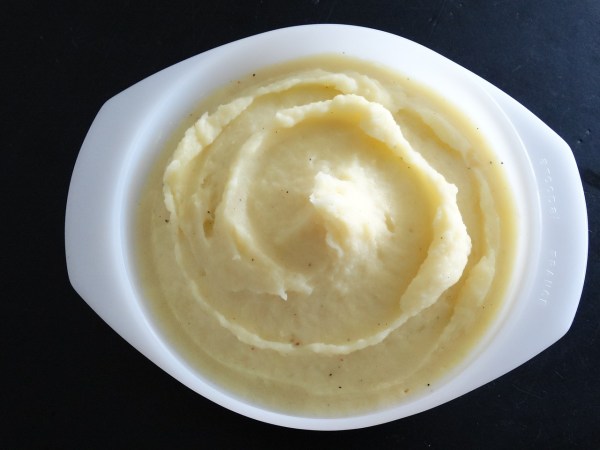
Her tongue kneads the potato which oozes like toothpaste from a damaged tube; it lands in an island on her dress.

She jumps at a bellow of thunder, and settles immediately like a billowed sheet.

I turn to open the French doors and watch her staring reflection flip away, replaced by dark space.

She takes the brunt of the lashing rain as I push her wheelchair out into the garden.

I run quickly into the warmth and shut the door, watching as her skull appears through strings of white hair, and her dress becomes dark.

‘That’s what happens to naughty girls who spill their food,’ I say.


HELEN LAYCOCK’s short stories, flash and poetry appear in a variety of anthologies and magazines. She has been a lead writer at Visual Verse, has featured in several editions of The Best of CafeLit and recent work has appeared in Popshot, The Caterpillar, Poems for Grenfell and Full Moon and Foxglove. She also writes children’s books.

Image via Pixabay
Wishing Well – Rickey Rivers Jr

Sabrina T. Age: 9

She wishes for school not to be so difficult, for her mommy, daddy and pug-pug to be happy. She wishes for her friends at school to be happy too. Pug-pug is her dog. She got him last year. He’s described as being cute.

*

Katrina V. Age 22

She wishes for an apartment. She’s been working at the same job since high school. She’s saving up her money. She also wishes for a boyfriend.

*

Barry Q. Age 26

He wishes for fewer hours on his job and a raise. He says “Who doesn’t want a raise?”

*

Patty J. Age 65

She wishes for her husband to be in a better place. He died two years ago. She wishes that she could gain the strength to carry on.

*

Victor G. Age 32

He wishes for a promotion. He says he needs it. Says Christmas is coming up and birthdays too. He whispers “promotion” and yells “come on!”

*

Bridget C. Age: 40

She wishes to meet a nice man, also for the quick recovery of Minxy, her cat, one of five. Minxy is described as being all black with white paws and a white stomach. Minxy was a stray like the others. She says Minxy ate something that didn’t agree with her and she’s been sick ever since.

*

Calvin E. Age 46

He wishes for a bite to eat. He says he’s been up and down the streets for way too long. Says that sometimes he can find food from restaurant dumpers because they throw out so much but recently they’ve begun to place locks on the dumpsters.

*

Vikki W. Age: 18

She wishes for a new car. Says she’s graduating soon and she hopes her parents get her one. She hopes the car will be either pink or light blue. Says either is fine but nothing brown or grey. She says her friend has a jeep but it’s all black. It’s cool looking but she doesn’t like jeeps. She says she’s definitely not jealous.

*

Quentin F. Age: 20

He wishes for a girlfriend. Says he thinks Veronica likes him but he really doesn’t know for sure. He wishes he wasn’t so awkward around girls. Says that would make life easier.

*

Lacey P. Age: 24

She wishes for a bigger chest. She laughs about this. Says she’s always hated how they’ve looked. She wonders why she was cursed with a flat chest. Says at least let her come into some money then she could save for an upgrade.

*

Brittany A. Age 12

She wishes to see a movie at the theater with her friends. She says her dad said he would take them but he might not. Says for some reason Jasmine’s mom doesn’t like her dad. She says her dad told her that. She says her dad said that Jasmine’s mom said something that bothered him. She wishes for them to get along. She asks if she could have two wishes.

*

Warren O. Age: 54

He wishes the pain in his side would leave. He says he thought it was cancer but read online that it may be less serious.

*

Sammy H. Age: 47

He wishes the stupid kids next door would stop playing loud music. He says these are the types of people he wishes didn’t move into the neighborhood. He wishes they would leave. He

says the kids aren’t really bad just annoying but all kids are annoying so whatever. He says his wife says he’s too harsh on them but she doesn’t like the noise either. He says she’s just nicer about it.

*

Kevin C. Age: 29

He wishes for his moms’ recovery. He says she smokes and has had a bad cough for a long time. It put her in the hospital. He says if his mom doesn’t make it he doesn’t know what he’d do. He pauses, and says please let her be okay.

*

Bianca E. Age: 24

She wishes she didn’t have to do what her boss wanted. Says she wants to make it. Says she’s a good worker. Says she hopes there’s another way.

*

Naomi S. Age: 16

She wishes she could forget. She says she feels numb around him now. She just wants to forget.

*

Eric V. Age: 11

She wishes her mom and dad would stop fighting. She says Dad broke a glass today. Mom screamed and left. She wishes they would just make up.

*

Patricia F. Age: 36

She wishes for her sons’ safety. Says please keep him out of the streets. Says there’s nothing there for him. Says please protect him. Says let my son come back safe and sound, says a prayer.

*

Christina R. Age: 17

She wishes for a healthy child. Says her parents don’t know yet but she hopes when she tells them they don’t freak out. She pauses. Even if they do, she says, I’m keeping it. She just doesn’t want them to hate her.

*

Devin J. Age: 27

He wishes his parents would accept him. He hasn’t told them yet.

*

Irene D. Age: 26

She wishes for a better tomorrow. She works at the club. She’s a dancer. She says its fine but not what she wants. She likes photography but it doesn’t pay the bills. She says she’s sick of the club. She wishes for a way out.

*

These coins float within me. They are my dreams.


RICKEY RIVERS JR was born and raised in Alabama. He is a writer and cancer survivor. His poetry has appeared in various publications and is forthcoming in a Twist in Time Magazine, Dodging the Rain, Elephants Never (among other publications). Twitter.com/storiesyoumight / https://storiesyoumightlike.wordpress.com/

Image via Pixabay
Baby and Bucky – Michael Grant Smith

The town of Last Chance will substitute for Heaven until the day we walk or float or whatever through those Bedazzlered gates. Sure, our semi-utopian municipality endures the occasional heatwave or crime spree, but those two dilemmas are caused by outside actors beyond our control. No matter how tight you close your eyes, it seems solar rays and ramblers both find a way in.

“Why do they call it late afternoon?” Leonard “Bucky” Sawtooth asked his common-law wife, Doreen “Baby” Shaker. “It’s here at the same time every day, more or less.”

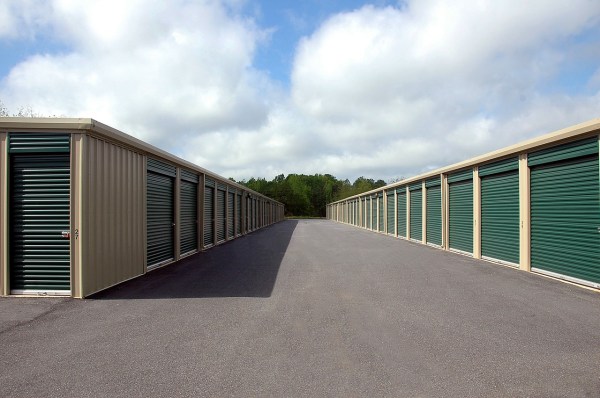
The self-storage units’ flat rooftops could grill spareribs to perfection if someone climbed up there to turn the meat. A curtain of fine blonde steel wool permanently screened Baby’s right eye.

“You’re the mighty oak that shades my babbling brook, King Dynamite,” she said with a yellowish smile. “I dream constantly of your stout trunk and overspreading limbs.”

“We’re the cream of the unwashable masses,” said Bucky. “The top of the food channel. Folks such as us, we eat what we want. Few if any creatures can eat us in return, what with our mastery of weapons and metaphors and all.”

“Your mind is a fine stainless steel colander, my Hunky Man-Tree. The big thoughts stay put.”

Bucky tugged the stringy, salt-and-pepper moss that adorned his weak chin. He ruminated on how life was a rich and bountiful banquet served buffet-style. Having reached a cul-de-sac in his career path, Bucky had accepted a position as the live-in manager of the Last Chance Stor-Yor-Stuf on Dixie Highway where the gas stations and burger joints end and the long gravel driveways begin.

“I’m a nomadic camel jockey of the faraway desert badlands,” Bucky said. “To roam is my destiny.”

“If you were a pack of Camels, Love Widget,” Baby cooed, “I’d smoke you down to the butt.”

The times Bucky had doubted her devotion was a number less than zero. He pulled his cap lower and squinted at Baby.

“Keep it up if you don’t believe I’m ready to party,” said Bucky, “or are perhaps unsure.”

“Unit 26, let’s go,” Baby hissed. “He stopped paying and I cut the padlock just this morning. You are carrying the kitchen match that must light my stove of ardor.”

They shut the gate and hung the “Closed” sign on the office hut’s window. The abandoned 7 x 10 was one row away. Bucky hushed up when they drew near.

“What’s on your large mind, you Gladiator of Pleasure?” said Baby, who spied Bucky’s sudden hesitation. “Is it the unseasonable heat? Has the mood flown away as if it were an un-lusty bird? I’ve got special plans for you and your Undercover Investigator.”

Bucky stood, feet planted wide, hands in back pockets, belly pointed toward the object of his woolgathering, which was Baby’s bolt cutters leaning against the rollup door. It was then that Baby smelled a plan afoot.

“I’m as determined as a stuck pickle jar lid to transport you to a carnival of delight,” said Bucky, “but another idea line-jumped itself into my brain bucket. Namely, if we’ve cut yon lock in order to sacrifice our flesh on altars of pleasure, why not use similar door-opening schemes to enrich ourselves fiscally alongside the opportunity to bump uglies?”

Baby’s teeth lined up like fire-roasted corn-on-the-cob.

“You’re suggesting maybe it’s time we cash out and move on to greenest pastures new?” she asked.

“Let it be so,” he replied. “One big score and we’re off to life’s next adventure.”

The next two hours passed as quickly as a dose of mineral oil. Baby and Bucky collected their belongings from the converted storage unit that had been their one-room domicile this past month. Bucky hitched his pickup to a flatbed trailer that did not belong to him, and idled it to the first row of doors. He and Baby, slick with sweat, took turns clipping padlocks until blisters dappled their fingers. Contraband soon overflowed the truck and trailer. The sun began to slide behind the office hut.

“Last one,” Bucky said as he hefted his now-dulled box cutter. “It’s time to go. To my way of thinking, we’ve scored today in ways what professional sports organizations cannot begin to ponder.

“To my way of thinking, my Burglar of Amour,” said Baby, “you’ve missed out on scoring in the most important championship of all. Your criminal tendencies have left me moist and breathless with mischievous contemplations.”

Baby’s bare feet were the same color as the concrete floor. Her toe ring gleamed in the fading sunlight. This tableau, and visions of their haul, made Bucky itchy with passion.

“I’m going to bone you like a chicken,” Bucky said, and paused. “Likewise, you understand I’m not a chicken boning you — you will be the chicken what’s boned. Except your actual bones will not be removed.”

He paused again. “I was using words to paint a colorful, erotic picture.”

“Honey Bottle, you go ahead and say or do anything to me your heart desires,” Baby murmured. “I’ll just lie here quietly until you’re finished or one of us falls asleep.”

“I love you so much.”

“I love you bunches.”

Bucky smelled of motor oil, Altoids, and microwave burritos. Nicotine and Orange Crush stained Baby’s fingers. Bucky lowered his life partner onto a bower of shipping blankets and boxed household goods.

“Your stretch marks are a road map what leads me to my carnal destination,” Bucky rasped into Baby’s navel. “I enjoy all of your points of interest.”

“Please hurry, and don’t stop to ask for directions,” Baby said. “You know every inch of my horny terrain, you Red Hot Sex Scavenger.”

“Follow me,” Bucky whispered to Baby. “Follow me.”

By the fourth incoming phone call the next morning, Constable Arlene knew she had no choice but to visit the unexpectedly-closed Stor-Yor-Stuf. Folks complained because that’s what folks did; yesterday she’d grown weary of replying she wasn’t authorized to “just shoot that damned sun.” But the last call came from puffy Councilman Everett, who was adamant his intent to retrieve unspecified private items from said facility was not to be jacked with.

Constable Arlene arrived with the mayor’s key ring, him being the business’s owner — an entanglement hidden behind a wall of blind trusts and denials. Last Chance’s sole and most heroic law enforcement officer unlocked the Stor-Yor-Stuf’s gate and found Bucky’s truck along with its precious cargo of evidence. Constable Arlene would have unholstered her firearm if she’d ever been issued one.

She approached an open unit in which she discovered two disrobed suspects intertwined in the drowsy aftereffects of physical congress. Look at this, people getting along for a change, Arlene said to herself, and she didn’t awaken the couple until well into filling out the crime scene report.


Image via Pixabay
Dogs – A Fairy Tale by John Holland

Although she had three beautiful daughters, Christine also desperately wanted a dog. But her husband resisted.

Because they lived near a field where owners walked their dogs, Christine began to leave out raw meat in her garden – to lure passing pooches. She did this when her husband was at work, even though she was afraid he might return without warning.

She watched from her bedroom as the dogs – and there were many – were attracted into her garden by the smell of the beef, pork or lamb. Christine would take the animals into her lounge, stand them on a glass-topped coffee table and brush their fur with a wooden-handled brush, sometimes so hard that eventually there was more hair on the brush than on the dog. Or she would cover them in talcum powder and paint their toe nails purple.

Sometimes she bathed them in her own pink bath with lilac petals floating on the water. Or dressed them in the children’s clothes – coloured waistcoats, silky empire-line dresses or yellow duffle coats. Often she taught them to perform tricks, some taking many hours of practice – sitting up to beg, sleight of hand card tricks, and cutting a lady in half.

Finally, before her husband returned, she sought out the dog’s fretful owner to return the dog. Sometimes they commented on the dog’s baldness, or fragrance, or ability to perform unusually complex tricks, but more often they were so relieved that they gave Christine a financial reward.

Despite this small income, Christine ran out of money to buy meat, and so, one morning before they woke, she strangled her three daughters. As she tightened her grip on their throats, they made no sound – except, she thought, a kind of muffled bark.

Having dismembered their bodies in the kitchen, she stored them in an old chest freezer at the back of the garage. When he arrived home, she told her husband that they were staying with their aunt. She knew that by the time he grew to disbelieve her he would be ripe for dog food too.

If anything, the human flesh was more attractive to passing dogs than the beef, pork and lamb. And she found that the larger the piece she put out, the larger the dog attracted.

The day she placed her elder daughter’s torso in the garden, she saw the biggest dog she had ever seen. But, as she ran across the lawn towards the beast – to smother it in her love – she was stopped in her tracks by its rapacious shining eyes, and realised it was a wolf. She turned on her heels and fled back into the house, locking the door behind her.

The creature pursued her, opened the front door as if it held a key, walked to the kitchen and took a knife from the drawer, and, at the top of the stairs, plunged the knife into her heart – an unusual form of wolf attack – with the words, “That’s for the children.”


JOHN HOLLAND’S short fiction is published all over the shop online, in magazines and anthologies. He is the organiser of the twice-yearly event Stroud Short Stories. John’s website is http://www.johnhollandwrites.com Twitter @JohnHol88897218

Image via Pixabay
The Bastle Barn – Neil Campbell

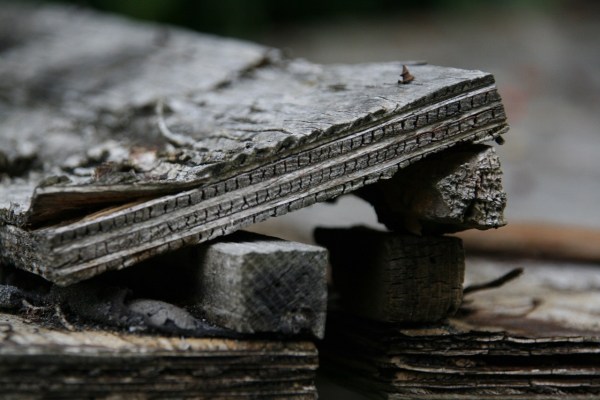
Jackie stands in the yard screaming. Dogs bark. Smoke pours from two chimneys at either end of the barn. Inside, the living room is lit by two fires and two table lamps. At the top of the two stairwells there are bedrooms. John finishes his tea and puts on his coat. He takes Jackie’s coat out with him and drapes it across her shaking shoulders before putting a woolly hat on her head. Her screaming subsides as he props open the back gates. He gets in his red car and reverses on to the old drovers’ road. She gets in her little blue car and slowly backs it out. John manoeuvres past her and parks his little red car back in the yard. He closes the gates as she continues to go backwards up the old drovers’ road.

Back inside, John makes another cup of tea and puts it on the table next to the couch. He puts his hands behind his head, flicks off his slippers and stretches his legs. There are starlings nesting in the bushes just beyond the door and he listens to their curious sounds.

After waking he pours the cold tea into the kitchen sink. The two fires are glowing with coals. He shovels more coal on each of them and smoke billows from both chimneys. Turning on the radio he listens to 70’s music and washes the wine glasses in the sink. A woman sings that she feels she’s made out of gingerbread.

Looking at his watch he turns off the radio and waits. Then he hears the car horn, one, two, three, four beeps. He goes out into the yard, opens the gates, reverses his little red car out and lets the little blue car back in.

‘Did you get them, Jackie?’ he says.

‘Yes, I got them.’

In the living room lit by lamps and fires she opens the Belgian biscuits and begins to eat them.

‘Why don’t you try something else, Jackie?’ he says.

‘I like these.’

‘I know, but don’t they have anything else in Aldi, Jackie?’

‘I like these.’

‘Alright, Jackie.’

Jackie sits on the couch with the empty box of biscuits. John looks up from his copy of the Hexham Courant. ‘Do you want your knitting, Jackie?’

‘Oh fuck. Okay.’

He goes to the drawer and takes out the long black and white scarf with the needles still attached and passes it to Jackie. She resumes the slow clicking and clacking and John goes back to his newspaper.

In the afternoon John looks at his watch and sees that it is time for Countdown. He puts on the TV and Jackie puts down the scarf when she hears the theme music. They watch in silence, relaxing to the considered requests for vowels and consonants. John puzzles over the conundrum, and the contestant, a seventeen-year-old boy, figures it out before him.

In the kitchen, Jackie cooks her speciality of chilli con carne as John attends to the fires. He folds out the tiny dining table and they sit at either end over their steaming plates just as The Simpsons starts. On the screen, Homer strangles his son Bart in a running visual gag. John watches as Homer goes to Moe’s and sits at the bar with Lenny and Carl.

When Jackie comes back downstairs in her dressing gown, John has a glass waiting. The yard is filled with empties and John thinks to go to the bottle bank sometime. At the end of Mrs Brown’s Boys, John turns smiling to Jackie and sees her sleeping on the couch. He finishes his glass of wine and lifts her into his arms before carrying her up the stairwell and putting her in to bed.

Back in the living room he puts more coal on both fires to keep the bastle barn warm through the night. He throws the empty box of biscuits in to the flames as the last westbound train passes. There are highlights of the England game on ITV. He has avoided hearing the score and is lifted by news of the 2-1 victory. Hodgson seems to know what he’s doing but neither side is like they used to be during the time of Bobby Moore.

After the football he looks more closely at the leaflets that came through the door while Jackie was out. Under a heading, ‘Quiet Revolution’ there’s details of a plan to put some wind turbines just across the river below Willimoteswick Castle. A meeting has been set up at the newly constructed village hall to organize a petition. The other leaflet details the upcoming production of As You Like It at Henshaw School.

The first eastbound train of the morning passes. As it fades away John hears the young starlings. After the starlings there’s the screaming. Dogs bark. John gets up and comes down his stairwell, sees the front door open and Jackie standing in the yard in her dressing gown, looking up at the blue sky. John starts the fires and then brings her inside. Later, as they go through the routine with the cars, John sees the police van by the side of the old drovers’ road.


Image via Pixabay

Frozen Fish – Amanda Huggins

Passing by the lily pond in that deep December snow, you glimpse the goldfish, a prisoner below thin ice. I break the surface with the heel of my boot, plunge a hand into the water, then clench my fist for a moment, immobilised by an irrational fear of touching the glint and gleam of the fish.

I picture my childhood pet, Pepper, thrashing on the polished wood of the dining table. I’d forgotten to put the lid on the tank after feeding him, and he leapt to freedom. I screamed for my mother, tentatively holding my hand out towards the fish, already imagining the cold wriggle of him, the possibility that he would slither from my grasp and land on the parquet floor.

Pepper’s body gave a final jerk as my mother arrived in the room. She dropped him back into the tank, but he stayed on his side, floating amongst the flakes of fish food, his mouth open in surprise.

My mother took me into town, we bought new shoes and ate ice cream sundaes, but it didn’t help. Back home, we buried Pepper in the garden, and the following week I chose a new fish from the pet shop. He was silver, and I called him Salt. But he didn’t overwrite the memory of Pepper; instead he was a daily reminder that I’d allowed him to die.

And now, this opportunity to make amends. I reach for the fish, teeth gritted, feel him quivering as I scoop him up with a paper coffee cup. You carry the cup home, so carefully, in your tiny mittened hands, heating it with clouds of chocolatey breath.

The goldfish spends winter in a borrowed bowl, and we admire his shimmer as he circles the pirate ship, weaves through weed in a one-man glittering shoal, makes eyes at the mermaid with the yellow plait.

In April, we carry him back to the pond in a jar, squat down at the edge to watch him explore, but his tail flicks once, and he’s already gone, leaving only a ripple between the lily pads to say he was there: just as though he never knew us.


AMANDA HUGGINS is the author of the short story collection, Separated From the Sea, and the flash collection, Brightly Coloured Horses. She was a runner-up in the 2018 Costa Short Story Award, and shortlisted for Bridport and Fish. She is also a published poet and award-winning travel writer.

Image via Pixabay

Falling Snowflakes – Mark Tulin

The old woman loved the falling snowflakes. They were big and sparkly and kept fluttering around her, distracting her from the police who came into her home while she was laying on the floor. She had no idea how the officers got into the apartment, and why she couldn’t get up. She must have slipped while walking to the kitchen. She must have tripped over one of her son’s roller skates. He’s so careless.

The wet snowflakes on her wrinkled face triggered a memory of her son as a little boy, bundled in a snowsuit with black goulashes and mittens tied to his sleeves. She often pulled him on his Flexible Flyer along the snowy road with the other children. She watched him slide down the big hill on Penny Way as he laughed and played with his rosy-cheeked friends. She prayed that he didn’t hurt himself on the sled; that he would have the presence of mind to be careful. She worried about her husband coming home in such stormy weather. He was a good driver, but the roads were icy and slick.

The policewoman turned to the back of the patrol car. “Everything will be okay, Mrs. Dowling. You’re going to a wonderful nursing home.”

The old woman didn’t know why the policewoman called her Mrs. Dowling; that’s not her name. Maybe she made a mistake. Perhaps it was the elderly lady with the henna red hair that lived on the next block with the same house number.

Although the old woman was annoyed by the police, she smiled anyway, grinning without teeth, only her gums showing. Her false teeth were floating in a coffee cup on the bedroom dresser. She didn’t think of taking them when the police picked her up from the floor and carried her away. She put up a fight, but the officers were persistent. They kept saying that she couldn’t live by herself anymore; that it was too dangerous, and that she would fare much better with around-the-clock nursing care.

The old woman watched the snowflakes fall and thought that she should have left a note for her husband. She hoped that he would be home soon and that he doesn’t worry about where she is. She worried about her son dressing warm enough and remembering to wear the woolen sweater that she bought for Christmas.

“My son is off from school today, and we’re going sledding,” the old woman said. “My son loves being out in the snow with me.”

The female police officer smiled at Mrs. Dowling. “Your son must be thrilled to have a mother like you,” she said.

“He is,” replied Mrs. Dowling, “he’s with his father now.”

Mrs. Dowling looked out the patrol car window at the falling snowflakes, feeling comforted by the policewoman’s kind words, somehow knowing that her son was all right; that he would slide down the hill like the other kids and reach the bottom safely. She knew that his father, who was off from work, would make sure that their son was okay.


MARK TULIN is a former family therapist who lives in Santa Barbara, California. His poetry often finds richness in the lives of the neglected and disenfranchised. He has a poetry chapbook, Magical Yogis, published by Prolific Press (2017), and upcoming poetry book entitled, Awkward Grace. His work appears in Page and Spine, Fiction on the Web, Amethyst Magazine, Vita Brevis, The Drabble, smokebox, and others. His website is Crow On The Wire.

Image via Pixabay

Sybil’s Dress – Shauna Gilligan

“Real freedom is discipline,” she said as she slipped another pin into the linen.

I stared at my hands as they pleated another line in the evening dress. She was always saying things like that to us. I don’t mean to imply that she talked much, or that she was the chatty sort – she was, after all, a serious woman – but there was a gaiety about her when she paid us a visit. Somehow she felt that these visits must always involve imparting nuggets of knowledge that she had gleaned on her travels.

It was said in the newspapers and whispered amongst us that she was the best travelled and most international Irishwoman in the world. There was a strong hope that the First Lady Jackie Kennedy would wear one of the dresses our hands had pleated – and perhaps even pose for a portrait!

“I have to feel what’s being made,” she said later that same day.

I watched her fingers caress the material she said was inspired by the ground beneath our feet – the colour of peat – and saw the beginnings of a frown on her forehead.

“Is it that you don’t trust us?” My stomach plummeted at my speaking out.

In the silence a tremor crossed her face; her body seemed to deflate a little. I couldn’t take my eyes off her, suddenly desperately wishing she would raise her voice, shout at us, and exclaim that we were ungrateful country girls. Tell us that they – the naysayers – were right all along, that there was no reason to employ local girls as seamstresses, for they always betray you. I willed her to say it aloud. That our combined jealousy – for that was all we girls had in common – would be the ruin of her. The woman modelling the sample dress wobbled in shoes that were a size too big, hardly daring to breathe. The air itself seemed to pause.

“It is that I don’t trust myself,” she said calmly, “without having touched the fabric.”

She didn’t look at the model, or the dress, or even the material. She looked beyond us, beyond everything. And then she smiled. Her full lips, pink with lipstick, stretched over her straight white teeth and I thought then that she was the most beautiful woman I had ever seen. I felt an urge to embrace her.

“But of course you must know that we trust you,” I said, looking around. Though my lips were bare and cracked and my teeth crooked, I too smiled. “All of us girls trust you…” – I paused, my throat going dry – “and even love you.”

A sound of satisfaction escaped her lips. I watched her let the fabric slide from her hand and with a swing of her green skirt walk towards the bare wall at the back of the room. She slipped gracefully through the door that led into the yard where the rain was falling heavily.


SHAUNA GILLIGAN is a novelist and short story writer from Dublin. Shauna is interested in exploring the crossover of art and literature, the depiction of historical events in fiction, and creative processes. The Sunday Independent declared her novel Happiness Comes from Nowhere to be “thoroughly enjoyable and refreshingly challenging.”

Image via Pixabay

Radio Silence – Juliette Sebock

There aren’t any notes that have meant so much
as a letter of you. Alone in my room;
hyperventilating when the radio flared.

How could you mess up Italian food?

I went to the city to escape the beat
and saw you in the shadows.
You danced next to Gandhi and Church
and crept into my bed when I tried to sleep.

The first lady slept one head over,
struggling to comprehend my static.
Still, I never hoped for much.
Why would Kate want to be my friend?

You followed me in store windows,
a reflection in tinted glass.
You whispered in the roar of the train tracks,
growing louder, white noise forcing me to sleep.


JULIETTE SEBOCK is the author of Mistakes Were Made and has poems forthcoming or appearing in a variety of publications. She is the founding editor of Nightingale & Sparrow and runs a lifestyle blog, For the Sake of Good Taste.

Cabinet Of Heed Contents Link 18

Image via Pixabay 
We’re Going To Bury You In China, Harry – Lee D Thompson

I’ve been sitting here looking out of the window for a while now, waiting for something to change. But it never does. It feels colder in here than normal. Bloody heating on the blink again. Tears of condensation race each other down the pane. The one on the left is going to win. No, the one on the right. It’s a draw. The tears blend into each other and form a single trickle onto the frame. They join the other trickles, all racing each for a place in the tributary that will take them somewhere else. Somewhere new. Somewhere far from the cold and the dark. There’s a paradise waiting: anywhere but here.

The teapot needs topping up. Another brew. That would be nice, but my limbs feel stiff. The lads at work used to call me Thirsty Harry. There goes Thirsty Harry, they said.

Brewing up again. Your fiftieth cup, Harry? Cutting down, Harry? There he goes again, to the piss-pot. They joked and laughed: We’re going to bury you in China, Harry. Either that or put your ashes into a bloody teapot. No! An urn, I told them. It’s called an urn. Now the bloody bulb has started flickering. Thought I’d turned that off.

I’m going to have to make an effort to get up in a moment, there are things that I need to do. To get ready for a bit of food shopping. Empty fridges make empty bellies. The rumbling in mine stopped a few days ago. There’s a couple of grains of rice in the bottom of the pan that I couldn’t get out. Left the bloody thing on the hob too long and the water boiled away. Nice bit of Sweet and Sour that was. Got some decent scran those Chinese. I used to order one every time I did a Saturday night shift at the factory. What do you think the lads said? We’re going to bury you in China, Harry. I’ll have to get Bill to pop over and and look at the electrics. That flickering is making me feel a bit sick.

Cleaning. That’s one of the things on the to-do list. Bloody dusty in here now. It’s all settled on Phyllis’ nick-nacks. Should have got rid of them years ago. Should have buried them with her. You leave them alone, they’re my ‘ladies’, she’d say. Tall, slender women with umbrellas or poodles or what-not. The faces on them got all worn away. It’s all that looking at them she used to do. As each day passed she’d be looking and coo-ing over them, talking to them. Faceless bloody ladies. Used to give me the willies. I’d turn them round when she went out. Couldn’t stand them looking at me. Well, how could they look without any eyes, but you know what I mean. I tried to give them away to Bill’s missus.

She collected ‘ladies’ and you know what the cheeky bleeder said? Not really my thing, they’re a bit old. And the faces, they’ve all worn away. I don’t think I could stand that. And bedsides which, they’re just Chinese fakes. Not what you think. They’re a bit odd.

Bill was there. He smirked as I was leaving. I nearly dropped the box of the bloody things. Looks like you’re stuck with them, he said. We’re going to bury you with the China, Harry.

But brewing up, cleaning, sitting here thinking about the nick-nacks, it’s not going to get me very far, is it? And that light. That bulb. It’s getting brighter than the other ones I’m sure. Shouldn’t even be on in the day. It’ll cost me a fortune. I’ll have to nip out to the Post Office and top up the meter card. Pain in the arse.

Here we go, and up you get, Harry.

Come on, you can do it. Up out of the chair.

You silly old sod.

Shift your ‘arris, Harry, Phyllis used to say. Shift your ‘arris. Aris Stotle. Stotle -Glass- Arse. Get it?

Phyllis always knew how to get me going. She had what they call ‘get up and go’. Mine’s got up and left, Phyllis my dear.

Phyllis my dear. I haven’t said that in a long time. Ph-ill-is. Phyllis. Forever my sweetheart. Frozen solid I am, without you. Everything seized up the day you went.

Tighter, stiffer, achier. The days drifted apart. Like those chunks of ice the size of an English county that you see on the telly. Further, further. Until they melted, Phyllis my dear.

The light. What’s happened to the light? It’s stopped flickering. Now it’s burning. It’s bloody sucking the National Grid dry, I tell you. Dry as a bone.

Phyllis my dear.

It can’t be. When I say your name, it gets brighter in here. You always did light up a room, Phyllis.

You’re here? Phyllis? Phyllis? But-

Ridiculous. Get a grip. Who are you kidding? Phyllis, here with me? Phyl-

Phyllis! Let me turn off that bloody light, I can’t see your face properly.

You’re going to have to do it, my dear. I can’t get going today.

It’s burning the back of my eyes out! You’d think having the bastard child of the sun up there in the ceiling would make it feel warmer, but it’s bloody freezing.

Help me up, Phyllis. I need to sort the heating out. Give the boiler a good bashing. I’m sure I’ll be knocking penguins out of the way, though. God, it’s cold. God, it’s –

Your ‘ladies’. Lined up like the bloody Terracotta Army on the living room floor! My dear, how have you managed to do that? At least you’ve turned that bastard light out.

Cup of tea? Yes, of course. Thank you, my dear. A brew. That would be nice.

God, it’s cold. There’s those tears again, on the window pane. Racing down, down, down. Then, blending into each other. I love it how they do that. How two becomes one. Can you see it, my dear? Beautiful.

They join the other trickles, all racing each for a place in the tributary that will take them somewhere else. Somewhere new. Somewhere far from the cold and the dark. There’s a paradise waiting: anywhere but here.


LEE D THOMPSON is a short fiction author, poet and music writer who scribes furiously from an underground bunker in a secret location in the East Midlands. Published by Ad Hoc Fiction, Flash Fiction Magazine, Algebra of Owls, and The Cabinet of Heed. He is a contributor to Memoir Mixtapes and a correspondent for the Mass Observation Archive. Twitter: @TomLeeski Web: ldthompsonwrites.wordpress.com

Cabinet Of Heed Contents Link 18

Image via Pixabay

Sailing The Eighth Sea – Kelvin M Knight

I spy with my little eye, something beginning with S.

Ship? How did you guess. But what kind of ship?

You will never guess because this is a transcendental telescope, one my Nanna gave me.

The things I see with this telescope blow my mind. And yet I can’t stop looking. Even when this telescope feels as though it’s stuck in my mind. Everyone thinks I’m just sitting here, on my capstan, watching the world go round, when really I’m lost on the other side.

Over there, mermaids are angels, with eyes of pearls and wings like fish fins and harps made of oysters sprinkled with rainbows. Over there, wooden ships fly through the sea, their sails flapping like giant gulls’ wings. People fly too. And not just sailors. Ordinary folk. They also walk upside down and inside out. Couples dancing is best. Those ropes dangling from their wrists and ankles remind me of coral reefs. Anchors are dotted about, in the sky and underground. And sailors run between them without moving. Some of the things they do are so comical.

I daren’t laugh though otherwise the harbourmaster will get uppity and demand, ‘What’s so funny!’ When I don’t tell him he’ll snatch my telescope, look through it, see nothing, and confiscate it. Then I’ll no longer be able to see my Nanna, waving at me, smiling at me, talking to me. I have seen this. My telescope has foreseen this.

That’s the trouble with the spirit world. They know what’s going to happen, which is both a blessing and a curse.

Spying the harbourmaster heading my way, I curse. If I ignore him, he’ll go away. Whistling a simple sea shanty, I look towards that lighthouse. A living beacon of purples and golds crumbling into the greyest sandstone.

‘What do you think you’re doing, shipmate?’

My telescope is in the harbourmaster’s paws. My telescope is at his black eye. My telescope is bending over his wooden knee. Smirking, he throws the snapped halves at me then staggers away.

No sympathy, please. Sympathy sinks ships. Say that twenty times when you’ve had too many rums.

I could do with a rum right now to drown my sorrow, make my telescope appear whole again. I’ll have to wait until dusk, though, when Nanna visits. She’ll see me right with another telescope. Hopefully one with a harpoon attached to it this time.


KELVIN M KNIGHT’s first flash fiction anthology FAITH in a FLASH is out now on iBooks and Kindle. He also blogs regularly here.

Cabinet Of Heed Contents Link 18

Image by Kelvin M Knight 

Historic Preservation – Kathryn Kulpa

Mornings, the steep stone stairs grow steeper every day. The musty smell of locked rooms. Burnt-on muck at the bottom of the coffee pot that nobody cleans. But mornings are calls, appointments, applications to review; your fingers fly. It’s the hours after lunch that make you think about cell death. There’s a word for it, you looked it up: apoptosis. All those neurons, fizzing and popping. Life out of balance. Your life as a resource that cannot be renewed. Late afternoons, when the smell of cigarette smoke seeps through the walls, thick and grey and granite, but not thick enough to keep out the press of poverty. The brown ceiling stain that grows day after dull damp day, as if anyone could fight the rain and win. Whoever said safe as houses never played, as a child, in an abandoned house, never felt their foot break through rotted wood; never held tight to splintered floorboards, not feeling until hours later the eighteen shards of wood dug from your fingers by a sewing needle in a mother’s patient hands; feeling only the dangling weight of your legs, searching in air; the two friends who ran for help, the one who stayed, counting with you, one Mississippi, two; never dreaming of a time when hanging on every day would scare you more than falling.


KATHRYN KULPA is four generations removed from Ireland, four generations removed from Scotland, and, as she lives in America, feels millions of generations removed from civilization. She is a librarian, editor, and writing teacher, and her work has appeared in Longleaf Review, Smokelong Quarterly, and Pidgeonholes.

Cabinet Of Heed Contents Link 18

Image via Pixabay 

A Very Polite Town – B F Jones

Is it safe to run in the woods? I ask.

Oh yes, very safe around here. It’s a lovely town you’ll see, everyone is so friendly, so polite.

I therefore venture into the woods. I am worried at first. A young woman in the embrace of tall trees, all on her own. You hear stories, your mind races, followed by your panicked legs. Nothing like a bit of fear to make you sprint.

But I soon stop worrying. They were right, everyone is so friendly, so polite. And I learn to appreciate the cool shade, the musty smells, the speckled sunshine on the ground. I greet dog walkers and they greet me back. Little children wave and shout hellos. Other runners nod their heads at me. Elderly people let me through. Yes, everyone is so friendly, so polite.

While I’m out running one cold morning, feet landing rhythmically on crunchy leaves, puffing out a white little cloud every fourth step, I’m thinking how my brain is in complete tune with my body, how my body is in complete symbiosis with nature, how I have become running. I overtake other runners, effortlessly accelerating, still finding oxygen to greet them all, as polite as all of the polite people of this small town.

Then it happens.

I fall.

I slip on a small patch of ice and I sprawl onto the ground. A split second during which my brain can’t comprehend the event. One second you’re up and running, the next you’re flat on the ground, gasping for air.

It reminds me of that time I got swallowed whole and spat out by a large wave, my body rigged by the surf, then an ungracious entanglement of limbs on the hot sand.

I blink my confusion off. A small squirrel is climbing the large tree above, stopping for a moment to look down on me.

I need to gather myself up but I can’t. There is pain spreading from the middle of my back to the rest of my body. I order my toes to wriggle but they stay stubbornly still. I can’t move my head. I can blink. I can feel myself blink. I try to shout for help; my mouth opens but no sound comes out. Like a cat on the other side of a window.

I hear quick footsteps approaching. Thank god. A runner.

He looks at me and nods politely before going around me and carrying on. Another one goes by at full speed. “Morning!” he shouts over the loud music in his earphones, before rabbit-jumping over my immobile legs. A nice family walks by. The little girl waves and the toddler says “e-do”, reaping immediate praise from his parents. “You said ‘hello’ Alfie, there’s a good boy.” And they smile at me and walk by.

I close my eyes. Maybe if I look dead someone might help?

Something cold and moist rubs against my cheek. A large Labrador is giving me the once over, half excited, half concerned about his discovery. He whimpers a bit before starting to lick my face.

“Teddy!”

At the sound of his name he abandons me for his mistress, a delightful old lady, wearing an incongruous mix of Sunday best and wellingtons. She walks to me.

“I’m sorry dear, about the dog. He’s only being affectionate. Have a good day now!” And with that she’s off, Teddy by her side.

Yes, everyone is so friendly, so polite.


Cabinet Of Heed Contents Link 18

Image via Pixabay 

In The Shadow of the Sound Tower – Paul Thompson 

The sound tower is silent, abandoned in the dunes, windswept and dated. Conditions are calm, nullifying its function. On still days like these, the tower finds itself a relic.

We find a spot in its shadow, down by the shoreline, surrounded by remnants of the ocean. Starfish cover the beach in dead constellations. The carcass of a rabbit, washed up and barren, bobs its head in the tide.

With the beach to ourselves, we waste no time in preparing our picnic. Far down the coast, crowds gather on a cliff top, the sky clear and perfect for the occasion. We eat salad and cold meats as we wait, our skin shrivelling in the presence of the sea. At midday it begins, muffled cheers in the distance, as red and blue trails paint shapes above the ocean.

An air display team, flying in unison, pixels on the horizon.

The sound of their engines reaches us, indicating it is time to begin. We fetch a tarpaulin and our shovels from the car. Our task is discreet, hidden by the distraction of the air show, the whole town focused on the planes. We work under the watch of the tower, now a silhouette against a smudge of colour, rainbows of smoke in the sky.

As we half-watch, one of the planes falls away from the others, a speck that disappears into the ocean. From our distance the scene is abstract, belonging to another world.

A breeze rearranges the sand. Slight but noticeable, enough to pause our efforts. Spots of rain follow as the sky darkens. All signs of the storm that has come out of nowhere, to the surprise of the pilots. More spots of rain, or possible drops of ocean from the impact, carried to us in the breeze.

The wind grows cold round our legs, salty and unforgiving. It flips the rabbit carcass over, blowing it into the shallows before breaking it in half.

This change in weather reaches the tower. Air flows through its apertures, its design now apparent. A familiar hum returns to the beach, a background noise. Sounds from down the coast feed into its song – crowd noise, an impact on water, the voice of the pilots. Indistinguishable, hidden within the tone, reaching us on delay

The storm escalates as our belongings shift and scatter, bouncing across the sand. The tarpaulin flaps open, fluttering like a ghost of the ocean. Starfish roll by, taken by the gale that is now reaching a peak. We make snap decisions between us, grabbing what we can before the wind decides for us.

The tower groans, the weather teasing new sounds from its vocabulary. An oily scent fills the air, a reminder of the pilots. We head back to our car, accompanied by their echoes, amplified by the sound tower that churns on the horizon.


PAUL THOMPSON lives and works in Sheffield. His stories have appeared in Spelk Fiction, Ellipsis Zine and The Cabinet of Heed. Find out more at @hombre_hompson

Cabinet Of Heed Contents Link 18

Image via Pixabay 

The Hydrogen Fairy- Julianne Corrigan

I am a tiny particle.

I am moving in small circles but remain invisible within the vast universe. I am random and free, existing only as a concept.

Just a thought.

In the burning core of the solar explosion that you will know as a distant star I am biding my time. I am not waiting, because waiting is an idea that doesn’t exist in a universe where time itself is illusory. How can I linger in timeless space?

The length of my existence is measured in the massive explosions surrounding me. I cannot count. There are no numbers. But there will be and they will transform everything. They will become important and intricate, and the universe will appear too small. But I will become large and significant, surpassing all that came before, anticipating all which lies ahead. I will become the blueprint.

I will become you.

There are many explosions in the core of my star and I am only a tiny particle.

I am moving closer to my metamorphosis. Very soon I will be two. When the last explosion of my life as being one finishes, I will fuse and multiply and nuclear energy will enable me to begin my journey. I will not be the hydrogen atom of my birth but will become the first stage of my growth. I am slowly becoming the complex compound you need.

It is the journey of my destiny and of your tentative life.

My voyage precedes the demise of my star, which has been burning for so much longer than you will ever know. As it transforms into a supernova and I move further away from my birthplace, I sense where I am travelling and embrace the cajoling and subtle pull.

The collapsing star is continually spurning my siblings. They are moving quickly in their attempt to catch me up on the long journey. It is a voyage lit constantly by other distant stars. My siblings are trying desperately to find me, to attach to me so as we can multiply together. They understand the importance of this journey and this knowledge encourages them to become part of me.

So we can become you.

I am passing much smaller and younger suns and at a time in the distant future, when they themselves are spent, they will produce more of us.

Barren planets come and go but these desolate places do not beckon me.

They are not my final destiny.

Cosmic debris is littering my path. But I need to focus on my journey and arrive safely at my ultimate destination.

Massive comets, which have their own tale to tell, smash into me, their energy so strong that I multiply again and again. I am becoming more powerful, more complex. My growth is exponential and my size is slowing me down. Some of my siblings are catching me up. They are hurtling through time and space in a supreme attempt to be with me. Silently jostling, they collide with me and once connected they are assimilated, becoming part of me.

As I will become part of you.

I move through so many solar systems. Each one seeming larger than the one I have just passed through. More and more organised they appear. Each one hinting at the promise of what will be. Hinting at the promise of what should be.

Of what will be you.

Now I am changing again. My siblings are now so a part of me that we are real matter. Our name alters. It changes again and again. I am becoming impenetrable. Still not as important as my parent – the star – but my destiny is drawn. And as surely as your sun will burn for a long but finite time, my destiny is as clear as the final fate of your sun. Perhaps clearer.

Because soon I am you.

I am now more than the hydrogen atom of my birth. I am expanding, filling space, creating a tiny part of gravity. As one I am nothing. But there are many more like me. Our births and multiplication are constant.

We need to be prolific. Occasionally instead of expansion the universe implodes, taking many of my siblings with it. There is no time or space inside the two dimensional hole. Does it exist? It might do to my siblings trapped inside, although as I travel to my final goal, I think it does not.

How can it?

When it isn’t part of you.

By knowing my size and complexity I recognise I’m nearing the end of my journey. I am now becoming the organic, stable matter I need to be.

The solar system I am now entering appears disparate from the others. More organised. With ripples of divergent energy it feels different. It is an energy which inspires me.

To become you.

I am beginning to perceive an irresistible pull and although subtle, it has been with me from the beginning. I am passing planets unlike anything I have seen before. They are directing me towards my destination: enormous pointers in the massive space all around me. And I can do nothing to halt my progress, my fate.

And your destiny.

Everything is becoming smaller. This solar system is more compact, and yet more complex. The evenly spaced planets and debris are depleting. I am serene. I am arriving at my real home.

I am beginning to feel who you are, to know what you will be, and what I will become. An excitement overwhelms me at the idea, of becoming you.

You, who will be more important than your sun and will know more than anything I have encountered on my journey.

It will be many millions of years before you become your destiny, but I am patient knowing we will achieve the goal of my dying star.

My arduous journey is not in vain because you nearly exist. The older solar systems already comprehend what you will finally become. They have glimpsed at your destiny. They know there is nothing that will compare to you.

You will be unique.

I am now reacting with oxygen and water vapour. I am growing up.

Gravity is pulling me ever more strongly towards the blue planet. A planet that is different from all the others. I want to get there. I want to be part of it. This planet will become my home.

Your home.

I am now moving faster than ever before. I see the spectacular blue planet in its glory. Beautiful and serene. Calm and peaceful. The white clouds hovering above its surface, cajole me. They are willing me not to make a mistake. Their hope is for me to be successful, to penetrate the fragile atmosphere and find my new home.

To find you.

I am plunging through the ambience of the beckoning planet. Now I am what I need to be, complex enough to begin your life. I am entering on the bright side; your sun is shining strongly and emphatically. It is shining down so hard that the blue oceans are twinkling white as they swirl and dance in the invisible wind. Water which will be my new home and the start of you.

It is a sight more beautiful than anything I have seen travelling through thousands of solar systems. The view an image of loveliness and unparalleled in the infinite space encircling its precious parameters.

It is ours.

I am moving at great speed through the atmosphere, light and welcoming, warm and enticing. I begin to slow down and float gently and as I break my way through the fragile shell of the blue planet, incommensurate with its size and beauty, I am at peace.

I am sinking into a great ocean and it is here where I find my penultimate resting place.

Because soon, in thousands of generations of life, I will become a part of the puzzle that is you. I will become the part of you that thinks and reasons. Loves and hates. Laughs and cries. I will be a fragment of all your emotions.

And when you grow old and die I will continue on, forever and endlessly.

Because I am the fairy inside all of you.

I am looking backwards towards my star, a silvery dot shimmering in the sky. It is now long dead. It died giving birth to me. It died giving birth to you. And although I look and marvel at its persistence, it is the persistence of you and your planet which is truly marvellous.

I will never leave you.

I am your fairy.


JULIANNE CORRIGAN writes historical, suspense and speculative fiction. She was shortlisted in the Bridport Short Story Prize in 2016. In 2019 she made the final in the Write Stuff competition at The London Book Fair. Her contemporary suspense novel, Falling Suns by JA Corrigan, was published by Accent Press in 2016. https://twitter.com/julieannwriter

Cabinet Of Heed Contents Link 18

Image via Pixabay 

Staples – Leslie Doyle 

Mary said she wasn’t getting any more mammograms, on account of the radiation. Trish looked up from her Moscow Mule, swirling the copper cup carelessly.

“I know, right?” Trish looked around the restaurant, one of those dockside ones where people pulled up on their boats and customers sat at wooden cable spool tables. Plastic crabs and lobsters in fluorescent colors on the walls. Wait staff in vaguely nautical outfits, the girls in apparently required tiny white shorts they kept tugging down, the guys in knee-length cargo shorts.

“Last time I flew—to Florida when Frank’s dad was sick? —I refused to go in the X-ray machine and I had to get searched.”

“I don’t like to fly anymore” Mary answered. “They’ll kick you off as soon as look at you, after pawing through your bags and touching your lady things.”

Trish nodded. “Well, I won’t fly again, that’s for sure. On the way home, they bumped me after I had an assigned seat. Then just before boarding, they called my name and announced they’d found me another seat.”

“Well, that was cool.” Mary stuck another tortilla chip into the crab dip. The bright yellow chip and pale pink dip echoed the colors of her off-the-shoulder blouse. She hiked one sleeve up, hiding the sunburn line. “I mean, that they made up for it like that.”

Trish shook her head. “No way I was getting on that plane. It was a sign. I started yelling I wouldn’t get on it and I thought Frank was going to have a fit, telling me TSA would arrest me if I didn’t shut up. The lady next to me said well then she wasn’t getting on it either, and I told her not to worry, it wouldn’t crash if I wasn’t on it.”

Mary listened and nodded. She and Trish were best friends now, since they’d met at Maid in the Shade, working all summer to clean rental houses between tenants and change sheets at the local motels. She knew Trish and Frank were recently separated and wondered if it had anything to do with this incident.

“So we drove a rental home. But anyway. You know that you can get an MRI mammogram now, right? No radiation.” She caught the server’s eye and held up her cup.

Mary shook her head. “Nope, no MRIs for me. Not since my lung collapsed last year and they had to stick it to my chest wall with staples.”

“Wait, what? That’s crazy!”

“Yeah. But here’s the thing. I can’t ever have an MRI now. The magnets would pull out the staples. Rip them right out of my lungs. They’d slice my heart to bits.”

The drinks came, and they each took a sip. They had an afternoon off, before the next round of tourists. There were a million beds to change and toilets to scrub tomorrow, but for this afternoon they had nothing to do but sit in the sun on a dock.

Trish looked out over the boats, pondering what was luck and what was fate. And the menace of Mary’s staples. She’d never heard of such a thing before, but at the same time, she knew exactly what Mary meant.


LESLIE DOYLE lives in New Jersey and teaches at Montclair State University. Her work has appeared or is forthcoming in Gigantic Sequins, The Forge, Electric Literature, Fiction Southeast, Signal Mountain Review, Rougarou, and elsewhere.

Cabinet Of Heed Contents Link 18

Image via Pixabay 

I Still Remember The Number Plate Of The Peugeot 308 – Lydia Unsworth 

I passed the autumn and early winter noticing the flies but, whether from stubbornness, pride, contempt, or lethargy, refusing to do a thing about it. Sometimes I look at the edges of squalor and think, is this squalor? Not yet.

Unable to remember the sound of my own voice, I recall VHS tapes that might have proved it. For when I might need to prove it. Taped over; haunting cupboards everywhere.

The buzzing reminds me I am still responsible.

After these sweltering days, we are all grateful for a little wind, a little rain. The slightly open door keeps hitting the frame. I joke-clenched my fist in the baby daycare place, for which I am not sure of the English name, only because I didn’t have a sophisticated enough repertoire for what I was trying to say. Then I followed the lines of all the adult eyes to see if they were seeing what I was seeing; i.e. the fist in the baby daycare place.

I close the windows because the children playing football outside are not mine and the sound of the ball bouncing off modern surfaces is slamming into the bulges of my barely contained rage. I would like to speak in a clear, calm timbre. Wrap a towel around the exterior walls of my returning body. Walk like I grew up with newspapers. Exhibit the confidence of a six-digit number. Mediate.

I would like to take drastic action. Gather my hair into a ponytail and just chop. I think I did that once. When I was drunk. When my hair was short and my ponytail shorter. And in the morning I hardly remembered and nobody else noticed at all.


LYDIA UNSWORTH is the author of two collections of poetry: Certain Manoeuvres(Knives Fork & Spoons, 2018) and Nostalgia for Bodies (Erbacce, 2018), for which she won the 2018 Erbacce Poetry Prize. Her work can be found in Ambit, Pank, Litro, KillAuthor, Tears in the Fence, Banshee, and Sentence: Journal of Prose Poetics, among others. Based in Manchester/Amsterdam. Twitter@lydiowanie

Cabinet Of Heed Contents Link 18

Image via Pixabay 

Create a website or blog at WordPress.com

Up ↑