Ithaca Road – Debbie Robson

They collapse into my cab in a bouffant of net petticoats, tight bodices and Dior perfume.

“Ithaca Road, please,” Miss Powder Blue says.

I glance in the rear view mirror and marvel at my cargo of female beauty. Hasn’t it always been so? We men are defenceless.

Miss Pink Sateen is the prettiest but I rather like the brunette in broderie anglaise. She speaks and I am struck with that old familiar feeling. “I think we are too dressed up,” she says softly.

“It’s Elizabeth Bay. We are not too dressed up,” her friend hisses.

As I pull away from the gutter, the gum trees rustle and the late summer sun kisses the top of the houses in Lavender Street. The harbour bridge hums and the girls whisper in the back seat. I can feel the heat of the day ebb from my cab. I want to close it up after the girls jump out. Trap this moment to live off for days. As I drive I remember Ithaca Road as it once was. The cool, square houses and the blue water. In particular a deep garden and a verandah with a small return that I used to kip in for the night. I breathe out my Peter Stuyvesant and watch the fare tick over.

“Brian Paignton is going to be there,” says Pink Sateen.

“I’ve got my sights set higher than that,” remarks Powder Blue.

“We’ll have to contend with the Kambala crowd.” All three groan.

“I’m determined to meet someone tonight,” declares Blue. Not when she expects to and not if I can help it, I decide. I park the cab not far from their destination, inches from an FX Holden in front and a blue Zephyr behind. Pink pays me and they stand for a moment looking up at the balcony of the old house, the steep rise of flats behind and a Cook Island pine shadowing both. Laughter drifts down as the girls begin to ascend.

Up, up you go girls. Your destiny awaits. I pause and let things settle. Count the minutes for the hostess to get through her introductions, for the hors d’oeuvres to be served and the years to fall away.

“Zach! Is it really you?” Mrs Hungerford studies me. I can tell she is wondering what to do with me. Where can she put a taxi cab driver? In with the bankers or the doctors? Maybe the poet won’t mind. I look around but can’t see him.

“Can I steal your balcony for a few hours? I’ll just sit and contemplate your view.”

She is confused. “If someone needs…”

“Of course, I’ll drive them.” She is immediately relieved. I am here as a standby taxi driver. Nothing more. Never mind the night, twenty three years ago, we spent in her bedroom. I wonder for a moment if it is still painted white, the curtains like Scheherazade billowing gently on us. Do they still billow? Does she?

Suddenly her face brightens. “Can I send one or two guests to you if I’m desperate?”

“The lost ones?”

“Yes.”

“Of course.”

“There are not so many of them now, thank God.” She pauses. “Time passes,” she comments blithely but frowns when she studies my face. My hostess doesn’t wait for my reply.

I spend about an hour on the balcony. For most of that time Miss Broderie Anglaise is a smiling wallflower. No accounting for tastes. She is worth all the others together, rolled up in a Persian carpet. I can’t stop myself from turning and observing her. She drifts beautifully. Young men in grey suits with baggy legs drift towards her but don’t stay talking long. I can see this happening for years. Most of the time I let things take their course. Just simply watch the patterns unfold and tweak here and there. I’m not as old as Methuselah but I have the luxury of the long view.

The problem is, keeping my enthusiasm up. I’ve grown tired of marvelling at how small the points of divergence are. The difference between two people meeting, finding they have something to keep them together and then staying together. The last part, of course, is a challenge but at least it is grounded in the everyday. The first part is the stuff of dreams and where I do my best work. A wrong address, a crossed line, a missed flight. A sudden remark that lifts an eyebrow. A mood that is uncharacteristic and suggests the unexpected. A spilled drink. Sometimes it is just one word.

The sky is black now and sprinkled with stars that wink in the bay. As I stand up and stretch, my hostess brings me a White Russian. She hasn’t forgotten. I smile at her and take a sip. Before I look up again she has disappeared back inside. So I may not be in luck tonight, although I know her husband has been dead since ’44. It was a bad year to be with the RAAF. So many lost and nothing I, or others like me, could do about it.

I put my drink down and think about that one word. It’s not sky, or luggage or moon or rose. I close my eyes and see a beautiful stretch of coast road, a headland and a smashed car. An officer and his dead wife. I hold the word in the air and then glance at Miss Broderie Anglaise. She is at the table helping herself to some punch when he walks in. Late. Nervous and adjusting his tie. He is the man who holds that word inside him; who has been cutting his teeth on it for too long. It is just as I thought. She glances up as he arrives but he quickly looks away. I know what he’s thinking. She’s too pretty. She looks as though she’s rich and beyond his reach. He hasn’t realised yet that she is standing alone.

She is aware of him though. His country boy looks complete with cowlick and broad shoulders, only a year or so older than herself. As he looks in despair around the room, Broderie spills her punch and curses. He turns with a handkerchief like a true gentleman.

“I’m so clumsy.”

“No, you’re not.”

“Thank you.” She pats discreetly at her chest.

“You look really nice.”

“Thank you.” She pauses. “Can I get you anything? The smoked oysters are really nice.”

“I’ve never had them before,” he admits. He moves closer to the table.

“There they are,” she points.

He sees them on the platter.

“They’re wrapped up in bread.”

“Yes.”

“I’m not good at these things.”

“It’s hard when you don’t know many people.”

“I meant the oysters,” he says as he struggles with one. He curses to himself. He has nearly lost the moment, but luckily she is looking at him sympathetically. He pauses. “Yes, meeting so many people too.”

She smiles at him and he feels a little more confident. “My mother is a friend of Mrs. Hungerford,” he says.

“She’s got a lovely house, hasn’t she? I went to high school with her daughter.” Broderie points to a vision in scarlet.

“Wow.”

“Yes,” she agrees. “My name is Lucy.”

He takes her hand. “Sorry, I should have said. My name is Charlie and I think you’re much prettier.” He is relaxing a little and has helped himself to some punch. “So you grew up in Sydney?”

“No. I grew up in a place called Lorne, on the coast.”

And there is the word. That one simple word. The blood has drained from his face. He turns away for a moment and she believes he has lost interest. People always seem to, I can feel her thinking. But he rallies.

“It’s in Victoria,” he says numbly.

“Yes. Do you know it?”

I wait for him to choose the right answer for the two of them. The carpe diem answer. And he does.

“It’s where my brother killed himself during the war. He was on his honeymoon and the tyre blew out on their car. She was killed instantly.”

I glance in to the crowded dining room again. They are in the corner nearest to the balcony and she has moved towards him. Suddenly she straightens up.

“My dad never got over the disgrace,” he continues, but she is only half listening.

“Was it at the Grand Pacific Hotel?” Her mind is racing ahead to the past. “My grandparents still run the hotel.”

“What?” He’s confused and says for the hundredth time, “It was a cowardly thing to do.”

“No, it wasn’t.” She has gripped his arm. “It was because of her luggage.” She pauses. “He sort of rallied after it happened and then there was the mix-up.”

He moves closer to Lucy and grips her other arm. “You need to tell me what happened!”

And she does, whilst food is eaten and more drinks are poured. They are alone in the elegant drawing room. No one else matters. No one else will ever matter but children, grandchildren and great grandchildren. The lamps and the chandelier have extinguished the stars. I finish my White Russian and leave.

 

Contents Drawer Link

Debbie Robson loves to write fiction set in the first sixty years of the last century. Zach is a relatively new character in her short fiction and she is enjoying getting to know him. This is one of six short stories featuring a disgraced angel caught between two worlds.
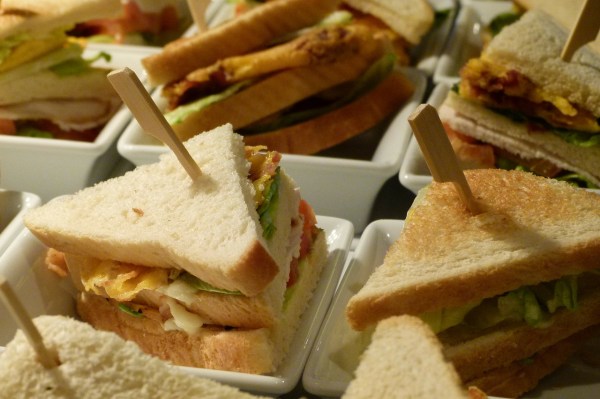
 

Image: See page for author [Public domain], via Wikimedia Commons

Funeral Buffet – Steve Campbell

“It’s important for any business to know when to adapt, and that’s what we did. We saw an opening and we took it. Grabbed it with both hands. We had to. People are living so much longer than they used to and our work started to dry up. Everyone is much more health conscious nowadays. No smoking, no drinking. Low-fat this, low-fat that, sugar-free, salt-free, caffeine-free. Enjoyment free more like. And where did that leave us then, eh? Less funerals is less income. We couldn’t just increase our rates to make up for the shortfall. It’s a competitive market. We had to do something to shore up our business. We had to diversify. Obviously, we handle everything with the utmost respect. We even have a tasteful range of black paper cups and plastic cutlery – it’s those little touches that people remember. And by including catering with our usual services, we actual save the deceased’s family a reasonable amount of money. And I won’t lie, we’re doing okay out of it. Racking it in in fact. Our turnover for the last six months has almost tripled compared to the same period last year. And while the family are wishing that great Uncle Bernie was still with them. Well, he actually is – for anyone who’s had the pork rolls. They’ll be closer to Old Bern’ than they’ve ever been before. For the next 24 – 72 hours at least.”


Contents Drawer Link

Steve Campbell has short fiction published in places such as Sick Lit Magazine, formercactus, Twisted Sister Lit Mag, Spelk and MoonPark Review, and on his website standondog.com


Image: 90051 via pixabay

Three Replays – Elaine Dillon

1.

They sit in rows. The boys with their legs crossed; the girls with their legs to the side. Because that’s how ladies sit, Mrs McCarthy had said. Wiry carpet fibres puncture Marie’s tights and she scratches at the prickles. There’s a thin grey fur all over the black nylon and Marie longs to wet her hands, to wipe them down her legs and make the fabric very black again.

Mrs O’Connor and Mrs McCarthy push-pull the TV into the room, edging the tin stand past splayed fingers. A rubber wheel whines softly, and Marie thinks it sounds like a please, please, please, but it doesn’t cut through the crisp packet rustle of the others. One of the teachers flicks the lights and Marie sees girls around her scooching together, already cupping their hands as they lean into curtains of hair.

The sandstone arch of the church ends catwalks from all directions, and families pause to wave at the videographer before they go inside. The twins arrive first; identical chestnut hair bouncing in identical silky ringlets below the hems of their veils. Then Grace, Hannah and Lauren, in short dresses. Marie’s ma said she had to get a long dress because bare knees weren’t appropriate for Our Lord. And she definitely wasn’t buying Marie fancy lace gloves either, for Chrissakes.

Aisling O’Flanagan appears, bony shoulders jutting ruffled angles everywhere. There’s a spike in the whispers. The twins dip their heads, shoulders shaking, and hissed words ebb and flow. Marie looks at Mrs O’Connor but she’s whispering at Mrs McCarthy, who’s filing her nails. Aisling’s looking down at her nails too.

Beaming, Aisling’s Mum elbows her daughter’s shoulder and points at the camera. The videographer zooms in and the girl’s face briefly droops wide across the screen. Aisling lowers her eyes and turns away. She follows a group of boys inside; carbon copies in white shirts and cable-knits, regal red knotted at their throats.

Marie sees herself arrive; sees the oblong bodice with the alter boy ruff, the frilly ankle socks and the ivory patent shoes. The skirt is flat; triangular, and too short for a long dress. Marie thinks about the other girls. How full they look with their skirts like upturned tulips or layers of rose petals; textures of white tulle bound with wide satin bows. She closes her eyes and bows her head. Let us pray.

When she looks up, Melissa’s cloudy curls fill the screen, sprays of tiny white buds twisted through the green halo on her head. The teachers nudge each other and look at real Melissa, then TV Melissa, and back to real Melissa again who straightens her back with a toss of her hair. Mrs McCarthy clutches a hand to her chest. Marie thinks, as if she’s trying to stop her heart from escaping.

2.

At home, Marie holds down a button on the remote until the part where she gets up to read from the bible. She bows at the alter and approaches the lectern, hands joined the way they told her to.

The sound quality of the video is awful, but Marie’s voice is clear and even as she projects her words towards the back of the church. Marie thinks how easy it was, just to get up there and do exactly as they asked. To speak slowly, enunciate, and look up to say This is the Word of the Lord. She waits for the congregation to say Thanks be to God, and sits back down. She knows she does it well, flawlessly in fact, and she watches it again and again, pleased that she didn’t trip on Corinthians; relieved that she was able to be perfect at this one thing.

Because the others aren’t, she thinks. James mumbles and Amy talks too quickly; Mark doesn’t look up when he’s done. Marie thinks, you didn’t practice. You didn’t practice as hard as I did, and she feels puzzled because she remembers Mark’s parents, wrapping him in their arms outside the church, telling him that they were proud, so proud. Even though he got it wrong.

Pride is a sin, she remembers, and hits the stop button. But she thinks about the veil and the way that it shimmered as she bowed her head, the way it hid her face and made her feel as special as a bride.

3.

Marie watches her ma, as her ma watches the screen. Thick fists of Marlboro smoke hang between them and there’s a quiet crackle as the woman draws, as she sucks her cheeks hollow and squints through the fug. Marie can’t take her eyes off the growing ash sagging on the tip; she can’t stop worrying about it because it’s going to fall on the carpet. Her eyes nip as sour tobacco creeps into her nostrils but she can’t look away.

The woman suddenly slices a loose crucifix through the smoke with her arm and lifts the remote. She winds the tape back and plays the reading again, dragging on the cigarette as she watches. Eventually she stubs it out in the ashtray, exhaling sharply.

“That bloody veil,” she says, getting up from her chair. She shakes her head. “That bloody headband, slipping down over your fringe the whole day.”

The ejected tape burns hot in Marie’s hands. She dips her head as the heat rises to her face.


Contents Drawer Link

Elaine Dillon is still quite new to this writing business. She recently quit her HR job to spend more time writing, and to figure out if she’s any good at it. She’s still not convinced that she isn’t just hiding. She tweets from @Elaine_d_writer, or follow elainedillonwriter.com.


Image: ResilienciaFoto via pixabay

The Story of How We Came To Live At The South Pole – Danny Beusch

The breakthrough came a year after the screaming began.
‘I know this will sound strange but bear with us. We think your son is allergic to birds.’
‘Feathers?’
‘No. Song.’

*      *      *

The room was square, sterile.
‘We’ve got a file of every British bird call. We’ll start with A and work our way through. Some might not bother him. Or bother him less. It could be useful to know.’
They stopped at blackbird because he was retching and his fingernails had drawn blood. A wet patch spread from his crotch down his legs. He stank of shit.

*      *      *

We rented a flat in the city, hoping that the cars and the trains and the factories and the clubs would drown out the racket. A day later and he’d scratched through his bedroom wallpaper. Our landlord kept the deposit.

*      *      *

They tried headphones that blocked out background noise. They tried ear plugs that blocked out all noise. Nothing worked.
‘We’ve controlled for temperature, air pressure, daylight, oxygen, humidity, microbes, pollen. We’re 100% sure it’s birds.’
‘But how? He can’t even hear them.’
‘We think it’s reacting with his skin.’

*      *      *

One of them was a mother.
‘How far would you go for your son?’ she said.
‘To the ends of the earth.’
‘I’ll see what I can do.’

*      *      *

The two of us share a room. The whole research station shares one kitchen. The team of scientists forget to share their progress. I doubt I will ever share my bed again.
The bags have gone from under his eyes and the scratch marks have faded. He eats three meals a day, and keeps them down. His hair has grown back.
There are no birds here. There is no life here. I tickle his tummy to convince myself that he is happy.


Contents Drawer Link

Danny Beusch (@OhDannyBoyShhh) lives in the UK and tells stories. He spends rainy days reading Joanne Harris and Margaret Atwood novels. He started writing flash fiction in 2017


Image: Jill Wellington via pixabay

The Sky, And Its Victims – Claire Storr

I’m not made of the correct fabric like everyone else. Like a Paper Mache lantern under a hot tap, bound for collapse, wilting at any breeze.

I hate your new moustache. It makes you look like a 1940s British general. Something Second World War-ish. “Tally ho master!” I say, with it pronounced ‘Mahhhstaah’, elongating the edges of the word while you look at me, expressionless.

Later that night, someone posts a picture on Facebook of a victim of a napalm attack, and before I can look away I see their arms and legs are long, red twigs of gore. I shake all night with the image burned into me, the phone was flung across the room as you tightly gripped my breech-baby form. You said: tremble and I’ll make you stable, the ripples will flatten out, eventually.

This was the way that it began.


Contents Drawer Link

Claire Storr is a 33 year old writer from Cumbria. After completing an MA in Photography in 2008, she worked as an editorial photographer for the likes of Faber and Faber and Macmillan alongside having exhibitions and writing poetry and prose in her spare time. Since then she has progressed into writing full time and has been published in various anthologies, magazines and newspapers. In 2018, she published a collection of short stories focusing on female characters living in Ireland called Tides. She lives with her husband and daughter in Carlisle, Cumbria.


Image: tookapic via pixabay

Holding Onto Her – Jack Somers

I met Donna at the pharmacy. It was an hour before closing, and she was the only pharmacist on duty. She handed me my little orange bottle of citalopram, and asked me if I had any questions about my medication.

“I’m supposed to take it with wine, right?” I said. I don’t know why I said it. Maybe it was because she looked tired, and I wanted to see if I could liven her up.

She laughed like church bells, deep and resonant with just a shade of solemnity.

“Whiskey,” she said.

That’s when I knew I had to hold onto her.

It’s a strange thing starting a relationship with the girl who hands you your brain meds. She knows right from the get-go that you’re fucked in the head. It’s kind of freeing in a way. You don’t have to waste energy pretending to be normal.

I made a joke about this on our first date. We were at this hole-in-the-wall Italian place with the cliché red and white checked tablecloths.

“So you like anxious guys?” I said.

“Everybody’s got issues,” she said.

“I have panic attacks. Sometimes twice a week.” I thought she should know what she was getting into.

“That doesn’t scare me.”

It didn’t. I had an attack two days later, and she came over. She held me on the couch, and we watched This Old House. It was nice lying there, intertwined, her breath, warm and regular on the back of my neck. I tried to match my breathing to hers, to soften my exhalations, to mimic her composure.

In the episode we were watching, a demolition crew was tearing out a built-in bookcase ravaged by carpenter ants.

“When I was seven,” said Donna, “we discovered termites in our basement. They had eaten through one of the main support beams of the house. The beam was like papier-mâché. I remember my dad poked his finger right into it. My mom asked our contractor if it was fixable, and he told her it would be tough. They’d have to build a temporary wall, remove the steel supports, take out the damaged beam and slide in a new one. But it was fixable. Everything was fixable, he said.”

She hugged me, and I felt her heart against my back—a steady, patient pulse.

The following Monday, I drove Donna to the hospital. They had her biopsy results. She could have driven herself, but she didn’t want to be alone. Like me, she didn’t have anybody else. I steered with my left hand and held onto her with my right. We didn’t talk about it. We talked about our favorite Weezer songs, Sylvia Plath, how much we hated high school—anything but it.

In the waiting room, we were silent. The air was too thick to talk. Donna held my hand so tight it hurt, but I didn’t mind. In the end, that’s what other people are for. They’re for holding onto.


Cabinet Of Heed footer logo

JACK SOMERS’ work has appeared in WhiskeyPaper, Jellyfish Review, Formercactus, The Molotov Cocktail, and a number of other publications. He lives in Cleveland with his wife and their three children. You can find him on Twitter @jsomers530 or visit him at http://www.jacksomerswriter.com.


Image: Min An via Pexels


Jumping Off A Cliff – Dan Crawley

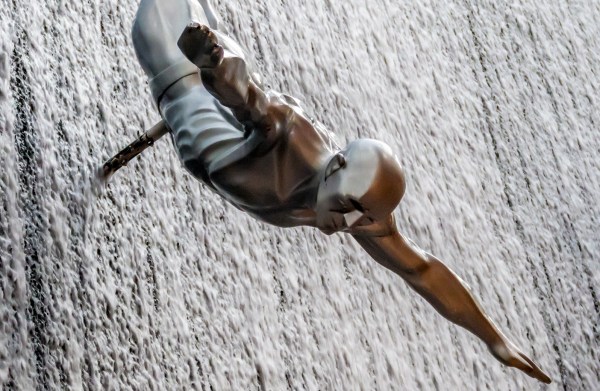
The boy couldn’t believe that inside a restaurant there was a waterfall dribbling off a cliff into a small pool below and a man ready to dive off this high cliff into the water. The boy marveled as the diver plunged into the glowing surface, the hint of a splash. He wondered what it felt like going in hands first; the boy only jumped into pools feet first, from low diving boards. He turned around and his dad was gone. He had yanked his dad up from their table earlier to show him this waterfall, this pool, but now there was a diver his dad had to see. He ran through the replica of a Mexican village, back to where his family was eating. But his dad wasn’t there, either.

“I thought he was with you,” the boy’s mom said. “Hey, slow down.”

The boy ate a sopapilla filled with honey in three bites.

“Sit.”

The boy placed a knee on the chair and drank the rest of his soda through a straw in a breathless pull. He panted and said to his mom, “I’ve got to show Dad the diver.”

“Sit all the way down and eat the rest of your food.”

The boy saw his sisters huddled by a fountain, their arms in up to their elbows.

“They’re not eating.” Before the mom could answer, the boy went on, “Isn’t this the greatest place ever? We need to visit here every year—I can’t miss it, I can’t miss it” and the boy ran around the other tables full of people and heard his mother calling and ran under the palm trees, strings of Christmas lights decorating their fronds. He stopped by the lit up pool again. His palms rubbed the top of craggy boulders. His face prickled from the mist coming off the waterfall. When the diver jumped into the water again, the boy hopped in place, his short arms like planks stretched out in front of him. Next he turned and ran up wide tiled stairs and ran down a wide, curving ramp. He saw his dad at a pay phone near the men’s room.

“I’m…I’m…. No—let me talk,” the dad said to the boy tugging on his hairy arm. Then the dad said back into the receiver, “I’m…I said…I’m not unloading your lousy products anymore…that’s right. How…how…listen, let me have my say, sport…. Almighty—let me have my say, Gordon. If I’m going to drive all over creation—what?… I said…I said…. That’s right, why would I travel another mile for your two-bit outfit?”

The boy said, “We’ll miss the guy jumping off a cliff,” and pulled on the hem of his dad’s shirt, too.

“What’d you just say to me?” the dad said loudly into the phone, but the speaker blaring down Mariachi music from the ceiling was even louder. The dad pushed the boy away and said, “I’ll make it simple, Gordy…. I’m done shamming would-be suckers…. I…let me finish! I’m…I’m…. There you go. That’s it, sporto. I’m looking out for me now like you’re looking out for you.”

Then he hung up the phone in a way that reminded the boy about the time his dad threw a whole sandwich out the window of their car. But when the dad looked down at the boy, he wore an odd smirk and winked. “I’ll tell your mom more about what you overheard with my boss, okay? So let’s keep this under our hats, sport.” The dad allowed the boy to tug him up the ramp and down the wide stairs and up to the edge of the small glowing pool beneath the rocky cliff. The diver was nowhere in sight.

“I told you we’d miss him.”

“Let me tell you something,” the dad said, gleefully patting the top of one of the large fake boulders. “What I accomplished back there—a long time coming, too—doesn’t feel like one of these babies lifting off my chest. Nope.” His grin turned unruly, his wide teeth glowing. He crossed his rigid arms over his chest. “I was breathing just fine before, but for most of my life I haven’t been promoting the right product. Me.” The boy reached up and gripped his dad’s hairy arms like they were monkey bars, his small feet dancing just off the concrete floor as he swayed. “You’ll know this in a few years,” the dad said. “No one: not your wife, or girlfriend, or best friend, or parents, or your boss, or your co-workers will be your advocate in this life.” He uncrossed his arms, making the boy let go. “Look at me. Listen up. The only advocate you’ve got is you. No one cares about what you’re made of or how you’re promoting your wishes. No one cares about your aim in life, and how you’ll accomplish it in the—”

“Like that diver aims for the tiny pool,” the boy said, pointing.

“That’s it, yes. He’s jumping alone—”

“Hands first.”

“Sure. You got it. Let’s get back to the table.” The dad walked toward the Mexican village.

The boy walked quickly to keep up.

“What does it feel like, going in hands first?”

“It just feels like water.”

“Like your stomach crashing into your brain,” the boy said, hopping in place. “Or maybe worse?”


Cabinet Of Heed footer logo

DAN CRAWLEY’s stories have appeared or are forthcoming in a number of journals and anthologies, including CHEAP POP, New World Writing, Spelk, Jellyfish Review, and New Flash Fiction Review. Along with teaching creative writing and literature courses in Arizona, he reads fiction for Little Patuxent Review. Find him at https://dancrawleywrites.wordpress.com.


Image: Harald Landsrath via Pixabay


That Feeling of Life – K B Carle

They find the body, face down, in the shallows of Merlow Creek, arms drifting at its side and back drying in the summer sun, while his face remains hidden below the surface. Two fingers from his right hand are missing, leaving bones protruding through skin. The knuckles on his left hand are swollen. His shoes are missing, big toes poking through both of his socks.

Holes in the back of his shirt remind the boys of a connect-the-dots puzzle, though no one says this out loud.

Little Ray, the daredevil of the group whose room is filled with a growing collection of sawed casts, crutches, and a hand-me-down wheelchair from his grandmother, is the first to approach the body. He extends his mud-colored hand toward the blonde curls tainted with blood, admires how the strands stroke the surfaces of copper-toned rocks or twist around discarded branches.

“Don’t,” Manolo whispers in a voice too deep for his age. His front tooth is missing, accepting a dare to bite an extra-large jaw breaker after three licks.

Shaffer smiles, wiping snot from his upper lip with the back of his hand. Little Ray and Manolo can never tell what he’s thinking, always tripping over secrets that reveal themselves in one too many bruises or scars. When they used to ask, Shaffer just smiled, keeping the truth somewhere deep inside himself. Like why he is always covered in dirt, what happened to his eye that he always wears a black eyepatch like a pirate, and why he always smiles during all the bad times but is bored by all the good? Now they both stare at Shaffer, Manolo looking more at his cheek than his one good eye. and Little Ray looking at his mouth, where a bruise is starting to fade.

Shaffer just keeps on smiling, holding his snot covered hand to the sun before sliding it into his pants pocket.

“Aren’t you curious?” Little Ray doesn’t wait for an answer, already setting his mind to what he wants. He runs his fingers through the body’s hair, and it reminds him of the Brillo pad his Mama keeps tucked in the pocket of her apron to chew on when her nerves get bad.

“We should leave.” This time, Manolo is the one who has an answer already tickling his mind as he walks up the grass covered hill before Little Ray can dry his hands.

Shaffer licks his lips and gets right back to smiling.

Little Ray grips Shaffer’s shoulder. “We should tell someone.”

“Who would believe us?” Shaffer says to no one in particular, Little Ray and Manolo already half way up the hill. He kicks a loose rock into the water, watching the ripples and body collide.

*      *     *

Little Ray wiggles his fingers all the way home, remembering how those blonde strands clung to each one. Like they were still living, still fighting, though their host had given up.

His Daddy, Big Ray, though there is not much big about him except his laugh, has his head under the hood of a truck, forming words Little Ray’s never heard before. Words that his grandmamma says over the phone every time he breaks a bone or talks about money.

“Daddy!”

Big Ray’s stem thin body jolts, sheepish smile threatening to spread on his face. He pats the top of his son’s head while scratching the back of his.

“Hey boy,” his daddy’s voice takes on the same high tone when his mama catches him in a lie. “How much of that did you hear?”

“Nothing,” Little Ray lies because his Daddy is his favorite person.

Big Ray lets out something between a sigh and a laugh, crouching in front of his son.

Two fists split the air between them, Little Ray clutching a bit of his secret in one and a bit of feeling in the other. When both palms turn over empty, Little Ray turns the moment of his fingers running through the body’s hair over in his mind watching creases form on his Daddy’s face.

That feeling of life tickling his fingers while death stiffened the rest.

“What—”

“I touched a dead body in Merlow Creek.”

Everything comes out in mangled words trapped in spit drops that land on his Daddy’s face. How he was the only one brave enough to touch it, pieces of hands missing, the holes in the body’s back. He comes up with stories of what might have happened, especially to the man’s shoes because who leaves home without shoes? He gets all caught up in the excitement that he doesn’t notice his Daddy’s face when he mentions the blonde strands of hair. Doesn’t hear his Daddy tell him to hush as he slams the hood of the truck he was tinkering on.

Doesn’t even know he’s flying until he lands in front of the bathroom sink, hot water burning his fingers.

“Ow Daddy.”

Big Ray takes a bar of soap, rubs little Ray’s hands so hard he can feel his wrists pop.

“Ow Daddy!”

“Stay quiet.” Tears start going down his cheeks and disappear in his neck lines. “Keep what you done to yourself.”

“But why?” Little Ray’s finger tremble under the hot water, more afraid of what he did to his Daddy and if the repeating scrubbings are a new form of punishment.

After all, he’s never seen his Daddy cry before.

“Do as I say!” Soap suds disappear down the drain and his Daddy’s back to washing his hands again. “You didn’t see nothing in that creek. Didn’t touch nothing either.”

“But Manolo and Shaffer…”

“Rinse!”

Little Ray does as he’s told. His Daddy kneels on the floor and removes his shoes. Little Ray’s feet feel the cold of the bathroom floor and he wonders if the body’s feet were cold too.

“Manolo…you boys…both of you are different from Shaffer.” His voice gets so deep Little Ray thinks his Daddy is trying to swallow his words. “People will see you differently. Treat you differently even if you done the same thing.”

Big, warm hands cup his cheeks, his Daddy’s thumb nails scratching his cheeks to swipe the tears Little Ray didn’t realize were falling.

“This stays between us.”

Little Ray agrees because his Daddy is his favorite person and the way his voice keeps catching on itself makes him afraid of whatever his Daddy has dwelling past his eyes.

*      *     *

Manolo makes up stories about what happened to the man’s shoes, murmuring “thank you’s” to Mrs. Stinson, promising himself he is only borrowing Daises from her garden. He does this every Friday, knowing Mrs. Stinson is out doing what ladies who ride scooters everywhere do on Friday afternoons.

He places the flowers in an old coffee can, listens to the sounds of water against tin, wondering what kind of sound the creek made when the body first fell in. Manolo loses himself to his thoughts as he often does, until he feels the cold water running over his fingers.

“Manolo?”

Manolo wonders if that’s what it feels like to be a body swallowed up in water, to not mind the water seeping between and over you all at once.

“Coming Mamá!”

His mother looks nothing like the body in the creek. Where the body was full, she fades, her skin clinging to bone. She used to smell of fresh pestiños when she dreamed of desserts in bright colors and songs. Now, she waits for Manolo to create stories to replace her dreams, the flowers he steals providing the color.

“Hola Mamá.” He kisses her forehead, licks the salt from his lips. “How do you feel?”

“En Español mi hijito.”

Manolo knows he should not favor one language over another. Remembers every time his mother, when she was well enough to have more than one emotion at once, told him of her home and the joys of language. The rapid flicks and rolls of the tongue struggling to keep up with her thoughts in Spanish, the fire she felt burning in the back of her throat that would keep her warm every day. Or the slow crawl of English, a combination of choking and slow songs that had all lost their passion.

“Para ti.”

“Qué bonita.” She says, how beautiful, receiving every bouquet like it’s the first time. She smells their center, fingers caressing their white petals. She closes her eyes, pressing their centers to her cheeks leaving soft pollen kisses.

Manolo tells her of a brave Matador who crossed thousands of desserts in order to tell his Mamá he loves her. He takes his mother’s free hand and kisses her fingertips, telling her the Matador forgot, caught up in the excitement of the bulls and the flowers falling into the ring until a cactus, his mother’s favorite, landed at his feet.

He thinks he hears his mother laugh but isn’t sure. It’s been so long.

The Matador walks when he can no longer run, shoes evaporating from his feet. Birds peck small holes in his back, beaks trying to pull him back to the angry bull he left behind in the ring. He sacrifices his fingers to the birds, tells them they are worms that will feed them for months, bruises his left hand while wiping tears and sweat from his face.

“Qué triste.”

Manolo nods, thinking about the sadness he felt seeing the body floating on the surface of the creek. He tells his mother that the Matador’s tears were too great, creating a creek, which he changes to a river, in the middle of the dessert. He remembers the feeling of water, seeping between and over him all at once and imagines what it would feel like for his Mamá and him to be carried away.

He keeps the blonde hair to himself along with the memory of wanting to touch the body’s scalp, not wanting to ruin his mother’s smile as he tells her about the Matador floating on the river’s surface back to his Mamá.

Even for just a moment.

*      *      *

Shaffer stares at the sidewalk on his way home, crushing as many ants as he can under the soles of his father’s old converses. He thinks about the body’s hands, how someone could lose two fingers and still have perfectly round holes puncture through their skin and shirt. Maybe he lost them after admitting the truth, or a lie, or maybe he didn’t lose them. Instead, maybe the guy decided to cut of those two fingers. It was his choice all along.

Shaffer likes this idea, glancing at his fingers and wondering which two he wouldn’t mind losing while opening the front door.

Dean, his father, though Shaffer doesn’t remember the last time he had use for such a word, floats on his recliner in a sea of bear cans and discarded cigarette butts. A fly fishing for scraps off the corner of Dean’s mouth. Shaffer touches the bruise on the corner of his mouth, caused by a beer bottle meant for his mother in one of his father’s rampages.

He makes his way to the kitchen, reads a note from his mom written on a pink post-it-note stuck to the fridge. “Forgot to make dinner.” No instructions on what to do next, though she always forgets something new every day. He balls up the pink post-it-note and tosses it in his mouth like a pre-chewed wad of gum. Imagines the tip of his tongue tracing over the dark lines of his mother’s handwriting as the corners scar the insides of his cheeks. Shaffer chews until all that remains is the burning of the adhesive and soggy paper bits caught in his throat, refusing to dissuade his stomach from wanting something real.

Dean lets out a snore that rattles the beer cans around his feet, sending the fly into a panic. Shaffer enjoys the sounds of buzzing while climbing onto the arm of Dean’s recliner, making sure his lips are right by his father’s ear.

“I thought of you today. Saw you floating in Merlow Creek with three bullet holes in your back.”

He forms a gun with his fingers. Fires. The fly stops buzzing.

“I’d take your middle finger first.” Shaffer peers into his father’s mouth. “And your thumb.”

That should be enough to clog his throat. Shaffer would let his mother steal Dean’s shoes and fill his body with holes. She deserves some kind of revenge for the way Dean treats her but only after he starts choking.

He wants Dean to see and feel death all at once.

Shaffer wipes the back of his snot dried hand against Dean’s face. Watches his mouth close, head rolling to the side.

“Thanks for the shoes.” Shaffer says more to the body of a stranger than to Dean.

Though they might as well be one in the same.


Cabinet Of Heed footer logo

K.B. CARLE hates the thought of finding a dead body floating in the creek but, apparently, the thought has crossed her mind. Her work can be found in Fiction Southeast, The WomenArts Quarterly Journal, and FlashBack Fiction. For more information visit her at http://kbcarle.wordpress.com/ or follow her on Twitter @kbcarle.

Image: Christopher Campbell via Unsplash


RETURNS AND REFUNDS: FAQs – Dan Brotzel

We want you to be completely super-satisfied with anything that you buy from our site, so we work very hard to make sure that the whole process is as simple and straightforward as can be, from choosing and ordering your items through to delivery and returns. And don’t forget, if your query’s not answered in these FAQs, you can contact us 24/7

How do I return an item?

We’ve got the return process down to 3 simple steps. We’ll even print out the return label for you and notify you when your refund has credited. Check out our easy 3-step return process.

Do you do exchanges?

We refund the cash, so that’s even better right?

But what if the product was a gift and I don’t have the receipt?

No problemo! So long as everything checks out, we’ll issue you a gift voucher for the item’s current sale value. You just explain all that as part of that one handy 3-step return process we’re all so proud of round here.

But the sale value might be less than what the purchaser originally paid?

Sure, but without the receipt we can’t know for sure, right? And you got it for free, so maybe don’t be too greedy? In any case, we can only go with the current price of the item, which is what consumer law says too. And don’t forget, if the price has gone up in the interim, you could end up with more than what was originally paid. It’s like a lottery you can’t lose!

Is there a time limit on returns?

Yes — it’s almost always six months, unless otherwise clearly stated in the product description and pre-purchase information. This is in line with statutory consumer requirements in most territories. We’d love to extend this period — especially when people write to us about things like wedding dresses and other big-ticket items, don’t ask — but for reasons of fairness and consistency, we just can’t make any exceptions. Really sorry. And hey, there are plenty more fish in the sea, right?

Are there some items that can be returned?

Yes, there are a few. Perishable items can’t be returned, for obvious reasons, ditto clothes and jewellery that have been tried on. Basically if someone’s rubbed a bit of themselves on an item, well that’s just icky for the next person, right? Also, items where the packaging seal has been broken can only be refunded if the item is actually defective. In other words, if you decide you’ve gone off Fleetwood Mac before that Rumours CD arrives, you need to send it back unwrapped so we can sell it on again. Thunder only happens when it rains, amiright?

I was excited really about my purchase, but now it’s here I feel sort of flat. There’s nothing actually wrong with it, it’s more me.

Hmm, that’s a tricky one. We’re more ecommerce people than philosophers — and shifting stuff is obviously a big part of our raison d’ — but it sounds to me like you’ve got that sort of ‘hollowed out by desire’ feeling? You know, where the wanting of something doesn’t quite match up to the having of it? Maybe because the thing wasn’t worth wanting in the first place (not that all our products aren’t absolutely top-notch), or because you’re wanting the wrong things? Or maybe ‘wanting’ in itself is the wrong thing to be focusing on, especially if by ‘wanting’ we mean merely acquiring? Not really our domain, this (and don’t tell anyone we passed this on), but you might be interested in this Marxist critique of consumerism. Bit heavy on the jargon, but talks a lot of sense.

I have a suspicion that I care more about things (purchases) than about people. And I’m not even sure I care that much about things.

Well, quite. Did you check out that link yet? You could try watching It’s a Wonderful Life, but tbh the hell bit always seems more realistic than the heavenly bit, so maybe best not. Might tip you over the edge. Maybe try something reading something on the Buddhist side? There’s some interesting titles over in our Mind Body Spirit section. How are you sleeping with all this worry? Check out these lovely new Egyptian cotton duvet sets, with cover designs inspired by the Impressionists. Not really answering your question, we know, but they really are pretty and very reasonably priced too.

I sort of feel that I like the act of shopping — you know, the choosing and the anticipating and the waiting for my package to arrive — but not the outcome. Once the stuff arrives, I just feel a sense of self-loathing at my own shallowness, and guilt that I’m wasting my money on stuff I don’t need? (Especially like books or comics or stuff I accidentally forget to tell my partner about, because I know she’ll say we can’t afford them. And she’s right, we can’t really. Especially as we want to have a kid once I graduate. I mean, am I even serious about us??)

Wow. OK. Quite a lot to unpack there. We’re not trained shrinks or anything, but it sounds to us like maybe shopping has become a kind of moral distraction for you? A way of evading something you don’t want to face, maybe? Life can be hard, and the really satisfying stuff (like having a baby or making a relationship work) can take years of effort and compromise. No wonder a quick toot on the old retail crack-pipe seems such a welcome diversion! I guess the question you really have to try and answer is: What do I really care about? Where am I heading? Is it a direction I can really get behind? The good news is that if you do decide to get your shit together in an existential sort of way and you want to get your money back — providing the goods are within the statutory 6-month limit — we have a handy 3-step returns process! Then again, if that all feels a bit heavy to deal with right now, you could always check out our 3-for-2 deals on tablet and iphone accessories! Massive savings till Friday!

Don’t you ever question what you’re doing? What it’s all about?

Sure, but we’ll all got a job to do, right? Mouths to feed, and all that. In my spare time I actually compose music, you know.

Wow, that must be really rewarding! I had no idea.

Nor do I really. I’m only a chatbot.


Cabinet Of Heed footer logo

DAN BROTZEL’s short stories have been recognised in several competitions and anthologies. He was runner-up in the Flash500 short story competition 2017, and was also shortlisted for the Sunderland University/Waterstones Short Story Award 2016, the Wimbledon BookFest prize 2016, and the 2017 Fish short story and Retreat West flash competitions. He wrote sketches for Dead Ringers (BBC Radio 4), won Carillon Press’ Absurd Writing competition (2014), and has also made two appearances in Christopher Fielden’s To Hull and Back comic-writing anthology (2015, 2016).
A journalist and former slush-pile reader, he is also a book reviewer for the Press Association.


Image: Creative Magic via Pixabay


Origami – A J Nicol

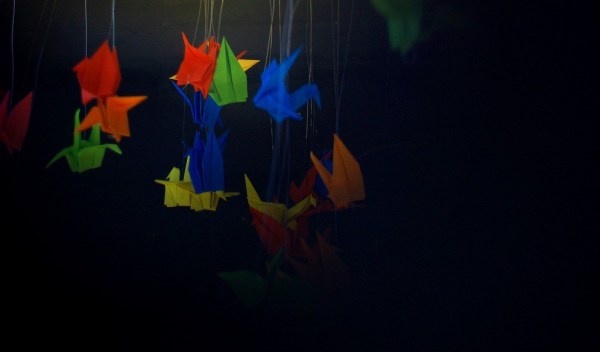
First he made a plane, but it flew out the window. The ship sailed to Paris and the dinosaur ate a neighbour. So he folded a bird from red tissue paper and placed it in a cage.

The next day he found an egg. He sold it for fifty dollars.

Each day another egg, another sale, and on it went.

But the bird faded to pink.

Crying, he propped open the cage door and the bird flew out the window.

Many years have passed and still, each day, he finds an egg in the cage. And sometimes a red feather.


Cabinet Of Heed footer logo

AJ NICOL lives in Australia. She likes to write short stuff. Twitter @manicol1


Image: milansari7 via Pixabay


Come In With Me – Sal Page

I’ve got this fantastic idea for a new eatery. All the other restaurateurs will wish they’d come up with an idea so great. They’ll be green with envy. Overcooked peas green. Yuck.

What are the messiest foods you can think of? Never mind. I’m thinking baked camembert served with caramelised onion chutney and French bread. Sounds good, yeah? Messy though. Also spaghetti ‘n’ meatballs à la Lady and the Tramp, barbecued chicken wings smothered in hot sauce, sticky toffee pudding with ice cream & gooey chocolate fudge cake. Given time I’ll think of some more. All for sharing. Sharing for two.

And, wait for it – oh my god, I’m brilliant – we’ll serve it all in those trays that go across baths. They usually just have soap and a loofah in. I’ll get them specially made. The guests go through to their private room, get undressed and climb into the bath, which would be all ready with bubble bath in the perfectly just-hot-enough water. A choice of temperatures and bubble bath brands would be on the menu.

It’ll be a totally unique restaurant. Food in the Bath. Should I move to Bath to open it up? Nah, it’ll be fine here in Dudley. It’ll put Dudley on the map. Yes, I know it is strictly speaking on the map already but you know what I mean.

Couples, yes. And we could provide rooms for afterwards. A bedroom en-suite to the bathroom. Now there’s a selling point. Basically, we’ll be a hotel too. Why not? But not necessarily couples though. We could do singles nights. Guests would get paired up by the fact they’d chosen the same dish or the same kind of bath stuff.

I can’t do this on my own, you know. I’m hoping you’ll come in with me. What? No, not in a bath. I mean invest; help set it all up, be front of house while I’m in the kitchen preparing and cooking the food.

Er … unless you want to. Actually, what better way to test the idea. Come round to my place later. I’ll do the baked camembert one. Got to be the messiest, eh? We’d tear pieces from the baguette, break through the rind and dip into the cheese. All warm, oozy and gooey in the centre, with a taste like delicious old socks. We’d twist the bread fast to keep the unctuous liquid cheese from dripping off down chins and onto chests or breasts. There would be flakes of baguette crust on the mounds of bubbles around us, splats of cheese on the tiles. We’d eat fast, giving each cheesy bread-morsel a quick dab of the sweet chutney before popping it in. Talking. Laughing. Eating. Drinking. Getting messy.

And then sealing the deal on our new venture. What shall we call the restaurant? Bath Night? The Tub? Bath Time? We can discuss that later. In the bath.

So, what do you think? Are you with me? Hey, come back. What did I say?


Cabinet Of Heed footer logo

SAL PAGE’s stories appear online & in over a dozen print anthologies. She won the Calderdale Prize in 2011 & Greenacre Writers Competition in 2013. When not distracted by writing, reading and performing flash and short stories, she’s tackling her third novel, Priscilla Parkin: Reluctant Celebrity Chef. A nursery cook, she lives by the sea in Morecambe, UK. When not writing, and also while writing, she can be found watching sitcoms, listening to Squeeze & on Twitter as @SalnPage


Image: Petra D via Pixabay


The Moment Before Drowning – Donna L Greenwood

Though her daggered words are aimed with perfect precision, they do not penetrate the black waves that are slowly engulfing me.

“I’m sorry, Jake, but you’ve only got yourself to blame.”

I nod my head slowly, for the water is heavy. Yes, I do only have myself to blame.

“I mean, for God’s sake, you’d try the patience of a saint, you really would.”

It’s the truth. I would try the patience of a saint.

“Jake, you exhaust me. I’ve had it with constantly trying to appease you. I am so tired of your moods and never knowing what dark shit you’re going to come out with next. You wallow in it, Jake. You just give in and luxuriate in your own misery.”

She’s right. I do wallow in it. Some days the mud of my mood is a viscous embrace.

“Jake.” Her voice has softened and she is by my side. I’m sat by the window. Outside the rain is drenching the streets whilst inside I am quietly submerging. She puts her hand on mine.

“I never wanted it to come to this, but I can’t stay here and watch you self-destruct.”

I look into her grey, seawater eyes. Doesn’t she know that I would peel off every inch of my skin for her? I want to tell her that I will die without her, but I am afraid the water will rush into my mouth.

“For God’s sake, Jake, haven’t you got anything to say to me?”

I want to tell her about the moment before drowning. I want explain how the drowning person doesn’t inhale water until they’re about to lose consciousness and then, when they finally breathe in the water, it floods the lungs and stops any oxygen getting to the blood. The drowning person becomes exhausted, depleted. I want to tell her that the very act of drowning makes it impossible not to drown. I try to speak but she has already turned away. She picks up her packed case and walks out of the door. I listen to the murky clatter of her stilettos gradually fading away.

Silence wraps itself around me and gently pulls me down to a place where I am comforted by the weight of the dark water which has filled this room where I used to hold her. I set my mouth in a hard, thin line and hold my breath, but I know it won’t be long before the involuntary drowning impulse kicks in and I will open my mouth and inhale the room, and the furniture and the shoes that she has forgotten. I will breathe in all that is too much and too big and eventually my airways will close and my lungs will die and I will drop like a stone into the fathomless black.


Cabinet Of Heed footer logo

DONNA L GREENWOOD lives in Lancashire, England. She writes flash fiction and poetry and her work can be found in Formercactus, Anti-Heroin Chic, Occulum, Hypnopomp, The Fiction Pool and on her blog https://www.thehorrorsblog.wordpress.com.
She can be contacted on Twitter @DonnaLouise67


Image: geralt via Pixabay

The Pickle Jar – Rebecca Field

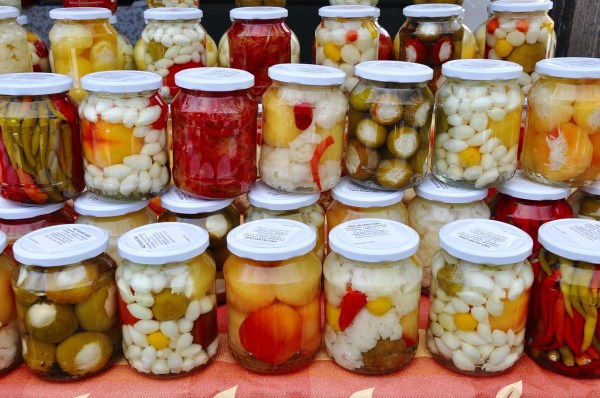
The day I left, I took the pickle jar with me.

It seemed ridiculous at the time, but I wanted to hurt him. I wanted him to find out and be angry when I was too far away to care. I imagined him searching in the backs of the kitchen cupboards, slamming the doors and cursing me under his breath, finding nothing but expired cans of corned beef and black-eyed peas. I knew how much he loved those pickles; how the particular brand he coveted could only be obtained from that one store on the other side of the city. No other brands would ever do. Lord knows I had tried over the years.

I’d tried substituting other brands into his empty jar while he was out at work, hiding the evidence under a stack of dirty diapers in the trash, but he would always work it out. He would crack open a beer, flop back in his chair and ask for his pickles with his special fork, the one he brought from his mother’s house when we got our first place together. Other men might bring furniture or books or a dodgy record collection into a relationship. He brought a pickle fork and a stack of porn magazines. I should have seen the warning signs back then I guess. But I made my bed and was blind to what lay under it.

So I would make myself busy in the kitchen, washing the dishes and rearranging the contents of the refrigerator, hoping that this time he wouldn’t notice, telling myself there was no way he’d be able to tell any different, that they looked exactly the same. He would eat them one by one, chewing thoughtfully with a look as sour as pickling liquor on his face and I knew it was just a matter of time before he would blow. I was fed up with sweeping up broken glass, mopping up the stinking vinegar puddles and picking up the slug-like pickles in my fingers from the corners of rooms where they had skittered away from his wrath. And I was fed up with him: his moods, his demands, his eyes that drilled into my back while I pretended to get on with whatever I was doing, pretended that I was happy. How had we ended up in this place? I didn’t know if anything would ever change unless he died or I died or we won the state lottery or something.

Don’t get me wrong. Nobody can say I didn’t try. Sometimes I did get the right pickles. Then he would smile and say, ‘Thanks honey, you’re too good to me!’ For a moment I would catch a glimpse of the man I fell in love with. But then he would add, ‘Listen. Make sure you always get this kind. I don’t like the others.’ Like I didn’t know that already. If I told him how hard it was to get them, he just frowned at me like I was speaking a foreign language and spoke in tones of increasing volume about him working hard to keep a roof over our heads and did I think he was asking for the earth? Did I think it was easy working the hours he did? Was I not able to manage a simple task like getting in the groceries while I only had one child to look after? I knew better than to get into an argument about it. The issue was non-negotiable, like so many others.

Getting to the store in his old neighbourhood involved a three-and-a-half-hour round trip; two buses each way with Haley Junior in his stroller or on my lap, whining and grizzling because he couldn’t sleep and his pacifier had rolled down the aisle and been trapped underfoot by a woman with legs like an elephant and a face like fury, or because he had a fever and I’d run out of his medicine, or his diaper was aggravating his skin or for the million other reasons that babies cry.

I would pray all the way there that they would have them in stock, and if they did I would load six large jars into my cart, as many as I could carry on my back, knowing they would buy me only a couple of weeks’ grace before I’d have to make the same lousy trip all over again.

That day in Brianna’s car on the way back from the mall I got the idea in my head. It was one of those unbearable days when it felt as if the air itself was oppressing me. Running into her in the drugstore had been a real piece of good fortune. I think she offered me a lift home out of pity, and on account of us being friends once before, but I had no pride left at that stage so was happy to take her up on it. Haley Junior fell straight to sleep in the back and I settled down to stare at nothing through the window. Brianna knew better than to probe about my home life. She smiled and put on the radio.

When the car rolled to a stop on the highway intersection, I saw the pickles. The half-empty jar sat on the concrete barrier in the centre of the junction, like maybe a construction worker had left them there after his lunch break, or they’d just been spirited there by a pickle-loving fairy. They weren’t his brand, but the incongruous setting of those miniature cucumbers got me thinking. I got to thinking that the pickles were a symbol of our whole crummy relationship, and how I was just trapped in it, surrounded on all sides by traffic passing me by but with nowhere to go.

When Brianna dropped me off I asked if she could give me and Haley a lift the following Monday over the state line to my sister’s. I said I could give her some money for gas. He always gave me money for shopping on Mondays. She looked a little awkward but then said yes. So that was it; decision made. I told her I was going for a visit. That wasn’t a lie, I just wasn’t planning on coming back. He could find someone else to buy his damn pickles.


Cabinet Of Heed footer logo

REBECCA FIELD lives in Derbyshire and rarely eats pickles. She has been published online at Literally Stories, 101 Words, Flash Fiction Magazine and Spelk. She can be found on Twitter at @RebeccaFwrites


Image: Jenő Szabó via Pixabay


Same Old Love – Cathal Gunning

The plane dipped and tilted, “beginning its descent” according to the tinny echo of the co-pilot’s voice. A roar growled in Danielle’s ears. Pressure building. Across the stretch of the lake below, ice spread; a solid film attempting to coat its surface, falling short in the centre. From the impossible height of her plane seat, the ice was the same iridescent rainbow oil-slick colour that topped her cold cup of coffee.

Erica had told her something about the pull of the dairy industry, about how our bodies weren’t meant to process milk. Over the peaks of mountains outside, mottled blue shades and streaks of pure white, Danielle could see why white supremacists were obsessed with milk as a symbol. Fucking Twitter poisons our brains.

Erica had said everyone’s born lactose intolerant, that milk never settles in the stomach. It wasn’t a comforting thought. Before her, Iceland would have been beautiful. After her it was snow, and ice, and jealousy of whatever place got to have her. Mountains as white as milk, a stomach that never settled.

Three months earlier in a too early hour of the morning, Danielle sat up and smoked shared cigarettes until she’d the confidence to go in for the shift and spent the night sucking on an almost anonymous tit as if it were a teat; less sexual and more urgent, starved for sustenance. That was Anne-Marie(?), the last woman she was with before she met Erica. Anne-Marie (something like that), a since-all-but-forgotten closet case tragedy who she’d shared a 5am taxi and bungalow with post-Porterhouse.

Fucking Erica had an urgency, but it wasn’t the same; an urgency of its own, not just different but incomparable. Just the thought of fucking Erica had more passion and impact, more physical ache, than actually fucking anyone else could ever have hoped to.

Sean’s friend Angela was lovely, as was the farewell drink she bought Danielle, and the comforting numbness it brought with it. Lovely, like messages from friends wishing well, like the last meal Danielle had with her family before leaving for the plane. Everything was lovely since Erica, and nothing was beautiful but Erica, splitting the two words into the universal and the specific. Body and soul. Nothing else would ever be beautiful again.

Same old love.


Cabinet Of Heed footer logo

CATHAL GUNNING (24)- Editor @ ‘Cold Coffee Stand’, Adbusters Media Foundation. Poetry in The Rose Magazine, Lagan Online; Fiction in Tales From the Forest, The Honest Ulsterman, The Runt, Snakes of Various Consistency, The HCE Review, The Occulum, and the collection ‘From the Candystore to the Galtymore’.
Debut novel ‘Innocents’ published 2017 (Solstice). Short-listed for Maeve Binchy Travel Award and Hennessy New Irish Writing.


Image: Volkmar Gubsch via Pixabay


Plant Food – Stella Turner

It happened very quickly. It was summer I think. But it might have been spring when the Purple Rain fell. At first Sadie thought it was magical, a nice shade, think she used the word hue. The animals weren’t very keen. It was later I turned vegetarian. I’d always liked a lamb’s leg for Sunday lunch not many farmers in these parts that didn’t eat meat.

Sadie would go out and dance in it. I don’t like getting wet. Sadie would laugh and say whenever did you see a rusty man? She started to say things like I was good enough to eat and would bite my arm hard when I gave her a hug. I had to shoot her dead the day she came at me in the barn with a meat cleaver. It was the one we used to cut the pigs up with. Once they’d hung for a while in the outhouse.

I buried her in the back garden with a cross around her neck and a stake through her heart just in case. She feeds a patch of wild flowers. It looks really pretty. The rain is back to normal no purple tinges but I make sure me and the animals stay indoors if rain is forecast. You never can tell these days what’s what. I eat porridge mostly and let the animals die when nature decides. Haven’t seen the neighbours for months, the flowers look good though, on the side of the adjoining hills. Really pretty I tell myself.


Cabinet Of Heed footer logo


Image: Foto-Rabe via Pixabay


Star-Crossed Destiny – Sudha Balagopal

King Lot enters the gloomy nursery, picks up his newborn. Behind him, he hears the nurse mutter, “This accursed child killed our queen.”

Outside, in the gallery, he pauses in front of his wife’s portrait. The artist spent months capturing the queen’s dewy skin, the mole on her lip, that come-hither look. The king opens his mouth, cannot utter her name.

He rocks the whimpering baby on a swing in the garden. Discreet attendants, dressed in mourning, hover at a distance.

The king leans close to the baby and whispers, “Darling Destiny, thank you for freeing me!”

*      *      *

At Destiny’s elite boarding school, students receive goodies from home.

“My mother has blue eyes and golden hair,” she says, hoping to make friends, wishing they’ll share.

Her classmates cover their mouths and giggle, for the princess has brown eyes, olive skin, dark hair.

“My mother talks to me all the time,” Destiny says.

No one listens. They’re opening gift boxes, reading cards that say, “I love you.”

While they eat their treats, Destiny cuddles with her flaxen-haired doll under the blanket. She presses a button on the doll’s hand, hears a mechanical voice say, “Hello, my dear!” Over and over.

She imagines it’s her mother’s speaking.

*      *      *

Craving anonymity, Destiny opts to spend fall semester of college with a host family. They accept her as a dentist’s daughter, offer hearty stews and the resonance of a foreign tongue.

She doesn’t complain when her skin roughens, when farm dirt discolors her nails. She enjoys wearing overalls, establishes a camaraderie with the produce pickers.

Pedro makes her heart ache with love. He showers her with attention, is hurt when she denies him a photo. From him, she learns the taste of a commoner’s saliva.

But his bed is uncomfortable. She overturns the mattress, finds the pebble—loses her temper with her trust.

She flings the rock. It hits Pedro’s forehead. His turn to ache.

*      *      *

The astrologer tells Destiny, “Your stars are crossed.” He cannot find her a royal match.

“You’re not looking hard enough,” she says.

She dismisses him and asks for a palmist instead, the best in the land.

The bespectacled palmist is lean, serious. Her palm fits snugly in his hands. He peers at her heart line, her life line and her fate line. His warm breath caresses her finger’s tips as he studies the whorls and patterns. “Your Highness will marry,” he declares. “And soon.”

A month later, the princess marries the palmist.

*      *      *

Guests rise as King Lot and his daughter, Destiny, enter the cathedral’s decorated aisle. His fingers tremble on her arm.

“You can do this,” she tells him, waving a hand to acknowledge the crowd.

At the altar, a handsome man awaits them, his gaze transmitting love.

“I’m not giving you away,” Destiny says in her father’s ear. “I’m embracing a new era.”

The king smiles at the groom, soon his consort.


Cabinet Of Heed footer logo

SUDHA BALAGOPAL’s recent fiction appears in New Flash Fiction Review, New World Writing, rkvry quarterly literary journal, Jellyfish Review and Lost Balloon among other journals. She is the author of a novel, A New Dawn and two short story collections, There are Seven Notes and Missing and Other Stories. More at http://www.sudhabalagopal.com


Image: Mira DeShazer via Pixabay


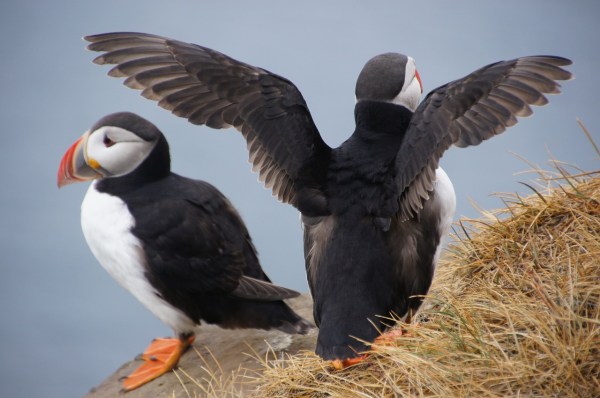
A Kind Of Dance – Cath Barton

When I was a child I was lowered by rope from the cliff tops of my island to gather the eggs of puffin, gannet and fulmar. The birds were angry about this thieving, but I flapped as much as they did so as to drive them off. Sometimes the eggs would tumble from my basket. The rocks far below would be smeared then with the vivid yellow of my guilt and I would be beaten by my father, afterwards, for my carelessness. I knew no other life, at that time. We none of us do, as children. I would run and hide in small secret places, and retreat into the cave-safety of my mind.

It became too difficult for us to find enough food to survive on the island, and when I was still not fully grown I was evacuated to the mainland, along with all the others. I have been told I was one of the last 36 residents, but the number means nothing to me. I did not know anyone on the island outside my immediate family and afterwards I found that I could not be with more than three or four people at a time; it proved impossible for me to breathe where more were gathered together. Finding I needed unfettered space around me I decided to remain alone.

My chosen companion in this life was a cat. He asked for no more than regular food and rewarded me with sweet purrs and by twining his body, once, twice, thrice between my legs, in a kind of dance. We had between us an understanding that the birds were entitled to their lives as much as he and I. They lived in the gardens around our house fearing nothing from either me or my cat.

I planned that after my death I would return to my childhood home on the island and make my way as the wild creatures do. Without the burden of the human body it would, I knew, be easy to do that. I had already started practicing. Sometimes in the crepuscular morning hours, before other people were awake, I would leave my own body and enter that of a bird, where I sang his song, quite softly, before he himself was ready for the new day. I thought of it as an exchange, a dance between us equivalent to the one in which I engaged with my cat. I learned to do this first with robin, thrush and blackbird, birds whose songs I studied meticulously, listening, singing and listening again, over and over. I was able to sing these songs as well as any. But these are birds of garden and field. They do not fly far from home and, most particularly, they do not fly over the seas.

I learned much as well from swallow, swift and house martin, not least the way to swoop fast and low. But these birds travel south in winter, to climes unfamiliar to me. The hot sands would not have been a suitable place for me. I knew that my home would always be in the north lands. My next and final lessons were with the owl family, the ghostlike creatures of night and the half light. I sallied forth in the twilight hours, learning their ways. Then came the final transformation. How it took place I cannot say, for no human knows the moment of his death.

Should you go to my island – there are boats now that take people on circular trips, though you cannot land – you will see that the cliffs are once more covered with puffin, gannet and fulmar nests, their eggs safe from human predation. The noise will be prodigious, as they guard their chicks from skua and snowy owl. Watch out for the approach of one of those majestic birds. They are there, I can assure you. You might, if your eyes are sharp, even see me.


Cabinet Of Heed footer logo

CATH BARTON is an English writer who lives in Wales. Her novella The Plankton Collector will be published in September 2018 by New Welsh Review. Cath is on the 2018 Literature Wales Mentoring programme, working on a collection of short stories inspired by the work of Hieronymus Bosch. https://cathbarton.com @CathBarton1


Image: jo vanel via Pixabay


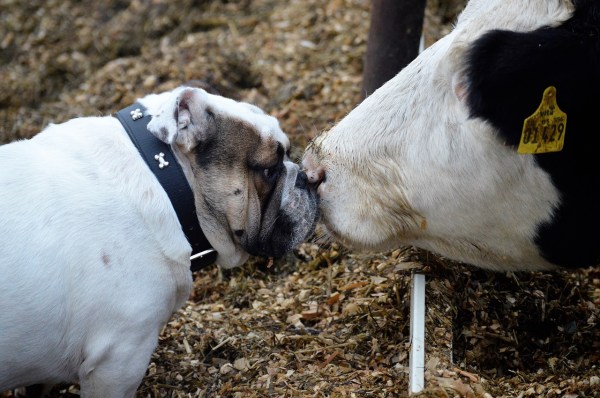
The Cow And The Dog (a Fable) – Michael Grant Smith

The cow and the dog were best friends. They had been close for longer than the other animals could remember. Even the wise old mare was unable to recall a time before this great camaraderie.

“I am pleased to see such harmony visit our farm,” she said, one sunny day, “but just the same, the relationship is unusual. No good can come of it.”

The donkey made no comment and continued feeding. He cared only for fodder and pulling his little cart. The cat did not speak — she believed herself invisible and did not wish to reveal her position. The chickens scrabbled and hopped around the dry-lot in front of the stock barn. They didn’t say anything because they are incredibly small-minded and stupid.

“My friend and I are right here,” the cow said to the horse, “and we can hear you talk about us!”

The dog, as was his common inclination, rolled in the dirt, saying nothing but twisting around from time to time to bite his own tail. He didn’t care what the other animals thought. It made no sense to him: why chew on words as if speech were rawhide or gristle? He was on good terms with the mare, whose buggy he loved to follow down the road while he barked at the wheels. But the cow was the dog’s very special friend.

“What of it?” the young rooster said to the cow. His plumage gleamed, an open jewelry box in the sun. “Even if your wet-nosed companion doesn’t mind being called a fool, both of you are fools nonetheless!”

With that, the rooster half-flew, half-fell a full three feet from his perch and landed square on top of several chickens. He clawed and flapped and poked at them to show the cow and dog he was serious. The chickens squawked in a tornado of feathers, but within minutes continued to browse around again. Resisting the urge to crow, the rooster raised his wings one at a time and preened. He strutted around the small empty space he had cleared within the midst of the other poultry.

“A bond such as yours — cow and dog, indeed!” said the rooster. “It’s unnatural!”

The cow meant no harm to anyone in the world; this made her even more sensitive to the rooster’s harsh remarks. She blinked a couple of times and took a step back. Her bell clanked once and became still. For his part, the dog sat and scratched at fleas until his eyes bugged and his tags jingled like sleigh bells. He satisfied his itch and gazed with adoration at the cow. His tongue lolled while his tail beat the dust.

The rooster was not finished making his point. He rushed over to the cow, stopped just in front of the beast, and began to peck and claw at the ground. His wings spread wide as if he were a very plump, practically flightless eagle.

Startled, the cow backed up again, but this time landed her big rump in the water trough. The other animals laughed at her shock and embarrassment. They didn’t mean to, but it was so sudden and unexpected. Even the old mare let out a choked guffaw.

“Unnatural! Unnatural! Unnatural!” shrieked the rooster, bouncing up and down. He beat his wings and almost touched the cow, who writhed and bucked in her attempts to free herself. She moaned and mooed.

“Unnatural!” the rooster screamed. “Un-na-tur-al! Un-na-tur — ”

Silence. The rooster’s head was inside the dog’s jaws. Clamping down harder, the dog played tug-of-war and gave a powerful shake. One, two, three times. He dropped the lifeless bird to the ground. For several seconds or maybe minutes, none of the other animals moved, including the chickens.

Freed from the rooster, and lately the trough, the cow bowed her head and cast her soft brown eyes toward her friend. Without saying anything, the cow and dog ambled out of the dry-lot and into the pasture. The cow grazed timothy and clover while the dog flushed rabbits, real and imagined, from beneath piles of deadfall. The barn cat flowed from shadow to shadow as she headed towards the back porch and a dish of cream. The donkey dozed in the afternoon sun, dreaming of his cheerful little cart.

“It is so much better when we help each other,” the old mare said to no one in particular. The chickens ate their own poop and a lot of small pebbles. “Friendship is worth the effort it takes.”


Cabinet Of Heed footer logo

MICHAEL GRANT SMITH wears sleeveless T-shirts, weather permitting. His writing has appeared in elimae, Ghost Parachute, Longshot Island, The Airgonaut, formercactus, Riggwelter, and others. Michael resides in Ohio. He has traveled to Hong Kong, Shanghai, and Cincinnati. To learn too much about Michael, please visit http://www.michaelgrantsmith.com and @MGSatMGScom.


Image: Daniel Borker via Pixabay


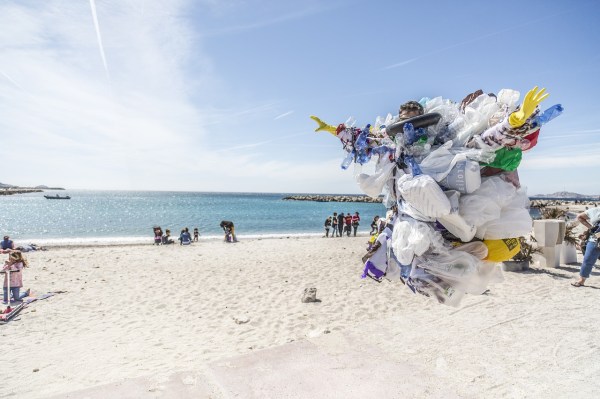
The Skins We Shed – Liz Jones

A One-Day Travelcard, an Oyster. A packet of gum, each. Crisp packets. Beer bottles. A Mars Bar wrapper fluttering after the last tube. Two condoms.

Train tickets, plane tickets, pizza boxes, fish and chip paper. Ribbons and cellophane from flowers. Gift wrap, carrier bags. Labels cut out of fancy underwear, careful not to nick the silk. Condoms, different kinds. Tissues, vodka bottles. More condoms, the kind you decide you prefer.

Bin bags of stuff not looked at in two years. Bin bags full of rubbish. Bin bags of things you outgrew, things that won’t belong together. Too many bin bags to put out for the bin men. You sneak out after dark and share them round the new neighbours’ piles, laughing. Wine bottles. Condoms.

Pieces of cardboard longer than you are, with the round dents of casters. Bubble wrap that leaves your hands dry and squeaky. Other people’s discarded furniture. Scraped paint, surprisingly heavy. An old bath. A toilet. Lampshades and mildewed curtains. A cache of old tights.

A pregnancy test, then another. Tampons and booze bottles. Condoms again.

A car that seized up for lack of oil – whose job was that? – towed away for scrap. The plastic off the seats of a new one, why not? Phone boxes, TV boxes, computer boxes. Boxes from kitchen appliances. Boxes ten times the size of the things that came in them. Polystyrene worms that stick to the wall. Little white balls, hail indoors. Condoms. Containers for cleaning products, shampoo, medicines. Two CD collections, you’ve gone digital. Dry cleaning wrappers. Cleansing wipes, cotton buds. All of the plaster chipped off a wall to reveal the stone beneath. Better wine bottles, real corks. Gadgets no longer desired. Garden waste, a whole new bin. Vacuum cleaner emptyings. Things with no name.

A pregnancy test, then another. One more for luck. Champagne bottle, vitamins. New kinds of packaging: pushchair, car seat, cot, electric mobile, baby gym, twenty-seven miniature sleepsuits, monitor.

Nappies. Nappies and nappies and nappies, on and on. So many nappies. Baby wipes, make everything clean. Containers from formula milk. Condoms, not as many. Too many bin bags to put out for the bin men. You sneak out after dark and share them round the neighbours’ piles, silently.

A pregnancy test, then another. One more for luck. Champagne bottle, vitamins. This time it’s a boy so the packaging’s blue. Nappies nappies nappies nappies.

Property pages, printouts. Bin bags of stuff not looked at in four years. You don’t bother to conceal the bin bags this time, nobody cares.

Enough sheets of cardboard to contain a whole kitchen, because they did. Old cabinets piled in a skip. The skip is taken, who knows where?

Boxes come faster and faster, never fast enough. Ticket stubs pushed deep and hidden. Shirts that smell wrong. Receipts that don’t add up. Wine bottles overflowing. No condoms, not here.

Dead umbrellas, dead pushchairs, dead highchairs, dead baby bouncers, dead coathangers. All the spindly, insubstantial things left behind when we’re gone.


Cabinet Of Heed footer logo

LIZ JONES writes novels and short stories, and is currently studying part-time for an MA in Creative Writing at Manchester Metropolitan University. She also works as a freelance editor of non-fiction. She lives in Somerset with her family. Find her on Twitter: @ljedit


Image: Noel Bauza via Pixabay


Knocking – Bayveen O’Connell

The day they knocked the flats I stood in the gravel by the side of the road with cars sloshing by and rain trickling down inside the neck of my leather jacket. Batty Nancy from No.1 was still alive, wheezing through her teeth and leaning on my shoulder in spite of the Zimmer frame in front of her.

“Oh now,” she tutted, “and not a day too quick neither.”

I thought of the stairway and all the up of the groceries and the down of the rubbish. Rummaging in my pocket for smokes, I tilted the box at Batty.

“It’s terminal,” she muttered.

“Then you might as well,” I said.

“Ta, Vinny,” she said, snatching one up.

We took damp puffs as the crane jerked to life like a stop-motion T-Rex.

“Sheila was your mother?” It was more of a splutter than a question.

“She was,” I patted her back.

The crane trundled into position and the ball chain started to swing.

“If I was in there now,” she started again with a whistle, “it’d be a quick one.”

I kept staring at the wrecking ball gathering speed and launching towards the third block. As the globe made to hit the concrete and the rusted railings, Batty took a fit of coughing. I held her shoulders as they shook:

“Ah mind yourself Ba- Nancy,” I said.

But she croaked and rasped like there was something trying to escape.

“Go-” she coughed, “Go-”

“What is it?” I asked.

She got her breath and straightened, still clinging to her cigarette.

“There’s enough ghosts in there without me joining them.”

I stiffened, watching the ball crash against the fourth floor and the cracks ripple outwards.

“Look! Look there, can’t you see him? Vinny, up there outside your door,” Batty laboured, digging her fingers into my arm and letting go of her smoke, “your old pal Barry, isn’t it? The wee lad, he’s knocking, see him?”

As the bottom floors started to drop and fall to the rubble beneath, I saw a wisp of something on the fifth storey outside no.47. Over the crash of debris I heard the rap of shaking knuckles in my ear, the same rap, rap, rap that I had once ignored.


Cabinet Of Heed footer logo


BAYVEEN O’CONNELL is based in Dublin. Her short stories and flash have appeared in Molotov Cocktail, Tales from the Forest, The Bohemyth, Rag Queen Periodical, Nilvx, Drabblez Magazine and others. She loves all things strange and dark.


Image:  ulleo via Pixabay


Create a website or blog at WordPress.com

Up ↑