Two Years Ago – Ruth Brandt

Frank can’t quite believe it was two years ago. Really? Two years? As ever with these things he does a double take, tries to relate the whole incident to some other event. Definitely after Harrison and Annie married. Had to be, since he met Klara at their wedding. So ok, when was that? Ah bollocks. Two? Really? He checks Klara’s expression. She’s looking at him like he should have ticked off the hours since what she has just now started referring to as ‘last year’s catastrophe’.

“Then show me.” Klara reaches out for his hands clasped behind his back.

His mouth is clammed as tightly shut as his hands are held behind him.

“I insist,” she says.

Yeah, right. Like when was she promoted to a position of being allowed to insist?

“Oh joy,” she says. “I’m dealing with a two-year-old.”

Definitely before Christmas, Frank decides, the one just after Harrison and Annie’s wedding, which, hey, must be over two years ago because they now had a puppy.

“After all,” Klara has this snaky quality to her right in this moment, almost cobra like, “you did get me one, didn’t you?”

Frank’s head nods. Oh yes indeedy, he has got whatever is clutched behind him for her. Must have since today is the grand anniversary of ‘last year’s catastrophe’ so how could he have his hands clenched any purpose other than holding something for her. Something that will definitely fix ‘last year’s catastrophe’.

She steps towards him and breathes against his neck, her hair grazing his cheek, her scent doing that thing that it does. His scrotum tightens.

“Hmm?” she says.

The thing that is surely behind his back is a mere grab away now. He shoots his hands up high. She giggles.

“I knew you wouldn’t forget,” she says.

Their shagiversary? How he would like to protest that no way could he ever forget that momentous event, at least not two years in a row. Their shagiversary, for God’s sake! Since when was that a thing?

Klara tugs. It’s no good. Frank is forced to lower his cupped hands.

“This,” he opens his empty palms, “is all my love.”

Klara’s a little bit stunned, a little bit suspicious. She tries to check behind his back in case whatever gift she has imagined is appropriate for such an occasion has been left there.

“I give it all to you.” He places his hands against her heart.

“Fuck,” she says and swallows. “Why do you always do this, you bastard?” Then she smiles, then she’s crying and laughing. “You totally lovable bastard.”

Why is everything so complicated? Frank finds taking care of Frank hard enough, let alone holding in his head a clock with all the alarms set in unison with Klara’s. And now he’s got to try to prevent next year from being a catastrophe huger than ‘the year before last’s catastrophe’. He’ll simply have to remember today’s date. Just has to. Whatever it is.


Ruth Brandt’s short fiction has appeared in publications including the Bridport Prize Anthology 2018, Neon and Litro. She won the Kingston University MFA Creative Writing Prize 2016 and has been nominated for the Pushcart Prize and Best Small Fictions. She lives in Surrey with her husband and has two sons.

The Cabinet Of Heed Issue 28 Contents Link

Image via Pixabay

The Politics Of Pain – Lannie Stabile

This body communicates
like a recently liberated country
It only leads
& follows
& squabbles

Meaning sometimes,
when I walk,
my hands stop
& nail grudges to the
door of my hips

The hairs on my arms riot,
gooseflesh appearing
like looters,
pilfering memories of a once
unchallenged ease

This aggressive body
interrogates governments
& so far,
my appendix,
tailbone,
& wisdom teeth
have buckled

As tax increases,
this patriot body
launches crates of teeth into
the harbor of its gut
It is where
smiles go to drown

When I consider stillness,
when this body is drugged
with dusk,
my skin quakes
from 40 trillion cells
marching in protest

This modest body
writes an essay on cannibalism,
and only sells two copies:
One to an unbridled virus
The other to my immune system

Speaking of hunger,
it is a strike
against the good name of
my throat
A throat weak from
announcing the arrival of agony

This exhausted body
never wanted to go to
war

Lannie Stabile (she/her) was a finalist for the 2019/2020 Glass Chapbook Series, semifinalist for the Button Poetry 2018 Chapbook Contest, and Best of the Net 2019 nominee. Works are published/forthcoming in Glass Poetry, 8 Poems, Pidgeonholes, Monstering, Okay Donkey, Honey & Lime, and more. Lannie currently holds the position of Managing Editor at Barren Magazine. Twitter handle: @LannieStabile

The Cabinet Of Heed Issue 28 Contents Link

Image via Pixabay

When Eli Came To Town – Sara Dobbie

I’m not exactly sure when I developed the obsession with the man on the porch across the street, but it was sometime after the incident with the bicycle. Admittedly, I’ve got a lot of time on my hands due to the fact that my boss considered my job to be redundant, and decided to downsize. My wife wants me to embrace the empty hours as a period of self-growth, and I am trying. I wake up early to go for a run by the river. I spend the afternoons drinking coffee, searching the internet for job opportunities, staring at my resume wondering how to improve my appeal to prospective employers.

The bicycle, a bad idea as it turned out, had been stored in my garage for ages. With all this time to kill while Sheila worked, I thought cycling might be a pleasant distraction. I dragged it out from behind a stack of rubber totes and parked it on the driveway. Like a kid on summer vacation I soaped it up, hosed it down, polished it until it shone. Hoisted my leg over the seat and took it for a test drive. Rode around the block, enjoying the feel of the breeze on my face, gaining enough confidence to sit up straight and let go of the handle bars. When I curved around the corner, expecting to glide smoothly into my driveway, the front tire hit a rock, the back tire flew up, and I pitched forward in a heap. I landed hard, legs on the road, arms splayed on the lawn. I quickly stood up and scanned the area to make sure there were no witnesses, and that was when I saw him.

He sat in a plastic garden chair, one long, denim clad leg elegantly crossed over the other. The pointed toe of his black boot dangled, a lit cigarette wafted smoky fumes from between the index and middle finger of his hand. His combed back hair was dark, sideburns extending down over the side of his gaunt cheekbones. He wore mirrored aviators and one of those thin plaid shirts with the pearl snaps, like a country and western lounge singer straight from Vegas.

Our houses are corner lots, facing each other like two opponents. Mine, a low bungalow built in the sixties, is fairly well maintained. The one across the street resembles a misshapen farm house, sort of rambling with its wooden siding and mismatched windows. In recent years it’s become increasingly dilapidated, neglected by various renters. The street numbers sprawled in red spray paint over the mailbox, which hung crookedly by one screw. The overgrown gardens mingled into the unmowed lawn. The place had been vacant for a few months, so when I noticed the man on the porch, curiosity overtook me.

The porch was not much of a porch really, more a small concrete pad on the left side of the house with an iron railing and two steps down to the sidewalk. And yet, when he appeared there, it was as though the whole place took on a different personality, an aura of assuredness. Embarrassed because of my fall and also because of my baggy track pants and too small t-shirt, I grabbed the bike, hauled it back into the garage, and disappeared inside to peer out the front window through the blinds.

The morning after the bicycle episode, I skulked around inside the house, reluctant to show my face to the man on the porch. I stood, coffee in one hand, the sheer fabric of the curtains clutched in the other, watching. He was there again, but now there was also a girl. A woman, maybe. Both of them sitting on those plastic chairs, him smoking, her scrolling through her phone. She wore a summer dress, her hair was long and shining black. From my perspective she could have been anywhere from eighteen to thirty. And for that matter, the man himself seemed similarly ageless. He might be forty, or even fifty. My mind pored over the implications of these ages. Was the beautiful girl his daughter? His wife? His sister? It was, I told myself, none of my business.

Sheila and I went away that weekend, and returned Sunday evening to the sight of a new fence complete with privacy lattice along the side yard of our neighbors’ property. Someone had scrubbed off the spray paint and placed a quaint number plate beside the straightened mailbox. Potted plants stood on either side of the step. “Wow, what an improvement,” Sheila said, “I knew that house had potential. Have you seen the new people yet?”

I blushed, inexplicably. “I have.”

“The other day,” Sheila continued, “I was talking to Mrs. Romano about that skunk that’s been prowling around our street, the one that sprayed her dog. She told me she met the girl, said her name is Rosanna.”

Mrs. Romano was a retired school teacher and always aware of everything that occurred on our street. “Oh really?” I asked, trying to sound casual, like I had never given these people a second thought. ” And the guy?”

“I think she said his name is Eli.”

“Eli” I repeated, trying out the sound of it, to see if the name suited the man in my mind. “Anyway”, I said, “I can’t figure them out.”

Sheila arched an eyebrow. “What’s to figure out?”

“I mean, I don’t know what their relationship to each other is.”

She huffed. “I don’t think you need to worry about it. You should be more concerned about finding work, or at least getting rid of that skunk.”

The days bled into each other and still I couldn’t get a job. Only so much time could be spent drafting cover letters, and invariably my mind would wander to the mystery of the house across the street. A shiny, expensive looking red pick-up truck had appeared in the driveway. How could Eli afford something like that? The front door, freshly painted, glistened while he sat and smoked the afternoons away. Where did he get the money for all these repairs, and who was doing them? Not once had I seen him coming or going, in or out of the house, or leaving the property. I certainly hadn’t seen him doing any work. The repairs all seemed to happen when I wasn’t looking, like magic. The woman, Rosanna, sat perpetually, serenely swiping through her phone. Toddlers tore across the front yard, seemingly more of them each day. Once I even saw a baby, bouncing in a jolly jumper in the doorway. To whom did these children belong? Eli didn’t discipline them, and Rosanna barely lifted her face up from that screen.

There is an old carriage lane behind those houses across the street that runs from our part of town straight down to the coal docks. I took to walking there late in the evenings after dinner on nights that Sheila went to yoga class. The lane, sort of gravelly and overgrown with wild flowers, provides a back entry to those yards. Many places have wooden gates, a few have installed new wrought iron ones. From that vantage point, when I reached Eli’s house, I could catch a glimpse through the bushes into his back yard. His new fence remained unfinished, the back edge of his property still lined with old chain link, the gate broken and leaning inward. This gave me a clear sightline to casually observe, to glean information about my new friend, as Sheila referred to him.

“Your friend Eli fixed those broken shutters on the second story”, she might say, or “looks like Rosanna likes lilacs, your friend put in a lovely new bush.” This teasing irked me, but I ignored her. I didn’t want her to know how fixated I had become, how unanswered questions woke me in the middle of the night. I mean, how did Eli make a living? And when? I never saw him lift a finger. How old was he, really? Was he retired? Independently wealthy? Were those his little kids scampering around the property, or his grandkids? Were they some kind of cult? I pictured him stretched out on a sagging mattress, all pale skin and thin limbs, Rosanna’s cheek resting on his chest. They share a cigarette, he blows smoke rings and she laughs, slides on top of him, long raven hair spilling over her breasts. I mean, what did this guy have that made him so special?

Tonight is Thursday, which means Sheila goes for drinks with her yoga friends. A perfect opportunity for one of my carriage lane reconnaissance missions. I stroll in the twilight, past familiar backyards, wave to Mrs. Romano who is lounging on a patio recliner reading a magazine. I approach the back of Eli’s property, slowing my step. The scent of marijuana wafts towards me on a cool breeze, Eli must be smoking weed in his back yard. I peer through the branches of a large bush and sure enough, he is there. Standing on the discolored patio blocks, inhaling deeply on a fat joint, aviators pushed up onto the top of his head, plaid shirt unbuttoned. He is lit up in profile by rays of moonlight, as though about to perform a soliloquy. The yard is deep, and there’s a potting shed between us; I don’t think he can see me. He turns, stubs out the joint with his boot, heads into the screened-in back room of the house. A light in the upstairs window comes on, and Rosanna is illuminated, brushing her hair. Overcome, I step through the broken gate, insert myself through leaves and branches, burrowing further until I’m actually standing behind the potting shed. Peeking around the corner, staring at Rosanna as she moves through the upstairs room.

The screen door slams and boot heels click on the patio blocks. I freeze, the realization that I am trespassing on private property causing my heart to accelerate until it pounds in my chest. I hear the brisk cracking sound of a can opening, and Eli sips on a cold one while I press myself flat against the back of his shed. I inch myself back, closer to the bushes, wedge my way into the patch of darkness between two tall Catalpa trees. A low whistling sounds across the lawn, and a shadow extends itself, lengthening, coming in my direction. Oh god I think, what am I doing? I watch as Eli slips past the shed and turns to face it, his back to me. I distinctly hear the sound of a zipper, and then a light trickling as he takes a piss. I am mortified. If I stay very still he won’t notice me, won’t catch me, won’t beat the shit out of me. Eli, I imagine, is skilled in the art of the fist fight. He would pull back one slender arm, slow and graceful, then clock me. I would spin out, dazed, while he took another sip of his beer and smiled rakishly.

Instead, he continues to whistle as he hitches up his pants, then opens the door of the shed and steps inside. I see this as an opportunity to escape, but just as I’m about to retreat to the carriage lane, I hear the snapping of twigs very near to me, and there, ambling out from under the leaves of an elephant ear hosta , is Mrs. Romano’s notorious skunk. It’s a big one, very round, with only a thin white stripe. When it’s about a foot away from the toe of my sneaker, I am on the brink of making a dash back to safety, but then Eli strides out of the shed with a bag of garbage. He grabs the metal lid of the bin and tosses the bag inside, thud.

The thudding sound coupled with the clank of the lid being put back in place agitates the skunk. It lets out a low growl and begins to stomp its feet, the tail straightens and points upward. I stand, rooted to the ground with the trees surrounding me. Eli leans forward slowly, cautiously takes a few steps in our direction. “Shoo” he warns, “go on now, get lost.” This is the first time I’ve heard his voice, soft and low, alluring, in spite of everything. He clicks his tongue and takes one more step. “There’s nothing here for you,” he calls gently into the shadows. I’m not sure who he’s talking to, me or the skunk, but I turn tail and run as the pungent odor of skunk spray fills the carriage lane behind me, and permeates my skin.


Sara Dobbie is a fiction writer living in Southern Ontario, Canada. Her work has appeared in Re-Side, The Spadina Literary Review, and is forthcoming in Ellipsis Zine, Crab Fat Magazine and Read More. Follow her on Twitter @sbdobbie.
The Cabinet Of Heed Issue 28 Contents Link

Image via Pixabay

Spring Heel – Mark Stewart

London was different then: the streets narrower, the alleyways darker, the lamps dimmer. The houses shabbier, the slums seedier. The clatter of horse and carriage over cobbled roads, a sound loud enough to mask a scream. Not a place to linger after dark, not even in the more gentrified quarters. The air thick with smoke and mist, most of it drifting up the Thames, the sea-cold fumes and the rolling soupers like galleons of the dead. Ideal cover for a Spring Heel. For the phantom we had all come to dread.

The constabulary was out in force that night (goaded on by a mutinous citizenry) and I was one of their number. Almost younger now than I can remember. Too young for what lay ahead.

Already primed for the hue and cry, I heard the whistles as soon as they pierced the air, strange sounds for a dockyard city, and started to converge on the alarm. Not again. Not another one. Terrified of what I would find, hoping I wouldn’t be the first one on the scene. But I was.

To my shame it wasn’t the body on the ground that caught my eye, terrible though that was, an essay in mutilation written on a butcher’s block. It was the tall figure that was already turning to leave, already half-hidden by the white vaporous air, that brought me to a halt. The Penny Dreadfuls had got it right: a real gent, top hat and cloak, as if on a night about the town, which (god help us all) he had been. A man in black, save for the silver red lining of the short cape.

The eyes I shall never forget, as black as the grave, and the glint of light on the well-used blade. And the moment when time seemed to stop and we looked at each other, eye to eye, no more than twenty feet apart. The fog took him before I could even shout. I gave chase as soon as I had the wits to follow, but he was already gone, back into the Whitechapel maze he knew so well.

I know I saw Jack that day. To the best of my knowledge, I am the only one who ever did.

And lived to tell the tale.


Mark Stewart is very much a champion of the short story in all its forms, including micro and flash fiction. His other literary passion is the essay, and many of these overlap with themes covered in his short stories. The themes include nature and the environment, history and speculative fiction. His website can be found here: https://markdestewart.wixsite.com/thescreamingplanet

The Cabinet Of Heed Issue 28 Contents Link

Image via Pixabay

Maggot-Racing: the Sport Of Kings – Michael Bloor

The reason maggot-racing was so exciting was because maggots have absolutely no sense of direction. Your maggot might be wiggling along strongly – well clear of the rest of the field, with a nice, clean, economical action, and plenty of fuel left in the tank – when, suddenly and inexplicably, s/he executes a 180-degree turn. And that was your chance of scooping the jackpot blown for another week.

The maggot-racing during the Thursday morning tea-breaks was the only good reason for working at King’s Wholesale Grocery. The wages were crap. The work was tough: no stacker trucks, no lifts. And there were just seven workers being ordered about by three (yes, three) bosses. There was old Mr King himself, gaga and terrifyingly unpredictable (or just plain terrifying), and his two grotesque sons – ‘Mr Geoff’ and ‘Mr Adrian.’ And that’s not counting Briggsy, the slippery and snide under-manager. Strangely, it was the maggot-racing that proved to be Briggsy’s nemesis.

Back then, in the Sixties, King’s was the only place in town that still smoked its own bacon – a product much loved, especially by the older generation. Our butcher, would prepare a side of bacon for the smokehouse on Thursday morning. The first step in his preparations was always that of laying-out the side of bacon on a sturdy wooden table and thumping it up and down its whole length with a heavy wooden mallet. The blows of the mallet would propel the maggots out of the meat as if they were jumping beans. And the dispirited workforce would be transformed into happy punters as they gathered round to select their potential champion maggots.

Each of us would contribute a sixpence to the pot, and the competing maggots would then be placed in the centre of a four-foot-wide chalk circle, drawn on the cement floor of King’s backyard, where we were accustomed to drink our mugs of tea and smoke our fags. The owner of the first wayward maggot to wiggle out of the circle would scoop the pool and have the bragging rights til the next Thursday.

My fellow-workers were a kindly crew: Roger, the butcher; Taffy, the van driver, for the afternoon deliveries; Ian, the gentle strongman ex-borstal boy, who was the foreman; Weird Willie; and Tank Thompson. The exception, of course, was under-manager Briggsy (Taffy: ‘That Briggsy’s from Planet Zog. He’s probably got completely different genitalia’). Briggsy wore a white ‘slop’, in contrast to our mucky brown slops, and – as conscious of his status as any army corporal – waged a constant verbal battle to assert his social, moral and intellectual superiority over the rest of us.

For example, if the conversation turned to the fortunes of the town’s football team (then in its glory years), he would interrupt with a report on his own favourite sport of ten-pin bowling: ‘You’re not right in the head, you lot. Fancy shelling out good money to stand on the terraces in the rain, when you can spend a whole evening in the warm, bowling.’ If we sought to question the wisdom of human-chaining the hefty boxes of firelighters all the way to the warehouse’s top-storey, Briggsy would allude mysteriously to a new storage plan allegedly being hatched by Mr Geoff in the front office: ‘You lot, you’ve no more understanding of economics than my granny. Mr Geoff wants ‘em all upstairs for a reason.’

Nevertheless, Briggsy could never quite conceal his enthusiasm for the maggot-racing: he was just as enthralled by circuses as the rest of us slaves. On the day that was the start of the trouble, Briggsy was particularly wound up because he was going for a hat-trick, having owned the winning maggot on each of the previous two Thursdays. He’d already upset Weird Willie (not weird at all, just a bit out-of-step) by reminding us all of Willie’s previous misguided attempt to nurture a champion maggot, taking it home from work in a matchbox. You could sense the tension in the yard, as we all waited for Roger, the starter, to give the word to release our maggots into the circle.

Briggsy’s maggot had a definite early lead and was making brisk progress when, as so often happened, the maggot veered abruptly away from the circle’s edge and finish line. Taffy’s maggot then put on strong spurt to come in just ahead of Tank’s maggot, who seemed to be finding the going heavy. Briggsy, however, was furious, claiming foul play because Willie had been leaping excitedly about on the edge of the circle, shouting encouragement to his own maggot (named by him, as always, as ‘Curly’). Briggsy argued that his maggot had been put off by Willie’s antics (‘Fatally distracted. Totally irresponsible behaviour.’).

Briggsy wouldn’t let the matter rest and Willie was getting visibly upset. To calm and distract, Tank suggested holding a Stewards’ Enquiry. Tank’s dad and uncle regularly went to Uttoxeter Races, so we wrongly assumed that he knew how the Enquiry should be conducted. Tank appointed himself Chief Steward, with Roger as his Deputy and Clerk of the Course.

Tank and Roger set up their Enquiry on a couple of packing cases in the corner of the yard, with Tank wearing a broken mop as a wig. They called for witnesses to appear individually. Briggsy affected to regard the proceedings as tiresome and took the hump when Tank asked him to demonstrate for the Enquiry the alleged threatening nature of Willie’s hopping movements. But what really got Briggsy’s goat was Taffy’s evidence, where he expressed the view (silently held by the rest of us) that Briggsy habitually released his maggots off-centre, giving them all a potential head start. Briggsy (tall and thin) and Taffy (short and fat) were squaring up to each other and who knows what would have happened next, if Ian the foreman hadn’t then waved his watch and declared the tea-break over.

Briggsy stalked off with a face like raw bacon. Shortly afterwards, he was seen, panoplied in self-belief, entering Mr Geoff’s office (it was best to enter Mr Geoff’s office in the mornings, as he got pissed in the afternoons; it was best not to enter Mr Adrian’s office at all). Nothing more was said, but Briggsy didn’t join us in the yard for his tea-break that afternoon, or on the following days.

On the following Wednesday, I wondered out loud whether there would be the usual Thursday morning maggot-racing. Tank caught Ian’s eye and Ian nodded: everything would proceed as usual. Tank then changed the subject, asking me when I’d be starting back at college.

The arrival of the sugar lorry, first thing on Thursday, kept us busy: we’d only just finished unloading it when Ian called break-time. We trooped into the yard to gather our preferred maggots. Briggsy was once again absent, but Tank had brought a guest competitor into the yard. A few minutes later, we were all happily bent or squatting around the circle, shouting encouragement at the maggots and insults at the other owners.

Three men then burst abruptly into the yard – Briggsy, Mr Geoff and Mr Adrian. They looked like they meant business. A stocky figure in a suit then straightened up on the far side of the maggot circle. Old Mr King – still gaga and terrifyingly unpredictable – waved enthusiastically to the new arrivals:

‘Hello boys. Come to join the racing?’


Michael Bloor is a retired sociologist living in Dunblane, Scotland, who has discovered the exhilarations of short fiction, with more than fifty pieces published in The Cabinet of Heed, Everyday Fiction, The Copperfield Review, Litro Online, Firewords, The Sea Letter, The Drabble and elsewhere.

The Cabinet Of Heed Issue 28 Contents Link

Image via Pixabay

Gladiator – Nathan Dennis

I anoint my body in cold pressed oil,
My burned skin glistens in the firelight
Where I burn my ruminations to ash,
And choke myself down by the dry spoonful,
Girding my organs with memory fat;
Armor serves only to encumber me.

Naked, I kneel before my private gods.
My performance, my honest sacrifice:
Blood for a chance at being remembered.
The gates rattle open; I draw my blade
And enter from firelight to eyelight
Of vultures that feast on us carrion:

Spectators, who must see pain to feel pain.
Who yearn to hold the scars that I have borne
As their war wounds to embrace and discard,
Who crane to glimpse, reflected ‘gainst the oil,
Scarflashes of a pain written prologue:
Credits of cuts I choose to bleed again

For you: O audience, my emperors.
See me maim myself for your sweet pleasure,
For your approval; please cheer for my blood.
Please cry as I hold my blade at my throat.
Please let the agony of my struggle,
Satiate you enough to weep mercy.


Nathan Dennis is a Manhattan based playwright and poet of Floridian extraction. He holds a BFA from Tisch, NYU. He has been published in Punchdrunk Press, The Cabinet of Heed, and The Magnolia Review. His most recent play, Circle of Shit, was produced at Dixon Place in March, 2019.

The Cabinet Of Heed Issue 28 Contents Link

Image via Pixabay

Lettuce – Lauren Miller

We had forgotten to close the curtains so our bodies looked sickly in the burst of orange streetlight, the duvet domed like sorbet. It felt like only a moment had passed between falling asleep, and you pacing the room like a caged animal, yelling “Don’t move! Don’t move, you hear!”

I followed your orders.

“You just-,” you said, “lifted.”

“What?”

“You lifted. Like- levitated.”

I thought of lettuce. “Let’s just sleep.”

“I don’t think so.”

“You goin’t’ stay there?” I pressed my face into the pillow on your side. (It wasn’t your pillow, because we were at my house.) I figured you’d had a nightmare but I didn’t feel comfortable comforting you. We’d only slept together three times.

By the time you came back, the sky was mauve. I stroked the side of you and you shuddered. You did it again when I asked: “What was up with you?”

“I’m not joking. You levitated.”

This time I didn’t think you said lettuce- I thought you were mad.

The following day crashed over me like breakwater, but I stayed unmoved. I checked my phone then my work emails replied to the emails then checked my phone.

I had told you I worked in a travel agent but nothing else. I hoped you thought I was adventurous, ambitious. I didn’t tell you my recent clients were a group of eighty-year-olds booking a coach trip to Llandudno. I didn’t tell you the agency’s slogan was Twilight Travellers: It’s never too late!

Since we’d started dating I’d let a few things slip; I hadn’t updated the booking spreadsheet in weeks, I hadn’t been pushing extra excursions, bee-keeping, pot-holing, wing-walking, learning the art of nose-to-tail cooking.

Just after lunch, I received an electronic meeting invitation from my boss. I was stressing about it when you called and asked if I was busy after work and I said No. At 6 pm we would meet in a pub around the corner. By 5.30 pm I had signed out of my computer and was doing my make-up behind my monitor.

That night you wedged your hands under my back and bum like you were trying to lift me. Your signet ring dug into my tailbone. After you held me tight, your heart beating faster than mine. You snored, your belly made noises.

Then,

“Get off me, get the fuck away!”

I was on the edge of the bed, legs hanging over the side.

“I felt you, I fucking felt you.”

“I didn’t- I don’t know-”

“You were up there!” you said pointing to an invisible platform above the bed, “and then you were-”

“Look!” I said, pissed off because I was tired and the sex was good and why were you ruining things? “What is going on here?”

You didn’t seem to know how to answer. I wondered if I should hug you.

“You did this, not me.”

I laughed dryly, scratched my face.

“You a witch?”

“Fuck off!” I said and threw my pillow. You caught it, chucked it back. I laughed, you didn’t.

I lay back down, pulled the duvet over my head. “It’s late. Come on, you Mormon!”

“What?”

“Moron!”

“You said-”

“Whatever.”

When I came back from the shower you’d gone. A note on the pillow. Got a call and had to run. Speak soon x

I boiled the kettle in the office kitchen and I thought about who could have called you; your friend who worked in an internet cafe, the one who dated a private investigator. I hadn’t met any of your friends.

Callum swung around the doorway drinking from a plastic water bottle that had a lump of charcoal bobbing around inside. “Alright?” I nodded and cut up some lemon. “Heard Chrissy wants to see you.”

“We’re having a meeting, yes.”

“She’s off sick today. You’re in luck.”

I rubbed the base of my spine.

“Do something to your back?”

“No.”

“Sleep funny?”

“No!” I dropped lemon into the cup and watched the skin shrivel.

That night I didn’t turn the lights on, just crawled straight into bed. I prayed my sleep would be interrupted by you, but you never called. I can’t remember falling asleep but I must have, and it must have been fitful because I woke up on the floor with my arm twisted behind me. Pain ripped the threads of my shoulder. With gritted teeth, I brought myself to my knees, kept still my arm and called you with the other.

I was early but you were earlier. You looked at your feet when you saw my arm in the sling, held doors open. We were seated by the window, candlelight flickering in the glass. I wanted to tell you I thought you needed professional help, with your sleeping and what you imagined. I guessed you’d had a traumatic childhood experience.

“I’ve messed you around,” you said.

“I deserved better.”

“I know. You just scared me.” I hoped you meant I had been too keen, you’d sensed my neediness and become afraid, could tell I’d imagined our wedding, our children, our deaths. “I’ve just never seen someone fly before.”

I took a long sip of my wine.

“Have you ever researched it? Had a proper look at your- ancestry?”

“Are you fucking serious?”

“Yes.”

Your eyes seemed softer somehow. You’d been nice when you’d rescued me off the floor, taken me to a&e. But honestly, I couldn’t believe what you were saying. I tried to catch the waitress who was leaning over the counter scribbling on her pad. I raised an arm, forgot it was the bad one.

“Shit, you okay?”

“I’m fine,” I hissed.

The candle licked the space between us. Shadows moved across your concerned face, eyebrows knotted together, looking back at me, the broken woman sat opposite. Or were you looking beyond me, at the waitress who had just placed two menus under her arm and was floating across the floor towards us?


The Cabinet Of Heed Issue 28 Contents Link

Image via Pixabay

The Girl Made of Paper – Carla Halpin

She is there one minute and gone the next; it’s startling at first but you get used to it. Truth is she’s not really gone anywhere else, it’s just your perspective that changed, and if you lean slightly forward or step back, she appears again.

I heard her before I first saw her, a quiet sobbing coming from the back of the library. “Hello?” I called, looking around for somebody else to make it their problem. “Hello?” There was no reply, but the crying stopped. I found her with both hands outstretched, fingertips caressing the book spines, and when she saw me, she turned sideways and disappeared. “Where did you go?” I said softly, for she wasn’t the first paper girl I’d known. When I explained this to the space where she’d stood, she turned back, and her face reappeared, crinkled due to tears.

I guessed she was 14 years old, the same age my sister Sarah was when we lost her. We had been camping on Dartmoor, which had been her birthday wish. The wind picks up so fast there and we reacted too slow. In my dreams I still see her outstretched hand flying away. It makes me so angry that someone so beautiful was made so delicate. When I met the girl in the library, I knew immediately what I had to do, and I knew that mum would love her.

The Girl Made of Paper lives in the space we created for her. Sometimes she cries and I want to comfort her, to tell her she’s strong but the lightest touch could tear her fragile skin. Instead, I lean against the glass until rage wears her out and she folds into sleep.


Carla Halpin is an editor who lives in the New Forest where she writes poetry and flash fiction. Her work has appeared in Anti-Heroin Chic and A Story in 100 Words. You can find her on twitter @CarlaHalpin where she posts regularly as part of the very short story community.

The Cabinet Of Heed Issue 28 Contents Link

Image via Pixabay

The Red Kimono – Tracy Gaughan

And don’t forget the cat! She was shouting from the front door.

I won’t! He was mumbling to himself.

You always forget the cat!

And she was gone.

He’d been forgetting a lot of things recently. Numbers were disappearing. Keys, birthdays, the names of capital cities, all evaporating from his mind leaving him blank as an unaddressed envelope. A year now, since they let him go. Since he’d picked his clean-shaven jaw off the boardroom floor and started systematizing cupboards and watering rhododendrons for a living. If his wife would only watch where she was going, he wouldn’t have to worry about being under her feet. Angelica, was a prudent woman, conservative in her square heels and suits and though he loved her profoundly – those twinkling green eyes, that vivacious laugh – she had, over the years, become about as compassionate as a crab and looked at Harry’s depression as if looking through frosted glass; trying to discern some recognizable shape or movement but failing frustratingly, to understand him. He got it though. He didn’t understand himself either. Harry had had friends and invitations, but unlike the swallows, they stopped coming. He got that too. He got it all; but wanted none of it. He was benumbed and he always forgot the cat.

Today he would drive over early. His daughter, a sharp-featured always-on-call veterinarian, lived in a small duplex across town. Her cat, ‘scrubs’, was epileptic and needed a daily dose of Phenobarbital to control the seizures. Entering the flat, Harry called out a couple of times but there was no sign of scrubs. He noticed the bedroom door slightly ajar and stepped inside. He realized he hadn’t been in his daughter’s bedroom since she was fourteen years old. It was pink then and well-ordered. Here, he felt like a storm-chaser happening upon a small town devastated by a violent multi-state tornado. Clothes, towels, shoes, personal hygiene products were strewn about the room in the aftermath. In the middle of it, lying on a red kimono on the floor of the en-suite bathroom: scrubs, confused and overcome, waiting for a benzo to bring her back to life. Harry picked her up, brushing his hand against the smooth silk kimono and liking how it felt. He opened the container on the bedside locker and shook out a few pills. He put one as far back into the cat’s mouth as he could. Sitting on the edge of the bed he petted the tabby until she was able to stand up on her own. Harry went back to the bathroom. He picked up the kimono. It was delicate, soft and silky and seemed to sing as he rubbed it between his fingers. He held it to his cheek without thinking and stroked his face gently with it. His skin tingled. He felt different.

Is that you, scrubs? He heard the flap shut. He closed the bathroom door and began slowly unbuttoning his shirt. He left it on the side of the bath and put his arms into the kimono’s wide sleeves. It felt lustrous, momentarily cool, like someone blowing an even breath across his shoulders and down his spine. He wrapped himself up in it like a cocoon, imagining what silkworms feel like, feeding on mulberry leaves and spinning their silky nests, the finest threads in China. If angels exist, he thought, they are surely made of silk. He admired the elaborate cherry blossom pattern in the mirror, its deep red background, the fabric draping gracefully over his body. He watched himself. Really observed himself and for the first time in fifty-four years Harry recognized what he saw.
Looking in the mirror had always been so painful. It seemed to smear his sense of self, forcing a disassociation from his reflection, like he was being forced to see someone else. When shaving, putting in his contacts, brushing his teeth he’d mastered the art of blurring, of unfocussing his eyes somehow. But here, confronting the mirror in his daughter’s bathroom, wrapped in the radiant warp and weft of a bright and finely woven silk kimono, he could at long last look at himself without feeling ugly. In fact, he felt sexy, powerful. Not sexual but more excited, like he was a child again and he was being brought to see the circus, with all its marvel and mystery and anticipation.

There was a Dior lipstick on the shelf beneath the mirror urging him to pick it up. He leaned in and slightly suggesting a kiss, puckered his lips. He painted his cupids bow exactly as his wife did it. He used to enjoy watching her and she knew the effect it had on him. Harry kept going, covering up his beard shadow with some translucent powder. He blushed his cheeks and found some dried out eyeshadow at the bottom of his daughter’s make-up bag. He dropped the tube of mascara and reaching to retrieve it, thumped his head on the rim of the sink falling unconscious to the floor. He was still lying there when his daughter came home later that evening.


The Cabinet Of Heed Issue 28 Contents Link

Image via Pixabay

Memory’s Con – Kyla Houbolt

Now while the short memory of summer
lies and steals, pretending
some kind of sweetness, erasing the truth,
I cannot recall the last time I saw
a starflower nor the details
of slow dusk. Here in the long
husk of winter, more lies, the fire
pretends to burn cheery
in the false gas grate, frigid window
slips frost glitter over tedium of iced walks’
cautious steps to the car, the tedium
of overheated cars–oh some things
I recall too well for too long:
those hot words we shot
in the face of bulletproof times,
snarling with anguish.
We forgot about music then
and these days I want everything:
the sweet enclosing cacophony of city streets
the smooth breeze of a clean meadow,
and the sea, harsh salt and cold surf.
To stand on a mountain
its long boulder body singing
up through my feet. Oh Earth,
carry me close, there is
no heaven here.


Kyla Houbolt writes even though she is old enough to know better. You can find all her currently published work on her Link Tree, here: @luaz_poet | Linktree She is on Twitter @luaz_poet.

The Cabinet Of Heed Issue 28 Contents Link

Image via Pixabay

Leda’s Dream – Sarah A. Etlinger

I dreamed he had wings:
big, white, full wings
that he kept tucked
small, like a feathered backpack.

When he lay down
to me I slowly caressed
each weary feather
with my fingers,
my soft lips and hallow
kiss. Each sinew, spent
from flying and sore
saw breath
I didn’t know I had
and then he was inside me
and we flew
on arcs of whispers
that hold the night together.

When I awoke
he was there
with deflated wings
like broken kite ribs,
and torn, folded feathers.

As I stroked one
with my fingertip,
he turned to me
and with a blink
of sleep-drenched eyes,
he disappeared.


Sarah A. Etlinger is an English professor who is a Pushcart and Best of the Net nominee and the author of 2 chapbooks (Never One for Promises) and the forthcoming Little Human Things. Interests include cooking, baking, and learning to play the piano. Find her work and follow her: http://www.sarahetlinger.com.

Image via Pixabay
 

Cabinet Of Heed footer logo

Pit Brow Lass – Christine Collinson

Beneath my shawl, my hair’s tidy and clean. Dark too, but not as pitch as the coal dust embedded under my nails. My lips are pressed closed, but I can still taste ash.

When he came home after a shift, he’d circle me with his arms and kiss my forehead, leaving a sooty smudge like a priest’s mark. It made me smile as I washed; I always needed to soap that patch over again.

My face is dirtier now. Me and the girls use clear jelly on our lashes to ease the rinsing, but even after a bath it’s still in the corners of our eyes. Little globs of inkiness. I wonder, if they tipped us up and shook us, would ebony particles descend unceasingly, settling like a smoke stain.

I’d worried about him being down the pit. All the colliers’ wives knew how men had been taken before. The dark belly of the earth was an unknown world where we wouldn’t feel the sun on our faces. ‘Don’t thee fret, lass,’ he’d say, ‘I’m not going off to war.’

Annie’s making us laugh again. Chatting’s not permitted, but you can get away with joking a little. She’s even chancing her luck by softly singing; strumming along on her shovel like it’s a banjo. But we’re all back to it before the last note; sifting with our bare hands through the coal-laden belt, deftly extracting dirt like flotsam in a black sea.

As I remove my shawl at day’s end, my glance falls upon his cap on the peg, still just where it’s been since then. My soot-stained fingers caress the coarse cloth. It’s something I won’t come to clean, in case the scent of him is forever washed away.


Christine Collinson writes historical short fiction. She’s been longlisted in the Bath Flash Fiction Award and by Reflex Flash Fiction.
Her work has also appeared in FlashBack Fiction and Ellipsis Zine. She Tweets @collinson26.

Image via Pixabay

Self Help, Self Harm – Rickey Rivers Jr

I saw him again today, outside in the yard, his head down, looking at the ground as if staring through it, staring at the devil from the Earth above. Who was he? He was me, a younger me, a childhood reflection.

I approached him today. The closer I got to him the more he seemed to fade away and almost completely vanish. It was as if we couldn’t fully be in the same place at the same time. At least not occupy the same physical space in terms of proximity. Think magnets, except one magnet would vanish if too close to the other, the friction visual rather than physical. Realizing this I kept my distance.

I stood several feet away and asked myself what was wrong. The kid me, as in he, looked up at me and said that he had skipped school. I asked him why. Kid me said he was being bullied. I asked by who but I already knew the name he’d say: Billy Borges. Hearing my childhood self say that name made my fist bawl up in thinking of all the times Billy Borges had tormented me.

I told myself that someone needs to do something about that. Kid me said that he told the teachers and his parents but none of them did anything about it. He said the other kids didn’t do anything either. They just laughed. I remembered that. I told kid me to stand up to Billy Borges. “Don’t let him push you around.” I told him to do something back to him. I told him it’s okay to defend yourself.

My kid self said he was scared. I know that feeling. Going to school, wanting to be left alone, wanting to get the day over with because you were forced to be there in the first place, being interested in learning but being unable to do so because some kid had to be there to stop you, to torture you, to be that speed bump in the road guaranteed to misalign you. Funnily enough he never did seem to skip school either. He was always there when I was, specifically there for me, to torment, to tease, and to make life that much worse.

I told myself to wait there. Then I went inside and into the kitchen. The whole time I thought about the pushing and the kicking and the spitting and the slaps to the back of the head. I thought about the name calling. I swear I could hear his voice again. I heard him tease me in that same snake voice, slithering insults, calling me those same names with that same lisp. Hate began to swirl inside.

I left the house with the device in hand. I couldn’t approach fully so I laid it on the grass, took steps back and then asked myself to pick it up. Wisely he asked what it was and I told him. The little black thing with the chrome siding was a tool, originally designed to burn and melt down materials. I told him to take it and point it at Billy Borges. Point it right at his face. Press the little button on the side and then watch him melt. Predictably, the eyes of my kid self lit up. He took the weapon and slid it into his pocket. Next he thanked me and walked off my yard. Then he was gone, faded away, I would have missed it if I blinked.

*      *      *

I heard sirens yesterday. A man came to pick me up. An obvious mistake, I thought so at least, because surely he didn’t mean to take me in. I didn’t do anything. I told him I didn’t know anything. The man said “your fingerprints were all over the weapon.” Well of course, I put the thing together. Then the man said something about mass murder and I thought to myself: geez, how many people did you melt? I assumed the laughing kids and the teachers, deserved though unnecessary. I guess even smart kids do dumb things.

Besides the bullying I wondered what prompted kid me to be at my home in the first place. And what was his mode of transport? My questions were not answered instead more were raised soon enough by the arrival of another me. This one outside my cell, this one looked to be me fresh out of high school. This me scolded me, then after, simply slid the device to me through the cell bars and left as quickly as he appeared. I took the device and melted enough bars so that I might escape, and I did escape.

My other self had already melted the security cameras and taken care of the guards. Good thinking me. I left my holding place and headed home. Upon arrival I noticed that my front door was open. Had I left it ajar? I entered my home slowly and checked around. Good thing it was dark already. Might I be able to surprise myself? I did. Upon reaching the kitchen the lights flicked on. An ambush, had they already known of my escape? No, an old man sat in a wheelchair before me. Something was in his hand. He and I shared faces. I thought fast and pointed the device at him. He laughed. I pressed the button. He laughed harder.

I said my thoughts aloud. “Why doesn’t it work?”

The old man simply said “Prototype.”

But that couldn’t be true. I looked down at the device. Sure enough, it was true. I hadn’t noticed. I’d been so desperate to escape that I hadn’t noticed the differences in design. It had been so long since I had used the prototype. It had a much weaker charge.

Old man me had stopped laughing now. He pointed what he had at me, the real thing. How did he get it? I didn’t ask. I only watched.

“Let me now rest in peace,” he said. Then I felt so warm all over.


Rickey Rivers Jr was born and raised in Alabama. He is a writer and cancer survivor. He has been previously published with Fabula Argentea, Cabinet of Heed, Back Patio Press, (among other publications). https://storiesyoumightlike.wordpress.com/

Image via Pixabay
our next nominee should remember- Michael Chang

ne-VAD-da
always moisturize
hand sanitizer is your friend
and clorox, for when you get to the oval office
check what city you’re in
never wrestle with pigs. you both get dirty and the pig likes it.
look out for numero uno
avoid kitchens
lose the friends from back home
fail often
the opposite of armor is curiosity
if you do the team of rivals thing, go all in
leave the gun, take the cannoli
if you do not ask, you will not receive
squeaky wheel gets the grease
two women on the ticket is a good thing
whatever you do in life, do it well
no one else can create the art you can
if someone says “would you rather i lie,” say yes
stop living other people’s dreams
don’t go to law school
play your opponent’s cards instead of your own
you come into this world alone and leave it the same way
time heals all
trust but verify
some things stick
when someone shows you who they are, believe them the first time
the real applicants never fill out an application
kill your darlings
i really don’t care, do u?


MICHAEL CHANG once played the role of spoiler in an election for Student Body President. He believes that retweets do equal endorsements. Based in the NYC metro area, he is multilingual and holds a black belt in Taekwondo.

Image via Pixabay

Loneliness – Eduard Schmidt-Zorner

taiga loneliness
nature pulls silence-blanket
over burdened hearts,
throws a net to catch star fish;
small moon casts eerie shadows

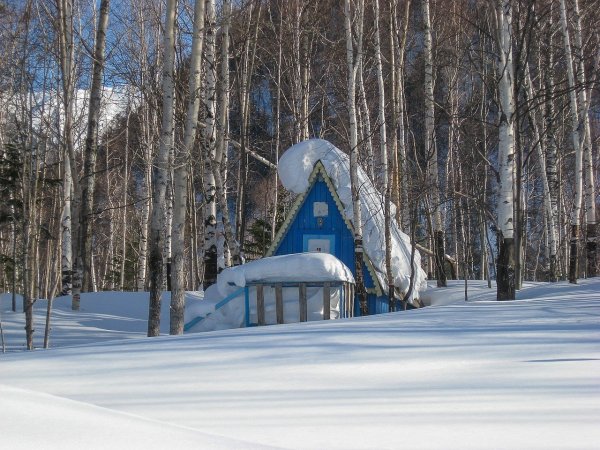
Early winter. I arrive in a region of the Taiga, which has the amenity of a great silence, where I can make my way with empty hands and without money, detached from material life, like the shaman, (or is he a monk?), who left his log cabin to me while he visits his mother near Arkhangelsk. Here is the loneliness, a seclusion which is desirable; where one feels in touch with primeval times. Not this loneliness caused by isolation among people surrounded by the background noise of a city.

He left me dried reindeer meat, cheese, a loaf of bread, dried mushrooms and tobacco.

New snow covers the tracks of the sleigh which disappeared in the distance, into the Russian vastness. This sealed my entry into loneliness, made it irreversible.

In this loneliness my thoughts and feelings sort themselves like the falling of loose sheets which miraculously settle edge to edge. It helps to gather me. I listen into a void, freed from the grinding din of civilization. I perceive now the melancholic tone of the ice wind resounding at the bottom of my heart where it dissolves, thaws.

An emptiness of sounds of a vast forest, reaching beyond the horizon, with millions of trees and thousands of miles. One can hear the silence, touch it, comprehend it.

Loneliness sharpens the senses and I see traces of wolves and foxes. They emit no sound, pass by, do not take any notice of me and are sucked in by the darkness of the forest. The fluttering of warblers and finches which pick the seeds from pine cones is the only agitation in a quiescent ambience.

Occasionally movements can be perceived when snow falls off the heavy loaded spruce branches and the branches spring back. The trees whisper to me. Late sun threads weave light into the night fall.

A few logs burn in the oven and the embers cast flickering light on the ceiling.

The room is filled with the scent of fir wood and resin, the smell of mushroom soup and fried chanterelles.

The saints on the icons on the walls look at me with a mild, reassuring smile.

I step outside the cabin and over me stretches the vast open firmament. Blue moon night. Volatile-transient.

Looking at the sky, I enjoy my forlornness, the freedom of seclusion, non-attachment and needlessness.

Suddenly a green curtain falls from the Northern sky and waves as if in front of an open window. Over the black, star covered sky, finger the green-violet streaks of aurora borealis.

I hear sounds —they appear to be generated in the air above the ground.

A weird surging hiss from this magnetic storm. Aurora whispers and there are clap sounds, crackles or muffled bangs, which last for only a short period of time. These sounds are soft and can only be discerned in the utter silence of loneliness. The voice of the aurora.

The polar light vanishes. Darkness takes over and I hear a distant signal of a train,

the lonely humming of a plane comes near and moves away again.

I go back into the cabin to comb through my thoughts to collect those combed words and line them up for a poem. Tobacco clouds hover over the writing paper, mysterious, like incense in front of an iconostasis:

Green curtain of the polar light
falls on boreal forests
so wide
the taiga, so infinitely far the horizon,
unattainable distance,
where a full moon is fixed on
a snow powdered canvas.

Sound absorbing forest soil
recalls feeling of feet on a carpet.
Quietly rustling heaps of leaves,
waft like turning newspaper sheets,
loaded with word heaps,
here useless, timeless distance.

Under aurora borealis,
the solstices as calendar,
a deserted landscape,
where thoughts emit melodies,
because they strike forest strings.

Memories no longer hurt,
because they dilute
in the vast expanse,
dissolve in nothingness.

Remembrance of a tender touch
is so far removed,
because it fell


Eduard Schmidt-Zorner is a translator and writer of poetry, haibun, haiku and short stories. He writes haibun, tanka, haiku and poetry in four languages: English, French, Spanish and German and holds workshops on Japanese and Chinese style poetry and prose. Member of four writer groups in Ireland and lives in County Kerry, Ireland, for more than 25 years and is a proud Irish citizen, born in Germany. Published in 69 anthologies, literary journals and broadsheets in UK, Ireland, Canada and USA. Writes also under his pen name: Eadbhard McGowan

Image via Pixabay
Perinthus, Uncovered – Lindz McLeod and Zebib K. A.

The Battle

Two children, born to two nervous mothers. Bells clamour for attention, alert to every change of breeze; dire warnings of terrible fates announced with tones of dread and certainty.

One grew to believe, to see frightened rainbows hiding in the expected unknown; I am afraid she was right, one said, who can I trust?

One grew to disbelieve; she was wrong, one said. The world is beautiful. I am the danger.

Two warriors meet on the battle field. They exist in the glass globe of an ancient myth. We transmute through the glass, inside this world like clouds swirling in their orb, or into the mind of a hawk in their sky, or simply spat out like pale bone through the ancient atmosphere, settled into the dust of this scene. In this place, we can hear a wooden flute over the sound of the desert wind, the din of the distant city, the swarms of two armies, comrades-in-arms awaiting a charge. The two warriors, the two leaders, stand ahead of these armies, their ranks fanning out across the landscape. Hooves pounding dust, spears slowly rising through invisible molasses as many hands carefully point them ahead. The respective town blacksmiths shaped their iron and their brass, alchemical armor, and all these hand-crafted metals glint with fresh pride in the sun. The leaders gaze at each other from astride their horses. Seeing now, finally, into the eyes of the enemy, the stranger from another land come to invade. A figure floodlit by sun through a mirage. One warrior sees another warrior with piercing eyes, strong arms, grasping a horse’s reins with strength. One sees the moisture in moss-like eyes, the other sees a depth of dark brown iris. They stand before each other as long as they dare, then lead a charge to combat.


The Siege

Two teenagers, an ocean apart. Stamped and minted with ancient song; bagpiped wails and kebero heartbeats forging a crystallised crust. Hardness growing where softness should be protected. A wilder alibi guarding a locked castle door, where something blooms inside a bell jar.

They have fought well and hard, fought with an intimacy that neither one of them have known before. The aim is not to maim or kill, but to get close and struggle. As the armies tangle, the warriors strike and miss and collide. They dive, plunge, brawl with passion throughout the night, until daybreak. The sun rises around them as they come to a standstill; bloodied, tired, some near dead. Neither army has progressed an inch. Neither leader is willing to go. The warrior with the dark brown irises has to retreat back into their walls— their soldiers rain blood on their home soil, are too weary for sleep. The moss-eyed warrior steps back, and back, until their army spreads out on the top of a hill, overlooking the city they have come to destroy. This is a siege. They have food and water aplenty, the city and the invaders and each army leader are ready for a stand-off. Each ready, at first to fight, and now to wait, for something has paused the furious tumult forward.

The first warrior, pacing inside their city walls, stuck on those moss-green eyes, hopes the siege will never end. The warrior needs a dove, the one rumored to deliver secret messages to whoever your heart calls for. A dove bargained from the town sage, after some negotiating and a few gold coins. The sage waves leathery hands, billowy black robes, and promises one message. This dove will fly across in the dead of night, without flapping, without making a sound, to the other warrior, to deliver one scrawled note on parchment.


Laying In Wait

Two hearts; one opens nocturnal leaves for every second shiver, blooming solitude in the dark. A martian flytrap, accessed via the moon. One closes petals tighter every year, spindles waxed on her own curse. One angles her cheekbone to catch a hollow soul where it alights with feathered feet. The earth and blood tempo drums them forth to the watering hole, at separate times, farcical coincidence. An exhausted lioness, on the trail, picks up the scent of a floral gazelle. Loneliness is throat-sweet, the scene apparent to carcass-observers.

The other warrior receives the note, wakes up to the parchment sticking out from underneath their cot, under their blanket, in their tent.

“Across this field, my eyes have never left yours. Meet me tomorrow morning in the hills outside of town, after the salted lake. beyond the green frog with the red eyes. Near the rock, under the tree. Before the gods.”

The moss-eyed warrior does not question how this note arrived, or who sent it. The morning rises as the warrior steps quickly through the ranks of tents and poles and crates and horses, to the corner of the camp. Squints in the pinks and yellows of dawn.


The Triumph

The clock strikes thirty. Undress yourself, take off the skin that bound your thoughts together. Dig deeper still; hear the cosmic tick in the bones of your ankles. Unlatch your joints, fold them for the shelves. Unwind capillaries you held as hostages for so long. Scrabble with what’s left of your hands. Locate the place where the conscious weight exists, the sentient driver behind the eyes. It’s time to grow past the old ways. Post it, still-beating, to your lover (first class, tracked signature) who engraves a plaque with time and date, awaiting the delivery. A phalanx of our own flanks, the lover easing inside. Slick with confessions of ardour.

The warrior thought of a plan on the spot. All the supplies were burned in the middle of the next night. The army rose in a panic, aghast, their long-held mission derailed, furious, determined to fight until the bitter end. The warrior sighed, feigned a heavy heart, and insisted the army head back home, across the mountains. No long battle, no revenge, no good long fight, as they all had hoped for. In this way, the warrior is rid of their own army. The warrior loves them all, has grown up on this life of battle, but times have changed, their heart now transmuted. The thought of one more day of this ritual of struggle sang out like a curse now, not the gods’ blessing of honor.

The warrior was not born from sea-going stock, nautai, but if they had been they guessed this moment would be like sailing across those long seas and suddenly seeing land. Not as the strong-armed rowing oarsmen on triremes, ready for descent and attack, but as a salty sailor, who had forgotten the land, forgotten the sight of thin green, glowing coast.

The same path back home would not do.


The Return Home

Shall age and experience make the same mistakes? Shall we forge a middle way, a way of moderation? Homeschool our children with homemade puppets; here is how to fear and not fear, how to trust and not trust.

Shall we set them free to search for their own treasure, sack their own cities, raze their homes to the ground?

Watch them from the shadows of the pyres? Atone and sing their wedding vows?

The two warriors met in the dust of midday, that secret spot, a large rock under the shadow of a desert willow, outside the city, halfway between the cheers, bells, and tambourines of the townspeople, and the burnt-out camp. They fell to the ground once their eyes met. What happens when two warriors attempt to tangle in armor? What starts and stops, what clanking, what rusty squeaks and grunts and sighs. What of the places inside where breathe hitches and snags? Pieces of armor fall and unfurl like petals. Halfway between the old town and the temple of the gods, near the rock under a tree, beyond the frog and the salty water, the warriors meet and kneel before each other. All had shifted. The light of this dawn contained the strangest, newest, most brilliant colors, to shine on both their sinewed bodies. Hearts uncovered.


Lindz McLeod is a Scottish poet and writer living in Edinburgh. Zebib K. A. is an Eritrean-American psychiatrist and writer living in New York. They are a queer, interracial couple, who enjoy combining their writing talents from time to time.
Lindz can be found on Twitter @lindzmcleod, and at https://lindzmcleod.co.uk/.
Zebib can be found her on her instagram @pegasusunder, and at https://medium.com/@pegasusunder.

Image via Pixabay

In The Footsteps Of Gods – Hannah Storm

Say we’d met on those steps a decade ago, on the stones worn thin by centuries of other lovers who measured their stories against the myths carved into the marble of the Acropolis, who ignored the warnings of hubris that had made legends of the men and women who tried to defy their fate. Say we’d met on the streets of your rain-slicked city, beneath the statue of Greyfriars Bobby, and you’d taken my hand and told me the tale of the dutiful dog who died guarding the grave of the man he loved, as you showed me the city that schooled you. Say we’d walked the canals, passed the painted houses with their tulips cascading from the windows with the promise of perpetual spring, and we’d smiled at the students getting legally high, knowing that no drug could ever make them feel the way we did. Say we’d met here in this city that never sleeps and we’d chosen to walk the streets all night, rather than it choosing it for us, because it was the only way we could be together. Say we had met at another time, in another place. Would you still come and lie flowers on my grave, your grey coat pulled high to hide your face from the wind or those wondering who you were and what you were doing here?


Image via Pixabay

My Smile – Melissa Bird

My smile
I’d love to smile
Like when I was
Young and beautiful
When I was
Free and bold

Before the truth
Was innocent
Before the lies
Surfaced

Haven’t smiled
Without
Hesitation
Reservations

Soft lights
Hypnotic music
Swaying freely
Smiling sweetly
Whole hearted

To smile with joy
In my arms
My new boy

Full of fear
Nightmare
Self doubt
Begins
Will I be like her

Do I have the rage
Do I have
Deep inside
That coldness
It’s beginning to
Fill me

A sleeping demon
Must not
Can’t wake it
Protect him
A beautiful light
Life force

Not mine
To keep
He belongs
To someone
Special

Image via Pixabay

A Dream of Ovens – Paul Negri

For almost two decades, I have refused to talk about the incident with anyone unless compelled to do so and the number of people who could so compel me were very few. The police, of course. My analyst (yes, I must tell her everything). And now you. Well, you may say you are not compelling me, but who could ignore an abandoned daughter’s pain, particularly one whose long search for her birth mother has led to such grief? What I fear is that I will do nothing to assuage your grief, Miss Arden; I may simply bring it to full bloom. The truth will set you free, you say? Jesus told that to the Jews, didn’t he? It has always struck me odd how similar the phrase is to another piece of advice given the Jews: arbeit macht frei. You don’t understand German? Your mother spoke German perfectly. Something I was not aware of until… Are you sure you want me to continue? Very well. That German phrase means ‘work sets you free’ and Jesus, as a Jew, would surely have seen it had he been born in the right place at the wrong time, Miss Arden.

Yes, I will call you Ann, if you like; please call me Dr. Weiss. It will help me preserve my professional distance. That distance, always necessary to me in my psychiatric practice, has become absolutely vital to the preservation of my sanity since the incident almost twenty years ago, though, of course, I practice no more.

Mrs. Smith—I shall refer to her so, as I never once called her by her given name—was eighty when she came to me and despite her distress was plainly a formidable and robust woman. She was referred to me by her pastor, an old acquaintance of mine from our days at Princeton. He told me she had turned to him for help, but refused to confide in him the nature of her problem, except that it concerned her dreams. She seemed to believe he could somehow pray the problem away. It was plain to him that she was very afraid and in desperate need. Given that my work in dream therapy was considered authoritative in the field, he was eager to place her in my once capable hands. My gloves? Sorry, I know they must be distracting, but far less so than their absence would be, I assure you. Shall we continue?

In all I had just six sessions with your mother over a period of a month. The first four were fairly typical of a resistant client, that is, one who struggles to conceal what she so desperately needs to reveal. She talked about dreams and asked me general questions, to which I gave general answers, never pressing her about her dreams, as that would have only increased her resistance. There were many silences in those first sessions, but I knew they were productive ones, like a cough that brings up what needs to be expelled. Then tears, begrudged on her part, as if they were wrenched out of her reddened eyes. And finally, in the fourth session, a breakthrough in the form of a breakdown. She was at her wit’s end, a place to which I had patiently steered her. It is at that excruciating destination that the unvarnished truth can bursts through the most strongly constructed defenses. Or so I believed at the time.

Mrs. Smith informed me that for the last several months she had been sleeping less and less, not because she could not sleep, but because she would not permit it. She proclaimed her self-imposed insomnia an act of the will, one that was necessary for her very survival. She would not allow sleep to drag her back repeatedly to a nightmare which she had, she thought, long ago escaped and entombed so deeply in the past that it could never rise up again to torment her. Sensing the moment was right, I asked her what she dreamed. She rolled up the sleeve of her blouse and on her left wrist in ashen blue was tattooed A16642. She whispered the name Auschwitz. She stood up abruptly and fled, even though we had used less than half the time for that session.

In contrast to her former sessions, the fifth was marked by her extreme, nearly panicked recounting of her dreams, varying in details, but always with the same impending conclusion. She was in the camp trying to hide, wandering among the other inmates, who rather than helping her, seemed intent on her betrayal. Whenever she felt she had found a secure hiding place, she would be found, and the angry inmates—men, women, and even children—would seize her and carry her aloft, passing her from one set of grasping hands to the next, all the way to the crematorium, where they delivered her to the black maw of the oven. And this, she declared bitterly, without the benefit of gassing. She had always, through a supreme act of the will, awakened herself at the last possible moment before the conflagration could commence. But her will, she said, was weakening and she was terrified of the consequences.

Shall I stop, Ann? If not for your sake for my own. Since the incident I too have recurring dreams, not frequent, but insistent. I fear you shall have dreams of your own if I continue. Very well then. You will live with your choice, as must we all.

This was not the first such case I’d encountered in my practice. I had treated others who were convinced their dreams would prove fatal, which, I persuaded them, was not possible. Dreams, no matter how distressing, are the safest places in our lives. Even if we do die in our dreams, we always wake to live on. I proposed to Mrs. Smith that I treat her with one of my tried and true methods. I would induce a state of sleep in her by hypnosis, a sleep over which I would have absolute control, and accompany her within her dream state. Together we would confront the phantoms that tormented her and lead her to the oven’s door, where, with my help, she would slam it shut and having thus exerted her control over the situation, nullify its power over her. She was extremely hesitant to allow such a procedure, but using my considerable powers of persuasion, and my assurance that it would very likely end her torments, she consented.

On the appointed day—it was our sixth session—she arrived burning with dread and hope to my office. I had her lie on the couch, which was more or less a prop I rarely used, and after some difficulty, induced her into a state of hypnotic sleep. I sat in a chair by the couch and informed her that she was back in Auschwitz but that I was standing at her side. She immediately displayed the most terrified look I have ever seen on anyone and I found myself uncharacteristically shaken. I reassured her that she had no reason to fear, that she controlled everything that could possibly happen, and that I was there to protect her. I could see her straining to wake herself, but I commanded that she remain asleep and work her will within the dream, that indeed she was master of the situation. Instead of lessening, her fear crescendoed. Her face was contorted by the most hideous grimaces, her eyes opened, and she stared into mine filling me with a dread I had never known before. She spewed a venom of words in German, so hysterical and full of invective that I could barely understand them. She sprang up on the couch and was immediately pulled back down as if by invisible grasping hands. I commanded her to wake up—but she did not. I commanded again. I seized her hands and felt as if my very soul was yanked from my body.

I found myself standing in a terrible room of brick and mortar, dark and smoky, stench-filled and suffocating, amid a howling mob of skeletal forms, animate corpses. And there beside me was Mrs. Smith, but not in the rags of an inmate, no, in the green-gray uniform of a guard, flailing at the encroaching mob with a bloody black baton. I stood and watched in horror as they pushed her forward toward the gapping oven door, lifted her as she screamed, and forced her headfirst into its black sooty heart. They slammed the door shut and its thunderous clank woke me, delivering me back to my office, where I sat dazed and sweat-drenched in my chair. I stood and looked down at Mrs. Smith. Her eyes were grotesquely wide opened, her mouth frozen in a soundless scream. I felt a rush of heat. She burst into flames, yes, actual searing flames, the flames soaring upward, roiling over her in waves and leaping to the ceiling, until only her outstretched hands were visible. I grabbed those hands and tried to pull her out of the inferno, pulled and pulled, until the hands came away with me, my flesh melded into them, my dripping hands charred to the bone. I mercifully lost consciousness, gladly falling into an abyss of death-like calm and release…

When I came to I was sitting in the chair. There was no sign of fire or damage of any sort, but the air was thick with the smell of burnt flesh. On the couch was the charred corpse of something which had once been a woman, blackened and twisted in a fantastic shape, with dreadful open eyes. I could not take my eyes off them, my vision growing more and more dim, until finally I had no vision at all.

I was a suspect, of course, but a thorough investigation revealed nothing to incriminate me. The coroner found that her body had been consumed by a conflagration from within, a spark inside her that had raced outward like a fiery tide. A case, he said, of spontaneous combustion, if ever there was one. Why it consumed only her and nothing around her, he could not explain.

Yes, she once had made her escape, and assumed the guise of a victim, even tattooing the telltale number on her wrist. But no one escapes from themselves forever. Not even the devil.

I do not have to see you, Ann, to know you are weeping. Weep. I only wish I could weep with you. But my eyes are stone and have vision only in my dreams, where they see one thing alone: a pair of horror-filled eyes, still smoking in a steaming skull.


Paul Negri is the editor of several literary anthologies from Dover Publications, Inc. His stories have appeared in Reflex Fiction, Into the Void, The Penn Review, Jellyfish Review, Flash Fiction Magazine, and more than 40 other publications. He lives in Clifton, New Jersey, USA.

Image via Pixabay

The Conch Shell Roars – Karen Schauber

The Cessna Grand Caravan 12-seat seaplane circles a tiny speck in the Andaman Sea on approach. Henrick watches the sky flare into magenta, scarlet, and saffron as dusk closes in. The island, flanked with sands the colour of Carrara marble and warm azure waters should exhilarate, but instead his heart sinks. There is no pleasure to be had here.

It has been ten years since his last visit. The familiar fragrance of cashew trees permeates the air over the gentle murmur of waves. A towering vertical mass of limestone marks the way and Henrick begins the final leg of his journey via longtail boat. A sea of spray rushes ahead foretelling of his arrival.

He and Astrid loved to come to this paradise. She came for the snorkeling, spellbound by the colourful corals and displays underwater. And, for the titan trigger fish, hawksbill turtles, blue spotted stingrays, the fabulous little nudibranchs, all within arms’ reach. He, for the stunning panoramic views aboveground: the sea shining like glass beneath a cerulean sky, where he would while away the hours beneath the faint rustling of palms, reading.

Astrid loved sea life. Even after she waded out of the water limping up the beach, leg dripping with blood, a long tentacle wound around her waist and thigh, its tiny stingers fiercely embedded in her skin, she would stop to look with fascination at the peacock-blue man-o-war bubbles resting on the sand; their intense inky colour alluring.

Henrik adored Astrid’s adventurous and playful impulses. He acquiesced of course, when she had wanted to return yet again to this paradise. He had suggested they go back to Lord Howe Island in the Tasman Sea. Each dawn they had been greeted by a blue-breasted fairywren vocalizing at the window of their bungalow; every pristine vista otherworldly. But they had many opportunities ahead, and one year here or there, they would still cover everything on their bucket list.

The longboat pulls up alongside the dock at the moonlit bay. Tiki lights stand like sentries flanking the path along the beach up to the main compound. The air eerily still and quiet. The beach, empty, save for memories. Henrick drags his feet. His flip-flops catch on nothing, but he stumbles nonetheless, releasing a cry too absurd and overblown for the tiny misstep. Grief like a heavy blanket, drags along the sand.

He smoothes down the edges of his ghost-white linen shirt, now untucked. Strands of silver and grey at his temples curl softly. His hand brushes the wayward wisps to the side, winding the longest unruly curlicue behind his ear. Bending down to pick up a pink conch shell, he rolls it in his hands, feeling its weight and heft. He clutches it to his belly loud like sorrow. There is nowhere to run. Astrid disappeared here. The tsunami pulling her down deep never to be seen again.

Henrick raises the conch to his ear listening for her roar.


Karen Schauber is a Flash Fiction writer obsessed with the form. Her work appears in 30 international literary magazines and anthologies, including Brilliant Flash Fiction, Bending Genres, Carpe Arte, Ekphrastic Review, Ellipsis Zine, and Fiction Southeast. The Group of Seven Reimagined: Contemporary Stories Inspired by Historic Canadian Paintings (Heritage, 2019), celebrating the Canadian modernist landscape painters, is her first editorial/curatorial flash fiction anthology. Schauber runs ‘Vancouver Flash Fiction’, a flash fiction Resource Hub and Critique Circle, and in her spare time, is a seasoned Family Therapist. A native of Montreal, she has called Vancouver home for the past three decades.

Image via Pixabay

Create a website or blog at WordPress.com

Up ↑