Cat Lady – A.J. Nicol

Ginger cats are always possessive.

Maurice peers at me over the blanket. I pat the bed beside me and assure, “Empty. See?”

Maurice disappears. Sulking. He’ll be off to the lounge to scratch some furniture.

Tonight’s fling whispers, “Is it safe yet?”

I told Jeffrey my cats are nervous and will pee everywhere if their routine is disturbed. Then I asked him to hide in the wardrobe. He’s been in there for twenty minutes. He pokes his head out and smiles at me, thinking it’s all a game.

I like Jeffrey. I might turn this one into a Maine Coon.

Cabinet Of Heed footer logo


A.J. NICOL lives in Australia. She likes to write short stuff. Twitter @manicol1

¤¤¤

Image: Navigirl

Living Without The Other – James Lawless

A pecking sound wakens her. With the duvet still encasing her to dispel the rawness of the March morning, she pushes out the frosted window of her bedroom and, looking up, locates the source of the sound to the eaves: a minute green bird banging with his beak at a cotton wool chrysalis. She blinks in syncopation with the wing movement, and then the bird is gone like paper caught by a breeze.

She’s gone too, from her other. She upped and flew away. And who is she now? she wonders. Who is somebody when not appended to another?

Boring, he called her; said he was bored with her. Never in their twenty years together, did she show initiative, never once – he was inclined to repeat himself like he was an orator and woe betide her to interrupt his monologues. It was sexual of course, all the innuendo.

That was the beginning; they were just the words. But frigid was the damning word that led to the excuse for his roaming. That gamey eye of his undressing nubile women, flattering them with his good looks, a dapper dandy with sleek black dyed hair. He had no shame; in the supermarket, he doodled women onto his brain while she stacked the trolley, or in the parking lot while she loaded the car-boot; wherever a curvaceous female appeared, he salivated. He got a kick out of it like he was saying, Look what real women can do, frigid Brigid; they can turn me on, and he’d continue in that vein when he had her home, grabbing his testicles lewdly, trying to provoke her.

At his age, forty four, behaving like that.

And all she ever did all her life was to please the other. Like it was something anointed, a role for her to fulfil sent down to her from on high. All during her childhood and even into those repressed teenage years it was her father, the pleasing of him which was transferred lock stock and punctured barrel on marriage to her new other.

But now for the first time in her life she is free from all that and she is unsure what to make of it. This freedom is a new language that she will have to learn like a child starting again. A self-generating woman? Is there such a thing? What words can she use? What was the past, just weeks ago? An age ago. What is different now? She looks at her hands; it’s like they have lost their use, hands that were in the service of the other, and she examines the long fingers, dry and wrinkly before their softening with the morning lotions. Like down there, that other part of her so ridiculed, she never had dominion over it.

When things are stripped away – layers of herself – she is open to ponder: who is Brigid? Where is the core of her? One thing is clear: she can no longer be boring except of course to herself. But she is not boring to herself. On the contrary, she is a very entertaining lady. Her mind can put on shows that would do Broadway proud. She is multichannel, black and white – she can do film noir – or Technicolor romance. Press the button of your choice. Inside the lady sings.

There’s a pounding on her front door. Her calico dressing gown she ties with its silky strap as she goes to greet Maite the Argentinian neighbour, a petite dark-haired woman in her thirties, calling with her dappled duck eggs which Brigid has yet to taste. The ducks belonged to the earthwatch woman who had met Maite while giving a talk at the refuge for battered women. The earthwatch woman generously lent her log cabin to Maite when the South American explained her predicament about her violent other who could come after her. He’ll have a job finding this place, the earthwatch woman said, and if the snows come, the way will be impassable.

But Maite is still living nervously, twitchingly, fearful that her other will come and find her despite the reassurances of the earthwatch woman. Maite keeps vigil from her eyrie camouflaged by rock and prickly furze and wild holly. She looks down on the valley like a rebel of old watching for the redcoats, expecting her other anytime of day or night to come snaking around the bend in his Opel Corsa with the dent in its bonnet that caused such a furore. It was from a stone thrown up by a truck when Maite of course was driving. He never got the dent fixed, she told Brigid, because it was his excuse, every time he felt like it, to practise on his punch bag.

‘There’s a hare,’ Maite says. ‘Did you see it bounding through the woods? The cheeky fellow has eaten the heads of your daffodils. Did you see?’

‘What would Wordsworth have made of them?’

‘Wordsworth?’

‘The poet. What would he have said on beholding a thousand headless daffodils?’

‘They will sprout again,’ Maite says when she sees the forlorn look she has induced in her friend.

‘The eggs, they make a fine omelette,’ Maite says. She places the eggs, a half dozen in their cardboard box, on the rising red Formica of the kitchen table.

‘And how are you?’

The shudder, shoulders concaving, breath catching in Brigid, brings Maite closer. ʻI’m like the daffodils out there,’ Brigid says, ‘I lost my head too.’

‘You can tell me in your own time.’ Maite strokes her arm.

‘Those strange animals.’

Maite laughs. ‘Animales, sí.’

‘They do not know us.’

‘We are just their prey.’

‘Like the hare.’

‘When the hunter comes.’

‘Yes. When the hunter comes.’

‘We are like the hare.’

‘You are like the hare,’ Brigid says. ‘Mine won’t come.’

‘No?’

The briars are thick around the cottage. She will go at them with the slash hook, thinking how those prickly things paradoxically yield such succulent fruit: the blackberry tart that Maite had heated from the freezer, oozing its purple juices as if the thorns were still there lurking in the pastry prodding, piercing like…

‘We’re not hiding, are we?’

‘Of course we’re hiding,’ Maite says. ‘That’s what women do.’

‘Yes, but what are we hiding from exactly?’

‘You know.’

‘I know the obvious. I know he may come after you at any time. I know all that surface stuff.’

‘Surface stuff?’

‘If we could leave those fears aside…ʼʼ

‘How could we do that? How could we leave things aside?’ Maite says, and her cheek starts twitching to the right of her mouth. ‘Night and day I watch with mucho miedo.’

‘Strip it away, that miedo. Forget about him.’

‘How?’

‘Think of your own life.’

‘It is easy for you to say. Your other is not going to pursue you.’

‘He may not come,’ Brigid says, ‘but others may.’

‘Others? What others?’

Brigid doesn’t answer but looks out the window instead where the light has shifted now into a dull grey envelope, and Con Buckley in a south field is tilling, his red woollen cap bobbing like a distant poppy.

She turns towards her diminutive friend. ‘Do you find me boring, Maite?’

‘Of course,’ Maite says. ‘Who isn’t boring? What did I do today? What did you do? The sum of all our actions. Anyone who thinks he is not boring is arrogant.’

‘You said he.’

‘I did. I wasn’t…’

‘Did I tell you about the lamb whose eyes were plucked out by the carrion crow?’

‘You told me that before about Con Buckley telling you about his lamb. You keep going back to that. Why?’

‘Can you see the fork in the road?’ Brigid says.

‘Where? What fork?’ Maite strains, squinting towards the window. ‘There’s no fork. It’s a bend, a curve.’

‘It’s a joke,’ Brigid says.

‘I don’t understand.’

‘He got his dessert.ʻ

‘What are you saying, Brigid?’

‘Delivered with a fork.’

‘Oh my God. You mean…’

‘I’m full of hate, Maite. Can’t you see all the hate in me?ʻ

‘Do you hate me?’

‘Of course not.’

Their sounds are drowned out momentarily by the snarl of the tractor drawing nearer; the spring ploughing; Con Buckley, sculpting the heavy blackgrey mounds into shapes.

‘My other, he will come,’ Maite says. ‘I feel it in my bones. It’s like they’re waiting for him, waiting for his fists to…’

‘He may not come. Don’t keep thinking he will come.’

‘No, I am telling you. He is that tipo that will go to the end of the earth for…ʼ

‘Validation?’

‘Yes exactly, that is it. He has to validate himself by beating me black and blue. He needs me to do that. Isn’t that extraño? I am his validation in el mundo.’

‘Why are you putting in these Spanish words when you can speak English perfectly?’

‘I don’t know.’

‘Why can’t you go back to Argentina? I mean he would hardly follow you that far.’

‘No, I can’t go back. That part of my life is over. We had to elope you know, would you believe it? How innocent I was to elope with such a one.’

‘What brought him all that way in the first place?’

‘Real estate, land, pipe dreams.’

‘Ownership.’

‘Exactly. And I thinking he cut a swagger coming through the pampas grass. My family disowned me for not marrying their chosen one.’

‘They chose for you?’

‘Oh yes, a distant cousin. They had him picked out from his First Communion photograph in his shining white suit. Could you believe it?’ She raises her voice. ‘Could you believe it?’

‘Yes.’

‘They disowned me for marrying an extranjero. If I were to go back they would say, oh they would boast, they would feast in their boasting, that they had warned me, had told me. So you see, it would be recrimination for the rest of my life. Who wants damaged goods?’

She is on the point of tears.

Brigid goes close to her and raises her by her elbows up onto her toes.

‘What are you doing?’

Brigid is a full head higher than Maite. She hears the straining groan of Maite’s leather boots, the soft, sensual leather, she thinks, from the rich pampas grass of Argentina. She feels the physicality in herself, a strength surging through her just like she did that last moment with her other, that last supper when the plates were still bloody with bolognese sauce and she was holding her fork, something rose up in her as never before to counter those mocking eyes. Some waitress he was boasting of in her presence, sparing nothing in the detail: the wonderful curves to behold. ‘Oh, I can tell you frigid Brigid, she’d put you to shame’.

The two women hold, life panting in them, as they trace the landscape of wounds in each other’s face.

‘We are sad.’

‘No, no we will refuse to be sad,’ Brigid says, and like a bird descending, she swoops and plants a ripe kiss on Maite’s unresisting mouth.

‘Those curls,’ Maite says, says fondling Brigid’s hair.

‘I must use the eggs,’ Brigid says, breaking away as if suddenly embarrassed at what she has just done. ‘Maybe this evening I could make an omelette.’

‘There is elderberry wine up in the house. I could…’

‘We could do a lot of things with all our coulds.’

The cottage had been the summer retreat of her parents where Brigid’s childhood was etched. She can still locate the marks. Her height measured on the architrave of the kitchen door, notched from her first other’s penknife. And in the bedroom, the child bed with its cold metal frame that she cannot bring herself to move, as if it is bolted to the floor. The single bed, she thinks, where dual things happened. And Maite saying she keeps harping back to that story, she hadn’t realised. What’s the big deal about a bed anyway? For Sneezy or Dosey or Snow White or… Mary with her little lamb or whoever… whoever the other may be, as they go, as they ho ho ho on their merry way, as her father used to say with that sandpaper chin of his chafing her child skin. What is it to Maite whether it was Con Buckley or not who told her that story? Mary had a little lamb, its feet were white as snow, and everywhere the lamb went, there followed the big black crow.

That bedtime story, forcing her to cry out.

She rushes to the kitchen door, feeling nauseous, and opening it, inhales deeply the cool evening with its first star and she thinks of another mark: the stars on the ceiling of her bedroom. Those knowing stars. She trembles and she knows, yes, it is the fusion of her two others that is happening now. The fields that were green are now turning to a dusky grey as the light changes; a stealing of light from some superior source, stealing her light, the universe telling her something, the night, as it approaches, is goading Brigid to hood her eyes, to hood her mind to the sleety rain that is beginning to fall. But with snow impending, she thinks, as the earthwatch woman forecast, the ruts in the field, all the slimy marks could be covered over, yes, as if they were never there.

A city slick was the second other with his pinstriped suit worn to conceal that hirsute back of his. A caveman that she had to cling to through the years, as with ice cold perfunctoriness he grunted and pumped inside her. One should be allowed to preview one’s other naked, she concludes now, to see how he goes, before consenting to be his chattel. The city is a clean-shaven concealment. It’s the way of survival among the teeming hordes, on a train or a bus where people breathe each other’s foul air. How else could one live other than by pretending that the elbow in your ribs was never there? Funny, it took all those years for her to realise she was not a city girl. Nobody is a city girl deep down, only those who pretend that the primeval does not exist. His banking jargon, his figures and statistics rained down on her like hard hail.

She looks out on the fields. She is bare now like those trees waiting for their leaves, part of an interim.

But she will not go forward, not yet, as nature is dictating, but back to a time when daffodils wore their heads with pride and nodded in affirmation at a gangly freckled young girl in her curls and sun-kissed cotton dress with that overwhelming desire to please, to long for the pat on the head, to suffer terror, to sacrifice an innocence for the approval of another. And for the first time, she wonders startlingly, is it possible, is it really possible for a child to survive the games that adults play?

Her mobile phone vibrates in her handbag on the kitchen table. She takes it out and looks at it throbbing through her fingers, knowing it is him. She presses the button, banishing the interloper and draws breath as the room returns to silence.

She has no children. She is glad of that. Less complication for what lies ahead. The inevitable course of events. She is forty three. Does it matter, and what is she? Something sawn off like the cut wood from the tree, something left oozing like a half eaten blackberry cake or like eggs, yes, like eggs that were never cooked, that never hatched. She looks at the worn cardboard box on the rising Formica, the incubator with the tear, the slit in its middle and one of its breast mounds pushed in, like a flattened pugilist’s nose, like Maite’s, yes, on the receiving end of her other. The contents of that box untried. Her eggs are in that tattered body, something used but not used up. The term, she had heard it from the coarse, vehicular mouths of his cronies: ‘She has a good mileage on her.’ Those who were so polite otherwise behind a desk or a grid smiling obsequiously out on a world of actors queuing, nudging one another who were not nudging, who were not pushing. Ar chuir tú é isteach aréir? The Irish words abused, reduced to vulgar codes. ‘Did you stick it into her last night?’ She overheard that, the quip of his crony addressed to her other. We’re a species not meant to be monogamous perhaps except in the sober pretence of day. The false daylight of cities. The false stars in the sky that she can never wish upon. But at least there is the consolation: he will no longer boast, her other; his eye will never roam again. And she looks out towards the undulating valley and the breasted mountain, which he will never see, and the grey holed rock in its womb glory.

A cow has mounted another in the west field. Have they mixed up genders? It is just a form of female caress. Of keeping the rain off the other’s back.

Maite will come and Brigid will open the box. She will make an omelette for Maite and for her. Yes, she thinks, we will drink the elderberry wine and pray for snow.

 

Cabinet Of Heed footer logo


JAMES LAWLESS was born in Dublin and is an award-winning author of six well-received novels, the latest American Doll, a collection of children’s stories The Adventures of Jo Jo, a study of modern poetry Clearing The Tangled Wood: Poetry as a way of seeing the world, and a poetry collection Rus in Urbe. http://www.jameslawless.net

¤¤¤
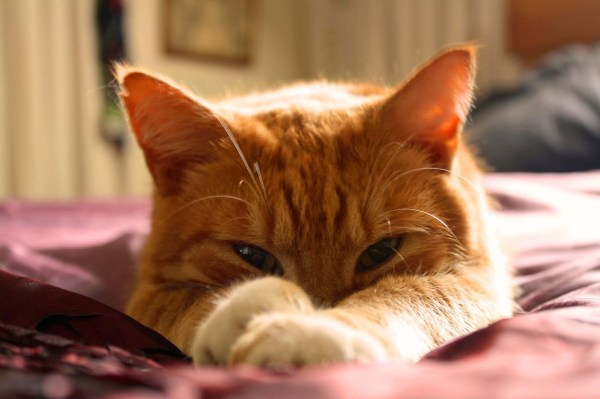
Image: Domenic Hoffmann

The Floods – Colette Colfer

It rained for days and we were all
under a carpet cloud of grey that stretched
through mornings into nights
filled with kamikaze drops
that pelted themselves from their sky palette
turning the land into a living wet watercolour.

Fields became lakes, rivers spilled
over, sand-bag dams were built
to try to keep the waters out
but a dog drowned in its owner’s home.
Houses had to be abandoned.

Someone spoke about building a boat.
A tractor convoy was a funeral cortège
through floodwaters
with a trailer hearse carrying mourners
seated on square hay bales
around the coffin
and still the rain kept falling

Until it stopped and there was silence
and almost the whole land was a silvery mirror
and light dripped from trees.


Cabinet Of Heed footer logo


COLETTE COLFER lectures part-time in world religions at Waterford Institute of Technology. She is a PPI-Award winning radio producer and has worked in print and broadcast journalism. She’s had poems published in Skylight 47, Three Drops From a Cauldron, Poetry Ireland Review, Algebra of Owls and The Poets’ Republic.

¤¤¤

Image: Pixabay

Wailing Waves – Alva Holland

He felt it in his small bones, saw it in the drenched sorrow leached into the creases of his mother’s ragged tunic. Watching her pay the money over, every blood-earned cent lining the pockets of some faceless demon of promises, he saw her tears flow, etching further fine trenches into filthy skin, harrowed from months in camps of stench and death.

They clung like limpets to the listing pile of wood and metal they dared to call a passage to freedom. They packed them on and pushed them off. The creaking heap didn’t last long as deafening fissures split the rotten timbers. The women, including his mother, wailed and keened.

Her death was swift, her wailing silenced by the swirling waves sucking her under, her already ravaged body rapidly despoiled to bone in an underwater feeding frenzy.

He thrashed, caught in the folds of a stranger’s sari, the bright colours drowning in the black waves. The darkness won.

Darkness always wins.

His engulfed body was yanked upward, snapping his ribs.

Something was beating him, slapping him. He vomited and passed out.

‘Wake up! boy. I didn’t pull you out of there for you to die in my arms. Wake up!’

The voice was hollow, the pain visceral. He’d gone to hell for not saving his mother. Thrashing in a frenzied seizure, he flailed into the darkness.

‘Hey, this one’s alive.’

A rough cloth smothered his face forcing his eyelids apart. Choking, he succumbed, slumping against his attacker, cracking his head.

He woke up, bound tight – a prisoner again, his ribs and skull throbbing. Daring to peer through scrunched eyes, he saw two dark brown eyes, staring, but kind.

‘It’s ok, little one. You’re safe now.’

Safe?

War is all he knows.

He doesn’t know safe.


Cabinet Of Heed footer logo


ALVA HOLLAND is an Irish writer from Dublin. First published by Ireland’s Own Winning Writers Annual 2015. Three times a winner of Ad Hoc Fiction’s flash competition, her stories feature in The People’s Friend, Ellipsis Zine, Train Lit Mag, Brilliant Flash Fiction, The Cabinet of Heed and Jellyfish Review.
Twitter: @Alva1206

¤¤¤

Image: Photo by Igor Ovsyannykov on Unsplash

Hand – Matthew Turner

Straightening up and bracing for an impact that I knew would never really come, I held my iPhone lightly with the tips of my fingers on both hands and counterbalanced it with my thumbs towards its home button.

The left part of my face was cleanly cut off in the reflection, and the rest of its geometry was compressed into its surface, overlaid and blurred through with an abstract cartography of smeared fingerprints and scratches. Over my right shoulder I could see the reflection of more screens as my colleagues worked; the scene seemed to glitch as the phone amplified my slight movements of hand. It reminded me of a Claude glass, a small mirror, slightly convex in shape and tinted black which was used in the 18th century by picturesque artists to help them capture and displace a scene from its surrounding landscape and smooth out its tonal gradations. This had already happened in the office though, there wasn’t any need for a device to subdue and average out all its colour tones further; it rendered the reflection down into nothing.

I pressed the home button and screen slowly lit up, the fingerprints and scratches evaporated and everything was clean again. With a sleight of hand I swiped left with my thumb and tapped the screens left, then right, left again and centre to unlock it.

The message was already written, I just needed to send it, so I read it again and performed a downward arch with my thumb to send. I locked the phone immediately — wanting to detach myself from it — and light iridescently reflected off the screen and different colours rippled through the greasy tracing of my thumb’s radial movement.

She had her back to me — and even this was scattered and diffused through the leaves of a large pot plant —so I looked at her phone instead and waited for it to vibrate on her desk. Her head twitched instinctively towards it when it did, but she went back her computer, before directing her head back to the phone again, as if she was conjuring some banal montage. She skimmed the phone’s surface rapidly right, mirroring my own movements only moments earlier, and she started to stare at the screen with her index finger hovering over the point it had last touched, shaking in the hum of the air conditioning. Her head tilted forward as she continued to read and her index finger violently flexed away from the screen a moment later. She fanned her hand with curled fingers over the whole screen and paused.

The shirt she wore was a tight sports type, which was ribbed on the arms —her right arm and hand were the only parts of her I could see clearly— to delineate her muscle structure. This allowed me to see her muscles clench as thoughts, no doubt, skimmed through her mind. It was strange, I speculated, that our obsession with bringing the insides of the body to the outside — good bacteria, bad bacteria, healthy guts, lean muscles — would also betray the infinitesimal muscles reactions of thoughts. It added an extra layer of detail and resolution to her emotions, as if I was watching a high definition television screen.

All I could see of the rest of her body was the faint pixelated shadow her head cast on the computer screen. Her hand then rotated left over the screen with stiff muscles as, I think, her whole body turned to face someone on the other side of office. I looked to the same direction and, as I already knew, there were just empty desks.

She put her hand flat on the phone’s face and fanned it up and down slowly. Then turned it over. Turned it back again. Then she picked it up with her right hand and slid its right edge across the desk to pick it up, it slipped from her grasp, she reached down to pick it up and held it tightly the middle of her chest and brought up her left hand to support it. She got up and with her back still towards me and went through the door on the far side of the office.

I looked back at the phone screen in front of me and saw the empty trigonometry of my actions played out in the residue left on its surface. It read like braille as I tilted it in the lights above —balanced on thumb and forefinger and pivoted with my little finger — to reveal different signs: dot, gap, dot, diagonal sweep, dot, arch, swipe left. I ran my finger up and down the screen to wipe them off, along with some foreign identifying whorls, and then turned the screen back on so the light could completely bleach them out.

I went to the toilet to take a piss and I threw the phone out of the window. It stuck in the earth and I could see the surrounding landscape displaced and fragmented in its reflection. The clouds moved and it seemed to disappear in the glare of the sun.

Removing my own phone from my pocket and checking the time, I decided to go for lunch. Holding it in the palm of my hand I dropped it back into the loose folds of my coat pocket, as I let go I allowed my index and middle fingers to slowly traverse its right-hand edge and, pausing on the pockets outer rim, I withdrew them gently from the fabric cleft.


Cabinet Of Heed footer logo


MATTHEW TURNER is a writer living in London. He studied at University College London and is now working as writer and assistant editor for LOBBY magazine. Matthew also teaches at Chelsea College of Art and has lectured at various institutions in and around London.

¤¤¤

Image: pexels.com

Walking in the Orchard – Lucie McKnight Hardy

Up here the seasons reign:
Winter is the queen, an ermine-clad enchantress,
Milk-skinned and bitten-lipped.

She licks at warm breath hungrily,
Seeking to devour, conspiring with Wind
To sever fingertips.

Her serried ranks of sentries stiffen.
Bare brittle limbs that clamour, seeking succour
From her sick embrace

Are scorned. She scowls on them
And black eyes that cannot reflect a light are scorched
Into that sinewed face.

Quick-witted, fleet-footed
She flits and dances, bestowing on her subjects
A frigid taste of daggers.

Trickling tongues are made rigid,
Silenced by her stare. The mirror-glass she shatters,
Quick to splinter. Jagged

Glass fragments are her knives,
Staggered sharpened shards of scratching crystal ice.
She’ll rub them in your eyes.

But the queen can be usurped.
She’ll wither, pucker, desiccate, decay.
And soon she’ll die.

A tender green emerges
And you taste the frost that’s held in meagre light.
White against white.

Snowdrop, do not bow your head.
You herald a new majesty.

Cabinet Of Heed footer logo

¤¤¤

Image: Photo by Aaron Burden on Unsplash


epilogue – Issue Two

The wheezing generators
Smother Mother Nature’s own gasps,
The crickets and the cane frogs,
But tonight’s moonlight needs a boost
Out here far from the Stuart Highway.
We need the lamps to witness
This multi-drawered wonder,
To have light to read by,
These stories and poems,
Each in a numbered drawer,
Forevermore,
While our shoes stain red
From the iron in the soil
Before The Cabinet teleports again.
These stories and poems
Exhaling light
For those who dare
This far from the road.


Cabinet Of Heed footer logo

Antifogmatic – Jamie Graham

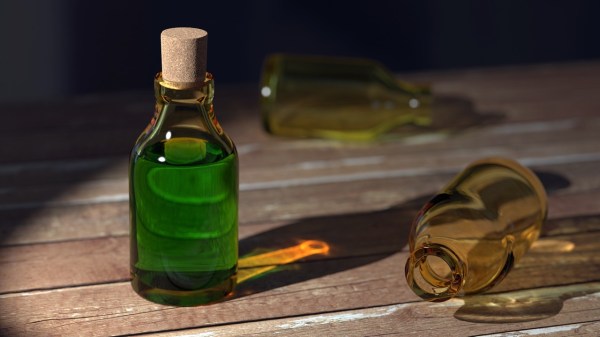
He hands me a cup of thick, green liquid. It resembles that awful mouthwash from primary school, but he insists I drink it all down. It tastes odd, somehow futuristic.

A haze arrives slowly. I recognise the end of a knitting needle in his left hand, that little red top with an undecipherable number.

“Knit one, purl one,” my granny used to say.

I imagine her knitting in heaven, still watching re-runs of Murder She Wrote with that inane half-grin etched on her weather-beaten old face.

Gloom starts to exist, in stark contrast to the lush, life-affirming landscape. We stroll in a meadow that leads to an oak tree, my legs as sturdy as spaghetti as we sit beneath its imperious form.

Sky tears roll down and he chats of his love for the warm drizzle pitter-patter on crunchy, bunched up leaves, soon to soften under foot. They even smell brown, if that makes sense?

Comforting words tumble from his bright red lips as we hold wrinkled hands – an old American tale that he learnt from his father – fearless young cowboys with no moral compass – antifogmatic and an ace in the hole.

He hands me a piece of paper with random letters and a hip flask with a rusty lid.

“Wrangler juice for my vaquero,” he grins as I force down a swig. A cool kind of headache envelops my eyelids as I blink at his notes.

‘Rep. St. Rep. St. Rep. St.’

Something Street? No.

A flash of that little red top with what looks like a number nine, but could be a six. I grimace and think of brave wranglers as he drives it in without so much as a wince, and the first blood spurts right out of my thigh, high into the autumnal air like a fountain of horror.

I remember now. Repeat stitch. Repeat stitch. Repeat stitch.

Just one or two more, then hopefully I’ll pass out…

Cabinet Of Heed footer logo

JAMIE GRAHAM is a Scottish writer and Seinfeld addict on the wrong side of 40. He’d recently featured in Pop to magazine, 101 words and (b)OINK zine. Find him on Twitter @jgrahamwriter

¤¤¤

Image: qimono

They Have Knives, Don’t They? – Christina Dalcher

I tell my girls when they’re young, because younger is better in these matters. Before their blood begins its monthly flow, before their breasts bud and the peach fuzz on their legs turns coarse, I sit them down for the talk.

“Never get into a car with a boy. That’s the only rule.”

“Why not, Mama?” Always the same question.

This is when I tell them about the people with knives.

“They hide under cars and wait for you,” I say.

“Like the monsters under my bed?”

“Worse than that.”

I’ve seen them, the ones with the knives. They lie under car chassis with long silver blades, waiting for a delicate ankle, a glimpse of bobby-sock or a seam in a silk stocking. Their noses twitch and wrinkle at the iron odor of blood. They are monsters, but they are real.

They do not take the unwilling; nor do they steal unripe fruit. Somehow, they know. Perhaps their acute sense of smell serves as a compass needle to guide them. Perhaps their ears prick at girlish giggles. Perhaps makeup, lipstick and rouge stolen from a mother’s vanity, makes their prey sticky. Magnetic.

“What do they do?” my girls ask.

I want to tell them truths, but truth is troubling.

“They’ll hobble you, my darlings.”

“How?”

“With long, silver knives.”

This is a lie. They have knives, but not of silver.

“Where do they keep them?”

“Hidden.”

My girls batter me with one question, two questions, more questions I stumble to answer. Where is the hiding place? When do they take out their weapons? What does it feel like?

Protection is double-edged, like the knives that deliver pain, then pleasure, then pain of another kind. Like the knives that make promises, that retract, that leave traces in the shape of my twin daughters. Like the knives that give life and take it away. This is why I lie about the ones with the knives, saying only enough to warn, never enough to damage.

As I gather up unpaid bills, line the table with three place settings where there should be four, wash and iron clothes for tomorrow’s work, my daughters ask their final question.

“Did our father have a knife?”

“Yes. He did.” This is not a lie. Not really.

Cabinet Of Heed footer logo

CHRISTINA DALCHER is a theoretical linguist from the Land of Styron and Barbecue, where she writes, teaches, and channels Shirley Jackson. Find her work in Split Lip Magazine, Whiskey Paper, and New South Journal, among others. Laura Bradford of Bradford Literary Agency represents her novels. http://www.christinadalcher.com, @CVDalcher.

The Stranger – Drew Sable

He watched from the shadows as hundreds of bright colours swarmed past: reds, blues and greens mingled with the duller browns and blacks that were always present. Constantly moving, they weaved and swerved around each other to avoid collisions. Some moved in groups, some alone. The lone ones might be easier targets but for the fact that they moved quicker.

Flecks of white swirled amongst the colours and he shivered; he had been dreading their return. Every year it was the same. Before he’d embarked on it, he’d thought they would make his task easier, but actually they made it harder. The colours all moved faster when the flecks came.

With trembling hands, he pulled at his jacket, wrapping it around himself as tightly as possible. The cold had penetrated right through to his bones. He had been sitting here, hunting for suitable marks, for hours. He had found little success. He wished he could do this somewhere warmer, but he was known around this town. They would move him on or, worse, report him.

He glanced up at the clock tower across the street. It was getting late and soon the kaleidoscope of lights which fell on the street would begin to go out. As they did, the colours would thin out. Later they would intensify again, but then the lights would come from different buildings and the colours would be even harder targets.

Rooting in his pockets, he brought out the result of his day’s work. It wasn’t enough. He couldn’t leave yet; he still needed to get a few more of the colours to notice him. He shuffled forward slightly, trying to be more visible without exposing himself to the wind and the snow. It was a difficult balance.

He eyed a potential target. A lone red breaking the usual rule of sole colours moving quicker. Clearing his throat, he leaned out towards it. “Spare some change, please?” Two eyes swivelled towards him from the depths of the hood but the red didn’t slow, didn’t reach into pockets. Defeated, he stepped back under cover.

He tried a few more times with the same result. The colours didn’t want to remove their hands from the warmth of gloves and pockets for the likes of him. To most of them, he was invisible. Sometimes he liked it that way; today he just wanted one of them to give him enough for a warm drink or two to see him through the first night of proper winter.

The illusion of warmth left the air with the lights from the shop windows and he shivered. Before long the colours would be out again, in skimpier clothes and coats made of alcohol. They moved quicker at night and their reactions to him were even less friendly. He would need to find a place where he was out of sight.

As he curled up in a darkened doorway, he thought he saw a familiar face appear above him. The eyes, so similar to his own, were unusually warm and kind. The full lips formed a smile before opening to release two words into the air. “Hello stranger.”

It couldn’t be her. She had been dead for years; that was why he was here. He tried to reach out to her, but he found he couldn’t move his hands. “Mother?” he whispered, his breath billowing out in a white cloud in the chill air. She leant down and kissed him as his eyes closed for the last time.

Cabinet Of Heed footer logo

DREW SABLE has written for pleasure for the last twenty years. This year Drew branched out into longer pieces of writing and completed NaNoWriMo. Whilst working on revising and editing the resulting novel, Drew continues to write flash fiction and short stories.

¤¤¤

Image: Felix Mittermeier

Gran’s Biscuit Tin – Gaynor Kane

Borrowed from a cousin
hoping to add colourful leaves
to a bare tree, on the base,
Inglis Bakery claims creation;
a family bakery, bred locally.

Perhaps the crumbs
of the biscuits, eaten long ago,
dusted the lips, on faces
now nestled within
the tarnished silver lining.

Its sides are speckled
with rust, like the age spots
on her hands,
now passed away,
dots un-joined.

Lid trimmed at the edges
with dry, cracked, tape
curling like Autumn
leaves, in sepia hues,
as the photos within.

and topped with a scene,
not chocolate box cottage,
but a fishing village,
reminiscent of Clovelly,
Lynmouth or Hope Cove.

I look to the postcards
inside, try to find
a connection, discover
one from my Father,
a young man, on honeymoon.

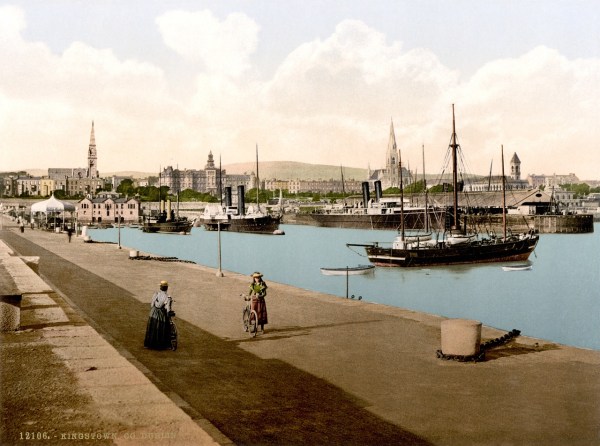
They travelled to Dun Laoghaire,
not Devon, and from their room
in the Carney Arms
they watched snow,
falling like confetti,

become blurred with white sails
and sea spray in the bay.
I trace the signature,
follow the fancy scroll
of his T and V.

From my desk, it has watched
seasons pass by, old friends.
Now and then, I leaf
through the contents
hoping to put names to faces.

Examine expressions,
noses and chins, for family
similarities, then rescan
the back, still longing
for a lightly leaded name.

Cabinet Of Heed footer logo

GAYNOR KANE lives in Belfast, Northern Ireland. Mainly a writer of poetry, she has had work published in the Galway Review, Boyne Berries, Atrium Poetry, Light Journal and other journals in the UK, Ireland and America. In 2016, Gaynor was a finalist in the annual Funeral Services NI poetry competition.

¤¤¤

A Private Inconvenience Among Fifteen Oak Trees – Alva Holland

Fifteen oak trees along, in the middle of a clearing, on a raised painted concrete plinth, a Tardis-like structure sits, its mirrored aluminium walls reflecting the muted autumn girdling greens of the woods. An electronic reader pad flares its infra-red beacon through the soft thicket.

An access card waved over the reader instructs the door to slide left into the mirrored wall. The enclosure claims another user until it ejects them into the greenery, the door closing automatically.

Sterile walls reflect. Water and waste recycle. Wash. Don’t touch.

No steps to descend, no latch to lift or drop, no graffiti to puzzle over.

Fifteen oak trees back, the bunker lies abandoned, brushwood enveloping its concealed secrets. Stories and history languish within – dormant. Faceless memories bleed through porous grout. Age-old graffiti scrawled across the dull ceramic wall tells of unrequited love and Kilroy’s presence.

Gangling weeds eke through hairline cracks in the uneven stone steps. An inky- black hole yawns upward in place of the massive hinged wooden lath door of childhood. The old door’s burnished metal drop-latch used to clang into a square hasp on the stone wall, the noise reverberating through the trees – an announcement of sorts.

Listen.

Railings, once polished and shiny black, are now rusted through and spiked with split metal shards. A cast-iron sign suspended from the vertical bars back in the ‘60s is long gone, the jagged ends of two rusty nails jutting out in its place.

A mangled syringe lies half-buried by a blackened bloody cloth.

Nothing.

Only the permanently traumatised remember this place and what went on here.

A broken corner of a rusty sign peers from strangling roots.

‘Public Conven…’

Fifteen oak trees away, the aluminium enclosure’s access pad glows red.

Cabinet Of Heed footer logo

ALVA HOLLAND is an Irish writer from Dublin. First published by Ireland’s Own Winning Writers Annual 2015. Three times a winner of Ad Hoc Fiction’s weekly flash competition, her stories feature in The People’s Friend, Ellipsis Zine, Train Lit Mag, Firefly Magazine, Stories for Homes, and Microcosms Fiction.
Twitter: @Alva1206

¤¤¤

Image: Markéta Machová


 The Empty Chair – Laura Pearson

Nobody thought he’d be stupid enough to actually jump. It was just a game. A dare. Kennedy came up with it, and we all laughed and jostled each other, encouraging. Only Jones looked a bit worried. But since when did anyone care what Jones thought?

All we ever wanted was for something to happen. So we told him we were all doing it, that we’d done it before, that it felt like flying, like being high. Better than sex. None of us had had sex. Not back then.

In the queue for the ride, our loud voices created a hum of energy. It kept us warm as the wind whipped at our faces. And then we were taking our places on those chairs with their flimsy chains, shouting and twisting ourselves around until the red-faced guy running the ride threatened to throw us off.

‘On three,’ Kennedy called, just before we were lifted off the ground. My breath caught and, for a moment, I felt like I’d left it all behind. Kennedy, Jones, him. The way we pushed and bruised him, made every day a kind of hell.

‘One, two…’ I thought about doing it. We unbuckled our seatbelts, like we’d planned. I looked over at him. I tried to tell him with my eyes. But even then, I didn’t think he’d actually jump. Nobody did.

‘Three!’ I watched him fall through the air, his limbs flung wide. I hoped it was like flying, or being high, or having sex. I hoped he felt wonderful for a moment, before he came down.

Cabinet Of Heed footer logo

LAURA PEARSON lives in Leicestershire, where she blogs and writes novels and flash fiction.

¤¤¤

Image: Free-Photos 

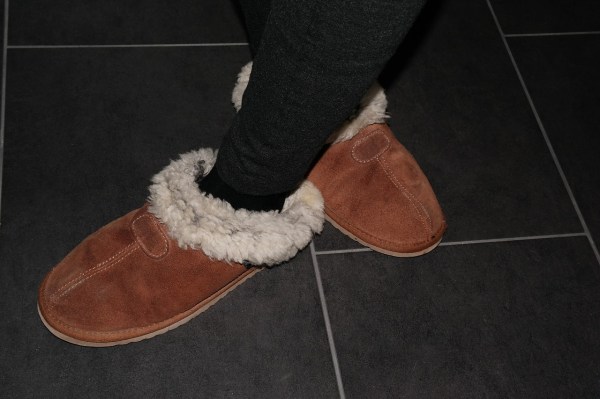
Fur Trimmed Slippers Are No Match For Freshly Polished Cills – C.R. Smith

Everyone remembers a celebrity’s death: Elvis, Lennon, Bowie — in my case Mrs Milford’s. And, even though I was at school when she died, I take full responsibility for her death.

She was a formidable woman, the eyes and ears of the terrace long before Neighbourhood Watch, famous for holding footballs hostage in her back garden. All the local children avoided her, as did many of the parents.

I remember her wrinkly face, the grey curls escaping the confines of her hairnet. For some reason she always wore a red polka-dotted apron. It strained against her rolls of fat when she moved. The image is still ingrained on my memory even after all these years. Guilt won’t let me forget.

It was a school day. I was late. My parents were already on their way to work. As I left the house Mrs Milford called across to me asking if I could climb through her window and let her in — the front door had slammed shut while she cleaned her windows, locking her out.

Mumbling excuses through a mouthful of toast I edged away from her before legging it towards the approaching bus. I couldn’t be late again!

Once seated I looked back to see her scowling after me, knowing full well I would be in trouble when I returned home.

*   *   *

After school police cars blocked our road, plastic tape corralling the curious.

The corner shop was full to bursting. Squeezing inside to flick through the latest comics I realised something was seriously wrong when the owner didn’t issue his usual threat to charge me for reading them.

Customers gossiped in hushed tones about the day’s events. I listened intently trying to piece together what had happened, my blood running cold as it slowly dawned on me I might be to blame.

How was I to know Mrs Milford would try to climb through the window herself?

Those fur trimmed slippers of hers were no match for the freshly polished cills. One slip pitched her forwards shattering the pane, the jagged glass slicing straight through her neck.

Her head must have bounced.

They found it in the garden nestled amongst the footballs. Her back door had been open all the time but being a terrace she would have had to clamber over every garden fence to reach it.

The police were in and out of her house for the rest of the week. After a good hose down our footballs were returned to us. I never had the heart to play again. All I could see were bloody dots everywhere. I can still see them now.

Cabinet Of Heed footer logo

C.R. SMITH is a Fine Art Student whose work has been published in such places as 101 Words, Twisted Sister Lit Mag, Train Flash Fiction, Ellipsis Zine, Spelk Fiction, The Horror Tree, Glove Lit Zine and Ad Hoc Fiction.
https://crsmith2016.wordpress.com Twitter @carolrosalind

¤¤¤

Image: Didgeman

Will You Wait For Me? – Ksenija Perković

In a twinkling of an eye, severe lacerations
furrowed the magnificence of ornament of her ebony
to silence growth, quicken mortification,
write an elegy,
…exalt once born in a furtive agony.

Out of demolition, the ardent glove
arose and seized the skull of creature innocent,
underneath,
to stigmatize its skin with a diabolical mark,
smother the will to struggle
in a vehement resistance until it gave in.

On a topmost step where continuance
derives from nothingness,
hardened to doubt, dissuaded from timidity of sin
…sparkles in the sand, a flickering laughter,
I shall be waiting to …again, become embodied.
Will you …
Will you wait for me?

Cabinet Of Heed footer logo

¤¤¤

Image: Foundry Co

The Unraveling – Gaynor Jones

On the day that Derek’s body parts decided to leave him, it didn’t come as a shock.

His nose had had enough of sniffing and snivelling.

His fingers ached from all that scrolling and typing – reams and reams of vitriol directed at total strangers. They’d hated it.

His ears had never forgiven him for the humiliation of the great lost bud debacle of ‘93, sitting in the emergency room with all the other ears wiggling and sniggering on the heads around them.

His mouth – still hoping for a second kiss – couldn’t abandon him. It stayed put, along with his once kind eyes.

The feet longed to run, to hop, to skip – activities they barely remembered from his childhood. They itched to get off the couch, out through the door, into the great, wide world.

His arms wanted to leave but his hands begged for more time. Even fingerless, they felt they could still help him.

No one really cared about the belly button; tiny puckered thing. So it worked itself loose. Quietly. Methodically. It took a few hours, but eventually it untethered itself from the slack skin around it. Only, when it broke loose – so did all hell.

Blood. Intestines. A take-away engorged stomach. Slithering and splattering out onto the already stained couch.

The belly button blushed as the other parts stood and stared.

The fingers did a slow, sarcastic slap.

‘I didn’t know.’

His words fell on deaf ears. Literally. The ears were already out of the door.

The other parts had no choice now. One by one they abandoned post. Some elated, some wistful. All hopeful that their next host might take just a little more care of them.


Cabinet Of Heed footer logo


GAYNOR JONES is a writer of flash, micro and short stories. She has been published in Ellipsis Zine, The Occulum and MoonPark Review, among others. She tweets at @jonzeywriter

¤¤¤

Image: Prawny

Never Not Wrong – Elise Blackwell

He was always asking what was wrong with her, but she didn’t understand why he asked when he already knew. He just wanted to hear her say it, she figured, though he didn’t really want for her to say the whys but just name the fact of her being wrong and never doing anything goddamn right. Never was the word he used, though even he had to know it was an exaggeration.

She’d heard older women explain that their men hadn’t always been the way they were now. “He was so sweet when we got started,” they’d say, or, ‘It was the disappointments that turned him picky and mean.” But Jeff had been a criticizer from the get-go. “Jeff-i-quette,” his friends explained when he tore someone a new one for letting half a can of beer turn warm in the sun. “It’s goddamn Sunday,” he’d yell. “There’s no more to be bought due to the goddamn blue laws in this goddamn place.” When he’d asked her out for the first time, he’d said, “But don’t wear those white shorts you got, because aren’t doing you any favors.” And: “Your hair looks better up than down, but not when the ponytail is too high.”

The reasons she’d gone on that date anyway, wearing her dark jeans and a low ponytail, didn’t require a psychologist to explain. Most of their town’s men went off to the Marines if not the Army as soon as high school was done, and most of them didn’t come back except to visit their mom and break up with their sweetheart because one or the other of them hadn’t stayed true. But not Jeff, who said he was too smart to let anyone shoot at him in exchange for promises that wouldn’t be kept.

When his Daddy died, he inherited the old man’s boat and got better than ever at making whatever money could be made in a town like theirs, still selling the same weed he’d been selling since middle school but also fishing and doing deliveries and the odd job. For awhile, he did, but after a few years the empty beer cans multiplied enough that she had to call into the county for an extra recycling crate. Soon those cans parked him in his recliner like they did most of the town’s men. At first she didn’t mind, thinking that someone who’d taken himself so low couldn’t spend his time finding fault with others. But when one of the older ladies told her she’d got herself an armchair quarterback, she replied that wasn’t even the half of it.

It wasn’t long after that the man with the accent had come up to her while she was cleaning out the boat that no longer went fishing. He had an accent that she knew to be European but otherwise couldn’t guess. He’d read something on the internet about their town, how it was off the beaten path, how it was more authentic than the known places. Authentic was a word he said a lot.

“I think you’ve been had by someone who’s never set foot here,” she said, “but I can take you out to see some gators.”

She taught the blond man the rhymes she’d learned to tell apart the friendly from the venomous, told him how corals couldn’t strike but had to gnaw you somewhere tender so were really only a danger if they got into your shoe or your garden bucket or your house. She took him down the narrowest slews and named the trees holding the Spanish moss that brushed their hair and shoulders. She maneuvered through a whole civilization of alligators and got one to snap at a stick she held over the bow. Later, after the man went home and wrote about her on his blog and the others came, she would bring a bag of marshmallows and let them hold sticks over the biting water.

When she put down a payment on a boat that could hold more than four people, Jeff told her that he’d never go in to debt to money-changers. When she came back from the parish office with a permit bearing her first and last name, he told her he’d never ask the government permission to make money just the same as he’d never ask the state for a piece of paper saying he could live with his woman, which is something she’d heard him say before. But when she took the branch library’s free classes in web design and small businesses tax law, he just asked her where she’d been. Looking at him in his chair, she remembered when one of her clients asked her why she used marshmallows. She’d told him that all animals are drawn to what is sweet and light, and he’d nodded reverently at what she said like it was precious and like it was true.

She knew that whether her business died to Jeff’s laughter or grew large to his envy, she’d never do what she sometimes imagined, which was to talk him out of the house and onto the boat, glide out to where a hundred hungry eyes broke the surface of the water, and tip the boat just enough that Jeff would fall to them if he couldn’t hold his balance. Even as she told herself it would be fate deciding, she knew it would never happen. So sometimes instead she imagined stepping lightly onto the back of the longest alligator she could find. Using its ridges to find a barefooted balance, she’d hold out her arms and ride all the way to the Gulf, where the water and sky would open like a thing of wonder.

Cabinet Of Heed footer logo

ELISE BLACKWELL is the author of five novels, most recently The Lower Quarter. Her short prose has appeared in the Atlantic, Witness, Brick, and elsewhere. Her work has been named to several best-of-the-year lists, translated into multiple languages, adapted for the stage, and served as inspiration for a Decemberists’ song.

¤¤¤

Image: Photo by Trevor Cole on Unsplash

Animals On A Wire – Chris Milam

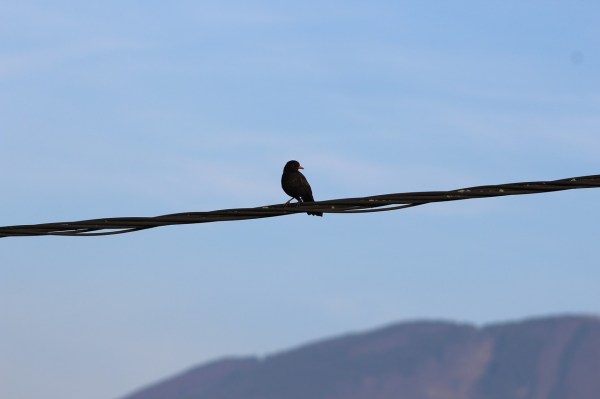
The window was stained with tobacco smoke and fingerprints. Outside, at least 50 blackbirds gathered on a power line. A funeral flock. If they were fried alive, he would pick the carcasses off the ground, take them inside, rip off the feathers, drown them in buffalo sauce, set the table for three, eat them, and wash it all down with a glass of sparkling water. His wife would remind him to keep his elbows off the table while his daughter laughed at his transgression. On the wall, the hands of a plastic clock would move as if coated in heavy syrup. Henry would collect dead animals from coast to coast if he could slip into yesterday and relive the past for a few minutes.

Across the street, he watched a tiny girl kick a soccer ball with her dad. It was sweet, the way he let her score a goal between two trees by just being out of reach from blocking the shot. Almost, but no save. The underdog prevails. Her celebration dance was wild and beautiful. Her smiling father didn’t need to relive anything.

The man decided to wash the dishes. It had been a few days. The sink was a menagerie of one: plate, cup, fork, spoon, pan, plastic bowl, lid. Water hot but not skin graft hot. He was done in three minutes. What now?

He sat on the couch and opened the laptop, took a stroll down social media avenue. Smiles brighter than neon signs. Trips to Disney World and the Great Smoky mountains. Love-dipped Melissa sipping on a fruity drink with perfect posture Stephen. Darlene splashing around in the kiddie pool in the backyard. Walking in the park, recitals, zombie costumes, laughing the way happy people laugh. He moved the cursor to the X in the right corner, pressed the pad. Too much, too fresh, too many triggers.

He pulled up an app and swiped left, swiped left, lit a Camel, swiped left. Refrigerator, bottle cap opener, lifted, tilted, swigged. Swiped left.

Back at the window, he squinted at the sun pouring through the glass. Burn everything I’ve seen, he thought. Or everything others have seen me do. Can you do me that solid? Henry opened his mouth, chewed some sunshine, swallowed, then forced it into his organs and bloodstream. He didn’t feel normal doing this.

The birds were still hanging out. He wanted to join them, spend the afternoon with them, just some animals on a wire getting to know one another, surviving together. But what if he was electrocuted and dropped to the ground like a singed cinder block? Would they grieve for him? Miss him? Share stories about the man he was, or the one he should’ve been? No, his new bird friends would see him as a meal, an opportunity, and peck away at his lifeless body until there was nothing left.

Cabinet Of Heed footer logo

CHRIS MILAM lives in Hamilton, Ohio. His stories have appeared in Lost Balloon, (b)OINK, WhiskeyPaper, Sidereal Magazine, Molotov Cocktail, Jellyfish Review, and elsewhere. You can find him on Twitter @Blukris.

¤¤¤

Image: Edmond Berisha

When She Sings I See – Peadar O’Donoghue

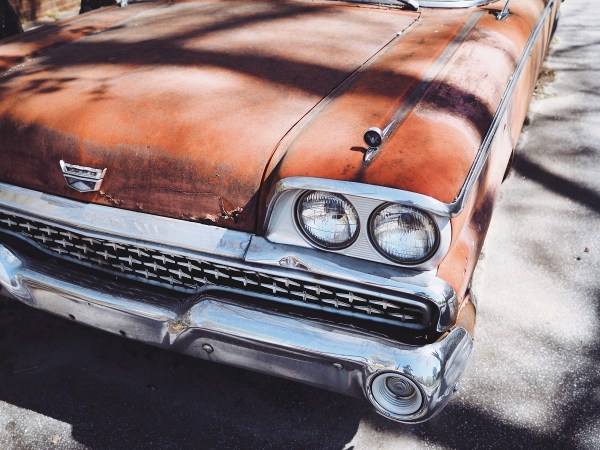
Disused Cadillacs in the dust bowl,
doors open, mileage done,
twin halogen headlights outshone
by two hundred thousand miles
of nowhere and a billion stars,
all dying for another song on the radio,
young arms outstretched on the bench seat,
people always leaving, dreading arriving,
the open road was home,
the open road drummed hope
under white wall tyres,
vast continents lay behind,
and tomorrow was always
another day’s drive away.

Cabinet Of Heed footer logo

PEADAR O’DONOGHUE is an anti-poet, photographer, and co-editor of PB mag.

¤¤¤

Image: Photo by Kevin Clark on Unsplash

The Lovely Brides – Cathy Ulrich

All the girls got married that week. Wore their best dresses to school, carried posies plucked from their parents’ flowerbeds.

Speak now or forever hold your peace, they said.

Jemma Lee from Class B was the first one. She married a jump rope named Bobo. Bobo had red plastic handles and was coming frayed in the middle. Before Jemma Lee from Class B, Bobo didn’t have a name. That’s how everyone knew it was love.

Jemma Lee stood behind the slide with the rest of the girls. Her best dress was navy blue with a Peter Pan collar. That’s what her mother said it was called when she straightened it for Jemma Lee that morning, pinched her cheeks for a natural flush.

You’ll be a lovely bride, said Jemma Lee’s mother.

Behind the slide, Jemma Lee clutched her bridegroom in her hands.

Oh, Bobo, she sighed.

The girl who was playing the minister had a math book instead of a Bible. It was the holiest thing the girls could find.

The square of the hypotenuse is equal to the sum of the squares of the other two sides, she read. Do you take Bobo to be your husband?

I do, said Jemma Lee.

When it was Bobo’s turn to answer, one of its red handles flopped up and down like the head of a snake.

Oh, it’s a yes, cried the girls, clutching their pilfered daisies, tulips, alstroemeria. It’s a yes.

Kiss the bride, the girl holding the math book commanded.

Jemma Lee brought one red handle up to her mouth, puckered her lips, kissed.

The girls threw their bouquets in the air. They shouted: Hurray!

They shouted hurray, hurray till recess was over and Jemma Lee wound Bobo around her waist, sighed at her husband’s embrace.

The other girls all decided to get married too. Stephanie Stieg married the pretty rock she’d been keeping in her desk, that sparkled when the light hit it just right. Erika with a K married her best library book, The Westing Game, left a lipstick print on its cover. Codi Schmieding, who dotted all her is with tiny hearts, married an eraser shaped like sushi. She tucked it into her pocket when the ceremony was over, feeling something like heat against her thigh. Jemma Lee watched them all, Bobo encircling her waist.

By Friday, all the girls were married and the boys held the school doors shut so they couldn’t get back inside after recess, till they had to empty out their pockets, leaving their new husbands on the sidewalk, on the grass. Stephanie Stieg kicked at her pretty rock, a little embarrassed that she had ever even wanted to keep it in her desk in the first place, and the boys let her in first.

The teachers thought they should stop the boys, but they mostly wanted the girls to quit marrying things. They watched from the second-grade classroom window as the girls put their husbands down, one by one.

Only Jemma Lee wouldn’t set Bobo on the ground, pulled him tight on her waist so she could hardly breathe.

He’s my husband, she wheezed. We made a commitment.

Some of the bigger boys let go of the door and started chasing Jemma Lee. She fluttered just out of their reach. Ran and ran from them, till she finally climbed the fence and disappeared.

Oh, said the teachers in the second grade classroom. Oh, oh.

The whole school went looking for Jemma Lee, even the little kindergarteners in their matching smocks, looked and looked and couldn’t find her.

The girls trudged back inside, feeling a bit guilty when they glanced at their husbands, piled haphazardly by the school doors. And when Jemma Lee came back to school the next week, none of them would talk to her, for their shame. Except Codi with her heart-dotted is, bravely whispered: Where’s Bobo?, but Jemma Lee wouldn’t say.

After the girls were all grown, they met once for a beer, leaving their children behind with their husbands. Husbands with beards, husbands with mortgages, husbands with cars that always leaked oil. Second husbands, the girls sometimes thought of them, though they never said.

They clanked their pint glasses together, complimented haircuts and flattering necklines, discreetly checked for crow’s feet.

Remember? they said. Remember when we all got married?

How young we all were then!

And they all turned to Jemma Lee in the corner, quietly sipping her water through a straw, Jemma Lee who had never married again, Jemma Lee with rope burn on her palms. Turned to her and waited, waited.

Yes, said Jemma Lee, twisting her red straw in her fingers. Yes, we were very young.

Cabinet Of Heed footer logo

¤¤¤

Image: Bruno Glätsch

Create a website or blog at WordPress.com

Up ↑