Lettuce – Lauren Miller

We had forgotten to close the curtains so our bodies looked sickly in the burst of orange streetlight, the duvet domed like sorbet. It felt like only a moment had passed between falling asleep, and you pacing the room like a caged animal, yelling “Don’t move! Don’t move, you hear!”

I followed your orders.

“You just-,” you said, “lifted.”

“What?”

“You lifted. Like- levitated.”

I thought of lettuce. “Let’s just sleep.”

“I don’t think so.”

“You goin’t’ stay there?” I pressed my face into the pillow on your side. (It wasn’t your pillow, because we were at my house.) I figured you’d had a nightmare but I didn’t feel comfortable comforting you. We’d only slept together three times.

By the time you came back, the sky was mauve. I stroked the side of you and you shuddered. You did it again when I asked: “What was up with you?”

“I’m not joking. You levitated.”

This time I didn’t think you said lettuce- I thought you were mad.

The following day crashed over me like breakwater, but I stayed unmoved. I checked my phone then my work emails replied to the emails then checked my phone.

I had told you I worked in a travel agent but nothing else. I hoped you thought I was adventurous, ambitious. I didn’t tell you my recent clients were a group of eighty-year-olds booking a coach trip to Llandudno. I didn’t tell you the agency’s slogan was Twilight Travellers: It’s never too late!

Since we’d started dating I’d let a few things slip; I hadn’t updated the booking spreadsheet in weeks, I hadn’t been pushing extra excursions, bee-keeping, pot-holing, wing-walking, learning the art of nose-to-tail cooking.

Just after lunch, I received an electronic meeting invitation from my boss. I was stressing about it when you called and asked if I was busy after work and I said No. At 6 pm we would meet in a pub around the corner. By 5.30 pm I had signed out of my computer and was doing my make-up behind my monitor.

That night you wedged your hands under my back and bum like you were trying to lift me. Your signet ring dug into my tailbone. After you held me tight, your heart beating faster than mine. You snored, your belly made noises.

Then,

“Get off me, get the fuck away!”

I was on the edge of the bed, legs hanging over the side.

“I felt you, I fucking felt you.”

“I didn’t- I don’t know-”

“You were up there!” you said pointing to an invisible platform above the bed, “and then you were-”

“Look!” I said, pissed off because I was tired and the sex was good and why were you ruining things? “What is going on here?”

You didn’t seem to know how to answer. I wondered if I should hug you.

“You did this, not me.”

I laughed dryly, scratched my face.

“You a witch?”

“Fuck off!” I said and threw my pillow. You caught it, chucked it back. I laughed, you didn’t.

I lay back down, pulled the duvet over my head. “It’s late. Come on, you Mormon!”

“What?”

“Moron!”

“You said-”

“Whatever.”

When I came back from the shower you’d gone. A note on the pillow. Got a call and had to run. Speak soon x

I boiled the kettle in the office kitchen and I thought about who could have called you; your friend who worked in an internet cafe, the one who dated a private investigator. I hadn’t met any of your friends.

Callum swung around the doorway drinking from a plastic water bottle that had a lump of charcoal bobbing around inside. “Alright?” I nodded and cut up some lemon. “Heard Chrissy wants to see you.”

“We’re having a meeting, yes.”

“She’s off sick today. You’re in luck.”

I rubbed the base of my spine.

“Do something to your back?”

“No.”

“Sleep funny?”

“No!” I dropped lemon into the cup and watched the skin shrivel.

That night I didn’t turn the lights on, just crawled straight into bed. I prayed my sleep would be interrupted by you, but you never called. I can’t remember falling asleep but I must have, and it must have been fitful because I woke up on the floor with my arm twisted behind me. Pain ripped the threads of my shoulder. With gritted teeth, I brought myself to my knees, kept still my arm and called you with the other.

I was early but you were earlier. You looked at your feet when you saw my arm in the sling, held doors open. We were seated by the window, candlelight flickering in the glass. I wanted to tell you I thought you needed professional help, with your sleeping and what you imagined. I guessed you’d had a traumatic childhood experience.

“I’ve messed you around,” you said.

“I deserved better.”

“I know. You just scared me.” I hoped you meant I had been too keen, you’d sensed my neediness and become afraid, could tell I’d imagined our wedding, our children, our deaths. “I’ve just never seen someone fly before.”

I took a long sip of my wine.

“Have you ever researched it? Had a proper look at your- ancestry?”

“Are you fucking serious?”

“Yes.”

Your eyes seemed softer somehow. You’d been nice when you’d rescued me off the floor, taken me to a&e. But honestly, I couldn’t believe what you were saying. I tried to catch the waitress who was leaning over the counter scribbling on her pad. I raised an arm, forgot it was the bad one.

“Shit, you okay?”

“I’m fine,” I hissed.

The candle licked the space between us. Shadows moved across your concerned face, eyebrows knotted together, looking back at me, the broken woman sat opposite. Or were you looking beyond me, at the waitress who had just placed two menus under her arm and was floating across the floor towards us?
 

The Cabinet Of Heed Issue 28 Contents Link

Image via Pixabay

The Girl Made of Paper – Carla Halpin

She is there one minute and gone the next; it’s startling at first but you get used to it. Truth is she’s not really gone anywhere else, it’s just your perspective that changed, and if you lean slightly forward or step back, she appears again.

I heard her before I first saw her, a quiet sobbing coming from the back of the library. “Hello?” I called, looking around for somebody else to make it their problem. “Hello?” There was no reply, but the crying stopped. I found her with both hands outstretched, fingertips caressing the book spines, and when she saw me, she turned sideways and disappeared. “Where did you go?” I said softly, for she wasn’t the first paper girl I’d known. When I explained this to the space where she’d stood, she turned back, and her face reappeared, crinkled due to tears.

I guessed she was 14 years old, the same age my sister Sarah was when we lost her. We had been camping on Dartmoor, which had been her birthday wish. The wind picks up so fast there and we reacted too slow. In my dreams I still see her outstretched hand flying away. It makes me so angry that someone so beautiful was made so delicate. When I met the girl in the library, I knew immediately what I had to do, and I knew that mum would love her.

The Girl Made of Paper lives in the space we created for her. Sometimes she cries and I want to comfort her, to tell her she’s strong but the lightest touch could tear her fragile skin. Instead, I lean against the glass until rage wears her out and she folds into sleep.


Carla Halpin is an editor who lives in the New Forest where she writes poetry and flash fiction. Her work has appeared in Anti-Heroin Chic and A Story in 100 Words. You can find her on twitter @CarlaHalpin where she posts regularly as part of the very short story community.

The Cabinet Of Heed Issue 28 Contents Link

Image via Pixabay

The Red Kimono – Tracy Gaughan

And don’t forget the cat! She was shouting from the front door.

I won’t! He was mumbling to himself.

You always forget the cat!

And she was gone.

He’d been forgetting a lot of things recently. Numbers were disappearing. Keys, birthdays, the names of capital cities, all evaporating from his mind leaving him blank as an unaddressed envelope. A year now, since they let him go. Since he’d picked his clean-shaven jaw off the boardroom floor and started systematizing cupboards and watering rhododendrons for a living. If his wife would only watch where she was going, he wouldn’t have to worry about being under her feet. Angelica, was a prudent woman, conservative in her square heels and suits and though he loved her profoundly – those twinkling green eyes, that vivacious laugh – she had, over the years, become about as compassionate as a crab and looked at Harry’s depression as if looking through frosted glass; trying to discern some recognizable shape or movement but failing frustratingly, to understand him. He got it though. He didn’t understand himself either. Harry had had friends and invitations, but unlike the swallows, they stopped coming. He got that too. He got it all; but wanted none of it. He was benumbed and he always forgot the cat.

Today he would drive over early. His daughter, a sharp-featured always-on-call veterinarian, lived in a small duplex across town. Her cat, ‘scrubs’, was epileptic and needed a daily dose of Phenobarbital to control the seizures. Entering the flat, Harry called out a couple of times but there was no sign of scrubs. He noticed the bedroom door slightly ajar and stepped inside. He realized he hadn’t been in his daughter’s bedroom since she was fourteen years old. It was pink then and well-ordered. Here, he felt like a storm-chaser happening upon a small town devastated by a violent multi-state tornado. Clothes, towels, shoes, personal hygiene products were strewn about the room in the aftermath. In the middle of it, lying on a red kimono on the floor of the en-suite bathroom: scrubs, confused and overcome, waiting for a benzo to bring her back to life. Harry picked her up, brushing his hand against the smooth silk kimono and liking how it felt. He opened the container on the bedside locker and shook out a few pills. He put one as far back into the cat’s mouth as he could. Sitting on the edge of the bed he petted the tabby until she was able to stand up on her own. Harry went back to the bathroom. He picked up the kimono. It was delicate, soft and silky and seemed to sing as he rubbed it between his fingers. He held it to his cheek without thinking and stroked his face gently with it. His skin tingled. He felt different.

Is that you, scrubs? He heard the flap shut. He closed the bathroom door and began slowly unbuttoning his shirt. He left it on the side of the bath and put his arms into the kimono’s wide sleeves. It felt lustrous, momentarily cool, like someone blowing an even breath across his shoulders and down his spine. He wrapped himself up in it like a cocoon, imagining what silkworms feel like, feeding on mulberry leaves and spinning their silky nests, the finest threads in China. If angels exist, he thought, they are surely made of silk. He admired the elaborate cherry blossom pattern in the mirror, its deep red background, the fabric draping gracefully over his body. He watched himself. Really observed himself and for the first time in fifty-four years Harry recognized what he saw.
Looking in the mirror had always been so painful. It seemed to smear his sense of self, forcing a disassociation from his reflection, like he was being forced to see someone else. When shaving, putting in his contacts, brushing his teeth he’d mastered the art of blurring, of unfocussing his eyes somehow. But here, confronting the mirror in his daughter’s bathroom, wrapped in the radiant warp and weft of a bright and finely woven silk kimono, he could at long last look at himself without feeling ugly. In fact, he felt sexy, powerful. Not sexual but more excited, like he was a child again and he was being brought to see the circus, with all its marvel and mystery and anticipation.

There was a Dior lipstick on the shelf beneath the mirror urging him to pick it up. He leaned in and slightly suggesting a kiss, puckered his lips. He painted his cupids bow exactly as his wife did it. He used to enjoy watching her and she knew the effect it had on him. Harry kept going, covering up his beard shadow with some translucent powder. He blushed his cheeks and found some dried out eyeshadow at the bottom of his daughter’s make-up bag. He dropped the tube of mascara and reaching to retrieve it, thumped his head on the rim of the sink falling unconscious to the floor. He was still lying there when his daughter came home later that evening.


The Cabinet Of Heed Issue 28 Contents Link

Image via Pixabay

Memory’s Con – Kyla Houbolt

Now while the short memory of summer
lies and steals, pretending
some kind of sweetness, erasing the truth,
I cannot recall the last time I saw
a starflower nor the details
of slow dusk. Here in the long
husk of winter, more lies, the fire
pretends to burn cheery
in the false gas grate, frigid window
slips frost glitter over tedium of iced walks’
cautious steps to the car, the tedium
of overheated cars–oh some things
I recall too well for too long:
those hot words we shot
in the face of bulletproof times,
snarling with anguish.
We forgot about music then
and these days I want everything:
the sweet enclosing cacophony of city streets
the smooth breeze of a clean meadow,
and the sea, harsh salt and cold surf.
To stand on a mountain
its long boulder body singing
up through my feet. Oh Earth,
carry me close, there is
no heaven here.


Kyla Houbolt writes even though she is old enough to know better. You can find all her currently published work on her Link Tree, here: @luaz_poet | Linktree She is on Twitter @luaz_poet.

The Cabinet Of Heed Issue 28 Contents Link

Image via Pixabay

Leda’s Dream – Sarah A. Etlinger

I dreamed he had wings:
big, white, full wings
that he kept tucked
small, like a feathered backpack.

When he lay down
to me I slowly caressed
each weary feather
with my fingers,
my soft lips and hallow
kiss. Each sinew, spent
from flying and sore
saw breath
I didn’t know I had
and then he was inside me
and we flew
on arcs of whispers
that hold the night together.

When I awoke
he was there
with deflated wings
like broken kite ribs,
and torn, folded feathers.

As I stroked one
with my fingertip,
he turned to me
and with a blink
of sleep-drenched eyes,
he disappeared.


Sarah A. Etlinger is an English professor who is a Pushcart and Best of the Net nominee and the author of 2 chapbooks (Never One for Promises) and the forthcoming Little Human Things. Interests include cooking, baking, and learning to play the piano. Find her work and follow her: http://www.sarahetlinger.com.

Image via Pixabay


Cabinet Of Heed footer logo

Pit Brow Lass – Christine Collinson

Beneath my shawl, my hair’s tidy and clean. Dark too, but not as pitch as the coal dust embedded under my nails. My lips are pressed closed, but I can still taste ash.

When he came home after a shift, he’d circle me with his arms and kiss my forehead, leaving a sooty smudge like a priest’s mark. It made me smile as I washed; I always needed to soap that patch over again.

My face is dirtier now. Me and the girls use clear jelly on our lashes to ease the rinsing, but even after a bath it’s still in the corners of our eyes. Little globs of inkiness. I wonder, if they tipped us up and shook us, would ebony particles descend unceasingly, settling like a smoke stain.

I’d worried about him being down the pit. All the colliers’ wives knew how men had been taken before. The dark belly of the earth was an unknown world where we wouldn’t feel the sun on our faces. ‘Don’t thee fret, lass,’ he’d say, ‘I’m not going off to war.’

Annie’s making us laugh again. Chatting’s not permitted, but you can get away with joking a little. She’s even chancing her luck by softly singing; strumming along on her shovel like it’s a banjo. But we’re all back to it before the last note; sifting with our bare hands through the coal-laden belt, deftly extracting dirt like flotsam in a black sea.

As I remove my shawl at day’s end, my glance falls upon his cap on the peg, still just where it’s been since then. My soot-stained fingers caress the coarse cloth. It’s something I won’t come to clean, in case the scent of him is forever washed away.


Christine Collinson writes historical short fiction. She’s been longlisted in the Bath Flash Fiction Award and by Reflex Flash Fiction.
Her work has also appeared in FlashBack Fiction and Ellipsis Zine. She Tweets @collinson26.

Image via Pixabay

our next nominee should remember- Michael Chang

ne-VAD-da
always moisturize
hand sanitizer is your friend
and clorox, for when you get to the oval office
check what city you’re in
never wrestle with pigs. you both get dirty and the pig likes it.
look out for numero uno
avoid kitchens
lose the friends from back home
fail often
the opposite of armor is curiosity
if you do the team of rivals thing, go all in
leave the gun, take the cannoli
if you do not ask, you will not receive
squeaky wheel gets the grease
two women on the ticket is a good thing
whatever you do in life, do it well
no one else can create the art you can
if someone says “would you rather i lie,” say yes
stop living other people’s dreams
don’t go to law school
play your opponent’s cards instead of your own
you come into this world alone and leave it the same way
time heals all
trust but verify
some things stick
when someone shows you who they are, believe them the first time
the real applicants never fill out an application
kill your darlings
i really don’t care, do u?


MICHAEL CHANG once played the role of spoiler in an election for Student Body President. He believes that retweets do equal endorsements. Based in the NYC metro area, he is multilingual and holds a black belt in Taekwondo.

Image via Pixabay

Loneliness – Eduard Schmidt-Zorner

taiga loneliness
nature pulls silence-blanket
over burdened hearts,
throws a net to catch star fish;
small moon casts eerie shadows

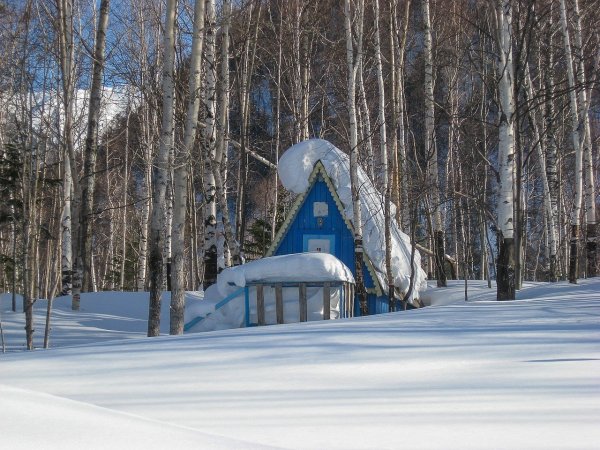
Early winter. I arrive in a region of the Taiga, which has the amenity of a great silence, where I can make my way with empty hands and without money, detached from material life, like the shaman, (or is he a monk?), who left his log cabin to me while he visits his mother near Arkhangelsk. Here is the loneliness, a seclusion which is desirable; where one feels in touch with primeval times. Not this loneliness caused by isolation among people surrounded by the background noise of a city.

He left me dried reindeer meat, cheese, a loaf of bread, dried mushrooms and tobacco.

New snow covers the tracks of the sleigh which disappeared in the distance, into the Russian vastness. This sealed my entry into loneliness, made it irreversible.

In this loneliness my thoughts and feelings sort themselves like the falling of loose sheets which miraculously settle edge to edge. It helps to gather me. I listen into a void, freed from the grinding din of civilization. I perceive now the melancholic tone of the ice wind resounding at the bottom of my heart where it dissolves, thaws.

An emptiness of sounds of a vast forest, reaching beyond the horizon, with millions of trees and thousands of miles. One can hear the silence, touch it, comprehend it.

Loneliness sharpens the senses and I see traces of wolves and foxes. They emit no sound, pass by, do not take any notice of me and are sucked in by the darkness of the forest. The fluttering of warblers and finches which pick the seeds from pine cones is the only agitation in a quiescent ambience.

Occasionally movements can be perceived when snow falls off the heavy loaded spruce branches and the branches spring back. The trees whisper to me. Late sun threads weave light into the night fall.

A few logs burn in the oven and the embers cast flickering light on the ceiling.

The room is filled with the scent of fir wood and resin, the smell of mushroom soup and fried chanterelles.

The saints on the icons on the walls look at me with a mild, reassuring smile.

I step outside the cabin and over me stretches the vast open firmament. Blue moon night. Volatile-transient.

Looking at the sky, I enjoy my forlornness, the freedom of seclusion, non-attachment and needlessness.

Suddenly a green curtain falls from the Northern sky and waves as if in front of an open window. Over the black, star covered sky, finger the green-violet streaks of aurora borealis.

I hear sounds —they appear to be generated in the air above the ground.

A weird surging hiss from this magnetic storm. Aurora whispers and there are clap sounds, crackles or muffled bangs, which last for only a short period of time. These sounds are soft and can only be discerned in the utter silence of loneliness. The voice of the aurora.

The polar light vanishes. Darkness takes over and I hear a distant signal of a train,

the lonely humming of a plane comes near and moves away again.

I go back into the cabin to comb through my thoughts to collect those combed words and line them up for a poem. Tobacco clouds hover over the writing paper, mysterious, like incense in front of an iconostasis:

Green curtain of the polar light
falls on boreal forests
so wide
the taiga, so infinitely far the horizon,
unattainable distance,
where a full moon is fixed on
a snow powdered canvas.

Sound absorbing forest soil
recalls feeling of feet on a carpet.
Quietly rustling heaps of leaves,
waft like turning newspaper sheets,
loaded with word heaps,
here useless, timeless distance.

Under aurora borealis,
the solstices as calendar,
a deserted landscape,
where thoughts emit melodies,
because they strike forest strings.

Memories no longer hurt,
because they dilute
in the vast expanse,
dissolve in nothingness.

Remembrance of a tender touch
is so far removed,
because it fell


Eduard Schmidt-Zorner is a translator and writer of poetry, haibun, haiku and short stories. He writes haibun, tanka, haiku and poetry in four languages: English, French, Spanish and German and holds workshops on Japanese and Chinese style poetry and prose. Member of four writer groups in Ireland and lives in County Kerry, Ireland, for more than 25 years and is a proud Irish citizen, born in Germany. Published in 69 anthologies, literary journals and broadsheets in UK, Ireland, Canada and USA. Writes also under his pen name: Eadbhard McGowan

Image via Pixabay

Perinthus, Uncovered – Lindz McLeod and Zebib K. A.

The Battle

Two children, born to two nervous mothers. Bells clamour for attention, alert to every change of breeze; dire warnings of terrible fates announced with tones of dread and certainty.

One grew to believe, to see frightened rainbows hiding in the expected unknown; I am afraid she was right, one said, who can I trust?

One grew to disbelieve; she was wrong, one said. The world is beautiful. I am the danger.

Two warriors meet on the battle field. They exist in the glass globe of an ancient myth. We transmute through the glass, inside this world like clouds swirling in their orb, or into the mind of a hawk in their sky, or simply spat out like pale bone through the ancient atmosphere, settled into the dust of this scene. In this place, we can hear a wooden flute over the sound of the desert wind, the din of the distant city, the swarms of two armies, comrades-in-arms awaiting a charge. The two warriors, the two leaders, stand ahead of these armies, their ranks fanning out across the landscape. Hooves pounding dust, spears slowly rising through invisible molasses as many hands carefully point them ahead. The respective town blacksmiths shaped their iron and their brass, alchemical armor, and all these hand-crafted metals glint with fresh pride in the sun. The leaders gaze at each other from astride their horses. Seeing now, finally, into the eyes of the enemy, the stranger from another land come to invade. A figure floodlit by sun through a mirage. One warrior sees another warrior with piercing eyes, strong arms, grasping a horse’s reins with strength. One sees the moisture in moss-like eyes, the other sees a depth of dark brown iris. They stand before each other as long as they dare, then lead a charge to combat.


The Siege

Two teenagers, an ocean apart. Stamped and minted with ancient song; bagpiped wails and kebero heartbeats forging a crystallised crust. Hardness growing where softness should be protected. A wilder alibi guarding a locked castle door, where something blooms inside a bell jar.

They have fought well and hard, fought with an intimacy that neither one of them have known before. The aim is not to maim or kill, but to get close and struggle. As the armies tangle, the warriors strike and miss and collide. They dive, plunge, brawl with passion throughout the night, until daybreak. The sun rises around them as they come to a standstill; bloodied, tired, some near dead. Neither army has progressed an inch. Neither leader is willing to go. The warrior with the dark brown irises has to retreat back into their walls— their soldiers rain blood on their home soil, are too weary for sleep. The moss-eyed warrior steps back, and back, until their army spreads out on the top of a hill, overlooking the city they have come to destroy. This is a siege. They have food and water aplenty, the city and the invaders and each army leader are ready for a stand-off. Each ready, at first to fight, and now to wait, for something has paused the furious tumult forward.

The first warrior, pacing inside their city walls, stuck on those moss-green eyes, hopes the siege will never end. The warrior needs a dove, the one rumored to deliver secret messages to whoever your heart calls for. A dove bargained from the town sage, after some negotiating and a few gold coins. The sage waves leathery hands, billowy black robes, and promises one message. This dove will fly across in the dead of night, without flapping, without making a sound, to the other warrior, to deliver one scrawled note on parchment.


Laying In Wait

Two hearts; one opens nocturnal leaves for every second shiver, blooming solitude in the dark. A martian flytrap, accessed via the moon. One closes petals tighter every year, spindles waxed on her own curse. One angles her cheekbone to catch a hollow soul where it alights with feathered feet. The earth and blood tempo drums them forth to the watering hole, at separate times, farcical coincidence. An exhausted lioness, on the trail, picks up the scent of a floral gazelle. Loneliness is throat-sweet, the scene apparent to carcass-observers.

The other warrior receives the note, wakes up to the parchment sticking out from underneath their cot, under their blanket, in their tent.

“Across this field, my eyes have never left yours. Meet me tomorrow morning in the hills outside of town, after the salted lake. beyond the green frog with the red eyes. Near the rock, under the tree. Before the gods.”

The moss-eyed warrior does not question how this note arrived, or who sent it. The morning rises as the warrior steps quickly through the ranks of tents and poles and crates and horses, to the corner of the camp. Squints in the pinks and yellows of dawn.


The Triumph

The clock strikes thirty. Undress yourself, take off the skin that bound your thoughts together. Dig deeper still; hear the cosmic tick in the bones of your ankles. Unlatch your joints, fold them for the shelves. Unwind capillaries you held as hostages for so long. Scrabble with what’s left of your hands. Locate the place where the conscious weight exists, the sentient driver behind the eyes. It’s time to grow past the old ways. Post it, still-beating, to your lover (first class, tracked signature) who engraves a plaque with time and date, awaiting the delivery. A phalanx of our own flanks, the lover easing inside. Slick with confessions of ardour.

The warrior thought of a plan on the spot. All the supplies were burned in the middle of the next night. The army rose in a panic, aghast, their long-held mission derailed, furious, determined to fight until the bitter end. The warrior sighed, feigned a heavy heart, and insisted the army head back home, across the mountains. No long battle, no revenge, no good long fight, as they all had hoped for. In this way, the warrior is rid of their own army. The warrior loves them all, has grown up on this life of battle, but times have changed, their heart now transmuted. The thought of one more day of this ritual of struggle sang out like a curse now, not the gods’ blessing of honor.

The warrior was not born from sea-going stock, nautai, but if they had been they guessed this moment would be like sailing across those long seas and suddenly seeing land. Not as the strong-armed rowing oarsmen on triremes, ready for descent and attack, but as a salty sailor, who had forgotten the land, forgotten the sight of thin green, glowing coast.

The same path back home would not do.


The Return Home

Shall age and experience make the same mistakes? Shall we forge a middle way, a way of moderation? Homeschool our children with homemade puppets; here is how to fear and not fear, how to trust and not trust.

Shall we set them free to search for their own treasure, sack their own cities, raze their homes to the ground?

Watch them from the shadows of the pyres? Atone and sing their wedding vows?

The two warriors met in the dust of midday, that secret spot, a large rock under the shadow of a desert willow, outside the city, halfway between the cheers, bells, and tambourines of the townspeople, and the burnt-out camp. They fell to the ground once their eyes met. What happens when two warriors attempt to tangle in armor? What starts and stops, what clanking, what rusty squeaks and grunts and sighs. What of the places inside where breathe hitches and snags? Pieces of armor fall and unfurl like petals. Halfway between the old town and the temple of the gods, near the rock under a tree, beyond the frog and the salty water, the warriors meet and kneel before each other. All had shifted. The light of this dawn contained the strangest, newest, most brilliant colors, to shine on both their sinewed bodies. Hearts uncovered.


Lindz McLeod is a Scottish poet and writer living in Edinburgh. Zebib K. A. is an Eritrean-American psychiatrist and writer living in New York. They are a queer, interracial couple, who enjoy combining their writing talents from time to time.
Lindz can be found on Twitter @lindzmcleod, and at https://lindzmcleod.co.uk/.
Zebib can be found her on her instagram @pegasusunder, and at https://medium.com/@pegasusunder.

Image via Pixabay

In The Footsteps Of Gods – Hannah Storm

Say we’d met on those steps a decade ago, on the stones worn thin by centuries of other lovers who measured their stories against the myths carved into the marble of the Acropolis, who ignored the warnings of hubris that had made legends of the men and women who tried to defy their fate. Say we’d met on the streets of your rain-slicked city, beneath the statue of Greyfriars Bobby, and you’d taken my hand and told me the tale of the dutiful dog who died guarding the grave of the man he loved, as you showed me the city that schooled you. Say we’d walked the canals, passed the painted houses with their tulips cascading from the windows with the promise of perpetual spring, and we’d smiled at the students getting legally high, knowing that no drug could ever make them feel the way we did. Say we’d met here in this city that never sleeps and we’d chosen to walk the streets all night, rather than it choosing it for us, because it was the only way we could be together. Say we had met at another time, in another place. Would you still come and lie flowers on my grave, your grey coat pulled high to hide your face from the wind or those wondering who you were and what you were doing here?


Image via Pixabay
My Smile – Melissa Bird

My smile
I’d love to smile
Like when I was
Young and beautiful
When I was
Free and bold

Before the truth
Was innocent
Before the lies
Surfaced

Haven’t smiled
Without
Hesitation
Reservations

Soft lights
Hypnotic music
Swaying freely
Smiling sweetly
Whole hearted

To smile with joy
In my arms
My new boy

Full of fear
Nightmare
Self doubt
Begins
Will I be like her

Do I have the rage
Do I have
Deep inside
That coldness
It’s beginning to
Fill me

A sleeping demon
Must not
Can’t wake it
Protect him
A beautiful light
Life force

Not mine
To keep
He belongs
To someone
Special

Image via Pixabay
A Dream of Ovens – Paul Negri

For almost two decades, I have refused to talk about the incident with anyone unless compelled to do so and the number of people who could so compel me were very few. The police, of course. My analyst (yes, I must tell her everything). And now you. Well, you may say you are not compelling me, but who could ignore an abandoned daughter’s pain, particularly one whose long search for her birth mother has led to such grief? What I fear is that I will do nothing to assuage your grief, Miss Arden; I may simply bring it to full bloom. The truth will set you free, you say? Jesus told that to the Jews, didn’t he? It has always struck me odd how similar the phrase is to another piece of advice given the Jews: arbeit macht frei. You don’t understand German? Your mother spoke German perfectly. Something I was not aware of until… Are you sure you want me to continue? Very well. That German phrase means ‘work sets you free’ and Jesus, as a Jew, would surely have seen it had he been born in the right place at the wrong time, Miss Arden.

Yes, I will call you Ann, if you like; please call me Dr. Weiss. It will help me preserve my professional distance. That distance, always necessary to me in my psychiatric practice, has become absolutely vital to the preservation of my sanity since the incident almost twenty years ago, though, of course, I practice no more.

Mrs. Smith—I shall refer to her so, as I never once called her by her given name—was eighty when she came to me and despite her distress was plainly a formidable and robust woman. She was referred to me by her pastor, an old acquaintance of mine from our days at Princeton. He told me she had turned to him for help, but refused to confide in him the nature of her problem, except that it concerned her dreams. She seemed to believe he could somehow pray the problem away. It was plain to him that she was very afraid and in desperate need. Given that my work in dream therapy was considered authoritative in the field, he was eager to place her in my once capable hands. My gloves? Sorry, I know they must be distracting, but far less so than their absence would be, I assure you. Shall we continue?

In all I had just six sessions with your mother over a period of a month. The first four were fairly typical of a resistant client, that is, one who struggles to conceal what she so desperately needs to reveal. She talked about dreams and asked me general questions, to which I gave general answers, never pressing her about her dreams, as that would have only increased her resistance. There were many silences in those first sessions, but I knew they were productive ones, like a cough that brings up what needs to be expelled. Then tears, begrudged on her part, as if they were wrenched out of her reddened eyes. And finally, in the fourth session, a breakthrough in the form of a breakdown. She was at her wit’s end, a place to which I had patiently steered her. It is at that excruciating destination that the unvarnished truth can bursts through the most strongly constructed defenses. Or so I believed at the time.

Mrs. Smith informed me that for the last several months she had been sleeping less and less, not because she could not sleep, but because she would not permit it. She proclaimed her self-imposed insomnia an act of the will, one that was necessary for her very survival. She would not allow sleep to drag her back repeatedly to a nightmare which she had, she thought, long ago escaped and entombed so deeply in the past that it could never rise up again to torment her. Sensing the moment was right, I asked her what she dreamed. She rolled up the sleeve of her blouse and on her left wrist in ashen blue was tattooed A16642. She whispered the name Auschwitz. She stood up abruptly and fled, even though we had used less than half the time for that session.

In contrast to her former sessions, the fifth was marked by her extreme, nearly panicked recounting of her dreams, varying in details, but always with the same impending conclusion. She was in the camp trying to hide, wandering among the other inmates, who rather than helping her, seemed intent on her betrayal. Whenever she felt she had found a secure hiding place, she would be found, and the angry inmates—men, women, and even children—would seize her and carry her aloft, passing her from one set of grasping hands to the next, all the way to the crematorium, where they delivered her to the black maw of the oven. And this, she declared bitterly, without the benefit of gassing. She had always, through a supreme act of the will, awakened herself at the last possible moment before the conflagration could commence. But her will, she said, was weakening and she was terrified of the consequences.

Shall I stop, Ann? If not for your sake for my own. Since the incident I too have recurring dreams, not frequent, but insistent. I fear you shall have dreams of your own if I continue. Very well then. You will live with your choice, as must we all.

This was not the first such case I’d encountered in my practice. I had treated others who were convinced their dreams would prove fatal, which, I persuaded them, was not possible. Dreams, no matter how distressing, are the safest places in our lives. Even if we do die in our dreams, we always wake to live on. I proposed to Mrs. Smith that I treat her with one of my tried and true methods. I would induce a state of sleep in her by hypnosis, a sleep over which I would have absolute control, and accompany her within her dream state. Together we would confront the phantoms that tormented her and lead her to the oven’s door, where, with my help, she would slam it shut and having thus exerted her control over the situation, nullify its power over her. She was extremely hesitant to allow such a procedure, but using my considerable powers of persuasion, and my assurance that it would very likely end her torments, she consented.

On the appointed day—it was our sixth session—she arrived burning with dread and hope to my office. I had her lie on the couch, which was more or less a prop I rarely used, and after some difficulty, induced her into a state of hypnotic sleep. I sat in a chair by the couch and informed her that she was back in Auschwitz but that I was standing at her side. She immediately displayed the most terrified look I have ever seen on anyone and I found myself uncharacteristically shaken. I reassured her that she had no reason to fear, that she controlled everything that could possibly happen, and that I was there to protect her. I could see her straining to wake herself, but I commanded that she remain asleep and work her will within the dream, that indeed she was master of the situation. Instead of lessening, her fear crescendoed. Her face was contorted by the most hideous grimaces, her eyes opened, and she stared into mine filling me with a dread I had never known before. She spewed a venom of words in German, so hysterical and full of invective that I could barely understand them. She sprang up on the couch and was immediately pulled back down as if by invisible grasping hands. I commanded her to wake up—but she did not. I commanded again. I seized her hands and felt as if my very soul was yanked from my body.

I found myself standing in a terrible room of brick and mortar, dark and smoky, stench-filled and suffocating, amid a howling mob of skeletal forms, animate corpses. And there beside me was Mrs. Smith, but not in the rags of an inmate, no, in the green-gray uniform of a guard, flailing at the encroaching mob with a bloody black baton. I stood and watched in horror as they pushed her forward toward the gapping oven door, lifted her as she screamed, and forced her headfirst into its black sooty heart. They slammed the door shut and its thunderous clank woke me, delivering me back to my office, where I sat dazed and sweat-drenched in my chair. I stood and looked down at Mrs. Smith. Her eyes were grotesquely wide opened, her mouth frozen in a soundless scream. I felt a rush of heat. She burst into flames, yes, actual searing flames, the flames soaring upward, roiling over her in waves and leaping to the ceiling, until only her outstretched hands were visible. I grabbed those hands and tried to pull her out of the inferno, pulled and pulled, until the hands came away with me, my flesh melded into them, my dripping hands charred to the bone. I mercifully lost consciousness, gladly falling into an abyss of death-like calm and release…

When I came to I was sitting in the chair. There was no sign of fire or damage of any sort, but the air was thick with the smell of burnt flesh. On the couch was the charred corpse of something which had once been a woman, blackened and twisted in a fantastic shape, with dreadful open eyes. I could not take my eyes off them, my vision growing more and more dim, until finally I had no vision at all.

I was a suspect, of course, but a thorough investigation revealed nothing to incriminate me. The coroner found that her body had been consumed by a conflagration from within, a spark inside her that had raced outward like a fiery tide. A case, he said, of spontaneous combustion, if ever there was one. Why it consumed only her and nothing around her, he could not explain.

Yes, she once had made her escape, and assumed the guise of a victim, even tattooing the telltale number on her wrist. But no one escapes from themselves forever. Not even the devil.

I do not have to see you, Ann, to know you are weeping. Weep. I only wish I could weep with you. But my eyes are stone and have vision only in my dreams, where they see one thing alone: a pair of horror-filled eyes, still smoking in a steaming skull.


Paul Negri is the editor of several literary anthologies from Dover Publications, Inc. His stories have appeared in Reflex Fiction, Into the Void, The Penn Review, Jellyfish Review, Flash Fiction Magazine, and more than 40 other publications. He lives in Clifton, New Jersey, USA.

Image via Pixabay
The Conch Shell Roars – Karen Schauber

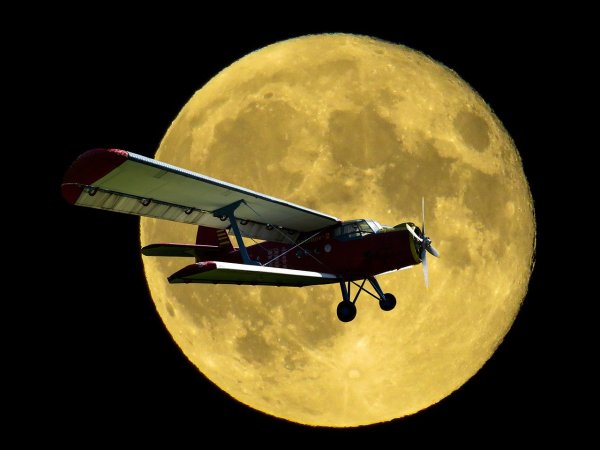
The Cessna Grand Caravan 12-seat seaplane circles a tiny speck in the Andaman Sea on approach. Henrick watches the sky flare into magenta, scarlet, and saffron as dusk closes in. The island, flanked with sands the colour of Carrara marble and warm azure waters should exhilarate, but instead his heart sinks. There is no pleasure to be had here.

It has been ten years since his last visit. The familiar fragrance of cashew trees permeates the air over the gentle murmur of waves. A towering vertical mass of limestone marks the way and Henrick begins the final leg of his journey via longtail boat. A sea of spray rushes ahead foretelling of his arrival.

He and Astrid loved to come to this paradise. She came for the snorkeling, spellbound by the colourful corals and displays underwater. And, for the titan trigger fish, hawksbill turtles, blue spotted stingrays, the fabulous little nudibranchs, all within arms’ reach. He, for the stunning panoramic views aboveground: the sea shining like glass beneath a cerulean sky, where he would while away the hours beneath the faint rustling of palms, reading.

Astrid loved sea life. Even after she waded out of the water limping up the beach, leg dripping with blood, a long tentacle wound around her waist and thigh, its tiny stingers fiercely embedded in her skin, she would stop to look with fascination at the peacock-blue man-o-war bubbles resting on the sand; their intense inky colour alluring.

Henrik adored Astrid’s adventurous and playful impulses. He acquiesced of course, when she had wanted to return yet again to this paradise. He had suggested they go back to Lord Howe Island in the Tasman Sea. Each dawn they had been greeted by a blue-breasted fairywren vocalizing at the window of their bungalow; every pristine vista otherworldly. But they had many opportunities ahead, and one year here or there, they would still cover everything on their bucket list.

The longboat pulls up alongside the dock at the moonlit bay. Tiki lights stand like sentries flanking the path along the beach up to the main compound. The air eerily still and quiet. The beach, empty, save for memories. Henrick drags his feet. His flip-flops catch on nothing, but he stumbles nonetheless, releasing a cry too absurd and overblown for the tiny misstep. Grief like a heavy blanket, drags along the sand.

He smoothes down the edges of his ghost-white linen shirt, now untucked. Strands of silver and grey at his temples curl softly. His hand brushes the wayward wisps to the side, winding the longest unruly curlicue behind his ear. Bending down to pick up a pink conch shell, he rolls it in his hands, feeling its weight and heft. He clutches it to his belly loud like sorrow. There is nowhere to run. Astrid disappeared here. The tsunami pulling her down deep never to be seen again.

Henrick raises the conch to his ear listening for her roar.


Karen Schauber is a Flash Fiction writer obsessed with the form. Her work appears in 30 international literary magazines and anthologies, including Brilliant Flash Fiction, Bending Genres, Carpe Arte, Ekphrastic Review, Ellipsis Zine, and Fiction Southeast. The Group of Seven Reimagined: Contemporary Stories Inspired by Historic Canadian Paintings (Heritage, 2019), celebrating the Canadian modernist landscape painters, is her first editorial/curatorial flash fiction anthology. Schauber runs ‘Vancouver Flash Fiction’, a flash fiction Resource Hub and Critique Circle, and in her spare time, is a seasoned Family Therapist. A native of Montreal, she has called Vancouver home for the past three decades.

Image via Pixabay

The Old Man – Charles Prelle

The old man is born upon the sea, his tiny boat a piece of drift wood to which he clings. His gaze falls upon his reflection as he speaks in tongue to the beast below. A spell taught to him by his father and his father before him. His eyes roll shark-like as he relays his incantation, his voice rippling like a sinking stone.

The old man’s reflection hunts him. It floats upon the surface of the sea like oil. The reflection observes the world of the old man, its long white beard stretched sagely skyward. The beast circles below, stalking the shadowy outline of its adversary. Long has been its wait. Its siren call bubbles upon the skin of the sea like boils.

The old man holds the line carefully, his coarse hands sensitive to each pull and twitch. He counts backward in his mind, steadying himself for the fight. His fists tighten and slacken in a macabre dance with the beast. One thousand sixteen, one thousand fifteen, one thousand fourteen. The beast gives an almighty tug, its flanks writhing below the surface. His hands begin to bleed from the line cutting into them. Drops of crimson fall upon cerulean like rain.

The old man’s reflection smiles up at him with lion’s teeth, its dark eyes trained upon the old man. Five hundred fifty, five hundred forty-nine, five hundred forty-eight. The beast struggles against the force from above, its primal flesh tearing, the barbed steel boring deeper within. It lashes its powerful tail, violently darting toward the deep.

The old man mops pearls of sweat from his brow with a scarlet handkerchief. Salt water laps the side of his boat. His arms grow weary from battle, his lean muscles strain and tear. The air around him grows breathless as the beast rises to meet him. He knows the sea is waiting.

Five, four, three.

The old man’s reflection morphs.

Its eyes roll back. Its ethereal flesh shimmers with glorious emerald scales.

The sea parts.

It rises weightless into the air.


Charles Prelle is a writer and playwright based in London, UK. His past theatre work has been staged at the Bread & Roses Theatre, the Old Red Lion and the Chapel Playhouse. Charles also writes short fiction and has been longlisted as part of the Flash 500. On Twitter @CharlesPrelle

Image via Pixabay
Bitch – Sam Agar

I wish I could run. It’s my favourite thing. Having the wind push against you as the ground moves below. Closest thing you can get to flying, I reckon. Me and my man used to go out and catch that feeling together. When we were younger, it was different. He was kind. Protective. Used to be his touch was gentle. Now his hands are hard. Full of sharpness and edge. Can’t help but wince when they come close. Only makes it worse, of course. Those itchy fingers winding up my throat to squeeze. As much as I deserve for flinching. Should know better, me. Should know well by now. Don’t remember when the change happened. It’s not like a light switch, not that quick. It drips in over time. A cold shoulder turned your way, a cross word or two thrown into the air. And then before you know it, you’re backed into a corner while he spits venom at you and raises the fist. He’s not evil, my man. I love him very much. If I told you what he’d been through, you’d understand. You wouldn’t hold any of it against him. But I won’t. He’s very private; doesn’t like other people knowing his business. You’ve got to respect that. He tells me I’ve no respect so I’m trying to be better. There’s a lot to be working on, in his eyes. I’ve a lot to be doing to be good enough for him. I don’t mind. I’m all for self-improvement, me. It’s my purpose, being with him. Meant to be together, us two, that’s what he’s always telling me.

When he lost the job. I suppose you could say things got worse around then. Wasn’t his fault, of course. His manager is a bastard. Never met him myself but I’ve heard enough to know. My man’s wasted in that place anyway. Overqualified and more talent in him than the whole lot put together. I was happy, I’ll admit. Selfish really, but it meant we could spend more time together. I thought we could go out, take a trip or two. It wasn’t like that. The first few days we went for a morning walk. Short enough they were and always ending up at the offo. Then back to the flat where we’d sit on the couch in front of Maury. After him it was Bondi Rescue, followed by Countdown with a finish of Come Dine With Me, in four parts. The full catalogue of daytime television reeling before us, and him crushing cans between his fingers. The pile growing high by evening but not a word from me.

At about six, the air would grow thick and heavy. My man, he’d start muttering to himself. Throw me sharp looks. Blamed me, he did, for the redundancy. Said I put too much pressure on him. My very existence. Nothing I could say to that. I’d try and take myself away, off the couch and into the other room. He’d always catch me. The punches I can take. Learned to measure against them with deep breaths. The pain still comes, of course. That burning sting running under my skin, banging every nerve. I find a kind of comfort in it, if I’m honest. Makes me sound strange but it’s true. The kicking always takes me to another place. Could never learn to channel them into anything other than black agony. He can always find my soft spot. Sometimes it’s as if he knows exactly where to land the heavy boot. Send me reeling, spluttering, puking. No dignity left when the kicks fly in.

He’d leave me then. Off to the pub maybe, I wouldn’t know. Couldn’t tell which way was up, a heap in the corner like I’d be. He’d come back in the early hours, all delicacy and love, picking me up off the floor like I was some kind of princess. Sour breath on him as he purred away all the sins of the day. And I’d forgive him of course. Always and without question. It’s my purpose, you see, and what are we without a purpose in life? Nothing. And the heaviness in the air would break and I’d bask in the warmth of his love and softness. Usually he’d pull out the bottle of whiskey. Kiss it until he folded into himself. And with the rumble of his snores vibrating through my bones, I’d sleep.

Last week he brought a woman home. What could I do? I know my place. She was rough looking and smelled like a blocked drain. When she saw me she laughed a little, then asked if they could go into another room maybe? My man told her to get on her knees. I put my head down and closed my eyes. Pretended to be somewhere else. I always try that but it never works. I can never be anywhere but here. After the woman left, my man sat down beside me. Bared a toothy grin and nudged me gently. Pointed to the tattoo of my name on his arm. Reminded me how much he loved me and wasn’t I his special girl? And that was it, only that evening he cooked us steak for dinner. If you know my man, you’d know that meant that he was having a great day.

I don’t mind visitors don’t get me wrong. Not that we get many, only Barry. Barry’s his best friend, apart from me. Brothers they are, not by blood, but that’s what makes it stronger. Barry’s alright. He’s got thick black hair that sticks out of his ears and he’s missing all his bottom teeth. Lost them at the bookies. I like Barry because he’d always throw me a gummy smile and toss a kind word my way. He’d never look at me much or ever touch me because my man doesn’t like anyone touching me. Once or twice a week, Barry and him would settle on the couch and watch the races. Not much said only one or two words, and depending on the take for the night, a laugh between them. I’d like it when Barry came over because it meant my man was in a good mood. No kicks or punches, maybe just a light slap if anything. Unless he was on a losing streak. Then I’d be hiding under the table in the other room.

Barry was good to us after my man got let go. When he came over he’d always bring a few tins for him and a bag of chips or a couple of battered sausages for us both. Go for a walk, he’d say, do the both of you some good. My man stopped leaving the flat. And me of course, but sure I’d never be going anywhere without him. He always kept me close when we went out. Didn’t like me walking anywhere but by his side. We’d match each other’s stride, me and him. Find our own rhythm and let it fall into place. I didn’t mind him keeping me close. Made me feel safe. Back in the day we used to go running together. Those were the best times. Feels like a dream that, another time and place. We stopped doing that a long time ago. Think the idea started scaring him. Like he was afraid if we did, I’d go too far. Get lost from him.

A few nights ago, things got really bad. I blame the Grand National. Never liked horses, me. Himself and Barry glued to the couch all weekend and me in the corner watching the dust billow by. It would’ve been alright except Barry won. He was jumping up and down like a fool when his horse came in. Like a little boy he was and I would’ve been enjoying the sight of it if not for my man’s face. His teeth clenched and cheeks inflated with huffs and sighs. And Barry there, singing and yipping. Had a feed of cans in him but should’ve known better, in my opinion. You shudda listened boyo, he was saying to my man between cheers, shudda come in with me, we’d be rich together. I watched as my man’s fists made knots of his fingers. Barry’s chuckles slowed and fell away in his throat. My man looked on in heavy silence and Barry knew then what he’d done. Glanced my way, he did. Didn’t look directly at me but focused his gaze somewhere behind my shoulder. A hint of darkness on his cheeks as he collected his paper and his John Players. Mumbled a goodbye and then left us. Just me and my man.

It started like it always starts. Him telling me how worthless I am. A rotten piece of shit. Would be on the streets if not for him. Do I know how lucky I am? It was Barry’s fault, not mine. All I did was sit there. All weekend they drank and filled the room with farts and sweat. I didn’t say anything of course. Maybe it was the way I turned my nose up at him. The little huff of air that escaped from me. Doesn’t like any cheek, my man. I made moves to leave and that’s when I knocked over his drink.

Whiskey and glass rolling across the floor as cold fear rushed through my veins. There was a snarl from him. A kind of crackling in his throat and he was up off the couch and on top of me.

He’s my leg pinned under his hip and that’s enough to bring a howl of pain out from me, only my face is pressed against the floor by his hand so the sound muffles and falls away into the cracks of the lino. His breath is hot and the smell so rotten my stomach turns. That might be the worse thing of it all, if I’m honest. His foul breath sliding up my nostrils and settling into the back of my throat. Cigarettes, whiskey, onion and garlic from his evening kebab. It’s hot and heavy and it’s spreading rot inside of me. Wafting over me in putrid waves, making my eyes water. He punches my side, catching a rib with his knuckles, sending me kicking and scraping away from him. I get back on my feet but so does he and it’s a stand off now between us. Doesn’t happen often this, usually I take it and then he leaves me be. But I can’t have that hot breath in my lungs anymore. We’ve eyes locked and I’m breathing heavy and so is he. Panting, the two of us. Waiting.

A warm sting flashes through me, a kind of anger bristling my bones and heating my blood. Makes me feel bigger somehow. I feel brave. And I’m looking into those grey eyes and seeing nothing of my man. He’s gone from me now. Been gone for a long time, I reckon. And I decide. The thought springs into my brain and makes that rage in me flare up brighter than ever. I don’t like it when he puts his hands on me. I remember, then. I have teeth. It was love that held me back before but there’s not a whiff of it left in this room. All that’s kept between these four walls is the stale air of pain and sadness. So when he charges at me it’s not the door I turn to but his barrelling body. He goes to clip me over the head and I don’t think anymore. I sink my teeth into his arm, just above the tattoo of my name.

A high-pitched yelp from him and I should let go but I only bite down harder. It’s him feeling the pain now. It’s him breathing through. He’s shaking the arm and I’m holding tight but my jaw’s burning with the strain of it and the strength’s leaving me. Another shake from him and we disconnect. I’m thrown backwards from the force of it, bang against the couch. He’s stumbling back, blood dripping down his elbow and a look across his face. Surprise, pain, anger. All mixed together with creased brow and slanted mouth. The heel of his boot tries to land on a pile of crumpled cans. He’s losing the footing, sliding from under himself. When he falls back, we get stuck in time, him and me. Frozen in our own rhythm. It’s like he’s floating. The hard crack of his skull against the edge of the coffee table breaks our spell. A low kind of huff from him then and a deep sigh. Wide eyes looking at me, searching for something as gurgles bubble between his lips. His hand reaching out, catching air between fingers. The thick velvet snakes under his ear and down his throat. I can smell it. The hint of metal landing against my tongue. It tastes bitter and sweet all at once.

It was quiet then between us. I felt so tired, felt it down to the root of my bones. Might have dozed off for a while, I’m not sure. The thunder of the rain on the window had me up with a jump. Forgot where I was for a second. Then I saw my man and it all came back. He was stiff and grey. The hand still outstretched and reaching. His eyes staring at me, glistening with a black shine. Follow me around the room they would and give me the shivers. I sat by the window. Perched there for a long time, watching the rain dribble down the frosted glass. Following the drops as they slid downwards, slow at first, then fast, too fast, racing by before disappearing completely. Bursting into nothing to join the puddle at the bottom of the pane. Time never meant much but looking out that window took it away from me completely. Minutes, hours, days passed me by as I watched the outside world move beyond. I thought about running. What it would feel like to run in the rain. I closed my eyes and tried to imagine.

When Barry came bustling in with a bag of cans I didn’t make a sound. I watched as he banged against the door and lit up a cigarette. He took the smoke out of his mouth and brought a closed fist up to his face. Coughed and hacked and made some noise about the smell in here. When he saw my man he stood still for a very long time. Looked at him, then around the room. Let out a strange kind of laugh. Sounded like half of it got trapped in his throat on the way out. He bent down so quickly he dropped the bag. A can burst open and rolled under the couch. Barry was shaking my man, grabbing him by the shoulder. He was muttering to himself. A sharp step back from him. A look of fear on his face. He felt the coldness of my man. Could see his stiff limbs and blood caked dry against his neck. Barry ran out of the room. Came back a few seconds later with an old towel. Kneeled down and tried cleaning the blood off his skin. His mutters became shouts as the cloth turned rusty. He threw it down. Started shaking my man again. Rocking on his heels. Nonononononono. The word tumbled out all at once. Then silence. It dripped into the air and settled over the room, drowning us.

Barry let himself down on the couch, heavy and precious in his movements. He put his head in his hands and he was crying into his fingers. Something in the hunch of him reminded me of my man. It moved me to my feet, up and next to him on the couch. He looked at me through a bloodshot haze. Reached over and put a hand out. I flinched a bit but Barry just patted me gently and took his hand away. There’s people I should be calling, I suppose, he said into the room. His voice was cracked and heavy. He pulled out his phone and I looked at my man. He didn’t scare me anymore. I leaned over just close enough to get one last sniff. Take him in one last time.

Barry started telling me about myself as we waited. He took me away from my man. The smell was too much, I think. Him retching into his collar and so it was outside on the front steps where we sat. Barry had looked at me through his tears. Met you when you were just a pup, he told me. You were born for greatness. A smile from him and a tickle under my chin. You’re a pedigree, just like your Da. He was a fine racer, lucky for me many times. Shudda had you out there just the same. Barry shook his head. I told your man, told him to train you up, get you running. Sure that’s what you were born to do. What’s a greyhound’s purpose only to run? Barry shrugged then and crumpled into a long sigh. Shudda done more, he said with a thickness in his voice. It’s no life, this. He was silent after that, his words hanging in the air and floating towards the clouds. Maybe he would take me running. The grass was just there, ahead of me. I could see it. Smell the sweetness of it, fresh from the rain. I got up on my feet, my breath catching from the thought. Then a van pulled up and Barry had me by the neck.

They have me in a cage now. Put me in there after they saw my man inside. What happens now? Barry asked and when they answered his shoulders dropped. His head shaking and his eyes closed tight. He’s bending down to the cage now, telling me goodbye, I suppose. I wish he’d taken me running. Before this part, I wish he could’ve given me that. With water brimming his eyelids, he manages a shaky smile. I look into the empty grey space where his teeth should be. And there’s nothing I can do only be here. Exist in this small space as the walls squeeze against me. Maybe they’ll take me running. The thought brings me down to the floor of the cage. Puts my head to rest against my paws. I think about what it would feel like to sprint. To have the ground move beneath me. That fresh air blowing my ears back. I can almost feel it. I close my eyes.

Sam Agar is an Irish writer who has been writing for many years, enjoying a passion for fiction from a young age. Having recently completed a Masters in Creative Writing in the University of Limerick, Sam is currently working on a collection of short stories.

Image via Pixabay
Therapy – Jeanna Louise Skinner

Probing questions drill into the black oil of my consciousness, until secrets gush from my lips like a geyser. I tug soft woollen cuffs over scarred wrists, wrap arms across my shucked oyster chest. Nerve endings now “hyper-aroused”, mind and body exhausted, yet I’m unable to rest. I need to do, to act, but I’m bereft and overwrought. I’m Schrödinger’s glass: half empty, half full; headspace narrowing with each useless thought. What am I supposed to do with all this emotion? I’m drowning. Drowning in the sea of me. And you’re no longer around to toss a life jacket.


Jeanna Louise Skinner is a romance writer from Exeter who has been published by Ellipsis Magazine and The Cabinet of Heed. Bitten by a radioactive sloth as a teenager, procrastination is now her superpower. Twitter is her Kryptonite. Follow her @jeannalstars and @UKRomChat.

Image via Pixabay
Antoine and Marie – B F Jones

They say I’m too old to fly. They say I’m unfit. They say I support Nazi Germany. They say I’m a collabo.

I take a swig and hope the alcohol will dissolve the cloak of betrayal weighing on me. I wish I’d had someone right here with me. I wish I was a child again so Maman could make it all better.

They forget what I did. They don’t know who I really am. They just make up rumours. They forget. The night flights. The crash in the desert. The survival. The books. The prizes. The speed records. The dedication.

I take another swig. I’ve lost the will to defend myself. I’ve lost the desire to write. The desire to live.

I bring the bottle to my lips again. But it’s empty.

*      *      *

I must confess I am worried about Antoine. His last letter was tainted with discouragement, despair. My Antoine. My little Prince. So reluctant to grow up, yet so courageous in his adult life. But those accusations have taken their toll on his pride. I worry that’ he’s taken to drinking. My boy, pro-Nazi! My wonderful, courageous son, a traitor!

I feel his pain as if it was mine. I wish I could take it all away, just like when he was a little child.

*      *      *

In his last letter, Antoine told me he’d be out flying again. Over the Mediterranean, France and Italy.

I don’t know when exactly. The mail can take a while those days. His tone was better, that despair replaced with the excitement of a new adventure.

That brave, restless, wonderful boy of mine.

*      *      *

I’m out flying again. I have forgiven and forgotten. I’ve left the bottles alone. I’ve got inspiration and strength again.

I’m ready for my new mission.

*      *      *

They find the body washed out outside of Marseille.

It’s unrecognisable. The sea has done its rapid damage and plumped up the man’s face and sea creatures have pecked out his eyes.

There is nothing to identify him but the uniform of a French aviator.

The news report that they believe it is Antoine de St Exupery, who failed to return from his mission a couple of days earlier.

But they have no way to tell.

*      *      *

If only the sea could talk. And tell me what happened. Was it really my boy’s body they dragged out of the sea? Did it hurt? Did my baby die before hitting the surface of the water or did he drown?

And now that I am fading away, I will never know.


Image via Pixabay

Keeping Watch As My Ex-Husband Dies – Janice Northerns

I stare out the window, remembering
walks to the last soda fountain on the square
for breakfast those Saturday mornings,
our hands twined so tight it was hard to hold
the paper sack. From his hospital bed,
my ex-husband calls What are you looking at?,
wants to know what he’s missing.

Just thinking of those fountain Cokes and doughnuts
from Stinson’s Drug, I say. Remember walking
down the street, sugar on our mouths? He frowns.

He is young enough to recall the taste
of first dates, but doesn’t. Doesn’t even remember
our kids’ names when I tell him how our boy
sat the bench at yesterday’s Little League game.

What he remembers instead is last night’s dream
of a Nazi death camp, how I left him there.
And now as night falls, he begs me not to go.
How to tell him he was in a war,
but not that one? No context for his memory
but the heartbreak of my actual leaving years ago.

Those early mornings we drank our Cokes
from to-go cups, too young for coffee, ice chilling
doughnut glaze to grease slick in the back of my throat.

Now a sticky film coats his brain
as he searches for words, waste water
swirling up in black-bubbled aphasia
so that he spits out Please, I need a drink
of thirsty.
I hand him the glass, and as it shatters
to the floor, I stare once more out the window

but find against sunset’s glare dust motes streaming
into a reflecting pool of transgression: years I spent
back-pedaling, pulling away, leaving him in the dust,
dust that now waits to reclaim, settle him down
into the long dark furrow to come. He doesn’t ask again
and I don’t say that I am making a list of all he will miss.


A native Texan, Janice Northerns now lives in southwest Kansas with her husband, two dogs, and a laptop. Her poems have appeared in The Laurel Review, Chariton Review, Roanoke Review, Southwestern American Literature, descant, Cold Mountain Review, and elsewhere. Her awards include a writing residency from Brush Creek Foundation for the Arts, a 2018 Tennessee Williams scholarship to the Sewanee Writers’ Conference, second place in Southwest Review’s 2017 Marr Poetry Contest, and the Robert S. Newton Creative Writing Award from Texas Tech University. Read more of her poetry at http://www.janicenortherns.com or follow her on Twitter @JaniceNortherns.

Image via Pixabay
The Slave in the Kitchen – Dan Brotzel

He is there when they come down in the morning, a grumpy hairy beast in a scuzzy pair of pants and an old Ninja Turtles T-shirt. His feet are bare and his hair is a mess. He thinks of himself with a certain grim masochism as ‘The Slave in the Kitchen’.

‘What do you want to drink?’ he snaps.

‘That’s mine!’ says number 1, snatching at an old fairy tiara.

‘I had it first!’ shouts number 2.

Number 3 is chasing the cat on all fours. The cat is terrified and escapes into the garden.

‘What you all wanna drink?’ he snaps again.

They say nothing, so Slave brings over drinks for numbers 1 and 2 anyway. The baby is now trying to put its head through the cat flap.

‘What about cereal?’ he snaps. The cat sneaks back in past the baby, and jumps onto the table.

‘I don’t want cereal. Just toast,’ says number 1.

Slave shakes some cat treats to get the cat off the table. This works, briefly.

‘Let me think…’ says number 1, who is now playing Candy Crush on the iPad.

‘YOU DON’T USE THE IPAD WITHOUT ASKING!’ snaps the slave.

‘What if I could just have…’ says number 1. He knows she is about to ask for something off-menu he has neither the time nor the energy to make.

‘…Chocolate eggy volcano bread!’

‘Right that’s it!’ he snaps.

‘Beans and a wrap, no cereal,’ says number 1 hurriedly.

‘I want a wrap!!’ shouts number 2, as he tries to push the baby through the cat flap.

‘YOU’RE ALL HAVING CEREAL!’ he snarls. The cat is back on the table, and with good reason. Every time it jumps up, it gets more treats.

‘But the milk gives me phlegm in my throat!’ complains number 1.

‘I want a wrap!’ shouts number 2. The baby starts crying.

Slave makes three bowls of Weetabix, with microwaved milk, and slams them down on the table. Brutally he shoves the cat off the table.

‘Don’t want cereal!’ snaps number 1, spooning her Weetabix with disgust. She is now downloading a new app onto Slave’s iPad.

‘My milk’s too hot,’ says number 2, and starts to cry. The cat has jumped up onto the table again and is now sniffing at someone’s Weetabix.

He stands on a chair and pretends to cry hysterically, till at last they all stop and look up at him.

‘I’ve got to put some slides together for Phaedra’s keynote by 11,’ he sobs to the cat. ‘Do you know anything about innovative cloud-based supply chain planning solutions?’


Image via Pixabay
Sonorous Wave – Mehreen Ahmed

Two helicopters flew over our heads, like a duo dragonfly in the autumn sky. This afternoon, my sister and I sat under an old, oak tree in our garden by the River Bhairab, Those were the days, when we chatted silly, and talked about every nonsense that entered our heads, giggling over nothing.

“You always live in your head,” my sister declared.

“Let me guess, you don’t like that. This life of the mind kind o’ thing,” I laughed

“You know how it is, thinking, dreaming.” I laughed first, then she laughed with me.

I hadn’t actually realised it until now that she mentioned it. Yes, I was the more reflective one, she, the extroverted. But that was all the difference we had; we both stood on a common ground of compassion. Well-bonded in togetherness.

When we were growing up, much of the political discussions in our house centred around the partition of India. Discussions which shaped our world views, so much so that it made us opinionated. We always heard about these eternal qualms between the Hindus and the Muslims. The Hindus, who suffered in the hands of Muslims at partition, and now it was the Muslims turn to suffer in the hands of the Hindus. The power shifts, after the British had left. The crooked history, never left us at peace, not today, not ever; if any, it made us even more crooked, hating everyone, in our loveless lives. This clockwise and anti-clock motions of emotions, ran hot and cold, politics played and churned out generations of despicable events.

Dramas that we saw around our kitchen table bore that testament. Our parents, endlessly bickered over what should have been the right course. Disagreements, led to high levels of anger, at times, shouts grew louder, arguments deepened. We listened, and left the table when we couldn’t endure anymore. We started living in a distorted reality of ideas.

I looked up at the sky, such a serene afternoon, today. At the far end of the garden, our Gardener, weeding nettled locks from a thorny rose tree. He looked at us and nodded a greeting with a smile. We smiled back. The garden looked deliciously luxuriant or decadent, this time of the year. It burst into all sorts of nature’s vibrancy, as the colours of spring changed to warm scarlet, deep magenta, sea turtle emerald and saffron pouring onto our lawn. Impeccable, was the word that summed it up. However, the Gardener’s intrepid work at cleaning the fallen, decrepit leaves, could not be ignored. It was his job to bring the garden to a full bloom every spring, of roses, and white jasmine, and pink daisies, and his job as well to clean it all up throughout autumn. Yes, pink daisies, the most prolific of all, the Nordic goddess, Freya’s sacred colour, symbolising, love, beauty and fertility.

The Gardener couldn’t do much to change the seasons’ natural laws. In autumn and in winter, the colours faded anyway. However, it all became replenished and resplendent, the next monsoon, when all the colours returned. He cared for the garden. It showed, how tirelessly, he kept at it, sprucing it up from fertilising every priceless tree to watering them diligently. He never slept or ate. He lived over by the river, in this hut, with a leaky roof, through which rain water dropped. But, he seemed to enjoy this drip, and didn’t bother to fix it.

“It is beautiful, wouldn’t you agree?” I asked my sister.

She looked at the garden, then at the Gardener, and then his broken hut by the river. And nodded in agreement.

“Do you think, he is in love?” she asked.

“Maybe, we never really speak to him, do we?” I said.

“Hmm. I wonder sometimes.”

“We do speculate a lot,” I laughed.

She laughed with me. The Gardener overheard. The tinkle and the words, carried over by the autumnal air.

“Should we ask him?” asked my feisty sister.

“About what? If he is in love?” I asked in disbelief.

“Yes, if he can create this lush place of such breathing, blooming flowers, he must have a heart, too; sensitive enough to love and to kiss.” The Gardener, in my thoughts, he swam in the deep river, and then suddenly, he kissed a girl there, in the river’s depth, a secret he harboured. He somersaulted in the water and swam away.

I looked at her puzzled, “You do realise, our parents would kill us if they heard us speak of the Gardner’s love life.”

“Yes, I do realise. Do you think, life would be any less miserable with the Gardner than it is right now? To the contrary, life may actually flourish.”

We both looked at his hut. And thought how the rain water never affected him. Then there was a cry. It came from the Gardner. We rushed towards him. He had cut off his index finger, and then tried to re-attach it. Red blood oozed out on the manicured lawn. A snake had bitten him, a brown, poisonous viper. It slithered away right before us.

“Oh! No!” We screamed. “You must go to the surgery at once.

“It’s okay. I’ll go to my hut and rest. I’ll be fine tomorrow.”

“But you’ve lost so much blood.”

We couldn’t tell, if he heard us. He dropped the finger, and walked away. My sister began to run, but towards the kitchen to ask the chef if he could make some broth for the Gardener. In a bit, she returned with a bowl of broth, while I hung around the garden, and saw how the soil soaked up all his blood; the blue finger lay inert; we went into the hut together. The hut was bare as bones. We heard the sonorous river convey,

Roof’s torn portal led to spacetime above;
Earthlings seen copious, but tiny pebbles on the top;
Gardener’s elusive, ubiquitous apparition, to summon;
Hollered life’s tales of bittersweet paradox.


Image via Pixabay
Create a website or blog at WordPress.com

Up ↑