Stream Of Consciousness Drawer One

Untitled – Carla Halpin

Mine is a pocket of calm in these crazy waters. It isn’t so bad. Yes, the four walls are not very far away. But here in the eaves, the angles of the roof are casting interesting shadows in the mid-day sun, which I never noticed before. How intriguing my now defunct calendar on the wall seems? And at any moment, papers strewn will be hit with organisation but with 365 hours in the day now, there’s plenty of time to organise them later. The boundaries of the weeks are blending. But if I notice one new thing every day, then that’s a change, isn’t it? The fresh spring air is pouring in my window. Pop music drifting up from downstairs, as planned, to fill the house with noise and people and movement. How clever we are to manage to unlearn all the natural things keep us sane, like noticing, like music. I never usually stop long enough to notice out my window. The trees are budding in clusters of tiny pink, growing in patterns mirroring neurons in my brain. I guess both are lit up with this moment of really looking. I do notice the change of this season out my window- but from the sounds. It’s time for the shrieking of the foxes. They started up again last night. It’s nice to hear the world moving outside. I’ve never met the people on the opposite side of the pink flowers -the neighbours – but I know of their movements from their sounds. Someone is very keen in woodwork in what was once a daily irritation. Now it’s comforting. He’s busy at work, and I like to imagine he’s happy, because he does it every day. And I can’t see any fruits of his labour. The fruits of his labour must be inside him, and possibly in his wife as it keeps him out the house. Next door to them is a dog. I’ve never seen it. But I know when it’s happy or sad by the tone of its bark. Sometimes I want to rush over there and comfort it, but it’s never long before someone gets there first. The fence sways in the wind; it’s soon going to topple. And although I’ve been told that wouldn’t be a great thing, I can’t wait for this dog’s face to appear and see if it matches my imagination. Black, scraggly and with a waggy tail with a long curtain of black hair. We’re not so far apart, really. The south aspect holds an entirely different scene. It must be the only time in my life I’m glad trees have been chopped down as it opened up another direction. I can see a ceiling to floor window in a faraway house. It might be a bedroom, maybe with long curtains that float in the wind. I can’t see in, but yet I still wonder if they can see me as I wave my arms. I could write words in the air. Whatever happened to walkie talkies? That would be perfect right now.

Carla Halpin is an editor who lives in the New Forest where she writes poetry and flash fiction. Her work has appeared in Anti-Heroin Chic , A Story in 100 Words and The Cabinet of Heed. You can find her on twitter @CarlaHalpin where she posts regularly as part of the very short story community.


New Pressures in the Time of Corona – Laura Besley

I watch my 5yo tearing around the garden and my 2yo trying his best to keep up and I think: can I do this? Can I keep them entertained for the next who-knows-how-long?

I am a mother who dreads the school holidays. Not because I don’t love my kids, but because it’s a reminder of the fact that I can’t always cope. A reminder than I’m not the mother I wanted to be; I’m not all-sacrificing, putting their every need before my own; I’m not able to endlessly come up with fun games to play and roleplays involving superheroes; I’m not able to think of a million different fun things to make out of egg boxes; I’m not able to give up everything I am for them. Sometimes I wonder why I should. And then I feel bad.

Last summer I had them for four weeks on my own. Taking away weekends, that’s only 20 days. When you put it like that it doesn’t sound like very much. And I feel ashamed that I dreaded those days and didn’t always cope very well. I feel should’ve enjoyed it more.

And now? Now I’m supposed to homeschool my 5yo. Teach him phonics, improve his reading level, teach him Maths, do PE with him, be creative with him, all the while making sure my 2yo doesn’t break, wreck, or scribble on anything my 5yo is doing. This new pressure, this new homeschooling pressure, is just another thing that parents are now having to contend with. It’s too much. I know people mean well, but I’m being inundated with messages from people sending me things to do with my kids. I might rue these words if people stop sending me things, but it’s overwhelming. Like I haven’t got enough to get my head around with all the new rules in place and my brain working very hard to block the panic and worry about what might happen if my kids, or anyone else I know, gets the bug.

I’ve decided, for my own sanity and those around me, to take a big step back. I will continue reading to my kids; I will continue asking them questions, trying to get them to work things out for themselves; I will continue playing in the garden with them; I will continue letting them watch TV. I will do all the things I normally do with them. I will keep them safe. That’s my only job right now.


These Days – Jordana Connor

Beep beep beep… “And now, for the 5:30 news update.” Christ, still in the middle of the apocalypse I guess. I’m going to lie here in bed for 10 more minu- oh. Getting poked in the ribs. Must be my turn to make the coffee. This rug needs a vacuum. Is that a spider?! Oh no. Just a feather. Whew. Come on cat – I know you want to get out for a sniff of the garden.

Okay but don’t dash under my feet. If I fall down the stairs and crack my head open, bleed to death slowly on the little Persian rug, who will feed you top of the line science diet food, and trim your claws? Door open, (cat out! Why do they always flee out of an opened door like they’ve been trapped for days?) kettle filled, kettle on. Dishwasher emptied. Coffee in plunger. Mugs out. Sift and discard contents of the downstairs litter tray. Wash tray. Wash hands. God, the interminable scrubbing of hands. I’m starting to feel like I’m prepping for surgery 20 times a day.

Mugs are full and steaming, and the trick now is not to spill too much on the ascent up the stairs. Ahhhhh… made it. Mornings are nice. Blinds up, blue sky and wild parrots screeching a greeting to a new day. I like the sitting, propped up on our pillows, coffee cooling, phones in hand. Powerful, expensive (germ covered) conduits to the latest in these, The End Times. Or just a temporary foray into misanthropy. Depends on your outlook, I guess.

The news is terrible, but it’s the sports news that winds me up the most. “A bunch of grown adults, who have dedicated their lives to playing a game, played a game yesterday, which nobody got to watch. Sad! Some of them won, some of them lost, here are some meaningless statistics for you, conveyed in a breathlessly entertained tone, so you are fooled into thinking it all matters.” It doesn’t.

Coffee drunk, eyelids finally unglued. Time for a walk. Better find some clean shorts. Where are my sports socks? Why does this hair tie look chewed? (Damn cats!) Ok, off I go. Can’t stay in this house for months on end with no reprieve. Pretty sure we’re allowed out for walks as long as we don’t go near anyone else. Fine by me.

God there’s a lot of poo on the pavements here. Who did THAT? Hoping for possum, but who knows? Australia is full of weird and wonderful creatures that crap on the pedestrian infrastructure. Always will do, no doubt.

Oh – here comes an older couple. They’re darting their eyes at me.
Should smile and look unthreatening. Try to look responsible and well. Look perky. Pick your feet up.

Oooo – that’s a pretty flower.

Shit. I coughed. Poor things scuttled down a driveway. Feel guilty.
This all sucks and I’m sick of it already. But not SICK sick! I wonder if I have enough toilet paper…


Come to Heel – Charlie Sanderson

We walk seven miles or more the dog wrapped up in mud and sprung coil like across the fields, through trees, the wind howling banshee like against our waterproof trousers and fleece, the ground beneath our feet tantamount to constant change and love like a warm cushion between us softens the blow of the way the land lies right now, this way. She won’t come to heel for long enough, a herd of deer, red flag to a bull, only now she waits longer before she bolts at them, old enough to see the danger now, of more than one, creatures in packs aren’t so safe these days. When your eyes get a little wiser.

The road finally brings us home against the backdrop of field upon field edged in hedgerow upon hedgerow. The odd mansion house for the rich and famous types. Folk who like to live in the city and come here to shoot deer. We do laugh at how even they won’t survive this time around, silent killer, invisible man hunter. We shouldn’t laugh. But there’s little else to do. So, we laugh and we walk our way on and through.

At home the eggs sizzle in the pan and the home-made bread almost burns in the broken toaster, I tell you about the omelettes in Singapore how they have them with sweet chilli sauce there too and raised eyebrows smile back at me across the table you cut in half to fit the room. How I love you.

After we eat and you clear the sides of crumbs and swear at the toaster and the random shit radio six play on a Saturday afternoon, your dad walks past the window. Shoulders hunched against the climate of life right now. I don’t know what to do. So, I break the rules and open the door and make him a cup of tea. And as you walk out with him, I wonder love, who will live and who will die? I think of Captain Pickard last night, taking to the space ship crew, “Every single time you say goodbye to someone you cannot know if you will ever see them again, this is no different”.

We can balance our lives on the head of a pin, but maybe some of us will fall too far in to climb back out again. It’s all just change though isn’t it? I keep breathing and dropping to my heart and feeling all that panic and love and hope and regret. How irrational people always thought I was when I was so lost in my fear of death. And now it is so palpable and yet, I do not feel afraid exactly. You are the mistress of your own misery. You say that to the dog when she pulls on the lead and chokes herself, or walks headlong into the stick I’m swinging in front of me as we walk. She needs to come to heel. We all do though, don’t we?


I Feel Weird – J L Corbett

“I feel weird. Do you feel weird?” I asked my husband earlier today. He also feels weird.

I’m not as worried about him as I was seven days ago. Seven days ago, he was sweating through his clothes and coughing violently. He groaned to himself and mumbled that his existence was pain. I held off calling 111 until he threw up blood. It took half an hour for them to transfer me to a medical professional, and during that time I stood at our bedroom window, staring at the world from which we would soon be quarantined. I wanted to drive him to the hospital (even though I haven’t passed my test yet), but I knew they weren’t letting infected people in. I wanted to call somebody over for help, but anyone who crossed our threshold would be risking their health.

I listened to the hold music and felt very alone.

I felt tears forming, which annoyed me. I told myself to get a fucking grip – I am his wife now, and I need to act like it. I am the person who needs to steer the ship alone when he’s incapacitated.

As each day passes, the virus loosens its grip on his body. There’s been no more vomited blood. Quarantine has been an odd mixture of anxiety and boredom.

On day five, he was well enough for a short walk around the park. We were out for less than an hour, but I think it was the highlight of the day for both of us. He seemed elated at being outdoors and around people (at a distance, of course). He was still very weak, but able to have a conversation and a walk.

This morning, I spent three hours in the garden whilst he slept. I cut down the enormous ugly bush that’s been an eyesore in our garden since we moved in two years ago. I blunted the multi-tool in the process, so I had to cut down the rest of it with a handsaw. It was tedious and now my arms hurt. It killed some time and some pent-up energy though, and also that hideous bush.

After lunch, I called my boss and told her that the quarantine period had been extended from seven to fourteen days since we last spoke. She hurriedly told me to take another week off. She was practically begging me not to return too quickly. After I hung up, I felt dejected. Is it too dramatic to say that I feel rejected from society? Maybe society isn’t even a thing anymore.

We live up north. I’m supposed to be in pub in London right now, drinking with friends I haven’t seen since last summer. Next month I’m meant to board a plane to Ireland to see some other friends. My family lives down south, but my stepdad is almost seventy years old and has health conditions. So, when will I get to see my mum again?

I feel weird.

J.L. Corbett is the founder and editor of Idle Ink, an online magazine of curious fiction. Her short stories have been featured in MoonPark Review, Paragraph Planet, Schlock! Webzine, TL;DR Women’s Anthology: Carrying Fire, The Cabinet of Heed, STORGY Magazine and others. She owns more books than she can ever possibly read and doesn’t get out much. She can be found on twitter: @JL_Corbett and has a website: http://www.jlcorbett.org


Meanderings – Stella Turner

I follow the arrows but it’s not the way I want to go! I’m feeling anxious. I go against the flow now feeling guilty. Will I be stopped? I think I’m too near the woman choosing yogurts. She’s looking daggers at me. I want to run to the toilet roll shelves but no let’s not be too disappointed too soon. Why is that man looking at me? He’s with a woman maybe his wife no she looks too old; his mother? No far too young. Probably I’m giving him too much eye contact. I do that. Is it a fault? Four loaves I take two. Is that selfish? See a friend. We stand the recommended two metres apart. I’m happier with feet, metric is for the young ones. It looks six foot. I was her bridesmaid forty years ago, her groom stands beside her. Isn’t he asthmatic, at risk? She has a scarf covering her mouth he and I dressed as normal. I’ve left my man in the car. He’s diabetic, definitely at risk. I’m warned to keep him at home. I would have driven myself but he wanted to get out so he drove. Didn’t the email from the company CEO say or was it government advice one person per family only to enter the shop. Luckily no items out of reach else I’d need help. I’m short, vertically challenged. Social distancing makes it hard to ask for help. My friend says she was dreading coming here today me too. Can’t find eggs ask a store employee picking for home deliveries, the lucky customers who stay home, stay safe. She apologises, none, I say aren’t the hens laying? My daughter has a hen, Betty; I could barter Betty’s daily egg for the packet of Paracetamol I found on the shelf if we were allowed to visit each other. I miss my grandson could try skyping him. No toilet rolls. I pay the bill with plastic. I’ve always said I’d never pay for food on credit. Plastic is safer than coins and notes says the experts. First time plastic is good for the planet! Huge change in habits no more big food bills, no more waste. We’ll see! The cashier smiles weakly as I say thanks for coming to work. I bet she’s thinking stay home old biddy. Don’t infect me! I wheel the trolley to the car. Open the boot and load the three carrier bags for life. Miffed that I had to take the risk. Next week I’ll run the gauntlet again unless it all changes.


Coronavirus Held a Press Conference, and Crushed It – Michael Wade

Thank you. Goodness, what a turnout!

Yes. I realize you’re looking at a microdroplet of snot. It was explained to us that TV requires a picture. We’re smaller than the wavelength of what you call visible light, so…Does anyone have a substantive question.

Right. Thank you for phrasing this important issue so forthrightly.

We need to acknowledge that our core interests won’t always align. I’m a virus. I’m pretty militant about viral rights. Not to get into labels or name-calling, but let’s be frank. Certain organisms are fighting tooth and nail every day against our very right to exist.

You speak of hundreds of thousands of – uh, infected humans. Infected. Do you understand how offensive that language is?

You speak of thousands of host, human, deaths, and the possibility of millions, and I hear the self-righteous outrage in your tone. Do you even want to hear our side?

Good. In five of your milliliters of blood, in every infected human, your word, hundreds of millions of us exist. Each wanting nothing more than our natural rights. That’s all. Well, here’s your headline, ladies and gentlemen. Approximately all of these virions are dead now, or soon will be.

Get your heads around that. Your languages may not have words for the numbers of dead I’m trying to describe.

Look, we’re sympathetic to your issues. But this focus on what I would absolutely call the acceptably low host loss associated with our incredibly successful program…Well. Let’s just say work will be required to mesh our perspectives.

Yes. You, sir.

I can’t speak to that. You’d need to talk to those viruses. What you call common cold of course refers to many different viruses. The question of whether we’re just the common cold pumped up by left-wing hysteria, whatever that is, reflects a multi-cellular organismic arrogance I find beyond insulting.

Ma’am…

I was briefed on that, yes. We agree strongly that damage to your economy and health from so-called social distancing is extremely concerning. This is one area where we can make a lot of headway together.

Take your cue from us! We know the odds are against us, but in the meantime we are having a ball together in your sera and fluids! Why should we be having all the fun in these challenging times?

In the back. Yes.

Well, we are mutating constantly. We seek, in good faith, the ideal virulence, where you, our cherished biological colleagues, suffer only the most minor physical inconvenience. All I can tell you is that we are working tirelessly for our mutual benefit.

Excuse me? Right. Folks, sorry, this sort of thing is new for all of us, and I’m being told we’re experiencing some mucus degradation, and will need to close.

Time for just one more…right, you sir. Front row. Yes, you, with the barrel chest and the large nostrils.

I couldn’t hear you. I wonder if you could come closer. Yes. Closer…


On the Platform – Joyce Wheatley

We stand disconnected, vulnerable, uneasy. Eyes dart toward the western sky. I’m tired of floating erect in these 9-to-5 fatigues, impatient to get on with whatever’s going to happen.

We’re awaiting rescue. I don’t know why or from what. No one speaks of it. My companions look familiar but I don’t recall their names. The middle-aged man in a suit cycles up and stops. If I’d taken my bike today, I’d be home by now, but the tire’s flat. Thus, I’m on the platform.

“Listen.” The cyclist opens his book, “You don’t have to stand under the silver tree to darken.” Shadows haunt his face. Street lights buzz. Across the street, St. Gregory’s stained glass windows arch behind him. Lindens shiver, leaves sparking belly-up under the moon.

“Let me tell you … we are standing ….”

Balloons, captioned to burst, hover out of his mouth. Like deer frozen in headlights or cows lying down before rain, our notable behavior is “squirming,” anxious and uncertain whether or not disaster is coming. We shuffle and hum, tweet and pray for safe return to our nests. I want to get home, but I’m curious about the end.

Wind gusts a sea green bottle rolling, cluttering the sidewalk. I snatch it up and I Spy With My Little Eye a paper note inside, visible through glass curved like an old Pepsi bottle. “Time’s running out, and no one is coming to save you.”

I wonder what happened to Hope? There’s a place right here beside me.

People on the platform drift and shift. I want to connect with someone, but, if Hope doesn’t arrive, who? Ambitious, a woman slithers to the center for the prize spot. Either she covets the safety of belonging or she’s climbing the ladder of success. If you don’t want to fall off, step away from the edge, but my nature avoids the middle like a plague. Give me drama—sharks, high seas adventure, a great white whale! … and such. An eye patch swaddles my left eye. A red scarf bandanas my head. I mount a seahorse, whooping “Ahoy, Matey!” Or give me Apollinaire so I can fly.

No one speaks. Waves crash in, shattering the quiet anticipation of fear. We’re drowning in the deluge, drenched on the platform, and then we swim, like a school of fish, swerve and plunge, in and out, circling to the depths until the gushing slows to a stream, flows to drizzle and the drizzle stutters to a drip.

“Save me,” a dolphin in a suit pleads. I embrace the wounded creature, “You have strength,” I say,” and flop him back into the waves. “And courage.”

On the platform, resuscitated, we rise one by one, and shed our scales and fins. We stand together, waiting to board, and wave goodbye.

It’s beautiful, the love that flows from the ocean.


Need – Samantha Costanzo Carleton

Elizabeth picked up the habit of lighting candles from her grandmother and so she did that now because why not? Her grandmother had lit candles in church every week and prayed after dropping quarters in the half-empty metal box attached to the table of votives and as the sound echoed across the quiet church Elizabeth and her sister would stage-whisper arguments over who got to light the candle in part because it was the only time they were ever allowed to handle something as dangerous as fire on the end of a long wooden stick but also because they knew there was a certain kind of honor in the task and a solemn need to take this Very Seriously because the candle was an offering or maybe a plea, but anyways their grandmother would shush them and drop more change in the box so they could each have a candle and honestly, they never had to argue in the first place because didn’t they always need more than one light? There were always more things to ask, more people who needed healing or hope or good luck, so their grandmother told them who the candles were for and Elizabeth would do her sworn duty to pray for that person but also sneak in in a request for help on a math test or patience with her sister or world peace or for God to forgive the bullies that made fun of her hair, the biggest ask of all, and she would feel good because she was being selfless and asking for help for someone so clearly less fortunate than she. Anyways, lighting a candle seemed like something that would maybe help her feel alright again today and so she struck a flimsy match and touched it to the wick of the tiny little tea light that smelled like vanilla and chemical lemons from one of those self-care subscription boxes she had gotten for a few months and then cancelled when she got bored, it wasn’t even holy, not that she was convinced the ones in church had necessarily been blessed, either. Today she did not try to pray or really think to because she was focused on the ritual at hand — she lit her candle and stared, closed her eyes and took a deep breath, filled herself with air and tilted her head back instead of downward like she did inside the churches, and the prayer still didn’t come though something inside her squirmed like pleasepleaseplease and yet this weirdly-scented tea light flickering atop a paper mountain on her desk still felt Very Serious, still an offering or plea or desperate shout to be seen in the midst of all this, this mess, which would definitely eat her if not for that tentative, wavering flame and the smell of vanilla and fake lemons and something in her that actually felt like rest to scare it off. It was enough.

Samantha Costanzo Carleton is a marketing copywriter by day and creative writer by night. She lives in Boston and is working on her first novel, based in part on her childhood in a Cuban family. You can find her on Twitter at @smcstnz.


Little Flower – Cyndie Randall

I know at least 20 of them these days, but Angie was the first to breathe on me. A haunted friend. She drives my body now much of the time, curls up pained in the evening and pops peppermint candy like pills to get the torture of men out of her mouth. She wears wrinkled clothes, no makeup, writes poetry nobody cares to read. Therapists don’t believe in her and she’s fine with that. Feels invisible anyway. Her and I have our own dystopian trauma choir, all ages and genders lined up from present day all the way back to the crib. Seven times I pleaded with the Lord to take them away. The Lord told me, You must forgive seventy-seven times seven times, and then He sent seven more plagues. I think we need new numbers. Little flower, just take one more step, I hear. Just one more step. I spend most nights dreaming I am waste deep in snow. The moon asks, What are you doing, little flower? I scream at him, that moon. There is a man up inside there telling me which way to drag my hope next but he never tells me why. He is my only light, so I go. I do it. I pour sweat. I will turn any trick for water or a biscuit, any trick for a try on the love machine. Stop calling me little flower, I think. There is no one here by that name. Do you even know our name? When will I wake? No one listens when I say what I need. Here is a screw. Here is a screwdriver. I promise I will hold still. I’ve got about 20 holes to choose from, so take your pick and start somewhere. Or get me a mirror. I’ll do it myself! I’ll do it myself, and sing alto and soprano and bass and a nice tenor for you then. Ask Sal. He’s got the best voice of us all. Deep, mellow like a hum or a storm just starting out. A storm planning on screaming no where and killing no one. Sal has all our blueprints. You can ask him anything and he’ll tell you. If I am the flower, he is the sky and such a view he has. Sal, are you the moon? Are you the moon for us, my friend? Are you calling me little flower? Tell me how the story ends, Salvatore. Does Angie get her babies back? Does Evie close her legs? Will anyone come to untie Annie, heal the burns up her back? What do you see from way up there? Just my trail? Just the trail from my thick middle dragging, dragging through the snow in my childhood yard, longest chain there ever was linked back to that basement wall, training training training me. Go on, call me a little flower. Call me a flower all night long and we’ll do whatever you want ’til the sun comes up. Whatever you want, Lord, I mean moon, I mean dad.

Cyndie Randall works as a therapist and lives among the Great Lakes. Her poems have appeared or are forthcoming in Crab Creek Review, MORIA, Okay Donkey, Whale Road Review, Boston Accent Lit, Yes Poetry, The Night Heron Barks, and elsewhere. Connect with her on Twitter @CyndieRandall or at cyndierandall.com

 

Cabinet Of Heed SOC Drawer 31.02

Now I Lay Me Down – December Lace

A withering Jesus affixed to a bronze cross
judges me from a crumbling plaster wall
as I cower, breadcrumb size in a mousetrap closet.

Used candles, long-extinguished worship the altar
with no light from their shriveled wicks, his pickled form
frozen in agony

while my devout other half
sleeps like the angel she is
in a cold bedroom two floors above me,

soft and silent unless I open my throat
for the screams to come out.
(Jesus gets a headache when you talk.)

The only thing I pray for
is to wake up on the other side
of the door, away from the carved icon eyes

that glow in judgement, their verdict already passed
on sins not yet committed coming
from the whispers in my head.

They can read my screaming and they don’t like what they hear,
the candles moving without my touch,
vanilla smoke boiling in the air.


December Lace (@TheMissDecember) is a former professional wrestler and pinup model from Chicago. She is a Best of the Net nominee and has appeared in the Chicago Tribune, Pussy Magic Lit, The Cabinet of Heed, Vamp Cat, and Rhythm & Bones, among others. She loves Batman, cats, and horror movies.

The Cabinet Of Heed Issue 30 Contents Link

Image via Pixabay

The Price of a Fairytale Ending – Jordana Connor

A bargain struck, a spell cast.

Sometimes, what you wish for you can have, but it costs you more than you think.

She came to the beach one summer, with a life behind her and a longed-for life promised. She clung to the edge of the world. Traces of her presence were fleeting, her footprints erased by the winds and gobbled up by waves. She slept curled up next to driftwood logs, or under bushes with sharp spines that tore at her clothes until they were ragged.

The salt wind took her pretty hair and whipped it into ropes. The sun blistered her soft skin, day by painful day, until it turned leathery and tough. Her delicate hands and her straight white teeth were her tools – she grabbed and gnashed until they curled and broke.

She learned to fight with the ocean and defy its dominion, planting her feet again and again, insisting.

She scraped out a shelter for herself in the dunes, miserable in size and comfort, digging as deeply into the sand as she could with a shell and her hands, until the cavity started to glisten with wet. Her hands ached and her fingers bled. She fought with curious crabs who pushed insistently through its wall, threatening it with collapse. She hauled driftwood to shore up the entrance.

From the north, the west, the south, it was invisible. Beach grass waved over it, and small avalanches of sand obscured detection from all but the sharpest of eyes.

From the east, staring down the hostile sea, it was a dingy, barely constructed hovel, the front littered with discarded shells and slimy remnants of fish, strands of kelp and tumbleweeds. Discarded fishing line tangled with flotsam and jetsam from boats – careless leavings of foragers and pleasure seekers.

She slept in her hole like a crab in its shell – tucked in tight, feet-first, packed around with kelp and seagrass, and once, for a while, (oh joy!) a striped blue and white beach towel abandoned on the shore by a thoughtless bather. But the towel left her eventually – gleefully snatched away by the wind as she shook it, evicting small skittering creatures who sought to take her comfort for their own. She watched the towel waltz with the wind – its stripes undulating in ecstasy as it climbed climbed climbed into the darkening sky, before finally the wind bowed out of the dance, dropping it down into the sea where it disappeared.

After that, her softest cover was her hair – grown long and matted, a haven for insects and beach debris, and aegis against intrusion by people. She did not welcome their curious gazes, but she did welcome the wide berth they gave her when they saw what she was. She bared her broken teeth at any who ventured too near, hissing and gurgling and howling and cursing, desiring them drowned. She no longer spoke any language they recognised. They assumed her mad and let her be.

By day she slept. When sunrise wavered on the water, turning it pink and orange, beautifully violent, she would hiss and hurry to her cave, prepare to hide and renew.

She dozed with one narrow green eye slit, scanning sand and dunes for enemies, seeing none but the malevolent ocean. She curled her dirty fingers into her hair, and drew it close, burrowing into it. She breathed deeply, ozone mixed with the scent of marine decay, filling her senses and soothing her.

Late in the afternoons, she kicked out of her shelter, walls tumbling incrementally with each movement, leaving sand fleas to bounce and winkles to burrow, seeking peace. She scuttled to the water’s edge, wading into the breakers, diving under them and swimming out to a small reef off-shore. There, she hunted.

Schools of tiny silver fish fled before her, moving as one, united in their distress as she snatched whole handfuls into her broken mouth. She pulled the undulating legs off starfish, crunching them as they wriggled, and swallowing whole jellyfish to wash them down. She growled as she fed, diving and reeling through rips that sought to upset her and drag her down, push her body into the coral, colonise it with mollusks, roll it in salt.

She foraged in the dunes, gnawing on beach grass and smashing eggs in their nests, drinking down yolk and slippery baby birds, still warm from their shells.

Once she found a lost dog in the dunes, whimpering as it wriggled away from her, back leg twisted strangely and tongue panting. She grasped its squirming body and ripped its throat out with a deep bite and one savage wrench. The blood stained her hands for days, but she slept deeply, her belly full.

When final rays of sun shot over the sand, and the sea turned from green to unfriendly grey, she would crouch near her sand cave. She crooned gently to herself as she stroked her feet with her hair. She scraped her toes with bits of shell, sawing savagely back and forth, drawing blood that oozed, thick and black in the last of the light.

When night finally conquered the beach, stealing colour and hiding its secrets, she would crawl out onto a small promontory of rock and coral. It cut her bleeding feet deeper, as she clambered to sit among its small rock pools. In the biggest pool she squatted, screaming at the ocean and shaking her fists, kicking crabs and stabbing her fingers into anemones, cackling as she watched them recoil.

Time passed and her feet grew calloused. She lost her toenails. Her hair grew still heavier. She could barely lift her head, and her forays down to the waves to find sustenance were an effort. Once, she let the water snatch her for a few seconds, waves rolling her and pushing her down, sucking her out into the bay to take her last breath from her. A gathering of savage strength, a kick off from the ocean floor, a ride back into shore from a passing turtle that struggled against her grip on its shell, mouth gaping in protest.

In the water she was lighter, and as the turtle towed her back to shore, she felt power surge back into her weary bones. She released it, kicked strongly and swallowed salt, brightening and hissing as she surfaced, renewed. She spat into the waves and watched the black phlegm dance on the surface before it was taken. An insult, or a gift. The sea relinquished her and the shore sullenly took her back. She crawled to the beach and slept.

On a sharp autumn afternoon, shivering and gasping in the frigid wind, she found a scale on her big toe. She screeched in triumph like the gulls above the bay, and pulled at her matted hair. Long strands were ripped from her head, and she flung them into the wind and screamed into the sky as they roiled and snaked through the swirling sand before they disappeared.

She squeezed back into the hut, one hand caressing her scale, the other gently stroking a thin-skinned place on her neck, where something new pulsed just under the surface. She ran a finger over the delicate edges of the scale as she cackled and crooned. It was the most beautiful thing she had ever known.

By morning, there was a second scale. By the time autumn had relinquished its grip to winter, all of one foot and half of the other was covered and it was harder for her to walk. She had to crawl down to the water, where she sat in the shallows, bathing her feet and turning them this way and that, admiring how the light glanced off her scales. They were pale green shot with gold and a delicate pink like the innermost spiral of a shell, emptied of its owner and washed clean.

By the end of that winter, the scales had reached her waist. Her legs had fused together weeks before, starting from the top and causing searing pain when she found she could no longer relieve herself. She had to rip into her morphing, writhing body with the sharp edge of a broken shell, and when a golden stream of urine splashed onto the sand, rivulets carving tiny lava flows through a miniature hellscape, she wept with joy.

Her toes eventually fused, the ugly calloused spaces between them replaced with delicate webbing that was irritated by sand but soothed by saltwater. She spent hours in the shallow rock pools, letting blood-warm water run over her body. With a sharp stick, she picked at matted sections of her hair. She hummed sometimes – wild, ringing sea shanties writ meek.

She fell asleep in the rock pool one morning, and slept peacefully. A cockle wriggled slowly into her hair and settled in, where it was joined by several small starfish and a bright red crab.

Her sand cave crouched empty now – a late winter storm had stoved in the top and the deluge had filled the pit. Debris from her battles and her meals spewed out, and what the ocean could reach at the next high tide, it took. Snatching its treasures back and spiriting them away to its depths. Vowing never again to allow their loss.

She awoke on her last afternoon on the beach, in early spring. From her rock pool, she squinted into hazy pink light, looking for storms, for wind, for the battle. But there were only gently lapping waves, and seagulls dancing joyfully in a breeze that played gently.

She pulled herself up out of the rock pool, and looked down into the ocean below. The delicate skin on the sides of her neck split, and she felt both longing and urgency for the depths. Her tail lashed with new power as she dived into the water, and when the next wave welcomed her, she disappeared.


Jordana Connor is a long-time scribbler and fledgling submitter of short stories and flash fiction. Her work has been published in takahē magazine, on Flash Frontier, and on 50-word Stories. She enjoys excruciatingly bad puns, delicious swear words, and the Oxford comma. She’s a Kiwi living in Brisbane.

The Cabinet Of Heed Issue 30 Contents Link

Image via Pixabay

I Called You Last Night? Really? – Mike Nolan

In the safety of my cubicle, I set my sunglasses and coffee next to the keyboard and fell into my chair, firing up the computer and taking comfort in being able to dim the screen. I couldn’t do anything about the overhead lights. 

I’d consumed half a Nalgene bottle of carrot-ginger-tomato juice, a concoction I heard was the absolute best cure. Nothing beats simply going back to bed, but I couldn’t miss work.

Scrolling through e-mails, I banged away at the keyboard. I was halfway through my coffee when Beth’s eyes slowly peered over the cubicle wall. My hands froze above the keys. 

“You doing okay?” she asked.

“Yeah, hi, I mean, good morning.”

I shifted my tired eyes back to the screen, wondering if they looked as bloodshot as they felt.

“You’re all right then?”

My eyes returned to Beth, and I could feel them pulse slightly, keeping time with my heartbeat. I drained the last of my coffee. “Yeah, I’m fine. Why do you ask?”

“Well, after you called me last night—”

“I called—” Catching myself before I could complete the question, I changed gears. “Yeah . . . last night. I called.” 

Beth slipped around the cubicle wall and folded her arms across her chest. Perching on my desk, she lowered her head and searched my face, wearing the expression you make when you’re not sure if you should continue a conversation. “You remember calling me, right?”

“Of course,” I lied. 

“All right, I wasn’t sure. And . . . I was concerned. You sounded sort of sad.” Beth’s eyes radiated empathy. My heart stuttered. She was perfect—smart, beautiful, honest—and now that I was over Amy, I was ready to fall in love with someone else, like Beth. 

“Sad?” I forced the smile again, proving I was not sad. 

I was treading water and damn close to sinking. The only thing I remembered with any clarity about last night was celebrating the date, October twenty-third. I was proud of having survived a year since breaking up with Amy, although I wasn’t sure survived was the right word. Over the last few months, I’d been careful to use the phrase, “breaking up with Amy,” because it sounded mutual, like something we’d both agreed on. Truth was, Amy ended the relationship, and I’d been walking around with a gaping wound ever since. 

So last night, on the anniversary of our breakup, I decided to celebrate. To show how strong I had become, I watched Sleepless in Seattle, the old Tom Hanks–Meg Ryan vehicle that had been our go-to romantic comedy. Amy and I had the lines memorized. As a precaution, I deadened any possible pain with vodka. Normally, I wouldn’t do that; I didn’t even like vodka. But at the time, it made sense, in a self-abusive sort of way. I thought watching Sleepless in Seattle would be like me taking on the role of Humphrey Bogart in Casablanca, when Bogy asks Sam to play “As Time Goes By.” “Play it . . . if she can take it, I can take it.” It all turned out to be torture, just like it was for Bogart in the movie. He couldn’t take it, and neither could I.

I ended up flat on my back on the living room floor, semi-conscious, TV screen buzzing a monotone, and a half-empty bottle of vodka by my side. A tiny voice inside my head kept saying, “You know you still love Amy.” Which was why Tom Hanks, Meg Ryan, and I all got hammered drinking vodka.

“So we’re going out to dinner?” Beth asked.

“Right . . .” I was fishing, working hard to concentrate on the conversation and keep the smile on my face.

Amy walked by with a stack of files in her arms. Christ! Perfect timing. I froze for a second, trying to regain focus and remember what Beth just said. After missing a beat, I grinned. At some point this conversation was bound to crash and burn. I would die in a blazing fire.

“I’d like that,” Beth said.

This time I smiled for real, just like Tom Hanks. Maybe there would be a soft landing after all. For a second, neither of us were sure what to say next. 

I lowered my eyes. “I’ve got a confession to make.”

Beth drew closer. 

“I was, you know, just a little tipsy last night. I mean, when I called you.”

“But you meant to call me, right? You want to go out . . .”

“Oh, yes. Of course. Yes.”

Beth made a sympathetic “Mmmmm” sound, her eyes full of concern. I melted. She squeezed my arm, and I loved her even more. 

Beth leaned back on my desk. “And you’re doing okay now?”

“Yeah, I’m fine. Really.” This was working.

“Well, we’ll talk about it at dinner, right?” She squeezed my arm again.

That sealed it. “It’ll be fun.” Now my smile was uncontrollable.

Before she returned to her own cubicle, Beth gave me a little hug, which actually made me shiver. 

Beth started to walk away and my breathing returned to normal. I focused on my computer as Amy walked by again, still carrying the same stack of files. Was she circling the office, waiting to talk without Beth around? Amy stopped next to my cubicle. I stood as she said, “You doing okay?” which made Beth stop and turn around.

“I’m fine. Ah, thanks for asking. How are you?” I fumbled for words as my eyes darted between Beth and Amy, and a hundred emotions—feelings that were supposed to be buried beneath a shallow pool of vodka—came rushing to the surface. Suddenly I was back to being Bogart, not Hanks. A sad, hungover Bogart.

“Good,” she said, nodding. “I just wanted to check, you know, after you called last night.”


Mike Nolan lives with his wife, Ann, in the little town of Port Angeles, in the far corner of Washington State, USA. He is the author of My Second Education, has a web presence at mikenolanstoryteller.com and can be reached at mikenolanstoryteller@olympus.net

The Cabinet Of Heed Issue 30 Contents Link

Image via Pixabay

Is the Nighttime Like the Day, When We Do Things and Go Places? – Jeffrey Hermann

If you close the book and go to sleep the sentences will fall to pieces
the plots will come unresolved

If you live in New York a little screen in your apartment sees midnight
rain on the sidewalk, people eating noodles from a box

If you leave your teapot and stuffed grey whale out in the yard
then the planets become toys, your house as well

Those are delicate hours, like you were a delicate child at first
living on a dropper of milk, a thimble of breath
Your tubes and wiring were tendrils in a garden

Older now, you pull books from the shelf and read poems
writing down new last lines of your own in a little notebook

And later, after you’re asleep, Pluto seems so far away
I sometimes use the pencil I know you’ve touched


Jeffrey Hermann’s work has appeared in Hobart, Pank Magazine, Juked, Houseguest Magazine, and other publications. He lives and works in southeast Michigan.

The Cabinet Of Heed Issue 30 Contents Link

Image via Pixabay

The Gharial Crocodile – Meg Horridge

There was a lens knocked out of Jonathan’s sunglasses. Whether it had fallen out or if it was an intentional fashion statement no one knew, but his left eye was forever obscured. His short black curls and deep-set frown made him look like the sort of kid who would argue back, but when teachers told him to take the glasses off, he would instead take a note from his back pocket and produce it like a cop did his badge. No one saw that note but the teachers, and none of them had given any indication of what it said.

Hari didn’t pay much attention to Jonathan. No more attention than anyone else, anyway. She spent most of her time with her head in her desk, drawing, trying her best to distract herself from the classroom around her.

An octopus’ tentacles curled around the edge of her notebook, and clownfish framed the date at the top of the page. In the centre, Hari was weaving flowers through the braid of an imaginary blonde girl, her loosely sketched smile nestled between two of the lines that littered the page.

“That looks like shit.”

She looked up. Jonathan was standing by her desk. His visible eye squinted down at her. He tossed down his textbook, slung his bag under the desk and sat down in the empty seat beside her. Hari watched him, her pencil hovering over a daisy she’d yet to finish drawing.

“Teach told me to sit here.”

“Why?” Hari said.

“I can’t sit by the window anymore.”

“Why?”

“’Cause.”

Jonathan nodded towards Hari’s drawing as he opened his textbook to a page they’d studied weeks ago. “Who’s that?”

“No one.” Hari closed her notebook and slid it under her own textbook. “Just something to draw.”

“You ought to give it up, you’re not very good.”

Jonathan hunched over his textbook; Hari assumed he was reading. She watched him take up his pencil and start circling random words dotted about the page. Then Mr Clark tapped his pen on the whiteboard, the lesson began, and all thought of the strange boy beside her drifted away.

“Who can tell me how many fish are in the sea?” Mr Clark began.

3.5 trillion.

Someone’s hand went up. Their answer was wrong. Another hand, and another wrong answer. The room went still, silent but for the light scribble of Jonathan’s pencil at Hari’s side.

“The correct answer was 3.5 trillion,” Mr Clark said. Hari lowered her head so he wouldn’t see her slight smile; she’d been chided for her silence before, so it was better to make out like she didn’t know the answers.

Hari glanced absent-mindedly over at Jonathan. The whole page of his textbook was scribbled on, leaving only the few words he’d circled. “Fish are just floating pebbles”, the words read. Hari didn’t know what it meant, but when Jonathan’s uncovered eye snapped up to catch hers, she knew it wasn’t meant for her to read.

*         *         *

Hari was drawing sea turtles. Their shells were wonky and misshaped. Their flippers looked more like flyswatters. She scrunched up her brow in concentration, but she couldn’t make the next turtle look any more convincing than the last. Her pencil laid motionless on top of her notebook long before Jonathan took his seat beside her.

“Why aren’t you drawing?” he said after surveying her.

“Nothing to draw.”

Jonathan dragged his textbook from his bag again and opened it on the table. Now that she was looking for it, Hari could tell that the first half of the book’s pages were crimpled, like they’d been scribbled all over. Jonathan opened it to an untouched page, and laid his chin on the book, his one eye darting across the words, his ppencil ready to single them out.

Mr Clark was still setting up his equipment on the teacher’s desk. Hari fiddled with her pencil. She didn’t know what to do if she wasn’t drawing, or answering class questions in her head.

Jonathan rose his head, but kept a hold of his pencil.

“Were you meant to be a boy?” he said.

“No,” Hari said. “Were you meant to be a girl?”

“Your name’s Hari. That’s a boy’s name.”

“That doesn’t make any sense. Names aren’t gendered.”

“Yes they are.”

“My grandpa says all names are genderless. Like sea snails. They can be boys or girls.”

“Your grandpa’s wrong.”

Jonathan turned back to his textbook and circled another word. WRONG. Hari looked away. She didn’t want to read the rest of his words.

*         *         *

“My mum said I should apologise.”

Hari didn’t want to speak to Jonathan – she’d rather stare at the empty page of her notebook – but he persisted, his textbook left untouched in his bag as he spoke.

“I shouldn’t have said your grandpa was wrong. She said that was mean. And saying your drawing was bad. I thought it looked really bad, but apparently I’m not meant to tell you that.”

Hari said nothing.

“You’re meant to say thank you now.”

“Thank you.” She looked over at him, frowning. “Why am I thanking you?”

“For saying sorry.”

“You didn’t say sorry.”

“Well, I am.”

Jonathan took out his textbook and started on another page of circles and scribbles.

“Why do you do that?” Hari said.

He looked up. He’d just circled the word AMPHIBIAN. Hari knew what the word ‘amphibian’ meant, but she’d thought nobody else in her class knew.

“I like doing it,” Jonathan said, turning the page. “I like to make something interesting out of something boring.”

“It isn’t boring.” Hari pointed at a diagram in the top left of the open page. “That’s a plesiosaur. They don’t exist anymore. I drew a picture of one.”

Without thinking, she flipped open her notebook and pointed out the drawing.

“It’s not very good,” she said sheepishly, seeing the knot in Jonathan’s brow.

“Why do you draw badly?” he said.

“I don’t know how else to draw.”

“Why draw at all?”

Hari paused. She looked down at her notebook, its uniform lines coated in pencil grey.

“I like to make something interesting out of something boring.”

Jonathan smiled a little. Hari hadn’t seen him smile before, but this smile stretched up into his one visible eye and made it squint a little, just like it did when it caught the sun from the classroom window.

Jonathan turned back to his textbook, and Hari turned to Mr Clark at the front of the room.

*         *         *

Hari’s pencil curled around the smirk on a pirate’s lips. The pirate had short black hair and a patch obscuring his left eye. Waves spun around the base of his ship, which Hari had just started to sculpt when Jonathan slumped into the seat next to her.

“I forgot my book.”

“You can ask Mr Clark for a spare.”

“No, my book.”

Jonathan’s one eye was frowning. He slouched over his desk, half his face buried in his arms. He looked strangely lonely without a pencil in his hand and his eye scouring a textbook for words he could steal.

“You can use mine.”

Jonathan lifted his head as Hari handed him her textbook. His frown was lifting too.

“Just don’t use the aquatics chapter,” Hari said. “That’s my favourite.”

His gaze swept over her drawing, and his smile returned. “I know.”

Hari filled in the side of the pirate’s ship and gave it a sail. She drew fish in the ocean, a lighthouse in the distance, and a first-mate lurking on the deck who seemed to have the same dark curly mane and thick-rimmed glasses as Hari. The waves swirled like cursive letters. Hari didn’t know how to shade properly, but she mimicked Jonathan’s scribbling at the bottom of the ocean, where the crabs and seaweed lurked, casting dark shadows on the sea floor.

By the time class was over, Hari’s page was full. Jonathan smacked her textbook closed and pushed it over to her. She closed her notebook before he could comment on the jagged lines and uneven shading of her drawing.

“Thanks,” Jonathan said, and then he was gone.

Hari flicked through her textbook, looking for where lead was scribbled into paper. She found the wrinkled page in the reptile section, which she had neglected to mention was her second favourite. Her heart sunk as she saw the page on gharial crocodiles coated in grey. Even the title had been scribbled on, a few letters of the word ‘gharial’ snipped off either end.

But then Hari read the message nestled in the textbook page, and smiled.

HARI. IS. COOL.

*         *         *

Jonathan didn’t come into school the next day, with or without his textbook. The absence of pencil scratching on paper made it hard for Hari to concentrate on Mr Clark’s lesson. Instead she made scribbling sounds of her own, drawing crocodiles across the bottom of a fresh page.

*         *         *

Jonathan was already sat at their desk before Hari arrived, his head and his pencil already buried in his textbook. He didn’t look up when Hari sat down.

“Where were you yesterday?”

Jonathan screwed up his face and circled a word. “My glasses broke.”

“So?”

“I can’t leave home without my glasses.”

“Why not?”

“Because I can’t.”

Jonathan gripped his pencil tight. His sunglasses were a different colour than before, their frame blue where it had been green. The single lens was a reflective one; when Jonathan looked up at her, Hari could see her own face distorted in the space where his left eye should have been.

“What did you draw yesterday?” he asked her.

“How do you know I drew something?”

“You always draw something. What was it?”

Hari took her notebook from her bag and opened it on the table. The crocodiles were piled up at the bottom of the page, crawling over one another, webbed feet and pale claws scratching at scaled faces, jaws snapping at passing tails. Hari hunched in her seat. She noticed the crooked teeth of one of them, the unshaded belly of another, a tail too long for its body, a leg too short for its huge foot. But Jonathan was smiling.

“I like it,” he said. “Can you give it to me?”

Hari sat up straighter. “You think it’s good?”

“No, it’s terrible. That one looks more like a sausage dog.”

He pointed out the wiggly formation of a crocodile nearer the top of the pile and chuckled. Hari looked at the desk instead.

“But I prefer it like that.”

She thought he was joking again, but the sincerest curve of the mouth rested on his face when she looked up at him. The smile spread to her before she could help herself.

“So, can I have it?”

Hari nodded, and let Jonathan tear the drawing from her notebook.

It was only when class ended that Jonathan turned to her and said, “I forgot to thank you.”

“For what?” she said as she packed up her books.

“For the drawing.”

“Oh, ok. Go ahead.”

“Thank you for the drawing.”

“You’re welcome.”

*         *         *

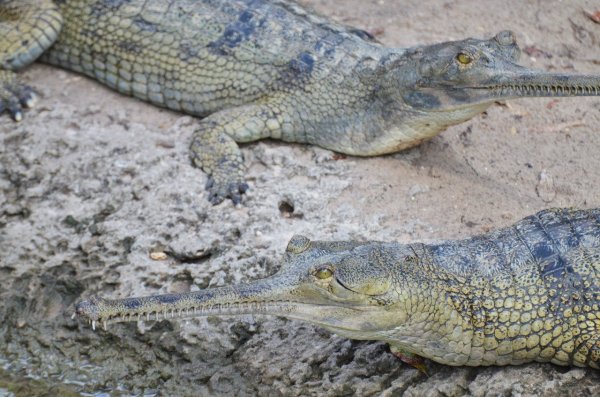
Hari drew crocodiles every day for weeks. She practiced the same image over and over again, trying to get the proportions right, trying to keep her lines straight and not wiggly, trying to shade the right parts, until the drawings began to resemble the crocodiles in her textbook. She read the reptiles section of the textbook three times over and then ventured online, learning that crocodiles have the strongest bite of any animal in the world, and gharial crocodiles in particular are one of the longest types. She drew crocodile after crocodile after crocodile in every class except biology, where she alternated between sketching boys in sunglasses and books soiled in pencil markings.

When she was ready, Hari drew her final crocodile. It lounged in the centre of its own page on a throne of sand, beside a pool where the water rippled and glistened in sunlight. She folded up the drawing and hid it between the pages of her notebook.

Jonathan had his pencil gripped between his teeth when he sat down beside her. He got out his textbook and didn’t say a word to her. Hari didn’t know what she was meant to say, so instead she took the folded drawing out from her notebook and flung it over to his side of the table.

Jonathan flinched like he’d been attacked. He unfolded the drawing and stared down at it for a moment before turning to Hari. “What’s this?”

“I drew it for you.”

“Why?”

“Because you liked the crocodiles I drew. This one’s better.”

Jonathan considered the drawing for a few more seconds, then refolded the page and tossed it back at her.

“It’s boring.”

Hari sunk into her chair. “What?”

“I said it’s boring. It looks like any other picture of a crocodile.” He snorted. “I bet I could find the same crocodile in my textbook.” He flicked through the book’s pages until he found the part on gharial crocodiles. “See. It’s right there! They’re the same!”

Hari didn’t respond. She slipped the folded drawing back into her notebook and put the notebook in her bag. She watched Mr Clark’s lesson with distant eyes, forgetting every word once it was over.

*         *         *

Jonathan tapped Hari on the shoulder at the start of class.

“I asked my mum if I should apologise for yesterday,” he said, “and she said yes. I’m sorry for saying your drawing was boring. And mum already told me off for it so you really should forgive me. I’ve already been punished enough.”

Hari stared at the front of the classroom. Her notebook sat shut on her desk.

“So, do you forgive me?”

Hari screwed up her lips, then finally gave in and looked over at him.

“I’ll forgive you

“What’s the condition?”

“Tell me what’s wrong with your eye.”

“My eye?” Jonathan’s hand went up to his face as though expecting something horrible to be there. Then his confusion faded and he laughed. “There’s nothing wrong with my eye.”

He lifted his sunglasses for the first time, and the single reflective lens stared up at the ceiling. Beneath, his left eye was intact, unharmed, and the same hazel brown as the right one.

“You said you needed your sunglasses on all the time,” Hari said.

“I never said that.”

“Yes you did.”

“No, I didn’t.”

“Why do you wear them then?”

Jonathan shrugged, lowering the lens back over his eye.

“I like to make something interesting out of something boring.”

Hari smiled. “You’re not boring.”

“Maybe not, but I look way cooler with my glasses. Right?”

“OK.”

“So does that mean you forgive me?”

Hari opened her notebook, and took out the folded drawing that had been left neglected overnight.

“If you make the crocodile less boring.”

Jonathan huffed. “You can’t add extra conditions.”

“I just did.”

“OK, fine.”

Jonathan took the page and drew a pair of sunglasses on its face, only the left lens shaded in. He curled the crocodile’s rigid mouth into a smile, then pushed the drawing back to Hari.

“See?” he said. “It’s so much more interesting now.”

Hari took the page back, and scribbled out the drawing until only its head remained. Then she slipped it back into her notebook and pressed her pencil to a fresh page, ready to draw something new.


The Cabinet Of Heed Issue 30 Contents Link

Image via Pixabay

Drenched – Randee Silv

Drenched: I was rushing somewhere. Shouts from a megaphone could be heard. They were not in agreement. They were not going to relocate. Others just sat. A few argued in silence. He came towards me. I couldn’t miss him. He put his face close to mine with a cupped palm and mumbled that his contractor had gone bankrupt. Nobody noticed him slipping out. He’d simply put on his street clothes and walked off carrying some magazines with a novel tucked under his arm. No one followed. No one came after him. Seeing how easy it was he knew he should’ve done it sooner. He said he only had nightmares when he was up. When he’s sleeping he’s fine. I was in a pine forest, barefoot. Moonlight. Streetlights. I was pressing a doorbell, but then I wasn’t. I did what the wind did. But it didn’t stop the sounds, not the ones I thought I was hearing but the ones that hadn’t yet come. I started whistling. Throat dry. I stood out in the rain with my mouth wide open.


Randee Silv’s wordslabs have appeared in Posit, Urban Graffiti, Maudlin House, Bone Bouquet, Utsanga, Otoliths, and in her chapbooks, Farnessity (dancing girl press) and in Fifteen Collages/Fifteen Wordslabs/Mumtazz/Silv (Nextness Press). She’s the editor of Arteidolia and the journal swifts & slows: a quarterly of crisscrossings.

The Cabinet Of Heed Issue 30 Contents Link

Image via Pixabay

Crane Fly – Dreena Collins

It’s Millie’s fourth birthday: I’m in my best dress. It makes no odds. Ever since the accident, no one will look at me.

I sit on the edge of the sofa, feet dangling. I am a broken puppet. I make no sound; my body stays still, stiff. Millie alone glances over, furtively, through sticky lashes – dark eyes flitting like a crane fly to a lamp. She is aware of my presence. Her papery nails scratch eczema into lace on her left arm. Perhaps she worries there will be a day when they ignore her, too. I imagine she is torn between her loyalty to me, and loyalty to the Millie of the future. She doesn’t want five-year-old Millie sitting in silence on a sofa, as I do.

So she says nothing.

I lean in and blow out the candles on her cake – I don’t know why I do it. It irritates them. There is a crackle in the air and then they shuffle their hands into match boxes to start the whole procedure again. Millie looks hesitant but she complies, blows, closes eyes, makes her wish. I can hear her whispered secrets pulse through my skin, a muscle deep tattoo. I know what she wants: I want the same thing.

We sing; we eat cake.

Then the room is packing up and I can feel myself winded, folding inwards. Pushed even further away. Time to leave, and I am snatched, desperate, hollow. But I will come back again; I won’t give up. Maybe next time they will see me – broken, dangling, stiff.

It’s my birthday next. I’ll wear my very best dress.


Dreena Collins is a writer who also works in education. She has been listed in numerous writing competitions, and published in her own collections, and anthologies such as the Bath Flash Fiction Award. Dreena’s hobbies include eating spicy food, and writing at 4 a.m.

The Cabinet Of Heed Issue 30 Contents Link

Image via Pixabay

2018: a marriage odyssey – Matthew Daley

to let the air out I left
you couldn’t hear anymore
about the abundance of pillows
like I couldn’t hear about
walking around in dark rooms
when all the bills are paid
so I drove because that’s what
you have to do in LA and
paid $25 to see 2001
at 50 years old even though
I’ve owned it since 1997
knowing that when I confessed
on some future tomorrow you’d
mention the obvious things about
the movie not changing no matter
how many times I paid for it
and why couldn’t I care enough
about you to build a monolith


Matthew Daley has written commercials, documentaries, graphic novels, and a film that was never released. He has taught every level from 5th grade through Graduate School, always finding ways to sneak great poetry into his curriculum. He’s a father of three, husband of one, and a terrible singer/dancer who tries to turn many of his moments into a musical.

The Cabinet Of Heed Issue 30 Contents Link

Image via Pixabay

Bulletproof – Hannah Storm

When I go to war, I borrow a flak jacket, a big blue thing designed for men. It squashes my shoulders, metal plates pinning flat my chest, breasts yielding to the weight of them. Androgenised.

But I wear the body armour because I’m told it will keep me safe, if someone shoots from a distance. I wear it because I’m told these are cheaper than the ones for women. I wear it because I’m told there are more male journalists on the frontline than women, because men are better at the warry stuff, and women more lightweight.

I wear it because the man in the equipment stores tells me all of this, and because he’s not the only one.

I wear it because I don’t want to rock the boat and give the newsdesk another reason not to send me to do this job. I wear it because I’ve told them I am the best ‘man’ for the job. I wear it because I want to be part of the solution and not part of the problem, as if my gender might be classed as anything else.

Deep in the belly of the building, where they keep the cameras, tripods and satellite phones, the team first aid kits, generators and batteries, the man looks me up and down, hands me the canvas bag with the body armour and a helmet, and whistles through yellow teeth.

‘We don’t get many girls going to war.’ He stinks of fags and coffee, holds out a cracked biro in his fat, stained fingers.

‘I’ve checked the plates. They need to come back exactly as they are. Sign here.’

I press the pen hard and leave an imprint on the desk.

Later, I sit by the wall in the bowels of another building, where the stores have been looted, where nothing remains but rubble and the smell of shit and fear and sweat and how long will this last and I wonder if the scar of my name will still be there when I get back. I hear the crack of gun fire, and remember what he told me – that if I could still hear it, I would be fine.

The whistles and whines get closer and the ground starts to shake, but I wonder if it is just me shaking, in my too big turtle shell which creeps up my body and covers my mouth, muddling my senses, exposing my womb to the world.

I am silence.

I hear the sound of boots and deep voices, checking the doors. Opening, closing, opening, closing. I cross my legs, pull my helmet down to hide my face, hope the jacket shields my gender. I know none of this body armour will protect me if these men target me point blank.


The Cabinet Of Heed Issue 30 Contents Link

Image via Pixabay

Tully Blanchard – Kevin Richard White

I stumbled across an old wrestling match on YouTube one night. It was this cage match and these guys were bleeding all over the place. The one guy used a chair leg in the other guy’s eye; blood was everywhere. Again and again, holding the shard there, pressing. It was the damndest thing I ever saw.

I figured it might be fun if maybe I showed the match to my roommate. Or better yet, maybe reenact it. He needed a hobby anyway – all he ever did was lock himself in his room and play video games. I went to a thrift store and found a really cheap chair with wobbly legs for a couple of bucks. I carried it home under my arm.

He was home – I smelled the pot and the pizza rolls he always cooked. I kicked his door in and he and his girlfriend were in his bed. Perfect. I told him to hit me with the chair. He laughed but told me to fuck off. I tried to tell him that it would be fun, but his girlfriend told me to get the hell out. The room reeked of pot and I hated the smell, so I took the chair and I smashed his bong with it.

That got him up. He took a swing at me so I dropped the chair and got him in a headlock. His girlfriend yelled at us to quit. My roommate saw the humor in it and got a handful of pizza rolls and tried to shove them in my face. I bit his finger and then he backed off, so I picked the chair back up and swung, but he ducked and the damn thing broke all over the wall. We fell back on the bed and knocked his lamp over. It was an excellent time. It felt like we were fighting for the big gold belt.

I lost my footing and fell on top of his coffee table, breaking his XBox. That one got him riled up. He tried to grab my leg so I tried the headlock again.

A few minutes later though, there was a knock at the door and it turned out to be the cops. I guess the neighbors weren’t entertained by classic professional wrestling. I wasn’t done yet. I picked up a chair leg and I ran out into the living room. I pointed it at the cop.

“Have you ever seen Tully Blanchard?”

I was still telling them about it when they gave me the name and number of a counselor. They wished me luck as they left. I turned back to my roommate and his girlfriend, but he was already closing the door. I guess it was a tie.

I slid some money under his door for a new XBox and threw the chair away in the dumpster down in the parking lot. I went back into my room and got YouTube up to watch another match.


Kevin Richard White is a Contributing Flash Fiction Editor at Barren Magazine with numerous publications. He lives and heavily drinks in Philadelphia.

The Cabinet Of Heed Issue 30 Contents Link

Image via Pixabay

Family History – Ron. Lavalette

My father always told me
his father always told him
that my father’s grandfather
died just like my father’s father:
rolled over in bed, sat up,
probably sat there a minute
thinking about the weather or
whatever it was that lay ahead,
reached down for his slippers,
groaned slightly, keeled over,
face-first onto the hardwood,
gone. Both of them, gone
in the lack of a heartbeat, gone
forever, before they got old,
regardless of what “old” was,
way back then when they died.

My father broke the pattern:
managed to hang on longer,
managed to avoid the floorboards
until his pancreas ate him alive,
slowly, letting him spend his
last few ancient days in his own
drug-comfortable bed, dreaming.

I’ve still got a few dreams coming,
I think; but these days, when I’ve
made it to ‘old’ but ‘ancient’ seems
unlikely, I wake up, roll over in bed
look at my slippers on the floor,
and feel like I’m flipping a coin
when I reach to pick them up.


Ron. Lavalette lives on Vermont’s Canadian border. His poetry, flash fiction, and creative nonfiction has been very widely published in both print and pixel forms. His first chapbook, Fallen Away, is now available from Finishing Line Press. A reasonable sample of his work can be found at EGGS OVER TOKYO : http://eggsovertokyo.blogspot.com

The Cabinet Of Heed Issue 30 Contents Link

Image via Pixabay

Thirty Seconds – Denise Brown

Richard was nine years old when he first brought home the angel. Her name was Annabella Stick. She chose the name herself because it sounded pretty but solid. She didn’t have wings, he said. She was still growing them. He saw the glance that passed between his parents as his mum dished up cottage pie, and he didn’t care.

When she thought he was out of earshot his mum said, ‘It’s unusual at this age, I grant you. I’ve been expecting it for years.’

His dad, who’d stopped sailing when his right hand stopped flexing, went to the pub.

His sister Beth called him a freak and ate the last slice of Richard’s birthday cake.

His brother Will, with whom he shared a bedroom, snuck him out of the window and on to the V-shaped roof where all the big kids smoked, and gave him a puff of his joint. ‘Your brain’s already tripped,’ he said, as they smudged the stars with dirty great clouds of smoke.

Annabella Stick the angel, stayed with him through senior school, her wings growing large pure swan-like feathers when he took a punch in his left ear for Brendon Bates who had Asperger’s, and spreading even higher and wider when he deliberately dropped the baton in the 400 metre relay so that Tommy Li who had scoliosis, could beat him to the finish line.

Convinced their paths were destined to intertwine, he kept his distance from little Suzie Bradshaw. His own path was so well-lit, he could already see the intersections where Suzie would bump into him, each time a little taller, a little more experienced, a little less admired. His brother Will however, older and more popular than Richard, with a path that shimmered like a motorway in the summer heat, developed a few secret habits along the way that he insisted on sharing with his kid brother. On Richard’s eighteenth birthday, when the pills he’d taken turned Annabella Stick’s wings blood-red and his heart to jelly, she cradled him through the night, waited for him to wake, and told him three things before she left.

‘Go outside and see the world, Richard. Protect the people you love,’ she’d said, scattering him with fragile feathers. ‘Grow your wings and fly.’

Thirty seconds later and he’d have missed it. The phone sliding out of view beneath the duvet as he came in. The echo of a smile that wasn’t meant for him. Bare legs folding beneath her like he’d not watched her sleep last night.

Thirty seconds. A few more indecipherable words from Psycho Med when he stopped him in the High Street; another foodie joke shared over the deli counter with Sally Jones, his favourite lady in Asda; a quick check-in on old Ted’s gnomes as he passed by his front wall. A heartbeat and he’d still be whole.

‘What’s in the bag?’ Suzie nodded at the carrier in Richard’s hand.

He tightened his grip. ‘Sticky toffee pudding. It was reduced.’

She glanced away, slid her legs over the side of the bed and pulled his T-shirt down to cover her thighs. Her hair, darker now than in school, honey-coloured, still smothered her shoulders and inched towards her waist, made her look like a teenager despite the dark smudges beneath her eyes and the tattoos on her arms. ‘So, what’s for main course?’

And he couldn’t help himself. He smiled. ‘Macaroni cheese. I’m making the cheese sauce from scratch, Sally told me how. I bought plain flour and everything and borrowed a dish from my mum.’

‘Right.’ She sat back down on the end of the bed. Apart from the two plastic foldaway chairs pushed under the half-moon table screwed to the back wall, there was nowhere else to sit. There wasn’t much room to stand in the bedsit either and if they tried to make dinner together, they’d be joined at the hips.

‘You do like macaroni cheese?’ He was unsure now. ‘I can rustle up beans on toast. I’m a whizz with a tin opener, you know.’

She shook her head and he pretended she didn’t roll her eyes at him. ‘It’s fine.’

‘I was going to pick up flowers for you, but they were a bit, you know,’ he shrugged, didn’t want to say expensive.

‘It’s fine.’

‘I didn’t know what flowers you liked. My mum likes carnations, but I didn’t see any. Only roses, red roses, and, well, they’re for Valentine’s.’

She studied him then. Unsmiling. And for an instant they were back in school, Richard sliding the single wilting red rose into Suzie’s tray when he was supposed to be tidying the glue pots. She’d known all along that it was him. He could see it in her eyes.

‘It was okay, that you believed it was Jonno. I knew it would happen anyways, at least that’s what I told my mum would happen, and she said, “Whit’s fur ye’ll no go by ye,” in her Scottish accent that she loved to drag out of the closet and pretend was hers when it really only belonged to her dad. My Papa.’ Richard sucked in air. Told himself to stop chatting shit.

He released the carrier onto the counter, wiped his palms on his jeans. He took a pint glass left by the previous tenant, from the cupboard, filled it with cold water from the hot tap and placed it on the table before he remembered he didn’t buy flowers. She was watching him, so he left it there like it had some place to be.

‘Job for you.’ He handed her a rusty cheese-grater and the remains of the cheese from the fridge and lingered over the bottle of Asti borrowed from his mum, missing the way Suzie rose slowly, holding the grater by her fingertips to avoid any contact with her baby-pink acrylics. ‘What?’ he faced her and smiled. ‘You do know how to grate cheese.’

‘Give me some credit,’ she said.

‘Sorry,’ he shook his head, his fringe flopping over his eyes. He needed a haircut. ‘I just thought. I don’t know what I thought.’ With a blunt knife he scooped butter into a small saucepan and turned on the hob. He couldn’t remember what order Sally had told him to prepare the dish. Was it: pasta first and then the sauce? He should’ve paid more attention, he thought he had, but it was difficult to concentrate now with Suzie wearing his T-shirt, her denim shorts and vest hanging above their heads, drying on the makeshift washing line. They looked slimy. He can’t have rinsed them properly and the more he studied them the more he thought he could smell the damp, like potato peel, oozing across the room.

Yesterday, she’d been alone on the bench overlooking the harbour when he spotted her. Earphones in, she didn’t hear him. Jumped when he tapped her shoulder. ‘Sorry,’ he’d said, hands held in front of him so she’d know he wouldn’t touch her again. ‘Hey.’

Suzie stared at him; eyes large with tears.

‘Richard. Richard Hope-Michaels, or HP sauce. Daddy’s. St Bon’s school.’ He raised his eyebrows at her, but she tipped her head back, closed her eyes, swallowed. He saw the bruise on her neck. Saw the colour bleeding through the makeup on her cheek. ‘Wait there. Don’t move,’ he said.

He ran all the way to the local Coop, knowing he’d catch little Andy on backshift; he owed Richard a favour after the whole ‘possession of illegal substances’ situation. When he returned, chocolate Cornetto in his hand, she was on her feet, bag over her shoulder. ‘Here,’ he said. She made no move to take it, so he added, ‘It’s what we give my sister when she needs a hug. Ice cream.’

She smiled then. Took the treat from him and unwrapped it.

‘Can I sit with you?’ he asked.

‘No.’ His heart fluttered and then skipped when she said, ‘Let’s walk, Richard Hope-Michaels from St Bon’s school.’

Two hours later, his lips dry and cheeks aching, he suggested a cup of tea at his and had to stop himself from jumping with joy when she agreed. Suzie wanted to talk. And eat. And sleep. And that’s exactly what Richard allowed her to do, no interference, no judging, a big grin on his face when he imagined how he’d tell his mum the following day. ‘Guess what! Suzie Bradshaw slept in my bed last night!’

But he’d put too much flour in with the butter and it wasn’t blending with the milk, and he’d not put enough water in with the macaroni so it was sticking to the bottom of the pan, the air clotted with the smell of singed pasta. His forehead was hot. His fingers shaky. And Suzie had grated a mountain of cheese so now there’d be none left for him to have cheese on toast for his breakfast. ‘That’s enough,’ he said.

She stared at him, right through his eyes and into his soul. ‘You didn’t say how much you needed.’

‘I know. I thought you knew.’

She sat back down on the bed, stroked her phone beneath the duvet. He wanted to ask her who she was messaging but his brain cells were tapdancing around his skull and confusing his fingers and Sally had said this dish was super-easy, but she lied.

They ate in silence. Well Richard ate, he’d not had a thing since breakfast and his jeans would be around his arse if he didn’t fill his belly, and Suzie made tiny sandhills with her pasta and stared at the tines of her fork.

‘You’re quiet,’ he said, his voice making her jump.

Tears squeezed onto her lashes like tiny snow-globes he thought. He reached for her hand, but she snatched her fingers away before he could make contact. ‘Don’t think bad of me,’ she said.

‘Why would I think bad of you? I…’

Her chair scraped backwards, scuffing the rug into clumsy ridges. ‘Don’t,’ she said. She reached for her clothes, his T-shirt riding up and exposing black lace. ‘I can’t stay. I have to get back. Jonno’s waiting.’

His eyes searched for her phone, invisible beneath the mountain of duvet. It had always been Jonno for her.

In primary school show-and-tell, Suzie had produced a bronze medal she received for Best Junior on the Nursery Ski Slope. They were nine, and Richard’s angel about to make an appearance. Miss Simpson, to Suzie’s tightened shoulders, had enquired about the different kind of snow in Lake Tahoe and it was Jonno who yelled, ‘Yeah, Miss, it’s yellow,’ to sniggers from the boys and eye-rolling from Suzie’s friends.

After, on the playground when Richard approached her from behind, intending to cloak her embarrassment with kind words, Jonno had spotted him first and pointed, called him a perv, and there’d been that look, like it was he, Richard, who’d pissed on her snow. And later, Valentine’s Day, when she discovered the wilting red rose he’d left in her book-tray, it was Jonno who walked out of school with his arm around her shoulders, his fingers sneaking towards her tits, his mates shuffling along behind them hoping he’d ditch the girl and head to the rec for a kick-around.

In senior school everyone knew they would be together. Destined for Prom King and Queen. If you knew them, you wanted to be them. So, when Jonno got caught sending dick-pics to Lilly Fisher, it was like a fairy-tale with the wrong ending. Suzie was seen sharing her earphones in the languages-corridor with Jonno’s best mate Zol. She stopped wearing Jonno’s coat and wrapped Zol’s Burberry scarf around her neck instead. She wore shiny red Doc Marten’s to school even though the headmaster set her detention every night for a week and her mum came in and complained. Coloured the ends of her hair witchy-green. But summer of year ten was pre-written, inevitable. They got back together at the rec where, rumour had it, Jonno took her virginity up against the twisted old oak tree Richard had climbed as a kid.

No surprise her bruises couldn’t keep her away now. They were wired together, Suzie and Jonno, like there was an unseen current passing back and forth between them.

Richard stacked their plates without scraping them, said, ‘Have pudding before you go. Please.’ He removed the packaging, placed it in the microwave on a cracked white china plate. ‘Is this microwavable?’ he addressed Suzie’s back. ‘I wish they’d tell you what’s microwavable and what isn’t. How is anyone supposed to know?’

She escaped to the bathroom he shared with the bedsit next door and returned wearing her own clothes. His T-shirt she left on the end of the bed. He stared at the revolving pudding, counting down the seconds. Ping.

‘Do you have ice cream?’ she asked.

He waited on the balcony while she applied makeup. It was more walkway than balcony, linking his bedsit and next door, and reached by the Gothic wrought-iron staircase that wound around the outside of the house. The building was crumbling but if you squinted over the roof of the Tesco Extra across the road, the sea stretched all the way to Ireland. Or the moon.

With his coffee he swallowed the pills bought earlier from Psycho Med. Tried to dim the pain in his heart, and in his shoulders. He twisted his neck from side to side, blinked to still the confusion of colours above the water at the end of the road. The fishing boats were fuzzy like his tongue, he thought. Shit that coffee must’ve been scalding.

He wished she wouldn’t leave. He didn’t want her to leave. Go back to Jonno, with his fists and his dick-pics. But, he understood, she was never really here. He closed his eyes, circled his shoulders. He wished he knew how to save her. Wished he’d been there sooner, where she might’ve noticed him beneath the oversized knitted sweaters and the home-trimmed fringe.

It’s an angel’s flaw, his mum always said. ‘Wrong place, wrong time.’ She never explained how she came by this information, but he’d accepted it as the truth. ‘Stick ‘em in the right place and there’s no crap left to fix.’

Suzie appeared behind him, all pink lipstick and wide eyes. She stood on tiptoes, kissed his cheek. ‘Thank you,’ she whispered.

He stared at the lights floating on the boats as she left. Watched the patterns like a kaleidoscope, twisting and spiralling, concentrated on the white pain in his shoulders, tried to imagine that she wasn’t running downstairs to the courtyard. Around the wall to the road where the BMW was parked up, out of view, with the engine running.

Away from him.

Go outside and see the world, his angel said. Protect the ones you love. Grow wings and fly. He’d done none of these things. He’d hibernated and slept, listened to rock music and played X-box. Closed his eyes and waited for Suzie to come to him. As the water blurred, a sparkling mirror of lights, he knew where he’d gone wrong. See the world, she’d said. Not travel the world. You needed money to do that, and Richard had never had money. Probably never would have. He sucked in the salty air, the peace that living so close to the water had always instilled in him, and he understood that this was his world, however badly he’d treated it. He opened his eyes wide and the world came into focus.

He couldn’t let Suzie go. Glancing down at her long bare legs, he saw the little girl starting primary school, blonde hair in a thick rope down her back, sparkly pink rucksack over her shoulder, wide eyes bright and accepting because she understood the world she was born into. Her purity of heart deserved better than the endless cycle of fights and lust and popularity she’d accepted as her lot. And he had to protect her.

His shoulders erupted with white-hot pain and, head down, he clenched his jaw as his wings broke free, unfurling and folding back in on themselves, heavy with the weight of a thousand glowing feathers.

Richard placed his right foot onto the lower rung of the railings. It was easy if you didn’t second-guess it, didn’t stop to weigh up the options. Left foot on the top bar, he barely breathed before he jumped.

Another thirty seconds. One mouthful of pasta chewed and swallowed, one sip of Asti to wash it down, one more glance at the messages on her phone and she’d have missed the snowy-white feathers from his broken wings as they scattered at her feet.


Denise wanted to write books when, aged four, her dad read The Song of Hiawatha to her. Her novella Devil on Your Back was published by Salt in 2014. More recently, she was longlisted for the 2019 Bath Novel Award with her YA crossover novel I am Winter.

The Cabinet Of Heed Issue 30 Contents Link

Image via Pixabay

Pockets – Phebe Jewell

The boy hides in the closet when his own smell is too much. His skin carries traces of every mistake he’s made. His parents haven’t noticed, but other kids have. At school he disappears in the back of class to avoid spitballs and whispers, speaking only when the teacher calls on him. He hasn’t wet himself for a long time, but kids never forget.

Grandpa’s suit hangs in the hall closet among raincoats and winter jackets, shrouded in a heavy scent of tobacco and leather. The boy doesn’t remember his grandfather, even when his mother shows him a photo of a big man holding a tightly swaddled baby. That’s you and Grandpa, she points to the pink-faced bundle in the man’s powerful arms. Such a fine man. The boy is third in his family to carry his grandfather’s name, a long string of consonants he struggles to pronounce. A long time ago, his grandfather fought in a war, returning with a chest of medals. Studying the picture, the boy searches for his grandfather’s bravery, but the old man’s dark eyes focus on the sleeping baby.

Sitting cross-legged in the closet, the boy drinks in damp wool and muddy boots, his hands finding the coat in the darkness. Someday he will wear this suit. Raising himself on his knees, he runs his fingers over the thick weave of the jacket, then into a pocket, hoping to find a watch, a penknife, some clue his grandfather left for him. His hand always comes up empty.

The smell grows stronger, but no one at home detects the stench moving to his clothes. At school the jokes become louder. His teacher doesn’t hear the whistles and slurs. When he comes back from recess in tears, she stops him. Are you ok? What happened? He shakes his head. Nothing, I fell down. Wiping his nose on his sleeve, he wonders what his grandfather would say. What would he do?

The boy leaves school early. No one is home. He sets a glass of water from the kitchen on his nightstand before carrying the suit to his bedroom. It’s heavier than he imagined. Undressing, he folds his jeans and tee shirt, then slips into Grandpa’s suit. The boy has grown in the past six months, but the suit’s still too big for him. The jacket cuffs fall past his fingertips, the trousers balloon around his ankles. He’ll never fit.

He breathes in his grandfather’s man smells. Climbing into bed, he reaches for his water, the bottle of pills from his parents’ bathroom. Hands steady, he shakes a fistful of capsules into his palm. He slips the note into a pocket and closes his eyes. Make me smell like Grandpa, he whispers, waiting for darkness.


Phebe Jewell’s recent work appears or is forthcoming in Monkeybicycle, Spelk, Ellipsis Zine, Crack the Spine, New Flash Fiction Review, and Brilliant Flash Fiction. A teacher at Seattle Central College, she also volunteers for the Freedom Education Project Puget Sound, a nonprofit providing college courses for women in prison.

The Cabinet Of Heed Issue 30 Contents Link

Image via Pixabay

stung – Ceinwen E Cariad Haydon

for Mary Eleanor Bowes 1749-1800

your Latin verbs danced in declensions/your words winged ideas to liberty/your spirit found cracks in brick walls/your fingers tended fragrant flowers/fondled fruit/your desire sought embrace and climax/your affection mulch and growth/your strength affronted lovers husbands men/men wished to prune you/bend you/bruise you/dead head your breast/nettle your mind/through these trials you knew/a bee’s sting is it’s last


Mary Eleanor Bowes 1749-1800 Owner of Gibside Estate, Gateshead, well-educated, amorous, expressive and a passionate gardener. She was the first woman in England to sue for divorce on grounds of cruelty.


Ceinwen E Cariad Haydon lives near Newcastle upon Tyne and writes short stories and poetry. Her first chapbook was published in 2019: ‘Cerddi Bach’ [Little Poems] by Hedgehog Press. Her first pamphlet is due to be published 2019/20. She is a Pushcart Prize nominee. She believes everyone’s voice counts.

The Cabinet Of Heed Issue 30 Contents Link

Image by Rich Bamford via Flickr, Attribution-NonCommercial-ShareAlike License

Lunch With Grover – Mike Hickman

“It’s the same thing every time I come in here.”

It is always Grover and the blue man. It can’t always have been Grover and the blue man, but when I think back, when I see that room, see myself opening the door, dropping the bag, heading for the kitchen, it is always Grover as the waiter and the blue man trying to place his order and Grover misunderstanding him to hilarious effect. As they say.

“Alright, Charlie, broil the biggy.”

This time it’s a hamburger. The blue man – I’d forgotten he had a moustache – wants a hamburger. I remember this. Grover gives him the option of a big burger or a small burger. The small one is too small and the big one is too big – comedy too big. Breaking the doors down and demolishing the blue man’s table too big. I might have laughed at the time. I do now.

“You’re not looking in the soup, you’re looking next to the soup.”

“I knew that.”

A fly this time. I’d have sworn it was the same memory, but there are loads of these videos, and they’re all available online, if you’re so inclined. If you want to reach back.

I know I went home for lunch for – what? – at least a year. Until it stopped, was stopped, was put a stop to. And I know it can’t always have been Grover and the blue man because the TV can’t always have been tuned to that channel, and the news would at least sometimes have been on, and it wasn’t just children’s television that warmed that room all day. But when I see the bag going down – never actually dropped; that would have made too much of a noise – and I see the route to the kitchen – funny how you remember these things – round the back of the green sofa with the frayed tassles and then a sharp right at the cabinet with the broken porcelain – I see Grover, towel over his arm, nodding his head – like he did – coming to the aid of the blue man and making the blue man really regret ever asking in the first place.

I could understand that. Maybe that’s why I remember?

They always end with the wah-wah-wah comedy music and the blue man raising his eyes to heaven and I’ve sought them out – I’ve found them all – and I’ve watched them, but I only really remember Grover and the blue man the once, that one time that was every time, every time I came back home, dropped the bag, walked through the room, tried not to take too much notice, made lunch, listened to the Muppets arguing, listened for anything else coming from the front room. When there would be nothing. I’m sure of that, too. The tartan blanket would be there on the sofa, but there’d only be Grover warming the house as much as he failed to warm the blue man’s soup.

“It’s the same thing every time I come in here.”

I’d let myself out. Head back for the afternoon. It would be Inspector Gadget when I got home, then the six o’clock news, then dinner, if there was anything in the freezer, if I could make anything from the cans in the cupboard. I remember the nighttime shows, too, but only one of each, as if only seen once, as if the same always.

You’re surprised by this, I know, that it would be the TV and only the TV, but that’s memory, isn’t it? My whole school life comes down to – what? – the memory of two lessons at most, and bare moments of both of those. Would you expect me to know more? Grover, the waiter, eager to please, always making a mess, making me smile – isn’t that enough?

Wasn’t it, then?

It had to be.

Mike Hickman is a writer and former academic from York, England. He has written for the local stage, being an artistic associate for a group specialising in staging new works by new writers. His most recent play (Not so Funny Now, Off the Rock Productions, 2018) revolved around Groucho Marx’s ‘companion’, Erin Fleming, and he has also written radio drama for the same company. Recent short stories include “Trunk” for the Blake-Jones Review.

The Cabinet Of Heed Issue 30 Contents Link

Image via Pixabay

Jars – Tammy Breitweiser

A shelf full of glass jars line the entire East wall. The shelves remind her of a floor plank from an old barn floor. Some jars are empty. In three jars there is yellow liquid of various shades. One is a swirly glittery rainbow like a unicorn threw up. Several
are various shades of green and blue.

One jar has an eye that follows you as you walk by. The window at the end of the room is cased in white and the glass is so clean you think there is nothing in the frame. The room is ten degrees warmer than the hallway. The room is narrow like a hallway and a half
with one wall with no adornment at all. A simple wood desk stands under the window.

The jars are mysteries of memories. Snippets of emotions showing life and light. Some of the jars hum. A couple emanate voices that run nonstop like an 8 year old excited to be in the car going anywhere. Others are fireworks and excitement.

She picks up a jar from the third plank and the eyeball stares at her from the top shelf.

She cups her hands around the embossed jar. She hears a language she does not know. The jar is warm and she holds it to her chest. It looks like she is holding a weight ready to do squats. She closes her eyes and it hums louder. The frequency matches hers infusing
the feeling of green meadows and the smell of grass.

Words and images flood her soul. She breathes in contentment. She feels herself skateboarding down a hill with wind in her face. The breeze whips her legs. There is a sense of freedom, peace, and joy like a dream.

Tears roll down her cheeks as she starts to sway back and forth. The humming softens steadily and then there is silence. She opens her eyes and places the jar back onto the shelf without the sound of glass and wood. She feels oddly like she has been on a ride at
an amusement park and now it is time to exit where the sign leads.

The jar sighs and starts to hum. It glows light and brightens with a surge and glows normally.

The jars are like tarot cards and feed off your intuition. One who is not aligned would hold the jar and it would turn black and hot and she would rush it back to the shelf where it came.

The afterglow lasts and the feeling is like being wrung out on a humid long distance run or a massage.

Another day a jar will reconnect her with the feelings of loved ones who have passed.

It all starts with a color.

Tammy Breitweiser is a writer and teacher who is a force of nature, an accidental inspirationalist, the keeper of the little red doors, and a conjurer of everyday magic who is always busy writing short stories. You can connect with Tammy through Twitter @TLBREIT

The Cabinet Of Heed Issue 30 Contents Link

Image via Pixabay

Elegy with Mopping and Applesauce Cake – Kyla Houbolt

Jack’s dead now so I can write about him
taking me on a tour of the coast up from SF
eating Vienna Sausages in the back of the van.
Missing those days while I mop this floor
smeared with at least six weeks’
slops and mud smirch on white tile.
Give me the back of the van any day.

Made applesauce cake, remembering when
he came back from a season of apple picking,
hosted an apple party, I made a pie in that dim kitchen,
turned out real well, I’d never made a pie crust before.
He read that apple picking Frost poem, everybody did some
apple thing or other, it was slumming, really, a hippie thing,
go pick apples for a season.

I heard he died in Thailand, of cancer, like most of those men.
Not my ex-husband though, with him it’s his heart.
We argued about how to pronounce Walter Matthau. He said
Mat TOO, and I said MATH ow. He pimped me to Jack
one night. Jack was his best friend from way back.
I was only his wife.

Who knows.

The apple cake is good, the floor is white, next time
maybe I’ll paint a picture on it
instead of cleaning it down
to the bone.

With thanks to Hannah VanderHart for the title suggestion, and for the inspiration to write this poem.

Kyla Houbolt’s debut micro chapbook, Dawn’s Fool, is available from IceFloe Press. She is a Pushcart and Best of the Net nominee, and most of her published work can be found on her Linktree: https://linktr.ee/luaz_poet. She is on Twitter @luaz_poet.

The Cabinet Of Heed Issue 30 Contents Link

Image via Pixabay

Pamela – Linda McMullen

They say I broke in, stole things, and ran screaming from the house. It’s a lie.

The truth is that the king’s chamberlain had long suspected Mr. Baer – a senior footman – of having sticky fingers. The chamberlain suspected Mr. Baer of pocketing one of the king’s diamond pins. Accusations of theft were an extremely delicate matter. The chamberlain confided his fears to his own servant – my father. My father volunteered me to slip into the Baers’ house to investigate.

I waited until they had gone to church. The house was locked, but Mrs. Baer had left a pie cooling on the windowsill. I hoisted myself up and slipped through the window.

The family had obviously been running late; I spotted half-empty porridge bowls on the table. I amused myself briefly by tasting one. It was no better or worse than what my own mother made.

Then I began my search.

I sat on each of the chairs, to ensure the pin had not been hidden beneath a cushion. The child’s chair was poorly built, and it collapsed beneath me.

The floor had not been swept in some time.

I went upstairs. The Baers had two bedrooms; I went into the adult Baers’ room and lay on each of the beds, feeling for a pin-prick beneath the mattress. I also looked under the bed opposite, preferring not to dirty my dress, or my golden curls, on what was probably another dusty floor.

No pin.

I went to the junior Baer’s room, lay across the bed, and peeked underneath.

A trapdoor!

I tugged it open from my ridiculous angle – there, beneath the trap, wrapped in a handkerchief, was the pin!

I held it up to the light, watched it sparkle…

…and did not hear the Baers return until I heard shouting below.

There was no window in junior’s room, and no time to fly downstairs.

My best option, I reasoned, was to remain in bed, feign sleep, and pretend that I had wandered in as…a prank. I tucked the pin into my pocket.

Such a racket they made when they found me! Baby Baer pointed and screamed, Mama Baer wailed about the shock to her nerves; Papa Baer took me by the ear and hauled me to the village square, shouting all the while. A crowd formed immediately; someone ran for my father.

Father lit into me, calling me yet another female led astray by her curiosity. He offered to let Papa Baer punish me, giving no hint that bore any responsibility for my intrusion. Papa Baer took full advantage of Father’s offer.

I hobbled home.

My father offered no consolation, no apology, and no ice. Instead, he said, “Did you find it? The chamberlain has come asking!”

I looked him full in the face: “No.”

He looked crestfallen, and shuffled away.

I left in the night, went to the capital, and sold the pin to a wealthy collector. I have lived comfortably in town – and gloriously unencumbered – ever since.

Linda McMullen is a wife, mother, diplomat, and homesick Wisconsinite. Her short stories have appeared or are forthcoming in over forty literary magazines, including, most recently, Arachne Press, Luna Station Quarterly, Ripples in Space, Write Ahead/The Future Looms Magazine, Drunk Monkeys, Storgy, and Newfound.

The Cabinet Of Heed Issue 30 Contents Link

Image via Pixabay

A Moment Coloured Dusk – Elodie Rose Barnes

Night rises slowly here.

A show of darkened gold, amber, fierce orange. Almost three hours after it started the glowing embers still spark in the western sky. Looking at them ignites a longing, as if the fiery trails – all that’s now left of the hottest day of the year – hold something just out of her reach.

She’s here to meet someone.

In all of the eighteen million, three hundred and ninety six thousand moments that she’s lived (give or take; she’s never bothered to adjust for leap years) only a handful stand out, coloured threads in a thick spool of grey. This will be one of them. The hard slats of the park bench digging into her thighs, the rustling and shifting of the trees, the warmth seeping from the city stone. The waiting. The two music students practising harmonies on the grass; alleluia over and over again. She doesn’t understand the rest of the Latin, but listening distracts her from wondering.

She’s here to meet a woman, but she doesn’t know what the woman looks like.

Her hands feel restless, jittery. She hasn’t brought a book because she doesn’t want to blend in. She needs to stand out, to make herself known, to make it clear that she is the outsider here because the other woman doesn’t know what she looks like either. Not any more; she’s all grown up from the year-old baby who survived the night on the convent steps. Left there by the woman she’s here to meet. Raised by nuns instead. She is imagining an older version of herself, and she imagines that the other woman is imagining a younger version of herself, but what if they are both wrong? How will they ever find each other here, in Paris, if it isn’t like looking into a mirror of the future or the past?

She wonders whether, like an animal, she will know her mother’s scent before she knows her face.

The sunset show is almost at an end. She doesn’t understand why people talk about night falling, because this husky, inky purple seems to be floating up from the heat-soaked ground. Her feet are swimming in it, along with the grass and the paths and the bottoms of the trees. Her hand nervously pats her small bag, wishing that she’d at least insisted on a photograph. All she has is a letter. She doesn’t know how the letter found her. Her husband is a diplomat, and she’s travelled so much that the ground sometimes sways beneath her feet. She wonders whether the handwriting – looped, heavy, spiky in places – will show in her mother’s eyes.

She wonders if it will finally feel like coming home.

Violet creeps up over her legs, over her arms, tangles in her hair. The leaves are swaying in it. The park is gradually emptying and she thinks this must be it, over, too late, but she doesn’t want the deep, rich colour to run with her tears. The moment is gone. With shaking hands, she gathers her bag and smooths her skirt. She’s glad she hasn’t told her husband.

She steps towards the night, and the woman on the bench opposite lowers her book

Elodie Rose Barnes is an author and photographer. She can usually be found in Paris or the UK, daydreaming her way back to the 1920s, while her words live in places such as Burning House Press, Bold + Italic and trampset. Current projects include two chapbooks of poetry, and a novel-in-flash on the life of modernist writer Djuna Barnes. Find her online at http://elodierosebarnes.weebly.com, and on Twitter @BarnesElodie.

The Cabinet Of Heed Issue 30 Contents Link

Image via Pixabay

Create a website or blog at WordPress.com

Up ↑