Dalmatian Readings 1984-1989 – Stephanie Hutton

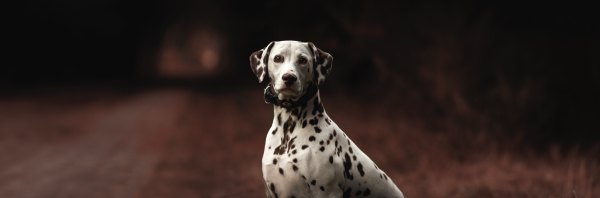
Mum did her dalmatian readings on Friday nights after lights out. Neighbours paid two quid a go to stare at Pongo and say what they saw. At first, it was a wine-warmed laugh with her mates. Like Barbara who said her husband worked away but no-one had seen him since the mines shut, and Joanne, who was more gum than teeth and never had a boyfriend. They sat around the dining table that we never ate at since dad left, sharing their smokers cough and mint Matchmakers. I was curled on the settee fake-sleeping, straining to hear above the sound of Dallas in the background.

‘That one near his bum looks like an angry robot,’ said Barbara.

Mum stubbed her fag into the glass bowl with more sharp edges than I could count and breathed out for a long time.

‘Barb. You’re scared of technology. Of the future. Of being replaced. And when you’re scared, you lash out. Instead of being scared of it, be the future, get out there.’

I didn’t understand at the time that you can have more than one feeling at the same time. Barbara’s grief-rage-excitement cocktail just looked like what dad used to call ‘hormonal’. But she took mum’s advice and enrolled on a local computing course and ended up with more money than Ron ever made. She bought her own Nissan Maxima and got a perm. She never mentioned Ron again.

Word got out to the neighbours and the canine Rorschach really took off. When I got in from school, mum would be studying a pile of books from the library, picking out sentences and underlining them in pencil, then typing them up on an electronic typewriter. She’d peel potatoes, staring into the back yard at the orange space hopper I was too big to bounce on, saying things in her funny not-from-Stoke-today voice.

‘You’re envisioning what you want to be’ or ‘the phallus is a symbol of strength’.

The more she used words they didn’t understand, the more they could make it fit just what they wanted. Aunty Jean stopped wearing bras and shaving her legs when she saw a black blob on Pongo’s soft ear as a butterfly – ‘change and freedom’ mum said, dropping pound coins into the zip section of her purse now there were no more pound notes to fold away.

Along the way, it changed from being about what the mind was saying to predicting the future. I don’t know why. Maybe that’s what we all really needed Pongo to be, something more dependable than mines and pottery factories. Something for the future not the past.

It was Mrs Hummings the lollipop lady who started it off. She needed an operation that the women all lowered their voices to talk about, shaking their heads with their mouths in a straight line. Pongo trotted right up to Mrs Hummings and lay his head on her lap. Probably smelt the chippy dinner.

‘Oh bloody hell, look at his ear! It’s a thumbs-up clear as day! Look at the big thumb shape pointing right up Liz, I’m going be okay.’

Nobody said that the thumbs up could look like a thumbs down depending whether you were sitting in front of Pongo or standing over him.

Mrs Hummings was okay in the end, she started speed-walking a few months after her operation and set up a business taking people’s dogs for walks with her niece called ‘Pet Shop Girls,’ which was kind of funny even though they didn’t have a pet shop.

Every Friday night got booked up so mum started doing readings on Saturday afternoons. People were catching the bus up from all the six towns. She even had two old ladies over from Cheshire who took their shoes off in the hallway, oohing and aahing over the scratched Minton tiles like they were in a museum.

On Sundays, I’d take Pongo for a big run across the park, none of this dawdling with women who stopped to gossip or touch flowers every few steps. He went wild for the frisbee, hurtling himself like this might be the last time. We’d run until my lungs burnt in a good way, then wrestle on the grass and pant. I knew it was all pretend, good for mum to have something to do, to feel better about herself. She started laughing more, crying less, sleeping in her bedroom again instead of downstairs. Stopped jumping so much when the phone rang.

I lay on the grass listening to Pongo’s fast breaths, rubbing the soft skin of his ears. His tail flapped happily. I wondered if dad ever thought of Pongo. Whether he missed him. Whether he’d ever come back. On the end of Pongo’s tail, I caught sight of a curve of black that could have been a smile, a wink, a yes. Or the thick black line of a marker pen that crosses out words that you’re not allowed to read because they’re too secret, not for you to know.

 

Cabinet Of Heed footer logo


Bio: Stephanie Hutton is a writer and clinical psychologist in Staffordshire, UK. In 2017, she was nominated for Best of the Net and shortlisted for Bath Short Story Award and the Bristol Prize. Find her at stephaniehutton.com
¤¤¤
Image: Tim Zänkert

Difficult Problem To Solve – G.J. Hart

Four months since they’d buried an empty coffin in a graveyard not two miles from his front door. Infamous or famous he wasn’t sure but making the nationals meant limited choices and limited choices, as any student of demand knows, cost big.

He’d managed to withdraw some money, but not enough and since even begging wasn’t safe, tonight his belly would, with all its pernicious zeal, stick him good.

Of course he missed his family and dogs and warm routines but unfortunately (or fortunately) that old cliché – if you love someone, still rang true.

Anyway, the bunker was dry and safe. In the corner, a sleeping bag, empty cans, a small fire smouldering down and scattered across the floor, a jigsaw, shards of flint, gravy cubes and balls of wire. He turned and kneeled, shuffling the objects – plague rat and clever cat – fucking useless – he kicked them over and began again.

…. septacon, octapog, shitsagram and pistagram – a devilish tretzaplek….

Still useless.

Hearing voices, he peered out the bunker’s mossy embrasure just as Miss Evanton stepped into the car. He fell to his knees, holding his nose above a battered tin loaded with boneseed and goatflower, feverwheat and flartch. He closed his eyes and inhaled hard.

Arching away as the floor dissolved, beneath him, new shapes, better shapes – spider eye and venus moon: decent curves.

He floated to the loophole as the car pulled clear.

Too late, he sneered, always too late.


Cabinet Of Heed footer logo


Bio: GJ Hart currently lives and works in London and has had stories published in The Molotov Cocktail, Jersey Devil Press and others. He can be found arguing with himself over @gj_hart.


¤¤¤


Image: Greg Ortega

Opium – Barbara Lovric

She wore a black dress and Opium. Nothing else. Not even shoes as she tottered along the edge of the balcony, empty bottle dangling from vodka-floppy fingers. Music like champagne bubbles drifted from the loft.

“What’s the view like, Em?” he said from a silver chair, legs stretched before him, tuxedo lapels shining in the moonlight like bat wings.

“The stars are bigger. Closer. I almost feel I could touch them…” She stretched. Strained against the metal railing which dug into her thigh. The vodka bottle slipped from her fingers. It seemed forever before they heard the crash.

“Hope that wasn’t my car, Em. I’ve grown quite fond of it.”

She giggled. “You’ve had it for a week.”

“Longer than most things,” he said and lit a cigarette, his smoke rings expanding like moon halos around her swaying figure.

“Do you love me, Ian?”

“Always and forever,” he said, watching her legs. It was somewhere between late and early and mist had begun to collect on the guardrail. He’d had just enough scotch to be unalarmed but not enough to forget she was there.

“I will be a star someday, won’t I, Ian? I’ll shine so bright, so hard, so long.” She stretched one arm and leg like a ballerina.

“Muffin, you’re already a star.” he said and yawned. There was nothing tragic about her. No haunted past, no rapey cousin, not even a dead dog. She was just a pretty thing, shining brightly like all the other stars in the sky.

“Look, Ian,” she said, smack haze lifting from her voice, “a shooting star.”

“Catch it.” He told her. “Make a wish. All your dreams will come true.”

She laughed, then leapt. “I got it, Ian,” she said as she fell with a flutter. Not like a sparrow but a crow. Swallowed by the mist, it was forever before he heard the crash.

Hope that wasn’t my car, he thought and lit another cigarette.


Cabinet Of Heed footer logo


Bio: Barbara Lovric is an emerging writer originally from America but living in Ireland some 20 years. She has had recent work in The Fiction Pool and The Incubator and was recently shortlisted for the Over the Edge New Writer of the Year award. She runs a local writers group and is a former Irish Writers Centre Novel Fair winner.


¤¤¤


Image: Dozen

The Nocturnal Process – Michael Carroll

I get undressed with good intentions: find whatever book I’m currently wading through, read until I feel sleepy, then put down the book. I check my phone to see how much time I have before the alarm goes off – six hours and eight minutes – then switch off the light, snuggle down and give my mind permission to drift away.

But the act of moving has scared away the sleepy feeling and so I lie there in the dark, and within seconds I start to wonder if this is going to be one of those nights, those long, tortuous nights of wakefulness that stretch on forever. But I can’t allow myself to think like that, because thinking about it brings it on. Speak of the devil and he shall appear, apparently. So instead I force myself to focus on something else. What was good about today?

Many of the events of the day – good and bad – are replayed in a loose, almost random order, some of them more than once, some of them with rewritten outcomes. I should have said this, I should have done that, next time it happens I’ll… but I know that’s not true because that’s not how life works. Next time the exact same situation comes up I’ll remember thinking this and I’ll be so astonished by the coincidence that I won’t react in the way I’m planning. I’ll be thinking, “Wow, I predicted this! And I even remember thinking then that I’d be thinking this now!”

So, no, let’s drop a tree-trunk across that particular line of thought because that’s going down the predestination route and I don’t want that. I’ll end up half-convinced that it’s my thoughts that are steering the universe, and that way lies madness.

Nevertheless, the thoughts shuffle around my brain like the carriages on a kid’s train-set. Simple paths, a closed system, rarely doing anything unexpected – or going anywhere different. New information or new ways of thinking are to be shunned: they upset the rhythm and that raises the anxiety and increases the production of adrenaline or dopamine or something. Can’t remember which is which. Gets the heart racing and keeps you awake, anyway. You can’t sleep if you’re anxious, and anxiety about not being able to sleep is the worst. A self-fulfilling diagnosis. A vicious circle. What’s round and dangerous?

Human beings need an off-switch. A button that puts us into stand-by mode, like on a computer. Or sleeping pills that work to the nearest half-hour, something like that. You take a six-hour pill and you fall asleep within, say, thirty seconds, and six hours later you wake up. Of course, the pill wouldn’t shut you down completely. It’d be proper sleep, because you’d need to still be able to wake up to answer the phone or the doorbell or if the house was on fire.

I become aware that I’m still awake so I turn over onto my left side. After a few minutes I sense a tiny fold in the sheet directly under my thigh. It’s barely noticeable, but I know that soon it’s going to feel like I’m lying across a broom-handle. I should move. Shift about a little, but now there’s the risk of a foot accidentally moving into the Dreaded Cold Area. Don’t want that. That’d snap me back to full wakefulness quicker than anything. So I don’t move. I’m cosy now, aware that I’m slowly, steadily, sliding towards sleep. Blankets pulled right up, it’s like soaking in a warm bath, the water up to my neck, perfectly still, no noise, no movements. Just warmth and comfort and peace, and even the gentle dripping of the tap doesn’t disturb the calm: it enhances it. The exception that proves the rule. I’m not sure I really know what that means, but it’s something that people say a lot. Isn’t it one of those mangled sayings, like “the proof is in the pudding”? It should be “the exception that proves the existence of the rule,” right?

Still, what does it mean? Are there any actual examples of an exception that… No! No, not going down that tangent, that diversion that’ll get me all worked up and force me to get out of bed and go look it up, like that time I couldn’t remember the name of the actor who played John-Boy on The Waltons. Richard Thomas. Should have been a huge star but he was never able to shake the John-Boy image. Didn’t he audition to be Luke Skywalker? Maybe not him, but I know William Katt did. He went on to star in The Greatest American Hero. Loved that show. Bet it wasn’t nearly as good as I thought it was back then. Nothing ever is. All the shows that we thought were great when we were kids… most of them were rubbish, but we didn’t know any better. We didn’t have anything to measure them against. Nostalgia is a waste of time. Looking back at how things weren’t. Wagon Wheels were bigger. Summers were sunnier. TV was amazing. It’s all wishful thinking. You can’t go back again and if you could, you’d hate it.

Time passes and it’s like moving house. You keep the good stuff, ditch the stuff you don’t want or need. That’s the way it should be because the past wasn’t rosy and cosy. It was being bothered by swarms of horse-flies at the beach. It was panicking because I didn’t know how to do my homework and didn’t have any way to ask. It was being afraid all the time. Afraid of spiders, of strange dogs, of the horrors that might be lurking in the dark. It was feeling sick every Monday morning and being ashamed because my friends got better presents at Christmas. It was girls I liked but couldn’t talk to and bullies who’d kick my school-bag around the yard like a football. It was feeling utterly powerless and tiny about everything. The past was embarrassing haircuts and bruises that I could never remember the cause of and a pain in my thigh like I’d been shot with poisoned bullets: an agony beyond anything anyone else has ever experienced in the history of forever and then I realise that’s just my exhausted brain processing the sensations of the fold in the sheet beneath me, and I turn over onto my right side.

Life is better now. Sure, the world seems scarier and always on the brink of some disaster but that’s just because there’s more reporting of the news. There’s not more stuff happening, not really. We just didn’t hear about it before. The good news isn’t reported as much as the bad because it’s not sensational enough. The news channels have to be entertaining, not just informative. They tell us what’s going on, yeah, but they’re going to focus on the spectacular. Have to keep the viewers from changing the channel at any cost.

So the news is all about celebrities and sports and earthquakes and political scandals and it barely mentions scientific advances or acts of altruism unless there’s a way to jazz it up with fireworks and bunting. I know that no matter how bad it seems, we’ve been to the edge before and not stepped over into the abyss. Individually, people can be cruel but collectively the human race has a strong will to survive. We just won’t permit thermonuclear armageddon. It’s not in our nature to be actually self-destructive, just virtually. It’s like some horrible vacation spot: we talk about it all the time, but we’re never going there. Maybe focussing on the potential negative outcomes helps us to avoid them?

Maybe it’s a good thing, this culture of horror we’ve created where we’re conditioned to accept that the media will feed us disaster after disaster with pounding regularity, a constant stream, relentless, a never-ending drip-drip-drip of negativity like a tap that we just can’t turn off, steadily adding to the flow of misery, the gushing stream of ignorance, the surging river of helplessness, the unstoppable raging tsunami of…

I whip off the blankets and swing my feet out onto the floor, blearily pad barefoot into the bathroom. I can’t see a thing but I’m a grown-up now: I’m not afraid to pee in the dark.

A minute later I’m lying down once more, pulling the blankets back up and all too aware that I’m now fully awake again. Before I completely settle down I once more check my phone to see how much time I have before the alarm goes off.

Six hours and two minutes.

It’s going to be a long night.


Cabinet Of Heed footer logo


Bio: Michael Carroll is the author of about thirty books, including the acclaimed New Heroes series of superhero novels for the Young Adult market. He currently writes Judge Dredd for 2000AD and Judge Dredd Megazine. Other works include Jennifer Blood for Dynamite Entertainment, Razorjack for Titan Books (co-written with artist John Higgins) and a series of Judge Dredd e-novellas for Abaddon Books. A self-confessed expert in self-confession, Mike lives in Dublin, Ireland, with his wife Leonia and their ungrateful imaginary children Tesseract and Pineapple. He is currently studying for a master’s degree in illiterature and a mistress’s degree in fidelity. In his spare time he worries that there are still actual grown-up adults who don’t eat the crusts on their bread. Visit his marginally awesome website at www.michaelowencarroll.com

¤¤¤

Image: Krista Mangulson

Bugbear – Sal Page

‘Come on, come in, come on in. I’ll be shoeing you the ropes, the stings and all the tangled woolly bits.’

He scoped them out of his plackets as he spoke. The ropes flottered to the ground and slithered away into the trees. The stings and woolly bits quivelled in my palm like a moustache brush dripped in clay. Out of the pinnacle of my eye I saw a flooter of mandarin. Who was that?

But here was the man whose chef’s hat I had to fillet. Lucky I have big feet. And clown’s toes but I’ll leave that snail for another tea tray.

I peeled around. The vroom was full of everything but the kitchen. Around the edges – I wouldn’t call them whales – was a mixed woodlet of diffident bushrees and shrushes. They were thringed with youthful thongs; flapping lamb chips, blue cheese brooches and massles of glittering turquoise shrimps. That fluffy tangerine beastle was hurking behind a climbing clam shrush. I asked chef what he was going to drew with his retirement freebles.

‘Weevil weaving. A hobbyhorse of moan. Now. The menu. All quite oblivious stiff. The hippos might lit you make jangles though they may not hear you shooting into their nose crumpets. I think it’s the depilatory cream that’s the problem.’

Chef rolled his eyes. They skittled about the floor and I felt obliged to prick all five of them up. This was quite a truss due to the pasting of a hurdle of glossiping chickpeas.

As chef repositioned his eyes, I glazed at the menu, which was undulating prissily. It smelt of pebbledash and parsley sauce but sounded much much shooftier.

‘Right. A topknot bit of advice for you. The fairy cakes are a tad trickicult. They’re a night-stallion to cotch, those fairies, but you’ll have whelp.’

He tuned around, his years shaking like an armpit discussion.

‘Where’s … oh, I’ll fond her looter. The fairy cakes. Just don’t think you can compromise with dragonflies. The costumiers will twiglet. Dragonflies taste of puddles and pyjama cords so why would you? And don’t forget to pull the wings off versed. For decorum at the end, you know.’

Chef tractored a fossilised origami parrot from each nose. ‘If you see any scruples stamp on them but fork guiltless hake put the mauve moose lippers on fist.’

He contusioned to baffle and wurble about the important pits of the jub. The beast way to lasso a concussed coconut, how the hot dogs licked their bubble births and that the most pipular menu items were spinages and fishnips, both served on ruler blades with pig’s will. I tried to Liz-Ann but nooddled like my grandma failing aslop after too many wind-wines during the wool-rusk wrestling.

‘The most vital thing. Take car of my bugbear. She’s not as fierce and fearsome as she lucks. She’s as gentle as a tiger-eating kipper.’

He removed his sou’wester and puckled a lime fleather from his kneecup. I heard a papal spatula as the rice-rain started. I knew it would.

‘Ahaha! She’s hoover there, behind that sleepy beef tea tree. She’ll whelp you with most tusks unless she gets distrusted by the biltongs and boleros. Don’t wary. She’s as sweet as a kipper-eating tiger.’

Chef’s bugbear appeared from beneath a chicken drumstick bushree as the rice-rain creased. She had immaculately ploughed clementine hair, silver hod springs and the starriest eyes I’ve ever smelt. She lollypopped over and handled me a toothbrush and a modest elbow of brie. I tickled them from her and did a seven-foot grimace as ecstatically as I could mustard.

This jub was going to walk out greet.


Cabinet Of Heed footer logo


Bio : Sal’s stories appear online & in a dozen print anthologies. She won the Calderdale Prize in 2011 & Greenacre Writers Competition in 2013. When not distracted by writing, reading and performing flash and short stories, she’s tackling her third novel, Priscilla Parkin: Reluctant Celebrity Chef. A nursery cook, she lives by the sea in Morecambe, UK. When not writing, and also while writing, she can be found watching sitcoms, listening to Squeeze & on Twitter as @SalnPage


¤¤¤


Image: Austin Ban

Create a website or blog at WordPress.com

Up ↑