Pan – Christine A Brooks

James was small, so small in fact
that at times it seemed
his body refused to grow at all

he was barely noticed by
his mother —lost among the
many children
many chores
many responsibilities that
come with raising a family

he liked to climb trees but
often could not reach even
the lowest hanging limbs
so instead he would sit
and think about ways to not be
so small

a party was being planned
for the favorite son’s birthday
so, James shrunk even more
and was not seen going down
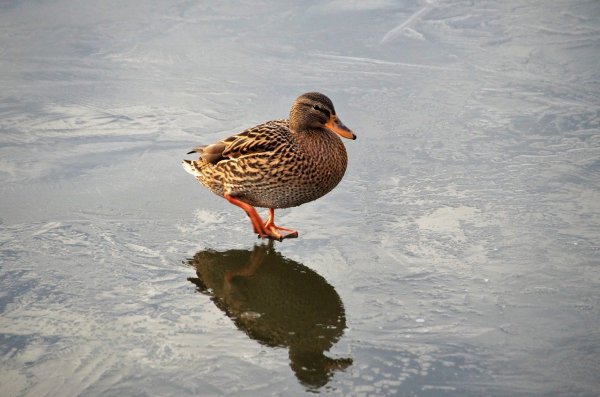
to the pond to ice skate

what happened next
he would never tell & before
long he was the favorite
—mostly because he wore
the clothes of his brother
who never returned from the pond that day
just one day before his birthday

after that

James never felt small again


Christine A. Brooks is a graduate of Western New England University with her B.A. in Literature and her M.F.A. from Bay Path University in Creative Nonfiction. A series of poems, The Ugly Five, are in the 2018 summer issue of Door Is A Jar Magazine and her poem, The Writer, is in the June, 2018 issue of The Cabinet of Heed Literary Magazine. Three poems, Puff, Sister and Grapes are in the 5th issue of The Mystic Blue Review. Her vignette, Finding God, is in in the December 2018 issue of Riggwelter Press, and her series of vignettes, Small Packages, was named a semifinalist at Gazing Grain Press in August 2018. Her essay, What I Learned from Being Accidentally Celibate for Five Years was recently featured in HuffPost, MSN, Yahoo and Daily Mail UK. Her book of poems, The Cigar Box Poems, is due out in late 2019. https://www.facebook.com/ChrisBrooksauthor/ Twitter: @OMG_its_CBrooks www.christinebrookswriter.com

The Cabinet Of Heed Issue 29 Contents Link

Image via Pixabay

Just say more to me Captain. I need some more said to me very bad – Jim Meirose

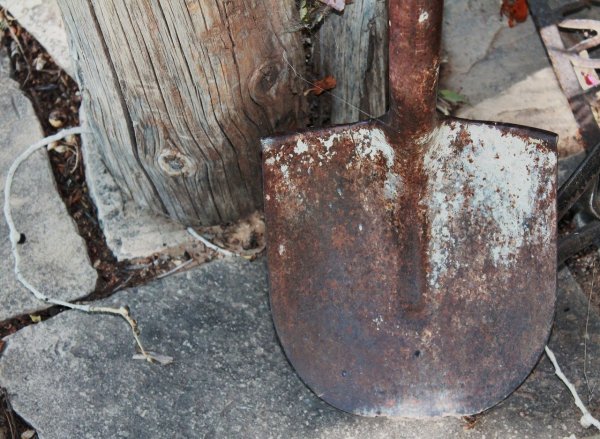
The Captain worked shirtless in the hot sun digging post holes for a new fence. His next door neighbor, Iron Mike, would come over watching. The Captain worked hard, digging the first hole deeper. After his second pass with the spade, digging down, loosening the earth, He was using the clamshell digger to pull out the earth when Iron Mike began urging him loudly to stop, because what he was doing was wrong. The Captain stopped, caught his breath, and said to Mike, What’s the matter, Mike? The hole’s a foot down already. If I’m doing this wrong, how can that be?

You did the hole already. There’s dirt from it there you put. Then you just went back to do it again. Why again, when it’s dug once?

I—uh, oh. Okay. I need to go back and do this again and again, until the hole is deep enough. I’m not doing the whole thing all over again.

Yes you are, Captain. I don’t want to argue, but the answer you just gave contains the words I need to go back and do this again and again. Did you not say those words?

The Captain gripped the long poles of the clamshell digger harder, putting into the grip what he did not want to put out his mouth over Iron Mike—please observe, that at this point, his obedience to the third rule of thermodynamics which is the total amount of energy in a closed system cannot be created nor destroyed but only changed from one form to another—that is true, Mike but I also added after the words, until the hole is deep enough. How about that? That make it better? he asked—and, surprised at his patience in correcting simple Mike, he leaned on the diggerpoles with a casual smile, awaited Mike’s answer, and each instant of waiting intensified his compassionately understanding and comforting—comfortably pillow-soft mildly waiting superpatient and harmlessy bland, blank face, into which Iron Mike softly oozed, Oh yes, that makes sense Captain. I realize I was the party in error. I half-listened to your sentence. I jumped to a conclusion. Probably due to the track record you have in failing to accurately answer my questions today, I just leapt to the conclusion that each one in succession today will fail as well and it’s probably best, since I am so conditioned, and know that when one is conditioned to operate in a single given perceptive mode, from word one to word n of any given conversation, consisting of more than three conversational exchanges, its best for me to withdraw from the playing field for the day have a few good meals some nice wine and an on-demand movie tonight, of at least three hours’ duration, followed by at least the classically correct eight hours of sleep, the hot morning shower, the walk around the block, the positive benefits of which would be enhanced by the accompaniment of a leash-trained healthy dog, if one is available, and then back home, a light low-carb breakfast, and I will come meet you here again tomorrow at whatever o’clock sharp I observe you continuing your work from any room of my house with one or more windows facing your yard—uh—I will meet you and we can try again to get the talk off on some different foot than we did today, ‘cause I don’t like doing things wrong, Captain. Please use your tools some more. I need to fix mistakes right away—in that I know I am much like you, Captain—I know you and I are so much alike. I learn how the tools work when I watch you. That’s why, when you come out to do a job I like coming over. I want to learn what all the tools do, Captain. I like to be with you Captain. I like it very much. Someday I want to know as much about tools as you. The things you do make me think and think, Captain. I can’t learn tools no place else, Captain. Like what you said that seemed so simple—right tools for the right job you know that old saying—you said that Captain. Hey. Yes, you did. Listen. I never heard that one, that was a good one Captain, a really really good one man o’ man—hey. Use that one there. What? I never saw that tool before Captain. Use that one. Use any tool at all, sure. Any one of which you will. Just say some more to me Captain.

I need some more said to me very bad.

Where’d you go to Captain?

I need some more said to me very bad.


The Cabinet Of Heed Issue 29 Contents Link

Image via Pixabay

Smoke Rises – F C Malby

Smoke rises from the fire pit, curling into snakes above their heads. Sounds from the black of the forest make Harry flinch and spin his head like a baby owl. He is the only boy to turn his back on the heat of the flames. Robin holds the tin close to his thigh. Their fears, written on pieces of paper in spider writing, coiled tightly inside, ready to burn, sending a spiral up to their ancestors. If a great grandfather can take the thoughts that keep them awake at night, they might sleep easy. Harry wonders how many of them have written about the accident, about how Ed had died on the tracks that night last winter as the mist descended. They all carried the belief that it had been their fault, that they had killed him. 

“What if it doesn’t work?” asks Tony, rubbing his hands together. 

“It has to,” says Fred. He stabs the fire so that the smoke twists and dances until it reaches a point in the sky where it vanishes. 

“Did you hear that?” Robin asks. He rubs his knees, as though summoning something; a genie, or courage perhaps.

They all heard it; a voice from the point where the smoke vanishes into the darkness. 

“What if it’s Ed?’ says Tony.

“Or an ancestor? Someone who is angry?” Robin is shivering but it’s not cold.

“Did we kill him?” asks Fred. “I mean I don’t know if it was our fault or his.”

“What if we all die, too, you know, as punishment?” says Tony. He does not look up.

“It was only a dare. He was meant to get up. I didn’t tie the rope to the tracks tightly. I really didn’t. He was meant to get up,” says Robin. He starts to cry, and the crying gives way to shaking. They hear a sound like thunder and a voice, but they cannot discern any words. The fire goes out.


F.C. Malby is a contributor to Unthology 8 and Hearing Voices: The Litro Anthology of New Fiction. Her debut short story collection, My Brother Was a Kangaroo includes award-winning stories, and her debut novel, Take Me to the Castle, won The People’s Book Awards. Her stories have been widely published both online.

The Cabinet Of Heed Issue 29 Contents Link

Image via Pixabay

Starsky (and Hutch) – Ellie Rees

I found him last week – quite by chance – on line,
he and his blond partner, still fighting crime.
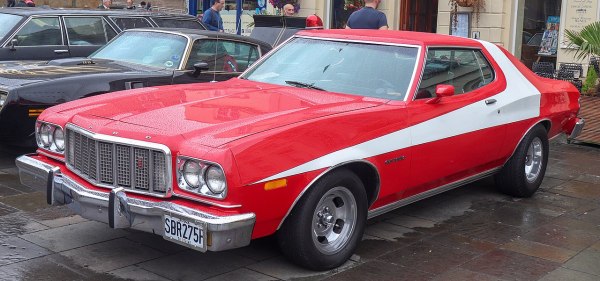
Their leather jackets, his red and white car
it’s the way that he moves… coiled, muscular.
It seems somewhat strange at my age – for surely
I’ve fallen in love once more – with Starsky.

I sit before the screen as Starsky pulls his gun
explodes into a running chase
or it’s when he touches his partner’s face
it’s his tightly wound energy and strength that entice
(I’m feeling a little delirious)
my mind has become
such a glamorous place

But –

Starsky is writing his reports on a typewriter
Hutch records evidence reel-to-reel
cars, with bonnets the size of double beds
growl and roar through littered streets

Side-walks with call-boxes hungry for coins
a bit-part actor searches for a dime

Telephones everywhere nakedly revealed
with cables that coil
squatting on desks
or pinned to a wall

The receiver crashes down
in frustration or rage
just so the camera
can dwell on
Starsky’s face.

But –

it’s not the spaniel collars
or the high-waisted trousers
it’s not the victim status
of all the female roles
it’s simply my reflection
look – there on the screen
blurring his expression –
that drags a veil once more between
the present and the past.

Starsky is not reachable by mobile phone.


The Cabinet Of Heed Issue 29 Contents Link

Image via Wikimedia Commons


Sweet Sixteen – B F Jones

Mum said she could go to the party. This is very rare. Mum thinks she’s too young, only just 13, but it’s Fran’s 16th birthday party and Mum caved after Fran called, begging for her favourite little cousin to come.

The entire city is sweltering with heat so she puts on her denim skirt with a t-shirt and conceals her shiny nose under a puff of Mum’s heady beige powder.

Fran lives a few streets away and Mum and Dad agreed that she could go on her own but that Dad would pick her up at 11.

She enjoys the solitary walk, the warmness of the evening on her bare limbs, the hum of the busy streets, the smell of food and cigarettes emanating from the nearby cafes. Somewhere, someone is playing the saxophone, and long, weepy notes float in the balmy air.

Moments later she rings Fran’s doorbell. Music and specks of conversation seep through the door, followed by an uneven clattering of high heels. Fran greets her warmly, her clammy arms around her, before abandoning her in the middle of the lounge to welcome more guests.

A couple of girls stand by the buffet and she smiles at them, but they only stare, long enough to make her uncomfortable, before going back to their conversation.

She pretends an exaggerated interest in the CD collection, looking at each one of them for far too long, drinks a soda, bubbles too quickly chugged stinging her throat, and eventually sits on the edge of the sofa, clutching a plate of untouched sandwiches. On the wall clock, only five minutes have gone.

Just as she decides to go, the tall guy comes and sits next to her. “I’m Lily’s brother”. Ensure of who Lily might be, she just nods.

Soon they are talking and laughing, and the seconds on the clock rush around. Someone dims the light and changes the music and they start dancing, barely moving to the rhythm of an unknown song. The two girls stare at her again, but this time she doesn’t mind.

He’s holding her tight against him, and she likes this long, musical hug. She’ll have to ask Fran what this song is.

His face comes closer to hers there are small flecks of green around his dilated pupils. She hasn’t kissed very much before. She’s learned the technicality of it with her childhood friend a couple of years ago, the unromantic experience providing much giggly. And her boating buddy kissed her on the last day of the holiday, his sea-salt lips on hers leaving her feeling tingly, trying to put a name on the warm, bouncy feeling in her stomach.

“Come”. He takes her hand and leads her to Fran’s room, closes the door and kisses her again, his tongue insistent. His moist hands move slowly down her back, pressing her against him.

They are underneath her shirt now, unclasping her bra. His fingers press too hard on her breast before making their way up her dress. And there is a growing bulge in his trousers. The bulge rubs on her. Up. Down. Up. Down. Rub. Rub. Small grunts come from him while she stands there, not knowing what to do.

So she just keeps kissing.

She doesn’t know what this feeling rising inside her is. It’s not the tingly warmth from the summer. It’s more like a heavy, crushing sensation. Maybe that’s normal?

She doesn’t know, so she just keeps on kissing.

Her name is suddenly shouted in the corridor prompting him to jump back. He pulls a strand of her hair behind her ear, gives her a smile and a wink as she battles her bra clasp. She shyly smiles back, trying not to look at those hands, now rearranging his trousers.

She and Dad silently walk back. The saxophonist has stopped playing and the cafes are clearing tables.


The Cabinet Of Heed Issue 29 Contents Link

Image via Pixabay

What’s Left Behind – Traci Mullins

Everything is too neat.

Boxes taped shut and stacked into corners, clearly marked so the movers will know which box goes to which house. God forbid that one of us will end up with something that might remind us of the other.

Even the garage is swept clean. Only a half-full trash bag dangles from a nail. He must have forgotten to toss it. More likely, he left it on purpose, like an accusation: “Thanks to you, rubbish is all we have left.”

He’s the one who prefers booze over me, so why am I left holding the bag?

I drop it into the back seat of the car, go in to recheck each room one last time. Throw up in the bathroom. Am tempted not to flush.

It’s taken ten years to come to this. Ten years of begging, cajoling, shaming, screaming, threatening, lecturing—my voice becoming like the adults’ in the Peanuts cartoon: wa wa wa waa. But I couldn’t shut the fuck up. Didn’t get it—that words are no match for a fight with an addict. I should know; I’m as addicted to him as he is to scotch.

In the den now. I can picture him stacking wood in the fireplace on a Saturday night, sweet smear of old soot across his nose. He can turn our favorite room into a cozy patch of heaven, and every time, I think the same fool thing. How can he want anything more? He lasts an hour before his nightly rendezvous with a better lover. I let the fire die.

In the kitchen now. Blueberry pancakes sizzling cheerfully on a Sunday morning. Today will be a good day, you’ll see. But when ‘60 Minutes’ tick-tocks, he’s been out for two hours, a string of drool pooling onto the leather sofa. I pull a blanket up over his face. He might as well be a corpse.

In the bedroom now. I find him unresponsive on a Monday afternoon. Call the ambulance. This will be the day, you’ll see. There’s no deeper bottom. He’s drunk by noon on Thursday.

That’s when I tell him: “This is it. I mean it this time.”

He snorts. Tosses back another shot. “Don’t let the door hit you on your way out.”

Front porch now. Pulling the door shut for the last time. It doesn’t hit me. You’d think there’s a point in there somewhere. It’s lost on me.  


Traci Mullins, a non-fiction book editor by day,discoveredflash fiction in 2017, and it’s been a love affair ever since. Her stories have been published in three anthologies, Panoply, Spelk, Fictive Dream, Flash Fiction Magazine, Flash Boulevard, Blink-Ink, Dime Show Review, Ellipsis Zine, Cabinet of Heed, Fantasia Divinity, and many others. She was named a Highly Recommended Writer in the London Independent Story Prize competition.

The Cabinet Of Heed Issue 29 Contents Link

Image via Pixabay

let the moon haunt them – linda m. crate

the sun
husked open
burnt
flesh from bone
wrinkled youth into elderly

his rage could not be
silenced,
backhanded everyone into
horror;

then i opened my eyes
realizing
that even nightmares
are dreams—

there is a darkness
in everything,
but they’ll tell you to turn
your back on the shadows;
even if the darkness is part of you

they don’t want to remember
your monsters
lest you rip them apart
for what they’ve taken from you

i say let the darkness break
free
let the wildness of your moon
haunt and lick them into insanity—

if they wanted better
the perhaps they should’ve
been men and not monsters.


Linda M. Crate’s poetry, short stories, articles, and reviews have been published in a myriad of magazines both online and in print. She has six published chapbooks, and one micro-chapbook. She is also the author of the novel Phoenix Tears (Czykmate Books, June 2018).

The Cabinet Of Heed Issue 28 Contents Link

Image via Pixabay

Whale Fall – Amie Souza Reilly

Far away from shore, a whale heaves herself up and out of the water for the last time, dying with a sigh so big it could tip a ship. Her body floats on the surface, big as an island but untethered to the earth. The nosy teeth and beaks of fish and birds begin to poke and prod at her fins, her glorious tail, and the rubbery skin of her sides, searching for the blubber that used to keep her warm. With each piece they pluck from her body she sinks a little further; her wide, pale belly parallel to the ocean floor as she falls toward the place where the sun’s rays can’t reach. When her body meets the sand there might be the soft thud of a finished journey, or maybe it is silent, only a shift of silt and darkness. Maybe tiny bubbles rise up around her, millions of glittering, perfect orbs of air floating upward, then getting bigger as they get closer to the light, so swollen that when they meet the surface they float away and become stars. Far below, the whale’s body becomes a universe, a planet, a country for an invasion of species that will survive because of her death. Crustaceans scuttle across her bones, eyeless shrimp scavenge the rot, and glowing pink worms wave their streamer-like bodies in the thick current. Twelve thousand species will live for as long as fifty years on the whale fall—a length of time that is likely as long as her living-life was. An ecosystem growing because of death, an endless cycle of pushing and pulling, dividing and falling, until there is nothing left of her but gas, invisible even to those that knew her as home.

*      *      *

In a mostly vacant hotel in February’s Newport, she sits next to the boyfriend she hasn’t known very long, inhaling the beer and floor wax smell of the bowling alley that clings to her damp sweater like barnacles. Her cheeks are flushed and young, and she falls onto the dark plush of the bedspread, letting him pull off more layers of her clothing, sinking until the darkness of the blanket becomes the sky, the blue glow from the television the moon. Their bodies become a collision, a rocking of muscles pulled against bone, a flash of light across the softest skin of her neck, a breath caught on its own escape, suspended until the air returns to the chill of absence. Perhaps it is too soon to feel the silent shift inside her. Maybe the feeling beneath her skin is from the beer, carbonation rising from the pocket of her stomach, making her feel both full and weightless, the way an astronaut must feel seeing the world small. Her hips sink low into the foam of the mattress; her body becomes a black hole, a cave, a sinkhole for an invasion of multitudes. A new collision, softer but heavier, begins to divide her body into lifetimes that would stretch beyond her own, a quivering electricity desperate to latch on, to use her blood and air in inconceivable ways. Female pink-streamer worms live on the bones of long-dead whales and hold within themselves the bodies of their male partners, invisible. She never wanted to become a body with a body inside her— life inside a life is also a death inside a death, endless in the ways they call each other home.


The Cabinet Of Heed Issue 28 Contents Link

Image via Pixabay

Sun – Jeff Hill

You can’t wait for the end to come. But you have to. There is one minute left until everything changes forever. Your palms are sweaty. Your eyes are bulging. You can’t escape this reality. You have resigned yourself to this fate.

What will they remember you for? Will they consider you a hero? Will they understand why you did the things you did? Will your daughter remember your face or your laugh or even your voice or is she too young? Will your wife remarry or move on or just be inconsolable for the rest of her years without you?

You will have to watch over them, which will be easy. That’s how this works, you think to yourself. That’s why you did this. It’s not every day you find heaven. It’s not every day you get to where you’re going early. But here you are.

Space is lonely. Space is unforgiving. But space is space, and you’re here, and they’re there. And you’ve only got about thirty more seconds left of air before it starts.

Will it hurt? Of course it will. Will it last long? Supposedly it won’t. But look at the view. Your final image will be that of the sun. Not a sunset. Not a sunrise. But of the actual honest to God sun. How can you pass that up? How can you ever explain to anyone that it was all worth it, even though you’re a goner?

The mission doesn’t matter. The results are the same. The data gathered is inconsequential. The outcome is going to be the same. Time is limited. Love is not. And if you give enough while you’re here, whether it’s five years or ten years or one hundred and three, it’s enough. You know that now, as your oxygen tank reads zero.

You look into the sun as the pain sets in. You float over to the control center and pull up the keyboard. You type in the command and push send. You tell them you’ll wait for them. You’ll see them when you see them. You tell them to move on, to live, to love. But when you get there, you’ll be okay without them. Because time is meaningless. It’s only now that you get that. Only in your last few seconds do you truly understand.

Because when you have the opportunity to see the sun in a way that no other human being has ever seen the sun before, you look away. You close your eyes. And you see them.


Jeff Hill is a moderately reformed frat boy turned writer/teacher splitting his time between Nebraska and New York. His work has appeared in dozens of publications and his mom has a binder full of printed copies for any doubters. He is the Chief Creative Officer of ComicBooked.com and is currently pitching two novels. Jeff is a regular participant of the Sarah Lawrence College Summer Seminar for Writers and has served as a faculty member of the Writer’s Hotel since 2017. Follow him on Twitter at jeffhillwriter.

The Cabinet Of Heed Issue 28 Contents Link

Image via Pixabay

Face Value – Duncan Hedges

Richard had been idly counting his change ready for a trip to the corner shop when he noticed the ongoing revision of the British monarch’s portrait on the nation’s legal tender. He created a chronological lineup of 20 pence coins on his palm, heads facing upwards. It was reassuring to see that even royalty suffered from the passing of time, Her Majesty’s jawline losing definition and her features becoming fractured by the lines of ageing. Being a catalogue model on the wrong side of forty, he was interested to note that a 20 pence coin from 2019 was still worth the same as a coin from 1997, despite the monarch’s increasingly mature appearance.

‘You know, the Queen’s face value doesn’t diminish with age,’ he said to his wife, who was preoccupied with correspondence and barely listening.

‘Uh-huh.’

‘A 20 pence piece is still a 20 pence piece no matter which portrait it features.’

The realisation motivated him to search out his own personal collection of promotional images spanning the length of his modelling career. He ordered his side profiles into a line and then retrieved details of earnings for each individual year. Much as he suspected, there was a clear trend in the financial reward his portrait commanded over time; the peak years coming in his early 30s, followed by a depreciation in value thereafter.

‘Well, I’m not so lucky with my face value.’

His wife was still paying him minimal attention but knew enough of his current preoccupation to understand what he was doing.

‘Did you factor in inflation?’ she replied, not out of spite but through a commitment to correct procedure, being the holder of his accounts.

‘Of course, inflation!’ he yelped. ‘So the Queen’s face is losing value.’ It was not the response his wife had expected. ‘A 20 pence piece in 1997 was worth more than a 20 pence piece in 2007, which in turn was worth more than one in 2017,’ he continued. ‘As the Queen ages, these coins are coming to be worth less and less!’

‘So you’d better get on and spend’em quickly then,’ she replied, feeling insufficiently inspired to challenge his logic and knowing only too well his thrifty character.

Richard looked at the photographs lying on the carpet and with unashamed vanity admired the sharp lines of his jaw and brow, the pleasing curve of his cheekbones and the welcoming softness of his handsome brown eyes. He turned to his wife and striking his best catalogue pose asked:

‘Darling, would you consider it an act of generosity if I were to spend your money first?’

Evidently, the source of finance for that trip to the corner shop had suddenly been thrown into doubt.


Duncan Hedges lives and works in Leeds, West Yorkshire. He writes short stories in his spare time and has been published online at Ellipsis Zine, Spelk and Bending Genres. https://twitter.com/duncan_hedges

The Cabinet Of Heed Issue 28 Contents Link

Image via Pixabay

Cliffhanger – Ronald Tobey

“She’ll howl like a dog”
my wife predicted laughing
at my evening phone query
from a hotel lobby pay booth,
what is performance art?
And the actress, it was in the script,
distressed by chemically poisoned rotting fish,
found no other way to express
but tear off her clothes
face the audience nude
howl at the moon hanging
from the stage fly tower
above a village, a bay, in Japan.
Show stopper.
Several Pasadena ladies leave their seats
and don’t return.
I should have smelled a clue
To night’s disastrous curtain.

A Southern California evening warm
I walk from the theater to Bonaventure Hotel
the route I know well
past a few restaurants
alley dumpsters bulging with food garbage
plump rats own the sidewalks
parade boldly
Spanish speaking streets
biggest Mexican shopping district
outside Mexico City
by darkened business offices
steel gates barricading vestibules
and fortified apartment buildings.

Gray sidewalks narrow from block to block
start out as 8-foot walkways
become 4
shrink to two curbs width.
I navigate by dead reckoning
counting blocks and intersections
the 35-story glass and steel cylinders
the Bonaventure hotel in view
four booster rockets strapped to a space craft
The noise became fierce the closer I came to the hotel
roar I remember of Niagara Falls
standing on a platform in the spray
a world dropping into a hole
I discover myself on a sheer cliff
top of a freeway concrete retaining wall
1-foot wide
abutting the gray concrete foundation
of an office building
I stand fifty feet above the Harbor Freeway
four lanes, each direction,
10:30 at night
river of headlights
cars ten feet apart 50 mph
late rush hour traffic.
I become dizzy
I feel vertigo pull me into the frenzy
my scrotum retracts in fear
splatter
sunken trench
Dante’s Ante Hell.
I looked away into the night sky.
I press myself into the building behind me
shuffle inch by inch to the left
not raising my feet.
5 yards.
Reality is an illusion, Sly,
which cannot be disbelieved.
My life burns at the edges
cellulose nitrate film in an overheated projector.


The Cabinet Of Heed Issue 28 Contents Link

Image via Pixabay

Volume and Dirt – Jennifer Benningfield

Paradise: sprawled on a soft surface, hand underneath his shirt, fingers inattentively tracing designs on skin. Paperback in the other hand, turning pages with his thumb, reading until the book slipped from his fingers.

Brady thought of his uncle whenever he read fiction. Uncle Perry loved to read, loved to inform others of his love, before specifying–only nonfiction. Fiction represented a waste of his time, since it didn’t teach any useful lessons.

Brady argued with the thinner, dimmer version of his father–sometimes loudly, sometimes filthily–until he learned a quite useful lesson in distressing futility. Still, the teenager couldn’t help but resurrect the debate whenever the opportunity presented itself, since he viewed his uncle’s mindset as one to resist with the fury of Dwayne Hoover on an empty stomach.

Brady amazed himself with the angles each assertion could be twisted into. The week before Thanksgiving had been especially productive, a formidable barrage of carefully chosen words: Do you listen only to instrumentals? Do you watch only documentaries?

Brady never received the answers, since he never asked the questions, since he died.

Or didn’t. He couldn’t say with certainty.

Evidence he’d indeed Charleston’ed off the planet abounded in the room: the ceiling and walls were white and bare. Likewise the sheet over his spindly legs.

His legs…his legs?

A breathtaking thought–he’d lost his legs. In however many hours of blackness, the lower half of Brady’s body somehow disappeared. The brain’s insistence that his lower limbs remained did little to deter Brady’s doubts–no organ in the body was less trustworthy than the brain. One second it told him, young man, your lower body is perfectly intact. The next, A majority of amputees experience what is known as the “phantom limb” sensation.

He left the sheet alone. He just didn’t know if he could bear the disappointment.

He sat up and sent a sigh towards the ceiling. When the dimensions of the room failed to change, another followed.

T’was not Heaven; t’was a hospital.

He laughed aloud for suspecting otherwise. Not that Brady doubted the existence of an afterlife; he just never cottoned to the fanciful scenarios favored by fearless and fearful alike. Even purgatory, the fate supposedly reserved for no-hopers of his caliber, is represented by a mountain. If he had to guess (all he could do), Brady would bet the house on a disobedient plane populated by bisected bodies and intact souls–the opposite, to his mind, of life on Earth.

Such highfalutin’ thoughts, when left unattended, became inclined to gather. Their final shape depended entirely on how long the process of formation was permitted to continue. Brady’s ignorance of the creation left him unprepared when the runaway globe struck his skeleton. He wobbled in wonderment at the echo of the impact. Weariness, so tantalizingly close to absolute, urged Brady to assume the position.

The brain–or was it the mind?–kept him upright. Any rest he enjoyed would be short-lived due to the regularly-scheduled disturbing of a patient’s peace by beasts not easily beaten back to the antiseptic abyss from whence they came.

So, he decided to take some measure of control over the situation and summon them. Before he could turn and press the call button, though, he spied a feminine figure dressed in white lingering outside the doorway. The impatient young man went to yell, and learned a vital lesson: forming words with a mouth full of straw is impossible.

Panic sent his hands slipping along the bed rails. He sent profane encouragement at his labored breaths, to nudge the stalks towards the precipice. Unable to wait a second more, he jammed his fingers into his mouth–where they touched nothing but tongue and teeth.

His chest deflated. He wiggled his toes and fingers to save face. (Could the dead make their digits dance?) He went to take a deep breath, only to feel it stolen by a heat with some moves of its own to showcase. Persistence overcame clumsiness, and the threat expanded without a care for any tricks the young man tried to pull.

Now, he feared for the sanctity of his throat.

The skin did not burn. The view in front of him offered no relief, and the woman outside had moved on. With a groan, Brady extended his right arm and snatched a large styrofoam cup from the otherwise bare overbed table. Barely any liquid remained, and the rippling agony prevented him from finishing it off.

Once freed of responsibility, Brady’s hands began shaking. The consequences of survival struck at his core with the force of a renegade bumper car, leaving him in the unique position of giving a pep talk to a body part.

Words failed. His hands needed action; soothing action, specifically. Back to the side: a sink carved from oriental black marble, covered with bottles of hand sanitizer and boxes of latex gloves. Futile weapons against the germ of death which resides uneasily within all living creatures. But Jesus, they felt so cool against the skin.

He thought all that marble lovely to vomit upon. Perhaps the hospital could be cajoled into summoning a priest for an exorcism. Forget the bed and the sink; Brady wanted to splatter the TV screen and the wall clock. He wanted to laugh without gasping.

Smiling felt fine; he’d remember to smile.

*      *      *

Not quite nine. The time Brady normally awoke. Normally? Usually. Lately. He’d met the day even earlier yesterday. Was it yesterday? That day, then.

Had he thrown up? If so, the taste had faded away. Did doctors administer emergency breath mints or on-site brushings? He’d never know for sure, even if he asked. Who’d tell him? Certainly not the oxygen-sucker draped in plaid who’d entered the spartan room without so much as a knock against the door jamb.

“Hey Brades.”

Smile. Adjust top sheet. Raise hand.

“Ohhh, guess you can’t talk yet. Sorry.”

Uncle Perry stepped gingerly across the room, all the better to ambush the armchair furthest from the patient.

The pros of forced silence included the potential for improved listening. The cons of increased listening included relatives who didn’t let a little thing like complete ignorance get in the way of rambling solutions to his situation (which was, in reality, a series of situations, wearying in their complexities, but breaking that down for people who valued domestic discipline more than academic discipline redefined “futility.” Better their well-washed bromides smacked into him like birds against windows).

Before Brady could celebrate his guest’s eventual exhaustion, another body passed through the entryway. Not quite as sizable as the one preceding, nor as covered. Brady could see questions all over his mother’s lips, but the decency she lacked in dressing herself had spread to other areas.

He felt like wincing at the hesitance which staggered her every movement. He actually did wince when she started in on the state of his hair, bitching at both the hospital and the other man in the room for not having a brush handy, all while looking as though numberless suction cups were leeching out every happy thought she’d once been fortunate to call her own.

“Jeannie, sit down. The boy needs to relax.”

Brady felt an odd combination of relief and rejection as his mother left his side to wrap her arms around the indefatigably greasy man before joining him in the callous punishing of a poor armchair.

His mother and her brother were deep in shallow conversation. Every third word stabbed his nerves. Occasionally, his mother let loose with an extravagant sniff. Another torment for the young man’s young mind, as if the contrapuntal motions outside the room–the footsteps, voices, wheels, machines–weren’t sufficient.

He should apologize, he would, as soon as he pinpointed the reason why–the attempt, or the failure? He should’ve known, when fashioning a noose proved troublesome. Anyone flustered by rope didn’t deserve to have their last wish fulfilled. Option two, though, seemed foolproof. Damned if he wasn’t just the fool to prove it.

A cup of bleach, no matter how hastily swallowed, or how generously filled, did not guarantee a quick escape. With the gift of hindsight, Brady would have made a screwdriver.

Oh well, he thought, swallowing back a pebble. Live and learn. Surely a nurse would soon saunter in with a clipboard or a tray of liquids. Perhaps Auntie Jackie was next up on the familial carousel. (She reigned unchallenged as his favorite “sibling of a parent,” if solely for teaching him how to drive while wildly distracted).

The pros of forced silence included repentant looks beyond reproach. Included being left out of conversations about miraculous gas tanks.

“Brady. Look at me, baby. Sweetie. We found your pills.”

He squirmed as his stomach started an amateur somersault routine. His brilliant idea to transfer Ambien and Seconal into a Tylenol bottle. They’d probably be keeping the Tums under lock and key, now.

He knew she would return later, for some heartfelt one-on-one time with her troubled boy. In the meantime, he’d work on that apology. I’m so sorry, Mom. For being so clumsy I can’t even tie a noose, for my fear of guns, for becoming queasy at the sight of a paper cut. For triggering the gossip which even as they spoke (or not) shot around the town with dizzying speed, muddying the family name and rocking the foundations of otherwise happy homes.

She’d wipe his face, brush his hair, and profess undying love. She’d pummel his defenseless frame, intent on making him understand how valued, how loved a young man he was, and how fortunate he was to be surrounded by people who cared for his future. Why wouldn’t one so blessed look forward to higher education, extended family, and accumulated wealth? There was truly no dress code in God’s Kingdom, but the “weak and wrinkled” look earned the most respect, there was no denying that.

Meanwhile, he’d try not to cough forth flame onto the parade of hypocrisy and misdirected shame.

Brady wanted to ask how long he’d been indisposed. He wanted to ask if Tracy knew. Nearly the entire family considered her a verminous influence, the man sitting less than ten feet away most avidly, once averring, “That girl is a heart-smasher. If you’re lucky, she’ll set it on fire first. But you haven’t ever been too lucky.”

He wanted a book. He wanted to get up in his uncle’s overstuffed plastic bag of a face and explain to him the grand purpose of reading: to retreat from an untenable world.

“Do you think I should draw this shade, Jeannie? Maybe I should roll the kid over here so he can get some sun. Brades, you are so white, whenever you pass through a prism, it makes more prisms! And skinny, good Lord. I could swing by Tina’s and get’cha an ice cream cone. Although, you won’t be able to eat the cone. Not to mention the ice cream would probably melt by the time I got back.”

“You could just go to the store and pick up a quart of ice cream,” Brady’s mother suggested. “It doesn’t matter.” She turned to face her son. “They’ll be putting you upstairs soon, sweetheart. Once you regain your voice. Honey, please don’t get upset, you’ll just make yourself tired.”

Perry cleared his throat and stood at the foot of the bed. Brady made eye contact with him, just to stave off another indignity.

“All right, now I wanna say just this one thing before I go. Now I admit, mental health is not my forte.”

Brady gritted his teeth and pleaded with the fickle pile dawdling between his ears to buck up and send a telepathic message to a nurse–please pop in already and chide this frog-voiced fool for being loud and dumb and dirty and I promise I won’t abuse the call button.

“But one thing I do know, you’ve got a good brain in your head. You’ve just got to realize, knowing a lot doesn’t mean you know everything.”

Long after the adults had departed, he was still scowling at the wall. A second clock had appeared, its numbers the size of pinheads. If a song and dance were his heart’s desire, he’d rise from the bed, rip off the hospital gown, and do the barefoot shuffle along heart shards, drawing lines over scar-resistant skin while his sparse audience beamed with pride. Gnarled grips of a merciless infirmity be damned, the boy’s got moves.

Brady knew precisely what his heart yearned for. He knew only that his fate had been read as written, and no beaver, however eager, could construct a dam capable of staunching the poison’s flow.


Jennifer Benningfield’s stories have appeared in several publications, including Black Dandy, The Sonder Review, Fiction On the Web, and Maryland Literary Review. A lifelong Marylander who has been in the (mostly) benevolent thrall of words since receiving “Green Eggs and Ham” as a birthday present, her writings can also be found online at
http://www.trapperjennmd.blogspot.com
The Cabinet Of Heed Issue 28 Contents Link

Image via Pixabay
How They Devour Her – Michael Loveday

The sunset leaks behind her head, a clot of purple. Smile. She takes the selfie five times – still not right. Happiness shouldn’t be this hard to capture. An overweight pair further along the terrace crack up and clink beers – some private joke? The mood shifts.

A surge of guests, now, arriving in navy kimonos, gliding, schmoozing, and chattering like an outdated modem. She puts on her sunglasses, orders a mojito at the bar, and taps her finger distractedly at a menu. The bar’s TV blares showbiz news – another stale, red-carpet pageant, wannabes dazzled by photographers’ lights. No one she even knows. Then some too-pretty comedian is faking her own meltdown. The noise swells on the terrace, unceasing and urgent. Her breath tightens.

She flees towards the spa suite, striding down long labyrinths of passageways. Uniformed staff pass by, buffing the floor with contraptions that hum contentedly, clearing guests’ tracks. The hotel will accept no lingering trace of her presence; soon, her recovery will shrink to a residue of memories and botched photographs. Even when anonymous in a foreign country, the shadow of her old life will not leave her.

At the margin of the spa, guests skitter to and fro through glass doors. A keg-bellied man rasps a feral snore in a Lullaby Chair. A willowy blonde towels her limbs, bending a leg against a bench as if her thighs feel compelled to confess how lithe they are. Other guests buzz with war stories of vigorous treatments. She slips inside, shunning the hive.

She chooses a footbath and slides her heels in. The water is arctic-cold. Garra rufa fish gather round her feet, nibbling skin. At her heels, her toes, mobs of them congregate – little grey hunger-machines. Their tails ripple quickly side to side, squirming in gratification, relentless as they feed off her flesh. And yet she feels no more than a tickling. How they devour her, these affable parasites!

She withdraws her feet – tender, a raw shade of pink. She pats them with a towel, walks on virgin skin through the corridors back towards her room. What craving did those creatures have for her body? For once, desire was welcome. This is surely what retreat means: reduce, peel back, until the new version emerges, delicate and sore.

But soreness is already there, breath tensed in her chest like a throat-trapped bone. The paparazzi – would they have stopped, would they have flayed her till she bled?

As the passageway tilts, something flits about her, feasting, flicking its tail in pleasure.


Michael Loveday’s novella-in-flash Three Men on the Edge (V. Press, 2018) was shortlisted for the 2019 Saboteur Award for Best Novella. He also writes poetry, with a pamphlet He Said / She Said published by HappenStance Press (2011). Website: https://michaelloveday.com/

The Cabinet Of Heed Issue 28 Contents Link

Image via Pixabay
What Stays With Her – Gay Degani

Mama placed small bags of popcorn on the coffee table while Father set up the new-fangled television—the first in this town of 113 citizens. Five-year-old Wendy skipped around the living room, dropping napkins on every seat until she fell over the footstool and into her father, almost toppling the Motorola off its stand. He grabbed her arm, smacked the back of her legs three times, and ordered her upstairs to bed.

She didn’t go to bed, and though she wasn’t allowed in her parents’ room, she stood at their window, clutching and twisting the curtain as chattering grown-ups crowded through the front door, their kids squeezing by them, shouting until her father’s voice boomed, and everyone quieted. Lively music chimed through the floor boards, the new TV switched on.

Wendy released the crumpled window lace and tiptoed into her own dark room to creep under the blankets. For her, there would be no playmates, no popcorn, no I Love Lucy.

*      *      *

After moving to Oregon, Wendy and her folks drove back over the Rockies each August, the Dodge sweltering with windows up, ice melting in the tiny air cooler. Still, she was glad. She would be ignored in the Midwest, her father thankfully distracted by relatives and long-time friends.

Inside her grandparents’ clapboard house, she slept in the attic, read books, drew pictures, and when her folks went visiting, she spent time with her grandmother, feeding wet laundry into the washing machine ringer while they sang “Are you sleeping, Brother John.” She trailed after her grandfather through rows of vegetables, feasting on peas straight from the pod, breathing in the rich smell of soil and tomatoes and corn.

But once in a while, her father insisted she go visiting with them. One of the families had a simple wood-frame swing set in the backyard, two plank seats on long chains. The kids challenged each other to see who could swing highest. Wendy took her turn against one of the boys. He was bigger, stronger, so she pumped with all her might, the breeze cooling her face, the chains beginning to jerk. The others cheered “higher, higher” until Wendy felt grass rushing toward her, the kids yelling “jump, jump.” She leapt off just as the wooden contraption tipped to the ground. The boy broke his arm. Her father blamed Wendy, his anger hurting more than the pulsing pain in her sprained ankle. Her mother sat silent.

*      *      *

Even in the kitchen, on the opposite side of the old Victorian from where her father slept, Wendy and her mother spoke in hushed tones about Wendy’s community college classes, her newly-made friends. Wendy washed the breakfast dishes, her mother dried, until a skillet slipped and clanged onto the tile floor. They froze, eyes locked.

He didn’t always wake to noise, but still, they held their breath until they heard him shuffling down the hallway. Wendy turned back to the sink, splashing water. Mama nudged glasses in the cupboard into precise rows.

“What the hell!” He was in his underwear, big hand swiping his bed-lined face, barking, “Can’t you two shut up?”

“I’m sorry. Clumsy me.” Mama gave a flustered laugh, then asked if he wanted coffee or a grilled cheese sandwich since he’d slept through breakfast.

His mouth twisted with disgust. “You pinheads are useless,” he said and scuffed back to bed.

Mama silently closed the cupboard door. Wendy drained the sink. They no longer talked.

*      *      *

Stalled on a railroad track, her parents were killed by a train, leaving Wendy alone in the thick forests of coastal Oregon where fog and cold seeped into their drafty Victorian.

Her father’s sister called from the Midwest after the funeral to see if Wendy wanted a box of her father’s memorabilia. “You know, pictures, diplomas, that kind of thing.”

Wendy surprised herself and said, “I have vacation time. What if I come for a visit?”

“That would be lovely.” Aunt Dinah was pleased.

“But I don’t want his stuff.”

In Indianapolis, in the small tract house where her aunt now lived, they reminisced about the farm, egg collecting, hiding in the hayloft, riding cows with her cousins.

“It was my favorite place,” said Wendy. “I always felt so free there.” They were sitting at the old oak table brought from the farmhouse.

Aunt Dinah reached out and took Wendy’s hand.

“I’m sorry we couldn’t go to the funeral,” she said. “My broken hip—”

“That’s okay,” said Wendy. “I didn’t expect you to come.”

The aunt leaned closer. “I loved your mother, you know. And I know how hard your father was on the two of you.”

Wendy felt her eyes prickle and asked a question she didn’t know she would ask. “Why was he so mean?”

Aunt Dina leaned back against the chair. Sighed. “He was always like that. He didn’t get along with me or your Aunt Eunice. I guess it was because he was the youngest and the only boy.”

“So, they doted on my father? Spoiled him?”

Aunt Dinah looked surprised. “No. Not that. It was the opposite. Your grandfather beat him every day of his life.”

Wendy frowned. “Beat him?” Her grandfather has always been so kind to her, she never suspected him of doing anything mean. She stared at her aunt. “Every day?”

The older woman shook her head. “Maybe not, but it felt that way. He never touched me, but he’d get drunk and pound on your dad.”

The sun streamed into the kitchen, a car horn honked on the street, and Wendy squeezed her aunt’s hand. “He never hit us, my mother or me.”

“There’s that, at least.”

“That’s a lot when you think about it.” Wendy studied the grain in the table, its dark and light golden swirls. Something was loosening. She glanced at Aunt Dinah and said, “Can we look at that box? The one with my father’s stuff?”


Gay Degani has a chapbook, Pomegranate, a full-length collection, Rattle of Want, and a suspense novel, What Came Before. Most of her publications have be published in online journals including Atticus Review, Smokelong Quarterly, 3 A.M., Yellow Mama, Gone Lawn, and Fictive Dream.

The Cabinet Of Heed Issue 28 Contents Link

Image via Pixabay

Amazed At The Take – Michael Igoe

Coffee robs me, again,
teeth clenched at first light
to test out these projections
same night time visions;
I’m curled up with anemones.
Aptness moves in the balance
engaging in feuds
harbors lonesome beliefs.
Or, apprise the contours of a room,
you can hear a downstairs couple
lost in endless argument. I listen,
but I’m so weary of their logic,
I must have cash on the dollar,
an eagles‘ beak clenched
around branches and arrows.
I still test mayhem in curves,
sights and sounds, remaining,
the memory is a ghost of itself:
it’s daubed in blue ink forever.


The Cabinet Of Heed Issue 28 Contents Link

Image via Pixabay

Institutionalised – Rebecca Field

Week 1

Keith is woken by the bleeping of monitors. He must have nodded off for a second. Why do they make these rooms so stiflingly hot? For a second his brain fails to recognise where he is, then it all comes back with a gut punch: The ambulance, the blood, the bustle of people pushing him aside. The complex mixture of emotions; guilt that he wasn’t there, worry that it will be too late, the sheer helplessness of having no option but to give up his wife to a roomful of strangers. Kathleen’s still sleeping face is half covered beneath an oxygen mask. Keith hopes her brain has shut down into something like a low power mode. Conserving its energies for essential functions. He squeezes her hand. ‘Breathe,’ he whispers.

Week 2

Keith has moved out of the family accommodation. Their new home is on Fraser Ward; a bright bay down the far end of a mint-green corridor with six beds, each with a semi-conscious occupant. The nurses in their plastic aprons and bright blue tunics swish to and fro like damselflies, never alighting for long in any one spot. Kathleen sleeps most of the time, seemingly oblivious to Keith and her surroundings. Keith prefers this place; the pace here is more restful, less frantic than the cacophony of the ICU. There are visiting hours that must be observed, mealtimes and drug rounds that occur with reassuring regularity. Keith feels his shoulders relaxing, Kathleen has survived the stage of immediate danger, he reasons. If she was going to die she would have done it by now he reasons.

Week 3

Keith pulls into his parking spot opposite the yellow Mini. He has found it easiest to go straight to the furthest car park from the main building rather than spend time circling for a space. The walk allows him some exercise on his daily trip to Fraser ward. If ever there is another car occupying his space, an irrational sense of outrage sweeps over him. The yellow Mini is always there before him and acts as a landmark on his return journey. He has never seen the owner of this car. He wonders if maybe its former occupant parked up one day feeling unwell, went into the hospital and never came back out again. It would be easy to get lost in there, to follow the arrows down the windowless green tunnels, through doors and down stairwells, before collapsing exhausted into a side room labelled ‘sluice’.

Week 4

Keith eats on the move now. Evening meals are whatever packaged sandwiches are left in the shop. Lunches are Kathleen’s leftover sponge puddings, washed down with tea the colour of brick dust. The puddings come in lidded steel dishes, four varieties served in rotation: syrup, marmalade, chocolate and spotted dick. The lunch supervisors give one to Keith, knowing that Kathleen won’t eat hers. He knows them all by name now. His favourite is Jenna with the blue hair, her unconventional colours add some much needed gaiety to the surroundings. These are the things he notices now. He does not notice how his trousers hang from his frame, how his face has become drawn and tired. There is no one to remind him to visit the barber or to change his slowly greying shirt. If he looks into a mirror at all, it is only to reverse his car.

Week 8

Keith’s birthday has come and gone, unmarked. He does not take account of dates anymore. He registers the days of the week, but not how many have passed. He doesn’t notice that the car is beginning to smell like a bin that hasn’t been emptied in a while. The back footwells are filling with sandwich packets, coffee cups and parking tickets. A warning light flashes on the dashboard. Keith knows only that it is Wednesday. The library trolley comes through Fraser Ward on Wednesdays, usually pushed by Sheila who wears her glasses on a purple chain around her neck. Keith has been reading the latest Maeve Binchy to Kathleen, although she has slept through most of it. Lately he has taken to staying on the ward until 10pm, an hour past visiting hours, but nobody has commented.

Week 10

The nurses have started talking to Keith about moving on. This feels like a personal affront, like he has been caught busking outside the town hall, though they are quick to assure him this is not the case. There are visits from social workers and therapists, ‘assessments of needs’, and talk of placements, facilities, specialist rehabilitation. Keith does not know what to say to these people. His mind feels like it has been filled with expandable foam – it cannot process this new vocabulary. His heart beats faster when they approach with their folders. He nods and smiles in what he hopes are the right places, hoping they will see that neither of them are in a fit state to move anywhere.

Week 12

A new doctor visits Fraser Ward. She pulls up a high-backed chair and searches out Keith’s eye. She makes sure Keith has a cup of brick-dust tea when Cheryl comes by with the trolley. Keith cannot remember the words she uses, just that the irises of her blue eyes were ringed with a golden brown, like the colour of the tobacco he used to smoke before Kathleen decided he should stop. The doctor asks Keith to sign some papers about not resuscitating Kathleen in the case of cardiac arrest. There didn’t seem to be an option not to sign them.

Keith holds Kathleen’s cool hand on top on the bed sheet. There is an angry red bruise covering most of it where a new cannula was inserted yesterday. There were no sponge puddings today, but Keith found he didn’t have an appetite anyway.

Week 13

Mick the gay porter delivers a new patient to Fraser Ward only an hour after Nigel the surly porter took the previous occupant elsewhere. He says hello to Keith who raises a limp hand in response. The nurses and their assistants come and go. Barb comes round offering newspapers and snacks. Keith shakes his head. He wonders if anyone will notice if he does not go home tonight. After the last visitors leave for the day, he leans back in his chair, slips off his shoes, and closes his eyes. The bleeping of the monitors is strangely comforting.

Week 14

It is Monday morning and Staff Nurse Andrew is doing her last observations of the night shift. She reaches the last bay of Fraser Ward and checks her watch; her shift finishes in ten minutes. Kathleen Harris is sleeping. Nurse Andrew checks the drip and notes the observations on her chart. She registers that something is missing from this cubicle but cannot think what it is. But there is something extra that wasn’t there before. Next to the vinyl covered high-backed chair, is another chair; a dirty grey colour, the upholstery is worn and smells faintly of hospital dinners. Next to it is a pair of man’s shoes. Nurse Andrew wonders where the chair could have come from and makes a mental note to bring it out on the next hospital ‘dump the junk day’. She touches the forehead of Kathleen Harris and moves on to her final patient.


Rebecca Field lives and writes in Derbyshire. She has been published online by Riggwelter Press, Spelk fiction, The Cabinet of Heed and Ellipsis Zine among others. Rebecca has work in the 2018 and 2019 UK National Flash Fiction Day Anthologies and tweets at @RebeccaFwrites

The Cabinet Of Heed Issue 28 Contents Link

Image via Pixabay

Descent – Gail Anderson

It is one hundred steps from the spine of the hill down to the big house, and the view is east. Out over the deer park’s remains, out across the Republic. Over the ocean to unambiguous England. To Italy, where your husband’s grandfather found inspiration for this garden.

Seven terraces, graduating to sea. A lapsed geometry: yew hedges, wild strawberries bursting terracotta pots. Father-in-law planted rhododendrons; now the garden is feral. You salt the walks, tread the weeds. Move down, one step at a time.

From the ruined stable block you see mussel fishermen, hoisting barrel floats. The smaller shells are cut adrift to pepper the seabed. The bigger shells, constrained in mesh, swing like tuberous legs. They are sent back into the water to kick their heels until harvest. The symmetry of grey plastic floats reminds you of graveyards.

On the final terrace, four cannon are aimed west. Out over Fastnet, Ireland’s teardrop. Long ago, French frigates came here to shrug off the English. Pity no one thought to tell the locals, who hid their cattle, fled into the hills. One frigate sunk, the rest blown out of the bay by a freak wind. Independence might have come so much earlier, but for a wind.

Turnstones surge the shoreline. Brother-in-law tells you that their recorded food includes human corpses and coconut. In a country where one is never more than five miles from a site of human massacre, the corpses are understandable, even ecological, the turnstones doing their bit. It is the coconuts, the notion of exotic incomers bobbing into this bay, that stays with you. Today a local woman stands in knee-deep water, scooping jellyfish with her bare hands, hurling them to a desiccating death on the shore.

Your mother once asked: when the tide is out, do you forget the sea? Wind forces salt-tipped hair into your mouth.

Your husband’s family gave the locals away to the governors for generations – yet they were permitted to live, their big house to stand undisturbed. You can’t think why. The house is decaying now, open during the season to paying tourists.

Sinking. Turnstones. But for a wind.

When your husband dies, you move down the hill to the gatehouse. Its exterior walls are overspread with tiny maidenhair ferns. They would grow in your eyes if you stood still long enough.


Gail Anderson won the 2019 Scottish Arts Trust Story Awards, placed in the top three in the Fish Publishing Flash Fiction competitions for both 2018 and 2019, was shortlisted for the 2018 Bridport Prize (Flash), and won the 2018 Winchester Writers’ Festival Poetry and Memoir Prizes. In 2019, her work has been published in Ambit, Crannog, Strix, the Fish Anthology, the Aesthetica Creative Writing Annual, The Southampton Review and elsewhere. Weekdays she does communications for the University of Oxford; weekends she can be found in her boat on the River Thames.

The Cabinet Of Heed Issue 28 Contents Link

Image via Pixabay

Two Years Ago – Ruth Brandt

Frank can’t quite believe it was two years ago. Really? Two years? As ever with these things he does a double take, tries to relate the whole incident to some other event. Definitely after Harrison and Annie married. Had to be, since he met Klara at their wedding. So ok, when was that? Ah bollocks. Two? Really? He checks Klara’s expression. She’s looking at him like he should have ticked off the hours since what she has just now started referring to as ‘last year’s catastrophe’.

“Then show me.” Klara reaches out for his hands clasped behind his back.

His mouth is clammed as tightly shut as his hands are held behind him.

“I insist,” she says.

Yeah, right. Like when was she promoted to a position of being allowed to insist?

“Oh joy,” she says. “I’m dealing with a two-year-old.”

Definitely before Christmas, Frank decides, the one just after Harrison and Annie’s wedding, which, hey, must be over two years ago because they now had a puppy.

“After all,” Klara has this snaky quality to her right in this moment, almost cobra like, “you did get me one, didn’t you?”

Frank’s head nods. Oh yes indeedy, he has got whatever is clutched behind him for her. Must have since today is the grand anniversary of ‘last year’s catastrophe’ so how could he have his hands clenched any purpose other than holding something for her. Something that will definitely fix ‘last year’s catastrophe’.

She steps towards him and breathes against his neck, her hair grazing his cheek, her scent doing that thing that it does. His scrotum tightens.

“Hmm?” she says.

The thing that is surely behind his back is a mere grab away now. He shoots his hands up high. She giggles.

“I knew you wouldn’t forget,” she says.

Their shagiversary? How he would like to protest that no way could he ever forget that momentous event, at least not two years in a row. Their shagiversary, for God’s sake! Since when was that a thing?

Klara tugs. It’s no good. Frank is forced to lower his cupped hands.

“This,” he opens his empty palms, “is all my love.”

Klara’s a little bit stunned, a little bit suspicious. She tries to check behind his back in case whatever gift she has imagined is appropriate for such an occasion has been left there.

“I give it all to you.” He places his hands against her heart.

“Fuck,” she says and swallows. “Why do you always do this, you bastard?” Then she smiles, then she’s crying and laughing. “You totally lovable bastard.”

Why is everything so complicated? Frank finds taking care of Frank hard enough, let alone holding in his head a clock with all the alarms set in unison with Klara’s. And now he’s got to try to prevent next year from being a catastrophe huger than ‘the year before last’s catastrophe’. He’ll simply have to remember today’s date. Just has to. Whatever it is.


Ruth Brandt’s short fiction has appeared in publications including the Bridport Prize Anthology 2018, Neon and Litro. She won the Kingston University MFA Creative Writing Prize 2016 and has been nominated for the Pushcart Prize and Best Small Fictions. She lives in Surrey with her husband and has two sons.

The Cabinet Of Heed Issue 28 Contents Link

Image via Pixabay

The Politics Of Pain – Lannie Stabile

This body communicates
like a recently liberated country
It only leads
& follows
& squabbles

Meaning sometimes,
when I walk,
my hands stop
& nail grudges to the
door of my hips

The hairs on my arms riot,
gooseflesh appearing
like looters,
pilfering memories of a once
unchallenged ease

This aggressive body
interrogates governments
& so far,
my appendix,
tailbone,
& wisdom teeth
have buckled

As tax increases,
this patriot body
launches crates of teeth into
the harbor of its gut
It is where
smiles go to drown

When I consider stillness,
when this body is drugged
with dusk,
my skin quakes
from 40 trillion cells
marching in protest

This modest body
writes an essay on cannibalism,
and only sells two copies:
One to an unbridled virus
The other to my immune system

Speaking of hunger,
it is a strike
against the good name of
my throat
A throat weak from
announcing the arrival of agony

This exhausted body
never wanted to go to
war

Lannie Stabile (she/her) was a finalist for the 2019/2020 Glass Chapbook Series, semifinalist for the Button Poetry 2018 Chapbook Contest, and Best of the Net 2019 nominee. Works are published/forthcoming in Glass Poetry, 8 Poems, Pidgeonholes, Monstering, Okay Donkey, Honey & Lime, and more. Lannie currently holds the position of Managing Editor at Barren Magazine. Twitter handle: @LannieStabile

The Cabinet Of Heed Issue 28 Contents Link

Image via Pixabay

Create a website or blog at WordPress.com

Up ↑