The Church on the Hill – Debz Butler

You cannot see the church on the hill from the valley today. The wind causes the snowflakes to roar round the stone walls. Some manage to escape the tireless race of the storm and settle on graves that surround the building. The graves are covered in thorned weeds and thick, creeping brambles. There are no loved ones left to clear the graves and plant fresh flowers in remembrance. Only the path lies clear, even the brambles recoiling from where he treads.

His car is a mile away now. It speeds round the bends, never hesitating with caution. Even with dark falling, he does not switch on the headlights. He knows the road well, he has travelled it for many years.

Inside the church, leaves pile against the wall. Blown in through the broken windows, the give off the smell of damp and rot. The stone floor is cracked in places, moss creeping through the splits. The pews still rest in the space they did before. Grey with thick dust, rather than the brown wood that was polished every week with bodies dress in their Sunday best. The kneelers, which once supported the devout as they prayed for absolution, lay abandoned on the floor. The thick embroidery has long since been chews through by cold, pregnant mice. If art once adorned the walls, there is no sign of it now. Just cold, bleak stone.

His car reaches the end of the path and the engine turns off. The church feels his stare upon it and the groan of the wind amplifies. He climbs out of the car. The snow melts where his boots fall on the path, the hiss of steam lost in the sound of the screaming storm. He reaches the heavy wooden doors, they seem to shrink before his hands but when he turns the knocker they open easily. He steps inside.

His bleached, blue eyes have no need to adjust to the darkness. They have known darker than this. He walks to the end of the centre aisle and stares at the broken alter ahead of him. Above it, the last remaining stained-glass window, Mary the Virgin cradling her child. Once beautiful and revered, the colour is now drained. Cracks have formed with some small panes missing.

He raises his gaunt face so he can take it in, although he knows every inch by memory. After a moment, the corners of his mouth twitch. A sound begins, quiet a first, the sound of glass scraping glass. He stands frozen, his eyes do not leave the window. His smile widens. His eyes blaze, the pupils engulfed by the blue, no space for light to enter. The screaming of glass grows louder, now unbearable for anyone but him. This is what fuels him, causes his spine to fizz, he feels sparks in his fingers.

Finally, he grins. No longer the screaming of glass, now the desperate final scream of a mother. A scream of fear and agony, of futility. Deafening and piercing.

Another pane in the stained-glass cracks. For a moment, silence.

His face returns to neutral. Black blooms in his eyes once again. He turns and leaves the church. Once outside he closes the door and feels in his pocket for the cold, iron key. The lock turns, sealing the doors for another day. He walks to his car, he will be back in the morning to open up. Just in case.


Cabinet Of Heed Contents Link 21

Image via Pixabay

Holy, Holy – Marisa Silva-Dunbar

I.

My friends tell me, find someone else who feels like home.

II.

I’m trying to consecrate myself—
divinity used to rest in me, I can still make
sparks in the palms of my hands;
the Saints still know my name.
My house is still sacred—
find sanctuary here and heal.
I cannot go back to yours,
until it is saged and sanitized.
Throw out the towel she used—
she has defiled it. The sign of the cross
can’t save her—no demons or angels
want to answer her call. The spirits
were never entertained by excreta.

III.

I want your prayers burned onto my skin
She’s already gone. She won’t be here
ever again. I want to draw blood from
you as you whisper these into the night.
Make sacrifices so you can be sanctified—
I have the oils to anoint you.

IV.

I leave a circle of bite marks around your heart
so she knows who you always belonged to.


MARISA SILVA-DUNBAR is a Latina poet. Her work has been published in work to a calm, Chanterelle’s Notebook, and Marias At Sampaguitas. Marisa is a contributing writer at Pussy Magic. Her work is forthcoming in Dark Marrow, The Charles River Journal, and Dear Reader. She is the EIC of Neon Mariposa Magazine.

Cabinet Of Heed Contents Link 21

Image via Pixabay

The Post Office Delivers A Shock – Michael Grant Smith

Our town of Last Chance gets heavy snow every fifty years or so, but we elect a mayor every four. Many who win are candidates to join a damn Homeric Hero Hall of Fame, truly they deserve it, but other mayors, not so much. You could say we’re blessed with an honest, competent public servant as often as we warn our kids to bundle up before they go sledding.

A ways back in 1993 the aforementioned rare snow fell and nearly made Last Chance disappear. Two or three discontented residents

applauded the change, declared it an improvement. Constable Arlene was dispatched to visit each complainant in their home, where she said people had a right to speak their mind but if they had so much pep why couldn’t they attend to these code violations, and these ones over here. The blizzard abated nigh the dawn of Monday business. Honey Sweet, our postmistress, flipped her sign to “Open.” Christmas loomed a week hence.

The post office door’s bell tinkled and a slight but dapper fellow entered. A silvery goatee embellished his ruddy man-in-the-moon face. Honey had shoveled and salted the sidewalk, but the gentleman brushed non-existent snowflakes from his camelhair overcoat and stomped his spotless wingtips upon the doormat. He marched thusly for quite a while.

“Good morning, Mayor Nelson,” said Honey. “May I help you?”

Mayor Lowell “Fuzzy” Nelson thumped once more, approached the counter, and set on it a shoebox-sized parcel. With a flourish, he removed his porkpie hat. He attempted a smile but it ended up a grimace, not the train-coming-at-you grin that got him elected mayor three terms and off scot-free from at least two intervening indictments.

“I wish to mail something valuable to myself,” His Honor shouted. “Its cost far exceeded what I could afford, yet its worth is vastly less than what I deserve!”

Honey peered over her eyeglasses and took one step backwards.

“Sir, you aim to mail it to yourself?”

Because the eight o’clock hour had barely passed, Honey and the mayor were alone. Tammy, Honey’s subordinate and best friend, was not scheduled to arrive until ten, and Charlotte’s Salon & Barber upstairs opened at noon — the staff worked late evenings in order to provide “Premium Bath and Spa Services” to Last Chance’s elite.

“To myself, yes, you are correct,” the mayor boomed. “I will receive it with grace and good humor!”

“Well, then,” said Honey. She blinked. “It’s your choice. Ain’t no law says, don’t send yourself Christmas gifts.”

“Christmas gift! A Christmas gift? Nonsense!”

Ice crystals gleamed within Mayor Nelson’s eyeballs. His chin whiskers bristled like a bed of nails.

“Let the great feats I have accomplished be my legacy,” he bellowed. “I will live forever in the public consciousness as a monument to talent and tenacity! My package relates to those noble precepts, not Christmas!”

Honey wrote out a postage receipt and then forgot she had just written one, so she made another. She scribbled on the receipt and deleted the duplicate charges. Her hands jerked around as if a puppeteer pulled strings.

“Fine, sir, fine,” Honey said, looking away from the mayor’s face. “We’ll send your package right away.”

She kept her attention stuck on the counter. Her long-ago training had finally found a home. Troubled, violent patrons are less likely to kill you if they believe you can’t ID them. Would an elected official commit murder? Even if the victim had voted for the murderer? Her best hope was that Constable Arlene might respond within the hour.

“I don’t think you are aware of my identity,” said Mayor Nelson. He waved his hat for emphasis or to swat invisible insects. “Maybe you live in isolation or are in another way unable to recognize me. Do you suffer from impaired vision or an untreated cognitive disorder?”

Honey, who had greeted the mayor by name bare minutes ago, shook her head and nodded simultaneously. Her customer inhaled a hogshead of air and wobbled with indignation.

“I have left an indelible mark on human history,” he roared. “My great triumph shall remain mine always, singularly my very own!”

Honey affixed a postage label to the box and slid it off her scale.

“Comes to twelve dollars and seventy-five cents, sir.”

He reached into his overcoat. Honey squeezed out a sob, but the mayor produced only an exquisitely finished leather billfold, counted out thirteen one-dollar bills, and pushed them across the counter. Honey gave him his change, receipt, and a fake smile. Pocketing his quarter, the mayor squared his shoulders and proclaimed:

“A postmark’s timestamp will flout the test of eternity and enshrine my notoriety. In furtherance of this objective, the package’s contents shall remain forever a mystery to me and everyone else.”

“Okay, thank you, have a blessed day,” Honey said in a cracked whisper. “Please enjoy your not-a-present unknown thing.”

“I’ll never know if I will or will not enjoy it,” thundered the mayor. “I mustn’t open the package or molest it in any way. Do you not understand?”

Mayor Lowell “Fuzzy” Nelson donned his hat, turned, and was gone, his exit punctuated by the door’s jingle-jangle. Honey idled in neutral for a bit; pondered how bells and etcetera ran her life. She drew a fresh address label from the stack.

Tammy arrived at half-past ten. Upon her lips died an excuse about how the blankety-blank weather messed up her whole morning and the roads were almost too evil for her military-surplus jeep.

“Why do you gaze at yon box, Honey?” said Tammy. “One might believe it’s the first you ever seen.”

Honey dragged her stare from the mayor’s parcel. Tammy noticed the red eyes and jittery lip of a moral dilemma, having witnessed a few in connection with her irregular employment upstairs at Miss Charlotte’s.

“Thirty-two years I upheld my swore oath,” said Honey. “Thirty-two years. No matter what, I never felt no temptation to monkey with The Rules. Until this day.”

“Are you fixing to confess badness, girl? I mention it because you got a look about you, of admitting stuff. What is it you done or are ciphering about doing?”

“I’m already going to burn, so don’t fuss with trying to stop me.” Honey held up Mayor Nelson’s box so her friend could read the address label.

Even without her half-glasses, Tammy made out the destination just fine. She’d been there so often to sit on the porch and sip shot glasses of beer, and the familiar handwriting left no doubt.

“Miss Honey Sweet, why’re you showing me a box you’re mailing to your own place?”

The best part of getting snow every half-century or thereabouts is you can hope it doesn’t reoccur for a plenty long while. Some of Last Chance’s citizens behave similarly, in regard to their indiscretions and lapses and whatnot. Unexplainable no-good behavior will happen when it wants, which is what makes it impossible to explain. The rule applied to Mayor Lowell “Fuzzy” Nelson’s stubbornly consistent bad habits and mental flat tires, but don’t get all encouraged and assume it’s the same for regular folks.

 

Cabinet Of Heed Contents Link 21

Image via Pixabay

The Colour Of Us – Patricia Sandberg

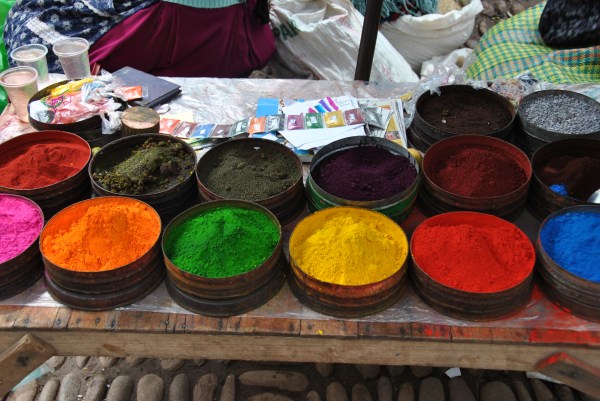
I hold the postcard in my hand. Pots of pigment in a South American market array on a worn blanket spread on hard ground. Vessels of intensity.

And I think of you, how I might paint who we were.

Carmine, the red of crushed cochineal insects. Yellow, like purree, the pigment made from urine of India’s cattle starved on mango leaves. Lapis lazuli blue, a mineral inlaid into Tutankhamun’s funeral mask. White of powdered chalk, a void of colour. Black of charcoal, burned matter.

Pigment cupped for protection or to prevent escape.

*      *      *

I see us as the painting begins, take up a pencil, its sides rough against my fingers, its point blunt.

Emerald burns with jealousy. Gold turns to sulphur. Ruby catches fire. Essences lose distinction when blended, fade when diluted and bleed when they run. Canvas is a material for display or cover.

I sketch, rough and hurried with lines crossing yet unconnected – the edges of us are yet to be determined. We can’t get enough of one another. Flesh is electric. Lightning and storm. A thicker brush mixes the paint, creates tone. This is for the underpainting. The part that lies beneath what comes next. We move in together.

Calm. An image. The beach, water sky blue. My head is resting on the warmth of your belly, feeling it rise with your breath. The sun is like the hands of a healer over us. I am your life, you say. And your life is mine.

The painting evolves. I lay a wash of yellow’s harmony over the canvas but the rushed lines of us push through, jar against the soft glow, against my hand that directs the brush to fill in the lines and round out edges. I try to paint a memory of comfort in our world but elements unbidden emerge and interject into the scene I am creating. Darker hues insert themselves. Lines thicken and harden. Edges fall down cliffs.

Random script, a cacography that’s hard to read, appears in the corners of the canvas. Questions. Small things. What time did you come home from the office? Who did you eat lunch with? Where are you going? At first, bright – jokey, like your face.

You code your words but I’m learning.

I want us to be together more, you say.

Dove becomes cloud, and silver, slate. Your shape reveals in small distinct strokes of the brush while mine begins to dissolve.

You’re finally home. Slow bus?

I pretend it is jest though your eyes don’t laugh. Your words de-cipher.

Don’t dress like that. Don’t act like that. Don’t be you.

I protest and you storm out. I wait for hours in the dark for the door to open so I can apologize. No dress is worth fighting over. I become beige.

Graffiti scrawls across the painting. Lavender and lilac yield to the bruise of mahogany.

Who was that calling?

You don’t believe it was my friend, my mother, work. I try rearranging your colours, examining the painting through your eyes but find myself sinking into your pot of pigment.

Don’t you fucking look at me that way.

I adopt shadow, look away.

Coral and watermelon convert to garnet and brick, and my pot has a rim that prevents flight.

*      *      *

A postcard is something you send from a distance.

I push aside the pots of paint. Lift a broader brush. Swish its bristles in a cup of water, start at the centre of the canvas and work outwards in slow, swimming strokes unwinding the vortex that drew me in.

And flush away the harsh colour, the bully lines of you.


Cabinet Of Heed Contents Link 21

Image by Patricia Sandberg

In The Attic of the Holiday Home by the Sea – B F Jones

The landlady had been clear, her stiff tone definite. No attic visit.

And ever since, she had wondered what was up there. She’d miss out on the delights of a week of crisp sea air and grilled fish, consumed by her assumptions – Gold? Ghosts? Unspeakable war paraphernalia? – and her childish curiosity.

She could hear noises during her sleepless nights, remote rhythmical clanking – the boiler? And a soft, occasional fife her husband attributed to wildlife. There was sometimes the ineffable feeling of another presence that she didn’t like thinking about.

On the sixth night she finally caved, and climbed up the wonky ladder, exhilaration and terror leaping in her throat.

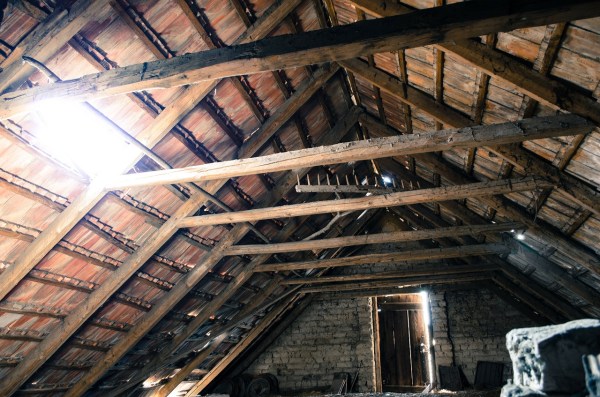
The attic was warm and brightly lit. The old man didn’t see her. He exhaled two sharp blows of the wooden whistle, and the small green locomotive slowly started again its eternal 8-shaped journey.


Cabinet Of Heed Contents Link 21

Image via Pixabay

Why I Pierced My Nose – Cinthia Ritchie

Because in junior high
a girl with banana-colored hair
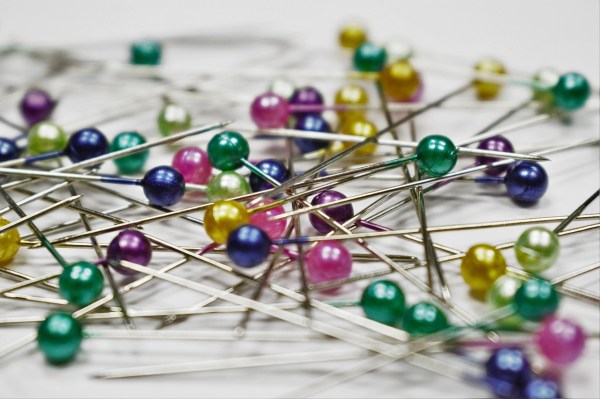
stuck a pin through my ear,
yanked a thread, blood dripping,
it felt holy, Christ
on the cross, Moses wandering
the desert,
my ears crusted with pus
until I smelled infection
across my pillow
animal odors, comforting,
special.

Because few years later a boy
with dark hair and green eyes,
led me to his bed,
another type of piercing
but Jesus, how he moved,
cat eyes blurring,
I licked the blood from the sheet,
tasted myself.
When I walked I could feel
a hole between my legs
gasping and hungry for breath,

Because the years smeared
together and suddenly I had a son
with beautiful teeth,
a job at a newspaper,
poems published in magazines no one
read. Every Sunday I blew a copy editor
in the supply closet, printer cartridges praying
my knees as outside the door reporters’ keyboards
sang the news.
After he left, I paid a man to tattoo
a dolphin over my arm, blood mixing
with ink, I loved the pain, the permanence.
Some things should never stop hurting.

But they do and soon you forget,
which is why years later,
no longer young,
I had my nose pierced,
pain blaring hot-rock shout,
eyes watering, it was almost unbearable,
Mary searching the temple for Jesus,
Abraham ready to slit his own son’s throat,
and then, just as suddenly,
it was over, a small pink stone
embedded in my right nostril,
a gift, a song,
a reminder not so much of pain
but of the relief, the welcoming
stillness, that follows.


CINTHIA RITCHIE is an Alaska writer and ultra-runner who spends her time running mountain trails with a dog named Seriously. Find her work in New York Times Magazine, Evening Street Review, Sport Literate, Best American Sports Writing, Bosque Literary Journal, Clementine Unbound, Deaf Poets Society, Into the Void, Gyroscope Review and more.

Cabinet Of Heed Contents Link 21

Image via Pixabay

Create a website or blog at WordPress.com

Up ↑