Forwards – Gail Aldwin

I’m flaked out. The sky is mauve yet still I lie, my skin warmed and taut from sunbathing.
In the pool, the water is inky. There is something amniotic about the way it draws me as if I can go back to the womb where I once tumbled and turned. I will always be my mother’s boy. The others go off in search of more beer but I’ve had enough. Fag buts and spliff ends dot the paving stones. I stand and stretch then pump my shoulders. You can’t get more chilled than this. Ready for a swim, I watch the water winking. Puzzled, I turn. Of course it’s the fairy lights strung amongst the trees that reflect on the surface. Chinking bottles announce the boys are back but I am poised, my toes grip the edge of the pool. That’s when the shouting starts. They like to make a noise but I’m not distracted. My chin’s tucked in, my back’s arched and my arms are ready. One little bounce at my ankles and I’m propelled forwards.

I am prone. The lights on the ward are bright but I lie there, the result of an impetuous moment and a shallow end.


Contents Drawer Link

Gail Aldwin is an award-winning writer of short fiction and poetry. As Chair of the Dorset Writers’ Network she supports writers by connecting creative communities. She is a visiting tutor at Arts University Bournemouth and author of Paisley Shirt a collection of flash fiction.     @gailaldwin     https://www.facebook.com/gailaldwinwriter/   http://gailaldwin.wordpress.com


Image: Marisa Sias via pixabay

In Florida – Ace Boggess

Alligators snap at feet of witless giants.
Sandhill cranes swoop in, squawking
their staccato poems from the Beat generation.
Coral snakes & cottonmouths
set up kissing booths at fairs.
I’ve seen none of it, though I’ve looked.

My stepmother makes vague excuses
about the end of mating season,
crisp trimmed lawns in a gated community,
chance.

Where are those cranes?
I ask the silent window but see one tee
of a golf course
waiting for tournament women to play through,
those also absent.

I’m satisfied with searching,
sure beasts loiter on another street,
glide by tooth-first in a nearby pond.


Contents Drawer Link

Ace Boggess is author of three books of poetry, most recently Ultra Deep Field (Brick Road, 2017), and the novel A Song Without a Melody (Hyperborea, 2016). He is an ex-con, ex-reporter, ex-husband, and exhausted by all the things he isn’t anymore. His poetry has
appeared in Harvard Review, North Dakota Quarterly, and many other journals. He lives in Charleston, West Virginia.


Image: skeeze via pixabay

Preservation and Restoration Part 2 – Andrew Maguire

I

Cabinet Of Heed Contents Drawer 10.15

II

In the living room of their vast New York City apartment, Simon Wilson and his eighteen-month-old daughter Rose stare at each other. She sits at the foot of his armchair, with two Lego pieces in her hands and tries to mimic his movements. He separates two blocks and puts them together again. ‘You see,’ he says, but she doesn’t. She presses the pieces at acute angles until they fall from her hands, and he picks her up and sets her on his knee.

He kisses her cheek. ‘Daddy missed you,’ he says, even though he only spent the day at work, and kissed her goodbye before he left. She grabs his hands with her little fingers and he accepts, again, that she is far too young for Lego. From the table he lifts one of her books, a striped tiger with a wild grin stares at him from the front cover. She reaches down and wipes her hand across the animals face.

‘Wait, wait,’ he warns, and she does.

He opens the book and on the inside page the tiger appears again: full body, with the felt fur to go with it. ‘Ok,’ he says, and she reaches out slowly, daring herself, then flinches as she touches the material, like it gave off an electric shock, like the animal might jump out at her. Then, having convinced herself, she reaches forward again, touches its head, and runs her hand smoothly over the four inches of its body. She laughs, and he sees the focus in her eyes.

‘What’s his name?’ he asks.

‘Tiger!’

He sets her down again and she feels the rug beneath her, rubs her hands across it like she had the felt of the tiger, then holds up her palms and looks at them, as though the sensation means they should have changed. The floor, like the room in general, is tidy, bar the pieces of Lego scattered around it. He only took the loose pieces out ten minutes ago, but that’s what happens. He leans back and allows the cushions to soak up the stress in his back and shoulders. It’s only when he gets home that he feels tired, and only here, when he imagines what he has missed, that the day away feels long.

She is staring up at him. ‘Where’s the other Tiger?’ he asks, and points her towards the puddle of Lego animals by the fireplace. She crawls over, though she is fit to walk, and looks for a second, hovers her hand, then grabs it. ‘Tiger!’ she says, as she turns around and holds it up proudly.

The door opens and Lilly comes in from the hall.

‘Tiger,’ Rose says again, in her mother’s direction, then she puts the tiger’s head in her mouth and nibbles gently on it with her three teeth.

‘No,’ her mother says, and Rose stops, dropping the creature to the ground. ‘No,’ she repeats, and turns to him. ‘You do keep an eye on her, with those things, don’t you? Lego all over the place, she’s far too young for Lego.’

He nods conformingly as he feels his wife’s warm arm around the back of his neck. ‘But she does like it,’ she says, acknowledging their daughter moving the Lego around the carpet, sliding the pieces this way and that. ‘Even if she can’t play with it properly.’

He stands up and goes and sits beside her. Holding the pieces of Lego up so she can see, he places them onto the structure he has been building with them: a lavish house, hotel, castle with animals grazing around it. Her eyes gaze at him as he takes the tiger piece and places it into the garden with a click.

‘There you go, Rose,’ Lilly says from over his shoulder, and he tries to pretend that the Lego house built over weeks, ten, fifteen, minutes at a time, is believable proof that he isn’t missing his daughters childhood.

When they’ve had dinner and she’s been kissed goodnight he goes to his study. His favourite room, filled with mahogany and leather, it is the one part of his life he never feels guilty or conspicuous about lavishing grandeur on. It’s not on show, it’s his. It houses the most expensive and exotic things in the house, though they aren’t superficial or materialistic. There are no jewels, or gold, and were a burglar to sneak in there are no pieces of technology, no priceless materials that could be slipped into a bag and taken away. Instead there are expansive, gleaming, table top surfaces, wingback chairs and tall bookshelves. The art on the wall is inspiring, but not priceless, and the décor, though not bland, is understated. To feel the wealth of the place, which is only about twenty feet by ten feet in size, one has to live in it, read in it and write in it, and this is what he does.

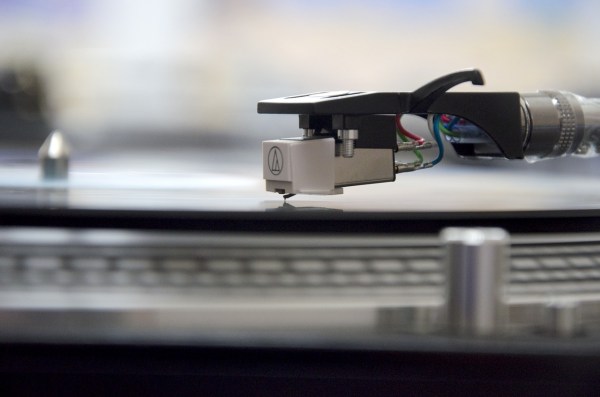
He goes to the record player, adjusts the needle, and gentle music fills the room. Music is mystical to him. He has never played a note and never wants to, but he adores it. He breathes in the almost ancient sounds of the piano; it is otherworldly, alien, and he believes that even the greatest musicians and composers do not create music, they merely summon it and try and keep it under control. He pours a drink, sits down and opens a book. He reads the words and they enter his head to the beats and pauses of the music around him. He doesn’t mind, they are getting there nonetheless, and it is all the more pleasurable for it. His wife is on the phone in the kitchen, and he imagines that he can hear Rose breathing gently upstairs, and it is a rare time in the day when he doesn’t feel guilty.

It is in his study that Simon feels best about his career. Give it ten minutes, a few sips of scotch, an interesting page or two from a recently published book, article or journal, and he will feel better about his work than he ever does in the office. Here, the fantasies come alive in a way they never do in the sobering reality of the laboratory, with all its facts and figures, its experiments and the resulting evidence, which so rarely offer any good news but never enough bad news to allow them to give up. There are times when he would welcome the latter, just to hear something coherent and clear; to have a result. He works in Animal Preservation and Restoration. It still doesn’t sound right in his head; there isn’t a ring to it. Animal Preservation and Restoration. The second part, Restoration, is new; as new to him as it is to anyone. One of the greater developments of the second half of the twenty-first century, there are still times when it feels like a fantasy, when it seems futuristic and he wonders even now, in the year 2056, if it’s possible at all.

Not now, however. Not here. As he sips from his glass and leafs through the pages of a national journal, he feels the effects of both begin to take over. He has escaped these recurring concerns and he feels good. Moving across to the table he opens a notebook and writes something down; just a thought, a musing on what he has read, which though not quite a full idea, is not one he wants to forget either. This is what he does: allows his evening mind to wander on a long leash and waits for the cold morning’s eye to decide if the resulting thoughts are anything worth pursuing. More often than not they aren’t, but he is never afraid to let his mind go. So much of what he does is fiction – today’s fiction which could be tomorrow’s fact – and when it becomes fact and there are decisions to be made, it is his job to have already thought of them as such, so that when they can do something, he knows whether or not they should.

He finishes writing. These are conversations he has alone, between him and his notebook, but they soothe him, even if he can never be sure that they will help anyone else. While his office forces him to be face to face with reality, with the slow progress being carried out by those around him and those around the world, here he can dream, without the limitations of today and with the hopes of tomorrow. Then he can be ready to make his decisions. He had to make one only hours before; scrap an idea, tell his colleagues they would not be pursuing a project. It made for an awkward atmosphere in the office, but it was his job.

He hears a noise over his shoulder. His wife has appeared at the door, holding the television remote, and he follows her back into the living room.

At the kitchen table, Lilly flicks through a newspaper, Rose rattles her plastic spoon, quietly and not without rhythm, against the table of her highchair, and Simon, reading from his laptop, says, ‘You know, there are about 62 Lego bricks per person of the earth’s population. 40 billion of those stacked on top of one another would reach the moon. A Lego brick made from 1958 would still interlock with a Lego brick made today. 62 bricks per person – that’s more than four hundred billion bricks produced since 1958. Can you believe that?’

Lilly doesn’t look up. ‘Eh?’ he says. ‘Can you believe it?’

‘Of course I can,’ she says, turning a page. ‘I feel like we own half of them.’

Rose bangs louder, continuing her drum solo.

He finishes eating and goes to his study, moving around the room, putting things in his bag, readying himself to leave for the office. Lilly regularly wonders aloud if he would not be better doing this the night before, but he prefers it this way. He likes lifting the papers he worked at the day before and glancing at them, remembering; likes feeling the weight of everything he packs and being reintroduced to the weight of what he does; likes lifting a newspaper or magazine from beside the empty scotch glass, and revisiting the thought or idea it had given him, or, if he can’t quite remember it, going to his note book to read it, before sliding it into his satchel with all the others. Of course he doesn’t like these things at all, he needs them. Because if he went in blind, opened the laboratory doors one morning without having gently reminded himself of everything, he’s not sure he’d believe any of it when he got there.

He hears Rose laughing out in the kitchen. Always laughing, and she so rarely cries. So like her mother too. He considers himself very lucky. Rose doesn’t know that her father leaves her every day to go work with the animals she points at in her picture books. She doesn’t know that what her father does is thought by those who do it to be ground-breaking, world-changing, affecting men and animals thousands of miles away. Most of all she doesn’t know what it all means, doesn’t even know if it will ever work, and neither does he.

He drops his now heavy bag at the door, setting off the usual sequence of sounds. His back is still turned as he hears his wife, behind him, make her way past. She knows he is now free to return to Rose, and he does. He lifts her – he always does when she reaches her hands up, clutching at air, clutching at him. He holds her in one arm and pours another cup of coffee as he hears the shower kick-in in their bedroom. He holds the hot cup under her nose and watches as she smells it then makes an ugly, refusing face. He mimics her, copies her disgust, then watches her face turn to horror as he drinks it anyway.

They pass the island and he puts down the coffee and lifts her sippy cup. He sets her on the foam, jig-saw piece mat and kneels down beside her. The mat isn’t big, but once there she never strays from it, as though she were surrounded by a cliff edge. He paws a soft, foam ball over towards her; she reaches for it, misses and topples over. She laughs, he smiles. Already he hears the noise – or lack of it – of the shower turning off. He knows his wife will be down in minutes and he will set off for work.

Five Lego bricks sit neatly on his office desk, like sand from the Sahara or pebbles from the beach where they shared their honeymoon. He switches on his computer and sits back in the chair. There is no one else in the office. Four empty desks around him, all well-spaced out, granting the option to talk but not the obligation.

He is usually the last in, so he assumes they’re at a meeting. He isn’t missing anything. Any meeting they have will be too technical for him; nothing he wouldn’t understand per se, but nothing that he has to clutter his mind with either. He is more than capable of the work they do themselves, and sometimes he craves getting his hands dirty. It can be messy work. Blood, sperm and umbilical cords. Cells. Cells in animals, animas in cells. Not much of it is ever pleasant, but it’s his life’s work nonetheless. Cloning animals can be used to help save endangered species, if they can just figure out how, and there is never a question of him doing anything else.

It’s the results, where exactly they are, rather than how they are getting there, which is his primary concern. Knowing what they are doing, deciding if they can proceed, and calculating how much becomes public knowledge is his brief. ‘Don’t let this get out of hand,’ was an early message from those above him. ‘Don’t hinder us,’ is the silent protest he often senses from the young, ambitious scientists below.

Here they are now: the door opens and three of his colleagues come in and approach the desks. Two of them simply nod with a smile, while another comes and sits on the edge of his desk, peering down at him.

‘Simon?’

Mark, a man twelve years his junior, says his name questioningly, almost pleadingly. ‘Come on, man.’

‘No,’ Simon says, without looking up at him, logging into his computer.

‘Seriously? Why not?’

He stands up. ‘We went through all this yesterday, Mark. It’s too much. Let it go.’

‘Too much?’

‘Money. You want to spend a fortune on a hunch, be my guest. But don’t ask me to allocate my department’s funding to it.’

‘Do you even understand what this could do?’

Simon is walking over to the far side of the room, to pass his other colleague the article he read last night, but he stops and turns to Mark again, looking him in the eye for the first time, engaging him and the conversation in a way he’d hoped he wouldn’t have too.

‘Don’t question what I understand about anything in my office. You are all specialists, impressively so, but I know every detail I need to. Now get back to work, and don’t dare question my decisions again.’

He has heard something interesting just now, in the break room, as he made a quick cup of coffee.

Two of his female colleagues talking:

‘We set up an e-mail account for our daughter.’

‘But your daughter isn’t even born yet.’

‘No, but we e-mail her every now and then anyway, let her know how I’m doing, how she’s getting on in there. When she turns eighteen, we’ll give her the password for the email address, and she can read them all.’

He’s back in his office, at his desk. It’s been a quiet morning. Mark is frustrated, but it’s not personal; he just needs a new idea, another thing to get passionate about. That will come and he’ll perk up again. This is his job: controlling these scientists, these minds, and yes, these egos. With no pressing matter to distract him, he opens his email and hovers the mouse, stalling between logging into his own account and creating a new one. After a moment he lets curiosity and impulse get the better of him and clicks ‘create account.’ He does it all quick: puts in a few fake details, creates an e-mail handle around his daughters name, thinks of a password, then logs out of the e-mail account as quick as he has made it and re-opens his own. He opens a new e-mail, types the newly created address. It’s all done before he knows it, before intrigue has turned to passion, before curiosity has created excitement; so as the door of the office opens and one of his colleagues comes in, taking him by surprise which feels like guilt, he closes the respective tabs, feeling a mixture of shyness and embarrassment.

With an empty monitor in front of him, he opens his work emails. The first message he reads means it’s some time before he thinks of his daughters new e-mail address again.

 

Contents Drawer Link

Andrew Maguire has an MA in Creative Writing from Queen’s University Belfast and is employed at South West College, where he writes and edits ‘Way Out West’, which won best blog at the 2017 European Digital Communication Awards. He’s a primary organiser of the Omagh Literary Festival. His short fiction has been published in Blackbird, The Incubator and The Honest Ulsterman.


 

Image: pixaline via pixabay

Under The Red Light – Emma De Vito

Under the red light, her face emerged on the paper like an apparition. The solution swirled as he touched the exposed image with the tongs. He was pleased with it. The way the sunlight reflected off her, giving an air of elegance. Poised, she stood on a grassy verge overlooking the sea, and in that instant, he had captured her beauty.

It had taken him weeks to track her down. Admiring her from afar, he had crept in the shadows of early morning light to avoid detection. If she had sensed him near, he would almost certainly have lost her trust. So he kept to his hiding places, out of sight.

After rinsing the photograph in water and pegging it up to dry, he studied her more closely. Until that moment, he had only been able to fantasise about what it would feel like to be in her presence; to hold her in his sights. Breathing in deeply, he couldn’t bear to take his eyes off her. Her ruby red lipstick drew him in.

In his dark room, the electric fan whirred. As he processed the next photograph, he continued to dream of what it would be like to be her. He admired her friendliness. Observing her closely, he had noticed how synchronised in movement she was – how graceful, as she and her family travelled together. The affection he had captured in his images had been wonderful to witness. The bonding, the kissing – all interactions reaffirming their commitment to one another.

He looked at the red of her beak once more. It reminded him she had been categorised now; classified in the ‘red’ – a bird needing urgent attention. The photograph he held had captured a brief moment in time; the puffin’s voluminous chest puffed out and proud; bold and distinctive. Orange legs launching her accurately from jagged rocks. She was a goddess of the hills, marvelled at for her unique appearance. Her clown like antics and movements entertaining the world.

In the photograph, she remained silent. But he would give her a voice; he would use the image to save her, bringing the world’s attention to her desperate plight.


Contents Drawer Link

Originally from the West Midlands, but now living in Northampton, Emma is an English teacher and aspiring flash fiction and short story writer. In 2016, she co-founded a writing group in her local area and has recently got involved with The Word Factory as a Social Media Associate.


Image: betexion via pixabay

Moonlight – Tom Roberts

I have the same dream I always do: I am sitting alone in the wooden house by the lake. You know the place. We went every summer. The fire is crackling even though the weather is warm. I am sitting in the rocking chair. You are outside in the field with our daughter, looking for fireflies in the field. I hear you both call out as you find them. I walk over to the door and lean against the wooden frame. I think about the argument. The Moon is bright silver in the sky. I watch as a stain of cloud passes over it, and I want to be up there looking back down. The sky is full of moths with dark bats flying through them. Several moths flutter around my head, attracted by the light of the room behind me. I can hear crickets and insects calling to one another, the trees and grass swaying in the night breeze. A torch is bouncing through the long grass. It’s you, coming back. You stop and follow my gaze into the sky. Then you close the door and I am left inside, on my own.

When I wake, my vest is stuck to me. The filtered air is always too cold and rattles the vent in the ceiling. You would be surprised how clean I have kept my room. I will be here for another year. I have sent in an application to stay beyond that, although I know that they will not let me. The floor is cold. I walk out of my room without turning the lights on. I have been on the Moon station for long enough to find my way. I have had little to do, really, other than monitor some rocks and occasional tremors. It isn’t what either of us had expected, but it has been good for me.

I am in the dining room, now. I can still hear vent rattling in my room. It shouldn’t be a surprise that everything seems so loud up here. I drink some water from a plastic pouch. I am sure I can hear something else. I walk around the room, circling the table, listing. I am pretty sure the sound is coming from the window. It’s the only large window on the station, and has a view of the bright, dusty Moonscape. Nothing looks unusual. I turn on the main light and walk over to check for any damage. On closer inspection, I can see something small in the bottom left corner. It’s a moth. A small brown moth. I wonder how it managed to find its way to the Moon with me. It’s the first living thing I’ve seen since I got here. I pull a chair over, and sit with my face close to the window, and look closer at the moth. I don’t it to fly off and get stuck in any of the equipment. It takes me a few minutes before I realise that the moth is outside, and it is trying to get in. I hold my finger to the glass to check, and the moth stays on the other side, the same side as the airless Moon. As I watch, another one lands on the glass beside the first. I can see its furry body quite clearly. Then a third one joins them, then another.

I step back, knocking the chair to the floor. I close my eyes and wish them to disappear. I realise now that I can hear crickets too, along with the buzz of insects. It is all I can hear now. I open my eyes again. There are dozens of moths on the window. Some are stationary, some are fluttering and knocking against the glass again and again. I turn off the light, and hope that they will go away. I think that some of them do. Now that the room is dark, I can see further across the Moon’s surface. I can see the small green lights of glow worms. I can hear the rustle of grass. I can hear our daughter laugh.

I want to help you both hunt for fireflies. I unlock the heavy door, and it feels like I’m flying out to meet you both.

The Moon has never looked so bright.


Contents Drawer Link

Image: stocksnap via pixabay

Luck Has Nothing To Do With It – Patti Jurinski

Elsa Larsen carries lightning in her pocket. A small, bedazzled key chain in the shape of a bolt. Silver and blue rhinestones catch bits of sunlight and throw rainbows across the room. It’s her lucky charm, I overheard her tell Scott the second day of school.

Scott likes shiny things.

“Have you gotten to know the new girl?” My mom asks at home. “I think her name is Elsa.”

I shake my head and bend over my math homework. Forget the new girl, everything is new. And exhausting. Two months into the year, the only thing more tiring than sixth-grade is talking to my mother about it all. I want to finish my homework and text Scott.

“You used to love dressing up as Elsa.” My mother slides a glass of milk and a plate of Hydrox cookies under my nose like I’m still five. “I think she moved here from Norway. Imagine that. Our own little princess in town.”

“God, Mom, she’s not a princess.”

“Who’s a princess?” My dad joins us, his gray hair at all angles like it lost a recent battle with a Roomba. He’s wearing his usual post-shift clothes: sweat-stained t-shirt half-tucked into baggy pants.

I groan around a cookie.

“A new girl at Jenny’s school. Elsa Larsen,” my mom explains.

“A guy named Larsen joined the company a few months ago. Some big-wig from Sweden.” He pops a whole cookie in his mouth.

“They’re Norwegian, Dad,” I mumble.

“Same difference.” Cookie dust clings to his jaw. “Another suit in the corner suite with a lot of sh—”

“Yes, we know,” my mom gives him a push out the door. “Scoot. Jenny has homework.”

My dad works at Gentype, the international biotech firm in our town. “I’m in the Waste Management department,” he says to people curious what he does. “May not be fancy but somebody’s gotta clean up the shit.” That’s my dad, Gentype’s ass. Scott spit out his soda when I dropped that line last summer. Worth getting Sprite in my eye.

My mother takes a seat and a sip of her newly poured drink. Five o’clock, then. Ice cubes knock against the glass while she knocks her shoulder against mine. “I heard Elsa’s quite the hit with the boys.”

I grip the pencil hard, suddenly unbalanced like the unfinished algebraic equation on my worksheet. I don’t want to talk about Elsa. Elsa who never sits in the cafeteria alone. Or, gets tripped in the hall. Non-princess Elsa with the super cool name and lightning key chain everyone wants. She wields it like Zeus enchanting the entire sixth-grade.

Including Scott.

My mother lowers her voice like we’re in church giggling at Father McKeon white tube socks. “I also heard your Scott may ask her to the Holiday dance if he gets the nerve.”

My pencil snaps.

*      *     *

I’m dripping November rain in the back hall when I hear my parents in the kitchen. It’s three-thirty, and there are two empty glasses on the table. Day-drinking is never a good sign. My dad still wears his company-issued jumpsuit.

“What’s going on?” I drop my soggy backpack on the bench.

“Company’s closed,” my dad says into his empty glass. “Maybe for good.”

“Why?” My voice cracks and splinters like our back stairwell my dad promised to fix last summer. Like the window in my bedroom duct-taped in place. “What happened?”

“Anton Larsen got arrested for embezzlement.”

“What’s that?” The word buzzes like an angry hornet’s nest.

“He stole money. A lot of money.” Dad pours another drink. My mom doesn’t stop him. “Gentype’s broke,” he mumbles to the liquid.

Embezzlement. I mouth the word, stretching out the z’s until they get stuck in my throat. Stretching them out until they resemble an unlucky lightning bolt key chain tucked at the bottom of my bag.


Contents Drawer Link

Patti Jurinski writes flash fiction and is working on her first novel. Her fiction has appeared or is forthcoming in SickLitMagazine, Ellipsis Zine, and formercactus. She lives in Florida but will always be a New Englander at heart.


Image: matreena via pixabay

The Box – Linda Walsh

‘My condolences.’

I pocket the priest’s condolence and usher him into the crowded living room. My pockets are full. Full of ‘sorry for your troubles’ and ‘I’m so sorrys’. I find a shoe box, ‘Size 12 Brown Brogue’ and tip the sorrys into it.

Placing it on the laden table, I re-join the mourners offering them tea, coffee, whiskey. People circle the coffin whispering. An old woman touches John’s waxen face; pats his frozen hand. The mood lifts as the whiskey hits. The chatter bubbles as people reacquaint… and speculate.

More people arrive. I accept their sorrys, moving my hand over the box each time, a slight wave, a silent drop.

There’s a commotion as a woman crashes in, her cries stilling the mourners.

Judith.

Shrouded in black; lines of mascara trace a waterfall down her face. She touches my arm.

‘Sarah, I’m so sorry.’

I don’t put her sorry into the box. I flick it into a soiled saucer. Jameson sears a path of fire down my throat.

When the mourners filter out, I put the box in the coffin at John’s feet. I pull his letter out of my sleeve.

‘Sorry,’ it says.

I crumple the note; push it into the box.

A movement in the garden; Judith is leaning against the wall, one hand clutching her stomach. Snatching the box, I step outside.

Drowned eyes mirror mine, I see the friend she once was, the wretch she is now.

Touching her arm, I hand her the box.


Contents Drawer Link

Linda Walsh lives in the Dublin mountains beside a library and has written stories in her head since childhood. She is finally putting pen to paper and has fallen in love with Flash Fiction.   Twitter: @francaisanna


Image: via pxhere

As Far As We Can Go – Paul Thompson

7 miles from home

A sign in reception reads – smile, you are on at least 2 CCTV cameras.

We check in with a fake address, using the surname of a teacher we both hated at college. The receptionist believes our every word, pushing a key card across the desk, smearing our secrets into the wood.

Our room is on the third floor and lacking in furniture. Minimal, but not modern. Our sex is immediate and functional, as in keeping with the room.

Twenty minutes later we do it again, getting it out of our system.

16 miles from home

A new hotel, further north on the southbound carriageway.

Blossom and litter swirl in the car park. People stand outside smoking. A familiar greeting comes from the receptionist, typing as he speaks.

In our room a bed takes up at least eighty percent of the floor space, our clothes taking up the rest. Television plays in the room next door, canned laughter and applause at all the wrong moments.

25 miles from home

We continue north with a clear agenda. Our agreement is to keep moving, to use a different hotel every weekend, obvious and convenient to follow the motorway.

With this clarity our sex improves. We still fit together well, our protrusions interlocking, a perfect fault line down our centres.

37 miles from home

We park in the shadow of an exhibition centre. Delegates hustle in the reception area, dressed business casual, their real names on badges.

When the receptionist offers us a loyalty card, the idea is both practical and impossible.

48 miles from home

A three-week gap. A deliberate attempt to disrupt our pattern, to become strangers once more and return to the random.

It is the first time we stay together for breakfast. A wedding party takes up most of the restaurant, the couple centre stage looking pale and tired. Over pastries and fish we rehearse our story, a tale so convincing we almost wish someone would ask.

63 miles from home

A long journey, marred by traffic disruption. A serious incident somewhere ahead of us.

In the room we make hot drinks. Discomfort and fatigue slows our progress, our foreplay unfocused. Corporate branding on the bed linen reminds us of our pattern, our blueprint somewhere on a data warehouse, itching to be discovered.

91 miles from home

Four hotels remain. The end is now tangible, an achievement parallel to our intention.

The imbalance sits on our shoulders, a need to complete our pattern, to stabilise our universe. Our anticipation is now the physical, the progress, and the simple pleasure of being a guest in a hotel.

Comparisons and reviews, posted online by our anonymous selves.

91 miles from home

A hotel opposite on the southbound carriageway.

Our previous room is visible across the motorway. We imagine another couple in our wake, finding the things that we leave behind us.

Sex is our last thing before sleep, our stomachs full after dinner, our bodies ill-fitting and stubborn.

In the morning we skip breakfast, to remind ourselves how careless we have become.

132 miles from home

The journey is two hours long, and against our initial agreement, we try a conversation.

I still miss my Dad, you say.

For the rest of the journey we listen to the radio, songs from our youth, filling the space and finding our corners.

160 miles from home

The penultimate stop. Soon we have no future, a conclusion made for us by the infrastructure of the roads. Only now do we go through the pretence of formality – bringing a suitable change of clothes, dressing for dinner, taking leaflets of the local area.

197 miles from home

The end of the motorway, splitting into threads that weave through the hills.

Our hotel is an oversized log cabin, peeling and windswept. The reception area is dimly lit. Keys hang on a board behind the desk, with rooms named after local areas of interest.

A receptionist confirms we are the only guests, and declines an offer to join us.

As we unpack, we agree to drink the contents of the mini bar, and leave without paying in the morning.

132 miles from home

A midweek business trip brings me back.

The receptionist is unfamiliar, the hotel one of many. All these rooms compete for space in my mind, a four-dimensional image that shivers whenever examined.

The room is functional for an overnight stay. Everything lacks attention. A cobweb hangs over the window, in it a chrysalis waiting to die. Instead of unpacking I check out of the hotel. The receptionist completes the transaction without a single word. Using some complimentary mints, I clean my teeth, and spend the rest of the night awake in my car.


Contents Drawer Link

Paul Thompson lives and works in Sheffield. His stories have appeared in Ellipsis Zine, The Cabinet of Heed, and recently featured in The Drabble’s ‘Best of 2017’ list.


Image: ming dai via pixabay

Unperson – Sudha Srivatsan

Amidst throngs of intense showers
A deafening applause
Ivory black clouds anneal
With their ilk in titanium white
Right in time to smother
Lingering strands of ochre and crimson
The envy of clouds trickling through
Downy feathers of an odd sparrow
Then gushing viridly in torrents
Tessellating the wilderness
While bearing down haughty heels
Furtive winds, otherwise acerbic
Tonight, subtle
Foretelling my being
Discernibly barren
Wrenching me dry
Into an Orwellian unperson


Contents Drawer Link

Sudha Srivatsan’s works have appeared in numerous journals and anthologies including Commonline Journal, Tower Journal, Corner Club press, BlazeVox, BurningWord, The Stray Branch, inbetweenhangovers, the Pangolin Review among others. Her works have been translated into French and also selected to be part of Storm Cycle’s 2015 Best Of anthology.


Image: free-photos via pixabay


Ithaca Road – Debbie Robson

They collapse into my cab in a bouffant of net petticoats, tight bodices and Dior perfume.

“Ithaca Road, please,” Miss Powder Blue says.

I glance in the rear view mirror and marvel at my cargo of female beauty. Hasn’t it always been so? We men are defenceless.

Miss Pink Sateen is the prettiest but I rather like the brunette in broderie anglaise. She speaks and I am struck with that old familiar feeling. “I think we are too dressed up,” she says softly.

“It’s Elizabeth Bay. We are not too dressed up,” her friend hisses.

As I pull away from the gutter, the gum trees rustle and the late summer sun kisses the top of the houses in Lavender Street. The harbour bridge hums and the girls whisper in the back seat. I can feel the heat of the day ebb from my cab. I want to close it up after the girls jump out. Trap this moment to live off for days. As I drive I remember Ithaca Road as it once was. The cool, square houses and the blue water. In particular a deep garden and a verandah with a small return that I used to kip in for the night. I breathe out my Peter Stuyvesant and watch the fare tick over.

“Brian Paignton is going to be there,” says Pink Sateen.

“I’ve got my sights set higher than that,” remarks Powder Blue.

“We’ll have to contend with the Kambala crowd.” All three groan.

“I’m determined to meet someone tonight,” declares Blue. Not when she expects to and not if I can help it, I decide. I park the cab not far from their destination, inches from an FX Holden in front and a blue Zephyr behind. Pink pays me and they stand for a moment looking up at the balcony of the old house, the steep rise of flats behind and a Cook Island pine shadowing both. Laughter drifts down as the girls begin to ascend.

Up, up you go girls. Your destiny awaits. I pause and let things settle. Count the minutes for the hostess to get through her introductions, for the hors d’oeuvres to be served and the years to fall away.

“Zach! Is it really you?” Mrs Hungerford studies me. I can tell she is wondering what to do with me. Where can she put a taxi cab driver? In with the bankers or the doctors? Maybe the poet won’t mind. I look around but can’t see him.

“Can I steal your balcony for a few hours? I’ll just sit and contemplate your view.”

She is confused. “If someone needs…”

“Of course, I’ll drive them.” She is immediately relieved. I am here as a standby taxi driver. Nothing more. Never mind the night, twenty three years ago, we spent in her bedroom. I wonder for a moment if it is still painted white, the curtains like Scheherazade billowing gently on us. Do they still billow? Does she?

Suddenly her face brightens. “Can I send one or two guests to you if I’m desperate?”

“The lost ones?”

“Yes.”

“Of course.”

“There are not so many of them now, thank God.” She pauses. “Time passes,” she comments blithely but frowns when she studies my face. My hostess doesn’t wait for my reply.

I spend about an hour on the balcony. For most of that time Miss Broderie Anglaise is a smiling wallflower. No accounting for tastes. She is worth all the others together, rolled up in a Persian carpet. I can’t stop myself from turning and observing her. She drifts beautifully. Young men in grey suits with baggy legs drift towards her but don’t stay talking long. I can see this happening for years. Most of the time I let things take their course. Just simply watch the patterns unfold and tweak here and there. I’m not as old as Methuselah but I have the luxury of the long view.

The problem is, keeping my enthusiasm up. I’ve grown tired of marvelling at how small the points of divergence are. The difference between two people meeting, finding they have something to keep them together and then staying together. The last part, of course, is a challenge but at least it is grounded in the everyday. The first part is the stuff of dreams and where I do my best work. A wrong address, a crossed line, a missed flight. A sudden remark that lifts an eyebrow. A mood that is uncharacteristic and suggests the unexpected. A spilled drink. Sometimes it is just one word.

The sky is black now and sprinkled with stars that wink in the bay. As I stand up and stretch, my hostess brings me a White Russian. She hasn’t forgotten. I smile at her and take a sip. Before I look up again she has disappeared back inside. So I may not be in luck tonight, although I know her husband has been dead since ’44. It was a bad year to be with the RAAF. So many lost and nothing I, or others like me, could do about it.

I put my drink down and think about that one word. It’s not sky, or luggage or moon or rose. I close my eyes and see a beautiful stretch of coast road, a headland and a smashed car. An officer and his dead wife. I hold the word in the air and then glance at Miss Broderie Anglaise. She is at the table helping herself to some punch when he walks in. Late. Nervous and adjusting his tie. He is the man who holds that word inside him; who has been cutting his teeth on it for too long. It is just as I thought. She glances up as he arrives but he quickly looks away. I know what he’s thinking. She’s too pretty. She looks as though she’s rich and beyond his reach. He hasn’t realised yet that she is standing alone.

She is aware of him though. His country boy looks complete with cowlick and broad shoulders, only a year or so older than herself. As he looks in despair around the room, Broderie spills her punch and curses. He turns with a handkerchief like a true gentleman.

“I’m so clumsy.”

“No, you’re not.”

“Thank you.” She pats discreetly at her chest.

“You look really nice.”

“Thank you.” She pauses. “Can I get you anything? The smoked oysters are really nice.”

“I’ve never had them before,” he admits. He moves closer to the table.

“There they are,” she points.

He sees them on the platter.

“They’re wrapped up in bread.”

“Yes.”

“I’m not good at these things.”

“It’s hard when you don’t know many people.”

“I meant the oysters,” he says as he struggles with one. He curses to himself. He has nearly lost the moment, but luckily she is looking at him sympathetically. He pauses. “Yes, meeting so many people too.”

She smiles at him and he feels a little more confident. “My mother is a friend of Mrs. Hungerford,” he says.

“She’s got a lovely house, hasn’t she? I went to high school with her daughter.” Broderie points to a vision in scarlet.

“Wow.”

“Yes,” she agrees. “My name is Lucy.”

He takes her hand. “Sorry, I should have said. My name is Charlie and I think you’re much prettier.” He is relaxing a little and has helped himself to some punch. “So you grew up in Sydney?”

“No. I grew up in a place called Lorne, on the coast.”

And there is the word. That one simple word. The blood has drained from his face. He turns away for a moment and she believes he has lost interest. People always seem to, I can feel her thinking. But he rallies.

“It’s in Victoria,” he says numbly.

“Yes. Do you know it?”

I wait for him to choose the right answer for the two of them. The carpe diem answer. And he does.

“It’s where my brother killed himself during the war. He was on his honeymoon and the tyre blew out on their car. She was killed instantly.”

I glance in to the crowded dining room again. They are in the corner nearest to the balcony and she has moved towards him. Suddenly she straightens up.

“My dad never got over the disgrace,” he continues, but she is only half listening.

“Was it at the Grand Pacific Hotel?” Her mind is racing ahead to the past. “My grandparents still run the hotel.”

“What?” He’s confused and says for the hundredth time, “It was a cowardly thing to do.”

“No, it wasn’t.” She has gripped his arm. “It was because of her luggage.” She pauses. “He sort of rallied after it happened and then there was the mix-up.”

He moves closer to Lucy and grips her other arm. “You need to tell me what happened!”

And she does, whilst food is eaten and more drinks are poured. They are alone in the elegant drawing room. No one else matters. No one else will ever matter but children, grandchildren and great grandchildren. The lamps and the chandelier have extinguished the stars. I finish my White Russian and leave.


Contents Drawer Link

Debbie Robson loves to write fiction set in the first sixty years of the last century. Zach is a relatively new character in her short fiction and she is enjoying getting to know him. This is one of six short stories featuring a disgraced angel caught between two worlds.


Image: See page for author [Public domain], via Wikimedia Commons

Funeral Buffet – Steve Campbell

“It’s important for any business to know when to adapt, and that’s what we did. We saw an opening and we took it. Grabbed it with both hands. We had to. People are living so much longer than they used to and our work started to dry up. Everyone is much more health conscious nowadays. No smoking, no drinking. Low-fat this, low-fat that, sugar-free, salt-free, caffeine-free. Enjoyment free more like. And where did that leave us then, eh? Less funerals is less income. We couldn’t just increase our rates to make up for the shortfall. It’s a competitive market. We had to do something to shore up our business. We had to diversify. Obviously, we handle everything with the utmost respect. We even have a tasteful range of black paper cups and plastic cutlery – it’s those little touches that people remember. And by including catering with our usual services, we actual save the deceased’s family a reasonable amount of money. And I won’t lie, we’re doing okay out of it. Racking it in in fact. Our turnover for the last six months has almost tripled compared to the same period last year. And while the family are wishing that great Uncle Bernie was still with them. Well, he actually is – for anyone who’s had the pork rolls. They’ll be closer to Old Bern’ than they’ve ever been before. For the next 24 – 72 hours at least.”


Contents Drawer Link

Steve Campbell has short fiction published in places such as Sick Lit Magazine, formercactus, Twisted Sister Lit Mag, Spelk and MoonPark Review, and on his website standondog.com


Image: 90051 via pixabay

Three Replays – Elaine Dillon

1.

They sit in rows. The boys with their legs crossed; the girls with their legs to the side. Because that’s how ladies sit, Mrs McCarthy had said. Wiry carpet fibres puncture Marie’s tights and she scratches at the prickles. There’s a thin grey fur all over the black nylon and Marie longs to wet her hands, to wipe them down her legs and make the fabric very black again.

Mrs O’Connor and Mrs McCarthy push-pull the TV into the room, edging the tin stand past splayed fingers. A rubber wheel whines softly, and Marie thinks it sounds like a please, please, please, but it doesn’t cut through the crisp packet rustle of the others. One of the teachers flicks the lights and Marie sees girls around her scooching together, already cupping their hands as they lean into curtains of hair.

The sandstone arch of the church ends catwalks from all directions, and families pause to wave at the videographer before they go inside. The twins arrive first; identical chestnut hair bouncing in identical silky ringlets below the hems of their veils. Then Grace, Hannah and Lauren, in short dresses. Marie’s ma said she had to get a long dress because bare knees weren’t appropriate for Our Lord. And she definitely wasn’t buying Marie fancy lace gloves either, for Chrissakes.

Aisling O’Flanagan appears, bony shoulders jutting ruffled angles everywhere. There’s a spike in the whispers. The twins dip their heads, shoulders shaking, and hissed words ebb and flow. Marie looks at Mrs O’Connor but she’s whispering at Mrs McCarthy, who’s filing her nails. Aisling’s looking down at her nails too.

Beaming, Aisling’s Mum elbows her daughter’s shoulder and points at the camera. The videographer zooms in and the girl’s face briefly droops wide across the screen. Aisling lowers her eyes and turns away. She follows a group of boys inside; carbon copies in white shirts and cable-knits, regal red knotted at their throats.

Marie sees herself arrive; sees the oblong bodice with the alter boy ruff, the frilly ankle socks and the ivory patent shoes. The skirt is flat; triangular, and too short for a long dress. Marie thinks about the other girls. How full they look with their skirts like upturned tulips or layers of rose petals; textures of white tulle bound with wide satin bows. She closes her eyes and bows her head. Let us pray.

When she looks up, Melissa’s cloudy curls fill the screen, sprays of tiny white buds twisted through the green halo on her head. The teachers nudge each other and look at real Melissa, then TV Melissa, and back to real Melissa again who straightens her back with a toss of her hair. Mrs McCarthy clutches a hand to her chest. Marie thinks, as if she’s trying to stop her heart from escaping.

2.

At home, Marie holds down a button on the remote until the part where she gets up to read from the bible. She bows at the alter and approaches the lectern, hands joined the way they told her to.

The sound quality of the video is awful, but Marie’s voice is clear and even as she projects her words towards the back of the church. Marie thinks how easy it was, just to get up there and do exactly as they asked. To speak slowly, enunciate, and look up to say This is the Word of the Lord. She waits for the congregation to say Thanks be to God, and sits back down. She knows she does it well, flawlessly in fact, and she watches it again and again, pleased that she didn’t trip on Corinthians; relieved that she was able to be perfect at this one thing.

Because the others aren’t, she thinks. James mumbles and Amy talks too quickly; Mark doesn’t look up when he’s done. Marie thinks, you didn’t practice. You didn’t practice as hard as I did, and she feels puzzled because she remembers Mark’s parents, wrapping him in their arms outside the church, telling him that they were proud, so proud. Even though he got it wrong.

Pride is a sin, she remembers, and hits the stop button. But she thinks about the veil and the way that it shimmered as she bowed her head, the way it hid her face and made her feel as special as a bride.

3.

Marie watches her ma, as her ma watches the screen. Thick fists of Marlboro smoke hang between them and there’s a quiet crackle as the woman draws, as she sucks her cheeks hollow and squints through the fug. Marie can’t take her eyes off the growing ash sagging on the tip; she can’t stop worrying about it because it’s going to fall on the carpet. Her eyes nip as sour tobacco creeps into her nostrils but she can’t look away.

The woman suddenly slices a loose crucifix through the smoke with her arm and lifts the remote. She winds the tape back and plays the reading again, dragging on the cigarette as she watches. Eventually she stubs it out in the ashtray, exhaling sharply.

“That bloody veil,” she says, getting up from her chair. She shakes her head. “That bloody headband, slipping down over your fringe the whole day.”

The ejected tape burns hot in Marie’s hands. She dips her head as the heat rises to her face.


Contents Drawer Link

Elaine Dillon is still quite new to this writing business. She recently quit her HR job to spend more time writing, and to figure out if she’s any good at it. She’s still not convinced that she isn’t just hiding. She tweets from @Elaine_d_writer, or follow elainedillonwriter.com.


Image: ResilienciaFoto via pixabay

Temptation No 3: Sunrise – Amanda Oosthuizen

A bar of shots on a good
night out, a little dizzy and swaying.
I found you, sunrise, by mistake.
The barricades and dock machinery
winding up. Two dozen squealing
sparrows, a barbecue blown hot
and untended still with onion and
cumin on the east side of the breeze, but
there you are, a horror of purple sky-
lights on thunderclouds, of missed
beginnings, a symphony orchestra
in a glasshouse, all clink, clash and bustle
when the time’s not right.

But still you’re there, sunrise,
waiting,
like quietness and
disaster. It was a mistake,

be sure of that. I didn’t turn up
for comfort or lush exhibitions.
So don’t give me those rubies drenched
in sea water, dolly-blushed cliffs, querulous
dogs and burnished cupid wing tips. Slim
pickings for night blinders. That’s not
where I want to be.


Contents Drawer Link

Amanda Oosthuizen’s stories and poems have been published online, in print, in galleries, in Winchester Cathedral and pasted up on the London Underground. Recent successes include the Winchester Poetry Prize and The Pre-Raphaelite Society’s poetry competition. Work is forthcoming in Cosmonauts Avenue, Prelude, Storgy, Riggwelter, Ellipsis and Under the Radar. She has an MA with distinction in Creative Writing from the University of Chichester where she was joint winner of the Kate Betts Prize; she earns her living by writing and arranging music and teaching woodwind.


Image: jagga via pixabay

The Value of x in Five Lessons – M M Bedloe

Chapter 10: The Real Number Plane – Pythagoras’ Rule

LESSON 1

Exercise 10A

Find the length of the hypotenuse.

The only thing I understood in year 10 Mathematics was angles.

I liked words like ‘hypotenuse’ and I could at least understand straight lines. I was good at figuring out what was contained in the corners of things, and I enjoyed the delicate diagrams of triangles in the pages of my textbook. Graceful, neat, named and labeled, with recipes of italic x and π to explain what those empty spaces actually were. Not triangles at all, but an arcane code that held the key to things I would never use or need.

How many afternoons did I spend in that airless room, adding up the sides of shapes to reveal the value of x?

Mystical, mythical x.

The quest for x, the quest for meaning.

Was the value of x equal to the value of my time? Was it equal to the use of my 15-year old, dreamy mind? Was it equal to all the things I might have done, if I was not compelled to sit in a room with all those triangles and dead eyed girls, all hunting for the value of x?

I haven’t seen those girls in 30 years.

Some of them are dead now.


LESSON 2

Exercise 10B

Solve the following:

(Car + car) x collision = (Lily x 0)

Cancer + late diagnosis = Anna–9999999999

All those girls. The ones who have survived are lost to age and time now.

A couple of years ago, someone sent me a 30-year reunion photo and I didn’t recognise a single person. Those baby faces, so transformed by the heaviness of years and bad frights and too much cake and wine that the girl they once represented has disappeared.

What would we have done at 15 if we had known that, at 50, we would be dead, or too big to fit in a plane seat, or that we’d be living alone with the memory of lost husbands and children, or walking through life like a shadow? And what of the girl who liked triangles? Who sat smiling and afraid, trying to get the sums right? Who looked out the window and dreamed, and tasted the life to come, even in the stale air of that maths room. What became of her? Well, here she is, right here. Still convinced of her youth, of her oyster, gleaming and open before her. She is still figuring out what she wants to do and what she wants to be, even as she launches her own children into their lives, sees their dreams rushing to meet them.

She is still dreaming of wonders and adventures and the great, gleaming, opening flower of the world. Of the life that will be so unlike the one she lived then, that she will barely believe it could belong to the same person.

She dreams this each day, as she orders and accounts for all the angles and spaces of her life.


LESSON 3

Exercise 10C

Assess your progress in this unit:

Are you meeting expectations?

Rate your understanding.

I’m still stuck in a maths room, most days. Trying to figure things out. Squandering my thoughts on the addition of empty spaces, learning skills and facts I will never need or want.

At school, they said my work was TOO COLOURFUL.

They said my writing was TOO MESSY.

They said I HAD POTENTIAL (but that I had NOT QUITE ACHIEVED EXPECTATIONS).

I still have all the reports. Yellow covers, neat teacher writing inside.

That year, I got in trouble. It was the kind of trouble that ends with you waiting outside the Principal’s office, while your mother is on her way. I had written a series of lurid short stories and circulated them to my friends. The nuns did not approve. Nor did they believe that the events of my stories were fiction. Not being believed: a valuable life lesson.

The Sister was starched and clean. Soft, white hands, kneading knuckles. I was thin and pale, with a mind of my own, somewhere beneath all the fear.

My mother was sweaty, but upright.

I was a moral danger. I should consider seeking other opportunities for myself. My mother agreed, lips pursed thin as we walked home, outraged at the arrogance of that old bitch and her slight against my character.

I wrote no more stories that year. I won my freedom. On the last day, my art teacher tried to kiss my neck. My friend took a photo of us. I still have it; his dark smirk, my sparkling anger.

I understood, then.


LESSON 4

Exercise 10C

True or false:

1. Some classes should be skipped.

2. Some books may be defaced.

3. Some lessons must be failed.

I think now of that compliant, frightened girl in the maths room, and I want to shout at her through the stale summer air.

True!

True!

True!


LESSON 5

I try quite hard to not believe in time, even though it walks by my door every day, nodding at me, carrying the bodies of my friends, my parents, my heroes. I nod back and get on with my day, turn the music up louder, keep trying to find the value of x.

Exercise 10D

Answer the following:

Q: There’s still time?

A. There’s still time.


Contents Drawer Link

mm bedloe lives on the south east coast of Tasmania. Her short fiction and poetry have been published in literary journals and anthologies and she is elbow deep in drafts of her first two novels, respectively entitled Bridge and Almond. By day, she edits things and writes copy for money.


Image: tjevans via pixabay

The Story of How We Came To Live At The South Pole – Danny Beusch

The breakthrough came a year after the screaming began.
‘I know this will sound strange but bear with us. We think your son is allergic to birds.’
‘Feathers?’
‘No. Song.’

*      *      *

The room was square, sterile.
‘We’ve got a file of every British bird call. We’ll start with A and work our way through. Some might not bother him. Or bother him less. It could be useful to know.’
They stopped at blackbird because he was retching and his fingernails had drawn blood. A wet patch spread from his crotch down his legs. He stank of shit.

*      *      *

We rented a flat in the city, hoping that the cars and the trains and the factories and the clubs would drown out the racket. A day later and he’d scratched through his bedroom wallpaper. Our landlord kept the deposit.

*      *      *

They tried headphones that blocked out background noise. They tried ear plugs that blocked out all noise. Nothing worked.
‘We’ve controlled for temperature, air pressure, daylight, oxygen, humidity, microbes, pollen. We’re 100% sure it’s birds.’
‘But how? He can’t even hear them.’
‘We think it’s reacting with his skin.’

*      *      *

One of them was a mother.
‘How far would you go for your son?’ she said.
‘To the ends of the earth.’
‘I’ll see what I can do.’

*      *      *

The two of us share a room. The whole research station shares one kitchen. The team of scientists forget to share their progress. I doubt I will ever share my bed again.
The bags have gone from under his eyes and the scratch marks have faded. He eats three meals a day, and keeps them down. His hair has grown back.
There are no birds here. There is no life here. I tickle his tummy to convince myself that he is happy.


Contents Drawer Link

Danny Beusch (@OhDannyBoyShhh) lives in the UK and tells stories. He spends rainy days reading Joanne Harris and Margaret Atwood novels. He started writing flash fiction in 2017


Image: Jill Wellington via pixabay

The Sky, And Its Victims – Claire Storr

I’m not made of the correct fabric like everyone else. Like a Paper Mache lantern under a hot tap, bound for collapse, wilting at any breeze.

I hate your new moustache. It makes you look like a 1940s British general. Something Second World War-ish. “Tally ho master!” I say, with it pronounced ‘Mahhhstaah’, elongating the edges of the word while you look at me, expressionless.

Later that night, someone posts a picture on Facebook of a victim of a napalm attack, and before I can look away I see their arms and legs are long, red twigs of gore. I shake all night with the image burned into me, the phone was flung across the room as you tightly gripped my breech-baby form. You said: tremble and I’ll make you stable, the ripples will flatten out, eventually.

This was the way that it began.


Contents Drawer Link

Claire Storr is a 33 year old writer from Cumbria. After completing an MA in Photography in 2008, she worked as an editorial photographer for the likes of Faber and Faber and Macmillan alongside having exhibitions and writing poetry and prose in her spare time. Since then she has progressed into writing full time and has been published in various anthologies, magazines and newspapers. In 2018, she published a collection of short stories focusing on female characters living in Ireland called Tides. She lives with her husband and daughter in Carlisle, Cumbria.


Image: tookapic via pixabay

Pond Greetings (three poems) – Benjamin Niespodziany

Greetings

Corporate bought the man
a greeting card but forgot
what for, the whole office unsure
if it was cancer or a wedding
or a divorce or a local family
member beheading, so the card
featured a simple flower on the front
while the inside read,
“Congratulations, we’re sorry,
thank you for everything.”
When the man arrived at work
ten minutes early on Monday morning
he read the card a few times
and wept quietly at his desk,
his shoulders muted jackhammers.
The card now hangs on his mantel
next to photos of his newborn
and an assortment of strongly
scented candles. His wife’s favorite.


My Head Pond

I develop an X-Ray
that captures ghosts and point
it at my skull, tell my doctor
to clear my head of the dead residents
living within my ears. My doctor tells me
I am the first person to have him
question god. Everything feels
off, like eating a salad with a spoon.
I jump into the pool and realize
it’s my neighborhood pond, the one
full of eels. No one says
anything. Everyone’s busy
driving their children
to soccer and ballet.


Charged Coffee

The lunchtime train smells
like purse dust. I cough
during dinner. Your father
never forgives me.
I take a needle to my neck; no more
rabies. Foaming isn’t an option.
I’m fine, but who put the medicine
man in charge? He’s decapitating everyone.


Contents Drawer Link

Benjamin Niespodziany is a night librarian at the University of Chicago. He runs the multimedia art blog [neonpajamas] and has had work published in Ghost City Press, Occulum, formercactus, Five2One, and a batch of others.


Image: redkite via pixabay

Ring Around It – Katarina Boudreaux

At the beginning,
we were looking
for what completed us.

At the end,
we were sure
we had found it.

We didn’t realize
it would start
another time.


Cabinet Of Heed footer logo

KATARINA BOUDREAUX is a New Orleans based author, musician, dancer, and teacher. Her novel “Platform Dwellers” is available from Owl Hollow Press. “Alexithymia” is available from Finishing Line Press and “Anatomy Lessons” from Flutter Press.


Image: Peter Lomas via Pixabay


Holding Onto Her – Jack Somers

I met Donna at the pharmacy. It was an hour before closing, and she was the only pharmacist on duty. She handed me my little orange bottle of citalopram, and asked me if I had any questions about my medication.

“I’m supposed to take it with wine, right?” I said. I don’t know why I said it. Maybe it was because she looked tired, and I wanted to see if I could liven her up.

She laughed like church bells, deep and resonant with just a shade of solemnity.

“Whiskey,” she said.

That’s when I knew I had to hold onto her.

It’s a strange thing starting a relationship with the girl who hands you your brain meds. She knows right from the get-go that you’re fucked in the head. It’s kind of freeing in a way. You don’t have to waste energy pretending to be normal.

I made a joke about this on our first date. We were at this hole-in-the-wall Italian place with the cliché red and white checked tablecloths.

“So you like anxious guys?” I said.

“Everybody’s got issues,” she said.

“I have panic attacks. Sometimes twice a week.” I thought she should know what she was getting into.

“That doesn’t scare me.”

It didn’t. I had an attack two days later, and she came over. She held me on the couch, and we watched This Old House. It was nice lying there, intertwined, her breath, warm and regular on the back of my neck. I tried to match my breathing to hers, to soften my exhalations, to mimic her composure.

In the episode we were watching, a demolition crew was tearing out a built-in bookcase ravaged by carpenter ants.

“When I was seven,” said Donna, “we discovered termites in our basement. They had eaten through one of the main support beams of the house. The beam was like papier-mâché. I remember my dad poked his finger right into it. My mom asked our contractor if it was fixable, and he told her it would be tough. They’d have to build a temporary wall, remove the steel supports, take out the damaged beam and slide in a new one. But it was fixable. Everything was fixable, he said.”

She hugged me, and I felt her heart against my back—a steady, patient pulse.

The following Monday, I drove Donna to the hospital. They had her biopsy results. She could have driven herself, but she didn’t want to be alone. Like me, she didn’t have anybody else. I steered with my left hand and held onto her with my right. We didn’t talk about it. We talked about our favorite Weezer songs, Sylvia Plath, how much we hated high school—anything but it.

In the waiting room, we were silent. The air was too thick to talk. Donna held my hand so tight it hurt, but I didn’t mind. In the end, that’s what other people are for. They’re for holding onto.


Cabinet Of Heed footer logo

JACK SOMERS’ work has appeared in WhiskeyPaper, Jellyfish Review, Formercactus, The Molotov Cocktail, and a number of other publications. He lives in Cleveland with his wife and their three children. You can find him on Twitter @jsomers530 or visit him at http://www.jacksomerswriter.com.


Image: Min An via Pexels


Posterity, Here I Come – Michael Bloor

I remember it as a night of joy that zigzagged into a night of dolorous catastrophe. Scott and Zelda and I were drinking in our favourite café in Montmartre. The trouble began when Hemingway arrived. He was already drunk and insisted that we all drink repeated rounds of a murderous cocktail of his own devising, called The One-Legged Irishman. When I demurred, he called me a snivelling little faggot and threw a punch at me. I ducked and he accidentally hit Scott, who merely looked surprised and continued with his complaint:

‘I know the theme of the book I want to write – it’s the story of a good man, a generous man, who harbours a noble ambition; he has a high aim, but one that is within his powers. Yet his very generosity, his very goodness, trips him up – tangles him with duties and responsibilities, so that he fails. And he knows that he fails. I have the theme. I know it forwards and backwards, but I can’t locate it in a suitable context. Is it a novel about a great artist? A holy man – maybe a monk or a wandering sage? A lone scientist? A political visionary?’

I felt I could help. I knew my small talent would only equip me to turn out waspish magazine stories about lovelorn rubber planters. But Scott was a beautiful man with a soaring gifts: it would be a privilege to be his helpmeet in a small way. I said: ‘What about the story of the Prince Imperial? Do you know it – the brilliant young man, known to the Bonapartists as Napoleon IV? He threw away his life almost before it had begun, slaughtered by Zulus in a reckless and obscure action in Britain’s Zulu War in the 1870s.’

Zelda smiled her enigmatic smile. Scott looked interested. But as he started to reply, Hemingway broke in: ‘Hell, I’m so tired of your “brilliant young men”. Seen quite enough brilliant young men slaughtered.’ This wasn’t just a dig at my sexual preferences, it was also a dig at Scott, who hadn’t seen active service in the war. Hemingway continued: ‘Here’s a context for you. How about an heroic hunt for a Great White Whale?’

Zelda giggled and Scott, already a bit befuddled by drink, was slow but hearty in his laughter. He slapped Hemingway on the shoulder and called for another round of One-Legged Irishmen. While we waited for the barman, Zelda poured the rest of her drink into Scott’s glass. The Prince Imperial was forgotten.

Scott mused: ‘Someone told me that Hawthorne dreamt the character of Captain Ahab. Very odd. I just dream of real characters, like you or Zelda’ (he was addressing Hemingway – I was forgotten along with the Prince Imperial) ‘the only strangers who appear – burglars, Arabs, shop-keepers, or whatever – are just cardboard cut-outs, with no depth of character at all.’

I pitched in: ‘Can anyone tell me why it is that the great parade of relatives, friends and acquaintances that appear in our dreams always – ALWAYS – behave in character? They never ever do anything unusual or preposterous. I remember dreaming about my mother one time and…’

Hemingway: ‘Gonna tell me about these Arab strangers in your dreams, Scott? Where the Hell did they shine in? I shot at an Arab once.’

Zelda and Scott together: ‘You shot an Arab??’

‘Naw. I missed.’ Hemingway chortled, downed his new One-Legged Irishmen and called for another round: ‘And put more whiskey in it this time!’

Hemingway wasn’t so drunk that he hadn’t realised that it was my turn to buy the round. His calling for the round was simply another calculated insult, a feigned failure to register my presence. And yet, and yet… I doubted if I had sufficient francs on me to pay for all these exotic drinks. Angry and confused, I excused myself (only Zelda noticed) and headed for the pissoir.

I stood at the urinal and tried to clear my head. The evening which had shone like a winter star was now dark as pitch. Should I cut my losses and head back to my frowsty rooms? I had seen Hemingway in these cruel moods before: they dragged on for hours and hours until everyone found themselves in the same drunken ditch. But I couldn’t bear to leave the ineffably beautiful couple: I plunged back into the café.

Hemingway squinted up at me: ‘Ah, there you are. Did you meet anyone nice in there?’

I must have been drunker than I realised. I picked up one of my untouched One-Legged Irishmen and flung it in Hemingway’s face. Was it his filthy jibe, or Scott’s smile, that goaded, or shamed me, over the edge? Hemingway growled and rose. I shouted: ‘You bastard! It’s a duel now. I challenge you to a duel.’

Scott had a trick of instantly sobering up, and he was immediately on his feet quelling the uproar in the café and dispensing francs and soothing words. As he ushered the three of us out onto the street, he whispered to me: ‘You crazy English rooster, he’s a crack shot. But he won’t hold you to this when he’s sober – leave it to me.’

I was drunk on his regard: ‘Damn it. HE can play chicken if he wants to. As for me, I’m ready to shoot the bastard any day, any time.’ Scott gave me a long, silent stare, a quick smile and a nod. He gave my address to the waiting taxi, told me that he’d call on me tomorrow, and turned his attention to Zelda who was sobbing in the shadows.

As the taxi pulled away, I slumped back into the seat and simultaneously fell out of my mood of hysterical bravado. I spent the rest of the night pacing up and down my room.

When Scott eventually turned up, just before noon, he was tired but kind. I’d been half-expecting him to be carrying a pair of duelling pistols for my inspection. Instead, he told me right away that he’d just come from Hemingway’s place, that Hemingway evidently had no recollection of my challenge. Of course, neither Scott nor Zelda were about to remind him.

Scott paused, and to my horror, I felt my eyes wet with stinging tears. I found myself steered outside to a pavement café and Scott ordered two brandies. I started to stumble through an apology, but Scott cut me short: ‘Hell, no. It was a brave thing you did last night.’ He smiled and was soon gone.

A couple of days later, I was called back to Sussex by my mother’s illness. I never saw Scott and Zelda again, as they soon returned to the States. When ‘The Great Gatsby’ came out, it was largely ignored by critics and public alike. A blow for Scott, who needed money for Zelda’s hospital treatments – after her breakdown, that is. There was then a long delay before his next novel. He was working for MGM studios, churning out film scripts for the regular salary cheque.

And then came ‘Tender is the Night’. Right from the first pages, I knew this was the one where he was shedding blood. This was the great novel of lost hopes that he’d spoken of in the café that night. He’d found the context for his great theme: the context was his own thinly-disguised life. I loved it; the public ignored it (who knows why? perhaps because The Jazz Age of The Twenties was gone and it was the time of The Great Depression).

Reading on and revelling in his poet’s prose, I was unprepared for a great shock. I was at the point in the tale of the Riviera house-party, the night when the lives of Dick and Nicole Diver – the golden couple – start to unravel. One of the more noxious guests, Violet McKisco, stumbles on evidence of Nicole’s mental fragility. As she rushes to share this gossip with her fellow-guests, she is rudely silenced by the taciturn soldier, Tommy Braban. Out of the late-night confusion that follows, it emerges that Violet’s husband, a minor writer, and Braban have engaged to fight… a duel!

The minor writer, McKisco, wasn’t an attractive character, yet the novel tells us that he shows some ‘spunk’ in his determination to go ahead with the duel against an opponent who is an expert shot. McKisco’s unexpected courage redeems him in the eyes of the party-goers, and probably in his own eyes as well.

I read and re-read the passage: I had helped Scott after all. That drunken spat in the café, all those years ago, had given Scott an inkling of how to signal the start of the disintegration of the lives of the golden couple, of how to mark a pivotal point in the story. Long after my slight tales of rubber planters will have dwindled to mere ‘period’ curiosities, I will live on as a kind of fugitive muse for one of the very greatest novels of the twentieth century. That’s my view of it anyway: posterity, here I come.


Cabinet Of Heed footer logo

MICHAEL BLOOR is a retired sociologist living in Dunblane, Scotland, who discovered the exhilarations of short fiction. His most recent publications are in Ink Sweat & Tears, Scribble, Dodging the Rain, Everyday Fiction, The Drabble, and The Cabinet Of Heed.


Image: Anne & Saturnino Miranda via Pixabay


Create a website or blog at WordPress.com

Up ↑