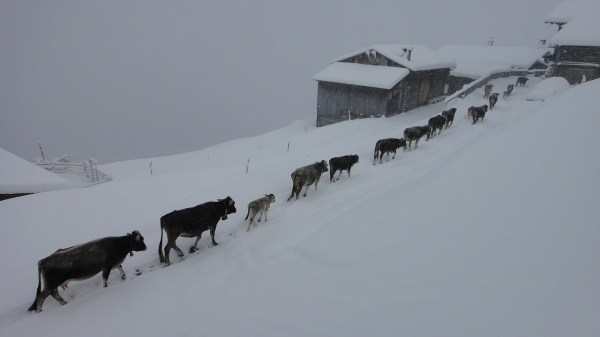
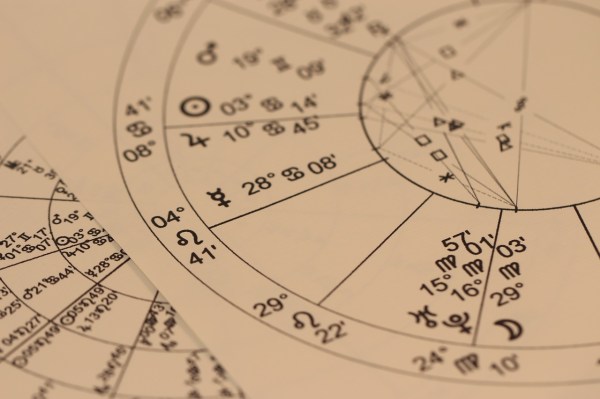
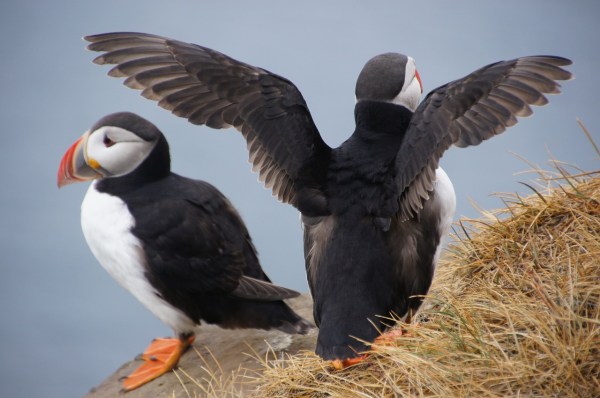
The Writer – Christine A Brooks

I have poured the wine, skipped
The water,
Smoked the weed, and turned up the tunes in my headphones
Jackson Brown, Willie Nelson and – Miles Davis.

I have opened the window to my soul, my empty space and let the cold in.
With the draft, the monsters come. At first, just a breeze, a whisper and a damp breath on
My warm neck.

I stare at their invited but unwelcome faceless faces,
See their hole
And grab hold of their hand.

Tight.

Sometimes, it is me dragging them to the place of no return
Other times they grab hold of my warmth with their death grip, pulling me down the
Gravel-y path
Upright and unafraid
Towards the end where I trust they will push me,
Holding on to the last thread of my essence
Giving me a glimpse of the place that I cannot return from
So, I can face the abyss long enough to hear Its cry, Its
Reasons, and Its story.

I trust the monsters to show me the face of Hell and Heaven
To let me take notes and return to tell Their tale.
Their story is interesting, so I return more often than I should, the sirens call and I answer
Over and Over, and over again
Until the day I do not return
Again.


Cabinet Of Heed footer logo

Image: Chris Martin via Pixabay

The Persistence of Mem(Roy) – Garrett Rowlan

Carrying the town’s three clocks taken from the town square, the marketplace, and the church, we three walked single file. I was in the middle. Roy, taking the front, held his clock almost contemptuously in one hand. The young people don’t understand the old ways—but then, neither did I, really.

“I can see cleaning the clocks,” Roy said. “But I don’t pretend it’s some holy thing.”

“Think of it as preventative maintenance,” I said, “freeing the clocks of grime, the mechanized anomalies, and synchronizing them.”

He half-turned to speak. “And what’s that going to do, again?”

“We think,” I said, emphasizing the doubts we all have, “that if the clocks are washed our thoughts and actions won’t be overwhelmed by the past that paralyzes us, persists in our thoughts.”

“Or the past that disappears,” Bones said. He shuffled forward, the grinding of his joints sounded like shaken dice.

“You old guys have lived too long,” Roy added. “That’s all. Old people forget or live in fantasy. No hocus-pocus about washing the clocks is going to cure that.”

“No cure for time,” Bones said, stopping and wiping his brow. He had issues with forgetting. The grimy clock he held ticked over his chest like a mechanical heart.

Roy shook his head. Perhaps he was right. Bones and I were aging and using a suspicious mythology to help alleviate the unpleasant truths about our bodies and our minds. Can it hurt, I almost asked Roy, to make a ritualistic patina from a janitorial duty?

We went through town. It was a collection of huts set on irregular streets, graded so that resistance to your foot came at odd moments, sending a juddering sensation up to your knees or causing you to lurch. People had tried, through photographs of the same street taken on different occasions, to prove that the terrain actually changed from day to day, though the research proved inconclusive. The uneven terrain and the town’s three clocks, two running forward, one back, none in sync, made it a place where we made arrangements by the sun and shadows rather than by the high-mounted, treacherous numerals.

Looking back, I saw the town’s few ramshackle buildings, and in one of them I saw the old man’s bearded face as he watched from a window.

This was his idea. I had come to him with my problem. Greeting me from a hovel of piled books, dirty dishes, and pictures hung crookedly, he sat in a plush chair whose worn-out springs offered little resistance to even his wizened form, giving the impression of a diver about to be swallowed by a giant clam. He was the town’s grey eminence and could even remember that distant time when the clocks all ran forward and told the same time. He knew of course that the clocks were no longer in sync, but he didn’t know of our crisis, particular among old people, the flood of false memories and a paralyzing nostalgia. It had become not uncommon to find someone standing slack-jawed on a street corner in an attitude that, in happier times, had belonged to a drug addict. Some were overwhelmed with memories. Others, like Bones, felt their memories threatened by a quicksand of oblivion. My problem was causation. I felt every act weighed down by those that came before it, a deterministic chain that led to one thing and one thing only, stripping the present of all spontaneity.

“Am I doing something as a free act or as a pre-determined one?” I asked, as I explained my problem. “I don’t know.”

“I see.”

“My actions,” I tried to clarify, “do not provide the comfort of familiarity but the onus of a pre-determined repetition. The simplest acts seem wearisome and dubious.”

The old man had raised the molting wing of an eyebrow. “Dubious?”

“Am I making a free choice or only one determined by proceeding acts?” I reached out to the table that separated us. “When I pick up this jar, for example, and I take a drink—”

His hand restrained me. With an expression between a smile and a grimace, he said, “I have difficultly getting and going to the bathroom, and so I sometimes…” He indicated the jar, which indeed didn’t have the smell of low-quality beer, which I had first mistaken it for.

I finished without visual aids. When I was done, he leaned back and his brown eyes glistened with cataracts and mucus as a draught of memory brought the smallest smile. “They called it the curse of déjà vu,” he said, “back in the days when the past first overwhelmed the present. If I were you, I’d do what they did then.”

“What did they do then?”

“The dowsing of the clocks, that’s what they called it.”

“Can you say that again?”

Mnemonic rheum filling his eyes, he told me a theory that had made the rounds when he was young. It was the idea that this town didn’t exist on its own but within the mind of an artist, someone with a sense of the visual and a flair for eccentricity, both of which fused in the imagining of this town and the clocks that existed both as things-in-themselves and as metaphors.

“Metaphors for what?”

“For time and memory,” he said, as if that were obvious. Seeing my difficulty with this approach, he added, “Memories accumulate. It’s what they do. Eventually, there gets to be a storage problem, a filing problem. Something about the washing of the clocks eases this issue. At least, that’s what they did, back in the day. The elders believed that the clocks not only marked time, they accumulated it. They are ratcheted to our memories.”

“Is that why the one in the town square runs backward because memories go both ways, forward and back in time?”

“I’ve heard that theory,” he said.

“And this, this dowsing of the clocks, it works?”

“It worked that time,” he said. He reached into his pocket and produced a small fob watch with a tarnished gold casing. “If you go, throw this one in too.”

“I didn’t know anyone owned their own watch, I thought it was illegal.”

“I’m old and don’t care. Anyway, it doesn’t work.”

Now I touched the watch in my coat pocket as we left town and neared a flat obsidian slab whose original purpose, whether religious, civic, or business, had been long abandoned. In the middle of the slab a single, leafless, dry stalk, looking more like a twisted coat hanger than anything vegetative, stuck out. We passed it and neared the brownish beach under a pale wash of sky, colored an improbable mango. Beyond, the wave-less waters didn’t move, except for the gentle scouring motion of underwater currents. A soft wind blew from no discernible direction. We reached the shore.

“I suppose we have to chant something,” Roy said, with a smirk that was beginning to irritate me.

“No,” I said, “we let the tide do the work.”

“This is the part I don’t understand,” Bones said. “We’re not really washing the clocks.”

“It’s what the old man said, let the water do the work.”

We let the clocks slide into the water. They sunk and rolled over in unison, and the times they displayed—12:30, 6:55, 8:02—seemed to match the odd architecture and street grading of our town. Sinking, the clocks lost their shape, became flaccid as rubber shower mats. As they did we saw them do a gentle dance, a synchronized sway as they turned below the water, some shedding their numerals as they moved to the rhythm of underwater currents. As if to reflect its agitation, the still water stirred and small wavelets turned over at our feet.

Something happened inside me, or maybe outside: I felt causation somehow detach itself from my perception of the world. Spontaneity returned, I sensed, the lockstep of cause-and-effect broken. Every act was unique, particular, sui generis. Meanwhile, the clocks moved like a small school of fish, turning with the current. Even Roy lost his cynicism, watching this display.

“Man, I feel like jumping in with them,” he said.

I told him what the old man had said. “We’re supposed to stay out of the water while this is happening. The waters become toxic while the clocks are swimming.”

Roy rolled his eyes. “And what’s going to happen if we do go in?”

“I don’t know,” I said. “That was the warning the old man gave me. When the clocks return to us then, and only then, is it safe to go into the water.”

Slowly the clocks moved like shy children in our direction. “They are coming back,” I said, “just like the old man said they would. Wait for them. Stay out of the water. When they reach the shore, we’re supposed to dry them and stretch them.”

I remembered the fob watch. I pulled it out of my pocket.

“What’s that?” Bones said.

“It belonged to the old man.”

“That’s a beauty,” he said. “Wait—”

I tossed it a couple of yards. It splashed, and I waited for it to duplicate the gentle, undulating motion of the other clocks, but instead it dropped and didn’t rise from the shoreline’s soft sand, covered by shallow water. It glinted as the sand began to cover it.

“Well,” I said, “he expected it to sink. I’ll just have to tell him it did.”

“You tell him that,” Roy said. He stepped into the water. Reaching down, he plucked the gold watch and returned to us. The silent watch ticked loudly. “I thought you said it didn’t work. It works.” He opened the watch and a little water spilled out. He showed me the moving second-hand. “I got a watch,” he added. “I got my own watch. I got my own time right here. None of those damn clocks that don’t work right will ever apply to me. I got my own time. I don’t need to look to the center of town.” He closed the casing.

The drooping clocks beached and waited. They were supposed to be air-dried and later stretched, according to the old man. We draped them over our arms and returned to the single obsidian slab and the stick-like branch growing from it. A soft wind blew. Looking back, I saw how it obliterated the footsteps we had left behind. I stepped up on the flat obsidian surface and draped a clock over the spindly, single branch. A few falling drops evaporated on the surface.

“I don’t feel very good,” we heard Roy say. “I don’t feel like myself.”

His face had swollen and seemed to be consuming the rest of his body, while the clock he carried had settled on his forehead like some cursed shroud, forcing him down to the sand. As he fought, futilely, looking like a man stuck in a large bag, the fob watch flew from him and landed on the sand. A jeweled icing of ants appeared on its surface. Seeing them on the casing, I thought I saw time and memory consumed before my eyes.

And Roy: Roy was now a folded dock lying on the sand, only that prominent nose and eyelashes identified that flaccid timepiece as our young companion. Well, I thought, he was kind of an ass.

“He lived on my street,” Bones said. “I remember that now.”

It was all we could summon by way of eulogy.

“We’re supposed to let them hang until they’re dried all the way through.”

We walked away. I took a last look back and saw Roy persisting as a face on the sand, supporting a clock. Over him draped one clock with two others nearby and the fob watch crowned with ants. Damn, I thought, that would make one weird picture.


Cabinet Of Heed footer logo

GARRETT ROWLAN is a retired sub teacher from Los Angeles. His novel, To Die, To Sleep is published by James Ward Kirk and is at Amazon. A second novel, The Vampire Circus, will be published soon.


Image: geralt via Pixabay


Same Old Love – Cathal Gunning

The plane dipped and tilted, “beginning its descent” according to the tinny echo of the co-pilot’s voice. A roar growled in Danielle’s ears. Pressure building. Across the stretch of the lake below, ice spread; a solid film attempting to coat its surface, falling short in the centre. From the impossible height of her plane seat, the ice was the same iridescent rainbow oil-slick colour that topped her cold cup of coffee.

Erica had told her something about the pull of the dairy industry, about how our bodies weren’t meant to process milk. Over the peaks of mountains outside, mottled blue shades and streaks of pure white, Danielle could see why white supremacists were obsessed with milk as a symbol. Fucking Twitter poisons our brains.

Erica had said everyone’s born lactose intolerant, that milk never settles in the stomach. It wasn’t a comforting thought. Before her, Iceland would have been beautiful. After her it was snow, and ice, and jealousy of whatever place got to have her. Mountains as white as milk, a stomach that never settled.

Three months earlier in a too early hour of the morning, Danielle sat up and smoked shared cigarettes until she’d the confidence to go in for the shift and spent the night sucking on an almost anonymous tit as if it were a teat; less sexual and more urgent, starved for sustenance. That was Anne-Marie(?), the last woman she was with before she met Erica. Anne-Marie (something like that), a since-all-but-forgotten closet case tragedy who she’d shared a 5am taxi and bungalow with post-Porterhouse.

Fucking Erica had an urgency, but it wasn’t the same; an urgency of its own, not just different but incomparable. Just the thought of fucking Erica had more passion and impact, more physical ache, than actually fucking anyone else could ever have hoped to.

Sean’s friend Angela was lovely, as was the farewell drink she bought Danielle, and the comforting numbness it brought with it. Lovely, like messages from friends wishing well, like the last meal Danielle had with her family before leaving for the plane. Everything was lovely since Erica, and nothing was beautiful but Erica, splitting the two words into the universal and the specific. Body and soul. Nothing else would ever be beautiful again.

Same old love.


Cabinet Of Heed footer logo

CATHAL GUNNING (24)- Editor @ ‘Cold Coffee Stand’, Adbusters Media Foundation. Poetry in The Rose Magazine, Lagan Online; Fiction in Tales From the Forest, The Honest Ulsterman, The Runt, Snakes of Various Consistency, The HCE Review, The Occulum, and the collection ‘From the Candystore to the Galtymore’.
Debut novel ‘Innocents’ published 2017 (Solstice). Short-listed for Maeve Binchy Travel Award and Hennessy New Irish Writing.


Image: Volkmar Gubsch via Pixabay


Plant Food – Stella Turner

It happened very quickly. It was summer I think. But it might have been spring when the Purple Rain fell. At first Sadie thought it was magical, a nice shade, think she used the word hue. The animals weren’t very keen. It was later I turned vegetarian. I’d always liked a lamb’s leg for Sunday lunch not many farmers in these parts that didn’t eat meat.

Sadie would go out and dance in it. I don’t like getting wet. Sadie would laugh and say whenever did you see a rusty man? She started to say things like I was good enough to eat and would bite my arm hard when I gave her a hug. I had to shoot her dead the day she came at me in the barn with a meat cleaver. It was the one we used to cut the pigs up with. Once they’d hung for a while in the outhouse.

I buried her in the back garden with a cross around her neck and a stake through her heart just in case. She feeds a patch of wild flowers. It looks really pretty. The rain is back to normal no purple tinges but I make sure me and the animals stay indoors if rain is forecast. You never can tell these days what’s what. I eat porridge mostly and let the animals die when nature decides. Haven’t seen the neighbours for months, the flowers look good though, on the side of the adjoining hills. Really pretty I tell myself.


Cabinet Of Heed footer logo


Image: Foto-Rabe via Pixabay


Set – G J Hart

In dreams he dreams
of cities hung with rails
slick as caramel wicks,
towers of sparks and waggons
burdened with the coals
of notions beneath craquelure
swollen as almond –

to a crackle that accuses
and in a flicker
passes

between,

desires himself still –
the piped steel
and packed fridge
and walls that pen
chapters
of flies open
beside a lamp
bickering
with moths.

And each morning his phone
calcines and heart softens
across a voice
gummed with questions:

are we prepped,
are we set?

He’d sent out waggons shaking
with lakes and meadows –
testers just testers

As he listens he slices
a segment of nail,
tongues its bowl.


Cabinet Of Heed footer logo


GJ HART currently lives and works in London and has had stories published in The Molotov Cocktail, The Jersey Devil Press, The Harpoon Review and others. He can be found arguing with himself over @gj_hart.


Image: Aida Khubaeva via Pixabay


Star-Crossed Destiny – Sudha Balagopal

King Lot enters the gloomy nursery, picks up his newborn. Behind him, he hears the nurse mutter, “This accursed child killed our queen.”

Outside, in the gallery, he pauses in front of his wife’s portrait. The artist spent months capturing the queen’s dewy skin, the mole on her lip, that come-hither look. The king opens his mouth, cannot utter her name.

He rocks the whimpering baby on a swing in the garden. Discreet attendants, dressed in mourning, hover at a distance.

The king leans close to the baby and whispers, “Darling Destiny, thank you for freeing me!”

*      *      *

At Destiny’s elite boarding school, students receive goodies from home.

“My mother has blue eyes and golden hair,” she says, hoping to make friends, wishing they’ll share.

Her classmates cover their mouths and giggle, for the princess has brown eyes, olive skin, dark hair.

“My mother talks to me all the time,” Destiny says.

No one listens. They’re opening gift boxes, reading cards that say, “I love you.”

While they eat their treats, Destiny cuddles with her flaxen-haired doll under the blanket. She presses a button on the doll’s hand, hears a mechanical voice say, “Hello, my dear!” Over and over.

She imagines it’s her mother’s speaking.

*      *      *

Craving anonymity, Destiny opts to spend fall semester of college with a host family. They accept her as a dentist’s daughter, offer hearty stews and the resonance of a foreign tongue.

She doesn’t complain when her skin roughens, when farm dirt discolors her nails. She enjoys wearing overalls, establishes a camaraderie with the produce pickers.

Pedro makes her heart ache with love. He showers her with attention, is hurt when she denies him a photo. From him, she learns the taste of a commoner’s saliva.

But his bed is uncomfortable. She overturns the mattress, finds the pebble—loses her temper with her trust.

She flings the rock. It hits Pedro’s forehead. His turn to ache.

*      *      *

The astrologer tells Destiny, “Your stars are crossed.” He cannot find her a royal match.

“You’re not looking hard enough,” she says.

She dismisses him and asks for a palmist instead, the best in the land.

The bespectacled palmist is lean, serious. Her palm fits snugly in his hands. He peers at her heart line, her life line and her fate line. His warm breath caresses her finger’s tips as he studies the whorls and patterns. “Your Highness will marry,” he declares. “And soon.”

A month later, the princess marries the palmist.

*      *      *

Guests rise as King Lot and his daughter, Destiny, enter the cathedral’s decorated aisle. His fingers tremble on her arm.

“You can do this,” she tells him, waving a hand to acknowledge the crowd.

At the altar, a handsome man awaits them, his gaze transmitting love.

“I’m not giving you away,” Destiny says in her father’s ear. “I’m embracing a new era.”

The king smiles at the groom, soon his consort.


Cabinet Of Heed footer logo

SUDHA BALAGOPAL’s recent fiction appears in New Flash Fiction Review, New World Writing, rkvry quarterly literary journal, Jellyfish Review and Lost Balloon among other journals. She is the author of a novel, A New Dawn and two short story collections, There are Seven Notes and Missing and Other Stories. More at http://www.sudhabalagopal.com


Image: Mira DeShazer via Pixabay


A Kind Of Dance – Cath Barton

When I was a child I was lowered by rope from the cliff tops of my island to gather the eggs of puffin, gannet and fulmar. The birds were angry about this thieving, but I flapped as much as they did so as to drive them off. Sometimes the eggs would tumble from my basket. The rocks far below would be smeared then with the vivid yellow of my guilt and I would be beaten by my father, afterwards, for my carelessness. I knew no other life, at that time. We none of us do, as children. I would run and hide in small secret places, and retreat into the cave-safety of my mind.

It became too difficult for us to find enough food to survive on the island, and when I was still not fully grown I was evacuated to the mainland, along with all the others. I have been told I was one of the last 36 residents, but the number means nothing to me. I did not know anyone on the island outside my immediate family and afterwards I found that I could not be with more than three or four people at a time; it proved impossible for me to breathe where more were gathered together. Finding I needed unfettered space around me I decided to remain alone.

My chosen companion in this life was a cat. He asked for no more than regular food and rewarded me with sweet purrs and by twining his body, once, twice, thrice between my legs, in a kind of dance. We had between us an understanding that the birds were entitled to their lives as much as he and I. They lived in the gardens around our house fearing nothing from either me or my cat.

I planned that after my death I would return to my childhood home on the island and make my way as the wild creatures do. Without the burden of the human body it would, I knew, be easy to do that. I had already started practicing. Sometimes in the crepuscular morning hours, before other people were awake, I would leave my own body and enter that of a bird, where I sang his song, quite softly, before he himself was ready for the new day. I thought of it as an exchange, a dance between us equivalent to the one in which I engaged with my cat. I learned to do this first with robin, thrush and blackbird, birds whose songs I studied meticulously, listening, singing and listening again, over and over. I was able to sing these songs as well as any. But these are birds of garden and field. They do not fly far from home and, most particularly, they do not fly over the seas.

I learned much as well from swallow, swift and house martin, not least the way to swoop fast and low. But these birds travel south in winter, to climes unfamiliar to me. The hot sands would not have been a suitable place for me. I knew that my home would always be in the north lands. My next and final lessons were with the owl family, the ghostlike creatures of night and the half light. I sallied forth in the twilight hours, learning their ways. Then came the final transformation. How it took place I cannot say, for no human knows the moment of his death.

Should you go to my island – there are boats now that take people on circular trips, though you cannot land – you will see that the cliffs are once more covered with puffin, gannet and fulmar nests, their eggs safe from human predation. The noise will be prodigious, as they guard their chicks from skua and snowy owl. Watch out for the approach of one of those majestic birds. They are there, I can assure you. You might, if your eyes are sharp, even see me.


Cabinet Of Heed footer logo

CATH BARTON is an English writer who lives in Wales. Her novella The Plankton Collector will be published in September 2018 by New Welsh Review. Cath is on the 2018 Literature Wales Mentoring programme, working on a collection of short stories inspired by the work of Hieronymus Bosch. https://cathbarton.com @CathBarton1


Image: jo vanel via Pixabay


The Cow And The Dog (a Fable) – Michael Grant Smith

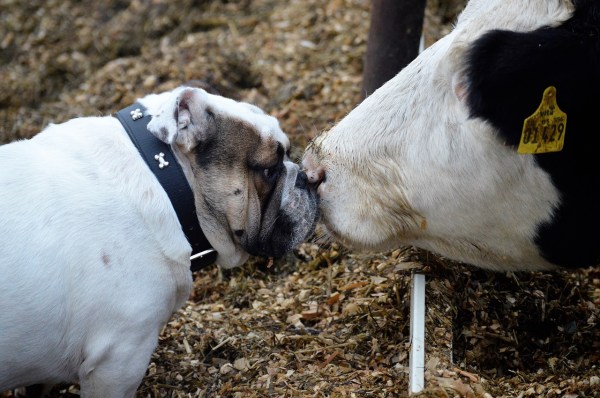
The cow and the dog were best friends. They had been close for longer than the other animals could remember. Even the wise old mare was unable to recall a time before this great camaraderie.

“I am pleased to see such harmony visit our farm,” she said, one sunny day, “but just the same, the relationship is unusual. No good can come of it.”

The donkey made no comment and continued feeding. He cared only for fodder and pulling his little cart. The cat did not speak — she believed herself invisible and did not wish to reveal her position. The chickens scrabbled and hopped around the dry-lot in front of the stock barn. They didn’t say anything because they are incredibly small-minded and stupid.

“My friend and I are right here,” the cow said to the horse, “and we can hear you talk about us!”

The dog, as was his common inclination, rolled in the dirt, saying nothing but twisting around from time to time to bite his own tail. He didn’t care what the other animals thought. It made no sense to him: why chew on words as if speech were rawhide or gristle? He was on good terms with the mare, whose buggy he loved to follow down the road while he barked at the wheels. But the cow was the dog’s very special friend.

“What of it?” the young rooster said to the cow. His plumage gleamed, an open jewelry box in the sun. “Even if your wet-nosed companion doesn’t mind being called a fool, both of you are fools nonetheless!”

With that, the rooster half-flew, half-fell a full three feet from his perch and landed square on top of several chickens. He clawed and flapped and poked at them to show the cow and dog he was serious. The chickens squawked in a tornado of feathers, but within minutes continued to browse around again. Resisting the urge to crow, the rooster raised his wings one at a time and preened. He strutted around the small empty space he had cleared within the midst of the other poultry.

“A bond such as yours — cow and dog, indeed!” said the rooster. “It’s unnatural!”

The cow meant no harm to anyone in the world; this made her even more sensitive to the rooster’s harsh remarks. She blinked a couple of times and took a step back. Her bell clanked once and became still. For his part, the dog sat and scratched at fleas until his eyes bugged and his tags jingled like sleigh bells. He satisfied his itch and gazed with adoration at the cow. His tongue lolled while his tail beat the dust.

The rooster was not finished making his point. He rushed over to the cow, stopped just in front of the beast, and began to peck and claw at the ground. His wings spread wide as if he were a very plump, practically flightless eagle.

Startled, the cow backed up again, but this time landed her big rump in the water trough. The other animals laughed at her shock and embarrassment. They didn’t mean to, but it was so sudden and unexpected. Even the old mare let out a choked guffaw.

“Unnatural! Unnatural! Unnatural!” shrieked the rooster, bouncing up and down. He beat his wings and almost touched the cow, who writhed and bucked in her attempts to free herself. She moaned and mooed.

“Unnatural!” the rooster screamed. “Un-na-tur-al! Un-na-tur — ”

Silence. The rooster’s head was inside the dog’s jaws. Clamping down harder, the dog played tug-of-war and gave a powerful shake. One, two, three times. He dropped the lifeless bird to the ground. For several seconds or maybe minutes, none of the other animals moved, including the chickens.

Freed from the rooster, and lately the trough, the cow bowed her head and cast her soft brown eyes toward her friend. Without saying anything, the cow and dog ambled out of the dry-lot and into the pasture. The cow grazed timothy and clover while the dog flushed rabbits, real and imagined, from beneath piles of deadfall. The barn cat flowed from shadow to shadow as she headed towards the back porch and a dish of cream. The donkey dozed in the afternoon sun, dreaming of his cheerful little cart.

“It is so much better when we help each other,” the old mare said to no one in particular. The chickens ate their own poop and a lot of small pebbles. “Friendship is worth the effort it takes.”


Cabinet Of Heed footer logo

MICHAEL GRANT SMITH wears sleeveless T-shirts, weather permitting. His writing has appeared in elimae, Ghost Parachute, Longshot Island, The Airgonaut, formercactus, Riggwelter, and others. Michael resides in Ohio. He has traveled to Hong Kong, Shanghai, and Cincinnati. To learn too much about Michael, please visit http://www.michaelgrantsmith.com and @MGSatMGScom.


Image: Daniel Borker via Pixabay


Road Trip – Clare O’Brien

Remember? It was raining hard that night.
The slow pulse of passing cars, alive
in the wet light, drew liquid shapes
on blacked-out windows; our sentences swam
in an aquarium of air.

New York was jumping but the traffic crawled.
You stretched out, liquid in the shadows.
I kept my counsel as the hours flowed.
Behind the glass the sky oozed darkness,
bleeding like bruised fruit.

Afterwards, awkwardly, we touched. I froze,
But you melted me with a helpless shrug.
On the glistening sidewalk, you turned to ask
if you’d see me before I caught my plane.
Your smile was sad. I’m here, you said.


Cabinet Of Heed footer logo

CLARE O’BRIEN lives on the north-west coast of Scotland. Her fiction and poetry has most recently appeared in Fearless Femme, The London Reader, Northwords Now, Biggar Science Festival’s The Powers Of Nature anthology and was longlisted for TSS Publishing’s Flash400 2018. Her day job is archivist and researcher, and she is also working on her first novel, a dystopian fiction called Light Switch. Follow her on Twitter at @clareobrien.


Image: Igor Schubin via Pixabay


The Skins We Shed – Liz Jones

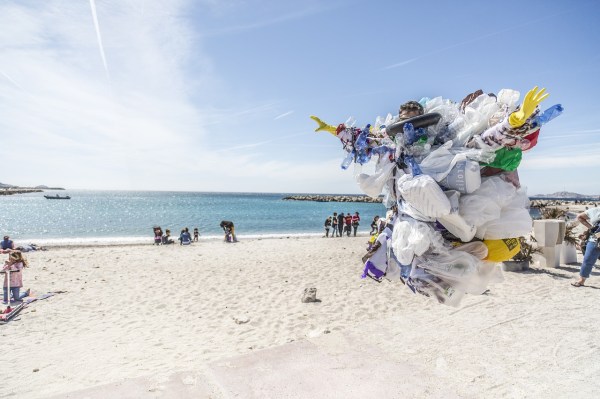
A One-Day Travelcard, an Oyster. A packet of gum, each. Crisp packets. Beer bottles. A Mars Bar wrapper fluttering after the last tube. Two condoms.

Train tickets, plane tickets, pizza boxes, fish and chip paper. Ribbons and cellophane from flowers. Gift wrap, carrier bags. Labels cut out of fancy underwear, careful not to nick the silk. Condoms, different kinds. Tissues, vodka bottles. More condoms, the kind you decide you prefer.

Bin bags of stuff not looked at in two years. Bin bags full of rubbish. Bin bags of things you outgrew, things that won’t belong together. Too many bin bags to put out for the bin men. You sneak out after dark and share them round the new neighbours’ piles, laughing. Wine bottles. Condoms.

Pieces of cardboard longer than you are, with the round dents of casters. Bubble wrap that leaves your hands dry and squeaky. Other people’s discarded furniture. Scraped paint, surprisingly heavy. An old bath. A toilet. Lampshades and mildewed curtains. A cache of old tights.

A pregnancy test, then another. Tampons and booze bottles. Condoms again.

A car that seized up for lack of oil – whose job was that? – towed away for scrap. The plastic off the seats of a new one, why not? Phone boxes, TV boxes, computer boxes. Boxes from kitchen appliances. Boxes ten times the size of the things that came in them. Polystyrene worms that stick to the wall. Little white balls, hail indoors. Condoms. Containers for cleaning products, shampoo, medicines. Two CD collections, you’ve gone digital. Dry cleaning wrappers. Cleansing wipes, cotton buds. All of the plaster chipped off a wall to reveal the stone beneath. Better wine bottles, real corks. Gadgets no longer desired. Garden waste, a whole new bin. Vacuum cleaner emptyings. Things with no name.

A pregnancy test, then another. One more for luck. Champagne bottle, vitamins. New kinds of packaging: pushchair, car seat, cot, electric mobile, baby gym, twenty-seven miniature sleepsuits, monitor.

Nappies. Nappies and nappies and nappies, on and on. So many nappies. Baby wipes, make everything clean. Containers from formula milk. Condoms, not as many. Too many bin bags to put out for the bin men. You sneak out after dark and share them round the neighbours’ piles, silently.

A pregnancy test, then another. One more for luck. Champagne bottle, vitamins. This time it’s a boy so the packaging’s blue. Nappies nappies nappies nappies.

Property pages, printouts. Bin bags of stuff not looked at in four years. You don’t bother to conceal the bin bags this time, nobody cares.

Enough sheets of cardboard to contain a whole kitchen, because they did. Old cabinets piled in a skip. The skip is taken, who knows where?

Boxes come faster and faster, never fast enough. Ticket stubs pushed deep and hidden. Shirts that smell wrong. Receipts that don’t add up. Wine bottles overflowing. No condoms, not here.

Dead umbrellas, dead pushchairs, dead highchairs, dead baby bouncers, dead coathangers. All the spindly, insubstantial things left behind when we’re gone.


Cabinet Of Heed footer logo

LIZ JONES writes novels and short stories, and is currently studying part-time for an MA in Creative Writing at Manchester Metropolitan University. She also works as a freelance editor of non-fiction. She lives in Somerset with her family. Find her on Twitter: @ljedit


Image: Noel Bauza via Pixabay


Knocking – Bayveen O’Connell

The day they knocked the flats I stood in the gravel by the side of the road with cars sloshing by and rain trickling down inside the neck of my leather jacket. Batty Nancy from No.1 was still alive, wheezing through her teeth and leaning on my shoulder in spite of the Zimmer frame in front of her.

“Oh now,” she tutted, “and not a day too quick neither.”

I thought of the stairway and all the up of the groceries and the down of the rubbish. Rummaging in my pocket for smokes, I tilted the box at Batty.

“It’s terminal,” she muttered.

“Then you might as well,” I said.

“Ta, Vinny,” she said, snatching one up.

We took damp puffs as the crane jerked to life like a stop-motion T-Rex.

“Sheila was your mother?” It was more of a splutter than a question.

“She was,” I patted her back.

The crane trundled into position and the ball chain started to swing.

“If I was in there now,” she started again with a whistle, “it’d be a quick one.”

I kept staring at the wrecking ball gathering speed and launching towards the third block. As the globe made to hit the concrete and the rusted railings, Batty took a fit of coughing. I held her shoulders as they shook:

“Ah mind yourself Ba- Nancy,” I said.

But she croaked and rasped like there was something trying to escape.

“Go-” she coughed, “Go-”

“What is it?” I asked.

She got her breath and straightened, still clinging to her cigarette.

“There’s enough ghosts in there without me joining them.”

I stiffened, watching the ball crash against the fourth floor and the cracks ripple outwards.

“Look! Look there, can’t you see him? Vinny, up there outside your door,” Batty laboured, digging her fingers into my arm and letting go of her smoke, “your old pal Barry, isn’t it? The wee lad, he’s knocking, see him?”

As the bottom floors started to drop and fall to the rubble beneath, I saw a wisp of something on the fifth storey outside no.47. Over the crash of debris I heard the rap of shaking knuckles in my ear, the same rap, rap, rap that I had once ignored.


Cabinet Of Heed footer logo


BAYVEEN O’CONNELL is based in Dublin. Her short stories and flash have appeared in Molotov Cocktail, Tales from the Forest, The Bohemyth, Rag Queen Periodical, Nilvx, Drabblez Magazine and others. She loves all things strange and dark.


Image:  ulleo via Pixabay


The First Step – Tomas Marcantonio

I stand in front of a room full of strangers in a suit that I bought on sale from Hennies. It’s a good fit at the shoulders but the sleeves fall short, swinging three inches above my wrists. The shirt’s wet beneath the armpits so I can’t take the jacket off; a paddling pool for my pit hairs. I keep looking at the graph behind me for answers but it’s pointing down and I’m riding it like a slide.

The mouth’s running dry and I’m swallowing rocks. Tongue’s getting caught in the rough slide against the roof of my mouth; might as well be against a brick wall. If only I could suck up that armpit moisture and get it where I need it. I’d lick it up like a cat at a bowl of milk.

I take a look at the faces around the table. One’s watching me with big bored eyes; she clips off my fingernails and stirs them into her tea. Another’s leaning back in his chair, clicking the clicker of his ballpoint pen with a thumb; with every click I lose half an inch in height. I must be around five foot four now, my feet disappearing into the carpet. If you went down to the office below you’d see my cheap brogues pierced through the ceiling and the trousers creased around my ankles. The third suit’s picking lice out of my hair with his eyes; he nibbles them between his front teeth and swallows them with a sour expression.

I run out of words. They’re somewhere there in my head, whole battalions of them. I organised them into ranks last night after I turned out the light, dealing them like a croupier into slick piles of complex and compound sentences, rhetoric and metaphors, even a couple of snappy one-liners. Now the army has fallen apart, a parade of ants dispersed by the first drop of rain. The words retreat to the depths of my brain, bouncing off the walls and disturbing all the wrong kinds of lobes.

I thank the suits for their time and they stand up. They each shake me by the hand and the prints from my fingertips fall in ribbons to the floor. I bend to pick them up but the suits tell me not to bother. They’ll let me know, they say, and show me the door. I nod and leave my things with them, including the six inches I lost beneath the floorboards.

I poddle back to my cubicle and assess the damage; close my eyes and plug myself into the socket beneath the desk. I’m down to three percent, a flashing red light, but Burns comes over to check how it went. I make some monkey noises at him, all I can muster at low battery, and he somersaults some consolation witticisms at me. I unplug myself from the wall and force my eyes open. He props his backside up onto my desk and takes a sharpener to the skin on the back of my hand; it collects on the carpet like dandruff. I thank Burns and he leaves. I’ll lick the flakes of skin up off the floor later.

*      *      *

I don’t have time for a full recharge before the dinner, so I throw shots of tequila into my mouth while I’m showering. Jung-mi says I need to wear my best tie; she wants to show me off to her friends. I ask her if I should bring my unicycle and juggling balls as well and she says I might as well. I change into a fresh shirt and take another three shots before I leave. One of them stings the raw skin on the back of my hand; another gives me an inch boost in height; the third one builds up a black bubble around my head. It’s a bubble of ink that I can only see through if I squint.

I’m late to the restaurant and everyone’s already sat around the table. I can’t look directly at them; seven pairs of eyes painting red sniper dots all over my face. Jung-mi gets up and kisses me on the cheek and holds me out in her palm for everyone to look at. I gurn for them and they all clap and ask if I’ve brought my unicycle. I tell them I forgot it and sit down; my eyelashes fall out one by one and feather down into the bowl of soup that’s already cold in front of me.

They start a parlour game while we’re waiting for the mains. Coming round in a circle; think fast, be witty, here’s a knife at your throat to make sure you do. My tequila bubble’s thinning and the heart’s pounding again like a silverback thumping his feet against my chest. My tongue’s drying out again and when I run it over my teeth they pop out from the gums. I swallow them one by one like pieces of hard corn.

It’s my turn. Eyes on me, Ol’ Dew Face. I stand up and excuse myself, hobble to the bathroom with my face burning. Jung-mi follows me, takes me by the hand.

‘You okay?’

I look at her through what’s left of the film of ink around my head. The room’s spinning, building up like a tornado hurtling through my chest and I just want to get out.

‘Breathe,’ she says, moving her hands up to my cheeks. ‘Just look at me, only me. Breathe. Deep, slow.’

I do what she says.

‘I’ve got a problem,’ I say.

She nods. She holds my face in her hands and looks into my eyes and just nods. I’ve said it out loud, at last.


Cabinet Of Heed footer logo

TOMAS MARCANTONIO is a fiction writer from Brighton, England. He has been published in various journals and anthologies, most recently Ellipsis Zine, Firefly Magazine, Storgy, and The Fiction Pool. Tomas is currently based in Busan, South Korea, where he teaches English and writes whenever he can escape the classroom.


Image: Manuchi via Pixabay


Love Is A Scale – Ray Ball

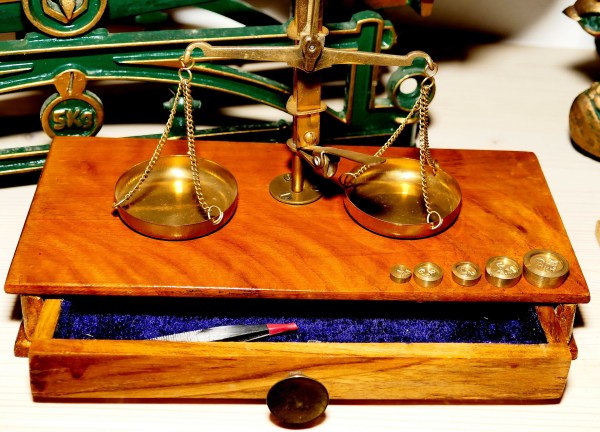
Love is a scale
but still I erase
my father. Turning
his data into
poems regardless
of methodology
or explanation of

abbreviations for
behavior acts.
Zoologist.
Sixteen trials
when I was
sixteen. I dipped
the mouse in
vitamin powder.

Took the lid
off the box
tossed it in
to the hungry
serpent. Later
I would steel

my nerves
to reach in,
grab the writhing
reptile. Put it
into a sack
to be weighed.

My first memory
is a strike to the
nose. Yes,
the snake bites.

But here I am
reaching in.
Ignoring the
hiss of warning
because love
is a scale.

I wanted to tip
the balance.
I guess
I still do.

Cabinet Of Heed footer logo


RAY BALL, Ph.D., is a writer and a history professor. She grew up in Oklahoma and Texas, but now lives in Anchorage, Alaska. Her creative work has recently appeared in Cirque, Longleaf Review, and West Texas Literary Review. She tweets @ProfessorBall


Image: Harald Landsrath via Pixabay


Ophelia Interrupted – Kristin Garth

Iambic OCD, first fingers forced,
her fealty, 400 year old king,
a caustic correspondence with a corpse.
Addict from an assignment, 17 —
don’t know what any of it means. Quatrains
restrain. A couplet is a cage. A box
to bind behemoth’s rhythms rage refrain
in 14 lines. Insanity kneesocked
in British architecture locked. A teen
boy-crazed, atop a brook, will not die down
or drown, be written in his book. Between
the stricture of his song, her soul’s the sound.
A dainty voice his pentameter shook.
This broken girl will live to write a book.


Cabinet Of Heed footer logo

KRISTIN GARTH is a poet from Pensacola and a sonnet stalker. Her sonnets have stalked the pages of Occulum, Anti-Heroin Chic, Fourth & Sycamore, Drunk Monkeys, Digging Through the Fat, Neologism Poetry Journal, Society for Classical Poets and many other publications. Her poetry dollhouse chapbook Pink Plastic House is now available through Maverick Duck Press (maverickduckpress.com). Follow her on Twitter: @lolaandjolie.


Image:  [Public domain], via Wikimedia Commons


In The Toothpaste – Nick Norton

You still in there?

Yeh.

You still in there?

YEH!

You writing your will?

You want the loo?

Of course I want the loo, why you think I’m out here?

Won’t be long.

Hurry man.

Alright!

He flushed the toilet and washed his hands and in the mirror, as he washed, he still looked over his shoulder at the part of the bathroom wall where the toothpaste had spilt. He had not spilt it. And he wondered vaguely how toothpaste had made it all the way over to the wall opposite the sink, next to the door. The door on which James was now tapping with urgent regularity. He turned, unlocked the door and stepped aside to let James in, pulling the door closed behind and walking away; his head swirling with the visions.

Pareidolia seeing patterns in random data.

He looked that up and was not even sure how to pronounce it: Par e doo lia. Par a dole ia?

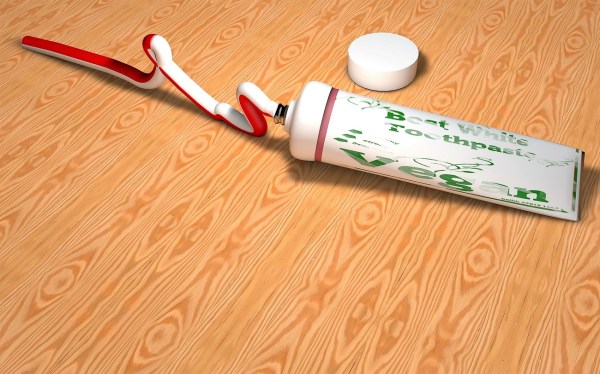
Doctor Doolittle, he skipped a groove. Para dole ia Doctor Doolittle: You hear words where there seem to be none, I see pictures where there should be none. I see inside the scruffed wallpaper, I can peer in amongst the scroll of vine-like ribbons, and especially that blob of blue toothpaste – on the opposite side of the bathroom – that looks like something.

Doctor; to look aside beside and inside form. To find another within.

Ah, yes, my boy. I understand now. Let me tell it to the birds straight away.

He stepped out into their big garden and walked all the way to the bottom. There was a small copse of weedy trees. They grew quickly but were not overly graceful. Nonetheless he liked their shelter. The trees huddled around, as if concerned for him, and when he sat down in amongst them no-one from the house could see him. It was his peaceful place; and now he felt he had to attempt to clear up what he had just seen.

The spontaneous perception of connections and meaningfulness of unrelated phenomena; abnormal meaning or significance in random experiences by psychotic people.

Psychotic?

And also, neurotic. These two terms kept cropping up. He turned off his phone screen for a moment and looked away. He listened to a robin squeezing forth a stream of sweet twirling syllable.

Well, he thought, it is definitely saying something.

Neurotic psychotic, seeing buddha in the toothpaste? Only the buddha was distinctly peaceful to behold. He wondered if he might discuss this with the household: Who else has visions while taking a crap? Sue will say she did not want to discuss this at the dinner table. James will make groaning straining noises, and Akki will begin sniggering, then Sue will glare at me as if to say; Now look what you started.

No, he did not feel he was yet able to share this. And anyhow, he did not yet know what he was seeing. He called the figure the buddha in the toothpaste, but was it? Maybe he was looking at a practising monk, a student, a beginner? Why should the enlightened one choose to reveal their presence in the obscure splashes of a bathroom? Then again, why should they not wish to reveal themselves?

He looked at the eyes looking at him. Each of the trees around him stacked up a row of eyes in the silvery flesh of their bark, and gently they all looked upon him. As if they were waiting for his decision. Okay, he settled himself, leaning against a rock, cross legged. He began to pull back to mind every aspect of these pictures he had been seeing.

Overfitting

Observations are overrun by an easy sense of the unique instead of matching the signal that pertains to the generalised population. Fitting the noise rather than the signal.

He opened his eyes and found he was furious. He was arguing with scraps of information. All the bitesize theories which countered his experience. Why the fuck shouldn’t an experience be unique? What was it about reality that demanded that it should be the same for everyone all the time? Wasn’t that neurotic?

Oh–no–you–cannot–see–me–like–this! I–am–reality–and–to–be–real–I–must–be-seen–the–same–always–forever!

Later that day Sue kept looking across at him. They were urchins and she was house mother. They had ankle bracelets which beeped and recorded where they went. Sue did not. This was her house. They were her guests. She looked again, over the meal table, and asked him if he was feeling alright.

Yeh. Nice this.

Just stew.

Nice stew.

Not got stomach pains?

Nah. I’m eating it all. Ain’t I?

Okay.

I’ll have more, said James.

I’ll have more, said Akki.

Sue looked at me. Yeh, he thought, no problem, sliding the bowl over in a gesture of begging, as if to say: See? No collywobbles, I can eat and eat.

He was not overly hungry for a second bowl of the slop, but Sue liked to see her boys eating well. She also liked regular habits and had no doubt noticed his increased journeying time between the toilet and his peaceful place. She may even have been able to monitor his stays from the signal emitted by his ankle bracelet.

Fucker, he thought. Fucker, fuck, fucker, fuck off out of my head. I will visit the garden whenever I want. Anyhow, she was the one yacking on about peaceful places and allowing time for reflection. She was the one who left leaflets in the hallway promoting mindfulness. Once she had invited the young men around her table to a yoga class. After a moment of stunned silence, the three of them pissed themselves laughing. It was one of the few times he had ever seen Sue even slightly flustered.

You could keep on your tracksuits.

Hey-hey, laughed Akki, I thought you had to wear stretchy for yoga!

Or be naked! James howled.

Urg!

Now you are being silly. Sue stood, reminding us of the washing up rota before leaving the room.

Gambler’s fallacy: Gamblers may imagine that they see patterns in the numbers that appear in lotteries, card games, or roulette wheels.

Hey-hey, grinned Akki. You got around them firewalls?

Akki was peering over his shoulder, trying to see what he was seeing on his phone.

Leave off. You know that’s not possible.

Anything… He paused and waved his hands before him as if hypnotising fireflies. Any-thing-is-possible.

Akki, man, you just want me to get you a porn site?

Sure thing.

Can’t do. I’m just interested in stuff, that’s all.

Akki shrugged and went back to his pile of comics, bored with the conversation, bored with everything. Their television rights were strictly controlled. They needed to tidy and vacuum the carpets and stick to the washing up rota if they were to keep even the small allowance they currently had. They could go out in the day. They were meant to be looking for jobs. Sue encouraged them to try and find a volunteer post.

It would be a way in, she said.

Into what, he wondered. Into the neurotic reality?

Akki stayed in his room mostly. At least they did not have to share rooms. He could not stay in his room for long. It was as small as his cell had been. No stinky, not stacked with a bunk, someone farting above his head all night. But it was small. James went out. James went out and according to his tag he sat in the library all day, but he usually came back smothering the stink of booze with mints. He asked him if he had managed to get the tag off. James would not say anything.

He sat amongst the trees and listened to the bird sing of tales he thought he might almost understand. He even sat out in the rain, because he had a good overcoat now, and the trees covered him up if it was not absolutely bucketing it down.

Fortune-telling and divination is based upon discerning patterns seen in what most people would consider to be meaningless chance events.

He was always surprised to see the blue figure mediating in amongst the jungly landscape. There was a rota to cover cleaning the shower, sink, and toilet. This bit of wall obviously escaped the required duties. Sue had her own bathroom, her own rooms locked away on the other side of the kitchen. He had taken in, he thought, every detail of the wallpaper and toothpaste. He knew it was exactly that, just wallpaper, messed up by time and usage, marked by a random splodge of paste. Yet even in his objectivity he had begun to step through the trailing vines, feeling the thick carpet of moist leaf litter beneath his feet, smelling the dark interior warmth of jungle, listening to the nasal laughter of a crowd of birds which rushed around above him, just before him, returning and then vanishing up into the canopy once more. He kept pushing the fronds aside and taking another step. A sense of expectancy was hurting in his chest. The heat was making him sweat. All his trousers were wet, and his tee shirt was beginning to build up a salty rime. The birds kept rushing back. Two or three at a time bouncing around on a branch just ahead of him. He picked up Dr Doolittle’s top hat from where it had fallen, brushing of a few grubs and a little birdlime. Now, if he doffed it politely in the direction of the birds, and asked them to speak a little bit more slowly…

HeHeHeHe!

Three grey creatures with sharp black eyes whizzed around the branches which were tangled together directly ahead. He paused and waited for them, and they appeared to wait for him.

HereHereHere, they said, Hereisourking.

They flicked out of sight and four similar looking birds could be seen hopping up and down the next tree along. He followed their excitable noises.

HeHeHelp, one said. Stopping to fluff its feathers and peer directly at him.

HelpHelp, others chorused: He’sourkingOurking.

And thus, with erratic dancing movements and their jabbering voices, these birds led him deep into the tropical forest. As the shadow increased, so did the temperature. The birds did not sit still for long and never got beyond repeating their same basic message. Doolittle’s hat kept getting twanged off his head by branches. Still he understood the babblers, hat or no hat. He followed, expecting to find a blue buddha mediating beneath some vast fig tree. Instead there was a little man, as grey as the birds only not as neat. He was distinctly shabby, this man, and crawling about in the dusty leaf mulch. He patted every surface and held his head up to listen and sniff at the air, wracked by a continual state of alarm, bewilderment, and obvious fear. When the two humans came close to each other, the one on the ground stopped crawling, panting like a dog. He mumbled something.

What?

I said I hear you! No need to shout.

You’re blind.

Yes.

The birds descended and began squawking, bouncing all around. The blind man swiped ineffectually at them.

But they want to help you, he said.

How, growled the blind man, pulling himself up to sit against a tree.

They say I must find four different types of guano and wipe each in turn over your eyes.

The blind laughed bitterly and swung his face around in hope of catching a little light. He shook his head, seeing nothing, and pulling himself into a tight bundle.

I’ll stay here then.

If you would. The birds say they will guide me.

A tiger may come and eat me.

Tiger? He looked around. Yes, I suppose. Might eat me as well.

Greedy tiger.

I’ll be quick.

Yes.

First there was the white guano. This fell from a songbird. He had to crawl into a clearing to find it, the delicate splats dotted along a series of emerald coloured leaves. He snapped off two leaves, one for each eye, and made his way back, guided by the burbling twirl.

The so-called king was where he had left him. Apart from turning his head slightly away, the man did not move, and he was allowed wipe one leaf on each eye, whitening the eyelids. He stood back to see what would happen. Nothing happened, apart from a few slow tears moistening the edges of the man’s eyes.

Does that hurt?

Not at all.

I’ve to find a hornbill next.

Ah – hear the coughing dog? Follow that.

He found great splatter of yellow. The dinosaur noise floated down from above. He found one big leaf and scooped the yellow mess onto it. When he returned to the crumpled form of the grey man he saw that his patient, if that is what they were, had been crying. White lime had run down his cheeks.

You sure this does not hurt?

The man did not say anything but lifted his head up to receive the next application. The yellow gunk was smeared all over the eyes and forehead and nose. The leaf was not agile enough to press just into the eye sockets.

He went away to look for the jungle fowl. Cock-a-doodle-doo it went, obligingly, although he could not tell what time of day it was. He came into a broad glade and the cock stood and faced him, a great sumo wrestler ready to hurl itself toward him. He laughed. The laughter was meant to allude to his unconcern, and yet the threating stance of the bird did not lessen. In the severity of its penetrating eye he began to be genuinely concerned about this encounter.

Cock-A-FUCKING-DOODLE-DO, it swaggered.

He edged his body into the space and sidled around, picking up scrambled piles of purple mess as he went. He needed to carry this excreta in his hand.

The man was pacing around the clearing, stretching himself, and stumbling every now and again. This was, he remembered, a king for his grey friends, the babblers.

Here!

He announced his approach and the king tripped.

The man said there was light, shifting light, but he still could not see.

If I may? He moved closer and spat over the man’s eyes. He daubed on the purple gunk. It formed a thick paste. You must let that set, he explained.

You know, the king sniffed. For a moment I had deluded myself into thinking I could see. But I cannot see. Show me where to sit.

Next he was to find the Amur Falcon. He was told to look out for its red boots. The usually bossy and bold grey birds suddenly fell back as he began to make his way up a rise. By the time he was amongst the large trees on the peak of this hill his babbling accompaniment had completely fallen away. He looked high into a tree and saw a clutch of resting falcons. Small birds, although twice the size of the babblers. He needed to climb the tree. Near the top third of the tree he found his limbs were becoming blackened by scratchy runs. The liquid was slippy and between his fingers it became tacky. The stickiness, once apparent, did not set or harden. He loaded up this goo on as many leaves as he could grab.

As he descended the tree he looked up at the falcons. They were all looking down at him. The gathering bore an air of cosmopolitan amusement. He retreated, his collection of blackened leaves hanging out of his mouth.

When he found the man he had need to hold him down and talk sternly to him:

No!

No, he explained, he was not trying to burn up his eyeballs; yes, he had said he was going to help and that was his intention. Quickly he smeared the black crud over the other man’s distressed face. There was silence for a while, and then the man peeled aside the tacky mask and said he could see him. The small clearing came alive with the racket of dozens of grey birds. The two men embraced, and then the grey king danced around the edge of the clearing and then a tiger sprang out and grasped the king’s head in his jaws, dragging him away to the sound of a distressed babbler chorus.

Sue was at the other end of the garden shouting for him to come inside immediately. It was dusk but not, he thought, beyond his designated curfew. When he reached Sue, he saw there was a copper standing behind her. The copper lifted something like a dead rat. When he got closer, and the artificial light from behind the pair fell on the object, he saw the police woman held aloft an ankle tag. He looked down. Yes, his was there. He looked up, confused yet working out a possibility and forcing his face to bear absolutely no trace of either understanding or foreknowledge.

James, said Sue.

Sir, said the copper with a very tired sounding droopiness; Sir, if you might, can you? Can you explain this?

It is an ankle tag. I have one. He lifted his trouser again to make sure that everyone could definitely see that he had remained tagged.

Yes, sir, we know that. Only this was found tied to a table leg in the library. The library had need to close early due to minimal staffing. As the last volunteer went around, they found this; it was strapped to a table leg beneath a logged-on computer.

And he had draped an overcoat over the seat, as if he were about to come back, said Sue. Only, and she was trembling with outrage, it was not his overcoat! Not at all.

Was it yours? He asked.

No, not at all.

Only, James is a thief.

He was a thief, Sue emphasised.

I’m not sure.

Do you know something, sir?

No, of course not. In our situation no one gives anything away.

Oh! Sue stamped her foot: You are meant to be sharing, supporting one another.

Yes, he said blandly.

From within his small circle of trees he contemplated the jungle. A tiger, still bloodstained, sat behind the blue cross-legged figure on the edge of the jungle clearing. He dare not approach. He looked long and hard but could not move closer, despite the glorious birdsong, the croaks, cackles, hoots, and the melodious trills which wove around the green canopy and said; yes, yes, come in, come in now. The eyes on the trees, the woody eyes, glared at him.

James did not return. Akki refused to lift his flesh out of the sop of his boredom. Sue walked them both, daily, to the job centre. It grieved her that the library was so close to the job centre, practically next door. Sue would allow library visits yet would not allow them to remain alone in this dread place. Akki had found the graphic novel section. While Akki read comics, he looked at the local history section. He was drawn to this jumbled corner because it carried no computers and very few people ever visited. Occasionally a grey, bedraggled bird – not quite a sparrow – would flutter close to the window and, outside, set up an urgent tap-tap-tapping noise on the glass.

 

Cabinet Of Heed footer logo

NICK NORTON’s recent prose can be found in The Happy Hypocrite, Shooter, Idle Ink, Adjacent Pineapple, Fictive Dream, The Honest Ulsterman, and elsewhere.
His book AKA: A Genealogy of the Saddle is described by Patrick Keiller: A joy to read…brings a headlong, associative sensibility to the literature of landscape. https://www.bookworks.org.uk/node/1894

 

Image: kai kalhh via pixabay

Luskentyre – Paula Hunter

It is summer. It has always been summer, for as long as we can remember. It will always be summer for we are still in the long hot day which knows no tomorrow.

The sand is cake batter soft between our toes, crumbling into yellow footsteps behind us. The path wends through dunes and strikes out towards the just-glimpsed sea. Gulls are calling the alert above but when we come out at the beach, there is no one there, or at least, no one we can see.

The sun rolls in waves across the sand and the sea is navy with a white pin-stripe. The gulls float motionless above, balancing on the wind, like palace guards. But we are a long way from the city now. Unleashed, we plunge on in.

The wind gets up as we reach the surf, with its rush and sting, snatching our words away. We scream and squawk and smile and pretend we did not see the graveyard on the hill.

Blue and green mountains across the water catch the shade from passing clouds, clouds that pass as minutes and seconds pass, hours and days pass, as frowns flicker across freckled brows, and eyes start to smile, in this place of forgotten unforgettable days.

We are here. Now. Pink and lilac shells litter the sand, tiny against our fingers, huge against the grains of vastness. They look real but we can hardly feel their thin skins. Maybe they dropped from dreams. We put them in our pockets, noticing their colours fade as they dry out in the wind, some of them already crushed. This is where the sand comes from, we say, forcing smiles.

Maybe the people in the graves are sand now too. We do not dig too deep.

The cold is real. It makes our screams loud and our limbs ache as we run to escape the spray. The waves crash and heave and we laugh till it hurts. We will not ever be crumbling in graves, sunk in sand, called for by gulls.

Along the water’s edge, before we leave, we see the skeletons of starfish come to rest. They will be washed by surf here in this place, when we are not. But in our pockets, under fingernails, we carry pink and lilac sand.


Cabinet Of Heed footer logo

PAULA HUNTER grew up in Glasgow and defected to Edinburgh where she’s been a lawyer, butcher, fundraiser and florist but is usually at home with kids or up a mountain. Her fiction has appeared in Structo, TSS, Momaya Press, won the Brighton Prize, placed second in the Exeter Short Story Prize and was twice longlisted for the Caledonia Novel Prize. She blogs at paulahunterblog.wordpress.com and tweets @hillsnspills


Image: pexels via pixabay

George – Vincent JS Wood

He’s on TV again. You’re perpetually stuck in the silence that punctuates conversation and he’s on TV again. The sound is off but everybody in the bar is staring up at him, the hometown boy done good. Everyone seems to love the fact he’s made it, as though it covers themselves in glory through osmosis but it just hammers home how little anything happens here.

You went to school with him, not that you would have noticed at the time but then no one did which is what makes this all so much worse. Apparently the school lauds him as a notable alumnus now whilst the music department claim him as a prime example of how well their extracurricular programs work despite the fact he never took part in any. You remember his sister a bit better, she was in your year and it seemed like everyone had a crush on her. She always wanted to be a singer too so perhaps this is more galling for her but you doubt it since you’ve heard she’s on tour with him.

You can’t hear what he’s saying but you can tell from the smug look on his face that it’s some disingenuous platitudes about being humble and having surprise at his success.

It’s nothing personal against the lad and you don’t begrudge him his accomplishments but it’s the mediocrity of his endeavours that irk you so much. Sure, you were never anything special at music but you could throw a handful of adjectives together and explain why love is so great yet, here you are drying pint glasses and he’s on television explaining how doing exactly the same thing made him a pop star. He just makes the sentiment vague enough so that it applies to anybody and everybody.

One of the bar flies catches you watching and nods back at the TV.

“His dad drinks in here you know?”

As if you wouldn’t know, as if you aren’t in here every night serving pints of piss to everybody that walks through the door and then cleaning up half of it come closing time.

You nod, “Yeah, I know.”

“His younger brother too.”

“Uh hunh.”

“You a fan of his?”

“Not really my cup of tea.”

“Still, it’s enough to make you feel proud.”

“Of what?”

“That he comes from here, that we can produce world class talent. Does it not make you proud of your town?”

You look around the bar at the same old faces, predominantly ageing, fat men who come here straight from work and drink their lives away until last orders. The drunk talking to you is in here every night himself, drinks six or seven pints of cider and then drives home. You slowly, deliberately turn back to him and hold his watery gaze.

“Yeah, real proud.”

You should be out there creating something beautiful, something useful but all your energy goes into this job, into living and surviving. You know you could write about looking up at the stars and the moon and jotting down the colours in your dreams if it weren’t for the sheer exhaustion of staying the fuck alive.

Some bright spark behind the bar decides to put on his music and you spin on your heel to stare them down but you meet eyes with the boss and quickly drop them to the floor but the damage is already done.

“You don’t like George then?”

“I have other preferences.”

“I thought he was supposed to be the voice of your generation?”

“He’s just a singer.”

“But does he not stir something within you, does he not speak to you on important issues?”

“Look, all music, any music, is just rhyming words over pleasant sounds. His songs aren’t elegant scriptures on the human condition it’s just words and sounds.”

“But those words are art, the way he paints pictures with them is a talent surely?”

“A child can paint a picture, it does not make them Picasso.”

“Yes, because a child can copy what they see but they can’t create something new from a sight seen a thousand times before, they can’t give a new viewpoint on an old vista, an artist can.”

“And you think that’s what he does?”

“Well, I don’t know about that but the imagery he conjures up is certainly evocative. The one where he sings about how the sunset makes him cry is rather touching.”

“Anyone can look at the sky and recount the colours they see.”

There is silence now, you think you’ve touched a nerve but you dismiss any worries and just carrying on drying glasses. You can sense the crushed notions of you as a person, something you’ve managed to pick up on over the years as you’ve found people project images of themselves onto you with your seeming reticence to talk an apparent invitation to create their own image of you with no basis behind it. George’s music continues to play and the old drunk taps out the rhythm on the bar as you flit up and down it trying to find things to do. You’re on an earlier shift tonight so you’ll miss the evening rush for once but you realise just how quiet the place is otherwise.

You’ve been doing this for two years and you’ve never quite warmed to it. Spilled beer and forced conversation were never your forte but it was supposed to be a stopgap sort of thing until bigger and better plans came your way but you didn’t realise how much your disdain for drunkards and lack of enthusiasm for socialising would seep through. It’s not a bad job and the people are alright but it’s just not for you and things haven’t quite worked out the way you had envisioned and you still get a palpable sense of relief when it’s your time to clock off.

You tidy up and say your goodbyes and nod to the regulars as you pass. It’s nice to get out early on occasion and this is the first time in a while that you’ve not started walking home in darkness. It’s not far off though and the sun is already setting covering the sky in peachy oranges and pinks whilst purple clouds skid across causing long, streaky gouges in the flesh coloured tones. You can’t deny it isn’t pretty, perhaps you’d go so far as to say beautiful and you try to pick out the words of how you would describe it. You can see the hues of orange highlighted by the dim yellows but they don’t make you feel anything, it looks good but it doesn’t make you feel a thing so you just shut up and look at the sky.


Cabinet Of Heed footer logo


Image: pxhere

The Poet’s Revenge – Michael Bloor

It was one of those online poetry magazines where they invite readers to comment on the poems. Dorothy shows me them from time to time. One evening, she said to me, ‘This poem here reminds me of the poem you wrote to me, back when we got engaged.’ She passed over her iPad and went out the room. I put down The Yorkshire Post and studied the poem. To be honest, I couldn’t make much of it.

Dorothy came back in and leaned over the couch, looking over my shoulder. I muttered, ‘What does “lambent” mean?’ She ignored my question and passed over an old-fashioned Valentine Card. I recognised my handwriting from forty years ago: I didn’t know that she’d kept the card all this time.

Reading the poem I’d written again, after all those years, I couldn’t help feeling that it wasn’t too bad. I was pretty certain, anyway, that it was a sight better than the ‘lambent moonlight’ rubbish on the iPad. I said as much to Dorothy.

‘Not too bad?? I think it’s absolutely wonderful, Clive. Why not email it to the magazine and see if they’ll publish it? There’s just a ten dollar reading fee to pay – what’s ten dollars these days? Still a bit less than ten quid, anyway.’

Her eyes were shining – I let myself be persuaded.

We sent it off, and at first, I used to feel a sugar-rush of excitement each time I opened up my email. But after a couple of months, still not hearing anything, I forgot all about it. And Dorothy apparently stopped looking at their website.

Then one winter evening, I opened up my laptop to renew my season ticket for the footie [if they can hang onto the lad McHardie, in midfield, and buy a half-decent goalie, I’ve a feeling they could be promotion candidates next time]. As I say, I opened up my laptop and there was an email from ‘The Editorial Team.’ They would be delighted to publish my poem in their next issue, which would ‘go live’ at the beginning of next month. Bloody ‘Ell: I’m a poet.

I showed the email to Dorothy, attempting a casualness I didn’t feel and couldn’t maintain. We ended up opening the bottle of champagne that my brother brought round last Christmas, and Dorothy printed off a copy of the poem to send to her sister in Canada.

Come the first of the month, I rushed home from work and Dorothy met me at the door, her iPad in her hand. My plan had been for the poet to take his muse out for a meal, but we ended up ordering a take-away – The Golden Dragon in Sadlergate does a wonderful vegetable fried rice that’s a meal in itself. We had a lovely, cosy evening: Dorothy persuaded me to recite the poem and then had a little cry.

The trouble came two days later. Dorothy was noticeably quiet all evening. I finally got it out of her after we’d gone to bed: she showed me on her iPad the comments that had been posted on the website about my poem. One comment was an innocuous ‘Well done.’ The other comment was… well, a slow-acting poison.

It seemed that the ‘sentiment’ of my poem was ‘mawkish;’ ‘scansion’ indicated ‘an irregular metre;’ the line ‘All that’s best of dark and light’ had been ‘pinched from Lord Byron;’ etc., etc. The dribble of bile came to a close with the remark that ‘the poet certainly displays a unique approach. One is reminded of Chesterton’s bon mot that if we cannot have goodness, let us at least have rich badness.’

Dorothy, bless her, pointed out that Byron’s line had been ‘dark and bright,’ not ‘dark and light.’ But she was still troubled. As for me, I never slept all that long night.

The strange thing was that the name of the bastard commentator, Colman Thaxted, was vaguely familiar. Couldn’t place it though. In the early morning, with Dorothy breathing quietly and regularly, I crept out of bed and fired up the laptop in the spare room. Google only offered one Colman Thaxted – then it came back to me…

The Methodist Chapel Youth Club in the early 1970’s. Colman Thaxted had been the chairman of the club committee, an unassailable position as he was the nephew of the Methodist Minister, Drippy Drinkwater. Thaxted had been a year older than me and determined to steal my Dorothy away from me. He’d been one of several rival suitors, though not perhaps the most dangerous (that was Andy McKillop, who claimed to be getting his own band together). Thaxted’s idea of a trump card was to make Dorothy secretary of the club committee and keep calling round to her house to ‘discuss club business.’

I was mentally reliving his under-hand campaign, when Dorothy touched my shoulder: she’d woken and traced me to the spare room. She confessed that she’d recognised the name at once, but told me that Thaxted had never been a real contender: I was a better dancer AND I’d managed to get tickets to The Stones 1973 tour (Kings Hall, Manchester – September 12th, 1973). She said we were already a done deal by Valentine’s Day 1974, but my card had served as a lasting confirmation.

It was Sunday, so we went back to bed.

The next day, in my lunch hour, I popped into the chemist’s and bought a well-known brand of medicinal anti-acid tablets. I’d traced Thaxted to the School of Cross-Media Studies in a university in the West Midlands. Anonymously, I posted him one of the tablets, with the suggestion: ‘Suck on this.’


Cabinet Of Heed footer logo

MICHAEL BLOOR is a retired sociologist living in Dunblane, Scotland, who has recently discovered the exhilarations of short fiction, with pieces published in Breve New Stories, Ink Sweat & Tears, Fictive Dream, Platform for Prose, Flash Fiction Press, Flash Fiction Magazine, The Fiction Pool. Scribble, Occulum, The Copperfield Review, Dodging the Rain, Everyday Fiction and The Drabble.


Image: pexelcreatures via pixabay

The Isolate – Jay Merill

It’s not easy when you hardly speak the language of the place you’re living in. You embarrass yourself. I can’t help being aware I’m a complete outsider every single waking minute. I’ve got this plan though – to learn a few new English words every day. I’m going to focus on one letter at a time then choose some which start with that. But I’m not doing the alphabet in order. My approach will be more personal.

I is the letter I’m concentrating on first because I just love the fact it’s a word in itself. And it’s me – I am. A handy reminder of what would normally be a simple fact. Because I have to tell you that in the kind of life I’m living now it can sometimes be quite hard to remember you exist. I have no papers and it wouldn’t be safe to be on show. So I try to make myself as Inconspicuous as possible and I walk close to the gutter with my head held down because I live in constant fear of coming to the attention of the authorities and being deported and there’s a lot more of that happening these days. I have my debt to pay off to the organisation that got me over here. And at work each day in the leek field I look down too, keeping my eyes on my task. If I forgot to do that for just a couple of minutes or so my hand might slip and then it could be sliced into with my hacking knife or it could be cut right off. Well maybe I’m exaggerating there but that knife’s horribly sharp and it does bother me. I can’t bear to even think of any more trouble as I’m unable to handle what’s on my plate already. So I mustn’t take any more chances than I have to. As I’ve said, I’m trying to improve my English, but this takes time. I say my chosen words to myself silently sitting by the damp table in the wrecked bus where I’m living now. I repeat them over and over again until I know them thoroughly. And starting with I does seem to make the best sense as now and again, when I’m shuffling along I actually do find I’m starting to forget the true me and am becoming in my own mind how everybody else sees me. Well, when they see me at all I mean. And this is very scary. So, yes, I feel good about the I word and I believe that saying it helps me avoid that lost feeling you can easily develop in an alien world. Another nice thought is that at the end of one year I’ll have maybe a couple of thousand words belonging to me. I don’t think I will feel so desolate then.

Here I am in the leek field, my place of work. I’m leaning forward, ripping one out from the dense earth at this moment. Very often it feels hard being me and I ask myself if I’d like to be another person instead. I don’t know about that, and I suppose, if I think about it, the answer is no, not somebody else, I’d always wish to be me. But I do long and pray for other things to be different. Not me, the world; the world around me.

There’s something else about the letter I. I just love the fact I rhymes with ‘eye’ and for some reason this reminds me of my own Inner eye. You might say it’s just in my Imagination but I honestly feel there is an inner eye in me that sees what the ordinary eye does not. Well I hope this is true because there’s no one out there to keep a watch on things and make sure I’m safe. Secretly, I feel there are two of me, the one you can see which is fairly superficial and another, more significant one you can’t. It is of course, the hidden me that looks out from this other eye. Perhaps this is what loneliness can do – make you Invent a second self so there’ll be someone else to talk to. I is for Isolated. I’d rather not have it as one of my words but that would be denial. Because I have to say it’s what I’m feeling most of the time, both in the leek field and in the local town.

In fact, walking around the town this morning I felt so entirely cut off from all the other people there it very nearly made me cry. I made sure to keep my head lowered but at the same time I couldn’t stop this terrible craving to be looked at from suddenly welling up in me along with the tears. There was this terrible urge to come out into the open. I wanted it more than anything. Because, the truth is I can’t stand the fact that no one ever sees the real me, only the form of me shuffling along as close to the gutter as I can get. Imagine being protected by being simply unseen. But it is so because if anybody became aware of me that could be it. I am an Illegal. It hurts my mouth to even form that word but as I’m trying to say, I think it’s essential to keep on being aware of the truth of things. So this is to be one of the main words I will make myself memorise.

I never want to be under any Illusions about what I am and what I’m doing in this place. Illusions is also a useful word to concentrate on. Because I need to remember that it’s all too easy to fall into them if you don’t keep your wits about you. I think of Zara my tiny daughter and what I need to do to keep her alive and to help her find a life better than the one I’ve had so far. First off, I need to work and can’t afford to start fantasising about being here in any other way or what will become of her? I think of my aged parents looking after my little girl. They try their best as they’re not bad people and would always do what they could in any situation. But money is what it basically comes down to. And this is what I have to earn. For them. Having any other wish or ambition is an indulgence I can’t allow to happen. No, I have to stay focussed and not let myself get distracted by daydreaming.

A crazy saying comes into my head, ‘Another day another dollar.’ And that’s exactly what my own life boils down to. I earn, there is no other aspect to me which is meaningful. If I lose sight of this I’ve lost everything. I lift my right hand, grasp at yet another leek and tear it out of its dank earth spot. Then I hack off the tough outer layers with my knife and tip the leek into my bag.

People live nearby as the town is fairly close to here – just a mile or two away. They often drive past me in cars when I’m walking back from work in the fields. Children on the back seats like to wave. The first time I realised one of the children was waving at me I felt uneasy. Had they seen me and all there was to see? An Illegal migrant. But no, the more I thought about it the more certain I became that it was quite safe. I felt sure all they saw was a stranger passing along on the road and they’d forget as soon as I was out of sight. At first though, I was so scared about the children noticing me it started a bad pain stirring in my gut. An ache of fear. That’s when I realised how fear and the workings of the body are very fundamentally linked. But no, the kids don’t know anything about me. I’m just a person. Two arms, two legs. They wave. It’s Instinctual, a game of registering what you see. Except they never see the real me, only the shuffling one. Of course I’m relieved about this because I shouldn’t like word to get around. I don’t want to be deported, please not that.

I’m going over all of this when a car suddenly passes me as I trudge along the lane towards the derelict bus at the end of my day shift. Inside are a group of children. They wave as they overtake me, though from where they are looking – the slightly cloudy rear windows of the car they’re travelling in, I can be little more than a shadow. My step feels lighter for a minute registering this. Then the car vanishes into the evening. I as me had gone unseen. Which is reassuring, but knowing it makes me suffer. And I’ve already had too much of that to last a lifetime. So that now, by contrast, I want to talk about a strangely uplifting moment.

Once, in early Spring, I’d knelt down to look at a tall bright flower growing by the side of a lane. This narrow lane ran between two large flat fields and at first when I looked around me I didn’t see anything except weedy and dusty stretches. Then I’d become aware of this singular plant. I’d been traipsing along, head bent as usual when I noticed its stem coming out from surrounding twigs and leaves. At the summit, I saw the rich silky purple of its elongated petals with creases cutting inwards to a centre which nobody would be quite able to ever see try as they might. I pictured a crinkly half hidden face. Later I found out that the name for the flower was Iris and I’m definitely keeping that word in my growing vocabulary as when I looked at it I’d almost seen myself etched into the lines of its Imaginary features. It was a touching sight and I started getting a very strange feeling: As if I were it and it were me. This creased up fairly secret thing that was also full of beauty. Because I do feel I have that in me too. And I don’t exactly mean physical beauty, I’m just saying there’s this quiet inner part to me and when I glimpse it, as I do on rare occasions, that’s the way I see things. I feel good then, about who I am. All my harsh bits, my dissembling bits and my cynical bits, have been wiped clean away or left behind on the surface crust. This inner me is Iris purple in colour too and petal soft.

That’s why, when I looked down into the weedy roadside I really did get this sense of seeing myself there and I had this Intense urge to pick that flower and press it into my pocket for keeps. I reached over with my hand to do just that. But no, I stopped myself, for what would the point have been as the little delicate thing would have withered to nothing right away. So I resisted the temptation and just stood still in the lane for a minute or two gazing at the flowerhead. At last, with raised spirits, I carried on my way.


Cabinet Of Heed footer logo

JAY MERILL has work in 3: AM Magazine, A-Minor, The Bohemyth, CHEAP POP Lit, Ellipsis Zine, Entropy, Hobart, Jellyfish Review, The Manchester Review, matchbook, The Literateur, Lunch Ticket, Spelk, SmokeLong Quarterly, Storgy, Unthology 10 and Wigleaf. She has 2 collections published by Salt: ‘God of the Pigeons’ and ‘Astral Bodies’.


Image: Lotta Gessner vis pixabay

Effervescence – Ethan Hedman

We share the same beginnings. We were made to contain, and contain we did. Within each of us churned a small ocean of fizzling energy, eagerly awaiting its moment of release. Some of us still hold our saccharine essence. Others are long empty, having forgotten the feeling of a gentle slosh.

Here we sit with newfound purpose, disposable no more. We’re something else entirely now. We rest in a museum, icons of our brand’s long history.

Some of us are more than just collectibles. Some of us have grandiose stories. Look there, three down from me on the right. This one was discovered on a beach, hidden in the sand after being resealed with great care. The short letter inside tells a tale of survival. It ends well–“Don’t look for me,” it says. “I’m happy, healthy, and befriended the gulls.” The note is fiction, of course, written by a bored playwright during a lunch meeting, but what does it matter? The message sits alongside its former flask and still makes people smile.

Now keep going, two more down. This one’s still sealed, a collectible through and through. A proudly labeled commemorative edition made to celebrate a new bottling plant. It sat on an important desk at headquarters for most of its life. This one has heard everything. Small talk, gossip, office politics, marketing strategies, harassment, and the best kept corporate secrets. The company has many enemies, and this one knows them all. We often ask to hear its stories, always to little avail. It says it’s waiting to be opened. We’re in for a long wait.

On the other wall is the oldest one here. Our common ancestor. It’s more cylindrical than the rest of us, created long before we were given our iconic contour. It likes to reminisce about the world gone by, when pennies made all the difference and were never cast aside. It rambles about value–its value, our value, the value of the dollar–as if needing to constantly reinforce a sense of self-worth while scoffing loudly at the times. Present day is hardest for the old ones. Everything has changed.

A few more past the old fellow and you’ll find our aluminum friend. It’s among the youngest here, still stuck in an ongoing identity crisis. Is it a bottle? Is it a thinly-veiled can? Could it have once been a can? Recycled, reshaped, and reborn, a synthetic phoenix rising from its own ashes? Someday the questions will pass. It’ll decide to be one, the other, or maybe even both. Some ignore the crisis, but most of us try to be supportive. The drama will be over soon, I think. Our friend will find itself soon enough.

Now, come back. All the way back to me. I’m one of the lucky ones with a story. I was stolen. Taken half-full from a little girl in the middle of a bank robbery. The remainder of my contents were emptied on a police car’s windshield during the escape. I was nearly used as a weapon when the gangster’s gun ran dry. He held me aloft as he flung himself from the crashed ’34 Sedan. Of course, the police still had plenty of ammunition. Once a few pictures of the scene were taken, they pried me from his cold, dead hands.

But enough about me. What I really want you to see is my favorite, just to the left. It’s broken. Very broken, a jagged mess of spiky shards. The most experienced jugglers in the world wouldn’t dare to give this one a single toss. It stole the show at a wedding, shattering just after the best man’s toast. He went to clink bottles with the groom, and clink they did. The bride found herself awash in the midst of it. There’s even a Polaroid of the aftermath, her dress soaked and stained by my broken friend. “How awful,” people say, but it was really quite the moment. A wedding to never forget. The couple kept it as a souvenir for a while, but donated it to the exhibit so others could enjoy the tale. They sometimes visit on their anniversary to laugh about it all.

There are so many of us here, and we’re quite the motley crew. We’ve all had our own journey. Many came to be here as valued collectibles, others would’ve be thrown away if not for having stories of their own. Our new purpose is a good one. We get to be enjoyed for a much longer time than we were ever supposed to be. Frankly, it’s this or recycling, so I guess we can’t complain.


Cabinet Of Heed footer logo

ETHAN HEDMAN conjures ideas, writes words, and shares stories. His work can be found on EthanHedman.com.


Image: Comfreak via pixabay

Create a website or blog at WordPress.com

Up ↑