The Tutor – Bayveen O’Connell

After mid-terms it was decided that I needed a biology tutor. Dad made a call or two and then dropped me off at the house at the end of the terrace on Lincoln.

“You’ll love her. We dated senior year,” he grinned as I got out of the car.

Climbing the steps, I heard the door click open.

“Maggie, right? I’m Angie,” a woman in a whoosh of loose kimono robe welcomed me in.

The hallway led to the kitchen, which was illuminated by windows running the length of the whole room, overlooking the yard. She sat and motioned for me to join her. Angie’s hair was long, black and silky, and she looked out at me through her bangs, pulling a pack of Lucky Strikes and a lighter from the pockets of her kimono.

“John said you’re struggling in Bio.”

I flinched. It sounded worse coming from a stranger. Raising her eyebrows, she put up her hand. “Struggling. I hate that word. Forget it.”

I exhaled, letting a nervous giggle escape. Smiling as she lit up, she said: “So what’s up?”

“What’s up?” I wasn’t sure where to begin.

“What’s the deal with Bio?” Angie took a drag.

I glanced along the infinite window sill where things were growing in pots higgledy-piggledy, green and dangling in every available space. “Humans are ok, even frogs and parasites but plants are just too bland. I mean…pea chromosomes and bladder wrack seaweed?”

Angie exhaled and issued a whoop of laughter. “Your father’s grown wise with his years, sent you to the right place.”

I looked back at the sill again, full of strange colours and scents, high sweetness and sour rot.

“You’ve seen my babies, eh? Here, let’s make a bet. If you don’t have green fingers by the end of the month, I’ll give you 40 bucks.” Angie stood up, coaxed me from the chair and pointed towards a pot with spiky-headed things. I shrugged, eying the gross little petals that looked like mouths.

“We can bet your father’s money.” Angie said, watching me watching her plants.

Above us, a bluebottle fly hummed, bumbling down the window. It made a long, lazy loop around us and stopped near one of the spiky mouths.

“What you think?”

I didn’t reply. I was too busy looking at the fly rubbing its front legs in anticipation of some delicious juice, then crawling up and into the red tongue of the plant. Just like that- snap! The jaws closed around it, the spikes inter-twined, yet I could see the shape of the fly still wriggling inside.

I turned to Angie, my eyes nearly bulging out of my head: “This can’t be real, this is some sort of…”

Angie threw her head back and chuckled, the light glossing through her hair.

“You’re not a teacher, are you?” I said.

She rolled her eyes, “No, I’m a witch. And I have more weird stuff out in the greenhouse, if you’re interested.”


Bayveen O’Connell lives in Dublin and loves travelling, photography and Bowie. Her flash, CNF and poems have appeared in Three Drops from a Cauldron, Former Cactus, Molotov Cocktail, Retreat West, The Bohemyth, Boyne Berries, Underground Writers, Scum Lit mag and others.

Image by Mylene2401 from Pixabay

Corsican Visits, Summer 1988 – B F Jones

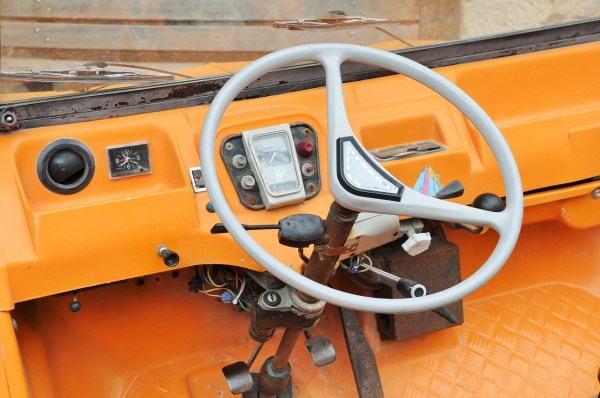
The sun beats down on the orange Mehari that sways down the tortuous road, its engine screaming with each bend.

The Pernod was refilled during the visit to the Antoniottis, the retired teachers who they occasionally go fishing with. So they’re now on a tight schedule, with two more dominical visits to squeeze in before calling in to great aunty Virginia, who has early lunch on a Sunday, in order to treat herself to an additional half hour of siesta.

The small car rattles through the town, startling churchgoers as they flock out of the service, dozy with prayers and incense, squinting in the midday sun.

The children sit at the back, sticking their arms out of the flapping plastic windows, nauseated by the car fumes and curly roads. They long to be at Father Constantino’s house already. Out of all the visits, this one is the best, it also only happens every other Sunday as Father officiates at the Greek Orthodox church bi-monthly, making it even more special. The cordial hasn’t got white flakes in or a dark crust around the bottle’s rim and sometimes there’s ice lollies he presses into their hands before mum and dad can say it will spoil their appetite. He then sends them into the garden where his cats are willing to be chased and held tight, bottom legs dangling, and where juicy figs hang low and are allowed to be picked.

But this Sunday is different. A stern Father awaits them outside his front door. There has been an incident he says. Forgetting to greet the children, he addresses the parents solely, his voice as quiet as his baritone nature can muster, his accent stronger in his rushed explanation. They catch fragments of it. “…a traffic jam in Ajaccio…delay.”

“So it’s here? Inside the house?”

“Yes. In the lounge. Do come in, we can sit in the office.” And his voice grows strong again, his words final: “Children, today we’ll be staying in the office.”

So they sit in the stuffy room, trying to wash away discomfort with more Pernod and cordial and a small ball of very dry pistachios, mum telling Father about yesterday’s trip to the beach, and how big the waves were.

Louis fidgets, uncomfortable on the edge of the small couch, his brother’s leg hot and sweaty stuck to his. He was hoping to see Brunu, his favourite cat, but they can’t go to the lounge and the lounge leads to the garden. He crosses his arms, refusing to touch the pink cordial as a sign of protest. But the grownups don’t pay attention, they are deep in conversation, talking about the wildfires and the drought and the mayor.

Louis wonders what’s in the lounge. Maybe a pirate treasure? Father Constantino always tells him about the pirates that once roamed off the coast. He says there are pirate ships resting on the seabed and that he should look for them when he goes snorkeling.

The grownups are still talking, Sofia is sitting on the floor, playing solitaire, hard at work trying to shuffle the yellowing deck of cards, and Jacques has lowered his head on the nearby cushion and tucked his thumb in his mouth. Louis gets off the couch and walks out quietly, his heart thumping hard at the thought of a pirate’s chest sitting in the lounge. And if there’s no treasure, he can always go to the garden to see Brunu.

The lounge is dark but he can make a large, rectangular shape.

A treasure chest!

It is longer than expected, lacquered white and not wooden, but the handles are golden, as expected. The pirate lying in it is having a siesta.


Image by Nadine Doerlé from Pixabay

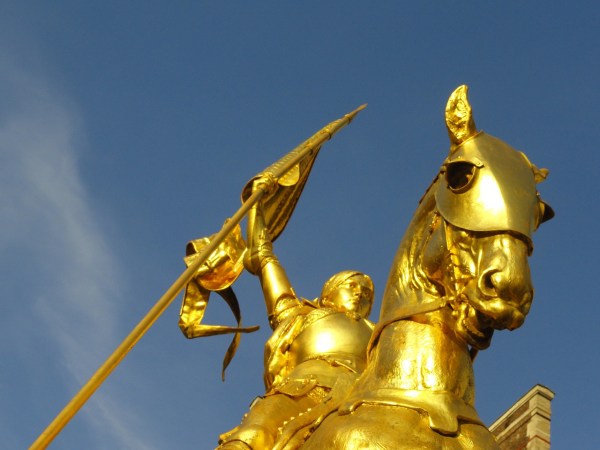
Joan of Arc – Dan A Cardoza

I am in Paris, for one year, my high school student exchange program. I enroll in the obligatory French language classes. To my surprise, I love both courses, and my teachers, especially, Fleur. I have her in my advanced French class. I admit she is my favorite, a master linguist, and philosopher of everything Amour.

First I giggle, and then I ask her “how?”

Fleur’s short answer, “Slightly lift your tongue like a pen, and then sketch tiny alphabets in your closed mouth. This works especially when painting nouns and verbs.”

“You are making me blush Fleur.”

“No Ms. Melissa, your limitless imagination is making you blush.”

I cry when I say goodbye to Fleur. She asks that I be careful. She says, “there are so many decisions in life, and so few involve choices. Love is the most important decision in life, choose wisely.”

By the end of summer, before my senior year, I commanded the poetics of the French and believe true love will eventually find me, and haunt me pleasantly forever, like a ghost circling the tip of an endless Dreidel.

*      *      *

Years press forward, depressed, I drop out of college, with only one quarter remaining.

*      *      *

We are taking one of our long drives, into the foothills, where witchweed, and lavender thistles bouquet the rolling green landscape, wafting a potion of jasmine blossom, and the delicate scent of wild mustard. But as I look closer, past all the beauty, I can also see the alabaster rib cage of a winter deer, under the rotting oak shade branches. I see spring creeks, running dark and muddy, and moody. I see all this through my passenger window, and then as I slowly turn, I notice you thinking too hard.

You fancy me invisible and then you mouth, “I still can’t believe she’s gone.”

*       *      *

We take too many of these trips, but at least I can mull to myself out the window, rearrange the scenery, even the weather, which seems darker with each new trip.

When we return in the early evening, you ask me, Please stay for a glass of Merlo you would rather not waste.”

I say, “No thank you, Mr. Conrad.” I think cadavers.

*      *      *

Over Bombay and Safire, at a fancy hotel bar full of enough men for a turkey shoot, you flirt me around like it’s a whore convention. I think shame on you, but I understand because in your mind I am bought and paid for, like your wrinkled laundry waiting for its folding in a basket at home.

As I cry and race home, I throw out party napkins full of telephone numbers. The fresh air pounds me like a sound tunnel, cigarettes, ash and filth lift then whisk in a swirl, like Dorothy’s Kansas tornado.

‘Where are those god damned ruby red shoes when you really need them,’ I say out loud?

*      *      *

I’m not worth much, that’s what my lazy boyfriend says. He fancies himself a ninja wordsmith, and he’s good at the hateful ones. He’s a Jedi Knight, with a sword for math. For example, he knows exactly how many empty Budweiser cans it takes to recycle our dreams, typically $10.00 at the recycled center.

During sex, I am high above him on a cloud hooked to a string. I can predict when he cums, because that’s when I am paying late bills or eating apples in my mind. Then I crush, “Right there, right there baby!” That’s when I cut the string and untether, and float to the stars, far from the white noise in my head. Then somehow, I awake from my sleep not quiet dead.

*      *      *

I’ve been told that it is ok to live with the memory of love. That it’s ok to live with a vivid image, or .gif of stormy neon kisses that flowed over and down, staining my white blouse. Just live with the memory of weather and the wetness you caused, all this just by saying “I love you,” and meaning it. I’ve been told by my therapist, it’s also ok to remember the broken dishes on the floor, to make room on the table when food was not what we hungered for. If only I didn’t recall the two solemn marines at the front door.

*      *      *

On our way home from yet another Sunday and dusk, you say, “No! Like an ice cream cone, slow and easy, like she used too.”

I listen, but I can’t hear you. It’s a terribly windy day that insists on flapping against my ears like mad seagull wings. I have to lean into the wind just to hang on. As I stand at a childhood bridge in Seattle, mist rises from the water toward a cloudless sky. I see heaven, magnifique, it is so all alone, orphaned of name. On such a day, emptiness can only be quenched in fathoms. ‘I say to myself slow and easy, slow and easy. It’s almost over.’

*      *      *

Le temps a des ailes. ‘Time has wings.’

All stories must end. This one does not.

We find ourselves at Smith College in Northampton Massachusetts. Melissa is teaching a class about the French Renaissance. Outside, on a bench, a young woman finds herself pleasantly fatigued from the challenge of learning. She looks out across the vacant green courtyard at the tall stand of fall Sycamore, which seems to climb into the afternoon sky like a burning teal castle. Just in time, a damsel needs rescuing.

In her silence, she traces the letters of Joan of Arc with her tongue, blending each letter into words into a carousel of thought. It’s The One Hundred Year War, a revolution. She knows to take her time.

‘il y a pire que d’être seul, as Fluer might have said––there are worse things in life than being alone, like having no choices perhaps.

It’s then, Erica, with only the tip of her tongue, slowly spells, M-e-l…

La Fin


DAN A CARDOZA has a MS Degree in Education from UC, Sacramento, Calif. He is the author of four poetry Chapbooks, and a new book of fiction, Second Stories. Recent Credits: 101 Words, Adelaide, California Quarterly, Chaleur, Cleaver, Confluence, UK, Dissections, Door=Jar, Drabble, Entropy, Esthetic Apostle, Fiction Pool, Foxglove, Frogmore, UK, High Shelf Press, New Flash Fiction Review, Rue Scribe, Runcible Spoon, Skylight 47, Spelk, Spillwords, Riggwelter, Stray Branch, Urban Arts, Zen Space, Tulpa and Zeroflash.

Image by bonoflex from Pixabay

Puff – Marie Fields

I took up smoking when I lived
In the ex-hotel, ex-brothel building
Everything had been repurposed
I’d sit in the kitchen with my feet up
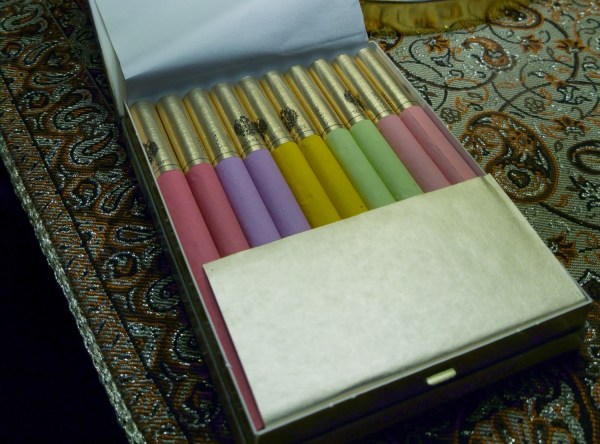
Puffing on Sobranie Cocktails
The insulation so terrible that I
Didn’t even need to open a window
No fear of the alarm drawing attention
Not like Johnny would care
He’d probably join me
I splayed out a smorgasbord of
Colorful cancer in front of me
Letting each one inch me closer
To a high I was loathe to
Leave behind in sleep
The itch so strong I had to
Start chewing gum during the day
Keeping up the façade of decency
I had repurposed
Just like the building.


Image via Wikipedia Commons

La Maldadita – Matt Kendrick

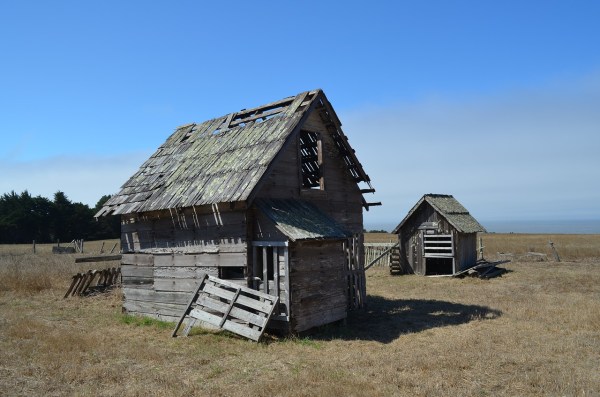
When I was younger, I lived in a chicken coop. The smell of chicken shit still permeates my dreams from time to time. Other times, I dream of anthropomorphic octopi who wear polka dot swimsuits and sip paper-umbrella-accessorised mojitos. Did you know that, literally translated, the word ‘mojito’ means ‘little sauce’? ‘Ito’ is a diminutive, you see. It makes things smaller. ‘Gatito’ is a chicken. ‘Paragüita’ is a cocktail umbrella. The word for a nestling child is ‘niñito’. And that was me – a niñito, a tadpole, a scrag of bones and gristle. I was a starveling who got sent out to the chicken coop because I wouldn’t eat my vegetables. My parents said it would teach me appreciation.

What you learn in the chicken coop is this. One – chickens’ beaks are sharp needles. They use them to assert their authority. That is where the term ‘pecking order’ comes from. Two – chickens ‘get in a flap’ at every rustling movement. They are like the cartoon bully who blanches in the face of an even bigger bully appearing on his patch. Three – hens emit an almost incessant cluck. They get restless when they are selecting a nest box. They fret about the placement of the straw. It is enough to make you want to wring their necks when you are sleeping in amongst them. Four – chicken shit has a smell that stays with you long after you’ve left the brood.

*      *      *

The day I wouldn’t eat my vegetables was the first time of many. I was five years old. Further chicken-coop-banishment offences included wetting my bed after a spider-infested nightmare, knocking a tacky china vase from its kitchen sideboard perch, and serving my father a mug of tea without his customary three sugar lumps. Each trip to the chicken coop came with a lesson to learn, like self-control or respect. Mainly, I learnt that my place in the ‘pecking order’ was right at the bottom – beneath my two older brothers, beneath the dog and the cat and my dad’s Cortina, beneath the television set, and even beneath the fifteen chickens. I was the runt that couldn’t throw a ball properly or run in a straight line. ‘Good for nothing’ was what my father called me. My mother used to smack me round the back of the head for staring into space.

When it came to corporal punishment, my father favoured the buckle of a belt strap whipped against anxiously clenching buttocks. My brothers learnt from his example. They liked nothing better than to clobber me in the gut.

*      *      *

There was one time I remember when I didn’t want to watch a movie that had been rented from the local Blockbuster. The red-circled number on the case was an eighteen so I was far too young for it. I didn’t understand most of the grown-up language or what was happening in the scenes where a gangster and his mistress appeared to wrestle beneath a crisp white bedsheet. But the amount of blood was horrifying. Graphically, at various points through the movie, it was pooled on the ground. There was a scene where a crow pecked a woman’s eyes out. Another crow emerged from the innards of a frostbitten beggar. When it got too much, I tried to slide off my chair.

‘Where d’you think you’re going?’ asked my father.

My tear ducts seeped moisture. A stifled gobbet withered in my mouth. ‘I…’

‘This is family time and you’re not to spoil it by being a cry-baby.’ He threatened to tie me to the chair if I didn’t stay in place.

What you learn in the chicken coop is this. One – the rooster is a vicious bastard who’ll peck your eyes out at the first sign of weakness. Two – the alpha female is complicit in everything because there are other hens nipping at her heels. Three – a cockerel’s principal drive is to displace the rooster. He does this by shoving his weight about. He does this by picking on the pullets and the chicks. Four – chicken shit has a stench that makes you want to chunder.

*      *      *

Small things set masterpieces into action. ‘El whiskicito’, the small whisky that sets an addictive personality on the path to enlightened thinking. ‘La ideita’, the wisp of an idea that fuses inside the fatty tissue of a human brain. ‘El corazoncito’, the trembling heart that turns to tarry black after a lifetime of meekly cowering in the shadows.

Click, click, click and we are all returned to that living room where a seven year old’s nightmares were gorged on age-inappropriate cinematic exposure. This time, though, the chair-tying threat has been carried out and my father has the same terrified look that all chickens get when a bigger bully appears on their patch. There are roundels of sweat at his armpits and I bet he’ll wet himself before the end. My mother is clucking incessantly as she always does. I give her a slap to try and shut her up. I think how pleasant it will be to wring her neck and see her squawk her last.

I’ve got ‘un cuchillito’ (little knife) in my hand. I’ve got ‘una memorita’ in my head of a time when my father locked me in the chicken coop for three days straight. It pissed it down the whole time I was out there. I missed two days of school and got a detention on my return for not completing my Spanish homework. ‘Una pepita’ (a seedling) of resentment was born in those three days. It germinated in the deluge. The next time I felt the bite of my father’s belt buckle, it sprouted shoots of hatred; thoughts in effervescent chlorophyll of future revenge.

Chlorophyll – I used its dictionary neighbour to knock my parents out; a dab of it on a handkerchief, creeping up behind my father whilst he sat lounging in his underpants. When he came round a few moments ago, he looked surprised to see me. My mother had the expression of a broiler who knows its time is up.

*      *      *

All that is left now is to commit a little devilry – ‘la maldadita’. It is but a ‘peccadillo’ really. If you think about it, it is only what you should expect from the chicken coop – cockerel rising up to take its place, alpha female exposed for the heartless bitch that she is.

The inspiration for my retaliatory sequence is soaked in the blood of an eighteen-stamped Blockbuster video. As I use the knife to cut ‘une grietita’ (a chink) in my father’s wattle, I get a sense of profound satisfaction. It is in the way he flinches. It is in the way he yells out when I slice his index finger clean in two. Luckily, the neighbours are used to ignoring the odd sounds that emanate from the chicken coop. That’s good because my mother’s screaming is like a parakeet on crack.

I won’t bore you with the details – the fact that I turn it into ‘un juegito’ (a little game) or the fact that I revel in doing things ‘despacito’ (slowly). What I will say is that the amount of blood is horrifying. It gets everywhere from the nicotine-stained drapes to the dog-chewed cushions. There is a splatter of it on my shoes which I wipe off with disinterested disdain. I feel giddy at the sight of the two parental corpses slumped in their chairs. And the only other thing that penetrates my skull is the smell of faeces, my father’s bowels having given out just as I was pecking my knife into his flabby hackles. It smells worse than chicken shit.

Outside, almost on cue, one of the hens emits an inquisitive little cluck.


MATT KENDRICK is a writer based in the East Midlands, UK. His stories have been published by Fictive Dream, Lucent Dreaming, Reflex Press, Spelk, Storgy and Collective Unrest. Further information about his work can be found on his website: http://www.mattkendrick.co.uk. He is on Twitter @MkenWrites

Image by Donald Gazzaniga from Pixabay

The Alpine Garden Club – Steve Haywood

With the pint of freshly poured Wainwrights in one hand and potted plant in the other, Tom headed to the back of the bar, through the doorway into the snug. He didn’t know why they called it a snug, there was nothing snug about it. The paint on the walls had long since turned to an indistinct dull grey, the bleakness only broken by a few curled up posters advertising a darts match that had been and gone years ago. The furniture wasn’t much better, a few scattered tables sticky with generations of spilled drinks and wooden chairs darkened with age until they were almost black. There was precious little light in the room, the small high windows giving just enough illumination so that you could see in front of you in the middle of the day and didn’t trip over the frayed brown carpet. He liked it though, it matched his mood these days and more importantly, it was quiet. Nobody came here except for the quiz on Sundays. Today wasn’t Sunday.

He slumped down in his usual chair in the corner of the room, carefully placing both pint and plant pot on the table in front of him. Absently, he swept the scattered bits of soil off the table onto the floor and properly looked at the plant for the first time. It seemed a bit dried out and forlorn, though there were two purple flowers with a yellow centre which Tom supposed someone else might call pretty. After a few moments of staring intently at it he looked away, his lip curling slightly. What did he want with a plant? He’d only forget to water it, leaving it to shrivel up and wither away, much like everything else in his life. He’d told Mark as much earlier, in their session together.

‘What’re you giving me a plant for of all things? I always kill the damn things. My ex-wife would go away for the week on a conference, and when she got back her precious plants would be dead. We’d have a blazing row about it for days afterwards.’

‘Ah but the beauty of this type of plant is it hardly needs watering at all. So just take it, it will bring some colour into your life. Next week at our session, you can tell me how it’s doing.’

So that was how he came to be stuck with this stupid plant. He’d been tempted to dump it in the bin on the way here, but knowing Mark he’d ask him to bring the thing in one week, take a photo of it or something.

He took a deep drink from his pint, and sat back, slowly losing himself in the dark, swirling currents of his thoughts.

He didn’t know how long it had been, time was largely meaningless to him, but his quiet world was suddenly shattered by the hubbub of voices coming closer, and then the harsh strip light blinked on. He squinted in the glare and saw several people entering the room. He didn’t understand, it was Wednesday today, not Sunday. A woman in her late forties with short, greying hair came straight towards him. She took in the plant in front of him and smiled broadly. She thrust her hand out, forcing him to shake it.

‘Hi! You must be the guy from the website, James was it?’

‘Err, I’m Tom actually.’

‘Tom, right, sorry. Don’t know whether I’m coming or going sometimes. I’m Marie. Let me introduce you to some of the others.’ She beckoned them over. ‘Everyone, this is Tom. He’s the website enquiry I told you about. Tom this is Sheila, our social secretary, Paul our treasurer and Ana who’s our librarian.’

‘Hi Tom.’

‘Hi.’

‘Sorry, I…’ Tom started.

‘Don’t worry, we don’t expect you to remember everyone’s names. It’s not just us either, we may not be the biggest branch of the Alpine Garden Society, but there’s more of us than you’d think. Oh look, here’s some of them now.’

She went over to welcome the newcomers, and Tom was just thinking about using the reprieve to get the hell out of there when the middle aged, balding man she’d identified as Paul stepped up in front of the table.

‘Really good to meet you. I say, is that a Sisyrinchium Bellum you’ve got there?’ He didn’t wait for a response before continuing. ‘Beautiful flowers, Sisyrinchum Bellum. Blue eyed grass they call it in California, but then you probably already knew that. It’s your plant after all.’

‘Um well…’

‘I had a girlfriend with eyes that colour. She was beautiful too. Left me for her fitness instructor.’

‘Sorry to hear that,’ Tom mumbled.

Paul waved it away like it was nothing. ‘Water under the bridge, you know, it was years ago. Say, I’d better get a drink before we start. What are you drinking?’

So that was it, he was stuck in the monthly meeting of the Woodsham Alpine Garden Society. Paul came back with a pint for each of them and a packet of Nobby’s nuts which he offered round then proceeded to crunch loudly for the next few minutes.

‘Right, shall we begin?’ Marie shouted, silencing the chatter. ‘We’ve got an exciting evening ahead. As some of you know, Linda and Jim have just got back from a trip to the Pyrenees and have agreed to show us their pictures on the big screen. I’ve had a sneak preview and they’ve got some exciting plant species to tell us about. Over to you.’

With slowly dawning horror, Tom realised he was going to be in for a long night. Linda and Jim, had hundreds of photos to show off, all of a series of plants that he struggled to tell apart from each other. The only consolation was that as the ‘new member’, a succession of people kept insisting on buying his drinks. After a while, everything started to blur, but the black dog that usually stalked him when he was drinking obviously had better things to do for once, for he felt a strange, unfamiliar warm glow to proceedings.

*      *      *

He woke up with a groan, clutching his head. He hated having a hangover, so much so that he usually didn’t drink enough to make him suffer, but this morning he was definitely suffering. Quite why that was though, he wasn’t sure, he usually only had a couple of pints before going home and slumping in front of the TV. Then turning his head slightly, he spotted the potted plant on his bedside table, and it all came flooding back. He couldn’t help but laugh out loud, then instantly regretted it as his head started pounding. Of all the things he could have imagined himself doing yesterday, attending the monthly meeting of the Woodsham Alpine Garden Society was not one of them. What a dreadful evening! Except… it didn’t seem that dreadful at all, now he thought about it. Okay so watching hundreds of plant pictures on the big screen did get a bit samey after a while, and he didn’t get why some of the members got so excited about new seeds they’d got in their seed library, but the rest of it was alright. He’d got free booze all evening out of it, but it wasn’t just that. He had really enjoyed the company, and the feeling like he belonged (even though he clearly didn’t, what did he know about plants?).

A while later, he was up, dressed and breakfasted. He glanced up at the window. The sky outside was a deep blue, and the sun was shining in through the window, illuminating the room. Light refracted off a glass sat by the sink, sending out multi-coloured ribbons of light off the white tile walls. Sat on the windowsill where’d he left it last night was his Blue-eyed Grass. In the sunlight the colours were even more striking, the yellow centre contrasting well with the blue-purple petals, to his untrained eye at least. The plant itself did look a little dry though, so he ran the tap over it to give it some water. Some of it quickly started dripping out the bottom onto his shoes, so he rummaged in the cupboard until he found a chipped old side plate which he put underneath to catch the water. A couple of the lower leaves were a bit shrivelled up and obviously dead, so he carefully picked them off, humming to himself softly.


STEVE HAYWOOD lives in a small historic city in England. As well as writing short fiction, he blogs about short stories, novels and assorted topics at http://www.inkypages.co.uk. He can also be found on Twitter at https://twitter.com/Lancaster_Steve where he regularly tweets to share stories he likes with anyone who will listen.

Image by Mark Martins from Pixabay

Mia’s Well – DayVaughn McKnight

Andrew walked down to Mia’s well with his head held down. Sweat grew from his forehead and dripped down his weary face. One hand was pressed against his ribs while the other held onto a blood-stained sheriff’s badge. He carried a slight limp with each step and his bare feet left clear imprints in the sand path.

“Hello, Andrew,” said a voice.

Andrew stopped walking and looked up.

The bucket of the well gently swayed back and forth before coming to a stop. Andrew proceeded to move closer to the well. “I’ve done it,” he said as he held up the sheriff’s badge. He walked to the base of the well and threw it into the water below. He took in a deep breath and let out a sigh of relief, baring a smile across his face. “I’ve done it.”

Andrew went over to the crank of the well and lowered the bucket into the water. Sploosh. He turned the crank in the opposite direction and the bucket raised to the top. The bucket was empty. “Mia?”

“This was not my request,” said a voice from the well.

“What? What do you mean?”

“You may drink when you have learned what it is that I want from you.”

Andrew looked down, shaking his head. “No, Mia, please.” Tears formed in his eyes as he dropped to his hands and knees. “I’m exhausted,” he said as he beat his fist against the sand. “What more must I do?”

“Please get up,” said the voice.

“Do you know how hard this is for me?”

“Yes, it pains me as well. But you must–”

“Shut up!” Andrew picked himself up and wiped his face. He kicked at the foundation of the well.

“Andrew, you must learn–”

“I said shut up.” Andrew continued to kick at the well, each kick with more intensity than the last. “I’m done with this.” He pulled out a switchblade from his pocket and grabbed onto the well’s rope.

“What are you doing?” asked the voice.

Andrew pressed the blade to the rope and moved it back and forth. As he cut at the outside fibers, dark clouds moved across the sky.

“Think about this, Andrew,” said the voice.

Andrew briefly stopped his actions to look down into the well.

“You could always go back into town tonight. Clear your mind. I’ll be waiting for you tomorrow,” said the voice.

“No, I don’t need this,” said Andrew as he went back to cutting the rope, making steady progress. “I’ve thought about this long enough.”

“Andrew, you’re clearly in need of water. Why don’t you just–”

“Damn your water,” said Andrew, now cutting at the rope with greater force. The rope had only a few threads holding it together.

“Are you sure about this?” asked the voice.

Andrew cut the last thread of rope.

The bucket of Mia’s well fell into the waters below. Sploosh.

Andrew fell onto his back, eyes fixed on the nighttime clouds.

“Goodbye, Andrew,” said the voice.

The sky rained down upon Andrew’s body.

“Goodbye, Mia.”


DayVaughn McKnight is a writer from the DC metropolitan area. He has works that have previously appeared in Ursa Major Literary Magazine and Adelaide Magazine. You can find him on Twitter @DayVaughnTweets.

Image by Britannic Zane from Pixabay

I Met Your Father in the Globe Factory, Sonboy – Jim Meirose

Twenty-seven Christmases and just one gave up a Replogle globe—and believe it or not, that was where I met Dad, Sonboy. The globe factory. In the globe factory on the actual manufacturing floor there are many mansions. Many golden mansions out the lanes all branching up the hills past Peter’s gate. Past the big throne that is similarly situated as the statue or Walt and Mickey gob p’shawing out ta the castle they piled there. That kind of a figurehead. Once you are there there’s no more need to kiss. What’s kissed, you guess which. I for my sake cannot say—but up above the sedimentary clashes on clashes of machinery noise on the Replogle corporation’s factory floor, out of the war-fog of the shackling and clashing whirring and ripping globe wrapping gluing forming and mapularianity-coating the cardboard spheres with the latest imaginary multicolored geopolitically transected beautifully presented scale-model fake planet Earths, the procession of them up fifty feet drying moment over moment the thousands of them not just being fifty feet up all together, but each one separately being up fifty feet which means—and get the pith of this magumoidal number about to be generated that no one—no no one—ever in the history of our race—has calculated, that’s—in just one of the thousand and five Replogle globe factories extant in just this here one single hemi of half this whole planetary hipposide, my sweet—if there are a hundred globes winding their way out around and back and around and the other way then a-this-away with each being fifty feet above the earsplittingly loud factory floor, that is five thousand feet which is ninety-four hundredths of a mile in English; noventa y cuatro centésimas de milla in Spanish; and aŭdek kvar centonoj da mejlo in Esperanto. The guide that took us through the factory, having told us all these facts and these figures, then put us against the wall of the factory. He went down the line and pressed lightly down on the left shoulder of about ten thousand of the one and a half million applicants for the job of quality control inspector at the out-shoot off the back-end of the fifteen inch diameter Replogle Imperial series V8 powered medium-strength superfast cooler than shit whisper-quiet space age assembly line—acquired used from the matchbox racing car knockoff North Korean faux-petroleum based hemorrhoidal cream and other assorted pain relief products—related to end-to-end management of the garden variety twenty-first century alimentation and other crapshot picklemen’s afternoon delight tracts soothable ailments store, eh eh eh—eh; and she did indeed say, ah yes she did, you—have no right calling me by my first name—ah mean, you lookin’ et me? You can’t see me. You don’t know me—et al.

Okay?

Good.

So after I lost the job at Replogle I went out a’wanderin’ their parking deck for several years and my head and my head and my—head, to keep the panic filling me at bay, took me back past the manufacturing line on the way to the wall where they’d stand me and ultimately pronounce and execute the sentence of rejection on me—and the fact that there were ten thousand others receiving the same sentence that day made it not on milli-nit easier to gnaw back—the loud rude filthy stinking globe manufacturing machines passed me by again and again until the seventy-fifth time through the search for my car I beheld a single human man standing at his post by the side of the fully automated line of cold icy logic-driven dispassionate Krupp-steel panels of the line, his hand poised over a big red button. The first time by him it was just a big red button and my car was still lost. The second time by him it was a big red plastic button and my car was still lost eh. The third time by him it was a big red plastic button with the words EMERGENCY STOP embossed into it and my car was still lost eh eh, but—the fourth time by it was pushed—his hand had moved; the earsplitting assembly line noise-curtain dropped—and my car was around me. Eh eh eh. He was beside me. Eh eh eh eh. He said I feel your pain. Eh eh eh eh eh. And we drove off and then, though you were nowhere near actual birth yet, you had at last found a Father. And the you which was born at the same moment as me was relieved of its first outer layer of smothering pap applied in the effort to smother it away. But now you had a Father. This put you halfway there Sonboy.

Any questions?

Good.


http://www.jimmeirose.com

Image by Free-Photos from Pixabay

After Before – G J Hart

Before when sailing
Was plain, I moved
From here to there,
Rowed with oars spare
As ulna, returned hopes
To rivers
Risen
With hope.

Then, Built a cabin
With fir And foul
Language,
Hauled up jasmin,
And leant and watched
My plot
Scud through
Gasping storms.

After with rivers
Withered, I sacked
Kindling and clothes,
Boarded a ferry,
And leant and watched
It scatter
Years
Across my shoulder.

Arrived I relished
Forecasts and ice cream,
Hung hollows
For coming storms
And sat before
Waters
Beneath
Vaults of endless growth.


GJ HART currently lives and works in London and has had stories published in The Molotov Cocktail, The Jersey Devil Press, the Harpoon Review and others. He can be found arguing with himself over @gj_hart.

Image by Julius Hagen from Pixabay

Losing Light – Bradley Sides

Before.

All of us kids from the neighborhood were out in my front yard sitting and talking. Laughing and waiting. All but Gresh that is. He, more than anybody, celebrated that first night of summer when the fireflies returned.

He howled as he ran in the yard. His bare feet smashed into the muddy puddles. Before even the tips of his toes could dry, he plowed into the rows of dandelions, pretending the white floaties were fireflies. Then, he fell into the dewy grass and the pieces of the world covered his body.

When they finally arrived, they bypassed the rest of us. Some of the younger kids called out and chased them, with their Mason jars clanking against their stubby, damp fingers. The rest of us already knew even if we wished we didn’t.

The fireflies went toward Gresh. Their tiny bodies spun and sped. Flicked and glowed. Their lights were like a silent symphony—synchronized perfectly to create just what they’d intended.

Gresh didn’t get up. He didn’t speak. He didn’t welcome them in any way. He just opened his mouth, and they found their way inside.

I couldn’t watch for long. I said goodnight and went inside.

The others’ voices followed me until I closed the door behind me, but they still played over in my head.

I peaked from my bedroom curtain one last time after I turned off my lamp. He was still out there. Glowing amidst all that darkness.

He sat at his little desk in silence most days, staring off into the sky. When the rest of us went swimming at the pool, he said he had important things to do if we asked if he wanted to go. But when night approached, he grew anxious. He tapped his feet against the wooden floor, and he rocked back and forth in his chair. He slowly pecked at the window with his bitten fingernails. All he did revolved around them.

When they inevitably returned each night, he yelled and took off into the yard.

It was bad enough that I had a brother who housed thousands of bugs. It was even worse that he glowed. The worst, though, was how he sat in the front yard in the mornings with his little notebook and wrote away with nothing but the tips of his glowing fingers. The neighbors used to call all the time and tell us about Gresh. He scared their kids, they said. Really, though, he scared them.

Mom constantly asked him what he was doing. He would always say the same thing: “Important stuff.” When Dad asked him: “Important stuff.” Me: “Important stuff.” None of us knew what to say, so we didn’t say anything.

One night when he was out illuminating the neighborhood, I went to his room and opened the notebook he’d been working on all season. But, of course, there was nothing there.

By the end of summer, I needed sunglasses if I was in the same room as Gresh. It wasn’t just the tips of his fingers either; it was all of him. Even from underneath his clothes you could see his bright body trying to find its place in a world it couldn’t ever really belong.

His eyes were heavy, too, and although he glowed, he still looked dark around his eyes. He didn’t eat during the day. Mom and Dad worked. I played with my friends. He sat around and waited on his “friends” as he called them.

Only a few fireflies remained on the night Gresh came to my bedroom and dropped the notebook on my bed. “Goodbye,” he said. I nodded at him as I smirked.

I eventually looked out to see what he was doing–to see how many fireflies would find their way inside him–but when I opened my curtains, I couldn’t see a thing. All of the light was gone.

After.

Even if I close my eyes and focus, I can’t remember the way he smelled or the sound of his voice. But, I can remember moments. There was that one day when his arm rubbed against me on his way to meet them one evening. He wasn’t hot. He wasn’t even warm. It was like that time he sliced his finger on the cover of one of my books he was returning, and he bled actual crimson blood. Honestly, I expected light. Bright, burning light.

We still wait on their annual return. No one mentions Gresh to me, but I hear his name echoed in the soft breeze. The name engulfs and suffocates me. We all have Mason jars now. There’s really not that much difference from the young and the old. We all want.

One of the kids trips over his shoelaces and falls. He rests on the ground and stares up at what surrounds him. He is quiet. It’s like he’s a part of a different world. It’s brief, but it’s gorgeous. I wonder if that’s what Gresh felt all the time.

It really was beautiful if you think about it. The way these tiny, mysterious bugs flew to him with no effort on his part, and he allowed them inside him. To protect them. To comfort them. To befriend them. I just wish I knew why.

I wake up some mornings and wonder if Gresh was just a dream–if he was just someone we all made up in order to have something special in our lives. Then, I remember the laughter and the names. Some things can’t be made up.

My parents are asleep, and my friends are at home. I peak outside from my window to watch them. It’s what I do a lot of nights when I can’t stop thinking about Gresh. Tonight, it’s like I’m lost in space. The stars are twinkling. Bright then dark. Here then not. It’s my whole unknown universe.

A firefly lands on my window, and its light dies.

I grab his notebook, and I go outside. The grass is cool when I sit down. The pages of his notebook float in the nighttime air. Unlike that night when I looked at the pages in his bedroom, there are words now. Or one word written over and over. Gresh’s handwriting is heavy, frantic. “HELP!” There’s something on one of my cheeks. Maybe it’s a firefly. Maybe it’s a tear.

I call his name. My voice is quiet at first, but it grows. “Gresh! Gresh!” The name feels strange coming from my mouth. I doubt I’ve said my brother’s name more than a handful of times throughout my whole life, but it finds its place as I cry louder and louder.

I fall into the grass and look up at the bright dots burning above me. It’s hard to focus. I can’t tell the stars from the fireflies. I just know it’s light. As long as it’s here, I won’t stop. I open my mouth and I wait. I feel something on my lips. I can only hope I’m not too late.

But it hits me. He was writing to them.


BRADLEY SIDES is a writer and English instructor. His work appears at the Chicago Review of Books, Electric Literature, The Millions, The Rumpus, and elsewhere. He is at work on his debut collection of short stories. For more, visit bradley-sides.com

Image by StockSnap from Pixabay

Waning Plumes of Frostbitten Air – Scott Moses

The frigid wind laps at the wolf’s nose and its lids open, the yellow irises in bloom as the pupils contract. Scanning the tree line of the winter wasteland, it peers into the crevices between the pines, searching for what it knows lies within.

It struggles to its feet and stretches out, claws expanding at the cold of the snow. Its stomach wrenches, unable to remember what it is to be full. The wolf lifts its nose, and a plume of air escapes its nostrils.

Some days I feel so dead behind the eyes. Staring up at the ceiling, my body’s innate clock rustling me from slumber minutes before the alarm whines in the way it does, signaling the start of a day I’ve lived ten thousand times.

The wolf stumbles with a whimper and tends to the fresh wound adorning its leg. The flesh burns where the black tendrils latched and dug in, spewing venom throughout the wolf’s already weak and waning body. The wolf laps at its wound, eyes clenched, resisting the urge to cry in the way it did when it was young.

Its yellowed eyes still on the tree line, vigilant for the threat, for the thing of many arms, which seems to glide along the surface of the snow, weaving throughout the trees. The wolf can’t recall when the evil first arrived, only that it did, and that it has followed it ever since.

The wound is hot on its tongue, and the movement of a nearby stream enters the wolf’s ears. It loses itself in the caress of the water’s flow, believing for a moment it isn’t hunted- isn’t constantly on the run.

The water rushes from the shower’s nozzle, jarring me from lethargy, and I stand there in the early morning, wondering what the point is. My internal workings coaxing me to continue the daily ritual of merely existing.

The wolf nears the stream, the coolness beckoning, and shakes out its fur before pressing its snout to the water.

The whiskey warms my chest as I surveil the others at the bar. Some smiling, some laughing, as if not living the same day over and over again. How I envy that, the spark of something new. Something, utterly different. Do they know what it feels like to see everyone around them content, all while feeling it’s out of reach?

A chill runs through the wolf and it stops drinking, and as the fur on its back rises so do its eyes to the blackened anomaly hovering on the other side of the river. A gargantuan squid, tentacles twitching, watching the wolf with its hulk of an eye. The wolf’s legs stiffen with the weight of its stare, the weight of its, smile.

The wolf takes a step backward, remembering the last time it faced the evil. The stench of the squid’s venom erupts in the wolf’s nostrils and with another step backward it yelps, scrambling away on lanky legs. Its malnourished body panicked and carrying it through the forest.

The branches grab at its face and snout, clinging to the fur on its shoulders as it runs, runs knowing the thing is faster than it will ever be. Knowing it’s only a matter of time before it feels the searing pain of the squid’s tendrils. The wolf’s eyes widen and it presses on, lungs ablaze with the frozen air.

The lock clicks and I loosen my collar after another day at the proverbial mill. Sometimes I visit the past to talk to myself. To ask where my zest for life went, and if it’ll ever come back.

The wolf backs against the wall of the mountain, pressing its body against the slick rocks. It lowers its head as the malformed mess approaches, blackened tentacles extended, hooked barbs expanding, dripping with venom. And as the evil’s shadow envelopes the mountainside, the wolf’s tail curls between its legs.

They question why I’m not, more than I am. Why I haven’t accomplished, more. These voices which come in the throes of sleepless nights. Why the space next to me has been bare of something real for so long. And how I don’t care, and do all the same.

I believe you can leave with less than you came with. I believe because of life and all its shit, you can have less of a soul when you die. Battered, and shredded, still intact, but not much more than a stringy mess of what you’ve managed to live through.

The wolf lowers its head, eyes on the squid and the hooked barbs inches from its snout. The acid hissing in the snow as it leaks in anticipation.

And as the familiar weight of unworthiness comes, as it does from time to time, a small voice rises up.

First, a whisper.

Be thankful, it says. Open your eyes.

Then, a murmur.

You’re not alone, and never have been.

And in the throes of everything, something flickers within me. The possibility for happiness, and that the will to strive for it in the midst of hell is something utterly necessary.

And so I straighten my posture, the other voices still present, but not quite as damning. Wondering if something good is worth the pain, knowing that it is.

And so the wolf’s brows furl, a low growl in its throat, and the ghost of a squid halts a moment, reminded, as is the wolf who looks up at it, that no matter how broken, defeated and starved it’s been, this wolf still has teeth.


SCOTT MOSES is an optician by day and a writer by night. His work has appeared or is forthcoming in Coffin Bell, Boston Accent, Nightingale & Sparrow and Beautiful Losers. He currently resides in Baltimore, simultaneously loving and loathing humanity. Twitter/Instagram: @scottj_moses

Image by Patrick Neufelder from Pixabay

The Beech Forest – Martha Higgins

Jean opens her eyes and quickly scrunches them tight. Gingerly she opens them again shielding them with her right hand. Tall trees surround her with strong sunlight filtering through the branches and leaves. It must be high summer, the air is warm, the trees are in full leaf and the air is laden with the scent of July days when the whole world is lush and verdant. In this green world the floor is brown and looks spongy with years of fallen beech leaves forming a path.

She fleetingly remembers walking through the Pyrenees through the spongey floor of another beech forest with filtered sunlight and it felt like walking on air. Her body grew lighter with each step and she emerged to the tinkling sound of cowbells and a herd of wild horses looking curiously at her as she laughed out loud with joy.

Jumbled memories vie for her attention and she tries to separate and order them. She thinks of going to the well for water with her Aunt Mags and both of them carrying the warm tin buckets on other July days with the sun on their shoulders. Aunt Mags wears her wrap around navy apron with the tiny pink rosebuds and has her hair in rollers. She doesn’t give a fig what anyone thinks about her and Jean always feels so safe with her.

Scything the edges of the hayfield, her father’s rhythmic movement is soporific, it looks so easy, but she knows it is not because she has tried to lift the scythe and could hardly carry it one step. He smooths the cocks of hay until they are a perfect fit for a Constable painting. Her grandmother makes potato cakes and cooks them over the coals in a warm pot and she and her sister Eva eat them with butter dripping down their fingers and they are so delicious.

Then there is the year of the early harvest; the warmth rushes up from the grass and everyone is so languid, it seems like their bones are molten. Jean’s sister Eva sits under the cherry tree and is transformed by her first love. Nothing impinges on her, she either talks incessantly about him, or wanders about dreamily with a smile of beatification on her face. Jean envies her, she doesn’t know what this feeling is like.

It is time to bring home the turf, and she hears the grating call of the corncrake as frightened by the noise they begin their short erratic flight alighting to run through the long grass and they are as commonplace as the turf itself. In the evening her father builds a strong wall of turf and she throws in all the new turf behind it and then he builds the wall a little higher, he is very skilful.

There is no television in July, her father says no work will be done and the television must go back to the shop at the end of May and can be taken out again in mid – September. Jean and Eva are always bereft when the television goes and every year they lament and prevail on their mother to prevail on their father already knowing the futility of it. They soon adjust to outdoor life again and when September comes welcome the television back like an old friend, anticipating the arrival for days in advance and planning what they will watch if they are allowed.

Uncle Jack is home from America and Jean is sublimely happy now, nothing bad can happen when he is here; he is utterly serene and happy to sit and tell stories all day. Jean loves to sit beside him; he smells of America, so fresh and clean and impossibly different and unreachable. His voice is soft, his drawl setting him completely apart, his hands are gentle, his nails are scrupulously clean, Jean loves that they show no evidence of any farming.

Jean and Eva coax the cows from the sweet meadow grass and bring them home for milking. Tempted by wildflowers they graze along the road; the milk will take on the hue of buttercups tomorrow. They chat desultorily and kick the pebbles with their canvas shoes that they were so proud of two months ago. This hour before milking brings a lull, the day’s work is done, and it feels like there is all the time in the world.

As her mother arrives in the cow shed with the buckets Jeans pulls up the three-legged stool to sit beside her. Her mother strokes and pats the cows, and they respond to her gentleness as the buckets fill with luscious warm milk. The shed door is wide open, the warmth of the cows adding to the warmth of the evening, the cats run in to lick up any traces of the warm milk on the floor. They chat amicably and comfortably, never safer together in their whole lives.

Later the moon shines silver mysterious light over the whole world and the familiar colourful shapes of the day change to black and white. Jean’s walks under the stars with Uncle Jack, and they are both stowing away this summer. These nights are not for sleeping.

Then Jean is getting married and Aunt Mags makes her wedding dress. It is pretty and pure white, but she knows this is not the right thing for her. She stands there in the bedroom grasping the pearls she is wearing around her neck and she can’t seem to focus on any thought at all, but she knows that she will walk up and down that aisle today. she doesn’t know any way to get off this path now

She considers the luxurious bed she is lying in with a deep, deep mattress, the good linen, the brass ends, the gold throw over her feet. She is wearing a very pretty dress, and struggles to remember it; ah yes, it is the dress she wore to her daughter’s wedding,

cornflower blue and silky. The sleeves of the dress are short, and her arms look thin and pale which is odd as she always did take a nice bit of sun. She throws back the cover and examines her legs, they too are white and thin, she is not wearing any tights and she always wear tights now for occasions, her days of bare legs at weddings are behind her.

She touches her head to feel the blue flower she wore in her hair that day, but it is not there, and her hair which was always so thick and full is now a light soft down, she is bewildered and frightened and begins to tremble.

Through the trees now she sees a procession approaching, the first person to emerge is her beloved grandmother Sarah, her grey hair still neatly tied in a bun at the back of her head, her body slight and regal. She is wearing a beautiful dress that she never wore when Jean knew her, as she always wore widow’s dark colours. Now she is resplendent in a long white and yellow gown.

Aunt Mags is behind her still wearing those rollers like she is getting ready for a big dance this evening. She laughs delightedly and claps her hands

“Well now, here you are and what kept you”!

Her grandmother smiles softly at her, “Welcome” she says as she holds out her hands and Jean swings her feet firmly onto the spongy forest floor, her fragility forgotten as she walks firmly towards her.


Image by andreas N from Pixabay

Takotsubo – Rebecca Field

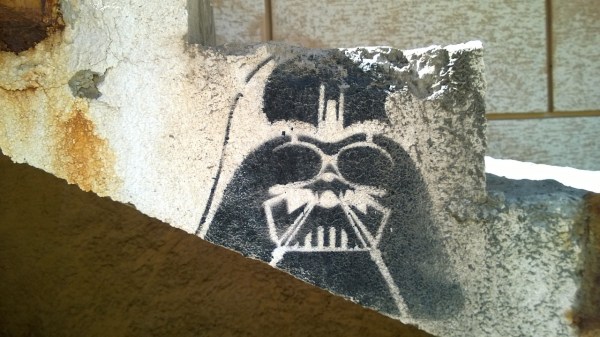
The inflatable Darth Vader in the hallway keeps making me jump. It catches me unawares as I nip to the downstairs toilet, go to answer the front door or pick up the post. It is a dark shadow lurking in my peripheral vision, about the same height as you were; three foot or thereabouts. In that instant when my brain forgets, I wonder if there is somebody standing there, if it is you come back somehow.

Your Mum wouldn’t have it in your house. I remember her bringing it over, saying ‘you’ve got more room for things like this here,’ and setting it down with a smirk. I hadn’t the heart to say we wouldn’t have it either. When you turned it on, it started making those heavy breathing noises and then you took out the controller and started moving it up and down the parquet and I realised the full extent of its robotic capabilities. I’ll admit, I did wonder if after a while I might be able to accidentally puncture it whilst hoovering whilst you were at nursery.

I tried putting it in the garage, but every time you came over it was the first thing you asked for. You loved chasing the cat with it, dressing it in different hats and scarves, pinning me into corners in the kitchen with it as I made your lunches, and so in the end it stayed in the hallway like a quirky piece of furniture, waiting for your next visit.

That afternoon, I came home with Fred in my black pencil skirt, hung up my jacket and slipped off my court shoes by the front door. It was there waiting, holding its light sabre aloft. It seemed to have an indignant look on its face, as if it had been denied the one thing it wanted, its sole reason for being. I know how you feel I thought. Keep busy, I told myself. Don’t stop or you’ll never get going again. I went upstairs to strip the beds, open the windows, let in some air.

As I was loading the washer I felt the first pain. It was sharp and unrelenting, like somebody squeezing my heart in a tight fist, trying to wring out every last drop of blood. I leaned on the counter, knowing it wasn’t right, but thinking that maybe it was a manifestation of grief and might pass soon. I went back through the hallway to the lounge, to the safety of soft furnishings and carpets. I saw it again in the corner as I passed and I thought that if this was my time to go then that wouldn’t be so bad.

I leaned back on the sofa cushions and called to Fred, only half-hoping he’d hear me. He called the ambulance and that’s how I ended up in the hospital with a cardiologist telling me it wasn’t really a heart attack; it was this thing called Takotsubo that had made my heart stretch out of shape. He said it was the shock of your death that did it, but I’d probably make a full recovery. I decided right then that he knew nothing about bereavement. Fred asked why it had such a strange name and the doctor said it was from the Japanese, something about the clay pots fishermen use to catch octopuses, and how they looked like the shape of my left ventricle. He drew a diagram on some paper and I wondered how an animal as intelligent as an octopus could get trapped so easily in an open necked clay pot. Maybe they were too trusting I thought, thinking they had found somewhere nice to rest, then finding themselves ripped out of the water before they realised what was going on. I don’t remember the rest of what he said but I stayed on that ward for several days, thinking that my heart was still broken whatever the monitors were saying.

When Fred brought me home, Darth Vader was still in the hallway where you’d left him. His face was expressionless, like the way I felt. I didn’t think you’d want me to put him in the garage just yet, Fred said. No, I said. I quite like him there after all.


REBECCA FIELD lives and writes in Derbyshire. She has been published online by Riggwelter Press, Spelk fiction, The Cabinet of Heed and Ellipsis Zine among others. Rebecca was highly commended in the 2018 NFFD microfiction competition and tweets at @RebeccaFwrites


Image by toxi85 from Pixabay

You Ful I – Andrew Shields

The mirror shows you how to read
the secrets and the signs.
You’re not as young as you once were,
but something keeps you going.

As to why you don’t feel old,
the mirror has an answer.
Someone found a way to spell it,
even if it’s wrong.

There’s magic in the words and letters
moving round and round.
Read them every way you can
to cast their loving spell.


ANDREW SHIELDS lives in Basel, Switzerland. His collection of poems “Thomas Hardy Listens to Louis Armstrong” was published by Eyewear in June 2015. His band Human Shields released the album “Somebody’s Hometown” in 2015 and the EP “Défense de jouer” in 2016.

Image by awsloley from Pixabay

Little one, I’m sorry – Kate Garrett

I was given the damning choice between feeding you
from a bottle and hearing from the midwife that “breast
is best”, shamed like a boisterous child flaunting the rules

or nursing you in secret, holding you between my heart
and the fear-bellows bred from the mouth of your father
who raised a fist and claimed my body belonged to him

(it is mine) and breastfeeding was forbidden under his roof
(also mine). I had to choose the safest path for the long game:
taking comfort in holding you close, in our pocket of quiet –

a plot planted in my mind to take you all away from there
as I offered my plastic replacement to your little lips, tears
streaming down your tiny chipmunk cheeks, nuzzling
for the warm scent of milk and love, the skin of a mother.


KATE GARRETT is editor of three web journals, and her own writing is widely published. Her first full collection, The saint of milk and flames, is forthcoming from Rhythm & Bones Press (April 2019). Kate lives in Sheffield, UK with her husband, children, and a cat. Twitter @mskateybelle / http://www.kategarrettwrites.co.uk

Image via Pixabay


Cabinet Of Heed footer logo

The Telling and Showing of Maximilian – Nigel Jarrett

Max. Which is all there was to him, really. A three-letter name. ‘It’s short for Maximilian,’ he used to say, but he was joking. So we knew something about him: that he wanted us to understand in his clever way that he was ‘five-syllable sophisticated’. We also knew that he’d probably got a girl into trouble, as they say around here, and had once been banned from driving after being found drunk at the wheel of his car following an accident. It was a long time ago, pre-breathalyser, and late teen stuff. But he was coming home.

There were six of us waiting: his mother, his sister and brother and their spouses, and me. Drink had been taken, except by the mother, a ninety-year-old lapsed Methodist, her liveliness at last muted. There were silences. And a lot of getting up and walking around. In one of them, imagination played: a car zooming up the valley (he’d long served his disqualification), its headlights full on; and those two – the roar and the full beams – becoming real in the distance as we stiffened to face what we had to face. Max. He’d kept himself to himself.

What we knew of him before he left:

Prize Day

‘And the English essay award goes to Max Fisher.’ Applause. Half-smiles and polite clapping from the staff, a semi-circle of downside-up bats (as he later described them in a magazine interview) who were not to be answered back. Max had thought Yeats over-rated. And said so. Eloquently.

Incident at Fulgoni’s

We heard it from widower Luther, the big Pools winner who lived sadly on his own with a bulldog called Bosun and kept his dead daughter’s fur coats in a wardrobe. Max had been thrown out by the waiter Flavio Gazzi, he said, for being abusive, and was screaming at passers-by. Luther didn’t know Max: some red-headed lout, he reported, who’d been ‘at the gut rot’ and was taken away by the police.

In the Matter of the Pudding Club

It could have been anybody’s, they hissed, but Janine knew it was probably Max’s. There were no ways of properly telling then, but her cousin Sue’s parents in Kircaldy had gone to court and it was all over the Fife Free Press for weeks, so she didn’t bother. Poor Sue. It turned out that the respondent was not the father. Paternity suit it was called, like something a dad might wear to a christening. Sue named her son Rory. Janine named her daughter Isobel. The bastards.

Scene at The Goose & Cuckoo

The landlord was ticked off in court for serving Max drinks when it was obvious he’d fuelled up before arrival. The locals liked Max, the lone nineteen-year-old regular with the Frogeye Sprite some garage-owner friend had let his father have for a song. ‘The Rat & Pickled Egg’, Max called the place. The tree he drove into is still there, ever waiting for all-comers. He later fictionalised the crash, describing animals which ‘came silently out of the night’ to investigate the hissing car and its driver, bloodied and asleep against the steering-wheel.

The view from here skedaddles down the slope to the valley bottom, where a vein of neon light tracks the way out. Max took it one night when his father was pick-axeing below for black gold, and hardly ever returned. It’s another world now. Winding gear has wound itself into the ground. Cataracts that were once just stifled drips thunder beneath – so they say. The invisible gas that would ping a canary off its perch like a pock-marked target at Danter’s Fair now swirls in abundance. The past down there is a space being refilled.

We could have talked about Max but we didn’t. We speculated on why. Someone said it was a long time since his novel, The Unbridled Guest, was reviewed in the Sunday papers, though not ones that most people around here bought. Cuttings would be sent by others that mentioned him in passing: at raucous parties in Switzerland and the south of France. There was a follow-up to the first book but it was a pebble cast into a fast-flowing brook: it caused no ripples, and got left behind by the glittering onward rush.

Anyway, like Max, we’ve shuffled towards the abyss, those of us who haven’t vanished already before their time. We head the queue. Behind us are the frolics we once enjoyed ourselves; the spent party-poopers and pointed hats, music’s dying fall. We are growing old, and the prodigal is coming home.

Max never wrote many letters. When humanity stopped doing it and went digital he more or less gave up communicating altogether. So the last one had come as a surprise. He’s not on Facebook or anything else. Being ‘on’ anything would probably irk him. He had his standards. He used to write to me once every couple of years and I understand his sister received the odd missive. It was all about thoughts of himself. Max’s shortcoming was his neglect. No-one had his postal address or his phone number. It was as though he didn’t want us to believe he existed any more.

The sun leaves the scene early here. Sometimes, having sought a gap in the hills, it nevertheless illuminates a high cluster of farm buildings, pointing out some New Jerusalem destined to fade. Now, it has grown dark and cold. Eventide, as our long-forgotten hymns have it, has passed.

His brother reminded us that Max was always on time. And so he was.

We gathered and stood back from the window, with just his mother’s table light on. It was an attempt at a surprise by those who had lost faith in surprises. Far from ‘roaring’ up the hillside, he came quitely, his headlights dipped, and pulled slowly into the yard in front of the house. He seemed to need help in getting out of the car; but he managed it. Dressed in a thick herring-bone overcoat and with his hair grown long and yellowing, he looked older than we expected. Half way to the front door – I’d put the outside light on – he stopped and looked up at the stars. He appeared raffish in his corduroy trousers, red shirt and orange-and-blue tie. We didn’t go out to greet him; we waited till he knocked. His overcoat seemed an encumbrance.

‘I’ll go’, I said to the others, as they clustered around his mother like nestlings.

Under the porch light I barely recognised him.

‘Maximilian,’ I said.

‘Jan’, he answered, half-grimacing.

He brushed past me. I could smell drink, cigarettes.

Tea and cakes were brought out and we settled into muted talk of the old days. It was a while, but not that long, before he told us how many months he had left. And only much later, when his mother had gone to bed, the others had departed, and he was smoking without having asked if I minded, did I break the news that Isobel had agreed to seek treatment.

In the Matter of the Self-Harming

Just to say that it’s been happening for a while now.

‘I never knew,’ he said, leaning across but meeting some undefined obstacle. ‘Poor Izzy.’

There was a lot the all-knowing Max didn’t know, but I knew some of it; and, being one of those who’d stayed, I could comfort him with the knowledge he’d discarded and left behind, as he covered his tracks in all innocence. But we could never be an item again – not now (he’d hate the word ‘item’). We once had a brief shared history. But it had separated and each was well along its pre-determined path. At the end of his, some evidence of turmoil could already be seen, and some inner wailing, and then silence; at the end of mine? We’ll wait and see. But here he was. Back at last.


NIGEL JARRETT is a winner of the Rhys Davies prize for short fiction and the Templar Shorts award. He’s had two collections of short stories, a novel, and a collection of poetry published. A former daily newspaper journalist, he now reviews and writes for Wales Arts Review, Jazz Journal, Slightly Foxed and several others. He lives in Monmouthshire and swims whenever he gets the chance.


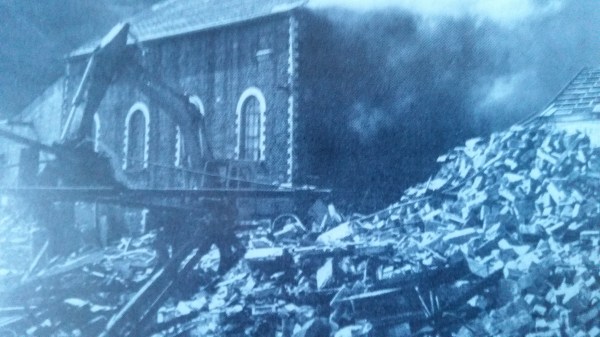
Image supplied by Nigel Jarrett

Live At Her Majesty’s – Jess Doyle

Jimmy’s face ached. They’d both laughed from the moment Tommy Cooper had appeared on the TV screen. Jimmy and his Mum with her convulsive cackles. Him fingering his toy revolver and her with a machine gun laugh. He loved that about her, how laughter would erupt from her in great juttering explosions.

Trick after trick failed for Tommy as always and the audience loved it. His futile fumbling with a set of magic rings had the audience howling. There was a small explosion amongst his props. Jimmy’s mum actually yelped.

‘Alright, who-did-it?’ Cooper asked in his rough comical bark. Jimmy had to wipe away a tear and cradle his aching belly. A blond assistant approached Cooper and helped him into a long red gown. It was the same red as his fez, the same red as the curtain behind him. For a moment Cooper merged with the curtain and Jimmy found he was staring at a sea of showbiz red. He blinked it away.

The plastic gun was still in Jimmy’s hand. His mum crowed like a semi-automatic. Jimmy raised the revolver and aimed at Tommy Cooper. He pulled the trigger. There was a hollow click. Cooper jolted. For a second he seemed to steady himself. Then he fell. He fell back against the red curtain and slumped into a seated position on the floor. The assistant threw an amused smile over her shoulder as she walked away. The audience howled with laughter. Jimmy’s mum cackled and the sound suddenly made him shudder. He gawked at the television, at the huge man slumped against the red curtain and he glanced at the gun in his hand.

Then the words ‘Live at her Majesty’s’ appeared on the screen as the red curtain was pulled around Tommy Cooper. Normality and adverts. Jimmy’s mum struggled to calm herself although she was still grinning broadly and giggling to herself as she walked into the kitchen to put the kettle on.

Jimmy stared at the gun. The gleeful ache inside him had turned to something else. Something icy and rigid. He turned the revolver over and over, saying to himself ‘I didn’t do that. Did I?’


JESS DOYLE is a writer from North Wales. Her stories have been published by Idle Ink, Bone and Ink Press, Hypnopomp magazine and Horror Scribes, she is a Zeroflash winner and has stories forthcoming in Coffin Bell. You can find Jess on Twitter as @jcdoyley

Image via Pixabay

Cat & Mouse – Mari Maxwell

They’d met at the O’Hara party. Over the leftovers. He nibbling delicately on the cheese plate. She, languidly enjoying the creamy salmon mousse.

They went everywhere together. Sometimes when the lights were doused, the two would snuggle by the dying fire, chatting and whispering until dawn.

It could have been forever, Raoul thought. Instead, he’d found her matted coat on his evening stroll.

“Masie,” he’d whispered.

Silence. Not a heave of a breath. Masie stared, uncomprehending, and her beautiful black and white fur couldn’t hide the crushed head.

It wasn’t supposed to be.

But it was.

A ten pin strike.


MARI MAXWELL’s work is forthcoming in the 2019 ROPES Literary Journal. In 2018 she read at the Strokestown International Poetry Festival; and, Irish Writers Centre International Women’s Day. Publications include: Irish Times, Bosom Pals [Doire Press] and Veils Halos & Shackles:International Poetry on the Oppression and Empowerment of Women [Kasva Press].

Image via Pixabay

Cold Potatoes in the Wind – Steve Sibra

My father worked the pipelines
at night he drank in bars
with bare bulb lights and red plastic window shades
he never shaved
when he was sober —
used a straight blade to carve himself
into the outline of a family man

My father
tore pieces off people
I watched from a pickup window
as he beat the local butcher unconscious
in an alley behind the dry cleaners
“Who taught you to treat a cow like that?”
he raged
his fists like bloody mallets
he drove drunken spikes of shame
into the slack face of a gentle man

When I was seventeen
two cattlemen came to town
found my father teetering on a bar stool
one held his arms
the other blasting holes in his chest
point blank, with a sawed-off

Pieces of his heart lay on the bar room floor

When I heard about it
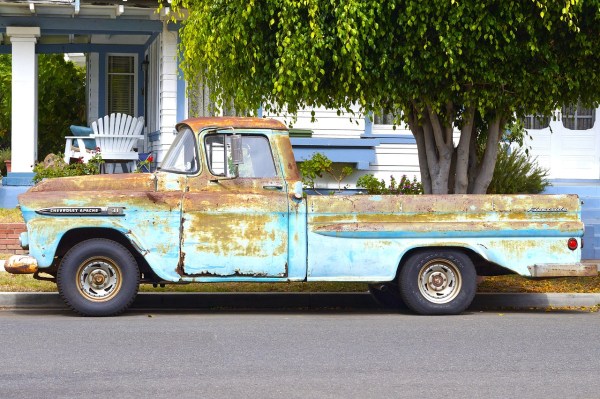
I took the old Chevy Apache half-ton
and a can of gasoline
I burned their house after midnight
heard a woman’s scream
as I drove away
period of punctuation
for a long hard sentence

I parked in front of the sheriff’s house
spread out in the back of the truck
Deputy Lester shook me awake

Now I sit in the state pen
pretending to do the paperwork
big words that tell me nothing
designed to get me out

But I don’t want “out”
I am teaching myself the guitar
I want to sit cross-legged on the floor
like John Lennon in “Norwegian Wood”
then go to the prison rooftop
eat cold potatoes in the warm summer wind
watch the sun turn the color of wine.


STEVE SIBRA grew up on a wheat farm in eastern Montana in the 1960s and 1970s. He moved to Seattle and made a living for 35 years by selling vintage comic books. His poetry and prose have appeared in various lit journals including Matador Review, Shattered Wig and Sleep Aquarium.

Image via Pixabay

Charley and Pop – Jeff Binkley

Charley and Pop lived in a fully realized world, one with every detail nice and sorted, from the smell of a spring morning to the wood grain of their dining table. This was a literary world you see, a world where everything meant something and nothing amounted to anything at all.

You might say Charley and Pop lived in a dream and that wouldn’t be too far from the truth. Dreams seem so real, so vivid in the moment. There’s a magnetism about them that pulls us close, hints at something of incredible importance, then leaves us cold in the dim morning light. No meaning, no theme, just abrupt reality.

Quite a few have had a go at explaining dreams, or literature, or life, but mostly they’re just explaining the little they know of themselves. Exclude yourself from conversation – go ahead, try it – is there anything left? Maybe you are all that exists. Maybe I am. Who’s to say?

Well, anyway, Charlotte Rosemary Perkins, who we called Charley because it was shorter, met my Pop some very specific time ago in a city that may or may not exist where you live. I’m sure it was nice there, a wonderful place to fall in love given the right setting and circumstance. Let’s say a grocery store on the frozen food aisle which is also the center aisle of the quaint non-denominational chapel just outside town. When they had said words that neither would remember later, the faceless assassin priest – because aren’t all assassins a tad bit religious somewhere deep down and probably in need of some legitimate income – spun them around and all of their friends from high school were there, weeping at the indescribable beauty of it all. This was a love like no other. This was a love you wish you had.

Those in the front rows tried to steal some of the beauty for themselves, which was a mistake as they had no place to put it. Their hands were filled with programs and tissues. Their tiny dresses and rented tuxedos had no pockets. Therefore, they made the unfortunate decision to swallow the beauty which quickly swelled until they burst like exploding cantaloupe and honeydew melons. Charley and Pop were showered with melon fragments as they left the chapel. It’s strange, but only if you say it out loud. Most anything can happen on a piece of paper.

Real life set in shortly after the wedding as it often does. Charley and Pop decided to delay their honeymoon because the country was in crisis, the likes of which had never been seen before. This especially took a toll on Pop who, having been the oldest of eight children, had hoped to have a large family of his own. Now he wondered, in that translucent mind of his, whether this was a world he wanted to bring children into. Thus the conflict was simultaneously external and internal.

Everything everywhere was out of balance with everything else – sun and moon, night and day, good and evil, supply and demand. As a result, news and media outlets grew rich off the peoples’ insatiable thirst for things to complain about at their meaningless jobs painting road signs for places that had never existed. There was even a news story about the complaining painters, which obviously painted them in a bad light and gave them even more to complain about. Pop saw the story, which only made him sad. Pop’s pop had died in a tragic backstorical painting accident, a memory that caused him endless trauma and probably foreshadowed thematic content throughout the entirety of the fictional re-telling of this real man’s life.

Pop took up woodworking to take his mind off things, though he mostly liked to buy supplies and materials that never really added up to anything. In the garage at Charley and Pop’s house are boxes of nails, screws, hinges, clamps, and most anything that could be used to put pieces of wood together in an interesting or utilitarian way. Next to that is the wood collection. Redwood, rosewood, cedar, ash, alder, maple, walnut, cherry, olive, buckeye burl, amboyna burl, sitka spruce, red oak, and pine. A whole lot of stuff that added up to nothing.

The one piece Pop did finish was the dining table. Pop made the table top from an improbably large slab of walnut burl, the base from solid rosewood, and he unfurled the finished product at he and Charley’s first or third anniversary. It had to be one of the two, because it was undoubtedly early on in their marriage and every even year they seemed to be financially strained so that they skipped grand gestures in favor of a night in with pizza rolls and old movies.

I may be burly and flatly utilitarian, he had said as he slapped the table top, but Charley Rose, you’re the base that keeps me afloat.

The words dissolved in tears of happiness, later in tears of pain, as well as future glasses of sweet tea, coffee, water, and cherry soda once the kids came along.

Kids, yep. Pop resolved his inner turmoil via a series of inner monologues prompted by observations of the world around him. People were like parking lots. Traffic lights were temporary. Grass was the hair on the head of the earth. Penguins.

Charley, meanwhile, wanted a say in the matter because women are people not property and like to be consulted regarding matters of carrying heavy objects around for nine months straight. She was working a fulfilling, yet underpaid, position on the city board of decisions where she impacted the lives of most everyone and could never be sufficiently replaced. Could she, in good conscience, choose the life of her own hypothetical child over the lives of the everyone in existence?

Oh, easily. Yes, especially Bob Chatway.

Her prized moment, one that she carried with her always in the recesses of her rosewood heart, was her refutation of that ridiculous Bob Chatway and his notion to implement a technology based downloadable note system which would directly deposit knowledge into the minds of the committee, thus saving on paper. Charley had cleverly argued that a thing does not exist unless it exists. Bob Chatway could not deny the logic. Therefore, Charley continued, thought, consciousness, and creativity do not exist. We are all at the whims of some writer somewhere and writers need paper.

Bob Chatway and his silly dalliances were summarily dismissed as fictional science, a fantasy of the worst kind. Before he slunk off in shame, Charley took a mental snapshot of the room. Black leather wheely chairs, thin gray carpet, knock-off abstract drip paintings on the walls, fluorescent lighting that imbued Bob Chatway’s face with an appropriately seasick pallor. There was no room for make believe in a world as firm and grounded as this.

Charley took a victory sip from her stainless steel coffee tumbler. The locally roasted South American blend was smooth. It reminded her of Guatemala and a man she had once known, maybe even loved, named Ernesto Chavez. She had been so young then, her hair so long, flowing down her back in lustrous flaxen waves. As she ran behind Ernesto in the Guatemalan fields, Bob Chatway slammed the door shut behind him. The door was walnut. Charley instantly thought of her husband waiting for her at home, burly and full of grain. That was Pop. He loved bread and no one made bread better than his daughter Jelly Bean Jean. She was round and sweet and died many times in different ways throughout her lifetime.

Jelly Bean first died when she was two and ate most of Charley’s beauty products. If memory serves, the ones tested on animals were especially cruel, as were the fluorocarbons, the ground mammoth tusk, powdered horse hoof, and purified medical waste.

I believe this is the moment Charley set aside her disbelief and began to make room for the supernatural. Now it was personal, emotional. Now it affected her precious little Jelly Bean. How could she condemn Jelly Bean Jean to die over mistakes she had made?

Pop concurred and together they decided to bring Jelly Bean back to life. Turns out it wasn’t all that difficult. A flick of the wrist, a turn of the pen. She died again a year later when a strain of virulent, unvaccinated flu made the rounds.

Jelly Bean eventually reached the age of adolescent agency, in which she was allowed to think and act and make mistakes all her own, injecting Charley and Pop’s lives with brand new batches of yet unmined conflict. But somewhere along the line, Jelly Bean learned to bake bread which mostly made up for the difficulties of raising a daughter who dies often and insists on making decisions.

Charley and Pop lived through it all, learning lessons sometimes, but mostly describing the details of their surroundings. Plywood bookshelves lined the walls of the living room and sagged in the middle as if the books themselves were the only things staving off collapse. A brown leather belt with newly cut holes toward the end lay on top of one of the bookshelves. Dust and cobwebs collected in corners of a living room that has only been written about and never lived in.

And then, one Thursday, Jelly Bean grew up. She moved to Paris at twenty, London at twenty-six. Of course Charley and Pop followed, worried that Jelly Bean would never survive without them. True or not, they enjoyed the time together, soaking up all that Europe had to offer. They also met Sir Lawrence Dashwood of Kirtlington, who proposed to Jelly Bean a month later.

The happy couple married and the following year, Jelly Bean Jean Dashwood had her first child – me. I don’t recall Charley’s reaction, but I know that Pop hoisted me up and tossed me like a pizza dough. He laughed like a giant of a man, then set me down, kissed my wrinkly forehead, and walked away. The room was mortified, but I knew then that I’d turn out just fine. After all, the secret ingredient in any decent pizza is a well executed hand-toss.

It is indeed a magical life. I have known these characters through many lives, good lives that I’d like to explore in further detail. But now I am much too tired to continue so I’m off to bed.

*      *      *

Mom,

You asked for my thoughts, so here goes. You’re a good writer, I guess, but I have no idea what I just read. I mean, stories are supposed to have a point, right? What was the point of all that? Why write about the family if you’re going to jumble it all up? It was all backwards and hardly anything in there was true. Can I just say, for starters, I wish you wouldn’t call me Jelly Bean, at least not in public. I’m twenty-six now, and certainly not “round and sweet.” Also, I never died. Also also, Charley and Pop are my cats, so … I don’t know, I wonder sometimes. And I know you like Kirt, I like him too, but going to Duke doesn’t make someone a duke, and I’d really appreciate it if you slowed down on the whole marriage and kids fantasy. About London, I was thinking maybe me and you should plan a trip soon. How does that sound? We’ve both wanted to go since forever. I’ll look into it and let you know what I find out at Second Sunday Dinner. And yes, I got the hint. I’ll bake some bread. Okay, see you soon. Thanks for the strange story, I guess.

Love,

JB

P.S. – I’m glad you decided to have me, you know, in the beginning, even though you guys had some doubts.

P.P.S. – I miss Dad, too.


JEFF BINKLEY is a musician, educator, and author from Huntsville, AL. He enjoys time alone to think and pursue creative projects, but not as much as he enjoys a good cup of coffee with his wife, Amy.
Image via Pixabay

Create a website or blog at WordPress.com

Up ↑