Temptation No 3: Sunrise – Amanda Oosthuizen

A bar of shots on a good
night out, a little dizzy and swaying.
I found you, sunrise, by mistake.
The barricades and dock machinery
winding up. Two dozen squealing
sparrows, a barbecue blown hot
and untended still with onion and
cumin on the east side of the breeze, but
there you are, a horror of purple sky-
lights on thunderclouds, of missed
beginnings, a symphony orchestra
in a glasshouse, all clink, clash and bustle
when the time’s not right.

But still you’re there, sunrise,
waiting,
like quietness and
disaster. It was a mistake,

be sure of that. I didn’t turn up
for comfort or lush exhibitions.
So don’t give me those rubies drenched
in sea water, dolly-blushed cliffs, querulous
dogs and burnished cupid wing tips. Slim
pickings for night blinders. That’s not
where I want to be.


Contents Drawer Link

Amanda Oosthuizen’s stories and poems have been published online, in print, in galleries, in Winchester Cathedral and pasted up on the London Underground. Recent successes include the Winchester Poetry Prize and The Pre-Raphaelite Society’s poetry competition. Work is forthcoming in Cosmonauts Avenue, Prelude, Storgy, Riggwelter, Ellipsis and Under the Radar. She has an MA with distinction in Creative Writing from the University of Chichester where she was joint winner of the Kate Betts Prize; she earns her living by writing and arranging music and teaching woodwind.


Image: jagga via pixabay

The Value of x in Five Lessons – M M Bedloe

Chapter 10: The Real Number Plane – Pythagoras’ Rule

LESSON 1

Exercise 10A

Find the length of the hypotenuse.

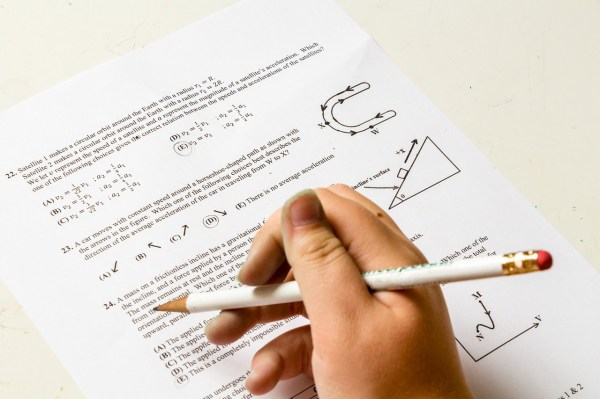
The only thing I understood in year 10 Mathematics was angles.

I liked words like ‘hypotenuse’ and I could at least understand straight lines. I was good at figuring out what was contained in the corners of things, and I enjoyed the delicate diagrams of triangles in the pages of my textbook. Graceful, neat, named and labeled, with recipes of italic x and π to explain what those empty spaces actually were. Not triangles at all, but an arcane code that held the key to things I would never use or need.

How many afternoons did I spend in that airless room, adding up the sides of shapes to reveal the value of x?

Mystical, mythical x.

The quest for x, the quest for meaning.

Was the value of x equal to the value of my time? Was it equal to the use of my 15-year old, dreamy mind? Was it equal to all the things I might have done, if I was not compelled to sit in a room with all those triangles and dead eyed girls, all hunting for the value of x?

I haven’t seen those girls in 30 years.

Some of them are dead now.


LESSON 2

Exercise 10B

Solve the following:

(Car + car) x collision = (Lily x 0)

Cancer + late diagnosis = Anna–9999999999

All those girls. The ones who have survived are lost to age and time now.

A couple of years ago, someone sent me a 30-year reunion photo and I didn’t recognise a single person. Those baby faces, so transformed by the heaviness of years and bad frights and too much cake and wine that the girl they once represented has disappeared.

What would we have done at 15 if we had known that, at 50, we would be dead, or too big to fit in a plane seat, or that we’d be living alone with the memory of lost husbands and children, or walking through life like a shadow? And what of the girl who liked triangles? Who sat smiling and afraid, trying to get the sums right? Who looked out the window and dreamed, and tasted the life to come, even in the stale air of that maths room. What became of her? Well, here she is, right here. Still convinced of her youth, of her oyster, gleaming and open before her. She is still figuring out what she wants to do and what she wants to be, even as she launches her own children into their lives, sees their dreams rushing to meet them.

She is still dreaming of wonders and adventures and the great, gleaming, opening flower of the world. Of the life that will be so unlike the one she lived then, that she will barely believe it could belong to the same person.

She dreams this each day, as she orders and accounts for all the angles and spaces of her life.


LESSON 3

Exercise 10C

Assess your progress in this unit:

Are you meeting expectations?

Rate your understanding.

I’m still stuck in a maths room, most days. Trying to figure things out. Squandering my thoughts on the addition of empty spaces, learning skills and facts I will never need or want.

At school, they said my work was TOO COLOURFUL.

They said my writing was TOO MESSY.

They said I HAD POTENTIAL (but that I had NOT QUITE ACHIEVED EXPECTATIONS).

I still have all the reports. Yellow covers, neat teacher writing inside.

That year, I got in trouble. It was the kind of trouble that ends with you waiting outside the Principal’s office, while your mother is on her way. I had written a series of lurid short stories and circulated them to my friends. The nuns did not approve. Nor did they believe that the events of my stories were fiction. Not being believed: a valuable life lesson.

The Sister was starched and clean. Soft, white hands, kneading knuckles. I was thin and pale, with a mind of my own, somewhere beneath all the fear.

My mother was sweaty, but upright.

I was a moral danger. I should consider seeking other opportunities for myself. My mother agreed, lips pursed thin as we walked home, outraged at the arrogance of that old bitch and her slight against my character.

I wrote no more stories that year. I won my freedom. On the last day, my art teacher tried to kiss my neck. My friend took a photo of us. I still have it; his dark smirk, my sparkling anger.

I understood, then.


LESSON 4

Exercise 10C

True or false:

1. Some classes should be skipped.

2. Some books may be defaced.

3. Some lessons must be failed.

I think now of that compliant, frightened girl in the maths room, and I want to shout at her through the stale summer air.

True!

True!

True!


LESSON 5

I try quite hard to not believe in time, even though it walks by my door every day, nodding at me, carrying the bodies of my friends, my parents, my heroes. I nod back and get on with my day, turn the music up louder, keep trying to find the value of x.

Exercise 10D

Answer the following:

Q: There’s still time?

A. There’s still time.


Contents Drawer Link

mm bedloe lives on the south east coast of Tasmania. Her short fiction and poetry have been published in literary journals and anthologies and she is elbow deep in drafts of her first two novels, respectively entitled Bridge and Almond. By day, she edits things and writes copy for money.


Image: tjevans via pixabay

The Story of How We Came To Live At The South Pole – Danny Beusch

The breakthrough came a year after the screaming began.
‘I know this will sound strange but bear with us. We think your son is allergic to birds.’
‘Feathers?’
‘No. Song.’

*      *      *

The room was square, sterile.
‘We’ve got a file of every British bird call. We’ll start with A and work our way through. Some might not bother him. Or bother him less. It could be useful to know.’
They stopped at blackbird because he was retching and his fingernails had drawn blood. A wet patch spread from his crotch down his legs. He stank of shit.

*      *      *

We rented a flat in the city, hoping that the cars and the trains and the factories and the clubs would drown out the racket. A day later and he’d scratched through his bedroom wallpaper. Our landlord kept the deposit.

*      *      *

They tried headphones that blocked out background noise. They tried ear plugs that blocked out all noise. Nothing worked.
‘We’ve controlled for temperature, air pressure, daylight, oxygen, humidity, microbes, pollen. We’re 100% sure it’s birds.’
‘But how? He can’t even hear them.’
‘We think it’s reacting with his skin.’

*      *      *

One of them was a mother.
‘How far would you go for your son?’ she said.
‘To the ends of the earth.’
‘I’ll see what I can do.’

*      *      *

The two of us share a room. The whole research station shares one kitchen. The team of scientists forget to share their progress. I doubt I will ever share my bed again.
The bags have gone from under his eyes and the scratch marks have faded. He eats three meals a day, and keeps them down. His hair has grown back.
There are no birds here. There is no life here. I tickle his tummy to convince myself that he is happy.


Contents Drawer Link

Danny Beusch (@OhDannyBoyShhh) lives in the UK and tells stories. He spends rainy days reading Joanne Harris and Margaret Atwood novels. He started writing flash fiction in 2017


Image: Jill Wellington via pixabay

The Sky, And Its Victims – Claire Storr

I’m not made of the correct fabric like everyone else. Like a Paper Mache lantern under a hot tap, bound for collapse, wilting at any breeze.

I hate your new moustache. It makes you look like a 1940s British general. Something Second World War-ish. “Tally ho master!” I say, with it pronounced ‘Mahhhstaah’, elongating the edges of the word while you look at me, expressionless.

Later that night, someone posts a picture on Facebook of a victim of a napalm attack, and before I can look away I see their arms and legs are long, red twigs of gore. I shake all night with the image burned into me, the phone was flung across the room as you tightly gripped my breech-baby form. You said: tremble and I’ll make you stable, the ripples will flatten out, eventually.

This was the way that it began.


Contents Drawer Link

Claire Storr is a 33 year old writer from Cumbria. After completing an MA in Photography in 2008, she worked as an editorial photographer for the likes of Faber and Faber and Macmillan alongside having exhibitions and writing poetry and prose in her spare time. Since then she has progressed into writing full time and has been published in various anthologies, magazines and newspapers. In 2018, she published a collection of short stories focusing on female characters living in Ireland called Tides. She lives with her husband and daughter in Carlisle, Cumbria.


Image: tookapic via pixabay

Pond Greetings (three poems) – Benjamin Niespodziany

Greetings

Corporate bought the man
a greeting card but forgot
what for, the whole office unsure
if it was cancer or a wedding
or a divorce or a local family
member beheading, so the card
featured a simple flower on the front
while the inside read,
“Congratulations, we’re sorry,
thank you for everything.”
When the man arrived at work
ten minutes early on Monday morning
he read the card a few times
and wept quietly at his desk,
his shoulders muted jackhammers.
The card now hangs on his mantel
next to photos of his newborn
and an assortment of strongly
scented candles. His wife’s favorite.


My Head Pond

I develop an X-Ray
that captures ghosts and point
it at my skull, tell my doctor
to clear my head of the dead residents
living within my ears. My doctor tells me
I am the first person to have him
question god. Everything feels
off, like eating a salad with a spoon.
I jump into the pool and realize
it’s my neighborhood pond, the one
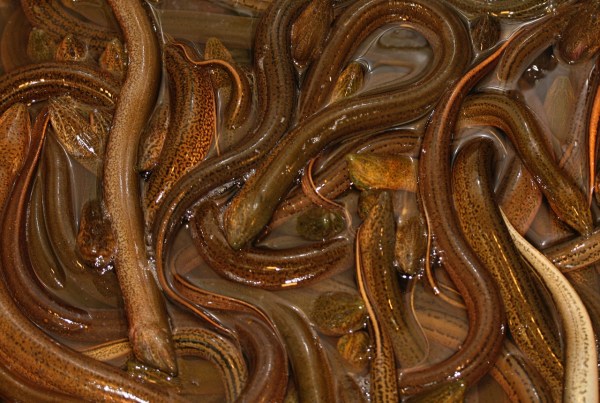
full of eels. No one says
anything. Everyone’s busy
driving their children
to soccer and ballet.


Charged Coffee

The lunchtime train smells
like purse dust. I cough
during dinner. Your father
never forgives me.
I take a needle to my neck; no more
rabies. Foaming isn’t an option.
I’m fine, but who put the medicine
man in charge? He’s decapitating everyone.


Contents Drawer Link

Benjamin Niespodziany is a night librarian at the University of Chicago. He runs the multimedia art blog [neonpajamas] and has had work published in Ghost City Press, Occulum, formercactus, Five2One, and a batch of others.


Image: redkite via pixabay

Ring Around It – Katarina Boudreaux

At the beginning,
we were looking
for what completed us.

At the end,
we were sure
we had found it.

We didn’t realize
it would start
another time.


Cabinet Of Heed footer logo

KATARINA BOUDREAUX is a New Orleans based author, musician, dancer, and teacher. Her novel “Platform Dwellers” is available from Owl Hollow Press. “Alexithymia” is available from Finishing Line Press and “Anatomy Lessons” from Flutter Press.


Image: Peter Lomas via Pixabay


Holding Onto Her – Jack Somers

I met Donna at the pharmacy. It was an hour before closing, and she was the only pharmacist on duty. She handed me my little orange bottle of citalopram, and asked me if I had any questions about my medication.

“I’m supposed to take it with wine, right?” I said. I don’t know why I said it. Maybe it was because she looked tired, and I wanted to see if I could liven her up.

She laughed like church bells, deep and resonant with just a shade of solemnity.

“Whiskey,” she said.

That’s when I knew I had to hold onto her.

It’s a strange thing starting a relationship with the girl who hands you your brain meds. She knows right from the get-go that you’re fucked in the head. It’s kind of freeing in a way. You don’t have to waste energy pretending to be normal.

I made a joke about this on our first date. We were at this hole-in-the-wall Italian place with the cliché red and white checked tablecloths.

“So you like anxious guys?” I said.

“Everybody’s got issues,” she said.

“I have panic attacks. Sometimes twice a week.” I thought she should know what she was getting into.

“That doesn’t scare me.”

It didn’t. I had an attack two days later, and she came over. She held me on the couch, and we watched This Old House. It was nice lying there, intertwined, her breath, warm and regular on the back of my neck. I tried to match my breathing to hers, to soften my exhalations, to mimic her composure.

In the episode we were watching, a demolition crew was tearing out a built-in bookcase ravaged by carpenter ants.

“When I was seven,” said Donna, “we discovered termites in our basement. They had eaten through one of the main support beams of the house. The beam was like papier-mâché. I remember my dad poked his finger right into it. My mom asked our contractor if it was fixable, and he told her it would be tough. They’d have to build a temporary wall, remove the steel supports, take out the damaged beam and slide in a new one. But it was fixable. Everything was fixable, he said.”

She hugged me, and I felt her heart against my back—a steady, patient pulse.

The following Monday, I drove Donna to the hospital. They had her biopsy results. She could have driven herself, but she didn’t want to be alone. Like me, she didn’t have anybody else. I steered with my left hand and held onto her with my right. We didn’t talk about it. We talked about our favorite Weezer songs, Sylvia Plath, how much we hated high school—anything but it.

In the waiting room, we were silent. The air was too thick to talk. Donna held my hand so tight it hurt, but I didn’t mind. In the end, that’s what other people are for. They’re for holding onto.


Cabinet Of Heed footer logo

JACK SOMERS’ work has appeared in WhiskeyPaper, Jellyfish Review, Formercactus, The Molotov Cocktail, and a number of other publications. He lives in Cleveland with his wife and their three children. You can find him on Twitter @jsomers530 or visit him at http://www.jacksomerswriter.com.


Image: Min An via Pexels


Posterity, Here I Come – Michael Bloor

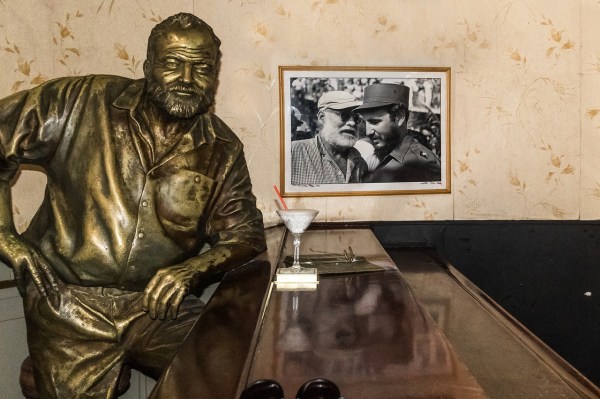
I remember it as a night of joy that zigzagged into a night of dolorous catastrophe. Scott and Zelda and I were drinking in our favourite café in Montmartre. The trouble began when Hemingway arrived. He was already drunk and insisted that we all drink repeated rounds of a murderous cocktail of his own devising, called The One-Legged Irishman. When I demurred, he called me a snivelling little faggot and threw a punch at me. I ducked and he accidentally hit Scott, who merely looked surprised and continued with his complaint:

‘I know the theme of the book I want to write – it’s the story of a good man, a generous man, who harbours a noble ambition; he has a high aim, but one that is within his powers. Yet his very generosity, his very goodness, trips him up – tangles him with duties and responsibilities, so that he fails. And he knows that he fails. I have the theme. I know it forwards and backwards, but I can’t locate it in a suitable context. Is it a novel about a great artist? A holy man – maybe a monk or a wandering sage? A lone scientist? A political visionary?’

I felt I could help. I knew my small talent would only equip me to turn out waspish magazine stories about lovelorn rubber planters. But Scott was a beautiful man with a soaring gifts: it would be a privilege to be his helpmeet in a small way. I said: ‘What about the story of the Prince Imperial? Do you know it – the brilliant young man, known to the Bonapartists as Napoleon IV? He threw away his life almost before it had begun, slaughtered by Zulus in a reckless and obscure action in Britain’s Zulu War in the 1870s.’

Zelda smiled her enigmatic smile. Scott looked interested. But as he started to reply, Hemingway broke in: ‘Hell, I’m so tired of your “brilliant young men”. Seen quite enough brilliant young men slaughtered.’ This wasn’t just a dig at my sexual preferences, it was also a dig at Scott, who hadn’t seen active service in the war. Hemingway continued: ‘Here’s a context for you. How about an heroic hunt for a Great White Whale?’

Zelda giggled and Scott, already a bit befuddled by drink, was slow but hearty in his laughter. He slapped Hemingway on the shoulder and called for another round of One-Legged Irishmen. While we waited for the barman, Zelda poured the rest of her drink into Scott’s glass. The Prince Imperial was forgotten.

Scott mused: ‘Someone told me that Hawthorne dreamt the character of Captain Ahab. Very odd. I just dream of real characters, like you or Zelda’ (he was addressing Hemingway – I was forgotten along with the Prince Imperial) ‘the only strangers who appear – burglars, Arabs, shop-keepers, or whatever – are just cardboard cut-outs, with no depth of character at all.’

I pitched in: ‘Can anyone tell me why it is that the great parade of relatives, friends and acquaintances that appear in our dreams always – ALWAYS – behave in character? They never ever do anything unusual or preposterous. I remember dreaming about my mother one time and…’

Hemingway: ‘Gonna tell me about these Arab strangers in your dreams, Scott? Where the Hell did they shine in? I shot at an Arab once.’

Zelda and Scott together: ‘You shot an Arab??’

‘Naw. I missed.’ Hemingway chortled, downed his new One-Legged Irishmen and called for another round: ‘And put more whiskey in it this time!’

Hemingway wasn’t so drunk that he hadn’t realised that it was my turn to buy the round. His calling for the round was simply another calculated insult, a feigned failure to register my presence. And yet, and yet… I doubted if I had sufficient francs on me to pay for all these exotic drinks. Angry and confused, I excused myself (only Zelda noticed) and headed for the pissoir.

I stood at the urinal and tried to clear my head. The evening which had shone like a winter star was now dark as pitch. Should I cut my losses and head back to my frowsty rooms? I had seen Hemingway in these cruel moods before: they dragged on for hours and hours until everyone found themselves in the same drunken ditch. But I couldn’t bear to leave the ineffably beautiful couple: I plunged back into the café.

Hemingway squinted up at me: ‘Ah, there you are. Did you meet anyone nice in there?’

I must have been drunker than I realised. I picked up one of my untouched One-Legged Irishmen and flung it in Hemingway’s face. Was it his filthy jibe, or Scott’s smile, that goaded, or shamed me, over the edge? Hemingway growled and rose. I shouted: ‘You bastard! It’s a duel now. I challenge you to a duel.’

Scott had a trick of instantly sobering up, and he was immediately on his feet quelling the uproar in the café and dispensing francs and soothing words. As he ushered the three of us out onto the street, he whispered to me: ‘You crazy English rooster, he’s a crack shot. But he won’t hold you to this when he’s sober – leave it to me.’

I was drunk on his regard: ‘Damn it. HE can play chicken if he wants to. As for me, I’m ready to shoot the bastard any day, any time.’ Scott gave me a long, silent stare, a quick smile and a nod. He gave my address to the waiting taxi, told me that he’d call on me tomorrow, and turned his attention to Zelda who was sobbing in the shadows.

As the taxi pulled away, I slumped back into the seat and simultaneously fell out of my mood of hysterical bravado. I spent the rest of the night pacing up and down my room.

When Scott eventually turned up, just before noon, he was tired but kind. I’d been half-expecting him to be carrying a pair of duelling pistols for my inspection. Instead, he told me right away that he’d just come from Hemingway’s place, that Hemingway evidently had no recollection of my challenge. Of course, neither Scott nor Zelda were about to remind him.

Scott paused, and to my horror, I felt my eyes wet with stinging tears. I found myself steered outside to a pavement café and Scott ordered two brandies. I started to stumble through an apology, but Scott cut me short: ‘Hell, no. It was a brave thing you did last night.’ He smiled and was soon gone.

A couple of days later, I was called back to Sussex by my mother’s illness. I never saw Scott and Zelda again, as they soon returned to the States. When ‘The Great Gatsby’ came out, it was largely ignored by critics and public alike. A blow for Scott, who needed money for Zelda’s hospital treatments – after her breakdown, that is. There was then a long delay before his next novel. He was working for MGM studios, churning out film scripts for the regular salary cheque.

And then came ‘Tender is the Night’. Right from the first pages, I knew this was the one where he was shedding blood. This was the great novel of lost hopes that he’d spoken of in the café that night. He’d found the context for his great theme: the context was his own thinly-disguised life. I loved it; the public ignored it (who knows why? perhaps because The Jazz Age of The Twenties was gone and it was the time of The Great Depression).

Reading on and revelling in his poet’s prose, I was unprepared for a great shock. I was at the point in the tale of the Riviera house-party, the night when the lives of Dick and Nicole Diver – the golden couple – start to unravel. One of the more noxious guests, Violet McKisco, stumbles on evidence of Nicole’s mental fragility. As she rushes to share this gossip with her fellow-guests, she is rudely silenced by the taciturn soldier, Tommy Braban. Out of the late-night confusion that follows, it emerges that Violet’s husband, a minor writer, and Braban have engaged to fight… a duel!

The minor writer, McKisco, wasn’t an attractive character, yet the novel tells us that he shows some ‘spunk’ in his determination to go ahead with the duel against an opponent who is an expert shot. McKisco’s unexpected courage redeems him in the eyes of the party-goers, and probably in his own eyes as well.

I read and re-read the passage: I had helped Scott after all. That drunken spat in the café, all those years ago, had given Scott an inkling of how to signal the start of the disintegration of the lives of the golden couple, of how to mark a pivotal point in the story. Long after my slight tales of rubber planters will have dwindled to mere ‘period’ curiosities, I will live on as a kind of fugitive muse for one of the very greatest novels of the twentieth century. That’s my view of it anyway: posterity, here I come.


Cabinet Of Heed footer logo

MICHAEL BLOOR is a retired sociologist living in Dunblane, Scotland, who discovered the exhilarations of short fiction. His most recent publications are in Ink Sweat & Tears, Scribble, Dodging the Rain, Everyday Fiction, The Drabble, and The Cabinet Of Heed.


Image: Anne & Saturnino Miranda via Pixabay


Fused or Fallen Host – Jen Rouse

I genuflect to anguish,
taking it on my tongue until
it becomes
me. The amber
chalice at these lips.
I am the poet I
am not the most important
voice
here. Your voice
drifts in
and out of
my hours.
I have driven
so far for
forgiveness, and
I have met the horizon
in your hands.
These are the indiscretions
the living allow,
I think.
A soft throw of
your arms
around me,
your Madonna mouth
at my ear and not your fault
and my god
who hurt you
like this?

Answer: I
have watched
flesh on fire
in my childhood
bedroom.
I have read lists
of demands
on bathroom mirrors.
I see how easy
it is for us to dismiss
what doesn’t suit
us.

It matters
to me, the small
ways
we destroy
each
other.


Cabinet Of Heed footer logo

JEN ROUSE’s poems have appeared in Poetry, Bone & Ink Press, Wicked Alice, Southern Florida Poetry Journal, and elsewhere. She was named a finalist for the Mississippi Review 2018 Prize Issue. Rouse’s chapbook, Acid and Tender, was published in 2016 by Headmistress Press. Find her on Twitter @jrouse.


Image: David Eucaristía via Pixabay


Dead and Gone – David Cook

He clasped her ghastly, pallid cheeks between his rotting brown fingers, peered into her eyes – or, rather, her one eye and the socket where the other one should have been – and said, ‘Braaaains’.

When you only have a single word vocabulary, clear communication relies on inflection and emphasis. Depending on how you say it, ‘braaaains’ can convey a myriad of meanings to zombies, from ‘Isn’t the weather nice today?’ to ‘oh dear, my big toe has fallen off.’ The slight rise in intonation on the fourth ‘a’ here meant, Sharon knew, that Barry was saying, ‘I love you.’

‘Braaaains,’ she replied, snuggling her desiccating nose into the extremely hollow hollow of his cheek. This meant, of course, ‘I love you too.’

Barry and Sharon lived, or rather ‘unlived’, in an old graveyard at the back of a church. They occupied a prime spot in the corner, behind the oversized tomb of a former chief constable of the parish, where the wind and rain didn’t bother them much.

As you probably know, legend has it that if a zombie eats your brains then you become a zombie too, but actually that’s only true if the entire brain is consumed. If, say, a few ounces of parietal lobe are left lying around for the rats, the dead person doesn’t turn into a zombie and simply remains a present for maggots. That’s not common knowledge among the living, but it’s something your average undead person knows instinctively. For decades they’d survived by consuming only ninety percent of their victims’ minds. More zombies would lead to complications, Barry had told Sharon. (Well, he’d said ‘braaaains’, but he’d coupled it with a series of surprisingly adept mimes.) The humans would notice, he’d insisted, and it would make them more likely to be captured. For her part, she sometimes looked at the rusting wrought iron of the cemetery gates and somewhere in the fug of her zombie mind images of what had been before, and what could be in future if she only ventured outside, flickered into view, then subsided. Then she’d catch Barry watching her and try to forget about it.

But then, one year, came a blizzard. Snow landscaped its way over the graveyard, burying the headstones in white. No-one came to mourn their loved ones that winter, for why would you go out to visit your old Grandpa’s grave when it was chilly outside and you could stay in with Netflix and a hot chocolate? Sharon and Barry huddled together behind the tomb, not really feeling the cold – zombies don’t – but becoming more and more ravenous as the hours and days ticked by. They fed on the odd mouse here and there, but that didn’t really cut it. Their rodent brains were so small that the zombies couldn’t help but scoff the lot, and now there were undead mice running all over the place.

‘Braaaains,’ said Sharon, mournfully.

‘Braaaains,’ agreed Barry.

Then one day the clouds parted a crack, the sun slid weakly through and the first mourner came, a young woman, who trudged through the drifts and hunkered down next to a headstone, brushing the already-melting snow from it.

‘Braaaains!’ squealed Sharon, and before Barry could stop her, she was off, shuffling at top speed towards her target, who didn’t see the danger until the zombie was almost on top of her. There was an almighty scream and it was over, just like that. And every last bit of the brain had disappeared down Sharon’s throat.

Barry dragged the corpse back to his and Sharon’s patch. ‘Braaaains,’ he snapped at her. Sharon kept her eyes on the floor as she followed behind, brain juice dribbling down her chin.

*      *      *

Six months later, Barry and the new zombie – Jade, according to the driving licence they’d found in her purse – were stuffing the contents of an unfortunate old lady’s skull into their decaying mouths, eyes locked together and fingers almost touching.

‘Braaaains,’ smiled Barry.

‘Braaaains,’ giggled Jade, reaching forward to wipe a cerebral cortex smear away from what remained of Barry’s upper lip. Sharon watched this from a distance. Jade still had her long blonde hair, while Sharon’s was coming out in clumps. Jade had both her eyes. Sharon didn’t. Only the tip of one of Jade’s fingers had rotted away, while Sharon’s hands played host to a collection of brown stumps. And Jade didn’t have maggots wriggling under the skin of her forehead. It was hardly a contest really, but Sharon still had her pride. She pulled herself to her feet and approached the giggling, greying lovebirds, who hurriedly yanked their hands apart.

‘Braaaains,’ she scowled, pointing at Jade.

‘Braaaains?’

‘Braaaains.’

‘Braaaains!’ screeched Jade.

‘Braaaains!’ shouted Sharon.

‘Braaaains,’ said Barry, making a ‘calm down’ motion.

‘Braaaains,’ grinned Jade, grabbing Barry’s hand. One of his fingers fell off, but that didn’t seem to bother her.

He didn’t let go.

‘Braaaains?’ said Sharon, her bottom lip trembling. Thankfully, it stayed attached.

‘Braaaains,’ he replied, shrugging.

‘Braaaains,’ she whispered, turning her back and walking away.

‘Braaa-ains!’ hollered Jade as she left. Sharon stopped, stiffened, then sagged and disappeared behind the trees.

*      *      *

Sharon was lonely at first, living by herself on the other side of the graveyard behind a trio of dilapidated headstones. She ate on her own. She went for walks on her own. When her ear fell off, there was no-one there to offer a sympathetic ‘braaaains’. Occasionally she saw Barry and Jade from a distance and Jade would raise her hand to wave and grin, or at least she did until it dropped off, which was so funny Sharon coughed up one of her lungs. She shrugged. She didn’t need it any more.

But then, after a time, she stopped feeling so bad. She built herself a little shelter from branches. She watched the birds perch atop the graveyard wall and dug up some worms to feed them with. She read the inscriptions on the gravestones – slowly and hesitantly, for reading doesn’t come naturally to zombies – and imagined the lives people had led before they’d ended their days beneath her feet. She conjured up fantasies of pirates and warriors, knights and princesses, and realised that these were all things she’d never done – or even thought to do – in all her years with Barry. She’d done what he did and thought how he thought and it was only now that they were apart that her mind was becoming clearer. One day, she began to think about the outside world again. The thought of all the sights, smells and different brains out there made her quiver. Yet, when she approached the gates, a warning ‘Braaaains’ echoed in her mind and her courage shrank away.

Then, one evening, there was bellowing from the direction of the chief constable’s tomb. A angry chorus of ‘braaaains’ sliced through the air. Sharon sneaked over to the site of the disturbance and watched from a distance as Barry and Jade yelled in each other’s faces. A body lay between them. It was a young man – a very dead young man. A very dead, but extremely good-looking young man. There didn’t seem to be any bits of brain left over.

‘Braaaains,’ said Barry.

‘Braaains.’ That was Jade.

‘BRAAAINS.’

Sharon winced. That last ‘braaaains’ was zombish for a name you simply never called a lady, even someone like Jade, who responded by lashing out at Barry with the stump of her wrist, knocking the tip of his nose clean off.

‘Braaaains,’ she hissed. She grabbed hold of the corpse’s arm and dragged it away to another area of the graveyard, well away from Barry and Sharon, to await its reawakening.

There was silence. Barry looked around, then caught sight of Sharon hunkering among some weeds. ‘Braaaains,’ he said. He shrugged his shoulders and smiled, his rotten tongue squatting behind his putrid gums. He made gestures to Sharon, indicating the corner of the graveyard where she and he had lived for so many years. ‘Braaaains?’ he said again, shrugging once more.

Sharon pulled herself upright and looked at him. There was already a maggot poking out of the fresh hole at the end of his nose. There were craters in his cheeks, exposing the bone. His lips had rotted away and his left earlobe dangled loosely, threatening to fall off at any moment.

He was still handsome, no doubt about it.

But then she peered back across the graveyard, eyes resting at first on her new patch, where she’d learned to be independent. The sunshine picked its way through the branches, illuminating her shelter. Then she glanced at the gates. They were open a crack, almost inviting her over and insisting she explored what lay on the other side. Barry saw where she was looking. ‘Braaaains,’’ he said fiercely, reminding her again how dangerous it was outside. But now Sharon began to wonder exactly who it would be dangerous for.

She turned back to Barry, who stretched his grin even wider, cracking his mouth at the corners. ‘Braaaains?’ he asked again.

‘Braaaains,’ she told him, and before he had time to respond, she walked away, through the gravestones and towards the gates. He watched her pause for a moment, then slip through the crack and disappear from view.

‘Braaaains,’ whimpered Barry as the fear of being alone fell upon him. The flattening of the second ‘a’ made this mean ‘I’m sorry,’ but it was much too late for that.


Cabinet Of Heed footer logo

David Cook is not a zombie, but often feels like one in the mornings. He’s had stories featured in the National Flash Fiction Anthology, Spelk, Flash Fiction Magazine and more, and you can find his work at http://www.davewritesfiction.wordpress.com or on Twitter @davidcook100. He lives in Bridgend, Wales, with his wife and daughter, who aren’t zombies either.


Image: ulleo via Pixabay


I Killed A Spider Today – Wanda Deglane

Its tiny body crunched beneath me
like a multiple car collision.
I think of all that spider was worth,
all it had to offer to this world. All
the gnats she could have eaten
I must now swat out of my face,
all the children she could have birthed,
and all the things she could have
taught them: Stay out of sight.
Away from the humans. They don’t
listen to reason, so don’t speak.
Go to the water, to the light.
Away from the sounds. I wonder
why she broke her own rules. I think
she thought of herself as clever,
beautiful, unconquerable, and as
I survey her corpse, so do I. How
it must have felt for her once
indestructible body to explode
within her, caving in all around her,
like the whole planet was splintering
at its very seams.


Cabinet Of Heed footer logo

WANDA DEGLANE is a night-blooming desert flower from Arizona. She is the daughter of Peruvian immigrants and attends Arizona State University, pursuing a bachelor’s degree in psychology and family & human development. Her poetry has been published or forthcoming from Rust + Moth, L’Ephemere Review, and Former Cactus, among other lovely places.


Image: Sue Rickhuss via Pixabay


Preservation and Restoration – Andrew Maguire

For them, the days without rain are the longest. Dry, barren clumps of sapless bark and shrivelled earth stretch out to the graphite horizon; the air around the house is lifeless, the ground flat and overspread by an ashen and sullen sky. A day of it is bearable, but a week is tiresome and now it has been weeks on end. No water tomorrow and he may have to go find it. Take her with him and she might not survive the journey, leave her behind and she may not be alive when he gets back.

She is the leopard in the garden. He found her hidden in a bush six months ago, when the only sign of her was a slowly spreading circle of blood across the cracked ground. A wounded creature, when he helped her recover she became strong again, as is their nature, but now she is weak, and he has no bandage that will heal her thirst.

He watches the humble beast lower herself gently to the dusty ground, tucking her brave head in towards herself. Different circumstances and it could have been them that outnumbered and outlived us. If they had, the world would have been as much theirs as it ever was ours. The old man wonders if she is loyal to a fault. The sun is beginning to set and soon she will move slowly back across the yard and into the open shed. There is a cage for her there, though he has never locked it and never will. There is straw for her, and he leaves the door open when it is warm and pulls it almost shut when there are harsh winds. But he has no water for her, and perhaps she would be better leaving him so she can get it herself. But she won’t. Is that loyalty? Or is it that in the six months since he saved her, he has inadvertently broken her again?

This is not his true home. That was with his wife, but when she died he lost attachment to their house and everything they had there, including his very way of life. He sold it and bought this, out in the middle of nowhere, far from what he had always known, confident that the money acquired in doing so would mean he could live out his days, if not in comfort, at least at financial ease.

In the kitchen he pours a glass of beer from a large bottle and sits at the table and eats bread between large gulps. When the bread and the beer are done, disappearing as one, down to the last swallow, he decides: No rain tomorrow and I will go. It is not that he lives out of reach, but there is little to bring people here. Those he might see – the postman, who has nothing to deliver; the people in the village, who he cannot reach since his car, like everything else, overheated; the neighbours, who would not come to him for help, nor appreciate him going to them – are all absent from his life. Even if the neighbours were prepared to offer him water, what would they say when he wasted it on the beast in the garden? He is keeping an endangered animal, undeclared, on his property; not everybody would agree with it, and if he can’t have enough water to share with the leopard, then what is the point in having any?

When it’s time to leave he fills a backpack with canisters, and she makes her way towards the front door and lies down near his feet. Her face, her mouth and nose, look dry. The sun is rising behind the house. Get to the water before noon, before high sun; find shelter to avoid the harshest hours; return, and hope she is alive and well to receive him. He hardly knows if he is fit to make the journey himself; to take her with him would be do double the odds, push their luck and ask for trouble. Yet as he thinks to walk away from her, his feet don’t move.

He lowers himself and looks at her face. In a previous life his wife said she could see him in their son’s eyes. Perhaps when he dies, people will see him there still. But when the leopard dies he fears there will be no eyes like hers left to see her in.

‘Come on,’ he says, and claps his hands, because he has never given her a name. She looks up at him. ‘Come on.’

As they walk, the wide open plane means that though they are some distance apart, they are together. He knows this land is not new to her. Before she became weak, before the trough in her garden ran empty, she hunted. He doesn’t like to think about it, like a spouse who knows there partner is having an affair but decides never to acknowledge it. It is not naivety as such, but an innocence which he prefers to bestow on her. Killing, ruthless and gruesome, though necessary, is not something he wants to picture her doing, in case acknowledging that one sometimes has to kill to survive, leads to him one day believing that he should be allowed to kill her.

‘How’s your leg?’ the old man asks. ‘Mine are starting to feel it a bit, if I’m being honest. And we’re only half way there, aren’t we? And it isn’t my leg that was in a bandage for so long. How’s your leg?

‘It’s very hot, and you feel it when you move like this, like the sun has become aware of you and is closing in. Is this the way you came from, when you found me? Or are we moving further still from where you were? I used to live out here, though well past where we’re going.’

He wonders if she is listening at all.

‘But you probably don’t want to hear about that; I know I don’t. So I won’t say it. But just you remember, I’m in charge here. If your leg is sore, just remind yourself it’s one foot in front of the other and each step gets us closer.

‘You know, I try to keep you alive because that’s all there is left for me to do, all I have to live for. It’s a difference I’m making. But you know, just as big a difference would be to take my gun and put a bullet through your head; to wave good-bye to you all. For some men that would be the thing to do, just to have done something. When you get to my age, you understand that, in a way.’

When he sees the well ahead of them he is at first relieved that there is no one around it, then worried for the same reason.

‘Where is everyone?’ he asks, but gets no reply. For the last few miles she has been loitering behind him, ignoring his every word. ‘You’re tired I suppose,’ he says. ‘Me too.’

As he steps forward his fears are confirmed: the roof is half collapsed, lying across the mouth of the well, separating them from the water beneath. The sun is high above them but he is in no mood to wait. As he feels the harsh, grey stones of the well, he holds his breath for a second, tenses his body, breathes out, then pushes against the roof with all his strength. In his mind he is aiming his force at a forty-five degree angle, trying to push it away from where he stands, but not quite across the mouth of the well; he doesn’t want it to go into the well. As the roof reaches the incline it stands for a second back where it belongs, above the gaping hole below. He waits to see if it will fall back towards him, collapse down, or go forward. It does the latter, and to his relief veers off to the left, just as it had in his mind’s eye, breaking off to the side and away.

‘There,’ he says. ‘That’s that done for a start,’ but the leopard is lying against a tree in the shade, seemingly oblivious. He feels sweat on his forehead and rubs his shirt sleeve across his face. His dry lips feel like they might tear.

The rope from the well is gone, but the bucket remains, and he decides he can recreate everything else. He takes the largest log of wood from the remains, tips it up and rests it on top of the well, wedging it between the gaps in the lose rocks. He has always considered himself skilled, but it is a trait from his youth, and now his hands have a shake and he isn’t sure of what he’s doing. He empties the steel canisters, rope and knife from the backpack, and considering these things of only half use begins to tear into the backpack itself, ripping off long strips of thick green material and removing the large, plastic buckle from one of the straps. He takes the strips and uses them to tie the buckle to the centre of the log, positioning it so the rope can pass through. Whether this will help or not is secondary to the fact that it is the only thing that might help, all he can do to improvise and improve the situation. Therefore he is going to do it. His hands shake as he passes the rope through, but he feels better for knowing that he is giving them their best shot. He brings the rope back round and ties the bucket to the end, then lowers it into the well. He feeds it down for what feels like an age, before he hears the wonderful splash of water.

The weight is immediate. As he begins to pull the rope up it feels heavy in his hands, even worse than he’d imagined. The rope feels weak and as it grinds against the wood he worries that it is getting weaker. The buckle keeps the bucket in line, but doesn’t make it any easier to pull. It saps energy from him and he feels his control waning, until finally his arm slips. He re-grips the rope in time, but he has lost his momentum and struggles to regain it. He pulls but nothing moves. He hears a snap, then silence, with nothing changing but the weight in his hands, before another small, enviable, splash.

When he wakes he is lying against a tree, with the well in front of him and the roof lying around it, but no sign of his other endeavours. The leopard is gone. He thinks of all the things he has done for her and how he has failed with this one. He worries in his usual way if he has done everything he could, and asserts, as usual, that no one ever does, and anyway, it’s of no consequence, because doing your best is of no real help if you’re doing the wrong thing in the first place. Above all he is thirsty. As he sits up he hears a rustling in the leaves behind him. The leopard appears at his right shoulder. All he sees is her face. The dirt and sand are gone, her lips and nose are wet, and she says nothing as she rubs her head against his shoulder and turns and disappears into the bushes again.


Cabinet Of Heed footer logo

ANDREW MAGUIRE has an MA in Creative Writing from Queen’s University Belfast and is employed at South West College, where he writes and edits ‘Way Out West’, which won best blog at the 2017 European Digital Communication Awards. He’s a primary organiser of the Omagh Literary Festival. His short fiction has been published in Blackbird, The Incubator and The Honest Ulsterman.


Image: InspiredImages via Pixabay  


Domesticity – Bram Riddlebarger

When my family dies,
and goes to hell,
everything will seem fine,
at first.

They will
go about their lives,
yelling, screaming, making toast,
and eating whipping cream.

They will watch TV in the morning,
if they can,
and they will watch TV
at night, too.

But then sometime they will feel
that pressure.
A need.
They will need to go to the bathroom.

But this is hell.
There will only be two sheets
of toilet paper left
on the cardboard toilet paper sheet roll.

And then there will not be any.
There will not be any extra
backup rolls of toilet paper
underneath the sink,

back behind the diaper-filled trash can
and beside the orange-scented, pumice hand-cleaner.
There will never be any more toilet paper,
just almost gone toilet paper.

And, being hell,
it will always be like this.
They will leave the bathroom
and return to their yelling,

and uncomfortable butt-itching,
and making of toast,
and eating of whipping cream,
but they will forget about the need

to procure more toilet paper.
Their lives will be empty
cardboard toilet paper rolls,
which can never be filled.


Cabinet Of Heed footer logo

Image: congerdesign via Pixabay 


Aim and Shoot – Tianna Grosch

“Don’t touch that!”

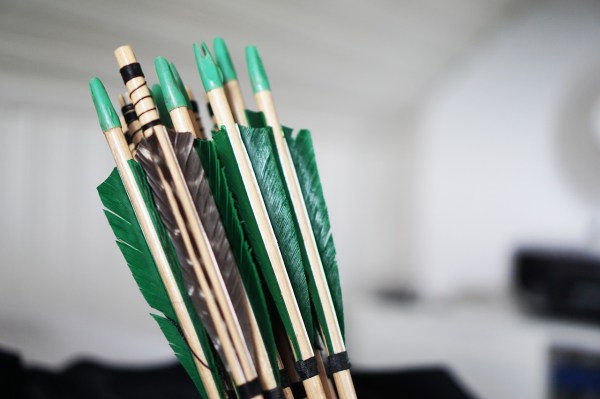
My voice whips across the small kitchen and freezes Kiera’s hand mid-air, hovering over the handmade bow I left strung in the corner. A quiver of accompanying arrows rests alongside it, their feathers dull and ragged. I feel a small measure of pride in my monstrous creation. The bow isn’t much in the way of craftsmanship, forged from scavenged hardware-store PVC pipes and a roll of para-cord; it had taken quite a few attempts to find the correct shape, just to get the contraption to shoot.

Someday, I know I’ll have to teach Kiera to use it. I’m not ready for that yet, but if something happens to me, she’ll need some way of protection. Some method of survival. It’s all I can think to give her, and what else is there, really. I don’t have anything left to give.

Kiera looks over at me with glinting eyes, her lower lip sticking out. I sigh and wipe my hands on the sides of my cargo pants, moving around the kitchen island where I was laying out strips of leftover rabbit meat, drying into jerky. I grip Kiera’s shoulders and kneel so we’re on the same level, looking deep into each other’s eyes.

“I’m sorry to raise my voice. I just don’t want you to get hurt.”

I sweep the stray curls across her forehead and touch my lips to the smooth skin there. She smells like wood smoke from the fires we build in the stove, and a tiny hint of pine. Her special scent. Our mother told tales of entire forests smelling like that, with soft green needles for leaves, back in the times before the wall. She used to bury her face in Kiera’s head and take a big, exaggerated sniff, sending Kiera into a fit of giggles. The memory makes me smile, and I loop a curl of Kiera’s dirty-blonde hair between my fingers. Kiera smiles back and twirls a strand of my own hair in her hands.

“Can I braid it, before you leave?” she asks.

“Of course.”

I turn around and feel her fingers comb across my scalp. She separates the long raven-black strands into triplets and begins intertwining them. I relax into the rhythmic motion of her hands, the feeling of her touch against my head.

“Can’t I go with you?” Kiera asks.

“It’s safer for you here.”

“But I don’t like being by myself.”

“I won’t be long,” I say, “and you have to keep watch, remember?”

Kiera finishes braiding my hair. I turn to see her eyes wide in protest, but she nods. “I just wish I could go with you.”

I stroke a hand across the fishtail swooping down my back. “I don’t like leaving you, either, you know that. But it’s important that you’re safe.”

Kiera grows quiet, staring down at the floor. She bites her lip in the way she does when she’s holding back.

“What’s wrong?”

She doesn’t answer.

“Tell me what it is, sunflower.”

Kiera shuffles her feet and crosses her arms. “What if…” she trails off and looks up at me with tears threatening to overflow. “What if you don’t come back, this time?”

I pull her close. “That won’t happen.”

Her thin arms wrap tight around my neck and squeeze. She hasn’t hugged me so hard in years, since we lost our mother.

“Promise?” she whispers, her voice reaching my ears like water slipping over velvet.

My hands grip her slim body closer. Her ribs are prominent, like resting my fingers along an accordion. I hear her breath slipping in and out. There’s a slight wheeze developing, and I’m afraid she’s becoming sick or the smog is getting to her.

“I promise you. I’ll always come back.”

*      *     *

After dinner – a couple strips of rabbit-jerky each, canned beans, and two chunks of stale bread – I gather my supplies. Slipping my brass knuckles on, I holster my knife to my hip and throw a knapsack over my shoulder along with the bow and quiver. I tell Kiera to lock the door behind me and slip out. Our current hideout on the eighth floor of the Locust came with a set of keys, so I feel better leaving her inside at night.

It’s gotten quieter in our city and if you listen closely, you can hear it deteriorating. The screech of rusty metal beams in stripped-down department stores and apartments. The sigh of wood rotting on itself after years of standing strong. The entire city, surrendering. Even the old church has been consumed by mold and disuse, offering no sanctuary from this place. We’ve been doomed to starve in this broken town, or worse. But I have other plans. I adjust the bow and quiver slung on my back.

The sky begins to darken overhead, making the smog appear thicker. First thing is check the traps. I found them while scavenging for weapons at the old hunting lodge. Ugly traps with dark metal teeth along with a handy pair of night-vision goggles, which I wear on top of my head until it gets darker.

Crazy to think there used to be a whole world connected to this place before they built the wall. A forest with all kinds of animals bigger than rabbits. Meatier and juicier, tastier. That’s what our mother used to tell us. About that and the sky. All those twinkling lights. Nothing I’m ever likely to see, but something I hope Kiera does one day.

I move between the alleys like a slinking predator. Some are nearly impassable with the devastation. The traps are set behind rusted dumpsters, along the paths in dark corners and near the outskirts of the buildings where humans rarely venture but small creatures might if they still exist.

Most of the traps are empty as I expected. One holds a skeletal rat. I toss the trap aside, wary of disease. It’s a shame I can’t bury him. I murmur a little prayer for the rat’s useless sacrifice.

As I move to the final trap, I realize there’s a small glimmer of hope in me that it will have something worthy inside. My regular scavenging trips became more and more frequent since our failed escape. The city continued running bare, scraps of sustenance slipping through my fingers like water. The rabbit was the first sign of life in such a long time. I’d thought, maybe we can survive in this dilapidated city after all. If there was a way to eat, to live. And that’s when I had the other thought.

I don’t want it to come to that, but I’d had the idea in the back of my mind for a while. It’s something I hope we can avoid, something I don’t like to dwell on. If that ever happens, it means I’m fair game too – hunter and the hunted. But it might become a necessity with the food so scarce and the rabbit meat almost gone. It may be time that I consider it for real.

I look around, squinting at the broken buildings, chunks of brick and shards of broken glass littering the streets. I’ve gotten used to picking through the piles of rubbish to look for something useful without slicing my hand. I started wearing fingerless gloves along with the bandana wrapped tight around my nose.

As I bend to look at a pile of charred wood, I hear a sharp scream behind me. I stand and whirl in one movement then pause, listening. It sounded strangely like Kiera calling for me. I start racing back in the direction I’d come. I leap over a fallen barrel and keep running, my heart thundering in my ears. The sound comes again, muffled in my ears but I can tell I’m getting closer. Rounding a corner, I stop at an impasse – two dark buildings clawing against each other in their collapse. Their dirty brick chokes the alley, smog curling down like long fingers to clutch at the rubble. There’s no way past.

“Saige!” I hear my name called, beyond the alley.

“Kiera?” I yell. “Where are you?”

A better question would be why she’s outside, but I’ll save that for later. I scramble up the tumbled brick, scraping the skin off my fingers, and balance myself atop the pile. My footing is precarious, and the shock of my weight sends bits of the foundation rolling from the pile. I hurl myself across to the other side and land on the torn soles of my boots. The hard impact reverberates in my jaw. I shake off the feeling. “Kiera?” I call out, my voice cracking.

“Saige!” Her small voice carries to me behind a thicket of smoke.

Spinning curls of smog dance behind me as I push forward, through an ocean of fog. My heart races. The air clears enough for me to observe a large, hanging mass overtaking the alley, strung between two familiar buildings.

Squinting, I move closer to see Kiera dangling in a net above me with her limbs tangled. When she sees me, Kiera’s tiny body jolts and struggles, entangling herself more. Her fingers reach out between the web of ropes. Who would have set a trap here?

“Kiera, hold still,” I say, “I’m going to get you down.”

“Saige,” she whimpers, “I’m scared.”

“Hold on, it’ll be alright.”

I unsheathe the knife from my belt and hack at the ropes spidering around my sister. She scrambles to move away from the blade, which sends the net swinging out of my reach.

“Get me out,” she shrieks.

I grasp at her fingers through the ropes. “Kiera, you have to be still.”

She goes limp. I curse under my breath but get to work at the ropes with my small knife.

Hacking and sawing, the ropes fray enough to create a small hole for Kiera to slip through. My wrist aches with the effort. Kiera slides into my arms and buries her face in my chest. Her body trembles. I tug her behind a corner and look her over, then wrap her in my arms. We stay like that, silent and breathing heavily against each other.

“What are you doing out here?” I demand after the shock has worn off.

Kiera peeks up at me with a single blue eye. “I wanted to be with you.”

I grip her by the shoulders and shake her. “It’s too dangerous, haven’t I told you?”

“I don’t care.” A whine creeps into her voice. “You’re always saying you miss me when you’re out here, and you used to bring me with you all the time.”

“Well, see what happened?” I gesture above us.

We’re silent for a moment before Kiera voices both our minds. “What was that thing?” “I don’t know,” I say, “but it’s nothing good.”

“Is someone… hunting us?”

The thought sends a thrill of fear through me, but I don’t have an answer. Kiera moves from my arms to gaze intently at my face.

“I told you,” I say, “I have my reasons for leaving you behind.”

She blows a stray curl out of her eyes. “You can’t keep me locked up forever.”

“Kiera.” My voice is sharp. I take her face in my hands and look at her. “It’s a different world we live in now.”

“So, teach me.” Her eyes flare and she juts her chin.

“Teach you?”

She nods, the curls that frame her face bouncing like golden flames. “Show me how to hunt, how to trap. How to protect myself.”

I don’t know what to say. Kiera stares into my face, searching my eyes. She knows I don’t have an excuse, other than my own fear. “Okay,” I give in. “I’ll teach you.”

Her face brightens. “I won’t let you down,” she promises.

Before we head back to the Locust, I take another look at the net dangling above the alley. It appears from the smog as if from nowhere, but I trace the source of it back to a rusted beam, jutting from a building like a broken rib. The ropes loop around it and must have been triggered somehow when Kiera passed by, setting off the net to scoop her. The mechanism looks complex, but nothing I can’t duplicate. A flash of movement catches my eye, but when I look again, there’s nothing there. I turn and hurry Kiera home.

*      *      *

Kiera moves with the agility of a cat, edging her way through the alleys. We check the small traps first, taking the path that’s worn into the back of my mind. Empty, as usual. It’s more from habit that we check them anyway. We move together through the city, eyes peeled for anything of use. Scavenging the very last bits of refuse.

In the market, small clusters of people mill about in ragged clothes. Their faces are all dirty and none of them meet our eyes. Every so often, we’ll pass someone who murmurs a halfhearted plea for salvation. But we have nothing to give, nothing to share. Most of the people look sickly, their faces lackluster and bodies wracking with painful coughs. It makes me second-guess the thought of turning any of them into a meal.

When the smog above begins darkening, we turn around and take our meager findings back to the Locust. Tomorrow maybe we’ll search some of the rooms. Often the cabinets are full of gold mines. Our backpack contains two cans of beets, probably spoiled, and a stale box of crackers left behind on one of the shelves. The canned food is what we want and what has grown scarce in the months since The Surge. I’d lost count of how long we’d been abandoned in this city.

Picking our way through the alleys, we’re on the lookout for dangling ropes or other signals of a trap. After Kiera was caught, it became clear that others were thinking the same dreadful thought I’d been resisting so long.

We take the shortcut around the old pizzeria and end up in a maze of alleyways. I pause to check the large trap I’d set near the one which caught Kiera. I’d fashioned it together with a scavenged net and some ropes, mimicking their design.

Someone had set the trap off, but they’d used the same method of escape as I had. The net hung limp in the air, dangling bits of rope like a large bite had been taken from it. The hole is larger than the one I’d cut for Kiera. Someone large had been trapped here. I wonder if it might be the same someone who set the other trap. I hadn’t seen many people around the Locust, one reason I chose that part of town for our hideout, but there was always the possibility that someone else lurked close.

Kiera looks up at the destroyed net and then over at me. The expression on her face is unreadable. One thing is for sure, we’re far from alone in our dangerous game.

*      *      *

“It’s all about your aim.” I lean my head close to hers to show how my gaze never leaves the target. “Everything else becomes natural.”

“Doesn’t it hurt your arm?” she asks, training those big blues on me. “I can’t even pull the string back.”

I can tell she’s getting frustrated. “You’ll get used to it, I promise. Just keep practicing. Here, watch me.”

I take her small fingers in my own and hold the bow taut. Kiera relaxes her grip and steps back.

“Use your chin as an anchor.” I pull back the string and show how my fingers line up with my chin. Straining against the natural tug of the bow I adjust my position, aim at my target, breathe and release. The bowstring swipes back with a little zing and nicks the skin of my wrist. I wince and hiss my breath through clenched teeth.

Kiera’s too quick not to notice. “See, I knew it hurts.”. She pouts at the bow when I hand it back.

“Yeah, sometimes it does,” I admit. “Like all good things in life.” I nudge her on the shoulder then tilt my head and give her a smile. “It takes some practice, little sunflower, but you’ll get it.”

She squints one eye and positions the bow against her hip. “Like this?”

“Don’t lean it against yourself. Hold it as if it’s part of you.”

I watch as Kiera huffs a little but then she readjusts her stance. One hip forward, one foot positioned in front. She grips the bowstring and tugs back. Eyesight in line with her arm, fingers set with her chin. She breathes out, steady, and releases. My breath leaves my chest. The arrow lands a few inches from its target – a dark red, painted circle against a white cloth draped over a hay bale. Kiera jumps in the air and turns to me.

“Did you see that?” she asks.

“I sure did,” I say. I give her a smile. “That was perfect, just like I told you.”

Her eyes glint. “Should we keep practicing?”

“Show me what you can do.” I stand back and watch.

Kiera positions the bow in front of her and strings an arrow. She squints one eye at her target and pulls the string back. I watch the muscles in her arms grow taut. She holds her stance for a heartbeat then releases. The arrow arcs and lands in the white cloth, a little nearer the red circle.

We spend the better part of the day shooting at the hay bale. Her arrows come closer and closer to her target, some landing inches from the red mark.

“That’s enough for today,” I say, once the smog’s gone a deep, stormy grey.

We collect our arrows and put them back in the quiver.

“I didn’t hit it once,” Kiera says, eyeing the target.

“You’ll get better. It took me a while, too, and I’m far from perfect.” I wrap my arms around her and pull her close. “You really impressed me.” I feel the flutter of her heart against mine.

“You’re right, it’s not so hard once you get the hang of it.”

I squeeze her tight, then hold her at arm’s length and look her over. Her blond curls are disheveled and wild around her face, pulled back in a braid at the nape of her neck. Her sapphire eyes burn with a fire I haven’t seen before, and there’s a rosy flush to her face above the scarf, which is tied tight around her nose and mouth against the smog. She squints at me. I know she’s giving me a smile, even though I can’t see.

I grab her hand in my own. “Let’s go find something to eat.”

 

Cabinet Of Heed footer logo

TIANNA GROSCH is writing a debut novel about women who survive trauma as well as a memoir. Her work has previously appeared or is forthcoming in Ellipsis Zine, Crack the Spine, Who Writes Short Shorts, New Pop Lit, and others. In her free time she gardens on her family farm and dreams up dark fiction. Follow her on Twitter @tianng92 or check out CreativeTianna.com.


 

Image: TheDigitalWay via Pixabay


Tell me about this one – Ann E Wallace

my index finger traced
the patchwork of pale
glossy skin incised into
the bulk of your calf,

and this one, pointing to
the short squiggle nestled off
center in the indent between
bottom lip and chin,

and what about this, cupping
your curved finger in the palm
of my hand, each marking
a story of bad calls and

painful luck, and sometimes
of dread, of hospitals
avoided, leaving scars,
where given the chance

tended wounds might
have been more fully
subsumed by collagen
and cells that mend, but here,

and here, minor incidents
of years past are inscribed
into keloid memories while
others quietly bear

no trace


Cabinet Of Heed footer logo

ANN E. WALLACE writes of life with illness, motherhood, and other everyday realities. Her work has recently appeared in The Capra Review, Juniper, The Literary Nest, Eunoia Review, Rogue Agent, The Same, and other journals. She lives in Jersey City, NJ where she teaches English at New Jersey City University. She is online at AnnWallacePhD.com and on Twitter @annwlace409.


Image:  Diego Fabian Parra Pabon via Pixabay


Lost Things – Michele Sheldon

I should have known something was amiss when the squeaking stopped. I’d just popped to the corner shop to buy a pint of milk and had left Mr Moley tied to a lamp post outside with his favourite toy. I’d nearly turned back as I clocked the queue snaking along the biscuit aisle to the till; I hated inhaling the shop’s damp stench. But I was desperate for a cup of tea after our walk.

So I stood in line and watched a craggy-faced man buying a cheap fluorescent green lighter. He lived in my street and often stopped me for a light, even though I don’t smoke. Two customers at the head of the queue chatted about the weather finally turning, while the big bear of a man in front of me kept sniffing at the bouquet of pink carnations he was nursing as if he couldn’t quite trust his sense of smell.

I shifted from foot to foot, wishing I too could bury my nose in the flowers to block out the musty air, when I heard a series of short, rabid squeaks. It was followed by a few moments of silence before the whole business started up again: Mr Moley never tired of his plastic Christmas pudding.

‘Someone’s having fun!’ a woman’s voice said behind me.

I turned to see a middle-aged lady from the sandwich shop. She was balancing several loaves of bread in her arms. I tried not to stare at the little blobs of beige foundation dotted over her cheeks. It looked as though she’d been disturbed half way through doing her make-up, and had forgotten to rub it in.

‘Three month’s worth of fun,’ I said raising my eyes to the grubby ceiling.

The pudding came with us everywhere. Even when he got distracted by something sniffalicious, like another dog’s bottom, he always retrieved it. I’d tried kicking it into numerous bushes, and once threw it down an alleyway behind some bins, but he always snuffled it out.

I smiled at the lady, swallowing down my mean thoughts; I felt were incongruous with the clement weather. And it was only when I went to pay for the milk several minutes later, I realised I hadn’t heard a single squeak since the last bout, and speculated that Mr Moley’s passion had finally killed it.

I felt a lilt in my step as I left the shop and wondered if, like the weather, my luck would change: the squeaky toy had broken and most importantly, I’d find a job. I’d been unemployed for two years, intermittently taking cash in hand jobs as and when they arose; cleaning offices, and delivering leaflets door-to-door for a monosyllabic plumber.

More recently, I’d worked as a waitress in a nearby Italian restaurant until I got sacked. I’d been accused of mislaying, not one, but two sets of keys, even though I was convinced someone had stolen them. The first time they went missing, I’d left them in my bag while I visited the toilet at closing time. When I returned, the keys had disappeared, although my bag remained, along with my purse and credit cards. I’d been so worried about losing the second set that I’d secured them to my belt. But when I went to lock up, just two weeks after losing the first set, they too had disappeared.

My boss said that one loss was forgivable but two was plain careless.

I accepted the lost keys as yet another example of my bad luck with possessions. I was the champion of mislaying items: not just objects that people regularly lose like socks and wallets, but random things like butter dishes, pages from magazines and half-eaten snacks that I put down one minute, only for them to vanish the next. My parents and sister had always berated me for being absent-minded. And I’d come to accept that I just lost things. Or as I liked to put it, things got lost around me. In terms of losing my job, well, I wasn’t too upset. I was still holding out for a career in publishing, though I tried not to think about the 82 job applications I’d made, most of which I’d never even received replies to.

However, my positive mood was short-lived. As I went out of the shop, I was met by Mr Moley straining on his lead, whimpering and very much pudding-less.

‘Where is it?’ I asked, scanning the street.

I wondered if perhaps his biting had become so overexcited that he’d accidently propelled the pudding into the path of an oncoming car or a bus, and it was lying squashed in the road. But I couldn’t see it anywhere.

A smirk began to tease my lips when a voice called out.

‘It was her!’

I looked up to see the man with the flowers. He was waiting at the bus stop, a little further down the street. He pointed the bouquet accusingly at an elderly lady shuffling up the road. She was pulling along a large red and black tartan trolley, and wore a raggedy fur coat that would look more at home covering a much-loved teddy bear.

I looked down at Mr Moley. His soft brown eyes were fixed on the elderly lady as he breathed out a series of strange high-pitched squeals I’d never heard him make before. I looked back at the man wondering if he was mischief-making.

‘I thought she was going to chuck it back to him. But she just stuffed into her trolley and walked off.’

He pulled a face and we both stared at the old lady disappearing up the road as the roar of the 341 approached.

‘Good luck!’ he called.

The bus doors whooshed open and closed and he was gone.

As I untied Mr Moley, I wondered what I should do. Perhaps we should just walk away? After all, the elderly lady had done me a massive favour. I was free at last of the toy. Mr Moley would get over his loss. We’d visit the pet shop that afternoon and he could choose himself a nice new, squeakless toy.

But I had no choice in the matter. As soon as I untied his lead, he yanked me along the pavement and I was forced to jog behind to keep up, every now and then, trying and failing to pull him back to a more reasonable pace. And as I did so, I wondered why someone would want to snatch a dog’s squeaky toy? Perhaps, the lady had an elderly dog at home, who could no longer manage walks, and after seeing the pleasure that Mr Moley derived from the toy, had decided to steal it as a treat for her own pet? Whatever the reason, I would have to tread delicately.

By the time we caught up with her, I could barely hold onto Mr Moley’s lead; he was making obscene gasping noises as he lurched at the trolley. There was no doubt that the toy was inside. He could sniff it out if it were on the moon.

As we drew level, I was struck by how tiny the elderly lady was, more the size of a child.

I took in a deep breath.

‘Excuse me! You don’t happen to have picked up my dog’s toy by mistake, do you?’

The woman turned. She wore old-fashioned pink, NHS-style glasses that reminded me of my school days. The thick lenses made her eyes look like two faraway planets. Her dyed black hair grew grey at the roots and was pinned in dozens of little circles with brown bobby pins. Red lipstick had bled into the lines around her lips making it look as though her mouth was stitched on. And as I watched it twitch and turn up at the corners, I felt a thread of something unpleasant touch me.

I stepped back. There was something vaguely familiar about her. It was same feeling you get when you wake mid-dream, and remember snatches of it, before it drifts away forever.

‘I don’t know nothing about no squeaky toy,’ she snarled, before shuffling on up the street.

Mr Moley followed, dragging me behind, his determination making me brave.

‘I didn’t say anything about it being squeaky!’ I said. ‘The man at the bus stop…’

She spun round again.

‘Are you accusing me of being a thief?’

‘No…well,’ I hesitated. ‘Yes, yes. I suppose I am. He’d like it back.’

I held out my hand. She glanced at it before batting it away like a bothersome fly. Then, standing on her tiptoes, she leant towards my ear, her stale breath hitting me as much as the menace of her words.

‘Go away, little girl. You don’t know what you’re messing with.’

I stood, paralysed, despite Mr Moley dancing around me, and watched her cross the road, little electric shocks running up and down my body. The nylon lead slipped through my fingers, burning my skin, and Mr Moley broke free, sprinting across the road and leaping up at the trolley. The impact caused it to skid across the road, its cover to fly open and the Christmas pudding to spin in the air, landing on the concrete with a defiant squeak, before rolling down the pavement, pursued by Mr Moley.

I looked back at the lady, steeling myself for a torrent of abuse, but she was nowhere to be seen. Instead, a huge crash bounced off the row of terraced houses and shops. I glanced around, trying to locate the noise, gritting my teeth and holding my hands over my ears as it echoed along the street. It sounded like the bin men collecting the glass bottles from the restaurant. But there was no such vehicle in sight.

It was only when I looked again I realised where the clatter-banging was coming from. The trolley had come to a rest on its side, its mouth gaping wide, vomiting an endless stream of objects. Past my feet bounced buttons of all different shapes, sizes and colours, milk teeth, odd socks, biros, pencils, crayons, mobile phones, cables, phone chargers, egg cups, butter dishes, Monopoly money, dice, playing cards, hair grips, combs and brushes, CDs, DVDs, cassette tapes, elastic bands, tennis balls and brightly-coloured bouncy balls, books, the heads, the legs, the torsos of dolls, Lego pieces, Playdoh monsters, whole herds of cuddly toys, including a one-eyed rabbit. My one-eyed rabbit.

‘Bunnyboy?’

My eyes widened as I remembered the day, all those years ago, when my mother had convinced me that I’d left him in the park, though now broken memories of a spiteful-looking old lady shuffling along with a tartan trolley floated around me.

I watched as he vanished again, buried by dozens of half-eaten packets of sweets, chocolate bars, crisps, custard creams and a wave of odd slippers and shoes. A bright pink stiletto skidded past, transporting me back to my teenage years; screaming and shouting at my Mum, accusing her of hiding it because she didn’t approve of my footwear. I gazed up as ripped out pages from magazines and newspapers, countless unopened letters addressed to me, correspondence I’d sent but that had never arrived, and pink, green and yellow Post-It notes decorated with times, dates, numbers, scribbles and doodles fluttered overhead like a rabble of psychedelic butterflies, momentarily blocking out the blue sky above.

I looked down, distracted by a familiar squeaking, to see Mr Moley bounding along the pavement towards me. His pudding was stuffed in his mouth, along with a toy cat he’d lost over two years ago, both singing in chorus as he dodged the debris flying around his legs.

I leant down and hugged him tightly as the trolley’s mouth emitted a mighty rattling and jangling burp. Out gushed a stream of shiny coins, keys, bracelets, and rings, swimming along the road like a shoal of deformed silver fish.

And that’s when I saw it. Attached to the bottom of the trolley, between two half-eaten chocolate digestives, was a little black label embroidered with my name and date of birth in gold spidery writing.


Cabinet Of Heed footer logo

MICHELE SHELDON’s short stories have won and been short listed for many different prizes including Kent Life, Folkestone Literary Festival, Bridport Prize, the Colm Toíbín International Short Story Award. They’ve been published in a diverse range of anthologies including Stories for Homes, and magazines including Rosebud, Storgy, Here Comes Everyone.


Image: 825545 via Pixabay


Practically Livid – Rob Walton

Josh on the checkout at Morrison’s really hates
my shopping, or his job, or my glasses
or a whole conveyor belt of possibilities.

His finger pokes through the plastic film
of the Atlantic salmon fillets,
so the grow-at-home basil
loses the aroma battle
as the scratched Zafira heads home.

My daughters tell me to move on, Dad
but the world’s not right for me
right now.

I soak up some telly for the evening
then discover the direction of Josh’s bike ride
home, knowing I can puncture
when the time is right.


Cabinet Of Heed footer logo

ROB WALTON is from Scunthorpe, and lives on Tyneside with his family. In 2017 poetry for adults and children, flash fictions, short stories and creative non-fiction will appear in Sidekick Books, Northern Voices, The Emma Press, The Interpreter’s House, a shop window in Marsden, Bennison Books, Write Out Loud, The Line Between Two Towns, Celebrating Change, the Worktown anthology, and DNA among others. He collated the New Hartley Memorial Pathway, and sometimes tweets @anicelad.


Image: © Copyright Billy McCrorie and licensed for reuse under creativecommons.org/licenses/by-sa/2.0 via geograph.org.uk/p/4728234


Jumping Off A Cliff – Dan Crawley

The boy couldn’t believe that inside a restaurant there was a waterfall dribbling off a cliff into a small pool below and a man ready to dive off this high cliff into the water. The boy marveled as the diver plunged into the glowing surface, the hint of a splash. He wondered what it felt like going in hands first; the boy only jumped into pools feet first, from low diving boards. He turned around and his dad was gone. He had yanked his dad up from their table earlier to show him this waterfall, this pool, but now there was a diver his dad had to see. He ran through the replica of a Mexican village, back to where his family was eating. But his dad wasn’t there, either.

“I thought he was with you,” the boy’s mom said. “Hey, slow down.”

The boy ate a sopapilla filled with honey in three bites.

“Sit.”

The boy placed a knee on the chair and drank the rest of his soda through a straw in a breathless pull. He panted and said to his mom, “I’ve got to show Dad the diver.”

“Sit all the way down and eat the rest of your food.”

The boy saw his sisters huddled by a fountain, their arms in up to their elbows.

“They’re not eating.” Before the mom could answer, the boy went on, “Isn’t this the greatest place ever? We need to visit here every year—I can’t miss it, I can’t miss it” and the boy ran around the other tables full of people and heard his mother calling and ran under the palm trees, strings of Christmas lights decorating their fronds. He stopped by the lit up pool again. His palms rubbed the top of craggy boulders. His face prickled from the mist coming off the waterfall. When the diver jumped into the water again, the boy hopped in place, his short arms like planks stretched out in front of him. Next he turned and ran up wide tiled stairs and ran down a wide, curving ramp. He saw his dad at a pay phone near the men’s room.

“I’m…I’m…. No—let me talk,” the dad said to the boy tugging on his hairy arm. Then the dad said back into the receiver, “I’m…I said…I’m not unloading your lousy products anymore…that’s right. How…how…listen, let me have my say, sport…. Almighty—let me have my say, Gordon. If I’m going to drive all over creation—what?… I said…I said…. That’s right, why would I travel another mile for your two-bit outfit?”

The boy said, “We’ll miss the guy jumping off a cliff,” and pulled on the hem of his dad’s shirt, too.

“What’d you just say to me?” the dad said loudly into the phone, but the speaker blaring down Mariachi music from the ceiling was even louder. The dad pushed the boy away and said, “I’ll make it simple, Gordy…. I’m done shamming would-be suckers…. I…let me finish! I’m…I’m…. There you go. That’s it, sporto. I’m looking out for me now like you’re looking out for you.”

Then he hung up the phone in a way that reminded the boy about the time his dad threw a whole sandwich out the window of their car. But when the dad looked down at the boy, he wore an odd smirk and winked. “I’ll tell your mom more about what you overheard with my boss, okay? So let’s keep this under our hats, sport.” The dad allowed the boy to tug him up the ramp and down the wide stairs and up to the edge of the small glowing pool beneath the rocky cliff. The diver was nowhere in sight.

“I told you we’d miss him.”

“Let me tell you something,” the dad said, gleefully patting the top of one of the large fake boulders. “What I accomplished back there—a long time coming, too—doesn’t feel like one of these babies lifting off my chest. Nope.” His grin turned unruly, his wide teeth glowing. He crossed his rigid arms over his chest. “I was breathing just fine before, but for most of my life I haven’t been promoting the right product. Me.” The boy reached up and gripped his dad’s hairy arms like they were monkey bars, his small feet dancing just off the concrete floor as he swayed. “You’ll know this in a few years,” the dad said. “No one: not your wife, or girlfriend, or best friend, or parents, or your boss, or your co-workers will be your advocate in this life.” He uncrossed his arms, making the boy let go. “Look at me. Listen up. The only advocate you’ve got is you. No one cares about what you’re made of or how you’re promoting your wishes. No one cares about your aim in life, and how you’ll accomplish it in the—”

“Like that diver aims for the tiny pool,” the boy said, pointing.

“That’s it, yes. He’s jumping alone—”

“Hands first.”

“Sure. You got it. Let’s get back to the table.” The dad walked toward the Mexican village.

The boy walked quickly to keep up.

“What does it feel like, going in hands first?”

“It just feels like water.”

“Like your stomach crashing into your brain,” the boy said, hopping in place. “Or maybe worse?”


Cabinet Of Heed footer logo

DAN CRAWLEY’s stories have appeared or are forthcoming in a number of journals and anthologies, including CHEAP POP, New World Writing, Spelk, Jellyfish Review, and New Flash Fiction Review. Along with teaching creative writing and literature courses in Arizona, he reads fiction for Little Patuxent Review. Find him at https://dancrawleywrites.wordpress.com.


Image: Harald Landsrath via Pixabay


daughter of the sun – linda m. crate

the sun is laughing
flowers kiss
my bruises
trees sing to me of truth
as winds whisper
things of both myths and half-truths
of old and new,
cleansing me of old wounds;
if only for a moment
with the fragrant songs of spring and summer—
the sun sculpts the sky
into carnelians, rubies, pink jasper,
gold, and amethysts;
the flowers
sing their songs
creeks wash away my pain and shame
peace is restored by one stroke
of nature’s paint brush
until the next human stumbles into me
with clumsy, erratic steps
expecting something without giving me anything
feeling entitled to time i do not want nor need to give them.


Cabinet Of Heed footer logo


Image: Viscious-Speed via Pixabay


John Doe – Sheila Scott

Four people sit at a table set for five. Their heads are bowed and hands linked as the oldest says grace. A candle burns on the sideboard. Light from its skipping flame is splintered into coloured shards by the crystal holder. Beside it sits a photograph of a middle aged man, dark hair flecked with grey, creases round his blue eyes. He smiles at the incomplete circle round the table.

The family follows the same ritual every year. The table is lost under the weight of dishes offering up his favourite foods. In those first years, the feast of roast ham, sweet potatoes, gherkins, and profiteroles was barely touched. The conversation fixed on him. Talk swung from cheerful anecdotes to quiet reflection on the small acts that defined him. Inevitably the conversation would turn to those final moments spent with him, and the iniquity of circumstance that put him in such a time and place as to become part of the horror.

His mother would recall the weekend before when he had dropped by to put up a shelf. Afterwards, they sat shooting the breeze in the yard as she rewarded him with a beer. With each retelling, her voice breaks as she notes that the shelf remains standing.

The kids relived the hurried final dinner. Their excited conversation revolved around the city sites he might visit outside the conference. Presents were discussed. She wanted a snow globe and he a baseball cap, and promises were made to bring back these fragments of city glamour.

His wife remembered stirring in the darkness of the early morning. She had reached across the bed and felt his warmth on the sheets, but drifted back to sleep before he returned to the room to gather his case and leave. She hadn’t even heard the cab. She didn’t share the other nights when she had woken in the small hours and reached over to feel the cool of an unshared bed; the nights of working late and trips out of town.

At some point the conversation would falter and silence would settle over the table, until someone vocalised the shared thought: how could he be gone?

The family had prayed, hoped, pleaded that he had not been in the building even though the timing of his meeting coincided perfectly with its fall. Maybe he had slept in. Maybe he had skipped work for the day to enjoy the distractions of the city. But he didn’t call and scouring the city’s hospitals, shelters and police records returned no evidence of his escape. He was gone and denial turned to resignation. A memorial service was held and a stone placed at the head of the empty grave.

By this, the sixth anniversary, the script is growing tired and the actors around the table are beginning to ad lib. Unrelated topics from current affairs to neighbourhood gossip creep in. Still each pays vigil and the meal finishes, as always, with a toast to a loved and missed father, husband, son. The small gathering raise their glasses first to the empty place, then to the smiling image on the sideboard, and join together in remembrance.

*     *      *

A man huddles in a doorway, shielding his silhouette from the passing patrol car. They will move him on, or even worse, throw him in the back of the vehicle; another bum to be dumped in the menacing chaos of the shelter. More than once they have asked ‘Haven’t you got a home to go to?’

He doesn’t know. He thinks he may have had once, but no thought comes with certainty.

There are lapses when the fog in his brain thins and the images solidify. He remembers the noise, the dust, the running. He sees blue sky swamped with a grey flooding cloud, paper flakes dancing in the currents of the blast. He recalls the smallest fragments coming to earth so much slower than their source. So many people, all the same colour as the cloud masking the sky. Screams, sirens, silence.

After a while, the running slowed to a walk. He has walked ever since and never left the city. At the start there were people who gave out soup and blankets. Hungry and cold, he wonders where they are now.

He twists his head round the corner of the doorway. The patrol car has passed. There is a trash can just a few yards up with what looks like a burger box on the top. He pulls himself upright and moves towards it, pushing his matted hair back from a face engraved with the dirt of the streets. The disarray makes him look older; on close inspection the bright blue of his eyes and the basecoat of black in his hair suggest a man of younger years.

There is nothing in the burger box but the discarded gherkin. The best bit he thinks, pushing the shred into his mouth. As he continues down the broad avenue, red, white and blue memorial lights from the skyline’s tallest tower play on the back of his tattered jacket. The city remembers for him.

*      *      *

The chatter of the television spills through the apartment. In the lounge, the furniture has been pushed back into a battalion of wallflowers. The table, unfolded in full for the evening’s dinner, stands with authority in the centre. It is draped in a white linen cloth, the corner of which has been snagged by the hand of the small boy penned into a high chair beside the kitchen door.

A puff of steam billows from the tiny kitchen, forced out by the slam of an oven door. The child drops the cloth and corkscrews round to the source of the noise. One hand wavers under the weight of his bottle and the top of his lip shines with a cocktail of mucus and milk.

The woman backs out the kitchen bearing aloft a platter. The child squeals a welcome, and unwinds to follow her progress across the room. She talks to him as she deposits the ham on the table and fusses the place settings. Though more at home in the commotion of her office, she likes to ensure that they sit down to a traditional dinner on this day. She sees the small hand reach out for the profiteroles and swaps the dessert for the lesser temptation of a plate of string beans.

At the sound of his key in the lock, she turns off the television. She knows he doesn’t like it being on this time of year. This day should be a celebration he insists, the day that marks the true beginning of their family.

He hangs his jacket on a hook at the door and kisses his wife and child. She pours the wine while he freshens up.

At the table, she reaches across and clasps his hands. As they quietly give thanks, the young child beats a tattoo on the tray of his high chair and babbles a counter melody to their ceremony.

The prayer ended, they begin the meal and remember his arrival in the city with little but the promise of their future. She was the reason he left everything. She looks at her husband, then back to her son. The boy is his perfect image with sharp blue eyes and the dark fluff on his small head. She tries not to think of his life before them.

*      *      *

The room is silent except for the rhythmic shush of the ventilator and the tone of the machine recording the robotic pumping of his heart. The nurse smoothes the undisturbed bedclothes and flicks on the lamp near his head. Its yellow glow contrasts with the grey of her patient’s skin and hair.

She checks the urine bag at the side of the bed and notes the output on his chart. It is her habit to talk quietly to him whilst performing her routine checks. She tells him about the weather as she gently squeezes his fingers for absent reflexes, and updates him on the baseball scores as she watches the blue of his irises respond to her pen torch.

She knows she is his only company in this lonely black vigil. The chart reads John Doe but she calls him Joe. She thinks he looks like a Joe. New colleagues ask the same questions about this ‘life’ and she tells each the same thing. He was found in an alley, with no identification, his body so broken as to be barely recognisable; yet his story was no more than a side note to the catastrophic suffering on that day. The hospital reached out but nobody came looking. Sometimes there is no-one, or perhaps he just wasn’t where he was supposed to be. A nurse knows only too well the breadth and depth of the secrets people keep.

As she leaves, she flicks off the light and gently pulls the door shut behind her. There he will stay, unloved and neither loving nor living: a shadow of life past, present and future.


Cabinet Of Heed footer logo

SHEILA SCOTT is a part-writer, part-scientist who most enjoys sitting with pen and paper turning idle thoughts into short narratives and illustrative doodles. She has lived in Scotland most of her life with one happy decade in Yorkshire, and recently completed the MLitt in Creative Writing at Glasgow University. Her work has appeared in Causeway, the Cabinet of Heed, Poetic Republic’s 2015 Anthology and Qmunicate magazine, and her first short story was shortlisted for Arachne Press 2014 Solstice Shorts. She also helps lead the New Writing Showcase Glasgow. She has an intermittently hyperactive Twitter account under the pseudonym @MAHenry20.


Image: Myriams-Fotos via Pixabay 


Create a website or blog at WordPress.com

Up ↑