Bulletproof – Hannah Storm

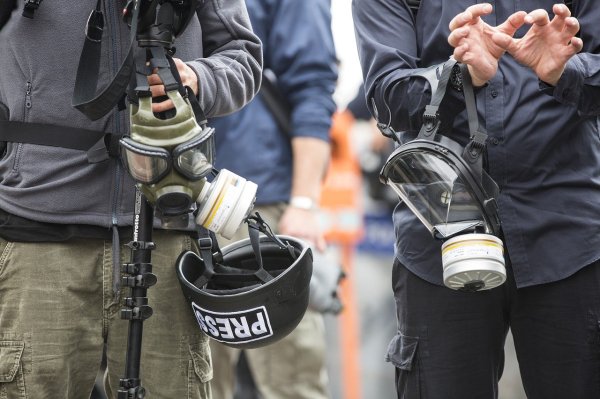
When I go to war, I borrow a flak jacket, a big blue thing designed for men. It squashes my shoulders, metal plates pinning flat my chest, breasts yielding to the weight of them. Androgenised.

But I wear the body armour because I’m told it will keep me safe, if someone shoots from a distance. I wear it because I’m told these are cheaper than the ones for women. I wear it because I’m told there are more male journalists on the frontline than women, because men are better at the warry stuff, and women more lightweight.

I wear it because the man in the equipment stores tells me all of this, and because he’s not the only one.

I wear it because I don’t want to rock the boat and give the newsdesk another reason not to send me to do this job. I wear it because I’ve told them I am the best ‘man’ for the job. I wear it because I want to be part of the solution and not part of the problem, as if my gender might be classed as anything else.

Deep in the belly of the building, where they keep the cameras, tripods and satellite phones, the team first aid kits, generators and batteries, the man looks me up and down, hands me the canvas bag with the body armour and a helmet, and whistles through yellow teeth.

‘We don’t get many girls going to war.’ He stinks of fags and coffee, holds out a cracked biro in his fat, stained fingers.

‘I’ve checked the plates. They need to come back exactly as they are. Sign here.’

I press the pen hard and leave an imprint on the desk.

Later, I sit by the wall in the bowels of another building, where the stores have been looted, where nothing remains but rubble and the smell of shit and fear and sweat and how long will this last and I wonder if the scar of my name will still be there when I get back. I hear the crack of gun fire, and remember what he told me – that if I could still hear it, I would be fine.

The whistles and whines get closer and the ground starts to shake, but I wonder if it is just me shaking, in my too big turtle shell which creeps up my body and covers my mouth, muddling my senses, exposing my womb to the world.

I am silence.

I hear the sound of boots and deep voices, checking the doors. Opening, closing, opening, closing. I cross my legs, pull my helmet down to hide my face, hope the jacket shields my gender. I know none of this body armour will protect me if these men target me point blank.


The Cabinet Of Heed Issue 30 Contents Link

Image via Pixabay

Tully Blanchard – Kevin Richard White

I stumbled across an old wrestling match on YouTube one night. It was this cage match and these guys were bleeding all over the place. The one guy used a chair leg in the other guy’s eye; blood was everywhere. Again and again, holding the shard there, pressing. It was the damndest thing I ever saw.

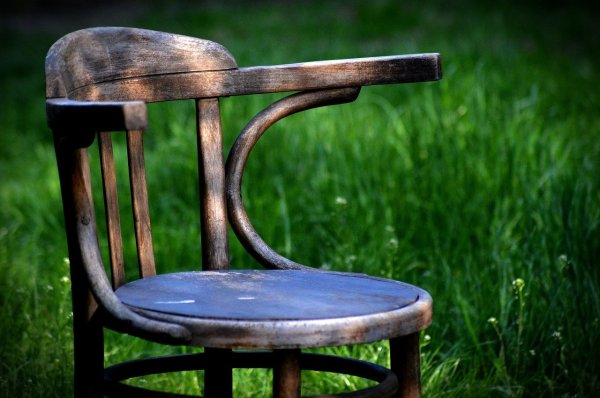
I figured it might be fun if maybe I showed the match to my roommate. Or better yet, maybe reenact it. He needed a hobby anyway – all he ever did was lock himself in his room and play video games. I went to a thrift store and found a really cheap chair with wobbly legs for a couple of bucks. I carried it home under my arm.

He was home – I smelled the pot and the pizza rolls he always cooked. I kicked his door in and he and his girlfriend were in his bed. Perfect. I told him to hit me with the chair. He laughed but told me to fuck off. I tried to tell him that it would be fun, but his girlfriend told me to get the hell out. The room reeked of pot and I hated the smell, so I took the chair and I smashed his bong with it.

That got him up. He took a swing at me so I dropped the chair and got him in a headlock. His girlfriend yelled at us to quit. My roommate saw the humor in it and got a handful of pizza rolls and tried to shove them in my face. I bit his finger and then he backed off, so I picked the chair back up and swung, but he ducked and the damn thing broke all over the wall. We fell back on the bed and knocked his lamp over. It was an excellent time. It felt like we were fighting for the big gold belt.

I lost my footing and fell on top of his coffee table, breaking his XBox. That one got him riled up. He tried to grab my leg so I tried the headlock again.

A few minutes later though, there was a knock at the door and it turned out to be the cops. I guess the neighbors weren’t entertained by classic professional wrestling. I wasn’t done yet. I picked up a chair leg and I ran out into the living room. I pointed it at the cop.

“Have you ever seen Tully Blanchard?”

I was still telling them about it when they gave me the name and number of a counselor. They wished me luck as they left. I turned back to my roommate and his girlfriend, but he was already closing the door. I guess it was a tie.

I slid some money under his door for a new XBox and threw the chair away in the dumpster down in the parking lot. I went back into my room and got YouTube up to watch another match.


Kevin Richard White is a Contributing Flash Fiction Editor at Barren Magazine with numerous publications. He lives and heavily drinks in Philadelphia.

The Cabinet Of Heed Issue 30 Contents Link

Image via Pixabay

Pockets – Phebe Jewell

The boy hides in the closet when his own smell is too much. His skin carries traces of every mistake he’s made. His parents haven’t noticed, but other kids have. At school he disappears in the back of class to avoid spitballs and whispers, speaking only when the teacher calls on him. He hasn’t wet himself for a long time, but kids never forget.

Grandpa’s suit hangs in the hall closet among raincoats and winter jackets, shrouded in a heavy scent of tobacco and leather. The boy doesn’t remember his grandfather, even when his mother shows him a photo of a big man holding a tightly swaddled baby. That’s you and Grandpa, she points to the pink-faced bundle in the man’s powerful arms. Such a fine man. The boy is third in his family to carry his grandfather’s name, a long string of consonants he struggles to pronounce. A long time ago, his grandfather fought in a war, returning with a chest of medals. Studying the picture, the boy searches for his grandfather’s bravery, but the old man’s dark eyes focus on the sleeping baby.

Sitting cross-legged in the closet, the boy drinks in damp wool and muddy boots, his hands finding the coat in the darkness. Someday he will wear this suit. Raising himself on his knees, he runs his fingers over the thick weave of the jacket, then into a pocket, hoping to find a watch, a penknife, some clue his grandfather left for him. His hand always comes up empty.

The smell grows stronger, but no one at home detects the stench moving to his clothes. At school the jokes become louder. His teacher doesn’t hear the whistles and slurs. When he comes back from recess in tears, she stops him. Are you ok? What happened? He shakes his head. Nothing, I fell down. Wiping his nose on his sleeve, he wonders what his grandfather would say. What would he do?

The boy leaves school early. No one is home. He sets a glass of water from the kitchen on his nightstand before carrying the suit to his bedroom. It’s heavier than he imagined. Undressing, he folds his jeans and tee shirt, then slips into Grandpa’s suit. The boy has grown in the past six months, but the suit’s still too big for him. The jacket cuffs fall past his fingertips, the trousers balloon around his ankles. He’ll never fit.

He breathes in his grandfather’s man smells. Climbing into bed, he reaches for his water, the bottle of pills from his parents’ bathroom. Hands steady, he shakes a fistful of capsules into his palm. He slips the note into a pocket and closes his eyes. Make me smell like Grandpa, he whispers, waiting for darkness.


Phebe Jewell’s recent work appears or is forthcoming in Monkeybicycle, Spelk, Ellipsis Zine, Crack the Spine, New Flash Fiction Review, and Brilliant Flash Fiction. A teacher at Seattle Central College, she also volunteers for the Freedom Education Project Puget Sound, a nonprofit providing college courses for women in prison.

The Cabinet Of Heed Issue 30 Contents Link

Image via Pixabay

Golden Glow – Amanda Saint

She can’t wait to get on what will be the wildest ride of her life. She didn’t even have to prove she was terminally ill. Just paid the fee so she could swirl through the seven loops and find the answers to her all consuming questions. The spiritual masters say if you let go of attachment then death will take you into the pure light of knowing. She really wants that to be true. Can see it. Soft, golden, glowing.

Nobody will miss her or even notice that she’s gone. Not now.

‘You shouldn’t get on.’ A gravelly voice from behind says.

He’s red raw from whatever treatment has failed to cure him, like he’s been burned. Gazing up at her from a wheelchair through shining eyes that don’t match his failing body.

‘You know nothing about me.’ She turns away.

‘I know I wish I didn’t have to do this. Why are you?’ he says.

She wants to ignore him. To not let him ruin this moment, the anticipation. But she can’t. She turns back. ‘That’s none of your business.’

He shifts in his chair and blistered skin peels away from his leg, sticks to the seat. ‘Last year I got ill, something they’d never seen before. Nothing helps.’

She sighs, a mix of frustration and pity. ‘Well, I’m sorry that you got sick. But that’s nothing to do with me, my decision.’

His scorched lips smile. It transforms him. Somehow his raddled face becomes one with his lively eyes. She can’t help but grin back.

‘I want to stay to see the beauty of the world and the incredible things that humans do,’ he says.

Her grin fades. ‘What like fighting wars and polluting the oceans?’

His smile widens and as it does, patches of unblemished skin appear on his cheeks. ‘We save animals and rehome them. We dedicate our lives to helping others.” More burns fade away.

Before she can reply he carries on, ‘We dance. We sing. We paint. We write. We are endlessly creative and inventive.’

She shakes her head. ‘It’s not enough.’ But the memories, the ones she always pushes away because they hurt too much, are crowding in.

His cheeks glow with health now as he says, ‘We love.’

She wants to say how wrong he is. How bad things are. But images fill her mind.

Long-forgotten kisses, hands on her body, breath in her hair.

Giggling at shared secrets.

Snuggling, smooching, spooning.

Always there for each other. Only apart because he went way too soon into the golden glow. He wouldn’t want her to do this.

It’s as if this magic man in the wheelchair can see her memories too. He’s nodding, laughing. His burns are completely gone now. He stands.

She grabs his hands. ‘Life is amazing,’ she sobs.

He pulls her into a hug, ‘Mind-blowing.’

The buzzer announces the arrival of the rollercoaster car.


Author’s note: Inspired by the Euthanasia Coaster designed by Lithuanian artist Julijonas Urbonas. https://en.wikipedia.org/wiki/Euthanasia_Coaster

Amanda Saint is the author of two novels, As If I Were A River (2016) and Remember Tomorrow (2019). Her short fiction collection, Flashes Of Colour, is coming in 2020. Amanda founded Retreat West, providing writing competitions, courses and retreats. Retreat West Books publishes short fiction, novels and memoirs and was shortlisted for Most Innovative Publisher at the 2019 Saboteur Awards.

The Cabinet Of Heed Issue 30 Contents Link

Image via Pixabay

Lunch With Grover – Mike Hickman

“It’s the same thing every time I come in here.”

It is always Grover and the blue man. It can’t always have been Grover and the blue man, but when I think back, when I see that room, see myself opening the door, dropping the bag, heading for the kitchen, it is always Grover as the waiter and the blue man trying to place his order and Grover misunderstanding him to hilarious effect. As they say.

“Alright, Charlie, broil the biggy.”

This time it’s a hamburger. The blue man – I’d forgotten he had a moustache – wants a hamburger. I remember this. Grover gives him the option of a big burger or a small burger. The small one is too small and the big one is too big – comedy too big. Breaking the doors down and demolishing the blue man’s table too big. I might have laughed at the time. I do now.

“You’re not looking in the soup, you’re looking next to the soup.”

“I knew that.”

A fly this time. I’d have sworn it was the same memory, but there are loads of these videos, and they’re all available online, if you’re so inclined. If you want to reach back.

I know I went home for lunch for – what? – at least a year. Until it stopped, was stopped, was put a stop to. And I know it can’t always have been Grover and the blue man because the TV can’t always have been tuned to that channel, and the news would at least sometimes have been on, and it wasn’t just children’s television that warmed that room all day. But when I see the bag going down – never actually dropped; that would have made too much of a noise – and I see the route to the kitchen – funny how you remember these things – round the back of the green sofa with the frayed tassles and then a sharp right at the cabinet with the broken porcelain – I see Grover, towel over his arm, nodding his head – like he did – coming to the aid of the blue man and making the blue man really regret ever asking in the first place.

I could understand that. Maybe that’s why I remember?

They always end with the wah-wah-wah comedy music and the blue man raising his eyes to heaven and I’ve sought them out – I’ve found them all – and I’ve watched them, but I only really remember Grover and the blue man the once, that one time that was every time, every time I came back home, dropped the bag, walked through the room, tried not to take too much notice, made lunch, listened to the Muppets arguing, listened for anything else coming from the front room. When there would be nothing. I’m sure of that, too. The tartan blanket would be there on the sofa, but there’d only be Grover warming the house as much as he failed to warm the blue man’s soup.

“It’s the same thing every time I come in here.”

I’d let myself out. Head back for the afternoon. It would be Inspector Gadget when I got home, then the six o’clock news, then dinner, if there was anything in the freezer, if I could make anything from the cans in the cupboard. I remember the nighttime shows, too, but only one of each, as if only seen once, as if the same always.

You’re surprised by this, I know, that it would be the TV and only the TV, but that’s memory, isn’t it? My whole school life comes down to – what? – the memory of two lessons at most, and bare moments of both of those. Would you expect me to know more? Grover, the waiter, eager to please, always making a mess, making me smile – isn’t that enough?

Wasn’t it, then?

It had to be.

Mike Hickman is a writer and former academic from York, England. He has written for the local stage, being an artistic associate for a group specialising in staging new works by new writers. His most recent play (Not so Funny Now, Off the Rock Productions, 2018) revolved around Groucho Marx’s ‘companion’, Erin Fleming, and he has also written radio drama for the same company. Recent short stories include “Trunk” for the Blake-Jones Review.

The Cabinet Of Heed Issue 30 Contents Link

Image via Pixabay

Jars – Tammy Breitweiser

A shelf full of glass jars line the entire East wall. The shelves remind her of a floor plank from an old barn floor. Some jars are empty. In three jars there is yellow liquid of various shades. One is a swirly glittery rainbow like a unicorn threw up. Several
are various shades of green and blue.

One jar has an eye that follows you as you walk by. The window at the end of the room is cased in white and the glass is so clean you think there is nothing in the frame. The room is ten degrees warmer than the hallway. The room is narrow like a hallway and a half
with one wall with no adornment at all. A simple wood desk stands under the window.

The jars are mysteries of memories. Snippets of emotions showing life and light. Some of the jars hum. A couple emanate voices that run nonstop like an 8 year old excited to be in the car going anywhere. Others are fireworks and excitement.

She picks up a jar from the third plank and the eyeball stares at her from the top shelf.

She cups her hands around the embossed jar. She hears a language she does not know. The jar is warm and she holds it to her chest. It looks like she is holding a weight ready to do squats. She closes her eyes and it hums louder. The frequency matches hers infusing
the feeling of green meadows and the smell of grass.

Words and images flood her soul. She breathes in contentment. She feels herself skateboarding down a hill with wind in her face. The breeze whips her legs. There is a sense of freedom, peace, and joy like a dream.

Tears roll down her cheeks as she starts to sway back and forth. The humming softens steadily and then there is silence. She opens her eyes and places the jar back onto the shelf without the sound of glass and wood. She feels oddly like she has been on a ride at
an amusement park and now it is time to exit where the sign leads.

The jar sighs and starts to hum. It glows light and brightens with a surge and glows normally.

The jars are like tarot cards and feed off your intuition. One who is not aligned would hold the jar and it would turn black and hot and she would rush it back to the shelf where it came.

The afterglow lasts and the feeling is like being wrung out on a humid long distance run or a massage.

Another day a jar will reconnect her with the feelings of loved ones who have passed.

It all starts with a color.

Tammy Breitweiser is a writer and teacher who is a force of nature, an accidental inspirationalist, the keeper of the little red doors, and a conjurer of everyday magic who is always busy writing short stories. You can connect with Tammy through Twitter @TLBREIT

The Cabinet Of Heed Issue 30 Contents Link

Image via Pixabay

Pamela – Linda McMullen

They say I broke in, stole things, and ran screaming from the house. It’s a lie.

The truth is that the king’s chamberlain had long suspected Mr. Baer – a senior footman – of having sticky fingers. The chamberlain suspected Mr. Baer of pocketing one of the king’s diamond pins. Accusations of theft were an extremely delicate matter. The chamberlain confided his fears to his own servant – my father. My father volunteered me to slip into the Baers’ house to investigate.

I waited until they had gone to church. The house was locked, but Mrs. Baer had left a pie cooling on the windowsill. I hoisted myself up and slipped through the window.

The family had obviously been running late; I spotted half-empty porridge bowls on the table. I amused myself briefly by tasting one. It was no better or worse than what my own mother made.

Then I began my search.

I sat on each of the chairs, to ensure the pin had not been hidden beneath a cushion. The child’s chair was poorly built, and it collapsed beneath me.

The floor had not been swept in some time.

I went upstairs. The Baers had two bedrooms; I went into the adult Baers’ room and lay on each of the beds, feeling for a pin-prick beneath the mattress. I also looked under the bed opposite, preferring not to dirty my dress, or my golden curls, on what was probably another dusty floor.

No pin.

I went to the junior Baer’s room, lay across the bed, and peeked underneath.

A trapdoor!

I tugged it open from my ridiculous angle – there, beneath the trap, wrapped in a handkerchief, was the pin!

I held it up to the light, watched it sparkle…

…and did not hear the Baers return until I heard shouting below.

There was no window in junior’s room, and no time to fly downstairs.

My best option, I reasoned, was to remain in bed, feign sleep, and pretend that I had wandered in as…a prank. I tucked the pin into my pocket.

Such a racket they made when they found me! Baby Baer pointed and screamed, Mama Baer wailed about the shock to her nerves; Papa Baer took me by the ear and hauled me to the village square, shouting all the while. A crowd formed immediately; someone ran for my father.

Father lit into me, calling me yet another female led astray by her curiosity. He offered to let Papa Baer punish me, giving no hint that bore any responsibility for my intrusion. Papa Baer took full advantage of Father’s offer.

I hobbled home.

My father offered no consolation, no apology, and no ice. Instead, he said, “Did you find it? The chamberlain has come asking!”

I looked him full in the face: “No.”

He looked crestfallen, and shuffled away.

I left in the night, went to the capital, and sold the pin to a wealthy collector. I have lived comfortably in town – and gloriously unencumbered – ever since.

Linda McMullen is a wife, mother, diplomat, and homesick Wisconsinite. Her short stories have appeared or are forthcoming in over forty literary magazines, including, most recently, Arachne Press, Luna Station Quarterly, Ripples in Space, Write Ahead/The Future Looms Magazine, Drunk Monkeys, Storgy, and Newfound.

The Cabinet Of Heed Issue 30 Contents Link

Image via Pixabay

A Moment Coloured Dusk – Elodie Rose Barnes

Night rises slowly here.

A show of darkened gold, amber, fierce orange. Almost three hours after it started the glowing embers still spark in the western sky. Looking at them ignites a longing, as if the fiery trails – all that’s now left of the hottest day of the year – hold something just out of her reach.

She’s here to meet someone.

In all of the eighteen million, three hundred and ninety six thousand moments that she’s lived (give or take; she’s never bothered to adjust for leap years) only a handful stand out, coloured threads in a thick spool of grey. This will be one of them. The hard slats of the park bench digging into her thighs, the rustling and shifting of the trees, the warmth seeping from the city stone. The waiting. The two music students practising harmonies on the grass; alleluia over and over again. She doesn’t understand the rest of the Latin, but listening distracts her from wondering.

She’s here to meet a woman, but she doesn’t know what the woman looks like.

Her hands feel restless, jittery. She hasn’t brought a book because she doesn’t want to blend in. She needs to stand out, to make herself known, to make it clear that she is the outsider here because the other woman doesn’t know what she looks like either. Not any more; she’s all grown up from the year-old baby who survived the night on the convent steps. Left there by the woman she’s here to meet. Raised by nuns instead. She is imagining an older version of herself, and she imagines that the other woman is imagining a younger version of herself, but what if they are both wrong? How will they ever find each other here, in Paris, if it isn’t like looking into a mirror of the future or the past?

She wonders whether, like an animal, she will know her mother’s scent before she knows her face.

The sunset show is almost at an end. She doesn’t understand why people talk about night falling, because this husky, inky purple seems to be floating up from the heat-soaked ground. Her feet are swimming in it, along with the grass and the paths and the bottoms of the trees. Her hand nervously pats her small bag, wishing that she’d at least insisted on a photograph. All she has is a letter. She doesn’t know how the letter found her. Her husband is a diplomat, and she’s travelled so much that the ground sometimes sways beneath her feet. She wonders whether the handwriting – looped, heavy, spiky in places – will show in her mother’s eyes.

She wonders if it will finally feel like coming home.

Violet creeps up over her legs, over her arms, tangles in her hair. The leaves are swaying in it. The park is gradually emptying and she thinks this must be it, over, too late, but she doesn’t want the deep, rich colour to run with her tears. The moment is gone. With shaking hands, she gathers her bag and smooths her skirt. She’s glad she hasn’t told her husband.

She steps towards the night, and the woman on the bench opposite lowers her book

Elodie Rose Barnes is an author and photographer. She can usually be found in Paris or the UK, daydreaming her way back to the 1920s, while her words live in places such as Burning House Press, Bold + Italic and trampset. Current projects include two chapbooks of poetry, and a novel-in-flash on the life of modernist writer Djuna Barnes. Find her online at http://elodierosebarnes.weebly.com, and on Twitter @BarnesElodie.

The Cabinet Of Heed Issue 30 Contents Link

Image via Pixabay

Tempest – Mandira Pattnaik

I scooped a starfish marooned in the gale, nestled it among the glossy rocks; then returned to the Sesotris. Winds licked her from all sides; the cyclone hadn’t let up even the next day and she had lost her longboat and cooking coopers. Scads of birds — hawks and nightjars — from forested nearby islands, lay strewn on board. Under leaden skies, she knifed ahead; passed north of Enaani lighthouse at her full 19 knots. Thiger, one of her lower deck hands said — I’ve never seen these parts this rough, and he’d know; I’d seen Thiger in here before, serenaded him with a thousand frozen wavelets. He was one of four-hundred-twenty-six soldiers of the 80th British Foot Regiment, that had set sail from Sydney barracks, called on Timor Islands for replenishments, and was due to dock at Calcutta in a week.

The tempest picked up; the stormy night poured like tar; Sesotris trembled from stem to stern; quarter boats and meat boxes were thrown down the hatchway. Thiger saw a spark; so did I. There was a metallic-sounding heavy slamming that reverberated through her body, like a whiplash. The lower deck crew labored to seal leakage. Kitchen-hand Wei with Raen and Sou struggled to save provisions from getting spoilt.

Thiger saw a vessel shadowing Sesotris. So did I; only about a mile away, shaped like a dugong. Or was it steered by a drunken helmsman?

Sesotris ran aground; barged on to the soft surface of a mangrove swamp. Howls of crew sounded above the roar of wind. It should be now. Now! Now! I shouted. Thiger, Wei and soldier Samson, breathed in the stink of seaweed mingled with salt. I shouted again, Thiger, come to me! Brine stung their eyes, noses, mouths; flashes of lightning illuminated them. I never knew if they realized.

Oh! They scrambled to de-board, but precious moments having been spilled, the island inhabitants, more beasts than men, like big mastiff dogs, drenched and aggressive, began to surround the ship. Thiger shouted — Cannibals! There were more flashes of lightning and the four-hundred-twenty-six of them stayed put, huddled on the deck, wet to the bones and clenching teeth. The vessel held stable for the rest of the night and beyond the night, into days of which I lost count. The islanders kept vigil; waiting to raid; while the soldiers ate only morsels of food; hoping to be rescued. When water ran scarce, a riot broke out. A picket opened fire and I saw Thiger falling by the stern, neither writhing in pain nor bleeding. Sou stood stoic and dumb, though he was hit by fire.

The ocean raged; a homogenous mass; amalgamation of sky and earth. Sesotris dissolved in the gray morass, fed by hopelessness. Fringes of days bled in the horizon.

One of those days, the carpenters wanted to resurrect the only boat and worked through the squall. David, hoisted on the bridge, pointed to the vessel I’d seen earlier, in spite of the feeble light, with the same insignia, cried — Sail! Sail! I scampered to catch a glimpse as it appeared to anchor. The soldiers on the upper deck went into commotion; fluorescent yellow sponges glistened in their torchlight as they watched a stream of particles, hazy and random, floating around several forms that alighted — I call them forms because they were hardly humans, swathed in cloth of various hues. The soldiers sounded the distress bell but the forms appeared not to notice the stranded ship and began to offload crates of rum, shiny golden horses that limped and a dozen horribly bleating calves, before they strode to their vessel and melted into the darkness.

A dawn, in several, bloomed. The storm was spent, but four-hundred-twenty-six people stayed assembled close on the deck, fearful of the marauding islanders. They peeped over the port and woke up to a frosted dream. A soundless shriek perforated their muffled selves.

I lay curled up between the rocks; waited for the moon, waited to withdraw from the shore and back to mid-sea where my siblings, calmer and gentler, waited for me. Four-hundred-twenty-six souls alighted on the soft white sand carrying their famished bodies and found among the crates, a huge rock tablet erected with their names.


Mandira Pattnaik writes flash and poetry. She considers herself lucky to be featured in Eclectica, MadSwirl, FewerThan500, (Mac)ro(mic), Lunate and DoorIsAJar.

The Cabinet Of Heed Issue 29 Contents Link

Image via Pixabay

(Not So) Dead Girls – L A Wilson

J

Splayed on the druid’s slab, she sacrificed me to the god of Please-No-More-Banana-Sandwiches. Cathie worked out the staging and chanting. Felt I needed to tell her my actual virginity not up for surrender, you know? A herd of cows gathered round the granite to watch, trapping us for an hour past dinner. She was like that.

Hiding from the rain in a barn, we shrieked as hay bales toppled on a secret. Twelve years old and ought to have suffocated. A farmhand appeared to swear at us. Proper F-word swearing. No tv allowed at her house, Cathie with her vocabulary pronounced the entire episode both epic and gothic. Claimed she peed her pants. I don’t think she did.

J

U

At dawn, we snuck out and met up across the fields, off to find a Maxwell castle. Not the one that’s apartments now, not the House of Elrig either. There’s an older one, all ivy-wrecked turrets stuffed with ravens. She wanted to take out the board. I said no way, too creepy. We trudged back in a soaking mist, both of us to a scolding.

Allowed out again on a final, final warning, we scrambled up the Painted Hill. The bleached dry bones of an elm wood became Graveyard Number One. Over and down to Monreith bay, back-floating in St. Medan’s tide pools. Anemones swayed flower-hair to our hands.

She imagined me Ophelia until my feet wrinkled and the shivers started deep in my stomach.

Honest Cath, I might really die, let’s go.

J

U

D

I couldn’t play her beautiful corpse, neither could full sun chase off her ghouls. Cathie would drop into the slimmest of shadows, a boulder overhang, fold out the chessboard and flip it to the black side.

On a shot glass, her hand guided mine round the nail-varnish alphabet. She did the incanting and pushing. I blew away sand.

Spirits, whom do you seek?

Always

J

U

D

Y

She’d have me ask when would her sister die, when would her stepfather die? When would she die? The answers never clear DFC—NEV—1AP until her hand, too tight, would cramp on mine and overturn the glass.

The following summer, our holiday weeks didn’t overlap. The summer after, the same. I suspected my mother. Cathie wrote. I replied, until I didn’t.

We heard what happened from the folk who rented us our chalet.

Now, when the corvids break the air, my fingers still twitch. I dropped myself into a shadow last summer, flipped my tablet beside a rookery and said right then, on you go, what’s the handle now, your true spirit name? I/she/we typed

H

E

K

A

T

E

I googled her surname. He’d passed away. He was her father, her real dad. Pre-deceased by his eldest daughter, estranged from his surviving daughter.

From intense personal tragedy, critics drew a hastening in depth and maturation of his oeuvre. They waxed. In paraphrase, a thematic obsession developed and expressed as an infinite, bitter dialogue with an ephemeral counterpoint.

Ah Cath.


The Cabinet Of Heed Issue 29 Contents Link

Image via Pixabay

Jack and Jill – Jude Higgins

Jack and Jill went up the hill with the pail although they could have drawn water from the spring nearer the squat, which would have been less trouble. It was Jill’s idea to go up there to get some space, away from the grown-ups.

Her mother and his father were on to them. At the last communal gathering, they’d started a big discussion on whether ‘the two teenagers’ could share one of the big rooms now they were sixteen and having sex.

‘Hippies suck,’ Jill said when they reached the top and sat in the hollow of the old oak they’d used as a refuge ever since they were kids. ‘They think they’re free but they want to control everybody. Who said we wanted to share a room?’

‘We could just leave,’ Jack said, stroking her hair and kissing her neck. ‘I’d marry you if you like. That would keep them away.’

Jill stared at him. ‘You’d marry me? What for?’

Jack frowned. ‘Normal people do get married if they love each other.’

‘Not when they’re sixteen,’ Jill said but she moved closer and put her hand down his jeans. She imagined a wedding on a beach with palm trees, a house with lamp posts outside. A kitchen with runnng water, a proper bathroom.

They stayed inside the tree for a long time, eating the snacks, smoking weed and drinking the whisky Jack had nicked from the party cupboard. They made lots of plans until Jack told her he’d been sleeping with Patsy, his father’s girlfriend.

Years afterwards, when Jill lived in her own house with her husband Ben, where she had pictures on the window sill of her wedding– the lace and silk dress, the bridesmaids, even her mother wearing a hat, she wondered what would have happened if Jack hadn’t fallen on the way down the hill and hurt his head. If they had taken him to hospital instead of sending him to bed with a brown paper plaster on his crown, if the squat hadn’t disbanded after the investigation, if she had told the police about the fight she’d had with Jack when she pushed him before he fell.

And if Jack were here now, she’d tell him they could go away. She’d leave everything behind. They’d live simply off the land, draw water from a pure spring.


Jude Higgins‘ flash fiction pamphlet ‘The Chemist’s House’ was published in 2017 by V.Press. Her flash fictions have been published in many anthologies and literary magazines. She organises Bath Flash Fiction Award and co-directs Flash Fiction Festivals, UK. @judehwriter. judehiggins.com

The Cabinet Of Heed Issue 29 Contents Link

Image via Pixabay

The Raid – Richard Bower

The wizard made coffee. The warrior drew the plans on a napkin. The elf mistrusted ink and white sugar. The healer brought breakfast bananas. The wizard knew a hidden way into the king’s chambers. The warrior wanted to visit the princess first. The healer thought the kitchen should be secured for provisions. She was famished and more anxious than the rest. The elf noted the siege water supply. The sewer warranted an upgrade, but castle residents drank beer. And you can imagine what that would bring.

The elf swung over the moat light as the tooth fairy. The wizard carried himself in on lightning without thunder. The healer struck the gate rope with her crossbow bolt. The drawbridge lowered. The healer looked distinguished walking into the castle, her magic cloak drifting behind to frame her beauty for all. The elf didn’t identify with any gender, and the wizard admired the elf for this. The warrior believed he was all masculine but really wasn’t. He was only muscle, no bones in his body at all. The Healer worried about the violence afterward. She was right to be concerned, but the princess could protect herself. She had skills and years of practice. The king was not so fortunate when his soldiers defected. Blood, pillage, and more blood was the way it went. Don’t imagine it too much.

The wizard felt fortuitous about the secured real estate. The warrior felt sad he could not marry the princess. The elf mistrusted himself and ate bacon for breakfast every day. He feared no heart disease. Every day the healer regretted she could only do so much. So much repair needed doing. And though the sewer was wrecked, the beer tasted good. Each would deal with the stink privately. And you can imagine what that would bring.

Word reached them the king’s brother was on horse to retake the castle. The wizard made coffee. The warrior drew defense plans on a fancy handkerchief. The elf mistrusted the plans, diets, and their fellowship. The wizard kept secret what he knew about the invaders. The exhausted healer abandoned them to farm vegetables and raise pigs. And you can imagine what that would bring.


Richard Bower had previously published or has forthcoming flash in Postcard Shorts, Enchanted Conversation Magazine, Gingerbread House, Ghost Parachute, and Fiction Kitchen Berlin. He teaches writing for Cayuga’s School of Media and the Arts (SOMA).

The Cabinet Of Heed Issue 29 Contents Link

Image via Pixabay

Enduring Night – Judy Darley

I haven’t been here yet, but this is what I imagine it will be like. Dark as ink from waking till sleeping, with an occasional reprieve when the sun lifts its lead-heavy head. Fissures of aurora borealis dancing above bare-branched trees as ice crystallises in the air. Eyeballs rolling in the fight not to freeze; skin tightening; breath blooming like fog.

Laughter – awkward, as I try to understand this alien place where myths create a richer backdrop than the cityscape where we fell out of love. You, at ease? Or uncertain too, embarrassed by the suddenness with which you left me behind.

I’ll meet you at the hotel you’ve recommended, a boutique one that exploits its eccentricity to holidaymakers who regards it as ‘quaint’. By the time I reach you, I’ll have travelled from the airport to Reyjavik, by winged chariot perhaps – although my funds are limited, especially in this climate.

The volcano slumbering nearby, an ever-present danger, grumbling quietly through its dreams.

Every cell of me will be tingling from the extreme temperatures. I can’t even anticipate the cold that awaits. During a winter stroll on Clevedon Pier, when sea battled wind and my nose was crimson, I asked: “Is it like this?”

You’d beamed at my naivety. “It’s more like when the shark bites the legs off the girl in Jaws and she doesn’t even know until she reaches down, feels the sliver of bone…”

Hmm, inviting.

I’m the kind of person who is always cold – who can sit indoors on a relatively mild day with the central heating switched on, and still shiver. The idea of your sub-zero homeland makes me nervous – I’m already bracing for the shock.

In just a few hours, I’ll be standing in the hotel foyer, scrabbling through pockets for a lip balm, when I’ll feel your gaze fall on me. My suitcase at my feet, coat half unzipped, I’ll cease my searching and raise my head.

But I know I’m not travelling in hope of reconciliation. You made that all too obvious in your tentative email – your painfully polite request for us to meet up so you could apologise in person. You offered to come back to England, but in an abrupt way that made it clear you’d rather not.

“It’s one of the steps,” you told me in our first Skype chat since you left. “I have to make amends. I’ll pay for your flight, Steph.”

My sister looked at me hard as she dropped me off at Bristol airport. “There’s no such thing as a free trip,” she warned me. “You don’t want to do something you’ll regret. Tell Arn you have your period.”

I laughed. “What? Nice to see you, Arn. By the way, I’m on the blob.”

She nodded. “More reliable than contraception. More reliable than that man after he stomped on your heart.”

“My heart’s just fine,” I assured her.

The phrase rang in my head all through security, passport control, queuing for overpriced airport coffee. It’s drumming now with the rhythm of my pulse as I stare out of the oval window at the cloud-rippled sky. My heart’s just fine. My heart’s just fine. One two, one two…

I sit in my cramped airline seat and imagine Iceland’s enduring night – the magic of easing into darkness, no expectations of dawn until spring. Natural human needs for sunshine suspended.

The acceptance of it must feel like surrender. In England we fight against the cold, the rain, the shortened days. We whinge about needing to switch on electric lights at 3 or 4pm. Every dreary dawn is a disappointment. How much happier might we be to let our shadow-side out, rightful and at home, instead of fearing the dark like children?

If I think of it like that, I can see why you snapped, packed and departed. Your culture and mine are at odds when it comes to elemental things like seasons.

But people do make it work. They have lifelong love affairs despite fundamental differences. Your shame should be less about failing than for your willingness to give up on us so easily.

It’s not like we‘d need to live together, or even in the same country. There’s email, FaceTime and all those other modern conveniences. This flight, for example, takes just a few hours.

If I come all this way and you really do only want to apologise in person, face to face, breathing the same air and close enough to touch, no problem, I tell myself. But deep inside my chest, I feel something smouldering: a hibernating dragon preparing to stir. The naivety of hope isn’t always a bad thing, and in this case, that hope has a heart of fire.

*      *      *

The truth, of course, could not be more at odds to my imaginings. My chariot is, after all, a coach and then a mini-bus; my views sunlit and slanted with drizzle. Daylight comes late here, but dusk little earlier than in England.

The biggest surprise is the country itself. No trees, few houses, but tourists – so many tourists – all clamouring to see the sights.

And you, where are you? There’s a message at my hotel – an apology that I suspect, lips pursed, might be the first of many. Wasn’t the whole point of this trip your opportunity to say sorry? You’re busy at work, but will see me in the morning. You have sights to show me that you’re sure I’ll love.

What makes you think you can guess what I love?

I unpack my case, peel off my clothes and redress, adding the armour of a vest and thermal leggings beneath jeans, a long-sleeved top and the thickest sweater I own. Outside, the rain has stopped and thermal-heated pavements are already drying. A promising snowflake swirls past my nose.

By the time you arrive the next day in your four-by-four, snow is declaring itself the natural state of water here; rain was the anomaly.

Your eyes are the same, almost, although the creases around them seem deeper. There’s a fresh clarity in the way you look at me, as though I’m no longer blurred.

I turn my face away, ducking your gaze.

“Steph,” you say, and I shake my head. A honk of laughter escapes my throat, warding off storms of emotions threatening to descend.

You’re wearing a wool sweater that looks soft to the touch. For an intense instant, I want to rub my face against your shoulder – feel your knitted fleece against my cheek, inhale the lanolin. Instead I present my hand, firmly formal, reining in my beam. You blink, but shake it, agreeing to boundaries.

You tell me we’re going to feed the Icelandic horses.

“But I don’t like horses,” I protest, as we drive through the pewter pre-dawn light. It’s already 10am.

“You’ll like these horses, Steph,” you say, “They’re not a bit daunting. Vikings only brought what they could fit on the boats, and smaller animals allowed more space for alcohol.” You wait for me to join in with your amusement, but I’m only up for a smile.

Memories of nights waiting for you to come home in pieces crowd my mind. My stomach lurches as though it’s on castors.

Throughout our drive from Reykjavik to Þingvellir National Park, you’re quieter than I’m accustomed to. Your profile is sharply offset by the snow beyond, your lovely face tense.

The snow holds more colours that I would have thought possible – curves painted with blue and purple shadows, convex swoops gleaming gold.

At last the silence is too much. I say one word, aware of how heavily the two syllables sit between us. “Rehab.”

You inhale, your focus flickering from the road to me. Somehow your expression is one of relief. “Long time,” you say. “Long time coming.”

“Difficult?” I ask, reduced to one-word-at-a-time questions.

You nod. Your eyes return to the windscreen as you negotiate a patch of black ice. I flinch from the glimpse of unearthed pain boiling beneath your retinas.

“Necessary,” you say.

Rather than bringing oats or hay, you pull in at a bakery and buy dark bread that makes my nose twitch.

“In England we feed bread to ducks,” I say. “And hedgehogs. But we’re not meant to. It’s bad for them.”

“We don’t have hedgehogs here,” you say, missing the point deliberately, I think. “Probably because we don’t much have hedges.”

The horses’ muscled bodies form a snow-matted wall, protecting against the worst of the weather. “They have a hierarchy,” you say as we approach, bread in hand. “This one at the front is the leader. That one alone over there is the outcast.”

The loner, I think. “Poor thing. Or maybe he chooses that,” I suggest, and look you in the eye. I see your jaw clench, then release.

Sensing our lapse in attention, the horses lunge forwards, lips quivering and teeth exposed.

I jump back, and narrow avoid face-planting into a ditch.

You catch me by one arm. “Careful, Steph, the little folk will have you.”

“Who?”

I know the answer – who in Iceland could not? But I suspect it will please you to tell me.

“The elves. It’s like politics in Britain. It’s always those who don’t own up to their convictions who are the loudest complainers about whatever goes wrong. Here, every bad thing is the fault of the little folk.”

I glance around us, and at this ice-white landscape where trees determinedly fail to flourish. I recall your favourite riddle on that subject, shared during a night of whisky, rum and tequila slammers overlooking Bristol harbour. “What should you do if you’re lost in an Icelandic forest? Stand up!”

It’s the differences I like, I want to tell you. The differences between your sense of home and my own. I can see that you’re better, I want to say. I trust in your recovery.

But I don’t want to press the moment to shattering point. “Take me to see the geyser,” I say instead. “The one every other geyser is named after.”

You shake your head. “That one is snoozing these days. His cousin Strokkur is awake though. We can go there.”

So that’s where we drive to next, through hail and wind and the ice that’s slowly thawing between us.

We talk about weather, and the English way of filling silences with talk of the weather.

“In England there is always drizzle,” you say. “And you always need to discuss it.”

“Only because it’s constantly changing.”

“Oh yes, such dramatic change! From light drizzle to heavy drizzle to the kind of drizzle that somehow is lightest of all and yet makes you soaking wet.” You laugh and I laugh too, hearing fondness in your words.

“Mizzle,” I say, presenting the word shyly. “I think it’s a mix of drizzle and mist.”

“Mizzle,” you echo. “So many different words for rainfall.” You sound delighted. The ridicule I became inured to in your drinking days has filtered away. I allow my habitual anxiety to loosen its knots.

The sun creeps out and blue light particles ignite in the sky.

Geothermal heat unleashes lurid green algae, ochre, and a dense peaty brown with shades of purple and gold. A paved track leads through the blue-white snow, with rivulets steaming on either side. A group of sightseers cluster ahead.

You stride onwards as I slither carefully behind.

Everyone is staring at a single fathomless pool. The water is too opaque to see through, but I have the sense of something curled up deep, scales protecting it from scalding temperatures.

I think of the fissures scarring this terrain, hidden beneath the veneer of snow. A small gratitude wells in me.

The pool’s surface begins to slip and slide. A low rumble creates miniscule waves. Strokkur shoots up – a column of energy striking the frigid air. In an instant, it collapses. The crowd cheers.

Show over.

“How’s that for timing?” you exclaim, and I spy a glimmer of your old joyful self. My insides churn, but I match my smile to yours and take your hand in mine.


Judy Darley is a British writer who can’t stop writing about the fallibilities of the human mind. Her work has been published in the UK, New Zealand, US and Canada, and performed in Hong Kong. Judy’s short story collection Sky Light Rain is out now. Find Judy at http://www.skylightrain.com  and  https://twitter.com/JudyDarley.
The Cabinet Of Heed Issue 29 Contents Link

Image via Pixabay
Out With The Old – Sandra Arnold

One hour to midnight. Soon the church bells would peal across the town heralding first-footers along the streets. They’d knock on doors, call out Happy New Year, deliver small gifts of coal, coins and cake. May you always have a fire in your hearth, money in your pocket and food in your belly. They’d be welcomed into houses through the front door and given a glass of sherry and a mince pie before leaving by the back door. Every year Cynthia looked forward to the tradition and the company, though each year the cleaning got harder.

She knelt back on her heels, surveyed the half-scrubbed floor and wiped her forehead. She’d been cleaning since six this morning, but she still had the inside windows to wash and the kitchen benches to scour. Her mother used to say she’d die of shame if Cynthia opened the door to first-footers before the whole house gleamed. She’d impressed upon Cynthia the importance of ridding the house of any trace of dirt from the old year. If she neglected to do this, her mother warned, bad luck would follow. When Cynthia’s father fell down a mine shaft, her mother blamed Cynthia for failing to demolish a cobweb in the kitchen.

After the funeral Cynthia’s brother offered to take over his father’s first-footing role. His flaxen curls alarmed the neighbours who argued that first-footers had dark hair and such a departure from tradition was asking for trouble. The librarian advised them to read local history to learn how these superstitions arose. She added that rampaging Vikings were unlikely to put in an appearance so it would be safe to welcome first-footers of all descriptions. However, the neighbours’ doubts were confirmed when Cynthia’s brother died of pneumonia a week after his night of first-footing. His mother blamed Cynthia for forgetting to defrost the fridge.

For fifty more years Cynthia was meticulous about cleaning every part of the house before midnight. When her mother died last New Year’s Day the neighbours blamed it on the new trend of female first-footing and predicted the end of the world. Cynthia saw no point in mentioning that her mother had died in bed with an empty whisky bottle.

Cynthia rubbed her aching bones and surveyed her half-scrubbed floor, reflecting that now her mother was gone, there was nobody left to see or care what she did. She stopped scrubbing, washed her hands, set out the sherry and mince pies, switched off the lights, lit a candle and placed it by the window. Then she lay on her sofa and dozed until midnight.

She woke to the sound of peeling bells and waited for the crunch of footsteps on the snow, laughter, the creak of garden gates being unlatched, the splashes of light across the dark night as neighbours opened their doors to call out Happy New Year. In the lengthening silence she watched the flame of her candle burn low and heard only the beat of her own heart.


Sandra Arnold‘s most recent books are a flash fiction collection, Soul Etchings (Retreat West Books, UK) and a novel, The Ash, the Well and the Bluebell (Mākaro Press, NZ) which were published in 2019. Her flash fiction and short stories have been widely published and anthologised. www.sandraarnold.co.nz

The Cabinet Of Heed Issue 29 Contents Link

Image via Pixabay

Just say more to me Captain. I need some more said to me very bad – Jim Meirose

The Captain worked shirtless in the hot sun digging post holes for a new fence. His next door neighbor, Iron Mike, would come over watching. The Captain worked hard, digging the first hole deeper. After his second pass with the spade, digging down, loosening the earth, He was using the clamshell digger to pull out the earth when Iron Mike began urging him loudly to stop, because what he was doing was wrong. The Captain stopped, caught his breath, and said to Mike, What’s the matter, Mike? The hole’s a foot down already. If I’m doing this wrong, how can that be?

You did the hole already. There’s dirt from it there you put. Then you just went back to do it again. Why again, when it’s dug once?

I—uh, oh. Okay. I need to go back and do this again and again, until the hole is deep enough. I’m not doing the whole thing all over again.

Yes you are, Captain. I don’t want to argue, but the answer you just gave contains the words I need to go back and do this again and again. Did you not say those words?

The Captain gripped the long poles of the clamshell digger harder, putting into the grip what he did not want to put out his mouth over Iron Mike—please observe, that at this point, his obedience to the third rule of thermodynamics which is the total amount of energy in a closed system cannot be created nor destroyed but only changed from one form to another—that is true, Mike but I also added after the words, until the hole is deep enough. How about that? That make it better? he asked—and, surprised at his patience in correcting simple Mike, he leaned on the diggerpoles with a casual smile, awaited Mike’s answer, and each instant of waiting intensified his compassionately understanding and comforting—comfortably pillow-soft mildly waiting superpatient and harmlessy bland, blank face, into which Iron Mike softly oozed, Oh yes, that makes sense Captain. I realize I was the party in error. I half-listened to your sentence. I jumped to a conclusion. Probably due to the track record you have in failing to accurately answer my questions today, I just leapt to the conclusion that each one in succession today will fail as well and it’s probably best, since I am so conditioned, and know that when one is conditioned to operate in a single given perceptive mode, from word one to word n of any given conversation, consisting of more than three conversational exchanges, its best for me to withdraw from the playing field for the day have a few good meals some nice wine and an on-demand movie tonight, of at least three hours’ duration, followed by at least the classically correct eight hours of sleep, the hot morning shower, the walk around the block, the positive benefits of which would be enhanced by the accompaniment of a leash-trained healthy dog, if one is available, and then back home, a light low-carb breakfast, and I will come meet you here again tomorrow at whatever o’clock sharp I observe you continuing your work from any room of my house with one or more windows facing your yard—uh—I will meet you and we can try again to get the talk off on some different foot than we did today, ‘cause I don’t like doing things wrong, Captain. Please use your tools some more. I need to fix mistakes right away—in that I know I am much like you, Captain—I know you and I are so much alike. I learn how the tools work when I watch you. That’s why, when you come out to do a job I like coming over. I want to learn what all the tools do, Captain. I like to be with you Captain. I like it very much. Someday I want to know as much about tools as you. The things you do make me think and think, Captain. I can’t learn tools no place else, Captain. Like what you said that seemed so simple—right tools for the right job you know that old saying—you said that Captain. Hey. Yes, you did. Listen. I never heard that one, that was a good one Captain, a really really good one man o’ man—hey. Use that one there. What? I never saw that tool before Captain. Use that one. Use any tool at all, sure. Any one of which you will. Just say some more to me Captain.

I need some more said to me very bad.

Where’d you go to Captain?

I need some more said to me very bad.


The Cabinet Of Heed Issue 29 Contents Link

Image via Pixabay

Smoke Rises – F C Malby

Smoke rises from the fire pit, curling into snakes above their heads. Sounds from the black of the forest make Harry flinch and spin his head like a baby owl. He is the only boy to turn his back on the heat of the flames. Robin holds the tin close to his thigh. Their fears, written on pieces of paper in spider writing, coiled tightly inside, ready to burn, sending a spiral up to their ancestors. If a great grandfather can take the thoughts that keep them awake at night, they might sleep easy. Harry wonders how many of them have written about the accident, about how Ed had died on the tracks that night last winter as the mist descended. They all carried the belief that it had been their fault, that they had killed him. 

“What if it doesn’t work?” asks Tony, rubbing his hands together. 

“It has to,” says Fred. He stabs the fire so that the smoke twists and dances until it reaches a point in the sky where it vanishes. 

“Did you hear that?” Robin asks. He rubs his knees, as though summoning something; a genie, or courage perhaps.

They all heard it; a voice from the point where the smoke vanishes into the darkness. 

“What if it’s Ed?’ says Tony.

“Or an ancestor? Someone who is angry?” Robin is shivering but it’s not cold.

“Did we kill him?” asks Fred. “I mean I don’t know if it was our fault or his.”

“What if we all die, too, you know, as punishment?” says Tony. He does not look up.

“It was only a dare. He was meant to get up. I didn’t tie the rope to the tracks tightly. I really didn’t. He was meant to get up,” says Robin. He starts to cry, and the crying gives way to shaking. They hear a sound like thunder and a voice, but they cannot discern any words. The fire goes out.


F.C. Malby is a contributor to Unthology 8 and Hearing Voices: The Litro Anthology of New Fiction. Her debut short story collection, My Brother Was a Kangaroo includes award-winning stories, and her debut novel, Take Me to the Castle, won The People’s Book Awards. Her stories have been widely published both online.

The Cabinet Of Heed Issue 29 Contents Link

Image via Pixabay

Sweet Sixteen – B F Jones

Mum said she could go to the party. This is very rare. Mum thinks she’s too young, only just 13, but it’s Fran’s 16th birthday party and Mum caved after Fran called, begging for her favourite little cousin to come.

The entire city is sweltering with heat so she puts on her denim skirt with a t-shirt and conceals her shiny nose under a puff of Mum’s heady beige powder.

Fran lives a few streets away and Mum and Dad agreed that she could go on her own but that Dad would pick her up at 11.

She enjoys the solitary walk, the warmness of the evening on her bare limbs, the hum of the busy streets, the smell of food and cigarettes emanating from the nearby cafes. Somewhere, someone is playing the saxophone, and long, weepy notes float in the balmy air.

Moments later she rings Fran’s doorbell. Music and specks of conversation seep through the door, followed by an uneven clattering of high heels. Fran greets her warmly, her clammy arms around her, before abandoning her in the middle of the lounge to welcome more guests.

A couple of girls stand by the buffet and she smiles at them, but they only stare, long enough to make her uncomfortable, before going back to their conversation.

She pretends an exaggerated interest in the CD collection, looking at each one of them for far too long, drinks a soda, bubbles too quickly chugged stinging her throat, and eventually sits on the edge of the sofa, clutching a plate of untouched sandwiches. On the wall clock, only five minutes have gone.

Just as she decides to go, the tall guy comes and sits next to her. “I’m Lily’s brother”. Ensure of who Lily might be, she just nods.

Soon they are talking and laughing, and the seconds on the clock rush around. Someone dims the light and changes the music and they start dancing, barely moving to the rhythm of an unknown song. The two girls stare at her again, but this time she doesn’t mind.

He’s holding her tight against him, and she likes this long, musical hug. She’ll have to ask Fran what this song is.

His face comes closer to hers there are small flecks of green around his dilated pupils. She hasn’t kissed very much before. She’s learned the technicality of it with her childhood friend a couple of years ago, the unromantic experience providing much giggly. And her boating buddy kissed her on the last day of the holiday, his sea-salt lips on hers leaving her feeling tingly, trying to put a name on the warm, bouncy feeling in her stomach.

“Come”. He takes her hand and leads her to Fran’s room, closes the door and kisses her again, his tongue insistent. His moist hands move slowly down her back, pressing her against him.

They are underneath her shirt now, unclasping her bra. His fingers press too hard on her breast before making their way up her dress. And there is a growing bulge in his trousers. The bulge rubs on her. Up. Down. Up. Down. Rub. Rub. Small grunts come from him while she stands there, not knowing what to do.

So she just keeps kissing.

She doesn’t know what this feeling rising inside her is. It’s not the tingly warmth from the summer. It’s more like a heavy, crushing sensation. Maybe that’s normal?

She doesn’t know, so she just keeps on kissing.

Her name is suddenly shouted in the corridor prompting him to jump back. He pulls a strand of her hair behind her ear, gives her a smile and a wink as she battles her bra clasp. She shyly smiles back, trying not to look at those hands, now rearranging his trousers.

She and Dad silently walk back. The saxophonist has stopped playing and the cafes are clearing tables.


The Cabinet Of Heed Issue 29 Contents Link

Image via Pixabay

What’s Left Behind – Traci Mullins

Everything is too neat.

Boxes taped shut and stacked into corners, clearly marked so the movers will know which box goes to which house. God forbid that one of us will end up with something that might remind us of the other.

Even the garage is swept clean. Only a half-full trash bag dangles from a nail. He must have forgotten to toss it. More likely, he left it on purpose, like an accusation: “Thanks to you, rubbish is all we have left.”

He’s the one who prefers booze over me, so why am I left holding the bag?

I drop it into the back seat of the car, go in to recheck each room one last time. Throw up in the bathroom. Am tempted not to flush.

It’s taken ten years to come to this. Ten years of begging, cajoling, shaming, screaming, threatening, lecturing—my voice becoming like the adults’ in the Peanuts cartoon: wa wa wa waa. But I couldn’t shut the fuck up. Didn’t get it—that words are no match for a fight with an addict. I should know; I’m as addicted to him as he is to scotch.

In the den now. I can picture him stacking wood in the fireplace on a Saturday night, sweet smear of old soot across his nose. He can turn our favorite room into a cozy patch of heaven, and every time, I think the same fool thing. How can he want anything more? He lasts an hour before his nightly rendezvous with a better lover. I let the fire die.

In the kitchen now. Blueberry pancakes sizzling cheerfully on a Sunday morning. Today will be a good day, you’ll see. But when ‘60 Minutes’ tick-tocks, he’s been out for two hours, a string of drool pooling onto the leather sofa. I pull a blanket up over his face. He might as well be a corpse.

In the bedroom now. I find him unresponsive on a Monday afternoon. Call the ambulance. This will be the day, you’ll see. There’s no deeper bottom. He’s drunk by noon on Thursday.

That’s when I tell him: “This is it. I mean it this time.”

He snorts. Tosses back another shot. “Don’t let the door hit you on your way out.”

Front porch now. Pulling the door shut for the last time. It doesn’t hit me. You’d think there’s a point in there somewhere. It’s lost on me.  


Traci Mullins, a non-fiction book editor by day,discoveredflash fiction in 2017, and it’s been a love affair ever since. Her stories have been published in three anthologies, Panoply, Spelk, Fictive Dream, Flash Fiction Magazine, Flash Boulevard, Blink-Ink, Dime Show Review, Ellipsis Zine, Cabinet of Heed, Fantasia Divinity, and many others. She was named a Highly Recommended Writer in the London Independent Story Prize competition.

The Cabinet Of Heed Issue 29 Contents Link

Image via Pixabay

Whale Fall – Amie Souza Reilly

Far away from shore, a whale heaves herself up and out of the water for the last time, dying with a sigh so big it could tip a ship. Her body floats on the surface, big as an island but untethered to the earth. The nosy teeth and beaks of fish and birds begin to poke and prod at her fins, her glorious tail, and the rubbery skin of her sides, searching for the blubber that used to keep her warm. With each piece they pluck from her body she sinks a little further; her wide, pale belly parallel to the ocean floor as she falls toward the place where the sun’s rays can’t reach. When her body meets the sand there might be the soft thud of a finished journey, or maybe it is silent, only a shift of silt and darkness. Maybe tiny bubbles rise up around her, millions of glittering, perfect orbs of air floating upward, then getting bigger as they get closer to the light, so swollen that when they meet the surface they float away and become stars. Far below, the whale’s body becomes a universe, a planet, a country for an invasion of species that will survive because of her death. Crustaceans scuttle across her bones, eyeless shrimp scavenge the rot, and glowing pink worms wave their streamer-like bodies in the thick current. Twelve thousand species will live for as long as fifty years on the whale fall—a length of time that is likely as long as her living-life was. An ecosystem growing because of death, an endless cycle of pushing and pulling, dividing and falling, until there is nothing left of her but gas, invisible even to those that knew her as home.

*      *      *

In a mostly vacant hotel in February’s Newport, she sits next to the boyfriend she hasn’t known very long, inhaling the beer and floor wax smell of the bowling alley that clings to her damp sweater like barnacles. Her cheeks are flushed and young, and she falls onto the dark plush of the bedspread, letting him pull off more layers of her clothing, sinking until the darkness of the blanket becomes the sky, the blue glow from the television the moon. Their bodies become a collision, a rocking of muscles pulled against bone, a flash of light across the softest skin of her neck, a breath caught on its own escape, suspended until the air returns to the chill of absence. Perhaps it is too soon to feel the silent shift inside her. Maybe the feeling beneath her skin is from the beer, carbonation rising from the pocket of her stomach, making her feel both full and weightless, the way an astronaut must feel seeing the world small. Her hips sink low into the foam of the mattress; her body becomes a black hole, a cave, a sinkhole for an invasion of multitudes. A new collision, softer but heavier, begins to divide her body into lifetimes that would stretch beyond her own, a quivering electricity desperate to latch on, to use her blood and air in inconceivable ways. Female pink-streamer worms live on the bones of long-dead whales and hold within themselves the bodies of their male partners, invisible. She never wanted to become a body with a body inside her— life inside a life is also a death inside a death, endless in the ways they call each other home.


The Cabinet Of Heed Issue 28 Contents Link

Image via Pixabay

Sun – Jeff Hill

You can’t wait for the end to come. But you have to. There is one minute left until everything changes forever. Your palms are sweaty. Your eyes are bulging. You can’t escape this reality. You have resigned yourself to this fate.

What will they remember you for? Will they consider you a hero? Will they understand why you did the things you did? Will your daughter remember your face or your laugh or even your voice or is she too young? Will your wife remarry or move on or just be inconsolable for the rest of her years without you?

You will have to watch over them, which will be easy. That’s how this works, you think to yourself. That’s why you did this. It’s not every day you find heaven. It’s not every day you get to where you’re going early. But here you are.

Space is lonely. Space is unforgiving. But space is space, and you’re here, and they’re there. And you’ve only got about thirty more seconds left of air before it starts.

Will it hurt? Of course it will. Will it last long? Supposedly it won’t. But look at the view. Your final image will be that of the sun. Not a sunset. Not a sunrise. But of the actual honest to God sun. How can you pass that up? How can you ever explain to anyone that it was all worth it, even though you’re a goner?

The mission doesn’t matter. The results are the same. The data gathered is inconsequential. The outcome is going to be the same. Time is limited. Love is not. And if you give enough while you’re here, whether it’s five years or ten years or one hundred and three, it’s enough. You know that now, as your oxygen tank reads zero.

You look into the sun as the pain sets in. You float over to the control center and pull up the keyboard. You type in the command and push send. You tell them you’ll wait for them. You’ll see them when you see them. You tell them to move on, to live, to love. But when you get there, you’ll be okay without them. Because time is meaningless. It’s only now that you get that. Only in your last few seconds do you truly understand.

Because when you have the opportunity to see the sun in a way that no other human being has ever seen the sun before, you look away. You close your eyes. And you see them.


Jeff Hill is a moderately reformed frat boy turned writer/teacher splitting his time between Nebraska and New York. His work has appeared in dozens of publications and his mom has a binder full of printed copies for any doubters. He is the Chief Creative Officer of ComicBooked.com and is currently pitching two novels. Jeff is a regular participant of the Sarah Lawrence College Summer Seminar for Writers and has served as a faculty member of the Writer’s Hotel since 2017. Follow him on Twitter at jeffhillwriter.

The Cabinet Of Heed Issue 28 Contents Link

Image via Pixabay

Create a website or blog at WordPress.com

Up ↑