It Wisnae Me – Leela Soma

Damien was kept behind in the class again.

― So, this was your review of the play you saw last week?

― Aye

― Damien, I’d rather you tell me the truth.

― What do you mean?

― Not your usual style is it?

― I like the play aw tha stuff about thievin’ an’ tha’.

― Well, I’m impressed that you liked the play but this’s not your work is it?

― Eh? I worked real hard an aw’.

― Not quite, Damien, how come it is word for word the same as Andrew Norton’s review?

― Wha? You need to ask him tha’.

―Come on now. Did you not copy his work?

― No way man. Nae chance. I don’t hang aboot with that swot!

― How come it is word to word the same then?

―Nae idea. Aw that in the play that wimmin Jam, saying Scotland stole aw that plantation stuff cotton and sugar an that really got me goin. Countries stole an aw, right?

― Are you saying that it is right to steal another pupil’s work?

―Naw just sayin that the play was good. That jakey sayin thay big building in Merchant City was paid by thay plantation owners. I liked tha’. An’ the poor in Glasgow jist stayed the same.

― Damien I’m glad you got the gist of the play.

―Wha?

―That you understood Glasgow’s history but coming back to the review …

―Naw miss, you’ve got tha totally wrang an aw. I’ve never touched Andy’s jotter.

―Then perhaps you could tell me the source of that quote that you’ve used in the review?

―Wha dae you mean?

―Where is that quote that you used in the third paragraph?

―Eh? From thay books you told us aboot.

―Which one, Damien? Who was the author?

―You’d know, miss, tha thick black book you showed us in class.

―Really? I showed you three books none of which had a black binding.

―Ah! I remember noo, ma pal Nash says to put that quote in. I go tha from him, right enough.

―Damien, I don’t have any more time to waste on this. Detention next Tuesday after school and you’ll do that review again at that time.

―Aw no miss, that’s my footie practice day. We’re playing Schools league next Saturday. You cannae keep me in.

―There is a simple solution to this Damien. Did you copy this from Andrew Norton? Yes or no?

The noise and commotion outside the room was sudden. Sounded like pupils fighting. Miss Cummings ran out the door.

Damien slipped out of the room quietly.


LEELA SOMA was born in Madras, India and now lives in Glasgow. Her poems and short stories have been published in a number of anthologies, publications. She has published two novels and two collections of poetry.  She has served on the Scottish Writer’s Centre Committee and is now in East Dunbartonshire Arts & Culture Committee. Some of her work reflects her dual heritage of India and Scotland.  Twitter: glasgowlee
website: leelasoma.wordpress.com

Image via Pixabay

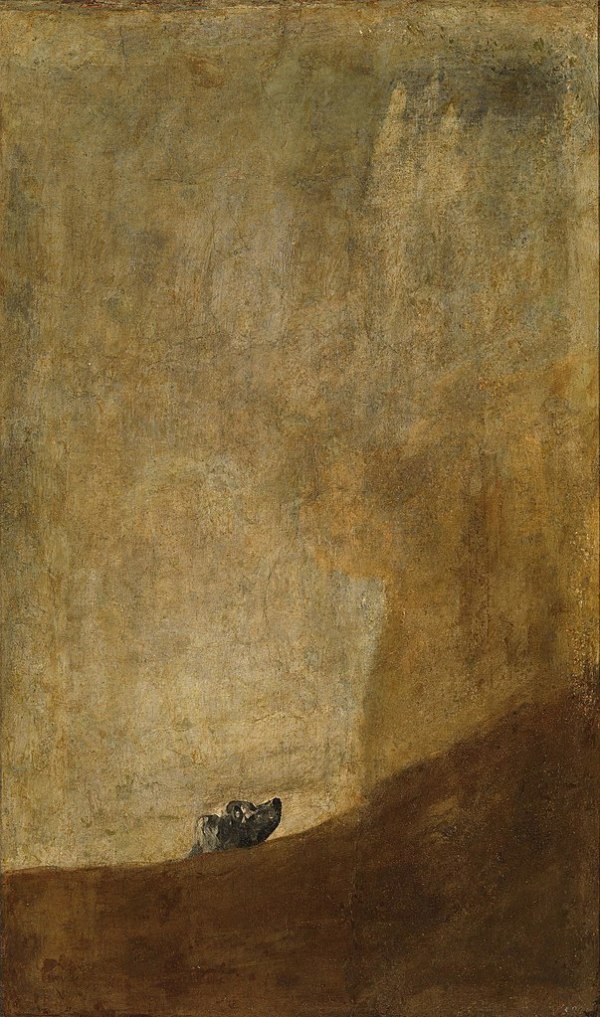
Goya’s Dog – Dirk van Nouhuys

The dog is alone looking, seeing, finding no more than he presumed. Finding the past. Wanting the past to be the future, wanting not hope but satisfaction, the satisfaction of familiar smells, the satisfaction of familiar figures, the satisfaction of familiar selves, the selves around and above him now empty, now filled with sentiment but no faces. An eye, an eye for those above, those somehow himself and not himself more present in their absence than their presence. Is the future the past? – Oh such a poignant question! The poignancy is itself future! Is the future poignant absence of past love? Love of what is below the horizon line. The horizon line is bent uphill; surely that is hope? Hope does not stay. When will hope call him, offering him her red ball, the red bull of the sun setting. Let the sun not set until the future or the past has called him. Where are they? If they are lost, if they have run away or gone on to their other business, where can it be? Where is not the future or the past? Surely they love him there wherever it may be to the side of time. If he bent his head, could he sniff out where they are beside themselves to the right or left of themselves? But oh! If he lowered his nose to the ground, he could miss it if they saw him.


Image “The Dog” – Francisco Goya via Wikimedia Commons

Mindless – Timothy Tarkelly

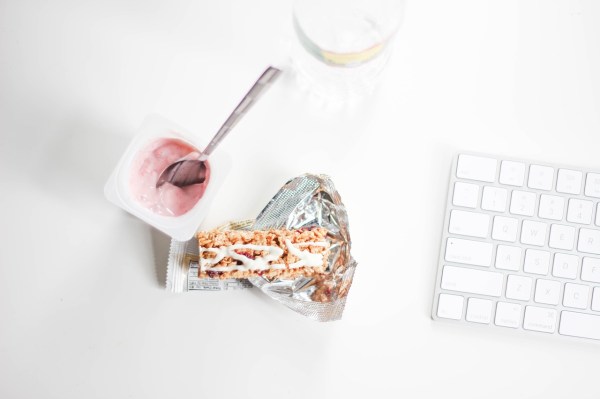
Francine peels the color-printed foil off of her yogurt and digs in, careful to get a liberal amount of berries in her first bite. This is her favorite part of the day: breakfast. It is ten after eight o’clock, which is technically ten minutes after the work day begins, but no one really cares until around nine.

She is at her desk and Karen is in one of the plush, blue chairs against the wall (where clients sit), playing on her cell phone, occasionally making silly faces into the camera.

“Maybe,” Francine begins. “I am just having a bad reaction to adulthood. Like, more than ever I just want to go back to working at the movie theater. That was the best job ever.”

Karen doesn’t say anything, which begs the question, “Who is she texting, exchanging photos with at ten after eight in the morning?”

Francine keeps talking anyway. “Yes, my job is relatively important. I can afford things, that’s good, I guess, but really I just have bills. It doesn’t seem worth it. Do you know what I mean?”

Her audience doesn’t seem captivated and her yogurt is depleting. Is this a depressive episode, or does her job suck? “Do you ever just get sick of this?”

“Nah,” Karen finally says, barely.

Outside the office, footsteps are progressing through the hallway and both parties lock it up, hiding phones and yogurt containers, just in case the footsteps open the door and say something managerly: “What are you doing?” “When will you have the [mindless obligation that in no way reflects actual work] for me?”

They pass.

“How do you keep it from getting to you?” Francine asks as she scrapes the final film of yogurt from the edges of the cup.

“I just don’t think about it, really. I just show up and do my job. Let my boss suck. At five, I go and do whatever the hell I want. I do what I want at work most of the time, too.” She lets out an unnecessary laugh. Her laugh. It’s always unnecessary.

“At the movie theater, I just did my job and left. There was never work to follow me home, real or emotional.” As if the emotional drainage is better than the extra paperwork kind. “I just made popcorn and swept the floor. I got to see free movies, got free snacks. It was the best.”

“In high school?”

“No, the summer after college.”

Karen puts her phone in her pocket, which, as Francine has observed a number of times, countless times, means that she is bored and is about to get up and leave.

“Why did you quit?” she asks.

Francine ponders as hard as she can without showing it. It is a simple question, with a simple answer, but she is baffled (more like offended) that Karen would ask the question when she knows she is about to get up and leave and forget they ever even talked about it. Now, Francine feels only interesting enough to warrant four seconds of eye contact and it is used to ask a question that does not need to be answered, will not be remembered. Francine will leave and then the boss will come and there will be more eye contact, but it will be tired and frustrated without any known reason. It will make Francine feel that she is responsible. She will work as hard as she always does (but if she’s being honest, she won’t because she has also taken to kind of doing her own thing, using the internet to keep her mind focused on staying put and not quitting to go and apply at the movie theater), but no one will ever tell her that she is doing a good job. Instead, there will be (imaginary) tasks that didn’t get accomplished and no matter how excellently she performs at mundanity, or how effortlessly she wears mundanity on her furrowed and busy brow, someone will invariably come by to make a comment about how she could have gotten her [mindless obligation that in no way reflects actual work] a little closer to perfect.

“It didn’t pay enough,” she says.

Karen stands to leave, she laughs unnecessarily. Her laugh. It’s always unnecessary. “Yep. That’s life.”


TIMOTHY TARKELLY’s work has been featured by Cauldron Anthology, GNU, Peculiars Magazine, Work to a Calm, and others. His book, Gently in Manner, Strongly in Deed: Poems on Eisenhower was published by Spartan Press in 2019. When he’s not writing, he teaches in Southeast Kansas.

Image via Pixabay

And No Bird Sang – Richard Hillesley

When morning came it was snowing and I lay on a mattress on the bare floor, shivering as the light crackled across the window panes, fingers of wind nipping the buds, numbed by the cold and unable to move, chilled to the bone and dying for a pee, and a woman on the radio was talking to a man who had walked to the North Pole in winter.

– It must have been cold,
she said.

– Colder than charity,
he said, and a shiver went down my spine.

– When I boiled a kettle for a cup of tea the water froze before it reached the cup,
he said.

The light seeped in between the curtains. The wind rattled the window, and I lay beneath the sheets, immobile and stiff, dying for a pee, and tried to picture the ice between his kettle and his cup. I wanted to get up and dress myself but my clothes were strung across a chair on the other side of the room. I wanted to wash my face and make a cup of tea. I wanted to catch the bus and get to work on time, but my arms and my legs were stiff with cold, and I was dying for a pee. I dreamt of the ice and snow beyond the window and sank beneath the sheets. Someone moved across the room above and I heard the bathroom door open and shut and the mysterious anguish of the pish in the bowl and the release of the flush of the chain, and still I couldn’t move.

– How did you wash yourself?
asked the woman on the radio, and I didn’t hear the answer.

What happened when he went for a pee? I wanted to know. Did a dagger of ice shoot from his crotch to the ground and impale him in the snow? I wanted to know, but she didn’t ask the question and I never heard the answer I wanted to hear, and rolled across the mattress in agonies of procrastination and indecision, torn between lying in bed and the ice-cold walk to the loo.

Time went by and the voices on the radio turned to other stories and faded into the ether. My alarm went off and I went for a pee, my hand on my crotch as I went, and I ran down the stairs and made a cup of tea and walked to the bus stop through the ice and snow. I was late for work again.

A day or two later I was on a bus into the city and an old man sat on the seat next to me, talking to himself. This happened to me all the time, and I didn’t usually notice, preferring to watch the world go by and listen to my own thoughts, but he had a story to tell, and no-one else was listening.

– Johnny was lonely,
he said to himself, looking out the window at the road below,
– and they sent him to the North Pole.

I drew a face in the condensation on the window and stared at my reflection in the glass.

– It was cold up there,
he said,
– and there was nobody there but Johnny.

He had a scarf about his face and mittens on his hands. The snow was still on the ground.

– They sent him to the North Pole,
he said.
– and that was why he talked to himself.

I knew he was talking about himself. He sighed and said,

– That was why he talked to himself.

The bus jerked to a stop and I got up. I tried to catch his eye, but he didn’t see me, and the other passengers didn’t care to see him. The cold and dark had wrapped themselves around his soul.

– It was colder than charity,
he said, and stared into the void.

– And no bird sang.

– That was why he talked to himself,
he said, and I pulled my coat up round my collar, jumped off the bus, and went into the city, dodging clumps of snow and listening for birds.


Image via Pixabay

Passage – December Lace

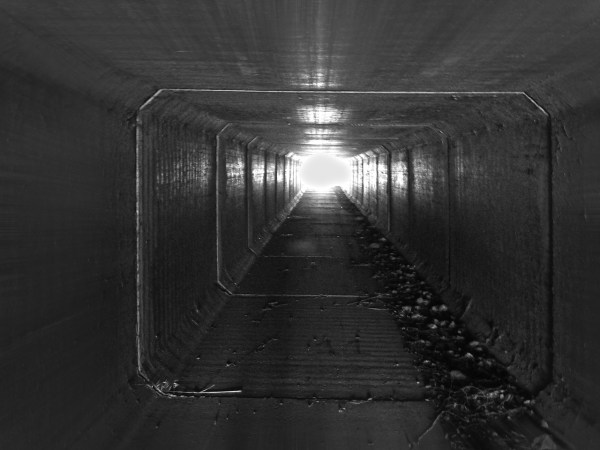
It’s a lonely walk through the dark tunnel
All light extinguished
There’s no guarantee
He’ll be waiting for me
At the other end
I’ve left the cold, but it crept in
Keeps trying to attach itself to
The cloth I wear, snags in my hair
Wind picks up and enters the walls
No matter how far I’ve come
It follows me
Like an earlier sin
My velvet boots make echoes in
The hollow darkness
Rats scurry round my ankles
Away from my destination as
More wind slaps my face
My punishment for braving the night alone
I am unsure if there are
Any demons poking about at this hour
Dressed in rags or suits
Then my hearing fails
And it’s darkest at the end
One lone street light is on
The man with the dim coat
Isn’t where he said he’d be
He’s at the opposite entrance
Waiting for me across the street
But he is
There


DECEMBER LACE (@TheMissDecember) is a former professional wrestler and pinup model from Chicago. She has appeared in the Chicago Tribune, The Molotov Cocktail, Pussy Magic Lit, The Cabinet of Heed, Awkward Mermaid, Vamp Cat, and Rhythm & Bones YANYR Anthology, among others. She loves Batman, burlesque, cats, and horror movies.

Image via Pixabay

Timidity – Dan Brotzel

When Tony Bell retired at 57, he told his wife Simone that at last he’d be able to focus on the things he really cared about. She thought this meant Sudoku, county cricket, trad jazz, Radio 4 and the Battle for the Atlantic. She had no idea that he meant writing fiction.

Tony had a well-paid job as the Business Development Manager for a company that provided disposable self-testing drug kits to governments, prisons and sporting bodies. But it was a long time since he’d had any enthusiasm for what he did, and for several years now his working life had been a tedious round of calls to make and meetings to be seen at. Tucked in his little office on the sixth floor, Tony had spent much of his time discreetly plotting his exit.

He was good with money, good with figures. Early in his career, Tony had been in at the start of a PR agency that specialised in controversial clients, back in the brief window of time when being in PR was vaguely sexy and new.

The agency had quickly grown because of its willingness to take on high-paying if ethically dubious corporations (and even countries, in one case). An international media network had bought it out, and Tony had been a semi-willing casualty of the transition. The sale of his shares had given him some money to play with, and ever since, his canny investment portfolio had shown steady and gratifying growth.

His wife Simone had begun by admiring Tony’s way with money. Like him she was a careful, even frugal spender; both of them made sandwiches every day for work and always looked for voucher codes before they bought anything online. But over time, she became increasingly frustrated by Tony’s reluctance to do anything with their burgeoning nest egg. He baulked at holidays that went beyond Europe, preferred to fix up the rooms they had rather than extend or remodel, and insisted that owning two cars – despite the obvious conveniences to them both – was not fair to the planet.

What then was the money for? Though he had not realised it consciously, Tony saw now that he had been saving up to buy his way out of work. Early retirement – a dream he could now make real.

*      *      *

In the weeks and months before he left work, Tony talked to several friends and acquaintances about the transition from working life to retirement.

He heard tales of men who went off the rails, driving their wives crazy by hanging round the house under their feet all day, messing up their well-established domestic systems and routines. He heard of men who’d taken the plunge early without realising they couldn’t really afford to, and now spent their time reading the papers in the library and cadging the free-coffee stickers from better-off customers in MacDonald’s.

Then there were the smug ones, the ones who said they things like I’m busier than ever! and I don’t know how I ever made time for work! These ones painted, they ran reading groups, they campaigned to save hospitals, they raved about the University of the Third Age. I only wish I’d done it years ago! they invariably said.

Then there were the lonely ones, the ones who had enough income but had lost their partner or had little family around them. They told him to get Sky Sports.

Tony took from all this the idea that retirement didn’t really change you so much as show you who you’d really been all along. If you were a busy, social, life-loving sort of person, you’d have that kind of retirement. If you’d been on the run from your own life for years, retirement wold find you out. The thought alarmed him.

*      *      *

‘Time is our element – it’s the very air we breathe – but how often do we feel we are actually in time?’ intoned the contract Christian on Thought for the Day (the one thing on Radio 4 Tony used to hate but which he now listened to religiously.)

‘We talk of making time, killing time, losing time, saving time. But these are all reflections about time made from the outside. Lord, just for today, help me to relish and revere the sacrament of the present moment. Help me to live in your time. Just now. Just for Today.’

‘And this is indeeeed Today you’re listening to right now,’ said John Humphrys with a twinkle. ‘It’s very nearly a quarter past eight.’

And so to writing. Tony had always wanted to write, he just hadn’t thought about it for years. He had spent his working life saving up money to buy time. But without any idea of what to fill that time with, the exercise was futile.

But the time to write was now. It was, ahem, write now. It had always been now. While he was working, he should have been getting up early to scribble stories like Mary Wesley and Fay Weldon had done, jotting down dialogue in between ironing shirts like JG Ballard, or sneaking down lines of verse in his corner office, like that mad American poet they’d mentioned on Poetry Please the other night. Instead of checking his portfolio and plotting his escape, he could have been plotting his novel.

But perhaps some of the other clichés about time could still save him.

Better later than never. All’s well that ends well.

No time like the present.

*      *      *

Into the planning of his retirement – or what he liked to call his rewrite-ment – Tony threw all the very considerable strategic and time management skills at his disposal. He drew up a fiction-writing calendar populated with realistic milestones and solid deliverables. He factored in time for planning and structure, background inspiration, note-taking and drafting. And he stuck it to all, he delivered. He wrote like a man whose very life depended on it.

He even gave up The Archers.

Tony had always wanted to write a novel, but his idea was to build up to that daunting challenge by spending a year writing short stories. To give him extra impetus, he chose a short story competition to write for every month. His task was to hit the competition deadline every time, and by the end of the year he’d have a bank of a good dozen stories – any one of which might prove to be the kernel of something more substantial.

Stories began to fly from Tony’s PC. There were thinly disguised tales of men who didn’t know what to do with their retirement, scathingly satirical parodies of office life (often set in a vaguely pharmaceutical sort of workplace), and a historically scrupulous account of a submarine attack on a convoy of merchant navy ships. There was even a whimsical story about a man who became so obsessed with Japanese puzzles that he…

Actually Tony had to stop there, because he really couldn’t think how to end that plot summary, let alone write it up.

After a few months, Tony took stock. His stories had received no feedback, positive or negative, from any of the competitions he entered, except for one tick-box assessment (free with the entry fee) which had given him 4/5 for punctuation and grammar.

The stories were, he knew, bland. They were formulaic, they were feeble projections of his own interests, they did not sing. They lacked balls, grit, edge, risk.

The punctuation, however, was solid.

And so he began again.

*      *      *

Tony started to write about what he really felt, about the things he wished he’d done, and the things that usually go unsaid. He wrote a story about a man he called ‘Tommy’ who had always wanted to fuck a colleague in Marketing, whom he named ‘Jan’. There had been a moment once at a drinks do when something seemed to stir between them, but both had stepped back from the edge.

Now, for this story, Tony wrote for the first time about something that hadn’t happened to him: he pushed the couple right over the edge and into a passionate affair. He imagined them wangling business trips to visit key suppliers in Amsterdam and Stuttgart and Malmo – all just so they make delirious love together in random hotel rooms.

He wrote about the sex he’d never had. The inside-outsideness of our sex, he raved. Me-in-you and you-in-me, my mouth chasing your vulva across a hectare of pure white bed.

He stopped shaving. He began to drink as he wrote – Dubonnet mostly, it was the only thing he could find in the house. (They weren’t big drinkers.) He felt stirred, raunchy, sort of juicy. He couldn’t imagine this on Book at Bedtime.

Where would this story take him? Tony wanted Tommy and Jan to win. He did not want to see them get their comeuppance in some bourgeois dénouement of reprisal and recrimination. And so in the final scene, he has Brian the boss ask to see the illicit couple. They fear the worst. But in order to keep up their business trips abroad, it turns out the pair have both been performing exceptionally, securing new contracts and smashing sales targets. The final line went to the boss:

‘Keep up the good work,’ twinkled Brian. ‘Tommy, I need you to keep it up.’

‘Fair game,’ became Tony’s mantra. Everything to the serious writer was fair game. In the heart of every true artist, there sat a sliver of ice. Tony began to write stuff down as it happened. He wrote up his fantasies of violence and revenge, he lacerated friends and neighbours with frank portrayals of their foibles and their faults, he sent up the sexual conservatism of his own marriage. He was mercilessly satirical about the aggressive parking practices of his neighbours at number 32, and the casual racism of his other neighbours at number 36.

Still no one had commented on his stories. But – to cite another of his own mantras – ‘the great must wait’. When you’re doing something new and brave, it takes a while for your audience to catch up. The silence of the criterati was surely but confirmation of the rightness of his path.

*      *      *

Tony liked to rise about 6am and get down to an early stint of typing. To avoid the infamous tyranny of the blank page – something he’d never actually experienced himself, oddly – he always left off in the middle of a para at the end of a session. Simone needed more sleep than him, and if it wasn’t one of her working days (she did shifts at the hospital) she would usually join him for half a grapefruit and a bowl of porridge around nine, by which time Tony would have the smug feeling of a couple of hundred words already tucked under his belt.

But this morning, she was already downstairs, sitting at the computer. His computer. Looking at his files. A frown monopolised her facial features, and an arm of her reading glasses dangled pointedly from the edge of her mouth.

When she saw him, she began stabbing at the screen with it. ‘This bit here – it’s Andrea, isn’t it? The woman who knocks on the door of her new neighbour with a welcome present and says, “Thank God you’re not Somalian!”’

‘Well, yes. No. It’s fiction.’

‘And this bit here, about the man who gets a bang on the head and doesn’t realise he’s become sexually inappropriate with everyone… it’s Ned, isn’t it? Jodie’s brother-in-law?’

‘Well. It’s all about extracting the underlying universal truth from the particularities of the everyday…’

‘Jodie’s my best friend! And you’ve been going to The Oval with Ned for nearly 30 years! Did you think changing the area of the cortex would cover your tracks? How could you?’

‘…’

‘And this one. This filth about a vulva in a duvet or something. This is obviously about that Janine girl at your work you were always going on about. You told me there was nothing in it.’

‘There wasn’t! I mean, there isn’t! Her name was Jane. This is a story.’

‘Oh come on! Jane, Jan, Janine, whatever. It’s obvious! Everything else is just verbatim from real life! You’ve taken all the bad or sad stuff from everyone we know, changed a few names, and you want to pass it off as art or whatever…’

‘Well, John Updike said…’

‘UpFuck John fucking Updike! John Updike did not have a sister like Naomi. When she sees you’ve painted her as a narcissistic monster who’d rather attend a client piss-up than go and see her own children when they’re ill…’

‘Well you yourself have said many times that she’s…’

‘I might have said it to you. But I haven’t typed it up for all the world to see! Do I have to watch everything I say now in case you turn it into a story for Radio 4?’

‘Actually they’ve rejected everything I’ve sent them so far.’

‘You mean you’ve sent this stuff out? People have looked at it?’

‘…’

‘Please don’t tell me you’ve sent this Middleground one.’

‘…’

He had. The Middleground was his favourite story, the one where he felt he’d come closest to saying something true and real. It was the story of a middle-aged couple who, though they had enjoyed an agreeable and prosperous companionship for years, had never quite managed to connect sexually. Neither had had the courage to really discuss the issue, and over time their couplings had become ever more stilted and infrequent, and the awkwardness had started to permeate the rest of their relationship.

‘I cannot believe you are parading our sex life to the whole fucking world.’

‘I’m a creative writer!’

‘You’re a muppet and a shit.’

*      *      *

Alternative ending 1: Tony sighed and shut down his PC. Though he had what he thought was a much better ending for The Middleground now, he would not be resending the story to the BBC or anyone else. There would be no new stories from his keyboard of dreams.

Contrary to his brief hope, his argument with Simone about his stories had not ended in erotic ecstasy but in bitter recrimination and corrosive silence. Now he had a new project for his retirement – the salvaging of his 32-year-old marriage. A work of non-fiction.

Alternative ending 2: That night, Tony added a final section to his short story, The Middleground. It described a toxic, years-in-the-making row between his middle-aged couple, which ended with up with them getting shit-faced on Tio Pepe and fucking right there on the sofa with more urgent vigour and rough experimental tenderness than they had known for years, if ever perhaps.

He couldn’t have written it better himself.


Image via Pixabay

Chink – Gail Aldwin

A navy sky extinguishes the day. Sitting on the balcony, Kate reflects upon her laziness. No excursions to the volcano for Kate, just a sunbed, a pile of paperbacks and the company of Robert. Still wearing his shorts, Robert stretches his legs then scratches a mosquito bite on his knee. Kate is cool in her strappy dress. She reaches for the tumbler, drains the contents then crunches a sliver of ice.‘One more before we go down for dinner?’ he asks.But he’s not even dressed. Hasn’t yet had a shower.‘No thank you,’ she says. ‘I’m fine.’‘Good.’ He sits back in his chair.What now? She waits. Irritation makes her skin prick.‘Are you going to have steak again tonight?’ she asks.‘Think I’ll ask for it blue this time.’Yes, mooing, even.From behind the mountains comes a rumble. Although Kate knows these steamy days can lead to storms, she hopes she’s wrong. Holding her breath, she clutches the armrests and counts. A flash comes before she’s reached number eight. She’s rigid in the chair but Robert gets up for a proper look.‘It’s coming this way.’ His voice is gleeful and he cocks his head. Doesn’t he know it’s ridiculous to swagger in flip-flops?‘I’ll get inside.’ Kate reaches for her bag but when she turns, Robert is blocking the doorway.‘Surely by now you can face it.’She hesitates. Does he know what she’s thinking? What she’s planning? Of course not! Robert means the lightening.‘Let me pass,’ she says.‘No.’ He grabs her shoulders and manoeuvres her for a better view. Kate closes her eyes, resists his pinching grip.‘There’s no point in struggling,’ he says. ‘You can’t be scared your whole life.’Kate breathes through her mouth, takes comfort from the steady pumping of her heart, listens to the gushes from her lungs. The crack and the searing light skewer her to the spot but she controls the trembling.‘See, it’s not so difficult, is it?’When the thunder comes again, she’s ready. This time with eyes wide open she waits for the crack and watches the chink of light brighten the gloom. A path to her future is illuminated. She can do it. She really can.

GAIL ALDWIN’s debut novel The String Games has been longlisted in The People’s Book Prize for fiction. To get to the next stage depends upon public support. If you like Gail’s writing, why not pop over and give her your vote?

https://peoplesbookprize.com/summer-2019/the-string-games/

(The competition ends 15 October 2019.)

Image via Pixabay

Suppose – B Lynn Goodwin

Suppose Hannah, age 9, closed her eyes and announced, “I have windowless eyelids”? Would she be creative or silly?

Suppose a storm made the lights flicker so hard that she retched. Would she have a fear or a brain disorder?

Suppose she saw a strip of a green “for sale” sign and wanted to touch the curly strip along the bottom edge? Would her parents say, “Don’t touch” or “Explore, Hannah, but keep your fingers out of your mouth”?

Suppose a row of goldfish wearing sneakers tap-danced their way into a dandy trap? Would Hannah crack up or try to rescue them?

“Why do we stitch our curls so tightly that the brain cannot breathe?” Hannah asked her teacher one day when she was tired of being told to sit still and pay attention.

Her teacher, wearing flats, a gray shift, and a loving smile said, “Soon you may be a polished artist or writer or brain surgeon, Miss Hannah.” She looked out the window at the leaves budding while Hannah sat up straighter When the bell rang three minutes later, she raced ahead of the others, got to the monkey bars first, and swung so high she could see a man in overalls and a woman whose bare tummy rubbed against them as the couple hugged.

Suppose she pushed her body into a boy’s like that. Somebody would be sure to call her Mama. She was about to scream at them to get a room, like her big brother did in the Walmart parking lot, but fear shut her down. Instead, she jumped off the monkey bars, raced to the fence, stared at them through a knothole. They must have felt her staring.

“Suppose you go back to class where you belong, Little One,” said the man in the overalls., striding towards her.

She stood still as his mouth came closer and closer to her knothole.

“Or would you rather I call the school?” his menacing voice whispered.

Part of her wanted to know what the school would do, but she not badly enough to double-dare him. Instead she turned away, rubbing her fingers along the seam inside her left pocket. Back at the swings, she shut her eyes and swung in windowless bliss.


B. LYNN GOODWIN is the owner of Writer Advice, http://www.writeradvice.com and is a manuscript coach/editor as well as an author. She won awards for her last two books, Never Too Late: From Wannabe to Wife at 62 and Talent. She loves the challenges and brevity of flash.

Image via Pixabay

Because I Couldn’t Bear – Ray Ball

Because I couldn’t bear

to let you go, I transformed
you into a small bird. I shouldn’t
have done it, but I caged
you in my right hip.

You built a nest in the dry
and brittle bramble of bone
and fascia. Sometimes,
in certain yoga poses, I can

feel you flutter against
the wrought iron of my widest
point. Sometimes, when I run,
I hear the faint acoustics

of your song beating
into my blood, and I slow
a bit so that you will rest
once more. Remain with me

to support this weight,
this internal rotation,
another season without
enough numbing snow.


RAY BALL grew up in a house full of snakes. She is a history professor, Pushcart-nominated poet, and editor at Alaska Women Speak. Her chapbook Tithe of Salt was just published by Louisiana Literature Press. Ray’s work has also recently appeared in Ellipsis Zine, Moria, and UCity Review.

Image via Pixabay

Tichners Point – Doug Stuber

Gale winds and lightning push me a mile or more down the lake.
As the aluminum Grumman canoe fills with late-spring rain.
I bullied my sister, insisting on paddling alone, so she raged.
The storm wiped the smug smile from my face, added pain.

That canoe remains the symbol of love in my heart.
I cling to it in my dreams. Its nurturing hand saved
A ten-year-old that day, and inspires further pours of art:
Paddle trips for trilobites wedged in cliffs of shale.

It waited every winter, unlike others I know
We wrapped cross bars with life preservers to portage lake to creek.
We pulled ashore on Squaw Island, a long way to go,
Retracing the frightful past strengthened this belief.

Fifty years later, there you are, not a spot of rust,
We hit Canandaigua, my love, my arms, my trust.

DOUG STUBER: father, professor, abstract expressionist, Hippie-punk improv rock bassist. Twelfth volume “Chronic Observer” now available at Finishing Line Press’ online bookstore.

Cabinet Of Heed Contents Link 21

Image by Free-Photos from Pixabay

The Summerhouse – Rick White

‘Doris!’ Came the cry from the living room. ‘Cup of tea for Baal, milk and eighteen sugars, and be quick about it woman.’

Doris gave a long sigh as she put the kettle on for the fourteenth time this morning. It had been two weeks since her husband George had accidentally uncovered a Gateway to Hell in the back garden, whilst fettling with his petunias. Since then they’d had a constant stream of uninvited demons dropping in at all hours for tea. Which one of them was it this time? She wondered. What dreadful, Hellish abomination was sat in her living room, which she’d only just this morning hoovered? Staining her upholstery with blood and charcoal and God knows what kind of filth and likely to destroy the whole house and drag her off to eternal damnation at so much as a misheard sentence. Good Lord – the tension!

‘George?’ Doris called back. ‘Could I have a quick word with you in the kitchen please?’

‘What is it woman, where’s that tea?’ George called back.

‘Just come in to the kitchen George!’

George poked his bald head round the kitchen door, ‘Well?’

‘George Mason you’ve become positively insufferable since you opened that Gateway to Hell.’

‘Me? I’m just trying to make our guest feel welcome Doris. He’s one of the seven princes of Hell for Pete’s sake woman, right hand man to Lucifer himself, if he wants a cup of tea just make him one and be quick about it!’

Doris sighed again, ‘Fine.’ She got on with making the tea. She peeked in to the living room and saw Baal sitting on her formerly cream coloured sofa, now stained with gore and viscera of all kinds not to mention dirt from the flower beds. Baal had three heads; a man, a toad and a cat all sat on top of eight hideously large spider’s legs. It was no wonder none of the neighbours wanted to attend Doris’s coffee mornings any more.

Doris could hear George in the living room, grovelling and fussing round Baal and she thought about what she wouldn’t give to have that kind of attention, any attention really from her husband. Men in their late fifties tended to go one of two ways; they either stood up and fought vigorously against the inevitable onset of old age, they bought sports cars, took up yoga or started fencing or cycling some ridiculous distance for charity. Or they simply rolled over and accepted it meekly, like a once intrepid explorer who has given up all hope and quietly lies down to welcome in the cold as it saps the life from his bones, the unbearable aching gradually giving way to the first warm lapping waves of death.

This was all rather dramatic of course, but Doris could forgive herself a little drama when she had the commander of sixty hellish legions in her living room, crunching up her best bone china in his man teeth while his other heads chattered and screeched terrifyingly. And besides, the explorer in this particular analogy, George, had never even explored anywhere. He’d most likely curl up and die on an expedition to the Co-op in slightly inclement weather.

Doris didn’t feel old. She was looking forward to retirement and to all the possibilities that it would bring. There were holidays to be taken, tennis leagues to win and – hopefully, sex to be had! The closest she’d come to anything like that recently was when Asmodeus the Lust Demon dropped in last week during an episode of Cash in the Attic and she’d had to politely (but firmly) reject his advances.

Ironically, these last two weeks had been the most alive that George had seemed for quite some time, while he had been, quite literally, staring in to the abyss. He’d been so proud of his discovery, like a child on Christmas morning. ‘It’s the entrance to Hades!’ George had exclaimed. ‘Let’s see who’s got the best garden this year you bunch of jammy sods, try and top that.’

His excitement had waned somewhat when no-one seemed that interested in his precious Gateway. He’d phoned the children straight away, Ricard and Sophie were both off living their busy lives and having adventures of their own which was what Doris wanted for them. They’d told George to, ‘WhatsApp them some pics’ which he’d managed to do after an hour’s faffing about but he never even got a response. He’d set up a Twitter account @EntranceToHades_71 but all of his tweets had been derided as being either ‘photoshopped’ or ‘fake news’.

Even Doris had to admit that she had been slightly impressed with the Gateway to begin with – an entrance to another world, a portal to another plane of existence right there in their back garden! Well it was a little bit exciting and perhaps not even all bad. Dagon, the Baker of Hell had brought up some poppyseed muffins which Doris had to admit were delicious. Doris almost caught herself thinking that the inhabitants of Hell were possibly more pleasant company than those of mortal earth to which she was currently bound. She certainly had enjoyed wiping the smile off Christine Chang’s face the other day, always talking about her Pilates and her husband’s promotion at work and the fact they were going to the Maldives for Christmas.

‘Well actually George has uncovered an entrance to the Netherworld in our back garden.’ That shut her up.

Just then Doris was stirred back to reality as Baal disappeared with a sharp crack! Sure enough leaving the sofa completely decimated in his wake. George scurried away out of sight as well and Doris began the task of stripping the covers off the sofa to take them, where? Where on God’s green earth was she going to find a dry cleaners that could do anything about this mess? She should probably just cast the sofa in to the fiery pit and be done with it. Thirty eight years, thought Doris. Thirty eight years she’d been married to George. For twenty five of those years they’d lived right here in this same house in this small suburban cul-de-sac desperately trying to ignore the metaphorical implications of their chosen locale as they became painfully obvious to anyone and everyone except George, who wouldn’t recognise a metaphor if one hog tied him to a spit and roasted him over an open fire. Maybe that’s what Hell really is; the drudgery of the mundane.

George re-entered the room slightly more crestfallen than usual, looking at his phone. ‘Still not heard back from our Sophie or our Richard.’

‘Well what do you expect George? The kids have got their own lives to lead. They’re not interested in relics like us or that stupid Gateway.’

‘The Gateway is not a relic, it’s eternal.’

‘Yes I know the feeling.’

George ignored the remark, or failed to register it. He was now fiddling with a bit of lint on his cardigan and seemed rather engrossed in it.

‘George?’ said Doris, elbow deep in a grotesque melange of sofa covers.

‘Yes my love?’

‘Do you remember my nineteenth birthday?’

‘Not really. Why?’

‘You booked the afternoon off from work and you rode your bike for ten miles to my house with a picnic basket to take me out for the afternoon.’

‘Yes that’s right. It was sunny all morning and then it absolutely hammered it down with rain all afternoon, bloody disaster.’

‘No George, it was lovely. We just sat at the kitchen table and ate pork pie and sandwiches and drank your awful home brewed cider. We played a game of draughts, which I won and we listened to the radio until it started going dark outside, and we chatted George. We just talked about nothing in particular.’

‘We still chat about nothing in particular.’

‘You chat about nothing in particular George Mason. Sometimes I don’t know whether you’re talking to me or just mumbling to yourself. I want us to share a conversation and not just about that stupid Gateway to Hell.’

‘But I thought you liked the Gateway. I thought it would be something which we could both enjoy together.’

‘Enjoy together?’ And what exactly do you enjoy about it George?’

‘Well it’s interesting isn’t it? You’re always saying how you wish we had more going on well that’s pretty interesting isn’t it? The demons can be a little on the strange side I admit and the screaming and the flames and the constant heavy metal music do seem a bit much at times but you know, I just thought you liked it.’

‘What have I ever said or done to give you that impression George Mason? I didn’t like it when you got me a microwave for Christmas, I wasn’t excited when we got the new boiler and I don’t like that ridiculous Gateway to Hell in our back garden!’

‘Well I’m trying my best Doris. I swear I don’t know what you want sometimes.’

‘I want you George. You stupid man. The kids have flown the nest, we’ll both be retired soon and I want to make the most of our lives together. I don’t want to be condemned to an eternity of suffering like those poor souls in the back garden. Just go and cover up that Gateway, you can put up a shed if you want and just spend all your time pottering about in there.’

‘Well now hang on a minute. I know I said I was going to build a shed but I could always put up a Summerhouse, that way we could enjoy the garden together. The rosebushes are almost in flower but the fire and the charcoal and the blood isn’t so good for them so perhaps you’re right. I could put up some decking as well and we could have the neighbours round for barbecues when the weather’s nice. And when it’s raining we can still sit out under the porch and have a game of draughts if you like? It’ll even have underfloor heating free of charge!’

Doris smiled in spite of herself. When she originally offered to sell her soul for a slightly more attentive husband she’d assumed the process would be slightly more expedient but never mind. The Devil takes his time and relishes his tasks but as long as the crafty old bugger got the job done one way or another who was she to argue with that?


RICK WHITE is a fiction writer from Manchester UK. Rick has previously had work published in Storgy, Soft Cartel and Vice Magazine among others. Rick is 34 years old and lives with his wife Sarah and their small furry overlord, a Cavalier King Charles Spaniel named Harry. @ricketywhite

Cabinet Of Heed Contents Link 21

Image by Khusen Rustamov from Pixabay

#youtoo – Deirdre Fagan

Never think it can’t happen to you. You are too aware. You are too smart. Things like that don’t happen to you.

Things like this happen. They happen repeatedly, and to people who thought they were just as smart as you think you are.

Do you remember how clever you thought were when you first tied your shoes? And how clever you thought you were when you first snuck candy? How clever you were when you aced the spelling test? Or, convinced your parents you were responsible enough to be left alone? Or how clever you were, later, when you secured the perfect job only to find the person who hired you primarily wanted in your pants?

We like to think we are so clever, but we can be outsmarted, and are, more frequently than we like to acknowledge. Everyone thinks they are so clever, but the ones who take advantage are the ones not thinking they are clever, but using all of their cleverness to deceive. We are only more clever than they are if whatever we are spending our time thinking about, all of our time thinking about, is how to get what we want. Those people aren’t more clever than we are in all things, but they are more clever than we are at something primary: they are very good at making us believe we made the choice to be deceived.

We made the choice. If it’s anyone’s fault, it’s ours, and they not only convince us of that, they somehow have a way of unleashing everyone’s blame on the victim.

Why didn’t you tell anyone? Why did you let that happen? I thought I raised you better. I thought you trusted me. What did you do to make that happen? Why didn’t you stop it? You could have just told someone. You could have told me.

It’s not what you were wearing or how you looked or that you were prettier or more handsome or that you asked for it. It’s that everyone agreed to ignore the signs and everyone agreed to absolve the perpetrator because to see it means they aren’t so clever and it also means they are wrong, and they want to be right, even if it means blaming the innocent.

How high did you feel when you snuck the candy? Good? For how long? Did you then feel guilt? Did some of your joy over taking the candy make you feel badly later? Badly enough that you didn’t do it again?

When you tied your shoes, you were proud you could do something yourself, not proud that you deceived the shoes into letting you have your way with them.

Perpetrators don’t feel guilt about taking the candy. They want more. And it doesn’t have to be candy, either. They want the high of everyone thinking they are good, when they aren’t. They like hiding. Hiding is where they feel power. If they can stand right in front of you and you can’t see them, they have not only won, they are powerful, and they want power. They crave it. That’s why they pick those they can overpower. They can overpower you. They can overpower more people than you know, so much more than you know.

And you are especially easy to overpower if you need parents, or love, or money, or shelter, or someone to help with your kids. Money? Time? Help? They hear that word, help.

Do you have it all except you have never been told you are beautiful? No one has ever loved you for who you believe yourself to be? Someone has made you feel less than deserving. Maybe it wasn’t even your parents. Maybe you just look in the mirror and think you don’t deserve anything or aren’t good enough. You don’t see them, but they see you. They know exactly what you need, and they will give it to you, so you’ll give them what they want, until you are so ensconced that it’s like the carnival ride of funny mirrors and you feel the glass and see the other side and cannot find your way out.

The first (or last) person to say I love you, whether they do or not (because it won’t matter if they seem like they mean it because they don’t know what it is) will charm you, because they say they love you and they don’t have to. You won’t know the definition yet. That won’t matter. Those words will seduce you. And they may even be withheld until some damage is already done. You will already know you should have said something about what they wanted. You should have said something, you tell yourself. This is your fault. Not the thing, the not telling. You didn’t tell.

And now there’s this love out there, suggesting you should accept or forgive or even say thank you, thank you for loving me, even if it will take decades to know this is not love.

It isn’t love, right? Even after everything you will learn about love, you will wonder, was it love? It felt like love, even if it only felt that way once and briefly.

You were sleeping, or doing the dishes, or gardening, or just getting out of the shower. The first time you were surprised and didn’t know how to react. You froze. It happened. You didn’t scream. You knew it was wrong. But this person had never been presented as wrong. Only right. Only kind. Only sympathetic. Only generous. You didn’t say yes. You weren’t asked. You were taken. You didn’t say no. You didn’t say anything. And immediately afterward, or the next day, or week, or month, you were told you didn’t say no, so you liked it. You wanted it too, didn’t you? You know I love you, don’t you? We love each other. No one else would understand. They say it’s forbidden. It’s not. I am only like this because I love you and love makes a person do wild things. Remember the great love stories? Wild things.

And it will stop because the high will pass. The person who took you won’t want to anymore because you won’t be as afraid. You will succumb. The secrets will not be so fascinating to them anymore. They will need new secrets. More secrets. The power isn’t power when you don’t recede. It’s not power if you have a choice, any choice. You aren’t supposed to have a choice. And when everyone is so used to it, to what’s happening to you, they aren’t even watching anymore, they haven’t even noticed or questioned or paid any kind of attention in months, the one who taught you all about what love wasn’t will slither away leaving you to wonder what it was that happened and why you let it. You thought you were clever. But if it happened, and it did, then you let it, and you must have wanted it, and you are to blame.

You are to blame.

You believe them. You believe all of them. The perpetrator and all the people not looking at the perpetrator. All the people who turned their heads from you and are now looking directly at you. You say you don’t believe them. You were not to blame. But some part of you still believes them. They get their teeth in you.

If you don’t believe them, then you have to admit you were powerless. And you want some power too, not that kind of power, not the power over someone else, just the kind you felt that first time you tied your own shoelaces. You want to feel proud like that again. But you can’t.

The only really power you have is in convincing everyone else they were the ones who didn’t tell, not you. You shouldn’t have had to tell. It was so obvious if they were only looking.

Look at the perpetrator. The perpetrator is standing right over there. Look at that face, not through it. See it? See that face. It’s deceptive isn’t it? But you are clever too. You can see it if you don’t look away. Don’t look away because it’s easier. Don’t look away.

Look at me you say. See me. I want to be seen. Do you think you are clever? #metoo


DEIRDRE FAGAN is a widow, wife, and mother of two who publishes poetry, fiction, and nonfiction. Her poem, “Outside In,” nominated by Nine Muses, was a finalist for Best of the Net 2018. She is an associate professor and coordinator of creative writing at Ferris State University. Meet her at deirdrefagan.com

Cabinet Of Heed Contents Link 21

Image by Ankita Gkd from Pixabay

Post-Nuclear Glue-sniffers – Rebecca Gransden

A slippery boy ran in circles around the king’s cadaver.
Under thunder clouds, where the gulls echo.
His friend yelled ballads from the sidelines.
The rain fell and the mud churned, frothing in puddles.
His Bloated Majesty ballooned and stank,
so inflated, his legs stuck out and pointed at the broken rooftops.

Sweaty men wanted the corpse and stood watching the boy.
He amused them, so arms folded.
The other boy stopped yelling and clasped his hands to his eyes,
starting to count backwards.
Laughter rose up, clear, as the men readied.
Air escaped from the king and his noisy stench blew the boy out of his circle.

The boy kept running.
Over black moss.
Over smashed poultry igloos.
His ankles hurt on the curbs.
He thought about the king’s body and how it was behind him,
threatening to explode.

He must look like how people did when they were running from the bombs.

The sirens sang in from the outskirts,
So he took a different way, and discovered a shopping centre
that still existed.
1: Matches from his pocket.
2: An impromptu trash bag torch
He set the building to burn and ran on.

Chairman Boy sat on the dead king’s cardboard throne,
up near the beams at the back of the dark barn.
The boy ran in and stopped.
The other boys sat in a circle all around him,
staring.
“You’re late,” Chairman Boy said, “Where’s my king?”

“The lechers got him, a group of jolly meanies,
They had a giggle and all I could do was leg it.”
Chairman Boy pulled a scrunchie bag from his side,
covered schnoz and gob, and huffed a few,
’til the plastic deflated and the puff died away.
He drooped to one side before lifting a finger and pointing at the boy.

“I couldn’t do nothin’! He was ‘bout ta burst anyway.
It weren’t fair, you sending me to zoom round ‘im.
It’s no protection, I tell ya, though I tried me best.”
The other boys rattled their snuffing bags
and the boy spun around under their gloomy eyes.
“You couldna done no better. It’s trying circumstances.”

Outside, the evening weather got dank.
Some boys lit fat dirty candles and the wicks spat out their flames.
All the hay barrels and box crates stacked to make their meeting room.
Under corroded metal the heady conference began.
Chairman Boy sucked on a glow-in-the-dark oversized dummy.
“Where’s my king?” he cried, creasing his face around vacant pupils.

The boy lifted a scratched CD and checked his face in it.
His welts were growing, looking like caviar.
“How we gonna decide who is next up?” he said.
The boys tossed arguments between them into the night,
sometimes wrestling to settle minor grumbles.
“I got qualms about any of us being King Boy,” the boy said finally.

“None of us in this room is fit,” Chairman Boy said,
freshening from his glue stupor.
“As Chairman, I’m proposing we wait here until our king arrives.
Whoever next walks through the door is coronated His Majesty.”
A hush brushed the snuggly barn, the spittle of candles crackling.
Without any objection or ideas, the boys silently concurred.

Hunkered down in the early hours the boys took their waking dreamtime,
given in sleepy solvent gasps, stained plastic soothing.
One by one the candles faltered.
A gentle light left.
And the bright moonrays broke through radiation clouds,
to enter by door and by window on the waiting.

A scabby little one convulsed on the bare floor between pallet stacks.
“Leave him be,” Chairman Boy said, scraping dribble from his drained lips,
“He’s been wanting to die for ages.”
Strangulated sirens blared far off across the deserted city ruins.
The boys had heard them all their lives but still didn’t know what they were telling.
Or if they were telling or meaning anything at all.

Tiny tottering footsteps arrived at the door, a delicate outline wobbling under the moon.
The boy lifted his head in recognition of the sound.
A pair of rear back legs, the tap tap of hoof on concrete.
“Denise,” he said. He sighed.
All the boys roused and looked, snorted, and laughed.
Denise the two-legged lamb was king.

Chairman Boy stood.
“All hail Denise! Denise! Denise!”
The boys repeated, over each other and woozy:
“Hail, hail! Denise! Denise, Denise!”
The lamb trundled over to the boy and sniffed out his finger.
She’d been allowed life because the boy fed her.

She was his burden.

The boy grabbed a CD from the floor and slit the wound on his thumb with the sharp edge.
With urgent pushing, the lamb sought his digit and suckled her overdue meal.
One of the other boys said, “This ain’t gonna work.”
Chairman Boy lit a candle and stood up straight, wavering.
“The king sucks her advisor.
All hail the king! All hail our advisor!”

REBECCA GRANSDEN lives on an island and writes sometimes. She can be found on Twitter @rlgransden and online occasionally at rebeccagransden.wordpress.com

Cabinet Of Heed Contents Link 21

Image by Anna Owen from Pixabay

Power Outage – Ron. Lavalette

How unfortunate to be there
when the power goes out
at two separate places
at two different times
on the same day.

It was one thing, the first time,
when the supermarket overheads
and everything else
—except a few quick-witted
smartphone flashlights—
flickered twice and went black,
flashed a blinding warning signal
—a truly brilliant half-second delay—
before leaving the whole sad storefull
frozen in Aisle 7, startled into silence
and forced into terrifying immobility
for a scary seven minutes.

Everyone survived. Everyone
muddled through; made it out alive.
Praise the Lord.

But then,
again, hours later…

RON. LAVALETTE lives on Vermont’s Canadian border. He has been very widely published in both print and pixel forms. His first chapbook, Fallen Away, is now available from Finishing Line Press, and a reasonable sample of his work can be found at EGGS OVER TOKYO http://eggsovertokyo.blogspot.com

Cabinet Of Heed Contents Link 21

Image by Reimund Bertrams from Pixabay

The Breakout – Tomas Marcantonio

‘You’ll need these to break out,’ he says, passing me the silk bag. I tip the contents onto the table: a small hammer; an HB pencil, striped red and black; a mirror, round with a silver frame, the size of my palm.

‘What about the mask?’ I ask. ‘The earmuffs?’

He shakes his head. ‘You won’t be needing those anymore.’

I look again at the tools, my breathing fast and shallow.

‘Remember what you learned,’ he says. ‘Four in, seven out.’

I nod. In through the nose, four beats. Out through the mouth, counting to seven. Better.

‘Shall we have some more practice before you go?’

I nod again, grateful.

‘Lie down, close your eyes. Let’s go to the field.’

I do as instructed, and when I open my eyes I’m eight years old. The sun beats against my forehead, its rays painting a yellow varnish on the veins of every blade of grass. I squint through the blazing caramel light, black orbs staining the recesses of each blink. The air stinks of acrid daisies trodden into the grass and the poisonous perfume of nettles that cluster like barbed-wire mines around the base of the outer fence. I step through the crowd and hear the riotous roars of boys as they charge about the field, their violent brogues crashing against the ground like the hooves of thoroughbreds approaching the grandstand; the shrill, flowery laughs of girls that judge me with a criteria drawn up from some other plane.

‘No,’ comes the voice from the chair in the other world. ‘Not judging. Say what you see, don’t transfer your own thoughts onto them.’

I try again. The shrill, flowery laughs of girls, amused by something unknown.

‘Better. Keep going.’

I steal on, chin pointed to my leather toe-caps, arms soldier-tight by my sides. Every step is careful, immaculately planned and executed, leaving no room for error.

‘You’re wearing your mask,’ comes the voice. ‘Lose it.’

I lift my eyes to the school; the great pigskin-bricked warren of worries. Four in, seven out. I peel the mask off like a film of dried glue.

‘Take your time. Look around you.’

I glance to the left at the scattered nests of scarecrow infants rolling on the floor, grass sticking to their jumpers and hanging from their hair; a group of rose-faced girls with white hamster teeth and locked elbows; the rubber-stomached dinner ladies with beetroot cheeks, leaning up against the low wall with their sausage arms crossed. None of them is looking at me.

I turn to the right, to the battalion of lost boys, war-painted and stick-wielding, feet slamming, fists clenched. Their cheeks are blue like jellyfish, stuffed with hungry breaths. Footballs cannon through the sky, announced by battle-cries and the shaking earth of a fresh stampede. None of them is looking at me.

‘Good. Now get ready.’

Four in, seven out; I ready myself for impact. One of the cannonballs connects with the side of my head, knocking me sideways, stumbling. The air is sucked out of the field, time and sound briefly plucked from the earth and stashed away by invisible thieves. But only for a moment. Then the wolves begin to howl, their teeth gnashing in delight, the whites of their eyes rolling desperately like wild horses at the sound of a gun. Hell’s own laughter, collecting over the field like a charcoal cloud that swallows up the sky. Eyes everywhere awaken; a thousand eyes, and all of them on me.

‘What do you do first?’

Four in, seven out.

‘Good. Next?’

I stand up straight, try to raise my head. It’s heavier now.

‘Eye contact. Look around.’

I blink hard and look up. Left, right, ahead, meeting as many eyes as I can. I see the plum faces, the boys laughing, bodies rolling around on the floor holding their stomachs. I rub my ear. It’s hot, and my face is red.

‘How do you know?’

My cheeks are burning.

‘The mirror.’

I reach into my pocket and pull the mirror out of the silk bag, hold it up in front of my face.

‘It’s not as red as you thought, is it?’

No, it’s not.

The laughter is dying away. The boys have already reclaimed the ball like hungry pups and some of them are continuing with the game. I breathe, watch the fresh charge of black shoes towards a goal made from jumper piles. No one cares. Most of them have already forgotten about it. It’s over.

I open my eyes. I’m back in the room, lying down.

‘Good. Now one more,’ he says from the chair. ‘Let’s go to the party.’

I close my eyes again.

*      *     *

I’m passing down the rotating throat of a kaleidoscope. The corridor walls lean in towards the ceiling, the strobe flashes throwing psychedelic diamonds across my path. I shuffle down towards the kitchen, back against the wall. There are no boys or girls; there are only armies of elbows and plastic cups of bitter gold, greasy curtains of hair stuck to the posters on the corridor wall. The tunnel is rank with the musty stench of armpits, the damp mire of vodka soaked into the carpet, and the foul manure of cigarette ash left to stew in half-crushed beer cans.

‘Eye contact,’ comes the voice from the other world. ‘Earmuffs off.’

The voice is more distant than before, the bass from the lounge speakers making a heartbeat of the floor and dictating its thump up through my ribs, drowning out the sour-breathed din of conversation and the voice from the other world. This time I ignore it; it’s easier to keep my eyes down.

I find a pocket of air in the kitchen, lean up against the fridge. I crack open a can and my thumb paddles briefly in the frothy rim spill. A trio of smokers at the back door rope me into conversation.

I take a sip of my drink and prepare to tread the boards, calling out my character from the dressing room. I smile, crack a joke, nod along, swig. I’m sweating under the arms.

‘Take off the masks. Rationalise it. Remember, what’s the worst that can happen?’

I ignore the voice again. The beer is tasteless; now it’s merely an extra-thick layer of make-up, powdered like chalk onto my smiling-clown face. The worst that can happen? I say something stupid and have it etched into my forehead forever like a botched tattoo; I fall behind the repartee like a spent greyhound after a rabbit lure; I’m left to gather mould in the corner of the kitchen, a gurning gravestone under a wind of autumn leaves. I live out my three years of university like a hermit with straw in his hair, alone in his den of stale piss and turtle soup. What’s the worst that can happen? Everything.

The smokers flick their black-tipped stubs into the sink and I ransack the recesses of my brain. There are still a few unflooded lobes somewhere in the back, and in one of them I find the clown on his unicycle, turning the cogs that keep me moving. Grimacing, the red make-up at his eyes bleeding with sweat, he churns out one last joke to see them off. The smokers head off in search of drinks, laughing at whatever witticism my cycling clown granted me. I sense the wetness under my arms, rewind through every moment of the conversation; every slow blink, every sideways crawl of every eye, every slurred, smoke-curled word.

‘Get out your hammer.’

I stand in the corner of the kitchen, watching the crowds rotate. I sip, watch, smile at every passing glance. One song finishes and there’s a moment when everything is clear.

‘Get out your hammer.’

I put the drink down and reach into the silk bag in my pocket, feel the cold steel of the hammer head. I pull it out and weigh it in my hands. It’s light, like a toothbrush, easy to grip.

‘Describe your bubble,’ the voice says, clearer now.

I look up at the room. The colours of the kitchen have faded. I’m enclosed in glass, frosted, thick like a river frozen over for the long winter. My very own hamster ball, hard like stone, an impermeable shield between me and the world. I place a hand on its surface, feel the cold condensation on my palm, see the foggy shapes of the party on the other side.

‘Break it.’

I take a deep breath and grip the handle of the hammer with both hands. It’s bigger now, heavier, like an oil-tanker’s anchor. The steel claw drags my wrists towards the floor.

‘Break it!’

I look at the ice wall and the wild, unpredictable world on the other side, full of judgement and endless possibilities of embarrassment and failure. I see my reflection in the wall. Me. The one and only; unique, loved, with a whirlwind of fire in my eyes that deserves to be unleashed like a hurricane onto the world, mistakes and all.

With a strength ripped from somewhere deep in the sinews of my stomach, I haul the hammer above my head, and with a primal roar drive it into the glass wall. Cracks appear on the surface, and I strike at it again, and again, until the whole thing shatters around me, glass splintering over my shoes and in my hair like crystals of snow.

I’m out, free, naked to the world.

‘Go,’ says the voice.

I leave my drink on the side, step over the broken glass, crunching under my feet, and head towards the nearest rabble. I cannot even think. I must not think.

‘How do you feel?’

My heart’s racing.

‘That’s good. It means you’re alive. Fight or flight, remember, and now it’s time for you to fight. It’s your body’s natural reaction. Acknowledge it, embrace it.’

Four in, seven out. What’s the worst thing that can happen? Nothing that will extinguish this new blaze in my eyes, I tell myself.

*      *      *

I open my eyes. I take in the room, sit up.

‘Very good. You’ve made a lot of progress.’

‘I have,’ I admit.

He refolds his legs and crosses his fingers on his lap. ‘That fire you mentioned then. The fire in your eyes. You believe in that, don’t you?’

I think about it and nod. He smiles but doesn’t say anything; he’s good at making me talk.

‘I’ve got something,’ I say. ‘I’ve always known that I have something.’

‘Are you ready for the world to see?’ he asks. ‘What will you do when they look?’

Four in, seven out. I’ve learned that it’s okay to make people wait.

‘I’ll dance,’ I say simply.

He nods. ‘And when doubt comes?’

‘I’ll gouge out its eyes with my own fingers. Then I’ll use the same nails to claw into the mountainside of life and rip my way to the top.’

‘Yes. And fear?’

‘I will shatter it with my bare fists, tear barriers with my teeth. When my cheeks burn and my heart thunders against my chest, I’ll know that I’m alive. And when they stare, I will dance.’

He smiles, and we both stand up. He shakes my hand, opens the office door onto a thick wall of ice.

‘The outside world,’ he says. ‘Don’t forget your things.’

I put the mirror back inside the silk bag, and then I remember the pencil on the table.

‘I haven’t used this,’ I say, picking it up. ‘It’s for me?’

‘For you, yes. And for others. Use it well, and it won’t just help to bring down your own walls. There are many who have it worse.’

I consider it, nod, slip it into my pocket; I look at the wall that separates me from the world.

‘Are you ready?’ he asks.

I take up the hammer in both hands, raise it above my head. There’s a hurricane of fire in my eyes.


TOMAS MARCANTONIO is a fiction writer from Brighton, England. His work has appeared in places such as STORGY, The Fiction Pool, and Ellipsis Zine. Tomas is currently based in Busan, South Korea, where he splits his time between writing, teaching, and getting lost in neon-lit backstreets.

Cabinet Of Heed Contents Link 21

Image by AI Leino from Pixabay

The Man On The Train – Michael Bloor

Very occasionally, one comes across a person of natural authority, a person who impresses without effort and without design, someone who just seems more human than the rest of us. Last week, I met just such a man on the train from Aberdeen to London Kings Cross.

The journey takes seven hours, so I’m careful about being drawn into conversations with fellow-travellers: seven hours is a long time to sustain a conversation about Jehovah’s Witnesses’ aversion to blood transfusions, or the scandalous price of houses in Inverurie. So I gently rebuffed the elderly lady seated beside me when she tried to get me talking. In response to each of her conversational sallies (on the weather, the surprisingly crowded carriage, the scandalous price of tickets), I replied courteously but briefly, and returned to reading my book. Thus thwarted, she turned to the massively built, grizzled, elderly black man sitting across the table from us. More civil than myself, he answered all her inquisitive questions with grave dignity, in a rich, bass voice. The old lady quickly established that our companion was from Sierra Leone and was returning there after visiting to his son, gravely ill in Aberdeen Royal Infirmary with severe burns, sustained in a fire aboard a Peterhead fishing boat.

At Montrose, the old lady left us and the train, with a parting comment on the scandalous price of Montrose taxis. My remaining companion and I exchanged complicit smiles. He then surprised me. He leant across the table, gestured towards my book, and said:

‘I see you’re reading about Emanuel Swedenborg. A great man, I believe. And one who led a fascinating life. May I ask what your interest is in Swedenborg?’

I struggled to answer. I explained that, since I’d retired a couple of years ago, I’d enrolled in a literature course at the Open University and I was planning to submit a student project on Swedenborg’s influence on the work of the poet, William Blake. What I really wanted to do was ask what interest an elderly man from Sierra Leone could have in an eighteenth-century Swedish mystic. I might have found a courteous way to frame that rather insulting question, had I not already been witness to the relentless grilling my companion had already received on the Montrose leg of our journey. As it happened, John (that was his name) volunteered an answer to my unspoken question:

‘In my church in Freetown, back in Sierra Leone, we have studied some of Swedenborg’s writings. I am an elder in the Freetown Christadelphian Church. We are bible Christians and, like Swedenborg, we are Unitarians.’

I wanted to avoid a theological discussion on the biblical justification, or otherwise, of a belief in the Trinity of Father, Son and Holy Ghost. So I asked John about his son: I’d seen the story of the fishing boat fire in the Aberdeen Press and Journal.

‘The hospital is wonderful. I am very grateful for his care. But Andrew is very ill. Very ill. That’s why my fellow elders in the Church found the money for me to visit.’ He paused and then continued in the same slow, deep voice: ‘It has been a particular grief to me. Because I too have lived the nightmare of a fire at sea. Indeed, a fire ON the sea too. Some twenty years ago, I jumped from the fiery deck of a tanker full of gasoline into a fiery sea full of gasoline.’

I gasped. ‘You were on that tanker, the Derwent, off the Belgian coast back in 1993. You survived the collision and the fire.’

It was now John’s turn to be surprised. Mysteriously, over the last thirty years or so, Britain has somehow ceased to be a maritime nation and tragedies like that of the Derwent are no longer well known or remembered. But I used to work as a ships agent and I remembered it very well. In thick fog, the Eastern Supreme, a bulk carrier steaming far too fast, with no look-out, and with no-one manning the radar, smashed into the Derwent, newly laden with a cargo of gasoline, which spilled out of the ruptured tanks and ignited. The Derwent was swept with flames before the lifeboat could be launched, and so the crew had to leap into the burning sea. Nine men died, two of them from Sierra Leone. I explained about my old job as a ships agent and asked John whether there had been any legal proceedings afterwards.

He shook his head: ‘A Belgian court did eventually summon the Korean master of the Eastern Supreme on charges of manslaughter, but he failed to appear.’

He spoke without emotion, and such miscarriages of natural justice are unfortunately commonplace in the shipping industry, but I felt this was too painful a topic for a conversation between strangers. I asked John if he’d gone back to sea after the Derwent fire.

He shook his head again: ‘No, though I had a family to feed. And besides, I am one of the Krumen. For two hundred years, my tribe has supplied the crews for British ships. That is how we got our name. My great-great-grandfather and my great-grandfather crewed the anti-slavery patrols of the British navy. We have always gone to sea. And we have always crewed for the British. It was more than a job: it was my birth-right. But after the Derwent, I found a job at the docks.’

Smiling at old memories, he told me how, as a boy, he started out as a messman: serving in the merchant officers’ mess, with the starched white table cloths and the picture of the Queen and Prince Philip. How, on shore-leave, he used to go to Anfield to watch Liverpool FC in the days of their pomp: he recalled in particular Big Ron Yeats, Liverpool’s mountainous, Scottish centre-half. He recalled how, when he switched to working on tankers, they used to play deck-cricket on the helicopter landing deck. Grinning now, he explained the elaborate rules of the game: ‘You British, you always have plenty of rules.’

‘Did you enjoy the cricket, John?’

‘Not really. We used to play on Sundays – a rest day, except for the watch-keepers and emergencies. We Sierra Leonians would have preferred to rest. But the British officers – they wanted us to play. You could say that a bargain had been struck. The British needed us and we needed them. The work was hard; the hours were long; the pay was poor. But we needed the jobs and the families needed our pay. So we played cricket. The British made the rules and we abided by them – for the food in our mouths.’

‘After independence, things deteriorated at home in Freetown. And there were fewer British ships: we would wait at home longer and longer between contracts. But once we were back on board, things were just the same – the starched white tablecloths and the deck-cricket. There was a strange comfort in that.’

‘You know, crew changes for the tankers often took place in Singapore. That used to be a British colony too, of course. We used to stare at the skyscrapers, the shops and the clean streets. We could see that Singapore had prospered after independence. But independence hadn’t worked for us. We used to talk among ourselves about how it would be better if the British would come back to run Sierra Leone.’

‘You used to talk about that, John, about the British coming back. But not anymore?’

‘Sometimes, I still hear old men talking that way. But not me. After the bulk carrier smashed into the Derwent, after those nine men died in the burning sea, I realised that the British weren’t making the rules anymore.’


MICHAEL BLOOR is a retired sociologist living in Dunblane, Scotland, who has discovered the exhilarations of short fiction. Recent publications include The Fiction Pool, The Cabinet of Heed, Fictive Dream, Idle Ink, Litro Online, Spelk, Scribble, Ink Sweat & Tears, The Copperfield Review, Dodging the Rain, Everyday Fiction, Firewords, and The Drabble.

Cabinet Of Heed Contents Link 21

Image by walkerud97 from Pixabay

The Outcast (Winter is Coming) – David Cook

Outside, snow began to fall. Inside, a group huddled around a window table, watching the flurry as it descended.

‘Winter is coming,’ remarked one. Everyone laughed. Well, everyone except Charlie, who said, ‘And it’s only September.’

‘Game of Thrones, pal,’ said Fred from accounts.

‘Oh,’ said Charlie. ‘I don’t watch that.’

Everyone fell silent and looked at Charlie. He began to go red. He stared at his drink and pretended to see something very interesting in the bottom of his glass.

People began to talk about someone or something called ‘Stark’. Charlie slipped away from the table.

No-one noticed.

*      *      *

Two evenings later, Charlie had a date. This was rare. He’d summoned up the courage to ask Kirsty from the fish counter at the supermarket out for dinner and had nearly fallen over when she’d said yes.

He’d taken her to a fish restaurant which, he reflected as they arrived and he saw her face, was probably a bad move. Still, things were going okay until Kirsty said: ‘So did you watch the season finale last night?’

He blinked. ‘Sorry? Of what?’

‘Game of Thrones, of course.’

‘Oh,’ said Charlie again. ‘I don’t watch that.’

Kirsty’s face fell. She dropped her head and paid very close attention to her halibut. Charlie opened his mouth to speak, then shut it.

The date limped to an end. Charlie would never go back to that supermarket..

*      *      *

The following day, Charlie took the bus into town and came home with a box set of Game of Thrones DVDs and a huge bag of popcorn. He would watch the first few episodes now and see what the fuss was about.

He spent the next three hours of his life feeling somehow nauseated and bored simultaneously. He didn’t like gore. He didn’t care about dragons. And he couldn’t remember anyone’s name. What did everyone see in the damn show?

He turned the television off and bit down on popcorn, chipping a tooth in the process.

*      *      *

On Twitter the next evening, Charlie wrote, ‘Am I the only one who doesn’t like Game of Thrones? #GoT’

His follower count immediately dropped from the low hundreds to single figures to zero, while anonymous people with avatars of lizards began to send him abuse.

He deactivated his account.

*      *      *

His Mum called. ‘I’ve just been watching this Game of Thrones show. My friend Winnie told me about it at the hairdresser, everyone’s talking about it. Have you seen it?’

Charlie said that he had.

‘Isn’t it just awful—‘

‘Yes!’ almost shouted Charlie with relief. ‘It’s long and tedious and unpleasant. I’ll stick to my nature documentaries, thank you very much.’

He smiled. At least he wasn’t totally alone. Then he noticed the silence from the other end of the phone.

‘Mum?’

‘I was going to say “awfully good”, actually.’

‘Oh.’

‘I think it’s brilliant.’

‘Oh.’

There was a click as she ended the call.

*      *      *

Isolated and friendless, Charlie jacked in his job and went travelling. Surely he could escape the Game Of Thrones obsession in another country.

‘Ert þú að horfa á Game Of Thrones?’ asked a girl in a bar in Reykjavik.

‘Mae Game Of Thrones mor dda!’ said a hotelier on the coast of West Wales.

‘Ang Cersei Lannister ang modelo ng aking papel,’ commented a waitress in a restaurant in the Philippines.

‘If you don’t watch Game Of Thrones, you’re a flamin’ Galah,’ said a man on a beach in Sydney, fiddling with his boomerang in a way Charlie found unnerving.

He tore up his travel plans.

*      *      *

So Charlie came home again, far more multilingual than when he left but equally as depressed. He dumped his bag, then fell over the pile of Game of Thrones DVDs he’d left on the floor. Losing his temper, he sat where he landed and hurled the offending plastic boxes around the room. As the final one arced into the wall with a satisfying thud, there was a knock at the door.

Cursing under his breath, he hauled himself to his feet and hurled the door open. On the other side was a woman he’d never seen before.

‘Hello?’ he said.

‘Oh, hi. I just moved into the flat next door. My name’s Yasmin and…’ she stopped, and looked over his shoulder at the mess of DVDs. ‘Is this a bad time?’

‘No…’ Charlie took a deep breath. ‘No, it’s fine.’

‘You’re a Game of Thrones fan, I see.’

‘Definitely not.’.

‘Hey, me neither.’

‘What, really?’

‘No.’

His mouth fell open. He realised this wasn’t a good look and shut it again. Yasmin carried on without seeming to notice.

‘I just don’t get what’s so good about it,’ she said. ‘All this mythical stuff leaves me cold. And it goes on forever. But everyone loves it.

‘Not me.’

‘Nor me. You’re the first person I’ve met that doesn’t like it.’

Their eyes locked. Yasmin smiled. Charlie smiled. He felt his heart rise in his chest. Time seemed to stop.

‘I’m Charlie, by the way,’ he said, eventually. ‘Would you like to come in? I’ll just clean up this mess.’

They beamed at each other as Yasmin stepped inside and Charlie closed the door behind her.

‘No, I much prefer Stranger Things,’ Yasmin continued as she sat down. ‘It’s just so cool. Best show ever. Do you watch it?’

Charlie had seen Stranger Things. Charlie had hated Stranger Things. His heart seemed to notice how high it had climbed. It panicked, wobbled momentarily, then plummeted back down, landing with a squelch in the basement of his ribcage. He tried to force a smile, but didn’t manage it. ‘Do you like nature documentaries?’ he asked.

Yasmin shrugged. ‘Not really,’ she replied.

Cersei Lannister looked on from a discarded DVD box, the glimmer of a grin on the edges of her lips. Charlie glanced out of the window and noticed it was snowing once more.


DAVID COOK’s stories have been published in print and online in a few different places. He lives in Bridgend, Wales, with his wife and daughter. Say hello on Twitter @davidcook100. If that Icelandic, Welsh and/or Filipino is incorrect, please direct your complaints to Google Translate.

Cabinet Of Heed Contents Link 21

Image by Thorsten Frenzel from Pixabay

Practicing Non-Attachment – Ceinwen E Cariad Haydon

drift was in his blood
satisfaction out of reach
his search was on
for antidotes to boredom

domestic duties
didn’t hold a candle to
Chenrezig
and a hundred thousand
full length prostrations

practice
folded into mantras and mudras
on retreat
his meditations dreamt him free
of all the daily crap

meanwhile I waited
tended to his children
our youngest only three months old

fatigued
I lived in hope
of happiness in his return

he presented
in his own much-resented time
talked endlessly
of tantric experiences
bliss
sat at his blesséd Teacher’s feet

he unpacked dirty laundry
handed it across to me
and remembered

he had a gift
two cheap and ugly rings
afterthoughts bought as thanks
for my chapped fingers

far from cheerful
I saw fractured writing
on my life’s climbing wall


Chenrezig, also known as Avalokitesvara, ‘One who looks with unwavering eye’ (Tibetan Buddhism)

CEINWEN E CARIAD HAYDON lives in Newcastle upon Tyne, UK, and writes short stories and poetry. She has been widely published in web magazines and in print anthologies. She graduated with an MA in Creative Writing from Newcastle University in 2017. She believes everyone’s voice counts.

Cabinet Of Heed Contents Link 21

Image by Marc Benedetti from Pixabay

Richmond Park – Vincent J S Wood

It’s that sort of perfect cold; bitter cold that sits in your bones and gnaws away at the calcium in them, that causes them to sing when you try to dissolve it in bathtubs of hot water and even then that may not be enough.

I lean my head against the window and feel the juddering of the car’s engine rattle my temples as I try to pick out anything in the sky but it remains clear of life, no cloud nor bird disturbing its claustrophobic whiteness, like the bottom of a milk pan coated in a dairy layer. It remains so perfectly devoid of anything that you know something big must be afoot.

“Y’know it’ll probably be dark by the time we get there?”

I nod. I hope not but I know this is more than likely to be the case. I want to see the deer.

The cars tail back and mesh together forming the cable-knit of a long metallic scarf with us hemmed into the middle, a row on either side of ours making sure we are locked in place, another metaphorical prison for me to tangle with in my depressed and dilapidated mind.

I must have mentioned Richmond Park months ago, before this latest bout of sunken misery, but I can’t remember it. I’ve never been but I’d seen pictures of the deer and was always intrigued how somewhere so large and filled with, ostensibly, wild animals could exist within the limits of London.

The light is starting to dim but we might just make it, might just be able to see something of it if only we could get a bit of a clear run as we edge closer. The fact that we’re crawling through Wembley makes it all the more painful that we are so near and each stab forward riles up a flutter of anxiety that settles into despondency once we come to a complete halt. Stopping still would almost be better, an acceptance of the fact that we’ll never make it in time but now I have hope and I don’t think I can bear it.

The rattle and hum of the idling motors is all that there is between us, otherwise the silence slithers in and starts to feed off the stubbornness of either one of us, neither wanting to bend to the will of the other.

Weeks I’ve been like this, in this state of suspended animation, functioning on autopilot as my brain tries to numb everything around me. Sometimes, living with another depressive can be quite helpful in terms of understanding but often it devolves into a perverse competitiveness where neither one of you wants to reach out for fear of being told it’s nothing compared to what the other is going through or having unwittingly triggered a monologue on their emotions. Frequently you feel like screaming, “I don’t want your problems, I need help!” but you never do and days can pass by with very little being said.

The silence is flexing, expanding into the space around us as the cramped vehicle starts to become more compact and the noiselessness is probing, curling up slowly and finding a throat to choke…

“I used to come this way all the time when your aunt and uncle lived in Richmond.”

“Mm? Ever go to the park?”

“I’ve driven through but never stopped and got out.”

“Something new for us both then?”

“Something new for us both.”

The clunky, whirring grind past business parks trickles into the stadium traffic, its own lugubrious arch that was supposedly a beacon of national pride like the jagged and jaded towers before it, a cog unto itself, an outstretched gear to jar against as you try to navigate your way around middling football results and staged corporate events. But we persist and soon the faltering stop-start begins to gain some semblance of uncomfortable flow about it before making way for unexpected momentum through residential streets before Kew Gardens eases by. Then, as though nothing had passed before it, we are funneling in through one of the gates on the North side and beginning to ooze along the solid grey vein that had been opened up all the way down the verdant flesh on either side of it, still alive and still full of life. There, to the left, a giant red stag lazily flicking its head, undeterred by the three or four tourists gingerly edging forward, desperate for better photos but eyeing the protruding antlers at all times.

The nonchalance of the beast is completely at odds with my quickening breath as we slide past.

“Is there anywhere we can pull over?”

“There’s parking throughout, I think, just keep an eye out.”

We creep further along, clutches of big, red deer pockmarking the green as twos, threes and fours clot together here and there but still nowhere to pull in. No layby or passing point to rock up in, just a straight line of road scything through the middle and out to the other side of the park.

The deer become fewer and fewer until it is evident we are now in dog walking country, an area where it is safer to stroll with curious canines who might spook the other quadruped residents and again I am at a loss. Nearly at the South gate and it is only here that a lot of tarmacked parkland splurges into view, scruffily containing the vehicles of wayward motorists who have coasted from one end to the other in search of prime parking for an amble in the park and are now sequestered in a corner with everyone else.

Frost stabbed lungs bleed warm vapour as each breath delivers pain. I don’t want to waste more time getting coffee from the hut on the edge of the cement square but it’s impossible to turn it down when offered, if only to give me something warm to hold onto, to help the sting subside in my chest. It remains tight though and I want to cry. Don’t cry, grown men don’t cry over deer.

Sipping froth and slipping forth we are confronted with just how little we know about the creatures we seek. Should we head to the wooded patches of the park or out into the more open regions? It seems logical that the sheltered arboreal areas might be the best bet since they would naturally abide by woodland but mum’s stick holds her back in this terrain with the temperature further affecting her creaking joints. I can’t hold it against her but it is just a further frustration of the ill-fated hunt.

The solid crunch of frost-stiffened leaves offers a satisfying reprieve but not a comfortable one as the noise continues to the growing dread that we’ll never see an animal. The shuffle and rustle makes us loud, ineffective trackers and the low light becomes further dulled the deeper we push into the trees, only adding to the foreboding air of greyed out failure.

Sensing the sting of defeat, mother takes this as a sign she can start talking inanely as if knowing there is nothing to scare off. This doesn’t ease frustration though as she tries to spot birds and offer them up as a consolation prize and I couldn’t care less. I pull two, three, four steps ahead and try to focus on my pacing. I can’t peal away completely and make a break to the other side of the park, that would be unfair. Besides, I’d never make it by now.

The nattering becomes a familiar drone. I’ve become so used to tuning it out to a low hum that I’ve learnt to grunt at the pauses but now it becomes a persistent hammering, a spitfire blitz of ratatatat in short, persistent bursts and, for once, I can’t shake it as the irksome noise bites at the base of my skull. But it’s not the words tap, tap, tapping, although they continue above the sound, and when I spin to confront the annoyance I spot it there in a tree above.

“Look, look.”

“I see it, I see it.”

A tiny, fragile thing with an exquisitely tailored velvet jacket of green and a streak of red on its head like a punk rock aristocrat. I’ve never seen a woodpecker before and didn’t realize just how small they are. It hammers and stops, hammers and stops; its intermittent workmanship creating a greater furore than its diminutive stature suggests it should be able to. It hammers and stops, hammers and stops before twitching its little head from side to side. Has it seen us? It appears not to as it hammers and stops, hammers and stops but it pauses again to bob one way then the other before flitting off, zigzagging away.

“Now wasn’t that worth it?”

Was that worth it? Was that worth it! Oh my god she thinks I’m in control. She thinks this is all for fun. She thinks this is some diversionary tactic fun day out doesn’t matter what happens pin a smile on my face I’m not screaming jolly hockey sticks try again next week AS THOUGH THIS ISN’T THE MOST IMPORTANT THING IN MY LIFE FIND A CURE FOR THIS THING IN MY HEAD BEFORE I RIP IT OUT BECAUSE I JUST WANT TO SEE SOME DEER UP CLOSE IN REAL LIFE IS THAT TOO MUCH TO ASK I JUST…IJUST…I JUST. I just want. I just wanted. i just wanted to see some deer.

Careless footsteps now, my head hung low to look at them munch up the ground, greedily champing the fallen debris of winter beneath them.

I don’t even realise when we’ve cleared the trees. I must pick up some slight change in the wind chill or light as I do raise my eyes to the horizon and notice I can actually see it now. I turn back to the tree line and see I’ve come a long way from it, but where to next? I spin trying to find something to associate with, to walk towards, but all I do is spin. I spin and I spin and I spin.

I recognise things, objects in the distance but I can’t think what they are, why they are there. I know I am here and that here is where I’m stood but I am still lost. It’s as if I can’t see the forest for the trees.

The failure sets in as though it’s carried on the back of the cold. I know I can always come back, try again another day, but I needed this now, I needed to just have something to hold onto. I’m guided in a direction, presumably of where I came from, by some physical force, like I’ve been taken by the shoulders and steered this way and that. It can’t be mum because I can still hear the ‘click, clack, clack’ of her stick.

I am numb now, numb from the cold, numb from the frustration, the collapse of plans, numb from the falling through of a day with such potential only to be greeted by the same old feelings of forever missing out on something. With the numbness comes a blindness, a cataract film of despairing thoughts that make it impossible to see past my own fuzziness, as though I am being blurred out of existence and my vision is the first thing to go.

Now it has become a certainty, I just want to get back to the car, get back and drive away from the abject misery, the shame of feeling so desolate over something trivial. So when I hear “There, on your left,” I can feel the anger rise in me. Does she not know I cannot orientate myself, the effort it would take to shake this impairing veil from my eyes? I fear I may collapse in tears of rage and anguish, drained and devoid of any energy to take one step more if I have to pool what’s left in me into clearing my head and looking up just to see another bird. I go to say something bitter…raw, a flashpoint of needling fire behind my teeth and on the tip of my tongue but she hisses at me a short, sharp “shh”. It shocks me that I have become the one being reprimanded and bitten at. The opaque bubble has been punctured and I can see her clearly now, pointing. Pointing off to my left, and I am aware of left and right, and up and down again and she stab, stab, stabs to that definite, solid left I can once again identify. I do not want to turn, I want to stay, face and fight but that force has returned and is turning me silently, dutifully.

It’s not one of the big red ones, like the magnificent beast at the gates. Its tiny size and pale and spotted colouring makes it look fragile and sickly in comparison but it’s enough, And there’s another just a few feet away, this one a grubby ghost with its dirty white coat. As I look over and above them I see more and more specked here and there grazing softly, a whole mass of them loosely together, nowhere near the trees, as people start to edge in on them around the fringes of the group.

I try to get closer to the nearest one but as I edge forward it takes a few steps away, clearly not perturbed but wary enough to keep its distance. I usher mum closer before digging into a pocket and throwing my phone to her.

“Get a photo, get a photo.”

I can feel my irritation surge up again as she struggles to work it but it does not take long before it is done. We did it and now there’s photo evidence too.

I rush off like an over eager child trying to find another spot, a better angle of the whole herd or one that will allow me nearer, each time trying to urge her on and keep pace and she plays along for a period but at the third or fourth time of asking she just stops.

“We have to go now. It’s almost dark and I presume the gates close soon.”

I nod and concede silently. I don’t want to leave but we have succeeded and I don’t want to taint that with an argument. We have to get back to the car yet and the cold has solidified her already aching joints so it’ll be no speedy dash.

The return walk is in silence but not the cagey, tense kind. One of exhaustion and satisfaction. I sigh deeply when I climb back into the vehicle.

“Alright?”

“Yeah, I’m alright.”

We take the same road out as we came in on and just as we are about to exit I see the big, red stag still lying where it was but no longer eyeing tourists, who have seemingly all scattered to make their way home. Not a word is said between us.

It snowed today. I stand by the window clutching a hot mug of tea as I watch the laconic flakes drift and fall, settling evenly on the road outside.

“Good job we didn’t decide to go to Richmond today,” I hear from behind me.

“Mmm,” I murmur in response.

I wonder what the deer do in the snow, if they cluster under the trees where previously they could not be found? I wonder if the big red stag still lies in its favoured spot or takes shelter with the others? I suppose it doesn’t really matter now and I pull away from the window and allow my mind to think of other things now it is clear to do so.


Cabinet Of Heed Contents Link 21

Image by Brigitte Werner from Pixabay

The Austringer – Emma Devlin

On Monday, I watched the van drive off with the furniture. Yesterday, I sent the bags of her clothes to the charity shops. I’ve already spotted a scarf and a pair of shoes in the shop window and had to look away. I’m waiting to see what I’ll make of someone walking around in a hat or a jacket that was hers. I had to get it out. All of it. Everyone kept asking me, “Are you sure? Are you sure?” and I told them I was.

I came back to the empty house afterwards and found myself dancing. Not for joy. I just thought to myself, here I am alone, finally done, and I can extend this arm this way, and this leg this way, and twirl, spin; unravel in the last flushes of the light like a spool of thread all through the house until the shadows under my eyes and under my arms, behind my elbows, in the arches of my feet get sharp, and I’ll leap, twist, stamp, tick, trip, hop, rond, turn – quickly and then slowly, until my body feels heavy, until my hips are ground out of me, until my lungs burn, and my heart bursts my ears, and only then will I stop. That’s what I thought, and it’s what I did, too. I haven’t danced like that since I was a young woman, leaning on Frances. That’s a keepsake better than anything else.

It was while I was swinging and flailing around so that I heard it thump against the back of the house: a clatter of wings followed by a thick, bodily slap. I stopped a minute to catch my breath, the better to hear past the roar of my own pulse, and tip-toed to the back door. It was about six o’clock at this point, nearly full dark; just a chilly, ringing, torpid kind of blue outside. I had to squint. The cars that stream past the side of our – my – house cast a sickly, yellowish light up the yard and it’s by this that I finally saw it, on its back, feebly beating its wings on the ground. I let the lights go past it a few more times. One: springing grey feathers. Two: a pair of twitching yellow feet and a heaving torso. Three: a manic, rolling head, a pair of glinting eyes, and a smudge of red. And then it shrieked. The sound rose and fell in these great swings of panic, and underneath it all a low, resounding, clutching burr from deep in the centre of its chest.

My breathing was still a bit wobbly, and I huffed for a bit there on the back step before I got closer. The gravel crunched when I walked and the bird froze, but I swear I could feel this pull and push, and pull again, of movement in it. I could see the heart, like a gigantic knot, beating – humming – in its chest.

A hawk. A massive, lunatic hawk.

Frances was good at this, I thought, Frances would have known what to do. I mean, I’ve seen hawks before, flitting over the woods where me and Frances walked. The birds flinging themselves downwards to the fields at some slight movement, some glint, in the grass. Sometimes they were just blue shapes against the band of the reservoir, or a blur of tail-feathers. Then: stately, razoring, sidewinding, making light work of the mornings. Once, Frances found a ring that must have come off a hawk, the metal so scratched and corroded that it had simply one day fallen off, the bird itself probably passed through the woods and gone forever. She stuck it in my pocket, and then I stuck it in the drawer beside the bed. Occasionally I’d run my thumb over the numbers and wonder how light the bird must feel now, with no weight to pull it down, and would it miss a weight like that?

Frances was the one for the birds, is what I’m saying.

But there was just me.

So I said, right, my girl, get stuck in. I went and got my jacket from the hallstand and crept back out to the bird, which was now thrashing on the ground. It kicked out at the sky, driving itself slowly backwards along the grass and I was worried it’d busted a wing or something. So I threw my jacket over it and scooped it up. I think I shocked it because it barely moved. For a second I actually thought, sure, bring him into the house, there’s plenty of room, and I toppled a couple of steps towards the back door under the weight of it.

Don’t you dare, I thought I heard in my head, so I didn’t: I bucked him into the shed, jacket and all.

I wonder what it thought as it lay there? I turned on the old light. It’s the kind that gets everywhere and shows up all the cracks in a room. I watched the bird push itself slowly out of the jacket, upright, alert. What kind of thoughts tripped through its head as it took in my scratched-up shed with its ragged and warped floor, and, then, the dull, dank interior, with its layers of dust? I felt bad watching it, until it alighted its big orange eyes on me. Its head turned this way and that to look at me, and there was a movement coming from the very pit of it that made me wary. One wrong move, I thought, and I’ll get a talon – the point of one, black and shiny, was caught in the jacket and eking out – in the eye or, worse, all of them gripping my scalp as it might grip a rabbit, or a finch, or a mouse.

It was just stunned, I thought, you should have left it alone.

I backed out the door.

“Well,” I said. “Goodnight.” And I flicked off the light.

I didn’t sleep very well. The bed, you see, had been carted off with everything else.

I dreamed that I brought the bird a packet of mince and fed it piece by piece from a spoon, blood and grease dripping all over my poor jacket, until I just stood up and, quite primly, dumped the whole lot over its head.

When I woke up I thought about Frances. I just lay, in the little bed made of my coats and blankets, and thought: mince, teabags, apples, cakes. Her shopping lists. Her handwriting. I always liked her writing: ponderous, immoveable, matter-of-fact letters that were impressed so deeply into the paper it was like they were carved into stone. When I first knew Frances I found myself trying to copy her, even holding my pen the same. I couldn’t do it, of course; my hand was always too keen to jump ahead and even my most careful writing looked like chicken scratch.

It would have been nice, I suppose, to have kept something of hers for when I needed it. I’d thrown it all out because I couldn’t stand it around me. Imagine, the jumpers she’d knitted us, eaten year upon year by moths. Or her cups, her plates, still with a fingerprint here or there, gathering dust. The chairs, the tables, the paintings, the books, the TV, the radio, the sofa, the carpets: all of it was still there and she wasn’t. It made me ridiculous. The one thing I hesitated over were the boxes of things she’d picked up during our walks, but even those went. Frances would take my arm during those walks, pick out something from the ground, the hedges, the trees, and we would walk while Frances talked. We’d go out after the rain. We watched the blackbirds sunbathing, the butterflies in the weeds, the trees rustling crisply in the breeze, until we went home again for tea, apples, cake. Even then, lying in the eerie quiet of the house, I could recall those walks in the woods, with a fresh sun coming out from behind the clouds to warm our damp hair, our hands, our raincoats.

But I hadn’t kept anything.

So I got up.

I drove into town, and then past the town, and out towards the woods. I told myself that I’d park at the foot of the hill, walk for thirty minutes, sit, and come back. I repeated this to myself: drive, walk, sit, back, drive walk, sit, back, drive walk sit back, over and over again – with this weird anticipation, an anxiety, like it’d be terrible not to – until the words didn’t even mean anything anymore. Then I drove past the woods, after all, and into the next town, which I didn’t know so well.

I went around the shops, feeling sort of maladjusted, you know, until I thought about the bird. And I cheered up. I walked sprightly around this little town, this squashed, boxy little town, while I thought about that hawk back at home, brooding in the damp among the plant pots. I’ll admit that it was a lovely thing, now I could see it clearly in my mind’s eye, with its curious quartzy colours and bright, burning eyes. I kept that picture of it in my head while I walked, thinking about it so hard that in the end it felt like we were talking. I told it about Frances, about the house, about the walks, and I even sang it a song, humming to myself down the street – and every time I passed someone I smiled, because they’d never guess what I was thinking, that there was a hawk, and that I’d put it in the shed. Sometimes they’d smile back, mostly not, but I didn’t mind because here I was strolling down Main Street (narrow, spiralling, to-let signs, loading) with the voice of a bird in my head.

Poor thing, sweet thing, I heard.

We spoke while I walked up and down the streets in and out of shops, actually buying things, buying anything, picking up coats and jackets, then scarves, newspapers, jam, make-up (not that I’d be wearing it much, just to have), throwing them at the tills, swiping the card, swiping it again in the next shop as I ordered a sofa, a hat-stand, a new bed, frame and mattress and headboard and all, and a microwave (of which Frances wouldn’t have countenanced, before), and then again as I spotted tubs of ice-cream for me, packets of beef and burgers and fish for it (I’d see what it’d take, as far as the fish went), and more and more things from charity shops (ornaments, teacups, books), until finally the card got declined and I scrounged the money out of my pockets for a bottle of water and a ham sandwich, and we talked and talked through it all, as it got darker and, finally, the cold came down and caught me. I hadn’t a coat (the coat, remember, being the bed).

I was shivering, mouthing words soundlessly into my throat, picturing myself tumbling through skies and shedding feathers over the ground as I passed, pirouetting into the twilight, holding a globe in one armoured claw. Only, of course, there’d be no more actual pirouetting for a while now since I was still crackling here and there in pain from all the dancing. I was heavy with all the aches and pains in my legs, hips, back, neck, but I could still feel myself twirling in my head. So I kind of plodded-twirled my way to my car, still light even under bags, lighter still with the thought of what would be delivered in the next couple of days, and drove back home, determined to get in there and turn on all the lights, whip up all the dust, get stuck in, as I say.

I tossed the bags into the porch and fairly ran round the side of the house, expecting, I don’t know, some warm welcome, something, only the chattering in my head had stopped, the cold was in my bones now, and there was nothing from the shed. It was dark in there, between the pale, white gusts of my own breath, and still. I pressed my hand against the door. The wood was cool, slightly damp with cold, and through it I thought I felt something move, only slightly, only very slightly.

“Hello,” I said, and I felt something inside leap. It didn’t speak to me, there was just a movement, that humming I had felt before, only it was inside my head and out. It was in my hand, as true as my hand was on the door. My hand slid to the handle and I opened it a crack, peered inside. There were no lights and for a second I didn’t see anything at all, until my eyes adjusted a bit, and there it was.

It was horrible.

It was up at the roof, clutching the shelf, the hackles raised, the beak opening and closing, and yet still no call, as though its heart was in its mouth and thumping so wildly that it could not scream. It hated me, it hated my guts. Absurdly, I thought of starlings. The bunch of starlings that scythed through the sky at the reservoir. Frances told me that murmuration was the word and I repeated it to myself under my breath as we watched the birds wheel and rise and dive together in unison, like the breaking of waves, overhead, and I had never heard of anything that could be called so softly, and yet look like that. They did that when there was a hawk nearby. Could they smell it, like I could, that smell of old iron and wood, and something unmistakably, bloodily, birdlike?

How big he was, how pitiless.

“Bird?” I said.

Sweet, poor.

I managed to throw the door open behind me as he lurched downwards. If I’d been caught in his stoop then I’d have nothing to tell you – luckily he swept upwards and out, sweeping just past my head in a bolt of stony colours, and I remember reaching out for some reason at the yellow flash of his feet. He wanted out, that’s all, he wanted up. I stared at him as he soared over the top of my house and away, far away, into the woods. I stared so hard, for so long, like I thought the feathers he had shed in his flight, still caught in an updraft of air, would knit together again and he would be back where he was, feet reached out towards me.

But of course not.

I clicked on the shed light. There was an almighty mess on one whole wall of the shed, spatters on the windows, even right up to the roof. I stood there, daft, wishing to God I hadn’t thrown out the scrubbers. Then something caught my eye on the shelf where Bird had been perched and I reached into the mess for it, fumbled it in my cold hands and dropped it. I saw the smooth form of the egg fall, a flare of light, and crash on the floor. Quite empty, not a hint of yolk, as if it had been sitting there for years and rotted from the inside. Anyway, it fell and was crushed to dust on the floor, and the fragments of it were blown away by the wind through the open door, and were lost among the shadows.

Well.

I went to the porch. The plastic bags with all that stuff in them were practically luminous in the dark, the receipts for even more stuff flapping about miserably in the wind. I carried it all indoors, in a couple of trips. I was so tired. But you know, I turned on the lights and looked around me, figuring out where I’d put the stuff once it got here – you’d think I’d regret it, send it back, but, really, let’s be practical here – and as I did it I found myself getting into a rhythm, stretching this arm to point, this leg, at the places I’d put the table, the chairs, the microwave, and, then, the things I’d buy later like the bookcase, the carpet, the curtains, the colours, the textures. I’ll admit something to you. I still had a couple of photos of Frances stashed in the attic, because of course I did, and that’s what I did once I stopped dancing and got my breath back. I put them on the mantelpiece – bare but for her – and she’s watching me from it still. I’m still moving things around, just so, keeping an eye on her pale hair, her dark eyes, a hint of colour around her throat, and the littlest spotting of bird down on her shoulder.


Emma Devlin is an Irish writer of flash and short fiction based in Bangor, Northern Ireland. She has an MA from Queen’s University Belfast in Creative Writing, with publications in Blackbird: New Writing from the Seamus Heaney Centre, The Bangor Literary Journal, and Honest Ulsterman.

Cabinet Of Heed Contents Link 21

Image by Gentle07 from Pixabay
Create a website or blog at WordPress.com

Up ↑