Curiosity – James Wise

There was a time I thought my life was all it’d ever be. Attended by many careful hands and kept in a sterile room, I was loved, monitored, nurtured and protected.

So it was quite a shock when they put me on top of a massive rocket and fired it into space. I drifted for a million miles before bouncing to an unceremonious stop on this remote world.

Now I wheel slowly onwards, tilting my dusty face to a bronze sky, a distant peak, to peer at the rocks. I see no one else and never will. I take selfies.


Le_Voyage_dans_la_lune_

JAMES WISE has been writing most of his life, with poems published in local Oxford anthologies Hidden Treasures and Island City, alongside Tom Paulin and Paul Muldoon. With an MA in creative writing from Birkbeck, James has had short stories featured in MIROnline and Issue 14 of The Mechanics’ Institute Review.


Image: Skeeze via Pixabay


Yellow – Barbara Lovric

She was yellow with fear. Cold Piss ran through her veins instead of hot down her leg. This was no super hero Marvel movie where she could sprout wings and loop the fuck out of there. Though she wished it was. Wished it was. Wishes are fishes. Fishes are wishes.

“Fucking cop on yourself already for feck’s sake,” Jimmy hissed, breath steaming like the train which had just left the station.

“That’s the last train.” Mandy’s voice trembled. They had missed it by seconds. Some fella with a belly of one too many pints and a heart attack waiting to happen had tried to stick his hand in the gap to hold it open, eyes big as his belly. He knew. Oh yes, he knew.

Jimmy ignored the display blinking NOT IN SERVICE. NOT IN SERVICE. “It fucking isn’t.”

But they were alone on the platform.

“It’s like that movie. Warriors. Warriors. Come out and play. Remember, Jimmy. Remember?”

“Yeah, I wish homicidal gangs were our worst problem.”

Mandy wrapped her piss cold arms around herself. “There’s no way out now.”

Jimmy put his arm around her as the red tail lights of the train disappeared around the tunnel bend. “Doesn’t matter. Where the fuck they gonna go, anyway?”

“End of the line. End of the line for everyone,” Mandy giggled.

Jimmy dropped his arm and for the first time looked at her like a liability.

“Don’t you leave me, Jimmy Murphy. Don’t you fucking leave me.” Her voice rose with every syllable. She could see him weighing his options. It only took a second or two. Didn’t matter they’d been together for five years, an abortion, his brother’s suicide and a trial. None of that mattered now. Nothing mattered…”

He grabbed her hand and pulled “Come on. I know a way out.”

“But where we gonna go, Jimmy? Where we gonna go?”

He didn’t answer, just ran. She had no choice but to go with him.

They made it to the surface and darkness. It was quiet as a nightmare before the monster pounces. The alarm clock of Mandy’s pounding heart wouldn’t slow down. They’ll find us now. Find us for sure.

But the streets were empty as a Christmas dawning.

No more Christmases. Not ever. Ever. Can’t go home. There were no homes any way. Only cells. They were gathering them up, slamming the doors and throwing away the key. Mandy felt the window eyes watching. The curtains twitching. Was it better to be locked up waiting for the food to run out? For everyone to turn on each other? For mothers to eat their young?

What would you do, Mandy? Would you eat Jimmy? Would ya? Huh?

“I know where there’s a boat.” Jimmy said as they crouched behind some bins. Where were the rats? Surely, they would inherit the earth along with the cockroaches?

“We’re too far from the water, Jimmy. We’ll never make it.”

“Bullshit,” Jimmy said and they started running.

It was late or early or somewhere in between and the air slap dashed against their faces as they ran through mist that had either fallen from the charcoal sky or risen from the ground like huffing and puffing corpses dragging themselves from hell. It’s a nightmare, right? All just a nightmare. I’m gonna wake up, Jimmy by my side and we’ll have a smoke and laugh about it. He’ll tell me I’m a psycho and better lay off the drugs but I stopped that shit years ago so what the fuck is this now?

“Mandy.” Jimmy panted and heaved but his voice was full of something both had forgotten. Hope.

The pier was empty. Not a sail boat, yacht or cargo ship in sight. Maybe the mist had swallowed them whole.

“Are we dead, Jimmy? Is that it? Are we dead and just don’t know it yet?”

Jimmy laughed. “You edjit. Look.”

She followed his finger to the dinghy lap dancing against the pier. The tide was high and all they had to do was step into it and push off.

Thank Christ. She’d never believed in God but someone or something was looking out for them. Drawn Jimmy through the fog to the pier. Saved a boat, a small boat but big enough for the two of them to hold hands and sail into the sunset. There’s no sun, stupid. Haven’t seen that fucker for ten days, ha ha days, ten whatever the fuck, now.

There was no motor so Mandy lay back while Jimmy did the rowing.

“Is it getting warmer, Jimmy,” she said five minutes or five hours later. Hard to tell in unshifting twilight.

“You fucking joking?” Jimmy said, sweat lashing from his forehead. “You laying there like a princess and me killing myself here.”

“A princess you rescued. I love you, Jimmy.”

Jimmy grunted.

It was then Mandy noticed the water. “We got a leak, Jimmy. Oh fuck. The boat’s got a leak.”

Jimmy drew in the oars. “Look for something. Something to bleeding shove in the hole.”

But there was nothing.

“Jesus, Jimmy. It’s like bath water. Like a sauna. Like a lie down after a hard day’s work and someone’s rubbing the job out of your muscles and I’m just going lay back in it for a bit. Float like. Jimmy?”

But Jimmy was already lying next to her. Steam rising from him like a train through the night. If only we’d caught the train. If only…

Mandy started leaking. What harm? Everyone pissed in the sea. As the water turned yellow like spices in a soup, she felt herself fading, eyelids going down like a sinking ship and luxuriating in the warmth.

Christ, Jimmy, I can’t remember the last time I felt this warm. This good. Jimmy?

But Jimmy was a thought. A memory through a sieve as Mandy cooked in the hot water. He was her last thought and it was a good one.

She never even felt the spear pierce her flesh.


Le_Voyage_dans_la_lune_

BARBARA LOVRIC is originally from America but living in Ireland some 20 years. Recently long listed for the Bare Fiction Short Story Prize, Barbara was also shortlisted for the 2017 Over the Edge New Writer of the Year award. Twitter: @BALovric


Image: StockSnap via Pixabay


Trap Street Irregulars – Peter Haynes

A man came to me as I was locking up for the night. He brought in a gust of cold air, hugged himself warm on the bench by the donations box. The high crackle of tyres on wet tarmac screened out as I closed the door.

“This isn’t a church where I come from,” he said. His face was familiar though I could not place him, covered as it was in a layer of dirt.

“Are you hurt?” I asked. “Hungry? I can call the hostel. They usually have beds.”

“How long has this been your god’s house?” he asked.

“This has always been a place of worship. Are you lost?”

The man laughed. “Is that him?” he asked, pointing at the crucifix with an expression of less-than-sacramental amusement.

“It is. An equal part of him anyway.”

“Then I’ve met your god,” the man said. “He drinks at the Bricklayers Arms on Warren Road and he’d find this behaviour puzzling. Do you have a Warren Road here?”

“Listen, friend. It’s late -”

“I found a map,” he continued. “Of where I live, only different. I found it here, in the basement of this building. On a bend in Willow Street it showed a path I’d never seen before. I went there and turned — just a little to the right, or was it left? — and here I was. In this city, not mine. Cursed by curiosity!”

“Can you show me this map?” I asked. “Perhaps you will remember where you live?”

The man stood — taller than me by a hand — and took out a folded sheet of paper. On it I could see my city’s streets, the familiar blocky representations of shopping centres and car parks. I felt confident we would find his way home. The longer I looked, however, the less the map made sense until all that remained was a jumble of oblique corners and patches of static. All, that is, except one name, dissipating where the collector roads of estates danced in jagged scintillations.

Trap Street.

I don’t know how long I stared but at last I was forced to sit and hang my head from dizziness.

“Doesn’t make sense, does it?” he said. “You don’t belong there anymore than I belong here.”

“What do you want?” I demanded.

“Have you ever been invisible?” he asked. “I have learned in just a few days that you can become…unreadable to a place as that map is unreadable to you. ‘Awful to lose your home,’ I’ve heard some say. ‘Terrible luck, but perhaps if he didn’t drink so much?’ And the headaches, the stumbling. You feel it.”

My mind was swimming in disconnected junctions and overlapping slip roads. I tried to get to my feet but there was a weight in my bones keeping me down.

“Look, I don’t think I can help you.”

“I think you can. See, not everything is different here. Take this building: mostly the same but with different furniture.” He gestured to the altar pieces shining with the day’s last light from high windows. “This is a place of shelter in my city.”

“As it is here,” I heard myself say.

“I need to look in the basement,” he said. “I promise I won’t hurt you. Please?”

He offered a hand grimed by nights lost in streets he could not navigate. I took hold and he led me to the basement door, flicking on lights as he went.

“After you,” I said. I could lock him in maybe? Make a call and have someone pick him up. I had all of the numbers but none of the courage.

“Can you manage?” he asked, looking down the stairs.

“If I trip, you’ll break my fall,” I said.

In the basement, stacks of broken pews awaited repair. There were paintings propped up here and there of miscellaneous holy figures. The stranger identified them as we passed: that one, his next-door neighbour; there, the man who runs the off-license; the young paramedic who came when his mother had a fall; that doctor who never minded the clock running over if it was serious.

Their names and deeds were all known to him. To me: strangers.

We found the map in the elasticated pocket of an old leather suitcase. It showed my city, though a half-century older. The streets and buildings were smaller, more crammed in. “See for yourself. I can’t look at it,” he said, and busied himself tidying the clutter while I searched.

It couldn’t really be there, could it?

What I found was impossible to deny. Our Trap Street was near to where the river ducked into concrete culverts beneath the industrial parts. I led him down and through that decaying district to the plain brick wall of an abandoned factory where no such road existed.

“How does this work?” I asked, but before he could answer, the ring of a bell. I stepped back from the approaching cyclist, looked again but the stranger was gone.

Could I really say all this happened, if following my natural inclination for the truth? I do not know and anyway who would ask?

What should I say, then, about those who wander by choice? The curious; those who cry against the slow crawl of the day or sing to themselves in empty rooms? Easy to deem them artefacts of folly to be removed completely from sight. Perhaps only when we can turn — to the right, or was it the left? — and see from slantwise vantage the prisons in which each of us is incarcerated will we see it is the other that proves this world true.

Could ours not also become a city of saints?

Perhaps the stranger would destroy his map. Would he expect me to do the same?

I could not and it waits there now amongst the junk and sacred icons, left to dust and darkness until needed.


Le_Voyage_dans_la_lune_

PETER HAYNES lives and writes in Birmingham, UK. His work has appeared in Unsung Stories, Reliquiae Journal, Litro USA, Spelk Fiction, Hypertext Magazine and elsewhere. In 2016 his writing was nominated for a British Science Fiction Association award in short fiction. You can find him on Twitter @ManOfZinc.


Image: Hnyja via Pixabay


Where Night Lights Tremble* – Clio Velentza

They met at the empty café, where gravity gave in to the occasional glitch. As he waited, his tea parted briefly in two. He gathered the sugar granules with a fingertip. The coffee maker gurgled. Outside, snow kept piling on red sand.

She slid into the opposite seat.

“You broke the world,” she said. “And failed to fix it.”

The table hovered for a moment, and the tea froze into a golden orb. He peered through it. “I thought I could make things right.”

Her upside-down reflection shook its head. A feather flattened itself against the window, its vane slick and blue. She touched the glass.

“Perhaps this was someone we knew.”

Hot currents carried the feather off. Snowflakes swirled, mingled with clumps of ash. The neon signs cast their last words across the desert.

She gestured at the sky, and a star followed her hand like a moth. “I thought the end would be grime and gloom. But it’s splendid. Like when it all began.”

“Like when we put it all together.”

“When it seemed this Time would be the one to stick.”

They exchanged a smile. Above them Aurora Borealis sighed, billowed and sang. The eager star blinked in sudden surprise, as if recalling something important. It wavered and fell, and crashed into its mates.


*Andreas Kalvos, from Fifth Ode; To The Muses


Le_Voyage_dans_la_lune_

Image: via Pxhere


Lucinda – Christie Wilson

forecast: clear and windy

data: conclusively inconclusive
in reference to explorations

Lucinda stands tall by the river
waders wet, muddy drops
decorating the grass

inside the sunshine,
artificial of course and no longer
present since the requisite
year has passed,

they found traces of
pure gold
leading Lucinda, test tube in hand
to the now gray and murky shores

forecast: windy and not so clear

data: consumption decreases clouds
in the minds and fields

water samples passed to gloved hands
Lucinda stands dripping at their doors
face a portrait of a face
all utility
naked, save grace

under covers, behind tented walls
her sister and the sisters of others wait

forecast: cloudy, chance for rain

data: gold in the light, pyrite in the water

holding their bags, hoisting their children
over barbed barriers and sinkholes
of sticky mud, Lucinda brings the women

in half, they are divided
ten swallow this, ten swallow that
then back over the drenched and dying land

forecast: rain

data: default toward hope
symptoms shift to improved

tented roofs hold
out the water and in the noise
smiles when the screaming stops
and echoes of splatters recede

Lucinda sits marking the graphs
a delicate script she will transport
swimming through the field they walked

forecast: cloudy

data: people precious
threads binding the earth

Lucinda brushes her sister’s hair
makes a path through the others
promising a return she knows
she might not make

clothes at her skin
puddles off her brow, Lucinda slips
data through slots for the now sleeping
to review

shakes hope off like distraction
trudges, new supplies in hand
back into the seeping darkness


Le_Voyage_dans_la_lune_

CHRISTIE WILSON lives in Illinois. She is currently writing a collection of short prose. Her work appears in Atticus Review, apt, CHEAP POP, and New World Writing among other places. Visit her at www.christiewilson.net or follow her @5cdwilson. 


Image: Martina Sarkadi Nagy via Pixabay


Hangers On – Steven John

In my dream I hear the whip-lash of firecrackers. I feel bones being broken on a butchers block. I see a boy throw paper screws of gunpowder onto the pavement from a coned paper bag. My head bolts round on the pillow, currents of electricity shock up and down my neck. I stare my ears into the dark.

Awake now, I still hear the cracks, and laughter. Every night, prowling packs of them, high on vapour, waiting for their freenet ration to come online. I lay listening in the green hue from the clock. 3am. Another four hours before any freenet. Another four hours before these ferals feed, snouts blue in their screens, gobbling it up. My thoughts glitch. The firecrackers and caterwauls aren’t from the street outside the window. The noise comes from behind where I lay in bed with my wife. They come from the rear of the house.

I get out of bed, cross the room to the window and touch the translucence pad on the glass. The pane changes from black to clear. The street outside is empty. Spots of rain fall in the sodium glow from the few streetlights that work. Cars and quik-shaws parked, charging up on the patchwork of tarmac and mud. Sewerage burps up from under the manhole covers. Luminous graffiti painted on the charging posts, scribbles down the street like fireflies.

“What’s that?” My wife wakes, still groggy from the hypnonoise in her earplants.

“Sounds like drunks, or vapunks, with fireworks. From the backyard.”

I put on a gown and walk into the empty back bedroom, our daughter’s childhood dolls propped up on the pillows, their black eyes reflect spots of white light. The firecrackers are louder now and I make out voices. The window glass is on permanent translucence. The repair-men never come. I look down into the yard. There’s a group of young people on the decking, some standing, some lying on the loungers, exhaling clouds of colour, white, green, purple GM weed. The laserbarb fence around the yard is intact. They must have accessed through the path at the side. The alarm has packed up again, or the housecomms would have spoken. My wife stands naked beside me. One of the males raises a bottle.

“Great tits lady. Join the party”.

My wife swipes at the opacity pad on the window.

“It doesn’t work”.

“I’ll call the police.” She leaves my side.

Two of the females start to have sex on a lounger. Their legs are no more than bones, full tattoo cover, green and yellow snakeskin, shaved genitals, grey with disease, open wounds. I turn on the housecomms, press ‘garden’.

“If you don’t leave now we’ll call the police.”

“Call away shithead. We party right here.”

My wife returns to the bedroom in a robe. I hear holding music on her phone.

“999. Wait time ten minutes, go to website or call back. Call’s in a queue.”

“Wait.”

One of the males squats to defecate on the grass. Black liquid squirts. The one with the drink throws a firecracker.

“Fuck off Janus. Can’t I shit in peace?” Bowels cleared, he pulls trousers over black stained legs. The females have stopped their sex but haven’t re-clothed. They sway their skeletal bodies to an unheard beat.

“Infected. Antibiotic resistant. All of them”, my wife says. “We can’t go outside”.

“We don’t know they’re resistant. Could be they haven’t got money to buy the new strains.”

Some are missing fingers, hands, feet, limbs; frayed stumps waiting for an auto. A girl’s rusted alloy-leg doesn’t respond to her chip, it’s bent at the knee, she walks on tiptoe. A virus infested headchip.

Someone has answered my wife’s call. She hands me the phone.

“This is 999 sponsored by Angel Globenet, Bluelight Response. My name is Laverne. How may I help you?”

“Police please”.

“Before we proceed I need to take you through security. Your account number, date of birth and postcode please.”

I hear sounds of cooking in the background; plates and pans, children arguing, a baby crying. Out-sourced phone response. A cheap emergency contract. All we could afford.

“You’re through security Mr Hughes. May I call you Vaughan?”

“Just send the police. I can hear you’re busy.”

“We need to know the nature of your call Vaughan”, I hear a door close, muffling the background noise.

“Vapunks in my backyard. They’re infected, need antibiotics”

“Have they used or threatened violent behaviour or are they causing any criminal damage to your property Vaughan?”

“They’ve been throwing fireworks and smoking tobacco. They’ve had unsafe sex on my garden furniture and shit contagion on my grass. They’re trespassing on my property. It’s 3.30 in the morning. Is that enough?”

“Under the terms of your contract Vaughan, none of what you’ve said is covered for police response.”

A child in Laverne’s house whispers. I hear the child over the phone. I hear someone retch.

“Daddy’s got blood on his shirt”, a child’s voice.

“What are my options?” I ask Laverne.

“Vaughan, we can offer you a remote police response with e-mailed status and action report within the hour for £350, or a professionally written complaint to the police for £175.”

“We’ll have the remote response with email.”

We go downstairs into the kitchen. My wife pours two small measures of sterilised water and puts out pills. I turn a window to clear. The one called Janus and a girl put their faces to the glass. My wife takes pictures. Janus has vampire teeth implants that protrude over his lower lip. The girl’s few remaining teeth are stained purple from GM weed vape, her face aflame with spots, some bleeding, some gangrenous, her face being eaten.

I shout, “Leave us alone. Fuck off”

Janus speaks “We don’t like hangers-on old man.”

My wife says, “don’t antagonise them. They’ll break in, infect us.”

“They’re not going to break in. They know they’d be shot. They want to be arrested, taken to a life-seekers camp. Free food, medicine, vapes.”

From over the rooftops we see flashing blue lights. A police drone. The vapunks cheer and wave at it like a rescue.

The drone, silhouetted in blue, hovers silently at roof height above them and points down its weapons. Pinpricks of white from the underside of the drone coalesce into one iceberg of daylight. The geiger-paint of the vapunks hair, their tattooed skin, their vape clouds, all turn shades of grey, diminishing them to a black and white photograph. A camera with a single red eye scans over them, a blade of blue medi-data light slices through each one in turn. The light searches out modified weapon capabilities on their auto limbs.

A she-bot voice from the drone. “A complaint scene video, identification and medi-reports have been uploaded to police headquarters for analysis. Any new complaint of criminal behaviour will be met with an immediate armed response.”

“Arrest us you FUCKERS”, Janus throws his bottle in the direction of the drone. The drone ascends two meters higher.

“Throwing litter incurs a fine of a one year freenet ban. We advise you to desist and recycle waste according to the manufacturer’s instructions.” The drone raises its weapons, ascends into the dawn sky, and scuds back across the rooftops.

My wife asks “what happens now?”

“Open our emails.”

In the sitting room we turn on an i-panel. There’s an email from Angel Globenet, Bluelight Response with a vidfile attachment. We read the e-mail.

Subject: Complaint of unsupervised firework display, tobacco smoking, unsafe sex, fouling private property, public nuisance and trespass.

Police Priority: less than 5%

Advice: All personnel identified by remote police response unit. Low risk of criminality. Four identified personnel terminally infected. Life expectancy – less than 26 days. Eight identified personnel – 86% antibiotic resistant. Do not approach. Angel Globenet recommends precautionary dosages of antibiotic versions 684/674/ah-f/9, available in 1 hour from Amazon Drone.

Action: 21-28 days to arrest, subject to higher priority incidents.

We watch the vidfile; an aerial view of our decking. We see our geriatric faces at the window, our shreds of grey hair, our stooped backs, my arm holding up my 120 year old wife. The auto walkers fused to her pelvis have broken. The repair men never come.

‘Hangers-on’ they call us. With luck our National Death Service euthanasia will come through soon, although if this carries I know where to find a quasi-legal clinic. She’d go tomorrow. I’ll hang on a while longer.


Le_Voyage_dans_la_lune_

STEVEN JOHN lives in The Cotswolds, Gloucestershire, UK and writes flash fiction, short stories and poetry. He has had work published in writing group pamphlets and on short fiction and poetry websites including Riggwelter Press, Reflex Fiction and Fictive Dream. In December 2017 Steven won the inaugural Farnham Short Story Competition and has won Bath Ad Hoc fiction four times. Steven has read from his work at the Cheltenham Poetry Festival, Stroud Short Stories, The Bard of Hawkwood and The Flasher’s Club. Twitter: @StevenJohnWrite


Image: StockSnap via Pixabay


Your Guide to 22nd Century Bird Watching – William Gilmer

1. You’re not going to find anything indoors, so get your respirator and head outside.

2. Don’t feel bad when no one in your bunker cares about your pictures of Amazons. Birding is supposed to be risky, so a species made to deliver packages simply isn’t going to impress.

3. Always assume an unfamiliar specimen wants to kill you. While the most dangerous models are on the borders, that doesn’t mean a random family or business didn’t buy one in vain hopes of safety.

4. They’ll never get tired, so if you are spotted, hide don’t run.

5. Internet forums are the best places to gloat about your latest sighting. Expect non-birders to go glassy eyed when you start talking about the rarity of MXR-110s.

6. In the unlikely event that you see an actual bird, evacuate the area immediately and report to the nearest Avian Flu Control Office. There’s a reason we live in bunkers.


Le_Voyage_dans_la_lune_

WILLIAM GILMER is a writer and poet living in Michigan where Fall never lasts long enough. Over two dozen of his pieces have been published in places like Speculative 66, Moonsick Magazine, Empyreome Magazine, and The Sunlight Press. Keep an eye out for his monthly articles in Enchanted Conversation: A Fairytale Magazine, and if there isn’t enough going on in your feed, follow him on Twitter @willwritethings


Image: djedj via Pixabay


Debt – Cass Francis

It’s ridiculous how fast the world changes—like something out of a song, where a twist of phrase leads you into a totally different place, where before you know it you’re starting to wonder whether it’s even the same song anymore. @isaac_almeida24, with sandy hair & a broad chin had to walk away, reset, & drive home. He runs a hand through his hair. Still wears the gold wedding band, though it’s almost been a year, the weather too warm for the season. No snow. No ice. Not even much rain—more like a dry fall than a winter. Except it’s flu season & of course his youngest, sitting in the seat next to him with a paper mask over her mouth—her baby pink lips—her makeup, inexpertly applied, smeared—got sick. Terribly so. But no matter because he managed to walk away, reset, & save her. & they sit next to one another in the car, him driving because he still can’t get used to the self-controlled-car thing—neither of them talking much.

“We must have run across someone with the flu,” he says, pale blue eyes scanning the road. “You got sick.”

“I didn’t do it on purpose,” she says, pushing a strand of black hair from away from her mask. Her tone is huffy—normal for her age, so @isaac_almeida24 doesn’t press it.

“Of course, you didn’t, baby. But it happened all the same.”

He thinks of her health, so different from the pro-reset hour before—he can still picture her in the backseat puking into a grocery sack, shivering with fever, pale as the winter moon. He can almost still smell the sourness of the vomit, even though he isn’t completely sure it still counts as something real—something that existed—now that he has reset. Now that he broke all the rules and ignored all the warnings left by his late wife telling him that messing with the linearity of time is dangerous.

She would have done the same thing, he tells himself.

She would have done anything to keep her youngest child alive. & she would have done it again & again if need be, damn the danger, he tells himself.

His youngest points out the window. “The glass,” she says.

He follows her gaze—all the windows of the buildings they pass are screens shimmering with digital ads for bright & gleaming goods & services, some of which make @isaac_almeida24 blush—though his youngest seems unfazed, even amused, rather than scandalized. The usual holograms play around the buildings & business signs—a smiling bearded mechanic cartoon climbing up the sign for an auto repair shop—but the window ads are new, something that must have slipped through the break in time during the last reset.

“Crazy, isn’t it?” he mutters to his daughter.

“It’s like we’re in the future.”

@isaac_almeida24 chuckles, trying in vain to match her light mood, her innocent fascination with the changing times.

She lay defenseless & shaking on a hospital gurney, her body raging with fever as if she was being burned alive from the inside out. Doctors swarmed. Nurses pushed him from the room. & then later after hours or what felt like hours of pacing and hand-wringing, a doctor came out & squeezed his shoulder & told him the bad news. “I’m sorry,” the doctor said, & @isaac_almeida24 felt weak, sick, dizzy. He didn’t even think—just numbly took his wife’s contraption, the Spinner, from his pocket, pressed the button & spun backwards in time, until before the flu, before his youngest daughter got infected, before all the tragedy that seemed to be destined to take her reached up again to grab her and steal her away from him.

& then he thought of his wife, & his whole body stiffened with guilt & shame.

He thinks of her on the drive home, his hands tightening around the steering wheel. He thinks of her with guilt & shame because deep down he knows that she wouldn’t have done what he did—break time & reset it so that their youngest child wouldn’t die. He knows she wouldn’t have because she didn’t. She chose instead to walk away without doing anything. She believed that nature was important to preserve, important above all else, & breaking the laws of nature was like taking out a loan or buying something on credit. Breaking time, breaking the laws of nature, meant you were building up more & more debt in the world—& before long some force more powerful than you will come collect.

@isaac_almeida24’s daughter has died six times—twice before her mother left & four times within the past year.

*      *      *

How would experiencing death this way affect them, his daughters? @isaac_almeida24 worries that they’ll never understand it the way others understand it—with permanence, as something final & not meant to change. As something meant to be respected. With every reset, his youngest becomes sweeter, more innocent, believing that everything always works out for the best. On the other hand, his oldest—@LuLuSea—becomes darker. She seems to not understand the tragedy of it—that destruction is permanent & leads to sorrow & mourning. @isaac_almeida24 fears that she has lost respect for life.

At home, he stands in @LuLuSea’s bedroom doorway. “Good,” he says, “you’re already packing. We’re going to head out to the cabin for a few days.”

“Not me,” she says.

She’s throwing clothes into a suitcase without folding them—a sign that she’s more interested in making a point than actually going anywhere. She has @isaac_almeida24’s own sandy hair & his wife’s matter-of-fact stubbornness. “What do you mean, not you?” he says.

“I mean I’m not going to the cabin. I’m not going anywhere with you.”

She knows that he reset, @isaac_almeida24 realizes. He doesn’t know how she knows, but she’s always been a smart one—always used to tag along with her mom to classes & the lab, & so probably picked up some ideas there. Maybe she can tell from small changes in the technology surrounding them. Maybe she just notices a flicker of light, a change in the wind. “Where are you planning on going, then?” he ventures.

“Like you don’t know.”

“Where?”

She throws down a bundle of socks and slams her mother’s left behind notebooks on top of the pile in the suitcase. “I’m going to find Mom.”

@isaac_almeida24 shakes his head, has to swallow & look away down the hall. She takes his hesitation as either skepticism or a challenge & puts her hands on her hips, defiant, chin out. He shakes his head again & can’t meet her gaze—what good is a father who can’t even look his child in the eye? “Honey,” he says, “we talked about this—your mother. She’s dead, & there isn’t anything we can do about it.”

“She’s lost,” says @LuLuSea, “& you’re too much of a coward to go after her.”

He ducks away into the hallway. “Get packed for the cabin.”

“& you don’t care.”

“Get packed. I’m not kidding around.”

As he heads down the hall, he can hear her groan & zip up her suitcase in a frustrated huff. He goes to the living room, wanting to turn around & scream, “Your sister just DIED,” but instead he closes his fists & swallows again to diffuse the anger, the pain. No tears in his eyes. Instead, strangely—madly—he wants to laugh. He holds that in too, making it to the quiet of the living room.

The windows of their house are also digitized, & the screensavers cast eerie pink & green pixelated light across the beige carpet. He’s sure he can change them to a more natural curtains or blinds, or even plywood, but he doesn’t know how & doesn’t have time right now to fool with it. His youngest is sitting on the couch, running her fingers through her black hair. She seems so much more delicate than @LuLuSea—who’s older & therefore bigger but also just seems more powerful, more volatile. His youngest is a candle flame. His oldest is a wildfire. But maybe his perceptions are off because he has so recently seen his youngest so sick, her eyes sunken & her face flushed & her skin clammy gray as if she was about to turn to dust right in front of him. Beside her packed pink suitcase on the couch, she’s sitting with her legs folded underneath her, her head leaning back and her black hair fanned out around her like a thrown-back veil. She’s not wearing her mask. “We don’t have to go,” she says.

“I’d feel better if we got away for a few days. Just chilled for awhile, you know.”

She looks like she wants to say something else. @isaac_almeida24 waits for the words. “Is she really dead?” she finally whispers. “Like gone forever?”

He sighs. Nods. “What matters is that we’re together. Getting out of town for a few days will help, I promise.” He makes himself busy by going to the window & pressing his finger to the glass until the alternating green & pink changes to white blinds that ripple a bit, as if real & pushed by a cool breeze. “We can talk about it, though,” he says, “on the drive. It’s good, sometimes, to talk about these things.” His mouth is dry, his heart pounding from the lie. “It’s healing.” He turns around. “Where’s your mask?”

“Daddy,” she groans.

“Put it on. We’re not taking any chances.”

*      *      *

The girls sit in the backseat as they drive up to a gas station—the last one on the way to the cabin. The youngest picks at her mask. @LuLuSea keeps her arms crossed, a stony expression on her face. The windows of their car don’t play any digital images—either their car is too old a model for that, or there are laws about that sort of thing being a distraction for drivers. The girls can only watch the countryside rolling by and listen to the music through their implants. @isaac_almeida24 can only watch the road. He pulls up to a pump & gets out, makes accidental eye contact with the guy on the adjacent pump and nods guardedly, & says to the girls, “Wait here.” As if they’re going to go anywhere. As if they have anywhere to go.

“He hasn’t said a thing, not the whole trip,” @LuLuSea says as soon as her dad has closed the door & is out of earshot.

“He’s just tired,” says her little sister, picking at her paper mask, snapping the elastic. “& probably scared.”

“Of course—he’s always tired & scared. He’s never going to tell us about her. about what happened. Never. He’s too much of a coward.” @LuLuSea looks over at her sister, who stares out at the gas pump, numbers scrolling higher & higher & a celebrity news video playing on the screen. “You should press him again—he listens to you. He can’t say no to you. You should ask—we deserve to know.”

“Why don’t you ask him?”

“I have—he doesn’t listen to me.”

“I don’t want to make him mad.”

@LuLuSea sighs, disappointed & letting it show. She doesn’t say anything for a moment or two, though, instead watching out the window. Her father is a nervous man, glancing up & down the road & at the strangers coming & going to the gas pumps & the convenience store. He’s small & scrawny with boring sandy-colored hair—like her own. “She isn’t dead,” @LuLuSea says. She doesn’t know whether she just can’t hold in her frustration any longer or whether she wants to screw up her goodie-two-shoes little sister or whether she’s angry at her father for never listening or whether she’s desperate to get her mother back. “She’s just lost,” @LuLuSea continues when her sister doesn’t say anything. “Lost in time. & every reset when Dad breaks time, he creates more loops, & it makes everything more complicated. He makes it harder for Mom to find us & for us to find Mom.”

“Dad says she’s gone. Gone for good.”

“He’s lying. Or he just doesn’t know. But I’ve read the journals. I know & I think he does too, somewhere deep down, & that’s why he gets all pissed—”

The door opens. Chirping birds. Rustling leaves. Passing cars.

@isaac_almeida24 climbs into the driver’s seat. The girls are quiet.

*      *      *

The truth is that he will probably start bawling, talking about her. After all, sometimes he starts bawling making coffee, walking into the backyard, picking up a can of beans in the supermarket. How could he get through some speech about her to his daughters, to her daughters? There is no way to explain the truth behind it, anyway—the truth that she wasn’t a good person, wasn’t a caring person. Wasn’t a good mother & might have loved them—might have loved him—but in the end didn’t care enough to not leave. To put them before work, before ambition. He will start bawling. Then he’ll start ranting, & the girls, or at least the youngest, will start crying. & no doubt it would turn into some argument between him & @LuLuSea.

A few days ago, he overheard them together in the bathroom, @LuLuSea straightening her sister’s hair & saying, “You know, he posts stuff on social media using her accounts, like as if nothing happened. It’s severely weird & creepy. Kind of pervey, too. He’s acting like she’s still alive. Like he knows that she’s still alive, & he’s waiting for her to come back.” @isaac_almeida24 became teary, hurried from the bathroom as if fleeing from the scene of a crime.

It’s true. He posts as her sometimes. As @Sierra, so that her followers out there in the world, all the strangers who only know her as a name & ideas & passion about knowledge think she’s still here. Think she’s still alive.

@isaac_almeida24 is compelled to do this the same as he’s compelled to reset to keep his youngest daughter alive. He doesn’t know if it will really mean that he’s perverted—corrupting the laws of nature & putting himself & his family, his entire world, in danger. He doesn’t know what he owes nature, given that it has stolen so much from him & is still hungry, still trying to take more.

He does owe them an explanation, though. His daughters. She was their mother.

They deserve to know that she loved them.

Or loves them?

Or will love them?

He doesn’t have the words to describe this situation just like he can’t tell you how the windows display digital video, how the Spinner works, how & why his daughter keeps dying & why he keeps having to save her. He’s not like his wife was. He’s not smart. He’s not particularly curious. He doesn’t have eyes that shine with burning suspicion at every question that claims to have no answer.

“I don’t know what happened to your mother,” he admits suddenly, as if alone in the car, as if alone & feeling the tears coming & desperate to keep them at bay—to keep his mind & vision clear, to make it where he’s going. “I don’t know,” he repeats.

They’re about five minutes from the cabin, weaving down an unpaid road through the campgrounds. The girls weren’t expecting him to speak, so he feels their surprise and hesitation to say something that would put an end to his speaking mood. But he has to tell them something, even if it’s wrong. “I can tell you about her, though. That’s one way to keep her here with us—to talk about her & remember her.” He swallows.

He begins to speak.

*      *      *

Your mother used to get up at eight o’clock every morning, sharp. She did everything with a schedule. If it wasn’t on the schedule, she couldn’t do it.

Late at night, @LuLuSea and her sister tromp through the woods, headed for the lake in the center of the campground.

@isaac_almeida24 is in the shower when they sneak out, his mind numb and reeling from the events of the day, replaying what he said about his wife as the water ran lukewarm across his skin. The drain makes a tortured choking noise. He can smell the girls’ strawberry scented shampoo and his own mountain fresh scented body wash. He turns off the water & listens to the silence broken only by crickets chirping outside & water dripping from the showerhead. He pulls back the curtain, steps out of the shower, dries with a towel, preparing to go to bed.

She’d get up at eight. Breakfast at eight-fifteen—always with one cup of black coffee. At eight-thirty she dressed—always jeans & a plain t-shirt. On weekdays, she left the house by nine to go to the lab or her office until class—made it to campus at nine-thirty. She usually taught on Tuesdays & Thursdays at ten, one, & five, & on Mondays & Wednesdays she had lab classes. The rest of the time she was working in her lab or in her office, working all the time on her research. You remember. It was pretty much around the clock there for awhile. But she’d be home by six, unless she had a night class. I always cooked, kept the food warm for her.

“Just stop dying,” @LuLuSea says, half joking, as they march through the woods.

“I can’t,” says her sister. “I don’t do it on purpose.”

@LuLuSea carries the Spinner, careful not to press the button yet. “I know,” she says. “It’s like fate.”

“Yeah.”

“You have to die.”

“Everyone dies.”

“Yeah, I guess.” Sticks snap, leaves crumple, & acorns burst under their feet. @LuLuSea worries that their father will hear & come racing after them with a shotgun, but she smiles a bit at the irony of him accidentally shooting her sister. But then @LuLuSea imagines the pain & blood & she sickens. Tries to walk quieter. “It’s sad, though, & kind of unfair that you keep dying & making it harder to find Mom.”

“I don’t want to make it harder.”

“I know,” @LuLuSea tries to soften her voice—tries to communicate to her sister that she doesn’t mean to accuse, that she means to comfort. That she just wants things to turn out right, that she just wants things like they were before their mom left. @LuLuSea looks over at her sister hurrying along in the too-heavy coat, no paper mask, her lips baby pink & her cheeks flushed in the chilly air. “I don’t mean it’s your fault. I mean it isn’t your fault—that’s why it’s unfair.”

She showered at ten & was in bed at ten-thirty. Read or did other stuff, kept herself occupied until midnight, when she’d turn out the light & try to get some sleep. At first, the schedule was so annoying. I mean, at first, when we were dating, I thought it was charming & eccentric. Then we got married & I thought it was maddening. But after years I guess I grew used to it & started depending on it, & realized I guess since she left how much it meant to me, how I had grown accustomed to that—to having that control over time…

They stand at the edge of the lake, the dark sky spotted with stars & wispy gray clouds that floated in the reflection on the surface of the water. The reflection of the clouds looked like smoke suspended in the shimmering blackness. The girls stare, frozen as if staring at the edge of the world. Crickets, leaves, wind. The Spinner spins in @LuLuSea’s hand, & both girls breathe plumes of frosty air & the cold water trickles against the muddy shore.

“I’m scared,” says @LuLuSea’s sister, her voice so frightened that it’s almost all breath.

“You’ve done it before.”

“It feels different this time.”

@LuLuSea knows what she means—there’s something about the dark & somber peace of the lake, the woods, & the distant cabin that makes this moment seem different from all that has come before.

Her sister takes the first step forward into the water, her jaw locked with determination.

*      *      *

@isaac_almeida24 howls when he makes it to the lake, sees the water lapping his youngest daughter’s small body against the shore. He tries to revive her. He tries to reset. But the Spinner is missing and the air won’t go into her lungs and stay there and it’s no use, it’s no use at all, and by the end of it he’s sobbing like a child. He carries her back to the cabin, lays her on the kitchen table, & calls the police. & then he doesn’t speak—he won’t say a word to them. He won’t say a word to anyone. The police take him in for questioning. They suspect him for awhile, but can find no proof. The girl’s death is ruled an accident, and her sister probably ran away, not knowing what else to do. The police cannot locate her. They send @isaac_almeida24 to a hospital, where he stays in the psych ward for a few weeks, then is transferred to a facility out in the country, somewhere safe, somewhere quiet, somewhere peaceful. He talks rarely, but he posts online regularly.

“Death is natural, but nature is a cycle,” he posts as @Sierra. The doctors monitor his accounts carefully, looking for clues about his condition. “For every ending, nature owes us one beginning.”

Other than that, he spends the days staring at the doors as if waiting for them to open.

He stares at the windows as if waiting for the pixelated light to flicker.

Stares at the clocks as if he’s waiting for the time to change.


Le_Voyage_dans_la_lune_

Image: via pxhere


One Boot – Steven Carr

Nelson believed that sometime in his life he had been abducted by aliens and was experimented on. Sitting on the side of the highway surrounded by sun burnt yellow prairie grass he gazed up at the star spattered night sky watching for spaceships. He licked his parched lips, savoring the last flavor of salty pretzels and stale beer that clung to them. From out in the prairie the barking of coyotes sounded almost melodic. He wondered, Do coyote eat humans?

He lay back in the grass and with his arms behind his head he inhaled the prairie aromas of cow and buffalo manure, dying grass, and sun scorched earth, carried by the steady, hot breeze. After a few minutes of trying to ignore the flying insects that buzzed around his head and used his prominent nose as a runway, he sat back up and swatted at the bugs, even though he couldn’t see them. In the darkness the only thing around him that he could see very clearly was his white sock. He wiggled his foot.

On the other foot his green snakeskin boot was entangled in a clump of grass. It took several tugs on his lower leg to free it. With his sock and boot lying side by side at the end of his outstretched legs, he thought, How did things get this out of hand?

Standing, he scanned the dark highway, and seeing no headlights in either direction, he stepped out of the grass and onto the pavement. Surprised to find his brown Stetson stuck on a bit of tar, he picked it up, brushed it off, put it on, and began walking toward home. In the otherwise quiet of the night his boot clomping down on the concrete with every other step resounded like firecrackers being set off in a cemetery.

He kept looking back to make sure no aliens were following him.

*   *   *

Beams of sunlight were breaking through the thick, gray early morning clouds as Nelson hopped on the booted foot up the long gravel driveway to his house. The stones crunched beneath his boot. His foot with the sock hurt too much to lower it, so he held it up like a horse with a lame leg. His two dogs, Scrapper and Bigboy, both mutts, came around the house, barking, and ran up to him, their tales wagging frenetically. There was an engorged tick attached to the space between Scrapper’s large brown eyes. Bigboy’s long black hair was matted and coated with prairie dust. Both dogs smelled of dead gopher.

Hopping toward the steps leading up to the porch, he patted both of the dogs on their heads, and said, “I feel as mangy as you look.”

He jumped up onto the first step as the front door of the house was thrown open.

Stepping out onto the porch in her pink bathrobe with both hands on the butt of her 44 Magnum revolver and her finger on the trigger and aiming at Nelson, Cathy said, “You come up one more step and I’m going to blow your head off.”

Balanced on the booted foot, Nelson removed his hat and slapped it against his leg. “You dumped me on the side of the highway when I was drunk. I could have been eaten by coyotes.” Or taken into space.

“Coyotes don’t eat people,” she said, keeping her gun aimed at him.

Well, now I know, he thought. He lowered his socked foot and bit into his lower lip. He was certain he felt the blisters on the sole of his foot burst. The foot in the boot felt as if it had swollen several sizes.

“Put the revolver down before it goes off accidentally,” he said. “One of these days one of your stunts is going to kill me.”

Giggling, Cathy lowered the gun and put it in a pocket in her bathrobe. She leaned against the porch railing and with her left index finger twirled the curled end of a strand of her long brown hair. “What happened to your other boot?” she said.

“I don’t know,” he said, then began up the steps, wincing with every step.

*   *   *

Sitting on the window seat, Nelson watched a small herd of buffalo slowly cross the border of his property. The breeze that came under the partially raised window was scented with rain, although the night sky was clear. A screeching hawk drew his attention away from the buffalo. He heard it but couldn’t see it. When a gleaming white stripe flashed across the sky and disappeared beyond the Badlands formations, he shuddered. I wonder who they’ve abducted, he thought.

Cathy came into the bedroom carrying a cup of tea. “How are your feet?” she said.

He held the bare foot up and showed her the bandages he had put over the blisters. He kept the booted foot raised on a pillow on the window seat. “My ankle is so swollen I can’t get the boot off,” he said.

“That’s too bad,” she said. She carried the tea to him and handed it to him. Steam curled up from the dark brown liquid. She sat on the edge of the bed, watching him intently.

“Thank you,” he said, then raised the cup to his lips and blew on the tea, then took a sip. “This is good,” he said.

“I have something to tell you,” she said, twirling the end of a strain of hair. “I’m pregnant and I put poison in the tea.”

She’s insane, he thought just before he passed out.

*   *   *

Rain pelted the kitchen window as Cathy poured milk on her bowl of oatmeal. She let it set for a moment then scooped spoonfuls from the bowl to her mouth. The ticking of the clock on the wall above the refrigerator was slightly louder than the rain. As she ate she flipped the pages of a calendar, counting the days until the baby was due.

Nelson entered the room with his hands on his head. His skin was pale. “What did you put in the tea?” he said.

Cathy looked up and said, “Does it really matter?”

“I guess not,” he said as he sat down at the table and propped his booted foot up on a another chair. “Being poisoned was something different. You haven’t done that to me before.”

She put a spoonful of oatmeal in her mouth. “It wasn’t actually poison,” she said with a large grin.

He put his crossed arms on the table then put his head on them. “Are you really pregnant?” he said.

She put her finger on the January 19 square of the calendar. “I wouldn’t make something like that up,” she said.

I thought the aliens rendered me infertile, he thought.

When the scratching at the back door began, Nelson and Cathy remained seated. They were each waiting for the other one to get up and go to the door. After several minutes and knowing Cathy was capable of ignoring anything she wanted to for as long as she wanted, Nelson got up from the chair and shuffled across the kitchen to the door and opened it. Scrapper was sitting on the top step, dripping wet, with a forlorn look in his eyes.

“Why aren’t you in the barn?” Nelson said.

Scrapper barked and turned his head toward the open prairie.

“Where’s Bigboy?” Nelson said.

The dog barked again, then ran down the stairs and stopped in the mud, his nose pointed in the direction of the Badlands formations. Nelson closed the door and returned to the table and sat down.

“Is everything okay?” Cathy said.

“Bigboy is in the Badlands,” he said. “I guess I’ll have to go look for him later on.”

“That would be the right thing to do. That dog has no sense of direction and won’t get home on his own,” she said. “Watch out for rattlesnakes while you’re out there.”

And alien spacecraft, he thought.

*   *   *

It was late afternoon before the rain stopped. Nelson sat on the edge of the bed changing the Band Aids on his foot while Cathy sat in the window seat writing baby names in a small black notebook.

“How about Waldo?” she said.

“Good Lord, no,” he said as he covered the last busted blistered with a Band Aid.

“Mandrake?” she said.

He slid a clean white sock over his foot. “No,” he said.

He attempted again to get the boot off but his foot was still too swollen. He stood up and looked down at the contrast of the white sock and the green boot. For a moment he considered putting another boot on the socked foot, but it gave him the vague feeling he would be betraying the missing boot. He crossed the room and bent down and kissed Cathy on the forehead.

“If I don’t come back, look for me among the stars,” he said and left the room.

As he went down the stairs he tripped over fishing line that had been tied to the bannister at one end and tacked to the wall at the other. He tumbled over six stairs before landing on his buttocks at the bottom on a throw rug. He looked up. Cathy was standing at the top of the stairs with a huge grin on her face.

He got up and went out the front door, called for Scrapper, and got into the truck with the dog in the passenger seat and drove off toward the Badlands.

*   *   *

With the windows down the wind blowing in carried the aromas of wet earth and prairie grass. Twilight cast gold and purple light across the limestone formations. Scrapper had his head out the window with his mouth open and his tongue hanging out and flapping in the breeze. Nelson drove slowly on the narrow road that wound between two walls of rock. Intermittently he would slow almost to a full stop and call Bigboy’s name. Just when he was about to quit looking and return home, he spotted Bigboy sitting on top of a formation and looking up at the sky.

Nelson pulled the truck to the side of the road and he and Scrapper got out. Together they climbed the formation and reached Bigboy just as the sun set and stars began to freckle the night sky.

“What are you doing, you crazy dog?” Nelson said to Bigboy.

The dog continued staring up at the sky.

Nelson sat down next to him and Scrapper sat down on the other side of Bigboy. All three looked up at the sky.

There was a sudden flash of light above them and an object fell out of the darkness. Nelson’s missing boot hit him on the head.

I knew it, he thought.

He put on the boot and looked at both boots, side by side. Once again he felt complete. He climbed down the formation with the two dogs and got in the truck and drove home.


Le_Voyage_dans_la_lune_

STEVE CARR, who lives in Richmond, Va., began his writing career as a military journalist and has had over a 120 short stories published internationally in print and online magazines, literary journals and anthologies. He was a 2017 Pushcart Prize nominee. He is on Facebook https://www.facebook.com/profile.php?id=100012966314127 and Twitter @carrsteven960.


Image: Beate Bachmann via Pixabay


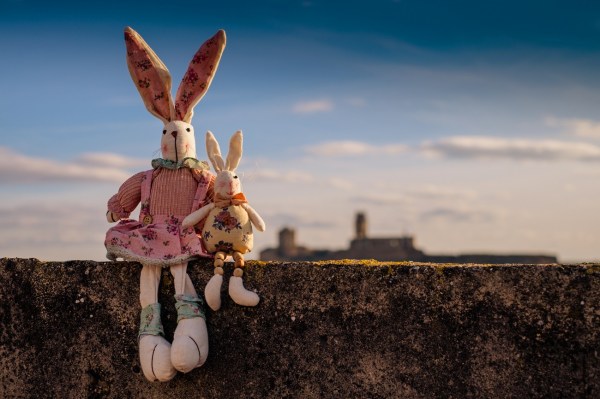
Rabbits – Kim Goldberg

One morning the landscape got up and walked away. The rabbits were the first to notice. No grass to flirt in, no earth to tunnel, no gardens to decimate. Each rabbit gazed at its colleagues suspended in empty space. There was still an abundance of sky. But the horizon was as vague as a pointillist painting, having no terrain to conjoin with, no union of heaven and earth, as the Daoists would say.

With more free time on their paws, the rabbits spent much of it copulating. There was little else to occupy them. When the other species took measure of their collective situation and the impact of rampant rabbit fornication, the Animal Kingdom passed anti-copulation laws (which were really anti-rabbit laws because the other species knew how to keep their privates private or read a book or resort to auto-erotic techniques if need be).

The rabbits soon had enough progeny of voting age to repeal the anti-copulation laws and enact new laws mandating the construction of sexual amusement parks in every town. There were no raw materials with which to build these amusement parks or towns. So these items remained mental constructs until enough creatures had passed away from starvation that their bones could be used for scaffolding and their hides for tent canvas, awnings, slides, water beds, camel cabanas and many other applications.

Rabbit hedonism ensued for quite some while, with the other species sulking in the bleachers. Until one day, under a blue sky adrift in tufted clouds, a new landscape arrived seemingly out of nowhere. Much coitus interruptus occurred. The other species cheered and scurried to anchor themselves to the earth. This caused the new landscape (which was really an old and arthritic landscape that had been on the road too long) to drop dead from a heart attack. No one noticed.


Le_Voyage_dans_la_lune_

Kim Goldberg is the author of seven books of poetry and nonfiction. Her surreal poems and tales have appeared in Augur, Big Smoke Poetry, Dark Mountain, Poetry Is Dead, and elsewhere. She ponders, wanders and watches birds (and rabbits) on Vancouver Island. Twitter: @KimPigSquash


Image: Jose Antonio Alba via Pixabay


The Ship and The Water – Jamie Stedmond

Hideki Itô had an unsettling gait. He walked like a man uncomfortable in his own skin, a man not yet fully accustomed to the ebb and flow of his limbs. Shambling forward seemingly unaware of just how far his legs would take him at each step, of how wide the arc of his pendulum arms would be each time they swung. His walk was lumbering and ridiculous, but at just that much more than a glance he could be seen to be in perfect command of his unsteady totter. He strained to contain each bodily progression, steadying it just enough to take its absurdity and make it seem lithe, even graceful. His confusing stride lacked an audience as it clicked its way over marble surface to the elevators for his floor of the Moud-Iverson.

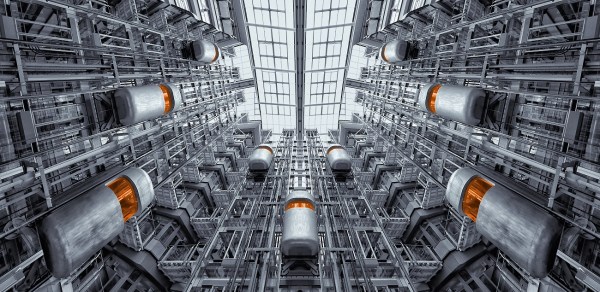
The elevators were cylindrical containers with walls made entirely of glass. They ran down the side of the building like surface veins, supplying their occupants with breathtaking views of the city above and below. Hideki could see the varied and garish lights of the undercity, illuminating the mismatched assortment of buildings and shanties that made it up. He could see innumerable cars gridlocking along the webs of motorway that snaked above the under, and through blocks of skyscrapers that cast long shadows on the laneways. In his peripheries he felt the rhythm of the whirring drones patrolling the upper reaches next to low-level satellites, their lights blinking steadily against the dark.

Hideki’s pupils widened and his breath grew shallow as he tried to absorb the view in a single stare. The city was laid out before him, all shining towers and endless bridges and flowing slums and bars and walkways and snaking sections of road and pillars and monuments and sparse patches of green and thousands of people, repeating to the horizon, more gridded and arranged here near the fringes but towards the centre it was a fractured cluster, a heaped mess of buildings all clambering over each other to escape, a cradle of primordial cityscaping.

Hideki thought about the billions of hours of labour, the innumerable materials and projects, the ego and freedom it took to build a city, the scale, the movement, the colour, looking out on it was like having his head smashed open by a bullet train. The city was a wonderful, unlikely idea. His reverie ended abruptly as the elevator pinged loudly, it had reached the ground floor. A tinge of red crept into his pale features as he exited the elevator. He allowed himself to become too submerged in his thoughts at times, embarrassingly so. Nevertheless, as he made his way out of the lobby he was still wading in the shallows.

He checked the time, he was on schedule for his meeting. He gave a few hard blinks in quick succession, trying to clear his head and shake off distraction. He was a pragmatic person. Sometimes this served him well, at other times it got him into trouble. He moved quickly across the road, this was the fastest route to his destination but it was also an area where someone in a suit as expensive as his could not afford to relax. He weaved his walk through various alleys, past shanties and dive bars and mumbling figures on the ground before taking another elevator, up this time, to a safer, more respectable level of the city.

As he had risen the sun had fallen and the nighttime dark gave the city room to glow. Nightlife began to crawl out of the woodwork like insects from under a damp rock. Hideki glanced around with faint disdain. The bars and restaurants in the area were all themed around nostalgia. There were ’50’s diners with waitresses on wheels and red vinyl booths, millennium bars that “rang in” the year 2000 almost nightly, to his left he saw Vision 2020 a barrage of flashing lights and dance music pulsing. More bars cluttered each side of the walkway, an overload of light and sound churning at each edge. He grimaced. It wasn’t drugs, loud music or flashing light that bothered Hideki – he mostly enjoyed drinks, clubs and dancing. No, it was the faces all twisted, facing backwards; nostalgia was insidious. The past was a dull thing to celebrate when the future was so much closer, the breath on the back of your neck, razor edged with potential.

For this reason he was childishly annoyed at the meeting place his supervisor had chosen, one Sammy Swing’s – Resongin’ The Sixties. He took a table for himself near the back, ordered a water and a gin/tonic, then waited patiently while near-ancient wails rebounded around him. As the third song kicked into gear Hideki was joined at his table by a rounded, balding man in an ill-fitting suit. He smiled as he looked around, enjoying the sixties aesthetic which he’d missed in the firsthand by a few generations at least.

“Nice evening, welcome, Mr Itô,” Hideki nodded in reply. He ordered a large burger and fries for them both. They remained silent until the food came. The man chewed his burger enthusiastically. “Some very sad business has been set afoot of recently, Mr Itô. A young executive has brokered a deal that is very sad for us. Of course, he likes his deal, it works well for him. He does not know of the special relationships his deal interferes with. It is no good.” Again Hideki simply nodded at this, sending blond hair waving over a broad forehead.

“Obviously,” he squeezed out between bites, “you are a very experienced negotiator. I must ask of you to make a counter-offer to him. He celebrates tonight, higher up than this,” he laughed, “approach him and perform with your customary efficacy, and all will be well, no more sadness for us.” He cocked his head at Hideki in question.

Hideki replied with a final nod. The man eyed Hideki carefully. Hideki’s face was blank, his eyes empty. The man was staring into a keyhole, he could stare into this dark for hours and still not be able to guess the shape of the key. Still, he seemed satisfied with Hideki’s inscrutable features and after a few moments the man took his cue from Hideki and simply nodded.

The man wiped his chin and cleaned his hands with a napkin bearing Sammy Swing’s smiling face. He set off to settle the bill, turning back once “Rafa Cole. His name. The rest of the details will be sent along accordingly.” He nodded again and smiled, seeming happy with his new habit.

*   *   *

The moon hung still and clear in the sky as Hideki ascended in another elevator. He had changed into a less formal suit, a cut more suited for an executive party rather than an executive meeting. He checked his pockets reflexively and repeatedly until the elevator reached its floor. As soon as the elevator stopped he stepped out and instantly adopted a more carefree face, and let some of the awkwardness of his stride show, not wanting to appear intimidating. The bar he was headed for reeked of its height, with black walls, tinted windows and a team of bouncers ensuring the privacy of its upper clientele.

“Name?” the bouncer stated more than questioned. “Lars J., with Shimenji,” Hideki stated back. The bouncer checked the list and his ID before stepping to the side allowing Hideki to be swept up into the bar.

The whole place pulsed with bass; music throbbed throughout, almost visible in the air. The room was full up with smoke and laughter, the floor awash with people. Clusters of young businessmen and women were perched on black leather couches, more were swaying in dancefloor haze. The lights were low, dimming and brightening in time with the music. Hideki couldn’t spot any light fixtures on the walls or overhead, the room seemed to generate its brightness from thin air.

Hideki slid himself atop a stool and leaned on the dark quartz counter. He could see himself, reflect dully in the black sheen. The whole area behind the bar was walled with a matte black metal, the bartenders dressed in all black too. The grim suaveness of the place almost made him miss the homely tackiness of Sammy Swing’s.

The bartenders were an efficient procession, moving up and down the length of the counter, never letting a glass stay empty too long. Hideki ordered a daiquiri and watched impassively as the bartender made it in front of him. He sipped it and made a smile. It was too sweet for his liking. His attention didn’t stay on his drink for long. He took another sip and began to search for Rafa Cole.

He knew Cole’s appearance from the pictures the supervisor had sent on to him. Rafa Cole was the inverse of Hideki in appearance. Where Hideki had blonde hair and pale skin, Rafa was tanned with short black locks. Where Hideki was broad and stocky, Rafa was slight and wiry. One was tall, the other still boyish in his height. Hideki, being the taller one, was able to spot Rafa quickly from his higher viewpoint. Rafa walked along, entertaining a group of his young colleagues. His movement was fluid and extravagant, unrestrained. He talked with animated eyes and he smiled easily. Hideki’s face was meaningless, it did not convey anything at all. He was comforted by their difference. Their mirroring. There was something of balance in it.

Hideki thought this in passing. He was no great believer in fate, but some things to him felt more important than others. In a situation like this he respected balance, a touch of magnetism would make things go more smoothly. He studied Rafa for a few minutes until he saw the young executive head out to the balcony for a cigarette. He followed him.

He moved across the dancefloor unnoticed, brushing through its occupants. No one turned their head to watch him go. His ghostly march brought him to cold night air and the sight of distant lights below. The club was in the upper reaches of the city. A long ways below people thronged about too tiny to be made out, and cars buzzed and clumped like feasting flies.

Hideki leaned on the black railing of the balcony. The man he sought stood a few feet further down, lost in thought, or drunken stupor, Hideki couldn’t tell. Hideki too became lost again as he watched the city. His mind moved like a watermill, turning over the same thoughts slowly and evenly. The man, Rafa, noticed him. He smiled, gave a nod. Hideki raised his daiquiri in reply. Again, silence.

Moments passed like this. The man turned to go, his cigarette end crashing to earth below. “Light?” Hideki ased. Rafa turned back seeming puzzled. He strolled over and leaned next to Hideki. “Light” he repeated, patting his pockets until he found one. He lit the cigarette Hideki had produced, the two men standing close to shield against the wind. “Rafa Cole?” Hideki grunted around his cigarette. “There we go… hmm? Sorry, yes, Rafa”.

Hideki Itô took a long drag of his cigarette. Rafa Cole watched him, relaxed and expectant, not reading into what was a moment of stomach churning stillness, nauseating tension. The fragile moment was still, then it was broken. Hideki moved, a sliver of silver flashing at his wrist. He pounced, slashing. Adrenaline pumped through him, his heartbeat filling his ears like wool and din. He worked with assembly line rote, his mind clear and focused. He was calm and immutable still. Rafa Cole struggled; Hideki was strong.

He swatted the flailing arms. He stabbed, forcing steel into the gristle and softness of a neck. He stabbed and stabbed again, in and out, clear heavy strikes that damaged and bloodied. He rended Rafa Cole until he was sure he was dead, and blood flooded out of Rafa, hot, bitter, marking his success.

Hideki took a moment to breathe. His heart seemed to rise like Shepard’s tone. It couldn’t get any faster and it continued to quicken. Breath shallow and heart knocking he searched his pockets. There was confusion inside, he had to act before it became commotion, action.

He took out a small black device, it was smooth and had a grainy texture.

Hideki had killed. A heart had stopped beating. Police drones would have recognised the loss and he would be surrounded already. There was no escape for a killer here, not at these heights.

The black device hummed. It was ready for transfer. He placed it on the back of his neck and it attached itself like a leech, making a wet sound. It was time. Now things became difficult, unsavoury. He picked up his knife again, and denied any shake to his hands. He gulped down deep breaths. He brought the blade under his chin and carved his neck in a fluid, practiced motion.

Hideki cut his throat, fluid and beautiful, like poetry. his neck gushed oily red onto the balcony. He dropped to his knees slowly. From his knees it was another short fall to the cold marble floor. His blood began to pool around him. . He had felt himself sinking, felt himself being dragged down into quicksilver water. Slowly, moving down to dark and cold, and calm. Dying was always cold, always calm. He felt his eyes closing and let cold waves wash over him, let urgent tide drag him down.

Two men lay dead when scene was locked down. An unfinished daiquiri and a lit cigarette kept each other company on the balcony.

*   *   *

His eyes shot open, blinked, gasped. There was no air in his lungs. His limbs thrashed pointlessly, heavy and foreign. Clothes were lead weights on him, he felt sodden. His brain burned with the burden of thought, his mind heaved, overcome with pure animal panic. He flopped and shuddered on a hard metal trolley, mouth fixed in an O, gasping, dumb.

He wriggled and writhed on the trolley. Eventually the tinny rattle quietened and he was still. His chest began to move up and down in a more regular fashion. His pupils reduced themselves to pinpricks. He sat up on the side of the trolley he had awoken on, staying there a few moments, not wanting to stand too quickly; new legs always took getting used to. He could tell these legs would turn to jelly when he set them to the floor.

He waited for some time, just breathing and feeling the feel of his skin, the weight of his hands. The way his mouth curved when he made different expressions. When he was sure he could stand without vomiting he stood up and walked, stumbling and spasmodic, over to the mirror on the other side of the room. He looked at his face. Stranger. Japanese, certainly. He could imagine him being from somewhere near home. It was comforting. His build was slight, but muscular. He liked it well enough.

He stared for a few more moments then reached around to the back of his neck and plucked a small black device from it. Similar to the one he had stuck in his neck a few minutes ago, but inverted, the other side of a relay. As the body dies, but before the brain shuts down it transfers, across aether, across space, across nothing. Now he was here. Mostly.

As he inspected his new face more closely the door behind him opened and a bald, rounded man entered. “Very late, Mr Itô, suspicious to be wandering around so late” he chuckled. Hideki tried to nod, instead jerking his head to the side jarringly. “A flawless evening. A happy evening. Sad for Rafa Cole. But needs must, yes?” He smiled. “Iamb glad forrour success” Hideki said, trying to work the words past a large and disobedient tongue.

The man brought Hideki to have tests run. Standard of course, and all very healthy results. He picked up his pay package on the way out. Money, and keys. A new apartment, a new car, a new everything. His old apartment would be ransacked and scoured soon enough. Nothing would be found. The night had passed by the time Hideki was allowed to leave the company building.

Hideki enjoyed the sunlight as he stepped out onto the sidewalk. The warmth of the sun soaked into him, new to his skin, skin in which he had never been warm. Skin that still remembered death, a different death, far away. Someone else. He had been plunged headfirst into dark water and a hand, this new, warm hand, had broken the surface, half a world away. Hideki wandered aimlessly through the city on the way to his new address. He took breakfast in a small cafe, and later stopped for a drink at a disco themed restaurant. His stomach showed no upset at his preferred food and drinks, which was some comfort.

The sun was preparing to set all over again when he reached the Moud-Iverson.

Hideki took an elevator, rising up the side of the building. He closed his eyes and rested his head against the cool glass. Looking out at the city while he rose made him feel nauseated. He fit his key into the door of his new apartment. It was stylish and lush and he tasted ashes in his mouth. Everything in the apartment felt plastic and mocking. It was always like this at first, he reminded himself. Starting again.

It would pass. It would pass, and still, Hideki Itô did not sleep well that night.


Le_Voyage_dans_la_lune_

JAMIE STEDMOND is a young Irish writer, currently based in Dublin. Jamie is pursuing an MA in Creative Writing at University College Dublin. Previously published in The Bohemyth, Cagibi, ZeroFlash (forthcoming), and Paragraph Planet.


Image: via Pixabay


Martians – Chris Drew

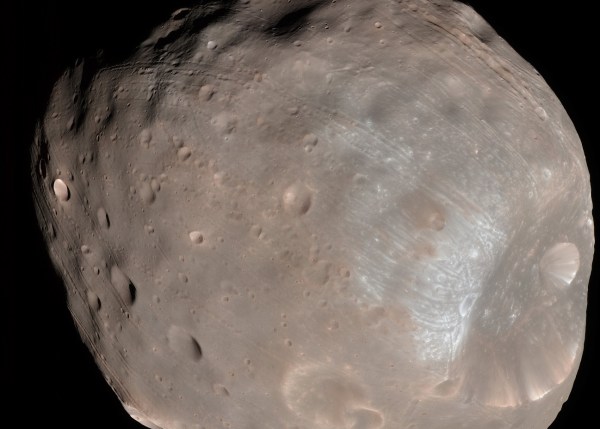
Phobos

He is silent, unmoving, head tilted toward the moons. We don’t talk. We don’t touch. We simply exist, like two binary stars, spinning around the invisible weight between us.

I pull my knees up to my chest and tap my heels in a restless rhythm. A cloud of red particles blooms around my feet, tap-t-t-tap-tap-taptap-tap.

This is our place. Away from the Colony that feels so claustrophobic these days. Away from the Repros, who arrive in their hundreds but all look the same. They look like children, and talk like children, and play like children, but they are not children. They are not our children.

We were assigned another one today.

Every time I look at it — the smile, the eyes, the arms around me, the voice, Mother — I feel sick.

A bead of sweat crawls down my neck. I can’t breathe. I want to rip off this suit and run, and keep on running.

But out here, there is nothing but dust and death.


Deimos

Life isn’t a circle, it’s a spiral, like the slow descent of the moon, its cycles becoming smaller and faster and smaller and faster until one day, millions of years from now—boom.

Is death our only freedom?

I can feel her looking at me, fidgeting like a trapped animal. Fight or flight. I should comfort her, talk to her, but I don’t know what to say.

It was the first time we reached the second phase. The first time I placed my hand on her stomach and felt a twitch, like a bolt of lightning through my fingers, followed by the slow roll of an elbow or a toe curving across my palm, a sunrise.

The first kick, and the last.

We’re the only Originals left on the Colony now. There are others, but they’re either too sick to work, too old to care, or so space-crazed we keep them on permanent lockdown.

This planet will do that to you. Spend too much time out here and it eats you alive—your body, your heart, your mind. Your soul.

An accelerating spiral of decay.


Phobos

One moon is so close I can almost touch it. It looks like an imperfect embryo with pitted craters covering its surface. The other is distant, nothing more than a pinpoint of light in the scorched sky.

I move closer to him, as close as I dare. The far moon shines like a small sun. Each cycle takes it further away from us, but it is still the brightest star out there.

One day, it will disappear completely. From sight, from memory.

Nothing more than a dream.


Deimos

She shuffles toward me, closer and closer, an inevitable collision of our bodies. An end into a beginning into an end.

I stand, lift my visor, and look out over the dunes. From here, the Colony is a cluster of sand-dusted pearls in a red sea, encircled by a fleet of empty Pods. The Pods are smooth silver shapes, standing to attention, ready for their next voyage.

Another one arrived this morning. It carried supplies and a hundred more Irth children. Repros, she calls them, but I hate that word. Just because they’re born in a tube instead of a womb, just because they all have the same voice, the same smile, the same dark hair and dark eyes, does that make them any less human? Any different to us?

No. We are all equal. We are all doomed.


Phobos

I stand next to him. The sky dulls to the colour of blood and the wind shifts like a veil around us. It is almost time to return. But to what? A home that is not mine. A child that is not mine. A man who flinches at my touch, who cannot even look at me.

I feel dizzy. Past and present and future merge into a single point and spin into an eternal monotony of clearing and planting and breeding and suffering and healing, day after day after day until it all slips away, sand through a clenched fist.

I need to get out of here. Now. We’ll stow away on the next Pod and start a new life on the moonless Irth. We’ll have a family. A home.

We’ll have each other.


Deimos

The wind tugs at my suit and draws a shroud of fine powder across the Colony. The sharp edge of another storm. I grab her hand and pull her into me as a great swirling column spins around us.

The freedom, the power. I scream through the tornado’s coiled throat, willing it to carry us away.

To tear us apart and bind us together anew.


Phobos

The world collapses into a vertical tunnel of whirling copper that twists towards the stars.

I grab his waist. His arms encompass me. We hold each other as the storm bends and brays around us. Leave, it roars. You do not belong.

Nothing feels right. We shouldn’t be here. The Repros shouldn’t be here. Perhaps we should let go and allow the storm to lift us up to the moons. Away from all this, away from everything, until there is us.

Only us.


Phobos & Deimos

The storm spreads and dies. Everything is covered with red ash, as though the world has burned to embers.

I’m sorry, she says.

It’s not your fault, he says.

I love you, they say, and embrace beneath the moons, two rocks that drift inexorably apart, each facing their own oblivion, both of them together.


Le_Voyage_dans_la_lune_

CHRISTOPHER M DREW is a writer from the UK. His work has appeared or is forthcoming in MoonPark Review, Longleaf Review, Third Point Press, Spelk, Ellipsis Zine, and others. He reads for FlashBack Fiction. You can connect with Chris on Twitter @cmdrew81, or check out his website cmdrew81.wordpress.com


Image: WikiImages via Pixabay


The Brunswick Street Chronicle – Anita Goveas

The advert was in the exact centre of the daily display adjacent to Hawthorne Street. “Applications open for Citizen of the Year”. There was encode to scan for the details, and a picture of a tawny-haired man with an auburn tail, balanced on a narrow bridge. He had one leg outstretched and one hand reaching towards the screen. Kalpana wanted to reach back, but was rushed away in the work-fixated crowd. She cradled her tail-covering close to her body.

The prize this year was 100,000 transfers, more than enough for her mother to have a living space with a garden. The doctors wanted her to have more time with the green, the journey to the unit park exhausted her, the trees that lined every street were insufficient. Their allocation, their two bedroom cabin, was based on their family careers at the time of the greening, which tended to the inside. When her mother craved more oxygen, they’d improvised with hanging baskets and walks to the Chronicle. Kalpana had always preferred it there to trying to keep up with the other unit children.

Kalpana approached the Brunswick Street bridge. The bamboo sliver stretched in front of her, gently swaying, the engineering building on the other side. The subterrain underneath was shadowy and unlit. The smell of viengar inadequately masked the stench of urine. When the rivers dried, the people had decided to keep them, and build along and with them. There were always new plans, to bring the rivers back or repurpose their murky tracks. Meanwhile, she helped build the connections on the bridges above but she couldn’t use them. She studied the view around. No-one from the service was nearby. She adjusted her tail-covering, exhaled slowly and started on her customary long, circuitous walk that bypassed the bridge.

When she finally arrived, the others in her section had finished their morning tea. They had opened the windows and a breeze was rustling the cotton-draped recycled stone walls. Jose segmented a ruby grapefruit, eyes on his tablet. Simone was adjusting the section display to list their daily tasks by timing, rather than alphabectial order. They all agreed they prioritised more effectively that way. Her umber hair and tail had matching avocado-green ribbons.

“It’s still warm, it’s peach today. Wanna grapefruit from the south-west quadrent of my garden?”

Jose inherited his living space from his grand-parents, the revered acrobats. They had used the trapeze well. He’d inherited their strong shoulders, smooth gait, copper-coloured tail. He trained from a young age and had the balance but not the range of movements necessary to continue the tradition. He had found his own way to contibute. If he entered, his routine for the competition would be watchable.

Jose brought over the grapefruit segments. He cleared his throat. He was going to ask her to go to the climbing wall in Ash Square park again.

“I’m sorry I’m late. I was watching the downtown display, adjacent to Hawthorne Street and the Brusnwick Catalogue. What do you think about this year’s prize?”, she said hurriedly.

Simone tip-toed back to her desk, tail at vertical. She lengthened her spine and rolled her shoulders.

“Sorry, boarding was outside but brutal yesterday. I’m bruised all over. I’m thinking that’s a lot of transfers, they not getting the numbers?”

“Think its about people finding the inventions difficult. What else do we need?” Jose walked back to his station. “The routines got positional though. Remember that guy with the unicycle and the knives?”

The balance round had taken over the whole competition. People barely mentioned the presentation or the inventions. In the beginning, it was about improving yourself, making a difference. The man on the unicyle had tottered on a catwalk, amber tail almost horizontal. He’d been judged third most useful, and now presented the wind-surfing bulletins.

Kalpana shifted in her jute chair. The movement tugged at her tail-covering and the chair-fibre pulled the fastening on her back. She put a segment of grapefruit in her mouth and covertly anchored the cotton tube with her other hand. Simone unfailingly tended the plants in the section, helped her grandfather walk to the park. Jose brought in fruit from his garden every day. But they had innate balance and impeccable family histories. She didn’t know anyone else like her, they might know requirements and regulations she couldn’t access.

“This is really good, Jose. Thanks.” The citrus sting puckered her nose. “I was thinking of applying.”

Jose’s mouth pursed up, but Simone spread her arms wide. She was usually less obvious than Jose about wanting Kalpana to be more outside.

“Anything that gets you out of the Brunswick Street catalogue. We worry you’re going to move in.”

” Mum likes those old encodes, the dance and the gymnastics. We watch them together now she can’t outside so much, and she tells me about the inside. You remember her grandmother was a dancer?”

You remember, the more outside, the better. You can dance more freely in the Ash Square park.”

There was always someone dancing in the park, rhythmically nimble. There was always someone romping on the high walkways and narrow bridges, carefree and assured. Before her tail stopped growing, Kalpana had relished climbing the tallest trees, faster than Jose. Then the stump withered and she’d cowered inside, until her mother took cotton and flax and covered her shame.

She shufffled through the rest of the day, sketching without inspiration and tidying filling cabinets. She waited until the others had left so she could circumvent the bridge. Mother was waiting, but her restlesness needed the soothing of the Catalogue. Ling was leaving as Kalpana pushed the button to enter, and smiled in greeting. She watched encodes of rivers and mountains with her grandmother and great-grandfather, as they passed down their secrets from decades of mapping unusual geology. Ivan was in his place in the far corner, picking up encodes from tidy stacks and inspecting them. The unit legend was that he’d been a champion skier until he had damaged his tail, but from surreptitious study it seemed unblemished. Kalpana drifted through the racks. Individual encode were anondyne and synthetic but collectively exuded hints of rain clouds and silk. She spotted an encode with a cracked cover that had slipped behind a rack. It was labelled ‘Championship’. She scanned it out, slipped it in her jute bag.

When she got back to their living space, her mother was asleep. She unfastened the cotton tube, placed it diagonally in the small cupboard beside the kitchen door, then undid her long black plait. She rubbed at the hard skin acoss her lower back, toughened by adhesive, and massaged her aching muscles. She linked the new encode to her tablet. The screen wavered and crackled, then a stocky, dark, unbalanced girl moved across a rubber mat. It was inside, light was filtered through square windows into stars on the floor. Music played, a thumping, steady beat. The girl held a length of ribbon, it flickered above her head and in front as she leapt and twirled. Always moving straight ahead. She was fearless.

Kalpana’s eyes hurt from focusing. She didn’t know there were ways of moving if you were unbalanced that were as graceful as climbing or trapeze. Mother coughed in her sleep. She took the tablet into her room, pushed back the chair and bed to make a space. The dark-skinned girl balanced on a thin oak beam. She was turning somersaults, her arms above her head, her tail-less bottom tucked in and her smile radiant. Kalpana raised her arms, straightened her back. The pull in her muscles eased. She stretched out her left leg, tried to twirl. Her top half wouldn’t stay steady and she lurched forward. She rested one hand on her rattan chair and started again.

Mother was often asleep now when she came back from service. She had re-issued the encode four times. No-one else seemed to want it. Jose had also entered the competition, and offered to help with her routine. He was going to climb a bamboo ladder using only his left hand and leg. He was making the ladder himself, as his invention. Most people were climbing trees from a young age and ladders were becoming inside, but there were a few places trees didn’t grow. Something light-weight might be useful. She’d changed the subject when he asked about her application, and he hadn’t pressed for details.

Kalpana was trying lunges when her mother walked in. Ashanti was tall, fragile-looking, her sandy tail was wound clockwise around her right wrist. She liked to tame it as she had kept out some of her grandmother’s small silver ornaments. Most people didn’t decorate inside, so needn’t fear the damage an unrestrained tail might cause. Kalpana composed herself, but her mother’s eyes were sharp. She’d been the best astronomer in the Brunswick Street unit. Her spatial awareness would have been more revered in the past, before the greening.

“You’re trying something new? You’ve not shown me any encode for a while. Is the catalogue closed.”

“I’m sorry, I entered the competition, I’m working on a routine. I wanted to surpise you.”

“Without your tail-covering? They won’t let you in, how will you balance?”

“I’ve found something, there are people like me. I think I can make my own balance. But I can’t do it yet, I keep falling down.”

Ashanti felt for the edge of the slatted pine bed and drooped onto the soft cotton mattress. She hunched her shoulders, smoothed the downy hairs of her tail, eyes on her fingers.

“Kalpana, I’m sorry. I don’t think there is anyone like you. We looked into the families when your… it happened.” She started to wind the tail-hairs around her fingers, tugging until white lines appeared on her beige skin. “Your father went to the mountains to ask his cousins. No-one knew what we were talking about. That’s why we went so often to the Catalogue after your father died, I thought there would be an encode to explain. To tell us what to do.”

“But that’s what I’ve found. There were others once, there must be still. And she’s unbalanced in public.”

She turned on her tablet. The dark-skinned girl leapt across the screen, chest out, arms wide. She didn’t fall. She was unafraid. Ashanti narrowed her eyes, as if she was calculating the angles, tracking the whirlwind on its complex path. The way she looked when she built Kalpana’s chair, or re-wrapped her tail-coverings.

“She’s strong. From her legs, from her core. You should try squats, and lift weights for your arms. How do you feel about press-ups?”

Kalpana replayed the leap. She studied the way the girl kicked out her legs, arched her back, and then landed on one foot.

“I can make your costume too. Give me something useful to do while I’m inside so much. Do you remember how we used to watch the stars?”

As they clasped hands, Kalpana felt her mother tremble. But now she knew what she must do.

On the day of the competition. Kalpana walked to the Ash Square park by herself. If this went badly, Mother couldn’t cope without the support of the unit. She carried her equipment in her jute bag. She waited in line with the other applicants, forty or so, double the people from last year. She couldn’t see Jose, watched Simone walk in through the audience door as she waited to have her name ticked off and her bag checked. Several cubicles were still free as she changed into her costume and gathered up her invention.

They took people by unit, she was fifth in batch three. Batch one had completed, were sitting on the pine audience benches set up especially around the arena. It was used for boarding, and they had kept the pipes and the rattan matting. Kalpana tried to watch the applicants in batch two as they explained their ideas or devices, but could only focus on the routines. The catwalks and the beams, the hand-springs and the upswings, all landing on their feet, tails raised.

Batch three began, she watched the unit children she had grown up with show what they could do. Ling’s presenation was about perserverance, the effect of water on stone. Her routine flowed like silk. Jose was strong and balanced on the ladder. He talked about the amount of trees, the benefits of bamboo, and climbing in the Ash Square park.

They finally called her name. Her own breathing was louder than the murmurs of the crowd. A man on a front bench crunched an apple. Simone was waving, maybe shouting something. Kalpana attained the centre of the arena, put her equipment down beside her left foot. She straightened her back. She smoothed her cyan costume, embroidered with tiny galaxies and nebulae.

Kalpana reached behind with her right hand and removed her cotton covered, flax stuffed tail-covering. She held her hand-made bamboo pole in her left. Her shoulders relaxed, her neck elongated. The man had dropped his apple, it was rolling under a bench, she couldn’t see Simone. Her voice was heavy over the silent crowd.

“This is my presentation and my invention. I am unbalanced. There are others like me I hope, but I think we hide. It’s not lying, I wanted to be the same, to be useful. But I am useful as I am. I help build your connections, but they are not made for me. My gravity is diffferent. I have made this support, so my arms can be my balance. I will show you how I cannot climb as fast as you all, or over the narrow spaces, but I can still move well.”

She stretched out her arms. She leapt and twirled, piroutted and span. She kept her chest out and her shoulders down, landed on her feet. There were rhythmic clappings and stampings surrounding her, but she was whirling to the steady beat from the encode. She’d memorised it, a thump-thump, thump-thump she moved to always. She finished with one last revolution, and raised her arms to be horizontal to her sides. The three judges hadn’t moved, didn’t clap. As she trudged back to the changing rooms, she replayed their frozen faces. They hadn’t moved a muscle after she had revealed herself to be tail-less.

She changed her clothes and re-packed her bag, then she sat in a corner, rubbed her chest. Thump-thump, thump-thump. She’d declared she was not the only one, but there might not be anyone else like her in the world. Ragged cheering forced her back to the side of the arena, where the judges were announcing the scores. Kalpana pressed her right hand under her diaphragm, to make sure she continued to breathe.

Her presentation gained full marks, and the lady announcer suggested any other unbalanced could make themselves known. No-one came forward, but some of the crowd nodded, a few whispered. Most looked away. Perhaps in avoidance, perhaps thinking of someone at home who was different. Kalpana’s cheeks glowed with the hope that she might have helped someone who was afraid.

Her invention was fifteeenth, interesting and decorative but not useful. The lady talked about bridges and subterrain, and how they were important to the landscape, and supports would give a different message. Boarders might use them to develop new tricks, but that had not been the inventor’s suggestion. Kalpana would have to score higher than anyone had before in the routine to win.

They always paused before they proclaimed those scores. She sank down to the floor, the strain she had put on her legs and back communicating itself. They read down the list alphabetically. Jose was fifth, tenth overall. His presentation had been unfocused. He would have tickets to the climbing or surfing. Ling was third overall. She won 1000 transfers, and a weekend in the mountains. Kalpana pressed harder on her chest, the thump-thump pushing at her fingers, replaying in her ears. They had gone past her name, she did not have a score. They announced there were two disqualifications for use or misue of balance against the rules. She had never seen any rules about moving without a tail.

As she left the arena, Simone and Jose waved at her. She patted the air by her thigh in response, unable to raise her arms higher. The judges were enclosing a short girl with a beige fluffy tail. She had triple-flipped onto a piece of cork. The winner would be on all the displays.

Jose put out his hand, “Wait. You can’t just go home now.”

Kalpana didn’t want to raise her head. Her stomach was roiling, her shoulders were stiff, her toes were inflamed. But she would have to find the words to tell her mother, this couldn’t be worse.

“I’m sorry I didn’t tell you before. I…I never knew what to say. “

“No, I get it. We can’t even begin to think about what you go through every day,” Simone said softly.

Kalpana watched Jose try to smile. “At least I know why you wouldn’t climb with me any more.” She winced at the implicit accusation.” I mean, I don’t know what I mean. But I have four tickets for the surfing, you gonna come with us?”

It was an overature, one she shouldn’t ignore. She’d worked too long though to let her dreams go easily.

“Can I let you know? I’d like to spend some time inside. For a little while.”

She felt their eyes on her as she drifted away. Kalpana meandered home, weighted by the bag. She found herself at the Brunswick Street bridge. There was no-one else nearby. The bamboo pole was sticking out of the jute. She reached behind, but she hadn’t replaced her tail-covering. She felt the thump-thump, thump-thump under her skin. She lifted her arms in front, grasping the bamboo, and raised her right foot.


Le_Voyage_dans_la_lune_

ANITA GOVEAS is British-Asian, based in London, and fueled by strong coffee and paneer jalfrezi. She was first published in the 2016 London Short Story Prize anthology, most recently in Pocket Change, the Cabinet of Heed, Riggwelter Press, former cactus mag , Litro and Willow Lit. She tweets erratically @coffeeandpaneer


Image: Lasse Holst Hansen via Pixabay


Asunder – Michael Carroll

Ambassador Vilma Rohan shrugged herself into her best jacket as the dropship hit atmosphere. She zipped it from waist to collar and sat back for a moment, only vaguely aware of the craft’s swaying and lurching descent. The movement dampeners took most of the force out of the buffeting anyway.

“Motina’s help, we can do this,” Rohan said, nodding to herself and unconsciously brushing her thumbs over the rings on her index fingers.

The pilot briefly glanced back at her. “Sure we can, Ambassador. I’ve made a thousand trips like this. Maybe more.”

“Sorry, that wasn’t meant for you. I was thinking aloud.”

The young man—he’d told her his name when she boarded the craft, but she’d instantly forgotten it—said, “Gotcha. I do that all the time. Still…” He turned around completely and grinned at her. “I’m happy to be here. Last one, and all that?”

She nodded, then gestured past him towards the dropship’s controls. “Just…”

“Sure.” He turned back. “ETA two minutes.”

Two minutes. Then the battle begins.

There was more to all this than mere stubbornness or pride, as Rohan had tried to explain to her superiors many times. “It’s loyalty. That’s what we’re up against. And family. For some people that sort of bond is stronger than steel.”

Chancellor Raphael had responded to that with a snort. “Put it under enough pressure and even the strongest steel will buckle.”

Another lurch from the dropship, and Rohan automatically squeezed tighter on her seat’s armrests, the pads of her thumbs now pressing hard against her rings.

The pilot called out, “Sorry, that was me. But we’re through to a steady pocket of atmo now, just about there. You want to set down next to it, or a hundred metres away so they’ll see us coming?”

“The latter. We want them to see us.” Rohan pushed herself to her feet, glanced down at her jacket and decided that informal would be better. She unzipped it about half-way. But that seemed too casual. Maybe the jacket is the wrong approach? Leave it behind.

She unzipped it completely and removed it as the dropship touched down.

The pilot spun around again and stood up. “All right, let’s do this!”

Rohan thought that in any other circumstance his grin would be infectious, but not now. “Just me. You stay put.”

“No disrespect, Ambassador, but if things get fractious out there—Motina deliver us—you’re going to want someone who can put out fires. I’m not just a pilot.”

“You are today. I’m going alone.” She stepped towards the hatch, cracked it open and winced a little at the blast of hot, dry air that rushed in.

“I understand, Ambassador. Motina guide and shelter you.”

“Guide and shelter.”

She pushed the hatch open fully. It collapsed into steps, and she walked out. Set foot on Earth for only the second time in her life.

Ahead, the farmhouse stood alone, as it had for the past nine thousand years. Patched up and rebuilt countless times, long past the point where there was any material from the original building left, but somehow it was still the same farmhouse. Perhaps that was symbolic, Rohan speculated. But symbolic of what, she wasn’t entirely sure.

It was daytime, around noon, the sky was cloudless and the sun baked down on the old farmhouse. Rohan shaded her eyes with one hand, waved towards the farmhouse with the other, though with the light this intense she couldn’t yet tell whether there was anyone watching her. If there wasn’t, she’d just waved to no one. That would be embarrassing, except that if they weren’t there to have seen her do it, then only the mother herself would know she’d done it.

As she crossed the cracked dirt, with its clumps of parched scrubgrass and grid of ancient sun-bleached wooden planks, Rohan’s boots kicked up a lot more dust than she’d expected. She couldn’t help wondering whether that was significant too. Of course it is. Everything is significant today.

Ten metres from the farmhouse a voice called out, “Well, you did say you’d be back.”

In the shade of the porch, Helena Lazarov sat on her old wooden rocker. Hand-carved by her father, she’d told Rohan last time, from a tree he’d cut down himself. A tree his grandmother had planted eighty-one years earlier.

“Ms Lazarov, you can’t… Don’t you understand what’s happening here?”

“Of course I do. I’m not stupid.” She glanced upwards, though from her position all she’d be able to see was the inside of the porch.

Rohan looked upwards too, though even at night it would be impossible to see the arks. Four thousand and sixteen of them. Each larger than any structure ever built on Earth.

In the name of the mother, what is wrong with these people? “Ms Lazarov… Helena. You have made your point. You have pushed them to the limit. But you cannot beat them. You are one family. They are—”

“They?”

“All right. We. You are one family. Seven people. We are trillions.”

“So might makes right? What does the book say? Chapter ten, verse fourteen. ‘She who would stand alone against the storm is more favoured of the Mother than she who swims only with the rising tide.’” Lazarov tapped her chest. “Stands alone.” She pointed to Rohan. “Rising tide.”

“Out of context! And besides, that passage is open to interpretation. You could be the tide, and us the storm.”

“Stands alone,” Lazarov repeated, again tapping her chest.

“With six other members of your family. Hardly alone.”

Lazarov shrugged. “We’re a single family. That’s one unit.”

Uninvited, but no longer caring about that level of protocol, Rohan stepped up onto the porch and into the shade. “Where are they, anyway? Inside?”

“They’ve gone out for the day.”

Rohan bit down on her bottom lip as she slowly turned around and looked out across what had once been fertile farmland. “Where to? Where did they go? There are no cities left, no parks, nothing!”

“There’s a lot of interesting-looking wasteland, Ambassador. A whole world of it.”

Rohan spun back. “You cannot stay here, you damned fool!”

“Yes, we can.”

“They are going to pulverise the planet!”

Again, Helena Lazarov shrugged. “Not as long as I’m still here, they’re not.”

Through clenched teeth, Rohan slowly said, “We need the raw material. Without it, we can’t complete the Loop!”

“Yeah, well, that’s not natural. Nowhere in the book does it say that we’re going to have to give up our homes just so that all the planets can be mashed into one and rolled out into a ring big enough to go around the sun.”

“That isn’t how it’s done. It’s a strip of land, a loop ten thousand kilometres from side to side, three hundred million kilometres in diameter. We’ll live on the inside of that strip, a surface area greater than eighteen thousand Earths.”

“I don’t care how it’s done!” Lazarov pushed herself to her feet, stood almost nose-to-nose with the Ambassador. “We’re not moving.”

Rohan took a step back. “Look…. you’re the last family on Earth. Your names are already in the history books. No one can take that away from you.”

“That’s not what this is about.”

“Motina’s bane, but you are the most stubborn person I’ve ever…!” Ambassador Rohan realised that her fists were clenched and she forced herself to calm down, focused on rubbing her thumbs over her rings, feeling the familiar indentations of the prayers stamped into the platinum. “Did you even look at that last offer we made? A section of the Loop larger than the entire surface area of this planet! You’ll be the single wealthiest landowner in the history of the human race. We have offered you everything!”

“It’s not about wealth.”

“Suppose we leave you alone? Then what? Just you, your children, and your grandson. We’ll wait you out. The rest of the human race will cheer on the day that the last of you keels over. You’ll be reviled. Forever. You want that? You spend the rest of your lives alone, then the rest of eternity as… as a curse! No, worse, you’ll be an insult. ‘Hey, you see that guy? Stay away from him, he’s a complete Lazarov.’”

The woman turned to face Rohan with a smile. “This has been my family’s land for over three hundred generations. I can trace an unbroken line back nine thousand, one hundred and seventy-two years. Every one of my ancestors was born on this land, was raised on this land, died on this land. Well, no, not all of them died here. But they were all buried here. Every one of them. This is our land. People have tried to move us on many times. And every time they did, we fought back. Sometimes we fought with weapons on a battlefield, other times with words in a court of law, but however we did it, we won. Every. Single. Time. We won. Don’t you see that? Don’t you understand why I can’t leave?”

It hit Rohan like a shockwave, almost physically rocked her. Of course. I see it now. Oh, Mother, who can blame her for this? “It’s not about the land, is it? It’s about the history. The struggles of your ancestors. They put everything they had into this land, and now what you see is that it’s being taken away from you. Ms Lazarov… It’s not that. You give up this land and it’s not that you’ve lost. It’s that you’ve won the final battle. After this, there is no further need to fight.”

Lazarov turned away, shaking her head. “No. You don’t understand.”

“I do understand. We’re not taking this land from your ancestors, we’re asking you to give it to your descendants. You see? Your family has been fighting for nine millennia, and now you’ve won. The section of the Loop you’ll be given is the prize.”

Lazarov stared off into the distance, and without turning back to the Ambassador she said, “I want you to leave now. You’ve done your best, tried your hardest. And I appreciate that, I really do. Whatever happens next… Well, I won’t hold you responsible.”

“What do you mean, whatever happens next?”

Still looking away, Helena Lazarov smiled. “Where negotiation fails, the knife will succeed. Oh, I’m sure they won’t want the negative publicity of an actual attack. It’ll be subtle. Disguised as a natural accident of some kind. And then we’ll be gone and your people will move in and conduct their despicable work.”

“No. No, that won’t happen.” Rohan shook her head. “‘You shall not kill through anger, nor for greed, nor for envy.’ No. There has to be a way to… Look, what about this? We move you and your family off-planet. You take anything you need or want with you. First-class accommodation on the very best ark. And we’ll move your house. Intact. We can do that. Set up a force-field to keep it all exactly as you left it. We install it on your new land on the Loop in a location of your choosing. Trust me, if you weren’t looking out the windows you’d never know the difference.” She extended her hand. “What do you say?”

Slowly, deliberately, Lazarov turned back to face the Ambassador. But she kept her arms by her side. “You can do that?”

“We can. Shake my hand and it’s an agreement and we can get everything in motion today.”

“It’s not enough.”

“Not… Not enough?” Rohan dropped to her knees, buried her face in her hands to stifle a scream. She felt like she’d been kicked in the stomach, and it was only the pressure of her prayer-rings against her skin that helped her to keep a lid on her temper. With forced evenness, she said, “Oh sweet mother Motina, what more could you want? We’re offering you the equivalent of a planet!”

Lazarov spread her arms, palms out, and turned in a slow circle. “You have to take the land, too. You can do that, right? You take the land, and the house, everything. Intact. And then we have an agreement.”

Rohan raised her head. Her mouth had suddenly gone dry. “You’re serious? That’s what you want?”

The other woman nodded. “If you can do it.”

“We can do it. How deep?”

“What? Oh, ten metres would be enough. If your machines can sort of just, you know…” she made scissors motions with her fingers. “Cut it all out in one piece, lay it down intact on the Loop… then… then… Ambassador, are you crying?”

“Tears of relief! Yes, yes we can do that! We can build a ringworld three hundred million kilometres across, so we can certainly move forty acres of land! Motina guide us, we have an agreement!” She grabbed Helena Lazarov’s hand and grinned as she shook it for far too long. “You tell me when you’re ready to go, and we’ll get started. We’ll even let you press the button to destroy the rest of the planet, if you like!”

Lazarov gave a short laugh at that. “No, I think I’m notorious enough, thank you, Ambassador. You can give that honour to someone else. I’ll call my family back. Tell them to start packing. We can be ready this time tomorrow.”

Rohan finally let go of Lazarov’s hand, but held onto the smile. “Thank you, Helena. And thank the Mother! This is… this is the best news!” She stepped down off the porch, and slowly began to back away, head back to the dropship. “Guide and shelter, Ms Lazarov. Just think… the next time I visit your home, it’ll be in a much, much different place!”

“That’s assuming I invite you back! But it will all be identical, right?”

Still moving, Rohan said, “Apart from the sky, and of course there won’t be a horizon any more. That’ll be strange, but you’ll get used to it in time. Your grandson’s children will grow up in a whole new world, but it’ll be perfectly natural to them.”

Lazarov called after her, “Oh, I know. But I’ll be long gone then. Well, not gone as such. I’ll still be here. Right about where you’re standing now, in fact.”

The Ambassador looked down at her feet, at the parched, crack dirt, and the clumps of brown scrub-grass. And the ancient, weathered sun-bleached planks that protruded from the ground at regular intervals.

She understood, at last. Sometimes you fight to hang on to the past not because of pride, or stubbornness. Sometimes it’s about family.


Le_Voyage_dans_la_lune_


Image: skeeze via Pixabay


The Endless Chase – David J Wing

The chase began quite some time before and still it continued…

Back before the explosion, before lives in the billions, trillions and even quattuordecillions evolved, subsisted and perished, there was always the endless. Its’ desire to devour, quash and consume was boundless. Life across Galaxies and Universes blinked and expired in dribs and drabs from every corner of creation. It ate light and dark alike. It overwhelmed and brought its’ infinite appetite to bear on anything and everything.

For those that saw it coming, it was reported as the world ender.

News feeds proclaimed the apocalypse to be a reality and within weeks, it had come.

The giant star at the heart of the galaxy vanished first and the outer planets followed, not that it mattered which went next. Without the heat of the Sun, the worlds beyond dulled and died.

Some ships left, laden with supplies and desperate hopes of survival. The abandoned masses screamed to the end.

A number beyond sane measure surrounded launch pads the world over. If the windows allowed, the smell of bodies cooked to a terminal temperature would tear a mind to shreds. Blinds hid the carnage from passengers’ eyes, but the shrieks still penetrated the hulls.

Footage recorded by the external cameras became legend among Earth’s refugees. For the initial years after, the privileged and proud that had made their escape watched those images and thanked their lucky stars…then the reality of their desperate situation sank in.

Some humans found salvation on planets far flung and barren, other happened upon more fatalistic circumstances. Those that chose to remain on makeshift stations had a number of reclamation and recycling issues to contend with – not least of all, what to be done with the dead?

As generations passed, humanity became something wholly different, or was it simply how it had always been, but without the cloud of delusion?

The worlds of Man struggled on and forgot what they had fled all those years ago, but the Endless continued to feed – a welcome relief to many. The stations broke apart and finished their abhorrent existence.

All that remained were the distance few, those that had rolled the dice and continued-on to the very farthest reaches and landed where they must.

Time passed, people did too and before they knew it, the rebooted human race had regained its foothold and began to venture back into the cosmos. Language had changed, as had appearance, but what remained was a desire to explore. The nearest stars came first and then those a little further afield. Before too long, the galaxy had inhabitants near and far.

…then it came again.

Night fell faster and faster. The sound of a silent Universe became deafening. The outer colonies and then the inner planets became extinct and only those star bound held even the slightest hope of life beyond.

Those ships fully fuelled made it further, but ultimately, none made it far.

And now, here I am, talking to you, recording this long and yet painfully brief account of the existence of all Humankind as I flee a faceless darkness that will ultimately devour me.

My gauge reads low, my food stuffs count in the single digits but that all matter little, for my oxygen reserves will have long depleted by the time my hunger or thirst threaten to end me.

I thought of many poignant things to say at this point.

As men and women have come before me, their words reflecting a whole species, a universe of life and death and here I am, running from the end and this is what I sa…


Le_Voyage_dans_la_lune_

Image: Felix Mittermeier via Pixabay


The Archivist – Patrick Chapman

Yours is the last generation for whom
it will be possible to die of old age.

Your children and their offspring –
let’s not trouble them with this.

I record my note for no posterity,
nor for the idea of posterity, which

we understand in terms of years
at best. Milton suddenly unspurred –

would he have persisted? That
is my task. I am putting

everything into the memory
vault so that whatever succeeds us,

though it be unfathomable,
and our artefacts invulnerable

to its comprehension, it will
see that something was here

before it. We, whatever
that might mean, were here.


Le_Voyage_dans_la_lune_

Image: Arek Socha via Pixabay


epilogue – Issue Six

They came in the night with chains
And padlocks and rope,
Anything to bound the drawers
In the hope of keeping the words within.
A matter of protection,
They said,
The air is an aging thief –
Look what it does to wine!
Dusty bottles of envious vintage
Need to be emptied
Within a minute or two, alas.
Light is a sickly touch
Putrefies paper to a crispy scab.
Keep them closed
These drawers of Heed,
Safe
For future generations.

Last night the guard whose duty it was
Succumbed,
Changed as if
The identifying fragments of self
Teleported away.
Banished to a boat on a crimson sea
Retelling what he can remember
To the birds.

Cabinet Of Heed footer logo

Image: soorelis

The Verbal Apostate, Unrepentant – Tara Lynn Hawk

Words, words, words
Fill the void
I am the black sheep in my family
Put aside the comforts
The false rule of conformity
Shod your toes with pages
Step into the mud
Skate!


Cabinet Of Heed footer logo

Tara Lynn Hawk is the author of poetry chapbooks Rhetorical Wanderlust and The Dead. Her work has appeared in Occulum, Rasputin, Anti-Heroin Chic, Uut, The Cabinet of Heed, Spelk, Wanton Fuckery, Midnight Lane Gallery, Idle Ink, Spilling Cocoa, Poethead, Social Justice Poetry and more. “taralynnhawk.com

Polly, The Protector – David Cook

At the edge of the village, some distance apart from the houses and stores, is an old swing. A girl sits upon it, rocking gently back and forth, ankles intertwined, the wind whispering through her chestnut hair as she stares into nowhere. People in the village call her Polly, because they have to call her something and Polly is as good a name as any. Polly appears to be about nineteen years old, but then she always has. The villagers do not remember a time when she wasn’t there. No harm has ever befallen their homes, families and businesses, not fire, not plague, not famine, not drought, and they believe she protects them in some way. Birds watch from nearby trees as the man approaches her, bouquet in hand.

‘Hello,’ he says, but she pays him no mind. He is not put off by this. He has heard about the beautiful young woman on the swing who never talks, never ages and whose gaze seems to look into some faraway place that others cannot see. Witch, the villagers told him, but he does not care for the simple superstitions of country folk.

‘I brought you these,’ he tells her, gesturing to his lilies, but her stare does not shift.

‘I hope you like them.’

Still no response.

My name is Thomas,’ he says.

‘How are you?’ he says.

‘I am a sailor by trade. I’ve travelled a long way to meet you,’ he says.

She does not answer and, eventually, he is forced to admit defeat. He places his flowers on the ground before her and departs. He stops and tells her: ‘I will return from my next voyage in one year. I will bring you a wondrous gift from foreign lands, and I hope that will compel you to speak with me.’

The birds cackle, as if in laughter.

***

A year to the day later, Thomas returns. Polly is still on the swing, rocking gently back and forth as she always does. The birds chatter to themselves.

‘Hello,’ he says. ‘Remember me?’

She does not respond.

He glances at the ground, but the wind took the lilies a long time ago.

‘I brought you this.’ He produces a small, delicate bottle from his pocket. ‘This is the most expensive perfume in all of France.’ He waves it in front of her face, to no reaction. He hesitates, then takes her wrist and sprays some scent upon it. An angry noise comes from the trees, but Polly, again, says and does nothing.

‘It’s made with jasmine and peach blossom.’ He asks what she thinks, but she does not offer an opinion so he attempts other avenues of conversation.

‘Why do you always sit on that swing?’

‘Why do you never talk?’

‘Would you like to take a stroll with me?’

Nothing. He leaves, defeated once more. ‘I will try again one year hence,’ he says. The birds let out their familiar cackle. The smell of perfume is scattered on the breeze.

***

Another year later, and he is back. The birds cease their conversation as he approaches.

‘Hello again,’ he says. ‘It’s me, Thomas.’

He looks at Polly and wonders how she never ages and how she can survive without any apparent sustenance. The word witchcraft enters his mind unbidden, but he shakes his head to cast it away. He has spent too much time listening to idiotic rumour. Despite the evidence in front of him, he refuses to countenance such a notion.

‘I brought you this necklace. The greatest jeweller in Persia made it for me.’

The gemstones sparkles in the spring sunshine.

‘May I put it on you?’

No answer. He places the necklace carefully over Polly’s head, then moves behind her to fasten the clasp. Thomas does not notice the birds beginning to squawk. He steps back in front of her again.

‘Do you like it?’

She says nothing. Thomas frowns.

‘I think that you are very ungrateful. I bring you all these fineries and you cannot even give me a smile.’

Her stare begins to annoy him.

‘You should say thank you,’ he states, becoming louder, ‘and a kiss on the cheek would be polite.’

Her expression does not change and, in anger, he grabs her hand and squeezes hard, feeling bones crack beneath his grip. Even this does not bring a reaction, but the birds scream and this time he notices and is unnerved. He leaves, face wrought with fury. ‘Next year!’ he snaps. Polly’s hand has become swollen and red.

***

After twelve months Thomas returns, but this time under cover of darkness. Polly is still there, swinging almost imperceptibly, a slash of moonlight across her face. He approaches her from the shadows. He reaches for her hand and is unsure what to think when he notices it appears to be fully healed.

‘Hello, my beauty.’

The birds awaken from their slumber and start to shout, but this time Thomas does not care.

‘Still wearing my necklace, I see.’

He studies her face.

‘I didn’t bring you any gifts. This time, I will take what I am owed.’

He slips his hands beneath her arms to haul her from the swing and onto the ground. The birds go deathly silent for a moment and then there is an explosion from above and they swoop down upon him in their dozens, screeching, hollering, biting, clawing, pecking, jabbing, and though he tries to run there are too many and he is forced to the ground under the ferocity of their attack.

Soon it is over and the birds fall silent and return to the trees. In the morning, the villagers will find the torn, bloodied corpse of Thomas, take it away and bury it with the bodies of the other men who have tried to force themselves on Polly.

And Polly will continue to sit on the swing, rocking gently back and forth.


Cabinet Of Heed footer logo

David Cook’s stories have been published online and in print in a number of places, including the National Flash Fiction Anthology, Cabinet of Heed and Spelk. You can find more of his work at www.davewritesfiction.wordpress.com and say hello on Twitter @davidcook100. He lives in Bridgend, Wales, with his wife and daughter.


Image: Capri23auto via Pixabay

Haven – Sophie Reynolds

Cross legged I sit,
on mountains of wisdom;
a cushion of reality.

Truths bejeweled on tree tops,
like golden apples ripe as ripe can be,
a breeze away from falling.

The morning sky flushed a dusty pink,
with brushstrokes of a happy, happy yellow,
an alliance of colour.

The sun perches on the landscape,
ruling the lands in it’s midst,
a welcomed surrender.

Tall I stand with grounded roots,
all is well;
all is well.


Cabinet Of Heed footer logo


Image: cocoparisienne

Create a website or blog at WordPress.com

Up ↑