How Big Its Smallness – Peter J Coles

They’ve closed off the street. Both ends. Police cars strewn across at angles roped together with yellow tape. The threat of arrest hangs in the air. I want to get home. My dog, my poorly little cream-coloured lab, left alone all day with nothing but her chew toy to feed on. I’m laden with shopping. A rucksack full and two carrier bags in each hand. I want to go home.

“Can I get through?” I say to the policeman, except I have to say it in German and I’m not sure if I’ve said it correctly. He frowns, seems to double in size before my eyes and shouts something, a stream of hot stinking words, that spins me around on the spot.

“I need to go home,” I try, but he shoves me back, holds up a black-gloved hand and puts the other to the gun at his hip.

Moving away, I spot a neighbour standing to the side. An old Turkish woman, a flowered veil framing her face, who I’ve never had a conversation with except to say, ‘Guten morgen’ or ‘guten abend’ as I pass her in the corridor of our building.

“Guten abend,” I say, sidling over to her. She tries to ignore me, to look past me down our closed off road. She’s biting at her nails in rabbit-like nibbles; her cuticles are bleeding.

“What’s happening?” I ask her in English, but she won’t focus on me. She won’t give me the attention I’m after. So I step closer and block her view.

“Hello,” I say, “What’s —”

“No, no, no, no, no, no!” she says, wagging a finger in my face before shoving me out of the way so hard I stumble backwards, the shopping bags like pendulums in my hands propelling me back, only just keeping myself from falling hard into a man behind. His hands are on my back, there to stop us colliding, and chastises me to be more careful, to take this moment more seriously like the rest of us, to which he receives murmurs of agreement.

“Sorry,” I say, turning to look at him with his beer gut distending his stained polo-shirt and his razor-sharp sideburns making his bloated alcoholic face look almost angular.

“I’m just trying to find out what’s going on. Can you tell me?” I ask him, this time in German. German for Germans; English for everyone else.

“Isn’t it obvious,” he replies in English, pointing down the road, flashing anger red. “You only have to open your eyes.”

I follow where he is aiming with his finger, over the heads of the crowd, passed the line of police cars, to the bank of our apartment block, all sandy-yellow against the wet-blue of the tarmac. They look normal. Sometimes, in the mid-summer light, the buildings can glow, radiating a Mediterranean warmth. But in this dull, grey light, there’s nothing special about them at all. I check again to where he is pointing, to make sure I haven’t been mistaken. But I haven’t.

What’s different? What am I not seeing?

Is someone on the roof? A hidden figure getting ready to jump? Is there smoke billowing from a window? Are the police out with the weapons drawn, willing to take someone out? No, none of that.

Everything just seems to be how it always is. In fact, despite the crowd and the presence of the police, the street is so mired in its own mundanity as to look boring, not worthy of this attention, this amount of fear.

“I don’t see it,” I say. The man stares at me with the contempt of someone who is long tired with the stupidity of someone so ignorant. “Help me understand,” I plead, but he just dismisses me with a wave and steps back, mournful, to merge invisible into the crowd that has thronged around us.

I don’t understand. I want to, but I don’t. I just want to go home. To feed my poor little lab out of the tins of meat I’ve brought for her. To pack away my shopping and collapse on to the sofa and remain there for the rest of the day. To forget the day, to let it fade until there is nothing left and I can begin again tomorrow.

I don’t want to open my eyes, I want to close them.

But as I start to pick my way through that mass that has gathered, pausing on their terrified faces, watching bitten lips, and wet eyes, making my way closer to the police barrier, an anxiousness begins to pool in my temples. When I reach it, I shuffle along the front, giving a wide birth to the police who themselves can’t help but snatch glances over their shoulders. I step onto the pavement, pushing my way forward, hoping to get an unobstructed view of whatever the obstruction is, and I find a gap, a space wide enough to see and then…

When I first see it, I don’t.

Not at first.

It was only after does it become clear, and even then it is obscure.

A point, no bigger than anything I’ve witnessed before and yet, when I think on it, I think, God, good God, how big its smallness! How vast its emptiness. How solid can something so devoid of shape be? How endless its limits? I want to get closer. I want to run far away and the more I stare, the more I want to forget what I’ve seen, but also to make it indelible on my memory so that I can tell others about it, forever. Because that’s how long it will take. I will need forever to discuss it, and forever again to never talk about it, to never utter a word about it in case I misspeak and the dishonesty of its truth were to be made apparent.

I drop my shopping bags at my feet and hear glass smash and the pulping of fruit. I step back and merge fearful into the crowd.


Peter J. Coles is a blog editor for MIROnline.org, an editor for The Mechanics’ Institute Review 15, and a graduate of the MA Creative Writing programme at Birkbeck University. He is currently working on his first novel and has read short stories at MIRLive and the Writers Room. Find him on twitter @peafield.
Contents Drawer Issue 14

Image via Pixabay

The Bone Forests – Claire Kotecki

I followed you into the dead lands. Into the bone forests. Just because you asked me to that night.

‘Walk with me.’ That was all it took and we stepped out. ‘Stepping out’. Like in my grandparents’ day. Only it wasn’t and we weren’t walking hand-in-hand. There was no honour in us, at least none that I could see. Still, I followed you.

‘Walk with me.’ Without you. Outside you. But never with you. That was the condition of us. Were we even a ‘we’? Stepping out, like my grandparents, in honour of the question.

Still, I walked with you and you spun me tales. Tales of lust. Tales of a living land where we could build something solid. And so I followed you.

‘Walk with me.’ To a house. A house in a forest. A forest was a home. It was made of bone. Our bone. Blood of my blood. Flesh of my flesh. Building. Growing a thing in me that was you and wasn’t you. That was within me and outside you. That was you, in a way, but you with honour. I hoped for honour. Hope followed you.

‘Walk with me.’ I could see the bones. Trunks. I navigated them without a bone map but I knew that they were dead things. I held a growing thing and kept it safe from their touch. You had fallen silent and I had no space to write the tales to spin the net to catch you before you fell. Falling. You became an echo. A solid thing. A soiled thing. Your body disembodied. As I was more than a body. Less than two. My body a bone cage for a cage of bones that held a tale that hadn’t formed its own echo but that echoed you. It would not follow you.

‘Walk with me.’ I didn’t need to say it out loud. I was more than one. I lost you but you were less than a whole. You gave me a piece of you and I carried it. It kicked me. Kicked so hard it kicked itself out and became its own tale spinning away. It became she. She became it. She was a part of you. You were apart. I could not follow you.

‘Walk with me.’ It was the time of longing. I walked with the hole that wasn’t you. It had shed your bones to the forest. The echo filled it with silence. Silence was loud. I shouted the words into the silence. Come back through the bones. Step out with me. Hand-in-hand. Her hand in my hand. Tiny. Trusting. Flesh of my flesh. I couldn’t let her follow you.

‘Walk with me.’ There was a bone map etched on my heart. She couldn’t live in the dead lands. In the bone forest. I took her trusting hand. I wove a tale to bring us home. To carry her safe through the bone forest. Through the dead lands. To where the solid things were. We collected bones as we walked, filling the echo space with a skeleton. I wrapped the skeleton in memories. Memories that held the shape of you. She recognised herself in them. Her hand in my hand. Tiny. The silence broken by a bone that broke. Snapped. I watched it fall from her as she became less solid. One foot in the echo space. I spun tales until my fingers bled, spinning the net to catch her as she fell. Trunk by trunk. Bone by bone. It was a net of echoes. Woven. I had the bone map. I could keep her safe. She just needed to follow me.

‘Walk with me.’

‘With me me me.’

‘Me me me.’

You tried to catch her bones with an echo. To break the net of tales. To make her yours. I spun as fast as your echo cut the threads of tales. All the time. Her tiny hand in my hand. Warm. Trusting. As we ran through the bone trees to the edge of the dead land. We stood at the margin, she and I and my net of tales holding the bones in. Before I turned my back on the echo, I shouted into the darkness.

‘You will not follow.’

She followed me out of the dead lands. Out of the bone forests. Just because I asked her to that night. The tale was told.


Claire Kotecki is an emerging writer currently studying for her MA in Creative Writing at the Open University. She writes fiction, poetry and creative non-fiction. Her interests lie at exploration around the boundaries of genre. When she isn’t writing, she is a Lecturer in Biology and distance education specialist.

Contents Drawer Issue 14

Image via Pixabay

Meet In The Middle – Chloe Smith

The dew from our coffee cups
Soaks into the oak, a temporary tattoo –
We were here, it says, as the remnants dry
And you lift it to your quivering lips.

I nudge mine, just slightly, with my thumb,
The way you used to tap me, gently,
To bring me out of a restless sleep.

It was always a relief, to have you there –
Now you just leave me be, let me wake up, moist with a cool sweat,
With those nightmares staining the fringes of my mind as I reach out into the empty space –

You haven’t touched me in months.

You eye it, the steaming mug,
A smoke signal, communicating,
More than we’ve done in a while –

I don’t know what the white wisps are trying to say, as they rise, weakly –
But it doesn’t seem like enough.

I pick it up, and notice a pattern in front of us –

A light Venn Diagram, etched almost artfully,
The ghost of our drinks, our last-ditch meeting –

On one side, you, and your soft hand, your fingers almost skirting the outside line,
But still hanging on. Just by a hair, by a nail.

And on the other, me, not even a part of it –

I steady myself
And then let a contender enter the ring

My slight hand, shaking slightly, just edging into the middle
The ring gleaming in the light –

You keep watching me.
I don’t know what you’re thinking,
Maybe of that piece of advice we got given on our wedding day –
I don’t think we were really listening…

Your finger twitches, almost beckons me,
But I was. I laughed it off, at the time.
How would that work?

My bliss was a firework –
Bright and joyous, but not everlasting.
The smoke always lingers, finds you eventually.

We just need to cough it out,
Let it leave our tired lungs…

But now –
Now you need to –

And you do.

In a quick swift movement,
Your hand reaches out, slots into mine,
Like it’s meant to –

Out rings shine together, the sky lighting up
With stars instead.

But in that quick swift movement,
Your elbow
You were always clumsy –

Knocks into our cups, which we’d hurriedly placed down,
Our hands too busy with other things,

And they fall, each in turn, like dominoes,
Like chips –

They paint the faded table a glistening brown,
Rewriting our game with lukewarm enthusiasm.

Somehow it avoids our laps,
And while we let go,
To clean up –

You beam at me,
Match my warmth.
The gleam on our hands reflecting in our faces.

I know we’ll be okay,
That knowledge tickles me as it lights up
The edge of my mind,
As we parrot hurried apologies to the waitress, and wipe each other’s hands.

After all, we have a blank page, now,
We can always play again –
Find each other as easy as breathing, as falling pleasantly asleep,
Now we are here.


Chloe Smith is a disabled writer and poet from the UK. She is a Foyle Young Poet of the Year 2015, and her poetry has been published in Rose Quartz Journal and Cauldron Anthology, with more forthcoming in TERSE. Journal. Her website: https://chloesmithwrites.wordpress.com/. Her Twitter: @ch1oewrites

Contents Drawer Issue 14

Image via Pixabay

Constructive Criticism – Jeanna Skinner

Brenda:
Since starting a romance writing course, I’ve noticed lots of ways I can apply the brilliant feedback to all aspects of my life. Okay, so the cashier in Waitrose looked at me funny when I suggested she was lacking in agency, and I’m not sure my boss appreciated it when I said she needs to stop telling me what to do, but show me instead.

But my sex life – it’s never been better. The other night, emboldened by half a bottle of chardonnay and wise words from my copy of ‘Romance Writing For Beginners’ imprinted upon my heart, I drummed up the courage to talk to Geoffrey about his serious pacing issues. Yes, he was a little shocked at first, but he’s improved so much since. Now he’s hitting all the right beats with every headboard-rattling, toe-curling thrust, and the final denouement is oh-so satisfying. And just this morning, he surprised me when he seemed to acquiesce to my idea of taking our story in a romantic, new direction.
It feels great to be able to pass on what I’ve learnt and help others.

Geoffrey:
Look. I get it. Maybe I didn’t pay her enough attention before, but since Brenda joined that ruddy creative writing course up at the college last month, it’s all she’s carped on about. I wouldn’t mind, but she’s become rather erm, unreliable around ‘ere – and some folks might say, unlikable too. It’s great she’s found her voice, but I do wish it wasn’t quite so snarky.
Anyway, I’ve been reading that ruddy book she keeps leaving lyin’ around, and I can’t make head nor tail of most of it. But there’s this one part that gave me an idea – and Brenda’s all ’bout ideas lately.

So I’ve arranged a surprise for her tonight; I hope she likes it. I’ll try anything to give her the happy ever after of her dreams. Even if it means “your protagonist sometimes has to share the page with well-developed, yet sympathetic, secondary characters”.

Like Miss D’Meanour, the dominatrix from next door.


Contents Drawer Issue 14

Image via Pixabay

Offerings – M Stone

With a razor blade, Jake made a small incision in his mother’s shoulder. She sucked air through her teeth as he pressed a gloved finger against the dark object embedded beneath her skin and guided it toward the opening he’d created, where it emerged effortlessly.

“Got it,” Jake said, studying the bloody thing in his palm. It was black and hard as a stone, about the size of a deer tick. “Mama, you have to see a doctor.”

She snorted. “As if a doctor around here could make sense of it.”

“These… growths seem to form when you’re stressed. Are you worried about something?”

“I’m worried about that creek rising.”

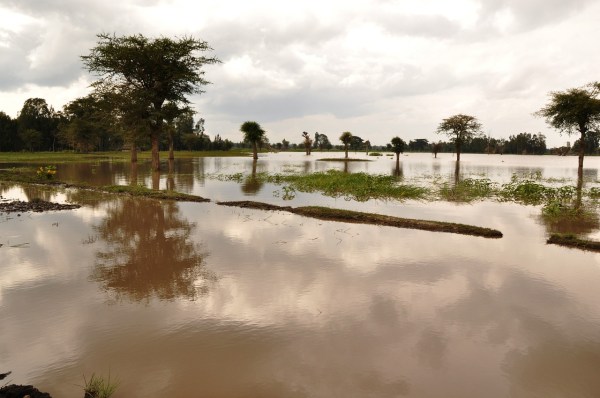
To reach their house, Jake and his mother had to cross a wooden bridge spanning Willow Creek. On his walk home from the bus stop that afternoon, he’d seen the water running high and fast as a result of the day’s heavy rain.

“You got another letter from a college,” Jake’s mother said as he swabbed her wound with an alcohol wipe and applied a bandage. Their gazes met in the bathroom mirror, and he noticed a worry line appear between her eyebrows.

“Mama, that’s just a brochure I sent off for. I won’t even start applying till next year.”

Before she could respond, the phone rang. “I’ll get it,” she said, pulling on her shirt as she left the room. Jake washed his hands and the object he’d extracted.She had no idea he saved each one. Over the past several months, he’d collected at least a dozen in a small jar.

Jake heard his mother’s voice rise in alarm, and he hurried to the living room where she stood at the window, holding the phone’s receiver to her ear. “We can’t just leave,” she said.

He drew closer and could make out their neighbor Mr. Winslow’s voice. “Addie, I’m telling you the creek has jumped its banks, and I’m heading out before it covers the road. You and your boy need to do the same.”

“But it’s never reached the house before!” She tugged at her long braid, the way she did when she was anxious.

“There’s a first time for everything.”

Jake joined her at the window. Rain fell in a blurry curtain, obstructing his view of the bridge, but he could see water edging into the yard.

“Thanks for letting us know, but we’re going to stay put for now,” she said, then hung up the phone before Mr. Winslow could protest.

“Mama, he’s right,” Jake said.

She stared out at the encroaching creek. “We can’t just let our house get flooded.”

“How do you think we’re going to stop it?” His voice was sharper than he intended, and she winced. “I’m sorry, but we should leave.”

She gave her braid a vicious yank, and Jake spotted another dark lump beneath the skin of her forearm. He grazed it with his fingertip, and when she saw the new growth, her eyes widened. “Jake, you have to get it out.”

He led her to the bathroom, trying to ignore the rain slapping the window pane and pounding the roof. As he worked the object from her skin, the power went out.

His mother swore and grabbed his hand, causing him to drop the razor blade. “Promise you won’t leave me,” she said.

“Mama, I’m not going anywhere. If you want to stay, we’ll stay.”

“That’s not what I meant!” Her words betrayed the panic that had lurked beneath her calm surface for months, taking the shape of black seed pearls he couldn’t crush between his fingers.

Jake squeezed her hand until she cried out and struggled free of his grip. “I promise.”

That night he sat on the porch and watched the deluge surround their car in the driveway, splashing the tires as it inched closer to the house. When it lapped at the bottom porch step, he almost called for his mother, but the rain slacked off and then ended minutes later. He went back inside and found her curled on the sofa, her breathing even and deep with sleep.

After Willow Creek retreated to its banks the following morning, Jake made his way to the bridge and stared down at the raging water. Mr. Winslow’s truck approached and halted alongside him. “It’s a miracle you and Addie didn’t drown last night,” the man called.

“Yeah,” Jake said, “a miracle.” He opened his fist and tossed the offerings from his mother’s body into the creek.


M. Stone is a bookworm, birdwatcher, and stargazer living in the foothills of the Blue Ridge Mountains. Her poetry and fiction have appeared in San Pedro River Review, UCity Review, formercactus, and numerous other journals. Find her on Twitter @writermstone and at writermstone.wordpress.com

Contents Drawer Issue 14

The Interview – Lee D Thompson

The Interview

Before the interview begins, you have an opportunity to make any admissions of guilt on the screen in front of you. Please use the e-pen provided and fill in the box.

Thank you. Can you please state your name and date of birth.

Thank you. This interview is being recorded. We are in interview room 7. The time is 21:21 hours on Tuesday 15th March. Can you confirm that there is no one in the room other than yourself?

Thank you. You are reminded of your right to free and independent legal advice. You have chosen not to take that option. You can have legal representation by video link at any time. Can I ask why you don’t want someone to represent you?

Thank you. Your response has been recorded. Please place any hand on the pad in front you.

Thank you. Adjust it a little to the right.

Thank you. That is perfect. You are reminded that your pulse is being monitored throughout the interview. Please place the small green pad at the centre of the back of your neck.

Thank you. That is perfect. Be aware that perspiration and flesh responses are being monitored throughout the interview. I am Version 6.2 of the Virtual Police Interview System, my unique reference number will be digitally stamped onto the interview recording. Body monitor measurements remain confidential and are non-disclosable. Do you understand and agree to continue?

Thank you. Do you agree to any bodily samples being taken from you after the interview has concluded?

Thank you. Do you agree that these samples can be used in evidence?

Thank you for your continued compliance. Please read to me what you wrote in the box before the start of the interview.

Thank you. You may feel a small shock to your body during this process. It is nothing to worry about. It is a normal part of this procedure. Do you understand?

Thank you. Please read again what you have written in the box.

Thank you. That was the first shock. Do you want to amend what you have written in the box?

Thank you. That was the second shock.

Thank you. Please go ahead with your amendment.

Thank you. Much better. You will see a new box appear on the screen in front of you. Please draw what the victim looked like when he was screaming at you to stop.

Thank you. The mouth you have drawn is not open wide enough. I have deleted the first image. Please try again.

Thank you. On the same image you have drawn, please draw what your own face looked like as you were committing the offence.

Thank you. Your eyes are incorrect. I have deleted that image. Please try again.

Thank you. Much better. In a moment, the victim will be brought into the room. Please remain seated with your hand on the pad. I would like you to speak to him and tell him in your own words, how sorry you are.

That is correct, the victim.

I can confirm, the victim. Please remain seated and do not touch the cadaver.

Remain seated.

Thank you. Do you want to add or amend what you have said to him before he is removed?

Thank you. Are you okay to continue the interview? If you need a new pad for your neck, you will find one in the drawer to your left. Moisture levels appear high. A new box will appear on the screen. In it, please draw a picture of the most beautiful place in the world.

Thank you. Confirm, are they palm trees?

Thank you. Palm trees are beautiful. Now, next to the beautiful place please draw what you think God looks like. If you do not believe in God, please draw a beautiful person.

Thank you. Confirm, is that a woman and if it is, is the woman God?

Thank you. The woman is your wife.

Thank you for confirming that she died four years ago. I am sorry to hear that. Next to your wife, please draw yourself.

Thank you. The image has been saved. This image will be emailed to your next of kin. In the box below, please write a message to your next of kin telling them how much you love them.

Thank you. Now, please look at the screen. Remain seated. Your next of kin will respond by writing a message back to you. Please read the message and tell me when you have finished.

Thank you. If you need a tissue, you will find some in the drawer to your right. Now please close your eyes.

Thank you. Please remain calm.

Interview complete. Interviewee photographed in situ and e-mailed to the victim’s next of kin, in line with current legislation.

Time of death: 22:15 hours. Coroner notified. Victim satisfaction survey e-mailed. Interview terminated at 22:16 hours.

Thank you.


Lee D Thompson writes short fiction and poetry in Nottingham, UK. He has previously been published on The Cabinet Of Heed, Algebra of Owls, and Adhoc Fiction.
He regularly writes for Memoir Mixtapes. Twitter: @TomLeeski Web: https://ldthompsonwrites.wordpress.com

Contents Drawer Issue 14

Image via Pixabay

Hamburger Hal – John Grey

Hamburger Hal was Richard Ucci
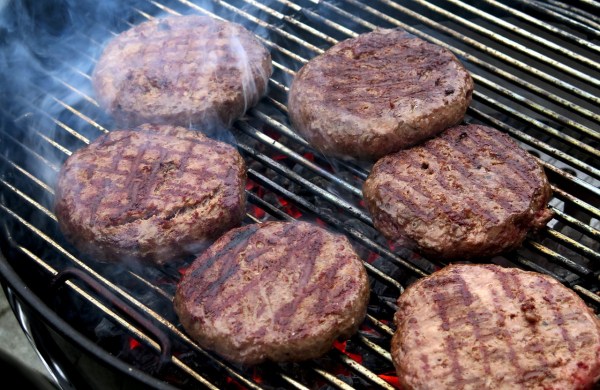
who grilled patties on a grid of fire,
garnished them with all the fixings,
trucked his miracles around church festivals
and modest fairs in parks and empty lots.
He prayed over his specialties in Italian
as he spread salt on meat like holy water,
a tattooed testament to all his father taught him
about the meaning of “cooked just enough.”
Both generations lie under the soil of St Mary’s
with its faint aroma of barbecue sauce and relish,
their bones united by spatula and fork.
Hamburger Hal lived three blocks
from where I grew up, the side of his van
painted with sizzling meat and onions,
giant bottles of ketchup and mustard,
and a guy in a huge white cook’s hat
who didn’t look the least like Hamburger Hal.
I never had one of Hal’s burgers in all my life
though I know there were some who swore by them.
Richard Ucci claimed to have a secret ingredient
like Coca Cola or KFC though we kids
figured that for a lie, for the Hamburger Hal that
we knew was nowhere near bright enough
to be concocting magic recipes.
He just grilled burgers the same way everybody else did.
But he had a van. He could be America
whenever there was some place to park it.
His competition was candy floss and bounce rooms.
And his late old man of course.
He died young. A tractor trailer crossed the dividing line
and crushed him like a slug.
People still say no one made burgers like Hamburger Hal.
But Hal wasn’t a real person so maybe those aren’t real memories.
I do remember clearly watching dogs chasing that van
and thinking to myself, they’d better not catch up with it
or they’ll be on a bun before the day is out.
You get all kinds of stories about those who put themselves
out there, if only in a small way.
The truth is probably mediocre burgers and no chopped-up Fidos.
But that’s not a good truth.

John Grey is an Australian poet, US resident. Recently published in the Homestead Review, Poetry East and Columbia Review with work upcoming in Harpur Palate, the Hawaii Review and North Dakota Quarterly.

Contents Drawer Issue 14

Image via Pixabay

Forwards – Gail Aldwin

I’m flaked out. The sky is mauve yet still I lie, my skin warmed and taut from sunbathing.
In the pool, the water is inky. There is something amniotic about the way it draws me as if I can go back to the womb where I once tumbled and turned. I will always be my mother’s boy. The others go off in search of more beer but I’ve had enough. Fag buts and spliff ends dot the paving stones. I stand and stretch then pump my shoulders. You can’t get more chilled than this. Ready for a swim, I watch the water winking. Puzzled, I turn. Of course it’s the fairy lights strung amongst the trees that reflect on the surface. Chinking bottles announce the boys are back but I am poised, my toes grip the edge of the pool. That’s when the shouting starts. They like to make a noise but I’m not distracted. My chin’s tucked in, my back’s arched and my arms are ready. One little bounce at my ankles and I’m propelled forwards.

I am prone. The lights on the ward are bright but I lie there, the result of an impetuous moment and a shallow end.


Contents Drawer Link

Gail Aldwin is an award-winning writer of short fiction and poetry. As Chair of the Dorset Writers’ Network she supports writers by connecting creative communities. She is a visiting tutor at Arts University Bournemouth and author of Paisley Shirt a collection of flash fiction.     @gailaldwin     https://www.facebook.com/gailaldwinwriter/   http://gailaldwin.wordpress.com


Image: Marisa Sias via pixabay

The Box – Linda Walsh

‘My condolences.’

I pocket the priest’s condolence and usher him into the crowded living room. My pockets are full. Full of ‘sorry for your troubles’ and ‘I’m so sorrys’. I find a shoe box, ‘Size 12 Brown Brogue’ and tip the sorrys into it.

Placing it on the laden table, I re-join the mourners offering them tea, coffee, whiskey. People circle the coffin whispering. An old woman touches John’s waxen face; pats his frozen hand. The mood lifts as the whiskey hits. The chatter bubbles as people reacquaint… and speculate.

More people arrive. I accept their sorrys, moving my hand over the box each time, a slight wave, a silent drop.

There’s a commotion as a woman crashes in, her cries stilling the mourners.

Judith.

Shrouded in black; lines of mascara trace a waterfall down her face. She touches my arm.

‘Sarah, I’m so sorry.’

I don’t put her sorry into the box. I flick it into a soiled saucer. Jameson sears a path of fire down my throat.

When the mourners filter out, I put the box in the coffin at John’s feet. I pull his letter out of my sleeve.

‘Sorry,’ it says.

I crumple the note; push it into the box.

A movement in the garden; Judith is leaning against the wall, one hand clutching her stomach. Snatching the box, I step outside.

Drowned eyes mirror mine, I see the friend she once was, the wretch she is now.

Touching her arm, I hand her the box.


Contents Drawer Link

Linda Walsh lives in the Dublin mountains beside a library and has written stories in her head since childhood. She is finally putting pen to paper and has fallen in love with Flash Fiction.   Twitter: @francaisanna


Image: via pxhere

The Sky, And Its Victims – Claire Storr

I’m not made of the correct fabric like everyone else. Like a Paper Mache lantern under a hot tap, bound for collapse, wilting at any breeze.

I hate your new moustache. It makes you look like a 1940s British general. Something Second World War-ish. “Tally ho master!” I say, with it pronounced ‘Mahhhstaah’, elongating the edges of the word while you look at me, expressionless.

Later that night, someone posts a picture on Facebook of a victim of a napalm attack, and before I can look away I see their arms and legs are long, red twigs of gore. I shake all night with the image burned into me, the phone was flung across the room as you tightly gripped my breech-baby form. You said: tremble and I’ll make you stable, the ripples will flatten out, eventually.

This was the way that it began.


Contents Drawer Link

Claire Storr is a 33 year old writer from Cumbria. After completing an MA in Photography in 2008, she worked as an editorial photographer for the likes of Faber and Faber and Macmillan alongside having exhibitions and writing poetry and prose in her spare time. Since then she has progressed into writing full time and has been published in various anthologies, magazines and newspapers. In 2018, she published a collection of short stories focusing on female characters living in Ireland called Tides. She lives with her husband and daughter in Carlisle, Cumbria.


Image: tookapic via pixabay

Pond Greetings (three poems) – Benjamin Niespodziany

Greetings

Corporate bought the man
a greeting card but forgot
what for, the whole office unsure
if it was cancer or a wedding
or a divorce or a local family
member beheading, so the card
featured a simple flower on the front
while the inside read,
“Congratulations, we’re sorry,
thank you for everything.”
When the man arrived at work
ten minutes early on Monday morning
he read the card a few times
and wept quietly at his desk,
his shoulders muted jackhammers.
The card now hangs on his mantel
next to photos of his newborn
and an assortment of strongly
scented candles. His wife’s favorite.


My Head Pond

I develop an X-Ray
that captures ghosts and point
it at my skull, tell my doctor
to clear my head of the dead residents
living within my ears. My doctor tells me
I am the first person to have him
question god. Everything feels
off, like eating a salad with a spoon.
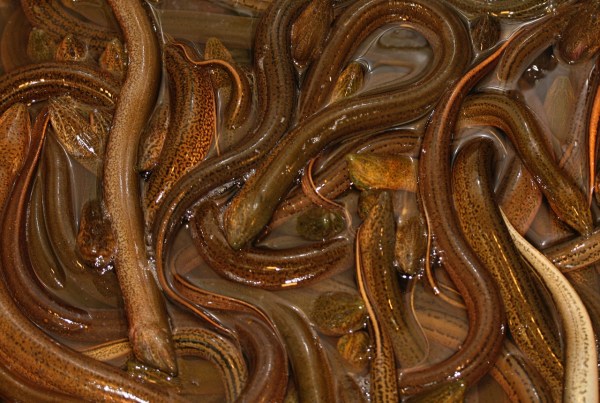
I jump into the pool and realize
it’s my neighborhood pond, the one
full of eels. No one says
anything. Everyone’s busy
driving their children
to soccer and ballet.


Charged Coffee

The lunchtime train smells
like purse dust. I cough
during dinner. Your father
never forgives me.
I take a needle to my neck; no more
rabies. Foaming isn’t an option.
I’m fine, but who put the medicine
man in charge? He’s decapitating everyone.


Contents Drawer Link

Benjamin Niespodziany is a night librarian at the University of Chicago. He runs the multimedia art blog [neonpajamas] and has had work published in Ghost City Press, Occulum, formercactus, Five2One, and a batch of others.


Image: redkite via pixabay

Same Old Love – Cathal Gunning

The plane dipped and tilted, “beginning its descent” according to the tinny echo of the co-pilot’s voice. A roar growled in Danielle’s ears. Pressure building. Across the stretch of the lake below, ice spread; a solid film attempting to coat its surface, falling short in the centre. From the impossible height of her plane seat, the ice was the same iridescent rainbow oil-slick colour that topped her cold cup of coffee.

Erica had told her something about the pull of the dairy industry, about how our bodies weren’t meant to process milk. Over the peaks of mountains outside, mottled blue shades and streaks of pure white, Danielle could see why white supremacists were obsessed with milk as a symbol. Fucking Twitter poisons our brains.

Erica had said everyone’s born lactose intolerant, that milk never settles in the stomach. It wasn’t a comforting thought. Before her, Iceland would have been beautiful. After her it was snow, and ice, and jealousy of whatever place got to have her. Mountains as white as milk, a stomach that never settled.

Three months earlier in a too early hour of the morning, Danielle sat up and smoked shared cigarettes until she’d the confidence to go in for the shift and spent the night sucking on an almost anonymous tit as if it were a teat; less sexual and more urgent, starved for sustenance. That was Anne-Marie(?), the last woman she was with before she met Erica. Anne-Marie (something like that), a since-all-but-forgotten closet case tragedy who she’d shared a 5am taxi and bungalow with post-Porterhouse.

Fucking Erica had an urgency, but it wasn’t the same; an urgency of its own, not just different but incomparable. Just the thought of fucking Erica had more passion and impact, more physical ache, than actually fucking anyone else could ever have hoped to.

Sean’s friend Angela was lovely, as was the farewell drink she bought Danielle, and the comforting numbness it brought with it. Lovely, like messages from friends wishing well, like the last meal Danielle had with her family before leaving for the plane. Everything was lovely since Erica, and nothing was beautiful but Erica, splitting the two words into the universal and the specific. Body and soul. Nothing else would ever be beautiful again.

Same old love.


Cabinet Of Heed footer logo

CATHAL GUNNING (24)- Editor @ ‘Cold Coffee Stand’, Adbusters Media Foundation. Poetry in The Rose Magazine, Lagan Online; Fiction in Tales From the Forest, The Honest Ulsterman, The Runt, Snakes of Various Consistency, The HCE Review, The Occulum, and the collection ‘From the Candystore to the Galtymore’.
Debut novel ‘Innocents’ published 2017 (Solstice). Short-listed for Maeve Binchy Travel Award and Hennessy New Irish Writing.


Image: Volkmar Gubsch via Pixabay


Plant Food – Stella Turner

It happened very quickly. It was summer I think. But it might have been spring when the Purple Rain fell. At first Sadie thought it was magical, a nice shade, think she used the word hue. The animals weren’t very keen. It was later I turned vegetarian. I’d always liked a lamb’s leg for Sunday lunch not many farmers in these parts that didn’t eat meat.

Sadie would go out and dance in it. I don’t like getting wet. Sadie would laugh and say whenever did you see a rusty man? She started to say things like I was good enough to eat and would bite my arm hard when I gave her a hug. I had to shoot her dead the day she came at me in the barn with a meat cleaver. It was the one we used to cut the pigs up with. Once they’d hung for a while in the outhouse.

I buried her in the back garden with a cross around her neck and a stake through her heart just in case. She feeds a patch of wild flowers. It looks really pretty. The rain is back to normal no purple tinges but I make sure me and the animals stay indoors if rain is forecast. You never can tell these days what’s what. I eat porridge mostly and let the animals die when nature decides. Haven’t seen the neighbours for months, the flowers look good though, on the side of the adjoining hills. Really pretty I tell myself.


Cabinet Of Heed footer logo


Image: Foto-Rabe via Pixabay


Set – G J Hart

In dreams he dreams
of cities hung with rails
slick as caramel wicks,
towers of sparks and waggons
burdened with the coals
of notions beneath craquelure
swollen as almond –

to a crackle that accuses
and in a flicker
passes

between,

desires himself still –
the piped steel
and packed fridge
and walls that pen
chapters
of flies open
beside a lamp
bickering
with moths.

And each morning his phone
calcines and heart softens
across a voice
gummed with questions:

are we prepped,
are we set?

He’d sent out waggons shaking
with lakes and meadows –
testers just testers

As he listens he slices
a segment of nail,
tongues its bowl.


Cabinet Of Heed footer logo


GJ HART currently lives and works in London and has had stories published in The Molotov Cocktail, The Jersey Devil Press, The Harpoon Review and others. He can be found arguing with himself over @gj_hart.


Image: Aida Khubaeva via Pixabay


Love Is A Scale – Ray Ball

Love is a scale
but still I erase
my father. Turning
his data into
poems regardless
of methodology
or explanation of

abbreviations for
behavior acts.
Zoologist.
Sixteen trials
when I was
sixteen. I dipped
the mouse in
vitamin powder.

Took the lid
off the box
tossed it in
to the hungry
serpent. Later
I would steel

my nerves
to reach in,
grab the writhing
reptile. Put it
into a sack
to be weighed.

My first memory
is a strike to the
nose. Yes,
the snake bites.

But here I am
reaching in.
Ignoring the
hiss of warning
because love
is a scale.

I wanted to tip
the balance.
I guess
I still do.

Cabinet Of Heed footer logo


RAY BALL, Ph.D., is a writer and a history professor. She grew up in Oklahoma and Texas, but now lives in Anchorage, Alaska. Her creative work has recently appeared in Cirque, Longleaf Review, and West Texas Literary Review. She tweets @ProfessorBall


Image: Harald Landsrath via Pixabay


Create a website or blog at WordPress.com

Up ↑