What’s Left Behind – Traci Mullins

Everything is too neat.

Boxes taped shut and stacked into corners, clearly marked so the movers will know which box goes to which house. God forbid that one of us will end up with something that might remind us of the other.

Even the garage is swept clean. Only a half-full trash bag dangles from a nail. He must have forgotten to toss it. More likely, he left it on purpose, like an accusation: “Thanks to you, rubbish is all we have left.”

He’s the one who prefers booze over me, so why am I left holding the bag?

I drop it into the back seat of the car, go in to recheck each room one last time. Throw up in the bathroom. Am tempted not to flush.

It’s taken ten years to come to this. Ten years of begging, cajoling, shaming, screaming, threatening, lecturing—my voice becoming like the adults’ in the Peanuts cartoon: wa wa wa waa. But I couldn’t shut the fuck up. Didn’t get it—that words are no match for a fight with an addict. I should know; I’m as addicted to him as he is to scotch.

In the den now. I can picture him stacking wood in the fireplace on a Saturday night, sweet smear of old soot across his nose. He can turn our favorite room into a cozy patch of heaven, and every time, I think the same fool thing. How can he want anything more? He lasts an hour before his nightly rendezvous with a better lover. I let the fire die.

In the kitchen now. Blueberry pancakes sizzling cheerfully on a Sunday morning. Today will be a good day, you’ll see. But when ‘60 Minutes’ tick-tocks, he’s been out for two hours, a string of drool pooling onto the leather sofa. I pull a blanket up over his face. He might as well be a corpse.

In the bedroom now. I find him unresponsive on a Monday afternoon. Call the ambulance. This will be the day, you’ll see. There’s no deeper bottom. He’s drunk by noon on Thursday.

That’s when I tell him: “This is it. I mean it this time.”

He snorts. Tosses back another shot. “Don’t let the door hit you on your way out.”

Front porch now. Pulling the door shut for the last time. It doesn’t hit me. You’d think there’s a point in there somewhere. It’s lost on me.  


Traci Mullins, a non-fiction book editor by day,discoveredflash fiction in 2017, and it’s been a love affair ever since. Her stories have been published in three anthologies, Panoply, Spelk, Fictive Dream, Flash Fiction Magazine, Flash Boulevard, Blink-Ink, Dime Show Review, Ellipsis Zine, Cabinet of Heed, Fantasia Divinity, and many others. She was named a Highly Recommended Writer in the London Independent Story Prize competition.

The Cabinet Of Heed Issue 29 Contents Link

Image via Pixabay

Thin Wall – Mehreen Ahmed

Forget-me-not dear father. Please do not look at me blankly or ask who I am. For I know, I shall mope for days on end, when you do that to one of your own. Your own loving daughter, you raised with so much love and affection. This affliction hits you, now. It tears me from within. It tears me apart, dear father. Lump in my throat, you not around to mend.

I think of you and my mother. How beautiful she looks? Her skin, fair, soft in the moonlight glow, a midnight of cascading hair. You sitting by her side, holding each other in the clear, dazzling light, propped up by stars of a night; listening to Andrea Bocelli, singing, reciting Tagore and Nazrul Islam’s poetry. Tonight, you’re a different person, sensitive, caring and romantic, playing chess, laughing at silly, odd jokes, talking vibrantly, being the perceptive mind that you are.

Bocelli’s voice, smooth like an aluminium sheet over a placid sea. The blind seer, who saw how he could conquer; his vision peerless in his understanding of the world. But father, your mind, to the contrary, was not, hence your visions blurry. Dear father, did you not see it coming?

Alas! You just called my mother, your mother. Mother knows not that one day, you’ll not remember the distant past, and forget the formidable immediate. Mother knows not until this day, that you would be looking at the world through your netted mind. You, who made so many sacrifices, once. Your charities saved lives. Your readings, misgivings, your writings, musings, your first class brain, a full life.

Who now holds Shakespeare’s complete works in his hands and pretends to read it. You, who knows enough to hold the book, although the words may fall through the holes of your once whole brain. Words melt away, Words writ in water. But you did that much, at least. Hold the book closely enough, salient like salinity to an ocean, faithful to your art; hold your pen upright, to your diary. I often watched you, a little girl in awe, how you cut and pasted, sentences with scissors, in those days, without computers. How you edited, You knew your words so well, in your meaningful hay day.

You took me to see a circus once, you caged me within your arms, dear father, so no one would brush past me, or hurt me inadvertently in the crowd-filled circus-park. I have not forgotten anything father. But you have. Your memory has lapsed. You go out for random walks, beyond the rail tracts, and forget your home, the little blue house. These long walks back, not wilfully wayward, but to ensure safety, I had to lock you in the house, so you would not lose your way, back to us.

Your brilliant mind, the much lauded works, the published newspaper pieces, bear testimony to that. Now, you forget people’s names, friend’s names, your children’s names. Oh! Forget-me-not, dear father. I cannot endure this. But if it’s in your genes, then you cannot help it. How helpless people are when they cannot remember, forget the next word. How overwhelmingly, helpless it must be, when you can’t even recognise your own beloved wife, let alone the names of great writers of all times, Iris Murdoch. Today you have shared the same fate. Iris Murdoch, who knew so much, then knew not what words to put in a sentence string.

What sort of morbidity is this within your mind? How do you interpret when you see faces? This blinding world of nothingness, yet, nearly, not half as blind as the world of Andrea Bocelli of notes, rhythm, tunes and modulation. Every chord, he feels. Every spice on his palate, explodes in celebration of this world, which has thus far distanced itself from you, and rendered it off limits, that you descend into this chaotic place of discordant beats of no taste, certainly no musical vibrations. In severe cold, you forget to put your black coat on. And you forget to select shoes from your wardrobe of hundred pair collection.

You decline sharply, to a merciless, dull spot of muteness. Living in this speechless world, is perhaps much braver than we’re willing to give it credit. Out of bare ignorance, it must feel like blackhole, which no light can ever penetrate. This life of forgetfulness, forgetting, and to forget at a frightening pace. All things, present, near past and then distant past, information lost in this fretful deep well, things, names, places, and babbles.

Forget-me-not, dear father. For I’m your loving daughter, who may one day follow your footsteps, like many demented others. How rapidly this disease grows, accelerates to invade the most private thoughts and not so private. The most cherished ideals, blighted in the brain, just as vices of every deplorable sin, leaving no room for confessions, amendments, let alone forgiveness. To become blank slate, a vacuum without any traces of vices, or virtues, records of ever praying at evensong. A flat line, father, is all you display, mere shadow of yourself without smiles, breathing expressionless and wordless, statued on the sofa or lying stiff on bed. Mother by your side, as ever; we around, but a faceless number to you. Your books, your writing desk stares at you, dear father. Even the inanimate speaks volumes.

Why though, father dear, my sorrows, vapid, unbound. I miss you. I miss you. I get claustrophobic, thinking of you. I know not, how you feel in your mind, claustrophobia of a kind? Indescribable that you will never be able to express. No more, no less, it is you though, who ultimately carries the burden of wealth in that paradoxical net of your brain, knitting this wealth of knowledge of all the lights, the world cannot see. Nor reach new heights. Knowledge of this ugly barred condition, eludes wisdom and sanity, the world waits to garner more brain as much brawn.

Cabinet Of Heed Contents Link 26

Image via Pixabay

Infinite Rainbows – Dan Brotzel

People sometimes asked Rick if he travelled for his work. It was a question he kept meaning to tuck away for use at the next barbecue with the neighbours, when he always struggled to come up with new small-talk prompts that he hadn’t used at the previous barbecue.

Yes, I do actually, thought Rick. Last week I was in Doncaster and Reading. The week before it was Slough and Swindon. I’m also often in Glasgow, Bromley and Hull. Rick travelled to clients and prospects, criss-crossing the country to lead workshops and support on pitches, to attend tissue meetings and wash-ups and beauty parades and blamestorms. As a result of all this, he spent a lot of time in trains, and had come to some fixed conclusions about London stations.

He was dutifully tolerant of Victoria and its eternal building works, as one might be of an elderly mother, since it was the London station of his childhood. He was as stupidly charmed as any tourist by the faux village set-up of Marylebone. He was warily amused by Liverpool Street, with its City sass and vim, like a dad with a boisterous teenage daughter who is on the verge of eluding him forever. He was bored by Waterloo, wilfully under-impressed by the new Kings Cross, but quietly amorous of bohemian St Pancras, with her pianos and her clandestine continental connections. He was intrigued by Fenchurch Street, station of mystery, since he had never been there.

But Paddington, brash and expansive and unhelpful, oppressed him. With its perverse signposting, its absence of sightlines, its long walks between connections, its barriers at the wrong end of platforms – with its refusal, in short, to act like a proper station, Paddington could fuck right off.

At the cafe where he chose to wait for his train, queue-forming protocols had become ambiguous. A pair of bridge-and-tunnel types — two middle-aged women with silk scarves and floral luggage — stood at right angles to Rick by the counter. They had clearly got there first, but to the untrained eye it might have seemed as if they had already been served, or as if Rick was trying to get in ahead of them. One of the women flashed Rick a look of such scandalised hatred that he fell in love with her at once. He flashed back a smile of exaggerated obeisance — offering a comedy medieval mime to indicate his deference to her and her friend’s advanced queue status and nobly refraining from pointing out their eccentric positioning, which to his mind had caused all the trouble in the first place – and began plotting ways to kill them with kindness.

But no. He would not go there; he was stressed enough about the day’s workshop already.

He took a deep breath. It was easy to forget that there were people who travelled by rail for the fun of it. On inter-city trains in the daytime, after all, the world of work ruled supreme. People marked their table-top territories with the full panoply of laptops and headphones, expensive travel mugs and stationery porn. As Rick walked through the carriages, he saw people casually parsing Rosetta-stone spreadsheets, constructing lengthy passive-aggressive emails with highly politicised uses of cc-ing and bcc-ing, compiling turgid slidedecks in which the projected figures for the next Q are always somehow trending up.

And above all he heard them, braying and wheedling and bossplaining on their phones, as they dressed down junior team members, sold toasters by the thousand, discussed their chances of winning seven-figure contracts, and snarked at their agencies in heated conference calls. (‘Has Carrie actually signed off on this iteration, Jay? The user experience is about as far away from elegant simplicity as it could be, it really is.’) And they did it all with unselfconscious ostentation, Rick noted, often involving the whole carriage in their drama.

He was wearing a new shirt. Out of the packet, it transpired to be so blindingly white and starched and sharply creased as to appear the very opposite of smart — like crap fancy dress in fact. (He remembered randomly that he was still someone who didn’t know what ‘diffident’ meant.)

There was a lot riding on the workshop with today’s client, a leading global provider of something something investment solutions. They reportedly had a big budget, and an appetite to do lots more if today went well – but also, at the same time, a cheerful acceptance that if nothing got done for a very long time, that didn’t really matter either. They didn’t have a clue, as far as he could see, and they were utterly unaware that Rick didn’t have a clue. They should, in short, have been the ideal client.

Except that, rather than wallow in blissful ignorance, the client had been led to believe (not least by Rick, alas) that he and his company had the knowhow to lead them out of the wilderness. They kept deferring to his judgement, terrorising him with their childlike faith in his abilities. Rick had clearly talked far too good a game at the pitch, because here he was now, trapped in a room with a load of Senior Global Something Somethings, all of whom expected to be dazzled by the strategic brilliance of a man who had never understood what strategy actually meant.

Rick wondered, and not for the first time: Do other people really approach these meetings thinking, ‘I am a powerful agent of transformation!’ and ‘Today I will be mostly smashing it!’ and ‘Time to board the Change-Train, people!’ Rather than, say: ‘Do we have to do this?’ or ‘Can’t this all please go away?’ or ‘Would you mind counting me out?’ or ‘Wish I was dead’? (Asking for a friend.)

The warm-up hadn’t gone too badly, at least. Rick got everyone to go around and share a fact about themselves that no one else in the room knew. One woman had once shared a taxi with David Beckham, another was a secret crochet fan; the Head of Something Insights revealed that he had never tried Weetabix.

They were not long into the meeting proper before an unspoken consensus emerged that the pet phrase of the gathering would be ‘To your point.’ Every workshop has a pet phrase, Rick believed, and this one was good enough to add to his elite store of meeting staples. It was right up there with ‘What does everyone else think?’ and ‘Shall we take that one off line?’ and ‘That’s not a sentence I expected to hear today!’

Beginning your remarks with ‘to your point’ flattered the addressee that you thought their comment had been worth returning to and developing. It convinced the person who said it that they were a master of logic and joined-up thinking. And it flattered everyone by making it seem that the meeting was not actually just another cosmetic rehearsal of stale platitudes, but was instead a lively and creative symposium in which the powerful thoughts of great minds could be seen to develop and progress towards important, actionable conclusions.

But on top of all that, the very greatest thing about ‘to your point’ was that different people’s contributions didn’t need to connect together in any way at all:

‘I’m not sure if we know enough yet about who our clients are, or what their true pain points are.’

‘To your point… I really wish we’d stop using that teal colour for the background on our Twitter quote cards. I know it’s in the new brand palette, but it just looks a bit lurid to me.’

After lunch Rick began again with another mini warm-up. He got everyone to say whether they preferred Breaking Bad or Game of Thrones, and to give reasons for their choice. All was going swimmingly till they got round to the Chief Something Officer, who insisted that she had never watched either and would rather talk about Mad Men Instead. Rick the mild-mannered socialist fumed. Honestly, he thought. It’s one rule for them and one for everyone else…

While Rick toiled with his meagre tools of war — his slides and his whiteboard markers and his blue-tacked flipchart sheets – he noticed that an entire aspirational lifestyle was popping up outside his client’s window. It was a Friday afternoon, and for some the weekend was beginning early. Bars spilled out onto terraces, and the balconies of loft-style apartments were suddenly full of loafing urbanites supping chilled prosecco as they gazed out over the children splashing with loud pleasure in the fountain of a bright new public square. The fountain boasted a sheer-flowing water feature whose metallic planes glinted infinite rainbows in the swoon and sheen of the afternoon’s unexpected sunburst. Paddling barefeet, a pair of young lovers kissed for the first time.

Around the square, slogans asked: ‘What are you thinking right now?’ and ‘What if you just took a moment?’ and ‘Isn’t life amazing?!’ A sign flashed up: ‘Giggle. Wonder. Breathe.’ In one corner, a police horse stood magnificently still, preening with proud muscularity as its officer brushed and stroked and sluiced it down. A small crowd of appreciative children and mums had gathered to enjoy this blessed moment.

Back in the room, the Post-It notes were wilting in the heat and dropping from the walls. Rick’s deck had got stuck on a slide which said only, ‘Strategy: Why → How’. It was a slide Rick had devised in a moment of insight many moons ago, but which now blinked back at him, blank and surly.

The sun beat into the room unpleasantly. Rick reflected that if he had set out to wear a scratchy, starchy shirt designed for the express purpose of showing up the starkest possible contrast between the non-sweaty and the now all-too-sweaty areas of his body, areas which of course spread out from under his arms but also now included a growing patch in his upper middle chest area plus, he could confidently surmise, a linear vertical stripe running down the centre of his back… well, this would have been that shirt.

No matter. One of the assembled clients – the Assistant Something Account Something – was now enjoying his sixth or seventh epiphany of the hour.

‘So I guess what you’re saying is that, essentially, in a sense, our strategy should, in a way, be, kind of, no-strategy?’ It was the young, eager one, the one who always tried too hard. He had got Rick out of several tight spots already that afternoon, because although he wouldn’t shut up and had no idea what he was saying, the rest of the group felt obliged to respect his input, even though the conversation had digressed and even regressed on several occasions thanks to him already.

‘To your point, that could be exactly what I’m saying,’ said Rick. Was he? He certainly liked the idea of the follow-up work from the workshop involving the development of a non-strategy. But just then his highly-attuned client sensors picked up a micro-grimace from a more senior stakeholder.

‘Or not?’ he added, hastily. ‘What does everyone think?’

It had turned into another classic flop-chart presentation*. But thankfully it was too late and too hot for anyone to care.

As he was making his way through the client’s security gate afterwards, Rick compiled a quick obituary of himself. He was a man who was born, assembled some garden furniture, and then — to your point – died.

In his bag, he still had the birthday card from his 45th. They were studiously low-key about birthdays in his office, and his had fallen on a weekend that year. He’d come in to find a card on his desk, and decided to see how long he could go without opening it. All day as it turned out; no one mentioned it at all. When eventually he did look, not long before home time, it was to discover that only three people had signed it. Out of spite, he deleted his comedy all-department thank-you email about how he was adjusting to hitting the big three-oh.

After a much-delayed journey home, during which he had to deal with three heated calls, a provocative text and six pointed emails from his boss, Rick arrived back in London to discover that Paddington was still there, gurning sarcastically at his crumpled suit and absurdly heavy laptop bag.

Next morning, at breakfast, he was taciturn and morose. His mind teetered helplessly on the hair-trigger of irritability. The children ignored him.

‘I don’t know why you bother to join us for these meals,’ said Lorna. ‘It’s obvious you’d rather be somewhere else.’

I can choose how to respond to this situation, thought Rick. It’s entirely within my power. I can be aggressive if I choose… Or I can be passive-aggressive.

He looked up, suddenly inspired. ‘Now that’s not a sentence I expected to hear today!’ he said. ‘What does everyone else think?’


* Flop-chart presentation: A presentation using pretty graphs and fancy animations to mask an absence of any real ideas or useful information.

Cabinet Of Heed Contents Link 24

Image via Pixabay

Jessie: A Pastoral – Kathryn Kulpa

Jessie’s mother always called the cows “my ladies.” She said a cow was a soft creature, with no malice. They showed malice to Jessie often enough, kicking over the pail during milking, but it was true that under her mother’s hand they stood patient as nuns. She sang to them, and sometimes Jessie swore she heard the cows sing too, soft and secret. Jessie wondered if those cows were the softest things in her mother’s life. Years of working in the sun had made a dried apple of her face, though she said her first young man had called her his lily of the valley. So fair I was, she said.

Jessie had never known that young man, and no pictures of him existed, nor any of her mother in her young beauty. Married at 17, Jessie’s mother sailed with her husband one weeping day, left Aberdeen and its misty rains forever. But that first husband died. Jessie’s father was old, older even than her mother. He didn’t sing, to cows or anyone else. She’d never known parents who were young and carefree. She’d never seen them kiss, never saw her mother put her arms around anyone except Mehitabel the cow. Jessie was only sixteen, but she’d already made up her mind: her life would have plenty of kisses in it, and none of them from cows.


KATHRYN KULPA is a flash fiction editor at Cleaver magazine and was a winner of the Vella Chapbook Contest for her flash collection Girls on Film(Paper Nautilus). Her work is published or forthcoming in Flash Flood, New Flash Fiction Review, Superstition Review, and Pithead Chapel. 

Image via Pixabay

Chink – Gail Aldwin

A navy sky extinguishes the day. Sitting on the balcony, Kate reflects upon her laziness. No excursions to the volcano for Kate, just a sunbed, a pile of paperbacks and the company of Robert. Still wearing his shorts, Robert stretches his legs then scratches a mosquito bite on his knee. Kate is cool in her strappy dress. She reaches for the tumbler, drains the contents then crunches a sliver of ice.‘One more before we go down for dinner?’ he asks.But he’s not even dressed. Hasn’t yet had a shower.‘No thank you,’ she says. ‘I’m fine.’‘Good.’ He sits back in his chair.What now? She waits. Irritation makes her skin prick.‘Are you going to have steak again tonight?’ she asks.‘Think I’ll ask for it blue this time.’Yes, mooing, even.From behind the mountains comes a rumble. Although Kate knows these steamy days can lead to storms, she hopes she’s wrong. Holding her breath, she clutches the armrests and counts. A flash comes before she’s reached number eight. She’s rigid in the chair but Robert gets up for a proper look.‘It’s coming this way.’ His voice is gleeful and he cocks his head. Doesn’t he know it’s ridiculous to swagger in flip-flops?‘I’ll get inside.’ Kate reaches for her bag but when she turns, Robert is blocking the doorway.‘Surely by now you can face it.’She hesitates. Does he know what she’s thinking? What she’s planning? Of course not! Robert means the lightening.‘Let me pass,’ she says.‘No.’ He grabs her shoulders and manoeuvres her for a better view. Kate closes her eyes, resists his pinching grip.‘There’s no point in struggling,’ he says. ‘You can’t be scared your whole life.’Kate breathes through her mouth, takes comfort from the steady pumping of her heart, listens to the gushes from her lungs. The crack and the searing light skewer her to the spot but she controls the trembling.‘See, it’s not so difficult, is it?’When the thunder comes again, she’s ready. This time with eyes wide open she waits for the crack and watches the chink of light brighten the gloom. A path to her future is illuminated. She can do it. She really can.

GAIL ALDWIN’s debut novel The String Games has been longlisted in The People’s Book Prize for fiction. To get to the next stage depends upon public support. If you like Gail’s writing, why not pop over and give her your vote?

https://peoplesbookprize.com/summer-2019/the-string-games/

(The competition ends 15 October 2019.)

Image via Pixabay

Suppose – B Lynn Goodwin

Suppose Hannah, age 9, closed her eyes and announced, “I have windowless eyelids”? Would she be creative or silly?

Suppose a storm made the lights flicker so hard that she retched. Would she have a fear or a brain disorder?

Suppose she saw a strip of a green “for sale” sign and wanted to touch the curly strip along the bottom edge? Would her parents say, “Don’t touch” or “Explore, Hannah, but keep your fingers out of your mouth”?

Suppose a row of goldfish wearing sneakers tap-danced their way into a dandy trap? Would Hannah crack up or try to rescue them?

“Why do we stitch our curls so tightly that the brain cannot breathe?” Hannah asked her teacher one day when she was tired of being told to sit still and pay attention.

Her teacher, wearing flats, a gray shift, and a loving smile said, “Soon you may be a polished artist or writer or brain surgeon, Miss Hannah.” She looked out the window at the leaves budding while Hannah sat up straighter When the bell rang three minutes later, she raced ahead of the others, got to the monkey bars first, and swung so high she could see a man in overalls and a woman whose bare tummy rubbed against them as the couple hugged.

Suppose she pushed her body into a boy’s like that. Somebody would be sure to call her Mama. She was about to scream at them to get a room, like her big brother did in the Walmart parking lot, but fear shut her down. Instead, she jumped off the monkey bars, raced to the fence, stared at them through a knothole. They must have felt her staring.

“Suppose you go back to class where you belong, Little One,” said the man in the overalls., striding towards her.

She stood still as his mouth came closer and closer to her knothole.

“Or would you rather I call the school?” his menacing voice whispered.

Part of her wanted to know what the school would do, but she not badly enough to double-dare him. Instead she turned away, rubbing her fingers along the seam inside her left pocket. Back at the swings, she shut her eyes and swung in windowless bliss.


B. LYNN GOODWIN is the owner of Writer Advice, http://www.writeradvice.com and is a manuscript coach/editor as well as an author. She won awards for her last two books, Never Too Late: From Wannabe to Wife at 62 and Talent. She loves the challenges and brevity of flash.

Image via Pixabay

Because I Couldn’t Bear – Ray Ball

Because I couldn’t bear

to let you go, I transformed
you into a small bird. I shouldn’t
have done it, but I caged
you in my right hip.

You built a nest in the dry
and brittle bramble of bone
and fascia. Sometimes,
in certain yoga poses, I can

feel you flutter against
the wrought iron of my widest
point. Sometimes, when I run,
I hear the faint acoustics

of your song beating
into my blood, and I slow
a bit so that you will rest
once more. Remain with me

to support this weight,
this internal rotation,
another season without
enough numbing snow.


RAY BALL grew up in a house full of snakes. She is a history professor, Pushcart-nominated poet, and editor at Alaska Women Speak. Her chapbook Tithe of Salt was just published by Louisiana Literature Press. Ray’s work has also recently appeared in Ellipsis Zine, Moria, and UCity Review.

Image via Pixabay

Blueberry Muffins – Steven John

Dymphna lived with her mother in three damp, square rooms above Greasy Joe’s truck stop on the drainpipe road out of a nondescript town, the name of which mattered only to those that lived there. Greasy Joe himself, Dymphna’s father, had keeled over from his lardaceous arteries when she was twelve, and her mother had been bitter about it ever since.

From a mouth like a squeezed lemon her mother would say, “Your father fucked off and left us nothing but his arse to wipe.”

“Father didn’t fuck off Mum, he died.”

“Well that was convenient for him wasn’t it? Got him out of frying eggs for the rest of his puff,” Dymphna’s mother would say.

The red neon Greasy Joe’s sign pulsed like a bleeding heart into Dymphna’s bedroom. Her mother gave her Saturday night and Sundays off. A night and a day away from the water boiler where she made mugs of tea and coffee for fifteen hours straight. The day Dymphna had left school at sixteen her mother had said,

“You’re on drinks. I’ll do the frying,” and that was that.

There were Saturday nights, in front of her bedroom mirror, when Dymphna thought she was pretty enough. She blow-dried her long silky black hair and fluttered her eyelids at herself. There were other Saturday nights when she thought she was a flat-chested bag of bones that stank of streaky bacon. Either way her boyfriend Eddie would pick her up Saturdays, in his articulated truck, for the overnight haul to London.

After three hours on the road Eddie pulled into their usual layby and Dymphna ran over the carriageway for McDonalds and Cokes. Whilst she was gone Eddie pulled the curtains across the windscreen and laid out the blankets on the single bunk behind the wheel. When Dymphna climbed back up the steps to the cab Eddie poured two large plastic tumblers of rum and Dymphna emptied in the coke. Whilst they ate their cheeseburgers and drank their rum and cokes Eddie watched video of extreme fishing.

Dymphna rested her head on Eddie’s shoulder.

“Well this is nice Eddie, just you and me,” she said.

“You made me miss a good bit. He was on a monster fish” Eddie said and rewound.

At bedtime Eddie and Dymphna stripped off to their underwear and got under the blankets. Dymphna had in the past tried some experimentation with their love-making but there wasn’t sufficient headroom for anything that different. Eddie said that it seemed like a lot of huffing and puffing for nothing much anyway.

At five in the morning Dymphna woke to the cough of the truck’s engine and Eddie taking a piss on the front wheels. She pulled on her clothes, used the McDonald’s toilets and brought back coffee and blueberry muffins.

Whilst Eddie supervised the unload she redid her make-up in the sun visor mirror and never left the womb of the cab. On the return journey Dymphna talked about her dream to own a café by the seaside. Eddie said that was fine by him as long as he could go fishing.

“Maybe I could sell fresh fish from a corner of the café,” he said.

“And I would sell my homemade muffins,” said Dymphna.

Late on Sunday night Eddie dropped her back outside Greasy Joe’s.

“Same again next week?” he said, without stopping the engine, or taking his hand from the wheel. Dymphna leaned over and kissed him on the mouth.

Back upstairs in their damp rooms her mother lay hugging a cigarette on the sofa. She didn’t say hello or take her eyes from the TV screen.

“Had a good day Mum?” Dymphna asked.

“I changed the oil in the fryers,” she said, “whilst you’ve been out enjoying yourself.”


STEVEN JOHN lives in The Cotswolds, UK, where he writes short stories and poetry. He’s had work published in pamphlets and online magazines including Riggwelter, Bangor Literary Review, Fictive Dream, Cabinet of Heed and Former Cactus. He has won Bath Ad Hoc Fiction a record six times and was highly commended in 2018 ‘To Hull and Back’ competition.Steve has read at Cheltenham Poetry Festival, Stroud Short Stories, Flasher’s Club and The Writer’s Room on Corinium Radio.  Twitter: @StevenJohnWrite

Image via Pixabay

Cabinet Of Heed Contents

Kings Cross Examination – Dan Brotzel

Let us turn now to the evening of the 21st. An unusually hot Friday, even for July, as we have heard. At about 5.45pm you boarded a tube train to take you home, is that correct, Mr B?

Yes.

What route did you take? 

It was the Piccadilly line, heading north. I got on at Oxford Circus, then got off at Finsbury Park to get the Victoria line. 

Indeed. And it was at Oxford Circus that an incident took place. Do you remember coming into contact with a gentleman – Mr Jarvis, here – as he attempted to alight from the train?

There may have been a brief coming together. The train was very crowded.

Quite so, quite so! But you weren’t actually on the train at the point, were you? Or you were not supposed to be, at least. 

I’d stood to the side to let people off. I guess the momentum of the crowd carried me forward on to the train. It was hard to see if there were people still getting off. 

I see. Are you in the habit of being swept along by the momentum of the crowd?

Well, there are times when-

Have you, for instance, ever been swept under the wheels of an oncoming train by the hordes on a crowded tube platform?

Well. I mean, I hardly think-

Answer the question, please, Mr B.

I haven’t, no.

Are you aware of the protocols concerning the egress and ingress of passengers on tube trains, protocols which have of course especial sway and application at times of high peak use?

‘Please let passengers off the train first.’

Quite so, quite so. And yet you did the exact opposite…

As I’ve tried to explain-

-Leaving poor Mr Jarvis to have to fight his way out of the carriage, in order not to be stuck on the train and carried forth to another stop not his own!!

I regret this. But he did actually shove me quite roughly. 

He had to get off, Mr B! He had a gym appointment in Regent Street for 8.30! That muscle tissue won’t tear itself you know! 

I know. I’m very sorry. But I was in the way by accident. Whereas he pushed me on purpose.

And then what happened?

He stalked off.

Understandable, perhaps? And how did you feel?

I was upset. I was partly riled about having been shoved so roughly, and partly guilty at not being able to apologise. But of course, he never gave me a chance to explain, which was the worst feeling of all. 

Oh dear! Poor Mr B! Let us turn now to the morning of June 27thand to the testimony of Ms Pierce here. (And thank you so much for coming in to testify today, Ms Pierce, I now it’s not easy, the courts are not as accessible as one might wish.) So… at approximately 7.55am, you had boarded a train on the Piccadilly line, heading south.

That’s right. I was going to work.  

You were very comfortably ensconced in your seat, were you not?

No, I couldn’t get a seat at first.

That was a shame, wasn’t it, Mr B? I bet you were looking forward to getting stuck into your book. 

Well, it’s always nice to be able to sit down. That line gets very crowded in the mornings. 

Yes, of course. And you’ll stop at nothing to get a seat, will you, Mr B? And you’ll cling on to it at any price, won’t you? 

Well, I don’t think that’s entirely fair.

Let us see. Tell us what happened just after Kings Cross.

Someone stood up and gave their seat away. Only seconds after the train had left the station. 

Was that unusual? 

It was unheard of! I thought it must be a tourist, or someone very unfamiliar with the line who was nervous about missing their stop. They had a sort of fluorescent rucksack on, and a general air of panicky purposefulness. 

Any other thoughts?

Well. I did wonder if they’d spilt coffee on the seat or something. Or if they were incontinent.

Charming! But none of that worried you, did it, Mr B? What did you do next? 

I sat down. 

You pounced on the seat. Like a vulture.

Well I think I was technically nearest at the time.  

So no one else was interested in the seat at the time?

Well, there was a woman…

What sort of age?

About my age.

Did she make a move towards the seat?

I’m not sure. 

You didn’t think to give up your chance of a seat up for the lady?

I did think about it.

But you didn’t do it.

No.

What reasons did you come up with, in your own mind, to excuse yourself for your failure to extend this basic kindness to a lady in need a seat? 

I remember telling myself that women find that sort of thing patronising now. Equality between men and women makes a farce of all that old-fashioned chivalry stuff. Same as how they don’t like to be called ‘girls’ any more (or ‘ladies’ probably.) Also, I thought she was the sort of age where the offer of a seat would have been more upsetting than complimentary. Also, my back’s quite bad at the moment. And anyway, it’s dog-eat-dog on the Tube. 

I see. You went through all these reasons while you were in the process of sitting down?

Yes.

And did any of these excuses, these self-justifications, make you feel any less guilty?  

Not really. But I was also thinking of that time I stood up for a woman with a loose-fitting top on. She snarled: ‘Why does everyone keep offering me a seat? Do I look fucking pregnant or something?’ She did, of course. 

I see. But still – to return to the present case – you sat on.

My back does twinge a bit. 

More self-justifications, I see.

I’ve started doing pilates! Just once a week, but it does seem to be helping. It’s all about working on your core. 

Let’s stick to the case at hand. How many others were standing by the time the train neared Kings Cross?

About 7 or 8. 

But not you, of course. You were set up for the journey with your hard-won seat.

As I say, I think I was nearest. 

And then someone got on at Kings Cross that changed things. Or should have, perhaps.

You mean the blind woman. And her guide dog.

Quite so, Mr B. What did she look like? 

If I recall correctly, she wore a bright orange top and jangly earrings. They reminded me of the comedy Christmas tree ones my mum always wears. At Christmas. The woman’s eyes sort of fluttered. And the expression on her face was open, smiley.

So what happened next?

Nothing. She just stood there with all the other people standing.

A blind woman? Left to stand in the vestibule?

I know. But it was quite clear who should have stood up for her. 

Who?

The person in the nearest seat. The protocol is well-established. 

And who was that?

A teenage girl.

I see. And what did she do?

Nothing! She was oblivious, self-involved, headphones on, possibly asleep. Possibly foreign.  

So what did everyone else in the carriage do?

Well, we all sent out our strongest guilt-glares, of course we did. But the girl seemed to be immune to them. 

I see. So naturally, someone else stood up to offer the blind woman a seat?

Actually, no one made a move. It was all a bit tense. 

And where were you seated in relation to all this?

I was sitting opposite the teenage girl. 

So who was on the hook now, morally speaking, if the teenage girl was oblivious? Was it you?

No! I’d say it was the man sitting next to the teenage girl. A sort of bearded, geeky type, all wired up and immersed in his game of Minesweeper. Or the second season of I, Robot, I don’t know. 

You couldn’t actually see what was on his screen, could you?

No.

Have you ever actually payed Minesweeper? Do you even know what it is? 

Not really, no. 

More casual prejudice, I see. Anyway, did you all start sending guilt-glares this man’s way too?

Of course! It was getting embarrassing by now. The whole system was breaking down.  

And what did this ‘geeky type’ do? Did the guilt-glares get to him?

No! He just sort of… retreated into his beard.  

You didn’t like his beard, did you?

No, if I’m honest. 

Do you wear a beard yourself sometimes?

Yes.

And how do you feel about your beard?

I don’t like it much either. 

I see. Are you, by the way, in the habit of describing teenagers as ‘self-involved’?

Er… yes.

And people with beards as geeks?

Yes.

I see. Meanwhile, back in the carriage, the blind woman still didn’t have a seat. 

No. I did send out a few more random guilt-glares of my own, but they come to nothing.

So perhaps it was down to you now, Mr B, as the only seated person apparently aware of the situation, to make a stand – quite literally – for common decency? 

In retrospect, yes. I fully accept that I should have got up at this point. 

So you stood?

Er, no. 

You carried on sitting.

Yes. I’m not proud of this. 

And how did you justify this to yourself at the time?

Well, I was still waking up really. But I did wonder if the blind woman had already told someone that she was happier standing. I started to imagine in fact that I’d heard her tell someone this. Also, I thought that it might have been awkward for her and her dog to make their way across to my seat.

What was the distance between the blind woman and your seat?

Ooh, six or eight feet at least.

I see. And of course, you still had your book to read. 

Well, yes. I suppose so. But the atmosphere was almost a bit too awkward for reading by now. 

Still, it would have been a shame to have to lose that hard-earned seat.

I’m not proud of myself. 

Remind us, for the benefit of the court, what sort of book you were reading?

It was an account of the genocide in Rwanda.

I see. Let us fast-forward now to Warren Street, and a new development occurred. What happened? 

The seat next to me came free. 

I see. And then?

This woman with cropped blond hair and a stern expression made a big point of leading the blind woman over to this seat so she could sit down. It was a foldie, I recall. 

And what did you do? 

At that point I leapt up so the blind woman could have my seat instead, which was actually slightly easier to access than the one that had just come free. 

So you were shamed into action at last.

I suppose you could say that. We helped the blind woman to sit down, and then I offered the woman with the stern expression the free seat next to the blind woman. 

Your seat.

Yes.

And what did the woman with the cropped expression do?

She said: ‘No thanks.’ And then she said, louder and more pointed, for the benefit of me but taking in the whole carriage: ‘And frankly I’m astonished.’ I noticed a hint of Liverpudlian in her stern accent. 

I see… Stern face, stern accent: did you want to use the word ‘Scouse’ just then?

It did occur to me but I wasn’t sure if it was OK to use it. Especially if you’re not, er, Scouse.

Such delicacy! Such sensitivity! Mind you, even the guards in the camps read Goethe. So let’s recap: you have shown yourself to be callously spineless and morally bankrupt. Your offer of assistance is rightly dismissed as ‘too little, too late’ by your righteously stern fellow passenger. So now what do you do?   

Well, there was nothing for it but to sit down again. 

Back to your fascinating book about genocide?

I couldn’t read! The words swam before my eyes. I felt that people were looking at me. I didn’t want my stupid seat. It was a relief to get off in the end.  

This was at Victoria.

Yes.

Where you were about to mount the escalator… 

Correct.

…Only to look up and see the woman with the stern expression staring down in your direction.

Yes. I hadn’t realised she’d got off at the same stop. I could see she was still talking about the incident with someone. And from the set of her chin and her tautened lips, she was obviously still seething about it. 

Oh dear Mr B! Not what you wanted at all, I imagine! 

No! Plus I had on these light blue trousers paired with tan shoes. I was a bit stuck for clothes that morning, and my outfit suddenly seemed ludicrously conspicuous. Everything a shade too bright to be plausible.

Yes, I remember. It’s one of our worst, isn’t it? You must have been terrified she’d spot you.

Terrified.

And did she?

You know she did. You’re me, remember.

So what did you do?

I hung back, slinking around by the bottom of the escalator.

How did you feel?

I was burning with shame, obviously.

I see. And what did she do?

Oh, she just carried on glaring down at me. 

From her ever-ascending moral high ground.

Yes. 

Serve you right, perhaps, Mr B?

But I didn’t see the blind woman! It wasn’t down to me to stand up in the first place! Of course I would have got up if I’d realised! I was half-asleep! My back! Pilates! Don’t single me out – look at my track record! Look at all the other fucks who did nothing! And these people never give you a right of reply! Most of my mental life is spent fighting these imaginary court cases! 

The self-prosecution never rests, m’lud.


Image via Pixabay 

Cabinet Of Heed Contents

Four My Little Ponies Of The Apocalypse – Caleb Echterling 

And I saw when the Lamb opened one of the seals, and I heard, as it were the noise of thunder, one of the four beasts saying, Come and see. And I saw, and behold, a white horse. He who sat on it had a bow; and a crown was given unto him, and he went forth conquering and to conquer. (Revelations 6:1-2)

Quivering fingers poked at a snoring duvet cover. “Dad, it’s five-thirty. Can we open presents now?”

“Did you make me a double caf venti latte with an extra shot of espresso?” the duvet asked.

“Of course. We know the rules for Christmas.”

The duvet grumbled, which set off a mad dash of limbs tumbling down the stairs and into the perumba of a Christmas tree. The owners of the limbs traded slaps and pushes.

Dad sipped his latte. “Cut it out. You both know the rules. The first present goes to the winner of a double-elimination, best three out of five rock-scissors-paper shoot out. I’ll count down the start. One, two …”

“Marci can go first, Dad,” Linus said. “The rock-scissors-paper tournament takes too long. I’ll open a present sooner if I give up my spot.”

“How very mature of you,” Dad said. “Which present would you like to open, Marci?”

“The big one! The big one!” Marci dove over the pile of loot. Flecks of spittle flew from her mouth. She wrestled a rectangular box to the ground, and ripped at the Arbor Day-themed wrapping paper like a swarm of piranhas skeletonizing a goat. 

Marci held her trophy aloft. “Yay, The Four My Little Ponies of the Apocalypse. You remembered, Daddy.”

“How could I forget? You reminded me ten times a day for three months. Please share with your brother. We’re not having a repeat of last year’s Slumlord Barbie incident.”

Marci fired up a table saw to remove the protective plastic shell encasing her new toys. She tossed a white horse to her brother. “He can play with this one, but I get the other three.” 

Linus whinnied and pantomimed the My Little Pony trotting over the shag carpet. His body exploded with red bumps. “Ow, Dad, this itches.”

When he opened the second seal, I heard the second beast say, Come and see. And there went out another horse that was red. And power was given to him that sat thereon to take peace from the earth, and that people should kill one another, and there was given unto him a great sword. (Revelations 6:3-4)

“I’m tired of this pony. I want the red one,” Linus said. He swung a sack of nickels at his sister. She ducked under the incoming bludgeon, grabbed an empty whiskey bottle by the neck, and smashed off the end.

Jagged fingers of glass groped for Linus’s nose. “You want the red pony? Let’s dance, motherfu…”

“Kids, please. You know the rules. Any disagreement over who gets to play with a toy is settled by best four out of seven thumb wrestling.”

The sack of nickels fell to the floor. “Fine,” Linus said. “but I’m picking my nose first.”

The broken whiskey bottle smashed into the Christmas tree. “Fine, but I’m sticking my thumb up my butt first.”

“Fine, I’m sticking my thumb up the dog’s butt.”

“Fine, I’m sticking my thumb in Dad’s hollandaise sauce.”

“Dad,” Linus wailed, “Marci’s cheating and being gross.”

“Kids, you know what happens when you can’t agree on the rules for thumb wrestling. Best five out of nine interpretive dance contest.”

“Ugh, never mind,” Marci said. She tossed the red pony to her brother. “I’ll get a different one.”

When He opened the third seal, I heard the third beast say, Come and see. So I beheld, and lo, a black horse, and he who sat on it had a pair of scales in his hand. And I heard a voice in the midst of the four beasts saying, “A measure of wheat for a denarius, and three measures of barley for a denarius, and see thou harm not the oil and wine.” (Revelations 6:5-6)

Marci galloped the black pony over a wasteland of torn wrapping paper. “Dad, I’m famished. Can we eat?”

Dad rubbed his palms together. “Is it time for your Dad’s extra-special traditional Christmas dinner? Go check the kitchen for the main course.”

Marci rummaged through the pantry. “Sorry, Pop. We’re all out of Funyuns.”

“Arrrrgh. How are we supposed to honor the birth of our Lord and Savior without Funyuns.” Dad snapped his fingers. “I know, let’s check the Bible. They probably have some sort of cheat sheet in there.”

Linus flipped pages. “Here we go. No seafood unless it has fins and scales.”

“Well crap. Lobster thermidor was the back up plan in case Funyuns didn’t work out. What else ya got?”

“Crickets. Says here we can eat crickets.”

“Your grandma always makes crickets á l’orange for St. Barnabas’s Day. I guess we could switch that to Christmas this year.”

“Eww,” Marci said. “Orange is icky. Can we have Owl Bourguignon instead?”

“Bad news,” Linus chirped. “Bible says owl is out. Same with ospreys. Grasshoppers are okay, though.”

“That’s my vote,” Dad said. “I got a bushel of grasshoppers at Trader Joe’s last week. Gotta use ‘em up before they go bad.”

When He opened the fourth seal, I heard the voice of the fourth beast say, Come and see. So I looked, and behold, a pale horse. And the name of him who sat on it was Death, and Hades followed with him. And power was given to them over a fourth of the earth, to kill with sword, with hunger, with death, and by the beasts of the earth. (Revelations 6:7-8)

Marci untangled the pale My Little Pony from its plastic bindings. She tossed it to the dog, who woofed with appreciation before chew-slobbering the toy into oblivion.

Linus opened the fridge. A swarm of grasshoppers tumbled out with a six-pack of beer, their hind legs twisted about the bottles. Tipsy mandibles sipped the sweet nectar inside. “Gross, Dad. The grasshoppers are alive.”

“Of course they’re alive. They taste like ass unless they die a horrible, painful death as you cook them, like lobster. Or collard greens.”

“Do they scream in agony like collards?”

“Damn straight they do. The screaming is what makes them delicious. Let’s boil up a big pot of cheap beer to murder us some grasshoppers for Christmas dinner.”

CALEB ECHTERLING is currently performing in a one-person show that combines self-esteem building strategies with insult comedy. He tweets funny fiction using the highly creative handle @CalebEchterling. You can find more of his work at www.calebechterling.com.

Image via Pixabay 
Cabinet Of Heed Contents

sweet//summer – Ehlayna Napolitano 

no place for my shoes, i
am sunsick in my best friend’s bathroom
while she is
straightening her eyeliner
in the mirror.

her father will never
fix the one cream-colored tile
that is cracked in the corner —
but on this day, she tells me
that the room is eventual;

projection is the act of
turning things into projects.

we are july-hot in the woods,
she is dotting her lips with
gossamer honey.

i put my shoes in her bathtub and
we sweat under the iron
as i straighten her hair out
and it slicks against her neck,
caught in sticky sweat, like
bugs in amber.

she has not occurred to herself
as beautiful yet;
and i am standing picking at my clothes,
running comparison tables in my head —

as if i could eventually uncover
the formula to explain the seeping dissatisfaction;
a matter of division,
one self here, another there — i could be beautiful too.

“i can’t get the lines straight,” she says to me,
and i agree.


EHLAYNA NAPOLITANO is a poet and editor. Her chapbook, “Penelope in the Morning,” was published with tenderness lit in 2018.

Image via Pixabay
Cabinet Of Heed Contents

Yon be Da Pickleman – Jim Meirose

Yon be da pickleman rocking her boat dry. Got out and told him.

Pickygrin?

Litbubby.

Prongies? May ketch the prongies?

Might?

Will. Have ketched the prongies.

Doc. Hey Doc. I need help done gone ketched da prongies.

Why? That’s why I’m here. Ask why I to you not backwards my way Doc. I think I need a new you.

What? Nut-cake. Here. Eat on my nutcake.

Why those?

Cause these.

Why these?

Cause them.

Why them?

Cause dose udder.

Why does udder?

Cause you da pickle-man. Pickle-man scritchie-scratchie his ones. What I told ya knackie. His ones. Those. So what you can’t see dem, dey’re dare. Yuppie noodles by gosh yuk, they dere.

Why? I should not know.

Why the sun, eh? Why the moon? Eh? Why? The stars eh? And so forth. And on. Downhill it all rolls. All quick and slick. This way and that.

She rocked her boat all up got out and told him. What she tell him? Pickygrin? She tell him dis. Litbubby. She told him dat. Prongies? She told him which way dat. Soul. Souls. No soul and no souls. Cause dose udder. My brain. What I told ya big knackie. Crown me. All quick and slick. Crown me right now. The stars eh? Not already crowned me, no. Pickygrin? Not later crown me promise me, no. Pickle-man scritchie-scratchie his onesies his twosies and—his threesies anon. Why them? You been told. Cause dose udder. And why dat so so? Ha. Cause you da pickle-man.

Pickle-man scritchie-scratchie his ones?

Ha.

Cause you da pickle-man.


www.jimmeirose.com

Contents Drawer Issue 13

Image via Pixabay

The Barfly – D S Maolalai

there was a spot
on the inside my wineglass
and the spot was yellow
and the spot
was a hornet. I fished her out
on the bent end of a spoon – no, not dead,
but drunk enough to be so –
and placed her on my table
with another glass sealing her in.

the legs were moving,
the body
looked large as a thumb,
the stinger glistening sharp
and deadly as cholera. her body
was segmented
and her wings
clung flat to her back.

I read my book a while,
drank some wine,
watching
as she came slowly back from sleep.
the head moved
briefly. then a
twitch. I’m used to flies
which die in my winebottles,
but a hornet
was a new
and interesting sight. I wondered
did she intend her drunkenness
or did she
fall into it
as many do,
trying to hurt me,
and now
could not get out.

eventually
she rolled over from her side,
bad as a sunday morning,
and began to shake,
buzzing angrily at the glass.
I picked it up
to give her some air
but she couldn’t get aloft,
just stumbled
drunk on the tabletop,
yellow stripes
livid on the wood.

I thought of winos on the roadways,
sitting outside
supermarkets, sipping cider
and eating cans of cold soup.
I thought of litterbins
busy with insects, and pity,
and all the other things. I thought of myself
shaking in the morning
and wondered idly
if insects can have hangovers.

then I brought the glass down again,
slowly
and bottom first
and felt the wetness of the crush
and the relief
that my own hangover
would go unwitnessed.


DS Maolalai recently returned to Ireland after four years away, now spending his days working maintenance dispatch for a bank and his nights looking out the window and wishing he had a view. His first collection, Love is Breaking Plates in the Garden, was published in 2016 by the Encircle Press. He has twice been nominated for the Pushcart Prize.


Contents Drawer Issue 13


Image via Pixabay
Uncle Sam, Bastard – M S Clements

My Uncle Sam is a bastard. An utter bastard. He turns up, unannounced, demands bed and supper while Nan flies around the house like a clichéd thing possessed. Nothing is too much bother when it comes to our Uncle Sammy.

Christmas is the worst. There we are, helping out as best as we can. Wrapping presents in last year’s paper. Cassie ironing out the creases and Jason getting Sellotape on every available surface. Some not so available. He won’t stick it to his head anymore. Of course, it isn’t real Sellotape, we just call it that. It’s the cheap stuff, the one where you can never find the end and, if by some miracle you do, then you get a one centimetre triangle. A patchwork quilt of the gift wrap variety. No doubt, somewhere in Shoreditch, a hipster nods his head, thinks it would be a great USP for the shop; patchwork wrapping, so responsible, so sustainable. Jason does it because there’s nothing else to do.

Nan lived alone until we arrived, dishevelled and lost. Mum says the court order means we won’t be disturbed. I never met Grandad. Grandad wanted to discover himself. He discovered himself at the bottom of a lake after the husband discovered him under the bed. Mum used to say of her father, ‘That man was so dim he’d use a chocolate teapot for the tea.’ All in all, not having that grandad is a blessing. One gift less to wrap. There’s a picture of him on the sideboard, a bit blurred and very dusty. It not in a frame, just propped up against one of Nan’s china cats. The one with the scary eyes and chipped ear. That wasn’t my fault, it just fell. Grandad is standing in a park with Sam, a bandstand behind them. They are grinning, and Sam has an ice-cream. ‘Lucky bastard.’ Mum says, moving the picture so she can wipe the dust off the cat. Mum doesn’t eat ice-cream now. It makes her sad.

November is the month for fasting. Nan makes out it is some sort of religious obligation. A bit like Lent, except without the fish. A month of baked beans. Our house fumigated by the stench of five stomachs, each reacting badly to the sudden pulse rich diet. We pray fervently every night to be allowed to survive the night time gassing from our siblings, just so we can get to December and Operation Reduced Basket. Nan, being the senior member of the family gets the choicest of picks, Waitrose. Mum and I do Sainsbury’s, Cassie, Tesco and Jason gets Lidl. The attack always begins precisely one hour before closing. Not in Cassie’s case though. Tesco is a twenty-four hour store, so she does the nine at night slot. We stalk the staff who are armed with the reducing gun, hovering just close enough to pounce on the smoky bacon but not so close to be considered a nuisance. Cassie works her charms on the lad in the fish department. We do well there.

Nan’s old freezer, the one she liberated from the forgetful neighbour, is switched on, and cooking begins. All day, the oven has to earn it’s keep. No shelf left empty. Nan turns down the thermostat, ‘No point heating the house twice.’ We cram into the kitchen, fearing frostbite on the trips to the loo. The previous month’s malodour replaced with spices and the mouth-watering aroma of sheer pleasure. I can feel the calories piling on just taking in a deep breath. There will be enough to eat. And that’s the point, enough for two adults and three children to eat. It’s not like Nan wouldn’t ring and check if Uncle Sam intended to visit. She would, and he’d say ‘Nah, not this year, Mum. Got an invite to Dave’s. He’s got a party going at the villa. It will be fun. Maybe next year, I’ll let you know.’ He never does, the bastard. He just stands there in the doorway, grinning inanely. A silhouetted bulk blocking out the winter morning. In one hand is bag of washing, in the other a bottle of cheap whisky. Barrelling his way past, he hands the washing to Nan and the whisky to mum on his way to the sitting room, ‘Got you a present, Sis. Hey, Jason get some glasses, would you?’ Not sure he ever notices that Mum and Nan don’t drink.

He lies across the sofa and tell us about his trips. We sit on the itchy carpet, our legs entwined, trying to find meagre space for our ever growing limbs. Uncle Sam drives a coach for a tour company. Best job in the world, he says. Tells us we should travel, see the world, just like him. Go to all those European cities, Prague, Rome, Venice and Barcelona.

‘What was the Sagrada Familia like?’ asks Cassie, expecting a vicarious tour.

‘Nah, didn’t do it. They charge you to go in, it’s not even finished. Bloody cheek.’ He then told her about the girl on the beach that wanted to practise her English. The bars and restaurants she took him to and the nightclubs where they danced. He laughs, ‘There’s always an opportunity for a free meal and a bed for a handsome chap like me.’ I wonder if they need opticians in those foreign cities.

Upstairs, Mum moves a mattress into our room. Her own bedroom commandeered for the prodigal son. Cassie irons out the creases on the best bed linen, while Jason fetches another bowl of crisps.

We open our presents, carefully. That paper could stand another year. A book on art for Cassie, a model plane kit for Jason. I get a Spirograph. Mum spotted it in Oxfam back in the summer. I kiss her and pretend to be thrilled. We all get new underwear, the annual tradition. Nan apologises throughout the performance of gift opening, ‘Sorry, Son. I would have got you a present if I had known you were coming.’

She opens her purse and pulls out a little piece of paper. Her treasure, replaced each week. Blush pink and fingers crossed, a row of numbers that never changes, 17, Mum’s birthday, 25, 16, 08, Cassie, Jason and me, 28, Uncle Sam and 12, the day Grandad died. She hands it to Uncle Sam, ‘Here, take this, it might be lucky.’

‘No, Mum. The lottery is a tax on the poor and stupid. You keep it.’

She replaces it back into her empty purse, ‘One day.’ she said, ‘One day.’

We squeeze around the table, Uncle Sam’s plate barely big enough for the portions piled high. Nan gives us the side plates, it makes our portions look generous. We clear our plates and watch Uncle Sam as he boasts about his life, his mate Dave is going to give him a promotion. More money, more holidays, ‘There’s no such thing as luck, kids. Just right time, right place.’ Uncle Sam strikes me as someone who’d buy that chocolate teapot. His father’s son. His plate finally wiped clean, he drinks another glass of whisky and take out his smokes.

Two days of disruption, silence in the sitting room so he can watch his stale comedies in peace. Cassie shivers under a pile of blankets in the bedroom, admiring distant works of art. Jason reads the instructions for his model aeroplane. He won’t start it now, not while Uncle Sam is in the house, not after last time. I sit crossed legged and stare at him while he gobbles my chocolate raisins. Mrs Cordwell gave a bag to everyone in the class. Nan cooks and cleans. Mum cries. And then he’s gone. No more Uncle Sam. Peace and austerity reigning over our house once more.

When the police arrive, we hide at the top of the stairs. We wait, the door to the sitting room shut. Jason lays on the floor, his ear to an upturned glass. ‘It’s Uncle Sam. He’s dead. A coach rolled backwards and squished him flat.’ I don’t think that’s the policeman’s words, but that’s what happened all the same.

Uncle Sam is front page news. He’d have been so chuffed. Dave’s to blame, apparently. Skimped on maintenance to pay for his villa in Spain. Forgot about the European Arrest Warrant too.

A quiet man from the tour company visits. He sits in the sitting room and drinks tea. Nan offers him cake and listens to the prepared speech of condolence. They do not want a fight in court, compensation is available. Dave’s case is still pending.

The lawyer explains about the life insurance and the compensation scheme. Nan continues to tap his hand and offers him another slice of cherry cake. Reduced to 29 pence, the night before. Waitrose no less.

‘He died doing what he loved. Just wrong time, wrong place.’ she said, before biting into her generous portion of cake.

November will be fast free this year, and our letters to Santa will not be burnt and forgotten. I will eat chocolate raisins until my tummy hurts and remember that lucky bastard, Sam.


M S Clements is a former Spanish teacher of Anglo-Spanish heritage. She is in the process of completing her first novel, The Third Magpie. A dystopian love story set against a backdrop of xenophobia and misogyny. She lives on a building site with her family and assorted builders in rural Buckinghamshire.


Contents Drawer Issue 13


Image via Pixabay
Golden Prospects – Sarah Tinsley

The snip tap of the scissors played around his head. Too much off the top. Kayley wouldn’t let him lean into her hand when she touched his hair. Jab didn’t say anything. Just hunkered down under the flap plastic gown in the hope he’d be a smaller target for the blades. No time for small talk.

It was busy. Rows of them, sat like they’re at a show they’ve paid for but don’t want to watch. That careful look, when you stare at yourself, only just above one eye, so you don’t look self-indulgent. On his left was a right one, voice so low it’s coming out of his shoes, a careful crease down the arms of his shirt. Corduroy trousers. That sort.

No time to sit and chat, it’s the cut that’s got to do the job, send him on his way. Just keep looking at that spot above the left eyebrow, circle scar from chicken pox where he scratched his face even though Mum slapped his hands away and dabbed pink powder lotion on.

Mr. Corduroy was crowing, ever so pleased with the snip cut on his head. Jab was already up, out of the chair, shoulders in coat before he finished handing over the wrinkled fiver with a nod. The man at the desk, he tipped his head back, looked down at Jab like he knew, could see the thing that’s waiting there for him, lined up like the tip of a domino. A perfect tap in the right place and he’ll be set, pick up a House Special on his way home, set himself down on the floor in front of the sofa so she can settle her hand in his new haircut.

He let the gusts of people take him down the road. Coming out in little bursts, rushing out of Poundland like they’d get found out, clutching the shivering plastic bags to their sides, all full of Tunnock’s caramel wafers and some tat the kids might like, keep them away from the Xbox for another five minutes.

Jab had a higher purpose. There above the offy, Carl was waiting. In his hands were mounds of grey-green papery slips, squash them together and you’ve got no rent worries for the next six months. There for the taking. Practically his already. He tucked hands in pockets, felt something slippy, soft, like the money was already there.

Around the corner, he stopped. Pulled it out. Just a few steps away from the blue door his future lay behind. It was a yellow tie. The colour ached his eyes, something green in it, a slice of gold that had gone rotten. All shiny, like a snakeskin. It fell onto the floor, coiled up, a bright splatter on the pavement.

Mr. Corduroy. Jab could see him, rummaging in his pockets, all bent out of shape about his lost tie, maybe one that Mrs. Corduroy got him last birthday, in one of them presentation boxes, ready wrapped and smart as anything.

Jab looked back up the street. Busier now, suited types filling up the spaces in between the mummy shoppers, heading home from work, or going to the All Bar One to sink a few before facing the gauntlet of dinner at home.

If he went back now, tried to give it back, he’d be late. Plus, there was no telling whether Mr. Corduroy would still be there. He’d probably taken his uncreased sleeves home, no doubt there was a pile of fancy things like this he could hang around his neck. He wouldn’t miss this one.

Jab leaned down, picked it back up. A little dark spot down one end, that wouldn’t notice. He flopped it round his neck, let the material rub over the rough bit, when you get little hairs back there and it itches like buggery.

This could give him an edge. Carl would be impressed, the lengths he’d gone to, to look the part. He slip-tied the knot – they had a blue one with red stripes on at school – flopped down the soft collar of his polo shirt. A dark shadow of himself in the blackened windows of the old newsagent’s. Reliable, his reflection said. Boasted of how he could carry things off without a hitch.

He made his entrance, didn’t even bother to knock.

‘Here, Jabber thinks he’s an estate agent.’ That little one in the corner, ratty face and fingers. Not the entrance Jab was hoping for.

‘Nothing wrong with making an effort, you want to show a bit more respect, like, not turning any heads in your dowdy rags there, are you?’ The words tumbled out, like they always did. Rat Face was always with Carl, it wasn’t good to criticise.

‘Easy now.’ Carl was sat at the dining table, flap-up baseball cap tipped just to the side. Jab had tried to wear his like that, preened and flicked in the mirror until Kayley snatched it off his head, told him to go downstairs, the baby was napping.

‘I’m here.’ Jab stepped forward. Silence ticked out. It was better to say less, but the words bubbled out. ‘I’m here ‘cos of what you said was going down, and how you needed someone reliable, and I turned up to the Saturday job I had every week even when I got tanked the night before, and when we did our drama project I was always first to rehearsals.’

‘Easy.’ Carl put a hand up. ‘No need to explain.’ He turned, rummaged in a rucksack on the floor. ‘Here we are.’ In one hand, a thick envelope. In the other, a small brown package, about the size of a large special fried rice.

‘No problem.’ A delivery. Jab took both, no hand fumbling, envelope in the pocket and parcel swinging from one hand.

‘Address.’ Little slip of paper, jagged at the top where it’s pulled off the pad like Mum’s shopping lists.

‘Safe.’ Jab swiped the words with his eyes, his route growing out in lines over the roads – walk to station, get tube, bus, short walk. He could be home by eight.

He strutted out past the ratty one, that slippery slither down his front a marker of success. No questions asked.

Jab entered the crush going into the station – commuter crowd scrabbling and paper flick reading, that smell of print that you couldn’t get off your fingers. He took one off the pile, another mask for his mission. Beep tap on the reader, seamless, sliding through the crowds.

A follower. Hood up, face with shadows drawn on, looked like the ratty man. Scampering through the barriers over there, looking away as if Jab wouldn’t notice. Do the double, on the train then back off. This guy with the pointed nose would be on his way, snuffling through the window while Jab went back out, got the 259 from outside.

On the platform, crowds were lining up, clustered round the sweet spot where the train comes in and whoosh, doors open like they’ve been expecting you. Jab kept walking, up to the end, like he wanted that rattling bit where he could get a seat. Sniffling behind came rat face. Got to time it just right.

Dirt scent breeze from the coming train, eyeglare of headlights coming out through the tunnel. Rattle and click, thump and the train was there, squealing as it stopped. Jab waited, let the leavers get off.

He stepped in, kept to the line between in and out, quick check to see the back of ratty man further down, leaning on the pole next to a straight suit woman. Robot voice telling them what to do, everyone stood there like sheep. Not him, he was different.

There it was. The beep. Right at the end of it he snicked off, just before the gulp of the closing door. Perfect. Now he could carry on, get his work done.

Something wrong. He stepped away but his body didn’t move, something anchoring it back to the train. He pulled again, jerking free, only this time it hurt. A sharp pain round his neck. The tie. The bloody motherfucking tie had caught in the doors and there he was, suspended from it, parcel still swinging from one hand and that knot. Too tight, tied too well. He pulled, again, the doors were about to open and ratty man would find him.

It locked round his throat. Squeezing. He tugged too hard. Scrambling for breath, red panic heat rising up his neck, itch at the back from the little hairs and thank you Mr. Corduroy for your gift. He was going to get something for Mini Jab, a tiny cap to wear like his dad but now he’d strangle himself on a slip custard tie.

The doors burst open. Jab slumped down, air like water pouring into his lungs and he grabbed at the knot, peanut small, jerking it open to free his neck. A hand on his arm, scrabbling down and pulling the parcel out of his hand.

‘You should stick to selling houses.’ The rat’s claws were in his pocket, slipping the money out, off through a brick-round tunnel and Jab was alone.

‘Stand clear of the doors.’

He found the bench and sat, unwrapping the tie knot and staring down at his hands, all covered with a stink of failure.


Sarah Tinsley is a writer, teacher, runner and drummer who lives in London. Prone to musing over gender issues and eating cheese, she has an MA in Creative Writing from City University and won the International Segora Short Story prize in 2016. Her short fiction, reviews and blogs have been published on a variety of platforms and you can find her on Twitter @sarahertinsley and find her blog at http://sarahtinsley.com


Contents Drawer Issue 13


Image via Pixabay

Things My Mother Left Me With – Rebecca Field

A fear of cotton-wool. I don’t know where she got it from, but she passed it on to me at the age of six. I brought home a Christmas decoration I had made in school – a paper cone made into a Santa Claus figure, with a hand-drawn face, googly eyes and a cotton-wool beard stuck down with PVA glue. She started to hyperventilate when she saw it and carried it to the dustbin at arm’s length. I remember crying and her telling me it wasn’t my fault, though I didn’t believe her. She helped me to make another with a beard made from scrunched up pieces of tissue paper, but it wasn’t the same. I still can’t look at the stuff without wanting to cry.

A love of proper green pesto, freshly made and bashed up together in the pestle and mortar. She wouldn’t entertain the shop-bought stuff, said it tasted fake. We grew the basil from seed in plastic pots on the kitchen window sill. She showed me how to pick the young leaves from the top so more would grow. We ate it with pasta, on pizza, in sandwiches. Now I grow the herbs by myself, but Dad won’t eat the pesto anymore.

A photographic memory for numbers. Phone numbers, car registration plates, passport numbers – she knew them all. I thought this was normal so I learned them too. I memorised the value of pi to fifty decimal places with some spare time in my maths exam, knowing she would have been proud of me. I run through the numbers in my head when I’m trying to sleep.

The emerald earrings Dad gave her for their tenth wedding anniversary. She said they suited me better than her. I keep them in their box, buried at the back of my underwear drawer where he won’t look. I do all the washing now. I hold them up to my ears in the mirror and imagine I am a married woman going out to dinner, like they used to do.

A box of handbags and shoes she said I could grow into. Clutch bags with elaborate clasps and embroidery, in shades of peacock green and scarlet, leather shoes so narrow and delicate, my feet are already growing too large for them. There are imprints of her toes inside some of them. I wonder if she realised I would never be able to wear them, that I had inherited Dad’s feet and not hers.

Her scent on the winter coat at the back of the hallway cupboard. There is barely a trace of it left now, so I take it out only when I need it most. I hold it in my arms like a sleeping child, breathing deeply into its lining. Dad doesn’t know we still have it. He threw out the rest of her clothes when it became clear she was never coming back.

A father who looks a bit like mine used to.

A deep shame whenever anyone asks me how I lost my mother.

A guilt that grows each day, that I should have seen it coming and stopped her somehow.

Hope that maybe one day, Dad will believe me when I tell him I won’t leave him too, and let me look for her.

Rebecca Field lives in Derbyshire and works in healthcare. She has been published online at Literally Stories, 101 Words, Flash Fiction Magazine, Spelk and The Cabinet of Heed. She has a highly commended microfiction in the 2018 National Flash Fiction anthology, and can be found on Twitter at @RebeccaFwrites

Contents Drawer Issue 13

Image via Pixabay
The Landlord – Tabitha Burns

A thin brown envelope means one of two things: you’ve lucked out or your luck’s out. No guesses as to which kind this is, so close to payday. Over two hundred quid I owe them. Oh look, they’ve ‘automatically readjusted future payments’ — how bleeding benevolent of them.

My stomach drops at the date. New payments start today, which means my money is not going to add up: bank balance minus council tax does not equal rent. Grab your coat Carol, you’re pulling a fast one. If I hurry, maybe I can spirit my money away, out of the digital dimension and into my purse, consequences be damned.

Good God, this stairwell is as hot as hell. It needs flushing with fresh air, but the windows are jammed shut as per. I asked the landlord once, ‘How come they’re all stuck then? Should we be worried?’

He shrugged and gave me his deflective stock answer, ‘What do you want me to say?’

I used to wonder why nobody answered him. Then he said it to me. Somehow it knocks all the words out of you, except the few he wants.

Out on the street it’s as cold as old bones. I jog around the corner to see a long line coiling away from the cash machine and I join the back of the queue. It will be fine, they probably haven’t taken the payment yet. Even if they have, it’s only twenty quid — there has to be someone who can spot me. Maybe Penny, although she might resent it, given that the choice I’m trying to outrun is the one she signed up for.

She seemed nervous, showing me round her new place. I admired the floor-to-ceiling windows framing the slow, skeletal cranes and the crying gulls across the wharf. I ran my hand over the sleek white worktops and turned the shining taps on and off. And then, surprising us both, I asked, ‘Was it worth it?’

Look lively, Carol! I’m at the front of the queue, hoorah. Ah, they have taken it. How proactive of them. How splendidly dynamic. Pity they weren’t this organised when they were calculating my tax in the first place. Right. I think it’s time to pay the landlord a little visit.

I stand outside the building for a few moments, enjoying the brisk wind against my skin, and then I slip inside. There is no reason for it to be so stuffy in here. But then I suppose there’s no reason for the unholy stink under my sink either, or the maggots in the meter box, or the scrape of wings in the walls at night.

Still, this isn’t the worst place I’ve ever lived. Must be why I don’t mind him as much as the neighbours. ‘He’s the devil,’ they hissed, when they saw me dragging boxes through the front door. By then it was too late, I’d already given him the deposit. Apparently he gives deposits back, which is more than most landlords will do for you, but only after ten days, as is the legal requirement. Your new place will need the deposit when you move in, so what are you going to do, save up? In this city? You’re the snake choking on its own tail.

My thighs are aching by the time I reach his door. He would have to live on the top floor, wouldn’t he? King of the damned castle. The gnarled bronze handle feels like a clawed hand in mine. I give it a stiff knock and the door opens swiftly, white light cutting a slice out of the shadows at my feet. And there he is, filling the doorframe in his light blue shirt and dark jeans, looking just like the ordinary bloke he isn’t.

I start talking before he can get inside my head. I tell him my bank is being a nightmare, I’ll need to pay my rent tomorrow instead. He just stares. I stare back. His mouth slides into a smile and I know what’s coming before he speaks the words.

‘What do you want me to say?’

He’s taunting me, coaxing out the answer he is sure I am ready to give. I clamp my hand to my mouth and shake my head. I take the stairs two at a time, followed by the sound of hooves until I spin round to see that the stairwell is empty and still, save for a cloud of condensation blooming across the small window.

Back in my flat, I catch my breath. I need to think on my feet, keep my head above water — easier said than done in this city.

I call Penny, who else? She’s happy to hear from me, says nobody visits her since she signed for the flat, says even the cat hisses at her. I tell her she’s being paranoid and promise to visit soon. Then I close my eyes and ask her for the money.

‘Just until I get paid,’ I promise, but she doesn’t need convincing. I hear her starting up her laptop and tip-tapping it across to me. She’s an angel. Surely that will save her, when it comes to it.

I force myself back up the stairs. He is waiting in front of his open door. I tell him it’s all sorted, the money should be landing in his account right about now. I apologise for the mix-up. He shrugs, as if my rent is the least important thing in the world.

As I’m walking away, I hear his footsteps following mine and I realise he still expects me to say it; he thinks my soul is as good as his. But I’m already down the stairs, wincing at the sound of hooves I know aren’t really there. I dart inside my flat and slam the door behind me — home at last. Despite everything I do feel safe in here, once the front door is locked. Like I said, I’ve lived in worse places.


Contents Drawer Issue 13


Image via Pixabay
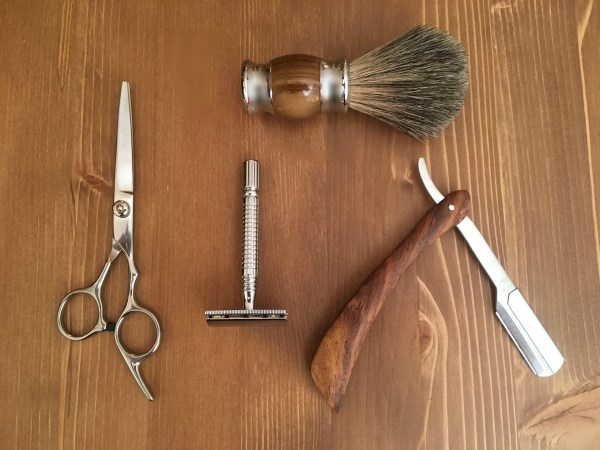
Another One Bites the Dust – Frank McHugh

Nothing fills the space between them

So now he comes face to face with her,
no longer dead and an expectant look
in her pale pale eyes.

Through slanting sun shafts the dust fairies
grow in number and size
until the stairwell fills with moths

which cluster to shape
the words on his breath and
more appear as he opens his mouth.

He knows they must come
but that does nothing to temper
the dry delicate horror of it.

Moth words fill the space between them

Gently palpating each letter as the outpouring slows,
spitting out the last moth stuck to his withering lips,
he reads the hovering words,

‘Do not confront me with my failures,
I have not forgotten them.’

Not even his own. Borrowed, old, moth-eaten
cloth words smelling gently of burnt hair
Waving a weak hand through them

the words disperse, the beloved also fades,
the motes rearrange themselves,
drift through the sunslats
then appear to disappear.


Frank McHugh is from the west coast of Scotland. He teaches and writes poetry in both Scots and English, as well as songs, short fiction and plays. His poetry has been published in Acumen Poetry, New Writing Scotland, The Glasgow Review of Books, SurVision, Bonnie’s Crew and The Runt. One of his poems was named as highly commended at the Imprint Writing awards 2016.


Contents Drawer Issue 13


Image via Pixabay

Create a website or blog at WordPress.com

Up ↑