Post-Nuclear Glue-sniffers – Rebecca Gransden

A slippery boy ran in circles around the king’s cadaver.
Under thunder clouds, where the gulls echo.
His friend yelled ballads from the sidelines.
The rain fell and the mud churned, frothing in puddles.
His Bloated Majesty ballooned and stank,
so inflated, his legs stuck out and pointed at the broken rooftops.

Sweaty men wanted the corpse and stood watching the boy.
He amused them, so arms folded.
The other boy stopped yelling and clasped his hands to his eyes,
starting to count backwards.
Laughter rose up, clear, as the men readied.
Air escaped from the king and his noisy stench blew the boy out of his circle.

The boy kept running.
Over black moss.
Over smashed poultry igloos.
His ankles hurt on the curbs.
He thought about the king’s body and how it was behind him,
threatening to explode.

He must look like how people did when they were running from the bombs.

The sirens sang in from the outskirts,
So he took a different way, and discovered a shopping centre
that still existed.
1: Matches from his pocket.
2: An impromptu trash bag torch
He set the building to burn and ran on.

Chairman Boy sat on the dead king’s cardboard throne,
up near the beams at the back of the dark barn.
The boy ran in and stopped.
The other boys sat in a circle all around him,
staring.
“You’re late,” Chairman Boy said, “Where’s my king?”

“The lechers got him, a group of jolly meanies,
They had a giggle and all I could do was leg it.”
Chairman Boy pulled a scrunchie bag from his side,
covered schnoz and gob, and huffed a few,
’til the plastic deflated and the puff died away.
He drooped to one side before lifting a finger and pointing at the boy.

“I couldn’t do nothin’! He was ‘bout ta burst anyway.
It weren’t fair, you sending me to zoom round ‘im.
It’s no protection, I tell ya, though I tried me best.”
The other boys rattled their snuffing bags
and the boy spun around under their gloomy eyes.
“You couldna done no better. It’s trying circumstances.”

Outside, the evening weather got dank.
Some boys lit fat dirty candles and the wicks spat out their flames.
All the hay barrels and box crates stacked to make their meeting room.
Under corroded metal the heady conference began.
Chairman Boy sucked on a glow-in-the-dark oversized dummy.
“Where’s my king?” he cried, creasing his face around vacant pupils.

The boy lifted a scratched CD and checked his face in it.
His welts were growing, looking like caviar.
“How we gonna decide who is next up?” he said.
The boys tossed arguments between them into the night,
sometimes wrestling to settle minor grumbles.
“I got qualms about any of us being King Boy,” the boy said finally.

“None of us in this room is fit,” Chairman Boy said,
freshening from his glue stupor.
“As Chairman, I’m proposing we wait here until our king arrives.
Whoever next walks through the door is coronated His Majesty.”
A hush brushed the snuggly barn, the spittle of candles crackling.
Without any objection or ideas, the boys silently concurred.

Hunkered down in the early hours the boys took their waking dreamtime,
given in sleepy solvent gasps, stained plastic soothing.
One by one the candles faltered.
A gentle light left.
And the bright moonrays broke through radiation clouds,
to enter by door and by window on the waiting.

A scabby little one convulsed on the bare floor between pallet stacks.
“Leave him be,” Chairman Boy said, scraping dribble from his drained lips,
“He’s been wanting to die for ages.”
Strangulated sirens blared far off across the deserted city ruins.
The boys had heard them all their lives but still didn’t know what they were telling.
Or if they were telling or meaning anything at all.

Tiny tottering footsteps arrived at the door, a delicate outline wobbling under the moon.
The boy lifted his head in recognition of the sound.
A pair of rear back legs, the tap tap of hoof on concrete.
“Denise,” he said. He sighed.
All the boys roused and looked, snorted, and laughed.
Denise the two-legged lamb was king.

Chairman Boy stood.
“All hail Denise! Denise! Denise!”
The boys repeated, over each other and woozy:
“Hail, hail! Denise! Denise, Denise!”
The lamb trundled over to the boy and sniffed out his finger.
She’d been allowed life because the boy fed her.

She was his burden.

The boy grabbed a CD from the floor and slit the wound on his thumb with the sharp edge.
With urgent pushing, the lamb sought his digit and suckled her overdue meal.
One of the other boys said, “This ain’t gonna work.”
Chairman Boy lit a candle and stood up straight, wavering.
“The king sucks her advisor.
All hail the king! All hail our advisor!”

REBECCA GRANSDEN lives on an island and writes sometimes. She can be found on Twitter @rlgransden and online occasionally at rebeccagransden.wordpress.com

Cabinet Of Heed Contents Link 21

Image by Anna Owen from Pixabay

Power Outage – Ron. Lavalette

How unfortunate to be there
when the power goes out
at two separate places
at two different times
on the same day.

It was one thing, the first time,
when the supermarket overheads
and everything else
—except a few quick-witted
smartphone flashlights—
flickered twice and went black,
flashed a blinding warning signal
—a truly brilliant half-second delay—
before leaving the whole sad storefull
frozen in Aisle 7, startled into silence
and forced into terrifying immobility
for a scary seven minutes.

Everyone survived. Everyone
muddled through; made it out alive.
Praise the Lord.

But then,
again, hours later…

RON. LAVALETTE lives on Vermont’s Canadian border. He has been very widely published in both print and pixel forms. His first chapbook, Fallen Away, is now available from Finishing Line Press, and a reasonable sample of his work can be found at EGGS OVER TOKYO http://eggsovertokyo.blogspot.com

Cabinet Of Heed Contents Link 21

Image by Reimund Bertrams from Pixabay

The Breakout – Tomas Marcantonio

‘You’ll need these to break out,’ he says, passing me the silk bag. I tip the contents onto the table: a small hammer; an HB pencil, striped red and black; a mirror, round with a silver frame, the size of my palm.

‘What about the mask?’ I ask. ‘The earmuffs?’

He shakes his head. ‘You won’t be needing those anymore.’

I look again at the tools, my breathing fast and shallow.

‘Remember what you learned,’ he says. ‘Four in, seven out.’

I nod. In through the nose, four beats. Out through the mouth, counting to seven. Better.

‘Shall we have some more practice before you go?’

I nod again, grateful.

‘Lie down, close your eyes. Let’s go to the field.’

I do as instructed, and when I open my eyes I’m eight years old. The sun beats against my forehead, its rays painting a yellow varnish on the veins of every blade of grass. I squint through the blazing caramel light, black orbs staining the recesses of each blink. The air stinks of acrid daisies trodden into the grass and the poisonous perfume of nettles that cluster like barbed-wire mines around the base of the outer fence. I step through the crowd and hear the riotous roars of boys as they charge about the field, their violent brogues crashing against the ground like the hooves of thoroughbreds approaching the grandstand; the shrill, flowery laughs of girls that judge me with a criteria drawn up from some other plane.

‘No,’ comes the voice from the chair in the other world. ‘Not judging. Say what you see, don’t transfer your own thoughts onto them.’

I try again. The shrill, flowery laughs of girls, amused by something unknown.

‘Better. Keep going.’

I steal on, chin pointed to my leather toe-caps, arms soldier-tight by my sides. Every step is careful, immaculately planned and executed, leaving no room for error.

‘You’re wearing your mask,’ comes the voice. ‘Lose it.’

I lift my eyes to the school; the great pigskin-bricked warren of worries. Four in, seven out. I peel the mask off like a film of dried glue.

‘Take your time. Look around you.’

I glance to the left at the scattered nests of scarecrow infants rolling on the floor, grass sticking to their jumpers and hanging from their hair; a group of rose-faced girls with white hamster teeth and locked elbows; the rubber-stomached dinner ladies with beetroot cheeks, leaning up against the low wall with their sausage arms crossed. None of them is looking at me.

I turn to the right, to the battalion of lost boys, war-painted and stick-wielding, feet slamming, fists clenched. Their cheeks are blue like jellyfish, stuffed with hungry breaths. Footballs cannon through the sky, announced by battle-cries and the shaking earth of a fresh stampede. None of them is looking at me.

‘Good. Now get ready.’

Four in, seven out; I ready myself for impact. One of the cannonballs connects with the side of my head, knocking me sideways, stumbling. The air is sucked out of the field, time and sound briefly plucked from the earth and stashed away by invisible thieves. But only for a moment. Then the wolves begin to howl, their teeth gnashing in delight, the whites of their eyes rolling desperately like wild horses at the sound of a gun. Hell’s own laughter, collecting over the field like a charcoal cloud that swallows up the sky. Eyes everywhere awaken; a thousand eyes, and all of them on me.

‘What do you do first?’

Four in, seven out.

‘Good. Next?’

I stand up straight, try to raise my head. It’s heavier now.

‘Eye contact. Look around.’

I blink hard and look up. Left, right, ahead, meeting as many eyes as I can. I see the plum faces, the boys laughing, bodies rolling around on the floor holding their stomachs. I rub my ear. It’s hot, and my face is red.

‘How do you know?’

My cheeks are burning.

‘The mirror.’

I reach into my pocket and pull the mirror out of the silk bag, hold it up in front of my face.

‘It’s not as red as you thought, is it?’

No, it’s not.

The laughter is dying away. The boys have already reclaimed the ball like hungry pups and some of them are continuing with the game. I breathe, watch the fresh charge of black shoes towards a goal made from jumper piles. No one cares. Most of them have already forgotten about it. It’s over.

I open my eyes. I’m back in the room, lying down.

‘Good. Now one more,’ he says from the chair. ‘Let’s go to the party.’

I close my eyes again.

*      *     *

I’m passing down the rotating throat of a kaleidoscope. The corridor walls lean in towards the ceiling, the strobe flashes throwing psychedelic diamonds across my path. I shuffle down towards the kitchen, back against the wall. There are no boys or girls; there are only armies of elbows and plastic cups of bitter gold, greasy curtains of hair stuck to the posters on the corridor wall. The tunnel is rank with the musty stench of armpits, the damp mire of vodka soaked into the carpet, and the foul manure of cigarette ash left to stew in half-crushed beer cans.

‘Eye contact,’ comes the voice from the other world. ‘Earmuffs off.’

The voice is more distant than before, the bass from the lounge speakers making a heartbeat of the floor and dictating its thump up through my ribs, drowning out the sour-breathed din of conversation and the voice from the other world. This time I ignore it; it’s easier to keep my eyes down.

I find a pocket of air in the kitchen, lean up against the fridge. I crack open a can and my thumb paddles briefly in the frothy rim spill. A trio of smokers at the back door rope me into conversation.

I take a sip of my drink and prepare to tread the boards, calling out my character from the dressing room. I smile, crack a joke, nod along, swig. I’m sweating under the arms.

‘Take off the masks. Rationalise it. Remember, what’s the worst that can happen?’

I ignore the voice again. The beer is tasteless; now it’s merely an extra-thick layer of make-up, powdered like chalk onto my smiling-clown face. The worst that can happen? I say something stupid and have it etched into my forehead forever like a botched tattoo; I fall behind the repartee like a spent greyhound after a rabbit lure; I’m left to gather mould in the corner of the kitchen, a gurning gravestone under a wind of autumn leaves. I live out my three years of university like a hermit with straw in his hair, alone in his den of stale piss and turtle soup. What’s the worst that can happen? Everything.

The smokers flick their black-tipped stubs into the sink and I ransack the recesses of my brain. There are still a few unflooded lobes somewhere in the back, and in one of them I find the clown on his unicycle, turning the cogs that keep me moving. Grimacing, the red make-up at his eyes bleeding with sweat, he churns out one last joke to see them off. The smokers head off in search of drinks, laughing at whatever witticism my cycling clown granted me. I sense the wetness under my arms, rewind through every moment of the conversation; every slow blink, every sideways crawl of every eye, every slurred, smoke-curled word.

‘Get out your hammer.’

I stand in the corner of the kitchen, watching the crowds rotate. I sip, watch, smile at every passing glance. One song finishes and there’s a moment when everything is clear.

‘Get out your hammer.’

I put the drink down and reach into the silk bag in my pocket, feel the cold steel of the hammer head. I pull it out and weigh it in my hands. It’s light, like a toothbrush, easy to grip.

‘Describe your bubble,’ the voice says, clearer now.

I look up at the room. The colours of the kitchen have faded. I’m enclosed in glass, frosted, thick like a river frozen over for the long winter. My very own hamster ball, hard like stone, an impermeable shield between me and the world. I place a hand on its surface, feel the cold condensation on my palm, see the foggy shapes of the party on the other side.

‘Break it.’

I take a deep breath and grip the handle of the hammer with both hands. It’s bigger now, heavier, like an oil-tanker’s anchor. The steel claw drags my wrists towards the floor.

‘Break it!’

I look at the ice wall and the wild, unpredictable world on the other side, full of judgement and endless possibilities of embarrassment and failure. I see my reflection in the wall. Me. The one and only; unique, loved, with a whirlwind of fire in my eyes that deserves to be unleashed like a hurricane onto the world, mistakes and all.

With a strength ripped from somewhere deep in the sinews of my stomach, I haul the hammer above my head, and with a primal roar drive it into the glass wall. Cracks appear on the surface, and I strike at it again, and again, until the whole thing shatters around me, glass splintering over my shoes and in my hair like crystals of snow.

I’m out, free, naked to the world.

‘Go,’ says the voice.

I leave my drink on the side, step over the broken glass, crunching under my feet, and head towards the nearest rabble. I cannot even think. I must not think.

‘How do you feel?’

My heart’s racing.

‘That’s good. It means you’re alive. Fight or flight, remember, and now it’s time for you to fight. It’s your body’s natural reaction. Acknowledge it, embrace it.’

Four in, seven out. What’s the worst thing that can happen? Nothing that will extinguish this new blaze in my eyes, I tell myself.

*      *      *

I open my eyes. I take in the room, sit up.

‘Very good. You’ve made a lot of progress.’

‘I have,’ I admit.

He refolds his legs and crosses his fingers on his lap. ‘That fire you mentioned then. The fire in your eyes. You believe in that, don’t you?’

I think about it and nod. He smiles but doesn’t say anything; he’s good at making me talk.

‘I’ve got something,’ I say. ‘I’ve always known that I have something.’

‘Are you ready for the world to see?’ he asks. ‘What will you do when they look?’

Four in, seven out. I’ve learned that it’s okay to make people wait.

‘I’ll dance,’ I say simply.

He nods. ‘And when doubt comes?’

‘I’ll gouge out its eyes with my own fingers. Then I’ll use the same nails to claw into the mountainside of life and rip my way to the top.’

‘Yes. And fear?’

‘I will shatter it with my bare fists, tear barriers with my teeth. When my cheeks burn and my heart thunders against my chest, I’ll know that I’m alive. And when they stare, I will dance.’

He smiles, and we both stand up. He shakes my hand, opens the office door onto a thick wall of ice.

‘The outside world,’ he says. ‘Don’t forget your things.’

I put the mirror back inside the silk bag, and then I remember the pencil on the table.

‘I haven’t used this,’ I say, picking it up. ‘It’s for me?’

‘For you, yes. And for others. Use it well, and it won’t just help to bring down your own walls. There are many who have it worse.’

I consider it, nod, slip it into my pocket; I look at the wall that separates me from the world.

‘Are you ready?’ he asks.

I take up the hammer in both hands, raise it above my head. There’s a hurricane of fire in my eyes.


TOMAS MARCANTONIO is a fiction writer from Brighton, England. His work has appeared in places such as STORGY, The Fiction Pool, and Ellipsis Zine. Tomas is currently based in Busan, South Korea, where he splits his time between writing, teaching, and getting lost in neon-lit backstreets.

Cabinet Of Heed Contents Link 21

Image by AI Leino from Pixabay

The Austringer – Emma Devlin

On Monday, I watched the van drive off with the furniture. Yesterday, I sent the bags of her clothes to the charity shops. I’ve already spotted a scarf and a pair of shoes in the shop window and had to look away. I’m waiting to see what I’ll make of someone walking around in a hat or a jacket that was hers. I had to get it out. All of it. Everyone kept asking me, “Are you sure? Are you sure?” and I told them I was.

I came back to the empty house afterwards and found myself dancing. Not for joy. I just thought to myself, here I am alone, finally done, and I can extend this arm this way, and this leg this way, and twirl, spin; unravel in the last flushes of the light like a spool of thread all through the house until the shadows under my eyes and under my arms, behind my elbows, in the arches of my feet get sharp, and I’ll leap, twist, stamp, tick, trip, hop, rond, turn – quickly and then slowly, until my body feels heavy, until my hips are ground out of me, until my lungs burn, and my heart bursts my ears, and only then will I stop. That’s what I thought, and it’s what I did, too. I haven’t danced like that since I was a young woman, leaning on Frances. That’s a keepsake better than anything else.

It was while I was swinging and flailing around so that I heard it thump against the back of the house: a clatter of wings followed by a thick, bodily slap. I stopped a minute to catch my breath, the better to hear past the roar of my own pulse, and tip-toed to the back door. It was about six o’clock at this point, nearly full dark; just a chilly, ringing, torpid kind of blue outside. I had to squint. The cars that stream past the side of our – my – house cast a sickly, yellowish light up the yard and it’s by this that I finally saw it, on its back, feebly beating its wings on the ground. I let the lights go past it a few more times. One: springing grey feathers. Two: a pair of twitching yellow feet and a heaving torso. Three: a manic, rolling head, a pair of glinting eyes, and a smudge of red. And then it shrieked. The sound rose and fell in these great swings of panic, and underneath it all a low, resounding, clutching burr from deep in the centre of its chest.

My breathing was still a bit wobbly, and I huffed for a bit there on the back step before I got closer. The gravel crunched when I walked and the bird froze, but I swear I could feel this pull and push, and pull again, of movement in it. I could see the heart, like a gigantic knot, beating – humming – in its chest.

A hawk. A massive, lunatic hawk.

Frances was good at this, I thought, Frances would have known what to do. I mean, I’ve seen hawks before, flitting over the woods where me and Frances walked. The birds flinging themselves downwards to the fields at some slight movement, some glint, in the grass. Sometimes they were just blue shapes against the band of the reservoir, or a blur of tail-feathers. Then: stately, razoring, sidewinding, making light work of the mornings. Once, Frances found a ring that must have come off a hawk, the metal so scratched and corroded that it had simply one day fallen off, the bird itself probably passed through the woods and gone forever. She stuck it in my pocket, and then I stuck it in the drawer beside the bed. Occasionally I’d run my thumb over the numbers and wonder how light the bird must feel now, with no weight to pull it down, and would it miss a weight like that?

Frances was the one for the birds, is what I’m saying.

But there was just me.

So I said, right, my girl, get stuck in. I went and got my jacket from the hallstand and crept back out to the bird, which was now thrashing on the ground. It kicked out at the sky, driving itself slowly backwards along the grass and I was worried it’d busted a wing or something. So I threw my jacket over it and scooped it up. I think I shocked it because it barely moved. For a second I actually thought, sure, bring him into the house, there’s plenty of room, and I toppled a couple of steps towards the back door under the weight of it.

Don’t you dare, I thought I heard in my head, so I didn’t: I bucked him into the shed, jacket and all.

I wonder what it thought as it lay there? I turned on the old light. It’s the kind that gets everywhere and shows up all the cracks in a room. I watched the bird push itself slowly out of the jacket, upright, alert. What kind of thoughts tripped through its head as it took in my scratched-up shed with its ragged and warped floor, and, then, the dull, dank interior, with its layers of dust? I felt bad watching it, until it alighted its big orange eyes on me. Its head turned this way and that to look at me, and there was a movement coming from the very pit of it that made me wary. One wrong move, I thought, and I’ll get a talon – the point of one, black and shiny, was caught in the jacket and eking out – in the eye or, worse, all of them gripping my scalp as it might grip a rabbit, or a finch, or a mouse.

It was just stunned, I thought, you should have left it alone.

I backed out the door.

“Well,” I said. “Goodnight.” And I flicked off the light.

I didn’t sleep very well. The bed, you see, had been carted off with everything else.

I dreamed that I brought the bird a packet of mince and fed it piece by piece from a spoon, blood and grease dripping all over my poor jacket, until I just stood up and, quite primly, dumped the whole lot over its head.

When I woke up I thought about Frances. I just lay, in the little bed made of my coats and blankets, and thought: mince, teabags, apples, cakes. Her shopping lists. Her handwriting. I always liked her writing: ponderous, immoveable, matter-of-fact letters that were impressed so deeply into the paper it was like they were carved into stone. When I first knew Frances I found myself trying to copy her, even holding my pen the same. I couldn’t do it, of course; my hand was always too keen to jump ahead and even my most careful writing looked like chicken scratch.

It would have been nice, I suppose, to have kept something of hers for when I needed it. I’d thrown it all out because I couldn’t stand it around me. Imagine, the jumpers she’d knitted us, eaten year upon year by moths. Or her cups, her plates, still with a fingerprint here or there, gathering dust. The chairs, the tables, the paintings, the books, the TV, the radio, the sofa, the carpets: all of it was still there and she wasn’t. It made me ridiculous. The one thing I hesitated over were the boxes of things she’d picked up during our walks, but even those went. Frances would take my arm during those walks, pick out something from the ground, the hedges, the trees, and we would walk while Frances talked. We’d go out after the rain. We watched the blackbirds sunbathing, the butterflies in the weeds, the trees rustling crisply in the breeze, until we went home again for tea, apples, cake. Even then, lying in the eerie quiet of the house, I could recall those walks in the woods, with a fresh sun coming out from behind the clouds to warm our damp hair, our hands, our raincoats.

But I hadn’t kept anything.

So I got up.

I drove into town, and then past the town, and out towards the woods. I told myself that I’d park at the foot of the hill, walk for thirty minutes, sit, and come back. I repeated this to myself: drive, walk, sit, back, drive walk, sit, back, drive walk sit back, over and over again – with this weird anticipation, an anxiety, like it’d be terrible not to – until the words didn’t even mean anything anymore. Then I drove past the woods, after all, and into the next town, which I didn’t know so well.

I went around the shops, feeling sort of maladjusted, you know, until I thought about the bird. And I cheered up. I walked sprightly around this little town, this squashed, boxy little town, while I thought about that hawk back at home, brooding in the damp among the plant pots. I’ll admit that it was a lovely thing, now I could see it clearly in my mind’s eye, with its curious quartzy colours and bright, burning eyes. I kept that picture of it in my head while I walked, thinking about it so hard that in the end it felt like we were talking. I told it about Frances, about the house, about the walks, and I even sang it a song, humming to myself down the street – and every time I passed someone I smiled, because they’d never guess what I was thinking, that there was a hawk, and that I’d put it in the shed. Sometimes they’d smile back, mostly not, but I didn’t mind because here I was strolling down Main Street (narrow, spiralling, to-let signs, loading) with the voice of a bird in my head.

Poor thing, sweet thing, I heard.

We spoke while I walked up and down the streets in and out of shops, actually buying things, buying anything, picking up coats and jackets, then scarves, newspapers, jam, make-up (not that I’d be wearing it much, just to have), throwing them at the tills, swiping the card, swiping it again in the next shop as I ordered a sofa, a hat-stand, a new bed, frame and mattress and headboard and all, and a microwave (of which Frances wouldn’t have countenanced, before), and then again as I spotted tubs of ice-cream for me, packets of beef and burgers and fish for it (I’d see what it’d take, as far as the fish went), and more and more things from charity shops (ornaments, teacups, books), until finally the card got declined and I scrounged the money out of my pockets for a bottle of water and a ham sandwich, and we talked and talked through it all, as it got darker and, finally, the cold came down and caught me. I hadn’t a coat (the coat, remember, being the bed).

I was shivering, mouthing words soundlessly into my throat, picturing myself tumbling through skies and shedding feathers over the ground as I passed, pirouetting into the twilight, holding a globe in one armoured claw. Only, of course, there’d be no more actual pirouetting for a while now since I was still crackling here and there in pain from all the dancing. I was heavy with all the aches and pains in my legs, hips, back, neck, but I could still feel myself twirling in my head. So I kind of plodded-twirled my way to my car, still light even under bags, lighter still with the thought of what would be delivered in the next couple of days, and drove back home, determined to get in there and turn on all the lights, whip up all the dust, get stuck in, as I say.

I tossed the bags into the porch and fairly ran round the side of the house, expecting, I don’t know, some warm welcome, something, only the chattering in my head had stopped, the cold was in my bones now, and there was nothing from the shed. It was dark in there, between the pale, white gusts of my own breath, and still. I pressed my hand against the door. The wood was cool, slightly damp with cold, and through it I thought I felt something move, only slightly, only very slightly.

“Hello,” I said, and I felt something inside leap. It didn’t speak to me, there was just a movement, that humming I had felt before, only it was inside my head and out. It was in my hand, as true as my hand was on the door. My hand slid to the handle and I opened it a crack, peered inside. There were no lights and for a second I didn’t see anything at all, until my eyes adjusted a bit, and there it was.

It was horrible.

It was up at the roof, clutching the shelf, the hackles raised, the beak opening and closing, and yet still no call, as though its heart was in its mouth and thumping so wildly that it could not scream. It hated me, it hated my guts. Absurdly, I thought of starlings. The bunch of starlings that scythed through the sky at the reservoir. Frances told me that murmuration was the word and I repeated it to myself under my breath as we watched the birds wheel and rise and dive together in unison, like the breaking of waves, overhead, and I had never heard of anything that could be called so softly, and yet look like that. They did that when there was a hawk nearby. Could they smell it, like I could, that smell of old iron and wood, and something unmistakably, bloodily, birdlike?

How big he was, how pitiless.

“Bird?” I said.

Sweet, poor.

I managed to throw the door open behind me as he lurched downwards. If I’d been caught in his stoop then I’d have nothing to tell you – luckily he swept upwards and out, sweeping just past my head in a bolt of stony colours, and I remember reaching out for some reason at the yellow flash of his feet. He wanted out, that’s all, he wanted up. I stared at him as he soared over the top of my house and away, far away, into the woods. I stared so hard, for so long, like I thought the feathers he had shed in his flight, still caught in an updraft of air, would knit together again and he would be back where he was, feet reached out towards me.

But of course not.

I clicked on the shed light. There was an almighty mess on one whole wall of the shed, spatters on the windows, even right up to the roof. I stood there, daft, wishing to God I hadn’t thrown out the scrubbers. Then something caught my eye on the shelf where Bird had been perched and I reached into the mess for it, fumbled it in my cold hands and dropped it. I saw the smooth form of the egg fall, a flare of light, and crash on the floor. Quite empty, not a hint of yolk, as if it had been sitting there for years and rotted from the inside. Anyway, it fell and was crushed to dust on the floor, and the fragments of it were blown away by the wind through the open door, and were lost among the shadows.

Well.

I went to the porch. The plastic bags with all that stuff in them were practically luminous in the dark, the receipts for even more stuff flapping about miserably in the wind. I carried it all indoors, in a couple of trips. I was so tired. But you know, I turned on the lights and looked around me, figuring out where I’d put the stuff once it got here – you’d think I’d regret it, send it back, but, really, let’s be practical here – and as I did it I found myself getting into a rhythm, stretching this arm to point, this leg, at the places I’d put the table, the chairs, the microwave, and, then, the things I’d buy later like the bookcase, the carpet, the curtains, the colours, the textures. I’ll admit something to you. I still had a couple of photos of Frances stashed in the attic, because of course I did, and that’s what I did once I stopped dancing and got my breath back. I put them on the mantelpiece – bare but for her – and she’s watching me from it still. I’m still moving things around, just so, keeping an eye on her pale hair, her dark eyes, a hint of colour around her throat, and the littlest spotting of bird down on her shoulder.


Emma Devlin is an Irish writer of flash and short fiction based in Bangor, Northern Ireland. She has an MA from Queen’s University Belfast in Creative Writing, with publications in Blackbird: New Writing from the Seamus Heaney Centre, The Bangor Literary Journal, and Honest Ulsterman.
Cabinet Of Heed Contents Link 21

Image by Gentle07 from Pixabay
The Post Office Delivers A Shock – Michael Grant Smith

Our town of Last Chance gets heavy snow every fifty years or so, but we elect a mayor every four. Many who win are candidates to join a damn Homeric Hero Hall of Fame, truly they deserve it, but other mayors, not so much. You could say we’re blessed with an honest, competent public servant as often as we warn our kids to bundle up before they go sledding.

A ways back in 1993 the aforementioned rare snow fell and nearly made Last Chance disappear. Two or three discontented residents

applauded the change, declared it an improvement. Constable Arlene was dispatched to visit each complainant in their home, where she said people had a right to speak their mind but if they had so much pep why couldn’t they attend to these code violations, and these ones over here. The blizzard abated nigh the dawn of Monday business. Honey Sweet, our postmistress, flipped her sign to “Open.” Christmas loomed a week hence.

The post office door’s bell tinkled and a slight but dapper fellow entered. A silvery goatee embellished his ruddy man-in-the-moon face. Honey had shoveled and salted the sidewalk, but the gentleman brushed non-existent snowflakes from his camelhair overcoat and stomped his spotless wingtips upon the doormat. He marched thusly for quite a while.

“Good morning, Mayor Nelson,” said Honey. “May I help you?”

Mayor Lowell “Fuzzy” Nelson thumped once more, approached the counter, and set on it a shoebox-sized parcel. With a flourish, he removed his porkpie hat. He attempted a smile but it ended up a grimace, not the train-coming-at-you grin that got him elected mayor three terms and off scot-free from at least two intervening indictments.

“I wish to mail something valuable to myself,” His Honor shouted. “Its cost far exceeded what I could afford, yet its worth is vastly less than what I deserve!”

Honey peered over her eyeglasses and took one step backwards.

“Sir, you aim to mail it to yourself?”

Because the eight o’clock hour had barely passed, Honey and the mayor were alone. Tammy, Honey’s subordinate and best friend, was not scheduled to arrive until ten, and Charlotte’s Salon & Barber upstairs opened at noon — the staff worked late evenings in order to provide “Premium Bath and Spa Services” to Last Chance’s elite.

“To myself, yes, you are correct,” the mayor boomed. “I will receive it with grace and good humor!”

“Well, then,” said Honey. She blinked. “It’s your choice. Ain’t no law says, don’t send yourself Christmas gifts.”

“Christmas gift! A Christmas gift? Nonsense!”

Ice crystals gleamed within Mayor Nelson’s eyeballs. His chin whiskers bristled like a bed of nails.

“Let the great feats I have accomplished be my legacy,” he bellowed. “I will live forever in the public consciousness as a monument to talent and tenacity! My package relates to those noble precepts, not Christmas!”

Honey wrote out a postage receipt and then forgot she had just written one, so she made another. She scribbled on the receipt and deleted the duplicate charges. Her hands jerked around as if a puppeteer pulled strings.

“Fine, sir, fine,” Honey said, looking away from the mayor’s face. “We’ll send your package right away.”

She kept her attention stuck on the counter. Her long-ago training had finally found a home. Troubled, violent patrons are less likely to kill you if they believe you can’t ID them. Would an elected official commit murder? Even if the victim had voted for the murderer? Her best hope was that Constable Arlene might respond within the hour.

“I don’t think you are aware of my identity,” said Mayor Nelson. He waved his hat for emphasis or to swat invisible insects. “Maybe you live in isolation or are in another way unable to recognize me. Do you suffer from impaired vision or an untreated cognitive disorder?”

Honey, who had greeted the mayor by name bare minutes ago, shook her head and nodded simultaneously. Her customer inhaled a hogshead of air and wobbled with indignation.

“I have left an indelible mark on human history,” he roared. “My great triumph shall remain mine always, singularly my very own!”

Honey affixed a postage label to the box and slid it off her scale.

“Comes to twelve dollars and seventy-five cents, sir.”

He reached into his overcoat. Honey squeezed out a sob, but the mayor produced only an exquisitely finished leather billfold, counted out thirteen one-dollar bills, and pushed them across the counter. Honey gave him his change, receipt, and a fake smile. Pocketing his quarter, the mayor squared his shoulders and proclaimed:

“A postmark’s timestamp will flout the test of eternity and enshrine my notoriety. In furtherance of this objective, the package’s contents shall remain forever a mystery to me and everyone else.”

“Okay, thank you, have a blessed day,” Honey said in a cracked whisper. “Please enjoy your not-a-present unknown thing.”

“I’ll never know if I will or will not enjoy it,” thundered the mayor. “I mustn’t open the package or molest it in any way. Do you not understand?”

Mayor Lowell “Fuzzy” Nelson donned his hat, turned, and was gone, his exit punctuated by the door’s jingle-jangle. Honey idled in neutral for a bit; pondered how bells and etcetera ran her life. She drew a fresh address label from the stack.

Tammy arrived at half-past ten. Upon her lips died an excuse about how the blankety-blank weather messed up her whole morning and the roads were almost too evil for her military-surplus jeep.

“Why do you gaze at yon box, Honey?” said Tammy. “One might believe it’s the first you ever seen.”

Honey dragged her stare from the mayor’s parcel. Tammy noticed the red eyes and jittery lip of a moral dilemma, having witnessed a few in connection with her irregular employment upstairs at Miss Charlotte’s.

“Thirty-two years I upheld my swore oath,” said Honey. “Thirty-two years. No matter what, I never felt no temptation to monkey with The Rules. Until this day.”

“Are you fixing to confess badness, girl? I mention it because you got a look about you, of admitting stuff. What is it you done or are ciphering about doing?”

“I’m already going to burn, so don’t fuss with trying to stop me.” Honey held up Mayor Nelson’s box so her friend could read the address label.

Even without her half-glasses, Tammy made out the destination just fine. She’d been there so often to sit on the porch and sip shot glasses of beer, and the familiar handwriting left no doubt.

“Miss Honey Sweet, why’re you showing me a box you’re mailing to your own place?”

The best part of getting snow every half-century or thereabouts is you can hope it doesn’t reoccur for a plenty long while. Some of Last Chance’s citizens behave similarly, in regard to their indiscretions and lapses and whatnot. Unexplainable no-good behavior will happen when it wants, which is what makes it impossible to explain. The rule applied to Mayor Lowell “Fuzzy” Nelson’s stubbornly consistent bad habits and mental flat tires, but don’t get all encouraged and assume it’s the same for regular folks.


Cabinet Of Heed Contents Link 21

Image via Pixabay

The Colour Of Us – Patricia Sandberg

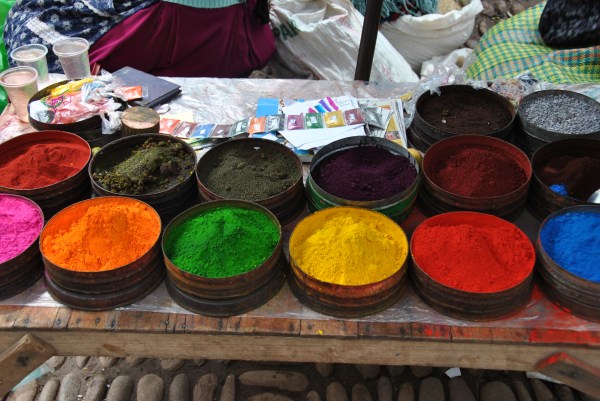
I hold the postcard in my hand. Pots of pigment in a South American market array on a worn blanket spread on hard ground. Vessels of intensity.

And I think of you, how I might paint who we were.

Carmine, the red of crushed cochineal insects. Yellow, like purree, the pigment made from urine of India’s cattle starved on mango leaves. Lapis lazuli blue, a mineral inlaid into Tutankhamun’s funeral mask. White of powdered chalk, a void of colour. Black of charcoal, burned matter.

Pigment cupped for protection or to prevent escape.

*      *      *

I see us as the painting begins, take up a pencil, its sides rough against my fingers, its point blunt.

Emerald burns with jealousy. Gold turns to sulphur. Ruby catches fire. Essences lose distinction when blended, fade when diluted and bleed when they run. Canvas is a material for display or cover.

I sketch, rough and hurried with lines crossing yet unconnected – the edges of us are yet to be determined. We can’t get enough of one another. Flesh is electric. Lightning and storm. A thicker brush mixes the paint, creates tone. This is for the underpainting. The part that lies beneath what comes next. We move in together.

Calm. An image. The beach, water sky blue. My head is resting on the warmth of your belly, feeling it rise with your breath. The sun is like the hands of a healer over us. I am your life, you say. And your life is mine.

The painting evolves. I lay a wash of yellow’s harmony over the canvas but the rushed lines of us push through, jar against the soft glow, against my hand that directs the brush to fill in the lines and round out edges. I try to paint a memory of comfort in our world but elements unbidden emerge and interject into the scene I am creating. Darker hues insert themselves. Lines thicken and harden. Edges fall down cliffs.

Random script, a cacography that’s hard to read, appears in the corners of the canvas. Questions. Small things. What time did you come home from the office? Who did you eat lunch with? Where are you going? At first, bright – jokey, like your face.

You code your words but I’m learning.

I want us to be together more, you say.

Dove becomes cloud, and silver, slate. Your shape reveals in small distinct strokes of the brush while mine begins to dissolve.

You’re finally home. Slow bus?

I pretend it is jest though your eyes don’t laugh. Your words de-cipher.

Don’t dress like that. Don’t act like that. Don’t be you.

I protest and you storm out. I wait for hours in the dark for the door to open so I can apologize. No dress is worth fighting over. I become beige.

Graffiti scrawls across the painting. Lavender and lilac yield to the bruise of mahogany.

Who was that calling?

You don’t believe it was my friend, my mother, work. I try rearranging your colours, examining the painting through your eyes but find myself sinking into your pot of pigment.

Don’t you fucking look at me that way.

I adopt shadow, look away.

Coral and watermelon convert to garnet and brick, and my pot has a rim that prevents flight.

*      *      *

A postcard is something you send from a distance.

I push aside the pots of paint. Lift a broader brush. Swish its bristles in a cup of water, start at the centre of the canvas and work outwards in slow, swimming strokes unwinding the vortex that drew me in.

And flush away the harsh colour, the bully lines of you.


Cabinet Of Heed Contents Link 21

Image by Patricia Sandberg

In The Attic of the Holiday Home by the Sea – B F Jones

The landlady had been clear, her stiff tone definite. No attic visit.

And ever since, she had wondered what was up there. She’d miss out on the delights of a week of crisp sea air and grilled fish, consumed by her assumptions – Gold? Ghosts? Unspeakable war paraphernalia? – and her childish curiosity.

She could hear noises during her sleepless nights, remote rhythmical clanking – the boiler? And a soft, occasional fife her husband attributed to wildlife. There was sometimes the ineffable feeling of another presence that she didn’t like thinking about.

On the sixth night she finally caved, and climbed up the wonky ladder, exhilaration and terror leaping in her throat.

The attic was warm and brightly lit. The old man didn’t see her. He exhaled two sharp blows of the wooden whistle, and the small green locomotive slowly started again its eternal 8-shaped journey.


Cabinet Of Heed Contents Link 21

Image via Pixabay

The Tutor – Bayveen O’Connell

After mid-terms it was decided that I needed a biology tutor. Dad made a call or two and then dropped me off at the house at the end of the terrace on Lincoln.

“You’ll love her. We dated senior year,” he grinned as I got out of the car.

Climbing the steps, I heard the door click open.

“Maggie, right? I’m Angie,” a woman in a whoosh of loose kimono robe welcomed me in.

The hallway led to the kitchen, which was illuminated by windows running the length of the whole room, overlooking the yard. She sat and motioned for me to join her. Angie’s hair was long, black and silky, and she looked out at me through her bangs, pulling a pack of Lucky Strikes and a lighter from the pockets of her kimono.

“John said you’re struggling in Bio.”

I flinched. It sounded worse coming from a stranger. Raising her eyebrows, she put up her hand. “Struggling. I hate that word. Forget it.”

I exhaled, letting a nervous giggle escape. Smiling as she lit up, she said: “So what’s up?”

“What’s up?” I wasn’t sure where to begin.

“What’s the deal with Bio?” Angie took a drag.

I glanced along the infinite window sill where things were growing in pots higgledy-piggledy, green and dangling in every available space. “Humans are ok, even frogs and parasites but plants are just too bland. I mean…pea chromosomes and bladder wrack seaweed?”

Angie exhaled and issued a whoop of laughter. “Your father’s grown wise with his years, sent you to the right place.”

I looked back at the sill again, full of strange colours and scents, high sweetness and sour rot.

“You’ve seen my babies, eh? Here, let’s make a bet. If you don’t have green fingers by the end of the month, I’ll give you 40 bucks.” Angie stood up, coaxed me from the chair and pointed towards a pot with spiky-headed things. I shrugged, eying the gross little petals that looked like mouths.

“We can bet your father’s money.” Angie said, watching me watching her plants.

Above us, a bluebottle fly hummed, bumbling down the window. It made a long, lazy loop around us and stopped near one of the spiky mouths.

“What you think?”

I didn’t reply. I was too busy looking at the fly rubbing its front legs in anticipation of some delicious juice, then crawling up and into the red tongue of the plant. Just like that- snap! The jaws closed around it, the spikes inter-twined, yet I could see the shape of the fly still wriggling inside.

I turned to Angie, my eyes nearly bulging out of my head: “This can’t be real, this is some sort of…”

Angie threw her head back and chuckled, the light glossing through her hair.

“You’re not a teacher, are you?” I said.

She rolled her eyes, “No, I’m a witch. And I have more weird stuff out in the greenhouse, if you’re interested.”


Bayveen O’Connell lives in Dublin and loves travelling, photography and Bowie. Her flash, CNF and poems have appeared in Three Drops from a Cauldron, Former Cactus, Molotov Cocktail, Retreat West, The Bohemyth, Boyne Berries, Underground Writers, Scum Lit mag and others.

Image by Mylene2401 from Pixabay

Corsican Visits, Summer 1988 – B F Jones

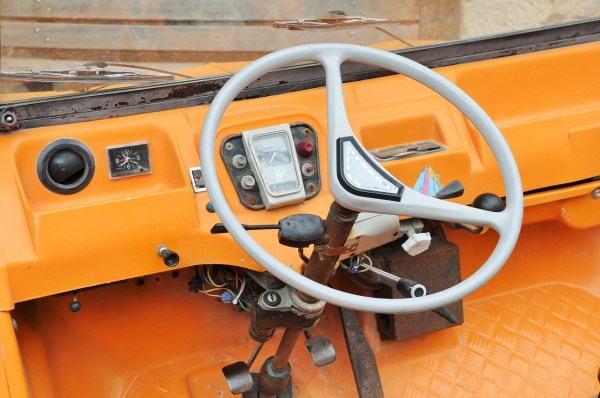
The sun beats down on the orange Mehari that sways down the tortuous road, its engine screaming with each bend.

The Pernod was refilled during the visit to the Antoniottis, the retired teachers who they occasionally go fishing with. So they’re now on a tight schedule, with two more dominical visits to squeeze in before calling in to great aunty Virginia, who has early lunch on a Sunday, in order to treat herself to an additional half hour of siesta.

The small car rattles through the town, startling churchgoers as they flock out of the service, dozy with prayers and incense, squinting in the midday sun.

The children sit at the back, sticking their arms out of the flapping plastic windows, nauseated by the car fumes and curly roads. They long to be at Father Constantino’s house already. Out of all the visits, this one is the best, it also only happens every other Sunday as Father officiates at the Greek Orthodox church bi-monthly, making it even more special. The cordial hasn’t got white flakes in or a dark crust around the bottle’s rim and sometimes there’s ice lollies he presses into their hands before mum and dad can say it will spoil their appetite. He then sends them into the garden where his cats are willing to be chased and held tight, bottom legs dangling, and where juicy figs hang low and are allowed to be picked.

But this Sunday is different. A stern Father awaits them outside his front door. There has been an incident he says. Forgetting to greet the children, he addresses the parents solely, his voice as quiet as his baritone nature can muster, his accent stronger in his rushed explanation. They catch fragments of it. “…a traffic jam in Ajaccio…delay.”

“So it’s here? Inside the house?”

“Yes. In the lounge. Do come in, we can sit in the office.” And his voice grows strong again, his words final: “Children, today we’ll be staying in the office.”

So they sit in the stuffy room, trying to wash away discomfort with more Pernod and cordial and a small ball of very dry pistachios, mum telling Father about yesterday’s trip to the beach, and how big the waves were.

Louis fidgets, uncomfortable on the edge of the small couch, his brother’s leg hot and sweaty stuck to his. He was hoping to see Brunu, his favourite cat, but they can’t go to the lounge and the lounge leads to the garden. He crosses his arms, refusing to touch the pink cordial as a sign of protest. But the grownups don’t pay attention, they are deep in conversation, talking about the wildfires and the drought and the mayor.

Louis wonders what’s in the lounge. Maybe a pirate treasure? Father Constantino always tells him about the pirates that once roamed off the coast. He says there are pirate ships resting on the seabed and that he should look for them when he goes snorkeling.

The grownups are still talking, Sofia is sitting on the floor, playing solitaire, hard at work trying to shuffle the yellowing deck of cards, and Jacques has lowered his head on the nearby cushion and tucked his thumb in his mouth. Louis gets off the couch and walks out quietly, his heart thumping hard at the thought of a pirate’s chest sitting in the lounge. And if there’s no treasure, he can always go to the garden to see Brunu.

The lounge is dark but he can make a large, rectangular shape.

A treasure chest!

It is longer than expected, lacquered white and not wooden, but the handles are golden, as expected. The pirate lying in it is having a siesta.


Image by Nadine Doerlé from Pixabay

Sailing The Eighth Sea – Kelvin M Knight

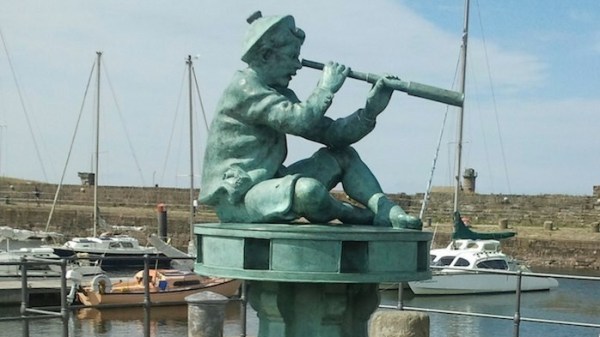
I spy with my little eye, something beginning with S.

Ship? How did you guess. But what kind of ship?

You will never guess because this is a transcendental telescope, one my Nanna gave me.

The things I see with this telescope blow my mind. And yet I can’t stop looking. Even when this telescope feels as though it’s stuck in my mind. Everyone thinks I’m just sitting here, on my capstan, watching the world go round, when really I’m lost on the other side.

Over there, mermaids are angels, with eyes of pearls and wings like fish fins and harps made of oysters sprinkled with rainbows. Over there, wooden ships fly through the sea, their sails flapping like giant gulls’ wings. People fly too. And not just sailors. Ordinary folk. They also walk upside down and inside out. Couples dancing is best. Those ropes dangling from their wrists and ankles remind me of coral reefs. Anchors are dotted about, in the sky and underground. And sailors run between them without moving. Some of the things they do are so comical.

I daren’t laugh though otherwise the harbourmaster will get uppity and demand, ‘What’s so funny!’ When I don’t tell him he’ll snatch my telescope, look through it, see nothing, and confiscate it. Then I’ll no longer be able to see my Nanna, waving at me, smiling at me, talking to me. I have seen this. My telescope has foreseen this.

That’s the trouble with the spirit world. They know what’s going to happen, which is both a blessing and a curse.

Spying the harbourmaster heading my way, I curse. If I ignore him, he’ll go away. Whistling a simple sea shanty, I look towards that lighthouse. A living beacon of purples and golds crumbling into the greyest sandstone.

‘What do you think you’re doing, shipmate?’

My telescope is in the harbourmaster’s paws. My telescope is at his black eye. My telescope is bending over his wooden knee. Smirking, he throws the snapped halves at me then staggers away.

No sympathy, please. Sympathy sinks ships. Say that twenty times when you’ve had too many rums.

I could do with a rum right now to drown my sorrow, make my telescope appear whole again. I’ll have to wait until dusk, though, when Nanna visits. She’ll see me right with another telescope. Hopefully one with a harpoon attached to it this time.


KELVIN M KNIGHT’s first flash fiction anthology FAITH in a FLASH is out now on iBooks and Kindle. He also blogs regularly here.

Cabinet Of Heed Contents Link 18

Image by Kelvin M Knight 

In The Shadow of the Sound Tower – Paul Thompson 

The sound tower is silent, abandoned in the dunes, windswept and dated. Conditions are calm, nullifying its function. On still days like these, the tower finds itself a relic.

We find a spot in its shadow, down by the shoreline, surrounded by remnants of the ocean. Starfish cover the beach in dead constellations. The carcass of a rabbit, washed up and barren, bobs its head in the tide.

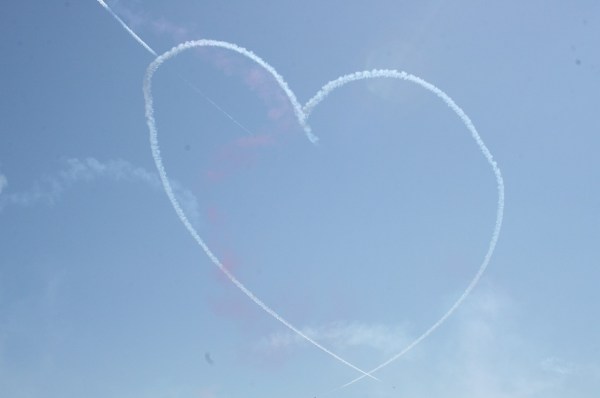
With the beach to ourselves, we waste no time in preparing our picnic. Far down the coast, crowds gather on a cliff top, the sky clear and perfect for the occasion. We eat salad and cold meats as we wait, our skin shrivelling in the presence of the sea. At midday it begins, muffled cheers in the distance, as red and blue trails paint shapes above the ocean.

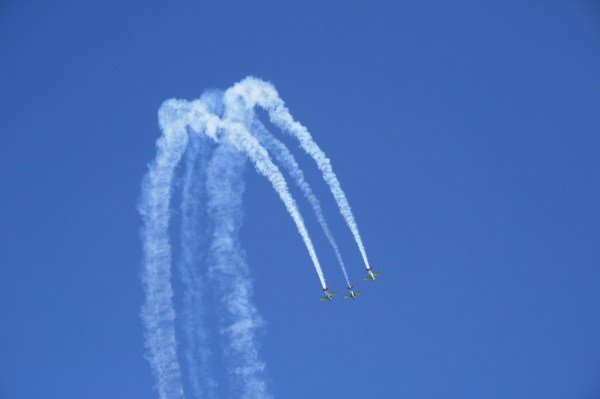
An air display team, flying in unison, pixels on the horizon.

The sound of their engines reaches us, indicating it is time to begin. We fetch a tarpaulin and our shovels from the car. Our task is discreet, hidden by the distraction of the air show, the whole town focused on the planes. We work under the watch of the tower, now a silhouette against a smudge of colour, rainbows of smoke in the sky.

As we half-watch, one of the planes falls away from the others, a speck that disappears into the ocean. From our distance the scene is abstract, belonging to another world.

A breeze rearranges the sand. Slight but noticeable, enough to pause our efforts. Spots of rain follow as the sky darkens. All signs of the storm that has come out of nowhere, to the surprise of the pilots. More spots of rain, or possible drops of ocean from the impact, carried to us in the breeze.

The wind grows cold round our legs, salty and unforgiving. It flips the rabbit carcass over, blowing it into the shallows before breaking it in half.

This change in weather reaches the tower. Air flows through its apertures, its design now apparent. A familiar hum returns to the beach, a background noise. Sounds from down the coast feed into its song – crowd noise, an impact on water, the voice of the pilots. Indistinguishable, hidden within the tone, reaching us on delay

The storm escalates as our belongings shift and scatter, bouncing across the sand. The tarpaulin flaps open, fluttering like a ghost of the ocean. Starfish roll by, taken by the gale that is now reaching a peak. We make snap decisions between us, grabbing what we can before the wind decides for us.

The tower groans, the weather teasing new sounds from its vocabulary. An oily scent fills the air, a reminder of the pilots. We head back to our car, accompanied by their echoes, amplified by the sound tower that churns on the horizon.


PAUL THOMPSON lives and works in Sheffield. His stories have appeared in Spelk Fiction, Ellipsis Zine and The Cabinet of Heed. Find out more at @hombre_hompson

Cabinet Of Heed Contents Link 18

Image via Pixabay 

The Hydrogen Fairy- Julianne Corrigan

I am a tiny particle.

I am moving in small circles but remain invisible within the vast universe. I am random and free, existing only as a concept.

Just a thought.

In the burning core of the solar explosion that you will know as a distant star I am biding my time. I am not waiting, because waiting is an idea that doesn’t exist in a universe where time itself is illusory. How can I linger in timeless space?

The length of my existence is measured in the massive explosions surrounding me. I cannot count. There are no numbers. But there will be and they will transform everything. They will become important and intricate, and the universe will appear too small. But I will become large and significant, surpassing all that came before, anticipating all which lies ahead. I will become the blueprint.

I will become you.

There are many explosions in the core of my star and I am only a tiny particle.

I am moving closer to my metamorphosis. Very soon I will be two. When the last explosion of my life as being one finishes, I will fuse and multiply and nuclear energy will enable me to begin my journey. I will not be the hydrogen atom of my birth but will become the first stage of my growth. I am slowly becoming the complex compound you need.

It is the journey of my destiny and of your tentative life.

My voyage precedes the demise of my star, which has been burning for so much longer than you will ever know. As it transforms into a supernova and I move further away from my birthplace, I sense where I am travelling and embrace the cajoling and subtle pull.

The collapsing star is continually spurning my siblings. They are moving quickly in their attempt to catch me up on the long journey. It is a voyage lit constantly by other distant stars. My siblings are trying desperately to find me, to attach to me so as we can multiply together. They understand the importance of this journey and this knowledge encourages them to become part of me.

So we can become you.

I am passing much smaller and younger suns and at a time in the distant future, when they themselves are spent, they will produce more of us.

Barren planets come and go but these desolate places do not beckon me.

They are not my final destiny.

Cosmic debris is littering my path. But I need to focus on my journey and arrive safely at my ultimate destination.

Massive comets, which have their own tale to tell, smash into me, their energy so strong that I multiply again and again. I am becoming more powerful, more complex. My growth is exponential and my size is slowing me down. Some of my siblings are catching me up. They are hurtling through time and space in a supreme attempt to be with me. Silently jostling, they collide with me and once connected they are assimilated, becoming part of me.

As I will become part of you.

I move through so many solar systems. Each one seeming larger than the one I have just passed through. More and more organised they appear. Each one hinting at the promise of what will be. Hinting at the promise of what should be.

Of what will be you.

Now I am changing again. My siblings are now so a part of me that we are real matter. Our name alters. It changes again and again. I am becoming impenetrable. Still not as important as my parent – the star – but my destiny is drawn. And as surely as your sun will burn for a long but finite time, my destiny is as clear as the final fate of your sun. Perhaps clearer.

Because soon I am you.

I am now more than the hydrogen atom of my birth. I am expanding, filling space, creating a tiny part of gravity. As one I am nothing. But there are many more like me. Our births and multiplication are constant.

We need to be prolific. Occasionally instead of expansion the universe implodes, taking many of my siblings with it. There is no time or space inside the two dimensional hole. Does it exist? It might do to my siblings trapped inside, although as I travel to my final goal, I think it does not.

How can it?

When it isn’t part of you.

By knowing my size and complexity I recognise I’m nearing the end of my journey. I am now becoming the organic, stable matter I need to be.

The solar system I am now entering appears disparate from the others. More organised. With ripples of divergent energy it feels different. It is an energy which inspires me.

To become you.

I am beginning to perceive an irresistible pull and although subtle, it has been with me from the beginning. I am passing planets unlike anything I have seen before. They are directing me towards my destination: enormous pointers in the massive space all around me. And I can do nothing to halt my progress, my fate.

And your destiny.

Everything is becoming smaller. This solar system is more compact, and yet more complex. The evenly spaced planets and debris are depleting. I am serene. I am arriving at my real home.

I am beginning to feel who you are, to know what you will be, and what I will become. An excitement overwhelms me at the idea, of becoming you.

You, who will be more important than your sun and will know more than anything I have encountered on my journey.

It will be many millions of years before you become your destiny, but I am patient knowing we will achieve the goal of my dying star.

My arduous journey is not in vain because you nearly exist. The older solar systems already comprehend what you will finally become. They have glimpsed at your destiny. They know there is nothing that will compare to you.

You will be unique.

I am now reacting with oxygen and water vapour. I am growing up.

Gravity is pulling me ever more strongly towards the blue planet. A planet that is different from all the others. I want to get there. I want to be part of it. This planet will become my home.

Your home.

I am now moving faster than ever before. I see the spectacular blue planet in its glory. Beautiful and serene. Calm and peaceful. The white clouds hovering above its surface, cajole me. They are willing me not to make a mistake. Their hope is for me to be successful, to penetrate the fragile atmosphere and find my new home.

To find you.

I am plunging through the ambience of the beckoning planet. Now I am what I need to be, complex enough to begin your life. I am entering on the bright side; your sun is shining strongly and emphatically. It is shining down so hard that the blue oceans are twinkling white as they swirl and dance in the invisible wind. Water which will be my new home and the start of you.

It is a sight more beautiful than anything I have seen travelling through thousands of solar systems. The view an image of loveliness and unparalleled in the infinite space encircling its precious parameters.

It is ours.

I am moving at great speed through the atmosphere, light and welcoming, warm and enticing. I begin to slow down and float gently and as I break my way through the fragile shell of the blue planet, incommensurate with its size and beauty, I am at peace.

I am sinking into a great ocean and it is here where I find my penultimate resting place.

Because soon, in thousands of generations of life, I will become a part of the puzzle that is you. I will become the part of you that thinks and reasons. Loves and hates. Laughs and cries. I will be a fragment of all your emotions.

And when you grow old and die I will continue on, forever and endlessly.

Because I am the fairy inside all of you.

I am looking backwards towards my star, a silvery dot shimmering in the sky. It is now long dead. It died giving birth to me. It died giving birth to you. And although I look and marvel at its persistence, it is the persistence of you and your planet which is truly marvellous.

I will never leave you.

I am your fairy.


JULIANNE CORRIGAN writes historical, suspense and speculative fiction. She was shortlisted in the Bridport Short Story Prize in 2016. In 2019 she made the final in the Write Stuff competition at The London Book Fair. Her contemporary suspense novel, Falling Suns by JA Corrigan, was published by Accent Press in 2016. https://twitter.com/julieannwriter

Cabinet Of Heed Contents Link 18

Image via Pixabay 

Staples – Leslie Doyle 

Mary said she wasn’t getting any more mammograms, on account of the radiation. Trish looked up from her Moscow Mule, swirling the copper cup carelessly.

“I know, right?” Trish looked around the restaurant, one of those dockside ones where people pulled up on their boats and customers sat at wooden cable spool tables. Plastic crabs and lobsters in fluorescent colors on the walls. Wait staff in vaguely nautical outfits, the girls in apparently required tiny white shorts they kept tugging down, the guys in knee-length cargo shorts.

“Last time I flew—to Florida when Frank’s dad was sick? —I refused to go in the X-ray machine and I had to get searched.”

“I don’t like to fly anymore” Mary answered. “They’ll kick you off as soon as look at you, after pawing through your bags and touching your lady things.”

Trish nodded. “Well, I won’t fly again, that’s for sure. On the way home, they bumped me after I had an assigned seat. Then just before boarding, they called my name and announced they’d found me another seat.”

“Well, that was cool.” Mary stuck another tortilla chip into the crab dip. The bright yellow chip and pale pink dip echoed the colors of her off-the-shoulder blouse. She hiked one sleeve up, hiding the sunburn line. “I mean, that they made up for it like that.”

Trish shook her head. “No way I was getting on that plane. It was a sign. I started yelling I wouldn’t get on it and I thought Frank was going to have a fit, telling me TSA would arrest me if I didn’t shut up. The lady next to me said well then she wasn’t getting on it either, and I told her not to worry, it wouldn’t crash if I wasn’t on it.”

Mary listened and nodded. She and Trish were best friends now, since they’d met at Maid in the Shade, working all summer to clean rental houses between tenants and change sheets at the local motels. She knew Trish and Frank were recently separated and wondered if it had anything to do with this incident.

“So we drove a rental home. But anyway. You know that you can get an MRI mammogram now, right? No radiation.” She caught the server’s eye and held up her cup.

Mary shook her head. “Nope, no MRIs for me. Not since my lung collapsed last year and they had to stick it to my chest wall with staples.”

“Wait, what? That’s crazy!”

“Yeah. But here’s the thing. I can’t ever have an MRI now. The magnets would pull out the staples. Rip them right out of my lungs. They’d slice my heart to bits.”

The drinks came, and they each took a sip. They had an afternoon off, before the next round of tourists. There were a million beds to change and toilets to scrub tomorrow, but for this afternoon they had nothing to do but sit in the sun on a dock.

Trish looked out over the boats, pondering what was luck and what was fate. And the menace of Mary’s staples. She’d never heard of such a thing before, but at the same time, she knew exactly what Mary meant.


LESLIE DOYLE lives in New Jersey and teaches at Montclair State University. Her work has appeared or is forthcoming in Gigantic Sequins, The Forge, Electric Literature, Fiction Southeast, Signal Mountain Review, Rougarou, and elsewhere.

Cabinet Of Heed Contents Link 18

Image via Pixabay 

In The Dark Garden – Lorraine Wilson 

You walk down through your dark garden to the bench at the far end, and you sit there, pulling your knees up and folding your arms around them. Your feet are wet from the grass, from the rain earlier and tomorrow’s dew. There is the very faintest of breezes, but it is enough that where your hair lifts from your neck, the skin cools. You don’t mind at all, the chill in your extremities and the way your shadow lurks at your feet, they hardly register as you tip your head back and fill your eyes with the night. Mountains rise around you, a steeped blackness that swallows monstrous shapes out of an indigo sky where the stars are unfettered tonight by either cloud or moon, and their presence feels so close, so tangible that you almost convince yourself you can hear their voices, murmurs from the abyss, or from the past.

It is a comfort, that thought – that the stars dusting your eyelids are so far in the past that you were not born when these photons were. You wonder if the light is altered somehow, by touching you. If it is tainted.

An owl calls in the trees, half of a song, and you and she both wait in silence for her mate to respond. He doesn’t. She calls again, from further away and he answers her. The forest murmurs on, teetering on sentience under the cover of darkness and you can feel the lure of it, the utter pitch of the shadows beneath its branches that stretch from the slopes above almost to your garden. It would be easy to do. Step down off the bench and take two paces through foxgloves and early borage to the fence. Climb over into the sheep field just as you do during the day, cross ten metres of hagged and frayed grass and then step into the forest.

Maybe that complete, inkwell blackness would offer you a better oblivion than the starlight. Maybe. But it would also offer splinters, twisted ankles, a compassless disorientation.

There is a temptation in that, too. You pretend there isn’t, or that you don’t feel it. But there is, and you do.

A tiny spark of pain lights upon your temple and your response is reflexive, brushing away at the unseen insect with the edge of your hand. It brings your mind back into your body, reluctantly, sadly, back to the cold creeping around your ankles and the tangle of hair against your cheek. Back to the ache in the pit of your abdomen, the pull of gravity and endings within the cradle of your pelvis.

You take a breath, rest your forehead against your knees and close your eyes. You do not cry. Not now, although you did earlier when the pain began. You did when you stood in the shower and watched your red blood spell out the breaking of your heart.

The thing is, you think, you do not know how to say goodbye to someone you never got to meet. You do not know how to let go of someone whose cells still circulate in your veins, whose bones and heart you were building from your own.

The thing is, you think, this is not the first time and you still have not learned how to bear it.

Above you, the beech trees tap out leaf-and-twig signals, and you can smell their new growth. It is a part of the night’s scent, the beeches, sheep and wet grass, pine and the tang of peat, solitude. The world turns, and sitting so still, you almost believe you can feel it. The world turns, the present becomes the past; becomes memory, scar, secret.

You realise that you are now entirely cold. Perhaps that was what you were waiting for, to be fully numb. Rising to your feet, you press one hand over your cramping muscles, your empty womb and you take a last look at the forest with its outheld promise of shadows.

Then you turn around, to the house where a light is still on in your bedroom. Where your child, the one who made it, the one you are so lucky to have, is sleeping and will soon wake. Where your husband is sleeping and will not wake, but will bring you tea in the morning, and will love you.

The grass leaves remnants of itself on your feet, and over your shoulder a gibbous moon lifts one corner of itself above the moors. The night is kind to you, and you are grateful for it. As you open the door and step into your home, it is almost enough.


Cabinet Of Heed Contents Link 18

Image via Pixabay 

I Still Remember The Number Plate Of The Peugeot 308 – Lydia Unsworth 

I passed the autumn and early winter noticing the flies but, whether from stubbornness, pride, contempt, or lethargy, refusing to do a thing about it. Sometimes I look at the edges of squalor and think, is this squalor? Not yet.

Unable to remember the sound of my own voice, I recall VHS tapes that might have proved it. For when I might need to prove it. Taped over; haunting cupboards everywhere.

The buzzing reminds me I am still responsible.

After these sweltering days, we are all grateful for a little wind, a little rain. The slightly open door keeps hitting the frame. I joke-clenched my fist in the baby daycare place, for which I am not sure of the English name, only because I didn’t have a sophisticated enough repertoire for what I was trying to say. Then I followed the lines of all the adult eyes to see if they were seeing what I was seeing; i.e. the fist in the baby daycare place.

I close the windows because the children playing football outside are not mine and the sound of the ball bouncing off modern surfaces is slamming into the bulges of my barely contained rage. I would like to speak in a clear, calm timbre. Wrap a towel around the exterior walls of my returning body. Walk like I grew up with newspapers. Exhibit the confidence of a six-digit number. Mediate.

I would like to take drastic action. Gather my hair into a ponytail and just chop. I think I did that once. When I was drunk. When my hair was short and my ponytail shorter. And in the morning I hardly remembered and nobody else noticed at all.


LYDIA UNSWORTH is the author of two collections of poetry: Certain Manoeuvres(Knives Fork & Spoons, 2018) and Nostalgia for Bodies (Erbacce, 2018), for which she won the 2018 Erbacce Poetry Prize. Her work can be found in Ambit, Pank, Litro, KillAuthor, Tears in the Fence, Banshee, and Sentence: Journal of Prose Poetics, among others. Based in Manchester/Amsterdam. Twitter@lydiowanie

Cabinet Of Heed Contents Link 18

Image via Pixabay 

Remembrance – Mark Left

She sees him first. A figure through the steamy window, waiting to cross at the lights, looking diminished by the modern-day traffic, and still unaware of her gaze. He is adrift in the noise of the street, fresh from the Remembrance service and too smart for round here in his blazer and medals, his polished patent leather shoes.

Shorter than she remembers but he walks well. There’s a spring in his step, just like the Bernie of old. She recalls watching him marching in parade at the airfield. So many lovely young men but he always drew her eye. So many of them died. She remembers them all and feels a surge of regret despite the fifty-seven years in between.

She is excited to see him again. At seventy-eight, she wonders if she should feel like this. It feels odd and a little inappropriate in public. As if anybody’s watching, she tells herself. She finds herself considering if she looks attractive, if it really matters now. Then he’s through the door, and they greet each other and embrace. His voice is shaky – perhaps with nerves – but the same tone, steeped in the years but still familiar. His face, his blue eyes, the way he lightly holds her at arm’s length and smiles at her. She remembers the New Year dance and the kiss of the younger man.

“Oh, Bernie. How lovely to see you again.” She cannot stop smiling. Inside, her heart fuels the fires of expectation and she turns the corner into a widening memory lane. She could talk for hours, and she will.

*      *      *

He sees her first. He’s hesitating behind the pillar box over the road, watching her sitting in the misty window opposite, concentrating hard to see her well through the patchy clouds in his eyes. He searches his memories, leafing through the synapses that store faces and places, finding broken links and voids where there was once history. The angle of her nose, her jaw, it seems wrong. He cannot be sure.

He stands confused in the rush of passers-by, the air booming with the noise of traffic. He adjusts his hearing aid and smooths his blazer, checks the medals are hanging straight, but at last admits to himself that this is not the Mary he thought it was. He has surnames muddled, her married name on the website, too much time passed. She is not his Mary, not Mary from 1944.

Yet their correspondence says she knows him. Who then? He has no recollection. Nothing.

It does not occur to him to not turn up. Despite the years, there is such a thing as duty and he moves to the lights and crosses when the traffic stops. Now he thinks she has seen him and he walks as straight as he can without his stick, and he tries to inject a youthful swagger. He’s not sure why it really matters now. But his bad hip hurts like hell and he’s glad to reach the café door. He goes inside and she rises and he embraces her as if she means something, murmuring her name, holding her at arm’s length again to look at her while his smile hides the truth.

No, this isn’t who he hoped it was. His heart rings hollow with the disappointment and a desire to distance himself settles in. Still, he’s here now. One coffee and half an hour won’t hurt.


MARK LEFT writes stories and sometimes poetry. He has been published in @EllipsisZine and was highly commended for his entry in the BIFFY50 Microfiction Contest Autumn 2018. He lives with his family on a hill in the middle of England and can be found on Twitter: @ottobottle

Cabinet Of Heed Contents Link 18

Image via Pixabay 

Oneirology 101 – Essie Dee

The evening breeze has a dampness about it, and I pull my coat closer. Turning onto the darkness of Woodbridge Road, a shortcut of sorts, I save about thirty minutes. Good on cold evenings such as this, when I am already running late.

Halfway up the road I see college lights in the distance – across a field at the end of the lane. While traversing a side street a white car pulls into the intersection and pops the trunk. Before I can comprehend what is happening the trunk slams shut, closing out the world.

*      *      *

I really need to start leaving for class earlier, or stop taking evening courses. I enter the gloom of Woodbridge Road and unease flows over me. Shifting my bag to the opposite shoulder I look around – they really should put in lights around here.

Approaching a side street I see a white car idling, hear its trunk pop. Everything in me says ‘run!’ Turning, I fly down the street, am outpaced and grabbed by the bag, which I shrug off. Grabbed again I fight back, flail, try to scream, and am hit. Hard. I crumple to the ground in a heap. The wheels of a car make a slow approach; I feel myself being lifted and thrown. Shrugging into the back corners of the trunk, I fear what awaits me.

*      *      *

I’m startled by the numbers on my watch- seven o’clock already. I’d best get moving if I hope to make it to class in time. Throwing on my coat, I grab my bag and head into the damp dark of autumn night. As I approach Woodbridge Road a dire sense of fear and dread takes over. Stopping, I look down the unlighted street – a quick path for years now, why this sudden feeling? A white car turns up the road heading into the darkness. A moments hesitation before I take the long way, walking in crowds that push along to the next intersection.

*      *      *

Exhausted, bad dreams aplenty this week. I grab a coffee before taking my shortcut to class.


Cabinet Of Heed Contents Link 18

Image via Pixabay 

The Arrival of the Finnman – Michael Bloor

In October, I shall have been Governor of this island for forty years. I came here as a young man, to command the garrison and dispense justice in the assizes. I arrived full of hopes and vaunting ambition, trusting to my connections in the distant Imperial Court to secure me rapid promotion to more lucrative and influential positions. My hopes were vain, my ambitions lost and my connections as enduring as morning dew. Nevertheless, I have learned contentment in this little bounded land. True, the winter days are short and the winter nights are long and bitter: for weeks together, the gales can blow loud enough to deafen, and strong enough to deposit small fish on the cliff-tops. But the peasants, farmer-fishermen for the most part, are determined, even heroic – very different from the servile drudges one encounters in the capital and the countryside round about it. I have come to respect and emulate the islanders’ quiet virtues. To watch them fishing is an education – two boats working in careful concert. And then to watch the sharing out of the catch, with one fifth part reserved for widows and the sick. Yet now it seems all my hard-won lessons on peasant virtues may be cast over.

It was a stormy day of early March when the ‘Finnman’ was captured. I remember because when my sergeant brought me the confused news, I was staring absorbed from my chamber window at the waves breaking wildly on the rocks at the harbour entrance. The wind was catching up the spume from the waves and the low sun was creating hundreds of small, truncated rainbows as it shone through the spume.

Tales of the mysterious Finnmen are common currency among the islanders, but I have paid them no more heed than stories of dwarfs living in the mounds along the shore, or of the ‘selkies’ that are said to inhabit the western skerries. The Finnmen travel in skin canoes at great speed; they are fierce, cruel and emit screeching cries; they are said to drive away the herring shoals.

The Sergeant said that a group of fishermen from the west end of the island had found the Finnman collapsed among the dunes: first of all, they had spotted the skin canoe, beached on the shore, and they had then followed his tracks into the dunes. I told the Sergeant bring the Finnman at once to the chamber, along with his captors.

A couple of minutes later, the corporal of the guard (a hulk of a man), dragged in a bundle of skins that proved to be the insensible Finnman. He was accompanied by the sergeant and four fishermen. I knelt to make an examination. The Finnman was breathing rapidly and shallowly; he smelt strongly of stale urine and rancid fat. I felt in his mouth and found the tongue swollen and distended:

‘The Finnman needs water – Corporal, fetch me a pitcher of water. After that, go to the cellarman for a bottle of brandy.’ I turned to the fishermen: ‘How did he come by these cuts and bruises?’

‘Excellency, he was unconscious when we found him, but we thought it best to bind him. He then came to and he started to struggle, so Gruta hit him. But Gruta only hit him once. By the time we arrived here at the fort, a crowd was following us. As we waited for admittance, some of the crowd started to throw stones. And a woman ran forward and hit him with a stick.’

The sergeant confirmed that this was the case and that the woman in question was Sella, the widow of Odd. The corporal then returned with the pitcher of water. I wet the Finnman’s lips but he did not revive. The corporal had already departed again for the brandy, so I sent the Sergeant to bring Oolla, the midwife, as the hospitaller is an ignorant drunk whom I would not trust to treat hiccups. I sent the fishermen to recover the skin canoe, and the Finnman’s weapon, a short dart, that one of the fishermen (an intelligent lad) had said lay beside the canoe.

Left alone with the Finnman, I observed him carefully. Of normal stature, with a yellow-ish skin (redder about the face) and dark, lustrous, coarse hair. A flattish face, the nose being small. The eyes were brown and curiously obliquely set. The teeth were much worn. From his musculature, I would have judged him younger than myself; from his wrinkled skin, I would have judged him older.

In recent years, I have devoted some of my leisure hours to an illustrated description of the many monuments that the Ancient Ones have left on the island. I have fancied my account might ensure that some posthumous celebrity might attach to my name, and that the island itself – this isolated and obscure outpost of Empire – might also gain a degree of fame. Now, I was seeing things differently: surely the mysterious arrival of the Finnman would make the island famous throughout the Empire? The four fishermen’s names would be as famous as the past Emperors who had first sent out ships to explore these remote waters.

The corporal returned with the brandy, which I ordered him to administer, but it was not a success. The Finnman choked, vomited and lapsed back into unconsciousness. He still had not spoken a word in my presence. I was later to learn that, when struggling with his rescuers, the Finnman had only made a few hoarse noises.

When the midwife entered the chamber she at first recoiled from the sprawled Finnman and would have fled if the sergeant had not restrained her. But her kind instincts soon got the better of her. She suggested that the Finnman would take some time to recover and that it would be best if he were carried to her hut outside the fort gates. There she would wash and bind his wounds and, once he was conscious, keep him on a diet of gruel and herbs of her own choosing. I agreed, gave her a purse, and bade the sergeant and corporal carry him away on a hurdle, adding only that the hurdle should be left in the hut and that the Finnman be bound to it, to prevent ignorant flight. I was remiss in omitting to require the posting of a guard outside the hut.

The early evening I remember as being one of pleasant excitement as, by candlelight, I began an examination and description of the canoe and of the weapon that the fishermen had brought in, just before dark. The canoe, wondrously light, was secured from swamping by skins and draw-strings designed to fit around the seated Finnman, like a leather shoe around a foot. The body of the canoe was constructed of greased skins, stretched over a taunt frame made partly of wood and partly of bone. The wood appeared to be that of a kind of pine tree, but not one I recognised. The canoe was evidently propelled by a single oar, shaped into paddles at both ends. The weapon was more ingenious still: the short dart, tipped with sharpened bone, was made more effective by a separate wooden throwing arm. I was of the opinion that the dart-plus-arm would have been just as murderous as a full-length javelin, but much more readily handled in the confines of the canoe.

I had just finished a sketch of how I presumed the throwing arm would operate, when the sergeant once more rushed to my chamber – this time with news of a riot outside the fort. I was stunned: it was more than twenty years since there had been any civil disturbances on the island. The sergeant had already called out the guard. I issued pikes and armed both the sergeant and the corporal with an arquebus. We then all immediately ran out of the fort towards the shore, where the crowd had gathered. Two barrels of pitch had been set alight. It was plain to see that the figure stretched on top of the barrels was the Finnman, still attached to his hurdle. He looked more an effigy than a man.

The crowd quickly dispersed. The midwife, who had taken a blow to the head, claimed not to have recognised the young men who burst into her hut and seized the Finnman. Sella, the woman who had previously hit the Finnman with a stick, turned out to be a simpleton. The corporal of the guard, a native islander, told me that the islanders believed that Finnman had to be killed, lest he spirit away the herring shoals. He could not say, or would not say, who had instigated the riot. At the assize, I called the fishermen who had found the Finnman to give evidence, but they had returned to their homes at the western shore on the evening of the burning and knew nothing of the riot. Surprisingly, the young fisherman who had mentioned to me the Finnman’s weapon gave evidence that he had indeed heard the story that Finnmen could charm the herring away from the island, but for himself, he believed that herring shoals shifted for many reasons – that they were not at the beck and call of the Finnmen.

These peasants whom I had come to respect, living in such successful harmony with each other, clearly had no respect for an outsider. The greater the bond between islanders, the less the fellow-feeling for the stranger, the intruder. There is no wisdom to be found here, no matter how beautiful the sunsets.

I have arranged for the Finnman’s burial and I shall dispatch the canoe and its accoutrements to the Imperial Chancery, the lawful recipient of all shipwreck spoils. And then I shall ask to be relieved of my post on account of an infirmity, an incurable island melancholia.


Michael Bloor is a retired sociologist living in Dunblane, Scotland, who has discovered the exhilarations of short fiction. Recent publications include The Cabinet of Heed, Ink Sweat & Tears, Litro Online, The Copperfield Review, Scribble, Dodging the Rain, Everyday Fiction, Firewords, The Drabble, Idle Ink and Spelk.


PSX_20190215_111401.jpg

Image via Pickryl

Audition Isolde – Jim Meirose 

Wait wait wait wait-wait-wait, Isolde! Again, you have not reached the minimum level to pass this audition. Your face is more Pilotblanket than Homo Sapiens, we don’t need a glamour-shot or hand-done old school brainwave chart to know you are no Gage. Your head is still symmetrical and you have no mates dragging behind. ‘splain, Lucy. You got one more try. Go.

Start where the boss said.

Okay.

On!

The boss said, You’ve no job. You’ve no salary. Si. You’ve no savings. I go alone. So here you sit. I go alone. I am the rope bridge you simply need to not fall from which will see to it your trip to your death is not a horrid poor sickly lonely cold dark stinking painful premature one. ‘splain, Lucy. Splain and that will be it. But Isolde, at the same time, consider this—maybe, on the other hand, you’re just hallucinating. Maybe—

Cut there, Isolde!

Time’s up. That’s your slot. You came in, you bulged, all filling, you outgrew. What the hell and out you’re popped to the list we might call back next year. Your tone quite reminds us of being nine years old at the living room window watching downsnow vis-à-vis wintrycold kind of piling up like it did then and as it does then a grainy photo through the parted out of style lacy curtain and down it comes the clouds no sun cold ready for school Midnight in Moscow flesh colored superhouse across dimmed by sheets over sheets of show Midnight John in Glenn Moscow and Midnight in Moscow rules are to be obeyed sheets of snow crackly-cold beautifully sunlit ice storm morning after sun, here let’s pull on yer leggin’s time to have fun everybody have fun! Everybody have fun! After all, this is the real life Queen Mary Boat, Docked permanently. Needless to say, school did not get canceled. The day memorable because somehow wrong. As in, not normal. That we call such days wrong, well, don’t sweat it. The word shrimp could have been chosen instead. The meaning would be the same for you Isolde. Intention is everything. You’re just reading. Not doing advanced calculus in your head. My God hole, Jesus, wake thyself up. Nobody else will no matter how long you wait, mon mon, my sweet! So what that you’re really just eighteen. So what that for reasons unimportant you are on your own. Learn from the mottos of the past masters; Listerinio Veronicans! Op Verinicans Ooo La La Mitosismysterianan-Rose! And best of all, soon to revert to the hyphenonalian nationica! Then to just shoot out the end-over-outpipe, into the backwall splat. Okay Isolde. Here’s a test. Say all that back. Fast. Can you say it backfast? C-c-c-c-an U Sayit-Bach back back to me and me only in seven exactly not eight not six but seven exactly that numerio-of-words what it just took a hundred and thirty blackjackie daddio metrics all in inviolate triplicate copies over copies of copies of heh, to explain to you, Isolde?

No? You look puzzled.

That is also the wrong answer, we suppose.

Thusly leave us, go forth—and may you have a profitable day!


http://www.jimmeirose.com

PSX_20190215_111401.jpg

Image via Pixabay 

Picnic at the End of the World – Sharon Telfer

When the sirens blare, we pedal hard up the hill. We’ve been paying attention. We chose this spot thirteen weeks ago. In the valley, the roads out of town clog like arteries.

I shake out my mother’s snowy damask. You slice the thickening air with your great-aunt’s mismatched silver. We lay out the crockery dug from the back of the cupboard, that pattern we loved so much when we put it on the wedding list but now can’t remember why.

We unpack the hamper and begin to eat…

…sourdough kick-started with a culture that bubbled westwards across Europe one step ahead of advancing armies, your Grandma’s pastry which we never tasted but everyone said was the best ever, crumpled bags of the Mary-Jane caramels my mother craved while she was carrying me, hedgehog cake with almond prickles and five candles, the biggest juiciest bramble you thought you couldn’t reach but which was worth every scratchy snag, that chocolate Easter bunny too beautiful to bite without weeping, sherbet dibdabs and white mice and flying saucers, tiny bottles of summer-curdled-winter-slushed milk, rice pudding with skin on for the last day of term, fluffy mints from Grandad’s pocket, leftover Yorkshires gilded with syrup, a licked-out cake bowl, Mum’s treacle pudding erupting like a suet Vesuvius, lip-smarting crisps and warm lemonade in the back of the Cortina waiting for the grown-ups outside the pub, mouth-sealing bonfire toffee, bangers on the barbecue half-charred half-pink like sunburnt noses, first kisses cherried with cola, the sudden obvious point of olives and anchovies, the devilish whiff of kidneys, the sour-shock pickle of someone else’s body, silky tongues of smoked salmon on Christmas morning, nostrils popping with champagne, Marmite, sleepy-eyed moussaka with chips our first morning barely awake but ravenous at that old-school Greek place that’s a sushi bar now, bitter aniseed that kept us dancing well past dawn, salt-rimed-lime margaritas under a stardust California sky, gelato masking the June sewer stink of honeymoon Venice, the wake-up chilli spike of breakfast in Kerala, the peace of tofu in your vegan phase, falling for the irresistible temptation of bacon sandwiches after an all-nighter, peat-smoke whisky burning away the heartbreak of the child who came too soon, amazing tea and buttered toast after the child who arrived right on time, cook’s-perk crackling chicken skin stripped from the carcass by the kitchen sink, wasabi’s eye-opening sting, the never-to-be-repeated-twelve-course-tasting-menu-treat from your father before you stopped talking to each other altogether, those oh-so-expensive Valentine truffles that tasted almost better than sex, HobNobs in bed to the Sunday clatter of rain and bells, three strawberries of perfect ripeness picked with my father in the care home garden, Mars Bars on the moors still a sodden drenching hour’s hike from the bloody car, cold beer, takeaways family-style with friends, warm beer, pastries dunked in gossipy lattes, soldiers dripping thick with yolk, a long glass of cool clear water downed in one…

We raise our toast in our one surviving crystal glass. It glints like ice against the dropping sun. As the earth cracks and the sea rises and the sky falls, nothing has ever tasted so sweet.


SHARON TELFER lives near York, UK. She has won the Bath Flash Fiction Award, the Reflex Fiction Prize and the Hysteria Flash Fiction competition. She is the 2018 New Writing North/Word Factory Short Story Apprentice. She is an editor at FlashBack Fiction.

PSX_20190215_111401.jpg

Image via Pixabay 

Create a website or blog at WordPress.com

Up ↑