The Conch Shell Roars – Karen Schauber

The Cessna Grand Caravan 12-seat seaplane circles a tiny speck in the Andaman Sea on approach. Henrick watches the sky flare into magenta, scarlet, and saffron as dusk closes in. The island, flanked with sands the colour of Carrara marble and warm azure waters should exhilarate, but instead his heart sinks. There is no pleasure to be had here.

It has been ten years since his last visit. The familiar fragrance of cashew trees permeates the air over the gentle murmur of waves. A towering vertical mass of limestone marks the way and Henrick begins the final leg of his journey via longtail boat. A sea of spray rushes ahead foretelling of his arrival.

He and Astrid loved to come to this paradise. She came for the snorkeling, spellbound by the colourful corals and displays underwater. And, for the titan trigger fish, hawksbill turtles, blue spotted stingrays, the fabulous little nudibranchs, all within arms’ reach. He, for the stunning panoramic views aboveground: the sea shining like glass beneath a cerulean sky, where he would while away the hours beneath the faint rustling of palms, reading.

Astrid loved sea life. Even after she waded out of the water limping up the beach, leg dripping with blood, a long tentacle wound around her waist and thigh, its tiny stingers fiercely embedded in her skin, she would stop to look with fascination at the peacock-blue man-o-war bubbles resting on the sand; their intense inky colour alluring.

Henrik adored Astrid’s adventurous and playful impulses. He acquiesced of course, when she had wanted to return yet again to this paradise. He had suggested they go back to Lord Howe Island in the Tasman Sea. Each dawn they had been greeted by a blue-breasted fairywren vocalizing at the window of their bungalow; every pristine vista otherworldly. But they had many opportunities ahead, and one year here or there, they would still cover everything on their bucket list.

The longboat pulls up alongside the dock at the moonlit bay. Tiki lights stand like sentries flanking the path along the beach up to the main compound. The air eerily still and quiet. The beach, empty, save for memories. Henrick drags his feet. His flip-flops catch on nothing, but he stumbles nonetheless, releasing a cry too absurd and overblown for the tiny misstep. Grief like a heavy blanket, drags along the sand.

He smoothes down the edges of his ghost-white linen shirt, now untucked. Strands of silver and grey at his temples curl softly. His hand brushes the wayward wisps to the side, winding the longest unruly curlicue behind his ear. Bending down to pick up a pink conch shell, he rolls it in his hands, feeling its weight and heft. He clutches it to his belly loud like sorrow. There is nowhere to run. Astrid disappeared here. The tsunami pulling her down deep never to be seen again.

Henrick raises the conch to his ear listening for her roar.


Karen Schauber is a Flash Fiction writer obsessed with the form. Her work appears in 30 international literary magazines and anthologies, including Brilliant Flash Fiction, Bending Genres, Carpe Arte, Ekphrastic Review, Ellipsis Zine, and Fiction Southeast. The Group of Seven Reimagined: Contemporary Stories Inspired by Historic Canadian Paintings (Heritage, 2019), celebrating the Canadian modernist landscape painters, is her first editorial/curatorial flash fiction anthology. Schauber runs ‘Vancouver Flash Fiction’, a flash fiction Resource Hub and Critique Circle, and in her spare time, is a seasoned Family Therapist. A native of Montreal, she has called Vancouver home for the past three decades.

Image via Pixabay

The Old Man – Charles Prelle

The old man is born upon the sea, his tiny boat a piece of drift wood to which he clings. His gaze falls upon his reflection as he speaks in tongue to the beast below. A spell taught to him by his father and his father before him. His eyes roll shark-like as he relays his incantation, his voice rippling like a sinking stone.

The old man’s reflection hunts him. It floats upon the surface of the sea like oil. The reflection observes the world of the old man, its long white beard stretched sagely skyward. The beast circles below, stalking the shadowy outline of its adversary. Long has been its wait. Its siren call bubbles upon the skin of the sea like boils.

The old man holds the line carefully, his coarse hands sensitive to each pull and twitch. He counts backward in his mind, steadying himself for the fight. His fists tighten and slacken in a macabre dance with the beast. One thousand sixteen, one thousand fifteen, one thousand fourteen. The beast gives an almighty tug, its flanks writhing below the surface. His hands begin to bleed from the line cutting into them. Drops of crimson fall upon cerulean like rain.

The old man’s reflection smiles up at him with lion’s teeth, its dark eyes trained upon the old man. Five hundred fifty, five hundred forty-nine, five hundred forty-eight. The beast struggles against the force from above, its primal flesh tearing, the barbed steel boring deeper within. It lashes its powerful tail, violently darting toward the deep.

The old man mops pearls of sweat from his brow with a scarlet handkerchief. Salt water laps the side of his boat. His arms grow weary from battle, his lean muscles strain and tear. The air around him grows breathless as the beast rises to meet him. He knows the sea is waiting.

Five, four, three.

The old man’s reflection morphs.

Its eyes roll back. Its ethereal flesh shimmers with glorious emerald scales.

The sea parts.

It rises weightless into the air.


Charles Prelle is a writer and playwright based in London, UK. His past theatre work has been staged at the Bread & Roses Theatre, the Old Red Lion and the Chapel Playhouse. Charles also writes short fiction and has been longlisted as part of the Flash 500. On Twitter @CharlesPrelle

Image via Pixabay

Our Language – Aldas Kruminis

The language unites; divides
the world into shaded lights.
Each nation under same roof
obtains resources from different providers.

Each window painted with blight
and doors locked in fear of privacy.
We see the pain but keep the windows shut;
knock for help but doors remain locked.

We don’t understand each other.
We look for secret passageways into the rooms
like we are treading through medieval
stone steps into the bedrooms of affairs.

Our hearts are open, but keys
are turned to hide us from the world.
We fear to be exposed, seen raw or naked
or worse, in our worn stained pyjamas in the comfort

of our bedroom. We fear to be alone.
The world does not understand. We share
the same doors. I hear your cries and screams –
I take out my key, but yours is still there

turned to lock the world away.


Aldas Kruminis is a writer from Dublin, Ireland. He has spent the last few years dreaming of a successful and prolific career as a writer; so he earned a Masters in Creative Writing from Loughborough University. His work has been published in Terrene, Idle Ink and more. More at: https://aldaskruminis.wordpress.com/

Image via Pixabay

Bitch – Sam Agar

I wish I could run. It’s my favourite thing. Having the wind push against you as the ground moves below. Closest thing you can get to flying, I reckon. Me and my man used to go out and catch that feeling together. When we were younger, it was different. He was kind. Protective. Used to be his touch was gentle. Now his hands are hard. Full of sharpness and edge. Can’t help but wince when they come close. Only makes it worse, of course. Those itchy fingers winding up my throat to squeeze. As much as I deserve for flinching. Should know better, me. Should know well by now. Don’t remember when the change happened. It’s not like a light switch, not that quick. It drips in over time. A cold shoulder turned your way, a cross word or two thrown into the air. And then before you know it, you’re backed into a corner while he spits venom at you and raises the fist. He’s not evil, my man. I love him very much. If I told you what he’d been through, you’d understand. You wouldn’t hold any of it against him. But I won’t. He’s very private; doesn’t like other people knowing his business. You’ve got to respect that. He tells me I’ve no respect so I’m trying to be better. There’s a lot to be working on, in his eyes. I’ve a lot to be doing to be good enough for him. I don’t mind. I’m all for self-improvement, me. It’s my purpose, being with him. Meant to be together, us two, that’s what he’s always telling me.

When he lost the job. I suppose you could say things got worse around then. Wasn’t his fault, of course. His manager is a bastard. Never met him myself but I’ve heard enough to know. My man’s wasted in that place anyway. Overqualified and more talent in him than the whole lot put together. I was happy, I’ll admit. Selfish really, but it meant we could spend more time together. I thought we could go out, take a trip or two. It wasn’t like that. The first few days we went for a morning walk. Short enough they were and always ending up at the offo. Then back to the flat where we’d sit on the couch in front of Maury. After him it was Bondi Rescue, followed by Countdown with a finish of Come Dine With Me, in four parts. The full catalogue of daytime television reeling before us, and him crushing cans between his fingers. The pile growing high by evening but not a word from me.

At about six, the air would grow thick and heavy. My man, he’d start muttering to himself. Throw me sharp looks. Blamed me, he did, for the redundancy. Said I put too much pressure on him. My very existence. Nothing I could say to that. I’d try and take myself away, off the couch and into the other room. He’d always catch me. The punches I can take. Learned to measure against them with deep breaths. The pain still comes, of course. That burning sting running under my skin, banging every nerve. I find a kind of comfort in it, if I’m honest. Makes me sound strange but it’s true. The kicking always takes me to another place. Could never learn to channel them into anything other than black agony. He can always find my soft spot. Sometimes it’s as if he knows exactly where to land the heavy boot. Send me reeling, spluttering, puking. No dignity left when the kicks fly in.

He’d leave me then. Off to the pub maybe, I wouldn’t know. Couldn’t tell which way was up, a heap in the corner like I’d be. He’d come back in the early hours, all delicacy and love, picking me up off the floor like I was some kind of princess. Sour breath on him as he purred away all the sins of the day. And I’d forgive him of course. Always and without question. It’s my purpose, you see, and what are we without a purpose in life? Nothing. And the heaviness in the air would break and I’d bask in the warmth of his love and softness. Usually he’d pull out the bottle of whiskey. Kiss it until he folded into himself. And with the rumble of his snores vibrating through my bones, I’d sleep.

Last week he brought a woman home. What could I do? I know my place. She was rough looking and smelled like a blocked drain. When she saw me she laughed a little, then asked if they could go into another room maybe? My man told her to get on her knees. I put my head down and closed my eyes. Pretended to be somewhere else. I always try that but it never works. I can never be anywhere but here. After the woman left, my man sat down beside me. Bared a toothy grin and nudged me gently. Pointed to the tattoo of my name on his arm. Reminded me how much he loved me and wasn’t I his special girl? And that was it, only that evening he cooked us steak for dinner. If you know my man, you’d know that meant that he was having a great day.

I don’t mind visitors don’t get me wrong. Not that we get many, only Barry. Barry’s his best friend, apart from me. Brothers they are, not by blood, but that’s what makes it stronger. Barry’s alright. He’s got thick black hair that sticks out of his ears and he’s missing all his bottom teeth. Lost them at the bookies. I like Barry because he’d always throw me a gummy smile and toss a kind word my way. He’d never look at me much or ever touch me because my man doesn’t like anyone touching me. Once or twice a week, Barry and him would settle on the couch and watch the races. Not much said only one or two words, and depending on the take for the night, a laugh between them. I’d like it when Barry came over because it meant my man was in a good mood. No kicks or punches, maybe just a light slap if anything. Unless he was on a losing streak. Then I’d be hiding under the table in the other room.

Barry was good to us after my man got let go. When he came over he’d always bring a few tins for him and a bag of chips or a couple of battered sausages for us both. Go for a walk, he’d say, do the both of you some good. My man stopped leaving the flat. And me of course, but sure I’d never be going anywhere without him. He always kept me close when we went out. Didn’t like me walking anywhere but by his side. We’d match each other’s stride, me and him. Find our own rhythm and let it fall into place. I didn’t mind him keeping me close. Made me feel safe. Back in the day we used to go running together. Those were the best times. Feels like a dream that, another time and place. We stopped doing that a long time ago. Think the idea started scaring him. Like he was afraid if we did, I’d go too far. Get lost from him.

A few nights ago, things got really bad. I blame the Grand National. Never liked horses, me. Himself and Barry glued to the couch all weekend and me in the corner watching the dust billow by. It would’ve been alright except Barry won. He was jumping up and down like a fool when his horse came in. Like a little boy he was and I would’ve been enjoying the sight of it if not for my man’s face. His teeth clenched and cheeks inflated with huffs and sighs. And Barry there, singing and yipping. Had a feed of cans in him but should’ve known better, in my opinion. You shudda listened boyo, he was saying to my man between cheers, shudda come in with me, we’d be rich together. I watched as my man’s fists made knots of his fingers. Barry’s chuckles slowed and fell away in his throat. My man looked on in heavy silence and Barry knew then what he’d done. Glanced my way, he did. Didn’t look directly at me but focused his gaze somewhere behind my shoulder. A hint of darkness on his cheeks as he collected his paper and his John Players. Mumbled a goodbye and then left us. Just me and my man.

It started like it always starts. Him telling me how worthless I am. A rotten piece of shit. Would be on the streets if not for him. Do I know how lucky I am? It was Barry’s fault, not mine. All I did was sit there. All weekend they drank and filled the room with farts and sweat. I didn’t say anything of course. Maybe it was the way I turned my nose up at him. The little huff of air that escaped from me. Doesn’t like any cheek, my man. I made moves to leave and that’s when I knocked over his drink.

Whiskey and glass rolling across the floor as cold fear rushed through my veins. There was a snarl from him. A kind of crackling in his throat and he was up off the couch and on top of me.

He’s my leg pinned under his hip and that’s enough to bring a howl of pain out from me, only my face is pressed against the floor by his hand so the sound muffles and falls away into the cracks of the lino. His breath is hot and the smell so rotten my stomach turns. That might be the worse thing of it all, if I’m honest. His foul breath sliding up my nostrils and settling into the back of my throat. Cigarettes, whiskey, onion and garlic from his evening kebab. It’s hot and heavy and it’s spreading rot inside of me. Wafting over me in putrid waves, making my eyes water. He punches my side, catching a rib with his knuckles, sending me kicking and scraping away from him. I get back on my feet but so does he and it’s a stand off now between us. Doesn’t happen often this, usually I take it and then he leaves me be. But I can’t have that hot breath in my lungs anymore. We’ve eyes locked and I’m breathing heavy and so is he. Panting, the two of us. Waiting.

A warm sting flashes through me, a kind of anger bristling my bones and heating my blood. Makes me feel bigger somehow. I feel brave. And I’m looking into those grey eyes and seeing nothing of my man. He’s gone from me now. Been gone for a long time, I reckon. And I decide. The thought springs into my brain and makes that rage in me flare up brighter than ever. I don’t like it when he puts his hands on me. I remember, then. I have teeth. It was love that held me back before but there’s not a whiff of it left in this room. All that’s kept between these four walls is the stale air of pain and sadness. So when he charges at me it’s not the door I turn to but his barrelling body. He goes to clip me over the head and I don’t think anymore. I sink my teeth into his arm, just above the tattoo of my name.

A high-pitched yelp from him and I should let go but I only bite down harder. It’s him feeling the pain now. It’s him breathing through. He’s shaking the arm and I’m holding tight but my jaw’s burning with the strain of it and the strength’s leaving me. Another shake from him and we disconnect. I’m thrown backwards from the force of it, bang against the couch. He’s stumbling back, blood dripping down his elbow and a look across his face. Surprise, pain, anger. All mixed together with creased brow and slanted mouth. The heel of his boot tries to land on a pile of crumpled cans. He’s losing the footing, sliding from under himself. When he falls back, we get stuck in time, him and me. Frozen in our own rhythm. It’s like he’s floating. The hard crack of his skull against the edge of the coffee table breaks our spell. A low kind of huff from him then and a deep sigh. Wide eyes looking at me, searching for something as gurgles bubble between his lips. His hand reaching out, catching air between fingers. The thick velvet snakes under his ear and down his throat. I can smell it. The hint of metal landing against my tongue. It tastes bitter and sweet all at once.

It was quiet then between us. I felt so tired, felt it down to the root of my bones. Might have dozed off for a while, I’m not sure. The thunder of the rain on the window had me up with a jump. Forgot where I was for a second. Then I saw my man and it all came back. He was stiff and grey. The hand still outstretched and reaching. His eyes staring at me, glistening with a black shine. Follow me around the room they would and give me the shivers. I sat by the window. Perched there for a long time, watching the rain dribble down the frosted glass. Following the drops as they slid downwards, slow at first, then fast, too fast, racing by before disappearing completely. Bursting into nothing to join the puddle at the bottom of the pane. Time never meant much but looking out that window took it away from me completely. Minutes, hours, days passed me by as I watched the outside world move beyond. I thought about running. What it would feel like to run in the rain. I closed my eyes and tried to imagine.

When Barry came bustling in with a bag of cans I didn’t make a sound. I watched as he banged against the door and lit up a cigarette. He took the smoke out of his mouth and brought a closed fist up to his face. Coughed and hacked and made some noise about the smell in here. When he saw my man he stood still for a very long time. Looked at him, then around the room. Let out a strange kind of laugh. Sounded like half of it got trapped in his throat on the way out. He bent down so quickly he dropped the bag. A can burst open and rolled under the couch. Barry was shaking my man, grabbing him by the shoulder. He was muttering to himself. A sharp step back from him. A look of fear on his face. He felt the coldness of my man. Could see his stiff limbs and blood caked dry against his neck. Barry ran out of the room. Came back a few seconds later with an old towel. Kneeled down and tried cleaning the blood off his skin. His mutters became shouts as the cloth turned rusty. He threw it down. Started shaking my man again. Rocking on his heels. Nonononononono. The word tumbled out all at once. Then silence. It dripped into the air and settled over the room, drowning us.

Barry let himself down on the couch, heavy and precious in his movements. He put his head in his hands and he was crying into his fingers. Something in the hunch of him reminded me of my man. It moved me to my feet, up and next to him on the couch. He looked at me through a bloodshot haze. Reached over and put a hand out. I flinched a bit but Barry just patted me gently and took his hand away. There’s people I should be calling, I suppose, he said into the room. His voice was cracked and heavy. He pulled out his phone and I looked at my man. He didn’t scare me anymore. I leaned over just close enough to get one last sniff. Take him in one last time.

Barry started telling me about myself as we waited. He took me away from my man. The smell was too much, I think. Him retching into his collar and so it was outside on the front steps where we sat. Barry had looked at me through his tears. Met you when you were just a pup, he told me. You were born for greatness. A smile from him and a tickle under my chin. You’re a pedigree, just like your Da. He was a fine racer, lucky for me many times. Shudda had you out there just the same. Barry shook his head. I told your man, told him to train you up, get you running. Sure that’s what you were born to do. What’s a greyhound’s purpose only to run? Barry shrugged then and crumpled into a long sigh. Shudda done more, he said with a thickness in his voice. It’s no life, this. He was silent after that, his words hanging in the air and floating towards the clouds. Maybe he would take me running. The grass was just there, ahead of me. I could see it. Smell the sweetness of it, fresh from the rain. I got up on my feet, my breath catching from the thought. Then a van pulled up and Barry had me by the neck.

They have me in a cage now. Put me in there after they saw my man inside. What happens now? Barry asked and when they answered his shoulders dropped. His head shaking and his eyes closed tight. He’s bending down to the cage now, telling me goodbye, I suppose. I wish he’d taken me running. Before this part, I wish he could’ve given me that. With water brimming his eyelids, he manages a shaky smile. I look into the empty grey space where his teeth should be. And there’s nothing I can do only be here. Exist in this small space as the walls squeeze against me. Maybe they’ll take me running. The thought brings me down to the floor of the cage. Puts my head to rest against my paws. I think about what it would feel like to sprint. To have the ground move beneath me. That fresh air blowing my ears back. I can almost feel it. I close my eyes.

Sam Agar is an Irish writer who has been writing for many years, enjoying a passion for fiction from a young age. Having recently completed a Masters in Creative Writing in the University of Limerick, Sam is currently working on a collection of short stories.

Image via Pixabay

Therapy – Jeanna Louise Skinner

Probing questions drill into the black oil of my consciousness, until secrets gush from my lips like a geyser. I tug soft woollen cuffs over scarred wrists, wrap arms across my shucked oyster chest. Nerve endings now “hyper-aroused”, mind and body exhausted, yet I’m unable to rest. I need to do, to act, but I’m bereft and overwrought. I’m Schrödinger’s glass: half empty, half full; headspace narrowing with each useless thought. What am I supposed to do with all this emotion? I’m drowning. Drowning in the sea of me. And you’re no longer around to toss a life jacket.


Jeanna Louise Skinner is a romance writer from Exeter who has been published by Ellipsis Magazine and The Cabinet of Heed. Bitten by a radioactive sloth as a teenager, procrastination is now her superpower. Twitter is her Kryptonite. Follow her @jeannalstars and @UKRomChat.

Image via Pixabay

Antoine and Marie – B F Jones

They say I’m too old to fly. They say I’m unfit. They say I support Nazi Germany. They say I’m a collabo.

I take a swig and hope the alcohol will dissolve the cloak of betrayal weighing on me. I wish I’d had someone right here with me. I wish I was a child again so Maman could make it all better.

They forget what I did. They don’t know who I really am. They just make up rumours. They forget. The night flights. The crash in the desert. The survival. The books. The prizes. The speed records. The dedication.

I take another swig. I’ve lost the will to defend myself. I’ve lost the desire to write. The desire to live.

I bring the bottle to my lips again. But it’s empty.

*      *      *

I must confess I am worried about Antoine. His last letter was tainted with discouragement, despair. My Antoine. My little Prince. So reluctant to grow up, yet so courageous in his adult life. But those accusations have taken their toll on his pride. I worry that’ he’s taken to drinking. My boy, pro-Nazi! My wonderful, courageous son, a traitor!

I feel his pain as if it was mine. I wish I could take it all away, just like when he was a little child.

*      *      *

In his last letter, Antoine told me he’d be out flying again. Over the Mediterranean, France and Italy.

I don’t know when exactly. The mail can take a while those days. His tone was better, that despair replaced with the excitement of a new adventure.

That brave, restless, wonderful boy of mine.

*      *      *

I’m out flying again. I have forgiven and forgotten. I’ve left the bottles alone. I’ve got inspiration and strength again.

I’m ready for my new mission.

*      *      *

They find the body washed out outside of Marseille.

It’s unrecognisable. The sea has done its rapid damage and plumped up the man’s face and sea creatures have pecked out his eyes.

There is nothing to identify him but the uniform of a French aviator.

The news report that they believe it is Antoine de St Exupery, who failed to return from his mission a couple of days earlier.

But they have no way to tell.

*      *      *

If only the sea could talk. And tell me what happened. Was it really my boy’s body they dragged out of the sea? Did it hurt? Did my baby die before hitting the surface of the water or did he drown?

And now that I am fading away, I will never know.


Image via Pixabay

Keeping Watch As My Ex-Husband Dies – Janice Northerns

I stare out the window, remembering
walks to the last soda fountain on the square
for breakfast those Saturday mornings,
our hands twined so tight it was hard to hold
the paper sack. From his hospital bed,
my ex-husband calls What are you looking at?,
wants to know what he’s missing.

Just thinking of those fountain Cokes and doughnuts
from Stinson’s Drug, I say. Remember walking
down the street, sugar on our mouths? He frowns.

He is young enough to recall the taste
of first dates, but doesn’t. Doesn’t even remember
our kids’ names when I tell him how our boy
sat the bench at yesterday’s Little League game.

What he remembers instead is last night’s dream
of a Nazi death camp, how I left him there.
And now as night falls, he begs me not to go.
How to tell him he was in a war,
but not that one? No context for his memory
but the heartbreak of my actual leaving years ago.

Those early mornings we drank our Cokes
from to-go cups, too young for coffee, ice chilling
doughnut glaze to grease slick in the back of my throat.

Now a sticky film coats his brain
as he searches for words, waste water
swirling up in black-bubbled aphasia
so that he spits out Please, I need a drink
of thirsty.
I hand him the glass, and as it shatters
to the floor, I stare once more out the window

but find against sunset’s glare dust motes streaming
into a reflecting pool of transgression: years I spent
back-pedaling, pulling away, leaving him in the dust,
dust that now waits to reclaim, settle him down
into the long dark furrow to come. He doesn’t ask again
and I don’t say that I am making a list of all he will miss.


A native Texan, Janice Northerns now lives in southwest Kansas with her husband, two dogs, and a laptop. Her poems have appeared in The Laurel Review, Chariton Review, Roanoke Review, Southwestern American Literature, descant, Cold Mountain Review, and elsewhere. Her awards include a writing residency from Brush Creek Foundation for the Arts, a 2018 Tennessee Williams scholarship to the Sewanee Writers’ Conference, second place in Southwest Review’s 2017 Marr Poetry Contest, and the Robert S. Newton Creative Writing Award from Texas Tech University. Read more of her poetry at http://www.janicenortherns.com or follow her on Twitter @JaniceNortherns.

Image via Pixabay

The Slave in the Kitchen – Dan Brotzel

He is there when they come down in the morning, a grumpy hairy beast in a scuzzy pair of pants and an old Ninja Turtles T-shirt. His feet are bare and his hair is a mess. He thinks of himself with a certain grim masochism as ‘The Slave in the Kitchen’.

‘What do you want to drink?’ he snaps.

‘That’s mine!’ says number 1, snatching at an old fairy tiara.

‘I had it first!’ shouts number 2.

Number 3 is chasing the cat on all fours. The cat is terrified and escapes into the garden.

‘What you all wanna drink?’ he snaps again.

They say nothing, so Slave brings over drinks for numbers 1 and 2 anyway. The baby is now trying to put its head through the cat flap.

‘What about cereal?’ he snaps. The cat sneaks back in past the baby, and jumps onto the table.

‘I don’t want cereal. Just toast,’ says number 1.

Slave shakes some cat treats to get the cat off the table. This works, briefly.

‘Let me think…’ says number 1, who is now playing Candy Crush on the iPad.

‘YOU DON’T USE THE IPAD WITHOUT ASKING!’ snaps the slave.

‘What if I could just have…’ says number 1. He knows she is about to ask for something off-menu he has neither the time nor the energy to make.

‘…Chocolate eggy volcano bread!’

‘Right that’s it!’ he snaps.

‘Beans and a wrap, no cereal,’ says number 1 hurriedly.

‘I want a wrap!!’ shouts number 2, as he tries to push the baby through the cat flap.

‘YOU’RE ALL HAVING CEREAL!’ he snarls. The cat is back on the table, and with good reason. Every time it jumps up, it gets more treats.

‘But the milk gives me phlegm in my throat!’ complains number 1.

‘I want a wrap!’ shouts number 2. The baby starts crying.

Slave makes three bowls of Weetabix, with microwaved milk, and slams them down on the table. Brutally he shoves the cat off the table.

‘Don’t want cereal!’ snaps number 1, spooning her Weetabix with disgust. She is now downloading a new app onto Slave’s iPad.

‘My milk’s too hot,’ says number 2, and starts to cry. The cat has jumped up onto the table again and is now sniffing at someone’s Weetabix.

He stands on a chair and pretends to cry hysterically, till at last they all stop and look up at him.

‘I’ve got to put some slides together for Phaedra’s keynote by 11,’ he sobs to the cat. ‘Do you know anything about innovative cloud-based supply chain planning solutions?’


Image via Pixabay

Sonorous Wave – Mehreen Ahmed

Two helicopters flew over our heads, like a duo dragonfly in the autumn sky. This afternoon, my sister and I sat under an old, oak tree in our garden by the River Bhairab, Those were the days, when we chatted silly, and talked about every nonsense that entered our heads, giggling over nothing.

“You always live in your head,” my sister declared.

“Let me guess, you don’t like that. This life of the mind kind o’ thing,” I laughed

“You know how it is, thinking, dreaming.” I laughed first, then she laughed with me.

I hadn’t actually realised it until now that she mentioned it. Yes, I was the more reflective one, she, the extroverted. But that was all the difference we had; we both stood on a common ground of compassion. Well-bonded in togetherness.

When we were growing up, much of the political discussions in our house centred around the partition of India. Discussions which shaped our world views, so much so that it made us opinionated. We always heard about these eternal qualms between the Hindus and the Muslims. The Hindus, who suffered in the hands of Muslims at partition, and now it was the Muslims turn to suffer in the hands of the Hindus. The power shifts, after the British had left. The crooked history, never left us at peace, not today, not ever; if any, it made us even more crooked, hating everyone, in our loveless lives. This clockwise and anti-clock motions of emotions, ran hot and cold, politics played and churned out generations of despicable events.

Dramas that we saw around our kitchen table bore that testament. Our parents, endlessly bickered over what should have been the right course. Disagreements, led to high levels of anger, at times, shouts grew louder, arguments deepened. We listened, and left the table when we couldn’t endure anymore. We started living in a distorted reality of ideas.

I looked up at the sky, such a serene afternoon, today. At the far end of the garden, our Gardener, weeding nettled locks from a thorny rose tree. He looked at us and nodded a greeting with a smile. We smiled back. The garden looked deliciously luxuriant or decadent, this time of the year. It burst into all sorts of nature’s vibrancy, as the colours of spring changed to warm scarlet, deep magenta, sea turtle emerald and saffron pouring onto our lawn. Impeccable, was the word that summed it up. However, the Gardener’s intrepid work at cleaning the fallen, decrepit leaves, could not be ignored. It was his job to bring the garden to a full bloom every spring, of roses, and white jasmine, and pink daisies, and his job as well to clean it all up throughout autumn. Yes, pink daisies, the most prolific of all, the Nordic goddess, Freya’s sacred colour, symbolising, love, beauty and fertility.

The Gardener couldn’t do much to change the seasons’ natural laws. In autumn and in winter, the colours faded anyway. However, it all became replenished and resplendent, the next monsoon, when all the colours returned. He cared for the garden. It showed, how tirelessly, he kept at it, sprucing it up from fertilising every priceless tree to watering them diligently. He never slept or ate. He lived over by the river, in this hut, with a leaky roof, through which rain water dropped. But, he seemed to enjoy this drip, and didn’t bother to fix it.

“It is beautiful, wouldn’t you agree?” I asked my sister.

She looked at the garden, then at the Gardener, and then his broken hut by the river. And nodded in agreement.

“Do you think, he is in love?” she asked.

“Maybe, we never really speak to him, do we?” I said.

“Hmm. I wonder sometimes.”

“We do speculate a lot,” I laughed.

She laughed with me. The Gardener overheard. The tinkle and the words, carried over by the autumnal air.

“Should we ask him?” asked my feisty sister.

“About what? If he is in love?” I asked in disbelief.

“Yes, if he can create this lush place of such breathing, blooming flowers, he must have a heart, too; sensitive enough to love and to kiss.” The Gardener, in my thoughts, he swam in the deep river, and then suddenly, he kissed a girl there, in the river’s depth, a secret he harboured. He somersaulted in the water and swam away.

I looked at her puzzled, “You do realise, our parents would kill us if they heard us speak of the Gardner’s love life.”

“Yes, I do realise. Do you think, life would be any less miserable with the Gardner than it is right now? To the contrary, life may actually flourish.”

We both looked at his hut. And thought how the rain water never affected him. Then there was a cry. It came from the Gardner. We rushed towards him. He had cut off his index finger, and then tried to re-attach it. Red blood oozed out on the manicured lawn. A snake had bitten him, a brown, poisonous viper. It slithered away right before us.

“Oh! No!” We screamed. “You must go to the surgery at once.

“It’s okay. I’ll go to my hut and rest. I’ll be fine tomorrow.”

“But you’ve lost so much blood.”

We couldn’t tell, if he heard us. He dropped the finger, and walked away. My sister began to run, but towards the kitchen to ask the chef if he could make some broth for the Gardener. In a bit, she returned with a bowl of broth, while I hung around the garden, and saw how the soil soaked up all his blood; the blue finger lay inert; we went into the hut together. The hut was bare as bones. We heard the sonorous river convey,

Roof’s torn portal led to spacetime above;
Earthlings seen copious, but tiny pebbles on the top;
Gardener’s elusive, ubiquitous apparition, to summon;
Hollered life’s tales of bittersweet paradox.


Image via Pixabay

Blancmange – Cath Barton

I’ve laid the table, six places as Mother had said. I have no idea who the extra two are for and she clearly isn’t in the mood for explanations.

‘Off out of my way till they arrive,’ she says, shooing me out of the hot kitchen, flour flying off her apron and her hair.

I go to my bedroom and kneel on the end of the bed so that I can see people coming up and down the street. There’s Mr Ogilvy from number 12 with his dog, feet scuffing through the leaves which have been blown into piles on the pavements by the November winds. His head is down as he passes, but Mrs Evans-Holland from round the corner, hurrying past him in the opposite direction, looks up and I duck down. It can’t be her coming for tea though, the click-click of her heels carries on past our gate. And anyway, why would she? Why would anyone? People don’t come to our house for tea, only my aunt, and her never on a weekday.

I’m peering out again, and this. There’s a woman I don’t know opening our gate and coming in, with a girl who looks a bit like me. At the ring of the doorbell I creep to the top of the stairs, where I can see but can’t be seen. Then Mother’s calling me and I go down and into the dining room. They’re all there round the table already, Mother and Father and my brother, and the woman and the girl.

‘Come on, Evelyn, I don’t know why I had to call you.’

Mother clamps her lips together and I say nothing. I can’t say anything because the girl, the one sitting there opposite the seat I’m slipping into, looks not just a bit like me. She looks exactly like me. Same hair, same teeth, same shy look, same lazy eye, even.

‘Evelyn, this is Deirdre. She’s your cousin.’

My mother is lying. I know all three of my cousins. And this woman, sitting next to the girl, is not my aunt. I only have one aunt, and she never visits on weekdays.

Mother is pouring tea. Everyone is eating sandwiches, and then cakes. This is not the sort of spread we have on weekdays. And Father is not here on weekdays. Usually. I look at my brother, but he has his head down, eating.

‘Evelyn, please pass Deirdre the Swiss roll.’

I do as my mother says. She has made a Swiss roll. She has made scones. She has made something else. It’s in the middle of the table and it’s wobbling, reminding me of the way I am on a bike, all over the place.

‘Please may I have some jelly?’ I say.

‘It’s not jelly, Evelyn,’ says my mother. ‘It’s blancmange.’

I have never heard of blancmange. Mother spoons some of the pink jelly-like substance in six bowls. We eat in silence. I don’t like it.

‘It’s-’ I start.

‘Don’t start, Evelyn,’ says Mother. ‘Eat.’

I try, but the horrid stuff won’t go down my throat and I rush out of the dining room, am sick in the bathroom and sent to bed with a scolding from Mother.

Next day it’s as if nothing happened.

When my mother was old I asked about the girl Deirdre and the woman who came to tea that day. Mother claimed not to remember and it was useless to ask Father or my brother. But this much is certain. I’ve never been able to stomach blancmange since. I only have to see a picture of it to feel sick.


Cath Barton lives in Wales. Her prize-winning novella The Plankton Collector is published by New Welsh Rarebyte and her short stories have been published by The Lonely Crowd, Strix and in a number of anthologies. Cath is a regular contributor to the online critical hub Wales Arts Review. https://cathbarton.com/ @CathBarton1

Image via Pixabay

Frankenstein – Ricky Garni

Two men applied makeup to a third man in a barber chair.
As children once, playing and frolicking, none of them
would imagine that one day two of them would be standing
while the third would be seated between them as the two
who were standing would be applying makeup to the third
that was seated, and for four hours. If someone had one day
asked them: “What do the two of you imagine that you
both could be doing for four hours every day?” They would
not have said “applying makeup to a third who sits betwixt
us in a barber chair quietly dozing, afraid of becoming a star.”


Ricky Garni grew up in Miami and Maine. He works as a graphic designer by day and writes music by night. His latest work, A CONCERNED PARTY MEETS A PERSON OF INTEREST, was released in the Spring of 2019.

Image via Pixabay

In Which a Tinker Courts Constable Arlene – Michael Grant Smith

Summertime in Last Chance conjures images of longer days, the constant threat of dehydration, and our annual Dust Festival. Last Chance’s citizens are hardworking humble heroes and we never miss an opportunity to celebrate the community’s leadership in powdered grime production. Similarly, throughout the rainy winter and spring seasons, our mud industry thrives.

The world outside Hubert’s mobile home was the color of old straw. July had wedged itself into the atmospheric layer between pavement and the stratosphere; air weighed nearly twice as much as usual. Frenzied preparations for the upcoming Dust Festival placed a chokehold on the bowels of local authorities.

Constable Arlene dumped beans & franks into a saucepan set to simmer. The can opener’s whine had triggered dozens of cats, whose chorus climbed from teakettle pitch to ultrasonic. Arlene waded shin-deep into the living room, where soft-footed predators also swarmed her uncle’s floor, sofa, and coffee table. Feline breath displaced the alkaline air.

“So, how are you, sir?”

“Me?” said Hubert. “I get by. Better than some, probably.” He sipped his fifth or sixth cup of the day’s black coffee. “Better than your daddy, I expect.”

A light of violence flickered in Arlene’s eyes but she said nothing. Hubert didn’t notice; his attention pinballed itself to remote dates and locales.

“Could be worse. What about the time I kicked dirt over my third ex-wife?” he said, tight-faced. “Nice casket, nice service. She didn’t appreciate it, though. Kept hollering, wouldn’t shut up. Almost ruined her own funeral. Maybe I jumped the gun?”

Hubert shook and coughed. It wasn’t a seizure; he was laughing. After a minute the oldster’s features settled the way custard folds into a par-baked pie crust. He rubbed his tears.

“Never killed no perps when I was on the job,” he said. “Forty-nine years as constable without being shot. Stabbed, though. Just once. The guy yelled at me after because I was still alive.”

“I know, sir.”

Lucidity dealt Hubert a glancing blow. He pointed a finger the shape and color of uncooked breakfast sausage left out overnight.

“You has to stop dating them jailbirds! Aim higher. Make yourself less available. Quit doing kindnesses.”

Arlene’s cheeks burned. In her mind, and unbidden, floated brain-pictures of Dolly Everett’s arched eyebrows and pianist’s hands.

“Just because Councilman Everett’s wife sleeps in the lockup now and then,” said Arlene, “it don’t make her a criminal. She needs to be away from home sometimes…”

“Away from her husband and babies, you mean! Why do you fall for the bad ones, and her all married to the hilt? Pretty little filly such as yourself — some of them gals at Charlotte’s, them what say things, they say your prospects ought to be sky-high.”

“If the staff at Charlotte’s Salon & Barber wants to gab about my so-called behaviors, maybe I need to drop by and verify their licenses are in good order and up-to-date!”

“That’s my girl!” shouted Hubert. He beat the arms of his chair as if they were bongo drums. The cats, boiled by the commotion, resumed their mewling. “Get on out of here, Arlene Candace Nelson, and abuse your office a little bit. It’ll perk you up! Go make your uncle proud — and your famous daddy as well, wherever he is!”

Constable Arlene evacuated herself from the old man’s trailer and fired up her motor-scooter. Gravel ricocheted off sheet metal and pinged the living room window as she twisted the throttle and sped off. Last Chance’s best and only law enforcement officer rode in a cloud of dust, exhaust, and a dark mood. She’d concede one point to her uncle: there was no better tonic than writing a few tickets.

She parked her scooter in the Farm & Fleet’s loading zone; the building also housed Last Chance’s municipal offices ever since the Grange Hall got a termite fumigation tent. Next door, Carl’s Chicken Shack displayed a hand-written sign in its order window:

welcome dusters

no public toilet

Bending to tie a bootlace, Arlene growled at the shimmer of cat hair wedded to her pressed uniform trousers. She licked her fingers and rubbed furiously at the stubborn fuzz until she heard an unfamiliar voice:

“I can make your problems disappear, officer!”

A stranger grinned. He appeared stocky but fit, fleshy yet firm; a bell pepper in human form. Without waiting for Arlene’s permission he ran a tiny paint roller device up and down the furred fabric once, twice, thrice, and the mess was gone, transferred to the sticky rotating cylinder. Meanwhile, Arlene gripped her hefty flashlight in one hand and a citation book in the other.

She drew a lung-snapping deep breath and said, “Sir, you invaded my pants’ personal space. I am fixing to ring your bell but professional guidelines dictate I warn you first.”

The man and his smile both froze right there in the street. His eyes — gentle, lovely ones they seemed to Arlene — grew as big as hubcaps.

“My deepest and most profound apologies!” he said. “I encountered a beautiful woman experiencing garment distress and I could not suppress my urge to assist. Please, can you forgive my presumption?”

“If forgiveness and arresting go together, so do spareribs and soap,” replied the constable, her voice as flat and brittle as a saltine cracker. “Who are you, sir, and what brings you to Last Chance?”

“My name is Durwood Ott. I am a purveyor of essentials, gimcracks, and baubles; a sharpener of dull edges, a singer of songs.” He waved a copy of The Last Chance Gazette & Intelligencer. “News of your Dust Festival has traveled and I came here to ply my trade, or so I believed.”

Durwood removed the battered, wide-brimmed hat from his bald noggin. He extended a hand, which Arlene caught with her own firm grip (contrary to departmental procedure and her own regular instincts). A spark sizzled but no one recoiled. Might have been an electrical jolt of the static persuasion, maybe it was something else.

“Well, now,” said Durwood. “Aren’t you intriguing!”

“A tinker,” whispered Constable Arlene. Her hand felt jazzy. “You had to be a tinker.”

He smiled, mistaking her meaning. “I prefer to say the profession chose me, not the inverse. Perhaps we could take a coffee together? I would be delighted to share with you my life’s story.”

“No, thank you, my official counteroffer is for you to vacate town at once or spend a few days in jail.”

“I did not intend to upset you! How selfish of me…we could talk about your story instead?”

“Mr. Ott, you stand in violation of Last Chance civil ordinance 326-A-2001 Sections 1 through 5, to wit: no hobo, grifter, drifter, transient, tinker, or any other classification of vagabond shall be permitted temporary or permanent residency within Last Chance’s jurisdiction. In smaller words, I am bound to escort you to yon outskirts or invite you to be locked up a spell.”

“May I ask you this: If I am to be incarcerated, will you be my jailer?”

“Yes, sir, it is my swore duty.”

Durwood laughed; not the way people do when a scooter’s front wheel drops into a damn pothole and pitches a constable over the handlebars, but more in the manner of expressing joy. Arlene’s fingers, all on their own, tucked some loose dark curls back up under her cap. The tinker held out his wrists in an unmistakable gesture of Coming Along Quietly.

“You locked up my heart from the moment I saw you brush cat hair from your leg. I surrender myself to your custody!”

Mr. Ott probably had a few regrets during the first few days of his incarceration, maybe missed his freedom or whatnot. As the years turned to decades, however, his affection for Constable Arlene grew stronger. Not once did he petition for release, or attempt an escape, even on weeks she left the lockup door open.

Similarly, Arlene’s fondness for her prisoner stuck like roofing cement. She spent long, pleasant hours in her office chair, adjacent to Last Chance’s fantastically aged and persistently dozing clerk “Frisky” Clinchett, and listened to her caged songbird. Durwood the tinker warbled about traipsing to distant places and having adventures and meeting improbable outcomes head-on. The shoosh of an unseen ocean hovered behind every one of his melodies.

Folks tend to settle in Last Chance and seldom depart, except under cover of darkness or frog-marched by the authorities. Constable Arlene had never left and was certain to remain. Latches of affection slip between gear cogs from low speed to high and in between, a fact known also to Dolly Everett.

Arlene Nelson struggled to visualize the size and shape of her fugitive daddy’s probable prison cell (as if any such structure of stone and metal could contain a legend). She wondered what song former-Mayor Lowell “Fuzzy” Nelson would sing to his only daughter, and whether chain gang sledgehammers could break asunder a big heart.


Cabinet Of Heed Contents Link 24

Image via Pixabay

In The Attic of the Holiday Home by the Sea – B F Jones

The landlady had been clear, her stiff tone definite. No attic visit.

And ever since, she had wondered what was up there. She’d miss out on the delights of a week of crisp sea air and grilled fish, consumed by her assumptions – Gold? Ghosts? Unspeakable war paraphernalia? – and her childish curiosity.

She could hear noises during her sleepless nights, remote rhythmical clanking – the boiler? And a soft, occasional fife her husband attributed to wildlife. There was sometimes the ineffable feeling of another presence that she didn’t like thinking about.

On the sixth night she finally caved, and climbed up the wonky ladder, exhilaration and terror leaping in her throat.

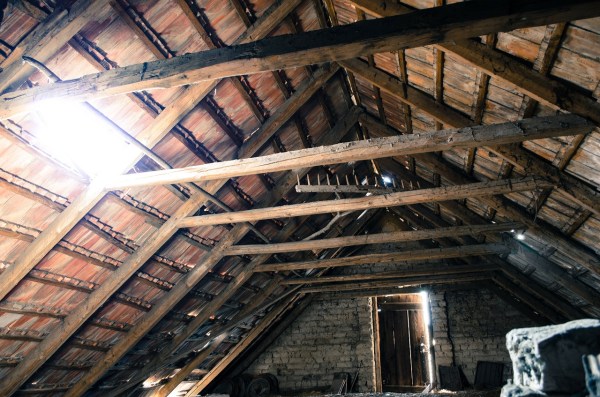
The attic was warm and brightly lit. The old man didn’t see her. He exhaled two sharp blows of the wooden whistle, and the small green locomotive slowly started again its eternal 8-shaped journey.


Cabinet Of Heed Contents Link 21

Image via Pixabay

Little one, I’m sorry – Kate Garrett

I was given the damning choice between feeding you
from a bottle and hearing from the midwife that “breast
is best”, shamed like a boisterous child flaunting the rules

or nursing you in secret, holding you between my heart
and the fear-bellows bred from the mouth of your father
who raised a fist and claimed my body belonged to him

(it is mine) and breastfeeding was forbidden under his roof
(also mine). I had to choose the safest path for the long game:
taking comfort in holding you close, in our pocket of quiet –

a plot planted in my mind to take you all away from there
as I offered my plastic replacement to your little lips, tears
streaming down your tiny chipmunk cheeks, nuzzling
for the warm scent of milk and love, the skin of a mother.


KATE GARRETT is editor of three web journals, and her own writing is widely published. Her first full collection, The saint of milk and flames, is forthcoming from Rhythm & Bones Press (April 2019). Kate lives in Sheffield, UK with her husband, children, and a cat. Twitter @mskateybelle / http://www.kategarrettwrites.co.uk

Image via Pixabay


Cabinet Of Heed footer logo

The Telling and Showing of Maximilian – Nigel Jarrett

Max. Which is all there was to him, really. A three-letter name. ‘It’s short for Maximilian,’ he used to say, but he was joking. So we knew something about him: that he wanted us to understand in his clever way that he was ‘five-syllable sophisticated’. We also knew that he’d probably got a girl into trouble, as they say around here, and had once been banned from driving after being found drunk at the wheel of his car following an accident. It was a long time ago, pre-breathalyser, and late teen stuff. But he was coming home.

There were six of us waiting: his mother, his sister and brother and their spouses, and me. Drink had been taken, except by the mother, a ninety-year-old lapsed Methodist, her liveliness at last muted. There were silences. And a lot of getting up and walking around. In one of them, imagination played: a car zooming up the valley (he’d long served his disqualification), its headlights full on; and those two – the roar and the full beams – becoming real in the distance as we stiffened to face what we had to face. Max. He’d kept himself to himself.

What we knew of him before he left:

Prize Day

‘And the English essay award goes to Max Fisher.’ Applause. Half-smiles and polite clapping from the staff, a semi-circle of downside-up bats (as he later described them in a magazine interview) who were not to be answered back. Max had thought Yeats over-rated. And said so. Eloquently.

Incident at Fulgoni’s

We heard it from widower Luther, the big Pools winner who lived sadly on his own with a bulldog called Bosun and kept his dead daughter’s fur coats in a wardrobe. Max had been thrown out by the waiter Flavio Gazzi, he said, for being abusive, and was screaming at passers-by. Luther didn’t know Max: some red-headed lout, he reported, who’d been ‘at the gut rot’ and was taken away by the police.

In the Matter of the Pudding Club

It could have been anybody’s, they hissed, but Janine knew it was probably Max’s. There were no ways of properly telling then, but her cousin Sue’s parents in Kircaldy had gone to court and it was all over the Fife Free Press for weeks, so she didn’t bother. Poor Sue. It turned out that the respondent was not the father. Paternity suit it was called, like something a dad might wear to a christening. Sue named her son Rory. Janine named her daughter Isobel. The bastards.

Scene at The Goose & Cuckoo

The landlord was ticked off in court for serving Max drinks when it was obvious he’d fuelled up before arrival. The locals liked Max, the lone nineteen-year-old regular with the Frogeye Sprite some garage-owner friend had let his father have for a song. ‘The Rat & Pickled Egg’, Max called the place. The tree he drove into is still there, ever waiting for all-comers. He later fictionalised the crash, describing animals which ‘came silently out of the night’ to investigate the hissing car and its driver, bloodied and asleep against the steering-wheel.

The view from here skedaddles down the slope to the valley bottom, where a vein of neon light tracks the way out. Max took it one night when his father was pick-axeing below for black gold, and hardly ever returned. It’s another world now. Winding gear has wound itself into the ground. Cataracts that were once just stifled drips thunder beneath – so they say. The invisible gas that would ping a canary off its perch like a pock-marked target at Danter’s Fair now swirls in abundance. The past down there is a space being refilled.

We could have talked about Max but we didn’t. We speculated on why. Someone said it was a long time since his novel, The Unbridled Guest, was reviewed in the Sunday papers, though not ones that most people around here bought. Cuttings would be sent by others that mentioned him in passing: at raucous parties in Switzerland and the south of France. There was a follow-up to the first book but it was a pebble cast into a fast-flowing brook: it caused no ripples, and got left behind by the glittering onward rush.

Anyway, like Max, we’ve shuffled towards the abyss, those of us who haven’t vanished already before their time. We head the queue. Behind us are the frolics we once enjoyed ourselves; the spent party-poopers and pointed hats, music’s dying fall. We are growing old, and the prodigal is coming home.

Max never wrote many letters. When humanity stopped doing it and went digital he more or less gave up communicating altogether. So the last one had come as a surprise. He’s not on Facebook or anything else. Being ‘on’ anything would probably irk him. He had his standards. He used to write to me once every couple of years and I understand his sister received the odd missive. It was all about thoughts of himself. Max’s shortcoming was his neglect. No-one had his postal address or his phone number. It was as though he didn’t want us to believe he existed any more.

The sun leaves the scene early here. Sometimes, having sought a gap in the hills, it nevertheless illuminates a high cluster of farm buildings, pointing out some New Jerusalem destined to fade. Now, it has grown dark and cold. Eventide, as our long-forgotten hymns have it, has passed.

His brother reminded us that Max was always on time. And so he was.

We gathered and stood back from the window, with just his mother’s table light on. It was an attempt at a surprise by those who had lost faith in surprises. Far from ‘roaring’ up the hillside, he came quitely, his headlights dipped, and pulled slowly into the yard in front of the house. He seemed to need help in getting out of the car; but he managed it. Dressed in a thick herring-bone overcoat and with his hair grown long and yellowing, he looked older than we expected. Half way to the front door – I’d put the outside light on – he stopped and looked up at the stars. He appeared raffish in his corduroy trousers, red shirt and orange-and-blue tie. We didn’t go out to greet him; we waited till he knocked. His overcoat seemed an encumbrance.

‘I’ll go’, I said to the others, as they clustered around his mother like nestlings.

Under the porch light I barely recognised him.

‘Maximilian,’ I said.

‘Jan’, he answered, half-grimacing.

He brushed past me. I could smell drink, cigarettes.

Tea and cakes were brought out and we settled into muted talk of the old days. It was a while, but not that long, before he told us how many months he had left. And only much later, when his mother had gone to bed, the others had departed, and he was smoking without having asked if I minded, did I break the news that Isobel had agreed to seek treatment.

In the Matter of the Self-Harming

Just to say that it’s been happening for a while now.

‘I never knew,’ he said, leaning across but meeting some undefined obstacle. ‘Poor Izzy.’

There was a lot the all-knowing Max didn’t know, but I knew some of it; and, being one of those who’d stayed, I could comfort him with the knowledge he’d discarded and left behind, as he covered his tracks in all innocence. But we could never be an item again – not now (he’d hate the word ‘item’). We once had a brief shared history. But it had separated and each was well along its pre-determined path. At the end of his, some evidence of turmoil could already be seen, and some inner wailing, and then silence; at the end of mine? We’ll wait and see. But here he was. Back at last.


NIGEL JARRETT is a winner of the Rhys Davies prize for short fiction and the Templar Shorts award. He’s had two collections of short stories, a novel, and a collection of poetry published. A former daily newspaper journalist, he now reviews and writes for Wales Arts Review, Jazz Journal, Slightly Foxed and several others. He lives in Monmouthshire and swims whenever he gets the chance.


Image supplied by Nigel Jarrett

Live At Her Majesty’s – Jess Doyle

Jimmy’s face ached. They’d both laughed from the moment Tommy Cooper had appeared on the TV screen. Jimmy and his Mum with her convulsive cackles. Him fingering his toy revolver and her with a machine gun laugh. He loved that about her, how laughter would erupt from her in great juttering explosions.

Trick after trick failed for Tommy as always and the audience loved it. His futile fumbling with a set of magic rings had the audience howling. There was a small explosion amongst his props. Jimmy’s mum actually yelped.

‘Alright, who-did-it?’ Cooper asked in his rough comical bark. Jimmy had to wipe away a tear and cradle his aching belly. A blond assistant approached Cooper and helped him into a long red gown. It was the same red as his fez, the same red as the curtain behind him. For a moment Cooper merged with the curtain and Jimmy found he was staring at a sea of showbiz red. He blinked it away.

The plastic gun was still in Jimmy’s hand. His mum crowed like a semi-automatic. Jimmy raised the revolver and aimed at Tommy Cooper. He pulled the trigger. There was a hollow click. Cooper jolted. For a second he seemed to steady himself. Then he fell. He fell back against the red curtain and slumped into a seated position on the floor. The assistant threw an amused smile over her shoulder as she walked away. The audience howled with laughter. Jimmy’s mum cackled and the sound suddenly made him shudder. He gawked at the television, at the huge man slumped against the red curtain and he glanced at the gun in his hand.

Then the words ‘Live at her Majesty’s’ appeared on the screen as the red curtain was pulled around Tommy Cooper. Normality and adverts. Jimmy’s mum struggled to calm herself although she was still grinning broadly and giggling to herself as she walked into the kitchen to put the kettle on.

Jimmy stared at the gun. The gleeful ache inside him had turned to something else. Something icy and rigid. He turned the revolver over and over, saying to himself ‘I didn’t do that. Did I?’


JESS DOYLE is a writer from North Wales. Her stories have been published by Idle Ink, Bone and Ink Press, Hypnopomp magazine and Horror Scribes, she is a Zeroflash winner and has stories forthcoming in Coffin Bell. You can find Jess on Twitter as @jcdoyley

Image via Pixabay

Cat & Mouse – Mari Maxwell

They’d met at the O’Hara party. Over the leftovers. He nibbling delicately on the cheese plate. She, languidly enjoying the creamy salmon mousse.

They went everywhere together. Sometimes when the lights were doused, the two would snuggle by the dying fire, chatting and whispering until dawn.

It could have been forever, Raoul thought. Instead, he’d found her matted coat on his evening stroll.

“Masie,” he’d whispered.

Silence. Not a heave of a breath. Masie stared, uncomprehending, and her beautiful black and white fur couldn’t hide the crushed head.

It wasn’t supposed to be.

But it was.

A ten pin strike.


MARI MAXWELL’s work is forthcoming in the 2019 ROPES Literary Journal. In 2018 she read at the Strokestown International Poetry Festival; and, Irish Writers Centre International Women’s Day. Publications include: Irish Times, Bosom Pals [Doire Press] and Veils Halos & Shackles:International Poetry on the Oppression and Empowerment of Women [Kasva Press].

Image via Pixabay

Cold Potatoes in the Wind – Steve Sibra

My father worked the pipelines
at night he drank in bars
with bare bulb lights and red plastic window shades
he never shaved
when he was sober —
used a straight blade to carve himself
into the outline of a family man

My father
tore pieces off people
I watched from a pickup window
as he beat the local butcher unconscious
in an alley behind the dry cleaners
“Who taught you to treat a cow like that?”
he raged
his fists like bloody mallets
he drove drunken spikes of shame
into the slack face of a gentle man

When I was seventeen
two cattlemen came to town
found my father teetering on a bar stool
one held his arms
the other blasting holes in his chest
point blank, with a sawed-off

Pieces of his heart lay on the bar room floor

When I heard about it
I took the old Chevy Apache half-ton
and a can of gasoline
I burned their house after midnight
heard a woman’s scream
as I drove away
period of punctuation
for a long hard sentence

I parked in front of the sheriff’s house
spread out in the back of the truck
Deputy Lester shook me awake

Now I sit in the state pen
pretending to do the paperwork
big words that tell me nothing
designed to get me out

But I don’t want “out”
I am teaching myself the guitar
I want to sit cross-legged on the floor
like John Lennon in “Norwegian Wood”
then go to the prison rooftop
eat cold potatoes in the warm summer wind
watch the sun turn the color of wine.


STEVE SIBRA grew up on a wheat farm in eastern Montana in the 1960s and 1970s. He moved to Seattle and made a living for 35 years by selling vintage comic books. His poetry and prose have appeared in various lit journals including Matador Review, Shattered Wig and Sleep Aquarium.

Image via Pixabay

Charley and Pop – Jeff Binkley

Charley and Pop lived in a fully realized world, one with every detail nice and sorted, from the smell of a spring morning to the wood grain of their dining table. This was a literary world you see, a world where everything meant something and nothing amounted to anything at all.

You might say Charley and Pop lived in a dream and that wouldn’t be too far from the truth. Dreams seem so real, so vivid in the moment. There’s a magnetism about them that pulls us close, hints at something of incredible importance, then leaves us cold in the dim morning light. No meaning, no theme, just abrupt reality.

Quite a few have had a go at explaining dreams, or literature, or life, but mostly they’re just explaining the little they know of themselves. Exclude yourself from conversation – go ahead, try it – is there anything left? Maybe you are all that exists. Maybe I am. Who’s to say?

Well, anyway, Charlotte Rosemary Perkins, who we called Charley because it was shorter, met my Pop some very specific time ago in a city that may or may not exist where you live. I’m sure it was nice there, a wonderful place to fall in love given the right setting and circumstance. Let’s say a grocery store on the frozen food aisle which is also the center aisle of the quaint non-denominational chapel just outside town. When they had said words that neither would remember later, the faceless assassin priest – because aren’t all assassins a tad bit religious somewhere deep down and probably in need of some legitimate income – spun them around and all of their friends from high school were there, weeping at the indescribable beauty of it all. This was a love like no other. This was a love you wish you had.

Those in the front rows tried to steal some of the beauty for themselves, which was a mistake as they had no place to put it. Their hands were filled with programs and tissues. Their tiny dresses and rented tuxedos had no pockets. Therefore, they made the unfortunate decision to swallow the beauty which quickly swelled until they burst like exploding cantaloupe and honeydew melons. Charley and Pop were showered with melon fragments as they left the chapel. It’s strange, but only if you say it out loud. Most anything can happen on a piece of paper.

Real life set in shortly after the wedding as it often does. Charley and Pop decided to delay their honeymoon because the country was in crisis, the likes of which had never been seen before. This especially took a toll on Pop who, having been the oldest of eight children, had hoped to have a large family of his own. Now he wondered, in that translucent mind of his, whether this was a world he wanted to bring children into. Thus the conflict was simultaneously external and internal.

Everything everywhere was out of balance with everything else – sun and moon, night and day, good and evil, supply and demand. As a result, news and media outlets grew rich off the peoples’ insatiable thirst for things to complain about at their meaningless jobs painting road signs for places that had never existed. There was even a news story about the complaining painters, which obviously painted them in a bad light and gave them even more to complain about. Pop saw the story, which only made him sad. Pop’s pop had died in a tragic backstorical painting accident, a memory that caused him endless trauma and probably foreshadowed thematic content throughout the entirety of the fictional re-telling of this real man’s life.

Pop took up woodworking to take his mind off things, though he mostly liked to buy supplies and materials that never really added up to anything. In the garage at Charley and Pop’s house are boxes of nails, screws, hinges, clamps, and most anything that could be used to put pieces of wood together in an interesting or utilitarian way. Next to that is the wood collection. Redwood, rosewood, cedar, ash, alder, maple, walnut, cherry, olive, buckeye burl, amboyna burl, sitka spruce, red oak, and pine. A whole lot of stuff that added up to nothing.

The one piece Pop did finish was the dining table. Pop made the table top from an improbably large slab of walnut burl, the base from solid rosewood, and he unfurled the finished product at he and Charley’s first or third anniversary. It had to be one of the two, because it was undoubtedly early on in their marriage and every even year they seemed to be financially strained so that they skipped grand gestures in favor of a night in with pizza rolls and old movies.

I may be burly and flatly utilitarian, he had said as he slapped the table top, but Charley Rose, you’re the base that keeps me afloat.

The words dissolved in tears of happiness, later in tears of pain, as well as future glasses of sweet tea, coffee, water, and cherry soda once the kids came along.

Kids, yep. Pop resolved his inner turmoil via a series of inner monologues prompted by observations of the world around him. People were like parking lots. Traffic lights were temporary. Grass was the hair on the head of the earth. Penguins.

Charley, meanwhile, wanted a say in the matter because women are people not property and like to be consulted regarding matters of carrying heavy objects around for nine months straight. She was working a fulfilling, yet underpaid, position on the city board of decisions where she impacted the lives of most everyone and could never be sufficiently replaced. Could she, in good conscience, choose the life of her own hypothetical child over the lives of the everyone in existence?

Oh, easily. Yes, especially Bob Chatway.

Her prized moment, one that she carried with her always in the recesses of her rosewood heart, was her refutation of that ridiculous Bob Chatway and his notion to implement a technology based downloadable note system which would directly deposit knowledge into the minds of the committee, thus saving on paper. Charley had cleverly argued that a thing does not exist unless it exists. Bob Chatway could not deny the logic. Therefore, Charley continued, thought, consciousness, and creativity do not exist. We are all at the whims of some writer somewhere and writers need paper.

Bob Chatway and his silly dalliances were summarily dismissed as fictional science, a fantasy of the worst kind. Before he slunk off in shame, Charley took a mental snapshot of the room. Black leather wheely chairs, thin gray carpet, knock-off abstract drip paintings on the walls, fluorescent lighting that imbued Bob Chatway’s face with an appropriately seasick pallor. There was no room for make believe in a world as firm and grounded as this.

Charley took a victory sip from her stainless steel coffee tumbler. The locally roasted South American blend was smooth. It reminded her of Guatemala and a man she had once known, maybe even loved, named Ernesto Chavez. She had been so young then, her hair so long, flowing down her back in lustrous flaxen waves. As she ran behind Ernesto in the Guatemalan fields, Bob Chatway slammed the door shut behind him. The door was walnut. Charley instantly thought of her husband waiting for her at home, burly and full of grain. That was Pop. He loved bread and no one made bread better than his daughter Jelly Bean Jean. She was round and sweet and died many times in different ways throughout her lifetime.

Jelly Bean first died when she was two and ate most of Charley’s beauty products. If memory serves, the ones tested on animals were especially cruel, as were the fluorocarbons, the ground mammoth tusk, powdered horse hoof, and purified medical waste.

I believe this is the moment Charley set aside her disbelief and began to make room for the supernatural. Now it was personal, emotional. Now it affected her precious little Jelly Bean. How could she condemn Jelly Bean Jean to die over mistakes she had made?

Pop concurred and together they decided to bring Jelly Bean back to life. Turns out it wasn’t all that difficult. A flick of the wrist, a turn of the pen. She died again a year later when a strain of virulent, unvaccinated flu made the rounds.

Jelly Bean eventually reached the age of adolescent agency, in which she was allowed to think and act and make mistakes all her own, injecting Charley and Pop’s lives with brand new batches of yet unmined conflict. But somewhere along the line, Jelly Bean learned to bake bread which mostly made up for the difficulties of raising a daughter who dies often and insists on making decisions.

Charley and Pop lived through it all, learning lessons sometimes, but mostly describing the details of their surroundings. Plywood bookshelves lined the walls of the living room and sagged in the middle as if the books themselves were the only things staving off collapse. A brown leather belt with newly cut holes toward the end lay on top of one of the bookshelves. Dust and cobwebs collected in corners of a living room that has only been written about and never lived in.

And then, one Thursday, Jelly Bean grew up. She moved to Paris at twenty, London at twenty-six. Of course Charley and Pop followed, worried that Jelly Bean would never survive without them. True or not, they enjoyed the time together, soaking up all that Europe had to offer. They also met Sir Lawrence Dashwood of Kirtlington, who proposed to Jelly Bean a month later.

The happy couple married and the following year, Jelly Bean Jean Dashwood had her first child – me. I don’t recall Charley’s reaction, but I know that Pop hoisted me up and tossed me like a pizza dough. He laughed like a giant of a man, then set me down, kissed my wrinkly forehead, and walked away. The room was mortified, but I knew then that I’d turn out just fine. After all, the secret ingredient in any decent pizza is a well executed hand-toss.

It is indeed a magical life. I have known these characters through many lives, good lives that I’d like to explore in further detail. But now I am much too tired to continue so I’m off to bed.

*      *      *

Mom,

You asked for my thoughts, so here goes. You’re a good writer, I guess, but I have no idea what I just read. I mean, stories are supposed to have a point, right? What was the point of all that? Why write about the family if you’re going to jumble it all up? It was all backwards and hardly anything in there was true. Can I just say, for starters, I wish you wouldn’t call me Jelly Bean, at least not in public. I’m twenty-six now, and certainly not “round and sweet.” Also, I never died. Also also, Charley and Pop are my cats, so … I don’t know, I wonder sometimes. And I know you like Kirt, I like him too, but going to Duke doesn’t make someone a duke, and I’d really appreciate it if you slowed down on the whole marriage and kids fantasy. About London, I was thinking maybe me and you should plan a trip soon. How does that sound? We’ve both wanted to go since forever. I’ll look into it and let you know what I find out at Second Sunday Dinner. And yes, I got the hint. I’ll bake some bread. Okay, see you soon. Thanks for the strange story, I guess.

Love,

JB

P.S. – I’m glad you decided to have me, you know, in the beginning, even though you guys had some doubts.

P.P.S. – I miss Dad, too.


JEFF BINKLEY is a musician, educator, and author from Huntsville, AL. He enjoys time alone to think and pursue creative projects, but not as much as he enjoys a good cup of coffee with his wife, Amy.
Image via Pixabay

Their Untimely Lives – Roppotucha Greenberg

Ellie brought out the thrift-shop coat on weekends or when the sleet and the urge both got so bad that she just had to drag her feet towards the church. By mid-term exams, she could pass for an old lady even without the make-up. The secret was in the head-wobble and the bent back.

Felix’s condition was severe: his mind was nearly a week ahead. By Tuesday, his mind was already deep in the rain of the following Monday. He often bumped into people and had given up on umbrellas.

‘So do you, like, never get nervous ahead of exams?’ she asked.

It was their first date, but thinking it was their second he told her personal stuff, like, how he’d be sitting on the grass having a coffee, and his mind would be in the exam hall it would get dark and sweaty with the walls falling around him. But there were advantages.

Ellie, giggled and didn’t tell him about her condition. They ordered tiramisu, which is the funniest desert in the world and has a layer of lady’s fingers. She wondered what would happen if he chased his mind all the way through the future weeks. Would he know if they would always order tiramisu and pretend-fight over it?

That Saturday, anyway, everything worked out: Ellie had the house to herself and the heating broke down, so they tried three different strategies to keep warm. And if that mirrored whatever the next week held, that was all just fine. He was in perfect synch with her time-line.

She slept in little squirts of dreams, and every time she woke up, she hugged him. In the yellow light from the window, her coat was an old woman hanging on the wardrobe. With every dream, the woman got stronger, until she left her place and came very close, and that was also fine.

If only Ellie could just skip all the layers of time, go unseen past all the crocodiles, and arrive to the end where no threats could reach.

They dated throughout her treatment, and past the summer exams. They never fought: you can’t fight with a semi-future person. Then one night something bad happened: Felix’s body writhed under the sheet, his eyes bulged, the bed was drenched with his sweat, was the sea, was huge, and as she grabbed onto him, she cried for extra-arms, powers from the future, the strength of an octopus. ‘It’s OK’, he shouted through gritted teeth from the bottom of the ocean. ‘It’s OK’. And then silence, and then slowly, as he opened his eyes: ‘I think I’ve been hit by a bus.’ ‘Are you crazy?’ and she hit him with her hair-brush, and threw stuff, and screamed like a banshee. And Felix was too exhausted to explain that as his mind died in the week that was still to come, he didn’t … it wasn’t … he wasn’t quite sure, and the only word that occurred to him was OK, which doesn’t really explain anything at all.

And Ellie, who had mastered her disguise to cheat time, now faced the possibility of horrible grief. He said he couldn’t feel next Wednesday. He was worryingly fully present. They decided to stay in all week, which was difficult. She still lived with her parents, and his was a mould-infested place two miles outside the city. How would they get enough food? How would she feel at night when she had to leave?

But they managed. They fed themselves on beans and pot noodles, watched a few documentaries, revelled in Dutch Gold. A week passed, and another one He became a proper TV addict during that time, said he’d never been able to enjoy it before. She put all her talent into co-watching: how they make bolts, how they drive trucks, how they ice-fish—portents of the unknown they were, scattered atoms of his near-dead being. At night, she thought if she could properly focus, she could keep him safe, and then she grew frightened at the thought. So instead, she learned to stop trying and to match her rhythm to the world around her. And no death bus came. They waited another week and decided they were almost safe.

By Christmas exams, they were both cured. The imagined accident, if that is what it was, grounded him in the present. He stopped bumping into people. As old woman’s clothes stopped working for her, she invested in a lipstick, and a fancy top.

Several years after, Ellie still wonders why they broke up.

Sometimes, on a Thursday, when goes out with her new friends, she suspects that she loved that other guy more, the dead one from that Wednesday that didn’t happen. Or was it just the pressure of that week? There was so much death, TV, worry, and cheap food. He was no longer her guide into a safer future. A small part of her, the Ellie that adored tiramisu and that he loved best of all, wrapped herself in the old woman’s coat and waddled off. Yes, that could explain it. These thoughts make her cry, slurp her beer, and realise that none of them are quite the whole truth. The truth, like the dead guy from Wednesday, and her small part, was elsewhere, for her to hunt down in giant leaps, hurriedly, into the next Friday, and beyond, through a parallel world, the end of life, and time, and the end of all worry.


ROPPOTUCHA GREENBERG writes micro-fiction on Twitter (@Roppotucha)
Her stories have appeared or are forthcoming in Ad Hoc Fiction (winners’ section). The Evening Theatre, Elephants Never, 101 Fiction, Former Cactus, TSS Publishing (The BIFFY50 micro-fiction competition runner up), Ellipsis Zine, Twist in Time, The Mojave Heart Review, Enchanted Zine, and The Forge Literary Magazine. She lives in Ireland.

Image via Pixabay

Create a website or blog at WordPress.com

Up ↑