A Very Polite Town – B F Jones

Is it safe to run in the woods? I ask.

Oh yes, very safe around here. It’s a lovely town you’ll see, everyone is so friendly, so polite.

I therefore venture into the woods. I am worried at first. A young woman in the embrace of tall trees, all on her own. You hear stories, your mind races, followed by your panicked legs. Nothing like a bit of fear to make you sprint.

But I soon stop worrying. They were right, everyone is so friendly, so polite. And I learn to appreciate the cool shade, the musty smells, the speckled sunshine on the ground. I greet dog walkers and they greet me back. Little children wave and shout hellos. Other runners nod their heads at me. Elderly people let me through. Yes, everyone is so friendly, so polite.

While I’m out running one cold morning, feet landing rhythmically on crunchy leaves, puffing out a white little cloud every fourth step, I’m thinking how my brain is in complete tune with my body, how my body is in complete symbiosis with nature, how I have become running. I overtake other runners, effortlessly accelerating, still finding oxygen to greet them all, as polite as all of the polite people of this small town.

Then it happens.

I fall.

I slip on a small patch of ice and I sprawl onto the ground. A split second during which my brain can’t comprehend the event. One second you’re up and running, the next you’re flat on the ground, gasping for air.

It reminds me of that time I got swallowed whole and spat out by a large wave, my body rigged by the surf, then an ungracious entanglement of limbs on the hot sand.

I blink my confusion off. A small squirrel is climbing the large tree above, stopping for a moment to look down on me.

I need to gather myself up but I can’t. There is pain spreading from the middle of my back to the rest of my body. I order my toes to wriggle but they stay stubbornly still. I can’t move my head. I can blink. I can feel myself blink. I try to shout for help; my mouth opens but no sound comes out. Like a cat on the other side of a window.

I hear quick footsteps approaching. Thank god. A runner.

He looks at me and nods politely before going around me and carrying on. Another one goes by at full speed. “Morning!” he shouts over the loud music in his earphones, before rabbit-jumping over my immobile legs. A nice family walks by. The little girl waves and the toddler says “e-do”, reaping immediate praise from his parents. “You said ‘hello’ Alfie, there’s a good boy.” And they smile at me and walk by.

I close my eyes. Maybe if I look dead someone might help?

Something cold and moist rubs against my cheek. A large Labrador is giving me the once over, half excited, half concerned about his discovery. He whimpers a bit before starting to lick my face.

“Teddy!”

At the sound of his name he abandons me for his mistress, a delightful old lady, wearing an incongruous mix of Sunday best and wellingtons. She walks to me.

“I’m sorry dear, about the dog. He’s only being affectionate. Have a good day now!” And with that she’s off, Teddy by her side.

Yes, everyone is so friendly, so polite.


Cabinet Of Heed Contents Link 18

Image via Pixabay 

In The Shadow of the Sound Tower – Paul Thompson 

The sound tower is silent, abandoned in the dunes, windswept and dated. Conditions are calm, nullifying its function. On still days like these, the tower finds itself a relic.

We find a spot in its shadow, down by the shoreline, surrounded by remnants of the ocean. Starfish cover the beach in dead constellations. The carcass of a rabbit, washed up and barren, bobs its head in the tide.

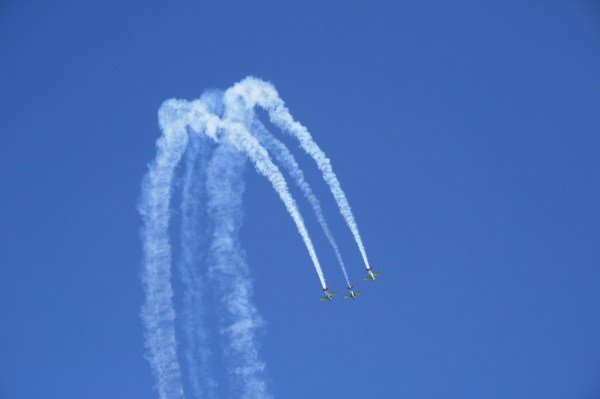
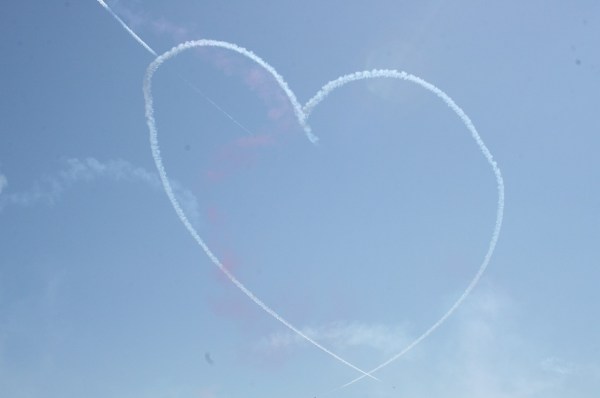
With the beach to ourselves, we waste no time in preparing our picnic. Far down the coast, crowds gather on a cliff top, the sky clear and perfect for the occasion. We eat salad and cold meats as we wait, our skin shrivelling in the presence of the sea. At midday it begins, muffled cheers in the distance, as red and blue trails paint shapes above the ocean.

An air display team, flying in unison, pixels on the horizon.

The sound of their engines reaches us, indicating it is time to begin. We fetch a tarpaulin and our shovels from the car. Our task is discreet, hidden by the distraction of the air show, the whole town focused on the planes. We work under the watch of the tower, now a silhouette against a smudge of colour, rainbows of smoke in the sky.

As we half-watch, one of the planes falls away from the others, a speck that disappears into the ocean. From our distance the scene is abstract, belonging to another world.

A breeze rearranges the sand. Slight but noticeable, enough to pause our efforts. Spots of rain follow as the sky darkens. All signs of the storm that has come out of nowhere, to the surprise of the pilots. More spots of rain, or possible drops of ocean from the impact, carried to us in the breeze.

The wind grows cold round our legs, salty and unforgiving. It flips the rabbit carcass over, blowing it into the shallows before breaking it in half.

This change in weather reaches the tower. Air flows through its apertures, its design now apparent. A familiar hum returns to the beach, a background noise. Sounds from down the coast feed into its song – crowd noise, an impact on water, the voice of the pilots. Indistinguishable, hidden within the tone, reaching us on delay

The storm escalates as our belongings shift and scatter, bouncing across the sand. The tarpaulin flaps open, fluttering like a ghost of the ocean. Starfish roll by, taken by the gale that is now reaching a peak. We make snap decisions between us, grabbing what we can before the wind decides for us.

The tower groans, the weather teasing new sounds from its vocabulary. An oily scent fills the air, a reminder of the pilots. We head back to our car, accompanied by their echoes, amplified by the sound tower that churns on the horizon.


PAUL THOMPSON lives and works in Sheffield. His stories have appeared in Spelk Fiction, Ellipsis Zine and The Cabinet of Heed. Find out more at @hombre_hompson

Cabinet Of Heed Contents Link 18

Image via Pixabay 

Sgraffito Skies – M S Clements 

Passion sharpened nails tear the evening sky,
Scraping at the waxy black of dusk.
And across sgraffito skies,
Comes a bitter juice of yellow grapefruits
And sour Seville oranges,
Weeping from those citrus cuts.

Fill my bowl and fill it again.
With tart crepuscular fruit,
All laced with acidic poison,
To feed my sorrow laden night.

Impatience breaks the hold of darkness.
Chased away by dawn’s own bullwhip.
It cracks and snaps at sullen gloom,
With vicious flicks to summon reluctant fortitude.
New scars will lie beside the old,
Those scarlet welts conspiring.
A host of grievous sores
Concealed by diurnal calling

This battlefield life,
Where I am never the victor.
Yet I persist, never defeated.
And forward I advance
My limbs all trembling.
Weighed down by campaign medals,
Pinned upon a fragile psyche,
All jingle-jangling and chiming out,
‘Come to me, Sirius,
Find me once again.’

And that snarling cur returns my call.

With diamond tipped claws,
He slices with savage precision.
Opening the soft skin of night,
Licking at the freshly made wounds
That cross my sgraffito life.


M S CLEMENTS is a former teacher of Anglo-Spanish heritage. She recently completed her debut novel, The Third Magpie and hopes to see it published later this year. As well as editing the speculative love story, M has also had a short story published in Cabinet of Heed and another printed in an anthology of women’s writing, Carrying Fire.
She continues to live on a building site in rural Buckinghamshire with her family, assorted builders and a visiting peacock called Darren.

Cabinet Of Heed Contents Link 18

Image via Pixabay 

The Hydrogen Fairy- Julianne Corrigan

I am a tiny particle.

I am moving in small circles but remain invisible within the vast universe. I am random and free, existing only as a concept.

Just a thought.

In the burning core of the solar explosion that you will know as a distant star I am biding my time. I am not waiting, because waiting is an idea that doesn’t exist in a universe where time itself is illusory. How can I linger in timeless space?

The length of my existence is measured in the massive explosions surrounding me. I cannot count. There are no numbers. But there will be and they will transform everything. They will become important and intricate, and the universe will appear too small. But I will become large and significant, surpassing all that came before, anticipating all which lies ahead. I will become the blueprint.

I will become you.

There are many explosions in the core of my star and I am only a tiny particle.

I am moving closer to my metamorphosis. Very soon I will be two. When the last explosion of my life as being one finishes, I will fuse and multiply and nuclear energy will enable me to begin my journey. I will not be the hydrogen atom of my birth but will become the first stage of my growth. I am slowly becoming the complex compound you need.

It is the journey of my destiny and of your tentative life.

My voyage precedes the demise of my star, which has been burning for so much longer than you will ever know. As it transforms into a supernova and I move further away from my birthplace, I sense where I am travelling and embrace the cajoling and subtle pull.

The collapsing star is continually spurning my siblings. They are moving quickly in their attempt to catch me up on the long journey. It is a voyage lit constantly by other distant stars. My siblings are trying desperately to find me, to attach to me so as we can multiply together. They understand the importance of this journey and this knowledge encourages them to become part of me.

So we can become you.

I am passing much smaller and younger suns and at a time in the distant future, when they themselves are spent, they will produce more of us.

Barren planets come and go but these desolate places do not beckon me.

They are not my final destiny.

Cosmic debris is littering my path. But I need to focus on my journey and arrive safely at my ultimate destination.

Massive comets, which have their own tale to tell, smash into me, their energy so strong that I multiply again and again. I am becoming more powerful, more complex. My growth is exponential and my size is slowing me down. Some of my siblings are catching me up. They are hurtling through time and space in a supreme attempt to be with me. Silently jostling, they collide with me and once connected they are assimilated, becoming part of me.

As I will become part of you.

I move through so many solar systems. Each one seeming larger than the one I have just passed through. More and more organised they appear. Each one hinting at the promise of what will be. Hinting at the promise of what should be.

Of what will be you.

Now I am changing again. My siblings are now so a part of me that we are real matter. Our name alters. It changes again and again. I am becoming impenetrable. Still not as important as my parent – the star – but my destiny is drawn. And as surely as your sun will burn for a long but finite time, my destiny is as clear as the final fate of your sun. Perhaps clearer.

Because soon I am you.

I am now more than the hydrogen atom of my birth. I am expanding, filling space, creating a tiny part of gravity. As one I am nothing. But there are many more like me. Our births and multiplication are constant.

We need to be prolific. Occasionally instead of expansion the universe implodes, taking many of my siblings with it. There is no time or space inside the two dimensional hole. Does it exist? It might do to my siblings trapped inside, although as I travel to my final goal, I think it does not.

How can it?

When it isn’t part of you.

By knowing my size and complexity I recognise I’m nearing the end of my journey. I am now becoming the organic, stable matter I need to be.

The solar system I am now entering appears disparate from the others. More organised. With ripples of divergent energy it feels different. It is an energy which inspires me.

To become you.

I am beginning to perceive an irresistible pull and although subtle, it has been with me from the beginning. I am passing planets unlike anything I have seen before. They are directing me towards my destination: enormous pointers in the massive space all around me. And I can do nothing to halt my progress, my fate.

And your destiny.

Everything is becoming smaller. This solar system is more compact, and yet more complex. The evenly spaced planets and debris are depleting. I am serene. I am arriving at my real home.

I am beginning to feel who you are, to know what you will be, and what I will become. An excitement overwhelms me at the idea, of becoming you.

You, who will be more important than your sun and will know more than anything I have encountered on my journey.

It will be many millions of years before you become your destiny, but I am patient knowing we will achieve the goal of my dying star.

My arduous journey is not in vain because you nearly exist. The older solar systems already comprehend what you will finally become. They have glimpsed at your destiny. They know there is nothing that will compare to you.

You will be unique.

I am now reacting with oxygen and water vapour. I am growing up.

Gravity is pulling me ever more strongly towards the blue planet. A planet that is different from all the others. I want to get there. I want to be part of it. This planet will become my home.

Your home.

I am now moving faster than ever before. I see the spectacular blue planet in its glory. Beautiful and serene. Calm and peaceful. The white clouds hovering above its surface, cajole me. They are willing me not to make a mistake. Their hope is for me to be successful, to penetrate the fragile atmosphere and find my new home.

To find you.

I am plunging through the ambience of the beckoning planet. Now I am what I need to be, complex enough to begin your life. I am entering on the bright side; your sun is shining strongly and emphatically. It is shining down so hard that the blue oceans are twinkling white as they swirl and dance in the invisible wind. Water which will be my new home and the start of you.

It is a sight more beautiful than anything I have seen travelling through thousands of solar systems. The view an image of loveliness and unparalleled in the infinite space encircling its precious parameters.

It is ours.

I am moving at great speed through the atmosphere, light and welcoming, warm and enticing. I begin to slow down and float gently and as I break my way through the fragile shell of the blue planet, incommensurate with its size and beauty, I am at peace.

I am sinking into a great ocean and it is here where I find my penultimate resting place.

Because soon, in thousands of generations of life, I will become a part of the puzzle that is you. I will become the part of you that thinks and reasons. Loves and hates. Laughs and cries. I will be a fragment of all your emotions.

And when you grow old and die I will continue on, forever and endlessly.

Because I am the fairy inside all of you.

I am looking backwards towards my star, a silvery dot shimmering in the sky. It is now long dead. It died giving birth to me. It died giving birth to you. And although I look and marvel at its persistence, it is the persistence of you and your planet which is truly marvellous.

I will never leave you.

I am your fairy.


JULIANNE CORRIGAN writes historical, suspense and speculative fiction. She was shortlisted in the Bridport Short Story Prize in 2016. In 2019 she made the final in the Write Stuff competition at The London Book Fair. Her contemporary suspense novel, Falling Suns by JA Corrigan, was published by Accent Press in 2016. https://twitter.com/julieannwriter

Cabinet Of Heed Contents Link 18

Image via Pixabay 

Staples – Leslie Doyle 

Mary said she wasn’t getting any more mammograms, on account of the radiation. Trish looked up from her Moscow Mule, swirling the copper cup carelessly.

“I know, right?” Trish looked around the restaurant, one of those dockside ones where people pulled up on their boats and customers sat at wooden cable spool tables. Plastic crabs and lobsters in fluorescent colors on the walls. Wait staff in vaguely nautical outfits, the girls in apparently required tiny white shorts they kept tugging down, the guys in knee-length cargo shorts.

“Last time I flew—to Florida when Frank’s dad was sick? —I refused to go in the X-ray machine and I had to get searched.”

“I don’t like to fly anymore” Mary answered. “They’ll kick you off as soon as look at you, after pawing through your bags and touching your lady things.”

Trish nodded. “Well, I won’t fly again, that’s for sure. On the way home, they bumped me after I had an assigned seat. Then just before boarding, they called my name and announced they’d found me another seat.”

“Well, that was cool.” Mary stuck another tortilla chip into the crab dip. The bright yellow chip and pale pink dip echoed the colors of her off-the-shoulder blouse. She hiked one sleeve up, hiding the sunburn line. “I mean, that they made up for it like that.”

Trish shook her head. “No way I was getting on that plane. It was a sign. I started yelling I wouldn’t get on it and I thought Frank was going to have a fit, telling me TSA would arrest me if I didn’t shut up. The lady next to me said well then she wasn’t getting on it either, and I told her not to worry, it wouldn’t crash if I wasn’t on it.”

Mary listened and nodded. She and Trish were best friends now, since they’d met at Maid in the Shade, working all summer to clean rental houses between tenants and change sheets at the local motels. She knew Trish and Frank were recently separated and wondered if it had anything to do with this incident.

“So we drove a rental home. But anyway. You know that you can get an MRI mammogram now, right? No radiation.” She caught the server’s eye and held up her cup.

Mary shook her head. “Nope, no MRIs for me. Not since my lung collapsed last year and they had to stick it to my chest wall with staples.”

“Wait, what? That’s crazy!”

“Yeah. But here’s the thing. I can’t ever have an MRI now. The magnets would pull out the staples. Rip them right out of my lungs. They’d slice my heart to bits.”

The drinks came, and they each took a sip. They had an afternoon off, before the next round of tourists. There were a million beds to change and toilets to scrub tomorrow, but for this afternoon they had nothing to do but sit in the sun on a dock.

Trish looked out over the boats, pondering what was luck and what was fate. And the menace of Mary’s staples. She’d never heard of such a thing before, but at the same time, she knew exactly what Mary meant.


LESLIE DOYLE lives in New Jersey and teaches at Montclair State University. Her work has appeared or is forthcoming in Gigantic Sequins, The Forge, Electric Literature, Fiction Southeast, Signal Mountain Review, Rougarou, and elsewhere.

Cabinet Of Heed Contents Link 18

Image via Pixabay 

In The Dark Garden – Lorraine Wilson 

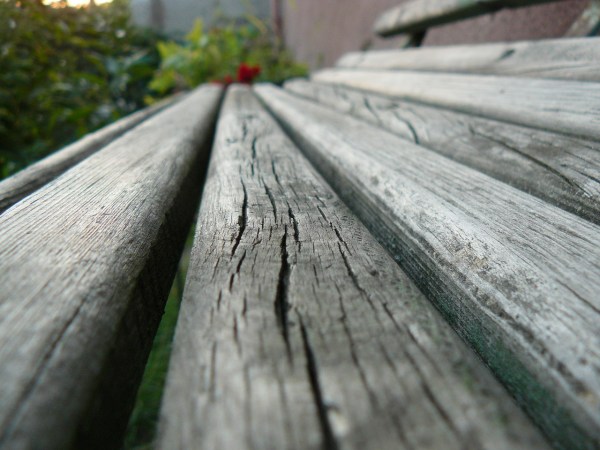
You walk down through your dark garden to the bench at the far end, and you sit there, pulling your knees up and folding your arms around them. Your feet are wet from the grass, from the rain earlier and tomorrow’s dew. There is the very faintest of breezes, but it is enough that where your hair lifts from your neck, the skin cools. You don’t mind at all, the chill in your extremities and the way your shadow lurks at your feet, they hardly register as you tip your head back and fill your eyes with the night. Mountains rise around you, a steeped blackness that swallows monstrous shapes out of an indigo sky where the stars are unfettered tonight by either cloud or moon, and their presence feels so close, so tangible that you almost convince yourself you can hear their voices, murmurs from the abyss, or from the past.

It is a comfort, that thought – that the stars dusting your eyelids are so far in the past that you were not born when these photons were. You wonder if the light is altered somehow, by touching you. If it is tainted.

An owl calls in the trees, half of a song, and you and she both wait in silence for her mate to respond. He doesn’t. She calls again, from further away and he answers her. The forest murmurs on, teetering on sentience under the cover of darkness and you can feel the lure of it, the utter pitch of the shadows beneath its branches that stretch from the slopes above almost to your garden. It would be easy to do. Step down off the bench and take two paces through foxgloves and early borage to the fence. Climb over into the sheep field just as you do during the day, cross ten metres of hagged and frayed grass and then step into the forest.

Maybe that complete, inkwell blackness would offer you a better oblivion than the starlight. Maybe. But it would also offer splinters, twisted ankles, a compassless disorientation.

There is a temptation in that, too. You pretend there isn’t, or that you don’t feel it. But there is, and you do.

A tiny spark of pain lights upon your temple and your response is reflexive, brushing away at the unseen insect with the edge of your hand. It brings your mind back into your body, reluctantly, sadly, back to the cold creeping around your ankles and the tangle of hair against your cheek. Back to the ache in the pit of your abdomen, the pull of gravity and endings within the cradle of your pelvis.

You take a breath, rest your forehead against your knees and close your eyes. You do not cry. Not now, although you did earlier when the pain began. You did when you stood in the shower and watched your red blood spell out the breaking of your heart.

The thing is, you think, you do not know how to say goodbye to someone you never got to meet. You do not know how to let go of someone whose cells still circulate in your veins, whose bones and heart you were building from your own.

The thing is, you think, this is not the first time and you still have not learned how to bear it.

Above you, the beech trees tap out leaf-and-twig signals, and you can smell their new growth. It is a part of the night’s scent, the beeches, sheep and wet grass, pine and the tang of peat, solitude. The world turns, and sitting so still, you almost believe you can feel it. The world turns, the present becomes the past; becomes memory, scar, secret.

You realise that you are now entirely cold. Perhaps that was what you were waiting for, to be fully numb. Rising to your feet, you press one hand over your cramping muscles, your empty womb and you take a last look at the forest with its outheld promise of shadows.

Then you turn around, to the house where a light is still on in your bedroom. Where your child, the one who made it, the one you are so lucky to have, is sleeping and will soon wake. Where your husband is sleeping and will not wake, but will bring you tea in the morning, and will love you.

The grass leaves remnants of itself on your feet, and over your shoulder a gibbous moon lifts one corner of itself above the moors. The night is kind to you, and you are grateful for it. As you open the door and step into your home, it is almost enough.


Cabinet Of Heed Contents Link 18

Image via Pixabay 

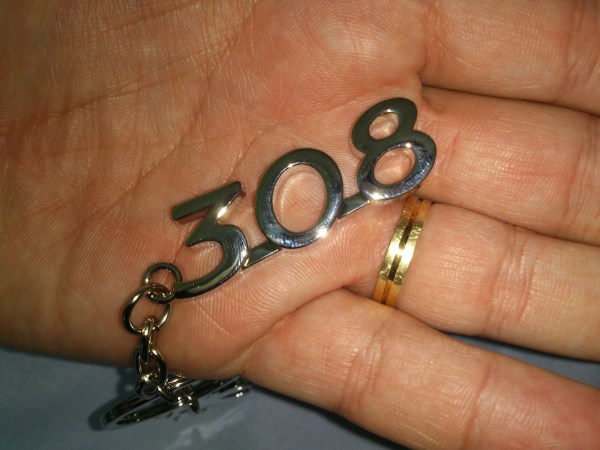
I Still Remember The Number Plate Of The Peugeot 308 – Lydia Unsworth 

I passed the autumn and early winter noticing the flies but, whether from stubbornness, pride, contempt, or lethargy, refusing to do a thing about it. Sometimes I look at the edges of squalor and think, is this squalor? Not yet.

Unable to remember the sound of my own voice, I recall VHS tapes that might have proved it. For when I might need to prove it. Taped over; haunting cupboards everywhere.

The buzzing reminds me I am still responsible.

After these sweltering days, we are all grateful for a little wind, a little rain. The slightly open door keeps hitting the frame. I joke-clenched my fist in the baby daycare place, for which I am not sure of the English name, only because I didn’t have a sophisticated enough repertoire for what I was trying to say. Then I followed the lines of all the adult eyes to see if they were seeing what I was seeing; i.e. the fist in the baby daycare place.

I close the windows because the children playing football outside are not mine and the sound of the ball bouncing off modern surfaces is slamming into the bulges of my barely contained rage. I would like to speak in a clear, calm timbre. Wrap a towel around the exterior walls of my returning body. Walk like I grew up with newspapers. Exhibit the confidence of a six-digit number. Mediate.

I would like to take drastic action. Gather my hair into a ponytail and just chop. I think I did that once. When I was drunk. When my hair was short and my ponytail shorter. And in the morning I hardly remembered and nobody else noticed at all.


LYDIA UNSWORTH is the author of two collections of poetry: Certain Manoeuvres(Knives Fork & Spoons, 2018) and Nostalgia for Bodies (Erbacce, 2018), for which she won the 2018 Erbacce Poetry Prize. Her work can be found in Ambit, Pank, Litro, KillAuthor, Tears in the Fence, Banshee, and Sentence: Journal of Prose Poetics, among others. Based in Manchester/Amsterdam. Twitter@lydiowanie

Cabinet Of Heed Contents Link 18

Image via Pixabay 

Remembrance – Mark Left

She sees him first. A figure through the steamy window, waiting to cross at the lights, looking diminished by the modern-day traffic, and still unaware of her gaze. He is adrift in the noise of the street, fresh from the Remembrance service and too smart for round here in his blazer and medals, his polished patent leather shoes.

Shorter than she remembers but he walks well. There’s a spring in his step, just like the Bernie of old. She recalls watching him marching in parade at the airfield. So many lovely young men but he always drew her eye. So many of them died. She remembers them all and feels a surge of regret despite the fifty-seven years in between.

She is excited to see him again. At seventy-eight, she wonders if she should feel like this. It feels odd and a little inappropriate in public. As if anybody’s watching, she tells herself. She finds herself considering if she looks attractive, if it really matters now. Then he’s through the door, and they greet each other and embrace. His voice is shaky – perhaps with nerves – but the same tone, steeped in the years but still familiar. His face, his blue eyes, the way he lightly holds her at arm’s length and smiles at her. She remembers the New Year dance and the kiss of the younger man.

“Oh, Bernie. How lovely to see you again.” She cannot stop smiling. Inside, her heart fuels the fires of expectation and she turns the corner into a widening memory lane. She could talk for hours, and she will.

*      *      *

He sees her first. He’s hesitating behind the pillar box over the road, watching her sitting in the misty window opposite, concentrating hard to see her well through the patchy clouds in his eyes. He searches his memories, leafing through the synapses that store faces and places, finding broken links and voids where there was once history. The angle of her nose, her jaw, it seems wrong. He cannot be sure.

He stands confused in the rush of passers-by, the air booming with the noise of traffic. He adjusts his hearing aid and smooths his blazer, checks the medals are hanging straight, but at last admits to himself that this is not the Mary he thought it was. He has surnames muddled, her married name on the website, too much time passed. She is not his Mary, not Mary from 1944.

Yet their correspondence says she knows him. Who then? He has no recollection. Nothing.

It does not occur to him to not turn up. Despite the years, there is such a thing as duty and he moves to the lights and crosses when the traffic stops. Now he thinks she has seen him and he walks as straight as he can without his stick, and he tries to inject a youthful swagger. He’s not sure why it really matters now. But his bad hip hurts like hell and he’s glad to reach the café door. He goes inside and she rises and he embraces her as if she means something, murmuring her name, holding her at arm’s length again to look at her while his smile hides the truth.

No, this isn’t who he hoped it was. His heart rings hollow with the disappointment and a desire to distance himself settles in. Still, he’s here now. One coffee and half an hour won’t hurt.


MARK LEFT writes stories and sometimes poetry. He has been published in @EllipsisZine and was highly commended for his entry in the BIFFY50 Microfiction Contest Autumn 2018. He lives with his family on a hill in the middle of England and can be found on Twitter: @ottobottle

Cabinet Of Heed Contents Link 18

Image via Pixabay 

Oneirology 101 – Essie Dee

The evening breeze has a dampness about it, and I pull my coat closer. Turning onto the darkness of Woodbridge Road, a shortcut of sorts, I save about thirty minutes. Good on cold evenings such as this, when I am already running late.

Halfway up the road I see college lights in the distance – across a field at the end of the lane. While traversing a side street a white car pulls into the intersection and pops the trunk. Before I can comprehend what is happening the trunk slams shut, closing out the world.

*      *      *

I really need to start leaving for class earlier, or stop taking evening courses. I enter the gloom of Woodbridge Road and unease flows over me. Shifting my bag to the opposite shoulder I look around – they really should put in lights around here.

Approaching a side street I see a white car idling, hear its trunk pop. Everything in me says ‘run!’ Turning, I fly down the street, am outpaced and grabbed by the bag, which I shrug off. Grabbed again I fight back, flail, try to scream, and am hit. Hard. I crumple to the ground in a heap. The wheels of a car make a slow approach; I feel myself being lifted and thrown. Shrugging into the back corners of the trunk, I fear what awaits me.

*      *      *

I’m startled by the numbers on my watch- seven o’clock already. I’d best get moving if I hope to make it to class in time. Throwing on my coat, I grab my bag and head into the damp dark of autumn night. As I approach Woodbridge Road a dire sense of fear and dread takes over. Stopping, I look down the unlighted street – a quick path for years now, why this sudden feeling? A white car turns up the road heading into the darkness. A moments hesitation before I take the long way, walking in crowds that push along to the next intersection.

*      *      *

Exhausted, bad dreams aplenty this week. I grab a coffee before taking my shortcut to class.


Cabinet Of Heed Contents Link 18

Image via Pixabay 

A New Face – Steven John

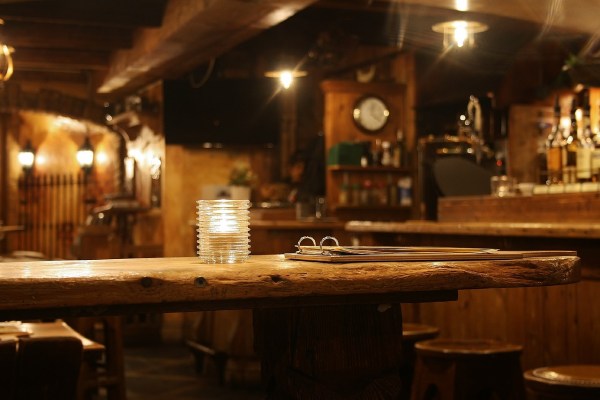
Ten minutes from home Goodwin makes a decision and parks outside the roadside pub. He’s never stopped there in all the years. There’s the usual cabal of drinkers and smokers sitting at the long, trestle table outside the pub door. He’s imagined himself as one of the group; shaking hands of welcome, being kissed on the cheek, buying a round, squeezing onto the bench seats, touching shoulders and thighs.

Goodwin goes to the bar and orders. The barmaid’s about his age. Attractive. Contagious smile. He imagines a single mother making ends meet. He imagines staying back with her for a drink after the other customers have gone home, and talking. Just talking.

He looks at the old framed photographs hung on the shabby walls. Drinkers from years gone by, regulars, past it now, or dead. He can hear their guffaws, smell the tobacco smoke, taste the froth on the beer, feel the late night party going on around him. He strokes the head of the dog lying at its owner’s feet. The first non-work related sentence for ten hours he speaks to a dog. His own gentle words sound foreign. The dog’s owner nods as if to say ‘it’s ok, he understands you.’

Goodwin takes wine outside into the night. He looks to sit at the trestle table. There are no spaces. No-one looks at him with eyes that say ‘Sit here.’ No one shifts up. All the faces are joined together. There are no loose connections at the trestle table.

On the small beer-terrace to the side of the pub are empty tables, positioned close together under a cane trellis arbour made for grapevines. There are no hanging grapes. Instead there are vines of fairy lights. He sits under a light that turns his white wine to red. He works out the repeating pattern of colours threaded through the trellis; red, green, blue, yellow, red. He reads work emails on his phone, stacking up to keep him awake. He scrolls through his contacts looking for friends. There are two but he hasn’t seen or spoken to them for months, years. A couple sit down opposite each other at the next table. He goes to say something but can only find words for traffic or weather. The couple reach across their table and hold hands.

The barmaid comes outside to wipe tables and clear glasses. Goodwin’s on his third.

“You’re a new face,” she says.

“Does it fit here do you think?”

“Somehow I think it’s a perfect fit.”

Goodwin arrives home, late for him, and drunk. He shouldn’t have driven. He unhooks the stepladders from the garage wall. There are no familial hellos. There never are. He carries the steps onto the landing and climbs into the loft. From a taped up cardboard box he finds a set of Christmas tree lights. He takes the lights to the spare room where he sleeps in a single bed and pins them above his pillow. He pulls off his office shoes and slides under the duvet. If he squeezes his eyes almost closed, the coloured lights coalesce and fizz. If he opens his eyes slowly, the lights glare and fly apart.


Cabinet Of Heed Contents Link 18

Image via Pixabay 

Collections in an Empty Hand – Haley Petcher

Déjà Brew is Danny and Kate’s go-to coffee shop, only two blocks from the elementary school where they first met on the playground when he rescued her from the Kindergarten Bullies—he said she told the weirdest, coolest stories during Show and Tell and proclaimed loudly, standing on the top of the slide, that she was under his protection—and five blocks from the movie theater where they shared their first kiss, grappling in the dark during an old movie about the British monarchy. After that he started calling her his Queen.

They’re in the coffee shop playing cards when Danny says, “Don’t get worried if I start spending more time with that girl we met at the park the other day. It’s just that I need more Indie Pop Friends. My others moved away.” He sighs like it’s an inconvenience and sips his coffee. They’re playing the game of Nines.

“I don’t want to date her. You know you’re my girl. My Day One.” Danny reaches out and touches Kate’s free hand, covering it with his, squeezes, releases.

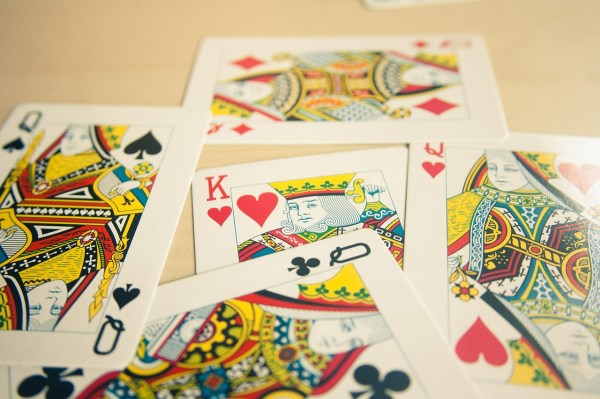
When you’re playing Nines, you want high cards, twos, and tens. Kate plays a king, which Danny can’t beat, so he adds the recently played cards—twos and eights and queens—to his collection. The goal might be to get rid of all of your cards first, but collecting is Danny’s strategy. He loves feeling like he has a collection of valuables, of ammunition, up his sleeves.

The two play card after card, taking bites of their traditional orange roll between turns and watching a man in his gray flat cap and tweed blazer trying to learn French. When Danny and Kate walk the hallways of their school, he calls her mon amour, shows her off, and tells everyone her stories. Danny liked the way Kate fit beside him, her head on his shoulder, his arm wrapped around her waist, and the way their classmates in high school watched as they walked down the hall. Kate moved with him, Peter Pan and his shadow.

Danny puts down a queen, winks at Kate. She’s never liked the title, but it used to make her smile all the same, thinking about all of their Firsts. Now her smile feels stale. She puts down a two, resetting the deck so they can play lower numbers again.

“You know you’re my girl, right?” Danny asks.

Before Kate nods, saying that she knows she’s his girl—she always has been—Danny says, “I mean, you know I like to have a wide variety of friends. The Avid Video Gamers. The Music Connoisseurs. The Cookie Bakers.” He examines the cards in his collection, weighing them against each other.

Kate plays a seven, sips her tea.

“Remember how the Car Enthusiasts got me into that show with all the old trucks?” Danny asks. An eight.

Kate puts down a jack, nodding. She had been home that night, plans canceled.

“My Car Enthusiast friends really like their alcohol. They’re exhausting.” He gives her a knowing glance. “The tickets were hard to come by though. Totally worth it.” A king.

“You know, I’ll be with my lacrosse team and then Indie Pop Girl this week, but I bet we can do something next week. I’ll shoot you a text when I have time.” Danny’s fingers draw circles on Kate’s knee, warm and familiar. “You’ll be free, right?”

Kate wonders how long the two of them will sit like this in the coffee shop, building and unbuilding collections. How long would it take him to replace his Silent Queen? Kate looks at the cards in her hand, sees a two and a ten, considers the risk. A two lets you restart with lower numbers on the same pile, but all those other cards are still there underneath the two, all of that extra baggage a threat to your goal of an empty hand. However, a ten flushes the pile and lets you start fresh. She snaps the ten on the table. A few years from now, she’ll sit in a coffee shop with new friends in a city 852 miles from Déjà Brew and tell stories she never told during her silent days, wondering why—why, why—she stayed quiet for so long, watching him take card after card. But, for now, she pushes the collection of cards aside and takes one more sip of tea.


HALEY PETCHER earned her BA from Auburn University and her MA from the University of Louisville. She currently teaches high school English in Huntsville, AL. You can find her work in Pithead Chapel, formercactus, and Spelk and learn more about her at http://petcherpages.wixsite.com/portfolio.

Cabinet Of Heed Contents Link 18

Image via Pixabay 

Aground – Ed Broom 

Ken stands, rigid, transfixed by the slick spreading under his feet. For reasons he can’t fathom, Ken wills the black cloud to expand, to extend another centimetre, another millimetre. An inky big bang. With the last of the oily liquid pulsing and swirling and warming his toes, images bob into his head, distressing pictures of tarred gulls dredged from old TV news. Then, unbidden, a name both long forgotten and yet somehow unforgettable.

“Amoco Cadiz,” he says, pointing to the capsized cafetiere at the puddle’s epicentre. “Look, Cynth. Remember how that was all over the papers during our honeymoon?”

For their ruby wedding anniversary, Ken had suggested returning to France, “for old times’ sake. One last fling. Doesn’t have to be Paris, Cynth. I know we’re not as young as we were. Maybe a few days in Brittany? I’m determined to try an oyster before it’s too late. Or Normandy, perhaps do some battlefields? You used to love a cafe au lait. I’m not suggesting taking the Fiesta, don’t be daft. We could go wild, splash some cash on the Eurostar, say? Trish says it’s amazing.”

Despite Ken’s myriad attempts to convince her, Cynthia wasn’t to be swayed.

“We swan off to France and when we come back, all we’ll have to show for it will be a new set of snaps,” she said.

“If we’re going to spend some money, I’d prefer to spend it on the house,” she said.

“That back room has been looking tired for far too long,” she said.

Hence the “sea moss” walls. The ivory linen Roman blinds. The new cream carpet.

Three weeks ago, on an unseasonably sunny Wednesday afternoon at the bowls club, Ken’s concentration had been disturbed by a figure barging through the pavilion doors.

“Dad! Don’t you ever answer your bloody phone? I’ve been ringing and ringing.”

Ken hadn’t seen Trish in that particular setting for years. Probably, he thought, not since one of the club’s family fun days. She’d had a similar scowl back then, he recalled. He lowered his wood and loped over.

“Trish. Keep it down. Where’s the fire?”

“Dad, it’s Mum. She’s at The Royal. She’s in a bad way. She slipped in the kitchen, Dad. Banged her head. We need to go, Dad.”

“Traumatic brain injury,” the doctor said.

“Massive internal bleeding,” the doctor said.

“Nothing we could do,” the doctor said.

Now Ken stands, rudderless, lost in a rapidly cooling decaffeinated slick. He’s still clutching the tray. Two mugs cling to the edge.


ED BROOM works in IT but tells his children he’s a lighthouse keeper. He lives in Ipswich and tracks down crinkle-crankle walls.

Cabinet Of Heed Contents Link 18

Image via Pixabay 

Six Jars Under The Bed – Alva Holland 

Adam kept his mother’s kisses in a blue jar under his bed.

He reached down, lifted the jar, turned the lid, felt the release, raised it a fraction and watched the kiss escape.

It landed on him in a flutter – like the silken hanky she kept in the pocket of her floral dress. She told him the flowers were spring creations.

Each year, as winter faded, she’d pull the dress from its layers of lemon-scented tissue paper and tell Adam more flowers had blossomed, that this Spring would be particularly beautiful.

Oh, how many times he’d tried to count those flowers, their complicated petal layers competing for his heart.

Adam sat on the side of the bed absorbing the peace the kiss brought, saw his mother’s face, not pale and wan as it was towards the end, but vibrant, sparkling, like when she walked with him through the woods, when she’d tried to understand him.

He’d started to run from the rain, but she’d tugged his shirt.

‘Feel the rain, my darling. Always, feel the rain.’

The drops had infiltrated the fiery hair strands attempting to escape the loose bun she’d scooped up to try to tame them, had run down her forehead and cheeks, trickling onto her shoulders, watering the flowers.

The blue petals had changed colour, become rainbow-like, more complex. That same day, Adam ignored a glance, a grin. He’d walked on, but looked back, briefly.

Adam slid from the bed to sit on the floor. Six jars sat in a line on the polished parquet. The jars didn’t need labels. The colours told her story, and his when she’d listened.

Walking outside, he felt his mother’s love fall in a satin veil from laden clouds. The wind sucked at him, pulling the darkness from within him, scattering. He felt the space it created, wanted to fill it with something new.

Kisses rained down, cloaking him, black with silver lining.

He recalled the young man in a pale blue shirt, khaki pants, whose hesitant lips on his felt cool, like paper.

A virgin membrane disturbed, shuddered, settled.

It was time. Time to reciprocate, with intent – a new journey.

He smiled and strode on, seeing only flowers. The invisible cloak enveloped him, soaked him through.

No more ignoring. No more looking back.

‘Do we need to keep these jars?’

The khaki pants are now flannels, the hair grey, the mouth as inviting as ever. He looks quizzically at Adam during their attempt at decluttering.

‘Yes,’ said Adam.

‘Yes, we do.’


Cabinet Of Heed Contents Link 18

Image via Pixabay

The Kiss – Ellie Rees

Rupert was sixty-four when he drowned, fifty years ago.
I wondered what such an old man was doing
swimming in the sea, off Exmouth.
He had taken his teeth out; put them in a pocket –
his clothes, neatly folded, were found on the beach.

I remember his eyes – blue, like the sea –
they stared at me, unseeing.
Entangled in his limp embrace,
I throttled him to keep his head above water,
I was saviour and attacker.

Something yellow bubbled from his mouth.

Let the others haul us both into the dingy,
let the swimmers push us back to the blood-red cliffs.
From out of the crowd, wearing a bikini,
a woman with a child perched upon her hip
said she was a doctor – told me I could stop.

Police Station, a statement, then deep shadowed lanes;
the radio was playing a whiter shade of pale.
We stopped in a village, ate scampi in a basket –
sunset blushed the pub a psychedelic pink.
Later, I was sick.

I walk on this shore with my fellow ‘rescuer’,
my husband of forty-seven years;
he takes my arm gently then leans in for a kiss.
You have no idea how difficult it is
to give the kiss of life – to a mouth with no teeth

once you’ve sucked all that yellow foam out.


ELLIE REES gained a Phd in Creative Writing from Swansea University this year. In an earlier incarnation she was a teacher of bright young things from all over the world. Now she is teaching herself to be a poet. One of four finalists in Cinnamon’s recent Debut Poetry Collection competition.

Cabinet Of Heed Contents Link 18

Image via Pixabay 

Kings Cross Examination – Dan Brotzel

Let us turn now to the evening of the 21st. An unusually hot Friday, even for July, as we have heard. At about 5.45pm you boarded a tube train to take you home, is that correct, Mr B?

Yes.

What route did you take? 

It was the Piccadilly line, heading north. I got on at Oxford Circus, then got off at Finsbury Park to get the Victoria line. 

Indeed. And it was at Oxford Circus that an incident took place. Do you remember coming into contact with a gentleman – Mr Jarvis, here – as he attempted to alight from the train?

There may have been a brief coming together. The train was very crowded.

Quite so, quite so! But you weren’t actually on the train at the point, were you? Or you were not supposed to be, at least. 

I’d stood to the side to let people off. I guess the momentum of the crowd carried me forward on to the train. It was hard to see if there were people still getting off. 

I see. Are you in the habit of being swept along by the momentum of the crowd?

Well, there are times when-

Have you, for instance, ever been swept under the wheels of an oncoming train by the hordes on a crowded tube platform?

Well. I mean, I hardly think-

Answer the question, please, Mr B.

I haven’t, no.

Are you aware of the protocols concerning the egress and ingress of passengers on tube trains, protocols which have of course especial sway and application at times of high peak use?

‘Please let passengers off the train first.’

Quite so, quite so. And yet you did the exact opposite…

As I’ve tried to explain-

-Leaving poor Mr Jarvis to have to fight his way out of the carriage, in order not to be stuck on the train and carried forth to another stop not his own!!

I regret this. But he did actually shove me quite roughly. 

He had to get off, Mr B! He had a gym appointment in Regent Street for 8.30! That muscle tissue won’t tear itself you know! 

I know. I’m very sorry. But I was in the way by accident. Whereas he pushed me on purpose.

And then what happened?

He stalked off.

Understandable, perhaps? And how did you feel?

I was upset. I was partly riled about having been shoved so roughly, and partly guilty at not being able to apologise. But of course, he never gave me a chance to explain, which was the worst feeling of all. 

Oh dear! Poor Mr B! Let us turn now to the morning of June 27thand to the testimony of Ms Pierce here. (And thank you so much for coming in to testify today, Ms Pierce, I now it’s not easy, the courts are not as accessible as one might wish.) So… at approximately 7.55am, you had boarded a train on the Piccadilly line, heading south.

That’s right. I was going to work.  

You were very comfortably ensconced in your seat, were you not?

No, I couldn’t get a seat at first.

That was a shame, wasn’t it, Mr B? I bet you were looking forward to getting stuck into your book. 

Well, it’s always nice to be able to sit down. That line gets very crowded in the mornings. 

Yes, of course. And you’ll stop at nothing to get a seat, will you, Mr B? And you’ll cling on to it at any price, won’t you? 

Well, I don’t think that’s entirely fair.

Let us see. Tell us what happened just after Kings Cross.

Someone stood up and gave their seat away. Only seconds after the train had left the station. 

Was that unusual? 

It was unheard of! I thought it must be a tourist, or someone very unfamiliar with the line who was nervous about missing their stop. They had a sort of fluorescent rucksack on, and a general air of panicky purposefulness. 

Any other thoughts?

Well. I did wonder if they’d spilt coffee on the seat or something. Or if they were incontinent.

Charming! But none of that worried you, did it, Mr B? What did you do next? 

I sat down. 

You pounced on the seat. Like a vulture.

Well I think I was technically nearest at the time.  

So no one else was interested in the seat at the time?

Well, there was a woman…

What sort of age?

About my age.

Did she make a move towards the seat?

I’m not sure. 

You didn’t think to give up your chance of a seat up for the lady?

I did think about it.

But you didn’t do it.

No.

What reasons did you come up with, in your own mind, to excuse yourself for your failure to extend this basic kindness to a lady in need a seat? 

I remember telling myself that women find that sort of thing patronising now. Equality between men and women makes a farce of all that old-fashioned chivalry stuff. Same as how they don’t like to be called ‘girls’ any more (or ‘ladies’ probably.) Also, I thought she was the sort of age where the offer of a seat would have been more upsetting than complimentary. Also, my back’s quite bad at the moment. And anyway, it’s dog-eat-dog on the Tube. 

I see. You went through all these reasons while you were in the process of sitting down?

Yes.

And did any of these excuses, these self-justifications, make you feel any less guilty?  

Not really. But I was also thinking of that time I stood up for a woman with a loose-fitting top on. She snarled: ‘Why does everyone keep offering me a seat? Do I look fucking pregnant or something?’ She did, of course. 

I see. But still – to return to the present case – you sat on.

My back does twinge a bit. 

More self-justifications, I see.

I’ve started doing pilates! Just once a week, but it does seem to be helping. It’s all about working on your core. 

Let’s stick to the case at hand. How many others were standing by the time the train neared Kings Cross?

About 7 or 8. 

But not you, of course. You were set up for the journey with your hard-won seat.

As I say, I think I was nearest. 

And then someone got on at Kings Cross that changed things. Or should have, perhaps.

You mean the blind woman. And her guide dog.

Quite so, Mr B. What did she look like? 

If I recall correctly, she wore a bright orange top and jangly earrings. They reminded me of the comedy Christmas tree ones my mum always wears. At Christmas. The woman’s eyes sort of fluttered. And the expression on her face was open, smiley.

So what happened next?

Nothing. She just stood there with all the other people standing.

A blind woman? Left to stand in the vestibule?

I know. But it was quite clear who should have stood up for her. 

Who?

The person in the nearest seat. The protocol is well-established. 

And who was that?

A teenage girl.

I see. And what did she do?

Nothing! She was oblivious, self-involved, headphones on, possibly asleep. Possibly foreign.  

So what did everyone else in the carriage do?

Well, we all sent out our strongest guilt-glares, of course we did. But the girl seemed to be immune to them. 

I see. So naturally, someone else stood up to offer the blind woman a seat?

Actually, no one made a move. It was all a bit tense. 

And where were you seated in relation to all this?

I was sitting opposite the teenage girl. 

So who was on the hook now, morally speaking, if the teenage girl was oblivious? Was it you?

No! I’d say it was the man sitting next to the teenage girl. A sort of bearded, geeky type, all wired up and immersed in his game of Minesweeper. Or the second season of I, Robot, I don’t know. 

You couldn’t actually see what was on his screen, could you?

No.

Have you ever actually payed Minesweeper? Do you even know what it is? 

Not really, no. 

More casual prejudice, I see. Anyway, did you all start sending guilt-glares this man’s way too?

Of course! It was getting embarrassing by now. The whole system was breaking down.  

And what did this ‘geeky type’ do? Did the guilt-glares get to him?

No! He just sort of… retreated into his beard.  

You didn’t like his beard, did you?

No, if I’m honest. 

Do you wear a beard yourself sometimes?

Yes.

And how do you feel about your beard?

I don’t like it much either. 

I see. Are you, by the way, in the habit of describing teenagers as ‘self-involved’?

Er… yes.

And people with beards as geeks?

Yes.

I see. Meanwhile, back in the carriage, the blind woman still didn’t have a seat. 

No. I did send out a few more random guilt-glares of my own, but they come to nothing.

So perhaps it was down to you now, Mr B, as the only seated person apparently aware of the situation, to make a stand – quite literally – for common decency? 

In retrospect, yes. I fully accept that I should have got up at this point. 

So you stood?

Er, no. 

You carried on sitting.

Yes. I’m not proud of this. 

And how did you justify this to yourself at the time?

Well, I was still waking up really. But I did wonder if the blind woman had already told someone that she was happier standing. I started to imagine in fact that I’d heard her tell someone this. Also, I thought that it might have been awkward for her and her dog to make their way across to my seat.

What was the distance between the blind woman and your seat?

Ooh, six or eight feet at least.

I see. And of course, you still had your book to read. 

Well, yes. I suppose so. But the atmosphere was almost a bit too awkward for reading by now. 

Still, it would have been a shame to have to lose that hard-earned seat.

I’m not proud of myself. 

Remind us, for the benefit of the court, what sort of book you were reading?

It was an account of the genocide in Rwanda.

I see. Let us fast-forward now to Warren Street, and a new development occurred. What happened? 

The seat next to me came free. 

I see. And then?

This woman with cropped blond hair and a stern expression made a big point of leading the blind woman over to this seat so she could sit down. It was a foldie, I recall. 

And what did you do? 

At that point I leapt up so the blind woman could have my seat instead, which was actually slightly easier to access than the one that had just come free. 

So you were shamed into action at last.

I suppose you could say that. We helped the blind woman to sit down, and then I offered the woman with the stern expression the free seat next to the blind woman. 

Your seat.

Yes.

And what did the woman with the cropped expression do?

She said: ‘No thanks.’ And then she said, louder and more pointed, for the benefit of me but taking in the whole carriage: ‘And frankly I’m astonished.’ I noticed a hint of Liverpudlian in her stern accent. 

I see… Stern face, stern accent: did you want to use the word ‘Scouse’ just then?

It did occur to me but I wasn’t sure if it was OK to use it. Especially if you’re not, er, Scouse.

Such delicacy! Such sensitivity! Mind you, even the guards in the camps read Goethe. So let’s recap: you have shown yourself to be callously spineless and morally bankrupt. Your offer of assistance is rightly dismissed as ‘too little, too late’ by your righteously stern fellow passenger. So now what do you do?   

Well, there was nothing for it but to sit down again. 

Back to your fascinating book about genocide?

I couldn’t read! The words swam before my eyes. I felt that people were looking at me. I didn’t want my stupid seat. It was a relief to get off in the end.  

This was at Victoria.

Yes.

Where you were about to mount the escalator… 

Correct.

…Only to look up and see the woman with the stern expression staring down in your direction.

Yes. I hadn’t realised she’d got off at the same stop. I could see she was still talking about the incident with someone. And from the set of her chin and her tautened lips, she was obviously still seething about it. 

Oh dear Mr B! Not what you wanted at all, I imagine! 

No! Plus I had on these light blue trousers paired with tan shoes. I was a bit stuck for clothes that morning, and my outfit suddenly seemed ludicrously conspicuous. Everything a shade too bright to be plausible.

Yes, I remember. It’s one of our worst, isn’t it? You must have been terrified she’d spot you.

Terrified.

And did she?

You know she did. You’re me, remember.

So what did you do?

I hung back, slinking around by the bottom of the escalator.

How did you feel?

I was burning with shame, obviously.

I see. And what did she do?

Oh, she just carried on glaring down at me. 

From her ever-ascending moral high ground.

Yes. 

Serve you right, perhaps, Mr B?

But I didn’t see the blind woman! It wasn’t down to me to stand up in the first place! Of course I would have got up if I’d realised! I was half-asleep! My back! Pilates! Don’t single me out – look at my track record! Look at all the other fucks who did nothing! And these people never give you a right of reply! Most of my mental life is spent fighting these imaginary court cases! 

The self-prosecution never rests, m’lud.


Image via Pixabay 

Cabinet Of Heed Contents

Men in Different States – Rickey Rivers Jr

I want a good meal.
I want nice clothes.
I want a car.
I want a house.
I want a wife.

I have great meals.
I have nice clothes.
I have a nice car.
I have a nice house.
I have a great wife.

I had a good meal.
I had nice clothes.
I had a car.
I had a house.
I had a wife.

I want what I never had.
I have what I always wanted.
I had all my wants.
I want more than you have.


Rickey Rivers Jr was born and raised in Mobile Alabama. He is a writer and cancer survivor. He likes a lot of stuff. You don’t care about the details. He has been previously published in Every Day Fiction, Fabula Argentea, ARTPOST magazine, the anthology Chronos, (among other publications). https://storiesyoumightlike.wordpress.com/http://twitter.com/storiesyoumight

.Contents Drawer Issue 14

Image via Pixabay
A Brief Time of History – Maria Kenny

My mother cried the day Stephen Hawking died. I came home from school and found her sitting at the kitchen table, tears on her cheeks.

‘Stephen Hawking is gone,’ she said, clutching a cup of tea.

Teacher had told us in school. We didn’t know who he was until she showed us his picture on Google. We remembered him from when he was on The Simpsons. He freaked me out a little. That voice.

‘The world is a less intelligent place now,’ Mam said dipping her biscuit into her cup.

I kept my eyes on the broken tile over the sink rather than look at her. I had been starving on the way home, but my stomach felt sick as I stood there.

She told me about a party he had thrown for time-travellers. He gave the invitations out after the party. No one had showed up. She said he had recorded the party, him, alone in a room surrounded by glasses of champagne, little plates of food on the table.

‘He did it to prove there was no such thing as time-travel’, my mam said smiling, but the smile wasn’t real.

‘He was witty like that.’

She suddenly sat up straighter, as if she had just thought of something amazing.
‘You should read his book’, she said.

I looked at her shining eyes, then looked quickly away. I promised her I would. I wanted her to stop crying. It was weird, it wasn’t like she knew him personally.

She pulled some kitchen roll from the holder on the wall, wiped her nose and stood up. I shuffled out of her way as she pulled jars from the cupboards.

‘Have you homework?’ she asked.

I nodded and she shooed me away.

Later that evening I asked dad why she was so upset.

‘Oh, your mother had notions of being a scientist.’

‘Really?’ I said.

I tried to picture my overweight mother crammed into a white coat, bent over a microscope.

‘Yeah, she wanted to study science in college, work in a lab or something. Stephen Hawking was her hero.’

He flicked through the stations on the television already bored with me.

‘Why didn’t she?’ I asked.

He looked at me, his eyebrows raised, then laughed.

‘You work it out,’ he said.

I shrugged. He turned back to the television as I continued to stand beside him. He looked up at me again and snorted a laugh.

‘You don’t have your mother’s brains that for sure. Go on, leave me in peace.’

He reached over for the ashtray, his other hand pulling a cigarette from the box.

On the way up to my room I looked in at Mam. She was mashing potatoes for dinner.

Dad’s tray already had his brown sauce, plate, knife and fork on it. The table had two placemats laid out and two glasses beside them. She glanced up at me.

‘Dinner in five minutes time,’ she said.

I didn’t move. She looked up at me again and tutted, rolling her eyes.


Maria Kenny is from Dublin. Her stories and flash fiction have appeared in journals in Ireland, the UK and Mexico. She was longlisted for the WoW award 2016 and was highly rated in the Maria Edgeworth Short Story competition and longlisted in The Casket of Fictional Delights flash fiction competition in 2018.

Contents Drawer Issue 14

Image via Pixabay

Swap Your Life – Sherri Turner

Carol hadn’t been expecting that. When the doorbell rang she thought it would be a parcel delivery or a meter reader. Perhaps one of those nice men in suits talking about God. She hadn’t expected a loud and overenthusiastic game-show host shoving a microphone in her face.

“Congratulations! You have been selected as today’s lucky Swap Your Life contestant.”

Was that a camera? She felt up to her hair – no rollers, thank goodness.

“I beg your pardon?” she said.

“Carol Adams, we are giving you the greatest opportunity ever offered on live television. Swap Your Life! Have you ever regretted the choices you have made? Do you wonder how it could all have been different?”

He swept his outstretched palm in a wide arc, over the neat front lawn of the semi, past the tired Vauxhall, ending at Carol herself.

“Well…”

“Of course you do! In a moment we will be showing you glimpses of how your life could have been. Remember that party in 1978? What if you’d been a bit more – er – careful?”
Carol glanced back towards the living room door, which stood ajar.

“Or later, when you turned down that promotion? How might your life have been now if you’d taken it? What if you’d turned left instead of right that day in ’86. You know the one I mean.” He winked. Carol blushed. “Today is your chance to turn back the clock, see what would have happened – and choose that life instead!”

Carol took a moment. She smiled.

“No, thank you,” she said, stepping back as she closed the door, much as she had with the nice young men earlier in the week.

“Who was it?”

“No one, dear. Some salesman.”

Always selling something, these people: new life, better life, afterlife. No guarantees though. No refund if you changed your mind. And nothing was perfect, was it? Though some things came close.

She stood for a moment, one hand on the banister, repackaging the past and the could-have-been futures back where they belonged.

“Cup of tea?” she called.

“Yes, please, love.”

“Biscuit?”


Sherri Turner is a writer of short fiction and poetry and has won prizes in competitions including the Bridport Prize, the Bristol Prize, the Wells Literary Festival and the Stratford Literary Festival. Her stories have also appeared in a number of anthologies. She tweets at @STurner4077.

Contents Drawer Issue 14

Image via Pixabay

What To Do After College – John Sheirer

Fill your head with dirt–rich, dark topsoil. Plant flowers in your ears–daisies or azaleas. Grow trees in your eye-sockets–butternut or cottonwood. Cultivate food crops in your nose–corn, potatoes, grains. Plow them with your tongue. Irrigate with saliva.

Your brain? Keep it for amusement. Donate it to science. Or chop it up for fertilizer.


John Sheirer lives in Northampton, Massachusetts, and has taught writing and communications for 26 years at Asnuntuck Community College in Enfield, Connecticut, where he serves as editor of Freshwater Literary Journal (submissions welcome). His books include memoir, fiction, poetry, essays, political satire, and photography. Find him at JohnSheirer.com.

Contents Drawer Issue 14

Image via Pixabay

Create a website or blog at WordPress.com

Up ↑