The Old Man – Charles Prelle

The old man is born upon the sea, his tiny boat a piece of drift wood to which he clings. His gaze falls upon his reflection as he speaks in tongue to the beast below. A spell taught to him by his father and his father before him. His eyes roll shark-like as he relays his incantation, his voice rippling like a sinking stone.

The old man’s reflection hunts him. It floats upon the surface of the sea like oil. The reflection observes the world of the old man, its long white beard stretched sagely skyward. The beast circles below, stalking the shadowy outline of its adversary. Long has been its wait. Its siren call bubbles upon the skin of the sea like boils.

The old man holds the line carefully, his coarse hands sensitive to each pull and twitch. He counts backward in his mind, steadying himself for the fight. His fists tighten and slacken in a macabre dance with the beast. One thousand sixteen, one thousand fifteen, one thousand fourteen. The beast gives an almighty tug, its flanks writhing below the surface. His hands begin to bleed from the line cutting into them. Drops of crimson fall upon cerulean like rain.

The old man’s reflection smiles up at him with lion’s teeth, its dark eyes trained upon the old man. Five hundred fifty, five hundred forty-nine, five hundred forty-eight. The beast struggles against the force from above, its primal flesh tearing, the barbed steel boring deeper within. It lashes its powerful tail, violently darting toward the deep.

The old man mops pearls of sweat from his brow with a scarlet handkerchief. Salt water laps the side of his boat. His arms grow weary from battle, his lean muscles strain and tear. The air around him grows breathless as the beast rises to meet him. He knows the sea is waiting.

Five, four, three.

The old man’s reflection morphs.

Its eyes roll back. Its ethereal flesh shimmers with glorious emerald scales.

The sea parts.

It rises weightless into the air.


Charles Prelle is a writer and playwright based in London, UK. His past theatre work has been staged at the Bread & Roses Theatre, the Old Red Lion and the Chapel Playhouse. Charles also writes short fiction and has been longlisted as part of the Flash 500. On Twitter @CharlesPrelle

Image via Pixabay

Our Language – Aldas Kruminis

The language unites; divides
the world into shaded lights.
Each nation under same roof
obtains resources from different providers.

Each window painted with blight
and doors locked in fear of privacy.
We see the pain but keep the windows shut;
knock for help but doors remain locked.

We don’t understand each other.
We look for secret passageways into the rooms
like we are treading through medieval
stone steps into the bedrooms of affairs.

Our hearts are open, but keys
are turned to hide us from the world.
We fear to be exposed, seen raw or naked
or worse, in our worn stained pyjamas in the comfort

of our bedroom. We fear to be alone.
The world does not understand. We share
the same doors. I hear your cries and screams –
I take out my key, but yours is still there

turned to lock the world away.


Aldas Kruminis is a writer from Dublin, Ireland. He has spent the last few years dreaming of a successful and prolific career as a writer; so he earned a Masters in Creative Writing from Loughborough University. His work has been published in Terrene, Idle Ink and more. More at: https://aldaskruminis.wordpress.com/

Image via Pixabay

Bitch – Sam Agar

I wish I could run. It’s my favourite thing. Having the wind push against you as the ground moves below. Closest thing you can get to flying, I reckon. Me and my man used to go out and catch that feeling together. When we were younger, it was different. He was kind. Protective. Used to be his touch was gentle. Now his hands are hard. Full of sharpness and edge. Can’t help but wince when they come close. Only makes it worse, of course. Those itchy fingers winding up my throat to squeeze. As much as I deserve for flinching. Should know better, me. Should know well by now. Don’t remember when the change happened. It’s not like a light switch, not that quick. It drips in over time. A cold shoulder turned your way, a cross word or two thrown into the air. And then before you know it, you’re backed into a corner while he spits venom at you and raises the fist. He’s not evil, my man. I love him very much. If I told you what he’d been through, you’d understand. You wouldn’t hold any of it against him. But I won’t. He’s very private; doesn’t like other people knowing his business. You’ve got to respect that. He tells me I’ve no respect so I’m trying to be better. There’s a lot to be working on, in his eyes. I’ve a lot to be doing to be good enough for him. I don’t mind. I’m all for self-improvement, me. It’s my purpose, being with him. Meant to be together, us two, that’s what he’s always telling me.

When he lost the job. I suppose you could say things got worse around then. Wasn’t his fault, of course. His manager is a bastard. Never met him myself but I’ve heard enough to know. My man’s wasted in that place anyway. Overqualified and more talent in him than the whole lot put together. I was happy, I’ll admit. Selfish really, but it meant we could spend more time together. I thought we could go out, take a trip or two. It wasn’t like that. The first few days we went for a morning walk. Short enough they were and always ending up at the offo. Then back to the flat where we’d sit on the couch in front of Maury. After him it was Bondi Rescue, followed by Countdown with a finish of Come Dine With Me, in four parts. The full catalogue of daytime television reeling before us, and him crushing cans between his fingers. The pile growing high by evening but not a word from me.

At about six, the air would grow thick and heavy. My man, he’d start muttering to himself. Throw me sharp looks. Blamed me, he did, for the redundancy. Said I put too much pressure on him. My very existence. Nothing I could say to that. I’d try and take myself away, off the couch and into the other room. He’d always catch me. The punches I can take. Learned to measure against them with deep breaths. The pain still comes, of course. That burning sting running under my skin, banging every nerve. I find a kind of comfort in it, if I’m honest. Makes me sound strange but it’s true. The kicking always takes me to another place. Could never learn to channel them into anything other than black agony. He can always find my soft spot. Sometimes it’s as if he knows exactly where to land the heavy boot. Send me reeling, spluttering, puking. No dignity left when the kicks fly in.

He’d leave me then. Off to the pub maybe, I wouldn’t know. Couldn’t tell which way was up, a heap in the corner like I’d be. He’d come back in the early hours, all delicacy and love, picking me up off the floor like I was some kind of princess. Sour breath on him as he purred away all the sins of the day. And I’d forgive him of course. Always and without question. It’s my purpose, you see, and what are we without a purpose in life? Nothing. And the heaviness in the air would break and I’d bask in the warmth of his love and softness. Usually he’d pull out the bottle of whiskey. Kiss it until he folded into himself. And with the rumble of his snores vibrating through my bones, I’d sleep.

Last week he brought a woman home. What could I do? I know my place. She was rough looking and smelled like a blocked drain. When she saw me she laughed a little, then asked if they could go into another room maybe? My man told her to get on her knees. I put my head down and closed my eyes. Pretended to be somewhere else. I always try that but it never works. I can never be anywhere but here. After the woman left, my man sat down beside me. Bared a toothy grin and nudged me gently. Pointed to the tattoo of my name on his arm. Reminded me how much he loved me and wasn’t I his special girl? And that was it, only that evening he cooked us steak for dinner. If you know my man, you’d know that meant that he was having a great day.

I don’t mind visitors don’t get me wrong. Not that we get many, only Barry. Barry’s his best friend, apart from me. Brothers they are, not by blood, but that’s what makes it stronger. Barry’s alright. He’s got thick black hair that sticks out of his ears and he’s missing all his bottom teeth. Lost them at the bookies. I like Barry because he’d always throw me a gummy smile and toss a kind word my way. He’d never look at me much or ever touch me because my man doesn’t like anyone touching me. Once or twice a week, Barry and him would settle on the couch and watch the races. Not much said only one or two words, and depending on the take for the night, a laugh between them. I’d like it when Barry came over because it meant my man was in a good mood. No kicks or punches, maybe just a light slap if anything. Unless he was on a losing streak. Then I’d be hiding under the table in the other room.

Barry was good to us after my man got let go. When he came over he’d always bring a few tins for him and a bag of chips or a couple of battered sausages for us both. Go for a walk, he’d say, do the both of you some good. My man stopped leaving the flat. And me of course, but sure I’d never be going anywhere without him. He always kept me close when we went out. Didn’t like me walking anywhere but by his side. We’d match each other’s stride, me and him. Find our own rhythm and let it fall into place. I didn’t mind him keeping me close. Made me feel safe. Back in the day we used to go running together. Those were the best times. Feels like a dream that, another time and place. We stopped doing that a long time ago. Think the idea started scaring him. Like he was afraid if we did, I’d go too far. Get lost from him.

A few nights ago, things got really bad. I blame the Grand National. Never liked horses, me. Himself and Barry glued to the couch all weekend and me in the corner watching the dust billow by. It would’ve been alright except Barry won. He was jumping up and down like a fool when his horse came in. Like a little boy he was and I would’ve been enjoying the sight of it if not for my man’s face. His teeth clenched and cheeks inflated with huffs and sighs. And Barry there, singing and yipping. Had a feed of cans in him but should’ve known better, in my opinion. You shudda listened boyo, he was saying to my man between cheers, shudda come in with me, we’d be rich together. I watched as my man’s fists made knots of his fingers. Barry’s chuckles slowed and fell away in his throat. My man looked on in heavy silence and Barry knew then what he’d done. Glanced my way, he did. Didn’t look directly at me but focused his gaze somewhere behind my shoulder. A hint of darkness on his cheeks as he collected his paper and his John Players. Mumbled a goodbye and then left us. Just me and my man.

It started like it always starts. Him telling me how worthless I am. A rotten piece of shit. Would be on the streets if not for him. Do I know how lucky I am? It was Barry’s fault, not mine. All I did was sit there. All weekend they drank and filled the room with farts and sweat. I didn’t say anything of course. Maybe it was the way I turned my nose up at him. The little huff of air that escaped from me. Doesn’t like any cheek, my man. I made moves to leave and that’s when I knocked over his drink.

Whiskey and glass rolling across the floor as cold fear rushed through my veins. There was a snarl from him. A kind of crackling in his throat and he was up off the couch and on top of me.

He’s my leg pinned under his hip and that’s enough to bring a howl of pain out from me, only my face is pressed against the floor by his hand so the sound muffles and falls away into the cracks of the lino. His breath is hot and the smell so rotten my stomach turns. That might be the worse thing of it all, if I’m honest. His foul breath sliding up my nostrils and settling into the back of my throat. Cigarettes, whiskey, onion and garlic from his evening kebab. It’s hot and heavy and it’s spreading rot inside of me. Wafting over me in putrid waves, making my eyes water. He punches my side, catching a rib with his knuckles, sending me kicking and scraping away from him. I get back on my feet but so does he and it’s a stand off now between us. Doesn’t happen often this, usually I take it and then he leaves me be. But I can’t have that hot breath in my lungs anymore. We’ve eyes locked and I’m breathing heavy and so is he. Panting, the two of us. Waiting.

A warm sting flashes through me, a kind of anger bristling my bones and heating my blood. Makes me feel bigger somehow. I feel brave. And I’m looking into those grey eyes and seeing nothing of my man. He’s gone from me now. Been gone for a long time, I reckon. And I decide. The thought springs into my brain and makes that rage in me flare up brighter than ever. I don’t like it when he puts his hands on me. I remember, then. I have teeth. It was love that held me back before but there’s not a whiff of it left in this room. All that’s kept between these four walls is the stale air of pain and sadness. So when he charges at me it’s not the door I turn to but his barrelling body. He goes to clip me over the head and I don’t think anymore. I sink my teeth into his arm, just above the tattoo of my name.

A high-pitched yelp from him and I should let go but I only bite down harder. It’s him feeling the pain now. It’s him breathing through. He’s shaking the arm and I’m holding tight but my jaw’s burning with the strain of it and the strength’s leaving me. Another shake from him and we disconnect. I’m thrown backwards from the force of it, bang against the couch. He’s stumbling back, blood dripping down his elbow and a look across his face. Surprise, pain, anger. All mixed together with creased brow and slanted mouth. The heel of his boot tries to land on a pile of crumpled cans. He’s losing the footing, sliding from under himself. When he falls back, we get stuck in time, him and me. Frozen in our own rhythm. It’s like he’s floating. The hard crack of his skull against the edge of the coffee table breaks our spell. A low kind of huff from him then and a deep sigh. Wide eyes looking at me, searching for something as gurgles bubble between his lips. His hand reaching out, catching air between fingers. The thick velvet snakes under his ear and down his throat. I can smell it. The hint of metal landing against my tongue. It tastes bitter and sweet all at once.

It was quiet then between us. I felt so tired, felt it down to the root of my bones. Might have dozed off for a while, I’m not sure. The thunder of the rain on the window had me up with a jump. Forgot where I was for a second. Then I saw my man and it all came back. He was stiff and grey. The hand still outstretched and reaching. His eyes staring at me, glistening with a black shine. Follow me around the room they would and give me the shivers. I sat by the window. Perched there for a long time, watching the rain dribble down the frosted glass. Following the drops as they slid downwards, slow at first, then fast, too fast, racing by before disappearing completely. Bursting into nothing to join the puddle at the bottom of the pane. Time never meant much but looking out that window took it away from me completely. Minutes, hours, days passed me by as I watched the outside world move beyond. I thought about running. What it would feel like to run in the rain. I closed my eyes and tried to imagine.

When Barry came bustling in with a bag of cans I didn’t make a sound. I watched as he banged against the door and lit up a cigarette. He took the smoke out of his mouth and brought a closed fist up to his face. Coughed and hacked and made some noise about the smell in here. When he saw my man he stood still for a very long time. Looked at him, then around the room. Let out a strange kind of laugh. Sounded like half of it got trapped in his throat on the way out. He bent down so quickly he dropped the bag. A can burst open and rolled under the couch. Barry was shaking my man, grabbing him by the shoulder. He was muttering to himself. A sharp step back from him. A look of fear on his face. He felt the coldness of my man. Could see his stiff limbs and blood caked dry against his neck. Barry ran out of the room. Came back a few seconds later with an old towel. Kneeled down and tried cleaning the blood off his skin. His mutters became shouts as the cloth turned rusty. He threw it down. Started shaking my man again. Rocking on his heels. Nonononononono. The word tumbled out all at once. Then silence. It dripped into the air and settled over the room, drowning us.

Barry let himself down on the couch, heavy and precious in his movements. He put his head in his hands and he was crying into his fingers. Something in the hunch of him reminded me of my man. It moved me to my feet, up and next to him on the couch. He looked at me through a bloodshot haze. Reached over and put a hand out. I flinched a bit but Barry just patted me gently and took his hand away. There’s people I should be calling, I suppose, he said into the room. His voice was cracked and heavy. He pulled out his phone and I looked at my man. He didn’t scare me anymore. I leaned over just close enough to get one last sniff. Take him in one last time.

Barry started telling me about myself as we waited. He took me away from my man. The smell was too much, I think. Him retching into his collar and so it was outside on the front steps where we sat. Barry had looked at me through his tears. Met you when you were just a pup, he told me. You were born for greatness. A smile from him and a tickle under my chin. You’re a pedigree, just like your Da. He was a fine racer, lucky for me many times. Shudda had you out there just the same. Barry shook his head. I told your man, told him to train you up, get you running. Sure that’s what you were born to do. What’s a greyhound’s purpose only to run? Barry shrugged then and crumpled into a long sigh. Shudda done more, he said with a thickness in his voice. It’s no life, this. He was silent after that, his words hanging in the air and floating towards the clouds. Maybe he would take me running. The grass was just there, ahead of me. I could see it. Smell the sweetness of it, fresh from the rain. I got up on my feet, my breath catching from the thought. Then a van pulled up and Barry had me by the neck.

They have me in a cage now. Put me in there after they saw my man inside. What happens now? Barry asked and when they answered his shoulders dropped. His head shaking and his eyes closed tight. He’s bending down to the cage now, telling me goodbye, I suppose. I wish he’d taken me running. Before this part, I wish he could’ve given me that. With water brimming his eyelids, he manages a shaky smile. I look into the empty grey space where his teeth should be. And there’s nothing I can do only be here. Exist in this small space as the walls squeeze against me. Maybe they’ll take me running. The thought brings me down to the floor of the cage. Puts my head to rest against my paws. I think about what it would feel like to sprint. To have the ground move beneath me. That fresh air blowing my ears back. I can almost feel it. I close my eyes.

Sam Agar is an Irish writer who has been writing for many years, enjoying a passion for fiction from a young age. Having recently completed a Masters in Creative Writing in the University of Limerick, Sam is currently working on a collection of short stories.

Image via Pixabay

Therapy – Jeanna Louise Skinner

Probing questions drill into the black oil of my consciousness, until secrets gush from my lips like a geyser. I tug soft woollen cuffs over scarred wrists, wrap arms across my shucked oyster chest. Nerve endings now “hyper-aroused”, mind and body exhausted, yet I’m unable to rest. I need to do, to act, but I’m bereft and overwrought. I’m Schrödinger’s glass: half empty, half full; headspace narrowing with each useless thought. What am I supposed to do with all this emotion? I’m drowning. Drowning in the sea of me. And you’re no longer around to toss a life jacket.


Jeanna Louise Skinner is a romance writer from Exeter who has been published by Ellipsis Magazine and The Cabinet of Heed. Bitten by a radioactive sloth as a teenager, procrastination is now her superpower. Twitter is her Kryptonite. Follow her @jeannalstars and @UKRomChat.

Image via Pixabay

Antoine and Marie – B F Jones

They say I’m too old to fly. They say I’m unfit. They say I support Nazi Germany. They say I’m a collabo.

I take a swig and hope the alcohol will dissolve the cloak of betrayal weighing on me. I wish I’d had someone right here with me. I wish I was a child again so Maman could make it all better.

They forget what I did. They don’t know who I really am. They just make up rumours. They forget. The night flights. The crash in the desert. The survival. The books. The prizes. The speed records. The dedication.

I take another swig. I’ve lost the will to defend myself. I’ve lost the desire to write. The desire to live.

I bring the bottle to my lips again. But it’s empty.

*      *      *

I must confess I am worried about Antoine. His last letter was tainted with discouragement, despair. My Antoine. My little Prince. So reluctant to grow up, yet so courageous in his adult life. But those accusations have taken their toll on his pride. I worry that’ he’s taken to drinking. My boy, pro-Nazi! My wonderful, courageous son, a traitor!

I feel his pain as if it was mine. I wish I could take it all away, just like when he was a little child.

*      *      *

In his last letter, Antoine told me he’d be out flying again. Over the Mediterranean, France and Italy.

I don’t know when exactly. The mail can take a while those days. His tone was better, that despair replaced with the excitement of a new adventure.

That brave, restless, wonderful boy of mine.

*      *      *

I’m out flying again. I have forgiven and forgotten. I’ve left the bottles alone. I’ve got inspiration and strength again.

I’m ready for my new mission.

*      *      *

They find the body washed out outside of Marseille.

It’s unrecognisable. The sea has done its rapid damage and plumped up the man’s face and sea creatures have pecked out his eyes.

There is nothing to identify him but the uniform of a French aviator.

The news report that they believe it is Antoine de St Exupery, who failed to return from his mission a couple of days earlier.

But they have no way to tell.

*      *      *

If only the sea could talk. And tell me what happened. Was it really my boy’s body they dragged out of the sea? Did it hurt? Did my baby die before hitting the surface of the water or did he drown?

And now that I am fading away, I will never know.


Image via Pixabay

Keeping Watch As My Ex-Husband Dies – Janice Northerns

I stare out the window, remembering
walks to the last soda fountain on the square
for breakfast those Saturday mornings,
our hands twined so tight it was hard to hold
the paper sack. From his hospital bed,
my ex-husband calls What are you looking at?,
wants to know what he’s missing.

Just thinking of those fountain Cokes and doughnuts
from Stinson’s Drug, I say. Remember walking
down the street, sugar on our mouths? He frowns.

He is young enough to recall the taste
of first dates, but doesn’t. Doesn’t even remember
our kids’ names when I tell him how our boy
sat the bench at yesterday’s Little League game.

What he remembers instead is last night’s dream
of a Nazi death camp, how I left him there.
And now as night falls, he begs me not to go.
How to tell him he was in a war,
but not that one? No context for his memory
but the heartbreak of my actual leaving years ago.

Those early mornings we drank our Cokes
from to-go cups, too young for coffee, ice chilling
doughnut glaze to grease slick in the back of my throat.

Now a sticky film coats his brain
as he searches for words, waste water
swirling up in black-bubbled aphasia
so that he spits out Please, I need a drink
of thirsty.
I hand him the glass, and as it shatters
to the floor, I stare once more out the window

but find against sunset’s glare dust motes streaming
into a reflecting pool of transgression: years I spent
back-pedaling, pulling away, leaving him in the dust,
dust that now waits to reclaim, settle him down
into the long dark furrow to come. He doesn’t ask again
and I don’t say that I am making a list of all he will miss.


A native Texan, Janice Northerns now lives in southwest Kansas with her husband, two dogs, and a laptop. Her poems have appeared in The Laurel Review, Chariton Review, Roanoke Review, Southwestern American Literature, descant, Cold Mountain Review, and elsewhere. Her awards include a writing residency from Brush Creek Foundation for the Arts, a 2018 Tennessee Williams scholarship to the Sewanee Writers’ Conference, second place in Southwest Review’s 2017 Marr Poetry Contest, and the Robert S. Newton Creative Writing Award from Texas Tech University. Read more of her poetry at http://www.janicenortherns.com or follow her on Twitter @JaniceNortherns.

Image via Pixabay

The Slave in the Kitchen – Dan Brotzel

He is there when they come down in the morning, a grumpy hairy beast in a scuzzy pair of pants and an old Ninja Turtles T-shirt. His feet are bare and his hair is a mess. He thinks of himself with a certain grim masochism as ‘The Slave in the Kitchen’.

‘What do you want to drink?’ he snaps.

‘That’s mine!’ says number 1, snatching at an old fairy tiara.

‘I had it first!’ shouts number 2.

Number 3 is chasing the cat on all fours. The cat is terrified and escapes into the garden.

‘What you all wanna drink?’ he snaps again.

They say nothing, so Slave brings over drinks for numbers 1 and 2 anyway. The baby is now trying to put its head through the cat flap.

‘What about cereal?’ he snaps. The cat sneaks back in past the baby, and jumps onto the table.

‘I don’t want cereal. Just toast,’ says number 1.

Slave shakes some cat treats to get the cat off the table. This works, briefly.

‘Let me think…’ says number 1, who is now playing Candy Crush on the iPad.

‘YOU DON’T USE THE IPAD WITHOUT ASKING!’ snaps the slave.

‘What if I could just have…’ says number 1. He knows she is about to ask for something off-menu he has neither the time nor the energy to make.

‘…Chocolate eggy volcano bread!’

‘Right that’s it!’ he snaps.

‘Beans and a wrap, no cereal,’ says number 1 hurriedly.

‘I want a wrap!!’ shouts number 2, as he tries to push the baby through the cat flap.

‘YOU’RE ALL HAVING CEREAL!’ he snarls. The cat is back on the table, and with good reason. Every time it jumps up, it gets more treats.

‘But the milk gives me phlegm in my throat!’ complains number 1.

‘I want a wrap!’ shouts number 2. The baby starts crying.

Slave makes three bowls of Weetabix, with microwaved milk, and slams them down on the table. Brutally he shoves the cat off the table.

‘Don’t want cereal!’ snaps number 1, spooning her Weetabix with disgust. She is now downloading a new app onto Slave’s iPad.

‘My milk’s too hot,’ says number 2, and starts to cry. The cat has jumped up onto the table again and is now sniffing at someone’s Weetabix.

He stands on a chair and pretends to cry hysterically, till at last they all stop and look up at him.

‘I’ve got to put some slides together for Phaedra’s keynote by 11,’ he sobs to the cat. ‘Do you know anything about innovative cloud-based supply chain planning solutions?’


Image via Pixabay

Sonorous Wave – Mehreen Ahmed

Two helicopters flew over our heads, like a duo dragonfly in the autumn sky. This afternoon, my sister and I sat under an old, oak tree in our garden by the River Bhairab, Those were the days, when we chatted silly, and talked about every nonsense that entered our heads, giggling over nothing.

“You always live in your head,” my sister declared.

“Let me guess, you don’t like that. This life of the mind kind o’ thing,” I laughed

“You know how it is, thinking, dreaming.” I laughed first, then she laughed with me.

I hadn’t actually realised it until now that she mentioned it. Yes, I was the more reflective one, she, the extroverted. But that was all the difference we had; we both stood on a common ground of compassion. Well-bonded in togetherness.

When we were growing up, much of the political discussions in our house centred around the partition of India. Discussions which shaped our world views, so much so that it made us opinionated. We always heard about these eternal qualms between the Hindus and the Muslims. The Hindus, who suffered in the hands of Muslims at partition, and now it was the Muslims turn to suffer in the hands of the Hindus. The power shifts, after the British had left. The crooked history, never left us at peace, not today, not ever; if any, it made us even more crooked, hating everyone, in our loveless lives. This clockwise and anti-clock motions of emotions, ran hot and cold, politics played and churned out generations of despicable events.

Dramas that we saw around our kitchen table bore that testament. Our parents, endlessly bickered over what should have been the right course. Disagreements, led to high levels of anger, at times, shouts grew louder, arguments deepened. We listened, and left the table when we couldn’t endure anymore. We started living in a distorted reality of ideas.

I looked up at the sky, such a serene afternoon, today. At the far end of the garden, our Gardener, weeding nettled locks from a thorny rose tree. He looked at us and nodded a greeting with a smile. We smiled back. The garden looked deliciously luxuriant or decadent, this time of the year. It burst into all sorts of nature’s vibrancy, as the colours of spring changed to warm scarlet, deep magenta, sea turtle emerald and saffron pouring onto our lawn. Impeccable, was the word that summed it up. However, the Gardener’s intrepid work at cleaning the fallen, decrepit leaves, could not be ignored. It was his job to bring the garden to a full bloom every spring, of roses, and white jasmine, and pink daisies, and his job as well to clean it all up throughout autumn. Yes, pink daisies, the most prolific of all, the Nordic goddess, Freya’s sacred colour, symbolising, love, beauty and fertility.

The Gardener couldn’t do much to change the seasons’ natural laws. In autumn and in winter, the colours faded anyway. However, it all became replenished and resplendent, the next monsoon, when all the colours returned. He cared for the garden. It showed, how tirelessly, he kept at it, sprucing it up from fertilising every priceless tree to watering them diligently. He never slept or ate. He lived over by the river, in this hut, with a leaky roof, through which rain water dropped. But, he seemed to enjoy this drip, and didn’t bother to fix it.

“It is beautiful, wouldn’t you agree?” I asked my sister.

She looked at the garden, then at the Gardener, and then his broken hut by the river. And nodded in agreement.

“Do you think, he is in love?” she asked.

“Maybe, we never really speak to him, do we?” I said.

“Hmm. I wonder sometimes.”

“We do speculate a lot,” I laughed.

She laughed with me. The Gardener overheard. The tinkle and the words, carried over by the autumnal air.

“Should we ask him?” asked my feisty sister.

“About what? If he is in love?” I asked in disbelief.

“Yes, if he can create this lush place of such breathing, blooming flowers, he must have a heart, too; sensitive enough to love and to kiss.” The Gardener, in my thoughts, he swam in the deep river, and then suddenly, he kissed a girl there, in the river’s depth, a secret he harboured. He somersaulted in the water and swam away.

I looked at her puzzled, “You do realise, our parents would kill us if they heard us speak of the Gardner’s love life.”

“Yes, I do realise. Do you think, life would be any less miserable with the Gardner than it is right now? To the contrary, life may actually flourish.”

We both looked at his hut. And thought how the rain water never affected him. Then there was a cry. It came from the Gardner. We rushed towards him. He had cut off his index finger, and then tried to re-attach it. Red blood oozed out on the manicured lawn. A snake had bitten him, a brown, poisonous viper. It slithered away right before us.

“Oh! No!” We screamed. “You must go to the surgery at once.

“It’s okay. I’ll go to my hut and rest. I’ll be fine tomorrow.”

“But you’ve lost so much blood.”

We couldn’t tell, if he heard us. He dropped the finger, and walked away. My sister began to run, but towards the kitchen to ask the chef if he could make some broth for the Gardener. In a bit, she returned with a bowl of broth, while I hung around the garden, and saw how the soil soaked up all his blood; the blue finger lay inert; we went into the hut together. The hut was bare as bones. We heard the sonorous river convey,

Roof’s torn portal led to spacetime above;
Earthlings seen copious, but tiny pebbles on the top;
Gardener’s elusive, ubiquitous apparition, to summon;
Hollered life’s tales of bittersweet paradox.


Image via Pixabay

Blancmange – Cath Barton

I’ve laid the table, six places as Mother had said. I have no idea who the extra two are for and she clearly isn’t in the mood for explanations.

‘Off out of my way till they arrive,’ she says, shooing me out of the hot kitchen, flour flying off her apron and her hair.

I go to my bedroom and kneel on the end of the bed so that I can see people coming up and down the street. There’s Mr Ogilvy from number 12 with his dog, feet scuffing through the leaves which have been blown into piles on the pavements by the November winds. His head is down as he passes, but Mrs Evans-Holland from round the corner, hurrying past him in the opposite direction, looks up and I duck down. It can’t be her coming for tea though, the click-click of her heels carries on past our gate. And anyway, why would she? Why would anyone? People don’t come to our house for tea, only my aunt, and her never on a weekday.

I’m peering out again, and this. There’s a woman I don’t know opening our gate and coming in, with a girl who looks a bit like me. At the ring of the doorbell I creep to the top of the stairs, where I can see but can’t be seen. Then Mother’s calling me and I go down and into the dining room. They’re all there round the table already, Mother and Father and my brother, and the woman and the girl.

‘Come on, Evelyn, I don’t know why I had to call you.’

Mother clamps her lips together and I say nothing. I can’t say anything because the girl, the one sitting there opposite the seat I’m slipping into, looks not just a bit like me. She looks exactly like me. Same hair, same teeth, same shy look, same lazy eye, even.

‘Evelyn, this is Deirdre. She’s your cousin.’

My mother is lying. I know all three of my cousins. And this woman, sitting next to the girl, is not my aunt. I only have one aunt, and she never visits on weekdays.

Mother is pouring tea. Everyone is eating sandwiches, and then cakes. This is not the sort of spread we have on weekdays. And Father is not here on weekdays. Usually. I look at my brother, but he has his head down, eating.

‘Evelyn, please pass Deirdre the Swiss roll.’

I do as my mother says. She has made a Swiss roll. She has made scones. She has made something else. It’s in the middle of the table and it’s wobbling, reminding me of the way I am on a bike, all over the place.

‘Please may I have some jelly?’ I say.

‘It’s not jelly, Evelyn,’ says my mother. ‘It’s blancmange.’

I have never heard of blancmange. Mother spoons some of the pink jelly-like substance in six bowls. We eat in silence. I don’t like it.

‘It’s-’ I start.

‘Don’t start, Evelyn,’ says Mother. ‘Eat.’

I try, but the horrid stuff won’t go down my throat and I rush out of the dining room, am sick in the bathroom and sent to bed with a scolding from Mother.

Next day it’s as if nothing happened.

When my mother was old I asked about the girl Deirdre and the woman who came to tea that day. Mother claimed not to remember and it was useless to ask Father or my brother. But this much is certain. I’ve never been able to stomach blancmange since. I only have to see a picture of it to feel sick.


Cath Barton lives in Wales. Her prize-winning novella The Plankton Collector is published by New Welsh Rarebyte and her short stories have been published by The Lonely Crowd, Strix and in a number of anthologies. Cath is a regular contributor to the online critical hub Wales Arts Review. https://cathbarton.com/ @CathBarton1

Image via Pixabay

Frankenstein – Ricky Garni

Two men applied makeup to a third man in a barber chair.
As children once, playing and frolicking, none of them
would imagine that one day two of them would be standing
while the third would be seated between them as the two
who were standing would be applying makeup to the third
that was seated, and for four hours. If someone had one day
asked them: “What do the two of you imagine that you
both could be doing for four hours every day?” They would
not have said “applying makeup to a third who sits betwixt
us in a barber chair quietly dozing, afraid of becoming a star.”


Ricky Garni grew up in Miami and Maine. He works as a graphic designer by day and writes music by night. His latest work, A CONCERNED PARTY MEETS A PERSON OF INTEREST, was released in the Spring of 2019.

Image via Pixabay

1962 – Tim Suermondt

During the Florida summer
before Cuba and missiles went hand-in-hand
the alligators were still climbing
out of the canal, sunning themselves

on one side of the lawn, my brothers and I
playing ball on the other—
a sort of Cold War treaty all our own.
When the Russians took their missiles

back to their motherland, my friends and I
ate burgers at the Woolworth’s counter
before spending most of the day
in the shabby elegance of the bijou.

We never gave a thought about Khrushchev
who was deposed soon after—
we had Kennedy and the future belonged to us,
the heroes on the screen would always have our backs.


Tim Suermondt is the author of five full-length collections of poems, the latest JOSEPHINE BAKER SWIMMING POOL from MadHat Press, 2019. He has published in Poetry, Ploughshares, The Georgia Review, Prairie Schooner, Stand Magazine, Galway Review, Bellevue Literary Review and Plume, among many others. He lives in Cambridge (MA) with his wife, the poet Pui Ying Wong.

Cabinet Of Heed Contents Link 26

Image via Pixabay


Cabinet Of Heed footer logo

The Watch – E A Fowler

The man in the suit is crying. I don’t know what he’s saying, as the TV is muted and the subtitles are frozen on the words “things like this that really,” but I can see his mouth moving and the tears streaming down his face. I met him once, in a different life. He’s the branch manager of the department store that, until an hour ago, occupied the ground floor of our town’s only shopping mall. Behind him, yellow-jacketed ambulance men shamble across piles of glass, through the gaping wound where the mall used to be.

Right now I’m sitting in the back room of The Ship, about two kilometres across town. It has five tables, four yellowing lamps (three working), two faded nudes and one other customer – a man with a stained burgundy jumper and the face of a serial killer. When I arrived he’d already stacked up three empty glasses, and now there are five spread across the table, a sixth half drunk in his hand. It’s a dingy, insalubrious place to spend a Saturday afternoon, but the options are limited for solo drinkers. And even if I were allowed in the front room, it’s all pensioner lunch specials, satin peonies and screaming toddlers. I’d rather take my chances with Charles Manson here.

The bartender walks through the door to the kitchen, bearing a glass of lukewarm wine on a tray. He sets it down in front of me with a brief nod of his head and walks over to the TV, which is now flashing zigzag lines across a sombre police press conference. He pulls the plug and the TV blinks off.

I pick up my phone from the table and wave my wrist across the screen. Various feeds flash up, which I skim through with half an eye. This has happened too many times for anyone to have anything original to say, least of all the media. With every atrocity they become hungrier, gnawing at the bones of suffering to sate the appetite of an audience that has become inured to other people’s pain.

The bartender plugs the TV back in, flooding the room with sickly blue light. Now there’s a political suit on the screen – the shifty type in obligatory pink shirt – urging us to be calm, not to retaliate. Nobody has claimed responsibility yet, not that that matters; whoever did this, innocent people will pay for it.

My phone lights up again, unprompted this time. I pick it up and see Kay’s name on the screen. That’s odd. Kay knows how I feel about talking on the phone.

I swipe my wrist across the screen and say, “Hello?”

Silence echoes from the earpiece. Over the next few seconds my whole body goes cold, my mind telescopes away from the words I now know, with absolute certainty, she is about to say.

“Ashley’s missing.” Her voice is so small it’s barely recognisable. “She said she was going to Kaitlin’s, but I just spoke to Kaitlin’s mum and she’s not there.”

I say, “Kay, don’t panic,” but I don’t sound like myself either. “There are lots places they could have gone.” Already I’m compiling a list: someone’s house, the park, the high street, or the mall. There aren’t that many places.

“Her mobile’s off–it’s just going to voicemail, and the locator’s been disabled. She knows she’s not allowed to do that.”

“I’m sure she’s just being a teenager.”

“She never turns her phone off.”

Now I don’t know what to say. My eyes are drawn to the TV screen, where a blonde woman is talking to the camera. She’s clutching a toddler to her chest in one arm, while gripping the hand of a fair-haired boy who sucks at a carton of juice. His face is streaked with snot and tears. “As a mother myself,” she says, “it’s things like this that really make you appreciate how lucky you are, you know?”

No, I don’t fucking know. The next second I’m on my feet, heading to the door. “Stay where you are,” I say into the phone.

“I can’t…”

“She might come home. I’ll look for her.” After a moment I add, “I’m sure she’s fine.”

Burgundy jumper man glances up at me as I head out through the door. He doesn’t look like a serial killer anymore – just a lonely, middle-aged man, washed up in a world he no longer understands.

* * *

Ashley was never meant to exist. Kay and I had a longstanding pact that neither of us would get pregnant. By the time she did, she had no choice but to go through with it. I still believe it was an accident; single parenthood carries a stigma almost as bad as non-parenthood. To this day, I have no idea who Ashley’s father is.

I wouldn’t even be here if not for Kay. I came on a two-year contract – a demotion dressed up as a transfer – that was suddenly made permanent when my replacement’s Scottish passport came through at the last minute. I was going to turn it down, take my chances back in the city, but Kay begged me to stay.

And then, all too quickly, it was too late. There are no new jobs out there for women like me. No jobs either for women who are selfish enough to have a child without a husband to take care of them. I get by on my salary, and they survive on Kay’s pitiful government allowance, though neither of these things can be taken for granted.

Ashley was born for a better world than this, and it is inconceivable that she could die in a shopping mall in this provincial shithole, barely a week before her sixteenth birthday.

* * *

I’m two glasses of wine down, well over the permitted amount of none whatsoever, but I chance the car anyway, throwing myself into the driver’s seat and pressing my wrist against the ignition port. Within seconds, an angry red warning flashes up on the car’s internal monitor. I’m not driving anywhere.

I get out and slam the door. The autolock clicks on as I stride off down the narrow pavement. The town is small enough to cover by foot, but I’m losing precious time, and I can’t shake the feeling of being punched in the gut that I’ve had ever since I heard Kay’s voice on the phone.

Where would an almost sixteen-year-old go that she felt the need to lie to her mother about? If she’d gone off somewhere with a boy then she would have called as soon as she heard about the explosion. In my day, it would have been the pub, but the legal age is 25 now, and nowhere will let you in without the Watch. Kay always resisted getting Ashley chipped before her sixteenth birthday. Next week, it’ll become compulsory.

If she had been chipped, we’d know exactly where she was, but I can’t think about that right now. Losing her never seemed like an issue; the only ones without the Watch are children and non-citizens, neither of whom can last for more than a couple of hours without getting picked up.

* * *

I don’t remember deciding to come to the mall, but I find myself standing in the middle of a slack-jawed crowd. Are they all looking for relatives or did they just come to gawp? It’s not like anyone can get close to the bombsite. It’s sealed behind a wide cordon and crawling with emergency services who appear unimpressed at having an audience but too preoccupied to move us on.

There is no way I’m getting inside. Creative pretexts are a thing of the past, and there are far too many dogs in flak jackets to just duck under the ribbon and hope for the best. I should at least ask someone if they’ve seen her. Perhaps there’s a number I can call? I briefly consider texting Kay to see if she’s heard anything, but I can’t bear the false hope it will give her for those seconds between hearing the beep and seeing my name on the screen.

“Are you missing someone, love?” asks a woman near to me.

I nod. To my horror, my eyes start filling with tears.

“Have you tried the hospital?” someone else pitches in. “They’re asking for people to go and identify…” He stops, realising there’s no good way of finishing that sentence. “You can give blood too.”

I nod again and turn away before he realises I’m crying and tries to be sympathetic, in which case I’d be forced to punch him.

“I hope you find them,” the woman calls after my back, as I stride off down the pavement. “I’ll pray for you.”

* * *

The Royal has become a scene from a disaster movie. The main approach is closed to cars, but there is a constant stream of ambulances, a cacophony of sirens. I keep expecting to be stopped, all the way in to the main reception, but nobody even notices me.

The so-called walking wounded are staggering about in the foyer or collapsed on plastic chairs, blank-eyed and bleeding into hastily applied bandages. The rest are stretched out on beds and trolleys, screened behind flimsy curtains that are a gesture towards privacy, nothing more. There is a man dying right in front of me.

Without speaking to anyone, I turn and walk back outside, almost colliding with two men pushing a trolley. A small hand protrudes from under a white sheet. It’s too small to be Ashley’s, but I realise there’s no way I can go back inside if there’s any possibility she’s there.

It is cowardice this time, pure and simple, and I don’t know how I’m going to face Kay. I take my phone out of my bag and dial Ashley’s number. I’m not expecting an answer, but I almost start crying again when it cuts straight to the automated voice telling me that she is unavailable at the moment and I should leave her a message.

The bus station is half a kilometre from the Royal. From there I can catch a bus straight home, no changes. The better part of me knows that the bus goes directly to Kay’s house too. Perhaps the better part of me would have won, only the moment I walk into the bus station I see a girl sitting on a bench on the forecourt. She has blonde hair scraped-back like Ashley’s, and she’s sitting with her knees tucked up, the way that Ashley sits.

She looks up. It is Ashley. The wave of relief that washes over me is met by a look of abject terror, like a rabbit in a snare, poised to run, but trapped by the suffocating wire around her neck. I had no idea I could induce that look in anyone, let alone this girl I love.

“Ashley, what the hell?” I can hear the hurt in my voice.

“What are you doing here?” She glances left and right, as though expecting someone – Kay, presumably – to appear from behind me.

“Looking for you, idiot. You mum’s going out of her mind.”

“Don’t tell her where I am, OK?” She tugs the sleeves of her hoodie down over her knuckles.

“What?” This is not like her. “Are you in trouble?”

She shrugs but doesn’t answer. “Is mum OK?”

“Well, right now she thinks you’re dead, so no, she’s not OK.”

Her face crumples as the words take effect, and she wraps her arms round her middle. As always, she has underdressed for the weather, and the shivering makes her look younger and more vulnerable than she is.

“Ashley, what’s going on?”

She glances towards my wrist. “Are we being recorded?”

“No.” Then, “I don’t think so.” Intermittent random audio-surveillance is one of the conditions of the Watch, but they are supposed to give you 24 hours’ notice, unless you are suspected of a crime.

Ashley nods. “I’m leaving,” she says, quietly. “I’m getting out of here.”

So she is running away after all. “Is there a man involved?”

“No.” She pulls a face. “Well, there’s the guy who sorted me with a passport, but I won’t be seeing him again.”

“But…”

“It’s all planned. I know what I’m doing.”

She really believes she does too. After a moment I say, “Scotland?”

She shakes her head.

“Not the States?” Then, when she doesn’t reply, “Seriously, Ashley, they’re shooting people at the border now. You can’t even…”

“I’d rather not say,” she interrupts. “But of course not the States.”

I reach into my bag, get out my phone.

“What are you doing?”

“Calling your mother. Like I should have done right away.”

“No!”

I start skimming through the directory.

“OK,” she says quickly. “I’ll tell you, but you can’t tell anyone else.”

I put the phone down on the bench between us and look at her. She doesn’t speak straight away, and again I am stung by the realisation that all I am to her is an impediment.

“OK,” she says, dropping her voice to a murmur. “I’m stowing away to France and then overland into Spain.”

After a moment, I shake my head. “It won’t work. Spain has closed its borders and the entire French coastline is riddled with soldiers.” I look at her face again and smile. “But you know that. You’re not going to Spain.” I reach out for my phone.

“Please.” She puts her hand on my arm. “I can’t stay here. I can’t get that thing put in my wrist. I thought you would understand.”

“I do understand,” I say. And I do. I dream of leaving every day. There are pockets of sanity left across the globe – South Asia, Scandinavia – places where it’s still possible to live the kind of life you would choose for yourself. Not for me, of course. This fingernail-sized sliver of metal would alert every authority from Dover to Newcastle if I ever tried to leave. But Ashley, I’m not sure. I would have thought it impossible, but if she’s managed to get herself a passport then she’s already done the impossible.

“What will you do for money?” I ask, eventually. Without the Watch, she has no access to a bank account.

She smiles. “Don’t fret the details. It’s covered.”

I shake my head. “I wish you’d tell me.”

“I can’t. If I tell you, you’ll tell her, and then she’ll try to find me. She’ll get both of us killed.”

“I can’t keep this from her, Ashley. She’ll never forgive me.”

“She’ll never even know she needs to.”

A bus turns into the forecourt, and she untucks her legs, stands up. “You’ll just have to forgive yourself.”

I want to grab hold of her, to delay her long enough to reconsider this terrible thing she’s asking of me. Not asking, demanding.

She smiles at me. “Just try not to drink yourself to death.” Then, without another word, she turns and skips up the steps onto the bus.

I watch as it pulls out, my phone still lying on the bench beside me. I think she isn’t going to look back, but as the bus swings round, she glances over her shoulder. She has pulled down her hood so I can’t see her face, but it both heartens and frightens me, this last minute waver; she has not yet killed every vestige of feeling. She’ll need to, if she’s going to have any chance at all.

My bus comes and goes. My phone rings three times unanswered. Only when I can no longer sit on the forecourt bench without drawing unwanted attention, I get up and walk down to the road.

Traffic creeps along the A40, orange headlights glowing in the sheen of rain that covers the tarmac. It can’t be long now until curfew. A black plume of smoke still hangs over the city. And the cars keep crawling past, on their way to nowhere.

E. A. Fowler currently lives in Edinburgh, where she enjoys reading and writing speculative fiction. She has been variously a bookseller, TEFL teacher, publishing assistant, PhD student, neuropsychology researcher and information analyst. Her work has appeared recently in Lucent Dreaming magazine.

Cabinet Of Heed Contents Link 26

Image via Pixabay

Is There Anybody Out There? – Kathy Lanzarotti

“Alexa,” Cindy called out to her empty kitchen. The unit sat by itself on the black granite countertop. She watched the little blue circle light up the surface. It was a relief to hear another voice, even a mechanical one. “I’m treading water in the middle of the ocean.”

The device shut itself down with a two toned beep.

“Alexa!”she shouted, panicked that the little machine had abandoned her as well, until she remembered that just like on Jeopardy! she had to phrase her thoughts in the form of a question in order to get a response. She took a deep breath and asked the same question she had been asking for at least a month. “Where did everybody go?”

It had happened on a Tuesday. Monday had been normal. Forgettable even. Everyone was off at work, clogging freeways or running errands. They ate dinner and went to bed and hopefully kissed their loved ones. And then, overnight, they were gone. Abracadabra Alakazam. Like one of those Rapture movies that were all the rage at the end of the last century.

She was alone.

Just Cindy.

In the lost colony of the Elderwood subdivision.

In response to her question the unit glowed azure, then turquoise.

“I don’t know the answer to that,” the confident friendly voice responded.

Was this a punishment? Was this hell? Cindy doubted it. Sure, maybe she drank too much on weekends (and weekdays, if she was being honest) and there was that one time with that one guy with the curls and the blue eyes and the endless stream of martinis at her last work conference. But Paul Morton in the cul-de-sac was known to slap his wife around and Lizzy Peterman one block over stole the girl scout cookie money and used it to pay for her daughter’s birthday party and they were nowhere to be found.

Besides, if it was booze and adultery that damned her, she was pretty sure the last thing she would be was alone.

The dog was the first one she noticed was missing. Arthur, her friendly Black Labrador, blinded by diabetes, his adoring eyes fogged the baby blue of a soothsayer. Cindy discovered his bed empty, the indentation of his body still warm in his memory foam mattress pad. Cindy had checked the house. Nothing. When she called outside, Arthur’s name volleyed back at her from the empty street. Back inside, it occurred to her that she hadn’t heard the usual morning sounds from her daughter or husband.

The pipes wheezing through the walls, electronic music from Meghan’s room. Upstairs all was quiet. The sheets on Meghan’s empty bed were rumpled. In her own room, Bill’s side of the California King was bare.

Cindy continued with her usual round of questions.

“Alexa, how long will the power stay on?”

“I don’t know the—“

“Alexa, how long will the water stay on?”

“I don’t know the—“

“Alexa, how long can I survive like this?”

“Sorry, I don’t know that one.”

“Alexa, what the hell do you know?”

The wall clock ticked off a few seconds.

“I know about a lot of topics,” the machine replied in a clipped tone.

“Alexa, I’m sorry.”

“No problem.” The virtual voice sounded a bit stung.

“Alexa,” Cindy said. “Play Cindy’s Playlist.”

“Playing Cindy’s Playlist,” Alexa said cheerfully. Cindy sighed, relieved that they were still on speaking terms. She couldn’t afford to lose any more friends.

As the sludgy guitar intro to Led Zeppelin’s “In My Time of Dying” started up, she pulled the cork on a California chardonnay liberated from her neighbor’s refrigerator when her own supply was running low.

Wine was probably not the best thing for her, though she certainly had been drinking a lot of it. There was her brain to consider, and her liver, of course. Plus the fact that if she should start to yellow and swell there would be no one to help her.

“I guess it’s just you and me. Right, Alexa?” she said. The machine flickered as the volume of the music lowered.

She took a sip of wine, “Hmm,” she said. “I’m getting notes of pear, butterscotch, and vanilla.“ She sipped again, and raised her forefinger at the ceiling. “Also, cirrhosis, foetor hepaticus and alcoholic dementia.”

She drank until the glass was empty.

“Alexa,” she asked as she placed it on the counter. “Would you miss me if I went away?”

“Sorry,” the voice said. “I’m not sure.”

Cindy giggled and refilled her glass. “At least you’re honest, Alexa.”

And with one loud and compressive beep most of her questions were answered as the house was covered in darkness.

Kathy Lanzarotti is co-editor of Done Darkness: A Collection of Stories, Poetry and Essays About Life Beyond Sadness. She is a Wisconsin Regional Writers’ Jade Ring Award winner for short fiction. Her stories have appeared in (b)Oinkzine, Ellipsis, Creative Wisconsin, Platform for Prose, Jokes Review and Fictive Dream.

Cabinet Of Heed Contents Link 26

Image via Pixabay

Harry and Me and Harry and… – Jim Meirose

Hello! Here I am to continue the story about how I rode out a massive volcanic eruption, in the Pacific Northwest, whose brand name I am not permitted to mention, because the people that run the volcano never sent in their check to buy air time here, so; here it is. I sat with Harry Truman, yes, THAT Harry Truman, in the Spirit Lake Lodge drinking cold black coffee and exchanging anecdotes with the wizened old man across the rough-hewn table he had made himself forty-four years earlier. Badly done taxidermy of various species looked on from the walls.

Quite a table, Harry. Quite a table. You made this yourself, did you?

Yes, I did—and you see this tabletop? This great big wide knotty pine thing? It’s a single slab of wood from the widest, largest tree ever carved apart by hand by one man. I called Guinness about it, you know, to get this into the Guinness World Record book, but they said they had no such category as largest tree ever felled, cut up, and made into great slabs of tabletops et al, by one man with just a Swiss Army Knife his father passed down, that he got from his father, and as a matter of fact, the history of that knife goes so far back that somehow, magically, it appears that one of my ancestors hundreds of years back must have succeeded in creating a kind of time travel machine that they used to zip forward future fast, grab the knife, and get pulled back as by spandex or a big rubber-band backward-slingshot contraption, back to their given socket in the great wall of the distant past and slammed the knife into the family vault, to be passed down the generations until it came to me, and; I swear to God, it flew right at me from out of nowhere when I was out walking the dog, and I caught it with one swipe of the hand, even before my brain knew I’d seen it! All of a sudden, I had it!

Had it? I said—great! Good catcher, huh?

Yes, very good. I just grabbed it down in a swoop, and I had it. Lucky I was on my toes, and it didn’t slice into me or the damned big dog.

Oh, yeah? You’re a dog lover, then, Harry? Where’s your dog now? Is the dog still alive? I like dogs. Where’s your dog?

Gone, said Harry. Gone of old age. Suddenly, very, very, suddenly.

Oh, that’s awful. But at least you got the cats now.

Oh, yeah, the cats are okay. Good dog is hard to find, you know. It’s usually all fatty. Not good for my Cholesterol. I settle now for cats.

Yeah, I love cats and dogs too—

Hey, don’t fib me—but dogs taste much better. I long for the taste of dog. Don’t you?

Huh? I started, jerked up, adrenaline wave tsunami; all my relaxation rushed away past the walls; out, all gone out the crumbling chinks in the rudely hewn log walls. I leaned at him, saying, What? Did you say taste? What taste? Taste of dog? How do you know the taste of dog?

Amazingly bug-eyed and red-faced, he became.

Huh? What, don’t you know? People out in the woods like me, raise all the cats and dogs to get fat, slaughter, cook, and eat. Don’t you, man? You look like a city Parish Priest, where nobody knows how to REALLY eat, but there’s something lit in your eyes when I said how I raise the dogs and cats for food. You know—

I leaned at him, hand up, saying, No, no, I don’t know. Wait—something in me says—don’t believe the cats are all for—

Listen, don’t cut me off like that. Let me say the whole thing. I was going to say that I’ve already planned the little calico on top the radiator over there for tonight. As a matter of fact, let’s cut this short. Pretty soon, I got to butcher her. Plus a couple others. She looks real good. Kitten is a delicacy. I got quite a few of ‘em in a scrap container out back. You think she looks good, Father? You can come with me get a couple more, Father. My trucker buddy Lucas Barnes brought up a whole shipping container of pups and kittens that washed up on the beach down his summer place in the sound. I mean, don’t be shocked, Father, after all, there’s no grocery stores or any place to buy food within fifty miles of this place. And even if there was, Father, my old DeSoto out back hasn’t been started in around fifteen years. And I’m afraid, actually, man to man, to try and start the damned thing. Then I’ll know for sure it’ll never run again. I don’t want to know that, Father. That would weigh too heavy. It’s better to eat the fixin’s I raise myself. After all—they don’t know what’s going to happen. They don’t know fear.

The small calico cutie sat snug, eyes half closed, the very picture of innocence and contentment, listening to the two strange big others across the table debate, and dead air surrounded us long enough that there was time for me, the all-seeing holy man, to look into my blurry globe God gave me, after all, what he was hinting at was so bad that the floor actually started to vibrate in time with a rapid series of sounds like thunderbolts, from outside the cabin, and I hoped to hell my crystal ball would still work in a thunderstorm because I knew the factory never tests them for that, but something made me check my watch—something made me check, and it read May eighteenth, nineteen eighty. See, I got that fancy watch as a Christmas gift from my parishioners; that watch could tell you anything; your height, weight, depth, speed, mood, or altitude, and lots of other stuff. So just as I saw the date and time, the big bang came, the mountain blew, and the shock waves came, and the world rattled hard; like the world was attached to the tip of the tail of a universe-sized, taken-by-surprise timber rattler.

Harry rose from the beautiful table, and I started to rise, but he waved me down and said, No, no, the mountain’s blown, but it won’t hurt us. You’ve a safe haven with Harry. A very strong haven with ten-mile-thick solid steel walls, floor, and roof all around. I see it’s coming, a big dark cloud is coming toward us, it’s about a half mile away, but it’s just clouds and a little wind is all, so sit right there, Reverend. Sit right there—and when it passes and I’ve proven no mountain can match me, we can pop a cork or two in celebration. You yes with that? What’re a few little passing gusts, anyway?

Oh yeah, yes, with that, sure, of course—but it’s getting pretty loud out there.

Loud can’t kill ya’, Reverend. Loud can only annoy, pass by, and be gone and never was—and with that word, the cloud and the roar and the heat and the ash hit the wall, and it pushed in and broke to splinters and flowed over Harry. The cats were all tossing around awakened and screaming by the whirling swirl of loud, fast, scalding heat that woke them so rudely. They had no idea that they were being saved and transformed into something unfit to eat, and the eater was dissolving too. They actually were much more angry than frightened. They were little glowing fireproof missiles bouncing around the crumbling, windy, black, flaming room without even time enough left for them to feel pain. And somehow, miraculously, I had been put by fate behind some glass wall, and I was in the front row of the theatre, in the dark but lit up too, very, very happy to be able to stay alive, watching the space where I’d just been, where Harry was disappeared under the now-flaming rubble of the blown-in wall, and I think he was really right, you know? He said, Loud can’t kill ya’, and no mountain could match him, because it hit me like a couple or three or four mortared-together bricks stuck together in one block right in the face; I am here and now talking to you, in my kitchen; Harry is long gone dead, and cannot be killed by what just blew up in the mountain while I was with him; I felt, viewers, and I feel now, that I ultimately will be canonized for what happened that day, when a man was made indestructible just long enough to survive one mighty blast that was probably just as powerful or maybe even more powerful than a big fat sneeze from God himself. So, all you viewers crushed together in the little red-eyed camera I talk to during each episode of this show, about food, all food, food like this here waving cold pizza slice all spattering around, tell me what you think of all this so far. What? I cannot hear you, no, I cannot, no—there’s too much spatter around all over, and underfoot too—and the winds are like winds of some other planet. Lord Jesus my Christ, too wild and windy and loud there on the other side!

Cabinet Of Heed Contents Link 26

Image via Pixabay

Salient Solstice – Jamie Graham

The pointlessness of the short distance drunk,
serenading lamp post lovers,
vermilion-eyed, devouring lamb’s death.
Shredded iceberg tumbling
like jilted confetti unkempt.

A famished fox barks harrowing verse,
blue lights pursue raucous exhausts.
Medical scrawl he can’t stomach to summon,
neat Scotch –
a willing recourse.

Ethanol breath sparks
out-of-sync sunlight,
dogshit daydreams stuck on repeat.
Chilling emptiness etched into Mike’s stubble,
seagull hangover bobs on the breeze.

Vacuumed Macallan illusions,
scant crumbs of comfort
semi-conscious, detergent-stenched dread.
Convulsing on tenement steps as the solstice
blinks through the skylight undressed.

Liz wakes under the duck egg ceiling,
frayed bluebottle curtains in song.
Ancient Ketamine cocktail excuses,
now extinguished spit
from his poor overcome pallid tongue.

Jamie Graham is a Scottish writer on the wrong side of 40. Find him at jamiegraham.co.uk

Cabinet Of Heed Contents Link 26

Image via Pixabay

Outside The Circle – Jonathan Taylor

Rachel hovers just outside the circle. “My brother said … I mean, says it’s the real shit.” She tries to sound convincing, authoritative: “And he knows his stuff.” She’s conscious of a wobble in her voice, but hopes the other girls won’t notice.

There’s a pause. Everyone looks at Aly, whose eyes are narrowed on Rachel, sussing things out.

“Okay,” says Aly, holding out her hand. “Everyone knows your bro knows his stuff. His name’s cool round here” – unlike, presumably, Rachel’s – “so yeah, hand it over and we’ll try it.”

Rachel glances around. “Here? In the … park?”

Aly stares at Rachel as if she’s stupid. “Yeah. Here. In the park. In the open.”

“Okay,” says Rachel, her voice wobbling even more. She injects confidence into it, trying to sound like Aly: “You’re on.” She takes the sachet out of her blazer pocket, and places it into Aly’s outstretched hand. Aly’s fingers close over it.

Aly looks around, and then behind her, where there’s a hedge and an orange sign: NO ALCOHOL. FINE £150. BY ORDER OF LEICESTERSHIRE COUNTY COUNCIL. “We’re in the perfect place,” says Aly to the group, motioning for them to sit down. “We’ll sit here, under this sign. It’s not like we’re drinking alcohol. Besides which, if we do get done, my old man’ll pay for us all. It’s his fucking job.”

Four girls sit on the cool grass. Aly looks up at Rachel, who’s still standing. “Sit down, for fuck’s sake,” Aly says. “You’re annoying me up there. Blocking out my sun. Suze, Beck: make room for Rach.”

Rachel tries not to beam, just nods, and takes her place between Suze and Beck.

Aly’s already hunched over, working on the spliff. She’s taken out a Maths textbook from her bag, and has carefully spread out what she needs on top of it: two Rizlas, filter, lighter, tobacco, and a bit of what Rachel has given her. Rachel watches her work – they all do, quiet now.

Aly carefully places the roach at one end of the Rizlas, then spreads out the tobacco. Next, she takes the stuff Rachel brought, and almost sprinkles it – with a delicacy Rachel wouldn’t have thought possible of her – over the tobacco. Then she starts rolling. Finally, she licks the spliff closed, twists the end, and holds it up, proudly. Behind her, Rachel hears a passerby with a dog mutter something, and carry on walking.

“Behold, like, the master’s work,” declares Aly, grandly. Suze and Beck giggle. Kelly, on the opposite side of the circle to Rachel, claps. Rachel smiles half-heartedly, thinking how quickly, effortlessly, almost balletically her brother used to roll a spliff in comparison. She suppresses the thought – which is in danger of ruining her mood – and joins in with Kelly’s clapping. “Now,” says Aly, sparking up, “we shall sample our new friend’s offering.”

Rachel’s smile is genuine now: she looks down at the grass in front, trying not to go red at the word “friend,” trying not to betray herself.

Aly has noticed, though: “Mate, you haven’t even fucking tried it yet, and you’re already looking stoned. We’re going to have to work on you – I can see that. Not cool. Get a grip.”

Rachel nods, and Aly takes a big drag on the spliff. She holds it for a few seconds, then coolly exhales. She doesn’t cough – just clears her throat a bit.

Suddenly, she’s shouting: “What you fucking staring at, mong? Fuck off.” For a horrible moment, Rachel thinks she’s the one being shouted at. But swivelling round, she sees a red-faced boy on a bicycle cycling away. “Twat!” Aly shouts after him. She takes another drag of the spliff, and passes it to Kelly on her left.

Kelly does her best not to cough: “Wow,” she says, after a couple of drags: “Just wow. Good one, Rach … and yeah, of course, Aly.”

Next up is Suze. She does cough, and Aly grins at her: “Mong,” she says. Suze scowls, but two or three drags smooth out the scowl, and she lies back on the grass giggling. She holds up the spliff for Rachel to take.

Rachel takes it. It’s gone out, so she reaches for Aly’s lighter with her free hand. One of Aly’s Doc Martens crushes her hand on the ground. Rachel yelps.

“That’s mine,” says Aly. “Use your own. I’m not that stoned yet.”

“Okay,” says Rachel. She prises her hand from under Aly’s boot and reaches into her rucksack. Somewhere at the bottom is one of her brother’s lighters. Aly stares at her whilst she rummages through exercise books, papers, old makeup, hairbands, pens.

“Fucking get on with it,” says Aly.

Rachel goes red again, thinks she’ll never find the lighter – until, finally, she touches something metallic, a tiny grooved wheel. She fishes it out and – on second try – manages to relight the spliff. She takes two drags, doesn’t cough and passes it on.

“Smoked like a fucking pro,” says Aly, arching an eyebrow. “Impressive for a mong.”

Rachel squints at Aly – the sun is almost directly above her – and then lowers her gaze to the grass again. “I’ve had a bit of practice,” she says. She doesn’t add: probably more than any of them.

Beck, meanwhile, has been struck down by a hacking cough. She’s taken in too much at once. She’s coughing so loudly she’s attracting attention from a few people across the park. Aly kicks out at her. “Shut the fuck up, you stupid fuck.” Even Aly’s bravado has its limits, Rachel realises with a clarity lent to her by the spliff: even Aly, openly smoking weed in a public place, doesn’t want attention from the wrong people. “Shut the fuck up,” Aly says again. Beck gets up, leaves the circle, and runs to throw up in the bushes.

“What a mong,” says Aly to Rachel, smirking, “two puffs and she’s out.”

When Beck – pale and out of breath – re-emerges from the bushes, Aly grins at her: “God, you stink, Beck. Got vom on your skirt. Fucking disgrace – can’t even handle a bit of this shit. You need to learn from pros like me and Rach here.” Rachel smiles at the grass again – until Beck, rejoining the circle, accidentally kicks her knee while sitting back down. Rachel flinches, but doesn’t say anything, just rubs the place where the tights are now torn.

Aly has been smoking all the while, ignoring Kelly’s jealous stare, which says quite clearly: pass it on, pass it on, pass it on – although she doesn’t quite dare to say it out loud. The spliff is almost finished. Aly holds up the remains in front of her, admiringly. “Well done, Rach. This was good. Very good.” She puts on a posh voice, like a connoisseur appraising a cake or wine on TV: “Yes, your brother’s reputation is well-deserved. An excellent vintage, my dear. Your brother certainly knows what he’s talking about when it comes to the real shit. You must be very proud. And you must introduce us one day, Rach, dear. I hear on the grapevine he also possesses a mighty fine c …”

Aly suddenly stops talking, and looks up, out of the circle. Rachel follows her gaze, swivels round. Everyone does.

Standing behind Suze, hands in his armpits, wearing a Ushanka hat, dirty brown fleece and combats, is a young guy – unshaven, unwashed, smelling of mulch, dead leaves.

“What the fuck you looking at?” asks Aly, back to her usual voice.

“Is that a spliff?” asks the guy.

“Who wants to know?” asks Aly.

“Me,” says the guy. “I’m … call me Jules.”

“I’m not going to call you anything, creep.”

“I just wondered …”

“What did you wonder?” asks Aly. “Can’t you see we’re fucking busy?”

“I just wondered if …”

“What?”

“I wondered …”

“You just wondered if you could have a drag? Is that what you’re trying to say?”

The guy nods. He’s sweating, staring down at the smouldering end of the spliff as if mesmerised, in a trance.

Rachel thinks Aly is going to tell him to fuck off. In fact, everyone thinks she is going to tell him to fuck off – even the guy himself, who has shaken himself out of his trance, and is starting to turn away.

But she doesn’t tell him to fuck off. Instead, she says slowly: “Okay. There’s not much left. But okay, yeah, go on then, Jules. You can have a puff.”

She stands up. The whole circle of girls stands up with her, as if she’s a queen, or mistress of the house.

Aly steps across the circle, holding out the spliff, with the roach pointing towards the guy’s mouth. He licks his lips. Suze sidesteps out of the way.

Aly is now face to face with the guy. They’re almost the same height. If anything, she’s slightly taller than him, and broader in the shoulders.

She places the roach between his lips. He takes a deep drag – it’s still lit – holds it in, closes his eyes, and exhales. For a moment, everything is still.

“Like it?” asks Aly, taking the spliff out of his lips, and letting it fall. She licks her lips. The two of them are close enough to kiss.

“Lovely,” says the guy. “Best thing I’ve had for days. Fucking bliss.”

“Good,” says Aly. “Perhaps you’ll like this too.”

And she head-butts him, hard, on the bridge of his nose.

There’s a crack. He yelps, falls backwards, clutching his face with both hands. “What the fuck?”

“Fucking mong,” she says, half-laughing, half-dazed herself. “You stink. I’ll need a shower in bleach when I get home.” She kicks one of his knees with her Doc Martens. “At least I’ve got a shower to go home to.” She rubs her forehead, staggers a bit. Kelly, Suze and Beck run to hold her up. “Twat, you hurt my head.”

Suze giggles, still stoned. Kelly spits at the guy. Blood is seeping between his fingers, down his arms, onto the ground. He’s bent double, crying, trying to back away. “What the … ?”

“Fucking mong,” says Aly again. “Fuck off back to nowhere.” She turns away from him, still reeling. “Rach, make yourself useful, for fuck’s sake. Get my phone out my bag. Ring my dad. Tell him to come and get me. Tell him some fucking homeless mong hit me.”

Rachel steps over to Aly’s bag, and starts fishing around for her mobile. “Yeah, Rach,” says Aly loudly, “tell my dad to come to the park in his Land Rover Discovery.” She turns to face the retreating guy one more time, pulling herself up straight: “Get that, mong? – my dad’s Land Rover Discovery. He’ll fucking run you over on the way home. Home – hear that? – we’ve got one, y’know: six fuck-off bedrooms and a Jacuzzi.” She tries to laugh, then flips him the bird: “Now you can fucking do one, Jules.”

The guy, still clutching his broken nose, whimpering, turns and stumbles away. Across the park, Rachel sees him veer off, as one of the wardens – who, like a number of people, has been watching from a distance – tries to catch him. The guy scrambles over a wall and is gone. The warden gives up, and starts striding towards the girls.

“You know what to say, don’t you?” asks Aly. All the girls in the circle nod, except for Rachel, who’s still hunting for Aly’s mobile in her bag. Aly glowers at her. “You know what to say, don’t you, Rachel?” Head bowed, Rachel nods – as if she were being told off by a teacher.

She goes back to searching for Aly’s mobile, finds it, and starts scrolling down contacts for ‘Dad’ or ‘Home.’ Aly steps over, and snatches the phone off her. “Yeah, well, we’ll leave my dad out of it after all. He’s probably, like, busy at work or some shit. Doesn’t want to be bothered with bollocks like this.”

She snaps the mobile shut. They all pick up their bags, and traipse back to college. Lunch break is over.

*      *      *

At the end of the day, Rachel runs all the way home. She bursts into the house, and takes the stairs in twos, up to her brother’s room. No-one’s there, of course, to ask her what the hell she’s doing, to tell her to get the fuck out. She pulls out the drawers of his desk, lifts up the mattress, stands on a chair to feel the top of the wardrobe, and eventually finds what she’s looking for. She shoves it in her blazer pocket, and runs back down the stairs, and out of the house again, slamming the door behind her.

Then she runs towards town – until, out of breath, she has to slow to a brisk walk. She walks through the park, and round and round the shops, not going into any. She walks round the pedestrianised market square, up and down side streets, alleyways, across carparks. She doubles back, peering into disused units in the shopping centre. She even circles the public toilets.

Eventually, she finds him, his legs in a sleeping bag, in the doorway of what was once a bookshop.

“Hello, Jules,” she says.

The guy shrinks from her, wide eyed. “Go away,” he hisses, “please.”

She squats down, so she’s on his level. “No, I won’t.”

From here, she can see his face is a mess: there’s dried blood on his stubble, and under his nostrils, and a blue and greenish bruise spread out, like a butterfly, round his nose. The nose itself is swollen, and doesn’t look straight. He sees her looking at it, and his hand jerks up to cover his face.

“Get away from me,” he says.

“No,” she says. “I want you to have this.” She fishes into her blazer pocket, and hands him one of her brother’s sachets. “It’s his last one.”

The guy looks down at it, and then at her. “Whose?”

“My brother’s.”

“Won’t he miss it? I don’t want another maniac coming after me.”

“No, he won’t miss it.”

“Why not?”

“Because he’s … he’s gone.”

“Where? Where’s he gone?” The guy seems stuck in a cycle of questions that he can’t stop asking – stupidly, automatically – about someone he doesn’t know from Adam.

“I don’t know. He left us a couple of weeks ago. Just walked out. Didn’t even leave a note or anything. My mum was doing his head in. And now, he’s probably … well, he might be outside, you know, like you.” She sits down next to the guy, and looks at the ground. “I miss him, you know.” She’s crying. The guy doesn’t know what to say or do. In the end, it’s Rachel who takes his filthy hand and holds it for a minute.

She sniffs, breathes in, lets the sobs subside: “I just wanted to say I’m sorry. I can’t say it to him, so I’m saying it to you instead. I’m sorry.”

Still in pain, still furious, still dazed from earlier, the guy finds himself saying: “It wasn’t you. It was that other girl.” He looks down at his hand in hers, puzzled why he’s feeling sorry for her, and not the other way round: “You do realise,” he’s on the verge of saying, “that I’m the one who a dog pissed on this morning. I’m the one who’s only eaten a cold cheeseburger in three days. I’m the one who just got fucking head-butted.” But he doesn’t say these things – and squeezes her hand instead.

“It was me,” she says.

“It wasn’t – it was your mate.”

“No, I mean, it was me who made him go. It was me who told him to fuck off and die the night before … the night before he actually did fuck off. Mum was out on the piss, and he called me upstairs and said he wanted to hang out with me with a bong, and I said I had to do my homework – and suddenly he was dead angry and said I was a sad loser who didn’t know how to chill, didn’t have any friends. He said I was like everyone round here. He said he was sick of it, sick of everyone and everything. He said everyone could go and fuck themselves – including me. He shoved me out of his bedroom. So I told him if he felt like that he might as well fuck off too – fuck off and die.”

She cries a bit more, then takes her hand away from his, wipes her nose on her sleeve and stands up. “Anyway, have it,” she says, nodding at the sachet. “A present to say sorry.” She pauses, shifting her weight from one leg to the other. “And perhaps,” she says, “you won’t mind if I say hello to you if I ever see you around.”

“I won’t mind,” he says, honestly.

She takes a deep breath, and turns away from him.

And there is Aly, right in front, staring wide-eyed at them both.

For a moment – a moment which replays the same stillness from earlier, just before Aly head-butted Jules – Rachel thinks Aly is going to head-butt her too. But she doesn’t flinch, doesn’t back away. Part of her thinks she deserves it.

Aly doesn’t head-butt her. Her mouth opens and shuts a couple of times, and she mumbles something – something like: “I thought … I thought …” A strange expression, like a bruise, like another ghostly self, seems to overlay her face – and Rachel wonders if she too is lonely.

But then a burly man in a suit, who’s standing a few yards behind, yells at her: something about getting her arse in gear, something about his being late for the shift, something about his daughter being a stupid bitch for wasting his time, hanging out with losers.

The ghost passes from Aly’s face as quickly as it came, and her expression hardens. She looks Rachel up and down, turns up the side of her nose, swivels on her heels and strides away.

Rachel knows Aly will never talk to her again. She also knows she doesn’t care.

Jonathan Taylor is an author, editor, lecturer and critic. His books include the novel Melissa (Salt, 2015), the poetry collection Cassandra Complex (Shoestring, 2018), and the memoir Take Me Home (Granta, 2007). He is co-editor with Karen Stevens of the anthology High Spirits: A Round of Drinking Stories (Valley, 2018). He directs the MA in Creative Writing at the University of Leicester in the UK. His website is http://www.jonathanptaylor.co.uk and he tweets @crystalclearjt
Cabinet Of Heed Contents Link 26

Image via Pixabay
Crazy Jane’s Cup of Tea – Jacqueline Doyle

They say I wander the roads in search of my lost lover, but sure it’s been so many years, lass, I hardly remember him. I may have been mad with grief long ago. I wouldn’t trade my freedom for him now. You might say it’s a hard life I lead, and it’s true, some days I’m chilled and weary to the very bone, but do you know what it’s like to awaken in a haystack, nothing but green fields for miles around you? The smell of wet hay and damp earth, the freshness of the cold air, the silver drops of dew sparkling on the grass? No, you won’t get that waking in a warm bed.

I wander for the gray skies and changing clouds above me, the hills and far horizons around me, the firm ground under my feet, the feel of the wind blowing my hair, the fine mist of drizzle on my face. The glory of God’s creation. I swing my arms and whistle a tune, no earthly possessions to weigh me down.

When you invite me into your cottage to sit by the fire, your cup of hot tea warms my cold fingers and empty belly, a blessing. I won’t say no to a crust of bread and bowlful of soup. Mayhap I’ll smile and tell you a story of Crazy Jane when she was young like you, before she loved so unwisely, before she lost everything and took to the roads. Perhaps you’ll pity me, shake your head and wrap your shawl tighter around your shoulders. But make no mistake, I don’t envy you neither.

Jacqueline Doyle lives in the San Francisco Bay Area. She has recent flash in The Collagist, Juked, and The Journal of Compressed Arts, and a flash chapbook (The Missing Girl) with Black Lawrence Press. Find her online at http://www.jacquelinedoyle.com

Cabinet Of Heed Contents Link 26

Image via Pixabay

William Blake’s Question – Michael Bloor

First of all, it’s his voice I hear – holding forth in the next room. A shock (a nasty shock, if I’m honest) after fifty years, but instantly recognisable: if you’re going to adopt the received pronunciation of the British ruling class, you really need a deep voice to go with it – something Dr Braithwaite lacks. If it hadn’t been for the squeaky voice, I probably wouldn’t have recognised him after such a long absence: the ‘young fogey’ tweed-jacket and the brogues that had so marked him out as a posturing twit when an Oxford Don at thirty, now appear natural camouflage at eighty.

Friends and relatives, colleagues and neighbours, all have me down as easy-going, even a bit of a soft touch. That’s probably true as far as it goes, but it’s not the end of the story. The fact is that I maintain a warm regard for ninety nine percent of humanity by nurturing simultaneously a consuming hatred of a tiny minority. All the hated minority are bad apples, of course, but probably not as evil as I like to paint them. Sigmund Freud surely got a lot of stuff wrong, but he was right on the money when he wrote about ‘projection’. That’s what I’ve been doing: I’m able to forgive my acquaintances their trespasses with a gentle smile, because I’m projecting my anger, frustration and abhorrence onto a very small number of habitual offenders. I know I’m doing it, but they’re either persons I’ve never met (for example, a particularly pompous and disastrous politician), or persons from my distant past. So it has seemed to me a harmless foible, despite the murderous feelings that can sometimes take hold of me. And of all those dark eminences whose recall can provoke thoughts of blood and revenge, the darkest is my old Oxford tutor, Dr Braithwaite.

Dorothy and I have been once-a-week, volunteer guides at Castle Curdle ever since we’ve both retired. Most of the volunteers prefer the castle when it’s busy, but quiet days don’t bother me: I enjoy my solitary thoughts in the great dining room, among the portraits and the porcelain – the clutter of a futile aristocracy. When I heard Braithwaite’s voice through the open door to the library, I’d been musing over a little double-figurine in the china display cabinet: two arctic explorers, Nansen and Major Frederick Jackson, shaking hands in a million-to-one-chance meeting in the middle of the arctic wastes – the chance meeting that saved Nansen’s life.

Braithwaite is squeaking at length about the library’s eighteenth century long-case clock: he’s got the right period, but the wrong maker – a typical historian’s error. As he enters the dining room, among what I later learn to be a cluster of great-nephews and great-nieces, I turn from the display cabinet, prepared for my own arctic chance encounter. But he passes by me – a mere flunkey – without a glance.

He gestures towards the great dining table: ‘What sparkling conversations must this table have witnessed, eh? How many times must the porcelain and the cut-glass have been outshone by the wit of the diners? The subtleties of a local Jane Austin… The verities of a local Sir Robert Peel… Ah, if only I had lived in that age…’ His relatives, either dazzled or cowed, murmur their agreement. I silently recall the extracts from the butler’s account book, on display in the kitchen. They demonstrate beyond contradiction that the conversations that the table had witnessed must have routinely degenerated into the maunderings of a drunken rabble.

He turns to one of the equestrian portraits: ‘The young laird on, no doubt, his favourite horse. See how the artist has captured the sheen on the horse’s flanks, the poise of the rider in easy command of the animal? What nobility!’(In point of fact, the ‘noble’ in question had gambled away a huge fortune and racketed his way to an early death.)

Braithwaite was hobbling and leaning heavily on an odd, large, walking stick, a typically mannered choice – I imagine it’s what is termed an alpenstock. I murmur to one of the young relatives that if the old fella can’t manage the grand staircase, I can take him up in the lift. She smiles her thanks: ‘I’ll tell Great-Uncle John.’ As they move out of the dining room, I take up the rear.

Braithwaite then proceeds to hold forth to the great-nephews and nieces about the portraits lining the lower part of the grand stairwell. Years ago, I thought I’d detected the source of the animus that Braithwaite had shown towards my teenage self: I had come to Oxford from the same undistinguished grammar school in the same northern industrial town as Braithwaite – plainly, I had unwittingly reminded him of a past he had wished to bury. And that was the source of his slights and petty cruelties, and why he’d tried to get me sent down from the university. But what on earth lies behind his insane worship of eighteenth and nineteenth century aristocratic life? Surely, he’s too knowledgeable a historian not to recognise that his temple is built on a cesspit?

I stand quietly aside, waiting to perform my menial duty as bell-hop. The tiny two-person lift (wood-panelled, early twentieth century) is rather temperamental – hence the house-rule that it is only to be operated by paid or volunteer staff, not by visitors. If the button to the basement is pressed accidentally, instead of the button to the upper floor, then the occupant will be trapped down there until an engineer can be summoned – a matter of hours. I speculate, happily, about the sturdiness of Dr Braithwaite’s bladder.

My projected victim is led, still squeaking and gesturing, towards the lift. As I usher him inside, I see him squinting at my name-badge. I hesitate for a moment. And then I follow him into the lift and press the button to the upper floor. We stand eyeball to eyeball, as the lift creaks and judders upward. I see no dawning recognition in his wizened face. As he shuffles past me out of the lift, I whisper: ‘Did he who made the Lamb make thee?’ The lift doors are then closing to return me to the ground floor, and I watch him turn back, slack-jawed, to look at me. Then he is gone from my life forever.

On the drive home, Dorothy turns to me and says, ‘Why the quiet smile?’

Michael Bloor is a retired sociologist living in Dunblane, Scotland, who has discovered the exhilarations of short fiction, with more than fifty pieces published in The Cabinet of Heed, Everyday Fiction, The Copperfield Review, Litro Online, Firewords, The Sea Letter, The Drabble and elsewhere.

Cabinet Of Heed Contents Link 26

Image via Pixabay

Those Ghosts – John Short

You can’t seal up death
despite the rituals,
it abides in tobacco
pouches and old armchairs
and abandoned shoes
worn once to tread
the winding alleys
of this town.

In sleek black cars
and creaking wardrobes
with their mothball smells,
in distant excursions
recalled on paper scraps
that fall by chance
from picture frames.

You can’t bury the past
its ghosts haunt
the edges of today,
persist in shadows
that linger a moment
too long when you drift
into that room with
your thoughts elsewhere.


John Short lives in Liverpool again after years in Europe. He’s a member of Liver Bards and reads at venues around Liverpool and beyond. Widely published over the last few years, most recently in Blue Nib, Envoi, Stepaway, Picaroon and forthcoming in South Bank Poetry, Sarasvati and The High Window.

Cabinet Of Heed Contents Link 26

Image via Pixabay

It Takes A Hobo – Michael Grant Smith

Human beings are communal by nature. A mumble of outside chit-chat masks the extra voices inside an individual’s head. If Last Chance’s inhabitants vanished, what would remain besides buildings, streets, critters, dust, and the shadows of ghosts? “No population” equals “no tax base.” Without revenue, how does Government eat? Ideally, the cost of civilization is borne by a vibrant, prosperous citizenry, which in Last Chance means vagrants, drifters, transients, tramps, tinkers, and especially hobos are unwelcome.

Barrymore’s day, which began with an effort to dig a survival shelter in his backyard, ended when he hit a sewer line.

“A couple of feet down is usually enough to hide the bodies,” he moaned. “I’ve shoveled bunches of holes, never none this deep.”

Barrymore was the scoundrel who made puzzle pieces disappear, a wrangler of the unexpected, yet this day’s events fluttered beyond his control. All of his muscles ached and some vital organs as well. Decline and mortality peered over his shoulder the same way puffy Councilman Everett was prone to do. Barrymore battled the chronic urge to toss some possessions into a handkerchief, sling a bedroll over his shoulder, and set out for the horizon.

He scratched his brain bucket whenever he tried to recollect the exact details of his long-ago introduction to Last Chance. Also murky: his earliest encounter with eventual three-time mayor Lowell “Fuzzy” Nelson, presumably because shots of rye were involved.

“I see inside your heart,” said Fuzzy. “It’s pure and beautiful.”

“Yours is beautiful, too,” replied Barrymore, “in a scary way — it makes me want to lock my doors except I got none.”

The future mayor’s elbow bumped against an empty rye bottle. He watched glass fragments stampede across the tavern floor.

“Who did that?” he shouted. “What game is this?”

“I didn’t see nothing,” said Barrymore, “although I’ll swear you wasn’t responsible and probably was somewhere else at the time.”

“Good answer! I aim to be mayor of Last Chance, and I reckon you could flatten a few bumps on my highway to victory. Would you become my campaign manager?”

The moon climbed over Barrymore’s hill and poked its chubby ochre face between the washing machines, wheel-less pickup trucks, and overstuffed chairs grazing in the high grass. Barrymore choked on the nostril-clogging stink of escaped sewage. He groaned; even his beard hurt. The welcome mat tripped his feet and he tumbled headlong onto the floorboards, where he lay in darkness and wept.

Non-stop barking outside roused Barrymore. Artemis, the cursed next-door neighbor, had made himself scarce again, undoubtedly prowling Last Chance’s outskirts, trafficking with tinkers. How often had Barrymore been tempted to report such vile behavior? He could complain to Constable Arlene about the noise, but most warm evenings she was at the gravel pit handing out trespasser tickets to undrowned swimmers.

Barrymore staggered to his feet and hollered though a window.

“Cease and desist with your almost continuous baying, you frightful Hounds of Hellville. My day wasn’t so good, neither!”

Minutes later and fingers a-quiver, Barrymore rummaged through the storage shed behind his living shed. He found the five-gallon bucket of well-used Thanksgiving turkey deep-fryer oil and hauled it to Artemis’s kennel. The barking reached a new plateau of hysteria. Barrymore kicked open the gate and swung an arc of pungent grease toward the two dog-demons within.

“You’re the ones what can’t shut your yap! I got you now! Just wait right here for five to ten minutes while I go look for some matches!”

The larger of the duo, a mastiff-poodle mix, let out a single yelp and went for the crotch. When Barrymore sidestepped with adrenaline-fueled agility, the well-oiled beast missed the family jewels and clamped onto thigh muscle instead.

“Wow!” Barrymore exclaimed. “Wow! Wow, wow, wow! Macaroni and Jesus, it hurts!”

Barrymore tried to punch and pull the assassin’s slippery noggin, to no avail. The berserk mastiff-poodle reeked of rancid Thanksgiving leftovers. His smaller companion, a vomit-colored terrier, shucked Barrymore’s leg as if a meat-flavored ear of corn hid within the twill.

“Bad dog!” wailed Barrymore. He slipped on grease and fell. Bright agony diffused into a numb endorphin glow. “Oh, I am not yet ready to cross the River Styx. Me, with my good looks and handy skillsets.”

He’d never finish the shelter, his favorite television shows would go unwatched, his funeral would be stained by mocking references to “death by canine.” Worst of all, Barrymore’s decades-old courtship of the Post Office lady would end unconsummated, and damn it, last week at the counter he’d nearly asked her name.

Light and pain diminished until he found himself on Heaven’s porch. His long-deceased grandmother nodded towards her beer cooler and smiled. You walked the railroad track all day, boy, set down your bundle and have a cold one with Granny. Then Barrymore heard an angel call out to him:

“Sir, is there anything I can do for you?”

Barrymore squinted open one eye, the one not pressed into fried-poultry-flavored mud, and beheld a fit young man dressed in khaki trousers and a dark blue polo shirt. Denny the insurance agent reached behind the mastiff-poodle and applied confident pressure to the monster’s boydog area.

The beast howled even louder than Barrymore had done just moments before, and released his victim. Bare yards away, a suddenly penitent terrier quivered beneath an inverted rusty barbecue grill.

“This feller’s firm handshake was what inspired me to board the ship of commerce he captains,” Barrymore muttered to himself.

Whimpers of discomfort and regret escaped his lips. Denny the insurance agent stood at a respectful distance and pretended to surveil Barrymore’s now timid assailants.

“I journeyed to the bitter brink of eternal lamentation,” Barrymore told Denny. “You yanked me back to this here world in which we all live together, you and me and others.”

“Happy to help, sir, although nigh my arrival I overheard a voice similar to yours yell something about setting domesticated animals afire…”

“Oh, them words was a private joke between the pooches and me. Nothing of importance. Or someone else was talking, I don’t remember.”

In the shack’s breakfast nook, Barrymore and Denny the insurance agent reflected on life’s ephemeral circumstances and narrow margins of victory.

“I’m sorry,” said Denny the insurance agent, “am I delaying your supper?”

“You have very recently saved my life and also my scrotum,” Barrymore replied. With kitchen scissors he snipped bloody strings of fabric. “I invite you to stay and chew as much fat as you desire.”

“I enjoy all of our appointments, sir, and yet I sense you don’t wish to discuss modifications to your insurance policies and investment portfolios.”

“You are keen beyond your years. Because you performed heroic acts, I’ll share my intentions frankly. Often I’ve daydreamed the notion of running for public office, merely to settle old scores and perhaps nibble at Last Chance’s overflowing pork barrel…”

“And yet, sir, I see in your eyes a furious blaze of something contrariwise to cutting corners and plying the odd grift. You are all lit up with purpose.”

“You bet, son, I am a furnace stoked with logs of honorable ambitions. After tonight’s escapades I see I’ve got to raise my game and give instead of get. I suspect “Fuzzy” Nelson’s taillights are well and truly faded into the distance. I’m fixing to run for mayor of Last Chance and I want your help. I will stand for goodness.”

“Assist you, I shall, sir!” Denny the insurance agent sprang from the nook. He paced the kitchen; two strides in each direction. “We’ll build you a platform of integrity, and societal progress, and folks restraining their murderous pets. A golden age of prosperity and goodwill, thanks to Mayor Barrymore yanking on the levers of power.” He paused, a bobblehead come to life. “Once and for all we’ll rid Last Chance of wanderers and vagrants and their campfires and forlorn harmonica music!”

Barrymore tied the last bandage, sighed, and shifted his weight from one ham to the other. His ravaged leg hurt like wasp stings dipped in tabasco pepper sauce. The kitchen’s sole lightbulb, usually puny, tonight shone bright as sunshine on spilled beans.

“The world could use a whole lot less negativity and a bunch more of them optimisms,” said Barrymore afore his voice dropped low. “There’s just one fly in the margarine, and you mustn’t tell nobody: I aim to serve my constituents, and pledge to execute the will of Last Chance, even though I myself was born a hobo.”

Outside Barrymore’s shed, the sound of dogs not barking threatened to cleave the night’s moist, turgid air.

Money and secrets are sometimes earned, sometimes inherited. Bury them as deep as you wish (mind the sewer pipes) and yet they still get found. We covet whatever is concealed by others, and hoard our own privacy. Last Chance is a bank, if you will, where social business is transacted. The occasional rascal jacks our ledger or pulls a broad-daylight heist, but mischief faces consequences! Criminality notwithstanding, courage and a sense of go-getterism are admired in Last Chance, and more oft than not those qualities can get you elected to the corridors of power. First you must roll up your cheap past and wrap a C-note around the deception.

Cabinet Of Heed Contents Link 26

Image via Pixabay
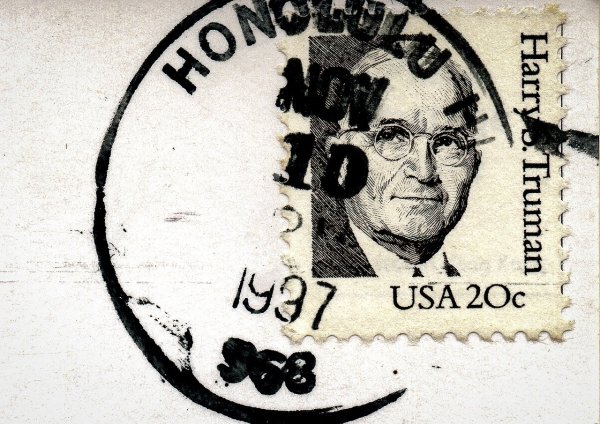
Create a website or blog at WordPress.com

Up ↑