Commandment – Nuala O’Connor

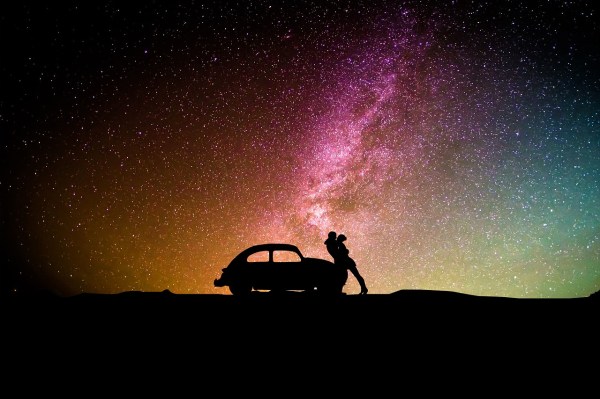
It’s a fact that Trish has the most handsome husband in Aghabulloge. It’s a fact that all the wives covet him. It’s a fact that I do more than covet, I reach out my fingers and touch. It’s a fact that I’m a commandment breaker. It’s a fact that Trish’s husband is too. It’s a fact that for months we are clandestine heroes, fuelled by lust, Trish’s husband and I; we slip-slide-slobber in laybys and barns, up hills and down lanes, and no one notices. Until they do. It’s a fact that Trish is more than angry, she’s frenzied. It’s a fact that Trish tries to set fire to my car in our driveway. It’s a fact that when that fails she daubs large words across my car with yellow paint. Thou. Thou Shalt. Thou Shalt Not. Thou Shalt Not Commit. Thou Shalt Not Commit Adult. It’s a fact that Trish runs out of space.


NUALA O’CONNOR’s fifth short story collection Joyride to Jupiter was published by New Island in 2017; her story ‘Gooseen’ won the UK’s 2018 Short Fiction Prize and was published in Granta; it is now longlisted for Story of the Year at the 2018 Irish Book Awards. Nuala’s fourth novel, Becoming Belle, was published to critical acclaim in September 2018.     www.nualaoconnor.com

Image via Pixabay

Cabinet Of Heed Contents

How Not To Make A Birth Plan – Hannah Storm

Ride through the rain because the car won’t start. Get soaked by the old people driving too close to you and the kerb. Hurtle down the identikit corridors, your husband’s yellow bike jacket dripping water on the floor. Watch the women with pearls and pinched faces and wonder if they are tutting at you or the queue at the hospital they come to each week with their husbands, who turn to them with deaf ears and Daily Mails.

When it’s your turn to be seen, watch the midwife prod your belly: ‘You still planning that water birth?’, she scribbles in your notes. Watch the pinched faces turn to smiles then pull on your husband’s jacket again to go into battle.

Repeat after four weeks, when you’re too big for the bike. Try to follow the midwife’s advice to ‘relax’, even though you’re on a trolley with someone’s fingers in your fanny, feeling for something they can’t find.

‘He’s sideways’, she says; you don’t hear the ‘don’t worry’. She sends you to another hospital, where they scan your son and you joke that he must be confused about which way is up: after all his Dad is a Kiwi.

Repeat at 37, 38 weeks. Try not to panic when they say don’t worry.

At 39, 40, 41 weeks, listen when the midwife says second babies rarely engage before labour. Try to relax. Fail.

Wake a week later with the rush of warm water. Watch as your husband carries your older child to the car, thinking how small she looks asleep. ‘Don’t worry darling’, you say more for you than her. Wait for the first pains. Short. Manageable.

Spend the day at the country hospital. Walk and walk in the summer sun, but only manage four centimetres. Listen as another midwife says, ‘I’m afraid we’ll need to induce you’.

Arrive in the city hospital, to a room with five other women and no air con.

Then the real contractions begin. When they crescendo you vomit all over yourself, pain like nothing you have felt before. Relax someone says, fixing you with fingers and now a monitor for the baby’s heart. A man appears from nowhere, an angel in scrubs.

No time now for no worries. They heave you onto the trolley, hurtle down the hospital’s identikit corridors. Try to sign your name as you scream. The needle scarcely has time to take effect before a voice says, ‘we need to go in’.

The next thing you hear is a silence.

Then a cry. You wonder if it’s yours.

After an eternity, the angel places your baby on your breast.

‘Don’t worry, you hear yourself say, Mamma’s here’.


HANNAH STORM is a journalist and media consultant, specialising in gender and safety. Although she’s been writing since she was a young girl, she’s recently discovered a passion for short stories and flash fiction, thanks to an Arvon course with Vanessa Gebbie and Cynan Jones. Her Twitter handle is @hannahstorm6.

Image via Pixabay

Cabinet Of Heed Contents

At the time of first blood I’m shut in a drawer – Hilary Hares

An antique chamber of unpanelled oak,
it holds me like a library, smells of small slights
and pencil-sharpening. Echoing the memory
of a dream, somehow it feels safe.

Beside my knee, a flamingo’s beak, snapped
on the croquet field, forms a hollow cornucopia.
Trapped by my hip, a moth-wing, fragile
as gelatin, crumples – disaster to hatch in a drawer.

The stamps are out-of-date, the envelopes
unwritten beside a pile of blank sheets used for
boarding-school letters that started: Dearest,
ended: all our love – I always crossed that out.

Turning over is hard. I push against
the wooden ceiling. A set of keys finds
the hollow between my shoulder-blades,
tries to unlock something.

The Old King never notices I’m there.
Rooting for his palette knife, crusted in oils,
he comes across an empty tube of Carmine 189,
sighs, scuttles back to the safety of his cell.

The Red Queen reaches in with a hot hand,
finds me wanting, turns up my palm,
searches for a future.


Having survived a childhood dominated by the Red Queen, HILARY HARES has an MA in Poetry from MMU. Her poems have found homes online and in print including Ink, Sweat & Tears, The Interpreter’s House, Magma and South. Her collection, A Butterfly Lands on the Moon supports Phyllis Tuckwell Hospice Care.

Image via Pixabay

Cabinet Of Heed Contents

Men in Different States – Rickey Rivers Jr

I want a good meal.
I want nice clothes.
I want a car.
I want a house.
I want a wife.

I have great meals.
I have nice clothes.
I have a nice car.
I have a nice house.
I have a great wife.

I had a good meal.
I had nice clothes.
I had a car.
I had a house.
I had a wife.

I want what I never had.
I have what I always wanted.
I had all my wants.
I want more than you have.


Rickey Rivers Jr was born and raised in Mobile Alabama. He is a writer and cancer survivor. He likes a lot of stuff. You don’t care about the details. He has been previously published in Every Day Fiction, Fabula Argentea, ARTPOST magazine, the anthology Chronos, (among other publications). https://storiesyoumightlike.wordpress.com/http://twitter.com/storiesyoumight

.Contents Drawer Issue 14

Image via Pixabay

A Brief Time of History – Maria Kenny

My mother cried the day Stephen Hawking died. I came home from school and found her sitting at the kitchen table, tears on her cheeks.

‘Stephen Hawking is gone,’ she said, clutching a cup of tea.

Teacher had told us in school. We didn’t know who he was until she showed us his picture on Google. We remembered him from when he was on The Simpsons. He freaked me out a little. That voice.

‘The world is a less intelligent place now,’ Mam said dipping her biscuit into her cup.

I kept my eyes on the broken tile over the sink rather than look at her. I had been starving on the way home, but my stomach felt sick as I stood there.

She told me about a party he had thrown for time-travellers. He gave the invitations out after the party. No one had showed up. She said he had recorded the party, him, alone in a room surrounded by glasses of champagne, little plates of food on the table.

‘He did it to prove there was no such thing as time-travel’, my mam said smiling, but the smile wasn’t real.

‘He was witty like that.’

She suddenly sat up straighter, as if she had just thought of something amazing.
‘You should read his book’, she said.

I looked at her shining eyes, then looked quickly away. I promised her I would. I wanted her to stop crying. It was weird, it wasn’t like she knew him personally.

She pulled some kitchen roll from the holder on the wall, wiped her nose and stood up. I shuffled out of her way as she pulled jars from the cupboards.

‘Have you homework?’ she asked.

I nodded and she shooed me away.

Later that evening I asked dad why she was so upset.

‘Oh, your mother had notions of being a scientist.’

‘Really?’ I said.

I tried to picture my overweight mother crammed into a white coat, bent over a microscope.

‘Yeah, she wanted to study science in college, work in a lab or something. Stephen Hawking was her hero.’

He flicked through the stations on the television already bored with me.

‘Why didn’t she?’ I asked.

He looked at me, his eyebrows raised, then laughed.

‘You work it out,’ he said.

I shrugged. He turned back to the television as I continued to stand beside him. He looked up at me again and snorted a laugh.

‘You don’t have your mother’s brains that for sure. Go on, leave me in peace.’

He reached over for the ashtray, his other hand pulling a cigarette from the box.

On the way up to my room I looked in at Mam. She was mashing potatoes for dinner.

Dad’s tray already had his brown sauce, plate, knife and fork on it. The table had two placemats laid out and two glasses beside them. She glanced up at me.

‘Dinner in five minutes time,’ she said.

I didn’t move. She looked up at me again and tutted, rolling her eyes.


Maria Kenny is from Dublin. Her stories and flash fiction have appeared in journals in Ireland, the UK and Mexico. She was longlisted for the WoW award 2016 and was highly rated in the Maria Edgeworth Short Story competition and longlisted in The Casket of Fictional Delights flash fiction competition in 2018.

Contents Drawer Issue 14

Image via Pixabay

Swap Your Life – Sherri Turner

Carol hadn’t been expecting that. When the doorbell rang she thought it would be a parcel delivery or a meter reader. Perhaps one of those nice men in suits talking about God. She hadn’t expected a loud and overenthusiastic game-show host shoving a microphone in her face.

“Congratulations! You have been selected as today’s lucky Swap Your Life contestant.”

Was that a camera? She felt up to her hair – no rollers, thank goodness.

“I beg your pardon?” she said.

“Carol Adams, we are giving you the greatest opportunity ever offered on live television. Swap Your Life! Have you ever regretted the choices you have made? Do you wonder how it could all have been different?”

He swept his outstretched palm in a wide arc, over the neat front lawn of the semi, past the tired Vauxhall, ending at Carol herself.

“Well…”

“Of course you do! In a moment we will be showing you glimpses of how your life could have been. Remember that party in 1978? What if you’d been a bit more – er – careful?”
Carol glanced back towards the living room door, which stood ajar.

“Or later, when you turned down that promotion? How might your life have been now if you’d taken it? What if you’d turned left instead of right that day in ’86. You know the one I mean.” He winked. Carol blushed. “Today is your chance to turn back the clock, see what would have happened – and choose that life instead!”

Carol took a moment. She smiled.

“No, thank you,” she said, stepping back as she closed the door, much as she had with the nice young men earlier in the week.

“Who was it?”

“No one, dear. Some salesman.”

Always selling something, these people: new life, better life, afterlife. No guarantees though. No refund if you changed your mind. And nothing was perfect, was it? Though some things came close.

She stood for a moment, one hand on the banister, repackaging the past and the could-have-been futures back where they belonged.

“Cup of tea?” she called.

“Yes, please, love.”

“Biscuit?”


Sherri Turner is a writer of short fiction and poetry and has won prizes in competitions including the Bridport Prize, the Bristol Prize, the Wells Literary Festival and the Stratford Literary Festival. Her stories have also appeared in a number of anthologies. She tweets at @STurner4077.

Contents Drawer Issue 14

Image via Pixabay

What To Do After College – John Sheirer

Fill your head with dirt–rich, dark topsoil. Plant flowers in your ears–daisies or azaleas. Grow trees in your eye-sockets–butternut or cottonwood. Cultivate food crops in your nose–corn, potatoes, grains. Plow them with your tongue. Irrigate with saliva.

Your brain? Keep it for amusement. Donate it to science. Or chop it up for fertilizer.


John Sheirer lives in Northampton, Massachusetts, and has taught writing and communications for 26 years at Asnuntuck Community College in Enfield, Connecticut, where he serves as editor of Freshwater Literary Journal (submissions welcome). His books include memoir, fiction, poetry, essays, political satire, and photography. Find him at JohnSheirer.com.

Contents Drawer Issue 14

Image via Pixabay

White Noise – Christine A Brooks

I want to cover my ears, I want to hum, or sing LA LA LA
loudly
Over your words, your memories, your testimony.

I want to turn up Dylan,
Beatz blasting
Tremblin’
So my mind doesn’t hear your
Thoughts, your recollections,
Your truth.

No
I want to scream, no.
I want to cry.
I want to die.
I want to unhear, unknow and unremember,
Those terrible nights, more than one, more than two,
Maybe even, more than three
When I could not scream, I could not talk, and I could never

Ever tell.

I want to change the channel,
Block out the noise,
I want it all to stop,
Like it did last time, when I

Just pretended it never happened.


Contents Drawer Issue 14

Image via Pixabay

Fool – Danny Beusch

Perched on the rusted chair, nursing my third coffee, thinking. About last night: the worst yet. About what I’m doing wrong. I watch him tame the rampant ivy with Grandma. He looks like any normal seven-year-old. He looks like sugar wouldn’t melt.

‘Good boy,’ she says. ‘They’re sharp. Keep them pointed at the ground. Good boy.’

She wanders into the shed. As soon as she’s out of sight he lifts the shears. The shiny edges dazzle me with sunlight. Seconds later, eyesreadjusted, the blades point at my throat. He inches closer. I grip my mug, legs frozen, palms burning.

‘James,’ shouts Grandma, holding a rake. ‘Point them down, please.’

He drops his arms, runs to her. I inhale the whisky in my drink.

‘Be careful,’ she says. ‘You’ll hurt Mummy. Now come here and help me clean up this mess.’

I cool my hands under the kitchen tap, pour something stronger, worry about what will happen after Grandma goes home.

*      *      *

He kneels in the old ceramic bath, facing the wall, hugging his chest, shoulders tense. Dirt from the garden muddies the water. The dripping tap echoes under the high ceiling.

I soak the flannel and squeeze; water trickles down his back. He flinches, turns, clamps his mouth onto my forearm. I pull but he clings on,piercing skin. I force my fingers between his teeth. Prise open his jaws. Push him away. Stumble over. Run.

*      *      *

Frozen peas numb my arm. Merlot warms my body.

He’s crying so I know he hasn’t drowned.

*      *      *

Back upstairs, the bathroom smells damp. I wrap my shawl tight, smile at the sight of my breath. Smile at the vivid bruises across his sunken chest, the cigarette burns that dot his knees, those bottle-blue eyes, that perfect nose.

‘It’s OK, sweetheart. Mummy’s here.’

*      *      *

He curls up in darkness. Silent. I shut the bedroom window, unscrew the light bulb.

A sob – just audible above the squeak of the lock. ‘You fool,’ I say. ‘Do you think you can win?’ I put the key in my pocket, wipe away tears. ‘You stupid fool,’ I say to myself.


Danny Beusch (@OhDannyBoyShhh) lives in the UK and tells stories. He spends rainy days reading Joanne Harris and Margaret Atwood novels. He started writing flash fiction in 2017

Contents Drawer Issue 14

Image via Pixabay

The Smartest Human – Marisa Crane

Another morning in paradise for Wilder. The fluid cushioning him is warm, and he hasn’t got a damn thing to do if he doesn’t want. He reaches his hand out in front of his face and examines the back of it. It’s pruny from his long soak, the soothing spa session that he fears is coming to an end. Or so he’s heard, anyway. Exactly when is uncertain.

That makes it all the more terrifying.

The Outside People—his Mommy and his other Mommy—always say “soon, oh so soon” and make smooching sounds when they talk about his impending arrival. There is a man who comes round and coos at Wilder as if he’s adorable and tiny like his unfertilized neighbors. The man says things like, “Can you hear me, little one?” He acts like Wilder doesn’t understand the world, but he does, visitor man. He does. He knows that the world is shamelessly uncushioned, that it hurts when people fall down. He knows when the man is about to come over because the Mommies start to bicker. Quietly, lovingly, even, but bickering just the same.

“I don’t trust him, Jenn,” Sonya will whisper. Sonya is the one whose warm, soothing fluid Wilder resides in. The host of his all-inclusive resort. She thinks he can’t hear her if she lowers her voice.

“Alan deserves to know his child if he wants,” is what Jenn usually says.

“Our child,” is what Sonya usually counters, a bit snappy.

“Shhh, we don’t want the baby to overhear any animosity,” says Jenn. “There’s enough of it out here as it is.”

They say this all the time. That the Outside is this drab, almost never tranquil place, full of torrential people who can and do hurt each other. From what Wilder understands, he will join those people and become the hurter and the hurt. Never one or the other.

Always both.

He once tried to draw a flowchart of all the Outside people he knows with his right big toe but he misfired and wound up kicking Mommy in the ribs. I am already a hurter, he thought, feeling quite down about it, but also strangely basking in the camaraderie of the Outside People. But then he heard cries of glee erupt from Mommy’s mouth (that is something he is a bit envious of—this noise-making skill, but alas, one can’t have it all.

He will gladly remain silent if it means never having to erupt out into the world a crying, screaming, bloody mess).

“He kicked! Wilder kicked! I felt it, I swear,” Sonya said. Wilder heard footsteps then Jenn’s soft musical voice. What’s a Wilder? He’d thought, the first time he heard his name.

“Oh my god. Oh. My. God.”

“I know.”

“Also, did you just name our son?” Jenn laughed.

“I guess I did.”

Wilder could detect her embarrassment through the many layers of viscous biology separating them.

Me, I guess I’m a Wilder, the fetus thought. He’s come to grips with the name by now, but it took a while. He’d heard of these things called wild animals, like bears and wolves, and he’d wondered if the Mommies thought he would become a killing machine too. The thought made him nervous, made him grab his toes and squeeze tightly.

All of that is to say, Wilder’s dream vacation is soon coming to an end. In the early days, he’d falsely believed that his amniotic sac was all there was to existence. Rad. The temperature’s always ideal, he’s always satiated if not absolutely stuffed by the tube’s glorious deliveries. No roommates, just some single-cell neighbors whose company he tends to enjoy when they’re not sending his sky (or uterus ceiling, if you will) crashing down with catastrophic news of his eventual departure. It was about three months ago when they gave him a little biology lesson.

“You know you’re gonna have to leave this place eventually, right?” the one egg had squeaked. She’s a bit of a know-it-all, but she means well.

“What are you talking about?” Wilder had asked, placing his hands behind his squishy head, as if he were lounging in a hammock.

“You’re only in here until you’re big enough to join the Outside People.”

The others had murmured in agreement, sending a shiver through his chunky legs.

“Well, uh—when is that exactly?”

Wilder hadn’t been convinced she was telling the truth. The eggs loved to gossip since life inside the ovaries could be a bit dull. And the notion of birth was simply too bizarre to comprehend. Who would leave such a cushy, luxurious environment? He figured that some people—those who had picked the short umbilical cord for sure—lived Outside while the more fortunate ones resided Inside.

The know-it-all had turned to the other eggs and they’d whispered amongst themselves while Wilder leaned against the walls of his sac, feigning casual indifference.

“We think your Birthday Ceremony is in 3 months and 1 week, give or take.”

“My what? Speak sensibly,” he’d said, mildly irritated.

“The day that you are pushed by some mysterious force out of your warm sac and into the Outside. We saw it done once before, long long ago, before the Mommies knew each other.”

“What was it like?”

She’d taken a deep breath and quivered. Wilder hadn’t liked how she looked at him, her eyes uneasy and apologetic. She was usually pragmatic and matter-of-fact, a strict but fair source of knowledge and kinship.

“He screamed like I’ve never heard anyone scream before. There was a lot of blood. I don’t think he survived.” She’d paused. “I hid from the cascading sperm, those handsome fucks, for a while after that. I feared what would come if I hooked up with one of them. I didn’t want the same fate.”

Wilder hadn’t known what to say. He’d looked around at his surroundings accusingly, as if the heated sauna he’d come to call home had now been replaced by a conniving, lying betrayer. He’d now become the hurted. The Outside was somehow capable of inflicting pain from the Inside. Normally he’d consider himself to be fairly eloquent but all he’d been able to muster that day was a simple, “fuck,” then a low, ominous whistle.

“You come out of that hole,” another egg had spoken up, gesturing towards an unbelievably small tunnel.

“There?” Wilder had asked, bewildered.

“Yes, I know it seems insane, but that’s exactly what the Outside People are.”

“That must be a joke. There’s no way my head is fitting through that tiny space.”

The egg had shrugged, as if to say, That’s all I know.

Wilder hadn’t asked for this. He hadn’t asked to enter a world he’d heard so many treacherous and terrifying things about.

Out there, people were killing each other over technology and the lack of technology and breakfast and green slips of paper and love and the lack of love and bad weather and bad hair and games and houses (without lovely fluid in them) and arbitrary borders and beliefs and betrayal.

I refuse to be betrayed, Wilder had thought. When the time came for his Birthing Ceremony, he would simply refuse to come out. It would be as easy as that. He would never be ready to quit that good good and he didn’t see why he should have to.

This morning, about three months after the life-changing discovery, the morning of Wilder’s would-be birth, Sonya goes into labor and nothing happens. Her water doesn’t break, there is no crowning, the contractions don’t accomplish shit. Jenn furiously searches Google for records of this having happened elsewhere. Nada. Just some discussion boards about possible alien insemination.

The doctors, upon further examination, conclude that the baby would prefer to stay where he is for the rest of his life. They deem Wilder the smartest human being to ever exist. Out front of the hospital, they erect a statue to commemorate him. News spreads, and no one is ever born again.

The Earth is very grateful. It blooms like you’ve never fucking seen before.
 

Contents Drawer Issue 14

Image via Pixabay
Toads – Ellie Rees

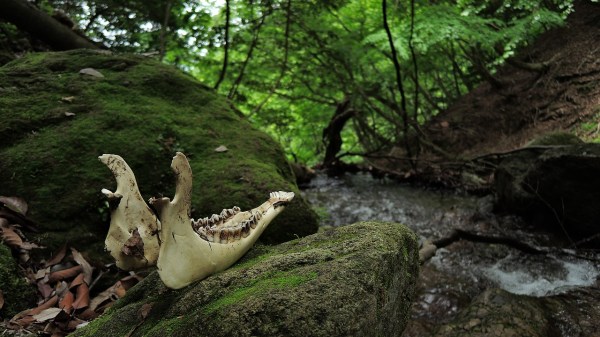
I blundered
upon a troop of toads:

not a knot; not one
wore another like a rucksack –
they seemed to be quite self-contained.

Arrested, alert
they faced away from me:
their backs such a vibrant burnt-orange;
I could see their spines and the
warts on their skin;
a synchronicity on the lawn.

There must have been twenty, there might have been more.

Where were they going and
why had they stopped?

Dead leaves from the beech tree, frisked by the wind

landing upright –
an identical tilt

stalk-end half-buried in
the clumps of grass –

or maybe the worms
were pulling them down

down underground
already.


Contents Drawer Issue 14

Image via Pixabay
Pigeon Trouble – B F Jones

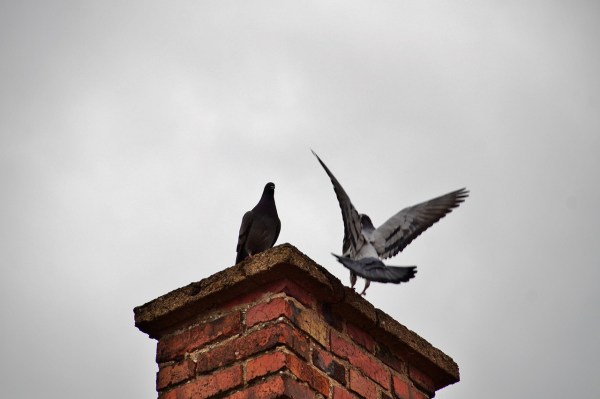
I heave myself up the narrow chimney shaft.

Finally, I will find out where all those pigeons are coming from.

Six. Six dead pigeons in 2 weeks.

This chimney is a nightmare. Who wants a dead pigeon falling on them every time they’re planning on making a fire? Not to mention the ridiculous draft that the opening creates. You open your chimney and it blows your front door open.

Kind of like the “Every time god closes a door he opens a window” stuff. Although in this case he opens a chimney, throws a rancid dead bird in your face and opens the front door with such force that the cutlery shakes on the kitchen shelves.

I wonder if it works the other way round? If you slam the front door with great power will it shut the chimney? Maybe I’ll check later. It might amuse Marcia. She’s been so cranky lately. Dreaming of pigeons, the poor sucker.

Climbing through this shaft is harder than I thought. It is a sweaty reminder of my age, my latest birthday having thrown me into the depth of middle age. In my shaky effort to climb up, I can feel how much gut I’ve got, spilled all over my midriff, clinging to my waist.

I shouldn’t be far now. Maybe a couple more feet. Though it is very dark still, and the battery on my mobile and only source of light has run out a mere 2 minutes into my climbing journey.

Shouldn’t the shaft be lightening, as I get closer to the top?

Six. Six bloody dead pigeons in 2 weeks. You open the chimney to make a nice romantic fire for your wife and you end up with a dead pigeon and an argument. As if it was my fault. I didn’t bring the pigeons in there, Marcia.

I’m gonna get it all sorted. I just need to finish climbing up this fucking chimney, get rid of the nest or cadavers or whatever might be up there and then I’ll have a nice fun story to tell the kids and maybe some loving from my cranky wife.

The shaft has narrowed now and there is still no sign of light, just a deepening damp smell. I reach up to gage how far I am and my hand comes into contact with cold concrete.

The chimney is sealed.

Where did all the pigeons come from?

Sudden, inexplicable fear crawls through my body, and the dampness seems now to treacle through my veins along with a palpable sense of doom. Deep breath, calm down, and climb down.

The story to the kids won’t be as fun and I’ll probably have to settle for a sexless marriage, but at least I will no longer have to experience this cold, narrow abyss.

Climb down. Slowly.

I can hear a noise echoing through the shaft. A crunching noise followed by the sharp metallic thud of car door closing.

Marcia.

She’s angry. I can tell from the clattering of her heels, and the vigorous shutting of the front door. In the kitchen, the cutlery cackles, and in the lounge the chimney hatch slams shut.


B F Jones is French, lives in Surrey with her husband, 3 kids and cat and works as a freelance digital consultant. She has book reviews and stories published on STORGY. She also had stories commended by the R. C. Sherriff Trust and LISP.

Contents Drawer Issue 14

Image via Pixabay

The Spirit of the Wooden Box – Mark Tulin

It took me until I was sixty to appreciate you. It’s a shame that you had to die before I could acknowledge your impact on my life. Too bad you’re in a wooden box now in the living room, all ashes, just a spirit of burnt remains.

Now that you’re dead, I can barely hear your cries. There’s no anger. No unmet needs or disappointments. No crazy garbled words or high heels whizzing past my forehead through a bay window falling onto the street. No telling me to sit up straight in a chair or to read the Home and Garden section of the Sunday paper or chastising me for wearing the color blue in the house. Just your pure memory lingers, the good overriding the bad. The essence of your perfect version.

Every time I look at the wooden box that sits on the drawing table, I hear a quiet voice, no longer screaming or tears streaming down your face. No longer talking in riddles, playing the victim, complaining about things that no one cared about or even understood.

There is only silence without breath. Your quiet spirit hovers in and around the wooden box and watches me prepare your favorite dinner: pasta in red sauce, a baguette, a bottle of Chianti. Your spirit keeps me company, my ally, and my honored guest. When I interact with the insurance adjuster, you help me calculate the numbers. When I inhale my Albuterol through a nebulizer, you encourage me to take a deeper breath. I can finally tolerate being close to you. No longer do I have to create distance or drink myself to sleep to get you out of my head.

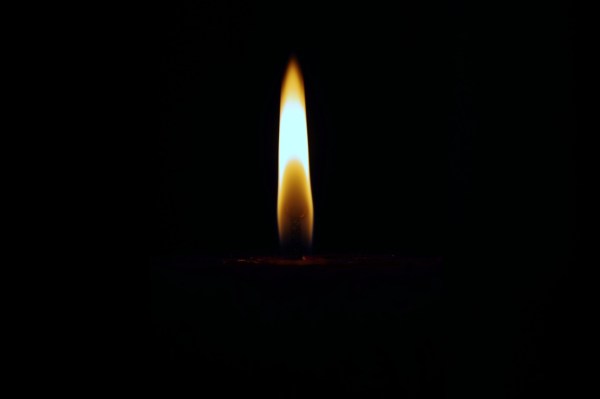
The wooden box has a Yahrzeit candle burning above it with a trail of black smoke rising to the ceiling. Whenever I see that candle flame flicker, I think of you praying for my deceased father over the kitchen sink. I watched your trembling hands clutch a prayer book, your parched lips muttering a chant in Hebrew, your eyes closed while rocking back and forth like you were at the Western Wall of Jerusalem.

Next to the burning candle is the image of you as a teenager, posing on a stoop with long brown hair, wearing a high school letter on your sweater, and resembling a young Elizabeth Taylor with a closed-lip smile. You were surprisingly beautiful then, seemingly had the world at your fingertips with a clear plan about your future. You wanted to write brilliant poetry and short stories that would make people see the world from a more compassionate place. Then you met a man, convinced yourself that you loved him, had a baby and then lost your mind. The photo makes me think of what might have been if you hadn’t gotten married and settled for a muted life, taking care of a man who never encouraged you to follow your dreams.

“You don’t have to feel sorry for me or worry anymore,” your spirit whispers.

“I can’t help it,” I say. “You seemed so vulnerable, barely five-foot tall, and I feared that people would take advantage of you.” But then I realized that you were far from incapable of taking care of yourself. You launched Coke bottles at a bully across the street that teased you for the way you dressed. You threatened to break a car window with my Louisville Slugger when a neighbor walked on your flowerbed. Despite your diminutive size, you were as fearless as a pit bull.

You spirit whispers to me not to betray myself or to deny who I am.

“Don’t question your intuition,” you say. “Live the kind of life that you dream about. I weighed myself down with fear, but you can rise above it.”

I stand motionless, lightheaded with nostalgia. I see you clipping my mittens to my coat sleeves and opening up a can of Campbell’s Tomato Soup to go with the grilled cheese sandwich browning on the skillet. I see you push me down a snowy hill in a red Flexible Flyer, watching me until I make it safely to the bottom. You take pictures of me in the swimming pool while riding a walrus float, sliding into third base under a tag at a little league baseball game, and in my glen plaid bar mitzvah suit, standing awkwardly right after I became a man. With your Kodak camera, you captured all my sacred events and then neatly pasted those developed photographs into an album, chronicling my life’s story with your stamp of approval.

I stand in front of the wooden box, now, acknowledging all the things that you did for me, feeling guilty that I never returned the favor. I always focused on your insanity, never on the person behind the crazy talk.

“I wish I could do my childhood over,” I tell the spirit of the wooden box.

“It’s not about me. It’s about you,” the spirit answers.

I nod my head. I tap lightly on the wooden box. The Yahrzeit candle flickers with a beautiful orange flame that reminds me that you are still here.


Mark Tulin is a former Philadelphia Family Therapist who now resides in Santa Barbara, California. He writes poetry and fiction and is currently looking for a publisher for his novella. His chapbook, Magical Yogis, was published by Prolific Press (2017). His stories are in smokebox.net, Page and Spine, Friday Flash Fiction, and others. His previous Cabinet story, “Weekend in the Suburbs” can be heard in podcast form at Other People’s Flowers, His website is the Crow On The Wire.

Contents Drawer Issue 14

Image via Pixabay

Chickpeas – Qurat

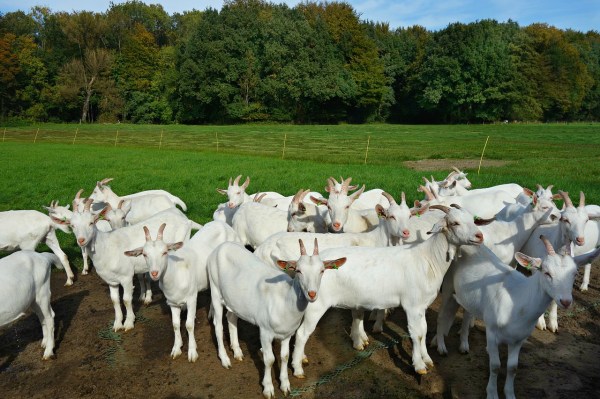
My mother once told me
that goats have to be fed carefully –
that all too often, upon finding a bucket of chickpeas,
whether dried or swollen with water
to twice their size, bloated,
they gorge themselves, eating senselessly,
until their insides burst.
Not for lack of intelligence –
maybe the opposite,
barely chewing their chickpeas
before gulping them down, even though they
scratch against their throats on the way
down,
barely breathing in between mouthfuls
anything for something,
even if it hurts –
I’ve gotten too good at the dark
too used to my serrated silences,
uninterrupted by the stream of rotating images
and sounds, which I can hardly piece together
before they’re gone (not that I would),
the chickpeas are burnt, it’s all smoke, everyone’s
killing themselves slowly (it’s the only fashionable way)
and wondering why they aren’t dead yet
and wondering why they aren’t alive
and wondering if everyone else is
wondering the same thing.
I can’t seem to get myself
to burn.


Qurat is an engineering student, an avid environmentalist, and an emerging author. She has work forthcoming or currently in The Evansville Review, Augur Magazine, Tenth Street Miscellany, The Temz Review, Rag Queen Periodical, Yellow Taxi Press, and KROS Magazine. Find her on Twitter: @DQur4t.

Contents Drawer Issue 14

Image via Pixabay

Keeping Up With The Joneses – Alva Holland

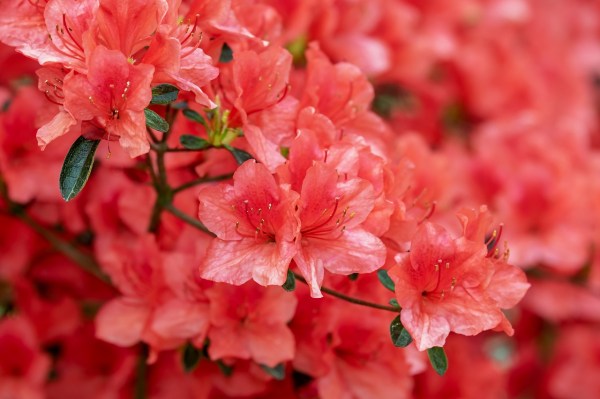
Banks of scarlet azaleas and cerise rhododendrons mark the driveway to the double garage of No. 7 Maple Way. Mr. Powers nurtured the shrubs from cuttings and is proud of the privacy his colourful hedges provide for his double-fronted detached residence.

Next door at No. 5, single-garage Mrs. Johnson thinks her hybrid fuchsia and cotoneaster are far superior to her neighbour’s efforts in terms of display and colour. She covets her secret source of quality fertilizer which she refuses to share with No. 7 in case his display should surpass hers in terms of admirability as people pass.

No. 3’s triple-garage, vintage car owner, Mr. Bailey doesn’t like flowers but has a lawn fit for a Queen. Mrs. Johnson watches him vacuuming the leaves, almost reverently, each Saturday morning. She secretly envies his gleaming edge-cutters – a thing of shining beauty, glimmering in the summer sun as he creates the perfect right angle to his precious carpet where it meets the driveway leading to the polished doors containing his venerable collection.

No. 1’s granny-flat-instead-of-a-garage Mrs. Jameson is a container gardener, with terracotta pots full of brightly coloured bedding plants spilling over onto lustrous grey pebbles and glorious hanging baskets adorning the fascia board. Young widow Mrs. J and her elderly mother tend the baskets and pots in a prayer-like fashion.

Maple House sits at the end of the road. The house doesn’t have a number because it used to be the only house in the area before the wealthy owners died leaving it to a good-for-nothing son who wasted his inheritance. The estate ended up being sold to a hungry developer who converted the sweeping driveway to a wide two-lane road, split the estate into lots and sold them off to the Powers, Johnsons, Baileys, Jamesons and their like.

The competitive street befits the Jones family who’ve recently taken possession of Maple House. A sweeping renovation has commenced. The neighbours will spend the next year striving to keep up.

Winter arrives.

The Neighbourhood Watch man patrols.

A heavy snowfall blankets the estate in anonymity.

Every house now looks the same.


Alva Holland is an Irish writer from Dublin. First published by Ireland’s Own Winning Writers Annual 2015. Three times a winner of Ad Hoc Fiction’s flash competition, her stories feature in The People’s Friend, Ellipsis Zine, Train Lit Mag, Stories for Homes, Brilliant Flash Fiction, The Cabinet of Heed and Jellyfish Review.
Twitter: @Alva1206

Contents Drawer Issue 14

Image via Pixabay

Worm Season – Traci Mullins

I’ve hated worms since I was seven, when Billy Gentry hid one in my unsuspecting sneaker and I threw up. The riskiest worm season was during the spring rains, when they’d creep out in droves from wherever they lived and slime their way across the sidewalks. They were repulsive, plump from yeasty new soil, and wiggly, like they had a new lease on life. I coped with them by pretending I was a frog, keeping my eyes on the pavement and playing worm hopscotch. Only once did one get the better of me, squishing underneath my new pink Mary Janes and setting off a fit of ew, ew, ew, ew! I heard the neighbor guy snicker and gave him a killer scowl.

I still hate worms. You’d think I could spot one from 100 yards, but no. When Alex crept into the hollow place my absent father left inside me, I didn’t even notice. He lured me with his bedroom eyes and seduced me into forgetfulness. I thought I’d learned my lesson from the chain of fools who’d come before him, but no. Alex scrubbed my memory with soapy charm and slithered in unnoticed, like a worm vanishing into the grass.

The first time he punched me, he looked stunned. He said it was the first time he’d hit a woman. I should have demanded proof, but no, I took his word for it. He was on his best behavior for months before he struck again, this time by hurling a saucer-shaped iron weight at the bridge of my nose. He stumbled toward me, crying, begging my forgiveness. I screamed at him to not lay a finger on me and drove myself to the hospital, my blood gushing like worm guts. The x-ray revealed the chips of bone, but not the daddy-shaped hole I let Alex crawl back into one last time.

The next time he detonated, I was ready. The knife sliced through his center and I cut him in half. I spit him out and vowed to be done with worms, finally plump within myself.


Traci Mullins writes short fiction and has been published in Flash Fiction Magazine, Dime Show Review, Spelk, Ellipsis Zine, Palm-Sized Press, Fantasia Divinity, CafeLit, CommuterLit, and others. She was named a Highly Recommended Writer in the London Independent Story Prize competition.

Contents Drawer Issue 14

Image via Pixabay

Metaphorically Yours – Ben Banyard

like a damp tea towel from Majorca
we are ineffectual
a reminder of happier times

like salt
I only need a pinch of you
any more and my blood pressure rockets

like avocado
you can be insipid
will often spoil a meal

like Colchester
few people know much about us
except that we once mattered

like cricket
I’m slow
and few people fully understand me

like my new trainers
although you’re stylish enough
you cause me discomfort

like Wham bars
your memory of me in the old days
can never match up to today’s reality

like GWR
you’re just as unreliable
despite a recent makeover

like that brilliant chip shop we found in Harlech
I often fancy visiting you
even though you’re no good for me


Ben Banyard lives in Portishead, near Bristol, UK. He’s the author of a pamphlet, Communing (Indigo Dreams, 2016) and a full collection, We Are All Lucky (Indigo Dreams, 2018). He blogs and posts mixtapes at https://benbanyard.wordpress.com.

Contents Drawer Issue 14

Image via Pixabay

How Big Its Smallness – Peter J Coles

They’ve closed off the street. Both ends. Police cars strewn across at angles roped together with yellow tape. The threat of arrest hangs in the air. I want to get home. My dog, my poorly little cream-coloured lab, left alone all day with nothing but her chew toy to feed on. I’m laden with shopping. A rucksack full and two carrier bags in each hand. I want to go home.

“Can I get through?” I say to the policeman, except I have to say it in German and I’m not sure if I’ve said it correctly. He frowns, seems to double in size before my eyes and shouts something, a stream of hot stinking words, that spins me around on the spot.

“I need to go home,” I try, but he shoves me back, holds up a black-gloved hand and puts the other to the gun at his hip.

Moving away, I spot a neighbour standing to the side. An old Turkish woman, a flowered veil framing her face, who I’ve never had a conversation with except to say, ‘Guten morgen’ or ‘guten abend’ as I pass her in the corridor of our building.

“Guten abend,” I say, sidling over to her. She tries to ignore me, to look past me down our closed off road. She’s biting at her nails in rabbit-like nibbles; her cuticles are bleeding.

“What’s happening?” I ask her in English, but she won’t focus on me. She won’t give me the attention I’m after. So I step closer and block her view.

“Hello,” I say, “What’s —”

“No, no, no, no, no, no!” she says, wagging a finger in my face before shoving me out of the way so hard I stumble backwards, the shopping bags like pendulums in my hands propelling me back, only just keeping myself from falling hard into a man behind. His hands are on my back, there to stop us colliding, and chastises me to be more careful, to take this moment more seriously like the rest of us, to which he receives murmurs of agreement.

“Sorry,” I say, turning to look at him with his beer gut distending his stained polo-shirt and his razor-sharp sideburns making his bloated alcoholic face look almost angular.

“I’m just trying to find out what’s going on. Can you tell me?” I ask him, this time in German. German for Germans; English for everyone else.

“Isn’t it obvious,” he replies in English, pointing down the road, flashing anger red. “You only have to open your eyes.”

I follow where he is aiming with his finger, over the heads of the crowd, passed the line of police cars, to the bank of our apartment block, all sandy-yellow against the wet-blue of the tarmac. They look normal. Sometimes, in the mid-summer light, the buildings can glow, radiating a Mediterranean warmth. But in this dull, grey light, there’s nothing special about them at all. I check again to where he is pointing, to make sure I haven’t been mistaken. But I haven’t.

What’s different? What am I not seeing?

Is someone on the roof? A hidden figure getting ready to jump? Is there smoke billowing from a window? Are the police out with the weapons drawn, willing to take someone out? No, none of that.

Everything just seems to be how it always is. In fact, despite the crowd and the presence of the police, the street is so mired in its own mundanity as to look boring, not worthy of this attention, this amount of fear.

“I don’t see it,” I say. The man stares at me with the contempt of someone who is long tired with the stupidity of someone so ignorant. “Help me understand,” I plead, but he just dismisses me with a wave and steps back, mournful, to merge invisible into the crowd that has thronged around us.

I don’t understand. I want to, but I don’t. I just want to go home. To feed my poor little lab out of the tins of meat I’ve brought for her. To pack away my shopping and collapse on to the sofa and remain there for the rest of the day. To forget the day, to let it fade until there is nothing left and I can begin again tomorrow.

I don’t want to open my eyes, I want to close them.

But as I start to pick my way through that mass that has gathered, pausing on their terrified faces, watching bitten lips, and wet eyes, making my way closer to the police barrier, an anxiousness begins to pool in my temples. When I reach it, I shuffle along the front, giving a wide birth to the police who themselves can’t help but snatch glances over their shoulders. I step onto the pavement, pushing my way forward, hoping to get an unobstructed view of whatever the obstruction is, and I find a gap, a space wide enough to see and then…

When I first see it, I don’t.

Not at first.

It was only after does it become clear, and even then it is obscure.

A point, no bigger than anything I’ve witnessed before and yet, when I think on it, I think, God, good God, how big its smallness! How vast its emptiness. How solid can something so devoid of shape be? How endless its limits? I want to get closer. I want to run far away and the more I stare, the more I want to forget what I’ve seen, but also to make it indelible on my memory so that I can tell others about it, forever. Because that’s how long it will take. I will need forever to discuss it, and forever again to never talk about it, to never utter a word about it in case I misspeak and the dishonesty of its truth were to be made apparent.

I drop my shopping bags at my feet and hear glass smash and the pulping of fruit. I step back and merge fearful into the crowd.


Peter J. Coles is a blog editor for MIROnline.org, an editor for The Mechanics’ Institute Review 15, and a graduate of the MA Creative Writing programme at Birkbeck University. He is currently working on his first novel and has read short stories at MIRLive and the Writers Room. Find him on twitter @peafield.

Contents Drawer Issue 14

Image via Pixabay

The Bone Forests – Claire Kotecki

I followed you into the dead lands. Into the bone forests. Just because you asked me to that night.

‘Walk with me.’ That was all it took and we stepped out. ‘Stepping out’. Like in my grandparents’ day. Only it wasn’t and we weren’t walking hand-in-hand. There was no honour in us, at least none that I could see. Still, I followed you.

‘Walk with me.’ Without you. Outside you. But never with you. That was the condition of us. Were we even a ‘we’? Stepping out, like my grandparents, in honour of the question.

Still, I walked with you and you spun me tales. Tales of lust. Tales of a living land where we could build something solid. And so I followed you.

‘Walk with me.’ To a house. A house in a forest. A forest was a home. It was made of bone. Our bone. Blood of my blood. Flesh of my flesh. Building. Growing a thing in me that was you and wasn’t you. That was within me and outside you. That was you, in a way, but you with honour. I hoped for honour. Hope followed you.

‘Walk with me.’ I could see the bones. Trunks. I navigated them without a bone map but I knew that they were dead things. I held a growing thing and kept it safe from their touch. You had fallen silent and I had no space to write the tales to spin the net to catch you before you fell. Falling. You became an echo. A solid thing. A soiled thing. Your body disembodied. As I was more than a body. Less than two. My body a bone cage for a cage of bones that held a tale that hadn’t formed its own echo but that echoed you. It would not follow you.

‘Walk with me.’ I didn’t need to say it out loud. I was more than one. I lost you but you were less than a whole. You gave me a piece of you and I carried it. It kicked me. Kicked so hard it kicked itself out and became its own tale spinning away. It became she. She became it. She was a part of you. You were apart. I could not follow you.

‘Walk with me.’ It was the time of longing. I walked with the hole that wasn’t you. It had shed your bones to the forest. The echo filled it with silence. Silence was loud. I shouted the words into the silence. Come back through the bones. Step out with me. Hand-in-hand. Her hand in my hand. Tiny. Trusting. Flesh of my flesh. I couldn’t let her follow you.

‘Walk with me.’ There was a bone map etched on my heart. She couldn’t live in the dead lands. In the bone forest. I took her trusting hand. I wove a tale to bring us home. To carry her safe through the bone forest. Through the dead lands. To where the solid things were. We collected bones as we walked, filling the echo space with a skeleton. I wrapped the skeleton in memories. Memories that held the shape of you. She recognised herself in them. Her hand in my hand. Tiny. The silence broken by a bone that broke. Snapped. I watched it fall from her as she became less solid. One foot in the echo space. I spun tales until my fingers bled, spinning the net to catch her as she fell. Trunk by trunk. Bone by bone. It was a net of echoes. Woven. I had the bone map. I could keep her safe. She just needed to follow me.

‘Walk with me.’

‘With me me me.’

‘Me me me.’

You tried to catch her bones with an echo. To break the net of tales. To make her yours. I spun as fast as your echo cut the threads of tales. All the time. Her tiny hand in my hand. Warm. Trusting. As we ran through the bone trees to the edge of the dead land. We stood at the margin, she and I and my net of tales holding the bones in. Before I turned my back on the echo, I shouted into the darkness.

‘You will not follow.’

She followed me out of the dead lands. Out of the bone forests. Just because I asked her to that night. The tale was told.


Claire Kotecki is an emerging writer currently studying for her MA in Creative Writing at the Open University. She writes fiction, poetry and creative non-fiction. Her interests lie at exploration around the boundaries of genre. When she isn’t writing, she is a Lecturer in Biology and distance education specialist.

Contents Drawer Issue 14

Image via Pixabay

Meet In The Middle – Chloe Smith

The dew from our coffee cups
Soaks into the oak, a temporary tattoo –
We were here, it says, as the remnants dry
And you lift it to your quivering lips.

I nudge mine, just slightly, with my thumb,
The way you used to tap me, gently,
To bring me out of a restless sleep.

It was always a relief, to have you there –
Now you just leave me be, let me wake up, moist with a cool sweat,
With those nightmares staining the fringes of my mind as I reach out into the empty space –

You haven’t touched me in months.

You eye it, the steaming mug,
A smoke signal, communicating,
More than we’ve done in a while –

I don’t know what the white wisps are trying to say, as they rise, weakly –
But it doesn’t seem like enough.

I pick it up, and notice a pattern in front of us –

A light Venn Diagram, etched almost artfully,
The ghost of our drinks, our last-ditch meeting –

On one side, you, and your soft hand, your fingers almost skirting the outside line,
But still hanging on. Just by a hair, by a nail.

And on the other, me, not even a part of it –

I steady myself
And then let a contender enter the ring

My slight hand, shaking slightly, just edging into the middle
The ring gleaming in the light –

You keep watching me.
I don’t know what you’re thinking,
Maybe of that piece of advice we got given on our wedding day –
I don’t think we were really listening…

Your finger twitches, almost beckons me,
But I was. I laughed it off, at the time.
How would that work?

My bliss was a firework –
Bright and joyous, but not everlasting.
The smoke always lingers, finds you eventually.

We just need to cough it out,
Let it leave our tired lungs…

But now –
Now you need to –

And you do.

In a quick swift movement,
Your hand reaches out, slots into mine,
Like it’s meant to –

Out rings shine together, the sky lighting up
With stars instead.

But in that quick swift movement,
Your elbow
You were always clumsy –

Knocks into our cups, which we’d hurriedly placed down,
Our hands too busy with other things,

And they fall, each in turn, like dominoes,
Like chips –

They paint the faded table a glistening brown,
Rewriting our game with lukewarm enthusiasm.

Somehow it avoids our laps,
And while we let go,
To clean up –

You beam at me,
Match my warmth.
The gleam on our hands reflecting in our faces.

I know we’ll be okay,
That knowledge tickles me as it lights up
The edge of my mind,
As we parrot hurried apologies to the waitress, and wipe each other’s hands.

After all, we have a blank page, now,
We can always play again –
Find each other as easy as breathing, as falling pleasantly asleep,
Now we are here.


Chloe Smith is a disabled writer and poet from the UK. She is a Foyle Young Poet of the Year 2015, and her poetry has been published in Rose Quartz Journal and Cauldron Anthology, with more forthcoming in TERSE. Journal. Her website: https://chloesmithwrites.wordpress.com/. Her Twitter: @ch1oewrites

Contents Drawer Issue 14

Image via Pixabay

Create a website or blog at WordPress.com

Up ↑