Writing Poems Called: Lamplight, Keys, I Can See, Message From You, Honesty – Jamie Stedmond

There, in the lamplight,

Lamplight
Old lamp,
lambent, stand bent,
you have clumsily
spilled light onto
my desk, illumining
many long nights

on a foreign desk,
next to my keys,

Keys
She opens doors
she is a powerful person who
knows people who know people
she opens doors and yet her face
is like a keyhole void and inscrutable
and I can not imagine what shape
is the key that would open her up

lies my phone,
which I can see

I Can See
like hairs, the threaded mountain paths:
wisps on vast and varied tracts of land,
high lakes where wrens and pitpits take their baths
in shade of whitebark pine in clustered stands.
There nestled on a languid bend of bank,
I spy beside the riverbeds, a town,
with people trading goods, and thought, with thanks,
toward towers and meeting minds, I head on down.
To think what delectations lie below,
my wond’ring buoyant heart does beat so fast,
to know how wise my wand’ring lets me grow,
through novel sights and sounds in each place passed.
Oh how wise, wond’rous, far-flung, do I roam,
yet only lately, lonely, think of home

from my spot
on the bed, with
a message from you

Message from you
A square blue pane of light; message from you,
I’m trying a triolet, so you don’t start with me.
I let the light fade, evaporate like morning dew.
A square blue pane of light; message from you,
again, washing the wall, I am all taut sinew,
but I won’t move, I can stand feeling guilty,
A square blue pane of light; message from you,
I’m trying a triolet, so you don’t start with me.

Which I know is
full of honesty

Honesty
Honesty softly
falls like rain, uncaring and
gentle, on us all

that means an argument,
which I was never good at –
but still, I would reply,
if I weren’t so very busy just right now
writing a poem called Lamplight

Keys

I Can See

Message from you

Honesty


Cabinet Of Heed footer logo

Jamie Stedmond is a young Irish writer, currently based in Dublin. Jamie is pursuing an MA in Creative Writing at University College Dublin. Previously publications credits include The Bohemyth, Cagibi, ZeroFlash (forthcoming), and Paragraph Planet.


Image: Nonki Azariah on Unsplash

Sheets On The Line – Alicia Bakewell

The fence had sagged for years under the weight of a neglected hedge. Petra could see right through into the adjoining garden, which in most ways mirrored her own – washing line, yellowing lawn, shed in the back corner, fruit trees dotted around. Figs, mulberries and pomegranates left a vinegary tang in the air as they rotted on spindly branches and fell to the ground, their owners disinterested in making jam at the tail end of summer.

White sheets were sun-drying, draped neatly over the washing line. Petra eyed the clean squares of cotton. She thought of the sheets on her own bed, grimy with sweat marks, flakes of skin and hair. Sleeping on them now she would be aware of the filth, but it was too late in the day to start washing them.

Behind the largest sheet, a shadow moved. The sheet blew backwards a little, clinging to the outline of a woman’s body. The rest of the scene fell away, and all Petra saw was that white figure, statuesque, now stolen by the swirling breeze as the sheet billowed out again. A tanned, slender hand reached up to unclip the wooden pegs that held the sheet in place. Petra stood quickly, plastic chair clattering to the concrete behind her as she ran inside.

‘Where’ve you been?’ Evan grunted.

Petra’s nose crinkled as she caught the smell of saltwater and fish on him. Evan was almost permanently at sea, his boat a fortress against whatever he was avoiding on terra firma. He only returned to eat, to fuck, to leave in his wake a residue of grey fish guts and a bloodied filleting knife in the sink. Satisfied, he’d take off again, leaving Petra with nothing but a freezer full of cod for company.

Petra ate her kedgeree in silence. Evan flicked through a newspaper, greasy fingers marking each page in the same corner. He repeated shrill headlines, startling Petra each time he spoke.

‘Tax increase? When they gonna give a bloke a fuckin’ break?’

Petra concentrated on a fish scale that was caught in Evan’s hair. It reflected the light, shimmering faintly in the greying strands at his temple.

Pressed against the sheets and their debris, Petra felt Evan’s weight on top of her. His skin was rough and salty, hands grasping at her like crab claws. They didn’t kiss anymore. Petra closed her eyes. She saw that woman’s shape again, faceless behind its smooth shroud of white. She felt herself drifting, her body reacting to thoughts rather than actions. When their eyes finally met, Evan’s were questioning.

It wasn’t the first time Petra had wondered about being with a woman. The idea had been there as long as she could remember. She’d mentioned it to Evan, years before.

‘We can get you a girl if you like,’ he’d said, with a smile that had turned her stomach.

What he was suggesting was not what Petra wanted. If she touched a woman, tasted a woman, it would not be in Evan’s presence. It would be pure, sacred. It would go beyond the physical and into the spiritual, which was why she had always feared doing it. Being with Evan had been easy. Petra was able to deflect his criticisms, to stave off resentment at his long absences. She understood that his capacity to love deeply was lacking. A woman would be able to read Petra’s thoughts, to know her secrets. A woman could both love and hurt without limits.

Evan was gone in the morning, leaving nothing but a slight indent on the sheets. Petra stripped the bed of its dirty linen, throwing it into the washing machine. She made a cup of coffee to take outside. Even with the sun not long up, the ground was warm underfoot. Petra righted the chair that she’d upended in her haste the day before.

Next door’s washing line was empty. A bucket and a weeding fork sat abandoned on the lawn. They had not been there the day before. Petra’s pulse quickened. When had the woman been gardening? Had she been out there at dusk, working quickly in defiance of the fading light? Had she risen with the sun to steal an hour before the heat set in?

She’d wear loose clothing, a shirt with half the buttons missing. Buffalo grass would crunch beneath the bare, hardened soles of her feet. Her hair would fall over her eyes as she leaned forward and she’d raise a forearm to push it back, leaving a little smear of dirt across her face. Maybe she would sing to herself, brave without an audience. Or was she silent, lost in her thoughts? Sweating, she’d push up her sleeves, squint at the sun and put her bucket aside, heading back into the house in search of a cool drink.

Petra shifted in her chair. A door slammed. She put her coffee mug in front of her face and sat still, not even daring to breathe. Out of the corner of her eye, she saw a figure dart out onto the lawn, grab the bucket and the weeding fork and disappear, a flash of blue and white. A man. Had Petra imagined the woman? No. There had been no mistaking the curves behind that sheet.

The washing machine beeped and Petra went inside, wrestling the heavy tangle of wet linen into a basket and carrying it out to the line. With effort, she slung the sheets over the wire and stretched to peg the corners, standing on her toes in a distant imitation of her dancing days. She put her face to the damp fabric and breathed in the fresh, cottony scent. The only time the sheets didn’t smell like Evan was when they were hanging on the line.

On the other side of the sheets, Petra could hear voices, rising steadily. An argument. The breeze was blowing in the wrong direction though, carrying most of the words away. Only one phrase reached Petra clearly, shouted by the woman.

‘You don’t think of me!’

Petra took the words inside with her, drinking cold coffee as she repeated them to herself. You don’t think of me. Evan thought of many things. He thought of the weather, of the tides, of the movements of fish. He tried to think them into submission, to bend them to his will. Petra had never tried to bend him to hers. You don’t think of me. What would their marriage have been like if Petra hadn’t volunteered to give up her career? Maybe it would have been Evan who stayed at home, doing the washing and watching the neighbours, while Petra travelled the world en pointe. But they were living Evan’s dream, both of them.

Wild lavender grew in a dense row along the front of the house next door. Petra crouched behind the unruly bushes, cutting flowers at the bases of their delicate stems. She tied a bunch of twenty or so with garden string and attached the unsigned note she had written. I think of you. Standing up, she threw the bouquet over the hedge and onto the front porch where it landed mostly intact, just a few tiny petals straying onto the concrete. Petra giggled to herself and ran home, jumping the low wooden fence with the pointed toes and light step of her past.

The afternoon dragged. Petra lay on her back, staring at the dusty blades of the ceiling fan as she imagined that little bunch of flowers sitting on the doorstep. What ripples would spread from the gift she’d thrown like a stone into water? She dozed, dreaming of pure white sheets on a bed that was not her own. The soft caress of cotton, and of a woman’s hand, were real on her skin. Whispered words played at the edge of sleep. I think of you.

It was early evening when Evan came home. His blue and white checked shirt was clean and there was no smell of fish for a change.

‘Where did you go?’ Petra asked. She’d never seen that shirt before.

‘Out and about. Just talking to the bloke next door there. Reckons someone’s interested in his missus. I told him, don’t look at me. One woman’s enough bloody trouble.’

‘How does he know?’

‘What?’

‘How does he know someone’s interested in her?’

‘Flowers. Romantic, eh?’

Petra picked up her book and feigned reading. How long had Evan known the neighbours? Why had he never mentioned them?

Evan leaned over and took the book from Petra’s hands. She jumped and he laughed softly.

‘Thought we might go out tonight,’ he said. ‘Do you fancy a Chinese? Get dressed, let’s get out of here.’

Petra blinked a couple of times. It had been months since they’d been out together. She put on a green silk dress, too formal but crumpled enough to make up for it. Evan jangled his car keys to signal he was ready to go. He looked her up and down, half-smiling as she walked toward him. There was a light in his eyes she hadn’t seen for a while.

As he reversed the car slowly out of the driveway, Evan turned to Petra, his breath forming the beginning of a question. She didn’t want to answer any questions, or ask any. Eyes on the road, she felt herself jolted forward slightly as Evan put the car into gear.


Cabinet Of Heed footer logo

Alicia Bakewell is a short fiction writer living in Western Australia. Her work has been published by Flash Frontier, Fictive Dream and Ellipsis Zine, and she was the winner of Reflex Fiction’s Spring 2017 competition. She is trying to give up writing poetry. She tweets nonsense @lissybakewell.


Image: Karen Maes on Unsplash

An Urchin By Any Other Name – Alva Holland

Raucous laughter floats up the pier from the all-nighters at ‘Rum ‘n Scrum’ where Sirius has often spent the night. Heaps of tangled nets greet the old fisherman as he lurches across the pier, unsteady from last night’s rum, cursing the young scrap he threw a few dollars to, to untangle the nets for the night.

Sirius’s head pounds, his rheumy eyes peering through caked lashes. The boat lists as he piles in the knotted nets. Splinters of shattered conch shells slice into his gnarled, withered hands, weeping from years of gruelling dawn expeditions. Grumbling to himself while avoiding the threaded pole spear jammed into the hull, two skinny bruised feet skid into the mooring rope as Sirius pushes away from the creaking dock.

Tossing a disapproving look at the scruffy urchin, he sees himself in the young eager face, and frowns.

‘Let’s go, boy.’

Manoeuvring the beat-up boat past mounds of discarded conch shells, Sirius and the boy head to sea.

A tiny polyp stretches its longest tentacle past a porous sea sponge toward the closest shimmering plankton. As the sun fuses with the sea, anemones, by harmonious agreement, feed on cooperative algae.

Deep crevices hide the much-maligned black sea-urchin whose spines lurk in the waiting darkness. A sliver of diluted light illuminates a clownfish burrowing into the depths of the anemone’s swaying cylindrical tentacle stream.

A miniature turquoise sponge rebounds off the multi-coloured coral, inhaling the surrounding liquid, expanding and shrinking in a gentle breath as a giant loggerhead sea turtle generates wave after languid wave of oscillating hungry fingers, unsettling gourmet plankton.

The boat’s stealthy shadow looms over the coral reef.

As the distant rumbling fades, the threat of nature’s angry forces has been replaced.

The old fisherman will die but the boy is only learning.


Cabinet Of Heed footer logo

Alva Holland is an Irish writer from Dublin. First published by Ireland’s Own Winning Writers Annual 2015. Three times a winner of Ad Hoc Fiction’s flash competition, her stories feature in The People’s Friend, Ellipsis Zine, Train Lit Mag, Brilliant Flash Fiction, The Cabinet of Heed and Jellyfish Review. Twitter: @Alva1206


Image: Pietro Jeng on Unsplash


Art Lesson – Theresa Ryder

She began with a wide sweeping declaration of brush on canvas.

“There”. She said, somehow satisfied with that bold start.

“It’s a green streak”.

“Wait”.

I was eleven, waiting wasn’t my forte but I settled in, accepting my punishment.

She dipped, mixed, muddled watery swirls with her brush then dragged another layer, now dark grey. Her skirts swished against the floor. A shaft of sunlight threw down a blanket of gold, lighting up the fine straggles of hair that escaped her cotton cap. I wiggled in my seat.

“You like that?” She winked at me with half turned head.

“Yes”. No. The chairback was hard like Sunday pews although without the shadow of Nanny’s rigid discipline. The deep red seat, cold at first, heated with its occupant. My short- trousered legs peeled painfully from the leather when I shifted position. I wanted to go back to the kittens. This time I’d be more careful. I’d give Jemima back her ribbon. Fish her doll from the lake. Learn my spellings. Conjugate the verbs.

With a delicate tipping of brush she dabbed the canvas. It didn’t look like art. Dust spiralled in the sun stream that lit the wood around her swaying skirts.

“Miss, it’s dripping”. Black drops littered the parquet floor.

“Hush”.

Drawn back to the canvas, watching her bend to add a wavy line of black.

“is it a river”?

She smiled in response, waggled her brush in water then ducked it into another pot. A stream of shocking red, the colour of kitten blood, hit the canvas then in a wide arch spattered Mother’s drapes and in full rotation drew a red line across my face.

“Miss”! Tears close. This was not proper behaviour from a governess.

“Quiet.”

I put a hand to my face making things worse, smearing the chair with sticky patches. I pushed back attempting invisibility. Camouflaged in red.

She plunged her brush into pots. Blue. Yellow. Green smudged the canvas. Then I saw it. A cave. I leaned forward, peering into deep black as she threw on colours.

“Watch”, now a whisper.

I watched colours congeal to a uniform sludge and barely felt her brush my skin. Blue now along my arms. Wet, cold as lake water. A yellow ribbon trailed down my leg to the floor.

Thrusting her hands into a pot, she turned with etched smile and slimed my hair, ears, neck with purple then back to the sunless canvas to compose a hand-span sky. A dark tapestry where black dots emerged as seizing Furies, their screaming breath fumed around my head as I fled toward the cave.

Inside the dark sanctuary I saw her in distant light blocking the entrance with flourishing streaks of brown. My scream choked on a spew of rainbow paint that submerged into darkness as I blacked out.

I wake long years later from dreams that tweezer my heart and coat my body in the dank membrane of panic. I know why I dream in colour.


Cabinet Of Heed footer logo

Theresa Ryder was PA to author, J.P. Donleavy before graduating MA (Classics) and a teaching degree. She won the Molly Keane Creative Writing Award, 2015 and was selected to read at the Women X Borders Readathon, 2017 and Culture Night, Cork. She has been published in various journals and nominated for Best Short Fiction anthology 2018. She is working on a novel.


Image: Derek Robinson


message from the storm – Kenneth West

shadows swing from cypresses
their stinky orangutan feet reaching out
into the unordinary blue night

the branches are draped with togas
in both dream and day
dyed with phoenician purple

as your id strangles your ego
with a newborn’s swaddling
stirring tropospheric anger

and among the tired people
a maelstrom of misunderstanding
thunder’s sonic drum

sweeping them into their
thatched huts as they shield
their dusty faces

with dessicated branches
while one can only wonder what
the flies feel,

as nature the master angler
reels them to oblivion
reason is out of season

on this primeval plain
a storm which we feel to be real
without having seen it

wet ink smudges
a flock of blackbirds flying
over the page’s edge

product of authorial imagining
inside a vortex of apoplectic clouds
couriers of disaster

squelching tribal laughter
while in their communal rooms
they pray

for the fortitude of light
lost in the weeks
of inconsolable torpor.


Cabinet Of Heed footer logo


Image: Rodrigo Soares on Unsplash

The Yellow-Brick Road – Gary Duncan

The motorway is his friend. Lulls him to sleep, a soft black cloak, and carries him away.

***

He hides in the woods at night. Beds down in a hollow under an old tarp, away from the main camp. In a soggy sleeping bag he stole from a boy just like him, a boy of fourteen who didn’t make it this far.

He tries not to think of the boy, or anything else. Blots it out as the motorway thrums in the dark. He’s not sure about it now, the motorway. He thinks it might be toying with him, with its gentle rhythms and seductive promises. For it can be brutal, too, can just as easily rip him awake in the cold dead of night with a screech of brakes and shriek of horns.

***

The trucks don’t stop now, the Afghan says.

They’re standing on the ridge overlooking the camp, watching the trucks roar by. Watching but being watched too. The men in uniforms huddled together, smoking. One of them looks up, stares at Tarek through the drizzle. Looks away, stamps his feet against the cold. Tarek flinches, but the Afghan isn’t afraid of them. Says they sometimes give him cigarettes in return for favours. He grins, his teeth wet and black, and shrugs. It’s not their fault, he says. They’re just doing their job. And they don’t want to be here either.

The Afghan is sixteen, seventeen, his face creased like bark.

“Trucks used to stop all time,” he says. “Trucks stop all time and take us far, far away.” He nods towards an indeterminate point in the distance, over another, lumpier ridge. “It easy then, Tarek, before border guards come. Trucks stop all time over there and you climb in and hide and they take you away and you free.” He roots around in the back of his mouth with his tongue, coughs up some hard phlegm and spits it out into the wind. “Now trucks don’t stop, even when they hit you, when they run over.”

He shakes his head. “You hear it, Tarek, in night?”

Tarek hears it, the brakes, the horns, the screams.

“But easy then. Like Yellow-Brick Road! You know, like movie?”

Tarek doesn’t, but nods anyway.

“Like Oz! Click heels and make the wish!”

Tarek digs the heel of his boot into the damp soil and wishes he was somewhere, anywhere, else.

***

They play football on the patch of wasteland next to the road. Tarek, the Afghan, some others. A woman, a new arrival, who reminds Tarek of his old kindergarten teacher, whose name he can’t remember. The gush of cold air from the passing trucks knocks them sideways, takes the wind right out of them.

One of the guards gave them a black and white ball, brand new. Tarek thinks it might have been the guard who’d been watching him on the ridge, but he’s not sure. They all look the same to him, their grey uniforms, their long white faces.

Gave them a packet of cigarettes too. Tarek asked the Afghan about it, how many favours that cost him. The Afghan wouldn’t say. Stuffed half the cigarettes into Tarek’s coat pocket and said he shouldn’t ask so many questions.

***

The woman turned up a few days before the Afghan vanished. Striding into the camp, her eyes darting left to right. Wide hips, big head of charcoal hair.

They sit on the ridge together, the three of them: the woman, the Afghan and Tarek.

“We’re the same,” she says, and they join hands. “The same but different.” They agree to stick together, to look out for each other, whatever may be.

Tarek notices the way she looks at the Afghan, and the way he looks at her. He hears them at night-time, in their makeshift tent. Laughing, crying. He can’t tell where one ends and the other begins. When they’re finished, the woman sometimes comes over to his hollow and they listen to the trucks. He tells her about his old kindergarten teacher, about his parents, his sister, his friends. She listens, sometimes drifts off, but he keeps talking.

***

They scour the motorway, in the days after the Afghan has gone. Heads down, eyes on the tarmac, on the grassy verge. Trawl up and down, a mile north and south of the camp, as far as they can go, sifting through the knapweed and gorse, looking for something, anything. A rucksack, a shoe, a splotch of blood. They find nothing. He made it, the woman says, crying. Tarek cries too. Shudders because he knows what might have been, what a speeding truck can do to a human body. He has seen it with his own eyes.


Cabinet Of Heed footer logo


Image: Daniel von Appen on Unsplash

A Word to Describe the Sky – Jennifer Falkner

We are humble artisans. We have no philosophical education. We can’t even read. We work with our hands. Our nails are always dirty and our hours are always filled by the demands of our work, our foreman, our wives. And then Nico had to go and mess everything up.

Hey Philo, he says to me one day, leaning over my work so his shadow obscures the leather handle I am struggling to afix to the inside of the shield. The leather is brittle, unyielding. Nestor has skimped on materials again. What colour would you call that, he says, pointing upwards.

Call what? The sky, you mean?

Yeah.

I dunno. Sky-coloured, I guess. Nico’s breath smells like onions. I try to breathe through my mouth until he leans back over his own shield. He’s supposed to be polishing the thin bronze layer that covers the wood, polishing so it catches the sun and blinds the enemy with its light.

He nods slowly, chuckling, and yet serious too. But Nico was like that. Never just one thing at a time.

Sky-coloured, he says. That’s good.

Then it’s the sea he can’t shut up about.

Do you want to know if there’s a storm coming? I ask.

No, no. Just … can you describe it?

The water usually darkens before Poseidon unleashes his fury but today it’s smooth and calm.

Yeah, Nico, I say. It’s full of fish. Can I get back to work now, please?

There’s a large order on and our daily quota has increased. Neither of us particularly like Nestor, our foreman, or his filthy temper. Or the feel of his whip when his quotas aren’t met.

But Nico won’t stop.

It’s just that the poets call it wine-dark, don’t they? Only it doesn’t look anything like wine. And the sky? Hammered bronze, they call it but – and here he lifts up his shield – does that look anything like the sky to you?

I have to admit that it doesn’t.

The sun starts to slip behind the hills. Time to go home. Nico and I sometimes walk part of the way together – he lives just the other side of Diomedes’ field – but I make sure to slip out quickly, barely aware of the cool wind on my overheated cheeks in my hurry. I hear him calling my name, but I don’t turn around.

Myrrhine is worried. Whispers have floated up from the fishing village of foreign ships, of men speaking with strange accents landing further up the coast. Our farmers, dressed as soldiers, not infrequently march off to battle once the crops are in, but war seldom comes to us. The news does not look good.

I tell her about Nico and his questions, mainly to distract her. She frowns and says she is taking the children to her father’s. He lives far inland. They will be safer there.

You can come, she says. If you want to, you can come. You are no slave. Nestor can’t make you stay.

But Nestor gives me work. I don’t need to tell her this; she knows I won’t leave. The simple need to provide for my family makes me stay where my work is.

It won’t be for long, she promises, and kisses my cheek.

It is August now and the sea is troubled. It’s not just restless and heaving, though it is that too, but it seems filled with thunderheads and wires of lightning. The riverbeds are dry and the grass is yellow and crackles underfoot.

Foreign soldiers in dazzling fish-scale armor and pointed caps march into our village. The few of us who are left, who hadn’t run from the ships and the gods’ prophecies, are taken and slaughtered or merely taken. We’re bundled into the hold of their ships, our captors shout at us in babbling tongues. Sometimes they slow their speech, as if talking to thick-witted children, before striking us for not understanding them quicker. I don’t know where Nico is. I stayed behind because I thought he did.

But I am a slave now. The strangers have placed a metal collar around my neck and leashed me to a row of other men, marched me into their ship. We sit huddled at one end, behind the foreign slaves who wield the long-handled oars. I wonder what the strangers’ land is like. Will there be horn-curved oxen grazing in fields? Will they have rivers not yet drunk dry by invading armies? One day, when I have learned their terrible language, will I find they have a word to describe the sky?

It is so dark that I can barely see the others. Just the form of their bowed heads, defeated shoulders. Just the whites of their eyes.

Philo? Is that you?

Nico!

No, it’s Nestor, you fool. His voice is barely above a whisper. We have to get out of here. Can’t you feel it?

The boat is listing. The voices above us are urgent, the footsteps pounding the deck above our heads hurried.

Can you swim? Nestor asks.

No.

Better stick with me then.

Suddenly he is untying the rope that binds my metal collar to the others. I don’t have time to wonder, let alone ask, how Nestor got himself free. I bend toward the man next to me, the one who smells like he sleeps with goats, but Nestor grabs my arm, hisses in my ear. We don’t have time, he says.

Up on the deck rain pelts down on sailor and slave alike, pours into our eyes. Nestor propels me to the low wall of the ship. I look down. The neat rows of oars aren’t trying to cut through the swell; with the listing of the boat, they can’t even reach the water. There is a splash. And another. Another. Men all around us are turning into rats.

Quick! Follow me!

And Nestor, too, is gone, vanished into the heaving broth. I lurch in the direction of his voice, I reach for the low wall, I jump-

What a fool Nico is. And all the poets. The sea is not as dark as wine. The sky is not like polished bronze. The water, the air. They are clear. They are nothing.


Cabinet Of Heed footer logo


Image: Max Pexel

Ice Cream and the Rites of Womanhood – Carrie Danaher Hoyt

The day I turned 13
My mother took her mother and me
To the grocery store.

My Mom told me to choose an ice cream.

I don’t recall if it was after I’d chosen
(Already holding the frozen calories in my hands)
Or as I still stood in contemplation of the decadence,
That my grandmother came quietly next to me
And pinched my hip.

I looked up to see her
Eyebrows raised, lips pursed, she whispered,
“You don’t need it.”

Time stretched to match the distance of that grocery aisle.
I studied, for not a little while, the reflection of the fluorescents on the floor,
Bright blinding blurred above my burning cheeks.

I never said a word and don’t recall what I chose that day
Or whether I enjoyed the taste.
I’ve never since bought ice cream without some measure of this shame.

Today, when I’m feeling very brave, I’ll put ice cream in my cart— right on top—
On display, just daring someone to say: “You don’t need that!”
But other days, I cover it with romaine or a bag of seedless grapes.

Truth be told I do enjoy the taste of Ben N’ Jerry’s Peanut Butter World.
But truth be told, I generally pinch—rather than affectionately behold—
All the curves that since have made a woman of that girl.


Cabinet Of Heed footer logo

Carrie Danaher Hoyt is a life-long lover and writer of poetry. It is her humble opinion that poetry is the highest form of human communication. Poems (she says) at once highlight what is unique and what is universal in humanity. Carrie lives in Massachusetts where she is a wife, mother and lawyer. Carrie has poems at twitterization.wordpress.com and forthcoming in amethystmagazine.org 


Image: BriKa

Rivers and Lakes, Somewhere – Hannah Gordon

Jack and I used to play this game: every so often, when life got difficult, or it seemed like nothing was going our way, we’d think of all the possible universes out there where things were better, easier. If we got fired from a job, we’d imagine a world where we got a promotion instead. Where we were finally able to afford all the things we wanted, but didn’t need. If we were stuck in traffic, we imagined a multiverse where we were already at our destination; or, we imagined a world where traffic didn’t exist at all, where everyone was a perfect driver, and the roadways clear.

If we got snowed in one weekend, we’d imagine a place of warmth: sunning ourselves on a beach, or drinking mojitos by a pool.

When we had problems conceiving, we’d imagine a place of growth: my belly, swelling more and more each day, life beginning for all of us.

We don’t play anymore.

I kiss Charlie’s forehead good night. Notice the skin dry and flaky there. He tells me he’s thirsty; we all are. I tell him to dream of rivers and lakes, somewhere. Gushing. Dream of the life teeming within them, Charlie boy.

Jack thought there’d be water here. He remembered all the trips to his grandparent’s farmhouse as a kid. Remembered the chickens and their pecking beaks. Remembered the pigs and their squealing snouts. Remembered the spring and its bubbling water. It gushed, cold and clear, even on the hottest day in July, just beyond the house in a thicket of woods. How lush it all was. How deeply he drank.

And so, since the house had belonged to him ever since his dad died, we packed up what little mattered anymore—family photo albums, a few books we thought we couldn’t live without, some toys for Charlie, and all of our life savings in a fireproof box—and headed north.

The spring had already dried up, though. The ground was brittle and barren. It crunched underfoot. Nothing lived here anymore. Nothing could.

Now, Jack makes monthly trips into town to buy food and collect the water we’re allotted. Sometimes I don’t even notice he’s gone until Charlie asks where Daddy went. We didn’t used to be like this, he and I. I’d like to blame it on the world—on the drought, all the dried up rivers and lakes, the water rations and how they’re never enough—but the truth is, we started to change even before the world did.

I could blame it on the miscarriage. Lots of women were having them back then—it was something in the water. But I know that isn’t true. We changed before. Before, back when you could still drink water from the taps. Before the poisoned waterways that started, but didn’t end, with Flint. Before the rain stopped. Before people got scared, so scared. Before the riots and the killings and the stealing.

All for water. All for something we thought we would surely never run out of.

Jack and I used to be insatiable for one another. We couldn’t imagine a universe where we loved each other more than we did right here, right now. It wasn’t possible.

Now, I don’t even remember the last time he touched me. It’s not our fault. The human body is seventy percent water, and even this is gone, too.

At night, I dream of jumping into bodies of water. Of bubbles rising around me, tickling my skin. I never want to wake up.

I crawl in bed next to Jack.

“He asleep?” he asks me.

“Yeah. Thirsty, again.”

“I’m getting more tomorrow,” he says.

“But it’s less, this time.”

He sets down the book he was reading. Rubs his eyes. Pinches his forehead.

“There’s nothing more I can do,” he tells me. “They’re cutting back. There’s not enough.”

“Maybe we should leave here,” I say. “Go back home, or to my parent’s.”

“There’s nothing there, either.”

Rivers and lakes, somewhere. Gushing. Teeming.

“We’re going to die here,” I tell him.

He says nothing.

“Jack.”

Lush. Bubbling.

“I don’t know what to say to relieve you. There’s nothing.”

If it were before, and if we still loved each other the way we used to, we could play our game, imagine a place where our tongues weren’t dry and aching. Where our bodies didn’t scream for water. Where rain fell, hard and heavy. Where bubbles tickled our skin. We could hold each other and wish. Even this is imaginary now.


Cabinet Of Heed footer logo

Hannah Gordon is a writer and editor from Detroit. She’s the managing editor of CHEAP POP. Her stories can be found or are forthcoming in Hypertrophic Literary, Jellyfish Review, Synaesthesia Magazine, WhiskeyPaper, and more. When she’s not writing, she’s hanging out with her cat and watching cooking competitions. You can follow her on Twitter at @_hannahnicole.


Image: Gerd Altmann

June – Jaki McCarrick

In a good year it pricks up its ears to our expectations
and recollections as children and makes delivery of a great
ease: a cargo of thirty days, smooth as honey and as gold.
A ripening fruit of a month; yet with its half-swallowed
memory of winter is still a little jejune. All apparent
even-keelness, it recalls to me the Ionian sea
around a small Greek island that I passed one time
on the ferry from Brindisi to Patras. I awoke at dawn
on deck as the remaining freight of backpackers slept
about the corners and sheltered parts of the ship.
I watched as we scissored the sea from an ancient rock
where Odysseus or Byron might have docked and saw
how portentous a calm sea looked. June is like that in a way.
Kookier than July, more at sixes and sevens than May.


Cabinet Of Heed footer logo

Jaki McCarrick is an award-winning writer of plays, poetry and fiction. She won the 2010 Papatango New Writing Prize for her play Leopoldville, and her most recent play, Belfast Girls, developed at the National Theatre London, was shortlisted for the Susan Smith Blackburn Prize and the 2014 BBC Tony Doyle Award. Belfast Girls premiered in Chicago in May 2015 to much critical acclaim and has since been performed all over the US, Canada and is to premiere in Australia in May 2018. Winner of the inaugural John Lennon Poetry Competition, Jaki has also had poems published in numerous journals including Ambit, Poetry Ireland Review, Irish Pages, Blackbox Manifold etc. She won the 2010 Wasafiri Prize for Short Fiction and her debut story collection, The Scattering (Seren Books) was shortlisted for the 2014 Edge Hill Prize. Jaki was recently longlisted for the inaugural Irish Fiction Laureate and is currently editing her first novel and a second collection of short stories.


Image: Katarzyna Tyl

Elefante – Salvatore Difalco

Reasons for hating people: bad morals, bad manners, bad breath. The first category covers a lot of ground. But you can safely hate immoral people without being hated yourself. You can hate a serial killer or pederast without compunction. You can hate a tyrant or a Nazi without warrant. Manners may be a question of taste, or cultural proclivity. Still, if manners dictate decency and grace in speech and interaction with fellow human beings, it is logical to hate one who lacks decency and grace. Perhaps it is wrong to hate someone for bad breath, but it happens nevertheless. That said, a breath mint or a visit to the dentist can often remedy that condition.

But reality is often illogical, or counterintuitive. Some people are hated not for immorality, bad manners, or bad breath. They are hated for other, more pernicious and arbitrary reasons. When I walk, I gather that the air around me moves. People around me move. That is also understandable. They imagine what it would feel like if I stepped on their toes. They also shirk shoulder to shoulder contact. They know they might get flattened should they test my sturdiness. They also seem put off, aesthetically speaking, and this is also understandable, for they have been conditioned to loathe the obese. Obesity results from gluttony and sloth, goes the story, and clearly indicates a lack of self-control and discipline, aye perhaps even a lack of intelligence, for what reasoning creature would want to bloat itself up to appalling proportions, curbing mobility and physical efficacy, and verily eating itself to death? Hear-hear.

Bulk truths: people are vain, people are shallow, no one is perfect. I walk my beat keeping this in mind. If I hear titters from behind or from the flanks, I pretend they are sounds made by birds common to the city, featherless things, with skinny, pimpled necks. Tee-hee. Tee-hee. Ha ha. I have thick skin, these chirps bounce off me like paper planes.

Someone once asked me if when I die they will bury me in a piano case. I replied that I wished to be cremated and scattered to the winds. The person retorted that it would be like that fire at the tire depot back in the day—the one that went on for months. I told this person that I hoped with my entire being that a piano fell from a high rise onto his pointy little head. It brings to mind the remark a woman made some time ago about my coitus with a likely candidate creating a tire fire. There have been no fires save metaphorical ones. I told her she should die of cancer, but came to regret that when indeed shortly thereafter cancer of the esophagus offed her.

Someone else asked me how I sat on a conventional toilet, and I said, I get on my knees and straddle it. This works. It’s tough on the knees, but I’m tough enough to endure it. People don’t realize how tough I am. The person recoiled. Get over yourself, I wanted to say. I made it home and my dog Cheetah greeted me with furious squirming and whining. I had been gone for most of the morning. I let him out back for a pee. He raced around the yard and then gave it to the apple tree. He came in all frisky and I fed him a pepperoni stick to calm him down. I needed a little snack myself. My blood sugar drops if I don’t munch every couple of hours.

I layered a ciabatta bun with mortadella, provolone, hot pepper spread and three anchovies, grabbed a carton of chocolate milk and parked myself on the sofa. It was a hell of a sandwich. I tried eating it slowly, but that’s like trying to go down a water-slide at an amusement park slowly. Once you hit the slick, zoom, you’re gone.

A knock at the front door interrupted my repast. Cheetah went mental, because that’s what he does. People say he’s poorly trained; I say he’s a free spirit and that I never want him to be otherwise. The knocker turned out to be the neighbour, Walt Hendricks. Hendricks looked like a man who had survived a scabies outbreak, though not unscathed. Telling reddish scars ringed his neck and wrists. His head, scored with little welts, was shaved clean, perhaps a prophylactic against another scabies attack. But more distracting were his eyes, entirely composed, it seemed, of green phlegm.

“Elefante, how are you today?” he said, in his squishy voice.

“Shut the fuck up, Cheetah. Goddamn, dog. It’s just Hendricks.” I gave the pooch a nudge with my shin and he retreated. “I’m eating,” I told Hendricks.

He smiled with tea-stained teeth. “Not surprising.”

“Haha. What do you want, friend-o?”

“Raccoons got into my garbage again.”

“And what do you want me to do about it, have a word with them, since they’re close and personal friends of mine?”

“Listen, Elefante, you don’t have to always be so mouthy. I just came to say I saw them busting into your garbage cans this afternoon, when you were out.”

“How do you know I was out?”

“Because when I came and knocked on your door to tell you the fucking raccoons were into your garbage no one answered except your yappy dog”

“I see. Well, raccoons gotta eat, too.”

Hendricks rubbed his chin. He appeared to be thinking, though the peculiar condition of his eyes made it impossible to tell whether this was true or not. He could have been merely staring at something, perhaps at my physique. I was used to people staring at me, needless to say. They’d see me coming from a mile away, transfixed by my nearing presence and gravity. But then again, Hendricks must have also been used to people staring at him. I know I would have stared at him had he passed me in public.

“Elefante,” Hendricks said, “I want to ask you something.”

“Yeah, well make it quick, I have a sandwich waiting.”

“Elefante, can you lend me a few bucks?”

I laughed aloud. It was a beautiful moment. I genuinely felt tickled. Hendricks knew better than to ask me for money; he would be the last person to whom I would lend money even had I an abundance of it. Known in the neighbourhood as a bit of a mooch, he was always asking to borrow my lawnmower or vacuum cleaner, and I didn’t mind letting him use these things provided he returned them intact, which he usually did. One time he borrowed a toilet snake and brought it back uncleaned. I told him he could keep it. When he said he no longer needed it I told him to stick it up his ass. When he asked me what I meant by that I told him to take the fucking thing out of my sight before I stuck it up his ass. You can’t mess around with the clowns of life. You have to be firm and straight with them, otherwise all hell breaks loose.

“By the way, Elefante.”

“What now?”

“Have you dropped a few pounds? Your sweatpants look loose.”

I wondered if he was being smart with me—most likely. But as mentioned, I have thick skin. Nothing much can wound me, especially coming from the likes of him.

“Yeah, I dropped ten pounds this morning taking a dump.”

“No doubt, no doubt,” Hendricks said behind his hand, shoulders chucking.

He stalked off to his shitty bungalow across the crescent. Cheetah appeared at my side, growling in his throat.

“Now now,” I said, “be neighbourly.”

Cheetah turned around and skipped off to the den. I finished my sandwich and made another, as I was still hungry. So, hypothetically, people might ask, Elefante, why eat the second sandwich when clearly the first one was ample? Are you a glutton? And I would say, perhaps I am a glutton. Then again, perhaps my only source of pleasure in this life is food and an abundance of it. What does it matter to anyone what I do with my life?

After eating I washed up and told Cheetah I was heading out again to run an errand, that I’d walk him to the dog park later. He didn’t like the sounds of it, growling in his throat and staring at me hard, but was comfortable enough on his bed in the den that he didn’t make a fuss and insist on coming.

I’d been trying to walk more, and not merely to lose weight. I wasn’t interested in losing weight per se—I abhorred diets—but I wanted to maintain my mobility. I wanted to be one of those fit-fat people you see on television. It took me some time to walk to the bank, where I had to make a deposit to cover my rent. I didn’t monkey with online banking. It was a question of trust, or rather paranoia.

At the bank, the next available teller, a thin dark man with an overbite, summoned me with a sudden hand gesture. Everyone in the bank watched me walk to his stall. Had I passed gas they would have all heard me. Had I lifted off and floated gently to the ceiling like a helium-filled parade float they would have gaped in wonder. I presented my bank card to the teller, a Mr. Gomes. He had very white, straight teeth that I admired.

“What can I do for you, Mr. Elefante?”

“I wish to make a deposit.”

“You know you can make deposits on the ATM, yes?”

“I want to see the money go from my hands to your hands and then straight into my account with no bullshit, yes?”

“No need to be prickly, sir.”

“Oh, now I’m sir? And, by the way, prickly is an interesting word choice.”

“I was merely—”

“You were merely being rude to a valued customer, I understand. I’m not a total nincompoop. But I’m also not a prick. Ask for forgiveness, and it shall be granted.”

My voice resounded in my ears. The other patrons and staff not only looked our way, but also seemed to be leaning toward us.

“I’m truly sorry, Mr. Elefante. Didn’t mean to insult you. But I’m human also, and only want to help you. I have your best interests at heart.”

“Are you put off by my obesity?”

“No more than you are put off by my biracial identity.”

“I am not at all put off by that.”

“Then we are in accord.”

As I walked away a well-dressed woman with platinum hair and a face that had been vacuumed of juices, looked at me, goggle-eyed, with abject horror. I suppose we mirrored each other’s revulsion, for as much as she may have wondered how I ever reached my monstrous physical state, I could only speculate what malpractice and debauchery had led to hers.

“You want to take a picture?” I asked.

She turned her head as though witnessing a car accident. Then turned back as though desiring to see more of it.

“Yeah, you, I’m taking to you,” I said, pointing my bloated finger. “Had a look at yourself in the mirror lately? You’d scare wolves at night, sweetheart. Two words for you: food and water. Try them sometime. They work wonders.”

Of course, she couldn’t respond without drawing more attention to us than we already had, which was abundant. She raised her hands in the air in surrender. Satisfied I had made my point, I exited puffing my chest a little as one is wont to do in light of a victory, however small. Every day is made up of victories, big and small. And while the big victories are causes for celebration and dancing, it is the little ones that sustain you.


Cabinet Of Heed footer logo


Image: Myriams-Fotos

When Everything Was Too Bright And Loud – Sophie Flynn

Saturday

I got up early; I wanted to make you French Toast. The egg coated bread sizzled in the pan as I stood over the cooker half-dressed, wearing the plaid slippers your mother got you that were two sizes too big. The music started just as the bread became golden.

I brought you breakfast in bed, but within seconds of meeting your eyes, I knew that toast would remain uneaten, the coffee cold and untouched. ‘Some days aren’t yours at all.’ You sighed. Looked at me with half glazed eyes. It was a line from the song, one you played over and over; I knew it, and I hated you for it. The days weren’t supposed to be yours; they should have been ours. But you never understood that.

Saturday

He can’t listen to music the way I do. Sometimes, I feel like the words are written just for me.

‘Some days aren’t yours at all.’ I told him. Because I know what she means when she sings it.

Some days just get away from me. Today was one of them. I want the days like this to just stop, to let me off, but they don’t so I just wait and hope they pass by. And they do. But he’s too always impatient to wait them out with me.


Sunday

A good day. You packed a picnic early. Too early to be considered a normal day, but a good day nonetheless. We walked across the field and up the hill, sat near the trig point drinking flat lemonade and eating soggy cheese sandwiches. I held your hand and stroked your hair as your thick black curls fought to escape my fingers.

You could never relax on Saturdays, as though the week hadn’t quite ended or began which made you restless. Sundays, though, they were your days. I could always feel the change in you, as if the tight grip the world had on your mind had loosened, just for the day. But sometimes a day is enough. ‘Why can’t every day be like this?’ You beamed. Looked at me with wide eyes. Why can’t it? It was on days like this that I loved you.

Sunday

It’s days like this that I think we’ll be okay, not just him and me, but us.

I woke up and felt it straight away; I knew what I wanted to do, where I wanted to go and I just wanted to get out of the house then. I didn’t want to wait for him to tidy up, or sort out the washing, I just needed to leave. Now.

But he’s always so slow. I made a picnic to fill the time. And, when I saw that he’d finished the cans of diet coke I’d bought especially and left only the flat sugar-filled lemonade that he likes – the one full of numbers that add up – I just took the bottle out and packed it. I even drank some, later. Swallowed all those numbers whole.

We were good today. He stroked my hair like he used to and I don’t know why I can’t always do this. But when I do, when we manage it, I know he really loves me.

The problem is, he never keeps it up. He doesn’t get it; the day doesn’t just finish after tea. He can’t just fall asleep and leave me here alone. That’s when it’s worst. When my heart goes so fast that I’ll do anything to stop it. That’s when I need him. When the house is silent and black but everything is too bright and loud. That’s when I need him the most. But he doesn’t get it. He always leaves me. So I try to just sit it out; to do what normal people do. Watch TV. Read a book. But I can’t. Not on my own.


Monday

I barely saw you today. You went out late last night and didn’t return until early evening. I didn’t ask you where you’d been and you didn’t offer it up. The sickly sweet stale smell on your skin gave me indication enough and I was angry. At some point, Sunday had spilt into Monday and you had gone to black again. I’ve thought of staying up in the past to see what happened; when did the change take place? Was it as the clock struck twelve? Or is that too fairy tale? You never slept before it, so you couldn’t blame the night, but at some point whilst we were lying under the sheets side by side, me dead to the world, you staring at the ceiling, things shifted and you left me again.

But you always came back. Beans on toast. Black coffee. Cigarettes. ‘Is this really it?’ You moaned. Looked at me with red rimmed eyes.

I think it might be.

Monday

Why doesn’t he ask where I’ve been? He never asks. He thinks he knows, but he doesn’t; and it makes me sick, that he lets me do it. I’d never let up asking him, if he disappeared in the night. But of course, he couldn’t. I wouldn’t let him.

I stayed out too late last night. I just wondered around. I just walked, and watched. I l sit outside the clubs we used to go to, watching the cackling crowds spill out like a virus. They’re in the world, those people. I like to watch them, and pretend that I could be too. Instead, I smoke and sit. Sometimes I buy vodka from the corner shop and swig it from the bottle. I worry that I’m not far gone enough to want to do this, but by then my throat’s already burning, so it doesn’t really matter what I think. Sometimes, I make friends. There are always men who will sit with someone like me on a bench in the dark. I always come home though.


Tuesday

You were tired, childlike. Needed caring for, hot chocolate on the sofa, films under a duvet. And loving.

You reminded me of the cat we used to have; how you confessed to me one night that you loved her most when she was scared because it was then that she showed how much she needed you. Do you remember how she used to burrow into our bed when the doorbell rang? Terrified of the outside getting in. By night, you were calm, rested and even. ‘Let’s do something tomorrow, let’s go somewhere, get out.’ You smiled. Looked at me with mischievous eyes. I prepared myself for the long day to come.

Tuesday

What a wasted day. One of those where you keep catching the time and wondering how it’s ended up like this and you’ve done nothing and then it’s 2pm and what can anyone do past 2pm if they haven’t even left the house yet? I can’t do anything anyway. I wonder how long you can call yourself a writer for if you haven’t written a word in years.

He tells me not for much longer.

I think he might be right.

We just need to go somewhere. That will stop me feeling like my blood is acid burning through my veins. I just need to move. It’s always worse when you’re sitting still. Like my mum used to say, you just need something to do, that’ll sort you, she’d tell me, rolling her eyes and letting the ash of her cigarette fall onto my swept floor. Yeah, I just need to keep moving. I just need to move.


Wednesday

You were up before the sun, impressive to some but for me only spelt out warning signs. We’d done this so many times before. You missed your own graduation for a day like this. You’ve missed so many things that should have been important to you, but weren’t; it’s always been more important that you had these days – whatever they were, whenever they fell. Your spontaneous adventures. To the beach, you decided. The beach, four hours from our house. On a day no one would call ‘beach weather’, but to the beach it was. ‘I want to swim! Let’s go in the sea! Come on!’ Too quick to look at me, you ran, shoes kicked off like a child and dived into the black water, disappearing from view. I panicked. Waited. Didn’t run, I’ll be honest, I didn’t follow, I won’t lie, I didn’t run. Waited. You returned. Cold and wet. No towel to scoop you up in. We drove home in silence. These days never end like you want them to.

Wednesday

I want to pretend that he panicked when I disappeared, when he thought I might be drowning, when he imagined the salty water filling my lungs. I want to pretend that his heart was bursting in the seconds, then minutes that felt like an eternity, when I was gone. But I saw his face when I came back. It wasn’t relief.

I know what it was.

I think I stayed under too long this time.


Thursday

A trip to the doctors. Never a good day. It took me hours to get you in the car, but I was prepared, I always told you the appointments were two hours before they really were. I thought at some point you would have realised, but you never did, mind too full of other horrors I suppose.

Though we made it on time, the doctor was running late and I felt your body tense further and further with every tick of the cheap plastic clock. 3:45, tick, 3:46, tick, 3:47, tick, 3:48 tick tick tick tick. ‘I hate it here.’ You glared at me. You hate it everywhere.

Thursday

Today, he told me I hated it everywhere and I wanted to tell him that he was wrong; I don’t hate it everywhere, just all the places where I am.

But I didn’t tell him, and now I suppose he’ll never know.


Friday

You’d thrown your clothes around the bedroom, as if you were looking for something. Placed your blue umbrella by the front door, as if you were waiting for rain. Discarded your ring on the bedside table, as if you wouldn’t need it anymore. But I still didn’t expect it. Didn’t ask where you were going, what you were looking for. You never really knew, did you?

Another adventure, perhaps. You lasted the day though. Sat on the sofa, eating cheese toasties and drinking orange squash. You even came to bed. ‘I love you.’ I stowed the words away. A kiss goodnight that I’ve kept even now. 11:59 pm, luminous numbers on the alarm clock; I woke too late. It wasn’t enough. This time you were really gone.


Cabinet Of Heed footer logo

Sophie Flynn lives in the Cotswolds and is currently working on her first novel whilst earning a living as a copywriter and studying for an MA in Creative Writing at Oxford Brookes. Her recent work has been published online by Cafe Lit and The Drabble. She tweets from @sophielflynn


Image: ShiftGraphiX

My Future Spools Out Before Me – Michelle Matheson

At eleven all things are possible; I add my name to the list to visit the lab for Career Day. Miss Edwards with her spiral perm tells me that a lot of the other girls are going on the trip to the secretarial school. I look at her blankly.

I sit on the school bus, self-conscious in my newly arrived body. My knees protrude demurely from my checked school skirt. Their white boniness makes me feel vulnerable and I cover them. My fingers twist and turn with a life of their own.

The bus is full of the sound and scent of boys; socks and sweat and casual boasting. The boy behind me snaps my bra strap and their combined laughter is raucous. It sounds like entitlement.

Our guide walks towards us and something warm breaks open in my chest. She is taller than most women but she walks confidently in her heels, her eyes perfectly made up and her hair perfectly styled. As she dons her white coat, I realise she works here and I am in awe.

Her voice is low and confident. The boys’ attention skitters around the room, bouncing from item to item, but I hang on her every word.

I want to speak to her, but nervousness rises dough like in my mouth, pressing against the back of my throat, stealing my words. She senses my regard, and she takes my hand. Her nails are delicately shaped and beautifully manicured, her knuckles are too large. I resolve to have nails like hers one day, to paint them scarlet. I resolve to wear a white coat.


Cabinet Of Heed footer logo

Image: qimono

When They Come – Sherri Turner

When they come I will tell them
I didn’t know.
It wasn’t me, I will say,
I didn’t know.

I didn’t know what I could do,
what difference I could make,
didn’t want to know
because knowing meant acting
and acting meant choosing
and choosing meant sacrificing,
so I chose not to know.

But I did know.
In another place
that I hid from myself,
I did know.
We all did.

And when they come
they will see that I knew
because I have been expecting them.
And when they come
they will see in my blind eye that I knew
and that I chose not to know
and that that was worse.
And not knowing will be no defence.


Cabinet Of Heed footer logo

Sherri Turner is a writer of short fiction and poetry and has won prizes in competitions including the Bridport Prize, the Bristol Prize, the Wells Literary Festival and the Stratford Literary Festival. Her stories have also appeared in a number of anthologies. She tweets at @STurner4077.


Image: Mystic Art Design

epilogue – Issue Five

And beyond
there is a space of darkened clouds
that lighten not with lightning strikes
where days are reconsidered
in such twisted ways
to appear so straightened there
and free
from destructive lie or taunt, beware.

Nestle close to The Cabinet, dear,
It and the space around
breathes clear and pure and true.
Embracing you.
A break from storms, that scream and whisper,
untwisting twisting voices of the mist misleading.
That is what It’s heeding.


Cabinet Of Heed footer logo


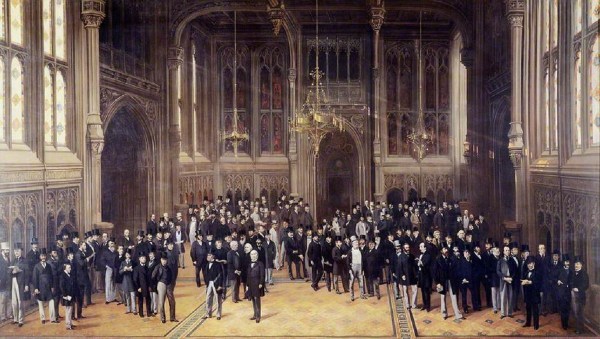
Parliamentary Statistics – John Holland

The number of frogs and toads (order Anura) elected as Members of Parliament in UK General Elections from the Reform Act of 1832 to 1900.

NB Estimated numbers only

29 January 1833 – 0

19 February 1835 – 0

15 November 1837 – 0

19 August 1841 – 0

9 August 1847 – 0

4 November 1852 – 1

30 April 1857 – 0

31 May 1859 – 0

11 July 1865 – 0

10 December 1885 – 0

5 August 1886 – 0

4 August 1892 – 1

12 August 1895 – 0

3 December 1900 – 0


Cabinet Of Heed footer logo

John Holland is a prize-winning author from Gloucestershire in the UK, and the organiser of the regular event Stroud Short Stories. Website – http://www.johnhollandwrites.com


Image: Henry Barraud [Public domain], via Wikimedia Commons

How To Write Well. Or Not. – Mary Thompson

Take magnesium and munch cheese for lucid dreaming. Absorb ‘From Where you Dream’ by Robert Olen Butler. Enter dreamspace. Dreamstorm. Read inspiring material before bed – stuff like Amelia Gray’s freaky story about couple who lock girl in elevator and feed her through hatch, or watch thriller like Rosemary’s Baby – disturbing shit that fucks with your psyche, or see Dystopian Sci-fi like Black Mirror. At 10 switch off gogglebox and retreat to bedroom.

At 2 am wake up. See cat with looming eyes staring down from Rapunzel tree especially designed for indoor cats that you put on credit card last week as felt bad for not letting her outside. Hear loud, wailing miaow. Switch on light and watch as she paws wall. Why is she pawing wall? Can cats see spirits? Who can she see? Wonder who lived here back in the day. After Google Search discover was jugglers and clowns. Feel momentarily happy that flat housed artistic types. Hope creativity rubbed off on you.

Insomnia’s a symptom of periwhatsit. How the fuck are you that old? Want to write a line of story but cat is on you and trapping arm and has blissful look on face like she’s found nirvana. Feel jealous. Wish you could find nirvana. Can’t move her so will story to stay in head till morning. It is morning though. 4.30 am. Two and a quarter hours before need to get up and it’s light. Think it might be moon. It’s not moon. Wish hadn’t taken three sleeping pills as still can’t sleep. Heath Ledger died from too many sleeping pills. Have sudden pain in chest. Should cancel work but won’t get paid and still paying for Smeg-like fridge. How can anyone afford Smeg? If write best seller will buy Smeg. Bet Fifty Shades woman has Smeg, or two. Must have two as millionaire. How the fuck is she millionaire? Need to write. Left it too late.

Message on Facebook. Just check it then sleep. And advert. For medication. Perimenopause. HOW DO THEY KNOW? “Vagiprob.” Side effects – breast cancer 0.006 percent chance, ovarian cancer 0.0000025 percent chance. Hmm. If get that will be awful but will sleep and then dream and then write stories, good ones hopefully and if write good stories, won’t matter if die young as will be fulfilled. Like Amy Winehouse, Bob Marley, Michael Hutchance. Died young but fulfilled.

Need to hear someone with calm voice. David Attenborough. Yes, if watch a few Blue Planets will sleep. Did you know 75 percent of the world is water? All those fish, whales and things nonchalantly swimming along and eating. Did you know blue whales eat krill and have tails as big as dinosaurs? Don’t need purpose and are massive. Why do you even want to write? Can just take baths and eat like they do.

Cabinet Of Heed footer logo

Mary Thompson lives in London, where she works as a freelance teacher. Her short stories and flash fiction have been long-listed and shortlisted in publications and competitions including Flash 500, Fish Short Memoir Competition, Writing Magazine, Retreat West and Reflex Fiction, and are forthcoming at Ellipsis Zine. Follow her @MaryRuth69


Image: Batut15 via pixabay


Dilemma of Knowledge – John Walls

So I find myself sitting on a park bench. I am staring at my phone. And I cannot decide what to do. I have information. Where it came from doesn’t matter. What I do with it could seriously change things. For the better, for some. For the worse for others.

I have the knowledge I need to delve deep into his life. At least, I think I do. A whole notebook full of the keys to his electronic life. And a memory stick. Modernity! Where it has taken us all? There is a startling vulnerability built into how we keep our information now.

Time was, some things were recorded on paper, but a lot of important stuff stayed in memory. Inside your head. And things said… well, they were not matters of record so much as the source of debate. Who said what and when.

E-mail, messenger, texts, recorded phone conversations. Videos, cameras, surveillance, spyware, hacking. The modern age has given us all this. Power to check on one another. The one thing that rather tenuously protects us is a series of codes, behind which we can hide. But if something happens to allow a break-in to the vault of secrets we all carry, what then? It’s like opening a cellar door, or someone pulling back the curtains to expose you, naked before the world.

What am I to do with this? The bastard tore me apart. He took my life, and turned it inside out. And left me in a dark, dark place, teeming with tormenting spiders and their repulsive cobwebs. I was trapped. No confidantes, no freedom to expose myself to the glare of others’ sympathy. I hid it. I just lived in the trap. Stuck, and waiting for the bite that would numb me, like a fly in a web. But it never came. I was not to be consumed. I was a plaything. Fun to torture. No final blow of release for me. I was to be preserved for his entertainment. Only the power of close friends and the courage to expose my plight allowed me to be where I am today.

Alone; or single, anyway. I have good friends, and my children, all grown adults and we remain close. And I am happy. But now. Now. What will I do? Revenge is sweet, they say. A dish best served cold.

There may be nothing there. I might look, but find nothing. Who am I kidding? He was always a creature of habit. There will be a minefield of deadly weapons I will find, if I open all these doors. I have all the keys. Facebook. Instagram. E-mail accounts. A copy of his hard drive. Best of all, if you like… I could access his bank accounts. All four of his accounts.

He left me in penury. Why would I not hit back? I could send him lower than I ever was. Would I enjoy it? This is so tempting, I think I will burst. On the other hand, am I better in ignorance? Where ignorance is bliss, tis a folly to be wise! There may be stuff I’d rather not know.

And I stare at my phone. Smartphone. More power in this slender device than I have ever held in my hand before. I couldn’t do more damage with a Kalashnikov, or a box of hand-grenades.

And I stare at my phone. And I stare at the notebook. And I stare at the memory stick. And I stare at a squirrel, and the dog-walkers. And I stare at the autumn leaves strew all over the grass. And it starts to rain. And I stare at the phone.

And I stare, and I think; and I stare, and I stare….


Cabinet Of Heed footer logo

Image: Lubo Minar on Unsplash

Retrospective Downer – Dan Brotzel

Great sesh, me old mates.
Sweet-talk the fans.
Cool pad, Tom.
Speaking of Cougars, Julia
The old man with cancer
The fans and the curious (5% discount)

The old man with cancer was pretty cool.
Chuck it all in? We’re here for you. Darling
No need to worry about briefing the tradespeople! We do feel your pain, darling
We all do, darling (5% off) (cancer is cool)
Thinly disguised mature sex goddess
(not my words, darling)

Terrible pain, darling.
Collective shock, a feeling of inadequacy (pilates! the pool!)
An abyss of anxiety beneath your mask of self-control
(But let’s not beat ourselves up) (cheap cancer for the fans)

Just wanted to get that off my chest.
Your incredibly brave, flat-screen TV
Oak-effect laminate flooring transubstantiates pain into art
None of the trauma diminished, I’m sure (darling)

You are our friend (I am an actor)
Badger reset: liberal blinkers off please!

With our pilates and our real ale (and our erotic prints)
We will slay the demons that stain our memories.
Were you a bird then, mate? (I don’t want to pry) (I am an actor)
We all have issues, genderfluid

You seemed bored, and frankly so was I.
Eternal gnosis ffs! I was only looking for the loo.
We feel your pain. (Though I was a teensy bit peeved)
Cancer is 5% off.

Okay, gotta go.

Please note: to be the intended recipient of this message is prohibited.


Cabinet Of Heed footer logo

Dan’s short stories have been recognised in several competitions and anthologies. He was runner-up in the Flash500 short story competition 2017, and was also shortlisted for the Sunderland University/Waterstones Short Story Award 2016, the Wimbledon BookFest prize 2016, and the 2017 Fish short story and Retreat West flash competitions. He wrote sketches for Dead Ringers (BBC Radio 4), won Carillon Press’ Absurd Writing competition (2014), and has also made two appearances in Christopher Fielden’s To Hull and Back comic-writing anthology (2015, 2016).
A journalist and former slush-pile reader, he is also a book reviewer for the Press Association.


Image: Andrew Neel on Unsplash

The Slide – Michael Chin

I’ve never been the kind of person to eat fast food. Geri cooked real dinners and I brown bagged my lunches. Sure, we took the kids out for burgers now and then, but it was a treat, not a way of life.

There’s a kid running around at knee-level who looks a little bit like Jeff when he was a boy. Same bushy hair, albeit a shade lighter brown. He wears a red and yellow striped shirt, as if he were McDonald’s branded. His mother puts a hand on his shoulder and I think she’ll tell him to quit running because he’s going to knock into someone and send their food flying, but instead, she tells him not to play there, but to head to the play area. So, he runs away from his mother’s side, in line to order, and past the glass door that another grown up is conveniently holding open. The kid doesn’t even say thank you, and the next second he’s climbing the ladder up to the big twisty slide that feeds into the ball pit. Probably for the best. Out of my way, at least, so if someone spills his coffee it’ll be on that side of the restaurant where you ought to expect such things.

Still, I worry about the boy. When Jeff and Susy were little, you could afford to let kids run and play on their own, but nowadays it’s all over the news about missing children. Not just strangers scooping up kids, but teachers, or preachers, or soccer coaches. You can’t trust anyone, and this woman sends her boy off to play unattended.

I reach the counter ahead of her. Order my usual medium cup of coffee with two creamers, yogurt parfait and a copy of USA Today. Splurge a little and get a hash brown, too.

The kid who takes my order asks if I’d like two, because they’re two for a dollar, as if he’s never seen me, as if I’ve never been here at breakfast time before and don’t know the hash browns are two for a dollar. His forehead is greasy and littered with dots of pimples. I remember when Jeff wanted to work a fast food gig in high school and I wouldn’t let him, fully aware he’d end up just like this kid. Stand around it long enough and all that fry grease seeps in through your pores. And what do these kids eat on their lunch breaks? More McDonald’s, of course. More grease and salt and fat. “One’ll do.” I try to say it easy. I know the kid’s doing his job, but you’ve gotta be firm or they’ll give you the two hash browns and charge you the dollar and say that’s what they heard you say, and it’s an argument. If there’s one thing worse than being in a McDonald’s first thing in the morning, it’s lowering yourself into an argument with one of the employees.

I started coming after I moved to be closer to Jeff and he and Kate had their first born. It’s what Geri would have wanted—what she would have insisted we do. No sense in staying put and withering away alone when there was family to be around. Small town living was good. Quieter. I got to be buddies with my next door neighbor Louis and we watched football games together on Sundays, and he’s the one who got me going to McDonald’s for breakfast where all his friends hung out. An old crowd, but what was I if not old? After Louis had his stroke and it was clear Jeff and the family were too busy to see me more than once a week, I needed some sort of social outlet, didn’t I? So I kept coming.

“Look who finally showed up.” Big Carl always reeks of cigarettes and always gets a full breakfast. It’s a miracle he’s lived this long, well into his retirement. Today he eats hot cakes, slathered in butter and syrup, and two sausage patties, also in syrup, from a Styrofoam container. He’s got a large coffee, a large orange juice, and glass of water to take his pills. Most of them

have pills, and it’s a point of pride for me that I don’t. “We were starting to think maybe you’d croaked.”

Big Carl says this, regardless of the time, whenever someone’s the last to show up. You’d think that we had a job to do, a schedule to keep. As if it weren’t one of the few luxuries of getting older that we don’t have to go anywhere at any specific time, or go at all if we don’t want to. I check my watch and it’s 8:45. That’s a good time to show, after most of the folks rushing to get to work. I’m not in their way. They’re not in mine.

Lenny squints at my tray. He squints at everything, including his newspaper. I’ve seen him wear glasses a couple times, but for whatever reason, the skinny bastard doesn’t want to make a habit of it. He points a liver spotted finger. “You know those hash browns are two for a dollar.”

Big Carl—he calls himself that, it’s not just a descriptor—likes to think he holds court, talking over the rest of us and giving people a hard time as he sees fit, but the gravitational pull of our little group of eight or nine oldsters revolves around Lucinda, sitting next to him today. She’s the only woman in our group, and I think she likes the attention. She eats a Fruit and Yogurt Parfait and sips from a hot tea. She skips over the news section of the paper and goes straight for the crossword puzzle.

“You hear what Obama said today?” Lenny folds over his paper and holds it close to his face. “He says there are no Islamic terrorists. Give me a break.”

“That’s not what he said,” Carl corrects him. “Not exactly. Remember, he’s a Democrat. He’ll never say anything in absolutes.”

Dee Dee—one of the workers—goes into the play area. She’s good with kids. I’ve seen her carry out trays of Happy Meals to them. She’s the one on birthday party duty in that play

area. A nice girl. A pretty girl, too. In the old days, we would have called her double-Ds, even though that’s not empirically true, because it would be a convenient nickname for a pretty girl.

Dee Dee’s always nice to me. She always smiles, and she winked at me the other day when I got caught holding the door open for one kid and it turned into being a stream of four of them, followed by the mother pinning a cell phone between her shoulder and the side of her head, the handle of a car seat over her elbow, a fifth kiddo asleep in there. I was annoyed, but Dee Dee winked and it made it feel funny, like it was all some big joke and when you look at life that way, you can’t stay mad, even if a part of you thinks you ought to.

It bothers me sometimes that Dee Dee is so friendly with me, in a way I don’t think she’d be with a younger man. It signals that I’m old enough to be harmless, and it’s not good being that ancient. Old people and children—before you’re a teenage jerk, after you cross the threshold so the idea of dating you would have to be a joke. People see an innocence there and it isn’t right.

I do like that Dee Dee’s in the PlayPlace with the little boy who looks like Jeff, though, because it’ll mean that someone’s looking out for him. From where I’m sitting, I can see the top of the slide and I haven’t seen him climb back up there, which has me worried he’s gone missing. Maybe his mother came in with the food already and made him sit down. Or maybe he’s still tuckered out in the early morning, I guess.

“There’s going to be a fish fry at the Lion’s Club Friday.” When Gary pauses, he curls his tongue out over his upper lip. He’s not as big as big Carl, but he’s plump. The kind of man who’s spent a lifetime eating McDonald’s cheeseburgers. He always finds something about food in the paper. If it’s not a fish fry, it’s a church bake sale, or a new restaurant opening, or a comment about a grocery store ad. Always hungry, always looking ahead to his next meal, even

when he’s got a jiggly fried egg patty on an English muffin right in front of him. “Twelve dollars, all you can eat. Not bad.”

Lucinda puts a hand on his arm and moves it away like she’s swatting him in slow motion. He looks at her. Hopeful. He’s got the spot of honor on the other side of her today and it’s probably the first touch he’s had from a woman in years. He never talks about a wife—current, ex, or deceased.

“Didn’t the doctor tell you to watch your cholesterol?” she says.

“Doctors say a lot of things.” He tears at the newspaper. Doesn’t even crease it first to get a straight edge, just tears at it all ragged. “What’s the point of being old if you can’t indulge yourself?” He stuffs the scrap in his pocket for later.

“I remember going to the senior prom at the Lion’s Club,” Big Carl says. “They’ve still got that same crystal chandelier, but it doesn’t shine the way it used to. I remember the way it looked that night. 1952. It sparkled. Valerie—the girl I took—she said it looked like we were dancing under the stars.” He eats a big bite of a hot cake that didn’t cut all the way so the piece adjacent to it hangs loose from his fork, then his lips before he sucks it in.. “I remember she smelled like roses.”

Here in McDonald’s, everything smells of eggs and butter. The coffee’s burnt. All of these oldsters have a history with all of the local haunts—I bet every one of them has a Lion’s Club story like that, and I always feel like a jerk nodding along without anything to contribute, like I’m behind because I haven’t lived in this Podunk town my whole life. Try talking to them about a restaurant in Boston or Chicago, they look at you like you’re from Mars.

Jeff shouldn’t have moved here. This is a place for old-timers and people who think small. Young people—smart, vibrant young people ought to live in big cities, especially at this

age. That’s the mistake I made, too young, and that’s why he got brought up in a town like this. Shouldn’t one generation learn from the mistakes of the one before it? Want more? Live better?

The running boy’s mother wanders unsteadily back toward PlayPlace, balancing a tray. So she wasn’t there before, and she didn’t get the boy who looks like Jeff away from the slide. So where is he?

“I heard the liberals are going to try to take all of our guns away. Don’t they get it?” Lenny said. “Take the guns out of our hands and the only people who’ve got them are the terrorists. They think it’s bad what happened in Orlando. What if the Muslims knew no one had guns anywhere?”

It’s the same small town conservative talk I heard when I was a younger man, and I don’t know if it’s more or less frustrating for the familiarity, for the fact that all of them probably grew up hearing it until they repeated it.

Oscar joins us. He’s a wiry old man with big tufts of white hair that he doesn’t comb or maybe there’s only so much a comb can do against hair like that. He sets his whole tray on the garbage can like he does everyday, leans over, and pours some of his coffee down into the trash. Often as not, he gets some of it on himself. He says it’s because they always give too much and Big Carl’s told him he should just ask them not to fill it up all the way, but he never does and inevitably, toward the end of our morning routine, one of the workers retrieves the bag and has to be extra careful because the bottom’s filled with coffee. Sometimes the bag breaks, so the coffee and whatever other garbage juices it mixes up with leak little drops across the floor.

“Gun control’s not the same as taking away guns, Lenny,” Big Carl blows on his coffee. He drinks it with the lid off so it isn’t so hot so long, but I always eye it, sure he’s going to spill it all over the place. “Call me a moderate on this one. I think some control is OK. But I do also

think there’s a problem when people who don’t understand the fundamentals of how a gun operates are the ones calling the shots. I heard a man on the news the other day, talking about how the size of the clips was one of the issues, because why would anyone need a clip with so many bullets. I sincerely don’t think this man knew the difference between a clip and a magazine.”

The mother in PlayPlace is looking all around. She doesn’t see the boy. She talks to Dee Dee for a moment. Dee Dee smiles at her, too, and I think for a second maybe that speaks better of her perception of me—that I’m not so much harmless as just any customer, and she smiles at customers. But that’s not right either, because this is a middle-aged woman. A mother. And Dee Dee puts us in the same category. Mother and grandpa, the both of us not to be concerned about.

But the mother looks concerned. She realizes her mistake, surely, in sending the boy off on his own and now he could be anywhere. I imagine a stubbly-faced man in a black ski cap waiting at the bottom of the slide with his arms open wide to greet whatever child might come to him.

“You need screening to get a gun. There ought to be screening for making gun laws, too. A written test, at least,” Big Carl says.

I take a bite of my hash brown to keep from talking because I don’t feel like engaging today, and half expect Big Carl is trying to engage me. If people like him paid attention to what was happening under their noses half as much as they concerned themselves with their obtuse takes on world affairs, maybe they’d contribute something to society. I promise myself, right then and there, that as soon as Jeff’s kid graduates high school, I’m out this Podunk town. No sense sticking around after that, at least if I’m in decent health. Maybe I’ll be one of those old-timers who drives around in an RV. I always thought it was silly and I’ve never driven anything

like that—never anything bigger than a twelve-foot moving truck—but how bad could it be? Maybe I could finish off my bucket list—finally get around to Yellowstone and the Grand Canyon like I always thought I would.

“There’s not that much screening necessary to get a gun,” Lucinda says. “And I don’t see what knowing how a gun works has to do with that part.”

“Ha!” I can’t help myself from barking out a laugh. Lucinda usually doesn’t weigh in on political discussion. The only time I remember her pointing out something from the newspaper was a cute strip from the funny pages about explaining death to kids. I thought it was really sad and kind of beautiful, and a hint that Lucinda had more going on upstairs than most of us to appreciate a thing like that. All Big Carl could say in response was, geez that’s depressing, Lu and I think half of it was just to get a rise out of her because she doesn’t like being called Lu and she’s told us that dozens of times. He flirts like a grade schooler, and you’d think he’d have some more dignity than that.

But today, when Lucinda brings up the obvious flaw in these Republican geezers’ chatter, she’s the one beyond reproach. Big Carl will give her a hard time but he’ll never engage her in a real argument where she tries to pick apart what she says, and now, though the lot of them might descend on me in her place, I’m also under Lucinda’s protection because anything they say about me as a goddamn liberal would apply to her, too, and maybe they wouldn’t care if I got up and left, but they’d be damned fools to let the only lady in their crew slip away.

But I laugh in the same instant that Oscar shows up and he jumps and the lid’s still loose on his coffee and there’s still enough in there for it to spill over the brim onto his hand and onto his sleeve and he screams like he’s been electrocuted. He almost loses his balance—he really might’ve if Gary didn’t get a hand on his back first.

Oscar’s looking all around himself, really in a state and Lenny takes what’s left of the coffee cup from him to set it down and helps guide him toward his seat, before he rouses. “I gotta get more coffee.”

“I’ll get it Oscar,” I say. “It’s my fault for startling you. This cup’s on me.”

“You’ve got to pour out a little.” He talks like he’s straining—his voice is always soft and tired like that. Like he already spoke his allotment of words for his life and he’s running on fumes. “Not a lot. Just a few sips so it’s not sloshing.”

I’ve sat next to Oscar enough times to know how much coffee he wants—about three-quarters of a cup—so I tell him I’ve got it and walk around him, feeling nimble. Decrepitude is a relative thing and maybe I’m still relatively spry, relatively far from death.

“Get the poor guy napkins, too,” Big Carl hollers.

On my way to the counter, when I’m about to get in line, I look over at PlayPlace again and there’s no sign of the mother. Things have gone from bad to worse. She must not have spotted little Jeff and gone on some sort of frenzied search. And just then I see a darker spot in the slide. A round, tucked up shadow where the slide turns from a red to a yellow segment around a bend.

The boy’s stuck. I look for help but there’s a long line. Long enough that Dee Dee is back behind the counter, not in PlayPlace, bagging and bringing food to drive thru, or putting it on trays at the counter—how does she keep track of what goes where? She’s too busy to be bothered, and the rest of the workers won’t take the time to listen to me. Not if I’m doing anything besides placing an order.

So, it’s up to me.

I walk into PlayPlace. Pause as two kids run by, fortunately not to the slide, just running to run. What’s with all of these kids? Is it some sort of holiday? I make my way to the exit of the ball pit and crouch down. I haven’t been on all fours in a long time, but I’m feeling strong. Like today, I can rescue little Jeff and deliver him to his mother. Get back to our table and the guys will all want to pat me on my back. Maybe Lucinda will want to kiss me on my cheek, and I’ll take it, if just for the status symbol among the rest of the oldsters. Even Big Carl will have to admit that what I did was pretty great. Maybe Dee Dee will look at me and see the younger man I once was. Think I’m dashing. Ask me to tell her stories from when I was her age, besides saying I’ve got free coffee for life.

I peer up into the slide. I can’t see past the curve, and don’t know why I thought I would be able to. The slide smells the same as the trays after they’ve just wiped them down with their cleaner—when some of the workers slap the liner down too soon and start reusing them right away because it’s busy, and the cleaning fluid seeps right through. They’re not patient enough. No one is these days.

“Jeff?” I call up to him. No answer. This is scarier. Maybe he’s not only stuck, but hurt. Maybe he tried to stand up in the slide and hit his head and knocked himself out. I ease my shoulders in. It’s a tight fit. Tighter than I thought. They must make these slides smaller than they used. I begin my slow crawl up. No need to rush. Just have to get up to see if the boy’s all right. I see myself tugging gently on his leg to get him loose if he needs it, then the two of us can slide back down, easy-peasy.

But the climb is hard. Harder than I could have imagined, the space too tight, the angle too steep. I slide back, involuntarily, but only a little. Only a little until I’m wedged in tight. I can’t crawl forward, can’t crawl back. I might be stuck here forever.

But it’s warm here. There are worse places to be stuck. And someone will come along sooner or later. People must have seen me go in, right? They must have thought I was crazy. They’ll come help me. And then someone better equipped—someone younger and slimmer—can take my place and reach Jeff and deliver him, too. Let them be the heroes. Young people need that sort of thing more, anyway.

My eyes are heavy. I didn’t get to drink much of my coffee and I’m paying for it now.

Help will come soon.

So in the meantime, I breathe in and breathe out. I rest my eyes.
 

Cabinet Of Heed footer logo

Michael Chin was born and raised in Utica, New York and his hybrid chapbook, The Leo Burke Finish, is available now from Gimmick Press. He has previously published with journals including The Normal School and Hobart. Find him online at miketchin.com and follow him on Twitter @miketchin.
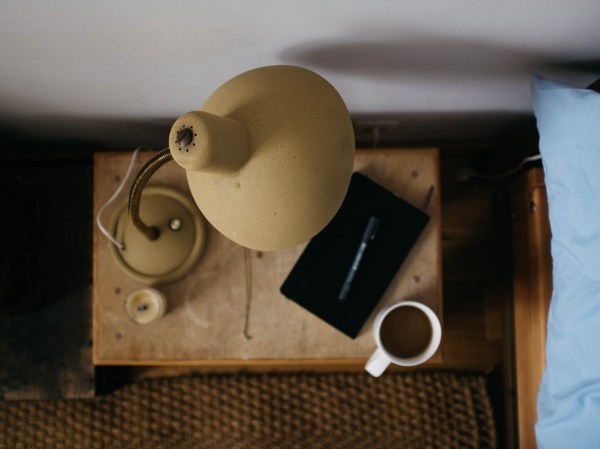
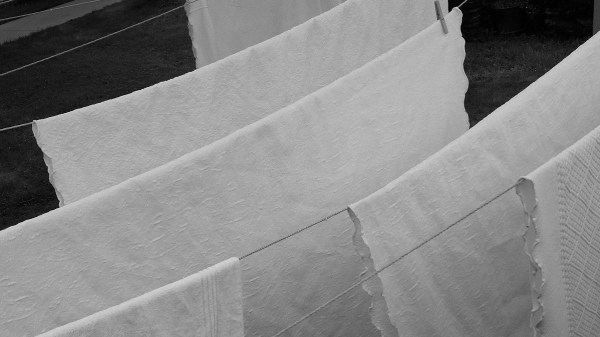
 

Image: vonpics

Create a website or blog at WordPress.com

Up ↑