This is a moment where one wonders to themselves: “How in the hell did I end up here?” It seems pretty implausible to be chained to a tree trunk, unable to move, listening to the screeching hiss of a saw blade at top speed, just below my feet. But, I guess that’s life: unpredictable.
I was bored, you know. The same four walls, day-in, day-out. I really do hate this mess I live in. After hours of meticulous cleaning, I sit in my squeaky leather armchair staring at my accomplishment, and am momentarily satisfied. My vacuumed high-pile tan carpeting (those spots are from before I’d moved in, I swear) stand at proud attention. Sunlight pours through a “streak-free shine”. Everything in its place. I hate it.
My house is always a disaster two days later anyway, so I just need to get out once in a while. I’m driving streets that I’ve known since my mom forced me to read off the Thomas Brothers Guide to her; funny to think now, limited to one final road toward a certain acuminous end, that I would become bored of these streets. Perhaps I’d like to see snowfall just once, or crunch through leaves in the fall. The endless, rolling brown hills, the fading gray freeways, the yellow lights on a smog-filled night ignite little passion. Everywhere, imprints of memory dot intersections and back alleys, and are yet sharper than the splinters in my back, even the rotating death at my feet.
It gets so tiring to live life one thousand times, as though reflections of a shitty childhood are jewels to be flashed across endless pity parties. Though I know these roads, I am at all times, running as far as the wheels of a high-mileage Nissan can carry me on $15, give or take. San Diego is my old-ball-and-chain, to whom I return whether or not she cares. If only I could meet someone new. It seems important to note that my mom and I moved 8 times between my 5th and 16th birthdays, but always within a three-mile radius. At least when I do meet my end by steel claw with weeping sap filling my nose, I will have been in one place for quite a while – even if that is tied to a tree.
So what, I deserve my fate of being sawed in half, because I am perpetually unsatisfied? I find that to be poor logic, despite how willing I am to blame myself for the circumstances of my life. How about this: a social worker once asked me why I need to be different? Is there even an answer to this? I think, therefore I am weird? Hmm, perhaps. So, I like getting away from the mess that reminds me that I am not alone, and maybe I want to stop in at a REALLY shady-looking bar off Old Highway 80 and order onion rings. Maybe I do sell my furniture on Craigslist, and give them my actual address. Is the logical conclusion an approaching saw blade? Or do I just need to be different? Unexpected?
When I was sixteen, I got punched in the head and passed out. When I woke up in the hospital, the staff called my mom who came only to tell me that I was kicked out of her house because I was too much trouble. I elevated and lowered my feet one-hundred times with the remote, while glaring out the window overlooking the 5; meanwhile, my mom took all of my life into garbage bags, and left them on my dad’s front porch. She did the same with me once I was released from the hospital – minus the trash bags. It’s funny that I was so easily cut off.
My dad never made me go back to high school after I moved in. I guess I was going against my own expectation of never getting sucker-punched in East County, or maybe my art teacher’s expectation of me going to the Art Institute. Never surrender to expectation, I say. I stole blue hair dye from Thrifty’s, and drank vodka in the Carl’s Jr. play place; so what? Was it to be contrarian, or this need to be different? If so, I should of course die tied to a log because it is the last place I would have expected to be. Still, I am unsure if this is enough of an explanation on how I got here, inching ever closer to my fate, that hot wind of destruction blowing over me.
I should say: “I drove to the forest, found myself a tree that I fell in love with, and when THE MAN came to cut it down, I chained myself to it in protest, only to find the joke’s on me!” But, that really isn’t how it happened at all. Truth be told, my city was a logging community and citrus orchard before I was born – the last in Greater San Diego. After my mom graduated high school, there were no trees left here. When I dropped out of high school, there was a giant, plaster lemon in the center of town to remind us of the trees that once were. I assume that memories can’t hurt something always changing, always in motion. So here I am, moving toward that saw-blade. I feel the slicing wind at my heel, the sound of death penetrating my fearful soul. How did I end up here really? I guess this is it; or I could just let go of the chain.
Dee Richards is a writer, parent, and LGBTQ+ feminist badass in Southern California. She/They are published in Epoch Literary Journal, The Acorn Review & Crush Zine, in association with the Toronto Bi Arts Festival.
Yes, it is mayonnaise. I remember it from my first day, the construction worker and his lunch, impossible to forget. His wife put the mayonnaise, the cheese, and the salami into a blender. My orientation had covered the institution of marriage and the institution of the American sandwich, but on that morning I knew I knew nothing.
That was Philadelphia. That was some time ago. Now I am in a city called Calgary and the weather is getting cold again. Which is one of the reasons I am concerned about this woman. Her pink dress hangs from strings on her shoulders and though it floats above the asphalt, brushing her ankles, it does not seem to be keeping her warm. Also, she smells strongly of mayonnaise. I move closer. Her hair is slick with it.
This is both worrisome and exhilarating. Everything I know about this world denies the possibility that appearing on foot at the drive-through automated teller, looking and, yes, smelling like this is generally acceptable. But even as I churn in empathetic embarrassment, I am delighted again by the unexpected gift it has been to experience odour on this assignment. What is more emblematically human than the fine, fine line between stink and perfume? And yes, this woman poking her finger at the screen in the thin dress and flip-flop shoes and with the mayonnaise in her hair—which, though she must have purchased blonde hair colouring, is more of a sunset peach colour—is wearing a strong perfume!
Truth be told (and I am obligated to tell the truth), I’m surprised she has so much money in her account. One thousand fourteen dollars Canadian dollars and six Canadian cents. As I watch her, she is withdrawing eighty dollars. My experience would suggest that she is about to proceed to a bar, but it is a Tuesday. And there is the mayonnaise. Striking in all of this is the element of her preparedness.
Not only does she anticipate needing the cash. She has, sometime during the past hour or two, carried a large jar of mayonnaise into the bathroom. Did she buy it today, or is it something she keeps on hand? She set it on the toilet and used a butter knife—no, probably a large spoon, even a spatula—to scoop mayonnaise out of the jar and apply it to her head. Her hair, twisted into a knot at her neck, forms a neat and greasy cap. Surely the string-supported dress is a forethought attempt to keep a more substantial piece of clothing from being contaminated. And her footwear suggests that she can’t afford to waste any time.
She is already stuffing the bills into the top of her dress and walking off, the slap of her feet echoing against the buildings. Her receipt is there, fluttering in the slot of the teller machine. I fold it in half and push it—experimentally—down the front of my robe.
Lizzie Derksen lives and works on Treaty 6 land in Edmonton, Alberta. Her writing has appeared in Room, PRISM International, The Antigonish Review, Poetry Is Dead, Queen Mob’s Teahouse, and on CBC Television.
Look at me. Ridiculous. I’m nothing but a bad Rom Com. I would walk out if I could.
This one’s name is Harry. Whatever. I’ll have to forget it soon enough.
You take my Mom, for example. She knew a good over when she saw it. First oof of another woman on my father’s collar and she was off like bam! Left the baked beans boiling in a pot.
Harry is giving me flowers. Look at me, softening, my shoulders relaxing, my sniffer going numb. I am watching how I don’t see him pull out his phone, texting texting. Who is he texting?
My mother told me not to look in the mirror. She said I wasn’t pretty and she didn’t want me telling this to myself every day. I asked her if I looked more like her or my father. You look like a heartache is all she said.
Soon after she said that, I saw myself in a store glass. It was only an outline, but enough to see that I didn’t look like a heartache, even though I wasn’t sure what that meant. I went inside the store. I bought my mother cigarettes like she asked and went home. I was going to tell her she was wrong about the heartache thing. I wanted to tell her. I would tell her. Someday I would watch myself tell her.
Even from here, I see how bored Harry is. I see myself sensing this and so I do what I always do. I ask and ask. He says nothing and nothing. I say I made blueberry pie. It’s your favorite, right? Harry going stabby and pushing the pie around the plate and then oops! Emergency.Gotta go, he says. Harry sells paper goods. I wonder what a paper emergency would be. The me I am watching is wondering that. The me over here knows better.
My Mom knew better. Not about my dad, though. Yes, she left him, left us, as soon as she saw the other woman on his collar but there was so much before. I saw it. Saw it when he drove me over to soccer practice and he leaned in too close to our coach, Miss Williams. And another time, and the time before that. My father never seeing how I was watching.
I watched my father die in the hospital. Car crash. Texting and took his eyes off the road. I called my mother to tell her. She had given me her number for emergencies. Your father’s death, she said, is not an emergency.
Harry is gone now. I look at the space he left behind. I look at how I smell the flowers and stroke the flowers waiting for them to come alive and give me love. I watch how patient I can be. I look at those flowers even as I wash the dishes, scrub blueberry off the dessert plates. I walk by the hallway mirror, quick glance at the tracks of mascara on my cheeks. Then even closer. I am watching myself watching myself. I hear my mother in my head, don’t look, don’t look, she is saying. I turn away and grab a bottle of wine.
It’s later that night and I watch myself sleeping. I look at the empty bottle of wine by my bed. I watch how I fell asleep in my clothes, my makeup still on. I look at how I’m clutching two of the carnations from the bouquet Harry left me. I get this way about the things men give me, that their touch is still on them, that their breath is still on them and how that is the only part of them I will ever really have.
My mother was right, I do look like a heartache.
I crawl into the bed next to myself. I listen to the drunken whisper of my own sleep. I crawl back into myself through a dream. A simple one about mothers and flowers and fathers and blueberry. When I wake in the morning, I won’t check my phone to see if Harry has called, but instead I will walk myself over to the mirror. I will look at myself now through my own eyes and when I start to shy from my reflection, I will turn my face forward, and hold it there if I have to in my own invisible hands.
Francine Witte’s poetry and fiction have appeared in Smokelong Quarterly, Wigleaf, Mid-American Review, Passages North, and many others. Her latest books are Dressed All Wrong for This (Blue Light Press,) The Way of the Wind (AdHoc fiction,) and (The Theory of Flesh.) Her chapbook, The Cake, The Smoke, The Moon (flash fiction) will be published by ELJ September, 2021. She lives in NYC.
My city has no streets, it moves on difficult trails cleared in haste through a tall topography, in glimpses of red through an infection of forest. Red called and I answered, cut my way up that first ridge and my city festered without corners; a metaphor thick with biology. I said the same things over and over, told fertile Earth she was safe, like a tick doomed to the creases of a great sugar pine.
Don O’Cull’s work has appeared in Don’t Talk To Me About Love and he has been named Barnes & Nobles’ Poet of the Month. He holds a BA in Creative Writing from the University of Arizona and an MA in English from SNHU. He currently resides in St Petersburg, Florida.
‘Four ways to say thank you,’ you say. ‘The Brandenburg Gate lit up in blue.’
You hold your hands wide as if trying to show me the size of the landmark I have witnessed in many of its iterations – bullet-holed, walled, liberated by chisels and cranes. The first time I walked through it, I rested my forehead against one of its columns. Like a madwoman, your father, said. You must have seen the photograph. He framed it and hung it above his desk. The madwoman, a source of inspiration to her only grandchild, it seems.
‘I heard in England,’ you say, your gap year lessons seeping out, ‘that when the war ended they threw their clothes on over their pyjamas and ran out into the street. They tore down their curtains and turned on their lights.’
‘Yes,’ I say. ‘I heard that too.’
‘I heard in England,’ you say, picking up your bottle of water, ‘that the next day they dragged their tables through their front doors, draped bunting across windows and hedges, served cake and sandwiches, sang songs of patriotism and new days.’
I smile and nod, but perhaps I smile and nod too much these days. I smile and nod at the nurses as they lift me from my chair into the bath and back again. I smile and nod at weak coffee and the junk mail I’m handed every morning. I smile and nod at the silence that often accompanies old age.
‘Did you see the photographs of Trafalgar Square?’ you ask. ‘Teeming with people, like an ant colony,’ you say, mouth laden with water. ‘All singing and dancing and applauding. And the kissing.’ You pucker your lips as if I do not know the shape of a kiss.
I pick my cup up, so I have something to hide my smile behind.
‘My friend’s gran kissed an American GI,’ you say. Your eyes glisten with the gossip. ‘She told me he was the most beautiful man she ever saw and so eloquent.’
I nod, keep my coffee cup to my mouth.
‘Did you…?’
Ah, there’s my old companion: silence. You look at the cobwebs in the corners of the room, the slope of the ceiling as it bows to the window. You worry at the label on your water bottle. A blush descends on your cheeks and neck. You press a hand to your face. You have never asked me how the war ended for me, my family. Your family. Your default setting tells you it’s a memory best kept in my head and my head only. And besides, you have the internet to answer that kind of question, don’t you?
‘So, the weather has been kind to us,’ you say. You wave at the window, at the nodding trees and the blue sky above Charlottenburg.
I laugh. ‘I suppose it has.’
Your discomfort still spoils your cheeks and you slap your palms against your thighs as if that will change the rhythm of the room. I realise you’ve never had to be subtle, never had to slip into a basement, cramming yourself in between the beating hearts and sticky limbs of your building’s inhabitants during an air raid. You’ve never had to feel Frau Hirsch’s knees biting at your own, hear her impatience as you dare to take a millimetre she does not believe you’re entitled to. The petty squabbling of knees until it felt like bones were about to break didn’t end with the surrender, with VE Day, it didn’t even end several weeks later with Frau Hirsch’s death. She was attacked by three Soviet soldiers when on the lookout for water. She haemorrhaged blood like it was all she was made of; it took weeks for my mother and I to get the stains from our palms. Some mornings, even now, mind sleep-fogged, I catch myself scratching at my lifelines and heartlines.
I drain the dregs of coffee from my cup and rest it back on its coaster. I wonder where you will steer the conversation from here. To Brexit, perhaps. You’re livid, confused, hurt by that one. All your English friends profess to be Remainers, but I think you should tread with caution. No, not Brexit, we debate people’s morality too much when we mention that and the atmosphere doesn’t lend itself to such discussions today. Maybe you will tell me about your love life – I like hearing about the dating apps, the quirks of young men these days. I shake my head whenever you leave, can’t imagine picking a potential partner from a fingerprint smeared screen.
You bite your lip, cross and uncross your legs. The text on the bottle’s label grabs your attention and releases it sooner than expected.
‘What was the end of the war like for you, Oma?’
You lean back in your chair, indicating you have time. The bottle protests your grip. I wince at the sound it makes. I feel something within myself crinkle and crack. The odour, the texture, the vastness of Berlin in the days, weeks, months, after surrender begin to seep out and you nod and tilt your head in all the right places.
Emma Venables’ short fiction has recently featured in Mslexia, Lunate, and The Sunlight Press. She was a runner-up in the Alpine Fellowship Writing Prize 2020. She can be found on Twitter: @EmmaMVenables.
The mirror behind him, spotted and hazy, held the room of half empty tables, a few regulars, and deep shadows. Smoke danced through the dimly lit room. The bartender wiped down the bar covered in nicks and dips. He poured drinks as he moved up the bar. An old Wurlitzer 1700 jukebox blue and red shone like a prize at the center of the room. The record player swirled, picking up the next record. Paula Abdul shared her woes of an encounter with a cold-hearted snake. A small TV hung in the corner, spelling out the news.
A man with a crooked nose hunched over his glass at the end of the bar. He nodded every few seconds and then snorted. He lifted a glass. Ice clinked the sides as he clumsily shook his hand. The bartender grabbed the lower shelf whiskey and poured. The man nodded and sipped.
The front door opened with a jingle. In walked a man, no more than five foot five. His belly waved as he stomped off boots covered in mud. He offered a half toothless grin to the bartender and waddled to sit beside the man with the crooked nose at the end of the bar.
“Hi there, Jerry, can’t believe it’s been a year,” said the man with half his teeth.
“Yes, and twenty-five more before that. How you hold’n up Jacob?”
“What can I get you?” said the bartender.
“Whatever you have on tap,” said Jacob. The bartender pulled the tab and golden liquid poured from the spout. White, bubbly froth swished its way to the top of the glass. He dropped it down right in front of him, splattering the bar. Unfazed, he slapped the towel down on the bar and swished it away.
“Oh, it’s been a rough year, Jerr. I remember when we thought that money would last us forever. Stupid kids, that’s what we were.”
“We had a time of it though. I loved that cherry red Viper. I raced that car everywhere. And the women… I sure do miss the women.”
Jacob chuckled. “You always were good with the ladies. I still have my farm and that’s good’nuff for me. Got to travel a little. My truck’s still running steady, too.”
“That’s good. Never could understand why they wanted to pay us so much to take those paintings.” Jerry shrugged, then snorted. “We sure duped them.”
“Yeah, we did.” Jacob’s lumpy body shook and jiggled. A big half toothless grin spread wide between puffy flushed cheeks. He looked up to the TV. “There it is. The news report on the heist.” His plump fingers slapped the table. “Bartender, can you turn the sound on?”
“Yep. Don’t know why they keep on about it every year. Guess it gives us an excuse to get together.” He snorted into his glass as he sipped. “That old lady’s still whining. She didn’t lose her job, did she? Pretty sure she hired us anyway. Never saw her face, but that voice of hers is close.” He shrugged.
Jacob shook his head. “Nope, never did see it myself.” He slid the empty mug across the bar. It moved hand to hand with a steady cadence. “Hey Jerr, we need to talk.”
Jerry paused, his glass frozen mid-air. “Bout what, Jacob? You know what happened the last time you brought it up. I know you don’t want to lose the rest of those teeth in your mouth.” He gulped down the last of his drink, then slammed it on the bar. His arms bulged tight. His crooked nose scrunched as he hardened his hand into a fist.
Jacob slid lower in his seat and hunched his shoulders. Then sat straight and puffed up his chest. “Listen. Just listen, Jerry. Please… I’m not up for breaking that nose again. Damned if it didn’t make you look better.”
He snorted. A mouth full of straight tar stained teeth flashed.
“I… it just weighs, Jerry. Twenty-five damn years and it still weighs heavy. Every time a cop car flashes through the neighborhood I want to run. I’m tired.”
The bartender sauntered over. “Hear that boys’? That guy says he knows who did it. After all this time, that would like a miracle or someth’n,” he said. He poured another whiskey, turned and helped a lady two chairs down.
Jacob grabbed Jerry’s arm. “Do you think… you think they got us after all this time?”
Jerry shook his head. He placed a cigarette between dry cracked lips, flicked the match and watched the fire flare up, then pulled it to the tip of the cigarette. Smoke curled out of his mouth, then filled the space in front of him. “I think if they had any evidence to catch us, they would have done it twenty-five years ago.”
“But Jerr, they have that new DNA checking now. Maybe… what if—”
Jerry punched him on the shoulder.
Jacob grabbed his shoulder and rubbed. His eyes wide. “Whad’ya do that for?”
“Look.” He jumped up. His lean frame moved to the beats on the jukebox. A toe reached out and his knees wobbled, and then he spun in a circle. Bent over, rested hands to knees, he wheezed, “We’re free of it, man.”
“What are you on about?”
“They think we’re dead.”
“I… how is that possible?” He scratched his head.
Jerry sucked hard on the cigarette hanging loosely from his lips. A cloud poured out. “Hot damn, partner. It’s finally over.” He grabbed Jacob’s hand, shook it hard. “It’s been a pleasure Jacob.” He headed for the exit.
Jacob looked at the bartender, Eyes wide, a half toothless grin on his face. “Pour me a whiskey, bartender.” His body crumbled. The sigh escaped his lips as his body deflated. He shook his head and chuckled. “I’ll be damned.”
Smoke rolled through the room, swam around bodies, and danced over the waves of music before it slid through the crack in the door as it shut.
Jennifer Brewer is a writer of literary and genre short fiction and is published by Ariel Chart and Adelaide Literary Magazine. Her short story, “Into the Dark” is self-published on Amazon Kindle. She is currently working on a genre fiction novel. Follow her on Twitter: @JennJBrewer and/or visit her website: https://jenniferbrewer.work/
As a toddler Lisa’s default setting was quiet. When her parents tried to play with her she would tell them, crossly, Go ‘way, I busy.
Her favourite pastime was to tip jigsaws into a pointy heap and lose herself in their reconstitution. Even back then, she was happiest alone in a room.
That was until a performance opportunity came her way. Lisa’s show-stealing turns at birthday parties were infamous. A typical act would unfold thusly: Mary had a lickle lamb lickle lamb lickle lamb with a baa baa here baa baa there twinkle twinkle lickle star how I wonder one two three four five once I…
And so on.
Although her parents found these routines endearing, they had other people to think of. All too soon, Lisa would find herself plonked back on a cushion, a consoling whisper of Pass the parcel soon! warming in her earhole.
Throughout primary school, Lisa was overlooked for lead roles and barely got picked to read. Other girls had perfect enunciation, were naturally effervescent. It was the same with Lisa’s brief spell at Stage Tots. Her small body, though loved and cared for, got used to vibrating envy.
Three decades on, Lisa – who should have been drafting the Director’s foreword to the spring report – had just realised she still craved the limelight. It was sad to admit to neediness, especially from the comfort of a warm house with a full fridge, but there it was. Aside from a selection of weary cashiers, Lisa hadn’t seen anyone to chat to in weeks, let alone owned the floor. As she sunk into her sofa, she felt she might assume its blue-grey hue before vanishing without trace.
If there was a silver lining to lockdown, it was the time and space to reflect. ‘Secret Extrovert: the adult years’ was Lisa’s current showreel. As a college boyfriend had once observed, certain environments really brought out her am drams. She’d objected at the time; had considered herself an understated and self-contained person, whose rare theatrics only accentuated her overall cool. Now she accepted it: she was an out-and-out show-off.
With acute longing, thirty-three year old Lisa realised that her main stage was Friday nights at the local. Alcohol was said to distort a personality but, trawling back through her memories, Lisa saw only the surfacing of a true self. She saw that she was blessed with friends who fed her repartee; that she’d surrounded herself with people who indulged her weird sense of humour.
If the quality of Lisa’s repertoire was variable, the self-worth that followed was not. Performance afterglow would cloak Lisa for days, power her through the worst hangovers and the least inspiring of tasks. With her inner loudmouth mothballed, life was bland. She could be anyone – or no one.
Lockdown Christmas had been particularly difficult. No Pictionary or charades. No embroidered anecdotes of festivities past. No shouting of Christmas hits round the jukebox or instigation of a round-the-pub conga. There had been a few subdued Zooms with Mum, Dad and Uncle Mike. A mulled cider over the front wall with her increasingly twitchy pal, Zac (apparently the only other person in the city not risking a family get together). As for New Year’s Eve, Lisa had just pretended it wasn’t. She’d run a comedy quiz show marathon instead. Having lost all inhibitions about talking to herself weeks’ before, Lisa had joined in with gusto. In fact, she’d teleported right into the TV, firing off zinger after zinger until her fellow panellists could hardly catch their breath for mirth.
There was no mirth to be had now. Just a gradual succumbing to nothingness. And still an hour left of cheerless work.
When, thirty-seven minutes later, the impulse came, it was a tiny demanding child; an appeal from deep within the well of her. Lisa jogged upstairs and strained on tiptoes to drag bin bags off her wardrobe. Ritzy going-out clothes of times past slopped on top of her from shredded plastic, sending dust motes whirling. She began collating outfits and assessing light levels. Rummaging around for a notebook, she considered the merits of a Wet January cocktail.
As ideas flowed from her festive-scented gel pens, Lisa was unaware she was birthing ‘The Devastatingly Spectacular Lisa Grigson Comedy Experience’. The feeling was only exhilaration, a lightness of body and mind.
Ultimately, yes, a performance required an audience but if they were located elsewhere, all the better. She could disable comments until her material took on shape. Work on her style, nurture a distinctive voice. Meanwhile, she would be content to perform to that single unblinking eye; to reconstitute herself one rough-cut piece at a time.
Turning to the window, Lisa observed that the street was deserted again. The peach-gold sun shone warm on her face and there was no one else there to block out her light.
Lucy Goldring is a Northerner hiding in South West England. She has been shortlisted by Flash 500, the National Flash Fiction Day (NFFD) and Retreat West and won Lunate Fiction’s monthly flash competition in July 2020. Lucy was nominated for Best Small Fictions 2020 by both NFFD and 100 Word Story. She is currently working on a collection exploring emotional responses to the climate crisis. Tweets @livingallover
in a surprisingly unremarkable notebook. Being a substantial dreamer, he prefers a spiral-bound A4 jotter, and has chewed the end off of every biro he’s ever owned. Tapping into a darkness deep within himself, he dreams of the elements, of ancient dust, the fundamental chemistry of the Universe. He is once again Kal-El, but fully grown now, walking the streets of Krypton before the cataclysm that his eyes never saw but his subconscious keeps remembering. Sometimes there is peace, sometimes a weakness so human it terrifies him. He dreams of Lois and wakes abruptly, alone in a dampened rage of longing. On every fresh page he records those same accusing lines, details the relentless weight – of himself, of time, of a puzzling planet always needing to be saved from itself; one whose saviour dreams of emerging from a phone booth in downtown Metropolis, not entirely sure he’s wearing underpants.
Robert Ford’s poetry has appeared in print and online publications in the UK, US and elsewhere, including Under the Radar, Brittle Star, Dime Show Review, The Interpreter’s House and San Pedro River Review. More of his work can be found at https://wezzlehead.wordpress.com/
the dust drifts in sunlit particles by the window and the garden the weeping willow the wishes where is the well
you say my name but it is not my name it is made of glue you have forgotten to turn out the whirring shadows in the kitchen made from the lights if you could find the word stumbled halfway up the stairs you come with us now rooms are not rooms anymore
I hold my hand out for thin blades made of airless wonder they are unsettling you the grey stubble itching at your face the snails have eaten away your eyes cloudy blue your smile I do not want the house to be sold but the boys in your head have been making fires
to rescue this careless disorder of time creaking at bones shattering do you hear bombs closing in ear splitting blood where do you dissolve
you drive with your hands my mother and uncle when they were small safely in the back for the day sandwiches made from napkins in that tank barely metres away run
dressed in the night in your best brown trousers packed for the train talking in and out of sleep you ask them to be invited round ghosts to play cards with dimensions
we cannot let go of hand-carved furniture sentimental jewels lay under the chambers secrets scrawled into crumpled letters that have aged and burned away
frail a twist of light conjured everything made from embers you turn to beautiful strawberries in hot weather picked from the allotment potatoes with earth still welded what you make us with memories
Louise Mather is a writer and poet from England. You can find her on Twitter @lm2020uk and her work/upcoming work in Streetcake Magazine and The Cabinet of Heed.
The ring first belonged to my great-great-grandmother. A family heirloom, passed down through the women. For the last thirty years it had sat on the middle finger of Mum’s right hand. Why not her ring finger? Resized too many times to count, the band had become worn and brittle, too delicate for any further operations.
“Which of mine would it fit best?” I asked, splaying my fingers.
“Bryony, really!” said Mum, doing likewise to examine the garnet stone, its shine grown dull by time. The claws of its setting were so worn the gem might slip loose at any moment, a set of Victorian fingers clinging to their former glory. “Anybody would think you were plotting my death.”
She smiled wickedly. Impossible to ever know what was going on in her head. True of everyone, I suppose, but I felt it more keenly with Mum, as though it were a personal failing. Daughters ought to know their mothers’ minds. Share them, even.
“Too nice to be buried with,” I said. “Graves have been robbed for less.”
This raised a hackled laugh, a smoker’s laugh. “Fine,” said Mum, shimmying the ring down the length of her finger before seizing my right hand. “There. Same one. What does that tell you? I guess we both like to flip people off in style.”
She sipped her red wine and I followed. The latest act in a long line of hapless, unhealthy mimicry. In her mouth she lit a pair of cigarettes, one of which she handed to me. Odd: Mum never smoked in the house, even after Dad died and took his protests with him. The smell of it got into the upholstery, the curtains, eventually the walls. Even Mum could admit that.
“I’ll make you a deal,” she said. “Call it a game. Indulge an old lady.”
“You’re not that old, Mum,” I said. A depressing sentiment. Glancing at my hand, the ring glistened upon its rejuvenated digit. It didn’t feel right. I slipped it off and handed it back to Mum.
“Oh, shut your beautiful young face,” she said, smiling. She replaced the ring on her finger where its light dimmed once more. “Here it is, the deal: When I die, the ring is yours, but only if – you’re humouring me, remember – only if there’s an afterlife. If there’s not and I’m just worm food, you never see the ring again.”
A jet of smoke burst unbidden from my nostrils. The premise of it was absurd; the outcome in either instance was unverifiable. I stared at her, tried to divine a sense of her overall purpose. She was a closed book, my mother, always had been, revelling in the sneak peeks she afforded those most eager to read her.
“Mum …” I wasn’t sure what annoyed me more, the morbid nature of it all, or the fact that, as an atheist, Mum was essentially wagering against my inheritance. “That’s just stupid.”
She took a deep drag on her cigarette, dropped the butt into the empty bottle with an expiring hiss, then told me she was dying.
* * *
A brain tumour. Inoperable and growing aggressively. She lasted three months more. At the crematorium, I watched as the service came to a close and her casket passed through a curtain at the front of the chapel. Pay no attention to the man behind the curtain! The line from The Wizard of Oz popped into my head and caused me to smile.
Grief lingered, as it is wont to do. John helped where he could: cooked meals (oven food: his speciality), took up more of the slack with the housework, the legal headaches. When I spoke, he listened patiently. He tried not to tell me how to feel. Until our meeting with the solicitor, the question of the ring – it being on Mum’s finger or not – had not occurred to me. It was, after all, just a ring, not even all that pretty.
The meeting itself was uncontentious. I was the latest in a line of only children and so, barring a couple of charitable donations to local animal shelters, we would be spared any legal wrangling. Mention of the ring, however, was conspicuous by its absence. Recalling the ridiculousness of Mum’s wager, I resisted any theological conclusions. It proved nothing. But it rankled nonetheless. Had she really taken it to her grave? The notion struck me as selfish, not in the spirit of an heirloom. But then, didn’t they remove jewellery before cremation? So just where the hell was it exactly?
Six weeks after the funeral I signed for a package. “Fair warning,” said the Hermes deliveryman, “it’s heavier than it looks.”
It was a safe, small but weighty, the sort you see in hotel rooms for storing passports and, well, jewellery.
“You think it’s the ring, don’t you,” said John, walking around the coffee table where the box now sat, as though he were interrogating a suspect. Not a strong look for a landscape gardener.
“Is there any question?” There was a numbered keypad and a strip of screen – **** – waiting for a four-digit code. I picked it up and shook it side-to-side. Silence. “What is she expecting me to do?” The present tense felt foolish. Then again, there was a chance, however remote, that she was watching, chuckling at our befuddlement.
“Try some numbers,” said John. “Birthdays, anniversaries, that sort of thing. Knowing your mother, it’ll be the date she died.”
Insensitive but true. Difficult to arrange, though. 2405. A message ran across the screen: Two attempts remaining.
“Shit,” said John, summing up.
Weeks passed as we waited for further instruction, a nudge in the right direction. But none came. The safe, in situ atop the coffee table, remained untouched. Untouched, but never far from my thoughts either. Inside that impenetrable steel case was a piece of Mum that needed to get out, that couldn’t breathe. The ring, at first no more than an idea inside my skull, grew and acquired form, substance, and significance. I wanted, needed, it out.
“I have tools,” said John. “I could bust it open.”
An obvious if inelegant solution. But it was Mum we were talking about. Handle with care; she deserved that much.
We had searched Mum’s house top to bottom, excavated every cupboard, every chest, every drawer of infuriating miscellany. Pursuing some semblance of a clue. It wasn’t like Mum to frustrate for the sake of it; she was fun-loving, certainly, a joker even, but never cruel. This scheme, this game, as she’d termed it, had started to feel like cruelty.
* * *
The psychic’s house was, appropriately enough, a mid-Victorian terrace. Narrow, tall, a town-house; purple door, brass knocker and letterbox, a sign safety-pinned to the wood: No nonsense calls. I hoped, for my own sake, that the notice didn’t apply to the spirits.
What other way was there to prove the existence of an afterlife? Short of Mum’s ghost appearing to me in person – a hideous thought – I could see no alternative way forward. I had spent the previous month refusing to engage in her gameplay, but the safe had by now acquired a talismanic quality. Truly it had become a lightning rod for all my anxieties and was obstructing any useful grief taking place. No closure until the box was open. A pithy little dose of self-delusion.
I found Jane via Facebook, a local woman with “no husband but two adorable cats”, her profile stated proudly. I had warmed to her instantly, even while regarding her profession with the severest scepticism. Seems that in spiritualism, as in life, sometimes the biggest clichés are the most reassuring. She invited me in and led me through to the living room where a pot of tea and two cups stood ready. Expecting me? Yes, but then appointments are handy like that.
Sage green walls, exposed hardwood floors, a mellow fragrance of jasmine, trinkets and doodads and statuettes on every surface; the windowsill, a coffee table, the shelves of a bookcase. A framed certificate hung on the wall. Jane was certified by the British Society of Parapsychology, a fact that I found – ahem – encouraging. In one corner stood a stack of identical books: Gifted: Communing with the Other Side. At the table, I sat opposite their author.
Tall and narrow to match the house, Jane was shoeless and loosely clothed. No less elegant for it. With her hair silver and thick, there was a grace to her, the beauty of tried and tested self-confidence, hard won over many years. Her voice was soft.
“You understand, Bryony, that it’s an inexact science.” This after I had spent twenty minutes and a pot of Earl Grey telling Jane all about Mum. I didn’t regard it as cheating. I wasn’t here to test Jane, I wanted to assist her as much as possible. “Your mother might come through clear as a bell, or she might not. I don’t control it. I’m just a channel.”
Curtains drawn, candles lit, we held hands, each of Jane’s adorned in colourful, many-shaped rings of their own. Between us stood a solitary crystal, a light blue pyramid. Something to do with energy.
We sat for forty-five minutes, the spirits’ silence punctured now and then by Jane’s imploring tones. Did I grow impatient? Did my hands begin to sweat and spasm in hers? Did my scepticism threaten to morph into cynicism? Of course. But there was a sincerity to Jane that prevented me. I had read about so-called “cold reading” before making the appointment – the devious art of mining your client for information without them realising, then parroting it back to them as though it were revelation. Jane tried none of it.
Withdrawing the curtains to the daylight, she said, “I’m sorry, Bryony. Really, I am. We can book another session, but I understand if you’re not interested.”
No sign of Mum. Correct in her atheism, then; the ultimate in Pyrrhic victories. “Is it okay if I think about it and let you know?”
“Of course,” said Jane. “And today’s session is half price, as promised. Honestly, I’m as disappointed as you, Bryony, if that isn’t a terrible thing to say.”
I felt bad. Jane was evidently an honest woman. Would her faith be rocked by this failure? Or, to her, would it be the exception that proved the rule? Not that any rule has ever been proved by an exception, of course, but pliant logic is still logic, of a sort.
“How much for one of your books?” I asked.
Jane brightened. “Should be £9.99, but it’s £4.99 to you. I’ll write you a receipt, for the session and the book together. I know what you’re thinking, but you’d be amazed how many businesses come to me for help. It’s tax deductible, depending on how you phrase it.”
* * *
John thumbed the pages of my new purchase, scoffing over the passages he deigned to read. Satisfied, he tossed it onto the coffee table beside the safe.
“I wish you’d let me get my tools. We could be done with this in ten minutes.”
A look passed between us. If there was no afterlife, I didn’t get the ring. That was the deal.
“At least try guessing the code again,” he said. “You’ve got two more goes. When was her birthday? November twenty-first, right?”
He punched in the numbers: 2111. One attempt remaining.
“Stop!” I said, batting his hand out of harm’s way.
“It’s ridiculous, Bryony,” he said, huffing from the room. “I’m getting a screwdriver.”
I slumped back on the sofa, exhausted and defeated, the safe and the book now twin pillars, mocking me. I dug into my pocket and plucked the receipt. One failed séance, one volume of pseudoscientific hokum: £34.99. Good money wasted.
But as I stared at the receipt, a thought occurred to me. Or rather, four numbers did. I pulled myself upright and onto the floor, kneeling before the safe. I entered the numbers.
3499 … Click!
Matthew Twigg lives in Oxford (UK) where he works as an editor for an academic publisher. His short fiction has appeared in numerous magazines, including The Fiction Pool, Penny Shorts, Dream Catcher, East of the Web, Gold Dust, decomP, Scarlet Leaf Review, formercactus, The Hungry Chimera, The Big Jewel, and Hypnopomp.
I know now that the hill that squats behind our house is a giant heap of dark discarded rubble. As a child, I thought it was ancient rock and soil like other mountains. I never questioned why there were no trees or grass, or why we lived in permanent shade. Sometimes I hear it creaking. Scurries of loose debris bounce down. I’ve always stayed quiet and still as you taught me, without knowing why.
Over the years, I watched lorries labour up the side of the unstable mound. I never saw them coming. You said they weren’t there. I dared not yell at them as they teetered, depositing the load. There was no point shouting as they drove away. You shushed my bewildered despair.
Now, I wish I’d spoken up, turned the lorries back. I have learned to live in hindsight. I only know what I should have done or said when it’s too late. I am too frightened to climb the perilous mass to remove material from the top. I cannot shovel it from the bottom. It will kill me in the attempt.
My kids have moved out. I never taught them to shout, to stop lorries. My heart crushes with remorse. They are learning now, away from me. I’m glad and sad.
You still live here. I’ve done my best to build you a shelter. You wouldn’t and couldn’t move, convinced it’s a harmless hill. I leave the door open. I hope for, but don’t expect, change.
I move to a distance, shuddering with terror. It’s time. I raise my voice, broken and scared but strengthening until I am roaring, shouting, screaming. Cracks and rumbles build to thunderous collapse, the sky obscured.
I stand my ground until it is over, in shock. The dust swirls and tomorrow beckons.
Sarah Dale is a psychologist and writer living in Nottingham. She completed an MA in creative writing from Birkbeck university in 2019. She can be found on Twitter @creatingfocus
This was when I was twenty-four. After the guy I was with and I had sex I would pretend to go to sleep. When he was asleep I’d get up and steal some of the change on his dresser. If there were several dollar bills I’d take a couple of them too. I was so broke then I took aluminum cans to the recycling center to pay my phone bill.
I was never sure where I stood with him. He told me I wasn’t like Susan, his ex-wife. She was successful, people fell all over themselves, giving her jobs, and he’d go back to her in an instant, if she’d have him.
Sometimes we had fun. He’d take me for drives to places he said he wanted me to see. Though, he explained, the actual purpose of the trip was the photographs he took. He liked it if I admired something, the flat green duck egg color in the sky before a storm, maybe, or the way a slant of light carved up a sand dune.
Then, and I wouldn’t see it coming, he’d be mean. What did I know, he asked when I offered an opinion without being asked, picking up cans at midnight?
I know enough not to trust you anymore, I said, because I’d told him how you don’t find enough cans on the street. If you’re going to make money, you have to check garbage cans.
He told me I couldn’t take a joke.
Our trip to Palouse Falls was the longest trip, a two hour drive each way, we’d taken up till then and I had hopes. He’d brought food I liked for lunch and didn’t complain when I asked to stop for the bathroom. The Falls, a cataract of water falling from burnished rocks, was unexpected, and he enjoyed my excitement.
On the trip back, he asked me about a book I’d just read, asked me what I thought. I said I loved it. Oh, he said. You know, he remembered when it first came out. Susan read it; she thought it was trite.
There was another hour before we got back to Spokane and I spent it thinking about what I’d say when I broke up with him.
But we didn’t break up because he started acting nicer, more like a boyfriend.
I kept stealing.
He caught me. I should have guessed it was a set up because that night he left the bills in a sloppy wad. Usually he separated the fives from the ones, put each in neat piles.
He took a more in sorrow than in anger approach and I got mad, told him he’d never satisfied me. True, but I’d never said. I’d put that wad of penis in my mouth and suck. Suck. Suck. He’d hold my head down in the beery, dried urine smell, as if he thought I might be getting other ideas. Suck. Suck. He’d pat my hair, distracting little pats, a child petting a dog. Tentatively, wanting to make friends. But he still wouldn’t come, more often than not, after I’d done everything he told me. Suck.
Don’t blame yourself, he’d say. “You did your best.”
No amount of money could make up for all the time I’d spent with your penis in my mouth, I told him. Sucking. Your problem, not mine, I said, citing my previous lovers, doubling the number. Threw his money onto the bed.
He pleaded with me as I dressed. “I shouldn’t have done it. I should have just asked if you needed help. I know you don’t have much.” He looked like a stork with his long thin legs and his barrel chest, sitting on the edge of the bed, hunched over.
“You’re pathetic,” I said, walking to the door.
He looked up at me. He was crying. I was frightened, thinking of what he could say to me.
How moon came to hold you in its tide is inscribed on the interior curve of lightning whelk, sturdy shell of sea, wave rolled polished thin as sky before blue ignites, burning away blanketing stratus.
Owl posts boundary of palmetto and marsh, this sponge called ground, called dirt called land of our bones, flowering giants of magnolia, flowering candles of pine, heavy with resin, palms shade the estuaries of our eyes.
Unstitched in a hard, wave levelling wind, as if hands could dig a hole in sea or gulls unbolt the carapace of moon as constellations spark on our fingertips. We abandon structure, every house a bone framing of pain and sorrow.
Our tongue is wind laced with gull and tern, thunder off the Gulf, as mockingbird borrows song so do we, there is no supplication in cypress or oak, no more complete embrace than the girdling of lightning.
We await birds, not yet fledged, anticipation of flight wedged in the ribs, we are tangled in fox grape and thorn, we contain shade, our roots reach limestone, you pressed birdsong to my lips, cicadas paused, the deep breath that must be remembered.
Hand fluttering, not yet ready to stretch into wing or the vowels that undulate between our names, brackish waters ebb and return, whoever falls first in these flatwoods and bays of palmetto will be there to cushion the other falling, cicadas singing, fern shrouded, subsiding into sand.
Peach Delphine is a queer poet from Tampa, Florida. Former cook infatuated with what remains of the undeveloped Gulf coast. Can be found on Twitter @PeachDelphine
You know how it is. Growing up, you take so many things for granted. Food on the table, new clothes, as old ones seem to shrink, trudging back and forth to school, with your Mum shoving you down the path and turning back before she meets the other mums. You don’t notice the differences, until you’re older. Like Mum always wore a headscarf, pulled tight and knotted in the nape of her neck. And I do mean always. In the house, out the house; even in bed.
I was about nine when I asked. ‘Is mum bald, Dad? I’ve never seen her hair.’ He told me no, she just likes to keep it tidied away, as if that was just perfectly normal. ‘So what colour is it?’ I asked. He said, ‘You’d probably call it fair’. Turns out later, Fairtrade would be a more apt description.
Then there was the fruit bowl. Always full of apples, pears, those little oranges and the like. Sometimes, peaches or cherries or grapes. I should have a colourful diet, Mum always told me. Eat a rainbow, with plenty of fruit to make me grow strong. But when I said I’d had a banana at school, she looked horrified.
‘Never eat those. They’ll make you sick,’ she said. But I wasn’t. ‘Your teeth will fall out.’ They already had; I was on my second set. ‘You’ll get a curved spine.’ I stood straight as a ramrod. And no pleading from me would ever get her to buy me a banana at the greengrocers.
Then came puberty and Dad took me down to his garden shed. His private space, with the threadbare old armchair, his pipe rack, a small old, Persian looking, rug and the lawnmower. And some over-thumbed magazines, stuck up high on the shelf, just under the eaves. ‘Just gardening stuff,’ he used to say, ‘you won’t be interested in those,’ as he pushed them further out of my reach. But I was. I’d been in his shed when he wasn’t there and didn’t find many pictures in those mags that were taken in a garden.
Anyway, Dad sits there, all serious like, puffing on his pipe, a slight rouge filtering over his face, starting off, ‘Well …, it’s like this, lad …’ Whereupon he tried to tell me, in stilted phrases, all the things about growing up, most of which I already knew from my school mates or worked out from his top shelf magazines. Dad was certainly more embarrassed then me. Though it was when I asked him about the itching, he really went pale.
You see, I was getting this constant itch across my scalp. It wasn’t nits. Th school nurse had checked that. It didn’t seem to be an allergy. I’d not eaten anything new or been rolling in nettles or anything like that. Nevertheless, next day, I was whisked off to the doctor by Mum. She made me wait outside, for a moment, before calling me into his surgery. I felt nervous. Had I got some dreadful disease. I had eaten another banana, without telling her.
The doctor, a young chap with a full beard and cold hands, does all the usual poking around and said I was a good, strong, healthy young teenager. Then Mum said. ‘So, is it?’ and he replied, ‘I’m afraid it is. It’s genetic.’ And Mum looked pained, as she said, ‘I’d hoped he would take after his dad.’ Leaving me totally mystified.
That’s when, for the first time ever, my Mum removed her headscarf. A full head of bananas, beneath it. I was totally dumbfounded. Shocked to the core. Speechless. Mostly ripe, but a few green ones on the turn. But definitely bananas.
Now, of course, I’ve grown quite used to it. Mum explained it was a rare unexplainable syndrome, passed down the family line, with hints of witchcraft, overindulgence and alchemy experiments thrown in. No gold there, though, just brilliant yellow. It had been passed down in my chromosomes. Her contribution obviously stronger than Dad’s.
The doctor explained that there was no cure and that over the following year I would find my luxurious dark hair would slowly fall out and be replaced with little green curls. Those curls would thicken out and eventually turn yellow, so that for the first couple of years I’d look as if I’d had a close crop and dyed it. He gave me a letter to take to school, so that I wasn’t sent home for breaking the rules on haircuts. By the time I reached twenty, however, he said I should be sprouting a full crop of healthy fruit, that required regular picking.
Now, before your imagination goes into overdrive, I’m not talking those great fat hands of bananas you see on the supermarket shelves. No, these only grow to that small size you see in packs for kiddies’ lunch boxes. Which is how Mum got away with it, under her headscarf. She told me then, that she used to pull out a few, each week and take them down to the local greengrocer’s shop and he’d pack them with the delivery to the school kitchens. That’s why she was so horrified that time I told her I had eaten a banana at school. I might have eaten part of my Mum.
It took a few days for it all to sink in and get my head around it (or should I say under it?) and I was worried what my school mates would say. Would I be bullied? But Mum fixed that when she brought me a large baker boy cap and said I was to tell them that I had a contagious head infection and I was only allowed in school as long as I kept my hat on. My mates got used to it. Called out a few names to start, but I ignored it all and after a few weeks no more was said.
The first real problem came with girls. When I’d got to that age I was interested, but they were not. Not with a boy who never took his cap off. And might have a disease they could catch. Not that they could, of course. So, I resigned myself to celibacy until I went to college. There my constant cap became quite a draw, but the closer I got to the female students, the more I worried about taking it off in a romantic encounter.
Tending mini bananas is quite a chore. You can’t let them get too wet with the sweat of exertion, or they develop a sour smelling mould. Same goes for regularly removing the ripe ones, before they go brown and blotchy and ooze a sticky mess down the back of your neck. And you have to lay them carefully in rows, after sleeping, or they stand up at all angles and you can’t get you cap on tidily.
Well the night came when I knew I’d lose my cap – more than my cap with a bit of luck – and I ignored my Mum’s caution that they would grow back bigger and thicker and shaved my head. I thought it had done the trick. I got a girl very interested in me; things were getting quite steamy and we went upstairs from the communal area in my student house and into my room. Clothes started littering the floor, until we both lay in close embrace on my single bed, she naked and me in nothing but my cap. She grasped the peak with her hand, but I clutched at her wrist and held it for a moment, before letting her rip it off.
She looked most disappointed. ‘Oh. You’re just bald. Is that all you’ve been covering up. It’s been driving me bananas thinking you might have some ghastly birthmark or lewd tattoo, you were hiding. Wait ’til I tell the other girls they’ve missed nothing.’ And then she started laughing. ‘Sorry, but my Mom said never go to bed with a bald old man unless they’ve got money. Well at least you’re not old. Hang on, where’s your loo, I’m going to wet myself.’
‘First door on left, top of the stairs, second landing,’ I automatically replied. Then, as if that wasn’t enough to take the heat out of the evening, my exposed pate began to perspire profusely. Well, you know that model glue smell that bananas give off. Well imagine it ten times as strong. So, while she had popped out the room, still not a stitch on her, I lived a little in hope, so I topped up my aftershave and mopped my head with a towel. Then I checked in the mirror to see all was well, only to find all the fluff had adhered to my scalp in haze of white. The only solution: slam the cap back on.
She came back, took one look and exclaimed, ‘Oh, no. Not with that on. You perverted or something?’ and hastily started dressing. I wanted to explain, but I don’t think she was the type to go for bananas. More a peach cocktail girl.
So that was that. The bananas came back, thick and fast and I found a backstreet food bank that happily took a couple of dozen mini bananas every now and then. No more girls, for a while. Not before I asked Mum how she and Dad got together. Apparently, he had a poor sense of smell and the only scent that really got through to him was bananas. Reminded him him of his days making model aeroplanes, from balsawood and tissue, as a boy. Happy carefree days. He said they were made for each other – and he’s been glued to her ever since.
Now, the chances of me finding a model making girl are quite slim and I certainly don’t want a glue sniffer for a partner, so I had to resign myself for a solo life for a time. I finished college and got a job in a food factory; gutting fish for frozen fish and chip suppers – so no one notices my natural odour – and it’s my excuse for dousing myself with a very pungent aftershave.
There was a girl I flirted with, quite lightly, in the tea breaks. She reminded me of Mum in a way. She always wore a headscarf, knotted tightly at the back. So, I plucked up courage and asked her, ‘Have you got any bananas under there?’ She blushed and replied, ‘Don’t be cheeky. I suppose you’ll be asking me for a date, next?’ Then she cocked her head, looked hard and long at my cap, then, brow furrowed, said ‘You’re serious, aren’t you? Is that what you’re hiding?’ I nodded my head, slowly and she smiled. ‘You can walk me home tonight, if you like. Perhaps go for a drink. I think we’ve got something in common.’
After work we strolled down towards our local, “The Bunch of Grapes”, and she confided in me she had to keep her head covered because she had “a condition”. It was a bit embarrassing, she said, she would tell me if I promised not to tell a soul. And if I’d swear on my cap to keep it a secret.
She pulled me into the shadow of a shop doorway. The deep old-fashioned type. ‘Cherries’, she said. ‘I’m a red head. They fetch a good price, out of season, down the market. Now let’s see what’s really under that cap?’ I slowly removed it, as she, in turn, unknotted her headscarf.’
That was all a good many years ago, but you may have seen us down the seaside. We’ve got an ice cream van on the promenade. Special flavours, too. Banana split and cherry pie. You’ll remember us by the oversized, bright orange, baker boy cap I wear and her tightly bound cherry red headscarf. Oh, and the blood orange twist ice lolly? That was our daughter’s idea, when she became of age.
The house was ours, not Harry’s. But every night he’d show up just the same: dirty bare feet; bruised shins; a Band-Aid on his knee covering an ever-present wound; white shirt and grey knee-length pants several sizes too small. His sandy hair stuck out all over, as though he slept on it wet, but his clear blue eyes shone more than anyone’s I had known. I was ten when we moved into that house, and even though he was only a little taller, I figured Harry was older.
At night, when I was meant to be sleeping, Harry would sit on the end of my bed and tell me stories. He told me the house was once different: the window coverings were off-white with pictures of little birds, and the kitchen bench was peachy orange rather than the splotchy grey marble. Out the back, there’d been a tyre swing hanging from the oak tree that his brother had made for him.
Harry taught me about a lot of things. He had an elaborate theory that the stars and planets we can see in the sky are just tiny particles within a much larger galaxy, and that this continued on forever, in both directions. I told my dad about this, with large, over-exaggerated hand gestures. “Did your teacher tell you that?” he asked, with a concerned look on his face that gave him a deep wrinkle between his eyebrows. “No. It was Harry!” I replied. My father smiled, reached out his hand and tousled my hair. “Ah, Harry. Of course.”
Dad seemed to like Harry, until one day he didn’t. My father was down the other end of the house when I heard him let out a high-pitched squeal, like the cartoon ladies when they see a mouse. When my mother got home, they went into their bedroom and talked loudly about a barefoot kid down the end of the hall. “It was just standing there!” Dad exclaimed. After a long pause, Mum asked: “Do you think it was it Harry?”
That night, Dad sat down on the edge of my bed and asked me what Harry looked like. When I told him his eyes grew wide and his face pale, as he fiddled nervously with his wedding band. “We are going to stay at your Aunt’s place for the next few days,” he said, patting my knee. I did not argue.
When we returned that weekend, it was already getting dark. As our car drove slowly over the gravel driveway, I saw Harry sitting on the red brick fence. He waved at me, but I knew better than to wave back, or to tell my parents. Hours later I pulled on my gumboots and snuck out to convince him to come inside, but he shook his head and said, “I can’t. They caught me.”
But he seemed happier, somehow. Maybe he was thinking about the tiny particles, as his blue eyes looked up at the moon.
Denise Mills is a writer from Central West NSW, Australia. Tweets @denisey_pooh
One day when I was testing my blood sugar the number I got was way too high. Right away I jumped to the part where my eyeballs explode and the doctors have to chop off all my limbs because I’m such a shitty diabetic. But then my wife Sharon asked me if I had washed my hands before testing, and sheepishly I said no.
“Go scrub,” she said.
So I did, thoroughly, with tons of soap, and when I pricked my finger again and retested my numbers were fine. Back to being a good diabetic, I promptly forgot about it and had another stupid salad for dinner.
As a newly diagnosed type 2 this happened to me a lot. I’d assume I was back in my old life until it was time to test, then I’d screw up and forget to wash my hands, get the crazy high sugar reading, freak out, and then I’d get reminded by my incredibly patient wife about the whole hand washing thing, retest and go back to eating those stupid low carb crouton free salads, taking those stupid pills that are only going to work for a little while, and continuing to live with myself in this stupid new life and its terrifying clots of numbers.
If I was telling my origin story, this would be the part where I’d mention the deep regret I felt about having survived the explosion at the experimental candy factory (you’d be surprised how many of those there happens to be), how I felt the urge to do something with the newfound super-powers I was supposed to have (Candyman!), instead of dwelling upon the mutant skin condition I actually got from the accident that made me sweat high quantities of glucose and suffer the joys of type 2 diabetes. I don’t know how anyone puts up with me.
“It’s because you’re so sweet,” Sharon said. “And not just because I get a buzz from sucking on your fingers.”
“Quit procrastinating and finish your novel.” I said.
It was spring, and lucky for us the bees were swarming around the apple trees and jasmine in our yard. There was a steady droning sound all the time, which we found comforting. We’d wonder where their hive might be, whether the bees lived around here or perhaps they were migrants, going from spot to spot, working their way up or down the coast as the seasons changed. Gradually we stopped noticing; it just became part of the background, like traffic noise from the highway nearby.
That changed when we started hearing buzzing at night, coming from somewhere in the walls of our house.
“Maybe they’ve moved in next to the wrens,” I said.
“Hopefully they’ll keep the rats away,” Sharon said, reminding me that there are worse sounds than buzzing to hear coming from the walls of your home.
“Oh yeah,” I said, and started reading all the articles I could find about bees nesting in houses. “Did you know it’s illegal now to kill bees?”
The next few days were really hot and humid; I’d go to sleep early, naked and not even using a bedsheet while Sharon worked upstairs on her novel. Sometimes I heard buzzing, sometimes I’d hear the metal softly leaking out of Sharon’s headphones, and sometimes they’d blend together so I couldn’t tell which was which.
I was dreaming I was floating on an ocean of honey, bobbing up and down in a giant, humming wave, and that I was part of something ancient and wonderful, but to truly be part of it I had to lie still and move as little as possible. “Sweetie,” I heard above me. It was the Queen! “Don’t move.” I felt something tickling me. “Don’t move don’t move don’t move.”
Hardly awake, I very slowly opened my eyes, then gritted my teeth so I wouldn’t scream. There were bees everywhere, all over me. The ones that must have been on my eyelids were fluttering around my head. Those pictures you see where someone is covered all over with bees: that was me, and all I could think of was how horrible it would feel to get stung to death. I didn’t move while Sharon ran outside and dialed 911.
The dispatchers sent over animal control, who took one look, murmured something about the endangered species act and some beekeeper they knew who might know what to do, and one of them said bees can sense fear, while my wife kept insisting someone do something, anything. Around then, mercifully, I fainted.
When I woke up, I kept my eyes squeezed shut and just listened; although the buzzing was still there, it didn’t seem as bad as it was before. I opened my eyes and started to get up. I was starving.
The buzzing roared back; thousands of bees swarmed about the room from wherever they’d been resting. The landline rang and rang and went to the answering machine.
I saw Sharon standing in front of the bedroom window talking into her phone. “Sweetie,” I heard her say on the machine. “You’re going to have to stay still for awhile. The bees aren’t going to sting if you don’t move and you leave them alone. The bee specialist says she’ll be over right away with her crew, so just wait, please?”
I tried to nod without getting stung to death; Sharon gave me the thumbs up. Meanwhile the bees kept landing on me, tickling a little, and taking off. It felt like they were feeding, and I was their all you can eat buffet. At least someone was getting their breakfast today.
Not much later I saw a van drive up and a couple of people in beekeeping suits hopped out. I could see them talking to Sharon, discussing their plans, peering into the window, going back and forth fetching supplies. Carefully, like if somebody screwed up all the bees would explode, one of them removed the screen and opened the window, slipping in a hose, which in turn pumped smoke into the room, which in turn seemed to calm things down. “Mr. Berenbaum,” the other one of them said. “It’s okay to get up and leave your bedroom. Just no sudden movements: we don’t want to spook the bees.”
I was still naked, but like a vampire in one of those silent movies climbing back into the world of the quick, I got out of bed in our smoke-filled bedroom, a cloud of groggy bees trailing behind. I made it to the bathroom before they woke up and began swarming again, but I managed to shove some towels under the door. The buzzing kept growing until it peaked, then it gradually muted as the house filled with smoke. At least I got a chance to pee.
There was a knock. “Mr. Berenbaum?”
“Yes?”
“I’m going to open the door, and I want you to stand very still. Can you do that?”
“One second!” I said, wrapping a towel around my waist and trying my best to manifest fearlessness. “Okay, you can come in!”
The beekeeper opened the door with a bunch of bees buzzing around her. She was carrying a garbage bag and one of those smoking things, and once inside she shut the door behind her and started smoking up the room. Pulling a whiskbroom and a bee suit out of the bag, she brushed me down, whisking a few persistent motherfuckers away. I zipped up the suit and for the first time in forever I felt a little bit safe. Only hours later did I realize I’d been stung in seventeen different places.
Walking out of our smoke-filled house, I watched the beekeeper’s crew lever off chunks of drywall looking for the hive. I kept wondering if my insurance would be covering this as I made my way outside, still in shock as they tore our house apart, wall by wall by wall, honey and bees oozing everywhere; I fainted again.
When I woke up I was in the hospital. Sharon was stroking my forehead, which freaked me out because I thought the bees were back. I felt sour, but at least the bee stings weren’t hurting so badly, and cautiously I relaxed while she caught me up on what happened. She told me the story of the red honey from this one set of hives that smelled like lollipops because all the bees, instead of visiting flowers like they were supposed to, were sucking off the waste pipe of an experimental candy factory. How that sort of thing happens a lot more often than gets recorded because there’s all this concentrated sugar everywhere, and bees will now ignore flowers to get at it. They’ll even fly in the dark to get it. So that was what happened to me because I was just that sweet. “When they tore out the drywall they found the hive in our living room. But you’re going to be fine,” she said, “and I have something to show you.”
Sharon pulled a honey jar out of her purse and a teaspoon. “You must try this,” she said. “It’s like super concentrated you, and there’s a little something extra in it as well.” She opened the jar and swallowed a teaspoon’s worth. She put the jar down, then proceeded to do several one arm handstands on the rail of my hospital bed. If I haven’t mentioned it before I’ll say it now: my wife has the most amazing toes. I could stare at them for days, even if I was covered from head to foot in bees.
“We’re going to have superpowers, David Berenbaum, superpowers we can pour into bottles and sell for whatever we think miracles are worth! We’re going to be so rich!” she said. “There’s only a little honey now, but they can make a lot more if we let them. It’s just bees. We can live with bees. We can learn to handle some changes, can’t we?”
She looked so happy, like she did when all the words would just flow out of her all at once into that very first novel. Maybe it was a side effect of the honey.
“Ok,” I said. I could learn how to hold very, very still if it meant we’d be happy. “But you still have to finish writing that book.”
Hugh Behm-Steinberg’s prose can be found in X-Ray, Grimoire, Joyland, Jellyfish Review, Atticus Review and Pank. His short story “Taylor Swift” won the 2015 Barthelme Prize from Gulf Coast, and his story “Goodwill” was picked as one of the Wigleaf Top Fifty Very Short Fictions of 2018. A collection of prose poems and microfiction, Animal Children, was published by Nomadic Press in January, 2020. He teaches writing and literature at California College of the Arts.
The little boy’s toy green dinosaur on the floor with its jaws open wide in a frozen roar,
in his sister’s bedroom, sparkly cat ear headphones on a purple pillow, her ballet slippers hanging on the door,
Her older brother’s game console still on waiting for him to click to his new solo battle,
on the kitchen counter is mom’s nurse badge, car keys and purse, mask and tissues are protruding out,
in the laundry room, a tug rope on the floor, the full bowl of kibble, a wooden gate to keep the dog from jumping,
an unlocked case sitting on a chair, an empty torn box of ammo rounds, a smoking gun,
one fearful night in a family’s home, where children played, the dog ate, a mother called home, are silenced, no one should be lost in isolation.
My non-fiction stories, essays and columns have appeared in several magazines; weekly and daily newspapers in Ohio as well as the Chicago Tribune. I am also a graduate student at Kent State University in Ohio.
The suitcase is the first step on the road back to mam and dad. I can see us sitting side-by-side. The radio crackling with, Two-Way Family Favourites as I wait for dad to open his suitcase while they sing along to Dean Martin: I am so pleased none of my friends can hear them singing, “The sweet, sweet, the memories you gave a-me, you can’t beat the memories you gave a-me…”
Dad said to me, “We’re lovely singers, aren’t we?”
Mam was aware of my face-ache. “He doesn’t like us singing. He’s more interested in your suitcase.”
Mam knew what I wanted. “Howay dad let’s have aa look. Will ye give me ya medals dad? When aa’m old, dead old, like seventeen. What’s in that wooden box?”
Mam showed her anxiety. “I wish you would get rid of it! It’ll end in tears.”
Dad said, “Don’t talk daft.”
I can see Dad holding his Green Howard’s cap badge. I have a photograph of me wearing it. I can step back to the moment it was taken. I am standing against a wall, the school photographer lining us up, the quick click and away, there were forty-odd in my class so there wouldn’t be a lot of time.
We didn’t have a camera at home, so it’s difficult, sometimes, to put yourself in time and place but this photograph allows me do that. I had cut my hair and made an inverted V at the front. And there is my dad’s Green Howards cap badge on my jacket’s lapel. I wanted to be a soldier. I would march up and down in the kitchen with dad shouting out instructions, “Stand tall. Swing your arms. Not both together. Where’s your rifle? You’ll be on a charge boy. Stand to attention.”
I would stand tall and proud as any soldier. I marched with a poker but it was a real gun to me and I’d kill the enemy. My heart was bursting with pride. I had to be brave, just like dad. I pressed dad about his war. “Will aa fight in aa war like you?”
Dad turned serious. “I hope to God you don’t have to. Aa saw enough for the both of us.”
Mam went to the shops and with her out of the house, dad would go on with his story and I would fill in the details: that was our routine. I had heard the stories dozens of times but I wouldn’t let him miss anything out. Dad battled on, “We were parachuted into Norway in April 1940 and ended-up in a village called…”
I dived in, “Voss!”
“That’s right son, near Stavanger…”
I jumped in again, “Aa bet it was great.”
Dad turned away from me and seemed to be looking for something in the backyard before he spoke, “War’s not glorious son. Ask your uncle Tommy, he’ll tell you it was no picnic in Burma and your uncle John ended-up in a Japanese prisoner-of-war camp.”
It was glorious to me. You didn’t die. You would wake up next day, go to school, play football. Death wasn’t forever. I didn’t know that as I put my dad’s medals in a line across my chest and pinned the cap badge onto my balaclava, praying mam wouldn’t come back before dad opened that wooden box.
Dad went on as I sat at his feet, “So, we were parachuted into Norway but the Germans outnumbered us, it was a hell of a battle and we had to retreat… we lost a lot of lads…”
Dad was talking slowly as I said, “What’s in your eye dad? Use me hankie, it’s nearly clean.”
Dad seemed angry as I watched his face turn stern. “It’s not like in the comics, you don’t play with bits of wood, they’re real guns and bullets and when you fall down dead you don’t get up.”
In the History of The Green Howards it says, “The Green Howards conducted an adventurous withdrawal through the mountains by train, truck and foot and on April 30th, 1940, the navy took off the ravenously hungry survivors by the light of the bombed and burning Norwegian villages. The Brigade had performed a classic withdrawal operation.”
“Classic withdrawal!” Dad was captured by the Germans. “The first words of German aa heard were Achtung. We’d been led into a trap, by a quisling. He said he’d take us to Sweden which was a neutral country. We were in a mountain hut and the Germans surrounded us and then took us ti’ Poland and had us working on farms all the way there. Me mam and dad thought aa was dead and…”
I had the newspaper cutting in my hand. “I know what happened next dad, your name was in the paper and they read out your name on the wireless…”
Dad read from the newspaper cutting: “Among the list of British prisoners broadcast from Hamburg last night….”
“It was you dad!”
Dad smiled. “Aye me mam and dad thought aa was dead until Lord Haw Haw gave out me name out on the radio.”
I wanted more of the story. “Tell us about Poland and the camps.”
Dad picked-up his war medals and spoke with heart-stopping emotion. “The Polish people treated us well, aa remember finding a loaf of bread left for me, by the farm workers, they had nowt but they still gave us. And aa remember queuing up in the camp for soup and me and me mate could see there wasn’t going to be enough, so we got a bowl of hot water and threw it in the faces of people and grabbed our share. If ye didn’t ye’d die, it was dog-eat-dog. Ah’m not proud of that but aa wouldn’t be here if aa hadn’t done it.”
Five years in a prison-of-war camp. The scars stayed with him all his life.
Mam came back from shopping and caught us by surprise. “Come on you two! Move yourselves. Aa’ve told you, get rid of that box!”
And that was the end of dad telling his war stories. I sat reading my comic but all I wanted to do was open the box in me dad’s suitcase: more than anything in the entire world. There was a time-bomb under my parents’ bed. In the coal black night under the hissing gas mantle something was burning through me but it was our night at the ‘Regal’, for our weekly ritual of worshipping the celluloid Gods on the magic screen. We walked to the pictures, our voices converging, “What’s on, mam?”
“Operation Pacific.” Was mam’s quick reply. Dad added, “How John Wayne won the war.” I said, “Dad, dad, did you know John Wayne?” Mam laughed, “After a few pints your dads met them all.”
In the pictures, war was glorious. Nobody died, they lived forever, safe and secure with their mams and dads. Just like me but then I heard me mam’s angry tight-lipped whisper, like enemy gun fire spitting out of the dark, “If you don’t get rid of it, it’ll go in the Tyne!” I wondered what was going to be thrown in the river? Next doors cat? Mam hated it. I knew it had made a mess in our house but that seemed drastic. I wondered if it was the rabbits?
We used to breed them and I would bump into one or two dancing a dead dance on the backyard clothes’ line, generally after dad had met somebody in a pub who fancied a rabbit pie. Maybe mam wanted rid of them, she had more than enough of their smell and those little brown marbles piling up in the straw.
Walking home from the pictures it hit me! The wooden box. I would never discover what was in it. The Holy Grail was so near. It was in our bedroom, under mam and dad’s bed. I felt like a proper soldier, when somebody needs saving from the jaws of death, like John Wayne winning the war, but now I had my own battle: I was at a loss as to what to do.
The only thing on my mind was the wooden box. I sat with my Eagle comic glued to my face but I wasn’t reading it. I was thinking and planning.
The next night mam pulled a funny face and said, “Can you hear squeaking?”
Dad was reading The Herald but eventually did answer, “That’ll be the mice.”
Mam screamed, “Mice!”
Dad was still reading and answered from behind the paper, “Aa see them first thing in the morning, just before aa go to work. Aa gave them aa bit breakfast. They play lovely in the hearth; they’re living in the couch.”
Mam’s voice went up several octaves, “Why didn’t ye say!?”
Dad reluctantly put down the paper. “You’re always asleep in the morning.”
Mam was red in the face. I nearly said something about her looking like a clown but didn’t as she let out a yell, “They’re underneath us!”
Dad was taking notice now, “Take it easy, the neighbour’s think aa’m murdering you.”
I thought she was really going to kill dad as she screamed, “Aa’ll kill you!”
I decided to join in. “Aa can hear them mam, squeak! squeak!”
Mam was near the door and pointed at dad, as if she was going to spear him.
She said slowly, “Get them out now!”
Dad was still sitting in his chair when he said, “Wait till after me tea.”
Mam had the door wide-open; a cold draught ran into the house. “There’ll be no tea ‘til you get rid of those mice. Aa mean it! The bairn’ll give you aa hand to take the couch into the back yard.”
Dad and me fought with the couch down the wooden stairs into the backyard, the mice were screaming but my mother was screaming even louder.
The whole street must have heard mam. “Get them out. It’s a nightmare! Mice living under us. Mice! I hate mice! Keep them out of the toilet and shut the coal house door!”
Dad, in a matter-fact way said to me, “Hand me that knife.”
I thought he was going to slice their heads off. I was preparing myself for a lot of blood. Mam screamed. Dad slit the underside of the couch; it was like killing an animal, spilling its intestines and white pink-eyed mice ran into the backyard, dozens and dozens of them squealed and squinted into the light. Mam screamed again. We attacked them, me with a shovel, dad with a hammer. They ran for the drain as we chased and battered and battered them: it was exciting.
I was killing the enemy: the mice. We gathered the mice together, scraping their dead bodies along the backyard, leaving a film of blood, half bits of legs and heads in a terrible trail. I didn’t think, I just did it. My mother watched from upstairs, standing behind the net curtain that seemed to be like a failure, a flag of truce but not for us, we had won. We had defeated them; it was John Wayne and me. I was glorious in battle. Dad shouted up to mam, standing upstairs, away from the carnage, “They’re dead, well and truly dead.”
I can see the white and pink carpet of dead mice dumped in the bottom of the dustbin. Dad put his arm around me as if we had done something great together. I felt like a hero and wanted more, much more than that cushion of white mice with blood speckled over them, like monkeys’ blood you get on ice- cream, except this was real. This blood was dead real.
I looked up to dad who was wiping the blood from his hands on the wall.
I said, “Dad, was aa good help?” He looked down at me and smiled, “You wor aa proper little soldier.”
As I washed my hands in the water bucket and started getting ready for church, after the killings, I knew I had to open the box and felt strange but excited.
The priest was on the altar with a golden cross embroidered on the back of his vestments, I was at Mass but I was in a different world. The priest would never kill mice because he was God’s messenger on Earth and he could send me to Hell. My knees were dead as I kneeled but I couldn’t pray, instead I went over the battle with the mice. No Last Post for them, no six-gun salute, no being saved by Flash Gordon, just the realness of death. I felt a shiver which had me scared and I got my handkerchief back from my dad. God was not blessing our killing. I was worried. There was a tight knot in my stomach that would not go away. As we walked home from church to the scene of our crime, the fight, battle, killings, my eight-year self was struggling to come to terms with life and death. Walking home from church I felt nervous and said, “Aa want to go to the toilet!” I began to run home.
And as I ran, I told myself, “Aa’ve got to open the box.”
I fumbled with the door key. Mam and dad were at the top of the street, I dragged the suitcase from underneath the bed and threw it open!
“Aa gun!”
My heart was drumming and beating like a terrified bird. I began to sweat and could hardly breathe. I dashed out of my room and put the gun under my pillow.
Now I knew what was in the wooden box. I needed time to compose myself and dwell on the power of the gun that would lie under my head tonight. I had killed mice and now I had a gun. I could be John Wayne. I could not stop shivering with excitement. All the time I was thinking about the weight of the gun and my stomach turned to jelly. I felt sick as I tried to think of a plan.
In the bedroom I embraced my pillow as the gun nestled and burned against my cheek and it was so heavy, I felt it in the dark. My mam came into the room.
My finger was stroking the trigger. She left the room and shut the door. I got a shock and squeezed the trigger. It was pointed at the door. Everything stood perfectly still, like a photograph, as if it wasn’t real and the loudest bang in the world rang round the bedroom. I could hear my dad scream.
Dad had kept the gun from the army and mam was always telling him to get rid of it. The ambulance and police came. All of the street stared at our house. And later there was an inquest but they could not charge a child of eight with killing his mother. A tragic accident, they said.
Tom Kelly’s ninth poetry collection This Small Patch has recently been published and re-printed by Red Squirrel Press who also published his short story collection Behind the Wall. His stories have appeared in a number of UK magazines and on Radio Four.
You fell asleep gently, my love I covered you before the ambulance arrived They took me away, too Because I couldn’t stop screaming
Loving you was my life’s symphony
On this black occasion, your family is here I dress in blue because it was your favorite color I re-read your poems by the gravel and grass And the minister… And the Amazing Grace… And the mother fucking coffin
Don’t leave me
Your mother’s awful dress And the eulogy
Don’t talk about how good he was He was bad at almost everything But he loved me And if he had only one stick of gum left He handed it to me
No, shut up, I won’t buy your wreath Or your flowers To be draped upon his grave They aren’t beautiful enough If you knew him, you’d understand
You – you kicked him out at 16 Because he loved me Applause that you came around years later You never held his thoughts As he crumbled into darkness
Don’t talk about him like you knew him
My sunrise was his and his sunset whispers my name
Oh my sweetheart, my darling I bought you Yoda pajamas Because he was your favorite An unwrapped gift, but you would have laughed I would have snapped a photo And our friends on Facebook would have smiled
I lay upon your cold grave My 98.6 degrees keeping you warm You are my home, my heart, my everything
And I do not get up
Jimmy Broccoli is a Branch Manager of a library within the Greater Metropolitan Area of Atlanta. He enjoys playing with puppies and writing frightening verse. You can find him on Facebook.
They’re steep, the stairs at Highgate Station, dropping into the ground from the car park taking all weathers with them. On a wet late Autumn evening, surface street lamps battling against the gloom, those steps are lethal. Believe me.
The relentless hiss of rain. The pirouette of leaves.
Nobody uses handrails when they’re running.
Tuesdays and Thursdays we’d meet. Usually I’d wait in the car with the radio on, but that one time I decided to buy something from the little booth in the station at the top of the escalators, by the ticket machines, having read a text – “I’m starving!” – and always been eager to please. Something small to eat on the way. Tuesdays and Thursdays were when we’d go to yoga. When I had a body.
Tuesdays and Thursdays, around 6pm, wave after wave of passengers pass through me, joggingly ascendant, phones flying to faces as they approach a signal, eyes raised to the skies and umbrellas popped open, but not… Not.
Taking another route? Another exit? I wait. I hope. Vaguely aware of what feels like cobwebs being brushed through, no, fainter, dreams of them being brushed through, only I’m the cobwebs. I imagine, if they register anything at all, they’ll think it the shift from hot tunnel winds to fresh night air, but it’s me. Waiting, just in case. Nowhere else to be.
Eventually each night, the metal gates are dragged closed. The lights turned off. The hours emptied, darkened. Lengthened.
I recommend against dying foolishly.
Nick Black manages two public libraries in North London. His writing has been published in lit mags including trampset, Okay Donkey, Splonk, Spelk, Lost Balloon, Ellipsis Zine and Jellyfish Review.
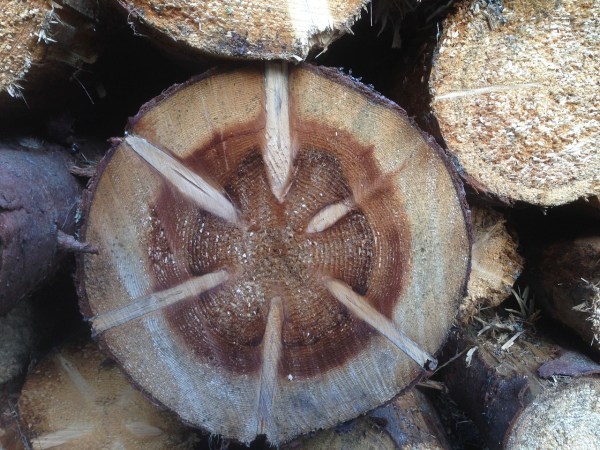


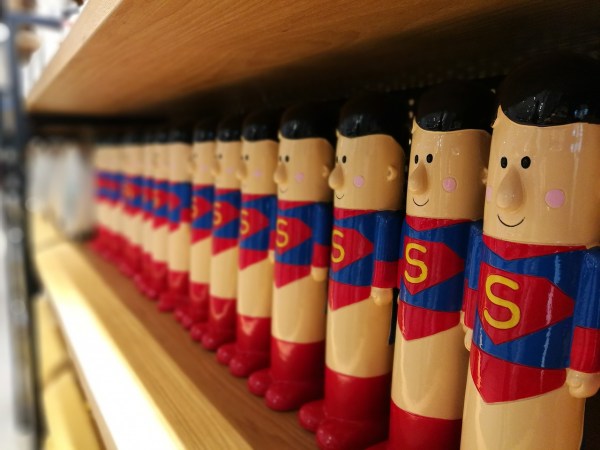
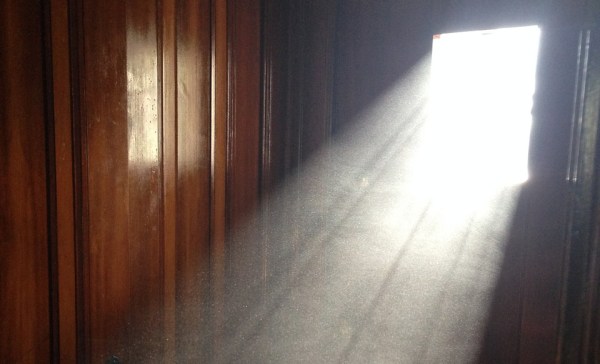
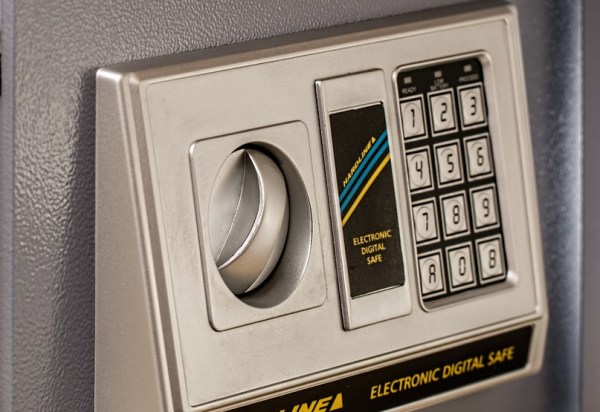
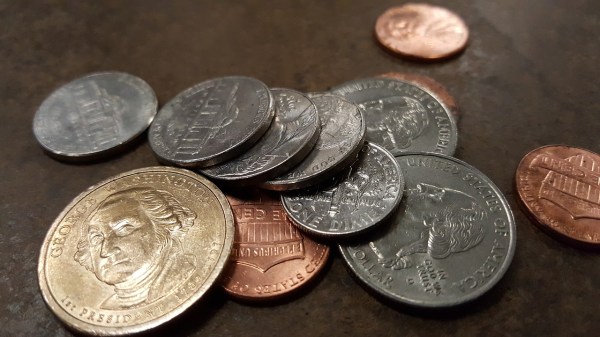

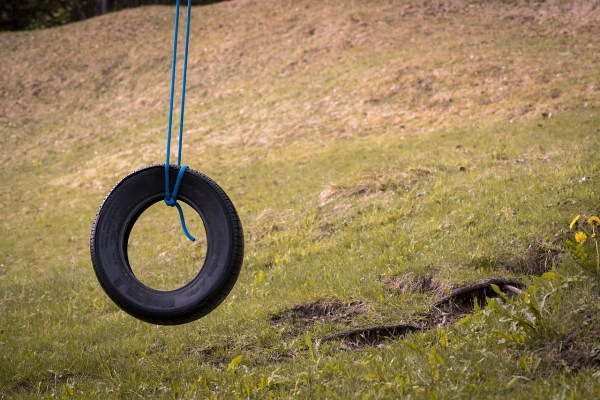
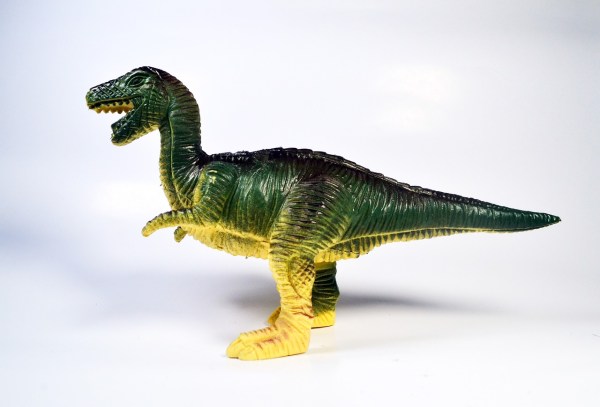
 The Cabinet of Heed