Tunnel – Wendy Burke

I’m in trouble. Big trouble. There’s been an accident in the tunnel.

It’s dark. Can’t find way to the cool air. Panic. Blood bangs where? There, in my temples.

Confusion, noise and medics they trying help. Voices say, ‘keep moving, that’s it, that’s it.’ Are they know I, the voices? They- the memory dark. It… it’s colder getting. I not reach the out. Legs no work. Begin shut down. It’s I- okay, stay here deep dark. Stay now in longest night. I-

‘Come on son,’ someone he shout, far away, like through water. They not. Give up. Hands on my head, my shoulders. Pull, pull, the wrench-pain of a limp-limbed beginning.

Then comes bright light of outside. Someone screams. Or it’s a boom of beeps and talk.

Man, woman – oh. Oh! Are you Mum? D-dad?

I am safe.

I am born.


The Cabinet Of Heed Issue 32 Contents Link

Image by PublicDomainPictures from Pixabay 

Sun Squares – Dave Alcock

It was almost noon on a Wednesday morning in July, and the year’s final weekly meeting of the village toddler group had just taken place in the Parish Hall. John Litttlechild, and a handful of other parents from the group’s organising committee, had just finished packing away and tidying up. The toys and climbing frames had been stacked neatly in the shed, the plastic plates and cups washed up and stored. John had swept and wiped clean the floor and now, since the others had said their goodbyes and left, it was his job to lock up the doors.

With his youngest son Blake trailing along at his side, John double-checked the fire-escape, and unhooked the main swing doors, but as he stopped at the doorway and put his hand in his pocket for the key, he turned around and looked back into the hall.

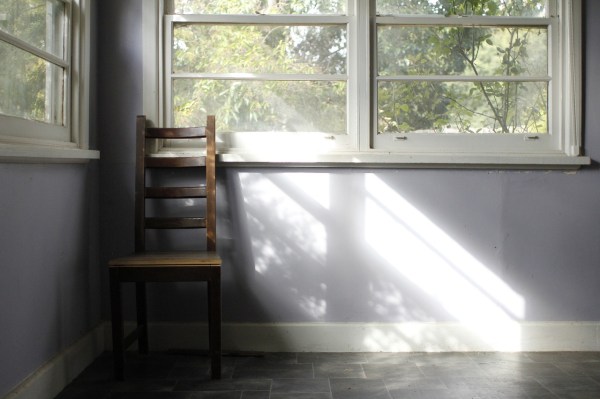
During the summertime, in the morning, when the weather is good, the sun streams down on the Parish Hall’s east-facing wall, and through each of that wall’s three sash windows it throws a sloping column of light. On the dark wooden floorboards, it casts three slanting yellow rectangles. At first, they are long and reach out almost to the stage at the front of the hall, but as the sun rises and moves west, these bright squares of sunlight shorten and change direction, until they strain towards the swing doors at the back.

John stood still in the doorway. His eyes settled on the sun squares, and for a moment he considered their change of direction and shape. “How strange,” he thought. “For four years I’ve been coming here, and never before have I noticed them change.” Then he looked up at the windows, and remembered something he’d forgotten to do. “I must just close the curtains,” he said to Blake. “I’ll do this, then we’ll both go outside.”

He walked over to the east-facing wall, and pulled two sets of curtains shut. Two of the sun squares vanished, but, at the third window, John looked up and stopped. Through the glass, he saw the small grassed garden, into which the children often went to play. It was there that they splashed in paddling pools, or hurtled on ride-ons down the sloping concrete path. There that they chased and tumbled, or looked at insects that lived in the ivy on the fence.

As John looked through the window, a look of sadness came slowly to his face. Blake was four. He’d go to the primary school in September. Their time at the toddler group had come to an end.

For a moment, John’s eyes closed, and he remembered all the things that had happened in the hall. He saw his children crawling in baby-grows, standing and staggering, then sitting upright on chairs. He remembered them climbing in his hands up ladders. He heard them giggling as they slipped down slides. He saw them baking things, and making things, and singing and laughing with their peers. He saw them changing their shape and direction. More clearly than ever, he saw his children growing up.

“Growing up?” John wondered incredulously. He went cold with a feeling of loss. “My children have ceased to be toddlers,” he thought. “The time of their infancy has come and gone.” He looked again through the glass at the garden. His throat tightened and his eyes cooled and blurred. And he hesitated, soft with nostalgia, wishing he could live through that special time again.

Then a voice groaned wearily from the doorway. “Come on, Dad! It’s time for us to go!”

John blinked and swallowed deeply. He took a breath and forced his feelings back down. “You’re right,” he said, and he drew the final set of curtains, and the last golden sun square disappeared from the floor. He turned around and went quickly through the darkness. And he said, “It’s about time we locked up the door.”


Dave Alcock lives in Devon, England, and writes about the ordinary people and places of the British provinces. His stories focus on psychological change and the seeing and acceptance of new things. His flashes have been published in print by Ad Hoc Fiction and can be found online at Every Day Fiction and STORGY Magazine.

The Cabinet Of Heed Issue 32 Contents Link

Image by Danielle Teychenne from Pixabay 

A Weighty Investigation – Duncan Hedges

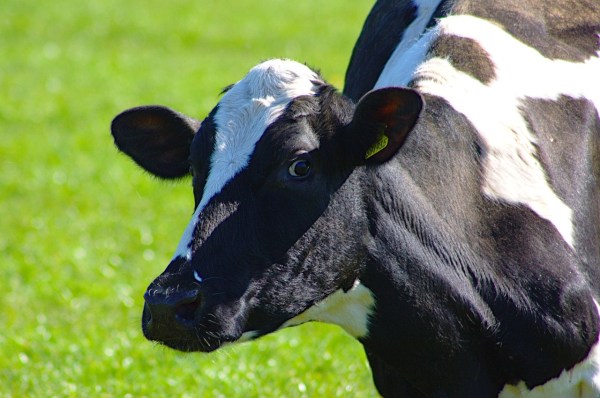
Maxwell’s punctuality at mealtimes led Ann to suspect that his stomach was built in Switzerland, even if the rest of him was of pure Scottish stock. Therefore, his absence from the dining table one mild autumn evening came as something of a surprise. Not wishing to appear overly concerned, Ann took a walk into the farmyard, still wearing her carpet slippers, in search of her wayward husband. She started in the feed room but finding it deserted continued to the chicken shed, which was quite the opposite, though only occupied by avian residents. Finally, she headed for the milking parlour, but on entering, all she could see through the gloom was a large Friesian cow apparently in a state of levitation. The harmless beast looked at her solemnly, its big doleful eyes expressing no alarm. With a feeling of gentle resignation, Ann concluded that her husband must be up to his tricks again.

‘Maxwell?’ she called out in expectation.

‘My name’s Dolly,’ came the deadpan reply, in a gravelly Scottish accent.

It was the kind of humour Ann had suffered for the best part of 20 years. At least her suspicions had been confirmed. And when she finally remembered her husband’s latest harebrained idea, everything fell into place.

It had all started months before on the day of Dolly’s birth. She had been carried from the fields, Maxwell cradling her in a delicate grip that would impress the most learned of midwives. It was an action he had performed many times before but only with Dolly had he considered the long-term possibilities of such behaviour. It struck him that if he were to lift these same ungulate bones on a daily basis, then the incremental increase in weight would prove negligible meaning that one day, he would be able to lift a fully grown cow. Ann had received full briefing of the idea and had suggested that he trial it with a creature of more manageable size, such as a sheep or a pig at the very most. Not one to entertain half measures, Maxwell resolved to stick with the original plan and so Dolly became his subject for investigation.

As Ann stood looking on, it became apparent that Maxwell had no intention of returning the poor beast to the ground. Evidently, he had finished the milking for that evening, so Ann grabbed a couple of bottles and returned to the farmhouse, safe in the knowledge that her husband hadn’t suffered an inglorious farming accident. No, he just happened to be holding a cow aloft. Shortly afterwards, she was relieved to hear the sound of the front door, the power of his appetite having not been totally usurped by other activities. Her husband sat down and she bounced a large bowl of beef stew to him across the kitchen table. They were not the most talkative of couples at the best of times, often surviving on a series of grunts and purrs, but this evening Maxwell seemed unusually quiet and contemplative. Maybe he was reflecting on the irony of his unbelievable cow lifting strength being based upon a hearty consumption of beef. Or maybe there was something else on his mind now that his latest physical challenge had been successfully completed, as witnessed through the impartial eyes of his wife.

Maxwell got up from the table, his body uncurling like a party blower as he stretched to his impressive full height. Taking a bottle of milk from the fridge, he poured himself a full pint, the glass fitting his hand like a half pint would for any person of average build. He opened his gullet and took a long steady swig, his contemplative gaze slowly subsiding to be replaced by an expression of mischief and mirth.

‘Ann,’ he said inquiringly, ‘do you think there’s a market for elephant milk?’


Duncan Hedges lives and works in Leeds, West Yorkshire. He writes short stories in his spare time. He has previously been published online at Ellipsis Zine, Spelk and Bending Genres. https://twitter.com/duncan_hedges

The Cabinet Of Heed Issue 32 Contents Link

Image by Robin Greenwood from Pixabay 


Softly, Softly – Paul Nevin

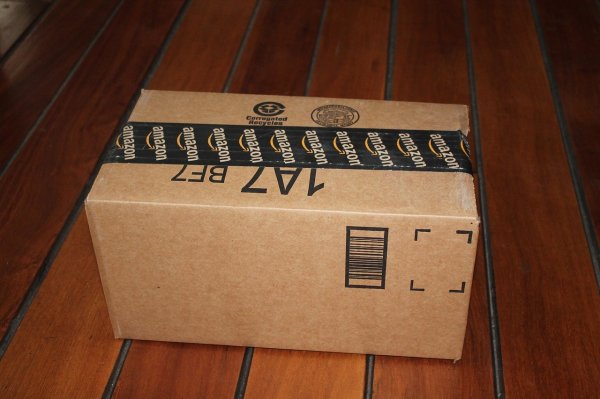
Simon Markham had been heating water in a saucepan, but now his kettle had arrived. His new neighbour Mrs Stephens had taken in his Amazon parcel, and when he called upstairs to collect it after work she moved past their nodding acquaintance and ushered him in for tea for the first time.

He waited in an armchair in her neat living room, watching her son, or more likely grandson, Nathan (Mrs Stephens was well into her fifties, the boy about ten), bash two toy cars together in one head-on collision after another. The boy was still dressed in his school uniform, and he sat on the rug in front of the electric fire, on despite the warmth of the spring day. He ignored Simon, and the only sound he made was the explosion that accompanied each car crash.

Mrs Stephens came in carrying a tea-set on a tray. She set it down on the coffee table beside Simon’s parcel, and sat on the sofa opposite him.

‘So, did you know the area before you moved in?’ she said.

Simon nodded. ‘I used to live in a house just the other side of town.’

She glanced at the wedding band on his finger as she poured the tea. ‘And will Mrs Markham be joining you?’

Simon thumbed the ring and thought of Ellie. He guessed that Mrs Stephens knew the answer to this question— there were few reasons you moved from a house to a basement flat in the same town, and she’d seen him coming and going on his own for the past fortnight.

‘No,’ he said. ‘We’re separated. That’s why I’ve moved.’

‘I see,’ Mrs Stephens said. She handed him a cup and saucer. ‘You’ll be looking for a new wife then?’

Simon let out a hoot of laughter, more in shock than amusement, but Mrs Stephens didn’t seem to realise that she’d said anything untoward. She stared at him over the rim of her cup as she sipped her tea, and he realised that she was waiting for an answer.

‘I might let the dust settle on this one first,’ he said.

‘Do you still love her?’ Mrs Stephens said.

He paused, assuming he’d misheard her, but then realised that she’d really been so direct. He felt a flash of anger, and then confusion as to how to react. A weak ‘It’s complicated,’ was all he managed. He gulped at his tea, although it was still too hot and the room too warm.

She gestured at his cup hand with hers. ‘It’s just the ring,’ she said. ‘You’re still wearing it.’

‘Oh, that,’ he said. He meant to add something bland and innocuous, perhaps that it was just force of habit to keep it on, but he found himself telling the truth: ‘I’m just not ready to take it off.’

‘Hers was off right away though, I imagine,’ she said.

He thought back to the day he’d moved out, to sofa-surf with friends until he found the flat downstairs. That was two months ago. Ellie’s wedding ring was off her finger by that point, yes, but it had been absent for months already.

Simon offered Mrs Stephens a thin smile. He didn’t even know her first name; he wasn’t about to discuss his marriage with her.

Mrs Stephens set her cup on its saucer. He braced for another invasive question, but she turned her attention to the boy.

‘Did you meet Nathan?’ she said.

‘I did,’ Simon said, but the boy hadn’t even looked up from his cars.

She beckoned the child to them.

Nathan put his cars down and wandered over, staring at Simon. He stood beside Mr Stephens, leaning on the arm of the sofa and twisting in place on one foot.

Simon leaned forward to put his cup on the table, and a thought popped into his mind – fully formed and with an urge to be acted upon – that he has been an awful husband, that he had made a terrible mistake, and that life without Ellie wasn’t worth living.

The boy was still staring, but now he was smiling. The thought grew stronger, setting down roots, not just intrusive but compulsive, and as bleak and hopeless as depression. There was a hot water pipe running across the top of the bathroom wall in the flat downstairs, and he wondered if it might hold his weight.

Simon could feel a ring of sweat forming around his collar. He leaned back in the armchair, and the idea evaporated at once, a dark cloud that had blotted out the sun, but which had now passed by.

‘You’re doing it the wrong way,’ Mrs Stephens said.

Simon shook his head, not understanding, but she was talking to the boy. Nathan stepped forward, lingering between sofa and armchair.

Simon thought of Ellie, and how quickly their marriage had come tumbling down. They’d planted green beans together in the spring, but she would be harvesting them alone. Maybe he could call and offer to help? Maybe she would say yes. He jumped from one scenario to another, and in all of them he saw a way back to happily married life. And why not? He hadn’t been an awful husband and they hadn’t had a terrible marriage. They’d drifted apart – that was all – and that was a situation that offered hope.

‘I should get going,’ Simon said. He stood up. He would call Ellie as soon as he got back downstairs. Or maybe he would just turn up at his old house, and surprise her.

‘You’ve gone too far the other way,’ Mrs Stephens said to the boy. ‘Softly softly Nathan—she’s supposed to come here, not him go there.’

Simon had made it to the living room door. He realised that the idea of turning up at his old house – Ellie’s house now – was ridiculous. They hadn’t ‘drifted apart’ – they’d grown bored of each other – and that had festered into resentment. But earlier in the year he’d tried and failed to have an affair. Ellie had found out. That’s when she pulled the plug, before the resentment could boil over into hate. It was a wonder that she was still speaking to him.

He turned back to Mrs Stephens. ‘What did you say?’ he said.

‘Oh, it’s just a game we play.’

‘Is it?’ he said. He stepped towards her and Nathan, and felt a rush of excitement at the thought of Ellie, and an urge to run to her, to go now and never come back here. He stepped back, sensing that he was somehow stepping out of range of the boy and whatever it was that he was able to do, and back to his real feeling about his wife and their marriage: disappointment.

Mrs Stephens frowned. ‘I told you not to be a kid—I told you you’d forget how to do this properly,’ but Nathan wasn’t listening. He wandered back to the rug and picked up his toy cars.

Mrs Stephens pushed herself up and off of the sofa. ‘I’ll do it myself,’ she said.

‘What’s going on?’ Simon said. ‘You’ll do what yourself?’

‘We’d like to meet your ex-wife,’ she said. ‘It would be helpful if she could visit you. Then you could introduce us.’

This wasn’t funny, and Simon didn’t laugh this time. ‘We’re still married,’ he said, but he wished he’d told Mrs Stephens to shut up. He turned on his heels and left the flat.

He walked down the steps to the basement flat, cool air drying the sweat patches on his cheeks. Wait until Ellie heard about these weirdos, he thought, but she wouldn’t hear about this at all. Their split had been amicable enough, but they weren’t at the point where he’d be telling her anecdotes about moving out. And these two weren’t weird; they were just different. Mrs Stephens clearly lacked social skills, but she had invited him in for tea, and it didn’t feel fair to mock them, even to himself. A guilty gloom descended, and with it the vague feeling that this wasn’t the first time he’d felt down recently.

He got as far as the door to his flat before he remembered the kettle. He paused, keys in hand. ‘Tomorrow,’ he said aloud. ‘I’ll call in tomorrow after work.’

*      *      *

‘It didn’t work, did it?’ Nathan said. ‘Is the man coming back?’

‘No, it didn’t, and yes he is,’ Mrs Stephens said. She patted the parcel on the table. ‘He’ll be back again tomorrow to try to collect this.’

‘And will we try again too?’ Nathan said. He was still holding one of his toy cars, although there was no longer any need to pretend to be a little boy.

She shook her head. ‘No,’ she said. ‘Tomorrow I’ll try on my own.’

‘And will we be together then, like him and his wife?’

Mrs Stephens nodded. ‘Yes, just like them, Nathan. Just the very same.’


Paul Nevin is a London-born and based author of short dark fiction. His work has appeared in Fictive Dream, Idle Ink, Vamp Cat Magazine and XRAY literary magazine. You can follow Paul on Twitter at @paulnevin.

The Cabinet Of Heed Issue 32 Contents Link

Image by josemiguels from Pixabay 

Rooted – Davena O’Neill

Nana planted an acorn on her wedding day. You grew to be my best friend.

As a baby, I was protected by your thick green foliage, lying on a blanket, wondering at my fingers and toes. As a small child I rocked on the tyre swing Dad had made, safe on your strong limb, holding me as securely as Dad held Momma when they danced.

Golden summer days, picnics and barbeques, skipping through rainbows made from sprinklers, you stood smiling, squirrels racing among your branches. I hugged your rough skin and learned to climb to your crown, queen of all I surveyed; sitting there I could see for miles. I hid in you whenever I didn’t get my own way, until Momma would coax me down with sweet words or the promise of cinnamon milk.

“Good night” I’d whisper, and kiss your bark, your reply a sigh as I ran to the house.

I learned to count with your acorns, learned my colours in your autumn glory. Made leaf mountains, then dived into them, swooping gold and brown and orange into the sky. Raked them all up, to do it again and again and again. I swear you laughed with me, shaking your canopy in the wind to give me more to play with.

Dad teased me when I worried for you when the snow came.

“You want to put your scarf on it?” he asked. I said that was a good idea, and Nana helped me knit one long enough to fit around you. Dad just shook his head when I proudly tied it and gave you a kiss, then made snow angels to celebrate.

“Sometimes I wonder about you”, he said, then he and Momma joined in. The shapes of us stayed, side by side before you, until the thaw.

Before the next summer I woke one night to commotion, anxious voices in the hall, Dad carrying Momma to the car, her saying over and over “It’s too soon, it’s too soon”. Nana tried to hush me to bed, but not before I saw the blood covered sheets. I ran to you and watched our car till the red tail-lights blinked out of sight. I wanted to stay up there all night, but Nana said I’d only be causing Momma more worry and she needed me to be good.

I wasn’t good enough, Momma never came home. We buried her on a grey wet day, like she had taken all of the colours with her. You stood bowed as I hugged you; branches dipped low to shield me as much as you could. Dad drank and cursed, walked away when I tried to hold his hand, shut himself in their room. Nana said to give him time.

I found him hanging from you a few days later. Granddad took a chainsaw to your branch, angry as if you were to blame. Nana held me back as I screamed, but I never forgave him, any of them. Still, I suppose it was right we were both scarred from their leaving. We buried him with Momma. Granddad too, not long after.

In time Nana and I got into our own rhythm. She kissed me off to school, had supper ready for my homecoming. We sat outside every evening, in all weather, she on the porch knitting, I on a blanket leaning against your trunk, counting the stars.

Nana cheered with me when I budded, wept with me when I bloomed, shared my secrets, hopes and dreams. She became parent and sibling to me; weathered the storm of my adolescence with a quiet grace I hoped to inherit. I sometimes watched her from my bedroom window place her hand on the stump of your severed limb, counting out the rings of life her son would not reach. Nana was the only one who could understand how much I loved you.

My first kiss happened beneath your boughs. I pressed my palms into your bark as he pressed against me. Our romance blossomed underneath your shade, it was only right you should stand for me at my wedding. We dressed you with fairy lights and danced in your glow, paper lanterns on wooden tables, a stereo playing our favourite songs. I waltzed with Nana, her head against my chest.

“I’m so happy for you girl”, she said to my heart.

“Thank you Nana”, I whispered into her hair, “for everything”. But I meant especially for you. She left me soon after and we wept together, your leaves falling as freely as my tears.

Joe never really understood how I was with you. He tolerated it, for a time. But each month that I leaned my tear-stained face against you he pulled further away. I hadn’t meant to shut him out, I just knew no other way. Your children have spread far and wide, grown and multiplied. Joe and I hadn’t roots strong enough to hold our seedless love together. Once again you took the poison of my grief and breathed into me the strength to go on.

So many seasons have passed, with you as my constant, but I am growing bitter like the taste of your fruit. Grey hairs frame my wrinkled face; my limbs resemble your fallen twigs, dry and shrivelled. You are so much stronger than me, aging gracefully, still in your prime, I cannot last.

The knife feels heavy as I stand before you. I push away thoughts of your shock as I carve into your bark, exposing the smooth white wood beneath. I am doing this for you, to leave you something of me. I slice my flesh, press my palm against you, blood mixing with sap.

The wind rustles through your leaves and I feel a rumble beneath my feet. You open up the heart of you, as I step closer, spiralling as we are entwined. I should have known, dear friend, you would not let me depart this world alone.


Davena O’ Neill writes about moments, the small everyday events that shape us. She is a published writer of poetry, flash fiction, and short stories, and lives in Kerry, Ireland.

The Cabinet Of Heed Issue 32 Contents Link

Image by _Alicja_ from Pixabay 

Ashes to Ashes – Mari Maxwell

She got the gold.

In the end it didn’t much matter.

She was all about the money, the having. She’d probably hock it anyhow.

Gold to her was orgasm. Dull warmth burnished. She had to have. Must have. Will. Have. It.

Kept the monster fed so she could weigh and stamp each nugget. The pure stuff. High end. First class. And if she draped herself in 24 or more karat how her adoring public would bow and scrape and she could just flutter her fingers, gold bracelets tinkling as each smashed into the other.

I hope her Midas touch turns it all to clay.


Mari Maxwell’s writing has featured in a Coercive Control exhibition with Wexford Women’s Refuge Nov. 2019; Healing Words Exhibition in London Oct. 2019, University College Dublin’s Poetry Wall in 2019 & 2018. Her writing features online and in print in Ireland, USA, India, Brazil and Australia.

The Cabinet Of Heed Issue 32 Contents Link

Image by Frank Winkler from Pixabay 

Re: More Tennis – Dan Brotzel

From: Jamie_gould@me.com

To: Tony_Sims@BluebirdNetworkSolutions.co.uk

Hi Tony

Thanks for your mail.

Yes it was great fun paying last weekend – a really good workout as always!

The only thing(s) that makes me hesitate about your offer of a game this weekend are:

(a) You never pay for the court or bring any balls.

(b) You overrule the score when you see fit, but if I ever question it you very rudely just tell me to get on with it and point to where I should be standing.

(c) You never wash your hands after going to the loo. I’ve seen you.

(d) You call shots of mine out that you couldn’t possible have even seen.

(e) You get so angry with yourself when you lose a point that I’m always worried that you’re going to do yourself an injury. You scream and call yourself a ‘fucking muppet’, throw your racket at the fence, and smack your face with your hands in a way that is frankly alarming to watch.

(f) Your jokes. What does ‘kedgeree is as kedgeree does’ even mean?

(g) Your style of play, which involves just lofting every return up in a high loop to the back of the court. You do this again and again, possibly because you haven’t got any actual strokes. As a result, playing you doesn’t really feel like actual tennis.

(h) Your preposterous boasts. Can your great-grandfather really have invented… the bag?

(i) Your crude insinuation that if I only listened to the unabridged audiobook, it ‘doesn’t count’.

(j) Your politics. I have no idea what they are, but I just know I’ll hate them.

(k) Your money. Your car. Your fancy trainers.

(l) Your personal trainer.

(m) The rumour that you strangled your father on his deathbed.

(n) Your devastating new girlfriend, who you bring along to applaud my double-faults.

(o) Your over-ornate facial hair.

(p) Your lack of a shadow.

So I’m a bit in two minds at the moment. The fact you always win has nothing to do with any of this of course.

All best

Jamie

The Cabinet Of Heed Issue 32 Contents Link

Image by Bessi from Pixabay 

A Spark, Once Ignited – Sara Dobbie

One hour after quitting time the warehouse manager re-enters the building. Punches in the six digit security code so the alarm won’t go off. Breathes in the absolute quiet of the foyer, so vastly different from the noisy hustle of working hours, and walks quickly past the offices through the double doors leading to her domain.

She has grown accustomed to the silence, the stillness of being the sole person present. The first night had been slightly unnerving, but now she moves through the darkness easily, unafraid, because the only ghost haunting this warehouse is herself. The great steel racks painted blue are lined with boxes, crates and fiber drums. The warehouse manager imagines the thousands of stacks of stationary, envelopes, and reams of lined paper that she is responsible for, resting there in a sort of purgatory. Waiting to be shipped to stores, where strangers will purchase them, people who will press ink into their pristine smoothness, fill them with words or images, fold them into shapes, stash them in drawers.

She doesn’t have an office, but against the east wall beside the shipping airlock sits her desk with its computer, telephone, and spinning chair. From 7:30 am to 4:00 pm, Monday to Friday, this is her post. In the soft, luminous glow from the digital display on the phone, she can see reports and receipts she’ll have to sign, but they can wait until daytime. She heads toward the back corner, an area where she knows the surveillance cameras do not record.

In the old days the company used to run three shifts, but the recession coupled with the advent of technology forced upper management to restructure. No more midnights, luckily for the warehouse manager. The first time she snuck in she worried about the external surveillance cameras that might catch her entering and exiting at odd hours, but after a few leading questions to the right people, found out that no one ever watches the tapes, because nothing ever happens. Who, after all, would want to break into a warehouse full of blank paper? This secured her confidence that no one could possibly find out, as long as she didn’t accidentally start a fire and burn the place down.

The position of warehouse manager entails shipping and receiving, locating and relocating items from their position in the racks. An intimate knowledge of every spot, every nook in the entire place, what it holds, and where it’s going. It requires organization, planning, a mind as spotless as the pieces of paper the company supplies to the world.

She carefully slides an empty wooden pallet from the stack at the end of the aisle, uses the hand jack to shift it expertly to her corner, then repeats the same process once more, so that the two pallets are side by side creating a rectangle shape. In the third aisle, in the last space on the bottom rack, is a pallet with two boxes identical to many others in the warehouse, labelled, in the warehouse manager’s own handwriting, “Rejected.” With her yellow plastic safety knife she slits through the packing tape on the first one, moves the cardboard flaps aside and retrieves a rolled up piece of foam. The second box contains a sleeping bag and pillow. She unrolls the foam, arranges it into a makeshift mattress, unzips the sleeping bag and spreads it out. Fluffs her pillow. Gets comfortable.

A sharp clanking rings out from above and she jerks upright, but realizes it’s only the sound of rain drops hitting the metal roof. Amy must be frantically closing all the windows at their apartment across town while Jeff watches her, amused, from his spot on the couch. The two of them will snuggle up under a blanket, watch Netflix and eat all the potato chips that the warehouse manager paid for. She could practically hear Jeff asking, “Where’s your roommate tonight?” He never did remember her name. Amy would shrug, “with her new boyfriend, I guess. She’s so secretive lately, I don’t know anything about him.” The warehouse manager has heard Amy say this before, to someone on the phone.

What Amy doesn’t know is that the warehouse manager has fabricated a pretend boyfriend. She didn’t want to be stuck starving in her bedroom while Amy and Jeff did it loudly on the living room couch, wondering after fifteen minutes of muted music and whispers, if it could be safe to emerge, to tiptoe down the tiny hall to the kitchen for a snack. Didn’t want to run into a shirtless Jeff smoking a cigarette and wiping the sex sweat from his brow. So whenever Jeff came over she told Amy she had a date. If Jeff slept over, she drove to her parents’ house under some pretence or another, and slept in her childhood bedroom.

This back-up plan worked perfectly until one Saturday the warehouse manager’s mother appeared at the apartment in the afternoon with a cake. Amy, in jeans and a pink bra, hair half curled and makeup half applied, mentioned the imaginary boyfriend. Spoke suggestive sentences like “spending so much time together” and “out all night.” The expression of sheer joy on the face of the warehouse manager’s mother, at the prospect of her shy, introverted daughter finding love, propelled a vortex of lies into motion that quickly spiraled out of control. Now the warehouse manager couldn’t stay at the apartment or her parents’ house, because both Amy and her mother assumed she was out romancing it up with “Damion”, and the story had stretched and twisted into an existence of its own that would not be denied.

The temperature in the warehouse is quite cool, automatically lowering after hours to economize on heating bills. The warehouse manager congratulates herself for the foresight she exhibited last night, hiding an extra comforter in an empty drum on the reject skid. Tucking it around herself tightly, she thinks about Damion. Where did she come up with the name? It must be from a paperback vampire novel she read as a teenager, a long buried adolescent fantasy. In fact, she recalls writing about this dark Damion in her diary, in slanted looping cursive, black ink flowering across the virginal pages.

The warehouse manager laughs and nibbles on a rice cake. It’s no surprise that she manages a warehouse full of stationary and note paper, that she’d been lured into the world of lined loose-leaf and envelopes. The blank pages are just as seductive, more so perhaps, than the mythical Damion. And the letters! She rolls over inside the lumpy sleeping bag, shuts her eyes tight, considers the potential for love letters, hate letters, revenge plots and even suicide notes. Show the warehouse manager a lover who embodies the mystique of a flawless sheet of paper and she will get down on her knees.

Above the din of the pelting rain, a loud crack that sounds a bit like thunder claps through the warehouse. Immediately, the shrill scream of the alarm rips through the aisles, darts among the rows of racking. Paralyzed for a few moments, the warehouse manager decides to assess the situation. Clutching her blankets tightly around herself, she runs to the doors that lead to the hall. Peers through the glass windows to see smoke filling the foyer. And firemen, entering one after the other, all dirty yellow suits and reflective stripes. Holy fuck, she thinks, panic stricken. Runs back through the darkness, bangs her knee several times on the corners of racking, consumed with a feverish desire to erase all traces of her absurd night time hideaway.

There is no time to dismantle her sleeping quarters because the firemen are already pushing through the doors, so the warehouse manager grabs her sleeping bag, her pillow, and hides herself in the supply closet. There’s barely enough room to stand, surrounded by shelves of cleaning products, mop heads, brooms and buckets.

She can hear their voices echoing as though amplified, spreading out in different directions. One, quite near, bellows to the others, “No need to search the place, all clear back here.” The warehouse manager relaxes slightly, but continues to hold her breath.

“Fucking kids,” someone answers from afar, “What would possess them to do that?”

“Oh, they get bored, they break windows and the like. On a dare, or whatever.”

“Yeah, but a firecracker? This place is a paper supplier, it could go up like a tinderbox under the right conditions.”

Inside the closet her heart cinches at the thought of the warehouse set ablaze, all that glorious potential gone, burned to ash. She knows that a spark, once ignited, can set off a chain reaction, can alter a course of events, can change everything. “Hey Joe, you might want to take a look at this. Looks like we got a squatter.”

The warehouse manager’s relief collapses and explodes as fear in her gut. She balls up the blankets, stuffs them inside a bucket, adjusts her sweatshirt and smooths her hair. Ear cocked against the closet door she listens as the firemen exclaim over the pallets, the way the foam is arranged just like a mattress. “Oh, lookee what we have here,” one mutters, and the warehouse manager curses internally, remembering the box of granola bars sitting next to her phone and charger on the makeshift nightstand she had rigged up with a cardboard shipper.

Through the thin crack at the base of the closet door the warehouse manager sees a beam of light sweeping the area. “What’s this door for?” she hears a deep voice ask. And then it opens. She finds herself face to face with a man who, remarkably, resembles Damion, or at least what she imagines Damion to look like. A brief vision of a surprised Amy encountering the shirtless fireman in their kitchen flickers in her mind. Blood rushes all through her, and with her cheeks on fire she looks the fireman right in the eyes.

“Who are you?” he asks.

After a split second of hesitation, she raises her eyebrow as if the answer is obvious. “I’m the warehouse manager, who are you?”


Sara Dobbie is a fiction writer living in Southern Ontario, Canada. Her work has appeared in Mooky Chick, Trampset, Spelk, The Cabinet of Heed, Crab Fat Magazine, Ellipsis Zine, (Mac)ro(Mic), Re-Side, The Spadina Literary Review, and is forthcoming in Fiction Kitchen Berlin, Change Seven Magazine, and Read More. Follow her on Twitter @sbdobbie.

The Cabinet Of Heed Issue 32 Contents Link

Image by TigerPak from Pixabay 

Dog Boss – Jim Meirose

The workmen arrived at the site where they’d been building a roadside sign between a field of tall weeds on one side and a highway on the other.

Okay, said the first workman. Today we got to frame the thing out. Simple, except for what I said yesterday. The boss says we got to do the corners with fancy dovetail joints. I swear, but it’s a total waste to use dovetail joint to frame a simple outdoor sign. Oh well. It’s a job.

Yah. That’s true, said the other, just as they were both distracted by the sight of a dog walker coming their way in the distance. He stood paused momentarily, letting his dog intently browse through a large clump of weeds to the side.

Look at that, said the first workman. That dog is lucky. That is the kind of owner a dog needs. He’s not rushing the dog. He’s not impatient. He knows that the dog relies on him to have a full life—he knows the dog needs very little to be completely happy. Something as simple as when walking the dog letting the dog take the lead like he is. He stops and lets the dog nose into the weeds. He’s got no clue what’s in the dog’s mind. Most people pull the dog away. That is cruel. What if every time you or I paused to enjoy something some strange giant we’re attached to pulled us away? Very cruel are most dog walkers. But not that one. Well, here—what’s on the agenda for today? Ah, yes—time to make the frame. And, the problem today is, dovetails. The boss wants the corner joints to be dovetailed. Ain’t that the shit? You know, when I was scanning down the plans when I went up to get them from him, I stopped there. I mean, the gold and the lead and the huge posts and the deep holes were bad enough, but—dovetailed joints? On a signframe in the outdoors built out with common two by fours?

Pushing out my chest, I said, hey, boss, I can live with the solid gold and the lead and the posts and everything, but—this is not a woodworking cabinetry style pretty-boy project. There is absolutely no need to do things as difficult as dovetails—

But his hand went up, chopping off my words—and the worst was, his hand turned palm out! Do you know what it means when that particular boss puts up his hand in that particularly abrupt way, and, to boot, hey hey, palm out?

No, said the watcher—the dog had accomplished whatever it needed to hidden nose-deep in the weeds, and turned began pulling the walker toward them.

It means don’t go too far with the questions—after a while, my man, I have learned that there is a point when questioning authority of any kind where the questions though if the words are analyzed are still questions but the questioner whose aura attitude tone and all says this is a statement—and this statement is that—you are a shithead you know that boss? You are stupid—I needed to know what that smell was in the weeds—I really really needed to know I did I did I did I did—but you pulled me away—I—I have forgot the question I was trying to say but you have yanked my leash have said come boy, come now—and yanked me down, to only being capable to say two words nearly the tiniest sentence you ever said which is, Yes, boss—followed by a rain of kisses all over the sweet bosses butt saying great job, what an idea, Lord I would never have thought to do it this way, a great boss is only a great boss when the reason they’re a great boss is absolutely apparent it’s not only that they are wearing a medal saying the greatest but that behind that medal is a worthy over worthy chest deserving of it being pinned on—yes, boss. Great, boss. Of course, we’ll do dovetails. Even though it is stupid. Even though, when I go to Merchy-Mark’s Discount Framing Lumber Warehouse, there will be laughter enough when I say what is the project that if a giggle were a candleflame and a laugh were a matchlight and that were multiplied by the number of people in the economy working lumber discount warehouse jobs for minimum wage or even and more likely completely off the books paid only in cash to get by who would laugh at the notion of cornering a rough outdoor signframe with cabinetry-grade dovetail joinery, the magnitude of the communal laugh, if converted into actual firs, would dwarf the now-legendary Chicago version, of which remnants of the destruction are still apparent in that fair city today—uh. Oh. Ah.


The Cabinet Of Heed Issue 32 Contents Link

Image by MICHOFF from Pixabay 

Better Than Yesterday – Gary Hughes

The first thing I saw when I looked out this morning was a young girl comforting a small dog whose head had become trapped between wrought iron railings.

Then I saw a policeman fall off his bike, get to his feet, reattach the chain, lift the bike above his head and stamping his feet like a cartoon character smash it to the ground.

To my surprise, I saw three seagulls attack an origami-thin heron that had perched on the roof of Saint John The Baptists.

After which I noticed a young priest I’d never seen before exit the sacristy, looking this way and that, a rolled rug tucked under one arm.

In between, the usual day in, day out.

People rushing towards the metro or for overcrowded buses, almost all of which have advertisements and political slogans on their sides, spreading lies like viruses, selling things that nobody needs.

Delivery vehicles blocking what is already a narrow street, some blocked drivers gesturing or blasting their horns, while others were prepared to wait, their patience a virtue of sorts, I think.

Old women with veiled heads and old men with poorly concealed newspapers entering the church through the front door.

Café owners preparing their terraces. Straightening tables. Arranging chairs.

Unlike my roommates, for want of a better term, I try to look out on a regular basis. Sharpen my saw as often as I can.

Occasionally, I see a woman that looks like my mother.

Sometimes, I see a man that looks like my father.

Once, I saw a boy that looked like my brother but my brother was vaporised, killed fighting a war that wasn’t his, not that wars belong to anybody other than those who start them.

Truth be told and I prefer to be truthful, although that’s how I usually end up in hot water, I spend a great deal of time looking out. Telling myself stories about what I see. Making connections and asking questions. Like, has that priest just stolen that rug and why? Was he even a priest? Was it valuable? Or was there something concealed inside? Which newspapers are those men carrying? What are the headlines and who planted them? And why can’t those birds get along together? There must be enough sky for them all.

However, I much prefer looking out in the warmer months. The way it is now, with the snow still heavy on the mountains beyond, these bars get so cold my fingers cry mercy and I do need to hold on to these bars, so that I can pull myself up to see out the window. The draft makes my eyes water too.

This morning, I saw a girl comforting a dog whose head had got stuck between some railings.

I saw two men running towards them, one carrying what looked like an enormous scythe.

Several people had congregated around the girl and the dog. The girl stroked the dog with her fingers.

Then a removal van blocked my view and I couldn’t see what happened until I saw the girl carrying the dog towards a door leading to the apartments above the deli. The dog was wagging its tail and the girl rubbed its neck.

Twenty minutes later the young priest returned with a different rug.

I look forward to this afternoon.


Gary Martin Hughes was recently published in Necessary Fiction, Visual Verse and The Honest Ulsterman, with others forthcoming. He tweets @GaryMartinHugh1.

The Cabinet Of Heed Issue 32 Contents Link

Image by LORRAINE GRIDLEY from Pixabay 

The Cairn – Claire Kotecki

When the stones appeared on the beach, summer hadn’t soured yet. It would be weeks before you retrieved the body.

I don’t remember now who first saw them, standing proud against the horizon, a cairn of pink flecked granite and feldspar that seemed both new and old in the same breath. In small villages, news spreads from mouth to mouth until it permeates everyone. Ours was no different. I remember when the stones first saw me though. I was alone in the half-light of the early summer morning, sand frosting my bare feet, and there they stood, as tall as you. Watching me. Although I didn’t know that then.

I type this now, watching our daughters dip and dive in the water, grebe-like and fluid. I am a writer. We seize moments and craft words, but I am not sure there will ever be a perfect moment to record what happened last summer. I know that it is beyond me to resist the pull to try. No matter how carefully I phrase this, how many times I edit the words, they will think that what I am about to recount is a fantasy, a notion held in the head of a storyteller. Maybe it will help them rest easier at night if they believe that.

I still wake in the dead hours before morning claims me. Mid-breath. Sweating into my pillow. It’s the same dream. Always water. Watching the young children now, lithe and confident, as they slide in and out of the glistening surface like seal cubs, always returning to bask on the sands, I almost believe I can swim again. Almost. Until the claws of the dead hours unsheathe and I hear them gently scratching against the glass of the summer porch. I turn my head, but they are too fast for me. I know they are there though, beneath the surface.

*      *      *

The stones were a curiosity. Our little coastal village is a gentle place. Colourful cottages line the sea front, impish, each with their own character. The single road that crests the surrounding hills and winds gently down to the water is our only link with the world outside. I had known as soon as I drove down it the first time watched by curious village eyes that this was a writer’s village. I had known it was home. We couldn’t wait to see the beach so we abandoned the car and ran down to the shore, the children squealing with youthful joy. You held my hand and we slipped off our shoes and walked barefoot to the waters’ edge, sand grains coating our toes.

Standing on the same sand, staring at the stones the day they arrived, I felt something shift beneath me. Everything was less solid. I remember turning away from the unusual pink granite boulders, cold air nipping at my shoulders, and taking the cliff path home, eager to tell you what I’d seen. We still shared things then.

That night, the first child went missing.

*      *      *

Annie was the grocer’s daughter. We still called him ‘the grocer’ even though his little shop on the seafront had long since filled up with the kind of things that appealed to passing tourist trade rather than village residents. I remember her wild red hair as it flew out unchallenged when she sped through the narrow streets, heading for the next adventure, accreting children to her like a wayward galaxy. The stones arrived and she was simply gone, her bed empty in the morning when her father went to wake her.

The world came into our village that day. We didn’t invite them but they came anyway. The grocer’s shop was shuttered and empty. We didn’t realise then that the shutters had started to come down in all of us. I think I was the only one who noticed that there was one more stone on the cairn that morning. I tried to warn you but you weren’t ready to see. You hadn’t heard the noises in the night. Yet. Each night, as you tucked the children in, you always gave the window locks a final check.

We still thought a lock could keep you safe then.

Walking the beach path became a ritual for me that summer. I still remember the way you looked at me each day as I pulled on my boots. Your eyes were sad. Once you asked me. Only once.

“Why do you go there each day?”

“Someone needs to. Someone who understands,” I replied. A piece of me broke away when I saw your expression. You just shook your head and turned away.

That day, there was another stone on the pile. By evening, the village was alive with talk of the accident. A child had been taken by the tide. This time a boy. His mother served tea in the café on the wharf, a gentle woman whose face lit up when she talked about her son. His body was washed ashore by the evening tide. Standing on the shoreline amongst the silent villagers, I gripped your hand. You squeezed back tightly, as if you were trying to anchor us. We listened to the low mutter amongst the boatmen gathered at the waters’ edge. Old Jacob turned to us.

“Luck’s gone. Ain’t nothing but to try and find it again. ‘e won’t be the last. It’s you incomers. Gone and made ‘em angry.”

I couldn’t find words to answer and he didn’t ask for them. I watched your face, hoping for a sign that you disagreed with him. You looked back at me and I knew that you had a kernel of fear in your centre.

That night, you insisted we leave the door to the children’s room open as they slept. In the morning, your side of the bed was already empty when I woke. I found you standing by the edge of their tiny sleeping bodies, staring at the window frame. I saw them too. Deep scratches etched into the woodwork. On the inside. That morning, you joined me on my walk to the beach and we both kept silent vigil by the cairn. It would be our last walk together, although we didn’t know that then.

*      *      *

The stones gave Annie back on the day of the boy’s funeral. Villagers spilled out of the church door and filled the graveyard on the hill. His mother stood hunched by the open grave. I didn’t see her cry. It was as if she rejected the salty water, refusing to acknowledge it. It had taken too much from her. It was a seafarer’s cemetery, the grey slate slabs a brutal reminder of the ocean’s power. A vicious wind blew in from the harbour, cutting into our backs. I knew something was watching us on the exposed slope. Waiting. I tried to keep my eyes on the woman by the grave, but the need to look back was too strong for me. I turned towards the shore, knowing what I would see.

The stones stood proud against the grey marl of the water. Rising and falling on the waves at the shore’s edge was a tiny body, her titian hair flowing in with the water.

You reached the shoreline ahead of the crowd, wading into the freezing waves without thinking. When you dived, I thought I had lost you, but you surfaced eventually and made your way out of the surf clutching the small body in your arms. When you looked at me, I knew that you were finally ready to understand. At home that night, you locked the doors and tucked the covers around our children, taking up a place in the chair in the corner of the room.

We never shared a bed again.

*      *      *

My daily pilgrimage to the stones became a part of our lives that summer. You were always waiting by the door when I returned, an unspoken question between us. The cairn of stones remained unchanged. Waiting. The children couldn’t understand why I stopped them from swimming with their friends in the waters of the bay. They could only hear the call of the crystal blue waters, shimmering in the summer light each day, just out of their reach. We knew that it was only a matter of time. We waited. Watched. Counted. They didn’t know that each night you kept a vigil alongside them. They couldn’t hear the scraping claws circling us.

*      *      *

The day the stones changed, it was a bright morning, sunlight flecked the water and I was almost happy. When I crested the peak of the path, I knew. I chose to count anyway. There were two stones more that morning. I ran home, the metallic taste of blood filling my mouth as my breath rasped through me. You were already waiting by the door. You knew.

“Stay with the children,” you said.

“I love you,” I replied. For a moment, we held each other with our eyes but we both knew that contact would make this harder.

“I know,” you said. And then you were gone. Already a memory. I locked the door and sat with the children until they woke. We had always known that it would be my place to stay.

*      *      *

I still ask myself which one of us made the greater sacrifice, when I am alone in the dark of our house. The stones demanded someone, and you gave yourself. I can never explain that to our children. I read them stories before bed, tell them you had to go away for a while and that you loved them. One day, I’ll tell them about the stones but they’re not ready to understand yet. One day, they will read this and know how much you loved them.

Until then, I will stay here and hold back the dark. I couldn’t save you from the stones but I can be the sea wall that keeps the waters at bay.

*      *      *

You disappeared the day the stones did. Really though, you left me the day you pulled the limp body of the child from the surf. I woke to the barren dawn light of another day knowing that you were gone. I still walked the cliff path that day, cold rain hitting my face in the cross-wind. I needed to see the beach. Once, I had found the wind refreshing. Then, it simply beat me with each icy drop.

The stones were gone.

I had known they would be. The relentless cycle of tides had smoothed away any sign of their existence. The village would say you had left me but we both knew the truth. The stones had taken you, just as we had known they would.

It was the price we paid.

I pretended that I knew you were going. Told those that asked that life in a small coastal village was too isolating for you. You were an urban creature. No matter how hard I tried to rewild you, there was asphalt and concrete at your core. These are the lies we craft for ourselves to make sense of the darkness. The truth is always there though. Scratching at the edges as the children sleep in the room across the hall.

I should leave here, I know. Build a new life away from the ocean. I don’t believe that I will ever shed the scent of the salt air though. It’s too corrosive. Instead, I wait. Each day, keeping watch over the bay. I fear the return of the stones. It keeps me awake through the dark hours. It is only with the dawning light that I can see there is also hope.

Hope is my tether.


Claire Kotecki is a writer, scientist and educator. She holds an MA in Creative Writing and a Biology PhD, and this is interwoven into her creative work. Her writing has been published in a number of literary magazines, on and offline. She is currently working on her first novel, ”Tales of the Wind Born’, and is a Lecturer in Biology and Media Fellow at the Open University.

The Cabinet Of Heed Issue 32 Contents Link

Image by Deborah Bates from Pixabay 

How Paul Got The Job – B F Jones

The HR department had been in turmoil for the past 6 weeks, struggling to fill in the much-needed role of Sub-lead Digital Marketing Co-editor, which required an in-depth knowledge of editorial techniques, digital marketing and IT support, along with a passion for fruit dehydration and its associated policies, ideally a masters degree and preferably some relevant experience.

Contenders had been carefully selected. Of the 20 that went through the first round of video conference interviews, 9 were deemed too inexperienced, 4 had come dangerously close to falling asleep listening to the extensive list of duties and decided not to proceed with the process, and 2 had overlooked the fact that it was a video call and had not been prepared. The woman with no trousers and the man with a collection of swastikas in the background had provided delightful water cooler material for the rest of the week.

The last 5 contenders were invited for a second interview. Two of them had, in their own words, “not felt a connection with the Lead Principal Marketing Co-director”, one of them later referring to her as a bitter old bat, and the other going home to reconsider his career and life choices. The third one got lost on the District Line, leaving the final 2 in a very good place.

Young Danny was sitting at reception, wiping his sweaty hands on the thigh of his beige linen suit, rubbing his non-existent moustache with the back of his fist. The receptionist had kindly offered him a drink, which he had declined in an unexpected falsetto voice that had made him sweat more.

He’d then sat for the following 10 minutes, flipping through the job description over and over again, then through his CV, noticing to his horror that he had written ‘steak holders’ instead of ‘stakeholders’, prompting his feet to start sweating.

Miranda, the self-proclaimed Lead Principal Marketing Co-director had paired up with Sarah, the newest member of HR with a strategy to play good cop/bad cop and base the final decision on a 30-step marking process.

Sarah had welcomed Danny in, ignoring the squelching of his shoes, refraining from wiping her hand on her suit skirt until it was safely out of sight under the table they all sat at. Miranda had immediately fired off questions, starring at Danny while he stuttered answers that trailed off, suffocated by a thick coat of discomfort.

Later Danny, pint in hand, arse cheeks still tender from extensive clenching, vented his spleen to his friends. How am I supposed to know how to weigh an elephant without fucking scales? Yet Danny still hoped. The pretty HR woman, Sarah, had asked regular questions and he had answered them well.

Sarah had felt Danny would have been a good contender for the job if not for his sweat glands and rabbit-in-the-headlights demeanour. He was well qualified, ethical, had a definite passion for fruit dehydration and was likely to be a great team player. She had therefore called him in person to share the bad news that he didn’t get the job and had voiced encouraging thoughts to him, resulting in an immediate and awkward Facebook friend request.

Paul arrived exactly 2 minutes early at the reception, knowing from years of experience that waiting too long will tarnish one’s chance for a first impression as well as moisten one’s palms. He had decisively agreed on a cup of coffee, requesting skimmed milk and 1.5 sugars, as a way to show that he was confident, not afraid of bold choices and not afraid to be bossy. He’d enjoyed seeing Sarah walk off to the kitchen. Nice pins. And come back holding the hot beverage. Nice tits. Thank you Sarah.

Miranda had fired her trickiest questions and he had replied unflinchingly, maintaining her gaze whilst avoiding being drawn to the hairy mole on the side of her nose. Sarah had to hand it to him, this was an impressive trick she was yet to master. Paul had said that he had no problem looking after a team, asserting that discipline wasn’t an issue for him to administrate. He mentioned that information was power, that he didn’t believe in getting feedback as a mean of progression, that he rated himself a strong 10/10.

Sarah wanted to further explore some of the answers she considered as “alarm bells” when Marcel came trotting into the open-plan office. She had not been informed of Marcel’s occasional presence on the office grounds and she had felt the hair on the back of her neck slowly rise while Paul’s voice had become distorted by the absolute revulsion that had overcome her. Unable to take her eyes of the mouse, and unable to make sense of Paul’s ramblings about discipline and empire building anymore, she had nodded and nodded, feeling her feet rising and her legs coiling around her chair legs. She’d shortened her share of the interview to half the questions when Marcel had started looking though the glass window; and definitely called it a day when he started walking alongside the meeting room door, the thick glass pane rendering his tail gigantic.

The next day, the new HR lady, Julie, phoned Paul to congratulate him on his new role as Sub-lead Digital Marketing Co-editor.


The Cabinet Of Heed Issue 32 Contents Link

Image by Jo_Johnston from Pixabay 

And Sings The Tune Without The Words – Evan James Sheldon

I went out back to smoke and think my deepest thoughts when I saw the man tied to the tree. He had been there for some time. At least I guessed so by the state of decomposition. Even still, his hair looked great, all styled and intentional. His eyes were open and milky, seeing right through me. I wondered what he had been looking at the moment he passed. From his view, you could make out my kitchen and I thought maybe he had been watching me wash dishes. How mundane an ending, how minimal.

It made me wish I lived a wild extravagant life; not for myself but for him.

I had read somewhere that the soul can linger in the body, though I don’t know that mine would, if given a choice when the moment arrives. But, if he was still around, I thought I might offer him something better than sudsy water in his parting from earth.

I put my cigarette in his mouth and tried to think of what I would want to see before I shifted dimensions or whatever. I ran back in a grabbed some poetry and then read him my favorite lines. I tried to sing a hymn, but I only remembered the tenor line and it sounded odd by itself without the other harmonies. I danced wildly, with abandon. I performed a small one-act play I made up on the spot. I painted something I had never seen. I moved from one thing to the next without pause. I laughed. I wept. I was everything.

Exhausted, I leaned on the tree next to the man. The light in my kitchen leaked out into the lawn but that wasn’t what drew my eye.

It was the sky. It was everything besides my kitchen window. It was everywhere I wasn’t, and it all took on an enraptured, amber hue. I couldn’t look away.

And I wished someone would come along and support me, tie me up when I began to falter, so I could continue to view it, long after I had lost the strength.

No one came.

Eventually, the sun set and it got cold. The light from kitchen beamed like a beacon, calling to me. It wasn’t anything compared to the sky. Not what it had been anyway. But it was a warmth at hand, one I was familiar with.

I went inside and didn’t know what to do. I turned the television on but it was too garish. I had once read that canned laughter had all been recorded in the fifties, so every time a laugh track ran, it was really dead people chuckling so you would understand and laugh too. I moved from the couch to the bed back to the couch, and then to the kitchen. I couldn’t have told you what I was looking for. I didn’t do the dishes, but I did lean beyond them to look for the man who couldn’t stop gazing at the sky. It was too dark to see him. To see if he was still there. If he was still there, I would be a silhouette, a suggestion of personhood backlit in the near neon-blue of television glow.

Then I had an impossible thought and wondered if the man had shaken free of his tether, started walking, and simply kept on up and up and up. And if you were always walking up, with nothing to keep you on the ground, why couldn’t you step right into the sky? I craned my neck looking for the ember of my cigarette in the sky, even though he finished it a long time ago.

Behind me, dead people laughed and laughed until I couldn’t stand it any longer and I left the kitchen to see what was so funny.


Evan James Sheldon’s work has appeared recently in the Cincinnati Review, Ghost Parachute, and Litro. He is a Senior Editor for F(r)iction and the Editorial Director for Brink Literacy Project.

The Cabinet Of Heed Issue 32 Contents Link

Image by Hans Braxmeier from Pixabay 

Teatime – Noa Covo

The tin of biscuits in my shopping cart reminded me of Sunday tea with my mother, the only day of the week she and the crows had a truce. As a child, my mother and I would spread out a checkered blanket in the soft grass, pull out a thermos, dainty teacups, and a tin of store bought biscuits. The crows would gather, bright eyes gleaming. My mother would open the tin and toss the biscuits into the grass, letting the crows have their pick. There were never any left for us. After they had devoured the biscuits, the crows would gather on the grass at the very edge of the picnic blanket with their greedy beaks slightly open, as if they wanted something more. They didn’t attack. Sundays were truce days. My mother and I never drank the tea we brought with us. It always cooled in our dainty teacups, and we’d pour it away at the end of the picnic.

I had half-forgotten the tea parties as I waited in line at the shop with a cartful of food until I pulled a tin of biscuits from underneath a bag of rice and a can of tomato sauce. I hadn’t remembered putting it there, but I paid for it nonetheless. I found myself in the parking lot, leaning on the hood of my car, tin in hand.

I opened the tin. A crow landed with a flutter at my feet, and a moment later came the rest of them, eyes glittering, beaks wide open, waiting. I took a biscuit from the tin and wondered why my mother had never kept any for the two of us. The war with the crows had lasted well past my seventh birthday, perhaps even my eighth. They had stolen our silverware and rummaged through our drawers. I remembered their squawked demands.

“Why did you stop?” I asked the crow at my feet. I wondered if the biscuits had finally appeased them.

The crow stared unblinkingly as I brought a biscuit to my mouth. Its cruel eyes glittered. With a shiver, I remembered the last of our shared picnics. The crows had stood at the edge of the picnic blanket, waiting, as they always did, but this time, my mother took one long look at me, a look at the crows, and nodded. The crows stormed the blanket. Memories came back, as I clutched the biscuit in my hand, memories of being ripped apart in the soft afternoon sun in the park on a checkered blanket, torn apart as my mother watched.

I blinked back tears, examining my hands as if looking for scars, proof that the crows had tried to pick me apart. I remembered myself sobbing, blood running from my wounds, and my mother handing me my teacup and telling me to drink up. I remembered the metallic taste of the tea, tea that had knitted my wounds together as the crows flew off and my mother caressed my bloodstained hair. My mother’s war with the crows had ended that day.

The crows in the parking lot watched me. I had forgotten what it was like being at war with them, the constant fight and flurry of feathers. I would not enter another war with them. I knew it would end, once again, in my blood.

I dropped the tin, letting the biscuits spill over the pavement. The crows looked at me unimpressed. They had tasted my flesh once, my eyes, my cheeks. I would not let them have that, not again, and they would never again settle for less. I left the biscuits on the ground and got into the car. The war between us had been my mother’s. I did not want it to start anew. On my way out of the parking lot, I watched the crows. They spread their wings and flew away, leaving the biscuits untouched on the pavement and becoming a black cloud of distant memory.


Noa Covo is a teenage writer. Her work has appeared in Newfound and Reckoning, and her microchapbook will be published by Nightingale and Sparrow this summer.

The Cabinet Of Heed Issue 32 Contents Link

Image by seawie from Pixabay 


Stream Of Consciousness Drawer Three

If Life Were Meant to Be Easy, All My Best Ideas Wouldn’t Come to Me in the Shower – Marissa Glover

My skin is dry from all the washing but I can’t put lotion on it because of allergies. I can’t cover the knuckle cracks with Band-Aids because adhesive leads to hives, and I’m not sure if my Epi-Pen’s still current. I know they expire after a while—everything expires after a while; usually it all goes bad just when you need it most.

Right now, I don’t know what I need. I’m supposed to be working but can’t think straight. My brain cells are arguing with each other, tugging the hem of my skirt for attention, saying my name over and over like a child says Mom Mom Mom Mom Mom in a store. She finally yells, WHAT? But it’s not the child’s fault she’s angry. After all, Mom ignored the child for two solid minutes when the kid only wanted to show her the monkeys on the yogurt bottles. How silly the monkeys look!

I feel sad for those kids—they only want to say something, to be heard, just some kind of acknowledgment, but then I realize they’ll get their revenge in about twelve years. Mom will tell them to do something over and over and over again, but they won’t hear a word she says through their earbuds or gamer headset. Karma, bitch.

I don’t know why I have tennis elbow now, twenty years after I retired from the game. I’ve tried every internet suggestion plus hive-mind advice. I moved my laptop from the study to the bar to the dining room to the couch. Doesn’t matter. Comfortable is an impossible position.

All this moving in place, you’d think I’d be able to keep track of things, like my cell phone, or my glasses. Sometimes I wonder if my brain cells are killing each other, if their bickering has come to blows, and whose side I’d be on.

The glasses thing became such an issue (since I can’t see without them) that I bought those eyeglass chains, and now my kid says I look like an old lady, even though I got the really cool-looking beaded ones, ordered a set of sixteen different colors before Amazon stopped delivering. Today I’m wearing periwinkle.

Part of me wants to scream, That’s because I AM an old lady! but part of me wants to show him pictures of when I was young and beautiful because if he could see me then, he’d know. He’d know how pretty his mom could be, how she changed and maybe this would make him sad too, how everything changes, how he’ll wish he had a box like mine, how everything looks better when you’re looking back.

At the bottom of the box, I found a photograph of the first boy I ever kissed. A boy who didn’t love me when I wanted him to but said I love you two days ago—now, when the world is dying and maybe we are too. When you’re poor, there’s nothing to unload before the market tanks.

Marissa Glover teaches and writes in Florida, where she is co-editor of Orange Blossom Review and a senior editor at The Lascaux Review. Marissa’s work appears in Rust + Moth, SWWIM Every Day, Okay Donkey, and Whale Road Review, among other journals. Her debut poetry collection, Let Go of the Hands You Hold, is forthcoming from Mercer University Press in 2021. Follow Marissa on Twitter @_MarissaGlover_.


Paul Daniels’ Stream of Suggestion – Mike Hickman

I stand in the alleyway with Paul Daniels wrapped in plastic at my wrist and the rain comes down and I wonder why I am out, and why I risk the downpour for this.

Now the stream is interrupted.

Jonny. Calvin. Andrew. All gone – some more literally than others, and they’re not standing there with me. Not then/not now. But the tar of the fence panel in front of me still haunts as I keep out of sight and I can see the spatter of more than rain down the front of my jumper and hear the shouts of those who’d pursued me into the ginnels because we’d – my friends, me (always me) – wanted to put on a show for the school, like that’s something eleven year olds do. For charity. With our own egos as the benefit. They said that, those who’d pursue. Those who still did – until recently. I stand and wait for the voices to recede and Mr Daniels, bewigged, twinkling, hefting a magic wand that isn’t as plastic as the one in the box, peeks through the Bejam carrier, capital-S-suggesting that there’s a route out of this. I believed him once – like I believed all the shiny floor telly we watched at home. You too, Paul said with a wink. You can, Paul said. They don’t matter.

But I’m still here. The tar reek at my nose and the rain down the back of my parka and the fear that I’ll be called out – again – for what I am and can’t help being. Hiding here, tucked in, not breathing, when I’m supposed to stride forward as the Year 11s round the corner, wielding the wand at them and shamelessly wearing the TV magician toupée of power which will put them where I’ve been told to put them.

They can only hurt you if you let them, son.

And

The second arrow thing that the woman in the cardy and the day-glo Crocs would tell me in Group. I’ll look it up one day. Seems profound.

This all matters – even now, with the stream interrupted. I stand in the alleyway with Paul Daniels wrapped in plastic. Jonny, Calvin and Andrew, they all head home – no-one goes for them with Kwik Save’s battery farmed finest. It’s alright for them – even standing up there in front of the school in assembly – because they’re embarrassed, they don’t want to be there, they’re not even very good at it. So that’s alright, then. Me, though? It matters and the pursuers smell that – they smell the desire for the shiny floor and the taking Paul Daniels seriously – and that’s why they go for me. When such things mattered to them. When there weren’t other things. Like now, when they have to Let Go. When we’re all supposed to.

I stand in the alleyway with Paul Daniels wrapped in plastic at my wrist and the rain comes down and I wonder why I am out, and why I risk the downpour for this.


A spider on my sleeve – Steven Patchett

I have a spider on my sleeve. I didn’t really notice until someone pointed it out to me.

Of course, I’ve known about it all along, caught a glimpse of it in mirrors as I walk down the high street. I haven’t actually done anything about it. It has sat there, bulbous and fat, black legs hanging on tight around my bicep, looking at me with an expression I can’t even begin to translate.

I didn’t want to brush it off, it had settled there when Mum had died. I might even have picked it up from her. They often said that she used to see things that were not there. Special eyes, she had said.

But at least I had confirmation now, I wasn’t just making it up. They told me, it’s got its fangs deep in your arm, doesn’t it hurt? But I wasn’t sure what they meant. I hurt all over, all the time, so it was hard to say if it was just the spider’s bite.

After mum had died, and the lawyers took her estate, I was sort of grateful to have something left to remind me of her.

Even if I’d considered it imaginary.

But now, of course, it wasn’t.

I took it to the zoo, to see if they could work out what to do with it. But they looked frightened when it ran up my arm onto my head, the long hairy legs wrapping under my chin. It tickled, and kept my ears warm.

They couldn’t help me in the end, far too interested in creatures they knew something about, like Black widows and Tarantulas.

I could have taken it to the cat and dog shelter, but I doubted they could have helped. They were probably less qualified than the zoo had been.

So we went to see the Doctor, the one who was prescribing the pills. I had them to make me forget, though I’ve forgotten what it was so important about remembering. The Doctor rolled her eyes and told me I was imagining things. But when I looked into the mirror I saw the spider staring back.

Have you been taking your medication, the Doctor asked. The spider looked pissed in the mirror.

Of course I have Doctor, the spider told her.

Before I could leave for home, the spider is on the move again, just leapt up onto the doctor and wrapped its legs around her head. I was so embarrassed, I pulled the spider off and told I her was sorry, meaning every word, while she sat in her chair, a funny look on her face, her mouth a big red O.

I was so mad with the spider while we rode the number 37. Everyone is looking at us, with the same funny look on their faces, as I shouted at the creature as it sat next to me.

When I got home the police were waiting there for me. Maybe they can help with the spider.

Steven Patchett is an engineer, husband and father living and working in the northeast of England. He can be found on Twitter, being encouraging, @StevenPatchett7.


Mission Accomplished – Ami Hendrickson

Today, I will not dwell on my problems.

This is the task I have set myself. In my mind’s ear, I can hear the “Mission, Impossible”-style voice intoning, “Your mission, should you choose to accept it…”

I do not always choose to accept it. Today, I do.

I will not focus on the current mandatory quarantine that keeps me inside when what I really want to do is meet my friend Kim for brunch at The Mason Jar, order their clove mocha – “candy coffee,” she calls it – and parse the state of the world over savory French lentils, poached eggs, and Paesano toast.

There’s a perfectly good coffee maker in my kitchen. And plenty of coffee. “This is a blessing,” I say aloud, “not a problem.”

We’re low on bread. I take two yeast packets from the cupboard and set them near the warm coffee maker. I have yeast. I have flour and oil and water. What I usually don’t have is time.

I haven’t made bread in three years – since the last time I was in the house day after day, month after month. It was a bit like quarantine, wasn’t it? Staying with you. Always within earshot. Taking care of you as your life seeped away like water from a drying sponge…

The smell of rising dough and of baking bread fills the house. It’s the smell of heaven, but it only makes me miss you more.

Today, I don’t want to think about that.

I don’t want to contemplate the logistics of how Anne Frank and her family stayed inside, hidden from the sun, teetering on the brink of existence, peering daily into the black hole of hell, for two years. (I don’t want to, but I know that by dinnertime, I’ll be wondering, for the thousandth time, if they painted a yellow circle on the ceiling somewhere, for reference. Or could they only see the sun in their imagination, when their eyes were closed, shuttered to their reality?)

I will not close my eyes. I will keep them wide open.

I will look at the dogs, happily snoring beside me, unaware of how privileged they are to be allowed on the couch.

I will drink in the sight of our daughter doing her course work online because the schools are all closed. She’s so grown up now. Seventeen. The same age I was when I met you.

Today, I will say a grateful prayer for fresh-baked bread, for a roof over my head, for friends, and for family. I will not obsess over the fact that my employer is looking for ways to cut my hours. I will not worry about paying the bills. I refuse to fracture. I will not complain.

Not just yet.

Not yet.

For now, I am going to eat these strawberries in a glass bowl that was my grandmother’s while listening through the cracked window to the bluebirds sing “chirr-chirr-chirrry” as they build their nest in the little cedar house by the mailbox.

Ami Hendrickson writes books, screenplays, and endless to-do lists. She also writes for famous horse trainers. Some of her favorite pastimes involve horseback riding, playing with her dogs, and teaching writers workshops. She lives in Southwest Michigan, where she pines for a working TARDIS.


Mrs Average – Ellie Rees

‘Five foot two, eyes of blue, but oh what those five foot could do. Has anybody seen my girl?’

‘I had green eyes, reader; but you must excuse the mistake: for him they were new-dyed I suppose.’ (Or was it ‘dear reader’?)

Such things stick in my head: not a jot of originality, just the dead leaves of other writers, scraps of ancient songs. I’ve always been ‘Mrs Average’: green eyes, five foot five (now five foot three) weighing in at a steady nine stone four, shoes 5 ½ and dress size, 12. Average. Dead ordinary. However, judged by my age (another number) I have suddenly become ‘Mrs Vulnerable’, can feel the strength seeping from the tips of my fingers and even the garden secateurs hurt!

Note to myself: Why have you not given your age? Is it possible that even at your advanced time of life you still worry about how the unseen, unknown reader might judge you? Vanity of vanities; all is Vanity!

I need to look up when to use the numerical symbol and when to write it. Why are shoe and dress sizes written one-way and other measurements the other?

Now is our Pompeii moment – I seem to have changed the subject – the sun is shining and it’s Spring. I have enough to eat and everything appears to be normal. Yet… I am obsessed with statistics. How many dead in Italy or Spain in the last twenty-four hours? I wash my hands singing two choruses of Ring-a-Ring-of-Roses and remember we are only two weeks behind Italy.

Ah, so now both the Heir to the Throne and the Prime Minister are afflicted; I wonder what the statistical chances of that happening are? Come to that, I wonder what the odds are on my super-fit, first-born having the virus, while – thank God – my second son, paralysed from the chest down, remains fit and well with me, in isolation.

On second thoughts, Pompeii is not a well-chosen comparison: that happened with a bang, not a whimper (sorry!) It’s the knowledge we now possess about their quality of life, before the pyroclastic flow, that seems apt. They were so much like us in their sense of security and their love of material possessions.

I will start to count my material possessions. That should pass the afternoon. Perhaps I should put my diaries together somewhere so that my granddaughter will find them and be able to get to know me when she’s older. On second thoughts, (for the second time) perhaps six years old is a little young to have such a responsibility. She might not take after me; might even be a mathematician.

My mother-in-law stuck a label on the back of all her china – Moorcroft, Clarice Cliff, Gaudy Welsh – giving its make and age, thus hinting at its possible value. Clever. I’m still stuck with all her possessions now and they’re about to survive yet another generation.

Ah Life, ‘How do I love thee? Let me count the ways.’


So Let’s Build A Mother And Her Son – miss macross

So let’s say that there is a robot who looks just like a man, meticulously constructed down to his wet eyeballs and rubber squishy cheeks. His cheeks are so squishable that if he had an aunt to squish them when she visited on holiday, she would feel like the Queen of Aunts Who Squish Cheeks. Let’s say that this robot is self-aware; he knows that he was, say, created by a genius woman whose son was kidnapped by his evil wealthy grandfather and that, uh, this wasn’t a concept stolen from a hit Korean drama. He calls his creator “Mom” because she programmed him to, but he also believes that since she was the one who brought him into the world, she is, in fact, his mother. It may not be normal, but what is a normal mother? Some of us have mothers who [insert trauma here]

so, really, he’s right and he was, in fact, instilled with an unshakable sense of right and wrong. This makes it difficult for him to write poetry. The Hallmark cards he finds at the corner pharmacy each May make no sense to him: broken guitar strings strumming banal covers in the wrong chord. Because the person hired to write these verses isn’t the child of the recipient, these cards hold no meaning. Therefore, the robot tries to write his own, his understanding of emotions being

close enough but no cigar smoked by the poet writing about their cheating lover or their lover’s cheater or the death of their

He does not understand death; to be more specific, he does not understand the pain associated with death, though he intellectually understands that once some things are lost, they cannot be fully replaced. His mother has installed a Kill Switch in his rustproof abdomen, a method of nonconsensual self-destruction that will deploy on the day when his mother is finally reunited with her real son. He is real in the sense that when he dies, it will not be taboo to hold his funeral. The robot is unaware of his kill switch; most of us are unaware of the ticking bombs in our bodies, or rather, which bomb will be The One.

If he is alive next Mother’s Day, he will write her a poem that contains line after line of observations cited by sources, and his mother-creator will be horrified. She will think that it is a suicide letter. But he can’t leave her yet; she has not been reunited with her Real Son, the one who may or may not be slowly killing himself several countries away, each glass of soju another shot away from his memories of a beloved mother who his grandfather has told him is long dead. The robot, with his spring water coolant eyes and carved dimples, will think that the words that he organized on those lines were Right.. As she cries, he will ask her if they are tears of joy. He will wish her a happy Mother’s Day.


Interlude – Michael McGill

Steven, it’s the cars that I miss most. They would glide past my window at night and I’d listen as I treaded softly towards sleep. But they’re gone for now; they are parked on other streets. They are still, and they are silent. And waiting.

Steven, I write this letter from a strange place. A stream of consciousness, if you will – and will you? I have set myself a limit of five hundred words. Please don’t take this personally! I type as the news is on over there – the other side of this room. It plays in a loop – over and over, the same faces, the same hairdos, the same Union Jacks behind the same suits.

An empty vase sits in front of me. A Mother’s Day card, and a teddy bear on the window sill.

Each day brings a video conference call. Each day one of us comes closer to cracking. Each day waiting.

Steven, you left the house last Autumn under a cloud. It was a light cloud, really, but still. Things fester over Winter. Darker thoughts ferment.

After this is over, you must visit. I will cook. And if that doesn’t put you off, nothing will!!

Steven, I know. He was a mistake, of course, but still. Each of us needs an interlude. And he was mine. He sits now in a plain room with a chair and a window, a bed and a blanket. I miss him, but there we are. He was young once, I’m sure, but his voice deepened. And he became more plain, and he became more cold. He was my mistake, and I’m sorry.

I am typing in the dark and I am dreaming. Of better days when the pavements are fuller, of warmer evenings when crowds gather again. Of meetings with faces and voices and vibrations. When friends and colleagues are no longer little boxes on screens. When people will talk again in sync; faces and lips and voices. There will no longer be a time lag.

Steven, it is dusk. I have put on the light in this room, but the curtains are still to be drawn. Passers-by can watch me type if they feel so inclined. Or they can wave to the teddy bear instead!

Today, I watched a friend on film. She was in a field near her home with her dog. She smiled at the camera, and warmth filtered through the lens. I miss her.

You will be eating now, I imagine, as you read this. You will open this email, I hope, and you will read. You will scan for typos, and I pray you won’t find any! But therein lies the problem. The wood for the trees. The resolute failure on my part to ever see: The. Bigger. Picture.

Steven, I still remember the day you left. It was dark by the time you walked away. October brought in the cold and it felt cruel. You caught the last bus, I’m sure, and you disappeared.

Michael McGill is an Edinburgh poet who has recently had work published by 24 Unread Messages, Funhouse Magazine, The Haiku Quarterly and detritus. His overheard comments and photostory projects regularly appear on Twitter and Instagram. He has also performed his work on the Lies, Dreaming podcast. Twitter: @MMcGill09  Instagram: michael7209


Lockin 30/03/20 – Jason Jawando

see, get up and have a drink, sometimes a second after breakfast, and then catch the bust to work. At work there’s naohter one before I go about my day. Then a few more when I get bored and need a break. At the weekend it all goes to pot, bit there;s one at brealtast, more during the morning when I;m reading and listening to music; in the afternoon when I start writing there’ll be more; and again in the evening. See, it’s this working from home – or at home strictly – that’s making everying different. M body has made the transition well enough. IT extpect it’s drinks when it gets them. That means everything is in the same place. Morning, eafternootm and evening, sitting ath e same desk, with the same cup of the same tea sitting in front. That’s not realy a hardship. In the midst of all this coronavirus outnreak, the greatest tragedy is hardly Jason drinking a cip of tea at the same place all day. It just begins to feel wearily familiar. Here we are again: another cip of tea, with te same view from the same window (it’s dark now, so that’s not literally true. Except it is tru 0 ) close the bracket. Forgote to close the breackter when I meant to. It is the same view outside the window, even though it’s fark now. Nothing has actually changed in any ontologival sense. I can’t really see anything now. There are lights on inside the room and the curtains are closed. Through the small gap in the curtains, I can see s white streetlight, which spreads a glow on the darkness immediately surrinign it. I now see. I know what surrinds it because I;ve lived her for years and I know what the road looks like. It’s the last road in the West Midlands. If you cross over it, you’re in South Staffords Hire. I don’t leve on the road, but on a cul-de-sac, off a cul-de-sac, off a crescent. The main road passes a few yeards from the house, on the other side of a hedge. I can see through the window o the study, which hasn’t always been m study, and I travel along it every day on the way to worl. So I thin I know it pretty well. I don’t always fo that way. Some days I walk in the opposite direction and catch a different bus. Cathing no busses at all aright now. The bus company have agreed to suspend the Direct Debit though, so I won’t be out of pocket. By the time I get to catch the bus somewhere, then the world will have started to look different, There;s no way that it can’t. I worked in Birmginahm for seven notnts, the year before last, and when I came back to WOlverhamptn, everything looked different, which was odd as I was still living in Wolverhampton. And spent weekends there. My sense of strangeness doesn’t emphasise sense at the expense od strangeness.


Fifteen Minutes Till Film’s Out – Duncan Hedges

Fifteen minutes till film’s out. Oh, you’re going for the shoulders again. Okay, it’s piano time. Ha-ha. Any excuse for a bit of physical contact. Yes, I know the score. You’ll pretend that my shoulders are a piano keyboard and I have to guess the tune and when I say something ridiculous like ‘Macarena’ you’ll fake disbelief and then go back to the start and do it all over until you get bored and tell me it was actually ‘The Flight of the Bumblebee’ or some other obscure crap and I’ll laugh and pretend to be interested in your deliberately goofball tastes that aren’t tastes at all but just an attempt to be different. Oh good, you’ve found your wheelie chair so I can get back to my admissions till while you gab on about something or other and think that I like you more than I do, because of that one time I stroked your hand and called you sweet. But tell me this: how else do you get rid of someone if not by feigning endearment? And there was no way I was going to walk the length of the foyer to collect the next day’s pre-books and give you a forty yard arse goggle. Oh, you’re off. No hand stroke needed today then…just the sight of the team leader. Great. So substituting teen lust for married lust. Ten minutes. Let’s see if he can get by without mentioning his ding-a-ling today. Ha-ha. Yes very funny, rummaging in your trouser pocket for your ding-a-ling and offering me a fiddle and then when you finally pulled it out, it was some outdated musical device with a tiny handle that turned and played ‘Twinkle Twinkle Little Star’. Yes, very clever and of course I thought you were going to slap your married penis out on the desk, didn’t I? Yes, of course, ha-ha. Oh what a shame, your mobile’s ringing. Five minutes. And leaving just in time for teen lust’s return. And okay, teen lust, you really are hurtling down the foyer like an Olympic sprinter and yes, you’re going to hurdle the crowd control barrier and announce your arrival with the loud slap of your size tens. What a shame the work rota grabbed my attention at the very same moment. Nice to see a shift with Stevie next week and one with Jed as well. On separate days. Bonus. Twice the fun. And I think I’ll study this rota a little bit longer. My shoulders tightly hunched over the desk, just until you make it back to your chair. Oh good and there we are. And maybe I should tell you that I’m working with Stevie and Jed next week. Maybe you’d like to know that. But I can’t leave you on a thought like that. Zero minutes. No, so I’ll give you a friendly pat on the shoulder when film’s out. Until next week, teen lust, until next week.

Duncan Hedges lives and works in Leeds, West Yorkshire. He writes short stories in his spare time and has been published online at The Cabinet Of Heed, Ellipsis Zine, Spelk and Bending Genres.


Nocturne – Elodie Rose Barnes

Sometimes, the end of the day feels like the end of the world.

The word ‘apocalyse’ means ‘the lifting of the veil’. Ancient Greek. I wonder if it also means this, now; the caving in of the darkness, the silence of the moon, the soft falling of dew from nowhere. I wonder if this is the shore on the other side of silence. Even the streets turn away their faces and disappear. I am alone.

Bells count the hours; they know this strange thing called time better than me. Minutes pass from one corner of the room to another. My feet, pacing, syncopate with the seconds. How are the bells not exhausted? But so much passes between fleeting chimes, and eventually darkness splinters into this thing called dawn. Like ice cracking and then thawing, trails of moon-melt streaking the sky. My reflection distorts itself in a thousand watery mirrors. Bell-chimes fade to whispers, vibrating in silver droplets of light, and I miss them. They didn’t even know my name. All night I have been listening to voices that never called me by my name. Take away my name and this is left: a shadow waiting for a woman to come home.

The tree outside breathes slowly so as not to wake the blossom. In its branches a bird sings to a distant sun.

Elodie Rose Barnes is an author and photographer. She can usually be found in Spain, Paris or the UK, daydreaming her way back to the 1920s, while her words live in places such as Dust Poetry, Bold + Italic and trampset. Current projects include two chapbooks of poetry, and a novel-in-flash on the life of modernist writer Djuna Barnes. Find her online at http://elodierosebarnes.weebly.com

Cabinet Of Heed SOC Drawer 31.04


Stream Of Consciousness Drawer Two

Hope Grows – Rob McIvor

Beards.

I swear all the men in this street are growing beards. Every one of them.

Not those fluffy two weeks away glamping with the family and I didn’t feel like shaving beards, but proper, six weeks away from work, just like a teacher in summer, and look what happened beards. Let’s all hole up at a pink house in upstate New York and make a great album beards. Garth Hudson beards. The real thing.

Even Frank, at number 34 is doing it. I saw him this morning, going out for his daily exercise with his little girl; the one that asked me if I was Santa Claus. What’s her name? Oh yes, Guinevere. Sorry, but if you’re going to saddle your child with a name like that you need to give her some decent genetic material. But Frank’s no Adonis and her mum’s no Helen of Troy. Poor kid.

Anyway, back to Frank’s face. I noticed it when he was on the way out and had a good look when he was on his way back, with his newspaper. He always holds it up to his chest, with his arm crooked, like a junior barrister carrying his briefs. I don’t know what he does for a job. Maybe he really is a junior barrister. There it was, a bit wispy in places, sort of ginger with blonde roots, but definitely an attempt at a beard. He’s going to need another month of this before he looks like anything other than an unkempt hamster.

I see them all coming and going. Phil from 43 (very dark, he’s already shaping it into a kind of biblical sage look); Louis and Michael from 28 (matching goatees, flanked by carefully cultivated stubble); the teenager from 39 (a bit scrappy but 8/10 for effort). It’s as though on the one hand they are all trying to pretend that they are going about their lives as normal, as if nothing was happening, while, subliminally, little squirts of testosterone are dribbling into their brains and telling them that this is their chance to let it go, show what they can do if left undisturbed for a month or two, to return, when it’s all over, with their faces a visible declaration that it’s all going to be different from now on.

I envy them their futile hope. I remember the last time it was all going to be different. And the time before that. Each new dawn breaking through, like tiny shoots from an overnight face. And that moment when we all thought: shall we let it grow a little, give it a chance, nurture it, before razoring it away in a submissive, supplicant return to normality.

I wonder which will last longer, this naïve sense that something has changed forever or the beards. All those beards, screaming out their vitality, their endurance, their presence. I watch them passing all day. And I look down and remember that the last time I shaved was May 2nd 1997.

Porthcothan Bay – Matt Fallaize

I, of course didn’t realise until years later what had actually happened, because it made so little difference at the time.

You don’t though, do you?

A was about to be my first proper girlfriend . There was a sort of tacit acknowledgement between us that we were about to be a thing, but we weren’t, in any binding sense, that yet. So it was plausible, legally-speaking, in Double Science when Cowan and Rawley told me that she’d had actual sex with a guy in a tent on Porthcothan Bay, just the weekend before; some kid from another school, I didn’t know him. It wouldn’t have been a crime, technically. We’d been edging around each other for a while, but it wasn’t like I had exclusive rights.

They said it with a note of concern, they wanted me to know what I was getting myself into. They were angry at her, her friend Nicola had told them. She’d been in the next tent along. Their words were rushed. They’d fallen over each other to tell me.

We were friends , of a sort, Cowan, Rawley and I. I’d been to their houses, they didn’t seem to actively dislike me, we had occasional conversations and compared homework from time to time. They were, I instinctively acknowledged, a couple of brackets up from me, popularity wise. They dressed with more confidence, surfer clothes, they had a certain relaxed charm. It didn’t bother me, it was just how it was.

The odd thing is that I remember not believing a word of it. Not in any angry, hot denial sort of a way. I just thought well that didn’t happen and thanked them for telling me and thought no more of it. I’ve always had something of a short fuse, and it was worse then. You’d have expected me to lose it. Confront A. Or, more likely, retreat into myself in silent misery and never speak to her again. But I didn’t. I just thought nah, and went about my day. We became an item shortly afterwards. She was, I knew, a bit too good for me. But it took me some years before I worked out that was how I felt, then.

And I’ve no idea what made me think about his, twenty five years later. My wife and I had just finished off dinner, we’d been having a rough time but things were getting better and we were in expansive, confiding mood, having one of those conversations where you maybe reveal a little more of yourself than you normally would, even to a loved one. When you talk about each other’s pasts. And I’ve no idea why I told her about this, as I hadn’t thought about it, right up until that moment, but when she said in a small, furious voice: fucking hell, they didn’t even want to let you have that one happiness, they wouldn’t even let you have that I thought Jesus yes that’s it.

Matt Fallaize is a writer (and chef) based in Ormskirk, Lancashire, UK, where he knocks out meals, stories and poems in wildly varying quantities… His work has appeared in various places and, you can find him, should you feel so inclined, in the usual places.

To Slow Down – C J Dotson

A couple of months ago I began to suspect that I might have ADHD. Inattentive type. I talked it over with a few friends who’ve known me for a very long time and with my husband and eventually I called the psychiatrist’s office that my husband goes to and asked to set up an appointment. I didn’t have a referral or anything and there was a little bit of surprise or hesitance on the other end about it, but I had a first appointment a couple of weeks ago. About a week after that I had a follow up to do a series of true/false questions, over 500 of them, on a computer. In that time I have been doing a lot of research on my own and I came to the conclusion that something that might really help me would be to create a schedule. A detailed schedule of every activity throughout my day, one for each day of the week. I started it, and it seemed like it was really helping me. A few days after that, the governor of Ohio (where I live) canceled all school for three weeks. He said three weeks. I and my husband both figured pretty immediately that that was actually it for this school year. There goes my stepson’s last year of middle school and my son’s first year of preschool. And there goes that carefully crafted schedule. It had to be reworked and it doesn’t always work because my son is home all the time now and you have to be a lot more flexible with kids. I’ve missed parts of the schedule almost every day but I’m still trying. More, something strange started happening to my perception of time, right away. Everything in my personal life kind of came to a stop. We’re not leaving the house. I’m not planning my son’s fifth birthday party. I don’t take him to school or pick him up, I don’t check my schedule at work, I don’t look up events at the library, I don’t make plans with my mom. Everything in the world outside started moving so fast. Governor DeWine started shutting things down left and right, and in my opinion good for him. Stores ran out of a lot of things (insert toilet paper joke here). There’s more bad news from around the world every day. Time at once seemed to slow down to almost nothing and to speed up incredibly, depending on where I’m looking. It’s disconcerting. And my god is it distracting. I know I’m not alone in this. I know that right now almost everyone in the world, except for people in denial perhaps, are feeling this too. I know that. But it just doesn’t seem fair that I was finally, at age 33, figuring out some big fundamental part of who I am and learning how to work around it and then (allow me to be a little hyperbolic for a moment) and then an apocalypse started.

CJ Dotson has been reading sci fi, fantasy, and horror for as long as she can remember, and writing for almost that long. She works in a bookstore, co-hosts a SFF book club, and is a wife, mother, and stepmom. In her spare time she paints and bakes. Visit cjdotsonauthor.squarespace.com

Not today – B F Jones

I woke up to smell of tress and bananas and oxygen, to a sing song, from little birds. To the patter of hungry toddlers, demanding bread and honey, to the soft purring of a congested husband, demanding my body pressed against his. One of the cats paws my chest and it hurts to be alive some days. There’s a pool out there full of water and lilies. I float on one of them, my body spongy like a star fish, my mind gone to the good place. The nebulous place of stars and clouds, foamy with delight, dewy with love and the warm embrace of dear ones, muscles and tendons and flesh. Hot breath garlicky and sweet. Red wine running through our veins as we hold hands tight, squishing our pulse, making sure that it is here. Yes it is here.

I woke up to the song of neighbours, guitars and banjos and flutes, their hope rising through the air, their feuds, suddenly forgotten. Not today, revenge, not today.

I hold a small bird in my hand, its tiny body nested against my palm. The cat brought it in, proud, but I said no, not quite, give it back. Not today.

I lay awake at night with the weight of my dreams, suffocating me. The water lilies have come for me and they cover my hairy body. I have become an animal and I am chasing my dreams, my aunty Virginia had warned me about the furry family legend. You can’t escape it she’d say, wagging her strappy tail. We’re better off this way, she said, dislodging a small bone from between her teeth, curling up on a pile of skeletons and purring with the satisfaction of the mighty. I know best my dear one, yes I know best. We can try and try and try but only this way we can succeed. Come and join the tribe my dear one. There are small ones to eat and medium ones to fry and big ones to fight. Don’t run away my darling I know best. But I run away. Traps everywhere, traps traps traps. Sweet old ladies turned devil. I run on that springboard and jump from high. There must be a way out from this pool that I swim over, my body a hovercraft of hope, not weighing anything anymore; I have turned into one of those little brids from the tree that I see from my window when I wake and say not today, not today. I bake some bread with misfortune and expired yeast, it rises and burst, giggling as it splatters my kitchen walls. I mop it with the last of my hope, I polish the wall with fierceness and anger and undying love while I scream and shout not today, not today. I wake up with a small bird on my chest, it’s eaten the cat and vomits a soft cloth of comfort, I wrap myself in it and I go back to sleep. Small birds sing song as I doze, not today, not today.

Mother Love – Anne Hamilton

If she’s filled that bloody commode again, I’ll swing for her…Deep breath, deep breath. Onetwothreefourfivesixseveneightnineten. Knock. Do it. Ugh: overnight breath and lavender water, and what have I said about the electric heater? Look at the old witch, perched there like a Buddha in a hairnet and curlers, tasselled bedspread up to her neck. Ask how she is, Mags, go on, see which laugh we get this morning: brittle, hollow, tinny, tinkling, woe-is-me. Depends whether she’s showcasing her indigestion or her constipation. Or her ‘little bit’ of diabetes. For God’s Sake. None of them’ll stop her guzzling tea and toast – once we’ve got through the rigmarole of me offering and her refusing. Give the old girl her due, she times her hesitation to a tee: well, if you’ve already gone to the trouble…I’ll try a little…Oh! Fuck’s sake. She always notices I can’t be arsed to iron her napkins, one of the six white linen squares, plus silver ring, my dear mother brings when she visits. My paper ‘serviettes’ are ‘common’. Being a perfectionist is such a curse, Margaret, such a blessing you don’t suffer. Ya-di-ya-di-ya. I get through these fourteen day ‘holidays’ pretending to be a below-stairs extra in Downton Abbey. Brown toast is wrong. White toast is wrong. Sodding Michelin-approved truffle-dusted artisan focaccia is wrong. But she’ll suffer it: tsk, tsk – you flighty young folk (mother, dearest, I’m forty-six) are too ready to waste things… She lived through the war, don’t you know, all gravy-browning legs, dried-egg canapes, and people today not knowing what war is. Yeah, right, Ma, all those thousands of whinging Syrians should Keep Calm and Go Home, shouldn’t they? I try smiling, honest I do, but she shrinks away as if I’m baring my teeth, all the better to eat her with. Breakfast takes longer than a medieval orgy, and I’m up and down the stairs like an Olympian. I lose all kinds of pounds when she’s here, running around pretending I’ve a book balanced on my head, lowering my shoulders and straightening my back, just as the eighty quid a session osteopath recommends. Now she’s off on one about my new-fangled dishwasher scratching her manky old crockery (yep, she brings her own Royal Albert china along with the napkins). Is it a hair (my slovenliness) or a crack (my cack-handedness)? Whatever. There’re always spares in the special antique shop, aka The Salvation Army, down town. It’d break my caring mother’s heart, you see, if she didn’t have a full dinner service to leave my can’t-do-any-wrong doctor brother when she carks it. Oh, no blame on him, he’s one of the best, my little bro. Patient. Kind. Cheery. I’m the mardy one. S’pose I’m not really blaming Her Highness, here, either…well, alright, I am, but what can you do, eh? We get on fine as long as there’s a respectable social distance – 300 miles usually – between us. And like I tell myself, for better or worse she is my mum.

White Out – Mark Anthony Smith

In these times of a Virus other things spread like germs too. I couldn’t even get some milk today. I can substitute peanut butter or jam for butter. I can go without marmite and tinned mushrooms because I don’t like them. But black tea makes me angry with its sharp taste. I drink tea sans milk and forget about biscuits. This panic buying tests my patience.

I sit cooped up. I do that anyway since half of my neck has been removed. On Social media, there are young people being arrested in The Costas. They’ve only just become legal to drink and no threat of illness will change that. The Spanish Police are not in a British holiday spirit though. The beaches and bars are on strictest lockdowns. The teenagers learn the hard way to a thunderous applause from other tourists from their balconies.

In the papers, schools are headlining to be closed indefinitely. Home schooling will test some parents and kids if the PlayStation doesn’t substitute the clammer of maths and arguments. It is novel, being at home, but for how long now the cinemas have closed? People are worrying about the lack of pay too.

There are increased Road traffic accidents as people worry about whether they’re symptomatic or worrying too much – or not enough. We have seen regular outbreaks of violence. A lady fights on the path because her Ford has been pranged and she doesn’t have her usual patience with other things going on. A man fights openly, in a Supermarket, for the last toilet rolls. He is apprehended. But not before he bombs those that arrest him with boxes of man-sized tissues. People are not thinking straight.

The streets are deathly quiet. I can hear my teabag plop. The shops are either closed or an open free for all. It’s soon gutted. I am gutted. I sip. The tea is bearable as I watch another Apocalyptic film and forget. What do they say about real life and fiction? I chuckle. I try to forgive the behaviours of those who panic buy like vultures picking off carrion on The Serengeti. The credits roll. This is how I escape.

Mark Anthony Smith was born in Hull. This is his second furnishing in The Cabinet of Heed. His Horrors appear in Anthologies from Eerie River, Red Cape Publishing and Nocturnal Sirens. ‘Hearts of the matter’, a book of poetry, is available on Amazon. Facebook: Mark Anthony Smith – Author; Twitter: MarkAnthonySm16

I See Your Looks – Shannon Savvas

I see your looks. I hear your whispers. I don’t bloody miss a single raised eyebrow or purse of lips. Why the hell she has to be so slow. She knows I’m in a hurry, I rang and told her I’d pick her up at ten. Hell, I left it in big letters on the whiteboard in her kitchen. I arrive and she’s not dressed, or has forgotten where her handbag is (like she’ll even need the screwed up, used tissues and Elizabeth Arden lipstick she’s been using for the past ten years), or goddam it she needs the toilet because she took a laxative this morning. Yes, yes, I’ve caught the bloody hell head shakes, the exchange of tongues in cheeks between you and your brother. She’s getting old, clumsy, slow, whiney, bad-tempered, unstable, a hoarder, forgetful, bloody awkward, stubborn just to piss us off. Fill in any other blanks you want. And yes, I am getting old and no, trust me none of the above is deliberate. But some are downright wilful – oh and do you know why I’ve turned into a hoarder? I’ve turned into a hoarder because I’ve lived long enough to know that the minute you find something you like, it disappears – off the shelves, end of range suddenly or company gone bust. That’s why I stock those 3-ply linen-like napkins, the jars of peanut butter which are the only decent ones in the shops, the shampoo to strengthen and thicken your hair because another great boon of age is thinning hair. No one is going to catch me out. Not you, not your brother and for sure not this pandemic – who the hell knew? Trump didn’t (hah!) so why would anyone else, but you see, I am prepared. Who’s laughing now, suckers? Whatever’s left over at the end, you can bloody burn it or bury it with me (because who cares what you choose, I will be dead and won’t know – just make sure there are no priests because that I will know). And what about her friends? Where have they gone? Where? They’ve bloody died. Or I’ve shed them like old skins one by one until there is no one. I got tired of the effort. Simple. The return was no longer worth it. Years of seeing and listening and accommodating before I realised the was no reciprocity. A reciprocity failure of a lifetime. Some days, I just want to be left in peace, be allowed to fade gently, to die in my own time and way. Other days, the days after your visits, I want to live long enough to see you fail incomprehensibly at the mercy of your children, to watch as it dawns on you that I was right, about it all, and that none of this was willing or purposeful or wanted. I want to see you betrayed by family and body as I have been. Yes, I do want to see that. No, I don’t.

The Cry of the Damned – K D Field

We’ve been talking about this here in El Compartimento over the course of this Spanish lock down. Have we been such bad stewards of all the abundance we’ve been given that this virus a big shot across the bow? There are indication that it might not be far from the mark.

In China, during the height of the pandemic there, they had to shutter factories and chemical plants. And suddenly, many cities in China had their first sunny days in years. But it will not last. And Venice – without all those pesky tourists, has shown photos of their canals running clear.

We are the pandemic that has been relentlessly attacking the planet for more than a century. – since the dawn of the industrial revolution. We are the virus that she and all her inhabitants have suffered and died from as we marched forward with unabated greed.

People quote the bible to justify their actions. Genesis 1:26 “And let them have dominion over the fish of the sea and over the birds of the heavens and over the livestock and over all the earth.” But if we are made in God’s image – or the deity of your choice – we aren’t very god-like. Dominion over things makes you responsible for them. But we have cared only for ourselves; never looking at the long term and never asking ‘Why’

On Twitter they ask ‘How could this happen?’ And I think ‘How could this not?’ I’m not a religious person but the bible doesn’t just give us dominion over all things on earth, it also says ‘As you sow, so shall you reap.’ We are reaping the seeds we have sown. Not in the way a televangelist will tell us, or that abomination FOX News, but in our inability to see where it would all lead.

Governments are putting together bailout packages. $$$. And billionaires are the monkeys running the circus. Sound and fury and short-term thinking. The world has fundamentally changed overnight. We can’t buy bribe Mother Nature, who has more integrity in a drop of the tears she’s been shedding for us, than all the dirty politicians combined. And she will win. She always plays the long game. We’ve been screwing with nature for too long and its tired of us. What better way to get rid of what’s killing you than to find something that will kill it? As humans, we should understand that – we live in a state of war.

The utter incompetence in dealing with this crisis comes from those we’ve elected to lead us through it. We must ask ‘Are they the fools are or are we?’ Because we’ve put our livelihoods, our very survival in the hands of the unqualified, the celebrated, the cults of personality; instead of those with decades of study and expertise. Listen to the politicians on tv these days. War talk, for sure, and I get it at this point. But maybe what we need to do is declare a truce with our planet and start treating it like it matters. Maybe we should do that and pray it’s not too late.

KD Field is an American writer of fiction, narrative short story, and nonsense. Originally from Seattle, she currently resides in Valencia Spain. You can check out her blog: at vivaespanamovingtospain.com

Stupor – Ryle Lagonsin

ALL I EVER DO THESE DAYS IS SLEEP

i dreamt a news reporter tells me that a parasite on the ground looks for me for it needs to find something or it can find something from the atmosphere to supply it with what it needs. i dreamt three times at the same time i went to sleep. i had been listening to raymond carver a few hours before i dreamt i am listening to a podcast of his where he talks about life in general but more specifically life without anyone to pray to. in the same dream i saw a huddle of people and a little girl dressed in black behind the others raised her hand and said i don’t believe in god and the others gasped and they looked and the child’s mother said no child of mine can ever say there is no god. and then i dreamt of the same little girl dressed in black but we are not in a garden anymore. we are in an airport and a naked man is seated on a flimsy chair in the middle of a soulless lobby and he says to the girl: child come here come near me and the little girl walks closer. he says: child do you believe you have a heart? and the girl nods and he says: that right there is proof that there is GOD. he says: that there is air to fill your lungs that your heart continues to pump and that all the cycles go on repeating inside you prove that there is GOD. i turn my face to look behind me for one second for a reason i cannot remember now and when i turn back again the little girl is gone but in her place are two huddles of people separated by a few feet from one another. one group with more people than the other. i could have counted them but i would not know regardless how many people were in either group they are separated by colour. and a few feet away from both of them the same man is speaking still but he is standing now a microphone in front of him. he is dressed now jeans and a light blue button-down he is saying: child learn to pray ‘cause when they come after you the only thing you’d be able to run to is one name. it would do you right to drop to your knees and learn how to pray he said. one person from the group whose colour is the man’s same colour came closer. the man said: once i ran to my teacher frightened but she said hug that man child not me not my colour she said. you cannot hug me was what she said he said. and then i stirred awake and i was in the dark again and in the dark i wondered where my phone was since something told me when you wake this will all make sense. but then i find that carver is still playing in the podcast i wasn’t hearing and i was still inside my head.

Porcupines – Sara Magdy Amin

I had read it somewhere – in some nature magazine, was it? Ah, maybe I had heard it on the radio some time ago last week when Peter was fiddling about with arbitrary things around the house; a futile exercise of boredom that absolutely makes me squirm, but all the while, I still choose to ignore – that porcupines struggle to keep each other warm in times of winter.

I look to my right at Peter and Noah in their state of slumber. A fascinating view of chests rising and falling in such synchrony, inhale, exhale; wisps of existence cutting through the silence of the air in cyclical waves. Such peacefulness, I think, such delight it is, when a father and son share warmth and proximity.

But what was it about porcupines and winter?

Ah, yes. The spikes.

Peter, for as long as I can remember, had always wanted to have children. I recall the day we found out we were expecting (such jubilance flew out of him he almost knocked me over – I had inaudibly shed a few tears in the bathroom beforehand – and came out to join his frenzy), he was, to say the least, tremendously ecstatic.

Porcupines. Three in a row. Our spikes maiming each other, slashing each other across our warm bodies, drawing blood and mixing it in a joyful union. We have not yet learnt to keep safe distances. Since news of the outbreak was announced we have been ever so scarred. Noah (I can picture him laughing now) recently developed such thirst for human contact. In our seclusion, a party of three was formed. Our roles, as parents, cultivated in this arrangement, and he, in his tiny world, was thus able to practice such charm upon us. The mother, myself, the father, Peter, and little Noah, delicate little Noah, were together. Here, now, celebrating immediacy in our former detachments.

I had often times found it hard to play that role – the mother that is – thinking back to the first few months where I was often times drenched in perpetual anger, my womb aching, bosom sore, in a state of fury at my anatomy, constantly reprimanding Peter for simply existing as a man, (unaccompanied, singular, free, human). I found it hard to be that abundant giver and provide godly offerings in god-like ways.

I shift to lie on my side. Dawn is almost cracking through, her bright threads imposing through the darkness, resting over our limp forms, birds chirping nonchalantly in recognition of something above our worldly perceptions. Do they know the world is unfolding? Have they comprehended how to live only temporarily and chant their way through it all? The newspaper yesterday said that death toll rose to a thousand and thirty-five people. Those poor birds, that darned influenza, snipping away already temporary lives, making away with their chants.

Noah’s eyes open. He yawns and draws in near, running his jagged barbs into my skin. I nourish him back to sleep and kiss his tiny little forehead.

Cabinet Of Heed SOC Drawer 31.03

Stream Of Consciousness Drawer One

Untitled – Carla Halpin

Mine is a pocket of calm in these crazy waters. It isn’t so bad. Yes, the four walls are not very far away. But here in the eaves, the angles of the roof are casting interesting shadows in the mid-day sun, which I never noticed before. How intriguing my now defunct calendar on the wall seems? And at any moment, papers strewn will be hit with organisation but with 365 hours in the day now, there’s plenty of time to organise them later. The boundaries of the weeks are blending. But if I notice one new thing every day, then that’s a change, isn’t it? The fresh spring air is pouring in my window. Pop music drifting up from downstairs, as planned, to fill the house with noise and people and movement. How clever we are to manage to unlearn all the natural things keep us sane, like noticing, like music. I never usually stop long enough to notice out my window. The trees are budding in clusters of tiny pink, growing in patterns mirroring neurons in my brain. I guess both are lit up with this moment of really looking. I do notice the change of this season out my window- but from the sounds. It’s time for the shrieking of the foxes. They started up again last night. It’s nice to hear the world moving outside. I’ve never met the people on the opposite side of the pink flowers -the neighbours – but I know of their movements from their sounds. Someone is very keen in woodwork in what was once a daily irritation. Now it’s comforting. He’s busy at work, and I like to imagine he’s happy, because he does it every day. And I can’t see any fruits of his labour. The fruits of his labour must be inside him, and possibly in his wife as it keeps him out the house. Next door to them is a dog. I’ve never seen it. But I know when it’s happy or sad by the tone of its bark. Sometimes I want to rush over there and comfort it, but it’s never long before someone gets there first. The fence sways in the wind; it’s soon going to topple. And although I’ve been told that wouldn’t be a great thing, I can’t wait for this dog’s face to appear and see if it matches my imagination. Black, scraggly and with a waggy tail with a long curtain of black hair. We’re not so far apart, really. The south aspect holds an entirely different scene. It must be the only time in my life I’m glad trees have been chopped down as it opened up another direction. I can see a ceiling to floor window in a faraway house. It might be a bedroom, maybe with long curtains that float in the wind. I can’t see in, but yet I still wonder if they can see me as I wave my arms. I could write words in the air. Whatever happened to walkie talkies? That would be perfect right now.

Carla Halpin is an editor who lives in the New Forest where she writes poetry and flash fiction. Her work has appeared in Anti-Heroin Chic , A Story in 100 Words and The Cabinet of Heed. You can find her on twitter @CarlaHalpin where she posts regularly as part of the very short story community.


New Pressures in the Time of Corona – Laura Besley

I watch my 5yo tearing around the garden and my 2yo trying his best to keep up and I think: can I do this? Can I keep them entertained for the next who-knows-how-long?

I am a mother who dreads the school holidays. Not because I don’t love my kids, but because it’s a reminder of the fact that I can’t always cope. A reminder than I’m not the mother I wanted to be; I’m not all-sacrificing, putting their every need before my own; I’m not able to endlessly come up with fun games to play and roleplays involving superheroes; I’m not able to think of a million different fun things to make out of egg boxes; I’m not able to give up everything I am for them. Sometimes I wonder why I should. And then I feel bad.

Last summer I had them for four weeks on my own. Taking away weekends, that’s only 20 days. When you put it like that it doesn’t sound like very much. And I feel ashamed that I dreaded those days and didn’t always cope very well. I feel should’ve enjoyed it more.

And now? Now I’m supposed to homeschool my 5yo. Teach him phonics, improve his reading level, teach him Maths, do PE with him, be creative with him, all the while making sure my 2yo doesn’t break, wreck, or scribble on anything my 5yo is doing. This new pressure, this new homeschooling pressure, is just another thing that parents are now having to contend with. It’s too much. I know people mean well, but I’m being inundated with messages from people sending me things to do with my kids. I might rue these words if people stop sending me things, but it’s overwhelming. Like I haven’t got enough to get my head around with all the new rules in place and my brain working very hard to block the panic and worry about what might happen if my kids, or anyone else I know, gets the bug.

I’ve decided, for my own sanity and those around me, to take a big step back. I will continue reading to my kids; I will continue asking them questions, trying to get them to work things out for themselves; I will continue playing in the garden with them; I will continue letting them watch TV. I will do all the things I normally do with them. I will keep them safe. That’s my only job right now.


These Days – Jordana Connor

Beep beep beep… “And now, for the 5:30 news update.” Christ, still in the middle of the apocalypse I guess. I’m going to lie here in bed for 10 more minu- oh. Getting poked in the ribs. Must be my turn to make the coffee. This rug needs a vacuum. Is that a spider?! Oh no. Just a feather. Whew. Come on cat – I know you want to get out for a sniff of the garden.

Okay but don’t dash under my feet. If I fall down the stairs and crack my head open, bleed to death slowly on the little Persian rug, who will feed you top of the line science diet food, and trim your claws? Door open, (cat out! Why do they always flee out of an opened door like they’ve been trapped for days?) kettle filled, kettle on. Dishwasher emptied. Coffee in plunger. Mugs out. Sift and discard contents of the downstairs litter tray. Wash tray. Wash hands. God, the interminable scrubbing of hands. I’m starting to feel like I’m prepping for surgery 20 times a day.

Mugs are full and steaming, and the trick now is not to spill too much on the ascent up the stairs. Ahhhhh… made it. Mornings are nice. Blinds up, blue sky and wild parrots screeching a greeting to a new day. I like the sitting, propped up on our pillows, coffee cooling, phones in hand. Powerful, expensive (germ covered) conduits to the latest in these, The End Times. Or just a temporary foray into misanthropy. Depends on your outlook, I guess.

The news is terrible, but it’s the sports news that winds me up the most. “A bunch of grown adults, who have dedicated their lives to playing a game, played a game yesterday, which nobody got to watch. Sad! Some of them won, some of them lost, here are some meaningless statistics for you, conveyed in a breathlessly entertained tone, so you are fooled into thinking it all matters.” It doesn’t.

Coffee drunk, eyelids finally unglued. Time for a walk. Better find some clean shorts. Where are my sports socks? Why does this hair tie look chewed? (Damn cats!) Ok, off I go. Can’t stay in this house for months on end with no reprieve. Pretty sure we’re allowed out for walks as long as we don’t go near anyone else. Fine by me.

God there’s a lot of poo on the pavements here. Who did THAT? Hoping for possum, but who knows? Australia is full of weird and wonderful creatures that crap on the pedestrian infrastructure. Always will do, no doubt.

Oh – here comes an older couple. They’re darting their eyes at me.
Should smile and look unthreatening. Try to look responsible and well. Look perky. Pick your feet up.

Oooo – that’s a pretty flower.

Shit. I coughed. Poor things scuttled down a driveway. Feel guilty.
This all sucks and I’m sick of it already. But not SICK sick! I wonder if I have enough toilet paper…


Come to Heel – Charlie Sanderson

We walk seven miles or more the dog wrapped up in mud and sprung coil like across the fields, through trees, the wind howling banshee like against our waterproof trousers and fleece, the ground beneath our feet tantamount to constant change and love like a warm cushion between us softens the blow of the way the land lies right now, this way. She won’t come to heel for long enough, a herd of deer, red flag to a bull, only now she waits longer before she bolts at them, old enough to see the danger now, of more than one, creatures in packs aren’t so safe these days. When your eyes get a little wiser.

The road finally brings us home against the backdrop of field upon field edged in hedgerow upon hedgerow. The odd mansion house for the rich and famous types. Folk who like to live in the city and come here to shoot deer. We do laugh at how even they won’t survive this time around, silent killer, invisible man hunter. We shouldn’t laugh. But there’s little else to do. So, we laugh and we walk our way on and through.

At home the eggs sizzle in the pan and the home-made bread almost burns in the broken toaster, I tell you about the omelettes in Singapore how they have them with sweet chilli sauce there too and raised eyebrows smile back at me across the table you cut in half to fit the room. How I love you.

After we eat and you clear the sides of crumbs and swear at the toaster and the random shit radio six play on a Saturday afternoon, your dad walks past the window. Shoulders hunched against the climate of life right now. I don’t know what to do. So, I break the rules and open the door and make him a cup of tea. And as you walk out with him, I wonder love, who will live and who will die? I think of Captain Pickard last night, taking to the space ship crew, “Every single time you say goodbye to someone you cannot know if you will ever see them again, this is no different”.

We can balance our lives on the head of a pin, but maybe some of us will fall too far in to climb back out again. It’s all just change though isn’t it? I keep breathing and dropping to my heart and feeling all that panic and love and hope and regret. How irrational people always thought I was when I was so lost in my fear of death. And now it is so palpable and yet, I do not feel afraid exactly. You are the mistress of your own misery. You say that to the dog when she pulls on the lead and chokes herself, or walks headlong into the stick I’m swinging in front of me as we walk. She needs to come to heel. We all do though, don’t we?


I Feel Weird – J L Corbett

“I feel weird. Do you feel weird?” I asked my husband earlier today. He also feels weird.

I’m not as worried about him as I was seven days ago. Seven days ago, he was sweating through his clothes and coughing violently. He groaned to himself and mumbled that his existence was pain. I held off calling 111 until he threw up blood. It took half an hour for them to transfer me to a medical professional, and during that time I stood at our bedroom window, staring at the world from which we would soon be quarantined. I wanted to drive him to the hospital (even though I haven’t passed my test yet), but I knew they weren’t letting infected people in. I wanted to call somebody over for help, but anyone who crossed our threshold would be risking their health.

I listened to the hold music and felt very alone.

I felt tears forming, which annoyed me. I told myself to get a fucking grip – I am his wife now, and I need to act like it. I am the person who needs to steer the ship alone when he’s incapacitated.

As each day passes, the virus loosens its grip on his body. There’s been no more vomited blood. Quarantine has been an odd mixture of anxiety and boredom.

On day five, he was well enough for a short walk around the park. We were out for less than an hour, but I think it was the highlight of the day for both of us. He seemed elated at being outdoors and around people (at a distance, of course). He was still very weak, but able to have a conversation and a walk.

This morning, I spent three hours in the garden whilst he slept. I cut down the enormous ugly bush that’s been an eyesore in our garden since we moved in two years ago. I blunted the multi-tool in the process, so I had to cut down the rest of it with a handsaw. It was tedious and now my arms hurt. It killed some time and some pent-up energy though, and also that hideous bush.

After lunch, I called my boss and told her that the quarantine period had been extended from seven to fourteen days since we last spoke. She hurriedly told me to take another week off. She was practically begging me not to return too quickly. After I hung up, I felt dejected. Is it too dramatic to say that I feel rejected from society? Maybe society isn’t even a thing anymore.

We live up north. I’m supposed to be in pub in London right now, drinking with friends I haven’t seen since last summer. Next month I’m meant to board a plane to Ireland to see some other friends. My family lives down south, but my stepdad is almost seventy years old and has health conditions. So, when will I get to see my mum again?

I feel weird.

J.L. Corbett is the founder and editor of Idle Ink, an online magazine of curious fiction. Her short stories have been featured in MoonPark Review, Paragraph Planet, Schlock! Webzine, TL;DR Women’s Anthology: Carrying Fire, The Cabinet of Heed, STORGY Magazine and others. She owns more books than she can ever possibly read and doesn’t get out much. She can be found on twitter: @JL_Corbett and has a website: http://www.jlcorbett.org


Meanderings – Stella Turner

I follow the arrows but it’s not the way I want to go! I’m feeling anxious. I go against the flow now feeling guilty. Will I be stopped? I think I’m too near the woman choosing yogurts. She’s looking daggers at me. I want to run to the toilet roll shelves but no let’s not be too disappointed too soon. Why is that man looking at me? He’s with a woman maybe his wife no she looks too old; his mother? No far too young. Probably I’m giving him too much eye contact. I do that. Is it a fault? Four loaves I take two. Is that selfish? See a friend. We stand the recommended two metres apart. I’m happier with feet, metric is for the young ones. It looks six foot. I was her bridesmaid forty years ago, her groom stands beside her. Isn’t he asthmatic, at risk? She has a scarf covering her mouth he and I dressed as normal. I’ve left my man in the car. He’s diabetic, definitely at risk. I’m warned to keep him at home. I would have driven myself but he wanted to get out so he drove. Didn’t the email from the company CEO say or was it government advice one person per family only to enter the shop. Luckily no items out of reach else I’d need help. I’m short, vertically challenged. Social distancing makes it hard to ask for help. My friend says she was dreading coming here today me too. Can’t find eggs ask a store employee picking for home deliveries, the lucky customers who stay home, stay safe. She apologises, none, I say aren’t the hens laying? My daughter has a hen, Betty; I could barter Betty’s daily egg for the packet of Paracetamol I found on the shelf if we were allowed to visit each other. I miss my grandson could try skyping him. No toilet rolls. I pay the bill with plastic. I’ve always said I’d never pay for food on credit. Plastic is safer than coins and notes says the experts. First time plastic is good for the planet! Huge change in habits no more big food bills, no more waste. We’ll see! The cashier smiles weakly as I say thanks for coming to work. I bet she’s thinking stay home old biddy. Don’t infect me! I wheel the trolley to the car. Open the boot and load the three carrier bags for life. Miffed that I had to take the risk. Next week I’ll run the gauntlet again unless it all changes.


Coronavirus Held a Press Conference, and Crushed It – Michael Wade

Thank you. Goodness, what a turnout!

Yes. I realize you’re looking at a microdroplet of snot. It was explained to us that TV requires a picture. We’re smaller than the wavelength of what you call visible light, so…Does anyone have a substantive question.

Right. Thank you for phrasing this important issue so forthrightly.

We need to acknowledge that our core interests won’t always align. I’m a virus. I’m pretty militant about viral rights. Not to get into labels or name-calling, but let’s be frank. Certain organisms are fighting tooth and nail every day against our very right to exist.

You speak of hundreds of thousands of – uh, infected humans. Infected. Do you understand how offensive that language is?

You speak of thousands of host, human, deaths, and the possibility of millions, and I hear the self-righteous outrage in your tone. Do you even want to hear our side?

Good. In five of your milliliters of blood, in every infected human, your word, hundreds of millions of us exist. Each wanting nothing more than our natural rights. That’s all. Well, here’s your headline, ladies and gentlemen. Approximately all of these virions are dead now, or soon will be.

Get your heads around that. Your languages may not have words for the numbers of dead I’m trying to describe.

Look, we’re sympathetic to your issues. But this focus on what I would absolutely call the acceptably low host loss associated with our incredibly successful program…Well. Let’s just say work will be required to mesh our perspectives.

Yes. You, sir.

I can’t speak to that. You’d need to talk to those viruses. What you call common cold of course refers to many different viruses. The question of whether we’re just the common cold pumped up by left-wing hysteria, whatever that is, reflects a multi-cellular organismic arrogance I find beyond insulting.

Ma’am…

I was briefed on that, yes. We agree strongly that damage to your economy and health from so-called social distancing is extremely concerning. This is one area where we can make a lot of headway together.

Take your cue from us! We know the odds are against us, but in the meantime we are having a ball together in your sera and fluids! Why should we be having all the fun in these challenging times?

In the back. Yes.

Well, we are mutating constantly. We seek, in good faith, the ideal virulence, where you, our cherished biological colleagues, suffer only the most minor physical inconvenience. All I can tell you is that we are working tirelessly for our mutual benefit.

Excuse me? Right. Folks, sorry, this sort of thing is new for all of us, and I’m being told we’re experiencing some mucus degradation, and will need to close.

Time for just one more…right, you sir. Front row. Yes, you, with the barrel chest and the large nostrils.

I couldn’t hear you. I wonder if you could come closer. Yes. Closer…


On the Platform – Joyce Wheatley

We stand disconnected, vulnerable, uneasy. Eyes dart toward the western sky. I’m tired of floating erect in these 9-to-5 fatigues, impatient to get on with whatever’s going to happen.

We’re awaiting rescue. I don’t know why or from what. No one speaks of it. My companions look familiar but I don’t recall their names. The middle-aged man in a suit cycles up and stops. If I’d taken my bike today, I’d be home by now, but the tire’s flat. Thus, I’m on the platform.

“Listen.” The cyclist opens his book, “You don’t have to stand under the silver tree to darken.” Shadows haunt his face. Street lights buzz. Across the street, St. Gregory’s stained glass windows arch behind him. Lindens shiver, leaves sparking belly-up under the moon.

“Let me tell you … we are standing ….”

Balloons, captioned to burst, hover out of his mouth. Like deer frozen in headlights or cows lying down before rain, our notable behavior is “squirming,” anxious and uncertain whether or not disaster is coming. We shuffle and hum, tweet and pray for safe return to our nests. I want to get home, but I’m curious about the end.

Wind gusts a sea green bottle rolling, cluttering the sidewalk. I snatch it up and I Spy With My Little Eye a paper note inside, visible through glass curved like an old Pepsi bottle. “Time’s running out, and no one is coming to save you.”

I wonder what happened to Hope? There’s a place right here beside me.

People on the platform drift and shift. I want to connect with someone, but, if Hope doesn’t arrive, who? Ambitious, a woman slithers to the center for the prize spot. Either she covets the safety of belonging or she’s climbing the ladder of success. If you don’t want to fall off, step away from the edge, but my nature avoids the middle like a plague. Give me drama—sharks, high seas adventure, a great white whale! … and such. An eye patch swaddles my left eye. A red scarf bandanas my head. I mount a seahorse, whooping “Ahoy, Matey!” Or give me Apollinaire so I can fly.

No one speaks. Waves crash in, shattering the quiet anticipation of fear. We’re drowning in the deluge, drenched on the platform, and then we swim, like a school of fish, swerve and plunge, in and out, circling to the depths until the gushing slows to a stream, flows to drizzle and the drizzle stutters to a drip.

“Save me,” a dolphin in a suit pleads. I embrace the wounded creature, “You have strength,” I say,” and flop him back into the waves. “And courage.”

On the platform, resuscitated, we rise one by one, and shed our scales and fins. We stand together, waiting to board, and wave goodbye.

It’s beautiful, the love that flows from the ocean.


Need – Samantha Costanzo Carleton

Elizabeth picked up the habit of lighting candles from her grandmother and so she did that now because why not? Her grandmother had lit candles in church every week and prayed after dropping quarters in the half-empty metal box attached to the table of votives and as the sound echoed across the quiet church Elizabeth and her sister would stage-whisper arguments over who got to light the candle in part because it was the only time they were ever allowed to handle something as dangerous as fire on the end of a long wooden stick but also because they knew there was a certain kind of honor in the task and a solemn need to take this Very Seriously because the candle was an offering or maybe a plea, but anyways their grandmother would shush them and drop more change in the box so they could each have a candle and honestly, they never had to argue in the first place because didn’t they always need more than one light? There were always more things to ask, more people who needed healing or hope or good luck, so their grandmother told them who the candles were for and Elizabeth would do her sworn duty to pray for that person but also sneak in in a request for help on a math test or patience with her sister or world peace or for God to forgive the bullies that made fun of her hair, the biggest ask of all, and she would feel good because she was being selfless and asking for help for someone so clearly less fortunate than she. Anyways, lighting a candle seemed like something that would maybe help her feel alright again today and so she struck a flimsy match and touched it to the wick of the tiny little tea light that smelled like vanilla and chemical lemons from one of those self-care subscription boxes she had gotten for a few months and then cancelled when she got bored, it wasn’t even holy, not that she was convinced the ones in church had necessarily been blessed, either. Today she did not try to pray or really think to because she was focused on the ritual at hand — she lit her candle and stared, closed her eyes and took a deep breath, filled herself with air and tilted her head back instead of downward like she did inside the churches, and the prayer still didn’t come though something inside her squirmed like pleasepleaseplease and yet this weirdly-scented tea light flickering atop a paper mountain on her desk still felt Very Serious, still an offering or plea or desperate shout to be seen in the midst of all this, this mess, which would definitely eat her if not for that tentative, wavering flame and the smell of vanilla and fake lemons and something in her that actually felt like rest to scare it off. It was enough.

Samantha Costanzo Carleton is a marketing copywriter by day and creative writer by night. She lives in Boston and is working on her first novel, based in part on her childhood in a Cuban family. You can find her on Twitter at @smcstnz.


Little Flower – Cyndie Randall

I know at least 20 of them these days, but Angie was the first to breathe on me. A haunted friend. She drives my body now much of the time, curls up pained in the evening and pops peppermint candy like pills to get the torture of men out of her mouth. She wears wrinkled clothes, no makeup, writes poetry nobody cares to read. Therapists don’t believe in her and she’s fine with that. Feels invisible anyway. Her and I have our own dystopian trauma choir, all ages and genders lined up from present day all the way back to the crib. Seven times I pleaded with the Lord to take them away. The Lord told me, You must forgive seventy-seven times seven times, and then He sent seven more plagues. I think we need new numbers. Little flower, just take one more step, I hear. Just one more step. I spend most nights dreaming I am waste deep in snow. The moon asks, What are you doing, little flower? I scream at him, that moon. There is a man up inside there telling me which way to drag my hope next but he never tells me why. He is my only light, so I go. I do it. I pour sweat. I will turn any trick for water or a biscuit, any trick for a try on the love machine. Stop calling me little flower, I think. There is no one here by that name. Do you even know our name? When will I wake? No one listens when I say what I need. Here is a screw. Here is a screwdriver. I promise I will hold still. I’ve got about 20 holes to choose from, so take your pick and start somewhere. Or get me a mirror. I’ll do it myself! I’ll do it myself, and sing alto and soprano and bass and a nice tenor for you then. Ask Sal. He’s got the best voice of us all. Deep, mellow like a hum or a storm just starting out. A storm planning on screaming no where and killing no one. Sal has all our blueprints. You can ask him anything and he’ll tell you. If I am the flower, he is the sky and such a view he has. Sal, are you the moon? Are you the moon for us, my friend? Are you calling me little flower? Tell me how the story ends, Salvatore. Does Angie get her babies back? Does Evie close her legs? Will anyone come to untie Annie, heal the burns up her back? What do you see from way up there? Just my trail? Just the trail from my thick middle dragging, dragging through the snow in my childhood yard, longest chain there ever was linked back to that basement wall, training training training me. Go on, call me a little flower. Call me a flower all night long and we’ll do whatever you want ’til the sun comes up. Whatever you want, Lord, I mean moon, I mean dad.

Cyndie Randall works as a therapist and lives among the Great Lakes. Her poems have appeared or are forthcoming in Crab Creek Review, MORIA, Okay Donkey, Whale Road Review, Boston Accent Lit, Yes Poetry, The Night Heron Barks, and elsewhere. Connect with her on Twitter @CyndieRandall or at cyndierandall.com


Cabinet Of Heed SOC Drawer 31.02

The Price of a Fairytale Ending – Jordana Connor

A bargain struck, a spell cast.

Sometimes, what you wish for you can have, but it costs you more than you think.

She came to the beach one summer, with a life behind her and a longed-for life promised. She clung to the edge of the world. Traces of her presence were fleeting, her footprints erased by the winds and gobbled up by waves. She slept curled up next to driftwood logs, or under bushes with sharp spines that tore at her clothes until they were ragged.

The salt wind took her pretty hair and whipped it into ropes. The sun blistered her soft skin, day by painful day, until it turned leathery and tough. Her delicate hands and her straight white teeth were her tools – she grabbed and gnashed until they curled and broke.

She learned to fight with the ocean and defy its dominion, planting her feet again and again, insisting.

She scraped out a shelter for herself in the dunes, miserable in size and comfort, digging as deeply into the sand as she could with a shell and her hands, until the cavity started to glisten with wet. Her hands ached and her fingers bled. She fought with curious crabs who pushed insistently through its wall, threatening it with collapse. She hauled driftwood to shore up the entrance.

From the north, the west, the south, it was invisible. Beach grass waved over it, and small avalanches of sand obscured detection from all but the sharpest of eyes.

From the east, staring down the hostile sea, it was a dingy, barely constructed hovel, the front littered with discarded shells and slimy remnants of fish, strands of kelp and tumbleweeds. Discarded fishing line tangled with flotsam and jetsam from boats – careless leavings of foragers and pleasure seekers.

She slept in her hole like a crab in its shell – tucked in tight, feet-first, packed around with kelp and seagrass, and once, for a while, (oh joy!) a striped blue and white beach towel abandoned on the shore by a thoughtless bather. But the towel left her eventually – gleefully snatched away by the wind as she shook it, evicting small skittering creatures who sought to take her comfort for their own. She watched the towel waltz with the wind – its stripes undulating in ecstasy as it climbed climbed climbed into the darkening sky, before finally the wind bowed out of the dance, dropping it down into the sea where it disappeared.

After that, her softest cover was her hair – grown long and matted, a haven for insects and beach debris, and aegis against intrusion by people. She did not welcome their curious gazes, but she did welcome the wide berth they gave her when they saw what she was. She bared her broken teeth at any who ventured too near, hissing and gurgling and howling and cursing, desiring them drowned. She no longer spoke any language they recognised. They assumed her mad and let her be.

By day she slept. When sunrise wavered on the water, turning it pink and orange, beautifully violent, she would hiss and hurry to her cave, prepare to hide and renew.

She dozed with one narrow green eye slit, scanning sand and dunes for enemies, seeing none but the malevolent ocean. She curled her dirty fingers into her hair, and drew it close, burrowing into it. She breathed deeply, ozone mixed with the scent of marine decay, filling her senses and soothing her.

Late in the afternoons, she kicked out of her shelter, walls tumbling incrementally with each movement, leaving sand fleas to bounce and winkles to burrow, seeking peace. She scuttled to the water’s edge, wading into the breakers, diving under them and swimming out to a small reef off-shore. There, she hunted.

Schools of tiny silver fish fled before her, moving as one, united in their distress as she snatched whole handfuls into her broken mouth. She pulled the undulating legs off starfish, crunching them as they wriggled, and swallowing whole jellyfish to wash them down. She growled as she fed, diving and reeling through rips that sought to upset her and drag her down, push her body into the coral, colonise it with mollusks, roll it in salt.

She foraged in the dunes, gnawing on beach grass and smashing eggs in their nests, drinking down yolk and slippery baby birds, still warm from their shells.

Once she found a lost dog in the dunes, whimpering as it wriggled away from her, back leg twisted strangely and tongue panting. She grasped its squirming body and ripped its throat out with a deep bite and one savage wrench. The blood stained her hands for days, but she slept deeply, her belly full.

When final rays of sun shot over the sand, and the sea turned from green to unfriendly grey, she would crouch near her sand cave. She crooned gently to herself as she stroked her feet with her hair. She scraped her toes with bits of shell, sawing savagely back and forth, drawing blood that oozed, thick and black in the last of the light.

When night finally conquered the beach, stealing colour and hiding its secrets, she would crawl out onto a small promontory of rock and coral. It cut her bleeding feet deeper, as she clambered to sit among its small rock pools. In the biggest pool she squatted, screaming at the ocean and shaking her fists, kicking crabs and stabbing her fingers into anemones, cackling as she watched them recoil.

Time passed and her feet grew calloused. She lost her toenails. Her hair grew still heavier. She could barely lift her head, and her forays down to the waves to find sustenance were an effort. Once, she let the water snatch her for a few seconds, waves rolling her and pushing her down, sucking her out into the bay to take her last breath from her. A gathering of savage strength, a kick off from the ocean floor, a ride back into shore from a passing turtle that struggled against her grip on its shell, mouth gaping in protest.

In the water she was lighter, and as the turtle towed her back to shore, she felt power surge back into her weary bones. She released it, kicked strongly and swallowed salt, brightening and hissing as she surfaced, renewed. She spat into the waves and watched the black phlegm dance on the surface before it was taken. An insult, or a gift. The sea relinquished her and the shore sullenly took her back. She crawled to the beach and slept.

On a sharp autumn afternoon, shivering and gasping in the frigid wind, she found a scale on her big toe. She screeched in triumph like the gulls above the bay, and pulled at her matted hair. Long strands were ripped from her head, and she flung them into the wind and screamed into the sky as they roiled and snaked through the swirling sand before they disappeared.

She squeezed back into the hut, one hand caressing her scale, the other gently stroking a thin-skinned place on her neck, where something new pulsed just under the surface. She ran a finger over the delicate edges of the scale as she cackled and crooned. It was the most beautiful thing she had ever known.

By morning, there was a second scale. By the time autumn had relinquished its grip to winter, all of one foot and half of the other was covered and it was harder for her to walk. She had to crawl down to the water, where she sat in the shallows, bathing her feet and turning them this way and that, admiring how the light glanced off her scales. They were pale green shot with gold and a delicate pink like the innermost spiral of a shell, emptied of its owner and washed clean.

By the end of that winter, the scales had reached her waist. Her legs had fused together weeks before, starting from the top and causing searing pain when she found she could no longer relieve herself. She had to rip into her morphing, writhing body with the sharp edge of a broken shell, and when a golden stream of urine splashed onto the sand, rivulets carving tiny lava flows through a miniature hellscape, she wept with joy.

Her toes eventually fused, the ugly calloused spaces between them replaced with delicate webbing that was irritated by sand but soothed by saltwater. She spent hours in the shallow rock pools, letting blood-warm water run over her body. With a sharp stick, she picked at matted sections of her hair. She hummed sometimes – wild, ringing sea shanties writ meek.

She fell asleep in the rock pool one morning, and slept peacefully. A cockle wriggled slowly into her hair and settled in, where it was joined by several small starfish and a bright red crab.

Her sand cave crouched empty now – a late winter storm had stoved in the top and the deluge had filled the pit. Debris from her battles and her meals spewed out, and what the ocean could reach at the next high tide, it took. Snatching its treasures back and spiriting them away to its depths. Vowing never again to allow their loss.

She awoke on her last afternoon on the beach, in early spring. From her rock pool, she squinted into hazy pink light, looking for storms, for wind, for the battle. But there were only gently lapping waves, and seagulls dancing joyfully in a breeze that played gently.

She pulled herself up out of the rock pool, and looked down into the ocean below. The delicate skin on the sides of her neck split, and she felt both longing and urgency for the depths. Her tail lashed with new power as she dived into the water, and when the next wave welcomed her, she disappeared.


Jordana Connor is a long-time scribbler and fledgling submitter of short stories and flash fiction. Her work has been published in takahē magazine, on Flash Frontier, and on 50-word Stories. She enjoys excruciatingly bad puns, delicious swear words, and the Oxford comma. She’s a Kiwi living in Brisbane.

The Cabinet Of Heed Issue 30 Contents Link

Image via Pixabay

I Called You Last Night? Really? – Mike Nolan

In the safety of my cubicle, I set my sunglasses and coffee next to the keyboard and fell into my chair, firing up the computer and taking comfort in being able to dim the screen. I couldn’t do anything about the overhead lights. 

I’d consumed half a Nalgene bottle of carrot-ginger-tomato juice, a concoction I heard was the absolute best cure. Nothing beats simply going back to bed, but I couldn’t miss work.

Scrolling through e-mails, I banged away at the keyboard. I was halfway through my coffee when Beth’s eyes slowly peered over the cubicle wall. My hands froze above the keys. 

“You doing okay?” she asked.

“Yeah, hi, I mean, good morning.”

I shifted my tired eyes back to the screen, wondering if they looked as bloodshot as they felt.

“You’re all right then?”

My eyes returned to Beth, and I could feel them pulse slightly, keeping time with my heartbeat. I drained the last of my coffee. “Yeah, I’m fine. Why do you ask?”

“Well, after you called me last night—”

“I called—” Catching myself before I could complete the question, I changed gears. “Yeah . . . last night. I called.” 

Beth slipped around the cubicle wall and folded her arms across her chest. Perching on my desk, she lowered her head and searched my face, wearing the expression you make when you’re not sure if you should continue a conversation. “You remember calling me, right?”

“Of course,” I lied. 

“All right, I wasn’t sure. And . . . I was concerned. You sounded sort of sad.” Beth’s eyes radiated empathy. My heart stuttered. She was perfect—smart, beautiful, honest—and now that I was over Amy, I was ready to fall in love with someone else, like Beth. 

“Sad?” I forced the smile again, proving I was not sad. 

I was treading water and damn close to sinking. The only thing I remembered with any clarity about last night was celebrating the date, October twenty-third. I was proud of having survived a year since breaking up with Amy, although I wasn’t sure survived was the right word. Over the last few months, I’d been careful to use the phrase, “breaking up with Amy,” because it sounded mutual, like something we’d both agreed on. Truth was, Amy ended the relationship, and I’d been walking around with a gaping wound ever since. 

So last night, on the anniversary of our breakup, I decided to celebrate. To show how strong I had become, I watched Sleepless in Seattle, the old Tom Hanks–Meg Ryan vehicle that had been our go-to romantic comedy. Amy and I had the lines memorized. As a precaution, I deadened any possible pain with vodka. Normally, I wouldn’t do that; I didn’t even like vodka. But at the time, it made sense, in a self-abusive sort of way. I thought watching Sleepless in Seattle would be like me taking on the role of Humphrey Bogart in Casablanca, when Bogy asks Sam to play “As Time Goes By.” “Play it . . . if she can take it, I can take it.” It all turned out to be torture, just like it was for Bogart in the movie. He couldn’t take it, and neither could I.

I ended up flat on my back on the living room floor, semi-conscious, TV screen buzzing a monotone, and a half-empty bottle of vodka by my side. A tiny voice inside my head kept saying, “You know you still love Amy.” Which was why Tom Hanks, Meg Ryan, and I all got hammered drinking vodka.

“So we’re going out to dinner?” Beth asked.

“Right . . .” I was fishing, working hard to concentrate on the conversation and keep the smile on my face.

Amy walked by with a stack of files in her arms. Christ! Perfect timing. I froze for a second, trying to regain focus and remember what Beth just said. After missing a beat, I grinned. At some point this conversation was bound to crash and burn. I would die in a blazing fire.

“I’d like that,” Beth said.

This time I smiled for real, just like Tom Hanks. Maybe there would be a soft landing after all. For a second, neither of us were sure what to say next. 

I lowered my eyes. “I’ve got a confession to make.”

Beth drew closer. 

“I was, you know, just a little tipsy last night. I mean, when I called you.”

“But you meant to call me, right? You want to go out . . .”

“Oh, yes. Of course. Yes.”

Beth made a sympathetic “Mmmmm” sound, her eyes full of concern. I melted. She squeezed my arm, and I loved her even more. 

Beth leaned back on my desk. “And you’re doing okay now?”

“Yeah, I’m fine. Really.” This was working.

“Well, we’ll talk about it at dinner, right?” She squeezed my arm again.

That sealed it. “It’ll be fun.” Now my smile was uncontrollable.

Before she returned to her own cubicle, Beth gave me a little hug, which actually made me shiver. 

Beth started to walk away and my breathing returned to normal. I focused on my computer as Amy walked by again, still carrying the same stack of files. Was she circling the office, waiting to talk without Beth around? Amy stopped next to my cubicle. I stood as she said, “You doing okay?” which made Beth stop and turn around.

“I’m fine. Ah, thanks for asking. How are you?” I fumbled for words as my eyes darted between Beth and Amy, and a hundred emotions—feelings that were supposed to be buried beneath a shallow pool of vodka—came rushing to the surface. Suddenly I was back to being Bogart, not Hanks. A sad, hungover Bogart.

“Good,” she said, nodding. “I just wanted to check, you know, after you called last night.”


Mike Nolan lives with his wife, Ann, in the little town of Port Angeles, in the far corner of Washington State, USA. He is the author of My Second Education, has a web presence at mikenolanstoryteller.com and can be reached at mikenolanstoryteller@olympus.net

The Cabinet Of Heed Issue 30 Contents Link

Image via Pixabay

Crane Fly – Dreena Collins

It’s Millie’s fourth birthday: I’m in my best dress. It makes no odds. Ever since the accident, no one will look at me.

I sit on the edge of the sofa, feet dangling. I am a broken puppet. I make no sound; my body stays still, stiff. Millie alone glances over, furtively, through sticky lashes – dark eyes flitting like a crane fly to a lamp. She is aware of my presence. Her papery nails scratch eczema into lace on her left arm. Perhaps she worries there will be a day when they ignore her, too. I imagine she is torn between her loyalty to me, and loyalty to the Millie of the future. She doesn’t want five-year-old Millie sitting in silence on a sofa, as I do.

So she says nothing.

I lean in and blow out the candles on her cake – I don’t know why I do it. It irritates them. There is a crackle in the air and then they shuffle their hands into match boxes to start the whole procedure again. Millie looks hesitant but she complies, blows, closes eyes, makes her wish. I can hear her whispered secrets pulse through my skin, a muscle deep tattoo. I know what she wants: I want the same thing.

We sing; we eat cake.

Then the room is packing up and I can feel myself winded, folding inwards. Pushed even further away. Time to leave, and I am snatched, desperate, hollow. But I will come back again; I won’t give up. Maybe next time they will see me – broken, dangling, stiff.

It’s my birthday next. I’ll wear my very best dress.


Dreena Collins is a writer who also works in education. She has been listed in numerous writing competitions, and published in her own collections, and anthologies such as the Bath Flash Fiction Award. Dreena’s hobbies include eating spicy food, and writing at 4 a.m.

The Cabinet Of Heed Issue 30 Contents Link

Image via Pixabay

Create a website or blog at WordPress.com

Up ↑