The First Step – Tomas Marcantonio

I stand in front of a room full of strangers in a suit that I bought on sale from Hennies. It’s a good fit at the shoulders but the sleeves fall short, swinging three inches above my wrists. The shirt’s wet beneath the armpits so I can’t take the jacket off; a paddling pool for my pit hairs. I keep looking at the graph behind me for answers but it’s pointing down and I’m riding it like a slide.

The mouth’s running dry and I’m swallowing rocks. Tongue’s getting caught in the rough slide against the roof of my mouth; might as well be against a brick wall. If only I could suck up that armpit moisture and get it where I need it. I’d lick it up like a cat at a bowl of milk.

I take a look at the faces around the table. One’s watching me with big bored eyes; she clips off my fingernails and stirs them into her tea. Another’s leaning back in his chair, clicking the clicker of his ballpoint pen with a thumb; with every click I lose half an inch in height. I must be around five foot four now, my feet disappearing into the carpet. If you went down to the office below you’d see my cheap brogues pierced through the ceiling and the trousers creased around my ankles. The third suit’s picking lice out of my hair with his eyes; he nibbles them between his front teeth and swallows them with a sour expression.

I run out of words. They’re somewhere there in my head, whole battalions of them. I organised them into ranks last night after I turned out the light, dealing them like a croupier into slick piles of complex and compound sentences, rhetoric and metaphors, even a couple of snappy one-liners. Now the army has fallen apart, a parade of ants dispersed by the first drop of rain. The words retreat to the depths of my brain, bouncing off the walls and disturbing all the wrong kinds of lobes.

I thank the suits for their time and they stand up. They each shake me by the hand and the prints from my fingertips fall in ribbons to the floor. I bend to pick them up but the suits tell me not to bother. They’ll let me know, they say, and show me the door. I nod and leave my things with them, including the six inches I lost beneath the floorboards.

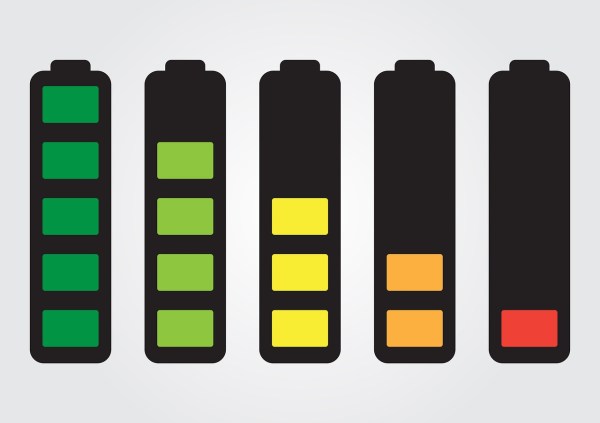
I poddle back to my cubicle and assess the damage; close my eyes and plug myself into the socket beneath the desk. I’m down to three percent, a flashing red light, but Burns comes over to check how it went. I make some monkey noises at him, all I can muster at low battery, and he somersaults some consolation witticisms at me. I unplug myself from the wall and force my eyes open. He props his backside up onto my desk and takes a sharpener to the skin on the back of my hand; it collects on the carpet like dandruff. I thank Burns and he leaves. I’ll lick the flakes of skin up off the floor later.

*      *      *

I don’t have time for a full recharge before the dinner, so I throw shots of tequila into my mouth while I’m showering. Jung-mi says I need to wear my best tie; she wants to show me off to her friends. I ask her if I should bring my unicycle and juggling balls as well and she says I might as well. I change into a fresh shirt and take another three shots before I leave. One of them stings the raw skin on the back of my hand; another gives me an inch boost in height; the third one builds up a black bubble around my head. It’s a bubble of ink that I can only see through if I squint.

I’m late to the restaurant and everyone’s already sat around the table. I can’t look directly at them; seven pairs of eyes painting red sniper dots all over my face. Jung-mi gets up and kisses me on the cheek and holds me out in her palm for everyone to look at. I gurn for them and they all clap and ask if I’ve brought my unicycle. I tell them I forgot it and sit down; my eyelashes fall out one by one and feather down into the bowl of soup that’s already cold in front of me.

They start a parlour game while we’re waiting for the mains. Coming round in a circle; think fast, be witty, here’s a knife at your throat to make sure you do. My tequila bubble’s thinning and the heart’s pounding again like a silverback thumping his feet against my chest. My tongue’s drying out again and when I run it over my teeth they pop out from the gums. I swallow them one by one like pieces of hard corn.

It’s my turn. Eyes on me, Ol’ Dew Face. I stand up and excuse myself, hobble to the bathroom with my face burning. Jung-mi follows me, takes me by the hand.

‘You okay?’

I look at her through what’s left of the film of ink around my head. The room’s spinning, building up like a tornado hurtling through my chest and I just want to get out.

‘Breathe,’ she says, moving her hands up to my cheeks. ‘Just look at me, only me. Breathe. Deep, slow.’

I do what she says.

‘I’ve got a problem,’ I say.

She nods. She holds my face in her hands and looks into my eyes and just nods. I’ve said it out loud, at last.
 

Cabinet Of Heed footer logo

TOMAS MARCANTONIO is a fiction writer from Brighton, England. He has been published in various journals and anthologies, most recently Ellipsis Zine, Firefly Magazine, Storgy, and The Fiction Pool. Tomas is currently based in Busan, South Korea, where he teaches English and writes whenever he can escape the classroom.


Image: Manuchi via Pixabay



Luskentyre – Paula Hunter

It is summer. It has always been summer, for as long as we can remember. It will always be summer for we are still in the long hot day which knows no tomorrow.

The sand is cake batter soft between our toes, crumbling into yellow footsteps behind us. The path wends through dunes and strikes out towards the just-glimpsed sea. Gulls are calling the alert above but when we come out at the beach, there is no one there, or at least, no one we can see.

The sun rolls in waves across the sand and the sea is navy with a white pin-stripe. The gulls float motionless above, balancing on the wind, like palace guards. But we are a long way from the city now. Unleashed, we plunge on in.

The wind gets up as we reach the surf, with its rush and sting, snatching our words away. We scream and squawk and smile and pretend we did not see the graveyard on the hill.

Blue and green mountains across the water catch the shade from passing clouds, clouds that pass as minutes and seconds pass, hours and days pass, as frowns flicker across freckled brows, and eyes start to smile, in this place of forgotten unforgettable days.

We are here. Now. Pink and lilac shells litter the sand, tiny against our fingers, huge against the grains of vastness. They look real but we can hardly feel their thin skins. Maybe they dropped from dreams. We put them in our pockets, noticing their colours fade as they dry out in the wind, some of them already crushed. This is where the sand comes from, we say, forcing smiles.

Maybe the people in the graves are sand now too. We do not dig too deep.

The cold is real. It makes our screams loud and our limbs ache as we run to escape the spray. The waves crash and heave and we laugh till it hurts. We will not ever be crumbling in graves, sunk in sand, called for by gulls.

Along the water’s edge, before we leave, we see the skeletons of starfish come to rest. They will be washed by surf here in this place, when we are not. But in our pockets, under fingernails, we carry pink and lilac sand.


Cabinet Of Heed footer logo

PAULA HUNTER grew up in Glasgow and defected to Edinburgh where she’s been a lawyer, butcher, fundraiser and florist but is usually at home with kids or up a mountain. Her fiction has appeared in Structo, TSS, Momaya Press, won the Brighton Prize, placed second in the Exeter Short Story Prize and was twice longlisted for the Caledonia Novel Prize. She blogs at paulahunterblog.wordpress.com and tweets @hillsnspills


Image: pexels via pixabay

The Poet’s Revenge – Michael Bloor

It was one of those online poetry magazines where they invite readers to comment on the poems. Dorothy shows me them from time to time. One evening, she said to me, ‘This poem here reminds me of the poem you wrote to me, back when we got engaged.’ She passed over her iPad and went out the room. I put down The Yorkshire Post and studied the poem. To be honest, I couldn’t make much of it.

Dorothy came back in and leaned over the couch, looking over my shoulder. I muttered, ‘What does “lambent” mean?’ She ignored my question and passed over an old-fashioned Valentine Card. I recognised my handwriting from forty years ago: I didn’t know that she’d kept the card all this time.

Reading the poem I’d written again, after all those years, I couldn’t help feeling that it wasn’t too bad. I was pretty certain, anyway, that it was a sight better than the ‘lambent moonlight’ rubbish on the iPad. I said as much to Dorothy.

‘Not too bad?? I think it’s absolutely wonderful, Clive. Why not email it to the magazine and see if they’ll publish it? There’s just a ten dollar reading fee to pay – what’s ten dollars these days? Still a bit less than ten quid, anyway.’

Her eyes were shining – I let myself be persuaded.

We sent it off, and at first, I used to feel a sugar-rush of excitement each time I opened up my email. But after a couple of months, still not hearing anything, I forgot all about it. And Dorothy apparently stopped looking at their website.

Then one winter evening, I opened up my laptop to renew my season ticket for the footie [if they can hang onto the lad McHardie, in midfield, and buy a half-decent goalie, I’ve a feeling they could be promotion candidates next time]. As I say, I opened up my laptop and there was an email from ‘The Editorial Team.’ They would be delighted to publish my poem in their next issue, which would ‘go live’ at the beginning of next month. Bloody ‘Ell: I’m a poet.

I showed the email to Dorothy, attempting a casualness I didn’t feel and couldn’t maintain. We ended up opening the bottle of champagne that my brother brought round last Christmas, and Dorothy printed off a copy of the poem to send to her sister in Canada.

Come the first of the month, I rushed home from work and Dorothy met me at the door, her iPad in her hand. My plan had been for the poet to take his muse out for a meal, but we ended up ordering a take-away – The Golden Dragon in Sadlergate does a wonderful vegetable fried rice that’s a meal in itself. We had a lovely, cosy evening: Dorothy persuaded me to recite the poem and then had a little cry.

The trouble came two days later. Dorothy was noticeably quiet all evening. I finally got it out of her after we’d gone to bed: she showed me on her iPad the comments that had been posted on the website about my poem. One comment was an innocuous ‘Well done.’ The other comment was… well, a slow-acting poison.

It seemed that the ‘sentiment’ of my poem was ‘mawkish;’ ‘scansion’ indicated ‘an irregular metre;’ the line ‘All that’s best of dark and light’ had been ‘pinched from Lord Byron;’ etc., etc. The dribble of bile came to a close with the remark that ‘the poet certainly displays a unique approach. One is reminded of Chesterton’s bon mot that if we cannot have goodness, let us at least have rich badness.’

Dorothy, bless her, pointed out that Byron’s line had been ‘dark and bright,’ not ‘dark and light.’ But she was still troubled. As for me, I never slept all that long night.

The strange thing was that the name of the bastard commentator, Colman Thaxted, was vaguely familiar. Couldn’t place it though. In the early morning, with Dorothy breathing quietly and regularly, I crept out of bed and fired up the laptop in the spare room. Google only offered one Colman Thaxted – then it came back to me…

The Methodist Chapel Youth Club in the early 1970’s. Colman Thaxted had been the chairman of the club committee, an unassailable position as he was the nephew of the Methodist Minister, Drippy Drinkwater. Thaxted had been a year older than me and determined to steal my Dorothy away from me. He’d been one of several rival suitors, though not perhaps the most dangerous (that was Andy McKillop, who claimed to be getting his own band together). Thaxted’s idea of a trump card was to make Dorothy secretary of the club committee and keep calling round to her house to ‘discuss club business.’

I was mentally reliving his under-hand campaign, when Dorothy touched my shoulder: she’d woken and traced me to the spare room. She confessed that she’d recognised the name at once, but told me that Thaxted had never been a real contender: I was a better dancer AND I’d managed to get tickets to The Stones 1973 tour (Kings Hall, Manchester – September 12th, 1973). She said we were already a done deal by Valentine’s Day 1974, but my card had served as a lasting confirmation.

It was Sunday, so we went back to bed.

The next day, in my lunch hour, I popped into the chemist’s and bought a well-known brand of medicinal anti-acid tablets. I’d traced Thaxted to the School of Cross-Media Studies in a university in the West Midlands. Anonymously, I posted him one of the tablets, with the suggestion: ‘Suck on this.’


Cabinet Of Heed footer logo

MICHAEL BLOOR is a retired sociologist living in Dunblane, Scotland, who has recently discovered the exhilarations of short fiction, with pieces published in Breve New Stories, Ink Sweat & Tears, Fictive Dream, Platform for Prose, Flash Fiction Press, Flash Fiction Magazine, The Fiction Pool. Scribble, Occulum, The Copperfield Review, Dodging the Rain, Everyday Fiction and The Drabble.


Image: pexelcreatures via pixabay

Effervescence – Ethan Hedman

We share the same beginnings. We were made to contain, and contain we did. Within each of us churned a small ocean of fizzling energy, eagerly awaiting its moment of release. Some of us still hold our saccharine essence. Others are long empty, having forgotten the feeling of a gentle slosh.

Here we sit with newfound purpose, disposable no more. We’re something else entirely now. We rest in a museum, icons of our brand’s long history.

Some of us are more than just collectibles. Some of us have grandiose stories. Look there, three down from me on the right. This one was discovered on a beach, hidden in the sand after being resealed with great care. The short letter inside tells a tale of survival. It ends well–“Don’t look for me,” it says. “I’m happy, healthy, and befriended the gulls.” The note is fiction, of course, written by a bored playwright during a lunch meeting, but what does it matter? The message sits alongside its former flask and still makes people smile.

Now keep going, two more down. This one’s still sealed, a collectible through and through. A proudly labeled commemorative edition made to celebrate a new bottling plant. It sat on an important desk at headquarters for most of its life. This one has heard everything. Small talk, gossip, office politics, marketing strategies, harassment, and the best kept corporate secrets. The company has many enemies, and this one knows them all. We often ask to hear its stories, always to little avail. It says it’s waiting to be opened. We’re in for a long wait.

On the other wall is the oldest one here. Our common ancestor. It’s more cylindrical than the rest of us, created long before we were given our iconic contour. It likes to reminisce about the world gone by, when pennies made all the difference and were never cast aside. It rambles about value–its value, our value, the value of the dollar–as if needing to constantly reinforce a sense of self-worth while scoffing loudly at the times. Present day is hardest for the old ones. Everything has changed.

A few more past the old fellow and you’ll find our aluminum friend. It’s among the youngest here, still stuck in an ongoing identity crisis. Is it a bottle? Is it a thinly-veiled can? Could it have once been a can? Recycled, reshaped, and reborn, a synthetic phoenix rising from its own ashes? Someday the questions will pass. It’ll decide to be one, the other, or maybe even both. Some ignore the crisis, but most of us try to be supportive. The drama will be over soon, I think. Our friend will find itself soon enough.

Now, come back. All the way back to me. I’m one of the lucky ones with a story. I was stolen. Taken half-full from a little girl in the middle of a bank robbery. The remainder of my contents were emptied on a police car’s windshield during the escape. I was nearly used as a weapon when the gangster’s gun ran dry. He held me aloft as he flung himself from the crashed ’34 Sedan. Of course, the police still had plenty of ammunition. Once a few pictures of the scene were taken, they pried me from his cold, dead hands.

But enough about me. What I really want you to see is my favorite, just to the left. It’s broken. Very broken, a jagged mess of spiky shards. The most experienced jugglers in the world wouldn’t dare to give this one a single toss. It stole the show at a wedding, shattering just after the best man’s toast. He went to clink bottles with the groom, and clink they did. The bride found herself awash in the midst of it. There’s even a Polaroid of the aftermath, her dress soaked and stained by my broken friend. “How awful,” people say, but it was really quite the moment. A wedding to never forget. The couple kept it as a souvenir for a while, but donated it to the exhibit so others could enjoy the tale. They sometimes visit on their anniversary to laugh about it all.

There are so many of us here, and we’re quite the motley crew. We’ve all had our own journey. Many came to be here as valued collectibles, others would’ve be thrown away if not for having stories of their own. Our new purpose is a good one. We get to be enjoyed for a much longer time than we were ever supposed to be. Frankly, it’s this or recycling, so I guess we can’t complain.


Cabinet Of Heed footer logo

ETHAN HEDMAN conjures ideas, writes words, and shares stories. His work can be found on EthanHedman.com.


Image: Comfreak via pixabay

Widowing – Adam Lock

Last night I fantasised Joe died in his sleep, again.

I look at myself in the full length mirror, straightening the dress I’ve chosen for Joe’s funeral. I try on the hat. Not bad for 56. I rummage through the shoes at the bottom of the wardrobe and step into a pair of stilettos. Arranging the hem of the dress, I breathe in. Not bad at all.

On the laptop, sitting on my bed, is a picture of Gavin, the surgeon, 46, widowed, who enjoys golf and dining out. Can’t remember the last time I dined out. I’m only looking. But I have two photos ready for when the time comes.

Last week Joe had pains in his chest, again. When I watch him sleeping, I imagine him waking, red faced, one hand on his chest, the other clutching his throat. Joe’s father died at 59 of heart failure. Joe is 59.

Are stockings appropriate at a husband’s funeral? Maybe they’re only appropriate in the bedroom, fantasising about a husband’s funeral.

I kick off the stilettos, take off the hat, and fall onto the bed.

Joe’s on his way to Nottingham, visiting his mother. She’s a good age: 82. My parents died at 65 and 67.

The red colon on the clock flashes. In the corner of the display are three letters: SUN. Sunday means sex. For twenty six years, Sunday has meant sex.

I stand and look in the mirror. Might get away with 50, maybe even 49. With the right make-up, with my hair done, maybe 48.

The phone rings. I imagine it’s Joe’s car overturned, on its roof, spinning on a wet motorway. Broken glass. Crumpled metal.

Breathe. I answer it. ‘Hello.’

‘Am I speaking with Mrs Kennedy?’

‘Speaking.’

‘I’m phoning on behalf of Moonshine Life Insurance.’

I put down the phone, sit on the bed, and inhale deeply.

I imagine telling Joe about the phone call over dinner, how it scared me. Then we’d watch TV, then go to bed and have sex, not because the clock says it’s Sunday, but because I’m sorry.

I take off the black dress and put on my dressing gown. I smooth the duvet, arrange the pillows, and reach to close the lid on the laptop. But there’s a message from the surgeon; he wants to see a picture.

I look at the bedroom door where Joe’s dressing gown hangs.

On the laptop I click on marital status. I bite the inside of my cheek and flex my fingers over the keyboard like a pianist. The cursor on the screen hovers over a new status: widowed.

Joe’s side of bed has a dull mark where the back of his head leans against the cream headboard.

I cross my legs and my dressing gown falls open. I run a slow hand across nylon-covered legs.

The red colon on the clock blinks. Second-blink. Second-blink. Second-blink.

I could never leave Joe. I could never do that to him.

On the laptop I change my marital status to ‘widowed,’ and stare at the phone.


Cabinet Of Heed footer logo

ADAM LOCK writes in the Black Country, UK, waking far too early in the morning to find time to write. Adam has had stories published in various publications, such as STORGY, Fictive Dream, Spelk, Here Comes Everyone, Retreat West, Fiction Pool, Ellipsis Zine, Syntax & Salt, Occulum, and others. Website: adamlock.net. Twitter: @dazedcharacter


Image: PublicDomainPictures via pixabay

Suppose – John Holland

What if we lived by the sea? Went swimming every day. Threw rocks at the gulls. Leapt off the pier, so people shouted at us. Ate gritty chips from paper. Or lived on a farm. With cows and chickens, and I’d help my dad shoe a horse or shoot a fox. I’d wear a hat. And have a piece of milky grass in my mouth. Slap the cows on their big behinds. Feed corn to the chickens. Chase the fat fuckers round the yard. Get warm eggs. Boil them up. Stick pieces of bread in. Feel the warm salty yellow on my tongue. Lie on my back in the hairy barley and look up at the blue sky. Stare at the big golden egg yolk sun. Until I can’t see anything anymore. Nothing at all.

– I’m not looking after him, Gordy.

– You’re a girl though, Char.

– Der! He’s your brother.

– He’s no trouble, Char. You’re no trouble are you, Billy?

– Doesn’t say much, does he, Gordy? You don’t say much, Billy, do you?

– He’s three, Char. What do you want him to say?

– I dunno. Looks about as stupid as you. Let’s go nicking in the mall.

– My mum’ll kill me.

– Ooo, your mum’s gonna kill you, is she?!

What if I had an older brother? Someone like Carl at the garage. Yeah, this is a carburettor, Gordy. Yeah, you’re right it is cool. I’ll show you how to fit it. Supe up the old motor. Do you want to drive? Round the car park or somewhere? One day you’ll have a car like this. We can race. Yeah, this is my kid brother, lads. Yeah, he is cool, isn’t he? Hey, Gordy, get me twenty fags. Thanks Gordy. Are you hungry? Shall I get us some chips? We can eat them together. In the car. Tell me if anyone gives you a hard time, Gordy. Anyone at all. You just say. What, that fat kid? Leave him to me.

– Look at that bag. I could have that.

– Char, don’t.

– Yeah, yeah, Gordy. Do you want to fuck me again?

– Course I do, Char.

– You weren’t much good last time, Gordy. It’s small, yours.

– You’re no shakes, either.

– Well, you were, like, the worst ever.

What if I’d been with a girl from the big houses on the avenue, instead of Char? Like that stuck up Juliette. Come in, Gordy. Do take a seat on the sofa. This is my mother and this is my father. Would you like some tea? How do you like our 60 inch 3D TV? I’ll just finish my AS level psychology home work. Yes, you can help. Do you think personality is more nature than nurture? I think that you’re right, Gordy. You’re so clever. Yes, you can ride Eloise ‘round the paddock. Be careful. She’s headstrong. That’s it. You’ve got the hang of it straight away. You’ve tamed her. I think Eloise loves you, Gordy. Yes, you can stroke my naturally blonde hair. Do you want to brush it too? You can touch my breasts – if you want to. Yes, you can kiss them. Gentler though, Gordy. No further. I said no further. Not till we’re married. When mum and dad will be dead and we’ll move in here. Run my dad’s business. Drive the Beamer. I love you, Gordy. Do you love me? Say you do and I might let you.

– Let’s do it then, Char.

– Yeah?

– Yeah.

– You got a condom, have you, Gordy?

– Sure.

– I bet! Show me.

– Don’t need to.

– You do if you want a fuck.

– Let’s go in the bog.

– The bog? What do you think I am? What about your baby boy Billy then?

– He can wait outside.

What if I’d been a monk? Or born without a cock. Like a freak. What if my dad had never met my mum? What if my mum loved my dad? And they didn’t fight? And mum didn’t have those men round – with their stary eyes. And their jackets over the chairback. And go, “If you say anything I’ll fucking kill you.” What if she had fucking killed me?

– He’s not here, Char. Billy’s not here.

– You bastard, you never used a condom.

– Where is he?

– I don’t know. Probably met a mate.

– He’s three years old, Char. He hasn’t met a mate.

– He’ll be somewhere.

– For fuck’s sake. Look for him, Char.

– Don’t panic. Look, there he is. Over there, by the railing. Just standing there. Staring into nothing. Nothing at all.


Cabinet Of Heed footer logo

 JOHN HOLLAND is a prize-winning short fiction author from Gloucestershire in the UK. He also runs the twice-yearly event Stroud Short Stories. Website – www.johnhollandwrites.com
Image: Dean Moriarty via pixabay


Most Stay Close To Home – Voima Oy

I remember Iowa, cornfields shimmering in the summer heat. And the sky, the dark purple color of a bruise, a tornado sky, a supercell storm, the air heavy and expectant. We headed down to the basement, static on the radio, and the dogs barking. “You kids go down, Grandpa said. “I’ll be right there.”

“Where’s daddy,” my little sister crying. “I want mommy.”

“They’re in town,” Grandpa said. “They’ll be back soon.” He looked at the darkening sky. “We better go down now.”

“Where’s Tom,” I said. “We can’t leave him out there.”

“Never mind the cat. He’ll take care of himself.”

“I’ll get him.” I said. I could see the big brown tabby by the screen door. I tried to pick him up, but he struggled out of my grasp, running across the yard, heading for the corn field. I chased him, the wind roaring like a freight train. My sister and Grandpa were standing on the back porch, yelling at me to come back, come back.

Above me, the dark cloud opened, and I felt a lightness before everything went black.

Later, they told me they found me in the field, among flattened corn stalks. Tom was sitting beside me like nothing had happened. I don’t remember how I got there.

That experience changed me. I could tell what the dogs were thinking. Tom the cat was more inscrutable, but in his green-gold eyes was a universe of wisdom. He was going to teach me things.

That was the year I figured out math. I can’t explain that either, but I just understood the way the numbers worked. It was like a door opening in my head. I became a straight A student.

I got a scholarship to college, majoring in math. It was in a topology seminar that I met Dr. Carla Fellini and worked with her on poly dimensional matrices – the theory that this reality is one of a series of realities, an infinite series of parallel realities, and we can move freely between them. Most stay close to home, she said. I felt a connection with her, almost a feeling of deja vu, like we had met before, or maybe I had been waiting to meet her all my life.

Dr. Fellini was considered an eccentric, even among the eccentric professors in the Math Department. Cats, she said, can sense these other realities, just as cats in other realities can sense us in this one. When she said things like that, I could feel their whiskers brush against me.

I was walking down the hallway in the Math Building. I remember opening a door. Then, I was standing on a bridge overlooking a bright night city, surrounded by cats of all colors and sizes. Their eyes were green, golden, orange. They circled me, rubbing against me, regarding me with their infinite eyes. “It’s time to go back,” they said.

Dr. Fellini’s face was looking down at me. “How do you feel?” Her blue eyes regarded me with concern.

“What happened?.” I said. My mouth felt dry with the strange sounds.

She brought me a glass of water. I felt rivers flowing through me, the Mississippi, the Amazon, the Nile, and along their banks were grasses and jungles. Eagles soared in cloudless blue.

“Better now?” The blue eyes seemed to smile at me.

“Where am I?” I tried to get up, to look around. Soft hands held me down.

“Home.” Her blue eyes were kind, but I couldn’t make out the rest of her. I heard rumbling in the background.

“Where did I go?”

“You should rest, now.” The eyes were growing darker blue, the indigo evening of a summer night and fireflies.

I felt the velvet humidity. Dr. Fellini was holding a round thing, like the moon. There was something odd about her hands, the fingers.

“Welcome home,” she said, as the indigo turned black. “Your journey is just beginning.”


Cabinet Of Heed footer logo

VOIMA OY lives on the western rim of Chicago, near the expressway and the Blue Line trains. Her writing can be found online at #vss365, Paragraph Planet, 101 Fiction, Unbroken Journal, Vignette Review, and Molotov Cocktail–Flash Worlds. Follow her on Twitter— @voimaoy.


Image: StockSnap via pixabay


DX7 – Michael Hurst

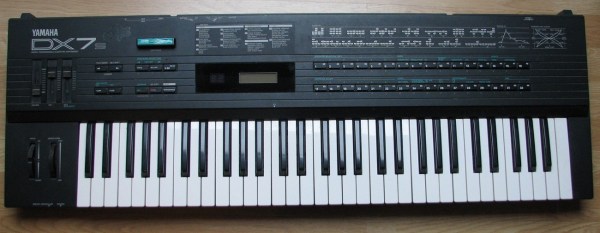
Danny expected the Oaktrees Retirement Home to smell of death. It actually smelt of disinfectant and Christmas dinner. His dad dropped him off in his Austin Montego but Danny didn’t want help with the hardshell synthesizer case, the stand and – heaviest of all – the amplifier. A girl about his age showed him into the hall. She didn’t seem impressed by him or his equipment.

Most of the residents were gathered near a television set. Others sat around the hall, in pairs or on their own. No one showed much interest as he set up his kit near two withered red balloons taped to the wall. The only mains socket was already in use. Danny pulled out the plug. He paused to see if there was a commotion – perhaps it fed someone’s life-support machine or, worse, the television set – but there were no screams or alarms, and the music of Going for Gold continued in the background.

He’d attracted his first fan, a slight woman with curly white hair who made Danny’s own grandmother seem young. He resisted the urge to play his special arrangement – his music teacher at school had advised him to save the best for last.

‘It’s a Yamaha DX7,’ he said. ‘See this memory cartridge? That makes it do all the instruments. It’s like having an orchestra here.’

He played a few notes.

‘There’s the saxophone.’

‘Saxophone?’ said the woman. ‘That’s not a saxophone.’

A bald man wearing a sports jacket came over and started looking round the keyboard.

‘This one’s a bell,’ said Danny. ‘You must admit that sounds like a bell.’

‘I don’t really know.’

‘And it does effects, too. Listen: thunder, helicopter…’

Danny pressed a few keys for each sound. But when he reached the air-raid siren, the woman reeled away with her hands over her ears.

‘Stop it,’ she said. ‘Turn it off!’

The siren made its leisurely climb and fall, soon joined by secondary tones which sometimes thickened, sometimes distorted the main sound. It seemed to be not so much an alarm as a city-wide keening, a cry from every bunker, street and cellar.

‘Some of us have heard a few too many of those,’ said the man in the sports jacket, making a cutting motion with his hands.

There was a moment of inertia and then Danny fumbled to change the sound. He accidentally pressed the button that started his arrangement. The Pet Shop Boys’ ‘It’s a Sin’ blared out from the amplifier, embellished by whirling arpeggios that Danny had programmed on the DX7’s synth strings.


Cabinet Of Heed footer logo

MICHAEL HURST’s writing has been chosen for the GWN prose competition at the 2016 Cheltenham Literature Festival, the May 2017 Stroud Short Stories event and the second print edition of Ellipsis Zine. You can find him on Twitter @CotswoldArts.


Image: By Speculos [GFDL (http://www.gnu.org/copyleft/fdl.html) or CC BY-SA 3.0 (https://creativecommons.org/licenses/by-sa/3.0)%5D, from Wikimedia Commons


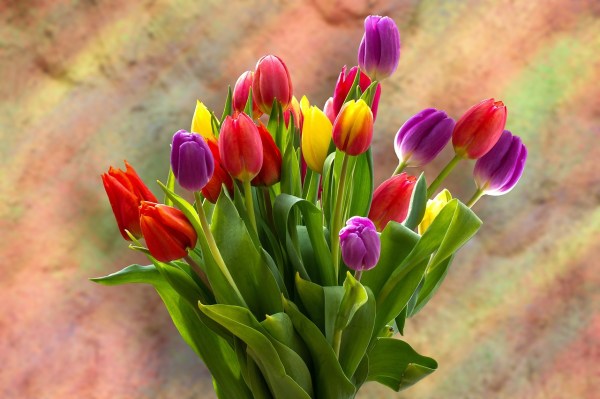
Tulips – Matilda Harjunpää

My mother has always loved tulips. Every spring when they were in season she’d put a large cylinder vase on the windowsill and fill it. Over and over.

She says tulips die in many different ways, more so than other flowers. Some of them grow long stems that start to droop. With others, the green parts turn yellow and brown. Some drop their petals and their pollen, leaving a big mess for you to clean up.

Some die beautifully. They stay strong and upright, refuse to stretch to grotesque proportions. Won’t break apart. The flowers open gently and the edges of the petals curl outward. The color drains to another hue as lovely as the one before. Tulips that die this way stay fresh for over a week. Even with a keen eye you tend to only get a bunch or two of these in a season.

She says that’s how you know they are living things. They all die in their own way.

She is a small woman but now she looks smaller still. Bedridden for almost a month, we know it won’t be much longer. I place the vase on the side table – a borrowed vase from the hospital, but it will do. I couldn’t find the cerise ones she always liked the best. I hope these are close enough.

She turns her head slowly to look at the flowers. An expression on her face I still recognize as a smile.

“You know, those are stretchers.”

This is not a criticism. Simply an observation.


Cabinet Of Heed footer logo

Matilda Harjunpää writes in Helsinki, Finland. Her very short stories can be found on Twitter @matildahrjnp.


Image: Capri23auto via pixabay


Cravings – Abi Hynes

Moj’s cravings were so tame, Caleb was disappointed. He had been game for the whole experience: the late night ice cream expeditions, the stolen lettuces from witches’ gardens. Driving out of town to the Chinese supermarket like James at work had done when Lola was having the twins would have given him something to do, and might have made him feel like a useful part of all this. But Moj only wanted mangoes, which were in season, and pickled things on toast.

The most unnerving thing she’d yearned for was a bowl of those deep-fried white bait at a tapas restaurant. Caleb had squirmed a bit, sure, as his wife sat there crunching them up, one salty little body after another, heads and eyes and all. He imagined he could hear their tiny skulls popping against her back teeth. Moj grinned guiltily up at him with greasy lips.

‘Sorry. Is this disgusting? Blame Blob, not me.’

Blob. Caleb feared they’d keep calling him or her that, even after the birth. No teeth yet, but nails and hair, getting mushed up mangoes and whitebait through a tube. He wondered if he or she would like those things when they grew up. Or if they’d be sick to death of them.

What Caleb hadn’t told Moj was that he was getting cravings of his own.

They’d started as a heightened sense of smell. He’d been sitting at his desk at work, when the various and not all pleasant odours of a kitchen had started to waft in. Fat frying and imitation Chinese sauces and a thick, meaty, soupy smell, and, most of all, the powerful tang of fish.

‘What the hell is that?’ he demanded, looking around at his colleagues for support, but nobody seemed to have noticed and they looked back at him blankly. The stink grew more and more potent, until he was choking on it, and had to excuse himself, and followed the smell like a hunting dog to its source in the canteen, which was seven floors below.

He’d dismissed it as a fantasy, of course. Ridiculous. Some weird psychological reaction to his impending fatherhood. Watching Moj’s body change while he did nothing but wait; it was screwing with his head. But along with this strange new sensitivity had come a powerful craving that was turning into obsession.

Nothing seemed to satisfy it. He stocked their cupboards with tins of tuna and sardines and more of Moj’s whitebait that he had to go back to the restaurant to find, safe in the pretence that he was doing it for her. He ate salmon and monkfish and trout and carp and seabass, but his craving barely took a breath. He tried spider crab and lobster and squid, and the new varieties of creatures with tropical-coloured scales and exotic names. He cooked them in increasingly ambitious recipes until Moj exclaimed that seafood was starting to turn her stomach, and for the love of God could they eat something else for a while?

Caleb felt like he was going mad. He sat in meetings with his mouth watering and his stomach bending in on itself, fantasising about sucking the sweet, brown mud from the severed head of a prawn. He went in search of sushi at lunchtimes, trying everything they could put in front of him, even the really weird shit, wondering if eating it raw was the way to finally get satisfaction. Nothing worked. Moj got bigger and slower and more and more exhausted, but he barely thought about her. When she spoke about Blob it was like it was someone else’s baby lying in wait in there, and hardly even worth his interest.

I’ll crack it soon, he thought, as he stood over the fish tank one evening. The smell of Moj’s bubble bath drifted down the stairs, her humps crowning out of the murky water.

He swallowed the goldfish whole, and felt it in his throat, still wriggling.


Cabinet Of Heed footer logo

ABI HYNES is a drama and fiction writer based in Manchester, UK. Her fiction has been published in a variety of places online and in print, including Litro, syntax & salt, Flash Fiction Magazine and minor literature[s], and she was recently shortlisted for the inaugural Bath Novella-in-Flash Award. Her plays have been performed across the UK, and she is currently taking part in the 4Screenwriting 2018 course with Channel 4.


Image: Skitterphoto via pixabay


Long Guest and a Briefcase – Richard Kemp

I will tell you this, as it is all I have to tell. It was the afternoon and I had taken lunch in my study so that I might continue to busy myself with correspondence that I had previously neglected. I was going about filling my inkwell when I heard the front bell ring. Not expecting company, I elected to ignore it as I felt it prudent not to eschew my responsibilities any longer. The bell rang a second time and then a third. By now I was striding along the passageway with thoughts of indignation, with whoever it was, clanging away like a hysterical conductor. No sooner had the door opened, the ringing stopped.

I was greeted by a gentleman standing no higher than my shoulders. A small moustache dwelled below his nose and large round spectacles above it. He was clutching a briefcase to his chest with one hand and holding an umbrella with the other. He bowed. ‘My name is Souvenee. I have abandoned my carriage a way back, the driver was of a terrible muddle, so I elected to forge my own path, as it were. I wonder if I may ask for shelter until this terrible storm passes.’

The sky was indeed filled with clouds of the darkest greys, so that to all purposes it looked as if God Himself had flipped all the mountains and hung them over the sun yielding their water to be cast about by every gust and bellow. Where this storm had come from I do not know, as I had given thought to spending time in the potting shed, rather than my desk, as it had seemed such a fine day.

My mind was torn between the idle quill and blank sheets, and the vulgarity of quarrelling on one’s doorstep. Relenting, I ushered him across the threshold and took his umbrella and coat. These are worthy of remark in two ways. Firstly, that although they were tailored to a high quality and must have come from deep pockets, there was a fine layer of dust and every hem was frayed and worn. Secondly, that despite the weather they had been subjected to, they were dry as a bone. He took preference to hold onto his briefcase, which resembled the former items with regards to quality, age and aridity.

Whilst placing the items in the cloak room, I stole a glance through the window. The sky was now clear with not the slightest blemish to obscure the blue and yellow of a fine summer’s afternoon. ‘I say,’ I called, ‘it seems the storm has moved on, or at least the worst of it. It would be a shame if you missed any engagements unnecessarily,’ but I did not receive any response. He was already in the drawing room and was building a fire in the hearth.

Logs had been set and he was placing torn pages of newspaper amongst the wood. He seemed so assured that this was nothing out of the ordinary that I felt it ungracious of me to see it any differently. ‘I would rather yesterday’s paper was used. Burns just as well I’d wager,’ I said. ‘Today is tomorrow’s yesterday,’ he said and using the candle from the table, lit all the pieces of paper as if anointing them one-by-one with blessed wax. Now, I always kept in mind to assist those in need and allow for differences in upbringing. You can’t blame the horse for the stable, I always said but this irked me more than a little. ‘A brandy would hasten the warmth if there is any to be had?’ At this rate I should be lucky to still have my own shoes I thought, but a guest is a guest, whether welcome or not.

I returned with glasses and bottle to find two chairs had been placed by the fire and Souvenee had made himself quite comfortable. His briefcase sat on the floor next to him and his hands, lightly clasped, resting on his paunch. He released one hand to accept the glass of brandy and gestured for me to sit in the other chair. I had to catch myself from thanking him, in my drawing room, to sit in my chair.

We sat together in front of the fire for the rest of the day. After finishing each glass of brandy I found myself pouring another. My guest wove many tales with regards to his memories and travels. His life had been varied and wide with accounts that could bolster many persons’ years. Whether it was the brandy affecting my eyes or the heat from the fire trifling with my thoughts, I fancied that whenever there came a place or name in his telling that was a little foggy or a point he could not quite fathom, he would slide his hand over the case which would quiver. Once the previously forgotten or omitted detail had been recalled and he was once again animating his yarn with hand and jowl, the briefcase would return to its passive state until the next vague recollection would seek clarity.

Eventually the moon hauled itself into place and, I have to confess, that although I had enjoyed the stories and a chance to allow some liquor to round off the sharp edges of the day, I would feel better when this strange man had taken leave. But I could not, in good faith, send him on his way at such a late hour so I invited him to stay the night in the guest bedroom. An offer he happily accepted. ‘I can arrange a carriage for you first thing in the morning, before breakfast.’ I said. Usually I would offer breakfast to guests but this time I felt a bottle of my finest brandy and a soft bed was ample hospitality. ‘Sir you are most kind. Please, as some small token of my gratitude, would you care to choose a trinket from amongst my wares? Not wishing to appear petty and feeling it worthwhile to recompense my inconvenience in some way, I accepted. He slid his briefcase in my direction and raised his eyebrows in a manner that I’m sure he considered to belong to that of a playful friend but to me, felt nearer a conspirator.

I lay the case on the table, unlocked the catches and opened it. Curious as to what treasures he had held so close to him since his arrival, I peered into the leather-lined gloom. To my astonishment it was filled with a preponderance of spiders. Not large specimens as those found in the darker places of the world, but no bigger than a child’s thumb. ‘I must say I find this in poor taste,’ I said but Souvenee merely smiled. The spiders made their way over my hands and up my arms. Due to their size I could pick them off with little effort, and at first, I saw it as no more than an extreme nuisance which would be halted. All the while, Souvenee had lit his pipe and was puffing away quite contentedly. The ungrateful wretch would find the roadside a lesser host and would do so as soon as I was free.

More spiders now made their way past my elbows, to my shoulders, up my neck and began marching into my mouth like an invading horde under the command of their General. I clawed at my gums and behind my lips, dragging out bits of abdomen and leg. Panic built up inside me. There were now thousands of the small dark creatures moving over my entire length. I could no longer open my eyes and my breathing became more desperate as my nostrils soon filled with them. Now flailing at my own body, half blind and half choking, it felt as if my own skin was being frog-marched off my very bones. I do not consider myself a weak man, but I fell under the sheer weight of them all. My screams muffled by countless tiny legs that wound themselves over my teeth and tongue.

I remember nothing that came after, nor before that afternoon. I surmise I was found by somebody at some point and that it was decided I would stay in this room. Each day someone brings me food and satisfies themselves that I am well, which for all I can tell, I am. Left alone for most hours I occupy myself writing letters. I do not know who to send them to or how many I have written but today I fill the inkwell and begin: I will tell you this, as it is all I have to tell.


Cabinet Of Heed footer logo


Image: via pxhere


Still Life – Jesse Bradley

Mitch tries to talk me out of staying behind to babysit mom. You could use the night off, he said. I shook my head and made him hand me his car keys; Mitch’s car hasn’t recovered fully from his last night out on the town.
I sit in front of the glass shed mom’s living in and sip whiskey that’s a hair above cheap, where the bottle’s glass but the glass is so frail, it’d break in mid swing during a bar fight. Tonight, mom’s taken an evaporating green watercolor. She’s enveloped the glass chair we got her to practice maintaining a human form.
Today, she managed to sit still and cross her legs. She bounced her right foot the way she used to when got giddy, like when dad brought home flowers or I brought home a rare ‘A’ on something. It was when she tried smiling that her limbs exploded. Mom seeped out of the stumps and dispersed back to her gaseous form. Unlike all the other times she failed maintaining a human body, mom was too tired to bang against the glass. We’ll try again tomorrow, she said. Mitch used it as a reason to celebrate and be stupid, like a man in his early twenties should be sometimes to remember he’s alive.
I lay down on the grass, next to the half full glass of whiskey. Maybe, we should let mom go, let her fly high into the sky, chase the stars, but then I think about the birds, the unfortunate helicopter or plane that flies through her, their names.
Le_Voyage_dans_la_lune_
Image: noeminihoul via Pixabay


You’re Very Beautiful – John Holland

“You’re very beautiful,” I say. I do not know whether, by their standards, she is beautiful.

She looks surprised. Flustered. Perhaps because I met her only a few seconds ago. Touched her arm at the crowded bar and introduced myself.

“Thank you,” she says, and giggles. I can see that she thinks I am beautiful. Handsome, they call it.

“I like your eyes,” she says. I have learnt to smile with my eyes. Learnt that they like that.

“Yes, I have two – the normal arrangement,” I say. I am aware that they find that funny. She laughs. It’s a good sign. I ask her what she’s drinking. Vodka with something. I have the same. It’s easier. The barman pushes the drinks towards us. I give him paper money. She puts the glass to her lips. I do not drink.

There are two seats at the back of the bar where we can sit. Briefly I hope.

“Are you English?” she says.

It’s not the first time I’ve been asked. My accent is not completely accurate.

“Yes,” I say, “But my father was Swiss.”

She nods. And smiles. Asks about Switzerland. I mention the Alps, clocks, gnomes. It’s what I’ve learnt.

I say I am a financial broker – working for animal welfare. Money and a conscience. That I have a hybrid sports car, using electricity as well as petrol. And a riverside flat.

“With a view to die for,” I say.

“Nice,” is her reaction.

“It’s only a few minutes away.”

And in those few minutes we are there. And she has drunk more vodka. This time straight. She has let her fingers linger on the Kelim rug. And admired the kitchen – white tiles with stainless steel. It’s in the kitchen that I ask her to add her name and address to my system. I must monitor.

“For the gift,” I say.

“Gift?” she asks.

She says she’s never seen a computer like it. I agree she hasn’t.

We walk onto the balcony. Stand a little apart. Listen to the noises of the air. I stare at the darkness, the bloated sky. And home.

She looks at the side of my face. I turn and smile. We kiss. These days I kiss well.

She says she’s never met anyone like me. That I am unusual. I smile. Tell her that someday people may say the same about her.

Soon she is naked in my bed. I say that I will use a condom. I act it out under the sheets. I penetrate immediately. And finish.

She insists she would like to stay.

I say that really she wouldn’t. She dresses. I close the door behind her.

I report progress towards the target. Change the sheets. Choose different clothes and walk to another bar. Find another woman.

“You’re very beautiful,” I say.


Le_Voyage_dans_la_lune_

JOHN HOLLAND is a prize-winning author from Gloucestershire in the UK, and the organiser of the regular event, Stroud Short Stories. Website – www.johnhollandwrites.com


Image: Gerd Altmann via Pixabay


Curiosity – James Wise

There was a time I thought my life was all it’d ever be. Attended by many careful hands and kept in a sterile room, I was loved, monitored, nurtured and protected.

So it was quite a shock when they put me on top of a massive rocket and fired it into space. I drifted for a million miles before bouncing to an unceremonious stop on this remote world.

Now I wheel slowly onwards, tilting my dusty face to a bronze sky, a distant peak, to peer at the rocks. I see no one else and never will. I take selfies.


Le_Voyage_dans_la_lune_

JAMES WISE has been writing most of his life, with poems published in local Oxford anthologies Hidden Treasures and Island City, alongside Tom Paulin and Paul Muldoon. With an MA in creative writing from Birkbeck, James has had short stories featured in MIROnline and Issue 14 of The Mechanics’ Institute Review.


Image: Skeeze via Pixabay


Yellow – Barbara Lovric

She was yellow with fear. Cold Piss ran through her veins instead of hot down her leg. This was no super hero Marvel movie where she could sprout wings and loop the fuck out of there. Though she wished it was. Wished it was. Wishes are fishes. Fishes are wishes.

“Fucking cop on yourself already for feck’s sake,” Jimmy hissed, breath steaming like the train which had just left the station.

“That’s the last train.” Mandy’s voice trembled. They had missed it by seconds. Some fella with a belly of one too many pints and a heart attack waiting to happen had tried to stick his hand in the gap to hold it open, eyes big as his belly. He knew. Oh yes, he knew.

Jimmy ignored the display blinking NOT IN SERVICE. NOT IN SERVICE. “It fucking isn’t.”

But they were alone on the platform.

“It’s like that movie. Warriors. Warriors. Come out and play. Remember, Jimmy. Remember?”

“Yeah, I wish homicidal gangs were our worst problem.”

Mandy wrapped her piss cold arms around herself. “There’s no way out now.”

Jimmy put his arm around her as the red tail lights of the train disappeared around the tunnel bend. “Doesn’t matter. Where the fuck they gonna go, anyway?”

“End of the line. End of the line for everyone,” Mandy giggled.

Jimmy dropped his arm and for the first time looked at her like a liability.

“Don’t you leave me, Jimmy Murphy. Don’t you fucking leave me.” Her voice rose with every syllable. She could see him weighing his options. It only took a second or two. Didn’t matter they’d been together for five years, an abortion, his brother’s suicide and a trial. None of that mattered now. Nothing mattered…”

He grabbed her hand and pulled “Come on. I know a way out.”

“But where we gonna go, Jimmy? Where we gonna go?”

He didn’t answer, just ran. She had no choice but to go with him.

They made it to the surface and darkness. It was quiet as a nightmare before the monster pounces. The alarm clock of Mandy’s pounding heart wouldn’t slow down. They’ll find us now. Find us for sure.

But the streets were empty as a Christmas dawning.

No more Christmases. Not ever. Ever. Can’t go home. There were no homes any way. Only cells. They were gathering them up, slamming the doors and throwing away the key. Mandy felt the window eyes watching. The curtains twitching. Was it better to be locked up waiting for the food to run out? For everyone to turn on each other? For mothers to eat their young?

What would you do, Mandy? Would you eat Jimmy? Would ya? Huh?

“I know where there’s a boat.” Jimmy said as they crouched behind some bins. Where were the rats? Surely, they would inherit the earth along with the cockroaches?

“We’re too far from the water, Jimmy. We’ll never make it.”

“Bullshit,” Jimmy said and they started running.

It was late or early or somewhere in between and the air slap dashed against their faces as they ran through mist that had either fallen from the charcoal sky or risen from the ground like huffing and puffing corpses dragging themselves from hell. It’s a nightmare, right? All just a nightmare. I’m gonna wake up, Jimmy by my side and we’ll have a smoke and laugh about it. He’ll tell me I’m a psycho and better lay off the drugs but I stopped that shit years ago so what the fuck is this now?

“Mandy.” Jimmy panted and heaved but his voice was full of something both had forgotten. Hope.

The pier was empty. Not a sail boat, yacht or cargo ship in sight. Maybe the mist had swallowed them whole.

“Are we dead, Jimmy? Is that it? Are we dead and just don’t know it yet?”

Jimmy laughed. “You edjit. Look.”

She followed his finger to the dinghy lap dancing against the pier. The tide was high and all they had to do was step into it and push off.

Thank Christ. She’d never believed in God but someone or something was looking out for them. Drawn Jimmy through the fog to the pier. Saved a boat, a small boat but big enough for the two of them to hold hands and sail into the sunset. There’s no sun, stupid. Haven’t seen that fucker for ten days, ha ha days, ten whatever the fuck, now.

There was no motor so Mandy lay back while Jimmy did the rowing.

“Is it getting warmer, Jimmy,” she said five minutes or five hours later. Hard to tell in unshifting twilight.

“You fucking joking?” Jimmy said, sweat lashing from his forehead. “You laying there like a princess and me killing myself here.”

“A princess you rescued. I love you, Jimmy.”

Jimmy grunted.

It was then Mandy noticed the water. “We got a leak, Jimmy. Oh fuck. The boat’s got a leak.”

Jimmy drew in the oars. “Look for something. Something to bleeding shove in the hole.”

But there was nothing.

“Jesus, Jimmy. It’s like bath water. Like a sauna. Like a lie down after a hard day’s work and someone’s rubbing the job out of your muscles and I’m just going lay back in it for a bit. Float like. Jimmy?”

But Jimmy was already lying next to her. Steam rising from him like a train through the night. If only we’d caught the train. If only…

Mandy started leaking. What harm? Everyone pissed in the sea. As the water turned yellow like spices in a soup, she felt herself fading, eyelids going down like a sinking ship and luxuriating in the warmth.

Christ, Jimmy, I can’t remember the last time I felt this warm. This good. Jimmy?

But Jimmy was a thought. A memory through a sieve as Mandy cooked in the hot water. He was her last thought and it was a good one.

She never even felt the spear pierce her flesh.


Le_Voyage_dans_la_lune_

BARBARA LOVRIC is originally from America but living in Ireland some 20 years. Recently long listed for the Bare Fiction Short Story Prize, Barbara was also shortlisted for the 2017 Over the Edge New Writer of the Year award. Twitter: @BALovric


Image: StockSnap via Pixabay


Trap Street Irregulars – Peter Haynes

A man came to me as I was locking up for the night. He brought in a gust of cold air, hugged himself warm on the bench by the donations box. The high crackle of tyres on wet tarmac screened out as I closed the door.

“This isn’t a church where I come from,” he said. His face was familiar though I could not place him, covered as it was in a layer of dirt.

“Are you hurt?” I asked. “Hungry? I can call the hostel. They usually have beds.”

“How long has this been your god’s house?” he asked.

“This has always been a place of worship. Are you lost?”

The man laughed. “Is that him?” he asked, pointing at the crucifix with an expression of less-than-sacramental amusement.

“It is. An equal part of him anyway.”

“Then I’ve met your god,” the man said. “He drinks at the Bricklayers Arms on Warren Road and he’d find this behaviour puzzling. Do you have a Warren Road here?”

“Listen, friend. It’s late -”

“I found a map,” he continued. “Of where I live, only different. I found it here, in the basement of this building. On a bend in Willow Street it showed a path I’d never seen before. I went there and turned — just a little to the right, or was it left? — and here I was. In this city, not mine. Cursed by curiosity!”

“Can you show me this map?” I asked. “Perhaps you will remember where you live?”

The man stood — taller than me by a hand — and took out a folded sheet of paper. On it I could see my city’s streets, the familiar blocky representations of shopping centres and car parks. I felt confident we would find his way home. The longer I looked, however, the less the map made sense until all that remained was a jumble of oblique corners and patches of static. All, that is, except one name, dissipating where the collector roads of estates danced in jagged scintillations.

Trap Street.

I don’t know how long I stared but at last I was forced to sit and hang my head from dizziness.

“Doesn’t make sense, does it?” he said. “You don’t belong there anymore than I belong here.”

“What do you want?” I demanded.

“Have you ever been invisible?” he asked. “I have learned in just a few days that you can become…unreadable to a place as that map is unreadable to you. ‘Awful to lose your home,’ I’ve heard some say. ‘Terrible luck, but perhaps if he didn’t drink so much?’ And the headaches, the stumbling. You feel it.”

My mind was swimming in disconnected junctions and overlapping slip roads. I tried to get to my feet but there was a weight in my bones keeping me down.

“Look, I don’t think I can help you.”

“I think you can. See, not everything is different here. Take this building: mostly the same but with different furniture.” He gestured to the altar pieces shining with the day’s last light from high windows. “This is a place of shelter in my city.”

“As it is here,” I heard myself say.

“I need to look in the basement,” he said. “I promise I won’t hurt you. Please?”

He offered a hand grimed by nights lost in streets he could not navigate. I took hold and he led me to the basement door, flicking on lights as he went.

“After you,” I said. I could lock him in maybe? Make a call and have someone pick him up. I had all of the numbers but none of the courage.

“Can you manage?” he asked, looking down the stairs.

“If I trip, you’ll break my fall,” I said.

In the basement, stacks of broken pews awaited repair. There were paintings propped up here and there of miscellaneous holy figures. The stranger identified them as we passed: that one, his next-door neighbour; there, the man who runs the off-license; the young paramedic who came when his mother had a fall; that doctor who never minded the clock running over if it was serious.

Their names and deeds were all known to him. To me: strangers.

We found the map in the elasticated pocket of an old leather suitcase. It showed my city, though a half-century older. The streets and buildings were smaller, more crammed in. “See for yourself. I can’t look at it,” he said, and busied himself tidying the clutter while I searched.

It couldn’t really be there, could it?

What I found was impossible to deny. Our Trap Street was near to where the river ducked into concrete culverts beneath the industrial parts. I led him down and through that decaying district to the plain brick wall of an abandoned factory where no such road existed.

“How does this work?” I asked, but before he could answer, the ring of a bell. I stepped back from the approaching cyclist, looked again but the stranger was gone.

Could I really say all this happened, if following my natural inclination for the truth? I do not know and anyway who would ask?

What should I say, then, about those who wander by choice? The curious; those who cry against the slow crawl of the day or sing to themselves in empty rooms? Easy to deem them artefacts of folly to be removed completely from sight. Perhaps only when we can turn — to the right, or was it the left? — and see from slantwise vantage the prisons in which each of us is incarcerated will we see it is the other that proves this world true.

Could ours not also become a city of saints?

Perhaps the stranger would destroy his map. Would he expect me to do the same?

I could not and it waits there now amongst the junk and sacred icons, left to dust and darkness until needed.


Le_Voyage_dans_la_lune_

PETER HAYNES lives and writes in Birmingham, UK. His work has appeared in Unsung Stories, Reliquiae Journal, Litro USA, Spelk Fiction, Hypertext Magazine and elsewhere. In 2016 his writing was nominated for a British Science Fiction Association award in short fiction. You can find him on Twitter @ManOfZinc.


Image: Hnyja via Pixabay


Where Night Lights Tremble* – Clio Velentza

They met at the empty café, where gravity gave in to the occasional glitch. As he waited, his tea parted briefly in two. He gathered the sugar granules with a fingertip. The coffee maker gurgled. Outside, snow kept piling on red sand.

She slid into the opposite seat.

“You broke the world,” she said. “And failed to fix it.”

The table hovered for a moment, and the tea froze into a golden orb. He peered through it. “I thought I could make things right.”

Her upside-down reflection shook its head. A feather flattened itself against the window, its vane slick and blue. She touched the glass.

“Perhaps this was someone we knew.”

Hot currents carried the feather off. Snowflakes swirled, mingled with clumps of ash. The neon signs cast their last words across the desert.

She gestured at the sky, and a star followed her hand like a moth. “I thought the end would be grime and gloom. But it’s splendid. Like when it all began.”

“Like when we put it all together.”

“When it seemed this Time would be the one to stick.”

They exchanged a smile. Above them Aurora Borealis sighed, billowed and sang. The eager star blinked in sudden surprise, as if recalling something important. It wavered and fell, and crashed into its mates.


*Andreas Kalvos, from Fifth Ode; To The Muses


Le_Voyage_dans_la_lune_

Image: via Pxhere


Your Guide to 22nd Century Bird Watching – William Gilmer

1. You’re not going to find anything indoors, so get your respirator and head outside.

2. Don’t feel bad when no one in your bunker cares about your pictures of Amazons. Birding is supposed to be risky, so a species made to deliver packages simply isn’t going to impress.

3. Always assume an unfamiliar specimen wants to kill you. While the most dangerous models are on the borders, that doesn’t mean a random family or business didn’t buy one in vain hopes of safety.

4. They’ll never get tired, so if you are spotted, hide don’t run.

5. Internet forums are the best places to gloat about your latest sighting. Expect non-birders to go glassy eyed when you start talking about the rarity of MXR-110s.

6. In the unlikely event that you see an actual bird, evacuate the area immediately and report to the nearest Avian Flu Control Office. There’s a reason we live in bunkers.


Le_Voyage_dans_la_lune_

WILLIAM GILMER is a writer and poet living in Michigan where Fall never lasts long enough. Over two dozen of his pieces have been published in places like Speculative 66, Moonsick Magazine, Empyreome Magazine, and The Sunlight Press. Keep an eye out for his monthly articles in Enchanted Conversation: A Fairytale Magazine, and if there isn’t enough going on in your feed, follow him on Twitter @willwritethings


Image: djedj via Pixabay


Rabbits – Kim Goldberg

One morning the landscape got up and walked away. The rabbits were the first to notice. No grass to flirt in, no earth to tunnel, no gardens to decimate. Each rabbit gazed at its colleagues suspended in empty space. There was still an abundance of sky. But the horizon was as vague as a pointillist painting, having no terrain to conjoin with, no union of heaven and earth, as the Daoists would say.

With more free time on their paws, the rabbits spent much of it copulating. There was little else to occupy them. When the other species took measure of their collective situation and the impact of rampant rabbit fornication, the Animal Kingdom passed anti-copulation laws (which were really anti-rabbit laws because the other species knew how to keep their privates private or read a book or resort to auto-erotic techniques if need be).

The rabbits soon had enough progeny of voting age to repeal the anti-copulation laws and enact new laws mandating the construction of sexual amusement parks in every town. There were no raw materials with which to build these amusement parks or towns. So these items remained mental constructs until enough creatures had passed away from starvation that their bones could be used for scaffolding and their hides for tent canvas, awnings, slides, water beds, camel cabanas and many other applications.

Rabbit hedonism ensued for quite some while, with the other species sulking in the bleachers. Until one day, under a blue sky adrift in tufted clouds, a new landscape arrived seemingly out of nowhere. Much coitus interruptus occurred. The other species cheered and scurried to anchor themselves to the earth. This caused the new landscape (which was really an old and arthritic landscape that had been on the road too long) to drop dead from a heart attack. No one noticed.


Le_Voyage_dans_la_lune_

Kim Goldberg is the author of seven books of poetry and nonfiction. Her surreal poems and tales have appeared in Augur, Big Smoke Poetry, Dark Mountain, Poetry Is Dead, and elsewhere. She ponders, wanders and watches birds (and rabbits) on Vancouver Island. Twitter: @KimPigSquash


Image: Jose Antonio Alba via Pixabay


Martians – Chris Drew

Phobos

He is silent, unmoving, head tilted toward the moons. We don’t talk. We don’t touch. We simply exist, like two binary stars, spinning around the invisible weight between us.

I pull my knees up to my chest and tap my heels in a restless rhythm. A cloud of red particles blooms around my feet, tap-t-t-tap-tap-taptap-tap.

This is our place. Away from the Colony that feels so claustrophobic these days. Away from the Repros, who arrive in their hundreds but all look the same. They look like children, and talk like children, and play like children, but they are not children. They are not our children.

We were assigned another one today.

Every time I look at it — the smile, the eyes, the arms around me, the voice, Mother — I feel sick.

A bead of sweat crawls down my neck. I can’t breathe. I want to rip off this suit and run, and keep on running.

But out here, there is nothing but dust and death.


Deimos

Life isn’t a circle, it’s a spiral, like the slow descent of the moon, its cycles becoming smaller and faster and smaller and faster until one day, millions of years from now—boom.

Is death our only freedom?

I can feel her looking at me, fidgeting like a trapped animal. Fight or flight. I should comfort her, talk to her, but I don’t know what to say.

It was the first time we reached the second phase. The first time I placed my hand on her stomach and felt a twitch, like a bolt of lightning through my fingers, followed by the slow roll of an elbow or a toe curving across my palm, a sunrise.

The first kick, and the last.

We’re the only Originals left on the Colony now. There are others, but they’re either too sick to work, too old to care, or so space-crazed we keep them on permanent lockdown.

This planet will do that to you. Spend too much time out here and it eats you alive—your body, your heart, your mind. Your soul.

An accelerating spiral of decay.


Phobos

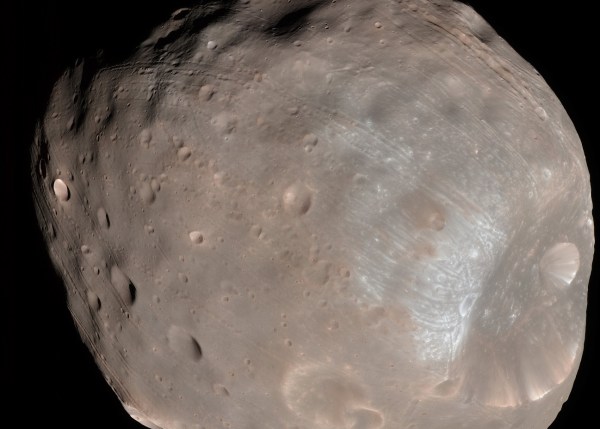
One moon is so close I can almost touch it. It looks like an imperfect embryo with pitted craters covering its surface. The other is distant, nothing more than a pinpoint of light in the scorched sky.

I move closer to him, as close as I dare. The far moon shines like a small sun. Each cycle takes it further away from us, but it is still the brightest star out there.

One day, it will disappear completely. From sight, from memory.

Nothing more than a dream.


Deimos

She shuffles toward me, closer and closer, an inevitable collision of our bodies. An end into a beginning into an end.

I stand, lift my visor, and look out over the dunes. From here, the Colony is a cluster of sand-dusted pearls in a red sea, encircled by a fleet of empty Pods. The Pods are smooth silver shapes, standing to attention, ready for their next voyage.

Another one arrived this morning. It carried supplies and a hundred more Irth children. Repros, she calls them, but I hate that word. Just because they’re born in a tube instead of a womb, just because they all have the same voice, the same smile, the same dark hair and dark eyes, does that make them any less human? Any different to us?

No. We are all equal. We are all doomed.


Phobos

I stand next to him. The sky dulls to the colour of blood and the wind shifts like a veil around us. It is almost time to return. But to what? A home that is not mine. A child that is not mine. A man who flinches at my touch, who cannot even look at me.

I feel dizzy. Past and present and future merge into a single point and spin into an eternal monotony of clearing and planting and breeding and suffering and healing, day after day after day until it all slips away, sand through a clenched fist.

I need to get out of here. Now. We’ll stow away on the next Pod and start a new life on the moonless Irth. We’ll have a family. A home.

We’ll have each other.


Deimos

The wind tugs at my suit and draws a shroud of fine powder across the Colony. The sharp edge of another storm. I grab her hand and pull her into me as a great swirling column spins around us.

The freedom, the power. I scream through the tornado’s coiled throat, willing it to carry us away.

To tear us apart and bind us together anew.


Phobos

The world collapses into a vertical tunnel of whirling copper that twists towards the stars.

I grab his waist. His arms encompass me. We hold each other as the storm bends and brays around us. Leave, it roars. You do not belong.

Nothing feels right. We shouldn’t be here. The Repros shouldn’t be here. Perhaps we should let go and allow the storm to lift us up to the moons. Away from all this, away from everything, until there is us.

Only us.


Phobos & Deimos

The storm spreads and dies. Everything is covered with red ash, as though the world has burned to embers.

I’m sorry, she says.

It’s not your fault, he says.

I love you, they say, and embrace beneath the moons, two rocks that drift inexorably apart, each facing their own oblivion, both of them together.


Le_Voyage_dans_la_lune_

CHRISTOPHER M DREW is a writer from the UK. His work has appeared or is forthcoming in MoonPark Review, Longleaf Review, Third Point Press, Spelk, Ellipsis Zine, and others. He reads for FlashBack Fiction. You can connect with Chris on Twitter @cmdrew81, or check out his website cmdrew81.wordpress.com


Image: WikiImages via Pixabay


Create a website or blog at WordPress.com

Up ↑