Polly, The Protector – David Cook

At the edge of the village, some distance apart from the houses and stores, is an old swing. A girl sits upon it, rocking gently back and forth, ankles intertwined, the wind whispering through her chestnut hair as she stares into nowhere. People in the village call her Polly, because they have to call her something and Polly is as good a name as any. Polly appears to be about nineteen years old, but then she always has. The villagers do not remember a time when she wasn’t there. No harm has ever befallen their homes, families and businesses, not fire, not plague, not famine, not drought, and they believe she protects them in some way. Birds watch from nearby trees as the man approaches her, bouquet in hand.

‘Hello,’ he says, but she pays him no mind. He is not put off by this. He has heard about the beautiful young woman on the swing who never talks, never ages and whose gaze seems to look into some faraway place that others cannot see. Witch, the villagers told him, but he does not care for the simple superstitions of country folk.

‘I brought you these,’ he tells her, gesturing to his lilies, but her stare does not shift.

‘I hope you like them.’

Still no response.

My name is Thomas,’ he says.

‘How are you?’ he says.

‘I am a sailor by trade. I’ve travelled a long way to meet you,’ he says.

She does not answer and, eventually, he is forced to admit defeat. He places his flowers on the ground before her and departs. He stops and tells her: ‘I will return from my next voyage in one year. I will bring you a wondrous gift from foreign lands, and I hope that will compel you to speak with me.’

The birds cackle, as if in laughter.

***

A year to the day later, Thomas returns. Polly is still on the swing, rocking gently back and forth as she always does. The birds chatter to themselves.

‘Hello,’ he says. ‘Remember me?’

She does not respond.

He glances at the ground, but the wind took the lilies a long time ago.

‘I brought you this.’ He produces a small, delicate bottle from his pocket. ‘This is the most expensive perfume in all of France.’ He waves it in front of her face, to no reaction. He hesitates, then takes her wrist and sprays some scent upon it. An angry noise comes from the trees, but Polly, again, says and does nothing.

‘It’s made with jasmine and peach blossom.’ He asks what she thinks, but she does not offer an opinion so he attempts other avenues of conversation.

‘Why do you always sit on that swing?’

‘Why do you never talk?’

‘Would you like to take a stroll with me?’

Nothing. He leaves, defeated once more. ‘I will try again one year hence,’ he says. The birds let out their familiar cackle. The smell of perfume is scattered on the breeze.

***

Another year later, and he is back. The birds cease their conversation as he approaches.

‘Hello again,’ he says. ‘It’s me, Thomas.’

He looks at Polly and wonders how she never ages and how she can survive without any apparent sustenance. The word witchcraft enters his mind unbidden, but he shakes his head to cast it away. He has spent too much time listening to idiotic rumour. Despite the evidence in front of him, he refuses to countenance such a notion.

‘I brought you this necklace. The greatest jeweller in Persia made it for me.’

The gemstones sparkles in the spring sunshine.

‘May I put it on you?’

No answer. He places the necklace carefully over Polly’s head, then moves behind her to fasten the clasp. Thomas does not notice the birds beginning to squawk. He steps back in front of her again.

‘Do you like it?’

She says nothing. Thomas frowns.

‘I think that you are very ungrateful. I bring you all these fineries and you cannot even give me a smile.’

Her stare begins to annoy him.

‘You should say thank you,’ he states, becoming louder, ‘and a kiss on the cheek would be polite.’

Her expression does not change and, in anger, he grabs her hand and squeezes hard, feeling bones crack beneath his grip. Even this does not bring a reaction, but the birds scream and this time he notices and is unnerved. He leaves, face wrought with fury. ‘Next year!’ he snaps. Polly’s hand has become swollen and red.

***

After twelve months Thomas returns, but this time under cover of darkness. Polly is still there, swinging almost imperceptibly, a slash of moonlight across her face. He approaches her from the shadows. He reaches for her hand and is unsure what to think when he notices it appears to be fully healed.

‘Hello, my beauty.’

The birds awaken from their slumber and start to shout, but this time Thomas does not care.

‘Still wearing my necklace, I see.’

He studies her face.

‘I didn’t bring you any gifts. This time, I will take what I am owed.’

He slips his hands beneath her arms to haul her from the swing and onto the ground. The birds go deathly silent for a moment and then there is an explosion from above and they swoop down upon him in their dozens, screeching, hollering, biting, clawing, pecking, jabbing, and though he tries to run there are too many and he is forced to the ground under the ferocity of their attack.

Soon it is over and the birds fall silent and return to the trees. In the morning, the villagers will find the torn, bloodied corpse of Thomas, take it away and bury it with the bodies of the other men who have tried to force themselves on Polly.

And Polly will continue to sit on the swing, rocking gently back and forth.



Cabinet Of Heed footer logo

David Cook’s stories have been published online and in print in a number of places, including the National Flash Fiction Anthology, Cabinet of Heed and Spelk. You can find more of his work at www.davewritesfiction.wordpress.com and say hello on Twitter @davidcook100. He lives in Bridgend, Wales, with his wife and daughter.


 

Image: Capri23auto via Pixabay

All Along The Wonder Wires – Dorothy Rice

On the shores of the Isle of Portmanteau, with a clear view of both mainland Ether Balm and the flat slab of Blarney Bluff, Princess Esmé held four wound cords of wonder wire. One in each hand, one balanced atop each shoulder. The weight bit into her flesh and threatened to buckle her knees. But she could not, would not, succumb.

Minutes before, Darby, pompous squire of Blarney Bluff, had dared her to swim the distance back to the mainland, unfurling the cords, setting down a wonder wire link as only men had done before. Earlier still, as the sun set, ending the annual seven-day feast of Sultana, where he was to have taken her as his bride, he’d denounced Esmé in front of the gathered clans.

“No woman of brown braids and muscled arms will ever set by my side.”

“I’ll do you one better,” she’d boasted, lungs puffed with pricked pride, blood warmed with pineapple rum. “I’ll claim the conjoined kingdom in my own name.”

The foppish courtiers and their pale princesses had laughed at her expense.

Now, under gray skies, resolve like steel in her strong biceps and thighs, Esmé turned to the sea.

Darby snatched hold of one end of the wire. As he prepared to yank it from her grasp, his palm was seared by the wisdom in the wire. There was no denying the pulse of this woman’s power, the inevitable bend in the history of their peoples. He saw it too, as a moving scroll behind his eyes. Esmé and her descendents, an epoch of peace and plenty. Before the re-birthed sun slipped into the sea beyond Blarney Bluff, the new order would begin.

Darby let loose the wire. He sunk to his knees in the prickly sand grass.

“My Queen,” he said. “To peace between our people.”

“To peace,” she said, stepping into the marbled waters of Columbine Bay.

“Long live the Queen,” came the shout from the hundreds gathered on the shore.

And she did. For as many suns and moons as there are crabs wandering the ocean’s floor, following the wonder wires, a sinewy web that connects the disparate tribes of the Greater Outré Islands with the mainland, and one another.

So say the Books of Yore and Yon, written in squid ink and tucked away in the landlocked caves beneath Blarney Bluff.

And who are we to say it isn’t so.


Cabinet Of Heed footer logo

Dorothy Rice is the author of The Reluctant Artist, a memoir and art book about her father, Joe Rice (1918 – 2011), She has recent and upcoming work in Longridge Review, Proximity and Minerva Rising, among others. You can find her at www.dorothyriceauthor.com and on twitter at @dorothyrowena.


Image: Mystic Art Design

Homemade Lemon Shade – Anna Rymer

I have this system for getting exactly what I want out of people, and today I’m going to use it. I’m going to use it on a woman named Elizabeth, and she has no idea. I’m waiting now on the corner of her street. I can see her front door from here. It’s red and large, like the house it adorns. I have watched this door for days now. Watched her life, her husband, her children. But now it’s time.

Just as I will it, the door opens and out they run, bobble hats bobbing atop uniform clad figures. One boy, one girl. How lovely. She follows in a long black coat and bright red scarf.

I like red, I like its rich flow.

They pass right by me, in their large black car, a child’s face pressing against the rear window. I smile. I’m tempted to begin now, but then why hurry? We have all day.

***

Elizabeth is waiting by the lift. We’re in her office building now and I reach her just in time to step inside the closing doors. I move to the back where I can watch her unnoticed. I smell sweet perfume and wonder if its hers. Her blonde hair is pinned up perfectly, exposing the smooth skin of her neck. Her hand goes to it now, as if sensing my eyes caressing her there. She hurries out of the lift on the fifth floor. I stay on. I know where her office is, I don’t need to follow just yet. I go to the roof instead to replenish for a while. It’s cloudy, but still I manage to reach a few rays.

***

It’s approaching midday when Elizabeth steps out into the street. I can see her from up here, her red scarf in a sea of black and navy blue. Involuntarily, my left foot stamps and rubs the ground. I don’t know if I can wait much longer. I turn the rising feeling in my chest into a leap. I need to learn some self control.

I land two buildings down the street and keep the momentum going, sliding down the corner of the building to the street below. I step out just as she’s passing. She looks straight at me and I see her breath catch. Her brow furrows and she shakes her head, as I fade into the background once again. Not yet, I soothe my zeal. My colours fade.

***

I wait by the edge of the city park as the day comes to a close. I marvel for a moment at my patience, and then she rounds the corner taking her usual route to the car. I stand to follow her.

As I hoped, the sun just sits on the horizon as she takes her first step into the park. It begins to dip as she reaches the lake. The final rays glitter against the lapping water as the sky glows pink. Elizabeth stops, her eyes fixed on the scene. Here’s my chance.

I move in close, my hand at her back not quite making contact, and I whisper her name. The hairs on her neck stand and there it is: A smile. Followed by a deep sigh and, for a moment, she shares my colours. Together we glow. I know she will now feel a roll of pleasure right at her centre, and this is when I leave my gift. I never know what this is. It might be an idea, or its peace, or self love. Perhaps courage or certainty. Whatever it is, it’s the tool to realise a dream.

She stays a little longer looking out at the lake. Goosebumps grace her skin as I slip away, my system complete. I have what I wanted. Her smile. Just this one smile.

I place it to my breast and, as I do, a new hue glows amongst the others on my wings. Ah, Sherbet Lemon!

Well what was it you thought I wanted?


Cabinet Of Heed footer logo

Anna Rymer is an aspiring writer living on the Wirral in Merseyside. You can read more of her flash fiction on her blog The Write Time https://annarymer.co.uk/ or follow her on Twitter: @annarymerwriter. She is currently working on her debut novel, whilst also juggling the needs, desires and tantrums of her two preschool children.


Image: pxhere

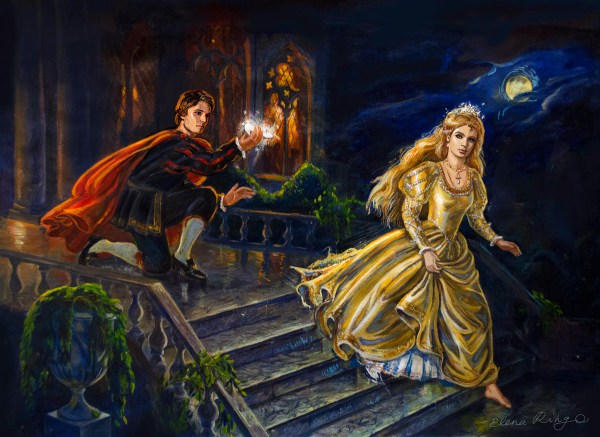
The Rise and Fall of Cinderella’s Left Testicle – Camillus John

I was playing with Cinderella’s Left Testicle, my band, every Friday in the Pigeon Club on Lally at the time. Then, due to the recession, I lost my day job and the government sent me on an intern scheme working for nothing as a skivvy in the basement of a Blackrock mansion. I basically had to do whatever the rich owner of the mansion, Rupert Rope, and his two stupid daughters, Toni Thursday and Rice Pudding, told me to do 24-7. I had no choice, otherwise, the government could arrest and jail me as a lazy scumbag under new austerity legislation.

The stupid sisters refused me permission to play with my band at the Pigeon club. I was devastated. But I continued to write songs in my head for the future, if the club or band survived somehow. Then they wouldn’t let me practice out loud on my guitar in my room. I wasn’t even permitted to as much as polish their grand piano collecting dust in their back room. They physically assaulted me if I so much as looked at it sideways under my breath.

I was coping right up until they instructed me to perform at an X-Factor audition. Prince Charming was judging and they wanted to meet him and perhaps musically cajole him into a Blackrock celebrity threesome that was all the rage in their leafy suburb at the time.

‘Why don’t you perform yourselves?’ I said.

‘Too coarse for the likes of us, darling. We’re management. Your management to be precise.’

‘In music, no one judges me.’

‘You’ll starve without our funding darling. You’ll have to do it. You’ve no choice. Lazy scumbag legislation demands it.’

‘I’d rather starve.’

‘Then starve so, Cinders. There’s a nice cover version we’d like you to do at the trials-’

On the mere mention of the c word my patience went to pieces. I pushed the two stupid sisters out of my way and left them to it. Obviously, the government had me jailed shortly afterwards, but I managed to rob a bounty of food from rich houses in the meantime and life on the run was sweet for a while.

It turned out that Prince Charming was released from his X-Factor judging contract for swearing that week, so he turned up on the Friday in the Pigeon Club looking to see and hear Cinderella’s Left Testicle for himself. He was a fan from the internet.

When he heard I was in jail and to be soon tried under the new lazy scumbag legislation, he rushed to the police station and handed over the requisite brown envelope that released me. We got on well, he loves his music does Prince Charming. We actually got married.

Unfortunately, I wasn’t allowed to play the Pigeon club ever again. They have a rule that bans rich people from playing their independent stage, as they’d have nothing to say. They were right. I’m now bereft. Still, though, life is good. Which is why I recommend robbing to everyone.


Cabinet Of Heed footer logo

Camillus John was bored and braised in Dublin, Ireland. He has had work published in The Stinging Fly, RTE Ten, Headstuff.org, The Lonely Crowd, Thoughtful Dog, Honest Ulsterman, The Cantabrigian, The Bogman’s Cannon, The Queen’s Head, Litro, Fictive Dream, Silver Streams and other such organs of literature. Recently he killed the Prime Minister of Ireland in fiction in the Welsh literary magazine, The Lonely Crowd, with a piece entitled, The Assassination of Enda Kenny (After Hilary Mantel). He would also like to mention that Pat’s won the FAI cup in 2014 for the first time in 53 miserable years of not winning it. Website: Janey Macken Street.


Image: Elena Ringo http://www.elena-ringo.com Elena Ringo http://www.elena-ringo.com [CC BY 3.0 (http://creativecommons.org/licenses/by/3.0)], via Wikimedia Commons

Cover of Darkness – Jayne Martin

Anna quietly slipped out while he was still sleeping. He’d seemed a nice enough guy. Sam? Steve? Saul? She knew it started with an “S.” A pink glow spilled over the edge of the Atlantic. Brisk salt air filled her lungs and she savored the taste of the new morning.

The brick steps chilled her spine as she sat to pull on her boots. She pushed the crisp bills down deep to her ankles where the money would be safe. She wasn’t the only one who walked these streets at this hour.

At home, her babies would still be snuggled deep in slumber and smelling of cotton candy dreams. They would sigh at the touch of her lips and the warm curvature of her body as she slid beneath the covers, encircling their bodies with her own on the pull-out bed they all shared.

Anna’s mother would rise first, set the kettle to boil. She would find the stack of bills Anna had left on the kitchen counter, and though no one could see into their fifth floor walk-up window, she would pull down the shade.


Cabinet Of Heed footer logo

Jayne Martin is a 2017 Pushcart nominee, 2016 winner of Vestal Review’s VERA award, and a 2018 Best Small Fictions nominee. Her work has appeared in Literary Orphans, Spelk, Five-2-One, Midwestern Gothic, MoonPark Review, Blink-Ink, Cleaver, Connotation Press and Hippocampus among others. She lives in California where she drinks copious amounts of fine wine and rides horses, though not at the same time. Find her on Twitter @Jayne_Martin


Image: Albrecht Fietz via Pexels

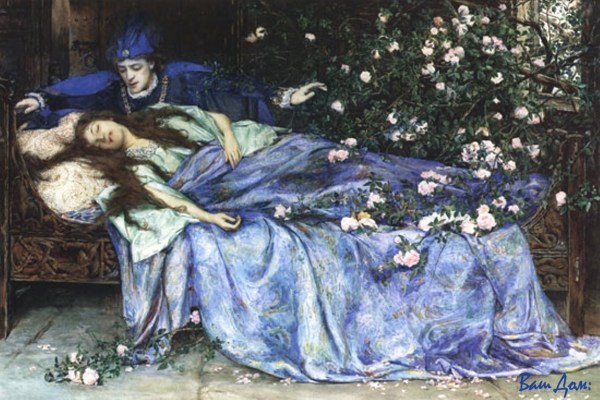
She Was a Princess – Laura Pearson

The policeman clears his throat and shifts his feet. Waiting to be invited in.

‘She’s upstairs in her bedroom,’ I say. Confident. Barely a shake to my voice.

She isn’t, of course. But when I lift the pillow to my face, it smells like her. Apples and pine trees and angst. And I could swear there’s still a trace of warmth there, even though the window’s flung wide, the February air rushing in. And the policeman is there in the doorway, not sure where to look.

‘I’m sorry,’ he says.

‘It’s just not possible,’ I tell him, and he shakes his head. He’s used to this, from mothers.

Finally, I follow him outside, and there she is. Sprawled. It looks staged, almost comical. From nowhere, a jet of vomit pours out of me, into the gutter. The policeman catches me before I fall.

When she was two, she would lie like that on the floor, her limbs flung wide. It was a game she liked to play. She was a princess. I had to kiss her to wake her up.

Now, I approach her and no-one stops me. Not when I crouch down, not when I lay beside her on the freezing tarmac, not when I kiss her cheek.

And although the bigger part of me understands that she won’t jump up, the smaller part waits.

Any minute now. Any minute now.


Cabinet Of Heed footer logo

Laura Pearson lives in Leicestershire where she blogs at www.breastcancerandbaby.com, writes novels and flash fiction, and runs around after two small humans.


Image: Henry Meynell Rheam [Public domain], via Wikimedia Commons

In Hiding – Gaynor Jones

Jessica stumbled around the corner, nails scraping the floor as she forced herself up. Sweat streamed down her back, though she wore only an airy white vest and a pair of tight blue jeans.

She raced to the hotel kitchen, where long abandoned trolleys laden with ancient trays offered her some refuge. She cringed as the metal clinked and clanged. She crouched down, able to see out but still fairly well hidden, or so she thought. Her heart pounded and her bladder ached and then – the heavy metal doors creaked open.

‘Oh, Jesus. I’m sorry I just can’t do this anymore.’

Jessica stood and strode out. She dusted down her backside then folded her arms.

The figure in the clown mask stood still, head tilted.

‘I just can’t do it. I bloody hate hiding, it terrifies me. Honestly, I’d rather you just get it over and done with.’

The clown looked left, then right, up, and around, as if checking for hidden cameras.

‘I never could stand it. Hide and seek? What sort of sick game is that for kids to be playing? No wonder I had separation anxiety for years.’

The clown scratched his neck with one hand, drooped his bloody axe in the other.

‘I’m sorry. I appreciate the effort you’ve gone to, you know. With the mask and the weapon and all that. Good job, really, good job.’

The clown mumbled.

‘What’s that?’

The clown peeled up his mask slightly, revealing a stubbly chin.

He spoke.

‘I said, but the chase is the best part.’

‘Better than the killing?’

‘Well. I mean, I like killing. Obviously, why bother otherwise? But I like the running and catching. Now you’ve stopped, there’s no fun. Not much point.’

‘Ah, man. I’m sorry. Really I am.’

They stood in the dim room, at an impasse.

It was the clown who broke the silence.

‘Could you not just hide for a little bit?’

‘No, I’m sorry, I’m done here. You’ll have to kill me where I am, or let me go.’

The clown pondered.

‘Well, but – you’ve seen my face now.’

‘Just a chin. Can’t tell how old you are or anything.’

‘Really? You’ve no idea at all? I mean, on the one hand that’s great, but also, I’ve got to tell you, I’m a little offended.’

‘I can see some stubble, looks like black hair maybe?’

The clown shook his head.

‘Sometimes, I don’t know why I bother.’

‘So…’ Jessica toed the floor. ‘You going to let me go then? I really can’t hide anymore, I’m sorry, I just can’t.’

The clown shrugged and rolled his mask back down.

‘Thanks, man. You’re cool, well, for a … you know.’

The clown nodded.

Jessica headed for the door, but turned back and looked her would-be assailant up and down one last time.

‘Just a thought, if you like playing games, and running around, have you thought about being a children’s entertainer instead? I mean, you have got the costume, after all.’


Cabinet Of Heed footer logo


Image: annca via Pixabay

The Bizarre Case of Klara – Dan Nielsen

“May I have a glass of water, Sigmund?” Klara was prone on the analytical couch, twenty silent minutes into her hour.

“Thirst symbolizes sexual desire.” Freud laid his palm on his knee and tapped the index finger as quickly as he could for a period of ten seconds. He repeated this test five times, carefully noting the number of taps.

“Never mind.” Klara swung her legs to the floor. “I’ll get it myself.”

Freud’s facial prosthesis glass was the only glass in the bathroom. Klara rinsed it and rinsed it again. Freud would consider this to be a symptom of obsessive neurosis, but to Klara it was minimal basic hygiene.

A disturbing image appeared in the mirror above the sink. The glass spontaneously flew from Klara’s hand and smashed onto the linoleum.

“Shattered glass symbolizes a broken heart.” Freud touched his nose with his thumb.

“Sigmund, will you please get that lock fixed!” Klara caught the doctor’s eye in the mirror. “And stop barging in on me!” Klara leaned over and drank directly from the tap. Thirst, unlike appetite, is not easily lost due to disturbing circumstances.

“A broken lock symbolizes insecurity.” Sometimes Freud forgot that he was making this stuff up as he went along.

“Do you have a broom?” Klara placed her hands on her hips. Freud interpreted this as a blatant act of aggression. He made a note. “Never mind,” Klara said, and crouched down to pick up the pieces. A shard pierced her fingertip. It bled. Freud made another note, this one about menarche, and smiled at his own insightfulness. The thirty operative procedures for intraoral cancer and the cumbersome prosthesis worn to replace his resected jaw and palate did not make this a pretty sight.

Klara opened the medicine cabinet looking for a Band-Aid. Instead she found a vial of white powder, unscrewed the cap, and did a line off the toilet lid.

“Um, that wasn’t cocaine, Klara. That was pure methamphetamine. Go back to the examining room immediately. I may need to tie you down.” The speed kicked in. Klara cartwheeled down the hall, through the door, and landed on the couch. Freud used leather straps to bind her in place.

Sometimes Freud wished he’d become a dentist rather than inventing psychiatry, or at least regularly flossed.


Cabinet Of Heed footer logo

Dan Nielsen is a fulltime open-mic standup comic. His flash manuscript Flavored Water was a semi-finalist in the Rose Metal Press 2017 SHORT SHORT CHAPBOOK CONTEST. Recent FLASH in: Cheap Pop, The Collapsar, Ellipsis Zine, Brilliant Flash Fiction, and OCCULUM. Dan has a website: Preponderous, you can follow him @DanNielsenFIVES. He and Georgia Bellas are the post-minimalist art/folk band Sugar Whiskey.


Image: Baudolino via Pixabay


Bad Hair Day – Michael Rumney

When Jayne went to bed, the fridge had started to defrost itself. She would have to get a new one. The TV was already on the blink and with holes in at least three pairs of her shoes, money was tight. Things were no better in the morning.

No matter how many times she tried, Jayne could not lift her head off the pillow. It felt as heavy as an articulated truck. Moving her head from side to side wasn’t easy but at least it proved she wasn’t super glued to the bed.

Many futile attempts and a couple of hours later Jayne phoned her friend, she could at least reach her mobile on the bedside cabinet.

‘Louise love, my head’s, well I can’t lift it. You’ll need a key to get in.’

Louise also tried to get Jayne’s head off the pillow without success. Catching her breath Louise remarked, ‘have you coloured your hair?’

‘No.’

‘It looks different.’

‘Am I paralysed?’

‘I’m calling Doctor Bengami.’

‘He’s expensive.’

‘He’s the best. We need to sort you out.’

Doctor Bengami’s receptionist was quick to point out that he charged two hundred an hour including travelling time and right now he was in the air flying in from a conference in Porto. ‘Doesn’t matter,’ said Louise ‘my friend can afford it.’

Jayne tried to shake her head.

‘Don’t worry your little cotton socks Jayne. You’ll be fine.’

At just after four in the afternoon Doctor Bengami knocked on the door.

‘Quick let him in; he’s already cost me a grand,’ said Jayne

Doctor Bengami examined Jayne thoroughly prodding and probing all over her body, quickly coming to a diagnosis. ‘You’ve rainbows in your hair.’

Louise smiled, ‘I thought as much.’

Jayne looked concerned, ‘Is there anything you can do?’

‘I can remove them, but I wouldn’t recommend it. You’ve wonderful red hair. I’d have to shave it all off and there’s a complication. Each of the rainbows has a pot of gold at either end. There are about a hundred or so.’

Louise was already on her iPhone googling gold prices.

‘I reckon the pots are made of gold and all. Each pot must be at least ten ounces and at fifty dollars an ounce, you’re mega rich.’

Doctor Bengami nodded his agreement. ‘Not only that but I’ve come across this before. I can remove the pots of gold but in a couple of weeks or maybe a month they will grow back again, if the rainbows remain.

Louise was rubbing her hands, ‘see your money problems are over.’

The next day The Empty Glass Chapter of leprechauns turned up demanding the return of their rainbows and gold. They had seen what had happened on Facebook. Jayne had no choice but to agree, Leprechauns, especially gun wielding ones can be violent and very persuasive. For her trouble, they paid Doctor Bengami’s fee, got Jayne a new TV, a reconditioned fridge and a new pair of trainers.


Cabinet Of Heed footer logo

Michael Rumney has had short stories and poems published in The Pennine Ink Magazine, His play Inference was performed at the Kings Arms Salford in July 2014
In April 2016 his play Bricks was selected for the Page to Stage festival in Liverpool.
He has had several rehearsed readings of his plays in the Manchester area.


Image: Alexandra Gorn on Unsplash

Flush the Toilets and Turn Out the Lights – Niles Reddick

I told my wife and kids to make sure and flush the toilets when they finish. I realize it would save water if we give it one flush a day, but it would smell and breed germs, and no one sitting would want something splashing up on a leg or behind. My wife said her daddy claimed they were so poor, they flushed once per day to save on well water. I found that disgusting even though it might save. Weigh the smell, filth, and disease against a few extra dollars, and I’d bet most would flush.

I also told them to make sure they turn out the lights when they leave a room and try to avoid turning them on unless it’s dark and they need to see. I’m not Trump with money to throw away and don’t have anyone paying my electric bill. Yet, I came home last night, and everyone was gone to spend money on things they want and don’t need, and toilets weren’t flushed and lights were on.

They weren’t home when I went to bed, and when I got up the next morning, I went through the house flushing toilets and turning off lights. After I gulped coffee, took a shower, and got dressed, I left for the office and was at my computer when I saw a custodian go into the restroom to clean. When I heard him leave, I saw the door open, lights on, and when I go to check the toilet, I saw all the pink chemical mixture and bubbles, like someone threw up Pepto-Bismol, and I flushed, turned out the lights, and convinced myself that we could put all those electric savings toward homelessness and hunger and put all those flushes toward community health, if only everyone were more like me.


Cabinet Of Heed footer logo

Niles Reddick is author of the novel Drifting too far from the Shore, a collection Road Kill Art and Other Oddities, and a novella Lead Me Home. His work has been featured six anthologies and in over a hundred literary magazines all over the world including Flash: The International Short-Short Story Magazine, Drunk Monkeys, Spelk, Cheap Pop, The Arkansas Review: a Journal of Delta Studies, The Dead Mule School of Southern Literature, The Miscreant, Slice of Life, Faircloth Review, among many others. His website is www.nilesreddick.com


Image: Marco Verch via Flickr

Hoosegow and Canoodle – CB Auder

After a few more years, Dibbs lowered his pickaxe and spat. “Baby, I’m sorry. I just can’t take another day of bustin’ up these frikkin’ rocks.”

“Watch ya language,” griped Oakes. “You wanna work schist all week?”

She might have saved her breath. Warden Hardihar heard every complaint at the quarry, equipped as he was with a Super-Sonar X-Ray Ear-Button Boom.

“Stone is dependable, Mr. Silverspoon.” The warden sauntered over. “Many an otter finds a nice rock and cherishes it for life.” He let his good eye drift towards Oakes’ caboose. “How could you not love this job to pieces?”

“Because I’m sweaty and smelly and itching to be free,” said Dibbs, flashing Oakes a look of What’s this guy, blind? “Come on, Hardihar. Gimme kitchen duty. At least I won’t be peeling.”

The warden craned towards the blazing sun so as not to plow nose-first into Oakes’ glistening breasts. “And you?” he asked her sidewise.

Oakes squinted at Hardihar’s scabby skull. She watched him drip like a hot-boxed birthday cake.

She’d loved candles as a child. Dipping her fingers into the liquid possibility. Its searing thrill. Peeling off print after print and melting them down again. The strange comfort of each new sting…. When had her options gone to shit?

“I got no beef with potatoes,” she said after a time.

“Sometimes otters juggle them,” said Hardihar. “On their tummies. Rocks, I mean. This whole country needs more of that kind of initiative…. All right, kitchen it is!” He poked Dibbs awake. “This is no time for napping in the sun. Do you know how much a man costs to keep?”

***

K.P. was no quarry breeze but it was safer on the melanoma front. And wouldn’t you know it, but the warden couldn’t get enough of Dibbs’ chow. “This is so tasty,” slurped Hardihar, “I wish I could have s-e-x with it.”

“Coming up!” proclaimed Dibbs, dumping the gazpacho into Hardihar’s lap. Thanks to the kitchen’s crap ventilation, Dibbs was usually dehydrated by noon.

A miscalculated stunt, he realized, as Hardihar’s expression developed like that of a time-lapse fetus. If I get booted back to pickaxe, thought Dibbs, who’ll watch over Oakes?

Dibbs lucked out. He’d lucked out a lot being tall and blond, but this time it was because The Sexy Tomatoes’ hit song started throbbing over the PA system.

You’re hot as a thief, boy.
And a keeper seeks relief
in the old-fashioned secrets
of my wet shirt and pantsssss.

***

On Dibbs’ penultimate day, the warden gave him a parting gift. “The best bottom-line ladle off the rack! Bought it with my wife’s own money.” Hardihar hiccuped sadly. “I just can’t believe you’re abandoning me. Nobody values loyalty these days.” He gnawed at Dibbs’ final batch of foccacia.

Dibbs patted the warden’s back until they both burped. “Warden, if you and the governor play your cards right you’ll always have Oakes.”

From the kitchen, Oakes glared. She’d gotten double time for Aiding & Abetting Without a Penis and was now sharpening a large wooden spoon.

“Right.” Dibbs adjusted his collar. “Uh, you should probably know I only ever prepped and served. All of these recipes were actually hers.”

The warden sagged against the inconceivable news. That night he binged on Otters Gone Wild but it failed to lift his spirits. Twenty years to life, he thought, and you still never really know a person. The couch in his mother’s rumpus room felt like sleeping on a bag of rocks.


Cabinet Of Heed footer logo

C.B. Auder’s writing and art have recently appeared in Cotton Xenomorph, OCCULUM, Moonchild, Unbroken, and Red Queen Literary Magazine. Find Aud on Twitter @cb_auder.


Image: Samer Daboul from Pexels

Your Own Appendage – Lizbeth Herbert

You have surgery on your foot and your foot changes. When you wake up, you’re heavily medicated, so you don’t notice the difference. By day three, though, the foot has become bitingly honest, saying things like, “I’ve never seen so much dead skin in my life. Now’s not the time to pull back on the hygiene.” Then, to make matters worse, your foot makes a bold decision and declares its gender male, even though you’re not necessarily sure what that foot is. You could have been consulted, at least. By the time you’re able to walk around on crutches, it drags behind, not out of pain, just because it’s fun to create the kind of social awkwardness that occurs when you’re late to your friend’s show.

Your foot, your foot. Is it even your foot anymore? Is ‘he’? Perhaps this surgery was just the thing to make this foot its own foot. The bunionectomies and neuroma removal are enough to let your foot out of the closet to be who he is. A dick.

This was once a pretty good foot. It wasn’t demanding and, while painful toward the end, it was wide, with a bunion on each side. The extra width sometimes came in handy. In a yoga class, you could stand in tree pose forever.

Now, this foot fucks with you. It goes to sleep when you are not asleep, when you cannot sleep, creating resentment. When you wake it, the toes tingle and numb up. Other times it just twitches. All this you can take but it — he! — also gets under your skin, tells you you’re too old to enter the job market in any kind of meaningful way ever again. He did the research and gives you the data. “You are fifty-four,” he says, and laughs at you.

“So are you,” you say with a little too much venom. Oh, your foot knows he’s getting the best of you.

“I look younger, though,” he says, “because I’ve been sheathed in socks for the better part of each year.”

When you write, your foot says, “Write about me,” but then doesn’t like anything you have to say. He tells you the story he thinks you should be writing, one filled with an unrealistic amount of footwork and picking locks with strong toenails. There’s a gratuitously violent eye gouging with a pinkie toe.

And then, freakishly, he makes a pass at you. He tells you something about how each of his toes looks shorter than they actually are.

“What?” you say, letting this sink in.

“Each toe gets longer if it were to be —”

“I know the length!” you say.

“Well, you’re up too high to judge,” he says, and then adds in a cheesy, sexy voice, “get closer.”

The two of you have to go to therapy after that. You can’t unhear something like that, not from your own appendage.

On the way to therapy, your foot tries to take control of the car and gets you into a fender bender. You don’t exchange numbers with the other driver, just apologize and look truly sorry. The driver seems satisfied with that until she hears your foot yelling up at you: Who cares? Who cares? She looks at you like, Real mature. You knew you should have worn closed-toed shoes.

At the therapist’s office, the foot is on his best behavior so, of course, the therapist bonds with him and also slightly flirts with him. Such warm feelings pass between the two of them, even though you are the one who is most attached to them both. You’re attached through years of therapy bills paid to the one and literally attached to your foot. Your foot, whom you’ve known since infancy, is a traitor.

Once the doctor is certain that the foot is on it’s way to healing nicely, you announce on all social media channels — to the seven people paying any attention to you on Twitter and to the fifty or so still scrolling through your Facebook feed, and to his three new followers on Instagram — that your foot and you have not been getting along for a while, so you’re breaking up, though you’ll still live together amicably. You’re still a part of the same body, clearly, but you’re not bonded with him like, say, the other foot, or either arm.

“You’re making a big mistake,” he says. “You cross me and I will easily attract a fungus, no matter how sanitary the conditions.”

At night he calls your friends by going through your cellphone and pressing your contacts with his toes. He sways everyone to his side. They want to have an intervention for you two, but you are not up to it and have to argue with all of them in the middle of the night. You are still hobbling around! You are still taking the occasional codeine so this is not the time! That’s not even what an intervention is for!

You can hear your foot laughing down there from inside his wool sock, surgical boot and blanket wrapped around him, your attempts to muffle his voice. At 2:00 a.m., after assuring your sister that it wasn’t you who called, it was Mr. Big Foot, you try to go back to sleep but it’s impossible. He is still explaining and explaining everything to you, giving you useless instructions about how he manages to make the calls.

“Toes are always the heroes of your stories,” you hiss. “Plus, I have fingers, the real deal!”

He doesn’t respond to this, just tells you the intervention is on for Tuesday and asks you to put it in the calendar.


Cabinet Of Heed footer logo

Lizbeth Herbert is a writer based in Philadelphia. Her last published short story, “Jenner,” appeared in The Philadelphia City Paper. Lizbeth holds an MFA in Creative Writing from Lesley University.


Image: Clem Onojeghuo on Unsplash

Sheets On The Line – Alicia Bakewell

The fence had sagged for years under the weight of a neglected hedge. Petra could see right through into the adjoining garden, which in most ways mirrored her own – washing line, yellowing lawn, shed in the back corner, fruit trees dotted around. Figs, mulberries and pomegranates left a vinegary tang in the air as they rotted on spindly branches and fell to the ground, their owners disinterested in making jam at the tail end of summer.

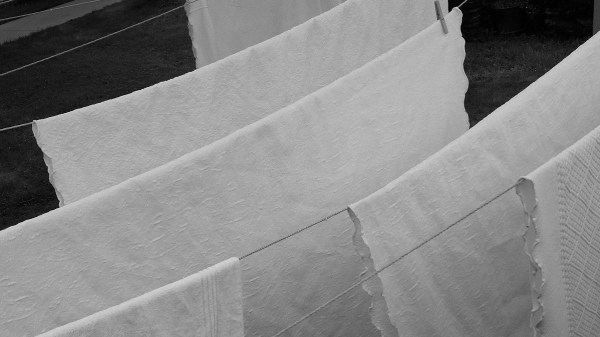
White sheets were sun-drying, draped neatly over the washing line. Petra eyed the clean squares of cotton. She thought of the sheets on her own bed, grimy with sweat marks, flakes of skin and hair. Sleeping on them now she would be aware of the filth, but it was too late in the day to start washing them.

Behind the largest sheet, a shadow moved. The sheet blew backwards a little, clinging to the outline of a woman’s body. The rest of the scene fell away, and all Petra saw was that white figure, statuesque, now stolen by the swirling breeze as the sheet billowed out again. A tanned, slender hand reached up to unclip the wooden pegs that held the sheet in place. Petra stood quickly, plastic chair clattering to the concrete behind her as she ran inside.

‘Where’ve you been?’ Evan grunted.

Petra’s nose crinkled as she caught the smell of saltwater and fish on him. Evan was almost permanently at sea, his boat a fortress against whatever he was avoiding on terra firma. He only returned to eat, to fuck, to leave in his wake a residue of grey fish guts and a bloodied filleting knife in the sink. Satisfied, he’d take off again, leaving Petra with nothing but a freezer full of cod for company.

Petra ate her kedgeree in silence. Evan flicked through a newspaper, greasy fingers marking each page in the same corner. He repeated shrill headlines, startling Petra each time he spoke.

‘Tax increase? When they gonna give a bloke a fuckin’ break?’

Petra concentrated on a fish scale that was caught in Evan’s hair. It reflected the light, shimmering faintly in the greying strands at his temple.

Pressed against the sheets and their debris, Petra felt Evan’s weight on top of her. His skin was rough and salty, hands grasping at her like crab claws. They didn’t kiss anymore. Petra closed her eyes. She saw that woman’s shape again, faceless behind its smooth shroud of white. She felt herself drifting, her body reacting to thoughts rather than actions. When their eyes finally met, Evan’s were questioning.

It wasn’t the first time Petra had wondered about being with a woman. The idea had been there as long as she could remember. She’d mentioned it to Evan, years before.

‘We can get you a girl if you like,’ he’d said, with a smile that had turned her stomach.

What he was suggesting was not what Petra wanted. If she touched a woman, tasted a woman, it would not be in Evan’s presence. It would be pure, sacred. It would go beyond the physical and into the spiritual, which was why she had always feared doing it. Being with Evan had been easy. Petra was able to deflect his criticisms, to stave off resentment at his long absences. She understood that his capacity to love deeply was lacking. A woman would be able to read Petra’s thoughts, to know her secrets. A woman could both love and hurt without limits.

Evan was gone in the morning, leaving nothing but a slight indent on the sheets. Petra stripped the bed of its dirty linen, throwing it into the washing machine. She made a cup of coffee to take outside. Even with the sun not long up, the ground was warm underfoot. Petra righted the chair that she’d upended in her haste the day before.

Next door’s washing line was empty. A bucket and a weeding fork sat abandoned on the lawn. They had not been there the day before. Petra’s pulse quickened. When had the woman been gardening? Had she been out there at dusk, working quickly in defiance of the fading light? Had she risen with the sun to steal an hour before the heat set in?

She’d wear loose clothing, a shirt with half the buttons missing. Buffalo grass would crunch beneath the bare, hardened soles of her feet. Her hair would fall over her eyes as she leaned forward and she’d raise a forearm to push it back, leaving a little smear of dirt across her face. Maybe she would sing to herself, brave without an audience. Or was she silent, lost in her thoughts? Sweating, she’d push up her sleeves, squint at the sun and put her bucket aside, heading back into the house in search of a cool drink.

Petra shifted in her chair. A door slammed. She put her coffee mug in front of her face and sat still, not even daring to breathe. Out of the corner of her eye, she saw a figure dart out onto the lawn, grab the bucket and the weeding fork and disappear, a flash of blue and white. A man. Had Petra imagined the woman? No. There had been no mistaking the curves behind that sheet.

The washing machine beeped and Petra went inside, wrestling the heavy tangle of wet linen into a basket and carrying it out to the line. With effort, she slung the sheets over the wire and stretched to peg the corners, standing on her toes in a distant imitation of her dancing days. She put her face to the damp fabric and breathed in the fresh, cottony scent. The only time the sheets didn’t smell like Evan was when they were hanging on the line.

On the other side of the sheets, Petra could hear voices, rising steadily. An argument. The breeze was blowing in the wrong direction though, carrying most of the words away. Only one phrase reached Petra clearly, shouted by the woman.

‘You don’t think of me!’

Petra took the words inside with her, drinking cold coffee as she repeated them to herself. You don’t think of me. Evan thought of many things. He thought of the weather, of the tides, of the movements of fish. He tried to think them into submission, to bend them to his will. Petra had never tried to bend him to hers. You don’t think of me. What would their marriage have been like if Petra hadn’t volunteered to give up her career? Maybe it would have been Evan who stayed at home, doing the washing and watching the neighbours, while Petra travelled the world en pointe. But they were living Evan’s dream, both of them.

Wild lavender grew in a dense row along the front of the house next door. Petra crouched behind the unruly bushes, cutting flowers at the bases of their delicate stems. She tied a bunch of twenty or so with garden string and attached the unsigned note she had written. I think of you. Standing up, she threw the bouquet over the hedge and onto the front porch where it landed mostly intact, just a few tiny petals straying onto the concrete. Petra giggled to herself and ran home, jumping the low wooden fence with the pointed toes and light step of her past.

The afternoon dragged. Petra lay on her back, staring at the dusty blades of the ceiling fan as she imagined that little bunch of flowers sitting on the doorstep. What ripples would spread from the gift she’d thrown like a stone into water? She dozed, dreaming of pure white sheets on a bed that was not her own. The soft caress of cotton, and of a woman’s hand, were real on her skin. Whispered words played at the edge of sleep. I think of you.

It was early evening when Evan came home. His blue and white checked shirt was clean and there was no smell of fish for a change.

‘Where did you go?’ Petra asked. She’d never seen that shirt before.

‘Out and about. Just talking to the bloke next door there. Reckons someone’s interested in his missus. I told him, don’t look at me. One woman’s enough bloody trouble.’

‘How does he know?’

‘What?’

‘How does he know someone’s interested in her?’

‘Flowers. Romantic, eh?’

Petra picked up her book and feigned reading. How long had Evan known the neighbours? Why had he never mentioned them?

Evan leaned over and took the book from Petra’s hands. She jumped and he laughed softly.

‘Thought we might go out tonight,’ he said. ‘Do you fancy a Chinese? Get dressed, let’s get out of here.’

Petra blinked a couple of times. It had been months since they’d been out together. She put on a green silk dress, too formal but crumpled enough to make up for it. Evan jangled his car keys to signal he was ready to go. He looked her up and down, half-smiling as she walked toward him. There was a light in his eyes she hadn’t seen for a while.

As he reversed the car slowly out of the driveway, Evan turned to Petra, his breath forming the beginning of a question. She didn’t want to answer any questions, or ask any. Eyes on the road, she felt herself jolted forward slightly as Evan put the car into gear.


Cabinet Of Heed footer logo

Alicia Bakewell is a short fiction writer living in Western Australia. Her work has been published by Flash Frontier, Fictive Dream and Ellipsis Zine, and she was the winner of Reflex Fiction’s Spring 2017 competition. She is trying to give up writing poetry. She tweets nonsense @lissybakewell.


Image: Karen Maes on Unsplash

An Urchin By Any Other Name – Alva Holland

Raucous laughter floats up the pier from the all-nighters at ‘Rum ‘n Scrum’ where Sirius has often spent the night. Heaps of tangled nets greet the old fisherman as he lurches across the pier, unsteady from last night’s rum, cursing the young scrap he threw a few dollars to, to untangle the nets for the night.

Sirius’s head pounds, his rheumy eyes peering through caked lashes. The boat lists as he piles in the knotted nets. Splinters of shattered conch shells slice into his gnarled, withered hands, weeping from years of gruelling dawn expeditions. Grumbling to himself while avoiding the threaded pole spear jammed into the hull, two skinny bruised feet skid into the mooring rope as Sirius pushes away from the creaking dock.

Tossing a disapproving look at the scruffy urchin, he sees himself in the young eager face, and frowns.

‘Let’s go, boy.’

Manoeuvring the beat-up boat past mounds of discarded conch shells, Sirius and the boy head to sea.

A tiny polyp stretches its longest tentacle past a porous sea sponge toward the closest shimmering plankton. As the sun fuses with the sea, anemones, by harmonious agreement, feed on cooperative algae.

Deep crevices hide the much-maligned black sea-urchin whose spines lurk in the waiting darkness. A sliver of diluted light illuminates a clownfish burrowing into the depths of the anemone’s swaying cylindrical tentacle stream.

A miniature turquoise sponge rebounds off the multi-coloured coral, inhaling the surrounding liquid, expanding and shrinking in a gentle breath as a giant loggerhead sea turtle generates wave after languid wave of oscillating hungry fingers, unsettling gourmet plankton.

The boat’s stealthy shadow looms over the coral reef.

As the distant rumbling fades, the threat of nature’s angry forces has been replaced.

The old fisherman will die but the boy is only learning.


Cabinet Of Heed footer logo

Alva Holland is an Irish writer from Dublin. First published by Ireland’s Own Winning Writers Annual 2015. Three times a winner of Ad Hoc Fiction’s flash competition, her stories feature in The People’s Friend, Ellipsis Zine, Train Lit Mag, Brilliant Flash Fiction, The Cabinet of Heed and Jellyfish Review. Twitter: @Alva1206


Image: Pietro Jeng on Unsplash


Art Lesson – Theresa Ryder

She began with a wide sweeping declaration of brush on canvas.

“There”. She said, somehow satisfied with that bold start.

“It’s a green streak”.

“Wait”.

I was eleven, waiting wasn’t my forte but I settled in, accepting my punishment.

She dipped, mixed, muddled watery swirls with her brush then dragged another layer, now dark grey. Her skirts swished against the floor. A shaft of sunlight threw down a blanket of gold, lighting up the fine straggles of hair that escaped her cotton cap. I wiggled in my seat.

“You like that?” She winked at me with half turned head.

“Yes”. No. The chairback was hard like Sunday pews although without the shadow of Nanny’s rigid discipline. The deep red seat, cold at first, heated with its occupant. My short- trousered legs peeled painfully from the leather when I shifted position. I wanted to go back to the kittens. This time I’d be more careful. I’d give Jemima back her ribbon. Fish her doll from the lake. Learn my spellings. Conjugate the verbs.

With a delicate tipping of brush she dabbed the canvas. It didn’t look like art. Dust spiralled in the sun stream that lit the wood around her swaying skirts.

“Miss, it’s dripping”. Black drops littered the parquet floor.

“Hush”.

Drawn back to the canvas, watching her bend to add a wavy line of black.

“is it a river”?

She smiled in response, waggled her brush in water then ducked it into another pot. A stream of shocking red, the colour of kitten blood, hit the canvas then in a wide arch spattered Mother’s drapes and in full rotation drew a red line across my face.

“Miss”! Tears close. This was not proper behaviour from a governess.

“Quiet.”

I put a hand to my face making things worse, smearing the chair with sticky patches. I pushed back attempting invisibility. Camouflaged in red.

She plunged her brush into pots. Blue. Yellow. Green smudged the canvas. Then I saw it. A cave. I leaned forward, peering into deep black as she threw on colours.

“Watch”, now a whisper.

I watched colours congeal to a uniform sludge and barely felt her brush my skin. Blue now along my arms. Wet, cold as lake water. A yellow ribbon trailed down my leg to the floor.

Thrusting her hands into a pot, she turned with etched smile and slimed my hair, ears, neck with purple then back to the sunless canvas to compose a hand-span sky. A dark tapestry where black dots emerged as seizing Furies, their screaming breath fumed around my head as I fled toward the cave.

Inside the dark sanctuary I saw her in distant light blocking the entrance with flourishing streaks of brown. My scream choked on a spew of rainbow paint that submerged into darkness as I blacked out.

I wake long years later from dreams that tweezer my heart and coat my body in the dank membrane of panic. I know why I dream in colour.


Cabinet Of Heed footer logo

Theresa Ryder was PA to author, J.P. Donleavy before graduating MA (Classics) and a teaching degree. She won the Molly Keane Creative Writing Award, 2015 and was selected to read at the Women X Borders Readathon, 2017 and Culture Night, Cork. She has been published in various journals and nominated for Best Short Fiction anthology 2018. She is working on a novel.


Image: Derek Robinson


The Yellow-Brick Road – Gary Duncan

The motorway is his friend. Lulls him to sleep, a soft black cloak, and carries him away.

***

He hides in the woods at night. Beds down in a hollow under an old tarp, away from the main camp. In a soggy sleeping bag he stole from a boy just like him, a boy of fourteen who didn’t make it this far.

He tries not to think of the boy, or anything else. Blots it out as the motorway thrums in the dark. He’s not sure about it now, the motorway. He thinks it might be toying with him, with its gentle rhythms and seductive promises. For it can be brutal, too, can just as easily rip him awake in the cold dead of night with a screech of brakes and shriek of horns.

***

The trucks don’t stop now, the Afghan says.

They’re standing on the ridge overlooking the camp, watching the trucks roar by. Watching but being watched too. The men in uniforms huddled together, smoking. One of them looks up, stares at Tarek through the drizzle. Looks away, stamps his feet against the cold. Tarek flinches, but the Afghan isn’t afraid of them. Says they sometimes give him cigarettes in return for favours. He grins, his teeth wet and black, and shrugs. It’s not their fault, he says. They’re just doing their job. And they don’t want to be here either.

The Afghan is sixteen, seventeen, his face creased like bark.

“Trucks used to stop all time,” he says. “Trucks stop all time and take us far, far away.” He nods towards an indeterminate point in the distance, over another, lumpier ridge. “It easy then, Tarek, before border guards come. Trucks stop all time over there and you climb in and hide and they take you away and you free.” He roots around in the back of his mouth with his tongue, coughs up some hard phlegm and spits it out into the wind. “Now trucks don’t stop, even when they hit you, when they run over.”

He shakes his head. “You hear it, Tarek, in night?”

Tarek hears it, the brakes, the horns, the screams.

“But easy then. Like Yellow-Brick Road! You know, like movie?”

Tarek doesn’t, but nods anyway.

“Like Oz! Click heels and make the wish!”

Tarek digs the heel of his boot into the damp soil and wishes he was somewhere, anywhere, else.

***

They play football on the patch of wasteland next to the road. Tarek, the Afghan, some others. A woman, a new arrival, who reminds Tarek of his old kindergarten teacher, whose name he can’t remember. The gush of cold air from the passing trucks knocks them sideways, takes the wind right out of them.

One of the guards gave them a black and white ball, brand new. Tarek thinks it might have been the guard who’d been watching him on the ridge, but he’s not sure. They all look the same to him, their grey uniforms, their long white faces.

Gave them a packet of cigarettes too. Tarek asked the Afghan about it, how many favours that cost him. The Afghan wouldn’t say. Stuffed half the cigarettes into Tarek’s coat pocket and said he shouldn’t ask so many questions.

***

The woman turned up a few days before the Afghan vanished. Striding into the camp, her eyes darting left to right. Wide hips, big head of charcoal hair.

They sit on the ridge together, the three of them: the woman, the Afghan and Tarek.

“We’re the same,” she says, and they join hands. “The same but different.” They agree to stick together, to look out for each other, whatever may be.

Tarek notices the way she looks at the Afghan, and the way he looks at her. He hears them at night-time, in their makeshift tent. Laughing, crying. He can’t tell where one ends and the other begins. When they’re finished, the woman sometimes comes over to his hollow and they listen to the trucks. He tells her about his old kindergarten teacher, about his parents, his sister, his friends. She listens, sometimes drifts off, but he keeps talking.

***

They scour the motorway, in the days after the Afghan has gone. Heads down, eyes on the tarmac, on the grassy verge. Trawl up and down, a mile north and south of the camp, as far as they can go, sifting through the knapweed and gorse, looking for something, anything. A rucksack, a shoe, a splotch of blood. They find nothing. He made it, the woman says, crying. Tarek cries too. Shudders because he knows what might have been, what a speeding truck can do to a human body. He has seen it with his own eyes.


Cabinet Of Heed footer logo


Image: Daniel von Appen on Unsplash

A Word to Describe the Sky – Jennifer Falkner

We are humble artisans. We have no philosophical education. We can’t even read. We work with our hands. Our nails are always dirty and our hours are always filled by the demands of our work, our foreman, our wives. And then Nico had to go and mess everything up.

Hey Philo, he says to me one day, leaning over my work so his shadow obscures the leather handle I am struggling to afix to the inside of the shield. The leather is brittle, unyielding. Nestor has skimped on materials again. What colour would you call that, he says, pointing upwards.

Call what? The sky, you mean?

Yeah.

I dunno. Sky-coloured, I guess. Nico’s breath smells like onions. I try to breathe through my mouth until he leans back over his own shield. He’s supposed to be polishing the thin bronze layer that covers the wood, polishing so it catches the sun and blinds the enemy with its light.

He nods slowly, chuckling, and yet serious too. But Nico was like that. Never just one thing at a time.

Sky-coloured, he says. That’s good.

Then it’s the sea he can’t shut up about.

Do you want to know if there’s a storm coming? I ask.

No, no. Just … can you describe it?

The water usually darkens before Poseidon unleashes his fury but today it’s smooth and calm.

Yeah, Nico, I say. It’s full of fish. Can I get back to work now, please?

There’s a large order on and our daily quota has increased. Neither of us particularly like Nestor, our foreman, or his filthy temper. Or the feel of his whip when his quotas aren’t met.

But Nico won’t stop.

It’s just that the poets call it wine-dark, don’t they? Only it doesn’t look anything like wine. And the sky? Hammered bronze, they call it but – and here he lifts up his shield – does that look anything like the sky to you?

I have to admit that it doesn’t.

The sun starts to slip behind the hills. Time to go home. Nico and I sometimes walk part of the way together – he lives just the other side of Diomedes’ field – but I make sure to slip out quickly, barely aware of the cool wind on my overheated cheeks in my hurry. I hear him calling my name, but I don’t turn around.

Myrrhine is worried. Whispers have floated up from the fishing village of foreign ships, of men speaking with strange accents landing further up the coast. Our farmers, dressed as soldiers, not infrequently march off to battle once the crops are in, but war seldom comes to us. The news does not look good.

I tell her about Nico and his questions, mainly to distract her. She frowns and says she is taking the children to her father’s. He lives far inland. They will be safer there.

You can come, she says. If you want to, you can come. You are no slave. Nestor can’t make you stay.

But Nestor gives me work. I don’t need to tell her this; she knows I won’t leave. The simple need to provide for my family makes me stay where my work is.

It won’t be for long, she promises, and kisses my cheek.

It is August now and the sea is troubled. It’s not just restless and heaving, though it is that too, but it seems filled with thunderheads and wires of lightning. The riverbeds are dry and the grass is yellow and crackles underfoot.

Foreign soldiers in dazzling fish-scale armor and pointed caps march into our village. The few of us who are left, who hadn’t run from the ships and the gods’ prophecies, are taken and slaughtered or merely taken. We’re bundled into the hold of their ships, our captors shout at us in babbling tongues. Sometimes they slow their speech, as if talking to thick-witted children, before striking us for not understanding them quicker. I don’t know where Nico is. I stayed behind because I thought he did.

But I am a slave now. The strangers have placed a metal collar around my neck and leashed me to a row of other men, marched me into their ship. We sit huddled at one end, behind the foreign slaves who wield the long-handled oars. I wonder what the strangers’ land is like. Will there be horn-curved oxen grazing in fields? Will they have rivers not yet drunk dry by invading armies? One day, when I have learned their terrible language, will I find they have a word to describe the sky?

It is so dark that I can barely see the others. Just the form of their bowed heads, defeated shoulders. Just the whites of their eyes.

Philo? Is that you?

Nico!

No, it’s Nestor, you fool. His voice is barely above a whisper. We have to get out of here. Can’t you feel it?

The boat is listing. The voices above us are urgent, the footsteps pounding the deck above our heads hurried.

Can you swim? Nestor asks.

No.

Better stick with me then.

Suddenly he is untying the rope that binds my metal collar to the others. I don’t have time to wonder, let alone ask, how Nestor got himself free. I bend toward the man next to me, the one who smells like he sleeps with goats, but Nestor grabs my arm, hisses in my ear. We don’t have time, he says.

Up on the deck rain pelts down on sailor and slave alike, pours into our eyes. Nestor propels me to the low wall of the ship. I look down. The neat rows of oars aren’t trying to cut through the swell; with the listing of the boat, they can’t even reach the water. There is a splash. And another. Another. Men all around us are turning into rats.

Quick! Follow me!

And Nestor, too, is gone, vanished into the heaving broth. I lurch in the direction of his voice, I reach for the low wall, I jump-

What a fool Nico is. And all the poets. The sea is not as dark as wine. The sky is not like polished bronze. The water, the air. They are clear. They are nothing.


Cabinet Of Heed footer logo


Image: Max Pexel

Rivers and Lakes, Somewhere – Hannah Gordon

Jack and I used to play this game: every so often, when life got difficult, or it seemed like nothing was going our way, we’d think of all the possible universes out there where things were better, easier. If we got fired from a job, we’d imagine a world where we got a promotion instead. Where we were finally able to afford all the things we wanted, but didn’t need. If we were stuck in traffic, we imagined a multiverse where we were already at our destination; or, we imagined a world where traffic didn’t exist at all, where everyone was a perfect driver, and the roadways clear.

If we got snowed in one weekend, we’d imagine a place of warmth: sunning ourselves on a beach, or drinking mojitos by a pool.

When we had problems conceiving, we’d imagine a place of growth: my belly, swelling more and more each day, life beginning for all of us.

We don’t play anymore.

I kiss Charlie’s forehead good night. Notice the skin dry and flaky there. He tells me he’s thirsty; we all are. I tell him to dream of rivers and lakes, somewhere. Gushing. Dream of the life teeming within them, Charlie boy.

Jack thought there’d be water here. He remembered all the trips to his grandparent’s farmhouse as a kid. Remembered the chickens and their pecking beaks. Remembered the pigs and their squealing snouts. Remembered the spring and its bubbling water. It gushed, cold and clear, even on the hottest day in July, just beyond the house in a thicket of woods. How lush it all was. How deeply he drank.

And so, since the house had belonged to him ever since his dad died, we packed up what little mattered anymore—family photo albums, a few books we thought we couldn’t live without, some toys for Charlie, and all of our life savings in a fireproof box—and headed north.

The spring had already dried up, though. The ground was brittle and barren. It crunched underfoot. Nothing lived here anymore. Nothing could.

Now, Jack makes monthly trips into town to buy food and collect the water we’re allotted. Sometimes I don’t even notice he’s gone until Charlie asks where Daddy went. We didn’t used to be like this, he and I. I’d like to blame it on the world—on the drought, all the dried up rivers and lakes, the water rations and how they’re never enough—but the truth is, we started to change even before the world did.

I could blame it on the miscarriage. Lots of women were having them back then—it was something in the water. But I know that isn’t true. We changed before. Before, back when you could still drink water from the taps. Before the poisoned waterways that started, but didn’t end, with Flint. Before the rain stopped. Before people got scared, so scared. Before the riots and the killings and the stealing.

All for water. All for something we thought we would surely never run out of.

Jack and I used to be insatiable for one another. We couldn’t imagine a universe where we loved each other more than we did right here, right now. It wasn’t possible.

Now, I don’t even remember the last time he touched me. It’s not our fault. The human body is seventy percent water, and even this is gone, too.

At night, I dream of jumping into bodies of water. Of bubbles rising around me, tickling my skin. I never want to wake up.

I crawl in bed next to Jack.

“He asleep?” he asks me.

“Yeah. Thirsty, again.”

“I’m getting more tomorrow,” he says.

“But it’s less, this time.”

He sets down the book he was reading. Rubs his eyes. Pinches his forehead.

“There’s nothing more I can do,” he tells me. “They’re cutting back. There’s not enough.”

“Maybe we should leave here,” I say. “Go back home, or to my parent’s.”

“There’s nothing there, either.”

Rivers and lakes, somewhere. Gushing. Teeming.

“We’re going to die here,” I tell him.

He says nothing.

“Jack.”

Lush. Bubbling.

“I don’t know what to say to relieve you. There’s nothing.”

If it were before, and if we still loved each other the way we used to, we could play our game, imagine a place where our tongues weren’t dry and aching. Where our bodies didn’t scream for water. Where rain fell, hard and heavy. Where bubbles tickled our skin. We could hold each other and wish. Even this is imaginary now.


Cabinet Of Heed footer logo

Hannah Gordon is a writer and editor from Detroit. She’s the managing editor of CHEAP POP. Her stories can be found or are forthcoming in Hypertrophic Literary, Jellyfish Review, Synaesthesia Magazine, WhiskeyPaper, and more. When she’s not writing, she’s hanging out with her cat and watching cooking competitions. You can follow her on Twitter at @_hannahnicole.


Image: Gerd Altmann

My Future Spools Out Before Me – Michelle Matheson

At eleven all things are possible; I add my name to the list to visit the lab for Career Day. Miss Edwards with her spiral perm tells me that a lot of the other girls are going on the trip to the secretarial school. I look at her blankly.

I sit on the school bus, self-conscious in my newly arrived body. My knees protrude demurely from my checked school skirt. Their white boniness makes me feel vulnerable and I cover them. My fingers twist and turn with a life of their own.

The bus is full of the sound and scent of boys; socks and sweat and casual boasting. The boy behind me snaps my bra strap and their combined laughter is raucous. It sounds like entitlement.

Our guide walks towards us and something warm breaks open in my chest. She is taller than most women but she walks confidently in her heels, her eyes perfectly made up and her hair perfectly styled. As she dons her white coat, I realise she works here and I am in awe.

Her voice is low and confident. The boys’ attention skitters around the room, bouncing from item to item, but I hang on her every word.

I want to speak to her, but nervousness rises dough like in my mouth, pressing against the back of my throat, stealing my words. She senses my regard, and she takes my hand. Her nails are delicately shaped and beautifully manicured, her knuckles are too large. I resolve to have nails like hers one day, to paint them scarlet. I resolve to wear a white coat.


Cabinet Of Heed footer logo

Image: qimono

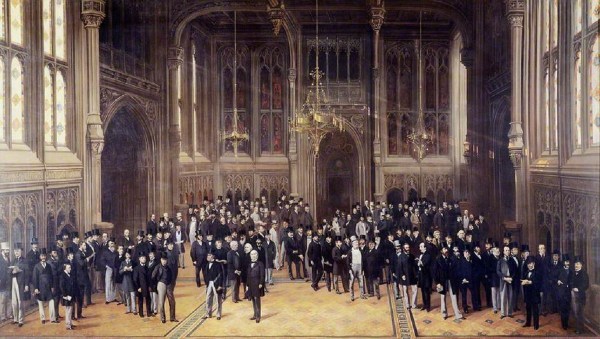
Parliamentary Statistics – John Holland

The number of frogs and toads (order Anura) elected as Members of Parliament in UK General Elections from the Reform Act of 1832 to 1900.

NB Estimated numbers only

29 January 1833 – 0

19 February 1835 – 0

15 November 1837 – 0

19 August 1841 – 0

9 August 1847 – 0

4 November 1852 – 1

30 April 1857 – 0

31 May 1859 – 0

11 July 1865 – 0

10 December 1885 – 0

5 August 1886 – 0

4 August 1892 – 1

12 August 1895 – 0

3 December 1900 – 0


Cabinet Of Heed footer logo

John Holland is a prize-winning author from Gloucestershire in the UK, and the organiser of the regular event Stroud Short Stories. Website – http://www.johnhollandwrites.com


Image: Henry Barraud [Public domain], via Wikimedia Commons

Create a website or blog at WordPress.com

Up ↑