Golden Glow – Amanda Saint

She can’t wait to get on what will be the wildest ride of her life. She didn’t even have to prove she was terminally ill. Just paid the fee so she could swirl through the seven loops and find the answers to her all consuming questions. The spiritual masters say if you let go of attachment then death will take you into the pure light of knowing. She really wants that to be true. Can see it. Soft, golden, glowing.

Nobody will miss her or even notice that she’s gone. Not now.

‘You shouldn’t get on.’ A gravelly voice from behind says.

He’s red raw from whatever treatment has failed to cure him, like he’s been burned. Gazing up at her from a wheelchair through shining eyes that don’t match his failing body.

‘You know nothing about me.’ She turns away.

‘I know I wish I didn’t have to do this. Why are you?’ he says.

She wants to ignore him. To not let him ruin this moment, the anticipation. But she can’t. She turns back. ‘That’s none of your business.’

He shifts in his chair and blistered skin peels away from his leg, sticks to the seat. ‘Last year I got ill, something they’d never seen before. Nothing helps.’

She sighs, a mix of frustration and pity. ‘Well, I’m sorry that you got sick. But that’s nothing to do with me, my decision.’

His scorched lips smile. It transforms him. Somehow his raddled face becomes one with his lively eyes. She can’t help but grin back.

‘I want to stay to see the beauty of the world and the incredible things that humans do,’ he says.

Her grin fades. ‘What like fighting wars and polluting the oceans?’

His smile widens and as it does, patches of unblemished skin appear on his cheeks. ‘We save animals and rehome them. We dedicate our lives to helping others.” More burns fade away.

Before she can reply he carries on, ‘We dance. We sing. We paint. We write. We are endlessly creative and inventive.’

She shakes her head. ‘It’s not enough.’ But the memories, the ones she always pushes away because they hurt too much, are crowding in.

His cheeks glow with health now as he says, ‘We love.’

She wants to say how wrong he is. How bad things are. But images fill her mind.

Long-forgotten kisses, hands on her body, breath in her hair.

Giggling at shared secrets.

Snuggling, smooching, spooning.

Always there for each other. Only apart because he went way too soon into the golden glow. He wouldn’t want her to do this.

It’s as if this magic man in the wheelchair can see her memories too. He’s nodding, laughing. His burns are completely gone now. He stands.

She grabs his hands. ‘Life is amazing,’ she sobs.

He pulls her into a hug, ‘Mind-blowing.’

The buzzer announces the arrival of the rollercoaster car.


Author’s note: Inspired by the Euthanasia Coaster designed by Lithuanian artist Julijonas Urbonas. https://en.wikipedia.org/wiki/Euthanasia_Coaster

Amanda Saint is the author of two novels, As If I Were A River (2016) and Remember Tomorrow (2019). Her short fiction collection, Flashes Of Colour, is coming in 2020. Amanda founded Retreat West, providing writing competitions, courses and retreats. Retreat West Books publishes short fiction, novels and memoirs and was shortlisted for Most Innovative Publisher at the 2019 Saboteur Awards.

The Cabinet Of Heed Issue 30 Contents Link

Image via Pixabay

stung – Ceinwen E Cariad Haydon

for Mary Eleanor Bowes 1749-1800

your Latin verbs danced in declensions/your words winged ideas to liberty/your spirit found cracks in brick walls/your fingers tended fragrant flowers/fondled fruit/your desire sought embrace and climax/your affection mulch and growth/your strength affronted lovers husbands men/men wished to prune you/bend you/bruise you/dead head your breast/nettle your mind/through these trials you knew/a bee’s sting is it’s last


Mary Eleanor Bowes 1749-1800 Owner of Gibside Estate, Gateshead, well-educated, amorous, expressive and a passionate gardener. She was the first woman in England to sue for divorce on grounds of cruelty.


Ceinwen E Cariad Haydon lives near Newcastle upon Tyne and writes short stories and poetry. Her first chapbook was published in 2019: ‘Cerddi Bach’ [Little Poems] by Hedgehog Press. Her first pamphlet is due to be published 2019/20. She is a Pushcart Prize nominee. She believes everyone’s voice counts.

The Cabinet Of Heed Issue 30 Contents Link

Image by Rich Bamford via Flickr, Attribution-NonCommercial-ShareAlike License

Lunch With Grover – Mike Hickman

“It’s the same thing every time I come in here.”

It is always Grover and the blue man. It can’t always have been Grover and the blue man, but when I think back, when I see that room, see myself opening the door, dropping the bag, heading for the kitchen, it is always Grover as the waiter and the blue man trying to place his order and Grover misunderstanding him to hilarious effect. As they say.

“Alright, Charlie, broil the biggy.”

This time it’s a hamburger. The blue man – I’d forgotten he had a moustache – wants a hamburger. I remember this. Grover gives him the option of a big burger or a small burger. The small one is too small and the big one is too big – comedy too big. Breaking the doors down and demolishing the blue man’s table too big. I might have laughed at the time. I do now.

“You’re not looking in the soup, you’re looking next to the soup.”

“I knew that.”

A fly this time. I’d have sworn it was the same memory, but there are loads of these videos, and they’re all available online, if you’re so inclined. If you want to reach back.

I know I went home for lunch for – what? – at least a year. Until it stopped, was stopped, was put a stop to. And I know it can’t always have been Grover and the blue man because the TV can’t always have been tuned to that channel, and the news would at least sometimes have been on, and it wasn’t just children’s television that warmed that room all day. But when I see the bag going down – never actually dropped; that would have made too much of a noise – and I see the route to the kitchen – funny how you remember these things – round the back of the green sofa with the frayed tassles and then a sharp right at the cabinet with the broken porcelain – I see Grover, towel over his arm, nodding his head – like he did – coming to the aid of the blue man and making the blue man really regret ever asking in the first place.

I could understand that. Maybe that’s why I remember?

They always end with the wah-wah-wah comedy music and the blue man raising his eyes to heaven and I’ve sought them out – I’ve found them all – and I’ve watched them, but I only really remember Grover and the blue man the once, that one time that was every time, every time I came back home, dropped the bag, walked through the room, tried not to take too much notice, made lunch, listened to the Muppets arguing, listened for anything else coming from the front room. When there would be nothing. I’m sure of that, too. The tartan blanket would be there on the sofa, but there’d only be Grover warming the house as much as he failed to warm the blue man’s soup.

“It’s the same thing every time I come in here.”

I’d let myself out. Head back for the afternoon. It would be Inspector Gadget when I got home, then the six o’clock news, then dinner, if there was anything in the freezer, if I could make anything from the cans in the cupboard. I remember the nighttime shows, too, but only one of each, as if only seen once, as if the same always.

You’re surprised by this, I know, that it would be the TV and only the TV, but that’s memory, isn’t it? My whole school life comes down to – what? – the memory of two lessons at most, and bare moments of both of those. Would you expect me to know more? Grover, the waiter, eager to please, always making a mess, making me smile – isn’t that enough?

Wasn’t it, then?

It had to be.

Mike Hickman is a writer and former academic from York, England. He has written for the local stage, being an artistic associate for a group specialising in staging new works by new writers. His most recent play (Not so Funny Now, Off the Rock Productions, 2018) revolved around Groucho Marx’s ‘companion’, Erin Fleming, and he has also written radio drama for the same company. Recent short stories include “Trunk” for the Blake-Jones Review.

The Cabinet Of Heed Issue 30 Contents Link

Image via Pixabay

Jars – Tammy Breitweiser

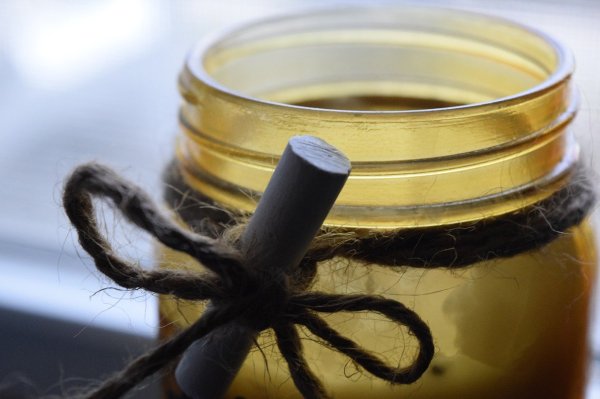
A shelf full of glass jars line the entire East wall. The shelves remind her of a floor plank from an old barn floor. Some jars are empty. In three jars there is yellow liquid of various shades. One is a swirly glittery rainbow like a unicorn threw up. Several
are various shades of green and blue.

One jar has an eye that follows you as you walk by. The window at the end of the room is cased in white and the glass is so clean you think there is nothing in the frame. The room is ten degrees warmer than the hallway. The room is narrow like a hallway and a half
with one wall with no adornment at all. A simple wood desk stands under the window.

The jars are mysteries of memories. Snippets of emotions showing life and light. Some of the jars hum. A couple emanate voices that run nonstop like an 8 year old excited to be in the car going anywhere. Others are fireworks and excitement.

She picks up a jar from the third plank and the eyeball stares at her from the top shelf.

She cups her hands around the embossed jar. She hears a language she does not know. The jar is warm and she holds it to her chest. It looks like she is holding a weight ready to do squats. She closes her eyes and it hums louder. The frequency matches hers infusing
the feeling of green meadows and the smell of grass.

Words and images flood her soul. She breathes in contentment. She feels herself skateboarding down a hill with wind in her face. The breeze whips her legs. There is a sense of freedom, peace, and joy like a dream.

Tears roll down her cheeks as she starts to sway back and forth. The humming softens steadily and then there is silence. She opens her eyes and places the jar back onto the shelf without the sound of glass and wood. She feels oddly like she has been on a ride at
an amusement park and now it is time to exit where the sign leads.

The jar sighs and starts to hum. It glows light and brightens with a surge and glows normally.

The jars are like tarot cards and feed off your intuition. One who is not aligned would hold the jar and it would turn black and hot and she would rush it back to the shelf where it came.

The afterglow lasts and the feeling is like being wrung out on a humid long distance run or a massage.

Another day a jar will reconnect her with the feelings of loved ones who have passed.

It all starts with a color.

Tammy Breitweiser is a writer and teacher who is a force of nature, an accidental inspirationalist, the keeper of the little red doors, and a conjurer of everyday magic who is always busy writing short stories. You can connect with Tammy through Twitter @TLBREIT

The Cabinet Of Heed Issue 30 Contents Link

Image via Pixabay

Elegy with Mopping and Applesauce Cake – Kyla Houbolt

Jack’s dead now so I can write about him
taking me on a tour of the coast up from SF
eating Vienna Sausages in the back of the van.
Missing those days while I mop this floor
smeared with at least six weeks’
slops and mud smirch on white tile.
Give me the back of the van any day.

Made applesauce cake, remembering when
he came back from a season of apple picking,
hosted an apple party, I made a pie in that dim kitchen,
turned out real well, I’d never made a pie crust before.
He read that apple picking Frost poem, everybody did some
apple thing or other, it was slumming, really, a hippie thing,
go pick apples for a season.

I heard he died in Thailand, of cancer, like most of those men.
Not my ex-husband though, with him it’s his heart.
We argued about how to pronounce Walter Matthau. He said
Mat TOO, and I said MATH ow. He pimped me to Jack
one night. Jack was his best friend from way back.
I was only his wife.

Who knows.

The apple cake is good, the floor is white, next time
maybe I’ll paint a picture on it
instead of cleaning it down
to the bone.

With thanks to Hannah VanderHart for the title suggestion, and for the inspiration to write this poem.

Kyla Houbolt’s debut micro chapbook, Dawn’s Fool, is available from IceFloe Press. She is a Pushcart and Best of the Net nominee, and most of her published work can be found on her Linktree: https://linktr.ee/luaz_poet. She is on Twitter @luaz_poet.

The Cabinet Of Heed Issue 30 Contents Link

Image via Pixabay

Pamela – Linda McMullen

They say I broke in, stole things, and ran screaming from the house. It’s a lie.

The truth is that the king’s chamberlain had long suspected Mr. Baer – a senior footman – of having sticky fingers. The chamberlain suspected Mr. Baer of pocketing one of the king’s diamond pins. Accusations of theft were an extremely delicate matter. The chamberlain confided his fears to his own servant – my father. My father volunteered me to slip into the Baers’ house to investigate.

I waited until they had gone to church. The house was locked, but Mrs. Baer had left a pie cooling on the windowsill. I hoisted myself up and slipped through the window.

The family had obviously been running late; I spotted half-empty porridge bowls on the table. I amused myself briefly by tasting one. It was no better or worse than what my own mother made.

Then I began my search.

I sat on each of the chairs, to ensure the pin had not been hidden beneath a cushion. The child’s chair was poorly built, and it collapsed beneath me.

The floor had not been swept in some time.

I went upstairs. The Baers had two bedrooms; I went into the adult Baers’ room and lay on each of the beds, feeling for a pin-prick beneath the mattress. I also looked under the bed opposite, preferring not to dirty my dress, or my golden curls, on what was probably another dusty floor.

No pin.

I went to the junior Baer’s room, lay across the bed, and peeked underneath.

A trapdoor!

I tugged it open from my ridiculous angle – there, beneath the trap, wrapped in a handkerchief, was the pin!

I held it up to the light, watched it sparkle…

…and did not hear the Baers return until I heard shouting below.

There was no window in junior’s room, and no time to fly downstairs.

My best option, I reasoned, was to remain in bed, feign sleep, and pretend that I had wandered in as…a prank. I tucked the pin into my pocket.

Such a racket they made when they found me! Baby Baer pointed and screamed, Mama Baer wailed about the shock to her nerves; Papa Baer took me by the ear and hauled me to the village square, shouting all the while. A crowd formed immediately; someone ran for my father.

Father lit into me, calling me yet another female led astray by her curiosity. He offered to let Papa Baer punish me, giving no hint that bore any responsibility for my intrusion. Papa Baer took full advantage of Father’s offer.

I hobbled home.

My father offered no consolation, no apology, and no ice. Instead, he said, “Did you find it? The chamberlain has come asking!”

I looked him full in the face: “No.”

He looked crestfallen, and shuffled away.

I left in the night, went to the capital, and sold the pin to a wealthy collector. I have lived comfortably in town – and gloriously unencumbered – ever since.

Linda McMullen is a wife, mother, diplomat, and homesick Wisconsinite. Her short stories have appeared or are forthcoming in over forty literary magazines, including, most recently, Arachne Press, Luna Station Quarterly, Ripples in Space, Write Ahead/The Future Looms Magazine, Drunk Monkeys, Storgy, and Newfound.

The Cabinet Of Heed Issue 30 Contents Link

Image via Pixabay

A Moment Coloured Dusk – Elodie Rose Barnes

Night rises slowly here.

A show of darkened gold, amber, fierce orange. Almost three hours after it started the glowing embers still spark in the western sky. Looking at them ignites a longing, as if the fiery trails – all that’s now left of the hottest day of the year – hold something just out of her reach.

She’s here to meet someone.

In all of the eighteen million, three hundred and ninety six thousand moments that she’s lived (give or take; she’s never bothered to adjust for leap years) only a handful stand out, coloured threads in a thick spool of grey. This will be one of them. The hard slats of the park bench digging into her thighs, the rustling and shifting of the trees, the warmth seeping from the city stone. The waiting. The two music students practising harmonies on the grass; alleluia over and over again. She doesn’t understand the rest of the Latin, but listening distracts her from wondering.

She’s here to meet a woman, but she doesn’t know what the woman looks like.

Her hands feel restless, jittery. She hasn’t brought a book because she doesn’t want to blend in. She needs to stand out, to make herself known, to make it clear that she is the outsider here because the other woman doesn’t know what she looks like either. Not any more; she’s all grown up from the year-old baby who survived the night on the convent steps. Left there by the woman she’s here to meet. Raised by nuns instead. She is imagining an older version of herself, and she imagines that the other woman is imagining a younger version of herself, but what if they are both wrong? How will they ever find each other here, in Paris, if it isn’t like looking into a mirror of the future or the past?

She wonders whether, like an animal, she will know her mother’s scent before she knows her face.

The sunset show is almost at an end. She doesn’t understand why people talk about night falling, because this husky, inky purple seems to be floating up from the heat-soaked ground. Her feet are swimming in it, along with the grass and the paths and the bottoms of the trees. Her hand nervously pats her small bag, wishing that she’d at least insisted on a photograph. All she has is a letter. She doesn’t know how the letter found her. Her husband is a diplomat, and she’s travelled so much that the ground sometimes sways beneath her feet. She wonders whether the handwriting – looped, heavy, spiky in places – will show in her mother’s eyes.

She wonders if it will finally feel like coming home.

Violet creeps up over her legs, over her arms, tangles in her hair. The leaves are swaying in it. The park is gradually emptying and she thinks this must be it, over, too late, but she doesn’t want the deep, rich colour to run with her tears. The moment is gone. With shaking hands, she gathers her bag and smooths her skirt. She’s glad she hasn’t told her husband.

She steps towards the night, and the woman on the bench opposite lowers her book

Elodie Rose Barnes is an author and photographer. She can usually be found in Paris or the UK, daydreaming her way back to the 1920s, while her words live in places such as Burning House Press, Bold + Italic and trampset. Current projects include two chapbooks of poetry, and a novel-in-flash on the life of modernist writer Djuna Barnes. Find her online at http://elodierosebarnes.weebly.com, and on Twitter @BarnesElodie.

The Cabinet Of Heed Issue 30 Contents Link

Image via Pixabay

The Restorer of the Plankhouse – Shelby Stephenson

for Ashley Langdon

Through his window of work he moves,
muscles flexed, then relaxed as doves
before the season comes in
to make them fly faster and higher.

In summer he wears shorts with holsters
for tools he grabs with ease as if to toast
the sunup to be the east’s chief clerk.
He’s already on the ladder, at work.

For a scant second, he sees me
arrive to say good morning.
Then he looks at the grill by Meco
And says, “Sometime we need to cook some hot dogs.”

For him sweat and sunset come on time.
He takes off his tool-belt and climbs
down his ladder against the fake well’s
roof he made to honor the real

one when the plankhouse was pulled
back in the meadow by two
mules, Black and Gray, whose withers
especially quivered like strings on a zither,

music similar to the carpenter’s
pulling a tendon in the center
of his left leg, in the calf.
He chooses jobs on that behalf,

threatening hurt; the purple martins
circle his head as if they park
in air to be part of the show,
a quiet tribute to this house on Sanders Road.

Without alarm those who enter the doors
he fixed to open good and the windows
he prepared in rooms all by himself,
the low-silled window lights bereft

of memories to all who did not
live here, father, mother, sister; the rot
of loneliness and neglect of furniture
he joins in the center of muscle’s curvature.

He admits he remembers tidbits
of life here he restores a little
at a time; then he stops by often
to check on the place visitors welcome.

Shelby Stephenson was poet laureate of North Carolina from 2015-2018. His most recent book: Slavery and Freedom on Paul’s Hill (Press 53)

The Cabinet Of Heed Issue 30 Contents Link

Image via Pixabay

The Bitter Truth – Tiffany Hsieh

There was an old Taiwanese woman who was bitter as a widow, bitter as a mother, bitter as a grandmother. She would have been bitter as a sister, too, but her brother was not in the picture and her bitterness could not be attributed to him. While on her death bed in the hospital, she asked for her only son. He was in Canada and had to be coerced by his wife to fly home. The old woman didn’t really love her son as she felt that he never loved her after he turned thirteen. He had turned out to be just like her dead husband, the high forehead among other things. She also had a way of bringing out her dead husband in her son. Both men were ill-tempered and liked to drink when she was around. Even her grandson, her son’s son, had turned out to embody this male prototype. She didn’t love any one of them and they naturally didn’t love her, and she was bitter about that. Still, the old woman was somewhat satisfied with the fact that she had married the first, birthed the second, contributed to the third. None of them would be who they were without her and she wanted to tell her son that before she died. She wanted to have one last dig at him by telling him that his family would suffer the same fate as hers, because of karma, and that his son and future grandson would not love him just as he did not love her. The old woman’s son held her hand for the first time in more than half a century. As she stared at the hospital room ceiling, he informed her that his son and his son’s wife were a practising child-free couple. They lived in New York with their dog. The mongrel’s name was Happy and he loved everyone including the doorman. After hearing this, the old woman lived to be a bitter person only for another day.


Tiffany Hsieh is a Canadian writer living in Stouffville, Ontario. She used to play the piano and work as a reporter. She holds a master’s degree in Creative and Critical Writing from the University of Gloucestershire. Her poetry is forthcoming in Ricepaper Magazine.

The Cabinet Of Heed Issue 29 Contents Link

Image via Pixabay

Tempest – Mandira Pattnaik

I scooped a starfish marooned in the gale, nestled it among the glossy rocks; then returned to the Sesotris. Winds licked her from all sides; the cyclone hadn’t let up even the next day and she had lost her longboat and cooking coopers. Scads of birds — hawks and nightjars — from forested nearby islands, lay strewn on board. Under leaden skies, she knifed ahead; passed north of Enaani lighthouse at her full 19 knots. Thiger, one of her lower deck hands said — I’ve never seen these parts this rough, and he’d know; I’d seen Thiger in here before, serenaded him with a thousand frozen wavelets. He was one of four-hundred-twenty-six soldiers of the 80th British Foot Regiment, that had set sail from Sydney barracks, called on Timor Islands for replenishments, and was due to dock at Calcutta in a week.

The tempest picked up; the stormy night poured like tar; Sesotris trembled from stem to stern; quarter boats and meat boxes were thrown down the hatchway. Thiger saw a spark; so did I. There was a metallic-sounding heavy slamming that reverberated through her body, like a whiplash. The lower deck crew labored to seal leakage. Kitchen-hand Wei with Raen and Sou struggled to save provisions from getting spoilt.

Thiger saw a vessel shadowing Sesotris. So did I; only about a mile away, shaped like a dugong. Or was it steered by a drunken helmsman?

Sesotris ran aground; barged on to the soft surface of a mangrove swamp. Howls of crew sounded above the roar of wind. It should be now. Now! Now! I shouted. Thiger, Wei and soldier Samson, breathed in the stink of seaweed mingled with salt. I shouted again, Thiger, come to me! Brine stung their eyes, noses, mouths; flashes of lightning illuminated them. I never knew if they realized.

Oh! They scrambled to de-board, but precious moments having been spilled, the island inhabitants, more beasts than men, like big mastiff dogs, drenched and aggressive, began to surround the ship. Thiger shouted — Cannibals! There were more flashes of lightning and the four-hundred-twenty-six of them stayed put, huddled on the deck, wet to the bones and clenching teeth. The vessel held stable for the rest of the night and beyond the night, into days of which I lost count. The islanders kept vigil; waiting to raid; while the soldiers ate only morsels of food; hoping to be rescued. When water ran scarce, a riot broke out. A picket opened fire and I saw Thiger falling by the stern, neither writhing in pain nor bleeding. Sou stood stoic and dumb, though he was hit by fire.

The ocean raged; a homogenous mass; amalgamation of sky and earth. Sesotris dissolved in the gray morass, fed by hopelessness. Fringes of days bled in the horizon.

One of those days, the carpenters wanted to resurrect the only boat and worked through the squall. David, hoisted on the bridge, pointed to the vessel I’d seen earlier, in spite of the feeble light, with the same insignia, cried — Sail! Sail! I scampered to catch a glimpse as it appeared to anchor. The soldiers on the upper deck went into commotion; fluorescent yellow sponges glistened in their torchlight as they watched a stream of particles, hazy and random, floating around several forms that alighted — I call them forms because they were hardly humans, swathed in cloth of various hues. The soldiers sounded the distress bell but the forms appeared not to notice the stranded ship and began to offload crates of rum, shiny golden horses that limped and a dozen horribly bleating calves, before they strode to their vessel and melted into the darkness.

A dawn, in several, bloomed. The storm was spent, but four-hundred-twenty-six people stayed assembled close on the deck, fearful of the marauding islanders. They peeped over the port and woke up to a frosted dream. A soundless shriek perforated their muffled selves.

I lay curled up between the rocks; waited for the moon, waited to withdraw from the shore and back to mid-sea where my siblings, calmer and gentler, waited for me. Four-hundred-twenty-six souls alighted on the soft white sand carrying their famished bodies and found among the crates, a huge rock tablet erected with their names.


Mandira Pattnaik writes flash and poetry. She considers herself lucky to be featured in Eclectica, MadSwirl, FewerThan500, (Mac)ro(mic), Lunate and DoorIsAJar.

The Cabinet Of Heed Issue 29 Contents Link

Image via Pixabay

I Sniff Your Brown Bin – Camillus John

I sniff your brown bin
because it stinks when I pass it
on my way over to the bus stop
in the morning.

Every two weeks you put it out
to be collected by the bin company.
I’ve got no choice in the matter.
Your brown bin is on a footpath I can’t avoid
so your compost wafts up at me as I pass.
I cough. Choke a bit. And my eyes water.

When I return on my way home from work,
although your brown bin is physically gone,
I can still smell its putrescent contents
and hear the buzzing of its ticks and flies
from earlier, I sneeze I do, I sneeze
when I’m passing, even when it’s not there.

That time you went on holiday
you didn’t put it out, so I didn’t have
to sniff your brown bin.
I thought I’d be excited
and really rock ‘n’ rolled at such a scenario,
but no, I missed the stink
and the fumes
and I was soothed
when I got to sniff it
four weeks later when you
eventually put it out again
full to the overflowing brim.

I have to admit though, I lingered
a little longer than I should
have on that public pavement
outside your home
that Tuesday morning, after four whole
weeks of going without,
and it felt like kissing someone
with bad-breath standing there
amongst all the bluebottles.


Camillus John was bored and braised in Dublin. He has had work published in The Stinging Fly, The Lonely Crowd and RTÉ Ten and other such publications. He would also like to mention that Pats won the FAI cup in 2014 after 53 miserable years of not winning it.

The Cabinet Of Heed Issue 29 Contents Link

Image via Pixabay

An Awful Sight – Jake Kendall

‘Tis about seven o’clock that morning.

Robert Downes has barely slept, so acute is his anticipation. He leaves his bedroom in darkness, and walks towards the meadows by a meandering scenic route: through the grassmarket, up the west bow, tarrying beneath the castle and cathedral. Downes starts down George IV Bridge, stopping there awhile. He is not yet tired of the view from the new construction. So much of the city is changing. So much of the world. His heart is heavy. His mind racing, hastily drafting involuntary lines. A couplet. So that our feet shalt not mix with dirt/ Man raiseth his streets o’er the Earth.

Downes repeats the couplet, counting out the syllables with his fingers. Are they a regular meter? He is uncertain. What is the next line? Should he prove his worth, or perhaps build a hearth… Does the phrase “heavens hearth” mean anything? After giving the matter careful consideration, Downes supposes that sadly no, it probably does not.

He wonders if his thoughts need a variation in meter, sonnet form perhaps. He tries fragmenting his feelings into two alternating rhyming patterns that play off each other, allowing their sonic effect and literal meaning to contrast for comical or profound effect. The attempt is futile and gives him a headache. He sits down.

The sun rises on greyfriars. Downes points to the graveyard, “mortality! Thou speaketh!” he declares with theatrical astonishment. He takes unsteadily to his leg, his arm outstretched toward the graveyard.

Downes has lived in the city for three years now. He was well-aware of the location greyfriars, even in the dark. He walks among the tombs muttering to himself: Byron, Shakespeare, Blake. When the light turns from orange to yellow, he steels himself and marches to the meadows.

Professor George McGonagall rises at six that morning. He tells his wife that he has important business to attend to. He kisses her farewell, assuring his return by evening meal time. He has three daughters. He says goodbye to them all. He then meets his coachman, Andrew, at the gates of his house. Andrew doffs his cap and muttering the word “sir”. He is ready, just as he said he would be. Andrew flashes the two muzzleloading pistols he has procured. McGonagall nods dutifully and silently enters the coach.

They ride towards the city. McGonagall allows a moment for quiet tears. He reminds himself that this is duty. This is the blessed process of superseding. It is necessary. Without this process, there is no progress. The germs of a poem begins to formulate in his mind: Process-progress. Civilisation is needing-superseding. Is there any potential in this as a composition?

No, he concludes. Not really.

The grievance between the two issued two days previously, at a public lecture. McGonagall had been invited to speak on modern poetry. As a renowned professor in the city of Edinburgh the hall was crowded, the attendees hearts were light, and free of sorrow.

Among the thronged faces, McGonagall spied his former student. Their relationship was close. Downes often visited the professor’s office to debate the classics, tentatively they had begun sharing their own writing between themselves.

A moment of wild candour had led the professor to call out to Downes that day, publicly proclaiming the brilliance of the young man’s writing. Downes, as differential as he was irradiant, had disputed the claim and insisted on the superiority of the professor’s work.

I never meant to hurt you, speaketh vice unto to virtue. How can a man not weep at such words?” McGonagall had shouted.

“You make beauty from science sir,” Downes replied. “We are here not from God, but providence/ Like otters, trees, and cormorants.”

They quoted each others words further, though soon their voices were lost among the laughter of the thinning crowd.

It had been a mortal humiliation.

McGonagall knew this was a day that would be remembered for a very long time. His reputation, his authority, the trust in his aesthetic judgements was publicly undermined.

In the heat of the moment he had demanded the duel, to reclaim lost honour, aye. But also to conclusively settle the matter of who indeed was Edinburgh’s greatest living poet.

McGonagall’s coach arrives at the meadows. Andrew disembarks and opens the carriage door. The professor exits with a mournful sigh.

The Meadows are dry that morning; the grass, frozen. Downes stands some way off, beneath a tree, his face contorted by frustration. As Andrew and McGonagall approach, they hear him utter, “I suppose now, it is no matter.”

“Well met, sir,” exclaims McGonagall. “I confess, I was uncertain of finding you here.”

“Truth and bravery are kin sir. A host of resisitudes have my back. My heart is pure, my hands are steadied.” Downes would demonstrate the fact, but he feels their tremors.

“Lo then, thy kin protect me too. Truth is my sole preserve. As for bravery: here I stand, setting the challenge, but doing so compassionately. I offer one final opportunity for your repentance and rescinding of your comments.”

“A generous offer sir, befitting of your august personage. However you know I can do no such thing. I stand by my words as though they were a most precious lover. You sir, are the greatest wordsmith in this city. Far better than I.”

“Sacrilege!” The professor’s voice near-breaks. “Your words move me like no other. In profession, I am master and you the student; but in reality, I have nothing to teach you of feeling, of love. The expression of the soul cannot be taught, you have the gift! I beseech you sir, see sense. Repent. Else my most remarkable contribution to this literary world may be to deprive it of a flowering genius.”

“Master please, it is I who risks depriving the world of beauty. Your words are honeyed logic. You are Newton and Shakespeare, expressed as one. And if you are Newton, I, I simply squat at your feet, hoping for beautiful crumbs to obey your law.”

With both men refusing concession, Andrew brings forth the pistols and presents them one apiece. Initially Andrew was to stand only as the professor’s official second; yet Downes had no one prepared to act as his and so Andrew now stands for them both. The poets had co-authored an official statement, declaring their intention to duel, and their willing compliance in the endeavour whatever the consequences. All three sign the statement; they do so weeping and embracing.

Andrew supervises the loading of the pistols with powder and lead balls. He positions the poets back to back, pistols raised to chest-height. Andrew clears his throat.

“Dearest gentlemen. We are here today to resolve an issue of great honour and dignity. I will now count to twenty. Each number representing a step you must take forwards. Once the twentieth step has been taken, you must turn and fire your shot. Understood?”

The poets affirm their confirmation. Andrew begins to count, slowly. As the count reaches double figures, the poets hands are visibly shaking. As Andrew commands the fifteenth step he hears McGonagall omit a sharp gasp. At sixteen Downes’ knees seem to shake. Seventeen. Eighteen. Nineteen. The men visibly stiffen. The word twenty is simply that, a word. It is the same as the last nineteen, and yet Andrew cannot help but pause. When the word does emerge, the emission is quivering and weak.

The poets make their final step. They turn. It is impossible to know who is faster; their shots near-simultaneous, like grounded fireworks. The air is filled with the smell of gunpowder.

Both men crumple. McGonagall falls, silently, backwards and sideways. Downes cries out in pain as he falls to his knees and then collapses forwards.

Andrew is confounded by their accuracy. He had made assumptions that neither man would prove proficient at arms, that perhaps, at the worst, one of them might sustain a minor graze. He rushes, first to his friend and master. Death has not relaxed the professor’s grip on the pistol, it points still at his own chest where he has shot himself in the heart at close range. The blood pumping out across the white of his shirt. He surely perished on impact. Such moral clarity! Such nobility!

However, Andrew cannot comprehend how Downes has also fallen. Andrew then races then to the dying man and asks what has befallen him. Downes drops his pistol and rolls to look upwards at the coachman, pointing to a shot clumsily executed in his stomach. He is panting, trying for words. Andrew deduces what has transpired. There can be no other explanation. Downes too has shot himself.

“The… the… professor… Does he live?” Downes manages.

Andrew cannot speak the truth. He crouches and nods, cradling the dying man’s head. Downes is trying to say something else. Andrew leans in, begging the poet to repeat his final words.

“Then… I depart from this… this dingy earth/ light the… the fires/ For I arrive, at… at heaven’s… heaven’s hearth.”


The Cabinet Of Heed Issue 29 Contents Link

Image via Pixabay

(Not So) Dead Girls – L A Wilson

J

Splayed on the druid’s slab, she sacrificed me to the god of Please-No-More-Banana-Sandwiches. Cathie worked out the staging and chanting. Felt I needed to tell her my actual virginity not up for surrender, you know? A herd of cows gathered round the granite to watch, trapping us for an hour past dinner. She was like that.

Hiding from the rain in a barn, we shrieked as hay bales toppled on a secret. Twelve years old and ought to have suffocated. A farmhand appeared to swear at us. Proper F-word swearing. No tv allowed at her house, Cathie with her vocabulary pronounced the entire episode both epic and gothic. Claimed she peed her pants. I don’t think she did.

J

U

At dawn, we snuck out and met up across the fields, off to find a Maxwell castle. Not the one that’s apartments now, not the House of Elrig either. There’s an older one, all ivy-wrecked turrets stuffed with ravens. She wanted to take out the board. I said no way, too creepy. We trudged back in a soaking mist, both of us to a scolding.

Allowed out again on a final, final warning, we scrambled up the Painted Hill. The bleached dry bones of an elm wood became Graveyard Number One. Over and down to Monreith bay, back-floating in St. Medan’s tide pools. Anemones swayed flower-hair to our hands.

She imagined me Ophelia until my feet wrinkled and the shivers started deep in my stomach.

Honest Cath, I might really die, let’s go.

J

U

D

I couldn’t play her beautiful corpse, neither could full sun chase off her ghouls. Cathie would drop into the slimmest of shadows, a boulder overhang, fold out the chessboard and flip it to the black side.

On a shot glass, her hand guided mine round the nail-varnish alphabet. She did the incanting and pushing. I blew away sand.

Spirits, whom do you seek?

Always

J

U

D

Y

She’d have me ask when would her sister die, when would her stepfather die? When would she die? The answers never clear DFC—NEV—1AP until her hand, too tight, would cramp on mine and overturn the glass.

The following summer, our holiday weeks didn’t overlap. The summer after, the same. I suspected my mother. Cathie wrote. I replied, until I didn’t.

We heard what happened from the folk who rented us our chalet.

Now, when the corvids break the air, my fingers still twitch. I dropped myself into a shadow last summer, flipped my tablet beside a rookery and said right then, on you go, what’s the handle now, your true spirit name? I/she/we typed

H

E

K

A

T

E

I googled her surname. He’d passed away. He was her father, her real dad. Pre-deceased by his eldest daughter, estranged from his surviving daughter.

From intense personal tragedy, critics drew a hastening in depth and maturation of his oeuvre. They waxed. In paraphrase, a thematic obsession developed and expressed as an infinite, bitter dialogue with an ephemeral counterpoint.

Ah Cath.


The Cabinet Of Heed Issue 29 Contents Link

Image via Pixabay

Cobalt Blue – Andrew Shattuck McBride

An elegant, deep shade of blue,
Mom’s favorite. Before the divorce
she and Dad collected bottles. Their prized finds
were tiny, blue to translucent.

Mom obtained most of the bottles. Dad obtained me.
Abandonment, hers and mine,
fissured break to chasm.
Her last year she refused my visits.

In an orange hotel room near her home
I was full of our estrangement.
I began writing poems, sent her a few—
offerings for reconciliation.

Mom said she liked them.
Our final call: I guess I know now
who the cobalt blue bottles go to.
We’ll talk later about you coming down.

One of my sisters called:
Mom was under hospice care, on oxygen,
her extremities fading to faintest blue
and translucence. Her white hair framed
lips frothing pink from laboring lungs.

Mom’s daughters
and her housemate held a deathbed vigil.
Mom died in Albuquerque
under its brittle pale blue sky.

I hoped to visit her one last time,
to describe Steller’s jays’ cobalt wings
and bodies and fierce black crests,
to show her my cobalt, broken-wing love.


Andrew Shattuck McBride is co-editor of For Love of Orcas, Wandering Aengus Press, 2019. His poem “I Was Happy as an Ant” was a semi-finalist for the 2017 Crab Creek Review Poetry Prize. His work appears in Crab Creek Review, Empty Mirror, Floating Bridge Review, and Black Horse Review.

The Cabinet Of Heed Issue 29 Contents Link

Image via Pixabay

Constable Arlene Runs – Michael Grant Smith

Fair play is taken seriously in Last Chance even if we don’t hold our politicians to a consistent standard, or any standard at all. We do love elections, though, and prefer them over auctions, bake sales, barn-raisings, and charity fundraising benefits. You’ll seldom find disappointment if you don’t look for it. In Last Chance, campaigns never end. Your hands could chap from the constant door-to-door flesh-pressing. Our voters focus on the pageantry, the expression of free speech, the motorcycle Globe of Death.

“Frisky” Clinchett’s yard was barely large enough for a lawnmower to turn around, but Honey and Candy crab-walked in the dust and faced off. They shrieked and hissed at each other, pausing only to rip up and fling clods of dead grass or light another cigarette. Neighbors and passersby had gathered at a respectful distance. We knew the combatants threw wild and they packed some power.

Identical twins Honey and Candace Sweet were born at exactly the same instant, a medical miracle featured on the front page of the Last Chance Gazette & Intelligencer. Their mother filed for divorce three minutes after the remarkable birth. Even as infants, each twin attempted murder on the other and it never stopped. Candace, or Candy as we called her, managed the day shift at Carl’s Chicken Shack. Honey was Last Chance’s long-serving Postmistress.

In less than half the usual one-hour response time, the twins’ childhood friend, Constable Arlene Nelson, Last Chance’s most courageous and only law enforcement official, arrived at the scene.

“Candy! Honey!” Arlene said. “I love you girls! I love both of you real bad but you got to quit fighting in public. Take it behind closed doors the way regular people do.”

“This here she-devil sold my wedding dress,” Honey wailed. “How am I supposed to get married if I got no damn dress?”

“You ain’t never getting married anyway because you’re too mean and stupid and ugly,” replied Candy, who for good measure chucked a mailbox at her sister.

“Now, hey you two,” said Arlene, who had her own problems but nobody ever asked how she was doing. “Run each other through a wood chipper if you want but stop vandalizing and trespassing poor Mr. Clinchett’s private property! He’s got no part in this!”

“If I’m ugly, what are you, she-devil?” Honey said, ignoring Arlene.

“Makes me the pretty one is what it does!” Candy swung a garden hose and whipped it toward Honey, who was too quick and ducked. The brass nozzle caught Arlene across the ear.

The twins froze like angry wax museum dolls. Arlene backed up one step before replanting her boots on the sidewalk.

“As your friend, I might deserve getting my bell rung,” Arlene whispered, and everyone had to shut up to hear her. “But. Not when I’m wearing this here badge. What you done is felonious assault of a duly-appointed peace officer, which is me.”

She retrieved her cap and brushed it off across her pants legs.

“What did you expect when you went in together on a wedding dress? You two can’t even share a glass of iced tea. What if you’d booked yourselves a double wedding? What about it?”

Candy and Honey knew she was right. The I-forgive-you hug they gave each other seemed sincere but who can say?

“You girls go on and get,” said Arlene. “I’ve got cases to crack and whatnot. Candy, you owe Honey for half a dress. Problem solved.”

“I’m sorry about the hose nozzle lighting you up, Arlene,” Candy said. “I didn’t mean it. Can I still count on your vote?”

“Scoot, you crazy persons!”

Arlene cradled a cold soda pop against the soreness. Her ear swelled up big, along with her frustration.

“For years I’ve followed orders, put my butt in harm’s way. Grabbed criminal intent in a headlock and whiffed its foul breath. Is my keg of potential truly tapped? Don’t I deserve betterment?”

The crowd of onlookers had dispersed. From the handlebar of Constable Arlene’s motor scooter dangled a folded piece of paper. A campaign flyer; betwixt its creases smirked the smug face of puffy Councilman Everett; worse than his picture was the formal declaration he would run for mayor of Last Chance.

“I’m for you if you’re for me. If you’re not for me, then go to Hell. VOTE EVERETT!”

“What kind of damn deal is this, poking election materials into official government vehicles?” Arlene said. “Smacks of a clear conflicted interest!”

With a growl, Arlene shredded the flyer into tiny bits of Councilman Everett. The fragments fluttered in the breeze.

“I never imagined destroying evidence could feel so satisfying. If anyone asks, I’ll say I spread the candidate’s message far and wide.”

The field of declared Last Chance mayoral candidates continued to swell like a tick: Arlene’s Uncle Hubert, Candy Sweet, former political trickster Barrymore, and now Councilman Everett, to mention a notable few. Almost all of them bemoaned the constant influx of vagrants, drifters, transients, hobos, tramps, and especially tinkers, although it was agreed, off-the-record, the tinkers kept our cutlery unsurpassably sharp, and for a reasonable fee. No one had seen the current mayor in months, nor could they recall his name or physical description; sporadic casual grifting was the only proof he still held the office. Would he file for re-election? Betting odds changed daily.

Jazzed by feelings she couldn’t quite grip, Arlene fired up her scooter, motored into Last Chance’s business district, and parked. When she threw open the doors of the Last Chance Gazette & Intelligencer’s office, our newspaper’s editor and publisher, Loyd English (that’s “Loyd” with one “L”), sat upright and giggled with anticipation.

“Constable!” Loyd said, sliding a crossword puzzle into his lap. He leaned forward and a hand-carved pipe jutted from his grin. “What’s going on? Do you, maybe, have a scoop for me?”

Breathless and sweaty, Arlene paused while the rough thoughts tumbling inside her brain became smooth and semi-precious. She ignored the office’s immodest display of awards plaques and trophies, all of which were noticeably hand drawn or formed from gold-painted modeling clay. On Loyd’s desk rested an un-shredded copy of Councilman Everett’s leaflet.

“Yes, sir, I do have some information you might classify as newsworthy,” said Arlene. “I’m not here to tell you your job, but the headline could read something along the lines of ‘Last Chance Top Law Enforcement Official Throws Cap Into Ring Of Mayor’s Race.’ But you’re the wordsmith.”

She held his gaze; her daddy used to say staring made everyone think you were credible and sincere. Loyd flipped past pages of doodles and cat sketches before he found a clean notebook page.

“What a blockbuster, Constable!” he said. His eyes danced the boogaloo. “Can you reveal to me the new candidate’s identity?”

She snatched the pen from Loyd’s hand, scribbled in his notebook, and stomped out of the office. In less than a minute she covered the distance to the Farm & Fleet store, which also housed the Last Chance municipal offices. Quicker than you can poach an egg, she’d typed a letter requesting temporary leave and dropped it into the absentee mayor’s inbox.

Arlene cogitated while she scootered herself home. Sure, someone could lock themselves out of their truck, or a shoplifting spree might terrorize Last Chance, or paramilitary tramps and vagrants invade, but she had to take risks if she wanted to meet up with her destiny and give it a surprisingly firm handshake. But what came next?

Her long-vanished daddy, thrice-elected and habitually prosecuted former Mayor Lowell “Fuzzy” Nelson, always mustered sage political advice or many other flavors of it:

“Kitten, public service is the only vocation for energetic people unburdened by consciousness of guilt.”

“Government bounces into guardrails most days, but some days it don’t. On days it don’t, be quick to take credit!”

“Speak with conviction and you’ll avoid convictions.”

“A good campaigner puts voters behind the wheel of a broke down truck and reminds them how good it feels to drive with the radio on and the wind in their hair. A great campaigner makes bald folks believe they have hair.”

Arlene knew better than any of us what sort of fight lay ahead. Despite her upbringing she had scarce appetite for the liver and onions of politics, but the presence of Councilman Everett tipped her into the skillet. She saw past his puffy exterior and recognized his shriveled-as-a-prune heart and demagnetized moral compass.

“Poor Dolly,” Arlene sighed, referring to the councilman’s besieged and oft-maligned wife. “What she must be going through!”

Road miles vanished behind a cloud of exhaust and Arlene’s ruminations. Her plan, as she understood it, was to go home, change into civilian garb, collect her weighty thoughts, and embark on a mayoral quest. In a jiffy she was at her own door.

“Better bring a change of clothes in case my persistent campaigning keeps me away overnight.”

She didn’t own a suitcase but a backpack would do.

“I’ll need relief from my rigorous repetition of talking points. It’d be nice to surround myself with agreeable touchstones and so forth.”

Arlene gathered a few tokens and bits of memorabilia: photographs, a threadbare plush toy (missing one eye), citations of meritorious conduct (signed in red ink by the mayor), letters from Dolly.

“Who knows, I may need a nibble here or there in order to prop up my faculties.”

In no time at all, she cleared the fresh food from her refrigerator.

Arlene carried her cargo outside and strapped it to the scooter — her official Last Chance Constabulary transportation she’d paid for with her own money, same as her uniforms. She mounted up, revved the motor, and let hot blood burn her cheeks while she pondered. Last Chance and public service beckoned, back there in the gathering dusk. Within those well-trod boundaries awaited the opportunity to build upon her controversial daddy’s legacy and submit to the gravitational tug of pre-ordained fate.

Arlene cranked the scooter’s throttle wide open and accelerated in the opposite direction. She wondered if she could ride quickly enough to catch up and pass the setting sun.

In Last Chance and elsewhere you can love something or someone and yet find co-existence impossible. Does gasoline not lust for the safety-tipped match? Your nice red shirt adore chlorine bleach? What about pickup trucks and booster rockets? The attraction is irresistible because passion promises to bind everything and makes it strong as cement. If bringing these partnerships together ends in mutual destruction, so what? The split atoms release energy, which makes the world spin a smidge faster. Maybe this boost speeds us to our life’s ultimate destination, even if we don’t know the place’s name or exact whereabouts, or who will be there to bid us enter and find warmth.


The Cabinet Of Heed Issue 29 Contents Link

Image via Pixabay

Jack and Jill – Jude Higgins

Jack and Jill went up the hill with the pail although they could have drawn water from the spring nearer the squat, which would have been less trouble. It was Jill’s idea to go up there to get some space, away from the grown-ups.

Her mother and his father were on to them. At the last communal gathering, they’d started a big discussion on whether ‘the two teenagers’ could share one of the big rooms now they were sixteen and having sex.

‘Hippies suck,’ Jill said when they reached the top and sat in the hollow of the old oak they’d used as a refuge ever since they were kids. ‘They think they’re free but they want to control everybody. Who said we wanted to share a room?’

‘We could just leave,’ Jack said, stroking her hair and kissing her neck. ‘I’d marry you if you like. That would keep them away.’

Jill stared at him. ‘You’d marry me? What for?’

Jack frowned. ‘Normal people do get married if they love each other.’

‘Not when they’re sixteen,’ Jill said but she moved closer and put her hand down his jeans. She imagined a wedding on a beach with palm trees, a house with lamp posts outside. A kitchen with runnng water, a proper bathroom.

They stayed inside the tree for a long time, eating the snacks, smoking weed and drinking the whisky Jack had nicked from the party cupboard. They made lots of plans until Jack told her he’d been sleeping with Patsy, his father’s girlfriend.

Years afterwards, when Jill lived in her own house with her husband Ben, where she had pictures on the window sill of her wedding– the lace and silk dress, the bridesmaids, even her mother wearing a hat, she wondered what would have happened if Jack hadn’t fallen on the way down the hill and hurt his head. If they had taken him to hospital instead of sending him to bed with a brown paper plaster on his crown, if the squat hadn’t disbanded after the investigation, if she had told the police about the fight she’d had with Jack when she pushed him before he fell.

And if Jack were here now, she’d tell him they could go away. She’d leave everything behind. They’d live simply off the land, draw water from a pure spring.


Jude Higgins‘ flash fiction pamphlet ‘The Chemist’s House’ was published in 2017 by V.Press. Her flash fictions have been published in many anthologies and literary magazines. She organises Bath Flash Fiction Award and co-directs Flash Fiction Festivals, UK. @judehwriter. judehiggins.com

The Cabinet Of Heed Issue 29 Contents Link

Image via Pixabay

Beloved Father – Omotoyosi Salami

I

You’re outside, wearing your pink flowy dress,
the beads in your hair clinking softly against each other.
You’re twirling and twirling
and you can feel yourself start to lose balance
but you continue to twirl anyway.
The sun is shining. The grass tickles your feet. Breeze carries your arms.
You can be nothing but happy at 4.
And if there’s anywhere you’re going, you’re stumbling.

II

The lights still don’t point out the guilty, not even today,
meaning you still don’t understand what is going on. Why this happens.
But you know what a puncture is.
You know the sound of a punch from the pretty voice of a singing doll.
You know that cigarettes mean death and some other immoral thing.
You know that your mother’s breasts belong to your father and you know
what the punishment for defiance is but still,
you do not want your mother beaten.

III

So today you’re your even littler sister’s enemy.
You would knock her into the dirt if it called for it,
if she is stupid enough as to get the fork for your father.
All you hear is your mother’s high cry for help.
But you don’t cry.
Not one tear drops from your eyes.
Instead, you open your head and remove the straws in it
and throw it at your mother,
so she might cushion the effect of the landing.

IV

Now you’re 16 and not quite as dumb.
And you wish this could be a clean-cut, one-sided story but unfortunately it is not.
But unfortunately for who? Your father? You?
Or this dark haired boy currently wrapping his arms around you and
begging you to accept the love he feels
so strongly for you,
this boy kissing the space behind your ears?
You won’t let this go to ruin, you can’t let this go to ruin.

V

This man who looks relievingly unlike your father comes and says
Tell me about the dreams, darling. Tell me about the dreams.
His arms are open, biceps bulging, and you’re deluded into thinking
a house on fire is better than a storm outside.
How naïve. Are you naïve? You’re smarter than this. You’re 21 and know not to victim blame. Not to blame your own damn self.
But look, we’re jumping into the future. Now all you see is a one big arm
and then another long one, longing to hold you.
Never your father, not ever your father.
And you wouldn’t be your mother and ruin this for yourself either.

VI

A dark room, a dark house, a loose woman.
So loose, things simply slip through all the holes in you
To never again come out.
Take for instance, this husband of yours.
No man would want his fingers in that nest of a head,
Those saggy bags you call breasts.
(No man wants to drown.)
Nothing will impede hunger, do you not know this?
But, keep at those windows, stare at the stars.
The husband you await is in a brothel, drinking from a shimmery, lustrous lady.

VII

And finally, you’re now something of a freak.
You shrink at nature’s touch. You stifle yourself.
It’s your own body that repulses you;
there are no enemies hidden anywhere,
everyone knows this.
Suddenly the wind sounds like it’s wailing,
suddenly you’re no longer the shallow girl that thinks only of the sweet things.
You’re an overnight poet now, and you want to testify something.
You always have something to say, and it’s never happy.
But there are tragedies and there are tragedies and there are tragedies.
It simply is the order of things.
Whose judgement is it to make?
Whose dirge is it to sing?


Omotoyosi Salami is a poet and writer living in Lagos, Nigeria. A lot of her writing is influenced by the various inequalities that exist in her country. She has been published in Vagabond City Lit, Constellate Lit, and Brittle Paper. If you do not find her reading a book, you will find her writing something in her phone’s Notes app.
She is on Twitter as @HM_Omotoyosi.

The Cabinet Of Heed Issue 29 Contents Link

Image via Pixabay

Tangerine Strands – Alfredo Salvatore Arcilesi

The little girl and boy were screaming.

Not the bad screaming.

Not Mia’s screaming.

Lucretia stood in the outer schoolyard, looking through the fence that separated her from the scene of the crime she had created two months prior. Of all the kids packed into the limited pen designated for kindergarten students, her eyes and ears couldn’t help but track the running, laughing—For now, she thought—screaming little girl and boy, engaged in the age-old interplay: the fluttering of the little girl’s long hair; the little boy’s outstretched hand; the former barely outrunning the latter, whether by choice or biology, laughing, screaming, most times out of exhilaration, sometimes because a primitive thought told her she was in genuine danger; the way the invisibly tethered pair navigated the other children, who were merely sitting ducks oblivious to the fast-paced game of tandem sparrows; the little boy finding a latent gear, accelerating, reaching with a clawed hand, closer, closer, closer; the little girl abruptly turning to avoid his fingers; the chase slowing down—this time—to recover for an encore, or dying altogether, the dangerous game saved for something as distant as another day, or as close as the next recess.

And outside of this customary exchange, outside of this playground within a playground, Lucretia felt relief, for the little girl and boy had yet again successfully avoided recreating the history that had taken place in there.

She and Mia’s history.

A history she had forgotten until last week.

Lucretia had looked forward to the first day of school. Her mother had dropped her off at the side of the building, wished her good luck on her first day of school, and drove away to the job that paid their rent. Mia’s mother, on the other hand… well, if she had work, she had clearly called in sick so as to protect her daughter from Lucretia.

It was in the gymnasium, where the buzzing student body waited to be assigned their new teachers, that Lucretia had felt the summer’s sunburns in her gut, the summer’s scraped knees all over her body, for she had seen for the first time how and in what condition Mia had spent her summer—thanks to that single moment in June.

Thanks to Lucretia.

The little girl and boy were screaming again.

Not the bad screaming.

Not Mia’s screaming.

Not yet, Lucretia thought.

She looked away from the potential violence, and focussed on the one obstacle she would need to overcome if now was indeed the time to do what she hadn’t any real courage to do. But when the obsidian eyes of Ms. Jackson, perched atop the steps leading to Lucretia’s assigned door, met hers, she panicked, resorting to blindly surveying the vast schoolyard available to her.

She knew her new world by heart: the field that was home to two continental versions of football, haloed by quintuplet tracks; faded baseball diamond; fully-loaded play area—just some of the perks of becoming a full-day student in the first grade.

The perks, however, did nothing to perk her up.

Everyone was out here, relishing their twenty minutes outside the stifling classrooms, trying to capture as much of the lingering dog days as possible. Everyone who stole glances of Mia, who never saw, but must have felt the judging eyes. Everyone who gossiped, but pretended otherwise, as if the school was ripe with other Mia’s.

Everyone was out here.

Except Mia.

Lucretia could bear the Mia-less vista no longer. Heavy guilt shepherded her heavy legs toward Ms. Jackson. She could have claimed to have felt ill—she was, after all, sick with nerves—but opted for a watered-down lie that the hateful teacher would likely deny. “Can I get a drink, Ms. Jackson?” Her voice cracked, supporting her cause.

Ms. Jackson smiled, opened the door, and held it for the stunned Lucretia. She eyed the teacher as she crossed the threshold. The woman indeed appeared to be the same Ms. Jackson who had cradled and cooed the wailing Mia on that day in June; the same Ms. Jackson who glared and yelled at the culpable Lucretia. Doesn’t she remember me? Lucretia mused. Doesn’t she remember what I did?

The hard handrail felt like a slippery serpent of electric nerves. With legs of quicksand, she began the long ascent. She caught up to her pounding heart upon reaching the second-floor landing. There, the pair of heavy doors guarded against her, protecting whom she sought. But they were no match for a mousy thumb pressing the latch.

The click of the stairwell door did nothing to interrupt the hushed voices wafting over to her from the opposite side of the hallway. While the volume of the conversation rose with every step toward the only open door, specific words refused to clarify themselves. Still, Lucretia discerned two voices: one she knew, but scarcely heard during class; the other could have belonged to either relief or dread, for Mia’s mother was prone to classroom visits between the usual drop-offs and pick-ups—which contributed to the list of gossip topics.

Please be Mrs. Atwood, she thought.

Lucretia reached the door, and listened for whether or not she would abort her mission. When her heart, thudding in her ears, skipped a beat, she heard not dread, but relief—Mrs. Atwood!—and turned the corner just as another thought occurred to her: Mia’s mother could still be in there, not talking.

Two pairs of eyes looked up at her from their respective desks. One pair looked back down just as quickly. The other pair held her gaze. “Hey, Lucretia.” There was a tinge of surprise in Mrs. Atwood’s voice. Surprise turned to concern. “You okay?”

Lucretia knew she looked as dishevelled and antsy and nauseous as she felt. “Yeah,” she croaked. “Just…” She couldn’t lie about needing a drink; she had passed the fountains on her way over.

“Too hot outside?” Mrs. Atwood offered.

“Yeah,” Lucretia exhaled, relieved for the out.

“Well, you can take your seat if you like. Recess is almost over, anyway. Speaking of…” Mrs. Atwood rose from her desk. “Girls, I’ll be right back. Gotta use the ladies’ room.” She turned to the damaged thing at the far end of the second-last row, peeling a tangerine. “We’ll talk some more about it later, okay, Mia?”

Lucretia wondered if Mrs. Atwood saw the pain, suffering, and sadness that animated Mia’s barely nodding head. She wondered if Mrs. Atwood knew that she was responsible for those emotions. Of course, she does, Lucretia reminded herself. Mia and her mother and Ms. Jackson for sure told her what I did.

Mrs. Atwood flashed Lucretia a smile on her way out.

Victim and criminal were alone.

Lucretia remained at the door. Staring at Mia, like the other kids. Talking about her, like the other kids, except her conscience was the mouth, tongue-tied, inarticulate. Her meagre vocabulary boiled down to a single thought: Just do it, chicken!

Paring herself from the linoleum, Lucretia shuffled toward the row of desks in a wide arc, simultaneously avoiding and gravitating toward the back row. Her eyes never left Mia, who busied herself with her tangerine. As she drew reluctantly closer, Lucretia was afforded a profile view of the baseball cap—a major topic of gossip—that never left Mia’s head. Having reached the beginning of the back row, she then trudged the never-ending trudge toward her ill-placed desk at the very end.

Each timid step brought her closer to Mia.

Each fearful step brought her closer to the damned baseball cap… and what it hid.

Each outright terrified step packed more and more of Mia’s citrusy snack into her nose.

Standing behind her chair, which sat behind her desk, which sat behind Mia, Lucretia wondered why Mia’s mother—who had witnessed the unfortunate seating plan during several of her visits—allowed the criminal so close to her daughter.

Lucretia heard Mia’s chewing slow, saw her back stiffen, growing uncomfortably aware of Lucretia’s presence, and the lack of chair legs scraping against the floor.

Chicken! Chicken! CHICKEN!

She collapsed, rather than sat in, her poorly-assigned seat, and couldn’t help but fall into the week-long habit of studying the bit of naked scalp visible under the rim of Mia’s baseball cap. She memorized the bony ridges, the shallow pockets, the pronounced point where the skull met the spine, the precise number of pink and red bumps. She knew each of Mia’s five beauty-marks intimately, and no matter how many times her eyes played with them, she couldn’t settle upon a shape, pattern, or design. She believed that if the school day were longer, she would finally be able to count each terribly short bristle of thin hair.

A fresh burst of tangerine invaded Lucretia’s nose. The odour divided itself: southbound, to her stomach, where it mixed with and churned breakfast; northbound, to the mysterious region of the brain where scent converted to imagery. There, she saw that bright June day, not too dissimilar from the little girl and boy outside. Did he catch her? she wondered. Is she crying?

Chicken! that other part of her taunted.

What if she doesn’t believe me?

Chicken!

What if she screams and cries again?

Chicken!

What if she hits me?

CHICKEN!

Another burst of tangerine perspiration. This time Lucretia didn’t see the little girl and boy, but another film entirely: the claustrophobic kindergarten playground; Mia clutching the back of her head, bawling in Ms. Jackson’s arms; Lucretia trying her best not to join in on the bawling, but failing, trying to give back the long brunette strands of hair wrapped around her stubby fingers; Mia blaring her refusal; Lucretia covering her blubbering face, her snotty nose detecting something flowery, something fruity.

Yet another surge of Mia’s tangerine, and Lucretia realized that Mia’s envied, rope-like hair had been washed in tangerine-scented shampoo that day in June.

“I’m sorry.” Lucretia craved to be heard, perhaps even to be forgiven, and yet she didn’t understand why Mia was turning to face her.

“For what?” Mia asked.

Lucretia couldn’t believe the question more than the fact Mia was actually talking to her. Did she forget, too? Like Ms. Jackson? Does her mom remember?

Mia started to turn away.

The tangerine had completely assimilated with Lucretia’s stomach contents, and out came a vomit of sorts: “I’m sorry for pulling your hair and for making you cry and for making all your hair fall out of your head and eyebrows and everyone talking about you and looking at you and not playing with you and making you not want to go outside and play…” As she purged, she saw the most peculiar thing: a smile. Mia had never looked so pretty. Lucretia thought Mia had been pretty on their last day as kindergartners, when she had asked if she’d like to play tag, but this was…

…beauty.

Lucretia sealed her spewing. She noted a sliver of pale orange flesh stuck between Mia’s big teeth, somehow enhancing her beautiful smile.

“You didn’t pull all my hair out, Luke,” Mia said, her voice tickled by a suppressed laugh.

Lucretia—“Luke” to her only friend, Mia—saw two of the girl before her. Both Mia’s lost their beautiful smiles as they took Lucretia’s hand, and asked her why she was crying.

“I thought I…” Tears drowned the thought. “I thought I pulled out all your hair when we played tag that time.”

“No,” Mia said, beautiful smile nowhere on her lips. “I was sick.”

“Sick? Like a cold?” Lucretia sniffled as if she bore the illness.

“I got leukemia,” Mia said, the word somewhat shaky on her tongue.

Lucretia tasted the foreign word. “Lu-Luke-Mia?” She beamed. “Luke-Mia? Like our names?”

Mia smiled another one of her rainbows, tangerine pulp and all. “I never thought of that.”

“What’s Lu-Luke-”

“Leukemia,” Mia corrected. “It’s a bad sickness, but I don’t got it anymore because the doctor gave me medicine, but the medicine makes your hair fall out. My mom is going to come to class one day soon, and help me and Mrs. Atwood tell everyone about it.”

On the one hand, Lucretia was relieved to be off the hook. On the other, she now wished she had been the cause of Mia’s hair loss. “Is that why you don’t want to go outside?” The regret of the inquiry came as swiftly as Mia’s radiant smile faded.

“I want to, but I can’t do too much stuff, like running. I don’t like the way the other kids look at me, and stuff.” Now it was Lucretia’s turn to wipe her duplicate self from Mia’s brimming eyes.

The school bell rang, setting off an uproar outside.

Mrs. Atwood returned as if on cue. “You girls okay?” She hadn’t noticed the swollen eyes. They smiled. “Mia, all good?” An extra smile from Mia.

Once again, Lucretia was gifted with the back of Mia’s baseball-capped head, the way she would remain until the glancing and gossiping kids were summoned outside for more for-granted play. She leaned forward, and whispered each word louder than the next, for the rowdiness was racing up the steps. “If you want, I can play with you outside next recess.” She saw the beauty-marks closest to each of Mia’s ears rise ever so slightly, and she knew her friend was smiling.

And though the children were screaming in the hallway—not the bad kind of screaming; not Mia’s screaming—Lucretia caught Mia’s whisper: “Maybe we can play tag.”

 

The Cabinet Of Heed Issue 29 Contents Link

Image via Pixabay

The Raid – Richard Bower

The wizard made coffee. The warrior drew the plans on a napkin. The elf mistrusted ink and white sugar. The healer brought breakfast bananas. The wizard knew a hidden way into the king’s chambers. The warrior wanted to visit the princess first. The healer thought the kitchen should be secured for provisions. She was famished and more anxious than the rest. The elf noted the siege water supply. The sewer warranted an upgrade, but castle residents drank beer. And you can imagine what that would bring.

The elf swung over the moat light as the tooth fairy. The wizard carried himself in on lightning without thunder. The healer struck the gate rope with her crossbow bolt. The drawbridge lowered. The healer looked distinguished walking into the castle, her magic cloak drifting behind to frame her beauty for all. The elf didn’t identify with any gender, and the wizard admired the elf for this. The warrior believed he was all masculine but really wasn’t. He was only muscle, no bones in his body at all. The Healer worried about the violence afterward. She was right to be concerned, but the princess could protect herself. She had skills and years of practice. The king was not so fortunate when his soldiers defected. Blood, pillage, and more blood was the way it went. Don’t imagine it too much.

The wizard felt fortuitous about the secured real estate. The warrior felt sad he could not marry the princess. The elf mistrusted himself and ate bacon for breakfast every day. He feared no heart disease. Every day the healer regretted she could only do so much. So much repair needed doing. And though the sewer was wrecked, the beer tasted good. Each would deal with the stink privately. And you can imagine what that would bring.

Word reached them the king’s brother was on horse to retake the castle. The wizard made coffee. The warrior drew defense plans on a fancy handkerchief. The elf mistrusted the plans, diets, and their fellowship. The wizard kept secret what he knew about the invaders. The exhausted healer abandoned them to farm vegetables and raise pigs. And you can imagine what that would bring.


Richard Bower had previously published or has forthcoming flash in Postcard Shorts, Enchanted Conversation Magazine, Gingerbread House, Ghost Parachute, and Fiction Kitchen Berlin. He teaches writing for Cayuga’s School of Media and the Arts (SOMA).

The Cabinet Of Heed Issue 29 Contents Link

Image via Pixabay

Face Values – Mark Anthony Smith

This protects in games or scares others in the clammer of your carnival disguise. On a given day, another might be part of that beauty therapy – the mask that opens pores. Through dual slits, pressed above a moulded mouth-piece, sometimes this persona takes away peace. Sometimes, it horrifies and takes away your humanity. You become that cheap object like everything now. At least knitted balaclavas have, at face value, some personalities. At least you value your warm face. Wear each loud or hide inside to disguise the quiet one

Mark Anthony Smith was born in Hull. His writing has appeared in Musicians for Homeless and Be their voice. Other poems and stories are forthcoming in Spelk Fiction and Detritus. ‘Hearts of the matter’ is available on Amazon. Facebook: Mark Anthony Smith – Author   Twitter: MarkAnthonySm16

The Cabinet Of Heed Issue 29 Contents Link

Image via Pixabay

Create a website or blog at WordPress.com

Up ↑