Green – Dawn Corrigan

I awoke in heaven. It was a real Roman Catholic heaven, too. I saw Mary and Jesus, and they were just like human-sized, mobile statuary from church. A man—I don’t know who—was with me.

Mary was just about to speak when I decided to leave. I started walking back to earth. Someone else was walking in the distance ahead of me. I kept pace without letting the space between us grow or shrink.

I left because I missed the color green. There was no green in heaven, and I walked back to earth so I could see green again.

Eventually I was back on earth, and I continued walking around, still following someone, and the person who’d been in heaven with me—we’d sort of been paired together up there—came with me, too. I was following someone, and he was following me. And the trees tossed in the breeze, and we were happy.


Cabinet Of Heed Contents Link 36

Image via Pixabay

Stump – John Brantingham

You’re over at Drew’s house with Cyndi and your wife, during one of his I-might-just-be-the-wealthiest-man-in-town parties complete with a string quartet and catering staff and the most expensive booze you’ve ever seen which is why you’ve had your share and Cyndi’s too because what the hell, she’s too young to drink. You’re about to head for the bar to get started on your wife’s share when you notice Cyndi, glaring at Drew’s coffee table.

“What’s up?” you ask her.

“Can you believe this?”

“The table?”

“Yeah, look at it.” The middle section of a giant tree that someone put legs on and shellacked until it was smooth like marble.

“It’s a table made from a tree cookie,” you say.

“Yeah, a sequoia tree cookie.” You cock your head at it. It’s a big table, but it’s not sequoia sized. It’s not even redwood sized. Cyndi’s at that age when everything is an injustice that she must rail against, and you like that about her. She’s a good person and all of that, but on the other hand, she’s also kind of wearing you out with cause after cause.

On the other hand, you know that Drew’s always had kind of a thing for your wife, so you say, “Son-of-a-bitch, you’re right.”

“I don’t believe it. I thought these trees were protected.”

“Go grab your mother. We’re leaving in protest.”

Cyndi heads off looking for your wife while you slip over to grab one more drink. Drew comes up behind you and grabs you by the arm. “I wanted to show you something,” he says. He takes you into his study, which has been locked all afternoon, closes the door behind him, locks it.

“What’s going on?”

“I just bought something at auction the other day, that I think you’d get but maybe not everyone else would. You know about the Boer War, right?”

“I wrote my dissertation on it. I teach a couple of seminars.”

“Yeah, I thought so. Check this out. It came back to England with a colonel. He reportedly bought it during the campaign.” He hefts something that looks a bit like a tree stump and places it on his desk in front of you. “The man is supposed to have known Churchill.”

“Which one?” You ask, but his face scrunches. Then your face scrunches. You can feel it. “What is it?”

“Look closely. He turned it ironically enough into a footstool.”

You stare at the gray thing for a while until you understand. It’s the foot of an elephant, hacked off and preserved somehow. Once you understand you lose yourself a little. All you can do is stare. “You have a lot of money, do you Drew?”

“What?”

“There is a point at which a man might have too much money.” You realize that you’re still at that age when so many things are injustices that you must rail against, and you like that about yourself, but it can be exhausting.

“What are you talking about?”

Cyndi and her mom come through the door on their quest to find you, and you turn to Drew, who is goggling at your wife and say, “Listen Drew, we’re leaving now, and until you can find some way to act like a human being and get that stump out of here, we’re not coming back.”

“What?”

“Seriously, man, what the fuck is wrong with you?”

And as you walk out your daughter beams at you for the first time in a long time and it makes you want to storm out, which you do, as well as anyone can storm and also stop off by the bar for one more glass of the good stuff.


Cabinet Of Heed Contents Link 36

Image via Pixabay

Today We Printed Out The Internet – Paul Thompson

Today we printed out the Internet.

All of it.

Boredom is the main obstacle. Paper jams welcome, our printer stopping on random pages, gasping for respite. Occasional network issues keep our minds sharp. And the trucks outside, delivering paper to our door, as we stack and carry into the warehouse.

Otherwise it is the mundane, the churn of the printer barrel, its friction melodic. We compose accompanying ukulele chords, playing our song during long periods of self-doubt. The information we print is sometimes distracting, sometimes worthwhile, infrequently enriching. Content we never knew of, its existence beyond imagination.

We abandon our plan for governance, the physicality overwhelming. Our original intention to create a structure, a manual index. Prototypes still on our walls, built with string and pins and photos, all now hopeless. Instead we have chaos – information random, back to its anarchic conception. We print, and stack, and store as we find it, building towers of content. Archways of A4, avenues of ink.

We try not to think of the trees, or the transport footprint, or the excess. Instead we focus on the greater good. How every individual, or society, or civilisation needs a backup. The inevitable collapse of infrastructure, and a world thankful for our save state. Everything recycled.

Our first query is from an old man who wears medals on his jacket. He walks with a limp and a small dog. He compliments our efforts, peering into our back-yard Internet. Paper blocking the horizon, changing perspective. A forest cut down and reassembled new.

Can I use your Internet, he says, The local library is closed.

He is a writer, researching bacteria types for a new poetry collection. We draw him a map from our collective memory. The information is to the west, far beyond the recent paper monoliths, sheets fluttering like the snow. He takes a compass and a flare gun, declining our offer of a guide, before vanishing into the web.

Buoyed by our good deed, we double our efforts. The final million pages, a period of reflection. Holding individual sheets up to what remains of the sun. Observing gaps in the fonts. Touching our favourite words. Smelling the ink. Consuming both the form and content. Leaving our fingerprint on every piece of information ever created. The printer thin and worn down, operating beyond its design. Stray pages on the carpet, information trampled and lost forever.

Late in the day, a query comes from the old man’s daughter, concerned by his disappearance. Several hours and billions of pages have passed.

He is easily distracted, she says.

We assume shared responsibility, having been equally distracted by our nearness to completion. Could we have boxed him in? Does he still wander without direction? His daughter demands to search with us, but we persuade her to stay. The landscape is organic and collapsing, shifting sheets forming curves and slopes. Instead, she will stay to maintain the printer, and wait for our return,

In our bag we pack a map and compass, and a box of matches, in case of emergency. Before leaving we document our efforts and intention, for the scenario we do not return. Upload our story to the web, hoping it will print out before the cartridge r


Paul Thompson lives and works in Sheffield. His stories have appeared in Okay Donkey, Spelk Fiction, Ellipsis Zine and The Cabinet of Heed.

Cabinet Of Heed Contents Link 36

Image via Pixabay

Grievous Faults – Martina Reisz Newberry

I request ahead of time
that you be patient with me
and forgive me all my sins;
they are ephemeral but persistent.

I’ve been greedy for small things:
a home, a fan base of readers,
the addicting honey of flattery,
the warmth and perfume of Irish Whiskey
in a snifter–its magnificent dumbing down–
chocolate truffles and potato chips–
Oh! to eat them and not get fat, to stay slothful
and slender as a poppy stem.

I confess an obsession with the imperfections
of my own body. I confess that I never
stop dreaming of such thinness that amounts
to nearly-not-there. I confess my envy
of willowy young beautiful women
and, though I have stopped disliking them,
I know my envy is a dark sin frowned upon
by God, Thor, Jupiter, or Zeus.

I have avoided Pride (which is thought to be the sin
that severs the soul from grace) and Wrath, as both
are ill-fitting and carry too many consequences.
But, for the rest, dear reader, I confess all of them
and ask forgiveness from you instead of the gods.


Martina Reisz Newberry’s newest collection, BLUES FOR FRENCH ROAST WITH CHICORY is available from Deerbrook Editions.. She is the author of six books. Her work has been widely published in literary magazines and journals in the U.S. and abroad. She lives in her much-beloved city, Los Angeles, with her husband, Brian Newberry, a Media Creative.

Cabinet Of Heed Contents Link 36

Image via Pixabay

Forever Moor – Damon Garn

Crawling. Right hand digging into the dirt. He pulls, shoulders straining. Then his left hand, fingernails tearing on a rock. He pulls himself forward again. A sharp branch sears his ruined foot like a branding iron. He bites his lip against a scream. He is crawling away from the dark. Crawling.

Panting. His lungs fill. But not enough. Never enough. The exhale whistles and bubbles like an old teapot. Breath smells of blood.

Sprawling. Face laying in the soil. One eye pressed closed against the ground. One eye open, tear-filled and wide. He sees decayed leaves and a horse’s skull. He lays there too long. Too long.

Listening. The air presses itself around him. The beginning ends. His ears pull in the sounds of the terror-filled darkness approaching.

Is that it?

Can he hear it?

No. A beautiful silence. A sweet silence. A silence he can live in.

Remembering. A fool to come out here alone. The brochure had advised against it. The locals had shuddered and shuttered themselves in before full dark. His new bride laughed at him as he carried her into their room. Dared him to be a man for her.

Moving. Has to keep moving.

*      *      *

Crawling. Left hand digging into the dirt. He pulls, shoulders straining. Then his right hand, digging like an undertaker’s shovel. He pulls himself forward again. Another desperate handspan closer to nowhere. He bites his lip against a sob. He crawls through the dark. Crawling.

Panting. His chest rises just a little less than last time. Never enough. A bubble fills his mouth like a sail. Pops, and smells of blood.

Sprawling. Face laying in the soil. He twists, there on the ground. Something primitive urges him to look up into the night. One eye closed, blood-crusted and dead. He sees the starry sky and a mourning moon. He lays there too long. Too long.

Burning. His foot is burning. The frantic mind-voice urges him to look. The logical mind-voice warns him to not. Stomach roils at the sight of twisted white bone. Red life-blood. Pink muscle. Green pus. Black rot. Clear venom.

Scratching. His nails leave a bloody track on stone. A big stone. A huge stone. A standing stone. A stone standing with its fellows in a circle of lintels and the living night. A darkness is approaching.

Is this it?

Can he see it?

No. Beautiful stones. Deadly stones. A sight he can live with.

Remembering. A fool to come out here alone. His gut had cautioned against it. The locals had locked their eyes on their doors and locked their doors behind them. His new bride laughed at him as he stepped into the night. Dared him to be a man for her.

Moving. Something else is moving on the Forever Moor.

*      *      *

Crawling. Talons digging into the dirt. It crawls, straining toward him. His shoulders ache with his petrified stillness. It pulls itself forward again. The cold standing stone holds him like a dead lover. The dark crawls closer. Crawling.

Panting. His lungs pulling in their last sweet air. Not nearly enough. Not nearly enough again. The inhale gurgles and crackles like an empty percolator. Breath smells of blood.

Sprawling. Face laying in the soil. Mouth pressed open against the ground. He tastes sweet sticky moss. A line of spit tangles back in his hair. He lays there too long. Too long.

Listening. The fog rolls in and slams shut above his head. The end begins. His ears pull in the sound of the hate-filled darkness approaching.

Is that it?

Can he believe it?

No. A long quiet. A quivering quiet. A quiet he can’t live in.

Remembering. A fool to come out here alone. The moor itself had warned against it. The locals had made the sign against evil and he’d signed away his soul. His demonic bride laughed at him as she stepped out of the night. Dared him to die like a man for her.

Moving. Finally stops moving.


Damon Garn lives in Colorado Springs, CO with his wife and two children. He enjoys hiking, writing, and annoying his neighbors with mediocre guitar playing. He writes in the fantasy/sci-fi/steampunk realms, experimenting in flash fiction, short stories, and a novel. Follow Damon on Twitter: dmgwrites or at https://dmgwrites.wordpress.com/find-my-stuff/

Cabinet Of Heed Contents Link 36

Image via Pixabay

Alison’s Ex is a B*tch – Nadia de Castro

Alison wanted to order champagne which to Frances seemed a little over the top for the occasion. The occasion? Meeting Vivienne, Alison’s ex.

In the two years Frances and Alison had been together, she had heard a lot about Vivienne; the stories were usually followed by words like b*tch or c*nt. Frances couldn’t understand how Alison had stayed with her for half a decade, and above all continued to be friends after, but she had gotten used to the follow-up to the b*tch/c*nt stories which were always redemption ones; justifying why Vivienne had done what she had done, saying how great she was really, how when Alison needed her she had always been there… Frances suspected Alison had some form of Stockholm Syndrome.

When they had discussed the reasons to move to London “We’ll be close to Vivienne!” was always in the pros for some reason. They had some minor arguments about it, and on more than a handful of occasions, Frances had found it unavoidable to ask if Alison still had feelings for her. Alison laughed out loud every time as an answer. Well, she must’ve thought that was an answer because she’d never say anything after. It didn’t feel like an answer to Frances, but what could she do? Their relationship seemed just one big fight away from perfection, which Frances thought any relationship should have to pass the test of seriousness. The big fight did happen, eventually; it wasn’t about Vivienne so Frances took that as an answer and married Alison quickly after.

They had been sitting at the restaurant for half an hour. Vivienne was late. Charming. Frances hadn’t considered the restaurant was going to be this fancy; she had only put a coat over her favourite jogging bottoms which the Maitre Di scoffed at. She felt utterly embarrassed and couldn’t believe they had left the dog home alone for this.

When Vivienne finally appeared, she was wearing a white dress that seemed tailor-made to her incredible body, she might as well have been a Hollywood star; frosty, decadent, shameless. They got up to say hello, well Alison did, she just followed. Vivienne kissed Alison’s cheek and then hers. She smelled so good, the b*tch. The first words she said to Frances: “I read somewhere sweats are the new black!” The c*nt.

Vivienne then turned to the waiter and asked him to send her hellos to Antonin, who Frances later learned was the chef, and then she ordered a whiskey, neat (so now they’d have to drink the £90 champagne bottle just between the two of them. Great. Frances hated champagne as much as she hated Vivienne). Also, who orders whiskey to drink at dinner?

After the tiny starters, before the ‘Pork Jowl with Langoustine’, Alison got up to use the loo leaving her alone with Vivienne. Trying not to look up at her, Frances noticed the pattern on the marble table looked like a vagina and she thought of mentioning it to Vivienne but it didn’t seem like she’d laugh. Vivienne asked Frances what kind of art she liked, Frances wanted to answer, to seem just as cultured, but the only painting she could think of now was the portrait of her dog that she had gotten from a painter at Leicester Square years earlier when she never thought she’d come to live in London.

Vivienne quickly realised Frances was lost and said: “That was a stupid question, the last thing I want to talk about now is art!” and she changed the conversation to: “Alison sent me a picture of your dog. She seems lovely. Next time we’ll meet at mine so you can bring her” followed by: “Have you spotted the vulva on the marble? I’m yet to find a table here that hasn’t got one.”

And all Frances could do was laugh. So they laughed together and toasted to vulvas. Suddenly Frances felt better in her own skin than she’d ever felt before. When Alison joined them it looked like she had been gone three decades and Vivienne and Frances had been friends that long.

As the night continued she couldn’t take her eyes off Vivienne, they all kept laughing together; Vivienne was doing this thing where it seemed her and Frances had lots of inside jokes. How was she doing this? They’d only met an hour earlier.

After the cheese selection, the petit fours and the Port digestif, Vivienne asked for the cheque and paid for dinner—as an apology for being late—and somehow it didn’t feel awkward.

Saying their goodbyes, outside the restaurant, this time Frances offered her cheek willingly and kissed hers back. She did smell wonderful; Jasmin and spices; daring, refined, erotic. Then Vivienne got in her Porsche and they waved her goodbye. She waved them back with the promise they’d meet again soon and then drove off into the London night to the sound of Kim Carnes “Betty Davis Eyes”.

This woman had broken her wife’s heart and here Frances was, thinking she would probably let her break hers too.


Nadia de Castro has written and directed short films (fewer than she thought she would) and designs logos for a living. She is inspired by women’s lives, cultural clashes and tv shows about lawyers. She lives in London with her wife and their dying plants.

Cabinet Of Heed Contents Link 36

Image via Pixabay

10 Things You Should Never Throw Up On – Ruth Brandt

  1. Your bed, obviously, although this can be hard to stick to if you’re really ill. Just try not to.
  2. Cat, dog, snake or other pet, yours or someone else’s. No explanation needed.
  3. Your laptop, iPad, phone. Ditto 2. And yeah, I’m aware I’ve listed loads of stuff already, but I’m getting there.
  4. Mother. Definitely not your mother, particularly when you’re sitting behind her in the car and you lean forward to open the window, but don’t get your head out.
  5. On your birthday. Or let’s face it, Christmas, or your mum’s birthday. The sort of days that go down in history as being spoiled.
  6. Into your drink. Bad move. And if you do throw up into your drink, never, ever think it’s a good idea to go back to drinking it. Seems obvious in the cool light of day.
  7. Between the sliding doors of a shower. Poking the bits out of that is a bastard.
  8. Over a nurse. Sure they’re trained. They sort of expect it. They say, ‘Never mind.’ They say, ‘Happens all the time round here.’ They say, ‘Really, don’t worry.’ Then they slurp away and a cleaner comes with a mop, and the healthcare assistant comes with clean sheets and washes you down, even though you don’t want to be moved or touched. Even though you’d prefer to be left to lie.
  9. When you see your consultant. When she says, ‘That’s it.’ When she says, ‘You’re done. Finished. Completed.’ When she says, ‘Go and enjoy your life.’
  10. On someone’s football boots after you’ve run up the pitch, dodged the defenders, dribbled the ball in past the goalie. After you’ve been hugged round the waist and lifted. After you swore to yourself you were done with throwing up. Then it’s just plain embarrassing.


Ruth Brandt’s short fiction has appeared in publications including the Bridport Prize Anthology 2018, Neon and Litro. She won the Kingston University MFA Creative Writing Prize 2016 and has been nominated for the Pushcart Prize and Best Small Fictions. She lives in Surrey with her husband and has two sons.

Cabinet Of Heed Contents Link 36

Photo by Jeff Kingma on Unsplash

Storm Ciara – Gareth Culshaw

The letterbox snaps against the door
as a pulled Christmas cracker.
Canopies of trees sweep the sky of cloud.
The moon is somewhere hangs above
the storm that makes gates clunk
as milk bottles on a moving float.
We sit in front of the log burner
watch the flames try to escape
the wind that falls down the chimney.
Recycling tubs keep themselves low
bins try to hide in the dark corners.
Telephone wires appear to be skipping
ropes being used in a boxing club.
The birds hide cling to hedgerows
or lower branches of trees.
Earlier today the sky sheared clouds
filled the roads and pavements with white
chalk. An hour later the rain washed it away.
For a time I didn’t think I was going to get home.
Gazed out of work’s windows with sheep eyes.
Wondered if I should ring my mother
to let her know my voice is alive.


Cabinet Of Heed Contents Link 36

Image via Pixabay

Cold Comfort – Rob McIvor

They shuffled forward on their skis and waited for the thump on the back of their knees as the chair came around to scoop them up. They had made it down that final run just in time. The running engine of the attendant’s snow buggy indicated that they would be the last passengers of the day and Susan couldn’t see anybody on the chairs that were already rising up the mountainside.

As Jack lowered the restraining bar, she shivered and tugged her collar up in front of her mouth. This chairlift would put them at the top of the main run back into the village. Fifteen minutes up; another ten to ski down and they would be back at the chalet in time for tea and cake with the others. Dusk was close and the temperature was already falling fast.

“Do you have to work again tonight?” she asked, as the chair swung high above the treetops.

“A conference call with Chicago at nine. And there’s a contract I’ve got to look at. They’re emailing it later.”

Susan sighed. “So, will we see you at all this evening? We are meant to be on holiday.”

Jack was silent for a moment. He could feel his phone vibrating again, as it had several times on their final descent, but ignored it.

The chair moved slowly over a deep gulley; snow obscured the ground, falling in chilling blobs that slithered past their collars and dribbled down their necks. The empty chairs ahead and coming down the other side were barely visible, like ghost ships floating on air. The rumble of the motor through the cable and the juddering rattle as their chair crossed the pylons were the only sounds. Without warning, the chair shuddered to a halt, swinging gently as its momentum subsided.

“I hate it when it does this,” said Susan. “Some idiot’s probably fallen over getting off at the top.

“How are we doing for time?”

Jack pulled off one of his mittens with his teeth, unzipped his jacket pocket and took out his phone.

“Almost five,” he said. “We’ll miss the cake at this rate.”

“Maybe we should phone and let them know we’ll be a bit late,” suggested Susan.

“Not much juice left,” Jack commented, scrolling through his contacts. He found the chalet’s number and pressed “dial”. The screen lit up, flickered, then went blank.

“Dead,” he said. “It’s been buzzing at me all afternoon. They’ll get us moving again soon. I don’t think I’ve ever been stuck for more than two minutes.

“Although, do you remember that time in Austria when I got my poles tangled and couldn’t get off the chair?”

Susan laughed. “I remember the attendant shouting at you when he had to stop the lift. I was thinking it was a good job you couldn’t understand German.”

Jack smiled at the thought. “Well, at least he was awake enough to see what had happened. I don’t think that guy down the bottom even registered that we were getting on the lift.”

“Probably thinking about his own tea and cake when he got home,” Susan chuckled, then asked: “What should we do tomorrow?”

“How about we go skiing?” laughed Jack. For brief interludes he found something calming about being in a place for one reason only. No decisions were required, other than which run to tackle next and when to have lunch. Flying down the slopes he felt weightless, his mind focused only on reading the ever-shifting surface and the almost instinctive rebalancing that kept him upright. Then the insistent buzzing in his pocket would pull him back to earth.

Ten minutes had passed. Nothing had happened. Susan became agitated.

“Jack, they’ve stopped the chairlift. They don’t know we’re here. Are you sure your phone’s completely dead? I should have brought mine.”

He looked again. Nothing. “Don’t worry,” he cautioned. “Once the others realise we’re not back they’ll raise the alarm. I’m sure they have a system for checking all the lifts at the end of the day.”

Susan knew, as did he, that wasn’t true. She nodded, but then started to shout, desperate to alert someone, anyone, to their presence. It was futile. Even had there been anyone to hear, her shouts were smothered by the persistently falling snow. After a few minutes she stopped and began to cry. He put his arm around her shoulder. There was nothing he could say.

The last of the daylight disappeared. It was already below zero and rapidly getting colder. They shivered, despite their thermal suits, and huddled close. Keep her awake, Jack told himself. Keep her talking.

“This reminds me of that beach in Scotland,” he ventured. “You remember? It was so quiet that we pretended we could hear each other’s heartbeats.”

Susan smiled through her tears. “A whole weekend without a signal,” she murmured. “You were so relaxed.

“Let’s go somewhere with no phones for our summer holiday.”

“Sounds good,” said Jack. He began enthusiastically reeling off suggestions, of increasing implausibility: The Maldives; Cuba; Easter Island; Tristan de Cunha. Susan’s responses became shorter, shrinking to a mumbled “yes” or “maybe”. Only Antarctica was ruled out. “Snow more snow,” she slurred. Her breathing had slowed and, no longer shivering, she leaned in to him, staying very still. Jack fancied that he could hear the dwindling thumping in her chest, but realised that it was his own heart he could sense.

The snow had stopped and the stars were out. Jack couldn’t remember the last time he had seen so many. The heavens seemed to be descending around them, as if those flecks of ancient light would soon start to land on their shoulders. The silence was enveloping and the cold gradually embraced them.

Jack leaned back on the frozen seat and closed his eyes. “It’s so lovely, so peaceful,” he said softly. “Wouldn’t it be lovely if it was always quiet, like this?”

“Susan?”


Rob McIvor lives in Blackheath, London, with his family, several bicycles and two unruly cats. He is currently attempting to tame the first draft of an over-ambitious novel.

Cabinet Of Heed Contents Link 36

Image via Pixabay

Spuddy – Corey Miller

“Mommy, can you help me with my science project?”

I’d rather spill hot coffee on my privates and help your father shoot porn with his new mistress, I think.

“Of course I will honey.”

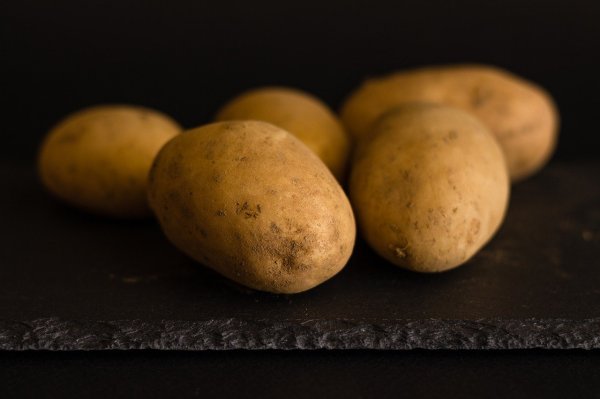
At the dinner table my daughter, Charlotte, sets up a potato with wires and all sorts of gizmos on it. The potato is supposed to light up its two LED eyes. Nick must have organized this electricity experiment. Not bad for a fourth grader. We stick some rods in it and clip some alligators, the next thing I know it’s speaking methodical and drawn out. Teeny sections from talk radio and snippets of lyrics received from its aluminum foil hat are forming sentences.

Charlotte’s new spud buddy scans the dial and speaks from a different person for every word. “Death—to—adults! Long—live—Doctor—Young!” It’s delightful hearing “Doctor Love” by KISS and Michael Jackson’s “P.Y.T.” sung in the same sentence.

Spuddy shoots a laser at my face, hitting my upper lip and burning off hair I was meaning to wax — now I’ll have to say it’s a beauty mark. The buds start to grow rapidly and the sprouts become arms and legs. This bastard is mobile. It leaps off the table doing gymnastic flips and gives me the finger (the rootlet?).

I preheat the oven to 500 degrees. Charlotte cackles like the devil as the potato burns holes in my adorable shawl, making me look like a clumsy smoker.

Spuddy sings to my daughter as I run out of the house, my underwear soaked in piss.

When Nick arrives, I tell him to get his ass in there and fix dinner. I can hear him scream like a goat when he meets Charlotte’s new bestie. I run in with a shovel and make mashed potatoes. Nick’s body lays motionless, his eyes burnt and roots wrapped around his throat. I throw Spuddy’s remains in the oven. He was no sweet potato. I guess I’m going to the Parent Teacher Organization after all.

I watch Nick’s mistress eating my shepherd’s pie at the meeting and swagger over to her. “Nick always was a meat and potato sort of guy.”

The police don’t believe my story and they give Charlotte fake parents. Her letters decorate my cell with convection. Her new parents think I’m crazy. I think they’re crazy for letting Charlotte start a garden.


Corey Miller lives with his wife in a tiny house they built near Cleveland. His writing has appeared or is forthcoming in MoonPark Review, Pithead Chapel, Barren, Cleaver, Lost Balloon, Hobart, and elsewhere. When not writing, Corey likes to take the dogs for adventures. Follow him on Twitter @IronBrewer or at http://www.coreymillerwrites.com

Cabinet Of Heed Contents Link 36

Image via Pixabay

Harbinger of Change – Montana Rogers

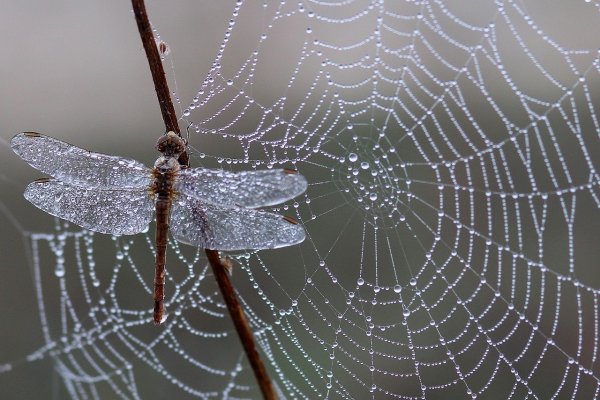
Something buzzed by my ear, tickled the top of my head. A dragonfly flitted before me, landing on the “enter” button of my laptop. Its body was blue and long with a forked tail and its wings fluttered; tiny black veins crisscrossed the translucent membranes. I shooed it away and it swooped around my head again before settling on the wall near the framed picture of Ella Fitzgerald above my table. I sat in my Saturday morning spot in the corner of the café under one of the speakers that hummed soft jazz, competing with the hissing espresso machine behind the counter.

The waitresses rushed from table to table, jotting down orders and bringing coffees and second coffees. Hunched over my computer, I took another sip of my own drink, the dregs sweet with honey, and reread the email on my laptop: I’d like to give you my two-week’s notice… It was professional, polite, but I couldn’t bring myself to hit send. My heart beat fast, palms sweaty, short of breath. I hated my job, wanted to be free of my cubicle, the infinite amount of data-needing-entry. My sister said I was lucky to have a job in this economy and she was probably right, but I had dreams, plans. My current job was stable and came with benefits, but I was debt-free for the first time ever, had saved more than enough, and I knew this was my chance. I just wished there was some kind of guarantee, a guarantee that everything would be okay.

I tried to catch a waitress’s attention (I needed one more coffee, iced, then I would send the email), but she stood with her back to me. I was tapping my finger on the table contemplating my future and willing the waitress to turn around when a young woman walked into the coffee shop. She wore dark jeans and a black and white striped shirt under one of those tan trench coats. Her hair was pulled up and off her face. I watched her look around the café for a free table, but they were full, every chair taken except for the one across from me.

She marched her way between the tables, “Is this seat free?”

I nodded, and she smiled. The dragonfly buzzed again. Its wings beating hard and angry as it hovered over the table between us.

“It seems to like you,” the woman said.

I shrugged.

She reached for the bug. It danced away from her long fingers. She stepped up onto the chair and I grabbed it, steadying it, before it toppled over. She lifted onto her tiptoes, coaxing the dragonfly onto her hand. “There,” she hopped off the chair. “They symbolize change, did you know?”

I blinked and said I didn’t.

She walked outside and I stared after her. She paused and opened her hands, urging the dragonfly into the air. It stayed on her hand; its wings flexed in the sunlight. Then, her lips moved and the dragonfly leapt into the air. She watched it fly away and I wondered what she had said to it. She gave me a half wave, then strolled down the sidewalk; her drink, whatever she had planned to order, forgotten. I glanced back at my email and hit send.


Montana Rogers (@MontanaRogers14) is a writer and educator in the USA. Her work has appeared or is forthcoming in The Sea Letter, Dream Noir, honey & lime, and other various publications. She is a graduate of Simon Fraser University’s The Writer’s Studio.

Cabinet Of Heed Contents Link 36

Image via Pixabay

Of the Coming Plague – Kevin Higgins

I ask nothing
but that I be allowed go out and get it.
Better death than suffer
the interminable sobbing of newscasters,
the grimaces of sweating experts,
and politicians’ elongated
gobs, which keep moving
in the hope the blame
will be stapled elsewhere.

I’ll tour the town’s mortuaries
and kiss on the mouth all the corpses
that died of it. Before you ask: yes,
there will be tongues
which I’m told will feel
like cold, stiff slugs.

And if that doesn’t finish me,
I’ll start breaking into hospitals,
quarantined night club toilets,
the offices of eminent plastic surgeons
to lick clean the soap dispensers
which, by then, will be all out of soap
but alive with the world’s germs.

For, Death, what do I know of you,
never having died before?
You’ve had a terrible press,
but could be victim
of the smear campaign.

Perhaps you’re the best thing ever.
Like the first gulp of Champagne;
or all the orgasms I’ve ever had,
and a few I never managed.


Kevin Higgins is co-organiser of Over The Edge literary events in Galway. He has published five full collections of poems: The Boy With No Face (2005), Time Gentlemen, Please (2008), Frightening New Furniture (2010), The Ghost In The Lobby (2014), & Sex and Death at Merlin Park Hospital (2019). His poems also feature in Identity Parade – New British and Irish Poets (Bloodaxe, 2010) and in The Hundred Years’ War: modern war poems (Ed Neil Astley, Bloodaxe May 2014). Kevin was satirist-in-residence with the alternative literature website The Bogman’s Cannon 2015-16. 2016 – The Selected Satires of Kevin Higgins was published by NuaScéalta in 2016. Song of Songs 2:0 – New & Selected Poems was published by Salmon in Spring 2017. Kevin is a highly experienced workshop facilitator and several of his students have gone on to achieve publication success. He has facilitated poetry workshops at Galway Arts Centre and taught Creative Writing at Galway Technical Institute for the past fifteen years. Kevin is the Creative Writing Director for the NUI Galway International Summer School and also teaches on the NUIG BA Creative Writing Connect programme. His poems have been praised by, among others, Tony Blair’s biographer John Rentoul, Observer columnist Nick Cohen, writer and activist Eamonn McCann, historian Ruth Dudley Edwards, and Sunday Independent columnist Gene Kerrigan; and have been quoted in The Daily Telegraph, The Independent, The Times (London), Hot Press magazine, The Daily Mirror and on The Vincent Browne Show. The Stinging Fly magazine has described Kevin as “likely the most widely read living poet in Ireland”. Kevin’s most recent poetry collection Sex and Death at Merlin Park Hospital was published by Salmon Poetry in June; one of the poems from which will feature in A Galway Epiphany, the final instalment of Ken Bruen’s Jack Taylor series of novels. His work has been broadcast on RTE Radio, Lyric FM, and BBC Radio 4.

Cabinet Of Heed Contents Link 36

Image via Pixabay

Influenza Pandemic 1919 – Beth Brooke

A pale rider came over the hill;
her coldness hung in milky breaths
above the warm earth
of our newly ploughed fields.

She moved among us,
tendrils of her hair snaked around us:
hyphae branching through the
promise of the late spring day.

The dogs did not notice.
They gave no warning growls;
instead they lay quiet by the hearth
and dreamed of rabbits.

In the evening, infected
by a heaviness that dragged
our hearts back down to the
darkest days, we retired early,

the crump of artillery,
pulse of gunfire
pounded our memories.
We lay down and our dreams

were full of pictures:
sons choked in seas of mud or
hung on the wires that were all
the earth could grow.

Those who could
chose not to wake again,
preferring their dreams of the
lost children.

We buried the dead.

With the last clod turned,
the crows startled from scavenging,
rose into the air;

a pale rider up on the hill
turned; spurred her horse away.

We wiped the dirt from our hands

and trudged home.


The Cabinet Of Heed Issue 35 Contents Link

Image via Pixabay

In Moustache – Darren John Travers

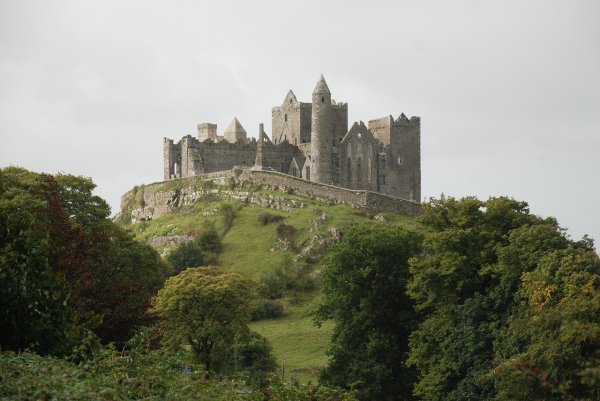
Late afternoon on a searing July day in the year nine hundred and thirty-one, wearing a long saffron-coloured tunic close-fitting at the torso and loose around the forearms and knees, the King of Munster atop the Rock of Cashel, Lorcan mac Coinlígáin, stood before his bedchamber window overlooking miles of rolling pastureland and scrutinising his clammy upper-lip in a piece of polished bronze.

More than anything in the world he detested days like this. Days so muggy they revealed the curse God inflicted upon him, namely sweat glands without restraint. Hours could pass as he tweaked and twisted his thick moustache, growing incensed by its refusal to sit exactly how he liked it. A symmetrical horseshoe widening at the corners of his mouth and falling into two blonde horns precisely one thumbnail’s length below either side of his chin. A look so interwoven with his identity that he had taken to locking himself inside when it could not be achieved, forcing aides to knock on his enormous oak door, sending eerie booms, like overhead thunder, reverberating around the lofty space and a hateful shiver down his spine.

‘What can be so important,’ he snarled, opening the hatch he had installed, low enough to reach yet high enough for him to remain hidden, ‘that you insist on interrupting me while engaged in work of the utmost importance?’

‘I carry news of another raid, my King,’ the breathy voice responded. ‘Every day now they advance closer – Lismore the latest. Fourteen men slain, eleven of their women abducted.’

‘Tell me something, Óengus,’ the king replied, fanning himself with the bronze and throwing a beam of light around the room.

‘My King?’

‘Is there a waterway in Lismore suited to longship sailing connecting them to the sea?’

‘Uh, I believe so.’

‘I may be mistaken, but from my window I see no evidence of a waterway with similar capabilities in the area. Has it managed to elude me these forty-four years?’

‘No, my King, but it has been said that they are growing more brazen on foot, that it is only a matter of time before they overrun the middle country. We must be prepared.’

As the king emitted a series of contemptuous groans, a pattering of goathide sandals on stone floor could be heard in the great hall, followed by an exchange of mutterings between their owner and Óengus.

‘Fool! Those fleshy oafs could not walk a thousand paces on foot –’

‘My King, a boy here carrying a message for you.’

‘Give it,’ he whispered with an exhale as if surrendering to a deep melancholy, and a hand came through the hatch offering a folded piece of vellum. He opened it carelessly and, with his left hand flattening the sides of his moustache, read

Lest beef swiftly restore our brains and brawn,
Lest lodgings are bestowed at the first yawn,
Lest ale is proffered for forty to swill,
Satire will befall the King Coinlígáin

‘Why do you punish me, Lord!’

‘What is it?’ Óengus inquired. ‘Oh, God! The Vikings approach?’

‘Worse.’

‘What could be worse?!’

The king scrunched up the vellum and threw it through the opening in the door.

‘Poets.’

As Óengus investigated further with the messenger, the king moved to the window to look down on the marketplace in the foreground. With disgust, he saw a large gathering of outsiders conversing, laughing, plotting amongst the town traders and their livestock. The formidable figure of his cousin Cellachán alongside them. His attention naturally fell on one of them dressed in a multi-coloured cloak, the likes of which he had only ever seen on the High King of Ireland. A servant holding a gold branch above his head followed him wherever he went. The king squinted, attempting to discern some of his features, but, besides a solid constitution, he was too far away.

‘Apparently the newly elected Chief Poet of Ireland is among them,’ Óengus called through the hatch, sensing the king to have moved away. ‘They travel with a retinue of forty poets and servants. Their demands must be met; the law grants them the right to satire.’

‘And? There is nothing here to satirize.’

‘Of course not. But you know how crafty these poets can be. If they contrive to spoil your good name, it can bring shame upon the Eóganachta and, God forbid, invoke facial blisters and even death upon you personally.’

The king held the mirror to his face and examined his narrow freckled jaw, his tall forehead streaming with sweat beads, and his strained close-set eyes.

‘Nonsense! Give them bare barley loaf and water. If they must stay the night, run whatever vermin occupy those ramshackle guesthouses behind the stables out and let them rest there.’

‘But the boy here says the Chief Poet expects to dine with you in full banquet inside the castle walls. I urge you to do as they please.’

‘The offer is already too generous. Now go!’

‘Yes, my King.’

Not ten minutes later, Óengus returned.

‘I have spoken with the Chief myself. She is already making enquiries about you with the townspeople, and threatens a public show of satire before vespers if you do not comply.’

‘She?’

‘I am as surprised as you are. Uallach ingen Muinecháin, the first Woman-Poet of Ireland in a thousand years. I am told she was the top student in all twelve years of study, without exception, excelling in oration, memory, chants, and composition.’ He paused for a response and, when none came, added, ‘You know how unethical these poets can be.’

The king, lying face down on his four-poster bed with eyes closed and arms by his sides, mumbled an unintelligible demand into his pillow.

‘Pardon?’ Óengus asked.

He raised his head.

‘No accommodation!’

‘But –’

‘Go!’

And for two hours he stayed in the same position, awake but still, until a burgeoning furore outside coaxed him to the window. Through the small diamond panes, he spied Uallach standing on a makeshift stage chanting with her arms aloft. In front of her, her adoring audience of a hundred or so, made up of her entourage, the market traders, and what looked like most of the town, were matching her every word. Enraged, but unable to make out what they are saying, he smashed one of the panes with his mirror and heard

The Magic King of Munster,
Why is he unseen?
The Magic King of Munster,
Because his armpits gleam!
The Magic King of Munster,
His face soon a-rash?
The Magic King of Munster,
Imprisoned in moustache!

sung on a continuous loop.

‘That’s what they call poetry nowadays, is it?’ he asked through gritted teeth, pacing back and forth before slamming open the hatch. ‘Óengus!’

Moments later, Óengus’ voice appeared.

‘My King?’

‘Those Vikings, what do they do with the women they abduct?’

‘Uh, the reports say they are put on the ships and never seen again.’

‘Well then, tonight in Cashel we are going to have a Viking raid of our own.’

‘My King?’

‘Send some of our most trusted into the surrounding lands under order to pick up as many brawny wayfarers as they can find, the dimmer the better. Tell them we are arranging a mock Viking raid, or something, to test and improve the town’s defences. If they refuse, offer whatever amount of food and shelter it takes for them to agree – we can banish them as soon as the job is done. In the meantime, fashion costumes for them to wear. It hardly matters what. The halfwits of this town would not know a Viking from a washed-up seal. As soon as we have fifteen or so, choreograph the attack. Ideally only the Woman-Poet and one or two others for appearance should be taken. So describe to them in detail her distinctive clothing.’ The king paused his lecture to listen to the town chanting below. Then, pinching his earlobe until he could take the pain no longer, ended it with, ‘If some of the men decide to play the hero, killing them would not be the worst thing.’

‘You must reconsider!’ Óengus ventured.

‘What?!’

‘I mean, I beg you respectfully, my King, to rethink this course of action.’

‘If you question me once more, it will be your life you are begging for.’

‘So…what do you want done with the women we capture?’

‘Discreetly bring the poet to me. She too will know how it feels to be encroached upon. And make any others disappear.’ He closed the hatch before Óengus could pique him further.

Darkness fell. And, though the public performances at the king’s expense had subsided, sporadic bursts of laughter down in the marketplace told him the poets were far from moving on to the next town. Delirious, he waited five hours for his plan to unfold, pondering what these leeches could possibly have to laugh about and repeatedly checking his reflection for signs of facial blisters only to revile himself each time for doing so.

Once the first screams cried out below, he leapt to the window and, with a candle illuminating his black grin, listened to them race through the town like sinister waves branching off in different directions before coming to an abrupt end. He put his ear to the broken pane – not a conversation in the still night – and brooded until three assertive knocks at the door, unlike Óengus’, made him flinch. Uneasy, he approached the hatch.

‘I am with Uallach, my King,’ Óengus’ nervous voice announced.

‘Who else accompanies you?’

‘Uh, just your cousin Cellachán, who spearheaded the operation without fault.’

‘Are you present, Cellachán?’

‘I am, Lorcan,’ a gruff voice replied.

‘Before I open up, lift up this Woman-Poet so I can see her.’

The top of Uallach ingen Muinecháin’s head appeared above the bottom ledge of the ill-lit hatch, peering unperturbed and, as the king suspected, smiling down at him.

‘No need,’ she said. ‘Now let us proceed.’ Her voice’s commanding downward inflection in stark but somehow compatible contrast with its pacific tone.

‘Good Jesus!’

‘Not the Good Jesus, just a humble poet on a sultry night awaiting the King of Munster to open his door and fulfil an invite.’

‘An invite?! Well…well…you are mistaken there!’

‘Well, forgive me. I was escorted to your chamber on another’s decree?’

‘Uh, no, but…’

‘But nerves have dealt you a change of heart. Yet only regret will beat if we now part.’

‘This is not…!’

Uallach turned from him and said, ‘King Coinlígáin is ready.’

‘My King, are you opening up?’ Óengus asked from behind her.

‘I did not say…! All right. I will open the door marginally. Only the poet may enter.’ He closed the hatch, lifted open the iron latch, and pulled back the door.

Uallach half entered and stopped, her visible eye locked on him.

‘Believe me when I say, in reality your tash possesses a majesty no words can convey.’ She offered him her hand. The king, acting on a curious impulse to get her into the light where he could see her better, took it. A brief lapse in concentration that allowed Cellachán and two accompanying Eóganachta to slip in behind Uallach and tackle him to the ground, sending his mirror clanging across the floor.

Carried off the Rock of Cashel for the last time, and concealing the bottom half of his flushed face, Lorcan mac Coinlígáin heard rejoicing from townspeople who stayed up for the deposition. And the celestial voice of the Chief Poet of Ireland declaim

Narcissus high on the Rock,
A man so foul, yet enabled to be king
I guess the only true shock:
I got that close, and did so without puking!


Following a stint as a scriptwriter in London, Darren John Travers returned to his home county of Kildare, Ireland to focus on his literary career. Darren is currently at work on his first collection of short stories.
The Cabinet Of Heed Issue 35 Contents Link

Image via Pixabay
Handy – Michael Grant Smith

Four hours ago I reported him missing. On my mountain the temperature drops uncomfortably when the sun goes down, even in the summer. Professionals, volunteers, and busybodies gather around their four-by-fours and ATVs, sip black coffee from plastic cups wrapped in paper napkins, look at the ground while they chitchat. They know not to stare at me. I keep myself together, wrapped in a blanket provided by the paramedics.

Sheriff’s deputy moseys over, takes off his hat, shines his cow eyes in my direction. Are you okay, he says, your fella had his share of history and oftentimes folks just up and go. I’m fine, I say, right now I’m thinking about everything he’s done for me.

* * *

Grace’s house rested on pilings embedded in the mountainside. Beyond a gate, down alternating flagstone landings and stairs, huddled a guest cottage converted into a rental. This crumbling stone heap, cool and dank as a grotto, seduced William with its promise of solitude. Grace’s bootlegger ancestors established the willow- and aspen-shaded compound, but the toxic byproducts of lead-soldered copper still pipes demolished the illicit empire and scattered her family.

Grace stayed on her side of the gate and William kept to his until the afternoon she asked him to come up and destroy the wasp nests behind her shutters. He’d fired up his chainsaw and there she was in the blue haze, waving a can of insect spray, her words smothered by noise. William killed the engine. “Show me,” he said.

Afterwards, a task almost daily. Split a cord of firewood. Drag the wrought iron bench across her deck to catch more sun. Move the bench back to get out of the sun. Clear deadfall and rocks from the eighth-mile-long zigzag driveway. Reattach the bowl of the birdbath in her neglected herb garden. Grace would loiter, arms crossed, pretending not to watch William work, a cigarette drooping from her lips.

The afternoon he accidentally plunged a screwdriver through the web of skin between his thumb and forefinger, she didn’t blink, or ask if he was okay. Rusty bloodstains dappled the deck boards.

Rumors shrouded the mountain; stories about Grace’s groin-punchingly generous annuity, funds whose existence defied all of the government’s attempts at seizure. Despite the supposed wealth, Grace and her property wore gray every day.

* * *

I don’t believe in bad luck. A hurtful situation happens on its own and no one can control it. What you call “good luck” applies to positive outcomes, not beginnings. I mean, if you fall down an old abandoned well, you have a chance. Broken ankle, cracked ribs, peed yourself, the whole deal; just wait and rescuers will race your shock or hypothermia and probably win. You can slide your truck off the logging road and be pinned unconscious at the bottom of a ravine, but your phone broadcasts the location, plus or minus one yard. You’re not unlucky until you’re dead.

* * *

“How did you learn to do so much stuff?” Grace asked William one unusually muggy morning.

Brine flowed down his forehead and left shiny dots on Grace’s mower. He abandoned his struggle with the carburetor adjustment screw.

“From doing. Nobody ever taught me anything. I just figure it out.”

“So, is that the way you became a chef?” She stared at him now. “You couldn’t make a peanut butter sandwich and then one day you just…cooked?”

Her eyes belonged to fish nestled in shaved ice. William couldn’t recall telling her about his career in the restaurant business.

“Nope. You’ve busted me. I graduated from L’Academie de Cuisine in Maryland. An exception to the rule, I guess.”

“You went to a fancy-sounding school. Was it hard?”

“Not really. Instructors just yell at you and lecture how to make soup stock from leftover hotdog water.”

William grinned. Grace responded with cough spasms instead of laughter.

* * *

Search parties and heroes and satellites are fine but don’t go far enough. They won’t find you if someone smashes the back of your head, ties you with clothesline, and holds you beneath the cold lake water until your insides fill with what’s outside. Soon, soon, buoyancy must surrender to piled-up rotten logs. No matter if the lake drains, not this year, could be later in the future, when the mud goes all sky-bleached and split open, a hiker finds your scattered bones, and the particulars of your ending will still baffle the experts. For just long enough, as I imagine it.

* * *

“I don’t have any skills,” she said when the coughing fit passed.

“You’re better than you think you are. All human beings possess at least one talent — a capability they’ve learned, or a gift.”

“Me? Nothing worth much. Maybe I’m an expert at watching TV. It’s all I do.”

“Okay, okay.” He gathered his hand tools. “Listen, you can borrow my mower. You have hardly any grass to worry about.”

Grace dropped a smouldering butt onto the flagstone, swivelled her sandal, and left a black smudge. She drew another cigarette from the threadbare, floral-printed pouch she carried everywhere.

“Why’d you quit being a chef? Didn’t want to do it anymore?”

“Wasn’t my decision. We don’t always get to choose, right?”

“Yeah. Why are you so nice to me?”

His toolbox weighed a thousand pounds. “So many questions.” He bit his lip and shrugged. “Hey, we’re neighbors and I’m just a decent guy.”

William trudged downhill toward the shed behind his cottage. With his free hand he wiped sweat from his eyes. Two-shower days were the part of early retirement no one mentioned. They didn’t warn him about the giant mosquitoes up here, either. He’d resumed shaving, which he also didn’t anticipate.

He rolled out his mower and inserted a dump can nozzle. He’d get his landlady going again even though she’d never offer to repay him: no discount on his rent, no cash, no gas, not a glass of iced tea. A man of his means, subsidizing a woman of hers. William chuckled. He’d end up mowing her yard.

He made a farty-motorboat sound with his mouth and shook his head. You don’t sear flank or brisket and serve them as if they’re tenderloin. Tough cuts go low and slow. He glanced back up at Grace’s house and she’d not left her spot beneath a scraggly weeping willow. He smirked. Hungry people, forever the same. She stooped to pick up something from the ground before turning away. The cicadas hushed and dampness fled the air.

* * *

On the way from the shed to his cottage, William looked up at me. Did he smile or was it a frown? Do facial expressions reveal a person’s thoughts? Lots of emotions are lies. People tell you to have a nice day; they imagine they’re suggesting a great idea you were too stupid to stumble upon on your own. As if you’re the only one who has a say in it. Desire for money or influence runs deep. Above all, flesh wants flesh.

He disappeared inside the cottage. I tried to poke my thoughts past the walls, the roof. Doesn’t always work when I want it to. This time the day turned bright with truth. My lungs stopped; nothing rattled in or out. Feet and hands went numb, quick-frozen. Within seconds the high-pitched tone in my ears quieted and I could breathe again. On the ground lay my grandmother’s cigarette pouch. I grabbed it and lit a smoke. I suspected I knew where her old picnic basket was put up and I had to find it before lunch.

* * *

Crisscrossed lights, a cat’s cradle of beams; half of them point upward, as if the searchers expect to find my tenant atop one of these trees and he’s a songbird or a Christmas angel. Flashlight tag was one of my favorite childhood games. No matter where I hid or how fast I ran, the other kids lit me up and I was “it.” One night I broke my eldest stepbrother’s nose — I used both hands to swing our big black aluminum flashlight. Later my stepmother told me if nobody’d pulled me off of David I could’ve pounded his nasal bones through his brain. What he said or did to provoke me, I can’t recall, unlike the sound his face made as I smashed it into tomato soup and croutons.

The sheriff is here now, the Old Man himself, talks on his two-way for a minute, listens, and hobbles over to me. Puts on his mask of concern. He’s another phony. I light a cigarette. Sheriff removes his hat and begins a speech about staying strong, and when the sun’s up and the fog burns off we’ll get the chopper from Telluride in here to cover more territory. Be patient, he says, although it can’t be easy for you. Were the two of you close? I tell him thanks, you and your team are trying so hard. I won’t give up, I say.


The Cabinet Of Heed Issue 35 Contents Link

Image via Pixabay

Sliver – Purnima Bala

The longest hour of the night, just like every night, she waits for the siren. They all do, positioned behind crumbling walls, peering from windows, their ears grasping every whisper, every little shuffle of fidgety feet, every loose brick trickling dust through the walls. She can see them. Smell their anticipation. Taste their fear, their desperation. Every emotion mingling with her own and settling into a bitter bile at the base of her throat. Any moment now, someone mutters behind her. Her face spreads out into a grin.

Only a madman would look forward to a night like this—didn’t her father say that once, years ago, teeth grinding down on tobacco as he waited for the same sound, the same signal? Or was it that woman who’d taught her to wield a knife? It’s hard for her to tell these days, hard to think, memories blurry, wavering, fading in and out, almost as if she’s not really there, not real at all. But what is real, she wonders, in a world where the sky could erupt, the air could fizzle, walls of water take over every inch of space? What is real when you could lose all sense of security, go from stability in the below-ground districts to the open outdoors where nothing truly remains, when these could be your final footsteps, your last attempts to see another’s smile—wretched as it may be—or feel another’s warmth one last time? Everything. Nothing. Both. Either.

The horn blares then, echoing through the streets, and she darts outside, body covered with odd materials that smell of smoke—doesn’t everything smell like smoke these days?—grimy and hole-ridden but layered just enough to protect her from the harsh winds and goggles over her eyes. The sights are the same. Layers upon layers of crumbling buildings and twisted trees, most of their branches rotten, weeping, while some stand gnarled and tall in rebellion against the churning sky, surrounded by flowering weeds and tentacles of fungi that branch out across the road, small blips of colour in the eerie dark. Scattered lamps line the streets, flickering on and off as she passes, shadows around them rising and falling. Nothing remains still tonight.

She navigates the towers of litter with practised ease, looking for things that might be of material worth—old parts, a spot of ore, an abandoned automaton or intelligence unit somewhere in the wasteland, maybe even a person, lost, the bounty on whose body would see her through the next rains—anything that she can use to bargain at the haggle booths, the only part of the below-ground that she, and so many others, are permitted into. Food. Medicines. Skin protection. Limb upgrades. Not that she can afford anything more than she sorely requires. Not anymore.

How many cycles does she have to go through before her hands no longer have to search, scavenge, seek, before her nerves no longer remain on end? How many more nights does she have to spend, rummaging around in piles of dirt and sewage, old backyards filled with junk, poison, bones, only to be spat on the next day when standing in line at a haggling booth?

It doesn’t seem worth it, the stone in her chest, heavy and cold. The voices of the people she’s lost, their ghosts lingering in the night, people who’d braved the open land when the sun was out, when each breath of unfiltered air was a threat, wanting a few tokens to feed their families or hoping to luck out and find a job working on one of the lowest, most exclusive city levels. But they ended up with lost limbs, their insides eaten up slowly, or felt their eyes fizzle until there was nothing left but hollow sockets. That’s just how it goes in this damned existence. Every action is a bargain for survival, and, sooner or later, the cost is a life. Each day as hopeless as sprinkling salt over withered daisies and hoping they’ll grow back.

But. But but but.

There’s always a but, isn’t there? Something to make her eyes flutter open, lungs expand and contract even as they burn each day; a desperate fervour, a yearning for hope. And this time it’s a sliver, a streak of moonlight, there, just there around the bend where the street turns into a rabble of stones, peeking out from shards of glass, glimmering and fading, drawing her eyes to the dusky skies, over the once-busy walkline where cottage homes and restaurants used to sit, silhouetted against the horizon, to where the ocean looms, dangerous and erratic. She walks towards it, darting around scuffles over food and tokens, ignoring the calls of her friends, everything distant, distant.

Oh, but the waves. They rumble and crash, rising and falling in a desynchronised orchestra, at times soft, offering reprieve in hushed whispers, other times deafening, wanting to claim and claim, smoke almost rising from its crests and dips. Mesmerising. Haunting. How many people had she let go to its depths? All lost, lost because of shrinking hills, stagnant soil, strangers’ greed, a system that broke and crumbled, leaving her, and so many others, scrambling in the dust.

Here I am, she mutters, lips twitching. Still alive, as promised.

She stands there just for a moment—just for a moment, she tells herself, against the tick-tick-tick of her mental clock, counting down the seconds till dawn—surrounded by the smell of decaying fish and deformed gunk, plastic bottles and wrappers and cigarette buds and loose teeth scattered about, every wave pushing items onto the shore; a silver-soaked graveyard. The only beauty she knows. She tugs a conch out of the sand, and a giggle bursts from her lips.

She sells seashells on the seashore. See, Ma? I can say it now.

She flicks a piece of plastic out of its ridge and presses it against her tin-foiled ear, harder and harder and harder, until she can hear the ocean’s screams.


Purnima Bala is a writer, editor, and artist whose short fiction has appeared in Ellipsis Zine, MoonPark Review, The Sea Letter Magazine, and Emerge ’19 Anthology and is forthcoming in other journals. In her free time, she reads and edits for Periwinkle Magazine and tweets @purnimabala.

The Cabinet Of Heed Issue 35 Contents Link

Image via Pixabay

Togetherness – Áine Ní Ceallaigh

The pain is too slow. Would we heal faster, if we hurt sooner?

We were the kind of couple that would make you sick – always together, holding hands, staring at each other, kissing in public. We got to a point of forming a telepathic link – finishing each other’s sentences, calling at the same time, making tea not asked for yet, and many more symptoms we hadn’t noticed in time. We called it love and hid away from the world.

We had to make adjustments – moved our bed to a wall, so we would get up on the same side, we bought a bigger bathtub, and a large blanket to cover four feet and sometimes also my face when a movie was scary.

‘Me too,’ I said and took a sip from my love-hearts mug. He added a bit of sugar and stirred my tea.

‘You’re welcome,’ he replied out loud to the ‘thank you’ in my head.

Then, bit by bit, it started getting uncomfortable. I was hangover every Sunday, he got cramps every month. We blamed the atmospheric pressure, something we ate, or bad sleep. Friends grew strange and rare, they didn’t get us anyway. We were just fine all alone together with our three feet under the blankie eating popcorn with caramel.

One winter’s night, when he dreamed about piloting a jumbo jet, a little thought appeared. I buried it in the darkest corner of our mind, where it should have died, but it grew instead, tingling and itching. I took it out sometimes when he couldn’t see it.

‘What’s wrong?’ He asked for the first time in years.

‘Nothing,’ for the first time I lied.

Making love was effortless as we had grown into each other. It was a distraction, but not a very good one, more like masturbation. That small idea only got stronger, turned into a secret and cast a shadow even on our bath time. The blanket was too heavy, bed too soft, water too wet.

On the last day, when only his left elbow and a few toes were sticking out of me, we went to a doctor.

‘Can you cut him out? I want to be free.’

When we say forever, you know, we don’t mean it.


The Cabinet Of Heed Issue 35 Contents Link

Image via Pixabay

Playground Love – E Samples

when you forgot your composition notebook
on the desk in calculus i knew
it was my chance to talk to you and
did you feel how i slid up next to you
with the smooth synth of our collective souls
and did i notice you blush a little
like a sunrise the morning after
the big game
today during a second period lecture
on the means between extremes
all i could do was stare at your golden haloed hair
and think these uptight philosophers never
experienced the enigmatic electricity
of forbidden love; never fantasized about
kissing their unrequited in the rain
while Chris Cornell strums Sunshower
never navigated teen spirit mysticism
or paper labyrinth confessions
doused in Mazzy Star and Alanis
god, if i could just fade into you
no i bet aristotle never stood in the spotlight
center stage and announced his true crush’s name
over the opening chords of Glycerine
aristotle didn’t daydream about pinning a cheap corsage
to the sheer fabric of an angel
or long to lie in bed all day
sheets tangled to the rhythms of Recovering the Satellites
i picture us cruising the strip to the
piggly wiggly parking lot riding waves
of Lisa Loeb, the latest Cranberries,
and that one Goo Goo Dolls song I heard you
humming before choir
i’m nervous it may be too much but
should i describe the imagined
euphoria of your presence next to me
in a dark theater while Claire Danes tells Leonardo DiCaprio
you kiss by the book
how can i tell you
i want you to take off your adidas jacket
and throw it over us like a blanket
as everyone else exits and the credits roll
a song to keep us warm
how do i explain the vision
of you and i sharing knowing glances,
hushed conversation, and a basket of cheese fries
while Dolores O’Riordan sings
we’ll always be this free


E. Samples is from Appalachia and currently lives in Southern Indiana, USA. Her writing has appeared or is forthcoming in Black Bough Poetry, fws: a journal of literature & art, Vamp Cat, The Honest Ulsterman, Twist in Time Mag, and The Stillwater Review. She is on twitter @emilysamples

The Cabinet Of Heed Issue 35 Contents Link

Image via Pixabay

Little Tiger – John McMenemie

I was ten years old when Grandma died. She’d been ill for a long time. All my memories of her were tainted by her illness. I think I probably remember her as an illness more than a person. When you’re young, things like illness and disease are hard to process. Death, by comparison, was quite straightforward to me.

Mum had been upset, obviously, and Dad said that Grandma was better off now, and that it was a relief for everyone, but he never said things like that when mum was around, only to me. He always spoke differently to me when we were alone, like I was an adult, or at least older than I was. He was right though, it was a relief. Mum didn’t have to go to the home every day, and she wasn’t worried sick about Grandma’s health anymore, and it seemed she was lighter somehow, especially after the funeral.

They didn’t take me or Sammy to the the funeral because they said we were too young, and Barbara came round from next door and looked after us. She’d promised us a late night staying up watching TV, but mum and dad returned at 8 and Barb went back home with twenty quid and a half drunk bottle of wine. Dad said we could stay up til 9, he said it would be good for Mum.

Dad went straight to the lounge, it’s yellowy, corner uplights reflecting off the drinks cabinet, which was a tall, dark, glass fronted monstrosity from the 1970s, filled with cut glass tumblers and sharp looking wine glasses. The top shelf, well out of reach from curious young fingers, was filled with mysterious potions labelled “highland cream” and “rum liqueur.”

He liked this expensive malt whiskey that smelt like TCP, and he poured both himself and Mum one, but she just wanted a cup of tea. She looked like she’d walked through a doorway into a familiar room which was somehow now alien to her. She was in the kitchen and seemed a bit dizzy, doing odd things like opening the cupboards to count the cups, and checking the flour was still in date, and making sure the spoons were still in the spoon section in the cutlery drawer.

Dad drank both the drinks and poured himself another one, and told us not to worry about mum, and that it was time for bed anyway, so I took Sammy and we said goodnight and went upstairs. The walls in that old house were so thin, they may as well have been paper. As we climbed the stairs we heard mum sobbing and Dad’s deep slurring voice, calming her as it often calmed us after we’d had a nightmare or a bump on the head. When we reached the landing, Sammy, she was six at the time, grabbed my hand and pointed up at the picture at the top of the stairs. The hallway light flickered quickly for a moment. The picture was a watercolour of Towan Beach in Cornwall, where we’d all spent many summer holidays with Grandma and Grandad. The flickering wasn’t down to a faulty bulb.

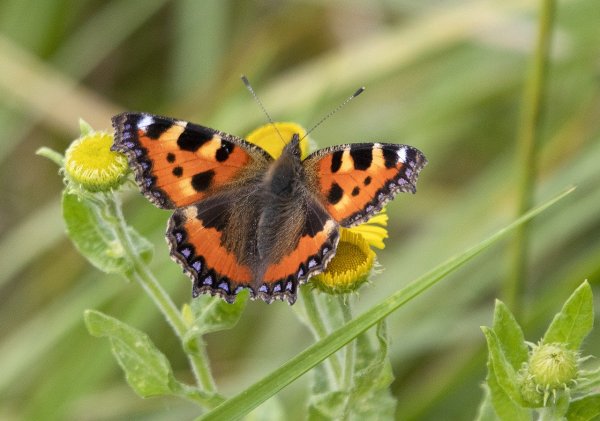
“Look, Mike, a butterfly!” whispered Sammy. And sure enough, sitting on top of the frame was a small orange butterfly, with black and white stripes on its wings.

Sammy said it looked like a tiger. She tried to get closer to it but she was too small, and asked me to pick her up for a better look. She was so excited, her voice got louder and she began to squeal. The butterfly quickly flittered away, and landed behind us on the banister.

“Quick Mike, lets go!” Squealed Sammy, and we switched position over to the rail, but those striped wings flicked the light again and we lost sight of the little tiger for a moment.

“Wheresit gone?” Cried Sammy, and we looked around with an elevating panic. It had flown back onto the picture frame, and we jolted round again with whispering shouts of “there it is… wow…look at it…”

Then we heard the kitchen door open. Dad gruffly shouted, “What’s going on up there? I thought I told you to go to sleep.”

“A butterfly daddy,” said Sammy. “Come quick it’s a butterfly”

“It’s not a butterfly, Sammy,” he said. “It’s January. It’s too cold for butterflies.”

But I retorted immediately: “Dad, it is a butterfly, it really is, come and see.”

We heard Mum mutter something and dad sighing “they think they’ve seen a butterfly,” and a brief pause followed by “Yeah, that’s what I said.”

“Let’s see what all the fuss is about then.” he said, clunking his glass down on the Formica. I heard him mumble, “Probably just a moth”.

Sammy was so happy, “look Daddy here look a butterfly”

Dad walked halfway up the stairs and followed Sammy’s pointing finger with his eye and then looked at me and raised his left eyebrow. We were right.

“Bloody hell! It’s a red admiral!” He exclaimed, like it was a present he’d almost given up hoping for. “Where did that come from?” And then he called to Mum, “Jackie, come and have a look at this, the kids have found a red admiral!”

Possibly frightened by all the commotion, the bug flitted around the landing, from banister to wall, picture to picture, eventually settling on an ornament of a sheepdog which sat on the narrow shelf above the stairs. Sammy was squealing like a delighted mongoose. Dad told us both to calm down, and said that we should feed it something.

“Now, What do they like to eat?” He asked us, but we didn’t know. I offered nectar as an answer and Dad gave me an impressed look, but then he asked Sammy if she remembered the zoo from last summer, and the butterfly house, and the big blue butterfly that was sitting on a piece of fruit. Sammy said yes, she did remember, it had been hot and sticky in the butterfly house and the big blue butterfly was sitting on a banana, and the banana was black and yucky, but the butterfly didn’t care.

Dad asked Mum to bring some pieces of banana, but she said she didn’t want bits of fruit lying around the house that might attract mice. Well, this made Sammy squeal even more, because she wanted a mouse, and she started crawling around the landing making squeaky mouse noises.

Dad quickly picked her up and squeezed her quiet.

“Shhhh, don’t frighten it,” he whispered.

Sammy shushed.

He gently called down for Mum to bring the banana, but she was already at the foot of the stairs with one, sliced but unpeeled, laid out on a plate like it was for the queen.

“It’s not a red admiral though.” she said. “Red admirals are blacker. This is something else.”

“Jackie, it’s a red admiral, why do you always have to shoot me down?”

They exchanged a stern, silent interaction, which I could sense reciprocated the never spoken phrase, “Not in front of the kids.”

Mum handed him the plate of banana.

“Just don’t get it on the carpet” she said. Dad acknowledged this with a subtle hand gesture that meant “alright alright…” He knew the anger that messing up the house would elicit. Often in the past he’d walked in with muddy hands or oily boots. Once he tramped varnish into the living room carpet and mum didn’t speak to him for two days. He’d learned to be careful.

He placed the chunks of banana around the tops of the pictures and we all sat on the stairs waiting for the little creature to move. It stayed absolutely where it was, twitching it’s antennae every now and then. Dad told us to be patient, and Sammy yawned.

“Well, whatever it is, where the bloody hell did it come from?” Dad asked again, to nobody in particular. Nobody said anything.

“It’s too cold for butterflies” he repeated. “Nobody round here keeps butterflies, do they?”

Mum shook her head indistinctly.

“Maybe it was living in the loft” said Dad, “and it woke up early.”

Mum was silent. Her eyes were fixed on the little beast, which quickly flicked itself onto a chunk of banana.

“Ohh it likes that,” said dad, and we watched for a few minutes. Banana had been a good idea.

Mum didn’t take her eyes off it.

“It’s mum.” She said, quietly. “It’s mum saying goodbye.”

Dad nudged me and rolled his eyes.

“Stephen don’t.” Mum said sharply. Dad held his hands out like a clock at 5:35.

“What? I didn’t do anything.”

“Just because I didn’t see you do it,” she said, “doesn’t mean you didn’t. Stop it.”

He let out a deep sigh and apologised.

“Come on now guys,” he said to Sammy and me. “Time for bed.”

My room was directly above the kitchen. I could hear the low thunking of glass on wood, chair legs scraping the floor tiles, voices hushed and intimate. I switched off my lamp – I could hear better in the dark. I heard dad say, “OK Jackie, it could be.”

Mum was upset with him. She accused him of not understanding, for rejecting her views, not just that night but regularly. She was sobbing again, and I heard dad comfort her, I imagined him holding her, stroking her hair, kissing her forehead.

I didn’t hear anything else other than two or three more clunks of those heavy bottomed glasses. I fell asleep to the gently fading sounds of nighttime murmurs and shuffling.

Next morning I woke up before Sammy and ran out to the hallway. The chunks of banana had been cleared away, the picture frames had been dusted. There was no butterfly. Mum and Dad were downstairs in the lounge. Mum looked better, her eyes weren’t puffy anymore and her shoulders were relaxed. She was holding a picture of Grandma and Grandad from 40 years ago, just after Mum was born. They were sat on a beach, Grandad with his trouser legs rolled up, still wearing black socks and polished shoes. Grandma was very beautiful in a matching pale blue chiffon trouser suit. Her hair was short. They both looked very happy. Grandma was holding a baby girl – mum, I guessed. She was in a short legged baby grow and a floppy white hat. On the baby grow was a print of a very smiley caterpillar. A piece of paper in the bottom right corner of the photo had some writing on it. “On Towan Beach. June ‘81”

“Where’s the butterfly?” I asked.

Dad got up and led me into the kitchen.

“We let it go, Mike.”

“But it’s cold outside!”

“I know, but we couldn’t keep it. It’ll be alright.”

“Sammy will be upset”

“She’ll be fine, Mike”

“Do you think it was grandma like mum does?” I asked him. He turned to the back door, opened it, stepped out onto the patio. He was disappearing off to the shed, as usual.

“I don’t know son. It could have been. Your mum says some funny things sometimes. All I’m saying is that your grandma didn’t like bananas.”


The Cabinet Of Heed Issue 35 Contents Link

Image via Pixabay

Home With The Nibbles – Steve Lodge

Piril Quench, child star of the 1960’s, was well known by people who knew him well. His claim to fame came at the age of 9 when he was chosen for the role of Georgie Nibbles in that exciting early 1960’s TV serial (today, it would be called a soap), “Home With The Nibbles.” Georgie’s catchphrase was “I fink the ‘amster’s dead.” This always yielded the reply from the rest of the family. “We ‘aven’t got an ‘amster.” Georgie’s catchphrase was ground-breaking at the time, but now, of course, is a bit lame.

This serial about a typical London family from The East End, starred Sunny Muldaur as the implausibly lovely Sally Nibbles, her with the exquisite hair, and Cliff Yeast as her husband, Tony.

This show went on to spawn 3 other successful TV series, the very popular “Knackers Yard” as well as “Do You Mind Awfully?” and “It’s Just Scrap, Jack.”

After the Nibbles had been deemed to have run its course (2 seasons), the TV companies plucked various characters from the original show for “Knackers Yard.” The Dad, Tony, the eldest boy, Loxley and his girlfriend, Crimson, the uncle, Les and his wife, Blossom and their next door neighbour, the West End singer, Peggy Slant and her husband/manager, Jack, along with Loxley’s mate, Grovesy. Loxley’s brother, Darryl, only appeared in one episode of the original series as he was in prison, but he is referred to throughout the entire series and “Knackers Yard” and “It’s Just Scrap, Jack.” Sadly, Georgie Nibbles, was one of the characters not retained for the splinter series. Piril’s star began to wane.

It says a lot about the skill of the writers and the actors that what started out as a fun, family show turned very dark and post-watershed in “Knackers Yard” and became very late night viewing in “It’s Just Scrap, Jack.”

Grovesy was shot in an early episode of “Knackers Yard” and Blossom ran off with the milkman, Dirk O’Keefe, whose head later turns up on wasteland behind prefabricated houses near the Yard. The rest of him was rumoured to be in the foundations of the Hendricks to Silvertown flyover. Blossom appeared again only at the very end of the last episode of “Knackers Yard,” when we assume it is her hand appearing through the open window of Les’ office at the Yard, stabbing him with the family’s ornate dagger, last seen when Blossom takes it as she leaves their home for the last time with Dirk waiting outside in his milkfloat.

Auntie Doreen down the road and Mr Syed in the newsagents in Flockhart Street see them racing off at 10 mph in the milkfloat.

Other characters in “Knackers Yard” are the 2 doctors at the Flockhart Street surgery, Dr Youssuf and Dr Fish, Sid the bookie and Jedidiah (Jed) the café owner, plus Ollie the Onion and Jack Scrap. Also the police are regularly represented by Inspector Pepper Titus and Sergeant Withers.

After 2 seasons, “Knackers Yard,” too, began to run out of steam, despite a couple of very successful storylines. Attempts to sell the series Stateside foundered due to the Americans finding Cockney English hard to understand.

“Do You Mind Awfully?” is still going today, although it has morphed now into a quiz/current affairs/comedy panel show and none of the Nibbles cast are involved anymore.

The last “Knackers Yard” episode closes with Inspector Pepper Titus and her Sergeant, Bob Withers, looking around the office for clues as a CSI member examines Les’ body. This is also the first scene in “It’s Just Scrap, Jack.” This ran for 2 seasons also.

The “Knackers Yard” episodes were particularly well written, mainly by the husband and wife writing team, Spyros and Minty Agathocleus. Storylines tended to concentrate on only 2 or 3 ex-characters from the “Home With The Nibbles” show and their interaction with the newer “Knackers Yard” characters.

Classic lines from the show include:-

LOXLEY: ‘ang on, if they shot ‘is head off, ‘ow do we know it was Dad?

LES: ‘e was the only person I ever knew who ‘ad the tattoo of a fish riding a bike on ‘is chest.

Or:-

LES: I lost a pile last night on the boxing.

JED: But I fort you said Sid ‘ad all the fights fixed.

LES: The next fing I’m going to fix is Sid. Permanently this time. I’ve given that clown too many chances.

JED: Sweet. I know you’ll make it look good.

LES: I’m an artist.

Here are some classic lines from the original “Home With The Nibbles.”

SALLY: Tony, you are a lazy toe-rag. Just ‘cos they shot you in the arm, ‘ow long are you going to sit at ‘ome all day on the sofa, waiting for television to be invented?

Or:-

LES: They ‘ad jugglers, ventriloquists, trapeze and everyfing over there. It was like being down the end of the pier or a circus or somefing. It was so noisy, I couldn’t ‘ear meself coughing up blood. Didn’t need to use a silencer on the gun, neither.

As mentioned earlier, throughout the series’ the son, Darryl is only seen once. He is in prison, serving a very long stretch. It is never mentioned why but in the episode where the family visit him, his Mum, Sally, asks her husband Tony (Darryl’s Dad) to get Darryl to tell him where the money is hidden. In that episode, Piril Quench as Georgie is presented with his finest scene. It is a touching moment when, at the end of the visit, he hands Darryl the GET OUT OF JAIL FREE card from the family’s Monopoly set, saying “Use it, Darryl. We miss you.”

It would be a long time before Piril made it back onto TV, as co-host with Garry Arrogant of an outdoorsy, adventure series. Sadly, with only Garry On Camping and Garry On Cruising filmed, Piril lost his long battle with drink and passed away on 4 April this year at the age of 46.


Steve Lodge is a wandering minstrel from London now based in Singapore. He has written a number of published short stories, plays, skits, poems and lyrics. He acts and is a regular on the Singapore Improv and Stand-up comedy circuit.

The Cabinet Of Heed Issue 35 Contents Link

Image via Pixabay

Create a website or blog at WordPress.com

Up ↑