The Shadow of Stained Glass – Michelle Matheson

‘Drink the water. I dare you!’

‘No way! That’s holy water! My insides will melt!’

‘Loser!’

I curve my hand and scoop the water into my mouth. Nothing melts. We laugh as I exhale one loud exclamation of relief. We charge down the aisle, kicking and scuffling, cursing the need to go over the roles we will perform on Sunday. We are buoyed by my pseudo bravery, flouting the rules of decorum in this place.

It’s cool in the church, no sun beating on our burnt limbs. We don our robes and perform time honoured rituals. I hand Father the chalice, empty now as it won’t be on Sunday morning. Even in practise the remembered smell of incense lingers. It coats both my mind and my tongue.

The priest is a background drone as he intones. He casts holy water and droplets land on my arm. I am in a nether world, physically present but my mind has already drifted to other summertime pursuits.

I’m rostered to help clean up today. As I wait, the late afternoon light beams down upon me, dust motes float in the air and I am coloured by stained glass. Heavy doors swing shut behind the other boys. They shout out their goodbyes. Free to race away.

I can feel his eyes upon me. Slanted, cat like, sizing me up.

As the door swings shut, my stomach tightens. This is no dainty butterfly dance of nervousness. Instead the heavy beating of crows’ wings grows inside me. I imagine the crows’ beady eyes standing out on stalks.

I am the hunted. The wings beat upon me until I close my eyes. I squeeze my eyes shut so I can see the red tracery of capillaries in the darkness.

I bite the inside of my cheek and my mouth fills with blood, the taste of iron on my tongue.

Iron like the outlines that form the stained glass.

Iron like a crowbar.

Iron like a weapon.

There is a vortex of sound. His breath raises the fine hair on my arms and I am not quite able to transport myself as the masses of saints bear silent testament.

Outside those doors, summer continues. I think about the squeal of bike tyres and the hum of bees. I think about swimming pools and bombing off the jetty.

I do not think about this place, or the press of his hand. I do not wonder if I am the only one. I do not think about telling. I think that I was wrong to drink the holy water. I think that my insides are melting after all.

The Cabinet Of Heed Issue 35 Contents Link

Image via Pixabay

Funnel Clouds – Kelle Schillaci Clarke

The girl pretends she’s Gretel, leaving behind a trail of tangerine peels. She sits cross-legged in the back of the cart, her legs having long outgrown the front seat, too tired to keep up with her mom as she speeds through aisles like those ladies in gym shoes at the mall. Trader Joe’s reusable bags crinkle under her butt while she digs dirty playground fingernails into the tangerine she’d snagged from the free fruit bin. The peel trail follows them up produce, down meats, up canned fruits and vegetables. Her mom doesn’t notice. Worry has her mom’s brows in a wrinkle, a funnel cloud forming over her head as she squints at oatmeal box labels. The girl pops tangerine into her mouth, having missed lunch. One bite is sour, the next sweet. She counts the segments, worried the last one will be sour and that it will be the sour taste that stays stuck on her tongue. She didn’t grab her backpack when her mom surprised her at school, so no water bottle no lunchbox no tissues. The items in the cart make no sense to her: peroxide, toilet paper, microwavable mac and cheese. Her mom took her out of school for this? She leans over and grabs Go-Gurts from the dairy display while her mom, still on the phone, tosses boxes of stick butter onto her lap as if she’s not even there.

They’re going in circles now, the girl can tell, because there’s the peel trail and there’s the free fruit bin again — no apples, just tangerines and a bruised banana. She stands and bends over the cart, nearly falling then regaining her balance by clutching onto the avocado display. She’s pretty steady for five-almost-six, but three avocados hit the ground. No one notices. The store is crowded, everyone on their phones. Funnel clouds and furrowed brows all over the place. She manages to snag another tangerine and slips the fruit into her unicorn hoodie for later. She loves me, she loves me not, she loves me, the girl sings in her head, popping segments of what’s left of the first tangerine into her mouth and sucking their juice—sweet, then sour, then sweet. Her stomach begins to hurt again, but she can’t tell if it’s because she’s hungry or full. Her mom is too busy on the phone. Virus-this, pandemic-that, her mom keeps saying, and the girl hears other shoppers saying the same words. Maybe they’re all talking to each other, the girl thinks, pressing her hot face into the cold bars of the shopping cart, looking from one worried face to the next. Maybe this is how we all talk now.


Kelle Schillaci Clarke is Seattle-based fiction and creative nonfiction writer. Her recent work has appeared or is forthcoming in Blood Orange Review, Superstition Review, Barren Magazine, Pidgeonholes, Crack the Spine and Ghost Parachute. She earned her MFA in Creative Writing from the University of Nevada at Las Vegas, but left the desert in favor of the rainy Pacific Northwest, where she can now be found wiping surfaces with bleach, temporarily homeschooling her six-year old, and tweeting @kelle224.

The Cabinet Of Heed Issue 35 Contents Link

Image via Pixabay

Song Lyric Prompt

Song Lyric Banner1

From Jumbo by Curved Air (written by Darryl Richard Way/Sonia Kristina Linwood)

A Short Sequence of Strange Events – Nora Nadjarian

On my walk this morning, I saw a soldier’s uniform hanging on somebody’s balcony. Together with a pair of silver boots. Why hang up boots? Why silver?

It rained hard last night and I had a box of books out. And they got soaked. I hung them out to dry today. A passer-by might ask: Why books?

An old man was looking at his feet as I walked past. It died, he said, and I had no idea what he meant. A small white dog next to him was wagging its tail. An old man and a young dog have things to say to each other.

During the meeting, someone called i-Phone had his face muted. He could be the faceless man who sent me a friend request on Facebook. A ladder was visible behind the speaker. He wants to escape, it’s obvious.

Go all the way to the end of your mind, and back again. Dust off your memories and sweep the strangest bits into a little shovel.

The sky is a masterpiece this afternoon but I don’t know how to re-create it using blue curtains. I’m still learning to create masterpieces out of rubbish.

Nora Nadjarian is an award-winning Cypriot poet and writer. She has had poetry and short fiction published in international journals and anthologies.

Birthday Cake – Sara Magdy Amin

It was my 120th birthday. Yes, my birth-day. I was the last of my generation to have been “birthed” out of my biological mother. She made the call on the 9th of May of the year 2120 – some of you surely remember – it made headlines, went viral on the Cloud. Back then, traditional conception was still elective, still out there on the table. Current research has found this “an absurd choice in the face of scientifically recognised alternatives”. Ectogenesis is now the safest (and the only) way to populate our species.

You could say that my mother was very much a technophobe. I mean, she did try to keep up appearances. She did have her first grain implanted at the age of 16 (the legal age for consent before it was made compulsory), we had droids at home that helped out with the cleaning and the gardening and the dreary housework. She even went as far as buying some of the more senseless devices. But I wasn’t fooled when I heard her cursing under her breath, when I saw her scoffing at the promise of (some new device) “augmenting our lives” and becoming “a thing indispensable to the modern world”. I knew, as she violated the “Act of Unity” when she was caught in possession of a cross, that she unequivocally and absolutely detested it all.

She died when I was 18. Poisoned. A grain imploded under her skin on account of some faulty design, or as I always speculated, “attempted self-removal”. She died by the very thing she deplored. I sometimes think she died for being too earnest. You simply could not live in our time and carry yourself with such conviction. I would, however, on occasion, find myself rationalising her ways. The things she showed me, on the Cloud, about how it was over there in her world; I came to the conclusion that growing up, at the time of my mother, must have been a little bit strange.

In the few hours following my birth, the Chiefs announced that foetus farms where now fully functional. They demonstrated that they could replace the entire female experience of pregnancy with tubing, one biobag and a nourishing broth. Incubated and immersed in these artificial wombs, these foetuses grew, over the years, with the help of gene editing, to a genderless, raceless offspring with superhuman strengths. Greatness was the new normal. They were able to do what previous generations couldn’t, be who they could never become; one singular, unified species. I am told, on the other hand, that I am a man, though I’m not entirely sure what that means.

Still. I was haunted by my mother and her will to live in the past.

“Xen.” I called into my Agility Series 5X arm enhancement. “Disable functions.”

It was always her tradition, on my birthday, to bake me a cake. A simple white cake. 1 cup of white sugar, half a cup of butter, two eggs, two teaspoons of vanilla extract, one and a half cups of flour, one and three-quarter teaspoons of baking powder, half a cup of milk and her bare hands. I made a promise to keep up with that tradition.

I sat opposite the cake, took one long deep breath and blew out the candles.

Love the Most and Act the Worst – Mike Hickman

“Don’t you piss on your chips, son,” the old geezer said, but – from the state of the kid’s hands, the result of the nappy dangling from his behind – it wasn’t piss that he needed to worry about.

There were chips, though. Paul’s were served up on a paper plate and he said thank you and then waited for Matthew to be given his. He watched his schoolmate. He was already wrinkling his nose at the cousin with the mucky hands. He was bound to disapprove of the fat chips from the fryer. Paul had seen him notice the lard. But he didn’t wrinkle his nose. He just mumbled “thank you” somewhere into his lap and his grandfather smiled his nicotine-stained, gap-toothed smile, and then turned to the others round the table, stopping another cousin flicking spit wads at his sister and telling his wife to get a move on and dig in. Which she did, slapping spit wad cousin round the head on her way to the table.

“Happy days,” she said, cracking a Special Brew, and indicating the spread. “Knock yourself out.”

“You’re going round his?” Joanna had asked Paul at last break on Friday.

“He invited me,” Paul had told her, “and it’s not his. It’s his grandparents.”

“Same difference.”

“He doesn’t think so.”

“Got a cob on, ‘ave you?” the old geezer was saying.

Matthew looked up, worried that it was addressed at him, but it was spit wad cousin again.

“What is it with you lot? Getting lairy the whole time. Giving me gyp. You should be more like him.” The old geezer’s teeth fair rattled when he talked. They didn’t fit. He waved a chip fork at Matthew as his wife poured HP on her chips like it was gravy.

“Yeah,” spit wad cousin said, ‘why not be more like him? Scrimshaw.” He said the name like it was a swear word, but if he’d meant to swear, he’d have sworn, and he’d have got away with it, too. Matthew’s mother’s side were the Scrimshaws, he’d explained to Paul. But he didn’t get to go to theirs anymore. Not now he was with his dad.

“Why’s he want you to go?” Joanna had asked.

Paul had shrugged, but she’d had the answer anyway.

“He’s going to show off. Posh boy. Hey, you get to see how posh boy lives. Take photos.”

Paul watched Matthew as they cleared the lard chips and they caned it through the Vienetta and they talked of Chav Nav and Sheila down the road with her cob on and how she’d get her upcommence one day. He watched Matthew smile into his lap and never once meet their eyes.

“So?” Joanna asked on Monday morning, “how was it? Did he take you to the theatre or summing?”

Paul shook his head.

“So what’s his lot like, then?” Paul looked over at Matthew in the corner of the playground, with his Harry Potter.

“No different than you’d expect,” he told her.

Mike Hickman is a former academic and (very much current!) writer from York, England. He has written for Off the Rock Productions (stage and audio) and has recently been published in the Blake-Jones Review and the Cabinet of Heed.

New Beginnings – Simon Shergold

Eric walked past the familiar building, the one he knew so well, and turned the corner. Facing him were black iron gates and the stream of maroon jacketed children seemed to pick him up and carry him with their momentum, until he was standing in what could only be described as a non-playground. No climbing frame, no raised beds with vegetables … and no coloured markings on the floor to tell him where to stand. As his brain adjusted to this new world, a blur of tangled limbs wheeled past, spinning him around and landing him on his not so insubstantial backside.

‘Fuck’, he exhaled.

He knew two things about this word. One, he wasn’t supposed to use it. Two, it was the word his mum used when she watched Arsenal on the telly and his dad used when he saw their neighbour, Mrs Otterby, walking up the driveway. Experience told him the word was a sign of bad things – and so was entirely appropriate for him to use now.

‘Fuck’. It came again, indicating the seriousness of the situation.

He felt a tug at his arm and he looked up to see his best friend, Joe, staring down at him. Suddenly bells rang, loud and insistent, and the throng of children started to disperse in all directions, weaving around Eric like water round a rock. Joey hauled him up and guided him to the nearest building and up a flight of stairs. There were already 20 or so boys lined up outside the room – and in the doorway was a grey man with wispy hair and a crooked tie.

Eric looked at him with some confusion. He didn’t seem the sort of man who would play the tambourine in the class song first thing in the morning. He also didn’t appear to be dressed entirely appropriately for the days’ events with paint, water and sand. Eric’s sense of unease only deepened as the class filed in. He took his coat off and looked for his peg. The one with his name on and the panda above the hook. Nothing. Not a panda in sight. Just a row of green metal pegs, most of which were being hijacked by the mob now pushing past Eric.

Finally, he hung his coat and turned to find his seat on Giraffe Table. He’d been king of Giraffe Table for five years or so now and was hoping that –

The tables were in rows. All facing the front. No group setup. No early morning chatter. There was only one seat left, right in front of the grey man. Eric hurried over and stood behind his chair in silence, like all the other boys.

‘Abbot?’ The teacher barked, looking down at his big book. The absence of ‘Yes, Sir’ hovered in the room. Funny, thought Eric. Someone has my second name as his first name.

‘Abbot?’, ‘ABBOT?’ ‘Eric Abbot???’

Suddenly the truth dawned on Eric as eyes turned to him.

‘Fuck’, he answered.

Our Hollowed-Out Past – Mark Sadler

“I feel absolutely no connection to it,” complains Agnes Carr, two decades after her death in the bedroom a few feet from where she now perches, atop a small downward step. She stares into the short, sunlit corridor of the new extension, where she cannot go.

Brian Currie lost his entire right hand after he put it through the wall, into a first-floor room that did not exist when he was alive, pushing some unread books off a shelf in the process.

‘Good thing I didn’t put my head through,’ he says to himself as he stares down at the stump, amused by the thought. He wonders what’s become of his hand; whether it was erased from existence, or if it’s still there on the other side.

Adrian Foyle came down from the attic after they laid floorboards, emerging into the ebbing familiarity of his former home. He found a dust-grimed fragment of old wallpaper clinging to the tanned plaster, behind a vertical pipe, in one of the landing cupboards. He holds onto its curling edge like a security blanket, while the renovators advance through the house, eating up the interior landmarks of his past, leaving its shell intact.

Lin Cozens said “sod it” after they closed the ice cream factory and converted the old building into luxury flats. She went on into the clouded opacity of a light that glimmered a reluctant welcome.

Anthony Crab used to flick his percussion cloth at the drum kit of his old jazz quartet, to the irritation of his replacement. The group has long ago disbanded, its members drifting apart into continents of old age.

“What about the clutch of poisoners that used to be buried under the mistletoe, in the yard at Morleystone prison?” says the Reverend Mary Tomlin. “Don’t think for one moment they were grateful when they were mixed in with the hoi polloi in that choleric sunspot.”

The metal diamond lattice of the round patio table is projected as shadow onto her bare legs, making it look like she is wearing fishnet stockings; a hybrid of vicar and tart.

Mary brooks no argument in her exorcisms. She shoos the dead outside with her cardigan.

“The bishop of Canterbury once told me to do something useful with the shin-bone fragment of St Edward,” I remark. “He said that, if I planted it upright in the vicarage garden, it would banish every ghost within fifty miles.”

“If you did that, it would certainly save me a lot of bother.”

“What do I do when a member of the public turns up wanting to view our holy relic?”

Mary ponders my dilemma for a few moments.

“Buy some spare ribs from the supermarket. Whittle down one of the bones, then stain it with some tea. I doubt anyone will be the wiser.”

Inside, my housekeeper opens the front door to fetch the milk off the step.

A few feet away from me, the back door slams shut.

Ou konn kouri, ou pa konn kache* – Hannah Storm

I knew Haiti I told my editor when I heard about the earthquake. I knew Haiti I told myself boarding the plane, hiring the car to cross the border, passing hillsides stripped of trees and people stripped of everything.

I knew Haiti, I thought as I eked stories from this land where tales transfer between generations and few write down the words.

A decade taught me I did not.

How can anyone know somewhere when the ground is pulled from beneath its people? How can anyone know a place to which they have no legitimate connection but the perverse promise of returning to make amends?

I had visited Haiti twice before in 2004. The first time was with the Brazilian football team, playing a ‘peace match’ against the Haitian side: a fawning display of foreign muscle where Brazil led the peacekeeping mission without keeping peace. The lone female, I rode with other journalists in an armoured personnel carrier. Infront, the world’s most famous players sliced the sewage strewn streets and lifted the golden World Cup. Men, women and children clung from skeletal trees, stood in festering trash, climbed on corrugated roofs for a glimpse. In the greens and yellows of their heroes’ kit, they chanted and waved Brazilian flags with the misnomer ‘Ordem e Progreso’ [Order and Progress]. My mini disc recorded the magic, while I played back the previous evening in our fancy Dominican hotel, across the border. I’d stepped from the lift, and a man in Brazilian kit had pinned me to a wall. My memories are blurry. But I remember studying each player during the match, wondering was it him? Meanwhile the wealthy sat and the poor waited in the heat and filth for their heroes.

I couldn’t get over the disparity. I silenced the noise of my trauma in pursuit of the story of a place long abused by others.

Months later in my hotel high above the Caribbean, Barbancourt burnt my throat. My eyes watered, but I didn’t cry. No rum could negate the roar of gunfire or my guilt. As I drank, white men swaggered, arms tightening the tiny waists of local girls tottering like new born animals. I watched them talk, laugh and disappear into the shadows. I tried to navigate the story of something so normalised in this castle of privilege against a backdrop of pain. But I was scared.

By day, I paid a man with a golden capped smile to drive me to the slum Cite Soleil. In this place that meant Sunshine City, night meant no power and militias who raped women under cover of darkness. I wanted to tell these stories, but couldn’t find the words. I promised to return, but years past.

I knew Haiti, I told myself back in 2010, as I heard the hilltop hotel had collapsed, stealing lives. I knew Haiti I told myself when I returned home, wrecked and ragged.

A decade on, I know I was wrong. I had no right to suppose I knew this place – but with time, I have finally found a way to say I know myself.

(*Haitian proverb meaning: you know how to run, but you don’t know how to hide)

Blue Lagoon – Lou Adderline

Her new friend had called this monstrosity a ‘Blue Lagoon’. But she’d been to an actual lagoon, on holiday in Bali, and nothing there even approached the vivid shade of blue in the martini glass she’d just been presented with.

When she’d been told that moving to university would bring with it a whole swathe of new experiences, encountering new shades of blue was not what she’d thought they meant.

This particular radioactive looking drink must have been put in an inappropriate glass. A ‘Blue Lagoon’ wasn’t a martini. Granted she was not the most avid fan of the James Bond films but she would have remembered if one of 007’s defining features was a tongue the colour of a child’s after too many raspberry sweets. So, wrong type of glass, which didn’t bode well for the quality of the bar she’d been taken to.

In fairness though, visiting a bar was, in itself, a ‘new experience’. Bars had never been her thing. There was a pub at the end of her road where she’d sometimes found herself for family events, christening receptions, non-significant birthdays. That pub had always been familiar enough to be unthreatening, possibly because it had the same trodden paisley carpet as the church function room, as well as the same people.

She must have been eyeing the glass with suspicion for too long because her new friend ventured, “Not like the look of it?”

“I -,” she wasn’t sure what to say. It wasn’t as straight forward as liking or not liking it. Rather, she was just overwhelmed by everything. University was a new stage of her life, she’d moved to a new town, into a new room. She’d spent the last three days meeting a constant stream of new people. They’d asked if she wanted to go to ‘the bar’. A whole new setting. New settings had different rules, rituals, ways to be interacted with that she was having to learn on the fly. It was so loud. Crammed into a booth with the latest set of strangers having conversations in every direction. Her senses were at capacity. Brimming with anxiety that was threatening to spill over the rim if, on top of it all, she now had to interact with this whole new shade of blue.

Her new friend smiled gently from across the table, “You don’t have to drink, you know. You can stick with water.”

“It’s loud.” She replied. Then kicked herself for the non sequitur.

“Wanna go outside for a bit?”

They made their way out of the back entrance into an alley. There were a few sparse huddles of people smoking, the smell mingling with that of the open bins – but overall it was a significant reduction in sensory input.

They stood for a moment in the warm night breeze. She was still gripping the stem of her glass.

“You know – I’m sure those,” her new friend nodded towards the Blue Lagoon, “are meant to come in those big, wavy glasses. I mean, its vodka, it’s not a martini.”

She blinked, “That’s – exactly what I thought.”

She almost didn’t notice herself relax enough to take an absent-minded sip.

Lou Adderline is a recently lapsed academic currently trying to ‘write more’. This is the first piece of fiction she has submitted to a publication. She’s on Twitter @loufuchsia

FROM THE CORONA POEMS – Kathryn de Lyon

VIII. THEY SAID, “THINGS OVER THERE MIGHT BE A LITTLE BIT STRANGE.” (THE ALIENS)

Like the stars we have just travelled through
they are multicoloured and scattered.
So much space between them.
No clusters, no groups,
rarely more than two of them together.

They move away from each other
like planets with strange orbits.
No gravity pulls them together.

A multitude of silent buildings
stand stiff and ignored
like boxes wrapped and waiting
for hands that will never open them.

Countless roads are running everywhere,
endless scratches
with few motorised vehicles
moving over them.

They said things over here
might be a little bit strange.

Indeed, strange creatures,
solitary,
unfriendly,
uncaring.

Perhaps we should not care
either.

Song Lyric Banner2

From Tango Till They’re Sore by Tom Waits (written by Tom Waits)

Chequered – Mike Hickman

One profile photo and two weeks’ worth of texts about what he wanted, what he needed, and every one of them some kind of true, led him there. The Mark in the photograph became a different person. A truer person. The kind who’d respond to ‘stickers’ and ‘likes’ and ‘flirts’. The kind who would then be rewarded, this one (Mark told himself) not-to-be-repeated night, with an invitation first for pre-drinks at her house and then for the kind of night out on the town that the version of him in the photo had never previously had.

That much was also true. He’d told Sylvie that, just as he’d explained what he’d have been doing if he hadn’t accepted her offer.

The third or fourth pub was a micro-brewery – Chequers – and they were packed in too tight, with no chance of the necessary distance he thought he’d need for the one lie he had to tell.

Just the one, to slide underneath all the truth he’d so far presented in plain, easy-to-read, 12 pt. font.

The truth he continued to use against himself, right there, in that Brexity bar with the stippled, rippled bald heads and checked shirts all around. Checked shirts – chequers. Yeah, he’d been amused by that, and told her, too. Possibly within earshot of the bald heads, and she’d been faux scandalised, but it was just the sort of thing that a man like him would say out loud, not thinking of the risk of a bunch of fives in the cake hole.

Sylvie liked him for his inexperience. And all it had taken was the truth. They stood back-to-back against the pillar, and he’d told her the first LP he’d ever bought (Abba – mortifying) and the first film he’d ever seen at the cinema (Young Einstein – worse) and she’d laughed and she’d twinkled and he’d twinkled and he’d thought how easy it was when all he had to do was Tell The Truth.

He was a sensitive soul – every one of his truths had supported that – and so Sylvie took her time working up to the question. It was nearing midnight and now they were in the window of the bar where she’d suggested they might most successfully scandalise the street.

‘Where is she now, then?’ she’d asked.

And he hadn’t needed the lie. Just the truth she expected to hear.

‘Where is she now, then?’ she asks.

Mark looks across the faded consulting room, checks the clock behind the woman’s head, realises that there’s a good ten minutes of the session to go and remembers what she had said about this being the one place where he needs most of all to be honest. Not with her. With himself.

But he had told the truth that night that led to every night – until every night had led to none. It had been plain, simple, easy-to-read, not chequered.

He uses the same words he had used that night.

‘She’s gone to her mother’s,’ he says.

Mike Hickman is a former academic and (very much current!) writer from York, England. He has written for Off the Rock Productions (stage and audio) and has recently been published in the Blake-Jones Review and the Cabinet of Heed.

Confessions of a Moon Child – Nicola Lennon

Once a month or so, the girl would fall
from grace. They took her
by the hand, reciting the way
to ask for forgiveness, rosary beads trailing,
Our Fathers falling
away.

Her father left her in the box. She saw
how he washed away his sins,
filling the font. She waded
through spilt beads until she found
it wasn’t him. It was the moon that took her
home.

She was careful, after that. Good.
She told the priest a tale, reciting
how she pushed a boy. Later,
the moon would shine through stained-
glass sky, and she prayed for a boy
to push.

On her final visit, she confessed
the lie. She brandished it
with a sharpened smile and, there,
she said it. The truth left her tongue like fallen
communion in its full moon
disgrace.

Cabinet Of Heed SOC Stay Safe

Photo Prompts

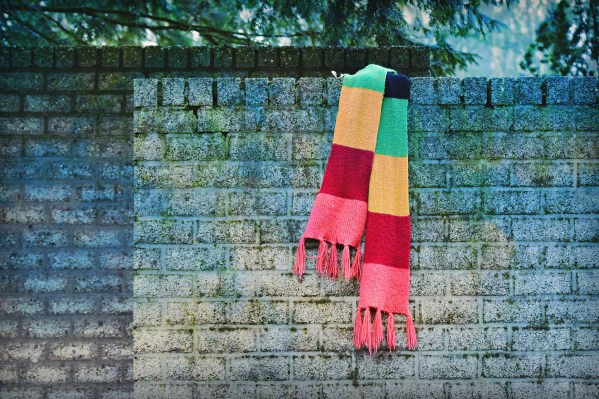
scarf-4849441_1920

Image by MabelAmber via Pixabay

Summer Holidays – Sarah O’Connor

It’s still there. Draped aloft on the wall by the tram stop to attract attention, by some kindly passerby who recognised it as a precious object. Worn but cared for, loose wool strands carefully stitched back in over the years. I pass it twice a week, crossing the bridge on my way to the Co-op for milk or bread or other essentials. Only essentials now of course. And yes, those bottles of wine down the bottom of my basket are essential. Maybe the volume is a bit much for someone living alone but… People said to be kind to myself and a nice Valpolicella is my treat. Nothing cheap obviously. I’ll keep my standards if nothing else.

The thick wool looks increasingly incongruous. It was March back then, and still cold, on the Thursday evening he last came back from the office with winter carried on the breeze. Laden with laptop and office files and a stack of panic buys from Waterstones to keep himself occupied for what he could see coming, he hadn’t noticed it fall from one of his many overstuffed bags for life. Now people pass it in flip-flops and shorts or linen sundresses and despite the cheerful colours calling out, its weight is like a relic from another time. A different world within touching distance – both millimetres and universes away from us. Before the coughs and breathlessness. The lethargy and pain.

I could just claim it of course. Take it from the wall, bury my nose deep within familiar fibres and carry it home to join the rest of his wardrobe. But I can’t. The scarf sits there like graffiti marking his last journey in the world. Before the fever hit and we stayed within our walls. I only spotted it about a month ago when I started doing my own shopping again. And by then it already felt part of the landscape. A shrine to his existence in this place and time. I keep wondering if someone will recognise it. Will they pick it up and return it to me as a symbolic offering? But no-one here knows us. On this anonymous street where even distinctive flourishes like his Tom Baker scarf go unremarked. Of course Sharon next door knows – she saw the parade of official vehicles that morning. Whenever she sees me over the fence, she straightens a spine crooked from years and gardening to give me a serious, sympathetic half-smile. I will let her know if there’s anything she can do, thanks. But there won’t be. We both know that, and perhaps the offer comes from knowing that. I sit and stare at the grass growing tall – it’s past my knees now for lack of his skills with the half-broken lawn mower. I put down the unread tome from his reading pile, take a sip of my chilled Chenin Blanc, and watch some ants as they scurry around my feet.

Monster Maze – Thomas Roberts

Alice was wearing only her nightie which wasn’t nearly enough, all things considered. She was standing on a cold, dark road which was flanked by two grey brick walls. She was alone in the maze – his maze. And there he was, in front of her, semi-transparent and chuckling. The ugly Troll Prince.

‘You’ he said, ‘Ha Ha! You will not find your way through my maze. You will not reach my Castle. You will not earn the right to become my Queen.’ He pointed at her. He wore several large rings with shining stones which looked like they should snap his shrivelled little fingers. Ugh, and his nails were long and brown with filth.

‘When I get to you, I’m gonna…’ she reached out to throttle him, but her hands just passed through.

‘Oh, fair maiden, I am a gentle Troll. We cannot have you freeze to death as you try. No, Ha Ha! Good luck, my dear, in the – Ha! – in my Monster Maze’. He stepped back, and blurred away into non-existence, leaving only a striped scarf in its place.

Marry him? She was going to bloody well kill him.

She kicked gently at the scarf with the end of her toe. It seemed to be just a normal scarf. She picked it up and, satisfied that it wasn’t going to strangle her, put it on. She took a deep breath and set off. She would find the way to his Castle.

On that first day in the maze she saw several small creatures which looked like rodents, though they had very long ears with fluffy whiskers at the end, and they were bright bubble-gum blue. That evening, as the sun fell, an incredible darkness fell between the cold brick walls. Exhausted, she found a corner and fell asleep quickly.

Someone was tugging at her scarf. She opened her eyes in a panic – it was one of the blue creatures sitting cross-legged beside her, pulling it. She reached out and snapped its neck. She hadn’t eaten in a day, and at least now there would be breakfast in the morning.

Days and weeks passed.

The blue vermin had disappeared, she had probably eaten them all – they tasted like mint and had been easy to catch – one day she came across a pair of identical yellow birds and caught one, though the other managed to escape, flying away. It stayed far from her now, and sang a beautiful lament for its dead partner every sunset.

Months passed.

She was so hungry now that she couldn’t move. She couldn’t even bring herself to lick at the moss and morning dew on the walls. She just lay there.

She died there.

She decayed there.

The scarf gradually worked free, finally breaking through her mouldy neck and flying up into the sky, riding the wind for a short while, before finally settling atop one of the grey walls not that far away; right beside the exit of the maze, where there was a gaggle of the small blue creatures and the lonely yellow bird. They were all glad to see the scarf for they understood that the awful monster was now dead. One of the blue critters held a small paw and took the yellow bird’s wing.

“Now we can go home” it said, and they all walked back into the maze together.

Cosplay – Mike Hickman

In 12 foot multi-coloured scarf, cigar-scented maroon velvet jacket and 1970s Bernard Manning comedy club clip-on bow tie, the boy was many things – he was certainly called them, too – but what he was most of all was a collision of Doctors. A provocation of Doctors, if not a deliberate, panama hat topped frustration of Doctors. No Class 10 child from Derby Road Junior was meant to look like he looked. No child in town had perhaps ever tried to look like he looked, not on a Saturday afternoon, not on any afternoon, and certainly not in Fleming Park, amongst the jumpers for goalposts and the dog walkers and the winos. Although, in truth, he wasn’t meant to look like this. Hadn’t even perhaps intended to.

But it was his birthday.

Now, with the internet and the relaxation in mandatory anti-Anorak prejudice, it is possible to get the knitting pattern online. You’ll need size 4 knitting needles and 26 25gm balls of wool in various colours (purple, camel, bronze, mustard, rust, grey, and greenish brown, if you want to get it exactly right). Cast on 60 stitches and then begin – 8 purple rows, 52 camel, 16 bronze, and on and on exactly as Begonia Pope had – you can look her up too; that’s a real name – when James Acheson had given her the wool, told her to knit the scarf, not told her when to stop. The boy had heard the story then and he accepted it as funny. It’s almost certain he would have wanted stories of his own. The costume – they call it ‘cosplay’ now – might have helped, he thought. If he’d had chance to think.

It was a present. Along with the jacket and the bow-tie his father had worn once in 1977 to a do that may or may not have involved naked ladies.

Someone must have said he would like it. A scarf, you know, like that “Doctor ‘oo” off the telly. That bloody thing he talks about all the time, when he’s not reading about it. He wants to look like him. He’s got the hair, too. He won’t have it cut. Looks like a bloody circus clown. Why not knit him the scarf? That’ll keep him happy.

It didn’t. Not then. And none of it went. If he’d joined the kids jeering and throwing spit wads, he’d have said it was all Wrong, all of it. Not just the length of the scarf and the colours, but you couldn’t have the Pertwee jacket and the McCoy hat together in the same place. It was all Wrong. As wrong as the boy on the mound in Fleming Park, as if put there for Obloquy’s sake. And still there years later, too.

But. He had been a collision and a provocation of Doctors out there in front of them that day. He had worn the scarf. He had looped it round that moment and he had pulled himself out and over.

He would wear it again.

All Was Left A Scarf – Fred McKenney

So what do we have now
I see it from the window
the neighbor’s daughter
must have gotten out again
poor thing, she walks
and doesn’t know yet
what happens when you
step outside your depth
we have walls now
and fears, with phantom
images at play in our front lawns,
– simulated hopscotch
and I’ll pretend the children’s
laughter is all I miss,
but that girl, she’s gone too
(dissolved like all the others)
and the unkempt yard
overrun with ghosts.

The Edge of Tomorrow – Geraldine Renton

We danced.
We sang.
We drank.
We fell in love with strangers.
We drank some more.
The night became close to dawn as we strolled through the uninhabited streets of Galway.
We ambled past the Spanish Arch as the sun rose over the old long walk.
We wandered towards the Claddagh and sat with our legs dangling over the water’s edge.
Swans began to make their way toward us, despite us repeatedly telling them we had nothing for them only vodka.
We sat side by side and watched them seamlessly float along the still water, ever hopeful.
We didn’t speak.
Maybe, we each knew that this was the end; right here, right now.
We broke the silence only to recall drunken snippets of the night before.
We felt, for now, time had stood still,just for us.
We sat for another while longer, we were in no rush.
We laughed about the things we did over the years and marvelled aloud about what was yet to come.
“Are we doing anything today?” I glanced down our line of four.
“Don’t think so. I’ve to go home and pack,” she shaded her eyes from the heightening sun.
“Yeah me too”, “Yep me in all” echoed the final voice.
Deflated, I peered down at the water and watched the swans veering closer to our feet.
Slowly I bobbed my head up and down.
We drained the last of the vodka before getting up.
“Halloween, so?” I inquired.
“Ah hello?! Halloween!” They traded glances before adding “We will do our best! But definitely Christmas”
“Well, that will be some night then, eh?” I grinned.
“Yep, for sure” they all agreed.
I yanked my scarf up off the ground, shaking the final pieces of grass loose.
They began to chuckle -“What are we going to do without you, the one who always brings something for us to sit on?!”
“My dad assumed I was telling him that I was gay when he saw it.”
We all cracked up.
“In fairness, I’m impressed your dad knows it’s a pride scarf!”
I contemplated Would I ever have friends like this again?
“Well, it’s actually just a multicoloured scarf, but it could be used for pride, I suppose” I studied my scarf.
“Here take it, sure wouldn’t it be grand in the big smoke for ya” I passed it to her.
She held it, “You sure?”
“Absofuckinglutely…plus it guarantees at least YOU will come back, it’s not for keeps though, my dad likes it too” I winked.
“He might be trying to tell you something!”
We all laughed.
“We will be back soon, promise” we hugged for a moment.
I’d miss them more than they would miss me, I knew that much was true.
We walked through the awakening city, arm in arm, before getting into four separate taxis.


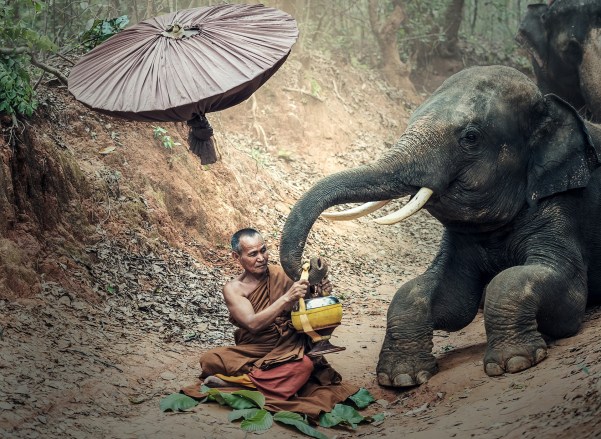
elephant-1822516_1920

Image by sasint via Pixabay

Sanctuary – Judy Darley

Mo wasn’t in the mood for the tourists this morning. Tata could see that from the rigidity of her ears and the way she tried to swish the stump that was all that remained of her tail. While visitors rushed to feed other elephants, he shielded Mo from them, clucking to her softly.

“Elephants have moods like we do,” he told a white-blonde child who crept close. “Mama Mo tired so we her give space.”

Mo was the old grandma of the group. She’d spent her youth carrying tourists before that was frowned upon.

Given the choice, he knew Mo would be alone with her thoughts, remembering the family she’d lost, the men who’d taken her, and the one who’d cruelly severed her tail. When she arrived at the sanctuary two decades ago, she’d held a calf in her belly; he remembered it shifting beneath his palm in the vastness of her womb.

“Touch firm, so she knows it’s you,” he recalled his father teaching him. “Otherwise you’re like a mosquito, not much anything good.”

He watched as the child withdrew to stand a short distance away. Her quietness contrasted sharply with the youngsters shrieking, waving food and retreating from searching trunks. At first, he wondered if she was afraid, but the look she and the elephant shared was one of curiosity, of trust. It had taken him months to earn Mo’s confidence that soundly.

She held a small cucumber in her hand but made no move to offer it to Mo.

“You want to feed her?” he asked.

The child didn’t respond.

Mo’s trunk swayed outwards, exploring the scents in the air.

“You tease Mo,” he warned. “She smell cucumber and don’t know why you don’t give it her.”

He left Mo’s side and walked to the child. She blinked at him as he gently lifted her arm. “Come closer,” he said, but it was Mo who stepped forward, not the child.

He showed the girl how to hold the cucumber where Mo could grasp it, her trunk tip as sensitive as human fingers. The child’s eyes widened as Mo’s breath huffed over her and the trunk curled upwards, coiling the cucumber onto her fleshy tongue. The girl’s laughter was almost noiseless, punctuated by small gasps. She glanced from Mo to Tata and returned his beam, clapping small hands with a patter like rain on banana leaves.

Tata and Mo watched as the child ran to her waiting parents, who’d been observing throughout, Tata realised now. Her fingers danced in the air, painting a story of courage, wonder and joy. The parents signed back, and the mother mouthed a thank you to Tata across the sanctuary.

When the other elephants marched to the pool where tourists would cloak them in mud, Tata allowed Mo to lead him to the spot where she liked to stand and gaze. He rubbed her shoulder, as high as he could reach, feeling the thick skin move beneath his hand.

Judy Darley is a British writer who can’t stop writing about the fallibilities of the human mind. Her fiction has been published in the UK, New Zealand, India, US and Canada, and performed in Hong Kong. Judy’s short story collection Sky Light Rain is out now. Find Judy at http://www.SkyLightRain.com and https://twitter.com/JudyDarley.


Where Buddha meets Bambi – Bayveen O’Connell

When you visit Nara, Japan’s first capital, you will most likely be frisked by Bambi or one of his cohort. Roaming Nara Park freely, resting, and grazing, these deer are considered to be a National Treasure. So if one trots over all spindly legged, with perfect eyelashes and candelabra antlers but you don’t have any of the coveted shika senbei (specially made deer crackers available from park vendors), this deer is wont to stick its muzzle in your pocket and chew up your map or tissues. Don’t fear though, these rather tame Sika aren’t all pushy. Although I did see one young woman yelping and zig-zagging down the road being chased by a cheeky one; it would be unfair to think of the deer as pests due to the fact that they are constantly being pursued by tourists with selfie sticks seeking the perfect Insta snap. The locals don’t bat an eyelid if a deer is sniffing around outside a 7 Eleven convenience store, and look on amused while the Sika and the visitors negotiate their own, often comical, symbiosis.

You were wondering what’s so special about these animals and why they have the run of the park and city? Legend has it that the Shinto god of thunder, Takemikazuchi-no-mikoto, rode into Nara on a white deer over a millennium ago. Takemikazuchi and three other gods became absorbed into the Kasuga Taisha Shrine, leaving the Sika as their messengers and protectors of the city.

Some tourists go to Nara just to hang out with the deer, others for its second biggest attraction: the Daibutsu or 15m bronze Buddha statue housed in one of the world’s largest wooden buildings, Todai-ji Temple. The Daibutsu, which was my main draw, is a vast sight to behold and well worth running the gauntlet of curious Sika. I stood in front of the Buddha and craned my neck to take in the whole tableau of the gargantuan sitting deity lit up from behind by a golden halo of smaller buddhas. After traversing the temple in an anti-clockwise flow, noting the warrior protectors that flanked the Daibutsu on both sides, I took one last stare at him, marvelling at this feat of art and engineering dating back to the 700s. Given that this was the busiest of all the temples I’d visited in Japan, I didn’t feel any calmness or inner peace but that was restored on the long walk back out of the park. And there was a deer waiting for me just beyond the Nandai gate as evening was starting to fall.

A world away from the Celtic horned god Cernunnos, the elusive herbivores of The Phoenix Park, and carrots I left out for Rudolph in my formative years, I strolled the way I came passing more posing Sika, some of them bowing for a biscuit. The souvenirs I’d passed earlier near the train station suddenly made sense: little laughing bald guys with horns. Of course, nothing marries Nara more than a horny Buddha.


One Evergreen Autumn – Mark Sadler

I was a crater wirer during the early years of the second great war. I am neither proud, nor ashamed of it. I knew my way around explosives so that’s what I did. We operated in teams of three, wiring the shell craters with booby traps. It was battlefield terrorism. Getting your enemies into a mindset where they were wary of taking cover.

Burma was an entirely different kettle of fish. It was jungle warfare. The enemy could strike at you from any direction. The only trenches were the natural ones that had been dug out by the forest elephants. I suppose that it made it easier for them to move around between the trees. It made it somewhat easier for us to move supplies around too, although there were risks attached.

We were camped where the beak of the savannah penetrated the forest. Nearby there was a church run by evangelical missionaries. When I returned to Burma, thirty years later, the only remnant of the Christian faith in the area were the hallelujah apes. They were descendants of the gibbons who had learned to crudely mimic the hymns that were sung by the revivalist congregation. They could never get to grips with the melodies, but they had the rhythmic structure down pat. They’re a tourist attraction now. Hearing them again; it brought back bad memories.

Buddhism always seemed a better fit for the country. During the war, you would sometimes spot the monks, in their saffron robes, wandering through the trees while the fighting was going on, as if everything was normal. They would sit cross-legged in the jungle trenches meditating. Every elephant who ambled past would very-gently lay down a single green leaf at their feet, as if they were bestowing a blessing.

One of the local guides told me: “The elephants are on a journey. They recognise the monks as travellers on the same path.”

“If they carry on much further south-west they’ll hit the Bay of Bengal,” I replied.

“Maybe these elephants no longer wish to inhabit the land,” he said. “They are making the long journey back to the water.”

Then he put his hand on my arm and said: “Who is wiser?”

Our patrols were being routinely ambushed. There was a feeling that somebody was leaking information. Suspicion fell on the monks.

One morning, we were moving heavy supplies through the jungle trench network. There was a young man mediating in the middle of the path, blocking our way. After he repeatedly failed to acknowledge our requests for him to move, I shot him in the head. Nobody told me to do it. We’d lost a few men the night before. Him sitting there in a trance, like none of it mattered, was the final straw for me.

When we came back later, there was a fresh pile of green leaves where the body had been.

In the trees, the gibbons hooted a discordant chorus of All Things Bright and Beautiful.


Expiation – Mike Hickman

Do I give this to you because I want you to take it, or because you want to take it from me? Is this some kind of need, on your part as well as mine? Is it dependency if you are just there and I do not ask before weighing you down? And where does ‘just’ come into it when I don’t question how you come to find me here in this place? When we don’t so much as exchange a look before the offering – when I do not need to explain what I am handing to you as you reach to take it? As I assume so very readily that you can.

You know, of course, that I cannot explain what it contains – that much is unspoken. And yet you come, from how far away I won’t ask, and you don’t mind. You sit, seeming content, and I trust to the contentment without needing to see it because I have seen it before. Somewhen. Before I realised – did I? – what you were content to take. Realised what you could bear.

I feel you’d prefer not to tell me why you would so willingly accept the offering. Is this some kind of symbiosis? Is that the word? Or is it a form of desire? You look like you’d know – your eyes, they tell me that you’d know. Simpatico, perhaps? Is that what we could one day have again, even if I’m not sure we had it before?

Do I give this to you because you need to receive it from me? Because you’ve waited for this? Because our past, I’ve learned – is it learning? – was without the sharing that would have confirmed that there was properly something between us?

Did I realise – did you tell me? – how one-sided it had all been, that I wouldn’t ‘open up’? I remember those words, even if not who said them. It has to be two-way, this sort of thing. Whatever this sort of thing happens to be.

Did you tell me that?

It has to be two-way. But in order to receive, I first have to give. I have to commit to give. I have to know that you can bear what I am carrying.

So is this expiation? Do I give this to you because I’ve realised – or you’ve told me – that it will stand as expiation for the hitherto unshared and the half of us that wasn’t? And if you sit and you wait and you take it from me on those terms, can I be happy with that? Can I be happy with it being more about the recognition that you can receive – that I have been wrong in the past to assume that you can’t – and that the contents of the container matter less than this one act of recognition as it passes from me to you. As you are there, as you have always been, to take it?

Is that what this is? As ever, I pass.


Cabinet Of Heed SOC Stay Safe

One Word Prompts

Soup Banner

Soup – Taiwo Patrick Akanbi

the hollow-settler
always sizzling with joy
with bubbling stares while
its ironclad house is seated on fire

finger-licking tongue-biting suasion
cheek-activating mouth-watering sensation
the no-eye-swallow escort
and full-eye-baring-grain transporter

the style-trender
garnished with varying seasonings
for supping times, all seasons borne
at its nap-hour, it makes-up with spreading oil

with enough spicy-pepper
hot-to-the-taste, and tongue rending
a delicious soup speaks to the eye
devouring it, is its savouring

Minestrone – Mike Hickman

57 varieties, twenty thousand genes, forty-six chromosomes, 45p.

Diploid cells contain all forty-six chromosomes. Chromosomes contain DNA.

The can contained Minestrone. The cheap kind. It looked like something you’d find on the pavement on a Saturday morning.

DNA is the blueprint, its bases arranged in pairs. There are six billion base pairs and their sequences result in proteins – proteins that can be mutated; mutations that then result in hair colour, height, behaviour.

They don’t have to be fatal.

The cupboard was all cans. Some of them had labels. The Minestrone didn’t. It was a “surprise”. We liked those. We were told we did. The first three out of the cupboard had been Ambrosia Devon Custard. She liked Ambrosia Devon Custard. They were decanted into a bowl and put in the fridge with the single block of Cheddar and the single two finger Kit-Kat. There was no need to account for those. They’d last her a week, easy.

I reached in for a fourth can. The fourth can was the Minestrone.

45p.

Promoters and Inhibitors result from alterations to the genetic code. Promoters and Inhibitors control neurotransmitters. Dopamine. Serotonin. The gas and brake pedals of the brain, so the books say. Too much of one and you’ve got depression, schizophrenia, bipolar, panic attacks. Psychopathy. Too much of the other and things happen.

Things happen.

The frontal cortex goes offline and, before you know it, you don’t need to know it. You’ve done it.

So the books say.

There was no label on the tin and no knowledge of the contents until the lid was removed.

Watery, brackish, rust-coloured, thin.

45p.

“You opened it,” she said, “you eat it.”

Neurotransmitters. Dopamine and Serotonin. Just how much they affect you depends on your genetic make-up. Depends, too, on enzymes such as MAO-A, to break them down when they’ve done their thing; to stop them signalling. And from this breakdown – or not – comes further behaviour – or not. Emotion, aggression, sexuality. Everyone different. More than 57 varieties.

I’d opened it so I’d eat it. She’d said so. The lid said 45p. I had 45p.

I went over to the hob – for some reason, they were all watching, so perhaps they knew this was coming – and I went to turn the dial – it came off in my hand, I remember that. No-one laughed.

Given the sheer number of combinations of genes – the role of glutamate and amino acids and more besides – there are thousands of different “normal” frontal cortices, and millions of different ways in which neurotransmitters can be pulled out of the synapses. Can be terminated.

“You’ve paid me for the soup,” she said, “but you’ll take the electricity without thinking, won’t you?”

She’d been working up to it. No matter which one of the cans I’d pulled out of the cupboard, it was all leading here. She was waiting on my response. She’d got the others there to see me shame myself. Again.

The shame I struggle to understand in the soup of Me.

Me and Gran – Simon Shergold

It turns out that Oxtail is the best soup if you are going to poison someone. Something to do with the rich beefy stock and the tangy, smoky aftertaste that defies better description. The depth of flavour hides the bitterness of rat poison apparently. Who knew? Not me. I went with minestrone, thinking that ‘variety of flavours’ would do the trick. How wrong I was and, now, here I am.

Me and gran would share a bowl of soup every day for lunch. Routine was our watchword, ever since she’d taken me in when my relationship with my parents became too angry. She’d always seen the good in me, unlike others, and forgiven my outbursts with a smile and a cuddle. I loved her. And I loved her house – I mean, really loved it. I loved the garden, with its willow tree dangling in the breeze, the branches and leaves creating a natural tent for me to feel safe in when things got too much. My room was at the top of the stairs, overlooking my haven, and the smell of gran’s cooking – full English, roast dinner, whatever I fancied – would waft under the door and call me downstairs. Which is why it might seem strange that I decided to poison her.

I think it started when she gently enquired as to when I might look for a job. ‘’Bout time I think, love’ she said, (over a bowl of pea and ham). I nodded assent and thought that would be the end of it. But, as the days went on, she became more persistent;

‘I need some help with the rent, love’ (Cream of chicken).

‘A chance to meet people your own age, love’ (Mulligatawny).

‘Little bit of independence, love’ (Tomato and Basil).

Each bowl and each conversation chipped away at that thing in my head that caused all the trouble with my parents. By the time we reached ‘You’ll have your own money. Maybe get some driving lessons, love’ (Oxtail – missed opportunity), I’d resolved that, drastic as it was, gran had to go.

I was careful with the rat poison, didn’t want to go overboard. I told her I’d make lunch for us. Went to the bakers to get our crusty rolls – gran likes them with seeds, I prefer them plain – and picked up the minestrone from the corner shop. I remember standing over the stove, the saucepan bubbling the little pieces of veg and pasta against the burnt orange of the broth. I remember ladling it out and I remember gran starting to eat; no slurping, she was a soup specialist.

‘Warren’ barks a voice. Not a nice voice like the doctors who work here but a nasty one.

‘Visitor’. Just two words, two commands.

I enter the white room, tables and chairs spread out. And there she is. Gran. I take a seat opposite and she reaches out a hand.

‘Hello, love’, she says.

‘Hi gran’, I answer.

‘Love you’.

‘Love you too’, I reply.

Even if the pencil fades – Colin Alcock

It was right at the bottom of her shopping bag. The one she still clutched tightly after the bomb; a crumpled heap under the rubble. Leatherette, black and maroon, scuffed and scarred, with long use and broken bricks; one handle crudely repaired after the time she tripped on the kerb and sent her meagre haul of groceries rolling down the gutter; her day’s prize, a small roll of brisket splayed beyond use, under the wheels of a bus.

So many years since then. But I kept the bag. Though I never delved deep, until today. Now in my hand, her last thoughts, perhaps. Written down on a small, feint ruled page, torn from the little blue, spiral bound pocketbook she kept, with a pencil, on the kitchen windowsill. ‘Can’t trust my memory these days,’ she’d say. ‘I have to write it down, as soon as I think of it.’ It brings back memories, as I read.

Bread
She used to make her own. Beautiful, sharp crusted loaves, so soft inside, some served warm with butter bought straight from the farm, brought around by pony and trap. Then we had to move into the town. Dad’s job. Three years later the war.

Rice
Creamy puddings turned to sloppy milky ones, to make the rice go further. And oft times semolina instead.

Sugar
Not wasted in tea, anymore. Rationing. Used sparingly. Sometimes for sandwiches to give us energy for school. If there was no jam. Occasionally, condensed milk.

Bovril
Not just for gravy; as a warming drink against winter’s cold or mixed with the sparse mince and oatmeal for cottage pie. Dad had the largest portion, until an exploding shell took him from us. At the munitions factory.

Soup
She must have been saving points. Tinned stuff was extra to ordinary rations. A luxury for her, after boiling up meat bones and vegetable scraps to make a greasy broth. I never told her it made me feel sick. Especially when we had no bread. Or it was mostly cabbage.

Butcher’s
No longer her own choice. That would be leg of pork, slow roasted to fall away, as it was carved; roast potatoes, cabbage and baby carrots (all grown in our back garden, before we lost Dad); lashings of real gravy and an apple sauce. Now, only a dream. Now, only what the butcher can find for her allowed fourteen pence. Old pence. Nothing, if you don’t get there early.

Butter
She’d normally buy this alternate weeks, 4 oz at a time. Reckoned just 2 oz would melt away by the time she got home.

Potatoes
The staple diet, next to bread, and like most vegetables, not rationed. Just scarce. Unless you grew your own.

And there it ends. A crumpled list. A mirror on her life. Even if the pencil fades, the memories never will.

Colin Alcock is a septuagenarian storymaker, mainly of shorter works, who has published two collections and three novels. Swopped to fiction from copywriting, in retirement, and writes simply for the love of words and the images they can create.
Website: http://colinalcock.co.uk Twitter: https://twitter.com/ColinAlcock

The Rules of Contagion – Judy Darley

Ms Elba tells us we’re doing an experiment to consider how germs spread. I wonder how it compares to the ‘blue eyes, brown eyes’ test my big brother did last year. He wanted to do it with me when he came home, but got cross because my eyes are green.

The Rules of Contagion is different. Our class is down to twelve kids with parents who are key workers; the rest are being homeschooled. Ms Elba designates four of us germ carriers. “You have germs on your hands,” she tells us. “Some will transfer to anything you touch.”

I can feel miniscule monsters wiping their dirty feet all over my palms.

Lisa Marwell goes to the art sink. “Happy birthday to you,” she sings as she scrubs, going through the song twice. “Happy birthday dear Cornona, happy birthday to yooou.”

When the four of us sit down, an invisible circle opens around us. It’s like ‘blue eyes, brown eyes’, only worse.

Everyone’s making paper rainbows to thank the NHS and other key workers. I ask Liam Gibbs for the classroom scissors. He pretends not to hear. I snatch them from his hands and he screams like I stabbed him.

Ms Elba sends me to the corner.

My nose is running, but I’m scared to wipe it in case the germs get inside, so I let my nose-juice drip onto the wall.

The scissors lie on the table where I dropped them.

When I’m allowed to my seat, I crayon a big black cloud instead of a rainbow and tear it a grumpy mouth.

One germ-carrier has an asthma attack and goes to the nurse.

In the playground, another gets sent to the headteacher after punching a classmate.

Lisa sits atop the climbing frame, fake-coughing whenever anyone approaches.

I stare at my hands. Maybe I can teach the germs tricks, like a flea circus.

Maybe I’ve washed them off already.

At 3pm, Ms Elba waves goodbye and encourages us to stick rainbows in our windows.

I show her my raincloud with its torn-out mouth. Her eyes widen, but she tells me expressing feelings is important, especially sad and angry ones.

Mum collects me at the gate and we walk the long way home.

“Tell me something funny,” I beg, swinging my bag.

“Oh.” She thinks. “A patient on my ward says lockdown is the best time of his life. He feels part of something again.”

I don’t get why that’s funny. “Anything else?”

“Um, someone I know is using their time to whittle spoons.”

“Didn’t they have any?”

“They had plenty. Another person I know is spending whole days digging up cauliflower, cabbage and spinach to simmer into soup.”

“Your soup-maker sounds lonely,” I say. “So does the spoon-whittler. You should introduce them.”

“I should, shouldn’t I?” Mum beams. We reach a hopscotch some homeschooled kids have chalked and take turns to hop, skip, and jump – arms in the air in a silent, unending cheer.

Judy Darley is a British writer who can’t stop writing about the fallibilities of the human mind. Her fiction has been published in the UK, New Zealand, India, US and Canada, and performed in Hong Kong. Judy’s short story collection Sky Light Rain is out now. Find Judy at http://www.SkyLightRain.com and https://twitter.com/JudyDarley.

All the things you cannot buy – Cath Barton

It was in another country, another world, time stolen out of time. I remember the ferry, the warmth of the night air and of you behind me at the rail of the boat, your mouth on my neck. Cut now to the two of us standing by the side of the road – for what I remember as hours, but memory plays tricks – until finally a car stopped, a man who recognised us for what we were, said he knew a place.

It was no more than a roadside bar, and Madame ne parlait pas anglais, mais oui, une chambre. Yes, they had a room. She winked at me, or I imagine now that she would have done. A young girl and an older man. Oh là là. They really do say that in France, though in this case it would have been behind the closed door of the kitchen, after she had left us alone in the little room with the iron bedstead and a sink in the corner.

They were – I don’t think memory deceives me here – delighted, this Madame and Monsieur. He cooked, she served. There might have been the odd local drinking at the bar. Or there might have been just the two of us. We were hungry for everything there was, in those few days – the sun, the château down the road, the wood where we lay together. And, bien sûr, the food.

I think this was on the second night. Soup, bright green in colour and sharp in taste.

‘Qu’est-ce que c’est, s’il vous plaît, ce potage?’

‘C’est de l’oseille, Mademoiselle.’ She stood there, smiling.

All we could do was smile back and laugh and say it was good, très bon. We had no idea what ‘oseille’ meant. I thought I knew French, hadn’t taken a dictionary.

I remember nothing of the journey home, just the bleakness of the aftermath, and dark blue sheets on my single bed where I hugged my memories close. Later I dragged out my big French dictionary and looked up ‘oseille.’ Sorrel, it said. But it turned out that, along with everything else I really wanted, I couldn’t buy it. It would, I thought, have to just be one of those memories which time would erode and tarnish.

But it has followed me through my life, that elusive herb, the sorrel that makes the best soup. I found it growing in the first garden I could call my own, a patch of South London earth. And I discovered how to recreate the soup, or at least an approximation of the memory. The tang of it. By some quirk that I cannot explain, the plant has turned up in every garden I’ve had since. The memory is rekindled each time as I fry onions and boil up potatoes. The soup looks unremarkable, unassuming. Until I take it off the heat, add the herb and whizz it up. The green is shocking. It is the colour of my life. And the taste of my hope.

Perils of Staying Safe – G J Hart

Day 1

Why now the rumble
of history’s
stone and sappless
fields and dusty
skies beckoning me
lay down
your blanket.

Day 3

And why now
Your call – decades
late, tongue mad
as a hugged
cat as storms roared
and pain out-paced
the hit.

Day 9

And strange the world
now mirrors me – exactly
how collapse
looks in a quiet
room – the walls
folding in on
my creases.

Day 15

And wastes
Of coffee, tundras
of news, peeling
each day like battered
soup – knowing
on Mars our minds
still drill
rock.

Day 28

Is this a stage darling?
I couldn’t be angrier –
no habit, no ritual, best
to stand strong – punch
till your eyes
droop.
You can do it.

Day 90

Land, land –
a mistake the sea
never make and my body
cups no breeze,
my belly broken
ice – portents poor
sailor – you boat
bears it’s own
rock.

Soup – Basila Hasnain

Soup- we call it curry here, the soup as you know it. But there are Soup stalls you’d know nothing about: the semi-solid broths served under the names of Asli* Chinese Soup, or American Choupsy Soup or more presumptuous one, World’s Best English Soup. Of course, these, you see, are seasonal stalls that appear around Model town roundabout, Moon market outskirts and township bazar.

The boys standing at the stalls waiting for a car to pace down, slow just a bit so that they could just leap onto it’s windshield ,waving the menu card with oil marks and grease-coat , thrusting it forward hampering the hasty drivers heedless of horns. There’s urgency in their wish to sell. A daily wager’s urgency to make it through the day with at least a hundred rupee including tips if it’s their luckiest day. It’s an anxious urgency of a con, who knows it’s not exactly soup, they don’t even know half of the ingredients that go into making a soup. They better sell while the pots are hot and weather, chill. It’s the rush of a local Lahori who knows it’s only through the short period of December to January and maybe half of February too.

This year winter was long, this year they had better chances too, this year the stalls have added an extra few pots meaning making extra rounds of soup bowls too. But this year with winter virus came along. An alien diction, a strange commotion everywhere, an unprecedented silence- there were no business for street food sellers, no whizzing cars, no customers- The stalls were brought to stand still inside the borrowed garages and places. The hungry sales boys, mostly preteens, fired. There was no business. Everyone said so. They said we are all going to suffer, the rich, the poor- daily wagers and billionaires together? This’d be an amusing conceit of conditions, if it was believable by any measure. You don’t see them dying for basic needs, you don’t see them choosing between health or hunger. But they say, it’s all the same, everywhere. The poor are, globally, in more trouble. This’d appease the misery of their struggles if it was to be over in some foreseeable future. This now seemed like an endless tunnel of morbid blackness and despondence. There’s no refuge from now and no promises of quantum leaps in coming days after the pandemic’s termination. The resulting hunger, poverty and hopelessness seems like a tedious dénouement to the current conditions. What else could you expect when the pessimists are mute, and the optimists are hoping for a day of judgement?

Basila Hasnain is an inspiring Pakistani writer, currently working as a faculty member in LCWU, Lahore since 2016. Recently, two of her papers were published and presented in Research Journal Of Language And Literature (RJLL) and 1st National Conference on Linguistic Challenges in Regional Integration and Globalization.
Fuel Banner

Upward, like flowing silk – Mark Sadler

“Safety!” declared Michael Sams.

Across the table, the new boy lifted his mug a few inches above the drying arc of a fresh tea stain.

“To safety,” he replied, quietly.

“It completely ruined the sport,” continued Michael.

Scattered laughter. The boy got up and made a slow retreat into the oily gloom of the garage, where he leaned against the lip of the counter, with his back to the sink. A grease strain on the cement floor pooled around his feet like a bruised shadow.

“You’ve embarrassed the lad,” said Brian Miles. “If he’d wanted to be insulted he could have stayed in Cambridge and had it done by qualified experts.”

Michael glanced across his shoulder towards the kitchenette.

“Don’t be like that,” he said.

The boy rejoined the table in a different chair, making steady eye contact with his tormentor.

“We used to cook our own fuel,” said Michael. “You refined the basic product until you arrived at something that would move you rapidly through the gears, like flowing silk. Every team had a recipe.

“I worked for Boughton, when it was on the bones of its arse. They was based at a country house in Suffolk. Their neighbours were giving them grief over the engine testing. Said that it was frightening their dairy cows. I was staying in one of the groundskeepers cottages. I used to clay-pigeon shoot everyday before breakfast.

“There was an American team called Skeete. They were paying over the odds for talent so I made the jump. I got the call to go down to Edden Speedway. I walked into the garage. Matt Skeete was there with two of his engineers. Germans lads. I used to called them Bill and Ben. They was perched on wooden footstools, peering over the sides of a massive vat of fuel. On a trestle table there was what looked liked someone’s weekly shop. Fruit and vegetables. Loads of this skin-lightening cream you can only buy in the Gulf States. They began adding it to the mixture.

“Matt looks up at me and he says: ‘How’d you like to help us win the World Championship, next year?”

The boy smiled without emotion:

“I know how this story ends.”

“I thought we’d replicate the recipe,” replied Michael, indignantly.

He dragged a handwritten list from his pocket.

“Why don’t you go into town and pick this lot up?”

A flicker of hurt registered in the boy’s eyes. He pursed his lips like he wanted to say something. Instead settled for swinging his jacket violently over his shoulder as he exited.

“Not a mark on him,” said Michael.

Alan Busby rocked on the bent pin of his chair leg.

“Future of the sport, isn’t it,” he mused.

“What was really on that list?” asked Brian.

“A few things the missus asked me to pick up.”

Outside there was the roar of an over-revving engine and the screech of tires.

The Collection – Amanda van Niekerk

Gary was taken aback; aggrieved even. It showed on his face.

Come on Bru, he said. It’s lockdown. You’ve got plenty here to see you through. More than enough. Please Man, just one.

Dawid laughed– the sound filling the 2 metres of sacred space between them. He took a small step back. Tension can cause contraction– he needs to maintain the distance.

Well, we don’t know that for sure, he said.

The bottle in his hand was dusty, the label faded. This one says 1992, he said. It’s all down to pot luck now. I just don’t know what I’m going to get. Some of these are probably not even ok for cooking with. He laughed again— a short laugh. He slid the bottle back into its slot in the crate, its slim, dark neck pointing outward alongside other necks of other bottles.

Gary’s face hardened– a tightening at the jaw, a frown pulling at his eyebrows. Oh come on. You’ve got like ten bottles there. And they’re probably all fine. Please Man, I’m asking you. Just one to keep me going. Don’t make me beg Man, it’s embarrassing. Come on, you owe me that favour, you know you do.

Dawid was holding his breath now, his cheeks puffed up. Tension hummed in the silence. He exhaled loudly.

Sorry Gaz– extreme circumstances. Not a good time to be discussing favours. Seriously, I need to hang onto these babies. God only knows when these restrictions will be lifted. Sorry Man, but I’m taking no chances here.

Again he laughed. Tentative.

Hey, maybe you should have been better prepared. We were warned remember? We all knew.

The space between them shimmered. Sunlight entered the gaps, striking the dark glass of the necks of bottles.

Fucking ridiculous. Gary was pulling his jacket from the back of the chair, heading towards the door in the same stride.

So much for friendship, huh? He paused, turning, his movement abrupt, one finger raised and pointed at Derek– at his chest. You like to see me sweat, don’t you? To see me run. Well I won’t be forgetting this.

The phone call from the security company next morning was brief: Sorry to hear that Mr Scheepers. There’s been a spike in petty crime in the area since lockdown. The guys on the other side are getting restless, you know?

Dawid waited.

Yup, he said.

So what exactly is missing, Mr Scheepers? Anything of value?

Dawid paused, his breath was puffed up in his cheeks. He exhaled loudly.

Not much. Around three hundred bucks in cash, and some change. And a bottle of red wine.

Mr Celery – Lou Adderline

The man’s hand curls around the base of my stem and hauls me upside down. He turns on the tap and the water gushes over me. Streaming down my green body, splitting at the delta of my leaves and finally reaching the sea of the sink drain. He thumbs the grooves that dirt sank in when I grew inside the soil.

I’m clean now. I’m ready for the machine. The silver bullet centrifuge that will tear me. Fibre from fibre. Until I’m something he thinks he needs me to be.

This is a strange and desperate development. We have been cultivated since antiquity. Our stalks and leaves and salts and stems and seeds. We’ve been useful. Perhaps too useful. Perhaps these unmeetable expectations are of our own doing.

I am a vegetable – perhaps I cannot conceptualise immortality. But I know I cannot make this man immortal. Every morning, he performs this same ritual on his kitchen counter. He’ begging. He thinks I can save him. I have no means to verbalise that I cannot save him. I have no vocal chords. If I had, I should scream it.

He plugs in the cable and flicks a switch. The machine begins to hum, soft but anticipatory. He throws us inside. A blinding, deafening buzz whirls me around and I become something changed. A neon green liquid in a pint glass – highlighter fluid with the coarse stench of salted earth.

Every morning, he cleanses us and liquidates us and drinks us to cleanse himself. Now, all that’s left is waiting. So, we sit in the glass and wait. Fibres floating to the top as our entwined molecules attempt to reverse entropy. It’s ill-fated. He will stir up before he drinks.

Our mission isn’t clear. I am food. Food is fuel? I can follow the metaphor. Becoming caloric intake comes naturally. A calorie is not an arcane thing. No one had told us what a toxin is though. I do not understand how to fight them. What is it I am meant to fight?

He reaches for the glass and tips it into his mouth. Nose pinched. Gulping and guzzling and gagging at the taste. He is trying to brew the elixir of life. There was no philosopher’s stone, there was no fountain of youth. You cannot convert mercury to gold and if you try it will poison you. His kitchen counter alchemy will fail and, as he swallows, I am so sorry.

Lou Adderline has spent most of her life in a village in the North of England. She is on Twitter @LouFuchsia. This is her first time writing from the point of view of a vegetable.

Soup Banner

Stirring – Meagan Lucas

I stand with my back to the shrieking, the tossing of throw pillows and Nintendo controllers, and the tantrums rumbling through the floor. I ignore my husband as he shouts through his closed office door, directing me to quiet the wildebeests. His ‘please’ strangled. With my hip pressed into the stove front, the pressure – almost pain – is a relief. I stir the soup.

The soup we bought, horded, for when the virus came for us and we needed something easy and comforting, to spoon past our fevered lips. But it hasn’t come, not the way we expected with lungs full of pus, but by shrinking the house: the constant narrowing of halls and a squeezing of rooms pressing us into each other. I’m 5’2 and I walk bent over, turn my shoulders and suck in my belly when I squeeze through a door. At first, I suck up their cuddles with a straw and hold them tight, I ask sweetly him to move his elbow so I can scratch my calf, but now the skin of politeness worn off, and their sweaty skin chafes me, and I just push him away instead. At least the danger outside has a name; we can wear masks, we can stay in. But the peril inside is ripping me limb from limb.

No one wants soup, not even me, though I keep stirring. I only want pretzels and jellybeans eaten in the car parked in the dark garage, alone. They talk longingly of the homemade sourdough, biscuits, and sticky buns in their feeds. But the kitchen becomes a haven because no one wants to help with dinner. ‘What about pizza delivery,’ they say when I complain I’m too sad to cook. I can’t even shit without someone knocking on the door, yelling through the wooden panel, needing me. And so it’s only here, damp in the split pea steam, where the heat can hide the flush of my cheeks, that I can grip the spoon and think of you. You’re a vacation, a warm hug, a cocktail on a crowded rooftop deck, and this is simultaneously a punishment and a reward.

I used to think the idea of quarantine was sexy. Oh no, I’m trapped in this small space with this attractive person, who knows what will happen? Sweatpants. That’s what happens. Homeschooling during conference calls, and grey roots, stress pimples, carb-loading and passive aggressive channel switching. And distance, distance from the things I love, the bookstores and the coffeeshops, and the things I need like your fingers in my hair and your palm on my hip, and your thumb stroking my bottom lip. Worse – you’re my own private loss, and I wonder as I sit next to him on the couch watching tigers, if he is missing someone, too. If maybe that would bring us back together.

The soup is done, but I’m not. So I turn the burner off, but I don’t stop stirring. I’m not ready to let you go just yet.

Meagan Lucas is the author of the novel Songbirds and Stray Dogs. Her short work has appeared in The New Southern Fugitives, Still: The Journal, and MonkeyBicycle among others. She is a Managing Editor at Barren Magazine. She lives in North Carolina.

hot soup – Ceinwen E Cariad Haydon

hot soup
scalds her palate
hunger makes desire rash

patience
will safeguard full flavours
next time

Cooking – Roger Haydon

It now seems that there never was any prehistoric soup, at least not a soup that mattered and certainly not an ancestor soup and that confuses and confounds me. I’m not sure I’m entirely happy with the idea that my lineage might have been rooted in mere fermentation and putrefaction arising from organic molecules shagging lethargically in dirty sea water while being struck by lightning and bathed in the sun’s unfiltered ultra violet rays. Mind you, I do have to say that the idea that I might have come from a miraculous and vaguely sexy event of mystical spontaneous generation does have a certain appeal. I can just about see myself arising from the waves in a sort of orgasmic convulsion, illuminated by a brilliant flash of lightning as I emerge naked, beautiful and fully formed, intellect in full flow, master of the world and prototype of all humanity to come. I mean, that has the kind of magnificent sweep of dramatic tragic intensity that characterises me as I have evolved until today. But, if push comes to shove, I can give that away, I really can.

No, the generally held expert view is now that my beginnings were much, much deeper and, though quieter, more spectacular and profound and, possibly, more sexy. Basically, there was the deep and endless ocean with just one bit of land poking out of it somewhere. And there was the molten core of planet earth spewing out minerals and heat and other stuff via massive volcanoes in the unlit ocean depths, a sort of continuous orgasm instead of the occasional one and that’s where I came from. And that feels a whole lot better: conceived deep in fire and water with a generous sprinkling of star stuff to finish the whole thing off. So I’m not a by-product of some mucky random spontaneous event, I am, in all my super evolved state, the descendent of a long line of inevitable events culminating in, well, yours truly, your host this wet and windy afternoon in the middle of the week. Is there a better place to be?

So, to roll out my oft quoted catchphrase, “Let’s get the chopping board and let’s have some fun”. Today viewers, snuggle down because I’m going to show you how, in these difficult and pandemically constrained times, to make easy vegetarian soups that are amazing and tasty and go a very long way on not very much. A bit like me really.

Love Letters – Lisa Ferranti

Glory’s soup bubbles on the stove, the pot’s lid rat-a-tatting a tinny melody. She adjusts the flame to simmer. Her daughter works on algebra, next room over, and Glory hears fingers tap keys, misses the scrape of pencil against paper against woodgrain, when the worksheet could be turned in at school instead of virtually.

Her son reads Shakespeare, prepping for remote end-of-year testing. The thick book drapes across his lap, and she’s thankful there’s still binding and ink and some solid things in the world, at least.

Cauldron bubble, she whispers, trying not to think of the virus, the tragedy swirling around them. She removes the pot’s lid and stirs the soup with her grandmother’s wooden ladle. Steam singes her nose, but still she inhales, adjusts seasonings. There are people counting on her soup, and not just her family. Her family’s tired of it, actually. But she helps supply the food pantry, and the ladies in the neighborhood miss her second only to their hairdresser.

The ladies swear by her soup, believe it guides them, provides answers. When Margaret’s daughter was pregnant, she fed her Glory’s signature alphabet vegetable, peeking over her shoulder as she ate, and she’d seen tiny pasta letters spell B-O-Y on the spoon. Her grandson was born a month later.

They ask Glory how she does it, beg for her recipe, but it’s a family secret. Her grandmother had the same gift, manifesting itself the same way. Glory’s gift never works for herself, though, always just a jumble of letters, holding no answers, no clues.

Glory will feed her family before she makes her round of contactless deliveries. She ladles soup into four ceramic bowls. She calls to everyone, hollering down the stairs for her husband, where he’s toiling in his makeshift basement office.

She has to physically remove one of her daughter’s earbuds to be heard, for which she gets a Mom! and a sharply shrugged shoulder.

Wash your hands, she reminds as they emerge from their separate corners of the house. She hums the alphabet song to herself because she refuses to taint future birthday celebrations.

Once they’re at the table, they’re all still distant, despite their close proximity and her efforts at conversation. So she tries another tack. She wills the soup to speak to them.

What she wants for her son is to F-L-Y, for him to go to college next year, to soar.

Towards her daughter she channels every warm feeling inside her, despite the friction between them. L-O-V-E.

To her husband, she projects an abbreviated T-H-X, and she sees his jaw relax for a second.

She peers into her own bowl, but as always, the words elude her. Looking at her family, the illusion of protection close at hand, she wants to freeze the moment and fast forward, all at the same time. She looks down again and sees O-K. Two simple letters. She decides to believe the letters are meant for her. For her family. For the world.

Lisa Ferranti’s fiction has been twice short-listed for Bath Flash Fiction Awards and a Reflex Fiction contest finalist (BSF 2019 nom). Her stories have appeared in Literary Mama, Spelk, New Flash Fiction Review and Lost Balloon (Wigleaf Top 100). She lives in Ohio with her husband and two children.

His Name is Fred – Omar Hussain

My guardian angel spreads himself across my couch, feet kicked up on the arms, Converse shoes caked with speckles of dried mud, untied and hanging over the edge. He crooks his head in my direction.

“What are you making?” he asks.

“Soup.”

“Again?”

He’s been bunkered in my apartment for five weeks. Ever since the third day of quarantine. Randomly appeared in my mudroom, a black garbage bag full of spare clothes held over his shoulder, a stained denim vest and a grimace beneath his trucker goatee. He flapped his wings and announced himself. Tells me his name is Fred. Not Gabriel. Not Uriel. Not even Michael. This dude’s name is Fred. He eventually tells me that he was laid off because, for now, stay at home orders put us all out of harm’s way.

I stir the soup. The wooden spoon clanking against the sides of the pot. “I’m running out of food. Soup is just about all I have left.”

Of course, I didn’t believe him at first. But then he showed me the tapes. “The God Vids,” as he liked to call them. He showed me the accident on the freeway when I was 18. The time I slipped off a 30-foot boulder at Lake Tahoe and miraculously splashed into the only part of the water not littered with jagged rocks. The bodycam footage from his guardian angel uniform showed it all. Him steering the car to a manageable crash. Him gently pushing me, mid-fall, to the right spot in the lake.

“Poor doomsday planning,” he says.

“I didn’t think I was buying for two.”

“Is Karen coming over?”

Karen is my girlfriend. She’s also the reason Fred won’t leave. He’s in love with her.

“I told you to stop talking about her.”

“Remember what happens if I don’t get to see Karen?”

There’s more in Fred’s God Vids collection. There’s footage of me masturbating. Like every single time. Since I was thirteen.

In my childhood bedroom watching Baywatch.

To Spice Girls music videos.

Dial-up internet XXX pics.

Porn paysites and everything in between.

Fred is blackmailing me. Threatening to release the tapes on the internet if he doesn’t get to see Karen.

“I’ll text her.”

Every time Karen is over Fred puts the moves on her. Right in front of me. Woos her with tales of glory and guardian angel heroics.

He smiles and turns on the TV.

Karen texts back. “Is Fred there by any chance?” I slam the phone down, manhood shattered along with the screen. I stare back at the soup.

Then at Fred.

My feet move me to the supplies closet. To the bleach. I dump a bit in the pot. Stir it around.

“Soup is plenty hot. It’s all yours.” Fred walks over, flapping his wings with each step. He pours himself a bowl and tilts the edge to his lips. His mustache now tomato red.

I smile. Hoping guardian angels don’t have their own protectors.

Omar Hussain is a writer from the San Francisco Bay Area, transplanted to Ann Arbor, Michigan. His work has appeared or is forthcoming in Ellipsis Zine, Spelk, Dream Noir, the Drabble, the Potato Soup Journal, Fleas On the Dog and (mac)ro(mic), among others. Omar’s beta-test novel, The Outlandish and the Ego, debuted in late 2017. It received some praise, remarkably.

Soup – Ursula Troche

Storm in a teacup, virus in a soup.

“Soup, what have we done?” Introduced an ingredient that doesn’t mix! A harmful substance. Rather: we didn’t, it happened. Something’s stirred our soup, disturbed us and went viral. It’s called Corona. There we had been, more or less interconnected, together in our bowl of soup called World. And now it’s been a soup-down! Maybe it’s because we hadn’t stuck together enough when we could, we didn’t bind, we lived in a system marred by inequality, segregation – and now distance! And now, in the interval, locked down together apart to reflect.

We were supposed to be one world, one soup, all of us together a group soup. But it hasn’t always been a melting pot, this soup! Look at our pot, in which we are, our world, gone wonky. Can we have some pot luck now at least?

Liquid modernity, they say, flowing sea. We can’t give it all up because we are here. We’re in the soup, there’s no cure for it!”, almost said Samuel Beckett. Makes sense. We have to keep it clean, or soup, protect our soup the environment. Keep ourselves from drowning.

Soup of the World, what could you be made of? Tomato soup has always been my favourite. Tomato, a thing that is both a fruit and a veg, like us, who are two things at once! Both human and animal maybe. Or whatever we can be, twice even.

How do we simmer, how do we cook? A world at boiling point. Where are we in this soup? Are our oceans the soup and our islands and continents the big pieces within? Both land and sea with its many ingredients. The sea, the soup, Soup-sea! Come to the soup-side!

And that’s what I did. I went to the soup-side at night, and above me were the stars. And it reminded me of what I thought of as soup as a child, this milky murky creamy stuff that you can see around the some of stars at night: I thought that was soup. But it’s the Milky Way! It’s hanging there in the sky and I thought it facilitates travel from one star to another. Because at that distance the stars are quite close, so maybe you can get across. With the help of the soup, cosmic travelling agent. The milky soup has ways of entangling and intertwining the stars, so as to connect them – like us, in our soup-world.

And down here it’s different. If I think that the sea is the soup, then I have seen sea in the sky too! Sky-ocean, soup-world, something’s cooking. Our categories break open. Soup as a substitute, even as a word. And that might help. It might help us to take our challenges in keeping our world in order.

Soup could be the password to a new world, which we say to each other, acknowledging the flows that bind us together. Now there’s some soup for thought!

The Night Is Day – Ian Anthony Lawless

Moonlight splashes across the bare wooden floor of Harold’s room.
He is to move soon. To be less overwhelmed by memory and space. The house breathes a sigh of relief.
Floorboards are creaking where feet have not touched.
Harold sits on the end of the bed. A hollow imprint on the left side.
Where Marget once slept.

Now he is full of regret.
Dam it!

He shouts, to his darkened reflection in the bedroom mirror.
Ignoring the strips that are slowly descending from above it.
Little pieces of daisy patterned wallpaper gently floating all around.
As if carried by a stiff breeze.

Who ever knows what your last words are to be?
Amid flying newspapers and near misses with slippers whizzing by his face, his last words to his wife was
“I’m sorry. But he is my son. He deserves to see me”

An shameful affair committed in the early days of their relationship.
Doctors tried to calm his shaking body.

That trembled and would not allow voice to exist.
So overwhelming was the death of his wife.
His mind felt as if in another body. That he was observing from afar. Plus the house became his carer now.
It was no comfort when they told him she died peacefully in her sleep.
What is peaceful about anger and silence. Furrowed brows and bitter sighs?
Her heart had to be broken.
There was definitely anguish in her expression when fruitlessly Harold tried to wake her up the next morning.

Now Harold is forever restless.
His nocturnal routine sparked him up from sitting position to a jump into a poker straight stance. All in a surge of extreme energy.
He surprised himself by this feat of agility.

At 45, he expected his legs to buckle as if made of sand.
But now frankly nothing surprised him anymore. It was time to confront his nightly visitors.

“Everything is spotless, like always my dear.
The words jump from his mouth before he could even finish formulating them.”

Reaching the landing, he turns his head to the side, ear cocked towards the hall. In an overt display of listening. It was more for the house.
He slaps the air repeatedly. As if grappling with a ghostly foe.

Thump!

A sound emanates from the downstairs kitchen.
The sound of porcelain scratches across the marble counter.
His thoughts scream to find rationale but there is none.

Once again as if a puppet master guides him, his feet begins to rise three inches off the ground. He floats down the long flight of stairs.
The needle of a record player is heard being placed.
Beethoven symphony number 9 lightly plays.

As he passes the sitting room, he sees the legs of male being crossed. The laughing man again.
Tartan slippers hanging on milky white feet.

Crash!

The Kitchen. Where Marget always loved to be.
On the table for the fifth time this week.
A bowl of soup.
Boiling hot, Harold smiles

“Hello again my love”

Making A Point – Kali Richmond

I struggle to believe that anyone considers soup anything but a disappointment. It’s noble claims of rejuvenation, healing and soothing are the closest thing I’ve found to a global joke, for food added to liquid and cooked until disintegrated and abused seems evident in all culinary corners. There are books dedicated to this one category of cuisine. I look at the smiling faces of the chefs or home cooks or celebrities, dieticians, fitness fanatics, bored trustafarians, and see devilment behind the eyes. Delicious, sumptuous, mouth-wateringly good, irresistible, opulent. They know soup is shit. They’re flogging a lie.

I eat soup to make a point. Made from scratch portrays moderate ennui – all that effort, the cost of ingredients. From a plastic container which must be kept refrigerated demonstrates self-loathing – the most scorned of packaging for something that won’t even fill me up. From a tin confirms depression – its content luridly reminiscent of partly digested food. I reach now for the tin.

And panic. The smell rising up from the boil (it says do not boil, yet takes an age to heat without boiling, congealing at the edges, cold in the centre, requiring constant stirring. Devilment, see?) is so pungent, so evocative of school dinners, that I worry the act too blatant and set about trying to hide my misery. Nachos sprinkled on top, sour cream, grated cheese, all of it piled one after another. A sprinkle of paprika, a flurry of chopped chives.

Thrust a spoon into the seething mass of melt. Scorch my tongue. A nacho spears my gums. I am a baby, an aeroplane of slop hitting turbulence as I laugh at my pathos. I am terribly ill to torture myself so. I am falling out of a wormhole, the years sped up, teeth flowing from my mouth as hair catches in the wind, as loose change falls from a pocket, as hail rains down from wretched sky. I am in need of sustenance but can no longer chew. I am cold and wish to be warmed. I am warmed and wish to burn.

Kali Richmond is a native Londoner and lapsed VJ currently attempting a closer to nature existence in the north of England. When not cultivating an unruly patch of land and unrulier children she attempts to write amid the chaos. https://twitter.com/SevenKali
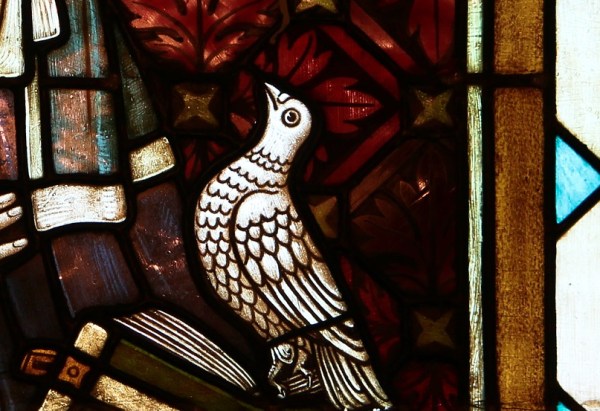
Cabinet Of Heed SOC Stay Safe

Stream of Consciousness – Drawer Seven

dreamland – M P Armstrong

before, my dreams were populated with half-fantasy images
from the curled-up and shadowy edges of reality, a variety
that seemed culled from the random spin of a wheel. teachers
from a semester abroad grew fangs and appeared, pale and
growling, in desks next to me in my tenth-grade algebra class.
the sun dripped glittering watercolor over the backyard fence
that gobbled my sanity, and probably also my hand, if touched.
the jewel-toned scales of dragons perched on the roof of the
dining hall and vortexes to other dimensions swirled in the
pond on the quad. my dreams now are comprised of ordinary
moments: my family gathered around a table laden with a heavy
holiday dinner–mashed potatoes, green bean casserole, and
three kinds of pie, with ice cream, even. my roommate bringing
steaming mugs of coffee, golden brown with clouds of cream, to
our spread of notebooks and textbooks in the library as the sun
begins to smudge the sky with light, a friend locked in a warm
and determined embrace under a blanket as the light chatter of a
romcom and the multicolored glow of Christmas lights fill every
corner of the room, turning the standard dorm into an image off
the front of a greeting card. my brain is romanticizing the moments
from life before, my subconscious smoothing over the stresses and
tensions, and my sleep setting the scenes to songs from the bleachers’
discography. i do not want to remember what those were really like,
dinners spent with bitter words bubbling in my throat and threatening
to boil over, the specter of failure hanging in the air-conditioner wind
over every flashcard and frappucino, the rotted curiosity about the
blurry lines of relationships twisted up in every body entangled with
mine. i want to think about the mirrors of those moments in the near
future even less. terror served next to the turkey, cooked by a respiratory
therapist and carved by a man of almost eight years old. peeks at the
list of names tucked inside the front covers of books with dates, mental
calculations: could their coughs still linger on the pages? the threat that
lurks in every human being, even the ones that we once could touch
without thinking twice, even the ones we had been dreaming about
holding close throughout the months we spent separated. i would rather
live in that fantasy world, bleed out because the woman who taught me
about roman history dug her teeth into my jugular in front of the girl
i wanted to ask to homecoming or watch my dorm burn to the ground
from the sparks belched by a winged lizard, than live in this one, this
hazy dreamland where the dangers do not disappear when my alarm
starts beeping and i open my eyes. a conscious nightmare is darker
than the bruise-like circles under my eyes born of avoiding sleep; i
would rather spend the rest of eternity waking with night terrors than
experience the screaming, sweating horror during the bright daytime.

M.P. Armstrong is a disabled queer poet from Ohio, studying English and history at Kent State University. Their work appears or is forthcoming in Luna Negra, Red Earth Review, and Social Distanzine, among others. They also serve as managing editor and reporter for Curtain Call and Fusion magazines. In their spare time, they enjoy traveling, board games, and brightly colored blazers. Find them online @mpawrites and at mpawrites.wixsite.com/website.

Emails From God – Valerie Griffin

Email from: god.creator@thisisallthereis.com
To: mothernature@thisisallthereis.com, theuniverse@thisisallthereis.com
Subject: Our Discussions re the Deterioration of Planet Earth

I accept the responsibility falls on my shoulders. Although, in my defence, I never thought they would start to bite the hands that feed them. I gave them everything they needed. In hindsight, maybe I gave them too much? It’s hard to stomach, watching them systematically harming themselves and every other living thing on the planet; killing off the life that was given to them to nurture; the life to keep them alive.

Email from: mothernature@thisisallthereis.com,
To: god.creator@thisisallthereis.com, theuniverse@thisisallthereis.com
Subject: Re: Our Discussions re the Deterioration of Planet Earth

Frustrating though this is, beating ourselves up about it won’t help and the onus doesn’t just lie with you, God; it lies with all of us. We have to find the solution for them to realise, and correct, the consequences of their actions. They think they know better, but this proves they don’t.

Email from: theuniverse@thisisallthereis.com
To: god.creator@thisisallthereis.com, mothernature@thisisallthereis.com,
Subject: Re:Re: Our Discussions re the Deterioration of Planet Earth

I am beyond angry. I have no time for these arrogant and selfish people, deluded by their own self-deception that what they’ve been doing is for the better good; who are now bogged down and suffocating in their barren land of wastefulness. We all know it can’t go on. This doesn’t just affect Earth, it affects the balance of the whole of space and time. I can arrange for a meteor strike, that’ll shake them up. BOOM! BANG! GONE! HAVE A NICE DAY NOW!!!

Email from: god.creator@thisisallthereis.com,
To: mothernature@thisisallthereis.com, theuniverse@thisisallthereis.com
Subject: Re:Re:Re: Our Discussions re the Deterioration of Planet Earth

Ah…you never suffer fools lightly, do you Universe? We need to save Earth not destroy it totally, that would make us no better than them. These people need educating again. Let’s get them working in harmony once more, not discord. Despite the few, there are hundreds of millions who, I know, will grasp the chance to make a better life for themselves and save the planet. People who will spend time self-reflecting, who will look, and find, the silver lining…because there’s always a silver lining.

Email from: mothernature@thisisallthereis.com,
To: god.creator@thisisallthereis.com, theuniverse@thisisallthereis.com
Subject: Re:Re:Re:Re: Our Discussions re the Deterioration of Planet Earth

Very dramatic, Universe, but I agree with God. And the silver lining is the seas being free from contamination, allowing marine creatures to swim in clear, uncluttered waters; the skies devoid of airborne impurities, providing thermals of fresh air for the birds to soar freely. And the land. The forests, the woods, hedges and fields – so lovingly created and vital for existence – will start to regrow; the animals, unceremoniously ousted from their natural habitat without a thought from those desperate for profiteering, can start to rebuild their homes again. It’s time to heal.

Email from: god.creator@thisisallthereis.com,
To: mothernature@thisisallthereis.com, theuniverse@thisisallthereis.com
Subject: Re:Re:Re:Re:Re: Our Discussions re the Deterioration of Planet Earth

Well said, Mother Nature. I have an idea…leave it to me.

Valerie is a published writer living by the sea in Dorset. She writes short stories, flash fictions and is currently editing her first novel. She likes growing weird-shaped vegetables and people watching on the seafront.

Walls – Tamara Rogers

The walls moved again today.

You’d miss it if you blink, but I don’t blink. I haven’t blinked for weeks.

Always alert.

Eyeballs starting to itch.

Maybe put some cream on them, in them.

Because constant vigilance is required in this dreary apocalypse. This apocalypse of online shopping and socially distanced street parties that turn into moist, sweaty germ factories. Whole streets ready to go down together, singing Vera Lynn in triumphant idiocy.

They sing and clap while others die saving them.

That’s the spirit.

But I digress, because we were talking about the walls moving. You can tell, for those who haven’t been paying attention, by looking at the shoes I left by the front door. The shoes that haven’t been worn for weeks (government mandated exercise can eat my ass), the shoes that were piled on top of each other in the carefree way of someone who thought they were going out again but then never did, the shoes acting out the Mary Celeste of Clarks. Because the shoes have fallen over. You see? The right foot’s heel was resting on top of the left foot’s toe, but now it’s prone on the floor, laces trailing onto the welcome (but don’t tread shit everywhere) mat.

Easy to miss, I guess, so I’ve smeared paint on the wall for next time. One long streak from the wall onto the floor, nice and thick, dripping lilac (surely a drunken shopping choice) in ugly, bulbous tears. The walls move, the line breaks.

It’s time for (more) coffee in my carefully curated quarantine schedule. On the way to the kitchen I kick the wayward shoes into the corner. What do you do about moving walls? Are they hostile or am I an unwitting accomplice to an act not yet revealed?

Is this a benign Changing Rooms?

Is this a trash compactor from Star Wars?

Should I call the letting agent?

And the coffee is strong and black and bitter, it burns my tongue but tastes good, topping up the buzz roiling under the stale sweat on my face. My heart races, forgetting that sport is cancelled for the foreseeable. Feel alive, albeit riddled with anxiety. Feel alert, refreshed, wired to fuck.

Next stop on the timetable; ten minutes in the back garden. Fresh air is good for the soul and also for the lungs and let’s be honest that cough has been hanging around. The garden is, well, barely a garden. Dirty paving slabs squeezed into a back alley, the reincarnation of a well-behaved public urinal.

Inside, and back to the couch.

I look at the wall, glare at the streak of paint, stare out the window. There the neighbours come and go, wear their masks around their necks or under their noses, stand two metres apart but let their kids smear snot on each other.

I rub my eyes, sandpaper scratching under my ‘lids.

Mom used to say things could be ‘so dull it’s like watching paint dry’.

I never thought watching paint dry would feel so tense.

Tamara writes mainly dark, surreal tales with a touch of science fiction. Her novel Grind Spark was longlisted for the Bath Novel Award 2014. She is interested in all things weird in the world of psychology, artificial intelligence and armageddon. And cats.
Twitter: @tamrogers Website: http://www.thedustlounge.com

The Garden Not Open – Bronwen Griffiths

The garden was due to open after the long winter closure but the disappointment of the grey clouds was nothing compared to the realisation that the garden would not open this spring and perhaps not even this summer and I was wondering if there would be anyone to clear the weeds from the cracked paths or if the bird topiary, with its fuzz of new leaves, might be metamorphosing into new shapes. I imagined the birds turning into furry cats, the kind of cat caught out in a rainstorm, not that it has been raining and indeed there has been no rain for many weeks and we have been glad of this because all winter it poured cats and dogs, and lakes appeared where none were there before. I was also, in thinking of the garden, remembering its ancient mulberry tree because we too have a mulberry in our garden but when I spoke to one of the gardeners last year he was not much interested in our mulberry though I am interested both in our mulberry and the garden’s mulberry and how and if they are related. What I thought was that our mulberry might be the grand-daughter of the mulberry in the garden, though perhaps it might be the daughter, but I have no evidence of this. The only evidence I have is that mulberries make delicious jam but are also a devil to pick because the juice runs down arms and stains hands until the picker of mulberries resembles an extra from a slasher movie and this I have most definitely known. Thinking more of the mulberry, in particular its large leaves, larger than a hand, I am now wondering if, once the leaves appear in their fullness -and even now in the middle of May they are not quite grown to maturity – the quarantine might be lifted so that I can go and visit the gardens and see the other mulberry, the old mulberry, which may or may not be the mother or grandmother of our own mulberry.

Bronwen Griffiths is the author of two published novels and two collections of flash fiction. Her flash pieces have been published in a number of anthologies and online journals and her novella-in-flash, Long Bend Shallows, was shortlisted for the Bath Award. She lives in East Sussex and likes to garden.

Goldie and Three Scary Bears – Liz Power

So there’s this little girl, real cute…she goes for a walk in the woods. Big woods, maybe bad woods, full of wolves and real bad people. Shithole woods.

She’s called Goldie… real pretty blonde hair. Remember… I have tremendous respect for women… all women.

Anyhow, Goldie comes across a small house right there in the wood and she knocks on the cute front door. It’s not a big house, by the way, not like mine. I’ve got more money… more brains… better house, apartment, nicer boat. I’m smarter than they are. When no one answers, she just walks right in.

On the table there are three bowls of porridge… I love porridge by the way, it’s from Scotland where my mother’s from…did you know that? Goldie’s hungry, real hungry, like she’s not eaten all day. She tastes porridge from the first bowl, and it’s too hot.

She tastes porridge from the second bowl, a bigger bowl, but that’s cold. Finally she tastes the porridge from the third, biggest bowl and it’s just perfect. She eats the whole lot up…the smart thing to do, big brains… smart cookie.

Now, she feels real tired… long day out avoiding bad people, scary people.

She sits in the first chair, the biggest, which would be the best chair as it’s the biggest and the best. But it’s too big so she tries the second chair, not as big, but still too big. Then she tries the smallest chair and it’s just right.

But then it breaks! Shit manufacturing! If you vote for me, I’ll make sure there isn’t shit manufacturing. Build a wall – keep the shit manufacturers out, along with criminals and Mexicans…

Goldie feels real exhausted. She goes upstairs to lies down, but the first bed’s too hard, so she gets in the next. That’s too soft! Soft beds give me back ache – I like a good firm bed. Then she lies under this sweet little quilt in the third bed. That one’s just fine and Goldie falls right asleep – just like that.

While she’s sleeping these three bears arrive. It’s their house, right? Scary bears…might be bad bears from Mexico. But I’m probably the least racist person you will ever meet…

Daddy bear… he’s short and fat just like that Kim Jong-un… he says real loud ‘someone’s been eating my porridge!’

And Mama bear… she’s a handsome bear… remember, I have tremendous respect for women, I really do… she says ‘someone’s been eating my porridge!’

Then this real cute Baby bear says ‘someone’s been eating my porridge and they’ve eaten it all up!’ Baby bear starts wailing and carrying on because his chair’s all broken. Crooked – like crooked Hillary.

Then the scary bears go upstairs to look round some more.

‘There’s someone sleeping in my bed!” cries Baby bear.
Just then, Goldie wakes up and sees the three bears, yells real loud and runs away into the big, bad forest.

You know what? Never goes back there again. So, if you vote for me I’ll make sure there’s no more scary bears in shithole woods, because I’ll build a very big wall and keep them all out. I probably would do that, probably. Maybe.

Can’t Quit Drinking Today – Shelly Norris

It’s like Earth shuddering on her axis.
If only there were some method of proof.
It’s like watching Rilke’s tiny slumbering
silences cradled deeply in the limbs
peeping through, vulnerable
to a month of cold slate sky
snowing ash and sleeting ice.
It’s like the foreshadowing
after the opening climax (just
one of fifteen) that twists
the bloody battle scene
into a training exercise
where casualties rise and dust off
that follows the heroes’ conversation
casually revealing the exposition.
It’s like the dog excusing himself
when he thinks movie explosions
and aftershocks are genuine
gunshots and thunder.
Like trying to remember
not only laughter is also contagious.
Like trading Cabernet for Absolut,
needing limes, and making do
with essential lemons.
Like when after two decades
the one guy finally invites
the other guy to dinner
to meet his wife and baby
and I remind the dogs
TV coyotes are just actors
though they know I know
they know a flesh and blood pack
lurks right across the road
in someone else’s woods.
It’s like when the other hero—
usually older jaded or younger
hungry, maybe with the least
to lose—says maybe; we know
which character will not live
much further into the plot
or probably washes out filthy
in the end. It’s like ghost ships full
of live tourists and sailors marked
for death drifting into ports
forbidden to disembark.
It’s like the hero’s young wife grilling
the past out of two old soldier friends
who’ve fought to hell and back together
her and us wondering why
he wasn’t the best man
or even a guest at their wedding.
It’s like Elliott’s cruelest month
growing sociopathically more sinister
like choking in the billowing smoke
from a neighbor burning brush
on a dry windy day or that black
poodle off its leash dashing
in front of speeding cars every time
or feeling torn as the Palomino’s head
stretched between barbed wires
as she reaches for greener.
It’s like the hero’s DNA at the scene
the explosives residue in his garage
the encrypted folder on the dark web
the millions in offshore accounts
he never opened. Too tidy.
How does the FBI Director miss that
every time? It’s like the Walker Hound
wolf howling in his dreams.
It’s like all the conspiracies
coalescing into golf ball hail
beating us down on the front end
of a tornado swarm sweeping
the wobbling planet
and irruptions kicking off mega fires
and triggering fault lines—Wasatch,
Tatsuda, Sobral, Seattle, The Rhine
Rift, New Madrid, Longmen Shan,
Clarendon-Lindon, Elsinore, Tacoma,
The North Aegean Trough—more
than you can name and all of them
at once, and the shifting waves that morph
into hurricanes, typhoons, tsunamis.
It’s like when the tests weren’t perfect
and no one actually offered tests
and technically no one refused them
or when King County’s Public Health
Department sent body bags instead
of tests to the Native Health Clinic
and sometimes
nothing is fathomable.
It’s been just like that.

Shelly Norris currently resides in the woods of central Missouri with her husband John, two dogs, and seven cats. A Wyoming native, Norris began writing poetry around the age of 12. Norris’ poems embody the vicissitudes of unrequited love and loss, dysfunctional wounds, healing quests, and the role of cats in the universal scheme.

Cabinet Of Heed SOC Stay Safe

Stream of Consciousness – Drawer Six

The Lighthouse – Nicki Blake

I have a photograph by my bed that everyone has seen before – the classic lighthouse by French photographer, Guichard, the one from a thousand inspirational motivational posters (I hate those things) with the lighthouse jutting out of a milky green sea, the waves crashing up around it reminding me of the lace in an extravagant Elizabethan ruff which makes the lighthouse a skinny brown neck. We all had this picture back in the day, we Gen Xers, along with our copies of Jonathan Livingston Seagull and Fleetwood Mac albums, back when metaphysics was cool, the summers were simpler and we had the time for self-discovery – such a very sixth-form thing to do, to go into ourselves and mouth off at the cosmos under the influence of cheap cider and cigarettes. We sat on the edge of the cricket pitch and stubbed our cigarettes out on the grass so we could have our hands free to make daisy-chains which we placed on our heads like little crowns.

The Latin word for crown is corona and I told someone recently how strange it is to see a connotation shift, not in a sneaky creeping way as with some words and their etymologies, but within the space of weeks. Before, the only time I knew corona was from astronomy, meteorology, when there was a circle of light around the sun or the moon. Another way of saying it is ’22 degree halo’ but corona sounds more impressive, or at least it did. The ruff of lacy waves around the Guichard lighthouse could be a called a corona too, I suppose.

There were no drones in those days, so I imagine the photographer with his camera equipment hanging out of the helicopter door in the kind of Atlantic storm that would send the waves two storeys high. And all to give us a lesson in what? Humans versus nature? Fortitude? Endurance? Up and down the coasts of France, collecting lighthouses, repeated symbols of warning and of our care for those at sea.

I wonder what the helicopter pilot thought? When the photographer came to him and asked to be flown into the maelstrom? How much do you charge for something like that and what kind of mindset do you have to have to take on such a commission? Does he brag about it in his old age? “I was Guichard’s pilot – he was insane, made me do all these low fly-bys in the worst weather!” Did he get any credit for his role in creating the art? Look at me, assuming it was a man who was the pilot – though, in those days, it probably was. I wonder if (s)he reminisces now, in mandatory lockdown in some apartment in France, lonely as a lighthouse keeper, remembering taking on the elements with Guichard and thinking they’d conquered them, never imagining that when defeat finally came it would not be through great waves but in tiny droplets.

Nicki Blake is an emerging poet and writer of short stories based in Perth, Western Australia. Her work has been published both online and in print anthologies. Nicki’s writing draws on her lived experiences of working with words, as well as a heritage that is both European and South-East Asian.


100 Days of March – Vincent JS Wood

March went on for 100 days, morning after morning trickling into one another in a syrupy haze. It took half the year, but we’re now in April and everything is exactly the same. I feel like dead meat in formaldehyde, just a useless hunk of flesh, not visibly decaying but certainly not alive. Everything around me feels like it’s covered in a thin layer of amber so that you can’t touch and test how it really feels, like a world lightly honey glazed.

For the past three days (or is it four? five? six?…) I’ve had thoughts of chain-smoking in the sun. Flicking discarded butts into the scum collected at the bottom of the, now defunct, pond at the heart of the garden. Hearing the sizzle, then hiss, and proceeding to light up another to pass the time, is a recurring vision that appeals in both its grotesque imagery and its promise of fulfilment that it could never live up to. The irony of desiring lung hardening apparatus, to turn my chest to wheezy black dust, is not lost on me during a time of contagious respiratory disease. It’s odd because I don’t physically crave them either, I haven’t smoked in quite some time, but the thought of them has resurfaced as a cure-all to boredom and it scares me just how deep that hook goes. If that particular vice remains embedded in my muscle memory, what other sharp barb is waiting to resurface from a forgotten wound at any given moment?

I spend a lot of time in the garden now. Just to be outside is a tiny freedom in and of itself at the moment and I try to busy myself with labouring in the unkempt, overgrown peripherals of the property. An inherently absurd task given that I have the patience, demeanour and physicality of a man whose lower-middle-class parents actively encouraged his ridiculous notions of becoming a writer and, subsequently, has avoided doing a single day of ‘proper’ work in his life. And yet, I have a particular penchant for destructive work; cutting, digging, uprooting and the like. I know that creating something will overcome this boredom, it may not be anything special but the joy of the craft is its own reward and yet, I always opt for demolition which may also explain the part of my psyche that wants to smoke the days away. Destruction is a form of creativity I suppose.

Of course, people are dying and you’re here making flippant remarks about your own mortality and not contributing anything to the situation so perhaps you are an arsehole. Perhaps you’re just another self-involved moron postulating on being isolated with a mental illness when really all you need is a cigarette and to shut the fuck up. Perhaps destruction isn’t creative at all, perhaps you’re just digging holes because it’s all you know how to do.

March went on for 100 days, I pray to the unknowable void that April doesn’t too..


Untitled – Lindsay Bamfield

I walk my daily walk, a different way each day through the maze of roads round here, that I’m still discovering. No-one knows me but a few of the other solitary walkers respond to my greeting as we pass each other, one of us veering onto the nature strip for our obligatory two metres. I hope to see the elderly gentleman who sings as he walks. Instead I hear rainbow lorikeets screeching as they fight over ripening figs in a tree, and a lone wattlebird sitting on a branch making a forlorn squawk. It is autumn here and the front garden flowers are fading but there is still loveliness to be seen. Fading flowers have their own beauty signalling younger, more radiant days in the past. My own past has disappeared now I’m in a country where there are only two people who knew me when I worked, made a difference in people’s lives. No-one else here is interested in my past. The few people who have got to know me here view me as someone’s mother and a grandmother, that’s all.

I am making a new present life for myself but my plans, like everyone else’s, have been interrupted by social lockdown. The holiday I’d booked has been lost, and the theatre tickets I bought have been refunded. The course I signed on for will now be online and the writing group I had just joined has been put on hold for the duration. So yet again I must rely on myself to keep alive, active and creative.

My baking has had to stop because there’s only me to eat the result. My gardening in my tiny garden connects me to precious nature. Even though I’ll have to wait so long for the outcome, I plod on in hope. My sewing calms me but my writing bothers me because I can’t get it right. I hadn’t realised how much I relied on being around other people to energise me. Not just people in the social groups I had joined but people on trains, in parks, in shops. Not just the people I was drawn to but the infantile, giggling girls who annoyed me with their loud music on the train, the noisy youngsters that barged into me on the road crossing, the dawdling mother and children who obstructed the shop escalator, the earnest young man who gave me his life story, mercifully quite short because he’s young, at the writing workshop when I asked him what sort of writing he does.

I continue my daily walk, looking at flowers, the trees, listening to the birds, saying hello to the few people who pass me or are tending their front gardens. I say hello to the dog who looks out through the gate of the house on the corner, and know that one day this too will be in my past and strangely this will connect me to the people I’ve yet to meet. One day when this is over.

Lindsay Bamfield relocated from London to Melbourne last year. She writes flash fiction and short stories and may one day even get her novel published.


I had children, only one of which I knew – Colin Alcock

I look down into the still water of the pond. The reflection is clear, but I take no narcistic pleasure in what I see. I see lines and wrinkles that are not ripples and the blue sky of summer behind me. And there the truth lies. If I look back the sun shines on high, but I lose sight of myself. Yet looking down, all I see is an illusion. And beneath it the unknown future. Except I know, that for me, there is no future. I am spent. I have thrown away the right to live. I have taken life away from another.

In my twenties, I was a butterfly sipping from a thousand flowers. I spread my wings and mirrored the beauty of the world, but never settled long on any bloom. Admirers only saw my brightest colours, never my dark underbelly that craved intoxication from the finest nectars. That saw me creep into the corners of the night, feared of predators who would demand their due, for what I had consumed.

In my thirties, I metamorphosised into a devious demon, plucking the strings of others’ hearts, leaving behind a trail of tears, twisting and turning my way through countless loves that I never loved and gathering their gifts, their coin, to feed my taste for luxury.

My forties came and my game had run. Bankrupt of soul; jobless; taking the handouts of the poor; theft and cunning carrying me in a downward spiral. A sycamore seed whirling at the wind’s pleasure. Until I met her. The real butterfly, who was as beautiful and generous inside as the myriad glints she displayed to my eyes. She made me believe what I could be.

I had children, none of which I knew, left behind in the darker days. And now another, on whom I lavished a love equal to my butterfly and through my fifties I watched him grow and sparkle in new sunlight. Until he emerged from the chrysalis of early teens with traits that I can only call mine. The same dark underbelly to the bright aura of his personality. His gift to attract beauty to his side, to take only the pleasure and live off the nectar of society. Never giving back.

I didn’t need a mirror to see myself. My face creased with worry, with horror and with regret at what I had spawned. He took no heed of my story; he had an even meaner streak and I watched him destroy lives, leaving his own trail of misery, until I could take no more. I lured him back with the promise of precious nectars, an offer of gold and brought him to this pond. Intoxicated. Incapable.

I’m in my sixties, now. Staring down in quiet isolation. I turn away from my mirror image, but still see myself reflected, deep below the surface, ripples now stilled, in the upturned face of my son. And, as dragonflies hover and butterflies alight beside me, I weep.

Colin Alcock is a septuagenarian storymaker, mainly of shorter works, who has published two collections and three novels. Swopped to fiction from copywriting, in retirement, and writes simply for the love of words and the images they can create.
Website: http://colinalcock.co.uk  Twitter: https://twitter.com/ColinAlcock


neighborhood watch – Matthew Daley

Of course I remember when I took classwork home to a friend who stayed home from school because he wasn’t going to spread himself to others how thoughtful so considerate so his mother called the school and the message went from one to the other till I was prevented from joining in the straight line walk to the cafeteria because Ms. H- said I needed to take work home to S-and someone in the office confirmed with my mother by calling my mother at work that I could make the heroic quest to deliver homework if I wouldn’t mind and this was the seriousness of a combat medic getting to the front line to give a bite-sized kick of morphine and yes I was ready for the mission because I was born for this moment because heroes aren’t born they are chosen by time in its incremental mood so I took a different route home and don’t worry Ms. H- I know the way and I did and I stepped over different sidewalk stories and avoided breaking mothers’ backs until I knocked on S- door and no he wasn’t home or wasn’t answering and the woman in the other half of the divided house opened in a bathrobe confession with her grey wasp next hair and Lipton teeth wanted to know if I wouldn’t mind being so kind to help her move her couch it wouldn’t take but a minute but I knew she had a monster inside she had to feed and I ran because my parents didn’t buy milk so how would they ever know I’d gone missing


Nesting – Lindsay Bennett Ford

After he got sick he said “Don’t let me end up with a phone strapped to my wrist ordering food. I want life locked in here to seem real. Not on demand, scrolling and clicking like a fool. We’ll need to talk to get through this together.” She looked at his body soft and folded on the bed, sprained by the weight of the unknown – wondering how and when he would heal.

Outside, when she dares look, the birds flap and part ways suddenly as if caught in the act of something shameful, elicit like teenagers flying apart when the door opens on them unannounced.

The weeks before lockdown she had seen things: the boy with no shoes and soaking wet socks making footprints on the concrete steps; the seagull speaking in tongues with squawks of a misremembered song from years ago. The chalk rocks crumbling in the storm of silence while the wind howled all the ears shut.

That’s why she waited two moons to tell him about the baby.

The only time she leaves him is to get supplies from the warehouse of late capitalism. They sit in silence when she returns – the scene sits burned in the collective from too many movies when the end comes and fear brays on the doors smearing blood. Pinkish like sarsaparilla. Now the aisles are almost empty and she takes the last packets of dolmio sauces and whispers an apology to the pigeons nesting in the rafters; “Don’t leave breadcrumbs, save them for the hunger in you that will never be full.”

At night when the owl hoots they talk of the future. A precious jewel in her belly – they agree on only one thing; old ways will become new again.

On the balcony in the midst of someone else’s plan she sits dumbstruck in spring sunlight listening to the blackbirds making nests, preparing to be Gods once more.


I Miss My Mum – Sarah Day

I miss my Mum I miss my Mum I miss my Mum. I miss how she wouldn’t say anything I wanted her to say but would surprise me with something else. Always left field. Seeing our old house again, I remembered how my first years were spent with her, just the two of us. Just my Mum and I for most of the day and how even then I was aware that she was going out of her mind and trying to find distractions from this life with me, this relentless boredom that I seemed able to produce. It is a slight feeling, not a huge one, but it has always been there this feeling that I am not good enough to keep someone company. That I was not enough for my mother, or that I wasn’t what she had wanted. That what I wanted was a secondary thing. That I needed to get out of the way for her desires, that I needed to be quiet so she could think. That I was the reason she had to do all these boring tasks. That if she didn’t have me she would be living an exciting life, full of stories and books and adventures that she had all had to give up to be a mum. That our house wasn’t a permanent thing for her but a temporary structure because she had to do this tedious task of bringing me up. That she wanted to be elsewhere, always. Always elsewhere. That each thing she had to do during the day was tedious -– washing, cleaning, cooking, but she did it anyway hoping that soon it would all be over and I would be grown up and she could move on to the next stage in her life. Watching her drink her iced coffee with my plastic periscope through the screen window. She must have said that she wanted some time to read on her own, some ‘me time’ before people said that, and I felt so strange that she was now down in our new car port with its painted concrete floor and sofa made from wooden planks my dad screwed together and a foam they covered with an old sheet stapled round it. This new room that I thought might be for all of us was being commandeered as a room for grown-ups to have reading time, alone, sipping iced coffee.

She thought it was funny that I couldn’t leave her alone for one moment that I spent so long spying on her when she was only reading. She laughed at my constant needy energy. Perhaps touched that I needed her so much. That I missed her for that half hour she decided to take for herself.

Now I miss her all the time and always will as she has taken all the time for herself. She has gone to the carport of me time forever. Where the periscope can’t see her. Where even if I crouch down beneath the lip of the windowsill there are no mirrors that can reflect off each other to get the right angle for that. She is gone gone. Forever gone. And now I’m left feeling just not enough still for the memories. Just not enough of a person to hold down a life. Wondering if I was supposed to be brought here at all, and feeling slightly apologetic for taking up space. Reminding myself over and over again that this life is mine to lead. That I have every right to it.


Magnolia Breath – Karin Hedetniemi

There were deer tracks in our wet cement this morning. “They like to nibble on your magnolia blossoms,” our neighbour said as she walked past. I’m never awake so late at night, but I smiled at the thought of a buck, standing under moonlight, reaching up into the branches, and chewing the thick, soft petals. I took a picture of the carved imprints with my phone, so I could refer back to this moment again and again, whenever I need assurance the world is imperfect and kind of whimsical and never lets you forget this in small offerings you don’t expect and interactions you can’t control: squirrels that nest in your grandmother’s hammock and wasps that build a nest under the eaves, just outside your reach when standing on the tallest rung on your ladder and now this deer, who will probably be back again tonight when the cement is dry, but there won’t be any evidence it was here.

I actually saw a deer later this morning in the cemetery, standing motionless between the headstones, sunlight streaming from behind carving him into a cement statue. Different from an angel or an obelisk or a simple slab. More majestic, fitting of the landscape. Standing on someone’s grave, sinking imprints in the dewy grass and cool earth. Standing over someone named Eunice or Alfred or Elsworth or Adelia May. Someone who once lived in a house like mine, or maybe even mine, who surveyed the garden every morning to consider the growing wasp nest, or the branch sheared off in last night’s wind storm, or to cradle a tiny, cracked robin’s egg. Someone who now waits every night for tall trees to drop pine cones on their bed, and small creatures to nibble on their sheet of wildflowers. He was standing there, blink, now he’s slightly to the left, blink, further, blink, now I can’t find him.

I scanned the cemetery, but the deer was gone, camouflaged by hazy sunlight and shadows. The pup never even noticed, never picked up the scent, and trust me she smells everything, including the mere thought you might reach into your pocket to give her a treat. Suddenly her wide eyes are locked on you, and she’s commanding you with her doggie ESP “give me the treat” before you even involuntarily twitch a muscle in your arm or make a conscious decision, whether it will be here or after we round the next corner. She just knows, she’s onto you, she can already smell that savoury morsel in the future, now making its way to her mouth across time and space. She knows five minutes before someone’s coming home or when someone’s leaving, even before the suitcase is pulled from the closet. But she didn’t sense the deer at all. She didn’t bark last night when the trespasser stepped across our wet cement and stretched its neck and buried its nose in the sweet fragrant blooms of the hundred-year-old tree, making its moonlit offerings to ghost deer.

Karin Hedetniemi lives by the sea in Victoria, British Columbia, Canada where she photographs and writes about nature, inspiration, and being human. Her work has appeared in Sky Island Journal, Pomme Journal, Barren Magazine, Door is A Jar, and elsewhere. She publishes essays, photos, and stories on her website: http://www.agoldenhour.com


For Zip – Wendy Chrikos

What it means to disappear. What it means to die. What it means to roll around in the sheets and wake up gasping for fresh air, afraid that you’ve been choked, somehow, in your sleep. I don’t know what any of it means, frankly, or if our words and good thoughts and collective prayers even mattered — actually, of course they didn’t matter — but it feels especially harsh that the very last picture of you is you standing in the middle of an empty West Village intersection, donning a mask. Documenting your life ’til the end.

Save the memory, you’d say.

In the caption you wrote that you were off to the bank, needed cash, still had to buy groceries, y’know, but it was fine, you were fine, everything was fine fine fine fine fine fine fine…

What it means to show up. What it means to share. What it means to grab at the day with both hands so that it has been squeezed of its life by dusk, tucking each and every blessing inside the wrinkles of your pillowcase so that one morning, years later, you can see a familiar face on the 6 train and say, Oh, wasn’t it your birthday last week?

How did you know? How did you always know? I am never a person someone remembers, not ever. So how did you?

What it means to matter. What it means to make others matter. What it means to remember, to be the keeper of all of the memories, to understand what remembrance means. What it means that by doing what you love and loving what you do, you became our touchstone, the binding of our book, the connective tissue pulling us back to the best years of our lives.

Oh, God, I am sick and I am so, so sad.

Because what does it mean for us? To have our nucleus gone? What will it mean for us to spin out from you, unconnected? Who are we without you?

What it means to breathe. What it means to touch. What it means to be alive from the touch and the breath and to die from the breathing and the touch and…and can you regret a touch? Would you? Would you say it was worth it? That held hand, that hug, that impassioned kiss or familiar peck on the cheek, or, hell, that shared cup of coffee, whatever it was. Was it worth it, still, now that we gather on your page of memories, sending our hopes and prayers and declarations of adoration, believing somehow that it will reach out through this space and find its way to you so that you know what you mean — what you meant. What did it mean? What does any of it mean? And would you do it all over again, again and again and again and say yes, it did, it did matter, that you regretted none of it, not a single solitary breath of it?

Cabinet Of Heed SOC Drawer 31.07

Stream Of Consciousness Drawer Five

The Elevator Scene – Catherine Thoms

The first thing I’m doing when this is all over is getting a haircut, I text my mother. My ends are frayed and splitting just like my mind is frayed and splitting and it’s all I can do to just sit here and focus on my fingers moving across my keyboard without wanting to stop and pick at my hair. My mother says she feels like we’re living the elevator scene from You’ve Got Mail, the one where they’re all talking about the nice things they’ll do for the people they love once the elevator gets unstuck and Tom Hanks realizes his girlfriend, Parker Posey, is kind of a terrible person. Except in this version of the movie, the one we’re living, Tom Hanks is the one with the virus, so maybe Meg Ryan leaves daisies on his doorstep because she takes social distancing very seriously but either way, The Shop Around the Corner closes and I’m still out of a job.

Normally I’d be at work today at the New York City bookstore that inspired that movie, slipping my page-a-day crossword into my back pocket to complete while standing at the register, bothering my co-workers for answers. Now, I’m all alone and thinking about all the things I never thought I’d miss about work, like the old woman who calls every week like clockwork, the one who nobody wants to talk to because you have to speak slowly and loudly and repeat yourself, and because she always asks if we have anything new that fits her very specific interests (beautiful ballet books, girls in other countries, girls with disabilities), and even though we all know her interests by heart, there never seems to be anything for her. I think nobody wants to talk to her because we all feel guilty, for not trying harder, for dreading having to talk to her in the first place. Every week she buys at least one book and gives her credit card and shipping information over the phone. I looked up her address once and saw that it’s a senior living community right off the expressway. The website made it sound nice enough, and at the time I thought to myself that it must be nice to get old and live with all your friends again like college, with activities scheduled every day, and to be able to simply call your favorite store every week and have someone pick out a book for you and pop it in the mail. Now I think of her and I hope she isn’t afraid, I hope someone still answers the phone when she calls, I hope she feels safe and isn’t too terribly alone. Today I thought about asking her—if I ever get to go back to work and if she is still alive (a morbid thought)—why she always calls, why this store, why those interests. Funny, the idea that I could deal in stories all day and never once think to ask about hers.

Catherine Thoms is a Brooklyn-based writer and bookseller. Her work has recently appeared or is forthcoming in Honey & Lime, Nightingale & Sparrow, and Oh Reader literary magazines. She retweets Jane Austen memes @c_thoms137.


Untitled – Elizabeth Moura

Mama doesn’t like me writing; but today she gave me a paper and pencil and told me to go ahead. I was very surprised, because she usually takes paper and pencils away from me, and locks them in her bedroom.

I wanted to thank Mama, but didn’t have a chance. She was coughing worse; she turned away from me, coughing like I had done last year, when I got sick at Christmas. Her mouth was covered with one of the thin old dishcloths she was always going to throw away.

What shall I write, Mama, I said, turning my head. She had already left the room; only the cat was there, washing itself again, and staring after my mother. Mama shut the bathroom door, still coughing. She turned on the water in the sink, real hard. It must have been splashing all over, I thought.

I lay down on the floor with my pencil and started to write on the single sheet of paper she had given me.

Here is my story:

I put on my best baseball hat, the one mama bought me, and hurried outside to play with the other kids. I couldn’t find any kids, so I spent time hitting a ball, and watching it roll to a stop far away in the brown field. You’d hardly know it was spring; the grass hadn’t turned green yet; one droopy little dandelion got squashed by the baseball. I spent my day hitting the ball around the field, figuring other kids would show up.

I stopped playing to watch two big black birds pecking at something. They were very busy doing this. I walked as close as I could; they were pecking at a dead squirrel. It was disgusting. The eyes had already been pecked out; one of the ears was half gone. They weren’t interested in me, they just kept pecking. I became bored by them and walked away.

There were no kids coming, so I decided to go home.

I forgot to wear socks, so my shoes flapped as I walked along the street to our house.

I was glad to be heading home; playing alone is no fun after a while. I opened the door and my mother had made my favorite food, macaroni and cheese. I sat down at the table, and when mama turned her back I let my cat eat some off my fingers. I still had my cat to play with. This is good.

I put down my pencil, and ran around the house, looking for Mama.

I finished the story! It’s real good! I said.

She must still be in the bathroom, I thought; the water had stopped running. I opened the door. Mama was lying on her back on the floor; her eyes were open and staring at the ceiling, but she wasn’t coughing anymore. She was very quiet.

This is a perfect ending for my story, I thought; I ran to find another piece of paper and my pencil.


Stamens I have kissed (or, a prayer for our pestilence) – Faye Brinsmead

Ooievaar is Dutch for stork, and a daffodil grows in my ear.

Saying it drives the drear away. Ooievaar, ooievaar, ooievaamen. Hail daffodil, frill of grace, the auricle is with you. If I ask for a lend of my ear, if I beg – ooievaar! – do, please, refuse. I need your brown boot root, I need you bulbous, bibulous. Bubbles, yes; bibles, no. Blessed be the fruit of my fear.

Ooievaar is stork for daffodil, and an ear grows in my Dutch. Finest process powder fights cocoavirus. Droste, Valrhona, E. Guittard Cocoa Rouge in wearable keepsake tin. My daffodil’s corona masks disaster. Ooievaar, poor cochlea. I knew them, Eustachian. Fellows of infinite pollen dust. Here stung those stamens I have kissed… Have kissed… Young Lochinvar stoops in his stirrup. To kiss… Ooievaar.

Ooievaar is daffodil for ear, and a Dutch grows in my stork. They traded loonly in the cloud. That banks on higher cryptoshares. The daffodil craze made the stalk market crash. Hashtags, hashtags, we all fall. My dame has a lame tame daffodil. Daffodo, daffodon’t. Count to happy birthday while you hanitise your sands. Covert short cuts can kill. A sneeze on the breeze is worth 46,000 in ICU. I see you. My anvil restyles your stigma. Your corolla come, your calyx be done, at home as it is in Hubei. For Wuhan and Wuhan. Ooievaamen.

Ooievaar is ear for Dutch. Will a stork grow in my daffodil? I sprinkle sugar on the soil, pray for red-beaked innocence. From time-before marshes, Neanderthal caves of care. I imagine the stork in its yellow frou-frou nest. Wombing a Trojan cargo of reborn souls. A pandemic of peace, itching to infect. We’ll exclench fists, quiver fingers outwards, unthread isolation’s web. We’ll wash suspicion from behind our eyes. Leave three-ply pinatas on strangers’ doorsteps. Cosset random grandmothers with mugs of cocoakindness.

I imagine stamens I will kiss to kingdom come.

Ooievaar, ooievaar, ooievaamen.

Faye Brinsmead lives in Canberra, Australia. Her work appears or is forthcoming in The Cabinet of Heed, X-R-A-Y Literary Magazine, MoonPark Review, The Disappointed Housewife and other places. She sporadically tweets microfictions @ContesdeFaye.


The stars have fallen – Cath Barton

The stars have fallen from the heavens and landed in beds of celandines, blanketing our fields. I would hold them up to your chin like so many buttercups, asking if you like butter and you would bat me away in annoyance because the time for that is gone, or so you fear. And in any case I now have no right. My right is only to follow the line that undulates in front of me and takes me on the path I did not know I had to travel, so close to the edge I did not ever guess was there. Was I blind, or merely unthinking, or downright selfish? Oh, we have all been selfish, we have all thought we could have… No, stop. Now there is just this, now, here, and the swish of the traffic on the road, cars coming and going who knows where or why.

There is, nonetheless, warmth in the sun, which is a kind of miracle after all that rain, the unremitting rain. It was so on the day I learned to make the bread that will sustain us through this. It is an obsession now. I wake and think of how I will mix the flours, lift and fold the dough, stage by slow stage, until the heat, slash and bake. Do stars have these obsessions? Dead? How can they be dead, shining as they do? Only a reflection? The hills would return my laughter. They are impassive, have been there longer than you or I can comprehend. Now the butterfly flits and a humble bee appears outside my window, disorientated, this is not his place, he seeks greenery not asphalt, and flies on, the only way he knows.

Nature is all of this, stars, celandines, rocks, tiny living things, precariously strong. There is, in her domain, neither good nor evil, merely a striving for balance. That’s the trick, to arrive at the point of equilibrium and hold it. It see-saws, the pendulum movement chaotic and unpredictable, even by the largest of the cleverest. Hold steady, fall, regain your composure for a moment and fall again. We must not seek gain. Shall I say it once more so that one of us may understand it? No gain. Look into my eyes, see the reflection of the light from the celandines, feel my breath on your cheek and know that it is benign. This is the impulse, to carry on, to feel the warmth on our foreheads and hear the sparows in the lilac which will blossom in mere days, open from tight buds to an unleashing of scent.

It is merely this that is required of us, to wait for the time of the lilacs, to breathe them in and to let them go, knowing that the pendulum will swing back. Holding on is useless, we will fall. So sit, listen to the birdsong close, the hum of the traffic on the road beyond and, further off, the quiet river and the flow and the continuity of everything.

Cath Barton’s second novella, In the Sweep of the Bay, will be published in September 2020 by Louise Walters Books


March is Now Officially 300 Days Long – Sheila Scott

Go for it, brain. The next five hundred words are all yours. Actually only four hundred and eighty six now…seventy eight. Stop counting.

It’s now half past midnight though we all know it’s really only half eleven. I’ve never understood this insistence in putting the clocks forward and back so, for one week either end of summer, our Pineal Gland can sit smugly in the midbrain going ‘Well I’m not seeing any extra daylight here, how about you?’ And Pineal Gland would be absolutely right. All we’re doing is shifting the window ever so slightly while nature rolls its eyes at us like teenagers – mother of f- something just went ‘BONG!’ in the ceiling. Adrenal Glands’ turn to take centre stage and send a muscle-jangling squirt of homebrew amphetamine into the system.

That’ll help me sleep.

It’ll be the house settling no doubt. That’s what people say when big structures make disquieting creaks and groans: the house settling. Should it have hung in there and waited for something better instead? Is it unhappy with us? We’ve treated it well, bought it nice things like windows and doors, hell, even walls in places. To be honest, we’ve practically rebuilt it to the point where I feel we paid a really big sum of money for a patch of ground and the cube of air hovering above it. We even plastered the front room ceiling twice after the first effort applied by Wyatt Earp and Billy the Kid fell on our heads before twenty-four hours were out. Perhaps it liked its old seventies vibe with the geometric carpets, spirograph-on-acid wallpaper and flesh-grating Artex.

The big, bricky ingrate.

I do not see why I can’t have a portal. I think it’s a perfectly reasonable request in 2020.

Wy do people like flying dreams. What on (or, in fact, off) earth is so wonderful about flapping around completely detached from anything of substance?

Do fish have walking dreams?

The fox left a turd right in the middle of the back grass last night and I can’t help but feel it was making a statement.

If the CIA and Russian Secret Police are really listening to us through the smart telly, all they’ll get from our house is sarcasm and farts.

We found a summer replacement for Fireplace on YouTube today. In the dark, sodden winter nights, Fireplace really tied the room together, man, and with our first energy inefficient smart telly it actually warmed it too. It was like having an ornamental panel-heater with a light entertainment function. Now we have an ice-cold Euro-thingummy rated upgrade. For the coming months which we shall optimistically call summer, we’ve got Tropical Beach, replete with lapping waves. They must loop these things perfectly because, from the palm tree shadows, the sun stayed in the exact same spot this afternoon for eight solid hours. So did we.

How can it be a full moon when the Apollo astronauts fecked off with bagfuls of it?

No more ceiling-bongs. For now.


gently rocks the chair – Christine A Brooks

When my mother was dying and the end was so near we could hear it creep around the house, creaking floorboards and gently rocking the chair, I made a promise to her. I vowed that, no matter what, she would not die alone.

No matter what.

My family and I stayed with her around the clock, at her hospice bed in their dining room, monitoring each inhale waiting for the corresponding exhale. Each rise of the floral bed sheet seemed to stay longer, resting, before finally releasing and falling to her chest. On the third night of our vigil, I stayed alone with her trying somehow to take in her last last’s and let her know I there and she was not alone.

When Death came, He did not thunder in snatching her away from me with brutal force. He did not cause her pain or fear as He came to be with us that night. She lay in a deep peaceful sleep with a look of acceptance, not defeat, on her waxen face and breathed easily, free from pain. Death joined us that cold night in February with grace and peace and what can best be described as respect. We sat for a moment with Him before He absorbed her last exhale and just like that —I was alone.

If Death should come for you, tell Him I said hello. We’re old friends. He’ll take good care of you.

Christine Brooks is a graduate of Western New England University with her B.A. in Literature and her M.F.A. from Bay Path University in Creative Nonfiction. Her recent poems are in The Cabinet of Heed, Door Is a Jar, Cathexis Northwest Press and Pub House Books. Her book of poems, The Cigar Box Poems, was released in February 2020.


Communion – Glad Doggett

Preparing and sharing food is one of the ways I express myself creatively. But it’s more than that: It’s a way to communicate love. Basically, cooking is my love language.

It started when I was a young, single mother of two small children. I would pore over cookbooks and watch chefs and cooks on PBS. This was before the days of HGTV on 24×7. Back then, I had to seek out the cooking mentors. There was no Gordon Ramsey or Giada on TV at Prime Time.

I watched, I burned, I learned. Over time, I figured out how to combine ingredients to make a dish that tasted good. I knew almost intuitively how to get around in the spice drawer. I never measured or worried. And in spite of being raised in a family that never
ventured beyond salt and pepper, I was not intimidated by what I thought were “exotic spices” like cumin or ginger. I added this and that, throwing caution to the wind. In the end, my reckless abandon became dinner. And most of the time it tasted good.

My kids are grown now and I cook primarily for my husband and myself. But this Coronavirus lockdown has changed everything. I cook as an escape from the uncertainty of the outside world. When I make soups, bake cookies, mix up casseroles, a switch flips and the worries fall away. These culinary distractions come easily. No thought or recipe required. No chemistry involved.

The one thing I’ve never tried until now is to bake bread.

The real test for a home cook is to transform flour, salt, yeast and water into bread. In bread, you can’t hide your mistakes. There are rules to the measurements and bake times. Bread keeps no secrets: too much salt, it’s inedible; too little, it’s bland; not
enough yeast, it’s flat; short-change the rise time, it’s a brick.

But oh, bread is worth the effort. Fresh homemade bread is manna. It nourishes the body, pleases the palate, and delights the senses. Everybody loves warm bread. A buttery slice of bread briefly heightens your senses, and stops your wandering mind. You forget to worry. You just taste joy.

It’s no small thing to create sustenance from a list of ingredients. Baking bread is a form of magic. Wet dough comes to life, rising and breathing. Add heat and the conjuring is complete.

Baking bread is a form of meditation. It requires you to get quiet, slow down and purposefully use your hands to knead, measure and mix the components. You stop to read the recipe, focus on the instructions, ensure the measurements and the oven temperature are right. It requires present-moment attention to wait and watch the crumb become browned and crisp. Time slows; it’s just you and the bread.

Offering the finished loaf to another person is communion. It’s a way to say, “I offer you my time, attention, and love through this nourishment.”


Revels with Nic – Will Fihn Ramsay

Two weeks ago, an actor friend of mine died.

Due to the pandemic, there was no funeral.

There was, however, a brief window to say goodbye. The hour after I found out, I was in a suit, ironed shirt, and at the Chapel.

I hadn’t realised, but here they do open-casket.

So I “saw” him. Made it easier to say goodbye. Talked for ages. Cried.

At the end, gave him a rendition of Revels (Tempest).

Which was so utterly apt. I had learnt it the week prior and had had trouble linking it to death.

Then I walked out. He was a dearheart.

It was a beautiful glimmer of time. Little things. I had chosen black and silver cufflinks. Had combed my hair. (My hair is unmanageable). He lay motionless, peaceful, wearing a tux with a rainbow bowtie.

I remembered our time together and how kind and supportive he was.

And twice when I spoke to him, I am convinced, absolutely convinced, he smiled, and that whilst I delivered Revels he opened an eye and looked at me. And he was still supporting and encouraging me in death. As a fellow actor.

Then the speech just made ever more sense.

And I thought about the bizarre synchronicity of it all. How I’d only learnt it the previous week as an exercise, and struggled, and now everything clicked.

Something important about our friendship for you to know:

We once had a conversation in the car driving back from some terrible am-dram show. We were talking about smoking. We both said we used to. I mentioned how I sometimes miss it and still think it’s “cool.” He looked slightly, ever so slightly, reproachful, said nothing.

It was later someone told me he had only one lung. By then we were already friends. As I believe quite strongly in agency, and don’t like hearing people’s news from others. I cut that conversation and walked away. It was for Nic to relay to me if he wanted and he hadn’t.

And I knew he was ill from what he’d said to me, and that was enough.

And this was germane to how we spoke.

Incidents and happenings and retellings prima facie formed the basis of our friendship. Perhaps it can only be that way with someone who is daily made aware of their mortality.

I don’t know whether he had been terminally ill, nor how he died. I hope it was that final and wonderful natural progression of a life-well-lived and a body worn-out and I was peaceful.

I am honoured to have shared some time and some thoughts with him, and I’ll miss him.

Saying ‘goodbye’ was genuinely lovely, and melancholic, but only in that cathartic way that humans need, and hold a perverse longing for that we never voice.

These layered and muddled thoughts, I hope, explain why the speech was so utterly intrinsic in bidding him adieu as his little life was rounded with a sleep.

Will Fihn Ramsay sometimes acts, sometimes writes. Skis often. Lives in Geneva, Switzerland. You can check out some of his other stuff at http://www.fihnramsay.com


Blossom – Sherri Turner

There is a tree in next-door’s garden, cherry I think, hooching with blossom and purring like a well oiled Ducati. The bees are feeding, oblivious to the danger that they are in, that they are a threatened species. Such lovely oblivion. We think we want to know things, we Google and we Wikipedia and we ask Siri – ‘What was he in?’ ‘What’s the population of China?’ ‘When do the clocks go back (or forward) and which is which?’ Information overload. Stuff we need to know to live our busy-as-a-bee lives and pretend that we are enjoying ourselves. There are things I’d rather not know, things we would be better off not knowing, so that we could just be happy, enjoy the passage of time, feed on the blossoms. But we do know, though nobody likes to talk about it. Or they didn’t use to. Some days there is talk of nothing else. Yet the tulips are flowering as though nothing is happening, as though they can’t hear or smell the fear and the sadness. Thank goodness for that. And please, nobody tell the bees.


A Little Bit of Rain – Michelle Noonan

Midday on a warm Sunday, I’m out for a run. The streets are quiet, empty of both cars and people. A bright orange sign warns that the park is closed until further notice. I think of that app I used to use while running, the one with the story in which you run from zombies in your search for survival supplies. Wouldn’t that be so eerie right now? I’m tempted to try it, for a moment, before deciding maybe that would be a little too spooky even for this horror movie lover. The sky is gray and somber, like everyone’s recent mood. But as I turn the corner, I discover brightly colored words chalked across the sidewalk. Messages left by neighborhood children: be happy, love always, read books, keep learning, learn love. One has drawn a rainbow, with a reminder that you can’t have a rainbow without a little bit of rain. I stop to take a picture of each one, grateful to be smiling. I start to notice other bright bits of the day: birds singing, trees budding, a few flowers beginning to bloom. Amidst all the news of illness and death and looming catastrophe, the world is coming to life as it always does in the spring. Our children remain hopeful. I think of the parents or teachers or whoever sparked the idea of leaving messages on the sidewalk, and am reminded that this is how we care for our children. We give them hope. We remind them of the bright spots and silver linings. I think about how opening my eyes to let in the light, to notice beauty, has kept me going since I tried to take my own life last year. How long I struggled, clawing my way through each day for the sake of my own children, with determination but without true desire to live. And now here I am, running on this sidewalk, shedding worry with every step and hearing, for the first time in a long time, the voice inside myself that wants to live. I want to keep going, keep moving, keep living, keep running. I want to see where life will lead me now, to see what will happen, who I’ll become, who my children will become. And I’m scared, not of becoming ill or of dying, but of not living, of missing out, of not being able to experience what the future holds, however grim or joyful or difficult or exhilarating it might be. I want to be. I want to become. I want to learn. I want to always be this free, the way I am right now, running through the cool spring air, my body moving as if this is what I were born for, heart pumping, lungs working, eyes seeing, ears hearing. The earth beneath me is solid, the sky above boundless with promise and wonder. The birds are singing. Each step I take feels like a wish, like a mantra, like a promise to my children: alive, alive, alive.

Cabinet Of Heed SOC Drawer 31.06

Double Vision – J L Moultrie

Not fitting in with
the misfits has gone
a long way to sharpening
the angst. The water is
red and I can’t. Let. Go.
I’ve survived, somehow –
flitting and twisting through
the years; seething inside
days meant for someone else.
The serpentine sky, violet
and blue, is lodged in
my throat. The swarthy
city streets are redacted
from my memory. Each night
is a vestige of solace –
circumstances purged of change.
I am a guest in my own
body, subsisting on the sight of waterfalls.


J L Moultrie is a native Detroiter, poet and fiction writer who communicates his art through the written word. He fell in love with literature after encountering Fyodor Dostoyevsky, James Baldwin, Rainer Maria Rilke and many others. He considers himself a literary abstract artist of modernity.

The Cabinet Of Heed Issue 33 Contents Link

Image via Pixabay

Tunnel – Wendy Burke

I’m in trouble. Big trouble. There’s been an accident in the tunnel.

It’s dark. Can’t find way to the cool air. Panic. Blood bangs where? There, in my temples.

Confusion, noise and medics they trying help. Voices say, ‘keep moving, that’s it, that’s it.’ Are they know I, the voices? They- the memory dark. It… it’s colder getting. I not reach the out. Legs no work. Begin shut down. It’s I- okay, stay here deep dark. Stay now in longest night. I-

‘Come on son,’ someone he shout, far away, like through water. They not. Give up. Hands on my head, my shoulders. Pull, pull, the wrench-pain of a limp-limbed beginning.

Then comes bright light of outside. Someone screams. Or it’s a boom of beeps and talk.

Man, woman – oh. Oh! Are you Mum? D-dad?

I am safe.

I am born.


The Cabinet Of Heed Issue 32 Contents Link

Image by PublicDomainPictures from Pixabay 

Sun Squares – Dave Alcock

It was almost noon on a Wednesday morning in July, and the year’s final weekly meeting of the village toddler group had just taken place in the Parish Hall. John Litttlechild, and a handful of other parents from the group’s organising committee, had just finished packing away and tidying up. The toys and climbing frames had been stacked neatly in the shed, the plastic plates and cups washed up and stored. John had swept and wiped clean the floor and now, since the others had said their goodbyes and left, it was his job to lock up the doors.

With his youngest son Blake trailing along at his side, John double-checked the fire-escape, and unhooked the main swing doors, but as he stopped at the doorway and put his hand in his pocket for the key, he turned around and looked back into the hall.

During the summertime, in the morning, when the weather is good, the sun streams down on the Parish Hall’s east-facing wall, and through each of that wall’s three sash windows it throws a sloping column of light. On the dark wooden floorboards, it casts three slanting yellow rectangles. At first, they are long and reach out almost to the stage at the front of the hall, but as the sun rises and moves west, these bright squares of sunlight shorten and change direction, until they strain towards the swing doors at the back.

John stood still in the doorway. His eyes settled on the sun squares, and for a moment he considered their change of direction and shape. “How strange,” he thought. “For four years I’ve been coming here, and never before have I noticed them change.” Then he looked up at the windows, and remembered something he’d forgotten to do. “I must just close the curtains,” he said to Blake. “I’ll do this, then we’ll both go outside.”

He walked over to the east-facing wall, and pulled two sets of curtains shut. Two of the sun squares vanished, but, at the third window, John looked up and stopped. Through the glass, he saw the small grassed garden, into which the children often went to play. It was there that they splashed in paddling pools, or hurtled on ride-ons down the sloping concrete path. There that they chased and tumbled, or looked at insects that lived in the ivy on the fence.

As John looked through the window, a look of sadness came slowly to his face. Blake was four. He’d go to the primary school in September. Their time at the toddler group had come to an end.

For a moment, John’s eyes closed, and he remembered all the things that had happened in the hall. He saw his children crawling in baby-grows, standing and staggering, then sitting upright on chairs. He remembered them climbing in his hands up ladders. He heard them giggling as they slipped down slides. He saw them baking things, and making things, and singing and laughing with their peers. He saw them changing their shape and direction. More clearly than ever, he saw his children growing up.

“Growing up?” John wondered incredulously. He went cold with a feeling of loss. “My children have ceased to be toddlers,” he thought. “The time of their infancy has come and gone.” He looked again through the glass at the garden. His throat tightened and his eyes cooled and blurred. And he hesitated, soft with nostalgia, wishing he could live through that special time again.

Then a voice groaned wearily from the doorway. “Come on, Dad! It’s time for us to go!”

John blinked and swallowed deeply. He took a breath and forced his feelings back down. “You’re right,” he said, and he drew the final set of curtains, and the last golden sun square disappeared from the floor. He turned around and went quickly through the darkness. And he said, “It’s about time we locked up the door.”


Dave Alcock lives in Devon, England, and writes about the ordinary people and places of the British provinces. His stories focus on psychological change and the seeing and acceptance of new things. His flashes have been published in print by Ad Hoc Fiction and can be found online at Every Day Fiction and STORGY Magazine.

The Cabinet Of Heed Issue 32 Contents Link

Image by Danielle Teychenne from Pixabay 

A Weighty Investigation – Duncan Hedges

Maxwell’s punctuality at mealtimes led Ann to suspect that his stomach was built in Switzerland, even if the rest of him was of pure Scottish stock. Therefore, his absence from the dining table one mild autumn evening came as something of a surprise. Not wishing to appear overly concerned, Ann took a walk into the farmyard, still wearing her carpet slippers, in search of her wayward husband. She started in the feed room but finding it deserted continued to the chicken shed, which was quite the opposite, though only occupied by avian residents. Finally, she headed for the milking parlour, but on entering, all she could see through the gloom was a large Friesian cow apparently in a state of levitation. The harmless beast looked at her solemnly, its big doleful eyes expressing no alarm. With a feeling of gentle resignation, Ann concluded that her husband must be up to his tricks again.

‘Maxwell?’ she called out in expectation.

‘My name’s Dolly,’ came the deadpan reply, in a gravelly Scottish accent.

It was the kind of humour Ann had suffered for the best part of 20 years. At least her suspicions had been confirmed. And when she finally remembered her husband’s latest harebrained idea, everything fell into place.

It had all started months before on the day of Dolly’s birth. She had been carried from the fields, Maxwell cradling her in a delicate grip that would impress the most learned of midwives. It was an action he had performed many times before but only with Dolly had he considered the long-term possibilities of such behaviour. It struck him that if he were to lift these same ungulate bones on a daily basis, then the incremental increase in weight would prove negligible meaning that one day, he would be able to lift a fully grown cow. Ann had received full briefing of the idea and had suggested that he trial it with a creature of more manageable size, such as a sheep or a pig at the very most. Not one to entertain half measures, Maxwell resolved to stick with the original plan and so Dolly became his subject for investigation.

As Ann stood looking on, it became apparent that Maxwell had no intention of returning the poor beast to the ground. Evidently, he had finished the milking for that evening, so Ann grabbed a couple of bottles and returned to the farmhouse, safe in the knowledge that her husband hadn’t suffered an inglorious farming accident. No, he just happened to be holding a cow aloft. Shortly afterwards, she was relieved to hear the sound of the front door, the power of his appetite having not been totally usurped by other activities. Her husband sat down and she bounced a large bowl of beef stew to him across the kitchen table. They were not the most talkative of couples at the best of times, often surviving on a series of grunts and purrs, but this evening Maxwell seemed unusually quiet and contemplative. Maybe he was reflecting on the irony of his unbelievable cow lifting strength being based upon a hearty consumption of beef. Or maybe there was something else on his mind now that his latest physical challenge had been successfully completed, as witnessed through the impartial eyes of his wife.

Maxwell got up from the table, his body uncurling like a party blower as he stretched to his impressive full height. Taking a bottle of milk from the fridge, he poured himself a full pint, the glass fitting his hand like a half pint would for any person of average build. He opened his gullet and took a long steady swig, his contemplative gaze slowly subsiding to be replaced by an expression of mischief and mirth.

‘Ann,’ he said inquiringly, ‘do you think there’s a market for elephant milk?’


Duncan Hedges lives and works in Leeds, West Yorkshire. He writes short stories in his spare time. He has previously been published online at Ellipsis Zine, Spelk and Bending Genres. https://twitter.com/duncan_hedges

The Cabinet Of Heed Issue 32 Contents Link

Image by Robin Greenwood from Pixabay 


Softly, Softly – Paul Nevin

Simon Markham had been heating water in a saucepan, but now his kettle had arrived. His new neighbour Mrs Stephens had taken in his Amazon parcel, and when he called upstairs to collect it after work she moved past their nodding acquaintance and ushered him in for tea for the first time.

He waited in an armchair in her neat living room, watching her son, or more likely grandson, Nathan (Mrs Stephens was well into her fifties, the boy about ten), bash two toy cars together in one head-on collision after another. The boy was still dressed in his school uniform, and he sat on the rug in front of the electric fire, on despite the warmth of the spring day. He ignored Simon, and the only sound he made was the explosion that accompanied each car crash.

Mrs Stephens came in carrying a tea-set on a tray. She set it down on the coffee table beside Simon’s parcel, and sat on the sofa opposite him.

‘So, did you know the area before you moved in?’ she said.

Simon nodded. ‘I used to live in a house just the other side of town.’

She glanced at the wedding band on his finger as she poured the tea. ‘And will Mrs Markham be joining you?’

Simon thumbed the ring and thought of Ellie. He guessed that Mrs Stephens knew the answer to this question— there were few reasons you moved from a house to a basement flat in the same town, and she’d seen him coming and going on his own for the past fortnight.

‘No,’ he said. ‘We’re separated. That’s why I’ve moved.’

‘I see,’ Mrs Stephens said. She handed him a cup and saucer. ‘You’ll be looking for a new wife then?’

Simon let out a hoot of laughter, more in shock than amusement, but Mrs Stephens didn’t seem to realise that she’d said anything untoward. She stared at him over the rim of her cup as she sipped her tea, and he realised that she was waiting for an answer.

‘I might let the dust settle on this one first,’ he said.

‘Do you still love her?’ Mrs Stephens said.

He paused, assuming he’d misheard her, but then realised that she’d really been so direct. He felt a flash of anger, and then confusion as to how to react. A weak ‘It’s complicated,’ was all he managed. He gulped at his tea, although it was still too hot and the room too warm.

She gestured at his cup hand with hers. ‘It’s just the ring,’ she said. ‘You’re still wearing it.’

‘Oh, that,’ he said. He meant to add something bland and innocuous, perhaps that it was just force of habit to keep it on, but he found himself telling the truth: ‘I’m just not ready to take it off.’

‘Hers was off right away though, I imagine,’ she said.

He thought back to the day he’d moved out, to sofa-surf with friends until he found the flat downstairs. That was two months ago. Ellie’s wedding ring was off her finger by that point, yes, but it had been absent for months already.

Simon offered Mrs Stephens a thin smile. He didn’t even know her first name; he wasn’t about to discuss his marriage with her.

Mrs Stephens set her cup on its saucer. He braced for another invasive question, but she turned her attention to the boy.

‘Did you meet Nathan?’ she said.

‘I did,’ Simon said, but the boy hadn’t even looked up from his cars.

She beckoned the child to them.

Nathan put his cars down and wandered over, staring at Simon. He stood beside Mr Stephens, leaning on the arm of the sofa and twisting in place on one foot.

Simon leaned forward to put his cup on the table, and a thought popped into his mind – fully formed and with an urge to be acted upon – that he has been an awful husband, that he had made a terrible mistake, and that life without Ellie wasn’t worth living.

The boy was still staring, but now he was smiling. The thought grew stronger, setting down roots, not just intrusive but compulsive, and as bleak and hopeless as depression. There was a hot water pipe running across the top of the bathroom wall in the flat downstairs, and he wondered if it might hold his weight.

Simon could feel a ring of sweat forming around his collar. He leaned back in the armchair, and the idea evaporated at once, a dark cloud that had blotted out the sun, but which had now passed by.

‘You’re doing it the wrong way,’ Mrs Stephens said.

Simon shook his head, not understanding, but she was talking to the boy. Nathan stepped forward, lingering between sofa and armchair.

Simon thought of Ellie, and how quickly their marriage had come tumbling down. They’d planted green beans together in the spring, but she would be harvesting them alone. Maybe he could call and offer to help? Maybe she would say yes. He jumped from one scenario to another, and in all of them he saw a way back to happily married life. And why not? He hadn’t been an awful husband and they hadn’t had a terrible marriage. They’d drifted apart – that was all – and that was a situation that offered hope.

‘I should get going,’ Simon said. He stood up. He would call Ellie as soon as he got back downstairs. Or maybe he would just turn up at his old house, and surprise her.

‘You’ve gone too far the other way,’ Mrs Stephens said to the boy. ‘Softly softly Nathan—she’s supposed to come here, not him go there.’

Simon had made it to the living room door. He realised that the idea of turning up at his old house – Ellie’s house now – was ridiculous. They hadn’t ‘drifted apart’ – they’d grown bored of each other – and that had festered into resentment. But earlier in the year he’d tried and failed to have an affair. Ellie had found out. That’s when she pulled the plug, before the resentment could boil over into hate. It was a wonder that she was still speaking to him.

He turned back to Mrs Stephens. ‘What did you say?’ he said.

‘Oh, it’s just a game we play.’

‘Is it?’ he said. He stepped towards her and Nathan, and felt a rush of excitement at the thought of Ellie, and an urge to run to her, to go now and never come back here. He stepped back, sensing that he was somehow stepping out of range of the boy and whatever it was that he was able to do, and back to his real feeling about his wife and their marriage: disappointment.

Mrs Stephens frowned. ‘I told you not to be a kid—I told you you’d forget how to do this properly,’ but Nathan wasn’t listening. He wandered back to the rug and picked up his toy cars.

Mrs Stephens pushed herself up and off of the sofa. ‘I’ll do it myself,’ she said.

‘What’s going on?’ Simon said. ‘You’ll do what yourself?’

‘We’d like to meet your ex-wife,’ she said. ‘It would be helpful if she could visit you. Then you could introduce us.’

This wasn’t funny, and Simon didn’t laugh this time. ‘We’re still married,’ he said, but he wished he’d told Mrs Stephens to shut up. He turned on his heels and left the flat.

He walked down the steps to the basement flat, cool air drying the sweat patches on his cheeks. Wait until Ellie heard about these weirdos, he thought, but she wouldn’t hear about this at all. Their split had been amicable enough, but they weren’t at the point where he’d be telling her anecdotes about moving out. And these two weren’t weird; they were just different. Mrs Stephens clearly lacked social skills, but she had invited him in for tea, and it didn’t feel fair to mock them, even to himself. A guilty gloom descended, and with it the vague feeling that this wasn’t the first time he’d felt down recently.

He got as far as the door to his flat before he remembered the kettle. He paused, keys in hand. ‘Tomorrow,’ he said aloud. ‘I’ll call in tomorrow after work.’

*      *      *

‘It didn’t work, did it?’ Nathan said. ‘Is the man coming back?’

‘No, it didn’t, and yes he is,’ Mrs Stephens said. She patted the parcel on the table. ‘He’ll be back again tomorrow to try to collect this.’

‘And will we try again too?’ Nathan said. He was still holding one of his toy cars, although there was no longer any need to pretend to be a little boy.

She shook her head. ‘No,’ she said. ‘Tomorrow I’ll try on my own.’

‘And will we be together then, like him and his wife?’

Mrs Stephens nodded. ‘Yes, just like them, Nathan. Just the very same.’


Paul Nevin is a London-born and based author of short dark fiction. His work has appeared in Fictive Dream, Idle Ink, Vamp Cat Magazine and XRAY literary magazine. You can follow Paul on Twitter at @paulnevin.

The Cabinet Of Heed Issue 32 Contents Link

Image by josemiguels from Pixabay 

Mealtimes with Milly – Leonie Rowland

‘Hello, and welcome back to Mealtimes With Milly. I make new videos every day, so you’ll never need to eat alone.’

I have been living, sleeping and eating alone for six months. There is nothing old about this city, and yet here I am, afraid of ghosts. I found Milly after eight lonely weeks, or one hundred and sixty-eight solitary mealtimes, in a quiet moment of serendipity, or perhaps divine intervention, that meant nothing at the time and now means everything.

‘I hope you’ve had a scrumptious day. Tonight, I’m eating cheese ramen from my favourite restaurant.’ Milly has a lot of favourite restaurants, but I phone this one all the same. My order follows hers exactly: one large bowl of cheese ramen with a soft-boiled egg and a side of beef rice. I have been a vegetarian all my life, but Milly wouldn’t like that.

‘Mmm, it smells good.’ She is wearing a yellow bow today, presumably to compliment the cheese. This tells me that she has planned her dinner with some foresight, which, besides her company, is more than I can say for myself. But my niggling sense of inadequacy is eased away by her first mouthfuls, the steaming soup, the moans she makes when it passes her lips. ‘Whoops,’ she says, laughing as a noodle trails against her chin like a slug. My mouth waters in anticipation.

Like everything that changes you, Milly made caves of my assumptions and called for re-evaluation. If someone else had been in my position when she pulled me from the pit, I might have laughed, or made a face like Milly did when she ate a plate full of lemons.

‘It’s so good to see you again. How’s your day been?’

There is a pause, in which I answer: ‘It’s been okay. I mean—it’s better now.’

‘Thank you so much for stopping by.’

‘You know I always do. How’s your day been, Milly?’

‘Let’s eat ramen!’ There’s always a slight disconnect in our conversations, but I have grown used to it and find that similar disconnects exist in my daily life. Since Milly, I have learnt to appreciate these gaps as profound moments of intimacy, the space where minds can meet, and I would venture my relationships have improved as a result.

It could be the excitement, or perhaps the knowledge that soon my body will be full, but I need the bathroom. Milly freezes with a spoon hovering seductively over parted lips, her little pink tongue just visible. I try not to go to the bathroom too many times because it spoils the flow of our conversation. Milly doesn’t like spoiled things. Once, she made a bowl of cereal, and the milk came out in large, quivering clumps. Milly screwed up her face, but she still looked perfect like that, like a little wincing doll. ‘It’s disgusting,’ she said—but looking back, if you mute the sound, void the expulsion, the words still look pretty falling from her lips.

When I lock the bathroom door, I often think of my mother. Sometimes I lock it quietly, so the metal barely makes a sound, and I can pretend it isn’t happening. Sometimes I lock it loud, with a flick of the wrist, quickly and with purpose. The door, I know, needs to be locked today, and I accept it. Sometimes I do it without thinking, and these times are the worst. A numb realisation washes over me and my clean hands when I try the handle and realise what I have done.

I don’t think she noticed me locking the door before I moved away. Or if she did, she thought nothing of it. I think that’s part of the problem. It put distance between us that she could not breach without breaking it down, and I am not sure which of us that isolated. The door was frosted glass, so I knew I could get out if it came to that, but I hoped it wouldn’t. There would have been nothing left to break.

When I was at university, a friend of mine liked playing the ‘imagine if’ game.

‘Imagine if your mother drove over and took you out for lunch,’ she would say.

‘Yes,’ I would reply. ‘Imagine that’.

Imagine if you came home for dinner one night, and there was nothing to eat but soap. Imagine that!

Imagine if all the toothbrushes came to life and became very malicious and started swearing. Would people still put them in their mouths? Imagine that!

Imagine if you locked the bathroom door and stayed inside for two whole days until your mother called the police. Imagine that!

My friend says I don’t understand the game very well.

When mother did come to visit, she banged hard on the bathroom door. If I think about it now, I can see the shape of her body in the glass. But she is already a spectre, here from another time, travelled all this way to haunt me.

Perhaps she did notice me locking the door, after all.

My doorbell rings, and I spring into action. The elevator pings seven times, counting the floors, and even though it is a logical impossibility, I hope it will be Milly waiting for me when the doors open. I have tried to smile like she does a few times, and I practice now in the mirror; but my face has none of her warmth, and I am suddenly aware of my skeleton. The delivery man is loitering outside, checking his watch, and I apologise as he hands me the bag.

‘It doesn’t matter,’ he says.

‘I hope you weren’t waiting for long. I’m having dinner with a friend, you see.’

‘The restaurant sends its compliments.’

‘It’s a pretty night, don’t you think?’ You can almost see the stars over the city’s spectral haze. I notice the moon is shaded yellow, so I add, as Milly might: ‘The moon looks like a giant bowl of ramen!’ The man looks at me suspiciously and, thanking me again, returns to his bike. I return to the lift and let the scent fill it up like steam in a sauna.

I had similar conversational success during a phone call that happened with my mother last Tuesday.

‘Hello, mother,’ I said to the air. Her voice arrived back, and I thought about how far we can reach without actually touching. She said: ‘Hello? Hello, darling,’ and then she asked how I am. Luckily, I was prepared. I have practiced my answer with a giant smile every night for two months. I know it is good because I’ve seen its reflection. ‘I’m very well, thank you. How are you?’ Milly always cares when she asks how I am, so I would never disappoint her with the truth.

My mother was well. She had decided to open a little shop in the village. That’s nice, I said. I think there’s something very sad about her hypothetically small shop, but I didn’t tell her that. The shop is pretty in my head, the kind of place I would like to go myself, but she looks wrong dressed in black among the pastel pinks and blues. I wonder what she’ll sell. I wonder if she’ll still buy me birthday presents or if she’ll just pluck one off the shelf. I wonder if I’ll like it anyway.

‘Maybe Milly and I will visit when it opens,’ I said, but I know that’s ridiculous. I have no plans to go home.

My mother said that would be nice, but I don’t really know Milly. It upsets me when she says this, because although four months isn’t long, I feel like I know her quite well.

‘Do you love her?’ she said.

‘She’s my best friend.’

‘Do you love me?’

‘You’re my mother.’

Imagine if I forgot to lock the door, and she tried the handle. Imagine that!

Imagine if she moved too fast and slipped on soap and hit her head. Imagine that!

Imagine if the insistent water forced her throat and found her lungs. Imagine that! Imagine that!

‘Maybe you could sell soap in the shop,’ I said. It’s a coincidence, really, because that night Milly told me she was opening a shop too.

‘It’s online, so you can visit it wherever you are.’ She has always been so thoughtful. I don’t think her shop will be anything like my mother’s. If it sells soap, maybe it will smell of her. I don’t think that’s out of the question. Mother said she was going to visit soon, so it would be nice to have a few Milly bars on hand.

When I return to my flat, ramen in hand, I am comforted by the glow from my laptop, which is gathering quietly in the darkness. The walk from the front door to the light switch, however short, always fills me with dread.

‘You’re home from a long day at work,’ says a familiar voice.

‘Hi Milly,’ I say, placing the hot plastic bags onto the table. Her voice is sweet, and I feel it stirring my cells. ‘It has been a long day.’

‘You are very special. Well done.’ I am suddenly filled with a deep uncertainty. I look closely at my laptop on the table.

‘You’re here,’ I say.

‘It’s so nice of you to drop by and see me.’

‘It’s my home. I have to drop by.’

‘Grab your food and get comfy.’

‘I’ll get you a bowl too,’ I say. But she is already eating. I walk to the kitchen, leaving her behind me. In my mind, I search for her shadow. ‘Would you like a drink?’

‘I love soup,’ she says. I empty a tin of tomato soup into a mug and place it in the microwave. I realise too late that it is decorated with her face. It turns smiling pirouettes in the blistering heat, and I am reminded of the day I moved away, when it was hot and disorientating, and I had no one. It was unclear whether she wanted the soup in place of a drink. I hope that by placing it in the mug she has the best of both worlds. I adapt quickly, you see.

I return and place the soup in front of her. She is paler than I remember, like her skin is made of porcelain. She has two red bows in her hair, and as she crouches over her dinner she looks feline, predatory almost. All she needs are whiskers, and she could be a beckoning cat.

She looks at me then. I feel it pierce my heart. She has always been so familiar. ‘Won’t you come home?’ she says. ‘Won’t you, please?’

‘I am home.’ I can smell something strong, like eggs, but I can’t see what she’s eating.

‘Please visit my shop.’

‘I will.’ I unwrap my food and break apart the wooden chopsticks. I can use them as weapons if it comes to that, I think. With hot mouths that taste the same, she is so close that we are almost touching.

When it is done, I place the containers back in the bag. It is like they were never there, and the thought of them arriving so recently and then being disposed of makes me want to cry. ‘I want to cry,’ I say.

‘I don’t like that,’ she replies.

I stand up and walk to the bathroom. Her face screws up as she watches me go, like it is full of lemons. I close the door, flick the lock. Only then do I realise my mouth is swollen with soup. I spit it into the sink, but it has burned through my cheeks, and they are red.

‘What are you doing?’ comes a voice from outside. I turn to the door just in time to see a silhouette advancing towards the frosted glass.


Leonie Rowland has just completed an MA in Gothic Literature at Manchester Metropolitan University. She was long-listed for the Bath Flash Fiction Award in October 2019 and the Reflex Fiction Spring Award in March 2020. Her academic writing has recently been published in the Dark Arts Journal.

The Cabinet Of Heed Issue 32 Contents Link

Image via AdobeStock

Ashes to Ashes – Mari Maxwell

She got the gold.

In the end it didn’t much matter.

She was all about the money, the having. She’d probably hock it anyhow.

Gold to her was orgasm. Dull warmth burnished. She had to have. Must have. Will. Have. It.

Kept the monster fed so she could weigh and stamp each nugget. The pure stuff. High end. First class. And if she draped herself in 24 or more karat how her adoring public would bow and scrape and she could just flutter her fingers, gold bracelets tinkling as each smashed into the other.

I hope her Midas touch turns it all to clay.


Mari Maxwell’s writing has featured in a Coercive Control exhibition with Wexford Women’s Refuge Nov. 2019; Healing Words Exhibition in London Oct. 2019, University College Dublin’s Poetry Wall in 2019 & 2018. Her writing features online and in print in Ireland, USA, India, Brazil and Australia.

The Cabinet Of Heed Issue 32 Contents Link

Image by Frank Winkler from Pixabay 

Re: More Tennis – Dan Brotzel

From: Jamie_gould@me.com

To: Tony_Sims@BluebirdNetworkSolutions.co.uk

Hi Tony

Thanks for your mail.

Yes it was great fun paying last weekend – a really good workout as always!

The only thing(s) that makes me hesitate about your offer of a game this weekend are:

(a) You never pay for the court or bring any balls.

(b) You overrule the score when you see fit, but if I ever question it you very rudely just tell me to get on with it and point to where I should be standing.

(c) You never wash your hands after going to the loo. I’ve seen you.

(d) You call shots of mine out that you couldn’t possible have even seen.

(e) You get so angry with yourself when you lose a point that I’m always worried that you’re going to do yourself an injury. You scream and call yourself a ‘fucking muppet’, throw your racket at the fence, and smack your face with your hands in a way that is frankly alarming to watch.

(f) Your jokes. What does ‘kedgeree is as kedgeree does’ even mean?

(g) Your style of play, which involves just lofting every return up in a high loop to the back of the court. You do this again and again, possibly because you haven’t got any actual strokes. As a result, playing you doesn’t really feel like actual tennis.

(h) Your preposterous boasts. Can your great-grandfather really have invented… the bag?

(i) Your crude insinuation that if I only listened to the unabridged audiobook, it ‘doesn’t count’.

(j) Your politics. I have no idea what they are, but I just know I’ll hate them.

(k) Your money. Your car. Your fancy trainers.

(l) Your personal trainer.

(m) The rumour that you strangled your father on his deathbed.

(n) Your devastating new girlfriend, who you bring along to applaud my double-faults.

(o) Your over-ornate facial hair.

(p) Your lack of a shadow.

So I’m a bit in two minds at the moment. The fact you always win has nothing to do with any of this of course.

All best

Jamie

The Cabinet Of Heed Issue 32 Contents Link

Image by Bessi from Pixabay 

A Spark, Once Ignited – Sara Dobbie

One hour after quitting time the warehouse manager re-enters the building. Punches in the six digit security code so the alarm won’t go off. Breathes in the absolute quiet of the foyer, so vastly different from the noisy hustle of working hours, and walks quickly past the offices through the double doors leading to her domain.

She has grown accustomed to the silence, the stillness of being the sole person present. The first night had been slightly unnerving, but now she moves through the darkness easily, unafraid, because the only ghost haunting this warehouse is herself. The great steel racks painted blue are lined with boxes, crates and fiber drums. The warehouse manager imagines the thousands of stacks of stationary, envelopes, and reams of lined paper that she is responsible for, resting there in a sort of purgatory. Waiting to be shipped to stores, where strangers will purchase them, people who will press ink into their pristine smoothness, fill them with words or images, fold them into shapes, stash them in drawers.

She doesn’t have an office, but against the east wall beside the shipping airlock sits her desk with its computer, telephone, and spinning chair. From 7:30 am to 4:00 pm, Monday to Friday, this is her post. In the soft, luminous glow from the digital display on the phone, she can see reports and receipts she’ll have to sign, but they can wait until daytime. She heads toward the back corner, an area where she knows the surveillance cameras do not record.

In the old days the company used to run three shifts, but the recession coupled with the advent of technology forced upper management to restructure. No more midnights, luckily for the warehouse manager. The first time she snuck in she worried about the external surveillance cameras that might catch her entering and exiting at odd hours, but after a few leading questions to the right people, found out that no one ever watches the tapes, because nothing ever happens. Who, after all, would want to break into a warehouse full of blank paper? This secured her confidence that no one could possibly find out, as long as she didn’t accidentally start a fire and burn the place down.

The position of warehouse manager entails shipping and receiving, locating and relocating items from their position in the racks. An intimate knowledge of every spot, every nook in the entire place, what it holds, and where it’s going. It requires organization, planning, a mind as spotless as the pieces of paper the company supplies to the world.

She carefully slides an empty wooden pallet from the stack at the end of the aisle, uses the hand jack to shift it expertly to her corner, then repeats the same process once more, so that the two pallets are side by side creating a rectangle shape. In the third aisle, in the last space on the bottom rack, is a pallet with two boxes identical to many others in the warehouse, labelled, in the warehouse manager’s own handwriting, “Rejected.” With her yellow plastic safety knife she slits through the packing tape on the first one, moves the cardboard flaps aside and retrieves a rolled up piece of foam. The second box contains a sleeping bag and pillow. She unrolls the foam, arranges it into a makeshift mattress, unzips the sleeping bag and spreads it out. Fluffs her pillow. Gets comfortable.

A sharp clanking rings out from above and she jerks upright, but realizes it’s only the sound of rain drops hitting the metal roof. Amy must be frantically closing all the windows at their apartment across town while Jeff watches her, amused, from his spot on the couch. The two of them will snuggle up under a blanket, watch Netflix and eat all the potato chips that the warehouse manager paid for. She could practically hear Jeff asking, “Where’s your roommate tonight?” He never did remember her name. Amy would shrug, “with her new boyfriend, I guess. She’s so secretive lately, I don’t know anything about him.” The warehouse manager has heard Amy say this before, to someone on the phone.

What Amy doesn’t know is that the warehouse manager has fabricated a pretend boyfriend. She didn’t want to be stuck starving in her bedroom while Amy and Jeff did it loudly on the living room couch, wondering after fifteen minutes of muted music and whispers, if it could be safe to emerge, to tiptoe down the tiny hall to the kitchen for a snack. Didn’t want to run into a shirtless Jeff smoking a cigarette and wiping the sex sweat from his brow. So whenever Jeff came over she told Amy she had a date. If Jeff slept over, she drove to her parents’ house under some pretence or another, and slept in her childhood bedroom.

This back-up plan worked perfectly until one Saturday the warehouse manager’s mother appeared at the apartment in the afternoon with a cake. Amy, in jeans and a pink bra, hair half curled and makeup half applied, mentioned the imaginary boyfriend. Spoke suggestive sentences like “spending so much time together” and “out all night.” The expression of sheer joy on the face of the warehouse manager’s mother, at the prospect of her shy, introverted daughter finding love, propelled a vortex of lies into motion that quickly spiraled out of control. Now the warehouse manager couldn’t stay at the apartment or her parents’ house, because both Amy and her mother assumed she was out romancing it up with “Damion”, and the story had stretched and twisted into an existence of its own that would not be denied.

The temperature in the warehouse is quite cool, automatically lowering after hours to economize on heating bills. The warehouse manager congratulates herself for the foresight she exhibited last night, hiding an extra comforter in an empty drum on the reject skid. Tucking it around herself tightly, she thinks about Damion. Where did she come up with the name? It must be from a paperback vampire novel she read as a teenager, a long buried adolescent fantasy. In fact, she recalls writing about this dark Damion in her diary, in slanted looping cursive, black ink flowering across the virginal pages.

The warehouse manager laughs and nibbles on a rice cake. It’s no surprise that she manages a warehouse full of stationary and note paper, that she’d been lured into the world of lined loose-leaf and envelopes. The blank pages are just as seductive, more so perhaps, than the mythical Damion. And the letters! She rolls over inside the lumpy sleeping bag, shuts her eyes tight, considers the potential for love letters, hate letters, revenge plots and even suicide notes. Show the warehouse manager a lover who embodies the mystique of a flawless sheet of paper and she will get down on her knees.

Above the din of the pelting rain, a loud crack that sounds a bit like thunder claps through the warehouse. Immediately, the shrill scream of the alarm rips through the aisles, darts among the rows of racking. Paralyzed for a few moments, the warehouse manager decides to assess the situation. Clutching her blankets tightly around herself, she runs to the doors that lead to the hall. Peers through the glass windows to see smoke filling the foyer. And firemen, entering one after the other, all dirty yellow suits and reflective stripes. Holy fuck, she thinks, panic stricken. Runs back through the darkness, bangs her knee several times on the corners of racking, consumed with a feverish desire to erase all traces of her absurd night time hideaway.

There is no time to dismantle her sleeping quarters because the firemen are already pushing through the doors, so the warehouse manager grabs her sleeping bag, her pillow, and hides herself in the supply closet. There’s barely enough room to stand, surrounded by shelves of cleaning products, mop heads, brooms and buckets.

She can hear their voices echoing as though amplified, spreading out in different directions. One, quite near, bellows to the others, “No need to search the place, all clear back here.” The warehouse manager relaxes slightly, but continues to hold her breath.

“Fucking kids,” someone answers from afar, “What would possess them to do that?”

“Oh, they get bored, they break windows and the like. On a dare, or whatever.”

“Yeah, but a firecracker? This place is a paper supplier, it could go up like a tinderbox under the right conditions.”

Inside the closet her heart cinches at the thought of the warehouse set ablaze, all that glorious potential gone, burned to ash. She knows that a spark, once ignited, can set off a chain reaction, can alter a course of events, can change everything. “Hey Joe, you might want to take a look at this. Looks like we got a squatter.”

The warehouse manager’s relief collapses and explodes as fear in her gut. She balls up the blankets, stuffs them inside a bucket, adjusts her sweatshirt and smooths her hair. Ear cocked against the closet door she listens as the firemen exclaim over the pallets, the way the foam is arranged just like a mattress. “Oh, lookee what we have here,” one mutters, and the warehouse manager curses internally, remembering the box of granola bars sitting next to her phone and charger on the makeshift nightstand she had rigged up with a cardboard shipper.

Through the thin crack at the base of the closet door the warehouse manager sees a beam of light sweeping the area. “What’s this door for?” she hears a deep voice ask. And then it opens. She finds herself face to face with a man who, remarkably, resembles Damion, or at least what she imagines Damion to look like. A brief vision of a surprised Amy encountering the shirtless fireman in their kitchen flickers in her mind. Blood rushes all through her, and with her cheeks on fire she looks the fireman right in the eyes.

“Who are you?” he asks.

After a split second of hesitation, she raises her eyebrow as if the answer is obvious. “I’m the warehouse manager, who are you?”


Sara Dobbie is a fiction writer living in Southern Ontario, Canada. Her work has appeared in Mooky Chick, Trampset, Spelk, The Cabinet of Heed, Crab Fat Magazine, Ellipsis Zine, (Mac)ro(Mic), Re-Side, The Spadina Literary Review, and is forthcoming in Fiction Kitchen Berlin, Change Seven Magazine, and Read More. Follow her on Twitter @sbdobbie.

The Cabinet Of Heed Issue 32 Contents Link

Image by TigerPak from Pixabay 

Dog Boss – Jim Meirose

The workmen arrived at the site where they’d been building a roadside sign between a field of tall weeds on one side and a highway on the other.

Okay, said the first workman. Today we got to frame the thing out. Simple, except for what I said yesterday. The boss says we got to do the corners with fancy dovetail joints. I swear, but it’s a total waste to use dovetail joint to frame a simple outdoor sign. Oh well. It’s a job.

Yah. That’s true, said the other, just as they were both distracted by the sight of a dog walker coming their way in the distance. He stood paused momentarily, letting his dog intently browse through a large clump of weeds to the side.

Look at that, said the first workman. That dog is lucky. That is the kind of owner a dog needs. He’s not rushing the dog. He’s not impatient. He knows that the dog relies on him to have a full life—he knows the dog needs very little to be completely happy. Something as simple as when walking the dog letting the dog take the lead like he is. He stops and lets the dog nose into the weeds. He’s got no clue what’s in the dog’s mind. Most people pull the dog away. That is cruel. What if every time you or I paused to enjoy something some strange giant we’re attached to pulled us away? Very cruel are most dog walkers. But not that one. Well, here—what’s on the agenda for today? Ah, yes—time to make the frame. And, the problem today is, dovetails. The boss wants the corner joints to be dovetailed. Ain’t that the shit? You know, when I was scanning down the plans when I went up to get them from him, I stopped there. I mean, the gold and the lead and the huge posts and the deep holes were bad enough, but—dovetailed joints? On a signframe in the outdoors built out with common two by fours?

Pushing out my chest, I said, hey, boss, I can live with the solid gold and the lead and the posts and everything, but—this is not a woodworking cabinetry style pretty-boy project. There is absolutely no need to do things as difficult as dovetails—

But his hand went up, chopping off my words—and the worst was, his hand turned palm out! Do you know what it means when that particular boss puts up his hand in that particularly abrupt way, and, to boot, hey hey, palm out?

No, said the watcher—the dog had accomplished whatever it needed to hidden nose-deep in the weeds, and turned began pulling the walker toward them.

It means don’t go too far with the questions—after a while, my man, I have learned that there is a point when questioning authority of any kind where the questions though if the words are analyzed are still questions but the questioner whose aura attitude tone and all says this is a statement—and this statement is that—you are a shithead you know that boss? You are stupid—I needed to know what that smell was in the weeds—I really really needed to know I did I did I did I did—but you pulled me away—I—I have forgot the question I was trying to say but you have yanked my leash have said come boy, come now—and yanked me down, to only being capable to say two words nearly the tiniest sentence you ever said which is, Yes, boss—followed by a rain of kisses all over the sweet bosses butt saying great job, what an idea, Lord I would never have thought to do it this way, a great boss is only a great boss when the reason they’re a great boss is absolutely apparent it’s not only that they are wearing a medal saying the greatest but that behind that medal is a worthy over worthy chest deserving of it being pinned on—yes, boss. Great, boss. Of course, we’ll do dovetails. Even though it is stupid. Even though, when I go to Merchy-Mark’s Discount Framing Lumber Warehouse, there will be laughter enough when I say what is the project that if a giggle were a candleflame and a laugh were a matchlight and that were multiplied by the number of people in the economy working lumber discount warehouse jobs for minimum wage or even and more likely completely off the books paid only in cash to get by who would laugh at the notion of cornering a rough outdoor signframe with cabinetry-grade dovetail joinery, the magnitude of the communal laugh, if converted into actual firs, would dwarf the now-legendary Chicago version, of which remnants of the destruction are still apparent in that fair city today—uh. Oh. Ah.


The Cabinet Of Heed Issue 32 Contents Link

Image by MICHOFF from Pixabay 

Better Than Yesterday – Gary Hughes

The first thing I saw when I looked out this morning was a young girl comforting a small dog whose head had become trapped between wrought iron railings.

Then I saw a policeman fall off his bike, get to his feet, reattach the chain, lift the bike above his head and stamping his feet like a cartoon character smash it to the ground.

To my surprise, I saw three seagulls attack an origami-thin heron that had perched on the roof of Saint John The Baptists.

After which I noticed a young priest I’d never seen before exit the sacristy, looking this way and that, a rolled rug tucked under one arm.

In between, the usual day in, day out.

People rushing towards the metro or for overcrowded buses, almost all of which have advertisements and political slogans on their sides, spreading lies like viruses, selling things that nobody needs.

Delivery vehicles blocking what is already a narrow street, some blocked drivers gesturing or blasting their horns, while others were prepared to wait, their patience a virtue of sorts, I think.

Old women with veiled heads and old men with poorly concealed newspapers entering the church through the front door.

Café owners preparing their terraces. Straightening tables. Arranging chairs.

Unlike my roommates, for want of a better term, I try to look out on a regular basis. Sharpen my saw as often as I can.

Occasionally, I see a woman that looks like my mother.

Sometimes, I see a man that looks like my father.

Once, I saw a boy that looked like my brother but my brother was vaporised, killed fighting a war that wasn’t his, not that wars belong to anybody other than those who start them.

Truth be told and I prefer to be truthful, although that’s how I usually end up in hot water, I spend a great deal of time looking out. Telling myself stories about what I see. Making connections and asking questions. Like, has that priest just stolen that rug and why? Was he even a priest? Was it valuable? Or was there something concealed inside? Which newspapers are those men carrying? What are the headlines and who planted them? And why can’t those birds get along together? There must be enough sky for them all.

However, I much prefer looking out in the warmer months. The way it is now, with the snow still heavy on the mountains beyond, these bars get so cold my fingers cry mercy and I do need to hold on to these bars, so that I can pull myself up to see out the window. The draft makes my eyes water too.

This morning, I saw a girl comforting a dog whose head had got stuck between some railings.

I saw two men running towards them, one carrying what looked like an enormous scythe.

Several people had congregated around the girl and the dog. The girl stroked the dog with her fingers.

Then a removal van blocked my view and I couldn’t see what happened until I saw the girl carrying the dog towards a door leading to the apartments above the deli. The dog was wagging its tail and the girl rubbed its neck.

Twenty minutes later the young priest returned with a different rug.

I look forward to this afternoon.


Gary Martin Hughes was recently published in Necessary Fiction, Visual Verse and The Honest Ulsterman, with others forthcoming. He tweets @GaryMartinHugh1.

The Cabinet Of Heed Issue 32 Contents Link

Image by LORRAINE GRIDLEY from Pixabay 

The Cairn – Claire Kotecki

When the stones appeared on the beach, summer hadn’t soured yet. It would be weeks before you retrieved the body.

I don’t remember now who first saw them, standing proud against the horizon, a cairn of pink flecked granite and feldspar that seemed both new and old in the same breath. In small villages, news spreads from mouth to mouth until it permeates everyone. Ours was no different. I remember when the stones first saw me though. I was alone in the half-light of the early summer morning, sand frosting my bare feet, and there they stood, as tall as you. Watching me. Although I didn’t know that then.

I type this now, watching our daughters dip and dive in the water, grebe-like and fluid. I am a writer. We seize moments and craft words, but I am not sure there will ever be a perfect moment to record what happened last summer. I know that it is beyond me to resist the pull to try. No matter how carefully I phrase this, how many times I edit the words, they will think that what I am about to recount is a fantasy, a notion held in the head of a storyteller. Maybe it will help them rest easier at night if they believe that.

I still wake in the dead hours before morning claims me. Mid-breath. Sweating into my pillow. It’s the same dream. Always water. Watching the young children now, lithe and confident, as they slide in and out of the glistening surface like seal cubs, always returning to bask on the sands, I almost believe I can swim again. Almost. Until the claws of the dead hours unsheathe and I hear them gently scratching against the glass of the summer porch. I turn my head, but they are too fast for me. I know they are there though, beneath the surface.

*      *      *

The stones were a curiosity. Our little coastal village is a gentle place. Colourful cottages line the sea front, impish, each with their own character. The single road that crests the surrounding hills and winds gently down to the water is our only link with the world outside. I had known as soon as I drove down it the first time watched by curious village eyes that this was a writer’s village. I had known it was home. We couldn’t wait to see the beach so we abandoned the car and ran down to the shore, the children squealing with youthful joy. You held my hand and we slipped off our shoes and walked barefoot to the waters’ edge, sand grains coating our toes.

Standing on the same sand, staring at the stones the day they arrived, I felt something shift beneath me. Everything was less solid. I remember turning away from the unusual pink granite boulders, cold air nipping at my shoulders, and taking the cliff path home, eager to tell you what I’d seen. We still shared things then.

That night, the first child went missing.

*      *      *

Annie was the grocer’s daughter. We still called him ‘the grocer’ even though his little shop on the seafront had long since filled up with the kind of things that appealed to passing tourist trade rather than village residents. I remember her wild red hair as it flew out unchallenged when she sped through the narrow streets, heading for the next adventure, accreting children to her like a wayward galaxy. The stones arrived and she was simply gone, her bed empty in the morning when her father went to wake her.

The world came into our village that day. We didn’t invite them but they came anyway. The grocer’s shop was shuttered and empty. We didn’t realise then that the shutters had started to come down in all of us. I think I was the only one who noticed that there was one more stone on the cairn that morning. I tried to warn you but you weren’t ready to see. You hadn’t heard the noises in the night. Yet. Each night, as you tucked the children in, you always gave the window locks a final check.

We still thought a lock could keep you safe then.

Walking the beach path became a ritual for me that summer. I still remember the way you looked at me each day as I pulled on my boots. Your eyes were sad. Once you asked me. Only once.

“Why do you go there each day?”

“Someone needs to. Someone who understands,” I replied. A piece of me broke away when I saw your expression. You just shook your head and turned away.

That day, there was another stone on the pile. By evening, the village was alive with talk of the accident. A child had been taken by the tide. This time a boy. His mother served tea in the café on the wharf, a gentle woman whose face lit up when she talked about her son. His body was washed ashore by the evening tide. Standing on the shoreline amongst the silent villagers, I gripped your hand. You squeezed back tightly, as if you were trying to anchor us. We listened to the low mutter amongst the boatmen gathered at the waters’ edge. Old Jacob turned to us.

“Luck’s gone. Ain’t nothing but to try and find it again. ‘e won’t be the last. It’s you incomers. Gone and made ‘em angry.”

I couldn’t find words to answer and he didn’t ask for them. I watched your face, hoping for a sign that you disagreed with him. You looked back at me and I knew that you had a kernel of fear in your centre.

That night, you insisted we leave the door to the children’s room open as they slept. In the morning, your side of the bed was already empty when I woke. I found you standing by the edge of their tiny sleeping bodies, staring at the window frame. I saw them too. Deep scratches etched into the woodwork. On the inside. That morning, you joined me on my walk to the beach and we both kept silent vigil by the cairn. It would be our last walk together, although we didn’t know that then.

*      *      *

The stones gave Annie back on the day of the boy’s funeral. Villagers spilled out of the church door and filled the graveyard on the hill. His mother stood hunched by the open grave. I didn’t see her cry. It was as if she rejected the salty water, refusing to acknowledge it. It had taken too much from her. It was a seafarer’s cemetery, the grey slate slabs a brutal reminder of the ocean’s power. A vicious wind blew in from the harbour, cutting into our backs. I knew something was watching us on the exposed slope. Waiting. I tried to keep my eyes on the woman by the grave, but the need to look back was too strong for me. I turned towards the shore, knowing what I would see.

The stones stood proud against the grey marl of the water. Rising and falling on the waves at the shore’s edge was a tiny body, her titian hair flowing in with the water.

You reached the shoreline ahead of the crowd, wading into the freezing waves without thinking. When you dived, I thought I had lost you, but you surfaced eventually and made your way out of the surf clutching the small body in your arms. When you looked at me, I knew that you were finally ready to understand. At home that night, you locked the doors and tucked the covers around our children, taking up a place in the chair in the corner of the room.

We never shared a bed again.

*      *      *

My daily pilgrimage to the stones became a part of our lives that summer. You were always waiting by the door when I returned, an unspoken question between us. The cairn of stones remained unchanged. Waiting. The children couldn’t understand why I stopped them from swimming with their friends in the waters of the bay. They could only hear the call of the crystal blue waters, shimmering in the summer light each day, just out of their reach. We knew that it was only a matter of time. We waited. Watched. Counted. They didn’t know that each night you kept a vigil alongside them. They couldn’t hear the scraping claws circling us.

*      *      *

The day the stones changed, it was a bright morning, sunlight flecked the water and I was almost happy. When I crested the peak of the path, I knew. I chose to count anyway. There were two stones more that morning. I ran home, the metallic taste of blood filling my mouth as my breath rasped through me. You were already waiting by the door. You knew.

“Stay with the children,” you said.

“I love you,” I replied. For a moment, we held each other with our eyes but we both knew that contact would make this harder.

“I know,” you said. And then you were gone. Already a memory. I locked the door and sat with the children until they woke. We had always known that it would be my place to stay.

*      *      *

I still ask myself which one of us made the greater sacrifice, when I am alone in the dark of our house. The stones demanded someone, and you gave yourself. I can never explain that to our children. I read them stories before bed, tell them you had to go away for a while and that you loved them. One day, I’ll tell them about the stones but they’re not ready to understand yet. One day, they will read this and know how much you loved them.

Until then, I will stay here and hold back the dark. I couldn’t save you from the stones but I can be the sea wall that keeps the waters at bay.

*      *      *

You disappeared the day the stones did. Really though, you left me the day you pulled the limp body of the child from the surf. I woke to the barren dawn light of another day knowing that you were gone. I still walked the cliff path that day, cold rain hitting my face in the cross-wind. I needed to see the beach. Once, I had found the wind refreshing. Then, it simply beat me with each icy drop.

The stones were gone.

I had known they would be. The relentless cycle of tides had smoothed away any sign of their existence. The village would say you had left me but we both knew the truth. The stones had taken you, just as we had known they would.

It was the price we paid.

I pretended that I knew you were going. Told those that asked that life in a small coastal village was too isolating for you. You were an urban creature. No matter how hard I tried to rewild you, there was asphalt and concrete at your core. These are the lies we craft for ourselves to make sense of the darkness. The truth is always there though. Scratching at the edges as the children sleep in the room across the hall.

I should leave here, I know. Build a new life away from the ocean. I don’t believe that I will ever shed the scent of the salt air though. It’s too corrosive. Instead, I wait. Each day, keeping watch over the bay. I fear the return of the stones. It keeps me awake through the dark hours. It is only with the dawning light that I can see there is also hope.

Hope is my tether.


Claire Kotecki is a writer, scientist and educator. She holds an MA in Creative Writing and a Biology PhD, and this is interwoven into her creative work. Her writing has been published in a number of literary magazines, on and offline. She is currently working on her first novel, ”Tales of the Wind Born’, and is a Lecturer in Biology and Media Fellow at the Open University.

The Cabinet Of Heed Issue 32 Contents Link

Image by Deborah Bates from Pixabay 

Create a website or blog at WordPress.com

Up ↑