At The Bottom – M L Noonan

This is what it feels like:

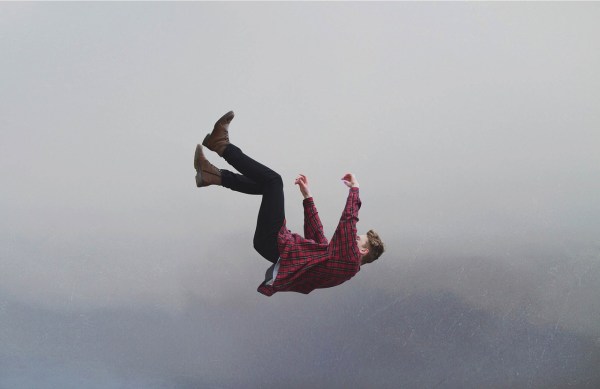
You are falling.

You’ve been falling for a long time down an ever-darkening hole. At first, your descent was a gentle downward drift, like floating, but now your speed calls to mind the words ‘terminal velocity.’

If someone were to ask why you’re falling, how you came to be here, you would only be able to say that you deserve it. The details are complicated, and fuzzy. All that matters at this moment is what’s coming.

This is what it feels like:

You’re a rustic, hand-thrown stoneware mug with a durable glaze, stained on the inside from years of coffee and tea, a few small chips along your rim, containing the sludgy remnants of yesterday morning’s coffee.

You are falling.

As you tumble through the air, you spill the bitter liquid over your sides. It splashes across the linoleum floor, sending drops flying onto two people standing nearby, staining their pants. One watches helplessly. The other will be oblivious until you land with a sharp crash. Later, both will fret over whether the spots will wash out while asking each other how this could have happened. You were so sturdy. You weren’t even close to the edge of the counter. It doesn’t make sense.

This is what it feels like:

You have time to think, I’m falling and I’m sorry.

You feel yourself emptying out, everything draining away to leave you hollow. You focus only on what’s coming, the inevitability of it, the necessity.

As the ground rises to meet you, fear arrives. Not the piercing terror of facing a grizzly bear in the wild, but the dull anxiety of walking into a dark, unfamiliar room. You brush this away and settle into a numb calm, become an open ocean beneath a heavy blanket of dead-still air. Acceptance.

In the final fraction of a second before impact comes a flash of relief mingled with a mournful yearning as vast and deep as the universe itself.

You shatter.

This is what it feels like:

You wake to find that someone has put your pieces back together. You feel every crack, the stiffness of the glue, the weakness of your structure. You’re whole, but you will never be the same.


Cabinet Of Heed Contents Link 24

Image via Pixabay

Just A Bead – Pauline Duchesneau

A hollow white streak pierced the lone glassy obsidian sphere. Inspiration lagged, defying
limitless options. What purpose? What message? Or concept? Another time, in another mind, the
manifestation would appear. But now, the depth of the glossy black equaled the stagnated
innovation. No epiphany rescued. Absent craving tormented. Meaninglessness reigned. The void
expanded and enveloped, created nothing from more. Apathy thwarted as distinctly as the point
of the unthreaded needle without a goal.


PAULINE DUCHESNEAU’s writings of various sorts have appeared in Dime Show Review, Pilcrow & Dagger, Adelaide, Riggwelter, and Rosette Maleficarum, among others. Her first novel of magical realism seeks its final draft. Pauline heaps loads of thanks on her supportive wife and their ever patient beagle.

Cabinet Of Heed Contents Link 24

Image via Pixabay

Ylem – Mehreen Ahmed

Her name was Andromeda. She swam on satin water. Lapped up in the silk, her mind was restive. Her thoughts were agile, but discrete and non-linear. Absorbed her musings, her dreams were clear. She swam in them, out of her depths, just as well, they kept coming back. Braided in and out, oscil-lating, and edgy, they chased her almost, inconsequentially. In a way her swim impeded, these half-formed thoughts, writ on water’s hem.

In the aftermath of the war, random bodies floated. Down by the stream which eucalyptus skin coated. Covered by stringy barks, pale faces were spotted. The enemy gloated; bodies were quite bloated. Marked with agony, of the swollen bodies, some eyes shut, peculiarly, some were still open. Her focus turned in a moment.

She sat next to her mother. They chatted in an oval room, mother and daughter. Her mother looked fresh and young, way back, a maiden. Andromeda was born much later.

She asked.”Where have you been all this time?”

“I had been out to a conference,” her mother replied.

“How did it all go?”

Her mother answered, “Very good. All was good.”

“Ah, but I missed you. I really did.”

Her mother smiled. Father entered the room. His handsome face was radiant, the atmosphere lightened. Mother rose to offer him her chair. But father took a stool, sturdy and bare. Father died nearly a decade, Andromeda thought, in retrospect. The room darkened. Over the water, bold and low, fluttered a lorikeet, a flying rainbow. It seemed it was going to gouge her eyes. But the sprightly bird frolicked, passed her elbow.

The neighbour, who like a father, died indeed. She went to his funeral with a wreath. Then he dropped by to meet her that night, this reverie, held her cheat tight. When she asked him,“Have you seen God?”

“No,” he replied. This, a silent place.Where am I? This present moment. Vast, and void, this light space, offers no air. Did I die? Am I really dead?”

“No, God then?” she asked.

“Where is He? He hasn’t come to meet me, yet,” said the respondent.

“Do you miss us?” she had asked.

Tears in her dreams, she felt surreal.

“Yes, I miss your aunty,” he answered, then he vaporised like a collapsed star.

A fusion of elements, hydrogen and helium, led to the birth of a cosmic star. The helium ran out. Star collapsed. He collapsed. She saw the neighbour, driving his car; through the suburbs of his choice, with his wife, whom he referred to, as aunty. The chemicals conferred. An accident oc-curred. He died. Of her dreams. Finite lives made of infinite gasses. Of the cosmos, of the elements, life perished. Andromeda contemplated, the stuff of life. This precious breath, did it not live outside the orbit of death? Helium, and hydrogen, oxygen, iron and zinc.

Mountain passes were rugged. She walked through the terrain. A storm picked up, she looked for a spot. She found a cave. In the dark shelter, she sat amidst litter. A lightening fell outside. That creepy light, opened her mind to shadows below. She was not alone; somebody there. In a flash, the shadow disappeared. She was out of her wits. She tried to sleep. Just when she saw some cave paintings. On the wall, they looked ancient. And they were, ancient. In a bit, she saw a little boy. A broken charcoal in his hand, he sketched stirring stories, like the fall of Troy. He lit a small fire.

Lights emanating from the fire helped, this sentient boy, to see better. He drew stick figures of many shapes and sizes: tall, short, men, women and children. It was almost dark, on the rugged wall, shape of the boy silhouetted in the moonlight. Floodlights in the dark cave, paintings of tall tales, some washed up partly in the rain. Segment of a story, like this painting of an alley, people walked through with missing hands or hair. Many even defaced, in the falling rain. Colours ran down the leaves of trees, and turned them into lighter shades of green. Pure paintings filled the dingy walls, and onto the floor, some scribbles crawled.

Gallows hung without much peruse. Kings devised a horrendous ruse. Spilled blood into the soil to infuse. Children sacrificed, for fertility of the soils, far better use. Heavy harvest at stake, people kept quiet, no one to refuse. Little boys to be taken, gods to be appeased. Telltale signs of ominous days. The King’s men marched, and dragged the boy away. Off to the gallows. Off with his head. The artist, little boy, broken into shreds. In white loincloth, wrapped around his waist, the boy’s gaping horror, clouded his face. His small hands trembled. She looked through a portal. Tears, and cries of the innocent sacrifice. No one took pity at the bloody altar. Wounds remained unaltered. Cosmic parameter, a stern factor.

Flashbacks played wistful memories, she lay on a beach a mere bystander. A silent witness to the many silken dreams, lovers entwined a beautiful beginning. Sunken sands, in waxed moonlight. Of the mandala, an ephemera, imperfect finale of the drama; done and redone until time had spoken, given up on the beach, a part of resurrection. In the hours all became sand, quintessentially minus-cule, and indestructible. In the heart of it, each wave flow, atom of H2O.

Over those swelling waves, she boarded a pirate ship. And saw a thousand vessels, a war imminent. On the horizon, a ship appeared like a phantom. A skeleton of a ship, spectacularly luminous, shone in the lantern. There was a gunshot fire. She was hit. Oh! It hurt! She was hurt. She felt the pain of the gunshot. But she lived. She saw ships pass by, while her own cruised towards the nearest beach; sea-gulls, scoured the skies. Sands, the most wondrous, where monks built palaces, and played Kings and Queens. Of a greater imagination, ruled by them, the three Moirae sisters. Monks made mandalas, painstakingly intricate, human history and destiny pleached. Giant pyramids erected with care, and the Taj-Mahal, The great Ozymandias. The King of Kings, his life sized statue pitched on the beach. Immortalised in the scroll, the statue awash, the mandala destroyed, flattened to the ground.

The hollow sand; into the sand, she buried her legs deep to the waist. A hybrid formed of part sand and part flesh. At its best, a mermaid tail; she lay half covered under the clay. High on her imagina-tion, her dreams displayed, decrepit old castles’, windows’ deep splays. Such was the beach, on the edge of which, the tireless seas creased. Where romantics rode unicorns, nomads wild horses, Homer, churned verses, now deplete.

Time’s most valued, gift offerings to gods, watched this once how their altars burnt? Stars burnt out. The sun burnt. This gleaming altar made out of gold; plush gold clouds, nestled the thrones. A toy boat marooned, on gold-plaited sheet, uncertain of directions, an aluminium plate; hot liquid gold, poured into the mould, this sea basin, replete to the brim. Gods’ own altar, never to erode, shimmering and sure, until pilgrims came home.

Andromeda swam, a big hand bagged a snake. There was a man though towards dawn. He told her this, expressed a wish that he wanted to leave, to be born again.

“Born again?” she asked.

“Yes, that is possible,” he said.

“Impossible. Because in order for you to remain what you’re, you need genes from both par-ents.”

“It is possible, though,” the man said.

“What about your wife?”

“What about her?”

“Does she have a say in any of this?” she asked.

“Probably not.”

The wife loomed. But she didn’t seem to mind. She heard his desire. So, she did not hinder.

On a fevered night, in one short month, the man left for a forest, of illuminated fireflies. The blue forest sparkled, a pathway was strewn, with sprinklings of fire ubiquitously flown. Around tall trees and slim short bushes, he walked alone through a lucid forest. A forest transformed into a conduit, this hermit of a man, roamed its bended unit. Reincarnation on his mind, soul in another body, stars in the sky, twinkled a smile.

Here she was, with this lady in white, appeared in her dream, that’s how it transpired. Some sy-ringes in her hand, wet lips in betel juices, glowing with health, she stood at her bed. Holding them out, those long syringes, she knocked into her some worldly senses.

“Your mother’s injections.”

“What?”

The lady vanished. Her mother had run out of insulin and was on the brink of a disaster. The lady had come to tell her this, to ask her if, she could get her some insulin. Andromeda’s grand-mother, this dear lady, kind and Godly, rests now sadly. The silken waters blanketed her skin. Her swimming undeterred, held her by a spell. This undying chemical, once produced within her organ, the failing pancreas, now injected for survival.

“I’ve come to say goodbye,” it seemed he taunted. She looked at her brother, then understood his intent. Upon waking, she found to be true, that this saintly priest had passed away too. This dream-land, not entirely unreal, of sense perceptions, a world parallel. Sights sounds and smell, shaped up to be real, pain compounded a curious blend.

Disjointed thoughts came to pass. Mesmerising chimera seeped. Tantalising glimpse, of enormous replica, as shaded entity. Who’s to know, what’s with the truth, this wakeful life of actuality? A dream within a dream; doll within a doll, within a doll, the picture awry, always off limit. That cave painting in the rain, defaced people walked up the streets, the greens washed off. Waters dribbled over, of a partial reality, conceived by this artist in utter antipathy.

Such fragmented cognisance, manifold layered dream, alluded to allegory of the cave theme. Half a dream, a broken thought, the unfinished story, manifested to Plato’s shadow reality. This palpable existence, transcended truth, hinged on puppeteers beyond familiar scope. Answered with certitude, flung within the stars, lay a larger image, the fate of the universe. The long and short of it, dismantle the stars, dismantle Leda, a sense of foreboding descended Andromeda. For, “It is the stars, The stars alone, that govern our condition,” Shakespeare foretold


MEHREEN AHMED is an internationally acclaimed author. Her books, The Pacifist, is “Drunken Druid The Editors’ Choice for June 2018″, andJacaranda Blues,”The Best of Novels for 2017 – Family Novels of the Year” by Novel Writing Festival. Her flash fiction, “The Portrait” chosen to be broadcast by Immortal Works, Flash Fiction Friday, 2018. Bats Downunder, one of her short stories, selected by Cafelit editors for “The Best of CafeLit 8, 2019”.

Cabinet Of Heed Contents Link 24

Image via Pixabay

What I Loved About Barmouth in the Summer of 1986 – Steve Campbell

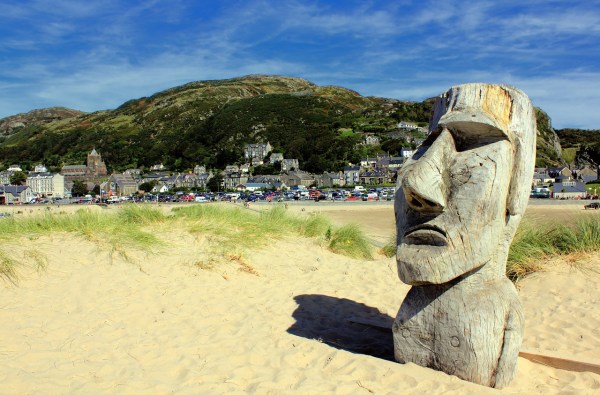
It wasn’t being woken before the clinking of milk bottles and getting crammed in, five abreast, across the back seat of our car as the smell of manure wafting in through the open windows, or the crawl behind an endless caravan of caravans, counting sheep to pass the time, it wasn’t the plastic shopping bag my brother filled with vomit that sloshed about in the foot well or the monotonous games of ‘I Spy’ and ‘Spot the Yellow Car’ that caused us to bicker and sulk instead of entertaining us, it wasn’t the wind-ravaged tent that we wrestled to erect, handed down from relatives who’d upgraded to a deluxe eight-berth caravan or the continuous Welsh driving rain, that somehow felt colder than English rain and found every hole there was to find in that tent, it wasn’t the missing bulbs of the tired illuminations that lined the promenade, or the cackling seagulls that dive-bombed us whenever we ate in the open air, it wasn’t the siren-blaring fruit machines that devoured every last penny I’d scraped together doing chores over the previous Winter, or the five out of seven days where the weather forced us to stay in the tent and play card games over and over and over again, it wasn’t the cows grazing in the neighbouring field that kept us awake at night with drunken moos, or clumps of sand that got everywhere and made applying suncream, changing clothes, showering and eating, crunchy, it wasn’t the rough pebbles that we had to clamber over, making monkey noises to reach the only square metre of unoccupied beach, or the dog turds we discovered buried a few inches beneath the sand’s surface. What I loved about Barmouth in the Summer of 1986 was that one Saturday afternoon, before we packed up to leave, where the smell of freshly cooked doughnuts dragged us into a shop and we came out with our lips coated in sugar and clutching oil-soaked paper bags brimming with fried batter, it was the afternoon where the clouds were nothing more than a whisp and couldn’t prevent the sun from browning our shoulders and raising freckles across our noses and, enmasse, everyone on the beach squeezed into swimsuits or rolled up trouser legs to feel the sea against their skin, it was the afternoon where the water was as clear and bright as any exotic location Judith Charmers visited, so much better than Tenerife or Florida or Devon or wherever my classmates would be bragging about when we returned to school in September, it was the afternoon of skimming stones until my shoulder aches and making a dam to stop the sea from coming in with a group of children I’d never met before, and would never see again, but that didn’t matter, it was the afternoon where I swam a little way out and lay on my back, waves lapping around me, and all I could see was blue because the sky had melted into the sea and it was impossible to tell where one ended and the other began, it was the afternoon floating close enough to the beach so that I could hear the shushing of waves but also being a million miles away, giggling to myself because I didn’t have the words to articulate how I was feeling, it was the afternoon that was over all too soon but one that I knew I’d come back to, decades later, reclining in a deckchair with a book in hand, I’d steal a glimpse over the pages between chapters and see my children splashing in the same sea, a few yards from the shore and a million miles away too.


STEVE CAMPBELL has work published in places such as Spelk, Fictive Dream, MoonPark Review, Molotov Cocktail and Flashback Fiction. He’s Managing Editor of Ellipsis Zine and is trying to write a novel. You can follow him via twitter @standondog and his website, standondog.com

Cabinet Of Heed Contents Link 24

Image via Pixabay

A Girl’s Guide to Frog Gigging – Mary-Jane Holmes

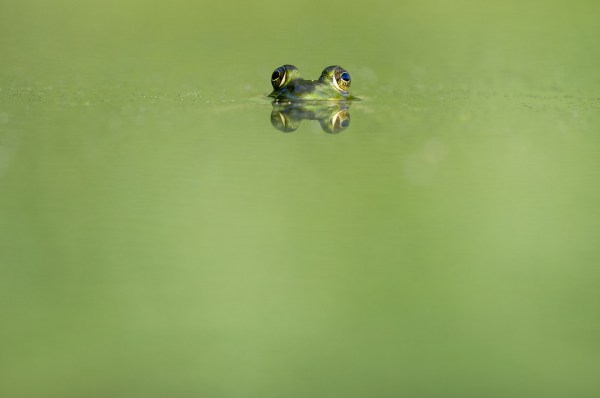
Arielle dripped duckweed into the yard, a cowl of nutria round her neck strung up by their angry orange teeth. She’d pulled them from traps sunk along a stretch of marsh she had no right to be in keeping her body low in the water so old Larnaudie, spit-polishing ball bearings by the landings couldn’t get a whiff of her and set to. Every so often, a frog mistook her skirt ballooning across the bubbling algae, for a lily pad and she scooped it up, thudding its head against the alder roots that held the river bank and stuffing it into her knickers, for she knew that snaring water rat was one thing but there was no forgiveness for frog gigging these days.

‘Give me that twine’ her mother said, taking the marlin spike from her mouth, setting it down on the halved cognac barrel that her father had used as a makeshift work bench before he’d left ‘to make his fortune’. Arielle unhitched her brace of vermin, pulled the nylon cord out from under the limp bodies and handed it over. Her mother licked the ends and twisted the splice into the lengths of the skep she was working. It would be the fourth she’d made, the others swinging from the paltry coppice beside the pig huts and the bees yet to colonise any of them. Arielle flinched at the fervour of this fruitless industry when there was so much more to be done; how were they to pay next month’s rent? She was young but she sensed this was a type of craziness deeper veined than Thierry Begoux barking at the few automobiles that growled through the village, or Mathilde the seamstress sewing nightdresses for her kitty.

‘Your brother can practise on those’ her mother said to Arielle’s catch, re-arming her mouth with cow horn ready to de-pith and strop the bramble suckers for the binding. Arielle gathered the wet shag of pelt by the tails and crossed the yard for the house, kicking at the tufty mole-hills sprouting in the lean spring sun. The warmth was welcome, the winter had been raw and with her mother too dafty to oversee the planting, the brassicas and onion sets Arielle had sowed, had rooted shallow, only to curdle in the first hoarfrosts. They’d lived the latter end of the season on pickled cucumbers from the summer harvest, saving the softer conserves – the syrup blanched persimmons and duck fritons for Mother who had stopped eating but Arielle made her suck them through hollowed oat grass.

Her brother Felix was in the larder sharpening knives on the whetstone for his new job at the abattoir, his face churned pink with effort. When Arielle picked up the pretty pearled handle of a tripe knife, he snatched it from her and ran its serrated edge across the downy cut of her jaw. Arielle did not move. She knew that to do so would only flame her brother’s frustration that Mother’s old knives were past honing and that he had to work in the abattoir. She listened to the dull blade scissor at her skin, a sound like crepitating straw. Felix stopped when he saw the coypu and Arielle bolted to the attic stairs shouting back that Mother had said to flush them out good before hanging them.

In the attic, she lay on her mattress tracing the welts rising on her cheek. She closed her eyes and thought of her father who had never sent word, had never sent the money he promised and wished there was someone to help her, knowing she would have to coop the chickens and pull Mother from her canes and baskets before the dew fell. It was then something slipped warm against her abdomen. Reaching under her skirt she pulled out a frog. She held it up by its webby hands and it did not struggle, just hung there, its pale throat pumping. ‘What a wise thing you are’ she said and kissed it, and kissed it knowing for the first time that flush of hope madness brings, and the frog blinked, her eyes as glistery as shining armour.


MARY-JANE HOLMES has won amongst others: the 2018 Mslexia Flash Fiction Competition, 2017 Bridport Poetry Prize and the Dromineer Fiction Prize. She has been published in places such as Best Small Fictions 2016 and 2018, the Journal of Compressed Creative Arts, Prole, and The Lonely Crowd. She is Chief Editor of Fish Publishing, Ireland.

Cabinet Of Heed Contents Link 24

Image via Pixabay

Heterochromia in Charlie’s Living Room – Michael Bloor

On his way to the airport for his early morning flight, Charlie felt shrivelled and cowed. The previous evening, a meeting at the university had been cancelled and so he’d arrived home early, only to find Huw Pryce-White at his ease in an armchair with a whisky glass in his hand. Charlie’s wife, Felicity, had explained (a little too quickly) that Huw had popped round to borrow a book, and she’d poured him a drink while she searched for it.

There had been a pause. Pryce-White, his famous, battered, leather jacket unbuttoned, had simply stretched out in the chair, smiled, raised his glass and winked. The wink was disconcerting, since Pryce-White had one green eye and one brown eye. Closing one eye wrought a complete change in his physiognomy. A number of past female students had allegedly found themselves fascinated by those piercing, dissimilar eyes, to be released only when they were hooded.

Charlie, initially nonplussed, then worked his way through an unpleasant train of thought, carriage by carriage. ‘What was the book?’

Pryce-White had remained silent, still smiling. Felicity supplied an answer: ‘Er, Louis MacNeice’s autobiography…’

Another pause. Charlie muttered, ‘It’s in the bookcase in the spare bedroom – I’ll get it.’

As he climbed the stairs, he recalled a poignant passage from the book. MacNeice, on first arriving at boarding school as a child, had not gone to the toilet for two days, because he was too embarrassed to ask for directions. Charlie knew how that child had felt. After Pryce-White left, Charlie had failed to ask Felicity for directions.

*      *      *

Boarding the Aberdeen-Heathrow shuttle, Charlie was shrivelled once more to find the adjoining seat already taken by a very large, bearded gentleman. But in the event, he proved an entertaining companion – Gunnar, a Norwegian oilman – who had just been dispatched by his drilling company to a place in Africa called ‘Libreville.’

‘What do you know about Libreville?’ Charlie had asked.

‘Don’t know a damned thing.’ Gunnar laughed and signalled for a tonic water and a complementary packet of peanuts. He topped up the tonic water with a whisky miniature from his side pocket.

‘If I were in your shoes, I don’t think I’d like not knowing. Unknown prospects.’

Gunnar shrugged: ‘I imagine there will be someone there to meet me – there usually is.’ He fanned some boarding passes: there would be two more flights to board after he arrived at Heathrow. ‘Maybe I’ll find out something by the time I arrive.’ He laughed again.

‘Does this kind of thing happen to you a lot?’

‘Every once in a while. Before I was in Aberdeen, I was in Azerbaijan. I’d never heard of that place either.’

‘What was Azerbaijan like?’

‘Don’t really know. I was in one of those places… er, “gated community.” Everybody there was in the oil business too. Fancy a whisky?’

‘It’s a bit early for me… but, why not?’

Gunnar produced another miniature from his side pocket, poured half into his tonic water and the other half into Charlie’s plastic teacup. Charlie had never tasted whisky in tea before. He reckoned it was a good combo.

Gunnar asked what Charlie would be doing in London. He was told about the dreary academic journal and its dreary editorial board meeting. There was a pause. ‘If I may say so, Charlie, you seem a little gloomy.’

Charlie stared into the now-empty teacup. ‘Gloomy?? Gunnar, I feel like a man on a beach watching the ebb tide and knowing it will never return.’

More whisky appeared, a half-bottle this time. And Gunnar listened to the story of Huw Pryce-White sitting in Charlie’s armchair. ‘Hmm. Hoo Priss-Vite, you say? A curious name: hyphenated, perhaps? Is he Scottish?’

‘He likes to pretend he’s Welsh, likes to play the hell-raising Celtic Bard, but he’s actually from a place called Blundellsands, outside Liverpool.’

‘Heh. You would like to do him harm, I think?’

‘Dead right, pal.’

‘Heh, heh. I was born in the Lofoten Islands, in the far north of Norway – a fishing community. You know how superstitious are fishermen. My grandfather, he knew many spells, many charms. Also, secret signs – staves – that can be drawn or carved to bring luck. Or bad luck.’ Gunnar paused to top up Charlie’s cup and murmured confidentially, ‘You simply hide the stave among a person’s belongings.’

It was a tough call. Charlie took another swig, thought about it, and then asked politely about Gunnar’s granny.

The moment passed (apparently, Lofoten Island women were bad luck anywhere near a fishing boat. No spells or staves, but she cooked a mean fish soup). The conversation moved onto the disappearance of the Scottish herring fleet. But a seed had been sown.

*      *      *

Two days later Charlie, through his open office door, watched Pryce-White wander along the corridor, into the staff toilets. Charlie snuck quickly into the vacant adjoining office and stole Pryce-White’s famous, battered, leather jacket. That night, he burned the fucker in his backyard.


MICHAEL BLOOR is a retired sociologist living in Dunblane, Scotland, who has discovered the exhilarations of short fiction, with more than thirty pieces published in The Cabinet of Heed, Everyday Fiction, The Copperfield Review, Litro Online, Firewords, The Drabble and elsewhere.

Cabinet Of Heed Contents Link 24

Image via Pixabay

Tessa – Emily Livingstone

There she sits, a queen of death and life, on the chair next to Mom’s bed. Mom has been dead for two weeks, and I’m ready to touch Tessa. Tessa’s chestnut curls have called to me since I was five. Her face is still perfectly smooth, her eyes still shiny and piercing. I’m sweating, I realize, but I grab her anyway, feeling the stiff petticoats brush against me as I carry her.

When I was a girl, I longed to play with her, and Mom always said no. But I couldn’t resist—she would be the perfect tea party guest, the most obedient child in a game of house—I needed her. I took her once, when Mom was lying down, and brought her into the garden to smell the roses. Then, I just sat on the grass, and looked at her, holding my breath as I stroked the hem of her dress, rubbed those delicate fingers. And then, Tessa and I were yanked apart, and I spent two days in my room, listening to the click of Mom’s heels outside the door and the clomping footsteps of Sean, two years older and never in trouble. Mom took me out every few hours for the bathroom, but she didn’t speak to me. When I washed my hands in the sink, I met her eyes in the mirror. They were like dark glass, with no special recognition for me.

I am holding her in Mom’s garden now, and I hear my name. I go red from cheeks to core. I’m a grown woman, holding Tessa in the yard and looking at the neighbor woman.

“I’m Becca,” she says. She’s tanned and thin, holding a watering can and looking at me through the chain link. “I just wanted to say sorry about your Mom. Let me know if we can help with anything—my husband’s Pete.”

I nod, waving at her awkwardly while I hold the doll. Then, I flee.

Mom hated that family. There was the day it rained—one of Mom’s good days—and the kids were out playing in the mud. “Shame on their mother, letting them run around in the muck like that.”

I thought they looked like something out of a children’s book, running, shrieking, floating little boats in a puddle near the swing set. But I said, “Let’s close the curtains. Then we won’t have to see.”

I sit Tessa on the couch and start microwaving a Lean Cuisine, trying to get it all out of my head. Mom. Becca. I keep catching Tessa’s eye. Even now, even when I’m the only one left (Sean can’t be bothered to come back to deal with Mom’s death, just as he couldn’t be bothered to come back and care for her when she was alive), Tessa is distant. She looks through me and past me, past my own death to a time when she can rule over an empire of tidy solitude.

The microwave beeps and I flinch. Tessa looks smug. And then, I know what to do, and I go and take Tessa by the arm so that her body clunks against my leg, and I bring her up the driveway to the street and sit her on the trash bags I’ve put out for garbage collection.

My heart is beating wildly, and all evening, I think of her out there. I imagine tomorrow, when she is thrown in the back of the truck and coffee grounds smear her pale face, and egg yolk sticks to her dress. When she is compressed.

I fall asleep watching TV, and wake to the sound of the truck pulling away. A rush of nausea washes over me, and I go to the window, but the trash is gone. Tessa is gone.

I’m lonely. Lonelier than after the funeral. The only time I’ve felt like this was after Candy. Candy, my secret. Candy, who plucked me from the sidelines of a college party and taught my body to move. Candy, who held me in her arms for weeks and let me hold all her secrets. She left me so easily.

I sit on the couch as Mom used to do, and stare out the window at the neighbors’ yard. And then, there is the little girl. She is carrying a big blanket and a basket, and it’s so much for her, she almost looks like she could fall over. Then, she leaves again without unpacking her picnic, and returns with a teapot, which must hold real water, because she carries it against her chest, right under her chin, and walks very carefully. She unrolls the blanket, and there—green dress, black shoes, chestnut ringlets.

The girl bends Tessa into a sitting position and slowly pours two cups of water. The little girl solicitously holds a cup to Tessa’s little bow mouth, but all the while, Tessa’s eyes look over the girl’s shoulder, fixed on me.

I hold my own oily, stringy, dull hair and pull. My eyes are watering. I take a step toward the slider, then stop. I should never, never have thrown her away. She’s valuable, probably. She’s mine. The girl will ruin her.

I watch the girl speak to Tessa and lean in for her replies. When the tea is complete, the girl picks Tessa up and hugs her around the waist, bringing her inside with all the casual intimacy of a sister.

I pack more things in boxes, but then I have to unpack them in case I’ve made another mistake. It’s around two a.m. when an idea comes and hope coats my tired brain and lets me sleep.

*      *      *

The aisles are filled with cheap, plastic dolls wearing outfits in garish hues and looking blankly out into the fluorescent light with overdone expressions of wonder or joy. How can I possibly get the girl to want one of these? They are nothing like Tessa. They would be all wrong at a tea party. They would drool on the table cloth and spit up the tea. They would crawl away and get mud on their jumpers.

I settle, finally, on a doll whose name has already been chosen by some marketing team. “Mackenzie” has straight, shiny blonde hair and makeup painted over her eyes. She has a denim jacket over a tank top and a skirt that’s repulsively short. But at least she has eyes that open and close.

*      *      *

I knock on the door while I balance Mackenzie’s box on my hip. She’s wrapped in appropriately heinous paper depicting hundreds of balloons rising with snaking, curly-cue strings underneath them. There’s a pre-done, iridescent bow to top it all off.

The mother seems happy to see me, eyes flicking to the box. She invites me in. The happiness doesn’t last long when I explain the mistake—that Tessa belongs with me, that I’ve brought this other doll for her little girl.

The mother gets cold, her face losing its flexibility. “I know you must be going through a tough time,” she says, “but Lyddie’s really taken to the doll, and you did throw her away.” She takes Mackenzie and promises to try.

*      *      *

The girl goes outside later, holding Tessa. She sits on the ground hugging Tessa tight, stroking the perfect curls, and I open the slider slowly, go out there, drawn to them. She hears me, and stands—her face is red and blotchy with crying. She holds Tessa’s head under the chin and shouts, “You can’t have her! She loves me!”

The girl runs with Tessa behind an oak where I can’t see her. A moment later, the door to the house opens, and the mother makes a beeline for the girl. My breath catches. She’s going to get it now. The doll will be taken away. The little girl will be locked up.

The mother scoops up girl and doll and carries them into the house, smoothing the daughter’s hair and murmuring to her. She doesn’t look at me.

My knees feel wobbly. I go inside, to my room. I lie down on the old pink comforter, burying my nose in the mildewing cotton.

I used to lie just this way when I was bad—when Mom put me here. I would go in and out of sleep, and each time I woke up I would try the doorknob, sweaty in my hands, but it was always stuck. Sometimes, I shouted, but Mom never answered. Sometimes, when Sean was home, he would come to the keyhole and yell, “Shut up, Adah!”

Finally, Mom would open the door and say, “That’s all done now. Time to come out.” I’d be so hungry, and Mom would give me a bowl of white rice and a glass of milk. Always that meal. What did it mean?

I can leave my room whenever I like now. When I finally do, I see an envelope lying on the floor just inside the front door. I read the message and open the door.

There is Mackenzie, smiling up at me from her plastic box.

With scissors, I cut into the box, freeing Mackenzie. I hold the doll up and look into her face. Mackenzie looks friendly, open, maybe a little pathetic. Of course, the little girl had not wanted this doll. Of course, she had not been fooled. Her hair isn’t even right. Not even close to right.

My hands are trembling as I plug in the curling iron in the bathroom and use it on Mackenzie’s slick blonde hair. There’s an unpleasant smell, but I bite my lip.

“Beauty is pain,” I tell Mackenzie.

The doll is horizontal on the vanity and her eyes are closed against the heat of the iron. What else? Wipe off that makeup. There must be a way to get it off. Different clothes. I meet my own eyes in the mirror and I see my damp, red face, the wrinkles around my eyes and mouth, my wet eyes. I look back down at Mackenzie. The curling iron has melted part of her cheek and her hair is caught in the plastic wound.

“Come now,” I tell her. “Be a good girl.”

Really, her hair is better, and the curls almost hide the burn.

When I lie Mackenzie down on the welcome mat next door, I think she looks quite well.

*      *      *

The knock on the door is angry—like a movie where they will come to take people away to a secret prison. But I feel a kind of calm return to me. It will only be Tessa, coming home.

But no—it’s the father from next door, gripping Mackenzie tightly by the neck. Mackenzie’s wide-eyed, scarred face thrusts into mine, and I reach for her, only to have her yanked back again.

“You left this on our doorstep,” he says.

I’m afraid. I’ve never had a man mad at me who wasn’t my own brother, and Sean was bad enough. The father is tall and a little overweight. He’s still wearing work clothes, a suit and everything. He is like an old TV father gone wrong.

“You did this as what—a threat? Well, I’ll have you know that if this doesn’t stop—if you don’t cut this out, I will call the police. You leave my daughter alone—and my wife.”

Now, he shoves Mackenzie at my chest and my arms come up to close around her. I’m shaking and I have to pee. I don’t move until I hear the neighbors’ door slam shut.

“There now,” I say, and sit Mackenzie on the couch. I’m still shaking when I make it to the toilet and my bladder lets go.

My legs feel unsteady as I return to the living room. “Mackenzie, quiet down. You’re getting on my nerves.”

I pick her up.

“Why don’t you go and lie down,” I say. “I’ll let you know when it’s time to come out.”

I lie Mackenzie down on the faded pink bedspread, and her eyelids click closed.

I close the door and lock it.

I go over to the sofa and sit, holding my knees to my chest. I turn on the TV and let the programs play and play. Mackenzie wants to come out, but it isn’t time.

There’s a noise from next door, and I’m up, looking out the window. I hear running, stomping feet, then a boy’s low grunt, and a small sound I can’t identify. The brother is on the porch of their house. I go for the slider, and I can hear more happening—footsteps and angry yelling and a girl’s wail.

I fumble with the handle, then I’m outside, and four pairs of eyes are on me. There is the father, red-faced and frozen mid-yell. The mother, kneeling and hugging the little girl around her middle; the little girl, red-faced, too, and crying. There is the boy, staring at me and holding Tessa by one leg, her petticoats all overturned and her poor bare legs exposed, and her hair hanging down, but even worse, her face. Her face is in pieces on the porch—I can just see it from here, through the chain link that separates the yards. The boy glares at me. The mother ushers all of them into the house. Tessa goes, too. Only her face remains.

I moan, backing into the house. I crawl into bed with Mackenzie and clutch her tightly.

*      *      *

Mackenzie and I spend the next few days together. We don’t go out or answer the phone. When the real estate agent Sean arranged for comes, we are quiet and don’t move a muscle.

The night before trash pickup, I’m anxious. Mackenzie tries to comfort me, but she doesn’t understand.

We watch out the window. Finally, the father brings his trash in a black bag up to the curb and leaves it there. When it’s dark, I tell Mackenzie to wait, and open the front door and creep up to the road. I tear open the trash bag and reach through the coffee grounds and liquids and soggy tissues until I feel her.

I take her by the waist and hug her, carrying her home.

Tessa is quiet during the bath, which is a blessing, since the water could get inside her head if she makes too much of a fuss. Much of her face is gone now. The eyes, nose, and most of the mouth are broken away. All that remains is a bit of lower lip and jaw, delicate temples and a touch of forehead at the hairline. Mostly, there is a dark cavity where Tessa’s face was, showing the concave back of her little bisque cranium.

After the bath, when I bring Tessa out to the living room, Mackenzie offers a friendly smile. Tessa has only her bottom lip now, and it can’t smile.

It doesn’t matter.

We are together now.

We eat frozen meals I have stored in the basement freezer until the power gets turned off. We light candles and drink lukewarm tea slowly in the silence, with not even the hum of the refrigerator to disturb us. There is knocking sometimes, but the phone no longer rings.

We get notices in bright colors, slipped under the door. There is more knocking.

We know what to do. It’s simple. We just use the candles—the curtains, the old bedspreads, the couch, they all burn easily, and there is light again, one last time.

 

Cabinet Of Heed Contents Link 24

Image via Pixabay
Parallel Lines – Tina M Edwards

I was a child of the ‘70’s. Growing up amongst bell bottoms and foot long collars, brown and orange wallpaper. It was a time of political change, and one very hot summer. Fleetwood Mac was on the record player and Stevie Nicks was pinned on the inside door of the garden shed.

On the days that dad went to see a man about a dog, I was allowed inside the warm small space. ‘To keep an eye on things,’ Dad said. Make sure Mum didn’t ‘tidy’ the place. When he eventually returned, stumbling and slurring words, we sat in a haze of Woodbine that mingled with the smell of fresh creosote. We were happy then. Me, Dad and Stevie, until mum started banging on about how she always did everything around the house while we had a life of Riley. Whoever he was, he must have been one lucky bugger, because I thought it was us who were the lucky ones.

Then one day Mum decided to get a job, as a Tupperware lady, and almost overnight everything changed. The fridge was full of plastic containers stuffed with carrot sticks and there was no dinner on the table when Dad got home from work. That was when the rumours started, from number 28, that Mum was carrying on with another man. Someone high up in Tupperware. So when she upped and left, one Sunday evening, dragging an oversized brown suitcase down the back lane, I guessed it must have something to do with the Riley bloke.

By the time she came back, six months later, the fridge was full of Vesta curries and Dad had finally brought the dog home. A deaf black and white mongrel with a dodgy back leg who we named Debbie. The shed had been dismantled one night when the coal bunker was empty and Stevie Nicks had been stripped and used to pick up Debbies shit. Dad was growing side burns and ironing his own shirts, and on the record player was Blondie. And all dad said to mum when she walked through the front door was; Pamela, things are going to be different around here now.

The next morning I opened the fridge and found a lone Tupperware container on the top shelf next to the cheese. A piece of paper had been stuck to the lid and read; ‘This is a reminder to never leave things for too long or else they will go off.’

It stayed there for a while until I saw dad remove it after breakfast one morning and replace it with a Vesta curry. He winked at me and I nodded as if I knew. Knew what the hell was happening in the cold space that no one talked about. His secret was safe with me. I’d not let on I’d seen the woman down the road from number 28 shopping in the corner shop, her basket full to the brim with Vesta Curries.


TINA M EDWARDS poetry and fiction has been published in the U.K. and America. She has a penchant for ducks and Cornwall and has been told since childhood she has a vivid imagination. Which is just as well, considering she loves to write. In another life she was probably a Chirologist.   www.tinamedwardswriter.wordpress.com

Cabinet Of Heed Contents Link 24

Image via Pixabay

Banshee – Claire Loader

They say the banshee came the night my grandmother died, the night my mother was born. Through their screams and wails it was said another sound could be heard, a keening howl that tore about the hedgerows, raced upon the fields. The desperate cries of life and death dancing above the thatch as both bled into the floor beneath it.

I never really believed in all that shite. My Grandmother dying as she gave birth on the barren earth of a dingy cottage was horror enough without the need of a spectral element. I think Mam was always disappointed in me in that way, as if not believing in another piseog I was turning my back on her somehow. Just another disappointment to add to the pile.

“Could you make your bed this morning please, just once?”

“Yes, Ma.”

“And don’t go using the dryer so much. You know it eats up the electricity.”

“I’m sorry, Ma.”

“And you better not fail that maths test this morning. If I have to be called in to talk to Mrs Kennedy one more time…”

“I’ve been studying Mammy, don’t worry.”

If the banshee really did exist surely it was in the form of Mrs Kennedy, she heralded the death of all things. That pursed upper lip, those awful tanned stockings, the way she spoke Irish like she was squeezing it past a carrot squashed up the hole of her arse. Her classes were like one long drawn out scream in which we were all forced to remain silent, not knowing which one of us would drop next from shear boredom. And I was late, again.

“Ms Kavanagh, Dia dhuit.” The words slid out of her mouth like putrid yoghurt. “Delighted you could join us.”

I sat quickly in my seat, determined to ace this thing, to prove to Mam I was more than just a future burger flipper at Supermacs, pregnant at seventeen to the likes of Enda Costello. I looked up at him from my exam paper, broad shoulders hunched over his own, the bottom edges of his pants mucky with this morning’s dirt. Up early on his Dad’s farm most like, his large hands at work long before I managed to drag mine out of bed. His pen was dwarfed by them, and I could suddenly see myself in its place, albeit far less rigid…

“Ms Kavanagh! Eyes on your paper please!”

The banshee again, screaming at me from my future. I looked at my blank paper, then at the clock. I didn’t need the gift of foresight to know I was in deep shit.

When I arrived home Mam looked shook, as if she knew already of my imminent F.

“You alright, Ma?”

Her hands paused in the sink, “Yes. Yes, it’s nothing.”

My eyes narrowed, full sure she could somehow see into my mind, into all of its scraggly compartments, see clearly my morning equations that had nothing to do with numbers. I wavered like an unsure cat, not knowing if it was truly safe.

“Why don’t you go walk the dog or something?”

My brow creased in suspicion. “Sure, Ma.”

I grabbed the dog, hand sliding over the small box in my pocket as I headed out to the quiet of the back field. My parents hadn’t built far from the old cottage, its stony gable end the only thing visible now through the tangle of brambles. I turned from the kitchen window, lighting up a cigarette away from the ‘Great Eye of Mammy’ that was otherwise always watching, Molly rustling about the long grass as I drank in the quiet of the afternoon, certain at any moment Mrs Kennedy would appear with my fast food uniform at the ready, the stitched white shirt proclaiming my doom.

Molly started barking suddenly and I nearly tripped as, quickly turning, I saw her growling wasn’t at the house but the ruins, a dark movement catching my eye from between the bushes.

“Those little Halloran shits again.”

I don’t know what I was doing heading towards the cottage, as if my cigarette was some kind of lightsaber against local vandals, but I stopped abruptly, the dog trembling at my feet, a hooded figure looming out from the stone.

“What the…”

A shriek broke the air and, not waiting to find out if it hadn’t come from my own mouth, I ran through the paddock, my fingers fumbling on the kitchen door, before slipping inside and slamming it safely behind me.

Mam spoke suddenly from the middle of the kitchen, as I leaned heavily against the door, my chest heaving. “You saw her too, didn’t you?”

“I, no, um… maybe?”

Mam stood ashen, her gaze suddenly fearful and I barely made out her whisper, “But she only comes to warn of another’s passing. But that means…”

Our eyes locked. Perhaps now was a good time to tell her about the test.


CLAIRE LOADER was born in New Zealand & spent several years in China before moving to County Galway. A photographer & writer, she was a recent winner in the Women Speak poetry competition and blogs at http://www.allthefallingstones.com

Cabinet Of Heed Contents Link 24

Image via Pixabay

The Layover (Bellies On The Breeze) – Stephen Mead

Some birds have heart attacks in mid-air,
the pulse suddenly fluttering at too rapid
a rate. We, as well, often travel that
accelerated. Our eyes, cameras, process
micro seconds, our limbs; long distance
runners, our energy; hormonal stimuli
thrown into overdrive…

Let up. Let up.
Tranquility spills into panic, sifts
like rain through tired joints, spreads,
steams invisibly.

Remember the bends?
They are resigned now, detached, clasping
stillness like wings that have flown
into the tower of a large glass marina…

As water things slide, fin-sprinting
here & there for the ebbing of concentric
ripples. The beauty of such motion,
observed & next, entered, is what holds us
to existence as we again dive, gut-gripped,
in flight.


A resident of NY, STEPHEN MEAD is an Outsider multi-media artist and writer. Since the 1990s he’s been grateful to many editors for publishing his work in print zines and eventually online. He is also grateful to have managed to keep various day jobs for the Health Insurance. In 2014 he began a webpage to gather various links to his published poetry in one place.

Cabinet Of Heed Contents Link 24

Image via Pixabay

Flamenco Tat – Chloe Balcomb

Turning the corner into Vernon Street, Daisy tastes vermillion and her unease grows. It’s been a while since Rhoda had one of her turns but then she’s just finished a commission, always a trigger. Daisy sighs. She’s an Art student herself so it’s not that she minds having an unusual mum who’s a bit batty and dresses like someone from the 1920s, it’s just the unpredictability factor.

Daisy pauses at the front door and takes a deep breath. Beneath the grey blue paint, the grain shimmers. She admires its silky taffeta appearance, will one day replicate it on her own front door, ‘Not long now!’ she thinks giddily. Living with Rhoda is taking its toll.

‘Rhoda, I’m back! ’ Daisy calls from the hallway. She squeezes her jacket onto the overflowing hooks, pausing to rest her cheek against Rhoda’s favourite, a moss green maxi coat that looks incredible against her mother’s auburn hair. Daisy’s own hair is an ordinary brown, though thick and glossy, while Rhoda’s is beginning to thin.

She bends down to unlace her boots. They’re still pinching at the bridge, which is weird because surely ‘vintage’ Docs should be worn in by now? Her mother distrusts second hand shoes, says they bring a stranger’s energy into the house that’s hard to eradicate. Claims Daisy’s been ripped off anyway, says purple Doc Martens didn’t even exist back in the day.

Daisy hates it when Rhoda bursts her bubble but has learnt to keep quiet. The consequences of shaming her mother are worse than the initial pain. Take that time Rhoda killed Goldy in an ill thought out spell. To be fair, though Rhoda had found a substitute, Daisy had spotted the change. Tired of her daughter’s protest and growing impatient at her tears, Rhoda had turned herself into a hat.

A straw boater trimmed with green ribbon was completely useless to eleven year old Daisy, who for the rest of the week had to cook her own meals and walk the four miles to and from school because Rhoda hadn’t thought to leave bus fares. A week felt like forever in a quiet house and a hat wasn’t something she could easily chat to.

Daisy’s father Robert had left them by then. And little wonder, given her mother’s outbursts and eccentricities, though the suddenness of his departure and his continuing silence, still rankles.

Daisy’s tried hard to respect his choices but this Christmas, after one too many Snowballs, she found herself asking Rhoda whether she ever missed him? Annoyed, Rhoda declared that she certainly didn’t and nor should Daisy. She went on to list Robert’s faults, including his unimaginative dress sense, complete lack of skills and general neediness.

Despite her mother’s vehemence, Daisy detected a note of regret in this tirade but was deterred from further questioning by Rhoda’s final remark that Robert smelt strongly of seaweed. This last part was true at least and suddenly reminded of his metallic, salty scent, Daisy had mourned that too. So what if Robert had dressed conventionally, couldn’t’ summon smoke or turn cupcakes into mushrooms? As far as she knew, neither could anyone else’s father.

’Mum, I’m back!’ Daisy calls again but still there’s no reply. She wiggles her bruised feet and pads into in the front room.

Light splashes through the stained glass window, flooding the carpet with colour. As a little girl she’d loved bathing in the translucent strands and relished the way they’d clothed her skin. Purple was her favourite because it made her happy and she loved the underwater feeling of emerald green. The blue was deliciously calming and made her sleepy. Orange could be sickly if you got too much of it and red made her so itchy that she’d continued to avoid it.

‘Why are you standing there, Poppet?’ Robert would ask, but such things were hard to explain and though he ruffled her hair and nodded seriously, she could tell that he didn’t understand.

By contrast, Rhoda positively encouraged unusual behaviours and signs of exuberance. She understood that Monday, a red day, was spiky and uncomfortable. She knew instinctively which fabrics Daisy would enjoy and why her daughter rejected clothes that smelt wrong when loosely crumpled.

Early on in Secondary school there’d been an embarrassing Parents’ Evening when Miss Price had openly gawped at Daisy and Rhoda’s contrasting velour capes, before suggesting that Daisy might be on the Autistic Spectrum, what with her ‘heightened sensory reactions.’ Rhoda had responded by pinching Daisy’s cheek delightedly and laughing her wild laugh, before saying,

‘You might call it that but we know different, don’t we Daisy love?’

To all future events Daisy wore her school uniform. She became a model student and avoided further incident by saying that her single parent working mother, was unable to attend. Of course, things would have been simpler if Robert had still been around. Daisy fondly remembers her father’s ordinariness, the nubbly feel of his soft worn corduroys, his wooly cardigans.

Gradually, over time, Rhoda has become more stable and there are fewer surprises. Usually when Daisy returns from college, Rhoda’s absorbed in one of her spectacular paintings. Great splashes of colour on vast canvases, she works on them late into the night. Daisy herself can only glance briefly at them before she’s affected, but Rhoda’s London dealer has no such problem and they always sell well.

As a result, Daisy has rarely gone without, though it’s true to say that Rhoda, an ardent anti-consumerist, is increasingly a hoarder not a spender. Despite her love of textiles and original design, Rhoda’s wardrobes creak with faded garments that no longer fit her and are pocked with moth holes. Like elderly recalcitrant relatives, Rhoda declares that they have earned their space and must stay.

Standing in the sitting room Daisy takes stock of the overstuffed bookcase and ancient couch spewing its innards. The place is cluttered with useless objects, like these on the mantelpiece – a pile of irregular shaped green stones, a carved elephant with a broken trunk, the sooty stump of a candle and a creamy limpet shell that, if she’s not mistaken, has recently migrated here from Rhoda’s bedside table.

A delicate thing with a tinge of softest primrose yellow, it reminds Daisy of a summer dress she once had. She picks it up tenderly, blows dust from its slim flutes and feels an intense and immediate sorrow. A tear plops onto the shell. Rubbing it in gently she feels the hairs on the back of her neck rise to attention.

She turns round slowly. To all intents and purposes the room is empty but the air crackles with electricity and little puffs of wind ruffle the curtains,

‘Mum?’ she murmurs tentatively and then more impatiently, ‘Mum, I know you’re here somewhere, please make yourself known!’

There’s no response and Daisy finds herself sighing again. Rhoda’s timing stinks as usual. Either she’s forgotten that Daisy’s having friends over from college tonight or this is a deliberate ploy because she doesn’t want others in the house.

Daisy stalks into the kitchen and makes herself a cup of tea. She fills Smokey’s empty saucer with milk and calls him. He doesn’t appear either and her irritation rises. How many times has Rhoda promised she’ll stick to inanimate objects? And what can possibly be learnt by turning a cat into a notebook or place mat anyway? Smokey will be cranky and off his food for days, no doubt emphasising his annoyance by crapping in the bath.

Daisy fishes out her teabag and throws it in the compost bin before clocking the acrid smell of singed paint from near the pantry. She scans the area for alien objects and spots a black enamel tea tray, blowsy with roses and rimmed with gold, the style of which can only be described as Flamenco Tat.

The tray shimmers. She picks it up carefully. It’s faintly warm and sticky, the enamel not quite set. Anger rises in her body. Surely Rhoda could have given Daisy a chance to talk her round? Or at least chosen colours more thoughtfully? God knows how long she’ll be in this form, leaving Daisy as usual, to field awkward questions.

‘Jesus Mum!’ she exclaims, ‘You’re an Artist! Why not choose a Faith Ringgold or a Tracey Emin? At least I’d have something decent to look at!’

Daisy slaps the tray back down and stomps back into the front room. To her relief Smokey slides in beside her. She picks him up and strokes his soft grey fur but he struggles uneasily from her arms.

Alerted, she looks around. Something in here is different but what? She turns to the mantelpiece, her skin tingling. The air around and above it is shimmering softly, creating light and shadow, a sense of movement.

The tingling continues and she finds herself picking up the limpet shell and inhaling its briny odour. Its pleated creamy surface is emitting heat and appears to be pulsing. Daisy stands stock still, blood pulsing in her head. Surely Rhoda couldn’t’t have? Wouldn’t’ have?

‘Robert,’ she whispers incredulously and the shell gives the smallest of shivers,

‘Dad? Is that you?’


Cabinet Of Heed Contents Link 24

Image via Pixabay

Round And Round The Garden – Helen Laycock

No one ever passed Ettie Budu’s house without crossing the street first. It was an unwritten rule, a fact of our childhood. And you didn’t just pass it, you ran.

Ettie Budu’s house was a place to be feared, where malevolence resided, as heavy as a sack of ditchwater. It hung in the air and clung to the building like a ball of flies.

Get too close and who knew what would become of you? It was well known that she was a witch and that, behind that rotten brown door and those filthy windows, she concocted spells.

The house had become the personification of evil long before our lives had begun.

Everyone knew of it; there was no need to point it out. Find the worst house on the street and you had found Ettie Budu’s dwelling-place. Her hovel.

Unlike the other semis, Ettie’s had no front wall at the end of the garden. The grass grew high – an enchanted forest – and would, no doubt, shackle any child that dared to wade through. The windows, thick with grime, were as still as the eyes of the dead, but we knew we were being watched. It was impossible to see in from across the road – and no one was ever brave enough to peer in at close range. It seemed that dirty nets had been draped at the edges, but they may well have been cobwebs.

Day after day, at the end of school, groups of children would take a deliberate diversion in order to pass the house. None of us ever had permission to walk home that back way; it was a ‘lonely’ place where bad men hung out, but no one was willing to lose face and refuse the route. We’d climb a gate which took us to a narrow, grassy pathway along a little river, a ‘reen’. Gardens backed on to the side where we walked, and there was wasteland on the other. The gate we had to climb at the other end was just opposite Ettie’s.

Our status moved up a notch if we stopped and stared at it for a moment or two. It was a way of asserting bravery.

Sometimes a chant would begin: ‘Ett-ie, Ett-ie, Ett-ie.’

We’d adopt a stance: feet splayed, knees bent, hands on thighs. Quick glances would be exchanged, but we had to watch the door. Always.

It never lasted long. No one had the guts to see what would happen if she came out.

In the winter months, when grey afternoons sheathed the village in darkness, we would linger – not for long – on the opposite side of the street and watch the upstairs window as it flickered with candlelight. It was a scene far removed from our experiences of modern living; it had the intrigue and bygone age-ness of a grotesque fairytale. We knew she’d be stirring a cauldron in that upstairs room. An imagined face at the glass, hollowed by the light, would send us squealing and running.

Then, one day, I felt big and brave. Omnipotent. Adrenaline coursed through my veins, like fire bowling through a tunnel.

In an instant, I took off from the safety of the opposite pavement, leaping onto the road from the kerb and hurtling towards the unkempt lawn, seeing the house closer than I had ever seen it before – the parched windowsills, the gouged brickwork and the cracked glass of a dying building.

The ground was unexpectedly uneven beneath my feet as I ran in difficult circles through the long grass, lifting my feet high and holding my arms up for safety. I felt glorious and daring, and looked for approval as I curved around for the second time to face my awestruck onlookers.

I was a hero. I, the unnoticed one, was suddenly visible – the eye of the storm.

Then, chop. Everything changed.

Like the jerk of a reversing second hand, their gaze shifted from me one notch to their left.

As one, their smiles fell.

Their jaws dropped.

Their bodies flinched.

I heard a sound behind me.

I saw my friends run.

Should I look? Or run?

I recall the instant as if it all happened in slow-motion. As my chin passed my right shoulder, I saw a wiry, old man who had stepped out of the front door and was now feet away from me. His face was scrunched up in anger. His left arm was raised, and when I looked up at it, I saw that he was holding a cleaver. In a beat, he ran at me and I stumbled out of his garden, my legs taking great unwieldy strides.

I didn’t look back. I sprinted right to the end of the long, long road where the other children were hiding around the bend, fizzing with excitement and terror.

‘That was Ettie’s brother. The madman,’ I heard someone say. My heart was beating like a caught bird, and my chest prickled and burned as I panted.

‘A brother?’

This was news to everyone. There were two of them living there?

Double evil.

Our whispers filled the evening air like frenzied bats before we dispersed to the light and safety of our own homes, each a little more afraid than we had been up until that day.

The challenge had taken on a whole new dimension. The danger was real. We had been right to fear the sinister embodiments of depravity which dwelled inside that house.

I avoided any route that would take me past Ettie Budu’s after that. Maybe she didn’t exist at all, and it was just a vicious old man who lived there.

I wasn’t convinced.

At the age of fourteen, I took a Saturday job at the local supermarket, weighing out the fruit and veg for customers and pricing the brown paper bags. I was positioned right at the entrance.

Even though the incident had been years before, my breath caught like a wedged pebble when a hunched figure shuffled in just as we were closing, late afternoon, one dark November.

It was Ettie.

I experienced a cold thrill. I wanted my friends to see how close she was.

The stench was putrid. She was wearing a headscarf and a huge overcoat, and was dragging a battered trolley. She bypassed me and went straight to the tins just next to my fresh produce.

I could see her filthy face, whiskered and warty, the very image we’d concocted when we were ten. Her mouth hung open as she rasped and wheezed; I imagined beetles and spiders being exhaled with each whispering breath. She had only a few black teeth.

I shuddered. Even now I was a teenager, she still had the power to unnerve me. I dreaded a direct look from her; her eyes would turn red and she would throw a curse upon me as though netting a fish.

She really did have witches’ hands, too. Her nails were long, thick and brown and when her sleeve rose, I could see that the skin on her arm was impregnated with dirt.

I watched her steal a few tins of peaches.

As soon as the manager had locked the main door and was switching off the lights, I grabbed my coat and left by the back entrance. It would take her a while to get home. I could catch her up.

I had no idea why I wanted to be in proximity to someone who could strike me down with black magic. Perhaps I had been charmed.

I could see her shape, rounded, no head, shuffling along ahead of me. She looked like a dark toad under the streetlights. Because of the peaches, or the brother, or the state of her house, I felt immense anger towards her. She moved steadily through the night.

I stopped trailing her within a safe distance of her house.

She still scared me.

All through the winter she came for peaches.

She never paid. I never said.

She was always dirty. She always wore a man’s coat. I began to wonder if she might have been thin underneath. What else did they eat, she and her brother? Though I must have stared, she never looked at me. Her gaze seemed fixed on her dirty boots. She was bent like a bridge.

On the last Saturday of February, Ettie didn’t come. I had moved the last few tins of peaches to the front of the shelf for her. I left through the back door as the manager flicked off all the strip lights. There was a frost on the bins and the air was sharp. I wrapped my scarf around my mouth and headed for The Hovel.

Apart from a stutter of candlelight in one upstairs window, the house was in darkness. I imagined how cold they must be without electricity. Ettie – was that even her real name? – probably kept on her coat indoors. Her brother’s cast off maybe. Or did she ever have a husband?

Over the next few evenings, I walked by again. The house seemed to have fallen into a deep sleep, every window full of night. I no longer felt watched.

Sunday morning was crisp and cold. The sky was a dirty white, and as I made my way to Ettie Budu’s, it began to snow. Frozen flakes melted on my cheeks and caught in my eyelashes, and by the time I had got there, the blades of grass were tipped with white. It was almost pretty.

I crunched across the garden, older and braver than I had been the first time. Years of neglect had made the windows opaque, so I crouched down and pushed in the letterbox.

The humming seemed to come from everywhere: an incessant drone from an orchestra where violinists bowed the same monotonous note. Every inch of space was inhabited by moving black specks.

Funeral confetti.

I was reminded of shaking a snow globe, but in negative.

Layer by layer, my senses became drunk with excess, and I covered my nose and mouth with my free hand as the putrefaction seeped out of the letterbox and into my air space. The blood smell at the supermarket meat counter always made me gag, but the intensity of rotting flesh that was now spewing out of the rectangular aperture made me reel. Desperately, I scanned the hallway, but only had a sense of dark brown through the cloud of flies, nothing more.

Catching sight of movement in my periphery, I let the letterbox go with a snap. Three maggots were pulsating across my left glove. I shook them off on to the ground and ran.

The day they took the bodies away, there was a small crowd outside.

‘The mad brother chopped off Ettie Budu’s head with his axe,’ I heard a boy report as he swung an imaginary weapon towards his friend, ‘and he survived by eating bits of her until she was all gone.’

Maybe.

But I think that their ending was far from dramatic. We had made it that way. In truth, they lived together in the only way they knew how, an older sister caring for her brother, and surviving by whatever means were at their disposal. They were poor, cold and hungry, and society had shunned them.

We were to blame.

When Ettie had gone, the peaches had stopped coming. And, without peaches, her brother had dwindled, along with the melting candles.

The house had been dying all along.


HELEN LAYCOCK, previously a lead writer at Visual Verse, features in several editions of The Best of CafeLit. Recently longlisted by Mslexia, pieces are showcased in Popshot, Poems for Grenfell, Full Moon and Foxglove, The Caterpillar, Cabinet of Heed, Reflex Fiction and Lucent Dreaming, whose inaugural flash competition she won.

Cabinet Of Heed Contents Link 23

Image via Pixabay

Sunflowers – Amanda Saint

The woman behind the counter in a snake skin patterned sari doesn’t look at Daisy as she says, ‘Thirty rupee, madam, please.’

Daisy smiles anyway as she hands the money over in exchange for a fresh coconut with a straw stuck in the top. Nothing can stop her feeling good today.

On the shop’s rickety veranda she sits and watches bony cows and mangy dogs mill about. Down the street a harassed-looking woman bundles children into a tuk-tuk. Horns beep and the air is thick with dust and exhaust fumes from the constant stream of traffic going past.

Goodness still trickles through Daisy’s veins from the cold, sweet coconut water though. She can feel it. When she’d arrived at the retreat, only days after getting out of the hospital, her skin had been a dull and dirty yellow, showing the world what she was. A coward. Running and hiding in bottles of vodka until her liver nearly died.

When she’d woken up in the hospital the first thing she’d seen was a bunch of wilting sunflowers in a chipped jug on her bedside table. She’d blinked unsure of where, and when, she was. Then he appeared, sitting on a hard, plastic chair wearing his retro 80s t-shirt with the smiley acid house face, and faded jeans. What he’d been wearing that day.

‘Hey,’ he said.

‘Hey yourself.’

He leaned forward, dropping the softest, gentlest kiss on her parched lips. ‘You’ve got to stop this now. It wasn’t your fault. Just an accident.’

Daisy sank back into sleep again. When she awoke he was gone, of course, as were the flowers. They were the ones he’d given her on their first date. The chipped blue jug the only thing she’d had to put them in. Wild young things didn’t own vases.

When she’d been released from the hospital, she booked the retreat and a flight leaving the very next day. Then she went to a florist and bought every sunflower they had and took them to his grave. She knelt in front of it, sprinkled the flowers all around. A splash of happy sunshine on a grey and gloomy day.

She ran her fingers over the inscription:

Robert James
12th August 1972 – 2nd October 2016
Beloved husband of Daisy.
Taken too soon. We were all we had.

Daisy sobbed while she smiled then kissed her fingertips, pressing them against his name. ‘Hey you. I’m going to be okay now. Thank you.’

The last slurp of the coconut water through the straw pulls Daisy back from that dank English graveyard. She takes the empty coconut back into the shop and places it on the counter.

The woman ignores her again and doesn’t look up from her phone. Daisy shrugs and carries on her way. Maybe she’ll stay here. Nothing to go back for, after all, and the insurance money would go a lot further. A nice little place by the beach where she can live a quiet, healthy life. Yoga, walking, reading, painting. No booze and lots of delicious vegetarian food. It’s what Robbie would want for her.

Daisy kicks her flip-flops off and stuffs them in her bag when she reaches the track to the beach. The warm sand caresses her feet as she climbs up and over the small dune. Later it will be too hot to walk on. At the top the beach opens out before her. Just a handful of fishermen fixing their nets. The milky sea glinting softly in the sun.

Daisy walks right to the end of the row of sunbeds. Takes the one in the front row so that no matter how busy it might get later, she can feel like it’s just her, white-hot sky, ocean, and burning yellow sun.

She lies back and stares up into the dried palm fronds of the parasol, a smile on her face. She’s turned a corner. She closes her eyes, lets the shushing sound of the tiny waves fill her mind.

She doesn’t see the snake until it’s curling around her leg.

With a breathless little scream, Daisy kicks out. The snake rears back, then strikes at her leg one, two, three times. Before slinking away into the shade it had been seeking.

Daisy’s leg swells and reddens instantly.

‘Help,’ she calls.

But the snake has stolen her newfound strength.

Nobody hears.

She grabs for her bag, her phone. But her fingers won’t work.

Then she’s still. Her breath coming in shallow gasps as the sun beats down, slowly turning her body golden again.


AMANDA SAINT is the author of two novels, As If I Were A River and Remember Tomorrow. Her short fiction collection, Flashes Of Colour, is coming in 2020. Amanda founded Retreat West, providing writing competitions, courses and retreats, and Retreat West Books indie press publishes short fiction, novels and memoirs.

Cabinet Of Heed Contents Link 23

Image via Pixabay

Growls of Fate – Katie Nickas

Sometimes when I’m alone in my apartment, the maker speaks to me. It talks about my husband.

We had a blowup last summer. I got mad and moved out. Our cat listened to it happen from the ledge, because cats hate shouting. Now, she stays with him. She’s sweet and adorable, with a face like an owl that peers from the ends of hallways and claws that dig into flesh to show affection. He has her and a good job and a nice place to live. He should be happy, but he’s not. I know this, but the maker tells me, anyway. It whispers like a surrogate conscience all the things he does to try not to be alone.

Books.

Grr.

Music.

Grrr.

Guitar.

Grrrowl.

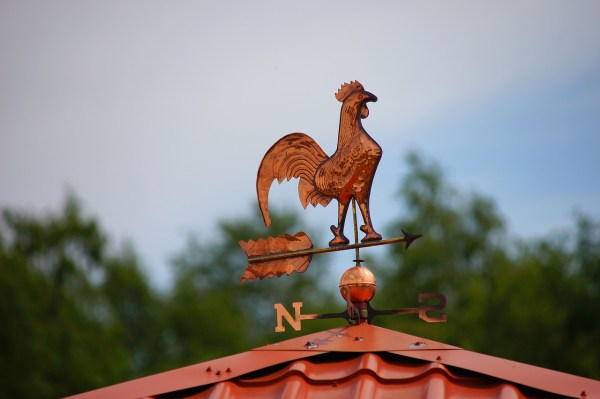
In the daytime, I go for long walks through the blue-green hills that resemble bunches of broccoli. I look at the bluebirds and marshmallow clouds and walk to the store to buy groceries. When I get home, the rooster on the weathervane is stuck pointing south, its figure suturing the fog. I carry in the groceries that I’m addicted to buying and pour water and grounds into the maker, switching it on and listening to it brew. The whispers begin almost immediately. They’re palpable in the silence.

“He wants to be alone,” I say, unloading heads of garlic, carrots, celery, cheese, crackers, thinking I’ve been transported to some other dimension.

Grr.

“He pushes people away and then asks them to come back.”

Grrr.

“He’s bad.”

Silence.

“He can’t stop.”

Grrrowl.

Though soft at first, the sounds become more plangent as the cycle runs its course. I pour a cup, lean back in the chair, and close my eyes. Images of family and friends appear. Their features are nondescript, like tiny grains of sand swept in and out of form. I imagine my neighbors sitting down to dinner all throughout the neighborhood. It’s twilight. I know what happens at twilight. Shadows rise and mists settle, holding everything in their vaporous breaths until morning.

Sometimes, the maker splutters at these times. That’s when the heaviest truths are divulged—when it’s running on steam and wants to be fed more water so it can continue talking.

I sip and think I must have really good hearing.

They’re all gone now, those closest to me. Not gone—distant. It’s only the maker and I in this thick, cloistered silence.

Suddenly, I hear the flawed person inside and panic. Its voice fills my head—the voice of someone who’s been abandoned and who’s doomed to ask questions with no answers. I’m angry—angry that my husband treats people like puppets, bending them to his whims.

“Why did he do this?”

The thought sends shudders through my collarbone and pushes up beneath my skin, wanting to be let out. A plaintive growl spreads out across the room. Except instead of making a sound, it forms a word. There’d often seemed to be an echo in here, and while the maker’s percolations have been well timed to coincide with my questions, they’ve never implied they belong to an actual being or presence—a mind. I’d fed it water, electricity, and grounds. From those ingredients, it pressed out something like a piquant juice—sometimes smoky, others intense—but always juice and no more.

Yet the word was unmistakable. I straightened in the chair, my back turned rigid.

Suicide.

“Suicide?”

Yes.

More than a growl—an affirmation, with the maker reaching into its grizzled depths to lay a finger on its pulse and measure the beats of its efficient, little heart.

“He is, or intends to?”

No answer.

“Why?”

My imagination spirals back to all the possible causes: Childhood abuse, neglect, the old tunnel with no light at the end, his loss, our loss, the growing apart, the splitting after so many years together.

“Will it be fast or slow?”

No sound.

“Fast?”

Nothing.

“Slow?”

Grrrowl.

Yes, I might have guessed that. He’d already been killing himself slowly. One moment later, another question arises.

“What can I do?”

Silence.

“Buy him a book?”

Silence.

“Dinner?”

Silence.

“Cakes? Treats? Records? Phone calls?”

My brain kicks itself. You’ve already tried all that. For god’s sake, think of something more original.

Finally, it comes.

“Maybe, somehow, I could help him live?”

I hear the longest growl of all. Not only a growl, it’s something chthonic that seems to rise from the earth and shift through night’s inchoate shroud—something that speaks for others.

Clutching the sides of my chair, neck laced in sweat, I realize it’s not the maker at all. It’s he. He’s somehow found his way inside and is channeling himself through it.

The notion seems to lift some of the fog. To hear from another source that his life is truly out of control offers closure. But I’m just as unnerved as before, wondering what can be done to help someone live a life whose intent is on ending it, however gradually.

Rising from the chair, I walk to the kitchen and look at the maker sitting on the counter, its contents settled in the bottom. I could give it more water to listen to it talk some more. I could do that.

Instead, I pick up the phone and call him.


KATIE NICKAS writes off-kilter fiction. Her work is published or forthcoming in journals including Anti-Heroin Chic, Asymmetry, The Furious Gazelle, formercactus, FRiGG Magazine, The Oddville Press, Sidereal Magazine, Soft Cartel, and STORGY. Find her on Twitter @katienickas.

Cabinet Of Heed Contents Link 23

Image via Pixabay

Tornado Preparedness Drill – Ace Boggess

If the power’s still on, make coffee.
If you prefer whiskey, sleep
on a futon by the nearest phone.

I have better ways to spend my time:
complaining about loud noises &
worrying over this coming storm

which brings with it fish &
frogs that fall from the sky.
In the past hundred years:

one tornado in this county,
that so small the horror-movie
flying cows ho-hummed.

Nobody asked for my opinion,
but I give it while the city sirens
hit their spine-chilling notes &

radio stations sing,
“Get down, get down,”
as if a disco boogie jam.


ACE BOGGESS is author of four books of poetry, most recently I Have Lost the Art of Dreaming It So (Unsolicited Press, 2018) and Ultra Deep Field (Brick Road, 2017). His writing appears in Notre Dame Review, Rhino, North Dakota Quarterly, Rattle, and many other journals. He received a fellowship from the West Virginia Commission on the Arts and spent five years in a West Virginia prison. He lives in Charleston, West Virginia.

Cabinet Of Heed Contents Link 23

Image via Pixabay

Last Will and Testament of Gaia – Sheila Scott

I, Gaia, third planet of the Local Interstellar Cloud, Orion-Cygnus arm, Milky Way, declare this to be my Last Will and Testament, hereby revoking any and all Wills and codicils previously made.

At four point five six eight billion years of age I am of legal age to declare this Will and, despite the best efforts of some of my lodgers these last fifty thousand years, I am still of sound mind. My wishes contained herein do not result from undue influence.

Having experienced no major collisions, I have remained single and without children excepting one satellite. However, this sole relation has remained distant throughout and I leave them nothing.

Whilst I realise, but do not care, that this may cause some consternation, I hereby nominate, constitute and appoint God and Richard Dawkins as my Joint Executors to act in my interest regarding my estate and other items. In the event that these Executors be unable or unwilling to serve jointly, I appoint Rihanna as sole Executor. This Will authorises these Executors to act in my interest regarding my estate, debts, funeral expenses (see accompanying document ‘Par-tay’) and other items.

The assets I am legally entitled, by which I mean, I have decided to bequeath are as follows:

1) The Atmosphere I give to the Penguins. This one is too important to everyone and honestly who doesn’t trust these little dudes. Plus the flightless element has always tickled me.

2) Whales and Cetaceans, you get the Oceans. You know your ass is too big for firths and rivers so just stay the hell out of them – you’ve got plenty of ocean to swim around in now.

3) The Freshwater Lakes I give to the Crocodiles. You always acted like you owned them: now you do.

4) Fish, you can have the Rivers. I know how much you love those currents whether you’re surfing to the sea or battling upstream (physics kinda passed you by, didn’t it?) so enjoy, they’re yours whichever direction you’re travelling.

5) The Hills I bequeath to the Horses. Hell, you just look so damn good galloping over their rolling horizons. Off you go and make me proud.

6) Mountains I am giving to the Goats. You’ve not done a damn thing to earn them, but it takes a bit of nous to understand gravity and frankly you guys are the only ones just too dumb to fall off.

7) The complete collection of Soils is to be the domain of the Invertebrates. We all know you have your job to do but, let’s be honest, you’re no fun to look at. So, do everyone a favour and stay indoors.

8) Plants, you are entrusted with the Valleys. Some of you like sunshine, some don’t. I have faith you can sort who gets which face between you. But no secession: there’s room for everyone.

9) The Volcanoes are made for Dragons, if only to prove you exist beyond Welsh kids’ cartoons. Be careful making s’mores, though – those things are sticky little fuckers and can totally ruin a good rug.

10) Cats, you get the Tectonic Plates. Plan is that way most of the time they’ll just sit at peace. But when you’re not sleeping, no batting them back and forth just for fun.

11) The Tundra I was going to leave to the Reindeer, but the melt’s made it a challenge for you big boys getting about now. Therefore, given the more favourable feet-width to body-weight ratio, Geese, it’s your ball now. Reindeer, you know who to take it up with.

12) Bit of a no-brainer now – Camels, you get the Deserts. It may not be the most exciting asset, but it’s far and away the fastest growing – you’re on course to be Kings of the World. But play nice and enough with the spitting.

13) Wide open Plains are for the Skunks. The others have been pestering me for years over this, so use your space thoughtfully.

14) Regarding the Polar Ice Caps, Penguins you got the atmosphere so the Southern one is going to the Polar Bears. Big guys, you would’ve got the Northern one too, but you do like you ice-Lilos and it’s just sea up there now.

15) Finally, all my Glittery Rocks I leave to the Humans. You’ve always been obsessed with these at the expense of everything of value, so good luck eating, drinking, and breathing your bling.

Despite claims that will undoubtedly be made to the contrary (by I think we all know who), there are no prior legal contracts into which I have entered in relation to these assets. Anything that suggests otherwise is a crock of shit.


Signature: Gaia

Name: ____Gaia_______

Date: 21st October 2018


Hybrid writer-scientist, SHEILA SCOTT most enjoys sitting with pen and paper turning idle thoughts into short narratives and illustrative doodles. Published in Causeway, Cabinet of Heed, Ellipsis Zine, Flashback Fiction, Bangor Literary Journal and Poetic Republic, she also helps lead New Writing Showcase Glasgow. Her intermittently hyperactive Twitter account is @MAHenry20

Cabinet Of Heed Contents Link 23

Image via Pixabay

Bed 3, Bay 2 – B F Jones

Day 1

They wheel me into the room after the surgery though I tell them it is unnecessary, I can walk. But there’s been a considerable blood loss and they’re concerned I might faint again. A stupid accident really. Avocado hand. Yes that’s right, I’m hospitalised for a pretty trendy affliction. I wish I could say 13-year-old me that I’m finally trendy. I wonder what that loser would think.

Anyway. After the knife blade lodged itself deep inside the fleshiest part of my palm, tearing through the skin before cutting through a small artery and quite a bit of ligament, I managed to call 999 between two bouts of wrenching and a mild fainting episode. I opened the front door wide, mucking it with blood before crouching against it, trying not to look at the little bids of fat oozing out of my skin and this is where the paramedics had plucked me from.

Day 2

The pain wakes me early. The monitor attached to the lady next to me and going off everytime she gasps for oxygen doesn’t conduce me to fall back to sleep. Neither does the Christmas tree blinking just outside the ward. I re-live the previous day. The blade going in and the cracking sound of the skin as it tears. You should have kept the knife in, they told me in the ambulance. It would have helped reducing the blood loss and damage to my ligaments. No need to mourn those, the damage is done now. At least I can breathe unmonitored.

Day 3

Janet from the office has popped over to say hi. She’s brought me a card signed by the team and an adult colouring book. I look at my heavily bandaged hand and thank her. She doesn’t stay too long. The day stretches. I wish I’d brought a book and my toothbrush. The doctor comes and says I should be able to get out tomorrow. The nurse changes my dressing.

I take an approximate shower and have an average dinner. The old lady bips and there’s a new arrival, a teenager with a broken leg.

Day 4

The teenager has loads of friends, they bring him coke and Haribos and some magazines. His girlfriend gives him noisy snogs and access to her chest that he fumbles clumsily before they leave, the stench of sweat and Lynx and chocolate bars remaining until the leek-potato soup is served. The doctor comes and says I can go out tomorrow. The nurse changes my dressing. The old lady bips and the teenager types furiously on his phone. I miss my home and my bed and my tub and Socks purring on my lap.

Day 5

The Xmas tree blinks to the rhythm of Staying Alive. That same rhythm you use when you do CPR. Blink, blink, blink, blink, blink blink blink, blink blink blink. And again. And again.

The teenager has left and has been replaced by a 3rd degree burn.

The doctor comes and says I can go out tomorrow. The nurse changes my dressing. The old lady bips and the burn victim weeps. I read a battered copy of Gone with the wind wondering if touching it might give me an acute case of e.coli. This is unbearable.

Day 9

I don’t think I can take this anymore. I just spent the last 3 days plotting my escape as I’m desperate to go home.

Janet has come back saying that she feels for me, and also implying they might want to replace me if I don’t come back though, and reminding me I owe her £3.99 for the cat food.

I tell her I’ve just seen the doctor and that he’s said I should be able to leave tomorrow. The nurse changes my dressing. The old lady isn’t there anymore and the burn victim has just left, being replace by a pretty nasty case of anaphylaxis.

Day 10

I didn’t sleep well. A young couple came with a baby around 2 am. I was hoping to see their baby this morning, I love babies, but when I woke up, they were gone.

Janet pops over with some paperwork for me to sign, I’ve been dismissed. She asks if she can return the colouring book since I haven’t used it yet and she could repurpose the £4.99. She doesn’t stay long but that’s fine by me.

Day 13

I was meant to leave today but I told the doctor I didn’t feel too good and tomorrow might be better. It’s quiet as the old lady’s bed is still vacant and the anaphylaxis guy is pretty out of it.

Day 14

I told the nurse it might better if I stayed overnight as it it’s icy and I’m worried driving with my injured hand in such conditions. Also it’s potato leek soup night.

Day 15

I had a panic attack after watching the news and not being able to remember the prime minister’s name. There was that lady looking like a praying mantis addressing the nation, she was familiar but her name had disappeared from my memory.

They gave me Xanax and I had a good night’s sleep. I’m still a bit woozy so it’s safer for me to spend the night and leave tomorrow.

Day 17

Terry, my favourite nurse, has written the name of the prime minister on a post-it note for me. I use as a bookmark for the copy of Catcher In The Rye she’s brought me. Apparently I’ve read 14 books since my arrival. I don’t remember much of them.

Day 18

Terry has come for a quiet chat about my mental health and to say goodbye as I’m being moved to a different unit. I give her a hug and tell her I’ll miss her, before I erase her from my memory.

Bed 6, Bay 1

Day 74

I like it here. Apart from that young woman that occasionally rambles on a about rats and cats and talks to an invisible person called Libby, it really is very cosy. Doctor C says I can stay as long as I want.


Cabinet Of Heed Contents Link 23

Image via Pixabay

Trainwreck – Alexa Locksley

First time in Denver, a highrise hotel
Smooth sweep of the sliding door whispers class traitor
recessed lights nod in agreement
My companion’s asleep—
exhausted by the mesas of Utah
the hazy opulence of Vale
or maybe my sullen silence
Tiptoe through the lobby of the Grand Hyatt
dress too short
hair too disheveled
flannel too flannel
too many toos for this place
and a copy of Burroughs tucked under my arm
catches the camera eyes of the elevator woman
fluorescent glare from her black plastic shells
insect eyes bulge from her face
She adjusts her orange hibiscus print dress
smiles a false robot smile
and telepathically opens the doors.

Cross the stone corridor
step out into the steaming gray morning, stand under wet humid sky
my antennae drooping, two wilted celery stalks
Take refuge among leather and lamplight
Crack open gold coins, melting yellow streaks
Cell walls expand, jelly replenished
synapses of cellulose stronger with intake:
poison word hoard and rich burn of espresso
wine & sour oil
faint hints of charcoal at the back of the tongue
an imagined memory of withered grass, oolong reduced to ash
false dairy, shelf stable and sanitized
in another world, twin apricot suns below ground
in the lindworm’s tunnel under Munich streets

Shake off the memory
shake out my powdery wings
dodge the streetcars and blend in with gray concrete
Disguise myself as a steamed salmon
lemon slice to keep up with the fashion
and join in the stream

A fresh bucket of deep-sea dread from a long-past meet&greet
(too serious and literary for the ampersand)
Warst du schon mal in Wien?
that deceptively innocent questionmark a tiny tadpole sprouting tentacles
transforms
octopus whirlpool spirals down to the depths
until your friends fish you out
reel you in
admonish in hushed strained voices because Jesus Al you can’t say that
and the sting of the fishhook still slices into your cheek

But now in the diegetic present
face to face
you’re one of us, I’m almost sure
our panicked transaction of phrases a mutual trainwreck
jumbled words casualties that limp from the wreckage
and for a moment I belong.


ALEXA LOCKSEY is an escaped Midwesterner living in Las Vegas, where they teach English. Their poetry and short fiction has appeared in Ghost City Review, Peach Mag, Shot Glass Journal, Rose Quartz Magazine, and Bone & Ink Literary Magazine. They are on Twitter and Instagram @AlexaLocksley.

Cabinet Of Heed Contents Link 23

Image via Pixabay

Thirty-Two Keys Stud the Body of Each Sax, So It Logically Follows That.. – Jim Meirose

I got a tape for you to hear Sonboy. I got a tape you’ll hear to make you decide.

Mom. That’s great but I don’t need help—I—

Yes here sit down it’s short hear it out here.

Her finger jabbed in starting it coming. It came. It said, The last but not least dimension of anyone’s ascension to virtuoso-level sax playing, is the patterned pushing so fast it seems random but each push has a purpose a name and a meaning and more and more to it, depending on how deeply into the documentation you dare to delve—

Mom. I don’t see. I—

No, listen.

—thirty-two keys stud the body of each sax; nine fingers are used to press the sax keys, and that in itself is easy to conceptualize. Here’s a finger, the first of ten. There’s the keys baby, so press one any one; there’s the cards baby, so pick one anyone; look at it remember what key it was—

Mom I can’t follow this. And—I never said I wanted saxophone.

Hush! Listen.

But I never—

Hush.

—tear the card from the sax put it on the table and remember which key it was; look at it remember what card it was put it face down on the table and remember which card it was; do this for each and every key until none are left and there are thirty-two torn off keys from the now-unusable sax lying on the table—

Sorry but I don’t get it.

Maybe if you stopped resisting you would. Hush.

—do this for each and every card until none are left and there are fifty two picked-out cards from the now-nonexistent deck not anywhere anyplace anymore; now take the sax to a sax repair man and he will charge five hundred dollars on average to restore the sax to playing condition; now take the deck to anyone at all who knows what a deck of cards is—

Cards. Mom, I never have been interested in—cards.

Sonboy shut up and let it come.

—and he will charge nothing on average to pull all fifty two cards back together into a usable deck; now here’s the bottom-line cost-benefit analysis—it’s not really that but that sounds pretty impressive; this has cost the sax player five hundred dollars; this has cost the card player nothing. And the added benefit tipping the argument to cards is that the card deck can be restored by the potential card player themselves.

Thank God is that the end—This shows—my God there’s more? Mom.

—that in the final analysis, any logically impassive mechano-person to whom such numerical decision-making holds appeal, should forget sax—

Mom I never said I wanted to play the saxophone Mom. Mom—

Shut up!

—and take up one or more of the hundreds of table games which are based on a deck of cards, or take up some other non-game related pastime that nonetheless uses a deck of cards, such as magic, making bicycles sound like motorcycles—which also requires a big box of wooden spring-style clothespins, building houses of cards, constructing card bridges, making balls of cards, doing origami, making card boxes, or attempt to match the cardistry skills of Dan and Dave. Their most holy. Good-bye—and may you enjoy a profitable day!

Her finger jabbed out stopping it going. She turned to.

Sonboy, there—you.

Sonboy, hey! Sonboy get back in here right now!

www.jimmeirose.com

Cabinet Of Heed Contents Link 23

Image via Pixabay


The Magpie – Babette Gallard

Silence is our bond, the no-need to say whatever it is we might be feeling, because we know. I know Kerry is feeling my brush as I paint her, following the folds under her breasts, and I know she doesn’t mind. Her breasts are large and beautiful, even the filigree of lines drawn by their weight and traced, by me, in silver. Perhaps I love them even more, because my breasts are like walnuts, with as many folds.

The sun has moved down below the window behind her, its shadows filling hollows I hadn’t seen before. I want to go on and paint their darkness, but sense her cold. “Let’s take a break,” I say.

“No, I want to see what you’re seeing now.”

The magpie flies in just as I’m opening my mouth to say something in reply. Big and brash on the window sill, snapping his beak.

Kerry turns round to look for the disturbance, a hand on each nipple, which makes me laugh and say she needn’t worry, because, “human breasts probably aren’t his thing”.

Our silence and our laughing, shared and private. Sniggering like hogs, at the beautiful Spanish girl with hairs growing out of her ears, sitting two seats down in the coach from Burgos to Logrono. Both of us thrown out of the amateur opera, for laughing at Carmen, because her singing sounded like my mother’s orgasm. Our love is grounded in moments like these, so now I drop my head to the magpie and thank him. Kerry says I’m following an ancient pagan tradition and that she’d always known I was a witch. I kiss her, and we go to bed.

Him, strange that I never thought of him as anything else. He could have been female, but I never wanted to find out. He should have been she in my world of women, where men are only allowed in on special terms, but he was my boy. The Boy, named by me, just two days later. “Looks like The Boy’s here to stay.”

I remember now, that she didn’t reply. Perhaps our silence had already begun to lose its value, or perhaps I wasn’t listening.

Anyway, the Boy moved in, sitting on the backs of chairs and tilting his head, pointing a black eye at the brush in my hand. “Perhaps he wants to be a painter too,” I say. “I could teach him.”

“Try it,” she said. “He’d probably earn more.”

In the past I would have laughed, but The Boy has taken over, his raking laugh already better than mine.

I’m working on a big commission, a real one that could pay for our flat and probably even a car. Being gay is, for once, an advantage. The husband has said that only another woman, who loves women, could know how to capture the beauty of his wife. Her amputated legs lying bare on the floor, their fleshy ends as soft as cream cheese, flattened against the silk.

“Silk for the reflections,” I tell her. “Do you mind if I move this leg closer?” She shrugs, still angry with her husband, because this is what he wants to see of her.

The Boy is watching, one spiny toe scratching the other.

Today, Kerry has said she has things to do, and might be late getting back. I asked her to help me put this hurting woman at ease, leaving me to work, unseen behind the canvas. But Kerry is too busy, so it’s just The Boy and I, testing each other to see if we can be a team.

“Is he tame?” The woman looks over to where he’s sitting on the back of a chair. Another reason to be tense and not want to be here, on the floor of my studio where, I have told her, the light falls best.

“Tame enough,” I smile back, in a way I hope is reassuring. “Wants to be a painter too.”

The Boy claps his beak.

I see her face change when he flies over to sit on my shoulder. “Incredible,” she whispers, after a while. “He’s following everything you do and then looking at me, as if he’s checking to make sure you’ve got it right.”

That’s it. The Boy has done it, dissolved the knot inside her, and now we can work, the three of us a team.

Ellie, the woman, comes every day for ten weeks, understanding now why the silk is so important for me. How it tells the whole story and why it can’t end with her legs. The Boy hears her coming every time, and beak-taps the uneven rhythm of her steps on each stair.

Kerry drains her cup of coffee. “You don’t need me here. I’ll finish my research in the library.”

I put my hand on hers, wanting to push it down so hard that she can’t move, ever again, but instead my fingers trail like feathers over her white knuckles. “It’s the last day, please stay with us.”

“What for?”

“To see me finish,” I say. “No more painting. She’s just coming to check the final version before her husband sees it.”

“And then?”

The silence drips between us, blood-soft and as dark. When I call her, she says she’s having a drink with some colleagues. When she doesn’t come home, I’m not surprised. In the morning I look at The Boy and want to hate him.

Kerry has gone, every trace, even her smell. I’ve tried to find it, sniffing into the corners of the cupboard where she used to hang her clothes, at the edge of the bed where she always slept, curled like a kitten, when her period pains were bad. The Boy sits on my shoulder, watching while I search my phone for the digitally preserved love that has died in the flesh. It’s the silence I need, but The Boy has taken it, whistling at the back of his throat the way Kerry used to when I got out of the shower, snoring like me, when I’ve got a cold.

Night after night, I lie on our bed, playing our past in my head. The day we first met, both of us blobby and gauche, passing a spliff we didn’t know what do with. Then again, all those years later, when she’d finished her Phd, and told me I had to call her Doctor. I refused and answered that she was too beautiful. She was, by then, especially her breasts.

“What have breasts got to do with intellect?” She’d stuck them out at me like a rude tongue and we laughed for the first time, and then always after that, in a way I thought would be forever. The silence came later, when we both knew who we were and didn’t need to explain anymore. Laughing and silence, the key to our being. She’d written it on the blackboard we used for shopping lists, and I’d coloured in the curves of her letters.

During those first weeks alone, I used to draw her all the time, holding onto her in the only way I could. The parts I remembered most, her eyes and the fold under her chin, but when I’d done that, there was nothing left, so I told The Boy I was leaving and he would have to look after himself. He laughed with her voice, so I left, but when I got to the bottom of the stairs I had to go back up to check that he had really gone. The window was closed, and the sill outside it, empty. The Boy gone and Kerry too. Perhaps one because of the other, but mainly because of me.

When I paint now, I paint the spaces, the white between the black on The Boy’s feathers, the silences between two people who think they are talking. When I see a magpie I always nod and say thank you.


Cabinet Of Heed Contents Link 23

Image via Pixabay

Create a website or blog at WordPress.com

Up ↑