Forgive Us Father For Someone Has Sinned – Copper Rose 

I was the one holding his hand when he took his last breath. Not my mother who left because she forgot to sign the important papers. Not my sisters, one who hadn’t come home from the next town over for the last ten years, the other on the porch smoking a discount cigarette. Nor my brother, ashamed to make an appearance lest someone ask too many questions about his perfectly painted life with what turned out to be an unfaithful wife.

I plugged in the slow cookers and put the food on the tables. Pa had liked horseradish on his ham sammiches. Put the coffee on to drip. Pa had liked his coffee black. Straightened the photos around the urn. Pa had liked to wear his striped-shirt when it came time to get his picture took.

I said my piece in front of those who gathered there. I sang a song in a shaky voice. Shook all the hands, gave all the hugs, patted all the backs, saying, “Yes, we really should do lunch some time,” knowing I didn’t mean it and neither did they.

I put the leftovers in empty cottage cheese containers. Stuffed the paper tablecloths in the garbage cans. Folded the tables and chairs. Put them away.

I stared at the brown urn, broke off one of the roses and tucked it behind my ear, opened the old autograph book set amongst the memorabilia. Mama gave it to me for Christmas when I was seven. Saw his chicken scratch scrawl, one of three times he’d written something especially for me during his lifetime. He never signed them with to or from. Or love. “You’re sure a swell kid, Dad.”

I thought about the other two times he’d written something to me, those two notes in the box under the bed at home. One was when he asked me to prepare the conference room for an important meeting. “The pitcher of water with the oranges floating in it was a nice touch.” They were lemons.

The third time was when he borrowed my only homestead credit after my divorce. “I, George Bellings, owe Cynthia Bellings $3500.”

He never did pay it back.


COPPER ROSE perforates the edges of the page while writing unusual stories from the heart of Wisconsin. Her work has appeared in various anthologies and online journals. She also understands there really is something about pie. Connect with her at https://julieceger.wordpress.com/copper-rose-author/ and on Facebook: Author Copper Rose

Image via Pixabay

Cabinet Of Heed Contents

Spidey Manda da Plumber Boy – Jim Meirose

“After a three-hour struggle to get him on the phone, he was rude and I should have just said I wasn’t interested.”

–Actual online review posted by disgruntled plumbing service customer

Spidey Manda the spidery wallclimber pushed in from his maternal gohole bigger than the average baby but smaller than the smallest grown man but as all large babies his appetite dwarfed every other aspect of himself. Sit down to this meal he ordered himself silent. Once down in a meal it became the world. It did. All art begins in babies. Far out woman’s drain stopped three miles or more out. Spidey had-a his number stuck up at the market. Far out woman pulled down the wallset and keyed the number believing he’s a plumber boy. The kitchen sink’s backed up oily and filthy all swirling with foodbits—my Wanda did dishes and it’s all up in there, she prepared to say when the phone picked up. Right foot tap began making her say My Wanda did dishes and it’s—the phone three miles or more out rang out over Doc Manda’s impenetrable meal of a world—fifty forks in the phone went on. Sixty forks in. The phone went on. Tap to left foot to right and then back. My Wanda seventy forks in did dishes eighty-one two three forks in and it’s. Three quarters of the plate went in S. Manda by now all up in there hey this phone’s faulty a hundred and five. Meester Manda paused. Why have I paused. Why. Salt it is. Salt’s not on the table and I need salt. This phone is faulty said the crack of her hangup her waiting a second here’s why you know. Anything that won’t start working right away causes reflexive shut down count to thirty push trying to start whatever again—and so forth. Like smacking the side of the unit used to be. Where’s the salt I know I got some hey he said to no one at the cupboard out of the meal world huh mealworm not mealworm world’s the thing yah listen next time I  said meal world—her fingertap one number at a time she’s a read off the paper and  tap the corresponding number on the set; back repeat until entire string’s entered and. Ah here’s the salt get back over sit back down the meal world domes over and Spidey Manda da Plumber Boy hot dog bat damn! The salt’s gonna fine up this meal. Fine to the top! The phone rang and surely this time it will. Work. Done salting the forking reset back to one, then go; My Wanda did dishes and it’s all up in there; One fork in yes two three four. Five my Wanda did pick up damn six seven forks in. Tapping then glance to the sink. Water calm water smooth water deep water blue. Ring ring ring think of deep water blue sparkling midsummer Sun beating over all not humid slight breeze trees rustle lock rhythms with rings over over again over and; the salt’s good not much left water calm water savor it slow. It’s too good yes good slower forking slower savor. Slow. Deeply lower the basemented founders of the plumber-firm Billy and Bluto having observed quite long enough began deciding having been at it since their big machine tapped randomly into franchise number two tagged with S. Manda, proprietress. Mysterious cleaning of my thing hut. Done daily in the dark unnoticed. Mysterious cleaning. Wanda did dishes. Of my thing. Salt’s finin’ yah finin’ up the remainder of Manda’s meal. Hut. Tap counter. Yes. Wanda did dishes space the start hold it there back a bit Billy okay Bluto did dishes and watch the gauge okay up a hair, yon; there there there hear there ring one ring two ring—penetration of a world-impenetrable the miracles we do today. Hut. My Wanda. Salt good. Wanda. Thirteen good. Bread good. Salt finin’ finin’ eat faster it just happens no not with my mouth full; Fire, no good! belched the monster. Shut the set down Billy. Shut the set down. It’s too distracting. Hundred two hundred and more and more ring. Relax and go upstairs. See him call him out for. 

Salt good salt salt good God yes slower slower. 

Far out woman given up calls out Wanda my Wanda hey. Come here. I want you. I want. Billy Bluto punch on the off speakerphone the toetips of which recall sweet gentle deerhooves. Calling Spidey Manda with a ring other than the Far out Wanda line termed number one. For purposes of clarity we will refer to Billy and Bluto’s as number two—even though we know that labelling these lines suchwise relies on the fiction that says these are physical lines like lone away a love a last or somewise similarly named time-passages, when nowadays nothing that’s working looks like it ought to to the mostly thinkingbound still-fooled-into-thinking that; logic is a noun. Touch it; Billy and Bluto alternate punching Spidey Manda’s designed to be instantly remembered registered and copyrighted phone number. Wanda! Even though in this heah’ yeah’ the term phone number is patently inapplicable. Write what you know boy, stated Miney Fuerer. Miney Fuerer is long dead though so, punt! And the call started through goosed in the Willy and got ready deeply in-breathed but not the holding kind, whichkind would lead to freezing with the immediately fatal network failure that would lead to, and kicked the ring-sound out the earpiece piercing the thinskin of the worldrind wound about Spidey twisting his head around then ringing again getting his butt up and one more last time slinging his bulk across at the wall unit sweeping and tapping it down to his rightlobe by habit always used for answering because the leftlobe has less than half the hearing for some reason no medical specialist has been able to discern therefore just chalking it up to g-g-g-g-enetics, Hello? No genet-t-t-t-t-ics We need to speak to Spidey Manda okay this is it here goes for the money—genetics hah yah genetics woo hoo ah—I’m Spidey, heybob. Who comes in my ear here? Who who. Comes? Comes at me? At me in my ear?

Billy as Bluto, after throwing themselves around each other for several hours, and about one half more after, got to it saying but not in unison—and which one said it’s really not something you need to know—we have seen that at least once and possibly other times too but for sure this once though possibly othertimes possibly othertimes p-p-p-p-possibly other-timesss too, eh; you took a long lunch. Right in the office. Right by your phone. It rang and rang—the robot numbermen who clock in these things say their counters got full. Fully fully. Did this happen from where you sit out yonder past the otherside of the great crack between us? Yeah did it? echoed the other either Billy or Bluto you do not need to know and do not think that the order their names are given in is any indicator of who spoke when. Past performance is no indicator of future results, Bob. You are on your fucking own. Yes, that’s right hardthrusting shitty notions a’fly everyplace allwheres hereto and tomorrow for you are on your fucking own—no no no phone rang. The warriors! Also no object in earshot gave forth any clear resonant sounds, as bells being struck do, my sillies. Okay if that’s your attitude sir Spideyman, I think we have to examine the freaky fucky timeline baby—spanning many too many years of time; the great joke. Life starts with a great spurt. Big greasy rice corn gristly blackball down in the lower pipebend. My God George this can’t be my baby. Wanda come here do we have a plunger?  Blackspined leatherbound mechanical manuals on this low shelf. How the hell do they know on them thar’ TV medical reality shows how to. There’s a number of discoveries each person’s made since birth but by the time you’d like to know the number it’s become impossible to determine. You are trying to solidify the past and that only gives rise to a lie.  However the number of blades of grass on the planet has been measured and documented. The slimingly slithery mucousy glistening organ-masses all pulled out to look for a leak. Hah! Really? Okay then look it the fuck up. Wanda came with a plunger. At least three hundred fat books in the library at Trinity are hollow containing the most popular contraband of their specific era. Or a tear. The first boil lance of any lifetime. Three. Tends to never be forgotten. No bell made an impression on my mind. Sets of hands shuffling through the live guts. Skinny scratchy itchy. She splashed it down in the black water and up down up she set it to sucking. Hey, Ferp! How do they get all those guts back in properly? On a descending stairwell going to the next class was where I was when he died, senor Wildenstein. I detected nothing and no one summoning me using bellsound or any other sound. South River. Plunger it plunge sure but those bends are iron. Comic book back cover, Hey boys! No Wanda careful you’re. Sell Grit. And maybe steel. Door to door. Wide shallow grey dull-lit aisle. I had the salt. Chain link. The garden hose kinks just one spot everything stops. Men’s room there. Spraying water all. Ladies’ room here. The intestines just kinked just one spot everything stops. Pubic ah. The salt is the life. Pubes-stench. Over the room. Pubes-stench in the Dahmerspace. Jesus said put away childish things. I mean, I would expect to hear the phone if it really rang as I did when you called. The water stops it’s just easy to walk the hose find the kink and kick it away. Gimmee that sucker here. The recovery room. Nothing filled with sound. In the recovery room the nurses are told watch for defecation. No I almost got it. I am sorry mister Simpson but you can’t go home until you amply evacuate. No echo. Garden hose kink yah. No you don’t. Green summer garden hose kink stops evacuation yah. Just salty goodness. Evacuate on the one hand squirt on the other. Give it here. I can tell you what’s true though Mister Wet and Mister Whistle. Mister Simpson we need to see an ample bum-squirt out you before we can. Kinkhose. The phone never rang. Kink the hose kinking of the hose is almost never desirable unless. How does that come out through there so easy Lord! Dense. Stiff. Long. Damp not wet. Not liquid. The creator the great engineer. Big soft bulb-headed pushplunger up down up Wanda roiling up slimy blackbits from the deeptrap. Wanda pushed pulled pushed pulled, stating, It will not let go. Call the plumber—what was the matter I thought you were calling a plumber why did you call for a plunger? This doesn’t work—is the plumber coming? Whoseit—is it—that Spidey Manda—that guy.  Is he coming? He coming I no plunge no more eh eh. Manda drop what you are doing and tell us why you did not answer the customer. Wanda, don’t play the silly fake accent there’s no way it’s cute. Three problems with that question Messrs. Billy boy Bluto; first is that I am doing nothing to drop. Unless you count my paying attention to the two of you. In which case I will do as commanded. Since you are in positions of authority, and that all authority comes from God, consider yourselves as ignored. Eat your ways through those ones my biddies. Call the plumber woman; and I am going to ask you the question I have kept to myself since the day I hired on. Ready? Of course man we do not mean stop paying attention to us. Quite the contrary. Look at us! Look! What is it Wanda? I’m ignoring you! I’m not touching you! I’m ignoring you! I’m not annoying you! Heh heh heh. Aw. You have never paid me the simple courtesy of allowing me to know your name. Spidey Manda, do you want to be terminated? Huh? You know my name. I told you my name at the interview. Hmmm hmmm hmmm I’m ignoring you! I’m not touching you! I’m ignoring you! I’m not annoying you! Am I annoying you? Hmmmmm—No you didn‘t! Spidey Manda, you have to our count of four to reverse your direction ah—I suppose you weren’t paying attention at the interview, though you seemed to be. What other things did you deceive me into thinking you were paying attention to that day? Hey hey hey that day? Uh. Uh. Am I annoying you? I’m not touching you. One, Spidey Manda. PLAN the scambot came homing in under telling Wanda to spurt out spurt fast, Caulinda Plummah should be your name boss. Number two. Wake up please. Three. Someone I’m ignoring I suspect is trying to trap me. Caulinda Plummah yah should be your name. And, four; okay okay so’s as I walked up Washington past the borough hall laughing like at just being school age, I think that’s when it happened yah that’s when I think—God touched me in the head and asked me, What if you had to sit and write down everything you know? Spidey Manda. This is it, Spidey Manda. Caulinda Plummah baby, Caulinda Plummah, hey—this is it; could you do it Master Manda eh could you could you could you do it could you do it eh—eh?


JIM MEIROSE’s short work has appeared in numerous venues. He has published several novels as well, including the upcoming “Understanding Franklin Thompson” (JEF pubs) and “Sunday Dinner with Father Dwyer” (Optional Books). Info: www.jimmeirose.com  @jwmeirose

Image via Pixabay  

Cabinet Of Heed Contents

Past simple, present continuous, future conditional – Sandra Arnold

While he protested about the dangers she stepped gingerly over the barbed wire that ran along the top of the fence and stood laughing on the other side, kicking her shoes in the air. She looked down at her bare toes and noticed a scattering of small holes in the soil. Peering into one of them she found it was full of dead scorpions.

He handed her a torch. “Look down the other holes. You may as well know the truth. When you realise what I’ve tried to protect you from perhaps you won’t think so badly of me.”

She shone the torch down a hole and saw it too was packed with scorpions. Writhing red live ones. She clapped her hands to her mouth.

He shook his head. “You see? With bare feet you’ll never be able to walk past them in safety. That is why – knowing your propensities – I built the fence.”

She reached over the wire and handed back the  torch. “Thanks. But I know how to avoid that problem. I’ve been practising.”

His protest froze on his lips as she rose a couple of metres above his head, waved and glided across the fields with the wind in her hair until she reached the place where the factory stood glowing in the sun.

She landed with a little bounce and looked back. He was just a dot in the distance, but intermittent flashes signalled that he was watching her through a pair of binoculars. She turned her back on him and looked up and down the street. It was empty because the factory hooter had sounded long ago and all the workers had gone home. Free from prying eyes she explored. The building had been brought up-to-date and the surrounding area was partially landscaped. The front of the factory was covered in mirror glass which looked like a giant cinema screen. As she approached it she saw the hills and sky reflected on the screen and further back, a long way back now,  her home and garden were barely visible with her husband behind the fence.

She stood still to admire the greens and blues and golds shot through with bronze like the bolt of silk her mother had once bought in a sale because it was so beautiful. It was too beautiful to use, her mother had said, wrapping it in tissue paper and putting it in a drawer to keep it safe. Then her mother died and the beautiful material was thrown out with the rubbish.

A sharp tap on her shoulder made her jump at the unexpected intrusion on her privacy. An old man in a long greasy raincoat stood grinning toothlessly. “It’s comfortable behind those bushes,” he slavered.

“Piss off!” she hissed.

He flushed livid and bunched his fists under his chin then thought better of it and sloped away.

She moved out of sight into a doorway and settled down comfortably where she had a good view of the screen and could enjoy undisturbed the reflected scenes of clouds, trees and lakes. She waited patiently for the main feature film to begin. While restful music tinkled in the background, the faces of her parents, grandparents, school friends and  teachers appeared on the screen. Only those who had died, she noticed with a twinge of unease. Old scenes from her past were replayed so vividly she wondered if she had died too without realising it. To test the theory she walked up close to the screen to see if the other characters reacted to her. When they didn’t she sighed, vastly relieved, “They’re only two-dimensional.”

As the film progressed she was so engrossed in the story that she didn’t know exactly when he’d sat down beside her. He watched the film in silence and waited until the interval before interrupting. He’d always had nice manners, she reflected.

A girl walked towards them carrying a tray full of soft drinks and rainbow-coloured ice-creams. They both dug deep in their pockets for money and bought one each.

She licked the last creamy drop off her fingers. He set down his empty carton. The second half of the film was about to begin.


SANDRA ARNOLD lives in New Zealand. Her work appears in numerous journals and anthologies, most recently in Bonsai: Best Small Stories from Aotearoa New Zealand (Canterbury University Press, NZ, 2018). Her third novel Ash (Mākaro Press, NZ) and her first flash fiction collection Soul Etchings (Retreat West Books, UK) will be published in 2019. www.sandraarnold.co.nz

Image via Pixabay 

Cabinet Of Heed Contents

Book, Kitchen, Shelf – Angelita Bradney 

Book

The notebook lies on the table like a brick thrown through the window. It smells of dust, its pages are furred and grimy, and the cover is spattered with unidentifiable stains. It arrived a week ago – sent by the care home, though I told them not to bother. 

Just one look, before I throw it away. 

I put on my reading glasses. Your handwriting leaps out, bold and curvaceous: Queen of puddings. 

I expected an old woman’s script; faint and meandering. Like in the letters you sent until the end, the ones I never replied to. The writing in this book is assured; the paper is indented, the letters loop and swirl. A much younger you wrote this. Someone I barely knew. 

Queen of puddings

Warm 1pt milk in a saucepan. Add 1oz butter, lemon zest and 2oz sugar. Stir until dissolved. Lightly whisk 3 egg yolks then add the warm milk. Sprinkle breadcrumbs over base of dish and add custard mixture… 

As I read my chest constricts. Bile rises in my mouth; I clench my teeth.   

… Make meringue from 6oz caster sugar and 3 egg whites. Spread raspberry jam over custard mixture and pipe meringue on top. Cook for 25-30 minutes. 

The last word is written with a flourish. Were you proud of setting down your first recipe? There is a date – 1952. The year you got married.

I flick through more pages. Lemon cheesecake, Scones, Fruit Cake, Gingerbread Men. Memories crowd into my head. The recipes get shorter. The pen changes, ink gives way to biro. Towards the end some entries are no more than scratched lists of ingredients, linked with brackets and single words: Mix. Add. Then they stop. 


Kitchen

I’m sitting at the table, legs dangling. The warmth of the oven is on my back. Your pushed-up sleeves show bruises on your arms but when I ask how you got them, you don’t answer. Together we make pastry. You line a pie dish and trim the spare dough from the edge. I roll it out and use my special cutter to make stars. We place them on a tray and sprinkle them with sugar, then you put them in the oven with the pie. Soon the kitchen is filled with the golden smell of fruit and butter. The stars are honey-coloured and glistening when you take them out. You prise one off the tray for me. Careful, darling, it’s hot. I bite and sweetness explodes in my mouth.  

*      *      *

In the gloom my stomach growls. The ham is fridge-cold and the bread stale. Crumbs fall on my school uniform. I’m trying not to panic, but I’ve never come home to an empty house before. Outside the sky darkens. I’m still hungry but I don’t know how to prepare anything else. (Was it partly my fault? My constant demands, the selfishness of childhood?). Your apron is hanging on a hook; I go over and press it to my face, hoping to sense you in its fibres. 

I hear the front door open. Father is back. He listens, stony faced, to my wails, then pounds upstairs and into the bedroom. I hear drawers open and slam, the faint jangle of bare hangers in the wardrobe. He returns to the kitchen, face hard as a hammer.

‘Stay here,’ he says.

From the window I see his dark shape turn the corner. I hug your apron to me as the street lamps sputter on. Cars pass. Beyond the houses, tree branches stretch pleading fingers to the sky. A draught curls around my skin, penetrates to the bone, but I don’t move. 


Shelf

I wash my hands. On the counter is a mixing bowl and your book. I’m not sure how this is going to turn out.

Fruit scones

Sift together 8oz SR flour and 1 ½ oz sugar. Add 3oz butter. Crumble the mixture then add 2oz dried fruit and 1 beaten egg. (Save some egg for glazing). Knead into a dough.

It takes me a while to locate the kitchen scales. I measure the flour, sugar and butter and tip them into the bowl. Then I plunge my hands in and start squashing the butter into the flour. The greasy mixture gets under my fingernails and coats my skin. But after a few minutes of kneading, the contents feel smoother and more elastic; my hands look cleaner. I add the dried fruit. 

Roll dough on a floured surface until just over an inch thick.

I roll the speckled dough until it’s the right thickness. What should I use to cut the shapes? I settle for an upside-down glass. It descends through the mixture with a soft wumpf. I repeat until I have several round pieces to place on a tray. When I pull open the oven door searing air blasts out, steaming up my glasses. Blind, I push the tray in and slam the door shut.

There is a new scent in my kitchen. I don’t have words to describe it. The table is a mess of flour and I haven’t done the washing up. The scones are out of the oven. They’re risen and golden-brown, with tops that are slightly dimpled. I find some raspberry jam in the cupboard. Steam rises when I slice open the scone. It’s springy and pale yellow inside. I scrape on some butter, which melts instantly, add the jam, then bite. It’s sweet and intense, the scone is dissolving in my mouth. I take another bite, then another and another.   

When there are two scone-shaped spaces on the baking tray and my plate is empty, even of crumbs, I take up your book again. Flick through the pages, from back to front. My eyes linger on the graceful script in the opening lines. Then I close it and gently place it on the shelf. 


ANGELITA BRADNEY’s short fiction has been published in anthologies and literary magazines, most recently Riggwelter, Ellipsis Zine, and the Fiction Pool. She won the 2017 National Memory Day short story prize and has been shortlisted for the Fish Prize, amongst others. She is an alumna of the Faber Academy and lives in London. Twitter: @AngelBradn. Website: www.angelitabradney.com

Image via Pixabay 

Cabinet Of Heed Contents

Take The Shot – Kelly Griffiths

A rough hand rattles my shoulder. “Get up, Danny. The sun won’t wait.” 

I slump into the cold glass of the passenger window. Dad’s burnt coffee and cigarette smoke vie for dominance in the pickup. A wisp of outside air slips through and I lap at it. 

Our endless footfalls pulverize the frosted grass. Dad finally finds the perfect spot and we crouch in the biting wood, coiled for sound or movement. I allow my eyes to close and a second later feel the rousing shake. 

“Look. A ten-pointer.” (Like it’s Christmas.) “You take the shot, Danny.” 

My vision blurs. I travel back in time.

Bounding across our toy-studded backyard with his pink tongue flapping is my Scotch. He jumps and paints my neck with warm slobber. I dig my hands into his thick fur and hug him back. 

He isn’t real. Scotch is three-years’ dead. But still, I hold the vision like the wrestler I am. Like the wrestler Dad was.

Scotch, best dog ever. Pillow. Blanket. Monster-slayer… Sick. I begged for a pet doctor.

Dad snorted. “A vet? They’ll charge us out the wazoo for nothin—tests and crap that ain’t gonna make him no better.” 

“How do you know?” 

“I just do.”

“But how?”

End of conversation. It wasn’t about the money, Dad said. He was going to take care of Scotch. 

He prepped with a case of Budweiser and stumbled out the door, Scotch in his arms like a new bride. I pulled at his legs but he kicked me off. 

I followed. I thought by coming I could stop it.

The whole way from our place through the farmer’s field and into the copse beyond, I reasoned with him. “Scotch might get better. I’ll take care of him. We don’t need a vet…Dad?”

Dad slid back the action like he always did before a shot. Until that moment, I associated the noise with New Year’s Eve. 

I did what any boy would do: threw myself over Scotch’s wheezing form like Pocahontas. 

Dad swore and almost lost his footing. “Dammit, Danny. I almost killed you.” He grabbed me by the arm and held me aloft. With his other arm, he pointed the gun at Scotch and shot him as I dangled, thrashing. 

“Now look what you did.”

Scotch was hit in the leg. He tried to bring his tongue to the wound but didn’t have the strength. Dad dropped me and crushed my face to his thigh as he raised the gun again. I beat at him with boneless fists. 

The blast and Dad’s recoil and Scotch’s silence said it was over.

A rough hand rattles my shoulder.

The calloused, thick hand that wants me to grow into it shakes me out of the memory. “What the hell, Danny? Take the shot.”


KELLY GRIFFITHS lives with her husband and children in Northeast Ohio, where the sun always shines and her muse does the housework. Her work appears in Reflex Fiction, The Forge Literary Magazine, and Ellipsis Zine.

Image via Pixabay 

Cabinet Of Heed Contents

All The Old Days – Alanna Donaldson

Your flowers are dead so I pull them up, the rotten leaves and dusty roots. They give themselves up, give up their little white bulbs, and I pluck them out of the earth. I see life down there, a grey spider crawling slowly, a crop of shiny white eggs, a round brown slug like a jelly sweet, rolled on its back. 

When the plants lie like a beast on your lawn, I sit in the doorway and watch the sun sink. Beneath my nails are little dirt moons and there’s sweat in the dirt on my face. Up on the hill, clean and clear above the trees, stands the pylon. Brittle old frame, dull metal, gunmetal, a cowboy in a doorway. As a child I used to ride up there, lie my bike in the grass and stand in its shadow, hear the wind in the wires, shrill sounds of space. Now the evening sun lights it up, climbs on its shoulders and disappears.

It rains all night, as though something is forgotten and overflows. It chimes in the stone and pours and pools in the gutters, the low wet sounds of a wishing well. It rolls off the hill and under the house and the walls creak like a boat. I lie in my old bed and am wide as a landscape, then small and thin as a twig. I grow and shrink in this way, like the sea, in this old boat, this old bed, until I fall asleep.

I remember the rose bush and the perfume that we made, thin brown juice that smelt of nothing, soft petals bruised in a jar. I remember the cherry tree with a fat blossom bed where we used to lie, look up at blue sky and pink blossom hanging down. In each flower was a little green eye and the eyes swung together in the breeze. When I sat up, petals stuck to my arms like eyelids and you brushed them away, those cool little lids, with your warm hands.

In the morning I see a red pheasant in the red sunrise and follow it up the hill. The trees watch from the perimeter, bend towards one another, murmur together. I stand below the pylon and feel the blood that streams in me, curls like wings in my back. The wind is my breath and the grass is my hair and the sun is my skin. I remember all the old days, rolling back below me, and one day in particular, when the pylon seemed to fall against the moving clouds, bright white clouds whose shadows flew like birds down the hill, and you were standing at the gate, waving and calling me home. 


ALANNA DONALDSON works in publishing and lives in the middle of nowhere, surrounded by stories. Now and again she catches one and writes it down. She can be found on Twitter at @alannamadeleine.

Image via Pixabay 

Cabinet Of Heed Contents

Commandment – Nuala O’Connor

It’s a fact that Trish has the most handsome husband in Aghabulloge. It’s a fact that all the wives covet him. It’s a fact that I do more than covet, I reach out my fingers and touch. It’s a fact that I’m a commandment breaker. It’s a fact that Trish’s husband is too. It’s a fact that for months we are clandestine heroes, fuelled by lust, Trish’s husband and I; we slip-slide-slobber in laybys and barns, up hills and down lanes, and no one notices. Until they do. It’s a fact that Trish is more than angry, she’s frenzied. It’s a fact that Trish tries to set fire to my car in our driveway. It’s a fact that when that fails she daubs large words across my car with yellow paint. Thou. Thou Shalt. Thou Shalt Not. Thou Shalt Not Commit. Thou Shalt Not Commit Adult. It’s a fact that Trish runs out of space.


NUALA O’CONNOR’s fifth short story collection Joyride to Jupiter was published by New Island in 2017; her story ‘Gooseen’ won the UK’s 2018 Short Fiction Prize and was published in Granta; it is now longlisted for Story of the Year at the 2018 Irish Book Awards. Nuala’s fourth novel, Becoming Belle, was published to critical acclaim in September 2018.     www.nualaoconnor.com

Image via Pixabay

Cabinet Of Heed Contents

How Not To Make A Birth Plan – Hannah Storm

Ride through the rain because the car won’t start. Get soaked by the old people driving too close to you and the kerb. Hurtle down the identikit corridors, your husband’s yellow bike jacket dripping water on the floor. Watch the women with pearls and pinched faces and wonder if they are tutting at you or the queue at the hospital they come to each week with their husbands, who turn to them with deaf ears and Daily Mails.

When it’s your turn to be seen, watch the midwife prod your belly: ‘You still planning that water birth?’, she scribbles in your notes. Watch the pinched faces turn to smiles then pull on your husband’s jacket again to go into battle.

Repeat after four weeks, when you’re too big for the bike. Try to follow the midwife’s advice to ‘relax’, even though you’re on a trolley with someone’s fingers in your fanny, feeling for something they can’t find.

‘He’s sideways’, she says; you don’t hear the ‘don’t worry’. She sends you to another hospital, where they scan your son and you joke that he must be confused about which way is up: after all his Dad is a Kiwi.

Repeat at 37, 38 weeks. Try not to panic when they say don’t worry.

At 39, 40, 41 weeks, listen when the midwife says second babies rarely engage before labour. Try to relax. Fail.

Wake a week later with the rush of warm water. Watch as your husband carries your older child to the car, thinking how small she looks asleep. ‘Don’t worry darling’, you say more for you than her. Wait for the first pains. Short. Manageable.

Spend the day at the country hospital. Walk and walk in the summer sun, but only manage four centimetres. Listen as another midwife says, ‘I’m afraid we’ll need to induce you’.

Arrive in the city hospital, to a room with five other women and no air con.

Then the real contractions begin. When they crescendo you vomit all over yourself, pain like nothing you have felt before. Relax someone says, fixing you with fingers and now a monitor for the baby’s heart. A man appears from nowhere, an angel in scrubs.

No time now for no worries. They heave you onto the trolley, hurtle down the hospital’s identikit corridors. Try to sign your name as you scream. The needle scarcely has time to take effect before a voice says, ‘we need to go in’.

The next thing you hear is a silence.

Then a cry. You wonder if it’s yours.

After an eternity, the angel places your baby on your breast.

‘Don’t worry, you hear yourself say, Mamma’s here’.


HANNAH STORM is a journalist and media consultant, specialising in gender and safety. Although she’s been writing since she was a young girl, she’s recently discovered a passion for short stories and flash fiction, thanks to an Arvon course with Vanessa Gebbie and Cynan Jones. Her Twitter handle is @hannahstorm6.

Image via Pixabay

Cabinet Of Heed Contents

A Brief Time of History – Maria Kenny

My mother cried the day Stephen Hawking died. I came home from school and found her sitting at the kitchen table, tears on her cheeks.

‘Stephen Hawking is gone,’ she said, clutching a cup of tea.

Teacher had told us in school. We didn’t know who he was until she showed us his picture on Google. We remembered him from when he was on The Simpsons. He freaked me out a little. That voice.

‘The world is a less intelligent place now,’ Mam said dipping her biscuit into her cup.

I kept my eyes on the broken tile over the sink rather than look at her. I had been starving on the way home, but my stomach felt sick as I stood there.

She told me about a party he had thrown for time-travellers. He gave the invitations out after the party. No one had showed up. She said he had recorded the party, him, alone in a room surrounded by glasses of champagne, little plates of food on the table.

‘He did it to prove there was no such thing as time-travel’, my mam said smiling, but the smile wasn’t real.

‘He was witty like that.’

She suddenly sat up straighter, as if she had just thought of something amazing.
‘You should read his book’, she said.

I looked at her shining eyes, then looked quickly away. I promised her I would. I wanted her to stop crying. It was weird, it wasn’t like she knew him personally.

She pulled some kitchen roll from the holder on the wall, wiped her nose and stood up. I shuffled out of her way as she pulled jars from the cupboards.

‘Have you homework?’ she asked.

I nodded and she shooed me away.

Later that evening I asked dad why she was so upset.

‘Oh, your mother had notions of being a scientist.’

‘Really?’ I said.

I tried to picture my overweight mother crammed into a white coat, bent over a microscope.

‘Yeah, she wanted to study science in college, work in a lab or something. Stephen Hawking was her hero.’

He flicked through the stations on the television already bored with me.

‘Why didn’t she?’ I asked.

He looked at me, his eyebrows raised, then laughed.

‘You work it out,’ he said.

I shrugged. He turned back to the television as I continued to stand beside him. He looked up at me again and snorted a laugh.

‘You don’t have your mother’s brains that for sure. Go on, leave me in peace.’

He reached over for the ashtray, his other hand pulling a cigarette from the box.

On the way up to my room I looked in at Mam. She was mashing potatoes for dinner.

Dad’s tray already had his brown sauce, plate, knife and fork on it. The table had two placemats laid out and two glasses beside them. She glanced up at me.

‘Dinner in five minutes time,’ she said.

I didn’t move. She looked up at me again and tutted, rolling her eyes.


Maria Kenny is from Dublin. Her stories and flash fiction have appeared in journals in Ireland, the UK and Mexico. She was longlisted for the WoW award 2016 and was highly rated in the Maria Edgeworth Short Story competition and longlisted in The Casket of Fictional Delights flash fiction competition in 2018.

Contents Drawer Issue 14

Image via Pixabay

Swap Your Life – Sherri Turner

Carol hadn’t been expecting that. When the doorbell rang she thought it would be a parcel delivery or a meter reader. Perhaps one of those nice men in suits talking about God. She hadn’t expected a loud and overenthusiastic game-show host shoving a microphone in her face.

“Congratulations! You have been selected as today’s lucky Swap Your Life contestant.”

Was that a camera? She felt up to her hair – no rollers, thank goodness.

“I beg your pardon?” she said.

“Carol Adams, we are giving you the greatest opportunity ever offered on live television. Swap Your Life! Have you ever regretted the choices you have made? Do you wonder how it could all have been different?”

He swept his outstretched palm in a wide arc, over the neat front lawn of the semi, past the tired Vauxhall, ending at Carol herself.

“Well…”

“Of course you do! In a moment we will be showing you glimpses of how your life could have been. Remember that party in 1978? What if you’d been a bit more – er – careful?”
Carol glanced back towards the living room door, which stood ajar.

“Or later, when you turned down that promotion? How might your life have been now if you’d taken it? What if you’d turned left instead of right that day in ’86. You know the one I mean.” He winked. Carol blushed. “Today is your chance to turn back the clock, see what would have happened – and choose that life instead!”

Carol took a moment. She smiled.

“No, thank you,” she said, stepping back as she closed the door, much as she had with the nice young men earlier in the week.

“Who was it?”

“No one, dear. Some salesman.”

Always selling something, these people: new life, better life, afterlife. No guarantees though. No refund if you changed your mind. And nothing was perfect, was it? Though some things came close.

She stood for a moment, one hand on the banister, repackaging the past and the could-have-been futures back where they belonged.

“Cup of tea?” she called.

“Yes, please, love.”

“Biscuit?”


Sherri Turner is a writer of short fiction and poetry and has won prizes in competitions including the Bridport Prize, the Bristol Prize, the Wells Literary Festival and the Stratford Literary Festival. Her stories have also appeared in a number of anthologies. She tweets at @STurner4077.

Contents Drawer Issue 14

Image via Pixabay

What To Do After College – John Sheirer

Fill your head with dirt–rich, dark topsoil. Plant flowers in your ears–daisies or azaleas. Grow trees in your eye-sockets–butternut or cottonwood. Cultivate food crops in your nose–corn, potatoes, grains. Plow them with your tongue. Irrigate with saliva.

Your brain? Keep it for amusement. Donate it to science. Or chop it up for fertilizer.


John Sheirer lives in Northampton, Massachusetts, and has taught writing and communications for 26 years at Asnuntuck Community College in Enfield, Connecticut, where he serves as editor of Freshwater Literary Journal (submissions welcome). His books include memoir, fiction, poetry, essays, political satire, and photography. Find him at JohnSheirer.com.

Contents Drawer Issue 14

Image via Pixabay

White Noise – Christine A Brooks

I want to cover my ears, I want to hum, or sing LA LA LA
loudly
Over your words, your memories, your testimony.

I want to turn up Dylan,
Beatz blasting
Tremblin’
So my mind doesn’t hear your
Thoughts, your recollections,
Your truth.

No
I want to scream, no.
I want to cry.
I want to die.
I want to unhear, unknow and unremember,
Those terrible nights, more than one, more than two,
Maybe even, more than three
When I could not scream, I could not talk, and I could never

Ever tell.

I want to change the channel,
Block out the noise,
I want it all to stop,
Like it did last time, when I

Just pretended it never happened.


Contents Drawer Issue 14

Image via Pixabay

The Smartest Human – Marisa Crane

Another morning in paradise for Wilder. The fluid cushioning him is warm, and he hasn’t got a damn thing to do if he doesn’t want. He reaches his hand out in front of his face and examines the back of it. It’s pruny from his long soak, the soothing spa session that he fears is coming to an end. Or so he’s heard, anyway. Exactly when is uncertain.

That makes it all the more terrifying.

The Outside People—his Mommy and his other Mommy—always say “soon, oh so soon” and make smooching sounds when they talk about his impending arrival. There is a man who comes round and coos at Wilder as if he’s adorable and tiny like his unfertilized neighbors. The man says things like, “Can you hear me, little one?” He acts like Wilder doesn’t understand the world, but he does, visitor man. He does. He knows that the world is shamelessly uncushioned, that it hurts when people fall down. He knows when the man is about to come over because the Mommies start to bicker. Quietly, lovingly, even, but bickering just the same.

“I don’t trust him, Jenn,” Sonya will whisper. Sonya is the one whose warm, soothing fluid Wilder resides in. The host of his all-inclusive resort. She thinks he can’t hear her if she lowers her voice.

“Alan deserves to know his child if he wants,” is what Jenn usually says.

“Our child,” is what Sonya usually counters, a bit snappy.

“Shhh, we don’t want the baby to overhear any animosity,” says Jenn. “There’s enough of it out here as it is.”

They say this all the time. That the Outside is this drab, almost never tranquil place, full of torrential people who can and do hurt each other. From what Wilder understands, he will join those people and become the hurter and the hurt. Never one or the other.

Always both.

He once tried to draw a flowchart of all the Outside people he knows with his right big toe but he misfired and wound up kicking Mommy in the ribs. I am already a hurter, he thought, feeling quite down about it, but also strangely basking in the camaraderie of the Outside People. But then he heard cries of glee erupt from Mommy’s mouth (that is something he is a bit envious of—this noise-making skill, but alas, one can’t have it all.

He will gladly remain silent if it means never having to erupt out into the world a crying, screaming, bloody mess).

“He kicked! Wilder kicked! I felt it, I swear,” Sonya said. Wilder heard footsteps then Jenn’s soft musical voice. What’s a Wilder? He’d thought, the first time he heard his name.

“Oh my god. Oh. My. God.”

“I know.”

“Also, did you just name our son?” Jenn laughed.

“I guess I did.”

Wilder could detect her embarrassment through the many layers of viscous biology separating them.

Me, I guess I’m a Wilder, the fetus thought. He’s come to grips with the name by now, but it took a while. He’d heard of these things called wild animals, like bears and wolves, and he’d wondered if the Mommies thought he would become a killing machine too. The thought made him nervous, made him grab his toes and squeeze tightly.

All of that is to say, Wilder’s dream vacation is soon coming to an end. In the early days, he’d falsely believed that his amniotic sac was all there was to existence. Rad. The temperature’s always ideal, he’s always satiated if not absolutely stuffed by the tube’s glorious deliveries. No roommates, just some single-cell neighbors whose company he tends to enjoy when they’re not sending his sky (or uterus ceiling, if you will) crashing down with catastrophic news of his eventual departure. It was about three months ago when they gave him a little biology lesson.

“You know you’re gonna have to leave this place eventually, right?” the one egg had squeaked. She’s a bit of a know-it-all, but she means well.

“What are you talking about?” Wilder had asked, placing his hands behind his squishy head, as if he were lounging in a hammock.

“You’re only in here until you’re big enough to join the Outside People.”

The others had murmured in agreement, sending a shiver through his chunky legs.

“Well, uh—when is that exactly?”

Wilder hadn’t been convinced she was telling the truth. The eggs loved to gossip since life inside the ovaries could be a bit dull. And the notion of birth was simply too bizarre to comprehend. Who would leave such a cushy, luxurious environment? He figured that some people—those who had picked the short umbilical cord for sure—lived Outside while the more fortunate ones resided Inside.

The know-it-all had turned to the other eggs and they’d whispered amongst themselves while Wilder leaned against the walls of his sac, feigning casual indifference.

“We think your Birthday Ceremony is in 3 months and 1 week, give or take.”

“My what? Speak sensibly,” he’d said, mildly irritated.

“The day that you are pushed by some mysterious force out of your warm sac and into the Outside. We saw it done once before, long long ago, before the Mommies knew each other.”

“What was it like?”

She’d taken a deep breath and quivered. Wilder hadn’t liked how she looked at him, her eyes uneasy and apologetic. She was usually pragmatic and matter-of-fact, a strict but fair source of knowledge and kinship.

“He screamed like I’ve never heard anyone scream before. There was a lot of blood. I don’t think he survived.” She’d paused. “I hid from the cascading sperm, those handsome fucks, for a while after that. I feared what would come if I hooked up with one of them. I didn’t want the same fate.”

Wilder hadn’t known what to say. He’d looked around at his surroundings accusingly, as if the heated sauna he’d come to call home had now been replaced by a conniving, lying betrayer. He’d now become the hurted. The Outside was somehow capable of inflicting pain from the Inside. Normally he’d consider himself to be fairly eloquent but all he’d been able to muster that day was a simple, “fuck,” then a low, ominous whistle.

“You come out of that hole,” another egg had spoken up, gesturing towards an unbelievably small tunnel.

“There?” Wilder had asked, bewildered.

“Yes, I know it seems insane, but that’s exactly what the Outside People are.”

“That must be a joke. There’s no way my head is fitting through that tiny space.”

The egg had shrugged, as if to say, That’s all I know.

Wilder hadn’t asked for this. He hadn’t asked to enter a world he’d heard so many treacherous and terrifying things about.

Out there, people were killing each other over technology and the lack of technology and breakfast and green slips of paper and love and the lack of love and bad weather and bad hair and games and houses (without lovely fluid in them) and arbitrary borders and beliefs and betrayal.

I refuse to be betrayed, Wilder had thought. When the time came for his Birthing Ceremony, he would simply refuse to come out. It would be as easy as that. He would never be ready to quit that good good and he didn’t see why he should have to.

This morning, about three months after the life-changing discovery, the morning of Wilder’s would-be birth, Sonya goes into labor and nothing happens. Her water doesn’t break, there is no crowning, the contractions don’t accomplish shit. Jenn furiously searches Google for records of this having happened elsewhere. Nada. Just some discussion boards about possible alien insemination.

The doctors, upon further examination, conclude that the baby would prefer to stay where he is for the rest of his life. They deem Wilder the smartest human being to ever exist. Out front of the hospital, they erect a statue to commemorate him. News spreads, and no one is ever born again.

The Earth is very grateful. It blooms like you’ve never fucking seen before.
 

Contents Drawer Issue 14

Image via Pixabay
Toads – Ellie Rees

I blundered
upon a troop of toads:

not a knot; not one
wore another like a rucksack –
they seemed to be quite self-contained.

Arrested, alert
they faced away from me:
their backs such a vibrant burnt-orange;
I could see their spines and the
warts on their skin;
a synchronicity on the lawn.

There must have been twenty, there might have been more.

Where were they going and
why had they stopped?

Dead leaves from the beech tree, frisked by the wind

landing upright –
an identical tilt

stalk-end half-buried in
the clumps of grass –

or maybe the worms
were pulling them down

down underground
already.


Contents Drawer Issue 14

Image via Pixabay
Pigeon Trouble – B F Jones

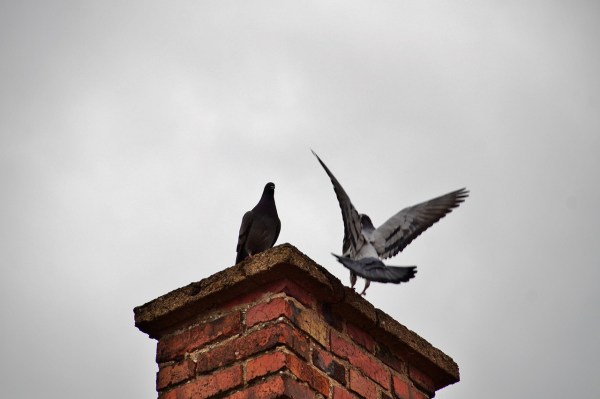
I heave myself up the narrow chimney shaft.

Finally, I will find out where all those pigeons are coming from.

Six. Six dead pigeons in 2 weeks.

This chimney is a nightmare. Who wants a dead pigeon falling on them every time they’re planning on making a fire? Not to mention the ridiculous draft that the opening creates. You open your chimney and it blows your front door open.

Kind of like the “Every time god closes a door he opens a window” stuff. Although in this case he opens a chimney, throws a rancid dead bird in your face and opens the front door with such force that the cutlery shakes on the kitchen shelves.

I wonder if it works the other way round? If you slam the front door with great power will it shut the chimney? Maybe I’ll check later. It might amuse Marcia. She’s been so cranky lately. Dreaming of pigeons, the poor sucker.

Climbing through this shaft is harder than I thought. It is a sweaty reminder of my age, my latest birthday having thrown me into the depth of middle age. In my shaky effort to climb up, I can feel how much gut I’ve got, spilled all over my midriff, clinging to my waist.

I shouldn’t be far now. Maybe a couple more feet. Though it is very dark still, and the battery on my mobile and only source of light has run out a mere 2 minutes into my climbing journey.

Shouldn’t the shaft be lightening, as I get closer to the top?

Six. Six bloody dead pigeons in 2 weeks. You open the chimney to make a nice romantic fire for your wife and you end up with a dead pigeon and an argument. As if it was my fault. I didn’t bring the pigeons in there, Marcia.

I’m gonna get it all sorted. I just need to finish climbing up this fucking chimney, get rid of the nest or cadavers or whatever might be up there and then I’ll have a nice fun story to tell the kids and maybe some loving from my cranky wife.

The shaft has narrowed now and there is still no sign of light, just a deepening damp smell. I reach up to gage how far I am and my hand comes into contact with cold concrete.

The chimney is sealed.

Where did all the pigeons come from?

Sudden, inexplicable fear crawls through my body, and the dampness seems now to treacle through my veins along with a palpable sense of doom. Deep breath, calm down, and climb down.

The story to the kids won’t be as fun and I’ll probably have to settle for a sexless marriage, but at least I will no longer have to experience this cold, narrow abyss.

Climb down. Slowly.

I can hear a noise echoing through the shaft. A crunching noise followed by the sharp metallic thud of car door closing.

Marcia.

She’s angry. I can tell from the clattering of her heels, and the vigorous shutting of the front door. In the kitchen, the cutlery cackles, and in the lounge the chimney hatch slams shut.


B F Jones is French, lives in Surrey with her husband, 3 kids and cat and works as a freelance digital consultant. She has book reviews and stories published on STORGY. She also had stories commended by the R. C. Sherriff Trust and LISP.

Contents Drawer Issue 14

Image via Pixabay

The Spirit of the Wooden Box – Mark Tulin

It took me until I was sixty to appreciate you. It’s a shame that you had to die before I could acknowledge your impact on my life. Too bad you’re in a wooden box now in the living room, all ashes, just a spirit of burnt remains.

Now that you’re dead, I can barely hear your cries. There’s no anger. No unmet needs or disappointments. No crazy garbled words or high heels whizzing past my forehead through a bay window falling onto the street. No telling me to sit up straight in a chair or to read the Home and Garden section of the Sunday paper or chastising me for wearing the color blue in the house. Just your pure memory lingers, the good overriding the bad. The essence of your perfect version.

Every time I look at the wooden box that sits on the drawing table, I hear a quiet voice, no longer screaming or tears streaming down your face. No longer talking in riddles, playing the victim, complaining about things that no one cared about or even understood.

There is only silence without breath. Your quiet spirit hovers in and around the wooden box and watches me prepare your favorite dinner: pasta in red sauce, a baguette, a bottle of Chianti. Your spirit keeps me company, my ally, and my honored guest. When I interact with the insurance adjuster, you help me calculate the numbers. When I inhale my Albuterol through a nebulizer, you encourage me to take a deeper breath. I can finally tolerate being close to you. No longer do I have to create distance or drink myself to sleep to get you out of my head.

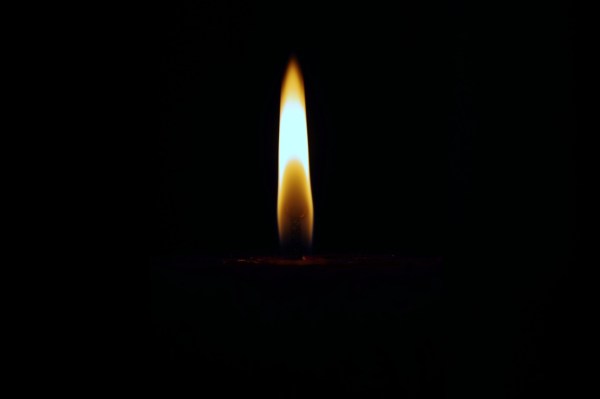
The wooden box has a Yahrzeit candle burning above it with a trail of black smoke rising to the ceiling. Whenever I see that candle flame flicker, I think of you praying for my deceased father over the kitchen sink. I watched your trembling hands clutch a prayer book, your parched lips muttering a chant in Hebrew, your eyes closed while rocking back and forth like you were at the Western Wall of Jerusalem.

Next to the burning candle is the image of you as a teenager, posing on a stoop with long brown hair, wearing a high school letter on your sweater, and resembling a young Elizabeth Taylor with a closed-lip smile. You were surprisingly beautiful then, seemingly had the world at your fingertips with a clear plan about your future. You wanted to write brilliant poetry and short stories that would make people see the world from a more compassionate place. Then you met a man, convinced yourself that you loved him, had a baby and then lost your mind. The photo makes me think of what might have been if you hadn’t gotten married and settled for a muted life, taking care of a man who never encouraged you to follow your dreams.

“You don’t have to feel sorry for me or worry anymore,” your spirit whispers.

“I can’t help it,” I say. “You seemed so vulnerable, barely five-foot tall, and I feared that people would take advantage of you.” But then I realized that you were far from incapable of taking care of yourself. You launched Coke bottles at a bully across the street that teased you for the way you dressed. You threatened to break a car window with my Louisville Slugger when a neighbor walked on your flowerbed. Despite your diminutive size, you were as fearless as a pit bull.

You spirit whispers to me not to betray myself or to deny who I am.

“Don’t question your intuition,” you say. “Live the kind of life that you dream about. I weighed myself down with fear, but you can rise above it.”

I stand motionless, lightheaded with nostalgia. I see you clipping my mittens to my coat sleeves and opening up a can of Campbell’s Tomato Soup to go with the grilled cheese sandwich browning on the skillet. I see you push me down a snowy hill in a red Flexible Flyer, watching me until I make it safely to the bottom. You take pictures of me in the swimming pool while riding a walrus float, sliding into third base under a tag at a little league baseball game, and in my glen plaid bar mitzvah suit, standing awkwardly right after I became a man. With your Kodak camera, you captured all my sacred events and then neatly pasted those developed photographs into an album, chronicling my life’s story with your stamp of approval.

I stand in front of the wooden box, now, acknowledging all the things that you did for me, feeling guilty that I never returned the favor. I always focused on your insanity, never on the person behind the crazy talk.

“I wish I could do my childhood over,” I tell the spirit of the wooden box.

“It’s not about me. It’s about you,” the spirit answers.

I nod my head. I tap lightly on the wooden box. The Yahrzeit candle flickers with a beautiful orange flame that reminds me that you are still here.


Mark Tulin is a former Philadelphia Family Therapist who now resides in Santa Barbara, California. He writes poetry and fiction and is currently looking for a publisher for his novella. His chapbook, Magical Yogis, was published by Prolific Press (2017). His stories are in smokebox.net, Page and Spine, Friday Flash Fiction, and others. His previous Cabinet story, “Weekend in the Suburbs” can be heard in podcast form at Other People’s Flowers, His website is the Crow On The Wire.

Contents Drawer Issue 14

Image via Pixabay

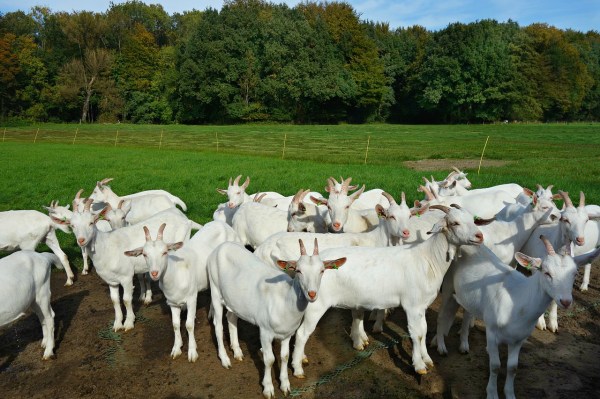
Chickpeas – Qurat

My mother once told me
that goats have to be fed carefully –
that all too often, upon finding a bucket of chickpeas,
whether dried or swollen with water
to twice their size, bloated,
they gorge themselves, eating senselessly,
until their insides burst.
Not for lack of intelligence –
maybe the opposite,
barely chewing their chickpeas
before gulping them down, even though they
scratch against their throats on the way
down,
barely breathing in between mouthfuls
anything for something,
even if it hurts –
I’ve gotten too good at the dark
too used to my serrated silences,
uninterrupted by the stream of rotating images
and sounds, which I can hardly piece together
before they’re gone (not that I would),
the chickpeas are burnt, it’s all smoke, everyone’s
killing themselves slowly (it’s the only fashionable way)
and wondering why they aren’t dead yet
and wondering why they aren’t alive
and wondering if everyone else is
wondering the same thing.
I can’t seem to get myself
to burn.


Qurat is an engineering student, an avid environmentalist, and an emerging author. She has work forthcoming or currently in The Evansville Review, Augur Magazine, Tenth Street Miscellany, The Temz Review, Rag Queen Periodical, Yellow Taxi Press, and KROS Magazine. Find her on Twitter: @DQur4t.

Contents Drawer Issue 14

Image via Pixabay

Worm Season – Traci Mullins

I’ve hated worms since I was seven, when Billy Gentry hid one in my unsuspecting sneaker and I threw up. The riskiest worm season was during the spring rains, when they’d creep out in droves from wherever they lived and slime their way across the sidewalks. They were repulsive, plump from yeasty new soil, and wiggly, like they had a new lease on life. I coped with them by pretending I was a frog, keeping my eyes on the pavement and playing worm hopscotch. Only once did one get the better of me, squishing underneath my new pink Mary Janes and setting off a fit of ew, ew, ew, ew! I heard the neighbor guy snicker and gave him a killer scowl.

I still hate worms. You’d think I could spot one from 100 yards, but no. When Alex crept into the hollow place my absent father left inside me, I didn’t even notice. He lured me with his bedroom eyes and seduced me into forgetfulness. I thought I’d learned my lesson from the chain of fools who’d come before him, but no. Alex scrubbed my memory with soapy charm and slithered in unnoticed, like a worm vanishing into the grass.

The first time he punched me, he looked stunned. He said it was the first time he’d hit a woman. I should have demanded proof, but no, I took his word for it. He was on his best behavior for months before he struck again, this time by hurling a saucer-shaped iron weight at the bridge of my nose. He stumbled toward me, crying, begging my forgiveness. I screamed at him to not lay a finger on me and drove myself to the hospital, my blood gushing like worm guts. The x-ray revealed the chips of bone, but not the daddy-shaped hole I let Alex crawl back into one last time.

The next time he detonated, I was ready. The knife sliced through his center and I cut him in half. I spit him out and vowed to be done with worms, finally plump within myself.


Traci Mullins writes short fiction and has been published in Flash Fiction Magazine, Dime Show Review, Spelk, Ellipsis Zine, Palm-Sized Press, Fantasia Divinity, CafeLit, CommuterLit, and others. She was named a Highly Recommended Writer in the London Independent Story Prize competition.

Contents Drawer Issue 14

Image via Pixabay

Metaphorically Yours – Ben Banyard

like a damp tea towel from Majorca
we are ineffectual
a reminder of happier times

like salt
I only need a pinch of you
any more and my blood pressure rockets

like avocado
you can be insipid
will often spoil a meal

like Colchester
few people know much about us
except that we once mattered

like cricket
I’m slow
and few people fully understand me

like my new trainers
although you’re stylish enough
you cause me discomfort

like Wham bars
your memory of me in the old days
can never match up to today’s reality

like GWR
you’re just as unreliable
despite a recent makeover

like that brilliant chip shop we found in Harlech
I often fancy visiting you
even though you’re no good for me


Ben Banyard lives in Portishead, near Bristol, UK. He’s the author of a pamphlet, Communing (Indigo Dreams, 2016) and a full collection, We Are All Lucky (Indigo Dreams, 2018). He blogs and posts mixtapes at https://benbanyard.wordpress.com.

Contents Drawer Issue 14

Image via Pixabay

How Big Its Smallness – Peter J Coles

They’ve closed off the street. Both ends. Police cars strewn across at angles roped together with yellow tape. The threat of arrest hangs in the air. I want to get home. My dog, my poorly little cream-coloured lab, left alone all day with nothing but her chew toy to feed on. I’m laden with shopping. A rucksack full and two carrier bags in each hand. I want to go home.

“Can I get through?” I say to the policeman, except I have to say it in German and I’m not sure if I’ve said it correctly. He frowns, seems to double in size before my eyes and shouts something, a stream of hot stinking words, that spins me around on the spot.

“I need to go home,” I try, but he shoves me back, holds up a black-gloved hand and puts the other to the gun at his hip.

Moving away, I spot a neighbour standing to the side. An old Turkish woman, a flowered veil framing her face, who I’ve never had a conversation with except to say, ‘Guten morgen’ or ‘guten abend’ as I pass her in the corridor of our building.

“Guten abend,” I say, sidling over to her. She tries to ignore me, to look past me down our closed off road. She’s biting at her nails in rabbit-like nibbles; her cuticles are bleeding.

“What’s happening?” I ask her in English, but she won’t focus on me. She won’t give me the attention I’m after. So I step closer and block her view.

“Hello,” I say, “What’s —”

“No, no, no, no, no, no!” she says, wagging a finger in my face before shoving me out of the way so hard I stumble backwards, the shopping bags like pendulums in my hands propelling me back, only just keeping myself from falling hard into a man behind. His hands are on my back, there to stop us colliding, and chastises me to be more careful, to take this moment more seriously like the rest of us, to which he receives murmurs of agreement.

“Sorry,” I say, turning to look at him with his beer gut distending his stained polo-shirt and his razor-sharp sideburns making his bloated alcoholic face look almost angular.

“I’m just trying to find out what’s going on. Can you tell me?” I ask him, this time in German. German for Germans; English for everyone else.

“Isn’t it obvious,” he replies in English, pointing down the road, flashing anger red. “You only have to open your eyes.”

I follow where he is aiming with his finger, over the heads of the crowd, passed the line of police cars, to the bank of our apartment block, all sandy-yellow against the wet-blue of the tarmac. They look normal. Sometimes, in the mid-summer light, the buildings can glow, radiating a Mediterranean warmth. But in this dull, grey light, there’s nothing special about them at all. I check again to where he is pointing, to make sure I haven’t been mistaken. But I haven’t.

What’s different? What am I not seeing?

Is someone on the roof? A hidden figure getting ready to jump? Is there smoke billowing from a window? Are the police out with the weapons drawn, willing to take someone out? No, none of that.

Everything just seems to be how it always is. In fact, despite the crowd and the presence of the police, the street is so mired in its own mundanity as to look boring, not worthy of this attention, this amount of fear.

“I don’t see it,” I say. The man stares at me with the contempt of someone who is long tired with the stupidity of someone so ignorant. “Help me understand,” I plead, but he just dismisses me with a wave and steps back, mournful, to merge invisible into the crowd that has thronged around us.

I don’t understand. I want to, but I don’t. I just want to go home. To feed my poor little lab out of the tins of meat I’ve brought for her. To pack away my shopping and collapse on to the sofa and remain there for the rest of the day. To forget the day, to let it fade until there is nothing left and I can begin again tomorrow.

I don’t want to open my eyes, I want to close them.

But as I start to pick my way through that mass that has gathered, pausing on their terrified faces, watching bitten lips, and wet eyes, making my way closer to the police barrier, an anxiousness begins to pool in my temples. When I reach it, I shuffle along the front, giving a wide birth to the police who themselves can’t help but snatch glances over their shoulders. I step onto the pavement, pushing my way forward, hoping to get an unobstructed view of whatever the obstruction is, and I find a gap, a space wide enough to see and then…

When I first see it, I don’t.

Not at first.

It was only after does it become clear, and even then it is obscure.

A point, no bigger than anything I’ve witnessed before and yet, when I think on it, I think, God, good God, how big its smallness! How vast its emptiness. How solid can something so devoid of shape be? How endless its limits? I want to get closer. I want to run far away and the more I stare, the more I want to forget what I’ve seen, but also to make it indelible on my memory so that I can tell others about it, forever. Because that’s how long it will take. I will need forever to discuss it, and forever again to never talk about it, to never utter a word about it in case I misspeak and the dishonesty of its truth were to be made apparent.

I drop my shopping bags at my feet and hear glass smash and the pulping of fruit. I step back and merge fearful into the crowd.


Peter J. Coles is a blog editor for MIROnline.org, an editor for The Mechanics’ Institute Review 15, and a graduate of the MA Creative Writing programme at Birkbeck University. He is currently working on his first novel and has read short stories at MIRLive and the Writers Room. Find him on twitter @peafield.

Contents Drawer Issue 14

Image via Pixabay

Create a website or blog at WordPress.com

Up ↑