Snapshot – Olivia Fitzsimons

There are no photos anymore. It’s seems strange to think that once we even photographed our food, our shoes, our selves. Tiny made up records of our lives. Carefully curated memories. Shared with strangers the world over. Made videos that lived and died on a server, a snapshot of your views, your days, your arse. Liked and loved and corresponded without words at all just symbols.

It was fine too, recording everything as this place turned slowly into perilous paradise, while trying to avoid the other images on your feed. Brazil burning to the ground. Sahara spreading and surrounding African cities that succumbed rapidly to desertification. Ignoring Paris drowning slowly, the Louvre submerged and history destroyed piece by piece. It was comical initially, watching swimming in the seine but when the waters didn’t subside, when temperatures didn’t drop, everything changed. Then everything stopped. Ireland ourselves alone. It seemed like a bad joke. I try to stay out of the sun.

I still carry my old phone, battery long dead, storing thousands of moments that I stole or forced from life. Sometimes I long to sit idly flicking through 20 variations of the one picture to find that perfect look. Editing life to make it covetable. Colours brighter, everything vibrant and eye catching. Heighten that idyllic sunset. Crop the blemished bystander in the bad coat from the profile of your life. Deleting anything that didn’t fit the performance. Life as a portrait.

A familiar feeling washes over me I’d thought I’d forgotten and I take out a battered iPhone, screen cracked and just hold it. Most people keep devices like relics. I know I should stop carrying it around with me. A useless piece of ancient technology.

I never kept photos in my wallet. That was a thing old people did. Not that we need wallets anymore but still I’d like a photograph. I see people sometimes in the camps linger over treasured pictures, they are always alone, sometimes it seems that they only exist on paper, that they aren’t really here at all.

On a board outside the village, there are thousands of pictures of missing people, pinned with tacks, and mouldy bits of tape, the oldest images battered by the elements, bleached out by the sun, smiling happy faces lost all over again. Often I find myself standing there staring up at all these unknown, giving them pretend lives, loves, deaths, because no one has ever taken a person from that board. No one has ever been found. I was going to be a photographer. I think about the images I would take more often than I should. I let my mind wander more frequently than is safe. I check my phone again. Stomach pains flare. Hunger cuts me open. There are no photos anymore.


Le_Voyage_dans_la_lune_

OLIVIA FITZSIMONS is a northerner living in Greystones, County Wicklow. Takes her feral children to the woods often, swims in the sea and loves to get lost.
Shortlisted Sunday Business Post Penguin Short Story Prize 2017
Shortlisted Retreat West Flash Fiction Competition 2017
John Hewitt Summer School Bursary Winner 2017


Image: via Pxhere


The Reaping – Philip Berry

The last Galen fighting ship corkscrewed away, its lateral engine trailing a spiral of purple smoke. Small elements became separated from the curve of its hull. When their reflective parts caught the sun they glared momentarily before fading into the massive shadow cast by an adjacent moon. The rate of separation looked modest, the movements of each particle graceful, but the forces were immense and the suited human soldiers being hurled through the smoking rents blacked out long before their air supplies ran down.

General Fent Spaith, 35 years old, watched from the bridge of his command cruiser. A square head and prematurely greying temples exaggerated the impression of natural authority. The battle was won. It marked the close of a decade long war, the last in a series of eight wars that had spanned seventy-five years. The mutually agreed periods of respite between wars had allowed each of the three sides to re-group and re-arm; Galens, Antonians and Korzyra.

General Spaith, leader of the Antonian military, had joined forces with the Galens as the eighth war commenced. Together they had vanquished the Korzyra. Then, without warning, the Antonian force had abandoned the treaty of alliance and turned on the weakened Galen fleet.

Others had counted the total number of lives lost. Others had measured the obscene percentages of metals and organic materials that had been vaporised during the Long Fight. But these data did not interest Spaith. He had proved the doubters wrong. The doubters were dead. He had killed them all in the prelude to the eighth conflict. In doubting him, they had undermined the war effort. History would absolve the dictatorship he had established.

“Congratulations Sir,” said his Aide de Camp from across the pentagonal bridge. Smoke, resulting from surges in some of the instruments, had been supressed into a dense carpet by xenon purges. The Aide de Camp was called Bolan, and he was an artificial. Spaith’s entire staff were artificial. He preferred them that way.

“Thank-you Bolan.” Spaith’s words were slightly muffled by the air-supply he wore over nose and mouth. “And what of that Galen coloniser? It escaped the peripheral net during the firefight.”

“I took the liberty of issuing orders to set up an even wider net… I didn’t want to trouble you during the closing manoeuvres. The coloniser is heading towards a string of linked Mercs as we speak. They have laid ripple chains across its path.”

Lungless Bolan breathed easily in the xenon.

Spaith nodded. “Good. Make sure they wrap around. I don’t want it disabled, I want it destroyed. And let me know when it’s done. How large, by the way?”

“The coloniser? Small. There are 900,000 souls on board.”

“I was surprised how easily they fell for it, the Galens.”

“You had been cultivating them as potential allies for many years sir, since the sixth war. Did you always intend the double-cross?”

“Yes Bolan. The long game. It requires patience.”

“I see sir. Their trust in you was… naïve.”

Spaith gave Bolan a quizzical look.

Bolan moved forward. His shins swished through the smoke and left eddies above the floor. He wore the uniform of Spaith’s army: dark blue textile, silver piping on the trouser legs and the arms of his tunic. Silver insignia – five semi-circles – on his right shoulder, indicating the high-rank that justified his presence here. Spaith looked back from featureless viewing screen. The smoking carcasses of every defeated ship had either fallen out of view, or been vaporised in the clean-up.

Bolan was coming too close. Spaith wasn’t used to proximity like this.

“Bolan?”

“Please, Sir, this is an historic moment. Let me be the first to shake your hand.”

“Err…of course. Pleased to.” He extended a hand to the artificial. Bolan took it, and held Spaith’s wrist with his other hand in a comradely gesture. Then he tore Spaith’s hand off in one swift, sure motion.

“BOLAN!” Spaith sank to the ground on his knees. “What are you…?” The General held the stump with his good hand, and watched the blood well up from the raw surface in horror. He clasped it to his chest like a child would a precious bird.

But he had already retaliated.

A combination of eye movements that one could only accomplish by using each extra-ocular muscle in a pre-determined sequence had activated a personal distress call through neural sensor implanted very early on in his military career. The small legion of personal (artificial) guards who resided in the walls of the ship sprang to life, burst through the thin metal panels that had hidden them during the entire campaign, and stormed the bridge, encircling Spaith in less than thirty seconds.

None touched Bolan, who stepped back.

“Watch him boys,” Bolan instructed them, calmly.

“KILL HIM!” ordered Spaith, gesturing at Bolan.

“General, your personal guard are loyal only to me. They will look after you. Medic, treat him.”

One of the guards pulled the stump from Spaith’s chest, irradiated it gently, picked off two arterial spurters with a cauterising beam, and dressed it in a traditional crepe bandage.

Spaith’s bewilderment grew and grew. “Bolan, what is this? We have won. I have led you to victory. Who is behind this mutiny? Whose orders are you following?”

“General Crall.”

“Matthew Crall?”

“They are his orders.”

“He’s still alive?”

“Very.”

“I… I heard he’d been irradiated by a solar flare in the Dallant system?”

“He recovered. He is close. I am permitted to speak for him. Here. This will allow you to focus.”

Bolan reached for an object in his pelvic cavity, through an intelligent seal just below the place a human umbilicus would lie. He held out a chipped enamel cup, standard military issue to new cadets.

Spaith’s expression changed.

“You remember it. Good. General Crall thought you would.”

For General Spaith, things began to fall into place.

*     *     *

The cup used to sit in Matthews Crall’s locker. On the second day of the first term at the training academy he had showed it off to the other boarders, rotating it lovingly in his hands, pointing out the seamless lines. Matthew told them that his parents had bought it from the only shop in the quadrant that stocked equipment with the academy’s official design – a scatter of points in the shape of the nearby Anvil Nebula.

Fent Spaith, eleven-years old, said nothing as this precious object was lauded.

Through the following weeks he noted how it was brought out every evening when the boys were allowed to make hot chocolate. Matthew washed it and dried it carefully, then placed it back in the locker – a misnomer, for nothing was locked in the academy. Trust in one’s fellow cadets was absolute.

The boys, one hundred of them, were tested throughout the year. The results of these tests were displayed on public boards. Fent did well, and was reliably in the top five. The top three, based on cumulative scores, were taken off-world at the end of the first year to an advanced training facility.

The year’s final test was a full war game, in which each cadet piloted their own craft in a sphere of space with a diameter of 300 kilometres. Its boundaries were lined with field-nets. The craft were designed to absorb laser energy without exploding; instead, their brittle alloy hulls disintegrated, leaving the pilots suspended in protective rescue fields, where they hung until the game was completed.

The transparent and barely perceptible naso-oral specs worn whenever they visited an extra-atmospheric training theatre channelled an inexhaustible supply of air. But while they languished, the cadets were vulnerable to further indignity. If a fellow cadet aimed a laser at their chest badge – a larger version of the Anvil – their cumulative score would be reduced by ninety points. This was enough to pull them way down the ranking.

The primary aim of the game? To destroy a cube of hard mineral that hovered on the far side of the sphere. None of the training cadets had enough firepower at their thumb-tip to achieve this alone; a minimum of eight craft had to fire into the same spot to break down the crystal structure. Once that had been achieved, the cadet who reaped the greatest weight of mineral rubble in the scoop slung under their hull won the game.

It was called The Reaping.

Fent formulated a plan. He worked on it from the middle of the second term. Such scheming was not unknown, as academy lore told that to win The Reaping required more than flying and shooting skills; it demanded political aptitude.

So Fent identified and recruited a team of twenty fellow cadets. They agreed to watch each other’s backs, play interference, engage other groups and, when the density of craft had been sufficiently reduced, align for the final assault. Then they would concentrate their fire, smash the cube, and clean up. The twist, the hook… points garnered from the spoils would be shared across the twenty, even if some of them were disintegrated in the process. Points awarded would be proportionate to the number of ‘kills’, that is, disintegrations and badge shots. Each of the twenty recruits liked the idea. It was novel. Their supervisor liked it, and she recorded in her training file that Fent had shown promising ingenuity.

Several days before the game Fent looked carefully over the latest rankings. He lay third. Good. But he wanted to be first. Matthew Crall was second, lying twelve points ahead of Fent. If they both had a good game and were not shot, their relative positions would remain unchanged. Crall was in the group of twenty. He was an ally. On the night before the game, Fent went to sleep in a troubled state of mind. Troubled, but certain of what needed to be done.

*     *     *

“Matthew, you got those purple scum covered?”

“They’re toast.”

Fent Spaith smiled. Matthew was doing a good job, leading a sub-unit of five craft on a mission to corner the major threat to the Twenties strategy. Fifteen cadets had come together in opposition to Fent’s initiative, and with the permission of the supervisor had splashed the noses of their craft with purple paint. Their leader, Yamina Vaye, had taken down three Twenties already. The pilots were still spinning in their rescue nets, trying to slow themselves down by dragging their fingers through the invisible fields.

Matthew was angry. He spotted an opportunity during a long roll, adjusted his yaw, waited a moment longer as Yamina’s aft section slid into his crosshairs, and watched her craft crumble in the glow of his laser. She screamed as the structure collapsed around her, but she was in no physical danger. Matthew swooped down to face her, made eye contact, smiled, and blasted her chest. The field protected her, but the badge on her chest registered the hit. The ranking computer adjusted itself. Yamina fell from eighth to twenty-third place.

“Well done Matthew. Time to regroup, bring your five back, we’re clear for the cube.”

Fent was dominating the theatre. He had personally destroyed six craft. Altogether, the Twenties had destroyed a quarter of the field. Lone rangers, twosomes and triads were too nervous to approach the cube. The twenty (actually fifteen by now) were ranging across the cube’s six faces in well organised formations. They owned it.

“Line up Twenties,” ordered Fent, “Last six to arrive, I want you to cover us. Martha, you’re furthest from us, I want you to hang back and signal any surprise attacks. There may be a late forming group who haven’t shown their cards yet. It’s what I would have done.”

And indeed, as the nine Twenties lined up and prepared to blast the cube, a chevron a craft stormed into the space beneath them firing incessantly. Three Twenties collapsed into flailing limbs. The firing line was now down to six, too few to damage the cube.

“Martha, Tommy, Vera… join the line, now, NOW!”

Fent span off the line in a parabola, spraying fire with fearsome accuracy. The chevron of attacking craft split, two were destroyed, the remaining three lost heart. Their pilots did not fancy being scooped up at the end of the game, perhaps ninety points the poorer.

When the three laggers had joined the line Matthew Crall took charge.

“Lower right corner, on three – one-two-three FIRE!”

Nine beams converged on the cube. It resisted for a minute. The cadets watched their power reserves drain. But at last the mineral cracked. A defect enlarged from the heated corner towards the centre, then zagged back, reaching the top side and causing the heavy mass to split.

“Right fragment!” shouted Fent.

The beams stopped, then leaped forward again, quickly crumbling the larger half of the broken cube. The surviving Twenties systematically reduced the fragments into ever smaller parts. Pilots in nearby craft watched jealously. Cadets out in the sphere who were caught in rescue fields put magnifiers to their eyes and watched.

The mop up took half an hour. Matthew Crall filled his scoop and turned for the base. Fent’s craft slid into his path.

“Hey, Fent, your scoop’s only half full! There’s nothing left.”

“It’s OK Matthew. I know where to find some.” A line of light connected Fent’s gun to Matthew’s flank. Matthew’s craft fell briskly apart. He fell into the instant field, reflexively covering his head with his arms as components swirled around him. When he brought his arms down and looked out into the almost empty sphere (a few rocks floating, a handful of cadets watching in fascination), his badge was glowing with the attenuated heat of Fent’s laser.

*     *     *

Twenty-four years later General Spaith sat in the commander’s chair, bound by sticky fields. His amputated arm throbbed, but was no longer bleeding. A sub-window in the corner of the large viewing screen showed the arrival of a shuttle. The markings indicated that the occupant was a general.

Twenty minutes later Matthew Crall entered the bridge. His frame was spare, his face narrow, but he wore his black hair long, and he had an air of authority about him that he had lacked at the academy. The artificial crew turned towards him in as one. Spaith turned the chair with a movement of his remaining, free hand.

“Crall. What is this game? You have no authority in this theatre.”

“My authority is broader than you can imagine Fent. You’ll forgive me if I use first names. We know each other so well, after all.”

“But you… you barely made it out of the academy. Your career… it was pure nepotism. Your mother…”

“She helped, I will admit that. But my contribution to Antonian society was never going to be marshal. No. Moral rather. That was always my strength.”

Spaith’s gaze was empty. He had no idea where his old classmate was going with this. But he sensed that there were forces in this room about which he had no comprehension.

Matthew Crall approached the commander’s chair. He moved his head, and an artificial deactivated the sticky fields. Spaith sprang to his feet. The same artificial held him back with a rigid shoulder grip.

“Hold your temper Fent,” Matthew’s lips brushed Fent’s ear as he whispered. “These artificials are on trigger settings. They’ll pull you apart if they conclude I am in danger.”

“Then explain to me. Why am I being treated like this.”

Matthew stepped away. “Because your morality is no longer required. It has served its purpose. Your abilities – to persuade, cajole, dissimulate and double-cross – were exactly what we needed to win the final war, but we cannot allow those values to infect our great society.”

“What is this naïve rubbish?”

Crall trembled at the word naïve. His gaze hardened.

“You accused me of naivety once before Fent. Do you remember?”

“No.”

“Then watch. Bolan.”

Bolan extended an arm, spread a palm and projected a recording onto the viewing screen. Fent saw himself as an eleven-year old, from the point of view of another cadet. He stood in the corridor with the food lockers, barring the way to anyone who might pass. The wearer of the cam, Matthew Crall, spoke. Moving shadows and indistinct murmurings gave the impression that other cadets lined the walls, anticipating a confrontation. The view swivelled to a locker door. Matthew’s hand reached for the enamel cup. Then Matthew tried to proceed along the corridor. Fent blocked him.

“I only want to get a drink Fent.”

“No. You can’t. Why have you appealed to the supervisor?”

“Because I was on your side, and you shot me.”

“Show me the rule that says I shouldn’t have.”

“There are no rules Fent, you know that, but it’s wrong.”

“And nothing to do with falling to thirty-three in the ranking? You really think they’ll rescind the strike? Never. The game is for grown-ups! I won. You lost. That’s how war works! Or didn’t your Mummy tell you the facts of life!”

Fent reached forward. His hand loomed in the cam’s field of view. When it was withdrawn its fingers were curled round the enamel cup.

“It’s time to learn some of those facts Matthew. The ranking stands. GET IT?”

Fent held the cup in the angle between the locker’s door and its hinge, then slammed the door shut. The force dented the mug. Splinters of white enamel exploded off its surface, revealing a dark blue undercoat. The cup fell to the floor and rocked on its side until it came to rest. Matthew knelt down, the floor rose up on the viewing panel, and a pale hand extended to retrieve the ruined object. The audience of artificials and two humans, Spaith and Crall, heard a low howl – the young Matthew’s anguish. A child’s distress. A symbol of home, comfort, destroyed.

The film stopped, the screen turned grey, then reverted to an external view of space. The adjacent moon threw off reflected light, blood-orange, deriving from the system’s old star.

Fent faced his accuser boldly. “So this is revenge, for a childish argument.”

“It is more than that Fent. In this display of petulance and ambition you sealed your fate. I had only just returned from the game. My cam was still activated. The supervisor saw this footage. She contacted my parents. My mother intervened. She was on the ethics council, you knew that didn’t you?”

“She carved your career out for you. We all knew that Matthew.”

“More than that. She nurtured your career too, in a way. Manoeuvred your postings, dangled you in harm’s way but ensured you were not killed… made you the little Napoleon you are. But without his reforming zeal.”

Spaith was looking around the bridge. “Are we being filmed?”

“Everything is recorded, all the time.”

“So superior. Yet you let me win this war at great sacrifice. As we speak, nearly a million Galen’s are drifting into a ripple-net. Your precious ethics allow that, so long as it secures the Antonian hegemony. Damned hypocrite.”

“Don’t worry Fent. The coloniser is not a problem. The 900,000 souls are all artificials. The Galen’s saw you coming.”

“You tipped them off. And yet they still permitted the destruction of their fighting force?”

“They recognised that your strategy was fundamentally sound. The pincer movement on the Korzyran fleet was necessary. But the Galens were careful to put no more resources into the theatre than absolutely necessary. The coloniser was a distraction. It worked. The last Korzyran order was to chase it down, and that brought them into your sights. We have signed a treaty of long term co-existence with the Galens.”

Fent had nothing more to say. He had been out-thought.

“Enough,” said Matthew, “It’s time to go.” He drew a blaster, threw the enamel cup into a mobile field so that it spun on its vertical axis in the xenon-heavy air, and shot it. The force tore the cup from the field and into the viewing window. It bounced off, a black and charred echo of its once gleaming form, and fell to the floor… again.

“Fent. Bolan will escort you to the academy. Your injury, sustained in action, precludes you from military rank. Your place in our society will be as a tutor – tactics, formations, artillery. That is your fate. Goodbye. I am taking this ship.”

When Spaith’s personal shuttle, piloted by Bolan, was ten kilometres from the command cruiser, the general’s face began to twitch. He winked three times, looked up, then down, then left, then left again. It was a very unnatural sequence of movements.

“What are you doing?” asked Bolan, turning away from the controls. His blank face betrayed no concern, but his tone did.

“It’s done.”

“What have you…?”

Behind them, silent in space, the hull of the command cruiser began to undulate.

“I just triggered a five second mass auto-destruct of every single crew member.”

Pale smoke began to leak from the bridge, which was situated on a sloped tower. In the engine room, where artificials worked in a radiation soaked environment without danger of sickness, mutation or malignancy, two hundred medium-level explosions immediately shut down the ship’s power and caused a chain reaction. The lower part of the ship blew out, releasing a shower of humanoid forms into the void. They were not scared. They did not need oxygen. They would remain sentient until the freezing temperature arrested the flow of positrons in their distributed cortices.

“The thing I have always loved about Antonian artificials, Bolan, is their absolute dependability, at the end of the day. If, that is, you happen to have gone to the academy with the chief programmer and persuaded him to embed the right sequences destruct before setting out to war. Poor Matthew, for all his finer instincts, he never did understand human nature.”

Bolan had turned back to piloting the shuttle. He readied himself for the expanding force wave that would soon catch up with them. Then he glanced at the shrivelled enamel mug that an inexplicable impulse had led him to collect from the floor before entering the shuttle. He took in its warped shape, its ulcerated surface, its rough lip from which no one would ever sip… and pondered a dilemma in his customary, algorithmic manner – how long, really, can the Antonians reign?


Le_Voyage_dans_la_lune_

PHILIP BERRY recently published a collection of SF short stories called Bonewhite Light. Explore his work at www.philberrycreative.wordpress.com or @philaberry  


Image: prettysleepy via Pixabay


Hangers On – Steven John

In my dream I hear the whip-lash of firecrackers. I feel bones being broken on a butchers block. I see a boy throw paper screws of gunpowder onto the pavement from a coned paper bag. My head bolts round on the pillow, currents of electricity shock up and down my neck. I stare my ears into the dark.

Awake now, I still hear the cracks, and laughter. Every night, prowling packs of them, high on vapour, waiting for their freenet ration to come online. I lay listening in the green hue from the clock. 3am. Another four hours before any freenet. Another four hours before these ferals feed, snouts blue in their screens, gobbling it up. My thoughts glitch. The firecrackers and caterwauls aren’t from the street outside the window. The noise comes from behind where I lay in bed with my wife. They come from the rear of the house.

I get out of bed, cross the room to the window and touch the translucence pad on the glass. The pane changes from black to clear. The street outside is empty. Spots of rain fall in the sodium glow from the few streetlights that work. Cars and quik-shaws parked, charging up on the patchwork of tarmac and mud. Sewerage burps up from under the manhole covers. Luminous graffiti painted on the charging posts, scribbles down the street like fireflies.

“What’s that?” My wife wakes, still groggy from the hypnonoise in her earplants.

“Sounds like drunks, or vapunks, with fireworks. From the backyard.”

I put on a gown and walk into the empty back bedroom, our daughter’s childhood dolls propped up on the pillows, their black eyes reflect spots of white light. The firecrackers are louder now and I make out voices. The window glass is on permanent translucence. The repair-men never come. I look down into the yard. There’s a group of young people on the decking, some standing, some lying on the loungers, exhaling clouds of colour, white, green, purple GM weed. The laserbarb fence around the yard is intact. They must have accessed through the path at the side. The alarm has packed up again, or the housecomms would have spoken. My wife stands naked beside me. One of the males raises a bottle.

“Great tits lady. Join the party”.

My wife swipes at the opacity pad on the window.

“It doesn’t work”.

“I’ll call the police.” She leaves my side.

Two of the females start to have sex on a lounger. Their legs are no more than bones, full tattoo cover, green and yellow snakeskin, shaved genitals, grey with disease, open wounds. I turn on the housecomms, press ‘garden’.

“If you don’t leave now we’ll call the police.”

“Call away shithead. We party right here.”

My wife returns to the bedroom in a robe. I hear holding music on her phone.

“999. Wait time ten minutes, go to website or call back. Call’s in a queue.”

“Wait.”

One of the males squats to defecate on the grass. Black liquid squirts. The one with the drink throws a firecracker.

“Fuck off Janus. Can’t I shit in peace?” Bowels cleared, he pulls trousers over black stained legs. The females have stopped their sex but haven’t re-clothed. They sway their skeletal bodies to an unheard beat.

“Infected. Antibiotic resistant. All of them”, my wife says. “We can’t go outside”.

“We don’t know they’re resistant. Could be they haven’t got money to buy the new strains.”

Some are missing fingers, hands, feet, limbs; frayed stumps waiting for an auto. A girl’s rusted alloy-leg doesn’t respond to her chip, it’s bent at the knee, she walks on tiptoe. A virus infested headchip.

Someone has answered my wife’s call. She hands me the phone.

“This is 999 sponsored by Angel Globenet, Bluelight Response. My name is Laverne. How may I help you?”

“Police please”.

“Before we proceed I need to take you through security. Your account number, date of birth and postcode please.”

I hear sounds of cooking in the background; plates and pans, children arguing, a baby crying. Out-sourced phone response. A cheap emergency contract. All we could afford.

“You’re through security Mr Hughes. May I call you Vaughan?”

“Just send the police. I can hear you’re busy.”

“We need to know the nature of your call Vaughan”, I hear a door close, muffling the background noise.

“Vapunks in my backyard. They’re infected, need antibiotics”

“Have they used or threatened violent behaviour or are they causing any criminal damage to your property Vaughan?”

“They’ve been throwing fireworks and smoking tobacco. They’ve had unsafe sex on my garden furniture and shit contagion on my grass. They’re trespassing on my property. It’s 3.30 in the morning. Is that enough?”

“Under the terms of your contract Vaughan, none of what you’ve said is covered for police response.”

A child in Laverne’s house whispers. I hear the child over the phone. I hear someone retch.

“Daddy’s got blood on his shirt”, a child’s voice.

“What are my options?” I ask Laverne.

“Vaughan, we can offer you a remote police response with e-mailed status and action report within the hour for £350, or a professionally written complaint to the police for £175.”

“We’ll have the remote response with email.”

We go downstairs into the kitchen. My wife pours two small measures of sterilised water and puts out pills. I turn a window to clear. The one called Janus and a girl put their faces to the glass. My wife takes pictures. Janus has vampire teeth implants that protrude over his lower lip. The girl’s few remaining teeth are stained purple from GM weed vape, her face aflame with spots, some bleeding, some gangrenous, her face being eaten.

I shout, “Leave us alone. Fuck off”

Janus speaks “We don’t like hangers-on old man.”

My wife says, “don’t antagonise them. They’ll break in, infect us.”

“They’re not going to break in. They know they’d be shot. They want to be arrested, taken to a life-seekers camp. Free food, medicine, vapes.”

From over the rooftops we see flashing blue lights. A police drone. The vapunks cheer and wave at it like a rescue.

The drone, silhouetted in blue, hovers silently at roof height above them and points down its weapons. Pinpricks of white from the underside of the drone coalesce into one iceberg of daylight. The geiger-paint of the vapunks hair, their tattooed skin, their vape clouds, all turn shades of grey, diminishing them to a black and white photograph. A camera with a single red eye scans over them, a blade of blue medi-data light slices through each one in turn. The light searches out modified weapon capabilities on their auto limbs.

A she-bot voice from the drone. “A complaint scene video, identification and medi-reports have been uploaded to police headquarters for analysis. Any new complaint of criminal behaviour will be met with an immediate armed response.”

“Arrest us you FUCKERS”, Janus throws his bottle in the direction of the drone. The drone ascends two meters higher.

“Throwing litter incurs a fine of a one year freenet ban. We advise you to desist and recycle waste according to the manufacturer’s instructions.” The drone raises its weapons, ascends into the dawn sky, and scuds back across the rooftops.

My wife asks “what happens now?”

“Open our emails.”

In the sitting room we turn on an i-panel. There’s an email from Angel Globenet, Bluelight Response with a vidfile attachment. We read the e-mail.

Subject: Complaint of unsupervised firework display, tobacco smoking, unsafe sex, fouling private property, public nuisance and trespass.

Police Priority: less than 5%

Advice: All personnel identified by remote police response unit. Low risk of criminality. Four identified personnel terminally infected. Life expectancy – less than 26 days. Eight identified personnel – 86% antibiotic resistant. Do not approach. Angel Globenet recommends precautionary dosages of antibiotic versions 684/674/ah-f/9, available in 1 hour from Amazon Drone.

Action: 21-28 days to arrest, subject to higher priority incidents.

We watch the vidfile; an aerial view of our decking. We see our geriatric faces at the window, our shreds of grey hair, our stooped backs, my arm holding up my 120 year old wife. The auto walkers fused to her pelvis have broken. The repair men never come.

‘Hangers-on’ they call us. With luck our National Death Service euthanasia will come through soon, although if this carries I know where to find a quasi-legal clinic. She’d go tomorrow. I’ll hang on a while longer.


Le_Voyage_dans_la_lune_

STEVEN JOHN lives in The Cotswolds, Gloucestershire, UK and writes flash fiction, short stories and poetry. He has had work published in writing group pamphlets and on short fiction and poetry websites including Riggwelter Press, Reflex Fiction and Fictive Dream. In December 2017 Steven won the inaugural Farnham Short Story Competition and has won Bath Ad Hoc fiction four times. Steven has read from his work at the Cheltenham Poetry Festival, Stroud Short Stories, The Bard of Hawkwood and The Flasher’s Club. Twitter: @StevenJohnWrite


Image: StockSnap via Pixabay


Debt – Cass Francis

It’s ridiculous how fast the world changes—like something out of a song, where a twist of phrase leads you into a totally different place, where before you know it you’re starting to wonder whether it’s even the same song anymore. @isaac_almeida24, with sandy hair & a broad chin had to walk away, reset, & drive home. He runs a hand through his hair. Still wears the gold wedding band, though it’s almost been a year, the weather too warm for the season. No snow. No ice. Not even much rain—more like a dry fall than a winter. Except it’s flu season & of course his youngest, sitting in the seat next to him with a paper mask over her mouth—her baby pink lips—her makeup, inexpertly applied, smeared—got sick. Terribly so. But no matter because he managed to walk away, reset, & save her. & they sit next to one another in the car, him driving because he still can’t get used to the self-controlled-car thing—neither of them talking much.

“We must have run across someone with the flu,” he says, pale blue eyes scanning the road. “You got sick.”

“I didn’t do it on purpose,” she says, pushing a strand of black hair from away from her mask. Her tone is huffy—normal for her age, so @isaac_almeida24 doesn’t press it.

“Of course, you didn’t, baby. But it happened all the same.”

He thinks of her health, so different from the pro-reset hour before—he can still picture her in the backseat puking into a grocery sack, shivering with fever, pale as the winter moon. He can almost still smell the sourness of the vomit, even though he isn’t completely sure it still counts as something real—something that existed—now that he has reset. Now that he broke all the rules and ignored all the warnings left by his late wife telling him that messing with the linearity of time is dangerous.

She would have done the same thing, he tells himself.

She would have done anything to keep her youngest child alive. & she would have done it again & again if need be, damn the danger, he tells himself.

His youngest points out the window. “The glass,” she says.

He follows her gaze—all the windows of the buildings they pass are screens shimmering with digital ads for bright & gleaming goods & services, some of which make @isaac_almeida24 blush—though his youngest seems unfazed, even amused, rather than scandalized. The usual holograms play around the buildings & business signs—a smiling bearded mechanic cartoon climbing up the sign for an auto repair shop—but the window ads are new, something that must have slipped through the break in time during the last reset.

“Crazy, isn’t it?” he mutters to his daughter.

“It’s like we’re in the future.”

@isaac_almeida24 chuckles, trying in vain to match her light mood, her innocent fascination with the changing times.

She lay defenseless & shaking on a hospital gurney, her body raging with fever as if she was being burned alive from the inside out. Doctors swarmed. Nurses pushed him from the room. & then later after hours or what felt like hours of pacing and hand-wringing, a doctor came out & squeezed his shoulder & told him the bad news. “I’m sorry,” the doctor said, & @isaac_almeida24 felt weak, sick, dizzy. He didn’t even think—just numbly took his wife’s contraption, the Spinner, from his pocket, pressed the button & spun backwards in time, until before the flu, before his youngest daughter got infected, before all the tragedy that seemed to be destined to take her reached up again to grab her and steal her away from him.

& then he thought of his wife, & his whole body stiffened with guilt & shame.

He thinks of her on the drive home, his hands tightening around the steering wheel. He thinks of her with guilt & shame because deep down he knows that she wouldn’t have done what he did—break time & reset it so that their youngest child wouldn’t die. He knows she wouldn’t have because she didn’t. She chose instead to walk away without doing anything. She believed that nature was important to preserve, important above all else, & breaking the laws of nature was like taking out a loan or buying something on credit. Breaking time, breaking the laws of nature, meant you were building up more & more debt in the world—& before long some force more powerful than you will come collect.

@isaac_almeida24’s daughter has died six times—twice before her mother left & four times within the past year.

*      *      *

How would experiencing death this way affect them, his daughters? @isaac_almeida24 worries that they’ll never understand it the way others understand it—with permanence, as something final & not meant to change. As something meant to be respected. With every reset, his youngest becomes sweeter, more innocent, believing that everything always works out for the best. On the other hand, his oldest—@LuLuSea—becomes darker. She seems to not understand the tragedy of it—that destruction is permanent & leads to sorrow & mourning. @isaac_almeida24 fears that she has lost respect for life.

At home, he stands in @LuLuSea’s bedroom doorway. “Good,” he says, “you’re already packing. We’re going to head out to the cabin for a few days.”

“Not me,” she says.

She’s throwing clothes into a suitcase without folding them—a sign that she’s more interested in making a point than actually going anywhere. She has @isaac_almeida24’s own sandy hair & his wife’s matter-of-fact stubbornness. “What do you mean, not you?” he says.

“I mean I’m not going to the cabin. I’m not going anywhere with you.”

She knows that he reset, @isaac_almeida24 realizes. He doesn’t know how she knows, but she’s always been a smart one—always used to tag along with her mom to classes & the lab, & so probably picked up some ideas there. Maybe she can tell from small changes in the technology surrounding them. Maybe she just notices a flicker of light, a change in the wind. “Where are you planning on going, then?” he ventures.

“Like you don’t know.”

“Where?”

She throws down a bundle of socks and slams her mother’s left behind notebooks on top of the pile in the suitcase. “I’m going to find Mom.”

@isaac_almeida24 shakes his head, has to swallow & look away down the hall. She takes his hesitation as either skepticism or a challenge & puts her hands on her hips, defiant, chin out. He shakes his head again & can’t meet her gaze—what good is a father who can’t even look his child in the eye? “Honey,” he says, “we talked about this—your mother. She’s dead, & there isn’t anything we can do about it.”

“She’s lost,” says @LuLuSea, “& you’re too much of a coward to go after her.”

He ducks away into the hallway. “Get packed for the cabin.”

“& you don’t care.”

“Get packed. I’m not kidding around.”

As he heads down the hall, he can hear her groan & zip up her suitcase in a frustrated huff. He goes to the living room, wanting to turn around & scream, “Your sister just DIED,” but instead he closes his fists & swallows again to diffuse the anger, the pain. No tears in his eyes. Instead, strangely—madly—he wants to laugh. He holds that in too, making it to the quiet of the living room.

The windows of their house are also digitized, & the screensavers cast eerie pink & green pixelated light across the beige carpet. He’s sure he can change them to a more natural curtains or blinds, or even plywood, but he doesn’t know how & doesn’t have time right now to fool with it. His youngest is sitting on the couch, running her fingers through her black hair. She seems so much more delicate than @LuLuSea—who’s older & therefore bigger but also just seems more powerful, more volatile. His youngest is a candle flame. His oldest is a wildfire. But maybe his perceptions are off because he has so recently seen his youngest so sick, her eyes sunken & her face flushed & her skin clammy gray as if she was about to turn to dust right in front of him. Beside her packed pink suitcase on the couch, she’s sitting with her legs folded underneath her, her head leaning back and her black hair fanned out around her like a thrown-back veil. She’s not wearing her mask. “We don’t have to go,” she says.

“I’d feel better if we got away for a few days. Just chilled for awhile, you know.”

She looks like she wants to say something else. @isaac_almeida24 waits for the words. “Is she really dead?” she finally whispers. “Like gone forever?”

He sighs. Nods. “What matters is that we’re together. Getting out of town for a few days will help, I promise.” He makes himself busy by going to the window & pressing his finger to the glass until the alternating green & pink changes to white blinds that ripple a bit, as if real & pushed by a cool breeze. “We can talk about it, though,” he says, “on the drive. It’s good, sometimes, to talk about these things.” His mouth is dry, his heart pounding from the lie. “It’s healing.” He turns around. “Where’s your mask?”

“Daddy,” she groans.

“Put it on. We’re not taking any chances.”

*      *      *

The girls sit in the backseat as they drive up to a gas station—the last one on the way to the cabin. The youngest picks at her mask. @LuLuSea keeps her arms crossed, a stony expression on her face. The windows of their car don’t play any digital images—either their car is too old a model for that, or there are laws about that sort of thing being a distraction for drivers. The girls can only watch the countryside rolling by and listen to the music through their implants. @isaac_almeida24 can only watch the road. He pulls up to a pump & gets out, makes accidental eye contact with the guy on the adjacent pump and nods guardedly, & says to the girls, “Wait here.” As if they’re going to go anywhere. As if they have anywhere to go.

“He hasn’t said a thing, not the whole trip,” @LuLuSea says as soon as her dad has closed the door & is out of earshot.

“He’s just tired,” says her little sister, picking at her paper mask, snapping the elastic. “& probably scared.”

“Of course—he’s always tired & scared. He’s never going to tell us about her. about what happened. Never. He’s too much of a coward.” @LuLuSea looks over at her sister, who stares out at the gas pump, numbers scrolling higher & higher & a celebrity news video playing on the screen. “You should press him again—he listens to you. He can’t say no to you. You should ask—we deserve to know.”

“Why don’t you ask him?”

“I have—he doesn’t listen to me.”

“I don’t want to make him mad.”

@LuLuSea sighs, disappointed & letting it show. She doesn’t say anything for a moment or two, though, instead watching out the window. Her father is a nervous man, glancing up & down the road & at the strangers coming & going to the gas pumps & the convenience store. He’s small & scrawny with boring sandy-colored hair—like her own. “She isn’t dead,” @LuLuSea says. She doesn’t know whether she just can’t hold in her frustration any longer or whether she wants to screw up her goodie-two-shoes little sister or whether she’s angry at her father for never listening or whether she’s desperate to get her mother back. “She’s just lost,” @LuLuSea continues when her sister doesn’t say anything. “Lost in time. & every reset when Dad breaks time, he creates more loops, & it makes everything more complicated. He makes it harder for Mom to find us & for us to find Mom.”

“Dad says she’s gone. Gone for good.”

“He’s lying. Or he just doesn’t know. But I’ve read the journals. I know & I think he does too, somewhere deep down, & that’s why he gets all pissed—”

The door opens. Chirping birds. Rustling leaves. Passing cars.

@isaac_almeida24 climbs into the driver’s seat. The girls are quiet.

*      *      *

The truth is that he will probably start bawling, talking about her. After all, sometimes he starts bawling making coffee, walking into the backyard, picking up a can of beans in the supermarket. How could he get through some speech about her to his daughters, to her daughters? There is no way to explain the truth behind it, anyway—the truth that she wasn’t a good person, wasn’t a caring person. Wasn’t a good mother & might have loved them—might have loved him—but in the end didn’t care enough to not leave. To put them before work, before ambition. He will start bawling. Then he’ll start ranting, & the girls, or at least the youngest, will start crying. & no doubt it would turn into some argument between him & @LuLuSea.

A few days ago, he overheard them together in the bathroom, @LuLuSea straightening her sister’s hair & saying, “You know, he posts stuff on social media using her accounts, like as if nothing happened. It’s severely weird & creepy. Kind of pervey, too. He’s acting like she’s still alive. Like he knows that she’s still alive, & he’s waiting for her to come back.” @isaac_almeida24 became teary, hurried from the bathroom as if fleeing from the scene of a crime.

It’s true. He posts as her sometimes. As @Sierra, so that her followers out there in the world, all the strangers who only know her as a name & ideas & passion about knowledge think she’s still here. Think she’s still alive.

@isaac_almeida24 is compelled to do this the same as he’s compelled to reset to keep his youngest daughter alive. He doesn’t know if it will really mean that he’s perverted—corrupting the laws of nature & putting himself & his family, his entire world, in danger. He doesn’t know what he owes nature, given that it has stolen so much from him & is still hungry, still trying to take more.

He does owe them an explanation, though. His daughters. She was their mother.

They deserve to know that she loved them.

Or loves them?

Or will love them?

He doesn’t have the words to describe this situation just like he can’t tell you how the windows display digital video, how the Spinner works, how & why his daughter keeps dying & why he keeps having to save her. He’s not like his wife was. He’s not smart. He’s not particularly curious. He doesn’t have eyes that shine with burning suspicion at every question that claims to have no answer.

“I don’t know what happened to your mother,” he admits suddenly, as if alone in the car, as if alone & feeling the tears coming & desperate to keep them at bay—to keep his mind & vision clear, to make it where he’s going. “I don’t know,” he repeats.

They’re about five minutes from the cabin, weaving down an unpaid road through the campgrounds. The girls weren’t expecting him to speak, so he feels their surprise and hesitation to say something that would put an end to his speaking mood. But he has to tell them something, even if it’s wrong. “I can tell you about her, though. That’s one way to keep her here with us—to talk about her & remember her.” He swallows.

He begins to speak.

*      *      *

Your mother used to get up at eight o’clock every morning, sharp. She did everything with a schedule. If it wasn’t on the schedule, she couldn’t do it.

Late at night, @LuLuSea and her sister tromp through the woods, headed for the lake in the center of the campground.

@isaac_almeida24 is in the shower when they sneak out, his mind numb and reeling from the events of the day, replaying what he said about his wife as the water ran lukewarm across his skin. The drain makes a tortured choking noise. He can smell the girls’ strawberry scented shampoo and his own mountain fresh scented body wash. He turns off the water & listens to the silence broken only by crickets chirping outside & water dripping from the showerhead. He pulls back the curtain, steps out of the shower, dries with a towel, preparing to go to bed.

She’d get up at eight. Breakfast at eight-fifteen—always with one cup of black coffee. At eight-thirty she dressed—always jeans & a plain t-shirt. On weekdays, she left the house by nine to go to the lab or her office until class—made it to campus at nine-thirty. She usually taught on Tuesdays & Thursdays at ten, one, & five, & on Mondays & Wednesdays she had lab classes. The rest of the time she was working in her lab or in her office, working all the time on her research. You remember. It was pretty much around the clock there for awhile. But she’d be home by six, unless she had a night class. I always cooked, kept the food warm for her.

“Just stop dying,” @LuLuSea says, half joking, as they march through the woods.

“I can’t,” says her sister. “I don’t do it on purpose.”

@LuLuSea carries the Spinner, careful not to press the button yet. “I know,” she says. “It’s like fate.”

“Yeah.”

“You have to die.”

“Everyone dies.”

“Yeah, I guess.” Sticks snap, leaves crumple, & acorns burst under their feet. @LuLuSea worries that their father will hear & come racing after them with a shotgun, but she smiles a bit at the irony of him accidentally shooting her sister. But then @LuLuSea imagines the pain & blood & she sickens. Tries to walk quieter. “It’s sad, though, & kind of unfair that you keep dying & making it harder to find Mom.”

“I don’t want to make it harder.”

“I know,” @LuLuSea tries to soften her voice—tries to communicate to her sister that she doesn’t mean to accuse, that she means to comfort. That she just wants things to turn out right, that she just wants things like they were before their mom left. @LuLuSea looks over at her sister hurrying along in the too-heavy coat, no paper mask, her lips baby pink & her cheeks flushed in the chilly air. “I don’t mean it’s your fault. I mean it isn’t your fault—that’s why it’s unfair.”

She showered at ten & was in bed at ten-thirty. Read or did other stuff, kept herself occupied until midnight, when she’d turn out the light & try to get some sleep. At first, the schedule was so annoying. I mean, at first, when we were dating, I thought it was charming & eccentric. Then we got married & I thought it was maddening. But after years I guess I grew used to it & started depending on it, & realized I guess since she left how much it meant to me, how I had grown accustomed to that—to having that control over time…

They stand at the edge of the lake, the dark sky spotted with stars & wispy gray clouds that floated in the reflection on the surface of the water. The reflection of the clouds looked like smoke suspended in the shimmering blackness. The girls stare, frozen as if staring at the edge of the world. Crickets, leaves, wind. The Spinner spins in @LuLuSea’s hand, & both girls breathe plumes of frosty air & the cold water trickles against the muddy shore.

“I’m scared,” says @LuLuSea’s sister, her voice so frightened that it’s almost all breath.

“You’ve done it before.”

“It feels different this time.”

@LuLuSea knows what she means—there’s something about the dark & somber peace of the lake, the woods, & the distant cabin that makes this moment seem different from all that has come before.

Her sister takes the first step forward into the water, her jaw locked with determination.

*      *      *

@isaac_almeida24 howls when he makes it to the lake, sees the water lapping his youngest daughter’s small body against the shore. He tries to revive her. He tries to reset. But the Spinner is missing and the air won’t go into her lungs and stay there and it’s no use, it’s no use at all, and by the end of it he’s sobbing like a child. He carries her back to the cabin, lays her on the kitchen table, & calls the police. & then he doesn’t speak—he won’t say a word to them. He won’t say a word to anyone. The police take him in for questioning. They suspect him for awhile, but can find no proof. The girl’s death is ruled an accident, and her sister probably ran away, not knowing what else to do. The police cannot locate her. They send @isaac_almeida24 to a hospital, where he stays in the psych ward for a few weeks, then is transferred to a facility out in the country, somewhere safe, somewhere quiet, somewhere peaceful. He talks rarely, but he posts online regularly.

“Death is natural, but nature is a cycle,” he posts as @Sierra. The doctors monitor his accounts carefully, looking for clues about his condition. “For every ending, nature owes us one beginning.”

Other than that, he spends the days staring at the doors as if waiting for them to open.

He stares at the windows as if waiting for the pixelated light to flicker.

Stares at the clocks as if he’s waiting for the time to change.


Le_Voyage_dans_la_lune_

Image: via pxhere


One Boot – Steven Carr

Nelson believed that sometime in his life he had been abducted by aliens and was experimented on. Sitting on the side of the highway surrounded by sun burnt yellow prairie grass he gazed up at the star spattered night sky watching for spaceships. He licked his parched lips, savoring the last flavor of salty pretzels and stale beer that clung to them. From out in the prairie the barking of coyotes sounded almost melodic. He wondered, Do coyote eat humans?

He lay back in the grass and with his arms behind his head he inhaled the prairie aromas of cow and buffalo manure, dying grass, and sun scorched earth, carried by the steady, hot breeze. After a few minutes of trying to ignore the flying insects that buzzed around his head and used his prominent nose as a runway, he sat back up and swatted at the bugs, even though he couldn’t see them. In the darkness the only thing around him that he could see very clearly was his white sock. He wiggled his foot.

On the other foot his green snakeskin boot was entangled in a clump of grass. It took several tugs on his lower leg to free it. With his sock and boot lying side by side at the end of his outstretched legs, he thought, How did things get this out of hand?

Standing, he scanned the dark highway, and seeing no headlights in either direction, he stepped out of the grass and onto the pavement. Surprised to find his brown Stetson stuck on a bit of tar, he picked it up, brushed it off, put it on, and began walking toward home. In the otherwise quiet of the night his boot clomping down on the concrete with every other step resounded like firecrackers being set off in a cemetery.

He kept looking back to make sure no aliens were following him.

*   *   *

Beams of sunlight were breaking through the thick, gray early morning clouds as Nelson hopped on the booted foot up the long gravel driveway to his house. The stones crunched beneath his boot. His foot with the sock hurt too much to lower it, so he held it up like a horse with a lame leg. His two dogs, Scrapper and Bigboy, both mutts, came around the house, barking, and ran up to him, their tales wagging frenetically. There was an engorged tick attached to the space between Scrapper’s large brown eyes. Bigboy’s long black hair was matted and coated with prairie dust. Both dogs smelled of dead gopher.

Hopping toward the steps leading up to the porch, he patted both of the dogs on their heads, and said, “I feel as mangy as you look.”

He jumped up onto the first step as the front door of the house was thrown open.

Stepping out onto the porch in her pink bathrobe with both hands on the butt of her 44 Magnum revolver and her finger on the trigger and aiming at Nelson, Cathy said, “You come up one more step and I’m going to blow your head off.”

Balanced on the booted foot, Nelson removed his hat and slapped it against his leg. “You dumped me on the side of the highway when I was drunk. I could have been eaten by coyotes.” Or taken into space.

“Coyotes don’t eat people,” she said, keeping her gun aimed at him.

Well, now I know, he thought. He lowered his socked foot and bit into his lower lip. He was certain he felt the blisters on the sole of his foot burst. The foot in the boot felt as if it had swollen several sizes.

“Put the revolver down before it goes off accidentally,” he said. “One of these days one of your stunts is going to kill me.”

Giggling, Cathy lowered the gun and put it in a pocket in her bathrobe. She leaned against the porch railing and with her left index finger twirled the curled end of a strand of her long brown hair. “What happened to your other boot?” she said.

“I don’t know,” he said, then began up the steps, wincing with every step.

*   *   *

Sitting on the window seat, Nelson watched a small herd of buffalo slowly cross the border of his property. The breeze that came under the partially raised window was scented with rain, although the night sky was clear. A screeching hawk drew his attention away from the buffalo. He heard it but couldn’t see it. When a gleaming white stripe flashed across the sky and disappeared beyond the Badlands formations, he shuddered. I wonder who they’ve abducted, he thought.

Cathy came into the bedroom carrying a cup of tea. “How are your feet?” she said.

He held the bare foot up and showed her the bandages he had put over the blisters. He kept the booted foot raised on a pillow on the window seat. “My ankle is so swollen I can’t get the boot off,” he said.

“That’s too bad,” she said. She carried the tea to him and handed it to him. Steam curled up from the dark brown liquid. She sat on the edge of the bed, watching him intently.

“Thank you,” he said, then raised the cup to his lips and blew on the tea, then took a sip. “This is good,” he said.

“I have something to tell you,” she said, twirling the end of a strain of hair. “I’m pregnant and I put poison in the tea.”

She’s insane, he thought just before he passed out.

*   *   *

Rain pelted the kitchen window as Cathy poured milk on her bowl of oatmeal. She let it set for a moment then scooped spoonfuls from the bowl to her mouth. The ticking of the clock on the wall above the refrigerator was slightly louder than the rain. As she ate she flipped the pages of a calendar, counting the days until the baby was due.

Nelson entered the room with his hands on his head. His skin was pale. “What did you put in the tea?” he said.

Cathy looked up and said, “Does it really matter?”

“I guess not,” he said as he sat down at the table and propped his booted foot up on a another chair. “Being poisoned was something different. You haven’t done that to me before.”

She put a spoonful of oatmeal in her mouth. “It wasn’t actually poison,” she said with a large grin.

He put his crossed arms on the table then put his head on them. “Are you really pregnant?” he said.

She put her finger on the January 19 square of the calendar. “I wouldn’t make something like that up,” she said.

I thought the aliens rendered me infertile, he thought.

When the scratching at the back door began, Nelson and Cathy remained seated. They were each waiting for the other one to get up and go to the door. After several minutes and knowing Cathy was capable of ignoring anything she wanted to for as long as she wanted, Nelson got up from the chair and shuffled across the kitchen to the door and opened it. Scrapper was sitting on the top step, dripping wet, with a forlorn look in his eyes.

“Why aren’t you in the barn?” Nelson said.

Scrapper barked and turned his head toward the open prairie.

“Where’s Bigboy?” Nelson said.

The dog barked again, then ran down the stairs and stopped in the mud, his nose pointed in the direction of the Badlands formations. Nelson closed the door and returned to the table and sat down.

“Is everything okay?” Cathy said.

“Bigboy is in the Badlands,” he said. “I guess I’ll have to go look for him later on.”

“That would be the right thing to do. That dog has no sense of direction and won’t get home on his own,” she said. “Watch out for rattlesnakes while you’re out there.”

And alien spacecraft, he thought.

*   *   *

It was late afternoon before the rain stopped. Nelson sat on the edge of the bed changing the Band Aids on his foot while Cathy sat in the window seat writing baby names in a small black notebook.

“How about Waldo?” she said.

“Good Lord, no,” he said as he covered the last busted blistered with a Band Aid.

“Mandrake?” she said.

He slid a clean white sock over his foot. “No,” he said.

He attempted again to get the boot off but his foot was still too swollen. He stood up and looked down at the contrast of the white sock and the green boot. For a moment he considered putting another boot on the socked foot, but it gave him the vague feeling he would be betraying the missing boot. He crossed the room and bent down and kissed Cathy on the forehead.

“If I don’t come back, look for me among the stars,” he said and left the room.

As he went down the stairs he tripped over fishing line that had been tied to the bannister at one end and tacked to the wall at the other. He tumbled over six stairs before landing on his buttocks at the bottom on a throw rug. He looked up. Cathy was standing at the top of the stairs with a huge grin on her face.

He got up and went out the front door, called for Scrapper, and got into the truck with the dog in the passenger seat and drove off toward the Badlands.

*   *   *

With the windows down the wind blowing in carried the aromas of wet earth and prairie grass. Twilight cast gold and purple light across the limestone formations. Scrapper had his head out the window with his mouth open and his tongue hanging out and flapping in the breeze. Nelson drove slowly on the narrow road that wound between two walls of rock. Intermittently he would slow almost to a full stop and call Bigboy’s name. Just when he was about to quit looking and return home, he spotted Bigboy sitting on top of a formation and looking up at the sky.

Nelson pulled the truck to the side of the road and he and Scrapper got out. Together they climbed the formation and reached Bigboy just as the sun set and stars began to freckle the night sky.

“What are you doing, you crazy dog?” Nelson said to Bigboy.

The dog continued staring up at the sky.

Nelson sat down next to him and Scrapper sat down on the other side of Bigboy. All three looked up at the sky.

There was a sudden flash of light above them and an object fell out of the darkness. Nelson’s missing boot hit him on the head.

I knew it, he thought.

He put on the boot and looked at both boots, side by side. Once again he felt complete. He climbed down the formation with the two dogs and got in the truck and drove home.


Le_Voyage_dans_la_lune_

STEVE CARR, who lives in Richmond, Va., began his writing career as a military journalist and has had over a 120 short stories published internationally in print and online magazines, literary journals and anthologies. He was a 2017 Pushcart Prize nominee. He is on Facebook https://www.facebook.com/profile.php?id=100012966314127 and Twitter @carrsteven960.


Image: Beate Bachmann via Pixabay


The Ship and The Water – Jamie Stedmond

Hideki Itô had an unsettling gait. He walked like a man uncomfortable in his own skin, a man not yet fully accustomed to the ebb and flow of his limbs. Shambling forward seemingly unaware of just how far his legs would take him at each step, of how wide the arc of his pendulum arms would be each time they swung. His walk was lumbering and ridiculous, but at just that much more than a glance he could be seen to be in perfect command of his unsteady totter. He strained to contain each bodily progression, steadying it just enough to take its absurdity and make it seem lithe, even graceful. His confusing stride lacked an audience as it clicked its way over marble surface to the elevators for his floor of the Moud-Iverson.

The elevators were cylindrical containers with walls made entirely of glass. They ran down the side of the building like surface veins, supplying their occupants with breathtaking views of the city above and below. Hideki could see the varied and garish lights of the undercity, illuminating the mismatched assortment of buildings and shanties that made it up. He could see innumerable cars gridlocking along the webs of motorway that snaked above the under, and through blocks of skyscrapers that cast long shadows on the laneways. In his peripheries he felt the rhythm of the whirring drones patrolling the upper reaches next to low-level satellites, their lights blinking steadily against the dark.

Hideki’s pupils widened and his breath grew shallow as he tried to absorb the view in a single stare. The city was laid out before him, all shining towers and endless bridges and flowing slums and bars and walkways and snaking sections of road and pillars and monuments and sparse patches of green and thousands of people, repeating to the horizon, more gridded and arranged here near the fringes but towards the centre it was a fractured cluster, a heaped mess of buildings all clambering over each other to escape, a cradle of primordial cityscaping.

Hideki thought about the billions of hours of labour, the innumerable materials and projects, the ego and freedom it took to build a city, the scale, the movement, the colour, looking out on it was like having his head smashed open by a bullet train. The city was a wonderful, unlikely idea. His reverie ended abruptly as the elevator pinged loudly, it had reached the ground floor. A tinge of red crept into his pale features as he exited the elevator. He allowed himself to become too submerged in his thoughts at times, embarrassingly so. Nevertheless, as he made his way out of the lobby he was still wading in the shallows.

He checked the time, he was on schedule for his meeting. He gave a few hard blinks in quick succession, trying to clear his head and shake off distraction. He was a pragmatic person. Sometimes this served him well, at other times it got him into trouble. He moved quickly across the road, this was the fastest route to his destination but it was also an area where someone in a suit as expensive as his could not afford to relax. He weaved his walk through various alleys, past shanties and dive bars and mumbling figures on the ground before taking another elevator, up this time, to a safer, more respectable level of the city.

As he had risen the sun had fallen and the nighttime dark gave the city room to glow. Nightlife began to crawl out of the woodwork like insects from under a damp rock. Hideki glanced around with faint disdain. The bars and restaurants in the area were all themed around nostalgia. There were ’50’s diners with waitresses on wheels and red vinyl booths, millennium bars that “rang in” the year 2000 almost nightly, to his left he saw Vision 2020 a barrage of flashing lights and dance music pulsing. More bars cluttered each side of the walkway, an overload of light and sound churning at each edge. He grimaced. It wasn’t drugs, loud music or flashing light that bothered Hideki – he mostly enjoyed drinks, clubs and dancing. No, it was the faces all twisted, facing backwards; nostalgia was insidious. The past was a dull thing to celebrate when the future was so much closer, the breath on the back of your neck, razor edged with potential.

For this reason he was childishly annoyed at the meeting place his supervisor had chosen, one Sammy Swing’s – Resongin’ The Sixties. He took a table for himself near the back, ordered a water and a gin/tonic, then waited patiently while near-ancient wails rebounded around him. As the third song kicked into gear Hideki was joined at his table by a rounded, balding man in an ill-fitting suit. He smiled as he looked around, enjoying the sixties aesthetic which he’d missed in the firsthand by a few generations at least.

“Nice evening, welcome, Mr Itô,” Hideki nodded in reply. He ordered a large burger and fries for them both. They remained silent until the food came. The man chewed his burger enthusiastically. “Some very sad business has been set afoot of recently, Mr Itô. A young executive has brokered a deal that is very sad for us. Of course, he likes his deal, it works well for him. He does not know of the special relationships his deal interferes with. It is no good.” Again Hideki simply nodded at this, sending blond hair waving over a broad forehead.

“Obviously,” he squeezed out between bites, “you are a very experienced negotiator. I must ask of you to make a counter-offer to him. He celebrates tonight, higher up than this,” he laughed, “approach him and perform with your customary efficacy, and all will be well, no more sadness for us.” He cocked his head at Hideki in question.

Hideki replied with a final nod. The man eyed Hideki carefully. Hideki’s face was blank, his eyes empty. The man was staring into a keyhole, he could stare into this dark for hours and still not be able to guess the shape of the key. Still, he seemed satisfied with Hideki’s inscrutable features and after a few moments the man took his cue from Hideki and simply nodded.

The man wiped his chin and cleaned his hands with a napkin bearing Sammy Swing’s smiling face. He set off to settle the bill, turning back once “Rafa Cole. His name. The rest of the details will be sent along accordingly.” He nodded again and smiled, seeming happy with his new habit.

*   *   *

The moon hung still and clear in the sky as Hideki ascended in another elevator. He had changed into a less formal suit, a cut more suited for an executive party rather than an executive meeting. He checked his pockets reflexively and repeatedly until the elevator reached its floor. As soon as the elevator stopped he stepped out and instantly adopted a more carefree face, and let some of the awkwardness of his stride show, not wanting to appear intimidating. The bar he was headed for reeked of its height, with black walls, tinted windows and a team of bouncers ensuring the privacy of its upper clientele.

“Name?” the bouncer stated more than questioned. “Lars J., with Shimenji,” Hideki stated back. The bouncer checked the list and his ID before stepping to the side allowing Hideki to be swept up into the bar.

The whole place pulsed with bass; music throbbed throughout, almost visible in the air. The room was full up with smoke and laughter, the floor awash with people. Clusters of young businessmen and women were perched on black leather couches, more were swaying in dancefloor haze. The lights were low, dimming and brightening in time with the music. Hideki couldn’t spot any light fixtures on the walls or overhead, the room seemed to generate its brightness from thin air.

Hideki slid himself atop a stool and leaned on the dark quartz counter. He could see himself, reflect dully in the black sheen. The whole area behind the bar was walled with a matte black metal, the bartenders dressed in all black too. The grim suaveness of the place almost made him miss the homely tackiness of Sammy Swing’s.

The bartenders were an efficient procession, moving up and down the length of the counter, never letting a glass stay empty too long. Hideki ordered a daiquiri and watched impassively as the bartender made it in front of him. He sipped it and made a smile. It was too sweet for his liking. His attention didn’t stay on his drink for long. He took another sip and began to search for Rafa Cole.

He knew Cole’s appearance from the pictures the supervisor had sent on to him. Rafa Cole was the inverse of Hideki in appearance. Where Hideki had blonde hair and pale skin, Rafa was tanned with short black locks. Where Hideki was broad and stocky, Rafa was slight and wiry. One was tall, the other still boyish in his height. Hideki, being the taller one, was able to spot Rafa quickly from his higher viewpoint. Rafa walked along, entertaining a group of his young colleagues. His movement was fluid and extravagant, unrestrained. He talked with animated eyes and he smiled easily. Hideki’s face was meaningless, it did not convey anything at all. He was comforted by their difference. Their mirroring. There was something of balance in it.

Hideki thought this in passing. He was no great believer in fate, but some things to him felt more important than others. In a situation like this he respected balance, a touch of magnetism would make things go more smoothly. He studied Rafa for a few minutes until he saw the young executive head out to the balcony for a cigarette. He followed him.

He moved across the dancefloor unnoticed, brushing through its occupants. No one turned their head to watch him go. His ghostly march brought him to cold night air and the sight of distant lights below. The club was in the upper reaches of the city. A long ways below people thronged about too tiny to be made out, and cars buzzed and clumped like feasting flies.

Hideki leaned on the black railing of the balcony. The man he sought stood a few feet further down, lost in thought, or drunken stupor, Hideki couldn’t tell. Hideki too became lost again as he watched the city. His mind moved like a watermill, turning over the same thoughts slowly and evenly. The man, Rafa, noticed him. He smiled, gave a nod. Hideki raised his daiquiri in reply. Again, silence.

Moments passed like this. The man turned to go, his cigarette end crashing to earth below. “Light?” Hideki ased. Rafa turned back seeming puzzled. He strolled over and leaned next to Hideki. “Light” he repeated, patting his pockets until he found one. He lit the cigarette Hideki had produced, the two men standing close to shield against the wind. “Rafa Cole?” Hideki grunted around his cigarette. “There we go… hmm? Sorry, yes, Rafa”.

Hideki Itô took a long drag of his cigarette. Rafa Cole watched him, relaxed and expectant, not reading into what was a moment of stomach churning stillness, nauseating tension. The fragile moment was still, then it was broken. Hideki moved, a sliver of silver flashing at his wrist. He pounced, slashing. Adrenaline pumped through him, his heartbeat filling his ears like wool and din. He worked with assembly line rote, his mind clear and focused. He was calm and immutable still. Rafa Cole struggled; Hideki was strong.

He swatted the flailing arms. He stabbed, forcing steel into the gristle and softness of a neck. He stabbed and stabbed again, in and out, clear heavy strikes that damaged and bloodied. He rended Rafa Cole until he was sure he was dead, and blood flooded out of Rafa, hot, bitter, marking his success.

Hideki took a moment to breathe. His heart seemed to rise like Shepard’s tone. It couldn’t get any faster and it continued to quicken. Breath shallow and heart knocking he searched his pockets. There was confusion inside, he had to act before it became commotion, action.

He took out a small black device, it was smooth and had a grainy texture.

Hideki had killed. A heart had stopped beating. Police drones would have recognised the loss and he would be surrounded already. There was no escape for a killer here, not at these heights.

The black device hummed. It was ready for transfer. He placed it on the back of his neck and it attached itself like a leech, making a wet sound. It was time. Now things became difficult, unsavoury. He picked up his knife again, and denied any shake to his hands. He gulped down deep breaths. He brought the blade under his chin and carved his neck in a fluid, practiced motion.

Hideki cut his throat, fluid and beautiful, like poetry. his neck gushed oily red onto the balcony. He dropped to his knees slowly. From his knees it was another short fall to the cold marble floor. His blood began to pool around him. . He had felt himself sinking, felt himself being dragged down into quicksilver water. Slowly, moving down to dark and cold, and calm. Dying was always cold, always calm. He felt his eyes closing and let cold waves wash over him, let urgent tide drag him down.

Two men lay dead when scene was locked down. An unfinished daiquiri and a lit cigarette kept each other company on the balcony.

*   *   *

His eyes shot open, blinked, gasped. There was no air in his lungs. His limbs thrashed pointlessly, heavy and foreign. Clothes were lead weights on him, he felt sodden. His brain burned with the burden of thought, his mind heaved, overcome with pure animal panic. He flopped and shuddered on a hard metal trolley, mouth fixed in an O, gasping, dumb.

He wriggled and writhed on the trolley. Eventually the tinny rattle quietened and he was still. His chest began to move up and down in a more regular fashion. His pupils reduced themselves to pinpricks. He sat up on the side of the trolley he had awoken on, staying there a few moments, not wanting to stand too quickly; new legs always took getting used to. He could tell these legs would turn to jelly when he set them to the floor.

He waited for some time, just breathing and feeling the feel of his skin, the weight of his hands. The way his mouth curved when he made different expressions. When he was sure he could stand without vomiting he stood up and walked, stumbling and spasmodic, over to the mirror on the other side of the room. He looked at his face. Stranger. Japanese, certainly. He could imagine him being from somewhere near home. It was comforting. His build was slight, but muscular. He liked it well enough.

He stared for a few more moments then reached around to the back of his neck and plucked a small black device from it. Similar to the one he had stuck in his neck a few minutes ago, but inverted, the other side of a relay. As the body dies, but before the brain shuts down it transfers, across aether, across space, across nothing. Now he was here. Mostly.

As he inspected his new face more closely the door behind him opened and a bald, rounded man entered. “Very late, Mr Itô, suspicious to be wandering around so late” he chuckled. Hideki tried to nod, instead jerking his head to the side jarringly. “A flawless evening. A happy evening. Sad for Rafa Cole. But needs must, yes?” He smiled. “Iamb glad forrour success” Hideki said, trying to work the words past a large and disobedient tongue.

The man brought Hideki to have tests run. Standard of course, and all very healthy results. He picked up his pay package on the way out. Money, and keys. A new apartment, a new car, a new everything. His old apartment would be ransacked and scoured soon enough. Nothing would be found. The night had passed by the time Hideki was allowed to leave the company building.

Hideki enjoyed the sunlight as he stepped out onto the sidewalk. The warmth of the sun soaked into him, new to his skin, skin in which he had never been warm. Skin that still remembered death, a different death, far away. Someone else. He had been plunged headfirst into dark water and a hand, this new, warm hand, had broken the surface, half a world away. Hideki wandered aimlessly through the city on the way to his new address. He took breakfast in a small cafe, and later stopped for a drink at a disco themed restaurant. His stomach showed no upset at his preferred food and drinks, which was some comfort.

The sun was preparing to set all over again when he reached the Moud-Iverson.

Hideki took an elevator, rising up the side of the building. He closed his eyes and rested his head against the cool glass. Looking out at the city while he rose made him feel nauseated. He fit his key into the door of his new apartment. It was stylish and lush and he tasted ashes in his mouth. Everything in the apartment felt plastic and mocking. It was always like this at first, he reminded himself. Starting again.

It would pass. It would pass, and still, Hideki Itô did not sleep well that night.


Le_Voyage_dans_la_lune_

JAMIE STEDMOND is a young Irish writer, currently based in Dublin. Jamie is pursuing an MA in Creative Writing at University College Dublin. Previously published in The Bohemyth, Cagibi, ZeroFlash (forthcoming), and Paragraph Planet.


Image: via Pixabay


The Brunswick Street Chronicle – Anita Goveas

The advert was in the exact centre of the daily display adjacent to Hawthorne Street. “Applications open for Citizen of the Year”. There was encode to scan for the details, and a picture of a tawny-haired man with an auburn tail, balanced on a narrow bridge. He had one leg outstretched and one hand reaching towards the screen. Kalpana wanted to reach back, but was rushed away in the work-fixated crowd. She cradled her tail-covering close to her body.

The prize this year was 100,000 transfers, more than enough for her mother to have a living space with a garden. The doctors wanted her to have more time with the green, the journey to the unit park exhausted her, the trees that lined every street were insufficient. Their allocation, their two bedroom cabin, was based on their family careers at the time of the greening, which tended to the inside. When her mother craved more oxygen, they’d improvised with hanging baskets and walks to the Chronicle. Kalpana had always preferred it there to trying to keep up with the other unit children.

Kalpana approached the Brunswick Street bridge. The bamboo sliver stretched in front of her, gently swaying, the engineering building on the other side. The subterrain underneath was shadowy and unlit. The smell of viengar inadequately masked the stench of urine. When the rivers dried, the people had decided to keep them, and build along and with them. There were always new plans, to bring the rivers back or repurpose their murky tracks. Meanwhile, she helped build the connections on the bridges above but she couldn’t use them. She studied the view around. No-one from the service was nearby. She adjusted her tail-covering, exhaled slowly and started on her customary long, circuitous walk that bypassed the bridge.

When she finally arrived, the others in her section had finished their morning tea. They had opened the windows and a breeze was rustling the cotton-draped recycled stone walls. Jose segmented a ruby grapefruit, eyes on his tablet. Simone was adjusting the section display to list their daily tasks by timing, rather than alphabectial order. They all agreed they prioritised more effectively that way. Her umber hair and tail had matching avocado-green ribbons.

“It’s still warm, it’s peach today. Wanna grapefruit from the south-west quadrent of my garden?”

Jose inherited his living space from his grand-parents, the revered acrobats. They had used the trapeze well. He’d inherited their strong shoulders, smooth gait, copper-coloured tail. He trained from a young age and had the balance but not the range of movements necessary to continue the tradition. He had found his own way to contibute. If he entered, his routine for the competition would be watchable.

Jose brought over the grapefruit segments. He cleared his throat. He was going to ask her to go to the climbing wall in Ash Square park again.

“I’m sorry I’m late. I was watching the downtown display, adjacent to Hawthorne Street and the Brusnwick Catalogue. What do you think about this year’s prize?”, she said hurriedly.

Simone tip-toed back to her desk, tail at vertical. She lengthened her spine and rolled her shoulders.

“Sorry, boarding was outside but brutal yesterday. I’m bruised all over. I’m thinking that’s a lot of transfers, they not getting the numbers?”

“Think its about people finding the inventions difficult. What else do we need?” Jose walked back to his station. “The routines got positional though. Remember that guy with the unicycle and the knives?”

The balance round had taken over the whole competition. People barely mentioned the presentation or the inventions. In the beginning, it was about improving yourself, making a difference. The man on the unicyle had tottered on a catwalk, amber tail almost horizontal. He’d been judged third most useful, and now presented the wind-surfing bulletins.

Kalpana shifted in her jute chair. The movement tugged at her tail-covering and the chair-fibre pulled the fastening on her back. She put a segment of grapefruit in her mouth and covertly anchored the cotton tube with her other hand. Simone unfailingly tended the plants in the section, helped her grandfather walk to the park. Jose brought in fruit from his garden every day. But they had innate balance and impeccable family histories. She didn’t know anyone else like her, they might know requirements and regulations she couldn’t access.

“This is really good, Jose. Thanks.” The citrus sting puckered her nose. “I was thinking of applying.”

Jose’s mouth pursed up, but Simone spread her arms wide. She was usually less obvious than Jose about wanting Kalpana to be more outside.

“Anything that gets you out of the Brunswick Street catalogue. We worry you’re going to move in.”

” Mum likes those old encodes, the dance and the gymnastics. We watch them together now she can’t outside so much, and she tells me about the inside. You remember her grandmother was a dancer?”

You remember, the more outside, the better. You can dance more freely in the Ash Square park.”

There was always someone dancing in the park, rhythmically nimble. There was always someone romping on the high walkways and narrow bridges, carefree and assured. Before her tail stopped growing, Kalpana had relished climbing the tallest trees, faster than Jose. Then the stump withered and she’d cowered inside, until her mother took cotton and flax and covered her shame.

She shufffled through the rest of the day, sketching without inspiration and tidying filling cabinets. She waited until the others had left so she could circumvent the bridge. Mother was waiting, but her restlesness needed the soothing of the Catalogue. Ling was leaving as Kalpana pushed the button to enter, and smiled in greeting. She watched encodes of rivers and mountains with her grandmother and great-grandfather, as they passed down their secrets from decades of mapping unusual geology. Ivan was in his place in the far corner, picking up encodes from tidy stacks and inspecting them. The unit legend was that he’d been a champion skier until he had damaged his tail, but from surreptitious study it seemed unblemished. Kalpana drifted through the racks. Individual encode were anondyne and synthetic but collectively exuded hints of rain clouds and silk. She spotted an encode with a cracked cover that had slipped behind a rack. It was labelled ‘Championship’. She scanned it out, slipped it in her jute bag.

When she got back to their living space, her mother was asleep. She unfastened the cotton tube, placed it diagonally in the small cupboard beside the kitchen door, then undid her long black plait. She rubbed at the hard skin acoss her lower back, toughened by adhesive, and massaged her aching muscles. She linked the new encode to her tablet. The screen wavered and crackled, then a stocky, dark, unbalanced girl moved across a rubber mat. It was inside, light was filtered through square windows into stars on the floor. Music played, a thumping, steady beat. The girl held a length of ribbon, it flickered above her head and in front as she leapt and twirled. Always moving straight ahead. She was fearless.

Kalpana’s eyes hurt from focusing. She didn’t know there were ways of moving if you were unbalanced that were as graceful as climbing or trapeze. Mother coughed in her sleep. She took the tablet into her room, pushed back the chair and bed to make a space. The dark-skinned girl balanced on a thin oak beam. She was turning somersaults, her arms above her head, her tail-less bottom tucked in and her smile radiant. Kalpana raised her arms, straightened her back. The pull in her muscles eased. She stretched out her left leg, tried to twirl. Her top half wouldn’t stay steady and she lurched forward. She rested one hand on her rattan chair and started again.

Mother was often asleep now when she came back from service. She had re-issued the encode four times. No-one else seemed to want it. Jose had also entered the competition, and offered to help with her routine. He was going to climb a bamboo ladder using only his left hand and leg. He was making the ladder himself, as his invention. Most people were climbing trees from a young age and ladders were becoming inside, but there were a few places trees didn’t grow. Something light-weight might be useful. She’d changed the subject when he asked about her application, and he hadn’t pressed for details.

Kalpana was trying lunges when her mother walked in. Ashanti was tall, fragile-looking, her sandy tail was wound clockwise around her right wrist. She liked to tame it as she had kept out some of her grandmother’s small silver ornaments. Most people didn’t decorate inside, so needn’t fear the damage an unrestrained tail might cause. Kalpana composed herself, but her mother’s eyes were sharp. She’d been the best astronomer in the Brunswick Street unit. Her spatial awareness would have been more revered in the past, before the greening.

“You’re trying something new? You’ve not shown me any encode for a while. Is the catalogue closed.”

“I’m sorry, I entered the competition, I’m working on a routine. I wanted to surpise you.”

“Without your tail-covering? They won’t let you in, how will you balance?”

“I’ve found something, there are people like me. I think I can make my own balance. But I can’t do it yet, I keep falling down.”

Ashanti felt for the edge of the slatted pine bed and drooped onto the soft cotton mattress. She hunched her shoulders, smoothed the downy hairs of her tail, eyes on her fingers.

“Kalpana, I’m sorry. I don’t think there is anyone like you. We looked into the families when your… it happened.” She started to wind the tail-hairs around her fingers, tugging until white lines appeared on her beige skin. “Your father went to the mountains to ask his cousins. No-one knew what we were talking about. That’s why we went so often to the Catalogue after your father died, I thought there would be an encode to explain. To tell us what to do.”

“But that’s what I’ve found. There were others once, there must be still. And she’s unbalanced in public.”

She turned on her tablet. The dark-skinned girl leapt across the screen, chest out, arms wide. She didn’t fall. She was unafraid. Ashanti narrowed her eyes, as if she was calculating the angles, tracking the whirlwind on its complex path. The way she looked when she built Kalpana’s chair, or re-wrapped her tail-coverings.

“She’s strong. From her legs, from her core. You should try squats, and lift weights for your arms. How do you feel about press-ups?”

Kalpana replayed the leap. She studied the way the girl kicked out her legs, arched her back, and then landed on one foot.

“I can make your costume too. Give me something useful to do while I’m inside so much. Do you remember how we used to watch the stars?”

As they clasped hands, Kalpana felt her mother tremble. But now she knew what she must do.

On the day of the competition. Kalpana walked to the Ash Square park by herself. If this went badly, Mother couldn’t cope without the support of the unit. She carried her equipment in her jute bag. She waited in line with the other applicants, forty or so, double the people from last year. She couldn’t see Jose, watched Simone walk in through the audience door as she waited to have her name ticked off and her bag checked. Several cubicles were still free as she changed into her costume and gathered up her invention.

They took people by unit, she was fifth in batch three. Batch one had completed, were sitting on the pine audience benches set up especially around the arena. It was used for boarding, and they had kept the pipes and the rattan matting. Kalpana tried to watch the applicants in batch two as they explained their ideas or devices, but could only focus on the routines. The catwalks and the beams, the hand-springs and the upswings, all landing on their feet, tails raised.

Batch three began, she watched the unit children she had grown up with show what they could do. Ling’s presenation was about perserverance, the effect of water on stone. Her routine flowed like silk. Jose was strong and balanced on the ladder. He talked about the amount of trees, the benefits of bamboo, and climbing in the Ash Square park.

They finally called her name. Her own breathing was louder than the murmurs of the crowd. A man on a front bench crunched an apple. Simone was waving, maybe shouting something. Kalpana attained the centre of the arena, put her equipment down beside her left foot. She straightened her back. She smoothed her cyan costume, embroidered with tiny galaxies and nebulae.

Kalpana reached behind with her right hand and removed her cotton covered, flax stuffed tail-covering. She held her hand-made bamboo pole in her left. Her shoulders relaxed, her neck elongated. The man had dropped his apple, it was rolling under a bench, she couldn’t see Simone. Her voice was heavy over the silent crowd.

“This is my presentation and my invention. I am unbalanced. There are others like me I hope, but I think we hide. It’s not lying, I wanted to be the same, to be useful. But I am useful as I am. I help build your connections, but they are not made for me. My gravity is diffferent. I have made this support, so my arms can be my balance. I will show you how I cannot climb as fast as you all, or over the narrow spaces, but I can still move well.”

She stretched out her arms. She leapt and twirled, piroutted and span. She kept her chest out and her shoulders down, landed on her feet. There were rhythmic clappings and stampings surrounding her, but she was whirling to the steady beat from the encode. She’d memorised it, a thump-thump, thump-thump she moved to always. She finished with one last revolution, and raised her arms to be horizontal to her sides. The three judges hadn’t moved, didn’t clap. As she trudged back to the changing rooms, she replayed their frozen faces. They hadn’t moved a muscle after she had revealed herself to be tail-less.

She changed her clothes and re-packed her bag, then she sat in a corner, rubbed her chest. Thump-thump, thump-thump. She’d declared she was not the only one, but there might not be anyone else like her in the world. Ragged cheering forced her back to the side of the arena, where the judges were announcing the scores. Kalpana pressed her right hand under her diaphragm, to make sure she continued to breathe.

Her presentation gained full marks, and the lady announcer suggested any other unbalanced could make themselves known. No-one came forward, but some of the crowd nodded, a few whispered. Most looked away. Perhaps in avoidance, perhaps thinking of someone at home who was different. Kalpana’s cheeks glowed with the hope that she might have helped someone who was afraid.

Her invention was fifteeenth, interesting and decorative but not useful. The lady talked about bridges and subterrain, and how they were important to the landscape, and supports would give a different message. Boarders might use them to develop new tricks, but that had not been the inventor’s suggestion. Kalpana would have to score higher than anyone had before in the routine to win.

They always paused before they proclaimed those scores. She sank down to the floor, the strain she had put on her legs and back communicating itself. They read down the list alphabetically. Jose was fifth, tenth overall. His presentation had been unfocused. He would have tickets to the climbing or surfing. Ling was third overall. She won 1000 transfers, and a weekend in the mountains. Kalpana pressed harder on her chest, the thump-thump pushing at her fingers, replaying in her ears. They had gone past her name, she did not have a score. They announced there were two disqualifications for use or misue of balance against the rules. She had never seen any rules about moving without a tail.

As she left the arena, Simone and Jose waved at her. She patted the air by her thigh in response, unable to raise her arms higher. The judges were enclosing a short girl with a beige fluffy tail. She had triple-flipped onto a piece of cork. The winner would be on all the displays.

Jose put out his hand, “Wait. You can’t just go home now.”

Kalpana didn’t want to raise her head. Her stomach was roiling, her shoulders were stiff, her toes were inflamed. But she would have to find the words to tell her mother, this couldn’t be worse.

“I’m sorry I didn’t tell you before. I…I never knew what to say. “

“No, I get it. We can’t even begin to think about what you go through every day,” Simone said softly.

Kalpana watched Jose try to smile. “At least I know why you wouldn’t climb with me any more.” She winced at the implicit accusation.” I mean, I don’t know what I mean. But I have four tickets for the surfing, you gonna come with us?”

It was an overature, one she shouldn’t ignore. She’d worked too long though to let her dreams go easily.

“Can I let you know? I’d like to spend some time inside. For a little while.”

She felt their eyes on her as she drifted away. Kalpana meandered home, weighted by the bag. She found herself at the Brunswick Street bridge. There was no-one else nearby. The bamboo pole was sticking out of the jute. She reached behind, but she hadn’t replaced her tail-covering. She felt the thump-thump, thump-thump under her skin. She lifted her arms in front, grasping the bamboo, and raised her right foot.


Le_Voyage_dans_la_lune_

ANITA GOVEAS is British-Asian, based in London, and fueled by strong coffee and paneer jalfrezi. She was first published in the 2016 London Short Story Prize anthology, most recently in Pocket Change, the Cabinet of Heed, Riggwelter Press, former cactus mag , Litro and Willow Lit. She tweets erratically @coffeeandpaneer


Image: Lasse Holst Hansen via Pixabay


Asunder – Michael Carroll

Ambassador Vilma Rohan shrugged herself into her best jacket as the dropship hit atmosphere. She zipped it from waist to collar and sat back for a moment, only vaguely aware of the craft’s swaying and lurching descent. The movement dampeners took most of the force out of the buffeting anyway.

“Motina’s help, we can do this,” Rohan said, nodding to herself and unconsciously brushing her thumbs over the rings on her index fingers.

The pilot briefly glanced back at her. “Sure we can, Ambassador. I’ve made a thousand trips like this. Maybe more.”

“Sorry, that wasn’t meant for you. I was thinking aloud.”

The young man—he’d told her his name when she boarded the craft, but she’d instantly forgotten it—said, “Gotcha. I do that all the time. Still…” He turned around completely and grinned at her. “I’m happy to be here. Last one, and all that?”

She nodded, then gestured past him towards the dropship’s controls. “Just…”

“Sure.” He turned back. “ETA two minutes.”

Two minutes. Then the battle begins.

There was more to all this than mere stubbornness or pride, as Rohan had tried to explain to her superiors many times. “It’s loyalty. That’s what we’re up against. And family. For some people that sort of bond is stronger than steel.”

Chancellor Raphael had responded to that with a snort. “Put it under enough pressure and even the strongest steel will buckle.”

Another lurch from the dropship, and Rohan automatically squeezed tighter on her seat’s armrests, the pads of her thumbs now pressing hard against her rings.

The pilot called out, “Sorry, that was me. But we’re through to a steady pocket of atmo now, just about there. You want to set down next to it, or a hundred metres away so they’ll see us coming?”

“The latter. We want them to see us.” Rohan pushed herself to her feet, glanced down at her jacket and decided that informal would be better. She unzipped it about half-way. But that seemed too casual. Maybe the jacket is the wrong approach? Leave it behind.

She unzipped it completely and removed it as the dropship touched down.

The pilot spun around again and stood up. “All right, let’s do this!”

Rohan thought that in any other circumstance his grin would be infectious, but not now. “Just me. You stay put.”

“No disrespect, Ambassador, but if things get fractious out there—Motina deliver us—you’re going to want someone who can put out fires. I’m not just a pilot.”

“You are today. I’m going alone.” She stepped towards the hatch, cracked it open and winced a little at the blast of hot, dry air that rushed in.

“I understand, Ambassador. Motina guide and shelter you.”

“Guide and shelter.”

She pushed the hatch open fully. It collapsed into steps, and she walked out. Set foot on Earth for only the second time in her life.

Ahead, the farmhouse stood alone, as it had for the past nine thousand years. Patched up and rebuilt countless times, long past the point where there was any material from the original building left, but somehow it was still the same farmhouse. Perhaps that was symbolic, Rohan speculated. But symbolic of what, she wasn’t entirely sure.

It was daytime, around noon, the sky was cloudless and the sun baked down on the old farmhouse. Rohan shaded her eyes with one hand, waved towards the farmhouse with the other, though with the light this intense she couldn’t yet tell whether there was anyone watching her. If there wasn’t, she’d just waved to no one. That would be embarrassing, except that if they weren’t there to have seen her do it, then only the mother herself would know she’d done it.

As she crossed the cracked dirt, with its clumps of parched scrubgrass and grid of ancient sun-bleached wooden planks, Rohan’s boots kicked up a lot more dust than she’d expected. She couldn’t help wondering whether that was significant too. Of course it is. Everything is significant today.

Ten metres from the farmhouse a voice called out, “Well, you did say you’d be back.”

In the shade of the porch, Helena Lazarov sat on her old wooden rocker. Hand-carved by her father, she’d told Rohan last time, from a tree he’d cut down himself. A tree his grandmother had planted eighty-one years earlier.

“Ms Lazarov, you can’t… Don’t you understand what’s happening here?”

“Of course I do. I’m not stupid.” She glanced upwards, though from her position all she’d be able to see was the inside of the porch.

Rohan looked upwards too, though even at night it would be impossible to see the arks. Four thousand and sixteen of them. Each larger than any structure ever built on Earth.

In the name of the mother, what is wrong with these people? “Ms Lazarov… Helena. You have made your point. You have pushed them to the limit. But you cannot beat them. You are one family. They are—”

“They?”

“All right. We. You are one family. Seven people. We are trillions.”

“So might makes right? What does the book say? Chapter ten, verse fourteen. ‘She who would stand alone against the storm is more favoured of the Mother than she who swims only with the rising tide.’” Lazarov tapped her chest. “Stands alone.” She pointed to Rohan. “Rising tide.”

“Out of context! And besides, that passage is open to interpretation. You could be the tide, and us the storm.”

“Stands alone,” Lazarov repeated, again tapping her chest.

“With six other members of your family. Hardly alone.”

Lazarov shrugged. “We’re a single family. That’s one unit.”

Uninvited, but no longer caring about that level of protocol, Rohan stepped up onto the porch and into the shade. “Where are they, anyway? Inside?”

“They’ve gone out for the day.”

Rohan bit down on her bottom lip as she slowly turned around and looked out across what had once been fertile farmland. “Where to? Where did they go? There are no cities left, no parks, nothing!”

“There’s a lot of interesting-looking wasteland, Ambassador. A whole world of it.”

Rohan spun back. “You cannot stay here, you damned fool!”

“Yes, we can.”

“They are going to pulverise the planet!”

Again, Helena Lazarov shrugged. “Not as long as I’m still here, they’re not.”

Through clenched teeth, Rohan slowly said, “We need the raw material. Without it, we can’t complete the Loop!”

“Yeah, well, that’s not natural. Nowhere in the book does it say that we’re going to have to give up our homes just so that all the planets can be mashed into one and rolled out into a ring big enough to go around the sun.”

“That isn’t how it’s done. It’s a strip of land, a loop ten thousand kilometres from side to side, three hundred million kilometres in diameter. We’ll live on the inside of that strip, a surface area greater than eighteen thousand Earths.”

“I don’t care how it’s done!” Lazarov pushed herself to her feet, stood almost nose-to-nose with the Ambassador. “We’re not moving.”

Rohan took a step back. “Look…. you’re the last family on Earth. Your names are already in the history books. No one can take that away from you.”

“That’s not what this is about.”

“Motina’s bane, but you are the most stubborn person I’ve ever…!” Ambassador Rohan realised that her fists were clenched and she forced herself to calm down, focused on rubbing her thumbs over her rings, feeling the familiar indentations of the prayers stamped into the platinum. “Did you even look at that last offer we made? A section of the Loop larger than the entire surface area of this planet! You’ll be the single wealthiest landowner in the history of the human race. We have offered you everything!”

“It’s not about wealth.”

“Suppose we leave you alone? Then what? Just you, your children, and your grandson. We’ll wait you out. The rest of the human race will cheer on the day that the last of you keels over. You’ll be reviled. Forever. You want that? You spend the rest of your lives alone, then the rest of eternity as… as a curse! No, worse, you’ll be an insult. ‘Hey, you see that guy? Stay away from him, he’s a complete Lazarov.’”

The woman turned to face Rohan with a smile. “This has been my family’s land for over three hundred generations. I can trace an unbroken line back nine thousand, one hundred and seventy-two years. Every one of my ancestors was born on this land, was raised on this land, died on this land. Well, no, not all of them died here. But they were all buried here. Every one of them. This is our land. People have tried to move us on many times. And every time they did, we fought back. Sometimes we fought with weapons on a battlefield, other times with words in a court of law, but however we did it, we won. Every. Single. Time. We won. Don’t you see that? Don’t you understand why I can’t leave?”

It hit Rohan like a shockwave, almost physically rocked her. Of course. I see it now. Oh, Mother, who can blame her for this? “It’s not about the land, is it? It’s about the history. The struggles of your ancestors. They put everything they had into this land, and now what you see is that it’s being taken away from you. Ms Lazarov… It’s not that. You give up this land and it’s not that you’ve lost. It’s that you’ve won the final battle. After this, there is no further need to fight.”

Lazarov turned away, shaking her head. “No. You don’t understand.”

“I do understand. We’re not taking this land from your ancestors, we’re asking you to give it to your descendants. You see? Your family has been fighting for nine millennia, and now you’ve won. The section of the Loop you’ll be given is the prize.”

Lazarov stared off into the distance, and without turning back to the Ambassador she said, “I want you to leave now. You’ve done your best, tried your hardest. And I appreciate that, I really do. Whatever happens next… Well, I won’t hold you responsible.”

“What do you mean, whatever happens next?”

Still looking away, Helena Lazarov smiled. “Where negotiation fails, the knife will succeed. Oh, I’m sure they won’t want the negative publicity of an actual attack. It’ll be subtle. Disguised as a natural accident of some kind. And then we’ll be gone and your people will move in and conduct their despicable work.”

“No. No, that won’t happen.” Rohan shook her head. “‘You shall not kill through anger, nor for greed, nor for envy.’ No. There has to be a way to… Look, what about this? We move you and your family off-planet. You take anything you need or want with you. First-class accommodation on the very best ark. And we’ll move your house. Intact. We can do that. Set up a force-field to keep it all exactly as you left it. We install it on your new land on the Loop in a location of your choosing. Trust me, if you weren’t looking out the windows you’d never know the difference.” She extended her hand. “What do you say?”

Slowly, deliberately, Lazarov turned back to face the Ambassador. But she kept her arms by her side. “You can do that?”

“We can. Shake my hand and it’s an agreement and we can get everything in motion today.”

“It’s not enough.”

“Not… Not enough?” Rohan dropped to her knees, buried her face in her hands to stifle a scream. She felt like she’d been kicked in the stomach, and it was only the pressure of her prayer-rings against her skin that helped her to keep a lid on her temper. With forced evenness, she said, “Oh sweet mother Motina, what more could you want? We’re offering you the equivalent of a planet!”

Lazarov spread her arms, palms out, and turned in a slow circle. “You have to take the land, too. You can do that, right? You take the land, and the house, everything. Intact. And then we have an agreement.”

Rohan raised her head. Her mouth had suddenly gone dry. “You’re serious? That’s what you want?”

The other woman nodded. “If you can do it.”

“We can do it. How deep?”

“What? Oh, ten metres would be enough. If your machines can sort of just, you know…” she made scissors motions with her fingers. “Cut it all out in one piece, lay it down intact on the Loop… then… then… Ambassador, are you crying?”

“Tears of relief! Yes, yes we can do that! We can build a ringworld three hundred million kilometres across, so we can certainly move forty acres of land! Motina guide us, we have an agreement!” She grabbed Helena Lazarov’s hand and grinned as she shook it for far too long. “You tell me when you’re ready to go, and we’ll get started. We’ll even let you press the button to destroy the rest of the planet, if you like!”

Lazarov gave a short laugh at that. “No, I think I’m notorious enough, thank you, Ambassador. You can give that honour to someone else. I’ll call my family back. Tell them to start packing. We can be ready this time tomorrow.”

Rohan finally let go of Lazarov’s hand, but held onto the smile. “Thank you, Helena. And thank the Mother! This is… this is the best news!” She stepped down off the porch, and slowly began to back away, head back to the dropship. “Guide and shelter, Ms Lazarov. Just think… the next time I visit your home, it’ll be in a much, much different place!”

“That’s assuming I invite you back! But it will all be identical, right?”

Still moving, Rohan said, “Apart from the sky, and of course there won’t be a horizon any more. That’ll be strange, but you’ll get used to it in time. Your grandson’s children will grow up in a whole new world, but it’ll be perfectly natural to them.”

Lazarov called after her, “Oh, I know. But I’ll be long gone then. Well, not gone as such. I’ll still be here. Right about where you’re standing now, in fact.”

The Ambassador looked down at her feet, at the parched, crack dirt, and the clumps of brown scrub-grass. And the ancient, weathered sun-bleached planks that protruded from the ground at regular intervals.

She understood, at last. Sometimes you fight to hang on to the past not because of pride, or stubbornness. Sometimes it’s about family.


Le_Voyage_dans_la_lune_


Image: skeeze via Pixabay


The Endless Chase – David J Wing

The chase began quite some time before and still it continued…

Back before the explosion, before lives in the billions, trillions and even quattuordecillions evolved, subsisted and perished, there was always the endless. Its’ desire to devour, quash and consume was boundless. Life across Galaxies and Universes blinked and expired in dribs and drabs from every corner of creation. It ate light and dark alike. It overwhelmed and brought its’ infinite appetite to bear on anything and everything.

For those that saw it coming, it was reported as the world ender.

News feeds proclaimed the apocalypse to be a reality and within weeks, it had come.

The giant star at the heart of the galaxy vanished first and the outer planets followed, not that it mattered which went next. Without the heat of the Sun, the worlds beyond dulled and died.

Some ships left, laden with supplies and desperate hopes of survival. The abandoned masses screamed to the end.

A number beyond sane measure surrounded launch pads the world over. If the windows allowed, the smell of bodies cooked to a terminal temperature would tear a mind to shreds. Blinds hid the carnage from passengers’ eyes, but the shrieks still penetrated the hulls.

Footage recorded by the external cameras became legend among Earth’s refugees. For the initial years after, the privileged and proud that had made their escape watched those images and thanked their lucky stars…then the reality of their desperate situation sank in.

Some humans found salvation on planets far flung and barren, other happened upon more fatalistic circumstances. Those that chose to remain on makeshift stations had a number of reclamation and recycling issues to contend with – not least of all, what to be done with the dead?

As generations passed, humanity became something wholly different, or was it simply how it had always been, but without the cloud of delusion?

The worlds of Man struggled on and forgot what they had fled all those years ago, but the Endless continued to feed – a welcome relief to many. The stations broke apart and finished their abhorrent existence.

All that remained were the distance few, those that had rolled the dice and continued-on to the very farthest reaches and landed where they must.

Time passed, people did too and before they knew it, the rebooted human race had regained its foothold and began to venture back into the cosmos. Language had changed, as had appearance, but what remained was a desire to explore. The nearest stars came first and then those a little further afield. Before too long, the galaxy had inhabitants near and far.

…then it came again.

Night fell faster and faster. The sound of a silent Universe became deafening. The outer colonies and then the inner planets became extinct and only those star bound held even the slightest hope of life beyond.

Those ships fully fuelled made it further, but ultimately, none made it far.

And now, here I am, talking to you, recording this long and yet painfully brief account of the existence of all Humankind as I flee a faceless darkness that will ultimately devour me.

My gauge reads low, my food stuffs count in the single digits but that all matter little, for my oxygen reserves will have long depleted by the time my hunger or thirst threaten to end me.

I thought of many poignant things to say at this point.

As men and women have come before me, their words reflecting a whole species, a universe of life and death and here I am, running from the end and this is what I sa…


Le_Voyage_dans_la_lune_

Image: Felix Mittermeier via Pixabay


Come See The Whale – David Hartley

“Ladies and gentlemen, boys and girls, androgenes and humanes … gather in, gather in … distinguished guests, presslords, Your Majesty. Welcome one and all to London, and to OceanWorld. It is my great honour to be standing before you all this evening for the grand launch of our latest exhibition. I cannot express to you how excited I … how excited we all are about this momentous occasion. Thank you, thank you.

“Tonight, behind this curtain, you will witness the astonishing accomplishment of a vast team of talented and dedicated individuals far too numerous to list by name… but we love each and every one of you, of course! They include the finest minds in the fields of marine science, oceanography, conservation, bioengineering, museum curation… Jane and Teisha down at the front there…, neurology, tank construction, metallurgy, animal welfare, cetology and, of course, curtain design… look at the size of that thing!

“But the real star of the show is not the people. It’s not the scientists and engineers…or your handsome presenter. It’s not the people who have worked around the clock to make this happen. The real star of this show is Moby. Not, of course, the bald light-listening musician, rest his soul. A different Moby. Someone altogether larger and very much still with us.

“Ladies and gentlemen, boys and girls. People of the glorious human race. It is my overwhelming honour to say these words. Step right up and… Come and See the Whale!

“No flash photography please, no flashes. Thank you. Feel free to tweet, our hashtag is #MobyWhale.

“Say hello to Moby. Moby is an adult male Physester macrocephalus. A sperm whale in the very prime of his life. We think he’s around 45 years old, born in the early 2000s. He is considerably larger than the average male sperm whale at 63ft but, as you can see, fits comfortably in our very special tank…more on the tank in a moment. I’ll let you take all this in first.

“Rest assured ladies and gentlemen, this is absolutely a real life whale. This is not an optical trick; this is not animatronics or CGI. This is a genuine, living, blubber-and-bone sperm whale caught in the Atlantic, about 800 miles due east from Nantucket. You can see there the flukes of the tail pushing through the waters, and at the other end; he’s opening his lower jaw… saying hello, look! We’re hoping that soon he will show signs of needing to surface and we might be lucky enough to see the blowhole in action. He’s real, my friends, he’s a real whale.

“And OK I can hear some murmurs at the back there, some questions. Yes, I’m sure you all have questions, but please allow me to explain. All is not quite what it seems.

“Moby is here with us now, suspended in the carefully-treated waters of our reinforced tank. The glass is a palladium-graphene compound latticed throughout with a filigree titanium mesh… too fine to see with the naked eye, but ultra-strong. We think perhaps it is the strongest glass ever produced; a nuclear warhead wouldn’t shatter it. And the water inside the tank is mineralised and heavy-laden to mimic the depths, pressure, temperature and temperament of the Atlantic Ocean. Moby is suspended within these waters, which are replenished daily and continually monitored, but he is very much held in place.

“Please madam yes, yes; let me explain. You see Moby is here, physically, with us in this tank, in this room, in OceanWorld, in London. But mentally, he is not here. Mentally, he is in his own home, 800 miles off the coast of Nantucket. Simeon, if you please.

“We will grant access to the walkways in due course but for now, ladies and gentlemen, please refer to the screens above your heads, or log in to the app on your tablets for the live feed. Here we go. So, this image shows Moby’s head from above through the open top of the tank. The great grey mass here is Moby; this circle here is his blowhole. But as you can see…if we zoom in a little…here we go. You can see here…and here…these lines that lead from his head and out of shot, out of the tank. Here we are; five of them…a sixth there.

“And if we lift up…thank you Simeon…and away from the tank, following the cables, up and up, what do we find on the end…? Our puppeteers! Give us a wave guys! Now, this here is the real genius of the operation. This is what allows us to take one of the largest creatures on Earth from the depths of his home and place him in a tank for your viewing pleasure. These fine specimens on the computers are our core team of VR developers and programmers. They have, through some sort of magical computer wizardry that I certainly don’t claim to understand, encoded a whole and very real world for Moby. These wires, grafted harmlessly into key sensory areas of his brain, feed Moby with his very own Atlantic Ocean.

“Simeon, please show us what Moby can see… there we are. Home. A vast, endless aquatic world, every bit as real to Moby as his life before he came here. To Moby there is no here, there is only there. Our developers have designed a world of such incredible detail that it is virtually indistinguishable from real life itself, especially for a whale who knows no different. Our core clusters of nodes are attached to various trigger points across the thalamus of Moby’s brain where they feed sensory data to the optic nerve, the olfactory system and the pyramidal tract. This enables us to process Moby’s version of reality to his eyes, his nasal passage, and his spinal cord and so on. To mimic the sperm whale’s particular talent for echolocation we’ve rigged a highly advanced sonar system into the eastern end of the tank in the direction Moby faces. This is SELIT, or the Spatial EchoLocate Interwave Terminus. Moby sends his calls to SELIT and SELIT sends the echo back, based on what is ahead of him in the virtual Atlantic. And, if that is another whale, well then SELIT sends a call right on back. We’ll do you a demonstration at the end of the tour and you’ll be able to hear…and feel…it for yourselves, all being well.

“To all intents and purposes Moby entirely believes he is swimming through the Atlantic Ocean. At regular intervals throughout the day Moby is ‘successful’ in hunting plankton from the seabed and we wash real plankton through our filters to keep him fed… and that is an awful lot of plankton, but we’ve got it under control. Of course, the sperm whale is the largest predator in the world so Moby can’t survive on plankton alone. We serve up regular dishes of squid and ray, but only when he’s been successful hunting them in his world. Again, we have a demonstration lined up later.

“It is our belief, and we hope you’ll share this, that Moby is actually better off here with us than he would be out in the wilds. Here there is never any danger of him being hunted by man for his bones or his oils. Nor will he feel the effects of a poisoned sea as we continue to choke our oceans with plastic waste and chemicals. And not only is this great for Moby, it’s an incredible opportunity for our scientists. Here at OceanWorld, with your kindly donations and sponsorships, the leading cetologists can get up close and personal with a sperm whale like never before. There are still so many mysteries surrounding the sperm whale and his brethren, simply because they are so damn hard to get close to for any length of time. Here with us; scientists, thinkers, artists… they have all the time in the world to be with Moby. As do you. Here at OceanWorld we are dedicated to our free entry… we only ask for donations and monthly direct debits if you can afford them. Anything you can spare will go directly to Moby; directly to this magnificent, world-leading and living exhibition of scientific research.

“And, we can say with the fullness of confidence that Moby, himself, is happy. Never before in the history of captivity could we ever truly say that the animal in the cage, or the tank, or the enclosure was completely happy. Not completely. Now we can say that. Moby has his life and we have Moby. This moment, my companions, could be one of the most significant advances in the history of animal welfare and animal science… in the history of science full stop.

“And!… well, I’m not supposed to tell you this but… ok, Jane is nodding. Moby is but the first. In our New York branch work has started already on a tank twice this size and our next prize is a fully-grown adult blue whale, the largest creature on Earth. We’ve already got a few candidates identified. And from there; who knows? A great white shark? A giant squid? The possibilities are endless. We have the technology but, more importantly, we have the passion. We have the vision.

“Moby swims into his future and leads us with him. No more is this magnificent beast enslaved to the whims and ways of we frivolous human beings. He is the essence of freedom, an emblem of a brighter tomorrow for both his kind, and mankind. The possibilities of this technology are endless. We see visions of great ocean mammals rescued from the brink of extinction. We see a worldwide revival of appreciation and respect for the beautiful creatures who share our planet. We see animals no longer in captivity but liberated into better worlds. We see a better world for all. And we hope you see it too. Ladies, gentlemen, thank-”

And then. There was a power cut.


Cabinet Of Heed footer logo

David Hartley writes strange stories about strange things for strange people. His work has appeared in Ambit, Black Static, Structo and The Shadow Booth, among many others. He tweets occasional odd thoughts at @DHartleyWriter and can be found loitering at davidhartleywriter.com.


Image: Pete Johnson via Pexels

Just Like You And Me – Jacqueline Grima

Geoff was sitting at the kitchen table when the old man walked in. He put down his toast. ‘You okay?’ Geoff asked.

The man looked at him, nodded, his hair a halo of grey around his head. Slowly, he pulled out a chair and sat down, lifting one knee and linking his hands around it. On his feet, he wore slippers. Brown mules with a faint check, much like the ones Geoff had received from Richard the Christmas before. ‘I’m okay,’ he said.

Geoff chewed, swallowed. ‘No,’ he said. He shook his head. ‘I mean, can I help you? I mean, this is my house. You have the wrong house, I think.’ He glanced at the back door that he had opened to let in the morning air.

The old man looked around. He looked at the clock that sat high on the kitchen wall. He looked at the stove. At the sink. At the slate-grey tiles that covered the floor. ‘Are you sure?’ In the middle of his forehead, thick, grey brows knitted together.

Geoff pushed his plate away. Adjusting his position, he looked around the room, much like the old man had done. Just to be on the safe side. He nodded.

The old man hung his head low.

‘Where do you live?’ Geoff asked.

Putting a thin finger to his chin, the old man seemed to think. ‘Well, you know, I’m not so sure,’ he said. ‘Somewhere, I guess…’

Geoff fished a crumb of toast from between his teeth. He sighed. He’d had a feeling. This morning, when he woke up. Nance had been standing at the dresser, pulling on her underwear and tights and he had watched her for a few seconds, his eyes groggy with sleep.

He’d had a feeling it was going to be one of those days. He stood up. ‘I’ll call someone,’ he said to the old man. ‘Do you want me to call someone?’

The old man looked at Geoff for a moment. Then, pursing his bottom lip, he held out a hand, palm up, as if to say ‘Be my guest’. ‘Sure,’ he said. ‘You can call someone.’

Geoff thought. Walking into the hall, he found the Yellow Pages and flicked through it. He picked up the phone, looking at himself in the mirror that hung above the tall telephone table. He straightened his moustache, noticing a slight dent in the skin above his left eye. He wasn’t sure it had been there the day before. He keyed in the number.

‘Green Tree Nursing Home, Karen speaking. How can I help?’ The woman’s voice was cheerful, upbeat. Geoff thought about Nance, at the pharmacy all day, talking to customers. Talking about their boils and their blood sugars. Talking about their haemorrhoids.

‘I have a man,’ he said. ‘In my kitchen. I think he might be one of yours.’

The woman on the other end of the line was silent for a moment. Then she sighed. ‘They do that,’ she said. ‘They do that a lot. Wander.’

Geoff nodded at the mirror, saying nothing.

‘Do you have a name?’ the woman asked.

My name?’ asked Geoff.

‘His name.’

Geoff could hear the clack of computer keys in the background. He put a hand over the mouthpiece, feeling the warmth of his own breath on his skin as he spoke. ‘Sir?’ he called into the kitchen. ‘Do you have a name? She wants a name.’

Slowly, the old man stood and walked to the doorway between the kitchen and the hall, his arms dangling by his sides like heavy pendulums. To Geoff, everything the old man did seemed to take a very long time. ‘Sure,’ the old man said. ‘Sure, I have a name.’

‘What’s your name?’ Geoff asked.

The man chewed his bottom lip. ‘Frank,’ he said eventually. ‘My name’s Frank.’ Turning, he shuffled back towards the table, the soles of his slippers slapping against his heels.

Geoff turned back to the phone. ‘Frank,’ he said. ‘He says his name is Frank.’

The woman repeated the name slowly, as if she were writing it down or typing it into a computer. Then she said, ‘I’ll send someone. Someone will be there shortly.’

Geoff told her the address and hung up the phone. Looking at it for a moment, he wondered if he should call Nance. If he should tell Nancy there was a man in the house. He wondered what she would say. If she would tell him what to do, how best to handle the situation. He should have closed the door, Nance would have said before anything else. Geoff walked back to the kitchen.

The old man looked at him, his grey eyes wide and watery.

‘They’re coming,’ Geoff said. ‘Someone’s coming for you.’

The man nodded. ‘They do that,’ he said. ‘Usually’

Half an hour later, there was a knock at the door. When Geoff opened it, a short, balding man wearing a navy-blue polo shirt stepped into the hall, his hand lifted in a half-wave. Behind him, in front of the house, a minibus of sorts blocked the view of the street.

‘Frank?’ the man asked.

Geoff shook his head. ‘Frank’s in the kitchen,’ he said. ‘I made him coffee.’

The short, balding man lifted his chin. ‘Coffee,’ he said. ‘He’ll love that.’ He walked through to the kitchen, the pitch of his voice making Geoff wince. ‘Time to go, Frank.’

Standing in the doorway, Geoff watched as Frank slowly pushed himself up from the table, the old man’s breathing laboured as if he were carrying a heavy load. He moved aside to let the two men pass.

Frank looked at Geoff. ‘Thanks for the coffee,’ he said.

Geoff nodded. He stood at the open front door and watched as the two men walked the length of the driveway, the balding man’s hand cupping Frank’s elbow. Closing the door, he walked back into the kitchen.

***

After dinner, Geoff told Nance about the old man.

‘In the house?’ Nance asked. Nance looked tired. Dark smudges circled her eyes and, leaning slightly to one side, she held a hand to her hip.

Geoff nodded. He indicated the back door. ‘Just walked in,’ he said. ‘Just like you and me. Cool as a cucumber.’

‘A cucumber?’

Geoff nodded.

‘And they picked him up?’ Nance’s brow creased.

‘Just as if he were a parcel,’ Geoff said. Sitting at the kitchen table, one leg crossed over the other, he watched his wife as she moved around the room, noting how, every few minutes, her lips peeled back against her teeth. Then she would close her eyes. Just for a second. Watching her, Geoff remembered what she had been like when she was young. She had been thinner then. Always talking about how she would like a fuller figure. A fuller chest and hips. Straighter hair. She had had a little dog that she had carried with her everywhere. Like an accessory. Like a handbag or something.

Nance wiped a teatowel across the plates before putting them away. Clutching cutlery in one hand, she wiped the knives, forks and spoons then dropped them into the drawer where they landed with a clank. This was their routine. Every night since Geoff had retired. Geoff would cook, Nance tidy up.

Geoff lit a cigarette, pulling the ashtray across the table towards him. The ashtray was white, with a picture of the Eiffel Tower inside. It had been a present from their son Richard, who had gone to Paris on the Eurostar with his girlfriend Claire. Claire had liked the Eurostar. She had told Geoff that coming out at the end of the tunnel was like waking up from a dream. Geoff looked at the ashtray for a minute. Then he said, ‘Do you fancy a drink?’ Looking past Nance, he stared at the cupboard where they kept the Christmas whisky. He couldn’t remember the last time he had had a drink.

Nance shook her head. ‘No, I don’t fancy a drink. Do you fancy a drink?’

Geoff nodded, then shook his head. ‘Never mind,’ he said. He pulled slowly on his cigarette.

Nance was wiping around the sink with a sponge. ‘Have you seen my ring?’ she asked.

Geoff raised an eyebrow. ‘Your ring?’

‘Yeah. My ring. My wedding ring. I left it here by the sink last night. After dinner. I forgot to put it back on.’

Geoff frowned. He wondered how Nance could have forgotten. ‘No, I haven’t seen it,’ he said. ‘Where did you leave it?’

‘I told you, right here.’ Nance pointed at the sink, her shoulders stooped. ‘I swear, I left it right here. Now it’s gone.’

Geoff stubbed out his cigarette. Stubbed it right into the tip of the Eiffel Tower. Standing, he walked over to the sink. ‘Are you sure you didn’t knock it down?’ he asked, peering into the drain. ‘When you were washing the dishes?’

Nance scoffed. ‘Well, no, I’m not sure. Not a hundred percent.’ She put both of her hands on her hips, making a triangle with each arm. On her left hand, Geoff could see a white band circling the third finger where her ring should have been. ‘I’ll tell you what I am sure of though.’

‘What?’ Geoff asked. ‘What are you sure of?’ He wondered what it was his wife could be so sure of when he himself didn’t feel sure of anything. Waking up every morning, he couldn’t even be sure what day it was.

‘I’m sure,’ Nance said, ‘that there’s more of a chance your old man took it than of me knocking it down the sink.’

Geoff’s mouth fell open. Moving back to the table, he fell heavily into a chair. He took another cigarette from the packet and put it in his mouth. Then he took it out again and held it between his fingers. Whilst Nance and he had been talking about the ring, he had completely forgotten about the old man.

‘The old man,’ he said.

‘Yeah, sure. The old man,’ Nance agreed. She lifted one shoulder. ‘Who else?’

Geoff looked at the back door. He thought about the old man, wandering in. He thought about him shuffling between the table and the doorway in his slippers whilst Geoff was on the phone. Shuffling back again. He thought about the short, balding guy who had come to pick up Frank, walking the old man down the driveway, guiding him by the elbow. He shrugged. ‘Hell, I don’t know,’ he said.

Nance’s face was turning red. She stood at the sink, one hand resting against the counter, the other pointing a forefinger at Geoff. ‘Well, I sure know,’ Nance said. ‘I know that, tomorrow, you’ll have to go and see this…this…’ she spread her hands, ‘this whatshisname…’

‘Frank’ Geoff said.

‘This Frank,’ Nance said. ‘Go see this Frank and ask him where the hell my ring is.’

Geoff looked at Nance. He looked at the threads of grey that ran through her hair. He looked at the spidery veins that travelled her cheeks. He nodded. ‘Okay,’ he said.

***

The next day, Geoff looked in the Yellow Pages for the nursing home’s address. Finding his car keys, he took off his slippers and put on his shoes, tying the laces into small, neat knots. He went out of the door and, climbing into the car, backed it out of the drive. He drove to the end of the road before turning right, then left, then right again. The nursing home was only ten minutes away, Geoff having passed it many times on his way home from work. After parking and climbing out, Geoff looked up. The day’s weather was grey and drizzly, the sky a blanket of cloud that stretched from one horizon to the other. He walked towards the home, the gravel crunching beneath his feet, rows of dim windows staring at him.

Geoff pressed the entrance buzzer, announced himself. The door slid open. Behind the reception desk, a tall woman smiled, a shock of curly red hair piled up high on her large head. One of her front teeth crossed over the other. Geoff wondered if it was the same girl he had spoken to on the phone the day before. He smiled back. ‘Frank,’ he said. ‘I’m here to see Frank.’ He thought about Nance and how he had gone to visit her when she had had her hip done, taking magazines for her to read. A book. A clean nightdress. Underwear. Perhaps he should have called ahead. Perhaps the nursing home had set visiting times.

The woman nodded, pointing to an open notebook that lay on the desk in front of her. ‘Sign in here, please.’

Geoff signed and the woman gave him a lanyard to wear around his neck, the sharp-cornered, plastic pendant bearing the word ‘Visitor’ in large, black letters.

The woman pointed along the corridor. ‘Frank’s in the day room.’

The day room was decorated in tones of beige and brown, an array of various-sized, leatherette chairs sitting in circles around wooden tables. Walking in, Geoff looked around. A dozen or so elderly men and women were scattered around the room, most of them sitting at the tables, some of them leaning forward, chatting to each other animatedly. Some, gathered around a tea trolley, poked their gnarled fingers into a variety box of biscuits before taking cups of tea poured for them by a careworker in a blue and white striped tabard. To Geoff, it seemed that all of them moved very slowly, almost in slow motion, as if anything sudden might cause them to have an aneurism. An aneurism or, maybe, a fall. One or the other. One or two of them sat slumped in the most comfortable-looking of the chairs, their mouths hanging open as they dozed. Geoff wondered how long they had been there. Imagined a cleaner giving them a once over with a yellow duster before the place shut down for the evening. He looked at a woman in a chair near to the door, her chin shining with a trail of saliva. Geoff heard a soft snore coming from her mouth.

Moving further into the room, he spotted Frank, sitting at a table by himself. In front of him, a chessboard lay open, the pieces having been moved to various positions around the board. Geoff walked over, lifting his hand in a half-wave.

‘Hey, Frank.’ Pulling out a chair, he sat opposite the old man.

Frank frowned. Lifting his head, he looked at Geoff then looked back down at the chessboard.

Geoff leaned forward. To get Frank’s attention, he touched the old man’s hand, the skin dry and leathery. ‘Hey, Frank’ he said. ‘It’s me, Geoff. Remember? You came to my house yesterday. Remember?’

Frank nodded slowly. He didn’t look at Geoff. ‘Yeah, I remember.’ He pointed a finger at the chessboard. ‘You play?’

Geoff shook his head. ‘Nah, I never learned.’ He remembered how Nance had tried to teach him once. Nance was good at chess. She had taught Richard to play when he was just eight or so. Eight or something like that. ‘My wife,’ he said. ‘She plays.’ He wondered how long Frank’s game had been going. Imagined the old man taking an age to make a move. Like, a decade or something. Some other poor soul wandering along to counteract it. Another age.

Frank nodded. He put a finger to his lips, then pointed it at Geoff. ‘I used to live in that house,’ he said.

Geoff blinked. He held a hand to his chest. ‘My house?’ He pictured Frank at the kitchen table in his slippers. Frank at the kitchen table whilst Nance moved around him, tidying away the dishes.

Frank nodded. ‘Yeah. Yeah, your house.’

Geoff thought for a moment. Then he shook his head. ‘Boy,’ he said. ‘That must’ve been some years ago.’ Looking at the ceiling, the long, harsh strip lights causing his eyes to crinkle, he tried to work out how long he and Nance had lived in the house. It must have been some three decades, he thought. More. Since just before Richard was born. They had moved in when Richard was a baby, Geoff clearly remembering the day his son had started to walk, pulling himself up by a table in the hall of the house at only ten or eleven months old like some kind of mountaineer. That’s what he had looked like. Something like that. Nance had taken a photograph. Geoff looked across the table at Frank, seeing the old man’s hand, hovering above the head of a bishop, quivering slightly. He wondered if the entire board was in danger of crashing to the floor.

Frank nodded. ‘Yeah,’ he said. ‘You’re right. A long time.’

Geoff looked up as the tea trolley approached, one wheel rattling loudly as the woman in the blue and white tabard pushed it towards them. Her hair, bunched together in a net beneath a square blue cap, brought to Geoff’s mind an air hostess he remembered from the holiday he and Nance had taken in Turkey three or four years before. Geoff had still been working then. He had been glad of the time off.

‘Tea, Frank?’ The woman’s voice was deep, almost like a man’s. A thin wisp of steam rose from the pot in front of her.

Frank shrugged. He didn’t look up.

The woman poured the tea. She added milk and, putting a biscuit on the saucer, placed the cup in front of Frank, perching it on the edge of the table beside the chessboard. She turned to Geoff. ‘Tea?’

Geoff smiled. Taking a cup and saucer from the woman, he steadied it to stop it rattling. Insipid brown liquid sloshed over the side, creating a dark patch on the plain digestive beneath. Resting it against the edge of the table, he watched the woman move away. He looked at Frank. ‘My wife,’ he said, ‘she lost a ring.’

Frank looked up. ‘A ring?’

Geoff hesitated. He nodded. ‘Her wedding ring. She lost it. Yesterday.’

Frank blinked. ‘Yesterday?’

Geoff thought for a moment. Then he shook his head. ‘Never mind,’ he said. He took a sip of his tea, expecting it to burn his lip. Instead, it was lukewarm and bitter. The biscuit on the saucer looked soggy, as if it would break into a million pieces if he attempted to pick it up. He looked around the room. He looked back at Frank. ‘You lived here long?’ he asked.

Frank shrugged. He pursed his lips. ‘A while,’ he said. ‘A while, I guess.’

Geoff nodded. In the far corner of the room, past Frank’s shoulder, he could see an elderly lady being led away by a nurse, a dark stain filling the chair she had left behind. Geoff looked down at the table. He pushed his cup and saucer away. Patting the top pocket of his jacket, he felt for his cigarettes. As he looked up, he saw Frank pointing to a sign on the wall.

‘No smoking,’ Frank said.

Geoff sighed. Of course, no smoking. Clearing his throat, he half-stood and hitched up the leg of his trousers. He sat down again, wondering what Nance was doing. Right at that moment. What she was doing. From somewhere further down the room the smell of boiled cabbage was beginning to fill the air. Geoff pointed a thumb at the door. ‘I’ll be off then.’

The old man looked at him for a long moment, his nose seeming to twitch like that of a small dog. Grey hairs, sprouting from his nostrils, moved as if of their own accord. Frank blinked. Then he pointed at the chessboard. ‘You play?’ he asked.

Geoff rubbed a hand across his chin. He swallowed and sat back. ‘Nah,’ he said. ‘I never learned.’

***

When Geoff got home, Nance’s car was in the drive. He walked inside, headed for the kitchen. Nance was standing at the sink, scooping painkillers into her mouth and swallowing them with water.

‘Hey,’ Geoff said. He took off his jacket, hung it on the back of a chair, tiny rainspots darkening the shoulders. Taking the pack of cigarettes from the pocket, he threw them onto the table where they collided with the ashtray. He slipped off his shoes, collected his slippers from the hall and put them on.

Nance swilled out her glass and stood it on the drainer upside down. Turning, she held her hand in the air as if she were about to start counting on her fingers, like a child might. ‘Found my ring,’ she said.

Geoff looked at her. Sure enough, on the third finger of his wife’s left hand was Nance’s wedding ring. A chunky, gold band that he had bought for her on their twentieth-fifth wedding anniversary, replacing the original that had become too small. Geoff still remembered that first ring. Still remembered how much it had cost. ‘Great,’ he said. ‘Great. Where’d you find it?’

Nance let out a short laugh. ‘It was in my bag all along,’ she said. She filled the kettle, switched it on. ‘All this time, there it was at the bottom of my bag. I must have forgotten putting it in there.’

Geoff pulled out a chair and sat. Taking a cigarette from the pack, he lit it, pulling the ashtray towards him. Looking down at the Eiffel Tower, he thought about Frank. About Frank playing chess in the nursing home. About Frank’s slippers and how they slapped against his heels. Blowing smoke through his nose, he wondered if Frank was a smoker. Geoff had been smoking for a long time. Since before Richard was born. Since before Nance.

He looked at his wife. ‘I’m glad,’ he said. ‘I’m glad you found it.’

The smoke rose in front of him, blurring Nancy’s face.

 

Cabinet Of Heed footer logo

Jacqueline Grima has recently completed an MA in Creative Writing at Manchester Metropolitan University. Her debut novel will be released in spring 2018 by Manatee Books. Follow her on Twitter @GrimaJgrima
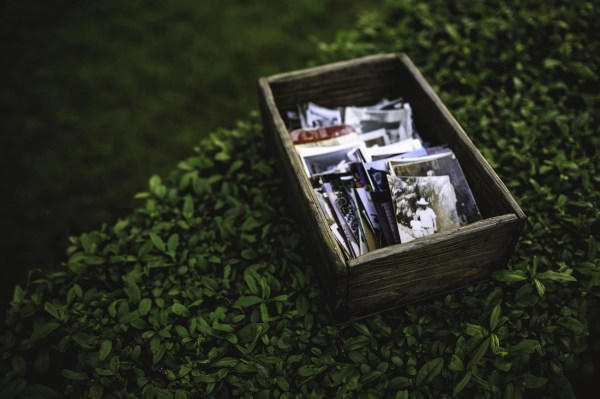
 

Image: Max Pixel

Thank You Roger – Rick White

‘Order in the court.’ called the right honourable Judge Dick McManus who was presiding over the trial.

There had been uproar when the last witness left the stand and this trial was in danger of spiralling out of control. Judge McManus banged his gavel down three times to reiterate the call and gradually the noise was dulled to murmurs and finally, silence.

‘Counsellor Wang you will call your next witness and please make sure that they only answer those questions which are put directly to them. Ladies and gentlemen of the jury you will disregard the final statements made by the previous witness. Counsellor, please proceed.’

‘Certainly your honour. The defence calls Roger Bottomley to the stand.’

Again a flurry of excitement swept round the courtroom like wildfire. The trial all hinged on this one witness, who the defence would now try to cast as being unreliable at best, or a liar at worst. Roger Bottomley made his way on to the stand – unshaven, tired and weary but with a steely determination which could be seen in the hard set of his rugged jawline, piercing blue eyes and luxuriously full head of hair.

Defence Counsellor Wang stood up and straightened his wig before approaching the bench.

‘Mr Bottomley would you say you are an observant man?’

‘In what sense?’

‘In the sense that you remember details of what you see accurately.’

‘I would say so yes, relatively speaking.’

‘Relatively speaking? Yet you claim to have identified my client by catching a fleeting glimpse of him through a window, in the dark.’

‘I know what I saw.’

‘Mr Bottomley, can you please confirm your address for the jury?’

‘124 Burton Lane, Braysdale, West Yorkshire…HD6 7EQ’

‘And you have lived at that address with your wife Selia for the past 27 years up until her most lamentably tragic and enormously undignified death is that correct?’

‘It is.’

For the first time in the trial, the merest hint of a smile passed across Counsellor Wang’s lips.

‘I wonder, Mr Bottomley, if you might tell us then the name of the street which is two along from yours on the left, as you leave your front door?’

The silence seemed to fill the room like an unexploded bomb. Not everyone in the courtroom knew what Defence Counsel Wang was driving at here, but some did. And they knew it could spell disaster for the trial. Roger Bottomley took a moment to compose himself before answering, and when he did he spoke slowly, carefully and in a richly seductive voice with just a hint of intensely masculine gravel. It was a true voice, a voice to be believed.

‘I know, Mr Wang, exactly what it is you are trying to do. I want the ladies and gentlemen of the jury to recognise it for the cheap and lazy tactic which it undoubtedly is so I choose my words very carefully indeed. The second street on the left did not murder my wife Selia, so I would have little reason to remember it. That despicable act was carried out by the defendant here today. It is he who is on trial for the perpetration of this heinous, although deliciously ironic crime.

The sight of my wife being forcibly smothered to death with her own Victoria’s Secret neglige is not something I am likely to forget. One might even ask how it was even possible given the scantness and relative porosity of the material but I want the jury to know that I would recognise that man anywhere as I have thought of little else since. His face is etched in to my mind, and indeed my soul for ever more and I just hope that my poor, poor Selia gets the justice she deserves here today.

And in answer to your question, the second street on the left is Woodcock Lane. Look it up on Google maps you contemptible fucking parasite.’

Absolute pandemonium in the courtroom.

‘Order, order.’ said the judge. ‘I will have order in this court……..’

‘Roger…Roger? Erm…earth to Roger?’

Much laughter from everyone. Roger had drifted off again.

Roger Bottomley was viciously kicked out of his fantastical daydream and awoken by the familiar sounds of laughter, of which he was the subject.

‘Yes?’ said Roger.

‘Oh good you’re with us.’ said Diane. Lovely sexy, horrible Diane. ‘We were just asking for the quarterly figures for all incoming telephone calls successfully answered within 15 seconds.’

‘Oh yes, yes I’ve got those here of course.’

‘Thank you Roger.’ Patronising bitch.

Roger began thumbing through his notebook, nervously messing with his hair and flicking his combover back the wrong way in the process so his remaining hair stood straight up on end and lent him the appearance of an inmate of Bedlam.

‘We could always push this back to after lunch if you like?’ cooed Diane – indefatigably, viciously feminine Diane. ‘Give you more time to prepare?’

Laughter again, such mirth from the inexorable mob.

Roger Bottomley had worked for DH Shipping & Freight Solutions for the past 24 years and during that time had worked his way up on a trajectory marginally above horizontal, to the rank of assistant Director of IT & Telecoms. Roger was not particularly skilled in either of these disciplines. Certainly not like the youth of today who design video games and learn Mandarin before the age of 8. Fortunately though Roger’s job consisted mainly of keeping detailed records of things like telephone lines and broadband connections. Managing the contracts and chasing suppliers for credits when their bills came through incorrectly every month.

For almost a quarter of a century he had blended in to the dull grey background of a dull grey company and now here he was, at the annual conference in Banbury, in this godawful motorway hotel conference suite being called upon for information which had just that second upped and scarpered straight out the back door of his mind and over the fence of his consciousness.

All of a sudden, Roger Bottomley was extremely aware of the black satin g-string he was wearing beneath his trousers, and how at that precise moment, it seemed to have tightened its grip on his balls.

Roger was a sissy. At least that’s what his wife Selia had told him very recently, in their quiet suburban bedroom, as beams of light shone through the magnolia curtains and illuminated tiny specs of dancing, twirling dust particles which congregated like effervescent fireflies and shrouded themselves around a middle aged man, clad head to toe in Agent Provocateur’s Spring/Summer collection. This had been Selia’s idea. Selia who was herself clad in black, thigh high boots and pacing the room carrying a riding crop.

How in the name of all Merry Hell had it come to this? Had been Roger’s thought at the time. He wasn’t really aware of having agreed to any of this. The knickers he didn’t mind. Selia had suggested it playfully one day when Roger was taking laundry out of the machine. He’d cracked his usual joke;

‘Are these yours or mine?’

And Selia had given her standard response, ‘why don’t you try them on to make sure?’

They’d laughed at this as usual, laughter being the by-product that’s left over once real intimacy has given way to stoic tolerance over the years. The sticking plaster used to cover the necrotic wound.

‘I’m serious.’ she’d said the words in a tone which Roger had never heard before. And before he knew what he was really doing he’d stripped completely and was standing there in Selia’s peach coloured silk knickers. He felt a rush of exhilaration, some strange memories were triggered; his older sister Jennifer and her friends messing with him. Putting make-up on him and dressing him up in their clothes, their bras and their tights.

The fabric felt pleasant, that was for sure but it was something else, the feeling of giving yourself over to someone else’s pleasure, someone’s amusement. The idea that, in being humiliated, one can achieve a strange state of transcendence, even arousal. Roger couldn’t have identified this feeling as a young child but now it was unmistakeable – thundering back across all those repressed years like a fucking exocet missile straight to the prostate. How he wished it could’ve missed him.

Selia had walked slowly across the bedroom towards him that day and then grabbed him firmly by the crotch.

‘Now get dressed. But keep them on until I say.’

That first episode had then lead to Selia dominating Roger in every conceivable manner she could think of. The lingerie, the slapping, the riding crop. The…other things.

Men and women go one of two ways once they reach the onset of middle age. They either stride out across the unknown wilderness of the time they have left, constantly searching for new experiences to enrich their latter years. Scouting the highest highs and the lowest depths to make sure they’ve missed nothing on their travels across these earthly plains.

Or they find a comfortable place to curl up and keep out the cold while they wait for death to come and gently take them.

Roger was the latter, deep down he knew it. Selia though, well she was the explorer. The intrepid leader of the expedition. If only it had stopped there.

Roger didn’t mind wearing the pants, in fact he enjoyed it but the other stuff he found himself getting dragged in to, well, let’s just say if you’re going to get in to S&M then whoever is being the M better make sure they actually like it before they agree. Or at the very least not be too damned polite to just go along with it.

He should’ve said something, should’ve spoken up. Put a stop to it before it got this far. Before the only image left in his mind going over and over on an endless loop was nothing but….

Roger? Roger are you sure you’re quite well? Honestly we can take a short break?

Diane again. Roger hadn’t given her a reply to her last question and had alarmed everyone in the room by sitting in silence for at least 30 seconds before snapping his 2B pencil in half.

Roger always used a 2B pencil, he was left handed and using a pencil meant you never smudged ink across your page.

This was probably the most interesting thing anyone could say about Roger. If he died and his colleagues were asked to say a few words at his funeral it would probably go something like…

‘I remember he always used a 2B pencil to write with. He was left handed you see and he always said…’

‘Hold on, Kevin, sorry we’ve already had that one you’ll need to think of something else.’

‘Oh.’

Roger looked at the two halves of pencil in his hand, the splintered wood and the broken core.

‘Yes I might need time to review my notes.’

Uncontrollable sniggering from everyone at the table.

‘OK’ smiled Diane. ‘Well I think that’s lunch anyway. The buffet’s down the other end of the corridor if you’d all like to make your way.’

The grey suits rose from their uncomfortable chairs and filed out the double doors in search of the beige buffet. Roger followed, lagging behind.

As Roger walked slowly around the trestle tables with his paper plate, eyeing the stale sandwiches and sausage rolls and avoiding any form of interaction with his peers he started to think about his father. A man to whom, ‘being a man’ was the very most important thing in the whole world.

‘Be a man. Toughen up. Stick up for yourself.’

Roger had heard little else growing up, although now he realised that what he’d really been hearing was;

‘Punish those closest to you for your insecurities. Make people feel weak so they don’t notice your weakness.’

You see this everywhere in life. It never goes away.

Cuckolding. That had been the final step in Selia’s journey. She’d somehow made out that it would be good for them, that in some way it would bring them closer together. Maybe Roger was glad. Maybe this was the final act in him shutting down, relinquishing control completely and giving himself over to the gaping void. His father would’ve called it the final erosion of his masculinity.

The idea that watching another man have sex with your wife would enrich your marriage might have made sense to people whom Roger would consider more interesting than himself. He wondered if he would even care. Turns out he did.

Roger nibbled a dry ham sandwich and relived the memory. His wife of 27 years groaning and wailing in passion as a much younger man, a Frenchman if you can believe that, with a fetish for the older woman dished her out the sort of treatment which Roger had never even contemplated would’ve been acceptable, let alone pleasurable.

Roger had gone in to the en-suite bathroom after that episode, turned off the light and silently wept. Seated on the toilet in a corset and panties.

Back in Hell’s own buffet Roger’s nostalgic self-evisceration was curtailed as he saw Diane leaving the room and heading back down the corridor towards the conference room. He decided to follow her.

Roger hated Diane, or he thought he did. He thought she was cocksure and condescending but in fact, the thought occurred to him now, she’d only ever been nice to him. Maybe it was just the image she projected. She was confident, assured, comfortable with the world and her place in it. That was what he despised her for.

It was jealousy, nothing more.

As he stalked her down the corridor he found himself wondering what the look on her face was like when she gave herself over to pleasure. Did she look up pleadingly at some sweaty, grunting brute of a man? Was she willing to degrade herself in ways which would have appalled her younger self but that she’d been introduced to by a string of rakish lovers? Did she cry out shrilly or moan softly as the pleasure took hold of her? Did she dig her nails in to skin and flesh? Did she quiver and convulse as her breathing quickened and became shallow?

Roger’s own pace quickened and suddenly he was at the door of the conference room, looking in. Diane was leaning over the table, arranging some papers and tapping some keys on a laptop. Her black knee length skirt, split up the side was beginning to ride up ever so slightly over her stocking-clad backside.

Roger strode up confidently behind her and, without breaking stride, delivered a swift hard smack to her right buttock. The sound was intensely satisfying, the wobble even more so.

Diane whirled around and stared bewildered in to Roger’s eyes.

‘Say thank you.’ said Roger in a voice he’d never heard before.

‘Thank you.’ Diane whispered, her eyes glassy as she stared in to Roger’s without blinking.

‘Say thank you Roger.’

‘Thank you Roger.’ and with that Diane turned around and slowly bent over the table, her breasts resting on an A4 notepad, her hands clasping the table’s edge.

Roger positioned himself behind her and went to work. He slapped each cheek in turn. Slowly and deliberately, being sure to catch it at just the right angle for the loudest smack. Diane gasped with every strike of his hand and bit her lip to keep from crying out but she still remembered her instructions.

Smack

‘Thank you Roger.’

Smack

‘Thank you Roger.’

Roger had exited the known Universe and was floating on an ethereal cloud of sheer ecstasy. Strange images flooded his mind as his open palms made their delicious impact on flesh.

His school changing rooms, the fetid stink.

Smack

Climbing in to his sister’s single bed, the feel of her bedsocks on his own bare legs.

Smack

‘Thank you Roger’

A golden retriever puppy tied to a post in the freezing rain.

Smack

A polyester wedding suit.

Smack

‘Thank you Roger’

The children home from University.

Smack

A belt.

Smack

A muscular black man with shiny white teeth.

Smack

A cold bathroom floor.

Smack

A chest freezer in a damp cellar.

Smack

Selia’s bulging eyes, her throat filling with blood.

Smack

‘Thank you Roger’

‘Thank you Roger’

‘Thank you Roger’


Cabinet Of Heed footer logo

Rick White is a fiction writer from Manchester, UK. Rick’s journalistic work has appeared in Vice Magazine and his short fiction has been published in Honest Ulsterman, Storgy and The Writing Disorder. Rick holds a Bachelor’s degree in English Studies from Sheffield Hallam University. website – www.badtripe.com twitter – @ricketywhite


Image: Arek Socha

The Truth About Red – Hannah Persaud

Once upon a time there was a girl called Red. She lived in a cottage in the forest, on a bend where the water slowed lazily against the riverbank. The villagers adored her and her grandmother doted on her. The birds in the trees above her home circled in anticipation of her waking each morning, ‘Red, Red, the forest awaits’ they’d call in harmony. Where Red walked the sun carved a path, and the trees bent their branches to buffer the wind. The birds packed their nests tightly against one another to protect her from the rain. In Red’s short life there was only one thing that threatened to blight her otherwise perfect world.

Her mother, Christabelle.

Christabelle hated her. This was not the sort of hate that could be swept aside with a sweet offering, nor the type that abates with time. This hate planted itself firmly deep inside of Christabelle’s body the moment that her too eager egg embraced the sperm. A hate that unfurled itself as the egg became a beating heartbeat. Christabelle knew that having a child would change the world as she knew it, and she did not want it changed. By the time that Red was the size of a plum, Christabelle could not bear to incubate her any longer and embarked on a course of abortifacient herbs, which failed to elicit any reaction other than a minor rash across her leaking breasts. She fasted and gorged, massaged her stomach with a hot brick and operated upon herself with home made forceps, but nothing succeeded in excavating the child from her womb. By the time that Red was the size of a grapefruit, Christabelle had been forced to accept the fate that had clamped upon her body like a menstrual cramp.

Red was born in a month when the forest swarmed with locusts. Larvae cloaked the ground and the rain had turned everything to rot. Christabelle was nine months swollen and pacing outside her cottage, when her leaking cervix opened up like a watery cave, forcing the foetus out from its hiding place.

Sinking to the ground she slumped against the wood hut, and there she pushed and heaved Red’s wretched body from her loins. She slithered out like a butcher’s steak.

Christabelle’s only thought was to get away as fast as possible, and cutting the cord with her carving knife she left Red there beside the tree. She stumbled back into her cottage and her bed, and fell into a deep and dreamless sleep.

In the morning Christabelle awoke to the steely morning light and gave a start to find Red beside her upon her pillow, scrubbed and squawking as if it were her right. The huntsman had found her beneath the tree on his way back from hunting.

At first the huntsman thought her dead, but as he brushed away the ladybirds feasting on the white film that crusted her skin like waxy cheese, he saw her chest rise.

‘You rancid old trout,’ he said to the mother of his child when her eyes found his, ‘What kind of mother are you to abandon our child to the woods?’ This was not the reunion that Christabelle had been waiting for, free as she was of the tiresome bump that had so long gotten between them.

‘I thought she were stillborn,’ she whispered, feigning relief, ‘Thank you my huntsman for saving her.’

From that day on Red became a parasite, leaching her mother of everything she had, including her beloved huntsman. As Red suckled at the breast, Christabelle’s body flinched against the jolting pain of her cracked nipples. Red would wail and latch on harder, grinding her hard baby gums against her mother’s torn areola.

The huntsman’s hours were now given to teaching Red the ways of the forest, as only a father could. Christabelle watched them from the door of the cottage through the changing seasons, her heart growing colder. He no longer shared her bed, choosing instead to sleep in the corner of the room with Red curled into his arms like a question mark. Year by year she watched Red’s body stretch and grow. In watching her she felt her own youth fading.

Then one day she hatched a plan, for everybody around knew of the big bad wolf and his penchant for plump little girls. Her own mother would need to be sacrificed, but about this she had no qualms. Her mother had never loved her anyway, had never understood her.

Week by week she taught Red not to fear the wolf, telling her that his reputation was only village talk.

‘Underneath his crusty fur his heart is made of gold,’ she whispered to Red, ‘Do not judge others because they are different.’ And Red listened and learned.

As Red grew more independent, the forest became her playground. It was easy to persuade Red to visit her grandmother who lived on the other side. As her grandmother became increasingly weak, Red visited her more, taking wine and cake each time.

‘Poor grandmother,’ she would cry after her visits, ‘It seems that the more I go the worse she gets.’

‘Hush child, what grandmother would not draw strength from a granddaughter like you?’ Christabelle would say, as she slipped more poison into the wine.

Finally the day came. When Red went off with the cake and wine, her mother knew that the wolf would find her, knew too that Red would not be afraid. All went perfectly to plan to start off with. Shortly after Red departed, having said her last goodbye, the huntsman welcomed the feast of bread and wine that Christabelle had prepared, and did not question her amorous mood. After they had exhausted themselves her mother turned her thoughts briefly to Red, and what a gullible and foolish child she had become.

In time, she left the cottage for a moment to relieve herself. Whilst she was gone the huntsman, sticking his nose where none belonged, discovered the truth of her plans in her diary. He flew out of the cottage in a frenzied rage and caring not about the piss that still streamed from her body, hit her so hard that she fell against the steaming sodden earth.

When she awoke some hours later, her body crawled with the creeping insects of the night. Turning her face towards the sound of footsteps and forcing open her itching pus filled eyes, she laid them upon the daughter she thought she would never see again.

‘Your ma is dead,’ the huntsman shouted at her, ‘Just as you intended, a mulch of flesh and bone is all that remains.’ She tried to disguise the tremor of pleasure that ran through her body at this news.

‘Poor grandmother,’ Red sobbed, ‘You are a wicked mother.’

‘And the wolf?’ Christabelle asked.

‘The wolf fled as I approached, I am taking Red with me for safekeeping’ the huntsman cried. With that he turned, and cradling Red in his arms, disappeared into the forest. Christabelle could feel the love between them scoring tracks into her heart.

Months passed and Christabelle’s days grew long and lonely as her body dried up like clay. The forest was a small place and it seemed that at every twisting trunk and leaf strewn clearing she stumbled across the huntsman and Red.

‘Mother!’ her daughter would cry in terror. The desire to reunite with her huntsman was so strong that Christabelle’s body ached.

‘Murderer,’ the huntsman would shout, and Christabelle would run back into the cover of the trees.

With time the woods closed quietly around Christabelle’s cottage, and wild grasses wove their way between the stones. Trees fell gently against the rooftop and it was not long before the tiny cottage seemed as if it was never there in the first place. Christabelle forced herself to rise from her chilly bed each morning and pushed her way through the brambles that had grown over the door. She set a seat beneath the Oak tree by the path, hidden from view. From here she could see the huntsman and Red on their way to fetch water. One morning, she noticed a dark shape hovering against the bracken. It was just behind the pair on the path, but each time they paused for Red to pick a flower, it slipped out of sight. As Christabelle watched Red’s light feet dancing through the milky dawn, she saw too the heavy silent paws of the wolf following, just behind.

The love that the huntsman had for Red was of a depth that Christabelle could not fathom. But if she could save Red’s life, perhaps the huntsman might be willing to share his love with her. Just a little. A little would be enough. And so she waited for the day that the wolf edged closer.

The day came quickly. Red skipped along. The wolf was so close behind them that his whiskers brushed the cloak that Red was wearing. When Christabelle jumped out, all three startled at the same time. The huntsman leaped in front of Red to protect her.

‘You?’ the huntsman exclaimed, but his next words were lost as he turned and saw the wolf rearing up behind him, salivating. He dragged his daughter to the edge of the path. Christabelle found herself placed firmly at the feet of the wolf. She recognised the error of her plan too late. Before she was able to have one last thought the wolf bent down and snapped her head between its great jaws.

The wolf chewed slowly, crunching bone the only sound in the now silent forest. The wolf devoured the rest of Christabelle as if he had not eaten such a feast in a long time. The huntsman and Red were transfixed by the sight. As the wolf set upon eating Christabelle’s final foot, he let out a strangled cry. With her big toe lodged sideways in his throat, his eyes bulged and his cheeks billowed outwards. And then he fell forward onto the ground and exhaled his last meaty breath.

The huntsman and Red went joyously home and nothing ever bothered them again.

The End


Cabinet Of Heed footer logo

Hannah Persaud
Writer. Represented by Laura Macdougall of United Agents. Winner Fresher Writing Prize 2017.  Runner Up InkTears 2016/2017.
Image: 27707 via Pixabay

The Last Supper – William Masters

The Da Vinci Café, a San Francisco landmark, stood at the corner of Broadway and Stockton Streets for thirty-nine years. Its door-sized front windows overlooked both Chinatown and North Beach. Opened originally to supply fake documentation (passports, drivers licenses, credit cards, etc.) for the local mafia, the café nearly failed as a legit business during its first year under non-professional management and competition from nearby, less expensive restaurants.

Anxiously hosting an impromptu party in the rear banquet room for a neighborhood crime boss celebrating his recent murder acquittal (due to the absence of the prosecution’s star witness now resting in peace at the bottom of the Bay), the café’s owner, Guido Contini, forgot to lock the front doors. A hungry Saturday night crowd, emerging from the midnight matinee movie at the Times Theater on Stockton Street, noticed the lights still on and found the doors unlocked. Seating themselves, the hungry post-movie crowd looked around impatiently for the absent staff just as a pair of surprised banquet waiters, on their way home, emerged from the rear to a roomful of unexpected diners, and immediately alerted Mr. Contini.

Suppressing his anxiety with a shot of Grappa, Guido greeted the diners with a “Ciao a tutti!” He opened ten bottles of cheap domestic Italian wine (the equivalent of the French vin ordinaire), enough for each table, and served it (paga la ditta), with baskets of leftover bread sticks. Guido convinced the two departing banquet-staff waiters to remain. He tapped the shoulder of a visiting sous chef, still seated as a guest in the banquet room at 2:35 a.m., and put him in command of the kitchen.

“Now is your chance, Roberto,” he told the surprised nineteen-year-old. The teenager, aware that opportunity was not a lengthy visitor, eyeballed the dining room counting the number of patrons, then took inventory of the food in the kitchen: boxes of frozen mussels, ravioli and meatballs, packages of dried pasta, cans of tomatoes, tomato paste, dry salamis hanging by strings from the meat rack, refrigerated pizza dough, and mounds, packages and shakers of mozzarella, romano, gorgonzola, asiago, fontina and parmigiana cheese.

Within forty minutes, Roberto Antony Mastracola had transformed himself into the genie of the kitchen. Deftly using his pair of sous chef hands, he produced platters of saucy mussels, bowls of steaming pasta, pizzas with layers of defrosted vegetables, and salads all served family style to the hungry diners by the two remaining banquet waiters.

Thus, the café gained a reputation as the late-night spot to dine for anyone emerging from midnight matinees at the Times movie theater, for the post-theater, ballet and symphony aficionados, for hungry couples with large appetites earned by dancing at South of Market clubs, but most of all, the destination for post-coital meals. The buzz around town was “Fuck your date late, then eat a plate… at The Da Vinci Café.”

During the Café’s Halcyon days, Robin Williams made surprise appearances to try-out new stand-up routines; Beverly Sills, after performing in Donizetti’s “The Daughter of the Regiment” at the San Francisco Opera House, dropped in to eat a plate of spaghetti paid for by singing “I Hate Men” from Kiss Me Kate. Cast members from the original touring companies of Les Miz and Wicked, or the later revivals of Phantom, La Cage, The Pajama Game and Damn Yankees, showboated their musical talents with the piano accompaniment of a young Michael Feinstein, prior to his celebrity status and who subsequently returned to play and sing from the Ira Gershwin and Irving Berlin songbooks. Fat-bellied politicians and ousted dictators dropped in for tiramisu or a plate of cannoli and a double espresso. The Prince of Nabu ordered panna cotta, served with a raspberry coulis.

The food never won a James Beard award, earned a Michelin Star, or even rose to the level of cuisine. The most exotic item on the menu, an escargot pizza, earned its popularity because patrons accepted the current mythology that it worked as an aphrodisiac. Although the food never rose above the level of grub, it remained plentiful and cheap. Handsome, bow-tied bartenders created a vibrant bar scene in which they poured generous drinks and offered sage advice as if they’d descended from the Oracle of Delphi, boosting the café’s popularity as high as the fabled beanstalk. Business soared.

The dining room reached and maintained a high level of bonhomie while the rear banquet rooms produced the atmosphere of a high-end universe for everything corrupt, but delectable. For a time, The Da Vinci Café became the place for the cognoscenti to see and be seen.

Inevitably, times changed. The clientele aged. The newer generation’s taste for the healthy, organic food movement combined with the burgeoning work-out culture, replaced the taste and habits of the late-night comfort foodies. Eager young lovers skipped the late night stop and spent their disposable income on supplies of sushi and light wine to maintain their stamina during extended periods of tantric sex performed in candle-lit, perfumed bedrooms.

The Times Movie Theater closed. Former patrons, now older, domesticated, and anchored to the bourgeoisie responsibilities of marriage, skipped a stop at the café and returned home to meet the time restraints of their babysitters.

Bernstein’s late-night deli opened within two blocks of the legitimate theaters on Geary Street. The Cable Car Diner on Pine Street stayed open until 4:00 a.m. for the Civic Center crowd. The Blue Light Café on Union Street attracted the hip Marina crowd from midnight to 3: a.m.

Other restaurants, discovered this niche group of diners, partnered with extended late-night delivery services allowing night owls watching the Late Late show at home to order and pay for pizza or Chinese take-out from their desktops or smartphones until 3:30 a.m.

While crime in the City rose to unchartered heights, business at The Da Vinci Café plummeted. Younger, hipper, better dressed and coiffed criminals, who could speak intelligently about fiddlehead ferns and nettle pesto, met in corporate boardrooms, sat around tables of hotel ballrooms talking to people on their cell phones instead of those seated next to them. They met in new South Beach penthouses and ate catered meals from The San Francisco Chronicle’s annual list of 100 top restaurants.

The continued decline in the Café’s clientele served as an unmistakable signal. With the end in sight, Guido Contini sold the restaurant to Lorenzo Lauria, a fedora-clad young hotshot, and grandson to a former a mafia boss. With a little help from Lorenzo’s City Hall connections, he successfully maneuvered past objections from neighborhood groups and legal challenges by environmental lobbies and sailed through obligatory public hearings. He bribed City inspectors for a special permit allowing the restaurant to become a four-story parking garage, with two floors below street level to ensure that the two floors of parking above street level would not exceed the height limit for the neighborhood.

After the successful sale of The Da Vinci Café, Guido sent invitations (with a special “Last Supper” menu and price list) to the best of his extant clientele for a final meal at the café.

By 10:45 p.m., on the night of the Last Supper, all invited guests had left the café except a pair of older gentlemen dressed in the best of their finery, held together with suspenders, collar pins and ties. Guido advised his staff to allow these men to remain as long as they pleased. The gentlemen’s ages stretched far from their original attachments to a placenta to their current qualification for residency in a cemetery.

From the table at which they had been dining, the two men rose and walked past the pair of open French doors to a table on the patio. For the last time, they wished to enjoy the Indian summer’s lingering warmth and light from the full moon before the San Francisco fog rolled in signaling the staff to switch on the heat lamps.

“Much improved,” said the first old man.

“Yes, indeed,” replied the second old man, smiling to reveal a set of unnaturally white teeth. The whiteness of his Cheshire cat smile matched his still abundant, snow-white hair that reflected a glint of white light from the shimmer on the surface of the water from a birdbath centered in the middle of the patio. The men sat, surrounded by empty, marble-topped tables that glowed in the moonlight with the eerie white patina of a headstone.

Their mercenary server, hoping for an expensive dessert order, sent the busboy with a cart containing fresh place settings, two dessert menus, and a pair of candles. The busboy arrived with a tray of clean cups and saucers, a thermos of fresh coffee and two candles. After lighting the candles, he offered fresh coffee.

“No thank you,” the men replied in unison.

The busboy retreated from the patio, almost immediately replaced by the original server.

“Our dessert special tonight prepared tableside is flambéed pineapple with mascarpone filled crepes, macadamia nut streusel and rum raisin ice cream.”

“I don’t think so,” said the first old man, “God forbid I should be responsible for cruelty to pineapples.”

“No thank you,” said the second old man. “Why do chefs ruin so many desserts with the addition of raisins?”

“It’s not the chef’s fault, sir,” began the server. “Responsibility belongs to ambitious cooks and earnest housewives trying to win recipe contests,” he remarked contemptuously, then regained his professional demeanor. “Something from the regular dessert menu, gentlemen?”

“No thank you,” said the first old man. Ask the sommelier to come here, please.”

Bowing deeply, the disappointed server excused himself. Almost immediately the sommelier appeared.

“What can I do for you, gentlemen?”

“We’d like to order a Bordeaux.”

“Of course, gentleman. Do you have you a preference?”

“Do you have a 1982 Lafite Rothschild?”

“We have two bottles, sir.”

“We’ll need only one.”

“A bottle is $3,295, sir.” The sommelier looked hesitant. “I will need to run a credit card please, before I open the bottle.”

“Don’t be embarrassed. We understand,” said the second old man, “it’s commerce before tact.”

“But wait!” said the first old man, “What about the 1981 drought in French Burgundy? Did it adversely affect the 1982 grape harvest?”

“You mean taste? Apparently not,” his friend responded. “Certified tastings by both oenologists and sommeliers published in The Wine Spectator attested to the superior quality of the vintage.”

“Wine Spectator? That style magazine!”

“Well, Decanter magazine also confirmed the same.”

“I suppose we can rely on Decanter. Is the 1982 vintage still within the ICC Drinking Window?”

“Just within, but since so many bottles have been consumed and highly rated, I’ m confident we can look forward to….”

“Alright, then. Make it so.”

As soon as the sommelier left, Guido Contini silently entered and appeared at the table. Guido had first noticed these men, over thirty years ago, when as ripely middle-aged patrons, they had first appeared at his café, each as a solitary diner. On one evening, with the first man already seated, the second man arrived, as usual, alone. With no vacant tables, Guido’s hosting instincts moved into gear and he led the second man to the first man’s table.

“I hope you don’t mind, sir, but I often see you both in my café, always dining alone. There is no empty table for this gentleman. Will you graciously allow me to seat him at your table where the drinks will be on me tonight?”

And thus the two solos met. Their first impressions of each other registered as the casual, superficial observations strangers make during an initial meeting. Both men still retained full heads of hair, looked well cared for and fit enough to wear tailored suits. They had fresh manicures and wore wedding bands. After drinking the first bottle of wine, the men discovered how much more they shared in common. Both practiced law, had served in the Navy, lived through several wars, political assassinations, stock market crashes, and the terms of several presidents. After the second bottle, the men realized they both bore the scars from the behaviors of ungrateful children and survived the pecuniary effects of divorce and remarriage only because (to their vast amusement), both had insisted on prenuptial agreements. This last item sealed a lasting bond between them. Soon they began arriving together two or three times a month, as part of the late night crowd. Gradually, they became confidants. As confidants, they recommended barbers and tailors to each other, and sotto voce, revealed the contents of certain top secret documents from sealed court cases, offered stock tips, shared newly discovered tax loopholes discovered by their accountants, shoveled the dirt on certain judges, disclosed the names of their connections at City Hall, and finally, shared the prognosis negative each had received from his internist.

For a break on busy nights, Guido frequently sat with the men for a drink. Occasionally he ate a meal with them. None of these men ever met outside of the café. Eventually they developed the same ease of relationship and level of comfort often found in successful marriages and top business partnerships. Tonight, Guido nursed a set of melancholy feelings knowing this would be the last time they would enjoy each other’s company.

“I’ve come to say good-bye,” he said. “I don’t agree with your plan, but I promise to follow your wishes.”

The men stood up from their chairs. Guido embraced them both, kissing each man on the cheek. “Arrivederci,” he said, and with a shrug of his shoulders, left the patio.

The sommelier returned with a pair of wine glasses and the bottle of burgundy. He opened it in the presence of both men. Before he could pour…

“Thank you sommelier. Please stop. I want to pour. And please close the doors as you leave.”

The first old man poured half a finger of wine into his glass. He lifted the glass to his nose and inhaled. Smiling, he took a sip, held the wine in his mouth for a couple of seconds, and then swallowed.

“Lovely, he said.” Then he filled both wine glasses. The second old man took a small plastic bottle from his jacket pocket. He removed the lid and shook out four pills onto the tablecloth. Then, with a pair of carefully manicured fingers, he deftly pushed the pills to the other side of the table.

“After they dissolve and we drink, we’ll have five minutes to enjoy the wine before its effects render us unconscious. Then, almost immediately and painlessly, our respiration stops and shortly after that, we are gone.”

The first man dropped two pills into each glass. He pushed one of the glasses across the table in front of this friend.

“This will certainly be an improvement to living in a hospice for three or four weeks, increasingly medicated, semi-conscious, tubed and catharized.”

“Yes, how can we complain after 86 years of life?”

Lifting their wine glasses, the old men made their last toast, “Fina alla morte.”


Cabinet Of Heed footer logo

The Last Supper is from William Masters’s unpublished collection, Portraiture: A San Francisco Story Cycle.


Image: Clem Onojeghuo on Unsplash

Horns in the Hatworks – Matty Bannond

“Were they really mad, or was it just murky?”

Mercury, Jenny,” Mum said, lifting her shoulders and dipping her voluminous blond crown towards me for emphasis. “It’s very dangerous stuff. And there’s a planet called Mercury, too.”

“OK… but were they really mad or not?”

Mum stepped closer to a sign hung on the wall, scanning columns of text above a drawing of the Mad Hatter’s tea party. “They were drunk, like people in the pub,” she said. “At first. But the longer they spent near the mercury, the worse it got, until they went mad. Then they died.”

“People died to make greasy hats?”

“No. The mercury made sure the hats weren’t greasy.”

I squinted my eyes and shifted my feet. She hadn’t understood the question. Fur pelts hung from hooks, pretty white tails like dandelion seeds. “How many rabbits did they kill?”

“They weren’t pet rabbits.”

“OK… but how many did they kill?”

“It doesn’t say. I’m sure it wasn’t very many.” Mum scratched her left forearm with the long fingernails of her right hand, and looked at her watch. Green light from an EXIT sign caught tiny diamantes that spelled the manufacturer’s name. She exhaled sharply and pursed her lips. “It was a long time ago. There’s no point worrying about it now.”

I ran my fingers across the glass on the display cases. Pith helmets and headdresses were balanced on mannequin heads alongside berets, bearskins and sombreros. Mum explained them to me: Some protected from the sun, some protected from bullets. There were hats that signalled allegiance to a football team and extravagant pieces for ladies to wear at horse races. It had been Mum’s idea, this visit. It gave me pleasure to make it painful for her.

“So why do I need to learn about these hats now, if nobody wears them anymore?”

“Because they’re lovely hats, Jenny, and the other girls in your class don’t know anything about them,” she said. “You can tell everybody about it on Monday morning after Mrs Blake does the register. They’re not nearly as grown up as you are, the other children. They don’t go to museums and learn about all these nice hats.”

I shrugged. I was six years old, deeply weary of Mum’s attempts to protect me from my own nature. I noticed the way her shoulders contracted when other parents welcomed me to birthday parties. “Uh-oh, here she is – watch out!”

We entered an area that was set up like the kitchen in a hat worker’s house. “Isn’t it incredible, Jenny?” Mum knelt down and placed her cheek against mine, gently steering my gaze from right to left and back again. “Stockport a hundred years ago. Can you imagine it? The olden days… very special.” She straightened up, looking around the room and puffing out her cheeks in a show of wonder. I fixed her with a soft stare, and she shuffled further into the museum.

I decided to hide from her.

I ran as fast as I could, tears streaming into the corners of my grinning mouth. Bright overhead lighting bounced off the display cases and wall mirrors, it was like running through a rainbow. I skipped down a flight of stairs and rounded two corners before skidding to a stop. A rubber face was bent over a workbench, a dusty mallet poised above strips of fur.

Echoing voices swept over the floor tiles like a cold draft. I ducked under the bench and slid through the mannequins’ legs, burying myself in a pile of fur that leant against a barrel. Mum stamped past heavily, the first letter of my name sharp and acidic as she stage-whispered it left and right, jerking her taut neck. Her heels scuffed the floor as she flounced away, moving into the next section of the museum.

I stared through the rabbit pelts and watched red, autumnal sunlight cling to motes of dust that hovered between my hiding place and the long windows opposite. I thought about the previous weekend, when Mum had taken me to the Catalyst Museum in Widnes, promising sausage rolls and animal-shaped biscuits. We’d stood in front of a rotating wheel that reminded me of something I’d seen on Saturday morning TV. Calcium. Carbon. Aluminium.

“Is it only the names that are different?” I had asked.

“No, Jenny. They’re made of completely different things.”

“What, exactly?

“Well, very small things. Molecules and atoms, Jenny. The smallest things in the world.”

“OK… but what are those made of?”

Mum was chewing a complimentary pen with The Museum of Science and Industry written along the side. She drew on it like a cigarette, clasped it between two fingers and pulled it away from her lips. “They’re made of the same stuff as everything else. It’s only the amounts that are different, and the way they’re joined together.”

I rubbed my eyes and turned my toes inwards. She hadn’t understood the question. “So my nose is made of the same stuff as a window sill and a baby penguin?”

“Yes,” Mum said. “And you don’t have to ask questions about everything, Jenny. I’ve spent money on this. Try to learn something.”

I looked out through a gap in the fur. A deep voice was shouting my name – several deep voices. The man from the front desk, tall and portly, lumbered into view. He cupped his hands around his mouth each time he called, before placing them back into his pockets, and then repeating the movement. His tone was conciliatory and light.

Two women and four or five men, dressed all in black, followed him. I could make out sheepish expressions on their faces as they called my name in shrill voices that rang through the exhibit. “Oh, Jeeeeeennyyyyyyy? Heeeeere Jennijennijennijenni!”

When their voices faded, I wrestled my way out from under the rabbit pelts and crept back in the direction I had come from. I had the idea of escaping to the bus stop up the road, surprising Mum when she’d given up looking and resigned herself to heading home without me. I tiptoed down another flight of stairs and through the gift shop, until I saw the entrance to the museum café. A banner hung between two heavy black pillars: Horns in the Hat Works. Instruments glinted in the corner of the room.

I recognised the drum kit, and crawled past a bass guitar in its stand, almost knocking it over. The back of the kit was fantastic: The bass pedal with its metal link chain, the wires below the snare, brushes and mallets in a pouch hanging from the floor tom. I wasn’t supposed to see this. I had stolen these insights. It was glorious.

Lines of light raced around the cymbals: I was desperate to strike them with a drumstick, but knew Mum would hear it and I would get caught. Instead, I patted my palm against the high-hat, and it clicked and shimmered mischievously. A shadow darkened the red bricks around the entrance to the café. I shut my eyes and squirmed.

“Well, well, well…” a man’s voice, hushed. “Your mum’s had us searching everywhere for you, Jenny. Is everything alright? Don’t be scared, you’re not in any trouble. Are you ok?”

I peeked through the drum kit. A tall man with white, slicked-back hair was smiling broadly, yellowed teeth tucked under grey lips. His back was a little stooped and his soft arms hung by his sides. His shoes, socks, trousers, belt and shirt were jet black.

“My name’s Albie, I play music in a band. I see you’ve found our instruments. They’re lovely aren’t they? Which one’s your favourite? The drums?”

I smiled, face downturned. Albie chuckled breathily, jerking his shoulders and causing his limp arms to dance. He walked towards me, reached down, and picked up a silver tenor saxophone, clipping it onto a strap around his neck.

“Have you seen one of these? It’s called a saxophone.”

I shook my head. Albie moved the mouthpiece towards his face and quickly licked the reed. Then, standing upright, he blew into the sax. A thick, slightly undulating tone began to build, very quiet but broad and palpable. The air in the room seemed to change completely. The wires beneath the snare began to wiggle against my shoulder.

Albie drew the saxophone away from his mouth and smiled at me. I grinned, euphoric.

“I wonder if you know this tune,” he said. “Listen carefully, Jenny. Are you ready?”

I nodded. That presence poured from the saxophone again. I knew the song but it was transformed, rendered in technicolour, travelling in all directions at once.

“And?”

I whispered: “Is it Postman Pat?”

Albie nodded and played it again, a little faster but still very quiet. I felt silly and proud.

“It’s an easy thing to do, playing a musical instrument,” he said, lifting a chair away from one of the tables and sitting down. He unhooked his saxophone, and stood it on the ground with its neck against his knee. “For this one here, the saxophone, I just have to blow in here,” he pointed to the mouthpiece. “The air travels along the instrument and comes out here,” he said, pointing to the bell. I raised my hand, and he nodded at me.

“What happens if you do it the other way around?” I asked.

Albie’s eyebrows lifted. “You mean if you blow into the other end?”

“Yeh. Does it make the noise so tiny that nobody can hear it? Really small like a molecule or an atom?”

“D’you know, I’ve never tried it. Maybe it would, Jenny. Maybe even smaller than that.”

A wave of shock ran up my back and made the top of my head tingle. “Mum says they’re the smallest things in the world. There’s nothing else smaller than those. That’s where it stops.”

He shrugged. “Like I said, Jenny: I’ve never tried it. I wouldn’t know.” Albie reached down and slowly turned the saxophone until the bell faced towards me. “Give it a try. Then we’ll both know the answer.”

I chewed my bottom lip for a moment, and then climbed carefully past the bass guitar and padded over to the saxophone. Then I hesitated and looked up at him.

“OK… but if the noise at the end is tiny, then the noise at the start will need to be really loud.”

Albie considered for a moment, before raising his eyebrows and pouting his lips. “That makes sense,” he said.

I took another two or three steps forward and crouched next to the instrument. Then, I pushed my chin and nose into the bell of the saxophone, breathed so deep I thought my stomach would explode, and roared.

When I leant back, Albie was weeping with laughter. I started to giggle. We shook and howled, wiping our eyes and gasping for breath.

Mum’s voice: “Jennifer. Where the hell have you been?” She strode towards me, yanking me to my feet and hauling me past a display of heavy machinery and out into the street. Dad brought me to bed that night.

“Is it fun, Jenny? Going to all these museums?”

My jaw quivered.

“There must have been something you enjoyed. Come on, tell me about one thing. What was the best thing you saw?”

I pictured the instruments, positioned exactly as they had been when I first saw them from the café entrance. In my mind they had swollen, pregnant with their overpowering capacity to communicate. I stepped towards each instrument in turn and reached out my hand, swiping clean through them like air or water. Made of the same things as a window sill and a baby penguin. Made of the same things as me. Their voices within me, somewhere. Melodies silent, waiting.

I looked at Dad’s soft smile. “Why would anyone die just to make a hat less greasy?” I asked. “Why didn’t they make saxophones instead?”


Cabinet Of Heed footer logo

Matty Bannond was born and grew up close to Manchester, UK. He is thirty-two years old and currently lives in Germany. Alongside writing fiction and comment, he looks after his baby daughter and plays the tenor saxophone in a six-piece jazz and funk band.


Image: 3342 via Pixabay

Alvin’s Dancehall – looking back – James Woolf

This too has been one of the more romantic places in town. Handily placed near the car park, the architect took advantage of the high street corner location to incorporate a boastful curve into its frontage. Built as an ice rink in the ‘30s, it morphed seamlessly into Alvin’s Dancehall on the day Chubby Checker released The Twist, and over the years the people flocked to its new incarnation. How they’ve visited this quintessence of dance, this pit-stop in the race for romance, this mass-manufacturer of memories!

And when they are here, be it for Saturday Night Partners or Weekday Singles – laughing as they hand over their £1 entrance fees, wolfing down their chicken and chips in the basket, jiving to Jerry and the Pacemakers, copping of with a fella or a girl when they get lucky – they inhabit the place, as if the business of being here is the only business that’s ever mattered.

There’s a huge wrecking ball swinging on a chain. Suspended from a crane, it’s slamming into the curvature of the building.

In their twenties or their eighties, they steam through the front door and head for the cloakrooms. And with tables on three sides of the dance floor you can always see what’s happening. No one even complains about the lads on apprentice wages who wait for the floor to fill before mining the tables for free drinks. After all, the booze isn’t expensive and the bar’s a friendly place.

Trevor and Tania; Si and gangly Debbie; Judith and Danny the postman; Jacqui and Alan (who later ran off with an Italian waiter); Dominick and Monica, yes, her with the dyed black hair – just a few of the couples who met at Alvin’s.

The ball slams into the building again and a piece of jagged masonry detaches itself.

And look at the joint now! They’re all “doing the locomotion” – clockwork dancers wound up and strutting their stuff. Except for Ian the gas fitter, over on that table; in his fifties now, a regular at Alvin’s for four decades and the driving force in the fight to keep the place open. Maybe he’s thinking of the time he asked an older lass to dance, and was swiftly joined on the floor by his dad who not only took the girl by the hands but ended up marrying her! Or maybe his mind’s on the local golf club, also battling closure (but their members pushed the right buttons and have achieved a stay of execution). Now back with the beers is Ian’s younger brother Sam; Sam who used to win prizes for his Paso Doble at Sunday Night Ballroom; Sam the ultimate lady’s man; Sam who will collapse and die from a pulmonary embolism in two months time. For now, the unmarried brothers are happy drinking their pints, trading a stream of stripped back memories; for what are memories if not careful acts of compression?

And on this special but sad night, Ian looks up to see Valerie Dolan – can that really be her? – Valerie who he stepped out with for a while in the ’90s, Valerie who never took him seriously and then dumped him before heading off to God knows where to study Lord knows what? Ian imagines his memories being contained in boxes that periodically get moved to lower shelves. Some memories can fall to the floor in transition, only to trip you up when you’re least expecting it.

A piece of jagged masonry detaches itself. Freakishly, and as if in slow motion, it takes flight.

Which is exactly what happens now to Valerie, and she stops in her tracks. She was on her way to chat to Enid, they’d said they might see each other tonight. But she immediately recognises Ian. She remembers having great times with him but became so tired of waiting for a marriage proposal that she called it quits and got a job in Derby.

They smile and she mentions that she just saw Alan and Marco, the waiter. Yes, at this last hurrah for Alvin’s, everyone has turned out. But what a shame about the Council having finally called time. And did she hear what the spokesperson said, “an amenity that’s gone beyond its economic life cycle?” It would have been wrong, apparently, to pour good money into repairs and roof restoration with so many other worthy local causes struggling. Then Valerie brings him up to date with her life: divorced from an uncommunicative loser; now back in Mansfield with her teenage daughters.

We can see that in between them coming to Alvin’s Dancehall, there is movement, they have been getting on with the task of living, which is just as well Ian says, what with this place being in its death throes. He’s worried, he tells Valerie, not for the people their age, but for the older folk who still come to the ballroom night who wouldn’t go out otherwise. If Alvin’s is lost to them they’ll be alone, isolated. Isn’t that what we’re trying to avoid? he asks, realising that he’s becoming too heavy too fast – and Valerie does indeed smile vaguely before heading off to find Enid.

Freakishly, and as if in slow motion, the large shard takes flight, projecting itself towards the pavement. Towards the small crowd.

You wouldn’t want to gloss over the darker side of Alvin’s though. Like in the ‘70s when there were genuine problems, some heavy punch ups, and one night a lad got stabbed in the chest outside the cloakrooms, though if you ask five different people who were there that night you’ll get five different versions of what happened.

Because memories, as you’ll appreciate, have been known to bend, like corrugated steel.

One thing you’ll notice tonight is that the place has taken a serious tumble downhill. Peeling flock wallpaper, parquet flooring that looks in places like an unfinished jigsaw puzzle; you could call it chronic underinvestment or a health and safety nightmare.

Like a malevolent insect floating towards a group of children.

For the final hour or so, Ian and Sam return to the floor for a bit of a boogie, and bump into Dominick but not Monica, and then Valerie again, and Ian asks her for a dance for old time’s sake and, before leaving, she gives him her number. The final song is the Beach Boys’ Do you Wanna Dance? – appropriate, but strangely anti-climactic. And afterwards the announcer thanks everyone for supporting Alvin’s over the years, and requests that they please make sure they have a safe journey home. Then they’re spilling out onto the pavement just like they used to, but this time they can’t quite believe it’s all over.

He must be feeling sorry for himself. It’s a week after Sam’s funeral and he’s back on the high street having heard that the work to demolish it has begun.

Not once since the closure did they even advertise it as a business, Ian says, to no one in particular. They always wanted to bulldoze it, for sure, despite all that bullshit about understanding how deeply attached the Mansfield residents feel to the place.

There’s a huge wrecking ball swinging on a chain. Suspended from a crane it’s slamming into the curvature of the building. More pear or old style bathtub, it is nevertheless an act of wanton vandalism. Each time it bashes the frontage, it feels like a physical blow to Ian’s chest. The noise alone is unbearable.

You never called, a female voice says. It’s Valerie, perhaps here for the same reason.

Ian tells her that he didn’t know she wanted him to call.

You’re a soppy date, she says. Why else would she have given him her number?

She inclines her head towards an article in the local paper lying on the pavement, right there in front of him, curious that he hadn’t seen it before.

GOLFERS WIN FIGHT FOR SURVIVAL.

The golf club has finally been saved. It’s actively recruiting members once again.

So we discover that memories have become political currency. Depending on who you are, and how much money you have in the bank, your memories are likely to be worth a whole lot more than those of the next person.

The ball slams into the building again and a piece of jagged masonry detaches itself. Freakishly, and as if in slow motion, it takes flight projecting itself towards the pavement. Towards the small crowd of interested spectators, like a malevolent insect floating towards a group of children.

A warning shout goes up from the pavement. Ian bends to pick up the newspaper.

And the large masonry shard swoops down, misses him fractionally and engaging the foot of a lamppost, leaves it leaning to a sharp angle – traumatised.

Minutes later, when they’re feeling more composed, and having sardonically acknowledged that they too have been saved by the Council, Ian and Valerie walk down the road together. And the sound of the wrecking ball finally recedes into the distance.


Cabinet Of Heed footer logo

James Woolf writes prose scripts and adverts. He has been published twice in Ambit magazine, both in 2017, and shortlisted for the Bridport short story prize, the Exeter short story prize and highly commended in the London short story prize. Various other stories have been published or short listed. Website: woolf.biz


Image: By Ministry of Information Photo Division Photographer [Public domain], via Wikimedia Commons

Elefante – Salvatore Difalco

Reasons for hating people: bad morals, bad manners, bad breath. The first category covers a lot of ground. But you can safely hate immoral people without being hated yourself. You can hate a serial killer or pederast without compunction. You can hate a tyrant or a Nazi without warrant. Manners may be a question of taste, or cultural proclivity. Still, if manners dictate decency and grace in speech and interaction with fellow human beings, it is logical to hate one who lacks decency and grace. Perhaps it is wrong to hate someone for bad breath, but it happens nevertheless. That said, a breath mint or a visit to the dentist can often remedy that condition.

But reality is often illogical, or counterintuitive. Some people are hated not for immorality, bad manners, or bad breath. They are hated for other, more pernicious and arbitrary reasons. When I walk, I gather that the air around me moves. People around me move. That is also understandable. They imagine what it would feel like if I stepped on their toes. They also shirk shoulder to shoulder contact. They know they might get flattened should they test my sturdiness. They also seem put off, aesthetically speaking, and this is also understandable, for they have been conditioned to loathe the obese. Obesity results from gluttony and sloth, goes the story, and clearly indicates a lack of self-control and discipline, aye perhaps even a lack of intelligence, for what reasoning creature would want to bloat itself up to appalling proportions, curbing mobility and physical efficacy, and verily eating itself to death? Hear-hear.

Bulk truths: people are vain, people are shallow, no one is perfect. I walk my beat keeping this in mind. If I hear titters from behind or from the flanks, I pretend they are sounds made by birds common to the city, featherless things, with skinny, pimpled necks. Tee-hee. Tee-hee. Ha ha. I have thick skin, these chirps bounce off me like paper planes.

Someone once asked me if when I die they will bury me in a piano case. I replied that I wished to be cremated and scattered to the winds. The person retorted that it would be like that fire at the tire depot back in the day—the one that went on for months. I told this person that I hoped with my entire being that a piano fell from a high rise onto his pointy little head. It brings to mind the remark a woman made some time ago about my coitus with a likely candidate creating a tire fire. There have been no fires save metaphorical ones. I told her she should die of cancer, but came to regret that when indeed shortly thereafter cancer of the esophagus offed her.

Someone else asked me how I sat on a conventional toilet, and I said, I get on my knees and straddle it. This works. It’s tough on the knees, but I’m tough enough to endure it. People don’t realize how tough I am. The person recoiled. Get over yourself, I wanted to say. I made it home and my dog Cheetah greeted me with furious squirming and whining. I had been gone for most of the morning. I let him out back for a pee. He raced around the yard and then gave it to the apple tree. He came in all frisky and I fed him a pepperoni stick to calm him down. I needed a little snack myself. My blood sugar drops if I don’t munch every couple of hours.

I layered a ciabatta bun with mortadella, provolone, hot pepper spread and three anchovies, grabbed a carton of chocolate milk and parked myself on the sofa. It was a hell of a sandwich. I tried eating it slowly, but that’s like trying to go down a water-slide at an amusement park slowly. Once you hit the slick, zoom, you’re gone.

A knock at the front door interrupted my repast. Cheetah went mental, because that’s what he does. People say he’s poorly trained; I say he’s a free spirit and that I never want him to be otherwise. The knocker turned out to be the neighbour, Walt Hendricks. Hendricks looked like a man who had survived a scabies outbreak, though not unscathed. Telling reddish scars ringed his neck and wrists. His head, scored with little welts, was shaved clean, perhaps a prophylactic against another scabies attack. But more distracting were his eyes, entirely composed, it seemed, of green phlegm.

“Elefante, how are you today?” he said, in his squishy voice.

“Shut the fuck up, Cheetah. Goddamn, dog. It’s just Hendricks.” I gave the pooch a nudge with my shin and he retreated. “I’m eating,” I told Hendricks.

He smiled with tea-stained teeth. “Not surprising.”

“Haha. What do you want, friend-o?”

“Raccoons got into my garbage again.”

“And what do you want me to do about it, have a word with them, since they’re close and personal friends of mine?”

“Listen, Elefante, you don’t have to always be so mouthy. I just came to say I saw them busting into your garbage cans this afternoon, when you were out.”

“How do you know I was out?”

“Because when I came and knocked on your door to tell you the fucking raccoons were into your garbage no one answered except your yappy dog”

“I see. Well, raccoons gotta eat, too.”

Hendricks rubbed his chin. He appeared to be thinking, though the peculiar condition of his eyes made it impossible to tell whether this was true or not. He could have been merely staring at something, perhaps at my physique. I was used to people staring at me, needless to say. They’d see me coming from a mile away, transfixed by my nearing presence and gravity. But then again, Hendricks must have also been used to people staring at him. I know I would have stared at him had he passed me in public.

“Elefante,” Hendricks said, “I want to ask you something.”

“Yeah, well make it quick, I have a sandwich waiting.”

“Elefante, can you lend me a few bucks?”

I laughed aloud. It was a beautiful moment. I genuinely felt tickled. Hendricks knew better than to ask me for money; he would be the last person to whom I would lend money even had I an abundance of it. Known in the neighbourhood as a bit of a mooch, he was always asking to borrow my lawnmower or vacuum cleaner, and I didn’t mind letting him use these things provided he returned them intact, which he usually did. One time he borrowed a toilet snake and brought it back uncleaned. I told him he could keep it. When he said he no longer needed it I told him to stick it up his ass. When he asked me what I meant by that I told him to take the fucking thing out of my sight before I stuck it up his ass. You can’t mess around with the clowns of life. You have to be firm and straight with them, otherwise all hell breaks loose.

“By the way, Elefante.”

“What now?”

“Have you dropped a few pounds? Your sweatpants look loose.”

I wondered if he was being smart with me—most likely. But as mentioned, I have thick skin. Nothing much can wound me, especially coming from the likes of him.

“Yeah, I dropped ten pounds this morning taking a dump.”

“No doubt, no doubt,” Hendricks said behind his hand, shoulders chucking.

He stalked off to his shitty bungalow across the crescent. Cheetah appeared at my side, growling in his throat.

“Now now,” I said, “be neighbourly.”

Cheetah turned around and skipped off to the den. I finished my sandwich and made another, as I was still hungry. So, hypothetically, people might ask, Elefante, why eat the second sandwich when clearly the first one was ample? Are you a glutton? And I would say, perhaps I am a glutton. Then again, perhaps my only source of pleasure in this life is food and an abundance of it. What does it matter to anyone what I do with my life?

After eating I washed up and told Cheetah I was heading out again to run an errand, that I’d walk him to the dog park later. He didn’t like the sounds of it, growling in his throat and staring at me hard, but was comfortable enough on his bed in the den that he didn’t make a fuss and insist on coming.

I’d been trying to walk more, and not merely to lose weight. I wasn’t interested in losing weight per se—I abhorred diets—but I wanted to maintain my mobility. I wanted to be one of those fit-fat people you see on television. It took me some time to walk to the bank, where I had to make a deposit to cover my rent. I didn’t monkey with online banking. It was a question of trust, or rather paranoia.

At the bank, the next available teller, a thin dark man with an overbite, summoned me with a sudden hand gesture. Everyone in the bank watched me walk to his stall. Had I passed gas they would have all heard me. Had I lifted off and floated gently to the ceiling like a helium-filled parade float they would have gaped in wonder. I presented my bank card to the teller, a Mr. Gomes. He had very white, straight teeth that I admired.

“What can I do for you, Mr. Elefante?”

“I wish to make a deposit.”

“You know you can make deposits on the ATM, yes?”

“I want to see the money go from my hands to your hands and then straight into my account with no bullshit, yes?”

“No need to be prickly, sir.”

“Oh, now I’m sir? And, by the way, prickly is an interesting word choice.”

“I was merely—”

“You were merely being rude to a valued customer, I understand. I’m not a total nincompoop. But I’m also not a prick. Ask for forgiveness, and it shall be granted.”

My voice resounded in my ears. The other patrons and staff not only looked our way, but also seemed to be leaning toward us.

“I’m truly sorry, Mr. Elefante. Didn’t mean to insult you. But I’m human also, and only want to help you. I have your best interests at heart.”

“Are you put off by my obesity?”

“No more than you are put off by my biracial identity.”

“I am not at all put off by that.”

“Then we are in accord.”

As I walked away a well-dressed woman with platinum hair and a face that had been vacuumed of juices, looked at me, goggle-eyed, with abject horror. I suppose we mirrored each other’s revulsion, for as much as she may have wondered how I ever reached my monstrous physical state, I could only speculate what malpractice and debauchery had led to hers.

“You want to take a picture?” I asked.

She turned her head as though witnessing a car accident. Then turned back as though desiring to see more of it.

“Yeah, you, I’m taking to you,” I said, pointing my bloated finger. “Had a look at yourself in the mirror lately? You’d scare wolves at night, sweetheart. Two words for you: food and water. Try them sometime. They work wonders.”

Of course, she couldn’t respond without drawing more attention to us than we already had, which was abundant. She raised her hands in the air in surrender. Satisfied I had made my point, I exited puffing my chest a little as one is wont to do in light of a victory, however small. Every day is made up of victories, big and small. And while the big victories are causes for celebration and dancing, it is the little ones that sustain you.


Cabinet Of Heed footer logo


Image: Myriams-Fotos

The Slide – Michael Chin

I’ve never been the kind of person to eat fast food. Geri cooked real dinners and I brown bagged my lunches. Sure, we took the kids out for burgers now and then, but it was a treat, not a way of life.

There’s a kid running around at knee-level who looks a little bit like Jeff when he was a boy. Same bushy hair, albeit a shade lighter brown. He wears a red and yellow striped shirt, as if he were McDonald’s branded. His mother puts a hand on his shoulder and I think she’ll tell him to quit running because he’s going to knock into someone and send their food flying, but instead, she tells him not to play there, but to head to the play area. So, he runs away from his mother’s side, in line to order, and past the glass door that another grown up is conveniently holding open. The kid doesn’t even say thank you, and the next second he’s climbing the ladder up to the big twisty slide that feeds into the ball pit. Probably for the best. Out of my way, at least, so if someone spills his coffee it’ll be on that side of the restaurant where you ought to expect such things.

Still, I worry about the boy. When Jeff and Susy were little, you could afford to let kids run and play on their own, but nowadays it’s all over the news about missing children. Not just strangers scooping up kids, but teachers, or preachers, or soccer coaches. You can’t trust anyone, and this woman sends her boy off to play unattended.

I reach the counter ahead of her. Order my usual medium cup of coffee with two creamers, yogurt parfait and a copy of USA Today. Splurge a little and get a hash brown, too.

The kid who takes my order asks if I’d like two, because they’re two for a dollar, as if he’s never seen me, as if I’ve never been here at breakfast time before and don’t know the hash browns are two for a dollar. His forehead is greasy and littered with dots of pimples. I remember when Jeff wanted to work a fast food gig in high school and I wouldn’t let him, fully aware he’d end up just like this kid. Stand around it long enough and all that fry grease seeps in through your pores. And what do these kids eat on their lunch breaks? More McDonald’s, of course. More grease and salt and fat. “One’ll do.” I try to say it easy. I know the kid’s doing his job, but you’ve gotta be firm or they’ll give you the two hash browns and charge you the dollar and say that’s what they heard you say, and it’s an argument. If there’s one thing worse than being in a McDonald’s first thing in the morning, it’s lowering yourself into an argument with one of the employees.

I started coming after I moved to be closer to Jeff and he and Kate had their first born. It’s what Geri would have wanted—what she would have insisted we do. No sense in staying put and withering away alone when there was family to be around. Small town living was good. Quieter. I got to be buddies with my next door neighbor Louis and we watched football games together on Sundays, and he’s the one who got me going to McDonald’s for breakfast where all his friends hung out. An old crowd, but what was I if not old? After Louis had his stroke and it was clear Jeff and the family were too busy to see me more than once a week, I needed some sort of social outlet, didn’t I? So I kept coming.

“Look who finally showed up.” Big Carl always reeks of cigarettes and always gets a full breakfast. It’s a miracle he’s lived this long, well into his retirement. Today he eats hot cakes, slathered in butter and syrup, and two sausage patties, also in syrup, from a Styrofoam container. He’s got a large coffee, a large orange juice, and glass of water to take his pills. Most of them

have pills, and it’s a point of pride for me that I don’t. “We were starting to think maybe you’d croaked.”

Big Carl says this, regardless of the time, whenever someone’s the last to show up. You’d think that we had a job to do, a schedule to keep. As if it weren’t one of the few luxuries of getting older that we don’t have to go anywhere at any specific time, or go at all if we don’t want to. I check my watch and it’s 8:45. That’s a good time to show, after most of the folks rushing to get to work. I’m not in their way. They’re not in mine.

Lenny squints at my tray. He squints at everything, including his newspaper. I’ve seen him wear glasses a couple times, but for whatever reason, the skinny bastard doesn’t want to make a habit of it. He points a liver spotted finger. “You know those hash browns are two for a dollar.”

Big Carl—he calls himself that, it’s not just a descriptor—likes to think he holds court, talking over the rest of us and giving people a hard time as he sees fit, but the gravitational pull of our little group of eight or nine oldsters revolves around Lucinda, sitting next to him today. She’s the only woman in our group, and I think she likes the attention. She eats a Fruit and Yogurt Parfait and sips from a hot tea. She skips over the news section of the paper and goes straight for the crossword puzzle.

“You hear what Obama said today?” Lenny folds over his paper and holds it close to his face. “He says there are no Islamic terrorists. Give me a break.”

“That’s not what he said,” Carl corrects him. “Not exactly. Remember, he’s a Democrat. He’ll never say anything in absolutes.”

Dee Dee—one of the workers—goes into the play area. She’s good with kids. I’ve seen her carry out trays of Happy Meals to them. She’s the one on birthday party duty in that play

area. A nice girl. A pretty girl, too. In the old days, we would have called her double-Ds, even though that’s not empirically true, because it would be a convenient nickname for a pretty girl.

Dee Dee’s always nice to me. She always smiles, and she winked at me the other day when I got caught holding the door open for one kid and it turned into being a stream of four of them, followed by the mother pinning a cell phone between her shoulder and the side of her head, the handle of a car seat over her elbow, a fifth kiddo asleep in there. I was annoyed, but Dee Dee winked and it made it feel funny, like it was all some big joke and when you look at life that way, you can’t stay mad, even if a part of you thinks you ought to.

It bothers me sometimes that Dee Dee is so friendly with me, in a way I don’t think she’d be with a younger man. It signals that I’m old enough to be harmless, and it’s not good being that ancient. Old people and children—before you’re a teenage jerk, after you cross the threshold so the idea of dating you would have to be a joke. People see an innocence there and it isn’t right.

I do like that Dee Dee’s in the PlayPlace with the little boy who looks like Jeff, though, because it’ll mean that someone’s looking out for him. From where I’m sitting, I can see the top of the slide and I haven’t seen him climb back up there, which has me worried he’s gone missing. Maybe his mother came in with the food already and made him sit down. Or maybe he’s still tuckered out in the early morning, I guess.

“There’s going to be a fish fry at the Lion’s Club Friday.” When Gary pauses, he curls his tongue out over his upper lip. He’s not as big as big Carl, but he’s plump. The kind of man who’s spent a lifetime eating McDonald’s cheeseburgers. He always finds something about food in the paper. If it’s not a fish fry, it’s a church bake sale, or a new restaurant opening, or a comment about a grocery store ad. Always hungry, always looking ahead to his next meal, even

when he’s got a jiggly fried egg patty on an English muffin right in front of him. “Twelve dollars, all you can eat. Not bad.”

Lucinda puts a hand on his arm and moves it away like she’s swatting him in slow motion. He looks at her. Hopeful. He’s got the spot of honor on the other side of her today and it’s probably the first touch he’s had from a woman in years. He never talks about a wife—current, ex, or deceased.

“Didn’t the doctor tell you to watch your cholesterol?” she says.

“Doctors say a lot of things.” He tears at the newspaper. Doesn’t even crease it first to get a straight edge, just tears at it all ragged. “What’s the point of being old if you can’t indulge yourself?” He stuffs the scrap in his pocket for later.

“I remember going to the senior prom at the Lion’s Club,” Big Carl says. “They’ve still got that same crystal chandelier, but it doesn’t shine the way it used to. I remember the way it looked that night. 1952. It sparkled. Valerie—the girl I took—she said it looked like we were dancing under the stars.” He eats a big bite of a hot cake that didn’t cut all the way so the piece adjacent to it hangs loose from his fork, then his lips before he sucks it in.. “I remember she smelled like roses.”

Here in McDonald’s, everything smells of eggs and butter. The coffee’s burnt. All of these oldsters have a history with all of the local haunts—I bet every one of them has a Lion’s Club story like that, and I always feel like a jerk nodding along without anything to contribute, like I’m behind because I haven’t lived in this Podunk town my whole life. Try talking to them about a restaurant in Boston or Chicago, they look at you like you’re from Mars.

Jeff shouldn’t have moved here. This is a place for old-timers and people who think small. Young people—smart, vibrant young people ought to live in big cities, especially at this

age. That’s the mistake I made, too young, and that’s why he got brought up in a town like this. Shouldn’t one generation learn from the mistakes of the one before it? Want more? Live better?

The running boy’s mother wanders unsteadily back toward PlayPlace, balancing a tray. So she wasn’t there before, and she didn’t get the boy who looks like Jeff away from the slide. So where is he?

“I heard the liberals are going to try to take all of our guns away. Don’t they get it?” Lenny said. “Take the guns out of our hands and the only people who’ve got them are the terrorists. They think it’s bad what happened in Orlando. What if the Muslims knew no one had guns anywhere?”

It’s the same small town conservative talk I heard when I was a younger man, and I don’t know if it’s more or less frustrating for the familiarity, for the fact that all of them probably grew up hearing it until they repeated it.

Oscar joins us. He’s a wiry old man with big tufts of white hair that he doesn’t comb or maybe there’s only so much a comb can do against hair like that. He sets his whole tray on the garbage can like he does everyday, leans over, and pours some of his coffee down into the trash. Often as not, he gets some of it on himself. He says it’s because they always give too much and Big Carl’s told him he should just ask them not to fill it up all the way, but he never does and inevitably, toward the end of our morning routine, one of the workers retrieves the bag and has to be extra careful because the bottom’s filled with coffee. Sometimes the bag breaks, so the coffee and whatever other garbage juices it mixes up with leak little drops across the floor.

“Gun control’s not the same as taking away guns, Lenny,” Big Carl blows on his coffee. He drinks it with the lid off so it isn’t so hot so long, but I always eye it, sure he’s going to spill it all over the place. “Call me a moderate on this one. I think some control is OK. But I do also

think there’s a problem when people who don’t understand the fundamentals of how a gun operates are the ones calling the shots. I heard a man on the news the other day, talking about how the size of the clips was one of the issues, because why would anyone need a clip with so many bullets. I sincerely don’t think this man knew the difference between a clip and a magazine.”

The mother in PlayPlace is looking all around. She doesn’t see the boy. She talks to Dee Dee for a moment. Dee Dee smiles at her, too, and I think for a second maybe that speaks better of her perception of me—that I’m not so much harmless as just any customer, and she smiles at customers. But that’s not right either, because this is a middle-aged woman. A mother. And Dee Dee puts us in the same category. Mother and grandpa, the both of us not to be concerned about.

But the mother looks concerned. She realizes her mistake, surely, in sending the boy off on his own and now he could be anywhere. I imagine a stubbly-faced man in a black ski cap waiting at the bottom of the slide with his arms open wide to greet whatever child might come to him.

“You need screening to get a gun. There ought to be screening for making gun laws, too. A written test, at least,” Big Carl says.

I take a bite of my hash brown to keep from talking because I don’t feel like engaging today, and half expect Big Carl is trying to engage me. If people like him paid attention to what was happening under their noses half as much as they concerned themselves with their obtuse takes on world affairs, maybe they’d contribute something to society. I promise myself, right then and there, that as soon as Jeff’s kid graduates high school, I’m out this Podunk town. No sense sticking around after that, at least if I’m in decent health. Maybe I’ll be one of those old-timers who drives around in an RV. I always thought it was silly and I’ve never driven anything

like that—never anything bigger than a twelve-foot moving truck—but how bad could it be? Maybe I could finish off my bucket list—finally get around to Yellowstone and the Grand Canyon like I always thought I would.

“There’s not that much screening necessary to get a gun,” Lucinda says. “And I don’t see what knowing how a gun works has to do with that part.”

“Ha!” I can’t help myself from barking out a laugh. Lucinda usually doesn’t weigh in on political discussion. The only time I remember her pointing out something from the newspaper was a cute strip from the funny pages about explaining death to kids. I thought it was really sad and kind of beautiful, and a hint that Lucinda had more going on upstairs than most of us to appreciate a thing like that. All Big Carl could say in response was, geez that’s depressing, Lu and I think half of it was just to get a rise out of her because she doesn’t like being called Lu and she’s told us that dozens of times. He flirts like a grade schooler, and you’d think he’d have some more dignity than that.

But today, when Lucinda brings up the obvious flaw in these Republican geezers’ chatter, she’s the one beyond reproach. Big Carl will give her a hard time but he’ll never engage her in a real argument where she tries to pick apart what she says, and now, though the lot of them might descend on me in her place, I’m also under Lucinda’s protection because anything they say about me as a goddamn liberal would apply to her, too, and maybe they wouldn’t care if I got up and left, but they’d be damned fools to let the only lady in their crew slip away.

But I laugh in the same instant that Oscar shows up and he jumps and the lid’s still loose on his coffee and there’s still enough in there for it to spill over the brim onto his hand and onto his sleeve and he screams like he’s been electrocuted. He almost loses his balance—he really might’ve if Gary didn’t get a hand on his back first.

Oscar’s looking all around himself, really in a state and Lenny takes what’s left of the coffee cup from him to set it down and helps guide him toward his seat, before he rouses. “I gotta get more coffee.”

“I’ll get it Oscar,” I say. “It’s my fault for startling you. This cup’s on me.”

“You’ve got to pour out a little.” He talks like he’s straining—his voice is always soft and tired like that. Like he already spoke his allotment of words for his life and he’s running on fumes. “Not a lot. Just a few sips so it’s not sloshing.”

I’ve sat next to Oscar enough times to know how much coffee he wants—about three-quarters of a cup—so I tell him I’ve got it and walk around him, feeling nimble. Decrepitude is a relative thing and maybe I’m still relatively spry, relatively far from death.

“Get the poor guy napkins, too,” Big Carl hollers.

On my way to the counter, when I’m about to get in line, I look over at PlayPlace again and there’s no sign of the mother. Things have gone from bad to worse. She must not have spotted little Jeff and gone on some sort of frenzied search. And just then I see a darker spot in the slide. A round, tucked up shadow where the slide turns from a red to a yellow segment around a bend.

The boy’s stuck. I look for help but there’s a long line. Long enough that Dee Dee is back behind the counter, not in PlayPlace, bagging and bringing food to drive thru, or putting it on trays at the counter—how does she keep track of what goes where? She’s too busy to be bothered, and the rest of the workers won’t take the time to listen to me. Not if I’m doing anything besides placing an order.

So, it’s up to me.

I walk into PlayPlace. Pause as two kids run by, fortunately not to the slide, just running to run. What’s with all of these kids? Is it some sort of holiday? I make my way to the exit of the ball pit and crouch down. I haven’t been on all fours in a long time, but I’m feeling strong. Like today, I can rescue little Jeff and deliver him to his mother. Get back to our table and the guys will all want to pat me on my back. Maybe Lucinda will want to kiss me on my cheek, and I’ll take it, if just for the status symbol among the rest of the oldsters. Even Big Carl will have to admit that what I did was pretty great. Maybe Dee Dee will look at me and see the younger man I once was. Think I’m dashing. Ask me to tell her stories from when I was her age, besides saying I’ve got free coffee for life.

I peer up into the slide. I can’t see past the curve, and don’t know why I thought I would be able to. The slide smells the same as the trays after they’ve just wiped them down with their cleaner—when some of the workers slap the liner down too soon and start reusing them right away because it’s busy, and the cleaning fluid seeps right through. They’re not patient enough. No one is these days.

“Jeff?” I call up to him. No answer. This is scarier. Maybe he’s not only stuck, but hurt. Maybe he tried to stand up in the slide and hit his head and knocked himself out. I ease my shoulders in. It’s a tight fit. Tighter than I thought. They must make these slides smaller than they used. I begin my slow crawl up. No need to rush. Just have to get up to see if the boy’s all right. I see myself tugging gently on his leg to get him loose if he needs it, then the two of us can slide back down, easy-peasy.

But the climb is hard. Harder than I could have imagined, the space too tight, the angle too steep. I slide back, involuntarily, but only a little. Only a little until I’m wedged in tight. I can’t crawl forward, can’t crawl back. I might be stuck here forever.

But it’s warm here. There are worse places to be stuck. And someone will come along sooner or later. People must have seen me go in, right? They must have thought I was crazy. They’ll come help me. And then someone better equipped—someone younger and slimmer—can take my place and reach Jeff and deliver him, too. Let them be the heroes. Young people need that sort of thing more, anyway.

My eyes are heavy. I didn’t get to drink much of my coffee and I’m paying for it now.

Help will come soon.

So in the meantime, I breathe in and breathe out. I rest my eyes.


Cabinet Of Heed footer logo

Michael Chin was born and raised in Utica, New York and his hybrid chapbook, The Leo Burke Finish, is available now from Gimmick Press. He has previously published with journals including The Normal School and Hobart. Find him online at miketchin.com and follow him on Twitter @miketchin.


Image: vonpics

Kidnapped! – Anurag Bakhshi

I woke up to find that I could not see a thing.

No, I had not been blinded, not as yet anyways, but it was pitch dark, with just a tiny beam of light coming through a hole on the roof of the small box in which I was imprisoned.

I checked my hands and feet, thankfully, they were still free, but as for the rest of me, while I could move around, there wasn’t any place I could go to beyond the four walls of my claustrophobic prison.

Clearly, unequivocally, irrevocably, I was doomed!

And to think that just this morning, I had been fighting with my mother on what to have for breakfast, and beating up my brother for ratting on me. The latter is what had led to me ending up in this dark hole, come to think of it.

Our father had caught me hitting my idiot of a younger brother, and had grounded me on what seemed to be a brilliantly sunny Sunday. I grumbled, muttered, and protested vociferously, but he just refused to listen to my side of the story. I grudgingly went to my room and stood facing the wall, cursing the inequitable nature of this world, and of family dynamics!

But not for long.

I heard my father go out to get weekly provisions, and a neighbour come in to chit-chat with Mom, and I knew that this was my golden opportunity. I crawled slowly towards the main entrance, taking each step with utmost care so as to avoid making any sound whatsoever. Getting caught trying to escape punishment would only result in a harsher punishment, something which I was not too keen to experience.

After what seemed to be an eternity, I reached the main entrance of our house, and then…I was off, running as fast as my legs would carry me. And it was while running at that breakneck speed that I had bumped into him, the kidnapper. He saw me, and his eyes widened with excitement. He was much bigger than I am, and so, I could do nothing at all when he picked me up and dropped me in this prison, sliding the door shut as I slowly lost consciousness.

But now I had regained my senses, and knew that I was doomed, clearly, unequivocally, irrevocably.

But then, I thought of my poor mother wondering where I had disappeared, searching desperately for me, all the time blaming my father for having been the cause of this tragedy. And then I thought of my father, whose guilt would keep gnawing at him from inside till he became a shell of his former self. And then, finally, I thought of my younger brother, gloating on becoming the sole heir to the family fortune.

And this shifted something deep inside me. I was no longer reconciled to my fate, I would stand, and I would take it head-on!

I first tentatively checked the walls of my prison for any weak points, but there were none.

I did not get disheartened. I tried running and hitting the walls with the full force of my body, and it was then that I realized that the prison was not as solid as I had initially thought it to be. The ground, as well as the walls, had moved slightly when I hit the wall.

My chest swelled with hope then, for I knew what I had to do. I targeted the wall hitting which was leading to the most displacement, and started running and banging into it…again…and again…and again….till finally….the entire prison, just toppled over what seemed to be very high cliff.

I was scared out of my wits as I fell along with the prison, but the fear was combined with exhilaration, for even if I died in the process, I had succeeded in doing something to fight my captor and foil his plans.

The prison hit the ground with such great impact that the door slid open. I could see light now, after God knows how long. I jumped out of the prison, and ran with full strength towards my home. Strangely enough, the entrance to my home was not as far as I had thought it to be. Bit I did not spend too much time over it, and just slid in at great speed, panting heavily.

The first person I saw on reaching home was my brother, and for the first time in my life, I was so happy on seeing him that I hugged him. My parents looked at each other like I had finally gone completely crazy, but I didn’t care, I had just narrowly escaped death, or worse. I was home now, and I was never going to leave.

And in his room, 5-year old Sunny started bawling. His parents rushed in to see what had happened. His eyes full of tears, Sunny told them, “I had put a small cockroach in this matchbox to take him for our Summer Camp Show and Tell tomorrow. I had kept the matchbox on the table, but I just came back from the bathroom and saw that the matchbox was lying open on the floor, and the cockroach ran and went into that small hole in the wall. What am I going to tell Miss D’Souza?”

His mother looked at his father, and said, “How many times do I have to tell you to call someone and get that hole repaired? It seems as if an entire family of cockroaches lives down there!”


Cabinet Of Heed footer logo

Image: Steve Buissinne


Past Performance – Ian Critchley

Dennis promised he would come and see me. He just has to put the motorbike in for a service at the garage down the road, he said, and he’ll be right round. It’s what they call a while-you-wait service, and I told him he might as well wait here. I like to think this flat is just a bit more comfortable than the garage’s waiting area, or that café over the road that sells the burnt bangers and soggy mash. And I’d also like to think that I offer slightly better company than the greasy mechanics or that young woman at the café who never smiles.

I’ll put the kettle on when he gets here. I’d kill for a cup of tea right now, but these days it goes straight through me, so I’m trying to cut back. I should have got something special in for lunch, but I just have not had time to get to the supermarket and I don’t want to go now in case Dennis turns up and finds me not in.

Comestibles. That was the word I was trying to think of just now. It reminds me of that dreadful play I was in all those years ago when I only had one line and it was about going to buy some comestibles for supper. I told the director it sounded like nothing a human would ever say. It let down the whole script – to be honest, all the other lines did too, but I wasn’t responsible for those. And he said, ‘Look, dear, we’re only here for a week. Could we try and get through it with the minimum of fuss?’ Well, I was certainly not dear to him, nor him to me, and I decided right there and then that I would have to take the responsibility on my own shoulders. So I changed the line, just went ahead and did it during the next performance. Of course, the other actors took it in their stride, but the director! Goodness me, the blue language coming out of the red face!

*

Time for my exercises. It took a while, when I was younger, to get over the embarrassment of talking to myself in the mirror, but now I think nothing of it. Limber up the lips, inhale, exhale, enunciate the words. How now brown cow. How … now … brown … cow … Then move on to something more complicated. I like to soliloquise. You can’t let a day go by, you can’t let it slip, because the mouth is a muscle that needs to be kept in shape, and you never know when you are going to need it. It’s been a while since that audition for Gertrude, but you take rejection on the chin and move on. You never know when the next role is going to come. It could be today, it could be next week. But nobody could say that I’m not ready for it.

People still recognise me in the street. People are always coming up to me and saying, ‘Aren’t you Jessica Barnes?’ And they’re right, in a sense. I smile and tell them they’re thinking of my character from Carsley Avenue, and that my real name is Janice Stevens. I always make time to talk to them, sign an autograph, if that’s what they want. It’s understandable, of course, that they get confused. After all, I was on the television in their living rooms every weekday evening, seven-thirty till eight, for over ten years. I was part of their lives.

Dennis won’t call if he’s late. He hates using the phone. He’ll ring if it’s an emergency, I’m sure. Of course, if he’s at death’s door I couldn’t expect him to pick up the phone, could I. But I’m running away with myself. Nothing’s happened to him, he’s just got held up at the garage, probably, talking to the mechanics, sharing a joke, chewing the cud in the way men do when they’re discussing the things men discuss. I could ring him, of course, find out what he’s up to. But I won’t do that. I’ve never been the one to do the chasing and I’m not going to start now.

*

Carsley Avenue. I was the queen of that street for a decade. I packed more into that character in that time than most do in an entire life: I was married, had two children and three affairs, got divorced, married again, killed that husband (accidentally), lost one of the children in a car crash, was struck down with cancer and then recovered, nearly died trying to save a neighbour from drowning, went into business running a dress shop with a man who turned out to be a criminal and who stole all the takings, leaving me on my uppers and forcing me into the arms of the local heartthrob, Andy Stevenson, who used and abused me, beating me more than once to within an inch of my life, until I killed him (deliberately) and had to go through a traumatic court case before being acquitted, and they kept me going, how could they not when I was drawing in the audiences, they could not afford to write me out, people were thrilled and disgusted by me all at the same time, the men wanted me and the women wanted to be me, and then I got married again to a man who promised to help me put the past behind me, until he ran off with another woman and I said good riddance, it’s time for me to stand on my own two feet and come through all these tribulations smiling and ready to face the future, be a role model for women everywhere, women of a certain age (so they said), and they had this new idea for me, I was no longer to be at the mercy of all the men in the Avenue, I would take a vow of chastity, and this was their big idea to shake things up, although I thought it wouldn’t really work, and said so, but they wouldn’t listen, would they, these people just carry on regardless, and lo and behold men no longer wanted me and women no longer wanted to be me, it’s sex that sells, I said, as things got a little heated behind the scenes, nobody wants an ice queen, and they said they would think about it, and they did, and that was when they decided my time was up.

I still exist, of course, in that otherworld of departed characters – those that aren’t killed off, that is. They spared me. They didn’t run me over, or shoot me, or strangle me, or make me fall off a cliff. No, they did the next best thing: packed me off to Scotland, where all the characters they don’t manage to murder seem to end up. I mentioned to my agent a while back that they should do a spin-off set in the Highlands, seeing as so many of the characters are supposed to be living there. He said he’d take it up with the producers, but I should have known. I should have learnt by now that they don’t like innovation.

I’m mentioned now and then, on the programme. I have a daughter, Sam, who is still on the show, and of course from time to time she mentions me. She refers to me as ‘Mum’, and when she does that, a little shiver goes down my spine and I can’t help smiling.

A couple of weeks ago it got really exciting. Sam’s boyfriend proposed to her, and she said yes! Naturally I was thrilled. She rang to tell me the news, although of course it wasn’t really me on the other end of the line, she was just talking into the ether (a difficult piece of acting, but she pulled it off wonderfully). She expressed the hope that I would be able to come down for the wedding. Well of course I would! I could be there like a shot! You know what mothers are like with weddings.

So of course I was straight on the phone to my agent. I thought it best for us to contact the producers rather than wait for them to get in touch with us. We could negotiate a special deal, I told him. I’m not asking for much. I’m not looking to come back full time, although if they did offer that, I’d consider it, of course. No, all I’m asking for is a couple of episodes, just to cover the wedding, just to keep the show a bit more realistic. Wouldn’t it look silly if the bride’s mother didn’t attend the wedding?

*

I’ll make tea anyway. I’ll have mine now. One cup won’t kill me. I can always make a fresh pot when Dennis arrives, and I don’t have to drink any of that. I’ll grab something to eat now too, just a little snack. I’ll have to make do with what I’ve got: there’s some cheese and bread, and those little tomatoes. When Dennis comes maybe we can even go out.

The bank statement sits on the kitchen table and I try not to look at it. I’m not a rich woman. People think I am because they have this vision of television stars, but really they’d only have to come and look at this place to know the reality of it. How can I ask Dennis to move in here when there’s barely enough room for me? I did expect more from Carsley Avenue, I must admit, and I did say to my agent many times that we should renegotiate the contract. But he was always reluctant, saying it did not do to antagonise the bosses. Nobody’s bigger than the show, he said. Not even me.

And it didn’t help, of course, that what little money I did manage to save got swallowed up by the stock market crash. Stick with it, the advisor said. Things can only get better. It can’t go much lower – it’ll plateau and rise back up. The losses are fictional, he said. They exist only on paper until you cash everything in. But the losses seemed pretty real to me, and I said to him, how could this happen? You were all for me investing my hard-earned cash, telling me that it would grow by ten per cent and keep on growing, that the stock market was on an eternal upward swing. And he just said, read the small print. You should always read the small print: Past performance is not a guarantee of future results.

*

Certain times of the day hold what I call a special resonance. I used to laugh at my mother because her day was so regimented – breakfast at eight, lunch at one, dinner at six – and how upset she was if those times could not be met. But I can see now, all these years later, the value of knowing where you are in the day, of honouring the daily rituals. Sometimes it seems as if they are the only fixed points, the only way to stop life slipping through your hands.

So, the time for tea has passed. The day is getting on, and I can allow myself the first sip. It’s been hard, all this hanging about. A G&T to begin with, I think – the old Sin and Chronic. I’ll let that bottle of wine breathe too. We all need to breathe, after all. When it comes to evening time we all need to undo a few buttons and relax.

Almost seven-thirty, almost time for Carsley Avenue. If Dennis comes now, we can watch it together. It’s always good to have company when it’s on.

*

That trip we took to Stonehenge, Dennis and I, weaving out of London on his motorbike, me gripping on to him, afraid that if I let go I would fall. But how exhilarating it felt!

In those days there were no barriers, no restrictions. You could go right up to the stones and touch them. I had been reading Tess, and wanted to recreate the scene from the end of the book where she lies down on an altar stone. I told Dennis he could be my Angel Clare. He gave me that pursed-lips look he always did when he had no idea what I was talking about.

Afterwards, at the pub, we sat at one of the outside tables and I tried not to make a big fuss about the wasps that seemed to want to get into my ears. And we talked about our plans – how we would set up our own troupe and tour the world. We’d be the Romeo and Juliet for our generation. We’d be known as the glamour couple, he said: bigger than Burton and Taylor, better than Bogart and Bacall. We’d play to packed houses and the applause would be deafening. He raised his pint to my glass and said, To us! To success!

The ringing sound makes me jump. For a moment, I think it’s the phone, but it’s not – it’s the alarm on the clock. Seven-thirty.

*

I felt a pain just then, in the ribs, right under my heart. A touch of indigestion, probably. I’ll take a couple of those pills that always seem to do some good.

There’s no doubt that what’s happened to Sam is a worry. To fall out with your fiancé like that is really a cause for concern. But it was a silly argument, over nothing really, and I’m sure it will all blow over, given time. Everybody loves this kind of twist. They want people to go through hell before emerging the other side. It’s what’s called catharsis. You learn so much about yourself. They’ll kiss and make up. It’s nothing to worry about. After all, everybody loves a wedding. It’s a ratings winner.

I’ll sit for a moment, get my breath. Then I’ll run a bath. I’ll scour off all this make-up, start the wind-down. I’ve still got those oils Dennis gave me for my birthday. He told me I should pamper myself more often, perhaps because he knows he’s not around all that much to pamper me himself.

I can bring my phone in here, the wine too, put them on the side there.

Oh, but I felt for Sam, I really did. All those tears. It’s times like these she needs her mother most.

*

I like my baths to be hot. I’ve always been one for the heat – holidays in Morocco and Egypt and Mexico, the hotter the better. It’s never warm enough in the flat, not since I had to turn the thermostat down, and a nice hot bath helps to keep the cold away at night.

My body is not what it was, of course. I can see that. It’s looser, saggier. The wrinkles are multiplying, and not only because of the bath. Soon I’ll be nothing but wrinkles. A big, jumbly, creased old bag. Once upon a time I auditioned for Ophelia. Now I audition for Gertrude. That’s just the way it is. I will embrace old age, though. I will embrace it. It will not defeat me.

After the bath, wrapped up in my dressing gown, I wander back into the living room and look at the framed photos on the sideboard. There’s Dennis, pride of place in the middle. It’s my favourite one of him. He looks so young in it, his hair down to his collar, which was very much the fashion in those days.

I pick it up and as I do so the frame comes apart and out slips a piece of folded newspaper.

I hear a clattering and see that the photo and the frame are on the floor. I’m holding the piece of newspaper. I stare at it. It’s fragile: yellowed and torn slightly along the sharp folds.

I do not know if I have seen it before.

I do not want to open it, but know that I must.

I smooth out the creases and force myself to read, and as I do so my eyes start to blur. I wipe the tears away and try to carry on. The article outlines his roles, his successes – the prime of him. They always seek to whitewash things. It’s rare that they would speak ill of anyone in such a piece. But I know there was so much more to him, so much more to tell. For one thing, it does not mention me, the times we shared. Only I know those things now.

I refold the newspaper and put it back where I found it, hidden away behind the photograph.

He promised he would come and see me. He was on his way to see me when it happened. He will always be on his way to see me.

*

It’s not yet nine o’clock, but I might as well turn in. I’ve never been a deep sleeper. The slightest noise wakes me, the merest chink of light through the curtains or under the door leaves me wide-eyed. And that’s when all the thoughts crowd in.

I’ll set my alarm for early. Plenty to do tomorrow. It would be a crime to laze around in bed. I am not slothful. I will not grow fat and lazy. Tomorrow I will practise my soliloquies. I will not drink. Tomorrow I will look after myself, just in case.

I’ll switch off now.

Goodnight, Janice.

Goodnight, Jessica.

Goodnight, sweet ladies.

Goodnight. Goodnight.


Cabinet Of Heed footer logo

Ian Critchley is a freelance editor and journalist. His fiction has been published in several journals and anthologies, including Staple and Neonlit: The Time Out Book of New Writing, Volume 2, and his journalism has appeared in the Sunday Times, Times Literary Supplement, Literary Review and Daily Telegraph.
Twitter: @iancritchley4
Website: iancritchley.wordpress.com


Image: Ron Porter


Create a website or blog at WordPress.com

Up ↑