Widowing – Adam Lock

Last night I fantasised Joe died in his sleep, again.

I look at myself in the full length mirror, straightening the dress I’ve chosen for Joe’s funeral. I try on the hat. Not bad for 56. I rummage through the shoes at the bottom of the wardrobe and step into a pair of stilettos. Arranging the hem of the dress, I breathe in. Not bad at all.

On the laptop, sitting on my bed, is a picture of Gavin, the surgeon, 46, widowed, who enjoys golf and dining out. Can’t remember the last time I dined out. I’m only looking. But I have two photos ready for when the time comes.

Last week Joe had pains in his chest, again. When I watch him sleeping, I imagine him waking, red faced, one hand on his chest, the other clutching his throat. Joe’s father died at 59 of heart failure. Joe is 59.

Are stockings appropriate at a husband’s funeral? Maybe they’re only appropriate in the bedroom, fantasising about a husband’s funeral.

I kick off the stilettos, take off the hat, and fall onto the bed.

Joe’s on his way to Nottingham, visiting his mother. She’s a good age: 82. My parents died at 65 and 67.

The red colon on the clock flashes. In the corner of the display are three letters: SUN. Sunday means sex. For twenty six years, Sunday has meant sex.

I stand and look in the mirror. Might get away with 50, maybe even 49. With the right make-up, with my hair done, maybe 48.

The phone rings. I imagine it’s Joe’s car overturned, on its roof, spinning on a wet motorway. Broken glass. Crumpled metal.

Breathe. I answer it. ‘Hello.’

‘Am I speaking with Mrs Kennedy?’

‘Speaking.’

‘I’m phoning on behalf of Moonshine Life Insurance.’

I put down the phone, sit on the bed, and inhale deeply.

I imagine telling Joe about the phone call over dinner, how it scared me. Then we’d watch TV, then go to bed and have sex, not because the clock says it’s Sunday, but because I’m sorry.

I take off the black dress and put on my dressing gown. I smooth the duvet, arrange the pillows, and reach to close the lid on the laptop. But there’s a message from the surgeon; he wants to see a picture.

I look at the bedroom door where Joe’s dressing gown hangs.

On the laptop I click on marital status. I bite the inside of my cheek and flex my fingers over the keyboard like a pianist. The cursor on the screen hovers over a new status: widowed.

Joe’s side of bed has a dull mark where the back of his head leans against the cream headboard.

I cross my legs and my dressing gown falls open. I run a slow hand across nylon-covered legs.

The red colon on the clock blinks. Second-blink. Second-blink. Second-blink.

I could never leave Joe. I could never do that to him.

On the laptop I change my marital status to ‘widowed,’ and stare at the phone.


Cabinet Of Heed footer logo

ADAM LOCK writes in the Black Country, UK, waking far too early in the morning to find time to write. Adam has had stories published in various publications, such as STORGY, Fictive Dream, Spelk, Here Comes Everyone, Retreat West, Fiction Pool, Ellipsis Zine, Syntax & Salt, Occulum, and others. Website: adamlock.net. Twitter: @dazedcharacter


Image: PublicDomainPictures via pixabay

Florida Fauna Suburbia – Annie Frazier

they don’t even hide anymore,
the snakes in the ferns, draping slack & slick
& blue-black across giant fingered fronds.

lizards skitter away but come right back
to catch dinner. quick dart toward
ants hauling a husk of grasshopper,

theft of a feast. even the big owls
don’t seem to mind you passing
where they perch on fence posts,

black eyes iron pot lids covering
silent windless voids, flat faces satellites
swiveling. they don’t so much as

blink when you stop & stare. they just lift
those lids & beckon you to slip quick
into frigid dizzying dark.


Cabinet Of Heed footer logo

ANNIE FRAZIER grew up in North Carolina, lives in Florida, and earned her MFA from Spalding University. Her poetry has appeared in North Carolina Literary Review and NCLR Online. Her fiction is in CHEAP POP, Still: The Journal, Crack the Spine, apt magazine, and NCLR. She’s @anniefrazzr on Twitter.


Image: alexis parra via pixabay


The Doeling – Mitchell Toews

Suzanne Thibodeau lay on the edge of death, or so they all thought. Her parents and her brother Albert were grey-faced and silent, going about their chores on the farm and minding the household by rote. Listless, but more optimistic than the others now that she was home from the hospital, Albert did his homework in his big sister’s room. He spread scribblers out on the flat quilted blanket like an added layer of armour against whatever sinister foe had pulled her down.

He won’t give up. He’ll just keep it up ‘til I die. Poor Albert.

Suzanne lay unmoving. She spelled words from her reader in her head or recited the names of Provincial capitals and the populations and main exports of major Canadian port cities. She listed the ingredients in her mother’s best recipes. “Tart Pastry,” she spoke the words unannounced, in a firm voice. Albert stopped colouring. “Two cups flour. One teaspoon salt. One teaspoon baking powder – the red carton, not the yellow. One cup margarine. Half-cup icing sugar. Beat one egg and tablespoon of milk and add to mixture. Mix like pie dough.”

Whenever Albert came into the room she stirred, her eyes opening and a thin smile on her lips. Her gums were too red and her skin too white. Albert read her jokes from his Archie and Jughead Digest. Sometimes he brushed her hair, hiding his hands to pull clumps from the brush.

As the March sun gained strength, Albert spent time playing with the young goats in the barnyard. Suzanne watched him enviously through the window. She laughed when he did, imagining herself running and jumping in the puddles. He has enough energy for both of us, she thought – if only he could share.

The goat he called “Belle” was especially fond of him and bleated whenever he came into the barn. One warm day, Albert tied a bell to a dog collar he placed on her neck. He made a leash from some binder twine and led Belle to Suzanne`s room.

“Suzanne,” Albert said in an excited whisper. “You have a visitor!”

Belle’s hooves made a clop-clop sound on the floorboards in the hall. Suzanne craned her neck, lifting her head to see who was there. Albert let go of the leash and ran around to the far side of the bed. Seeing him disappear through the door, the doeling rushed into the room. It scrambled forward and reared up to put its forelegs on the quilt. Then Belle simpered, straining to climb across to Albert.

Belle stopped short when she saw Suzanne, the little girl’s eyes bright and shining in amazement. The baby goat lowered her head and sniffed.

“She’s licking her, she’s licking her!” Albert shouted.

Suzanne withdrew her hands from beneath the covers and held the slender downy neck, feeling the life so strong in the spring kid.

*       *       *

He remembered thinking as he fell from the rafters, I’ll be okay. He always had been. Cars rolling in the ditch, the chainsaw slipping and cutting a strip across his blue jeans but the skin untouched, drunken nail gun battles. That was real stupid, but I wasn’t the only one doin’ it.

I guess a broken back is not ‘okay’, he thought as the light changed and vehicles coursed through the intersection sending up a mist of dirty spray as they sped by.

He wheeled down the city sidewalk towards the Law Courts. Suzanne was going to meet him today. She had a trial at 2:00, but said it was just a short thing – in and out. He stopped for a hot dog at Chez Eddie. I better watch my weight, he thought, a bit guilty as he rolled up the ramp to get his daily ration. Besides, the guy here’s a jerk. Setting up his little food truck in the summer, spends the winter drinking cheap draft down at the Legion, or in the titty bars on Maginot. Bragging about being a vet when all he did was hang around in the motor pool in Winnipeg. If I wasn’t in this chair, I woulda settled his bullshit down a long time ago.

“Gonna need a heavier ramp, you keep it up,” said Bob, the owner of the food truck that parked daily on King Edward Street.

“I resent that remark,” Albert said. He held up one finger and blinked it twice, like a back-catcher.

“One dog, with hot peppers and onions,” said Bob, busying himself with a bag of buns.

“And hurry!” Albert Thibodeau said. “Gotta meet Sis today and hear about how great she’s doing.”

“Tell her I love her.”

“No chance. You are a smelly dog, selling smelly dogs to other smelly dogs. You are on the interdict list.” Fuckin’ loser. Bet he couldn’t even change a tire or fix a broken window, never mind put up a two-hundred-foot hog barn in the dead of winter. He always acts like he’s my equal. Jesus. He’s a hot dog salesman.

“I love you too, Thibodeau,” said Bob, smiling and handing him a foil-wrapped hot dog. “You know, people are gonna talk, you two both not married, and she’s such a looker an’ all. Maybe you should let me ask her out – just to keep appearances up, y’know?”

What? Suzanne? Albert sat with his head down. Then he looked up, his face dark. “First of all, I don’t ‘let’ anything for Suzanne. She decides things for herself. And second,” he reached back with the loaded hot dog and fired it past Bob’s head. It exploded against the back wall and showered the counter in peppers, onions, and mustard.

“Speaking of appearances, Bobby boy, you better clean your place up,” Albert said, looking up at him, defiant. Shoulda done that a long time ago. Check out that face! Serves him right, the prick.

Albert tooled down the ramp, skidded into a turn at the bottom in the springtime slush and then pumped the wheels hard to get up a low rise on the courthouse lawn.

“Get lost, you crazy bastard! Lousy half-breed,” Bob yelled over his shoulder. He held a wad of paper towel as a dam under a knot of fried onions that was slithering down the wall.

Loser. Pathetic fat ass – bet he whacks off to the Sears catalogue. “I know I do,” Albert said to a passing stranger, nodding as he did so. The man glanced down at Albert, then straightened his gaze and carried on down the wet sidewalk.

Albert Thibodeau sat looking out at the harbour in the distance. He could hear Bob nattering to a woman who leaned on her walker outside the food truck. Glowering at them from above, Albert had the strange sensation of standing. He looked down and there were his legs in the chair. Nope, he thought.

Suzanne walked up the hill towards Albert. She took long strides up the incline and her face was glowing; cheeks flushed. Her long hair, not quite red, fell about the shoulders of her navy peacoat, as if it had been painted that way.

“Suzanne! I thought you had court?” Albert said, turning to face her.

“Postponed,” she said, opening a leather portfolio to hand him an envelope.

“What is this… oh, wait!”

“Open it,” she said, starting to smile. Lip gloss, white teeth, pink gums. “A little something from the insurance company.”

*       *       *

Suzanne lay in a chaise shaded by a thatched roof. Several fallen coconuts sat in the sand around her. She gazed out past the reef — “beyond the swash,” as they said here — to where the water was a darker blue.

An easel stood near the lounge chair and a watercolour was underway.

Nearby, beside the sandy street that paralleled the beach, a woman used a steel bar to prod the driftwood she was burning. The wood was in the cupped steel of a half drum cut lengthwise. Orange flames jumped and danced out of the rusted barrel and the woman held her head and shoulders back from the heat they threw. Her forehead shone with sweat. In the evening, she would put on a pretty print dress and sell grilled fish and chicken to the tourists strolling by on the macadam roadway.

“Carolina blue, cerulean blue, cobalt blue,” Suzanne said from under the brow of a sun hat, fingering some small tubes of pigment.

“Labatt’s Blue,” said Albert, hoisting a bottle of Belikin beer as he drew up next to her on the wooden ramp. “Next best thing, anyhow. How’s the Queen of Caye Caulker today?”

“Screwed and tattooed. How’s my favourite wheeled frog?”

“About the same. Ready for your meds?” The fixings for a joint lay in his lap.

“My meds? Looks like our meds, Mr. Eyes-like-two-pee-holes-in-the-snow. Startin’ early, ain’t we?” What else is new? she thought, straining to keep her face impassive. Don’t show him you’re worried – he’ll freak.

“I have a surfing lesson to give soon, so, you know – gotta attend to business now.”

“Har,” she said. There he is.

“Seriously. Meds now or wait ‘til later?” Albert said, persisting.

“How about now and later?”

“Now yer talkin’.” He rolled a joint, lit it and passed it to her. She took a greedy drag and squinted at her brother through one eye.

“Jeez, if Mom and Dad could see me now…” she said after exhaling. She struggled up in her chair and dabbed at the painting.

“You’re getting’ good,” Albert said, admiring the watercolour.

“The trick is to know when to stop,” she said, watching Albert place the joint in an ashtray epoxied to his armrest.

“Not my strong point, eh? I don’t think I’d make a good painter.”

She smiled at him, her body in repose, reclining. “You just gotta listen to the painting, buddy. It tells you when to stop if you pay attention.”

His face clouded. He looked hard at her where she lay, her sundress crumpled and the veins on her white arms showing pale blue through the skin.

“Nice try,” Albert said. “We’ve talked about this, Suzanne,” he continued, his voice raised just enough to make her look over to him.

“Now listen up. I will get you through this. Me an’ Belle got you through the first spell, back when you were little. That’s where I took care of you. You got me set up with the insurance settlement – that’s one for you. Now we gotta get each other through old age – and guess what? I’ve already begun. I started my golden fucking years without you.”

He paused long enough to take a big hit off the joint. His eyes stayed locked on her the whole time. Suzanne thought of Belle, the tiny doeling goat licking the salt from her neck as she lay in her childhood sick bed, the tongue rough like a kitten’s. After a moment, Suzanne spoke. “I made Mom and Dad let me have Belle there in my room for weeks. She peed on the floor and you cleaned it up so Mom and Mémère wouldn’t go nuts, remember?”

“Oh, yeah. You don’t soon forget the smell of goat piss.”

“I remember you cursing as you mopped up the pee. Remember little Belle watching?” Suzanne said.

“She had those crazy horizontal pupils.” He said, then paused and swung his head side to side, his hand touching his neck. “Christ, Suzanne. You weighed, like, forty pounds when you came back from the hospital…” He coughed. Tasting blood in his throat, he turned his head aside and spat. It landed thick and black and did not seep into the dry sand at all.

He sipped on the beer to take away the metal taste in his mouth and then slid the bottle into the cup holder. “So remember, Sis, I’ll tell you when to stop. Okay?”

“Okay, Thibodeau, okay,” she said, smiling with tired eyes at the wiry little belligerent in the beret who now sat wagging his wheelchair at her, the front tires lifted off the ground in a wheelie.

*       *       *

She stood in the front row of pews. Her hair, not quite grey, was pinned up neatly and a 1930’s style face veil hid her eyes. The pillbox hat and form-fitting black skirt and jacket made her feel like Myrna Loy.

Suzanne had read that the veils women wore in the Western Provinces were originally taken from the unofficial dress code of “ladies of the evening”. Single females who veiled their faces at night were available – for a price. An unspoken tribal signal. Hollywood starlets who wanted to shed their wholesomeness and vie for juicy roles as the hardened or the wanton wore veils.

I’m no femme fatale. Just wore it ‘cause it’s pretty. Plus, the veil would hide her smeared makeup once the crying started — maybe that was the best reason for it.

All the uncles and aunts, the cousins and their families had come out. The farmers from La Broquerie, the family from Moncton, from the Marleau side, and all of Albert’s work buddies and the old hockey guys too. They were all here. Those who survived until now, anyway.

They didn’t hold up that well, she thought, thinking of them clustered around a board of pictures in the funeral home lobby. Albert in minor hockey, at a dance in Friedensfeld, playing ball in Vita. Now his cronies were bald, grey, fat. The ruddy skin on their bulging noses looked like lunar landscapes. Drooping ears sprouted thatches of mossy hair. They had been a race of lean, wild daredevils, racing snowmobiles and chugging beer. Now they were confined to lawn chairs and slippers, sipping double-doubles.

“Die young – leave a clean corpse,” Albert had bellowed, sailing by on a motorcycle back on the farm, standing on the seat on one madman leg. How come he could do that and not fall, she thought and closed her eyes behind the veil.

But he was a Goddamn mess inside. A Goddamn mess. And he knew it too. The whole time. He gave his best to me, always. Everyone else got what was left over. It’s not fair, but it’s what he chose.

She watched them load the casket into the hearse. Since when are hearses blue? His casket was full length even though Albert was barely five feet when he passed. His atrophied legs curled up under him like the feet on Mom’s ironing board – tucked up out of the way, pinned back for easy storage. That guy at the funeral home suggested an adolescent size casket – what a bizarre thing. I shouldn’t judge – who knows the crap he must deal with? I wouldn’t want his job. But still… “I’ll take the full sized one, the Brittany model, in oak with satin stainless-steel fittings,” she had said, uncrossing her legs and popping open the clasp on her bag. Fuck you, and your ‘adolescent model’, she had thought to herself – almost saying it out loud. Then she snapped her credit card on the polished desktop and looked away.

Almost two, time for meds, she reminded herself as she stood by the grave. She straightened her spine and pushed her shoulders back. In her purse she found Mémère’s handkerchief. Unfolding it with care, as everyone watched, she took out the dirt she had collected. Dark and rich, from the foot of Father’s plot and the sandy loam from next to Mother’s headstone. She scattered the mixture over Albert.

He would have gone to the Marlies that winter if he hadn’t fallen out of those rafters. Likely would have been an NHL hockey player. Wonder what my life would have looked like then? Or his?

Then she reached in her coat pocket and took out the little bell, tied with a ribbon. It was just like the one Albert had fastened around the doeling’s neck when he brought it to Suzanne’s room. Its delicate ringing had come to mean something irreplaceable to her. A sound effect singularly associated with the place that only she knew – the blurry, terrifying skein in which she had lain, in the thin divide between life and death.

Suzanne thought of the doeling, sleeping in a box of straw in her room for weeks. She remembered the animal’s thin head, ears forward as Albert left, shushing the goat kid and then he, winking at her, his big sister, before closing the door.

Suzanne held the bell in her closed hand and prepared to cast it in. She stood unmoving until the people began to turn away, arms wrapped around loved ones they walked slowly to their cars. Then she bent her knees slightly and let the bell fall into the grave, listening carefully to hear the faint tinkle.


Cabinet Of Heed footer logo

MITCHELL TOEWS’ website: mitchellaneous.com


Image: Manfred Richter via pixabay


Suppose – John Holland

What if we lived by the sea? Went swimming every day. Threw rocks at the gulls. Leapt off the pier, so people shouted at us. Ate gritty chips from paper. Or lived on a farm. With cows and chickens, and I’d help my dad shoe a horse or shoot a fox. I’d wear a hat. And have a piece of milky grass in my mouth. Slap the cows on their big behinds. Feed corn to the chickens. Chase the fat fuckers round the yard. Get warm eggs. Boil them up. Stick pieces of bread in. Feel the warm salty yellow on my tongue. Lie on my back in the hairy barley and look up at the blue sky. Stare at the big golden egg yolk sun. Until I can’t see anything anymore. Nothing at all.

– I’m not looking after him, Gordy.

– You’re a girl though, Char.

– Der! He’s your brother.

– He’s no trouble, Char. You’re no trouble are you, Billy?

– Doesn’t say much, does he, Gordy? You don’t say much, Billy, do you?

– He’s three, Char. What do you want him to say?

– I dunno. Looks about as stupid as you. Let’s go nicking in the mall.

– My mum’ll kill me.

– Ooo, your mum’s gonna kill you, is she?!

What if I had an older brother? Someone like Carl at the garage. Yeah, this is a carburettor, Gordy. Yeah, you’re right it is cool. I’ll show you how to fit it. Supe up the old motor. Do you want to drive? Round the car park or somewhere? One day you’ll have a car like this. We can race. Yeah, this is my kid brother, lads. Yeah, he is cool, isn’t he? Hey, Gordy, get me twenty fags. Thanks Gordy. Are you hungry? Shall I get us some chips? We can eat them together. In the car. Tell me if anyone gives you a hard time, Gordy. Anyone at all. You just say. What, that fat kid? Leave him to me.

– Look at that bag. I could have that.

– Char, don’t.

– Yeah, yeah, Gordy. Do you want to fuck me again?

– Course I do, Char.

– You weren’t much good last time, Gordy. It’s small, yours.

– You’re no shakes, either.

– Well, you were, like, the worst ever.

What if I’d been with a girl from the big houses on the avenue, instead of Char? Like that stuck up Juliette. Come in, Gordy. Do take a seat on the sofa. This is my mother and this is my father. Would you like some tea? How do you like our 60 inch 3D TV? I’ll just finish my AS level psychology home work. Yes, you can help. Do you think personality is more nature than nurture? I think that you’re right, Gordy. You’re so clever. Yes, you can ride Eloise ‘round the paddock. Be careful. She’s headstrong. That’s it. You’ve got the hang of it straight away. You’ve tamed her. I think Eloise loves you, Gordy. Yes, you can stroke my naturally blonde hair. Do you want to brush it too? You can touch my breasts – if you want to. Yes, you can kiss them. Gentler though, Gordy. No further. I said no further. Not till we’re married. When mum and dad will be dead and we’ll move in here. Run my dad’s business. Drive the Beamer. I love you, Gordy. Do you love me? Say you do and I might let you.

– Let’s do it then, Char.

– Yeah?

– Yeah.

– You got a condom, have you, Gordy?

– Sure.

– I bet! Show me.

– Don’t need to.

– You do if you want a fuck.

– Let’s go in the bog.

– The bog? What do you think I am? What about your baby boy Billy then?

– He can wait outside.

What if I’d been a monk? Or born without a cock. Like a freak. What if my dad had never met my mum? What if my mum loved my dad? And they didn’t fight? And mum didn’t have those men round – with their stary eyes. And their jackets over the chairback. And go, “If you say anything I’ll fucking kill you.” What if she had fucking killed me?

– He’s not here, Char. Billy’s not here.

– You bastard, you never used a condom.

– Where is he?

– I don’t know. Probably met a mate.

– He’s three years old, Char. He hasn’t met a mate.

– He’ll be somewhere.

– For fuck’s sake. Look for him, Char.

– Don’t panic. Look, there he is. Over there, by the railing. Just standing there. Staring into nothing. Nothing at all.


Cabinet Of Heed footer logo

 JOHN HOLLAND is a prize-winning short fiction author from Gloucestershire in the UK. He also runs the twice-yearly event Stroud Short Stories. Website – www.johnhollandwrites.com
Image: Dean Moriarty via pixabay


Cryptkeepers – Lindsay Tubeworm

Nerida forgot to look at her father for the last time. Her mother hadn’t come. Before she could turn around, the heavy stone door was pushed closed, extinguishing the sunlight and all sound except for the clinking of trowels outside the door, cementing it shut. She tried to remember what her final, unceremonious glimpse of her father had been, but she couldn’t find the memory.

The scene laid out before her was a paradox: more riches than her family would see in a hundred lifetimes were spread across the room in piles of golden coins, exotic trinkets, priceless sculptures, paintings, and bloated, cushioned furniture. Even the cat perched atop a chair would have fetched a higher price at market than she could even imagine, some foreign breed she couldn’t pronounce from a conquered land she’d never see. And of course, the sarcophagus – the most spectacular, glitteringly bejeweled thing she’d ever seen. Its effect was nearly blinding. Inside, the king rotted.

The paradox lay in the room itself – not so much a room as the mouth of a cave, fashioned into an ornate tomb. Brutal stone walls radiated a deathly chill, a ghost of a breeze blew through a hole in a far corner and candles cast shadows on the walls, but soon they would burn out and there wouldn’t be any light ever again. The cat purred and began wandering around. Nerida wondered how long it would take her to die in here.

The king had been buried with a cache of bread, wine, and whatever else was stuffed in the numerous crates in the room with her. They were his feast to bring with him into the afterlife, and Nerida was to be the dancer on the threshold. She practiced the sacred dance, the one she’d spent her entire life learning, as all girls did in case they were chosen to convey a spirit into the beyond. There was no food among the king’s bounty she was allowed to eat, no drink, and perhaps not enough air, but that wasn’t the point. She only had to live long enough for the gods of death to arrive and see her dance.

She flitted between piles of riches, going through the motions she’d learned. She thought she’d feel worse, but when the stone door was shut behind her, it was as if the world outside had never been there at all – her father, her mother, the three-legged dog that had followed her home all those years ago, the glover’s boy who’d been giving her looks. A brief lifetime of connections and acquaintances were blown away and forgotten as easily as a spider’s web.

She spun, bowed, and waited.

*      *      *

There was no way of knowing what time of day it was. She’d been entombed in the morning with dew still on the grass and a damp mist clinging to the ground. Her body was telling her that the sun must be setting by now. The meal she’d eaten was digested long ago and now her stomach clawed and moaned at her. The candles, though expensive and long-lasting, were burning out one by one, gradually plunging the cave into darkness, from which there would be no returning. A couple of hours ago the cat had found a rat somewhere among the food stores and after a moment of yowling and screeching, eaten it.

Nerida reclined across a chair, her feet dangling over one arm and her head resting on the other. After the men outside had finished cementing the door, the whistling of air coming through the hole in the wall, rising from somewhere deep in the caves, seemed to grow – she noticed every dip, every gust. Then, she heard a voice.

It was subtle, nothing more than a rumbling undercurrent, but words, discrete words, intonation, expression – this much she could discern. She ran across the room to where the hole was, and stood upon a barrel to peer into it. It was about as big around as her face, and the air that fell from it like a sigh was cold as winter.

The voice was a low burble, as if she were hearing it from underwater. It grew louder, somewhat clearer. Higher frequencies presented themselves and the sound began to take shape – shape enough that she was able to hear a second, higher voice, responding to the first. The breeze howled, became a wind, whistling around subterranean corners and pouring into the cave, drowning out any sign of the voices and knocking Nerida to the ground.

From her view from the stone floor, the ceiling was becoming occluded by a series of wisps, as if the very wind had color and form. The wisps came together like the sinewy strands that compose the meat and muscle of animals, gliding on the air and pooling several meters away from her. She watched breathlessly as two forms emerged from the strands.

The first to take recognizable shape seemed to be a tall, thin man. The process by which he became a physical entity was imperceptible by her – it seemed to take place between the ticks of the clock in her mind, so that she was never sure that this was anything other than the way the figure had always been – but there he was, a man, or something to which a man was her closest point of comparison. His hands were scaly and taloned, like chicken feet, a beak took the place of his nose and mouth, and extravagant plumage jutted from his spine, feathers ruffling against each other as he surveyed the room.

Beside the man, wisps were working to create what seemed to be a dog-sized lizard. Nerida felt the blood seem to stop in her veins in the presence of the gods of death.

She tried in spite of her trembling to stand, and found her knees unable to support her. She pressed her palm on the surface of a table to hold her upright and cursed herself for failing now. As the green and red pattern on the scales of the giant lizard surfaced before her eyes, she began her dance.

She closed her eyes, raised a leg, raised her arms, spun, twisting her wrists and slicing her arms through the air as she’d been taught, bent low, threw her arms as if into the sky and let her body follow, tipping her hips in either direction as she shocked her arms into frozen contortions, dragging the tops of her outstretched fingers along the white flesh of her neck —

Needles seemed to puncture her ear drums. The sound of a thousand fortunes in gold coins clattering onto stone rang through the cavern. Nerida opened her eyes, nearly falling, her dance cut short. The gods were gone, or so it seemed until a blot on the opposite wall shifted and she saw the lizard now darting along it toward the source of the metallic crash. “Have your fill.” It was the low voice from beyond the wall, the voice of the man. She couldn’t see him past the stacks and aisles of treasure. She walked gingerly through it all toward the voice. A laugh rippled through the space.

She came out from the mass of treasure and arrived at the scene, near the sealed door of the cave. A large, ornate chest had been smashed and its contents, thousands of coins, were scattered on the floor. The lizard roved over it all, mouth hanging open, its tongue shooting at, sticking to, and reeling dozens of coins into its mouth at a time.

“Look, Ruk, our dancer finished her performance. Was it not magnificent?” the man said and turned away from them, wandering behind further mounds of valuables.

“Didn’t see it,” the lizard Ruk said between bites of gold. This was the higher voice she had heard.

“A shame. I didn’t either. Could we get an encore?” Something crashed from where the man had gone and the lizard disappeared in that direction, leaving hundreds of coins behind. Its body was rounder now and its movements somewhat slower. “Don’t break it!” it complained, unseen.

Nerida then stood alone in the coins, listening to the rummaging and laughter, both high and low. She looked at the royal sarcophagus. Only a few gems remained in a field of empty sockets. She no longer trembled, but instead was utterly numb. Using legs she no longer trusted the reality of, she followed the creatures.

Around a corner, the lizard’s mouth was distended wider than Nerida would have thought possible, rendering it more mouth than lizard. Its lips were wrapped around a sculpture that had been tipped to the ground, the marble man’s upper torso disappearing impossibly into the thing’s throat. The chicken man laughed. “Ruk is a fiend for sculpture.” His arms were crossed at his chest and he clicked a talon against his beak pensively, his eyes inscrutable on his alien face.

The lizard drooled on the sculpture as it sank deeper into its belly and streaks of the sliva ran down it onto the floor. Nerida’s eyes burned. She turned away from the creatures, turned the corner of a shelf of trinkets and leaned against it out of sight, and tried to cry as quietly as she could. She felt it was her neck, not the marble, that the lizard was slobbering on.

She felt the air beside her stir and opened her clouded eyes. The chicken man stood there. He rested his rough hand on her bare shoulder, the points of his talons sitting delicately on her flesh like needles standing upright on the surface of still water.

“Oh, we’ve been cruel. We have – positively monstrous.” He plucked a diadem from the shelf. His jewels flashed wildly in the dimming light for a moment before he perched it on her head. “To have a girl weeping amongst a kingdom’s splendor…”

The other creature appeared at her other side and began pulling objects off the lower shelves with its tongue and into its mouth – fine plates, golden figurines, exotic gadgets of unknown function. The statue had swollen its body past the point of belief – it was now little more than a sphere of seemingly infinite volume.

The chicken man tossed a ring crowned with an oversized sapphire into Ruk’s maw then wrapped an arm behind Nerida, pulling her toward him, his talons resting not painfully on her side. He took her hand in his other claw and waltzed with her to the tune of Ruk’s feast. His claws were gentle on her skin as they shifted among the debris of the painstakingly-arranged crypt, brushing priceless items aside with their feet. The chicken man hummed a tune familiar to her from beyond the giant stone door. Nerida pulled herself closer to the cold warmth of the chicken man, burying a hand in his soft feathers, and closed her eyes as he slowly danced her down the rows of emptied shelves. For a while it seemed as though it had all ceased to exist.

She became aware that the sound of Ruk’s consumption had slowed to a stop. The dance ended, she saw, reluctantly opening her eyes as if for the first time today, near the small hole from which the man and the creature had emerged. Ruk rolled out of a blot of shadow that was now becoming the entire room. The hulking sphere that had been the lizard was lit by only a few flickering candles.

Running a set of talons through Nerida’s hair, the chicken man asked Ruk if he’d gotten all he wanted. A dull groan seeped out of some hidden orifice on the thing’s surface. He held Nerida’s head in a set of talons and she saw tendrils of air rising from behind his face, Ruk’s shadowed form diminishing and disappearing back into the hole. She felt the claws fall from her face as the man dissolved before her.

The wind from the hole quieted. Somewhere among the ruins of the king’s crypt, the cat wailed.


Cabinet Of Heed footer logo


Image: male96 via pixabay


Most Stay Close To Home – Voima Oy

I remember Iowa, cornfields shimmering in the summer heat. And the sky, the dark purple color of a bruise, a tornado sky, a supercell storm, the air heavy and expectant. We headed down to the basement, static on the radio, and the dogs barking. “You kids go down, Grandpa said. “I’ll be right there.”

“Where’s daddy,” my little sister crying. “I want mommy.”

“They’re in town,” Grandpa said. “They’ll be back soon.” He looked at the darkening sky. “We better go down now.”

“Where’s Tom,” I said. “We can’t leave him out there.”

“Never mind the cat. He’ll take care of himself.”

“I’ll get him.” I said. I could see the big brown tabby by the screen door. I tried to pick him up, but he struggled out of my grasp, running across the yard, heading for the corn field. I chased him, the wind roaring like a freight train. My sister and Grandpa were standing on the back porch, yelling at me to come back, come back.

Above me, the dark cloud opened, and I felt a lightness before everything went black.

Later, they told me they found me in the field, among flattened corn stalks. Tom was sitting beside me like nothing had happened. I don’t remember how I got there.

That experience changed me. I could tell what the dogs were thinking. Tom the cat was more inscrutable, but in his green-gold eyes was a universe of wisdom. He was going to teach me things.

That was the year I figured out math. I can’t explain that either, but I just understood the way the numbers worked. It was like a door opening in my head. I became a straight A student.

I got a scholarship to college, majoring in math. It was in a topology seminar that I met Dr. Carla Fellini and worked with her on poly dimensional matrices – the theory that this reality is one of a series of realities, an infinite series of parallel realities, and we can move freely between them. Most stay close to home, she said. I felt a connection with her, almost a feeling of deja vu, like we had met before, or maybe I had been waiting to meet her all my life.

Dr. Fellini was considered an eccentric, even among the eccentric professors in the Math Department. Cats, she said, can sense these other realities, just as cats in other realities can sense us in this one. When she said things like that, I could feel their whiskers brush against me.

I was walking down the hallway in the Math Building. I remember opening a door. Then, I was standing on a bridge overlooking a bright night city, surrounded by cats of all colors and sizes. Their eyes were green, golden, orange. They circled me, rubbing against me, regarding me with their infinite eyes. “It’s time to go back,” they said.

Dr. Fellini’s face was looking down at me. “How do you feel?” Her blue eyes regarded me with concern.

“What happened?.” I said. My mouth felt dry with the strange sounds.

She brought me a glass of water. I felt rivers flowing through me, the Mississippi, the Amazon, the Nile, and along their banks were grasses and jungles. Eagles soared in cloudless blue.

“Better now?” The blue eyes seemed to smile at me.

“Where am I?” I tried to get up, to look around. Soft hands held me down.

“Home.” Her blue eyes were kind, but I couldn’t make out the rest of her. I heard rumbling in the background.

“Where did I go?”

“You should rest, now.” The eyes were growing darker blue, the indigo evening of a summer night and fireflies.

I felt the velvet humidity. Dr. Fellini was holding a round thing, like the moon. There was something odd about her hands, the fingers.

“Welcome home,” she said, as the indigo turned black. “Your journey is just beginning.”


Cabinet Of Heed footer logo

VOIMA OY lives on the western rim of Chicago, near the expressway and the Blue Line trains. Her writing can be found online at #vss365, Paragraph Planet, 101 Fiction, Unbroken Journal, Vignette Review, and Molotov Cocktail–Flash Worlds. Follow her on Twitter— @voimaoy.


Image: StockSnap via pixabay


DX7 – Michael Hurst

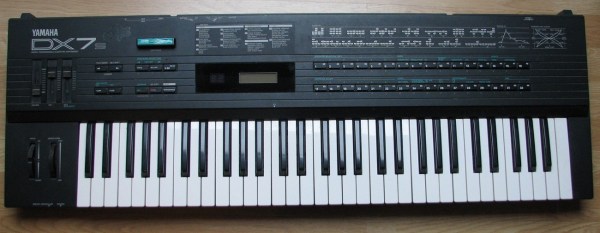
Danny expected the Oaktrees Retirement Home to smell of death. It actually smelt of disinfectant and Christmas dinner. His dad dropped him off in his Austin Montego but Danny didn’t want help with the hardshell synthesizer case, the stand and – heaviest of all – the amplifier. A girl about his age showed him into the hall. She didn’t seem impressed by him or his equipment.

Most of the residents were gathered near a television set. Others sat around the hall, in pairs or on their own. No one showed much interest as he set up his kit near two withered red balloons taped to the wall. The only mains socket was already in use. Danny pulled out the plug. He paused to see if there was a commotion – perhaps it fed someone’s life-support machine or, worse, the television set – but there were no screams or alarms, and the music of Going for Gold continued in the background.

He’d attracted his first fan, a slight woman with curly white hair who made Danny’s own grandmother seem young. He resisted the urge to play his special arrangement – his music teacher at school had advised him to save the best for last.

‘It’s a Yamaha DX7,’ he said. ‘See this memory cartridge? That makes it do all the instruments. It’s like having an orchestra here.’

He played a few notes.

‘There’s the saxophone.’

‘Saxophone?’ said the woman. ‘That’s not a saxophone.’

A bald man wearing a sports jacket came over and started looking round the keyboard.

‘This one’s a bell,’ said Danny. ‘You must admit that sounds like a bell.’

‘I don’t really know.’

‘And it does effects, too. Listen: thunder, helicopter…’

Danny pressed a few keys for each sound. But when he reached the air-raid siren, the woman reeled away with her hands over her ears.

‘Stop it,’ she said. ‘Turn it off!’

The siren made its leisurely climb and fall, soon joined by secondary tones which sometimes thickened, sometimes distorted the main sound. It seemed to be not so much an alarm as a city-wide keening, a cry from every bunker, street and cellar.

‘Some of us have heard a few too many of those,’ said the man in the sports jacket, making a cutting motion with his hands.

There was a moment of inertia and then Danny fumbled to change the sound. He accidentally pressed the button that started his arrangement. The Pet Shop Boys’ ‘It’s a Sin’ blared out from the amplifier, embellished by whirling arpeggios that Danny had programmed on the DX7’s synth strings.


Cabinet Of Heed footer logo

MICHAEL HURST’s writing has been chosen for the GWN prose competition at the 2016 Cheltenham Literature Festival, the May 2017 Stroud Short Stories event and the second print edition of Ellipsis Zine. You can find him on Twitter @CotswoldArts.


Image: By Speculos [GFDL (http://www.gnu.org/copyleft/fdl.html) or CC BY-SA 3.0 (https://creativecommons.org/licenses/by-sa/3.0)%5D, from Wikimedia Commons


Colony Girls – Tim Goldstone

Michelle with Mina in the bedroom,
colony girls, given new names,
their release papers pinned to the wall
from quarantine, a year
that had left them with a hatred of bright white,
but now alone magical and dancing
on Earth’s brandy and hash
moonlit through the paint-flaking wooden sash window
wrapped in sheets they’d dyed
the colour of damsons;
a bright green throw draped over the damp pliable sill;
rich thick blue-tinged smoke, low and heavy
undulates across the floorboards –
drifting towards candle-warmth,
synchronizing to muffled tunes from the bar piano
covered with glasses, three floors below.

The candles in the hollows of the thick bedroom walls
are spreading a buttery Rembrandt gleam
while outside the soft hiss of drizzle
patters across a city roofscape, dribbles down gutters,
trickles out onto narrow streets. Acclimatized now
to real oxygen (if not yet wind and open skies)
the musty journey up the gloomy winding
threadbare carpeted stairs no longer
leaves them out of breath.
A bang on their door –
“He wants one of you down in the bar,
he doesn’t care which one.”
He never cared which one –
those Mars-born girls
all looked the same,
were all good workers.


Cabinet Of Heed footer logo

TIM GOLDSTONE is published in print and online magazines and anthologies, including The New Welsh Review, Stand, Crannóg, Anti-Heroin Chic, Ellipsis, Altered States, The Speculative Book; and BBC and Waterstones websites. Prose sequence read at The Hay Festival. Travelled throughout Western and Eastern Europe and North Africa. Lives in Pembrokeshire. Twitter @muddygold


Image: vishnu vijayan via pixabay


All That Remains – David Hayward

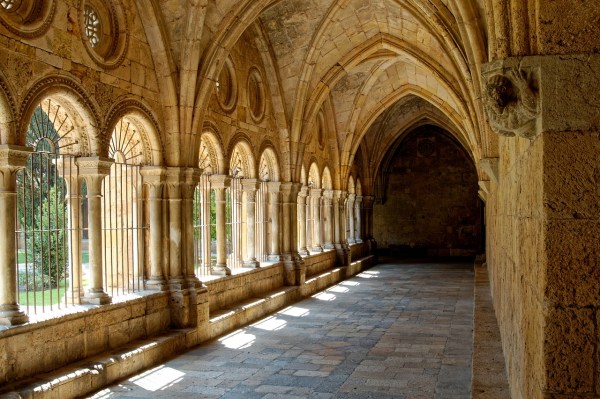
The Abbey stood on a steep hill of jagged rocks and thorn bushes. On the western side, next to the refectory, was the novices’ dormitory, a candle-lit room filled with twenty boys sleeping in neat rows of beds. Near the door, where the room was coldest, a thin-limbed boy huddled under his coarse blanket and began to shake with a fear so strong that the legs of his bed rattled against the floor-boards.

Over and over again, he remembered the twisted bodies of the villagers lying amidst the smoke-blackened timbers of their cottages. As he did every night, he forced himself to picture his mother; the scar at the end of her chin; the fine lines where her eyes narrowed; the red hair that curled around her neck; and on the cottage wall behind her, the white buds of the rose bush she had planted on his first name day.

When the fear passed, he began to cry, softly so no one would hear him. He knew he would never see her again. That part of his life was gone. He felt as if he had been hollowed out and all that remained beneath his skin and bones were his fear and his memories.

A pale light began to seep through the dormitory’s shuttered windows. In the distance, the bells in the Minster, the Abbey’s church, rang the summons for prayers. The door banged open. The burly figure of the Novice Master stood framed against the light. “Get up,” he shouted. “The day’s wasting away.” He woke the novices every morning with the same words.

The boy wiped his eyes and stepped gingerly onto the cold floor. He pulled on the ragged tunic that was too big and the sandals that were too small and joined the end of the line of yawning, fidgeting novices. After the Novice Master, had inspected them, they followed him out of the dormitory, past the refectory and into the Abbey’s courtyard.

The great stone bulk of the Minster loomed ahead of them. As they drew closer, starlings flew up from the iron cross at the top of its tower. The Novice Master lifted the bolt from the doors and ushered them inside. The church was dark and gloomy despite the spears of light that shone through its narrow windows. The boy stood at his usual position near the door with his back pressed against a wooden beam.

When the rest of the monks had arrived, the boy watched as the Abbot, a tall man dressed in a white robe, walked down the nave with two black-cowled priests trailing after him. At the far end of the Minster, the Abbot genuflected before the wooden statue of the man bound to a cross, lifted the silver chalice from the white, marble altar, and began the service.

The boy knelt with the other monks. The stone floor bruised his knees and the acrid haze of incense smoke stung his eyes. He did his best to join in with the service but he didn’t understand Latin and the words were cold and harsh to his ears. While the others prayed, he scratched a small cross in the waxed surface of the beam behind him. He had made a mark for each of the mornings since the monks had offered him their sanctuary.

At the end of the service, the boy followed the novices to the classroom on the other side of the Minster. The daily lesson, when the boys practiced their reading and writing, was the worst part of his day. The Brother Teacher, a gaunt and humourless man, sat on a stool at the front of the room and tapped his walking stick on the floor as he watched the novices work.

The boy crouched behind his desk at the back and stared glumly at his manuscript. No one had ever bothered to teach him to read. He wondered what it would be like to know what the words meant. He imagined he would understand them in a single moment of clarity, as if he looked into a pool of water, one moment muddy, the next clear, and suddenly saw the small fish swimming back and forth between the reeds.

There was a sharp crack on his desk. Startled, he looked up. Brother Teacher stood over him, stick raised to strike again. “I’ll not have you day dreaming during my class. Let’s see what you’ve learned.” The Brother pointed at the manuscript. “Tell me what it says.”

The boy stared at the words until a nervous sweat formed on his brow. But no matter how hard he tried the letters were no more than crabbed marks. For all he knew, it was a recipe for venison pie. He stared at the floor, hoping the monk would leave him alone.

Brother Teacher rapped his stick on the ground. “You ignorant boy. You’ve never bothered to learn. All you’re good for is work in the garden. Now go and bother us no more.”

The room resounded with the novices’ jeers. The boy wanted to shout at them all to shut up; tell them how unfair it was; beg the Brother to be allowed to stay at the back where no one need notice him. But instead, he ran from the classroom.

He trudged back through the courtyard with the boys’ laughter echoing in his ears. Every morning on his way to the Minster, he walked past the garden. It was next to the refectory and surrounded by walls made of unevenly-sized stones piled one on top of another. The entrance was an iron gate about the height of a tall man. Moss grew between the cracks where the hinges on each side were bolted into the stone.

He pushed at the gate. It opened with a rusty creak and a dove flew up from the branches of a magnolia tree just inside. Ahead of him were a series of raised soil beds bordered by apple and pear trees. Three monks worked on their hands and knees in the nearest bed. One of them, a man with an unkempt grey beard, put down his trowel and walked over.

“What do you want me to do?” the boy muttered.

The monk pointed at his mouth and shook his head. He handed the boy a trowel and a small cloth bag. Do what you will, he seemed to say and went back to his work.

The bag was filled with pale, yellow mustard seeds. Shivering in the wind, the boy looked back at the gate, and thought of the warm classroom. But he couldn’t go back there. Shoulders slumped, he went to the soil bed furthest from the other monks. The wet earth dampened his knees as he knelt. He dug a small hole with his trowel and planted the first seed.

Through sun and wind, sleet and rain, from morning mist to dusk’s long shadows, the boy worked in the garden. His back stiffened until he walked with a stoop like the other garden monks. The lines on his palms darkened from the soil ground into them and the callouses on his fingers hardened into thick burrs.

As he toiled, the garden bloomed around him. Buds appeared on the tree branches and grew into twigs and leaves. Carrot tops and beetroot stalks emerged from the soil. Clay pots overflowed with sage and rosemary, tarragon and parsley. When the yellow petals of the mustard plants opened, he slept through the night without waking. As his fear left him, his memories of home began to fade away.

Spring passed into summer. One baking hot afternoon, a storm blew in from the east and torrents of rain lashed the garden. The boy dashed back and forth with the other monks, staking the younger trees against the howling wind and wrapping sackcloth around the vines. A bolt of lighting crashed down in front of him. Stunned, he fell to the ground.

In an instant, the storm’s roar ceased. He was no longer in the garden. Instead, he stood in front of the Minster. For a moment, all was quiet, and then the earth shook with a low rumble. Cracks appeared in the ground around the church and widened into jagged fissures with the ear-shattering sound of stone splitting. Where the chasms met, the ground collapsed into gaping voids. Leafy fronds rose up from the depths. Creepers swelled to snake through the Minster’s windows and wrap around its tower. Tangled knots of twigs and gnarled branches flourished and trunks thickened, until the church was hidden by a forest of oak trees.

He woke to find himself lying in the garden with his cheek pressed against the wet soil. The storm had passed and the sun shone. Starlings swirled overhead. A hound bayed in the distance. I have work to do, he thought, and his heart filled with purpose.

The following morning, he tended to the mustard plants and the lilies that grew beneath the magnolia tree. While the other garden monks were busy at their work, he plucked the yellow and white petals from the flowers and put them in his pouch. The next day, at the end of morning prayers, he let a few of the petals slip between his fingers and fall onto the Minster’s stone floor. When he returned the next morning, only a few of the petals remained, swept away into the corners, so he left more.

The magnolia tree blossomed with pink flowers. He clipped the ends of the longest branches and hid them under his tunic. In the middle of the night, he crept bare-foot from the dormitory. When he arrived at the Minster, he lit a candle, and walked to the altar. In the flickering light, he placed the branches against the sides of the chalice until the blossoms covered the silver and then he filled the bowl with yellow petals.

On the south wall of the garden, jasmine creepers had grown across the stone. Where the white flowers were thickest, he cut several lengths and tied them into bundles with twine. That night, he went back to the Minster and walked past the altar to the statue of the man bound to the wooden cross. He wrapped the creepers around the ropes that tied the man’s wrists and ankles. He wound the longest around the circle of thorns on the man’s head so the white flowers covered the sharp points. Before he left, he pressed the rest of the petals into the hole in the man’s side.

At prayers the next day, the Abbot railed at the monks. “Some wicked man,” he shouted, his voice shaking with anger, “has dared to desecrate the church. There is a snake in our midst and he must be punished.”

The Novice Master barged into the dormitory in the middle of the night. He overturned the novices’ beds and rummaged through their belongings. When he found the boy’s pouch hidden under a blanket, he turned it upside down. Petals, dried flowers, and lengths of vine fell to the floor. The Brother cuffed the boy so hard that his eyebrow split and blood ran down his face. As the novices looked on in shocked silence, the Brother knocked the boy to the ground and dragged him through the door.

A crowd of monks waited outside. The boy lay on the ground surrounded by their angry faces. He tried to crawl away but the Novice Master took a stick from his belt and struck him in the ribs. He yelped and curled into a ball. A boot kicked the base of his spine and he cried out. A fist hammered into the back of his head. Someone spat on him.

He thought they would kill him but instead the Novice Master took him to the refectory and led him down the stairs to a windowless cell. It was cold and dank and half again as long as his body. There was no light so he couldn’t tell if it was day or night. Occasionally, the door opened and a hand shoved inside a cup of water and a piece of stale bread.

In the pitch-black, the boy’s fear returned. As his body shook, he tried to remember his mother but his memories had faded. He couldn’t recall the shape of the scar on her chin or even the colour of her eyes. Now I have nothing left, he thought, and so he resolved to die. He stopped drinking the water. The bread piled uneaten by the door. When he no longer had the strength to sit, he lay curled up on the floor.

He lost touch with the passage of time. All he knew was the murmur of his breath and the weak fluttering of his heart. As he began to drift away, images poured into his mind: the yellow of the mustard petals; the green leaves on the trees; the garden monks working in the soil. And finally, he saw the great forest that would surround the Minster. I have work to do, he thought, and he crawled to the door and ate the bread and drank the water.

He spent so long in the cell that his nails grew into long spirals and his skin hung loose from his bones. One day or night, he couldn’t tell which, he woke to find the Novice Master standing over him. At first he thought he was still asleep and turned back to his dream of the forest but the Brother pulled him to his feet and led him from the cell and out of the refectory.

The sun dazzled the boy’s eyes. His legs were so weak he could barely stand. The Novice Master propped him up against a wall. “You’re not to do it again,” the Brother said. “Or we’ll cast you out.”

The monk let him go and left without a backward glance. The boy sat in the sun until his strength returned and then he limped to the garden. When he stumbled through the gate, the garden monks rushed to greet him. The bearded monk poured him a cup of water. The next gave him his trowel. The third handed him a bag of seeds.

The bearded monk put his lips close to the boy’s ear. At first, only a hoarse and croaking sound came from his mouth. Then his neck muscles clenched and he whispered, “John.”

The boy would have fallen if the monk hadn’t held him up. He didn’t think that anyone remembered his name. Even he had almost forgotten it. The monk pointed at a barren patch of soil in the west corner of the garden. You’ve work to do, he seemed to say.

John walked past the soil beds filled with vegetables ready to harvest, and beneath the trees branches heavy with apples and late-ripening pears. When he arrived at the corner, he ran his hands through the dry and stoney earth. The walls on either side were bare of moss and crisscrossed with silvery snail tracks. He tipped the seeds into his hand and examined them carefully. One of them, bigger than the others, had a small, green shoot. He planted the seeds in the soil, taking care to bury the largest close to the shelter of the wall.

When he had finished, he sat for a few moments, thinking of his mother. She had always made an offering after she planted so he poured a little water on the earth. Then he sang one of her old songs and the words sounded like drops of rain falling on the sea and the wind rustling between the trees.

That evening, John returned to the dormitory and it was as if nothing had happened. The other novices ignored him as usual. He slept in his pallet by the door. The next morning, the Novice Master woke them with the same words he always used. John went with the other boys to the Minster and stood at the back. The church was as dark and gloomy as ever.

At the end of the service, he walked to the garden. The bearded monk was standing just outside the gate. When the man saw him, he put his finger to his lips, looked left and right, and waited for two other monks to walk by. When they were out of sight, he gestured at John to follow him. The monk led him across the garden to the barren corner where John had planted the seeds. The other garden monks were waiting for them. One prayed with his trembling hands clasped together. The other’s tear-filled eyes looked up at the sky.

The bearded monk pointed at the wall. Look at what you’ve done, he seemed to say. A green branch had risen up from the earth to curl back and forth across the stones. At its tip, swaying gently in the breeze, was a perfect, white rose. And everywhere, the scent of flowers.


Cabinet Of Heed footer logo

DAVID HAYWARD is an aspiring first time novelist who lives in Paris.


Image: SofieLayla Thal via pixabay


Tulips – Matilda Harjunpää

My mother has always loved tulips. Every spring when they were in season she’d put a large cylinder vase on the windowsill and fill it. Over and over.

She says tulips die in many different ways, more so than other flowers. Some of them grow long stems that start to droop. With others, the green parts turn yellow and brown. Some drop their petals and their pollen, leaving a big mess for you to clean up.

Some die beautifully. They stay strong and upright, refuse to stretch to grotesque proportions. Won’t break apart. The flowers open gently and the edges of the petals curl outward. The color drains to another hue as lovely as the one before. Tulips that die this way stay fresh for over a week. Even with a keen eye you tend to only get a bunch or two of these in a season.

She says that’s how you know they are living things. They all die in their own way.

She is a small woman but now she looks smaller still. Bedridden for almost a month, we know it won’t be much longer. I place the vase on the side table – a borrowed vase from the hospital, but it will do. I couldn’t find the cerise ones she always liked the best. I hope these are close enough.

She turns her head slowly to look at the flowers. An expression on her face I still recognize as a smile.

“You know, those are stretchers.”

This is not a criticism. Simply an observation.


Cabinet Of Heed footer logo

Matilda Harjunpää writes in Helsinki, Finland. Her very short stories can be found on Twitter @matildahrjnp.


Image: Capri23auto via pixabay


No River To The Sea – Nick Fairclough

1

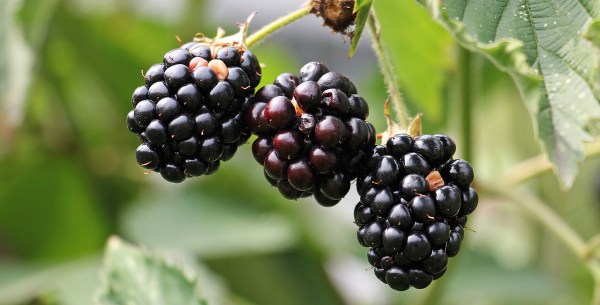
I pick the wild blackberries that grow among the untended late-summer overgrowth. Continuing down the path beside the canal, stopping only to collect more berries, I come to an opening. There I sit in the long, straggly grass, eating what’s left of the foraged fruit. The stagnant murky waters smell like a duck pond. A dull evening, shades of purple in the sky. A raggedy dog sniffs me. I think it’s a stray until its owner calls.

I take my journal from my bag and make an entry: I always knew it would come to this. Just not so soon. Purple twilight. Soft purple mournful sadness. Dog sniffs my sour clothes. I am the weeds sprouting from the cracks in the concrete path under this dimly glowing purple sky, slowly fading purple grey, a glowing purple grey, long-lasting twilight. These long, extended days don’t let night come this time of year. The sun can’t sink. Not completely. Not yet. I left everything I knew in New Zealand to be here, doing this. Spent everything I had. But I’ve achieved nothing, and I have nothing left.

2

The next day I walk into town along the canal. It’s a gentle day. This is the only canal here. It was built almost two hundred years ago to connect Edinburgh and Glasgow. Initially a commercial success, it lost its worth when rail became the more viable option. It once ran all the way down to the port; now truncated, it stops at the entrance to the city centre.

That’s where I am.

I find the Job Seekers’ office. I’m scrolling through the job opportunities. There. Immediate start. Bricklayer’s labourer. Weekly pay. I take the reference number to the counter.

“Do you have steel-cap boots?”

“No.”

“Well you need them for this job. You can get a pair for ₤20 from Industrial Supplies – just around the corner.”

That ₤20 is meant for my food.

I turn up on site. It’s loud and dusty. Burly men at work. I’m given a hard hat, a high-vis vest, a pair of leather gloves.

“See these bricks?”

Big heavy-looking grey things. “Yeah.”

“See that wall?”

“Uh huh.”

“You take the bricks from here to there. Stack ‘em so them bricklayers can easily get ‘em.”

I take the first brick. Hold out my left arm and let it rest there while I get another and stack it on top. I walk it over and place them behind the bricklayers. I do this again and again.

My novel. It’s unfinished, but worse, it’s no good. All this time. Nothing to show.

“Come on, son, you can work faster than that!”

It’s the foreman.

I don’t answer and I try to work faster. Uncomfortable scratches appear where the bricks rub the underside of my forearm. The foreman climbs the stairs back into the temporary office. I see him watching me from his window. His watchtower.

Do I abandon it? I’ve worked so hard. But who will read it?

The foreman opens the window and calls out: “That whole pallet of bricks needs to be moved by tomorrow – new ones delivered Monday.”

I look at how many bricks I’ve moved – I’ve hardly made a dent. The pile of ominous bricks. Sitting there. Looking at me. He’s looking at me, too. It feels like I’m in the Panopticon.

3

I take the stairs to my third-floor flat. I live in a housing estate. It’s grey and bleak. There are many buildings in this area just as grey, just as bleak. I have a bed, a desk, a laptop, a kitchen, a toilet, a shower. I flick the light switch. Nothing. I try a different switch and check the prepaid power meter in the cupboard: negative ₤10.

I lie down. I’m so tired I drift off to sleep without eating.

4

After getting a taste for lifting bricks, most people from Job Seekers don’t come back. I return and start on the bricks for the second day.

The bricks seem heavier. My sleeves have started to fray and tatter. The sharp corners scratch my skin. An early advantage is marked. Blood has been spilt.

I wonder how long I can keep up this battle. I could leave, sure. But instead I continue to move bricks.

5

It’s the weekend. My body aches as I walk across the field to the canal. There’s a wind from the north. The water ripples and gently laps against the concrete.

I pass an old bridge that opens up into a park with bench seats and trees overhanging the water. On the opposite side, a boathouse where canal boats moor. One of them has been converted into a restaurant. Beyond that, a line of pretty brick cottages.

A girl with long dark hair is sitting on one of the benches. She’s writing. Not once does she lift her head. There’s something unusual about her. She is so focused. So lost in her world. When I write, I’m frantic. I flutter like a sparrow, looking around the room for words as if they’re crumbs. What I’d give to have her composure.

I detour from the canal to the supermarket, where I buy a loaf of bread, an apple and banana. I have 38p left until I get paid on Tuesday.

I walk back. The girl is gone.

6

Back in my flat I eat some bread, have a glass of water and turn on my laptop. Its battery is running low. I open my work and read.

A woman came down the ramp of the boat. She and many anonymous figures, silhouettes in the Croatian dusk. Looking around the industrial port, she smelled the fish and oil and the salty Adriatic Sea. She took her camera from her handbag, taking a few shots of the setting. She had promised to document her travels.

As I read I want to scrunch up the pages. Since I can’t, I think about throwing the laptop through my bedroom window. It would smash the glass and fall the three storeys and break on the concrete below.

7

I’m back to moving bricks. I can’t get the image of the girl writing on the bench out of my head. I went back to the same spot on Sunday, but she wasn’t there.

On Tuesday morning I go to the cash machine to check my account. I’ve been paid! It’s the first money I’ve had in months. I take out ₤20 and buy a recharge card for electricity at my flat and some food to celebrate before returning to the bricks.

The work is exhausting. My arms and legs are sore. The bricks seem heavier. The day is a struggle.

8

I come home from work and open my laptop. I’m so tired I can hardly concentrate enough to read. My body aches, but I feel indifferent to my physical sufferings.

A tourist town in the off-season. All the colours seemed so desolate and sad in this abandonment. An empty swing sways in the sea breeze. She thought she should write an email to someone – that’s what people do on their travels. Yet something inside of her felt dreary. What she would write would not be full of admiration, inspiration, excitement. It would only be about herself. For that’s all she could see.

I don’t read any further. I right click on the file and scroll down to “Delete”.

“Are you sure you want to do this?” the computer asks.

I ponder before clicking “No” and shutting it down.

9

I walk the canal every weekend to the same spot, and she’s never there. I’ve almost given up hope. But this Sunday afternoon I go again. There she is. She has her book and she’s writing. Without thinking, I approach her.

“Hey.”

She looks up. It’s the first time I’ve seen her eyes lift from the page.

“Do I know you?” she asks in a Slavic accent.

“No.” She just looks at me blankly, so I start to speak again. “I’ve seen you here before. I wondered what you were writing.”

She looks as though she doesn’t want to answer. “Sometimes I come here to write letters. Today I’m writing poetry.”

“Letters? Do people still write letters?”

“What do you mean?”

“Oh … nothing.”

I look at her book. I’ve never seen a book like it before: its cover is stitched and sewn. Sun faded blue with green borders. The pages are dog-eared and coffee stained. On the open page are foreign characters: Es and As with tails. Cs and Ss with hats. All these Zs. Swivels and loops. Her handwriting is beautiful.

“Why do you come here? Do you like this canal?”

“I don’t think I like it. But it has a certain sadness that I like. It has the beauty of a neglected child. It has a history. Do you know what I mean?”

“I think I do.”

“I talk to the canal. I sometimes want to scream at it! It’s like God – it just absorbs everything.”

I don’t know how she can compare this dirty canal to God. But she sure seems interesting. I hesitate to ask. “Could you read me one of your poems?”

“They’re in Polish. You don’t understand.”

“Can you translate?”

“You can’t translate poetry.”

“Can you try?”

She pauses before she starts. “I’m looking at her / Who is she?”

Pointing at the line she’s on and translating in her head before she says it out loud. “I want to guess / I will ask / What she believes in / Who she believes in today.”

She takes a longer pause between lines. “So strange … I don’t know if strange is the right word? The Polish word ob-tsy means foreign or strange.”

I look at her paper and the word is spelt o-b-c-y and I notice that it’s not coffee stains but pressed brown leaves. I can’t tell if they’re real or printed.

“I think strange is better.”

She continues, “How do you say it when you used to know someone – you were close to someone, but now you’re not? You used to know them, now you don’t?”

“Do you mean distant, or unfamiliar, maybe?”

“Yes. Unfamiliar. So unfamiliar / With her own helplessness / She becomes friends / She cries / And you would like to cry over her / But she is so unfamiliar / I’m looking at her since a long time.”

“For a long time,” I interrupt.

“No. Since a long time. I’m looking at her since a long time / And it is a long time / That I stand next to myself.” She pauses and looks at the page. “It doesn’t sound good in English. You have to read it in Polish. You have to learn Polish.” She laughs.

“What’s it called?”

“It’s got no title … I can give it a title … what should I call it?” She doesn’t give me time to respond. “Call it ‘Ona’. ‘She’. No. Not she. Call it ‘Her’.”

“Thanks for sharing.”

“I never let people read my poems. Maybe because if I say it in English it means less to me.” There’s silence before she closes her book and ties it shut with a piece of string. “I have go now. My shift starts.”

“OK. Where do you work?”

“I look after a disabled man. He can’t talk.”

“Oh … Do you like your job?”

“No. Not really. It’s very lonely. But I can write.” She holds up her book.

“See you round?”

“Yes. Maybe.”

10

The days grow colder. Mornings are especially frosty. Streams of early sun cause steam to rise from the pile of bricks. My fingers are so cold it feels as if they are going to snap off. I rub my hands vigorously – it takes some time for them to thaw out. Once I’m warmed up, I get back to moving bricks. It’s much easier now: my body is used to the physical labour.

I’ve actually started admiring the bricks. I see they are a team, a community, and they just get on with life. Nothing to complicate it. They are laid on mortar – one brick to the next, side by side, one on top of the other; they are cemented, and clearly contented, in their place. When a brick needs to be cut to finish off a line, they accept that too – an individual sacrifice for the greater good.

I’m up to date on my rent and no longer hungry. I’ve even bought myself proper, heavy-duty clothes for the job. I’m starting to feel fit and healthy. I no longer think about my novel, my writing. I’ve given up and I’m better for it.

But I still think about that girl. I walk down the canal every weekend hoping to see her again – I never do. I didn’t even ask her name but I asked her to read me a poem. How absurd. It feels like she’s a figment of my imagination.

I turn to pick up another armful of bricks when I hear a terrific thud – then rumbling. I spin around. The wall the bricklayers are working on has collapsed. It’s fallen away onto empty ground. Bricks and mortar are scattered. Everywhere.

“What the hell! How did this happen? You imbeciles! Quick. Clean it up. Quick.” The foreman yells before addressing me. “Stop what you’re doing and tidy this mess up before someone sees it. Quick!”

11

After clearing the mess, the site is abnormally quiet. It’s like someone died.

I come home on the bus unsettled. I get off, but instead of going to my flat, I walk across the field to the canal. I take off my steel-capped boots and look around to check no one’s watching before hurling them into the water.

Plunge.

I watch them sink. They fade until they’re out of sight. The canal is only about a metre and a half deep, yet I can’t see the bottom. I can’t see my boots. Only a few bubbles surface as if to say goodbye.

Epilogue

Years have passed. I’m back in my home country. I sit at my desk and think of the canal. The water that doesn’t move. I picture the reeds. The path. The weeds sprouting from the cracks. The straggly grass. The green overgrowth.

I imagine what’s inside. A rusting tricycle. An engagement ring. A supermarket trolley. I picture my boots. My steel-capped boots on the canal floor. I instinctively know, as if it’s a fact, that they’re still there.

I remember the bricks with an unusual fondness.

I think of that girl. The nameless writing girl. Writing her letters, her sad poems. Sitting on the bench beside her canal, comforted by its obscure, forlorn beauty – like that of a neglected child. Her canal, absorbing all of her woes. Absorbing everything that gets thrown at it. Going nowhere, simply absorbing.


Cabinet Of Heed footer logo

Nick Fairclough lives in Masterton, New Zealand. He has had work published in Flash Frontier, Blue Fifth Review, Rangitawa Collection and Takahe. One of his stories has been nominated for a 2018 Pushcart Prize and another for the 2018 Best Small Fictions. Learn more at https://nickfairclough.wordpress.com/


Image: pixel2013 via pixabay


Cravings – Abi Hynes

Moj’s cravings were so tame, Caleb was disappointed. He had been game for the whole experience: the late night ice cream expeditions, the stolen lettuces from witches’ gardens. Driving out of town to the Chinese supermarket like James at work had done when Lola was having the twins would have given him something to do, and might have made him feel like a useful part of all this. But Moj only wanted mangoes, which were in season, and pickled things on toast.

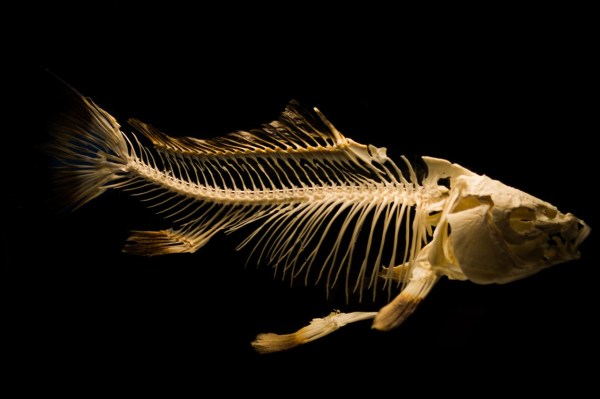
The most unnerving thing she’d yearned for was a bowl of those deep-fried white bait at a tapas restaurant. Caleb had squirmed a bit, sure, as his wife sat there crunching them up, one salty little body after another, heads and eyes and all. He imagined he could hear their tiny skulls popping against her back teeth. Moj grinned guiltily up at him with greasy lips.

‘Sorry. Is this disgusting? Blame Blob, not me.’

Blob. Caleb feared they’d keep calling him or her that, even after the birth. No teeth yet, but nails and hair, getting mushed up mangoes and whitebait through a tube. He wondered if he or she would like those things when they grew up. Or if they’d be sick to death of them.

What Caleb hadn’t told Moj was that he was getting cravings of his own.

They’d started as a heightened sense of smell. He’d been sitting at his desk at work, when the various and not all pleasant odours of a kitchen had started to waft in. Fat frying and imitation Chinese sauces and a thick, meaty, soupy smell, and, most of all, the powerful tang of fish.

‘What the hell is that?’ he demanded, looking around at his colleagues for support, but nobody seemed to have noticed and they looked back at him blankly. The stink grew more and more potent, until he was choking on it, and had to excuse himself, and followed the smell like a hunting dog to its source in the canteen, which was seven floors below.

He’d dismissed it as a fantasy, of course. Ridiculous. Some weird psychological reaction to his impending fatherhood. Watching Moj’s body change while he did nothing but wait; it was screwing with his head. But along with this strange new sensitivity had come a powerful craving that was turning into obsession.

Nothing seemed to satisfy it. He stocked their cupboards with tins of tuna and sardines and more of Moj’s whitebait that he had to go back to the restaurant to find, safe in the pretence that he was doing it for her. He ate salmon and monkfish and trout and carp and seabass, but his craving barely took a breath. He tried spider crab and lobster and squid, and the new varieties of creatures with tropical-coloured scales and exotic names. He cooked them in increasingly ambitious recipes until Moj exclaimed that seafood was starting to turn her stomach, and for the love of God could they eat something else for a while?

Caleb felt like he was going mad. He sat in meetings with his mouth watering and his stomach bending in on itself, fantasising about sucking the sweet, brown mud from the severed head of a prawn. He went in search of sushi at lunchtimes, trying everything they could put in front of him, even the really weird shit, wondering if eating it raw was the way to finally get satisfaction. Nothing worked. Moj got bigger and slower and more and more exhausted, but he barely thought about her. When she spoke about Blob it was like it was someone else’s baby lying in wait in there, and hardly even worth his interest.

I’ll crack it soon, he thought, as he stood over the fish tank one evening. The smell of Moj’s bubble bath drifted down the stairs, her humps crowning out of the murky water.

He swallowed the goldfish whole, and felt it in his throat, still wriggling.


Cabinet Of Heed footer logo

ABI HYNES is a drama and fiction writer based in Manchester, UK. Her fiction has been published in a variety of places online and in print, including Litro, syntax & salt, Flash Fiction Magazine and minor literature[s], and she was recently shortlisted for the inaugural Bath Novella-in-Flash Award. Her plays have been performed across the UK, and she is currently taking part in the 4Screenwriting 2018 course with Channel 4.


Image: Skitterphoto via pixabay


Long Guest and a Briefcase – Richard Kemp

I will tell you this, as it is all I have to tell. It was the afternoon and I had taken lunch in my study so that I might continue to busy myself with correspondence that I had previously neglected. I was going about filling my inkwell when I heard the front bell ring. Not expecting company, I elected to ignore it as I felt it prudent not to eschew my responsibilities any longer. The bell rang a second time and then a third. By now I was striding along the passageway with thoughts of indignation, with whoever it was, clanging away like a hysterical conductor. No sooner had the door opened, the ringing stopped.

I was greeted by a gentleman standing no higher than my shoulders. A small moustache dwelled below his nose and large round spectacles above it. He was clutching a briefcase to his chest with one hand and holding an umbrella with the other. He bowed. ‘My name is Souvenee. I have abandoned my carriage a way back, the driver was of a terrible muddle, so I elected to forge my own path, as it were. I wonder if I may ask for shelter until this terrible storm passes.’

The sky was indeed filled with clouds of the darkest greys, so that to all purposes it looked as if God Himself had flipped all the mountains and hung them over the sun yielding their water to be cast about by every gust and bellow. Where this storm had come from I do not know, as I had given thought to spending time in the potting shed, rather than my desk, as it had seemed such a fine day.

My mind was torn between the idle quill and blank sheets, and the vulgarity of quarrelling on one’s doorstep. Relenting, I ushered him across the threshold and took his umbrella and coat. These are worthy of remark in two ways. Firstly, that although they were tailored to a high quality and must have come from deep pockets, there was a fine layer of dust and every hem was frayed and worn. Secondly, that despite the weather they had been subjected to, they were dry as a bone. He took preference to hold onto his briefcase, which resembled the former items with regards to quality, age and aridity.

Whilst placing the items in the cloak room, I stole a glance through the window. The sky was now clear with not the slightest blemish to obscure the blue and yellow of a fine summer’s afternoon. ‘I say,’ I called, ‘it seems the storm has moved on, or at least the worst of it. It would be a shame if you missed any engagements unnecessarily,’ but I did not receive any response. He was already in the drawing room and was building a fire in the hearth.

Logs had been set and he was placing torn pages of newspaper amongst the wood. He seemed so assured that this was nothing out of the ordinary that I felt it ungracious of me to see it any differently. ‘I would rather yesterday’s paper was used. Burns just as well I’d wager,’ I said. ‘Today is tomorrow’s yesterday,’ he said and using the candle from the table, lit all the pieces of paper as if anointing them one-by-one with blessed wax. Now, I always kept in mind to assist those in need and allow for differences in upbringing. You can’t blame the horse for the stable, I always said but this irked me more than a little. ‘A brandy would hasten the warmth if there is any to be had?’ At this rate I should be lucky to still have my own shoes I thought, but a guest is a guest, whether welcome or not.

I returned with glasses and bottle to find two chairs had been placed by the fire and Souvenee had made himself quite comfortable. His briefcase sat on the floor next to him and his hands, lightly clasped, resting on his paunch. He released one hand to accept the glass of brandy and gestured for me to sit in the other chair. I had to catch myself from thanking him, in my drawing room, to sit in my chair.

We sat together in front of the fire for the rest of the day. After finishing each glass of brandy I found myself pouring another. My guest wove many tales with regards to his memories and travels. His life had been varied and wide with accounts that could bolster many persons’ years. Whether it was the brandy affecting my eyes or the heat from the fire trifling with my thoughts, I fancied that whenever there came a place or name in his telling that was a little foggy or a point he could not quite fathom, he would slide his hand over the case which would quiver. Once the previously forgotten or omitted detail had been recalled and he was once again animating his yarn with hand and jowl, the briefcase would return to its passive state until the next vague recollection would seek clarity.

Eventually the moon hauled itself into place and, I have to confess, that although I had enjoyed the stories and a chance to allow some liquor to round off the sharp edges of the day, I would feel better when this strange man had taken leave. But I could not, in good faith, send him on his way at such a late hour so I invited him to stay the night in the guest bedroom. An offer he happily accepted. ‘I can arrange a carriage for you first thing in the morning, before breakfast.’ I said. Usually I would offer breakfast to guests but this time I felt a bottle of my finest brandy and a soft bed was ample hospitality. ‘Sir you are most kind. Please, as some small token of my gratitude, would you care to choose a trinket from amongst my wares? Not wishing to appear petty and feeling it worthwhile to recompense my inconvenience in some way, I accepted. He slid his briefcase in my direction and raised his eyebrows in a manner that I’m sure he considered to belong to that of a playful friend but to me, felt nearer a conspirator.

I lay the case on the table, unlocked the catches and opened it. Curious as to what treasures he had held so close to him since his arrival, I peered into the leather-lined gloom. To my astonishment it was filled with a preponderance of spiders. Not large specimens as those found in the darker places of the world, but no bigger than a child’s thumb. ‘I must say I find this in poor taste,’ I said but Souvenee merely smiled. The spiders made their way over my hands and up my arms. Due to their size I could pick them off with little effort, and at first, I saw it as no more than an extreme nuisance which would be halted. All the while, Souvenee had lit his pipe and was puffing away quite contentedly. The ungrateful wretch would find the roadside a lesser host and would do so as soon as I was free.

More spiders now made their way past my elbows, to my shoulders, up my neck and began marching into my mouth like an invading horde under the command of their General. I clawed at my gums and behind my lips, dragging out bits of abdomen and leg. Panic built up inside me. There were now thousands of the small dark creatures moving over my entire length. I could no longer open my eyes and my breathing became more desperate as my nostrils soon filled with them. Now flailing at my own body, half blind and half choking, it felt as if my own skin was being frog-marched off my very bones. I do not consider myself a weak man, but I fell under the sheer weight of them all. My screams muffled by countless tiny legs that wound themselves over my teeth and tongue.

I remember nothing that came after, nor before that afternoon. I surmise I was found by somebody at some point and that it was decided I would stay in this room. Each day someone brings me food and satisfies themselves that I am well, which for all I can tell, I am. Left alone for most hours I occupy myself writing letters. I do not know who to send them to or how many I have written but today I fill the inkwell and begin: I will tell you this, as it is all I have to tell.


Cabinet Of Heed footer logo


Image: via pxhere


Innumerate – Sherri Turner

The ways in which I love you can’t be counted,
enumerated, written in a list,
nor could I state the quantity amounted
of places where you’ve held me close and kissed
me on the lips that couldn’t speak the number
of loving acts and kindnesses you’ve shown,
or nights when you’ve been woken from deep slumber
by snores so loud they grated to the bone
and with a gentle hand you’ve turned me over
and pulled the duvet close beneath my chin,
then quietly explored the room for ear-plugs
and uncomplainingly you’ve put them in.

The ways of love don’t fit in fine equations,
aren’t solvable by methods known to man,
but that one thing you do on such occasions
means more than any numbers ever can.


Cabinet Of Heed footer logo

SHERRI TURNER is a writer of short fiction and poetry and has won prizes in competitions including the Bridport Prize, the Bristol Prize, the Wells Literary Festival and the Stratford Literary Festival. Her stories have also appeared in a number of anthologies. She tweets at @STurner4077.


Image: Gerd Altmann via pixabay

epilogue – Issue Seven

So everywhere there’s life, It goes.
Cryptic properties obnubilated
Within the half-blind dovetails,
Translating just enough –
Not to impose upon imposing beasts
Opinions secondhand and ill-fitting. 
The reader reads into what is read,
The words ever ink and dirt and shrug.
For what is The Cabinet in truth?
Infinite space
Collected. An offer.


Le_Voyage_dans_la_lune_

Image: comfreak via Pixabay


Cluck – A True Story – Tara Lynn Hawk

Fifty years                   from now
                         when                                            all the mini marts are gone and
          alien space chickens                run                         the plants
                                    humans the work beasties
         who will sit                    back                   and say
                                                                                                  I told you so!


Le_Voyage_dans_la_lune_

TARA LYNN HAWK is the author of poetry chapbooks Rhetorical Wanderlust and The Dead. Her work has appeared in Occulum, Rasputin, Anti-Heroin Chic, Uut, The Cabinet of Heed, Spelk, Wanton Fuckery, Midnight Lane Gallery, Idle Ink, Spilling Cocoa, Poethead, Social Justice Poetry and more. “taralynnhawk.com”


Image: Tara Lynn Hawk


The Last Red Cherry – S A Leavesley

Kis pulls the shiniest bauble from the Christmas tree and cups it in her hands. It looks like a see-through planet plucked from her porthole, and, valued at 1000 e-bits, it’s the most expensive decoration on the fake fir. Even before Kis had it priced, she knew this instinctively – this crystal sphere is the only thing she’s ever seen that is filled with clear water.

Kis switches her gaze from the bauble to the pale honey-colored liquid that she’s been sipping. The glass on her desk is simultaneously half-full and half-empty, even in artificial gravity. She tries to imagine again what Earth water would taste like, how rain would feel on her skin. But Earth is millions of miles away, smaller in her telescope than the decorations on the tree. So small that, if Kis could pick the Earth out of the sky, it would make a perfect necklace bead.

When she was younger and healthier, Kis’ great-great-great-grandma used to joke that, from this distance, her home planet was the size of an Earth cherry. Then Granchy would describe this cherry in luscious detail – sweeter than Saturn honey, redder than Mars, the color of pure, fully oxygenated blood, the last rare forbidden fruit. Kis’ mouth waters at the thought of this wonderful thing that she’ll never get to taste. Only one such tree left in the solar system, its precise location lost.

Still, at least Kis has this aluminum tinsel tree. If Granchy could see her now, she’d joke that Kis was eyeing up the decorations as Earth women used to drool over displays in jewelers’ windows, picking out the rings with the biggest sparkling rocks.

Kis finds it hard to imagine getting excited about hard stone. Metal and mineral are everywhere. Her fascinations are different. Yes, almost everything about the baubles is artificial, but not quite. She’s had them tested. Her oldest pieces carry traces of Earth elements, of land dust, even water and once-living matter. Their light and shine too is crafted by hand and imagination in memory of the old ways, in honor of life.

Kis’ favorite decorations are the transparent spheres dating from just before the exodus, with scenes depicted inside like mythic hanging snow globes or old-fashioned crystal balls into the future. Granchy used to stare at them for hours before finally pronouncing her predictions.

Granchy’s last insight though had been little more than a babbling of random words: “Honey-river-stone-hail-red-petals-glaze-falling.”

“Falling.” Granchy had repeated the word again before falling back against her pillow in the spaceship sick bay.

Every time Kis visited, she’d look round the small dorm with sinking despair. It was full of patients like Granchy – after centuries of anemic life, their hearts petal-thin and their minds finally running out of space for more memories.

No point dwelling on this, Kis drags her thoughts back to the fir. She can feel Granchy with her, like the Ghost of Christmas Past, plucking another glass ball from the green branches, then telling Kis to look inside if she wants to divine the future.

But the sphere in Kis’ hands is black as a starless night. There are beautiful chiming bells inside but they only sound when shaken. Kis pushes the swinging bauble harder and harder until…the black ribbon snaps and it falls from the tree.

Perhaps Granchy isn’t with her after all. Granchy would never choose such a dark future. Kis’ hand hovers above a globe with a frozen lake. Brightly scarved skaters dance across the surface to a swirl of beautiful soft yet joyful choral music, its song composed entirely from snatches of different people’s laughter. She longs to cradle it in her hands, but she fears this choice. It’s as if the Ghost of Other People’s Promises is beguiling her with sham dreams.

She touches the next sphere gently – it’s entirely filled with flurries of plastic snow – a gift of Christmas Present. The white flakes will not settle long enough for there to be anything but blizzard. Like the cosmic debris constantly pelting the spaceship.

Kis picks up the original bauble again. Granchy called this ‘The Rain Globe’, saying it reminded her of her last days on Earth. As Kis’ other plans seem to have failed, she wonders if she should get Granchy’s poem about it framed for Christmas. She flicks through Granchy’s e-note until she finds the words.


The Rain Globe

Imagine the Earth sealed in curved glass,
our world as a rain dome. The wet

more frightening than drops of light
glistening towards dice houses.

Hold this sphere in your palm,
turn it upside down and it’s the sky

that drowns. Foundations cling
to the thin land above.

Imagine we’re tiny people,
speaking through bubbles,

all of us now divers
thrown in water flight,

lives tilted
towards spillage.


But suppose this Christmas is Granchy’s last? It isn’t the most cheerful gift to give her, even if Granchy’s mind has gone too far to understand the sadness.

Ting! Kis’ electroscreen flashes with a new message.

“Your merchandise has been located. Your order is in g-flight!”

Kis senses her heart pumping redder and faster as she reads. She’d not really expected her search to work. But now this message from Galaxis. What if this is it? Finally.

Of course, Kis tries to slow her breathing, it could be a fake – black-world sellers are notoriously unreliable. But as past-dealers go, Galaxis’ reputation is legendary on the contraband scene. If it really is a cherry from that last tree? If the rumors are correct, one sniff may be all it takes to save Granchy.

And the price? Kis wills herself not to think about that, as she packages up The Rain Globe in stellarwrap. So long as this works, it will be worth it. It’s not the first heirloom they’ve had to sacrifice, and she still has Granchy’s poems.

Kis hears her own nails tapping the desk in time with her heartbeat, as she waits for her exchange to process. The noise reminds her of Granchy’s recordings of an old analogue clock ticking, only faster, more arrhythmic, hollower.

To occupy her fingers and thoughts, Kis turns to one of the brighter entries from Granchy’s journal and forces herself to concentrate on the lines.

Underwater: Surviving

In our new place / the fish
              that pour from the common tap
                          rise a little faster \ bubble bigger

                          Away from town streets / the water
              tastes clearer / easier to swallow
unthickened by twists of pipe

through terraces submerged
              in the flood \ of their own debris
At sea in this new world

              we are strangers to ourselves
                          Oceans teach us to dive deeper
              to find strength we never knew

If…when dry land returns
              we will welcome free-walking
but guard tails and fins in case

              We made this house of gills
                          layered with synthetic scales
              now \ we swim with it

Although, it’s the hundredth time Kis has read the poem, this still seems worlds away from her own life. No water, no individual homes on the Interstar, only an infinity of space outside and the increasingly more cramped crampedness of near-communal living inside. But the title and Granchy’s determination…survival Kis gets. Survival is the one essential that they’ve all been fed and watered on. Survival and hope.

Ting! “Your g-pod has landed!” The electromassage flashes a brighter blue neon than the lights on the Christmas tree, its chime louder than any bells Kis would ever wish for her frozen-lake skaters.

Although Kis is trying to stay realistic, she can’t help feeling expectation rise inside her as the small pod arrives in her cubicle-chute.

She prizes the pod apart and takes out a tiny box.

It looks the right size. She imagines the weight is right. But she’s scared now to open it. She’s never seen a real cherry, so how can she even tell if it’s genuine? There’s only one person Kis knows who will know for sure. The same person that Kis needs it for.

Shoving the box in her pocket, Kis grabs the next zip-express and hurries though the shafts towards the sick bay.

It’s hard to distinguish Granchy’s dark curls from the shadows on her pillow. Except the shadows are dancing and Granchy’s hair and head are still. Granchy’s breathing is slower and shallower even since Kis’ last visit.

“Granchy,” Kis whispers. “It’s me.”

Kis sees Granchy’s eyelids flutter and bends over to kiss her great-great-great-grandma’s moon-pale cheek.

“Look, I’ve brought you something.”

Opening the box, Kis lifts out the waxy fruit by its stalk. This thin wiriness bends with the weight of the shiny soft bead that she’s been promised is real cherry. It looks real, feels it too. She wishes Granchy’s eyes would open, and stay open long enough to look, check and reassure Kis.

Steadying the fruit with her gloved palm, Kis uses a scalpel to nick its surface, then slides a tiny sliver of reddish flesh into her specimen dish. If this is what it should be – and if it does what it should do – there’s enough cells for her to sample and re-synthesize.

Then, clasping the rest of the small bead gently between two fingers, Kis holds what she believes is the last red cherry to Granchy’s lips…and hopes.

Le_Voyage_dans_la_lune_

S.A. LEAVESLEY is an award-winning journalist, fiction writer and poet. Author of two novellas, her short fiction publications include Jellyfish Review, The Nottingham Review, Ellipsis Zine, Oxford Today and Flash: The International Short-Short Story Magazine. Nominated for Best Small Fictions, she also runs V. Press poetry and flash imprint.

Image: Gerd Altmann via Pixabay


Still Life – Jesse Bradley

Mitch tries to talk me out of staying behind to babysit mom. You could use the night off, he said. I shook my head and made him hand me his car keys; Mitch’s car hasn’t recovered fully from his last night out on the town.
I sit in front of the glass shed mom’s living in and sip whiskey that’s a hair above cheap, where the bottle’s glass but the glass is so frail, it’d break in mid swing during a bar fight. Tonight, mom’s taken an evaporating green watercolor. She’s enveloped the glass chair we got her to practice maintaining a human form.
Today, she managed to sit still and cross her legs. She bounced her right foot the way she used to when got giddy, like when dad brought home flowers or I brought home a rare ‘A’ on something. It was when she tried smiling that her limbs exploded. Mom seeped out of the stumps and dispersed back to her gaseous form. Unlike all the other times she failed maintaining a human body, mom was too tired to bang against the glass. We’ll try again tomorrow, she said. Mitch used it as a reason to celebrate and be stupid, like a man in his early twenties should be sometimes to remember he’s alive.
I lay down on the grass, next to the half full glass of whiskey. Maybe, we should let mom go, let her fly high into the sky, chase the stars, but then I think about the birds, the unfortunate helicopter or plane that flies through her, their names.
Le_Voyage_dans_la_lune_
Image: noeminihoul via Pixabay


You’re Very Beautiful – John Holland

“You’re very beautiful,” I say. I do not know whether, by their standards, she is beautiful.

She looks surprised. Flustered. Perhaps because I met her only a few seconds ago. Touched her arm at the crowded bar and introduced myself.

“Thank you,” she says, and giggles. I can see that she thinks I am beautiful. Handsome, they call it.

“I like your eyes,” she says. I have learnt to smile with my eyes. Learnt that they like that.

“Yes, I have two – the normal arrangement,” I say. I am aware that they find that funny. She laughs. It’s a good sign. I ask her what she’s drinking. Vodka with something. I have the same. It’s easier. The barman pushes the drinks towards us. I give him paper money. She puts the glass to her lips. I do not drink.

There are two seats at the back of the bar where we can sit. Briefly I hope.

“Are you English?” she says.

It’s not the first time I’ve been asked. My accent is not completely accurate.

“Yes,” I say, “But my father was Swiss.”

She nods. And smiles. Asks about Switzerland. I mention the Alps, clocks, gnomes. It’s what I’ve learnt.

I say I am a financial broker – working for animal welfare. Money and a conscience. That I have a hybrid sports car, using electricity as well as petrol. And a riverside flat.

“With a view to die for,” I say.

“Nice,” is her reaction.

“It’s only a few minutes away.”

And in those few minutes we are there. And she has drunk more vodka. This time straight. She has let her fingers linger on the Kelim rug. And admired the kitchen – white tiles with stainless steel. It’s in the kitchen that I ask her to add her name and address to my system. I must monitor.

“For the gift,” I say.

“Gift?” she asks.

She says she’s never seen a computer like it. I agree she hasn’t.

We walk onto the balcony. Stand a little apart. Listen to the noises of the air. I stare at the darkness, the bloated sky. And home.

She looks at the side of my face. I turn and smile. We kiss. These days I kiss well.

She says she’s never met anyone like me. That I am unusual. I smile. Tell her that someday people may say the same about her.

Soon she is naked in my bed. I say that I will use a condom. I act it out under the sheets. I penetrate immediately. And finish.

She insists she would like to stay.

I say that really she wouldn’t. She dresses. I close the door behind her.

I report progress towards the target. Change the sheets. Choose different clothes and walk to another bar. Find another woman.

“You’re very beautiful,” I say.


Le_Voyage_dans_la_lune_

JOHN HOLLAND is a prize-winning author from Gloucestershire in the UK, and the organiser of the regular event, Stroud Short Stories. Website – www.johnhollandwrites.com


Image: Gerd Altmann via Pixabay


Window on the World – Tom Gumbert

Sergey Vasiliev stares out the window, eyes wide. No matter how many times he sees it, it makes his spirit soar.

“Really Sergey? It’s not like you haven’t seen a sunrise before. In fact, you see it every ninety-two minutes. That’s like a bajillion since you’ve been on this mission.”

Sergey smiles and shrugs his shoulders. He looks back at Kiyoko Watanabe as she pulls the daily calendar page, wads it into a ball, and releases it, watching it float away.

“Seven days and a wake-up,” she says, a smile spreading across her face. “Going to make it home for Aimi’s fifth birthday!” She moves her hand to her lips, then to the picture above the daily calendar. “Goodbye International Space Station—hello baby girl!”

A glint of light pulls him back to the window and he watches the sun become visible above the curvature of the earth. Glorious. A new day, and all the hope and promise that comes with it.

“Good morning ISS crew.”

“Mornin’ Houston,” Mission Commander Jules Rousseau says in his best Texas drawl.

‘There you go, Commander,” the mission controller cheers him.

Sergey can hear the laughter in the background. With the sun fully visible, he abandons his window on the world and starts for the breakfast area.

“Who’s picking the music this morning, Commander?”

“My turn, Jules!” Kiyoko says in a sing-song voice.

“Please let it be, ‘Boot Scootin’ Boogie,” Jules mock pleads.

“In your dreams, my French Cowboy. This morning I want a little ‘Pepper’ with my breakfast,” Kiyoko declares.

“Nooo,” Jules wailes. “Sergey requested them yesterday, remember? ‘Back in the USSR?’

“Jeez, Jules. Not the Beatles ‘Sergeant Pepper,’ Just ‘Pepper.’ You know… the Butthole Surfers.”

“Butthole Surfers? Why would anyone request music by a band called the Butthole Surfers?”

“In honor of you,” Kiyoko informs him, “You know…because you’re an asshole.”

Sergey laughs hard at the unexpected retort.

“Is that Sergey laughing?” the mission controller asks, his voice incredulous.

“Don’t know, Control. Never heard him laugh. Not sure I’ve even heard him speak,” Jules teases.

*      *       *

Breakfast was always Sergey’s favorite meal. He recalls his childhood, sitting with his parents at the breakfast table enjoying butterbrots and kasha, his parents chirping about his mother’s writing or papa’s work in the lab at the university, then shifting their attention to him, enraptured by his accounts of school. The optimism of his parents at the start of each day sustained him, regardless of what the day might later bring.

On the ISS, the crew typically gathered for meals, and over the mission, Sergey had grown quite fond of his crewmates, especially Jules and Kiyoko. Though each was involved in serious work weighted by immense responsibility, their macaronic banter was eurhythmic, always bringing a joy to the table that attenuated the pressure of their mission. It was reminiscent of his childhood, the optimism sustaining him through the loneliness of months in space. He adored listening to Kiyoko’s stories of Aimi—how her face lit up when she spoke of her daughter, who at the age of four, was already using computers as well as children twice her age. “She’ll be twice the computer scientist that I am,” Kiyoko predicted.

Jules’ stories often involved his family’s vineyard and how much he loved giving tours, especially to schoolchildren. “They’re our future, Sergey,” he would insist, and Sergey was thrilled when Jules had asked him to assist him in presenting a biology lesson that would be transmitted to the schoolchildren in his hometown in a few short hours.

The time in space had given Sergey time to think about his own future. His status as ISS astronaut elevated his already impressive engineering resume, and he was certain that when this mission was over he would have a choice of opportunities that would assure him of a comfortable, if not lucrative lifestyle. Maybe then, Larissa would take his marriage proposal seriously. He imagined their marriage, followed by a honeymoon in Hawaii, and then a life together with three, maybe four children—

The alarm startles them, temporarily gorgonizing each before spurring them to action. Sergey allows the others to depart the compartment first, before propelling himself to his assigned station at the controls of the robotic arm.

“Commander, do you have a visual?”

“Where am I looking?” Jules asks.

“Port, eleven o’clock,” mission control tells him.

Sergey looks out the window. In the distance he can see it and he readies himself at the controls of the robotic arm. With an estimated half-million objects in space and less than forty-three thousand tracked, close approaches occasionally occur and a collision course is a constant concern.

“See, it,” Jules says.

“Can you calculate its trajectory?” Mission control asks.

“On it,” Kiyoto tells them.

Sergey can feel the tension through the silence. “What are we tracking?” he asks.

“Mobile Satellite,” the mission controller says, brusquely.

“J2000 projects it to be on course for intersect with 2015-158A. ETI three minutes. Approximate distance from ISS, one kilometer.”

“What satellite is mobile?” Sergey asks.

“2016-0027,” comes the terse reply from mission control.

“Malfunction?” Jules asks.

“Unknown.”

Sergey looks out the window, but can no longer see the satellite. “Are we a safe distance?”

“We’re safe,” Jules assures him. “Resume normal activities.”

“Negative on resuming normal activities, ISS. Prepare for maneuver,” Mission Control instructs.

“What’s going on?” Sergey asks, but his question goes unanswered.

On the closed channel, Jules tells them, “Meet me in Unity Node.”

Sergey is the first to arrive, his distance from the robotic arm only a few meters from Unity Node.

Kiyoko is next, and they hear Jules moving toward them. Sergey doesn’t like the way she is frowning and avoiding his eyes.

“What’s going on, Jules?” Sergey demands.

“This could be bad. A maneuver is precautionary, in case we are targeted.”

“Targeted? Who would be targeting us? Why?”

“You know the scenarios, Sergey.”

“Guys, I don’t think it’s us. The target, I mean.” Kiyoko looks at each of the men. “2016-0027, that’s the North Korean satellite, and it’s either malfunctioned or is deliberately being maneuvered on an intercept course with U.S. early warning.”

“What does this mean?” Sergey asks, looking from Jules to Kiyoko.

“We’re not sure, Sergey. Maybe nothing. Maybe the children are playing games, you know, trying to frighten each other again,” Kiyoko says with a shrug, though her tone makes the reassurance feel disingenuous.

“Well they need to stop with the games,” Sergey says, “it’s dangerous and irresponsible.”

Jules puts a hand on his shoulder. “Look, Sergey, we don’t know what it means, so there is no point getting worked up about it. We just need to focus on our training and hope for the best.”

“ISS, maneuver commencement in one minute. Recommend crew move to Quest,” mission control announces.

Kiyoko puts her hand on Sergey’s back and gives a gentle pat before following Jules to the conjoined Quest airlock. Sergey follows and within seconds, they are in.

“Mission control, we are prepared for maneuver,” Jules announces.

“Copy, initiating thrusters.”

During past maneuvers, the movement of the ISS to maintain altitude or avoid debris had been so slight that Sergey could offset the effect by placing a pinkie finger against a fixed object. This time, Sergey feels his body shift as the station moves.

“Do you feel that?” Kiyoko asks.

Jules gives a slow nod.

“They’re trying to move us in a hurry, Sergey says as he checks his watch. For the next three minutes, no one speaks.

“Mission control to ISS Crew, we request one of you go to the cupola for visual confirmation.”

“Roger, control. Confirmation of what?” Jules asks.

“US Space Command has lost data from 2015-158A.”

“Shit,” Kiyko moans.

“Exactly,” mission control answers.

“I’ll go,” Jules volunteers.

“Me too,” Sergey says, giving an apologetic shrug to Kiyoko.

They move through Unity to Tranquility and then to the Cupola, the entire trip taking less than two minutes. Sergey follows Jules in, head first, their legs protruding into the Tranquility node.

“Kiyoko, can you give us those coordinates again?” Jules requests.

Sergey cranes his neck, turning to see anything that appears out of the ordinary, when in his periphery, he catches an intense flash.

“What was that?” Sergey yells.

“Mission control to ISS, US Space Command is reporting launch of ICBM.”

“Sacre bleu,” Jules exclaims, covering his face with his hands.

“No, no, this can’t be—,” Kiyoko says, her voice breaking.

Sergey looks through the cupola glass at the earth and sees intense flashes up and down the Korean peninsula and in nearby Japan and China.

“Stop, please stop,” Sergey moans.

“What, Sergey? What’s going on?” Kiyoko asks, alarm rising in her voice.

Sergey feels a hand on his forearm. Jules is shaking his head.

“Kiyoto, what is our current altitude?” Jules asks.

His question goes unanswered as they continue their eastwardly orbit over the Pacific. They watch in horror as a missile streaks past them in its downward trajectory. From the waters off the Hawaiian Islands, sagittate projectiles rise on an intercept course.

“Yes,” Sergey says, for the first time feeling something akin to hope.

“Wha—?” Jules yelps as his body jerks downward.

“Move,” Kiyoko says as she projects herself past him into the cupola.

She twists, and Sergey knows she is trying to locate Japan, but he can’t take his eyes off the missiles shooting towards each other. Suddenly, where there had been one downward missile, there are many.

“Where is it?” Kiyoko cries. “Where is Japan?”

“It’s out of visual range,” Jules calls up.

“Mission control, MIRV’s deployed over Hawaii,” Sergey reports.

“What the fuck is a MIRV?” Kiyoko says, still searching for Japan.

“Multiple Independently Targetable Reentry Vehicle,” Jules says, his voice deflating.

Kiyoko glances down at him before twisting her head side to side while Sergey continues looking toward Hawaii. Her sharp intake of breath causes him to turn. “What?”

He can see they are just off the California coastline and Kiyoko stares, mouth open in horror, at the streaks emanating from the ground.

Sergey follows her gaze, sees the myriad of lines streaking into the sky in long arcs from California and the Washington coastline. The intense flash from the west causes them both to cry out and cover their eyes.

Sergey feels Kiyoko brush against him as she departs the cupola.

“Let me see,” Jules says, and Sergey imagines him pulling Kiyoto’s hands from her face so he can inspect her eyes.

Sergey hears her crying, but the sound is interrupted by audio warnings. He rubs his burning eyes, trying to restore his vision while simultaneously attempting to discern how many warnings and what they mean. For certain, the close proximity warning is alarming as well as an equipment failure warning. Is it the solar panels? He blinks a few times to clear his eyes. Is that a fire alarm?

“What’s happening Jules?”

“She’s okay,” Jules answers, elevating his voice above the alarms. “And you?”

“Okay. What about the alarms? What’s happening to the station?”

“Mission control, what’s the status of ISS?” Jules asks on the open channel.

For a few seconds there is silence, and then static.

“Mission control, come in.” Jules repeats.

More static, followed by a popping noise.

“Mission control, what’s happening?” Sergey yells.

“Mission control, come in now,” Kiyoko demands.

“Sergey,” Jules says looking into the cupola and pointing.

Sergey looks through the glass and gasps. To the west, a mushroom cloud rising far higher than the ISS, appears over Hawaii. “EMP,” he mumbles, knowing that no amount of yelling or insistence would restore communication with mission con

“We have to check the status of the station,” Jules insists.

“I…”

“Stay,” Kiyoko sniffles, “I’ll go with Jules.”

Jules and Kiyoko disappear into Tranquility node and Sergey returns his attention to the cupola, where the view is disorienting. Satellites appear outside their normal orbits, and nothing seems to be in its normal place. He watches a weather satellite lose altitude, falling into the path of orbiting space junk where it is pummeled by debris, before breaking apart and assimilating into the mass. He witnesses several near misses and one spectacular collision which, thankfully, is far enough away to not impact ISS.

They are over Texas when he sees the first streaks rising above the north pole. The counter-launches from Kansas and Missouri are immediate, as is his nausea. Sergey leaves the cupola, struggling with dizziness and what feels like the start of a massive headache. He propels himself toward Quest, his heart racing as he pulls forward. Inside, he searches for the transdermal dimenhydrinate patch he hopes will bring him physical relief. Sergey finds it in the space suit and applies it to his arm. He closes his eyes and tries to will his heart to slow, his stomach to settle and his heart to stop breaking. He counts backwards from one hundred, reaching twenty-seven when the fire alarm goes silent. The other alarms have also abated and now, the only sounds are the proximity alarms.

He wants to believe this is good news, that Jules and Kiyoko are putting the station back in order. When his count reaches fifteen, he is interrupted.

“Sergey, can you hear me?”

“Yes, Jules, I hear you. Is everything back to normal?”

There is a slight hesitation and then, “Please meet us at Rassvet.”

Sergey bristles. Rassvet is the port where the Soyuz craft is docked. Were they considering leaving ISS?

“On my way, Jules.”

When Sergey reaches Rassvet, Jules is outside the Soyuz capsule, his face pale and grave. Looking past him, Sergey sees Kiyoko sitting inside, clutching the photo of Aimi to her chest.

Jules steps forward, taking Sergey’s forearm and directing him back towards Zarya module. “She’s insisting we return,” Jules says.

“Why, is life support failing?”

Jules shakes his head.

“Structural issues?”

Jules shrugs. “The station’s still functional, though the navigational system is fried. We may be losing altitude, but that’s not what concerns her. She’s insisting we return so she can find her daughter. She said she’s leaving with or without us.”

Sergey looks from Jules to Kiyoko and back. “What do you think, Jules?”

Jules sighs. “For us, there are no good options.” He looks back at Kiyoko. “If I had a daughter, I would go back.”

*      *      *

From the Cupola, Sergey watches Kiyoko and Jules depart the ISS. He lifts his hand, though he doubts they can see him and immediately feels the intensity of loneliness. The pull starts in his stomach and radiates outward until he feels as if he’s been sucked into a blackhole. He’s over the Mid-Atlantic Ridge when he loses sight of them.

In his fantasy, Kiyoko and Jules splash safely off the coast of Japan, are picked up by a science vessel and taken to Tokyo where government leaders assist in reuniting her with Aimi. “It’s okay, mama,” Aimi will assure her, “the missiles didn’t work. Can we go to the festival and get Choco Bananas?”

The fantasy provides some relief and his spirit is bolstered again when Africa comes into view, the twilight revealing a continent unscathed. Perhaps the concatenation isn’t as catastrophic as he feared. He rubs his burning eyes. The emotion of the past hour has been exhausting. With eyes closed, he thinks of Larissa, wonders what she is doing, whether she is afraid and who is with her to provide comfort. He vows he will never leave her again…and his mind slips into unconsciousness.

*      *      *

His eyes pop open at the sound of the alarm. Through the cupola the earth is dark. How long has he been asleep? He checks his watch. He should be seeing the sunrise, but instead… He puts his hand to the glass and feels tiny vibrations. His head spins with the realization that he is in the midst of a pyrocumulonimbus cloud. Soon the entire station is vibrating, alarms blaring.

He recognizes the alarm for abandon station, and realizes that the ISS is in catastrophic danger. His eyes brimming with tears, he tries to imagine Kiyoko and Jules safely in Japan, reunited with Aimi. From his window on the world he begins humming a song, then singing, “Here comes the sun. Here comes the sun. And I say, it’s alright…”
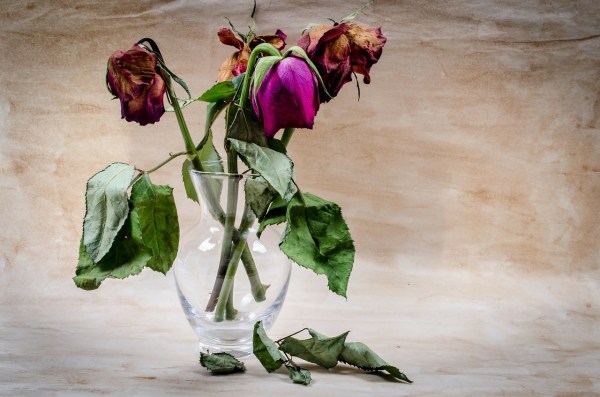


Le_Voyage_dans_la_lune_

Image: Free-Photos via Pixabay


Create a website or blog at WordPress.com

Up ↑