Food For Thought For A Funeral – Jamie Graham

The stragglers walk past the last
of the sandwiches.
Why do so many egg?
My dad bloody hated the things.
His opinion counts for nothing now,
not even at his own wake.

A disheveled sausage roll
lies on a silver platter
all on its own.
Did it fall on the floor?
59 eaten and one discarded,
red-carded for some reason.

And it’s open season
for old folk to talk pish.
Oh, I mean reminisce.
Stories that change
each time they’re told.
The quiche looks withered and cold.

Three quarters wonder if they’ll be next,
one too many after paying respects.
Old bastards he hated
and a woman he dated,
conspicuous like
the stray peanut somehow in with the crisps.

Hollow words from the service ring in my ears,
he worked at this firm for 30 odd years.
The minister had no fucking clue who he was,
that one time he cried,
his tasteless stir-fries.
Half-eaten pork pie, a feast for a fly.

One hour in,
attention diverted.
Laughter echoes around the room,
betraying the hole in my heart.
He’s already forgotten it seems,
talk turning to bagels with too much cream cheese.


Cabinet Of Heed footer logo

JAMIE GRAHAM is a Scottish writer and Seinfeld addict on the wrong side of 40. He’s recently featured in Pop to magazine, 101 words and (b)OINK zine. Find him on Twitter @jgrahamwriter


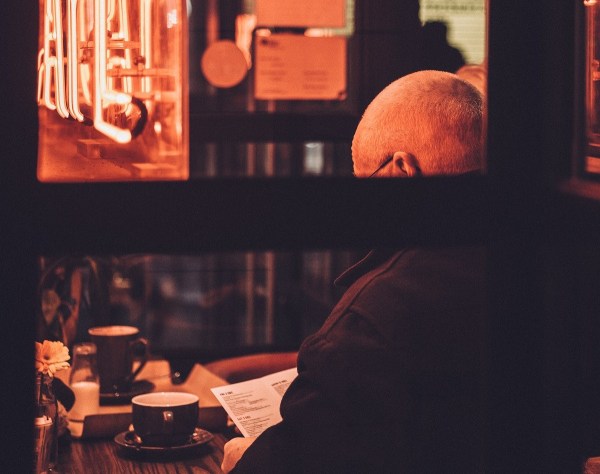
Image: MJ Breiva via Pexels

Just Like You And Me – Jacqueline Grima

Geoff was sitting at the kitchen table when the old man walked in. He put down his toast. ‘You okay?’ Geoff asked.

The man looked at him, nodded, his hair a halo of grey around his head. Slowly, he pulled out a chair and sat down, lifting one knee and linking his hands around it. On his feet, he wore slippers. Brown mules with a faint check, much like the ones Geoff had received from Richard the Christmas before. ‘I’m okay,’ he said.

Geoff chewed, swallowed. ‘No,’ he said. He shook his head. ‘I mean, can I help you? I mean, this is my house. You have the wrong house, I think.’ He glanced at the back door that he had opened to let in the morning air.

The old man looked around. He looked at the clock that sat high on the kitchen wall. He looked at the stove. At the sink. At the slate-grey tiles that covered the floor. ‘Are you sure?’ In the middle of his forehead, thick, grey brows knitted together.

Geoff pushed his plate away. Adjusting his position, he looked around the room, much like the old man had done. Just to be on the safe side. He nodded.

The old man hung his head low.

‘Where do you live?’ Geoff asked.

Putting a thin finger to his chin, the old man seemed to think. ‘Well, you know, I’m not so sure,’ he said. ‘Somewhere, I guess…’

Geoff fished a crumb of toast from between his teeth. He sighed. He’d had a feeling. This morning, when he woke up. Nance had been standing at the dresser, pulling on her underwear and tights and he had watched her for a few seconds, his eyes groggy with sleep.

He’d had a feeling it was going to be one of those days. He stood up. ‘I’ll call someone,’ he said to the old man. ‘Do you want me to call someone?’

The old man looked at Geoff for a moment. Then, pursing his bottom lip, he held out a hand, palm up, as if to say ‘Be my guest’. ‘Sure,’ he said. ‘You can call someone.’

Geoff thought. Walking into the hall, he found the Yellow Pages and flicked through it. He picked up the phone, looking at himself in the mirror that hung above the tall telephone table. He straightened his moustache, noticing a slight dent in the skin above his left eye. He wasn’t sure it had been there the day before. He keyed in the number.

‘Green Tree Nursing Home, Karen speaking. How can I help?’ The woman’s voice was cheerful, upbeat. Geoff thought about Nance, at the pharmacy all day, talking to customers. Talking about their boils and their blood sugars. Talking about their haemorrhoids.

‘I have a man,’ he said. ‘In my kitchen. I think he might be one of yours.’

The woman on the other end of the line was silent for a moment. Then she sighed. ‘They do that,’ she said. ‘They do that a lot. Wander.’

Geoff nodded at the mirror, saying nothing.

‘Do you have a name?’ the woman asked.

My name?’ asked Geoff.

‘His name.’

Geoff could hear the clack of computer keys in the background. He put a hand over the mouthpiece, feeling the warmth of his own breath on his skin as he spoke. ‘Sir?’ he called into the kitchen. ‘Do you have a name? She wants a name.’

Slowly, the old man stood and walked to the doorway between the kitchen and the hall, his arms dangling by his sides like heavy pendulums. To Geoff, everything the old man did seemed to take a very long time. ‘Sure,’ the old man said. ‘Sure, I have a name.’

‘What’s your name?’ Geoff asked.

The man chewed his bottom lip. ‘Frank,’ he said eventually. ‘My name’s Frank.’ Turning, he shuffled back towards the table, the soles of his slippers slapping against his heels.

Geoff turned back to the phone. ‘Frank,’ he said. ‘He says his name is Frank.’

The woman repeated the name slowly, as if she were writing it down or typing it into a computer. Then she said, ‘I’ll send someone. Someone will be there shortly.’

Geoff told her the address and hung up the phone. Looking at it for a moment, he wondered if he should call Nance. If he should tell Nancy there was a man in the house. He wondered what she would say. If she would tell him what to do, how best to handle the situation. He should have closed the door, Nance would have said before anything else. Geoff walked back to the kitchen.

The old man looked at him, his grey eyes wide and watery.

‘They’re coming,’ Geoff said. ‘Someone’s coming for you.’

The man nodded. ‘They do that,’ he said. ‘Usually’

Half an hour later, there was a knock at the door. When Geoff opened it, a short, balding man wearing a navy-blue polo shirt stepped into the hall, his hand lifted in a half-wave. Behind him, in front of the house, a minibus of sorts blocked the view of the street.

‘Frank?’ the man asked.

Geoff shook his head. ‘Frank’s in the kitchen,’ he said. ‘I made him coffee.’

The short, balding man lifted his chin. ‘Coffee,’ he said. ‘He’ll love that.’ He walked through to the kitchen, the pitch of his voice making Geoff wince. ‘Time to go, Frank.’

Standing in the doorway, Geoff watched as Frank slowly pushed himself up from the table, the old man’s breathing laboured as if he were carrying a heavy load. He moved aside to let the two men pass.

Frank looked at Geoff. ‘Thanks for the coffee,’ he said.

Geoff nodded. He stood at the open front door and watched as the two men walked the length of the driveway, the balding man’s hand cupping Frank’s elbow. Closing the door, he walked back into the kitchen.

***

After dinner, Geoff told Nance about the old man.

‘In the house?’ Nance asked. Nance looked tired. Dark smudges circled her eyes and, leaning slightly to one side, she held a hand to her hip.

Geoff nodded. He indicated the back door. ‘Just walked in,’ he said. ‘Just like you and me. Cool as a cucumber.’

‘A cucumber?’

Geoff nodded.

‘And they picked him up?’ Nance’s brow creased.

‘Just as if he were a parcel,’ Geoff said. Sitting at the kitchen table, one leg crossed over the other, he watched his wife as she moved around the room, noting how, every few minutes, her lips peeled back against her teeth. Then she would close her eyes. Just for a second. Watching her, Geoff remembered what she had been like when she was young. She had been thinner then. Always talking about how she would like a fuller figure. A fuller chest and hips. Straighter hair. She had had a little dog that she had carried with her everywhere. Like an accessory. Like a handbag or something.

Nance wiped a teatowel across the plates before putting them away. Clutching cutlery in one hand, she wiped the knives, forks and spoons then dropped them into the drawer where they landed with a clank. This was their routine. Every night since Geoff had retired. Geoff would cook, Nance tidy up.

Geoff lit a cigarette, pulling the ashtray across the table towards him. The ashtray was white, with a picture of the Eiffel Tower inside. It had been a present from their son Richard, who had gone to Paris on the Eurostar with his girlfriend Claire. Claire had liked the Eurostar. She had told Geoff that coming out at the end of the tunnel was like waking up from a dream. Geoff looked at the ashtray for a minute. Then he said, ‘Do you fancy a drink?’ Looking past Nance, he stared at the cupboard where they kept the Christmas whisky. He couldn’t remember the last time he had had a drink.

Nance shook her head. ‘No, I don’t fancy a drink. Do you fancy a drink?’

Geoff nodded, then shook his head. ‘Never mind,’ he said. He pulled slowly on his cigarette.

Nance was wiping around the sink with a sponge. ‘Have you seen my ring?’ she asked.

Geoff raised an eyebrow. ‘Your ring?’

‘Yeah. My ring. My wedding ring. I left it here by the sink last night. After dinner. I forgot to put it back on.’

Geoff frowned. He wondered how Nance could have forgotten. ‘No, I haven’t seen it,’ he said. ‘Where did you leave it?’

‘I told you, right here.’ Nance pointed at the sink, her shoulders stooped. ‘I swear, I left it right here. Now it’s gone.’

Geoff stubbed out his cigarette. Stubbed it right into the tip of the Eiffel Tower. Standing, he walked over to the sink. ‘Are you sure you didn’t knock it down?’ he asked, peering into the drain. ‘When you were washing the dishes?’

Nance scoffed. ‘Well, no, I’m not sure. Not a hundred percent.’ She put both of her hands on her hips, making a triangle with each arm. On her left hand, Geoff could see a white band circling the third finger where her ring should have been. ‘I’ll tell you what I am sure of though.’

‘What?’ Geoff asked. ‘What are you sure of?’ He wondered what it was his wife could be so sure of when he himself didn’t feel sure of anything. Waking up every morning, he couldn’t even be sure what day it was.

‘I’m sure,’ Nance said, ‘that there’s more of a chance your old man took it than of me knocking it down the sink.’

Geoff’s mouth fell open. Moving back to the table, he fell heavily into a chair. He took another cigarette from the packet and put it in his mouth. Then he took it out again and held it between his fingers. Whilst Nance and he had been talking about the ring, he had completely forgotten about the old man.

‘The old man,’ he said.

‘Yeah, sure. The old man,’ Nance agreed. She lifted one shoulder. ‘Who else?’

Geoff looked at the back door. He thought about the old man, wandering in. He thought about him shuffling between the table and the doorway in his slippers whilst Geoff was on the phone. Shuffling back again. He thought about the short, balding guy who had come to pick up Frank, walking the old man down the driveway, guiding him by the elbow. He shrugged. ‘Hell, I don’t know,’ he said.

Nance’s face was turning red. She stood at the sink, one hand resting against the counter, the other pointing a forefinger at Geoff. ‘Well, I sure know,’ Nance said. ‘I know that, tomorrow, you’ll have to go and see this…this…’ she spread her hands, ‘this whatshisname…’

‘Frank’ Geoff said.

‘This Frank,’ Nance said. ‘Go see this Frank and ask him where the hell my ring is.’

Geoff looked at Nance. He looked at the threads of grey that ran through her hair. He looked at the spidery veins that travelled her cheeks. He nodded. ‘Okay,’ he said.

***

The next day, Geoff looked in the Yellow Pages for the nursing home’s address. Finding his car keys, he took off his slippers and put on his shoes, tying the laces into small, neat knots. He went out of the door and, climbing into the car, backed it out of the drive. He drove to the end of the road before turning right, then left, then right again. The nursing home was only ten minutes away, Geoff having passed it many times on his way home from work. After parking and climbing out, Geoff looked up. The day’s weather was grey and drizzly, the sky a blanket of cloud that stretched from one horizon to the other. He walked towards the home, the gravel crunching beneath his feet, rows of dim windows staring at him.

Geoff pressed the entrance buzzer, announced himself. The door slid open. Behind the reception desk, a tall woman smiled, a shock of curly red hair piled up high on her large head. One of her front teeth crossed over the other. Geoff wondered if it was the same girl he had spoken to on the phone the day before. He smiled back. ‘Frank,’ he said. ‘I’m here to see Frank.’ He thought about Nance and how he had gone to visit her when she had had her hip done, taking magazines for her to read. A book. A clean nightdress. Underwear. Perhaps he should have called ahead. Perhaps the nursing home had set visiting times.

The woman nodded, pointing to an open notebook that lay on the desk in front of her. ‘Sign in here, please.’

Geoff signed and the woman gave him a lanyard to wear around his neck, the sharp-cornered, plastic pendant bearing the word ‘Visitor’ in large, black letters.

The woman pointed along the corridor. ‘Frank’s in the day room.’

The day room was decorated in tones of beige and brown, an array of various-sized, leatherette chairs sitting in circles around wooden tables. Walking in, Geoff looked around. A dozen or so elderly men and women were scattered around the room, most of them sitting at the tables, some of them leaning forward, chatting to each other animatedly. Some, gathered around a tea trolley, poked their gnarled fingers into a variety box of biscuits before taking cups of tea poured for them by a careworker in a blue and white striped tabard. To Geoff, it seemed that all of them moved very slowly, almost in slow motion, as if anything sudden might cause them to have an aneurism. An aneurism or, maybe, a fall. One or the other. One or two of them sat slumped in the most comfortable-looking of the chairs, their mouths hanging open as they dozed. Geoff wondered how long they had been there. Imagined a cleaner giving them a once over with a yellow duster before the place shut down for the evening. He looked at a woman in a chair near to the door, her chin shining with a trail of saliva. Geoff heard a soft snore coming from her mouth.

Moving further into the room, he spotted Frank, sitting at a table by himself. In front of him, a chessboard lay open, the pieces having been moved to various positions around the board. Geoff walked over, lifting his hand in a half-wave.

‘Hey, Frank.’ Pulling out a chair, he sat opposite the old man.

Frank frowned. Lifting his head, he looked at Geoff then looked back down at the chessboard.

Geoff leaned forward. To get Frank’s attention, he touched the old man’s hand, the skin dry and leathery. ‘Hey, Frank’ he said. ‘It’s me, Geoff. Remember? You came to my house yesterday. Remember?’

Frank nodded slowly. He didn’t look at Geoff. ‘Yeah, I remember.’ He pointed a finger at the chessboard. ‘You play?’

Geoff shook his head. ‘Nah, I never learned.’ He remembered how Nance had tried to teach him once. Nance was good at chess. She had taught Richard to play when he was just eight or so. Eight or something like that. ‘My wife,’ he said. ‘She plays.’ He wondered how long Frank’s game had been going. Imagined the old man taking an age to make a move. Like, a decade or something. Some other poor soul wandering along to counteract it. Another age.

Frank nodded. He put a finger to his lips, then pointed it at Geoff. ‘I used to live in that house,’ he said.

Geoff blinked. He held a hand to his chest. ‘My house?’ He pictured Frank at the kitchen table in his slippers. Frank at the kitchen table whilst Nance moved around him, tidying away the dishes.

Frank nodded. ‘Yeah. Yeah, your house.’

Geoff thought for a moment. Then he shook his head. ‘Boy,’ he said. ‘That must’ve been some years ago.’ Looking at the ceiling, the long, harsh strip lights causing his eyes to crinkle, he tried to work out how long he and Nance had lived in the house. It must have been some three decades, he thought. More. Since just before Richard was born. They had moved in when Richard was a baby, Geoff clearly remembering the day his son had started to walk, pulling himself up by a table in the hall of the house at only ten or eleven months old like some kind of mountaineer. That’s what he had looked like. Something like that. Nance had taken a photograph. Geoff looked across the table at Frank, seeing the old man’s hand, hovering above the head of a bishop, quivering slightly. He wondered if the entire board was in danger of crashing to the floor.

Frank nodded. ‘Yeah,’ he said. ‘You’re right. A long time.’

Geoff looked up as the tea trolley approached, one wheel rattling loudly as the woman in the blue and white tabard pushed it towards them. Her hair, bunched together in a net beneath a square blue cap, brought to Geoff’s mind an air hostess he remembered from the holiday he and Nance had taken in Turkey three or four years before. Geoff had still been working then. He had been glad of the time off.

‘Tea, Frank?’ The woman’s voice was deep, almost like a man’s. A thin wisp of steam rose from the pot in front of her.

Frank shrugged. He didn’t look up.

The woman poured the tea. She added milk and, putting a biscuit on the saucer, placed the cup in front of Frank, perching it on the edge of the table beside the chessboard. She turned to Geoff. ‘Tea?’

Geoff smiled. Taking a cup and saucer from the woman, he steadied it to stop it rattling. Insipid brown liquid sloshed over the side, creating a dark patch on the plain digestive beneath. Resting it against the edge of the table, he watched the woman move away. He looked at Frank. ‘My wife,’ he said, ‘she lost a ring.’

Frank looked up. ‘A ring?’

Geoff hesitated. He nodded. ‘Her wedding ring. She lost it. Yesterday.’

Frank blinked. ‘Yesterday?’

Geoff thought for a moment. Then he shook his head. ‘Never mind,’ he said. He took a sip of his tea, expecting it to burn his lip. Instead, it was lukewarm and bitter. The biscuit on the saucer looked soggy, as if it would break into a million pieces if he attempted to pick it up. He looked around the room. He looked back at Frank. ‘You lived here long?’ he asked.

Frank shrugged. He pursed his lips. ‘A while,’ he said. ‘A while, I guess.’

Geoff nodded. In the far corner of the room, past Frank’s shoulder, he could see an elderly lady being led away by a nurse, a dark stain filling the chair she had left behind. Geoff looked down at the table. He pushed his cup and saucer away. Patting the top pocket of his jacket, he felt for his cigarettes. As he looked up, he saw Frank pointing to a sign on the wall.

‘No smoking,’ Frank said.

Geoff sighed. Of course, no smoking. Clearing his throat, he half-stood and hitched up the leg of his trousers. He sat down again, wondering what Nance was doing. Right at that moment. What she was doing. From somewhere further down the room the smell of boiled cabbage was beginning to fill the air. Geoff pointed a thumb at the door. ‘I’ll be off then.’

The old man looked at him for a long moment, his nose seeming to twitch like that of a small dog. Grey hairs, sprouting from his nostrils, moved as if of their own accord. Frank blinked. Then he pointed at the chessboard. ‘You play?’ he asked.

Geoff rubbed a hand across his chin. He swallowed and sat back. ‘Nah,’ he said. ‘I never learned.’

***

When Geoff got home, Nance’s car was in the drive. He walked inside, headed for the kitchen. Nance was standing at the sink, scooping painkillers into her mouth and swallowing them with water.

‘Hey,’ Geoff said. He took off his jacket, hung it on the back of a chair, tiny rainspots darkening the shoulders. Taking the pack of cigarettes from the pocket, he threw them onto the table where they collided with the ashtray. He slipped off his shoes, collected his slippers from the hall and put them on.

Nance swilled out her glass and stood it on the drainer upside down. Turning, she held her hand in the air as if she were about to start counting on her fingers, like a child might. ‘Found my ring,’ she said.

Geoff looked at her. Sure enough, on the third finger of his wife’s left hand was Nance’s wedding ring. A chunky, gold band that he had bought for her on their twentieth-fifth wedding anniversary, replacing the original that had become too small. Geoff still remembered that first ring. Still remembered how much it had cost. ‘Great,’ he said. ‘Great. Where’d you find it?’

Nance let out a short laugh. ‘It was in my bag all along,’ she said. She filled the kettle, switched it on. ‘All this time, there it was at the bottom of my bag. I must have forgotten putting it in there.’

Geoff pulled out a chair and sat. Taking a cigarette from the pack, he lit it, pulling the ashtray towards him. Looking down at the Eiffel Tower, he thought about Frank. About Frank playing chess in the nursing home. About Frank’s slippers and how they slapped against his heels. Blowing smoke through his nose, he wondered if Frank was a smoker. Geoff had been smoking for a long time. Since before Richard was born. Since before Nance.

He looked at his wife. ‘I’m glad,’ he said. ‘I’m glad you found it.’

The smoke rose in front of him, blurring Nancy’s face.

 

Cabinet Of Heed footer logo

Jacqueline Grima has recently completed an MA in Creative Writing at Manchester Metropolitan University. Her debut novel will be released in spring 2018 by Manatee Books. Follow her on Twitter @GrimaJgrima

 

Image: Max Pixel

Danzig 1661 – Julia Beach

One was in love and carried a bird’s nest
in the cavity where his heart should’ve been found.
All have eggs growing in their lungs.
Some will hatch into birds that sing
from broken ribs. Some will hatch
into locusts that eat the body into remains.

In the square a thousand others remained
hypnotized by the sky where seven sundogs nested.
Three in white, three washed in the stain of hatched
eggs, and one real with tapering tails found
rushing toward collision like a song
swelling up from Tuburculose lungs.

One was in love and fell mid-lunge
into repose, forever toward, to remain
unrealized. One became a song.
Three built a well-pitched nest
out of One’s ribs. One would find
it romantic. Three sang to the hatchling

halos circling the sun. Hatch,
my sweet, said Another. My lungs
are tired of holding down. If I am found
at the end, let my hands remain
empty, One begged. Atop tower nest
the Faithful strike bells into song

hoping hope will blur the sky, singing
blues into indigo, indigo into violets that hatch
rainbows – both prism and prison – nestled
in the sky. Crack, crack, crack goes the red-eyed lung
as the eggs take the last remaining
breath as the body begins to founder.

One could not say he found
any of this romantic, apart from the singing.
Crack. Crack. Crack. Razor mouthed remainders,
faithful Plague Locusts, perihelion hatchlings
keen from an almighty lung
hallowed and hollowed like a nest.

The faithful find comfort in the nest
that sings, in lungs
that hatch and crack, crack, crack the remains.


Cabinet Of Heed footer logo

Julia Beach Anderson is a graduate of the Iowa Writers’ Workshop. Her poetry has previously been published in Hayden’s Ferry Review, Mount Voices, and Keep Going, and has work forthcoming in I-70 Review. She lives in New England.


Image: Oimheidi via Pixabay

The Rise and Fall of Cinderella’s Left Testicle – Camillus John

I was playing with Cinderella’s Left Testicle, my band, every Friday in the Pigeon Club on Lally at the time. Then, due to the recession, I lost my day job and the government sent me on an intern scheme working for nothing as a skivvy in the basement of a Blackrock mansion. I basically had to do whatever the rich owner of the mansion, Rupert Rope, and his two stupid daughters, Toni Thursday and Rice Pudding, told me to do 24-7. I had no choice, otherwise, the government could arrest and jail me as a lazy scumbag under new austerity legislation.

The stupid sisters refused me permission to play with my band at the Pigeon club. I was devastated. But I continued to write songs in my head for the future, if the club or band survived somehow. Then they wouldn’t let me practice out loud on my guitar in my room. I wasn’t even permitted to as much as polish their grand piano collecting dust in their back room. They physically assaulted me if I so much as looked at it sideways under my breath.

I was coping right up until they instructed me to perform at an X-Factor audition. Prince Charming was judging and they wanted to meet him and perhaps musically cajole him into a Blackrock celebrity threesome that was all the rage in their leafy suburb at the time.

‘Why don’t you perform yourselves?’ I said.

‘Too coarse for the likes of us, darling. We’re management. Your management to be precise.’

‘In music, no one judges me.’

‘You’ll starve without our funding darling. You’ll have to do it. You’ve no choice. Lazy scumbag legislation demands it.’

‘I’d rather starve.’

‘Then starve so, Cinders. There’s a nice cover version we’d like you to do at the trials-’

On the mere mention of the c word my patience went to pieces. I pushed the two stupid sisters out of my way and left them to it. Obviously, the government had me jailed shortly afterwards, but I managed to rob a bounty of food from rich houses in the meantime and life on the run was sweet for a while.

It turned out that Prince Charming was released from his X-Factor judging contract for swearing that week, so he turned up on the Friday in the Pigeon Club looking to see and hear Cinderella’s Left Testicle for himself. He was a fan from the internet.

When he heard I was in jail and to be soon tried under the new lazy scumbag legislation, he rushed to the police station and handed over the requisite brown envelope that released me. We got on well, he loves his music does Prince Charming. We actually got married.

Unfortunately, I wasn’t allowed to play the Pigeon club ever again. They have a rule that bans rich people from playing their independent stage, as they’d have nothing to say. They were right. I’m now bereft. Still, though, life is good. Which is why I recommend robbing to everyone.


Cabinet Of Heed footer logo

Camillus John was bored and braised in Dublin, Ireland. He has had work published in The Stinging Fly, RTE Ten, Headstuff.org, The Lonely Crowd, Thoughtful Dog, Honest Ulsterman, The Cantabrigian, The Bogman’s Cannon, The Queen’s Head, Litro, Fictive Dream, Silver Streams and other such organs of literature. Recently he killed the Prime Minister of Ireland in fiction in the Welsh literary magazine, The Lonely Crowd, with a piece entitled, The Assassination of Enda Kenny (After Hilary Mantel). He would also like to mention that Pat’s won the FAI cup in 2014 for the first time in 53 miserable years of not winning it. Website: Janey Macken Street.


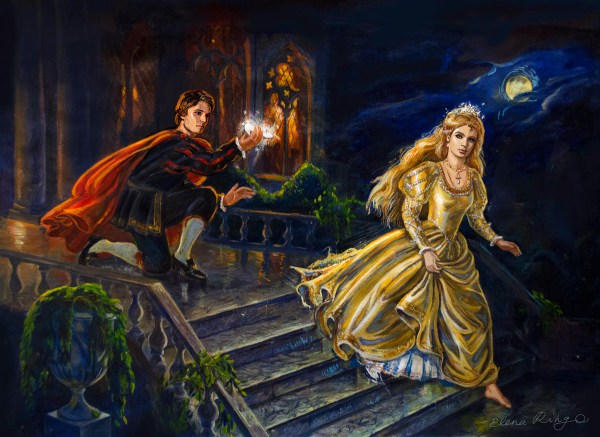
Image: Elena Ringo http://www.elena-ringo.com Elena Ringo http://www.elena-ringo.com [CC BY 3.0 (http://creativecommons.org/licenses/by/3.0)], via Wikimedia Commons

Thank You Roger – Rick White

‘Order in the court.’ called the right honourable Judge Dick McManus who was presiding over the trial.

There had been uproar when the last witness left the stand and this trial was in danger of spiralling out of control. Judge McManus banged his gavel down three times to reiterate the call and gradually the noise was dulled to murmurs and finally, silence.

‘Counsellor Wang you will call your next witness and please make sure that they only answer those questions which are put directly to them. Ladies and gentlemen of the jury you will disregard the final statements made by the previous witness. Counsellor, please proceed.’

‘Certainly your honour. The defence calls Roger Bottomley to the stand.’

Again a flurry of excitement swept round the courtroom like wildfire. The trial all hinged on this one witness, who the defence would now try to cast as being unreliable at best, or a liar at worst. Roger Bottomley made his way on to the stand – unshaven, tired and weary but with a steely determination which could be seen in the hard set of his rugged jawline, piercing blue eyes and luxuriously full head of hair.

Defence Counsellor Wang stood up and straightened his wig before approaching the bench.

‘Mr Bottomley would you say you are an observant man?’

‘In what sense?’

‘In the sense that you remember details of what you see accurately.’

‘I would say so yes, relatively speaking.’

‘Relatively speaking? Yet you claim to have identified my client by catching a fleeting glimpse of him through a window, in the dark.’

‘I know what I saw.’

‘Mr Bottomley, can you please confirm your address for the jury?’

‘124 Burton Lane, Braysdale, West Yorkshire…HD6 7EQ’

‘And you have lived at that address with your wife Selia for the past 27 years up until her most lamentably tragic and enormously undignified death is that correct?’

‘It is.’

For the first time in the trial, the merest hint of a smile passed across Counsellor Wang’s lips.

‘I wonder, Mr Bottomley, if you might tell us then the name of the street which is two along from yours on the left, as you leave your front door?’

The silence seemed to fill the room like an unexploded bomb. Not everyone in the courtroom knew what Defence Counsel Wang was driving at here, but some did. And they knew it could spell disaster for the trial. Roger Bottomley took a moment to compose himself before answering, and when he did he spoke slowly, carefully and in a richly seductive voice with just a hint of intensely masculine gravel. It was a true voice, a voice to be believed.

‘I know, Mr Wang, exactly what it is you are trying to do. I want the ladies and gentlemen of the jury to recognise it for the cheap and lazy tactic which it undoubtedly is so I choose my words very carefully indeed. The second street on the left did not murder my wife Selia, so I would have little reason to remember it. That despicable act was carried out by the defendant here today. It is he who is on trial for the perpetration of this heinous, although deliciously ironic crime.

The sight of my wife being forcibly smothered to death with her own Victoria’s Secret neglige is not something I am likely to forget. One might even ask how it was even possible given the scantness and relative porosity of the material but I want the jury to know that I would recognise that man anywhere as I have thought of little else since. His face is etched in to my mind, and indeed my soul for ever more and I just hope that my poor, poor Selia gets the justice she deserves here today.

And in answer to your question, the second street on the left is Woodcock Lane. Look it up on Google maps you contemptible fucking parasite.’

Absolute pandemonium in the courtroom.

‘Order, order.’ said the judge. ‘I will have order in this court……..’

‘Roger…Roger? Erm…earth to Roger?’

Much laughter from everyone. Roger had drifted off again.

Roger Bottomley was viciously kicked out of his fantastical daydream and awoken by the familiar sounds of laughter, of which he was the subject.

‘Yes?’ said Roger.

‘Oh good you’re with us.’ said Diane. Lovely sexy, horrible Diane. ‘We were just asking for the quarterly figures for all incoming telephone calls successfully answered within 15 seconds.’

‘Oh yes, yes I’ve got those here of course.’

‘Thank you Roger.’ Patronising bitch.

Roger began thumbing through his notebook, nervously messing with his hair and flicking his combover back the wrong way in the process so his remaining hair stood straight up on end and lent him the appearance of an inmate of Bedlam.

‘We could always push this back to after lunch if you like?’ cooed Diane – indefatigably, viciously feminine Diane. ‘Give you more time to prepare?’

Laughter again, such mirth from the inexorable mob.

Roger Bottomley had worked for DH Shipping & Freight Solutions for the past 24 years and during that time had worked his way up on a trajectory marginally above horizontal, to the rank of assistant Director of IT & Telecoms. Roger was not particularly skilled in either of these disciplines. Certainly not like the youth of today who design video games and learn Mandarin before the age of 8. Fortunately though Roger’s job consisted mainly of keeping detailed records of things like telephone lines and broadband connections. Managing the contracts and chasing suppliers for credits when their bills came through incorrectly every month.

For almost a quarter of a century he had blended in to the dull grey background of a dull grey company and now here he was, at the annual conference in Banbury, in this godawful motorway hotel conference suite being called upon for information which had just that second upped and scarpered straight out the back door of his mind and over the fence of his consciousness.

All of a sudden, Roger Bottomley was extremely aware of the black satin g-string he was wearing beneath his trousers, and how at that precise moment, it seemed to have tightened its grip on his balls.

Roger was a sissy. At least that’s what his wife Selia had told him very recently, in their quiet suburban bedroom, as beams of light shone through the magnolia curtains and illuminated tiny specs of dancing, twirling dust particles which congregated like effervescent fireflies and shrouded themselves around a middle aged man, clad head to toe in Agent Provocateur’s Spring/Summer collection. This had been Selia’s idea. Selia who was herself clad in black, thigh high boots and pacing the room carrying a riding crop.

How in the name of all Merry Hell had it come to this? Had been Roger’s thought at the time. He wasn’t really aware of having agreed to any of this. The knickers he didn’t mind. Selia had suggested it playfully one day when Roger was taking laundry out of the machine. He’d cracked his usual joke;

‘Are these yours or mine?’

And Selia had given her standard response, ‘why don’t you try them on to make sure?’

They’d laughed at this as usual, laughter being the by-product that’s left over once real intimacy has given way to stoic tolerance over the years. The sticking plaster used to cover the necrotic wound.

‘I’m serious.’ she’d said the words in a tone which Roger had never heard before. And before he knew what he was really doing he’d stripped completely and was standing there in Selia’s peach coloured silk knickers. He felt a rush of exhilaration, some strange memories were triggered; his older sister Jennifer and her friends messing with him. Putting make-up on him and dressing him up in their clothes, their bras and their tights.

The fabric felt pleasant, that was for sure but it was something else, the feeling of giving yourself over to someone else’s pleasure, someone’s amusement. The idea that, in being humiliated, one can achieve a strange state of transcendence, even arousal. Roger couldn’t have identified this feeling as a young child but now it was unmistakeable – thundering back across all those repressed years like a fucking exocet missile straight to the prostate. How he wished it could’ve missed him.

Selia had walked slowly across the bedroom towards him that day and then grabbed him firmly by the crotch.

‘Now get dressed. But keep them on until I say.’

That first episode had then lead to Selia dominating Roger in every conceivable manner she could think of. The lingerie, the slapping, the riding crop. The…other things.

Men and women go one of two ways once they reach the onset of middle age. They either stride out across the unknown wilderness of the time they have left, constantly searching for new experiences to enrich their latter years. Scouting the highest highs and the lowest depths to make sure they’ve missed nothing on their travels across these earthly plains.

Or they find a comfortable place to curl up and keep out the cold while they wait for death to come and gently take them.

Roger was the latter, deep down he knew it. Selia though, well she was the explorer. The intrepid leader of the expedition. If only it had stopped there.

Roger didn’t mind wearing the pants, in fact he enjoyed it but the other stuff he found himself getting dragged in to, well, let’s just say if you’re going to get in to S&M then whoever is being the M better make sure they actually like it before they agree. Or at the very least not be too damned polite to just go along with it.

He should’ve said something, should’ve spoken up. Put a stop to it before it got this far. Before the only image left in his mind going over and over on an endless loop was nothing but….

Roger? Roger are you sure you’re quite well? Honestly we can take a short break?

Diane again. Roger hadn’t given her a reply to her last question and had alarmed everyone in the room by sitting in silence for at least 30 seconds before snapping his 2B pencil in half.

Roger always used a 2B pencil, he was left handed and using a pencil meant you never smudged ink across your page.

This was probably the most interesting thing anyone could say about Roger. If he died and his colleagues were asked to say a few words at his funeral it would probably go something like…

‘I remember he always used a 2B pencil to write with. He was left handed you see and he always said…’

‘Hold on, Kevin, sorry we’ve already had that one you’ll need to think of something else.’

‘Oh.’

Roger looked at the two halves of pencil in his hand, the splintered wood and the broken core.

‘Yes I might need time to review my notes.’

Uncontrollable sniggering from everyone at the table.

‘OK’ smiled Diane. ‘Well I think that’s lunch anyway. The buffet’s down the other end of the corridor if you’d all like to make your way.’

The grey suits rose from their uncomfortable chairs and filed out the double doors in search of the beige buffet. Roger followed, lagging behind.

As Roger walked slowly around the trestle tables with his paper plate, eyeing the stale sandwiches and sausage rolls and avoiding any form of interaction with his peers he started to think about his father. A man to whom, ‘being a man’ was the very most important thing in the whole world.

‘Be a man. Toughen up. Stick up for yourself.’

Roger had heard little else growing up, although now he realised that what he’d really been hearing was;

‘Punish those closest to you for your insecurities. Make people feel weak so they don’t notice your weakness.’

You see this everywhere in life. It never goes away.

Cuckolding. That had been the final step in Selia’s journey. She’d somehow made out that it would be good for them, that in some way it would bring them closer together. Maybe Roger was glad. Maybe this was the final act in him shutting down, relinquishing control completely and giving himself over to the gaping void. His father would’ve called it the final erosion of his masculinity.

The idea that watching another man have sex with your wife would enrich your marriage might have made sense to people whom Roger would consider more interesting than himself. He wondered if he would even care. Turns out he did.

Roger nibbled a dry ham sandwich and relived the memory. His wife of 27 years groaning and wailing in passion as a much younger man, a Frenchman if you can believe that, with a fetish for the older woman dished her out the sort of treatment which Roger had never even contemplated would’ve been acceptable, let alone pleasurable.

Roger had gone in to the en-suite bathroom after that episode, turned off the light and silently wept. Seated on the toilet in a corset and panties.

Back in Hell’s own buffet Roger’s nostalgic self-evisceration was curtailed as he saw Diane leaving the room and heading back down the corridor towards the conference room. He decided to follow her.

Roger hated Diane, or he thought he did. He thought she was cocksure and condescending but in fact, the thought occurred to him now, she’d only ever been nice to him. Maybe it was just the image she projected. She was confident, assured, comfortable with the world and her place in it. That was what he despised her for.

It was jealousy, nothing more.

As he stalked her down the corridor he found himself wondering what the look on her face was like when she gave herself over to pleasure. Did she look up pleadingly at some sweaty, grunting brute of a man? Was she willing to degrade herself in ways which would have appalled her younger self but that she’d been introduced to by a string of rakish lovers? Did she cry out shrilly or moan softly as the pleasure took hold of her? Did she dig her nails in to skin and flesh? Did she quiver and convulse as her breathing quickened and became shallow?

Roger’s own pace quickened and suddenly he was at the door of the conference room, looking in. Diane was leaning over the table, arranging some papers and tapping some keys on a laptop. Her black knee length skirt, split up the side was beginning to ride up ever so slightly over her stocking-clad backside.

Roger strode up confidently behind her and, without breaking stride, delivered a swift hard smack to her right buttock. The sound was intensely satisfying, the wobble even more so.

Diane whirled around and stared bewildered in to Roger’s eyes.

‘Say thank you.’ said Roger in a voice he’d never heard before.

‘Thank you.’ Diane whispered, her eyes glassy as she stared in to Roger’s without blinking.

‘Say thank you Roger.’

‘Thank you Roger.’ and with that Diane turned around and slowly bent over the table, her breasts resting on an A4 notepad, her hands clasping the table’s edge.

Roger positioned himself behind her and went to work. He slapped each cheek in turn. Slowly and deliberately, being sure to catch it at just the right angle for the loudest smack. Diane gasped with every strike of his hand and bit her lip to keep from crying out but she still remembered her instructions.

Smack

‘Thank you Roger.’

Smack

‘Thank you Roger.’

Roger had exited the known Universe and was floating on an ethereal cloud of sheer ecstasy. Strange images flooded his mind as his open palms made their delicious impact on flesh.

His school changing rooms, the fetid stink.

Smack

Climbing in to his sister’s single bed, the feel of her bedsocks on his own bare legs.

Smack

‘Thank you Roger’

A golden retriever puppy tied to a post in the freezing rain.

Smack

A polyester wedding suit.

Smack

‘Thank you Roger’

The children home from University.

Smack

A belt.

Smack

A muscular black man with shiny white teeth.

Smack

A cold bathroom floor.

Smack

A chest freezer in a damp cellar.

Smack

Selia’s bulging eyes, her throat filling with blood.

Smack

‘Thank you Roger’

‘Thank you Roger’

‘Thank you Roger’


Cabinet Of Heed footer logo

Rick White is a fiction writer from Manchester, UK. Rick’s journalistic work has appeared in Vice Magazine and his short fiction has been published in Honest Ulsterman, Storgy and The Writing Disorder. Rick holds a Bachelor’s degree in English Studies from Sheffield Hallam University. website – www.badtripe.com twitter – @ricketywhite


Image: Arek Socha

Cover of Darkness – Jayne Martin

Anna quietly slipped out while he was still sleeping. He’d seemed a nice enough guy. Sam? Steve? Saul? She knew it started with an “S.” A pink glow spilled over the edge of the Atlantic. Brisk salt air filled her lungs and she savored the taste of the new morning.

The brick steps chilled her spine as she sat to pull on her boots. She pushed the crisp bills down deep to her ankles where the money would be safe. She wasn’t the only one who walked these streets at this hour.

At home, her babies would still be snuggled deep in slumber and smelling of cotton candy dreams. They would sigh at the touch of her lips and the warm curvature of her body as she slid beneath the covers, encircling their bodies with her own on the pull-out bed they all shared.

Anna’s mother would rise first, set the kettle to boil. She would find the stack of bills Anna had left on the kitchen counter, and though no one could see into their fifth floor walk-up window, she would pull down the shade.


Cabinet Of Heed footer logo

Jayne Martin is a 2017 Pushcart nominee, 2016 winner of Vestal Review’s VERA award, and a 2018 Best Small Fictions nominee. Her work has appeared in Literary Orphans, Spelk, Five-2-One, Midwestern Gothic, MoonPark Review, Blink-Ink, Cleaver, Connotation Press and Hippocampus among others. She lives in California where she drinks copious amounts of fine wine and rides horses, though not at the same time. Find her on Twitter @Jayne_Martin


Image: Albrecht Fietz via Pexels

She Was a Princess – Laura Pearson

The policeman clears his throat and shifts his feet. Waiting to be invited in.

‘She’s upstairs in her bedroom,’ I say. Confident. Barely a shake to my voice.

She isn’t, of course. But when I lift the pillow to my face, it smells like her. Apples and pine trees and angst. And I could swear there’s still a trace of warmth there, even though the window’s flung wide, the February air rushing in. And the policeman is there in the doorway, not sure where to look.

‘I’m sorry,’ he says.

‘It’s just not possible,’ I tell him, and he shakes his head. He’s used to this, from mothers.

Finally, I follow him outside, and there she is. Sprawled. It looks staged, almost comical. From nowhere, a jet of vomit pours out of me, into the gutter. The policeman catches me before I fall.

When she was two, she would lie like that on the floor, her limbs flung wide. It was a game she liked to play. She was a princess. I had to kiss her to wake her up.

Now, I approach her and no-one stops me. Not when I crouch down, not when I lay beside her on the freezing tarmac, not when I kiss her cheek.

And although the bigger part of me understands that she won’t jump up, the smaller part waits.

Any minute now. Any minute now.


Cabinet Of Heed footer logo

Laura Pearson lives in Leicestershire where she blogs at www.breastcancerandbaby.com, writes novels and flash fiction, and runs around after two small humans.


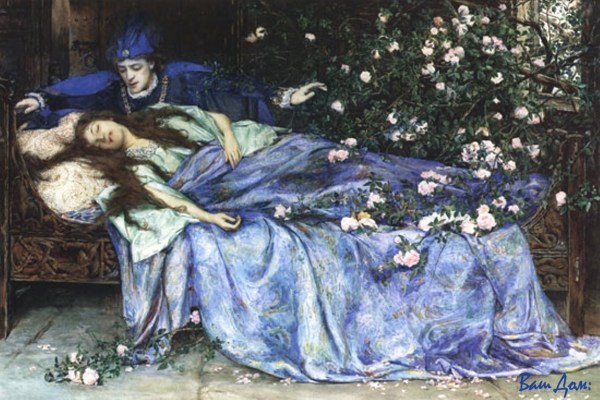
Image: Henry Meynell Rheam [Public domain], via Wikimedia Commons

but he didn’t – linda m crate

did you feel like a man
when you were shattering me,
splintering me with your nightmares?
you were the devil putting me through hell,
and i didn’t know where i could run to
to save myself;
my mother was always working and she took
your side most of the time
as if i could do no right and you could do no wrong—

only in nature and books could i find solace
the soft needled pines
remain my favorite hiding
place
all these years later when i visit home
because you made me an outsider in my own family
convincing me that i was a burden to my own mother
i have never asked for help
even when i needed it because i don’t trust that anyone
can save me from my turmoil,

and you’re the reason
i don’t always believe people when they say
they love me;
because your love was a lie
full of scorn and anger you cut a girl that was full of love
even for you, even as you kicked her
simply because father knows best
but he didn’t.


Cabinet Of Heed footer logo


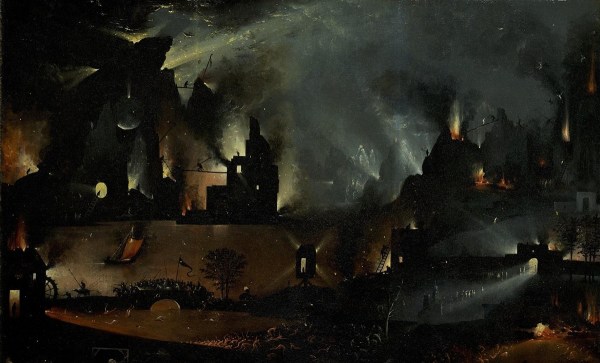
Image: Detail of The Garden of Earthly Delights by Hieronymus Bosch [Public domain], via Wikimedia Commons

The Truth About Red – Hannah Persaud

Once upon a time there was a girl called Red. She lived in a cottage in the forest, on a bend where the water slowed lazily against the riverbank. The villagers adored her and her grandmother doted on her. The birds in the trees above her home circled in anticipation of her waking each morning, ‘Red, Red, the forest awaits’ they’d call in harmony. Where Red walked the sun carved a path, and the trees bent their branches to buffer the wind. The birds packed their nests tightly against one another to protect her from the rain. In Red’s short life there was only one thing that threatened to blight her otherwise perfect world.

Her mother, Christabelle.

Christabelle hated her. This was not the sort of hate that could be swept aside with a sweet offering, nor the type that abates with time. This hate planted itself firmly deep inside of Christabelle’s body the moment that her too eager egg embraced the sperm. A hate that unfurled itself as the egg became a beating heartbeat. Christabelle knew that having a child would change the world as she knew it, and she did not want it changed. By the time that Red was the size of a plum, Christabelle could not bear to incubate her any longer and embarked on a course of abortifacient herbs, which failed to elicit any reaction other than a minor rash across her leaking breasts. She fasted and gorged, massaged her stomach with a hot brick and operated upon herself with home made forceps, but nothing succeeded in excavating the child from her womb. By the time that Red was the size of a grapefruit, Christabelle had been forced to accept the fate that had clamped upon her body like a menstrual cramp.

Red was born in a month when the forest swarmed with locusts. Larvae cloaked the ground and the rain had turned everything to rot. Christabelle was nine months swollen and pacing outside her cottage, when her leaking cervix opened up like a watery cave, forcing the foetus out from its hiding place.

Sinking to the ground she slumped against the wood hut, and there she pushed and heaved Red’s wretched body from her loins. She slithered out like a butcher’s steak.

Christabelle’s only thought was to get away as fast as possible, and cutting the cord with her carving knife she left Red there beside the tree. She stumbled back into her cottage and her bed, and fell into a deep and dreamless sleep.

In the morning Christabelle awoke to the steely morning light and gave a start to find Red beside her upon her pillow, scrubbed and squawking as if it were her right. The huntsman had found her beneath the tree on his way back from hunting.

At first the huntsman thought her dead, but as he brushed away the ladybirds feasting on the white film that crusted her skin like waxy cheese, he saw her chest rise.

‘You rancid old trout,’ he said to the mother of his child when her eyes found his, ‘What kind of mother are you to abandon our child to the woods?’ This was not the reunion that Christabelle had been waiting for, free as she was of the tiresome bump that had so long gotten between them.

‘I thought she were stillborn,’ she whispered, feigning relief, ‘Thank you my huntsman for saving her.’

From that day on Red became a parasite, leaching her mother of everything she had, including her beloved huntsman. As Red suckled at the breast, Christabelle’s body flinched against the jolting pain of her cracked nipples. Red would wail and latch on harder, grinding her hard baby gums against her mother’s torn areola.

The huntsman’s hours were now given to teaching Red the ways of the forest, as only a father could. Christabelle watched them from the door of the cottage through the changing seasons, her heart growing colder. He no longer shared her bed, choosing instead to sleep in the corner of the room with Red curled into his arms like a question mark. Year by year she watched Red’s body stretch and grow. In watching her she felt her own youth fading.

Then one day she hatched a plan, for everybody around knew of the big bad wolf and his penchant for plump little girls. Her own mother would need to be sacrificed, but about this she had no qualms. Her mother had never loved her anyway, had never understood her.

Week by week she taught Red not to fear the wolf, telling her that his reputation was only village talk.

‘Underneath his crusty fur his heart is made of gold,’ she whispered to Red, ‘Do not judge others because they are different.’ And Red listened and learned.

As Red grew more independent, the forest became her playground. It was easy to persuade Red to visit her grandmother who lived on the other side. As her grandmother became increasingly weak, Red visited her more, taking wine and cake each time.

‘Poor grandmother,’ she would cry after her visits, ‘It seems that the more I go the worse she gets.’

‘Hush child, what grandmother would not draw strength from a granddaughter like you?’ Christabelle would say, as she slipped more poison into the wine.

Finally the day came. When Red went off with the cake and wine, her mother knew that the wolf would find her, knew too that Red would not be afraid. All went perfectly to plan to start off with. Shortly after Red departed, having said her last goodbye, the huntsman welcomed the feast of bread and wine that Christabelle had prepared, and did not question her amorous mood. After they had exhausted themselves her mother turned her thoughts briefly to Red, and what a gullible and foolish child she had become.

In time, she left the cottage for a moment to relieve herself. Whilst she was gone the huntsman, sticking his nose where none belonged, discovered the truth of her plans in her diary. He flew out of the cottage in a frenzied rage and caring not about the piss that still streamed from her body, hit her so hard that she fell against the steaming sodden earth.

When she awoke some hours later, her body crawled with the creeping insects of the night. Turning her face towards the sound of footsteps and forcing open her itching pus filled eyes, she laid them upon the daughter she thought she would never see again.

‘Your ma is dead,’ the huntsman shouted at her, ‘Just as you intended, a mulch of flesh and bone is all that remains.’ She tried to disguise the tremor of pleasure that ran through her body at this news.

‘Poor grandmother,’ Red sobbed, ‘You are a wicked mother.’

‘And the wolf?’ Christabelle asked.

‘The wolf fled as I approached, I am taking Red with me for safekeeping’ the huntsman cried. With that he turned, and cradling Red in his arms, disappeared into the forest. Christabelle could feel the love between them scoring tracks into her heart.

Months passed and Christabelle’s days grew long and lonely as her body dried up like clay. The forest was a small place and it seemed that at every twisting trunk and leaf strewn clearing she stumbled across the huntsman and Red.

‘Mother!’ her daughter would cry in terror. The desire to reunite with her huntsman was so strong that Christabelle’s body ached.

‘Murderer,’ the huntsman would shout, and Christabelle would run back into the cover of the trees.

With time the woods closed quietly around Christabelle’s cottage, and wild grasses wove their way between the stones. Trees fell gently against the rooftop and it was not long before the tiny cottage seemed as if it was never there in the first place. Christabelle forced herself to rise from her chilly bed each morning and pushed her way through the brambles that had grown over the door. She set a seat beneath the Oak tree by the path, hidden from view. From here she could see the huntsman and Red on their way to fetch water. One morning, she noticed a dark shape hovering against the bracken. It was just behind the pair on the path, but each time they paused for Red to pick a flower, it slipped out of sight. As Christabelle watched Red’s light feet dancing through the milky dawn, she saw too the heavy silent paws of the wolf following, just behind.

The love that the huntsman had for Red was of a depth that Christabelle could not fathom. But if she could save Red’s life, perhaps the huntsman might be willing to share his love with her. Just a little. A little would be enough. And so she waited for the day that the wolf edged closer.

The day came quickly. Red skipped along. The wolf was so close behind them that his whiskers brushed the cloak that Red was wearing. When Christabelle jumped out, all three startled at the same time. The huntsman leaped in front of Red to protect her.

‘You?’ the huntsman exclaimed, but his next words were lost as he turned and saw the wolf rearing up behind him, salivating. He dragged his daughter to the edge of the path. Christabelle found herself placed firmly at the feet of the wolf. She recognised the error of her plan too late. Before she was able to have one last thought the wolf bent down and snapped her head between its great jaws.

The wolf chewed slowly, crunching bone the only sound in the now silent forest. The wolf devoured the rest of Christabelle as if he had not eaten such a feast in a long time. The huntsman and Red were transfixed by the sight. As the wolf set upon eating Christabelle’s final foot, he let out a strangled cry. With her big toe lodged sideways in his throat, his eyes bulged and his cheeks billowed outwards. And then he fell forward onto the ground and exhaled his last meaty breath.

The huntsman and Red went joyously home and nothing ever bothered them again.

The End


Cabinet Of Heed footer logo

Hannah Persaud
Writer. Represented by Laura Macdougall of United Agents. Winner Fresher Writing Prize 2017.  Runner Up InkTears 2016/2017.
Image: 27707 via Pixabay

In Hiding – Gaynor Jones

Jessica stumbled around the corner, nails scraping the floor as she forced herself up. Sweat streamed down her back, though she wore only an airy white vest and a pair of tight blue jeans.

She raced to the hotel kitchen, where long abandoned trolleys laden with ancient trays offered her some refuge. She cringed as the metal clinked and clanged. She crouched down, able to see out but still fairly well hidden, or so she thought. Her heart pounded and her bladder ached and then – the heavy metal doors creaked open.

‘Oh, Jesus. I’m sorry I just can’t do this anymore.’

Jessica stood and strode out. She dusted down her backside then folded her arms.

The figure in the clown mask stood still, head tilted.

‘I just can’t do it. I bloody hate hiding, it terrifies me. Honestly, I’d rather you just get it over and done with.’

The clown looked left, then right, up, and around, as if checking for hidden cameras.

‘I never could stand it. Hide and seek? What sort of sick game is that for kids to be playing? No wonder I had separation anxiety for years.’

The clown scratched his neck with one hand, drooped his bloody axe in the other.

‘I’m sorry. I appreciate the effort you’ve gone to, you know. With the mask and the weapon and all that. Good job, really, good job.’

The clown mumbled.

‘What’s that?’

The clown peeled up his mask slightly, revealing a stubbly chin.

He spoke.

‘I said, but the chase is the best part.’

‘Better than the killing?’

‘Well. I mean, I like killing. Obviously, why bother otherwise? But I like the running and catching. Now you’ve stopped, there’s no fun. Not much point.’

‘Ah, man. I’m sorry. Really I am.’

They stood in the dim room, at an impasse.

It was the clown who broke the silence.

‘Could you not just hide for a little bit?’

‘No, I’m sorry, I’m done here. You’ll have to kill me where I am, or let me go.’

The clown pondered.

‘Well, but – you’ve seen my face now.’

‘Just a chin. Can’t tell how old you are or anything.’

‘Really? You’ve no idea at all? I mean, on the one hand that’s great, but also, I’ve got to tell you, I’m a little offended.’

‘I can see some stubble, looks like black hair maybe?’

The clown shook his head.

‘Sometimes, I don’t know why I bother.’

‘So…’ Jessica toed the floor. ‘You going to let me go then? I really can’t hide anymore, I’m sorry, I just can’t.’

The clown shrugged and rolled his mask back down.

‘Thanks, man. You’re cool, well, for a … you know.’

The clown nodded.

Jessica headed for the door, but turned back and looked her would-be assailant up and down one last time.

‘Just a thought, if you like playing games, and running around, have you thought about being a children’s entertainer instead? I mean, you have got the costume, after all.’


Cabinet Of Heed footer logo


Image: annca via Pixabay

The Bizarre Case of Klara – Dan Nielsen

“May I have a glass of water, Sigmund?” Klara was prone on the analytical couch, twenty silent minutes into her hour.

“Thirst symbolizes sexual desire.” Freud laid his palm on his knee and tapped the index finger as quickly as he could for a period of ten seconds. He repeated this test five times, carefully noting the number of taps.

“Never mind.” Klara swung her legs to the floor. “I’ll get it myself.”

Freud’s facial prosthesis glass was the only glass in the bathroom. Klara rinsed it and rinsed it again. Freud would consider this to be a symptom of obsessive neurosis, but to Klara it was minimal basic hygiene.

A disturbing image appeared in the mirror above the sink. The glass spontaneously flew from Klara’s hand and smashed onto the linoleum.

“Shattered glass symbolizes a broken heart.” Freud touched his nose with his thumb.

“Sigmund, will you please get that lock fixed!” Klara caught the doctor’s eye in the mirror. “And stop barging in on me!” Klara leaned over and drank directly from the tap. Thirst, unlike appetite, is not easily lost due to disturbing circumstances.

“A broken lock symbolizes insecurity.” Sometimes Freud forgot that he was making this stuff up as he went along.

“Do you have a broom?” Klara placed her hands on her hips. Freud interpreted this as a blatant act of aggression. He made a note. “Never mind,” Klara said, and crouched down to pick up the pieces. A shard pierced her fingertip. It bled. Freud made another note, this one about menarche, and smiled at his own insightfulness. The thirty operative procedures for intraoral cancer and the cumbersome prosthesis worn to replace his resected jaw and palate did not make this a pretty sight.

Klara opened the medicine cabinet looking for a Band-Aid. Instead she found a vial of white powder, unscrewed the cap, and did a line off the toilet lid.

“Um, that wasn’t cocaine, Klara. That was pure methamphetamine. Go back to the examining room immediately. I may need to tie you down.” The speed kicked in. Klara cartwheeled down the hall, through the door, and landed on the couch. Freud used leather straps to bind her in place.

Sometimes Freud wished he’d become a dentist rather than inventing psychiatry, or at least regularly flossed.


Cabinet Of Heed footer logo

Dan Nielsen is a fulltime open-mic standup comic. His flash manuscript Flavored Water was a semi-finalist in the Rose Metal Press 2017 SHORT SHORT CHAPBOOK CONTEST. Recent FLASH in: Cheap Pop, The Collapsar, Ellipsis Zine, Brilliant Flash Fiction, and OCCULUM. Dan has a website: Preponderous, you can follow him @DanNielsenFIVES. He and Georgia Bellas are the post-minimalist art/folk band Sugar Whiskey.


Image: Baudolino via Pixabay


The Last Supper – William Masters

The Da Vinci Café, a San Francisco landmark, stood at the corner of Broadway and Stockton Streets for thirty-nine years. Its door-sized front windows overlooked both Chinatown and North Beach. Opened originally to supply fake documentation (passports, drivers licenses, credit cards, etc.) for the local mafia, the café nearly failed as a legit business during its first year under non-professional management and competition from nearby, less expensive restaurants.

Anxiously hosting an impromptu party in the rear banquet room for a neighborhood crime boss celebrating his recent murder acquittal (due to the absence of the prosecution’s star witness now resting in peace at the bottom of the Bay), the café’s owner, Guido Contini, forgot to lock the front doors. A hungry Saturday night crowd, emerging from the midnight matinee movie at the Times Theater on Stockton Street, noticed the lights still on and found the doors unlocked. Seating themselves, the hungry post-movie crowd looked around impatiently for the absent staff just as a pair of surprised banquet waiters, on their way home, emerged from the rear to a roomful of unexpected diners, and immediately alerted Mr. Contini.

Suppressing his anxiety with a shot of Grappa, Guido greeted the diners with a “Ciao a tutti!” He opened ten bottles of cheap domestic Italian wine (the equivalent of the French vin ordinaire), enough for each table, and served it (paga la ditta), with baskets of leftover bread sticks. Guido convinced the two departing banquet-staff waiters to remain. He tapped the shoulder of a visiting sous chef, still seated as a guest in the banquet room at 2:35 a.m., and put him in command of the kitchen.

“Now is your chance, Roberto,” he told the surprised nineteen-year-old. The teenager, aware that opportunity was not a lengthy visitor, eyeballed the dining room counting the number of patrons, then took inventory of the food in the kitchen: boxes of frozen mussels, ravioli and meatballs, packages of dried pasta, cans of tomatoes, tomato paste, dry salamis hanging by strings from the meat rack, refrigerated pizza dough, and mounds, packages and shakers of mozzarella, romano, gorgonzola, asiago, fontina and parmigiana cheese.

Within forty minutes, Roberto Antony Mastracola had transformed himself into the genie of the kitchen. Deftly using his pair of sous chef hands, he produced platters of saucy mussels, bowls of steaming pasta, pizzas with layers of defrosted vegetables, and salads all served family style to the hungry diners by the two remaining banquet waiters.

Thus, the café gained a reputation as the late-night spot to dine for anyone emerging from midnight matinees at the Times movie theater, for the post-theater, ballet and symphony aficionados, for hungry couples with large appetites earned by dancing at South of Market clubs, but most of all, the destination for post-coital meals. The buzz around town was “Fuck your date late, then eat a plate… at The Da Vinci Café.”

During the Café’s Halcyon days, Robin Williams made surprise appearances to try-out new stand-up routines; Beverly Sills, after performing in Donizetti’s “The Daughter of the Regiment” at the San Francisco Opera House, dropped in to eat a plate of spaghetti paid for by singing “I Hate Men” from Kiss Me Kate. Cast members from the original touring companies of Les Miz and Wicked, or the later revivals of Phantom, La Cage, The Pajama Game and Damn Yankees, showboated their musical talents with the piano accompaniment of a young Michael Feinstein, prior to his celebrity status and who subsequently returned to play and sing from the Ira Gershwin and Irving Berlin songbooks. Fat-bellied politicians and ousted dictators dropped in for tiramisu or a plate of cannoli and a double espresso. The Prince of Nabu ordered panna cotta, served with a raspberry coulis.

The food never won a James Beard award, earned a Michelin Star, or even rose to the level of cuisine. The most exotic item on the menu, an escargot pizza, earned its popularity because patrons accepted the current mythology that it worked as an aphrodisiac. Although the food never rose above the level of grub, it remained plentiful and cheap. Handsome, bow-tied bartenders created a vibrant bar scene in which they poured generous drinks and offered sage advice as if they’d descended from the Oracle of Delphi, boosting the café’s popularity as high as the fabled beanstalk. Business soared.

The dining room reached and maintained a high level of bonhomie while the rear banquet rooms produced the atmosphere of a high-end universe for everything corrupt, but delectable. For a time, The Da Vinci Café became the place for the cognoscenti to see and be seen.

Inevitably, times changed. The clientele aged. The newer generation’s taste for the healthy, organic food movement combined with the burgeoning work-out culture, replaced the taste and habits of the late-night comfort foodies. Eager young lovers skipped the late night stop and spent their disposable income on supplies of sushi and light wine to maintain their stamina during extended periods of tantric sex performed in candle-lit, perfumed bedrooms.

The Times Movie Theater closed. Former patrons, now older, domesticated, and anchored to the bourgeoisie responsibilities of marriage, skipped a stop at the café and returned home to meet the time restraints of their babysitters.

Bernstein’s late-night deli opened within two blocks of the legitimate theaters on Geary Street. The Cable Car Diner on Pine Street stayed open until 4:00 a.m. for the Civic Center crowd. The Blue Light Café on Union Street attracted the hip Marina crowd from midnight to 3: a.m.

Other restaurants, discovered this niche group of diners, partnered with extended late-night delivery services allowing night owls watching the Late Late show at home to order and pay for pizza or Chinese take-out from their desktops or smartphones until 3:30 a.m.

While crime in the City rose to unchartered heights, business at The Da Vinci Café plummeted. Younger, hipper, better dressed and coiffed criminals, who could speak intelligently about fiddlehead ferns and nettle pesto, met in corporate boardrooms, sat around tables of hotel ballrooms talking to people on their cell phones instead of those seated next to them. They met in new South Beach penthouses and ate catered meals from The San Francisco Chronicle’s annual list of 100 top restaurants.

The continued decline in the Café’s clientele served as an unmistakable signal. With the end in sight, Guido Contini sold the restaurant to Lorenzo Lauria, a fedora-clad young hotshot, and grandson to a former a mafia boss. With a little help from Lorenzo’s City Hall connections, he successfully maneuvered past objections from neighborhood groups and legal challenges by environmental lobbies and sailed through obligatory public hearings. He bribed City inspectors for a special permit allowing the restaurant to become a four-story parking garage, with two floors below street level to ensure that the two floors of parking above street level would not exceed the height limit for the neighborhood.

After the successful sale of The Da Vinci Café, Guido sent invitations (with a special “Last Supper” menu and price list) to the best of his extant clientele for a final meal at the café.

By 10:45 p.m., on the night of the Last Supper, all invited guests had left the café except a pair of older gentlemen dressed in the best of their finery, held together with suspenders, collar pins and ties. Guido advised his staff to allow these men to remain as long as they pleased. The gentlemen’s ages stretched far from their original attachments to a placenta to their current qualification for residency in a cemetery.

From the table at which they had been dining, the two men rose and walked past the pair of open French doors to a table on the patio. For the last time, they wished to enjoy the Indian summer’s lingering warmth and light from the full moon before the San Francisco fog rolled in signaling the staff to switch on the heat lamps.

“Much improved,” said the first old man.

“Yes, indeed,” replied the second old man, smiling to reveal a set of unnaturally white teeth. The whiteness of his Cheshire cat smile matched his still abundant, snow-white hair that reflected a glint of white light from the shimmer on the surface of the water from a birdbath centered in the middle of the patio. The men sat, surrounded by empty, marble-topped tables that glowed in the moonlight with the eerie white patina of a headstone.

Their mercenary server, hoping for an expensive dessert order, sent the busboy with a cart containing fresh place settings, two dessert menus, and a pair of candles. The busboy arrived with a tray of clean cups and saucers, a thermos of fresh coffee and two candles. After lighting the candles, he offered fresh coffee.

“No thank you,” the men replied in unison.

The busboy retreated from the patio, almost immediately replaced by the original server.

“Our dessert special tonight prepared tableside is flambéed pineapple with mascarpone filled crepes, macadamia nut streusel and rum raisin ice cream.”

“I don’t think so,” said the first old man, “God forbid I should be responsible for cruelty to pineapples.”

“No thank you,” said the second old man. “Why do chefs ruin so many desserts with the addition of raisins?”

“It’s not the chef’s fault, sir,” began the server. “Responsibility belongs to ambitious cooks and earnest housewives trying to win recipe contests,” he remarked contemptuously, then regained his professional demeanor. “Something from the regular dessert menu, gentlemen?”

“No thank you,” said the first old man. Ask the sommelier to come here, please.”

Bowing deeply, the disappointed server excused himself. Almost immediately the sommelier appeared.

“What can I do for you, gentlemen?”

“We’d like to order a Bordeaux.”

“Of course, gentleman. Do you have you a preference?”

“Do you have a 1982 Lafite Rothschild?”

“We have two bottles, sir.”

“We’ll need only one.”

“A bottle is $3,295, sir.” The sommelier looked hesitant. “I will need to run a credit card please, before I open the bottle.”

“Don’t be embarrassed. We understand,” said the second old man, “it’s commerce before tact.”

“But wait!” said the first old man, “What about the 1981 drought in French Burgundy? Did it adversely affect the 1982 grape harvest?”

“You mean taste? Apparently not,” his friend responded. “Certified tastings by both oenologists and sommeliers published in The Wine Spectator attested to the superior quality of the vintage.”

“Wine Spectator? That style magazine!”

“Well, Decanter magazine also confirmed the same.”

“I suppose we can rely on Decanter. Is the 1982 vintage still within the ICC Drinking Window?”

“Just within, but since so many bottles have been consumed and highly rated, I’ m confident we can look forward to….”

“Alright, then. Make it so.”

As soon as the sommelier left, Guido Contini silently entered and appeared at the table. Guido had first noticed these men, over thirty years ago, when as ripely middle-aged patrons, they had first appeared at his café, each as a solitary diner. On one evening, with the first man already seated, the second man arrived, as usual, alone. With no vacant tables, Guido’s hosting instincts moved into gear and he led the second man to the first man’s table.

“I hope you don’t mind, sir, but I often see you both in my café, always dining alone. There is no empty table for this gentleman. Will you graciously allow me to seat him at your table where the drinks will be on me tonight?”

And thus the two solos met. Their first impressions of each other registered as the casual, superficial observations strangers make during an initial meeting. Both men still retained full heads of hair, looked well cared for and fit enough to wear tailored suits. They had fresh manicures and wore wedding bands. After drinking the first bottle of wine, the men discovered how much more they shared in common. Both practiced law, had served in the Navy, lived through several wars, political assassinations, stock market crashes, and the terms of several presidents. After the second bottle, the men realized they both bore the scars from the behaviors of ungrateful children and survived the pecuniary effects of divorce and remarriage only because (to their vast amusement), both had insisted on prenuptial agreements. This last item sealed a lasting bond between them. Soon they began arriving together two or three times a month, as part of the late night crowd. Gradually, they became confidants. As confidants, they recommended barbers and tailors to each other, and sotto voce, revealed the contents of certain top secret documents from sealed court cases, offered stock tips, shared newly discovered tax loopholes discovered by their accountants, shoveled the dirt on certain judges, disclosed the names of their connections at City Hall, and finally, shared the prognosis negative each had received from his internist.

For a break on busy nights, Guido frequently sat with the men for a drink. Occasionally he ate a meal with them. None of these men ever met outside of the café. Eventually they developed the same ease of relationship and level of comfort often found in successful marriages and top business partnerships. Tonight, Guido nursed a set of melancholy feelings knowing this would be the last time they would enjoy each other’s company.

“I’ve come to say good-bye,” he said. “I don’t agree with your plan, but I promise to follow your wishes.”

The men stood up from their chairs. Guido embraced them both, kissing each man on the cheek. “Arrivederci,” he said, and with a shrug of his shoulders, left the patio.

The sommelier returned with a pair of wine glasses and the bottle of burgundy. He opened it in the presence of both men. Before he could pour…

“Thank you sommelier. Please stop. I want to pour. And please close the doors as you leave.”

The first old man poured half a finger of wine into his glass. He lifted the glass to his nose and inhaled. Smiling, he took a sip, held the wine in his mouth for a couple of seconds, and then swallowed.

“Lovely, he said.” Then he filled both wine glasses. The second old man took a small plastic bottle from his jacket pocket. He removed the lid and shook out four pills onto the tablecloth. Then, with a pair of carefully manicured fingers, he deftly pushed the pills to the other side of the table.

“After they dissolve and we drink, we’ll have five minutes to enjoy the wine before its effects render us unconscious. Then, almost immediately and painlessly, our respiration stops and shortly after that, we are gone.”

The first man dropped two pills into each glass. He pushed one of the glasses across the table in front of this friend.

“This will certainly be an improvement to living in a hospice for three or four weeks, increasingly medicated, semi-conscious, tubed and catharized.”

“Yes, how can we complain after 86 years of life?”

Lifting their wine glasses, the old men made their last toast, “Fina alla morte.”


Cabinet Of Heed footer logo

The Last Supper is from William Masters’s unpublished collection, Portraiture: A San Francisco Story Cycle.


Image: Clem Onojeghuo on Unsplash

Bad Hair Day – Michael Rumney

When Jayne went to bed, the fridge had started to defrost itself. She would have to get a new one. The TV was already on the blink and with holes in at least three pairs of her shoes, money was tight. Things were no better in the morning.

No matter how many times she tried, Jayne could not lift her head off the pillow. It felt as heavy as an articulated truck. Moving her head from side to side wasn’t easy but at least it proved she wasn’t super glued to the bed.

Many futile attempts and a couple of hours later Jayne phoned her friend, she could at least reach her mobile on the bedside cabinet.

‘Louise love, my head’s, well I can’t lift it. You’ll need a key to get in.’

Louise also tried to get Jayne’s head off the pillow without success. Catching her breath Louise remarked, ‘have you coloured your hair?’

‘No.’

‘It looks different.’

‘Am I paralysed?’

‘I’m calling Doctor Bengami.’

‘He’s expensive.’

‘He’s the best. We need to sort you out.’

Doctor Bengami’s receptionist was quick to point out that he charged two hundred an hour including travelling time and right now he was in the air flying in from a conference in Porto. ‘Doesn’t matter,’ said Louise ‘my friend can afford it.’

Jayne tried to shake her head.

‘Don’t worry your little cotton socks Jayne. You’ll be fine.’

At just after four in the afternoon Doctor Bengami knocked on the door.

‘Quick let him in; he’s already cost me a grand,’ said Jayne

Doctor Bengami examined Jayne thoroughly prodding and probing all over her body, quickly coming to a diagnosis. ‘You’ve rainbows in your hair.’

Louise smiled, ‘I thought as much.’

Jayne looked concerned, ‘Is there anything you can do?’

‘I can remove them, but I wouldn’t recommend it. You’ve wonderful red hair. I’d have to shave it all off and there’s a complication. Each of the rainbows has a pot of gold at either end. There are about a hundred or so.’

Louise was already on her iPhone googling gold prices.

‘I reckon the pots are made of gold and all. Each pot must be at least ten ounces and at fifty dollars an ounce, you’re mega rich.’

Doctor Bengami nodded his agreement. ‘Not only that but I’ve come across this before. I can remove the pots of gold but in a couple of weeks or maybe a month they will grow back again, if the rainbows remain.

Louise was rubbing her hands, ‘see your money problems are over.’

The next day The Empty Glass Chapter of leprechauns turned up demanding the return of their rainbows and gold. They had seen what had happened on Facebook. Jayne had no choice but to agree, Leprechauns, especially gun wielding ones can be violent and very persuasive. For her trouble, they paid Doctor Bengami’s fee, got Jayne a new TV, a reconditioned fridge and a new pair of trainers.


Cabinet Of Heed footer logo

Michael Rumney has had short stories and poems published in The Pennine Ink Magazine, His play Inference was performed at the Kings Arms Salford in July 2014
In April 2016 his play Bricks was selected for the Page to Stage festival in Liverpool.
He has had several rehearsed readings of his plays in the Manchester area.


Image: Alexandra Gorn on Unsplash

Another Place – CR Smith

Where are you heading
You five score men?
United in separation,
Divided across sand
Cast out into silence,
Salt licked,
Weather beaten,
Backs to the land.

Where are you heading
You men of iron?
Cast in man’s image,
The modern day icon,
Measuring life’s passage,
Instructing his course,
Rusting to dust
Before a western horizon.

Where are you heading
You barnacled men?
Nature’s reclamation
Transforming our shrines,
Touching our moods,
Contented, downhearted,
Naked thoughts travelling
Through turbulent times.


Cabinet Of Heed footer logo

C.R. Smith is a Fine Art student whose work has been published in such places as 101 Words, Ink in Thirds, Train Flash Fiction, Ellipsis Zine, Zero Flash, Spelk Fiction, The Horror Tree, Glove Lit Zine and Ad Hoc Fiction.
crsmith2016.wordpress.com Twitter @carolrosalind


Image: Carl Johnson via Pixabay

Horns in the Hatworks – Matty Bannond

“Were they really mad, or was it just murky?”

Mercury, Jenny,” Mum said, lifting her shoulders and dipping her voluminous blond crown towards me for emphasis. “It’s very dangerous stuff. And there’s a planet called Mercury, too.”

“OK… but were they really mad or not?”

Mum stepped closer to a sign hung on the wall, scanning columns of text above a drawing of the Mad Hatter’s tea party. “They were drunk, like people in the pub,” she said. “At first. But the longer they spent near the mercury, the worse it got, until they went mad. Then they died.”

“People died to make greasy hats?”

“No. The mercury made sure the hats weren’t greasy.”

I squinted my eyes and shifted my feet. She hadn’t understood the question. Fur pelts hung from hooks, pretty white tails like dandelion seeds. “How many rabbits did they kill?”

“They weren’t pet rabbits.”

“OK… but how many did they kill?”

“It doesn’t say. I’m sure it wasn’t very many.” Mum scratched her left forearm with the long fingernails of her right hand, and looked at her watch. Green light from an EXIT sign caught tiny diamantes that spelled the manufacturer’s name. She exhaled sharply and pursed her lips. “It was a long time ago. There’s no point worrying about it now.”

I ran my fingers across the glass on the display cases. Pith helmets and headdresses were balanced on mannequin heads alongside berets, bearskins and sombreros. Mum explained them to me: Some protected from the sun, some protected from bullets. There were hats that signalled allegiance to a football team and extravagant pieces for ladies to wear at horse races. It had been Mum’s idea, this visit. It gave me pleasure to make it painful for her.

“So why do I need to learn about these hats now, if nobody wears them anymore?”

“Because they’re lovely hats, Jenny, and the other girls in your class don’t know anything about them,” she said. “You can tell everybody about it on Monday morning after Mrs Blake does the register. They’re not nearly as grown up as you are, the other children. They don’t go to museums and learn about all these nice hats.”

I shrugged. I was six years old, deeply weary of Mum’s attempts to protect me from my own nature. I noticed the way her shoulders contracted when other parents welcomed me to birthday parties. “Uh-oh, here she is – watch out!”

We entered an area that was set up like the kitchen in a hat worker’s house. “Isn’t it incredible, Jenny?” Mum knelt down and placed her cheek against mine, gently steering my gaze from right to left and back again. “Stockport a hundred years ago. Can you imagine it? The olden days… very special.” She straightened up, looking around the room and puffing out her cheeks in a show of wonder. I fixed her with a soft stare, and she shuffled further into the museum.

I decided to hide from her.

I ran as fast as I could, tears streaming into the corners of my grinning mouth. Bright overhead lighting bounced off the display cases and wall mirrors, it was like running through a rainbow. I skipped down a flight of stairs and rounded two corners before skidding to a stop. A rubber face was bent over a workbench, a dusty mallet poised above strips of fur.

Echoing voices swept over the floor tiles like a cold draft. I ducked under the bench and slid through the mannequins’ legs, burying myself in a pile of fur that leant against a barrel. Mum stamped past heavily, the first letter of my name sharp and acidic as she stage-whispered it left and right, jerking her taut neck. Her heels scuffed the floor as she flounced away, moving into the next section of the museum.

I stared through the rabbit pelts and watched red, autumnal sunlight cling to motes of dust that hovered between my hiding place and the long windows opposite. I thought about the previous weekend, when Mum had taken me to the Catalyst Museum in Widnes, promising sausage rolls and animal-shaped biscuits. We’d stood in front of a rotating wheel that reminded me of something I’d seen on Saturday morning TV. Calcium. Carbon. Aluminium.

“Is it only the names that are different?” I had asked.

“No, Jenny. They’re made of completely different things.”

“What, exactly?

“Well, very small things. Molecules and atoms, Jenny. The smallest things in the world.”

“OK… but what are those made of?”

Mum was chewing a complimentary pen with The Museum of Science and Industry written along the side. She drew on it like a cigarette, clasped it between two fingers and pulled it away from her lips. “They’re made of the same stuff as everything else. It’s only the amounts that are different, and the way they’re joined together.”

I rubbed my eyes and turned my toes inwards. She hadn’t understood the question. “So my nose is made of the same stuff as a window sill and a baby penguin?”

“Yes,” Mum said. “And you don’t have to ask questions about everything, Jenny. I’ve spent money on this. Try to learn something.”

I looked out through a gap in the fur. A deep voice was shouting my name – several deep voices. The man from the front desk, tall and portly, lumbered into view. He cupped his hands around his mouth each time he called, before placing them back into his pockets, and then repeating the movement. His tone was conciliatory and light.

Two women and four or five men, dressed all in black, followed him. I could make out sheepish expressions on their faces as they called my name in shrill voices that rang through the exhibit. “Oh, Jeeeeeennyyyyyyy? Heeeeere Jennijennijennijenni!”

When their voices faded, I wrestled my way out from under the rabbit pelts and crept back in the direction I had come from. I had the idea of escaping to the bus stop up the road, surprising Mum when she’d given up looking and resigned herself to heading home without me. I tiptoed down another flight of stairs and through the gift shop, until I saw the entrance to the museum café. A banner hung between two heavy black pillars: Horns in the Hat Works. Instruments glinted in the corner of the room.

I recognised the drum kit, and crawled past a bass guitar in its stand, almost knocking it over. The back of the kit was fantastic: The bass pedal with its metal link chain, the wires below the snare, brushes and mallets in a pouch hanging from the floor tom. I wasn’t supposed to see this. I had stolen these insights. It was glorious.

Lines of light raced around the cymbals: I was desperate to strike them with a drumstick, but knew Mum would hear it and I would get caught. Instead, I patted my palm against the high-hat, and it clicked and shimmered mischievously. A shadow darkened the red bricks around the entrance to the café. I shut my eyes and squirmed.

“Well, well, well…” a man’s voice, hushed. “Your mum’s had us searching everywhere for you, Jenny. Is everything alright? Don’t be scared, you’re not in any trouble. Are you ok?”

I peeked through the drum kit. A tall man with white, slicked-back hair was smiling broadly, yellowed teeth tucked under grey lips. His back was a little stooped and his soft arms hung by his sides. His shoes, socks, trousers, belt and shirt were jet black.

“My name’s Albie, I play music in a band. I see you’ve found our instruments. They’re lovely aren’t they? Which one’s your favourite? The drums?”

I smiled, face downturned. Albie chuckled breathily, jerking his shoulders and causing his limp arms to dance. He walked towards me, reached down, and picked up a silver tenor saxophone, clipping it onto a strap around his neck.

“Have you seen one of these? It’s called a saxophone.”

I shook my head. Albie moved the mouthpiece towards his face and quickly licked the reed. Then, standing upright, he blew into the sax. A thick, slightly undulating tone began to build, very quiet but broad and palpable. The air in the room seemed to change completely. The wires beneath the snare began to wiggle against my shoulder.

Albie drew the saxophone away from his mouth and smiled at me. I grinned, euphoric.

“I wonder if you know this tune,” he said. “Listen carefully, Jenny. Are you ready?”

I nodded. That presence poured from the saxophone again. I knew the song but it was transformed, rendered in technicolour, travelling in all directions at once.

“And?”

I whispered: “Is it Postman Pat?”

Albie nodded and played it again, a little faster but still very quiet. I felt silly and proud.

“It’s an easy thing to do, playing a musical instrument,” he said, lifting a chair away from one of the tables and sitting down. He unhooked his saxophone, and stood it on the ground with its neck against his knee. “For this one here, the saxophone, I just have to blow in here,” he pointed to the mouthpiece. “The air travels along the instrument and comes out here,” he said, pointing to the bell. I raised my hand, and he nodded at me.

“What happens if you do it the other way around?” I asked.

Albie’s eyebrows lifted. “You mean if you blow into the other end?”

“Yeh. Does it make the noise so tiny that nobody can hear it? Really small like a molecule or an atom?”

“D’you know, I’ve never tried it. Maybe it would, Jenny. Maybe even smaller than that.”

A wave of shock ran up my back and made the top of my head tingle. “Mum says they’re the smallest things in the world. There’s nothing else smaller than those. That’s where it stops.”

He shrugged. “Like I said, Jenny: I’ve never tried it. I wouldn’t know.” Albie reached down and slowly turned the saxophone until the bell faced towards me. “Give it a try. Then we’ll both know the answer.”

I chewed my bottom lip for a moment, and then climbed carefully past the bass guitar and padded over to the saxophone. Then I hesitated and looked up at him.

“OK… but if the noise at the end is tiny, then the noise at the start will need to be really loud.”

Albie considered for a moment, before raising his eyebrows and pouting his lips. “That makes sense,” he said.

I took another two or three steps forward and crouched next to the instrument. Then, I pushed my chin and nose into the bell of the saxophone, breathed so deep I thought my stomach would explode, and roared.

When I leant back, Albie was weeping with laughter. I started to giggle. We shook and howled, wiping our eyes and gasping for breath.

Mum’s voice: “Jennifer. Where the hell have you been?” She strode towards me, yanking me to my feet and hauling me past a display of heavy machinery and out into the street. Dad brought me to bed that night.

“Is it fun, Jenny? Going to all these museums?”

My jaw quivered.

“There must have been something you enjoyed. Come on, tell me about one thing. What was the best thing you saw?”

I pictured the instruments, positioned exactly as they had been when I first saw them from the café entrance. In my mind they had swollen, pregnant with their overpowering capacity to communicate. I stepped towards each instrument in turn and reached out my hand, swiping clean through them like air or water. Made of the same things as a window sill and a baby penguin. Made of the same things as me. Their voices within me, somewhere. Melodies silent, waiting.

I looked at Dad’s soft smile. “Why would anyone die just to make a hat less greasy?” I asked. “Why didn’t they make saxophones instead?”


Cabinet Of Heed footer logo

Matty Bannond was born and grew up close to Manchester, UK. He is thirty-two years old and currently lives in Germany. Alongside writing fiction and comment, he looks after his baby daughter and plays the tenor saxophone in a six-piece jazz and funk band.


Image: 3342 via Pixabay

Flush the Toilets and Turn Out the Lights – Niles Reddick

I told my wife and kids to make sure and flush the toilets when they finish. I realize it would save water if we give it one flush a day, but it would smell and breed germs, and no one sitting would want something splashing up on a leg or behind. My wife said her daddy claimed they were so poor, they flushed once per day to save on well water. I found that disgusting even though it might save. Weigh the smell, filth, and disease against a few extra dollars, and I’d bet most would flush.

I also told them to make sure they turn out the lights when they leave a room and try to avoid turning them on unless it’s dark and they need to see. I’m not Trump with money to throw away and don’t have anyone paying my electric bill. Yet, I came home last night, and everyone was gone to spend money on things they want and don’t need, and toilets weren’t flushed and lights were on.

They weren’t home when I went to bed, and when I got up the next morning, I went through the house flushing toilets and turning off lights. After I gulped coffee, took a shower, and got dressed, I left for the office and was at my computer when I saw a custodian go into the restroom to clean. When I heard him leave, I saw the door open, lights on, and when I go to check the toilet, I saw all the pink chemical mixture and bubbles, like someone threw up Pepto-Bismol, and I flushed, turned out the lights, and convinced myself that we could put all those electric savings toward homelessness and hunger and put all those flushes toward community health, if only everyone were more like me.


Cabinet Of Heed footer logo

Niles Reddick is author of the novel Drifting too far from the Shore, a collection Road Kill Art and Other Oddities, and a novella Lead Me Home. His work has been featured six anthologies and in over a hundred literary magazines all over the world including Flash: The International Short-Short Story Magazine, Drunk Monkeys, Spelk, Cheap Pop, The Arkansas Review: a Journal of Delta Studies, The Dead Mule School of Southern Literature, The Miscreant, Slice of Life, Faircloth Review, among many others. His website is www.nilesreddick.com


Image: Marco Verch via Flickr

In Exile – Shannon Savvas

There comes a morning when the air has changed.
Your face tips, snake-like to the dawn, tasting, testing, inhaling.
The season has turned once more. The still familiar mantra –
Autumn, Winter, Spring and Summer, now delights.

There comes a morning when you wake to the sound of hunters’ guns.
The swallows have left, and the empty skies speak.
Cloud castles, mythic and voluptuous return to the island.
They threaten but never promise rain.
Mushrooms, scabrous tumours, orange, fecund and fertile,
ooze from the earth, cowering from the searching seasoned hand.

There comes a morning when you tighten your dressing gown and search for socks.
You retreat inside to drink your coffee. The Archbishop prays for rain.
Gilded dawns and roseate dusks dazzle. Nights draw in.
You hope this year it will be cold enough to buy bundled firewood.
Christmas scents the air and the faithful fast.
Rain rolls in and fills the dams. Snow settles on Troodos.

There comes a morning when you pad outside in bare feet
to drink your coffee in the soft air. Floral confetti speckles the grass,
fields glow gold and green. Scarlet poppies and windflowers stain the verges.
For lunch you pick lapsanès, fluorescent yellow wild mustard,
or agrèlia, slender spears of bitter asparagus,
to fry in olive oil and eggs, drizzled with lemon.

There comes a morning when the swallows return from Africa.
Joyous parabolas of flight as you watch and smile with delight.
Year after year, they rebuild their dun-coloured nest above your door,
raising fledglings high above the gaze of the neighbourhood cats.
Sun scorches the earth, baking the air thick, resinous and hot.
The sea summons you. A siren to salve and soothe the heat.

There comes a morning when the template
of time comes full circle. You smile.
Once more you tip your face snake-like to the dawn.
The days grow short. Persephone departs.


Cabinet Of Heed footer logo


Image: Vincent van Zalinge on Unsplash

Alvin’s Dancehall – looking back – James Woolf

This too has been one of the more romantic places in town. Handily placed near the car park, the architect took advantage of the high street corner location to incorporate a boastful curve into its frontage. Built as an ice rink in the ‘30s, it morphed seamlessly into Alvin’s Dancehall on the day Chubby Checker released The Twist, and over the years the people flocked to its new incarnation. How they’ve visited this quintessence of dance, this pit-stop in the race for romance, this mass-manufacturer of memories!

And when they are here, be it for Saturday Night Partners or Weekday Singles – laughing as they hand over their £1 entrance fees, wolfing down their chicken and chips in the basket, jiving to Jerry and the Pacemakers, copping of with a fella or a girl when they get lucky – they inhabit the place, as if the business of being here is the only business that’s ever mattered.

There’s a huge wrecking ball swinging on a chain. Suspended from a crane, it’s slamming into the curvature of the building.

In their twenties or their eighties, they steam through the front door and head for the cloakrooms. And with tables on three sides of the dance floor you can always see what’s happening. No one even complains about the lads on apprentice wages who wait for the floor to fill before mining the tables for free drinks. After all, the booze isn’t expensive and the bar’s a friendly place.

Trevor and Tania; Si and gangly Debbie; Judith and Danny the postman; Jacqui and Alan (who later ran off with an Italian waiter); Dominick and Monica, yes, her with the dyed black hair – just a few of the couples who met at Alvin’s.

The ball slams into the building again and a piece of jagged masonry detaches itself.

And look at the joint now! They’re all “doing the locomotion” – clockwork dancers wound up and strutting their stuff. Except for Ian the gas fitter, over on that table; in his fifties now, a regular at Alvin’s for four decades and the driving force in the fight to keep the place open. Maybe he’s thinking of the time he asked an older lass to dance, and was swiftly joined on the floor by his dad who not only took the girl by the hands but ended up marrying her! Or maybe his mind’s on the local golf club, also battling closure (but their members pushed the right buttons and have achieved a stay of execution). Now back with the beers is Ian’s younger brother Sam; Sam who used to win prizes for his Paso Doble at Sunday Night Ballroom; Sam the ultimate lady’s man; Sam who will collapse and die from a pulmonary embolism in two months time. For now, the unmarried brothers are happy drinking their pints, trading a stream of stripped back memories; for what are memories if not careful acts of compression?

And on this special but sad night, Ian looks up to see Valerie Dolan – can that really be her? – Valerie who he stepped out with for a while in the ’90s, Valerie who never took him seriously and then dumped him before heading off to God knows where to study Lord knows what? Ian imagines his memories being contained in boxes that periodically get moved to lower shelves. Some memories can fall to the floor in transition, only to trip you up when you’re least expecting it.

A piece of jagged masonry detaches itself. Freakishly, and as if in slow motion, it takes flight.

Which is exactly what happens now to Valerie, and she stops in her tracks. She was on her way to chat to Enid, they’d said they might see each other tonight. But she immediately recognises Ian. She remembers having great times with him but became so tired of waiting for a marriage proposal that she called it quits and got a job in Derby.

They smile and she mentions that she just saw Alan and Marco, the waiter. Yes, at this last hurrah for Alvin’s, everyone has turned out. But what a shame about the Council having finally called time. And did she hear what the spokesperson said, “an amenity that’s gone beyond its economic life cycle?” It would have been wrong, apparently, to pour good money into repairs and roof restoration with so many other worthy local causes struggling. Then Valerie brings him up to date with her life: divorced from an uncommunicative loser; now back in Mansfield with her teenage daughters.

We can see that in between them coming to Alvin’s Dancehall, there is movement, they have been getting on with the task of living, which is just as well Ian says, what with this place being in its death throes. He’s worried, he tells Valerie, not for the people their age, but for the older folk who still come to the ballroom night who wouldn’t go out otherwise. If Alvin’s is lost to them they’ll be alone, isolated. Isn’t that what we’re trying to avoid? he asks, realising that he’s becoming too heavy too fast – and Valerie does indeed smile vaguely before heading off to find Enid.

Freakishly, and as if in slow motion, the large shard takes flight, projecting itself towards the pavement. Towards the small crowd.

You wouldn’t want to gloss over the darker side of Alvin’s though. Like in the ‘70s when there were genuine problems, some heavy punch ups, and one night a lad got stabbed in the chest outside the cloakrooms, though if you ask five different people who were there that night you’ll get five different versions of what happened.

Because memories, as you’ll appreciate, have been known to bend, like corrugated steel.

One thing you’ll notice tonight is that the place has taken a serious tumble downhill. Peeling flock wallpaper, parquet flooring that looks in places like an unfinished jigsaw puzzle; you could call it chronic underinvestment or a health and safety nightmare.

Like a malevolent insect floating towards a group of children.

For the final hour or so, Ian and Sam return to the floor for a bit of a boogie, and bump into Dominick but not Monica, and then Valerie again, and Ian asks her for a dance for old time’s sake and, before leaving, she gives him her number. The final song is the Beach Boys’ Do you Wanna Dance? – appropriate, but strangely anti-climactic. And afterwards the announcer thanks everyone for supporting Alvin’s over the years, and requests that they please make sure they have a safe journey home. Then they’re spilling out onto the pavement just like they used to, but this time they can’t quite believe it’s all over.

He must be feeling sorry for himself. It’s a week after Sam’s funeral and he’s back on the high street having heard that the work to demolish it has begun.

Not once since the closure did they even advertise it as a business, Ian says, to no one in particular. They always wanted to bulldoze it, for sure, despite all that bullshit about understanding how deeply attached the Mansfield residents feel to the place.

There’s a huge wrecking ball swinging on a chain. Suspended from a crane it’s slamming into the curvature of the building. More pear or old style bathtub, it is nevertheless an act of wanton vandalism. Each time it bashes the frontage, it feels like a physical blow to Ian’s chest. The noise alone is unbearable.

You never called, a female voice says. It’s Valerie, perhaps here for the same reason.

Ian tells her that he didn’t know she wanted him to call.

You’re a soppy date, she says. Why else would she have given him her number?

She inclines her head towards an article in the local paper lying on the pavement, right there in front of him, curious that he hadn’t seen it before.

GOLFERS WIN FIGHT FOR SURVIVAL.

The golf club has finally been saved. It’s actively recruiting members once again.

So we discover that memories have become political currency. Depending on who you are, and how much money you have in the bank, your memories are likely to be worth a whole lot more than those of the next person.

The ball slams into the building again and a piece of jagged masonry detaches itself. Freakishly, and as if in slow motion, it takes flight projecting itself towards the pavement. Towards the small crowd of interested spectators, like a malevolent insect floating towards a group of children.

A warning shout goes up from the pavement. Ian bends to pick up the newspaper.

And the large masonry shard swoops down, misses him fractionally and engaging the foot of a lamppost, leaves it leaning to a sharp angle – traumatised.

Minutes later, when they’re feeling more composed, and having sardonically acknowledged that they too have been saved by the Council, Ian and Valerie walk down the road together. And the sound of the wrecking ball finally recedes into the distance.


Cabinet Of Heed footer logo

James Woolf writes prose scripts and adverts. He has been published twice in Ambit magazine, both in 2017, and shortlisted for the Bridport short story prize, the Exeter short story prize and highly commended in the London short story prize. Various other stories have been published or short listed. Website: woolf.biz


Image: By Ministry of Information Photo Division Photographer [Public domain], via Wikimedia Commons

Hoosegow and Canoodle – CB Auder

After a few more years, Dibbs lowered his pickaxe and spat. “Baby, I’m sorry. I just can’t take another day of bustin’ up these frikkin’ rocks.”

“Watch ya language,” griped Oakes. “You wanna work schist all week?”

She might have saved her breath. Warden Hardihar heard every complaint at the quarry, equipped as he was with a Super-Sonar X-Ray Ear-Button Boom.

“Stone is dependable, Mr. Silverspoon.” The warden sauntered over. “Many an otter finds a nice rock and cherishes it for life.” He let his good eye drift towards Oakes’ caboose. “How could you not love this job to pieces?”

“Because I’m sweaty and smelly and itching to be free,” said Dibbs, flashing Oakes a look of What’s this guy, blind? “Come on, Hardihar. Gimme kitchen duty. At least I won’t be peeling.”

The warden craned towards the blazing sun so as not to plow nose-first into Oakes’ glistening breasts. “And you?” he asked her sidewise.

Oakes squinted at Hardihar’s scabby skull. She watched him drip like a hot-boxed birthday cake.

She’d loved candles as a child. Dipping her fingers into the liquid possibility. Its searing thrill. Peeling off print after print and melting them down again. The strange comfort of each new sting…. When had her options gone to shit?

“I got no beef with potatoes,” she said after a time.

“Sometimes otters juggle them,” said Hardihar. “On their tummies. Rocks, I mean. This whole country needs more of that kind of initiative…. All right, kitchen it is!” He poked Dibbs awake. “This is no time for napping in the sun. Do you know how much a man costs to keep?”

***

K.P. was no quarry breeze but it was safer on the melanoma front. And wouldn’t you know it, but the warden couldn’t get enough of Dibbs’ chow. “This is so tasty,” slurped Hardihar, “I wish I could have s-e-x with it.”

“Coming up!” proclaimed Dibbs, dumping the gazpacho into Hardihar’s lap. Thanks to the kitchen’s crap ventilation, Dibbs was usually dehydrated by noon.

A miscalculated stunt, he realized, as Hardihar’s expression developed like that of a time-lapse fetus. If I get booted back to pickaxe, thought Dibbs, who’ll watch over Oakes?

Dibbs lucked out. He’d lucked out a lot being tall and blond, but this time it was because The Sexy Tomatoes’ hit song started throbbing over the PA system.

You’re hot as a thief, boy.
And a keeper seeks relief
in the old-fashioned secrets
of my wet shirt and pantsssss.

***

On Dibbs’ penultimate day, the warden gave him a parting gift. “The best bottom-line ladle off the rack! Bought it with my wife’s own money.” Hardihar hiccuped sadly. “I just can’t believe you’re abandoning me. Nobody values loyalty these days.” He gnawed at Dibbs’ final batch of foccacia.

Dibbs patted the warden’s back until they both burped. “Warden, if you and the governor play your cards right you’ll always have Oakes.”

From the kitchen, Oakes glared. She’d gotten double time for Aiding & Abetting Without a Penis and was now sharpening a large wooden spoon.

“Right.” Dibbs adjusted his collar. “Uh, you should probably know I only ever prepped and served. All of these recipes were actually hers.”

The warden sagged against the inconceivable news. That night he binged on Otters Gone Wild but it failed to lift his spirits. Twenty years to life, he thought, and you still never really know a person. The couch in his mother’s rumpus room felt like sleeping on a bag of rocks.


Cabinet Of Heed footer logo

C.B. Auder’s writing and art have recently appeared in Cotton Xenomorph, OCCULUM, Moonchild, Unbroken, and Red Queen Literary Magazine. Find Aud on Twitter @cb_auder.


Image: Samer Daboul from Pexels

Your Own Appendage – Lizbeth Herbert

You have surgery on your foot and your foot changes. When you wake up, you’re heavily medicated, so you don’t notice the difference. By day three, though, the foot has become bitingly honest, saying things like, “I’ve never seen so much dead skin in my life. Now’s not the time to pull back on the hygiene.” Then, to make matters worse, your foot makes a bold decision and declares its gender male, even though you’re not necessarily sure what that foot is. You could have been consulted, at least. By the time you’re able to walk around on crutches, it drags behind, not out of pain, just because it’s fun to create the kind of social awkwardness that occurs when you’re late to your friend’s show.

Your foot, your foot. Is it even your foot anymore? Is ‘he’? Perhaps this surgery was just the thing to make this foot its own foot. The bunionectomies and neuroma removal are enough to let your foot out of the closet to be who he is. A dick.

This was once a pretty good foot. It wasn’t demanding and, while painful toward the end, it was wide, with a bunion on each side. The extra width sometimes came in handy. In a yoga class, you could stand in tree pose forever.

Now, this foot fucks with you. It goes to sleep when you are not asleep, when you cannot sleep, creating resentment. When you wake it, the toes tingle and numb up. Other times it just twitches. All this you can take but it — he! — also gets under your skin, tells you you’re too old to enter the job market in any kind of meaningful way ever again. He did the research and gives you the data. “You are fifty-four,” he says, and laughs at you.

“So are you,” you say with a little too much venom. Oh, your foot knows he’s getting the best of you.

“I look younger, though,” he says, “because I’ve been sheathed in socks for the better part of each year.”

When you write, your foot says, “Write about me,” but then doesn’t like anything you have to say. He tells you the story he thinks you should be writing, one filled with an unrealistic amount of footwork and picking locks with strong toenails. There’s a gratuitously violent eye gouging with a pinkie toe.

And then, freakishly, he makes a pass at you. He tells you something about how each of his toes looks shorter than they actually are.

“What?” you say, letting this sink in.

“Each toe gets longer if it were to be —”

“I know the length!” you say.

“Well, you’re up too high to judge,” he says, and then adds in a cheesy, sexy voice, “get closer.”

The two of you have to go to therapy after that. You can’t unhear something like that, not from your own appendage.

On the way to therapy, your foot tries to take control of the car and gets you into a fender bender. You don’t exchange numbers with the other driver, just apologize and look truly sorry. The driver seems satisfied with that until she hears your foot yelling up at you: Who cares? Who cares? She looks at you like, Real mature. You knew you should have worn closed-toed shoes.

At the therapist’s office, the foot is on his best behavior so, of course, the therapist bonds with him and also slightly flirts with him. Such warm feelings pass between the two of them, even though you are the one who is most attached to them both. You’re attached through years of therapy bills paid to the one and literally attached to your foot. Your foot, whom you’ve known since infancy, is a traitor.

Once the doctor is certain that the foot is on it’s way to healing nicely, you announce on all social media channels — to the seven people paying any attention to you on Twitter and to the fifty or so still scrolling through your Facebook feed, and to his three new followers on Instagram — that your foot and you have not been getting along for a while, so you’re breaking up, though you’ll still live together amicably. You’re still a part of the same body, clearly, but you’re not bonded with him like, say, the other foot, or either arm.

“You’re making a big mistake,” he says. “You cross me and I will easily attract a fungus, no matter how sanitary the conditions.”

At night he calls your friends by going through your cellphone and pressing your contacts with his toes. He sways everyone to his side. They want to have an intervention for you two, but you are not up to it and have to argue with all of them in the middle of the night. You are still hobbling around! You are still taking the occasional codeine so this is not the time! That’s not even what an intervention is for!

You can hear your foot laughing down there from inside his wool sock, surgical boot and blanket wrapped around him, your attempts to muffle his voice. At 2:00 a.m., after assuring your sister that it wasn’t you who called, it was Mr. Big Foot, you try to go back to sleep but it’s impossible. He is still explaining and explaining everything to you, giving you useless instructions about how he manages to make the calls.

“Toes are always the heroes of your stories,” you hiss. “Plus, I have fingers, the real deal!”

He doesn’t respond to this, just tells you the intervention is on for Tuesday and asks you to put it in the calendar.


Cabinet Of Heed footer logo

Lizbeth Herbert is a writer based in Philadelphia. Her last published short story, “Jenner,” appeared in The Philadelphia City Paper. Lizbeth holds an MFA in Creative Writing from Lesley University.


Image: Clem Onojeghuo on Unsplash

Create a website or blog at WordPress.com

Up ↑