Menu of Losing Her – Nicola Ashbrook

Pasta bake with crunchy crust of cheese and seeds
And crushed up crisps,
Chicken roast
Potatoes: oiled and floured
In puffed up bowl of Yorkshire.

Fat fallen cooker, grainy pear
Bulging purple plum
Nestle together under crumble roof
Melt icy vanilla (pale yellow river)
Home grown, hand cooked, love.

Thick-set quiche, hand delivered
With skirt-frill lettuce
Christmas bauble tomato
And finely sliced
Translucent moons of cucumber

Dwindles to chocolate painted biscuit,
Pale eyed banana
In pale bellied custard,
Furrowed sea salt crisp
A kind of Communion wafer.

To sludge of sodden Weetabix:
Whole brick
Half brick
Doll-sized spoon
Nil (by mouth).

Coral knuckles of prawn float
In Earthy coconut curry
Steaming terraced lasagne
Poached egg bobs like pickled eye
In buttery onion soup

To fuel the bedside vigil;
Onlooker’s appetites
Pulling and pushing
Like the tides
Of the days –

Scrabbles for crackers and cheese
When time’s stolen by nursing
Afternoons spent preparing
Comfort food to fuel
The comforting.

Tea medicine
Chocolate medicine, for the soul
After witnessing
Injected medicine
To control

The breath
The pain
Of my life-giver
As life seep out of her
Impossible as water from a stone.

Nicola Ashbrook is fairly new to writing, having had a previous life in the NHS. She has just finished her first novel and has pieces of flash in various places online and in print. This is her first poem. She’s pretty sure it’s a poem anyway, poetry being a little baffling to her. But, sadly, it is a piece of CNF.

Image via Pixabay

tête á tête – S M Colgan

Your gaze settles on Tupac, stark against the back wall.

That you would even find yourself in a place like this. Small and cramped, too many tables all squashed into a space little bigger than your bedroom, hardly room to move without banging into someone else. How is anyone supposed to sit here in comfort when the next table is right there? Claustrophobic even half-empty, making your skin itch.

It was her suggestion, this place. Said with just the slightest edge, you’ll love it there, her voice gone all nasally.

God but you hate when her voice does that.

She knew exactly what she was doing bringing you here. The urge to curse lies heavy on your tongue. You swallow it down and inhale, let the breath out slowly through your nose, fight the pounding of your heart. Cursing her would only make her worse.

“Well?” she demands in that tone, one eyebrow quirked, and your fingers drum against the edge of the table to keep you from plugging your ears. Bad enough sitting here but having to listen to her—

“Well what?” You’re not sure why you’re even feigning ignorance. You know what she’s talking about and you have nothing to feel guilty over. But there’s an odd pleasure in it, in pretending for a few minutes. A vindictiveness that eases the tightness in your chest.

Let her think what she will.

“Aren’t you going to answer me?”

You snort and turn it into a coughing fit, gasp for breath and it eases some of that tightness. The man at the next table, some student of some description, moves away and the extra space makes it easier to sit up. You’re tempted to tell him it’s not the flu, just the cigarettes you smoked last night, but then he might come back closer.

You sip your 7Up to clear your throat. Probably not the best choice, but you doubt if they serve tea in here. You could have asked for a glass of wine even though it’s not long after noon, but you have too much respect for your liver to put it through that after last night’s gin.

God but what possessed you to drink gin? Even now the room is spinning if you move too quick though that might be the lack of air with so many bodies in so small a space. Too many people. What are they all doing out at this time of day? Surely they’re not all getting a talking to?

Damn bloody gin. You should have just gone for the rum.

Will you tell her that? Tell her that the gin was a mistake and rum would have been more sensible? You can just imagine her reaction. That nasally voice and the white of her eyes and “Sensible? Sensible! After what you did last night?” Shrill like a harpy, creating a scene. Maybe she’d get you both thrown out. Then you could go and die in a ditch like your bones demand.

Making a mockery of your situation, that painting of Tupac on the wall. Not just him, everything. The big hanging bulbs too bright, the strung little fairy lights. Who has fairy lights up in fucking February anyway? No one in their right mind, that’s who. Too miserable of a month for such things, wet and cold and threatening snow. One afternoon of bright, cool sunshine, just to trick you into thinking it’s April. What gave it the right to play with your feelings like that?

She sighs and you squeeze your lips tight, dare her to speak.

Christ but she fairly sprung at you this morning. In your face, all high and mighty, nails out, asking where you’d been and who with. She already knew, she just wanted you to say it, so she could be all righteous.

Did she rake your cheek with those talons? If it were a film she would have, great drama. She loves drama, it would suit her.

Part of you wishes she had.

A policy of saying as little as possible is clearly the best way forward. You never did figure out the nature of your association beyond a strong maybe. Not your fault if she wanted to pretend at more than that. Not as if you’re married. Doesn’t she know a body’s got needs?

True you never would have considered before last night how far those needs would stretch, but she doesn’t need to know that.

“Will you at least say something?” That nasally voice piercing your ears, trying to make them bleed the way it echoes in your brain. Say something, say something, say fucking what?

“I’d prefer to save my voice.” You try to sound dignified in spite of the itch in the back of your throat.

She snorts, and you glance at her, just for a second before you look away. Best not to look too long in case you have to answer, so you look down to your hand instead, still resting on the table beside the 7Up and the remains of your greasy chips. It might be a decent place to eat, if the chips weren’t so greasy.

Whoever decided grease was the cure to a hangover ought to be shot.

Last time you were out, a single croissant was all you could stomach the morning after. And you hadn’t even had that much. A couple of shots and one daiquiri and two pints. Though the Jägerbomb was probably a bad idea, and you suspect that’s what did the damage. Your insides feel less like paint stripper today.

Could be worse, you suppose. You still have some cash in your wallet this time. Going to the bank when you can feel your skin crawling is not something you’d recommend anyone do. Not even her.

Shit but you could do with another smoke. Would she leave you be, if you went out and bought a box? Or would she try to follow? Probably follow you like a shadow all the way to the shop. Maybe someone would think she’s your stalker and call the Gards. Could save you a good deal of trouble.

Ugh but then there’d be an investigation. A whole bloody hassle.

Your cheek itches and you scratch it, the stubble sandpaper beneath your nail. You forgot to shave this morning, but it hardly matters when you half feel like death anyway.

Tomorrow. Tomorrow will start off better. With a shave.

She sits back and tilts her head, folds her arms. Waiting, watching. Giving you space. Ah, so she has decided patience is a virtue. You’d wondered if it would occur to her sometime this year.

Maybe you should tell her. Should tell her, just to see what she thinks. There was a time the two of you could laugh over such a thing. It would be nice if she could laugh now, just a little one. Just to prove that she still can. You doubt if she would laugh now, but maybe telling her would drive her away and you could have a little peace. Could go for a sleep right here in this chair. Someone would probably think you’d died.

Mightn’t be the worst thing.

Getting buried alive sounds tempting with what you’ve been through.

A flash of last night before your eyes. Cigarette smoke curling to the sky, grey against the glowing orange streetlights. The drizzle damp on your skin. That laugh gentle in your ear, curve of a smiling mouth, warm breath tickling your neck. Those blue eyes, mildly amused, skin soft beneath your fingertips.

It was a good night, one of the best, even if it has brought you here.

“What was his name?” her voice is faint, and your fingers twitch on the table. You clench them tight.

The name is heavy on the back of your tongue, but you swallow it down.

“It hardly matters.” And your voice is just a little rough, but that would be the sore throat. Or the lack of sleep. Or the smoking. Any of them, all of them, and nothing else.

Nothing else.

“It does matter.” Her words are so low you can hardly hear them.

The echoed murmur of his voice in your ear, I’ll unzip it, a beat, your breath, Grand.

Grand.

Such a simple word.

You said that about her too, once.

Grand.

And you see, for the first time, how the light here brings out the red in her hair. Maybe that’s why they have the fairy lights, for these little things. The thought is incongruous, but still your eyes linger on the red, the tones of it, deep in the mahogany. Her hair has always reminded you of mahogany, ridiculous as it sounds. Not brown, not black, somewhere in between. Something more.

Better.

Why would she ever come to a dump like this?

You open your mouth for to ask her, for to say it. To say the name, to tell her of him, but you swallow. And the name won’t come now, though it was there a few moments ago. All that comes is the appellation that you stuck to him when you couldn’t stand the sight of him, before—

Before.

If he came in now, you’re still not sure you could stand the sight of him. And somehow, to draw attention to that name feels like letting her win.

You sip the 7Up and it’s cold in your mouth. Cold, when his breath was warm, his tongue—

Christ but what you wouldn’t give for a chess board now. Something to do with your hands. Pieces to fiddle with, a pawn to move, just a little closer to her. Just to provoke her into doing something other than sitting there looking at you like that, as if she were disappointed. What right has she to be disappointed? Maybe if you were something more, but you’re not and she knows that.

You could have handled it if she’d hit you.

Violence has never been in her nature and you know that, you know it, knew it even as you tried to make her. Just to feel her fist connect with your cheekbone, solid and real, the crack of it, your head knocked back.

Was what why you did it? To see if you could?

Likely it was only the gin, clouding your senses. There isn’t one redeeming factor in that drink.

“I think you know who it was.” And your voice is little more than a whisper as your eyes meet hers.

You’re not sure when you last saw her so pale. Her face stiffens.

“I’m not sure I want to be right.”

“You are.” Both sure, and right. “You know you want to be. Know it’s better to be.”

She makes a noncommittal noise, her mouth twisted wry. “Better than wondering, I suppose.”

She supposes. It’s not often she supposes. You always like it when she does, and something inside you softens, slips.

When did you come to hate her? Or is hate too strong of a word? Is there any word that fits?

The table smooth beneath your fingers. “Well, it was him, so you know.”

Him, and how you kissed him beneath the lights. How you cupped his cheek and stroked that curl of hair away from his ear and kissed him, and when he backed you into the wall and went to his knees, you knew you would not regret it.

You still don’t regret it. Maybe you never will. What would the use be in regretting it? It’s in the past, and that’s that. Time to draw a line under the night and move on.

She nods as if she agrees, as if she hears your thoughts. “So what now?”

What now?

What now indeed.

Your eyes meet Tupac’s on the back wall, knowing and still. Waiting, as much as she is, for your answer.

S M Colgan (she/her) is a bi writer living somewhere in Ireland. Her work focuses on emotion, history, sexuality, and relationships, romantic and otherwise. She writes to understand people who are and have been, and to ease the yearning in her heart. Her most recent prose pieces have been published with October HIll Magazine and The Lumiere Review. Twitter: @burnpyregorse.

Image via Pixabay

Ampersand – Anthony Ward

Ampersand! She loved the sound of words, and her favourite sound was ampersand. She often lived in the coastal town Hawthorn where she would look out across the harbour waiting for him to return. She had waited for months at a time. Her eyes weathered by an emotional fog that drifted from echoing reminiscences that crashed against her mind, washing up a frenzied froth of thought and turmoil that left the flotsam of contrived moments amongst the jetsam of memories, before drifting back into the callous serenity of the doldrums.

The words she had exchanged with him ebbed through her, soaking her with sorrow.

“DNA triplets switching genes on and off.”

“Who switches the genes on and off?”

“Oh God,” he said, raising his arms like a preacher in surrender.

He bore the physique of a renaissance sculpture, ripping off his jumper in the pitch blackness, creating static sparks, like lightning in a thunder cloud. While she was very much aware of the body she was in, saddling herself with her clothes and adorning her smile as if it were a garment. She was more beautiful than he cared to admit. That half-cocked smile of hers had him leaning towards her. But all too often after the event, like a cat, he’d act like he wasn’t interested once he’d gotten what he’d craved. But she loved him no matter what. And she waited for him no matter when.

Why do the dark nights close in fast while the light nights open out so slow, she mused whilst looking out across lighted landscapes of C D Frederick. Though now it was mid-September and the Constables had become Turners.

He could be gone for months at a time. But months had become years. He wasn’t coming back. Which is why she couldn’t let him go.

She splashed her head into the clockface then lay there with a half-hearted grin upon her strangled countenance She was a piece of driftwood, the moniker of the boat. Her body contorting and gnarling before settling into serenity, insouciant in her suffering. She had become a song, singing on the ripples of timelessness.

“It’s the Sods law of things, when the natural outstands the logic,” he had said, those words whispering through the void.

“I could never understand logic. It tends to make common sense superfluous,” she had replied.”

Somewhere, travelling light waves through the infinite ocean of space, these conversations still echoed, while he was somewhere on the expanse, searching for himself in the belly of the whale.

What is real exactly? She thought staring at the ceiling through poached eyes. The sound siphoned through her lungs until she was a siren beckoning for his lamp through the oblivion, where she drifted, like Ophelia, in her blackened consciousness. Her hair all bladder wracked, her skin crawling with crustaceans, the cold washing its warmth through her as moonlight drizzled and spat, drizzled and spat, in spates of insomniac duration.

The last night she saw him he’d been kept up all night with tinnitus and toothache. He said his tooth was trying to eat into him, burrowing into his cheek like a lobster’s claw that wouldn’t let go. He wanted to tear it out with a fork.

“What is salvation when there’s nothing to salvage,” he had told her as he was about to leave.

She could still feel the tooth in her hand itching inside her as black and white mists engulfed the room inside out, black tar swabbing the walls as the foghorn hounded intermittently. The view from the window a photograph negative. Her veins stretched taut like violin strings scything. Stairs-there were stairs-spiralling upwards. A light spinning, was spinning, slowly, then speeded, slowly, then speeded, like a heartbeat, beating, beating, beaten, pulsing then pulling, pulsing, pulling. She was dermatologically an eggshell beginning to crack like fissures in an old painting hanging upon the wall. The walls crumpling like paper. Seagulls perched upon the window sill.

“Life’s a beach and we’re all at sea,” they squawked, emulating his last words that came ashore before she was swept away by the depths of drowning.

Anthony Ward tries his best not to write but he just can’t help himself. He writes in order to rid himself and lay his thoughts to rest. He has recently been published in Streetcake, Bluepepper Poetry, Shot Glass Journal and Mad Swirl after a hiatus in writing.

Image via Pixabay

We Swarmed Like Locusts – Robin Bissett

The first thing I saw when I woke up on the cold tile floor of Steven Corman’s bathroom was a moving amber object. I was unsure of the time, whether I had been curled up here for hours or years.

I sat up and cracked my spine by shifting against the doors of the wooden sink cabinet. Then, I rose slowly, breaking through the heavy layers of the humid air, like Athena splitting the skin of Zeus’s forehead, only much more shamefully. I wiped the crust from the corners of my eyes and grabbed a discarded red solo cup. As I swished lukewarm tap water around in the fuzzy lining of my mouth, the object appeared again.

It was a cockroach, scuttling from the edge of the bathtub toward the shower drain. I imagined it flaring its antennas, rearing up on its little legs, and hissing at me. Cockroaches would probably be a lot more intimidating if they behaved like horses, but they hadn’t learned how to yet.

Yeah, things could be worse, I thought.

Steven’s aging grandpa opened the bathroom door, clad in nothing but a loosely tied bathrobe. He squinted and shook his head, as if to wake himself from a strange dream. Or, a nightmare.

He bit into an Ambrosia apple while eyeing me. Amidst crunches, he asked, “We’re not related, are we?”

“Uh, no,” I said. I grabbed my shell jacket and brushed past him, emerging from the liminal space into the still, bright world.

Robin Bissett is a Teaching Artist and Writer from Central Texas. She enjoys absorbing and sharing stories and strengthening her surrounding literary communities.

Image via Pixabay

Your Last Christmas – Ceinwen E Cariad Haydon

give us a twirl you whisper
on borrowed breath
ever my Dad you smile
on Christmas morning
wink admire my festive dress
I blush bully my leaden feet
to circle unfurl fanned-out hopes
you’ll lose your pain to death
but not yet never yet always
sometime later
later arrives
before afternoon sarnies
cold ham with mustard
pearl onions
and rum mince pies
your Christmas teatime favourites
so I eat double helpings
some for me some for you
washed down with lukewarm beer
you hate your bitter chilled

Image via Unsplash

The Ache – Amber Rollinson

On edge, her teeth gritted, she calls the medical centre. It is the only medical centre for miles, but never has any appointments – too many patients, too little medicine. People might say it is a sign of the times, but she hasn’t seen people for months to be sure of this. The ache is sudden and unignorable, too much top of everything else. So, she calls the medical centre, asks for an appointment to see Dr Hangman, thinks she will be waiting a long time.

Actually, the voice says, clipped and icy, we have space later this afternoon.

The waiting room is empty, with enormous bay windows looking onto the equally empty landscape. In the bare field opposite she can see the burnt remains of a car. Beyond that, there are the leftover trunks of the large forest that used to blanket these hills in a thick sponge of pine needles, rotting down. Now the land is exposed, harder.

Dr Hangman will see you now.

Dr Hangman is a small man with tiny rat’s eyes and pink ears which match the pink of his nose, spidering with veins. He looks unhealthy and she wonders if she should go and see someone else. Surely she will not find a cure with a man who looks the way he does? Then she remembers there is nowhere else to go and takes the proffered seat, smoothing her grey skirt over her knees.

What seems to be the problem?

There’s this ache. It won’t go away.

Is it high or low?

He tuts irritably when she doesn’t understand.

A high note or a low note. Sharp or more general?

General, she says at last. All over.

He types something into his computer, fingers moving in a burst of furious speed. She cannot see what he has observed about her because the screen is turned away. Waiting for his pronouncement, she inspects the room, its magnolia walls, the plastic skeleton in the corner, jaw hanging open in a deranged smile.

Right. Stand up.

She stands.

Hmm. Yes. Sit down.

She sits, wondering what his thoughts are, the ache spreading, beginning to grow claws.

I have some medicine for you. Just go back to the waiting room, wait a minute, then come back.

But why?

Just one minute, he says. Is that all right?

Thinking about it, she can’t come up with any reason why it isn’t all right. She will go out there, return in one minute, and then he will give her medicine. If that is all she has to do, it is not so much to ask for a pain free life.

She goes. Returns. On the desk there is an orange vial with a single white pill inside.

That’s enough? She asks.

Oh, for now. For now. Dr Hangman says, nose twitching, confirming her impression of him as distinctly rat-like. As he stands to show her out, she almost expects to see a scaled tail swishing behind him, but there is nothing.

Come back and see me if the ache doesn’t go.

In her car, she dry-swallows the pill, desperate for the ache to go. And it does. For a few days, she lives a pain free existence, goes running, sneaks to the brow of the hill to look down at the village lights. But the following week, the ache returns, and she phones the medical centre for another appointment.

Dr Hangman doesn’t have any appointments available.

How about next week?

No, the icy voice responds.

No?

Dr Hangman doesn’t have any appointments left at all.

How can that be? What am I supposed to do?

She sighs and asks her to hold, returns five minutes later sounding more irritable than ever.

I’ve spoken to Dr Hangman and he’ll see you, but he’s not convinced you are doing enough to get the ache to go away yourself.

Like what? What am I supposed to do?

Well, are you exercising for example?

I run a lot, I go walking.

Okay. How about sleep?

She considers this and sighs. No, actually, I sleep rather poorly at the moment. It’s the worry. Everything seems so difficult.

Right well that will be it, she says sharply. His advice is to try sleeping in different places. It will trick your mind.

Is that true?

He’s a doctor. I’ll book you in for an appointment next week, but you must try sleeping in different places. Okay?

She agrees to do as she is told and hangs up the phone, wincing as the movement jars her spine, which twinges her hips, which pangs deep in her ankles and her hands. All over, she aches, cramps up, coils stiff and tight like old metal. She shifts her neck from side to side.

That night, she pulls a blanket onto the sofa and curls up into a ball trying not to think of the ache. Her jaw is clenched so she wiggles it, turns over. The wind rattles the windows, she sees a light and goes to investigate but there is nothing. Returning to the sofa, she rolls over, throws the blanket off because she is too hot, pulls it back on because she grows cold, her fingers ice, her breath misting. She turns the heating on, but the sound of the boiler disturbs her.

In the morning she phones the medical centre again.

I tried to sleep in a new place, but I just couldn’t get comfortable and there were all these new noises. It won’t work – tell Dr Hangman I just need one of those pills again and I’ll be fine.

The receptionist is silent for a moment, then says Dr Hangman expected this. He expected you would get back in touch. Let me put you on hold and see if he’s available to talk.

The song that is the hold tone is a pop song people used to sing back in the village years ago. She remembers going to art classes where they would all fill each other in on their latest ailments, their colds and fevers, their brittle bones and misshapen feet. One of the ladies had a cracked spine because her husband hugged her. You’re like porcelain, they exclaimed, how sad!

But we all, don’t we, do damage to each other? We’re innately damaging creatures, doing damage to the environment as well. It’s our nature, I mean, look at the forest, that is half the size it was when I was a girl.

At this, they fell silent. The woman was an environmentalist, and her political comments were consistently grating when they just wanted to draw flowers and hilltops.

She, for one, found this woman a piece of work and wanted to tell her so. Always, just as she was about to come out with it, blurt her vindictive feelings, the teacher would arrive, and they would stop chatting. Back then, she had been working on an oil painting of a cathedral, green and ivy-sprawled, open to the sky; a green cathedral, a sacred parcel of land, broken open.

Yes, this is Dr Hangman?

He answers like he doesn’t know who will be on the line, even though – so she said – the receptionist just went to check if he was free.

I came in about my ache?

Ah.

You recommended sleeping in new places.

I can’t prescribe any more medicine until I know you’ve tried all the alternatives. There’s no point taking pills to cover up the pain when that won’t solve the root of the issue.

I have tried. I can’t sleep wherever I sleep.

How many places have you tried?

One other.

Well exactly. If it’s noises bothering you, why not try outside? I find that very soothing.

She pictures him as an outdoorsy kind of person, with diamond-shaped calves and arms like knotted rope, wearing hiking boots and technical fabric fleeces, backpack on, trail mix in his pocket, surveying the blank land, the scraggled, wind-beaten place they live in with his sunken, rat’s eyes. He might have once been able to name all the flowers, hear birds and identify them just by their song.

Now bin bags and fluttering polythene are the new petals, and he can name those too; he can hear car engines and guess their make and manufacturer.

Trust me, go and try.

That evening, she sets off, woollen blanket in hand, thick-socked, to the forest. It is one of those nights where the moon is the white of an eye, unblinking, near-daylight in its brightness. She finds a spot by a large oak tree, spilling a green tongue of moss into the surrounding ferns, serrated copper. Amongst them, bottles and cans stud the grass like mushrooms, appearing in the night.

She sleeps fitfully, becomes cold, decides to scrape out a hole like she has seen people do in arctic conditions on the television. It is difficult – time passes – her hands turn brown and mud-caked. But at last, the soft earth like a duvet over her, she sleeps.

And in the morning, the ache is gone.

She goes home, eats a can of baked beans to warm herself up. Fresh food is hard to find these days. She looks out of the window and sees where she has come from, sees the forest flicker before her eyes in the wind. All of a sudden, the pain returns. Stabs her, grinds her to dust. She picks up the phone.

The pill is smooth and white, perfectly formed, delicate, bitter in her mouth. She swallows it and thanks him.

Dr Hangman frowns.

It’s my job. You don’t need to thank me.

According to the doctor, is it time to forget the sleep problem and focus on diet. You are what you eat, after all, he says.

You are a can stamped flat, a plastic bottle, a handful of nuts.

Obviously, fresh vegetables and fruit are out of the question these days. I’ve prepared a diet sheet for you. All of it should be fairly self-explanatory.

At home she fills her bowl with mud from the garden, tests a half-spoonful on her tongue, finds it sharp and bitter, swallows. She cannot make it through more than a few mouthfuls, and the ache in the small of her back pangs as she rushes to the bathroom to be sick.

Out with the darkness that is inside you, he will say. Out with it. You are suffering greatly.

He withholds the pill for the whole of the next appointment. She is salivating nearly, is clenching her fists to hide her sweaty palms. Hunched over, she watches him, brow cold, knees twinging.

Ah, I almost forgot. He reaches over and for some reason she opens her mouth, allows him to place it on her tongue himself as if he is giving her communion. She swallows it dry, too desperate to wait for water in a tiny plastic cup.

The pain fades but doesn’t go completely. Each time, the pill has become less and less effective. She is terrified of the day when it will do nothing at all.

The diet is working, Dr Hangman says, as per my expectations.

She doesn’t know how to respond, and the ache eats her words, so she sits back, exhausted.

There is this plant you could try which has been known to help in cases such as these, he says. I’ll draw you a picture.

He is an artist too, creative, ink-stained fingered, paint-splattered plates by the sink, brushes on the draining board. She leans over to see it; a sketch that seems to be real, to move and flutter in invisible wind, to be touchable, edible. She hasn’t seen many plants in her time but the trees of the receding forest, and those seem grey, haggard; not alive like this one.

This is what you need.

On her plate she arranges the leaves. She is on the edge of the forest, nestled beside a mattress with springs escaping like teeth, a car wheel thrown from the road, a disposable barbecue and foil trays. There is no light coming from the moon tonight, she could be the only one left in the world. The hemlock tastes like a hello from a stranger, deadly, delightful. They are handsome, with mud-dark eyes.

Like water streaming from her body, the ache leaves her. Already she is lighter, could run for miles, climb a mountain. Tonight though, she is tired.

There is a time for everything, Dr Hangman might say.

Yawning, she burrows down, pulls the soil over her head for warmth, sleeps.

Amber Rollinson is currently studying for the MSt Creative Writing at Oxford. She writes fiction and poetry and has been featured in Epoque Press’s e-zine, Channel Magazine (forthcoming), and The Common Breath (forthcoming). She is also a cyanotype artist and has had artwork featured by Epoque Press, Streetcake, Aeonion, and Neon.

Image via Pixabay
Stockholm Syndrome For Birdwatchers – Amanda McLeod

It just seemed to start happening more and more. I think I began to notice when they appeared in places and numbers that seemed…odd. I mean, an owl in your barn is totally normal. Thirty-seven of them lined up on your back fence is not. Owls in the homewares department of Target is not normal. Real ones, I mean, not ones embroidered on cushions. Ones that watched me. That followed.

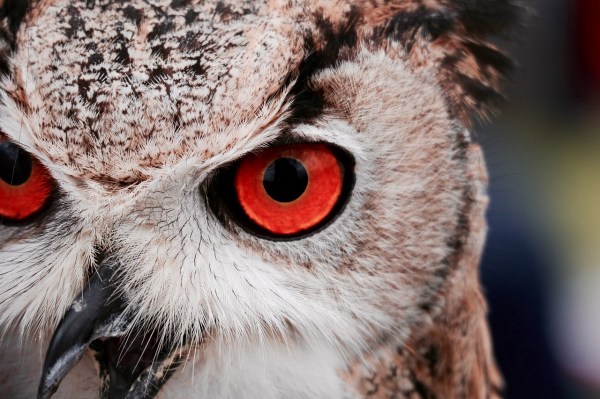
Those amber eyes, so many sets of them, unblinking in the night. I had to keep the blinds closed so I could sleep. I tried to explain them away. Once you start feeding them, they follow you everywhere. I could just pretend I was eccentric until they started perching on the top of my computer monitor at work. After two weeks, my boss suggested I work from home for a while. The relief was a warm bath.

They were there day and night, unnatural for nocturnes, closer and closer. There were feathers in my bed, and dessicated piles of small bones appeared in the corners of rooms. The owls were settling in. Their eyes became comforting, their hoots a reassurance. I slept easier in their presence. We know, they seemed to say. We’ve always known.

Amanda McLeod is slowly learning to say yes to less in Canberra, Australia. She’s usually covered in ink or paint and enjoys crafting art and words, which you can find in places like The Canberra Tales and Stone of Madness Press. Her debut flash collection Animal Behaviour is available now from Chaffinch Press, and you can read more at amandamcleodwrites.com

Image via Pixabay

Christmas Ain’t Like Christmas Used To Be – Rick White

Grandpa Henry lights a cigar from his silver Queen Anne tabletop lighter. It’s a fine looking object – about the size of a lemon – heavy and ornate. Like Grandpa Henry it’s from a different time, before mass production. His cheeks puff as he rotates the cigar in the flame, the fine leaf glowing orange, silver hair haloed in silver smoke.

‘Who wants to see Rudolph?’ Grandpa asks his three grandchildren who are tearing round the house in their pyjamas.

‘Me, me, me!’ the children scream, heading for the front door.

‘Coats on first!’ says Eric, Henry’s son. He doesn’t know how the old man does it. Obviously the red dot in the sky is just an airplane, but how does he always get the timing right? As soon as the kids step outside they’ll see Rudolph’s red nose in the night sky. He must study the flight patterns or something.

Eric remembers the first time his dad showed him Rudolph’s nose. Or he thinks he does. Our earliest memories are usually not memories at all, they’re stories that someone has told us about a time we were too young to remember. Our brains make up the details.

In a few years, hardened arteries will cause Henry to develop vascular dementia. He’ll forget his family, time will warp for him, language will defeat him. And then he’ll be gone.

The children won’t remember him fully. But just as their eyes don’t notice when the red light in the sky blinks off momentarily, so their minds will fill in the gaps of Grandpa Henry. They might remember a fancy silver lighter, shiny like Christmas. The smell of cigar smoke and sandalwood cologne. A warm hand on the shoulder, and a long crooked finger, pointing up at a starry sky.

Rick White lives and writes in Manchester, UK. His work can be found in Storgy, X-Ray Lit Mag and Milk Candy Review. @ricketywhite

Image via Pixabay

Becoming Crazy – Hanna Pachman

My time narrows into his phone,
waiting for him to call me,
as his brain gets morphed
into a dusty vessel of work emails.

Without warning, a bulldozer runs us over,
separating our livers from one another.
My car becomes a hollow tomb.

I scream sorry into the vortex
of wanting and kissing.

His tongue sticks out like a lizard
as I drive away, without my feet.

I land on the ground of my room,
but my shadow doesn’t follow.

I stand patiently at the window,
writing us back to life,
blinded by feathers of his muffled gasps.

One last love letter will
knock his head back into mine.

Barely existing by my breath,
I remember how good it felt
to hear him say, I love you.

Our shared music chokes me
awake at night, as I light my ears on fire.

A phantom version of me
sweats through my body,
squeezing the beginning out of my head.

I emerge as a wide-eyed child,
eager to befriend new creatures,
to wave our wild hips across
the puddle of lost lovers.

I reflect the still standing trees,
becoming a new society
of crazy to call my own.

Hanna Pachman is a poet and filmmaker who uses writing to conquer objectification, health issues, and robot brains. Her poetry has been published by or is forthcoming in Linden Avenue Literary Journal, Collidescope, What Rough Beast, Anti-Heroin Chic, Fourth & Sycamore, Oddball Magazine, and Aberration Labyrinth. Originally from Connecticut, she currently hosts a monthly poetry event, “Beatnik Cafe” and is an Assistant Editor for the poetry magazine, Gyroscope Review.

Image by Hanna Pachman

Blinds – John Tustin

I felt the heat of the sun
On my hand, my face
As I raised the blinds
Higher, higher
After a twelve hour worknight
That turned into near afternoon
Before I could put my key in the ignition,
Get home and open the blinds.
My skin is nearly paper now,
So I go back to the darkness of my bedroom,
Where the room is cool despite the weather outside.

I open the shades for effect
And to feel better about the day that will die
As soon as it lives.

Sitting in the same chair
In the same room,
The same chill shooting through my fingers
As I type this.
Forgetting why I am even writing.

My view from this window a putrid old white pickup truck
With a sign that says
RICHARD’S TERMITE AND PEST CONTROL
On the side
Sitting in the parking spot
Beside my Ford Focus
And a lawn, some trees.
I can’t see any further.
I am limited, you see.

Hours pass.
The chill continues up my fingers, my arms
Into the center of me.
Nothing good written.
I get up to close out all the lights
Even though the sun will not set
For hours.
I shut out the sun.
The language closes up,
The blinds fold in,
The darkness seeps back in.
If only you heard the poems from my lips
And you were open enough
To believe them
And I was strong enough to live them
As I uttered them….

John Tustin’s poetry has appeared in many disparate literary journals in the last dozen years. fritzware.com/johntustinpoetry contains links to his published poetry online.

Image via Pixabay

The Last Book Collector – Michael Grant Smith

Canvas billowed anew. The rain’s hiss abated. I hoped signal strength would improve.

“Hello?” I said, louder. “Is anyone there?”

“You’re not funny,” interrupted my fare. “I didn’t pay for theater. Concentrate on landing me safely.”

“Madam, with my good eye closed I can navigate the entire Colorado Archipelago. Oftener than the tides have risen I’ve sailed thusly. Relax, let me skipper my boat.”

“Such a mariner, oh dear!” She studied the reflection in her own long-inert cellphone; plucked a rogue chin hair; spat overboard into salt water. “I suspect I’ve hired a fool to convey me to the Denver Islands.”

* * *

The sky’s weight presses the sea, prevents its escape.

I stroked the barely-visible implant scar on the nape of my neck. The snores of my angel complemented a symphony of wind and breakers.

“Wake up,” I said as I prodded her with my toe. “You commanded my silence for the duration of our passage, but we’ve reached our destination.”

She wiped slumber-sand from her eyes.

“So bold, you are,” she snarled. “To suggest one could sleep aboard this deathtrap of a cockleshell! I was deep in meditation.”

Like an anchor, my gaze dropped upon her.

“Your appraisal of this vessel may be correct, madam, yet thanks to your courage and perseverance you’ve arrived at the Denver Islands. I bid you farewell!”

“Again with the humor! Have I not demanded you cease your foolishness? We are nowhere close to shore!”

“My ‘cockleshell’ draws deep and we dare not risk the rocks. You and I, our voyage together ends here. Your contract is recorded on my device.” I held up my blank phone as evidence.

“Bah! Bring me in, pirate. I will double your fee.”

“My counter-proposal: I’ll eject you into the brine forthwith, and at no additional charge.”

“Carry me,” she said, and with a trembling hand drew her hood. “I cannot swim.”

I furled the reefed sail and set fast my oars. Across the railing slithered an anchor chain. I slipped over the side and waves caressed my ribs, welcoming me.

“Your taxi awaits,” I said, and extended my arms to her.

* * *

I eased my burden onto dry slabs of slate. She withdrew payment from her satchel. I hefted the gold coins — my luck was on the mend. Soon, I’d clear all debts and greet my future.

“Thank you and goodbye, madam.” I kept my eye mostly on the buildings and stone outcroppings far above us. She wrapped her cloak tighter against the breeze.

“Bunghole,” she said.

“I beg your pardon?”

“As well you should, and often! Bunghole, yes. The opening at the bottom of a boat.”

“No, you are mistaken. A bunghole is the means by which we fill or empty a barrel.”

“Well, you’re the expert. No matter what you call this, you may want to put it back.” She turned and began her upward trek.

In one hand I clutched my wages; in the other, a bronze drain-plug.

I splashed into the surf. My boat’s keel settled onto sand four feet below swirls of ripples and bubbles. Sunlight pierced overcast. Atop the mast a gull preened.

* * *

To raise my scuttled boat and refit it would cost all I’d earned from the trip. My first night ashore was cold — I catnapped in a ramshackle toolshed — although my rage kept me warm enough. How would I avenge myself on the Harpy who sank me?

In the chilliest hour before dawn I checked my phone for messages. As usual, there were none. I massaged my aching joints and set out on a prowl. These island-neighborhoods enforced curfews and I had to be sharp. I snuffled the bones of an abandoned commercial district until I found a prospect.

Some would encounter Sunnyside Booksellers and believe it a rind stripped of anything edible, combustible, or otherwise valuable.

Crafty me, I discovered a trap door. I wound my flashlight’s crank and spelunked the tomb-scented cellar.

Books in mounds, monoliths; volumes stacked like cordwood. Ink on paper! Bindings — every color and size! I’d outlast winter if I kept this jackpot a secret. Inside a stove, all words burn the same.

My implant chirped a warning. Above and outside, someone approached. Overburdened I fumbled ladder rungs and hauled a bundle of creative non-fiction, whatever that was. Three more nights and I’d empty this cellar of all the fuel I could stow.

* * *

By day I serviced my refloated boat: dried, cleaned, greased, re-stitched, nailed, and tied. After dark I lugged loads of books and hid them onboard underneath oilcloth tarpaulins. Planks creaked as the hull hunkered low in the water.

At last, my pre-dawn departure. Ribbons of purple and red glowed between the forsaken towers of Old Denver’s skyline. I set the oars into their rowlocks and there she was, the Harpy, not thirty paces away and jogging along the stone quay. She hailed me via a trumpet formed by her hands.

“Ahoy, as your type is fond of saying. Is this where I buy a ticket?”

I almost snapped an oar over my knee; instead, I smiled.

“It would please me to accommodate a repeat customer. Come aboard and you can disembark anywhere except dry land.”

“Always with the jokes. The seafaring comedian. Let us agree to allow bygones be whatever, and enter into a new contract. Will you take me home?”

“I’d rather use the butt-end of this oar to put out my remaining eye. No! My services are unavailable.”

Panting, she gave her satchel a shake and the effort nearly tipped her over. Coins were her orchestra, she the conductor.

“Five times the outbound rate is my offer. Paid when we arrive at Port Rainier.”

“Stay where you are, I’ll pick you up.”

* * *

Loathing runs as deep as oceans, and early in our journey my passenger’s unkind behavior caused me to take constant soundings. However, I possess the wisdom to forgive offences as long as revenge is inconvenient or unprofitable.

By the third week she laughed more and criticized less, followed by her unprompted vow to prepare the evening meals. Our conversations grew cordial and she seldom scolded me when I looked at my phone.

“You have regrets,” she said on the brightest and bluest morning since we’d left. “You miss connecting with people and things.”

Hood thrown back, her iron-gray curls gleamed. Outlying Cascade Isles, lumps of brown and black, blistered the horizon. I rubbed my implant scar and rummaged for a response. Despite the day’s brilliance my thoughts were blobs of mercury.

“I suppose I’ve spent too much time on this cockleshell — yes, I remember you named it so. Anyway, solitude is my preferred companion.”

“Oh, a man of action, yet stoic! In my field of work I’ve never chanced upon someone so deliciously complex.”

She grinned at me and I mustered one for her. I’d come to find her aquiline nose and dusky eyes quite fetching. My implant throbbed in an unfamiliar manner.

I labored to push a reply out of my word-hole. “Who are we but water-spiders, skimming the surface, racing from one adventure to the next?”

“Yes, my captain, you’re the sailor-poet-philosopher, the burglar who talks in his sleep. I’m the librarian who won’t allow you to burn your precious cargo.”

Image via Pixabay

The Amazon of Bloomsbury – Shannon Savvas

(A re-imagining of the Byzantine mores of Vanessa Belland her set and their infliction upon her daughter Angelica Garnett née Bell by way of Duncan Grant)

Charleston Farm, East Sussex

Christmas Day Night, 1918

Today the child decided to be born. Before breakfast!! I cannot believe it. Our first Christmas since the end of the beastly war. Our first Christmas after four long, dull years of Lutheran sensibilities out of consideration for “the people” and their sacrifices. I should have been downstairs presiding over the feast of food and festivities I’d planned; festivities almost Roman Catholic in their excess. How delicious. But the child almost ruined everything but for my darling Virginia. Thank heavens, she oversaw the morning hunt and orchestrated the later dinner and party. Judging by the glee and shrieks rising from downstairs which punctuated my beastly labour, I suppose it was in the end, only my Christmas the baby ruined.

It wasn’t a difficult birth. I suppose I must be pleased that it is a girl and not another boy. My friends tell me daughters are so much more fun. I doubt it but I do believe they are cleaner and more reasonable than boys. Small mercies. Lennox is a Gorgon-faced Godsend, even though she demanded the Devil’s dues to return to service for this one. I suppose it was her form of retribution because we let her go so abruptly once Quentin and Julian were both away at boarding school. How could I have foreseen the spectre of another child? But whatever Duncan agreed to pay her, it is worth every penny to not have the onerous duty of tending to a crying, hungry baby day and night. I informed Lennox the day she moved back into her rooms that I refuse to be a heifer to this child. She has engaged a wet nurse who will arrive the day after Boxing Day.

Clive suggested we call the child Angelica, after all, he said it is on this day the angels brought good news. I suppose this baby is good news, but for whom, I am not certain. Not for me. Now the boys are at the Quakers’ school in Reading, a baby is not what I need. Clive has promised to take her under her wing. He is such a good man and will be more of a father to Angelica than Duncan could ever know how to be, so the least he deserves is to give her a name. God knows Duncan is too distracted and really, he has become such a bore. I do not always wish for his company.

Clive has barely been in. He has spent the day entertaining Duncan and Bunny. They came down yesterday and will stay until Boxing Day. With little consideration for me or this baby, the three of them have indulged in an inordinate number of raucous toasts ever since they returned from the hunt. I could hear their noise all the way up here, but I suspect they were celebrating the end of the war and their enforced exile from London as “conscientious objectors” more than the birth of Christ or Duncan’s girlie as Bunny called her. She is merely a timely excuse.

Later, Bunny popped up to see the baby, champagne in one hand, a filthy White Owl cigar in the other. He blew smoke across her little face which enjoined a stern cluck of disapproval from Nanny Lennox. But when has disapproval ever deterred him? He oohed and he aahed, towering over the child’s crib, a swath of Christmas ivy around his neck, a travesty of a merry fairy godmother.

Oh joy, he declared. She is delicious. Good enough to eat with a crème anglaise and strawberries. If she is as lovely when she’s twenty, let’s see, good Lord, I shall be only forty-six — I think I will marry her. Will it be scandalous, Vanessa?

Yes, it would. However, I kept silent. Sometimes Bunny is as insufferable as he is amusing. I accepted a glass of champagne and we toasted the absurdity of the idea.

Lennox has taken the child. The visitors have gone, the men retired. Finally, I have some peace.

* * *

Christmas Day, 1932

I don’t know whether to be pleased or annoyed with Virginia. She has gifted Angelica the outrageous sum of one hundred pounds annually to purchase clothes. Who in their right mind would bestow such funds on a fourteen-year-old? Dear as my sister is to me, Virginia has not been in her right mind for some time. I am worried. I told her she has been highly irresponsible but she dismissed my objections. She implied my allowing Angelica to travel on the Continent, unaccompanied but for Lennox, was more irresponsible, but both Clive and Duncan backed me up that for the purposes of education Angelica’s sojourn in Rome was far more valuable than that ghastly school in Essex.

* * *

Sissinghurst, Kent

Sunday Afternoon, 15th August 1937

Vita has invited us down for the week. A relief to leave London. I cannot bear anymore condolences on the loss of my darling Julian. It is a welcome distraction to be with Vita and Harold who has a quiet and thoughtful way about him that is quite calming. Between my grief and the talk of Oswald Mosley and his band of thugs and the menace of an increasingly strutting Germany, I have felt lost in a deep well of sadness. Still, I thank God every day for our Royal Family and the sanity and sensibility of British politics. Stuffy as society may be, it is a blessing that we are more obsessed with the marriage of the American divorcee Mrs Simpson to the Duke of Windsor, than with the rantings of that nasty little man Mr. Hitler in Berlin.

Angelica and I motored down with Virginia and Leonard on Thursday. Clive arrived with Duncan in tow yesterday morning. Bunny and his wife Rachael – I cannot bring myself to call her Ray (how vulgar, how gauche) no matter how often she insists I do – arrived by train this afternoon. Rachael is to my eyes much more interesting than when I last saw her; she has lost much weight and her face is drawn, tight and of a curious hue. I might ask her to sit for me in the autumn.

Angelica, who has become quite temperamental and rebellious since she decided to become an actress – a grave misjudgment in my opinion, the child has neither looks, allure nor talent of any description – was extremely beastly to Bunny and made cruel fun of Duncan at lunch. I thought enough. Time the child knew the truth. I took her for a walk in Vita’s wonderful white garden and explained that Duncan is her father not Clive. I tried to ameliorate the situation by telling her that in many ways she was lucky to have two fathers, not one. She spat back that in reality she felt she had none. Her performance was worthy of Isadora. I waited until she had calmed and run out of her diva tears before instructing her to not discuss this further with anyone. Especially Clive’s father who must not be made aware of Duncan’s role in her genesis as William has almost certainly bequeathed what he believes to be his granddaughter, a sum of money in the event of his death. Practical girl, she saw the sense. Well, she should. A woman’s life and fortune are precarious and only someone foolish would unnecessarily risk any upheaval. I have instructed her to make her excuses and not attend the party tonight. It seems only prudent.

* * *

Monday 16th August 1937

I am appalled. Angelica, despite my advice, not only attended the party, but dressed a little too provocatively for an eighteen-year-old girl. She certainly drank more champagne than was advisable. Laughed too loudly and danced with unseemly abandon. I asked Clive to tell her to stop, but he said let her have her fun, that if she was a little wild as he put it, perhaps it was because she still grieved the loss of Julian and has been forbidden to make a “pilgrimage” as she called it to Brunete in Spain. That debacle shows no sign of abating and it would be madness not to say pointless for her to undertake such a trip. Still, Clive is right. However, I felt I needed to address her outrageous behaviour.

When I spoke to her, she threatened to be indiscrete regarding her true paternity and ruin the evening in front of everybody, including several notables and minor Royals. After a while, she calmed and I left well alone. The child has always been willful and I can live with her irregular behaviour. What I found most distressing was watching her flirt shamelessly with Bunny last night, in the presence of Rachael who was visibly embarrassed and hurt. With Julian gone, there is no one to temper her. Perhaps Quentin can take her to tea when we get back to London and have a word. She might be more prepared to listen to her brother than her mother.

* * *

Charleston Farm, East Sussex

Christmas Day, 1938

Everyone has come for Christmas. Quentin has brought a young woman, Anne Popham for the holidays, they seem rather serious. I will get Clive to find out more about her family. Bunny and Rachael are here, but I fear her health has deteriorated. The last time I saw her was just over a year ago when she declined to sit for me. What is troublesome is that Angelica and Bunny carry on in a way that is wholly inappropriate and raises my concerns. I remember his drunken prediction about marrying her despite his being in a liaison with her father. And how can I tell her that this man was her father’s lover? It mattered not a jot until now. There is something quite wrong with this relationship. Not least that they are being quite disgraceful in front of his poor, sick wife. Perhaps I or Duncan should speak with him. Warn him off. Or do I leave them to have a fling, however distasteful? Perhaps an older man will help settle her. Let her get her rebelliousness out of her system and then she can move on and hopefully meet, marry someone more suitable.

I have just spoken with Virginia. She assures me my daughter will tire of that rusty, surly old dog with his amorous ways and his primitive mind. Typical Virginia – she has the most vivid and apt way of putting a matter. I hope she is right. She knows all sorts of interesting young men, closer in age and class to Angelica and has promised to send them Angelica’s way after the holidays.

* * *

Christmas Day, 1942

It is done. And I must be gracious and welcoming. Bunny might believe he has pulled off a coup, perhaps exacted a small revenge on Duncan, but I find it disgusting. An affair was one thing, but this marriage is partly my own fault. If I had found the courage, had informed Angelica about her intended husband’s history and more specifically his proclivities, namely that Bunny had not simply propositioned me (thankfully I rejected him – would he be so petty to marry her out of spite?) but had conducted a liaison with her father, might she have called off the marriage? In a note of sordid glee, she informed me she lost her virginity to Bunny while staying with the novelist Mr. H.G. Wells in Sussex. It is quite abhorrent to me that Bunny Garnett, fifty years old, has married my daughter, a mere twenty-four years old. The poor deluded girl is giddy with her new status and independence. They have moved to his place in Cambridgeshire, so it is somewhat of a blessing that I shall see less of her and her husband whom she refuses to call Bunny – he’s not a pet, Mama, she said – rather she insists on calling him Darling David. Quite nauseating.

It was all very well being tolerant when Darling David’s excesses were amusing, scandalous and delicious in equal measure, but when it is one’s own daughter sucked into the insobriety of others’ sexual mores, one finds one is forced to re-examine one’s own opinions – and admit to one’s culpability. I, we, created and glorified this sordid seeking of sensation and acceptance of breaking taboos.

It is not difficult to conjure a list of muckrakers hoping to be the first to inform Angelica of her husband’s dalliance with her father, enjoying the anticipation of her dismay. Then how gleeful will she be, I ask, if somebody tells her, as they surely will be keen to do, about not-so-darling David’s torrid relationships with both male and female intimates of our circle and beyond (more than I care to name!)? They will do so all the while claiming moral outrage but seeking revenge or social superiority over our eccentric little family, spreading the dirt and depravity so deep that it will be Angelica, an innocent, who is shamed and not her Darling David who has tainted everybody he has known. Including me.

I know this milieu; indeed, I have dabbled in it myself but that gives me advantage. I shall make it my mission to use whatever means, practical, immoral, sexual or sentimental, I will call in all debts owed whatever their nature, financial, patronage, discretionary – bearing in mind the large repository of secrets entrusted to me which I am quite prepared to use as leverage to ensure no one disillusions Angelica.

Let my silly daughter have her illusion of a great love affair. Better that than laying this family bare to ridicule and judgement heaped upon our name. But I confess, I am tired. Tired of these men; Bunny and his predilection for young flesh of any persuasion, our George and Gerald who took me and Virginia for sport, and Lytton and Roger and Leonard and all their ilk who offer praise and speak of equal artistic worth yet ensure we are crimped by social, marital and maternal expectations.

And if I must wield the librys to slay the switchblade tongues or lay down with husbands, wives, or fathers to ensure their silence, so be it. But given the inbred snobbery of our venal and socially ambitious times, I doubt nothing more than invitations to our dinner parties and readings and gallery openings together with promises of attendances at their parties will be suffice.

My daughter needs to be protected.

I will be her Amazon.

A New Zealand writer who divides her heart and life between Cyprus, England and New Zealand. Winner: Reflex Fiction (Winter 2017); Cuirt New Writing Prize (Galway, Ireland) (March 2019); Flash500 (Summer 2019). Runner up, shortlisted, longlisted, commended and published here and there.

Image via Pixabay

Expiry Date – Katie Isham

I skipped breakfast that morning. Very out of character. I always have breakfast. Cereal of some form. Mostly Shreddies but sometimes I throw caution to the wind and have Frosties. Never the real ones of course – supermarket’s own brand versions are just as good.

But that morning the milk had turned. It hadn’t reached its expiry date, but it smelt awful. I was unprepared; we had no bread in for toast. So I went without.

I should’ve taken that as a bad omen.

I drove myself to the hospital. It was a follow up appointment from the scan so there should’ve been no invasive procedures to stop me driving. I told Trish I could handle it and for her not to worry. I’d ring her with news on my lunch break. All routine.

Sit down the doctor said. Sorry the doctor said. Measured proliferation the doctor said. Hostile carcinoma the doctor said. Short period of adjustment the doctor said. I didn’t hear anything else the doctor said. She shook my hand and shuffled me through to the processing department.

The room was small and square. Empty and cold. The expiration machine dominated the room. I knew what it was of course, but I wasn’t prepared for its grand scale. Bulky and smooth. Why do they have to shape the scanner like a coffin? Fitting I suppose, in every aspect.

It was my time. Whirring and sliding, I entered the machine. It wasn’t painful. These administrative things never are. The blood tests on Tuesday made me squirm more. Hell, getting out of bed in the morning causes me more distress.

On completion they clamped the shackle on my left hand. The assistant didn’t make eye contact. I couldn’t blame him. I can’t imagine how he does this job. Every hour. Every day. Every week. Setting in motion the countdown. The giver of time and the taker of time in one role. I said thank you on my way out. It’s not his fault. I’ve never been a believer in shooting the messenger. I’ll keep my manners until the end. For another ninety-four days. According to the display on my wrist.

Intelligence requested. That’s what it reads on my medical report. I asked for this. I embraced the medical advancements. I signed up for the donor register. I donated blood and saliva and cells and sperm and willing. I ticked the permission boxes. I banged on the door of progress. I shouted about how knowledge was power. I never thought I’d regret it.

The traffic was slow, but I made it home by midday. Even considering I stopped at the supermarket for fresh milk and a new box of branded cereal. I’d called in sick when the hospital dismissed me. I may repeat the call tomorrow. Sitting in the car I fiddle with the shackle and wonder if I can hide it from Trish. She never ticked the box. She never wanted to have the information.

Ninety-four days, thirteen hours and seven minutes until my expiry date. Give or take. Modern medicine is marvellous but there is a ten percent buffer zone for computer error. Reasonably.

I have less time left than the box of cereal in my footwell. I thought the information would be comforting. I thought when the time came, I’d want to know. I thought that it would give me the opportunity to get my affairs in order and spend my last days doing what I wanted. Turns out all I want to do now is fight to outlive my cereal and wish that I had more time.

Katie Isham is a writer, teacher, drummer and mild adventurer from the UK. She writes angry emails, the odd fictitious story, and a travel blog that is currently somewhat static. www.vintagegnome.blogspot.co.uk. Her words can be found in Dear Damsels, Funny Pearls and The Daily Drunk. She can be found on Twitter @k_isham. 

Image via Pixabay

The Auction of Unlikely Things – Sheila Scott

An aura of decay clung to the air in the austere hall. Dennis, the auctioneer, was never certain if the odour emanated from the fabric of the building, the sale items, or the clientele themselves. He regarded the sea of faces before him with displeasure, trying vainly to recall the last time he had spotted anyone whose hair colour was neither grey nor that strange honey-blonde shade found nowhere in nature but so favoured by the dowager class.

His profession was also in its death throes, and he felt his shoulders sink a little as he stood at the podium. They had brought it upon him, this generation with naked greed glinting in gimlet eyes. So keen to possess, they left nothing for those in their wake. They’d created Generation Rent by refusing to relinquish ownership of anything.

Now no-one bought anything. Everything was leased, inadvertently favouring the planet as its raw materials experienced constant recirculation, rather than sitting in landfill-like cupboards awaiting infrequent use and entropy. Businesses slunk back to high streets offering temporary tenure at reasonable rates, and shared ownership had reignited a sense of community across the land.

That had really pissed his audience off.

Eric, his assistant, gave him a gentle nudge in the ribs, and stage whispered.

‘Next item?’

Dennis unhooked his brows and lifted his head.

‘Next item!’ He thunked the wooden gavel on the block, glanced at the day’s list and turned towards the door on his left. ‘The next item on today’s list is…’ Eric stepped sideways through the door, carrying a large empty wooden frame. ‘…a lovely day.’

A ripple of avarice passed through the audience.

‘Expression of pleasure in the exquisiteness of a full twenty-four-hour period will henceforth fall under your copyright. Starting price £6,000.’ The ludicrous and unseemly battle for possession of yet another basic human right played out before him, replete with the customary paddle waving and instances of stink-eye.

‘A Lovely Day’ went for £120,010.

The list progressed through ‘Love of Nature’ (now under the ownership of an aging physics teacher, who declared on successful bid that he hoped to dissemble it into “a rather exciting equation”), ‘Surprise Parties’ (personally Dennis was happy to see that one taken out the public domain), and ‘Canal-dwelling Shopping Trollies’ (that one only just secured the reserve despite the appetite of the audience).

‘Final item on today’s schedule.’ Dennis surveyed the slightly diminished gathering. Panic sweated the faces of those yet to secure a new item, the thought of a static, unenhanced collection of stuff clearly triggering a physiological explosion from their adrenal glands (which were, incidentally, scheduled for inclusion in next Tuesday’s auction). He returned his attention to the list.

‘Wellbeing.’

Dennis leaned into the lectern to allow the passage of Eric who was man-handling a large Perspex box. The auctioneer covered his microphone with a hand and turned it to one side before muttering ‘Really?’ at his assistant.

‘Yes, really.’ replied Eric, his breath momentarily clouding the box of Wellbeing.

‘Jesus.’

Eric carefully placed the large empty box on the table and exited stage left. Dennis stared at the box until an impatient cough from the cash-rich crowd reclaimed his attention.

‘Okay. Reserve price for this item is £20,000 but I think we can start a little higher than that. Who will bid £30,000?’

Paddles flew.

Hybrid writer-scientist, Sheila most enjoys turning idle thoughts into short narratives and illustrative doodles. Her work has been published in Edwin Morgan 100 Anthology, Postbox, Cabinet of Heed, Causeway, Ellipsis Zine, Flashback Fiction, Bangor Literary Journal, Poetic Republic, and 2019 Morton Writing Competition. Her intermittently hyperactive Twitter account is @MAHenry20.

Image via Pixabay

A Distortion – A R Salandy

There are problems beyond
The summation of equations
That exist only in the minds-

Of the few who yearn to solve
The questions of a universe
So questionably mathematical

That even their own minds
Fail to fathom the sheer depth
Of the numerators and denominators too

Which give way to all manner of theory
In a world where to be creative
Is frowned upon only till vain fame-

Seems to eclipse all judgement
And all rouge infringement dissipates
To an acceptance of intellectual creativity-

Quite unlike anything found
In the empiricism of formulae
Which bewilder all those that lack-

The natural ability to calculate
And hypothesize over an ideology
So positivist in nature-

That one might ask if notions of society
Were simply distortions
Of our futile attempts to justify-

A life of functional differentiation
So utterly contrived that perhaps
Even the creativity that is so ardently suppressed-

May be just a disfigurement
Of a natural ability
So positivist in nature-

That its judgement is but a sardonic irony.

A R Salandy is a mixed-race poet & writer who likes to focus on the contrast between nature and humanity but also the many similarities that bring the two together. Anthony travels frequently and has spent most of his life in Kuwait jostling between the UK & America. Anthony’s work has been published 45 times. Anthony has 1 chapbook entitled ‘The Great Northern Journey’.

Image via Pixabay

Slabs – Oliver Greenall

Candyfloss clouds. Azure sky. A sun straight from the Teletubbies.

Stevie lifted the glass to his sweaty lips, flicking away the slug that was clinging onto the side. The Coke was warm and flat. And diet. It was all the little old dear had in the fridge.

It was the fifth consecutive day of 25-degree sunshine. A once in a lifetime Scottish summer. And Stevie was stuck laying fucking concrete slabs. His uncle had reiterated it was a two-man job and they would split it 70-30. But he had failed to mention his plans to head off to ‘Eye-Beeza to piss sangria’ in the middle of the contract.

The non-existent buzz from the aspartame was only irritating him further, so he poured the remainder of the dark liquid onto a dandelion. The depressingly imposing council house loomed above him, mocking his predicament. The old dear had disappeared for her messages leaving Stevie free rein of the kitchen. But there were only so many custard creams one could take in this heat. What he wanted was a pint, to lick the condensation that puddled at the bottom of the glass, never mind the funny looks he’d get. He was missing Ryan’s barbecue for this shite.

He surveyed his work so far: only two slabs laid in four hours. His uncle was right, it was a two-man job. It was the longest and most laborious process he’d ever experienced. He had to lift the old 3 x 2 grey slabs, walk them a safe distance away, add a fresh coat of ballast and whin dust, before replacing it with a newer, practically identical 3 x 2 grey slab. What he didn’t expect was the sheer weight of the fuckers. He’d scraped his arms and knees raw and embarrassingly had to ask the old dear for a plaster. She’d just smiled as she applied it for him, making him feel like a ten-year-old boy instead of a nineteen-year-old not-as-strapping-as-he-once-thought lad.

There were still thirty-seven slabs to go, and his uncle wasn’t due back until the following week, so Stevie dragged on his gloves, laced up his boots and clomped his way back to pain and suffering and endless fucking drudgery.

Taking up his shovel, he dug underneath a slab, loosening the earth, lifting it slightly before gripping it with both hands. The most inconvenient part was getting enough purchase between the ground and concrete without crushing your fingers, but this time there was plenty of space, so Stevie hauled it up with surprising ease. Instead of being greeted by hundreds of slaters scrambling for a new home, he found himself staring into a large hole. Stevie wasn’t an expert on anything in life, and he was certainly no expert on holes (including those ones as Ryan liked to joke), but he somehow knew this wasn’t a hole created by an animal; it was perfectly round, and as he looked down, the edges seemed to have been crafted, as if the dirt had been sanded away for a smooth finish. As he peered further into the gaping maw, he realised that he couldn’t even see the end point; just more blackness, leading to nothing.

As an Indiana Jones aficionado, Stevie thought he knew exactly what to do when presented with a fathomless depth. He chose what he deemed to be a good-sized rock for the job and watched as it disappeared into the emptiness. He found himself focussing so much on listening out for the noise of the rock striking the bottom that he began to wonder if he’d already missed it. Choosing what he deemed to be only a decent-sized rock this time, he dropped it down. Once again, silence.

Stevie was never one for spontaneity, but something about this hole had him intrigued. Whether it was the heat, his frustration at his uncle, or the fact he was alone, he relished any opportunity to skive off laying slabs. And if finding a mysterious gigantic hole under a 3 x 2 slab in a council house garden in Prestwick wasn’t a good enough opportunity, then fuck knows what was.

Crouching down onto his knees, he leaned his head into the space. It was roomy enough for his scrawny body so he began to lower himself into it. As soon as his last limb passed the threshold, Stevie found himself in a tunnel. It was impossible to tell in what direction it was leading but Stevie began to crawl, hoping it followed some kind of logic, even if climbing into the hole in the first place wasn’t the least bit logical.

Now that he was in the hole, Stevie was surprised that he could actually see. From above, the hole looked inky black; yet inside that darkness, Steve’s vision was clear, as if an underground light had suddenly been switched on. Worms and ants crawled along the perfect edges of the tunnel, but as Stevie took a closer look, he discovered they weren’t crawling but hovering, as if an invisible barrier prevented them from reaching him in his crawlspace. Stevie reached out but his fingers didn’t touch earth; instead, he felt a smooth, soft edge, like silk. The bugs seemed to exist on another plane entirely.

Stevie wasn’t sure if he was expecting to see a light at the end of the tunnel, but it seemed infinite with no end in sight. Perhaps the slab had collapsed onto his head and this was death. An actual, physical tunnel to heaven. Or hell. He was going down after all.

Time ceased to exist as he continued on his subterranean journey. He saw more floating insects on either side, even a few spiders, which he was no fan of at the best of times but here he found them strangely mesmerising, knowing there was a force between him and them. They couldn’t touch him no matter how much they wanted to creep over his skin.

He turned his head to look back at where he’d come from. The hole he entered was no longer visible but still the tunnel remained illuminated. Coming to a standstill, he was surprised to find he could hear a faint noise to his right, behind the sanded dirt edge. Stevie thought it might have been laughter but that would be ridiculous. A limitless tunnel was one thing, but human laughter from within the earth itself? But there it was again, unmistakable this time. And glasses clinking. And music. He couldn’t be completely sure, but it sounded like ‘Mr. Brightside’. Of all the songs in the world, Stevie wasn’t surprised he could hear that one in the tunnel. He knew he could never escape Brandon Flowers singing about jealousy, no matter where, or how deep he was, on this planet.

Feeling more and more uncertain as to what he was supposed to do in this situation, or what the meaningful purpose of his finding the tunnel was, he kept on crawling. He could still hear the music; it remained just as loud as he went further into the unknown. He began to worry about the old dear; if this was real, and if she returned to find this hole, she might decide to climb in and join him. And then she’d get stuck, become dehydrated and die down here. He upped his pace, channelling his inner mole as his nails gripped the ground ahead of him.

After frantically pushing himself forward, like a fat seal on land, he saw a light in the distance. The music seemed to grow fainter as he got closer and closer to what he hoped was an exit to the real world and not his eternal damnation. He powered on, propelled by the urge to discover where he would emerge.

Which made it all the more disappointing when he found himself climbing out of the same hole he’d entered. He was a little bit muddier, a little more confused, but still surrounded by slabs outside the same council house in Prestwick.

‘So there you are.’

Startled, Stevie raised his head to see the old dear standing over him, a tray in her hands. She had that same smile which never seemed to leave her face.

‘Ah found a hole.’

‘And I got you some full fat Coke. With ice.’

Stevie clambered to his feet. Had she heard him properly? He knew she wasn’t deaf, and she definitely wasn’t blind. Did she somehow know about the hole?

‘Thanks,’ he said as he reached out for the perspiring glass. There was a rectangular piece of paper sitting next to it. Stevie assumed it was a coaster before realising it was the wrong way around, and there was writing on the other side.

‘I got you a little something. Just between us. You deserve it, slaving away on a day like today.’

Stevie picked up the paper. It was a cheque, the first he’d received since he was a child. £100.

‘Oh no, ah cannae take that, it’s too much.’

‘Nonsense, it’s the least I could do. Missing all your friends on such a lovely summer’s day. In fact, take the rest of the day off. Enjoy yourself.’

Only now, standing this close, did Stevie look at her face properly for the first time; he was always one for glancing at his feet during conversations. She was the oldest woman he’d ever seen. If she were to lie down during a rain shower, the water would gather and form rivers in the cracks on her face. Yet something about her eyes betrayed the rest of her face. They were youthful. An innocence and naivety still shimmering away inside.

‘Ah really appreciate it…’ he stopped himself, realising he didn’t even know her name to thank her. He glanced down at the cheque in his hand, his eyes immediately darting to the signature. Her handwriting was flowery, old-fashioned, and it took him a couple of times reading it over to fully comprehend what she’d written. He almost dropped his glass.

‘Yer kidding.’

‘Is something wrong?’

He checked the signature once more. His eyes weren’t deceiving him. That was definitely an ‘A’, followed by a very elaborate ‘L’.

‘Yer name’s no Alice, that’s… that’s…’ he had the word on the tip of his tongue, but saying it out loud would be strange, bizarre, odd. It would be…

‘Curious?’ she wondered.

Oliver Greenall is a writer, actor and filmmaker from Scotland. His films have screened at the London and Glasgow Short Film Festivals, amongst others. He has appeared on the West End stage and in various television series. His feature screenplay was shortlisted for the BFI/Sigma Films producer acceleration programme.

Image via Pixabay

The Money – Jim Meirose

It’s mass. It’s the second collection.

Now the object of all this is to get the money.

Concentrate on this, and this only. Get the money.

He walks down the aisle toward the altar holding the long-handled basket; right down the center, he walks. Once at the first pew, he turns. He thrusts the basket into the pew under the noses of the parishioners. Everyone generously contributes. Row by row, slowly he proceeds up the aisle. The basket is filling with money. He reaches the pew where the woman sits; the woman he always watches, who intrigues him. She places her envelope into the basket. But for this, she is forever a stranger. Stony-faced, he continues. For some reason the sight of her makes him glance back at the altar. It’s black-veined marble. The crucifix hangs above, the cracks show in the wood. The corpus is bloodstained. Before proceeding to the next pew, he glances at the woman’s long slender legs. Feelings rise in him.

But no.

Oh, would that he were a statue with no feelings.

A bloodstained wooden statue. Like that Christ.

He thinks of that man from the night before; he sees his face. His mind wanders. He moves the basket slowly so they may put in the money easily. Where is the man now? And somewhere, someplace, the host was being elevated at the very moment it happened.

Somewhere in this big world, there was mass at that very moment.

He moves along the row of pews. Someone is kneeling in the way with his head in his hands. The basket won’t go past him. He won’t move. He wishes to be kneeling too. He wishes to pray with his head in his hands. But—the basket’s just half full. Need to fill it fully. He moves more quickly.

He is the collector.

How ashamed his parents will be when he’s found out—

No. He thrusts the basket out. Now is for the money. Now it is mass. Mass is eternal. Mass is of God. He smiles dimly pushing out the basket. What a laugh; to care about his parents now, now that it is too late. His hands grip the long handle. His hands are clean. The effects of last night’s liquor are long gone. He sees the blood, the cuts, the seeping wounds. He sees the drip of the blood into a puddle. But maybe it’s not that bad; maybe the man survived; he didn’t hang around long enough to find out. Truly he was a coward last night—the basket’s too heavy to hold—he’ll drop the basket—

No! Stop it!

Lord, give me strength. Squeeze the handle. He shudders. The basket moves filling. The organ music swells. Perversely he thinks of a woman he read about once who was enamored of a bull. That was unnatural. He feels unnatural. Now is the time to think perverse thoughts. The dark blood begins to congeal. He steps to the next pew. He thrusts in the basket. What’s it like to be lying on the tracks with a locomotive bearing down? This is how he feels. There’s a locomotive coming. He hears it. He feels it. But this is all fantasy. The money is becoming heavy. His muscles flex. He clenches his teeth. Drinking wine will do no good. Drinking wine does no good. Drinking wine is no good. Wine costs money.

Get the money.

Basket in, basket out—much too mindless. But look at all that money. There’s plenty of money in the basket now. Yes, he must be the devil. Yes, he is worse than the devil. Even the money is evil; the basket’s overflowing now; but no, this is God’s money. Nothing of God’s is evil. Would that he were of God.

He glances over to his family, in the back pew. The thoughts swarm upon him. The money is too heavy. He sees the wife he will lose. He sees the children he will lose. He’s near the end. His glasses are sliding down his nose. He pushes them up. They slide back down. There’s no use. He paid nine dollars for liquor last night at three a.m. He glances back to the priest in his heavy vestments. The innocent holy man. So unlike him. But think of it; think of it; the money becomes his once it’s slid into the basket.

How easy it is to give up ownership of something.

Of one’s life.

A pale slumped old man in one of the last pews gives an envelope. Every rib is showing under the old man’s thin shirt. And the skinnier one next to him is bald; they sit pale bald and bony, like dead men.

But they give money.

In the last pew, he is given money by a scowling man; it is him; it happens to be exactly the way he feels. He turns and looks out over the church; they could all be his brothers and sisters.

They could all be him. But they are not. Since last night, there is a chasm between he and them. If only he had not done what he has done.

But he is at mass now.

He steps to the back wall of the church and pours the money out into a large basket on the floor. He holds the empty basket.

The money’s gone now.

They’re pulling up outside; there are sirens.

But no; he is at mass now. Car doors slam outside.

He gives up the basket. He goes to sit by his wife. He is at mass now.

The back door opens.

That back door creaks so badly why don’t they do something about that back door—after all, they’ve got the money. He knows they’ve got the money. He got it for them.

Jim Meirose’s short and long works have appeared in numerous publications, including South Carolina Review, New Orleans Review, Xavier Review, Witness, Into the Void, Exterminating Angel, Phoebe, Otoliths, Baltimore Review, Alaska Quarterly Review, American Literary Review, 14 Hills, and many others. Twitter: @jwmeirose jimmeirose.com

Image via Pixabay

Recipe For A First Marriage – Rebecca Field

Ingredients:

One younger sister who has never measured up, one younger brother looking for escape

They shared a lifetime of coming second, failing to impress, being overlooked. She had the idea she would beat her sister down the aisle. Once the idea had formed, it took root in her mind and flourished like a Buddleia in a paving crack.

Five encouraging friends

They met in a bar in town, somebody’s birthday. The girls loved his accent, his American teeth and button-down collar. He took an interest, paid for the drinks. She was elated when it was her number he took. He fitted easily into her circle of friends. At her house he took charge of the barbeque, set out the chairs, she handled music and drinks. They went on trips to the coast, country houses, walks on the moors. He developed a liking for tea and English breakfasts.

An inability to acknowledge areas of incompatibility (earplugs and rose-tinted spectacles are useful here)

She realised he used humour as a defence mechanism if the conversation got difficult, but told herself that if he could make her laugh, she’d always have fun with him. She said she’d go anywhere with him, as long as they were together. He didn’t like her taste in dogs or the fact that she had so many male friends. He agreed to a French bulldog named Reggie, though he would have preferred something larger. The sex was great – everything else would work itself out.

Three or more parents (to include at least two reluctant and one enthusiastic)

‘I suppose you can always divorce him, but don’t think we can pay for another wedding,’ her mother said as they shopped for dresses.

‘Well her Mom looks great for her age, but are you sure about this?’ his father said on the morning of the wedding.

‘Don’t listen to anyone else. If she gives you goose bumps, you go for it,’ his Mom said, plucking fluff from his suit.

Method:

Put all ingredients into a large vessel and stir. (You will need to wear protective clothing as the cooking process can get messy)

They honeymooned in Mexico, then he moved into her place. The housemates made themselves scarce. They shipped over some of his things, made room for the gifts from his extended family. She hated the ornate clock he insisted on hanging in the hallway but hoped she could learn to live with it. He decided it was normal for the husband not to have much space in the bedroom closets. He busied himself in the garage, stripping old varnish from her dining suite, sanding down table legs. He wanted to show her he was good with his hands.

When the housemates moved out, there was space in the fridge and an emptiness in the rooms upstairs. They increased their TV package so he could watch the baseball, and got a rescue cat; black and bitter, with a smudge of white on his chest. He scratched his claws on the newly sanded table legs.

Transfer into a pressure cooker and turn up the heat. After nine months, the mixture should become saturated, bitter and completely unpalatable

He took her back home for Thanksgiving, showed her around his home town. She ate his Mom’s pumpkin pie, teeth scraping the tines of her fork. She laughed nervously at remarks

about grandchildren and spent a lot of time on her phone. He wondered if the goose bumps would return back in England.

Back home she started a new job, further away. His contract came to an end and he struggled to find work. Sex became sporadic and functional. Reggie started earning good money as a stud dog. He said he wouldn’t mind being a house-husband, but not in this Godforsaken place where it rains all year round. She said she’d never agreed to move to the US and asked how he could ever have thought she had.

Remove from the heat and allow to cool completely

Her sister announced her engagement to a partner in a law firm. She got a coil fitted. He discovered that he enjoyed soccer as much as American football, but this wasn’t an interest she shared. She disagreed with his views on American politics, which he interpreted as a personal attack on his identity. One of Reggie’s girlfriends had puppies and she brought one home without consulting him. The hallway clock stopped working one day and neither of them noticed.

Serve with a shot of Decree Absolute

Rebecca Field lives and writes in Derbyshire. She has been published online by Riggwelter Press, Spelk fiction, Reflex Press, The Cabinet of Heed and Ellipsis Zine among others. Rebecca has work in the 2019 and 2020 UK National Flash Fiction Day Anthologies. Tweets at @RebeccaFwrites

Image via Pixabay

I Have Something To Say – Madiha Ahmed

Em? Emily…?

Oh, Emily, I’m so glad you’re here! I wanted to talk to you and didn’t know if you’d come.

I see you’re mad at me. I can sense it in your silence. Well, you have every right to be. Sigh. I’m sorry Emily. I’m really sorry. But please, hear me out. One last time. Just hear me out. I have something important to tell you.

I just want you to know…all my life has been…tch! You’re probably thinking why I never said anything before today. I didn’t think this is how things would turn out. Not after all you did for me. Maybe things would have been different if I had, eh? Maybe we wouldn’t be here today? Maybe I wou-sigh. Emily, sorry. You’re right. This maybe business is not helping right now. Just…just listen to me, okay?

Emily?

Just listen. Please.

I remember the day we met very well. I was only nine. Seems ages ago now. The social worker who drove me looked like she perpetually had a bad smell under her nose. I don’t remember much else except her voice. I can still hear it some nights. Telling me…well, telling me all the not nice things about me. How I was running out of chances. How I should be grateful for people like her and you who were saving me from me. I just wanted to jump from the car and run.

You greeted us next to a full trailer, and before I could process anything else, I coughed, gagged, my eyes watering. The onslaught on my nostrils was severe. I heard the social worker struggling to speak. Not wanting to offend, I didn’t look up when you introduced yourself. Remember that, Emily? You even said something about it, remember? How I found the ground very interesting?

I had caught a glimpse of you from the car before we disembarked. Your face looked like it belonged to a kind woman. Kinder than anyone I had known. My heart thudded faster with excitement. But I didn’t want to get my hopes up. I was too scared, Emily.

I remember your dirt-caked gumboots. I couldn’t look up. I didn’t want to look up. So I made myself trace all the shapes the dried mud on your shoes had made as you spoke. At least, I thought it was mud. You told me you were glad I was there. That you were sure we’d have a great time. That the only thing that mattered was the life we’ll have now.

And then I saw your gumboots getting closer. Felt a pair of arms around me and this – oh! how do I describe it? – this sweet, sweet scent enveloped me. It was magical. Intoxicating. I took deep breaths. Trying to savor the fragrance that felt like it belonged to the heavens. To take it all in. To keep it with me forever. My brain freezing, relaxing, letting go.

In that moment, I felt as if everything was right with the world, Em. That everything was right in my world. You were saying something and the social worker was saying something. But the words washed over me. I just remember being hugged. I just remember how you smelled. I had never really experienced the joy of either before.

Oh, Emily. You have no idea how peaceful I felt with you! I was nine, deeply troubled, adrift. But you became my safe space. My anchor. Clichéd but true.

You truly helped me turn my life around. Farm life was difficult to adjust to with its gruelling chores, along with regular schoolwork. My nose had the hardest job, though. I remember gagging at each individual assault as I went about my chores. I never knew how much animals pooped or that I’d be the one hauling wheelbarrow loads of it from one end of the farm to the other. I just tried to remember how happy you were with your flourishing roses and vegetables. You used to laugh at me when I would judiciously close all the windows of the house, but you also always had something in the oven too – a simmering roast, fresh buns, chocolate cake.

That was nothing compared to you, though. Every time you’d hug me, your scent would bewitch me. I would feel the weight of the world lifted from my shoulders. And it’s funny that you had no odor despite being busy with farm stuff all day. Even just being near you was enough most days. You kept me grounded. You kept the demons away. I only had to think about coming home, to you, and I was able to keep my head down and my nose clean. Ha-ha! That’s almost a pun.

What you don’t know is that it wasn’t easy. It wasn’t easy at all.

You see, it was hard to break habits. It was hard to rewire my brain. I read somewhere that early experiences shape our psyche. And what we think, what we do, what we want to do. Every day, I battled with my fears – of messing up, of losing you, of being alone again. Of being abandoned again. Like every other person before, but this time by you.

It was a daily struggle. Dark thoughts would creep up no matter how busy I was. Laying the hay, feeding the hens, hauling animal faeces, doing homework, having dinner with you, reading before bed. Phantoms lurked in the unreachable corners of my brain and I was unable to banish them.

Do you know what that’s like? Do you have any idea? Tch! Stop saying that. Yes, you took me in and raised me like your own. Perhaps better than how you would have raised your own. But I’m telling you that you have absolutely no idea what a troubled kid actually goes through! Of the daily battles we fight and the gambles we take. Of the dread that follows us like a shadow. You don’t know – you can’t know – what it’s like to only be loved when it’s convenient for other people.

Despite all that, I did well. When I moved to town, got a job, a place of my own, you said you were proud of me. And that’s all that mattered. Till you went ahead and…

And now you sit here, angry, disapproval etched into every wrinkle – yeah, you think I don’t see that? – making me feel like I’m back in the dark. Like I’m nine again and the worst kid in the room. The kid who can’t do anything right. The kid no one loves. The kid who’ll always be alone.

Yeah, holding in your protests and I-love-yous, eh? Right. I know where you’re at now. Pfft. Yeah. I know your deal. What, did you think I wouldn’t find out? That it would be as simple as that to brush me off, huh? Done and dusted. That you could just go and get another kid to replace me? That’s how easy it was for you. We’re available a dime a dozen, anyway, right? God!

Tch! I don’t believe you anymore. Do you think I’m blind? Or stupid? You broke me, Em. You made me and then you broke me.

That’s the trouble, Em. The demons never go away. So, of course, I did what I did. You left me no choice. I had to figure something out, to keep you with me. And I have no regrets. I got you back, didn’t I? You’re here, right now, aren’t y-

Hey, Emily! Where are you going? You can’t leave! I’m not done talking. Emily. Emily. You can’t go. You can’t leave me here. Hey, pal, get your hand off of me! Emily! You have to understand. You’re the only person who ever understo- hey, I said leave me alone! Emily? Emily! Come back. Come back, Emily! Emily, come back! Don’t go, please, don’t leave me with them. Emily, get me out of here. Don’t leave me! Get off! Emily, I have more to say. Please! Emily! Emily! Emily!

EMILY!

Image via Pixabay

Graduation Day – Rachel Hessom

Our gowns all rustled in a plume of red,
I felt a little like a parrot, perched upon my plastic seat,
With spiky sunshine puncturing my skin,
And marbled beads of sweat running down our spines
That arched and curved in vain attempts
To stave off heat that swathed the cooing birds.
It was, of course, unfortunate that the heatwave hit
The day we were to walk the stage.
And yet it strangely added something to
The summer dream that day became,
Remembered as a Polaroid that slowly burned
When my name was called.
I smiled and tilted mortar board
If only others knew the heat
Between that teacher and myself.
I shivered as the memory called,
The way he gasped the night before,
Falling into downy pillows, still hot
With rays of sun through afternoons
Of heat of which we’d never seen before.
He shook my hand, his eyes kept low,
I saw the sweat stains on his shirt
And wished that I could call him out.
Not a woman but a student in this gown,
I knew that we would never share a bed again.

Rachel Hessom is a writer based in the UK. She writes daily poetry on her blog, patientandkindlove.com and she enjoys tweeting words that vaguely represent poems. She is currently training to be an English teacher so that that she can pass on her love of literature to the next generation.

Image via Pixabay
Create a website or blog at WordPress.com

Up ↑