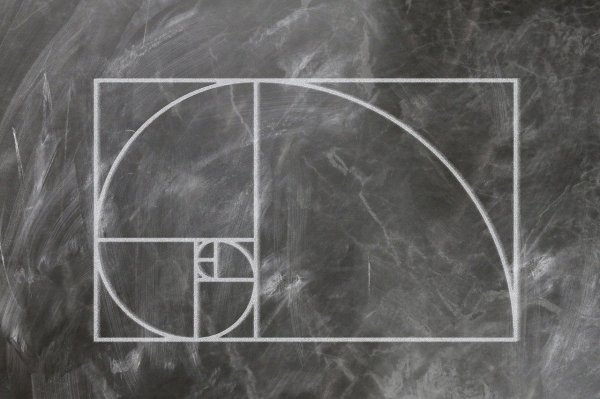
Hyperbola – Shelly J Norris

Four decades later
we’re all blabbermouths
adrift on a sea of hyperbole
shouting to be heard. — Steve Rushin, Sports Illustrated, 1 Apr. 2002

In this mathematically mediocre nation
it may be difficult
for the algebraically disabled
to accurately determine variables
of the directrix—
I may not even understand this
though Socrates might parade me
before an amazed assembly of elitists
to illustrate how, behold, this under-
educated daughter of the working class
exposed to field rows and grain silos
innately does grasp lines of symmetry,
parallel rays, and cones sliced into curves—
but how to reduce Point A
at one distant end of a horizontal axis
to a singular finite cause—
a virus, a hubris, too much airtime to fill,
no handler, no filter—
this craving for simplicity
usually leads down some slippery slope
or a continuum of faulty causation
(thereby corrupting validity
of the vertical axis)—an injustice
just as sure as
when geometry is involved
I likely know not whereof I speak.
I am but deaf when promises echo
from a hollow chamber;
when an ellipse of a Center of Interest
encased in its own circular (s)hell
wherein it is both central
and the two fix’d points
adding up to no reflection and over self-
valuation utters 260,000 words of self-
adulation, I know a titmouse from a mule.
Consequently, in an oval room
a person babbling at focus point f1
is easily heard by a person
preening in a mirror at focus point f2.

These persons are the same person
yammering about himself.
This is nothing new under the sun.
If we could graph this debacle
the whole hullabaloo resembles
a boxy dragonfly, one wing steering leftward
the other straining far right tugging the
thoraxes to shreds just like that delicate
kite my father crafted from balsa
and newspapers loosely held by Elmer’s
glue and scotch tape, the same way
it split to ribbons facing its first
Wyoming gust in the untrained fists
of a five-year-old. Oh, the tantrum!
Where x and y,
where w and z
on the infinitely expanding asymptotes
represent dichotomous extremes
each symbolizes fear without qualification.
Where x champions Top Dog
shouting genius, prophet, chosen
where y satirizes the Satyr
x empathizes with Underdog
and y screams fact
and x screams fake.
In the hyperbolic hyperbola
arcing from x to w,
arcing from y to z
words heard wrongly, wrongly said
slippery words meaning something other
than their meaning, a joke, perhaps
not to the many cudgeled daily
by void adverbs, waiting . . .
waiting, waiting for one substantial
verb, for any signifier that means.
Props, his followers shout, for thinking
outside the linear box
as the graph takes on the angles and curves
of a four-horned goat’s polycerate con-
figuration, which is not as rare in nature
as you may think; it’s more common than truth
which is now endangered, nearly extinct
and the muddled axes of cause and effect
are anything but imaginary as they stretch
one end bemoaning unfair assignations
of hooves and tail and twitching ears
and one end crying in narcissistic outrage
by proxy how unfair to goats, one end decrying
endless negative and derogatory language
as they imagine Center of Interest supine, praying
in tongues to their ancient God for strength
and answers, claiming how, with no sleep
or pay this martyr transforms
to Atlas shouldering a world despised
because it so despises him.
How theoretically, parabola
can be used for deflection, radar, satellites
and concentrating the sun’s rays into hot spots
of brilliance and sanitized healing
with the precision of a head-on collision
that kills both drivers, if not for
regulatory rollbacks harming the vulnerable
like watching lightning bolts slither down
the extrados of a rainbow
and the vertex, that excluded and undecided
middle at the rise who might at any moment
slip either way,
or worse,
decide for themselves.
If not for the steepening curve
and the only thing flattening here is the earth.

Shelly Norris currently resides in the woods of central Missouri with her husband John, two dogs, and seven cats. A Wyoming native, Norris began writing poetry around the age of 12. Norris’ poems embody the vicissitudes of unrequited love and loss, dysfunctional wounds, healing quests, and the role of cats in the universal scheme.

Image via Pixabay

The Urge – Shaurya Arya-Kanojia

The evening was warm. We are speaking about the month of May, after all; when the mercury levels in a temperate country as mine are easily in the high forty-degree Celsius mark. A heatwave had gripped the entire country in its clutches, and it was the tenth day when the temperatures had hit a record breaking high. I was standing on the edge of the boundary wall of my terrace, which, on the other side, fell into a thirty-foot drop ending in a cemented floor where a building was being constructed. And the thought that flashed across the box of rationality I call my head – the thought which had thrusted itself forward, pushing everything else aside – was frightening: what if I were to fall down this drop.

Would I die? Well, that would depend on where I landed, wouldn’t it? On my feet, maybe I’d break a lot of bones. On my head, and I would buy myself a one-way ticket to afterlife.

I’ve often wondered, particularly in the quiet hours of the night, the time when you find yourself sliding down the hole of vulnerability, why I feel this urge (because I don’t have a better word to describe it) to jump off my terrace whenever I looked down the drop. As far as I could remember, I’ve never suffered from vertigo. Before my father, god rest his soul, yanked our family out of our house in the country and threw us in this top-storeyed flat in the city (where the summers are agonisingly hot), I don’t recollect being afraid of heights. But now, here we are. I can’t take my eyes off the steep drop, and, the longer I remain fixated, the quicker I feel the urge hurtling forward to take control.

The construction work had been agonisingly slow. Two months in, and the workers had only put in the concrete flooring. In this tormenting heat, I wouldn’t blame them. I saw two workers, in their sweat-stained vests and black bottoms, standing by the cement mixer as it churned the cement. The older one, who stood with a slouch (a resigned, almost defeated look most characteristic of a life that has seen insufferable turmoil and pain), puffed on a cigarette. Although I stood significantly higher, the waft of the smoke as he took a drag from the stick and breathed it out was… sinfully irresistible. I felt the cloud of thoughts in my mind emptying and feeling heavier at the same time.

And, just like that, the pledge I’d taken to never smoke following an acute attack of tuberculosis last year started melting away. The desperate craving was returning. My twin brother, who could be fairly called my worst enemy, did hide a pack in his cupboard. For a computer wizard (he worked in the cybersecurity department of a multinational corporation), he wasn’t too clever with the digital passcode he’d used to lock his cupboard.

7.9.87. Our birthday.

But maybe it wasn’t the unquenchable craving for a cigarette that made me restless. I was still looking down. Staring into the drop was ominously hypnotic.

The next second, I heard a voice. At first, I thought it was the heat – the way it makes you light-headed – causing my imaginative mind to, well, imagine things. But I heard it clearly all the same. A whisper, which, despite the audibly loud cement mixer, the last calls of the birds as they made their way back to their nests, and the chattering of the kids playing in the neighbourhood park, had enough strength to carry itself to me. And it only spoke two words on an endless loop.

Do it. Do it.

The part of my mind which had been able to fortify itself from the urge didn’t have to know rocket science to decrypt the underlying meaning. The urge may have tried to thrust itself to the fore and almost taken the controls of my mind each time I dared to look down into the drop earlier, but, this time, I knew it was going to be successful. My mind screamed at me to take my eyes off the drop. Because it knew all I had to do was look the other way; and the terrifying tentacles, which were reaching out farther now, would recede.

But, I couldn’t. I felt my mind trying to oust the urge that was pushing its blade deeper into my consciousness now crying in painful fury. And, yet, I stood where I was; half bent over the boundary wall, my eyes trained on the drop. The workers milling around the cement mixer went off in different directions. Mr. Cigarette exited through a door at the back of the site. The other walked over to a small scattering of bricks, bent down and started sifting through them.

Though still a whisper, the voice became more whole than it was. And, with the voice, I felt the urge growing in size, now threateningly close to taking over my mind. It was alive and pulsating with what I could only describe as manic obsession. A part of me – maybe the smidgen that still hadn’t fallen to its tyranny – felt fearful. I felt myself shivering.

My head was growing heavier. The urge, which had locked itself in inside my head, was swelling in size. Amid the madness, I felt another sensation.

I felt clarity.

So, not resisting it anymore, I placed my trembling hands on the boundary wall. Hot tears trickled down my cheeks. Firming my grip, I boosted myself up. The surface should have felt hot to touch, but that didn’t stop me; I suppose I didn’t even realise it. I was enchanted, ensnared. But, in the process of heaving myself, I lost my balance. Propped only against my shivering hands, I couldn’t stop the momentum that carried me forward. The wind picked up. I could hear voices from down below. Mr. Cigarette, emerging from the door, bellowed. I couldn’t make out his words. The momentum kept carrying me forward. The voice – Do it – raved in my ears.

But the clarity in my mind, which had submitted to the urge completely, persisted. The last ounce of fear was supressed to nothingness. I would like to believe I even smiled. Not a hearty, big smile; just the touch of a curl at the corner of my mouth. Soon, I was completely on the other side of my boundary wall and my hands had come away. I was falling, falling…

Image via Pixabay

Call Of The View – Lotte van der Krol

It was a Saturday night. The city was buzzing with excitement, flashing neon signs and speeding taxi headlights lighting up the streets, feverish music thumping through open windows and locked doors. Promise hung in the air like smoke, intoxicating people prowling the sidewalks in search of new dangers to entertain themselves with.

I could have been down there with them, finding my own way through the night, finding my own excitement between the lights, but no. I had to be on a high roof, shivering in the cold, trembling at the thought of those same sidewalks so many feet beneath me.

“Just look at this view!” Noah exclaimed, “Isn’t it amazing?”

I didn’t agree. I didn’t care for this ‘view’ except in being at least nine feet away from it. I wanted to be somewhere inside with music and people. I wanted to be warm and on ground level. I wanted him to stop leaning over that fucking ledge. It made me dizzy just to look at him. I held onto the frame of the metal door that had led us here and tried to focus on my breathing.

In, and out. In. And out.

I felt sick.

Noah looked at me over his shoulder, softly illuminated by stray light from the streets below. His brown curls bobbed gently in the breeze, framing his face just so. He smiled.

God, he was beautiful.

“What’s the matter?” he teased, “Scared?”

“I’m not scared,” I protested, “I’m cold. It’s fucking freezing up here.”

In, and out. In, and out.

“C’mon,” he said, holding out a hand, wiggling his fingers, “you don’t want to miss this.”

I started to tell him that I wanted to leave, but the words died on my lips when he turned up that smile, flashing his teeth, dazzling me. I never could say no to that smile.

Fucking hell. I closed my eyes and took a step before I could change my mind. The roof felt wobbly beneath my feet. Another step. Noah’s hand grabbed mine, gently pulling me towards him and the ledge. The stone felt icy cold against my stomach. I opened my eyes.

I stared into the maw of a concrete ravine of buildings and sidewalks, the windows glittering like sharp teeth, calling for me. My body tensed, ready to spread my arms and take the leap, the world already spinning towards me, the ground getting closer and closer.

I shot back, right into Noah’s arms.

In, and out.

“You should look up, not down,” Noah whispered in my ear. I shivered. I had closed my eyes again, trying to hide, but in the dark it was still there. That endless, endless depth and falling, falling, falling.

“It’s not so scary when you’re not looking at the ground,” he said. There was that smile in his voice again. Noah gently took my chin to move my head upwards. I let him.

“Open your eyes.” I did.

Before us the city spread out like a grey, static sea. Traffic lights and neon signs reflected in windows and puddles on rooftops, greens and reds and blues flashing on and off. Living room lights shone brightly, here and there strings of Christmas lights hung from balconies. In the distance the lights of smaller towns hummed, and even the deep black sky showed a few stars. A landscape made of light and darkness.

I let out a breath.

It was beautiful.

I was still trembling, though.

Noah kissed my cheek and let go of me with a laugh. He climbed onto the ledge and stood up right, without a fear in the world, with nothing between him and the heavens, between him and the earth.

“Sometimes,” he said, spreading his arms wide, “you just have to face your fears.”

I looked up at his dark silhouette. He was right.

So, I put my hand on Noah’s leg, and pushed. He fell without a sound.

In, and out.

In.

And out.

Slowly, the trembling stopped.

Lotte van der Krol’s favorite color is the green-blue of the sky on a clear day about an hour after the sun has set. Her short fiction has appeared in Popshot Quarterly, and you can find more stories on lottevanderkrol.wordpress.com. She’s also on twitter @lottevdkrol

Image via Pixabay

The Cucumber Confrontation – David Cook

There’s a solitary cucumber lying on the ground in the supermarket car park, its shiny shrink-wrap protecting it from grime.

Is it acceptable to just take it? Is that stealing? Or should I hand it in at the store? Whoever dropped it might come looking for it.

I’m pondering the etiquette of this situation when I spot another man two or three feet away. He’s also staring at the cucumber. He looks at me. I expect to see thoughts similar to mine in his eyes, but no. There’s nothing but a steel certainty. His lips curl into a smirk. His eyes narrow. He wants this cucumber. That solidifies my resolve. I hadn’t been certain previously, but now this cucumber is the most important thing on Earth. I would walk over hot coals for this cucumber. I would eat glass for this cucumber. I would most certainly punch this doofus in the face for this cucumber. Except none of that would be for the cucumber in reality. It would be to show said doofus which of us is the real man around here. Here being a dusty supermarket car park just off the A473.

My arm twitches. So does his. He makes a ‘wanker’ gesture with his fist. I show him the middle finger. He edges towards the stranded fruit. I do the same. Suddenly we’re cowboys in an old Western, circling a loaded gun on the saloon floor, wondering who’s going to be the one to grab the prize and shoot down the other. He swivels his shoulders and suddenly takes a swing at me. It misses by miles and it’s my turn to smirk – what an amateur! – but too late I realise it’s a decoy strike, distracting me while he ducks swiftly to grab the cucumber. He clasps it in his paw. There’s a grin on his face. He’s won. He’s the man. He’s the victorious sheriff throwing the bandit out of town. He’s Johnny Big Cucumber. And I’m the loser, sprawled face-down in the dirt. I turn red. I never knew salad could leave me so emasculated.

Then the cucumber is snatched abruptly from his hand. An old lady clutches it triumphantly. ‘’Scuse me, lads, I dropped this on the way to my car,’ she tells us. She beckons at a knackered brown Mondeo. ‘Thanks for finding it for me.’ Her husband leans from the driver’s seat window, sniggering, as she returns to him, the cucumber erect in her fist. We, now each as emasculated as the other, watch them leave. She waves her prize at us as they chug away.

I look back at my former foe. Our eyes meet once more, then we stare at the ground. ‘Okay,’ he says.

‘Okay.’

‘Bye,’ he says.

‘Bye.’

We walk off in opposite directions. Then I realise I’m heading away from the supermarket and turn around. I still need to buy food.

Later, shopping complete, I run into him again in the gents toilets, but we don’t acknowledge each other.

David Cook’s stories have appeared in the National Flash Fiction Anthology, Spelk, Cabinet of Heed, Ellipsis Zine and more. He’s a Pushcart Prize and Best of the Net nominee. He lives in Bridgend, Wales, with his wife and daughter. Say hi on Twitter @davidcook100.

Image via Pixabay

Gulls – Ian O’Brien

I clock out and sit in the car, smoke a cigarette with the window down, waiting for the five o’clock wave of traffic to ease. There’s only one way out of the industrial estate and it bottlenecks every time. We’re bumper to bumper all the way to the motorway which pulls us like a slow tide; sluggishly we flow into the first lane, some try to break out into the middle, I wait, my indicator clicking in sync with the windscreen wipers as the first flecks of rain fall. The matrix sign flashes up 40 and we grimace at the irony. There must be a hundred people here, together, alone together in our worlds, eyes forward, inching slowly on. Maybe even listening to the same song, the same station, both synced and separate. It’s then that I see them, the gulls, circling high up to the East, a half mile from the barrier, above something of interest behind high walls. Probably a land fill site. They circle and caw, pull and lift, swirling like a whirlpool in the grey of the sky, it’s a scruffy kind of beauty, like scratches in tin. They are held together by something, an invisible tether, and I wonder what holds them, draws them, spins them in this cloud. Like us, inching through our own existence, alone together. Now and then the sun that has already set throws dying rays like an afterthought this way. There will be a rainbow somewhere, I should look for it in the mirrors. A red hue seeps across the clouds and now and then a yellow flash paints the underwing of the birds, gilding them, they shimmer like pearl as they spin, a shoal, and I wonder if they have ever seen the sea.

Ian O’Brien writes and teaches in Manchester, UK. His fiction can be found online and in print in magazines such as Fictive Dream, Prole, Neon, Flash Fiction Magazine and Storgy. You can find him on Twitter at @OB1Ian

Image via Pixabay

The Last Unveiling – Deirdre Fagan

Apartment to apartment, dorm to dorm,
Across the country by plane, I carried you.

You were a soft and silky “little number,”
Plucked from the shelves, or was that me?

From shopping mall to honkytonk hotel room,
Later donned to make others feel special, not him.

Knowledge changes how we see an object, how we see
Ourselves—no longer as objects to be donned or to adorn.

Gauzy, lacey white panties, matching camisole,
I held you in my hands, seized by your sudden presence.

Alone, in a modest single room apartment, me unpacking,
Soon-to-be first husband out of sight and sound,

I saw you for the first time, even though I’d first worn you
For the one who spread out on the bed and urged: “Twirl.”

He 31, I 13, ages inverted, I now 26, curled your apparition into a ball as the
Sheer fire of you cleaved my mind.

We split ourselves in two. She before.
She now.

But you, Love, saw from the other room, draped your robe over my
Clothed, soon-chilled figure, and walked me gently into the night.

An empty darkened lot, a dumpster, me, and a match lit,
A tender touch from you as the fire and power became mine.

The wooden stick, so small, I flung to the gravel, myself still numb.
As the flames quickly and quietly consumed that little number,

White innocence turned yellow smoked hot
& I began to slowly remember who I now was.

Deirdre Fagan is a widow, wife, mother of two, and author of a chapbook, Have Love (Finishing Line Press, 2019), and a forthcoming collection of short stories, The Grief Eater (Adelaide, 2020). She is an associate professor and coordinator of creative writing at Ferris State University. Meet her at deirdrefagan.com

Image via Pixabay

The Protector – Kate Mahony

Frankie, from my book group, picks up my red wooden statue from the kitchen bench. ‘My mother told me never to go to bed with a bench left messy,’ she says.

She has come to help me sort out my kitchen and living room. I don’t recall asking her. She just invited herself, really. Well, maybe I had been complaining about the small amount of space I had for myself in my apartment and how things crowding my living space made me feel uncreative and lethargic.

Frankie has arrived with yellow rubber gloves and two black rubbish sacks. The phrase Swedish Death Cleaning comes immediately to mind. We both look at the kitchen bench which despite my best efforts is often crowded with objects. Don’t even ask me what. Or how they get there. I am a big believer in that theory about how things get messy and out of control when someone is not even living in the room or the house. I swear it has even happened to me. I go to bed one night leaving the apartment tidy and when I get up the next morning, there is the mess.

Now she holds the red statue, which I am sure used to stand on the bookcase, at arm’s length. ‘These are two a penny in Vietnam,’ she says. ‘I saw them on the university history department trip there.’ Frankie is an administrator in the department. The lecturers might plan lectures and do all kinds of research but as far as Frankie is concerned, she’s the one who tells people what to do. Sometimes it sounds like she alone runs the place. ‘Not even hand-carved.’ She looks at me expectantly.

‘She made a long journey to get here. She chose me, you know. I’m sure of that.’

Frankie sighs. She is a very down-to- earth person. ‘Chose, schmose,’ she says, as if she is talking to one of the students who has said he wants to choose another course. Not history. Although why I have thought of this, I can’t say.

‘I like it,’ I say. ‘I like to look at it.’ I do. I like the little hat she wears, and the small bumps that are her chest.

Frankie frowns. ‘Liking is different from needing,’ she says.

‘But what about that famous William Morris quote?’ I return. ‘He said, “Have nothing in your house that you don’t believe to be useful or beautiful.”’ I have her now.

Frankie, however, appears unfazed. ‘Never heard of it.’ She hefts the black rubbish bag, ready to proceed. ‘Where is the beauty in a tawdry badly painted mass-produced object cluttering up a perfectly good bench? And what use is it, exactly?’

I could tell her it protects me.

The first night I joined the book group, Frankie took me under her wing. After the group, she insisted she and her husband, Geoffrey, would see me home even though I lived within walking distance. ‘You can’t be too careful,’ she said. ‘Not around this neighbourhood.’ Geoffrey, a big balding man with a paunch drove us in their little Mazda.

I was surprised a week later to find Geoffrey knocking on my door. I found myself staring at the gold chain dangling in his chest hairs. He said he was driving by and noticed a flashing on my roof was loose. Did I want him to fix it?

I said, I’d tell the landlord. He’d pop around and fix it. For no good reason, I said the boxing club my landlord was a member of wasn’t far from my flat.

Geoffrey said, Fair enough, good to know. ‘But if you do get any problems in the apartment that you don’t want to bother him with, here’s my card.’ I glanced down at it. ‘No job too small,’ it read. His hand stroked mine as I took it from him. ‘I’m your man.’ He looked down my top as he spoke. I was sure he winked at me before he left.

After the next meeting, I teamed up with one of the other book group members who also lived nearby and walked with her. It became a regular thing.

But just recently, someone said Justine, the youngest of our group who lived in the opposite direction from us, wasn’t coming to book group any more. She was sure a man had followed her home after the last book group. Whenever she looked back, he was the same distance behind her. He disappeared when one of her neighbours came out on the street to put his recycling bins out.

I remembered the last meeting. I was sure that was the night when Frankie wasn’t there. She’d had to go up north to see her elderly mother, someone said.

Even now I can’t be sure of my suspicions. I don’t tell Frankie about the protection.

Instead, I remove the statue carefully. I say I know some place I can take it, a charity shop that would be glad to receive it.

I turn her attention to the drawer under the kitchen bench. She takes great delight in throwing old raffle stubs, Lottery tickets, paper clips, drink bottle lids and bits of Tupperware whose use can’t be readily identified into her black sack. I let her throw some perfectly good unmatched linen I never use into the Goodwill bag.

After Frankie has gone, dragging the black sack behind her, I go into my bedroom and lay the statue down in a drawer, tucking her inside the folds of a soft cashmere sweater. ‘Not for long,’ I promise the Red Lady. Now I am the one who must do the protecting. Whatever it takes.

Kate Mahony’s fiction has been published in, most recently, Bonsai: Best small stories from Aotearoa New Zealand, Canterbury University Press, 2018, and Mayhem, Waikato University Literary Journal, New Zealand, 2019, The Blue Nib (Ireland) Fictive Dream, 2020. She has an MA in Creative Writing from Victoria University, Wellington. http://www.katemahonywriter.com

Image via Pixabay

Incidents – Marc Frazier

The house stood at the top of a hill on Home Street in the sleepy little town of Whitmore. It had been apartments previously, an upstairs and a down. This was a time when children played outdoors without any worries, doors were left unlocked, and keys rested in ignitions unattended. The two children in this family were used to doing what they were told. An oppressive atmosphere reigned which was exacerbated when the father, who worked two jobs, was home.

It had an attic which could only be reached by ladder. The brother and sister sneaked into this mysterious space. It had a strange smell, and the girl seemed allergic to the insulation. Their parents had stored several boxes and other random items up there. When they all settled in for the night, an eerie silence ruled except on some nights when they could hear creaking sounds coming from somewhere above—the attic. The boy who was labeled “sensitive” by the parents imagined the sounds were made by a body swinging from a rope. The parents said it was just the old house groaning in the wind, but the boy noticed the sounds from above even when there was no wind.

His sister started sleepwalking not long after they moved in. One night she went down to the basement landing to get the bag she used on her paper route. The parents caught her with it before she headed out the door. Another time she walked halfway down the landing from upstairs to where a door led to the outside. When it had been apartments, stairs had stood on the outside of the house which the parents had torn down. If she’d gotten out that door she would have fallen into space.

These children were drawn to things unseen, defying their parents’ prohibition of occult activities like Ouija boards. They played with their friends, fascinated by the light touch it took to get answers to questions. A young girl had been kidnapped a couple of years before they’d moved to Whitmore, and their neighbors told them how all the houses were searched and how fear gripped the town where nothing like this had happened before. When the brother and sister asked the board, “Is Maria still alive?” the needle slid quickly to “No.”

As they grew older, they became very close. They could read each other’s thoughts. Often at the dinner table listening to their parents’ conversations, they gave each other knowing looks no one else could read. One Sunday morning the children heard their parents talking in hushed tones before mass. The sister hovered near their almost completely closed bedroom door and heard them say that an infant had once died in her room. How they had come upon such knowledge she had no idea. She went and immediately told her brother, and together their imaginations conjured up all sorts of things.

*

The family had a cat. The father wanted a dog, but the mother put her foot down. The girl named the cat Peter after Peter Tork of The Monkees. He was a good-natured cat and the mother loved to feel it rub against her legs when she was doing dishes or cooking. Unfortunately, the cat was no good at mousing. The mother had seen droppings around the house and had seen a mouse when doing laundry in the basement.

Actually, it was the father who had a terrible fear of these creatures and brought home rat traps with poison. The mother objected but the father was insistent. They would have to keep the cat away from the traps. So, he set a couple of them: one on the landing heading to the basement and one in the basement. Everyone was given strict orders to keep the kitchen door which led to the basement closed at all times.

A couple of days later, on a Saturday morning, a scream echoed throughout the house. Seeing the kitchen door open, the mother had gone down to the basement to investigate and found Peter curled up dead by the furnace. When the sister found out, she became a bit excited about what they were going to do with Peter. “Can we bury him in the back yard and put up a cross?” she asked a little too eagerly. “I can help dig.” The brother suspected she had left the kitchen door open, for he had heard her creeping downstairs after they had all gone to bed. The brother wondered if the spirit of the dead baby were responsible for the changes he saw occurring in his sister.

The following morning, she told him she had had visions when going to bed the previous night. As she lay awake staring at the wallpapered walls, she saw faces appear in the pattern. In a couple of them, mouths were slowly moving. She had been very scared and had put her pillow over her face. Each night now she would have trouble falling asleep. In addition, she obsessed over how she didn’t want to attend the all-girl Catholic school their father was now insisting on. The brother could sense how angry she was. He’d started feeling afraid of his sister’s thoughts. They were disturbing and violent. He struggled with whether to say something to their parents.

One night he awoke in fear thinking of his sister. She had gone down to the kitchen, gotten a butcher knife, and stealthily crept into their parents’ bedroom. She smelled her mother’s cold cream, noted her father’s pipe in its stand. The mother, a light sleeper, heard the floorboards creak, awoke to see her daughter holding a knife over the father. She screamed and shook the girl’s body to get her to drop the knife, for she knew her daughter had been sleepwalking. The “sensitive” boy stood watching from the doorway reading his sister’s real thoughts.

Marc Frazier has published poetry for decades in journals including The Spoon River Poetry Review, ACM, The Gay and Lesbian Review, Slant, Permafrost, and Poet Lore. He has memoir in Gravel, The Good Men Project, decomP, et al. His fiction appears in Flash Fiction Magazine and Autre. His three poetry collections are available online. See Marc Frazier Author page on Facebook, @marcfrazier45 on Twitter, or marcfrazier45 on Instagram.

Image via Pixabay

Taste – Jimmy Huff

Way back when art was still made (pieces of themselves which people called pictures and songs and poems and movies and so on), sometimes it was real Art, capable of healing—which is to say, once upon a time humankind felt things and vulnerability was considered a virtue, encouraged, even. If you can believe it. The trouble was, way back then, real Art was work, real hard work, and when it came to work most people were utterly artless. And so, we left the art to the artists—persons who didn’t mind getting their hands dirty, who didn’t mind a meager spiritual return—while we, ourselves, content to listen, to marvel from a distance at creation but take no part in it, began to consume the sights and sounds around us rather than hear or see them for what they were. Contentment being what it was—humans being human—we developed a tolerance. We became critics. Soon, there were more critics than there were artists, and no one could agree on anything. Everyone was a critic, especially the artists, because within everyone was a creative drive starving for inspiration.

Of all the earthly appetites, the indulgences of true Art were next to none. But it turned out we were gluttons. And we were proud. We were so very proud, taking in, giving back nothing, demanding more. In this regard, we can blame ourselves. Call it hubris. The Gods were always calling humanity out on that—a prime offense. A prime mover: we couldn’t help ourselves. Whenever real Art was made, we put it on a pedestal. We put it on display. We even pretended it was God, sometimes, not just offerings. We worshipped it. We sexualized it. We got off on it. We ate it up. We welcomed judgement.

The God who came appeared to humanity as a great big Tomato with a green toupee. It had been watching the Earth drama from on far, not unlike so many Earthlings numbing themselves with sensations all the rage. It was Biblical, the way we destroyed ourselves for want of understanding ourselves. Eden burned and everyone carried matches. And yet—from these ashes sprung the highest Art. Seeing us lust about in this way, the big Tomato grew to want a closer look. A taste. It got off on our scheming eloquence in the face of self-inflicted doom. Let it be said, this could have led only to our current state of social sobriety, now.

But, for a time, the big Tomato God grew friendly and bright, bordering on overripe, Its skin brimming sweet red, tearing as It spasmed in fruition. So long as we impressed the Tomato with our plight, all the fighting and backsliding and deceit in the world ceased. Suddenly, there was money in everybody’s pockets, and everybody went to bed at night with full bellies and a roof over their heads with clean drinking water on tap; and everybody was more tolerant and openminded and true to their word; and they chewed with their mouths closed, covered their mouths when they coughed; and people pulled up their pants, used their blinkers, bathed regularly, made sure women got theirs first; and there was general goodwill toward humankind.

But how critical, the God who came. In our defense, we had a lot less to make art about when people got along and looked out for one another instead of living lives devoted to gratifying themselves. Where was the tension? Where was the suspense? The double-cross? The sacrifice? The death?

The big Tomato grew harder and harder to please, unimpressed, peeved. It grew rotten, downright nasty! If the big Tomato had truly given, now it took away.

Life on Earth became increasingly dogmatic trying to please this great big Tomato we called God. For the sake of progress, we abandoned our Ideals. We sold out. We gave the Tomato what it wanted, never mind the cost. We rehashed old ideas; we tried to remember. We “recycled.” There were many names for what we did, all awful—and to no avail. In the end, we killed our Would-be God. We starved It, the great big Tomato that came down from the sky, for us. A bad movie was made about it, and remade, and made again, and…

Jimmy Huff is a writer and musician from the Missouri Ozarks, USA. His work has appeared in Third Flatiron Anthologies, Dirty Chai Magazine, Eastern Iowa Review, and other lovely places.

Image via Pixabay

The Fire Breather – Alexa Hailey

I couldn’t count the number of times I’d seen him. Every day at lunch, if the weather was nice, I’d leave my office and sit out on a bench and eat my sandwich. It wasn’t a nice spot. It faces a busy intersection, where four lanes cross each other. But it was the only option.  

He would usually already be there by the time I sat down. He would sit by the side of the road in his black, tattered clothes. When the light at the intersection turned red, he would walk out in front of the lines of cars, with all the pretense of a performer walking on stage. He would swallow a gulp of whatever was in his clear water bottle, and spit fire high into the air, and in that moment he was always grand.  

Then the fire breather would walk between cars holding out a bag for change. If he was lucky, he’d get folded bills handed to him by drivers who never looked him in the eye.  

The day his luck turned was no different. Even now, I’m convinced he didn’t know anything had changed. He looked just as dejected as always when he arrived at the corner, yet walked out with the same bravado when the light changed to red.  

I swear, I swear he was surprised when he breathed out his fire, and instead of reaching out and then disappearing, it kept going. The ball of fire left his mouth, it grew, and changed, lengthening, shortening, moving. All while wisps of flames, tendrils of white light, swirled around its edges.  

It became a phoenix, a great bird of fire. It flew up and over the idling cars and then down, fast, and straight back into the fire breather’s mouth before the light went green.  

Of course, now, all the windows rolled down. As he strode between cars, his bag fuller than it had ever been, I saw something come over him. I assumed it was realization, but I’ll never know for sure.  

In the coming days, I bore witness to a few transformations. My corner went from a mundane intersection to a tourist attraction of sorts, a Mecca if you will. Pilgrims of all kinds flocked there, from bored gossips to religious fanatics, convinced the fire breather’s creatures were a sign of the end times.  

The fire breather traded his rags for fine designer button downs that somehow never looked quite right on him. He still had the same swagger as he approached his line of cars, but now he sent three kids out between them, and two down the sidewalk, running out with bags that gained weight so quickly the boys would struggle to bring them back.  

I myself underwent a transformation of sorts. Seeing as I was one of the original witnesses to his first creature, I went from quiet lunch breaks alone to chatting eagerly with the surrounding crowd. I have to admit I enjoyed basking in my own celebrity status, thanks to whatever this was.  

His creatures were never the same. He breathed out all manner of things. Animals, birds, reptiles. There was a lion, complete with a fiery mane moving in never-ending spirals, and once a whole flock of perfect doves. The fire even formed little white rings around their tiny necks. 

All the spectators had their theories as to how the Fire breather had come by this ability, and they all claimed that the manner of his end was proof of their hypothesis, that this could only mean that they alone were right.  

Some said he had bribed some sort of God, and then angered it. Others that he’d traded with the devil, and his debt had come due. Still others thought he was taking some kind of drug, and this was a kind of overdose.  

I don’t know about all that. All I know is that I was sitting in my usual spot, watching with everyone else, when the fire breather let out a great bull. It grew out of his mouth, its front hooves hit the ground before its back ones had time to be let out. His stomach curled in with the force of the breath it took to birth the thing. Then it ran through the street and back again. The fire breather opened his mouth to accept it, but the bull did the same. And it swallowed him whole. 

Alexa Hailey is a freelance and fiction writer from Massachusetts whose fiction work has been published in Spelk Fiction, Flash Fiction Magazine, Vamp Cat Mag, and others. Alexa tweets at @lexabobexa.

Image via Pixabay

And She A Wolf – Susan Darlington

They came out from behind the trees,
the sun glinting off their amber eyes
and their feet bracelet’d in dew.

With their voices raised in unison
their cries of persecution and fear
penetrated the still morning air.

As more gathered in the clearing
she stepped forward and a hush fell.
‘It’s time. It’s time,’ she whispered.

In one body they silently padded
down neglected, thorn lined paths
that led out of the untamed woods.

They swarmed through the village’s streets,
scratched at gates; clipped up driveways
and scrabbled at freshly painted doors.

When the sound of fleeing footsteps faded
they entered the abandoned homes
and settled before still warm hearths.

Susan Darlington is a poet and arts journalist based in West Yorkshire, UK. Her work regularly explores the female experience through nature-based symbolism and stories of transformation. It has been published in the UK and US (Fragmented Voices, Algebra Of Owls, Runcible Spoon, and Anti-Heroin Chic among others). Her debut collection, ‘Under The Devil’s Moon’, was published by Penniless Press Publications (2015).

Image via Pixabay

Potato-Bread and Elephants – Christine Collinson

I’m making potato-bread again by the pale light from the kitchen window. The wheat supply’s gone down with the ships. Sunk by u-boats, so the papers tell us. At least we’ve got potatoes, loads of ‘em. As much potato-bread as any family round here could need.

With all the practice, I’m getting better. Always leave the skin on to keep the goodness, like the booklet says. No peeling. I boil them up, then mash ‘em to a pulp like creamy clouds. The muscles in my forearm pull and pinch, but never tire. I focus on nothing, just working those clumps and the soft squidgy sound beneath my masher.

The clatter of cart-wheels passes by out front. It could be the elephant hauling munitions to the dockside again. So many horses taken away to France that we’ve none left to work for us. Such a sight, like you’ve never seen. The lady next door said she’s called Lizzie, said she put her trunk through a window and pinched someone’s supper. A circus elephant, I ask you. Lord knows what’s coming next.

I close the oven door with a satisfactory ‘clang’ and wipe down the table-top as the heat begins to warm the room. The day’s brightening and promises something more than the endless rain of late. Perhaps I’ll walk into town later, before teatime, when my Gregory finishes his shift. The young lads might be going, but if it wasn’t for the older chaps, the place would’ve closed its gates. We might not have horses, but we’ve still got steelworkers, thanks be given.

It’s only been seven weeks since our David left, but I need to fill time. He looked so young in his uniform and it seemed too bulky for him. And I need to fill spaces; the physical ones around me and more so, the shadowy ones in my mind. They lurk insidiously. I don’t want to see what fills them, when it’s quiet and dark. In the night hours I can reach out and curl my arm around Gregory, but in the days I find nothing.

Savoury and comforting, I smell the fresh potato-bread. I peep at it, but it’s not quite ready. The kitchen’s clean and neat, so I could go out when it’s done. I should buy more potatoes. I might even see Lizzie, I think, with a rare wry smile. The strangeness of these times feels as usual now as anything ever has. I don’t mind most of it, not really. Only his absence, his distance, and the anguished need for it to end with his safe return.

Christine Collinson writes historical fiction. Her Flash Collection’s been shortlisted by Ellipsis and she’s a Best Microfiction nominee.
She’s also been longlisted by Bath Flash Fiction. She tweets @collinson26.

Image via Pixabay

hobson’s daughter – R C deWinter

the whine of an unidentifiable machine bathes me
in the sweat of an unremembered nightmare

great salty drops slide down the surface of my soul
a leftover picasso hanging in the garage of the world
further deformed by the handwritten judgment of
a panel of critics enshrined in a three ring binder

whose torn plastic cover sports smeared doodles
of prehistoric life dating back six millennia

i twist and turn inside myself
adjusting what needs adjusting so my breathing
will be calm almost silent in-out waves in an imaginary sea

when i emerge
bloodyfingered and in desperate need of nicotine
i find nothing but overflowing ashtrays
thanks to the putti lounging on the mantelpiece

who in the advantage of my absence
rummaged through coat pockets and purses
chainsmoking every cancer stick i’d been hoarding

this leaves me with a life or death decision

do i mask up and brave the bright hunger
of a host of invisible reapers
to buy the instrument of another face of the grave
or
stay safely sequestered
twitching and cursing my way through
the starvation of addiction?

there’s nothing sensible about any rationale for either choice
so
standing before the mirror
i smile
look up
toss a coin

RC deWinter’s poetry is anthologized, notably in New York City Haiku (NY Times/2017), Coffin Bell Two (Coffin Bell/2020) in print: 2River, Adelaide, Event, Genre Urban Arts, Meat for Tea: The Valley Review, the minnesota review. Night Picnic Journal, Prairie Schooner, Southword among many others and appears in numerous online publications.

Image via Pixabay

Ticking Vacillation – Conor Doyle

4.03pm July 24th

marthahealy@catholiccolaitionagainstnarcotics
to me

Congratulations!

You’re one month free of *insert drug* Oscar, and so now you must write your ‘One month free of *insert drug* essay’. This is a special assignment to mark such a milestone (go you!), so crucial in your Recovery Adventure™ here at The Catholic Coalition Against Narcotics Ireland. Don’t forget to hit all the mastheads, either. Pour into these pages your wonderous feelings of emancipation from the shackles of addiction! Scribe here your refreshed feelings of personhood! Tell us, what ingratiating work have you done with your month? What is your philanthropic vice! Fundraising? Volunteering? Many of our clients join charities. You must have at least helped some people get clean, yeah? Our Client of the Month is hotly contested this time around, 23 referrals the best so far!

And of course, through the very writing of your essay your resolve will be fortified. Temptations to ever touch that toxic, pernicious, poison again will be abated. Nay, crushed. And don’t forget to submit by 5pm, July 24th in order to move to the next phase of your treatment.

4.04pm July 24th

Oscar closed his Gmail and opened up a Word document. Charity work? He thought. Charity, charity, charity he recited in his head, eyes wandering out the window while chewing the corner of a blister pack of Cetrine Allergy tablets. His eyes were killing him with that hay fever itch so potent in Ireland during the summer. It felt like there was something constantly tickling his eyeballs. Little pixies maybe, gently dancing on the inside of his eyelids. Ever so slightly their tiny pixie feet glancing off his tear ducts, to the beat of whatever music it is pixie’s listen to. Enya maybe or something? Regardless, the conglomeration of their dainty, tickling, dancing feet was creating a hot fire of itch so unbearable that he simply had no other choice but to stand up from the computer and check his eyes in the mirror. He pulled down on the skin at his cheekbones with each index finger, revealing the maze of red capillaries at the bottom of his eyeballs. No sign of pixie life. His eyes were exceptionally red from incessant scratching though, which clashed with the deep purple of the bags underneath them. Ah yes! Charity!

24th July 2020.

My one month free of cocaine essay.

Charity work. I did the ‘run 5 tag 5 donate 5 challenge’ this month. I was tagged by my best friend Dyl on Instagram, which meant I had to run 5 kilometres. Which was pretty fucking annoying to be honest because running is awful, but I wasn’t not gonna do it. Everyone would know if you didn’t. So I allotted myself one week – get a few runs in, build myself up that sort of thing. I did extensive research, too. I had a little look on that couch to 5k app, and there’s actually some amazing YouTube videos on running as well. Get your 5k time down fast! I think one was called. Something about re-wiring the way our foot hits the ground because our feet have been coddled from years of running in padded runners. Very interesting and something extremely overlooked I must say. Supposed to take your time down by 30 seconds a kilometre apparently. Anyway, I ran it in just under 25 minutes and put it on my instagram story. I got a fair few replies of that little ‘man running’ emoji with the little ‘gust of wind’ emoji coming behind him. Because I guess that’s a fast time? I was happy with it anyway. And I donated €5 to the cancer society and tagged five of the lads in my story too. nah fuck this this is stupid

4.18pm July 24th

Blink, Blink. Oscar tried to sync up his blinking with the cursor on the Word document. It was hard, he thought, because every time you close your eyes you can’t see the cursor anymore.

New Whatsapp message:

What’s up I think we’re going to Union early now you coming?

Union early. He shuddered. The very thought aroused in him a memory he’d worked hard to forget. The memory of an encounter with a humanoid koi fish. Union was a nightclub / venue on the northside of Dublin. It had a large smoking area which had been appropriated into a sort of beer garden. The outside area had a large glass veranda overhanging and heaters stuck onto the walls, insulating young Irish adults from the harsh unpredictability of the weather. It was kind of underground and was pretty ornate in a sort of pretentious, self-aware, shabby chic sort of way. With exposed brick on each of the three walls enclosing the smoking area and random flower pots, without any flowers, sitting on little make shift wooden shelves attached to these walls, the surface of which only barely big enough for the flower pot to sit on.

For Oscar, Union was where time, promises and resolve went to die. The promise he made on this occasion was that he wouldn’t do any coke. But he was getting bored. There were many triggers for Oscar’s cokeless resolve to falter. Boredom, anxiety, sadness, happiness, loneliness, coke, coke, coke, coke, coke. Right now his boredom had led him to staring into the space above the left shoulder of his friend Jack, trying to make it seem as though he was still present within his circle of friends. What he was actually doing, was eavesdropping on a conversation between two young professional types. From like KPMG or Deloitte maybe. One of whom seemed to be describing a bowel movement in great detail.

“My arse was like ground zero, man. And not ground zero today with like a beautiful memorial and tourists paying tribute and whatever, I mean on September 11th. With like debris and blood everywhere. And people in pain and screaming and stuff. Well, it was just me in pain and screaming but the analogy still works, I think”.

His eavesdropping was interrupted by Dylan walking into the smoking area, flanked by some lads Oscar hadn’t seen before.

“Ah! What’s up man?” Dylan said, with a false surprise.

“What’s up” Oscar replied, but his eyes were wandering towards the two unidentified men on either side.

“Oh, this is Cormac and this is Ross” he said. There was a pause. “From college”.

Oscar and the two now identified men went into a synchronised dance of bobbing head nods and fake smiles that built to a crescendo of “what’s the craic” in unison. They all knew the steps perfectly, having performed it countless times for live audiences. What came after the dance though, was less certain, and there was a silence as each of them seemed to grab at the corners of their minds for words that weren’t there.

“We’re gonna grab a drink” the two newly identified men said. Dylan and Oscar were now alone, but words didn’t come any easier.

“I saw your Ma on the road the other day” Dylan said. “She looked great. She’s not still…” he trailed off.

“Nah man! No, jesus she must be finished treatment like 2 or 3 months now I think. She’s doing really good yeah”

“That’s unreal”

“How’ve you been?”

“Eh, same old man honestly, college stuff, have my dissertation due in like a month now I think? A month yeah”

Oscar didn’t ask about Dylan’s dissertation. He couldn’t remember the topic of it, even though he knew he’d asked a million times. Even if he did remember he wouldn’t know what to say.

“I’ve a bit of coke here man if you wanna do it?” Dylan finally said. The awkwardness seemed to alleviate some.

“Aww I might have a bit” Oscar said, a mischievous smile breaking out on his face. The mischief was mirrored by Dylan, who raised his eyebrows into an expression which said ‘go on, be bold’ and in a second the two old friends were laughing, more than they should have been.

Doing ‘a bit’ meant getting his own bag. And getting a bag of coke was an entire commitment. It was like marrying a time period. It was as though him + (the night in Union + an after party) had vowed to be bound in unending love until daylight do them part. It was at the after party where he met the koi fish.

The setting of their meeting had been the sitting room of a student house in Phibsborough on the northside of Dublin. The room smelled like sour must, amber leaf and bacon fries. The smell of bacon fries was the strongest, and seemed to get stronger in the vicinity of the two couches in the room, leading Oscar to credibly surmise that someone had washed the couch covers with a bacon-fry-scented detergent. He felt he could almost smell the salt. From the sitting room, you could see through a window into a conservatory, which contained the only toilet of the house, using which would render you soaking wet on account of the leak in the ceiling. There was an unidentified beeping noise coming from the kitchen at regular intervals.

For Oscar, reality was beginning to behave a little erratically. He was reclining in an arm chair that appeared to have once been a deep forest green, but was now the colour of a black wine gum. As in, if the light hit it in a certain way it still had a green hue, but now, it was mainly black. And from the vantage point of his armchair, Oscar had seen a rotund, human sized, orange koi fish emerging from the kitchen, holding a can of Tyskie. Oscar was terrified and enchanted all at once. The large koi fish man loomed over him, engaging Oscar, with remarkable aplomb for a fish, on the topic of Incels, a topic on which Oscar actually had a little prior knowledge.

* Incels, Definition: a group of deprived and lonely men that congregate exclusively on the internet, for fear of the outside world.

In – as in, involuntary. Cel – as in, celibate. As in, through no volunteering of their own, nobody will fuck them.

“Incels are an interesting phenomenon” the fish was saying. “A marker of our times. A clash, it seems, between the emancipation of the modern woman and the rise of the internet”

Hmm? What did any of this mean? Who was this fish man? Had he been sent by someone, a deity? Buddha? Oscar had recently accepted Buddha as his saviour so that would make sense. Perhaps he had been sent to guide Oscar, this clairvoyant sea creature, sent to rid him of his vices! Oscar was enraptured now by this beautiful creature, and began agreeing exuberantly with everything he was saying. After all, this omniscient mongoloid merman and was about to tell him all the secrets to salvation.

The fish man turned out to be Kevin, Dyl’s friend from the scouts when they were kids. He was the owner of the bacon fry couches. It was unclear why he was pontificating about incels, but it was pretty clear he had no prophetic powers. Although there was a rumour that he’d flipped his first cross joint when he was 10, which is definitely prodigious, if not prophetic. Regardless, unbeknownst to Oscar, he had just five minutes ago taken a bump of ketamine, assuming it to be coke. And as a result, he was having lucid visions in which he was enmeshing reality with his weird affinity for Asian culture. The memory did spark in him something to write, though.

24th July, 2020.

My cocaine journey.

Catholic Coalition Against Drugs Ireland has helped me immensely in my ‘Recovery Adventure’. To be honest, before I found it, I didn’t like life very much. I would have been quite happy if it stopped at any particular point. You see, I tried giving up cocaine on my own once before. I even gave quitting a funny name, NoPat. It’s always easier to say serious things if you give them a funny name. I should explain NoPat. No as in, the word no, like negative, nix, never, no way buddy! And Pat as in cocaine, like patsy, bifter, ricky, beautiful fluffy cloud of goodness! In short, I wasn’t doing cocaine anymore.

The name template was robbed from a movement created by Incels. A group of lonely men on the internet. Their movement, NoFap (which I tried), is predicated on not wanking. For like, a really really long time. It purports to give you clarity of mind. Which any man who hasn’t ejaculated in three days knows to be a falsehood. Not wanking is like not taking out the bins of your bollocks. It’s like a building tension in your sack that begins to permeate through everything you do, sticking it’s head in where it’s neither wanted nor appropriate. Keeping you from studying, from sleeping, from anything –

4.29pm July 24th

Click, click. He was slumped off to the left hand side of his chair, looking down at his left hand, which clutched his lighter. He was rolling the rotating flint wheel under his thumb, being careful not to apply enough pressure on the flat, plastic fork underneath to make it ignite. Just rolling, back and forth. Click, click.

He jolted upright at the sight of the girl from next door coming into her back garden. His bedroom faced the back of both houses, and from his little lookout he could see perfectly into both his and next door’s garden. The two gardens were separated only by a low dividing wall, but the divide was fortified by trees and shrubs making it impossible to see from one garden into the other. Unless you were in his bedroom. His room was the best place to be if you were inclined to snoop on your neighbours, which he was. Who wouldn’t be when your neighbour was such a goddess? He lowered himself behind his laptop screen, but let his eyes peep over the top.

The goddess walked into her garden, carrying under one arm a basket of wet clothes and began to put them on the washing line to dry. How was it possible that someone could conduct themselves with such grace when putting fluffy socks on a washing line? She was wearing a pair those billowing, elephant imprinted pants that young women often buy on piss ups life changing trips to Thailand in their early 20s. On her torso, she was wearing an oversized grey hoodie, adorned with what appeared to be the name of an American ivy league university on the front. But what majesty! Her sandy brown hair flowed off her upper back like a waterfall, only barely reaching down to kiss the arch in her lower back. The way she held her shoulders exuded a self-assuredness so foreign to Oscar. Was she looking? Nah, he thought, she can’t see in anyway for the glare of the sun on the window. Her face was now turned in his direction though, allowing him to see her eyes. Though she was squinting he could still make out their deep brown, lightened ever so slightly by the way the relentless July sun reflected off them. What was she squinting at? He wondered. Perhaps she’d seen some rare bird in the cloudless sky and was straining her perfect eyes for a closer look. He marvelled at the combination of her beauty and intellect. She took a step towards the window now, washing basket still clasped under one arm, her mouth opening slightly, transforming her expression from the meditative apathy of one hanging clothes, into the disgust and incredulity of someone who had just discovered a man watching her from his bedroom window, thinking he was hidden behind a laptop. Oscar jumped away from the window.

4.34pm July 24th

Why was it so warm? The air in his room was thick. It was one of those rare Dublin summer days which are both hot and humid. He felt like it was difficult to move for the thickness of the air. He lifted his arm up off his desk and the great difficulty of doing so confirmed his theory. Moving through the air was like trying to move through butter. He took off his jumper and dropped it behind him onto the pile of clothes on the ground. It wasn’t as bad as his mother would have you believe, but yeah, his room wasn’t the cleanest. He had once refrained from opening his curtain for a number of weeks during a period of particular squalor, for the incoming light of the outside world would be the final component needed for photosynthesis to occur in his room. And he couldn’t be sure what might start growing. “Oscar!” his mother called up the stairs.

“I’m working on something, Mam!”

4.45pm July 24th

What’s so hard about it? It’s just putting your thoughts onto a page. You have thoughts in your head all the time, just put them on the page? Well, I mean someone is going to read it but don’t worry about it. Just worry about putting your fingers to the keyboard. He was sitting, bouncing now from one bumcheek to the other, like the writer version of boxer getting ready for the round to begin, bobbing side to side, visualising himself thrashing out words and sentences and paragraphs of deep introspective reflections. Instead of thrashing out paragraphs though, his fingers were drumming on his plywood desk on either side of his laptop. Drum, drum, drum. Drum, drum, drum. He had nice fingers, he thought. Mostly he despised himself, but his fingers he liked. They were long, but not so long as to become spindly. They had some meat on them, but not so much to be stubby sausage fingers. Yeah, they were nice. He put a €2 coin on the front side of his left index finger, and curled it up, like his finger was doing a bicep curl. He did it for a set of 10, watching with reverence as the muscles tensed and relaxed, tensed and relaxed. Yeah, he had nice fingers.

4.49pm July 24th

He moved forward in his chair now, a display of his deep earnest intentions. He was serious. And serious people sit up in their chair. Mr Kearns told him that in school. He leaned forward with both of his arms placed on the desk in front of his laptop. His arms were parallel to each other, one in front of the other, propping up his body which was now leaning far over his desk. So far in fact, that his head was past his laptop screen, and gazing out the window. His mouth half ajar, he stared in a trance at an sitka spruce tree, as if beckoning it to bring him some divine inspiration. The tree stood on its own in a little park that was just beyond the retaining wall of his back garden. There was a couple of other trees in the park but they weren’t anything like the spruce. It seemed strange and out of place in this urban metropolis. Seemed to belong in a vast forest. One of those forest’s that carpet the rolling hills of a valley, somewhere in the mid-west of America.

24th July 2020

I wrote a poem at the start of the month and I’d like to share it with you:

O wondrous new life,
Sans pressure and strife,
Hath the grass always been this green?
Glazed with such a beautiful glean,
The people this affable?
Beautiful, kind, loving, ineffable,
O wondrous new life,
Sans pressure and strife.

Pretty nice poem, I think. At the time of writing though, me and my new found sobriety were on a sort of new lovers honeymoon. We were on a beach in the Maldives, dipping our toes in shallow bodies of the beautiful clear blue waters of the Indian Ocean. At the very specific time of penning the poem, my newly birthed cokelessness was rubbing my feet, having just made love to me in the way that only new lovers do. I was reclining in a hammock, sipping on a pina colada and watching the peachy Asian sun setting, as the low hum of 1970s jazz-funk massaged my ears. We’ve hit some speedbumps since then. So I’d actually like an essay from you ‘Martha Healy from The Catholic Coalition Against Narcotics Ireland’. And could you hit these mastheads please?

1. Why don’t I get the respect I deserve?

Your organisation, Martha, along with social media owe me an apology. Where’s all my likes and retweets? My comments of unadulterated support? Both of you have perpetuated the idea that my quitting would gain me the adoration of my peers. What’s that Morrissey song, we hate it when our friends become successful? That’s what it’s actually like. So my question to you is, why do people take my choice to improve myself as an affront to their own imperfections? Why do my friends look at me like I think I’m better than them? Why did Julie ask me in front of everyone at Dan’s party why I was bothering, as I didn’t even have a problem? How selfish is the human condition that our eyes can see someone trying to improve, but all our brain perceives is our own disappointing reflection? As if all the humans in our lives are just mirrors by which we use to gauge our own self-worth.

2. Why amn’t I any better?

I stopped doing this thing to be better, but I’m not. You always tell me how much better I’ll become but I haven’t. Last week I was startled by a dog and spent the entire evening with violent fantasies of luring it into my garden and strangling it. Yesterday I got a panic attack because I became convinced my mother thinks I’m boring. I’m still failing college. I’ve no intention of volunteering. These never featured in any of the ‘Past Client Videos’ we watched.

I’ve had my blanky taken away from me. Doing cocaine is a very fluffy little white comfort blanket which insulated me from my failings. And I quite liked it. Who am I supposed to blame my failings on now? Cocaine is procrastination. It’s putting off your homework until the night before so you can say, of course I failed! I didn’t even try. It’s never making music so you can tell yourself you could have been Bob Dylan. Why am I still afraid of going outside? Why aren’t my panic attacks going away? Why amn’t I getting any better? I want my blanky back.

3. Why do I feel more lonely?

I didn’t think it was possible. I’ve made myself into a social pariah. Everyone does coke. It’s like everyone I know shares a common interest that I don’t. It’s like everyone I know watches The Sopranos and I don’t have HBO. Wait no – it’s like everyone I know watches Sopranos and I cancelled my subscription to HBO. Why would I cancel my subscription to HBO? It’s like everybody’s seen the new Tarantino film and I haven’t. Except I’m not going to. I’ve made a conscious choice not to.

I barely talk to Dylan anymore. It might be stupid to you Martha, but there’s comradery in cocaine you know. We don’t share any interests since I stopped playing football. Cocaine might be evil to you Martha but it bound me and him. Yeah it’s fake, but for one night a week until 10am the next day, it’s like primary school. It doesn’t matter that he went to UCD and I went to NCAD. Doesn’t matter that I don’t know who United signed in the transfer window anymore. It just mattered that we were there, together. Talking about whatever. Why is that I coul-

4.58pm July 24th

New Whatsapp message

We’re gonna be passing yours in a taxi in a minute
you coming?

Conor Doyle is a young writer from Dublin. He began writing for fun in his spare time following an existential crisis that arose from obtaining a law degree, with which he has no intention of doing anything law-ish. Though sometimes his premises’ and characters are ridiculous, he tries to deal with serious topics faced by young people through humour.
Image via Pixabay
The Panic Button – Cecily Winter

When the flagstones began curling at the corners and twilight dissolved into blankness, the ligaments serving my bones snapped all at once. I couldn’t walk another step, couldn’t even stand. I sank down on a familiar step and wrapped my arms around my leather satchel—my eternal companion before the proliferation of laptops—that brimmed with recalled library books. My eyes screwed closed. I was barely aware of the woman who stopped to ask if I needed help. Satisfied with a headshake, she left me heaped in that pose of anguished and baffled desolation.

Inside or outside my skull, the campus proceeded to disintegrate, and I hunched against the stout wooden doors of Bennett Hall. If I’d pushed my way through, I could have huddled in the corner of a classroom or mounted the stairs to my old grad-student cubicle.

While I sat, the crick-crack of shattered masonry turned into a downflow of matter that bathed my spine in the day’s retained warmth. I rocked back and forth with eyes closed and arms wrapped tight around my bulky satchel and focused on what used to be. I hastily erected mental scaffolding on the façade, which I knew existed the day before, with axioms of architecture: keystone, quoin, pediment, cornice, buttresses. To believe that the laws of physics go rogue in one’s presence is a symptom of mania, I suppose, but a panic attack is exactly that, a mania contained by human skin.

The worst of the chaos bayed by a returning self-possession, my ligaments reattached to muscles and muscles to bone, and I squinted through half-mast eyes at the devastations I’d wrought. Catty-corner to a dim street light, I saw that the one-way traffic of Walnut Street had bifurcated like the opening wings of a massive dragonfly—only the long wings were molten blisters of glass veined in exhaust fumes.

I lingered in the murk of confusion while trees as venerable as Ben Franklin rose above the traffic, etiolated, and flinging out twigs and leaves to taunt the peregrine falcons deployed in harassing city pigeons. I recalled Loren Eisley, formerly a Ben Franklin Chair at Penn, who grieved for a sick pigeon and how impossible he found it to walk a city street without experiencing profound pity for its living things. Was I a sick pigeon harassed by invisible raptors, with only one woman stopping by to offer up the milk of human pity?

My eyes opened fully. This joint failure of architecture and nerve is become the thesis for an autobiographical snippet of personality collapse, the flapping page of a penny-dreadful left out in a gale. It must have been autumn, the falling time. I’d been headed for the Rare Book Room or the Furness Shakespeare Library—I’d forgotten which—in the vastness of Van Pelt Library. Abruptly, I blundered through the dragonfly wing of traffic. Safely across that diaphanous blur, I set eyes on the split-button sculpture at the foot of the steps, the metaphor of a cracked ambition.

On my shoulder rode the satchel, the capstan mooring me to that ambition, a gift to self for graduate school, always heavy then with massive anthologies, snippets of literature across the ages, multiple paper-chains of descent, pastiche, and innovation. How much writing has been inked, how much writing about writing, how much teaching has been required to understand writing and the printed idiosyncrasies and errors of our manifold cultural heritages?

Around that time, I’d been researching, composing, and publishing chapters and articles that required the framework of history or one or another voguish theoretical discourse. This arcana, along with research texts embodied in microfilm and ancient chronicle, had to be cut and pasted into cogent explication. These fabrications of thesis, paragraph, footnote, ambition, and mimicry were the buttons by which I anticipated fastening about me the whole-cloth robe of future tenure. It was a struggle and sometimes I preferred watching classic movies on TV.

I’d anchored myself by literature’s paper-chains to a career proving as evanescent as a zeitgeist, but on that particular fall evening the library’s concrete columns remained solidly in place with windows glued to their frames. The thousands upon thousands of books inside had expanded in width with every reading until they’d filled the empty gaps between the stacks, which kept the walls from tumbling inward and floors from rising and dropping like antic elevators. When the metaphysics upholding our institutions collapses for good, those books will feed generations of beetles.

Up the steps—I never counted them—I offloaded the recalled books before dipping my visiting scholar’s card into the gate device. Though anxious about elevators in free-fall, I entered one that opened its door to me unbidden. I leant against the back panel to watch students enter and leave as lit numbers rose and fell, fell and rose. Finally, I remember to push the button for the hallowed sixth floor, where I debarked alone. I lingered by a glass-covered display of illustrated bibles that neatly relegated chaos to mysteries and marginalia.

My satchel in a locker, my notebook and pencil in hand, I signed into the Rare Book reading room and waited for the librarian to collect my requisitioned volumes while I gathered foam wedges and weighted pillows designed to minimize the wear on flaking covers and fragile paper.

Since I was last there, much has transpired architecturally and organically beyond those high windows. Buildings subject to collapse are renovated and re-named, revised mission statements issued, new faculty tenured, and old ambitions retired.

Sometimes, I’d believed I was anchored in place forever by the truth of this book or that, even by a single sentence or sentiment, but unlike books it seems that life keeps trying to get the answer right.

Image via Pixabay
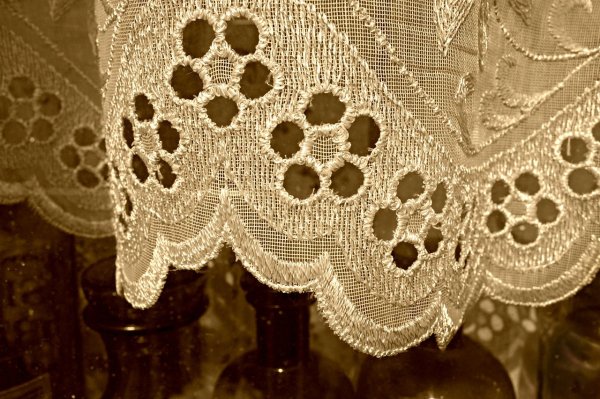
Meet at the Pub on Rua de Lisboa (the One with the Lace Curtains in the Windows) – Jenny Wong

Eve sits at a table, waiting for Mack, watching the pot lights shed a holy golden glow across the bar. Ever since she met him, she’s always been the one who waits. Booze-saggy shelves line the back wall, a haven for near-empty bottles with a little bit left to give. The blotchy yellowed ceiling reminds her of a Rorschach Test done up in sepia and old smoke. She sees why he picked this throwback bar. Cigarettes were still allowed indoors.

When Mack arrives, his face is backlit in white-washed sunlight, but she knows it’s him. He still opens the door with a sleeve-covered hand, still wears that black leather jacket.

She waves him over and they attempt to mimic the patterns of old friends catching up, a handshake that leans into a hug, the loud awkward sound of a chair being pulled out. Conversations begin, filled with words and topics that belong in a pamphlet for middle age. Mid-sized sedans. Half-bath renos. Disneyland vacations.

He has a beard now. It lies across his face, shaggy and Brazil-shaped, with a bristle of white whiskers that zigzag through like a snowy mountain range. His thinning hair is combed back in scalp-revealing streaks. And he laughs differently. A short spasm. Hot blown air kicked out the throat. Although, she shouldn’t judge. Eve looks down at her white shirt, stomach pooching over her belt like a half sack of flour, expanding beyond the trim margins of her youth.

She can still see the old Mack if she squints hard, blurring the man across the table into a technicolor silhouette, still see the soft brown eyes that lit up right before the inevitable kisses, or the times when she smoked and he said she looked like the cover of a Joni Mitchell album. Eve quit smoking after he left. That was ten years ago.

The conversation slows into uncomfortable stares and twitching fingers. Mack excuses himself to go to the bathroom, leaving his cigarette smoldering in the table’s grungy plastic ashtray. Eve sighs and stares overhead. The water stains on the ceiling linger like rusty old ghosts, silent witnesses to the countless sputterings of two old flames reuniting without any chance of rekindling. How long before the cost of a strike wasn’t worth the chance of a spark?

Eve throws a few bills on the table and heads out the door. She blinks in the sudden daylight, breathing in the smell of new sunlight on warm pavement, leaving behind the dingy lace curtains to waft in the windows like empty old nightgowns with no more stories to tell.

Jenny Wong is a writer, traveler, and occasional business analyst. She resides in the foothills of Alberta, Canada and tweets @jenwithwords. She is currently attempting to create a poetry collection about locations and regularly visit her local boxing studio. Recent publications include Claw & Blossom, Atlas & Alice, Whale Road Review, Lost Balloon, and FlashFlood on the 2020 International Flash Fiction Day UK.

Image via Pixabay
Post-Apocalypse – Neil Fulwood

These are the landscapes of abandonment:
towns and roadways shattered, office blocks
reduced to rubble, a few rusting hulks
in memoriam industry: a smelting plant,

a derrick half-melted by the atomic blast,
twisted remnants of trucks jackknifed
on desert roads. Fuck all’s survived
that justifies itself. The sky’s overcast

and everything has the pallor of ash
or graveyard dirt. Currency is whatever
can be eaten, drank or bartered.
Books, music, film: things of the past.

There’s only this: the buzz-rip of a chainsaw,
the scream of an engine revved too hard,
the metallic snick of a cartridge
racked into a pump-action shotgun. Law

in this bone-dry hinterland is determined
by who has the most ammo, or access
to fuel. Because nothing says post-apocalypse –
nothing presents a more unifying thread

in these kind of films – than the notion
that petroleum is still available, that
oil is to be had, and precision turned parts
just lie around as if an automotive ocean

had discharged the flotsam of quad-bike/
dune-buggy hybrids decked out with
the accoutrements of the gun-ship
or armoured car. This is what the future’s like:

a closed-down, half-demolished industrial estate
repurposed as arena. Chose your weapon:
crowbar, wrench, knife, length of chain, gun.
Tonight’s entertainment: oil, blood and hate.

Neil Fulwood was born in Nottingham, where he still lives and works. He has two poetry collections with Shoestring Press: No Avoiding It and Can’t Take Me Anywhere. He also co-edited the Alan Sillitoe tribute volume, More Raw Material.

Image via Pixabay
Rickets, Crickets – Annabel Banks

I got the lizard Sunday morning, driving in silence until I pull up to the guy’s house. He invites me in, coughs wetly into his hand, and leads me straight to the tank. ‘This is Barry,’ he says. The picture in the advert had been blurry, taken from above, and so it’s a surprise to see the thing is actually beautiful: a buttery hue, with black accents to the tips of the crest, and finely made toes that taper into excellent nails.

‘Sorry to see him go, to tell the truth,’ wheezes the man, own eyes red and dripping. ‘Have to move nearer the hospital, and got no time to be a fusspot about pets.’ He strokes the beast on the back of its head. ‘Moving is hellish at the best of times, ain’t it, Barry?’

The lizard is still, quiet under the man’s attentions, but his golden eyes are on mine.

‘I love him already,’ I say.

Cash is handled, Barry is boxed, and I pack the glass tank, heat lamps and thermal pad into my car. The sick man throws in a carton of live worms, remembering at the last moment that he has a bag of frozen crickets, which will surely defrost on the long drive home, but that’s probably okay. They will freeze again just fine.

‘We will order lots of yummy things for you when we get home,’ I tell the lizard, who is travelling on the passenger seat. ‘Don’t worry. Soon be there.’

He’s just chilling in in the cardboard box, with barely a scrabble in reaction to his whole world coming apart. I admire that so much, you know? The fortitude, I mean. This lizard, is gritty as sand, tough as reinforced glass. He has no fucks to give.

* * *

Because ‘Barry’ is an unsuitable name for a lizard, I change it to ‘my unjustified self-hatred.’ This means that I get to say things like ‘my unjustified self hatred kept me awake all last night,’ and ‘my unjustified self hatred’s eating habits are a concern.’ Quiet and clean, he spends most of his time dozing under his sun lamp, scales glowing with warmth. Should he become bored, he undertakes a touch of decorating: moves his wood, shuffles rocks and sand. I like to watch him as I dry my hair. He likes to watch me get undressed. Sometimes I will dance for him, a little shimmy and a striptease before bed, but we both know this is mere comedy, not something to get upset and argue about. ‘We don’t need that kind of aggravation,’ I tell him. ‘We’re happy as we are.’

* * *

My sister says I should exercise. That, after a thirty-minute period of jumping and kicking, I would feel more in control, be able to sleep until rested, eat until satisfied. ‘You need to start looking after yourself,’ she says. ‘No one else is going to, are they?’

‘No.’

My sister has a way of tutting that makes me want to headbutt the wall. She does it, then adds, ‘You’re coming apart at the seams.’

‘My unjustified self-hatred never makes comments like that.’

‘What did you say? The line’s bad.’

‘Nothing.’ The phone is on speaker, because I’m painting my nails as I talk: a shining gold to compliment his eyes. ‘But he wouldn’t. He’s got my back.’

‘Oh? Who’s this, then?’ Her tone has changed, and although I can’t quite put my finger on why, this makes me want to cry. ‘Finally found someone supportive, have you?’

‘Yep.’

A childish squeal, a beg for a name, but I’m already changing the subject. My sister lets me. She loves me very much. And I don’t like lying to her, and yet the truth is he’s not being supportive. How can he be, when we never talk? I fetch him his dinner and, while he eats, take myself away to sit in the other room, double screening reality shows and the socials of reality shows, but eventually find myself drawn back to his absence, his fascinating disdain.

* * *

I’m browsing the forums when an advert pops up. Tank, lights, two bags of food and the leggy wonder that is ‘Khalesi’, all together for a knock-down price, and only a thirty-minute drive. This could make all the difference, I think. This could be what we need. Khalesi is a dumb name for a spider, so on the drive home I rename it ‘my fear of being judged’. Phone calls to my mum and dad become a fist-biting, giggling mess. My fear of being judged is hiding under a rock. They ask me about work, about movies I haven’t seen. My fear of being judged is scuttling into the darkness. They ask if I will invite my new man, the one my sister’s been brim-full of, round for dinner. ‘He sounds good for you,’ they repeat, ‘after all those lame ducks and scoundrels. He sounds stable.’

‘Oh yes, he’s extremely stable,’ I reply, eyeing the low legs, the weighty tail that narrows into the sand.

‘How lovely,’ they say. ‘Well done.’

* * *

My doctor says I should exercise. My blood tests are a shit-show of cholesterol and vitamin D deficiency, so I’m breakfasting on oats, knocking back nuts and making sure to swallow a daily dose of distilled sunlight. To be honest, I’m finding it hard to concentrate. Words are hard to locate, I keep losing my phone and my fear of being judged is hard to get to grips with. I can’t tell what it wants, for a start, and nothing I do seems to make a difference.

No one likes being ignored, so I start playing with the conditions of the tank, cooler and warmer, more food or less, trying to get it to do something other than sit in the shadowy corner waiting to be fed.

My parents tell me to get some exercise. Instead, I invest in a microwave rice cooker and think about my protein sources. Beef is out, because we all said we’d stop eating it until the rainforest fire was dealt with, and that was ages ago. I open the freezer, play Tetris with frozen falafel, the frozen chicken curry, the frozen crusts of bread, then grab a handful of my unjustified self hatred’s crickets. They defrost on the counter, unpleasantly crunchy and cold.

* * *

My fear of being judged died today. I went to the tank and it was all curled up, legs folded neatly under the furry body, ready for death’s great web. Weeping, I break the news to my unjustified self-hatred, who, of course, says nothing. But I know we’re on the same page. I give him the little corpse to eat. He gives me a golden blink, which is not what I need, but not nothing: a drawing of the sun.

Annabel’s work can be found in such places as Granta, The Manchester Review, The Stockholm Review and 3:AM, and has been broadcast by the BBC. Her debut collection of short fiction, Exercises in Control, is available from Influx Press. She lives in London.

Image via Pixabay
Old News – Amanda Pampuro

Man Arrested for Traveling to 6th Century Ill

LONDON 2332 (AP) – Authorities apprehended a man outside Cornwell on Tuesday after he infected a famous 6th century castle with the smoky flu.

Caused by a novel pathogen, the smoky flu has infected 3 million people since September, and killed 200,000. The British prime minister enacted a stay-at-home order and closed all timeports on Sunday to prevent further spread of the disease.

Terry Idle, 23, left for a holiday in the 6th Century on Friday, apparently unaware that he was a carrier of the disease. He passed a basic health check at the timeport, which was not testing for the smoronavirus, the organism that causes the disease. According to Heathrow, he exhibited an average temperature and clear eyes.

Shortly after arriving at his chalet, Idle reported feeling nausea, but attributed it to the travel. He drank half a bottle of local mead and fell asleep. He woke up with a headache, but blamed the wine and the humidity.

According to friends and family who were aware of the trip, Idle was on his way to the legendary Tintagel Castle to watch a tournament held by King Arthur to celebrate victory at the Battle of Arfderydd.

The brother kings of Efrog slayed Arfderyddian leader Gwenddoleu ap Ceidio during the battle, furthering the rein of Arthur. The slain tyrant’s bard Merlin returned after the dust had settled to pledge his allegiance to Arthur King of the Brits.

There was a great reenactment of the battle at the tournament, and Merlin demonstrated his magical powers through what was recorded as, “fierce plumes of fire,” but are now known to have been common fireworks. The festivities concluded in a six-day feast, which time-tourists are permitted to participate in, however the battle is strictly off-limits.

In addition to traveling while ill with a contagious disease, it is against the law to interact unnecessarily with civilizations that have not signed onto the Global Temporal Trade Agreement. Very few pre-industrial societies have agreed to GTTA pacts, but exceptions have been made for moments of historical importance.

The investigation into whether Idle followed all other rules remains ongoing. He wore a regulation chartreuse tunic with burlap pants and curled poulaines provided by Timeless Threads for the trip.

The escort he procured called herself Lady Isoude of Gaul. She told investigators that Idle seemed to be “all roses and sun rises,” when she met him, until well into the second day he began, “coughing such a cough that he emptied two wineskins without quenching his thirst.”

Pressed further, Lady Isoude said, “The cumfeorm was a bit of a dalcop, the kind kicked in the head by an ass’ hoof, but methinks his breóst-hord is true and true, even if he acts like a frumburdling in the market ogling the earth-apples and going all gleo-dream over the lute players. A laughter-smith he were, whether he meant it or not, Terry tha’ Terrible, wasn’t terrible t’at all, but what else were we to call him?”

Investigators released Isoude’s transcript edited for clarity and brevity.

By Isoude’s account, Idle told her he was a lorthew—a word translating to teacher-slave—ordered to bring novelties from Tintagel Castle to his aristocratic student, an invalid bound to his chambers.

Lady Isoude led Terry tha’ Terrible to all the noble places she knew, and when they took their seats at the tourney, “what happened was the gesibsumnes and gleo-day all came apart. Insticce hit me whole body as Terry tha’ Terrible got a vile look in his eyes, all dark and night-like, and the throat-roars got louder, and he’s sprewing head-tears and nose-juice round and round.”

Acting quickly, Isoude led her client to a nearby brothel and procured a room with a pot and ale-skin.

Other witnesses at the tournament report the undoing of the play, as knights collapsed in their armor and dozens of horses leapt the fences and fled.

“Black magick be about,” warned a chestnut salesman to investigators. “Since the day of the tourney, that ealdor-bana spread in the wind from house to house. Methinks it was the sorcerer, getting revenge for the slaying of his king.”

The town surrounding Tintagel Castle seemed rather divided as to whether Merlin was the cause of the plague, or should be praised for developing a cure.

Interviewed by investigators, Merlin warned that the disease was not of their world and advised the king to contain it, least it infect the entire country, advice which Arthur heeded.

An Oxford historian alerted authorities to the sudden record of an outbreak at the castle. Upon investigation, the scholar’s worst fears had come true: someone had successfully transferred the modern smoky flu to the past. With the 2019 SARS-Cov-2 and the strange pox outbreak of 2255, this is not the first known instance of temporal disease transfer, and many temporologists argue that stricter travel policies are needed to prevent further spread.

“At the very least, we need a week-long quarantine on either end of the trip,” said Dr. Robert Smith at the Oxford School of Quantum Leap. “If you have finances to go leaping into other civilizations, then you are wealthy enough to do it right.”

A team of reconstructionists at the National Bureau of History will determine whether or not corrections are necessary once their own investigation is complete. The bureau will hold public commentary next week, which is expected to last several hours.

“We need to protect people both past and present,” explained bureau chief Albert Hawking. “Since we do not understand the consequences this might bare out, we must restore what we can and seal off the period to future visitors.”

These types of conservative policies are often met with scrutiny from liberals.

The Free Time Coalition announced a loop protest.

“While what happened to Camelot is nothing short of tragic, we cannot allow unelected bureaucrats to redesign our historical record as they see fit, to benefit an arbitrary measure of temporal purity,” the organization’s president, Vera Rubin, said via the loop.

Idle’s attorneys declined to comment for this story, except to say he denies the allegations will release his own account of what happened once he has recovered from his illness.

If found guilty, Idle faces a £3 million fine, up to 50 years in stasis, and the loss of temporal privileges all together.

Amanda Pampuro cut her teeth reporting for the Marianas Variety in Guam and is now the Colorado correspondent for Courthouse News. She sneezed into a plot of dirt last month and recently found something like carrots growing.

Image via Pixabay
The 5-Minute Emotional Workout – Giles Montgomery

Welcome to the 5-Minute Emotional Workout! Find an uncomfortable place and let’s begin…

Cue unsettling, discordant soundscape.

Okay, first let’s warm up. Think of something stressful – your job, love life, money, the banal futility of existence – whatever works for you.

Got it? Good. Focus on that as you feel your heartrate increase and your chest constrict…

Are the walls pushing in? Awesome!

Now squat down, hug your knees and rock back and forth, get a rhythm going, work that adrenal gland.

And screw your eyes shut as we go into our first…

EMOTION ZONE!

The beat drops, thudding in time to your pounding chest.

You’re eight years old, strapped in the back of a speeding car. Your parents are in the front, fighting. She wishes she’d never met him, he wishes he was dead – and he’s driving! The only thing they can both agree on is that it’s ALL… YOUR… FAULT!

Sound effect of a car crash, the music drops back.

Whoo, what a rush!

Now stand up, clench your fists and hyperventilate. Make sure everything’s good and tight.

Hey, what’s that up above you?

IT’S YOUR GREATEST DESIRE!

The music builds again, this time with a positive feel…

Reach for it! Jump! Feel the hope building!

It’s everything you ever wanted and it’s SO TANTALISINGLY CLOSE…

Record scratch, crowd goes ‘Ohhhh!’

But it’s gone. Next time, right?

Okay, nearly done. Let’s really push that limbic system!

A new, even more intense and disturbing beat kicks in.

Ready? Here we go…

Your friends throw a party, but you’re not invited!

Dinner with your family. Must… suppress… opinions!

You overhear your spouse tell a friend they ‘settled’!

You visit your doctor for the test results, but she won’t make eye contact!

Look at all these perfect, happy people on social media!

You air a problematic take and get cancelled!

It’s not imposter syndrome, you really are a hack!

Your dying father turns to you and… shakes his head in disappointment!

And finally – WE’RE HEADING FOR CATASTROPHE BUT WE’RE TOO DUMB TO STOP IT!

The music ends with a devastating KA-BOOM that reverberates away into an infinite and uncaring universe as you collapse into heaving, snotty sobs of utter despair.

5-Minute Emotional Workout is sponsored by…

Cue upbeat jingle.

When life’s got you down, get back up with the great taste of –

Giles Montgomery writes ads for a living and fiction for joy, previously seen in Storgy, Spelk, fat cat magazine, Tiny Molecules and Reflex Fiction. He lives near London with his family and can be found on Twitter @gilesmon.

Image via Pixabay
Create a website or blog at WordPress.com

Up ↑