White Noise – Christine A Brooks

I want to cover my ears, I want to hum, or sing LA LA LA
loudly
Over your words, your memories, your testimony.

I want to turn up Dylan,
Beatz blasting
Tremblin’
So my mind doesn’t hear your
Thoughts, your recollections,
Your truth.

No
I want to scream, no.
I want to cry.
I want to die.
I want to unhear, unknow and unremember,
Those terrible nights, more than one, more than two,
Maybe even, more than three
When I could not scream, I could not talk, and I could never

Ever tell.

I want to change the channel,
Block out the noise,
I want it all to stop,
Like it did last time, when I

Just pretended it never happened.


Contents Drawer Issue 14

Image via Pixabay

Fool – Danny Beusch

Perched on the rusted chair, nursing my third coffee, thinking. About last night: the worst yet. About what I’m doing wrong. I watch him tame the rampant ivy with Grandma. He looks like any normal seven-year-old. He looks like sugar wouldn’t melt.

‘Good boy,’ she says. ‘They’re sharp. Keep them pointed at the ground. Good boy.’

She wanders into the shed. As soon as she’s out of sight he lifts the shears. The shiny edges dazzle me with sunlight. Seconds later, eyesreadjusted, the blades point at my throat. He inches closer. I grip my mug, legs frozen, palms burning.

‘James,’ shouts Grandma, holding a rake. ‘Point them down, please.’

He drops his arms, runs to her. I inhale the whisky in my drink.

‘Be careful,’ she says. ‘You’ll hurt Mummy. Now come here and help me clean up this mess.’

I cool my hands under the kitchen tap, pour something stronger, worry about what will happen after Grandma goes home.

*      *      *

He kneels in the old ceramic bath, facing the wall, hugging his chest, shoulders tense. Dirt from the garden muddies the water. The dripping tap echoes under the high ceiling.

I soak the flannel and squeeze; water trickles down his back. He flinches, turns, clamps his mouth onto my forearm. I pull but he clings on,piercing skin. I force my fingers between his teeth. Prise open his jaws. Push him away. Stumble over. Run.

*      *      *

Frozen peas numb my arm. Merlot warms my body.

He’s crying so I know he hasn’t drowned.

*      *      *

Back upstairs, the bathroom smells damp. I wrap my shawl tight, smile at the sight of my breath. Smile at the vivid bruises across his sunken chest, the cigarette burns that dot his knees, those bottle-blue eyes, that perfect nose.

‘It’s OK, sweetheart. Mummy’s here.’

*      *      *

He curls up in darkness. Silent. I shut the bedroom window, unscrew the light bulb.

A sob – just audible above the squeak of the lock. ‘You fool,’ I say. ‘Do you think you can win?’ I put the key in my pocket, wipe away tears. ‘You stupid fool,’ I say to myself.


Danny Beusch (@OhDannyBoyShhh) lives in the UK and tells stories. He spends rainy days reading Joanne Harris and Margaret Atwood novels. He started writing flash fiction in 2017

Contents Drawer Issue 14

Image via Pixabay

The Smartest Human – Marisa Crane

Another morning in paradise for Wilder. The fluid cushioning him is warm, and he hasn’t got a damn thing to do if he doesn’t want. He reaches his hand out in front of his face and examines the back of it. It’s pruny from his long soak, the soothing spa session that he fears is coming to an end. Or so he’s heard, anyway. Exactly when is uncertain.

That makes it all the more terrifying.

The Outside People—his Mommy and his other Mommy—always say “soon, oh so soon” and make smooching sounds when they talk about his impending arrival. There is a man who comes round and coos at Wilder as if he’s adorable and tiny like his unfertilized neighbors. The man says things like, “Can you hear me, little one?” He acts like Wilder doesn’t understand the world, but he does, visitor man. He does. He knows that the world is shamelessly uncushioned, that it hurts when people fall down. He knows when the man is about to come over because the Mommies start to bicker. Quietly, lovingly, even, but bickering just the same.

“I don’t trust him, Jenn,” Sonya will whisper. Sonya is the one whose warm, soothing fluid Wilder resides in. The host of his all-inclusive resort. She thinks he can’t hear her if she lowers her voice.

“Alan deserves to know his child if he wants,” is what Jenn usually says.

“Our child,” is what Sonya usually counters, a bit snappy.

“Shhh, we don’t want the baby to overhear any animosity,” says Jenn. “There’s enough of it out here as it is.”

They say this all the time. That the Outside is this drab, almost never tranquil place, full of torrential people who can and do hurt each other. From what Wilder understands, he will join those people and become the hurter and the hurt. Never one or the other.

Always both.

He once tried to draw a flowchart of all the Outside people he knows with his right big toe but he misfired and wound up kicking Mommy in the ribs. I am already a hurter, he thought, feeling quite down about it, but also strangely basking in the camaraderie of the Outside People. But then he heard cries of glee erupt from Mommy’s mouth (that is something he is a bit envious of—this noise-making skill, but alas, one can’t have it all.

He will gladly remain silent if it means never having to erupt out into the world a crying, screaming, bloody mess).

“He kicked! Wilder kicked! I felt it, I swear,” Sonya said. Wilder heard footsteps then Jenn’s soft musical voice. What’s a Wilder? He’d thought, the first time he heard his name.

“Oh my god. Oh. My. God.”

“I know.”

“Also, did you just name our son?” Jenn laughed.

“I guess I did.”

Wilder could detect her embarrassment through the many layers of viscous biology separating them.

Me, I guess I’m a Wilder, the fetus thought. He’s come to grips with the name by now, but it took a while. He’d heard of these things called wild animals, like bears and wolves, and he’d wondered if the Mommies thought he would become a killing machine too. The thought made him nervous, made him grab his toes and squeeze tightly.

All of that is to say, Wilder’s dream vacation is soon coming to an end. In the early days, he’d falsely believed that his amniotic sac was all there was to existence. Rad. The temperature’s always ideal, he’s always satiated if not absolutely stuffed by the tube’s glorious deliveries. No roommates, just some single-cell neighbors whose company he tends to enjoy when they’re not sending his sky (or uterus ceiling, if you will) crashing down with catastrophic news of his eventual departure. It was about three months ago when they gave him a little biology lesson.

“You know you’re gonna have to leave this place eventually, right?” the one egg had squeaked. She’s a bit of a know-it-all, but she means well.

“What are you talking about?” Wilder had asked, placing his hands behind his squishy head, as if he were lounging in a hammock.

“You’re only in here until you’re big enough to join the Outside People.”

The others had murmured in agreement, sending a shiver through his chunky legs.

“Well, uh—when is that exactly?”

Wilder hadn’t been convinced she was telling the truth. The eggs loved to gossip since life inside the ovaries could be a bit dull. And the notion of birth was simply too bizarre to comprehend. Who would leave such a cushy, luxurious environment? He figured that some people—those who had picked the short umbilical cord for sure—lived Outside while the more fortunate ones resided Inside.

The know-it-all had turned to the other eggs and they’d whispered amongst themselves while Wilder leaned against the walls of his sac, feigning casual indifference.

“We think your Birthday Ceremony is in 3 months and 1 week, give or take.”

“My what? Speak sensibly,” he’d said, mildly irritated.

“The day that you are pushed by some mysterious force out of your warm sac and into the Outside. We saw it done once before, long long ago, before the Mommies knew each other.”

“What was it like?”

She’d taken a deep breath and quivered. Wilder hadn’t liked how she looked at him, her eyes uneasy and apologetic. She was usually pragmatic and matter-of-fact, a strict but fair source of knowledge and kinship.

“He screamed like I’ve never heard anyone scream before. There was a lot of blood. I don’t think he survived.” She’d paused. “I hid from the cascading sperm, those handsome fucks, for a while after that. I feared what would come if I hooked up with one of them. I didn’t want the same fate.”

Wilder hadn’t known what to say. He’d looked around at his surroundings accusingly, as if the heated sauna he’d come to call home had now been replaced by a conniving, lying betrayer. He’d now become the hurted. The Outside was somehow capable of inflicting pain from the Inside. Normally he’d consider himself to be fairly eloquent but all he’d been able to muster that day was a simple, “fuck,” then a low, ominous whistle.

“You come out of that hole,” another egg had spoken up, gesturing towards an unbelievably small tunnel.

“There?” Wilder had asked, bewildered.

“Yes, I know it seems insane, but that’s exactly what the Outside People are.”

“That must be a joke. There’s no way my head is fitting through that tiny space.”

The egg had shrugged, as if to say, That’s all I know.

Wilder hadn’t asked for this. He hadn’t asked to enter a world he’d heard so many treacherous and terrifying things about.

Out there, people were killing each other over technology and the lack of technology and breakfast and green slips of paper and love and the lack of love and bad weather and bad hair and games and houses (without lovely fluid in them) and arbitrary borders and beliefs and betrayal.

I refuse to be betrayed, Wilder had thought. When the time came for his Birthing Ceremony, he would simply refuse to come out. It would be as easy as that. He would never be ready to quit that good good and he didn’t see why he should have to.

This morning, about three months after the life-changing discovery, the morning of Wilder’s would-be birth, Sonya goes into labor and nothing happens. Her water doesn’t break, there is no crowning, the contractions don’t accomplish shit. Jenn furiously searches Google for records of this having happened elsewhere. Nada. Just some discussion boards about possible alien insemination.

The doctors, upon further examination, conclude that the baby would prefer to stay where he is for the rest of his life. They deem Wilder the smartest human being to ever exist. Out front of the hospital, they erect a statue to commemorate him. News spreads, and no one is ever born again.

The Earth is very grateful. It blooms like you’ve never fucking seen before.


Contents Drawer Issue 14

Image via Pixabay

Toads – Ellie Rees

I blundered
upon a troop of toads:

not a knot; not one
wore another like a rucksack –
they seemed to be quite self-contained.

Arrested, alert
they faced away from me:
their backs such a vibrant burnt-orange;
I could see their spines and the
warts on their skin;
a synchronicity on the lawn.

There must have been twenty, there might have been more.

Where were they going and
why had they stopped?

Dead leaves from the beech tree, frisked by the wind

landing upright –
an identical tilt

stalk-end half-buried in
the clumps of grass –

or maybe the worms
were pulling them down

down underground
already.


Contents Drawer Issue 14

Image via Pixabay

Pigeon Trouble – B F Jones

I heave myself up the narrow chimney shaft.

Finally, I will find out where all those pigeons are coming from.

Six. Six dead pigeons in 2 weeks.

This chimney is a nightmare. Who wants a dead pigeon falling on them every time they’re planning on making a fire? Not to mention the ridiculous draft that the opening creates. You open your chimney and it blows your front door open.

Kind of like the “Every time god closes a door he opens a window” stuff. Although in this case he opens a chimney, throws a rancid dead bird in your face and opens the front door with such force that the cutlery shakes on the kitchen shelves.

I wonder if it works the other way round? If you slam the front door with great power will it shut the chimney? Maybe I’ll check later. It might amuse Marcia. She’s been so cranky lately. Dreaming of pigeons, the poor sucker.

Climbing through this shaft is harder than I thought. It is a sweaty reminder of my age, my latest birthday having thrown me into the depth of middle age. In my shaky effort to climb up, I can feel how much gut I’ve got, spilled all over my midriff, clinging to my waist.

I shouldn’t be far now. Maybe a couple more feet. Though it is very dark still, and the battery on my mobile and only source of light has run out a mere 2 minutes into my climbing journey.

Shouldn’t the shaft be lightening, as I get closer to the top?

Six. Six bloody dead pigeons in 2 weeks. You open the chimney to make a nice romantic fire for your wife and you end up with a dead pigeon and an argument. As if it was my fault. I didn’t bring the pigeons in there, Marcia.

I’m gonna get it all sorted. I just need to finish climbing up this fucking chimney, get rid of the nest or cadavers or whatever might be up there and then I’ll have a nice fun story to tell the kids and maybe some loving from my cranky wife.

The shaft has narrowed now and there is still no sign of light, just a deepening damp smell. I reach up to gage how far I am and my hand comes into contact with cold concrete.

The chimney is sealed.

Where did all the pigeons come from?

Sudden, inexplicable fear crawls through my body, and the dampness seems now to treacle through my veins along with a palpable sense of doom. Deep breath, calm down, and climb down.

The story to the kids won’t be as fun and I’ll probably have to settle for a sexless marriage, but at least I will no longer have to experience this cold, narrow abyss.

Climb down. Slowly.

I can hear a noise echoing through the shaft. A crunching noise followed by the sharp metallic thud of car door closing.

Marcia.

She’s angry. I can tell from the clattering of her heels, and the vigorous shutting of the front door. In the kitchen, the cutlery cackles, and in the lounge the chimney hatch slams shut.


B F Jones is French, lives in Surrey with her husband, 3 kids and cat and works as a freelance digital consultant. She has book reviews and stories published on STORGY. She also had stories commended by the R. C. Sherriff Trust and LISP.

Contents Drawer Issue 14

Image via Pixabay

The Spirit of the Wooden Box – Mark Tulin

It took me until I was sixty to appreciate you. It’s a shame that you had to die before I could acknowledge your impact on my life. Too bad you’re in a wooden box now in the living room, all ashes, just a spirit of burnt remains.

Now that you’re dead, I can barely hear your cries. There’s no anger. No unmet needs or disappointments. No crazy garbled words or high heels whizzing past my forehead through a bay window falling onto the street. No telling me to sit up straight in a chair or to read the Home and Garden section of the Sunday paper or chastising me for wearing the color blue in the house. Just your pure memory lingers, the good overriding the bad. The essence of your perfect version.

Every time I look at the wooden box that sits on the drawing table, I hear a quiet voice, no longer screaming or tears streaming down your face. No longer talking in riddles, playing the victim, complaining about things that no one cared about or even understood.

There is only silence without breath. Your quiet spirit hovers in and around the wooden box and watches me prepare your favorite dinner: pasta in red sauce, a baguette, a bottle of Chianti. Your spirit keeps me company, my ally, and my honored guest. When I interact with the insurance adjuster, you help me calculate the numbers. When I inhale my Albuterol through a nebulizer, you encourage me to take a deeper breath. I can finally tolerate being close to you. No longer do I have to create distance or drink myself to sleep to get you out of my head.

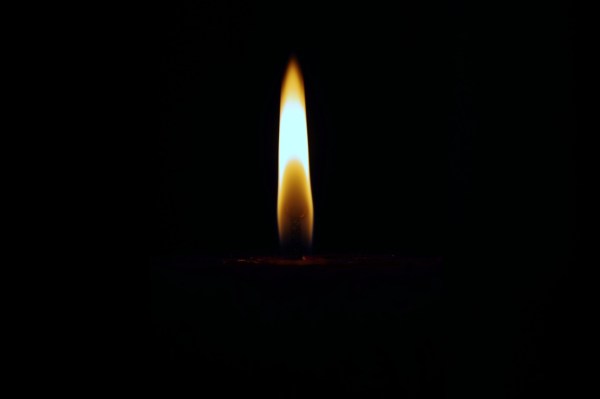
The wooden box has a Yahrzeit candle burning above it with a trail of black smoke rising to the ceiling. Whenever I see that candle flame flicker, I think of you praying for my deceased father over the kitchen sink. I watched your trembling hands clutch a prayer book, your parched lips muttering a chant in Hebrew, your eyes closed while rocking back and forth like you were at the Western Wall of Jerusalem.

Next to the burning candle is the image of you as a teenager, posing on a stoop with long brown hair, wearing a high school letter on your sweater, and resembling a young Elizabeth Taylor with a closed-lip smile. You were surprisingly beautiful then, seemingly had the world at your fingertips with a clear plan about your future. You wanted to write brilliant poetry and short stories that would make people see the world from a more compassionate place. Then you met a man, convinced yourself that you loved him, had a baby and then lost your mind. The photo makes me think of what might have been if you hadn’t gotten married and settled for a muted life, taking care of a man who never encouraged you to follow your dreams.

“You don’t have to feel sorry for me or worry anymore,” your spirit whispers.

“I can’t help it,” I say. “You seemed so vulnerable, barely five-foot tall, and I feared that people would take advantage of you.” But then I realized that you were far from incapable of taking care of yourself. You launched Coke bottles at a bully across the street that teased you for the way you dressed. You threatened to break a car window with my Louisville Slugger when a neighbor walked on your flowerbed. Despite your diminutive size, you were as fearless as a pit bull.

You spirit whispers to me not to betray myself or to deny who I am.

“Don’t question your intuition,” you say. “Live the kind of life that you dream about. I weighed myself down with fear, but you can rise above it.”

I stand motionless, lightheaded with nostalgia. I see you clipping my mittens to my coat sleeves and opening up a can of Campbell’s Tomato Soup to go with the grilled cheese sandwich browning on the skillet. I see you push me down a snowy hill in a red Flexible Flyer, watching me until I make it safely to the bottom. You take pictures of me in the swimming pool while riding a walrus float, sliding into third base under a tag at a little league baseball game, and in my glen plaid bar mitzvah suit, standing awkwardly right after I became a man. With your Kodak camera, you captured all my sacred events and then neatly pasted those developed photographs into an album, chronicling my life’s story with your stamp of approval.

I stand in front of the wooden box, now, acknowledging all the things that you did for me, feeling guilty that I never returned the favor. I always focused on your insanity, never on the person behind the crazy talk.

“I wish I could do my childhood over,” I tell the spirit of the wooden box.

“It’s not about me. It’s about you,” the spirit answers.

I nod my head. I tap lightly on the wooden box. The Yahrzeit candle flickers with a beautiful orange flame that reminds me that you are still here.


Mark Tulin is a former Philadelphia Family Therapist who now resides in Santa Barbara, California. He writes poetry and fiction and is currently looking for a publisher for his novella. His chapbook, Magical Yogis, was published by Prolific Press (2017). His stories are in smokebox.net, Page and Spine, Friday Flash Fiction, and others. His previous Cabinet story, “Weekend in the Suburbs” can be heard in podcast form at Other People’s Flowers, His website is the Crow On The Wire.

Contents Drawer Issue 14

Image via Pixabay

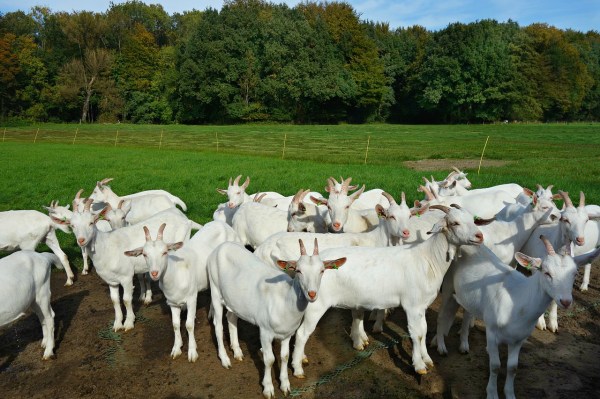
Chickpeas – Qurat

My mother once told me
that goats have to be fed carefully –
that all too often, upon finding a bucket of chickpeas,
whether dried or swollen with water
to twice their size, bloated,
they gorge themselves, eating senselessly,
until their insides burst.
Not for lack of intelligence –
maybe the opposite,
barely chewing their chickpeas
before gulping them down, even though they
scratch against their throats on the way
down,
barely breathing in between mouthfuls
anything for something,
even if it hurts –
I’ve gotten too good at the dark
too used to my serrated silences,
uninterrupted by the stream of rotating images
and sounds, which I can hardly piece together
before they’re gone (not that I would),
the chickpeas are burnt, it’s all smoke, everyone’s
killing themselves slowly (it’s the only fashionable way)
and wondering why they aren’t dead yet
and wondering why they aren’t alive
and wondering if everyone else is
wondering the same thing.
I can’t seem to get myself
to burn.


Qurat is an engineering student, an avid environmentalist, and an emerging author. She has work forthcoming or currently in The Evansville Review, Augur Magazine, Tenth Street Miscellany, The Temz Review, Rag Queen Periodical, Yellow Taxi Press, and KROS Magazine. Find her on Twitter: @DQur4t.

Contents Drawer Issue 14

Image via Pixabay

Keeping Up With The Joneses – Alva Holland

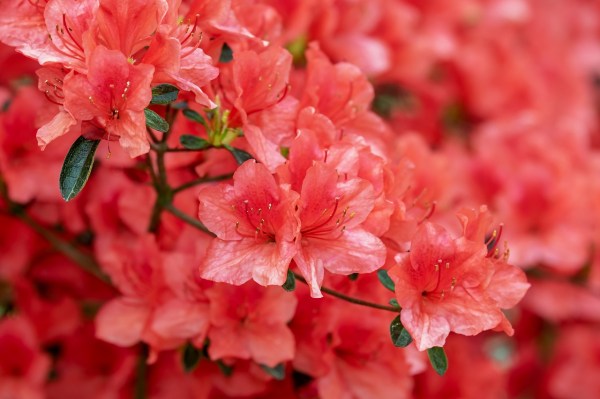
Banks of scarlet azaleas and cerise rhododendrons mark the driveway to the double garage of No. 7 Maple Way. Mr. Powers nurtured the shrubs from cuttings and is proud of the privacy his colourful hedges provide for his double-fronted detached residence.

Next door at No. 5, single-garage Mrs. Johnson thinks her hybrid fuchsia and cotoneaster are far superior to her neighbour’s efforts in terms of display and colour. She covets her secret source of quality fertilizer which she refuses to share with No. 7 in case his display should surpass hers in terms of admirability as people pass.

No. 3’s triple-garage, vintage car owner, Mr. Bailey doesn’t like flowers but has a lawn fit for a Queen. Mrs. Johnson watches him vacuuming the leaves, almost reverently, each Saturday morning. She secretly envies his gleaming edge-cutters – a thing of shining beauty, glimmering in the summer sun as he creates the perfect right angle to his precious carpet where it meets the driveway leading to the polished doors containing his venerable collection.

No. 1’s granny-flat-instead-of-a-garage Mrs. Jameson is a container gardener, with terracotta pots full of brightly coloured bedding plants spilling over onto lustrous grey pebbles and glorious hanging baskets adorning the fascia board. Young widow Mrs. J and her elderly mother tend the baskets and pots in a prayer-like fashion.

Maple House sits at the end of the road. The house doesn’t have a number because it used to be the only house in the area before the wealthy owners died leaving it to a good-for-nothing son who wasted his inheritance. The estate ended up being sold to a hungry developer who converted the sweeping driveway to a wide two-lane road, split the estate into lots and sold them off to the Powers, Johnsons, Baileys, Jamesons and their like.

The competitive street befits the Jones family who’ve recently taken possession of Maple House. A sweeping renovation has commenced. The neighbours will spend the next year striving to keep up.

Winter arrives.

The Neighbourhood Watch man patrols.

A heavy snowfall blankets the estate in anonymity.

Every house now looks the same.


Alva Holland is an Irish writer from Dublin. First published by Ireland’s Own Winning Writers Annual 2015. Three times a winner of Ad Hoc Fiction’s flash competition, her stories feature in The People’s Friend, Ellipsis Zine, Train Lit Mag, Stories for Homes, Brilliant Flash Fiction, The Cabinet of Heed and Jellyfish Review.
Twitter: @Alva1206

Contents Drawer Issue 14

Image via Pixabay

Worm Season – Traci Mullins

I’ve hated worms since I was seven, when Billy Gentry hid one in my unsuspecting sneaker and I threw up. The riskiest worm season was during the spring rains, when they’d creep out in droves from wherever they lived and slime their way across the sidewalks. They were repulsive, plump from yeasty new soil, and wiggly, like they had a new lease on life. I coped with them by pretending I was a frog, keeping my eyes on the pavement and playing worm hopscotch. Only once did one get the better of me, squishing underneath my new pink Mary Janes and setting off a fit of ew, ew, ew, ew! I heard the neighbor guy snicker and gave him a killer scowl.

I still hate worms. You’d think I could spot one from 100 yards, but no. When Alex crept into the hollow place my absent father left inside me, I didn’t even notice. He lured me with his bedroom eyes and seduced me into forgetfulness. I thought I’d learned my lesson from the chain of fools who’d come before him, but no. Alex scrubbed my memory with soapy charm and slithered in unnoticed, like a worm vanishing into the grass.

The first time he punched me, he looked stunned. He said it was the first time he’d hit a woman. I should have demanded proof, but no, I took his word for it. He was on his best behavior for months before he struck again, this time by hurling a saucer-shaped iron weight at the bridge of my nose. He stumbled toward me, crying, begging my forgiveness. I screamed at him to not lay a finger on me and drove myself to the hospital, my blood gushing like worm guts. The x-ray revealed the chips of bone, but not the daddy-shaped hole I let Alex crawl back into one last time.

The next time he detonated, I was ready. The knife sliced through his center and I cut him in half. I spit him out and vowed to be done with worms, finally plump within myself.


Traci Mullins writes short fiction and has been published in Flash Fiction Magazine, Dime Show Review, Spelk, Ellipsis Zine, Palm-Sized Press, Fantasia Divinity, CafeLit, CommuterLit, and others. She was named a Highly Recommended Writer in the London Independent Story Prize competition.

Contents Drawer Issue 14

Image via Pixabay

Metaphorically Yours – Ben Banyard

like a damp tea towel from Majorca
we are ineffectual
a reminder of happier times

like salt
I only need a pinch of you
any more and my blood pressure rockets

like avocado
you can be insipid
will often spoil a meal

like Colchester
few people know much about us
except that we once mattered

like cricket
I’m slow
and few people fully understand me

like my new trainers
although you’re stylish enough
you cause me discomfort

like Wham bars
your memory of me in the old days
can never match up to today’s reality

like GWR
you’re just as unreliable
despite a recent makeover

like that brilliant chip shop we found in Harlech
I often fancy visiting you
even though you’re no good for me


Ben Banyard lives in Portishead, near Bristol, UK. He’s the author of a pamphlet, Communing (Indigo Dreams, 2016) and a full collection, We Are All Lucky (Indigo Dreams, 2018). He blogs and posts mixtapes at https://benbanyard.wordpress.com.

Contents Drawer Issue 14

Image via Pixabay

How Big Its Smallness – Peter J Coles

They’ve closed off the street. Both ends. Police cars strewn across at angles roped together with yellow tape. The threat of arrest hangs in the air. I want to get home. My dog, my poorly little cream-coloured lab, left alone all day with nothing but her chew toy to feed on. I’m laden with shopping. A rucksack full and two carrier bags in each hand. I want to go home.

“Can I get through?” I say to the policeman, except I have to say it in German and I’m not sure if I’ve said it correctly. He frowns, seems to double in size before my eyes and shouts something, a stream of hot stinking words, that spins me around on the spot.

“I need to go home,” I try, but he shoves me back, holds up a black-gloved hand and puts the other to the gun at his hip.

Moving away, I spot a neighbour standing to the side. An old Turkish woman, a flowered veil framing her face, who I’ve never had a conversation with except to say, ‘Guten morgen’ or ‘guten abend’ as I pass her in the corridor of our building.

“Guten abend,” I say, sidling over to her. She tries to ignore me, to look past me down our closed off road. She’s biting at her nails in rabbit-like nibbles; her cuticles are bleeding.

“What’s happening?” I ask her in English, but she won’t focus on me. She won’t give me the attention I’m after. So I step closer and block her view.

“Hello,” I say, “What’s —”

“No, no, no, no, no, no!” she says, wagging a finger in my face before shoving me out of the way so hard I stumble backwards, the shopping bags like pendulums in my hands propelling me back, only just keeping myself from falling hard into a man behind. His hands are on my back, there to stop us colliding, and chastises me to be more careful, to take this moment more seriously like the rest of us, to which he receives murmurs of agreement.

“Sorry,” I say, turning to look at him with his beer gut distending his stained polo-shirt and his razor-sharp sideburns making his bloated alcoholic face look almost angular.

“I’m just trying to find out what’s going on. Can you tell me?” I ask him, this time in German. German for Germans; English for everyone else.

“Isn’t it obvious,” he replies in English, pointing down the road, flashing anger red. “You only have to open your eyes.”

I follow where he is aiming with his finger, over the heads of the crowd, passed the line of police cars, to the bank of our apartment block, all sandy-yellow against the wet-blue of the tarmac. They look normal. Sometimes, in the mid-summer light, the buildings can glow, radiating a Mediterranean warmth. But in this dull, grey light, there’s nothing special about them at all. I check again to where he is pointing, to make sure I haven’t been mistaken. But I haven’t.

What’s different? What am I not seeing?

Is someone on the roof? A hidden figure getting ready to jump? Is there smoke billowing from a window? Are the police out with the weapons drawn, willing to take someone out? No, none of that.

Everything just seems to be how it always is. In fact, despite the crowd and the presence of the police, the street is so mired in its own mundanity as to look boring, not worthy of this attention, this amount of fear.

“I don’t see it,” I say. The man stares at me with the contempt of someone who is long tired with the stupidity of someone so ignorant. “Help me understand,” I plead, but he just dismisses me with a wave and steps back, mournful, to merge invisible into the crowd that has thronged around us.

I don’t understand. I want to, but I don’t. I just want to go home. To feed my poor little lab out of the tins of meat I’ve brought for her. To pack away my shopping and collapse on to the sofa and remain there for the rest of the day. To forget the day, to let it fade until there is nothing left and I can begin again tomorrow.

I don’t want to open my eyes, I want to close them.

But as I start to pick my way through that mass that has gathered, pausing on their terrified faces, watching bitten lips, and wet eyes, making my way closer to the police barrier, an anxiousness begins to pool in my temples. When I reach it, I shuffle along the front, giving a wide birth to the police who themselves can’t help but snatch glances over their shoulders. I step onto the pavement, pushing my way forward, hoping to get an unobstructed view of whatever the obstruction is, and I find a gap, a space wide enough to see and then…

When I first see it, I don’t.

Not at first.

It was only after does it become clear, and even then it is obscure.

A point, no bigger than anything I’ve witnessed before and yet, when I think on it, I think, God, good God, how big its smallness! How vast its emptiness. How solid can something so devoid of shape be? How endless its limits? I want to get closer. I want to run far away and the more I stare, the more I want to forget what I’ve seen, but also to make it indelible on my memory so that I can tell others about it, forever. Because that’s how long it will take. I will need forever to discuss it, and forever again to never talk about it, to never utter a word about it in case I misspeak and the dishonesty of its truth were to be made apparent.

I drop my shopping bags at my feet and hear glass smash and the pulping of fruit. I step back and merge fearful into the crowd.


Peter J. Coles is a blog editor for MIROnline.org, an editor for The Mechanics’ Institute Review 15, and a graduate of the MA Creative Writing programme at Birkbeck University. He is currently working on his first novel and has read short stories at MIRLive and the Writers Room. Find him on twitter @peafield.

Contents Drawer Issue 14

Image via Pixabay

The Bone Forests – Claire Kotecki

I followed you into the dead lands. Into the bone forests. Just because you asked me to that night.

‘Walk with me.’ That was all it took and we stepped out. ‘Stepping out’. Like in my grandparents’ day. Only it wasn’t and we weren’t walking hand-in-hand. There was no honour in us, at least none that I could see. Still, I followed you.

‘Walk with me.’ Without you. Outside you. But never with you. That was the condition of us. Were we even a ‘we’? Stepping out, like my grandparents, in honour of the question.

Still, I walked with you and you spun me tales. Tales of lust. Tales of a living land where we could build something solid. And so I followed you.

‘Walk with me.’ To a house. A house in a forest. A forest was a home. It was made of bone. Our bone. Blood of my blood. Flesh of my flesh. Building. Growing a thing in me that was you and wasn’t you. That was within me and outside you. That was you, in a way, but you with honour. I hoped for honour. Hope followed you.

‘Walk with me.’ I could see the bones. Trunks. I navigated them without a bone map but I knew that they were dead things. I held a growing thing and kept it safe from their touch. You had fallen silent and I had no space to write the tales to spin the net to catch you before you fell. Falling. You became an echo. A solid thing. A soiled thing. Your body disembodied. As I was more than a body. Less than two. My body a bone cage for a cage of bones that held a tale that hadn’t formed its own echo but that echoed you. It would not follow you.

‘Walk with me.’ I didn’t need to say it out loud. I was more than one. I lost you but you were less than a whole. You gave me a piece of you and I carried it. It kicked me. Kicked so hard it kicked itself out and became its own tale spinning away. It became she. She became it. She was a part of you. You were apart. I could not follow you.

‘Walk with me.’ It was the time of longing. I walked with the hole that wasn’t you. It had shed your bones to the forest. The echo filled it with silence. Silence was loud. I shouted the words into the silence. Come back through the bones. Step out with me. Hand-in-hand. Her hand in my hand. Tiny. Trusting. Flesh of my flesh. I couldn’t let her follow you.

‘Walk with me.’ There was a bone map etched on my heart. She couldn’t live in the dead lands. In the bone forest. I took her trusting hand. I wove a tale to bring us home. To carry her safe through the bone forest. Through the dead lands. To where the solid things were. We collected bones as we walked, filling the echo space with a skeleton. I wrapped the skeleton in memories. Memories that held the shape of you. She recognised herself in them. Her hand in my hand. Tiny. The silence broken by a bone that broke. Snapped. I watched it fall from her as she became less solid. One foot in the echo space. I spun tales until my fingers bled, spinning the net to catch her as she fell. Trunk by trunk. Bone by bone. It was a net of echoes. Woven. I had the bone map. I could keep her safe. She just needed to follow me.

‘Walk with me.’

‘With me me me.’

‘Me me me.’

You tried to catch her bones with an echo. To break the net of tales. To make her yours. I spun as fast as your echo cut the threads of tales. All the time. Her tiny hand in my hand. Warm. Trusting. As we ran through the bone trees to the edge of the dead land. We stood at the margin, she and I and my net of tales holding the bones in. Before I turned my back on the echo, I shouted into the darkness.

‘You will not follow.’

She followed me out of the dead lands. Out of the bone forests. Just because I asked her to that night. The tale was told.


Claire Kotecki is an emerging writer currently studying for her MA in Creative Writing at the Open University. She writes fiction, poetry and creative non-fiction. Her interests lie at exploration around the boundaries of genre. When she isn’t writing, she is a Lecturer in Biology and distance education specialist.

Contents Drawer Issue 14

Image via Pixabay

Meet In The Middle – Chloe Smith

The dew from our coffee cups
Soaks into the oak, a temporary tattoo –
We were here, it says, as the remnants dry
And you lift it to your quivering lips.

I nudge mine, just slightly, with my thumb,
The way you used to tap me, gently,
To bring me out of a restless sleep.

It was always a relief, to have you there –
Now you just leave me be, let me wake up, moist with a cool sweat,
With those nightmares staining the fringes of my mind as I reach out into the empty space –

You haven’t touched me in months.

You eye it, the steaming mug,
A smoke signal, communicating,
More than we’ve done in a while –

I don’t know what the white wisps are trying to say, as they rise, weakly –
But it doesn’t seem like enough.

I pick it up, and notice a pattern in front of us –

A light Venn Diagram, etched almost artfully,
The ghost of our drinks, our last-ditch meeting –

On one side, you, and your soft hand, your fingers almost skirting the outside line,
But still hanging on. Just by a hair, by a nail.

And on the other, me, not even a part of it –

I steady myself
And then let a contender enter the ring

My slight hand, shaking slightly, just edging into the middle
The ring gleaming in the light –

You keep watching me.
I don’t know what you’re thinking,
Maybe of that piece of advice we got given on our wedding day –
I don’t think we were really listening…

Your finger twitches, almost beckons me,
But I was. I laughed it off, at the time.
How would that work?

My bliss was a firework –
Bright and joyous, but not everlasting.
The smoke always lingers, finds you eventually.

We just need to cough it out,
Let it leave our tired lungs…

But now –
Now you need to –

And you do.

In a quick swift movement,
Your hand reaches out, slots into mine,
Like it’s meant to –

Out rings shine together, the sky lighting up
With stars instead.

But in that quick swift movement,
Your elbow
You were always clumsy –

Knocks into our cups, which we’d hurriedly placed down,
Our hands too busy with other things,

And they fall, each in turn, like dominoes,
Like chips –

They paint the faded table a glistening brown,
Rewriting our game with lukewarm enthusiasm.

Somehow it avoids our laps,
And while we let go,
To clean up –

You beam at me,
Match my warmth.
The gleam on our hands reflecting in our faces.

I know we’ll be okay,
That knowledge tickles me as it lights up
The edge of my mind,
As we parrot hurried apologies to the waitress, and wipe each other’s hands.

After all, we have a blank page, now,
We can always play again –
Find each other as easy as breathing, as falling pleasantly asleep,
Now we are here.


Chloe Smith is a disabled writer and poet from the UK. She is a Foyle Young Poet of the Year 2015, and her poetry has been published in Rose Quartz Journal and Cauldron Anthology, with more forthcoming in TERSE. Journal. Her website: https://chloesmithwrites.wordpress.com/. Her Twitter: @ch1oewrites

Contents Drawer Issue 14

Image via Pixabay

Constructive Criticism – Jeanna Skinner

Brenda:
Since starting a romance writing course, I’ve noticed lots of ways I can apply the brilliant feedback to all aspects of my life. Okay, so the cashier in Waitrose looked at me funny when I suggested she was lacking in agency, and I’m not sure my boss appreciated it when I said she needs to stop telling me what to do, but show me instead.

But my sex life – it’s never been better. The other night, emboldened by half a bottle of chardonnay and wise words from my copy of ‘Romance Writing For Beginners’ imprinted upon my heart, I drummed up the courage to talk to Geoffrey about his serious pacing issues. Yes, he was a little shocked at first, but he’s improved so much since. Now he’s hitting all the right beats with every headboard-rattling, toe-curling thrust, and the final denouement is oh-so satisfying. And just this morning, he surprised me when he seemed to acquiesce to my idea of taking our story in a romantic, new direction.
It feels great to be able to pass on what I’ve learnt and help others.

Geoffrey:
Look. I get it. Maybe I didn’t pay her enough attention before, but since Brenda joined that ruddy creative writing course up at the college last month, it’s all she’s carped on about. I wouldn’t mind, but she’s become rather erm, unreliable around ‘ere – and some folks might say, unlikable too. It’s great she’s found her voice, but I do wish it wasn’t quite so snarky.
Anyway, I’ve been reading that ruddy book she keeps leaving lyin’ around, and I can’t make head nor tail of most of it. But there’s this one part that gave me an idea – and Brenda’s all ’bout ideas lately.

So I’ve arranged a surprise for her tonight; I hope she likes it. I’ll try anything to give her the happy ever after of her dreams. Even if it means “your protagonist sometimes has to share the page with well-developed, yet sympathetic, secondary characters”.

Like Miss D’Meanour, the dominatrix from next door.


Contents Drawer Issue 14

Image via Pixabay

Offerings – M Stone

With a razor blade, Jake made a small incision in his mother’s shoulder. She sucked air through her teeth as he pressed a gloved finger against the dark object embedded beneath her skin and guided it toward the opening he’d created, where it emerged effortlessly.

“Got it,” Jake said, studying the bloody thing in his palm. It was black and hard as a stone, about the size of a deer tick. “Mama, you have to see a doctor.”

She snorted. “As if a doctor around here could make sense of it.”

“These… growths seem to form when you’re stressed. Are you worried about something?”

“I’m worried about that creek rising.”

To reach their house, Jake and his mother had to cross a wooden bridge spanning Willow Creek. On his walk home from the bus stop that afternoon, he’d seen the water running high and fast as a result of the day’s heavy rain.

“You got another letter from a college,” Jake’s mother said as he swabbed her wound with an alcohol wipe and applied a bandage. Their gazes met in the bathroom mirror, and he noticed a worry line appear between her eyebrows.

“Mama, that’s just a brochure I sent off for. I won’t even start applying till next year.”

Before she could respond, the phone rang. “I’ll get it,” she said, pulling on her shirt as she left the room. Jake washed his hands and the object he’d extracted.She had no idea he saved each one. Over the past several months, he’d collected at least a dozen in a small jar.

Jake heard his mother’s voice rise in alarm, and he hurried to the living room where she stood at the window, holding the phone’s receiver to her ear. “We can’t just leave,” she said.

He drew closer and could make out their neighbor Mr. Winslow’s voice. “Addie, I’m telling you the creek has jumped its banks, and I’m heading out before it covers the road. You and your boy need to do the same.”

“But it’s never reached the house before!” She tugged at her long braid, the way she did when she was anxious.

“There’s a first time for everything.”

Jake joined her at the window. Rain fell in a blurry curtain, obstructing his view of the bridge, but he could see water edging into the yard.

“Thanks for letting us know, but we’re going to stay put for now,” she said, then hung up the phone before Mr. Winslow could protest.

“Mama, he’s right,” Jake said.

She stared out at the encroaching creek. “We can’t just let our house get flooded.”

“How do you think we’re going to stop it?” His voice was sharper than he intended, and she winced. “I’m sorry, but we should leave.”

She gave her braid a vicious yank, and Jake spotted another dark lump beneath the skin of her forearm. He grazed it with his fingertip, and when she saw the new growth, her eyes widened. “Jake, you have to get it out.”

He led her to the bathroom, trying to ignore the rain slapping the window pane and pounding the roof. As he worked the object from her skin, the power went out.

His mother swore and grabbed his hand, causing him to drop the razor blade. “Promise you won’t leave me,” she said.

“Mama, I’m not going anywhere. If you want to stay, we’ll stay.”

“That’s not what I meant!” Her words betrayed the panic that had lurked beneath her calm surface for months, taking the shape of black seed pearls he couldn’t crush between his fingers.

Jake squeezed her hand until she cried out and struggled free of his grip. “I promise.”

That night he sat on the porch and watched the deluge surround their car in the driveway, splashing the tires as it inched closer to the house. When it lapped at the bottom porch step, he almost called for his mother, but the rain slacked off and then ended minutes later. He went back inside and found her curled on the sofa, her breathing even and deep with sleep.

After Willow Creek retreated to its banks the following morning, Jake made his way to the bridge and stared down at the raging water. Mr. Winslow’s truck approached and halted alongside him. “It’s a miracle you and Addie didn’t drown last night,” the man called.

“Yeah,” Jake said, “a miracle.” He opened his fist and tossed the offerings from his mother’s body into the creek.


M. Stone is a bookworm, birdwatcher, and stargazer living in the foothills of the Blue Ridge Mountains. Her poetry and fiction have appeared in San Pedro River Review, UCity Review, formercactus, and numerous other journals. Find her on Twitter @writermstone and at writermstone.wordpress.com

Contents Drawer Issue 14

The Interview – Lee D Thompson

The Interview

Before the interview begins, you have an opportunity to make any admissions of guilt on the screen in front of you. Please use the e-pen provided and fill in the box.

Thank you. Can you please state your name and date of birth.

Thank you. This interview is being recorded. We are in interview room 7. The time is 21:21 hours on Tuesday 15th March. Can you confirm that there is no one in the room other than yourself?

Thank you. You are reminded of your right to free and independent legal advice. You have chosen not to take that option. You can have legal representation by video link at any time. Can I ask why you don’t want someone to represent you?

Thank you. Your response has been recorded. Please place any hand on the pad in front you.

Thank you. Adjust it a little to the right.

Thank you. That is perfect. You are reminded that your pulse is being monitored throughout the interview. Please place the small green pad at the centre of the back of your neck.

Thank you. That is perfect. Be aware that perspiration and flesh responses are being monitored throughout the interview. I am Version 6.2 of the Virtual Police Interview System, my unique reference number will be digitally stamped onto the interview recording. Body monitor measurements remain confidential and are non-disclosable. Do you understand and agree to continue?

Thank you. Do you agree to any bodily samples being taken from you after the interview has concluded?

Thank you. Do you agree that these samples can be used in evidence?

Thank you for your continued compliance. Please read to me what you wrote in the box before the start of the interview.

Thank you. You may feel a small shock to your body during this process. It is nothing to worry about. It is a normal part of this procedure. Do you understand?

Thank you. Please read again what you have written in the box.

Thank you. That was the first shock. Do you want to amend what you have written in the box?

Thank you. That was the second shock.

Thank you. Please go ahead with your amendment.

Thank you. Much better. You will see a new box appear on the screen in front of you. Please draw what the victim looked like when he was screaming at you to stop.

Thank you. The mouth you have drawn is not open wide enough. I have deleted the first image. Please try again.

Thank you. On the same image you have drawn, please draw what your own face looked like as you were committing the offence.

Thank you. Your eyes are incorrect. I have deleted that image. Please try again.

Thank you. Much better. In a moment, the victim will be brought into the room. Please remain seated with your hand on the pad. I would like you to speak to him and tell him in your own words, how sorry you are.

That is correct, the victim.

I can confirm, the victim. Please remain seated and do not touch the cadaver.

Remain seated.

Thank you. Do you want to add or amend what you have said to him before he is removed?

Thank you. Are you okay to continue the interview? If you need a new pad for your neck, you will find one in the drawer to your left. Moisture levels appear high. A new box will appear on the screen. In it, please draw a picture of the most beautiful place in the world.

Thank you. Confirm, are they palm trees?

Thank you. Palm trees are beautiful. Now, next to the beautiful place please draw what you think God looks like. If you do not believe in God, please draw a beautiful person.

Thank you. Confirm, is that a woman and if it is, is the woman God?

Thank you. The woman is your wife.

Thank you for confirming that she died four years ago. I am sorry to hear that. Next to your wife, please draw yourself.

Thank you. The image has been saved. This image will be emailed to your next of kin. In the box below, please write a message to your next of kin telling them how much you love them.

Thank you. Now, please look at the screen. Remain seated. Your next of kin will respond by writing a message back to you. Please read the message and tell me when you have finished.

Thank you. If you need a tissue, you will find some in the drawer to your right. Now please close your eyes.

Thank you. Please remain calm.

Interview complete. Interviewee photographed in situ and e-mailed to the victim’s next of kin, in line with current legislation.

Time of death: 22:15 hours. Coroner notified. Victim satisfaction survey e-mailed. Interview terminated at 22:16 hours.

Thank you.


Lee D Thompson writes short fiction and poetry in Nottingham, UK. He has previously been published on The Cabinet Of Heed, Algebra of Owls, and Adhoc Fiction.
He regularly writes for Memoir Mixtapes. Twitter: @TomLeeski Web: https://ldthompsonwrites.wordpress.com

Contents Drawer Issue 14

Image via Pixabay

Hamburger Hal – John Grey

Hamburger Hal was Richard Ucci
who grilled patties on a grid of fire,
garnished them with all the fixings,
trucked his miracles around church festivals
and modest fairs in parks and empty lots.
He prayed over his specialties in Italian
as he spread salt on meat like holy water,
a tattooed testament to all his father taught him
about the meaning of “cooked just enough.”
Both generations lie under the soil of St Mary’s
with its faint aroma of barbecue sauce and relish,
their bones united by spatula and fork.
Hamburger Hal lived three blocks
from where I grew up, the side of his van
painted with sizzling meat and onions,
giant bottles of ketchup and mustard,
and a guy in a huge white cook’s hat
who didn’t look the least like Hamburger Hal.
I never had one of Hal’s burgers in all my life
though I know there were some who swore by them.
Richard Ucci claimed to have a secret ingredient
like Coca Cola or KFC though we kids
figured that for a lie, for the Hamburger Hal that
we knew was nowhere near bright enough
to be concocting magic recipes.
He just grilled burgers the same way everybody else did.
But he had a van. He could be America
whenever there was some place to park it.
His competition was candy floss and bounce rooms.
And his late old man of course.
He died young. A tractor trailer crossed the dividing line
and crushed him like a slug.
People still say no one made burgers like Hamburger Hal.
But Hal wasn’t a real person so maybe those aren’t real memories.
I do remember clearly watching dogs chasing that van
and thinking to myself, they’d better not catch up with it
or they’ll be on a bun before the day is out.
You get all kinds of stories about those who put themselves
out there, if only in a small way.
The truth is probably mediocre burgers and no chopped-up Fidos.
But that’s not a good truth.

John Grey is an Australian poet, US resident. Recently published in the Homestead Review, Poetry East and Columbia Review with work upcoming in Harpur Palate, the Hawaii Review and North Dakota Quarterly.

Contents Drawer Issue 14

Image via Pixabay

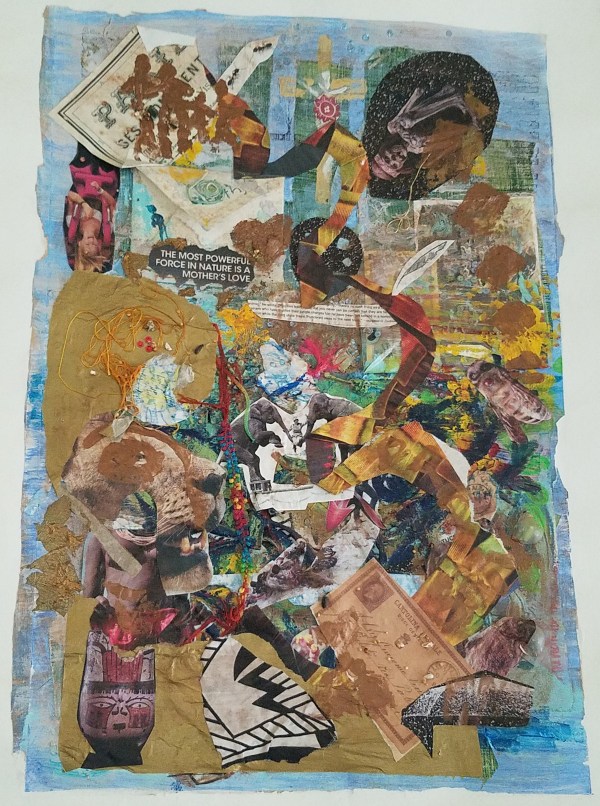
The Making – Amy Alexander

In the beginning,
We stood taller than houses
Three stories hit our shoulders
And we could see the disappearing rim of dirt melting sky.

I wore your shirt for years,
and then sliced through it with scissors
I wouldn’t touch with paper,
cut only silk,
lay the tatters black as blood and bruises down in glue.
Lay down and got dizzy from glue.
Counted how many brain cells I’ve lost to you,
you should have inked yourself in warning,
a permanent tattoo

You complained of me never wearing a watch,
not caring about whether I could beat anyone on a clock
or show up before the starting shot
but, here I was, captain of all that was or will be,
a you you would never recognize,
a woman who seeks,
an asker.

I had to lose you in layers.

In the art of the collage,
last goes first on the page,
for the past,
then come the concerns of the day,
diapers and other loves tended,
my fastening fingers
buttoning shut a sweater
or is that a suit of armor?
A lionness,
a girl balanced between elephants,
a skeleton inside a star womb
to signify the dead.


20180616_123419_Amy_Alexander

Artwork: Amy Alexander


Contents Drawer Link

Amy Alexander is a writer and homeschooling mother living in Baton Rouge, Louisiana with her husband and two kids. Her work has appeared most recently in Mooky Chick, Anti-Heroin Chic, The Ginger Collect, The Remembered Arts Journal, Cease, Cows, and many more. Follow her on Twitter @iriemom.

The Imprint of Leaves – Liz Xifaras

The trees are talking.

Beneath my feet the ground thrums as whispers slither from one to another. No-one knows how they do it. No-one knows how they move.

We came here in search of space; sky between branches and the scent of wet earth. Ground that fermented with the movement of insects, creaked with the growing of plants.

Rory’s idea. We lay in his sour sheets, staring out at the view of curry house walls.

‘Fresh fucking air,’ he said, blowing his morning cigarette smoke away from me. ‘That’s what we need. Bastarding leaves above our heads and the sound of twatting birdsong.’

‘Eloquent,’ I said, dashing for the bathroom. ‘You’ve talked me round.’

‘Christ.’ He stubbed the cigarette out in the ashtray he’d stolen from the Red Lion years ago. ‘You throwing up again?’

Ella’s imminent arrival made the dream more appealing, made it solidify into a plan. Rory waxed lyrical profanities about our child running through fields, feeding lambs and breathing air that was not laced with toxins. He scrolled through pictures of dilapidated farm houses and came home with armfuls of random baby equipment.

‘Look,’ he said, waving a potty with a picture of a yellow elephant on it and a pair of pyjamas at me.

‘You’re getting ahead of yourself,’ I said.

‘They’re cute.’

‘They’re huge. They’d fit a toddler.’

He shrugged. ‘They’ve got rockets on.’

The house was collapsing into the ground, nestling into the hillside, cracked windows looking out onto trees bent to the will of the wind and ground dusted with heather. The air smelled of wet earth. It was bare, and beautiful. It was all we could afford.

Rory filled its crumbling walls with any creature that blinked baleful eyes at him and appeared in need of rescuing; kittens, a scruffy mongrel with wiry hair and overzealous tail. Chickens in the garden. I built the hen house myself.

Ella slept in a second-hand cot in our room, growing from tiny red-faced bundle to fat-limbed toddler wearing rocket pyjamas. Rory picked her up, their two ginger heads touching.

‘Told you they’d fit,’ he said.

‘Two years later.’

He bounced her up and down. ‘And they’re your favourites aren’t they, the ones Daddy chose? Yes, they are. You love those rockets. So you can fly the fuck away from this shithole planet.’

She laughed and reached for his nose. ‘Shithole.’

‘Don’t say that,’ I said, taking her from him. ‘Naughty Daddy.’

‘Daddy,’ she said, clapping her hands.

‘Naughty Daddy has to go to work.’ He kissed Ella and blew a raspberry on my cheek. ‘Bollocks, wrong way round,’ he said, and left.

‘Bollocks,’ Ella called after him.

Dressed in shorts and wellies, she and I fed chickens and collected eggs, weeded vegetables, walked the dog. He scampered far and wide while we meandered at toddler pace, rescuing a grit-crusted worm and watching the slow, droning toil of bumble bees amongst the clover.

We saw them when we reached the hilltop. Down in the valley below, where the trees grew straight and the stream quivered, a bustle of activity so unexpected we both stopped short. Dog cowered behind my legs, half-yelp, half-growl bubbling in the back of his throat.

We had never seen another person on our walks before.

They wore white, head to toe, a bustling body of insects planting saplings. It should have felt benign. One stopped, looked in our direction, brought a white-gloved hand up to shade eyes, and I imagined us silhouetted against the skyline. Woman, child and scared, scruffy dog.

‘Time to go,’ I said, taking Ella’s pudgy hand.

‘Fuckinell,’ she said.

‘Don’t say that.’

The people disappeared but the trees remained. Day after day we watched; woman, child and scruffy dog. Still he growled and barked, bounding forwards and then returning to circle us, though nothing moved down there.

They were spindly at first, branches supple and leaves pale, a translucent green sea, wafting gently, filling the air with a soft swish and rasp. As though you could hear them growing.

Every day they were taller, broader, more widely spread.

Though that wasn’t possible.

But they were. Reaching now to the bottom of the hillside, obscuring the stream. They were like no tree I had ever seen, beautiful branches stretching skyward, leaves shimmering in the sun.

I could not let a day pass without seeing them, drawn to feel their ridges and welts under my palm.

The dog snarled and barked, whimpered and wagged, ran towards them and away again.

Ella remained unperturbed, sitting with sturdy legs out on the scrubby grass, watching silently as branches performed a slow, exquisite dance.

‘What the fuck are they?’ Rory asked, arm around my shoulder, ginger hairs glinting in the sun.

He whistled, moved forward. They were half way up the hillside.

‘They’ve moved,’ I said.

He shook his head. ‘You’re off your shagging box.’

‘They have.’

He wasn’t listening. Hand outstretched, he stumbled forwards until he stood beneath the sprawling branches, face tipped up to see sunlight flicker between them.

I lifted Ella and held her to me as he touched a pale leaf and examined it. The dog, hackles raised, howled and barked and ran to the tree, to Rory, to me.

‘They’re so fucking beautiful,’ he said. Shuddered. ‘So fucking unnatural. Let’s get out of here.’

That night he lay still but breathed fast and shallow, and I know he didn’t sleep. The scent of sap hung in the air around us, the whisper of branches. When I closed my eyes the imprint of leaves threaded across the darkness.

At last Ella stood and rattled the bars of her cot.

‘Mama. Out,’ she said.

I rose, grateful to give up pretence of sleep. Pressing her against me I longed not for her soft, warm flesh but the scrape of bark against skin, the scent of soil and sap.

Rory sat up, hair spiked like a ginger hedgehog. ‘Where’s the dog?’

We walked without need to voice the plan, without questioning it. They had reached the top of the hill.

‘They’ve shitting moved,’ Rory said.

‘Yes.’

The air chimed with the sound of leaves stroking one another, branches reaching out, roots gliding under our feet. Sunlight speckled the ground.

Ella flopped onto the ground with a sigh. ‘Shitting.’

‘Don’t say that.’ The sound of them so sweet. As though they whispered my name.

I heard the breath flow from my lips, watched my own fingers reach out until the nearest trunk lay coarse beneath them. It moved. Just a little – a throb of recognition. Leaves reached down to stroke my face and I looked up, gazed through slender branches to the glimpses of blue sky, and knew this was where I belonged.

The nearest leaf shivered in the corner of my eye, and I caught it, held it. Examined it.

They were like nothing I had ever seen, broad like an Oak, smooth like an Ash, pale as though newly unfurled. Except on this tree. These were edged with a dark red.

‘Look at this.’

Slowly Rory tore his gaze from the trunk, nodded. Eyes large, face pale. He pointed at the trunk, licked his lips.

There was a patch of bark, just above my hand, that was discoloured; grey and damp. The texture dense and rough, different from the rest of the trunk.

My heart crashed. ‘What is it?’

Rory pulled me away. ‘Hair,’ he said.

*      *      *

I must have slept that night. Dreams still scarred my mind; the whisper of roots, call of breeze in branches.

Dawn spilled down the hill and Ella yawned, stood and rattled the bars of her cot.

‘Mama. Out.’

I glanced at her, fat fingers waving, hair spiked like a ginger hedgehog, rocket pyjamas rumpled to reveal a chubby belly.

I felt his absence, the cold, the quiet. He had been gone hours.

Ella looked at me, sighed and sat down with a thud. ‘Shite.’

‘Don’t say that.’ I lifted her, breathing in the warm scent of her morning skin.

‘Daddy,’ she said.

I fed and dressed her, held her to me before placing her in the cot. All the while I imagined the shift of green against sky, the snarl of bark beneath my hand. Her accusatory gaze was tearful, bottom lip sucked in and I knew the wailing was about to start.

‘Mama?’ she said. Crack in her voice breaking my heart.

I kissed the top of her head. ‘You’ll be all right. Safer here.’

She stood and lifted her arms to me. ‘Fuckinell?’

I stroked her face. ‘Don’t say that.’

‘Daddy.’

‘Yes.’

The trees are talking. Beneath my feet the ground thrums as whispers slither from one to another. They have reached the hilltop.

Even now they call to me, my arms reaching to touch them. Straining to hear them whisper.

I struggle to hold onto the image of Rory, ginger hedgehog hair and cheerful barrage of obscenity.

I look for red-tipped leaves.

Enveloped by the trunk, he can still be seen. Face visible, tipped back, eyes closed. Hair spread and absorbed into the tree. What can be seen of his body is twisted, limbs swallowed, just tangled swellings of bark and cloth.

The whisper is strong now and I know, if I were to just reach out, let myself be taken, I would be part of them forever. With Rory forever. Taste the salt of my own tears.

The skin on his face is mottled, crusted and split as the tree invades. I trace his lips, still his own, with my finger. I can barely see through the vision of roots and branches and leaves.

‘Rory.’ Voice thin, dry.

His mouth quivers under my touch. Breath sticks in my throat.

‘Rory?’

His eyes open. A gossamer of fine green lines.

‘Get away,’ he says. ‘Stay away.’

Sap wells in his eyes, tracks slowly down his face.

I nod. Remember him. Laughing, swearing. Smoking. Rescuing stray animals, holding new-born Ella with his face masked in wonder.

‘Fucking love you,’ he says.

I press my lips to his. He tastes of soil.

By the end of the day the car is packed. Cats and chickens freed to take their chances. Ella fed and dressed in rocket pyjamas for the journey.

I don’t know where we’re going. Just away.

She is in my arms and I am about to take her to the car, strap her in. We are ready.

I open the door. Evening sunlight pours in, and Ella reaches for the golden specks dancing in the air, laughs. I can smell sap, hear the melody of branch upon branch. My hands twitch for the feel of bark under them.

Hesitating, I lean against the door frame, glance towards the hilltop. Close my eyes, and a bright, beautiful filigree pattern sprawls across the darkness.

My breath comes slow and deep.

Too late to leave now anyway. Dark soon.

One more night.

Sleep is filled with dreams so enticing that Ella struggles to call me from them.

I am rooted to the ground, reaching deep under the earth, one with the creatures that writhe there. I stretch to the sky, fingertips grazing clouds.

The bars on the cot rattle.

My skin thickens, stiffens and cracks. Hair rustles in the breeze, gaze shows the world through a web of green.

‘Mama,’ she says. ‘Out.’

I am once again in the room with her, groggy from a sleep I do not wish to leave. Still dark.

‘It’s not morning.’

‘Out,’ she says. ‘Mama. Out.’

I glance at her ginger head. Remember Rory. Hold her to me and chase away the night.

She points to the window. ‘Out.’

‘It’s still dark,’ I say. ‘Look.’

I pull back the curtain.

Darkness, but not night. The view from the window is obscured, completely covered with branches, crowding in, scratching the glass.

‘Fuckinell,’ she says.

Green leaves tipped red.

 

Contents Drawer Link

Liz Xifaras is a member of Writing West Midlands’ Room 204 Writer Development Programme. Her work has been selected for Penguin’s WriteNow Live, placed in a number of competitions and appeared in Idle Ink and The Sunlight Press. Find her on Twitter @LizXifaras
 

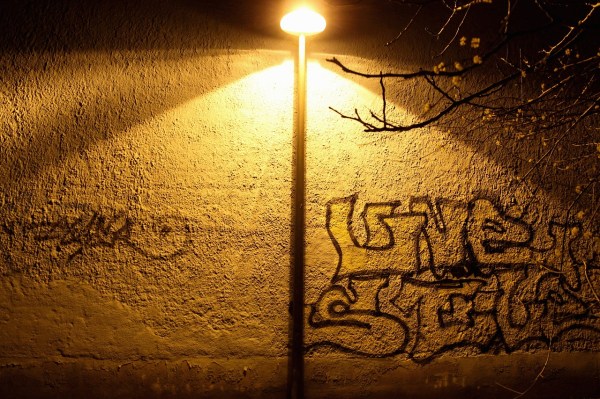
Image: RyanMcGuire via pixabay

A Final Moment in 1911 – D T Mattingly

The sun vanished long ago. A dim street lamp revealed through our blinds what little solace I found in a world of horror. The gleam bled between every crevice, creating a radiance rippling across the face of my beloved. Light. Dark. And Light again. The same pattern every time, I knew I shouldn’t search too deeply for meaning behind the phenomenon, but it was hard not to. To fall asleep unsure of which end of the dichotomy would greet me the following morning, tell me, wouldn’t that frighten you?

Well, it shouldn’t. Not in 1911, where the levels of brightness never mattered. 1911 served as a safe haven, barricaded to repel any misery lingering in the Outer. From what I knew, my beloved and I were the remnants of humanity. No matter the chaos in 1911, the animosity between us, we recognized our roles: Two people destined to get over it, for the Outer would consume us if we didn’t.

Including the Outer, the world was composed of three additional elements—the Light, the Dark, and the Amalgam—1911 resting at its origin.

The Light manifested merriment. Shared laughs. Compromise. Love. Veneration of what slight shimmer endured. 1911 harbored much of the Light that couldn’t be located in the Outer, with an exception to the one street lamp.

Second, the Dark: confinement. Insecurities. Fights. In a room of utter darkness, the blinds completely shut—we had learned to welcome gloom. It never failed to seep into the pores of the living, regardless.

Next, the Amalgam: Or the common fate—a blend of both the aforementioned elements, analogous to mixing light and dark liquor. Sickening. Yet, all-encompassing. If someone didn’t plunge into depravity, succumbed to the dreads of the Outer, then they were probably stuck in the Amalgam.

And, the Outer: or everything encompassing 1911. Deception. Corruption. Plague. Monsters. Genocide. If the worst of 1911 seemed grim, the realities of the Outer appeared similar to falling into perdition. Wicked creatures stormed the planes of the Outer, and only the toughest of humankind could withstand them.

*       *       *

I awoke in the Outer. The muscles around my eyes had grown strong. Without them, I would’ve lost the ability to distinguish between realities or dreams, in a realm of absolute darkness.

I sojourned in the Outer for years. Accustomed to 1911, I nearly forgot how to survive on my own, to hold on to a nullifying humanity while the many Outer entities tried to strip it away.

The vulnerable were prey. ‘Build resilience’, recluses used to say, ‘it’s the only way to persevere.’

Not only were the entities dwelling the Outer ravenous for blood, but they also yearned for a mere glimmer. They’d encircle 1911, so I kept my distance, but it was my time to return. I could feel it, to see my beloved again, even though it was them who exiled me to begin with.

Nevertheless, I’ve proven to withstand the afflictions of the Outer. Surviving with or without my beloved was no longer the concern. I sought only one more day in 1911. That’s all I desired. Only one, and for it, I’d give up more than the sun. And it wouldn’t be the first time.

*       *       *

Bypassing the creatures was easy, at the sacrifice of the remaining light. I smashed the bulb invigorating the street lamp, and in 1911 I breached.

Expecting an overwhelming Dark, I discovered a truth much more agonizing: my beloved gone, as well as the last of luster. Around me, 1911 dissipated, much like panoply sizzling from my body. I’ve never felt so bare. And empty. The Outer won, darkness looming like an immensely virulent pestilence. Hearing the nearby menacing growls, I fell to my knees, with no hope in sight.

Then, a profound luminance penetrated the Outer hills, unveiling the fiendish creatures, scorching their skin as the light strengthened. I experienced a resurgence of a sun I once discarded, simply because I let go of what coincided with the penumbra. Since I destroyed the street lamp.

From then on, I lamented—at a loss. Stuck in a new kind of Amalgam, no matter how prominently the sun shined. My beloved—the vivacity emanated by our single street lamp, it was more than enough.


Contents Drawer Link

Delvon T. Mattingly, who also goes by D.T. Mattingly, is an emerging fiction writer and an incoming Epidemiology PhD student at the University of Michigan. His fiction has appeared or is forthcoming in The Fiction Pool, Scrutiny Journal, Corvus Review, MoonPark Review, and elsewhere. He currently lives in Louisville, Kentucky.


Image: ExposureToday via pixabay

Create a website or blog at WordPress.com

Up ↑