How To Write Well. Or Not. – Mary Thompson

Take magnesium and munch cheese for lucid dreaming. Absorb ‘From Where you Dream’ by Robert Olen Butler. Enter dreamspace. Dreamstorm. Read inspiring material before bed – stuff like Amelia Gray’s freaky story about couple who lock girl in elevator and feed her through hatch, or watch thriller like Rosemary’s Baby – disturbing shit that fucks with your psyche, or see Dystopian Sci-fi like Black Mirror. At 10 switch off gogglebox and retreat to bedroom.

At 2 am wake up. See cat with looming eyes staring down from Rapunzel tree especially designed for indoor cats that you put on credit card last week as felt bad for not letting her outside. Hear loud, wailing miaow. Switch on light and watch as she paws wall. Why is she pawing wall? Can cats see spirits? Who can she see? Wonder who lived here back in the day. After Google Search discover was jugglers and clowns. Feel momentarily happy that flat housed artistic types. Hope creativity rubbed off on you.

Insomnia’s a symptom of periwhatsit. How the fuck are you that old? Want to write a line of story but cat is on you and trapping arm and has blissful look on face like she’s found nirvana. Feel jealous. Wish you could find nirvana. Can’t move her so will story to stay in head till morning. It is morning though. 4.30 am. Two and a quarter hours before need to get up and it’s light. Think it might be moon. It’s not moon. Wish hadn’t taken three sleeping pills as still can’t sleep. Heath Ledger died from too many sleeping pills. Have sudden pain in chest. Should cancel work but won’t get paid and still paying for Smeg-like fridge. How can anyone afford Smeg? If write best seller will buy Smeg. Bet Fifty Shades woman has Smeg, or two. Must have two as millionaire. How the fuck is she millionaire? Need to write. Left it too late.

Message on Facebook. Just check it then sleep. And advert. For medication. Perimenopause. HOW DO THEY KNOW? “Vagiprob.” Side effects – breast cancer 0.006 percent chance, ovarian cancer 0.0000025 percent chance. Hmm. If get that will be awful but will sleep and then dream and then write stories, good ones hopefully and if write good stories, won’t matter if die young as will be fulfilled. Like Amy Winehouse, Bob Marley, Michael Hutchance. Died young but fulfilled.

Need to hear someone with calm voice. David Attenborough. Yes, if watch a few Blue Planets will sleep. Did you know 75 percent of the world is water? All those fish, whales and things nonchalantly swimming along and eating. Did you know blue whales eat krill and have tails as big as dinosaurs? Don’t need purpose and are massive. Why do you even want to write? Can just take baths and eat like they do.

Cabinet Of Heed footer logo

Mary Thompson lives in London, where she works as a freelance teacher. Her short stories and flash fiction have been long-listed and shortlisted in publications and competitions including Flash 500, Fish Short Memoir Competition, Writing Magazine, Retreat West and Reflex Fiction, and are forthcoming at Ellipsis Zine. Follow her @MaryRuth69


Image: Batut15 via pixabay


Dilemma of Knowledge – John Walls

So I find myself sitting on a park bench. I am staring at my phone. And I cannot decide what to do. I have information. Where it came from doesn’t matter. What I do with it could seriously change things. For the better, for some. For the worse for others.

I have the knowledge I need to delve deep into his life. At least, I think I do. A whole notebook full of the keys to his electronic life. And a memory stick. Modernity! Where it has taken us all? There is a startling vulnerability built into how we keep our information now.

Time was, some things were recorded on paper, but a lot of important stuff stayed in memory. Inside your head. And things said… well, they were not matters of record so much as the source of debate. Who said what and when.

E-mail, messenger, texts, recorded phone conversations. Videos, cameras, surveillance, spyware, hacking. The modern age has given us all this. Power to check on one another. The one thing that rather tenuously protects us is a series of codes, behind which we can hide. But if something happens to allow a break-in to the vault of secrets we all carry, what then? It’s like opening a cellar door, or someone pulling back the curtains to expose you, naked before the world.

What am I to do with this? The bastard tore me apart. He took my life, and turned it inside out. And left me in a dark, dark place, teeming with tormenting spiders and their repulsive cobwebs. I was trapped. No confidantes, no freedom to expose myself to the glare of others’ sympathy. I hid it. I just lived in the trap. Stuck, and waiting for the bite that would numb me, like a fly in a web. But it never came. I was not to be consumed. I was a plaything. Fun to torture. No final blow of release for me. I was to be preserved for his entertainment. Only the power of close friends and the courage to expose my plight allowed me to be where I am today.

Alone; or single, anyway. I have good friends, and my children, all grown adults and we remain close. And I am happy. But now. Now. What will I do? Revenge is sweet, they say. A dish best served cold.

There may be nothing there. I might look, but find nothing. Who am I kidding? He was always a creature of habit. There will be a minefield of deadly weapons I will find, if I open all these doors. I have all the keys. Facebook. Instagram. E-mail accounts. A copy of his hard drive. Best of all, if you like… I could access his bank accounts. All four of his accounts.

He left me in penury. Why would I not hit back? I could send him lower than I ever was. Would I enjoy it? This is so tempting, I think I will burst. On the other hand, am I better in ignorance? Where ignorance is bliss, tis a folly to be wise! There may be stuff I’d rather not know.

And I stare at my phone. Smartphone. More power in this slender device than I have ever held in my hand before. I couldn’t do more damage with a Kalashnikov, or a box of hand-grenades.

And I stare at my phone. And I stare at the notebook. And I stare at the memory stick. And I stare at a squirrel, and the dog-walkers. And I stare at the autumn leaves strew all over the grass. And it starts to rain. And I stare at the phone.

And I stare, and I think; and I stare, and I stare….


Cabinet Of Heed footer logo

Image: Lubo Minar on Unsplash

Burnt Umber – Amanda Saint

I smear fake tan from top to toe after I’m finished with my home spa experience, which was nothing like the real thing. The cream is a lurid salmon shade as I squeeze it from the tube into my gloved hand. I hope it doesn’t look like that on my skin. Tonight I need to look amazing. It smells of burnt biscuits, transporting me straight back to Nanna’s kitchen. She always burned everything then blamed me.

Even when that boy at school set my hair on fire in physics class, she said, ‘I bet it was your fault. You said the wrong thing as usual.’

I can still hear that blue flame roaring in my ears. Smell my hair scorching.

Once the tan cream has dried I sit at my dressing table taking tiny sips of neat peach liqueur. Thick, oily, only vaguely reminiscent of the real thing, it coats my tongue and teeth. I smile at myself in the mirror. Nobody to tell me I’m doing anything wrong now Nanna has gone. I don’t miss her.

When I am perfectly made up, so that not a single freckle can be seen, I start on my marmalade hair. It’s been seven years since it burned and it’s finally back to the length it was before it happened. Another sign. I curl it and pin it so just a few ringlets frame my face.

Finally, I step into my dress. Burnt umber satin, skimming over my barely there curves.

This will be the place. I know it. Tonight is the opening night and I can feel it. This is where I’ll find him. All those other places weren’t right for me. But the name, it’s a sign. The sun is setting as the cab approaches the club. There’s a queue outside. A whole line filled with potential flame-haired partners. This is our place. The neon light over the door flashes “Tangerine” in red, then orange, then red again, telling the world that we are welcome here.

As I walk to the VIP entrance a man near the front of the queue catches my eye. He stares as I sashay past and just before the door closes behind me, I glance back. Give the barest hint of a smile.

Much later, he finds me on the dancefloor, presses past me then sways a few paces away, never breaking eye contact. He moves closer, grabs my hand. We dance for just a few moments before he pulls me towards the stairs.

He slams the loo door behind us, pushing me up against the sink, sliding my dress up my thighs. Breath is all I can hear as I reach for his flies. He’s not wearing underwear so I see straight away. My dreams shatter once again. He’s not really one of us.

As the cab pulls away, blue light washes over the inside of the car and the blare of the fire engine’s sirens throbs in my ears.


Cabinet Of Heed footer logo

Bio: Amanda Saint is a novelist and short story writer. Her stories have been long and shortlisted for, and won, various prizes and been published in anthologies and literary journals. She runs Retreat West, which provides creative writing retreats, courses and competitions, and has just launched Retreat West Books indie press.


Image: Steve Allison on Unsplash

Conveyance – Sheila Scott

So, let’s walk through what happens next. The first thing to remember…

Are you just going to sit there stifling giggles? May I remind you that time is of the essence here. Take a look in the mirror. Your host is on the brink and trust me, you do not want to be left hanging. And the time will come when you’ll be helping your own progeny through, so you might want to listen up instead of pratting about.

Thank you.

Oh for Christ sake, show some control. I look like this because I’ve borrowed Great Aunt Marjory. Marjory. Had a real soft spot for your host back in the day, expired ages back…and there we go, yes: the one with the fluff-covered caramels. So get over it and listen up because this is Lesson One.

I can use Marjory because each of our host bodies are surrounded by the imprints of ‘loved ones’ that have gone before. Yes, it is a nauseating expression. Anyway, these memory traces provide a breach making it easier for us to communicate. And they carry an energy residue too, which is always useful.

Mind you, this connection can, at times, permeate the consciousness of the host and create a visual impression. No matter how faint, you can guarantee they’ll get over-excited about ‘seeing’ ex-Uncle so-and-so or a dearly departed spouse. Occasionally, it’s just some random trace linked to location rather than family; cue even more confusion when your host starts babbling on about the old woman at the bedside or the young soldier in the doorway.

Mostly though, there’s no visible projection. If you’re feeling bored, you can have a bit of fun using the trace self to move shit around. Just screw with them a bit.

But it’s best not to waste too much energy.

You’ve got good mileage out of this one. I know we weigh just a handful of grams but, Lesson Two, our time in residence always destroys them. You’ll find some tolerate us longer than others, so point of failure can be really unpredictable. If you get a particularly susceptible one, it’s an early bath. Hmm? It’s a football reference. Yeah, I forgot your host was a science nerd.

Anyway, in contrast, some seem infinitely capable of housing us whatever they do. You know the medical saying “some mend because of treatment, some regardless of treatment and some despite”? Well, I’ve had the odd one that did everything they could to destroy the vehicle and it just got stronger. Go figure.

Watch though; they can wear down by stealth too. This current lot have a real penchant for creating diseases, or enduring habits such as drugs, smoking or alcohol. Yeah, you’d think, but it’s not as fun as it sounds. In fact, it can be a total pisser, especially if you’re getting really comfortable. We put so much into substitution it’s maddening if they then go and move the goalposts. Huh? Yeah, football again.

Still, you wouldn’t believe the changes I’ve seen. Today’s models last so much longer with all the new medications, surgeries, even transplants to combat the inevitable decline. Yeah transplants can be awkward. An extended lease is helpful and small parts like a pancreas or a cornea don’t generally cause any issues, but hearts are a completely different matter. With them there’s always the risk of importing a remnant of the previous occupant and no-one wants a turf war.

Soooo, Lesson Three. Geography of…

Would you leave that drip stand alone and pay attention.

Thank you, Now, where was I? Oh yeah, geography of re-entry is important. No not that way. Where is your mind at? Actual geography, countries and the like. You won the lottery this time with a first station in what they call the ‘developed’ world. Yes, that one is genuinely funny. Being located here means you’ve benefited from all the wealth this half cheerfully misappropriate from the other ‘developing’ cohort. Exactly how they get away with it is something we would embrace, if it wasn’t all falling apart so spectacularly. Point is, things might not be so cushty next time.

Talking of their divisive ways, wars can be tricky. Cue Lesson Four. When this lot go barking and start running at each other with weapons it creates a flitting clusterfuck. Floods the market with millions of us simultaneously scouting for new homes. We’ve had some real corkers: trench warfare in the First World War; challenging times to find a new host.

Science alert. Ha, now you’re listening. Apparently these conflagrations could actually be our fault. Recent research suggests that as we’ve devoured their husks, fragments of our DNA have leached into their fibre and the more they absorb us, the less human they become.

Thought you’d like that.

Similarly, we can develop a temporary affinity for our vehicles but that’s just sentimental hooey, a kind of meta-version of the way hosts develop attachments. Throughout my cycles, I’ve been at countless thank you parties for the corpses of others. Fashions change, as do regional customs, with all sorts of chants and rituals, but it always comes down to the same thing: bury or burn.

That said, I have seen some outliers: one got sent off on an ice flow, whilst another was burned, crushed then tossed in the river. And there was one group with a particular penchant for pointy brick edifices…

But I digress. Ergo, Lesson Five, if you get a say, burning offers the quickest escape. Burying isn’t that much slower but you have to get out before one of their embalmers pickles the exit routes.

Regardless, transition will take a lot of effort. So here’s the trick. Just before the carapace goes down, withdraw all your energy from the extremities and concentrate yourself into the core. Pull yourself together as the humans say.

Don’t science nerds do funny?

Yes, time is pressing. At last, you’re catching on. Okay, Lesson Six. If you remember nothing else, remember this. It’s easier if you behave like an imploding star. Push all your energy out with a concerted heave and the rebound will make the final contracture so much easier. Ironically, this surge fleetingly revitalises the host so they appear to rally just before snuffing it. This often gives a bit of false hope to their nearest and dearest but so what? It’s a mother of a process and we live in a throwaway society.

But then you’re out and, Lesson Seven, it’s time to start shopping around. Admittedly selection can be hard when all you have to go on is a ball of cells. That’s why some of us wait till they’re a bit more formed. Then at the very least you know whether it’s male or female. Gender can make a world of difference in what you have to put up with, believe me.

And be careful. Host development is a complex process and the massive rush of energy as we take up residence can send things awry. I’ve melted a few genes

across the ages, I can tell you. Too much enthusiasm and you’ll be looking for a new home before you’ve even got started.

But when all goes to plan and you’ve relocated, you can just sit back and enjoy it. The early days are my favourite, everything is so fresh and full and giving.

You might not remember it yet, but re-entry is a blast.


Cabinet Of Heed footer logo

Sheila Scott is part writer / part scientist, but most enjoys turning idle thoughts into narratives and illustrative doodles. Based in Glasgow and an MLitt graduate, she’s had work published in Causeway and Qmunicate, has an intermittently hyperactive Twitter account (@MAHenry20), and is currently working on a short story collection.


Image: Free-Photos via Pixabay

Let me know when you get to the twist – Eilise Norris

She lied once to the police; added a crucial two years. The twist is it was unrelated to what came next. The twist is age is about perception, except when it comes to voting or drinking or driving or sex. The twist is he had been perceiving her for more than eleven months.

The twist is her lie permeated each later statement, became a pattern the way one short skirt becomes a uniform, stank like a dead mouse under the floorboards. And she had learned how it felt to be compressed, hands to wrists, love climbing all over her. The twist is police came to his house for some other purpose and it damned her.

The twist is he was her escape from a house where the walls squared her shoulders and she grew listless, cankered; where the windows exploded around her. She told you his name but never how they met. The twist is adolescence begged her, shook her, desperate not to go backwards, and so she fought for the sinkhole in which she stood.

The twist is, afterwards, they made her his protector: the doubt in her shrouding him, and her words no longer her words. The twist is he is still the reason for locked doors.

The grass under the car does not grow back, but she does. She turns golden through that Indian summer, after so many weeks inside. You ask how she is sleeping and she says, fine. The final twist is not an ending; it is the appointment she makes without you knowing. And as you both walk over the late autumn mulch, your talking soft and everyday, she tells you about the chlamydia kind of carelessly. Her laugh afterwards is twisted.


Cabinet Of Heed footer logo

Eilise Norris writes short stories, flash fiction and poetry, but normally not all at once. She lives in Oxfordshire and tweets from @eilisecnorris.


Image via pxhere

Coyote – Ron. Lavalette

Coyote only comes to town once or maybe twice during the tundra months, dragging his game leg and leaving an odd print in the deep snow down by the place where the gray silent river turns toward the north. He’s tired of the hard-won slim pickings starvation diet he scratches out from under the hard-packed snow cover. He’s fed up with putting out a full day’s labor for a three-minute reward.

This time when Coyote comes to town he’s looking for a little something extra; something a cold and half-starved beast can take his time sinking his teeth into. He’ll be out there, relaxed and happy, well-dressed, late at night, smiling and coaxing some sweet piece of easy prey into his waiting snare. Few can resist him or, once he turns on the charm, even want to.

Back in the forest, Coyote always had to take whatever he needed by force. There was neither time nor need for either stealth or finesse. Survival suffered no flourish, no filigree. But here, under the protective eaves of balsam and hemlock, inside the sheltering windbreak of the common town, Coyote could afford the luxury of laying-in-wait, the methodical stalk before the inevitable pounce.

It was weeks before the corpses began to accumulate; weeks before his grisly handiwork became apparent; before the bloodstained snowdrifts, driven by wind, gave up their horrible secrets.

There was massive carnage before anyone even knew that Coyote had come to town.


Cabinet Of Heed footer logo

Ron. Lavalette lives in Vermont. His work has appeared extensively in journals, reviews, and anthologies ranging alphabetically from Able Muse and the Anthology of New England Poets through the World Haiku Review and Your One Phone Call. A reasonable sample of his published work can be viewed at EGGS OVER TOKYO: eggsovertokyo.blogspot.ie


Image: Ray Hennessy on Unsplash

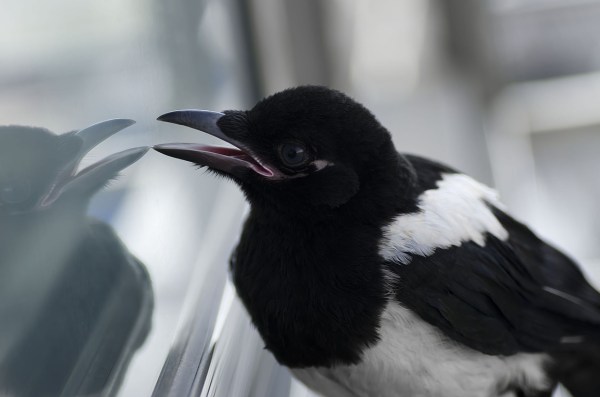
Magpies in Winter – Jason Jackson

They came, at first, to be fed, and Marek was glad of the company. To be home all day with the baby – as he had been for months now – was more difficult than he’d ever imagined, so on the morning he looked out to see these five beautiful birds, all with their heads cocked, all staring up at him from the yard with their glassy black eyes, he welcomed both the novelty and the attention.

He opened the window and threw them the remains of his breakfast – some crusts, an apple core, a small sliver of ham – and they jostled and pulled at each other to get the best of what he’d given. Everyone knows, of course, that magpies can make the most awful sounds of any bird, but all that was to be heard that morning was the skitter and scratch of their claws on the frosted yard. Once the food had gone they took to the air, disappearing into the grey of the January sky as quickly as they’d arrived.

Marek, left alone with the baby once again, sensed the emptiness of the shack, the absence at the heart of his day. Everything was the baby, and the baby was everything.

It was the way things had to be.

Marek slept badly that night as usual. Each time he managed to close his eyes, the baby began to gurgle and giggle, and these sounds soon turned to shrieks and wails if Marek failed to show his face over the rail of the crib.

But as the new day’s sun sketched its light-lines onto thehard floor of the shack, Marek was thinking only of the magpies. The previous morning had been such a welcome change to his routine! Those birds had taken over his thoughts.

He stood from the bed and looked out over the frosted yard.

All five were back again.

This time, though, the birds did not seem as desperate. They stood in a line, heads cocked, eyes black, and Marek heard in his head a chorus of beautiful female voices, entirely in time with one another.

“Let us in,” the voices said, “where it’s warm and we can be with you.”

In a daze, Marek lifted the latch, and the magpies leapt onto the sill as one. He pulled the window towards him, and all five birds flew into room, brushing past Marek, their wings soft against his cheek.

The baby was lying in its blanket in the crib, but the birds ignored it, hopping instead onto the table, where they pecked and poked at some old tin cutlery, and onto the shelves, where they stuck their beaks into the box where Marek kept his dead wife’s necklaces and rings.

They were the only things of any worth that Marek had left.

The voices in his head spoke again, and this time they carried a little more force.

“Marek, we love nothing more than things which glisten, things which shine. Let us take them. Let us keep them. You are lonely, Marek, but we will be your friends.”

Marek had become so used to only hearing the baby’s cries that the words of the magpies were full of wonder and grace. He smiled and nodded at the birds. What use did he have for polished tin? And what was jewellery without a wife to wear it? Better by far to have friends with feathers! Better by far to never be lonely again!

And it were as if the birds had heard his thoughts, for immediately two of them took the rings and the necklaces in their beaks, and the other three a knife, a fork and a spoon. They were up and out through the open window before Marek realised what exactly they’d done, and it was only once they’d disappeared into the grey sky that he noticed the baby, still wrapped its blanket in the crib, crying hard.

That day was the worst which Marek could remember since his wife’s death, because the child could not seem to stop its tears. All the usual tricks which Marek had learnt had no effect, and it was only when the baby tired itself out with its frustrations and fell asleep that Marek was able to get some rest himself.

His dreams, when they came, were fitful and full of feathers.

The next morning brought the birds with it, and this time, they were sitting on the sill. Marek pulled up the latch, and they pushed against the glass, almost toppling him over in their rush to be inside. They found their perches on the table and the shelves, but there was nothing left to take.

The baby had been sleeping in its blanket in the crib, but now it began to cry. With a sigh, Marek went to pick it up, but one of the birds – the biggest – flew up quickly from its spot on the table and Marek was forced backwards into the chair. He could hear only one voice now, softer this time, seductive, full of honey, full of flame. “I know how tired you are, Marek. I know how lonely. Let me help.”

The bird was standing on Marek’s thighs, looking up at him, its beak so close to his face that he could see the shine of its porcelain surface. The bird lifted its wings, and the feathers stroked Marek’s cheeks, reached higher, smoothed his hair. The voice said, “Marek, let us relieve you of your burden, just for today. We live in the forest, but the baby will be safe with us. Our nests are in the highest trees where no harm can reach.”

The touch of the feathers was like the whispered breath of a woman, and Marek felt his eyes closing. He thought he heard the baby’s cries, but they sounded far away. The magpies could take the baby. One day was no time at all. Sleep would come. Peace, at last. And tomorrow, the birds would be back, and the forest air would have done the baby some good. It would be a brighter, happier little thing, and surely less full of tears.

The last thing Marek felt as he drifted into sleep was the loosening grip of the magpie’s claws on his thighs.

He was awoken by the cold. The window was wide, and darkness had fallen. There was no candle in the room, and it took him a moment to come fully to his senses.

When he did, what he noticed was the silence.

He jumped out of the chair. The magpies! How could he have let them take the baby? What had he been thinking? It had been those terrible voices in his head!

But there! The dark shape of the baby was lying still in its crib, and when Marek leaned in to pick it up, he saw that the magpies had been lying after all.

Because magpies don’t take babies; they only take their eyes.

 

Cabinet Of Heed footer logo

Jason Jackson writes short fiction and poetry. He also takes photographs. In a busy life he hopes to get better at all three. Jason tweets @jj_fiction
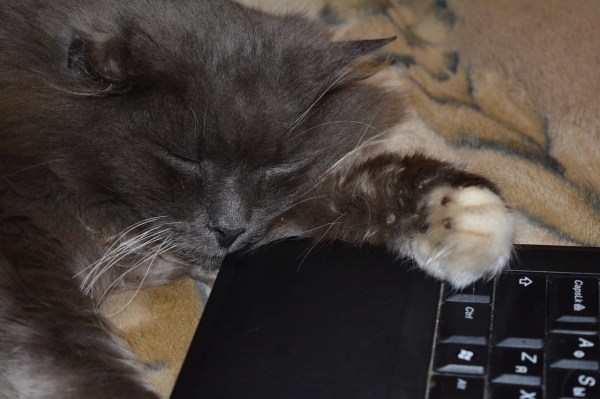

 

Image: Steven Shi

Revelation – Kate Whitehead

Alice emerges from a tangled subterranean dream, opens her eyes and read the communiques from distant friends reaching into their words for a sense of a person but nothing comes through the rushed missives today. Sliding from personal to political she clicks on the link that says breaking news and instantly curses her own gullibility. Of course there isn’t a revelation at all just the same skewed political mess.

Stranded by circumstance in her isolated rural home Alice is anchored to the Wider World by the gadgets that flash, beep enquire and inform twenty four hours a day. Sometimes she feels overwhelmed by the insubstantial electronic present. Marooned in her people less world she imagines the screeching seagulls outside her windows aren’t living creatures but digital images manipulated with invisible strings. She places her mobile phone on top of her pillow and prepares for her incommunicado trip.

The instant she steps into the blustery lane she feels lighter, knows the present is behind her locked up in her country home. Old men linger by the village noticeboard chatting and there is a poster wrapped round the telegraph pole advertising the film about fishing in former times.

Slightly shaky, and unmoored Alice strides towards the empty clifftop propelled forward by the gusts of south westerly wind. From her cliff edge vantage point Alice notices the fresh avalanche of rock-fall blocking access to the beach of her childhood, another physically inaccessible memory.

Alice usually comes to the next village to visit her childhood home – a huge granite television free, wireless free cavern proudly immune to recent technological developments – but she isn’t going there today it’s just a stop off on her nostalgic expedition.

There is a nativity scene in the churchyard. A live woman’s head appears among the cloaked figures and she smiles at Alice sitting forlornly on the bench. Alice shuts her eyes and awaits the sharp tug of the past, hopes that her teenage companions will appear in the deserted churchyard and the steel grey sky will turn into 1970’s heatwave blue. Nothing happens in the silver grey darkness in her head; the hectic youthful memories remain buried somewhere impenetrable way beyond her grasp. When she opens her eyes it’s raining and the figures in the nativity scene are swaying in the wind.

Just outside the dank bus shelter Alice waits for the delayed jalopy to the most Southerly Point. As the bus jerks erratically along the twisting country lanes Alice shivers with a mixture of fear and anticipation. Whenever she laments at the geographical isolation of her own village she is reminded that that there is somewhere even more remote perched above the churning Atlantic. She would prefer to be on her way back to the inner city. The next best thing is the opposite direction.

The Most Southerly Point isn’t just a vacant expanse of grass and rocks sitting under a huge expanse of sky, it’s the squat Black Wireless Hut as pulsatingly alive in Alice’s mind as the vibrant heart of the metropolis with its miles and miles of radio transmission connections and signals coming in and going out.

Alice runs up the desolate headland, stands at the top, tastes the salt laden air and sends her own desperate personal message across the ocean. She screams SOS into the sky and the threads of her worlds mingle with the plaintive shrieks of drifting seagulls.

A little early for her appointment she runs her hand along the rough black timber of the huts outer walls.

No one responds to her three loud knocks on the door of the hut. Through the illuminated square of window she sees the headphones, tangled wires, clocks with gold hands, black buttoned gadgets and scraps of paper laid in an orderly row across the brown teak table.

A blind of winter blackness falls while Alice lingers outside the hut wondering why there is a light on and the man called Tom isn’t there for their appointment.

Tentatively Alice creeps back down the steep grassy bank relieved to finally feel solid ground beneath her feet. She gropes her way along the flinty path. A dazzling moon appears briefly illuminating her way before disappearing behind the racing clouds.

She doesn’t see the granite obstacle blocking her way, walks heavily into, then trips sideways over the gravel banging her head hard on a rock. Blood trickles down her right cheek as she lies on her back immobilised by the crashing pain in her head.

A lolloping Labrador discovers Alice lying there. She is roused from semi consciousness by its tongue on her cheek.

Alice sits up in her hospital bed and strokes her bandaged head suspended in a pleasant narcotic fog. On her way out she thinks she should make some phone calls but decides to keep her adventure to herself now she is liberated from the push pull telecommunications drag and back in her own existence.

Instead she buys the local newspaper from the shop by the exit and walks to the front of the taxi rank.

Alice unlocks the door of her country home switches on the lights and goes into the kitchen without a glance at the gadgets lying in wait to reclaim her attention.

Nursing her strong black coffee she flicks through the newspaper her eyes slightly blurry from the head injury. Alice gasps in shock at the sombre coincidence. She’s come across the obituary for the man called Tom, her appointment in the hut. She knows its him even before she reads about his passion for radio.

It’s summer now, the aqua streaked sea is completely calm, the green grass scorched brown by the suns burning rays. Adventurous tourists traipse the cliff edge clutching walking sticks and ice creams. Alice sits on a circular stool in the cool darkness and awaits their arrival at the hut as they seek refuge from the midday heat. She scribbles notes on the scraps of paper the beginnings of her informative guide and scours the hut for traces of the man called Tom but there is no evidence of his twenty year sojourn.


Cabinet Of Heed footer logo

Kate Whitehead has been writing Short Fiction for many years often inspired by place and the absurdities of contemporary life. Her work has been published in fanzines and more recently online literary journals.

Image: Leandro Bezerra de Andrade via Pixabay

Exorcisms – Jan Kaneen

The demon shifts. It’s getting closer with every chew of cornflakes. Helen watches it out of the corner of her eye as she unstacks the dish washer.

When it erupts, it’s full of something worse than the usual outrage, a mashed-up passion of spite and fury, spitting words into her face like they taste disgusting. It hates her, hates this house, hates this sad little village; hates how there’s never anything to do and all the sad little people that waste their lives doing sad little things.

But most of all, it hates Helen.

She watches the powdery spittle spraying from its mouth, made visible by a lost ray of sunshine, and remembers: the waffle-blanket bundle in the crook of her left arm; the rainbow trike squeaking its way through the park on rainy Tuesdays; those fairy-tale eyes that had loved her to the moon and back.

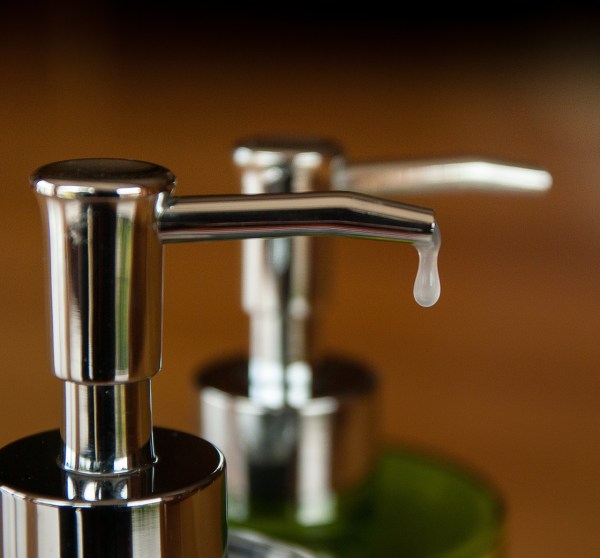
When the front door slams, Helen clears away the bowl and mug, the one that say keep calm and carry on, takes a damp cloth and wipes the hatred off all the hard surfaces where it’s left a greasy, deep-fat film. When she’s finished, she washes her hands, to get the taint of it off her skin, pumping out the violet-scented soap that Rosie chose in Waitrose on Wednesday because it reminded her of Parma violets and being little again. A pearlescent teardrop falls into the cup of her palm. Helen has demons of her own. She’s held them inside for donkey’s years now, so she really believes in letting everything out, but it’s not that easy – hatred spoils everything it touches, and resentment is dangerously contagious. She scrubs her exposed forearms and between the v’s of her fingers, wringing fists in the velvet bubbles, scratching at the surface, again, and again.


Cabinet Of Heed footer logo

Jan Kaneen lives in the middle of nowhere in the Cambridgeshire fens. She’s in the second year of an MA in Creative Writing at the Open University and has been short and long-listed for several writing competitions including: The Fish Prize, The Chester Prize for Literature, and Bath Flash Fiction. She’s won competitions at Molotov Cocktail, Ad Hoc Fiction, Retreat West, Zero Flash and Horror Scribes, and was nominated for a 2018 Pushcart and Best on the Net. She’s been published most recently in fab places like Ellipsis ‘One,’ Salome and Flash Festival Anthology. She blogs at https://jankaneen.com/ and tweets as @Jankaneen1


Image: Jacqueline Macou

I Can’t Explain Anything Anymore – Mary Lynn Reed

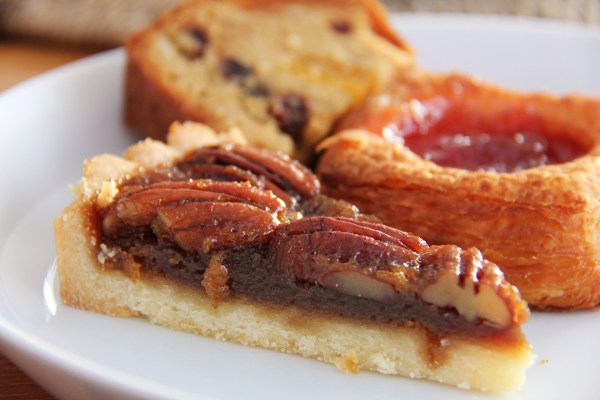
At the counter is a guy in fatigues who says he’s a writer. I know, you’re never supposed to write about writers, but that’s what he told me and I don’t believe him anyway. He eats a slice of pecan pie and never opens his notebook. His pen spins between the salt and pepper.

The androgyne in the back-booth sips her coffee. She’s an every-other-nighter. Never says much of anything. She’s got tattoos on her knuckles and doesn’t order food. Just coffee. Black. No cream and no sugar.

My nephew, Armand, is sixteen and has bright purple hair. He told me pronouns are a choice you can make for yourself now. He told me about Ze and Hir and I tried to make sense of it.

Ze shouldn’t say ze’s a writer if ze’s not.

I want to ask hir what brings hir here every other night, but I’m shy, for a waiter, and I’m afraid she/ze? doesn’t want to be bothered.

Most people who come in for coffee or pie at two in the morning don’t want to be bothered. There’s something, or someone, they’re hiding from, in the middle of the night, with notebooks and pens and tattoos on their knuckles.

I watch the guy in fatigues look back toward the booth. I expect him to turn around and ignore hir the way everyone else does. But ze doesn’t. Ze stands up, tucks his fatigue shirt tight into his fatigue pants and walks back to hir booth.

There’s a baseball bat in the kitchen. The owner has kept it handy all this time, after he was robbed in 1992.

She/Ze? tilts up hir bright blue eyes at the faux soldier. I expect hir to tell him to leave hir alone, get the hell away. But she doesn’t.

I’m standing there tight as a drum, waiting for something awful to transpire. Not just expecting but knowing something awful is about to unfold.

But I stand and watch—and there is this guy in fatigues who told me he was a writer and then didn’t scribble a word in that damn notebook for a whole hour, there he is taking a seat in the booth across from the androgyne with the beautiful eyes whose pronouns I don’t know, and before I can get my hands around that Louisville slugger to protect hir from this Army/Navy stiff, the two of them are talking like they’re at a freakin’ high school dance, and one of them might be about to say, “Hey, you wanna—?” and the other will say, “Sure, why not—” But I don’t know which one is gonna say what, and I don’t know where they’re gonna go or who will lead and who will follow.

All I know is that I’m standing there alone at the counter, looking down at a piece of fried egg hanging off a fork on a paper napkin, thinking that it looks sort of sad and lonely, and also, like everything beautiful in the world, at the exact same time.


Cabinet Of Heed footer logo

Mary Lynn Reed’s fiction has appeared in Mississippi Review, Colorado Review, The MacGuffin, Litro Magazine, Smokelong Quarterly, and Wigleaf, among other places. She has an MFA in Creative Writing from The University of Maryland, and she is co-Editor of MoonPark Review.


Image: Sharon Ang

He Sensed Future Folly – Jenean McBrearty

Can you taste color? Swallow music? Hear Professor Albrecht thinking as he stands at the lectern in his office? It’s in the middle of the room. The sun must not stare at the rare parchment in front of him else the ink fade more. He whispers as he reads the words of Anon:

Ironic, is it not, that those who speak of hope and change, loudly decry the despoilment of nature? Nature is a stranger to hope. Life is a cycle of birth and death, and if there is hope for continuation, she keeps the evidence well hidden. Change takes millennia to plan; the volcano erupts but then settles down to the stable minutiae of growing grass. So why the clarion of revolution that prevents the prayed-for peace? Cruel, cruel wilderness, Birth Mother of ambition and his own beloved freedom.

Did Anon mean those words? Perhaps there was a reason why the long-buried texts were forbidden to public publishing. The reason must be freedom—his own freedom—individuality—new dictionaries called that inequality. Hence indignity.

“Well, Albrecht, you’ve been translating the Washington Chronicles for six months. Do they make sense?”

Lambert had entered his humidity controlled sanctuary without the required warning. Again. He must make the door-sign bigger.

Albrecht covered the tatter-edged paper with a supple suede cloth. “Maybe if I wasn’t continually unexpectedly interrupted, I could make more headway.”

“Oh, I am sorry.” Lambert opened the door, rang the bell cord, closed the door again, and strode to the lectern. “Can you believe paper was once plentiful as sand?”

It was almost as if he enjoyed taunting the Curator of the Congressional Library. “Yes, and words once had meaning that most everyone understood. What do you want?”

“A report. One with a few quotes explained with suitable details useful for the next election.”

“You mean fodder for the grist mill of propaganda.” Albrecht motioned Lambert to sit down, knowing he wouldn’t. Everyone hurried through his job. He closed his ancient Oxford Dictionary to protect it as well. Lambert was looking at him with his usual mechanical grin.

“You talk funny, Al.”

“Propaganda is political information delivered with the intent to affect the emotions of the listeners. A grist mill is…never mind. Listen to the words of Anon:

How I love my well-constructed pen because my fingers do not tap well. I do not own keys or buttons that let me compose my thoughts. Thoughts should linger like summer perfume, not dart about like lightening. Thoughts are prayers. Waking dreams. Eagles have wings. My cat purrs. I have my pen. Each of us content in a Master Plan. Hope is an illusion, but happiness within our grasp to understand—to be free is to be lonely.

“Sounds like BS to me,” Lambert said.

“Do you see what Anon has done? He has led us down a path of philosophy in that one sentence. Each of us content in a Master Plan. Does he mean content as in happy? Or content as in the stuff contained. Joy or the list of chapters in a book?”

“Why do you waste time thinking of what a dead man might have meant?”

“Why do you assume it’s what a man meant and not what a woman wrote?”

He watched Lambert remove his glasses and massage his eyes. Albrecht no longer despised him or the politicos. They feared freedom more than strife and injustice because they couldn’t bear to be alone. But neither could they relish the thoughts of others. Couldn’t taste them. Couldn’t swallow them. Couldn’t hear them. But Albrecht could.

“Does the text make any sense at all? ” Lambert demanded. “What do I put in my report?” His glasses once again rested on the bridge of his nose, even if he couldn’t see. To Albrecht, his question sounded like a tear.

What did I mean, he asked himself silently, thinking of that question a man a hundred years hence would ask? T-e-a-r. Tear as in sob, or tear as in rip?

He bowed his head. Wait. Or weight? “Just tell them that, so far, the text is just poetry that doesn’t rhyme and has no reason.”


Cabinet Of Heed footer logo

Jenean McBrearty is a graduate of San Diego State University, who taught Political Science and Sociology. Her fiction, poetry, and photographs have been published in over a hundred and ninety print and on-line journals. She won the Eastern Kentucky English Department Award for Graduate Creative Non-fiction in 2011, and a Silver Pen Award in 2015 for her noir short story: Red’s Not Your Color. Her novels and collections can be found on Amazon and Lulu.com.


Image: nile via pixabay

Five O’Clock Shadow – C.R. Smith

The woman’s mouth was moving yet her words made no sense. It had been a long night. My eyes were still adjusting. It was always a shock to walk out into daylight after working underground. The square was deserted as usual; that peaceful time of day before rush hour kicks in. “Sorry, can you run that by me again?” I said. The woman was obviously distressed about something.

“Like I said, officer, he only stopped to redo his shoelaces. I told him to hurry — I thought we were going to miss our train — I was always telling him to double-knot ‘em. He— ”

If only she would get to the point. I rubbed my eyes. A full English breakfast had my name on it. “Yes, yes, madam, now, walk me through it again, step by step — slowly this time.”

“All he did was sit on the wall. The shadow came out of nowhere.”

“The shadow?” My eyes swept the area. There was nothing out of the ordinary.

“I couldn’t understand what he was shouting about at first. I thought he was mucking me about. Then I moved closer. It was eating him. There was nothing left. His feet were — gone.”

“What do you mean by gone!?” I leaned forward. No alcohol detected on her breath.

“You know — nothing — zilch. His feet were just— gone,” she said, waving her arms around. ”He couldn’t stand. His legs just ended. I tried to reach him but couldn’t get close enough. He begged me for help. I didn’t want to leave him, but there was no one around. I ran as far as the ticket hall before I found someone.”

She was becoming hysterical, her voice rising.

“Take your time,” I said, looking down at the brick wall. No obvious signs of blood.

“When we got back, he was screaming. I heard him before we turned the corner. The shadow was all over him, his legs were gone. The man with me ran over and tried to grab him. The shadow got him too — I think — it happened so quickly. We were all screaming.”

I nodded. Her screams had alerted me.

“The shadow ate both of ‘em,” she said, between sobs.

As far as I could tell there were no signs of a struggle, or any sign of the two men for that matter. Reminded by my rumbling stomach I was off duty, I decided to let someone else deal with the woman. “Give me a minute,” I said, rubbing my stubbled chin. “I’ll get someone to take your statement.”

The least I could do was pretend to believe her. I turned around to call it in. When I glanced back a shadow was eating the woman’s legs.


Cabinet Of Heed footer logo


C.R. SMITH is a Fine Art Student whose work has been published in such places as 101 Words, Twisted Sister Lit Mag, Train Flash Fiction, Ellipsis Zine, Spelk Fiction, The Horror Tree, Glove Lit Zine and Ad Hoc Fiction. http://www.crsmith2016.wordpress.com
Twitter @carolrosalind


Image: Kaylah Otto on Unsplash

Pea Soup Year – Christine Collinson

The night the storm blew in, I was already as low as can be. Hunger gnawed at me like a rat on a bone. Pitiful harvests had left us bereft; me, Danny, and the girls. Just like everyone else in the whole damned town.

We ate a simple meal of cockles, but it wasn’t enough. Danny and I barely slept as the wind wailed around us, sleety rain battering against the shutters. Through tired eyes, I watched him get up again and again to stoke the guttering fire.

At dawn our neighbour appeared, suddenly, at our door. Rubbing his hands against the cold, he breathlessly told of a ship wrecked in the night. A great cargo vessel, tipped on to the shore.

The passing of the storm had left us with an unsettling calm. Danny went out to join the rescuers, wrapped up against the cold. I sat beside the fire and pictured the ship lying askew, its once majestic sails in tatters. I prayed there were survivors. As I huddled the girls to me, we sang softly together.

Hours passed before Danny returned. As I opened the door, full of questions, I stopped to watch him rolling a small barrel up the path; a sight I’d never seen.

He rolled it inside, then upended it. The barrel rested before us, unadorned. I looked at Danny, but he merely raised an eyebrow. When he prised it open and stood, beaming, I could only stare at dozens of the greenest pea pods I’d ever set eyes upon.

For a long moment, I didn’t speak. “We’ll be eating pea soup for weeks!”

“Nah, Gwen, love; we’ll be eating it well in to next year.”

“If somebody had told me that peas would be our salvation, I’d never ‘ave believed ‘em.” I picked up a pod and squeezed it between my fingers. Then, from somewhere deep down, the laughter began.


Cabinet Of Heed footer logo


CHRISTINE COLLINSON writes (mainly historical) short fiction. Her work has appeared in Firefly, Prima and Writers’ Forum magazines, in Ad Hoc Fiction’s eBook and on Paragraph Planet. Find her on Twitter @collinson26.


Image: John Thomas Serres [Public domain], via Wikimedia Commons

No Word of the Cat – Karen Jones

She’s sitting with her back to him, reading the newspaper – his paper – pretending he’s not there. He hates when she does that, but he’s not allowed to whine. That was one of the counsellor’s rules.

He takes a deep breath. “Nice out?”

She shrugs.

She’s been out, hung out the washing, knows whether it’s nice or not.

“Looks nice,” he says, voice steady.

She sighs. “It’s hot when the sun’s there, cool when it’s not – that kind of day.”

He wants to punch her in the face. He wants to yell, “Well thank you, fucking Einstein! I am aware that it is hot when there is sun and cool when there is no sun!” but punching people is not allowed any more. The counsellor was very clear about that. He closes his eyes and counts to ten, clenching and unclenching his fists to release the tension.

“Still no word of the cat? No one responded to the posters?”

Her shoulders droop and she coughs away a sob then shakes her head.

He wants to laugh and shout, “Stupid fucking cat. Good riddance to the scrounging little bastard!” but he’s not allowed to shout and definitely no swearing.

Bloody counsellor and her, “The packed bag that sits by the door will be your reminder. She will be ready to leave at any moment. The future is in your hands.”

“Fucking cow,” he thinks. But his wife has spun around and she’s staring at him. Christ – did he say that out loud?

A smirk and her head cocks to the side. Then she gives an I-told-you-you-couldn’t-do-it nod of her head.

“No. I didn’t… I wasn’t talking about… I was thinking about…” But she’s up, chair scraping along the tiles (he tries not to wince), leaving the scent of her coconut shampoo in her wake as her heels further assault the tiles.

He runs into the hall. Too late. The door slams, the bag’s gone, the cat flap rattles. A brown mouse runs in and scrabbles across his bare feet. It’s not afraid of him. A tear drips off his nose and lands on his big toe. Crying? He doesn’t do crying.

He stares at the mouse and the truth hits him: He really misses that damn cat.


Cabinet Of Heed footer logo


KAREN JONES is from Glasgow. Her stories have appeared in numerous magazines and e-zines and have been included in print anthologies such as Discovering a Comet and more micro fiction, The Wonderful World of Worders, An Earthless Melting Pot, City Smells, 10 Red, HISSAC 10th Anniversary, Bath Short Story Anthology, Ellipses: One, Bath Flash Fiction Volume Two and Flash Fiction Festival One. She’s been successful in short story and flash competitions including Mslexia, Flash 500, Writers Bureau, The New Writer, HISSAC and Words with Jam. Her story collection, The Upside-Down Jesus and other stories, is available from Amazon.


Image: Alexas_Fotos

Final Arrangements – Amy Slack

All things considered she prefers the dead. Decapitated, chilled, left on her back doorstep in boxes for her to do with as she pleases. She does not work well with the living.

Her client returned last night to demand yet another change. Peonies, this time. Never mind that the hyacinths and tulips had already been delivered, that she had already spent hours working up the centrepieces as she had been instructed. Never mind that there simply wasn’t time to ship more flowers from the warehouse, let alone design new arrangements before the big day. Peonies. Otherwise, the florist wouldn’t be getting paid.

She selects another bloom, twirling it between her gloved fingers before trimming and slitting the stem with a few deft snips of her freshly cleaned scissors. A decade’s worth of weddings, birthdays, adulterous apologies, all scrubbed from its blades. Her breath mists a little in the chilled air of the workroom. She has acclimatised to the cold over the years; all the better to preserve the cut stems, keep everything as fresh as possible.

Something is off. She turns to her client, holds up the centrepiece for inspection. “What do you think?”

The bride, for once, offers no opinion.

Lopsided. That’s it. Taking care not to disturb the overall arrangement, the florist slots another tulip into place.

Time to get a move on, pack everything up into the van before the morning grows too warm. Her client can be dropped off somewhere en route to the hotel. It really is a stunning choice for a wedding reception. Picturesque, secluded. No-one will notice the florist’s van parked up by the side of that old country road.

Weddings never pay as well as people assume. Not as well as funerals, at any rate. Still, the florist takes whatever work she can get, makes the best of things. She must remember to leave her card behind this time, after she finishes decorating the venue. No doubt they’ll be needing her services again soon.


Cabinet Of Heed footer logo


AMY SLACK is a non-fiction editor and aspiring short story writer from the North-East of England, currently based in London. Her work has been published online by Visual Verse and Palm-Sized Press. You can find her on Twitter @amyizzylou, or follow her blog, Amy’s Ever-Growing Bookshelf, at amyizzylou.wordpress.com.


Image: Jazmin Quaynor on Unsplash

Ticker – Philip Berry

I reach over for the wine bottle and catch him looking. He’s seen the cluster of scars on my neck, three marks the size a pencil with a soft tip might make.

Some ask, some don’t. But he is thinking. He knows exactly what they are. Clever man.

They are tell-tale signs of having been in intensive care. The marks show where thin plastic tubes entered the jugular veins, so that drugs could be delivered straight into my circulation. If he looks hard, he will see the spray of smaller marks below, where silk stitches were placed to stop the tubes slipping out when I rolled my head or jerked in fear.

After the meal he tracks me across the room. I put two thick-heeled glasses and a bottle of whiskey on the table in front of the couch. A column of bangles slides along my wrist, revealing a short ladder of white lines; different scars.

The cogs in his brain engage and rotate. He is trying to recreate my story. Sitting back, he casts a wider net. He looks around the room, takes in the details. Yes… it all makes sense now. Troubled, short of money, isolated in crappy accommodation… a suicide attempt, hospital, intensive care. Easy narrative.

I sit next to him on the couch at an angle, so I can see his face clearly in the amber glow of the streetlamp that hums all night a few feet from my window. He looks up to the ceiling – considering, prevaricating.

I am ready, actually. I know him. He is a decent man. My body language is relaxed. My (very good) shoulders are on display. He can’t help his gaze ranging across the smooth, unblemished skin above my breasts.

I enjoy the touch of his hand floating along my clavicle and down my arm, while our lips meet. Then he freezes. The sensitive pads of his fingers have detected the knots. Fibrous strands of damaged skin and blocked vein that sit in the crooks of both elbows, the legacy of desperate, amateurish, blind attempts to gain access to the bloodstream, to deliver the hit.
He pulls away.

“What’s that ticking?” he asks. The knots didn’t bother him. Only the sound.

“Oh, an old watch in the drawer. My Dad’s.”

He smiles faintly.

I allow him to unbutton me. He takes in the pale flesh of my lower stomach, the way the band of my knickers bridges the concavity formed by my sharp hips, so thin have I become. We shuffle my jeans off together, then he lays me down and kisses my thighs.

But he can go no further. He has seen the craters scattered across the top part of my legs, like the wounds a sawn-off shot gun aimed wildly at my waist might make. His breathing, which has quickened with passion, now slows.

“What?” I ask.
“Nothing.”
“No, what is it? My scars?”
“What happened to you?”

I tell him. The addiction, the ruined veins, the skin-popping. Then the infection – bacteria that entered my bloodstream through a dirty needle and settled into a colony on a heart valve. There the germs multiplied and grew into what the doctors called a vegetation. Looking like a little cauliflower, its stalk burrowed into the succulent tissue beneath until the valve flailed uselessly in the current of hot blood. I collapsed with foam at my lips, water rising from my lungs. When they put a stethoscope to my chest they heard whoosh-whoosh-whoosh, the sound of blood running backwards.

“How did you survive?”
“They opened my heart. Look.”

I sit back, unbutton my shirt and kneel on the floor in front of him, holding the cotton edges apart to reveal the unsmooth portion of my chest between the shallow beginnings of my meagre breasts. The scar healed poorly.

His head is still close to my chest. A quick frown flutters across his brow,

“That ticking, it’s really loud here.”
“Oh… that’s the new valve they gave me. It’s metal. It clicks with every heartbeat. It’s not a watch. Sorry.”

He sits back now. The flush has faded, the excitement gone. I make it easy for him.

“Coffee?”
“No, thanks, I err…”
“Yes, of course.”

We chat.
It’s nice.
Then he leaves.

In the golden hum of the streetlamp, looking out onto the empty street, I focus on the tick-tick of my heart.

There is no true silence any more.


Cabinet Of Heed footer logo


PHILIP BERRY’s fiction and poetry have appeared in Headstuff, Metaphorosis, Liars’ League, Ellipsiszine, Hypnopomp, Spelk, Former Cactus, Easy Street and Bunbury Magazine. His work can be explored at http://www.philberrycreative.wordpress.com, or via Twitter @philaberry


Image: Rachael Crowe on Unsplash

Pool Party – Paul Thompson

She reaches the house at dusk, unfashionably late for the party.

The venue is illuminated and noisy. As she approaches the front door a cocktail glass is thrown from above, shattering on the driveway behind her. Laughter comes from the rooftop terrace, followed by further objects that all miss her as she walks.

On the front porch she waits without knocking. A member of staff invites her inside without question. He is handsome, with pale features not unlike her own. When he offers to take her coat she refuses, etiquette nor temperature able to change her mind.

*

The entrance hall is long and uninviting. Portraits cover every wall – photographs of family and founding members, all glaring down at her intrusion. As she follows the doorman she touches every photo with her index finger, hushing the dusty smiles of those who watch.

*

In the ballroom she is presented to the hosts, who are unable to hide their surprise at her arrival. The open invite was not intended for her, an assumption hidden between the lines.

She is not invited to their party. Not invited because they, and the rest of the guests, believe her to be a witch.

They greet her with a mumble and some discomfort. Her response is to produce a gift from her coat, handing it over at arm’s length. The package is soft and wrapped in brown linen, prompting a reluctant thank-you from the hosts.

A member of staff takes the gift away, the hosts giving the witch one final glare before moving on to the real guests waiting behind her.

*

A waiter offers her a drink, oblivious to her stigma. The air is sticky with the scent of cocktails and wicker. A ceiling fan rotates overhead, covered in fairy lights that drift like the heavens. She moves through the room ignored, her black dress repelling the beige suits and pale frocks in her path.

Every time she hears the word witch, it is spoken behind her back, a wake of glares behind her.

*

Outside on the terrace the air is stale.

Many of the guests sit by an empty swimming pool, watching a group of children who play in the deep end, chasing an object kicked across the tiles. She recognises many of the children – the ones from school who would call her boy a witch, the ones from town who would lock her boy up, protecting themselves from his craft.

She takes a seat by the pool and dangles her legs into the invisible waters. From here the entire plantation is visible, stretching into the valley. Once again she attempts to attract the attention of others. Many of the children fail to recognise her. The adults hide behind shades and feigned conversation, unable to recognise their chance of redemption.

*

Thirty minutes later she decides to leave.

Walking back to the house she recognises the object being played with in the pool. It is the gift she brought to the house, now being used as a plaything. It slowly unwraps with every kick of the game, one of the children occasionally stamping on it for the amusement of others.

*

Back in the entrance hall she takes off her coat and hands it to the doorman as a souvenir of her visit. He stands with it in his arms, unsure of the process working in reverse. She takes a final look at the portraits on the walls. The lights of the party flicker across their faces, revealing her fingerprint on every pane of glass.

The many faces glare down at her, the many people who will now all be dead.

Buoyed by this thought she steps outside, still able to hear children playing in the pool, delighted to hear them playing nicely with her boy at last.


Cabinet Of Heed footer logo


PAUL THOMPSON lives and works in Sheffield. His stories have appeared in Literally Stories, The Drabble and Ellipsis Zine. You can find more at http://www.hombrehompson.com


Image: Matthieu Comoy on Unsplash

Two Fish and One Chips – Steven John

When she wakes her breath has frozen hard on a flap of duvet. She pulled on a jumper, woolly tights and socks in the night, then later wrapped up in her towelling dressing-gown and had still been cold. Now she can see her breath condensing over her barely warm pillow and hear a bath running in the shared bathroom. Her flatmate catches an early train and never leaves enough hot water in the tank. Her flatmate’s boyfriend will still be asleep in her single bed. He works in the fish and chip shop on the ground floor and doesn’t need to be up till later, to peel potatoes in the machine out the back. They’ve nicknamed him ‘Vinegar’ because neither of them like it. She could hear them in the night; her flatmate’s screeches and mewling, the bed battering against the thin wall. They wouldn’t have felt the cold like she had. She hears her flatmate leave the bathroom and walk down the landing to her room. In thirty minutes she’ll be out the door.

She gets out of bed and goes to the window. A corner of the pane has a piece of brown cardboard taped over a hole. The inside of the window is frozen up, rippled with ice. She lifts off a straw icicle and sucks it, as she had done as a kid, willing the snow to fall for a day off school. Then she could look out over her father’s prim lawns and pruned roses. Hear her mother laying the table for Sunday breakfast. Now all she could see were rows of back to back terraces lining up the valley to the old slag-heaps, and raddled parents pulling on morning fags in backyards. She hasn’t heard from her mother and father in over a year.

She has a choice. She could wash her hair in the remaining basin-full of hot water and catch the bus to work, grab a sausage roll and a coffee on the way, or she could call in sick. There’s a knock on the door. Her flatmate pokes in her head.

“I bet you can’t wait to be back on nights. I’m off.”

She waits till she hears the front door close on the latch. She walks down the landing to her flatmate’s room and pushes open the unlocked door. Vinegar is buried, a long lump under the duvet. Probably, when she’s back on nights with him the weather will have changed, and she’ll resent him sleeping over in her single bed. But for now she’s on days and she gets in, slotting her cold knees into the back of his, like little white plastic forks and spoons.


Cabinet Of Heed footer logo


STEVEN JOHN lives in The Cotswolds, Gloucestershire, UK and writes flash fiction, short stories and poetry. He has had work published in writing group pamphlets and on short fiction and poetry websites. In December 2017 Steven won the inaugural Farnham Short Story Competition. Steven has read from his work at the Cheltenham Poetry Festival, Stroud Short Stories, The Bard of Hawkwood and The Flasher’s Club.                        Twitter: @StevenJohnWrite


Image: Cynthia Bertelsen

Payback – Ruby Speechley

Some days Otto leaves me sitting in my own urine for hours. I guess I can’t grumble. I picture myself sunbathing in the garden below. Back then it was Otto confined to his bedroom. Screaming until he made himself choke. Rattling the whole cot like it was a goddamn cage.

That day I couldn’t take any more. I pressed my eyes shut, felt for the teeth of the radio dial and clicked it up a few notches, so the newsreader was shouting at me. When the banging from the bedroom grew louder, I threw down my sunglasses and marched up the stairs.

Otto’s mouth widened into a red gash, his screams splitting my soul. He stood there naked, a brown rainbow smeared on the wall, the stench enough to rouse the dead. And then he went quiet and urinated from his shrivel of flesh, holding my stare as he did it.

He smirks as he comes in. I plead with him to lift the blind. I need to see the jury of crows lined up on the quivering telephone wire, watching me. He shoves a tray on my lap, ties a tea towel around my neck, pulls it a little too tight. He feeds me hot grey soup. The shape of the spoon is branded into my tongue. I cough and splutter over the bed sheets, over him. I wince, waiting for a thud of his fist on my crown. Instead he takes a corner of the tea towel and dabs my lips.

After, he sits next to me in silence. It’s almost dark. The crows have long flown home. He tips his head so the side of his face lands gently on my shoulder. My body stiffens. I have to remind myself that he is my son.


Cabinet Of Heed footer logo


Photo by Bastien Jaillot on Unsplash

Extremities Or… – Sherri Turner

What a Broken Bone Does After M (eventually, if you’re lucky and don’t get the shit doctor I got who had to break it again because he didn’t set it right the first time) or

What Comes After Beginnings and Middles or

What Life Does When you Die or

What Divers Get After B or

What the Complaining Never Does When You Tell Your Wife You’ve Put the Bins Out But You Only Put the Normal Bin Out, Not the Recycling One and It Was Full and Where’s She Going To Put Next Week’s Newspapers Now? Or

The Weakest Point of Most Fiction


– Ends –


Cabinet Of Heed footer logo

SHERRI TURNER is a writer of short fiction and poetry and has won prizes in competitions including the Bridport Prize, the Bristol Prize, the Wells Literary Festival and the Stratford Literary Festival. Her stories have also appeared in a number of anthologies. She tweets at @STurner4077.

¤¤¤

Image: Ruben Rubio


Create a website or blog at WordPress.com

Up ↑