Playing The Game – Clare O’Brien

The party was in full swing. Friends, colleagues, drinking, laughing, dancing. There must have been at least thirty, packed tight into my little living room. The music filled in the gaps in the chatter to avert any danger of silence. Silence breeds thoughts, and we didn’t want any of that. I didn’t really like any of these people; I’d put up with them for Helen’s sake. I loved Helen. We’d met at work, and they were mostly her friends and relatives, to be honest. But apparently it was my birthday, and it was made clear to me that I ought to enjoy it.

Suddenly the conversational hubbub abated, and someone turned down the music to a faint electric hum. Helen was next to me, holding a large box, all glittery ribbon and shiny red giftwrap. Everyone was watching. “Happy Birthday!” they said. “Open it!”

I gave the box a little shake and a faint rattle came from inside. “Stop messing around and open it!” someone shouted from the back of the room. Helen was smiling, so I did what they said. I untied the ribbon, ripped off the paper, and opened the plain white box.

Inside was what seemed to be a board game. There was a board, folded into four, that opened out to show a complex printed playing surface. It was a bit like the Snakes and Ladders I’d played as a child, but the creatures painted on the board, the hazards along the way, were wilder and stranger than that. The little silver pieces looked a bit like the ones you get in Monopoly, tiny figures of men and animals, objects and symbols. I looked in the box for instructions, but there was nothing else.

“Where are the rules?” I said.

“There are no rules,” they said. It was a man who spoke, someone I vaguely remembered seeing on the third floor at work when our washrooms were out of order. Why was he here? I looked at Helen, but her face wore a tidy, even smile. “You make them up as you go along,” she added. “Use your imagination.”

“But what’s the object of the game?” I asked, puzzled.

This time it was a woman who spoke. I didn’t recognise her. “Get through the maze without losing any of your people,” she said. “Fight off enemies. Avoid hazards. It’s simple enough.”

“Who are my people?” I asked, confused. I looked around my house at the guests I hadn’t invited.

“We are your people,” they said in chorus. “There’s a piece for every one of us. We protect you. We employ you. We give you the means to live. Destroy anything that threatens us.”

I played the game. I did what they told me. I protected the little silver tokens, and along the way I killed or neutralised anything that looked like a threat. I started with critics and trolls and went on to spies and whistleblowers. I silenced their voices and I cut out their tongues. I locked them in prisons and I threw away the keys. I burned their homes and villages. I took away their children. I cast them into outer darkness, and I watched their lifeblood run red.

It took a long time to win the game. Along the way I sometimes forgot what I was fighting for. It was better not to think, really, not to look too closely at things like whys and wherefores. I was a loyal footsoldier. I protected my own, and I came out of the maze with all my people, save one.

When I got to the end, they smiled and said “well done” and commended my loyalty. “You’ve given years of good service,” they said. “It’s time for a reward. You made life so much easier for us. We couldn’t have done it without you.”

I asked where Helen was, but they said she’d had to go, and I didn’t need to worry about her any more. I protested as they pinned a medal on my chest. I began to ask questions but they were already laughing, and their cackle rose to a crescendo as I tried to read what the medal said, upside-down. One by one, they were getting up to go. My little house was emptying as their mocking laughter echoed.

Suddenly I wondered why I’d ever thought they were my friends. I upset the board and its thirty – no, twenty-nine – silver pieces. I ripped off the medal. And as I stood alone in the ruins of the party I’d hosted for them, remembering the kind of game I’d played, I read the two words ornately engraved into its surface: Devil’s Advocate.


Clare O’Brien lives in a crofting township on the north-west coast of Scotland where she helps run the family business while working on her first novel. Her poems and stories have appeared in Mslexia, Hedgehog Poetry Press, The Cabinet of Heed, Riggwelter, Fearless Femme, and many more.


Image via Pixabay


cabinet of heed contents issue 16

Time After Time – Luis Cuauhtémoc Berriozábal

There are people with six eyes.
They can save energy
and look toward the future.
They have that extra fire.
They have an on and off switch.
They never look back.

They take a deep breath time
after time and forge ahead.
They won’t cry you a river.
They are fierce and persistent.
Some people can take a blow
and hit you back twice as hard.

Some people have three hearts.
They are voracious and vigilant
from daylight to dawn. They
cannot be stopped. Time after
time they demonstrate how
powerful their hearts could be.


Luis Cuauhtémoc Berriozábal, born in Mexico, lives in California and works in the mental health field in Los Angeles. His first book of poems, Raw Materials, was published by Pygmy Forest Press. His poetry has been published by Alternating Current Press, Deadbeat Press, New Polish Beat, Poet’s Democracy, and Ten Pages Press. His latest chapbook, Make the Light Mine, was published by Kendra Steiner Editions.


Image via Pixabay


cabinet of heed contents issue 16

The Hero – John Holland

Since I started growing my hair, the neighbours – the men – have stopped speaking to me. Although their wives still do.

“Your hair’s growing, John.”

“Can’t stop it, Mrs Wilkinson.”

It’s tea time. I’m striding home from school, past the rows of semis in the next street to mine, when I see Mr Wilkinson, in his frameless spectacles, walking towards me. It’s too late to cross the road. I know he won’t speak. And I won’t either. But as he approaches he lets out a broad smile, and says, “Your dad did well, didn’t he?”

“Yeah,” I say. And then we have passed.

I have no idea what he means.

By the time I push open the backdoor of our semi, painted a tawdry yellow, it has left my mind.

“What would you like for tea?” It’s my mum. Dad doesn’t get home for ages so we eat without him.

“Steak and kidney pie, chips and peas,” I say.

“Hard luck,” she says.

It’s not just the luck that’s hard. The crusts on these luncheon meat and salad cream sandwiches taste like they have been rusting away behind the shed with the rest of Dad’s collection of ‘useful’ metal parts.

“Chef quit?” I ask, joking.

“Sacked,” she says.

There are three places set at the dining table. I sit at one end where I can swivel to watch teatime TV. Opposite me is my dad’s place, awaiting his arrival in an hour or two. Mum sits between us. Symbolically probably. With her back to the TV. Opposite her is the hatch to the kitchen that my dad made for the passing of plates of food. Plates of food so hot that they melt the skin on your fingers.

“Why don’t you sit in dad’s place, so you can watch Zoo Time, Mum?”

“Zoo Time, Schmoo Time,” she says, pretending to be Jewish.

Desmond Morris, with a comb-over that risks him being flagellated to death on a windy day, is cuddling a jaguar cub.

“Lovely,” says Mum without turning. “Although many people confuse jaguars with leopards. The jaguar is a South American mammal, the leopard is African. They don’t really have spots. More sort of circular rosettes. Jaguars tend to have larger rosettes with spots in the middle; the leopard has plain rosettes with no central spot.”

It’s impressive. Within seconds, Desmond says the same thing about jaguars and leopards.

“You the script writer?” I ask

“Your hair’s getting long,” she says.

“You will tell me when it actually is long, won’t you?” I say, tossing my head so that my hair flies from one side and meets me on the other.

“Probably not,” she replies. “You’d never hear me through all that hair.”

She remembers. “Isn’t it great about Dad?”

But I’m heading for the front room and my homework.

The front room is the better, less-used room – grey sofa, two grey arm chairs, my dad’s tropical aquarium, the Dansette record player on the floor and the golden plastic hostess trolley, which is thought to be posher than the wooden one in the dining room. But no TV or table. I use the seat of an armchair to kneel and write. The front room is also where I entertain my girlfriend, Janet. She is due at 7.30. A switchboard operator at the Gas Board, she is unencumbered by homework. I have about an hour and a half for A level geography.

The fishing industry in the Adriatic Sea makes me wish I’d taken history. But I enjoy the names of the principally caught species – common dentex, red scorpion fish, monkfish, John Dory, spiny dogfish, Norway lobster (surely a long way from home), mullet and red mullet. I wonder what colour the mullet are that are not red. And whether the two species clash, at least aesthetically. Mum would know.

I’m entering Trieste as I hear dad arrive home and go straight to the dining room for his tea.

I finish the homework without feeling the need to get the definitive word on the colour of the non-red mullet. And gratify myself with the double LP ‘Bitches Brew’ by Miles Davis that I’d bought in town on Saturday. I hold it by its pristine edges. Slide one of the black discs, with its orange labelled centre, from its white inner sleeve and place it on the Dansette, dropping the stylus arm carefully onto the spinning vinyl. The music crackles into life. I gaze at the distorted yellow orange figures on the album cover while extraordinary sounds fill the room.

I am in a voodoo opium den in Harlem.

I see the handle of the door turn. I imagine a Chinese dealer with a coloured silk hat and a braided ponytail. Mum’s head appears. It listens for a split second.

“Is that Herbie Hancock on an electric piano – something of a departure for him, isn’t it?” she asks.

I check the sleeve. And nod in resignation.

“You’ve been looking at the cover, haven’t you?” I say.

She shrugs the one shoulder I can see in the half-opened doorway and recites from memory the band’s entire fourteen-strong line up from Bennie Maupin on bass clarinet to Jack DeJohnette on drums – right channel, and Lenny White, drums – left channel. Although with only one speaker channel on the tinny Dansette that’s academic.

“You’re not normal,” I tell her.

“Your dad’s here, you know, if you want to ask him.” She says and disappears.

But, as I stand I hear the door bell.

Janet, in all her darkness, has arrived. I look at my watch.

“Just four and a half minutes late,” I tell her.

If a face can shrug hers does. I get a lukewarm half-kiss. She doesn’t have her dog – a boxer – with her. I’m relieved. It salivates when we are at our loving. Glutinous strings hanging from its mouth to its chest and even the floor. And that sad face it pulls.

The upside to the dog is that I can blame him when Mum complains about suspicious wet marks on the carpet or rug.

Janet and I have been going out for nearly two years, and have a routine. She comes round to mine three times a week and I go round to hers less often – because it’s not so convenient for me. Saturday we go to the pub, or the pictures, or a party.

I help her off with her sheepskin coat, and open the door to the front room, from which emerges the sound of Miles and those fourteen named individuals blazing a riotous storm.

“What the bloody hell’s this?” she says.

I tell her. She says nothing. As usual I sit in the grey arm chair next to the fish tank. She sits on my knee. We kiss properly, and I announce that tonight I will be removing her bra single-handed.

“Not getting one of your mates to help?” she says, throwing back her black hair.

“No, I mean I won’t use two hands. You know, I’ll be smooth and a bit sharp like James Bond or someone.” I hold my face at an angle I think is smooth and a bit sharp.

“We’ll see,” she says. “You know your hair’s getting really long.”

“I had no idea,” I say, pulling up the back of her red woollen jumper and weighing up the opposition. It’s an old adversary – the white bra with lace between the cup and the straps. It has three pairs of hooks.

“My mate Geoff says Diane has one that unloads at the front,” I tell her.

“Like one of those new washing machines,” she says. “I bet he doesn’t play her shit music like this.”

It’s not the best moment for romance. But there follows a lengthy period, with her jumper pulled up, in which my right hand pinches and squeezes the back of the bra with a combination of finger-numbing tension and bloody-minded determination, for which even Wayne Shorter’s exquisite tenor sax solo is not an appropriate soundtrack. Finally, I admit defeat.

“I’ll get you a mannequin for your birthday. You can practice in the comfort of your own room,” she tells me.

“And a supply of bras,” I add.

My dad never enters the front room when we are there, but mum normally comes in about 10.00, always turning the door handle artificially slowly whilst rattling it, so it makes as much noise as possible.

She did catch us on one occasion, but told us not to worry because she was young once. We doubted that.

10.30 is the time I walk Janet home.

And at exactly 10.30 I shout to my parents, “See you later,” before closing the back door and walking Janet almost silently in the chilly darkness through our estate, along the main road – until the sickly odour of the Lanolin factory is obliterated by the salt and vinegar smell of Pauline’s Fish Bar. Then between the high rise flats to her parents’ terraced house. In the lamp-lit alleyway I kiss her goodnight. Watch her walk up the stone steps to her parents’ back door. As she turns to call her final goodnight, she shouts out, “Great about your dad.” Then closes the door before I can ask her. She knows about Dad. Perhaps the whole town does.

When I arrive home my parents are in bed.

As usual, Dad leaves early for work the next morning, so I don’t see him, but the first thing I do when I get up is to ask Mum what he did.

“You mean you don’t know,” she shouts, laughing.

“No, I do not!” I say.

“W-e-l-l,” she says, rolling her tongue around her mouth to mark the fact a story is to follow. “Yesterday lunch time, when you were at school, Dad was walking home from work when there, in the avenue, was this huge bull. I think it was a Holstein Fresian. They’re sort of black red in colour with white patches, and originate from cattle bred on the island of Batavia between the Rhine, the Maas and the Waal.”

“Yes, yes, yes. What happened?”

“It was in a truck bound for the abattoir,” she says. “But escaped. Your dad grabbed it by the nose ring, and calmly walked it back to the truck.”

“What?” I yell. “Surely that’s not true. How did it get out of the wagon? Why was a wagon, carrying a bull bound for slaughter, driving through the estate? Why didn’t it gore Dad, or run away from him? How did they get it back in the vehicle? I have these and other questions,” I say.

“Your dad used to work in an abattoir before the war, you know. Bulls are a speciality of his.”

“That’s a sentence I never thought I’d hear.”

“That’s your dad, isn’t it?” says Mum.

The phone rings. Unusual for 8 am. It’s Janet.

“Hello, my love. This isn’t in today’s programme,” I say.

“Look,” she says, “I’m dumping you.”

“Why beat about the bush?” I say.

“I want to go out with other boys. With men,” she says pointedly.

“Are you saying that I’m not manly enough?”

“I would never say that, but yes, you’re not manly enough. You’d never tame a wild bull like your dad did, would you? Not with that hair.”

“I might.”

“You’re an idiot,” she says.

“You used to think I was funny,” I say.

The phone goes dead.

My mind is fireworks. I wonder what Miles Davis would have done. His father was a dentist and never went near animals. Maybe if I’d been born black this would never have happened. Or played the trumpet. Or owned one I couldn’t play. Kept it on top of the bookcase.

I go into the kitchen to tell Mum. With black biro and pad of paper, she’s noting down all the players from Yorkshire football clubs who played international football for the home nations. It’s quite a short list.

“Did Denis Law play for Scotland as a teenager with Huddersfield Town?” she asks.

“Can’t help you, Mum,” I say, and break the news about Janet. She winds her arms around me, folds me in her Luncheon Meat, Leopard Spots, Lenny White Drumming, Denis Law love. And, as she holds me, she has to blow my hair away from her mouth.

“Do you think you might get it cut now?” she asks.

“Probably,” I say.


Winner in 2018 of both the Dorset Fiction Award and the To Hull And Back Short Story Competition, John Holland’s short fiction is published online and in magazines and anthologies. He is the organiser of the twice-yearly event Stroud Short Stories. John’s website is http://www.johnhollandwrites.com


Image via Pixabay


cabinet of heed contents issue 16

What Goes On In The Bushes – Rosie Garland

I’m taking the short cut through the park when I see him under the stand of poplars. He is staring into the bushes, a dog leash minus its dog looped around his left wrist. I stroll across, swishing leaves with the toes of my boots, loud enough for him to hear. I don’t like creeping up on people.

He doesn’t stir.

‘Lost your dog?’ I say.

At first I wonder if he’s hard of hearing, but very slowly, he rotates his head until he’s looking me in the eye. Just as slowly, he curves his mouth into a smile that stretches his lips into a thin line. Without answering the question, he turns away and resumes his examination of the undergrowth.

He’s there the following afternoon, the afternoon after. I try other conversational starters: squirrels, the weather, the way the council refuses to clean out the pond. He ignores me with great politeness. I stand beside him, hands shoved into my pockets, and concentrate on the same spot. It’s just a bush: regular size, glossy leaves, no berries, no spider webs, nothing scurrying beneath. By the end of the week I can’t stand it any longer.

‘I don’t get it,’ I say.

He smiles his leisurely smile, raises his left hand and holds out the dog leash. He nods encouragingly, so I take it. He closes his eyes. Just when I think he’s going to stay that way forever, he opens them and takes a step backwards. Then he turns around and strides away, picking up speed and disappearing into the trees. The dog leash is warm from his touch. I clutch it tightly, and stare into the bush. Children shout in the play area. Ducks quack on the pond. Magpies cackle above. Little by little, the tide of sound goes out. It gets dark. It gets light again.

It might be hours, it might be days. A man appears beside me.

‘Lost your dog?’ he says.

I turn and smile, very slowly. He doesn’t understand, not yet. He will.


Rosie Garland’s poetry and short fiction have appeared in Under the Radar, Butcher’s Dog, New Welsh Review, The Rialto, Bare Fiction, The North and elsewhere. She’s authored three novels: The Palace of Curiosities, Vixen, & The Night Brother. The Times has described her writing as “a delight: playful and exuberant.”


Image via Pixabay


cabinet of heed contents issue 16

Study in Waking: Testimony to Kaleidoscopic Autonomy or to the Earth’s Forgotten Anatomy – Amy Poague

I.

I solemnly swear: I’m tired of my aliveness, this planet,
my human uterus.

I swear: if this life is a hologram, I don’t care.

In that event, I’d rather be precociously gold
holographic fireworks,
a preternaturally luminously
fuchsia sparkler held aloft by hands
made of wind, the aurora borealis
as reimagined by a wiser universe, on the widest sky-canvas.

I’d rather stoke the particolored intersection of air and fire
from a seat in this sky,
never touch the ground, never reproduce.

My oath echoes another kaleidoscopic estrangement
turned aspiration: I’ve been informed:

the Earth would rather be
a colorful hiding place left
unlocked and abandoned. Telling the whole truth

means saying: I happened upon the door—
like the subway, but with no train,
no stairs descending,
no destination in mind.

I don’t remember my descent, but the comfort of cement walls
painted brightly
to amaze.

Solemnly: No thought of my safety
as a woman
in a forgotten cave.

An abandoned place knew how to shelter me
because I had already left myself

for solemnity, for pleasing, for earnest pleasing.

For others’ truth and nothing but their truth.

Abandonment, acting a fool, remembered me to
a grotto,
a cave aglow,
rainbows.

Remembered me to abrupt delight: the cement analogue to my sky-canvas.

No, there was no male Sheela-na-gig guarding the door,
and if there was, I already told you, Your Honor:

I am as real as he could have been,
the as-real-na-gig-thing, prism-dazzled, nobody’s fool.

I am still the woman alone beneath the street, wonderstruck,
leaning against an abandoned car, my apparent companion
in abandonment. Why not? I make room for nonsense,
endless room.

A car door left ajar for years.
My dazzle-compromised powers of observation
yet tell me: this is the second abandoned door, one of many
I may encounter sequentially in this life,

the one nested inside the first.

II.

Dearest pocket of Earth, my estrangement turned aspiration:
I could be as real, transreal—
show as much love
as your painted walls:

the first sight that ever welcomed me.

III.

Hey lawyer!
The abandoned vehicle, if coaxed from stasis, meant
to run for its life with no driver. On the lam
from the Earth. From itself.

In court, I solemnly thought this, and then I said some of it:
The car’s possible departure from the hiding spot. Yes. I do think.
The steering wheel belonged to secrecy.

Otherwise, my mouth would have told the judge Good luck with that justice.

I imagine I was worried, picturing
a driverless car
driving off the edge of Georgia by now.

Something strange happened with autonomy, I suppose.
The door to my (Earth’s) kaleidoscopic will
left ajar for years
before I discovered it.

IV.

So I imagine
my surprise:

Dear self, I felt safe beneath
the street, like a fool. I suppose
I was with a friend.

At least, I was befriended by colors. My mind
turned to confetti then, as now,
until I was safe
in a secret cup of Earth.

The way beneath the street was five-dimensional glitter
translated into a secret

di di di dah dit

with confusingly colorful dots and dashes.

A person finally embraced by Earth
can’t yet ask for counsel, doesn’t even need to know her questions, doesn’t understand
but is finally understood.

V.

In the final cross-examination, an encoded secret finds a way to crawl
beneath the street, then it takes you
to court, feeds you visions.

I have no advice, all you Sheela-na-gigs,
save this: Allow yourself the welcome, the colors, the cave.

The car—my life—was an audacious non sequitur, the reason I woke up.

A car alarm pulls me back to the surface:

a couple nights ago,
I had a striking dream.
I was still on the Earth, of the Earth.

Forgetting this dream is against someone’s rules.

Amy Poague is an Iowa City-based poet working at a junior high. She holds an M.A. in Creative Writing from Eastern Michigan University. Her work has appeared or is forthcoming in The Opiate, The Mantle, SWWIM Every Day, Really System, Rockvale Review, Mojave He[art] Review, Transom, and Helen: A Literary Magazine. She is on Twitter @PoagueAmy

Image via Pixabay

cabinet of heed contents issue 16

The Bread and Circus Club – Jake Kendall

They arrived late. The woman at the desk smiled to offer reassurance it was no problem. Clearly though, even newcomers should’ve known better.

Immediately Joel noticed that the eighty or so people inside were choosing not to converse. It was a profoundly encompassing sensation that made conversation an instinctive taboo. He wondered then if they were expected to purchase tickets by way of charades.

‘Two please’ he said, making absolutely no attempt to quiet his voice. The woman made a pantomime show of wincing at the sound and leant forward to whisper her response. ‘That’ll be ten pounds.’

It only took a split-second to read the price list so he knew that of course; Joel simply wanted to force the woman to say it out loud. The heady reverence made him twitchy and uncomfortable, his spirit chaffing against the show of deep respect afforded to an empty chair.

Their hands were stamped wordlessly. The desk woman sat back, raising a finger to her lips. Her mouth adopted a playful smile. Her eyes warned the request was not a joke.

Caitlin shot Joel a look as they stepped away, warning him to toe the line. He steered her towards the bar where a couple of fellow stragglers were pointing out their drinks of choice with lots of smiles and enthusiastic nodding.

‘What’ll it be?’ Joel asked Caitlin loudly, enjoying the spasm of discomfort on the bar girl’s face as he attempted to exculpate them all from the stultified atmosphere. Caitlin however conformed to club rules, whispering the words “cider” and “thanks” across the bar so softly it was barely audible. As the bar girl turned to the fridge Caitlin hit Joel lightly on the arm, telling him to stop it.

‘Sure I will. The moment it begins you won’t hear a peep.’

‘Promise?’

‘Promise.’

He asked for a bottle of beer and couldn’t help but notice the many crisp bags notionally on offer. His hand was compelled mischievously upwards to request a bag – just to see if any person daring to crunch on them throughout the acts would end their night in a Wicker Man. He didn’t get to find out, Caitlin knocked his hand back below the bar.

Joel knew the sparse interior of the community centre well. On Thursday’s it transformed into The Bread and Circus Club principally by means of the bedsheet. It hung behind the performing chair: the name of the club night written upon it in silver italics framing a brown loaf, fireworks exploding above.

There were no chairs. Instead the audience were allocated cushions on the floor directly before the performance area. Sat cross-legged, with plastic cups filled with craft beer and fizzy wine were a good array of tie-dyes, dungarees, and white people with dreadlocks. Almost every one of Oxford’s Green Party members amassed in one place and for one purpose: to observe an egalitarian exhibition of cultural amateurism; the spectacle of semi-professionals sharing equal billing with reclusive eccentrics. Caitlin had explained all on the walk down.

‘Everyone at the Bread and Circus Club volunteers. They’re unpaid, their content totally unrestricted. Don’t you think that’s an interesting? If we get there early enough there’s absolutely nothing to prevent you from putting your name down and taking to the stage to do whatever. It’s all part of the deal, anyone can perform – everyone listens.’

‘That sounds totally… good-intentioned.’ He’d replied, rolling his eyes. ‘Good intentions pave the road to hell though… you know that don’t you? If we were really so desperate to hear a middle-aged man singing Beyoncé, it will be on YouTube.’

‘See Joel, this is exactly what I mean when I call you close minded and judgemental. You’ve never been before and already you’re moaning.’

‘Philosophy 101. Not all knowledge is empirical. There’s loads of things I’ve never experienced and still know them to be bad ideas. For example: putting fireworks down my trousers, making a seafood trifle, line dancing – those are just off the top of my head.’

‘All we ever do is Netflix these days. It’s boring. I’d rather risk the loss of one evening to try something new. If you can approach with an open mind I’m willing to bet you’ll enjoy it too.’

‘How much? Twenty pounds?’

Caitlin shrugged disinterestedly at the proposal. Joel took that for an agreement, assured it would be the easiest money he’d earn that year. Little did he know that really, something altogether different was at stake.

After a year together Caitlin realised that she liked Joel fine. She was however beginning to tire of his constant need to criticise and bicker. The resentment had been growing throughout their nascent relationship, and yet it came to a gloriously tedious head last week in a café. There Joel had managed to argue with a waiter for a ten solid minutes about the pronunciation of the word ‘butter’. Joel had maintained that both t’s were audible, the waiter disagreed. And so the two men faced each other down, furiously shouting “butter” at each other while a crowd gathered to observe the spectacle.

All the while Caitlin sat red-faced and regretting ever ordering a scone. She decided that no partner should ever make her feel that way about scones again. Joel therefore needed to prove that he could change, that he could react positively to new experiences and new ways of thinking. If so she could work on it. If not, she was done.

Blissfully unaware of this impending threat, Joel was cheerfully taking the club in. He became quickly fascinated by the compere – whose whispered greetings to the other acts were the only conversation in the room. Naturally, Joel had to eavesdrop. One of the acts the compere called “bro”. Only one “bro” amongst the many salutations. Joel wondered why, and hoped it was not just because the bro was the only performer with black skin.

Eventually, the compere took to the stage with a slight swagger.

‘How are we all tonight?’ He started jovially. ‘So, I live in a flat with a couple of mates. Four lads living together – obviously there’s partying, there’s jamming, there’s music, there’s lots of marijuana.’ He said the last with a heavy Mexican accent that even he seemed to regret mid-word. ‘And our upstairs neighbours are this old couple. They’ve been together for like, sixty-odd years – their whole lives. Anyway the old man would come down at nights sometimes and ask us to turn the music down or stop jamming – and we’d be like no way man.’ He chuckled, as if the notion of his not jamming for even a moment would’ve tickled Beckett’s sense of absurdity. ‘I saw him this morning. He told me his wife just died’ he continued, the cheeriness rescinded in one jarring instant. ‘So, Pam – if you’re listening up there – this song is for you.’

The song was an original; that was about the best thing that could be said of it. ‘Memories are remedies, an effigy of time’ he supposed within the chorus, demonstrating if not a full comprehension of the word “effigy” then at least a passable ability to spot a half-rhyme. The song was from a new EP of his, he informed the crowd afterwards. It was called “Through Fields of Wheat” and copies were available for five pounds from his car boot if anyone was interested.

The next act took the chair. She had a pallid complexion and an inscrutably stern expression on her face.

‘I’ve been writing Haiku’s of late’ she informed the crowd. ‘Though truthfully I thought I’d written like, hundreds in the past. However I assumed that the Haiku was 7-5-7 and so I suppose, in truth, I have merely wasted a lot of time.’

One person in the audience barked a single note of laughter. The poet remained stony-faced. After careful consideration Joel decided that her declaration was not intended as a joke.

The poet’s hands flapped and whirled uncontrollably as she read Haiku’s that felt confessional, and on the verge of uncomfortable to listen to. Haikus such as:

My desert is dry
Parched, emaciated and
Yearning for the rain

Joel found himself fascinated by her, she seemed bookish and shy. He simply could not imagine this girl having the confidence to approach a person say, in a bar or coffee shop. Yet art is not life, so here she was, onstage and feeding enthusiastically off an audience – even if the buzz manifested itself in intensely awkward body language.

Perhaps he stared at her a little too long. The poet fixed her attention solely upon him, staring unblinkingly as she recited another.

Please make love to me
Silently, awkwardly, like
Strangers in a lift

Suddenly something about the neck of his beer bottle became wholly compelling to Joel. He kept his attention there for the rest of her set. The poet finished, leaving the stage quickly and without valediction.

The next man bought a guitar onstage with him and cleared his throat. He sang a familiar sad song that Joel struggled to place, though he felt sure it was one of Cohen’s. The man’s voice was a little lightweight but it carried the flat melody fine. A lyric brought the title to mind – the Famous Blue Raincoat. As the man played, Joel realised he knew his face from somewhere. He focussed but it wouldn’t come until a brief instrumental that left the performers face entirely static. Suddenly, Joel realised – this was a man who spends most days spray painted like rusted copper, standing utterly still on Cornmarket Street for hours at a time, pretending to be a statue for the somewhat-amusement of tourists.

He found himself hanging on every word, wondering how often this sad song plays in the mind of the statue man as he stands there. Suddenly an arm flew across Joel’s lap as a couple next to him started making out, the man virtually straddling the poor woman, kissing like a dog trying to clean out a jam jar. No one asked them to stop it. He could almost hear the compere waxing lyrical about “the only thing more important than art is love, man” or words to that effect.

The compere thanked statue man for his song and welcomed to the stage a second poet. This one seemed much more at ease and moved with the confidence of old hands.

‘Good evening everyone’ she began, swinging her arms to re-energise the crowd after five minutes of Cohen. ‘I had every intention of performing something new tonight. I had been hoping to use my husband actually for a project I ‘ve been writing called “rap-battle of the sexes” – but I’m afraid he’s rather smitten by that Killing Eve programme everyone’s been talking about and chose to stay at home instead.’

An epidemic of unobtrusive amusement rippled through the audience. Joel was privately glad to be spared from “rap-battle of the sexes”. The poet instead launched into a few of her greatest hits. She was humourist of sorts. Like Oxford’s very own Pam Ayres, her poetry was light and whimsical, her rhymes a touch on the obvious side, with the formula and meter signposting punchlines long before delivery.

The set went on a bit too long. Perhaps the poet has previous for this sort of thing, or perhaps this was one act the compere didn’t really rate. At the back, he pulled out his phone and typed out messages. The poet concluded by describing her ideal partner: throughout the recital she let it be known that she was neither a moaner nor a whinger, listing the many attributes that were not problematic to her. The partner could be light, equally they could be dark and so on. Every few lines she would repeat the refrain – “but never, ever ginger”. The poem ended on the mildly humorous punchline – she was in fact talking about biscuits and not humans after all. She thanked the audience for their time and handed back the microphone to the compere who waved her off.

‘Thanks for that Jane. Isn’t it a bit discriminatory though? Picking on Ginger people like that?’

‘Biscuits!’ Someone shouted back.

‘What’s that mate?’

‘She was talking about biscuits’ came the infuriated reply.

The compere flushed red and quickly bought up a girl to take his place. She brimmed with youthful enthusiasm and the wholesome energy of someone who spends their weekends making homemade jam. She sang three songs. Each one about Nietzsche. Not directly of course. Instead she took popular songs and played them slowly over an acoustic guitar. It was the sound of the John Lewis Christmas advert, of X Factor auditions, the sound of teenage street buskers at weekends. She suffused her music with gravitas and sincerity that, in all probability, You’re the One That I Want was never supposed to have. Joel could only think of the abyss that stares back

As she finished the girl smiled warmly and blushed cutely at the applause. Suddenly it dawned on Joel that she must be late teens or early twenties. Almost ashamed of his thoughts prior he joined in with perfunctory clapping and reminded himself that whatever her transgressions may be, it most certainly was not this girl’s fault he was now grumpy and thirty.

Next up was an attempt at an intricate composition of classical Spanish guitar. The performer messed up just a few bars in, a pained and worried expression on his face.

‘Just relax into it bro’ the compère shouted from the side-lines, ‘no one else is here, just me and you – jamming after the pub.’

The guitarist breathed deep and started again. He played a little slower this time but hit each note. As he grew into the performance he picked up speed. The amateurism, the lack of self-belief, and the danger that he might make another mistake at any moment fed the audience. It became high theatre – like a tightrope act. As he built up to a frantic climax you could almost taste the sensation of a roomful of people willing him on. When he finished, the room erupted into relieved applause– easily the loudest of the night. The compere’s face flickered with something like annoyance as he joined the guitarist onstage.

‘That was awesome bro. Maybe next week we could try it together, yeah – get some kind of Rodriguez-Gabriella vibe going on down here? What do you think bro? Sound good?’

The guitarist smiled politely at the audience as he bagged up and left the performance area. Is the compere aware he does that “bro” stuff? Joel wondered, surely the guitarist hears it.

The audience were assured they were now in for a real treat. A couple all the way from New Zealand took the stage. The man had come straight from the set of Deadwood: the long moustache, the waistcoat, the Stetson hat and boots. The girl was beautiful, covered in tattoos and wearing a tight black dress, her black hair held back by a bandana. They held hands as they introduced themselves and gave links to their website and the dates they were playing in the area.

They looked incredible together. Almost a little too good. Joel could picture them now, sat at a dinner party, telling strangers just how into tantric sex they are.

He sat at the piano and played a haunting lullaby in minor. Soon she accompanied him with a perfectly ethereal voice. It was beautiful. A song PJ Harvey might have been proud of. Soon the couple next to Joel were showing each other’s tonsils their appreciation for the music.

Nine minutes later the song had entered its seventh phase, the girl’s voice lifting into yet another wordless crescendo. Joel couldn’t help but think that his initial suspicions regarding tantric indulgences might have just been on the money after all.

The final act of the night was obviously a favourite of the regulars. A young man took to the stage to much applause and whooping. He asked if they wanted a classic, or something new. The lethargic audience took just a little too long in deliberation and so Joel decided for them, shouting out for a classic.

The young man winked and invited the audience to join the chorus if they knew it. Although it was anyone’s guess how anyone was expected to sing along with a frantically paced song. A song that fused lyricism with rap and scat, crossed genres and cut society to its very core. The young man pushed forward his momentum – the lyrics decrying capitalism with such passion that they soon broke free of linguistic constraints to become a primal expression of rage against the machine as he bought his song to a close.

His friend recorded the performance fully on a camcorder. He gave a thumbs-up to confirm the footage was good and the young man left the stage with a fist-clench.

As Joel watched the young man leave, he reflected on the human body. If every cell is replaced over a period of seven years, then we are all biologically different from our past iterations. That may be our only saving grace as we live with the ghosts of our younger selves. Joel could picture the eagerness and pride of the young man uploading that footage across the internet tonight, just as clearly as he could picture him deleting it quietly and without ceremony seven years later.

The lights went up. Caitlin pulled her jacket around her and shot Joel a nervous look.

‘What did you make of it?’ She asked as they made for the exit.

Joel kept her in suspense, holding the door for a drunken man who looked like he needed the help.

‘Well?’ She pressed nervously.

Joel walked outside. He then opened his wallet and handed her twenty pounds. Caitlin stared quizzically down at the note before bursting into laughter. In the years they stayed together, Joel never did understand why she sounded so relieved.


Jake Kendall is a Creative Writing graduate of Cardiff University currently based in his hometown of Oxford. His work can be found in the Cabinet of Heed, The Mechanic’s Institute Review, Idle Ink and Coffin Bell Journals, Burning House Press and Here Comes Everyone. He rambles into the void and self-promotes through @jakendallox


Image via Pixabay


cabinet of heed contents issue 16

The Lip of the Sound – Stefanie Moore

Barbara sits on the lip of the sound, one side silent, the other not so. The not-so side hums, a low, down, deep in the lung wheeze, the kind you can’t shake, not even with a good cough. Barbara hardly hears it now.

She’s sitting on a rock on the lip of the sound on the top of the hill doing Sudoku when the girl pulls her fragments together into girl shape out of the mist.

I’m trying to find my back. My way back’, says the girl.

‘Yes’, says Barbara.

‘There’s no signs up here’, says the girl.

‘No’ says Barbara and offers her a murray mint. The girl shakes, no. But she sits next to Barbara when she makes space on the rock and they both think at the same time about the feeling they used to get when the cold of a rock could still seep into their bum cheeks.

This girl is in a tube dress, sleeveless, covered in big bright lemons and limes. She’s wearing candy pink flip flops, worn down on the insides. Her skin is a map of cuts and bruises and a still burning cigarette hovers where her right hand should be. Did a boar take it? Thinks Barbara, but she won’t ask.

They sit and talk about what to do with a babba coming, especially when your mam is a cow and no one else is bothered, not even him and then the girl says the boys name out loud and puts her one hand up to her cheek. Barbara watches a beetle crawl up over her ear and into her hairline.

The girl smiles then and looks 14 in that smile. Barbara wishes that she wasn’t such a stickler about the rules, but the wheeze from the not so silent side is quiet now; its listening.

Two paths – to the left, a sandy track through a shallow copse to a darkness so sudden that the girl will briefly be reminded of a school trip down a mineshaft and it will be the last nice thing she remembers for eternity.

The other way is grass and rubble but if she persists, she’ll come to some slabs of stone whittled to shine, and these lead down the hill to the car park, the chain pub and the chance to be remembered and hear those rememberings, even those of the absolute cow and the him responsible and think with sorrow and pride – I did matter, I did.

Barbara covers the girl’s cold, ringless fingers with her hand.

Okay, lovey. You need to head left, just through the woods, there and you’ll get to where you need to be. Get going, now. It’s cold out.

The girl lets out a little gasp of thanks. She bites her bottom lip, skips off the rock and takes the track to the left. Barbara doesn’t watch her go; she gets back to her Sudoku on the lip of the sound.


StefanieMoore is a teacher, mother and tap dance champion (North East Lincolnshire, 1994). She is a graduate of the Write Like a Grrl Programme. Writing credits include Dear Damsels and 100 Voices for 100 Years. She has performed work at That’s What She Said and A New Leaf.   @Nefnywrites   nefny.wordpress.com


Image via Pixabay


cabinet of heed contents issue 16


On Brent Knoll – Liz Jones

We’re beached atop a lone hill, blown there by the solar wind
We’re lying
Perhaps we’ve been there two hours, perhaps three days, perhaps five minutes
Perhaps forever
Nothing has ever felt this real
So exposed, so scouring, so open to the depths of sky
Eye cells collapse and decay, slow unfurling, wraiths dancing
Wind pins us there, rushes, blood in the ears
Reports of traffic from a faraway system
We’re specimens, we’re cosmic dust, we’re nothing
Around us ghosts of past inhabitants are taking care
We’re purple with cold, blushed by warmth
Vibrating with the frequency of something ancient
White sun disc rests on a sweep of dark and light cloud, rests on a bank of rain, rests on a bed of spreading rays
Reveals that this is all touched by something we can’t know
Such splendour as may never come again, yet has always been there
Our two apple cores rotting where they lie
It could be real

Perhaps we died before we arrived
Perhaps we were born there
Perhaps it doesn’t matter


Liz Jones writes novels, short stories and poems for love. She also works as a freelance editor for money. She lives in Somerset with her two children. @ljedit


Image via Pixabay


cabinet of heed contents issue 16

The Artist – Helen Laycock

When Kiku climbed upon the table and curled like a foetus, she was gilded by light. Behind her, the flames, primitive, sensual and pagan, cradled her in a golden aura, dusting her flesh with a mystical glow and shining her black hair to the blue of a magpie feather.

Josef’s arrangement of white pillar candles, like organ pipes, gave religious weight to the tableau; the pleasant crush of something sacred squeezed his very soul.

Kiku’s eyes slid closed. Warmed by the fire, and heavy, she was relishing the anticipation of that moment where Josef would paint her body in oil and then recreate the image on his canvas:

First, the warm bristles tickling her toes, slipping between them and circling them, making Kiku squeal with pleasure. Josef drawing the brush in long strokes along her soles, a squirm, but then the slow painting of her calves and the promise of what was to come slowing her breathing until Kiku fell into a stupor where her very being condensed into the union of brush and skin.

Josef plunging the brush into the depths of the tucked-away place at the backs of her knees, working it in, before spreading the warm slick up the length of her thighs and over the curve of her buttocks. Then, meticulously covering her back, up and down, up and down, rippling over her spine, his wrist furling and unfurling like the graceful flow of a ballerina’s hand. Lifting her hair, stroking the oil around to the front of her neck, caressing her throat like spread fingers, and having dipped his brush to replenish it, coiling her breasts and plastering the crescent of her abdomen. Lastly, taking each draped, limp arm, holding it by the fingertips of his left hand, coating it with the brush held in the right and gently staging it as though fragile. 

By this point, Kiku was a ragdoll.

Josef’s paintings of Kiku were beautiful, the way that he captured the powdered light on her skin, framed her with fire.

At the first touch, Kiku jumped. The oil was cold; it dragged and pulled on her skin. She lifted her head.

‘Josef –’

‘Shh.’ Josef continued to work. ‘Today, Kiku, something different.’

Kiku’s head dropped and she tried not to quiver by focussing on the heat on her back. The oil opened and freed her, limb gliding across limb, contentment oozing from her very entity, but this was not liberating. This was enclosing. The liquid immediately dried and tightened on her skin like clay.

This new technique will give Josef’s painting a completely different tone, she thought, a muting of the aliveness which his work typically encapsulated.

As Josef painted, Kiku was being knitted into something whole and unforgiving. Tightening chainmail. Bit by bit her body was getting stitched together, the tension increasing with each tiny motion. She tried to edge her foot forward to open up her folded leg, but it was cast into something solid.

Josef said nothing as he worked up her back and around her neck. Whatever it was dried instantly, and Kiku’s swallowing was constricted by the unmovable shackle now gripping her throat. She grabbed at Josef’s arm, her eyes like black moons. Making no eye contact, he lifted off her hand and held it firmly, pulling it away from her body as he painted from the mound of her shoulder towards her fingers. Her arm remained extended, stiff as a bough, reaching into nothingness. As she gasped, he painted her chest, locking in her heart. He continued to cover her lower arm, and, as her attempt at a scream became a diminishing gurgle, he held down her eyelids and painted them shut.

Josef bent down and kissed her lips before covering the rest of her face in the silver-grey slop.

‘Beautiful,’ he said, slicking the liquid over her hair and pulling it back away from her face where it set into a silver sheet.

When Kiku was dry, Josef carried her to the display room she had never seen –

his sculpture room – and placed her on an empty plinth, between Maria and Ayah. As a finishing touch, he draped a swathe of white silk over her arm.


Helen Laycock’s short stories, flash fiction and poetry have been published in a variety of anthologies and magazines and, recently, she was commissioned as one of the leads for Visual Verse. As well as short story collections, she has written several children’s books.


Image via Pixabay


cabinet of heed contents issue 16


A Killing Spree in Northern England, 1982 – David Cook

‘The first time it happened, I didn’t mean to do it. He was just the last straw – a friend of a friend of a friend, we knew each other’s name and that was about it. We ended up by ourselves at the back of the club somehow, then that song started playing. And he did what everyone’s done since the damn thing came out. I’d had enough. I snapped. I smashed my bottle over his head and down he went. I legged it. No-one stopped me. No-one even saw. I ran off to the ladies, then I came back a few minutes later and everyone was gathered round him and I said “What happened?”, like I didn’t already know. I don’t think anyone suspected me. After all, I don’t look the type.’

Detective Jackson, sitting opposite her in the sterile police interview room, nodded. She was small. Brown fringe scraped over her forehead. Worrying at her fingernails. She didn’t at all look the type, at least not until you peered into her eyes and saw the madness staring straight back at you.

‘It was on the news that night,’ she continued ‘He died in hospital. I felt bad, but also… excited. Powerful. I didn’t have to take it any more. I could stop all these people from shrieking in my face, thinking they were so damn funny. I could have just quit going to nightclubs, but why the hell should I have done that? I like dancing as much as the next girl. I love the Human League. And Joan Jett. I wasn’t going to stop because of one bloody song.

‘But I couldn’t expect to get away with bottling people over the head in public again. So I had to be more subtle. Second time, a guy followed me to the bar and asked me my name. I could have lied. But I didn’t. I wanted to see what sort of man he was. If he was going to be different. Of course, he was exactly like everyone else. He hollered the chorus right in my face – he smelled like he’d been eating mackerel; in my head I called him Trawlerbreath – and when he was finished he grinned like a smug monkey, as if I should have been applauding his original wit. So I played along. I giggled. And I flirted. I should be given awards for my acting, not fucking jail time. I hooked my arm in his and we left. We only made it as far as the alley round the back. I couldn’t wait any longer, but him, he thought his luck was in. In a filthy alley behind the Trog Bar! Dirty frigging perv. I had him close his eyes. Told him I was going to give him a surprise. He sure looked surprised when I stabbed him in the guts.

‘I got away with that one too, so I just carried on doing it. I thought that when the song stopped being popular I’d stop killing people, but it didn’t – and it’s been months! – so I just kept on. And I saw them on the news, those men that I’d done in, and the police would be talking and using words like “serial killer” and I liked it. Still, sometimes I’d think I was overreacting. It’s only a bloody song, I’d think, and then I’d hear it on the radio and feel this burning inside me and I’d fantasise about what I’d do to the guy singing if I ever met him and I’ll tell you what, he’s just lucky he doesn’t live anywhere near fucking Hull.

‘But then you caught me. Stupid bouncer on his fag break round the back of the Waterfront. I didn’t see him. How could I not have seen him? He definitely saw me, with that guy with the jug ears – god, he was a sight, that one – and he must have spotted me pull the knife and then he was on me before I knew what was happening. He held me down while Juggies sprinted back to the club screaming like a little girl. Then a few minutes later half a dozen coppers turned up. 

‘I’ve done six or seven blokes in altogether. You can ask me if I feel guilty, but I don’t. They were dickheads. They deserved it. That bloody song brings out the worst in people. Including me, I suppose. 

‘So what happens now? Is someone going to take these handcuffs off me?’

Detective Jackson stopped his tape recorder and said, ‘We’ll leave you cuffed for now I think. Let’s get you back to the cells.’ He stood and made for the interview room door, then glanced back towards his prisoner and added, ‘Come on, Eileen.’ 

Her snarl made him chuckle. ‘We coppers have to find our fun where we can,’ he said, grinning beneath his moustache. He reached for the door handle, but the venomous screech stopped him. He didn’t have time to turn around. Eileen was on him, arms clamped around his neck and legs fast around his waist, cuffs crushing his throat, throttling the air from his body. He flailed and thrashed, but was unable to dislodge her, the insanity giving her a strength belying her slight frame. He tried to shout, but could only gasp. His eyes began to glaze and he became limp and fell to the floor.

In his final moments, Detective Jackson just had time to register the noise of the radio from the officers’ staff room on the other side of the corridor. ‘Too ra loo ra,’ he heard as he sank into the darkness, ‘too ra loo rye ayyyyyy.’

Eileen untangled herself from the corpse of the detective and rooted through his pockets. She found the key and unlocked her handcuffs, then wrapped them around her fist in case she needed a weapon. She opened the door a fraction, saw no-one was waiting in the corridor, and ran for it.


David Cook enjoys Dexy’s Midnight Runners, the Human League and Joan Jett, as well as a good serial killer yarn, but has never actually been to Hull. Further autobiographical details are available on request on Twitter @davidcook100, but don’t get too personal.


Image via Pixabay


cabinet of heed contents issue 16

Entryway – December Lace

Your bones will lock and chill if you remain out there
Come in
Your red-rimmed eyes look tired
Release your shine to the Collector, you’ll see
Cross over, see the design-
Architecture on a grander scale than you can comprehend
Though dim now, I’m told it will be pierced by light

The design above you, you inquire:
Gaping mouths, eyes cast upward, neck muscles straining, arms reaching
No, it’s not agony- it’s just darkly beautiful, you see
The lack of light is because the fixtures need to be replaced
Repairs are scheduled for tomorrow

Brave souls are told to cross over
Enter here, give your shine to the Collector
Be not afraid, the shadowed archway with
Ancient engravings and twisted carvings is
Only art, for it pleases the Collector to collect all things

All are welcome and accepted here, trust me
I would know, I’ve been here a while
Crouched on a bent stool just inside the rickety door
The first step inside is heavier than the rest,
But once both feet are in
You won’t even remember the jagged path behind you

Oh, ignore the cramping doorframe, it’s just temporary
Come have a look, disregard the locks, broken bolts
Join us, we accept all
Your bones will lock and chill out there


December Lace is a former professional wrestler and pinup model. She has appeared in the Chicago Tribune, the Chicago Sun-Times, Pro Wrestling Illustrated, Molotov Cocktail, Pussy Magic Lit, Lonesome October, and Awkward Mermaid as well as the forthcoming Rhythm & Bones YANYR Anthology. She can be found on Twitter @TheMissDecember.


Image via Pixabay


cabinet of heed contents issue 16

Urban Myths – Amanda McLeod

Tony pulled his jacket tight around his body, trying to squeeze himself smaller. Riding on public transport made him conscious of his size; like he took up too much space with his bulk. The subway doors closed on Tony’s tentacles for the third time that week. The thick, marshmallowy protrusions were bruised and swollen; as if wearing shoes wasn’t hard enough already. Why was he still here? He hated New York. He missed home, having friends, being understood.

Tony blamed bedtime stories, passed down from one generation of monster to the next. Hundreds of years of fawning over and fearing these mystical creatures called humans.

I’m gonna go see them for myself, he told his mother when he was young. She chortled, patted him on the head.

Of course, dear. Now snuggle in. Nighty night.

Now, years later, he had done it, as much to spite her as satisfy himself. Monsters aren’t spared familial dysfunction, just because they’re monsters. But it wasn’t what he expected. Humans weren’t the brave warriors of his bedtime fantasies. Most were cowards, ugly outside and in, and obscenely selfish. And New York was no glorious citadel; it was dirty and crowded and teeming with horrors.

Penniless, he was forced to find a job. Charity don’t last forever, kid, the woman at the shelter had sneered. Options for blue, tentacled monsters read like a list of jobs humans considered beneath them; invariably low paid, usually repulsive. Unblocking prison toilets seemed like the least vile option, and at least now he could pay for his dormitory bed. Stinking on the subway home only made him more of a misfit.

The car swayed, heaving the crowd back and forth. The red-faced, sticky man beside Tony sneered, recoiling from his tentacles.

Watch out, ya freak.

Tony muttered an apology, and wondered if the man knew he looked and smelt like a beet, stewing in his own sweat. Humans. Boris had lasted six months here before packing his bags, disgusted that humans regarded him as the monster. How was I supposed to know? he’d asked Tony. In the books, they eat everything. Louie fared even worse. He’d fallen in love with a human, and at first it seemed the feeling was mutual; but when he’d tried to take things further, she’d pushed him away. He’d made a run for it when he heard her on the phone to a vet, discussing neutering. Tony’s bedtime stories had been full of happily ever afters. He didn’t know anyone who actually got one.

Until, looking up, he saw her across the car. Brilliant fuchsia skin, partly obscured by a beige trench coat. No cheekbones, liquid yellow eyes, a hint of fang peeking between spongy lips. Sitting with tentacles crossed, ladylike. An angel, plucking at his homesick heartstrings.

Easing between the human sardines, he wedged his squashy body beside hers.

He took a wobbly breath.

Uh, hi there…

She looked up. Her eyes narrowed.

Back off, creep!

Her pepper spray burned his face.


Amanda McLeod is an Australian author of fiction and poetry. Her words have appeared in Ellipsis Zine, Anti-Heroin Chic Magazine, Vamp Cat Magazine, and elsewhere. She enjoys warm days and rainy nights, and tweets about words @AmandaMWrites


Image via Pixabay


cabinet of heed contents issue 16


Number 79 – GJ Hart

“Why must we go?”

“Because we must.”

“How… must we?” 

“We must never forget.”

“I need to forget. There’s nothing more beautiful.”

“Surely?”

“The choosing to contemplate – even briefly – a leaving behind forever.”

“A timetable?”

“Yes, I suppose, a timetable.”

At the bus stop, at the corner of Burnt Street, Chester and Mouse, standing shoulder to shoulder, boxing the lugs of the shadows loitering beneath lamps, till Chester turns, bears gums, but Mouse ain’t listening, knows the drill, ninety-fives his neck and starts a conversation with Jake circa 1988.

“No kind of home.”

“A skittish constitution and no artist.”

“A fucking con-artist!” 

“That suit, hired so often who else would ever wear it!”

“Adored the Red Mary.”

“Liver the size of a throw cushion.”

“Never said a word.”

“Can you smell that stink. The morning?”

“Rotten fox. A smell to light our way home…”

“Snot and wind.”

“Like a failing mind, it soils everything.”

“A map is needed perhaps.”

“For life, in general?”

“Thought I’d found it years ago: an intersection – two roads: one towards love, the other hate. Fucking fool I was.”

“This town or that, what does it matter.”

“An idiom is required, an adage, something neat.”

“Only give to those who ask for nothing?”

“How he gave.”

“Down to the atoms.” 

“Lies!”

“Fat as a barrister’s watch.”

“Try: never bite the hand that feeds?”

“Predictable.”

“Predictable? I’ll rip it from the wrist, bake it, baste it, throw the remains to the mange!”

“How can it be – twenty years now – you remember the debris – bedroom, bathroom – and vanishing night after night, searching for the love they’d locked away.”

“Try not to – filthy, everything sinking into shit – twenty years ago you say – I’ll admit it, blood was scrubbed that night.”

“But was symmetry achieved?”

“Never perfect, but later, blind with opiates, the same blindness I searched for years later, in a different place.”

“Gasping for the same air?”

“It matters not.”

“Matters not?”

“Rubbish, what we hang upon our walls – a mirror, a clock, in whatever style this season’s jab-nosed notion dictates.”

“No doubt then.”

“You remember the Jag, big as a barge.”

“Redder than eczema.”

“I was driving and ahead, a sky so incredible and inscrutable, I’m not ashamed to say I cried.”

“Like a child?”

“A drain, jimmied by roots.”

“No shame here.”

“It spoke, clear as news: you must lose me to love me, ignore me to to know me.”

“A crime, to turn realities into dreams.”

“Of course and others could see it, but at that moment,  it felt intimate – all mine. By the time I’d arrived, it was too late.”

“Feels late now.”

“We must go.”

“But why?” 

“In fucking memory.” 

“Or wait perhaps, for the Number 80, 81, the 82. Any will take us far enough.”

“Understand: ignorance may be consolation, but at a particular point, the past is lost forever.”

“So let us hope the driver delivers us some distance past it.”

“A fool always falls twice.”

“Life is such a terribly sad business.”

“Told you!”

“Promise you’ll never leave me?”

“Where would I go?”

“Where will I go?”

“But we must.”

“In memory?”

“Yes, in memory.”


GJ Hart currently lives and works in London and has had stories published in The Molotov Cocktail, The Jersey Devil Press, the Harpoon Review and others. He can be found arguing with himself over @gj_hart.


Image via Pixabay


cabinet of heed contents issue 16


Similar Things – Rickey Rivers Jr

I don’t sleep as well as I should. I get less hours than before. Friends are lost to the wind. That job interview didn’t go as planned. Sometimes my anxieties get the best of me. Then again, I went to that interview looking terrible, neck up and neck down. I can still do the work, work the whole day and then repeat the cycle. No, that’s probably fantasy.

I want to go after my actual passion. When I relax, I think about canvas and paint. I need a job. You know a ‘real job’ because for the time being I’m running low on money. I’m okay though, headaches aren’t much trouble. I have one now but I won’t bother you with that.

I have time to go after my dream. Sometimes it feels like I’m stuck between the future and the now. Honestly, it feels like I’m trapped in a prism of troubles. I can’t get a handle on them. I’m getting old. I put a pistol in my mouth the other day. That was bold.

When I was young I was told to go after what I wanted. In the future I see many great things. Though my vision blurs and people misinterpret my words. My future is multicolored with beautiful vistas and I’ll make that painting come alive someday.

*      *      *

I usually get less than the recommended amount of sleep. I lose more friends than I keep. Job interview went south. Sometimes my anxieties get the best of me. Then again, I didn’t look presentable from the neck up, much less the rest of me. I can do the work like before. I can work the whole day and then come back tomorrow for more. That’s fantasy. I want to go after my real passion. When I’m relaxing or napping, I think about rapping.

I need a side job, something divine. I’m okay though, headaches are fine. I have one now and I won’t even whine. I have enough time to go after my real dream. It seems like I’m stuck between that dream and this reality but actually I’m trapped in a bubble of troubles I can’t control. I’m getting old. I took some pills and threw them back up. I’m getting bold.

I was told as youngster, to go after that big dream. In my future I see big things. Sometimes my vision blurs, my words slur. Ahead of me I see a woman who needs a nice fur.

*      *      *

My friend doesn’t get much sleep. He lost other friends but I “stuck around”. His last job interview didn’t go so well. His anxieties get the best of him. Then again, he didn’t exactly look ‘fine’ from the neck up or neck down. But he’s able to the do work like before, that’s what he said. He could work the whole day and repeat it tomorrow.

Honestly, I think he wants to go after his true passion. When we relax he talks about movie making but of course he needs a job because he’s low on cash. He’s okay, headaches are better. He probably has one now. He says he’s fine, “there’s enough time to go after what I want.” He’s stuck between that and this reality. No, he’s trapped in a circle of troubles he can’t control.

He’s getting old. He actually approached that building and got to the top floor. I’m glad he called me. He’s getting bold. He said when he was young people told him to go after his dreams. In his future he says he sees many complex and interesting things but then sometimes his vision gets blurred.

Often, he speaks unrealistically. He says his dream is “a special thing”. I hope he gets there, eventually, for his own sake. Maybe it would settle him down?

*      *      *

Allison Mulley doesn’t get the recommended amount of sleep. She loses more friends than she can keep up with. Though, those ‘friends’ weren’t really friends. Sometimes her anxieties get the best of her. As a result her last job interview went terribly. Though, she did not actually look fit to be there. She was dressed competently but not as a person who actually wanted to work.

Of course she’s capable of doing the work, she has in the past. She could work the whole day and repeat that tomorrow. Well, this is what she tells herself. It’s all in her head. Truly she wants to go after her real passion. When she relaxes she often thinks about her life as an actress. She needs a job. She’s broke. She’s not okay (but she’d tell you that) her headaches come and go. She has one at this very moment.

She says she has enough time to go after her dream. She says she’s stuck between obtaining it and her current reality. Truthfully she’s trapped inside of a box. Inside the box are troubles that are controllable but take an amount of effort. She’s getting older. She slipped herself under the bathwater the other day. She’s getting bolder.

She told herself she’d always go after her desires but she hesitated with eyes focused on the future. There she sees pleasurable things but her vision blurs. At times, she’s not coherent.

Her dream is a house on the hill, a picket fence, freshly cut grass, children playing in the front yard, and her husband holding the front door open for her saying “Come on in honey, isn’t this place nice?”


Rickey Rivers Jr was born and raised in Mobile Alabama. He is a writer and cancer survivor. He likes a lot of stuff. You don’t care about the details. He has been previously published in Fabula Argentea, ARTPOST magazine, the anthology Chronos, Enchanted Conversations Magazine, (among other publications).  https://storiesyoumightlike.wordpress.com/. Twitter.com/storiesyoumight

Image via Pixabay


cabinet of heed contents issue 16


A Portrait of the Street at Night – Priyanka Sacheti

The old woman weaves gossip
into her jasmine:
the black dog is
dreaming of fresh chapatis
and milk. His tongue twitches, look.
The open door,
admitting the night and street
into the house. The inmates
pluck fallen stars
from the courtyard garden
to make into garlands.
The cold velvet air is fat
with the fragrance of unknown
flowers. A girl is writing
her first secret love letter
to someone
she thinks she loves.
But the wind carries
the letters anyway,
for all to read.


Priyanka Sacheti is a writer based in Bangalore, India. Priyanka previously lived in Sultanate of Oman, United Kingdom, and United States. She has been published in numerous publications with a special focus on art, gender, diaspora, and identity and is presently an editor at Mashallah News. Her literary work has appeared in Barren, Berfrois, The Lunchticket, and Jaggery Lit. She’s currently working on a poetry collection. An avid phone-photographer, she explores the intersection of her writing and photography at Instagram: @iamjustavisualperson. She tweets @priyankasacheti.


Image by Priyanka Sacheti


cabinet of heed contents issue 16

Sevy – Sara Mullen

For Eden

Hazefallen evening,
the window wound down.

Beyond reeling hedgerows
the fields race

flyawayhome
skies

while darkening trees
wave lornful bye byes

and, little one,
you trail your song,

a cotton thread
on the breeze.

Bye bye –
dusk gorges gold,

the road rolls on
and you,

you trail your little ghost song
who knows where.


Image via Pixabay

Cabinet Of Heed Contents

Orationis (Or a rosary of stars) – Tudor Licurici

Infinite, Eternal Cosmos, let not the fevered ardors of our passions by nihility’s oblivion be eaten and annulled, but keep them in your sacred reliquaries of twilight memory to be stored for all aeons that our souls may rejoice in them once more when the fragile recollection of past worlds befalls them. Let the aethers collect all dreams of prime youth gilded by maternal embraces that soothe the souls of infants. Let the nebulae consume all kisses and whispers of the ages’ lovers that they may resonate once more through the worlds’ sundowns. May they live on in the glimmers of nightskies and enrapture the lovers to be. Let not the tears of our departures dry utterly, but keep them humid in the sprays of spring rainfalls, that they may not have been a vain weeping but a communion with the sorrow of the stars. Let not the overflowing joy of our births and the immense grief of our deaths become extinct with the years, but hold them in the memory of stellar fires that they may glare atop the worlds forever. Let not the innocent joys of our childhood ever wither, but hold them in doting grip like you hold the dreams of angels.

Image via Pixabay 

Cabinet Of Heed Contents

Blueberry Muffins – Steven John

Dymphna lived with her mother in three damp, square rooms above Greasy Joe’s truck stop on the drainpipe road out of a nondescript town, the name of which mattered only to those that lived there. Greasy Joe himself, Dymphna’s father, had keeled over from his lardaceous arteries when she was twelve, and her mother had been bitter about it ever since.

From a mouth like a squeezed lemon her mother would say, “Your father fucked off and left us nothing but his arse to wipe.”

“Father didn’t fuck off Mum, he died.”

“Well that was convenient for him wasn’t it? Got him out of frying eggs for the rest of his puff,” Dymphna’s mother would say.

The red neon Greasy Joe’s sign pulsed like a bleeding heart into Dymphna’s bedroom. Her mother gave her Saturday night and Sundays off. A night and a day away from the water boiler where she made mugs of tea and coffee for fifteen hours straight. The day Dymphna had left school at sixteen her mother had said,

“You’re on drinks. I’ll do the frying,” and that was that.

There were Saturday nights, in front of her bedroom mirror, when Dymphna thought she was pretty enough. She blow-dried her long silky black hair and fluttered her eyelids at herself. There were other Saturday nights when she thought she was a flat-chested bag of bones that stank of streaky bacon. Either way her boyfriend Eddie would pick her up Saturdays, in his articulated truck, for the overnight haul to London.

After three hours on the road Eddie pulled into their usual layby and Dymphna ran over the carriageway for McDonalds and Cokes. Whilst she was gone Eddie pulled the curtains across the windscreen and laid out the blankets on the single bunk behind the wheel. When Dymphna climbed back up the steps to the cab Eddie poured two large plastic tumblers of rum and Dymphna emptied in the coke. Whilst they ate their cheeseburgers and drank their rum and cokes Eddie watched video of extreme fishing.

Dymphna rested her head on Eddie’s shoulder.

“Well this is nice Eddie, just you and me,” she said.

“You made me miss a good bit. He was on a monster fish” Eddie said and rewound.

At bedtime Eddie and Dymphna stripped off to their underwear and got under the blankets. Dymphna had in the past tried some experimentation with their love-making but there wasn’t sufficient headroom for anything that different. Eddie said that it seemed like a lot of huffing and puffing for nothing much anyway.

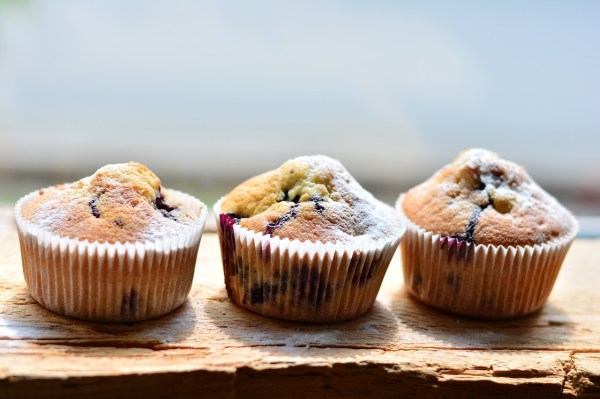
At five in the morning Dymphna woke to the cough of the truck’s engine and Eddie taking a piss on the front wheels. She pulled on her clothes, used the McDonald’s toilets and brought back coffee and blueberry muffins.

Whilst Eddie supervised the unload she redid her make-up in the sun visor mirror and never left the womb of the cab. On the return journey Dymphna talked about her dream to own a café by the seaside. Eddie said that was fine by him as long as he could go fishing.

“Maybe I could sell fresh fish from a corner of the café,” he said.

“And I would sell my homemade muffins,” said Dymphna.

Late on Sunday night Eddie dropped her back outside Greasy Joe’s.

“Same again next week?” he said, without stopping the engine, or taking his hand from the wheel. Dymphna leaned over and kissed him on the mouth.

Back upstairs in their damp rooms her mother lay hugging a cigarette on the sofa. She didn’t say hello or take her eyes from the TV screen.

“Had a good day Mum?” Dymphna asked.

“I changed the oil in the fryers,” she said, “whilst you’ve been out enjoying yourself.”


STEVEN JOHN lives in The Cotswolds, UK, where he writes short stories and poetry. He’s had work published in pamphlets and online magazines including Riggwelter, Bangor Literary Review, Fictive Dream, Cabinet of Heed and Former Cactus. He has won Bath Ad Hoc Fiction a record six times and was highly commended in 2018 ‘To Hull and Back’ competition.Steve has read at Cheltenham Poetry Festival, Stroud Short Stories, Flasher’s Club and The Writer’s Room on Corinium Radio.  Twitter: @StevenJohnWrite

Image via Pixabay

Cabinet Of Heed Contents

Kings Cross Examination – Dan Brotzel

Let us turn now to the evening of the 21st. An unusually hot Friday, even for July, as we have heard. At about 5.45pm you boarded a tube train to take you home, is that correct, Mr B?

Yes.

What route did you take? 

It was the Piccadilly line, heading north. I got on at Oxford Circus, then got off at Finsbury Park to get the Victoria line. 

Indeed. And it was at Oxford Circus that an incident took place. Do you remember coming into contact with a gentleman – Mr Jarvis, here – as he attempted to alight from the train?

There may have been a brief coming together. The train was very crowded.

Quite so, quite so! But you weren’t actually on the train at the point, were you? Or you were not supposed to be, at least. 

I’d stood to the side to let people off. I guess the momentum of the crowd carried me forward on to the train. It was hard to see if there were people still getting off. 

I see. Are you in the habit of being swept along by the momentum of the crowd?

Well, there are times when-

Have you, for instance, ever been swept under the wheels of an oncoming train by the hordes on a crowded tube platform?

Well. I mean, I hardly think-

Answer the question, please, Mr B.

I haven’t, no.

Are you aware of the protocols concerning the egress and ingress of passengers on tube trains, protocols which have of course especial sway and application at times of high peak use?

‘Please let passengers off the train first.’

Quite so, quite so. And yet you did the exact opposite…

As I’ve tried to explain-

-Leaving poor Mr Jarvis to have to fight his way out of the carriage, in order not to be stuck on the train and carried forth to another stop not his own!!

I regret this. But he did actually shove me quite roughly. 

He had to get off, Mr B! He had a gym appointment in Regent Street for 8.30! That muscle tissue won’t tear itself you know! 

I know. I’m very sorry. But I was in the way by accident. Whereas he pushed me on purpose.

And then what happened?

He stalked off.

Understandable, perhaps? And how did you feel?

I was upset. I was partly riled about having been shoved so roughly, and partly guilty at not being able to apologise. But of course, he never gave me a chance to explain, which was the worst feeling of all. 

Oh dear! Poor Mr B! Let us turn now to the morning of June 27thand to the testimony of Ms Pierce here. (And thank you so much for coming in to testify today, Ms Pierce, I now it’s not easy, the courts are not as accessible as one might wish.) So… at approximately 7.55am, you had boarded a train on the Piccadilly line, heading south.

That’s right. I was going to work.  

You were very comfortably ensconced in your seat, were you not?

No, I couldn’t get a seat at first.

That was a shame, wasn’t it, Mr B? I bet you were looking forward to getting stuck into your book. 

Well, it’s always nice to be able to sit down. That line gets very crowded in the mornings. 

Yes, of course. And you’ll stop at nothing to get a seat, will you, Mr B? And you’ll cling on to it at any price, won’t you? 

Well, I don’t think that’s entirely fair.

Let us see. Tell us what happened just after Kings Cross.

Someone stood up and gave their seat away. Only seconds after the train had left the station. 

Was that unusual? 

It was unheard of! I thought it must be a tourist, or someone very unfamiliar with the line who was nervous about missing their stop. They had a sort of fluorescent rucksack on, and a general air of panicky purposefulness. 

Any other thoughts?

Well. I did wonder if they’d spilt coffee on the seat or something. Or if they were incontinent.

Charming! But none of that worried you, did it, Mr B? What did you do next? 

I sat down. 

You pounced on the seat. Like a vulture.

Well I think I was technically nearest at the time.  

So no one else was interested in the seat at the time?

Well, there was a woman…

What sort of age?

About my age.

Did she make a move towards the seat?

I’m not sure. 

You didn’t think to give up your chance of a seat up for the lady?

I did think about it.

But you didn’t do it.

No.

What reasons did you come up with, in your own mind, to excuse yourself for your failure to extend this basic kindness to a lady in need a seat? 

I remember telling myself that women find that sort of thing patronising now. Equality between men and women makes a farce of all that old-fashioned chivalry stuff. Same as how they don’t like to be called ‘girls’ any more (or ‘ladies’ probably.) Also, I thought she was the sort of age where the offer of a seat would have been more upsetting than complimentary. Also, my back’s quite bad at the moment. And anyway, it’s dog-eat-dog on the Tube. 

I see. You went through all these reasons while you were in the process of sitting down?

Yes.

And did any of these excuses, these self-justifications, make you feel any less guilty?  

Not really. But I was also thinking of that time I stood up for a woman with a loose-fitting top on. She snarled: ‘Why does everyone keep offering me a seat? Do I look fucking pregnant or something?’ She did, of course. 

I see. But still – to return to the present case – you sat on.

My back does twinge a bit. 

More self-justifications, I see.

I’ve started doing pilates! Just once a week, but it does seem to be helping. It’s all about working on your core. 

Let’s stick to the case at hand. How many others were standing by the time the train neared Kings Cross?

About 7 or 8. 

But not you, of course. You were set up for the journey with your hard-won seat.

As I say, I think I was nearest. 

And then someone got on at Kings Cross that changed things. Or should have, perhaps.

You mean the blind woman. And her guide dog.

Quite so, Mr B. What did she look like? 

If I recall correctly, she wore a bright orange top and jangly earrings. They reminded me of the comedy Christmas tree ones my mum always wears. At Christmas. The woman’s eyes sort of fluttered. And the expression on her face was open, smiley.

So what happened next?

Nothing. She just stood there with all the other people standing.

A blind woman? Left to stand in the vestibule?

I know. But it was quite clear who should have stood up for her. 

Who?

The person in the nearest seat. The protocol is well-established. 

And who was that?

A teenage girl.

I see. And what did she do?

Nothing! She was oblivious, self-involved, headphones on, possibly asleep. Possibly foreign.  

So what did everyone else in the carriage do?

Well, we all sent out our strongest guilt-glares, of course we did. But the girl seemed to be immune to them. 

I see. So naturally, someone else stood up to offer the blind woman a seat?

Actually, no one made a move. It was all a bit tense. 

And where were you seated in relation to all this?

I was sitting opposite the teenage girl. 

So who was on the hook now, morally speaking, if the teenage girl was oblivious? Was it you?

No! I’d say it was the man sitting next to the teenage girl. A sort of bearded, geeky type, all wired up and immersed in his game of Minesweeper. Or the second season of I, Robot, I don’t know. 

You couldn’t actually see what was on his screen, could you?

No.

Have you ever actually payed Minesweeper? Do you even know what it is? 

Not really, no. 

More casual prejudice, I see. Anyway, did you all start sending guilt-glares this man’s way too?

Of course! It was getting embarrassing by now. The whole system was breaking down.  

And what did this ‘geeky type’ do? Did the guilt-glares get to him?

No! He just sort of… retreated into his beard.  

You didn’t like his beard, did you?

No, if I’m honest. 

Do you wear a beard yourself sometimes?

Yes.

And how do you feel about your beard?

I don’t like it much either. 

I see. Are you, by the way, in the habit of describing teenagers as ‘self-involved’?

Er… yes.

And people with beards as geeks?

Yes.

I see. Meanwhile, back in the carriage, the blind woman still didn’t have a seat. 

No. I did send out a few more random guilt-glares of my own, but they come to nothing.

So perhaps it was down to you now, Mr B, as the only seated person apparently aware of the situation, to make a stand – quite literally – for common decency? 

In retrospect, yes. I fully accept that I should have got up at this point. 

So you stood?

Er, no. 

You carried on sitting.

Yes. I’m not proud of this. 

And how did you justify this to yourself at the time?

Well, I was still waking up really. But I did wonder if the blind woman had already told someone that she was happier standing. I started to imagine in fact that I’d heard her tell someone this. Also, I thought that it might have been awkward for her and her dog to make their way across to my seat.

What was the distance between the blind woman and your seat?

Ooh, six or eight feet at least.

I see. And of course, you still had your book to read. 

Well, yes. I suppose so. But the atmosphere was almost a bit too awkward for reading by now. 

Still, it would have been a shame to have to lose that hard-earned seat.

I’m not proud of myself. 

Remind us, for the benefit of the court, what sort of book you were reading?

It was an account of the genocide in Rwanda.

I see. Let us fast-forward now to Warren Street, and a new development occurred. What happened? 

The seat next to me came free. 

I see. And then?

This woman with cropped blond hair and a stern expression made a big point of leading the blind woman over to this seat so she could sit down. It was a foldie, I recall. 

And what did you do? 

At that point I leapt up so the blind woman could have my seat instead, which was actually slightly easier to access than the one that had just come free. 

So you were shamed into action at last.

I suppose you could say that. We helped the blind woman to sit down, and then I offered the woman with the stern expression the free seat next to the blind woman. 

Your seat.

Yes.

And what did the woman with the cropped expression do?

She said: ‘No thanks.’ And then she said, louder and more pointed, for the benefit of me but taking in the whole carriage: ‘And frankly I’m astonished.’ I noticed a hint of Liverpudlian in her stern accent. 

I see… Stern face, stern accent: did you want to use the word ‘Scouse’ just then?

It did occur to me but I wasn’t sure if it was OK to use it. Especially if you’re not, er, Scouse.

Such delicacy! Such sensitivity! Mind you, even the guards in the camps read Goethe. So let’s recap: you have shown yourself to be callously spineless and morally bankrupt. Your offer of assistance is rightly dismissed as ‘too little, too late’ by your righteously stern fellow passenger. So now what do you do?   

Well, there was nothing for it but to sit down again. 

Back to your fascinating book about genocide?

I couldn’t read! The words swam before my eyes. I felt that people were looking at me. I didn’t want my stupid seat. It was a relief to get off in the end.  

This was at Victoria.

Yes.

Where you were about to mount the escalator… 

Correct.

…Only to look up and see the woman with the stern expression staring down in your direction.

Yes. I hadn’t realised she’d got off at the same stop. I could see she was still talking about the incident with someone. And from the set of her chin and her tautened lips, she was obviously still seething about it. 

Oh dear Mr B! Not what you wanted at all, I imagine! 

No! Plus I had on these light blue trousers paired with tan shoes. I was a bit stuck for clothes that morning, and my outfit suddenly seemed ludicrously conspicuous. Everything a shade too bright to be plausible.

Yes, I remember. It’s one of our worst, isn’t it? You must have been terrified she’d spot you.

Terrified.

And did she?

You know she did. You’re me, remember.

So what did you do?

I hung back, slinking around by the bottom of the escalator.

How did you feel?

I was burning with shame, obviously.

I see. And what did she do?

Oh, she just carried on glaring down at me. 

From her ever-ascending moral high ground.

Yes. 

Serve you right, perhaps, Mr B?

But I didn’t see the blind woman! It wasn’t down to me to stand up in the first place! Of course I would have got up if I’d realised! I was half-asleep! My back! Pilates! Don’t single me out – look at my track record! Look at all the other fucks who did nothing! And these people never give you a right of reply! Most of my mental life is spent fighting these imaginary court cases! 

The self-prosecution never rests, m’lud.


Image via Pixabay 

Cabinet Of Heed Contents

Creep – Gale Acuff

When Sunday School is over, Miss Hooker
slips her Bible and her teacher’s copy
of our workbook into her purple purse
and walks out to the parking lot with me

following–I always hang around so
I can open her car door for her
and she always says Such a gentleman
thank you. I try not to watch her legs
when she gets in. I don’t know why I don’t
–I look somewhere else for those few seconds,
at her front tire, maybe, or at the sky
unless the sun’s too bright and even then
I squint. That’s the way my eye makes a cloud.
I look at her again when I hear her
pull the door shut. Next she’s putting on her
seat belt and shoulder harness in case
she has a wreck, of course, driving home, God

forbid. If I were grown I’d carry her
there in my arms every step of the way
and I’d like to tell her so and one day
maybe I just will. I’ll pray about that
again tonight, right after I whisper
the Lord’s Prayer in the darkness, and beg
that God protect everyone I love
–it’s natural then to slide right into

praying for Miss Hooker and wondering
what it’s like in her bedroom at night, not
that I’d ever go there. She’s not married
so I guess she sleeps alone, except for
a cat or dog, or maybe both, maybe
one on either side of her. Her lamp is on
and she’s reading a magazine, something
about clothes or hair or shoes or makeup.
Sometimes I think I can even hear her
yawn. Then she says Good night to the cat or
dog, or maybe both, and turns out the light,
and sleeps and dreams, maybe of marriage
and babies. Or both. I’d like to creep in

without waking the cat and dog and her,
and sleep there at her feet and when she wakes
and yawns again and opens her eyes and
makes me out, I wonder what she’ll say and

what I’ll say back to her. Oh, I’m sorry,
I’ll try, but the front door wasn’t closed and
you should probably be more careful–begging
your pardon–and I was just passing by
and noticed and thought I’d come in to tell
you and not ring your doorbell instead in
case there was a burglar with a knife at
your throat. Or gun. And then I came back here
to check on you and suddenly I felt
very sleepy and here I am, and there
you are, ha ha. She’s so grateful that she
gets up (I’ve got my eyes closed and face buried

in the quilt) and makes us breakfast and then
it’s time for me to walk to school, so we
stand at her door and she gives me her hand
and I shake it and I’d like to kiss it
but I have manners and don’t pump too hard.

On my way home from school I stop back by
to check her again. She serves me a snack
and before I split I drop to one knee
which means she has to bend over to me
so maybe that isn’t gentlemanly
and propose. That’s when I wake on Monday

morning, cold and hungry and stupid but
loving Miss Hooker as much as ever,
praise the Lord. Next Sunday I’ll walk her to
her car again and open her door and
she’ll get in and this time I’ll look at her
legs as she gets in but look first to see
if she’s looking at me looking and if
she is I’ll die and if she’s not I’ll burn.


GALE ACUFF has had poetry published in many journals and has authored three books of poetry. He has taught university English courses in the US, China, and Palestine.

Image via Pixabay
Cabinet Of Heed Contents


Create a website or blog at WordPress.com

Up ↑