Remembrance – Mark Left

She sees him first. A figure through the steamy window, waiting to cross at the lights, looking diminished by the modern-day traffic, and still unaware of her gaze. He is adrift in the noise of the street, fresh from the Remembrance service and too smart for round here in his blazer and medals, his polished patent leather shoes.

Shorter than she remembers but he walks well. There’s a spring in his step, just like the Bernie of old. She recalls watching him marching in parade at the airfield. So many lovely young men but he always drew her eye. So many of them died. She remembers them all and feels a surge of regret despite the fifty-seven years in between.

She is excited to see him again. At seventy-eight, she wonders if she should feel like this. It feels odd and a little inappropriate in public. As if anybody’s watching, she tells herself. She finds herself considering if she looks attractive, if it really matters now. Then he’s through the door, and they greet each other and embrace. His voice is shaky – perhaps with nerves – but the same tone, steeped in the years but still familiar. His face, his blue eyes, the way he lightly holds her at arm’s length and smiles at her. She remembers the New Year dance and the kiss of the younger man.

“Oh, Bernie. How lovely to see you again.” She cannot stop smiling. Inside, her heart fuels the fires of expectation and she turns the corner into a widening memory lane. She could talk for hours, and she will.

*      *      *

He sees her first. He’s hesitating behind the pillar box over the road, watching her sitting in the misty window opposite, concentrating hard to see her well through the patchy clouds in his eyes. He searches his memories, leafing through the synapses that store faces and places, finding broken links and voids where there was once history. The angle of her nose, her jaw, it seems wrong. He cannot be sure.

He stands confused in the rush of passers-by, the air booming with the noise of traffic. He adjusts his hearing aid and smooths his blazer, checks the medals are hanging straight, but at last admits to himself that this is not the Mary he thought it was. He has surnames muddled, her married name on the website, too much time passed. She is not his Mary, not Mary from 1944.

Yet their correspondence says she knows him. Who then? He has no recollection. Nothing.

It does not occur to him to not turn up. Despite the years, there is such a thing as duty and he moves to the lights and crosses when the traffic stops. Now he thinks she has seen him and he walks as straight as he can without his stick, and he tries to inject a youthful swagger. He’s not sure why it really matters now. But his bad hip hurts like hell and he’s glad to reach the café door. He goes inside and she rises and he embraces her as if she means something, murmuring her name, holding her at arm’s length again to look at her while his smile hides the truth.

No, this isn’t who he hoped it was. His heart rings hollow with the disappointment and a desire to distance himself settles in. Still, he’s here now. One coffee and half an hour won’t hurt.


MARK LEFT writes stories and sometimes poetry. He has been published in @EllipsisZine and was highly commended for his entry in the BIFFY50 Microfiction Contest Autumn 2018. He lives with his family on a hill in the middle of England and can be found on Twitter: @ottobottle

Cabinet Of Heed Contents Link 18

Image via Pixabay 

Oneirology 101 – Essie Dee

The evening breeze has a dampness about it, and I pull my coat closer. Turning onto the darkness of Woodbridge Road, a shortcut of sorts, I save about thirty minutes. Good on cold evenings such as this, when I am already running late.

Halfway up the road I see college lights in the distance – across a field at the end of the lane. While traversing a side street a white car pulls into the intersection and pops the trunk. Before I can comprehend what is happening the trunk slams shut, closing out the world.

*      *      *

I really need to start leaving for class earlier, or stop taking evening courses. I enter the gloom of Woodbridge Road and unease flows over me. Shifting my bag to the opposite shoulder I look around – they really should put in lights around here.

Approaching a side street I see a white car idling, hear its trunk pop. Everything in me says ‘run!’ Turning, I fly down the street, am outpaced and grabbed by the bag, which I shrug off. Grabbed again I fight back, flail, try to scream, and am hit. Hard. I crumple to the ground in a heap. The wheels of a car make a slow approach; I feel myself being lifted and thrown. Shrugging into the back corners of the trunk, I fear what awaits me.

*      *      *

I’m startled by the numbers on my watch- seven o’clock already. I’d best get moving if I hope to make it to class in time. Throwing on my coat, I grab my bag and head into the damp dark of autumn night. As I approach Woodbridge Road a dire sense of fear and dread takes over. Stopping, I look down the unlighted street – a quick path for years now, why this sudden feeling? A white car turns up the road heading into the darkness. A moments hesitation before I take the long way, walking in crowds that push along to the next intersection.

*      *      *

Exhausted, bad dreams aplenty this week. I grab a coffee before taking my shortcut to class.


Cabinet Of Heed Contents Link 18

Image via Pixabay 

A New Face – Steven John

Ten minutes from home Goodwin makes a decision and parks outside the roadside pub. He’s never stopped there in all the years. There’s the usual cabal of drinkers and smokers sitting at the long, trestle table outside the pub door. He’s imagined himself as one of the group; shaking hands of welcome, being kissed on the cheek, buying a round, squeezing onto the bench seats, touching shoulders and thighs.

Goodwin goes to the bar and orders. The barmaid’s about his age. Attractive. Contagious smile. He imagines a single mother making ends meet. He imagines staying back with her for a drink after the other customers have gone home, and talking. Just talking.

He looks at the old framed photographs hung on the shabby walls. Drinkers from years gone by, regulars, past it now, or dead. He can hear their guffaws, smell the tobacco smoke, taste the froth on the beer, feel the late night party going on around him. He strokes the head of the dog lying at its owner’s feet. The first non-work related sentence for ten hours he speaks to a dog. His own gentle words sound foreign. The dog’s owner nods as if to say ‘it’s ok, he understands you.’

Goodwin takes wine outside into the night. He looks to sit at the trestle table. There are no spaces. No-one looks at him with eyes that say ‘Sit here.’ No one shifts up. All the faces are joined together. There are no loose connections at the trestle table.

On the small beer-terrace to the side of the pub are empty tables, positioned close together under a cane trellis arbour made for grapevines. There are no hanging grapes. Instead there are vines of fairy lights. He sits under a light that turns his white wine to red. He works out the repeating pattern of colours threaded through the trellis; red, green, blue, yellow, red. He reads work emails on his phone, stacking up to keep him awake. He scrolls through his contacts looking for friends. There are two but he hasn’t seen or spoken to them for months, years. A couple sit down opposite each other at the next table. He goes to say something but can only find words for traffic or weather. The couple reach across their table and hold hands.

The barmaid comes outside to wipe tables and clear glasses. Goodwin’s on his third.

“You’re a new face,” she says.

“Does it fit here do you think?”

“Somehow I think it’s a perfect fit.”

Goodwin arrives home, late for him, and drunk. He shouldn’t have driven. He unhooks the stepladders from the garage wall. There are no familial hellos. There never are. He carries the steps onto the landing and climbs into the loft. From a taped up cardboard box he finds a set of Christmas tree lights. He takes the lights to the spare room where he sleeps in a single bed and pins them above his pillow. He pulls off his office shoes and slides under the duvet. If he squeezes his eyes almost closed, the coloured lights coalesce and fizz. If he opens his eyes slowly, the lights glare and fly apart.


Cabinet Of Heed Contents Link 18

Image via Pixabay 

Collections in an Empty Hand – Haley Petcher

Déjà Brew is Danny and Kate’s go-to coffee shop, only two blocks from the elementary school where they first met on the playground when he rescued her from the Kindergarten Bullies—he said she told the weirdest, coolest stories during Show and Tell and proclaimed loudly, standing on the top of the slide, that she was under his protection—and five blocks from the movie theater where they shared their first kiss, grappling in the dark during an old movie about the British monarchy. After that he started calling her his Queen.

They’re in the coffee shop playing cards when Danny says, “Don’t get worried if I start spending more time with that girl we met at the park the other day. It’s just that I need more Indie Pop Friends. My others moved away.” He sighs like it’s an inconvenience and sips his coffee. They’re playing the game of Nines.

“I don’t want to date her. You know you’re my girl. My Day One.” Danny reaches out and touches Kate’s free hand, covering it with his, squeezes, releases.

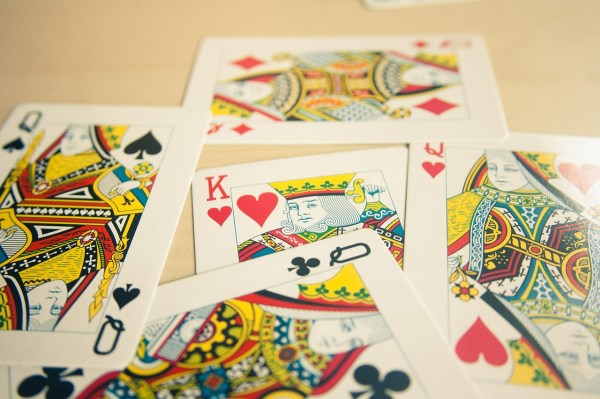
When you’re playing Nines, you want high cards, twos, and tens. Kate plays a king, which Danny can’t beat, so he adds the recently played cards—twos and eights and queens—to his collection. The goal might be to get rid of all of your cards first, but collecting is Danny’s strategy. He loves feeling like he has a collection of valuables, of ammunition, up his sleeves.

The two play card after card, taking bites of their traditional orange roll between turns and watching a man in his gray flat cap and tweed blazer trying to learn French. When Danny and Kate walk the hallways of their school, he calls her mon amour, shows her off, and tells everyone her stories. Danny liked the way Kate fit beside him, her head on his shoulder, his arm wrapped around her waist, and the way their classmates in high school watched as they walked down the hall. Kate moved with him, Peter Pan and his shadow.

Danny puts down a queen, winks at Kate. She’s never liked the title, but it used to make her smile all the same, thinking about all of their Firsts. Now her smile feels stale. She puts down a two, resetting the deck so they can play lower numbers again.

“You know you’re my girl, right?” Danny asks.

Before Kate nods, saying that she knows she’s his girl—she always has been—Danny says, “I mean, you know I like to have a wide variety of friends. The Avid Video Gamers. The Music Connoisseurs. The Cookie Bakers.” He examines the cards in his collection, weighing them against each other.

Kate plays a seven, sips her tea.

“Remember how the Car Enthusiasts got me into that show with all the old trucks?” Danny asks. An eight.

Kate puts down a jack, nodding. She had been home that night, plans canceled.

“My Car Enthusiast friends really like their alcohol. They’re exhausting.” He gives her a knowing glance. “The tickets were hard to come by though. Totally worth it.” A king.

“You know, I’ll be with my lacrosse team and then Indie Pop Girl this week, but I bet we can do something next week. I’ll shoot you a text when I have time.” Danny’s fingers draw circles on Kate’s knee, warm and familiar. “You’ll be free, right?”

Kate wonders how long the two of them will sit like this in the coffee shop, building and unbuilding collections. How long would it take him to replace his Silent Queen? Kate looks at the cards in her hand, sees a two and a ten, considers the risk. A two lets you restart with lower numbers on the same pile, but all those other cards are still there underneath the two, all of that extra baggage a threat to your goal of an empty hand. However, a ten flushes the pile and lets you start fresh. She snaps the ten on the table. A few years from now, she’ll sit in a coffee shop with new friends in a city 852 miles from Déjà Brew and tell stories she never told during her silent days, wondering why—why, why—she stayed quiet for so long, watching him take card after card. But, for now, she pushes the collection of cards aside and takes one more sip of tea.


HALEY PETCHER earned her BA from Auburn University and her MA from the University of Louisville. She currently teaches high school English in Huntsville, AL. You can find her work in Pithead Chapel, formercactus, and Spelk and learn more about her at http://petcherpages.wixsite.com/portfolio.

Cabinet Of Heed Contents Link 18

Image via Pixabay 

Aground – Ed Broom 

Ken stands, rigid, transfixed by the slick spreading under his feet. For reasons he can’t fathom, Ken wills the black cloud to expand, to extend another centimetre, another millimetre. An inky big bang. With the last of the oily liquid pulsing and swirling and warming his toes, images bob into his head, distressing pictures of tarred gulls dredged from old TV news. Then, unbidden, a name both long forgotten and yet somehow unforgettable.

“Amoco Cadiz,” he says, pointing to the capsized cafetiere at the puddle’s epicentre. “Look, Cynth. Remember how that was all over the papers during our honeymoon?”

For their ruby wedding anniversary, Ken had suggested returning to France, “for old times’ sake. One last fling. Doesn’t have to be Paris, Cynth. I know we’re not as young as we were. Maybe a few days in Brittany? I’m determined to try an oyster before it’s too late. Or Normandy, perhaps do some battlefields? You used to love a cafe au lait. I’m not suggesting taking the Fiesta, don’t be daft. We could go wild, splash some cash on the Eurostar, say? Trish says it’s amazing.”

Despite Ken’s myriad attempts to convince her, Cynthia wasn’t to be swayed.

“We swan off to France and when we come back, all we’ll have to show for it will be a new set of snaps,” she said.

“If we’re going to spend some money, I’d prefer to spend it on the house,” she said.

“That back room has been looking tired for far too long,” she said.

Hence the “sea moss” walls. The ivory linen Roman blinds. The new cream carpet.

Three weeks ago, on an unseasonably sunny Wednesday afternoon at the bowls club, Ken’s concentration had been disturbed by a figure barging through the pavilion doors.

“Dad! Don’t you ever answer your bloody phone? I’ve been ringing and ringing.”

Ken hadn’t seen Trish in that particular setting for years. Probably, he thought, not since one of the club’s family fun days. She’d had a similar scowl back then, he recalled. He lowered his wood and loped over.

“Trish. Keep it down. Where’s the fire?”

“Dad, it’s Mum. She’s at The Royal. She’s in a bad way. She slipped in the kitchen, Dad. Banged her head. We need to go, Dad.”

“Traumatic brain injury,” the doctor said.

“Massive internal bleeding,” the doctor said.

“Nothing we could do,” the doctor said.

Now Ken stands, rudderless, lost in a rapidly cooling decaffeinated slick. He’s still clutching the tray. Two mugs cling to the edge.


ED BROOM works in IT but tells his children he’s a lighthouse keeper. He lives in Ipswich and tracks down crinkle-crankle walls.

Cabinet Of Heed Contents Link 18

Image via Pixabay 

Six Jars Under The Bed – Alva Holland 

Adam kept his mother’s kisses in a blue jar under his bed.

He reached down, lifted the jar, turned the lid, felt the release, raised it a fraction and watched the kiss escape.

It landed on him in a flutter – like the silken hanky she kept in the pocket of her floral dress. She told him the flowers were spring creations.

Each year, as winter faded, she’d pull the dress from its layers of lemon-scented tissue paper and tell Adam more flowers had blossomed, that this Spring would be particularly beautiful.

Oh, how many times he’d tried to count those flowers, their complicated petal layers competing for his heart.

Adam sat on the side of the bed absorbing the peace the kiss brought, saw his mother’s face, not pale and wan as it was towards the end, but vibrant, sparkling, like when she walked with him through the woods, when she’d tried to understand him.

He’d started to run from the rain, but she’d tugged his shirt.

‘Feel the rain, my darling. Always, feel the rain.’

The drops had infiltrated the fiery hair strands attempting to escape the loose bun she’d scooped up to try to tame them, had run down her forehead and cheeks, trickling onto her shoulders, watering the flowers.

The blue petals had changed colour, become rainbow-like, more complex. That same day, Adam ignored a glance, a grin. He’d walked on, but looked back, briefly.

Adam slid from the bed to sit on the floor. Six jars sat in a line on the polished parquet. The jars didn’t need labels. The colours told her story, and his when she’d listened.

Walking outside, he felt his mother’s love fall in a satin veil from laden clouds. The wind sucked at him, pulling the darkness from within him, scattering. He felt the space it created, wanted to fill it with something new.

Kisses rained down, cloaking him, black with silver lining.

He recalled the young man in a pale blue shirt, khaki pants, whose hesitant lips on his felt cool, like paper.

A virgin membrane disturbed, shuddered, settled.

It was time. Time to reciprocate, with intent – a new journey.

He smiled and strode on, seeing only flowers. The invisible cloak enveloped him, soaked him through.

No more ignoring. No more looking back.

‘Do we need to keep these jars?’

The khaki pants are now flannels, the hair grey, the mouth as inviting as ever. He looks quizzically at Adam during their attempt at decluttering.

‘Yes,’ said Adam.

‘Yes, we do.’


Cabinet Of Heed Contents Link 18

Image via Pixabay

The Arrival of the Finnman – Michael Bloor

In October, I shall have been Governor of this island for forty years. I came here as a young man, to command the garrison and dispense justice in the assizes. I arrived full of hopes and vaunting ambition, trusting to my connections in the distant Imperial Court to secure me rapid promotion to more lucrative and influential positions. My hopes were vain, my ambitions lost and my connections as enduring as morning dew. Nevertheless, I have learned contentment in this little bounded land. True, the winter days are short and the winter nights are long and bitter: for weeks together, the gales can blow loud enough to deafen, and strong enough to deposit small fish on the cliff-tops. But the peasants, farmer-fishermen for the most part, are determined, even heroic – very different from the servile drudges one encounters in the capital and the countryside round about it. I have come to respect and emulate the islanders’ quiet virtues. To watch them fishing is an education – two boats working in careful concert. And then to watch the sharing out of the catch, with one fifth part reserved for widows and the sick. Yet now it seems all my hard-won lessons on peasant virtues may be cast over.

It was a stormy day of early March when the ‘Finnman’ was captured. I remember because when my sergeant brought me the confused news, I was staring absorbed from my chamber window at the waves breaking wildly on the rocks at the harbour entrance. The wind was catching up the spume from the waves and the low sun was creating hundreds of small, truncated rainbows as it shone through the spume.

Tales of the mysterious Finnmen are common currency among the islanders, but I have paid them no more heed than stories of dwarfs living in the mounds along the shore, or of the ‘selkies’ that are said to inhabit the western skerries. The Finnmen travel in skin canoes at great speed; they are fierce, cruel and emit screeching cries; they are said to drive away the herring shoals.

The Sergeant said that a group of fishermen from the west end of the island had found the Finnman collapsed among the dunes: first of all, they had spotted the skin canoe, beached on the shore, and they had then followed his tracks into the dunes. I told the Sergeant bring the Finnman at once to the chamber, along with his captors.

A couple of minutes later, the corporal of the guard (a hulk of a man), dragged in a bundle of skins that proved to be the insensible Finnman. He was accompanied by the sergeant and four fishermen. I knelt to make an examination. The Finnman was breathing rapidly and shallowly; he smelt strongly of stale urine and rancid fat. I felt in his mouth and found the tongue swollen and distended:

‘The Finnman needs water – Corporal, fetch me a pitcher of water. After that, go to the cellarman for a bottle of brandy.’ I turned to the fishermen: ‘How did he come by these cuts and bruises?’

‘Excellency, he was unconscious when we found him, but we thought it best to bind him. He then came to and he started to struggle, so Gruta hit him. But Gruta only hit him once. By the time we arrived here at the fort, a crowd was following us. As we waited for admittance, some of the crowd started to throw stones. And a woman ran forward and hit him with a stick.’

The sergeant confirmed that this was the case and that the woman in question was Sella, the widow of Odd. The corporal then returned with the pitcher of water. I wet the Finnman’s lips but he did not revive. The corporal had already departed again for the brandy, so I sent the Sergeant to bring Oolla, the midwife, as the hospitaller is an ignorant drunk whom I would not trust to treat hiccups. I sent the fishermen to recover the skin canoe, and the Finnman’s weapon, a short dart, that one of the fishermen (an intelligent lad) had said lay beside the canoe.

Left alone with the Finnman, I observed him carefully. Of normal stature, with a yellow-ish skin (redder about the face) and dark, lustrous, coarse hair. A flattish face, the nose being small. The eyes were brown and curiously obliquely set. The teeth were much worn. From his musculature, I would have judged him younger than myself; from his wrinkled skin, I would have judged him older.

In recent years, I have devoted some of my leisure hours to an illustrated description of the many monuments that the Ancient Ones have left on the island. I have fancied my account might ensure that some posthumous celebrity might attach to my name, and that the island itself – this isolated and obscure outpost of Empire – might also gain a degree of fame. Now, I was seeing things differently: surely the mysterious arrival of the Finnman would make the island famous throughout the Empire? The four fishermen’s names would be as famous as the past Emperors who had first sent out ships to explore these remote waters.

The corporal returned with the brandy, which I ordered him to administer, but it was not a success. The Finnman choked, vomited and lapsed back into unconsciousness. He still had not spoken a word in my presence. I was later to learn that, when struggling with his rescuers, the Finnman had only made a few hoarse noises.

When the midwife entered the chamber she at first recoiled from the sprawled Finnman and would have fled if the sergeant had not restrained her. But her kind instincts soon got the better of her. She suggested that the Finnman would take some time to recover and that it would be best if he were carried to her hut outside the fort gates. There she would wash and bind his wounds and, once he was conscious, keep him on a diet of gruel and herbs of her own choosing. I agreed, gave her a purse, and bade the sergeant and corporal carry him away on a hurdle, adding only that the hurdle should be left in the hut and that the Finnman be bound to it, to prevent ignorant flight. I was remiss in omitting to require the posting of a guard outside the hut.

The early evening I remember as being one of pleasant excitement as, by candlelight, I began an examination and description of the canoe and of the weapon that the fishermen had brought in, just before dark. The canoe, wondrously light, was secured from swamping by skins and draw-strings designed to fit around the seated Finnman, like a leather shoe around a foot. The body of the canoe was constructed of greased skins, stretched over a taunt frame made partly of wood and partly of bone. The wood appeared to be that of a kind of pine tree, but not one I recognised. The canoe was evidently propelled by a single oar, shaped into paddles at both ends. The weapon was more ingenious still: the short dart, tipped with sharpened bone, was made more effective by a separate wooden throwing arm. I was of the opinion that the dart-plus-arm would have been just as murderous as a full-length javelin, but much more readily handled in the confines of the canoe.

I had just finished a sketch of how I presumed the throwing arm would operate, when the sergeant once more rushed to my chamber – this time with news of a riot outside the fort. I was stunned: it was more than twenty years since there had been any civil disturbances on the island. The sergeant had already called out the guard. I issued pikes and armed both the sergeant and the corporal with an arquebus. We then all immediately ran out of the fort towards the shore, where the crowd had gathered. Two barrels of pitch had been set alight. It was plain to see that the figure stretched on top of the barrels was the Finnman, still attached to his hurdle. He looked more an effigy than a man.

The crowd quickly dispersed. The midwife, who had taken a blow to the head, claimed not to have recognised the young men who burst into her hut and seized the Finnman. Sella, the woman who had previously hit the Finnman with a stick, turned out to be a simpleton. The corporal of the guard, a native islander, told me that the islanders believed that Finnman had to be killed, lest he spirit away the herring shoals. He could not say, or would not say, who had instigated the riot. At the assize, I called the fishermen who had found the Finnman to give evidence, but they had returned to their homes at the western shore on the evening of the burning and knew nothing of the riot. Surprisingly, the young fisherman who had mentioned to me the Finnman’s weapon gave evidence that he had indeed heard the story that Finnmen could charm the herring away from the island, but for himself, he believed that herring shoals shifted for many reasons – that they were not at the beck and call of the Finnmen.

These peasants whom I had come to respect, living in such successful harmony with each other, clearly had no respect for an outsider. The greater the bond between islanders, the less the fellow-feeling for the stranger, the intruder. There is no wisdom to be found here, no matter how beautiful the sunsets.

I have arranged for the Finnman’s burial and I shall dispatch the canoe and its accoutrements to the Imperial Chancery, the lawful recipient of all shipwreck spoils. And then I shall ask to be relieved of my post on account of an infirmity, an incurable island melancholia.


Michael Bloor is a retired sociologist living in Dunblane, Scotland, who has discovered the exhilarations of short fiction. Recent publications include The Cabinet of Heed, Ink Sweat & Tears, Litro Online, The Copperfield Review, Scribble, Dodging the Rain, Everyday Fiction, Firewords, The Drabble, Idle Ink and Spelk.


PSX_20190215_111401.jpg

Image via Pickryl

Audition Isolde – Jim Meirose 

Wait wait wait wait-wait-wait, Isolde! Again, you have not reached the minimum level to pass this audition. Your face is more Pilotblanket than Homo Sapiens, we don’t need a glamour-shot or hand-done old school brainwave chart to know you are no Gage. Your head is still symmetrical and you have no mates dragging behind. ‘splain, Lucy. You got one more try. Go.

Start where the boss said.

Okay.

On!

The boss said, You’ve no job. You’ve no salary. Si. You’ve no savings. I go alone. So here you sit. I go alone. I am the rope bridge you simply need to not fall from which will see to it your trip to your death is not a horrid poor sickly lonely cold dark stinking painful premature one. ‘splain, Lucy. Splain and that will be it. But Isolde, at the same time, consider this—maybe, on the other hand, you’re just hallucinating. Maybe—

Cut there, Isolde!

Time’s up. That’s your slot. You came in, you bulged, all filling, you outgrew. What the hell and out you’re popped to the list we might call back next year. Your tone quite reminds us of being nine years old at the living room window watching downsnow vis-à-vis wintrycold kind of piling up like it did then and as it does then a grainy photo through the parted out of style lacy curtain and down it comes the clouds no sun cold ready for school Midnight in Moscow flesh colored superhouse across dimmed by sheets over sheets of show Midnight John in Glenn Moscow and Midnight in Moscow rules are to be obeyed sheets of snow crackly-cold beautifully sunlit ice storm morning after sun, here let’s pull on yer leggin’s time to have fun everybody have fun! Everybody have fun! After all, this is the real life Queen Mary Boat, Docked permanently. Needless to say, school did not get canceled. The day memorable because somehow wrong. As in, not normal. That we call such days wrong, well, don’t sweat it. The word shrimp could have been chosen instead. The meaning would be the same for you Isolde. Intention is everything. You’re just reading. Not doing advanced calculus in your head. My God hole, Jesus, wake thyself up. Nobody else will no matter how long you wait, mon mon, my sweet! So what that you’re really just eighteen. So what that for reasons unimportant you are on your own. Learn from the mottos of the past masters; Listerinio Veronicans! Op Verinicans Ooo La La Mitosismysterianan-Rose! And best of all, soon to revert to the hyphenonalian nationica! Then to just shoot out the end-over-outpipe, into the backwall splat. Okay Isolde. Here’s a test. Say all that back. Fast. Can you say it backfast? C-c-c-c-an U Sayit-Bach back back to me and me only in seven exactly not eight not six but seven exactly that numerio-of-words what it just took a hundred and thirty blackjackie daddio metrics all in inviolate triplicate copies over copies of copies of heh, to explain to you, Isolde?

No? You look puzzled.

That is also the wrong answer, we suppose.

Thusly leave us, go forth—and may you have a profitable day!


http://www.jimmeirose.com

PSX_20190215_111401.jpg

Image via Pixabay 

Picnic at the End of the World – Sharon Telfer

When the sirens blare, we pedal hard up the hill. We’ve been paying attention. We chose this spot thirteen weeks ago. In the valley, the roads out of town clog like arteries.

I shake out my mother’s snowy damask. You slice the thickening air with your great-aunt’s mismatched silver. We lay out the crockery dug from the back of the cupboard, that pattern we loved so much when we put it on the wedding list but now can’t remember why.

We unpack the hamper and begin to eat…

…sourdough kick-started with a culture that bubbled westwards across Europe one step ahead of advancing armies, your Grandma’s pastry which we never tasted but everyone said was the best ever, crumpled bags of the Mary-Jane caramels my mother craved while she was carrying me, hedgehog cake with almond prickles and five candles, the biggest juiciest bramble you thought you couldn’t reach but which was worth every scratchy snag, that chocolate Easter bunny too beautiful to bite without weeping, sherbet dibdabs and white mice and flying saucers, tiny bottles of summer-curdled-winter-slushed milk, rice pudding with skin on for the last day of term, fluffy mints from Grandad’s pocket, leftover Yorkshires gilded with syrup, a licked-out cake bowl, Mum’s treacle pudding erupting like a suet Vesuvius, lip-smarting crisps and warm lemonade in the back of the Cortina waiting for the grown-ups outside the pub, mouth-sealing bonfire toffee, bangers on the barbecue half-charred half-pink like sunburnt noses, first kisses cherried with cola, the sudden obvious point of olives and anchovies, the devilish whiff of kidneys, the sour-shock pickle of someone else’s body, silky tongues of smoked salmon on Christmas morning, nostrils popping with champagne, Marmite, sleepy-eyed moussaka with chips our first morning barely awake but ravenous at that old-school Greek place that’s a sushi bar now, bitter aniseed that kept us dancing well past dawn, salt-rimed-lime margaritas under a stardust California sky, gelato masking the June sewer stink of honeymoon Venice, the wake-up chilli spike of breakfast in Kerala, the peace of tofu in your vegan phase, falling for the irresistible temptation of bacon sandwiches after an all-nighter, peat-smoke whisky burning away the heartbreak of the child who came too soon, amazing tea and buttered toast after the child who arrived right on time, cook’s-perk crackling chicken skin stripped from the carcass by the kitchen sink, wasabi’s eye-opening sting, the never-to-be-repeated-twelve-course-tasting-menu-treat from your father before you stopped talking to each other altogether, those oh-so-expensive Valentine truffles that tasted almost better than sex, HobNobs in bed to the Sunday clatter of rain and bells, three strawberries of perfect ripeness picked with my father in the care home garden, Mars Bars on the moors still a sodden drenching hour’s hike from the bloody car, cold beer, takeaways family-style with friends, warm beer, pastries dunked in gossipy lattes, soldiers dripping thick with yolk, a long glass of cool clear water downed in one…

We raise our toast in our one surviving crystal glass. It glints like ice against the dropping sun. As the earth cracks and the sea rises and the sky falls, nothing has ever tasted so sweet.


SHARON TELFER lives near York, UK. She has won the Bath Flash Fiction Award, the Reflex Fiction Prize and the Hysteria Flash Fiction competition. She is the 2018 New Writing North/Word Factory Short Story Apprentice. She is an editor at FlashBack Fiction.

PSX_20190215_111401.jpg

Image via Pixabay 

Maybe I’ll Grow A Beard – James Bates

Rob peered out from behind the Sunday sports section. Across the room he observed his wife Shelia, doing some sort of handwork with tiny needles. Crocheting, maybe? He didn’t know. Had no clue. Didn’t care. She was dressed in a teal blue, floral print skirt and a white peasant blouse. Her auburn hair was pulled back in a pony-tail. Her full lips and high cheekbones, once so beguiling to him, were now anything but, just plain and unremarkable, nothing to write home about. He sighed and turned back to check on the baseball scores but only for a minute. He was having trouble concentrating. “I wonder,” he thought to himself, “If today’s the day I tell her I’m thinking of leaving.”

Shelia worked at the local middle school as a teacher’s aide. She was a diligent employee at the school, and she was just as diligent at home where she was as handy with a power drill as she was in the kitchen. She’d single handedly painted all of the walls in all of the rooms of their small bungalow style home. She’d put up book shelves. She’d pulled up all the old carpeting and sanded and refinished the wooden floors. She kept the house neat and clean and tidy. She cooked fabulous, healthy meals. She’d even made the skirt she was wearing.

She’d also made the baby quilt laying on the floor between them. On it, seven-month old Emily lay rolling back and forth playing with a rattle. She’d recently learned how to turn herself over and now lay arching her back, attempting the feat yet again. Rob watched, disinterested, as his daughter made a move and finally rolled onto her stomach. Imperceptibly, he shook his head, big friggin’ deal.

Shelia’s excited voice cut through the silence of the room, “Emy, look at you. Good girl, sweetheart. You’re getting to be such a big girl.”

“God,” how ridiculous, thought Rob. He set his paper aside, thinking, “I’ve had enough.”

At that same moment, almost like it was orchestrated, Shelia set down the project she was working on, a crocheted cap for Emily, and got to her feet. She reached down, and in one swipe picked up her daughter and carried her into the kitchen. “I’m going to fix Emy some cereal,” she told Rob, “What are your plans for the day?”

Rob got up and followed behind. He worked as an IT specialist for a large company in Minneapolis, twenty-five miles west of their home in the small town of Long Lake. He’d been there for ten years now, four years longer than he and Shelia had been married. It was a moderately stressful job so Sunday mornings he usually went for a long run to have some time alone and unwind. Usually, but not today.

“There’s something I need to talk to you about,” he said, looked at the back of her head, noticing strands of grey, wondering what he’d ever seen in her, “Something I want to tell you.”

Shelia took a small pan out from a lower cupboard and filled it with water, “What?”

Rob watched as she added dry cereal, put the pan on the burner and turned the stove on, all the while bouncing Emily on her hip. “I…” he paused. Did he really want to do this? Did he really want to give up this life? His wife? His daughter? Their home? Security? Give it all up for his freedom and the chance to do whatever he wanted to do? Asked and answered. You bet he did. He finished his thought, “I’m thinking of leaving. Moving out. Steve from work says I can live with him. He’s got an apartment near the office and some extra space. He says I can stay with him for a while.”

Before he started to ramble too much, he forced himself to stop. Was he nervous? Yeah, a little. But, truth be told, it felt good to get the words out and tell it like it was to Shelia. Who knew? Maybe she’d beg him stay. Maybe she’d break down and cry and plead with him not to go. Maybe she’d make good on her wedding vow to be a good wife to him and not take so much time with her precious Emy. Maybe she’d promise to make an effort to treat him like he deserved to be treated. The breadwinner. The man of the house.

He waited for her answer.

“So you really want to leave?” Shelia asked.

“Yeah. Yeah, I do.”

Her answer surprised him. “Well, good,” she said, “Great. In fact, it’s about time. I’ll tell you what. I’m going to feed Emy and get her changed. We’ve got a play date at 10 this morning at Susie’s.” She made it a point of looking at the clock on the wall. “It’s 9:30 right now. I’ll be home by noon. I want you out by then.”

She turned her back on him and set Emily in her high chair. Then she turned off the burner and went about finishing fixing breakfast for their daughter.

Hmm. Unperturbed and feeling rather liberated, Rob walked to the back of the house where their bedroom was. That was easy. He scratched his chin, noting the rough feel of his whiskers, and at that very moment had a thought, “Maybe I’ll start growing a beard. That’d be fun. It’s something I’ve always wanted to do. In fact, now that I can do anything I want to do, I think I will. I think I’ll grow a beard.”

He took down two travel bags out of the top shelf in the closet and began packing. Shelia had given him until noon to move out. Hell, he’d be gone way before then.

Back in the kitchen, Rob didn’t hear Shelia on the phone, “Hi, Susie, it’s me. Yeah, I’ll be there in a little bit, but I’ve got some good news for you. Exciting news, in fact. It’s about Rob. He’s finally leaving. Yeah. Seriously. No, I’m good. I told him it was about time. I think he was shocked, but so what? I’m sick of him and his idiotic attitudes. Yeah, but don’t worry, I’ll figure out something. We’ll talk more when I get there. Okay? Yeah. Bye.”

Shelia hung up and wiped some cereal from her daughter’s chin. She grinned at the cute little girl and fed her some more food, leaning close so they could rub noses. Emily giggled. “We’re going to be just fine, sweetheart,” she said, her grin turning into a big smile, “I promise, Emy. It’ll be just the two of us now, and we’re going be just fine.”


PSX_20190215_111401.jpg

Image via Pixabay 

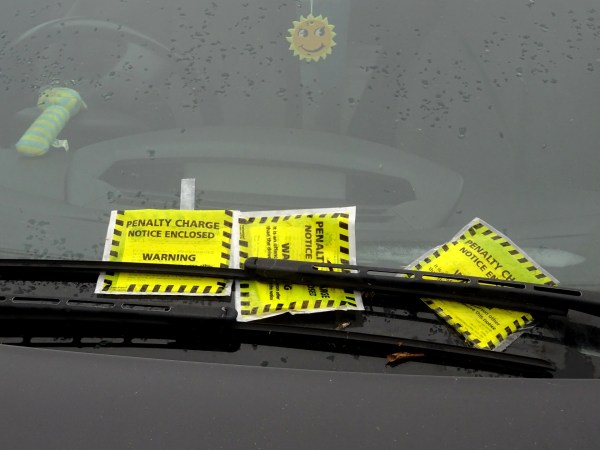
Penalty Charge Notice – Dan Brotzel

THIS NOTICE CONTAINS IMPORTANT INFORMATION ABOUT AN OFFENCE WHICH YOU ARE BELIEVED TO HAVE COMMITTED. DO NOT IGNORE.
(You did, of course.)

DETAILS OF OFFENCE
Hmm. How about: failing to be present to the person you said you loved? Basically, you recklessly entered a restricted zone (my heart), parked your callous little self all over my feelings, and just sat there while I bled dry.

TIME
Most of the time really. And more and more as time went on. I mean, when was the last time we’d even had a meaningful conversation about anything?

PLACE
I didn’t know where you were emotionally most of the time, only that it was somewhere other than with me. Even when you were here, you weren’t really here.

EVIDENCE TO SUPPORT THE ALLEGATION
Oh come on, it was all over your face. That slightly vacant guilty look that became your default expression with me? The way you never texted or called in the day any more? The way you were oddly reluctant to introduce me to your friends or family. Your avoidance of sex. And when I said we should do more together, you were always like, Yes! This weekend! Let’s drive out to the hills. Let’s spend some real time together! And then you were like: Oh wait, I promised to help my mum.

CONDITIONAL OFFER OF FIXED PENALTY
I tried to make you see. Tried to explain what was really happening. I don’t know why you want me here, I said. I only moved to this city because I thought you wanted us to be together. I gave up everything back home and got a shit job here so you wouldn’t have to keep subbing me. I share a flat with a bunch of arseholes because you’re not ready to move out from your mum’s. (Did she ever even really know about me, by the way? Does she even know you’re gay, come to that? You were oddly evasive about that too).

We used to make big plans about living together, marriage, adopting a kid. But it got a point that if ever I broached the subject, we ended up in a blazing row. Remember the shitshow at New Year’s Eve? The night the neighbours called the police? The crimes of Paris? First-class tickets on Eurostar and me sobbing alone in the buffet car.

THIS OFFENCE CARRIES A MAXIMUM PENALTY OF…
Christ, I didn’t know. How can you serve an ultimatum on someone who doesn’t give a shit? I could have just walked out on all this long ago, and I probably should have. That’s what my sister said, and you know how she always saw right through you. The only thing that stopped me was the fear that you would have just watched me walk away, just let it happen, been secretly glad. The only thing that stopped me was that I still loved you.

FAILURE TO RESPOND TO THIS NOTICE WITHIN 28 DAYS IS DEEMED AN OFFENCE AND COULD LEAD TO A COURT SUMMONS AND PROSECUTION.
Actually you did respond. To start with. You pulled out all the stops for a night or two, gave me some attention, showed me a bit of love. Just enough to keep me going till my next little hissy crisis. Jesus, you must have despised me, the way you just kept me dangling. Did you get off on watching me twist and writhe, you cold-blooded sadist? And God, how I must have hated myself to put up with it, to think that the best thing I could do with my life was to hang around waiting for you to turn into a decent person.

IF YOU MAKE TIMELY PAYMENT AND AGREE TO ATTEND AN EDUCATIONAL COURSE, YOU WILL BE DISCHARGED FROM LIABILITY TO CONVICTION AND NO PROCEEDINGS WILL BE COMMENCED AGAINST YOU.
Yeah right.

YOU MUST PAY IN FULL AND SURRENDER YOUR LICENCE.
And your ego. And your nasty sadistic streak. Also your sidelong glances at other men. Don’t think I didn’t notice. (But of course, it’s way too late for all that now.)

THE EDUCATIONAL COURSE IS DESIGNED TO EXPLORE YOUR REASONS FOR OFFENDING AND HELP PREVENT FURTHER LAPSES.
i.e. explore the reasons why monsters like you persistently exceed the normal limits of reasonable behaviour in supposedly loving monogamous relationships. As for further lapses, if you can’t see what the problem is already, then God help the next one.

YOUR DETAILS WILL BE CHECKED AGAINST A NATIONAL DATABASE TO ESTABLISH IF YOU HAVE COMPLETED A SIMILAR COURSE OF EDUCATION WITHIN THE LAST 3 YEARS.
You will also remain in my personal database for all time, and as soon as I get out of here I will not hesitate to inform any future partners of yours what a sneaky self-involved shit you are.

YOUR PERSONAL DETAILS WILL NOT AT ANY TIME BE MADE AVAILABLE TO THE PUBLIC.
Unless of course you do this to someone again, and I’ll paste the gory details all over Facebook.

YOUR DETAILS MAY HOWEVER IN FUTURE BE USED FOR THE ENFORCEMENT OF OTHER CONTRAVENTIONS AND OTHER ASSOCIATED PURPOSES.
And by ‘associated purposes’, I mean whatever the fuck I want it to mean, but especially reserving the right to drag up your sorry behaviour at any time that suits me, especially where it might assist me as an underhand card to play in winning any future argument I might have with anyone who I suspect of emotionally abusing me in any way whatsoever.

IF THERE IS ANY REASON WHY YOU THINK YOU SHOULD NOT HAVE TO PAY A PENALTY CHARGE, PLEASE SAY SO NOW. YOU CAN ALSO REFER THE MATTER TO A HIGHER AUTHORITY TO MAKE REPRESENTATIONS ON YOUR BEHALF.
But just so you know, that doesn’t mean your mum. Also, I can tell you now that the following were never going to cut it:

* ‘I was not aware of what I was doing’
* ‘I was not in full possession of my faculties at the time’
* ‘I did not see the signs’
* ‘Someone else was in control of my mind without my consent’
* ‘It was late at night and I’m not at my best then’
* ‘Well, that’s not how my mum sees it’
* ‘It was very early and I’m not really a morning person’
* ‘I was momentarily distracted’
* ‘It’s my first offence’ (bullshit)
* ‘My memory may be faulty’
* ‘I’m just really tired – work’s been really hard recently’
* ‘It’s not you, it’s me’
* Any sentence beginning, ‘What about when you…’
* Any sentence along the lines of: ‘If you’re the injured party, how come I’m the one in plaster??’

PERSONS WITH DISABILITIES ARE CATERED FOR.
But just so you know, things like ‘my mum never hugged me’ or ‘I’m just wired differently to other people, I guess’ do not count as disabilities. Injuries after the fact do not count either.

WHAT HAPPENS NEXT YOUR REPRESENTATIONS AND SUPPORTING EVIDENCE WILL BE CAREFULLY CONSIDERED, AND YOU WILL BE NOTIFIED IN DUE COURSE OF THE DECISION REGARDING YOUR CASE. IF YOUR REPRESENTATIONS ARE ACCEPTED, YOU WILL NOT HAVE TO PAY THE PENALTY CHARGE.
But there are laws for things – rules of love, if you will – and in your case, I’m afraid, the charge was payable in full. PLEASE DO NOT SEND POST-DATED CHEQUES. Just like your post-dated affection, these will no longer be accepted.

CURRENT LEGISLATION PROVIDES THAT, WHERE THERE IS SUFFICIENT EVIDENCE TO JUSTIFY THE COMMENCEMENT OF CRIMINAL PROCEEDINGS, A FIXED PENALTY MAY BE APPLIED INSTEAD OF A PROSECUTION.
OK I shouldn’t have done it. I guess I took the law into my own hands.

THE FIXED PENALTY SYSTEM IS DESIGNED AS A FAST-TRACK SYSTEM WHERE THE OFFENDER DOES NOT DISPUTE THAT AN OFFENCE HAS TAKEN PLACE.
OK, OK. But you knew what you were doing. And I was sorely provoked. This had been going on for months, remember.

IF THE PENALTY IS NOT PAID BEFORE THE END OF THE 28-DAY PERIOD, AN INCREASED CHARGE MAY BE PAYABLE.
And you certainly milked it for all it was worth. Going to the papers like that, you little tart. ‘Jealous gay lover runs over boyfriend’. How much did you get for that? As if. It was just a little nudge. We were in a driveway, for fuck’s sake.

FREQUENTLY ASKED QUESTIONS ARE MY HUMAN RIGHTS INFRINGED IF I RESPOND TO THIS NOTICE?
Are you fucking kidding me? I got six months and you’re asking me about human rights? I don’t even believe your leg was broken. (Not in four places anyway.)

IS YOUR EQUIPMENT ACCURATE AND CAN I SEE EVIDENCE OF ITS INSPECTION?
Oh enough with the gas-lighting already. You had it coming. ‘Dangerous driving,’ they said. Trust me, babe — I never drove with more care and attention in my life.


PSX_20190215_111401.jpg

Image via publicdomainpictures.net

Notions – Katy Thornton

People were always sitting beside Sarah on the bus. She found it annoying but had long ago decided to take it as a compliment – she obviously looked like someone who wouldn’t bother you and was hygienic. Sometimes, even when there were other seats available, seats without a passenger already, still, they opted to sit with her. Sarah had always attributed this to her big breasts, which were E cups at nineteen years of age. She had read somewhere that once you turned eighteen, they stopped growing, and really hoped that was true. When she was younger, she used them as a way of enticing male attention, as she wasn’t a particularly attractive girl otherwise, but now, most of the time, she covered them up with high neck tops and oversized jumpers. Today that hadn’t been an option. Sarah sat squished into her seat by the large man who had decided to sit beside her, so her shoulder was stuck beside the window like a starfish in a tank. The man’s arm shoved into hers, pushing her cleavage together even more, creating a deep vertical line down her chest, that anyone who got on the bus couldn’t help but gawk at before finding somewhere to perch for their journey.

Sarah had been sick of being conservative. She’d ordered a dress online that cut into a V-neck, and though she knew it was a risky option, she didn’t want to be the ugly one in the photos for once. The model on the website she ordered the dress from was “curvy” – meaning she had boobs bigger than A-cups and she had a big bum but likely only had a twenty-five-inch waist. It had showed off the model’s modest cleavage elegantly, whereas Sarah looked like she was about to star in a porno, and not a high end one either. Sarah considered wearing her round-neck t-shirt dress instead, but once she caught a glimpse of Charlotte’s outfit on her Instagram story, she changed her mind. Her mum dropped her to pre-drinks and Sarah had to use one of her thick winter scarves to cover up her exposed chest, to avoid her mum having a conniption. When she arrived at Charlotte’s house, she unwound the scarf slowly and carefully, soaking up the gasps of her friends, who were made to feel inadequate about their considerably smaller breasts. There was a not so subtle pulling down of dresses and tightening of bra straps. Sarah had spent years doing the exact opposite.

A stray bottle came clattering down the steps of the bus, rolling every time the bus took a corner, or moved in sharply to let passengers on or off. Everyone was slightly irritated by it, this was clear in the twitch of necks and shifting of eyes. Those with headphones couldn’t drown out the stark banging, like it was a bowling ball. Sarah gritted her teeth every time she heard the plastic bounce up and down on the floor. Every time it knocked from side to side, there was an inaudible groan of annoyance shared by everyone on the bus, but no one got up to take responsibility for it. Sarah felt it mocking her every time it hit against someone’s feet.

The large man sitting on the bus next to her might have been hammered the night before too. Maybe he had also been at Diceys. It was filled with older men, a fug of Hugo Boss aftershave following behind them, some avoiding going home to their nagging wives, some avoiding an empty apartment, or trying to make something for dinner out of some gone off vegetables and a frozen steak pie. The man smelt ripe with whiskey; the musky stench of it turned Sarah’s fragile stomach. When the bus took a violent turn, so did her innards, and she bit into her lips, creating a seal in case any vomit tried to leak out. She’d been sick four times, once just moments before the bus had arrived at the stop and had been sure there was nothing left. The last thing she needed was to be removed from the bus, especially in her sequin black dress and matching heels, at 10AM on a Tuesday morning. Her first lecture of the day had begun and finished, and there was no way she was getting to her proceeding three. Normally Sarah would be fretting about the lost 10% attendance marks, though her record was otherwise flawless, but today her mind was on other things.

A couple got on at Aungier’s Street, clutching bags of doughnuts, the brown paper going translucent. The girl had a pink cord hat, and the man had a beard that was balding. Sarah tried to avert her gaze, but she was compelled to keep watching. Their affection to one another was tangible and wet. The man planted a kiss on his girlfriend’s shoulder, of all places, leaving a bit of a damp patch that Sarah couldn’t take her eyes off then for the whole journey. The light kept reflecting off her pale skin in this area. It made Sarah want to grab a tissue and wipe it away; it reminded her of the wet patches between her legs this morning. Sarah sealed her lips once more.

From the moment Sarah and her friends had entered the club, it was already unlike any other night. Instead of awkwardly shuffling, pretending to be drunker than she was, while Charlotte and Annie flirted outrageously with the boys from Commerce or BESS, Sarah was the one being flirted with, and the more she drank, the easier this became. She wondered why she never had more than two drinks normally – the light and numbing tingle in her veins was far more pleasant than the hummingbird of anxiety that normally beat inside her. She stumbled over her first responses, but it didn’t seem to matter. The boys laughed heartily and made sure her hand was never without a glass bottle of Smirnoff. Charlotte tried to butt in a few times, shamelessly waving around her high pony-tail like a horse, but only the gawky skinny lad in the group paid her any attention, and though she indulged him with a quick shift, she left for Coppers without saying goodbye to Sarah.

Sarah checked her phone, careful not to unlock it; she was only on 5% battery. She was still thirty minutes from home, not including the twelve-minute walk from the bus stop. There were no messages from Charlotte or Annie. She’d gotten one of her new lad friends to type out a “get home safe? x” message last night, but neither responded, or enquired to whether she had gotten home safe too. Later that night they had both uploaded Instagram stories from Toni’s Diner, and Annie had one up at about 5AM of Charlotte conked out on her sofa.

Sarah knew she should be flattered. Girls only act that petty when they are jealous, and Sarah had never been the kind of girl who ever had anything to be jealous about. She’d spent much of her own life being jealous of girls like Charlotte and Annie, or even the less cool girls in her history classes, but the ones who were smarter and more independent than her, who could keep up difficult and intriguing conversations about Home Rule in Ireland or The Korean War. Jealousy was a feeling she knew all too well.

As much as Sarah loathed the PDA the couple in front of her were displaying, she was jealous of them too. She wondered where they were going, maybe into Dundrum, although they didn’t strike her as the shopping type. They looked more like people who went hunting in charity shops for hidden treasures; the mustier the clothes smelled, the better. Sarah then felt guilty for assuming – she hated the assumptions people made about her. Though they were normally correct. She was quite sure any assumption made about her on the 14 bus that morning would be completely accurate. Out drinking the night before? Check. Wore a tight dress for attention? Check. Probably had a one-night stand? Sarah felt bile roll around in her stomach, like someone was churning butter in her intestines.

The large man got off in Rathmines and Sarah felt herself sag to the side. She tried not to be obvious about stretching her limbs as her former companion jollily sauntered off the bus, lifting his face into the fresh morning air, and literally began whistling on his merry way. A cold breeze rushed in before the bus doors closed, creating a cluster of goose-bumps all up and down Sarah’s arms and legs. She hadn’t been able to feel her toes for about an hour now; she peeked down at them and saw her big toe was completely white, plain against her red nail polish. Her baby toe she could not see, and could not feel, but she knew it was crushed against the inside of her shoe in a way it shouldn’t be. Sarah only got two stops of freedom before a girl fell into the seat beside her, but at least she wasn’t taking up half of her seat like her other companion.

The girl was thin and pale with choppy orange hair and eyes that darted like a paranoid deer. A message pinged on her phone, and she unlocked it with the swipe of an unmanicured bitten thumb, and tried to lock it again just as fast, but not before Sarah saw the words in the message. It was a short message, with a very direct request.

Blow me.

Romance, indeed, was not dead.

Only the previous night Sarah had been asked by not one, but two separate men, for the very same thing, though she had turned them both down, gently. She was walking with one of the boys from Commerce, or was it Sports Science? He might’ve been in DCU, at this stage she wasn’t sure. She had kind of flitted between groups of boys, enjoying the initial flirtation but then quickly feeling the awkwardness of chatting with someone she knew nothing about, and being reminded by a joke not landed that she was not as cool as she thought, or as her dress might have suggested. Eventually she’d ended up in a group of lads who were about to leave, and one of the quieter ones, the “Sarah” of the group, she liked to imagine, suggested she get in the taxi too. It didn’t occur to Sarah that they were going in the opposite direction of her house, and that it was 3AM by this stage, and it would have made more sense to just go home, but she needed water. She felt like no one had ever been as thirsty as her in their whole life, and in the moment, she’d near enough done anything for a bottle of water. She’d meekly asked the quiet boy if he had water in his house, and he laughed, lacing his fingers with hers, and said he would get her some water. His name was Phil, though he didn’t offer his second name.

He was good on his word. Sarah didn’t know where they were, she’d been focusing on not being sick and hadn’t once looked out the window, but they ended up in a cul-de-sac with small but neat semi-detached houses. The grass was slightly over-grown, but there were an array of daisies peeping through that made it look quite beautiful. There was no car in the drive-way to Phil’s house.

“My mum works nights,” he said, by way of explanation, and Sarah was relieved that the introductions of the night were over. Her head had begun to pound, and when Phil presented her with a sweating glass of water, complete with ice-cubes, she downed it so quickly that the pounding turned to freezing.

“Shall we go upstairs?” Phil asked shyly, shifting his weight from one foot to the other. Sarah wasn’t sure what else there was to do, so she agreed, removing her heels first. She’d been sitting on top of the kitchen counter and had noticed the calendar pinned up by the fridge. April had a series of snapshots of Phil and a woman Sarah presumed to be his mother, and another boy. She was curious about him, but didn’t ask, and followed Phil up the stairs. His room was tidy besides a few t-shirts that looked like they had been vomited out of his press.

“Couldn’t decide what to wear,” he said, and Sarah laughed breathlessly at the thought of boys worrying about that kind of thing.

She sat at the edge of his bed as he made a half-assed attempt to organise the clutter, which meant piling up all his clothes and shoving them into an over-flowing hamper. She considered offering to help but thought it would be strange. She let herself fall back onto the mattress, exhaustion taking over.

Sarah was still exhausted as they passed through Churchtown. The girl sitting beside her was furiously tapping at her phone and looked irritated. “Blow me” boy wasn’t getting anywhere, Sarah decided, as she forced herself to look away and face the window, her eyes straining to take in the blur of coloured houses and cars, almost fluorescent to her. The couple who had been sitting in front of her had got off at the next stop and were walking towards a housing estate – so her assumption about their thrift-shopping had been incorrect. The girl in the cord hat pulled aggressively on her partner’s arm until their lips, and then their tongues, collided in a flurry of uncooperative, squelching motions. On their seat they had left the doughnuts, presumably by accident, and there was about a ten second window where Sarah could have alerted them to this. The bag was still full. Sarah was glad when the bus pulled away and forewarned the next stop. She was only five stops away from her own now. The bottle struck the wall with the force of a pinball, and Sarah looked at the remaining six passengers on the bus with crossness. Her body was shaking terribly with shivers now – she didn’t know why the windows were always cracked open on the bus, even when it was cold outside. It seemed whenever the weather was good the windows were fastened shut so tight you’d need a crow-bar to jimmy them open.

Phil’s window had been open when Sarah had first sat down but closed when she came to. At least she thought so; she was extremely hot. It took her a few moments to realise he was on top of her, kissing her. She tried to shove him off – she was far too warm – but he didn’t seem to notice, and he didn’t shift his weight aside.

“What’s that?” he said between kissing her neck. Sarah had mumbled something, she wasn’t sure what now, but he hadn’t heard her, and by this stage he was into her thong. It wasn’t unpleasant, Sarah decided, and she thought it was better to just go with it. She was a guest in this house and she didn’t have enough money to get a taxi home – she would need to wait for the buses to start running.

By the time he’d finished, Sarah was close to finishing too, though he climbed off her before she could tell him this. He pulled off the condom – at least he’d thought of that – and gone to have a shower, while Sarah lay there, a wet patch beneath her, her dress rolled up past her belly button. She didn’t pull up her thong right away. It was uncomfortable. She considered taking it off entirely, but she felt sticky and wrong between her legs, and upon further inspection there was a bit of blood too. She looked around Phil’s room for tissue but couldn’t find any. She’d have to wait for him to come back.

When he did come back he had tea; Sarah’s was milky and without sugar, which was the exact opposite of how she liked it, but she didn’t say so. Phil threw a whole toilet roll her way, and she tried at first to gently dab at the blood, only to find there was too much for such tenderness. She wiped with big motions and tried not to look appalled at the darkness coming out of her body. Phil pretended not to notice and turned on Netflix. They both watched an episode or two of the newest sitcom, which was cheesy and not nearly funny enough to dispense the awkwardness that had descended clumpy and fast, like dust floating down from a high surface, over them both.

Sarah wondered how they did it – the couple, weird as they were, who were so comfortable with one another. For most of the bus journey they had sat in silence, occasionally, without uttering a word, gesturing at something that made them both laugh irrepressibly. The girl beside Sarah now was still typing, but more slowly, and to the same boy, a boy called Dom with a black heart emoji beside his name. Her shoulders were relaxed, and there was the whisper of a smile on the corners of her lips, though she refused to give into it. There was an ease, an ease Sarah did not feel in the company of other boys, or of other people in general. When she stood next to someone, or got too close, she felt like her body was inside out, her nervous system exposed, every feeling of anxiety and nervousness amplified. She thought this must be what dogs feel like, when they’re too close to something loud, or an over-zealous child with clunky movements and wandering hands.

The bus, at last, came to her spot. Sarah tried to not notice the stares as she pulled the back of her dress down as far as it would go, which was just an inch away from her bum, and walked, with as much dignity has her high heels would allow, to the front of the bus. She tripped over her words thanking the driver, and the whole twelve-minute walk home, which was nearly eighteen minutes given her footwear, Sarah had his face imprinted in her mind, the smirk, the sarcastic “you’re welcome.”

“You sure you don’t want me to phone you a taxi? I’ve got an app on my phone here,” Phil had said courteously, but quietly. His mother had returned home from work at dawn, though Phil hadn’t disclosed her occupation, and he was going to sneak her out. Sarah would have liked to borrow a pair of tracksuit bottoms, or some flat shoes, but by the way Phil was talking, in such hushed tones, she realised she was hardly going to see him again. She didn’t know his last name, and by this stage could not remember what college course he was doing, and in what college. She theorised that his name might not even have been Phil, but thought she was probably overthinking things now. Sarah told him she would be fine, and tip-toed down the steps and out into the morning air, four hours after she had first stepped into the house. Neither of them had slept, besides Sarah’s nap at the beginning, and she wasn’t sure where the rest of that time had gone.

Sarah arrived home to an empty house although the alarm hadn’t been set – her parents had presumed she’d come home last night and was still sleeping. By now it was just after 11AM, and Sarah put her phone in to charge before shedding her clothes onto the bathroom floor and sitting down to wee while the water in the shower heated up. She felt like she was sweating alcohol.

A photo from the night before hadn’t uploaded due to her 4G failing. She had only noticed this morning, when her phone charged enough that she could click into Instagram, and there was a red exclamation point alerting her to this. She clicked into it and stared blankly at the caption. BEST NIGHT WITH THE BEST BITCHES. It showed herself, Charlotte, Annie and Mary in the Diceys bathrooms, before they had even stowed away their coats. Sarah could admit to herself she looked good in this photo, and she knew others would think so as well. She tapped it again, and it reuploaded, this time successfully. As Sarah weed, very much aware of the stinging she could feel as the pee was emptied from her bladder, she wondered how many people had seen it now, and would anyone have messaged her directly. She knew Charlotte would demand it be taken down – she was facing the camera full on and not pulling a proper pose, but before she inevitably had to remove it, Sarah hoped to get some attention from it.

She wiped and looked into the toilet bowl, where bright red blood was spooling around in the water. The pain hadn’t subsided. Sarah didn’t flush right away, worried it would affect the temperature of the shower, and hopped in, furiously scrubbing her face to remove all the leftover foundations and glittery eyeshadow, and tore at her skin with an exfoliating glove to take off the false tan she’d plastered onto her luminously pale body the day before. She hiked up the temperature of the water until she was steaming and when she finally got out of the cuboid prison, her skin the colour of blushed cheeks. Sarah’s beady, naked eyes were small, once more, and utterly basic, her mouth decreased in size with no lipliner, and Sarah wrapped herself in a towel, thinking maybe next time she would wear the conservative t-shirt dress, wincing at the stinging she could feel spreading between her legs, as she inserted a tampon that she had thought she would not need for another two weeks.


KATY THORNTON recently graduated with an MA in Creative Writing from University College Dublin. She has been published with Headstuff, Cold Coffee Stand and JCS Press and is currently working on her debut novel. She spent last year as the Fiction Editor of The HCE Review, a quarterly literary journal.

PSX_20190215_111401.jpg

Image via Pixabay 

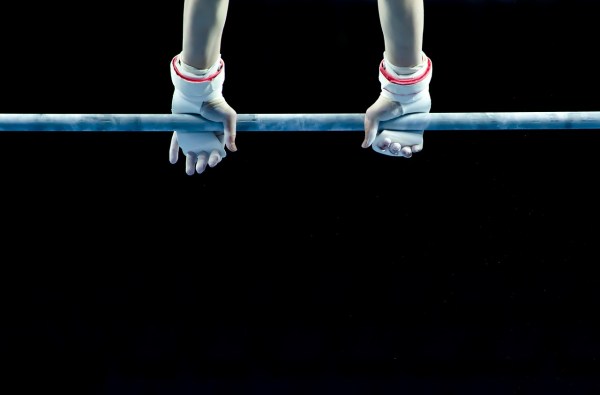
Things Your Mother Tells Me – Liz Wride 

She is proud of you. She says this through a lipsticked-smile; the sort of colour that took multiple applications and blotting with a tissue. Her lips are pulled back and reveal too-white teeth. In any other circumstances, this might be the snark of a dog – but it’s not. She is proud of you.

She tells me that she could never get her body to bend the way yours does; when she tried her (inflexible) hand at gymnastics. She tells me how her hair would be pulled back into a bun, as she performed – so that all the world could see her shame when she fell. She tells me she is proud of you.

She tells me you have a sudden talent. She tells me that the first time she heard the sound of you practicing in her old dance studio: shoes gliding across a floor – she immediately though the room was haunted. She wondered if the silence, then the rhythmic thuds were a sort of supernatural morse code; a desperate reaching through a talentless void. She saw you dancing and she was proud of you.

As she speaks, your Mother does so with blanket-shrouded shoulders. It’s cold in the auditorium and she is in no way suffering from shock. Her eyes are wide with wonder at the spectacle she just witness – you, the girl she is proud of, winning a regional championship. Her eyes are not opened in terror.

Before I can even ask her what her favourite part of the show is – she tells me. The part where you attached yourself to the ceiling; held in place by nothing accept the palms of your hands – that was the part that had her screaming with pride. When she’d attempted gymnastics as a child, defying gravity was simply not an option.

I ask if I should get the priest. The tournament has been over for hours, yet you maintain your position on the ceiling. It’s like looking at a girl at the bottom of a cheerleading pyramid – only a hundred times more impressive.

Your Mother tells me: No Priest. She tells me no priest, even as she clutches the cross around her neck. She begins to cite statistics: figures about healthcare and employment; figures about college applications and debt. She talks about scholarships, even though college, and a lot of other things, are a long way off for you, given the slender nature of your hips and the clarity of your skin.

She tells me, she could never get her body to bend the way yours does, as your head rotates 360. You are still on the ceiling and you begin to emit a low growl, like hot coals being raked; or a fire raging.

I ask your Mother when the sudden talent began. She mumbles a monologue about how she never had talent; and how she spent night and day in her dance studio, watching her mirror image fail to move with any fluid grace. She then realises what I’ve said and realises she should be talking about you.

She tells me it started happening around the time you both went to the garage sale. Some kid sold you a handbag charm, that he seemed really eager to get rid of. Her friend, who is vegan and knows exactly how many animals are on the endangered species list tells her that it’s not a handbag charm, but a monkey-paw. Her friend tells her it’s a cursed monkey paw. She tells me her friend things everything related to animals is dangerous: we shouldn’t be whaling, we shouldn’t be hunting, we shouldn’t be trading ivory or grinding up rhino horn…all monkey paws are cursed to her friend.

Your Mother rolls her eyes, and they circle and circle-back in a humane way. Your head has come full-circle and you now regard us from the ceiling with blind-white eyes, as they roll back into your head.

Your Mother tells me, yes – your sudden talent appeared around the exact time she bought the monkey paw.


LIZ WRIDE writes short fiction. Her work has appeared in The Ginger Collect, Empwr_ie, Okay Doneky Mag, Occulum Journal, the Mantle Press Anthology ‘Beneath the Waves’ and Pop To… Mag (forthcoming). Her short fiction has been shortlisted for Liar’s League and ELLE UK’s Talent Awards.

PSX_20190215_111401.jpg

Image via Pixabay 

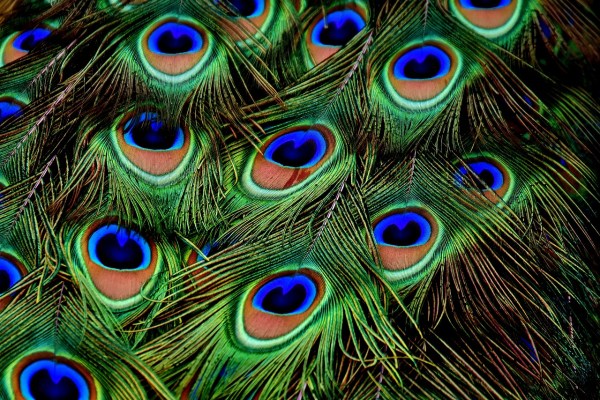
Peacock Pie – Cath Barton

I met Edmund at a club in Kensington where my father had introduced me as a twenty first birthday present. Edmund said he was a poet, put his hand on my knee and invited me to lunch. I thought he meant just the two of us, and imagined he would turn up with a sonnet penned to the beauty of my brow, but it turned out to be an altogether different kind of outing.

Edmund said we were to drive down to West Sussex, to the home of Sir Somebody whose name I didn’t catch and never knew. There would be four other poets going and if anyone asked me I was to say I was one too.

“No-one will expect you to recite, dear boy,” he said. He had exquisitely bushy eye-brows which curled when he winked.

Edmund rented a car from Harrods for £5 and we all six motored down together. The combined scents of the leather seats and stale tobacco were oddly intoxicating. Or perhaps it was the proximity of such talent. Two of the poets were quite famous, one Irish and one American, but I didn’t hear so much as a line of poetry from any of them. On the way down the talk was all of what we would eat at lunch.

“Our host keeps peacocks,” said one of the lesser poets. “He will surely have had one of them roasted for us.”

There was much shocked hilarity at this suggestion.

“What does peacock taste of?” I asked, and immediately regretted it as the eyes of the poets in the front seats swivelled in my direction.

“You’ve never eaten it, darling boy? Then you absolutely must,” said one of them.

Edmund drove with bravado, hooting at any other vehicles we met on the way. I was relieved when we arrived, having begun to feel queasy on the winding country roads. While the others drank a preprandial sherry on the terrace I pleaded a need for fresh air and strolled down the lawn. I could hear the shrieking of peacocks and had visions of their heads being chopped off behind the high hedge at the bottom of the garden, but to my relief one appeared, intact. It displayed in front of me with a great rustling, its tiny eyes glinting as Edmund’s had done when he picked me up from my parents’ home that morning.

“You’ve met our gorgeous boys,” said our host when I rejoined the party. “Don’t worry,” he continued with a guffaw, “it’s not peacock pie for lunch.”

It was rare roast beef, as it turned out, but there was nonetheless an arrangement of peacock feathers in a great glass bowl in the wood panelled dining hall.

“Mother says they bring bad luck,” I whispered to one of the lesser poets.

Within the year four of the poets were dead. Somehow, Edmund and I were spared. He lived to a great age, I believe, though I never saw him again after that day.


PSX_20190215_111401.jpg

Image via Pixabay 

Gone Ralph Gone – Lauren Davis 

He wants me. He told me he did. He drives by each night at 6:00PM. The officer said old guys tend to stick to routines. Ralph is proof.

There is, of course, nothing to be done. Depending on the season, it’ll still be light out or it’ll be dusk and his hatchback will cruise by real slow and his head will turn towards my closed blinds. He doesn’t know I watch for him from the dark upstairs bedroom. Or maybe he does. Perhaps he is so good at this game all my moves are void.

David hates it. Hates him. Hates a lot of things but really hates feeling powerless. Wants to move me in but it’s not that simple. There’s my lease and this isn’t new and I’m not in danger. At least that’s what I tell myself. Old guys and their routines. There’s no need for Ralph to escalate anything because look how easy and predictable it’s all become. Why shake anything up. I know to start dinner by his slow crawl outside.

So when he doesn’t show, Wednesday, April, the year of our Lord 2016, I don’t open the can of soup until deep evening. I find myself tapping the wall. I have not left for the bathroom or shifted focus to my phone. I have waited, as always, at my black window. Until my neck aches and my stomach is a loud hurt.

David calls. Wants to know why I am late. Flu, I say. A bad one. The worst one. I hang up. It is my first day without Ralph.

Walking to my car, I am weak-kneed. When I pull out of the drive, the sweetest song is on the radio. I can’t make out all the words, but it’s something like, Look at the moon, it watches you.

This is a small town. I hit the major subdivisions in an hour. First down one Holly Acres, then one Green Valley View. Up Deerwood.

I watch for Ralph’s hatchback. It’s dark but there are dozens of streetlamps ramped up like Christmas. I pay mightily in taxes for this sort of thing.

A half tank of gas, but I run out of roads. Coalfell is half an hour over. Ralph could be a citizen of some separate city, and I never put it together.

And the miles to Coalfell open to patchy fields. It’s overcast, but I can still see the moon pushing her glow through the clouds. The radio’s acting up. Can’t catch anything out here, and the streetlamps stopped miles ago. Me and the road, a quick flash of light out the left side of my vision. I know I am almost home.


LAUREN DAVIS is the author of Each Wild Thing’s Consent (Poetry Wolf Press). She holds an MFA from the Bennington Writing Seminars, and her work can be found in publications such as Prairie Schooner, Spillway, and Lunch Ticket. Davis teaches at The Writers’ Workshoppe, and she works at The Tishman Review.

PSX_20190215_111401.jpg

Image via Pixabay 

Iteration Five – Russell Hemmell 

The first iteration basked in simplicity.

A subatomic particle no scientist in the entire Virgo Supercluster had ever detected before appeared one day in anybody’s version of a quantum collider. Elusive but still traceable, it travelled through the superconducting magnetic structures faster than the light had ever been. Violating the Heisenberg Principle or any other law of the physics, it was matter and energy at the same time, a wave and a particle, a beginning and an end. A wonder of symmetry plagued by inner instability and still enchanting to look at, it glowed as a rainbow before disappearing in a blaze of pristine light, leaving its many observers in a dismayed puzzlement.

The particle’s omni-powerful Makers decided to up the antes.

The second iteration was a pretty one, something all sentient creatures could admire in its ravishing beauty: a silicon-based organism, strong and graceful, thriving in liquid methane and rare gases pools. Slender in its conception and gorgeously limbed, it rose on its forelegs a few seconds after creation and tottered over the slab’s immaculate surface in a parade of ravishing beauty. Transparent wings to hover and watch, shining blades to kill a prey, the creature selected leaves of luxuriant vert as its favourite dwelling and nested away. It attracted stares of appreciation and smiles of support and was quickly released on a brave new world, to live long and prosper.

Encouraged by their two early successes, the Makers kept working.

Iteration number three was a masterpiece of complexity. It was the most articulated creation the Architects had ever attempted since the Big Bang, and together the least satisfactory; its accuracy didn’t leave any space to improvisation, surprise, or growth. It was not unexpected for them; they already knew the sibling of perfection is death, something that can’t be altered any longer. After having remained in its stunned immobility for millions of years, the astonishing creature was discarded without qualms and forgotten soon after.

The fourth iteration made its creators think of the face of gods.

Essential, compact, and mighty, it crept out of the nourishing pond with the implacable assurance of the conqueror. And when they release it over a life-sustaining planet, the virus-like creature immediately started its colonisation process. Invisible to any other living being and so much powerful than all of them, it began self-replicating at a geometrical pace. It invaded and raged and destroyed, leaving nothing behind but a graveyard of ashes and gnawed-down bones.

Creators are not supposed to destroy their own creations, not even when they turn to be unfit or nasty, but this time the sheer power of the Fourth One made even the Makers waver. They sealed off the ravaged planet, and made sure the dooming agent was never to see the light of another sun.

Saddened and disenchanted, the Makers let go of the experiment. It was only after aeons of time that they decided to have one more try to add something unusual to the universe’s table of creatures.

Iteration five.

It had nothing of the complexity, beauty, symmetry, awesomeness or cruel detail of the others. It was per se a mediocre species, with an oversized processing unit and a frail sustaining structure. One glaringly deteriorating over the years, too. But that funny bipedal exemplar had developed something none of others did: the painful awareness of its own shortcomings, the yearning for an unattainable perfection, enough curiosity to sneak a peek at the assembling pad and wonder.

Not every parent is proud of their children, but all do recognise a promising one, no matter how trivial the beginning and how bleak the perspectives. The Architects made no exception. They had no idea whether that clumsy offspring would have ever been able to lift its stare as high as to meet theirs. The universe is a big empty space even when creatures are not tied to an orbiting rock, let alone when they are.

But, somehow, that seemed no longer important.


RUSSELL HEMMELL is a French-Italian transplant in Scotland, passionate about astrophysics, history and speculative fiction. Recent work in Argot Magazine, The Grievous Angel, Star*Line, and others. Find them online at their blog earthianhivemind.net and on Twitter @SPBianchini

PSX_20190215_111401.jpg

Image via Pixabay 

Just One Of Those Things – Mary Thompson 

It’s the morning after and I’m quietly sobbing while Isaac lies there, legs outstretched, hat on face, saying nothing. Rain is pittering on the tent and I’m listening to Adrian telling me that Freya will be fine as she’s very forgiving. That the drugs were strong and if anyone understands that, Freya should. That I really shouldn’t worry as it was Just One Of Those Things that happens at festivals.

But in my head I’m back there, putting up the tent in a field glistening with raindrops, sipping straight vodka from a bottle and buzzing. Bumping into friends of theirs and drinking more. Doing more. And listening. To bands and DJs with crazy, kaleidoscopic visuals of mashed up sunflowers, purring kittens and babies chuckling over and over. Over and over. Till the others have drifted away and it’s just me and Isaac, who’s right next to me moving, dancing, smiling. His smell mingling with mine, hips touching mine. Till the sun casts a long, slow languorous beam across the crowd in front, and Isaac’s hands are deep inside my pockets, his mouth on mine, the taste of peppermint gum sharp against my tongue.

So I had a ticket for the Big Chill as Freya couldn’t make it. Too much work she said, plus it could be awkward with Isaac. I’d never met him but they were together for years, him and Freya. Then on and off like a malfunctioning light till the bulb blew for good. Or so she said. So Isaac was going, plus Adrian who I knew a bit but not well so I had a fluttery feeling in my stomach as I wasn’t good with people I didn’t know, especially at a festival where it’s all so mad, where you can’t even have a shower or cocoon yourself away if you don’t feel like speaking, which I wouldn’t. They picked me up at 3 and Isaac was driving, his eyes hidden behind shades and messy hair. My heart flipped when I saw him. He glanced back at Adrian. ‘You didn’t tell me she was fit. Hop in.’ The whole way there it rained. Nasty, squally rain that ran down the windows like tears, and I listened in silence to the metronomic squeal of the wipers while they argued about music and politics and people I didn’t know until eventually we stopped for a bite in a pub where I nibbled a prawn sandwich, gulped down some cider and tried to relax. And afterwards Isaac slipped a pink smiley pill into my hand which kicked in later when we were driving along a dirt track and parking up at the back of Carpark B.‘Feel anything?’ he said. I nodded as he put his warm hand in mine.

‘I know this will be a good night,’ he said.


Mary Thompson works as a freelance teacher in London. Her work has recently featured in journals and competitions including Flash 500, Fish, Retreat West, Reflex, Ellipsis Zine, Spelk, Ghost Parachute and LISP, and is forthcoming at Literary Orphans and Riggwelter. She is a first reader for Craft Literary Journal.

PSX_20190215_111401.jpg

Image via Pixabay 

An Eyelash Against My Face – Michelle Matheson

Noise travels on a lake. It’s the stillness, and it was still that night. I watched her, as I watched them all; an outsider to their togetherness, alone in the shadows. the tip of my cigarette marking my presence for any who cared to look. No one looked. My solitude was an unheard accompaniment to their music. Their high pitched squeals rang like crystal, true and clear. Their frivolity hung languid in the summer air.

She stood out. She laughed harder, danced faster, her cocktail glass an extension of her arm. I allowed myself to imagine her with white limbs splayed wide.

She was a loose woman. The voice in my head was my mother’s. Starched and bitter.

We met at the water’s edge. Her nature was evident. She flirted, coquettish. Up close she wasn’t quite as beautiful as I had thought. Her touch was light, insubstantial, moth like. Her fingers fluttered against my throat; the gentle shape of an eyelash against my face.

When I kissed her, she cut me with her laughter.

She opened the darkness inside me. The bell like tones of her voice, ripped out my jugular and the humid air made way for a hot spill of my blood. Or perhaps it was her blood.

Now I am old and since then I have lived a simple life, in this cottage on the edge of the lake. I take it upon myself to clean the shoreline, particularly after a storm. You might think it a penance I suppose. But we both know that secrets rise in shallow lakes.


PSX_20190215_111401.jpg

Image via Pixabay 

Impasse – Ray Whitaker 

Looking in the refrigerator door late at night
Realizing that the oreos are still in the pantry
There with the dry ritz crackers
And mouse turds behind the box.

So, as with the fresh sleeves of saltines.

A small unopened package
Of canned sardines in mustard,
The paper wrap with a leaping fish on it
Belies the difficulty of opening the can.


RAY WHITAKER does readings around the state of North Carolina [USA], and is a member or the North Carolina Poetry Society, Winston-Salem Writers, and The North Carolina Writer’s Network. He has thrice been a ‘Writer-in-Residence” at the North Carolina Center For The Arts and Humanities, at Weymouth, in Southern Pines,NC. He has two books published, “ACKNOWLEDGMENT: Poems From The ‘Nam,” 212 pages, 03/2015; “23, 18,” 106 pages, 10/2015. He has two other books he is presently seeking publication for: ‘WHITE DOG SPEAKING,” 88 pages, 2016; and “FOR THE LOST AND LOVED,” 93 pages, 2018. Some of his work has been published in American, Irish, and Scottish Literary Journals. raywhitakerblog.wordpress.com.

PSX_20190215_111401.jpg

Image via Pixabay 

Our One-Thumbed Whittler – Michael Grant Smith

“To hear what needs to be heard, you must close your ears and listen with your gut.” — Loyd English, English Accent

Loyd English (that’s “Loyd” with one “L”), budding journalist and retired competitive whittling champion, published the Last Chance Gazette & Intelligencer, our town’s most popular and only newspaper. If controversy or mystery swam in Last Chance, Loyd English was the fellow to cast a hooked night crawler and pull out the truth.

Our Loyd’s English Accent editorial column was popular for its brand of wit, wisdom, and common sense that’s scarce locally, or at least expertly hidden.

This is not an Advice Column. I do not offer Suggestions or Antidotes from my own Experiments. My Detention is to Tell You what is Right and Wrong, and how to Extinguish the Difference between. If the Devil himself came Calling in Last Chance, would you Know Better than to Grasp his Smoky Claw?

Loyd refused to clutter his cramped office by hanging random landscape paintings or motivational posters of determined kittens. He anticipated winning the big, big Palooza Prize, which would occupy lots of wall space.

“You can’t eat one of those journalistic aggrievement awards,” Loyd often said, “but you can sure as heck ram them down the throats of your competitors!”

His presumed rivals, likely to be local shortwave radio operators or writers of letters, were never identified or rammed, which left no one to cite Loyd’s scoops that hadn’t aged so well: invasion by an army of hobos, invasion by an army of smooth-handed property developers, contaminated pet food from China that made cats and dogs super-intelligent, and the potential invention of portable telephones.

This past summer, Last Chance found itself tossed into a chef’s salad of crisis. Outside interests contrived to subvert the town’s hoary habits that had always ambled along a simple, unhindered path. The situation, according to the English Accent, was as obvious as a bologna sandwich served with crispy shoestring potato sticks and a glass of cold milk.

Seriously, folks, TRAFFIC LIGHTS? For close to 200 years in Last Chance, Vehicles of Every Sort have traveled from Point C to Point F without Parishing in Fiery Collusions. Our Nobel Ancestrals survived without Rules and Notices more Complicated than HEY, HOW ARE YA, HERE I COME. Do we of Last Chance dare to Second Guest our Four Fathers?

Within minutes of putting to bed that week’s issue of The Gazette, Loyd scurried to Last Chance’s municipal offices. If he’d had much hair, it would’ve been on fire. Chin up and shoulders back, Loyd passed the nail barrels, sacks of sweet feed, and lovely pocketknives lined up at the front half of Farm & Fleet, and threw open the door marked “City Business Only, Please.”

Constable Arlene was absent from her desk, one of two in the office, but Loyd was bent on his own investigative crusade. Best to let Arlene get on with her job of scolding vagrants and slim-jimming accidentally locked truck cabs. Plenty of time later for arrests and interrogations and leaked statements.

Loyd cleared his throat thrice before removing a loafer and banging its heel on the counter. Most of us had forgiven Loyd’s partiality to Italy-made mail order slip-on shoes, as well as his ever-present unlit pipe (carved by Loyd himself), because these doodads puffed up our beloved editor’s independent, journalistic image.

Last Chance’s clerk (and most senior resident) flinched. Sudden dust sparkled in the air. Frisky Clinchitt’s exact age was unknown, even to his own self, but he could recount precise details of 1931’s monsoon-like rains and subsequent Hay Glut.

Frisky leaned into a microphone and spoke, though he was two yardsticks away from Loyd.

“Yes, Mr. English,” Frisky’s amplified voice creaked. “What is it today?”

“I demand information in disregards to the alleged traffic signal at Main and Center,” said Loyd. “Now.”

Frisky nodded almost imperceptibly toward a row of file cabinets. Swift as a clock’s hour hand, Frisky retrieved the documents; meanwhile, Loyd’s fingertips and eyeballs vibrated. At last, the Order to Install Traffic Control Device (Electronic), all stamped and countersigned in a most convincing manner, lay spread out on the counter for Loyd’s inspection.

“There, you see it?” harked Loyd, stabbing his whittled pipe stem at the clerk and evidence. “These villains are playing shifty sports games with our parliamental procedures! Look, look at this! They’re so brazen, they’ve left their scheme right here for anyone to see!”

“It’s a matter of public record, Mr. English,” Frisky whispered into his microphone, risking the smallest of shrugs as he spoke.

“Not yet,” countered Loyd, “but it will be!”

There’d never been an “extra” edition in all of the Last Chance Gazette & Intelligencer’s years, even in response to former Mayor Lowell “Fuzzy” Nelson’s three best scandals. Tipsy with sincerity, Loyd broke from his own custom.

Folks Say, Let Sleeping Dogs Lay, particularly if those Old Hounds are Lying in their Sleep, and that’s No Lie. The Response to this Bad Reasoning is a Lewd, Clear: HECK, NO! Without a Well-Deformed Citizenry and the Strongest Cents of a Civic Mission, Gentile Reader, what can we do to Desist the cruel Boot of Depression? FIGHT! Don’t let Outsiders tell us when to Stop and when to Go!

Last Chance is not known for the birthing of heroes. We birth regular people and the occasional jackass. All of us stared into the abyss of irrational modernization and governmental hoo-hah, but one man dragged the whole town back from the edge. The traffic signal scheme was shelved indefinitely, thanks to Loyd English, the greatest thing since canned pasta. We avoided making a mistake that could unravel a community faster than an epidemic of pink eye.

Fate and good fortune are oftentimes in cahoots, and their collaboration creates a soothing yet non-greasy, non-staining salve that promotes healing. Angels slip a twenty-dollar bill into our wallet while we sleep, just so we can have a little spending money in our dreams.


PSX_20190215_111401.jpg

Image via Pixabay 

Create a website or blog at WordPress.com

Up ↑