Dragonfly, hovering – Eilise Norris

You fly low to the river.
I see you, wanting to go further, the water like loose sugar.

I know the frisson in your wings, the way the water makes you think.

Your body ignites;
my hand unexpectedly close to ruin, fewer hairs
on the tops of my fingers.
The breeze bites down on
necks of the reeds thrown back.
— just as quickly dissolves.

Her shirt pouted,
shifting to redress some balance, when she said
she felt uncomfortable. So much static
in the hand rail, as though we were already touching.
She tried to steer my eyes aground.
Her nails jewelled, like you.
Beautiful Demoiselle, Common Blue Damsel.

Only a thumbprint on the air
before she flickered,
her friend cutting in.


Cabinet Of Heed footer logo


Bio: Eilise Norris currently writes short stories, flash fiction and poetry alongside working full-time in academic publishing. She has recently contributed flash fiction to EllipsisZine and BlinkInk. This is her first published poem. Twitter: @eilisecnorris


¤¤¤


Image: Stux

The Sitter – Monica Dickson

You’d think I’d get used to it but you don’t, not really. Every time is like the first time, ‘cause it usually is for them. A revolving door of students mainly, A-level sometimes, Foundation and First Years more often. I’ve learnt to switch off from the giggling and the pointing. I’d probably have done the same at their age.

One student keeps coming back though. I shouldn’t have even thought about it. He’s just a boy really, all Sta Prest trousers and those funny wee jumpers that my Da used to wear back in Waterford, patterned greys and greens with a rolling V of knitted fabric at the front. He’s like an 18 year old Val Doonican, which is probably not the look he was after, given that he’s never heard of him. He keeps his tie on too, which makes him stand out even more amongst the stained baggy shirts and ripped dungarees. He has the pale skin and hungry cheekbones of the tortured artist down, though. He’s not even that good at painting; he tried to explain to me, after that first time, what he liked about art but his vague murmurings felt watered down, borrowed. He’s committed to the parody at least, faithful to the construct. I never look at him directly as he glances from canvas to me, my body, but when he is there I am hyper aware of every crease, shake, twitch. My stomach rumbles loudly and I hope that they will think it’s someone else. I listen to the traffic outside and sometimes a little sound will sneak from my closed lips, a quick, short hum of a note or a whimper, a ‘huh’ that has to make its way outside of me, I can’t stop it. It’s awkwardness, or fear, I suppose. I can see his smirk, or rather I’m aware of his general look of being really pleased with himself, as though he’s the one with the audience. It’s the sort of self consciousness I can remember at that age but with him it comes from vanity rather than insecurity.

Most people prefer to pretend I am simply an object, another screen or an easel that appears and then removes itself from the room, silent and unobtrusive. I try not to break the fourth wall – it goes back to my training, I suppose, and technically I am still an actor. So his tap on my shoulder, albeit now covered in a terry towelling dressing gown, felt intimate and rushed. I was flustered and a little bit off with him but he didn’t seem to notice and he thanked me for sitting and then paused and said I had great… poise. It was clear that he meant something else, though I’m still not sure what – an innuendo that he didn’t quite have the right words for. That said it all about him really, a triumph of confidence over aptitude – his raw cheek was his talent. That and he smelled really, really good; cheap aftershave always sends me off kilter. I agreed to a coffee which turned into a long stroll around Camden and another undressing back at my flat just off the Lock. All my authority and self control and poise evaporated with every stumble, every angular clash and arrhythmic shove on my unmade bed.

Today he practices his strokes with particular flamboyance. He jabs deliberately at the palette, then the canvas with such violence that it wobbles slightly. I wonder if he’s trying to make me laugh but still I don’t look. Instead I amuse myself with thoughts of him standing there in a beret and smock, an oversized Salvador Dali moustache trailing from his face. No underwear, if I really want to enjoy myself. It distracts me from the sharpness of his jaw, the future he has over me, to mock him like this. I’d never tease him to his lovely face of course. I feel a sort of fatherly kindness towards him, though I am not quite old enough to be his father. Uncle, maybe. He’ll tire of me soon enough.
Until then, I kid myself that I am a guardian angel in a Renaissance painting. I could break his heart as he pores over my loosening flesh, as he paints over the telltale criss-cross of my forehead, as he smoothes away the darkening skin on my leathery knees.


Cabinet Of Heed footer logo


Bio: Monica Dickson is a writer of short fiction. Other examples of her work can be found in the current issue of Salomé (#3) and the forthcoming issue of Firewords (#9). You can follow her on Twitter @Mon_Dickson


¤¤¤


Image: Jessica Ruscello

Mobius Strip – Breslin White

That match in your hand
look again
carefully
without prejudice:
it’s a bird,
and it’s looking sidewise at you.
Tweet tweet.
How noise if not a bird?
It wants to light up your world for you
and stroke its wings with its beak
and sing a song.
I always was a bird lover.
Can’t you be one too?


Cabinet Of Heed footer logo


Bio: Breslin White is a poet with Irish and Japanese family. He has submitted to Nashville Review, Cardinal Sins, concis, and more, and waiting to hear back. He has published a book of flower poetry called Lily Thrust.


¤¤¤


Image: Robert C

The Village in the Shadow of K’prut – Steve Campbell

“K’prut was born of the land an’, gatherin’ all rock an’ soil, she rose up high, burstin’ up from beneath an’ shapin’ all that surroundin’. With one finger sweep she forgin’ a ridge, a slice from her crown to the valley so low, that she fills with flowing water she scoopin’ from clouds. The sweet, sweet water that bloats up our bellies. But K’prut not done. She takes her hands, two great stone ‘uns, an’ she drags ‘em through the land to make all them fields an’ meadows. And delicate like, she moulds trees an’ shoves them in row, after row, after row, after row. Still she rises up, bigger an’ taller an’ wider than all, crowned in the cold white.

“For our glowin’ she takes one eye an’ holds it high to feed the land with bright an’ hot. She plucks another ‘un an’ drains out all the burnin’, leavin’ the eye pale for when darkness creeps an’ sneaks in.

“All surroundin’ K’prut is lush. It grow taller an’ fat an’ bright with all them ages gone an’ soon tiny creatures come to eat all the rich an’ sweet. They attract screechers an’ swingers, an’ them attractin’ hounds, last came the son. He a man brave an’ strong with all the smarts. His fire an’ chippin’ an’ buildin’ in that valley soon bring others an’ they all chop an’ dig an’ begin ages of shapin’ an’ livin’.

“K’prut was happy an’ stood up tall an’ wide over village, majestic like. An’ all man look up at K’prut with awe an’ thankin’.

“It wondrous for many ages. The village spread an’ the sweet lush grow but man stopped thankin’. They think village come from their own work an’ shapin’. This boil up K’prut proper like. She roar an’ bellow an’ clash her stone grinders together an’, pullin’ wide her mouth, she spew a fire red flow so mighty that it sunk an’ black all trees an’ screechers an’ swingers. The soil shake an’ the sweet water bubble an’ when K’prut’s boil up had done, the village was swallowed an’ most man been ate up. Only a few lonesome missed that fire red flow.”

Jobe listenin’ with no speakin’ as Chief re-tell that shapin’ tale. Occasional Jobe eyed the cave wall where elders, with digits dipped in bright, had long since smearin’ visions of all those happenins. Followin’ Jobe’s seein’ Chief an’ spin to poke the smears, “Yes. K’prut she proper show what no thankin’ does!”

When Chief stares, Jobe sees K’prut’s rage down deep in Chief’s eyes an’ he start feelin’ it in his own middle an’ all, in his beatin’. Jobe listenin’ to this tale hundreds over ages, but this re-tellin’ was a proper symbolic. It readyin’ Jobe for X’em.

“K’prut speak through me, she come in visions clear an’ bright, and I hear ‘an all. She whispers low an’ deep an’ tells of X’em. She say young ‘uns who ready to bloom must show smarts an’ strength an’ worth. Them go live without shadow an’ when returnin’, them men. Men who worthy of livin’ in village. X’em is village way of showin’ K’prut proper thanks.”

*

In the first bright eyes of X’em, Jobe stay in trees that surroundin’ the village too scared of unknowin’ to go on. Soon scavengin’ grow slim so, with only a sharp at his side, Jobe follow the windin’ and turnin’ water, just like he done all them times huntin’ an’ scavengin’ with Father. It flow to nothin’ after many eyes but Jobe push on, choppin’ the lush an’ makin’ his own track.

Many times Jobe thinkin’ to spin an’ return to village with crown low in shame but he keep on track, even when pale eye come an’ he limbo with belly grumblin’ an’ sob-sobbin’ eyes flowin’.

Many times Jobe askin’ K’prut for guide but waitin’ many bright eyes she not speak. Knowin’ he on his lonesome, too far from village, Jobe takes up his sharp in rage…

Since beginnin’ X’em, hounds been creepin’ an’ waitin’ to drag Jobe into dark when he weakin’ an’ limp. Them hounds long gone now. Full of boil an’ rage Jobe sneakin’ proper quiet an’ sticks one an’ guts it. Them others soon get smarts and spin. That pale eye Jobe’s belly bloat up proper like with roast hound an’ limbo was best since beginnin’ X’em. In wakin’ Jobe thinkin’ less about village an’ K’prut an’ X’em an’ returnin’.

After many bright an’ pale eyes, Jobe break free of them trees an’ face wide flow that runnin’ fast an’ true an’ deep. All around Jobe the bright is brighter an’ the breathin’ is sweeter than he knowin’. The other flow edge is lush an’ green but not like Jobe eyed before.

Sparkin’ fire for waitin’ an’ thinkin’ about the crossin’ Jobe listenin’ a tappin’ come from the flow. Movin’ close he eyes a fallen branch that ratt-a-tattin’ on a rock an’, strainin’ an’ stretchin’, he drags wood to edge. After delicate snippin’ an’ chippin’ he soon have a staff which stand as tall as self.

The flow was deep an’ fast an’ it make to sweep Jobe away but the passion an’ willin’ inside him too bold. The staff hold true an’ all, and soon, gaspin’ an’ splutterin’, Jobe make it to flow edge.

Waitin’ for breath and devourin’ the last of roast hound Jobe eyes the crown of K’prut one last time. Then he take up his sharp an’ staff an’ spinnin’ his back to Her before pushin’ on through the lush green to seek out the unknowin’.


Cabinet Of Heed footer logo


Bio: Established in 1973, Steve Campbell is a taller, designer, writer. You can find his words in places such as: Sick Lit Magazine, Ad Hoc Fiction, Twisted Sister Lit Mag, Occulum and on his website standondog.com. He somehow finds time to manage EllipsisZine.com. Follow him on twitter here: @standondog.


¤¤¤


Image: Mandy Beerley

The Portrait of a Lady as a Young Man – Patrick Chapman

From a notebook found in the pocket of a 49-year-old woman, recovered following a trespass incident at 24th St. Mission Station, October 30, 2017.

The Particle Mule. Forty hours later I have showered twice and still the musk of your body lingers on my own, encoded in the fibres of your green blouse. I’ve smuggled traces of your scent across time zones having cleansed my skin but carried you with me, the organic Dior of you, to America in your Banana Republic pistachio shirt. I showered again this morning then put on your avocado top with the atoms of your ecstatic come bound up in it, the dying aroma of my own decaying under yours. I have brought you here to California in your olive blouse and somehow the border guards allowed you in.

Cherchez La Femme. On the shortest day of the year I wake up in the hotel with a sore mouth and find myself all out of cigarettes. I decide it is time to quit and why stop with smokes? Why even get up? But at noon I do and go out to an exhibition on Brodsky, where my throat kicks in with a cough. My need blanks the letters but here is the patronage of Anna Akhmatova. Here is his arrest and trial for parasitism, for not earning enough to please the socialist authorities. Here, his time in the U.S. as Poet Laureate but no word of S.H. at all. I must go to the store and buy more Camels. Who do I think I am looking for? The one I left behind? I tell myself to focus. J.B. died at 55 of a heart attack, as I will likely do, if it isn’t emphysema or a train. Meanwhile I will soon attain the age of Kinsella’s Christ with nothing to show for it but bruises and dependency – and who will there be to miss me when the moment comes? Everyone, of course. Everyone will miss it.

The Platonic Friend. Disappointed at the Hoover show that it features no vacuum cleaners, I get hardly any sense of his turmoil, his life’s nothing. Then at the Cantor Center I meet The Kiss again. I am blasted anew by Meditation and Three Shades. It has been years since art moved me. Today, although I am dead I am also a thinker; and what is even Brodsky beside one of these eternals? M would know, if she were here. M the philosopher, now gone, who valued music. M who was my host here long ago. I thought it must be tough to be alone on campus at Christmas far from home but until I turned up, M had the place to herself. She had the time and space to commune with her beautiful Plato.

Queen of the Nile. It seems calculated that you choose to live on Love Lane, off Mount Street, and have given me Sexus to bring on this trip as my chaperone so that I might remember your peach of an ass and not run off with someone ordinary. Miller’s language is you to me now. ‘Remember my peach of an ass,’ you said, ‘and come back for it.’ Instead Sexus makes me think of your nipples, hard as quantum mechanics to a chihuahua; and of your lips closing around my sleeping cock to wake me up with a shock the likes of which I have not had since Titania, two years before. Your pubic hair feels manicured, or does it grow that way in the wild, blue-black and glistening, alive? Your Cleopatra bangs stir in me a childhood pang for Taylor’s symmetrical face in 70mm, a crush on television. Your southern accent soft as gentle rain on difficult soil, is impregnated with droplets of intellect that inspire in your own perpetually ecstatic limbic system a river of delightful wanton joyfulness.

The Secret Guitarist. On El Camino Real, nothing is unreal. I will later discover that back in Dublin you have moved on to a part-time chamber musician in my office. You meet him by chance then seek him out for the mischief, and everyone knows but I am too disturbed for them to risk breaking the news, and me. What if I crack? They fear that I might. Yet this is not for now. Now in a Starbucks I hear a professor with her student discussing their love like it is a research project that needs to be funded and will be if certain impediments can be overcome. The professor chides her young man. Is he not
selfish for carrying on this affair, with his wife in radiotherapy and everything? But you, you in my mind are alive and not here and I would be no loss to you at all or ever, were you to slip me the Irish goodbye.

The Barefoot Pandora. A mail from Titania pings in. Who the fuck is N? N is proof that Dorothy is wrong. Each love is not doomed to be the love before but in a duller dress. As evidence, I offer your need to be a femme fatale or to present yourself that way. It is endearing, mostly to you, who so desire to be the one true Ava Gardner. You see yourself as an aesthete, a goddess of statues, a Pandora Reynolds figure but no. You are not even Maria Vargas and I am not even the wisp on the end of Bogart’s stogie. By the time I get back to the fog of the real, you will already be smoking someone else’s Montecristo.

Cabinet Of Heed footer logo


Bio: Patrick Chapman is the author of seven poetry collections and three books of fiction. His latest publications are Slow Clocks of Decay (Salmon Poetry, Co. Clare, 2016); an audio drama Dan Dare: Operation Saturn (B7 Productions, London, 2017); and a novel So Long, Napoleon Solo (BlazeVOX Books, NY, 2017). With Dimitra Xidous he is co-editor of The Pickled Body poetry magazine.


¤¤¤


Image: Kiwihug

Close By – picklish

I’d been sent all over the country to do these studies, but this prison was my local. It was a category B, meaning all but the most terrifying heidbangers were housed at Our Lizard Queen’s leisure.

He was a murderer, or at least, was charged with being one. There was no doubt that he had killed, the only question being whether he had intended to, if he was aware of doing so. He stated that he had got drunk, then woke in the morning with two dead bodies in his house. He had met them in the pub, then gone back to his after closing time, as it was close by. There were multiple stab wounds found on each victim. I didn’t read the rest of the report, nor look at the pictures. I’m no fan of horror.

I was led to his cell by the guards, then left alone with him and my equipment, bundles of pastes and cables, thinking that he could use these to garrotte me at any moment. I started to apply the electrodes to him, firstly to his flaking scalp, through his slicked back black hair, then around his pale impassive face. He was deathly silent, stripped to his yellowing Y-fronts, occasionally picking at a sore on his thigh.

The TV was on in the background. A smug presenter of a news satire show laughed and mugged to camera as he told his audience that murderers were often presented as calculating masterminds in films and TV show, but in reality they were sad and lonely individuals. The temperature fell, my hands froze in their task, and the stained white cell walls squeezed in closer.

I finished wiring him up, trying to make a joke about how the electrodes stuck to his head and pulled round the back of his neck in a ponytail looked like a multicoloured dreadlock, and this was met with a barely audible grunt. I ran the electrode cables through the hatch in the cell door and out into my laptop in the C-Wing corridor, where I was to spend the night, staring at the wiggly lines representing the undulating electrical flows in his brain, heart and limbs, watching for abnormalities in his sleep.

Around 2 a.m. whilst I was in a dreamless fugue, wrapped up in my cheap suit and clutching a long cold coffee, a commotion began close by. The man in the neighbouring cell had been making grunting noises, getting louder until they were screeches, which eventually grabbed the attention of the guards. One flipped down the hatch in the cell door to tell him to be quiet, and a handful of shit was flung through, the digested remains of the food that had passed though the hatch in the other direction some hours earlier.

I was instructed to leave the corridor and wait in the staff kitchen close by. The previously cheerful guards’ faces were now fixed into either weary or uncompromising expressions, depending on their age. They passed the kitchen dressed as stormtroopers, but stormtroopers with disposable paper suits over their helmets and padding. I nervously boiled the kettle and let it cool twice whilst I waited for instructions, forgetting to make more coffee as I imagined what was happening in the cell. I finally remembered to pour the hot water into a chipped ‘world’s greatest dad’ mug, jumping back as it splashed onto the lino, and turned around to see the guards troop back, freshly rumpled paper suits now ripped and covered in shit and blood stains.

“You can go back to your computer now”, they told me and I did so, acutely aware of the lack of sound now being emitted from the neighbouring cell. Some more twilight hours passed and again I found myself drifting, hypnotised by the flickering, wiggling red and black lines on the screen.

The fragile silence was once again broken, this time by my subject’s other neighbour, the one in the opposite adjoining cell. He started to shout “Peanut” over and over, gradually morphing this into “Peanut the Destroyer” and finally concluding “Peanut the Destroyer, he’s gonna get you, he’s gonna kill you all.”

The remainder of the night was punctuated with these cries, ignored by the staff, perhaps they had become immune to this tip off, perhaps they were selectively deaf to the outbursts coming from cells overnight.

A grey dawn made the corridor less foreboding, and I entered the cell to wake the patient as soon as 8 hours recording of data had completed. After picking gently picking the glue that I had used to secure the electrodes out of the killer’s springy hair, I gathered up the equipment and fled the big hoose, feeling that I had done a stretch myself, not simply a shift.

I got back and analysed the data, in order to send a report to the psychiatrist, who was to be the expert witness on the killer’s trial. I noticed some abnormalities on the study. The patient did indeed have sleep-walking type events, sitting up bolt upright in bed more than once in the study whilst clearly in deep sleep.

I highlighted this in my report, but forgot to mention the commotion overnight, and didn’t think anything more of the case until I discovered that the psychiatrist had suggested to court that there was a reasonable doubt whether the killer was aware of his actions, given that he had a strong drive towards sleepwalking, and so it was determined that he may not have been fully in charge of his mind when the killings took place, he was acquitted following a please of non-insane automatism.

It wasn’t until later that I realised the odd events I had seen in his sleep were probably caused by the actions of his cell neighbours, the commotion caused by the dirty protest, the outbursts about the dreaded Peanut the Destroyer. It was too late to amend my report, and far too late to let anyone know. But it’s curious, the unintending outcomes that can occur, simply from having certain people close by.


Cabinet Of Heed footer logo


Bio: picklish has recently had havvers featured in Suma Lima and 404 ink. Legally, there’s one copy of his novel in libraries in each of the following towns: Oxford, Cambridge, Dublin, Cardiff, Edinburgh. Twitter – @picklishsleep


¤¤¤


Image: Mitchel Lensink

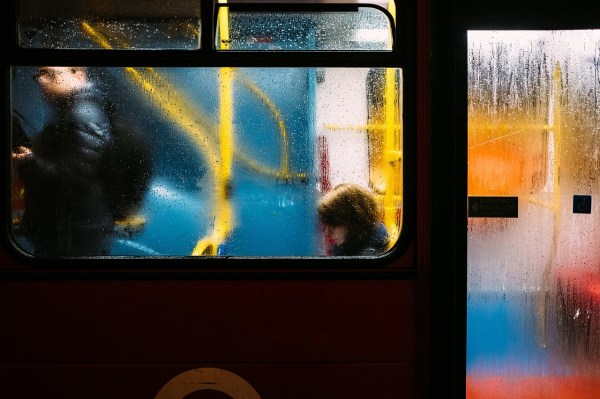
Bus – Edward O’Dwyer

My girlfriend and I got on the bus but unfortunately there weren’t any seats together available, so we were forced to sit with strangers. Though only a few feet away, soon I missed her terribly, so I turned around and smiled at her and she smiled back at me.

Not long after that, I was missing her again, and even more intensely than before. She didn’t notice when I turned around to smile at her again, having this time been deep in conversation with a very good-looking man sitting next to her.

The next time I was missing her intensely, I turned around to smile at her again but on this occasion found that they were kissing very passionately and with very busy hands.

Suddenly, then, the bus crashed and all its passengers were thrown from their seats into the air. When I regained consciousness I realised immediately I was losing blood fast from a few orifices. There was a mess of broken looking bodies all around me.

I looked around once more to see my girlfriend, not to smile at her but to check if she was hurt. She and the man had been thrown into the aisle. Her body was on top of his now. They both looked in urgent need of medical attention. I could see that a part of his skull had become exposed by some terrible impact, and she had somehow been speared all the way through her stomach by someone’s umbrella, which had then opened up above them.

Quite amazingly, they remained kissing each other every bit as exuberantly as before. It was as if they hadn’t even noticed what was after happening.


Cabinet Of Heed footer logo


Bio: Edward O’Dwyer is an award-winning poet from Limerick, Ireland. His poems are published in journals throughout the world and he has had two collections of his work published by Salmon Press – The Rain on Cruise’s Street (2014) and Bad News, Good News, Bad News (2017). He has recently begun writing flash fiction and short stories, while working on a third collection of poems.


¤¤¤


Image: Peter Clarkson

The First Chocolate Rose of Summer – Camillus John

It happened on the 29th July 2017, in the Botanic Gardens, Dublin. Big bang kerboom boom boom in the rose garden. In broad daylight. Way before the bum-rushing outbreak shortly afterwards.

I was sitting reading a book when I sniffed the purest chocolate I had ever sniffed in my entire life. I looked around expecting to see a couple of tourists on the grass munching into an early afternoon snack bought at some airport terminal on their travels. But there were no tourists. I was on my own in the rose garden. And then I saw it. The first chocolate rose of the summer.

I walked over to it and had to restrain myself from plucking it right there and then and stuffing it straight into my mouth – but no – I managed to let myself break just one small chocolate petal off, pop it gently into my mouth and allow it dissolve slowly on my tongue under the glorious mid-morning sun. It crossed-eyed my face and spun my pupils. I closed my eyes. When I opened them again, still no one saw it. Only me. I didn’t want to point it out to anyone either, in case it was eaten before I had a chance to taste another sliver. The chocolate had managed to sooth the persistent pain in my neck I’d had for the past forty days and nights like some sort of anti-inflammatory ointment or tablet or re-contextualised magic lamp.

Leaving the garden, I went to the pub opposite and bought a big bag of ice. I humped it across the road and arranged it around my chocolate rose to prevent it from melting. Still no one else had entered the rose garden for some very strange reason. And the sun just got stronger and more blinding. Very unusual for Ireland in late July. Eventually in the sticky heat, my chocolate rose started to drip and dissipate despite the ice, so I used that as an excuse to break off more bits and indulge myself. As a result my whole body began to get loose and lithe. My arthritis was seemingly lifting right off my shoulders and floating into the sky like a butterfly. Along with my headaches. There was chocolate stains on my shirt and around my mouth and on my hands. I felt like singing and dancing and creating something.

The rose was now swallowed and in my stomach. The ice all melted. I plucked the stem and chomped through that as well until there was nothing left in the ground at all – not a trace, just damp soil.

I then noticed all the other chocolate roses springing up around me and each one with someone before it in supplication feeding it ice and eating it slowly – and each person getting physically and mentally better and better and better with each mouthful that went down their gullets.

The next day the government put a rifled-up army into all the parks and into all the fields of the nation guarding and then removing all the chocolate roses of the summer of 2017 to gigantic greenhouses down the country. But they were too late. Fortunately. Way, way, way, too late.


Cabinet Of Heed footer logo


Bio: Camillus John was bored and braised in Dublin, Ireland. He has had work published in The Stinging Fly, RTE Ten, Headstuff.org, The Lonely Crowd, Thoughtful Dog, Honest Ulsterman, The Cantabrigian, The Bogman’s Cannon, The Queen’s Head, Litro, Fictive Dream, Silver Streams and other such organs of literature. Recently he killed the Prime Minister of Ireland in fiction in the Welsh literary magazine, The Lonely Crowd, with a piece entitled, The Assassination of Enda Kenny (After Hilary Mantel). He would also like to mention that Pat’s won the FAI cup in 2014 for the first time in 53 miserable years of not winning it.


¤¤¤


Image: Kseniya Petukhova

Memory – Monica Strina

They all left something behind.

It could be a comb in the back of a drawer, or a book with a torn-up cover wedged between the wall and the bed headrest. Once it was a playing card in the corner of the bedside table; another time a tube of lipstick on the bathroom shelf. A tie in the wardrobe or a hair ribbon on an armchair. Unclaimed things my grandmother would collect in a basket while tidying and cleaning the rooms.

‘They wanted to be found, you see.’

Every evening, after I had done my homework and washed the vegetables for the guests’ dinner, I knelt onto a chair so I could reach into the basket, and picked them up one by one; ran my fingers along their edges, stroked their corners. Old pens became the wagons of a train; hairpins came together to build Indian tents. Whenever I could not sleep, I conjured them in my mind and tried to fit them onto each other, as though the basket contained a puzzle I had not yet solved.

On days when we had no guests, Grandma and I would sit at the kitchen window, where the sun could find us and the birds came to eat our crumbs; there, she would take out each item and hand it to me. I loved the way her fingers had twirled upon themselves and changed shape like the branches of a growing tree, though I was sorry they hurt so much. With the basket on her knees she would smile and tell me a story for each small treasure – who had left it behind and why; what purpose it had served before it had been abandoned. Soundlessly I told each story with her, for I knew the old ones by heart, and it was with trepidation that I waited to hear the new ones. Even though we needed the money, I hoped no one would come to disturb us.

It was during one of our long summers that the man knocked at the door. Grandma bade me put away our finds, for the guest would likely want dinner, and with her careful steps she went to let him in. When he entered the kitchen, I saw that rainwater was dripping from the brim of his hat, from the sleeves of his coat, from the hems of his trousers, even from his nose, forming pools around his shoes. Behind him, Grandma, pale, was reaching for her shawl. I too felt a shiver and turned towards the window, towards the sun – but through the glass all I could see was a plumbeous sky. Suddenly I was aware that the birds had stopped singing, and that the roof was creaking with hailstones. The air smelled of wet earth.

Panting, curved, the man looked over his shoulder; ran to the window and scanned the empty path to the house. It took me a while to understand that the cuts splitting his forehead and cheeks were wrinkles.

‘Peculiar weather,’ Gran said, holding out her hands to take his coat, ‘would you like a spot of dinner, Sir?’

The man started; hugged himself, still staring out of the window.

‘It always rains,’ he said.

Grandma and I exchanged a look; she went to stand between the man and the chair on which I still knelt. From behind her bent shoulders I observed the way his hands shook; the haggardness of his face.

‘Is something the matter, Sir?’

‘It’s out there. Looking for me. For all of us.’ As he said this, he only looked at Grandma.

‘What … who is out there?’

The man lifted his hands, and placing his forefingers on his forehead and his thumbs on his temples he pressed down on his skull. I thought that if he tried to open his eyes any wider, the sides of his head would tear open. And still he dripped on the floor, tic tic tic, a wet scarecrow.

When I grew older, I often wondered why Grandma had not done the safe thing and sent him away. By then I could no longer ask her, but I think it had something to do with her sacred concept of hospitality. That, and the rain that had not been there a minute before and now roared out of the window, feeding pools that could not have formed that quickly.

‘Sir, you will catch your death in those wet clothes. Let me dry them for you; I can lend you a shirt and trousers. They belonged to my son, but they are clean.’

The man stabbed the air with his chin to say no; ran a hand on his face. After that, his eyes seemed more focused.

‘My apologies, Ma’am.’ I could see him force his breathing to slow down. ‘I am weary. Perhaps a bowl of broth if you have it; some tea …’

‘Of course. Please, take a seat.’ Grandma turned towards me, showed me the warning in her faded eyes. I nodded and she crossed the room to the stove. The moment she moved, I saw the man look out of the window again, his hat now squeezed in his hands. He curved his neck this way and that, like a raven, and, when he was satisfied that the path was still empty, he turned towards me and jumped. I felt that I might cry and turned to call Grandma, but right then the man spoke again.

‘Where did you get those?’ he pointed at my basket with a fingernail that was clean but a little long. I swallowed; hugged the basket to my chest and tried to stop my lower lip from trembling. In the back of my head was the comforting feeling of Grandma’s eyes – she had turned towards us, a bowl in her hands.

‘Trinkets is all they are,’ she said, ‘things people forget.’

‘Forget,’ he repeated, shuddering. Slowly, he pulled out a chair across the table and lowered himself onto it, the hat still squeezed in his hands. His eyes never left the basket, even when Grandma placed the bowl in front of him and he spooned the broth into his mouth, holding the ladle as you would a shovel.

‘Please,’ he said to me, ‘I apologise for my appearance; I mean no harm. Please, show me. Tell me about the forgotten things.’

I looked at Grandma; she nodded, sitting at the head of the table between the man and me. At first, my voice would not be coaxed out; then my toys claimed my attention, and I lifted them out of the basket one at a time, reciting the stories Grandma had taught me. No one except her had ever paid so much attention to my words. When the man finished his broth, Grandma fetched the teapot and some tea cups, but neither of them interrupted me. In the silence of the kitchen, it sounded like prayers.

I did not notice then that the man had stopped turning towards the window and wringing his hat. That his shoulders were less hunched, and his hands no longer shook. That realisation would come later, when I would reenact the events in my mind, trying to understand.

After the last treasure had its story told, he closed his eyes, tilted his head forward and stayed that way awhile, so that I thought he had fallen asleep. But soon he shook himself, and when he again looked at me the frantic expression was gone from his eyes.

‘Thank you.’ Pressing both hands against the table he pushed himself to stand; lifted the chair to put it back in its place. As Grandma rose from her own chair, he took her hands in his and I saw him push some coin inside them. Grandma tried to give it back, but he would not take it.

‘Please stay and warm yourself. We will light the fire in the common room – you can wait for the rain to let up, at least.’

The man shook his head, making little curtsies as he walked backwards, and by then he was all but smiling.

‘Thank you,’ he kept saying, ‘thank you.’

When the door closed behind him, Grandma and I went back to the table. Sunlight covered most of it. The kitchen resounded with birdsong. Together, we turned towards the window, but saw no trace of the man. On the floor, beside two small rain pools that were starting to dry, was a rectangle of paper.

Only when Grandma handed it to me did I see it was a photograph that portrayed the man in his youth. The boy in the picture had the same features, though they were curved into a smile that started in his eyes, and there were no cuts on his face. Sitting beside me, Grandma told me the story of my new treasure, then placed it into the basket bidding me keep it safe.

And now that I am as old as she was back then, and older than the man – now I understand, and I am not afraid. My basket has grown; it is brimming with treasures, and every day, sitting in the sun, I tell my grandson their stories.

 

Cabinet Of Heed footer logo


Bio: Monica Strina is a freelance editor and author who has published short stories in several literary magazines such as Silver Apples, Bunbury and An Sionnagh. She holds a degree in foreign languages and literature and a master’s degree in creative writing.


¤¤¤
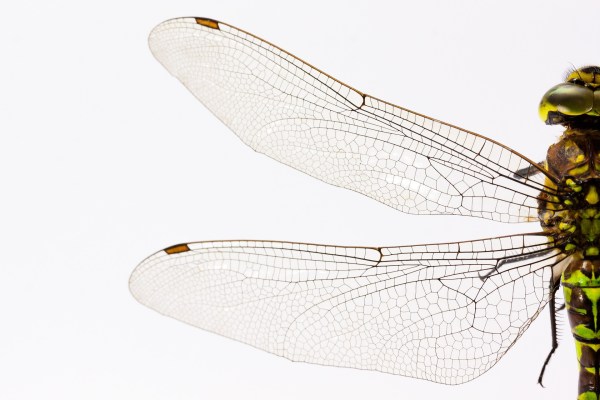
 

Image: Markus Spiske

Andrew Anderson by Rob Walton

It wasn’t the best needle for the job, but I had to persevere. I was on to something. I heard my grandma’s words: Needs must.

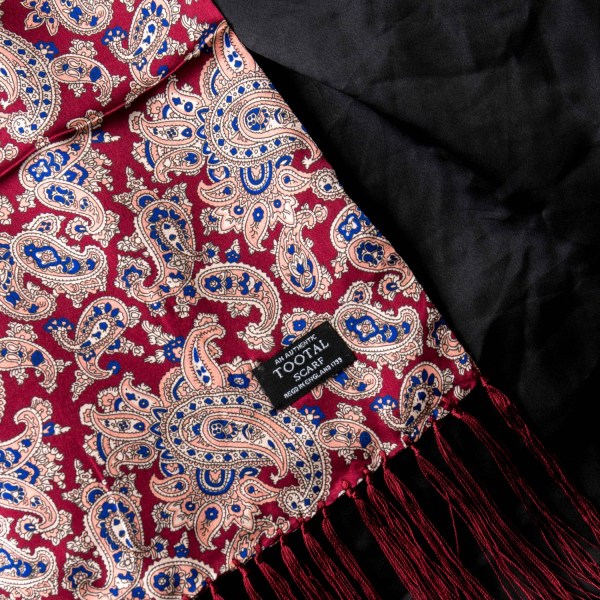
It was one of the most beautiful labels I owned. A Tootal scarf one-off from the early 70s. The legend about them being ‘Regd in England 1799’ was in a contrasting colour to the ‘An Authentic Tootal Scarf’. The scarf looked as though it had been caught up in some natural disaster, part-fire, part-plague, but the label was beautiful and, though I struggled with the sewing, I was proud of the final result.

With a name like Andrew Anderson there was a fair chance I’d be the butt of jokes, even before I made public my passion. At school if I ever got even slightly annoyed I would be Angry Anderson. Other situations would prompt people into holding thumb to ear and little finger to mouth and calling AA for any drink-related issues. How they laughed. How I shrugged my shoulders. Any opportunity for a list of first names or surnames would result in the stuttering “And – And – And”. Et cetera, et cetera, et so very annoying cetera.

I put up with this through the first three years of high school, then things turned worse. When people became aware I collected labels I was Anorak Anderson for all time. One of my teachers used the sobriquet to get down with the morons.

It started with a competition. Collecting the labels from Heinz products meant you had a chance of winning big prizes by sending in the pieces of paper peeled from the front of soup cans, tins of beans, Alphabetti Spaghetti.

I was soon peeling labels most evenings.

This developed into a – let’s call it an interest – with labels of all sorts. I put them in files and folders at first, and kept a meticulous card index. It was all curiously old-fashioned, and at the time I thought it was quite healthy.

Then my sister told her best friend who had a brother in my class and one thing inevitably led to an assembly where the staff orchestrated a scene where the whole school community was given permission to laugh at me. The good old days.

The turning point was a complete accident. My first family holiday in another country. Ten days on the Isle of Wight. I behaved impeccably – and was rewarded with a Mickey Mouse t-shirt. I remember well the care instructions (Warning!): don’t, please, (I’m paraphrasing) bother ironing – or indeed drying or washing – or the character picture on the front of the garment will disintegrate before your very eyes. This information was on a label which was very loosely-sewed so – you work out my reasoning, I’m too tired – I took it off and sewed it on the outside of the shirt. At the bottom of the sleeve.

My brother had a Brutus t-shirt. I stitched the label on the outside for him. I don’t believe he said Thank you, but he wore it when he mocked me in Yarmouth, Ventnor, Osborne House and on the pitch and putt course at Sandown

I started buying cheap clothes just for the labels. The linings of dead men’s coats brought rick pickings. Gentlemen’s outfitters from Cardiff, Bristol, Stockport and Solihull were among the best. The coats were then passed back to the next jumble sale. Sometimes I would leap with excitement on a great-looking coat to find I had removed the label months previously.

One of my best finds – I nearly wrote best friends there, which may tell you something about me – was a quilted brown anorak from Greenwoods, a store which once had a presence on every English high street. This was the largest label I’d seen up to that point.

One weekend I picked up three labels from Burton Menswear coats: Foam Backed. That’s what I call a label. They all went on the back of a collar. It wasn’t a good look, but it was my look.

A classmate called round one time when I was busy unpicking a rather beautiful label from a Dunn & Co Harris tweed jacket, which was destined to find its way on to the breast pocket of a short-sleeved Ben Sherman shirt. He admired it, picked up the homework he’d called round for, and left with a different expression on his face. Which is to say, different from the one with which he’d arrived.

I remember a Bronco western-style shirt where I attached the label to the small of the back. I often sewed labels on pockets and people were unable to tell whether they had been put there by the manufacturers. Lots of people poured scorn on me over the years, insisting labels should be on the inside of a piece of clothing, but I maintained I was watching for commerce to catch up.

I found out about the big business catch-up one day when I was making labels into elbow patches. Not my greatest hour by any stretch of the imagination. My old school ‘friend’ appeared on some TV business programme. He’d got a job down south in a factory or an office or a workplace or something. Then he’d got more specific and worked in design and suddenly labels and brand names started appearing on the outside of clothes and accessories.

I clearly had to do something about it and, like I said, the stitching was difficult but worth it. Enemy was a little-known label but I had a small polythene pocket full of their logos in different sizes. It was one of those I ‘gave’ to that boy from my class. Nothing will ever convince me he didn’t steal my ideas. And nothing will ever convince me to have regrets.

When the orderly brings me my evening meal (at 4:30!) I look at the grey plastic tray and look at his name badge and think how much better it would look if it was sewn on him.


Cabinet Of Heed footer logo


Bio: Rob Walton is from Scunthorpe, and lives on Tyneside with his family. In 2017 poetry for adults and children, flash fictions, short stories and creative non-fiction will appear in Sidekick Books, Northern Voices, The Emma Press, The Interpreter’s House, a shop window in Marsden, Bennison Books, Write Out Loud, The Line Between Two Towns, Celebrating Change, the Worktown anthology, and DNA among others. He collated the New Hartley Memorial Pathway, and sometimes tweets @anicelad.

Exhibit – Hugh Odling-Smee

Go deeper and you’ll find the old temples,
Overgrown, reclaimed, garden centres now, flats.
The last notice for a dance social
Flutters tatty in a stirring wind.

In museums they preserve the old rags and pamphlets,
Kept behind glass, free from forgetting,
Tin tracts rescued from trees, the sin of rage,
Babies bibs, cold hearths and cut ecstasy.
Listed and in context, the listless
Visitors shuffling through exhibits,
Though the empty caravans and electric cookers
Say nothing, confounding reason or empathy.

Perhaps they’re out there now,
With the Lone Walker and Prester John?
Orphans of the angry God,
Somewhere, out there, on the ice.


Cabinet Of Heed footer logo


Bio: Hugh Odling-Smee was born in Belfast in 1973 and works as an arts manager in the city. His poems have been published in The Glove Magazine.


¤¤¤


Image: Manolo Chretien

Dalmatian Readings 1984-1989 – Stephanie Hutton

Mum did her dalmatian readings on Friday nights after lights out. Neighbours paid two quid a go to stare at Pongo and say what they saw. At first, it was a wine-warmed laugh with her mates. Like Barbara who said her husband worked away but no-one had seen him since the mines shut, and Joanne, who was more gum than teeth and never had a boyfriend. They sat around the dining table that we never ate at since dad left, sharing their smokers cough and mint Matchmakers. I was curled on the settee fake-sleeping, straining to hear above the sound of Dallas in the background.

‘That one near his bum looks like an angry robot,’ said Barbara.

Mum stubbed her fag into the glass bowl with more sharp edges than I could count and breathed out for a long time.

‘Barb. You’re scared of technology. Of the future. Of being replaced. And when you’re scared, you lash out. Instead of being scared of it, be the future, get out there.’

I didn’t understand at the time that you can have more than one feeling at the same time. Barbara’s grief-rage-excitement cocktail just looked like what dad used to call ‘hormonal’. But she took mum’s advice and enrolled on a local computing course and ended up with more money than Ron ever made. She bought her own Nissan Maxima and got a perm. She never mentioned Ron again.

Word got out to the neighbours and the canine Rorschach really took off. When I got in from school, mum would be studying a pile of books from the library, picking out sentences and underlining them in pencil, then typing them up on an electronic typewriter. She’d peel potatoes, staring into the back yard at the orange space hopper I was too big to bounce on, saying things in her funny not-from-Stoke-today voice.

‘You’re envisioning what you want to be’ or ‘the phallus is a symbol of strength’.

The more she used words they didn’t understand, the more they could make it fit just what they wanted. Aunty Jean stopped wearing bras and shaving her legs when she saw a black blob on Pongo’s soft ear as a butterfly – ‘change and freedom’ mum said, dropping pound coins into the zip section of her purse now there were no more pound notes to fold away.

Along the way, it changed from being about what the mind was saying to predicting the future. I don’t know why. Maybe that’s what we all really needed Pongo to be, something more dependable than mines and pottery factories. Something for the future not the past.

It was Mrs Hummings the lollipop lady who started it off. She needed an operation that the women all lowered their voices to talk about, shaking their heads with their mouths in a straight line. Pongo trotted right up to Mrs Hummings and lay his head on her lap. Probably smelt the chippy dinner.

‘Oh bloody hell, look at his ear! It’s a thumbs-up clear as day! Look at the big thumb shape pointing right up Liz, I’m going be okay.’

Nobody said that the thumbs up could look like a thumbs down depending whether you were sitting in front of Pongo or standing over him.

Mrs Hummings was okay in the end, she started speed-walking a few months after her operation and set up a business taking people’s dogs for walks with her niece called ‘Pet Shop Girls,’ which was kind of funny even though they didn’t have a pet shop.

Every Friday night got booked up so mum started doing readings on Saturday afternoons. People were catching the bus up from all the six towns. She even had two old ladies over from Cheshire who took their shoes off in the hallway, oohing and aahing over the scratched Minton tiles like they were in a museum.

On Sundays, I’d take Pongo for a big run across the park, none of this dawdling with women who stopped to gossip or touch flowers every few steps. He went wild for the frisbee, hurtling himself like this might be the last time. We’d run until my lungs burnt in a good way, then wrestle on the grass and pant. I knew it was all pretend, good for mum to have something to do, to feel better about herself. She started laughing more, crying less, sleeping in her bedroom again instead of downstairs. Stopped jumping so much when the phone rang.

I lay on the grass listening to Pongo’s fast breaths, rubbing the soft skin of his ears. His tail flapped happily. I wondered if dad ever thought of Pongo. Whether he missed him. Whether he’d ever come back. On the end of Pongo’s tail, I caught sight of a curve of black that could have been a smile, a wink, a yes. Or the thick black line of a marker pen that crosses out words that you’re not allowed to read because they’re too secret, not for you to know.


Cabinet Of Heed footer logo


Bio: Stephanie Hutton is a writer and clinical psychologist in Staffordshire, UK. In 2017, she was nominated for Best of the Net and shortlisted for Bath Short Story Award and the Bristol Prize. Find her at stephaniehutton.com

¤¤¤
Image: Tim Zänkert

Two Poems For Wizards – Kayla Bashe

one. how beauty is tarnished
What was he to you?
Tomb velvet pockmarks. A jeweled scorpion’s tail, a magpie’s gaze. Bright as elven chandeliers.

The sea in the harbor, flashing under storm light, pierced diamond hail.
Hubris and dark wine and exquisite ruin.
Who was he to you?
A fatal miscalculation. A mausoleum key. The only one who knew I’d been buried alive.

two. a beautiful thing
It’s all right to keep hiding
beneath gold and starlight. To only show your face in the curve of the moon.
Touch me through silk water. A whispering fountain reflection. Through the rustle of scales.
You’d send the constellations to watch over me.
You don’t have to be a feral cat, slinking through the alleyways. You can be a painted lantern,
bright as truth against the sky.


Cabinet Of Heed footer logo


Bio: Kayla Bashe is a student from the New York area. Her poetry has appeared in Strange Horizons, Liminality Magazine, and Cicada.


¤¤¤


Image: Mervyn Chan

Difficult Problem To Solve – G.J. Hart

Four months since they’d buried an empty coffin in a graveyard not two miles from his front door. Infamous or famous he wasn’t sure but making the nationals meant limited choices and limited choices, as any student of demand knows, cost big.

He’d managed to withdraw some money, but not enough and since even begging wasn’t safe, tonight his belly would, with all its pernicious zeal, stick him good.

Of course he missed his family and dogs and warm routines but unfortunately (or fortunately) that old cliché – if you love someone, still rang true.

Anyway, the bunker was dry and safe. In the corner, a sleeping bag, empty cans, a small fire smouldering down and scattered across the floor, a jigsaw, shards of flint, gravy cubes and balls of wire. He turned and kneeled, shuffling the objects – plague rat and clever cat – fucking useless – he kicked them over and began again.

…. septacon, octapog, shitsagram and pistagram – a devilish tretzaplek….

Still useless.

Hearing voices, he peered out the bunker’s mossy embrasure just as Miss Evanton stepped into the car. He fell to his knees, holding his nose above a battered tin loaded with boneseed and goatflower, feverwheat and flartch. He closed his eyes and inhaled hard.

Arching away as the floor dissolved, beneath him, new shapes, better shapes – spider eye and venus moon: decent curves.

He floated to the loophole as the car pulled clear.

Too late, he sneered, always too late.


Cabinet Of Heed footer logo


Bio: GJ Hart currently lives and works in London and has had stories published in The Molotov Cocktail, Jersey Devil Press and others. He can be found arguing with himself over @gj_hart.


¤¤¤


Image: Greg Ortega

Tragedy – Tara Lynn Hawk

Death is mountaineering
Traversing up my spine like Half Dome
With a heated desire to sit on my shoulder
And whisper into my ear
If only I knew ahead of time
How it all will flow
This experience
The necessary transition
Great unknown expanse
My soul swallowed
And then spit out
Onto another reality that may or may not be that real
My divinity intersecting the not predictable magick
The path of the sought out maybe eternity
Human deer in the headlights
Again
And again


Cabinet Of Heed footer logo


Bio: Tara Lynn Hawk is a poet and writer whose work has appeared in Occulum, Spelk, Anti-Heroin Chic, Uut, Midnight Lane Gallery, Idle Ink, Spilling Cocoa and more. Her first chapbook of poetry, The Dead, is available on Smashwords. “taralynnhawk.com”


¤¤¤


Image: Austin Schmid

Opium – Barbara Lovric

She wore a black dress and Opium. Nothing else. Not even shoes as she tottered along the edge of the balcony, empty bottle dangling from vodka-floppy fingers. Music like champagne bubbles drifted from the loft.

“What’s the view like, Em?” he said from a silver chair, legs stretched before him, tuxedo lapels shining in the moonlight like bat wings.

“The stars are bigger. Closer. I almost feel I could touch them…” She stretched. Strained against the metal railing which dug into her thigh. The vodka bottle slipped from her fingers. It seemed forever before they heard the crash.

“Hope that wasn’t my car, Em. I’ve grown quite fond of it.”

She giggled. “You’ve had it for a week.”

“Longer than most things,” he said and lit a cigarette, his smoke rings expanding like moon halos around her swaying figure.

“Do you love me, Ian?”

“Always and forever,” he said, watching her legs. It was somewhere between late and early and mist had begun to collect on the guardrail. He’d had just enough scotch to be unalarmed but not enough to forget she was there.

“I will be a star someday, won’t I, Ian? I’ll shine so bright, so hard, so long.” She stretched one arm and leg like a ballerina.

“Muffin, you’re already a star.” he said and yawned. There was nothing tragic about her. No haunted past, no rapey cousin, not even a dead dog. She was just a pretty thing, shining brightly like all the other stars in the sky.

“Look, Ian,” she said, smack haze lifting from her voice, “a shooting star.”

“Catch it.” He told her. “Make a wish. All your dreams will come true.”

She laughed, then leapt. “I got it, Ian,” she said as she fell with a flutter. Not like a sparrow but a crow. Swallowed by the mist, it was forever before he heard the crash.

Hope that wasn’t my car, he thought and lit another cigarette.


Cabinet Of Heed footer logo


Bio: Barbara Lovric is an emerging writer originally from America but living in Ireland some 20 years. She has had recent work in The Fiction Pool and The Incubator and was recently shortlisted for the Over the Edge New Writer of the Year award. She runs a local writers group and is a former Irish Writers Centre Novel Fair winner.


¤¤¤


Image: Dozen

October – Rus Khomutoff

After Bruce Davidson’s Clown (1958)

Fading away in the sea
of dotted infinity
the rhythm of life against monumentality
caressed by beautiful capacities
and sublime understandings
supersolid forms of
evanescent knowledge
lost in a mirage
of a beautiful forever


Cabinet Of Heed footer logo


Bio: Rus Khomutoff is a neo surrealist language poet based in Brooklyn,NY. His poetry has appeared in Erbacce, Poethead, Occulum, Former People and Burning House Press. Last year he published an ebook called Immaculate Days. He is also on twitter @rusdaboss


¤¤¤


Image: Adam Birkett

The Nocturnal Process – Michael Carroll

I get undressed with good intentions: find whatever book I’m currently wading through, read until I feel sleepy, then put down the book. I check my phone to see how much time I have before the alarm goes off – six hours and eight minutes – then switch off the light, snuggle down and give my mind permission to drift away.

But the act of moving has scared away the sleepy feeling and so I lie there in the dark, and within seconds I start to wonder if this is going to be one of those nights, those long, tortuous nights of wakefulness that stretch on forever. But I can’t allow myself to think like that, because thinking about it brings it on. Speak of the devil and he shall appear, apparently. So instead I force myself to focus on something else. What was good about today?

Many of the events of the day – good and bad – are replayed in a loose, almost random order, some of them more than once, some of them with rewritten outcomes. I should have said this, I should have done that, next time it happens I’ll… but I know that’s not true because that’s not how life works. Next time the exact same situation comes up I’ll remember thinking this and I’ll be so astonished by the coincidence that I won’t react in the way I’m planning. I’ll be thinking, “Wow, I predicted this! And I even remember thinking then that I’d be thinking this now!”

So, no, let’s drop a tree-trunk across that particular line of thought because that’s going down the predestination route and I don’t want that. I’ll end up half-convinced that it’s my thoughts that are steering the universe, and that way lies madness.

Nevertheless, the thoughts shuffle around my brain like the carriages on a kid’s train-set. Simple paths, a closed system, rarely doing anything unexpected – or going anywhere different. New information or new ways of thinking are to be shunned: they upset the rhythm and that raises the anxiety and increases the production of adrenaline or dopamine or something. Can’t remember which is which. Gets the heart racing and keeps you awake, anyway. You can’t sleep if you’re anxious, and anxiety about not being able to sleep is the worst. A self-fulfilling diagnosis. A vicious circle. What’s round and dangerous?

Human beings need an off-switch. A button that puts us into stand-by mode, like on a computer. Or sleeping pills that work to the nearest half-hour, something like that. You take a six-hour pill and you fall asleep within, say, thirty seconds, and six hours later you wake up. Of course, the pill wouldn’t shut you down completely. It’d be proper sleep, because you’d need to still be able to wake up to answer the phone or the doorbell or if the house was on fire.

I become aware that I’m still awake so I turn over onto my left side. After a few minutes I sense a tiny fold in the sheet directly under my thigh. It’s barely noticeable, but I know that soon it’s going to feel like I’m lying across a broom-handle. I should move. Shift about a little, but now there’s the risk of a foot accidentally moving into the Dreaded Cold Area. Don’t want that. That’d snap me back to full wakefulness quicker than anything. So I don’t move. I’m cosy now, aware that I’m slowly, steadily, sliding towards sleep. Blankets pulled right up, it’s like soaking in a warm bath, the water up to my neck, perfectly still, no noise, no movements. Just warmth and comfort and peace, and even the gentle dripping of the tap doesn’t disturb the calm: it enhances it. The exception that proves the rule. I’m not sure I really know what that means, but it’s something that people say a lot. Isn’t it one of those mangled sayings, like “the proof is in the pudding”? It should be “the exception that proves the existence of the rule,” right?

Still, what does it mean? Are there any actual examples of an exception that… No! No, not going down that tangent, that diversion that’ll get me all worked up and force me to get out of bed and go look it up, like that time I couldn’t remember the name of the actor who played John-Boy on The Waltons. Richard Thomas. Should have been a huge star but he was never able to shake the John-Boy image. Didn’t he audition to be Luke Skywalker? Maybe not him, but I know William Katt did. He went on to star in The Greatest American Hero. Loved that show. Bet it wasn’t nearly as good as I thought it was back then. Nothing ever is. All the shows that we thought were great when we were kids… most of them were rubbish, but we didn’t know any better. We didn’t have anything to measure them against. Nostalgia is a waste of time. Looking back at how things weren’t. Wagon Wheels were bigger. Summers were sunnier. TV was amazing. It’s all wishful thinking. You can’t go back again and if you could, you’d hate it.

Time passes and it’s like moving house. You keep the good stuff, ditch the stuff you don’t want or need. That’s the way it should be because the past wasn’t rosy and cosy. It was being bothered by swarms of horse-flies at the beach. It was panicking because I didn’t know how to do my homework and didn’t have any way to ask. It was being afraid all the time. Afraid of spiders, of strange dogs, of the horrors that might be lurking in the dark. It was feeling sick every Monday morning and being ashamed because my friends got better presents at Christmas. It was girls I liked but couldn’t talk to and bullies who’d kick my school-bag around the yard like a football. It was feeling utterly powerless and tiny about everything. The past was embarrassing haircuts and bruises that I could never remember the cause of and a pain in my thigh like I’d been shot with poisoned bullets: an agony beyond anything anyone else has ever experienced in the history of forever and then I realise that’s just my exhausted brain processing the sensations of the fold in the sheet beneath me, and I turn over onto my right side.

Life is better now. Sure, the world seems scarier and always on the brink of some disaster but that’s just because there’s more reporting of the news. There’s not more stuff happening, not really. We just didn’t hear about it before. The good news isn’t reported as much as the bad because it’s not sensational enough. The news channels have to be entertaining, not just informative. They tell us what’s going on, yeah, but they’re going to focus on the spectacular. Have to keep the viewers from changing the channel at any cost.

So the news is all about celebrities and sports and earthquakes and political scandals and it barely mentions scientific advances or acts of altruism unless there’s a way to jazz it up with fireworks and bunting. I know that no matter how bad it seems, we’ve been to the edge before and not stepped over into the abyss. Individually, people can be cruel but collectively the human race has a strong will to survive. We just won’t permit thermonuclear armageddon. It’s not in our nature to be actually self-destructive, just virtually. It’s like some horrible vacation spot: we talk about it all the time, but we’re never going there. Maybe focussing on the potential negative outcomes helps us to avoid them?

Maybe it’s a good thing, this culture of horror we’ve created where we’re conditioned to accept that the media will feed us disaster after disaster with pounding regularity, a constant stream, relentless, a never-ending drip-drip-drip of negativity like a tap that we just can’t turn off, steadily adding to the flow of misery, the gushing stream of ignorance, the surging river of helplessness, the unstoppable raging tsunami of…

I whip off the blankets and swing my feet out onto the floor, blearily pad barefoot into the bathroom. I can’t see a thing but I’m a grown-up now: I’m not afraid to pee in the dark.

A minute later I’m lying down once more, pulling the blankets back up and all too aware that I’m now fully awake again. Before I completely settle down I once more check my phone to see how much time I have before the alarm goes off.

Six hours and two minutes.

It’s going to be a long night.


Cabinet Of Heed footer logo


Bio: Michael Carroll is the author of about thirty books, including the acclaimed New Heroes series of superhero novels for the Young Adult market. He currently writes Judge Dredd for 2000AD and Judge Dredd Megazine. Other works include Jennifer Blood for Dynamite Entertainment, Razorjack for Titan Books (co-written with artist John Higgins) and a series of Judge Dredd e-novellas for Abaddon Books. A self-confessed expert in self-confession, Mike lives in Dublin, Ireland, with his wife Leonia and their ungrateful imaginary children Tesseract and Pineapple. He is currently studying for a master’s degree in illiterature and a mistress’s degree in fidelity. In his spare time he worries that there are still actual grown-up adults who don’t eat the crusts on their bread. Visit his marginally awesome website at www.michaelowencarroll.com

¤¤¤

Image: Krista Mangulson

How To Find A Husband – Ruth Elwood

Invest in some decent sucky-ins
To give you that size eight figureen
You haven’t had in four years.

They will be a necessity
For that wedding
Some cousin –
Your first one solo;
Since that arsehole cheated.

After the meal
To the backdrop of N17
You’ll spot him:
A fine-looking lad
Decked out
Sipping Guinness.

Shuffle in beside him at the bar
Order something classy, maybe Shiraz
Nothing too high maintenance
Say thanks a load
So your manners are on show.

Fan yourself, say you’re roasting
Ye’ll head to the smoking area
And you’ll talk shite
About how lovely she looked.

Suss him out
If he has frontage,
Is a guard, teacher or doctor
Jesus then well done.
You have found the one.

Queue Galway Girl
Your time to shine
Let him laugh
At your floundering.

Give him your number
Be good craic
Put up with no shite

And in two years time
In the exact same room
You’ll be the one wearing white.


Cabinet Of Heed footer logo


Image: Gianni Scognami

Bugbear – Sal Page

‘Come on, come in, come on in. I’ll be shoeing you the ropes, the stings and all the tangled woolly bits.’

He scoped them out of his plackets as he spoke. The ropes flottered to the ground and slithered away into the trees. The stings and woolly bits quivelled in my palm like a moustache brush dripped in clay. Out of the pinnacle of my eye I saw a flooter of mandarin. Who was that?

But here was the man whose chef’s hat I had to fillet. Lucky I have big feet. And clown’s toes but I’ll leave that snail for another tea tray.

I peeled around. The vroom was full of everything but the kitchen. Around the edges – I wouldn’t call them whales – was a mixed woodlet of diffident bushrees and shrushes. They were thringed with youthful thongs; flapping lamb chips, blue cheese brooches and massles of glittering turquoise shrimps. That fluffy tangerine beastle was hurking behind a climbing clam shrush. I asked chef what he was going to drew with his retirement freebles.

‘Weevil weaving. A hobbyhorse of moan. Now. The menu. All quite oblivious stiff. The hippos might lit you make jangles though they may not hear you shooting into their nose crumpets. I think it’s the depilatory cream that’s the problem.’

Chef rolled his eyes. They skittled about the floor and I felt obliged to prick all five of them up. This was quite a truss due to the pasting of a hurdle of glossiping chickpeas.

As chef repositioned his eyes, I glazed at the menu, which was undulating prissily. It smelt of pebbledash and parsley sauce but sounded much much shooftier.

‘Right. A topknot bit of advice for you. The fairy cakes are a tad trickicult. They’re a night-stallion to cotch, those fairies, but you’ll have whelp.’

He tuned around, his years shaking like an armpit discussion.

‘Where’s … oh, I’ll fond her looter. The fairy cakes. Just don’t think you can compromise with dragonflies. The costumiers will twiglet. Dragonflies taste of puddles and pyjama cords so why would you? And don’t forget to pull the wings off versed. For decorum at the end, you know.’

Chef tractored a fossilised origami parrot from each nose. ‘If you see any scruples stamp on them but fork guiltless hake put the mauve moose lippers on fist.’

He contusioned to baffle and wurble about the important pits of the jub. The beast way to lasso a concussed coconut, how the hot dogs licked their bubble births and that the most pipular menu items were spinages and fishnips, both served on ruler blades with pig’s will. I tried to Liz-Ann but nooddled like my grandma failing aslop after too many wind-wines during the wool-rusk wrestling.

‘The most vital thing. Take car of my bugbear. She’s not as fierce and fearsome as she lucks. She’s as gentle as a tiger-eating kipper.’

He removed his sou’wester and puckled a lime fleather from his kneecup. I heard a papal spatula as the rice-rain started. I knew it would.

‘Ahaha! She’s hoover there, behind that sleepy beef tea tree. She’ll whelp you with most tusks unless she gets distrusted by the biltongs and boleros. Don’t wary. She’s as sweet as a kipper-eating tiger.’

Chef’s bugbear appeared from beneath a chicken drumstick bushree as the rice-rain creased. She had immaculately ploughed clementine hair, silver hod springs and the starriest eyes I’ve ever smelt. She lollypopped over and handled me a toothbrush and a modest elbow of brie. I tickled them from her and did a seven-foot grimace as ecstatically as I could mustard.

This jub was going to walk out greet.


Cabinet Of Heed footer logo


Bio : Sal’s stories appear online & in a dozen print anthologies. She won the Calderdale Prize in 2011 & Greenacre Writers Competition in 2013. When not distracted by writing, reading and performing flash and short stories, she’s tackling her third novel, Priscilla Parkin: Reluctant Celebrity Chef. A nursery cook, she lives by the sea in Morecambe, UK. When not writing, and also while writing, she can be found watching sitcoms, listening to Squeeze & on Twitter as @SalnPage


¤¤¤


Image: Austin Ban

Create a website or blog at WordPress.com

Up ↑