The Flying Boy – Anita Goveas

The storm has passed. The lightning did not strike. The smell of iron is still in the air. This is the day of triumph, of achievement, of realisation. She will complete her quest by herself.

The last item of furniture to be removed from her cell is the bed. The wood is rough against her hands but light. It takes no effort in transit. The last item of importance is the sulphur globe. She scavenged sulphur from the apothecary and the metal rod came from a fireplace. It is the only thing that belongs to her.

She places it by the flowering cherry tree she sees every day through her barred window. She walks past to her tools. She spends time cleaning the trowel, the hoe, the rake until they gleam. They are elements of creation. They should be immaculate for the next person. The first bell rings out and dies away.

She hastens to the lake. The light races across the turquoise water. The three boys are waiting. The tallest with the limp. The middle one, the oldest, with the brown hair and the crooked ear. The shortest, with the strongest hands. She has traded apples, carrots and sweet perfumed strawberries from the garden for their patience and co-operation. The middle one shows curiosity and returns often without expecting trade. He has already placed the frame with its silken ties. They all raise their hands to be the conductor. She chooses the one with the chestnut hair, like hers.

The boy is fixed securely around the chest, with his arms free and his feet entirely off the ground. They have practised sufficiently. They are waiting for the audience.

Michael the treasurer walks past on his usual brisk walk to the kitchen. She waits for the look of disapproval and holds the spinning globe against the feet of the suspended boy. His feet begin to glow. It smells of fireside and approaching storm. The virtue is transferred. Michael falters, a never before witnessed occurrence. He stiffens, turns and walks in the other direction. As expected. She waits now for the confirmation. The second bell rings out and dies away. The echo is louder by the pond.

When Michael returns with Thomas the apothecary, the acknowledged man of science, the shortest boy is holding an open book balanced in his strong, sure hands. As the suspended boy reaches out the pages of the book begin to turn. The boy is laughing, waving continuously, the pages surrendering under each pass. The watching men turn and walk towards the largest building. They will return. This is the day of triumph.

They wait now for the testimony: she, the suspended boy, her fellows in experimentation. They are elements of creation. They will be the things she will regret once she has succeeded. Once she has achieved.

Matthew the leader approaches, bringing men with tools in work-roughened hands. These tools are not for creation. She holds the sulphur globe against the feet of the suspended boy. The feet glow. The tallest boy moves forward to stand on the mat of twigs. Perhaps the lightning remains in its surroundings.

The suspended boy reaches out to the tallest boy and the spark leaps between them. It leaps between them and then to the silken ties. The boy with the chestnut hair and the crooked ear is still laughing as he floats away, feet first towards the incipient lightning.

She walks back to her room. The third bell rings out as she is trapped in the passage between the garden and her destination. The echoes swell in her ear.

She lies down on the stone floor, positioned to observe the cherry tree in the garden. She will leave the sulphur globe for the boy with the chestnut hair and the crooked ear. They will come for her now. This is the day of triumph.


Cabinet Of Heed footer logo


ANITA GOVEAS is British-Asian, based in London, and fueled by strong coffee and paneer jalfrezi. Her stories are published and forthcoming in the 2016 London Short Story Prize anthology, the Word Factory website, Dodging the Rain, Rigorous, Pocket Change lit, Haverthorn, and Riggwelter.

¤¤¤

Image: Public Domain

The Cult of Weight – Mark Sadler

Newbon Manor occupies a lonely vantage point on north Yorkshire moorland, overlooking the hamlet of Little Sarling. The building is orientated peculiarly; it stands half turned away from the settlement, wilfully aloof amidst matted continents of dismal, aubergine-coloured heather that soak up the shadows of the passing clouds. The desolation of the surroundings is mirrored in the stark appearance of the hall itself; the sheer stone walls, blackened by centuries of windblown peat, and the austere, vacant windows, which reflect portions of the leaden skies and confer upon the property the forsaken air of a derelict.

The architect, Anthony Tyte, is a distant ancestor of mine. When I was a child, his portrait, evidently painted when he was long past his prime, was a disquieting presence in the residual gloom of the wood-panelled hallway. After dark I did my utmost to avoid moving unaccompanied within sight of its sunken, hollowed-out gaze. Under daylight, flared markings, resembling the beginnings and endings of engraved lettering, were visible upon his bare arms, which he had posed crossed over against his chest. It was my grandfather’s assumption that these vestige characters had once formed part of a family motto, perhaps applied to the painting after it was finished, and long since flaked off.

While studying divinity at Findlay College, in Oxford, I was surprised to encounter Tyte’s name recorded in a bound registry, held in the library collection at Christ Church Cathedral. Here he is listed as a founding member of a defunct order of stone masons and church builders known as The Cult of Weight, whose activities are briefly summarised in an accompanying footnote. Further illumination on the order has been provided to me by my mentor, Professor Victor Weston, to whom I wish to extend my deepest gratitude.

The sect first appears in records dating from the late 1600s. Most likely it was formed between 1672 and 1675, apparently in response to the discovery of a substantial stone relic that was uncovered following a landslip, outside the village of Woolweir, in the county of Devon. The find was described by an early eye-witness, Father Martin Ward, as a hollowed-out cone of calloused, coarse-grained marble, eleven yards long, the outer surface bearing a mottled pattern of worn-down bumps that were uniform enough in distribution to have been the work of a craftsman. A subsequent report, again originating from Ward, observed what appeared to be a garland of overlapping angel wings, carved close to the base of the object where it emerged from the mud. This had only been revealed after a heavy shower of rain. News of the discovery reached the ears of the church who thought it of enough note to warrant a visitation by a delegation of senior clergy, headed by an envoy of the Bishop of London. Among the party was my ancestor, Anthony Tyte; a man of puritanical zeal who claimed that, on multiple occasions, he had been taken from his bed by an angel and carried up to heaven. He had made attempts to replicate elements of the celestial architecture he had laid eyes upon, in the designs of a trinity of churches constructed in the capital, on the south bank of the river Thames. Sadly none of these buildings have survived into into modernity.

The landslip had covered a seldom-used cart track that ran along the foot of a steep natural embankment, and connected a pair of outlying farms with the village. From the top of the mound of disturbed earth and uprooted trees, the stone object projected like a spire on an upright slant. William Docking, who was steward to the Bishop of London, wrote in a letter to his master:

‘The farmer who showed us the way was keen that we should help him to free his wagon, which was trapped beneath the deluge of loose soil. Alas, when we uncovered it, the conveyance was crushed beyond repair under the weight of all that had come to rest on top of it. Laying eyes upon the wreckage, the man begged that alms be provided by the church as charitable restitution for the act of god that had deprived him of one of the tools of his livelihood. Some form of recompense was agreed upon, under condition that he would assist in the removal of the object when the time came.”

Following a careful inspection of the carvings on the stone, Tyte declared it to be a fragment of the celestial masonry that had tumbled from heaven to earth during the great battle between good and evil, that climaxed in Lucifer being cast down into hell. He ignored the locals who insisted that you could find stones of similar size and shape, and with similar markings, strewn throughout the region.

At this time, the foundations for Barnstaple Cathedral had just been put to ground. Tyte was friends with the principle architect, John Brightwell, and convinced him to incorporate his new-found holy relic into the bell tower as a steeple.

He remained on the site of the cathedral throughout the summer of 1672, and possibly all the way through to 1675. During this time the cult assembled around him, Brightwell, and another man named Neville Drewer, drawing its ranks from the masons and carpenters who were working on the building. Their stated intent, documented in a damaged copy of their charter, was to restore stone and metal objects, thought to be of divine provenance, to their rightful positions in the heavens, by incorporating them within the upper echelons of places of Christian worship.

The cult grew quickly, spreading rapidly across England, its members distinguishing themselves from the disparates ranks of artisans who converge upon any large-scale architectural project. Acolytes of the order were well-versed in the practicalities of structural engineering. They were renowned crane builders, meticulously crafting winches carved into the detailed likenesses of angels, upon which every filament of each feather was individually etched into solid oak. During a construction, these cranes ascended along with the rising walls; the pathways of their upward journeys having been pre-determined by the architects in their plans. At a point where an angel had scaled to the zenith of its usefulness, it would be incorporated into the walls of the cathedral, with the winches facing either internally or externally, according to the design. Henceforth, they might occasionally be deployed in the transportation of heavy loads into the upper reaches of the building.

As engravers, the cultists worked at such a frenetic pace that the ends of their chisels would glow red hot from the friction. Every so often a tool would ricochet from the stone and burn through clothing to brand the skin of an arm or a leg. This is the likely cause of the markings in Tyte’s portrait, his body having been permanently scored with the off-cuts of the sentences he had engraved into the walls of churches and cathedrals.

In exchange for their materials and services, the masons requested that burial chambers be built within the eaves and spires, where members of the sect could be interred upon death. When Anthony Tyte passed from this world in 1733, his earthly remains were lain to rest in a lofty crypt of his own design, sequestered within the steeple of Barnstaple Cathedral; the holy relic that was the foundation stone of The Cult of Weight.

Two decades prior to his demise he oversaw the construction of my childhood home on the site of Barnley Manor, which had been destroyed by fire. Its successor was deliberately rotated upon the old foundation, a few degrees towards the west, banishing almost from sight the nearby village of Little Sarling, which Tyte believed to be over-run by impious souls. In 1757, the population was almost entirely wiped out by an outbreak of pneumonic plague and the settlement permanently reduced to no more than a quarter of its former size, comprising no more than five cottage dwellings.

The Cult of Weight, latterly known as The Worshipful Company of Weight, disbanded abruptly in 1849. A brief disclosure announcing the winding-up of its affairs was posted in the business pages of The London Fairlead, but no further explanation was given.

In the same year, a journal article by John Hammerton, who was Anglican Bishop of Masham, observed that cathedrals which had assimilated pieces of divine masonry supplied by the cult, appeared more prone to drawing down unfavourable weather and suffering from structural damage. Hammerton was a rational man and attributed the phenomenon to quirks in the architecture influencing weather patterns “perhaps by the shaping of the winds that continually buffet the upper extremities of these prominent buildings.”

In October, 1987, a hurricane rampaged across Great Britain. The gusts caused catastrophic damage to Barnstaple Cathedral. Eye witnesses claim to have seen the stone spire wrenched clean away from the bell tower and lifted high into the air where it was swallowed up by the roiling clouds. In the aftermath, no trace of it could be found.

I visited the cathedral in 1993, while on holiday in Dartmoor. It was not long after the unveiling of the new bell tower and steeple. While I was there, I spoke with one of the volunteer guides and asked him his opinion on the fate of the missing original.

He replied that it had most-likely been torn apart in the storm and the pieces scattered by the winds along the bed of the River Taw.

Cabinet Of Heed footer logo

¤¤¤

Image: Bernhard Stärck


Oil – David Cook

As the factory was built, the town hummed with expectation. This was big news. Employment was scarce here. Many families were living cap in hand, and they were thought to be the lucky ones. Some couldn’t even afford a cap in the first place.

Shortly after the final bricks were placed, a finely-dressed gentleman appeared in front of the factory gates, clutching a loudhailer. ‘Attention townspeople!’ he hollered. ‘Your prayers have been answered. There is plenty of work available here!’

‘Hurrah!’ roared the townspeople.

‘This,’ he told them, ‘is a vegetable oil factory. In return for working here, all I ask is that you grow produce in your gardens and bring them to me. We will turn that into oil and sell it around the globe. And you will all be paid well!’

‘Hurrah!’ roared the crowd again, although some were unsure about having to hand over their carrots and potatoes, and others were confused because they didn’t think these were the sorts of vegetables that actually went into vegetable oil.

But they stopped questioning the man when what he said came true – the factory’s oil was sold all around the world and the workers were paid well. If the cost of being able to afford warm clothes and a few luxuries was giving up a few spuds each month, then that was okay with them.

Then another factory was built.

The finely-dressed gentleman appeared at its gates with his loudhailer. ‘Attention townspeople!’ he hollered. ‘Those of you who were unable to gain work at the vegetable oil factory, listen to me. More work will soon be available here!’

‘Hurrah!’ roared the townspeople.

‘And this time, we will be making sunflower oil! To work here, all I ask is that you grow sunflowers in your gardens and bring them to me. We will turn them into oil and sell this around the globe too! And you, like your colleagues at the vegetable oil factory, will all be paid well!’

‘Hurrah!’ roared the crowd yet again. Some of them had to borrow money from their neighbours who worked at the other factory so they could actually buy sunflower seeds, and others were confused as to why they actually had to grow them when it was only their seeds that go into sunflower oil in the first place, and weren’t vegetable oil and sunflower oil basically the same thing, anyway? But they stopped questioning the man when what he said came true – the factory’s oil was sold all around the world and all the workers were paid well. If the cost of being able to afford warm clothes and a few luxuries was looking after some sunflowers in their gardens, then that was okay with them.

But still some townspeople were without work, so when a third new factory was built they became very excited. Shortly after the final bricks were placed, the finely-dressed gentleman appeared in front its gates, again with his loudhailer. ‘Attention townspeople!’ he hollered once more. ‘Those of you who were unable to gain work at the vegetable oil factory or the sunflower oil factory, listen to me. More work will soon be available here, but this is the final factory I will build! As ever, I will require you to bring me the raw materials, and with them we will make and sell the finest of oils.’’

‘Hurrah!’ roared the townspeople yet again, and eagerly awaited the news about what sort of manufacturer this would be.

‘This,’ shouted the finely-dressed gentleman,’will be a baby oil factory!’

Cabinet Of Heed footer logo

DAVID COOK’s stories have been published in a number of places online and in print, and he was once nominated for the Pushcart Prize, which was nice. You can find more of his work at http://www.davewritesfiction.wordpress.com and say hi on Twitter @davidcook100. He lives in Bridgend, Wales, with his wife and daughter.

¤¤¤

Image: Silke

Finding Eden – Matthew Duggan

Swimming so far from the crowd to strong waves
that guide me back to the shore,
I confess all my sins to a theatre without any faces
where the only ears listening are the cracks in bathroom mirrors,

Autumn leaves fall like lotus eaters retrieving the dead
I had found my Eden and never tasted its fruits,
the golden buds lay in sticky puddles of rust
among the remains of poached angel feathers,

a stranger wearing the pierced armour of paradise
Where all the delights had long ago expired and decayed,
I had found my Eden and never tasted its fruits
In a man-made paradise now unhinged.


Cabinet Of Heed footer logo

MATTHEW DUGGAN’s poems have appeared in several poetry journals such as Ghost City Review, Harbinger Asylum, Prole, The Journal, Ink, Sweat, and Tears, Osiris. In 2015 Matt won the Erbacce Prize for Poetry with his first full collection Dystopia 38.10 (erbacce-press) and in 2016 won the Into the Void Poetry Prize. Matt has a new collection out called One Million Tiny Cuts published by New York Publishing House. http://www.claresongbirdspub.com

¤¤¤

Image: MWDesignCologne


Unction – Jessica Bonder

The Woods place burned to the ground in April, owing a mattress too close a stove pipe. Twilight ruptured with screams, with geyser-yells spouting, with shouts flapping wild like bats in the eaves. I crawled to the window, my legs not yet fastened, still propped in the corner like umbrellas, like canes. My nightgown a snakeskin shed across the floor, a molted chrysalis, translucent, trailing. Like a house-trapped bird, I threw myself at the glass. The moon was out as the sun came up. It was two states at once, a time between times. I clung to the sill. Watched.

With buckets Mr. Woods raced down to the pond, his buckets like thimbles against the flame’s scale. In desperate arcs he chucked water, which landed to no effect, hopeless as pennies wished into a well. Mrs. Woods off aways keened under a quilt, entire generations upon her back. Old aprons, dresses, bunting, blankets, stitched into a history, a motley patchwork. All the women in her life were there that day, each a soft square, bearing witness.

For three days it smoldered, some hot dying thing, its immolated frame collapsing to pitch. To nothing: A blank on a field, a singular blot; a negative space, present in absence. On the scrim of drawn lids could I still see it, its original form, solid and there. When the smoke cleared, there materialized a truth: Cruelties are born no love can redeem.

The Woods place—was gone.

With an ice hook, by moonlight, I fished through the despond. Salvaged a door-knocker, brass and leonine. A roaring king with a ring through its maw, royalty to welcome a pauper home. I swathed it in a fold of skirt; it was still warm; still good. I found Mr. Woods, next day, in the barn. They were living there, the Woods, until their place was rebuilt. Pa wouldn’t permit them stay in the manse. Cobwebs more welcome to sleep in our guestrooms. Dust more invited to dinner than the hands. And Pa’s precious Jerseys, would I not be surprised, if he asked one to tea, Mrs. Woods set aside. Like a jug on a shelf, a broom or a pan, there for its job; alone.

Udders hung squeezed. Milk shot in streams. White pelted tin. Tap tap tap. A tail was tied back onto itself; it did not hurt the animal, Mr. Woods said, it just helped her stay out of her own way. On a stool Mr. Woods, redolent of the past, smoke was his hair, his clothes. Him. We become what we lose; we are loss. No scrubbing, no soap, no surface so clean, as the skin we are born in, and not even then. Birth, by its nature, a violent corruption.

I presented the knocker. My throat a fat knot. Wet beads hit my almond toes.

It’s alright, Caroline. You hold on to that.

And I did until December, long as it took, observed Mr. Woods as he rebuilt. Studied how he did it, what tools he used. In my Wanamaker diary, pencilled a list: hammer saw shovel trowel. Lead unto paper soothed as a salve, muted the pangs of my phantom pain. Provided a distraction, a preoccupation; my mind, my hands, something to do. From the forest I gathered stones, left them in little piles; when Mr. Woods found them, he knew what for. In the new fireplace were my thumbprints sealed.

A door sighed anew, and dread winged off.

*   *   *

The herd was Pa’s investment, a sliver of his pie, a bit of milkfat wealth to butter his bread. Pa bought the farm to escape the city rush, had the mansion built, a house on a hill. While the farmhouse, he decided, would be part of their contract: free housing provided to Mr. and Mrs. Woods. Free in the sense that they signed away their lives.

Free in the sense that, like me, they weren’t.

On the breed, Mr. Woods was an expert, and also on prosthetics, which he soon found out. Mr. Woods carved my legs, despite my father’s protests, and years later, taught me how to drive. From the start, Pa preferred I surrender: to a chaise, to a bed, immobile feminine. Were it not for the cows, for the money he brought in, Mr. Woods, fired, would have been the case.

Mr. Woods knew this. Mr. Woods was not dumb.

Mrs. Woods was the woman whose hands delivered me, deformed girl child, birthed me to life. It was Mrs. Woods and no one beside my dying mother, a newborn and blood loss, my father in New York. There is a portrait in the parlor of my mother as an infant. It is the only image of her that survives—in my father’s grief, the others he destroyed. So when I think of my mother, I think of her as a baby.

It is weird to have a baby as a mother.

“Well, hello, Caroline, please come in.”

It’s Mrs. Woods at the stove, the same one as before.

I give a little wave, shift the air.

My woodens clatter across the fresh boards.

In the Woods kitchen, Shep snouts me hello. I reach down and stroke his tail; its silky strands like fringes on an Oriental shawl. I run his fur through my fingers, over and over, sand through an hourglass, flip it, repeat. There’s a chair in the corner. That one’s mine. It misses two spindles. It misses me.

“How are you today, my dear?” Mrs. Woods to the range, shiny with grease, licking flames. Chicken and rosemary, butter and thyme. Mrs. Woods is as tall and as straight as a spruce. Her skirt is nankeen. It grazes the floor.

I say nothing (as if to say): Things are as bad as they still are.

I say nothing (as if to say): And maybe, even, worse.

She registers my mood like crickets vibrations, like horses storms. Intuits. Seems women have antennae, peaked ears, hidden eyes—extrasensory in their natural perceptions. Her concern a quick mask, a passing shade, an eclipse on her countenance. Dark. Between us transmits a secreted language, as silent and effective as an arachnid’s web. Catches lightly our weight, our heaviest thoughts, binds them together in candyfloss threads.

There are no words needed because it is us.

A sound. An approach. Shep reports to the stairs. The screen door snaps, open/shut, like a trap. It’s Mr. Woods run in—or maybe run out. In a liminal frame, waylaid, assailed.

His arms are sheathed in blood. His chest is soaked crimson. He is a heaving burst force. An emergency of flesh. Mrs. Woods says what, what is it Joseph. He says it’s the calf, the calf just born.

His throat hitches, dry as tinder.

Boil water, Agnes, bring it the barn.

Mrs. Woods swings a cauldron over the hearth, filled with water, earlier drawn. She prods the ashwood with a cross-handled poker. Her hand a late autumn leaf, quivering on the branch.

Mr. Woods, in his despair, errs to perceive me, does not turn at my footfall as I follow him out. The sky is grey. Racks rush to cover. The horizon is panic. Indeterminate.

In the stall, the miasma hangs heavy. The boots have gathered. It reeks like the end. I weave through the throng like a reed on a loom, secure a clear view of the just-born. The mutant trembles in the birth-wet hay. Three horns crest dead center its skull. Three horns like daggers,

like daggers a lady’s, petite and unsheathed. Diminutive threats. Its skinny neck strains; its twig legs buckle; its knees are gnarly knobs. It is no boy.

Among the boots, murmurs: Praise-be’s and Lord-a-mercy’s.

Among the boots, a refrain: Should it be saved.

Like a vulture to carrion, the old curse circles, circles the rafters, dives to pick. The ancient accusation of my birth a hex, a scourge on the estate. My mother’s death. Resurfacing like mud beneath a spring melt, a relentless sun beating, unreason recast. The boots speak of me, speak through me, as if I am not there. I am no ghost.

I am right there.

In the corner, the dam on her side, her horn-maimed body in a brown heap. Mr. Woods elbows bent, hip-fisted, brow creased; lines in his face like readable thought: This dam is worth thousands—what will the old man say? And what of the tri-horn—what? Aside him is Carl, Mr. Woods’ right hand, advising him, softly, in a low tone. To my insect ears do his words amplify, do they cut through the din, pierce clear and sharp:

Besides the horns, ain’t nothing wrong with it, Joe. She’ll grow into the defect. It’s up to you.

Mrs. Woods arrives with the cauldron of water. The boots part to let her through. She steadies it—steady now!—lowers it to the floor. Coils of serpentine vapors, ribbons of hot fog. Mr. Woods dips a rag. Rings it out. Applies it to the encroachment, to the cold, of death’s grip. A last rites, a cleansing. Warmth on the mother. For her, he says, there is nothing we can do.

Overhead, rain startles the roof. Sluices in rivulets. Little rivers.

What of the calf? Mrs. Woods says. She approaches it as if it were normal. Extends her hand to its chocolate nose. It leans its mass into her palm. Its eyelashes are black, thick as fuzzy woolies. Caterpillars with fur. It moos.

Something lightens, brightens, a curtain pulled back.

It is me, laughing.

The boots turn in alarm.

Mr. Woods wipes his hands. Meets his wife’s eyes. Shakes his head in the way men do: slow and sure, slow and sure. Rubs the back of his neck, finds a decision there.

When Pa finds out, there is no end.

*   *   *

CAROLINE!

The baize does nothing.

The baize does nothing to suffocate his howls; his fits clap against the manse like hooves on cobblestone. The baize panels on the walls, that my father had installed, their original purpose was to mute life’s sounds. Shut out disturbances like wooden legs walking, a lost girl enabled, navigating a labyrinth. Now all they do is shut Pa in. Leave him to rot with his termite thoughts, gnawing in tiny bites, masticating his sanity. In his musty study, Pa thrashes in his chair, like a hook-mad trout flipping on the line. He is bones in a suit. Wool tweed flesh death. Yells twice as loud, my name like a swear. The walls into tissue. Air.

CAROLINE!

I don’t know who told him.

Pa’s state is such that he never leaves his study. Pa’s state is such that Dr. Morton advises: hush ill news; don’t tell your father. The doctor’s black bag is a portable peace; its assortment of needles like pencils in a case. For when Pa peaks, when his episodes erupt, like solar flares off an angry sun. When his throat wails louder than any Nor’easter, I let the doctor in—and flee to the Woods; stumble trip fall through the crown-high corn. My knees are more bruise, more scab, than knee. I am a running collection.

It wasn’t me.

For something so tangled, so jumbled and twisted, there is a taut thread in Pa’s ball-of-yarn conscience: paranoia tugs in a tight straight line. Pa pays off spies, shadow members of the boots, to deliver him the dirt circulating the estate. Into the daily mail is their scuttlebutt slipped: unsigned notes tobacco stenched, glued with spit, rumor on pulp. A rosewood letter opener is my father’s close weapon. A stab in the dark; a slice; a read.

My father puts his faith in strangers.

Strange men before his daughter, his daughter—me.

CAROLINE!

I cross into the study and Pa points. Points a turnip finger at the contraption on the wall: his Western Electric artery to the outside world. Its two circular bells, like a pair of owl eyes, watch me as I make his call. Its mouthpiece is a sable horn. Its oak box is a baby’s coffin.

Get me the Reverend. Tell him it is urgent.

I pick up the receiver. I turn my back.

If I were magic, I’d dive into this box.

The operator and me—could we be friends?

*   *   *

Show me to your father.

The Reverend is an oil drip. He is a walrus face and tea-stained teeth. Balding pate, scalp spread like a spill, a low ring of hair like a sunken halo.

Everywhere I look is a fallen angel. Possess me a soul whose wings aren’t broken.

Yes Reverend.

The mansion is modelled after a cathedral. Its design is Gothic; it is shaped like a cross. Pa’s study, first floor, sits at the head: where would be the altar, incense and unction; that is where we find him; that is where he—

The Reverend behind me, I knock on the door; there is a splinter of light; a suspended breath. There is no voice more urgent than no voice at all. The Reverend pushes past me, pushes to the past. Under his arm, a tuck of red leather. My father’s favorite book. Expired medicine.

The Reverend finds the note in Pa’s hand. The news of the tri-horn, the cause of Pa’s death. An attack on a heart I didn’t think he had. The Reverend says this is the curse, what should have been exorcised long long ago. There is fire in his eyes when he says these words. He tips my chin up so that I can see it. So that I am forced to see it. The fire again. He says show me where, where is the calf.

There is no forgiveness when it comes down to it.

Except I get to it first. My body remembers.

*   *   *

Imagine a bell tower—that is my bedroom. The windows are dormers, the roof a hard slant. It is a room meant to keep me small.

Well these are the facts that I have outgrown, faster than mushrooms in the space of one sleep.

Cabinet Of Heed footer logo

JESSICA BONDER is an American fiction writer. She has published short stories and prose poetry in The Stockholm Review, The Lonely Crowd, The Honest Ulsterman, STORGY Magazine, Split Lip Magazine, Black Heart Magazine, The Bohemyth, Vending Machine Press, The Fiction Pool, and Unbroken Journal. Honors include: Longlisted for the 2017 Berlin Writing Prize; Honorable Mention in Glimmer Train’s Fiction Open (March/April 2017); Longlisted for STORGY Magazine’s 2017 EXIT EARTH Short Story Competition; Finalist in Split Lip Magazine’s 2017 Summer Mix Tape Flash Fiction Contest; Shortlisted for Short Fiction Journal’s 2017 Short Fiction Prize; First Place in STORGY’s 2015 Short Story Contest.

¤¤¤
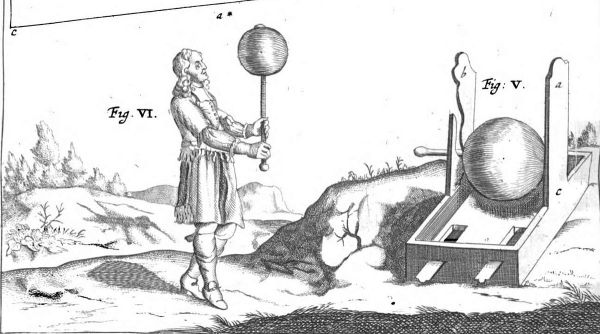
Image: Bairyna

Snow in Summer – Ali McGrane

I’d not seen my mother cry before. The sight of it pinned my feet to the cracked lino, my sister’s breath loud in my ear.

The open kitchen door framed the rockery where snow in summer scrambled towards the concrete patio. If I could pass beyond this new version of my mother blocking the way, I would brush against the white-furred leaves as I climbed the steps to the lawn. The grass my father mowed the day before would have lost its pungency and dried stalks of it would stick between my toes. Screened by the giant blue hydrangea, I would squeeze the pure yellow pompoms of dahlias and watch them spring back, marked with new lines like the creases in my palm.

In the moist papery skin under my mother’s eyes, in the wet streak at the side of her nose, time stretched like my French skipping rope, the elastic tugging at my ankles.

The smell of wet sheets and laundry powder mingled with briny steam from the boiling ham. A black line edged the letter in my mother’s hand. Her pale green summer dress swung in ironed folds behind bronze freckles so dense along her arm it was hard to see her true colour. She pulled her red pinny to her face, the seam along the waistband splitting under the strain.

My trike sat parked on the patio where I’d left it. Inside the dome of its tightly closed boot my special stone slept safe in the dark, a million magic spells in its quartz frosting, the lucky hole filled with daisies rescued from the mower’s blade. I held the thought of it in my head, while my mother pushed past us into the hallway, while I skirted the unguarded space she left behind, while I dragged my weeping sister into the garden where rust bloomed across the sky-blue paint on my trike, and the metal handle of the boot scraped and squeaked as I struggled to turn it.


Cabinet Of Heed footer logo

ALI McGRANE is an emerging writer of short fiction and poetry, living between the sea and the moor. Her work has appeared or is forthcoming in Fictive Dream, The Lost Balloon, Ellipsis Zine, Ink Sweat & Tears, Train Lit Mag and the 2017 Flash Fiction Festival:One anthology. Find her @Ali_McGrane_UK

¤¤¤

Image: PublicDomainPictures

Red Wine – Jessica Seaborn

When Greta vanished that night, she did so inside a glass of red wine.

I was with her at the time, alongside many of Greta’s other friends. Greta often held small gatherings and parties at her house, and that Friday night we had all congregated at Greta’s house as the sun went down.

There was Samantha, who only ate food with her pinky finger raised towards the sky. And then there was Zara, who didn’t ever eat much at all and yet no one seemed invested enough in her friendship to ever say anything to her about it. Whether she was wanting people to notice or not, I’m still not sure. 

There were a few others who I didn’t know, and from the little attention that Greta gave them, I gathered that there probably wasn’t much to know about them.

None of us were surprised that night when Greta glanced down into her glass — filled almost to the brim with expensive red wine — and was swallowed right up inside of the liquid. She was delightfully odd like that. The girl was a collection of limbs that wove in and out of our lives. One minute, she’d be dancing beside you to no music. And then she’d be gone. Poof. Out the door and across the road and into someone else’s evening of mischief. Sometimes she’d say to me I’m going to love you and leave you before rushing off. Sometimes she’d say nothing at all. 

Greta was seated at the time, with her glass resting atop a chipped wooden table. I shudder to think what would’ve occurred if Greta happened to be standing when she vanished. That glass of red wine would’ve dropped to the ground and poor Greta would have soaked herself right into her mother’s carpet. 

The glass shook a little bit on the table, but otherwise the entire spectacle went rather smoothly. And if I hadn’t seen it happen, we’d probably all still be wondering where on earth Greta got to. She was fluid like that — no pun intended.

There were only a handful of us left at the party at this point, and since I’d known Greta the longest, it was decided unanimously by the others that I would be the one to hold on to her. Just until we could figure out what to do. 

“No drinking allowed,” Shannon said, and then she trotted back through the house and left me sitting there. 

For the briefest of moments, I thought about resting my lips on the edge of the glass and tipping it up ever so slightly. Would that mean Greta and I were kissing? What part of her would I be touching? I wasn’t even sure she was still alive in there, but nevertheless, I clutched her to my chest and carried her home with me. I clung to her like a child does to a teddy bear — scared of dropping it and terrified someone might take it away. 

Greta and I lived next door to each other. We always have. There was a big old oak tree in her backyard and the plump branches had grown so tall and so wide that they were now hanging out over the top of the fence and into our yard. You could see Greta’s house from our kitchen, and there has been many a night when I’ve plonked myself down on one of our kitchen stools and glanced across the black night and into that place. But she was never there. Not when you wanted her to be, anyway. She comes and goes, our Greta.

When I got home and walked through the side door, my brother Ben was stumbling around in the kitchen muttering something incoherent. 

“Hey,” I said.

He turned around at the sound of my voice. “Oh hey. I’m putting a pizza in the oven. Want some?”

I shrugged. “Sure.”

I rested Greta on the kitchen table and sat down. It felt weird to have her here with me and know that she wasn’t able to up and leave me at any moment. Because of her transformation, she was now stuck with me. She would go wherever I would go. I sensed some sort of weird power in me. Happiness. 

“You still drinking?” Ben said.

“No. That’s just a friend.”

He ignored my comment, and then took some juice from the fridge and drank the rest of it straight from the carton. “How was the party?” he said.

“It was okay.”

“Who went?” he said.

“The usual. Shannon, Zara, Greta. A new group of randoms.”

“How was Greta tonight?” he said, eyebrows raising. He swivelled around and peered out the window into the darkness.

“She’s fine. Her usual self,” I said.

“I can’t see her,” he said.

“She must’ve slipped into her bedroom when you weren’t paying attention,” I replied.

In fourth grade, Greta grasped my hand and led me to that big old oak tree in her backyard. She told me that she wanted her first kiss to be with a friend. With me. And before I’d known what was happening, she had pecked me on the lips and then gone twirling around in the long grass, cackling and cackling like her throat was broken. Finally, she had laid down on the grass and spread out her arms and legs like a starfish.

“We dated you know,” Ben said.

I rolled my eyes. I did know. He mentioned it a lot. It was his pride and glory, dating Greta. The wonderful Greta, he often called her. Their fling wasn’t long, just the first few months of high school. And neither of them really ended it. Greta just stopped talking to him and then Ben was too infatuated with her to try and convince her to stay with him. 

“I know,” I said. Silence ensued for a few moments, and I was sure that we were both thinking about the same thing. Wonderful Greta. 

A long while ago, I got embarrassed that I was looking over at Greta’s house all the time. I could never even see her — she was never home. And sometimes I would glance across and catch her family members in a moment that was not mine to see. Her brother often entertained girls in his room with his blinds open and the lights on. Her parents liked to argue in the living room, with one of them always reaching for the television remote and turning up the volume to cover their screams. I could never hear what they were saying, but their baring teeth and reddened faces gave their anger away.

It was never her family members who I was looking for in that house, and I did try to stop. But I found it hard. It was like they were my family too. It was like I was the daughter they didn’t really have. I was always home. Greta wasn’t. I could’ve slotted in perfectly in that house.

“Do you reckon you’ll stay friends?” Ben asked. “You know, after school ends this year?”

“Of course,” I said, without the slightest hint of doubt.

Cabinet Of Heed footer logo

JESSICA SEABORN lives in Sydney and works in book publishing. She is the co-creator of The Regal Fox, a website showcasing fiction and non-fiction from writers all over the world. She has been published in Daily Life, Feminartsy and Milk Magazine. You can find her on Twitter @Jessica_Seaborn

¤¤¤

Image: Aline Ponce


Sometimes I Smoke – J. E. Kennedy

I grab my secret stash, head into the yard when the kids are sleeping and light up. I don’t do it for the nicotine. I do it to remember.

Those moments when we’d sneak outside at parties and have a sly one together. Your ice blue eyes would pierce my own, they’d penetrate my flesh, my thoughts, my soul. I couldn’t hold it for long. It burned.

We couldn’t touch, it wasn’t allowed. But we were desperate to. We both knew it. Back inside we’d lock eyes across a crowded room. A moment, a flash, but we knew what it meant. A glimpse through a gap in gyrating bodies and we’d ravish each other for an eternity. Look away.

Sometimes our skin would touch. Thrown together for a group photo. The air crackles. Nobody noticed the unexploded bomb. Fake smiles. We are expert deceivers.

There are no more parties, no more stolen moments. Just me and the secret stash grasping at a feeling. If only we’d met in another life, another time.

I crush the cigarette out. A foul smell clings to my fingers, coats my tongue. A sickly swell churns my stomach. My lungs rot.

The aftermath. The regret. The self disgust. That’s how it would’ve been.

If they’d discovered us.

Cabinet Of Heed footer logo

J. E. KENNEDY is an aspiring writer from Liverpool, England. Examples of her work can be found on her fantastical fiction website http://www.jekennedy.co.uk. Or follow her on Instagram @jekennedywriter. She is currently working on her debut novel.

¤¤¤

Image: Ralf Kunze
 

Her Children – Cath Barton

Llinos stands on the back doorstep, hands wrapped round a mug of tea. Up on the hillside, getting smaller as she watches, is her brother, Tomos.

“I saw you,” she says. They are sitting at the kitchen table. Their mother has her back turned to them. There’s a hiss as she breaks an egg into the frying pan.

“How long will it be Mam? I need to get out.”

“As long as it takes. Stop whining or I’ll give your egg to Llin.”

“Nah, Mam,” Tomos whines.

“I saw you,” Llinos says again, softly.

Tomos looks at her.

“Where? You couldn’t have.”

“I did.”

Their mother pushes plates of egg and bacon in front of them. They eat in silence, heads down. Anyone watching would think they haven’t eaten for weeks.

The truth is, they haven’t. Or at least, they haven’t eaten enough. Though their mother doesn’t know that. She has been cooking up breakfast – and lunch and supper – for her two children every day. For all the weeks and months they’ve been at the cottage.

“I wear my fingers to the bone for those two,” she says to her counsellor later that morning.

“That’s a cliché,” says the counsellor. “Try and put it into your own words.”

The mother – her name is Bronwen but the counsellor calls her mother too and she doesn’t like to contradict – tells the counsellor that these are her own words.

“For goodness sake! You’re supposed to be helping me.” She says.

“Good,” says the counsellor. “You’re getting angry, mother. About time too.”

Mother works from 8am to 8pm, every day. That’s what she tells the counsellor. And the work is never done. She is exhausted, doing this on her own. The children have been getting so unruly.

“Unruly?” The counsellor is looking for another word. Again.

“Unruly,” says Bronwen.

Back in the cottage at the end of the long drive through the woods where no doubt the Tylwyth Teg play at night, Llinos and Tomos are waiting. Or at least, two children who mother knows as Llinos and Tomos are waiting. They have been playing hide and seek. They have pulled the sheets from all the beds for their game. They have run outside, outside to play on the soggy grass – no-one could call it a lawn, it’s full of weeds and there are brambles too which have ripped the sheets. When Bronwen gets back she finds the mess of children and sheets. She knows that the children need food. That it will calm them down. She cuts slabs of bread to make sandwiches. With meat. Thick slices of ham, cooked on the bone. Bronwen is a vegetarian. She would like her children to be vegetarian too but they love meat.

“They eat too much,” she’d said to the counsellor. “You know I’m a mother,” she says when the counsellor does not respond. “How can a mother deny her children?”

The counsellor had nodded. Then she’d looked at her watch and said the hour was at an end.

The food calms the children. Bronwen tells them to go and play after lunch. She doesn’t see where they go. She makes herself a cup of tea and sits down to listen to a play on the radio. It’s warm in the room and the voices are low. She dozes.

As the sun is setting a girl, let’s call her Llinos, stands in the kitchen doorway and looks up to the hillside, where a boy, let’s call him Tomos, is getting smaller as he climbs. The girl follows him. Soon, if Bronwen were looking, she would see the two children silhouetted on the skyline, before they disappear over to the other side. But she is not looking. She is in the kitchen, preparing more food. And when she calls Llinos and Tomos for tea, the two children will be there. Eating again, as if they hadn’t seen food for weeks.

Bronwen feels so tired, but as she’d told the counsellor, how can a mother do other than feed her children?

Cabinet Of Heed footer logo

CATH BARTON is an English writer who lives in Wales. Winner, New Welsh Writing Awards AmeriCymru Prize for the Novella 2017 and 2nd place in the Dorset Fiction Award, October 2017. Stories in The Lonely Crowd, Fictive Dream, Spelk and more. Regular contributor to Wales Arts Review. https://cathbarton.com/ Tweets @CathBarton1

¤¤¤

Image: tookapic


An Acid Eastern that’s Appropriated Wholesale what’s Perceived as Wildly Western Or Else Time Machine-gun – Ahimaz Rajessh

Cassandra in a blue bottle yells at Nasnas, and as he feels the sharp shooting aches yet again in his perforated eardrums, she swears twice over that the bloody beauty is the damned beast. In a Uniprose where the polished skeletal remains of the Homosapiens is the favorite museum piece, and wherein the tender tattered Grace cryo-sleeps inside a grey bottle, Kalan groans grut-a-tat-tut at the handpicked paradigm-shifting events strewn in an isolated enVirtualsphere. His skin leaks under his metal jackets, shells fly off his mouth, ears let out gun smoke. Dr. Andro pinches his titanolastic fingers and Kalan shuts his mouth up.

‘Damn if I don’t see all the grey heads coming together,’ the doc remarks, looking half-amused.

‘Like the purples at the back don’t mean countless corpses,’ says Kalan, bemused, then barfs semi-solid whites.

‘You, coin-operated Nataraja, see straight but—boo—those are blues.’

Kalan grinds his teeth, drops his hot metal-belly down. ‘Let me nap a bit, you piece of toxic Plastic’ he snaps, almost no-bodied.

The frozen events in the atmosphere disintegrate as Kalan, shrunk in a crimson bottle, dreams and feels:

Lights go out. Crickets chirrup. Fans propel ever so slowly to a halt. Those wide awake widen their eyes. Chirrup magnifies. Ones asleep wake up. Chirrup magnifies. Crickets burst, crickets burst to birth multitudes. Chirrup magnifies and magnifies. Ones alive press their ears. Chirrup magnifies and magnifies. Ones who breathe wail, press their ears and wail; deaf ones clap, chirrup magnifies. Crickets burst, birth multitudes. Chirrup magnifies and chirrup magnifies and magnifies. Ones who breathe wail, press their ears and wail away, deaf ones clap and clap away. Chirrup stops. Chirrup fades away before chirrup soothes again.

Until, and only until, Kalan groans again grut-a-tat-tut and shoots away yet again at yet another handpicked paradigm-shifting events.

Cabinet Of Heed footer logo

AHIMAZ RAJESSH has been published in The Airgonaut, Occulum, Surreal Poetics, Cuento, 7×20, Jersey Devil Press, Nanoism, Strange Horizons, Pidgeonholes, 200 CCs, Flapperhouse, Malaigal, Padhaakai, Thalam, Manal Veedu, Unnatham and Liminality. His writing is forthcoming in Milkfist, formercactus, Jellyfish Review and Big Echo: Critical SF.

¤¤¤

Image: Stux

The Mother Of All Universes – Gordon Pinckheard

A long time ago, in the multiverse far far away, a Junior Intelligent Designer created a universe. The Mentor wasn’t pleased; there is a career path to be followed, and creating universes is a long way from the simple creation of moons. He knew the Boss wasn’t going to be happy either.

It wasn’t in dispute that Junior knew her moons, but she had gone too far. Universes can be created easily – that’s why there are so many in the multiverse – but getting all the pieces to work together successfully is tricky. Junior had assembled some ideas into a draft architecture and then, without telling her Mentor, had executed the build. The Big Bang was the first he knew of her universe’s birth.

There was no going back. Once the build had been started, it had to be made to work. After the Big Bang, the moons, planets, and stars were taking shape. Junior did know her moons. But the galaxies were a problem. They weren’t orbiting evenly. The Mentor added dark matter. He knew it was a kludge.

And then Junior insisted her universe was to expand forever, speeding up. If this one didn’t, she threatened to build another. Reluctantly the Mentor added dark energy. He checked his figures; 4.9% ordinary matter, 26.8% dark matter and 68.3% dark energy. He’d had to do some serious fixing! This mustn’t happen again; who would expect a builder of moons to birth a universe?

Junior studied her newborn universe. “Let there be light,” she instructed.

The Mentor sought an explanation. “Light?” he asked nervously.

“It’s so you can see,” explained Junior. “It’s an electromagnetic wave, and it behaves like both a particle and a wave at the same time. It always goes at the same relative speed, even if you’re moving. Nothing goes faster than light. Super cool.”

The Mentor’s curiosity got the better of him. “How can it go at the same relative speed all the time?” he asked.

“Time changes,” she answered.

He blanched. How had it come to this? What did Junior think she was doing? This universe was a nightmare! Who would ever understand it?

“Oh, and light is bent by gravity,” she added proudly. “Well – strictly – gravity distorts space-time, and light is travelling along a geodesic.”

There were tears in the Mentor’s eyes. “How are we going to explain this to the Boss?” he asked. “How did you come up with these ideas?”

“Well, I had so many and I had to choose just a few. I rolled dice,” she replied.

“We can’t tell him that,” exclaimed the Mentor, starting to panic.

“Okay,” said Junior. “Tell him I work in mysterious ways.”


Cabinet Of Heed footer logo


Bio: Having spent his working life writing computer programs and technical documents, Gordon has settled into retirement in Kerry, Ireland, writing short fiction pieces to entertain himself and – hopefully – others.


¤¤¤


Image: Trandoshan

The Swimmers – Rebecca Williams

The girl steps into the water, careful precise movements until the waves lick at her hipbones. With a deft motion of her arms, she dives in. She has an neat overarm crawl, propelling herself toward the fiery line of the horizon.

The beach she leaves behind is clotted with people. They gossip and chat, eat ice lollies, apply sun cream, flick sand, build sandcastles, bicker and laugh and fight and play; they pay her no attention.

When she is a mile or so out, another two girls get into the water; they have the same efficient way of swimming, the water falls cleanly away from their bodies like hot knives through butter. Metre by metre, inch by inch, the new swimmers narrow the gap of gunmetal grey between them.

Like the shadow of a cloud passing over fields, the people on the beach fall silent. As they watch, the swimmers eat up the final shreds of ocean and come upon the girl in the blink of an eye. They push down on her, holding her in an unloving embrace.

They dip and bob, slip sliding under the water. The girl thrashes her legs but the fathoms below her give her no purchase and she loses precious sips of oxygen. There are three sleek blonde heads visible, but the swimmers are inorexable in their end goal and now just two heads bob up and down on the waves.

Briefly there are three again. Then two – the stillness stretches, folds in on itself with the weight of the watching gaze, but only still two remain. On the shore, the watchers take a sledgehammer to the silence as the sound of hundreds of voices cheer in victory.


Cabinet Of Heed footer logo


Bio: Rebecca Williams has always wanted to be a writer. She completed the first draft of her novel – about bored housewives on a vigilante crime spree – in August 2017. She is killing time before second draft edits by dabbling in flash and shorter fiction. You can find her on Twitter @stupidgirl45


¤¤¤


Image: Li Yang

Tom’s Bottom Drawer – J.Y. Saville

Tom’s house was full of drawers. He had the usual kind for keeping woollen socks, pieces of string and worn forks, but as the belongings strewn on chair-backs and table-tops might suggest, they were often overlooked. Tom’s life was dominated by the other drawers, the ones he had designed himself. The ones he didn’t have a licence for.

Tom had been sitting in silence for some time when a scratching noise caught his wandering attention, and since the drawers were motionless he looked at the window. A trailing branch waved in the breeze but not close enough to have skittered against the glass. Uncomfortable from sitting for so long in a state of nervous anticipation, Tom got up and looked out. A girl he didn’t recognise was striding across his garden with a spring in her step, and her hands in her cardigan pockets.

“Hey!” Tom called, but the window had only opened a crack because of the vine growing across it, and the girl didn’t look round. “Bugger,” he muttered, not having spoken to anyone all week. He knew there were more important matters in hand though, and he sat back down by his stack of paper to wait for a story to appear.

Tom had a creative streak. No harm in that, but Tom had let it go too far. Not content with embellishing legends or creating new ones from recent events, he wanted to make up stories of his own. There’s a word for that, his Nan had said. Do you want everyone to know you as a liar? He’d tried to explain, but the distinction between telling an untruth for entertainment and telling one to get yourself out of trouble had proved too subtle for her. Now he was weeks away from the golden age of twenty-seven, and not only not engaged but with no apparent interest in it.

Tom knew marriage didn’t have to involve love, though that made for a romantic tale to pass down the generations. Marriage was all about planning. Most people in the valley were engaged by twenty-six, so that when they came of age they knew – even if the wedding didn’t happen immediately – what life had in store for them. Tom’s plans didn’t involve his neighbours, the valley, or fitting in. Besides, it was hard to come to an understanding of that nature with anyone when you couldn’t let them linger in your house in case they started asking questions.

The fermenting-drawer rumbled. Plates rattled on the dresser above and Tom fingered his collar, watching for movement. Shuddering on warped runners the drawer inched out until Tom could see the closely-written sheets within. They taunted him with their proximity but he knew it didn’t do to be too hasty; three fingers ached with the memory of being broken last Spring. He held his breath till he could hold it no more, then leaned forward and grabbed his story before the drawer slammed shut and a serving platter pitched off the upper rack to shatter on the flags.

He skim-read the opening paragraph, then read it again more carefully. This time the words had melted and merged to form something better than he’d started out with. No redundant nonsense, no extraneous words scattered through otherwise acceptable sentences. This time the drawer had done its job and – His smile faded, his gaze froze on the last line: And they all lived happily ever after, except the guy I forgot to mention earlier who the story really should have been about, well he drowned in his own existential angst because his aunt was really his mother posing as his landlady while his girlfriend who was really his cousin …

The trouble was, Tom had no-one to turn to for help. There was a reason why the drawer-systems cost so much – actually there were two reasons, and one of them was that they were tricksy bits of kit. The other was that it didn’t do for literature to fall into the hands of people like Tom. He’d once heard it said that there were two types of stories: literature, for the well-to-do, and yarns for the simple folk. Both kept to the familiar, the old stories or something the audience knew the bones of; the difference was in the telling. Drawer-systems were sophisticated devices for the well-heeled, the licence alone cost more than Tom could hope to make in a lifetime. If he stayed in the valley, that was. In the meantime, his hopes for getting out were pinned on the original story he’d been writing, tucking away the precious finished sheets in his bottom drawer as assiduously as any betrothee ever stashed their household linen.

In theory, it was possible to harness and tune the airborne flotsam using natural materials, and concentrate them in enclosed spaces to affect the tales. Boxes would work, but drawers were more convenient and took up less space, if they were built right. So, a lover’s laugh drifting in on a summer breeze, the sigh of a neglected mother mingling with the frosty morning air, the warmth of Spring sunshine, could all be woven into the bones of the story to add seasoning. The yarn-spinners of the valley used the crude spindles of their forefathers, gathering threads of memory and song, and creating something fine but short-lived, passed around by voice or occasionally as dog-eared pamphlets.

A knock at the door startled Tom and he realised he was still standing with the useless paper limp in his hands. He stuffed it under a hat on a chair and went to the door.

“Hello,” was all he could think of, faced with the smile of the girl he’d seen earlier. She was quite pretty, close up, and she had an ink stain on her left hand. Without quite meaning to, Tom stepped back to let her in. The strong reach of her mind made Tom’s neck prickle.

“You should sweep that up, you’ll hurt yourself,” she said, and when she looked into Tom’s eyes he knew that in one glance at his haphazard furniture and the shards of a broken plate, she’d penetrated his secret.

He felt his face warming and started to stammer out some justification for his tinkering with advanced literary devices, but stopped himself. She could be from the government.

“Who are you?” he asked. His Nan would not have approved of such rudeness.

Tom’s visitor smiled again. “A new neighbour,” she said. “Come a-calling, with fetch-up gifts.” She held out a fine spindle: “They told me you’re a yarn-spinner.”

Tom reached out, but she snatched it back and secreted it in a pocket.

“I was told wrong though,” she said. “No yarn-spinner here. Can’t see no equipment.”

She grinned and Tom’s eyes darted round the room; he thought his old spindle might be beneath his bed.

“Did you make that spindle?” he asked.

She swept a pile of clothes and papers off a chair and sat down.

“That’s what I do, make stuff.”

*

Tom was actually whistling as he strode back up the lane from the post office. Mirie, for that was the girl’s name, was twenty-six, unbetrothed, and a machine-witch. She’d seemed to skirt every side of the how and why she’d ended up in the valley with no relatives, but Tom couldn’t deny she was good at her calling. She proved quite knowledgeable about the inner workings of drawer-systems. The optimum temperature for setting-drawers, where the ink stabilised in its new configuration. The proper dimensions for the inner partition of the fermenting-drawer, to allow just the right amount of word-shuffle. The summoning charms for airborne matter, to filter out the sentimental or macabre as required. She’d been a bit cagey about where she picked all that up, as well.

Still, Mirie had set Tom on the right path and he’d ordered new ink from the city, with a slower coagulation rate to improve his chances of hitting on the right combination before the letters became sluggish and had to be re-cast. With this new ink, and some modifications to his drawer-stack, Tom could be on his way out of the valley in next to no time. He would revolutionise the world of literature, proving it could be done by a country boy with no connections. Of course, he’d probably have to claim it could be done without a drawer-system too, at least until he was absolutely sure about retrospective application of laws.

He stopped suddenly on the path to his front door and the last of his tune died away as a soft puff of breath. His door was open a crack and he could hear clattering. Now he looked, he could see windows open, vines and climbers shoved roughly back from the frames. He advanced slowly, breathing soft and shallow so he could listen. A familiar hum came to him over the shush of a broom on flags.

“Nan?” He pushed the door open and stepped over the threshold.

“You weren’t brought up to live in a state like this.”

“Nice to see you too.”

“It’s a good job I came when I did,” his Nan continued. “I -”

“My drawers,” Tom blurted, launching himself into the room to lean over the large table. “Tell me you haven’t touched the drawers.”

“Well of course I touched the drawers.” Tom’s Nan looked at him as though she hoped there’d been some mistake of parentage. “Didn’t look like you’d touched them in a long time, and that’s the trouble. If you’d -”

“What did you do with the bottom drawer?”

Her nostrils flared but Tom ignored the warning signs and asked her again: “Where’s the stuff from the bottom drawer?”

“All those sheets of paper?” she asked, and Tom nodded eagerly. “I read a bit to see if they were important.”

“And?” Tom was bouncing on the balls of his feet, willing her to say she’d put them elsewhere for safekeeping.

“They were like no tales I’ve ever heard,” she said, stoking Tom’s ego even in his moment of fear. “So I shredded them for mulch.”

“You did what?” Tom might have taken a glimmer of satisfaction from the way his Nan flinched if he hadn’t have been watching his future recede into a hazy distance.

“Load of rubbish,” she insisted, though not as confidently as before. “I had to shift them so you could use your bottom drawer the way a twenty-six-year-old should: for your wedding gatherings.”

“What wedding gatherings?”

“Exactly.” Tom’s Nan rallied, on surer ground. “And if we ever want you to have any, we need to get you sorted out.”

Tom sighed. With Mirie’s assistance and a re-tuned system, he might make faster progress this time, but the thought of starting again from scratch made him feel sick and like he wanted to cry. Now that his Nan had started, he wouldn’t have a moment’s peace until the betrothal punchbowl had been drained and the bunting hung from his roof.

“You never take an interest in anyone,” she was saying, scooping socks from a shelf with one hand and brandishing a duster with the other. “I hear there’s a girl about your age new-arrived. No family, but then you can’t tell till you’ve taken tea with a person.”

“I have done,” said Tom, his mouth twitching with the birth of a smile that would broaden over the next few moments until it exploded as a laugh.

“Have done what?”

“Taken tea with the new girl. Mirie. She’s …”

He couldn’t think of anything that approximated the truth and would also meet with his Nan’s approval, but she misread his features in a useful way and smiled.

“I knew you wouldn’t let me down,” she said, indicating to Tom that she’d thought the exact opposite, but he didn’t care. He could see the glimmerings of a future again.


Cabinet Of Heed footer logo


Bio: J.Y. Saville has had work published by Visual Verse, The Fiction Pool and The RS 500.


¤¤¤


Image: Michał Grosicki

The Sitter – Monica Dickson

You’d think I’d get used to it but you don’t, not really. Every time is like the first time, ‘cause it usually is for them. A revolving door of students mainly, A-level sometimes, Foundation and First Years more often. I’ve learnt to switch off from the giggling and the pointing. I’d probably have done the same at their age.

One student keeps coming back though. I shouldn’t have even thought about it. He’s just a boy really, all Sta Prest trousers and those funny wee jumpers that my Da used to wear back in Waterford, patterned greys and greens with a rolling V of knitted fabric at the front. He’s like an 18 year old Val Doonican, which is probably not the look he was after, given that he’s never heard of him. He keeps his tie on too, which makes him stand out even more amongst the stained baggy shirts and ripped dungarees. He has the pale skin and hungry cheekbones of the tortured artist down, though. He’s not even that good at painting; he tried to explain to me, after that first time, what he liked about art but his vague murmurings felt watered down, borrowed. He’s committed to the parody at least, faithful to the construct. I never look at him directly as he glances from canvas to me, my body, but when he is there I am hyper aware of every crease, shake, twitch. My stomach rumbles loudly and I hope that they will think it’s someone else. I listen to the traffic outside and sometimes a little sound will sneak from my closed lips, a quick, short hum of a note or a whimper, a ‘huh’ that has to make its way outside of me, I can’t stop it. It’s awkwardness, or fear, I suppose. I can see his smirk, or rather I’m aware of his general look of being really pleased with himself, as though he’s the one with the audience. It’s the sort of self consciousness I can remember at that age but with him it comes from vanity rather than insecurity.

Most people prefer to pretend I am simply an object, another screen or an easel that appears and then removes itself from the room, silent and unobtrusive. I try not to break the fourth wall – it goes back to my training, I suppose, and technically I am still an actor. So his tap on my shoulder, albeit now covered in a terry towelling dressing gown, felt intimate and rushed. I was flustered and a little bit off with him but he didn’t seem to notice and he thanked me for sitting and then paused and said I had great… poise. It was clear that he meant something else, though I’m still not sure what – an innuendo that he didn’t quite have the right words for. That said it all about him really, a triumph of confidence over aptitude – his raw cheek was his talent. That and he smelled really, really good; cheap aftershave always sends me off kilter. I agreed to a coffee which turned into a long stroll around Camden and another undressing back at my flat just off the Lock. All my authority and self control and poise evaporated with every stumble, every angular clash and arrhythmic shove on my unmade bed.

Today he practices his strokes with particular flamboyance. He jabs deliberately at the palette, then the canvas with such violence that it wobbles slightly. I wonder if he’s trying to make me laugh but still I don’t look. Instead I amuse myself with thoughts of him standing there in a beret and smock, an oversized Salvador Dali moustache trailing from his face. No underwear, if I really want to enjoy myself. It distracts me from the sharpness of his jaw, the future he has over me, to mock him like this. I’d never tease him to his lovely face of course. I feel a sort of fatherly kindness towards him, though I am not quite old enough to be his father. Uncle, maybe. He’ll tire of me soon enough.
Until then, I kid myself that I am a guardian angel in a Renaissance painting. I could break his heart as he pores over my loosening flesh, as he paints over the telltale criss-cross of my forehead, as he smoothes away the darkening skin on my leathery knees.


Cabinet Of Heed footer logo


Bio: Monica Dickson is a writer of short fiction. Other examples of her work can be found in the current issue of Salomé (#3) and the forthcoming issue of Firewords (#9). You can follow her on Twitter @Mon_Dickson


¤¤¤


Image: Jessica Ruscello

The Village in the Shadow of K’prut – Steve Campbell

“K’prut was born of the land an’, gatherin’ all rock an’ soil, she rose up high, burstin’ up from beneath an’ shapin’ all that surroundin’. With one finger sweep she forgin’ a ridge, a slice from her crown to the valley so low, that she fills with flowing water she scoopin’ from clouds. The sweet, sweet water that bloats up our bellies. But K’prut not done. She takes her hands, two great stone ‘uns, an’ she drags ‘em through the land to make all them fields an’ meadows. And delicate like, she moulds trees an’ shoves them in row, after row, after row, after row. Still she rises up, bigger an’ taller an’ wider than all, crowned in the cold white.

“For our glowin’ she takes one eye an’ holds it high to feed the land with bright an’ hot. She plucks another ‘un an’ drains out all the burnin’, leavin’ the eye pale for when darkness creeps an’ sneaks in.

“All surroundin’ K’prut is lush. It grow taller an’ fat an’ bright with all them ages gone an’ soon tiny creatures come to eat all the rich an’ sweet. They attract screechers an’ swingers, an’ them attractin’ hounds, last came the son. He a man brave an’ strong with all the smarts. His fire an’ chippin’ an’ buildin’ in that valley soon bring others an’ they all chop an’ dig an’ begin ages of shapin’ an’ livin’.

“K’prut was happy an’ stood up tall an’ wide over village, majestic like. An’ all man look up at K’prut with awe an’ thankin’.

“It wondrous for many ages. The village spread an’ the sweet lush grow but man stopped thankin’. They think village come from their own work an’ shapin’. This boil up K’prut proper like. She roar an’ bellow an’ clash her stone grinders together an’, pullin’ wide her mouth, she spew a fire red flow so mighty that it sunk an’ black all trees an’ screechers an’ swingers. The soil shake an’ the sweet water bubble an’ when K’prut’s boil up had done, the village was swallowed an’ most man been ate up. Only a few lonesome missed that fire red flow.”

Jobe listenin’ with no speakin’ as Chief re-tell that shapin’ tale. Occasional Jobe eyed the cave wall where elders, with digits dipped in bright, had long since smearin’ visions of all those happenins. Followin’ Jobe’s seein’ Chief an’ spin to poke the smears, “Yes. K’prut she proper show what no thankin’ does!”

When Chief stares, Jobe sees K’prut’s rage down deep in Chief’s eyes an’ he start feelin’ it in his own middle an’ all, in his beatin’. Jobe listenin’ to this tale hundreds over ages, but this re-tellin’ was a proper symbolic. It readyin’ Jobe for X’em.

“K’prut speak through me, she come in visions clear an’ bright, and I hear ‘an all. She whispers low an’ deep an’ tells of X’em. She say young ‘uns who ready to bloom must show smarts an’ strength an’ worth. Them go live without shadow an’ when returnin’, them men. Men who worthy of livin’ in village. X’em is village way of showin’ K’prut proper thanks.”

*

In the first bright eyes of X’em, Jobe stay in trees that surroundin’ the village too scared of unknowin’ to go on. Soon scavengin’ grow slim so, with only a sharp at his side, Jobe follow the windin’ and turnin’ water, just like he done all them times huntin’ an’ scavengin’ with Father. It flow to nothin’ after many eyes but Jobe push on, choppin’ the lush an’ makin’ his own track.

Many times Jobe thinkin’ to spin an’ return to village with crown low in shame but he keep on track, even when pale eye come an’ he limbo with belly grumblin’ an’ sob-sobbin’ eyes flowin’.

Many times Jobe askin’ K’prut for guide but waitin’ many bright eyes she not speak. Knowin’ he on his lonesome, too far from village, Jobe takes up his sharp in rage…

Since beginnin’ X’em, hounds been creepin’ an’ waitin’ to drag Jobe into dark when he weakin’ an’ limp. Them hounds long gone now. Full of boil an’ rage Jobe sneakin’ proper quiet an’ sticks one an’ guts it. Them others soon get smarts and spin. That pale eye Jobe’s belly bloat up proper like with roast hound an’ limbo was best since beginnin’ X’em. In wakin’ Jobe thinkin’ less about village an’ K’prut an’ X’em an’ returnin’.

After many bright an’ pale eyes, Jobe break free of them trees an’ face wide flow that runnin’ fast an’ true an’ deep. All around Jobe the bright is brighter an’ the breathin’ is sweeter than he knowin’. The other flow edge is lush an’ green but not like Jobe eyed before.

Sparkin’ fire for waitin’ an’ thinkin’ about the crossin’ Jobe listenin’ a tappin’ come from the flow. Movin’ close he eyes a fallen branch that ratt-a-tattin’ on a rock an’, strainin’ an’ stretchin’, he drags wood to edge. After delicate snippin’ an’ chippin’ he soon have a staff which stand as tall as self.

The flow was deep an’ fast an’ it make to sweep Jobe away but the passion an’ willin’ inside him too bold. The staff hold true an’ all, and soon, gaspin’ an’ splutterin’, Jobe make it to flow edge.

Waitin’ for breath and devourin’ the last of roast hound Jobe eyes the crown of K’prut one last time. Then he take up his sharp an’ staff an’ spinnin’ his back to Her before pushin’ on through the lush green to seek out the unknowin’.


Cabinet Of Heed footer logo


Bio: Established in 1973, Steve Campbell is a taller, designer, writer. You can find his words in places such as: Sick Lit Magazine, Ad Hoc Fiction, Twisted Sister Lit Mag, Occulum and on his website standondog.com. He somehow finds time to manage EllipsisZine.com. Follow him on twitter here: @standondog.


¤¤¤


Image: Mandy Beerley

Close By – picklish

I’d been sent all over the country to do these studies, but this prison was my local. It was a category B, meaning all but the most terrifying heidbangers were housed at Our Lizard Queen’s leisure.

He was a murderer, or at least, was charged with being one. There was no doubt that he had killed, the only question being whether he had intended to, if he was aware of doing so. He stated that he had got drunk, then woke in the morning with two dead bodies in his house. He had met them in the pub, then gone back to his after closing time, as it was close by. There were multiple stab wounds found on each victim. I didn’t read the rest of the report, nor look at the pictures. I’m no fan of horror.

I was led to his cell by the guards, then left alone with him and my equipment, bundles of pastes and cables, thinking that he could use these to garrotte me at any moment. I started to apply the electrodes to him, firstly to his flaking scalp, through his slicked back black hair, then around his pale impassive face. He was deathly silent, stripped to his yellowing Y-fronts, occasionally picking at a sore on his thigh.

The TV was on in the background. A smug presenter of a news satire show laughed and mugged to camera as he told his audience that murderers were often presented as calculating masterminds in films and TV show, but in reality they were sad and lonely individuals. The temperature fell, my hands froze in their task, and the stained white cell walls squeezed in closer.

I finished wiring him up, trying to make a joke about how the electrodes stuck to his head and pulled round the back of his neck in a ponytail looked like a multicoloured dreadlock, and this was met with a barely audible grunt. I ran the electrode cables through the hatch in the cell door and out into my laptop in the C-Wing corridor, where I was to spend the night, staring at the wiggly lines representing the undulating electrical flows in his brain, heart and limbs, watching for abnormalities in his sleep.

Around 2 a.m. whilst I was in a dreamless fugue, wrapped up in my cheap suit and clutching a long cold coffee, a commotion began close by. The man in the neighbouring cell had been making grunting noises, getting louder until they were screeches, which eventually grabbed the attention of the guards. One flipped down the hatch in the cell door to tell him to be quiet, and a handful of shit was flung through, the digested remains of the food that had passed though the hatch in the other direction some hours earlier.

I was instructed to leave the corridor and wait in the staff kitchen close by. The previously cheerful guards’ faces were now fixed into either weary or uncompromising expressions, depending on their age. They passed the kitchen dressed as stormtroopers, but stormtroopers with disposable paper suits over their helmets and padding. I nervously boiled the kettle and let it cool twice whilst I waited for instructions, forgetting to make more coffee as I imagined what was happening in the cell. I finally remembered to pour the hot water into a chipped ‘world’s greatest dad’ mug, jumping back as it splashed onto the lino, and turned around to see the guards troop back, freshly rumpled paper suits now ripped and covered in shit and blood stains.

“You can go back to your computer now”, they told me and I did so, acutely aware of the lack of sound now being emitted from the neighbouring cell. Some more twilight hours passed and again I found myself drifting, hypnotised by the flickering, wiggling red and black lines on the screen.

The fragile silence was once again broken, this time by my subject’s other neighbour, the one in the opposite adjoining cell. He started to shout “Peanut” over and over, gradually morphing this into “Peanut the Destroyer” and finally concluding “Peanut the Destroyer, he’s gonna get you, he’s gonna kill you all.”

The remainder of the night was punctuated with these cries, ignored by the staff, perhaps they had become immune to this tip off, perhaps they were selectively deaf to the outbursts coming from cells overnight.

A grey dawn made the corridor less foreboding, and I entered the cell to wake the patient as soon as 8 hours recording of data had completed. After picking gently picking the glue that I had used to secure the electrodes out of the killer’s springy hair, I gathered up the equipment and fled the big hoose, feeling that I had done a stretch myself, not simply a shift.

I got back and analysed the data, in order to send a report to the psychiatrist, who was to be the expert witness on the killer’s trial. I noticed some abnormalities on the study. The patient did indeed have sleep-walking type events, sitting up bolt upright in bed more than once in the study whilst clearly in deep sleep.

I highlighted this in my report, but forgot to mention the commotion overnight, and didn’t think anything more of the case until I discovered that the psychiatrist had suggested to court that there was a reasonable doubt whether the killer was aware of his actions, given that he had a strong drive towards sleepwalking, and so it was determined that he may not have been fully in charge of his mind when the killings took place, he was acquitted following a please of non-insane automatism.

It wasn’t until later that I realised the odd events I had seen in his sleep were probably caused by the actions of his cell neighbours, the commotion caused by the dirty protest, the outbursts about the dreaded Peanut the Destroyer. It was too late to amend my report, and far too late to let anyone know. But it’s curious, the unintending outcomes that can occur, simply from having certain people close by.


Cabinet Of Heed footer logo


Bio: picklish has recently had havvers featured in Suma Lima and 404 ink. Legally, there’s one copy of his novel in libraries in each of the following towns: Oxford, Cambridge, Dublin, Cardiff, Edinburgh. Twitter – @picklishsleep


¤¤¤


Image: Mitchel Lensink

Bus – Edward O’Dwyer

My girlfriend and I got on the bus but unfortunately there weren’t any seats together available, so we were forced to sit with strangers. Though only a few feet away, soon I missed her terribly, so I turned around and smiled at her and she smiled back at me.

Not long after that, I was missing her again, and even more intensely than before. She didn’t notice when I turned around to smile at her again, having this time been deep in conversation with a very good-looking man sitting next to her.

The next time I was missing her intensely, I turned around to smile at her again but on this occasion found that they were kissing very passionately and with very busy hands.

Suddenly, then, the bus crashed and all its passengers were thrown from their seats into the air. When I regained consciousness I realised immediately I was losing blood fast from a few orifices. There was a mess of broken looking bodies all around me.

I looked around once more to see my girlfriend, not to smile at her but to check if she was hurt. She and the man had been thrown into the aisle. Her body was on top of his now. They both looked in urgent need of medical attention. I could see that a part of his skull had become exposed by some terrible impact, and she had somehow been speared all the way through her stomach by someone’s umbrella, which had then opened up above them.

Quite amazingly, they remained kissing each other every bit as exuberantly as before. It was as if they hadn’t even noticed what was after happening.


Cabinet Of Heed footer logo


Bio: Edward O’Dwyer is an award-winning poet from Limerick, Ireland. His poems are published in journals throughout the world and he has had two collections of his work published by Salmon Press – The Rain on Cruise’s Street (2014) and Bad News, Good News, Bad News (2017). He has recently begun writing flash fiction and short stories, while working on a third collection of poems.


¤¤¤


Image: Peter Clarkson

The First Chocolate Rose of Summer – Camillus John

It happened on the 29th July 2017, in the Botanic Gardens, Dublin. Big bang kerboom boom boom in the rose garden. In broad daylight. Way before the bum-rushing outbreak shortly afterwards.

I was sitting reading a book when I sniffed the purest chocolate I had ever sniffed in my entire life. I looked around expecting to see a couple of tourists on the grass munching into an early afternoon snack bought at some airport terminal on their travels. But there were no tourists. I was on my own in the rose garden. And then I saw it. The first chocolate rose of the summer.

I walked over to it and had to restrain myself from plucking it right there and then and stuffing it straight into my mouth – but no – I managed to let myself break just one small chocolate petal off, pop it gently into my mouth and allow it dissolve slowly on my tongue under the glorious mid-morning sun. It crossed-eyed my face and spun my pupils. I closed my eyes. When I opened them again, still no one saw it. Only me. I didn’t want to point it out to anyone either, in case it was eaten before I had a chance to taste another sliver. The chocolate had managed to sooth the persistent pain in my neck I’d had for the past forty days and nights like some sort of anti-inflammatory ointment or tablet or re-contextualised magic lamp.

Leaving the garden, I went to the pub opposite and bought a big bag of ice. I humped it across the road and arranged it around my chocolate rose to prevent it from melting. Still no one else had entered the rose garden for some very strange reason. And the sun just got stronger and more blinding. Very unusual for Ireland in late July. Eventually in the sticky heat, my chocolate rose started to drip and dissipate despite the ice, so I used that as an excuse to break off more bits and indulge myself. As a result my whole body began to get loose and lithe. My arthritis was seemingly lifting right off my shoulders and floating into the sky like a butterfly. Along with my headaches. There was chocolate stains on my shirt and around my mouth and on my hands. I felt like singing and dancing and creating something.

The rose was now swallowed and in my stomach. The ice all melted. I plucked the stem and chomped through that as well until there was nothing left in the ground at all – not a trace, just damp soil.

I then noticed all the other chocolate roses springing up around me and each one with someone before it in supplication feeding it ice and eating it slowly – and each person getting physically and mentally better and better and better with each mouthful that went down their gullets.

The next day the government put a rifled-up army into all the parks and into all the fields of the nation guarding and then removing all the chocolate roses of the summer of 2017 to gigantic greenhouses down the country. But they were too late. Fortunately. Way, way, way, too late.


Cabinet Of Heed footer logo


Bio: Camillus John was bored and braised in Dublin, Ireland. He has had work published in The Stinging Fly, RTE Ten, Headstuff.org, The Lonely Crowd, Thoughtful Dog, Honest Ulsterman, The Cantabrigian, The Bogman’s Cannon, The Queen’s Head, Litro, Fictive Dream, Silver Streams and other such organs of literature. Recently he killed the Prime Minister of Ireland in fiction in the Welsh literary magazine, The Lonely Crowd, with a piece entitled, The Assassination of Enda Kenny (After Hilary Mantel). He would also like to mention that Pat’s won the FAI cup in 2014 for the first time in 53 miserable years of not winning it.


¤¤¤


Image: Kseniya Petukhova

Memory – Monica Strina

They all left something behind.

It could be a comb in the back of a drawer, or a book with a torn-up cover wedged between the wall and the bed headrest. Once it was a playing card in the corner of the bedside table; another time a tube of lipstick on the bathroom shelf. A tie in the wardrobe or a hair ribbon on an armchair. Unclaimed things my grandmother would collect in a basket while tidying and cleaning the rooms.

‘They wanted to be found, you see.’

Every evening, after I had done my homework and washed the vegetables for the guests’ dinner, I knelt onto a chair so I could reach into the basket, and picked them up one by one; ran my fingers along their edges, stroked their corners. Old pens became the wagons of a train; hairpins came together to build Indian tents. Whenever I could not sleep, I conjured them in my mind and tried to fit them onto each other, as though the basket contained a puzzle I had not yet solved.

On days when we had no guests, Grandma and I would sit at the kitchen window, where the sun could find us and the birds came to eat our crumbs; there, she would take out each item and hand it to me. I loved the way her fingers had twirled upon themselves and changed shape like the branches of a growing tree, though I was sorry they hurt so much. With the basket on her knees she would smile and tell me a story for each small treasure – who had left it behind and why; what purpose it had served before it had been abandoned. Soundlessly I told each story with her, for I knew the old ones by heart, and it was with trepidation that I waited to hear the new ones. Even though we needed the money, I hoped no one would come to disturb us.

It was during one of our long summers that the man knocked at the door. Grandma bade me put away our finds, for the guest would likely want dinner, and with her careful steps she went to let him in. When he entered the kitchen, I saw that rainwater was dripping from the brim of his hat, from the sleeves of his coat, from the hems of his trousers, even from his nose, forming pools around his shoes. Behind him, Grandma, pale, was reaching for her shawl. I too felt a shiver and turned towards the window, towards the sun – but through the glass all I could see was a plumbeous sky. Suddenly I was aware that the birds had stopped singing, and that the roof was creaking with hailstones. The air smelled of wet earth.

Panting, curved, the man looked over his shoulder; ran to the window and scanned the empty path to the house. It took me a while to understand that the cuts splitting his forehead and cheeks were wrinkles.

‘Peculiar weather,’ Gran said, holding out her hands to take his coat, ‘would you like a spot of dinner, Sir?’

The man started; hugged himself, still staring out of the window.

‘It always rains,’ he said.

Grandma and I exchanged a look; she went to stand between the man and the chair on which I still knelt. From behind her bent shoulders I observed the way his hands shook; the haggardness of his face.

‘Is something the matter, Sir?’

‘It’s out there. Looking for me. For all of us.’ As he said this, he only looked at Grandma.

‘What … who is out there?’

The man lifted his hands, and placing his forefingers on his forehead and his thumbs on his temples he pressed down on his skull. I thought that if he tried to open his eyes any wider, the sides of his head would tear open. And still he dripped on the floor, tic tic tic, a wet scarecrow.

When I grew older, I often wondered why Grandma had not done the safe thing and sent him away. By then I could no longer ask her, but I think it had something to do with her sacred concept of hospitality. That, and the rain that had not been there a minute before and now roared out of the window, feeding pools that could not have formed that quickly.

‘Sir, you will catch your death in those wet clothes. Let me dry them for you; I can lend you a shirt and trousers. They belonged to my son, but they are clean.’

The man stabbed the air with his chin to say no; ran a hand on his face. After that, his eyes seemed more focused.

‘My apologies, Ma’am.’ I could see him force his breathing to slow down. ‘I am weary. Perhaps a bowl of broth if you have it; some tea …’

‘Of course. Please, take a seat.’ Grandma turned towards me, showed me the warning in her faded eyes. I nodded and she crossed the room to the stove. The moment she moved, I saw the man look out of the window again, his hat now squeezed in his hands. He curved his neck this way and that, like a raven, and, when he was satisfied that the path was still empty, he turned towards me and jumped. I felt that I might cry and turned to call Grandma, but right then the man spoke again.

‘Where did you get those?’ he pointed at my basket with a fingernail that was clean but a little long. I swallowed; hugged the basket to my chest and tried to stop my lower lip from trembling. In the back of my head was the comforting feeling of Grandma’s eyes – she had turned towards us, a bowl in her hands.

‘Trinkets is all they are,’ she said, ‘things people forget.’

‘Forget,’ he repeated, shuddering. Slowly, he pulled out a chair across the table and lowered himself onto it, the hat still squeezed in his hands. His eyes never left the basket, even when Grandma placed the bowl in front of him and he spooned the broth into his mouth, holding the ladle as you would a shovel.

‘Please,’ he said to me, ‘I apologise for my appearance; I mean no harm. Please, show me. Tell me about the forgotten things.’

I looked at Grandma; she nodded, sitting at the head of the table between the man and me. At first, my voice would not be coaxed out; then my toys claimed my attention, and I lifted them out of the basket one at a time, reciting the stories Grandma had taught me. No one except her had ever paid so much attention to my words. When the man finished his broth, Grandma fetched the teapot and some tea cups, but neither of them interrupted me. In the silence of the kitchen, it sounded like prayers.

I did not notice then that the man had stopped turning towards the window and wringing his hat. That his shoulders were less hunched, and his hands no longer shook. That realisation would come later, when I would reenact the events in my mind, trying to understand.

After the last treasure had its story told, he closed his eyes, tilted his head forward and stayed that way awhile, so that I thought he had fallen asleep. But soon he shook himself, and when he again looked at me the frantic expression was gone from his eyes.

‘Thank you.’ Pressing both hands against the table he pushed himself to stand; lifted the chair to put it back in its place. As Grandma rose from her own chair, he took her hands in his and I saw him push some coin inside them. Grandma tried to give it back, but he would not take it.

‘Please stay and warm yourself. We will light the fire in the common room – you can wait for the rain to let up, at least.’

The man shook his head, making little curtsies as he walked backwards, and by then he was all but smiling.

‘Thank you,’ he kept saying, ‘thank you.’

When the door closed behind him, Grandma and I went back to the table. Sunlight covered most of it. The kitchen resounded with birdsong. Together, we turned towards the window, but saw no trace of the man. On the floor, beside two small rain pools that were starting to dry, was a rectangle of paper.

Only when Grandma handed it to me did I see it was a photograph that portrayed the man in his youth. The boy in the picture had the same features, though they were curved into a smile that started in his eyes, and there were no cuts on his face. Sitting beside me, Grandma told me the story of my new treasure, then placed it into the basket bidding me keep it safe.

And now that I am as old as she was back then, and older than the man – now I understand, and I am not afraid. My basket has grown; it is brimming with treasures, and every day, sitting in the sun, I tell my grandson their stories.


Cabinet Of Heed footer logo


Bio: Monica Strina is a freelance editor and author who has published short stories in several literary magazines such as Silver Apples, Bunbury and An Sionnagh. She holds a degree in foreign languages and literature and a master’s degree in creative writing.


¤¤¤


Image: Markus Spiske

Andrew Anderson by Rob Walton

It wasn’t the best needle for the job, but I had to persevere. I was on to something. I heard my grandma’s words: Needs must.

It was one of the most beautiful labels I owned. A Tootal scarf one-off from the early 70s. The legend about them being ‘Regd in England 1799’ was in a contrasting colour to the ‘An Authentic Tootal Scarf’. The scarf looked as though it had been caught up in some natural disaster, part-fire, part-plague, but the label was beautiful and, though I struggled with the sewing, I was proud of the final result.

With a name like Andrew Anderson there was a fair chance I’d be the butt of jokes, even before I made public my passion. At school if I ever got even slightly annoyed I would be Angry Anderson. Other situations would prompt people into holding thumb to ear and little finger to mouth and calling AA for any drink-related issues. How they laughed. How I shrugged my shoulders. Any opportunity for a list of first names or surnames would result in the stuttering “And – And – And”. Et cetera, et cetera, et so very annoying cetera.

I put up with this through the first three years of high school, then things turned worse. When people became aware I collected labels I was Anorak Anderson for all time. One of my teachers used the sobriquet to get down with the morons.

It started with a competition. Collecting the labels from Heinz products meant you had a chance of winning big prizes by sending in the pieces of paper peeled from the front of soup cans, tins of beans, Alphabetti Spaghetti.

I was soon peeling labels most evenings.

This developed into a – let’s call it an interest – with labels of all sorts. I put them in files and folders at first, and kept a meticulous card index. It was all curiously old-fashioned, and at the time I thought it was quite healthy.

Then my sister told her best friend who had a brother in my class and one thing inevitably led to an assembly where the staff orchestrated a scene where the whole school community was given permission to laugh at me. The good old days.

The turning point was a complete accident. My first family holiday in another country. Ten days on the Isle of Wight. I behaved impeccably – and was rewarded with a Mickey Mouse t-shirt. I remember well the care instructions (Warning!): don’t, please, (I’m paraphrasing) bother ironing – or indeed drying or washing – or the character picture on the front of the garment will disintegrate before your very eyes. This information was on a label which was very loosely-sewed so – you work out my reasoning, I’m too tired – I took it off and sewed it on the outside of the shirt. At the bottom of the sleeve.

My brother had a Brutus t-shirt. I stitched the label on the outside for him. I don’t believe he said Thank you, but he wore it when he mocked me in Yarmouth, Ventnor, Osborne House and on the pitch and putt course at Sandown

I started buying cheap clothes just for the labels. The linings of dead men’s coats brought rick pickings. Gentlemen’s outfitters from Cardiff, Bristol, Stockport and Solihull were among the best. The coats were then passed back to the next jumble sale. Sometimes I would leap with excitement on a great-looking coat to find I had removed the label months previously.

One of my best finds – I nearly wrote best friends there, which may tell you something about me – was a quilted brown anorak from Greenwoods, a store which once had a presence on every English high street. This was the largest label I’d seen up to that point.

One weekend I picked up three labels from Burton Menswear coats: Foam Backed. That’s what I call a label. They all went on the back of a collar. It wasn’t a good look, but it was my look.

A classmate called round one time when I was busy unpicking a rather beautiful label from a Dunn & Co Harris tweed jacket, which was destined to find its way on to the breast pocket of a short-sleeved Ben Sherman shirt. He admired it, picked up the homework he’d called round for, and left with a different expression on his face. Which is to say, different from the one with which he’d arrived.

I remember a Bronco western-style shirt where I attached the label to the small of the back. I often sewed labels on pockets and people were unable to tell whether they had been put there by the manufacturers. Lots of people poured scorn on me over the years, insisting labels should be on the inside of a piece of clothing, but I maintained I was watching for commerce to catch up.

I found out about the big business catch-up one day when I was making labels into elbow patches. Not my greatest hour by any stretch of the imagination. My old school ‘friend’ appeared on some TV business programme. He’d got a job down south in a factory or an office or a workplace or something. Then he’d got more specific and worked in design and suddenly labels and brand names started appearing on the outside of clothes and accessories.

I clearly had to do something about it and, like I said, the stitching was difficult but worth it. Enemy was a little-known label but I had a small polythene pocket full of their logos in different sizes. It was one of those I ‘gave’ to that boy from my class. Nothing will ever convince me he didn’t steal my ideas. And nothing will ever convince me to have regrets.

When the orderly brings me my evening meal (at 4:30!) I look at the grey plastic tray and look at his name badge and think how much better it would look if it was sewn on him.


Cabinet Of Heed footer logo


Bio: Rob Walton is from Scunthorpe, and lives on Tyneside with his family. In 2017 poetry for adults and children, flash fictions, short stories and creative non-fiction will appear in Sidekick Books, Northern Voices, The Emma Press, The Interpreter’s House, a shop window in Marsden, Bennison Books, Write Out Loud, The Line Between Two Towns, Celebrating Change, the Worktown anthology, and DNA among others. He collated the New Hartley Memorial Pathway, and sometimes tweets @anicelad.

Create a website or blog at WordPress.com

Up ↑